EP4135271B1 - Informationsinteraktionsverfahren und -vorrichtung, vorrichtung und medium - Google Patents
Informationsinteraktionsverfahren und -vorrichtung, vorrichtung und medium Download PDFInfo
- Publication number
- EP4135271B1 EP4135271B1 EP21796322.2A EP21796322A EP4135271B1 EP 4135271 B1 EP4135271 B1 EP 4135271B1 EP 21796322 A EP21796322 A EP 21796322A EP 4135271 B1 EP4135271 B1 EP 4135271B1
- Authority
- EP
- European Patent Office
- Prior art keywords
- party
- group
- invitee
- inviter
- Prior art date
- Legal status (The legal status is an assumption and is not a legal conclusion. Google has not performed a legal analysis and makes no representation as to the accuracy of the status listed.)
- Active
Links
Images

Classifications
-
- H—ELECTRICITY
- H04—ELECTRIC COMMUNICATION TECHNIQUE
- H04L—TRANSMISSION OF DIGITAL INFORMATION, e.g. TELEGRAPHIC COMMUNICATION
- H04L51/00—User-to-user messaging in packet-switching networks, transmitted according to store-and-forward or real-time protocols, e.g. e-mail
- H04L51/04—Real-time or near real-time messaging, e.g. instant messaging [IM]
- H04L51/046—Interoperability with other network applications or services
-
- H—ELECTRICITY
- H04—ELECTRIC COMMUNICATION TECHNIQUE
- H04L—TRANSMISSION OF DIGITAL INFORMATION, e.g. TELEGRAPHIC COMMUNICATION
- H04L51/00—User-to-user messaging in packet-switching networks, transmitted according to store-and-forward or real-time protocols, e.g. e-mail
- H04L51/06—Message adaptation to terminal or network requirements
- H04L51/066—Format adaptation, e.g. format conversion or compression
-
- H—ELECTRICITY
- H04—ELECTRIC COMMUNICATION TECHNIQUE
- H04L—TRANSMISSION OF DIGITAL INFORMATION, e.g. TELEGRAPHIC COMMUNICATION
- H04L51/00—User-to-user messaging in packet-switching networks, transmitted according to store-and-forward or real-time protocols, e.g. e-mail
- H04L51/56—Unified messaging, e.g. interactions between e-mail, instant messaging or converged IP messaging [CPM]
Definitions
- the present disclosure relates to the field of computer technologies, for example, to an information interaction method and a device.
- the manner generally used is to forward the mail to each invitee party, and then communicate with multiple invitee parties one by one or hold an offline face-to-face meeting for discussion, which has low efficiency.
- CN108055197A disclose an instant messaging-based mail sharing method, including: receiving and storing marked content sent by a client in a local database; in response to a mail-based collaboration request sent by the client, generating a sharing page according to the marked content and sending the sharing page to the client; according to the mail-based collaboration request, taking a discuss subject and members of a discuss group as a default mail subject and a default receiver respectively; receiving sharing content sent by the client according to the sharing page, generating a mail main body of a preset format by using a language tree; generating a mail according to the mail main body, the mail subject and the receiver, and sending the mail page to the client; and in response to a sending request sent by the client, packaging and sending the mail page to the receiver.
- the present disclosure provides an information interaction method and a device, so as to improve the information interaction efficiency of multi-party collaborative communication.
- the term “comprise” and variations thereof are intended to be inclusive, that is, “comprises, but is not limited to”.
- the term “based on” is “at least partially based on”.
- the term “one embodiment” means “at least one embodiment”; the term “another embodiment” means “at least one another embodiment”; the term “some embodiments” means “at least some embodiments”.
- Related definitions of other terms will be given in the description below.
- references to "first”, “second” and the like in the present disclosure are merely intended to distinguish one from another apparatus, module, or unit and are not intended to limit the order or interrelationship of functions executed by the apparatus, module, or unit.
- the inviter When an inviter needs to conduct multi-party discussion and communication based on a mail, in an implementation, the inviter first forwards the mail to each invitee party, and then communicates with multiple invitee parties one by one or holds an offline face-to-face meeting for discussion, which causes the low inefficient in multi-party collaborative communication.
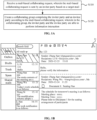
- a mail-based collaborating request sent by an inviter party based on a target mail is received, and a collaborating group including the inviter party and an invitee party is created and the target mail is shared with the invitee party according to the mail-based collaborating request. In this manner, information interaction between the inviter party and the invitee party in the collaborating group based on the target mail can be achieved, and the information interaction efficiency of multi-party collaborative communication is improved.
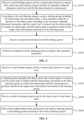
- FIG. 1A is a flowchart of an information interaction method according to embodiment one of the present disclosure.
- the method may be applied to the case of information interaction between an inviter and an invitee, and the method may be executed by an electronic device such as a computer and a server.
- the method includes the steps described below.
- the target mail may be a mail that the inviter party needs to share with the invitee party.
- the target mail may come from a mail terminal, or may come from an IM terminal.
- the inviter party may be a client used by an inviter of the target email
- the invitee party may be a client used by an invitee of the target email.
- the case where the target mail comes from the mail terminal may include, for example, that the inviter party shares, based on a newly-created draft or a received email, the newly-created draft or the received mail.
- the case where the target mail comes from the IM terminal may include, for example, that the inviter party re-shares a mail that has been shared with the IM terminal.
- the inviter party may specify one invitee party or may specify multiple invitee parties, that is, the inviter party may share the target mail with one invitee party or may share the target mail with multiple invitee parties, which is not limited here.
- the target mail includes at least one mail draft or multiple associated mails having the same feature information.
- the target mail involved in the embodiment may be one or more mail drafts or multiple associated mails having the same feature information.
- the mail draft may be a new draft created separately by the inviter party, and the associated mails having the same feature information may be a mail set composed of multiple mails having at least one of the following pieces of feature information: the same subject, a sending time being within a preset time range, the same sender, the same recipient, a reply reference relationship or a forwarding reference relationship.
- the inviter may initiate the mail-based collaborating request for the target mail on the mail client used by the inviter to share the target mail.
- the client used by the inviter may include a computer client or a mobile phone client.
- the manner in which the inviter party initiates the mail-based collaborating request includes, but is not limited to, that the inviter clicks on a button representing a sharing function in a display interface of the target mail, thereby triggering the generation of the mail-based collaborating request for the target mail.
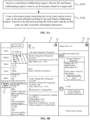
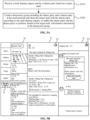
- the inviter may initiate the sharing of the target mail by clicking on the sharing button 11 displayed in the upper right corner of the mail content displaying window under the mail and become the inviter party of the target mail, and at the same time, the mail-based collaborating request is generated.
- the server may receive the mail-based collaborating request sent by the inviter party based on the mail replied by Zhang San.
- a displaying window of candidate invitee parties may pop up, and identity information such as avatars of multiple candidate invitee parties is displayed in the displaying window.
- the inviter may select the avatar of the invitee party needing mail-based collaborating from the displaying window and click on a confirmation button to trigger the generation of the mail-based collaborating request on the client, and the mail-based collaborating request is sent to the server, so that the server creates a collaborating group including the inviter party and the selected invitee party according to the mail-based collaborating request.
- the collaborating group including the inviter party and the invitee party is created according to the mail-based collaborating request, to enable the inviter party and the invitee party to perform information interaction in the collaborating group.
- the server may create a collaborating group including the inviter party and at least one invitee party based on the target mail, that is, create a collaborating group associated with the target mail, and add the inviter party and the invitee party into the collaborating group as group members of the collaborating group.
- the manner of sharing the target mail with the invitee party includes, but is not limited to, displaying the target mail in association based on the created collaborating group, so that the inviter party and the invitee party can perform information interaction in the collaborating group based on the target mail.
- the inviter party and the invitee party which are members of the collaborating group may perform online multi-party collaborative information interaction in the collaborating group based on the displayed target mail.
- the information interaction manner includes, but is not limited to, text interaction, voice interaction, video interaction, collaborative editing and the like.
- the mail-based collaborating refers to that the inviter party shares the target mail with the invitee party in the manner of creating a group, so that the invitee party can view and/or edit the target mail.
- the invitee party actually cannot really own the target mail, that is, the target mail obtained by the invitee party by sharing will be automatically deleted as the sharing ends.
- the mail-based collaborating request includes: an inviter party identifier and an invitee party identifier.
- the step in which the collaborating group including the inviter party and the invitee party is created includes the following steps: according to the inviter party identifier and the invitee party identifier, the collaborating group including the inviter party and the invitee party is created, and a corresponding group identifier is allocated to the collaborating group; and the group identifier is sent to the inviter party and the invitee party to enable the inviter party and the invitee party to acquire a group message of the collaborating group in real time according to the group identifier.
- the mail-based collaborating request sent by the inviter party may include the inviter party identifier and the invitee party identifier.
- the inviter party identifier and the invitee party identifier may be unique information identifying the identity of the inviter party and the invitee party, such as an account number.
- the server when creating the collaborating group, may add the inviter party and the invitee party into the collaborating group by using the inviter party identifier and the invitee party identifier of at least one invitee party specified by the inviter party.
- the collaborating group is also correspondingly allocated with a group identifier after being created.
- the server may send the group identifier of the collaborating group to the inviter party and the invitee party, so that the inviter party and the invitee party may pull a group message of the collaborating group associated with the group identifier in real time from the server.
- the method further includes the following step: the collaborating group is started in the inviter party and the invitee party respectively according to the group identifier.
- the method further includes the following steps: the collaborating group is started in the inviter party according to the group identifier; and a collaborating group creation prompt is displayed on the invitee party, where the collaborating group creation prompt is used for prompting the invitee party that a new collaborating group is created; and the collaborating group is started in the invitee party after a viewing operation instruction of the invitee party is received.
- the collaborating group being started may be that the collaborating group is opened and a group message in the collaborating group is acquired and displayed in time.
- the following two manners may be used for starting the collaborating group in the invitee party: in one manner, no group creation prompt is displayed, and the collaborating group is directly started in the invitee party; in the other manner, a collaborating group creation prompt is displayed to prompt the invitee that a new collaborating group is created, and the collaborating group is started in the invitee party if a viewing operation instruction generated by the invitee party when the invitee views the collaborating group for the first time is received. Since the inviter party is the group creator initiating the sharing, the collaborating group can be directly started according to the group identifier.
- the method further includes the following step: the target mail is displayed to the inviter party and/or the invitee party.
- the target mail may be displayed to the inviter party and/or the invitee party based on the created collaborating group.
- An association relationship between the target mail and the collaborating group may be established, and according to the association relationship, the target mail is displayed to the inviter party and/or the invitee party in the collaborating group or based on a display position of the collaborating group.
- the inviter or the invitee may open the mail content displaying window by clicking on the mail card, and the mail content of the target mail is expanded and displayed in the mail content displaying window.
- a mail content displaying button may further be separately set, and the button is clicked on to open the mail content displaying window.
- the opening manner is not limited here.
- the mail information of the target mail may be displayed in the form of the mail card 12 in the collaborating group shown in FIG. 1C.
- the mail content displaying window may also be separately constructed, and the mail content of the target mail is expanded and displayed in the mail content displaying window.
- a user may click on the mail card 12, or a mail content displaying button 13 may be separately set on a side status bar of the collaborating group, so that the mail content displaying window pops up for displaying.
- the method further includes the following steps: a mail-based re-collaborating request sent by the inviter party or the invitee party is received; and the target mail is shared with a newly-added invitee party indicated by the mail-based re-collaborating request according to the mail-based re-collaborating request.
- the second sharing may also be performed.
- the inviter party or the invitee party may initiate the second sharing based on the shared target mail, and the server may share the target mail with the newly-added invitee party after receiving the mail-based re-collaborating request of the inviter party or the invitee party based on the target mail.
- the manner of initiating the second sharing includes, but is not limited to, inviting the newly-added invitee party to join the collaborating group.
- the method further includes the following step: the newly-added invitee party is added to the collaborating group.
- the mail-based collaborating request sent by the inviter party based on the target mail is received, and the collaborating group including the inviter party and the invitee party is created and the target mail is shared with the invitee party according to the mail-based collaborating request, to enable the inviter party and the invitee party to perform, based on the target mail, information interaction in the collaborating group.
- Communication is conducted in the group created based on the shared mail, so that the problem is solved that in the related art, the mail is first forwarded to each invitee party, and then communication is conducted with multiple invitee parties one by one or an offline face-to-face meeting is held for discussion, leading to low information interaction efficiency. Therefore, the information interaction efficiency of multi-party collaborative communication is improved.
- the collaborating group includes a discussion group at the mail terminal and/or an IM group at the IM terminal.
- the step in which the collaborating group including the inviter party and the invitee party is created includes the following steps: a discussion group including the inviter party and the invitee party is created at the mail terminal of the inviter party and the mail terminal of the invitee party; and/or an IM group including the inviter party and the invitee party is created at the IM terminal of the inviter party and the IM terminal of the invitee party.
- the collaborating group may be set at the mail terminal of the inviter party and the mail terminal of the invitee party, that is, a discussion group is created at the mail terminal of the inviter party and the mail terminal of the invitee party through the server, and the discussion group is displayed at the mail terminal of the inviter party and the mail terminal of the invitee party;
- the collaborating group may also be set at the IM terminal of the inviter party and the IM terminal of the invitee party, that is, an IM group is created at the IM terminal of the inviter party and the IM terminal of the invitee party through the server, and the IM group is displayed at the IM terminal of the inviter party and the IM terminal of the invitee party, which is not limited here.
- An ordinary group may be a group constructed by operating in a mail-independent manner, and a group having a strong association relationship with a mail may include a special group constructed based on a mail operation.
- the embodiment aims to achieve the special group management for the special group constructed based on the mail operation.
- the special group constructed based on the mail operation may be, for example, the collaborating group involved in the embodiment.
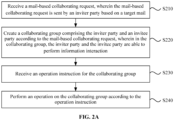
- FIG. 2A is a flowchart of an information interaction method according to embodiment two of the present disclosure. The embodiment is described based on multiple optional schemes in the preceding embodiment and provides an optional information interaction method, and the following steps are further included: an operation instruction for a collaborating group is received; and an operation is performed on the collaborating group according to the operation instruction. The steps described below are included.
- a collaborating group including the inviter party and an invitee party is created according to the mail-based collaborating request, to enable the inviter party and the invitee party to perform information interaction in the collaborating group.
- the collaborating group may be a group having a strong association relationship with the target mail, such as a collaborating group created by performing a sharing operation based on the target mail.
- the collaborating group may include, for example, a discussion group at a mail terminal and/or an IM group at an IM terminal.
- the collaborating group may be set at the mail terminal, for example, a discussion group is created through a mail terminal server and is displayed on a mail client; the collaborating group may also be set at the IM terminal, that is, an IM group is created through an IM terminal server and is displayed on an IM client, which is not limited here.
- synchronous display may be performed, so that the group message presented in the discussion group is the same as the group message presented in the IM group.
- the client may send the operation instruction to the server, and the server performs a corresponding group management operation according to the received operation instruction for the collaborating group.
- the collaborating group is a discussion group at the mail terminal
- some special display may be performed on the discussion group.
- FIG. 2B a schematic diagram of a display interface of a discussion group displayed on a mail client is shown in FIG. 2B.
- the discussion group 10 is displayed on a side of the mail content displaying window 20, so that a user can view the mail content of the target mail while discussing in the discussion group, and thus the interaction efficiency is improved based on the mail content.
- the discussion group at the mail terminal may display a status bar for displaying group member information.
- the displaying of the status bar enables the user to know some information of group members, which facilitates the management of the group members.
- the group member information may include at least one of the following: the number of group members, a group member avatar or a group member adding identifier.
- the number of group members may be the number of group members included in the discussion group.
- the group member avatar may be an image identifier of a group member in the discussion group.
- the group member adding identifier may be an entry for a group administrator to add a new member to the discussion group.
- the group administrator may click on the group member adding identifier to trigger the popping up of a display window of candidate members, and select the to-be-added new member in the window to complete the operation of inviting a new member to join the group.
- the discussion group 10 displays a status bar 100 for displaying group member information.
- the number of group members 101, the group member avatars 102 and the group member adding identifier 103 are displayed.
- the IM group at the IM terminal displays a group name associated with the target mail.
- the group name associated with the target mail includes, but is not limited to, using the mail subject of the target mail as the group name of the IM group for displaying. In this way, it is convenient for the user to find the IM group strongly associated with the target mail from multiple groups on the IM client, and it is also convenient for the user to distinguish the IM group from IM groups associated with other mails or ordinary groups.
- FIG. 2C a schematic diagram of a display interface of an IM group displayed on an IM client is shown in FIG. 2C.
- the group name of the IM group 30 is the mail subject of the target mail associated with the IM group 30, that is, the mail subject of the target mail is "Reply: Annual work arrangement", and the group name displayed above the display interface of the IM group 30 is "Reply: Annual work arrangement”.
- the server may perform a corresponding group management operation according to the operation instruction.
- the server may add a specified new member to the collaborating group based on the new member adding instruction.
- the management operation of the collaborating group is not limited to adding a new member, and the above is merely illustrative here. Other management operations of the collaborating group may also be included and are not limited here.
- the step in which the operation instruction for the collaborating group is received includes that a group joining verification starting instruction sent by the inviter party for the IM group is received.
- the step in which the operation is performed on the collaborating group according to the operation instruction includes that a group verification interface is provide in the IM group displayed in the inviter party, to enable the inviter party to process a group verification message at the IM terminal.
- the inviter party may be the client used by the inviter of the target email, and correspondingly, the invitee party may be the client used by the invitee of the target email.
- the server may start the corresponding group verification function in the IM group displayed in the inviter party according to the instruction, that is, provide a group verification interface.
- prompt information is displayed in the inviter party so that the inviter performs group verification processing on the group joining of the new member.
- the group verification function is convenient for the management of the group by the inviter party, and thus the security of the group information and the target mail is improved.
- the step in which the operation instruction for the collaborating group is received includes that a group silence instruction sent for the discussion group is received.
- the step in which the operation is performed on the collaborating group according to the operation instruction includes that a new message reminding manner of the discussion group is switched from a first reminding manner to a second reminding manner.
- the first reminding manner includes at least one of the following: sound reminding, displaying a first reminding identifier based on a group icon of the discussion group or displaying a second reminding identifier based on the mail information of the target mail; and the second reminding manner includes displaying a third reminding identifier based on the group icon of the discussion group.
- a group silence function is provided.
- the inviter or the invitee may perform silence setting on the mail client used by the inviter or the invitee according to requirements.
- the inviter or the invitee may select the option of the group silence function on the mail client used by the inviter or the invitee to trigger the generation of a group silence instruction, and send the group silence instruction to the server.
- the server may start a silent mode in the discussion group displayed in the inviter party according to the instruction, that is, the server may switch the new message reminding manner of the discussion group from the first reminding manner in a non-silent mode to the second reminding manner in the silent mode.
- the first reminding manner includes, but is not limited to, sound reminding, displaying a first reminding identifier based on a group icon of the discussion group and displaying a second reminding identifier based on the mail information of the target mail.
- the second reminding manner includes, but is not limited to, displaying a third reminding identifier based on the group icon of the discussion group.
- the first reminding identifier and the second reminding identifier are more conspicuous than the third reminding identifier.
- the conspicuousness may be embodied in a brighter color, a more specific information prompt content, etc.
- the first reminding identifier may be a red number corresponding to the number of new messages
- the second reminding identifier may be a red icon.
- the third reminding identifier may be, for example, a grey number or a red dot corresponding to the number of new messages, and may be selected according to the setting of the user.
- the corresponding mail list 50 may be displayed, and mails displayed in the mail list 50 are all shared mails.
- the mail shared by Zhang San in FIG. 2B is taken as an example. Taking the mail shared by Zhang San as an example, the mail shared by Zhang San is used as a target mail, and mail information 51 of the target mail is displayed in the mail list 50.
- a red discussion icon 511 is displayed in the lower left corner of the mail information 51 if a new message is received; when the discussion group is in the silent mode, the red discussion icon 511 is not displayed if a new message is received.
- FIG. 2B when the user clicks on the mail-based collaborating tab 40, the corresponding mail list 50 may be displayed, and mails displayed in the mail list 50 are all shared mails.
- the mail shared by Zhang San in FIG. 2B is taken as an example. Taking the mail shared by Zhang San as an example, the mail shared by Zhang San is used as a target mail, and mail information 51 of the target mail is displayed in the mail list 50.
- the group icon 21 for the discussion group popping up may be displayed on the mail content displaying window 20.
- a red number is displayed on the group icon 21 if a new message is received.
- a grey number or a red dot is displayed on the group icon 21 if a new message is received.
- the step in which the operation instruction for the collaborating group is received includes that a group silence instruction sent for the IM group is received.
- the step in which the operation is performed on the collaborating group according to the operation instruction includes that a new message reminding manner of the IM group is switched from a third reminding manner to a fourth reminding manner.
- the third reminding manner includes sound reminding and/or displaying a fourth reminding identifier based on a message stream corresponding to the IM group; and the fourth reminding manner includes displaying a fifth reminding identifier based on the message stream corresponding to the IM group.
- the fifth reminding identifier includes a target reminding identifier selected from at least two selectable identifiers corresponding to the IM group.
- a group silence function is provided.
- the inviter or the invitee may perform silence setting on the IM client used by the inviter or the invitee according to requirements.
- the inviter or the invitee may select the option of the group silence function on the IM client used by the inviter or the invitee to trigger the generation of a group silence instruction, and send the group silence instruction to the server.
- the server may start a silent mode in the IM group displayed in the inviter party according to the instruction, that is, the new message reminding manner of the IM group is switched from the third reminding manner in a non-silent mode to the fourth reminding manner in the silent mode.
- the third reminding manner includes, but is not limited to, sound reminding and displaying a fourth reminding identifier based on a message stream corresponding to the IM group; and the fourth reminding manner includes, but is not limited to, displaying a fifth reminding identifier based on the message stream corresponding to the IM group.
- the fourth reminding identifier is more conspicuous than the fifth reminding identifier.
- the conspicuousness may be embodied in a brighter color, a more specific information prompt content, etc.
- the fourth reminding identifier may be a red number corresponding to the number of new messages.
- the fifth reminding identifier may be, for example, a grey number or a red dot corresponding to the number of new messages, and may be selected according to the setting of the user.
- a red number corresponding to the number of new messages is displayed in the message stream 31 corresponding to the IM group 30 if new messages are received.
- a grey number corresponding to the number of new messages or only a red dot is displayed in the message stream 31 corresponding to the IM group 30 if new messages are received.
- Different new message reminding manners are used when the group is in different states, so that the user can change the display and reminding manner of the collaborating group according to requirements, and thus personalized selection requirements of the user are satisfied and the interactivity is increased.
- the operation instruction for the collaborating group is received, where the collaborating group is a group for performing information interaction based on the target mail, and the operation is performed on the collaborating group according to the operation instruction.
- Management operation is performed on the collaborating group for information interaction based on the target mail, so that the problem is solved that in the related art, only the management operation of the ordinary group exists while no management operation of the special group constructed based on the mail operation exists, and thus the group management of the special group constructed based on the mail operation is achieved.
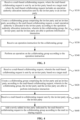
- FIG. 3 is a flowchart of an information interaction method according to embodiment three of the present disclosure.
- the mail-based collaborating request includes an operation authority allocation instruction sent by the inviter party to the invitee party.
- the method further includes that a mail operation authority is allocated to the invitee party according to the operation authority allocation instruction.
- a mail-based collaborating request sent by an inviter party based on a target mail is received, where the mail-based collaborating request includes an operation authority allocation instruction sent by the inviter party to an invitee party.
- a collaborating group including the inviter party and the invitee party is created according to the mail-based collaborating request, a mail operation authority is allocated to the invitee party according to the operation authority allocation instruction, to enable the inviter party and the invitee party to perform information interaction in the collaborating group.
- a mail operation authority may further be allocated to the invitee party.
- the mail operation allocation authority may be an operation authority for the target mail allocated by the inviter party to the invitee party.
- the mail-based collaborating request sent by the inviter party may include the operation authority allocation instruction sent by the inviter party to the invitee party.
- the server may, while creating the collaborating group, allocate the mail operation authority to the invitee party according to the operation authority allocation instruction.
- the mail operation authority is set, so that each invitee party may be allocated an authority that may be owned by the each invitee party according to requirements of the inviter party, the invitee party can perform an operation on the target mail within the range of the authority owned by the invitee party, and thus the collaborative management of the target mail is facilitated.
- the mail operation authority includes at least one of editing authority, reading authority or sharing authority.
- the editing authority may be the authority to edit the content of the target mail, for example, the authority of writing, modifying, commenting and the like on the content of the mail.
- the reading authority may be the authority to read and view the content of the target mail, for example, the authority of opening the target mail, viewing the content of the mail, etc.
- the sharing authority may be the authority to perform the second sharing of the target mail, for example, the authority of sharing the target mail with other users, inviting other users to join a group, etc.
- the sharing of the target mail may be revoked or partially revoked according to the group operation instruction sent by the inviter party or the invitee party, that is, the mail operation authority allocated by the inviter party to all invitee parties is withdrawn, or the mail operation authority allocated by the inviter party to part of invitee parties is withdrawn.
- the group operation instruction includes, but is not limited to, instructions of group leaving, group disbanding and sharing revoking.
- the management of the mail operation authority may be performed from aspects described below.
- the invitee party whose mail operation authority is revoked no longer has the operation authority of the target mail.
- the invitee party cannot perform operations such as editing, reading and sharing on the target mail, so that the sharing of the target mail is revoked or partially revoked.
- the step in which the group operation instruction sent by the inviter party or the invitee party is received, and the mail operation authority of the invitee party is revoked or partially revoked according to the group operation instruction includes the following steps: a mail-based collaborating revoking instruction sent by the inviter party is received; and the mail operation authority of the invitee party is revoked according to the mail-based collaborating revoking instruction.
- the step in which the group operation instruction sent by the inviter party or the invitee party is received, and the mail operation authority of the invitee party is revoked or partially revoked according to the group operation instruction includes the following steps: a first group leaving operation instruction sent by the inviter party is received; and the inviter party is removed from the collaborating group according to the first group leaving operation instruction, and the mail operation authority of the invitee party in the collaborating group is revoked.
- the method further includes the following step: ownership of the inviter party and a group operation authority of the inviter party are transferred to a target group member in the collaborating group according to an ownership transfer instruction sent by the inviter party or a preset transfer rule.
- the step in which the group operation instruction sent by the inviter party or the invitee party is received, and the mail operation authority of the invitee party is revoked or partially revoked according to the group operation instruction includes the following steps: a group disbanding operation instruction sent by the inviter party is received; and the collaborating group is disbanded according to the group disbanding operation instruction, and the mail operation authority of the invitee party in the collaborating group is revoked.
- the step in which the group operation instruction sent by the inviter party or the invitee party is received, and the mail operation authority of the invitee party is revoked or partially revoked according to the group operation instruction includes the following steps: a second group leaving operation instruction sent by a target invitee party is received; and the target invitee party is removed from the collaborating group according to the second group leaving operation instruction, and mail operation authority of the target invitee party is revoked.
- the step in which the group operation instruction sent by the inviter party or the invitee party is received, and the mail operation authority of the invitee party is revoked or partially revoked according to the group operation instruction the following steps: an ownership transfer instruction sent by the inviter party is received; and ownership of the inviter party and a group operation authority of the inviter party are transferred to a target group member in the collaborating group according to the ownership transfer instruction, and the mail operation authority of the invitee party in the collaborating group is revoked.
- the inviter may click on a group leaving button displayed on the display interface of the collaborating group to trigger the generation of the first group leaving operation instruction, so that the inviter party can leave the collaborating group and withdraw the sharing of the target mail.
- the server After receiving the first group leaving operation instruction sent by the inviter party, the server removes the inviter party from the collaborating group, at the same time, searches for all invitee parties having the mail operation authority for the target mail in the collaborating group, and revokes the mail operation authority of all invitee parties for the target mail, so that the invitees cannot perform an operation on the target mail anymore.
- the inviter selects a target group member in the collaborating group when clicking on a group leaving button, and thus triggers the generation of the ownership transfer instruction, so as to transfer the ownership of the collaborating group to the selected target group member, and withdraw the sharing of the target mail.
- the generation of the ownership transfer instruction is automatically triggered, the ownership of the collaborating group is transferred to a target group member according to the preset transfer rule, and the sharing of the target mail is withdrawn.
- the preset transfer rule may be, for example, a default transfer of the ownership to the group member displayed and arranged next to the avatar of the group owner.
- the server may transfer the ownership of the inviter party and the group operation authority to a specified or default target group member in the collaborating group.
- the inviter may click on a group disbanding button displayed on the display interface of the collaborating group to trigger the generation of the group disbanding operation instruction, so that the collaborating group is disbanded and the sharing of the target mail is withdrawn.
- the server After receiving the group disbanding operation instruction sent by the inviter party, the server disbands the collaborating group, at the same time, searches for all invitee parties having the mail operation authority for the target mail in the collaborating group, and revokes the mail operation authority of all invitee parties for the target mail, so that the invitees cannot perform an operation on the target mail anymore.
- the inviter party has the ownership in the collaborating group, and the invitee party is a group member of the collaborating group. Based on this, the inviter party may revoke the sharing of the target mail by transferring the ownership. For example, the inviter may select a target group member in the collaborating group and clicks on an ownership transfer button from a pop-up menu to trigger the generation of the ownership transfer instruction, so as to transfer the ownership of the collaborating group to the selected target group member, and withdraw the sharing of the target mail. For another example, after the inviter leaves the collaborating group, the generation of the ownership transfer instruction is automatically triggered, the ownership of the collaborating group is transferred to a target group member according to the preset transfer rule, and the sharing of the target mail is withdrawn.
- the preset transfer rule may be, for example, a default transfer of the ownership to the group member displayed and arranged next to the avatar of the group owner.
- a target invitee may click on a group leaving button displayed on the display interface of the collaborating group to trigger the generation of the second group leaving operation instruction, so that the target invitee party leaves the collaborating group, and the target mail shared with the target invitee is withdrawn.
- the server After receiving the second group leaving operation instruction sent by the target invitee party, the server removes the target invitee party from the collaborating group, and at the same time, revokes the mail operation authority of the target invitee party for the target mail, so that the target invitee cannot perform an operation on the target mail anymore.
- the mail-based collaborating request sent by the inviter party based on the target mail is received, where the mail-based collaborating request includes the operation authority allocation instruction sent by the inviter party to the invitee party, the collaborating group including the inviter party and the invitee party is created according to the mail-based collaborating request, at the same time, the mail operation authority is allocated to the invitee according to the operation authority allocation instruction, and the target mail is shared with the invitee party, to enable the inviter party and the invitee party to perform information interaction based on the target mail.
- different mail operation authorities are set for different invitee parties, so that multi-party collaborative operations can be performed on the shared mail, and the information interaction efficiency of multi-party collaborative communication is improved.
- FIG. 4 is a flowchart of an information interaction method according to embodiment four of the present disclosure.
- the embodiment is described based on multiple optional schemes in the preceding embodiments and provides an optional information interaction method.
- the step in which the operation instruction for the collaborating group is received includes that a mail-based re-collaborating request sent by the inviter party or the invitee party is received.
- the step in which the operation is performed on the collaborating group according to the operation instruction includes that a newly-added invitee party indicated by the mail-based re-collaborating request is added to the collaborating group according to the mail-based re-collaborating request.
- the steps described below are included.
- the operation of performing management on the collaborating group may be embodied as that a new group member, that is, a newly-added invitee party, is added to the collaborating group.
- a new group member that is, a newly-added invitee party
- the newly-added invitee party can also perform information interaction with other group members together in the collaborating group based on the shared target mail.
- the second sharing may also be performed.
- the inviter party or the invitee party may initiate the second sharing based on the shared target mail, and the server may share the target mail with the newly-added invitee party after receiving the mail-based re-collaborating request of the inviter party or the invitee party based on the target mail.
- the manner of initiating the second sharing includes, but is not limited to, inviting the newly-added invitee party to join the collaborating group.
- a discussion group displayed on a mail client is taken as an example.
- a group member adding identifier may be set in a mail content displaying window of the mail client or in a status bar corresponding to the discussion group.
- a candidate window may pop up to display identity information of candidate invitees, and the inviter or an invitee having a sharing authority may select a candidate invitee to initiate a re-collaborating request.
- a user may initiate a mail-based re-collaborating request by triggering the group member adding identifier 103 displayed in the status bar 100 of the discussion group 10.
- the method may further include that if it is determined that the collaborating group is in a state that only the inviter party is able to re-share, reception of the mail-based re-collaborating request sent by the invitee party is prohibited.
- the inviter party may set the collaborating group in a state that only the inviter party is able to re-share, for example, select an option of re-sharing only by the group owner in the collaborating group, to prohibit the invitee party from pulling other people into the group. In this way, the security of the collaborating group and the target mail can be improved.
- the server may add the newly-added invitee party indicated by the mail-based re-collaborating request to the collaborating group.
- the mail-based re-collaborating request may include an identity identifier of the newly-added invitee party selected by the inviter party or the invitee party who initiates the request, and the server may add the newly-added invitee party to the collaborating group according to the identity identifier of the newly-added invitee party.
- the newly-added invitee party may be added to the collaborating group, so that the shared target mail is shared with the newly-added invitee party.
- the inviter party or the invitee party may allocate, within the range of the group management authority of their own, a group management authority not greater than the group management authority of their own to the newly-added invitee party. That is, for example, an invitee having the authority of adding a new member to the group may allocate the authority of adding a new member to the group to a newly-added invitee when inviting the newly-added invitee to join the group.
- the method further includes the following step: the collaborating group is started in the newly-added invitee party, and all corresponding history messages are displayed in the collaborating group of the newly-added invitee party.
- the collaborating group being started may be that the collaborating group is opened and a group message in the collaborating group is acquired and displayed in time.
- all corresponding history messages may be displayed in the collaborating group of the newly-added invitee party. That is, the newly-added invitee party may pull all history message records corresponding to the collaborating group from the server, including, but not limited to, text information, voice information and information related to the target mail sent by group members when performing information interaction in the collaborating group.
- All corresponding history messages are displayed in the collaborating group of the newly-added invitee party, so that the newly-added invitee party can know the information interaction content in the collaborating group quickly, which is convenient for the newly-added invitee to perform information interaction continuously with other members in the collaborating group based on the current information interaction content.
- the mail-based re-collaborating request sent by the inviter party or the invitee party is received, and the newly-added invitee party indicated by the mail-based re-collaborating request is added to the collaborating group according to the mail-based re-collaborating request.
- the second sharing of the target mail is performed in the manner of adding the newly-added invitee party into the collaborating group, so that the information interaction efficiency of multi-party collaborative communication and the group management efficiency are improved.
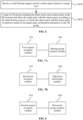
- FIG. 5A is a flowchart of an information interaction method according to embodiment five of the present disclosure.
- the method may be applied to the case of information interaction between an inviter and an invitee, and the method may be executed by an electronic device such as a computer and a server.
- the method includes the steps described below.
- a discussion group is created in a mail server based on the target mail shared by the inviter party, and the discussion group is displayed on a mail client of the inviter party and a mail client of an invitee party, so that the inviter party and the invitee party perform, based on the target mail, information interaction in the discussion group.
- a mail terminal may refer to the mail server, the mail client of the inviter party and the mail client of the invitee party.
- the target mail may be a mail that the inviter party needs to share with the invitee party.
- the target mail may come from the mail terminal, or may come from an IM terminal.
- the inviter party may be the client used by the inviter of the target email
- the invitee party may be the client used by the invitee of the target email.
- the case where the target mail comes from the mail terminal may include, for example, that the inviter party shares, based on a newly-created draft or a received mail, the newly-created draft or the received mail.
- the case where the target mail comes from the IM terminal may include, for example, that the inviter party re-shares a mail that has been shared with the IM terminal.
- the inviter party may specify one invitee party or may specify multiple invitee parties, that is, the inviter party may share the target mail with one invitee party or may share the target mail with multiple invitee parties, which is not limited here.
- the target mail includes at least one mail draft or multiple associated mails having the same feature information.
- the target mail involved in the embodiment may be one or more mail drafts or multiple associated mails having the same feature information.
- the mail draft may be a new draft created separately by the inviter party, and the associated mails having the same feature information may be a mail set composed of multiple mails having at least one of the following pieces of feature information: the same subject, a sending time being within a preset time range, the same sender, the same recipient, a reply reference relationship or a forwarding reference relationship.
- the inviter may initiate the mail-based collaborating request for the target mail on the mail client used by the inviter to share the target mail.
- the client used by the inviter may include a computer client or a mobile phone client.
- the manner in which the inviter party initiates the mail-based collaborating request includes, but is not limited to, that the inviter clicks on a button representing a sharing function in a display interface of the target mail, thereby triggering the generation of the mail-based collaborating request for the target mail.
- a discussion group including the inviter party and an invitee party is created at the mail terminal according to the mail-based collaborating request, to enable the inviter party and the invitee party to perform information interaction in the discussion group.
- the mail-based collaborating refers to that the inviter party shares the target mail with the invitee party in the manner of creating a group, so that the invitee party can view and/or edit the target mail.
- the invitee party actually cannot really own the target mail, that is, the target mail obtained by the invitee party by sharing will be automatically deleted as the sharing ends.
- the method further includes the following step: a sharing tag is added to the target mail, and the sharing tag is displayed in association with the target mail.
- the sharing tag may be a dedicated tag set by the mail terminal for mail-based collaborating.
- the sharing tag may be added to the target mail, so that the target mail can be distinguished from other unshared mails and displayed to facilitate the search by a user.
- the sharing tag may be displayed in association with the target mail.
- the association displaying manner includes, but is not limited to, displaying the sharing tag while displaying the target mail.
- the step in which the sharing tag is displayed in association with the target mail includes the following steps: mail information of the target mail is displayed in a mail list in a sharing tab of the mail terminal; and/or, the target mail displayed in another tab of the mail terminal is marked by using the sharing tag.
- the sharing tab may be set separately on the mail client.
- the corresponding mail list 32 may be displayed.
- Mails displayed in the mail list 32 are mails all having the sharing tag.
- the mail information of the target mail such as the mail information of the target mail shared by Zhang san shown in FIG. 5B , may be displayed in the mail list under the sharing tab.
- the step in which the discussion group including the inviter party and the invitee party is created at the mail terminal includes the following step: the discussion group including the inviter party and the invitee party is created and is displayed based on a display position of a mail content displaying window of the mail terminal, where the mail content displaying window is configured to expand and display a mail content of the target mail.
- the mail content displaying window may be a window for displaying the mail content in the mail terminal.
- a specific mail may be selected to switch the mail content displayed in the mail content displaying window, so as to display the mail content corresponding to the selected specific mail.
- the target mail displayed in the mail content displaying window is marked with a corresponding inviter party identifier.
- the corresponding inviter party identifier may be displayed in the status bar of the window while the content of the target mail is displayed in the mail content displaying window.
- the words of "Mail shared by Zhang San" are displayed in the lower left of the status bar of the mail content displaying window 35.
- the discussion group icon may further be displayed in the mail content displaying window, and the user may click on the discussion group icon to enable the discussion group to pop up or hide.
- the discussion group icon 351 is displayed in the upper right corner of the status bar of the mail content displaying window 35.
- the discussion group icon is set, so that it is convenient for the user to open or hide the display interface of the discussion group corresponding to the shared mail, facilitating the user to use.
- the method further includes the following step: a new message reminding manner of the discussion group is determined according to a current display state of the discussion group.
- the user may set the current display state of the discussion group according to requirements.
- the current display state of the discussion group in the embodiment includes, but is not limited to, a hidden state, a non-hidden state, a silent mode, a non-silent mode, etc.
- the discussion group corresponds to different new message reminding manners.
- the new message reminding may be performed in the case where the discussion group has new information or new member joining, etc.
- the new message reminding manner includes, but is not limited to, sound reminding, icon reminding, number reminding, etc.
- the step in which the new message reminding manner of the discussion group is determined according to the current display state of the discussion group includes the following step: if the discussion group is currently in a hidden state and is in a non-silent mode, new message reminding is performed in a first reminding manner based on the discussion group icon and/or the mail information of the target mail.
- the information in the discussion group may be updated and displayed directly.
- the manner of directly updating and displaying the information in the discussion group includes, but is not limited to, text information or voice information sent by the inviter party or the invitee party, and text prompt information and/or voice prompt information of a new member joining or leaving the collaborating group. If the discussion group is currently in the non-silent mode at the same time, corresponding sounding reminding may be performed while the information in the discussion group is updated and displayed.
- the new message reminding manner of the discussion group may be determined according to whether the discussion group is currently in the silent mode at the same time. If the discussion group is currently in the hidden state and is in the non-silent mode, the new message reminding is performed in the first reminding manner based on the discussion group icon and/or the mail information of the target mail.
- the first reminding manner includes, but is not limited to, displaying the number (such as a red number) of unread messages in a bright color on the discussion group icon, and/or displaying the discussion icon on the mail information of the target mail, etc.
- the new message reminding is performed in the second reminding manner based on the discussion group icon.
- the second reminding manner includes, but is not limited to, displaying the number of unread messages in an inconspicuous color on the discussion group icon, and/or merely identifying with a red dot on the discussion group icon, etc., which can be personalized according to requirements of the user and is not limited here.
- Distinguishing new message reminding manners are performed according to different states of the discussion group, so that the user can change the display and reminding manner of the discussion group according to requirements of the user, and personalized selection requirements of the user are satisfied and the interactivity is increased.
- the mail-based collaborating request sent by the inviter party based on the target mail is received, and the discussion group including the inviter party and the invitee party is created at the mail terminal and the target mail is shared with the invitee party according to the mail-based collaborating request, to enable the inviter party and the invitee party to perform information interaction in the discussion group based on the target mail.
- Communication is conducted in the group created at the mail terminal based on the shared mail, so that the problem is solved that in the related art, the mail is first forwarded to each invitee party, and then communication is conducted with multiple invitee parties one by one or an offline face-to-face meeting is held for discussion, leading to low information interaction efficiency. Therefore, the information interaction efficiency of multi-party collaborative communication is improved.
- a re-sharing button may be set in the mail content displaying window of the mail client or the status bar corresponding to the discussion group.
- a candidate window may pop up to display identity information of candidate invitees, and the inviter or the invitee having sharing authority may initiate a re-collaborating request by selecting a candidate invitee.
- the user may initiate a mail-based re-collaborating request by triggering the re-sharing button 341 displayed in the status bar of the discussion group 34.
- the method further includes the following step: the discussion group is started at the mail terminal of the inviter party and the mail terminal of the invitee party respectively.
- the method further includes the following step: the discussion group is started at the mail terminal of the inviter party, and a discussion group creation prompt is displayed on the mail terminal of the invitee party.
- the discussion group creation prompt is used for prompting the invitee party that a new discussion group is created; and the discussion group is started at the mail terminal of the invitee party after a viewing operation instruction of the invitee party is received.
- the mail-based collaborating request includes an operation authority allocation instruction sent by the inviter party to the invitee party.
- the method further includes the following step: a mail operation authority is allocated to the invitee party according to the operation authority allocation instruction.
- the mail operation authority includes at least one of editing authority, reading authority or sharing authority.
- the method further includes the following step: a group operation instruction sent by the inviter party or the invitee party is received, and the mail operation authority of the invitee party is revoked or partially revoked according to the group operation instruction.
- the step in which the group operation instruction sent by the inviter party or the invitee party is received, and the mail operation authority of the invitee party is revoked or partially revoked according to the group operation instruction includes the following steps: a first group leaving operation instruction sent by the inviter party is received; and the inviter party is removed from the discussion group according to the first group leaving operation instruction, and the mail operation authority of the invitee party in the discussion group is revoked.
- the step in which the group operation instruction sent by the inviter party or the invitee party is received, and the mail operation authority of the invitee party is revoked or partially revoked according to the group operation instruction includes the following steps: a group disbanding operation instruction sent by the inviter party is received; and the discussion group is disbanded according to the group disbanding operation instruction, and the mail operation authority of the invitee party in the discussion group is revoked.
- the step in which the group operation instruction sent by the inviter party or the invitee party is received, and the mail operation authority of the invitee party is revoked or partially revoked according to the group operation instruction includes the following steps: a second group leaving operation instruction sent by a target invitee party is received; and the target invitee party is removed from the discussion group according to the second group leaving operation instruction, and mail operation authority of the target invitee party is revoked.
- the target mail includes at least one mail draft or multiple associated mails having the same feature information.
- an IM group is created in an IM server based on the target mail shared by the inviter party, and the IM group is displayed on an IM client of the inviter party and an IM client of an invitee party, so that the inviter party and the invitee party perform, based on the target mail, information interaction in the IM group.
- An IM terminal may refer to the IM server, the IM client of the inviter party and the IM client of the invitee party.
- the target mail may be a mail that the inviter party needs to share with the invitee party.
- the target mail may come from the mail terminal, or may come from the IM terminal.
- the inviter party may be the client used by the inviter of the target email
- the invitee party may be the client used by the invitee of the target email.
- the case where the target mail comes from the mail terminal may include, for example, that the inviter party shares, based on a newly-created draft or a received mail, the newly-created draft or the received mail.
- the case where the target mail comes from the IM terminal may include, for example, that the inviter party re-shares a mail that has been shared with the IM terminal.
- the inviter party may specify one invitee party or may specify multiple invitee parties, that is, the inviter party may share the target mail with one invitee party or may share the target mail with multiple invitee parties, which is not limited here.
- the target mail includes at least one mail draft or multiple associated mails having the same feature information.
- the target mail involved in the embodiment may be one or more mail drafts or multiple associated mails having the same feature information.
- the mail draft may be a new draft created separately by the inviter party, and the associated mails having the same feature information may be a mail set composed of multiple mails having at least one of the following pieces of feature information: the same subject, a sending time being within a preset time range, the same sender, the same recipient, a reply reference relationship or a forwarding reference relationship.
- an IM group including the inviter party and an invitee party is created at the IM terminal according to the mail-based collaborating request, to enable the inviter party and the invitee party to perform information interaction in the IM group.
- the server may create an IM group including the inviter party and at least one invitee party at the IM terminal based on the target mail, that is, create an IM group associated with the target mail, and add the inviter party and the invitee party to the IM group as group members of the IM group.
- the manner of sharing the target mail with the invitee party includes, but is not limited to, displaying the target mail in association based on the created IM group, so that the inviter party and the invitee party can perform information interaction in the IM group based on the target mail.
- the inviter party and the invitee party which are members of the IM group may perform online multi-party collaborative information interaction in the IM group based on the displayed target mail.
- the information interaction manner includes, but is not limited to, text interaction, voice interaction, video interaction, collaborative editing and the like.
- the mail-based collaborating refers to that the inviter party shares the target mail with the invitee party in the manner of creating a group, so that the invitee party can view and/or edit the target mail.
- the invitee party actually cannot really own the target mail, that is, the target mail obtained by the invitee party by sharing will be automatically deleted as the sharing ends.
- the step in which the target mail is shared with the invitee party includes the following steps: An association relationship between the target mail and a group identifier corresponding to the IM group is established; and the IM group is displayed in association with the target mail according to the association relationship.
- the association relationship between the target mail and the group identifier corresponding to the IM group may be established to display the IM group in association with the target mail.
- the manner in which the association relationship is established includes, but is not limited to, storing a mail link corresponding to the target mail in a database storing the group identifier of the IM group, etc.
- the step in which the IM group is displayed in association with the target mail may be that the target mail is displayed in the IM group, or the target mail is displayed on a relevant position outside the IM group, which is not limited here.
- the step in which the IM group is displayed in association with the target mail includes the following steps: mail information of the target mail is displayed in a form of a mail card in the IM group; and/or, a mail content displaying window is constructed based on a display position of the IM group, and a mail content of the target mail is expanded and displayed in the mail content displaying window.
- the method further includes the following step: it is determined that a triggering operation instruction for the mail card is received.
- the mail-based collaborating request sent by the inviter party based on the target mail is received, and the IM group including the inviter party and the invitee party is created at the IM terminal and the target mail is shared with the invitee party according to the mail-based collaborating request, to enable the inviter party and the invitee party to perform information interaction in the IM group based on the target mail.
- Communication is conducted in the group created at the IM terminal based on the shared mail, so that the problem is solved that in the related art, the mail is first forwarded to each invitee party, and then communication is conducted with multiple invitee parties one by one or an offline face-to-face meeting is held for discussion, leading to low information interaction efficiency. Therefore, the information interaction efficiency of multi-party collaborative communication is improved.
- the method further includes the following step: the IM group is started at the IM terminal of the inviter party and the IM terminal of the invitee party respectively.
- the method further includes the following step: the IM group is started in the inviter party; and an IM group creation prompt is displayed on the invitee party, where the IM group creation prompt is used for prompting the invitee party that a new IM group is created; and the IM group is started in the invitee party after a viewing operation instruction of the invitee party is received.
- the method further includes the following steps: a mail-based re-collaborating request sent by the inviter party or the invitee party is received; and the target mail is shared with a newly-added invitee party indicated by the mail-based re-collaborating request according to the mail-based re-collaborating request.
- the method further includes the following step: the newly-added invitee party is added to the IM group.
- the method further includes the following step: a mail operation authority is allocated to the invitee party according to the operation authority allocation instruction.
- the mail operation authority includes at least one of editing authority, reading authority or sharing authority.
- the method further includes the following step: a group operation instruction sent by the inviter party or the invitee party is received, and the mail operation authority of the invitee party is revoked or partially revoked according to the group operation instruction.
- the step in which the group operation instruction sent by the inviter party or the invitee party is received, and the mail operation authority of the invitee party is revoked or partially revoked according to the group operation instruction includes the following steps: a mail-based collaborating revoking instruction sent by the inviter party is received; and the mail operation authority of the invitee party is revoked according to the mail-based collaborating revoking instruction.
- the step in which the group operation instruction sent by the inviter party or the invitee party is received, and the mail operation authority of the invitee party is revoked or partially revoked according to the group operation instruction includes the following steps: a first group leaving operation instruction sent by the inviter party is received; and the inviter party is removed from the IM group according to the group leaving operation instruction, and the mail operation authority of the invitee party in the IM group is revoked.
- the step in which the group operation instruction sent by the inviter party or the invitee party is received, and the mail operation authority of the invitee party is revoked or partially revoked according to the group operation instruction includes the following steps: a group disbanding operation instruction sent by the inviter party is received; and the IM group is disbanded according to the group disbanding operation instruction, and the mail operation authority of the invitee party in the IM group is revoked.
- the step in which the group operation instruction sent by the inviter party or the invitee party is received, and the mail operation authority of the invitee party is revoked or partially revoked according to the group operation instruction includes the following steps: a second group leaving operation instruction sent by a target invitee party is received; and the target invitee party is removed from the IM group according to the second group leaving operation instruction, and a mail operation authority of the target invitee party is revoked.
- the step in which the group operation instruction sent by the inviter party or the invitee party is received, and the mail operation authority of the invitee party is revoked or partially revoked according to the group operation instruction includes the following steps: an ownership transfer instruction sent by the inviter party is received; and ownership of the inviter party and a group operation authority of the inviter party are transferred to a target group member in the IM group according to the ownership transfer instruction, and the mail operation authority of the invitee party in the IM group is revoked.
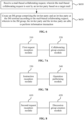
- FIG. 7A is a structural diagram of an information interaction apparatus according to embodiment seven of the present disclosure.
- the information interaction apparatus includes a first request reception module 510 and a collaborating group creation module 520. Multiple modules are described below.
- the first request reception module 510 is configured to receive a mail-based collaborating request sent by an inviter party based on a target mail.
- the collaborating group creation module 520 is configured to create a collaborating group including the inviter party and an invitee party and share the target mail with the invitee party according to the mail-based collaborating request, to enable the inviter party and the invitee party to perform, based on the target mail, information interaction in the collaborating group.
- the mail-based collaborating request sent by the inviter party based on the target mail is received, and the collaborating group including the inviter party and the invitee party is created and the target mail is shared with the invitee party according to the mail-based collaborating request, to enable the inviter party and the invitee party to perform information interaction in the collaborating group based on the target mail.
- Communication is conducted in the group created based on the shared mail, so that the problem is solved that in the related art, the mail is first forwarded to each invitee party, and then communication is conducted with multiple invitee parties one by one or an offline face-to-face meeting is held for discussion, leading to low information interaction efficiency. Therefore, the information interaction efficiency of multi-party collaborative communication is improved.
- the collaborating group creation module 520 may further include a first starting sub-module.
- the first starting sub-module is configured to after the group identifier is sent to the inviter party and the invitee party, start the collaborating group in the inviter party and the invitee party respectively according to the group identifier.
- the instruction reception module 530 and the operation performance module 540 include a sharing revoking module.
- the sharing revoking module is configured to receive a group operation instruction sent by the inviter party or the invitee party, and revoke or partially revoke the mail operation authority of the invitee party according to the group operation instruction.
- the sharing revoking module may include a second instruction reception sub-module and a second sharing revoking sub-module.
- the second instruction reception sub-module is configured to receive a group disbanding operation instruction sent by the inviter party.
- the second sharing revoking sub-module is configured to disband the collaborating group according to the group disbanding operation instruction, and revoke the mail operation authority of the invitee party in the collaborating group.
- the sharing revoking module may include a third instruction reception sub-module and a third sharing revoking sub-module.
- the third instruction reception sub-module is configured to receive a second group leaving operation instruction sent by a target invitee party.
- the third sharing revoking sub-module is configured to remove the target invitee party from the collaborating group according to the second group leaving operation instruction, and revoke mail operation authority of the target invitee party.
- the sharing revoking module may include a fourth instruction reception sub-module and a fourth sharing revoking sub-module.
- the fourth instruction reception sub-module is configured to receive an ownership transfer instruction sent by the inviter party.
- the fourth sharing revoking sub-module is configured to transfer ownership of the inviter party and a group operation authority of the inviter party to a target group member in the collaborating group according to the ownership transfer instruction, and revoke the mail operation authority of the invitee party in the collaborating group.
- the mail operation authority includes at least one of editing authority, reading authority or sharing authority.
- the apparatus may further include a newly-added group member adding module.
- the newly-added group member adding module is configured to after the target mail is shared with the newly-added invitee party indicated by the mail-based re-collaborating request, add the newly-added invitee party to the collaborating group.
- the target mail includes at least one mail draft or multiple associated mails having the same feature information.
- the collaborating group includes a discussion group at a mail terminal and/or an IM group at an IM terminal.
- the discussion group at the mail terminal displays a status bar for displaying group member information.
- the group member information includes at least one of the number of group members, a group member avatar or a group member adding identifier.
- the IM group at the IM terminal displays a group name associated with the target mail.
- the instruction reception module 530 may further include a starting instruction reception sub-module.
- the starting instruction reception sub-module is configured to receive a group joining verification starting instruction sent by the inviter party for the IM group.
- the operation performance module 540 may further include a verification interface providing sub-module.
- the verification interface providing sub-module is configured to provide a group verification interface in the IM group displayed in the inviter party to enable the inviter party to process a group verification message at the IM terminal.
- the instruction reception module 530 may further include a first silence instruction reception sub-module.
- the first silence instruction reception sub-module is configured to receive a group silence instruction sent for the discussion group.
- the operation performance module 540 may further include a first reminding manner switching sub-module.
- the first reminding manner switching sub-module is configured to switch a new message reminding manner of the discussion group from a first reminding manner to a second reminding manner.
- the first reminding manner includes at least one of the following: sound reminding, displaying a first reminding identifier based on a group icon of the discussion group or displaying a second reminding identifier based on the mail information of the target mail; and the second reminding manner includes displaying a third reminding identifier based on the group icon of the discussion group.
- the third reminding identifier includes a target reminding identifier selected from at least two selectable identifiers corresponding to the discussion group.
- the instruction reception module 530 may further include a second silence instruction reception sub-module.
- the second silence instruction reception sub-module is configured to receive a group silence instruction sent for the IM group.
- the operation performance module 540 may further include a second reminding manner switching sub-module.
- the second reminding manner switching sub-module is configured to switch a new message reminding manner of the IM group from a third reminding manner to a fourth reminding manner.
- the third reminding manner includes sound reminding and/or displaying a fourth reminding identifier based on a message stream corresponding to the IM group; and the fourth reminding manner includes displaying a fifth reminding identifier based on the message stream corresponding to the IM group.
- the fifth reminding identifier includes a target reminding identifier selected from at least two selectable identifiers corresponding to the IM group.
- the preceding products can execute the method provided by any embodiment of the present disclosure, and have functional modules and effects corresponding to the executed method.
- FIG. 8 is a structural diagram of an information interaction apparatus according to embodiment eight of the present disclosure.
- the information interaction apparatus includes a second request reception module 610 and a discussion group creation module 620. Multiple modules are described below.
- the second request reception module 610 is configured to receive a mail-based collaborating request sent by an inviter party based on a target mail.
- the discussion group creation module 620 is configured to create a discussion group including the inviter party and an invitee party at a mail terminal and share the target mail with the invitee party according to the mail-based collaborating request, to enable the inviter party and the invitee party to perform, based on the target mail, information interaction in the discussion group.
- the mail-based collaborating request sent by the inviter party based on the target mail is received, and the discussion group including the inviter party and the invitee party is created at the mail terminal and the target mail is shared with the invitee party according to the mail-based collaborating request, to enable the inviter party and the invitee party to perform information interaction in the discussion group based on the target mail.
- Communication is conducted in the group created based on the shared mail at the mail terminal, so that the problem is solved that in the related art, the mail is first forwarded to each invitee party, and then communication is conducted with multiple invitee parties one by one or an offline face-to-face meeting is held for discussion, leading to low information interaction efficiency. Therefore, the information interaction efficiency of multi-party collaborative communication is improved.
- the apparatus may further include a tag adding module.
- the tag adding module is configured to after the mail-based collaborating request sent by the inviter party based on the target mail is received, add a sharing tag to the target mail, and display the sharing tag in association with the target mail.
- the tag adding module may be configured to display mail information of the target mail in a mail list in a sharing tab of the mail terminal, and/or mark, by using the sharing tag, the target mail displayed in another tab of the mail terminal.
- the discussion group creation module 620 may include a discussion group display sub-module.
- the discussion group display sub-module is configured to create the discussion group including the inviter party and the invitee party, and display, based on a display position of a mail content displaying window of the mail terminal, the discussion group including the inviter party and the invitee party, where the mail content displaying window is configured to expand and display a mail content of the target mail.
- the target mail displayed in the mail content displaying window is marked with a corresponding inviter party identifier.
- the discussion group creation module 620 may further include a group icon display sub-module.
- the group icon display sub-module is configured to after the discussion group including the inviter party and the invitee party is created and displayed based on the display position of the mail content displaying window of the mail terminal, display a discussion group icon in the mail content displaying window, where the discussion group icon is configured to, when triggered, enable the discussion group to pop up or hide.
- the reminding manner determination sub-module may further include a silence reminding unit.
- the non-silence reminding unit is configured to in a case where the discussion group is currently in a hidden state and is in a silent mode, perform new message reminding in a second reminding manner based on the discussion group icon.
- the preceding products can execute the method provided by any embodiment of the present disclosure, and has functional modules and effects corresponding to the executed method.
- FIG. 9 is a structural diagram of an information interaction apparatus according to embodiment nine of the present disclosure.
- the information interaction apparatus includes a third request reception module 710 and an IM group creation module 720. Multiple modules are described below.
- the third request reception module 710 is configured to receive a mail-based collaborating request sent by an inviter party based on a target mail.
- the IM group creation module 720 is configured to create an IM group including the inviter party and an invitee party at an IM terminal and share the target mail with the invitee party according to the mail-based collaborating request, to enable the inviter party and the invitee party to perform, based on the target mail, information interaction in the IM group.
- the association displaying sub-module may include a mail information displaying unit and/or a mail content displaying unit.
- the mail information displaying unit is configured to display mail information of the target mail in a form of a mail card in the IM group.
- the mail content displaying unit is configured to construct a mail content displaying window based on a display position of the IM group, and expand and display a mail content of the target mail in the mail content displaying window.
- the association displaying sub-module may further include a triggering instruction reception unit.
- the triggering instruction reception unit is configured to before the mail content displaying window is constructed based on the display position of the IM group, and the mail content of the target mail is expanded and displayed in the mail content displaying window, determine that an operation triggering instruction for the mail card is received.
- the preceding products can execute the method provided by any embodiment of the present disclosure, and has functional modules and effects corresponding to the executed method.
- FIG. 10 shows a structural diagram of an electronic device 800 for implementing an embodiment of the present disclosure.
- Electronic devices in the embodiments of the present disclosure are intended to represent various forms of digital computers, for example, laptop computers, desktop computers, worktables, personal digital assistants, servers, blade servers, mainframe computers and other applicable computers.
- the electronic device shown in FIG. 10 is merely an example and is not intended to limit the function and usage scope of the embodiments of the present disclosure.
- the electronic device 800 may include a processing apparatus (such as a central processing unit and a graphics processing unit) 801.
- the processing apparatus 801 may execute, according to a program stored in a read-only memory (ROM) 802 or a program loaded from a storage apparatus 808 into a random-access memory (RAM) 803, various appropriate actions and processing.
- the RAM 803 also stores various programs and data required for the operation of the electronic device 800.
- the processing apparatus 801, the ROM 802 and the RAM 803 are connected to each other through a bus 804.
- An input/output (I/O) interface 805 is also connected to the bus 804.
- the following apparatuses may be connected to the I/O interface 805: an input apparatus 806 including such as a touch screen, a touch pad, a keyboard, a mouse, a camera, a microphone, an accelerometer and a gyroscope; an output apparatus 807 including such as a liquid crystal display (LCD), a speaker and a vibrator; a storage apparatus 808 including such as a magnetic tape and a hard disk; and a communication apparatus 809.
- the communication apparatus 809 may allow the electronic device 800 to perform wireless or wired communication with other devices to exchange data.
- FIG. 10 illustrates the electronic device 800 having various apparatuses, it is to be understood that it is not required to implement or have all the illustrated apparatuses. Alternatively, more or fewer apparatuses may be implemented or present.
- the processes described above with reference to the flowcharts may be implemented as computer software programs.
- the embodiment of the present disclosure includes a computer program product.
- the computer program product includes a computer program carried in a computer-readable medium.
- the computer program includes program codes for executing the method shown in the flowcharts.
- the computer program may be downloaded from a network and installed through the communication apparatus 809, or may be installed from the storage apparatus 808, or may be installed from the ROM 802.
- the processing apparatus 801 the preceding functions defined in the method of the embodiments of the present disclosure are performed.
- the computer-readable medium described above in the present disclosure may be a computer-readable signal medium or a computer-readable storage medium or any combination thereof.
- the computer-readable storage medium may be, but not limited to, an electrical, magnetic, optical, electromagnetic, infrared or semiconductor system, apparatus or device, or any combination thereof.
- Examples of the computer-readable storage medium may include, but are not limited to, an electrical connection having one or more wires, a portable computer disk, a hard disk, an RAM, an ROM, an erasable programmable read-only memory (EPROM) or flash memory, an optical fiber, a portable compact disc read-only memory (CD-ROM), an optical memory device, a magnetic memory device, or any suitable combination thereof.
- the computer-readable storage medium may be any tangible medium including or storing a program.
- the program may be used by or used in conjunction with an instruction execution system, apparatus or device.
- the computer-readable signal medium may include a data signal propagated on a base band or as a part of a carrier wave, and computer-readable program codes are carried in the data signal.
- the data signal propagated in this manner may be in multiple forms and includes, but is not limited to, an electromagnetic signal, an optical signal, or any suitable combination thereof.
- the computer-readable signal medium may further be any computer-readable medium other than the computer-readable storage medium.
- the computer-readable signal medium may send, propagate or transmit a program used by or in conjunction with an instruction execution system, apparatus or device.
- the program codes included in the computer-readable medium may be transmitted in any suitable medium, including, but not limited to, a wire, an optical cable, a radio frequency (RF), or any suitable combination thereof.
- RF radio frequency
- the preceding computer-readable medium may be included in the electronic device or may exist alone without being assembled into the electronic device.
- the preceding computer-readable medium carries one or more programs which, when executed by the electronic device, cause the electronic device to perform: receiving a mail-based collaborating request sent by an inviter party based on a target mail; and creating a collaborating group including the inviter party and an invitee party and sharing the target mail with the invitee party according to the mail-based collaborating request, to enable the inviter party and the invitee party to perform, based on the target mail, information interaction in the collaborating group.
- the preceding computer-readable medium carries one or more programs which, when executed by the electronic device, cause the electronic device to perform: receiving a mail-based collaborating request sent by an inviter party based on a target mail; and creating a discussion group including the inviter party and an invitee party at a mail terminal and sharing the target mail with the invitee party according to the mail-based collaborating request, to enable the inviter party and the invitee party to perform, based on the target mail, information interaction in the discussion group.
- the preceding computer-readable medium carries one or more programs which, when executed by the electronic device, cause the electronic device to perform: receiving a mail-based collaborating request sent by an inviter party based on a target mail; and creating an IM group including the inviter party and an invitee party at an IM terminal and sharing the target mail with the invitee party according to the mail-based collaborating request, to enable the inviter party and the invitee party to perform, based on the target mail, information interaction in the IM group.
- Computer program codes for performing the operations of the present disclosure may be compiled in one or more programming languages or combinations thereof.
- the one or more programming languages include object-oriented programming languages such as Java, Smalltalk, C + + and conventional procedural programming languages such as "C" or similar programming languages.
- the program codes may be executed entirely on a user computer, partly on a user computer, as a stand-alone software package, partly on a user computer and partly on a remote computer, or entirely on a remote computer or a server.
- the remote computer may be connected to the user computer via any kind of network including a local area network (LAN) or a wide area network (WAN), or may be connected to an external computer (for example, via the Internet through an Internet service provider).
- LAN local area network
- WAN wide area network
- Internet service provider for example, via the Internet through an Internet service provider
- each block in the flowcharts or block diagrams may represent one module, program segment or part of codes.
- the module, program segment or part of codes includes one or more executable instructions for implementing specified logical functions.
- the functions marked in the blocks may occur in an order different from those marked in the drawings. For example, two successive blocks may in fact be executed substantially in parallel or in reverse order, which depends on the functions involved.
- Each block in the block diagrams and/or flowcharts and a combination of blocks in the block diagrams and/or flowcharts may be implemented by a special-purpose hardware-based system which performs specified functions or operations or a combination of special-purpose hardware and computer instructions.
- the modules or units involved in the embodiments of the present disclosure may be implemented by software or hardware.
- the names of the modules or units do not constitute a limitation to the modules or units themselves.
- the first request reception module may also be described as a "module configured to receive a mail-based collaborating request sent by an inviter party based on a target mail".
Landscapes
- Engineering & Computer Science (AREA)
- Computer Networks & Wireless Communication (AREA)
- Signal Processing (AREA)
- Information Transfer Between Computers (AREA)
- Management, Administration, Business Operations System, And Electronic Commerce (AREA)
Claims (15)
- Informationsinteraktionsverfahren, dadurch gekennzeichnet, dass es Folgendes umfasst:Empfangen (S110, S210, S310, S410, S510, S610), durch eine elektronische Vorrichtung, einer mailbasierten Zusammenarbeitsanfrage, wobei die mailbasierte Zusammenarbeitsanfrage von einer einladenden Partei basierend auf einer Ziel-Mail gesendet wird; undErstellen (S120, S220, S320, S420), durch die elektronische Vorrichtung, einer Zusammenarbeitsgruppe, die die einladende Partei und eine eingeladene Partei umfasst, gemäß der mailbasierten Zusammenarbeitsanfrage, wobei in der Zusammenarbeitsgruppe die einladende Partei und die eingeladene Partei eine Informationsinteraktion durchführen können.
- Verfahren nach Anspruch 1, wobei die mailbasierte Zusammenarbeitsanfrage Folgendes umfasst: eine Kennung der einladenden Partei und eine Kennung der eingeladenen Partei; und
wobei Erstellen (S120, S220, S320, S420) der Zusammenarbeitsgruppe, die die einladende Partei und die eingeladene Partei umfasst, Folgendes umfasst:Erstellen, durch die elektronische Vorrichtung, der Zusammenarbeitsgruppe, die die einladende Partei und die eingeladene Partei umfasst, gemäß der Kennung der einladenden Partei und der Kennung der eingeladenen Partei, wobei der Zusammenarbeitsgruppe eine Gruppenkennung zugewiesen wird, die der Zusammenarbeitsgruppe entspricht; undSenden, durch die elektronische Vorrichtung, der Gruppenkennung an die einladende Partei und die eingeladene Partei, um es der einladenden Partei und der eingeladenen Partei zu ermöglichen, gemäß der Gruppenkennung in Echtzeit eine Gruppennachricht der Zusammenarbeitsgruppe zu erhalten. - Verfahren nach Anspruch 2, wobei das Verfahren nach Senden der Gruppenkennung an die einladende Partei und die eingeladene Partei weiter mindestens eines des Folgenden umfasst:Starten, durch die elektronische Vorrichtung, der Zusammenarbeitsgruppe in der einladenden Partei beziehungsweise der eingeladenen Partei gemäß der Gruppenkennung; oderStarten, durch die elektronische Vorrichtung, der Zusammenarbeitsgruppe in der einladenden Partei gemäß der Gruppenkennung; und Anzeigen, durch die elektronische Vorrichtung, einer Zusammenarbeitsgruppenerstellungsaufforderung an die eingeladene Partei, wobei die Zusammenarbeitsgruppenerstellungsaufforderung verwendet wird, um die eingeladene Partei aufzufordern, eine neue Zusammenarbeitsgruppe zu erstellen; und Starten, durch die elektronische Vorrichtung, der Zusammenarbeitsgruppe in der eingeladenen Partei nach Empfangen einer Betrachtungsvorgangsanweisung der eingeladenen Partei.
- Verfahren nach Anspruch 1, wobei das Verfahren weiter Folgendes umfasst:
Anzeigen, durch die elektronische Vorrichtung, der Ziel-Mail für mindestens eine der einladenden Partei oder der eingeladenen Partei. - Verfahren nach Anspruch 4, wobei Anzeigen der Ziel-Mail mindestens eines der Folgenden umfasst:Anzeigen, durch die elektronische Vorrichtung, von Mail-Informationen der Ziel-Mail in einer Form einer Mail-Karte in der Zusammenarbeitsgruppe; oderErstellen, durch die elektronische Vorrichtung, eines Mail-Inhaltsanzeigefensters und Erweitern und Anzeigen, durch die elektronische Vorrichtung, eines Mail-Inhalts der Ziel-Mail in dem Mail-Inhaltsanzeigefenster.
- Verfahren nach Anspruch 1, wobei die mailbasierte Zusammenarbeitsanfrage eine Vorgangsberechtigungszuweisungsanweisung umfasst, die von der einladenden Partei an die eingeladene Partei gesendet wird; und
wobei das Verfahren nach Empfangen (S110, S210, S310, S410, S510, S610) der mailbasierten Zusammenarbeitsanfrage, die von der einladenden Partei basierend auf der Ziel-Mail gesendet wird, weiter Folgendes umfasst:
Zuweisen (S320), durch die elektronische Vorrichtung, einer Mail-Vorgangsberechtigung an die eingeladene Partei gemäß der Vorgangsberechtigungszuweisungsanweisung. - Verfahren nach Anspruch 6, das weiter Folgendes umfasst:Empfangen, durch die elektronische Vorrichtung, einer von der einladenden Partei oder der eingeladenen Partei gesendeten Gruppenvorgangsanweisung und Widerrufen oder teilweises Widerrufen, durch die elektronische Vorrichtung, der Mail-Vorgangsberechtigung der eingeladenen Partei gemäß der Gruppenvorgangsanweisung;wobei die Mail-Vorgangsberechtigung Folgendes umfasst: mindestens eine von einer Bearbeitungsberechtigung, einer Leseberechtigung oder einer Freigabeberechtigung.
- Verfahren nach Anspruch 7, wobei Empfangen der von der einladenden Partei oder der eingeladenen Partei gesendeten Gruppenvorgangsanweisung und Widerrufen oder teilweises Widerrufen der Mail-Vorgangsberechtigung der eingeladenen Partei gemäß der Gruppenvorgangsanweisung mindestens eines der Folgenden umfasst:Empfangen, durch die elektronische Vorrichtung, einer von der einladenden Partei gesendeten mailbasierten Freigabewiderrufsanweisung; und Widerrufen, durch die elektronische Vorrichtung, der Mail-Vorgangsberechtigung der eingeladenen Partei gemäß der mailbasierten Freigabewiderrufsanweisung;Empfangen, durch die elektronische Vorrichtung, einer ersten von der einladenden Partei gesendeten Anweisung zum Verlassen einer Gruppe; und Entfernen, durch die elektronische Vorrichtung, der einladenden Partei aus der Zusammenarbeitsgruppe gemäß der ersten Anweisung zum Verlassen einer Gruppe und Widerrufen, durch die elektronische Vorrichtung der Mail-Vorgangsberechtigung der eingeladenen Partei in der Zusammenarbeitsgruppe; und wobei nach Empfangen der ersten von der einladenden Partei gesendeten Anweisung zum Verlassen einer Gruppe, das Verfahren weiter umfasst: Übertragen, durch die elektronische Vorrichtung, des Eigentums der einladenden Partei und der Gruppenvorgangsberechtigung der einladenden Partei an ein Zielgruppenmitglied in der Zusammenarbeitsgruppe gemäß einer von der einladenden Partei gesendeten Eigentumsübertragungsanweisung oder einer voreingestellten Übertragungsregel;Empfangen, durch die elektronische Vorrichtung, einer von der einladenden Partei gesendeten Gruppenauflösungsvorgangsanweisung; und Auflösen, durch die elektronische Vorrichtung, der Zusammenarbeitsgruppe gemäß der Gruppenauflösungsvorgangsanweisung und Widerrufen, durch die elektronische Vorrichtung, der Mail-Vorgangsberechtigung der eingeladenen Partei in der Zusammenarbeitsgruppe;Empfangen, durch die elektronische Vorrichtung, einer zweiten von der eingeladenen Zielpartei gesendeten Anweisung zum Verlassen der Gruppe; und Entfernen, durch die elektronische Vorrichtung, der eingeladenen Partei aus der Zusammenarbeitsgruppe gemäß der zweiten Anweisung zum Verlassen der Gruppe und Widerrufen, durch die elektronische Vorrichtung, einer Mail-Vorgangsberechtigung der eingeladenen Zielpartei; oderEmpfangen, durch die elektronische Vorrichtung, einer von der einladenden Partei gesendeten Eigentumsübertragungsanweisung; und Übertragen, durch die elektronische Vorrichtung, des Eigentums der einladenden Partei und einer Gruppenvorgangsberechtigung der einladenden Partei an ein Zielgruppenmitglied in der Zusammenarbeitsgruppe gemäß der Eigentumsübertragungsanweisung und Widerrufen, durch die elektronische Vorrichtung, der Mail-Vorgangsberechtigung der eingeladenen Partei in der Zusammenarbeitsgruppe.
- Verfahren nach Anspruch 1, wobei das Verfahren weiter Folgendes umfasst:Empfangen (S430), durch die elektronische Vorrichtung, einer mailbasierten erneuten Zusammenarbeitsanfrage, die von der einladenden Partei oder der eingeladenen Partei gesendet wurde; undTeilen, durch die elektronische Vorrichtung, der Ziel-Mail mit einer neu hinzugefügten eingeladenen Partei, die durch die mailbasierte erneute Zusammenarbeitsanfrage angegeben wird, gemäß der mailbasierten erneuten Zusammenarbeitsanfrage; undwobei das Verfahren nach Teilen der Ziel-Mail mit der neu hinzugefügten eingeladenen Partei, die durch die mailbasierte erneute Zusammenarbeitsanfrage angegeben wird, weiter Folgendes umfasst: Hinzufügen (S440), durch die elektronische Vorrichtung, der neu hinzugefügten eingeladenen Partei zu der Zusammenarbeitsgruppe.
- Verfahren nach einem der Ansprüche 1 bis 9, wobei die Ziel-Mail mindestens einen Mail-Entwurf oder eine Vielzahl zugehöriger Mails, die gleichen Merkmalsinformationen aufweisen, umfasst, wobei die Merkmalsinformationen mindestens eines der Folgenden umfassen: einen gleichen Betreff, einen Sendezeitpunkt innerhalb eines voreingestellten Zeitbereichs, einen gleichen Absender, einen gleichen Empfänger, eine Antwortreferenzbeziehung oder eine Weiterleitungsreferenzbeziehung; oder
wobei die Zusammenarbeitsgruppe mindestens eine von einer Diskussionsgruppe an einem Mail-Endgerät oder einer Instant Messaging-, IM, Gruppe an einem IM-Endgerät umfasst. - Verfahren nach Anspruch 1, wobei die Zusammenarbeitsgruppe eine Diskussionsgruppe an einem Mail-Endgerät umfasst; und
wobei Erstellen (S120, S220, S320, S420) der Zusammenarbeitsgruppe, die die einladende Partei und die eingeladene Partei umfasst, gemäß der mailbasierten Zusammenarbeitsanfrage, wobei in der Zusammenarbeitsgruppe die einladende Partei und die eingeladene Partei die Informationsinteraktion durchführen können, Folgendes umfasst:
Erstellen (5520), durch die elektronische Vorrichtung, der Diskussionsgruppe, die die einladende Partei und die eingeladene Partei umfasst, an dem Mail-Endgerät gemäß der mailbasierten Zusammenarbeitsanfrage, um der einladenden Partei und der eingeladenen Partei zu ermöglichen, die Interaktion in der Diskussionsgruppe durchzuführen. - Verfahren nach Anspruch 11, wobei das Verfahren nach Empfangen (S110, S210, S310, S410, S510, S610) der mailbasierten Zusammenarbeitsanfrage, die von der einladenden Partei basierend auf der Ziel-Mail gesendet wird, weiter Folgendes umfasst:
Hinzufügen, durch die elektronische Vorrichtung, eines Freigabe-Tags zu der Ziel-Mail und Anzeigen, durch die elektronische Vorrichtung, des Freigabe-Tags in Verbindung mit der Ziel-Mail;wobei das Freigabe-Tag dazu verwendet wird, die Ziel-Mail von anderen, nicht freigegebenen Mails zu unterscheiden; undwobei Anzeigen des Freigabe-Tags in Verbindung mit der Ziel-Mail mindestens eines der Folgenden umfasst:Anzeigen, durch die elektronische Vorrichtung, von Mail-Informationen der Ziel-Mail in einer Mail-Liste in einer Freigaberegisterkarte des Mail-Endgeräts; oderMarkieren, durch die elektronische Vorrichtung, der Ziel-Mail, die in einer anderen Registerkarte des Mail-Endgeräts als der Freigaberegisterkarte angezeigt wird, unter Verwendung des Freigabe-Tags; undwobei Erstellen (S520) der Diskussionsgruppe, die die einladende Partei und die eingeladene Partei umfasst, an dem Mail-Endgerät Folgendes umfasst:
Erstellen, durch die elektronische Vorrichtung, der Diskussionsgruppe, die die einladende Partei und die eingeladene Partei umfasst, und Anzeigen der Diskussionsgruppe, die die einladende Partei und die eingeladene Partei umfasst, basierend auf einer Anzeigeposition eines Mail-Inhaltsanzeigefensters des Mail-Endgeräts, wobei das Mail-Inhaltsanzeigefenster dazu konfiguriert ist, einen Mail-Inhalt der Ziel-Mail zu erweitern und anzuzeigen. - Verfahren nach Anspruch 1, wobei die Zusammenarbeitsgruppe eine Instant Messaging-, IM, Gruppe an einem IM-Endgerät umfasst; und
wobei Erstellen (S120, S220, S320, S420) der Zusammenarbeitsgruppe, die die einladende Partei und die eingeladene Partei umfasst, gemäß der mailbasierten Zusammenarbeitsanfrage, wobei in der Zusammenarbeitsgruppe die einladende Partei und die eingeladene Partei die Informationsinteraktion durchführen können, Folgendes umfasst:
Erstellen (5620), durch die elektronische Vorrichtung, der IM-Gruppe, die die einladende Partei und die eingeladene Partei umfasst, an dem IM-Endgerät gemäß der mailbasierten Zusammenarbeitsanfrage, um der einladenden Partei und der eingeladenen Partei zu ermöglichen, die Interaktion in der IM-Gruppe durchzuführen. - Verfahren nach Anspruch 13, wobei das Verfahren weiter Folgendes umfasst:Herstellen, durch die elektronische Vorrichtung, einer Verbindungsbeziehung zwischen der Ziel-Mail und einer Gruppenkennung, die der IM-Gruppe entspricht; undAnzeigen, durch die elektronische Vorrichtung, der IM-Gruppe in Verbindung mit der Ziel-Mail gemäß der Verbindungsbeziehung;wobei Anzeigen der IM-Gruppe in Verbindung mit der Ziel-Mail mindestens eines des Folgenden umfasst:Anzeigen, durch die elektronische Vorrichtung, von Mail-Informationen der Ziel-Mail in einer Form einer Mail-Karte in der IM-Gruppe; oderErstellen, durch die elektronische Vorrichtung, eines Mail-Inhaltsanzeigefensters basierend auf einer Anzeigeposition der IM-Gruppe und Erweitern und Anzeigen, durch die elektronische Vorrichtung, eines Mail-Inhalts der Ziel-Mail in dem Mail-Inhaltsanzeigefenster; undwobei vor Erstellen des Mail-Inhaltsanzeigefensters basierend auf der Anzeigeposition der IM-Gruppe und Erweitern und Anzeigen des Mail-Inhalts der Ziel-Mail in dem Mail-Inhaltsanzeigefenster, das Verfahren weiter Folgendes umfasst:
Bestimmen, durch die elektronische Vorrichtung, dass eine Auslösevorgangsanweisung für die Mail-Karte empfangen wurde. - Elektronische Vorrichtung (800), die Folgendes umfasst:mindestens eine Verarbeitungseinrichtung (801); undeine Speichereinrichtung (808), die zum Speichern von mindestens einem Programm konfiguriert ist;wobei das mindestens eine Programm, wenn es von der mindestens einen Verarbeitungseinrichtung (801) ausgeführt wird, die mindestens eine Verarbeitungseinrichtung (801) veranlasst, das Informationsinteraktionsverfahren nach einem der Ansprüche 1 bis 14 durchzuführen.
Priority Applications (1)
| Application Number | Priority Date | Filing Date | Title |
|---|---|---|---|
| EP23154311.7A EP4195619B1 (de) | 2020-04-30 | 2021-04-27 | Informationsinteraktionsverfahren und elektronische vorrichtung |
Applications Claiming Priority (3)
| Application Number | Priority Date | Filing Date | Title |
|---|---|---|---|
| CN202010366966.2A CN113595857B (zh) | 2020-04-30 | 2020-04-30 | 群组操作方法、装置、设备及存储介质 |
| CN202010368146.7A CN113595862A (zh) | 2020-04-30 | 2020-04-30 | 信息交互方法、装置、设备及介质 |
| PCT/CN2021/090118 WO2021218944A1 (zh) | 2020-04-30 | 2021-04-27 | 信息交互方法、装置、设备及介质 |
Related Child Applications (2)
| Application Number | Title | Priority Date | Filing Date |
|---|---|---|---|
| EP23154311.7A Division-Into EP4195619B1 (de) | 2020-04-30 | 2021-04-27 | Informationsinteraktionsverfahren und elektronische vorrichtung |
| EP23154311.7A Division EP4195619B1 (de) | 2020-04-30 | 2021-04-27 | Informationsinteraktionsverfahren und elektronische vorrichtung |
Publications (3)
| Publication Number | Publication Date |
|---|---|
| EP4135271A1 EP4135271A1 (de) | 2023-02-15 |
| EP4135271A4 EP4135271A4 (de) | 2023-09-13 |
| EP4135271B1 true EP4135271B1 (de) | 2025-03-19 |
Family
ID=78373340
Family Applications (2)
| Application Number | Title | Priority Date | Filing Date |
|---|---|---|---|
| EP21796322.2A Active EP4135271B1 (de) | 2020-04-30 | 2021-04-27 | Informationsinteraktionsverfahren und -vorrichtung, vorrichtung und medium |
| EP23154311.7A Active EP4195619B1 (de) | 2020-04-30 | 2021-04-27 | Informationsinteraktionsverfahren und elektronische vorrichtung |
Family Applications After (1)
| Application Number | Title | Priority Date | Filing Date |
|---|---|---|---|
| EP23154311.7A Active EP4195619B1 (de) | 2020-04-30 | 2021-04-27 | Informationsinteraktionsverfahren und elektronische vorrichtung |
Country Status (4)
| Country | Link |
|---|---|
| US (1) | US12028298B2 (de) |
| EP (2) | EP4135271B1 (de) |
| JP (1) | JP2023525473A (de) |
| WO (1) | WO2021218944A1 (de) |
Families Citing this family (5)
| Publication number | Priority date | Publication date | Assignee | Title |
|---|---|---|---|---|
| EP4135271B1 (de) * | 2020-04-30 | 2025-03-19 | Beijing Bytedance Network Technology Co., Ltd. | Informationsinteraktionsverfahren und -vorrichtung, vorrichtung und medium |
| EP4099646B1 (de) * | 2020-04-30 | 2025-07-16 | Beijing Bytedance Network Technology Co., Ltd. | Verfahren und vorrichtung zum informationsaustausch, elektronische vorrichtung und speichermedium |
| CN113595856B (zh) * | 2020-04-30 | 2022-09-30 | 北京字节跳动网络技术有限公司 | 信息交互方法、装置、设备及介质 |
| US12039033B2 (en) * | 2022-03-16 | 2024-07-16 | Intel Corporation | Cryptographic enforcement of borrow checking across groups of pointers |
| CN115277273B (zh) * | 2022-07-25 | 2024-03-22 | 维沃移动通信有限公司 | 资源共享方法及资源共享的装置 |
Family Cites Families (88)
| Publication number | Priority date | Publication date | Assignee | Title |
|---|---|---|---|---|
| US6456303B1 (en) * | 1998-02-09 | 2002-09-24 | Microsoft Corporation | Method and system for access of online information |
| US7222156B2 (en) * | 2001-01-25 | 2007-05-22 | Microsoft Corporation | Integrating collaborative messaging into an electronic mail program |
| US7330895B1 (en) * | 2001-03-15 | 2008-02-12 | Microsoft Corporation | Representation, decision models, and user interface for encoding managing preferences, and performing automated decision making about the timing and modalities of interpersonal communications |
| US7512407B2 (en) * | 2001-03-26 | 2009-03-31 | Tencent (Bvi) Limited | Instant messaging system and method |
| WO2004046876A2 (en) * | 2002-11-18 | 2004-06-03 | America Online, Inc. | Enhanced buddy list interface |
| US20040237045A1 (en) * | 2003-05-21 | 2004-11-25 | Eintelligence, Inc. | Method for asynchronous sharing of integrated spreadsheets using a network |
| US20050033811A1 (en) * | 2003-08-07 | 2005-02-10 | International Business Machines Corporation | Collaborative email |
| JP2005267021A (ja) * | 2004-03-17 | 2005-09-29 | Ricoh Co Ltd | 文書作成方法、文書作成装置、プログラム、記憶媒体および文書のデータ構造 |
| US7685531B2 (en) * | 2004-04-30 | 2010-03-23 | Yeung Simon D | Systems and methods for locating content in a memory |
| US7730129B2 (en) * | 2004-10-20 | 2010-06-01 | Inbit, Inc. | Collaborative communication platforms |
| US20060265454A1 (en) * | 2005-05-19 | 2006-11-23 | International Business Machines Corporation | Instant message methods and techniques to broadcast or join groups of people |
| US20070208815A1 (en) * | 2006-03-02 | 2007-09-06 | International Business Machines Corporation | Methods and apparatus for implementing version-based electronic mail |
| US20090064284A1 (en) | 2007-02-26 | 2009-03-05 | Pado Metaware Ab | Method and System for Access to Material on a Web Site |
| US7707257B2 (en) * | 2007-06-27 | 2010-04-27 | International Business Machines Corporation | System and method for transforming a thread of email messages into a real-time meeting |
| US20090055483A1 (en) * | 2007-08-20 | 2009-02-26 | Rooma Madan | Enhanced Collaboration in Instant Messaging |
| US9311626B2 (en) * | 2008-08-07 | 2016-04-12 | International Business Machines Corporation | Electronic mail reply with update |
| JP2010061476A (ja) * | 2008-09-04 | 2010-03-18 | Nec Corp | 電子メールシステム、メールサーバ、メールサーバ用プログラム、及び電子メールを用いた情報共有化方法 |
| JP2012518222A (ja) * | 2009-02-13 | 2012-08-09 | ヴィシアーク アーベー | 移動通信端末で電子メールメッセージと添付ファイルを処理する方法 |
| GB0905953D0 (en) * | 2009-04-06 | 2009-05-20 | Bowling Anthony | Document editing method |
| US20110010638A1 (en) * | 2009-07-10 | 2011-01-13 | Novell, Inc. | Presence-enabled inbox |
| WO2011014789A1 (en) * | 2009-07-31 | 2011-02-03 | Citizenglobal Inc. | Systems and methods for receiving, processing and organizing of content including video |
| FR2959898B1 (fr) * | 2010-05-05 | 2012-08-10 | Alcatel Lucent | Procede de lancement d'une conference a la volee mise en contexte. |
| US8843568B2 (en) * | 2010-05-17 | 2014-09-23 | Microsoft Corporation | Email tags |
| CN102375865B (zh) * | 2010-08-24 | 2016-08-03 | 腾讯科技(深圳)有限公司 | 一种消息客户端的消息更新方法及消息客户端 |
| US20120151377A1 (en) * | 2010-12-08 | 2012-06-14 | Microsoft Corporation | Organic projects |
| JP5749524B2 (ja) * | 2011-03-09 | 2015-07-15 | 京セラ株式会社 | 携帯端末、携帯端末の制御プログラムおよび携帯端末の制御方法 |
| US9087324B2 (en) * | 2011-07-12 | 2015-07-21 | Microsoft Technology Licensing, Llc | Message categorization |
| US9363135B1 (en) * | 2011-09-21 | 2016-06-07 | Google Inc. | Social vicinity service for social networks |
| US20130080545A1 (en) * | 2011-09-28 | 2013-03-28 | Microsoft Corporation | Automatic access settings based on email recipients |
| US8634858B1 (en) * | 2011-10-27 | 2014-01-21 | Google Inc. | Location based status updates |
| US9607291B2 (en) * | 2011-12-13 | 2017-03-28 | Yahoo! Inc. | Email sharing |
| KR101295209B1 (ko) * | 2012-02-01 | 2013-09-12 | 엔에이치엔(주) | 클라우드 서버와의 양방향 연동을 통해 파일 공유를 제공하는 그룹 메시징 시스템, 방법 및 컴퓨터 판독 가능한 기록 매체 |
| US9875239B2 (en) * | 2012-03-19 | 2018-01-23 | David W. Victor | Providing different access to documents in an online document sharing community depending on whether the document is public or private |
| KR101839050B1 (ko) * | 2012-06-21 | 2018-03-16 | 네이버 주식회사 | 사용자 액티비티와 연동된 메신저 서비스에서의 자동 그룹 생성 시스템, 장치, 방법 및 컴퓨터 판독 가능한 기록 매체 |
| US8823507B1 (en) * | 2012-09-19 | 2014-09-02 | Amazon Technologies, Inc. | Variable notification alerts |
| US9166979B2 (en) * | 2012-10-01 | 2015-10-20 | International Business Machines Corporation | Protecting online meeting access using secure personal universal resource locators |
| US9438546B2 (en) * | 2012-12-15 | 2016-09-06 | Microsoft Technology Licensing, Llc | Attachment collaboration within message environments |
| US9729672B2 (en) * | 2013-03-11 | 2017-08-08 | Writelatex Limited | Collaborative editing |
| US9699187B2 (en) * | 2013-03-15 | 2017-07-04 | Facebook, Inc. | Social networking groups as a platform for third party integration |
| CN104219214A (zh) | 2013-06-05 | 2014-12-17 | 北京国信冠群技术有限公司 | 一种电子邮件在流转过程中权限控制的系统及方法 |
| US9753817B2 (en) * | 2013-09-17 | 2017-09-05 | Opshub, Inc. | System and method for synchronizing links and attachments between two computing devices |
| US20150121202A1 (en) * | 2013-10-25 | 2015-04-30 | Palo Alto Research Center Incorporated | System and method for transmitting mixed content type messages |
| CN104750739A (zh) * | 2013-12-27 | 2015-07-01 | 珠海金山办公软件有限公司 | 一种用于实现用户组之间共享文档的方法及装置 |
| US8843835B1 (en) * | 2014-03-04 | 2014-09-23 | Banter Chat, Inc. | Platforms, systems, and media for providing multi-room chat stream with hierarchical navigation |
| US10404637B2 (en) * | 2014-03-31 | 2019-09-03 | Microsoft Technology Licensing, Llc | Electronic communication-based storage of documents to support multiple workflows |
| US20150281148A1 (en) * | 2014-03-31 | 2015-10-01 | Microsoft Corporation | Immersive document view |
| US10466882B2 (en) * | 2014-03-31 | 2019-11-05 | Microsoft Technology Licensing, Llc | Collaborative co-authoring via an electronic user interface |
| US10277643B2 (en) * | 2014-05-23 | 2019-04-30 | Samsung Electronics Co., Ltd. | Server and method of providing collaboration services and user terminal for receiving collaboration services |
| CN103984887B (zh) | 2014-05-30 | 2017-08-15 | 小米科技有限责任公司 | 控制用户权限的方法及装置 |
| US10291664B2 (en) * | 2014-05-30 | 2019-05-14 | Brigham Young University | Collaborative project modification |
| US9503402B2 (en) * | 2014-08-18 | 2016-11-22 | Dropbox, Inc. | Managing drafts of electronic documents across client devices |
| CN104268667A (zh) * | 2014-09-03 | 2015-01-07 | 陈飞 | 一种协助管理人员进行纠纷调解的方法及系统 |
| US9894025B2 (en) * | 2014-09-22 | 2018-02-13 | Yahoo Holdings, Inc. | System and method for email message following from a user's inbox |
| US9773119B2 (en) * | 2015-02-25 | 2017-09-26 | Sap Se | Parallel and hierarchical password protection on specific document sections |
| US10171397B2 (en) * | 2015-04-23 | 2019-01-01 | International Business Machines Corporation | Sharing of information extracted from messages in collaborative systems |
| CN106302081B (zh) * | 2015-05-14 | 2020-04-17 | 阿里巴巴集团控股有限公司 | 即时通讯方法及客户端 |
| US9420013B1 (en) * | 2015-06-23 | 2016-08-16 | Ringcentral, Inc. | Method, device and system for providing historical communication content |
| JP6547488B2 (ja) * | 2015-07-24 | 2019-07-24 | 富士ゼロックス株式会社 | 情報処理装置及び情報処理プログラム |
| US10523613B1 (en) * | 2015-10-21 | 2019-12-31 | Jostle Corporation | Systems and methods for managing and displaying discussion content in a collaborative data processing environment |
| US10089289B2 (en) * | 2015-12-29 | 2018-10-02 | Palantir Technologies Inc. | Real-time document annotation |
| US10439967B2 (en) * | 2016-01-25 | 2019-10-08 | Microsoft Technology Licensing, Llc | Attachment reply handling in networked messaging systems |
| KR20170097980A (ko) * | 2016-02-19 | 2017-08-29 | 삼성전자주식회사 | 전자 장치의 컨텐트 그룹 공유 방법 및 그 전자 장치 |
| US20170373996A1 (en) * | 2016-06-24 | 2017-12-28 | Mohammed Vahid Danesh-Bahreini | Systems and methods for automatic message tagging on mobile devices |
| CN106230699A (zh) | 2016-08-10 | 2016-12-14 | 深圳供电局有限公司 | 一种通过邮件发起讨论沟通的方法及系统 |
| CN107733662B (zh) | 2016-08-10 | 2020-04-03 | 腾讯科技(深圳)有限公司 | 群组恢复方法和装置 |
| CN107846345A (zh) * | 2016-09-18 | 2018-03-27 | 阿里巴巴集团控股有限公司 | 通讯方法及装置 |
| CN108306810B (zh) | 2017-01-11 | 2020-11-03 | 腾讯科技(深圳)有限公司 | 一种群组组建方法、服务器及终端 |
| CN109302295A (zh) | 2017-07-24 | 2019-02-01 | 天津三星通信技术研究有限公司 | 聊天群组的消息处理方法和设备 |
| US10970349B1 (en) * | 2017-10-18 | 2021-04-06 | Comake, Inc. | Workflow relationship management and contextualization |
| CN108156070B (zh) * | 2018-01-09 | 2020-07-17 | 论客科技(广州)有限公司 | 基于邮件系统的即时通讯方法、装置及系统 |
| CN108055196B (zh) | 2018-01-09 | 2020-01-31 | 论客科技(广州)有限公司 | 基于即时通讯创建讨论群的方法、装置及系统 |
| CN108055197A (zh) * | 2018-01-09 | 2018-05-18 | 论客科技(广州)有限公司 | 基于即时通讯的邮件分享方法、装置及系统 |
| US20190272071A1 (en) * | 2018-03-02 | 2019-09-05 | International Business Machines Corporation | Automatic generation of a hierarchically layered collaboratively edited document view |
| KR102054728B1 (ko) * | 2018-07-03 | 2019-12-12 | 최재호 | 이메일 연계 채팅방 관리 장치 및 방법 |
| EP4390726A3 (de) * | 2018-07-23 | 2024-08-28 | Google LLC | Intelligente dokumentmeldungen auf der basis von benutzerkommentaren |
| CN110661698A (zh) | 2019-09-23 | 2020-01-07 | 天津中新智冠信息技术有限公司 | 具备即时通讯功能的邮件系统 |
| CN110855547B (zh) | 2019-09-30 | 2022-06-10 | 华为终端有限公司 | 一种邮件合并方法及电子设备 |
| US20210326436A1 (en) * | 2020-04-21 | 2021-10-21 | Docusign, Inc. | Malicious behavior detection and mitigation in a document execution environment |
| CN113595859A (zh) * | 2020-04-30 | 2021-11-02 | 北京字节跳动网络技术有限公司 | 一种信息交互方法、装置、服务器、系统及存储介质 |
| CN113595852A (zh) * | 2020-04-30 | 2021-11-02 | 北京字节跳动网络技术有限公司 | 一种邮件信息展示方法、装置、电子设备和存储介质 |
| EP4099646B1 (de) * | 2020-04-30 | 2025-07-16 | Beijing Bytedance Network Technology Co., Ltd. | Verfahren und vorrichtung zum informationsaustausch, elektronische vorrichtung und speichermedium |
| CA3171675A1 (en) * | 2020-04-30 | 2021-11-04 | Yudong LIAO | Information sharing method, information display method, apparatus, electronic device, and storage medium |
| CN113595856B (zh) * | 2020-04-30 | 2022-09-30 | 北京字节跳动网络技术有限公司 | 信息交互方法、装置、设备及介质 |
| CN113595850B (zh) * | 2020-04-30 | 2022-11-25 | 北京字节跳动网络技术有限公司 | 一种信息交互方法、装置、服务器、系统及存储介质 |
| CN113595861B (zh) * | 2020-04-30 | 2023-01-10 | 北京字节跳动网络技术有限公司 | 一种信息展示方法、装置、电子设备和存储介质 |
| EP4135271B1 (de) * | 2020-04-30 | 2025-03-19 | Beijing Bytedance Network Technology Co., Ltd. | Informationsinteraktionsverfahren und -vorrichtung, vorrichtung und medium |
| US11328116B2 (en) * | 2020-06-30 | 2022-05-10 | Microsoft Technology Licensing, Llc | Intelligently identifying collaborators for a document |
| US11522924B2 (en) * | 2021-04-28 | 2022-12-06 | Microsoft Technology Licensing, Llc | Notifications regarding updates to collaborative content |
-
2021
- 2021-04-27 EP EP21796322.2A patent/EP4135271B1/de active Active
- 2021-04-27 JP JP2022563134A patent/JP2023525473A/ja active Pending
- 2021-04-27 EP EP23154311.7A patent/EP4195619B1/de active Active
- 2021-04-27 WO PCT/CN2021/090118 patent/WO2021218944A1/zh not_active Ceased
-
2022
- 2022-07-29 US US17/877,549 patent/US12028298B2/en active Active
Also Published As
| Publication number | Publication date |
|---|---|
| EP4135271A1 (de) | 2023-02-15 |
| EP4135271A4 (de) | 2023-09-13 |
| US20220368656A1 (en) | 2022-11-17 |
| WO2021218944A1 (zh) | 2021-11-04 |
| EP4195619A1 (de) | 2023-06-14 |
| JP2023525473A (ja) | 2023-06-16 |
| EP4195619B1 (de) | 2024-09-04 |
| US12028298B2 (en) | 2024-07-02 |
Similar Documents
| Publication | Publication Date | Title |
|---|---|---|
| EP4135271B1 (de) | Informationsinteraktionsverfahren und -vorrichtung, vorrichtung und medium | |
| US9171291B2 (en) | Electronic device and method for updating message body content based on recipient changes | |
| US12019775B2 (en) | Managing permissions for collaborative shared documents | |
| US9406049B2 (en) | Electronic device and method for updating message recipients based on message body indicators | |
| EP2658189B1 (de) | Elektronische Vorrichtung und Verfahren zum Aktualisieren des Nachrichtenkörperinhalts basierend auf Empfängeränderungen | |
| CN110391970B (zh) | 用于通讯应用的消息管理系统、方法、设备和存储介质 | |
| US20160255024A1 (en) | Systems and methods for managing presentation of message content at user communication terminals | |
| CN111669311A (zh) | 通讯方法及装置、系统、电子设备、可读存储介质 | |
| CN110634220B (zh) | 信息处理方法和装置 | |
| US11870742B2 (en) | Information exchange method and apparatus, device, and medium | |
| CN103269310A (zh) | 群组交流信息的发布方法及系统 | |
| CN112838976A (zh) | 消息处理方法及装置 | |
| US9514442B2 (en) | Interlacing responses within an instant messaging system | |
| JP7582740B2 (ja) | 情報インタラクション方法、装置、電子機器、および記憶媒体 | |
| CN112242948B (zh) | 群会话处理方法、装置、计算机设备和存储介质 | |
| EP3539069B1 (de) | Durchführung von updates für aktionselemente in einer elektronischen kommunikationsanwendung mit einem einzigen eingang | |
| CN113595857B (zh) | 群组操作方法、装置、设备及存储介质 | |
| WO2024198941A1 (zh) | 即时消息呈现的方法、装置、电子设备和介质 | |
| CN113595862A (zh) | 信息交互方法、装置、设备及介质 | |
| CN112346615A (zh) | 信息处理方法及装置 | |
| EP2658190B1 (de) | Elektronische Vorrichtung und Verfahren zum Aktualisieren von Nachrichtenempfängern basierend auf Nachrichtenkörperindikatoren | |
| KR102699429B1 (ko) | 단체 대화방 비밀 메시지 처리 시스템 및 방법 | |
| US10832211B2 (en) | Opening an attachment and conversation from a messaging application | |
| HK40037410A (en) | Group session processing method and apparatus, computer device, and storage medium |
Legal Events
| Date | Code | Title | Description |
|---|---|---|---|
| STAA | Information on the status of an ep patent application or granted ep patent |
Free format text: STATUS: THE INTERNATIONAL PUBLICATION HAS BEEN MADE |
|
| PUAI | Public reference made under article 153(3) epc to a published international application that has entered the european phase |
Free format text: ORIGINAL CODE: 0009012 |
|
| STAA | Information on the status of an ep patent application or granted ep patent |
Free format text: STATUS: REQUEST FOR EXAMINATION WAS MADE |
|
| 17P | Request for examination filed |
Effective date: 20221107 |
|
| AK | Designated contracting states |
Kind code of ref document: A1 Designated state(s): AL AT BE BG CH CY CZ DE DK EE ES FI FR GB GR HR HU IE IS IT LI LT LU LV MC MK MT NL NO PL PT RO RS SE SI SK SM TR |
|
| REG | Reference to a national code |
Ref country code: DE Ref legal event code: R079 Free format text: PREVIOUS MAIN CLASS: H04L0012580000 Ipc: H04L0051046000 Ref document number: 602021027866 Country of ref document: DE |
|
| DAV | Request for validation of the european patent (deleted) | ||
| DAX | Request for extension of the european patent (deleted) | ||
| STAA | Information on the status of an ep patent application or granted ep patent |
Free format text: STATUS: EXAMINATION IS IN PROGRESS |
|
| A4 | Supplementary search report drawn up and despatched |
Effective date: 20230811 |
|
| RIC1 | Information provided on ipc code assigned before grant |
Ipc: H04L 51/56 20220101ALI20230807BHEP Ipc: H04L 51/046 20220101AFI20230807BHEP |
|
| 17Q | First examination report despatched |
Effective date: 20230823 |
|
| GRAP | Despatch of communication of intention to grant a patent |
Free format text: ORIGINAL CODE: EPIDOSNIGR1 |
|
| STAA | Information on the status of an ep patent application or granted ep patent |
Free format text: STATUS: GRANT OF PATENT IS INTENDED |
|
| INTG | Intention to grant announced |
Effective date: 20241009 |
|
| GRAS | Grant fee paid |
Free format text: ORIGINAL CODE: EPIDOSNIGR3 |
|
| GRAA | (expected) grant |
Free format text: ORIGINAL CODE: 0009210 |
|
| STAA | Information on the status of an ep patent application or granted ep patent |
Free format text: STATUS: THE PATENT HAS BEEN GRANTED |
|
| P01 | Opt-out of the competence of the unified patent court (upc) registered |
Free format text: CASE NUMBER: APP_3679/2025 Effective date: 20250122 |
|
| AK | Designated contracting states |
Kind code of ref document: B1 Designated state(s): AL AT BE BG CH CY CZ DE DK EE ES FI FR GB GR HR HU IE IS IT LI LT LU LV MC MK MT NL NO PL PT RO RS SE SI SK SM TR |
|
| REG | Reference to a national code |
Ref country code: GB Ref legal event code: FG4D |
|
| REG | Reference to a national code |
Ref country code: CH Ref legal event code: EP |
|
| REG | Reference to a national code |
Ref country code: IE Ref legal event code: FG4D |
|
| REG | Reference to a national code |
Ref country code: DE Ref legal event code: R096 Ref document number: 602021027866 Country of ref document: DE |
|
| PGFP | Annual fee paid to national office [announced via postgrant information from national office to epo] |
Ref country code: FR Payment date: 20250314 Year of fee payment: 5 |
|
| PG25 | Lapsed in a contracting state [announced via postgrant information from national office to epo] |
Ref country code: RS Free format text: LAPSE BECAUSE OF FAILURE TO SUBMIT A TRANSLATION OF THE DESCRIPTION OR TO PAY THE FEE WITHIN THE PRESCRIBED TIME-LIMIT Effective date: 20250619 |
|
| PG25 | Lapsed in a contracting state [announced via postgrant information from national office to epo] |
Ref country code: FI Free format text: LAPSE BECAUSE OF FAILURE TO SUBMIT A TRANSLATION OF THE DESCRIPTION OR TO PAY THE FEE WITHIN THE PRESCRIBED TIME-LIMIT Effective date: 20250319 |
|
| PGFP | Annual fee paid to national office [announced via postgrant information from national office to epo] |
Ref country code: DE Payment date: 20250508 Year of fee payment: 5 |
|
| PGFP | Annual fee paid to national office [announced via postgrant information from national office to epo] |
Ref country code: GB Payment date: 20250423 Year of fee payment: 5 |
|
| REG | Reference to a national code |
Ref country code: LT Ref legal event code: MG9D |
|
| PG25 | Lapsed in a contracting state [announced via postgrant information from national office to epo] |
Ref country code: NO Free format text: LAPSE BECAUSE OF FAILURE TO SUBMIT A TRANSLATION OF THE DESCRIPTION OR TO PAY THE FEE WITHIN THE PRESCRIBED TIME-LIMIT Effective date: 20250619 |
|
| PG25 | Lapsed in a contracting state [announced via postgrant information from national office to epo] |
Ref country code: HR Free format text: LAPSE BECAUSE OF FAILURE TO SUBMIT A TRANSLATION OF THE DESCRIPTION OR TO PAY THE FEE WITHIN THE PRESCRIBED TIME-LIMIT Effective date: 20250319 |
|
| PG25 | Lapsed in a contracting state [announced via postgrant information from national office to epo] |
Ref country code: LV Free format text: LAPSE BECAUSE OF FAILURE TO SUBMIT A TRANSLATION OF THE DESCRIPTION OR TO PAY THE FEE WITHIN THE PRESCRIBED TIME-LIMIT Effective date: 20250319 |
|
| PG25 | Lapsed in a contracting state [announced via postgrant information from national office to epo] |
Ref country code: GR Free format text: LAPSE BECAUSE OF FAILURE TO SUBMIT A TRANSLATION OF THE DESCRIPTION OR TO PAY THE FEE WITHIN THE PRESCRIBED TIME-LIMIT Effective date: 20250620 Ref country code: BG Free format text: LAPSE BECAUSE OF FAILURE TO SUBMIT A TRANSLATION OF THE DESCRIPTION OR TO PAY THE FEE WITHIN THE PRESCRIBED TIME-LIMIT Effective date: 20250319 |
|
| REG | Reference to a national code |
Ref country code: NL Ref legal event code: MP Effective date: 20250319 |
|
| REG | Reference to a national code |
Ref country code: AT Ref legal event code: MK05 Ref document number: 1777914 Country of ref document: AT Kind code of ref document: T Effective date: 20250319 |
|
| PG25 | Lapsed in a contracting state [announced via postgrant information from national office to epo] |
Ref country code: NL Free format text: LAPSE BECAUSE OF FAILURE TO SUBMIT A TRANSLATION OF THE DESCRIPTION OR TO PAY THE FEE WITHIN THE PRESCRIBED TIME-LIMIT Effective date: 20250319 |
|
| PG25 | Lapsed in a contracting state [announced via postgrant information from national office to epo] |
Ref country code: SE Free format text: LAPSE BECAUSE OF FAILURE TO SUBMIT A TRANSLATION OF THE DESCRIPTION OR TO PAY THE FEE WITHIN THE PRESCRIBED TIME-LIMIT Effective date: 20250319 |
|
| PG25 | Lapsed in a contracting state [announced via postgrant information from national office to epo] |
Ref country code: SM Free format text: LAPSE BECAUSE OF FAILURE TO SUBMIT A TRANSLATION OF THE DESCRIPTION OR TO PAY THE FEE WITHIN THE PRESCRIBED TIME-LIMIT Effective date: 20250319 |
|
| PG25 | Lapsed in a contracting state [announced via postgrant information from national office to epo] |
Ref country code: ES Free format text: LAPSE BECAUSE OF FAILURE TO SUBMIT A TRANSLATION OF THE DESCRIPTION OR TO PAY THE FEE WITHIN THE PRESCRIBED TIME-LIMIT Effective date: 20250319 Ref country code: PT Free format text: LAPSE BECAUSE OF FAILURE TO SUBMIT A TRANSLATION OF THE DESCRIPTION OR TO PAY THE FEE WITHIN THE PRESCRIBED TIME-LIMIT Effective date: 20250721 |
|
| PG25 | Lapsed in a contracting state [announced via postgrant information from national office to epo] |
Ref country code: IT Free format text: LAPSE BECAUSE OF FAILURE TO SUBMIT A TRANSLATION OF THE DESCRIPTION OR TO PAY THE FEE WITHIN THE PRESCRIBED TIME-LIMIT Effective date: 20250319 Ref country code: PL Free format text: LAPSE BECAUSE OF FAILURE TO SUBMIT A TRANSLATION OF THE DESCRIPTION OR TO PAY THE FEE WITHIN THE PRESCRIBED TIME-LIMIT Effective date: 20250319 |
|
| PG25 | Lapsed in a contracting state [announced via postgrant information from national office to epo] |
Ref country code: AT Free format text: LAPSE BECAUSE OF FAILURE TO SUBMIT A TRANSLATION OF THE DESCRIPTION OR TO PAY THE FEE WITHIN THE PRESCRIBED TIME-LIMIT Effective date: 20250319 |
|
| PG25 | Lapsed in a contracting state [announced via postgrant information from national office to epo] |
Ref country code: CZ Free format text: LAPSE BECAUSE OF FAILURE TO SUBMIT A TRANSLATION OF THE DESCRIPTION OR TO PAY THE FEE WITHIN THE PRESCRIBED TIME-LIMIT Effective date: 20250319 Ref country code: EE Free format text: LAPSE BECAUSE OF FAILURE TO SUBMIT A TRANSLATION OF THE DESCRIPTION OR TO PAY THE FEE WITHIN THE PRESCRIBED TIME-LIMIT Effective date: 20250319 |
|
| PG25 | Lapsed in a contracting state [announced via postgrant information from national office to epo] |
Ref country code: RO Free format text: LAPSE BECAUSE OF FAILURE TO SUBMIT A TRANSLATION OF THE DESCRIPTION OR TO PAY THE FEE WITHIN THE PRESCRIBED TIME-LIMIT Effective date: 20250319 |
|
| PG25 | Lapsed in a contracting state [announced via postgrant information from national office to epo] |
Ref country code: SK Free format text: LAPSE BECAUSE OF FAILURE TO SUBMIT A TRANSLATION OF THE DESCRIPTION OR TO PAY THE FEE WITHIN THE PRESCRIBED TIME-LIMIT Effective date: 20250319 |
|
| PG25 | Lapsed in a contracting state [announced via postgrant information from national office to epo] |
Ref country code: IS Free format text: LAPSE BECAUSE OF FAILURE TO SUBMIT A TRANSLATION OF THE DESCRIPTION OR TO PAY THE FEE WITHIN THE PRESCRIBED TIME-LIMIT Effective date: 20250719 |
|
| REG | Reference to a national code |
Ref country code: CH Ref legal event code: H13 Free format text: ST27 STATUS EVENT CODE: U-0-0-H10-H13 (AS PROVIDED BY THE NATIONAL OFFICE) Effective date: 20251125 |