EP4119360B1 - Reifen - Google Patents
Reifen Download PDFInfo
- Publication number
- EP4119360B1 EP4119360B1 EP21767689.9A EP21767689A EP4119360B1 EP 4119360 B1 EP4119360 B1 EP 4119360B1 EP 21767689 A EP21767689 A EP 21767689A EP 4119360 B1 EP4119360 B1 EP 4119360B1
- Authority
- EP
- European Patent Office
- Prior art keywords
- tire
- reinforcement layer
- cords
- belt reinforcement
- rubber
- Prior art date
- Legal status (The legal status is an assumption and is not a legal conclusion. Google has not performed a legal analysis and makes no representation as to the accuracy of the status listed.)
- Active
Links
Images
Classifications
-
- D—TEXTILES; PAPER
- D06—TREATMENT OF TEXTILES OR THE LIKE; LAUNDERING; FLEXIBLE MATERIALS NOT OTHERWISE PROVIDED FOR
- D06M—TREATMENT, NOT PROVIDED FOR ELSEWHERE IN CLASS D06, OF FIBRES, THREADS, YARNS, FABRICS, FEATHERS OR FIBROUS GOODS MADE FROM SUCH MATERIALS
- D06M13/00—Treating fibres, threads, yarns, fabrics or fibrous goods made from such materials, with non-macromolecular organic compounds; Such treatment combined with mechanical treatment
- D06M13/322—Treating fibres, threads, yarns, fabrics or fibrous goods made from such materials, with non-macromolecular organic compounds; Such treatment combined with mechanical treatment with compounds containing nitrogen
- D06M13/395—Isocyanates
-
- B—PERFORMING OPERATIONS; TRANSPORTING
- B60—VEHICLES IN GENERAL
- B60C—VEHICLE TYRES; TYRE INFLATION; TYRE CHANGING; CONNECTING VALVES TO INFLATABLE ELASTIC BODIES IN GENERAL; DEVICES OR ARRANGEMENTS RELATED TO TYRES
- B60C9/00—Reinforcements or ply arrangement of pneumatic tyres
- B60C9/0042—Reinforcements made of synthetic materials
-
- B—PERFORMING OPERATIONS; TRANSPORTING
- B60—VEHICLES IN GENERAL
- B60C—VEHICLE TYRES; TYRE INFLATION; TYRE CHANGING; CONNECTING VALVES TO INFLATABLE ELASTIC BODIES IN GENERAL; DEVICES OR ARRANGEMENTS RELATED TO TYRES
- B60C9/00—Reinforcements or ply arrangement of pneumatic tyres
- B60C9/005—Reinforcements made of different materials, e.g. hybrid or composite cords
-
- B—PERFORMING OPERATIONS; TRANSPORTING
- B60—VEHICLES IN GENERAL
- B60C—VEHICLE TYRES; TYRE INFLATION; TYRE CHANGING; CONNECTING VALVES TO INFLATABLE ELASTIC BODIES IN GENERAL; DEVICES OR ARRANGEMENTS RELATED TO TYRES
- B60C9/00—Reinforcements or ply arrangement of pneumatic tyres
- B60C9/18—Structure or arrangement of belts or breakers, crown-reinforcing or cushioning layers
- B60C9/20—Structure or arrangement of belts or breakers, crown-reinforcing or cushioning layers built-up from rubberised plies each having all cords arranged substantially parallel
- B60C9/2003—Structure or arrangement of belts or breakers, crown-reinforcing or cushioning layers built-up from rubberised plies each having all cords arranged substantially parallel characterised by the materials of the belt cords
- B60C9/2009—Structure or arrangement of belts or breakers, crown-reinforcing or cushioning layers built-up from rubberised plies each having all cords arranged substantially parallel characterised by the materials of the belt cords comprising plies of different materials
-
- D—TEXTILES; PAPER
- D06—TREATMENT OF TEXTILES OR THE LIKE; LAUNDERING; FLEXIBLE MATERIALS NOT OTHERWISE PROVIDED FOR
- D06M—TREATMENT, NOT PROVIDED FOR ELSEWHERE IN CLASS D06, OF FIBRES, THREADS, YARNS, FABRICS, FEATHERS OR FIBROUS GOODS MADE FROM SUCH MATERIALS
- D06M15/00—Treating fibres, threads, yarns, fabrics, or fibrous goods made from such materials, with macromolecular compounds; Such treatment combined with mechanical treatment
- D06M15/19—Treating fibres, threads, yarns, fabrics, or fibrous goods made from such materials, with macromolecular compounds; Such treatment combined with mechanical treatment with synthetic macromolecular compounds
- D06M15/37—Macromolecular compounds obtained otherwise than by reactions only involving carbon-to-carbon unsaturated bonds
- D06M15/39—Aldehyde resins; Ketone resins; Polyacetals
- D06M15/41—Phenol-aldehyde or phenol-ketone resins
-
- D—TEXTILES; PAPER
- D06—TREATMENT OF TEXTILES OR THE LIKE; LAUNDERING; FLEXIBLE MATERIALS NOT OTHERWISE PROVIDED FOR
- D06M—TREATMENT, NOT PROVIDED FOR ELSEWHERE IN CLASS D06, OF FIBRES, THREADS, YARNS, FABRICS, FEATHERS OR FIBROUS GOODS MADE FROM SUCH MATERIALS
- D06M15/00—Treating fibres, threads, yarns, fabrics, or fibrous goods made from such materials, with macromolecular compounds; Such treatment combined with mechanical treatment
- D06M15/693—Treating fibres, threads, yarns, fabrics, or fibrous goods made from such materials, with macromolecular compounds; Such treatment combined with mechanical treatment with natural or synthetic rubber, or derivatives thereof
-
- B—PERFORMING OPERATIONS; TRANSPORTING
- B60—VEHICLES IN GENERAL
- B60C—VEHICLE TYRES; TYRE INFLATION; TYRE CHANGING; CONNECTING VALVES TO INFLATABLE ELASTIC BODIES IN GENERAL; DEVICES OR ARRANGEMENTS RELATED TO TYRES
- B60C1/00—Tyres characterised by the chemical composition or the physical arrangement or mixture of the composition
- B60C2001/0066—Compositions of the belt layers
-
- B—PERFORMING OPERATIONS; TRANSPORTING
- B60—VEHICLES IN GENERAL
- B60C—VEHICLE TYRES; TYRE INFLATION; TYRE CHANGING; CONNECTING VALVES TO INFLATABLE ELASTIC BODIES IN GENERAL; DEVICES OR ARRANGEMENTS RELATED TO TYRES
- B60C9/00—Reinforcements or ply arrangement of pneumatic tyres
- B60C9/18—Structure or arrangement of belts or breakers, crown-reinforcing or cushioning layers
- B60C9/20—Structure or arrangement of belts or breakers, crown-reinforcing or cushioning layers built-up from rubberised plies each having all cords arranged substantially parallel
- B60C2009/2048—Structure or arrangement of belts or breakers, crown-reinforcing or cushioning layers built-up from rubberised plies each having all cords arranged substantially parallel characterised by special physical properties of the belt plies
- B60C2009/2051—Modulus of the ply
- B60C2009/2054—Modulus of the ply being different within the same ply
-
- B—PERFORMING OPERATIONS; TRANSPORTING
- B60—VEHICLES IN GENERAL
- B60C—VEHICLE TYRES; TYRE INFLATION; TYRE CHANGING; CONNECTING VALVES TO INFLATABLE ELASTIC BODIES IN GENERAL; DEVICES OR ARRANGEMENTS RELATED TO TYRES
- B60C9/00—Reinforcements or ply arrangement of pneumatic tyres
- B60C9/18—Structure or arrangement of belts or breakers, crown-reinforcing or cushioning layers
- B60C9/20—Structure or arrangement of belts or breakers, crown-reinforcing or cushioning layers built-up from rubberised plies each having all cords arranged substantially parallel
- B60C9/22—Structure or arrangement of belts or breakers, crown-reinforcing or cushioning layers built-up from rubberised plies each having all cords arranged substantially parallel the plies being arranged with all cords disposed along the circumference of the tyre
- B60C9/2204—Structure or arrangement of belts or breakers, crown-reinforcing or cushioning layers built-up from rubberised plies each having all cords arranged substantially parallel the plies being arranged with all cords disposed along the circumference of the tyre obtained by circumferentially narrow strip winding
- B60C2009/2209—Structure or arrangement of belts or breakers, crown-reinforcing or cushioning layers built-up from rubberised plies each having all cords arranged substantially parallel the plies being arranged with all cords disposed along the circumference of the tyre obtained by circumferentially narrow strip winding characterised by tension of the cord during winding
-
- B—PERFORMING OPERATIONS; TRANSPORTING
- B60—VEHICLES IN GENERAL
- B60C—VEHICLE TYRES; TYRE INFLATION; TYRE CHANGING; CONNECTING VALVES TO INFLATABLE ELASTIC BODIES IN GENERAL; DEVICES OR ARRANGEMENTS RELATED TO TYRES
- B60C9/00—Reinforcements or ply arrangement of pneumatic tyres
- B60C9/18—Structure or arrangement of belts or breakers, crown-reinforcing or cushioning layers
- B60C9/20—Structure or arrangement of belts or breakers, crown-reinforcing or cushioning layers built-up from rubberised plies each having all cords arranged substantially parallel
- B60C9/22—Structure or arrangement of belts or breakers, crown-reinforcing or cushioning layers built-up from rubberised plies each having all cords arranged substantially parallel the plies being arranged with all cords disposed along the circumference of the tyre
- B60C2009/2214—Structure or arrangement of belts or breakers, crown-reinforcing or cushioning layers built-up from rubberised plies each having all cords arranged substantially parallel the plies being arranged with all cords disposed along the circumference of the tyre characterised by the materials of the zero degree ply cords
-
- B—PERFORMING OPERATIONS; TRANSPORTING
- B60—VEHICLES IN GENERAL
- B60C—VEHICLE TYRES; TYRE INFLATION; TYRE CHANGING; CONNECTING VALVES TO INFLATABLE ELASTIC BODIES IN GENERAL; DEVICES OR ARRANGEMENTS RELATED TO TYRES
- B60C9/00—Reinforcements or ply arrangement of pneumatic tyres
- B60C9/18—Structure or arrangement of belts or breakers, crown-reinforcing or cushioning layers
- B60C9/20—Structure or arrangement of belts or breakers, crown-reinforcing or cushioning layers built-up from rubberised plies each having all cords arranged substantially parallel
- B60C9/22—Structure or arrangement of belts or breakers, crown-reinforcing or cushioning layers built-up from rubberised plies each having all cords arranged substantially parallel the plies being arranged with all cords disposed along the circumference of the tyre
- B60C2009/2228—Structure or arrangement of belts or breakers, crown-reinforcing or cushioning layers built-up from rubberised plies each having all cords arranged substantially parallel the plies being arranged with all cords disposed along the circumference of the tyre characterised by special physical properties of the zero degree plies
- B60C2009/2233—Modulus of the zero degree ply
-
- B—PERFORMING OPERATIONS; TRANSPORTING
- B60—VEHICLES IN GENERAL
- B60C—VEHICLE TYRES; TYRE INFLATION; TYRE CHANGING; CONNECTING VALVES TO INFLATABLE ELASTIC BODIES IN GENERAL; DEVICES OR ARRANGEMENTS RELATED TO TYRES
- B60C9/00—Reinforcements or ply arrangement of pneumatic tyres
- B60C9/18—Structure or arrangement of belts or breakers, crown-reinforcing or cushioning layers
- B60C9/20—Structure or arrangement of belts or breakers, crown-reinforcing or cushioning layers built-up from rubberised plies each having all cords arranged substantially parallel
- B60C9/22—Structure or arrangement of belts or breakers, crown-reinforcing or cushioning layers built-up from rubberised plies each having all cords arranged substantially parallel the plies being arranged with all cords disposed along the circumference of the tyre
- B60C2009/2252—Physical properties or dimension of the zero degree ply cords
-
- B—PERFORMING OPERATIONS; TRANSPORTING
- B60—VEHICLES IN GENERAL
- B60C—VEHICLE TYRES; TYRE INFLATION; TYRE CHANGING; CONNECTING VALVES TO INFLATABLE ELASTIC BODIES IN GENERAL; DEVICES OR ARRANGEMENTS RELATED TO TYRES
- B60C9/00—Reinforcements or ply arrangement of pneumatic tyres
- B60C9/18—Structure or arrangement of belts or breakers, crown-reinforcing or cushioning layers
- B60C9/20—Structure or arrangement of belts or breakers, crown-reinforcing or cushioning layers built-up from rubberised plies each having all cords arranged substantially parallel
- B60C9/22—Structure or arrangement of belts or breakers, crown-reinforcing or cushioning layers built-up from rubberised plies each having all cords arranged substantially parallel the plies being arranged with all cords disposed along the circumference of the tyre
- B60C2009/2252—Physical properties or dimension of the zero degree ply cords
- B60C2009/2266—Density of the cords in width direction
- B60C2009/2271—Density of the cords in width direction with variable density
Definitions
- a tire with both reduced environmental impact and improved tire performance can be provided.
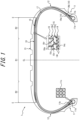
- FIG. 1 is a cross-sectional view in the tire width direction of a tire according to an embodiment of the invention.
- the "applicable rim” refers to a rim whose width corresponds to the bead width of the tire.
- the “applicable rim” includes sizes that could be included in the future in the above-described industrial standards, in addition to current sizes. Examples of the "sizes that could be described in the future” include the sizes described under " FUTURE DEVELOPMENTS” in the ETRTO STANDARDS MANUAL 2013 .
- the "prescribed internal pressure” refers to the air pressure (maximum air pressure) corresponding to the maximum load capability of a single wheel for the applicable size/ply rating in industrial standards, such as the aforementioned JATMA YEAR BOOK.
- the “prescribed internal pressure” refers to the air pressure (maximum air pressure) corresponding to the maximum load capability prescribed for each vehicle on which the tire is mounted.
- the “maximum load” refers to the load corresponding to the maximum load capability for a tire of the applicable size described in the aforementioned industrial standards.
- the “maximum load” refers to the load corresponding to the maximum load capability prescribed for each vehicle on which the tire is mounted.
- the side closer to the axis of rotation of the tire 1 along the tire radial direction is referred to as the "tire radial inner side”
- the side farther from the axis of rotation of the tire 1 along the tire radial direction is referred to as the “tire radial outer side”.
- the side closer to the tire equatorial plane CL along the tire width direction is referred to as the “tire widthwise inner side”
- the side farther from the tire equatorial plane CL along the tire width direction is referred to as the "tire widthwise outer side”.
- the tire 1 has a pair of bead portions 11, a pair of sidewall portions 12, and a tread portion 13.
- the sidewall portions 12 extend between the tread portion 13 and the bead portions 11.
- the sidewall portions 12 are positioned on the tire radial outer side of the bead portions 11.
- the two bead portions 11 each include a bead core 11a and a bead filler 11b. As illustrated in the partial enlargement in FIG. 1 , the bead core 11a is provided with a plurality of bead wires 11c surrounded by a rubber coating.
- the bead wires 11c are, for example, configured by steel cords. However, the bead wires 11c may also be configured by organic fiber cords coated with an adhesive composition containing polyphenols and aldehydes. The adhesive composition and the organic fiber cords used in the present embodiment are described in detail below.
- the cords forming the bead wires 11c can, for example, be formed from monofilaments or twisted wires.
- the bead fillers 11b are formed from rubber or the like and are positioned farther outward in the tire radial direction than the bead cores 11a. In the present embodiment, the thickness of the bead fillers 11b decreases outward in the tire radial direction. However, the tire 1 may be structured without the bead fillers 11b.
- the bead portion 11 is configured to contact the rim on the inner side in the tire radial direction and the outer side in the tire width direction when the tire 1 is mounted on the rim.
- the tire 1 includes a carcass 14.
- the carcass 14 extends in a toroidal shape between a pair of bead portions (the bead cores 11a in the illustrated example) and forms the framework of the tire.
- the end sides of the carcass 14 are engaged with the bead cores 11a.
- the carcass 14 has a carcass body portion 14a disposed between the bead cores 11a and carcass folded-up portions 14b that are folded up from the tire widthwise inner side towards the tire widthwise outer side around the bead cores 11a.
- the length of the carcass folded-up portion 14b can be freely set.
- the carcass 14 can have a structure without the carcass folded-up portions 14b, or a structure in which the carcass folded-up portions 14b are wrapped around the bead cores 11a.
- the carcass 14 is configured by one or more carcass layers.
- the carcass 14 is configured by one carcass layer, but the carcass 14 may be configured by two or more carcass layers stacked in the tire radial direction at the tire equatorial plane CL.
- the carcass layer includes one or more carcass cords 14c and a coating rubber 14r that coats the carcass cords 14c.
- the carcass cords 14c are arranged to extend in the tire width direction in the tread portion 13. That is, in the present embodiment, the carcass 14 has a radial structure. However, the carcass 14 may instead have a bias structure.
- the belt cords 15c configuring the belt layers 15a, 15b of the belt 15 are configured by steel cords, for example, in the present embodiment.
- the belt cords 15c may also be configured by organic fiber cords coated with an adhesive composition containing polyphenols and aldehydes.
- the adhesive composition and the organic fiber cords used in the present embodiment are described in detail below.
- the belt cords 15c can, for example, be formed from monofilaments or twisted wires.
- the tire 1 has one or more belt reinforcement layers 16 that reinforce the belt 15.
- the belt reinforcement layer 16 is disposed on the tire radial outer side of the belt 15.
- the belt reinforcement layer 16 is configured to cover the full width of the belt 15 in the tread portion 13 in the tire width direction.
- the belt reinforcement layer 16 may be provided across the tread portion 13 and a portion of the sidewall portions 12.
- the edges of the belt reinforcement layer 16 in the tire width direction are at substantially the same position in the tire width direction as the ground contact edges E, but the edges can be on the inside or outside in the tire width direction.
- the tire 1 has one belt reinforcement layer 16.
- the tire 1 may have two or more belt reinforcement layers 16 stacked in the tire radial direction at the tire equatorial plane CL.
- the tensile elastic modulus E1 of the belt reinforcement layer 16 in the center region R1 is not particularly limited but is preferably 0.3 to 10 (GPa/mm), for example.
- the tensile elastic modulus E2 of the belt reinforcement layer 16 in the shoulder regions R2 is not particularly limited, but within a range larger than the tensile elastic modulus E1, is preferably 0.5 to 13 (GPa/mm), for example.
- the ratio of the tensile elastic modulus E1 of the belt reinforcement layer 16 in the center region R1 to the tensile elastic modulus E2 of the belt reinforcement layer 16 in the shoulder regions R2 (tensile elastic modulus E1 / tensile elastic modulus E2) may be any appropriate value less than 1.
- the straight-line stability and high-speed durability of the tire 1 improve.
- an increase in the ratio of the tensile elastic modulus E1 to the tensile elastic modulus E2 improves the fuel efficiency of the tire 1.
- the ratio of the tensile elastic modulus E1 to the tensile elastic modulus E2 is between 1/1.5 and 1/5.0, preferably between 1/2.0 and 1/3.0.
- the elastic modulus of a cord pulled out from a freely chosen location in the belt reinforcement layer 16 in the center region R1 is multiplied by the number of cords in the protective layer in the center region R1 and divided by the width of the center region R1.
- the resulting value is taken as the tensile elastic modulus in the center region R1 (GPa/mm).
- the elastic modulus of a cord pulled out from a freely chosen location in the belt reinforcement layer 16 in the shoulder region R2 is multiplied by the number of cords in the protective layer in the shoulder region R2 and divided by the width of the shoulder region R2.
- the resulting value is taken as the tensile elastic modulus (GPa/mm).
- the belt reinforcement layer 16 may be configured as follows.
- the winding tension of the belt reinforcing layer 16 in the center region R1 may be smaller than the winding tension of the belt reinforcing layer 16 in the shoulder regions R2.
- the winding tension T1 of the belt reinforcement layer 16 in the center region R1 is not particularly limited but is preferably 3 to 7 N/cord, for example.
- the winding tension T2 of the belt reinforcement layer 16 in the shoulder regions R2 is not particularly limited, but within a range larger than the winding tension T1, is preferably 10 to 20 N/cord, for example.
- the ratio of the winding tension T1 of the belt reinforcement layer 16 in the center region R1 to the winding tension T2 of the belt reinforcement layer 16 in the shoulder regions R2 (winding tension T1 / winding tension T2) may be any appropriate value less than 1.
- the tensile elastic modulus E1 of the belt reinforcement layer 16 in the center region R1 can be made smaller than the tensile elastic modulus E2 of the belt reinforcement layer 16 in the shoulder regions R2.
- the winding tension of the belt reinforcement layer 16 is measured by, for example, converting a measurement made with a commercially available tension meter into a number per cord.
- the number of cords 16a implanted in the belt reinforcement layer 16 in the center region R1 may be smaller than the number of cords 16a implanted in the belt reinforcement layer 16 in the shoulder regions R2.
- the number N1 of cords 16a implanted in the belt reinforcement layer 16 in the center region R1 is not particularly limited but is preferably 25 to 50 cords/50 mm, for example.
- the number N2 of cords 16a implanted in the belt reinforcement layer 16 in the shoulder regions R2 is not particularly limited, but within a range larger than the number N1 of cords, is preferably 50 to 100 cords/50 mm, for example.
- the ratio of the number N1 of cords 16a implanted in the belt reinforcement layer 16 in the center region R1 to the number N2 of cords 16a implanted in the belt reinforcement layer 16 in the shoulder regions R2 (number N1 of cords / number N2 of cords) may be any appropriate value less than 1.
- the ratio of the number N1 of cords to the number N2 of cords is, for example, preferably 0.3 to 0.8, more preferably 0.5 to 0.6.
- the thermal shrinkage of the cords 16a in the belt reinforcement layer 16 in the center region R1 may be smaller than the thermal shrinkage of the cords 16a in the belt reinforcement layer 16 in the shoulder regions R2.
- the thermal shrinkage H1 of the cords 16a of the belt reinforcement layer 16 in the center region R1 is not particularly limited but is preferably 2% to 5%, for example.
- the thermal shrinkage H2 of the cords 16a of the belt reinforcement layer 16 in the shoulder regions R2 is not particularly limited, but within a range larger than the thermal shrinkage H1, is preferably 3% to 8%, for example.
- the ratio of the thermal shrinkage H1 of the cords 16a in the belt reinforcement layer 16 in the center region R1 to the thermal shrinkage H2 of the cords 16a in the belt reinforcement layer 16 in the shoulder regions R2 (thermal shrinkage H1 / thermal shrinkage H2) may be any appropriate value less than 1.
- the ratio of the thermal shrinkage H1 to the thermal shrinkage H2 is, for example, preferably 0.5 to 0.8.
- the thermal shrinkage of the cords 16a is determined by, for example, taking a dip roll of cords 16a after dip treatment, and in accordance with JIS L1017 (B method), applying a load of 50 g, performing dry heat treatment in an oven at 177°C for two minutes, and measuring the cord length before and after heat treatment.
- the configuration for making the tensile elastic modulus E1 of the belt reinforcement layer 16 in the center region R1 smaller than the tensile elastic modulus E2 of the belt reinforcement layer 16 in the shoulder regions R2 is not limited to the examples described above.
- the cord diameter, Young's modulus, and/or the material and the like may differ between the cords 16a of the belt reinforcement layer 16 in the center region R1 and the cords 16a of the belt reinforcement layer 16 in the shoulder regions R2 in order for the tensile elastic modulus E1 to be smaller than the tensile elastic modulus E2.
- the winding tension, number of cords implanted, thermal shrinkage, number of layers, cord diameter, Young's modulus, and/or material and the like may be adjusted in order for the tensile elastic modulus E1 of the belt reinforcement layer 16 in the center region R1 to be smaller than the tensile elastic modulus E2 of the belt reinforcement layer 16 in the shoulder regions R2.
- the tire widthwise edges of the belt reinforcement layer 16 may therefore be on the tire widthwise inner side of the ground contact edges E.
- the ground contact length of the center region R1 of the tire 1 during vehicle travel is increased, thereby improving the straight-line stability of the tire 1. Furthermore, the ground contact length of the shoulder regions R2 of the tire 1 during vehicle travel is shorter, and the shoulder portions protrude less at high speeds, thereby improving the high-speed durability of the tire 1.
- the tire 1 includes an inner liner 17.
- the inner liner 17 is disposed to cover the inner wall surface of the tire 1.
- the inner liner 17 can be configured by a plurality of inner liner layers stacked in the tire radial direction at the tire equatorial plane CL.
- the inner liner 17 is, for example, configured by a butyl-based rubber having low air permeability.
- the inner liner 17 is not limited to butyl-based rubber and may be configured by other rubber compositions, resins, or elastomers.
- the carcass cords 14c, the belt cords 15c, and the cords 16a of the belt reinforcement layer 16a have been described as organic fiber cords coated with an adhesive composition containing polyphenols and aldehydes.
- the tire 1 is not limited to the above-described configuration, but may be configured to have the aforementioned organic fiber cord as any one or more of the cords of the tire members.
- the tire 1 may be configured to have the organic fiber cords as the carcass cords 14c, the belt cords 15c, the cords 16a of the belt reinforcement layer 16a, and/or the cords of other tire members. Even in a case in which the above-described organic fiber cords are used as any of the tire members, the environmental impact of the tire 1 can be reduced, since the organic fiber cords do not contain resorcinol.
- the adhesive composition that is used in the tire 1 is coated on the cords, such as the organic fiber cords, is described below.
- the adhesive composition includes polyphenols and aldehydes.
- the adhesive composition that coats the cords used in the carcass 14, the belt 15, or the belt reinforcement layer 16 or the like is configured to include specific polyphenols and aldehydes, so that good adhesive properties can be achieved even when resorcinol is not used out of consideration for the impact on the environment.
- the adhesive composition contains polyphenols as a resin component.
- polyphenols are watersoluble polyphenols and may be any polyphenols other than resorcinol.
- the number of aromatic rings or the number of hydroxyl groups in the polyphenols may be selected as necessary.
- the polyphenols preferably have two or more hydroxyl groups, more preferably three or more hydroxyl groups.
- the polyphenols or polyphenol condensate is water soluble in an adhesive composition liquid that contains water. This enables the polyphenols to be distributed uniformly in the adhesive composition, thereby achieving better adhesive properties.
- the polyphenols are polyphenols containing a plurality (two or more) of aromatic rings, each of those aromatic rings has two or three hydroxyl groups in the ortho, meta, or para positions.
- polyphenols having three or more hydroxyl groups examples include the polyphenols listed below.
- Aldehydes include, for example, monoaldehydes such as formaldehyde, acetaldehyde, butyraldehyde, acrolein, propionaldehyde, chloral, butyraldehyde, caproaldehyde, and allylaldehyde, or aliphatic dialdehydes such as glyoxal, malonaldehyde, succinaldehyde, glutaraldehyde, and adipoaldehyde, aldehydes with aromatic rings, dialdehyde starch, and the like. These aldehydes may be used alone, or a mixture of a plurality thereof may be used.
- aldehydes examples include 1,2-benzenedicarboxaldehyde, 1,3-benzenedicarboxaldehyde, 1,4-benzenedicarboaldehyde 1,4-benzenedicarboaldehyde, 2-hydroxybenzene-1,3,5-tricarbaldehyde, or a mixture of these compounds.
- Aldehydes with aromatic rings include not only those with benzene rings but also heteroaromatic compounds.
- Aldehydes that are heteroaromatic compounds include, for example, aldehydes having a furan ring, such as those illustrated below. (where X includes O; and R represents -H or -CHO)
- the adhesive composition preferably further contains an isocyanate compound.
- the synergistic effect between polyphenols and aldehydes can greatly enhance the adhesive properties of the adhesive composition.
- the isocyanate compound is a compound that promotes adhesion to the resin material (for example, phenol/aldehyde resin yielded by condensing polyphenols and aldehydes), i.e., the adherend of the adhesive composition, and has isocyanate groups as polar functional groups.
- the adhesive composition preferably includes rubber latex. According to such a configuration, the adhesive properties of the rubber member of the adhesive composition included in the tire 1 can be improved.
- the tire 1 has been described as being filled with air in the present description.
- the tire 1 can, for example, be filled with a gas such as nitrogen.
- the tire 1 is not limited to being filled with gas and may be filled with any fluid, including a liquid, a gel-like substance, or a granular material.
Landscapes
- Engineering & Computer Science (AREA)
- Textile Engineering (AREA)
- Mechanical Engineering (AREA)
- Chemical & Material Sciences (AREA)
- Chemical Kinetics & Catalysis (AREA)
- Tires In General (AREA)
- Treatments For Attaching Organic Compounds To Fibrous Goods (AREA)
Claims (13)
- Reifen (1), der Folgendes umfasst:eine Karkasse (14), die sich kreisringförmig zwischen einem Paar von Wulstabschnitten (11) erstreckt;eine Gürtellage (15a, 15b), die auf einer Reifenradialaußenseite eines Scheitelabschnitts der Karkasse (14) bereitgestellt ist; undeine Gürtelverstärkungslage (16), die auf der Reifenradialaußenseite der Gürtellage (15a, 15b) bereitgestellt ist, wobeider Reifen (1) einen organischen Faserkord umfasst, der mit einer Klebstoffzusammensetzung überzogen ist, die Polyphenole und Aldehyde einschließt,wenn ein Reifenbreitenrichtungsbereich, der auf einer Reifenäquatorialebene (CL) zentriert ist und eine Breite in einer Reifenbreitenrichtung von 2/3 der Länge zwischen Bodenberührungskanten (E) aufweist, ein Mittelbereich (R1) ist, und Reifenbreitenrichtungsbereiche zwischen den Bodenberührungskanten (E) und Reifenbreitenrichtungsaußenseiten des Mittelbereichs Schulterbereiche (R2) sind,ein erster Zug-Elastizitätsmodul (E1) der Gürtelverstärkungslage in dem Mittelbereich kleiner ist als ein zweiter Zug-Elastizitätsmodul (E2) der Gürtelverstärkungslage in den Schulterbereichen, undein Verhältnis des ersten Zug-Elastizitätsmoduls (E1) zu dem zweiten Zug-Elastizitätsmodul (E2) zwischen 1/1,5 und 1/5,0 beträgt.
- Reifen (1) nach Anspruch 1, wobei eine Wickelspannung der Gürtelverstärkungslage (16) in dem Mittelbereich (R1) kleiner ist als die Wickelspannung der Gürtelverstärkungslage (16) in den Schulterbereichen (R2).
- Reifen (1) nach Anspruch 1 oder 2, wobei die Anzahl von Kords (16a), die in der Gürtelverstärkungslage (16) in dem Mittelbereich (R1) eingesetzt sind, kleiner ist als die Anzahl von Kords (16a), die in der Gürtelverstärkungslage (16) in den Schulterbereichen (R2) eingesetzt sind.
- Reifen (1) nach einem der Ansprüche 1 bis 3, wobei eine Wärmeschrumpfung von Kords (16a) in der Gürtelverstärkungslage (16) in dem Mittelbereich (R1) kleiner ist als die Wärmeschrumpfung von Kords (16a) in der Gürtelverstärkungslage (16) in den Schulterbereichen (R2).
- Reifen (1) nach einem der Ansprüche 1 bis 4, wobei die Gürtelverstärkungslage (16) den organischen Faserkord einschließt.
- Reifen (1) nach einem der Ansprüche 1 bis 5, wobei die Polyphenole drei oder mehr Hydroxylgruppen einschließen.
- Reifen (1) nach einem der Ansprüche 1 bis 6, wobei die Aldehyde Aldehyde sind, die einen aromatischen Ring einschließen.
- Reifen (1) nach Anspruch 7, wobei die Aldehyde zwei oder mehr Aldehydgruppen einschließen.
- Reifen (1) nach einem der Ansprüche 1 bis 8, wobei ein Gesamtgehalt der Polyphenole und der Aldehyde 3 Masse-% bis 30 Masse-% beträgt.
- Reifen (1) nach einem der Ansprüche 1 bis 9, wobei die Klebstoffzusammensetzung eine Isocyanatverbindung einschließt.
- Reifen (1) nach Anspruch 10, wobei die Isocyanatverbindung eine aromatische Verbindung ist, die eine (blockierte) Isocyanatgruppe enthält.
- Reifen (1) nach einem der Ansprüche 1 bis 11, wobei die Klebstoffzusammensetzung Kautschukmilch einschließt.
- Reifen (1) nach Anspruch 12, wobei die Kautschukmilch mindestens einer ist, der ausgewählt ist aus der Gruppe, die aus Naturkautschuk (NR), Polyisoprenkautschuk (IR), Styrol-Butadien-Copolymer-Kautschuk (SBR), Polybutadienkautschuk (BR), Ethylen-Propylen-Dien-Kautschuk (EPDM), Chloroprenkautschuk (CR), halogeniertem Butylkautschuk, Acrylnitril-Butadien-Kautschuk (NBR) und Vinylpyridin-Styrol-Butadien-Copolymer-Kautschuk (Vp) besteht.
Applications Claiming Priority (2)
| Application Number | Priority Date | Filing Date | Title |
|---|---|---|---|
| JP2020042215A JP7421962B2 (ja) | 2020-03-11 | 2020-03-11 | タイヤ |
| PCT/JP2021/009654 WO2021182543A1 (ja) | 2020-03-11 | 2021-03-10 | タイヤ |
Publications (3)
| Publication Number | Publication Date |
|---|---|
| EP4119360A1 EP4119360A1 (de) | 2023-01-18 |
| EP4119360A4 EP4119360A4 (de) | 2023-09-06 |
| EP4119360B1 true EP4119360B1 (de) | 2024-07-03 |
Family
ID=77670653
Family Applications (1)
| Application Number | Title | Priority Date | Filing Date |
|---|---|---|---|
| EP21767689.9A Active EP4119360B1 (de) | 2020-03-11 | 2021-03-10 | Reifen |
Country Status (3)
| Country | Link |
|---|---|
| EP (1) | EP4119360B1 (de) |
| JP (1) | JP7421962B2 (de) |
| WO (1) | WO2021182543A1 (de) |
Family Cites Families (18)
| Publication number | Priority date | Publication date | Assignee | Title |
|---|---|---|---|---|
| JPS6411825A (en) * | 1987-07-03 | 1989-01-17 | Sumitomo Rubber Ind | Manufacture of radial tire |
| JP3397375B2 (ja) * | 1993-06-04 | 2003-04-14 | 株式会社ブリヂストン | 空気入りラジアルタイヤ |
| JPH07215010A (ja) * | 1994-01-31 | 1995-08-15 | Bridgestone Corp | 空気入りラジアルタイヤ |
| JP4264154B2 (ja) | 1999-01-12 | 2009-05-13 | 株式会社ブリヂストン | ラジアルタイヤ |
| JP2001322405A (ja) | 2000-05-12 | 2001-11-20 | Bridgestone Corp | 空気入りラジアルタイヤ |
| JP2002370507A (ja) | 2001-06-18 | 2002-12-24 | Bridgestone Corp | 空気入りラジアルタイヤ |
| JP2007137199A (ja) | 2005-11-16 | 2007-06-07 | Bridgestone Corp | 空気入りラジアルタイヤ |
| JP2008273454A (ja) | 2007-05-02 | 2008-11-13 | Toyo Tire & Rubber Co Ltd | 空気入りラジアルタイヤ |
| JP4891208B2 (ja) | 2007-12-10 | 2012-03-07 | キヤノン株式会社 | 画像読取装置及び画像読取装置の制御方法 |
| JP2009161872A (ja) * | 2007-12-28 | 2009-07-23 | Bridgestone Corp | 有機繊維コード用接着剤組成物、及びその接着剤組成物を用いたゴム製品の製造方法 |
| JP2009174105A (ja) | 2007-12-25 | 2009-08-06 | Bridgestone Corp | 有機繊維コード用接着剤組成物の製造方法、有機繊維コード用接着剤組成物及びゴム製品の製造方法 |
| JP4837054B2 (ja) * | 2009-02-16 | 2011-12-14 | 株式会社ブリヂストン | 空気入りタイヤ |
| JP2010189492A (ja) | 2009-02-17 | 2010-09-02 | Bridgestone Corp | 有機繊維コード用接着剤組成物、並びにそれを用いたゴム補強材、タイヤおよび接着方法 |
| FR2978769B1 (fr) | 2011-08-04 | 2013-09-27 | Michelin Soc Tech | Composition adhesive aqueuse a base de polyaldehyde et de polyphenol |
| FR2978770B1 (fr) | 2011-08-04 | 2013-09-27 | Michelin Soc Tech | Composition adhesive aqueuse a base de polyaldehyde et phloroglucinol |
| FR3008707B1 (fr) * | 2013-07-16 | 2017-11-10 | Michelin & Cie | Composition adhesive aqueuse a base d'aldehyde biosource et de polyphenol |
| JP6092061B2 (ja) * | 2013-09-20 | 2017-03-08 | 東洋ゴム工業株式会社 | 空気入りタイヤ |
| FR3049610A1 (fr) * | 2016-04-01 | 2017-10-06 | Michelin & Cie | Composition adhesive aqueuse comportant une resine thermodurcissable et un latex |
-
2020
- 2020-03-11 JP JP2020042215A patent/JP7421962B2/ja active Active
-
2021
- 2021-03-10 WO PCT/JP2021/009654 patent/WO2021182543A1/ja not_active Ceased
- 2021-03-10 EP EP21767689.9A patent/EP4119360B1/de active Active
Also Published As
| Publication number | Publication date |
|---|---|
| EP4119360A1 (de) | 2023-01-18 |
| EP4119360A4 (de) | 2023-09-06 |
| WO2021182543A1 (ja) | 2021-09-16 |
| JP7421962B2 (ja) | 2024-01-25 |
| JP2021142846A (ja) | 2021-09-24 |
Similar Documents
| Publication | Publication Date | Title |
|---|---|---|
| CN107207833B (zh) | 高刚性的橡胶组合物 | |
| US10544292B2 (en) | High-rigidity rubber composition | |
| US20040182486A1 (en) | Agricultural or industrial tire with reinforced rubber composition | |
| US20020017351A1 (en) | Pneumatic tire | |
| AU2004202650B2 (en) | Polyester Cords and Their Use in Runflat Tires | |
| CN105189149B (zh) | 充气安全轮胎 | |
| KR20150009932A (ko) | 폴리에스터 코드로 보강된 단일 카커스 플라이를 갖는 공기압 타이어 | |
| EP2123481B1 (de) | Hochverdrehte Polyesterkarkassenschicht für einen Luftreifen | |
| KR20140126706A (ko) | 경량화된 벨트 구조체를 갖는 래디얼 타이어 | |
| KR20140126705A (ko) | 경량화된 벨트 구조체를 갖는 래디얼 타이어 | |
| US20180022160A1 (en) | Radial tire having an improved belt structure | |
| JP2020525344A (ja) | 軽量化されたゴム補強材の製造方法 | |
| US20100051157A1 (en) | Insert and belt overlay containing chopped carbon fibers | |
| JP2010023834A (ja) | ポリケトンチッパーおよび/またはフリッパーを有する空気入りタイヤ | |
| EP3795349B1 (de) | Reifenkord mit hoher haftung und verfahren zur herstellung davon | |
| EP4119360B1 (de) | Reifen | |
| JP7502052B2 (ja) | タイヤ | |
| JP7372857B2 (ja) | 空気入りタイヤ | |
| KR102716327B1 (ko) | 경량화된 고무 보강재, 그 제조 방법 및 이를 포함하는 타이어 | |
| JP2021142848A (ja) | 空気入りタイヤ、及び、空気入りタイヤの製造方法 | |
| US12427739B2 (en) | Rubber reinforcing material with reduced weight, method of preparing the same and tire comprising the same | |
| JP2021142850A (ja) | 空気入りタイヤ | |
| JP2021142849A (ja) | 空気入りタイヤ及びタイヤ・リム組立体 | |
| US20130118670A1 (en) | Pneumatic tire with tackified wrapped reinforcement |
Legal Events
| Date | Code | Title | Description |
|---|---|---|---|
| STAA | Information on the status of an ep patent application or granted ep patent |
Free format text: STATUS: THE INTERNATIONAL PUBLICATION HAS BEEN MADE |
|
| PUAI | Public reference made under article 153(3) epc to a published international application that has entered the european phase |
Free format text: ORIGINAL CODE: 0009012 |
|
| STAA | Information on the status of an ep patent application or granted ep patent |
Free format text: STATUS: REQUEST FOR EXAMINATION WAS MADE |
|
| 17P | Request for examination filed |
Effective date: 20220908 |
|
| AK | Designated contracting states |
Kind code of ref document: A1 Designated state(s): AL AT BE BG CH CY CZ DE DK EE ES FI FR GB GR HR HU IE IS IT LI LT LU LV MC MK MT NL NO PL PT RO RS SE SI SK SM TR |
|
| DAV | Request for validation of the european patent (deleted) | ||
| DAX | Request for extension of the european patent (deleted) | ||
| A4 | Supplementary search report drawn up and despatched |
Effective date: 20230804 |
|
| RIC1 | Information provided on ipc code assigned before grant |
Ipc: B60C 9/20 20060101ALI20230731BHEP Ipc: D06M 15/693 20060101ALI20230731BHEP Ipc: D06M 15/41 20060101ALI20230731BHEP Ipc: D06M 13/395 20060101ALI20230731BHEP Ipc: B60C 9/00 20060101ALI20230731BHEP Ipc: B60C 1/00 20060101ALI20230731BHEP Ipc: B60C 9/22 20060101AFI20230731BHEP |
|
| GRAP | Despatch of communication of intention to grant a patent |
Free format text: ORIGINAL CODE: EPIDOSNIGR1 |
|
| STAA | Information on the status of an ep patent application or granted ep patent |
Free format text: STATUS: GRANT OF PATENT IS INTENDED |
|
| INTG | Intention to grant announced |
Effective date: 20240201 |
|
| RIC1 | Information provided on ipc code assigned before grant |
Ipc: B60C 9/20 20060101ALI20240119BHEP Ipc: D06M 15/693 20060101ALI20240119BHEP Ipc: D06M 15/41 20060101ALI20240119BHEP Ipc: D06M 13/395 20060101ALI20240119BHEP Ipc: B60C 9/00 20060101ALI20240119BHEP Ipc: B60C 1/00 20060101ALI20240119BHEP Ipc: B60C 9/22 20060101AFI20240119BHEP |
|
| P01 | Opt-out of the competence of the unified patent court (upc) registered |
Effective date: 20240305 |
|
| GRAS | Grant fee paid |
Free format text: ORIGINAL CODE: EPIDOSNIGR3 |
|
| GRAA | (expected) grant |
Free format text: ORIGINAL CODE: 0009210 |
|
| STAA | Information on the status of an ep patent application or granted ep patent |
Free format text: STATUS: THE PATENT HAS BEEN GRANTED |
|
| AK | Designated contracting states |
Kind code of ref document: B1 Designated state(s): AL AT BE BG CH CY CZ DE DK EE ES FI FR GB GR HR HU IE IS IT LI LT LU LV MC MK MT NL NO PL PT RO RS SE SI SK SM TR |
|
| REG | Reference to a national code |
Ref country code: CH Ref legal event code: EP |
|
| REG | Reference to a national code |
Ref country code: DE Ref legal event code: R096 Ref document number: 602021015247 Country of ref document: DE |
|
| REG | Reference to a national code |
Ref country code: LT Ref legal event code: MG9D |
|
| REG | Reference to a national code |
Ref country code: NL Ref legal event code: MP Effective date: 20240703 |
|
| PG25 | Lapsed in a contracting state [announced via postgrant information from national office to epo] |
Ref country code: PT Free format text: LAPSE BECAUSE OF FAILURE TO SUBMIT A TRANSLATION OF THE DESCRIPTION OR TO PAY THE FEE WITHIN THE PRESCRIBED TIME-LIMIT Effective date: 20241104 |
|
| REG | Reference to a national code |
Ref country code: AT Ref legal event code: MK05 Ref document number: 1699462 Country of ref document: AT Kind code of ref document: T Effective date: 20240703 |
|
| PG25 | Lapsed in a contracting state [announced via postgrant information from national office to epo] |
Ref country code: NL Free format text: LAPSE BECAUSE OF FAILURE TO SUBMIT A TRANSLATION OF THE DESCRIPTION OR TO PAY THE FEE WITHIN THE PRESCRIBED TIME-LIMIT Effective date: 20240703 |
|
| PG25 | Lapsed in a contracting state [announced via postgrant information from national office to epo] |
Ref country code: PT Free format text: LAPSE BECAUSE OF FAILURE TO SUBMIT A TRANSLATION OF THE DESCRIPTION OR TO PAY THE FEE WITHIN THE PRESCRIBED TIME-LIMIT Effective date: 20241104 Ref country code: NL Free format text: LAPSE BECAUSE OF FAILURE TO SUBMIT A TRANSLATION OF THE DESCRIPTION OR TO PAY THE FEE WITHIN THE PRESCRIBED TIME-LIMIT Effective date: 20240703 |
|
| PG25 | Lapsed in a contracting state [announced via postgrant information from national office to epo] |
Ref country code: NO Free format text: LAPSE BECAUSE OF FAILURE TO SUBMIT A TRANSLATION OF THE DESCRIPTION OR TO PAY THE FEE WITHIN THE PRESCRIBED TIME-LIMIT Effective date: 20241003 |
|
| PG25 | Lapsed in a contracting state [announced via postgrant information from national office to epo] |
Ref country code: GR Free format text: LAPSE BECAUSE OF FAILURE TO SUBMIT A TRANSLATION OF THE DESCRIPTION OR TO PAY THE FEE WITHIN THE PRESCRIBED TIME-LIMIT Effective date: 20241004 Ref country code: FI Free format text: LAPSE BECAUSE OF FAILURE TO SUBMIT A TRANSLATION OF THE DESCRIPTION OR TO PAY THE FEE WITHIN THE PRESCRIBED TIME-LIMIT Effective date: 20240703 Ref country code: PL Free format text: LAPSE BECAUSE OF FAILURE TO SUBMIT A TRANSLATION OF THE DESCRIPTION OR TO PAY THE FEE WITHIN THE PRESCRIBED TIME-LIMIT Effective date: 20240703 |
|
| PG25 | Lapsed in a contracting state [announced via postgrant information from national office to epo] |
Ref country code: BG Free format text: LAPSE BECAUSE OF FAILURE TO SUBMIT A TRANSLATION OF THE DESCRIPTION OR TO PAY THE FEE WITHIN THE PRESCRIBED TIME-LIMIT Effective date: 20240703 |
|
| PG25 | Lapsed in a contracting state [announced via postgrant information from national office to epo] |
Ref country code: LV Free format text: LAPSE BECAUSE OF FAILURE TO SUBMIT A TRANSLATION OF THE DESCRIPTION OR TO PAY THE FEE WITHIN THE PRESCRIBED TIME-LIMIT Effective date: 20240703 |
|
| PG25 | Lapsed in a contracting state [announced via postgrant information from national office to epo] |
Ref country code: AT Free format text: LAPSE BECAUSE OF FAILURE TO SUBMIT A TRANSLATION OF THE DESCRIPTION OR TO PAY THE FEE WITHIN THE PRESCRIBED TIME-LIMIT Effective date: 20240703 Ref country code: IS Free format text: LAPSE BECAUSE OF FAILURE TO SUBMIT A TRANSLATION OF THE DESCRIPTION OR TO PAY THE FEE WITHIN THE PRESCRIBED TIME-LIMIT Effective date: 20241103 |
|
| PG25 | Lapsed in a contracting state [announced via postgrant information from national office to epo] |
Ref country code: CZ Free format text: LAPSE BECAUSE OF FAILURE TO SUBMIT A TRANSLATION OF THE DESCRIPTION OR TO PAY THE FEE WITHIN THE PRESCRIBED TIME-LIMIT Effective date: 20240703 Ref country code: HR Free format text: LAPSE BECAUSE OF FAILURE TO SUBMIT A TRANSLATION OF THE DESCRIPTION OR TO PAY THE FEE WITHIN THE PRESCRIBED TIME-LIMIT Effective date: 20240703 |
|
| PG25 | Lapsed in a contracting state [announced via postgrant information from national office to epo] |
Ref country code: RS Free format text: LAPSE BECAUSE OF FAILURE TO SUBMIT A TRANSLATION OF THE DESCRIPTION OR TO PAY THE FEE WITHIN THE PRESCRIBED TIME-LIMIT Effective date: 20241003 Ref country code: ES Free format text: LAPSE BECAUSE OF FAILURE TO SUBMIT A TRANSLATION OF THE DESCRIPTION OR TO PAY THE FEE WITHIN THE PRESCRIBED TIME-LIMIT Effective date: 20240703 |
|
| PG25 | Lapsed in a contracting state [announced via postgrant information from national office to epo] |
Ref country code: RS Free format text: LAPSE BECAUSE OF FAILURE TO SUBMIT A TRANSLATION OF THE DESCRIPTION OR TO PAY THE FEE WITHIN THE PRESCRIBED TIME-LIMIT Effective date: 20241003 Ref country code: PL Free format text: LAPSE BECAUSE OF FAILURE TO SUBMIT A TRANSLATION OF THE DESCRIPTION OR TO PAY THE FEE WITHIN THE PRESCRIBED TIME-LIMIT Effective date: 20240703 Ref country code: NO Free format text: LAPSE BECAUSE OF FAILURE TO SUBMIT A TRANSLATION OF THE DESCRIPTION OR TO PAY THE FEE WITHIN THE PRESCRIBED TIME-LIMIT Effective date: 20241003 Ref country code: LV Free format text: LAPSE BECAUSE OF FAILURE TO SUBMIT A TRANSLATION OF THE DESCRIPTION OR TO PAY THE FEE WITHIN THE PRESCRIBED TIME-LIMIT Effective date: 20240703 Ref country code: IS Free format text: LAPSE BECAUSE OF FAILURE TO SUBMIT A TRANSLATION OF THE DESCRIPTION OR TO PAY THE FEE WITHIN THE PRESCRIBED TIME-LIMIT Effective date: 20241103 Ref country code: HR Free format text: LAPSE BECAUSE OF FAILURE TO SUBMIT A TRANSLATION OF THE DESCRIPTION OR TO PAY THE FEE WITHIN THE PRESCRIBED TIME-LIMIT Effective date: 20240703 Ref country code: GR Free format text: LAPSE BECAUSE OF FAILURE TO SUBMIT A TRANSLATION OF THE DESCRIPTION OR TO PAY THE FEE WITHIN THE PRESCRIBED TIME-LIMIT Effective date: 20241004 Ref country code: FI Free format text: LAPSE BECAUSE OF FAILURE TO SUBMIT A TRANSLATION OF THE DESCRIPTION OR TO PAY THE FEE WITHIN THE PRESCRIBED TIME-LIMIT Effective date: 20240703 Ref country code: ES Free format text: LAPSE BECAUSE OF FAILURE TO SUBMIT A TRANSLATION OF THE DESCRIPTION OR TO PAY THE FEE WITHIN THE PRESCRIBED TIME-LIMIT Effective date: 20240703 Ref country code: CZ Free format text: LAPSE BECAUSE OF FAILURE TO SUBMIT A TRANSLATION OF THE DESCRIPTION OR TO PAY THE FEE WITHIN THE PRESCRIBED TIME-LIMIT Effective date: 20240703 Ref country code: BG Free format text: LAPSE BECAUSE OF FAILURE TO SUBMIT A TRANSLATION OF THE DESCRIPTION OR TO PAY THE FEE WITHIN THE PRESCRIBED TIME-LIMIT Effective date: 20240703 Ref country code: AT Free format text: LAPSE BECAUSE OF FAILURE TO SUBMIT A TRANSLATION OF THE DESCRIPTION OR TO PAY THE FEE WITHIN THE PRESCRIBED TIME-LIMIT Effective date: 20240703 |
|
| REG | Reference to a national code |
Ref country code: DE Ref legal event code: R097 Ref document number: 602021015247 Country of ref document: DE |
|
| PG25 | Lapsed in a contracting state [announced via postgrant information from national office to epo] |
Ref country code: DK Free format text: LAPSE BECAUSE OF FAILURE TO SUBMIT A TRANSLATION OF THE DESCRIPTION OR TO PAY THE FEE WITHIN THE PRESCRIBED TIME-LIMIT Effective date: 20240703 Ref country code: RO Free format text: LAPSE BECAUSE OF FAILURE TO SUBMIT A TRANSLATION OF THE DESCRIPTION OR TO PAY THE FEE WITHIN THE PRESCRIBED TIME-LIMIT Effective date: 20240703 Ref country code: SM Free format text: LAPSE BECAUSE OF FAILURE TO SUBMIT A TRANSLATION OF THE DESCRIPTION OR TO PAY THE FEE WITHIN THE PRESCRIBED TIME-LIMIT Effective date: 20240703 |
|
| PG25 | Lapsed in a contracting state [announced via postgrant information from national office to epo] |
Ref country code: EE Free format text: LAPSE BECAUSE OF FAILURE TO SUBMIT A TRANSLATION OF THE DESCRIPTION OR TO PAY THE FEE WITHIN THE PRESCRIBED TIME-LIMIT Effective date: 20240703 |
|
| PG25 | Lapsed in a contracting state [announced via postgrant information from national office to epo] |
Ref country code: IT Free format text: LAPSE BECAUSE OF FAILURE TO SUBMIT A TRANSLATION OF THE DESCRIPTION OR TO PAY THE FEE WITHIN THE PRESCRIBED TIME-LIMIT Effective date: 20240703 Ref country code: SK Free format text: LAPSE BECAUSE OF FAILURE TO SUBMIT A TRANSLATION OF THE DESCRIPTION OR TO PAY THE FEE WITHIN THE PRESCRIBED TIME-LIMIT Effective date: 20240703 |
|
| PLBE | No opposition filed within time limit |
Free format text: ORIGINAL CODE: 0009261 |
|
| STAA | Information on the status of an ep patent application or granted ep patent |
Free format text: STATUS: NO OPPOSITION FILED WITHIN TIME LIMIT |
|
| 26N | No opposition filed |
Effective date: 20250404 |
|
| PG25 | Lapsed in a contracting state [announced via postgrant information from national office to epo] |
Ref country code: SE Free format text: LAPSE BECAUSE OF FAILURE TO SUBMIT A TRANSLATION OF THE DESCRIPTION OR TO PAY THE FEE WITHIN THE PRESCRIBED TIME-LIMIT Effective date: 20240703 |
|
| PG25 | Lapsed in a contracting state [announced via postgrant information from national office to epo] |
Ref country code: MC Free format text: LAPSE BECAUSE OF FAILURE TO SUBMIT A TRANSLATION OF THE DESCRIPTION OR TO PAY THE FEE WITHIN THE PRESCRIBED TIME-LIMIT Effective date: 20240703 |
|
| REG | Reference to a national code |
Ref country code: CH Ref legal event code: H13 Free format text: ST27 STATUS EVENT CODE: U-0-0-H10-H13 (AS PROVIDED BY THE NATIONAL OFFICE) Effective date: 20251023 |
|
| PG25 | Lapsed in a contracting state [announced via postgrant information from national office to epo] |
Ref country code: LU Free format text: LAPSE BECAUSE OF NON-PAYMENT OF DUE FEES Effective date: 20250310 |
|
| GBPC | Gb: european patent ceased through non-payment of renewal fee |
Effective date: 20250310 |
|
| REG | Reference to a national code |
Ref country code: BE Ref legal event code: MM Effective date: 20250331 |
|
| PG25 | Lapsed in a contracting state [announced via postgrant information from national office to epo] |
Ref country code: GB Free format text: LAPSE BECAUSE OF NON-PAYMENT OF DUE FEES Effective date: 20250310 |
|
| PG25 | Lapsed in a contracting state [announced via postgrant information from national office to epo] |
Ref country code: BE Free format text: LAPSE BECAUSE OF NON-PAYMENT OF DUE FEES Effective date: 20250331 |
|
| PG25 | Lapsed in a contracting state [announced via postgrant information from national office to epo] |
Ref country code: CH Free format text: LAPSE BECAUSE OF NON-PAYMENT OF DUE FEES Effective date: 20250331 |
|
| PG25 | Lapsed in a contracting state [announced via postgrant information from national office to epo] |
Ref country code: IE Free format text: LAPSE BECAUSE OF NON-PAYMENT OF DUE FEES Effective date: 20250310 |
|
| PGFP | Annual fee paid to national office [announced via postgrant information from national office to epo] |
Ref country code: DE Payment date: 20260319 Year of fee payment: 6 |
|
| PGFP | Annual fee paid to national office [announced via postgrant information from national office to epo] |
Ref country code: FR Payment date: 20260323 Year of fee payment: 6 |