EP4096952B1 - Druckgasspeicheraufnahmevorrichtung für ein kraftfahrzeug - Google Patents
Druckgasspeicheraufnahmevorrichtung für ein kraftfahrzeug Download PDFInfo
- Publication number
- EP4096952B1 EP4096952B1 EP20820379.4A EP20820379A EP4096952B1 EP 4096952 B1 EP4096952 B1 EP 4096952B1 EP 20820379 A EP20820379 A EP 20820379A EP 4096952 B1 EP4096952 B1 EP 4096952B1
- Authority
- EP
- European Patent Office
- Prior art keywords
- motor vehicle
- cooling
- compressed gas
- gas storage
- pressurized gas
- Prior art date
- Legal status (The legal status is an assumption and is not a legal conclusion. Google has not performed a legal analysis and makes no representation as to the accuracy of the status listed.)
- Active
Links
Images



Classifications
-
- F—MECHANICAL ENGINEERING; LIGHTING; HEATING; WEAPONS; BLASTING
- F17—STORING OR DISTRIBUTING GASES OR LIQUIDS
- F17C—VESSELS FOR CONTAINING OR STORING COMPRESSED, LIQUEFIED OR SOLIDIFIED GASES; FIXED-CAPACITY GAS-HOLDERS; FILLING VESSELS WITH, OR DISCHARGING FROM VESSELS, COMPRESSED, LIQUEFIED, OR SOLIDIFIED GASES
- F17C13/00—Details of vessels or of the filling or discharging of vessels
- F17C13/08—Mounting arrangements for vessels
- F17C13/084—Mounting arrangements for vessels for small-sized storage vessels, e.g. compressed gas cylinders or bottles, disposable gas vessels, vessels adapted for automotive use
-
- B—PERFORMING OPERATIONS; TRANSPORTING
- B60—VEHICLES IN GENERAL
- B60K—ARRANGEMENT OR MOUNTING OF PROPULSION UNITS OR OF TRANSMISSIONS IN VEHICLES; ARRANGEMENT OR MOUNTING OF PLURAL DIVERSE PRIME-MOVERS IN VEHICLES; AUXILIARY DRIVES FOR VEHICLES; INSTRUMENTATION OR DASHBOARDS FOR VEHICLES; ARRANGEMENTS IN CONNECTION WITH COOLING, AIR INTAKE, GAS EXHAUST OR FUEL SUPPLY OF PROPULSION UNITS IN VEHICLES
- B60K15/00—Arrangement in connection with fuel supply of combustion engines or other fuel consuming energy converters, e.g. fuel cells; Mounting or construction of fuel tanks
- B60K15/03—Fuel tanks
- B60K15/03006—Gas tanks
-
- B—PERFORMING OPERATIONS; TRANSPORTING
- B60—VEHICLES IN GENERAL
- B60K—ARRANGEMENT OR MOUNTING OF PROPULSION UNITS OR OF TRANSMISSIONS IN VEHICLES; ARRANGEMENT OR MOUNTING OF PLURAL DIVERSE PRIME-MOVERS IN VEHICLES; AUXILIARY DRIVES FOR VEHICLES; INSTRUMENTATION OR DASHBOARDS FOR VEHICLES; ARRANGEMENTS IN CONNECTION WITH COOLING, AIR INTAKE, GAS EXHAUST OR FUEL SUPPLY OF PROPULSION UNITS IN VEHICLES
- B60K15/00—Arrangement in connection with fuel supply of combustion engines or other fuel consuming energy converters, e.g. fuel cells; Mounting or construction of fuel tanks
- B60K15/03—Fuel tanks
- B60K15/063—Arrangement of tanks
- B60K15/067—Mounting of tanks
- B60K15/07—Mounting of tanks of gas tanks
-
- F—MECHANICAL ENGINEERING; LIGHTING; HEATING; WEAPONS; BLASTING
- F17—STORING OR DISTRIBUTING GASES OR LIQUIDS
- F17C—VESSELS FOR CONTAINING OR STORING COMPRESSED, LIQUEFIED OR SOLIDIFIED GASES; FIXED-CAPACITY GAS-HOLDERS; FILLING VESSELS WITH, OR DISCHARGING FROM VESSELS, COMPRESSED, LIQUEFIED, OR SOLIDIFIED GASES
- F17C13/00—Details of vessels or of the filling or discharging of vessels
- F17C13/02—Special adaptations of indicating, measuring, or monitoring equipment
-
- F—MECHANICAL ENGINEERING; LIGHTING; HEATING; WEAPONS; BLASTING
- F17—STORING OR DISTRIBUTING GASES OR LIQUIDS
- F17C—VESSELS FOR CONTAINING OR STORING COMPRESSED, LIQUEFIED OR SOLIDIFIED GASES; FIXED-CAPACITY GAS-HOLDERS; FILLING VESSELS WITH, OR DISCHARGING FROM VESSELS, COMPRESSED, LIQUEFIED, OR SOLIDIFIED GASES
- F17C5/00—Methods or apparatus for filling containers with liquefied, solidified, or compressed gases under pressures
- F17C5/06—Methods or apparatus for filling containers with liquefied, solidified, or compressed gases under pressures for filling with compressed gases
-
- H—ELECTRICITY
- H01—ELECTRIC ELEMENTS
- H01M—PROCESSES OR MEANS, e.g. BATTERIES, FOR THE DIRECT CONVERSION OF CHEMICAL ENERGY INTO ELECTRICAL ENERGY
- H01M8/00—Fuel cells; Manufacture thereof
- H01M8/04—Auxiliary arrangements, e.g. for control of pressure or for circulation of fluids
- H01M8/04007—Auxiliary arrangements, e.g. for control of pressure or for circulation of fluids related to heat exchange
- H01M8/04029—Heat exchange using liquids
-
- H—ELECTRICITY
- H01—ELECTRIC ELEMENTS
- H01M—PROCESSES OR MEANS, e.g. BATTERIES, FOR THE DIRECT CONVERSION OF CHEMICAL ENERGY INTO ELECTRICAL ENERGY
- H01M8/00—Fuel cells; Manufacture thereof
- H01M8/04—Auxiliary arrangements, e.g. for control of pressure or for circulation of fluids
- H01M8/04082—Arrangements for control of reactant parameters, e.g. pressure or concentration
- H01M8/04089—Arrangements for control of reactant parameters, e.g. pressure or concentration of gaseous reactants
-
- H—ELECTRICITY
- H01—ELECTRIC ELEMENTS
- H01M—PROCESSES OR MEANS, e.g. BATTERIES, FOR THE DIRECT CONVERSION OF CHEMICAL ENERGY INTO ELECTRICAL ENERGY
- H01M8/00—Fuel cells; Manufacture thereof
- H01M8/04—Auxiliary arrangements, e.g. for control of pressure or for circulation of fluids
- H01M8/04082—Arrangements for control of reactant parameters, e.g. pressure or concentration
- H01M8/04201—Reactant storage and supply, e.g. means for feeding, pipes
-
- B—PERFORMING OPERATIONS; TRANSPORTING
- B60—VEHICLES IN GENERAL
- B60K—ARRANGEMENT OR MOUNTING OF PROPULSION UNITS OR OF TRANSMISSIONS IN VEHICLES; ARRANGEMENT OR MOUNTING OF PLURAL DIVERSE PRIME-MOVERS IN VEHICLES; AUXILIARY DRIVES FOR VEHICLES; INSTRUMENTATION OR DASHBOARDS FOR VEHICLES; ARRANGEMENTS IN CONNECTION WITH COOLING, AIR INTAKE, GAS EXHAUST OR FUEL SUPPLY OF PROPULSION UNITS IN VEHICLES
- B60K11/00—Arrangement in connection with cooling of propulsion units
- B60K11/02—Arrangement in connection with cooling of propulsion units with liquid cooling
-
- B—PERFORMING OPERATIONS; TRANSPORTING
- B60—VEHICLES IN GENERAL
- B60K—ARRANGEMENT OR MOUNTING OF PROPULSION UNITS OR OF TRANSMISSIONS IN VEHICLES; ARRANGEMENT OR MOUNTING OF PLURAL DIVERSE PRIME-MOVERS IN VEHICLES; AUXILIARY DRIVES FOR VEHICLES; INSTRUMENTATION OR DASHBOARDS FOR VEHICLES; ARRANGEMENTS IN CONNECTION WITH COOLING, AIR INTAKE, GAS EXHAUST OR FUEL SUPPLY OF PROPULSION UNITS IN VEHICLES
- B60K11/00—Arrangement in connection with cooling of propulsion units
- B60K11/06—Arrangement in connection with cooling of propulsion units with air cooling
-
- B—PERFORMING OPERATIONS; TRANSPORTING
- B60—VEHICLES IN GENERAL
- B60K—ARRANGEMENT OR MOUNTING OF PROPULSION UNITS OR OF TRANSMISSIONS IN VEHICLES; ARRANGEMENT OR MOUNTING OF PLURAL DIVERSE PRIME-MOVERS IN VEHICLES; AUXILIARY DRIVES FOR VEHICLES; INSTRUMENTATION OR DASHBOARDS FOR VEHICLES; ARRANGEMENTS IN CONNECTION WITH COOLING, AIR INTAKE, GAS EXHAUST OR FUEL SUPPLY OF PROPULSION UNITS IN VEHICLES
- B60K15/00—Arrangement in connection with fuel supply of combustion engines or other fuel consuming energy converters, e.g. fuel cells; Mounting or construction of fuel tanks
- B60K15/03—Fuel tanks
- B60K15/03006—Gas tanks
- B60K2015/03019—Filling of gas tanks
-
- B—PERFORMING OPERATIONS; TRANSPORTING
- B60—VEHICLES IN GENERAL
- B60K—ARRANGEMENT OR MOUNTING OF PROPULSION UNITS OR OF TRANSMISSIONS IN VEHICLES; ARRANGEMENT OR MOUNTING OF PLURAL DIVERSE PRIME-MOVERS IN VEHICLES; AUXILIARY DRIVES FOR VEHICLES; INSTRUMENTATION OR DASHBOARDS FOR VEHICLES; ARRANGEMENTS IN CONNECTION WITH COOLING, AIR INTAKE, GAS EXHAUST OR FUEL SUPPLY OF PROPULSION UNITS IN VEHICLES
- B60K15/00—Arrangement in connection with fuel supply of combustion engines or other fuel consuming energy converters, e.g. fuel cells; Mounting or construction of fuel tanks
- B60K15/03—Fuel tanks
- B60K2015/03309—Tanks specially adapted for particular fuels
- B60K2015/03315—Tanks specially adapted for particular fuels for hydrogen
-
- B—PERFORMING OPERATIONS; TRANSPORTING
- B60—VEHICLES IN GENERAL
- B60K—ARRANGEMENT OR MOUNTING OF PROPULSION UNITS OR OF TRANSMISSIONS IN VEHICLES; ARRANGEMENT OR MOUNTING OF PLURAL DIVERSE PRIME-MOVERS IN VEHICLES; AUXILIARY DRIVES FOR VEHICLES; INSTRUMENTATION OR DASHBOARDS FOR VEHICLES; ARRANGEMENTS IN CONNECTION WITH COOLING, AIR INTAKE, GAS EXHAUST OR FUEL SUPPLY OF PROPULSION UNITS IN VEHICLES
- B60K15/00—Arrangement in connection with fuel supply of combustion engines or other fuel consuming energy converters, e.g. fuel cells; Mounting or construction of fuel tanks
- B60K15/03—Fuel tanks
- B60K2015/03328—Arrangements or special measures related to fuel tanks or fuel handling
- B60K2015/03414—Arrangements or special measures related to fuel tanks or fuel handling associated with the fuel tank for cooling heated fuel
-
- B—PERFORMING OPERATIONS; TRANSPORTING
- B60—VEHICLES IN GENERAL
- B60K—ARRANGEMENT OR MOUNTING OF PROPULSION UNITS OR OF TRANSMISSIONS IN VEHICLES; ARRANGEMENT OR MOUNTING OF PLURAL DIVERSE PRIME-MOVERS IN VEHICLES; AUXILIARY DRIVES FOR VEHICLES; INSTRUMENTATION OR DASHBOARDS FOR VEHICLES; ARRANGEMENTS IN CONNECTION WITH COOLING, AIR INTAKE, GAS EXHAUST OR FUEL SUPPLY OF PROPULSION UNITS IN VEHICLES
- B60K15/00—Arrangement in connection with fuel supply of combustion engines or other fuel consuming energy converters, e.g. fuel cells; Mounting or construction of fuel tanks
- B60K15/03—Fuel tanks
- B60K2015/03328—Arrangements or special measures related to fuel tanks or fuel handling
- B60K2015/03421—Arrangements or special measures related to fuel tanks or fuel handling to protect the fuel tank against heat
-
- F—MECHANICAL ENGINEERING; LIGHTING; HEATING; WEAPONS; BLASTING
- F17—STORING OR DISTRIBUTING GASES OR LIQUIDS
- F17C—VESSELS FOR CONTAINING OR STORING COMPRESSED, LIQUEFIED OR SOLIDIFIED GASES; FIXED-CAPACITY GAS-HOLDERS; FILLING VESSELS WITH, OR DISCHARGING FROM VESSELS, COMPRESSED, LIQUEFIED, OR SOLIDIFIED GASES
- F17C2201/00—Vessel construction, in particular geometry, arrangement or size
- F17C2201/01—Shape
- F17C2201/0104—Shape cylindrical
- F17C2201/0119—Shape cylindrical with flat end-piece
-
- F—MECHANICAL ENGINEERING; LIGHTING; HEATING; WEAPONS; BLASTING
- F17—STORING OR DISTRIBUTING GASES OR LIQUIDS
- F17C—VESSELS FOR CONTAINING OR STORING COMPRESSED, LIQUEFIED OR SOLIDIFIED GASES; FIXED-CAPACITY GAS-HOLDERS; FILLING VESSELS WITH, OR DISCHARGING FROM VESSELS, COMPRESSED, LIQUEFIED, OR SOLIDIFIED GASES
- F17C2201/00—Vessel construction, in particular geometry, arrangement or size
- F17C2201/03—Orientation
- F17C2201/035—Orientation with substantially horizontal main axis
-
- F—MECHANICAL ENGINEERING; LIGHTING; HEATING; WEAPONS; BLASTING
- F17—STORING OR DISTRIBUTING GASES OR LIQUIDS
- F17C—VESSELS FOR CONTAINING OR STORING COMPRESSED, LIQUEFIED OR SOLIDIFIED GASES; FIXED-CAPACITY GAS-HOLDERS; FILLING VESSELS WITH, OR DISCHARGING FROM VESSELS, COMPRESSED, LIQUEFIED, OR SOLIDIFIED GASES
- F17C2201/00—Vessel construction, in particular geometry, arrangement or size
- F17C2201/05—Size
- F17C2201/058—Size portable (<30 l)
-
- F—MECHANICAL ENGINEERING; LIGHTING; HEATING; WEAPONS; BLASTING
- F17—STORING OR DISTRIBUTING GASES OR LIQUIDS
- F17C—VESSELS FOR CONTAINING OR STORING COMPRESSED, LIQUEFIED OR SOLIDIFIED GASES; FIXED-CAPACITY GAS-HOLDERS; FILLING VESSELS WITH, OR DISCHARGING FROM VESSELS, COMPRESSED, LIQUEFIED, OR SOLIDIFIED GASES
- F17C2203/00—Vessel construction, in particular walls or details thereof
- F17C2203/06—Materials for walls or layers thereof; Properties or structures of walls or their materials
- F17C2203/0634—Materials for walls or layers thereof
- F17C2203/0636—Metals
- F17C2203/0639—Steels
-
- F—MECHANICAL ENGINEERING; LIGHTING; HEATING; WEAPONS; BLASTING
- F17—STORING OR DISTRIBUTING GASES OR LIQUIDS
- F17C—VESSELS FOR CONTAINING OR STORING COMPRESSED, LIQUEFIED OR SOLIDIFIED GASES; FIXED-CAPACITY GAS-HOLDERS; FILLING VESSELS WITH, OR DISCHARGING FROM VESSELS, COMPRESSED, LIQUEFIED, OR SOLIDIFIED GASES
- F17C2205/00—Vessel construction, in particular mounting arrangements, attachments or identifications means
- F17C2205/01—Mounting arrangements
- F17C2205/0103—Exterior arrangements
- F17C2205/0107—Frames
-
- F—MECHANICAL ENGINEERING; LIGHTING; HEATING; WEAPONS; BLASTING
- F17—STORING OR DISTRIBUTING GASES OR LIQUIDS
- F17C—VESSELS FOR CONTAINING OR STORING COMPRESSED, LIQUEFIED OR SOLIDIFIED GASES; FIXED-CAPACITY GAS-HOLDERS; FILLING VESSELS WITH, OR DISCHARGING FROM VESSELS, COMPRESSED, LIQUEFIED, OR SOLIDIFIED GASES
- F17C2205/00—Vessel construction, in particular mounting arrangements, attachments or identifications means
- F17C2205/01—Mounting arrangements
- F17C2205/0103—Exterior arrangements
- F17C2205/0119—Vessel walls form part of another structure
-
- F—MECHANICAL ENGINEERING; LIGHTING; HEATING; WEAPONS; BLASTING
- F17—STORING OR DISTRIBUTING GASES OR LIQUIDS
- F17C—VESSELS FOR CONTAINING OR STORING COMPRESSED, LIQUEFIED OR SOLIDIFIED GASES; FIXED-CAPACITY GAS-HOLDERS; FILLING VESSELS WITH, OR DISCHARGING FROM VESSELS, COMPRESSED, LIQUEFIED, OR SOLIDIFIED GASES
- F17C2205/00—Vessel construction, in particular mounting arrangements, attachments or identifications means
- F17C2205/01—Mounting arrangements
- F17C2205/0123—Mounting arrangements characterised by number of vessels
- F17C2205/013—Two or more vessels
- F17C2205/0134—Two or more vessels characterised by the presence of fluid connection between vessels
- F17C2205/0142—Two or more vessels characterised by the presence of fluid connection between vessels bundled in parallel
-
- F—MECHANICAL ENGINEERING; LIGHTING; HEATING; WEAPONS; BLASTING
- F17—STORING OR DISTRIBUTING GASES OR LIQUIDS
- F17C—VESSELS FOR CONTAINING OR STORING COMPRESSED, LIQUEFIED OR SOLIDIFIED GASES; FIXED-CAPACITY GAS-HOLDERS; FILLING VESSELS WITH, OR DISCHARGING FROM VESSELS, COMPRESSED, LIQUEFIED, OR SOLIDIFIED GASES
- F17C2221/00—Handled fluid, in particular type of fluid
- F17C2221/01—Pure fluids
- F17C2221/012—Hydrogen
-
- F—MECHANICAL ENGINEERING; LIGHTING; HEATING; WEAPONS; BLASTING
- F17—STORING OR DISTRIBUTING GASES OR LIQUIDS
- F17C—VESSELS FOR CONTAINING OR STORING COMPRESSED, LIQUEFIED OR SOLIDIFIED GASES; FIXED-CAPACITY GAS-HOLDERS; FILLING VESSELS WITH, OR DISCHARGING FROM VESSELS, COMPRESSED, LIQUEFIED, OR SOLIDIFIED GASES
- F17C2223/00—Handled fluid before transfer, i.e. state of fluid when stored in the vessel or before transfer from the vessel
- F17C2223/01—Handled fluid before transfer, i.e. state of fluid when stored in the vessel or before transfer from the vessel characterised by the phase
- F17C2223/0107—Single phase
- F17C2223/0123—Single phase gaseous, e.g. CNG, GNC
-
- F—MECHANICAL ENGINEERING; LIGHTING; HEATING; WEAPONS; BLASTING
- F17—STORING OR DISTRIBUTING GASES OR LIQUIDS
- F17C—VESSELS FOR CONTAINING OR STORING COMPRESSED, LIQUEFIED OR SOLIDIFIED GASES; FIXED-CAPACITY GAS-HOLDERS; FILLING VESSELS WITH, OR DISCHARGING FROM VESSELS, COMPRESSED, LIQUEFIED, OR SOLIDIFIED GASES
- F17C2223/00—Handled fluid before transfer, i.e. state of fluid when stored in the vessel or before transfer from the vessel
- F17C2223/03—Handled fluid before transfer, i.e. state of fluid when stored in the vessel or before transfer from the vessel characterised by the pressure level
- F17C2223/036—Very high pressure (>80 bar)
-
- F—MECHANICAL ENGINEERING; LIGHTING; HEATING; WEAPONS; BLASTING
- F17—STORING OR DISTRIBUTING GASES OR LIQUIDS
- F17C—VESSELS FOR CONTAINING OR STORING COMPRESSED, LIQUEFIED OR SOLIDIFIED GASES; FIXED-CAPACITY GAS-HOLDERS; FILLING VESSELS WITH, OR DISCHARGING FROM VESSELS, COMPRESSED, LIQUEFIED, OR SOLIDIFIED GASES
- F17C2227/00—Transfer of fluids, i.e. method or means for transferring the fluid; Heat exchange with the fluid
- F17C2227/03—Heat exchange with the fluid
- F17C2227/0337—Heat exchange with the fluid by cooling
- F17C2227/0341—Heat exchange with the fluid by cooling using another fluid
- F17C2227/0344—Air cooling
- F17C2227/0346—Air cooling by forced circulation, e.g. using a fan
-
- F—MECHANICAL ENGINEERING; LIGHTING; HEATING; WEAPONS; BLASTING
- F17—STORING OR DISTRIBUTING GASES OR LIQUIDS
- F17C—VESSELS FOR CONTAINING OR STORING COMPRESSED, LIQUEFIED OR SOLIDIFIED GASES; FIXED-CAPACITY GAS-HOLDERS; FILLING VESSELS WITH, OR DISCHARGING FROM VESSELS, COMPRESSED, LIQUEFIED, OR SOLIDIFIED GASES
- F17C2227/00—Transfer of fluids, i.e. method or means for transferring the fluid; Heat exchange with the fluid
- F17C2227/03—Heat exchange with the fluid
- F17C2227/0337—Heat exchange with the fluid by cooling
- F17C2227/0341—Heat exchange with the fluid by cooling using another fluid
- F17C2227/0348—Water cooling
-
- F—MECHANICAL ENGINEERING; LIGHTING; HEATING; WEAPONS; BLASTING
- F17—STORING OR DISTRIBUTING GASES OR LIQUIDS
- F17C—VESSELS FOR CONTAINING OR STORING COMPRESSED, LIQUEFIED OR SOLIDIFIED GASES; FIXED-CAPACITY GAS-HOLDERS; FILLING VESSELS WITH, OR DISCHARGING FROM VESSELS, COMPRESSED, LIQUEFIED, OR SOLIDIFIED GASES
- F17C2227/00—Transfer of fluids, i.e. method or means for transferring the fluid; Heat exchange with the fluid
- F17C2227/03—Heat exchange with the fluid
- F17C2227/0367—Localisation of heat exchange
- F17C2227/0369—Localisation of heat exchange in or on a vessel
- F17C2227/0376—Localisation of heat exchange in or on a vessel in wall contact
- F17C2227/0383—Localisation of heat exchange in or on a vessel in wall contact outside the vessel
-
- F—MECHANICAL ENGINEERING; LIGHTING; HEATING; WEAPONS; BLASTING
- F17—STORING OR DISTRIBUTING GASES OR LIQUIDS
- F17C—VESSELS FOR CONTAINING OR STORING COMPRESSED, LIQUEFIED OR SOLIDIFIED GASES; FIXED-CAPACITY GAS-HOLDERS; FILLING VESSELS WITH, OR DISCHARGING FROM VESSELS, COMPRESSED, LIQUEFIED, OR SOLIDIFIED GASES
- F17C2227/00—Transfer of fluids, i.e. method or means for transferring the fluid; Heat exchange with the fluid
- F17C2227/04—Methods for emptying or filling
-
- F—MECHANICAL ENGINEERING; LIGHTING; HEATING; WEAPONS; BLASTING
- F17—STORING OR DISTRIBUTING GASES OR LIQUIDS
- F17C—VESSELS FOR CONTAINING OR STORING COMPRESSED, LIQUEFIED OR SOLIDIFIED GASES; FIXED-CAPACITY GAS-HOLDERS; FILLING VESSELS WITH, OR DISCHARGING FROM VESSELS, COMPRESSED, LIQUEFIED, OR SOLIDIFIED GASES
- F17C2260/00—Purposes of gas storage and gas handling
- F17C2260/02—Improving properties related to fluid or fluid transfer
- F17C2260/023—Avoiding overheating
-
- F—MECHANICAL ENGINEERING; LIGHTING; HEATING; WEAPONS; BLASTING
- F17—STORING OR DISTRIBUTING GASES OR LIQUIDS
- F17C—VESSELS FOR CONTAINING OR STORING COMPRESSED, LIQUEFIED OR SOLIDIFIED GASES; FIXED-CAPACITY GAS-HOLDERS; FILLING VESSELS WITH, OR DISCHARGING FROM VESSELS, COMPRESSED, LIQUEFIED, OR SOLIDIFIED GASES
- F17C2265/00—Effects achieved by gas storage or gas handling
- F17C2265/06—Fluid distribution
- F17C2265/065—Fluid distribution for refuelling vehicle fuel tanks
-
- F—MECHANICAL ENGINEERING; LIGHTING; HEATING; WEAPONS; BLASTING
- F17—STORING OR DISTRIBUTING GASES OR LIQUIDS
- F17C—VESSELS FOR CONTAINING OR STORING COMPRESSED, LIQUEFIED OR SOLIDIFIED GASES; FIXED-CAPACITY GAS-HOLDERS; FILLING VESSELS WITH, OR DISCHARGING FROM VESSELS, COMPRESSED, LIQUEFIED, OR SOLIDIFIED GASES
- F17C2270/00—Applications
- F17C2270/01—Applications for fluid transport or storage
- F17C2270/0165—Applications for fluid transport or storage on the road
- F17C2270/0184—Fuel cells
-
- H—ELECTRICITY
- H01—ELECTRIC ELEMENTS
- H01M—PROCESSES OR MEANS, e.g. BATTERIES, FOR THE DIRECT CONVERSION OF CHEMICAL ENERGY INTO ELECTRICAL ENERGY
- H01M2250/00—Fuel cells for particular applications; Specific features of fuel cell system
- H01M2250/20—Fuel cells in motive systems, e.g. vehicle, ship, plane
-
- Y—GENERAL TAGGING OF NEW TECHNOLOGICAL DEVELOPMENTS; GENERAL TAGGING OF CROSS-SECTIONAL TECHNOLOGIES SPANNING OVER SEVERAL SECTIONS OF THE IPC; TECHNICAL SUBJECTS COVERED BY FORMER USPC CROSS-REFERENCE ART COLLECTIONS [XRACs] AND DIGESTS
- Y02—TECHNOLOGIES OR APPLICATIONS FOR MITIGATION OR ADAPTATION AGAINST CLIMATE CHANGE
- Y02E—REDUCTION OF GREENHOUSE GAS [GHG] EMISSIONS, RELATED TO ENERGY GENERATION, TRANSMISSION OR DISTRIBUTION
- Y02E60/00—Enabling technologies; Technologies with a potential or indirect contribution to GHG emissions mitigation
- Y02E60/30—Hydrogen technology
- Y02E60/32—Hydrogen storage
-
- Y—GENERAL TAGGING OF NEW TECHNOLOGICAL DEVELOPMENTS; GENERAL TAGGING OF CROSS-SECTIONAL TECHNOLOGIES SPANNING OVER SEVERAL SECTIONS OF THE IPC; TECHNICAL SUBJECTS COVERED BY FORMER USPC CROSS-REFERENCE ART COLLECTIONS [XRACs] AND DIGESTS
- Y02—TECHNOLOGIES OR APPLICATIONS FOR MITIGATION OR ADAPTATION AGAINST CLIMATE CHANGE
- Y02E—REDUCTION OF GREENHOUSE GAS [GHG] EMISSIONS, RELATED TO ENERGY GENERATION, TRANSMISSION OR DISTRIBUTION
- Y02E60/00—Enabling technologies; Technologies with a potential or indirect contribution to GHG emissions mitigation
- Y02E60/30—Hydrogen technology
- Y02E60/50—Fuel cells
Definitions
- Fuel cell vehicles which obtain the electrical drive energy from a fuel such as hydrogen, represent an alternative to conventional combustion vehicles and battery-electric vehicles. At 3 to 5 minutes, a full refueling of a fuel cell vehicle is comparable to a full refueling of a conventional combustion vehicle.
- hydrogen can be stored in a fuel cell vehicle in a cylindrical compressed gas storage device, a so-called gas tank.
- gas tank When refueling a fuel cell vehicle at a filling station, the fuel flows from a gas storage device in the filling station into the compressed gas storage device of the vehicle. The fuel in the compressed gas storage device is compressed during the refueling process, releasing compression energy in the form of heat.
- the US 2019/047404 A1 describes a high-pressure container in which a fluid under high pressure can be stored.
- the fuel is pre-cooled to -40° Celsius at the filling station in order to prevent the fuel from heating up during the refueling process. This can shorten the refueling time, but pre-cooling is associated with high costs.
- the compressed gas storage tanks are installed in vehicles in such a way that they are largely surrounded by air, so that only very poor heat dissipation occurs during the refueling process via the outer surface of the compressed gas storage tanks.
- the present invention shows a compressed gas storage device according to the features of claim 1, a system with a motor vehicle and a cooling device according to the features of claim 4, a filling station according to the features of claim 7 and a method for refueling a motor vehicle according to the features of claim 10.
- the present invention shows a compressed gas storage receiving device for a motor vehicle for cooling compressed gas storage devices.
- the compressed gas storage receiving device has a body with a plurality of channel-shaped receiving surfaces for receiving the compressed gas storage devices.
- the body is thermally conductive and has a fastening interface for arranging it on a counter-fastening interface of a body of the motor vehicle.
- the body also has heat-conducting surfaces for heat-communicating connection with the body.
- the compressed gas storage receiving device also comprises compressed gas storage devices for storing gas under high pressure, wherein the compressed gas storage devices are thermally conductive and are attached to the channel-shaped Receiving surfaces of the body for heat communication are positively received by the body.
- the compressed gas storage receiving device With the compressed gas storage receiving device according to the invention, heat generated during the refueling process can be conducted, in particular transferred, from the thermally conductive compressed gas storages to the body of the motor vehicle in a particularly advantageous manner via a thermally conductive body. Since the body can have a large thermal mass and a large surface area, the heat generated during the refueling process can be released particularly easily, quickly and efficiently, for example to the environment.
- the thermally conductive body of the compressed gas storage receiving device has receiving surfaces for the positive reception of compressed gas storages.
- the compressed gas storage device means that the time required to fully fill the compressed gas storage tank can be particularly short due to the particularly efficient heat communication between the compressed gas storage tanks and the body of the motor vehicle. Furthermore, times in which the fuel supply must be interrupted during the refueling process, as in the refueling protocol according to SAE TIR J2601, can be eliminated. This means that the compressed gas storage tanks of the motor vehicle can be refueled continuously using the compressed gas storage device according to the invention.
- the heat-conductive body can particularly advantageously transfer the heat generated during the refueling process via the channel-shaped Receiving surfaces receive the compressed gas from the compressed gas storage tanks, direct it and release it to the body of a motor vehicle.
- the thermally conductive body can be made of a metal.
- the metallic body can have a particularly high thermal conductivity.
- the metallic body can be made at least partially of steel, thus ensuring a particularly high stability of the body at the same time.
- the metallic body can be made completely of steel.
- the thermally conductive body can also be made at least partially of a plastic with a highly thermally conductive filler. Such a body can have a particularly low weight and at the same time high thermal conductivity and can be manufactured particularly cheaply and easily.
- the compressed gas reservoirs are positively received on the channel-shaped receiving surfaces of the body
- the compressed gas reservoirs and the channel-shaped receiving surfaces are at least partially designed to complement each other.
- the surfaces that are designed to complement each other are in contact, so that the heat communication between the compressed gas reservoirs and the receiving surfaces is particularly advantageous.
- the compressed gas storage tanks can be essentially hollow-cylindrical, which can refer to known gas bottles.
- the thermally conductive compressed gas storage tanks can be made of a metal.
- the metallic compressed gas storage tanks can each have a particularly high thermal conductivity.
- the metallic compressed gas storage tanks can each be made at least partially of steel, thus ensuring a particularly high level of stability of the compressed gas storage tanks.
- the metallic compressed gas storage tanks can be made entirely of steel.
- the thermally conductive compressed gas storage tanks can also each have at least partially a plastic with a highly thermally conductive filler.
- Such a thermally conductive compressed gas storage tank can have a particularly low weight and at the same time high thermal conductivity and can be manufactured particularly cheaply and easily.
- the heat generated during the refueling process can therefore be particularly advantageously dissipated by the Compressed gas storage tanks are fed to the body of the motor vehicle via the heat-conductive body.
- a particularly flat compressed gas storage receiving device can advantageously be formed by using several individual, in particular small, compressed gas storage devices compared to a single, large compressed gas storage device with the same storage volume.
- Such a flat compressed gas storage device, in particular the body of the compressed gas storage device can particularly advantageously form part of the bodywork, for example the underbody, of the vehicle. This can save costs and the heat generated during the refueling process can be particularly advantageously dissipated by the body itself on the one hand and to the remaining part of the bodywork of the motor vehicle on the other.
- the plurality of channel-shaped receiving surfaces can be understood to mean in particular several channel-shaped receiving surfaces arranged next to one another and/or one behind the other.
- receiving surfaces arranged next to one another can be arranged at a distance from one another. This can ensure that compressed gas storage devices accommodated in the receiving surfaces arranged next to one another can be optimally integrated into the Receiving surfaces can be accommodated and in particular do not touch each other. This ensures that even if the compressed gas storage expands due to heat, the compressed gas storage continues to be positively received by the body of the compressed gas storage receiving device.
- Several channel-shaped receiving surfaces arranged next to one another and/or one behind the other can provide a particularly large area for receiving the compressed gas storage.
- a particularly large amount of heat generated during the refueling process can thus be absorbed by the compressed gas storage from a particularly large area, in particular a channel-shaped receiving surface, and passed on to the body of the motor vehicle.
- the heat-conductive body can be made particularly flat by several channel-shaped receiving surfaces arranged next to one another and/or one behind the other.
- the channel-shaped receiving surfaces of the body and the outer casing surfaces of the compressed gas storage can each have at least partially the same shape in a section.
- the channel-shaped receiving surfaces can each represent an arc of a circle in a section.
- the compressed gas storage can be essentially hollow-cylindrical and the outer casing surfaces of the compressed gas storage can each represent a circle in a section.
- the circular arc-shaped receiving surface can therefore particularly advantageously accommodate hollow cylindrical compressed gas storage tanks and thus particularly advantageously conduct the heat into the heat-conductive body during the refueling process. Cooling the compressed gas storage tanks can therefore be particularly advantageous.
- the channel-shaped receiving surface is designed in the shape of a groove.
- the groove can have a cuboid shape in a cross-section.
- a cuboid-shaped receiving surface can particularly advantageously accommodate cuboid-shaped compressed gas storage tanks and thus promote heat communication between the compressed gas storage tank and the channel-shaped receiving surface.
- the fastening interface can have holes for passing through screws.
- the counter-fastening interface of the body of the motor vehicle can have correspondingly arranged holes, in particular a cross member and/or longitudinal member of the body of the motor vehicle can have correspondingly arranged holes.
- the compressed gas storage receiving device can be arranged on the body of the motor vehicle using screws and nuts. Such an arrangement can be carried out particularly easily.
- the arrangement of the fastening interface of the body of the compressed gas storage receiving device to the counter-fastening interface of the body can also be carried out by welding. This allows a particularly stable arrangement to be carried out. In particular, an arrangement by welding can be particularly advantageous if the body of the compressed gas storage receiving devices is to form part of the body of the motor vehicle.
- Heat conducting surfaces of the body can be understood as surfaces of the body that can conduct the heat from the body to the body of the motor vehicle in a particularly advantageous manner. Heat conducting surfaces can contact the body in a particularly advantageous manner, so that the thermal resistance between the body and the heat conducting surfaces is particularly low.
- the body of the motor vehicle can also have counter heat conducting surfaces that are in particular opposite the heat conducting surfaces of the body of the compressed gas storage receiving device.
- the thermal resistance between the body and the heat conducting surface can be lower than at other contact points of the body with the body of the compressed gas storage device, for example at the fastening interface and the counter fastening interface. In other words, the heat can be better conducted, in particular transferred, at the heat conducting surfaces.
- the heat from the compressed gas storage can be introduced in a particularly targeted manner into particularly favorable areas of the body and a particularly efficient dissipation of the heat is possible.
- the cooling of the compressed gas storage can thus be carried out particularly efficiently.
- the fastening interface of the body of the compressed gas storage device has, in particular forms, the heat conducting surfaces.
- the counter-fastening interface of the body can then advantageously have counter heat conducting surfaces.
- the heat generated during the refueling process can be transferred from the compressed gas storage to the body of the
- the heat conducting surfaces of the body of the compressed gas storage device can have a heat-conductive adhesive and/or the counter heat conducting surfaces of the body of the motor vehicle can have a heat-conductive adhesive. This makes it possible to achieve particularly advantageous heat communication between the body of the compressed gas storage receiving device and the body of the motor vehicle.
- the heat generated during the refueling process can thus be conducted particularly advantageously and given off to the body of the motor vehicle.
- the compressed gas storage can thus be cooled particularly efficiently.
- the body can be box-shaped.
- the box-shaped body can be mounted particularly advantageously between two longitudinal members of the body of the motor vehicle, so that the heat generated during the refueling process can be transferred to the body via the body in a particularly advantageous manner.
- the box-shaped body can have an interior, wherein the box-shaped body in the interior comprises a plurality of channel-shaped receiving surfaces.
- the box-shaped body can have a protruding edge on its outside that runs around the box-shaped body. The protruding edge that runs all the way around can represent the fastening interface.
- a gas under high pressure can be understood as a fuel such as hydrogen, which is compressed to 700 to 800 bar, for example, or is compressed to 700 to 800 bar in the compressed gas storage during the refueling process.
- the compressed gas storage receiving device according to the invention can also be suitable for other compressible fuels.
- the compressed gas storage receiving device according to the invention can be used for the removal of compression heat which arises when a gas is compressed.
- each compressed gas storage device may be provided on the respective channel-shaped receiving surfaces of the body for a Heat communication with the body. If the compressed gas storage receiving device takes up at least 15% of the outer surface area of each compressed gas storage on the respective channel-shaped receiving surfaces of the body for heat communication with the body, the compressed gas storage can be cooled particularly effectively. If the compressed gas storage receiving device takes up at least 25% of the outer surface area of each compressed gas storage on the respective channel-shaped receiving surfaces of the body for heat communication with the body, the compressed gas storage can be cooled even more effectively.
- the at least 15% or the at least 25% of the outer surface area of each compressed gas storage can be a continuous surface.
- the thermally conductive body in particular the channel-shaped receiving surfaces of the thermally conductive body of the compressed gas storage receiving device, can be designed in such a way that it/these take up the continuous surface of the respective compressed gas storage.
- the heat from the respective continuous surface of the outer surface of the compressed gas storage can thus be conducted particularly efficiently into the thermally conductive body. This makes it possible to dissipate heat locally from the compressed gas storage units.
- the at least 15% or at least 25% of the outer surface of each compressed gas storage unit is made up of at least two separate surfaces of the respective outer surface.
- the thermally conductive body in particular the channel-shaped receiving surfaces of the thermally conductive body, can be designed in such a way that it/these receive/receive the at least two separate surfaces of the respective compressed gas storage unit.
- a thermally conductive body can have free spaces for this purpose.
- each of the channel-shaped receiving surfaces of the thermally conductive body can have free spaces.
- the body can have the respective channel-shaped receiving surfaces evenly distributed along the longitudinal direction of each compressed gas storage unit and/or evenly distributed along a circumference of each compressed gas storage unit. The heat generated by the compressed gas storage units during the refueling process can thus be absorbed particularly evenly by the thermally conductive body. and directed, in particular transmitted, to the body of the motor vehicle.
- the heat conducting element in particular cooling fins and/or cooling channels and/or a cooling plate, can in particular create additional heat communication between the heat-conductive body and the body of the motor vehicle.
- the heat conducting element can reduce the thermal resistance between the body and the heat-conductive body. Consequently, the heat from the compressed gas reservoirs can be better transferred to the body via the body.
- the heat conducting element, in particular cooling fins and/or cooling channels and/or a cooling plate can consist of a heat-conductive material.
- the heat-conductive material can be a metal.
- additional sheets can lead from the body to the body of the motor vehicle.
- the metallic heat conducting element, in particular cooling fins and/or cooling channels and/or a cooling plate can also contribute to the stability of the body of the motor vehicle.
- the heat-conductive material can also be a plastic with a highly heat-conductive filler.
- a heat conducting element in particular cooling fins and/or cooling channels and/or a cooling plate, can have a particularly low weight.
- the heat conducting element can be formed in one piece with the heat-conductive body. This allows the thermal resistance between the heat conducting element and the heat-conductive body to be kept particularly low.
- the heat conducting element can also be arranged separately on the heat-conductive body.
- the cooling fins and/or the cooling channels and/or the cooling plate can also particularly advantageously transfer heat from the heat-conductive body to a Fluid, e.g. water or air.
- the heat generated during the refueling process can thus be conducted, in particular transferred, from the compressed gas storage tanks via the thermally conductive body to the body of the motor vehicle in a particularly advantageous manner, since the thermal resistance of the thermally conductive body can be kept low by the cooling fins and/or the cooling channels and/or the cooling plate.
- the thermally conductive elastic element between the compressed gas reservoirs and the channel-shaped receiving surfaces can create improved thermal communication between the thermally conductive body and the thermally conductive compressed gas reservoirs. Furthermore, the thermally conductive elastic element can compensate for the thermal expansion of the respective compressed gas reservoir.
- the thermally conductive elastic element can be formed in one piece with the thermally conductive body. This means that the thermal resistance between the thermally conductive elastic element and the body can be kept low.
- the thermally conductive element can also be formed separately and arranged on the body.
- the channel-shaped receiving surfaces of the body can each have or form thermally conductive elastic elements.
- the thermally conductive elastic element can be made of an elastic, thermally conductive plastic. Such a thermally conductive elastic element can be manufactured particularly easily and has particularly advantageous thermal conductivity.
- the body can have several stiffening elements.
- the stiffening elements of the body can advantageously ensure that the compressed gas reservoirs are held in a form-fitting manner on the channel-shaped receiving surfaces of the body, which is particularly advantageous for heat communication.
- the stiffening elements can be used in the respective receiving surfaces secured against movement by compressed gas storage tanks.
- the stiffening elements can be made of a thermally conductive material and the thermal resistance of the thermally conductive body can be kept low. This means that the additional thermally conductive material of the stiffening elements can increase the thermal mass of the thermally conductive body and thus the heat from the compressed gas storage tanks can be absorbed and dissipated particularly advantageously.
- the stiffening elements can be designed to be arranged on the body of the motor vehicle and/or the stiffening elements can be arranged on the body.
- the stiffening elements can thus further improve the transport of heat from the tanks to the body and the body.
- spaces between the stiffening elements and the body can be designed in such a way that optimal heat transport from the compressed gas storage tanks to the body takes place.
- the present invention shows a system, wherein the system comprises a motor vehicle and a cooling device for cooling a body of the motor vehicle.
- the motor vehicle has a compressed gas storage receiving device according to the invention and also the body with the counter-fastening interface, wherein the thermally conductive body of the compressed gas storage receiving device with the fastening interface is arranged on the counter-fastening interface.
- the body can have several counter-fastening interfaces.
- the heat-conductive body of the compressed gas storage receiving device can also have several corresponding fastening interfaces.
- the compressed gas storage device can be arranged below the passenger compartment of the motor vehicle. It is also conceivable that the compressed gas storage device forms at least part of the underbody of the motor vehicle.
- the body can have longitudinal members and cross members. The longitudinal members and/or cross members can have, in particular represent, the counter-fastening interface.
- the compressed gas storage device is arranged between two longitudinal members and/or between two cross members of the body of the motor vehicle.
- the heat-communicating connection between the heat-conductive bodies, in particular the heat-conducting surfaces, and the body have a particularly low thermal resistance.
- the heat from the compressed gas storage units can be transferred to the body, in particular dissipated, particularly efficiently.
- the heat can be dissipated from the body via the ambient air. This can be a particularly inexpensive and efficient solution.
- the motor vehicle can have a fuel cell system.
- the fuel cell system can comprise a fuel cell stack with fuel cells.
- the fuel cell system can also comprise an air compressor for supplying the fuel cell stack with compressed air.
- the fuel cell system can have a cooling circuit for cooling the fuel cell system, in particular the fuel cell stack.
- the cooling device can have a fan of the motor vehicle and a cooling air guide element for guiding the cooling air conveyed by the fan to the body of the motor vehicle and/or the cooling device has a cooling circuit of the motor vehicle and a cooling fluid guide element for guiding the cooling fluid to the body of the motor vehicle.
- This cooling device can also be understood as an internal cooling device.
- the main cooling fan of the motor vehicle can be understood as the fan for the liquid cooling of the engine.
- the fan of the motor vehicle can also be an air compressor of the fuel cell system of the motor vehicle.
- the air compressor can direct the cooling air to the body of the motor vehicle at a particularly high pressure or at a particularly high flow rate. This allows heat to be dissipated particularly effectively.
- a fan on the motor vehicle can be used to cool the body of the motor vehicle in a particularly simple and cost-effective manner using the cooling air supplied by the fan.
- the cooling air can thus be used to particularly advantageously dissipate the heat generated during the refueling process from the compressed gas reservoirs, in particular from the body of the motor vehicle.
- the cooling air guide element can guide the cooling air from the fan to the body and thus dissipate the heat from the body.
- the cooling air guide element can have a pipe between the fan and the body through which the cooling air flows from the fan to the body.
- the cooling air guide element can also have several pipes as a fluid-communicating connection between the fan and the body. The pipes can guide the cooling air to different parts of the body.
- the cooling air is guided by the cooling air guide element to the parts of the body of the motor vehicle where the body has a particularly high temperature compared to other parts of the body.
- This allows heat to be dissipated particularly efficiently and the compressed gas reservoirs to be cooled, in particular via the body of the motor vehicle.
- the cooling air is guided by means of the cooling air guide element to the places on the body where the heat-conductive body with its heat-conducting surfaces is arranged on the body of the motor vehicle.
- the cooling air guide element can also guide the cooling air to a heat-conducting element of the heat-conductive body of the compressed gas storage receiving device. This allows heat to be dissipated in a particularly advantageous manner.
- the cooling air from the fan of the motor vehicle can also be guided to the heat-conductive body and/or the compressed gas storage by means of the cooling air guide element, thus additionally dissipating heat.
- the body of the motor vehicle can be cooled in a particularly simple and cost-effective manner using the cooling fluid.
- the heat generated during the refueling process can thus be dissipated particularly advantageously by the compressed gas reservoirs, in particular the heat generated can be dissipated from the compressed gas reservoirs via the heat-conductive body to the body of the motor vehicle.
- Heat can be dissipated by the cooling fluid.
- the cooling fluid guide element can guide the cooling fluid to the body and thus dissipate the heat from the body. Cooling air from the fan, in particular the main radiator fan, can preferably be guided to the cooling fluid guide element by means of the cooling air guide element.
- the cooling fluid guide element can be a pipe that guides the cooling fluid from the cooling circuit of the motor vehicle to the body.
- the cooling fluid guide element can also have several pipes, with the pipes guiding the cooling fluid to different places on the body.
- the cooling fluid guide element can also have cooling hoses, wherein the cooling hoses are arranged on the body of the motor vehicle and/or around the compressed gas storage.
- the cooling fluid guide element can also guide the cooling fluid to a heat conducting element of the heat-conductive body of the compressed gas storage receiving device. This allows heat to be dissipated particularly advantageously.
- the cooling fluid is guided by means of the cooling fluid guide element to the places on the body of the motor vehicle where the body has a particularly high temperature compared to the remaining places on the body.
- This allows heat to be dissipated particularly efficiently and the compressed gas storage to be cooled, in particular via the body of the motor vehicle.
- the cooling fluid is guided by means of the cooling fluid guide element to the places on the body where the heat-conductive body with its heat-conducting surfaces is arranged on the body of the motor vehicle.
- the cooling fluid can also be guided by means of the cooling air guide element to the heat-conductive body and/or the compressed gas storage and thus additional heat can be dissipated.
- the refrigeration circuit in particular Refrigeration circuit of a motor vehicle's air conditioning system, particularly cool cooling fluid can be directed to the body of the vehicle.
- the external cooling element can be arranged in front of, behind, under and/or above the motor vehicle.
- the external cooling element is preferably arranged under the motor vehicle so that heat can be dissipated particularly efficiently from the body of the motor vehicle by the cooling element.
- the external cooling element can be understood as a cooling element which can be carried with the motor vehicle but is not firmly connected to the motor vehicle in a normal state of the motor vehicle, such as the fixed main cooling fan of the motor vehicle.
- a mobile fan can be carried in the trunk of the motor vehicle, which can be removed from the trunk during the refueling process.
- the external water spray device can cool the body of the motor vehicle particularly efficiently during the refueling process, since water can store heat better than air under the same conditions.
- the motor vehicle can have a fuel cell, in which case the external water spray device advantageously uses water that has been generated by the operation of the fuel cell of the motor vehicle for spraying. It is also conceivable that the water spraying device sprays the heat-conductive body and/or the compressed gas storage tanks of the compressed gas storage receiving device with water, so that heat is additionally dissipated and it can be particularly advantageously ensured that that the heat generated during the refueling process is conducted from the compressed gas storage tanks and thus also from the pressurized gas in the compressed gas storage tank to the heat-conductive body or transferred via the heat-conductive body to the body of the motor vehicle. Furthermore, a filling station can also have the external cooling element.
- the system according to the second aspect of the invention thus has the same advantages as have already been described for the compressed gas storage device according to the first aspect of the invention.
- the present invention shows a filling station for use with the above-mentioned system according to the invention.
- the filling station has a parking area for parking the motor vehicle.
- the filling station also has a filling station control unit with a data interface for communicating data with a counter data interface of the motor vehicle.
- the filling station control unit is at least designed to recognize a positive refueling process status of the motor vehicle based on the data communication between the data interface and the counter data interface and to activate the cooling device for cooling the body of the motor vehicle when the positive refueling process status is recognized.
- the filling station can have a compressed gas storage pump in the parking area of the filling station for providing a gas under high pressure.
- the compressed gas storage pump can have a tank hose, wherein the tank hose has the data interface for communicating data with the counter data interface of the motor vehicle.
- the motor vehicle can have the counter data interface on a tank nozzle.
- the data interface and the counter data interface can be an infrared interface.
- a positive refueling process status of the motor vehicle can exist when the motor vehicle is parked in the parking area, the motor vehicle is stationary, a fuel cell or a fuel cell system of the motor vehicle is not in operation and the compressed gas storage pump is in fluid communication with the compressed gas storages of the Compressed gas storage receiving device is connected.
- the gas station control unit can use the data interface to send data to the counter data interface of the motor vehicle in order to activate the cooling device, in particular one of the fans of the motor vehicle and/or one of the cooling circuits of the motor vehicle for cooling the body of the motor vehicle.
- the gas station control unit can also additionally activate the external cooling element of the cooling device, for example via electrical lines, in particular if the gas station has the external cooling element.
- Activating a fan can be understood as switching the fan on.
- a cooling circuit pump of the cooling circuit can be switched on.
- the cooling device can be controlled depending on the temperature of the compressed gas storage tanks and/or depending on the temperature of the thermally conductive body of the compressed gas storage receiving device and/or depending on the temperature of the body of the motor vehicle.
- the external cooling element of the petrol station can be arranged in front of, behind, under and/or above the motor vehicle.
- the external cooling element is preferably arranged under the motor vehicle so that heat can be dissipated particularly efficiently by the cooling element from the body of the motor vehicle.
- the external cooling element can be designed to be particularly powerful compared to a cooling element of the motor vehicle and thus cool the body of the motor vehicle particularly advantageously.
- the petrol station can install the external cooling element at the parking space. Have a cooling element.
- the cooling air supplied by the external fan can be pre-cooled. This means that the cooling air is pre-cooled, for example by a cooling circuit, to a temperature which is lower than the temperature of the ambient air.
- the external water spraying device of the filling station can cool the body of the motor vehicle particularly efficiently during the refueling process.
- the water with which the motor vehicle, in particular the body of the motor vehicle, is sprayed can be pre-cooled.
- the water is pre-cooled, for example by a cooling circuit, to a temperature which is lower than the temperature of the ambient air.
- the parking area can have a vehicle pit with a fluid-permeable cover, wherein the cooling device for cooling the body of the motor vehicle is arranged in the vehicle pit.
- the vehicle pit can be designed on the parking space in such a way that a motor vehicle is located above the vehicle pit after being parked in the parking space.
- the parking space can have markings for this purpose.
- the body of the motor vehicle can thus be cooled particularly advantageously, simply and efficiently by the cooling device.
- the fluid-permeable cover can be a grid, in particular a metal grid.
- the grid can withstand a particularly high load, such as a motor vehicle.
- the cooling device for example the external fan of the gas station and/or the external water spray device, can cool the motor vehicle, in particular the body of the motor vehicle, particularly easily and without great flow resistance through the grid.
- the filling station according to the third aspect of the invention thus has the same advantages as have already been described for the compressed gas storage device according to the first aspect of the invention or the system according to the second aspect of the invention.
- the motor vehicle can send the gas station control unit information about the temperature of the body of the motor vehicle and/or the compressed gas storage and/or the heat-conductive body.
- the motor vehicle can also send information about the fill level of the compressed gas storage to the gas station control unit. This information can also be sent during the entire refueling process.
- the motor vehicle can also send this information to a control unit, which can be a vehicle control unit, of the motor vehicle, which is designed to control the cooling device of the motor vehicle.
- the cooling device of the gas station and/or the cooling device of the motor vehicle can be controlled or activated by the information listed above in such a way that the cooling device can provide particularly efficient cooling of the motor vehicle, in particular the body of the motor vehicle.
- the motor vehicle can also Gas station control unit sends the information that the motor vehicle, in particular the compressed gas storage, and the gas station, in particular the compressed gas storage pump, are securely connected to one another in terms of fluid technology and that the vehicle is at rest and thus the refueling process can be started.
- the information that the refueling process can be started can be understood as a positive refueling process status.
- the gas station control unit recognizes the positive refueling process status. The recognition can be carried out by evaluating the data by the gas station control unit.
- the cooling device is activated by the gas station control unit and in particular the compressed gas storage of the motor vehicle is refueled with gas.
- the gas station control unit can activate the cooling device of the gas station and/or the cooling device of the motor vehicle.
- the gas station control unit can control a control unit of the motor vehicle which is designed to control the cooling device of the motor vehicle, which in turn activates the cooling device of the motor vehicle.
- the filling of the compressed gas storage with the gas from the compressed gas storage pump and the activation of the cooling device can take place simultaneously.
- the filling station control unit can control the flow of the gas which flows from the compressed gas storage pump into the compressed gas storage of the motor vehicle, so that the heat generated during the filling process can be dissipated from the vehicle, in particular the body of the vehicle, in a particularly advantageous manner.
- the filling station control unit controls the flow of the gas in such a way that at the beginning in a first time interval the flow increases up to a maximum flow value, in particular increases continuously. In a subsequent second time interval this maximum flow value can be maintained for a time and in a subsequent third time interval the flow of the gas can decrease, in particular decrease continuously, in particular approach zero.
- the filling of the compressed gas storage can be terminated. This can mean that there is no longer any flow of gas from the compressed gas storage pump to the compressed gas storage of the motor vehicle.
- the filling station control unit can Deactivate the cooling device, especially the external cooling elements of the filling stations. Deactivation can be understood as switching off.
- the cooling device preferably the cooling device of the motor vehicle, is only deactivated when the compressed gas storage has fallen below a definable temperature threshold. This means that, in particular after the compressed gas storage has been finished, the cooling device of the motor vehicle can remain activated.
- the heat from the motor vehicle, in particular from the body and/or the compressed gas storage and/or the heat-conductive body, can thus continue to be dissipated even after the refueling process.
- the compressed gas storage can be brought to a temperature below a definable temperature threshold and thus a risk to the occupants of the motor vehicle, for example an explosion of a compressed gas storage, can be minimized.
- the definable temperature threshold is advantageously below the critical compressed gas storage temperature.
- the compressed gas storage can also be brought to a pressure below a definable pressure threshold.
- the definable pressure threshold value is advantageously below the critical compressed gas storage pressure. If the definable temperature threshold value and/or the definable pressure threshold value are undershot, the cooling device of the motor vehicle can be deactivated, in particular by the control unit of the motor vehicle.
- the method according to the fourth aspect of the invention thus has the same advantages as have already been described for the compressed gas storage device according to the first aspect of the invention or the system according to the second aspect of the invention or the filling station according to the third aspect of the invention.
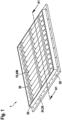
- Fig.1 shows a perspective view of an embodiment of a compressed gas storage receiving device 1.
- the compressed gas storage receiving device 1 has a heat-conductive body 20, for example made of steel.
- the body 20 can be box-shaped, wherein compressed gas storage devices 10 are received in a plurality of channel-shaped receiving surfaces 22 (not visible here) in an interior of the box-shaped body 20.
- the body 20 has a protruding edge 28 running around the box-shaped body 20.
- the protruding edge 38 represents a fastening interface 26 and at the same time a heat-conducting surface 24.
- the fastening interface 26 can have holes for passing screws through.
- the body 20 can be arranged with the fastening interface on a counter-fastening interface 126 of a body 120 of a motor vehicle 100.
- the compressed gas storage devices 10 are heat-conductive and can be arranged as in Fig. 1 be hollow-cylindrical.
- the compressed gas storage 10 can be made of steel, for example, and can store gas under high pressure, such as hydrogen, particularly advantageously.
- Fig. 1 additionally illustrates three stiffening elements 36, which secure the compressed gas storage units 10 received in the respective receiving surfaces 22 against movement and contribute to the stability of the body 20.
- the heat generated during the refueling process can thus be dissipated particularly advantageously by the compressed gas storage units 10, in particular the heat generated can be conducted from the compressed gas storage units 10 via the heat-conductive body 20 to the body 120 of the motor vehicle 100.
- Fig. 2 shows the embodiment of the compressed gas storage device 1 of the Fig.
- thermally conductive compressed gas storage devices 10 are positively received by the body 20 with a respective outer surface AM on the channel-shaped receiving surfaces 22 of the body 20 for heat communication.
- the channel-shaped receiving surfaces 22 are formed in the shape of a circular arc.
- Fig. 3 discloses two further embodiments of a compressed gas storage device 1 according to the invention, each in a vertical section (cf. section axis A1-A1 in Fig. 1 ).
- compressed gas reservoirs 10 are accommodated in channel-shaped receiving surfaces 22.
- both embodiments have a heat-conducting surface 24 and a fastening interface 26.
- the one further embodiment, which is shown on the left, shows a separate heat-conducting element 32, wherein the heat-conducting element 32 is a cooling plate which is arranged on the body 20.
- the heat-conducting element 32 additionally has cooling channels in the cooling plate through which, for example, a cooling fluid or cooling air can flow.
- the one further embodiment which is shown on the right, shows a heat-conducting element 32, wherein the heat-conducting element 32 is made in one piece with the heat-conducting body 20.
- the heat-conducting element 32 here also has cooling channels.
- the heat-conducting element 32 also comprises cooling fins through which cooling air can flow and thus additional heat can be dissipated from the heat-conducting body 20.
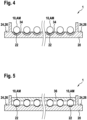
- Fig. 4 illustrates a further embodiment of a compressed gas storage device 1 according to the invention in a vertical section (cf. section axis A1-A1 in Fig. 1 ).
- compressed gas storage units 10 are accommodated in channel-shaped receiving surfaces 22 arranged next to one another.
- the channel-shaped receiving surfaces 22 arranged next to one another are arranged at a distance from one another.
- the compressed gas storage units 10 accommodated in the receiving surfaces 22 thus do not touch one another. This also ensures that even in the event of thermal expansion of the compressed gas storage units 10, the compressed gas storage units 10 continue to be positively accommodated by the thermally conductive body 20 of the compressed gas storage receiving device 1.
- Fig. 4 illustrates a further embodiment of a compressed gas storage device 1 according to the invention in a vertical section (cf. section axis A1-A1 in Fig. 1 ).
- compressed gas storage units 10 are accommodated in channel-shaped receiving surfaces 22 arranged next to one another.
- the channel-shaped receiving surfaces 22 arranged next to one another
- thermally conductive elastic element 34 between the compressed gas storage units 10 and the channel-shaped receiving surfaces 22 there is a thermally conductive elastic element 34, whereby the thermal expansion of the respective compressed gas storage unit 10 can be compensated.
- the thermal expansion of the compressed gas storage units 10 can occur due to the heat generated during the refueling process.
- Fig. 5 shows in a further embodiment a compressed gas storage device 1 according to the invention in a vertical section (cf. section axis A1-A1 in Fig. 1 ), where in Fig. 5 in addition to Fig. 2 a stiffening element 36 is shown.
- This stiffening element 36 secures the compressed gas storage 10 accommodated in the respective receiving surfaces 22 against movement and contributes to the stability of the body 20.
- a system 300 according to the invention with a motor vehicle 100 and a cooling device 200 for cooling a body 120 of the motor vehicle 100 is shown in a front view.
- the motor vehicle 100 has an internal cooling device 200.
- a compressed gas storage device 1 forms at least part of the underbody of the motor vehicle 100.
- the motor vehicle 100, in particular the body 120, comprises two cross members 121a and 121b, wherein the compressed gas storage device 1 is arranged on the two cross members 121a, 121b.
- a thermally conductive body 20 (not shown) of the compressed gas storage device 1 with fastening interfaces 24a and 24b is arranged on a counter fastening interface 124a of the cross member 121a or on a counter fastening interface 124b of the cross member 121b of the body 120.
- a system 300 according to the invention with a motor vehicle 100 and a cooling device 200 for cooling a body 120 of the motor vehicle 100 is shown in a front view.
- the cooling device 200 has a fan 130 of the motor vehicle 100 and/or a cooling circuit 140 of the motor vehicle 100. Cooling air conveyed by the fan 130 is conveyed to various places on the body 120 of the motor vehicle 100 by means of cooling air guide elements 132, or a cooling fluid is guided to various places on the body 120 of the motor vehicle 100 via cooling fluid guide elements 142.
- the cooling device 200 also has an external cooling element 210 for cooling the body 120 of the motor vehicle 100.
- the external cooling element is an external fan 212 and/or an external water spray device 214 for spraying the motor vehicle 100 with water, for example.
- the external cooling element 210 is located under the motor vehicle arranged. Air conveyed by the external fan 212 and/or the water conveyed by the water spray device 214 can flow/spray in the flow direction S, in particular essentially vertically, against at least a part of the body 120, advantageously against the entire body 120. Very advantageously, the air from the external fan 212 flows and/or the water from the water spray device 214 sprays against the underbody of the body 120 of the motor vehicle 100.
- a filling station 500 according to the invention for a system 300 with a motor vehicle 100 and a cooling device 200 for cooling a body 120 of the motor vehicle 100 is shown in a front view.
- the motor vehicle 100 has an internal cooling device 200.
- the gas station 500 has a parking area 510 for parking the motor vehicle 100.
- a compressed gas storage dispenser 520 at the setting area 510 for providing a gas under high pressure is illustrated.
- the compressed gas storage pump 520 comprises a filling station control unit 560 with a data interface 562 for communicating data with a counter data interface 162 of the motor vehicle 100.
- the filling station control unit can also be arranged outside the compressed gas storage pump 520.
- a filling station 500 according to the invention for a system 300 with a motor vehicle 100 and a cooling device 200 for cooling a body 120 of the motor vehicle 100 is shown in a front view.
- the cooling device 200 has on the one hand a fan 130 of the motor vehicle 100 and/or a cooling circuit 140 of the motor vehicle 100.
- cooling air guide elements 132 cooling air conveyed by the fan 130 is conveyed to various places on the body 120 of the motor vehicle 100 or a cooling fluid is guided to various places on the body 120 of the motor vehicle 100 via cooling fluid guide elements 142.
- the cooling air guide element 132 and the cooling fluid guide element 142 are in Fig. 9 not explicitly shown.
- the cooling device 200 has an external cooling element 210.
- the gas station 500 has a parking area 510 for parking the motor vehicle 100.
- a compressed gas storage dispenser 520 at the setting area 510 for providing a gas under high pressure is illustrated.
- the compressed gas storage pump 520 comprises a filling station control unit 560 with a data interface 562 for communicating data with a counter data interface 162 of the motor vehicle 100.
- the filling station control unit can also be arranged outside the compressed gas storage pump 520.
- the external cooling element 210 is arranged in a vehicle pit 512 with a fluid-permeable cover 514.
- the fluid-permeable cover 514 allows the body 120 of the motor vehicle 100 to be cooled particularly easily, without great flow resistance, by means of the cooling device 200, for example by means of an external fan 212 and/or by means of the external water spray device 214. Very advantageously, the air from the external fan 212 and/or the water from the water spray device 214 flows in the flow direction S against the underbody of the body 120 of the motor vehicle 100.
- Fig. 10 discloses an embodiment of a method according to the invention for refueling a motor vehicle 100.
- data is communicated 602 between the data interface 562 of the gas station 500 and the counter data interface 162 of the motor vehicle 100 to determine the status of the refueling process.
- the gas station control unit 560 detects 604 a positive refueling process status.
- the cooling device 200 is activated 606 by the gas station control unit 560 to cool the body 120 of the motor vehicle 100 and the compressed gas storage tank 10 of the motor vehicle 100 is filled 608. The filling of the compressed gas storage tank 10 is then terminated 610.
- the cooling device 200 can remain activated after the filling of the compressed gas storage tank 10 has been terminated 610 and can be deactivated 612 in an additional step only when the compressed gas storage tank 10 has fallen below a definable temperature threshold value. This can mean that, for example, the fan 130 and the cooling circuit 140 of the motor vehicle are also kept running at least for a further period of time when the motor vehicle 100 is subsequently driven on. remain activated until the temperature falls below the set threshold.
Landscapes
- Engineering & Computer Science (AREA)
- Mechanical Engineering (AREA)
- Sustainable Energy (AREA)
- Life Sciences & Earth Sciences (AREA)
- Sustainable Development (AREA)
- Chemical & Material Sciences (AREA)
- Combustion & Propulsion (AREA)
- Transportation (AREA)
- General Engineering & Computer Science (AREA)
- Manufacturing & Machinery (AREA)
- Chemical Kinetics & Catalysis (AREA)
- Electrochemistry (AREA)
- General Chemical & Material Sciences (AREA)
- Filling Or Discharging Of Gas Storage Vessels (AREA)
- Cooling, Air Intake And Gas Exhaust, And Fuel Tank Arrangements In Propulsion Units (AREA)
Description
- Brennstoffzellenfahrzeuge, die die elektrische Antriebsenergie aus einem Brennstoffstoff wie Wasserstoff gewinnen, stellen eine Alternative zu den konventionellen Verbrennungsfahrzeugen und den batterieelektrischen Fahrzeugen dar. Eine Vollbetankung eines Brennstoffzellenfahrzeuges ist mit 3 bis 5 Minuten vergleichbar mit einer Vollbetankung eines konventionellen Verbrennungsfahrzeuges. Beispielsweise kann Wasserstoff bei einem Brennstoffzellenfahrzeug in einem zylindrischen Druckgasspeicher, einem sogenannten Gastank, gespeichert werden. Beim Betanken eines Brennstoffzellenfahrzeuges an einer Tankstelle strömt der Brennstoff von einem Gasspeicher der Tankstelle in den Druckgasspeicher des Kraftfahrzeuges. Der Brennstoff in dem Druckgasspeicher wird während des Betankungsvorgangs komprimiert, wobei Kompressionsenergie in Form von Wärme frei wird. Dies hat zur Folge, dass sich einerseits der Brennstoff selbst erwärmt und sich somit der Druck des Brennstoffes im Druckgasspeicher zusätzlich erhöht. Andererseits erwärmt sich auch der Druckgasspeicher. Dabei soll der Brennstoffdruck im Druckgasspeicher einen kritischen Druckgasspeicherdruck und die Temperatur des Druckgasspeichers eine kritische Druckgasspeichertemperatur nicht überschreiten. Der Betankungsvorgang ist beim Tanken von Wasserstoff daher durch ein Betankungsprotokoll nach SAE TIR J2601 weltweit vorgegeben.
- Die
US 2019/047404 A1 beschreibt einen Hochdruckbehälter, in dem ein unter Hochdruck stehendes Fluid lagerbar ist. - Es ist bekannt, dass der Brennstoff an der Tankstelle auf -40° Celsius vorgekühlt wird, um der Erwärmung des Brennstoffes beim Betankungsvorgangs entgegenzuwirken. Damit kann die Betankungszeit verkürzt werden, jedoch ist das Vorkühlen mit hohen Kosten verbunden. Weiter werden die Druckgasspeicher in Fahrzeugen derart montiert, dass diese größtenteils von Luft umgeben sind, sodass nur eine sehr schlechte Wärmeabfuhr beim Betankungsvorgang über die Außenmantelfläche der Druckgasspeicher erfolgt.
- Die vorliegende Erfindung zeigt eine Druckgasspeicheraufnahmevorrichtung gemäß den Merkmalen des Anspruchs 1, ein System mit einem Kraftfahrzeug und einer Kühlungsvorrichtung gemäß den Merkmalen des Anspruchs 4, eine Tankstelle gemäß den Merkmalen des Anspruchs 7 sowie ein Verfahren zum Betanken eines Kraftfahrzeuges gemäß den Merkmalen des Anspruchs 10.
- Weitere Merkmale und Details der Erfindung ergeben sich aus den Unteransprüchen, der Beschreibung und den Zeichnungen. Dabei gelten Merkmale und Details, die im Zusammenhang mit der erfindungsgemäßen Druckgasspeicheraufnahmevorrichtung beschrieben sind, selbstverständlich auch im Zusammenhang mit dem erfindungsgemäßen System, der erfindungsgemäßen Tankstelle und dem erfindungsgemäßen Verfahren und jeweils umgekehrt, sodass bezüglich der Offenbarung zu den einzelnen Erfindungsaspekten stets wechselseitig Bezug genommen wird bzw. werden kann.
- Gemäß einem ersten Aspekt zeigt die vorliegende Erfindung eine Druckgasspeicheraufnahmevorrichtung für ein Kraftfahrzeug zum Kühlen von Druckgasspeichern. Die Druckgasspeicheraufnahmevorrichtung weist einen Körper mit einer Vielzahl an kanalförmigen Aufnahmeflächen zur Aufnahme der Druckgasspeicher auf. Der Körper ist wärmeleitfähig und weist eine Befestigungsschnittstelle zum Anordnen an eine Gegenbefestigungsschnittstelle einer Karosserie des Kraftfahrzeuges auf. Weiter weist der Körper Wärmeleitflächen zur wärmekommunizierenden Verbindung mit der Karosserie auf. Weiter umfasst die Druckgasspeicheraufnahmevorrichtung Druckgasspeicher zum Speichern von unter hohem Druck stehenden Gas, wobei die Druckgasspeicher wärmeleitfähig sind und an den kanalförmigen Aufnahmeflächen des Körpers für eine Wärmekommunikation formschlüssig von dem Körper aufgenommen sind.
- Mit der erfindungsgemäßen Druckgasspeicheraufnahmevorrichtung kann eine beim Betankungsvorgang entstehende Wärme besonders vorteilhaft von den wärmeleitfähigen Druckgasspeichern über einen wärmeleitfähigen Körper zu der Karosserie des Kraftfahrzeuges geleitet, insbesondere übertragen, werden. Da die Karosserie eine große thermische Masse und eine große Oberfläche aufweisen kann, kann die beim Betankungsvorgang entstehende Wärme besonders einfach, schnell und effizient, bspw. an die Umgebung, abgegeben werden. Dafür weist der wärmeleitfähige Körper der Druckgasspeicheraufnahmevorrichtung Aufnahmeflächen zur formschlüssigen Aufnahme von Druckgasspeichern auf. Somit kann besonders vorteilhaft sichergestellt werden, dass die beim Betankungsvorgang entstehende Wärme von dem Druckgasspeicher, insbesondere von dem Mantel des Druckgasspeichers, und damit auch von dem unter Druck stehenden Gas im Druckgasspeicher, an den wärmeleitfähigen Körper geleitet bzw. über den wärmeleitfähigen Körper an die Karosserie des Kraftfahrzeuges übertragen wird. Vorteilhafterweise kann somit gewährleistet werden, dass ein für den jeweiligen Druckgasspeicher kritischer Druckgasspeicherdruck nicht überschritten wird und dass eine für den jeweiligen Druckgasspeicher kritische Druckgasspeichertemperatur nicht überschritten wird. Eine Gefahr für die Insassen des Kraftfahrzeuges, bspw. eine Explosion eines Druckgasspeichers, kann somit minimiert werden. Weiter kann durch die erfindungsgemäße Druckgasspeicheraufnahmevorrichtung die Tankdauer für eine Vollbetankung der Druckgasspeicher durch die besonders effiziente Wärmekommunikation zwischen den Druckgasspeichern und der Karosserie des Kraftfahrzeuges besonders kurz sein. Weiter können Zeiten, in welchen der Brennstoffzufluss während des Betankungsvorgangs unterbrochen werden muss, wie im Betankungsprotokoll nach SAE TIR J2601, entfallen. Das bedeutet, dass mit der erfindungsgemäßen Druckgasspeicheraufnahmevorrichtung ein Betanken der Druckgasspeicher des Kraftfahrzeuges zeitkontinuierlich erfolgen kann.
- Der wärmeleitfähige Körper kann besonders vorteilhaft die beim Betankungsvorgang entstehende Wärme über die die kanalförmigen Aufnahmeflächen von den Druckgasspeichern aufnehmen, leiten und an die Karosserie eines Kraftfahrzeuges abgeben. Der wärmeleitfähige Körper kann aus einem Metall ausgebildet sein. Der metallische Körper kann eine besonders hohe Wärmeleitfähigkeit aufweisen. Insbesondere kann der metallische Körper zumindest teilweise aus Stahl ausgebildet sein und somit kann gleichzeitig eine besonders hohe Stabilität des Körpers gewährleistet sein. Insbesondere kann der metallische Körper komplett aus Stahl gebildet sein. Der wärmeleitfähige Körper kann auch zumindest teilweise aus einem Kunststoff mit einem hoch wärmeleitfähigen Füllstoff gebildet werden. Ein solcher Körper kann ein besonders geringes Gewicht aufweisen bei gleichzeitig hoher Wärmeleitfähigkeit und kann besonders günstig und einfach hergestellt werden.
- Unter, dass die Druckgasspeicher an den kanalförmigen Aufnahmeflächen des Körpers formschlüssig aufgenommen sind, kann verstanden werden, dass die Druckgasspeicher und die kanalförmigen Aufnahmeflächen zumindest teilweise zueinander komplementär ausgebildet sind. Vorzugsweise kontaktieren sich die zueinander komplementär ausgebildeten Flächen, sodass die Wärmekommunikation zwischen den Druckgasspeichern und den Aufnahmeflächen besonders vorteilhaft ist.
- Die Druckgasspeicher können im Wesentlichen hohlzylindrisch ausgebildet sein, damit können bekannte Gasflaschen gemeint sein. Die wärmeleitfähigen Druckgasspeicher können aus einem Metall ausgebildet sein. Die metallischen Druckgasspeicher können jeweils eine besonders hohe Wärmeleitfähigkeit aufweisen. Insbesondere können die metallische Druckgasspeicher jeweils zumindest teilweise aus Stahl ausgebildet sein und somit kann eine besonders hohe Stabilität der Druckgasspeicher gewährleistet sein. Insbesondere können die metallischen Druckgasspeicher komplett aus Stahl gebildet sein. Die wärmeleitfähigen Druckgasspeicher können auch jeweils zumindest teilweise einen Kunststoff mit einem hoch wärmeleitfähigen Füllstoff aufweisen. Ein solcher wärmeleitfähiger Druckgasspeicher kann ein besonders geringes Gewicht aufweisen bei gleichzeitig hoher Wärmeleitfähigkeit und kann besonders günstig und einfach hergestellt werden. Die beim Betankungsvorgang entstehende Wärme kann folglich besonders vorteilhaft von den Druckgasspeichern über den wärmeleitfähigen Körper zu der Karosserie des Kraftfahrzeuges geleitet werden.
- Weiter weist die Druckgasspeichervorrichtung insbesondere mehrere einzelne Druckgasspeicher auf. Die mehreren einzelnen Druckgasspeicher können fluidtechnisch miteinander verbunden sein. Vorteilhafterweise kann durch mehrere einzelne, insbesondere kleine, Druckgasspeicher im Vergleich zu einem einzelnen, großen Druckgasspeicher insgesamt eine größere Außenmantelfläche bei gleichem Speichervolumen erreicht werden. Weiter können mehrere einzelne Druckgasspeicher zusammen eine größere thermische Masse als ein einzelner, größerer Druckgasspeicher bei gleichem Speichervolumen aufweisen. Als thermische Masse eines Druckgasspeichers kann die Masse des Druckgasspeichermantels, insbesondere des Tankmantels, verstanden werden. In anderen Worten kann als thermische Masse die Masse der das Druckgas, bspw. Wasserstoff, umgebenden Hülle des Druckgasspeichers verstanden werden. Die beim Betankungsvorgang entstehende Wärme kann damit von der besonders großen thermischen Masse der mehreren einzelnen Druckgasspeichern besonders vorteilhaft aufgenommen werden. Ferner kann vorteilhafterweise durch mehrere einzelne, insbesondere kleine, Druckgasspeicher im Vergleich zu einem einzelnen, großen Druckgasspeicher bei gleichem Speichervolumen eine besonders flache Druckgasspeicheraufnahmevorrichtung ausgebildet werden. Eine solche flache Druckgasspeicheraufnahmevorrichtung, insbesondere der Körper der Druckgasspeicheraufnahmevorrichtung, kann besonders vorteilhaft einen Teil der Karossiere, bspw. den Unterboden, des Fahrzeuges bilden. Damit können Kosten gespart werden und die beim Betankungsvorgang entstehende Wärme kann einerseits besonders vorteilhaft durch den Körper selbst und andererseits an den restlichen Teil der Karosserie des Kraftfahrzeuges abgegeben werden.
- Als die Vielzahl an kanalförmigen Aufnahmeflächen können insbesondere mehrere nebeneinander und/oder hintereinander angeordnete kanalförmige Aufnahmeflächen verstanden werden. Insbesondere können nebeneinander angeordnete Aufnahmeflächen voneinander beabstandet angeordnet sein. Damit kann gewährleistet werden, dass sich in den nebeneinander angeordneten Aufnahmeflächen aufgenommene Druckgasspeicher optimal in den Aufnahmeflächen aufgenommen werden können, und insbesondere sich nicht berühren. Somit kann sichergestellt werden, dass auch bei einer Wärmeausdehnung der Druckgasspeicher die Druckgasspeicher weiter formschlüssig von dem Körper der Druckgasspeicheraufnahmevorrichtung aufgenommen sind. Mehrere nebeneinander und/oder hintereinander angeordnete kanalförmige Aufnahmeflächen können eine besonders große Fläche zur Aufnahme der Druckgasspeicher bereitstellen. Somit kann eine besonders große Menge an beim Betankungsvorgang entstehender Wärme von den Druckgasspeichern von einer besonders großen Fläche, insbesondere kanalförmigen Aufnahmefläche, aufgenommen, geleitet und an die Karosserie des Kraftfahrzeuges abgeben werden. Weiter kann durch mehrere nebeneinander und/oder hintereinander angeordnete kanalförmige Aufnahmeflächen der wärmeleitfähige Körper besonders flach ausgebildet werden. Die kanalförmigen Aufnahmeflächen des Körpers und die Außenmantelflächen der Druckgasspeichers können jeweils in einem Schnitt zumindest teilweise eine gleiche Form aufweisen. Die kanalförmigen Aufnahmeflächen können in einem Schnitt jeweils einen Kreisbogen darstellen. Die Druckgasspeicher können im Wesentlichen hohlzylindrisch ausgebildet sein und die Außenmantelflächen der Druckgasspeicher können in einem Schnitt jeweils einen Kreis darstellen. Die kreisbogenförmige Aufnahmefläche kann somit besonders vorteilhaft hohlzylindrische Druckgasspeicher aufnehmen und somit besonders vorteilhaft die Wärme beim Betankungsvorgang in den wärmeleitfähigen Körper leiten. Eine Kühlung der Druckgasspeicher kann somit besonders vorteilhaft sein. Es ist auch denkbar, dass die kanalförmige Aufnahmefläche nutenförmig ausgebildet ist. Die Nut kann in einem Schnitt eine Quaderform aufweisen. Eine quaderförmige Aufnahmefläche kann besonders vorteilhaft quaderförmige Druckgasspeicher aufnehmen und somit die Wärmekommunikation zwischen Druckgasspeicher und kanalförmiger Aufnahmefläche begünstigen.
- Die Befestigungsschnittstelle kann Löcher zum Durchführen von Schrauben aufweisen. Die Gegenbefestigungsschnittstelle der Karosserie des Kraftfahrzeuges kann korrespondierend angeordnete Löcher aufweisen, insbesondere kann ein Quer- und/oder Längsträger der Karosserie des Kraftfahrzeuges korrespondierend angeordnete Löcher aufweisen. Der Körper der Druckgasspeicheraufnahmevorrichtung kann mittels Schrauben und Muttern an die Karosserie des Kraftfahrzeuges angeordnet werden. Eine solche Anordnung kann besonders einfach erfolgen. Das Anordnen der Befestigungsschnittstelle des Körpers der Druckgasspeicheraufnahmevorrichtung an die Gegenbefestigungsschnittstelle der Karosserie kann auch durch Schweißen erfolgen. Damit kann eine besonders stabile Anordnung erfolgen. Insbesondere kann eine Anordnung durch Schweißen besonders vorteilhaft sein, wenn der Körper der Druckgasspeicheraufnahmevorrichtungen einen Teil der Karossiere des Kraftfahrzeuges bilden soll.
- Als Wärmeleitflächen des Körpers können Flächen des Körpers verstanden werden, welche die Wärme von dem Körper zu der Karosserie des Kraftfahrzeuges besonders vorteilhaft leiten können. Wärmeleitflächen können die Karosserie besonders vorteilhaft kontaktieren, sodass der Wärmewiderstand zwischen der Karosserie und den Wärmeleitflächen besonders gering ist. Die Karosserie des Kraftfahrzeuges kann auch Gegenwärmeleitflächen aufweisen, die insbesondere den Wärmeleitflächen des Körpers der Druckgasspeicheraufnahmevorrichtung gegenüberliegen. Insbesondere kann der Wärmewiderstand zwischen der Karosserie und der Wärmeleitfläche geringer sein als an anderen Kontaktstellen der Karosserie mit dem Körper der Druckgasspeichervorrichtung, bspw. an der Befestigungsschnittstelle und der Gegenbefestigungsschnittstelle. In anderen Worten, kann an den Wärmeleitflächen die Wärme besser geleitet, insbesondere übertragen, werden. Mit den Wärmeleitflächen des Körpers, und insbesondere zusammen mit den Gegenwärmeleitflächen der Karosserie des Kraftfahrzeuges, kann die Wärme von den Druckgasspeichern besonders gezielt in besonders günstige Bereiche der Karosserie eingeleitet werden und ein besonders effizientes Abführen der Wärme ist möglich. Das Kühlen der Druckgasspeicher kann damit besonders effizient erfolgen. Es ist auch denkbar, dass die Befestigungsschnittstelle des Körpers der Druckgasspeicheraufnahmevorrichtung die Wärmeleitflächen aufweist, insbesondere ausbildet. Die Gegenbefestigungsschnittstelle der Karosserie kann dann vorteilhafterweise Gegenwärmeleitflächen aufweisen. Somit kann auf besonders einfache Weise die beim Betankungsvorgang entstehende Wärme von den Druckgasspeichern an die Karosserie des Kraftfahrzeuges abgegeben werden. Die Wärmeleitflächen des Körpers der Druckgasspeichervorrichtung können einen wärmeleitfähigen Kleber aufweisen und/oder die Gegenwärmeleitflächen der Karosserie des Kraftfahrzeuges können einen wärmeleitfähigen Kleber aufweisen. Damit kann eine besonders vorteilhafte Wärmekommunikation zwischen dem Körper der Druckgasspeicheraufnahmevorrichtung und der Karosserie des Kraftfahrzeuges erreicht werden. Die beim Betankungsvorgang entstehende Wärme kann damit besonders vorteilhaft geleitet und an die Karosserie des Kraftfahrzeuges abgeben werden. Die Kühlung der Druckgasspeicher kann somit besonders effizient erfolgen.
- Der Körper kann kastenförmig ausgebildet sein. Der kastenförmige Körper kann besonders vorteilhaft zwischen zwei Längsträger der Karosserie des Kraftfahrzeuges montiert werden, sodass die beim Betankungsvorgang entstehende Wärme besonders vorteilhaft über den Körper an die Karosserie abgegeben werden kann. Der kastenförmige Körper kann einen Innenraum aufweisen, wobei der kastenförmige Körper in dem Innenraum eine Vielzahl an kanalförmigen Aufnahmeflächen umfasst. Der kastenförmige Körper kann an seiner Außenseite einen um den kastenförmigen Körper umlaufenden, hervorstehenden Rand aufweisen. Der umlaufende, hervorstehende Rand kann die Befestigungsschnittstelle darstellen.
- Als unter hohem Druck stehendes Gas kann ein Brennstoff wie Wasserstoff verstanden werden, welcher auf beispielsweise 700 bis 800 bar komprimiert ist bzw. während des Betankungsvorgangs auf 700 bis 800 bar in den Druckgasspeichern komprimiert wird. Die erfindungsgemäße Druckgasspeicheraufnahmevorrichtung kann auch für andere komprimierbare Brennstoffe geeignet sein. Insbesondere kann die erfindungsgemäße Druckgasspeicheraufnahmevorrichtung für die Abfuhr von Kompressionswärme, welche beim Komprimieren eines Gases entsteht, verwendet werden.
- Es kann von Vorteil sein, wenn bei einer erfindungsgemäßen Druckgasspeicheraufnahmevorrichtung zumindest 15 % der Außenmantelfläche, vorzugsweise zumindest 25 % der Außenmantelfläche, jedes Druckgasspeichers an den jeweiligen kanalförmigen Aufnahmeflächen des Körpers für eine Wärmekommunikation mit dem Körper aufgenommen sind. Nimmt die Druckgasspeicheraufnahmevorrichtung zumindest 15 % der Außenmantelfläche jedes Druckgasspeichers an den jeweiligen kanalförmigen Aufnahmeflächen des Körpers für eine Wärmekommunikation mit dem Körper auf, so kann eine besonders effektive Kühlung der Druckgasspeicher erfolgen. Nimmt die Druckgasspeicheraufnahmevorrichtung zumindest 25 % der Außenmantelfläche jedes Druckgasspeichers an den jeweiligen kanalförmigen Aufnahmeflächen des Körpers für eine Wärmekommunikation mit dem Körper auf, so kann eine noch effektivere Kühlung der Druckgasspeicher erfolgen. Die zumindest 15 % bzw. die zumindest 25 % der Außenmantelfläche jedes Druckgasspeichers kann eine zusammenhängende Fläche sein. Vorteilhafterweise kann der wärmeleitfähige Körper, insbesondere können die kanalförmigen Aufnahmeflächen des wärmeleitfähigen Körpers der Druckgasspeicheraufnahmevorrichtung, derart ausgebildet sein, dass dieser/diese die zusammenhängende Fläche des jeweiligen Druckgasspeichers aufnimmt/aufnehmen. Somit kann besonders effizient die Wärme von der jeweiligen zusammenhängenden Fläche der Außenmantelfläche der Druckgasspeicher in den wärmeleitfähigen Körper geleitet werden. Ein lokales Abführen der Wärme von den Druckgasspeichern kann damit ermöglicht werden. Auch ist denkbar, dass sich die zumindest 15 % bzw. die zumindest 25 %der Außenmantelfläche jedes Druckgasspeichers jeweils aus mindestens zwei jeweils voneinander getrennten Flächen der jeweiligen Außenmantelfläche zusammensetzen. Hier kann der wärmeleitfähige Körper, insbesondere können die kanalförmigen Aufnahmeflächen des wärmeleitfähigen Körpers, derart ausgebildet sein, dass dieser/diese die sich jeweils aus mindestens zwei jeweils voneinander getrennten Flächen des jeweiligen Druckgasspeichers aufnimmt/aufnehmen. Beispielsweise kann ein solcher wärmeleitfähiger Körper dazu Freiräume aufweisen. Insbesondere können jede der kanalförmigen Aufnahmeflächen des wärmeleitfähigen Körpers Freiräume aufweisen. Vorteilhafterweise kann der Körper die jeweiligen kanalförmigen Aufnahmeflächen gleichmäßig entlang der Längsrichtung eines jeden Druckgasspeichers verteilt aufweisen und/oder gleichmäßig entlang eines Umfangs eines jeden Druckgasspeichers verteilt aufweisen. Somit kann die bei dem Betankungsvorgang entstehende Wärme von den Druckgasspeichern besonders gleichmäßig von dem wärmeleitfähigen Körper aufgenommen werden und an die Karosserie des Kraftfahrzeuges geleitet, insbesondere übertragen, werden.
- Vorteilhafterweise kann bei einer erfindungsgemäßen Druckgasspeicheraufnahmevorrichtung der Körper zumindest eines der folgenden Elemente aufweisen:
- ein Wärmeleitelement, insbesondere Kühlrippen und/oder Kühlkanäle und/oder eine Kühlplatte, zum Kühlen des Körpers,
- ein wärmeleitfähiges Elastizitätselement zwischen den Druckgasspeichern und den kanalförmigen Aufnahmeflächen zum Ausgleich einer Wärmeausdehnung der Druckgasspeicher,
- ein Versteifungselement zur Stabilisierung des Körpers.
- Das Wärmeleitelement, insbesondere Kühlrippen und/oder Kühlkanäle und/oder eine Kühlplatte, kann/können insbesondere eine zusätzliche Wärmekommunikation zwischen dem wärmeleitfähigen Körper und der Karosserie des Kraftfahrzeuges schaffen. Durch das Wärmeleitelement kann der Wärmewiderstand zwischen der Karosserie und dem wärmeleitfähigen Körper reduziert werden. Folglich kann die Wärme von den Druckgasspeichern verbessert über den Körper an die Karosserie abgegeben werden. Das Wärmeleitelement, insbesondere Kühlrippen und/oder Kühlkanäle und/oder eine Kühlplatte, kann/können aus einem wärmleitfähigen Material bestehen. Das wärmeleitfähige Material kann ein Metall sein. Beispielsweise können zusätzliche Bleche von dem Körper zu der Karosserie des Kraftfahrzeuges führen. Das metallisches Wärmeleitelement, insbesondere Kühlrippen und/oder Kühlkanäle und/oder eine Kühlplatte, kann/können auch zu der Stabilität der Karosserie des Kraftfahrzeuges beitragen. Das wärmeleitfähige Material kann auch ein Kunststoff mit einem hoch wärmeleitfähigen Füllstoff sein. Ein solches Wärmeleitelement, insbesondere Kühlrippen und/oder Kühlkanäle und/oder eine Kühlplatte, kann ein besonders geringes Gewicht aufzeigen. Ferner kann das Wärmeleitelement einstückig mit dem wärmeleitfähigen Körper ausgebildet sein. Dadurch kann der Wärmewiderstand zwischen dem Wärmeleitelement und dem wärmeleitfähigen Körper besonders geringgehalten werden. Das Wärmeleitelement kann auch separat an wärmeleitfähigen Körper angeordnet werden. Die Kühlrippen und/oder die Kühlkanäle und/oder die Kühlplatte können weiter besonders vorteilhaft Wärme von dem wärmeleitfähigen Körper an ein Fluid, bspw. Wasser oder Luft, abgeben. Die beim Betankungsvorgang entstehende Wärme kann somit besonders vorteilhaft von den Druckgasspeichern über den wärmeleitfähigen Körper an die Karosserie des Kraftfahrzeuges geleitet, insbesondere übertragen werden, da durch die Kühlrippen und/oder die Kühlkanäle und/oder die Kühlplatte der Wärmewiderstand des wärmeleitfähigen Körpers geringgehalten werden kann.
- Vorteilhafterweise kann das wärmeleitfähige Elastizitätselement zwischen den Druckgasspeichern und den kanalförmigen Aufnahmeflächen eine verbesserte Wärmekommunikation zwischen dem wärmeleitfähigen Körper und den wärmeleitfähigen Druckgasspeichern schaffen. Weiter kann durch das wärmeleitfähige Elastizitätselement die Wärmeausdehnung des jeweiligen Druckgasspeichers ausgeglichen werden. Außerdem kann das wärmeleitfähige Elastizitätselement einstückig mit dem wärmeleitfähigen Körper ausgebildet sein. Dadurch kann der Wärmewiderstand zwischen dem wärmeleitfähigen Elastizitätselement und dem Körper geringgehalten werden. Das wärmeleitfähige Element kann auch separat ausgebildet sein und an den Körper angeordnet sein. Insbesondere können die kanalförmigen Aufnahmeflächen des Körpers jeweils wärmeleitfähige Elastizitätselemente aufweisen bzw. ausbilden. Dadurch kann besonders vorteilhaft die Wärmeausdehnung der Druckgasspeicher ausgeglichen werden und sichergestellt werden, dass die Druckgasspeicher während des Betankungsvorgangs formschlüssig von dem Körper aufgenommen sind. Somit kann gewährleistet werden, dass während des Betankungsvorgangs die Wärme von den Druckgasspeichern über den wärmeleitfähigen Körper an die Karosserie des Kraftfahrzeuges besonders effizient geleitet, insbesondere abgegeben werden kann. Das wärmeleitfähige Elastizitätselement kann als Material einen elastischen, wärmeleitfähigen Kunststoff aufweisen. Ein solches wärmeleitfähiges Elastizitätselement kann besonders einfach hergestellt werden und eine besonders vorteilhafte Wärmeleitfähigkeit aufweisen.
- Der Körper kann mehrere Versteifungselement aufweisen. Vorteilhafterweise kann durch Versteifungselemente des Körpers gewährleistet werden, dass die Druckgasspeicher an den kanalförmigen Aufnahmeflächen des Körpers für die Wärmekommunikation besonders vorteilhaft formschlüssig aufgenommen sind. Weiter können die Versteifungselemente die in den jeweiligen Aufnahmeflächen aufgenommen Druckgasspeichern gegen ein Bewegen sichern. Die Versteifungselemente können aus einem wärmeleitfähigen Material ausgebildet sein und den Wärmewiderstand des wärmeleitfähigen Körpers geringgehalten. Damit gemeint ist, dass durch das zusätzliche wärmeleitfähige Material der Versteifungselemente die thermischen Masse des wärmeleitfähigen Körpers erhöht werden kann und somit die Wärme von den Druckgasspeichern besonders vorteilhaft aufgenommen und abgeführt werden kann. Weiter können die Versteifungselemente dazu ausgebildet sein, an die Karosserie des Kraftfahrzeuges angeordnet zu werden und/oder können die Versteifungselemente an den Körper angeordnet sein. Somit können die Versteifungselemente den Transport von Wärme von den Tanks zu dem Körper und der Karosserie weiter verbessern. Insbesondere können Räume zwischen den Versteifungselementen und dem Körper derart ausgestaltet sein, dass ein optimaler Wärmetransport von den Druckgasspeicher zum Körper erfolgt.
- Gemäß einem zweiten Aspekt zeigt die vorliegende Erfindung ein System, wobei das System ein Kraftfahrzeug und eine Kühlungsvorrichtung zum Kühlen einer Karosserie des Kraftfahrzeuges umfasst. Das Kraftfahrzeug weist eine erfindungsgemäße Druckgasspeicheraufnahmevorrichtung und ferner die Karosserie mit der Gegenbefestigungsschnittstelle, wobei der wärmeleitfähige Körper der Druckgasspeicheraufnahmevorrichtung mit der Befestigungsschnittstelle an die Gegenbefestigungsschnittstelle angeordnet ist.
- Die Karosserie kann mehrere Gegenbefestigungsschnittstellen aufweisen. Auch der wärmeleitfähige Körper der Druckgasspeicheraufnahmevorrichtung kann mehrere, korrespondierende Befestigungsschnittstellen aufweisen. Die Druckgasspeichervorrichtung kann unterhalb des Insassenraums des Kraftfahrzeuges angeordnet sein. Es ist auch denkbar, dass die Druckgasspeichervorrichtung zumindest einen Teil des Unterbodens des Kraftfahrzeuges bildet. Die Karosserie kann Längsträger und Querträger aufweisen. Die Längsträger und/oder Querträger können die Gegenbefestigungsschnittstelle aufweisen, insbesondere darstellen. Insbesondere ist die Druckgasspeichervorrichtung zwischen zwei Längsträgern und/oder zwischen zwei Querträgern der Karosserie des Kraftfahrzeuges angeordnet. Somit kann die wärmekommunizierende Verbindung zwischen dem wärmeleitfähigen Körper, insbesondere den Wärmeleitflächen, und der Karosserie einen besonders geringen Wärmewiderstand aufweisen. Folglich kann die Wärme von den Druckgasspeichern besonders effizient auf die Karosserie übertragen, insbesondere abgeführt werden. Das Abführen der Wärme von der Karosserie kann über die Umgebungsluft erfolgen. Dies kann eine besonders günstige und effiziente Lösung darstellen.
- Das Kraftfahrzeug kann ein Brennstoffzellensystem aufweisen. Das Brennstoffzellensystem kann einen Brennstoffzellenstapel mit Brennstoffzellen umfassen. Weiter kann das Brennstoffzellensystem einen Luftverdichter zum Versorgen des Brennstoffzellenstapels mit verdichteter Luft umfassen. Außerdem kann das Brennstoffzellensystem einen Kühlkreislauf zum Kühlen des Brennstoffzellensystems, insbesondere des Brennstoffzellenstapels, aufweisen.
- Mit besonderem Vorteil kann bei einem erfindungsgemäßen System die Kühlungsvorrichtung einen Ventilator des Kraftfahrzeuges und ein Kühlluftleitelement zum Leiten der von dem Ventilator geförderten Kühlluft an die Karosserie des Kraftfahrzeuges aufweisen und/oder die Kühlungsvorrichtung weist einen Kühlkreislauf des Kraftfahrzeuges und ein Kühlfluidleitelement zum Leiten des Kühlfluids an die Karosserie des Kraftfahrzeuges auf. Diese Kühlungsvorrichtung kann auch als interne Kühlungsvorrichtung verstanden werden.
- Der Ventilator des Kraftfahrzeuges kann insbesondere einer der folgenden Ventilatoren sein:
- Ventilator einer Flüssigkeitskühlung des Motors,
- Gebläseventilator zur Belüftung des Innenraumes eines Kraftfahrzeuges,
- ein Luftverdichter eines Brennstoffzellensystems des Kraftfahrzeuges.
- Als Ventilator der Flüssigkeitskühlung des Motors kann der Hauptkühlerventilator des Kraftfahrzeuges verstanden werden. Der Ventilator des Kraftfahrzeuges kann auch ein Luftverdichter des Brennstoffzellensystems des Kraftfahrzeuges sein. Der Luftverdichter kann die Kühlluft mit besonders hohem Druck bzw. mit besonders hoher Strömungsgeschwindigkeit an die Karosserie des Kraftfahrzeuges leiten. Somit kann Wärme besonders effektiv abgeführt werden.
- Mit einem Ventilator des Kraftfahrzeuges kann auf besonders einfache und kostengünstige Weise die Karosserie des Kraftfahrzeuges mit der vom Ventilator geförderten Kühlluft gekühlt werden. Durch die Kühlluft kann die beim Betankungsvorgang entstehende Wärme somit besonders vorteilhaft von den Druckgasspeichern abgeführt werden, insbesondere von der Karosserie des Kraftfahrzeuges abgeführt. Das Kühlluftleitelement kann die Kühlluft von dem Ventilator an die Karosserie leiten und damit die Wärme von der Karossiere abführen. Das Kühlluftleitelement kann ein Rohr zwischen dem Ventilator und der Karosserie aufweisen, durch das die Kühlluft von dem Ventilator zu der Karosserie strömt. Das Kühlluftleitelement kann auch mehrere Rohre als fluidkommunizierende Verbindung zwischen Ventilator und Karosserie aufweisen. Die Rohre können die Kühlluft an unterschiedliche Stellen der Karosserie führen. Insbesondere wird die Kühlluft mittels dem Kühlluftleitelement an die Stellen der Karosserie des Kraftfahrzeuges geleitet, an welchem die Karosserie eine besonders hohe Temperatur im Vergleich zu anderen Stellen der Karosserie aufweist. Somit kann besonders effizient Wärme abgeführt werden und die Druckgasspeicher, insbesondere über die Karosserie des Kraftfahrzeuges, gekühlt werden. Es ist auch denkbar, dass die Kühlluft mittels dem Kühlluftleitelement an die Stellen der Karosserie geleitet wird, an welchen der wärmeleitfähige Körper mit seinen Wärmeleitflächen an die Karosserie des Kraftfahrzeuges angeordnet ist. Das Kühlluftleitelement kann die Kühlluft auch an ein Wärmeleitelement des wärmeleitfähigen Körpers der Druckgasspeicheraufnahmevorrichtung leiten. Somit kann besonders vorteilhaft Wärme abgeführt werden. Vorteilhafterweise kann die Kühlluft von dem Ventilator des Kraftfahrzeuges mittels dem Kühlluftleitelement auch an den wärmeleitfähigen Körper und/oder die Druckgasspeicher geführt werden und somit zusätzlich Wärme abgeführt werden.
- Der Kühlkreislauf des Kraftfahrzeuges kann einer der folgenden Kühlkreisläufe sein:
- Kühlkreislauf zum Kühlen eines Motors oder einer Leistungselektronik des Kraftfahrzeuges,
- Kältekreislauf, insbesondere Kältekreislauf einer Klimaanlage des Kraftfahrzeuges, zur Klimatisierung des Kraftfahrzeuges,
- Kühlkreislauf zum Kühlen eines Brennstoffzellensystems.
- Mit einem Kühlkreislauf des Kraftfahrzeuges können auf besonders einfache und kostengünstige Weise die Karosserie des Kraftfahrzeuges mittels dem Kühlfluid gekühlt werden. Die beim Betankungsvorgang entstehende Wärme kann somit besonders vorteilhaft von den Druckgasspeichern abgeführt werden, insbesondere kann die entstehende Wärme von den Druckgasspeichern über den wärmeleitfähigen Körper an die Karosserie des Kraftfahrzeuges abgeführt werden. Durch das Kühlfluid kann Wärme abgeführt werden. Das Kühlfluidleitelement kann das Kühlfluid an die Karosserie leiten und damit die Wärme von der Karossiere abführen. Vorzugsweise kann an das Kühlfluidleitelement mittels dem Kühlluftleitelement Kühlluft von dem Ventilator, insbesondere dem Hauptkühlerventilator, geleitet werden. Damit kann das Kühlfluid in dem Kühlfluidleitelement zusätzlich gekühlt werden und Wärme von der Karosserie des Kraftfahrzeuges besonders effizient abgeführt werden. Das Kühlfluidleitelement kann ein Rohr sein, das das Kühlfluid von dem Kühlkreislauf des Kraftfahrzeuges an die Karosserie leitet. Das Kühlfluidleitelement kann auch mehrere Rohre aufweisen, wobei die Rohre das Kühlfluid an unterschiedliche Stellen der Karosserie führen. Das Kühlfluidleitelement kann auch Kühlschläuche aufweisen, wobei die Kühlschläuche an der Karosserie des Kraftfahrzeuges und/oder um die Druckgasspeicher herum angeordnet sind. Das Kühlfluidleitelement kann das Kühlfluid auch an ein Wärmeleitelement des wärmeleitfähigen Körpers der Druckgasspeicheraufnahmevorrichtung leiten. Somit kann besonders vorteilhaft Wärme abgeführt werden. Insbesondere wird das Kühlfluid mittels dem Kühlfluidleitelement an die Stellen der Karosserie des Kraftfahrzeuges geleitet, an welchem die Karosserie eine besonders hohe Temperatur im Vergleich zu den restlichen Stellen der Karosserie aufweist. Somit kann besonders effizient Wärme abgeführt werden und die Druckgasspeicher, insbesondere über die Karosserie des Kraftfahrzeuges, gekühlt werden. Es ist auch denkbar, dass das Kühlfluid mittels dem Kühlfluidleitelement an die Stellen der Karosserie geleitet wird, an welchen der wärmeleitfähige Körper mit seinen Wärmeleitflächen an die Karosserie des Kraftfahrzeuges angeordnet ist. Vorteilhafterweise kann das Kühlfluid mittels dem Kühlluftleitelement auch an den wärmeleitfähigen Körper und/oder die Druckgasspeicher geführt werden und somit zusätzlich Wärme abgeführt werden. Mit dem Kältekreislauf, insbesondere Kältekreislauf einer Klimaanlage des Kraftfahrzeuges, kann besonders kühles Kühlfluid an die Karosserie des Kraftfahrzeuges geleitet werden.
- Nach einer weiteren bevorzugten Ausführungsform des erfindungsgemäßen Systems kann die Kühlungsvorrichtung ein externes Kühlungselement zum Kühlen der Karosserie des Kraftfahrzeuges aufweisen, wobei das Kühlungselement im Bereich des Kraftfahrzeuges anordbar ist und das Kühlungselement insbesondere eines der folgenden Elemente ist:
- ein externer Ventilator,
- eine externe Wasseranspritzvorrichtung zum Anspritzen des Kraftfahrzeuges mit Wasser,
- eine externe Kühlkammer.
- Das externe Kühlungselement kann vor, hinter, unter und/oder über das Kraftfahrzeug angeordnet sein. Vorzugsweise ist das externe Kühlungselement unter dem Kraftfahrzeug angeordnet, sodass besonders effizient Wärme durch das Kühlungselement von der Karosserie des Kraftfahrzeuges abgeführt werden kann. Das externe Kühlungselement kann als ein Kühlungselement verstanden, welches zwar mit dem Kraftfahrzeug mitgeführt werden kann, aber in einem Normalzustand des Kraftfahrzeuges nicht fest mit dem Kraftfahrzeug verbunden ist, wie z. B. der fest angeordnete Hauptkühlventilator des Kraftfahrzeuges. Beispielsweise kann in dem Kofferraum des Kraftfahrzeuges ein mobiler Ventilator mitgeführt werden, welcher bei dem Betankungsvorgang aus dem Kofferraum herausholbar ist. Die externe Wasseranspritzvorrichtung kann besonders effizient die Karosserie des Kraftfahrzeuges beim Betankungsvorgang kühlen, da Wasser im Vergleich zu Luft, unter gleichen Bedingungen, besser Wärme speichern kann. Zusätzlich kann Wasser beim Verdampfen der Karosserie zusätzlich Wärme entziehen und somit die Karosserie kühlen. Das Kraftfahrzeug kann eine Brennstoffzelle aufweisen, wobei dann vorteilhafterweise die externe Wasseranspritzvorrichtung Wasser, das durch den Betrieb der Brennstoffzelle des Kraftfahrzeuges erzeugt worden ist, zum Anspritzen verwendet. Es ist auch denkbar, dass die Wasseranspritzvorrichtung den wärmeleitfähigen Körper und/oder die Druckgasspeichertanks der Druckgasspeicheraufnahmevorrichtung mit Wasser anspritzt, sodass Wärme zusätzlich abgeführt wird und besonders vorteilhaft sichergestellt werden kann, dass die beim Betankungsvorgang entstehende Wärme von den Druckgasspeichern und damit auch von dem unter Druck stehenden Gas im Druckgasspeicher, an den wärmeleitfähigen Körper geleitet bzw. über den wärmeleitfähigen Körper an die Karosserie des Kraftfahrzeuges übertragen wird. Ferner kann auch eine Tankstelle das externe Kühlungselement aufweisen.
- Das System gemäß dem zweiten Aspekt der Erfindung weist damit dieselben Vorteile auf, wie sie bereits zu der Druckgasspeicheraufnahmevorrichtung gemäß dem ersten Aspekt der Erfindung beschrieben worden sind.
- Gemäß einem dritten Aspekt zeigt die vorliegende Erfindung eine Tankstelle zur Verwendung mit dem oben genannten erfindungsgemäßen System. Die Tankstelle weist einen Stellbereich zum Abstellen des Kraftfahrzeuges auf. Weiter weist die Tankstelle eine Tankstellenkontrolleinheit mit einer Datenschnittstelle zum Kommunizieren von Daten mit einer Gegendatenschnittstelle des Kraftfahrzeuges auf. Ferner ist die Tankstellenkontrolleinheit zumindest dazu ausgebildet, aufgrund der Datenkommunikation zwischen der Datenschnittstelle und der Gegendatenschnittstelle einen positiven Betankungsvorgangsstatus des Kraftfahrzeuges zu erkennen und beim Erkennen des positiven Betankungsvorgangstatus die Kühlungsvorrichtung zum Kühlen der Karosserie des Kraftfahrzeuges zu aktivieren.
- Die Tankstelle kann eine Druckgasspeicherzapfsäule an dem Stellbereich der Tankstelle zum Bereitstellen eines unter hohem Druck stehenden Gases aufweisen. Die Druckgasspeicherzapfsäule kann einen Tankschlauch aufweisen, wobei der Tankschlauch die Datenschnittstelle zum Kommunizieren von Daten mit der Gegendatenschnittstelle des Kraftfahrzeuges aufweist. Das Kraftfahrzeug kann an einem Tankstutzen die Gegendatenschnittstelle aufweisen. Die Datenschnittstelle und die Gegendatenschnittstelle können eine Infrarotschnittstelle sein. Ein positiver Betankungsvorgangsstatus des Kraftfahrzeuges kann vorliegen, wenn das Kraftfahrzeug auf dem Stellbereich abgestellt ist, das Kraftfahrzeug stillsteht, eine Brennstoffzelle bzw. ein Brennstoffzellensystem des Kraftfahrzeuges nicht in Betrieb ist und die Druckgasspeicherzapfsäule fluidkommunizierend mit den Druckgasspeichern der Druckgasspeicheraufnahmevorrichtung verbunden ist. Die Tankstellenkontrolleinheit kann mittels der Datenschnittstelle Daten an die Gegendatenschnittstelle des Kraftfahrzeuges senden, um die Kühlungsvorrichtung, insbesondere einen der Ventilatoren des Kraftfahrzeuges und/oder einen der Kühlkreislauf des Kraftfahrzeuges zum Kühlen der Karosserie des Kraftfahrzeuges, zu aktivieren. Die Tankstellenkontrolleinheit kann auch zusätzlich, bspw. über elektrische Leitungen, das externe Kühlungselement der Kühlungsvorrichtung aktivieren, insbesondere wenn die Tankstelle das externe Kühlungselement aufweist. Das Aktivieren eines Ventilators kann als ein Einschalten des Ventilators verstanden werden. Beim Aktivieren des Kühlkreislaufes kann eine Kühlkreislaufpumpe des Kühlkreislaufes eingeschalten werden. Die Kühlungsvorrichtung kann in Abhängigkeit der Temperatur der Druckgasspeichertanks und/oder in Abhängigkeit der Temperatur des wärmeleitfähigen Körpers der Druckgasspeicheraufnahmevorrichtung und/oder in Abhängigkeit der Temperatur der Karosserie des Kraftfahrzeuges gesteuert werden.
- Es kann von Vorteil sein, wenn bei einer erfindungsgemäßen Tankstelle die Tankstelle das externe Kühlungselement der Kühlungsvorrichtung zum Kühlen der Karosserie des Kraftfahrzeuges aufweist, wobei das Kühlungselement im Bereich des Kraftfahrzeuges angeordnet ist und das Kühlungselement eines der folgenden Elemente ist:
- der externe Ventilator,
- die externe Wasseranspritzvorrichtung zum Anspritzen des Kraftfahrzeuges mit Wasser,
- die externe Kühlkammer
- Das externe Kühlungselement der Tankstelle kann vor, hinter, unter und/oder über das Kraftfahrzeug angeordnet sein. Vorzugsweise ist das externe Kühlungselement unter dem Kraftfahrzeug angeordnet, sodass besonders effizient Wärme durch das Kühlungselement von der Karosserie des Kraftfahrzeuges abgeführt werden kann. Das externe Kühlungselement kann im Vergleich zu einem Kühlungselement des Kraftfahrzeuges besonders leistungsstark ausgeführt werden und somit die Karosserie des Kraftfahrzeuges besonders vorteilhaft kühlen. Die Tankstelle kann an dem Stellplatz das externe Kühlelement aufweisen. Die von dem externen Ventilator geförderte Kühlluft kann vorgekühlt werden. Damit gemeint ist, dass die Kühlluft beispielsweise durch einen Kältekreis auf eine Temperatur, welche geringer als die Temperatur der Umgebungsluft ist, vorgekühlt wird. Somit kann die beim Betankungsvorgang entstehende Wärme besonders vorteilhaft von der Karosserie des Kraftfahrzeuges und somit von den Druckgasspeichern abgeführt werden. Die externe Wasseranspritzvorrichtung der Tankstelle kann besonders effizient die Karosserie des Kraftfahrzeuges beim Betankungsvorgang kühlen. Vorteilhafterweise kann das Wasser, mit welcher das Kraftfahrzeug, insbesondere die Karosserie des Kraftfahrzeuges, angespritzt wird, vorgekühlt werden. Damit gemeint ist, dass das Wasser beispielsweise durch einen Kältekreis auf eine Temperatur, welche geringer als die Temperatur der Umgebungsluft ist, vorgekühlt wird. Somit kann die beim Betankungsvorgang entstehende Wärme besonders vorteilhaft von der Karosserie des Kraftfahrzeuges und somit von den Druckgasspeichern abgeführt werden.
- Es ist auch denkbar, dass, z. B. im Winter, ein anderes Fluid als Wasser zum Anspritzen des Kraftfahrzeuges, insbesondere der Karosserie, verwendet wird.
- Vorteilhafterweise kann bei einer erfindungsgemäßen Tankstelle der Stellbereich eine Fahrzeuggrube mit einem fluiddurchlässigen Deckel aufweisen, wobei in der Fahrzeuggrube die Kühlungsvorrichtung zum Kühlen der Karosserie des Kraftfahrzeuges angeordnet ist. Die Fahrzeuggrube kann auf dem Stellplatz derart ausgebildet sein, dass ein Kraftfahrzeug sich nach dem Abstellen auf dem Stellplatz über der Fahrzeuggrube befindet. Der Abstellplatz kann dafür Markierungen aufweisen. Somit kann durch die Kühlungsvorrichtung die Karosserie des Kraftfahrzeuges besonders vorteilhaft, einfach und effizient gekühlt werden. Der fluiddurchlässige Deckel kann ein Gitter, insbesondere ein Metallgitter, sein. Das Gitter kann einer besonders hohen Belastung, wie einem Kraftfahrzeug, standhalten. Durch das Gitter kann die Kühlungsvorrichtung, bspw. der externe Ventilator der Tankstelle und/oder die externe Wasseranspritzvorrichtung, besonders einfach, ohne großen Strömungswiderstand, das Kraftfahrzeug, insbesondere die Karosserie des Kraftfahrzeuges, kühlen.
- Die Tankstelle gemäß dem dritten Aspekt der Erfindung weist damit dieselben Vorteile auf, wie sie bereits zu der Druckgasspeicheraufnahmevorrichtung gemäß dem ersten Aspekt der Erfindung bzw. dem System gemäß dem zweiten Aspekt der Erfindung beschrieben worden sind.
- Gemäß einem vierten Aspekt zeigt die vorliegende Erfindung ein Verfahren, das mit dem erfindungsgemäßen System an der erfindungsgemäßen Tankstelle anzuwenden ist, wobei das Kraftfahrzeug die Gegendatenschnittstelle aufweist, und wobei das Verfahren die folgenden Schritte aufweist:
- a) Datenkommunikation zwischen der Datenschnittstelle der Tankstelle und der Gegendatenschnittstelle des Kraftfahrzeuges zum Ermitteln des Status des Betankungsvorgangs,
- b) Erkennen des positiven Betankungsvorgangsstatus durch die Tankstellenkontrolleinheit,
- c) Aktivieren der Kühlungsvorrichtung durch die Tankstellenkontrolleinheit und/oder durch eine Fahrzeugkontrolleinheit zum Kühlen der Karosserie des Kraftfahrzeuges und Betanken der Druckgasspeicher des Kraftfahrzeuges,
- In dem Schritt a) kann das Kraftfahrzeug der Tankstellenkontrolleinheit Informationen zu einer Temperatur der Karosserie des Kraftfahrzeuges und/oder der Druckgasspeicher und/oder des wärmeleitfähigen Körpers senden. Weiter kann das Kraftfahrzeug Informationen über den Füllstand der Druckgasspeicher an die Tankstellenkontrolleinheit senden. Diese Informationen können auch während des kompletten Betankungsvorgangs gesendet werden. Das Kraftfahrzeug kann diese Informationen auch an ein Steuergerät, was eine Fahrzeugkontrolleinheit sein kann, des Kraftfahrzeuges senden, welches für die Steuerung der Kühlungsvorrichtung des Kraftfahrzeuges ausgebildet ist. Durch die oben aufgeführten Informationen kann die Kühlungsvorrichtung der Tankstelle und/oder die Kühlungsvorrichtung des Kraftfahrzeuges derart angesteuert bzw. aktiviert werden, dass eine besonders effiziente Kühlung des Kraftfahrzeuges, insbesondere der Karosserie des Kraftfahrzeuges, durch die Kühlungsvorrichtung erfolgen kann. Ferner kann das Kraftfahrzeug der Tankstellenkontrolleinheit die Information senden, dass das Kraftfahrzeug, insbesondere die Druckgasspeicher, und die Tankstelle, insbesondere die Druckgasspeicherzapfsäule, fluidtechnisch sicher miteinander verbunden sind und das Fahrzeug in Ruhe ist und somit der Betankungsvorgang gestartet werden kann. Die Information, dass der Betankungsvorgang gestartet werden kann, kann als positiver Betankungsvorgangstatus verstanden werden. In dem Schritt b) des Verfahrens erkennt die Tankstellenkontrolleinheit den positiven Betankungsvorgangsstatus. Das Erkennen kann durch ein Auswerten der Daten durch die Tankstellenkontrolleinheit erfolgen. In einem nächsten Schritt c) wird die Kühlungsvorrichtung durch die Tankstellenkontrolleinheit aktiviert und insbesondere die Druckgasspeicher des Kraftfahrzeuges mit Gas betankt. Die Tankstellenkontrolleinheit kann die Kühlungsvorrichtung der Tankstelle und/oder die Kühlungsvorrichtung des Kraftfahrzeuges aktivieren. Insbesondere kann die Tankstellenkontrolleinheit ein Steuergerät des Kraftfahrzeuges, welches für die Steuerung der Kühlungsvorrichtung des Kraftfahrzeuges ausgebildet ist, ansteuern, wobei dieses wiederum die Kühlungsvorrichtung des Kraftfahrzeuges aktiviert. Das Betanken der Druckgasspeicher mit dem Gas von der Druckgasspeicherzapfsäule und das Aktvieren der Kühlungsvorrichtung kann gleichzeitig erfolgen. Weiter kann die Tankstellenkontrolleinheit den Durchfluss des Gases, welches von der Druckgasspeicherzapfsäule in die Druckgasspeicher des Kraftfahrzeuges strömt, steuern, sodass die während des Betankungsvorgang entstehende Wärme von dem Fahrzeug, insbesondere der Karosserie des Fahrzeugs besonders vorteilhaft abgeführt werden kann. Damit kann gemeint sein, dass die Tankstellenkontrolleinheit den Durchfluss des Gases derart steuert, dass zu Beginn in einem ersten Zeitintervall der Durchfluss bis zu einem maximalen Durchflusswert ansteigt, insbesondere kontinuierlich ansteigt. In einem darauffolgenden zweiten Zeitintervall kann dieser maximale Durchflusswert für eine Zeit gehalten werden und in einem darauffolgenden dritten Zeitintervall kann der Durchfluss des Gases abnehmen, insbesondere kontinuierlich abnehmen, insbesondere gegen Null gehen. In einem zusätzlichen Schritt des Verfahrens kann das Betanken der Druckgasspeicher beendet werden. Damit kann gemeint sein, dass keine Strömung des Gases von der Druckgasspeicherzapfanlage zu den Druckgasspeichern des Kraftfahrzeuges mehr erfolgt. Insbesondere kann die Tankstellenkontrolleinheit die Kühlungsvorrichtung, insbesondere die externen Kühlungselemente der Tankstellen deaktivieren. Deaktivieren kann als Abschalten verstanden werden.
- Vorteilhafterweise wird bei einem erfindungsgemäßen Verfahren nach dem Schritt c) oder nach dem zusätzlichen Schritt des Beendens des Betankens in dem Schritt d) die Kühlungsvorrichtung, vorzugsweise die Kühlungsvorrichtung des Kraftfahrzeuges, erst deaktiviert, wenn die Druckgasspeicher einen festlegbaren Temperaturschwellenwert unterschritten haben. Das bedeutet, dass, insbesondere nach dem Beenden des Betankens der Druckgasspeicher, die Kühlungsvorrichtung des Kraftfahrzeuges weiter aktiviert bleiben kann. Somit kann die Wärme von dem Kraftfahrzeug, insbesondere von der Karosserie und/oder den Druckgasspeichern und/oder dem wärmleitfähigen Körper, auch nach dem Betankungsvorgang weiter abgeführt werden. Dies kann den Vorteil haben, dass die Druckgasspeicher auf eine Temperatur unterhalb eines festlegbaren Temperaturschwellenwerts gebracht werden können und somit eine Gefahr für die Insassen des Kraftfahrzeuges, bspw. eine Explosion eines Druckgasspeicher, minimiert werden kann. Der festlegbare Temperaturschwellenwert liegt vorteilhafterweise unterhalb der kritischen Druckgasspeichertemperatur. Die Druckgasspeicher können auch auf einen Druck unterhalb eines festlegbaren Druckschwellenwertes gebracht werden. Der festlegbare Druckschwellenwert liegt vorteilhafterweise unterhalb des kritischen Druckgasspeicherdruckes. Ist der festlegbare Temperaturschwellenwert und/oder der festlegbare Druckschwellenwert unterschritten, so kann die Kühlungsvorrichtung des Kraftfahrzeuges, insbesondere durch das Steuergerät des Kraftfahrzeuges, deaktiviert werden.
- Die Verfahren gemäß dem vierten Aspekt der Erfindung weist damit dieselben Vorteile auf, wie sie bereits zu der Druckgasspeicheraufnahmevorrichtung gemäß dem ersten Aspekt der Erfindung bzw. dem System gemäß dem zweiten Aspekt der Erfindung bzw. der Tankstelle gemäß dem dritten Aspekt der Erfindung beschrieben worden sind.
- Weitere, die Erfindung verbessernde Maßnahmen ergeben sich aus der nachfolgenden Beschreibung zu einigen Ausführungsbeispielen der Erfindung, welche in den Figuren schematisch dargestellt sind. Sämtliche aus den Ansprüchen, der Beschreibung oder den Zeichnungen hervorgehende Merkmale und/oder Vorteile, einschließlich konstruktiver Einzelheiten, räumliche Anordnungen und Verfahrensschritte, können sowohl für sich als auch in den verschiedenen Kombinationen erfindungswesentlich sein. Dabei ist zu beachten, dass die Figuren nur beschreibenden Charakter haben und nicht dazu gedacht sind, die Erfindung in irgendeiner Form einzuschränken.
- Es zeigen schematisch:
- Fig. 1
- eine Ausführungsform einer Druckgasspeicheraufnahmevorrichtung,
- Fig. 2
- die Ausführungsform der Druckgasspeicheraufnahmevorrichtung der
Fig. 1 in einem Vertikalschnitt, - Fig. 3
- weitere Ausführungsform einer erfindungsgemäßen Druckgasspeicheraufnahmevorrichtung,
- Fig. 4
- eine weitere Ausführungsform einer erfindungsgemäßen Druckgasspeicheraufnahmevorrichtung in einem Schnitt,
- Fig. 5
- eine weitere Ausführungsform einer erfindungsgemäßen Druckgasspeicheraufnahmevorrichtung in einem Schnitt,
- Fig. 6
- eine Ausführungsform eines erfindungsgemäßen Systems,
- Fig. 7
- eine Ausführungsform eines erfindungsgemäßen Systems,
- Fig. 8
- eine Ausführungsform einer erfindungsgemäßen Tankstelle,
- Fig. 9
- eine Ausführungsform einer erfindungsgemäßen Tankstelle, und
- Fig. 10
- eine Ausführungsform eines erfindungsgemäßen Verfahrens.
- In den nachfolgenden Figuren werden für die gleichen technischen Merkmale auch von unterschiedlichen Ausführungsbeispielen identische Bezugszeichen verwendet.
-
Fig.1 zeigt in einer perspektivischen Ansicht eine Ausführungsform einer Druckgasspeicheraufnahmevorrichtung 1. Die Druckgasspeicheraufnahmevorrichtung 1 weist einen wärmeleitfähigen Körper 20, bspw. aus Stahl, auf. Der Körper 20 kann kastenförmig ausgebildet sein, wobei in einem Innenraum des kastenförmigen Körpers 20 in einer Vielzahl an kanalförmigen Aufnahmeflächen 22 (hier nicht ersichtlich) Druckgasspeicher 10 aufgenommen sind. Der Körper 20 weist einen um den kastenförmigen Körper 20 umlaufenden, hervorstehenden Rand 28 auf. Der umlaufende, hervorstehende Rand 38 stellt eine Befestigungsschnittstelle 26 und gleichzeitig eine Wärmeleitfläche 24 dar. Die Befestigungsschnittstelle 26 kann Löcher zum Durchführen von Schrauben aufweisen. Der Körper 20 kann mit der Befestigungsschnittstelle an eine Gegenbefestigungsschnittstelle 126 einer Karosserie 120 eines Kraftfahrzeuges 100 angeordnet werden. Die Druckgasspeicher 10 sind wärmeleitfähig und können wie inFig. 1 hohlzylindrisch ausgebildet sein. Die Druckgasspeicher 10 können z. B. aus Stahl ausgebildet sein und unter hohem Druck stehendes Gas, wie bspw. Wasserstoff, besonders vorteilhaft speichern. Weiter sind inFig. 1 zusätzlich drei Versteifungselemente 36 illustriert, die die in den jeweiligen Aufnahmeflächen 22 aufgenommen Druckgasspeicher 10 gegen ein Bewegen sichern und zur Stabilität des Körpers 20 beitragen. Die beim Betankungsvorgang entstehende Wärme kann somit besonders vorteilhaft von den Druckgasspeichern 10 abgeführt werden, insbesondere kann die entstehende Wärme von den Druckgasspeichern 10 über den wärmeleitfähigen Körper 20 an die Karosserie 120 des Kraftfahrzeuges 100 geleitetet werden.Fig. 2 zeigt die Ausführungsform der Druckgasspeicheraufnahmevorrichtung 1 derFig. 1 in einem Vertikalschnitt A1-A1 (siehe Schnittachse A1-A1 inFig. 1 ). InFig. 2 sind die wärmeleitfähigen Druckgasspeicher 10 mit einer jeweiligen Außenmantelfläche AM an den kanalförmigen Aufnahmeflächen 22 des Körpers 20 für eine Wärmekommunikation formschlüssig von dem Körper 20 aufgenommen. Die kanalförmigen Aufnahmeflächen 22 sind kreisbogenförmig ausgebildet. -
Fig. 3 offenbart zwei weitere Ausführungsform einer erfindungsgemäßen Druckgasspeicheraufnahmevorrichtung 1 jeweils in einem Vertikalschnitt (vgl. Schnittachse A1-A1 inFig. 1 ). In beiden Ausführungsformen sind Druckgasspeicher 10 in kanalförmigen Aufnahmeflächen 22 aufgenommen. Weiter weisen beide Ausführungsformen eine Wärmeleitfläche 24 und eine Befestigungsschnittstelle 26 auf. Die eine weitere Ausführungsform, die links dargestellt ist, zeigt ein separates Wärmeleitelement 32, wobei das Wärmeleitelement 32 eine Kühlplatte ist, welche an den Körper 20 angeordnet ist. Das Wärmeleitelement 32 weist in der Kühlplatte zusätzlich Kühlkanäle auf, durch welche beispielsweise ein Kühlfluid oder Kühlluft strömen kann. Die eine weitere Ausführungsform, die rechts dargestellt ist, zeigt ein Wärmeleitelement 32, wobei das Wärmeleitelement 32 aus einem Stück mit dem wärmeleitfähigen Körper 20 ist. Das Wärmeleitelement 32 weist hier ebenfalls Kühlkanäle auf. Weiter umfasst das Wärmeleitelement 32 Kühlrippen, durch welche Kühlluft strömen kann und somit zusätzlich Wärme von dem wärmeleitfähigen Körper 20 abgeführt werden kann. -
Fig. 4 illustriert eine weitere Ausführungsform einer erfindungsgemäßen Druckgasspeicheraufnahmevorrichtung 1 in einem Vertikalschnitt (vgl. Schnittachse A1-A1 inFig. 1 ). InFig. 4 sind Druckgasspeicher 10 in nebeneinander angeordneten, kanalförmigen Aufnahmeflächen 22 aufgenommen. Weiter sind die nebeneinander angeordneten, kanalförmigen Aufnahmeflächen 22 voneinander beabstandet angeordnet. Die in den Aufnahmeflächen 22 aufgenommenen Druckgasspeicher 10 berühren sich somit nicht. Somit kann ferner sichergestellt werden, dass auch bei einer Wärmeausdehnung der Druckgasspeicher 10 die Druckgasspeicher 10 weiter formschlüssig von dem wärmeleitfähigen Körper 20 der Druckgasspeicheraufnahmevorrichtung 1 aufgenommen sind. Außerdem offenbartFig. 4 zwischen den Druckgasspeichern 10 und den kanalförmigen Aufnahmeflächen 22 jeweils ein wärmeleitfähige Elastizitätselement 34, wodurch die Wärmeausdehnung des jeweiligen Druckgasspeichers 10 ausgeglichen werden kann. Die Wärmeausdehnung der Druckgasspeicher 10 kann aufgrund der beim Betankungsvorgang entstehenden Wärme eintreten. -
Fig. 5 zeigt in einer weiteren Ausführungsform eine erfindungsgemäße Druckgasspeicheraufnahmevorrichtung 1 in einem Vertikalschnitt (vgl. Schnittachse A1-A1 inFig. 1 ), wobei inFig. 5 zusätzlich zuFig. 2 ein Versteifungselement 36 dargestellt ist. Dieses Versteifungselement 36 sichert die in den jeweiligen Aufnahmeflächen 22 aufgenommen Druckgasspeicher 10 gegen ein Bewegen und trägt zur Stabilität des Körpers 20 bei. - In
Fig. 6 ist in einer Ausführungsform ein erfindungsgemäßes System 300 mit einem Kraftfahrzeug 100 und einer Kühlungsvorrichtung 200 zum Kühlen einer Karosserie 120 des Kraftfahrzeuges 100 in einer Vorderansicht dargestellt. InFig. 6 weist das Kraftfahrzeug 100 eine interne Kühlungsvorrichtung 200 auf. Eine Druckgasspeichervorrichtung 1 bildet zumindest einen Teil des Unterbodens des Kraftfahrzeuges 100. Das Kraftfahrzeug 100, insbesondere die Karosserie 120, umfasst zwei Querträger 121a und 121b, wobei die Druckgasspeichervorrichtung 1 an die beiden Querträger 121a, 121b angeordnet ist. Insbesondere ist ein wärmeleitfähiger Körper 20 (nicht dargestellt) der Druckgasspeichervorrichtung 1 mit Befestigungsschnittstellen 24a und 24b an eine Gegenbefestigungsschnittstelle 124a des Querträgers 121a beziehungsweise an eine Gegenbefestigungsschnittstelle 124b des Querträger 121b der Karosserie 120 angeordnet. - In
Fig. 7 ist in einer weiteren Ausführungsform ein erfindungsgemäßes System 300 mit einem Kraftfahrzeug 100 und einer Kühlungsvorrichtung 200 zum Kühlen einer Karosserie 120 des Kraftfahrzeuges 100 in einer Vorderansicht dargestellt. InFig. 7 weist die Kühlungsvorrichtung 200 einen Ventilator 130 des Kraftfahrzeuges 100 und/oder einen Kühlkreislauf 140 des Kraftfahrzeuges 100 auf. Mittels Kühlluftleitelemente 132 wird eine von dem Ventilator 130 geförderte Kühlluft an verschiedene Stellen der Karosserie 120 des Kraftfahrzeuges 100 gefördert beziehungsweise wird über Kühlfluidleitelemente 142 ein Kühlfluid an verschiedene Stellen der Karosserie 120 des Kraftfahrzeuges 100 geleitet. Weiter weist die Kühlungsvorrichtung 200 ein externes Kühlungselement 210 zum Kühlen der Karosserie 120 des Kraftfahrzeuges 100 auf. Das externe Kühlungselement ist ein externer Ventilator 212 und/oder eine externe Wasseranspritzvorrichtung 214 zum Anspritzen des Kraftfahrzeuges 100 mit bspw. Wasser. Das externe Kühlungselement 210 ist unter dem Kraftfahrzeug angeordnet. Eine von dem externen Ventilator 212 geförderte Luft und/oder das von der Wasseranspritzvorrichtung 214 geförderte Wasser kann in Strömungsrichtung S, insbesondere im Wesentlichen senkrecht, gegen zumindest einen Teil der Karosserie 120, vorteilhafterweise gegen die komplette Karosserie 120, strömen/spritzen. Ganz vorteilhafterweise strömt die Luft des externen Ventilators 212 und/oder spritzt das Wasser der Wasseranspritzvorrichtung 214 gegen den Unterboden der Karosserie 120 des Kraftfahrzeuges 100. - In
Fig. 8 ist in einer Ausführungsform eine erfindungsgemäße Tankstelle 500 für ein System 300 mit einem Kraftfahrzeug 100 und einer Kühlungsvorrichtung 200 zum Kühlen einer Karosserie 120 des Kraftfahrzeuges 100 in einer Vorderansicht dargestellt. InFig. 8 weist das Kraftfahrzeug 100 eine interne Kühlungsvorrichtung 200 auf. Die Tankstelle 500 weist einen Stellbereich 510 zum Abstellen des Kraftfahrzeuges 100 auf. Weiter ist inFig. 8 eine Druckgasspeicherzapfsäule 520 an dem Stellbereich 510 zum Bereitstellen eines unter hohem Druck stehenden Gases illustriert. InFig. 8 umfasst die Druckgasspeicherzapfsäule 520 eine Tankstellenkontrolleinheit 560 mit einer Datenschnittstelle 562 zum Kommunizieren von Daten mit einer Gegendatenschnittstelle 162 des Kraftfahrzeuges 100. Die Tankstellenkontrolleinheit kann auch außerhalb der Druckgasspeicherzapfsäule 520 angeordnet sein. - In
Fig. 9 ist in einer weiteren Ausführungsform eine erfindungsgemäße Tankstelle 500 für ein System 300 mit einem Kraftfahrzeug 100 und einer Kühlungsvorrichtung 200 zum Kühlen einer Karosserie 120 des Kraftfahrzeuges 100 in einer Vorderansicht dargestellt. InFig. 9 weist die Kühlungsvorrichtung 200 einerseits einen Ventilator 130 des Kraftfahrzeuges 100 und/oder einen Kühlkreislauf 140 des Kraftfahrzeuges 100 auf. Mittels Kühlluftleitelemente 132 wird eine von dem Ventilator 130 geförderte Kühlluft an verschiedene Stellen der Karosserie 120 des Kraftfahrzeuges 100 gefördert beziehungsweise wird über Kühlfluidleitelemente 142 ein Kühlfluid an verschiedene Stellen der Karosserie 120 des Kraftfahrzeuges 100 geleitet. Das Kühlluftleitelement 132 und das Kühlfluidleitelement 142 sind inFig. 9 nicht explizit dargestellt. Ferner weist die Kühlungsvorrichtung 200 ein externes Kühlungselement 210 auf. Die Tankstelle 500 weist einen Stellbereich 510 zum Abstellen des Kraftfahrzeuges 100 auf. Weiter ist inFig. 9 eine Druckgasspeicherzapfsäule 520 an dem Stellbereich 510 zum Bereitstellen eines unter hohem Druck stehenden Gases illustriert. InFig. 9 umfasst die Druckgasspeicherzapfsäule 520 eine Tankstellenkontrolleinheit 560 mit einer Datenschnittstelle 562 zum Kommunizieren von Daten mit einer Gegendatenschnittstelle 162 des Kraftfahrzeuges 100. Die Tankstellenkontrolleinheit kann auch außerhalb der Druckgasspeicherzapfsäule 520 angeordnet sein. Das externe Kühlungselement 210 ist in dieser Ausführungsform in einer Fahrzeuggrube 512 mit einem fluiddurchlässigen Deckel 514 angeordnet. Durch den fluiddurchlässigen Deckel 514 kann mittels der Kühlungsvorrichtung 200, bspw. durch einen externen Ventilator 212 und/oder durch die externe Wasseranspritzvorrichtung 214, die Karosserie 120 des Kraftfahrzeuges 100 besonders einfach, ohne großen Strömungswiderstand, kühlen. Ganz vorteilhafterweise strömt die Luft des externen Ventilators 212 und/oder spritzt das Wasser der Wasseranspritzvorrichtung 214 in Strömungsrichtung S gegen den Unterboden der Karosserie 120 des Kraftfahrzeuges 100. - In
Fig. 10 ist eine Ausführungsform eines erfindungsgemäßen Verfahrens zum Betanken eines Kraftfahrzeuges 100 offenbart. In einem ersten Schritt werden Daten zwischen der Datenschnittstelle 562 der Tankstelle 500 und der Gegendatenschnittstelle 162 des Kraftfahrzeuges 100 zum Ermitteln des Status des Betankungsvorgangs kommuniziert 602. Im nächsten Schritt erkennt 604 die Tankstellenkontrolleinheit 560 einen positiven Betankungsvorgangstatus. Als nächstes wird die Kühlungsvorrichtung 200 durch die Tankstellenkontrolleinheit 560 zum Kühlen der Karosserie 120 des Kraftfahrzeuges 100 aktiviert 606 und die Druckgasspeicher 10 des Kraftfahrzeuges 100 betankt 608. Darauffolgend wird das Betanken der Druckgasspeicher 10 beendet 610. Die Kühlungsvorrichtung 200 kann nach dem Beenden 610 des Betankens der Druckgasspeicher 10 weiter aktiviert bleiben und in einem zusätzlichen Schritt, erst wenn die Druckgasspeicher 10 einen festlegbaren Temperaturschwellenwert unterschritten haben, deaktiviert 612 werden. Damit kann gemeint sein, dass beispielsweise der Ventilator 130 und der Kühlkreislauf 140 des Kraftfahrzeuges auch bei einer anschließenden Weiterfahrt mit dem Kraftfahrzeug 100 zumindest für die Zeit, bis der festlegbare Temperaturschwellwert unterschritten ist, weiter aktiviert bleiben.
Claims (11)
- Druckgasspeicheraufnahmevorrichtung (1) für ein Kraftfahrzeug (100) zum Kühlen von Druckgasspeichern (10), wobei die Druckgasspeicheraufnahmevorrichtung (1) aufweist: einen Körper (20) der wärmeleitfähig ist und eine Befestigungsschnittstelle (26) zum Anordnen an eine Gegenbefestigungsschnittstelle (126) einer Karosserie (120) des Kraftfahrzeuges (100) aufweist, einen Druckgasspeicher (10) zum Speichern von unter hohem Druck stehenden Gas, wobei die Druckgasspeicher (10) wärmeleitfähig sind, dadurch gekennzeichnet, dass der Körper (20) eine Vielzahl an kanalförmigen Aufnahmeflächen (22) zur Aufnahme der Druckgasspeicher (10) aufweist, wobei der Körper (20) Wärmeleitflächen (24) zur wärmekommunizierenden Verbindung mit der Karosserie (120) aufweist und der Druckgasspeicher (10) an den kanalförmigen Aufnahmeflächen (22) des Körpers (20) für eine Wärmekommunikation formschlüssig von dem Körper (20) aufgenommen sind.
- Druckgasspeicheraufnahmevorrichtung (1) nach Anspruch 1,
dadurch gekennzeichnet,
dass zumindest 15 % der Außenmantelfläche (AM), vorzugsweise zumindest 25 % der Außenmantelfläche (AM), jedes Druckgasspeichers (10) an den jeweiligen kanalförmigen Aufnahmeflächen (22) des Körpers (20) für eine Wärmekommunikation mit dem Körper (20) aufgenommen sind. - Druckgasspeicheraufnahmevorrichtung (1) nach einem der vorangegangenen Ansprüche,
dadurch gekennzeichnet,
dass der Körper (20) zumindest eines der folgenden Elemente aufweist:- ein Wärmeleitelement (32), insbesondere Kühlrippen und/oder Kühlkanäle und/oder eine Kühlplatte, zum Kühlen des Körpers,- ein wärmeleitfähiges Elastizitätselement (34) zwischen den Druckgasspeichern (10) und den kanalförmigen Aufnahmeflächen (22) zum Ausgleich einer Wärmeausdehnung der Druckgasspeicher (10),- ein Versteifungselement (36) zur Stabilisierung des Körpers (20). - System (300), wobei das System (300) ein Kraftfahrzeug (100) und eine Kühlungsvorrichtung (200) zum Kühlen einer Karosserie (120) des Kraftfahrzeuges (100) umfasst, wobei das Kraftfahrzeug (100) aufweist:a) die Druckgasspeicheraufnahmevorrichtung (1) nach einem der Ansprüche 1 bis 3,b) die Karosserie (120) mit der Gegenbefestigungsschnittstelle (124), wobei der wärmeleitfähige Körper (20) der Druckgasspeicheraufnahmevorrichtung (1) mit der Befestigungsschnittstelle (24) an die Gegenbefestigungsschnittstelle (124) angeordnet ist.
- System (300) nach Anspruch 4,
dadurch gekennzeichnet,
dass die Kühlungsvorrichtung (200) einen Ventilator (130) des Kraftfahrzeuges (100) und ein Kühlluftleitelement (132) zum Leiten der von dem Ventilator (130) geförderten Kühlluft an die Karosserie (120) des Kraftfahrzeuges (100) aufweist und/oder dass die Kühlungsvorrichtung (200) einen Kühlkreislauf (140) des Kraftfahrzeuges (100) und ein Kühlfluidleitelement (142) zum Leiten des Kühlfluids an die Karosserie (120) des Kraftfahrzeuges (100) aufweist. - System (300) nach einem der Ansprüche 4 bis 5,
dadurch gekennzeichnet,
dass die Kühlungsvorrichtung (200) ein externes Kühlungselement (210) zum Kühlen der Karosserie (120) des Kraftfahrzeuges (100) aufweist, wobei das Kühlungselement (210) im Bereich des Kraftfahrzeuges (100) anordbar ist und das Kühlungselement (210) eines der folgenden Elemente ist:- ein externer Ventilator (212),- eine externe Wasseranspritzvorrichtung (214) zum Anspritzen des Kraftfahrzeuges (100) mit Wasser,- eine Kühlkammer - Tankstelle (500) zur Verwendung mit dem System (300) nach einem der Ansprüche 4 bis 6, wobei die Tankstelle (500) aufweist:a) einen Stellbereich (510) zum Abstellen des Kraftfahrzeuges (100),b) eine Tankstellenkontrolleinheit (560) mit einer Datenschnittstelle (562) zum Kommunizieren von Daten mit einer Gegendatenschnittstelle (162) des Kraftfahrzeuges (100), wobei die Tankstellenkontrolleinheit (560) zumindest dazu ausgebildet ist, aufgrund der Datenkommunikation zwischen der Datenschnittstelle (562) und der Gegendatenschnittstelle (162) einen positiven Betankungsvorgangsstatus (S1) des Kraftfahrzeuges (100) zu erkennen und beim Erkennen des positiven Betankungsvorgangstatus (S1) die Kühlungsvorrichtung (200) zum Kühlen der Karosserie (120) des Kraftfahrzeuges (100) zu aktivieren.
- Tankstelle (500) nach Anspruch 7,
dadurch gekennzeichnet,
dass die Tankstelle (500) das externe Kühlungselement (210) der Kühlungsvorrichtung (200) zum Kühlen der Karosserie (120) des Kraftfahrzeuges (100) aufweist, wobei das Kühlungselement (210) im Bereich des Kraftfahrzeuges (100) angeordnet ist und das Kühlungselement (210) eines der folgenden Elemente ist:- der externe Ventilator (212),- die externe Wasseranspritzvorrichtung (214) zum Anspritzen des Kraftfahrzeuges (100) mit Wasser,- die Kühlkammer. - Tankstelle (500) nach Anspruch 7 bis 8,
dadurch gekennzeichnet,
dass der Stellbereich (510) eine Fahrzeuggrube (512) mit einem fluiddurchlässigen Deckel (514) aufweist, wobei in der Fahrzeuggrube (512) die Kühlungsvorrichtung (200) zum Kühlen der Karosserie (120) des Kraftfahrzeuges (100) angeordnet ist. - Verfahren, das mit dem System (300) nach einem der Ansprüche 4 bis 6 an der Tankstelle (500) nach einem der Ansprüche 7 bis 9 anzuwenden ist, wobei das Kraftfahrzeug (100) die Gegendatenschnittstelle (162) aufweist, und wobei das Verfahren die folgenden Schritte aufweist:d) Datenkommunikation (602) zwischen der Datenschnittstelle (562) der Tankstelle (500) und der Gegendatenschnittstelle (162) des Kraftfahrzeuges (100) zum Ermitteln des Status des Betankungsvorgangs,e) Erkennen (604) des positiven Betankungsvorgangsstatus durch die Tankstellenkontrolleinheit (560),f) Aktivieren (606) der Kühlungsvorrichtung (200) durch die Tankstellenkontrolleinheit (560) und/oder durch eine Fahrzeugkontrolleinheit zum Kühlen der Karosserie (120) des Kraftfahrzeuges (100) und Betanken (608) der Druckgasspeicher (10) des Kraftfahrzeuges (100),
- Verfahren nach Anspruch 10, wobei das Verfahren nach dem Schritt c) den folgenden Schritt d) aufweist:
e) Deaktivieren (612) der Kühlungsvorrichtung (200), wenn die Druckgasspeicher (10) einen festlegbaren Temperaturschwellenwert unterschritten haben.
Applications Claiming Priority (2)
| Application Number | Priority Date | Filing Date | Title |
|---|---|---|---|
| DE102020201046.3A DE102020201046A1 (de) | 2020-01-29 | 2020-01-29 | Druckgasspeicheraufnahmevorrichtung für ein Kraftfahrzeug, System mit einem Kraftfahrzeug und einer Kühlungsvorrichtung, Tankstelle für ein solches System sowie Verfahren zum Betanken eines Kraftfahrzeuges |
| PCT/EP2020/084592 WO2021151561A1 (de) | 2020-01-29 | 2020-12-04 | Druckgasspeicheraufnahmevorrichtung für ein kraftfahrzeug |
Publications (2)
| Publication Number | Publication Date |
|---|---|
| EP4096952A1 EP4096952A1 (de) | 2022-12-07 |
| EP4096952B1 true EP4096952B1 (de) | 2024-10-16 |
Family
ID=73740395
Family Applications (1)
| Application Number | Title | Priority Date | Filing Date |
|---|---|---|---|
| EP20820379.4A Active EP4096952B1 (de) | 2020-01-29 | 2020-12-04 | Druckgasspeicheraufnahmevorrichtung für ein kraftfahrzeug |
Country Status (7)
| Country | Link |
|---|---|
| US (1) | US12370884B2 (de) |
| EP (1) | EP4096952B1 (de) |
| JP (1) | JP7465356B2 (de) |
| KR (1) | KR102915066B1 (de) |
| CN (1) | CN115003535B (de) |
| DE (1) | DE102020201046A1 (de) |
| WO (1) | WO2021151561A1 (de) |
Families Citing this family (4)
| Publication number | Priority date | Publication date | Assignee | Title |
|---|---|---|---|---|
| KR102948443B1 (ko) * | 2021-07-14 | 2026-04-06 | 현대자동차주식회사 | 차량용 플로어구조 |
| EP4414194A1 (de) * | 2023-02-07 | 2024-08-14 | Volvo Truck Corporation | Druckluftbetriebenes verdampfungskühlsystem |
| DE202023104120U1 (de) * | 2023-07-24 | 2023-08-18 | Enginius Gmbh | Tankgestell |
| CN118998616A (zh) * | 2024-09-06 | 2024-11-22 | 中国第一汽车股份有限公司 | 储气罐装置及车辆 |
Family Cites Families (31)
| Publication number | Priority date | Publication date | Assignee | Title |
|---|---|---|---|---|
| US5370418A (en) * | 1993-11-19 | 1994-12-06 | Pugh; Nicholas | Integrated chassis and compressed gas fuel system of an automotive vehicle |
| KR0131123Y1 (ko) | 1994-06-23 | 1998-12-15 | 전성원 | 연료탱크 냉각장치 |
| KR19980052599U (ko) | 1996-12-31 | 1998-10-07 | 박병재 | 자동차 연료 탱크 냉각장치 |
| JP2000219049A (ja) | 1999-01-28 | 2000-08-08 | Toyota Motor Corp | 自動車の燃料タンク支持構造 |
| KR100391271B1 (ko) | 2000-10-18 | 2003-07-16 | 기아자동차주식회사 | 자동차의 연료탱크 고정장치 |
| US7011118B2 (en) | 2002-10-04 | 2006-03-14 | 2045951 Ontario Inc. | Residential compressor for refueling motor vehicles that operate on gaseous fuels |
| JP4382536B2 (ja) | 2003-03-13 | 2009-12-16 | 昭和電工株式会社 | 圧力容器、燃料タンク及び車両、並びに圧力容器の製造方法及び燃料タンクの製造方法 |
| US7287558B2 (en) * | 2003-07-03 | 2007-10-30 | Arizona Public Service Company | Hydrogen handling or dispensing system |
| JP2005233295A (ja) | 2004-02-19 | 2005-09-02 | Toyota Motor Corp | ガスタンク搭載構造、ガス充填方法、及びガス充填設備 |
| US7124790B2 (en) * | 2004-06-28 | 2006-10-24 | General Electric Company | System and method for storing and discharging hydrogen |
| DE102005004587A1 (de) * | 2005-02-01 | 2006-08-10 | Bayerische Motoren Werke Ag | Einrichtung zur Speicherung und/oder Druckerhöhung für Wasserstoff |
| US7637292B2 (en) | 2005-05-09 | 2009-12-29 | Honda Motor Co., Ltd. | Pressure powered cooling system for enhancing the refill speed and capacity of on board high pressure vehicle gas storage tanks |
| DE102006020394B4 (de) * | 2006-04-28 | 2010-07-22 | Daimler Ag | Wasserstoffspeicher und Verfahren zum Befüllen eines Wasserstoffspeichers |
| JP2007309375A (ja) * | 2006-05-17 | 2007-11-29 | Honda Motor Co Ltd | 高圧ガス充填方法、高圧ガス充填装置及びこの高圧ガス充填装置を搭載した車両 |
| JP2008049961A (ja) * | 2006-08-28 | 2008-03-06 | Toyota Motor Corp | タンクの搭載構造 |
| US7938150B2 (en) * | 2007-06-11 | 2011-05-10 | Honda Motor Co, Ltd | Station side cooling for refueling vehicle storage tanks with high pressure fuel |
| JP2010276059A (ja) | 2009-05-27 | 2010-12-09 | Toyota Motor Corp | 高圧ガスタンクとこれを搭載した車両 |
| DE102010006019A1 (de) | 2010-01-28 | 2011-08-18 | Daimler AG, 70327 | Vorrichtung zur Bereitstellung von elektrischer Energie |
| JP2011194952A (ja) | 2010-03-18 | 2011-10-06 | Honda Motor Co Ltd | タンク構造体 |
| JP2011195063A (ja) | 2010-03-22 | 2011-10-06 | Toyota Industries Corp | 車室構成部品冷却装置 |
| DE102010033956B4 (de) * | 2010-07-16 | 2012-11-08 | Thorben Meinardus | Druckgasspeichervorrichtung mit mindestens einem Druckgastank und mit einer Wärmeaufnahme- und/oder Wärmeübertragungsvorrichtung, insbesondere mit einem Wärmetauscher |
| DE102010045705A1 (de) | 2010-09-16 | 2011-07-07 | Daimler AG, 70327 | Drucktank in einem Kraftfahrzeug mit einem Zugelement |
| JP2013200020A (ja) | 2012-03-26 | 2013-10-03 | Honda Motor Co Ltd | 燃料ガス充填システム |
| DE102014006733A1 (de) | 2014-05-08 | 2015-11-26 | Audi Ag | Vorrichtung zur Temperierung eines kraftfahrzeugseitigen elektrischen Energiespeichers |
| EP3130835A1 (de) * | 2015-08-13 | 2017-02-15 | Basf Se | Fahrzeug mit einem aufbewahrungssystem und einem verbrennungsmotor, das aufbewahrungssystem mit einem container und mindestens einem aufbewahrungsbehälter mit einem gehäuse |
| DE102016011924A1 (de) * | 2016-10-05 | 2018-04-05 | Daimler Ag | Fahrzeug mit einer Speichereinrichtung |
| DE102016119444A1 (de) | 2016-10-12 | 2018-04-12 | Audi Ag | Kühlereinrichtung für ein Brennstoffzellenfahrzeug |
| DE102017004902A1 (de) | 2017-05-20 | 2018-11-22 | Daimler Ag | Gasspeichervorrichtung |
| JP7069597B2 (ja) | 2017-08-10 | 2022-05-18 | トヨタ自動車株式会社 | 高圧容器 |
| JP7059670B2 (ja) | 2018-02-07 | 2022-04-26 | トヨタ自動車株式会社 | 充電システム |
| EP3557116A1 (de) * | 2018-04-20 | 2019-10-23 | Linde Aktiengesellschaft | Transportmodul zum transport einer vielzahl von gasflaschen |
-
2020
- 2020-01-29 DE DE102020201046.3A patent/DE102020201046A1/de active Pending
- 2020-12-04 EP EP20820379.4A patent/EP4096952B1/de active Active
- 2020-12-04 US US17/795,791 patent/US12370884B2/en active Active
- 2020-12-04 CN CN202080095045.5A patent/CN115003535B/zh active Active
- 2020-12-04 JP JP2022544114A patent/JP7465356B2/ja active Active
- 2020-12-04 KR KR1020227029209A patent/KR102915066B1/ko active Active
- 2020-12-04 WO PCT/EP2020/084592 patent/WO2021151561A1/de not_active Ceased
Also Published As
| Publication number | Publication date |
|---|---|
| KR20220133239A (ko) | 2022-10-04 |
| CN115003535A (zh) | 2022-09-02 |
| US12370884B2 (en) | 2025-07-29 |
| KR102915066B1 (ko) | 2026-01-21 |
| CN115003535B (zh) | 2025-10-10 |
| JP7465356B2 (ja) | 2024-04-10 |
| JP2023511353A (ja) | 2023-03-17 |
| EP4096952A1 (de) | 2022-12-07 |
| US20230055646A1 (en) | 2023-02-23 |
| WO2021151561A1 (de) | 2021-08-05 |
| DE102020201046A1 (de) | 2021-07-29 |
Similar Documents
| Publication | Publication Date | Title |
|---|---|---|
| EP4096952B1 (de) | Druckgasspeicheraufnahmevorrichtung für ein kraftfahrzeug | |
| DE102018201117B3 (de) | Baugruppe für ein Fahrzeug, insbesondere Hybridelektrofahrzeug und Fahrzeug, insbesondere Hybridelektrofahrzeug | |
| DE102018201112B3 (de) | Baugruppe für ein Hybridelektrofahrzeug und Hybridelektrofahrzeug | |
| DE102011085945A1 (de) | Kühlanordnung für ein umweltfreundliches Fahrzeug | |
| DE102017204194A1 (de) | Energiespeicher mit Kühlvorrichtung und Kraftfahrzeug mit einem Energiespeicher | |
| DE102020210612A1 (de) | Wärmeübertrageranordnung und Brennstoffzellenfahrzeug | |
| DE102016014943A1 (de) | Druckkopf mit Temperiereinrichtung | |
| DE102018116737A1 (de) | Elektroschlauchbaum | |
| EP2714449A1 (de) | Vorrichtung zur kühlung von elektromotoren | |
| DE102017108400A1 (de) | Temperieranordnung für einen elektrischen Energiespeicher | |
| DE102021103988A1 (de) | Kraftfahrzeugboden und Kraftfahrzeug mit einem Kraftfahrzeugboden | |
| DE102021106969A1 (de) | Kühlmodul für ein Kraftfahrzeug zum Kühlen einer Antriebseinheit des Kraftfahrzeugs, sowie Kraftfahrzeug und Verfahren zum Montieren eines Kraftfahrzeugs | |
| DE102015110669A1 (de) | Kraftfahrzeug mit mindestens einem elektrischen Energiespeichermittel zur Versorgung einer elektrischen Maschine | |
| DE102021104941A1 (de) | Besprühvorrichtung, Ladestation und Verfahren zum Bereitstellen einer Verdunstungskühlung | |
| DE19952782C2 (de) | System zur Reduzierung eines Aerosols | |
| DE102015220797A1 (de) | Kühleinrichtung für ein Kraftfahrzeug | |
| WO2024230965A1 (de) | Verfahren zum entleeren eines tanks für flüssigen wasserstoff | |
| DE102011000575A1 (de) | Batterie | |
| DE102010000356B4 (de) | Kühlmittel-Ausgleichsbehälter, Kühlkreislauf und Verfahren zum Betreiben eines derartigen Kühlkreislaufes | |
| EP3729540B1 (de) | Energiespeicheranordnung | |
| DE102012202243A1 (de) | Vorrichtung mit einer Brennstoffzelle und einem Speicherbehälter | |
| DE102020215593A1 (de) | Betankungsvorrichtung und Kraftfahrzeug sowie Verwendung der Betankungsvorrichtung | |
| DE102022117844A1 (de) | Kraftfahrzeug aufweisend Temperiervorrichtung | |
| DE102022000247A1 (de) | Zusatzkühlvorrichtung für eine Hochvolt-Batterie und Hochvolt-Batterie | |
| DE102017216519A1 (de) | Wärmeübertragungselement, Temperiervorrichtung und Batteriegehäuse mit mindestens einem Wärmeübertragungselement |
Legal Events
| Date | Code | Title | Description |
|---|---|---|---|
| STAA | Information on the status of an ep patent application or granted ep patent |
Free format text: STATUS: UNKNOWN |
|
| STAA | Information on the status of an ep patent application or granted ep patent |
Free format text: STATUS: THE INTERNATIONAL PUBLICATION HAS BEEN MADE |
|
| PUAI | Public reference made under article 153(3) epc to a published international application that has entered the european phase |
Free format text: ORIGINAL CODE: 0009012 |
|
| STAA | Information on the status of an ep patent application or granted ep patent |
Free format text: STATUS: REQUEST FOR EXAMINATION WAS MADE |
|
| 17P | Request for examination filed |
Effective date: 20220829 |
|
| AK | Designated contracting states |
Kind code of ref document: A1 Designated state(s): AL AT BE BG CH CY CZ DE DK EE ES FI FR GB GR HR HU IE IS IT LI LT LU LV MC MK MT NL NO PL PT RO RS SE SI SK SM TR |
|
| DAV | Request for validation of the european patent (deleted) | ||
| DAX | Request for extension of the european patent (deleted) | ||
| RIC1 | Information provided on ipc code assigned before grant |
Ipc: H01M 8/04029 20160101ALN20230914BHEP Ipc: H01M 8/04082 20160101ALN20230914BHEP Ipc: F17C 5/06 20060101ALN20230914BHEP Ipc: H01M 8/04089 20160101ALN20230914BHEP Ipc: B60K 11/06 20060101ALI20230914BHEP Ipc: B60K 11/02 20060101ALI20230914BHEP Ipc: B60K 15/07 20060101ALI20230914BHEP Ipc: B60K 15/03 20060101AFI20230914BHEP |
|
| GRAP | Despatch of communication of intention to grant a patent |
Free format text: ORIGINAL CODE: EPIDOSNIGR1 |
|
| STAA | Information on the status of an ep patent application or granted ep patent |
Free format text: STATUS: GRANT OF PATENT IS INTENDED |
|
| INTG | Intention to grant announced |
Effective date: 20231026 |
|
| GRAJ | Information related to disapproval of communication of intention to grant by the applicant or resumption of examination proceedings by the epo deleted |
Free format text: ORIGINAL CODE: EPIDOSDIGR1 |
|
| STAA | Information on the status of an ep patent application or granted ep patent |
Free format text: STATUS: REQUEST FOR EXAMINATION WAS MADE |
|
| INTC | Intention to grant announced (deleted) | ||
| GRAP | Despatch of communication of intention to grant a patent |
Free format text: ORIGINAL CODE: EPIDOSNIGR1 |
|
| RIC1 | Information provided on ipc code assigned before grant |
Ipc: H01M 8/04029 20160101ALN20240415BHEP Ipc: H01M 8/04082 20160101ALN20240415BHEP Ipc: F17C 5/06 20060101ALN20240415BHEP Ipc: H01M 8/04089 20160101ALN20240415BHEP Ipc: B60K 11/06 20060101ALI20240415BHEP Ipc: B60K 11/02 20060101ALI20240415BHEP Ipc: B60K 15/07 20060101ALI20240415BHEP Ipc: B60K 15/03 20060101AFI20240415BHEP |
|
| STAA | Information on the status of an ep patent application or granted ep patent |
Free format text: STATUS: GRANT OF PATENT IS INTENDED |
|
| INTG | Intention to grant announced |
Effective date: 20240523 |
|
| GRAS | Grant fee paid |
Free format text: ORIGINAL CODE: EPIDOSNIGR3 |
|
| GRAA | (expected) grant |
Free format text: ORIGINAL CODE: 0009210 |
|
| STAA | Information on the status of an ep patent application or granted ep patent |
Free format text: STATUS: THE PATENT HAS BEEN GRANTED |
|
| AK | Designated contracting states |
Kind code of ref document: B1 Designated state(s): AL AT BE BG CH CY CZ DE DK EE ES FI FR GB GR HR HU IE IS IT LI LT LU LV MC MK MT NL NO PL PT RO RS SE SI SK SM TR |
|
| REG | Reference to a national code |
Ref country code: GB Ref legal event code: FG4D Free format text: NOT ENGLISH |
|
| REG | Reference to a national code |
Ref country code: CH Ref legal event code: EP |
|
| REG | Reference to a national code |
Ref country code: IE Ref legal event code: FG4D Free format text: LANGUAGE OF EP DOCUMENT: GERMAN |
|
| REG | Reference to a national code |
Ref country code: DE Ref legal event code: R096 Ref document number: 502020009527 Country of ref document: DE |
|
| REG | Reference to a national code |
Ref country code: LT Ref legal event code: MG9D |
|
| REG | Reference to a national code |
Ref country code: NL Ref legal event code: MP Effective date: 20241016 |
|
| PG25 | Lapsed in a contracting state [announced via postgrant information from national office to epo] |
Ref country code: NL Free format text: LAPSE BECAUSE OF FAILURE TO SUBMIT A TRANSLATION OF THE DESCRIPTION OR TO PAY THE FEE WITHIN THE PRESCRIBED TIME-LIMIT Effective date: 20241016 |
|
| PG25 | Lapsed in a contracting state [announced via postgrant information from national office to epo] |
Ref country code: NL Free format text: LAPSE BECAUSE OF FAILURE TO SUBMIT A TRANSLATION OF THE DESCRIPTION OR TO PAY THE FEE WITHIN THE PRESCRIBED TIME-LIMIT Effective date: 20241016 |
|
| PG25 | Lapsed in a contracting state [announced via postgrant information from national office to epo] |
Ref country code: HR Free format text: LAPSE BECAUSE OF FAILURE TO SUBMIT A TRANSLATION OF THE DESCRIPTION OR TO PAY THE FEE WITHIN THE PRESCRIBED TIME-LIMIT Effective date: 20241016 Ref country code: IS Free format text: LAPSE BECAUSE OF FAILURE TO SUBMIT A TRANSLATION OF THE DESCRIPTION OR TO PAY THE FEE WITHIN THE PRESCRIBED TIME-LIMIT Effective date: 20250216 Ref country code: PT Free format text: LAPSE BECAUSE OF FAILURE TO SUBMIT A TRANSLATION OF THE DESCRIPTION OR TO PAY THE FEE WITHIN THE PRESCRIBED TIME-LIMIT Effective date: 20250217 |
|
| PG25 | Lapsed in a contracting state [announced via postgrant information from national office to epo] |
Ref country code: FI Free format text: LAPSE BECAUSE OF FAILURE TO SUBMIT A TRANSLATION OF THE DESCRIPTION OR TO PAY THE FEE WITHIN THE PRESCRIBED TIME-LIMIT Effective date: 20241016 |
|
| PG25 | Lapsed in a contracting state [announced via postgrant information from national office to epo] |
Ref country code: BG Free format text: LAPSE BECAUSE OF FAILURE TO SUBMIT A TRANSLATION OF THE DESCRIPTION OR TO PAY THE FEE WITHIN THE PRESCRIBED TIME-LIMIT Effective date: 20241016 |
|
| PG25 | Lapsed in a contracting state [announced via postgrant information from national office to epo] |
Ref country code: ES Free format text: LAPSE BECAUSE OF FAILURE TO SUBMIT A TRANSLATION OF THE DESCRIPTION OR TO PAY THE FEE WITHIN THE PRESCRIBED TIME-LIMIT Effective date: 20241016 |
|
| PG25 | Lapsed in a contracting state [announced via postgrant information from national office to epo] |
Ref country code: NO Free format text: LAPSE BECAUSE OF FAILURE TO SUBMIT A TRANSLATION OF THE DESCRIPTION OR TO PAY THE FEE WITHIN THE PRESCRIBED TIME-LIMIT Effective date: 20250116 |
|
| PG25 | Lapsed in a contracting state [announced via postgrant information from national office to epo] |
Ref country code: LV Free format text: LAPSE BECAUSE OF FAILURE TO SUBMIT A TRANSLATION OF THE DESCRIPTION OR TO PAY THE FEE WITHIN THE PRESCRIBED TIME-LIMIT Effective date: 20241016 Ref country code: GR Free format text: LAPSE BECAUSE OF FAILURE TO SUBMIT A TRANSLATION OF THE DESCRIPTION OR TO PAY THE FEE WITHIN THE PRESCRIBED TIME-LIMIT Effective date: 20250117 |
|
| PG25 | Lapsed in a contracting state [announced via postgrant information from national office to epo] |
Ref country code: PL Free format text: LAPSE BECAUSE OF FAILURE TO SUBMIT A TRANSLATION OF THE DESCRIPTION OR TO PAY THE FEE WITHIN THE PRESCRIBED TIME-LIMIT Effective date: 20241016 |
|
| PG25 | Lapsed in a contracting state [announced via postgrant information from national office to epo] |
Ref country code: RS Free format text: LAPSE BECAUSE OF FAILURE TO SUBMIT A TRANSLATION OF THE DESCRIPTION OR TO PAY THE FEE WITHIN THE PRESCRIBED TIME-LIMIT Effective date: 20250116 |
|
| PG25 | Lapsed in a contracting state [announced via postgrant information from national office to epo] |
Ref country code: SM Free format text: LAPSE BECAUSE OF FAILURE TO SUBMIT A TRANSLATION OF THE DESCRIPTION OR TO PAY THE FEE WITHIN THE PRESCRIBED TIME-LIMIT Effective date: 20241016 |
|
| PG25 | Lapsed in a contracting state [announced via postgrant information from national office to epo] |
Ref country code: MC Free format text: LAPSE BECAUSE OF FAILURE TO SUBMIT A TRANSLATION OF THE DESCRIPTION OR TO PAY THE FEE WITHIN THE PRESCRIBED TIME-LIMIT Effective date: 20241016 |
|
| PG25 | Lapsed in a contracting state [announced via postgrant information from national office to epo] |
Ref country code: DK Free format text: LAPSE BECAUSE OF FAILURE TO SUBMIT A TRANSLATION OF THE DESCRIPTION OR TO PAY THE FEE WITHIN THE PRESCRIBED TIME-LIMIT Effective date: 20241016 |
|
| REG | Reference to a national code |
Ref country code: DE Ref legal event code: R097 Ref document number: 502020009527 Country of ref document: DE |
|
| PG25 | Lapsed in a contracting state [announced via postgrant information from national office to epo] |
Ref country code: EE Free format text: LAPSE BECAUSE OF FAILURE TO SUBMIT A TRANSLATION OF THE DESCRIPTION OR TO PAY THE FEE WITHIN THE PRESCRIBED TIME-LIMIT Effective date: 20241016 |
|
| PG25 | Lapsed in a contracting state [announced via postgrant information from national office to epo] |
Ref country code: RO Free format text: LAPSE BECAUSE OF FAILURE TO SUBMIT A TRANSLATION OF THE DESCRIPTION OR TO PAY THE FEE WITHIN THE PRESCRIBED TIME-LIMIT Effective date: 20241016 |
|
| PG25 | Lapsed in a contracting state [announced via postgrant information from national office to epo] |
Ref country code: SK Free format text: LAPSE BECAUSE OF FAILURE TO SUBMIT A TRANSLATION OF THE DESCRIPTION OR TO PAY THE FEE WITHIN THE PRESCRIBED TIME-LIMIT Effective date: 20241016 |
|
| PG25 | Lapsed in a contracting state [announced via postgrant information from national office to epo] |
Ref country code: CZ Free format text: LAPSE BECAUSE OF FAILURE TO SUBMIT A TRANSLATION OF THE DESCRIPTION OR TO PAY THE FEE WITHIN THE PRESCRIBED TIME-LIMIT Effective date: 20241016 |
|
| REG | Reference to a national code |
Ref country code: CH Ref legal event code: PL |
|
| PG25 | Lapsed in a contracting state [announced via postgrant information from national office to epo] |
Ref country code: LU Free format text: LAPSE BECAUSE OF NON-PAYMENT OF DUE FEES Effective date: 20241204 |
|
| PLBE | No opposition filed within time limit |
Free format text: ORIGINAL CODE: 0009261 |
|
| STAA | Information on the status of an ep patent application or granted ep patent |
Free format text: STATUS: NO OPPOSITION FILED WITHIN TIME LIMIT |
|
| PG25 | Lapsed in a contracting state [announced via postgrant information from national office to epo] |
Ref country code: SE Free format text: LAPSE BECAUSE OF FAILURE TO SUBMIT A TRANSLATION OF THE DESCRIPTION OR TO PAY THE FEE WITHIN THE PRESCRIBED TIME-LIMIT Effective date: 20241016 |
|
| 26N | No opposition filed |
Effective date: 20250717 |
|
| GBPC | Gb: european patent ceased through non-payment of renewal fee |
Effective date: 20250116 |
|
| REG | Reference to a national code |
Ref country code: BE Ref legal event code: MM Effective date: 20241231 |
|
| PG25 | Lapsed in a contracting state [announced via postgrant information from national office to epo] |
Ref country code: BE Free format text: LAPSE BECAUSE OF NON-PAYMENT OF DUE FEES Effective date: 20241231 Ref country code: GB Free format text: LAPSE BECAUSE OF NON-PAYMENT OF DUE FEES Effective date: 20250116 |
|
| PG25 | Lapsed in a contracting state [announced via postgrant information from national office to epo] |
Ref country code: CH Free format text: LAPSE BECAUSE OF NON-PAYMENT OF DUE FEES Effective date: 20241231 |
|
| PG25 | Lapsed in a contracting state [announced via postgrant information from national office to epo] |
Ref country code: IE Free format text: LAPSE BECAUSE OF NON-PAYMENT OF DUE FEES Effective date: 20241204 |
|
| PGFP | Annual fee paid to national office [announced via postgrant information from national office to epo] |
Ref country code: AT Payment date: 20260113 Year of fee payment: 5 |
|
| PGFP | Annual fee paid to national office [announced via postgrant information from national office to epo] |
Ref country code: FR Payment date: 20251218 Year of fee payment: 6 |
|
| PG25 | Lapsed in a contracting state [announced via postgrant information from national office to epo] |
Ref country code: CY Free format text: LAPSE BECAUSE OF FAILURE TO SUBMIT A TRANSLATION OF THE DESCRIPTION OR TO PAY THE FEE WITHIN THE PRESCRIBED TIME-LIMIT; INVALID AB INITIO Effective date: 20201204 |
|
| PGFP | Annual fee paid to national office [announced via postgrant information from national office to epo] |
Ref country code: DE Payment date: 20260223 Year of fee payment: 6 |
|
| PGFP | Annual fee paid to national office [announced via postgrant information from national office to epo] |
Ref country code: IT Payment date: 20251231 Year of fee payment: 6 |