EP4053954A1 - Sekundärbatterie und herstellungsverfahren für eine sekundärbatterie - Google Patents
Sekundärbatterie und herstellungsverfahren für eine sekundärbatterie Download PDFInfo
- Publication number
- EP4053954A1 EP4053954A1 EP20935560.1A EP20935560A EP4053954A1 EP 4053954 A1 EP4053954 A1 EP 4053954A1 EP 20935560 A EP20935560 A EP 20935560A EP 4053954 A1 EP4053954 A1 EP 4053954A1
- Authority
- EP
- European Patent Office
- Prior art keywords
- separator
- negative electrode
- electrode
- positive electrode
- electrode assembly
- Prior art date
- Legal status (The legal status is an assumption and is not a legal conclusion. Google has not performed a legal analysis and makes no representation as to the accuracy of the status listed.)
- Pending
Links
Images




Classifications
-
- H—ELECTRICITY
- H01—ELECTRIC ELEMENTS
- H01M—PROCESSES OR MEANS, e.g. BATTERIES, FOR THE DIRECT CONVERSION OF CHEMICAL ENERGY INTO ELECTRICAL ENERGY
- H01M10/00—Secondary cells; Manufacture thereof
- H01M10/04—Construction or manufacture in general
- H01M10/049—Processes for forming or storing electrodes in the battery container
-
- H—ELECTRICITY
- H01—ELECTRIC ELEMENTS
- H01M—PROCESSES OR MEANS, e.g. BATTERIES, FOR THE DIRECT CONVERSION OF CHEMICAL ENERGY INTO ELECTRICAL ENERGY
- H01M10/00—Secondary cells; Manufacture thereof
- H01M10/05—Accumulators with non-aqueous electrolyte
- H01M10/058—Construction or manufacture
- H01M10/0583—Construction or manufacture of accumulators with folded construction elements except wound ones, i.e. folded positive or negative electrodes or separators, e.g. with "Z"-shaped electrodes or separators
-
- H—ELECTRICITY
- H01—ELECTRIC ELEMENTS
- H01M—PROCESSES OR MEANS, e.g. BATTERIES, FOR THE DIRECT CONVERSION OF CHEMICAL ENERGY INTO ELECTRICAL ENERGY
- H01M10/00—Secondary cells; Manufacture thereof
- H01M10/04—Construction or manufacture in general
- H01M10/0459—Cells or batteries with folded separator between plate-like electrodes
-
- H—ELECTRICITY
- H01—ELECTRIC ELEMENTS
- H01M—PROCESSES OR MEANS, e.g. BATTERIES, FOR THE DIRECT CONVERSION OF CHEMICAL ENERGY INTO ELECTRICAL ENERGY
- H01M50/00—Constructional details or processes of manufacture of the non-active parts of electrochemical cells other than fuel cells, e.g. hybrid cells
- H01M50/10—Primary casings; Jackets or wrappings
- H01M50/102—Primary casings; Jackets or wrappings characterised by their shape or physical structure
- H01M50/105—Pouches or flexible bags
-
- H—ELECTRICITY
- H01—ELECTRIC ELEMENTS
- H01M—PROCESSES OR MEANS, e.g. BATTERIES, FOR THE DIRECT CONVERSION OF CHEMICAL ENERGY INTO ELECTRICAL ENERGY
- H01M50/00—Constructional details or processes of manufacture of the non-active parts of electrochemical cells other than fuel cells, e.g. hybrid cells
- H01M50/30—Arrangements for facilitating escape of gases
- H01M50/394—Gas-pervious parts or elements
-
- H—ELECTRICITY
- H01—ELECTRIC ELEMENTS
- H01M—PROCESSES OR MEANS, e.g. BATTERIES, FOR THE DIRECT CONVERSION OF CHEMICAL ENERGY INTO ELECTRICAL ENERGY
- H01M50/00—Constructional details or processes of manufacture of the non-active parts of electrochemical cells other than fuel cells, e.g. hybrid cells
- H01M50/50—Current conducting connections for cells or batteries
- H01M50/531—Electrode connections inside a battery casing
- H01M50/54—Connection of several leads or tabs of plate-like electrode stacks, e.g. electrode pole straps or bridges
-
- H—ELECTRICITY
- H01—ELECTRIC ELEMENTS
- H01M—PROCESSES OR MEANS, e.g. BATTERIES, FOR THE DIRECT CONVERSION OF CHEMICAL ENERGY INTO ELECTRICAL ENERGY
- H01M10/00—Secondary cells; Manufacture thereof
- H01M10/05—Accumulators with non-aqueous electrolyte
- H01M10/052—Li-accumulators
-
- Y—GENERAL TAGGING OF NEW TECHNOLOGICAL DEVELOPMENTS; GENERAL TAGGING OF CROSS-SECTIONAL TECHNOLOGIES SPANNING OVER SEVERAL SECTIONS OF THE IPC; TECHNICAL SUBJECTS COVERED BY FORMER USPC CROSS-REFERENCE ART COLLECTIONS [XRACs] AND DIGESTS
- Y02—TECHNOLOGIES OR APPLICATIONS FOR MITIGATION OR ADAPTATION AGAINST CLIMATE CHANGE
- Y02E—REDUCTION OF GREENHOUSE GAS [GHG] EMISSIONS, RELATED TO ENERGY GENERATION, TRANSMISSION OR DISTRIBUTION
- Y02E60/00—Enabling technologies; Technologies with a potential or indirect contribution to GHG emissions mitigation
- Y02E60/10—Energy storage using batteries
-
- Y—GENERAL TAGGING OF NEW TECHNOLOGICAL DEVELOPMENTS; GENERAL TAGGING OF CROSS-SECTIONAL TECHNOLOGIES SPANNING OVER SEVERAL SECTIONS OF THE IPC; TECHNICAL SUBJECTS COVERED BY FORMER USPC CROSS-REFERENCE ART COLLECTIONS [XRACs] AND DIGESTS
- Y02—TECHNOLOGIES OR APPLICATIONS FOR MITIGATION OR ADAPTATION AGAINST CLIMATE CHANGE
- Y02P—CLIMATE CHANGE MITIGATION TECHNOLOGIES IN THE PRODUCTION OR PROCESSING OF GOODS
- Y02P70/00—Climate change mitigation technologies in the production process for final industrial or consumer products
- Y02P70/50—Manufacturing or production processes characterised by the final manufactured product
Definitions
- the present invention relates to a method for manufacturing a secondary battery and a secondary battery that is capable of being applied to the manufacturing method, and more particularly, to a method for manufacturing a secondary battery, which is disposed toward a gas pocket part of a pouch, in which an electrode has as many openings as possible, to improve a gas discharge effect, and a secondary battery to which the manufacturing method is capable of being applied.
- Lithium batteries have advantages of long lifespan and large capacity and are widely used in portable electronic devices.
- the lithium batteries comprise lithium metal batteries and lithium ion batteries, which use a liquid electrolyte, and lithium polymer batteries using a polymer solid battery depending on types of electrolytes.
- lithium secondary batteries are classified into a prismatic battery using a prismatic can, a cylindrical battery using a cylindrical can, and a pouch-type battery using a pouch according to types of exteriors that seal an electrode assembly.
- the pouch comprises a body part, in which an electrode assembly and an electrolyte are embedded, and a gas pocket part that is expanded to one side from the body part and is opened to allow a gas to be introduced and discharged.
- the gas pocket part is a portion at which the gas is collected during an activation process of performing initial charging and discharging and a degassing process performed after the activation process.
- the portion may be cut to be removed, and a cut portion between the gas pocket part and the body part is sealed by applying heat and a pressure.
- sealing is performed by the heat and pressure before the body part and the gas pocket part are cut, and then cutting is performed after the sealing.
- the electrode assembly inserted into the pouch-type battery is classified into a winding type electrode assembly in which the separator is stacked between the negative electrode and the positive electrode and then wound to manufacture an electrode assembly, a stacking type electrode assembly in which each of a negative electrode and a positive electrode is cut by a desired width and length, and then, the negative electrode, the separator, the positive electrode are repeatedly stacked to form an electrode assembly, and a stack and folding type electrode assembly in which unit cells are placed parallel to each other on a folding separator and then folded from one side to manufacture an electrode assembly.
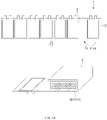
- the stack and folding type electrode assembly 1 may be manufactured by folding a folding separator 2 from one side after a plurality of unit cells 3 are placed side by side on the folding separator 2 at a predetermined interval.
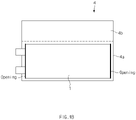
- FIG. 1b shows a state in which the electrode assembly is embedded in the pouch
- the electrode assembly 1 is embedded in a body part 4a of the pouch 4, and then, an electrolyte is injected into the body part 4a so that the electrode assembly is impregnated in the electrolyte.
- the pouch is sealed by bonding a portion, into which the electrode assembly 1 is inserted, through thermal fusion.
- a charging/discharging process is performed to activate the battery.
- degassing is performed to discharge the gas generated therein.
- a predetermined pressure is vertically applied to the body part 4a to allow the gas generated in the body part 4a to move to a gas pocket part 4b, and simultaneously, a gas inhaler is inserted into the gas pocket part 4b to inhale the gas.
- the electrode assembly 1 manufactured in the stack and folding manner has a structure in which a long side facing the gas pocket part 4b is closed, but a short side perpendicular to the gas pocket part 4b is opened.
- efficiency of the degassing process is deteriorated because the gas generated in the body part 4a does not move smoothly to the gas pocket part 4b.
- the gas is not normally discharged to remain in the body part 4a, swelling, lithium precipitation, etc. may occur, and also, the electrode assembly is deformed and deteriorated in performance.
- a main object of the present invention for solving the above problems is to provide a method for manufacturing a secondary battery, which is capable of smoothly discharging a gas during an activation process and a degassing process, and a secondary battery to which the above manufacturing method is capable of being applied.
- the present invention for achieving the above object provides a degassing method for a secondary battery and a secondary battery to which the degassing method is applied.
- a method for degassing a secondary battery comprises: an electrode assembly providing step (S10) of manufacturing an electrode assembly having a stacked structure in which a negative electrode, an individual layer of a separator, a positive electrode, and an individual layer of the separator are repeated by alternately inserting the positive electrode and the negative electrode between the adjacent individual layers of the separator, wherein fold lines are formed on the separator at a predetermined interval, and the separator is folded in a zigzag shape along a vertical direction by the fold lines to form the plurality of individual layers; an insertion step (S20) of inserting the electrode assembly into a pouch; and a degassing step (S30) of discharging a gas from the pouch, wherein, in the electrode assembly providing step (S10), each of the positive electrode and the negative electrode is manufactured in a square shape so that remaining three sides except for one side facing the fold lines among four sides formed along a circumference thereof are opened.
- a negative electrode tab protruding from the negative electrode and a positive electrode tab protruding from the positive electrode may be disposed to protrude from the separator in opposite directions.
- each of the positive electrode and the negative electrode may be formed in a rectangular shape having two short sides, each of which has a relatively short length, and two long sides, each of which has a relatively long length, and each of the fold lines of the separator may have a length greater than that of the short side of each of the positive electrode and the negative electrode and less than that of the long side of each of the positive electrode and the negative electrode, wherein one of the short sides of each of the positive electrode and the negative electrode may be inserted between the individual layers of the separator to face the fold line of the separator so that all both the long sides of each of the positive electrode and the negative electrode are opened.
- a negative electrode tab protruding from the negative electrode and a positive electrode tab protruding from the positive electrode may be disposed to protrude from the separator in the same direction.
- each of the positive electrode and the negative electrode may be formed in a rectangular shape having two short sides, each of which has a relatively short length, and two long sides, each of which has a relatively long length, and each of the fold lines of the separator may have a length greater than that of the long side of each of the positive electrode and the negative electrode, wherein one of the long sides of each of the positive electrode and the negative electrode may be inserted between the individual layers of the separator to face the fold line of the separator so that all both the short sides of each of the positive electrode and the negative electrode are opened.
- the pouch may comprise a body part into which the electrode assembly is inserted and a gas pocket part communicating with the body part and extending from one side of the body part, wherein, in the insertion step (S20), one of the long sides of each of the positive electrode and the negative electrode may be inserted to face the gas pocket part.
- the negative electrode may be opened toward the gas pocket part at the long sides of the electrode assembly, which face the gas pocket part.
- the electrode assembly providing step (S10) may comprise: a support bar insertion step (S11) of inserting a plurality of support bars so that one surface and the other surface of the separator are alternately disposed at a predetermined interval; an individual layer formation step (S12) of allowing the support bar disposed to face the one surface of the separator and the support bar disposed to face the other surface of the separator to move in directions crossing each other so as to form the individual layers on the separator; an electrode insertion step (S13) of alternately inserting the positive electrode and the negative electrode between the individual layers of the separator adjacent to each other; and a pulling step (S14) of pulling both ends of the separator at a predetermined pressure in the state in which the electrodes are inserted.
- the present invention may additionally provide a secondary battery to which the degassing method as described above is capable of being applied.
- a secondary battery comprises: an electrode assembly having a stacked structure in which a negative electrode, an individual layer of a separator, a positive electrode, and an individual layer of the separator are repeated by alternately inserting the positive electrode and the negative electrode between the adjacent individual layers of the separator, wherein fold lines are formed on the separator at a predetermined interval, and the separator is folded in a zigzag shape along a vertical direction by the fold lines to form the plurality of individual layers; and a pouch comprising a body part into which the electrode assembly is inserted and a gas pocket part communicating with the body part and extending from one side of the body part, wherein each of the positive electrode and the negative electrode is manufactured in a square shape so that remaining three sides except for one side facing the fold lines among four sides formed along a circumference thereof are opened, and the electrode assembly is inserted into the pouch so that one of the opened sides of the positive electrode or the opened sides of the negative electrode faces the gas pocket part.
- the electrode assembly may be inserted into the pouch so that the opened sides of the negative electrode face the gas pocket part.
- the gas pocket part may be cut and separated from the body part.
- the negative electrode and the positive electrode may be manufactured in the square shape, but the remaining three sides except for one side may be opened in the separator so that gas is efficiently discharged.
- the gas since at least one of the negative electrode or the positive electrode has the opened long side to face the gas pocket part of the pouch, the gas may more quickly move to the gas pocket part.
- the long side of the negative electrode having the relatively large gas discharge amount in the positive electrode and the negative electrode may be opened to more improve the gas discharge efficiency.
- the present invention relates to a method of manufacturing a secondary battery, in which a gas is smoothly discharged during an activation process of performing initial charging and discharging and a degassing process, and a secondary battery to which the manufacturing method is applied.
- a gas is smoothly discharged during an activation process of performing initial charging and discharging and a degassing process, and a secondary battery to which the manufacturing method is applied.
- a manufacturing method comprises an electrode assembly providing step (S10), an insertion step (S20), and a degassing step (S30).
- the insertion step (S20) is a step of inserting an electrode assembly into a pouch
- the degassing step (S30) is a step of inhaling a gas moving to a gas pocket part to the outside.
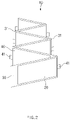
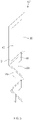
- FIGS. 2 and 3 are perspective and side views illustrating a state of being disposed between individual layers of a separator 30 when manufactured in an electrode assembly providing step according to the present invention, i.e., when a positive electrode tab 21 and a negative electrode tab 41 are manufactured to protrude in opposite directions
- the separator 30 is provided by a predetermined length, and also, the separator 30 is provided to be folded so as to form fold lines 31 with a size of a positive electrode 20 and a negative electrode 40 or an interval that is slightly greater than the size therebetween.
- the separator 30 may be folded in a zigzag shape along a vertical direction by the fold lines 31 formed at a predetermined interval to form a plurality of individual layers.
- the positive electrode 20 when the positive electrode 20 is inserted between an individual layer of the separator 30, which is disposed at the lowermost side, and a second individual layer above on the lowermost individual layer, the negative electrode 40 is inserted between the second individual layer and a third individual layer, and the positive electrode 20 is inserted again between the third individual layer and a fourth individual layer.
- the positive electrode 20 and the negative electrode 40 are alternately inserted in this manner to provide the electrode assembly 10 having a stacked structure in which the negative electrode 40, the individual layer of the separator 30, the positive electrode 20, and the individual layer of the separator 30 are repeated.
- each of the negative electrode 40 and the positive electrode 20 are manufactured in a square shape, and since remaining three sides except for one side facing the fold line 31 among four sides formed along a circumference of the electrode assembly 10 are disposed at opened portions of the separator 30, the sides are opened to be exposed.
- each of the positive electrode 20 and the negative electrode 40 has a rectangular shape having two short sides, each of which has a relatively short length, and two long sides, each of which has a relatively long length.
- the separator 30 is provided so that the fold line 31 has a length greater than that of the short sides of each of the positive electrode 20 and the negative electrode 40 and less than that of the long sides of each of the positive electrode 20 and the negative electrode 40.
- one of the short sides of the positive electrode 20 and the negative electrode 40 is inserted between the individual layers of the separator to face the fold line of the separator so that both the long sides of the positive electrode 20 and the negative electrode 40 are opened.
- each of the positive electrode 20 and the negative electrode 40 has the rectangular shape
- each of the positive electrode 20 and the negative electrode 40 may have a square shape of which four sides have the same length.
- each of the fold lines may have the same length as each of the sides of the positive electrode 20 and the negative electrode 40.
- FIG. 4 that illustrates a see-through state when the electrode assembly 10 according to Embodiment 1 is inserted into a body part 50a of a pouch 50
- openings of the separator 30 are formed in all both the long sides of the positive electrode 20 and the negative electrode 40 (since both the long sides of the positive electrode and both the long sides of the negative electrode are not covered by the separator)
- a gas may more smoothly move to the gas pocket part 50b of the pouch 50. That is to say, since the openings of the separator 30 are formed toward the gas pocket part at the sides of the positive electrode 20 and the negative electrode 40, which face the gas pocket part, the gas may be more smoothly move.
- a positive electrode tab 21 and a negative electrode tab 41 may be manufactured to protrude in opposite directions, but the positive electrode tab 21 and the negative electrode tab 41 may also be manufactured to protrude in the same direction.
- FIGS. 5 and 6 are perspective and side views illustrating a state in which the positive electrode tab 21 and the negative electrode tab 41 are disposed between individual layers of a separator 30 to protrude in the same direction when manufactured in an electrode assembly providing step
- the positive electrode tab 21 and the negative electrode tab 41 may be disposed in the same direction according to a direction in which the positive electrode 20 and the negative electrode 40 are inserted between the adjacent individual layers of the separator 30.
- each of a positive electrode 20 and a negative electrode 40 has a rectangular shape having two short sides, each of which has a relatively short length, and two long sides, each of which has a relatively long length.
- each of the positive electrode 20 and the negative electrode 40 has the rectangular shape, each of the positive electrode 20 and the negative electrode 40 may have a square shape of which four sides have the same length.
- the separator 30 is configured so that a fold line 31 has a length greater than each of the long sides of the positive electrode 20 and the negative electrode 40, and one of the long sides of the positive electrode 20 and the negative electrode 40 is inserted between the individual layers of the separator 30 to face the fold line 31 of the separator 30 so that all both short sides of the positive electrode 20 and the negative electrode 40 are opened.
- the fold line 31 of the separator 30 has a length that is equal to or greater than that of each of the sides of the negative electrode 40 and the positive electrode 20.
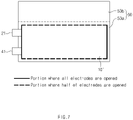
- FIG. 7 that illustrates a see-through state when an electrode assembly 10' according to Embodiment 2 is inserted into a body part 50a of a pouch 50
- openings of a separator 30 are formed in all both short sides of a positive electrode 20 and a negative electrode 40, but one of the positive electrode 20 and the negative electrode 40 is covered by a fold line 31 of the separator 30 in a direction of a gas pocket part 50b at both the long sides.
- the openings of the separator 30 are formed in a side, on which the electrode tab is disposed, and a side facing the side on which the electrode tab is disposed, but one of the positive electrode 20 and the negative electrode 40 is covered by the fold line 31 in the direction of the gas pocket part 50b at two sides perpendicular to the side, on which the electrode tab is disposed.
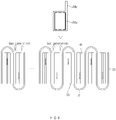
- FIG. 8 which illustrates a state in which one of the long sides of the negative electrode 40 is opened, and the opened long side is disposed toward the gas pocket part 50b of the pouch 50
- a direction indicated by a 'gas generation arrow' is a direction toward the gas pocket part when the electrode assembly according to Embodiment 2 is inserted into a body part.
- the negative electrode 40 is opened in the direction toward the gas pocket part 50b, but the opposite side thereof is blocked by the fold line 31 of the separator 30.
- the positive electrode 20 is blocked in the direction toward the gas pocket part 50b, but the opposite side is opened.
- the pouch 50 has a structure that extends from the body part 50a, into which the electrode assembly 10' is inserted, to one side of the gas pocket part 50b that communicates with the body part 50a and extends to one side of the body part 50a.
- the electrode assembly 10' manufactured as described above may be selectively mounted in the direction, in which the negative electrode 40 is opened, toward the gas pocket part 50b or in the direction, in which the positive electrode 20 is opened, toward the gas pocket part 50b.
- the electrode assembly 10' having the same configuration as in Embodiments 2 is provided in the electrode assembly providing step (S10), in the insertion step (S20) of the degassing method according to the present invention, it is more preferable that the electrode assembly 10' is inserted into the body part 50a in the direction, in which the negative electrode 20 is opened toward the gas pocket part 50b at the long side of the electrode assembly 10' (or at one side at which one of the negative electrode and the positive electrode is opened, and the other is blocked in the case of the square shape) when compared to the opposite case.
- the electrode assembly providing step (S10) detailed steps of interposing the negative electrode 40 and the positive electrode 20 between the individual layers of the separator 30 may be additionally provided. That is, referring to FIG. 9 , which simplifies and illustrates states in which the electrode assembly is manufactured in the electrode assembly providing step (S10) according to the present invention, when the separator 30 is provided by a predetermined length, a support bar insertion step (S11) of inserting a plurality of support bars 60 so that one surface and the other surface of the separator 30 are alternately disposed at a predetermined interval is performed.
- an individual layer formation step (S12) of allowing the support bar 60 disposed to face the one surface of the separator 30 and the support bar 60 disposed to face the other surface of the separator 30 to move in directions crossing each other, thereby forming individual layers on the separator 30 is performed.
- an electrode insertion step (S13) of alternately inserting the positive electrode 20 and the negative electrode 40 between the individual layers of the separator 30 adjacent to each other is performed.
- a pulling step (S14) of pulling both ends of the separator 30 at a predetermined pressure in the state in which the electrodes (the positive and negative electrodes) are inserted is performed, and thus, the separator 30 has a structure in which the negative electrode 40 and the positive electrode 20 are stacked in the state in which predetermined tension is applied. Finally, both ends of the separator 30 is cut at an appropriate position.
- the negative electrode and the positive electrode may be manufactured in a rectangular shape, but the remaining three sides except for one side may be opened in the separator so that gas is efficiently discharged.
- At least one of the negative electrode 40 or the positive electrode 20 may be disposed to face the gas pocket part 50b of the pouch 50 so that the gas more quickly moves to the gas pocket part 50b.
- the long side of the negative electrode 40 having a relatively large gas discharge amount in the positive electrode 20 and the negative electrode 40 may be opened to more improve gas discharge efficiency.
- positive active material slurry was manufactured by adding 40 parts by weight of solid at a ratio of 90:5.5 (wt%) based on parts by weight, at which a ternary active material (Li(Ni 0 . 5 Mn 0 . 3 Co 0 . 2 )O 2 ) as a positive electrode active material, carbon black as a conductive material, polyvinylidene fluoride (PVDF) as a binder are mixed in 100 parts by weight of N-methyl-2-pyrrolidone (NMP).
- the positive electrode active material slurry was applied to a positive electrode collector (aluminum thin film) 20a having a thickness of 100 ⁇ m and then was dried. Then, roll press was performed to manufacture the positive electrode.
- negative active material slurry was manufactured by adding 100 parts by weight of solid at a ratio of 90:5:2:3 (wt%) based on parts by weight, at which natural graphite and SiO x (0 ⁇ x ⁇ 1) as negative active materials, PVDF as a binder, and carbon black as a conductive material are mixed in 100 parts by weight of NMP.
- the negative electrode active material slurry was applied to a negative electrode collector (copper thin film) 40a having a thickness of 90 ⁇ m and then was dried. Then, roll press was performed to manufacture the negative electrode.
- Ethylene carbonate (EC) and ethyl methyl carbonate (EMC) were mixed at a ratio of 30:70 (vol%) based on volume percentage and then dissolved so that LiPF6 has a concentration of 1M to manufacture an organic mixture. Then, 1 part by weight of vinylene carbonate (VC) and 1 part by weight of 1,3-propenesultone (PS) were added to manufacture the electrolyte.
- EC Ethylene carbonate
- EMC ethyl methyl carbonate
- An electrode assembly having the same structure as in Embodiment 1 was manufactured using a negative electrode 40 and a positive electrode 20, which are manufactured in the same manner as described above, and after the electrode assembly was embedded in a body part 50a of a pouch, the above-described electrolyte was injected.
- An electrode assembly having the same structure as in Embodiment 2 was manufactured using a negative electrode 40 and a positive electrode 20, which are manufactured in the same manner as described above, and after the electrode assembly was embedded in a pouch, the above-described electrolyte was injected. However, the electrode assembly was inserted into a body part 50a so that an electrode that is opened in a direction toward a gas pocket part 50b is the positive electrode 20, and the negative electrode 40 is closed in the direction toward the gas pocket part 50b.
- An electrode assembly having the same structure as in Embodiment 2 was manufactured using a negative electrode 40 and a positive electrode 20, which are manufactured in the same manner as described above, and after the electrode assembly was embedded in a pouch, the above-described electrolyte was injected. However, the electrode assembly was inserted into a body part 50a so that an electrode that is opened in a direction toward a gas pocket part 50b is the negative electrode 40, and the positive electrode 20 is closed in the direction toward the gas pocket part 50b.
- a stack and folding type electrode assembly was manufactured using a negative electrode and a positive electrode in the same manner as described above. Here, tabs of the positive electrode and the negative electrode were disposed in different directions. After the electrode assembly is embedded in a pouch 50, an electrolyte as described above was injected.
- a stack and folding type electrode assembly was manufactured using a negative electrode and a positive electrode in the same manner as described above. Here, tabs of the positive electrode and the negative electrode were disposed in the same direction. After the electrode assembly is embedded in a pouch 50, an electrolyte as described above was injected.
- Table 1 below shows experimental data.
- Type of electrode assembly Position of electrode tab Whether opened or not between positive electrode and gas pocket Whether opened or not between negative electrode and gas pocket Amount of gas in gas pocket part Lithium precipitat ion Discharge capacity compared to Comparativ e
- Example 1 Capacity retention rate
- Manufacturin g Example 1 Structure according to Embodiment 1 Bidirection al Open Open 107.2 None 102.1 93.6 Manufacturing
- Example 2 Structure according to Embodiment 2 Unidirectional Open Close 105.4 Small amount generation 101.4 93.1 Manufacturin g
- Example 3 Structure according to Embodimen t 3 Unidirectio nal Close Open 110.3 None 103.5 95.7 Comparative Example 1 Stack and folding structure according to related art Bidirection al Close Close 100.0 Large amount generatio n 100 87.5 Comparative Example 2 Stack and folding structure according to related art Unidirectio nal Close Close 100.0 Large amount generatio n 100 89.2
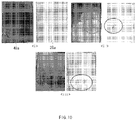
- each secondary battery was disassembled to observe whether lithium is precipitated.
- FIG. 10 is a photograph illustrating a state ⁇ i> of a disassembled negative electrode of a secondary battery manufactured according to Manufacturing Example 1 of the present invention and a separator facing the negative electrode, a state ⁇ ii> in which a disassembled negative electrode of a secondary battery manufactured according to Manufacturing Example 2 of the present invention and a separator facing the negative electrode, and a state ⁇ iii> in which a disassembled negative electrode of a secondary battery, in which an electrode assembly according to a related art is mounted, and a separator facing the negative electrode.
- the lithium precipitation affects the discharge capacity.
- the initial discharge capacity is not substantially different, but the difference is widened in the capacity retention rate after the charging and discharging are performed 100 times. That is, the case of Comparative Example 1, in which the gas remains in the body part 50a exhibits a lower capacity retention rate compared to Manufacturing Example 1, and the case of Comparative Example 2 exhibits a lower capacity retention rate compared to Manufacturing Examples 2 and 3. It is seen that the capacity retention rate is greater in an order (order of Manufacturing Example 3 and Manufacturing Example 2), in which the gas is discharged more smoothly.
Landscapes
- Chemical & Material Sciences (AREA)
- Chemical Kinetics & Catalysis (AREA)
- Electrochemistry (AREA)
- General Chemical & Material Sciences (AREA)
- Engineering & Computer Science (AREA)
- Manufacturing & Machinery (AREA)
- Secondary Cells (AREA)
Applications Claiming Priority (2)
| Application Number | Priority Date | Filing Date | Title |
|---|---|---|---|
| KR1020200056068A KR102774308B1 (ko) | 2020-05-11 | 2020-05-11 | 이차전지 및 이차전지의 제조방법 |
| PCT/KR2020/018748 WO2021230455A1 (ko) | 2020-05-11 | 2020-12-21 | 이차전지 및 이차전지의 제조방법 |
Publications (2)
| Publication Number | Publication Date |
|---|---|
| EP4053954A1 true EP4053954A1 (de) | 2022-09-07 |
| EP4053954A4 EP4053954A4 (de) | 2024-07-17 |
Family
ID=78524771
Family Applications (1)
| Application Number | Title | Priority Date | Filing Date |
|---|---|---|---|
| EP20935560.1A Pending EP4053954A4 (de) | 2020-05-11 | 2020-12-21 | Sekundärbatterie und herstellungsverfahren für eine sekundärbatterie |
Country Status (6)
| Country | Link |
|---|---|
| US (1) | US12609358B2 (de) |
| EP (1) | EP4053954A4 (de) |
| JP (1) | JP7434689B2 (de) |
| KR (1) | KR102774308B1 (de) |
| CN (1) | CN114788060A (de) |
| WO (1) | WO2021230455A1 (de) |
Families Citing this family (2)
| Publication number | Priority date | Publication date | Assignee | Title |
|---|---|---|---|---|
| WO2023211126A1 (ko) * | 2022-04-27 | 2023-11-02 | 주식회사 엘지에너지솔루션 | 배터리 모듈, 배터리 팩 및 이를 포함하는 자동차 |
| CN118738510A (zh) * | 2023-03-29 | 2024-10-01 | 本田技研工业株式会社 | 二次电池及其制造方法 |
Family Cites Families (30)
| Publication number | Priority date | Publication date | Assignee | Title |
|---|---|---|---|---|
| KR100336396B1 (ko) | 2000-06-12 | 2002-05-10 | 홍지준 | 대용량 리튬 이차 전지 및 그의 제조방법 |
| US6676714B2 (en) * | 2001-02-08 | 2004-01-13 | Eveready Battery Company, Inc. | Apparatus and method for assembling a flexible battery that is electrolyte-tight |
| KR100921347B1 (ko) | 2005-11-08 | 2009-10-14 | 주식회사 엘지화학 | 세로 폴딩 방식의 전극조립체 및 이를 포함하고 있는전기화학 셀 |
| JP5203632B2 (ja) * | 2007-05-15 | 2013-06-05 | 株式会社東芝 | 非水電解質電池 |
| US8926715B2 (en) * | 2007-12-06 | 2015-01-06 | Eliiy Power Co., Ltd. | Method and apparatus for manufacturing electrode assembly for rectangular battery |
| JP5259453B2 (ja) * | 2009-02-25 | 2013-08-07 | 富士重工業株式会社 | 蓄電デバイスおよびその製造方法 |
| KR101255351B1 (ko) * | 2009-04-28 | 2013-04-16 | 에스케이이노베이션 주식회사 | 2차 전지 내부 셀 스택 적층 장치 및 방법 |
| KR101156344B1 (ko) | 2009-12-07 | 2012-06-13 | 삼성에스디아이 주식회사 | 이차전지 및 그 제조 방법 |
| KR101152552B1 (ko) * | 2010-05-04 | 2012-06-01 | 삼성에스디아이 주식회사 | 전극 조립체 및 이를 이용한 이차 전지 |
| KR101199215B1 (ko) | 2010-09-09 | 2012-11-07 | 삼성에스디아이 주식회사 | 전극 조립체 및 이를 이용한 이차 전지 |
| JP5147976B2 (ja) | 2010-11-01 | 2013-02-20 | 帝人株式会社 | 連結多孔質シート及びその製造方法、非水系二次電池用セパレータ、及び非水系二次電池及びその製造方法 |
| JP5699559B2 (ja) | 2010-11-17 | 2015-04-15 | ソニー株式会社 | 非水電解質電池 |
| JP2012113843A (ja) * | 2010-11-19 | 2012-06-14 | Sony Corp | 電池およびその製造方法、バッテリユニット、ならびにバッテリモジュール |
| KR101235355B1 (ko) | 2010-12-02 | 2013-02-20 | 주식회사 나래나노텍 | 전극 공급 장치 및 방법, 및 이를 구비한 전극 적층 장치 및 방법 |
| EP2701229B1 (de) * | 2011-04-18 | 2020-06-10 | Eliiy Power Co., Ltd. | Vorrichtung zur herstellung und verfahren zur herstellung einer sekundärbatterie |
| JP5720035B2 (ja) * | 2011-04-18 | 2015-05-20 | エリーパワー株式会社 | 二次電池の製造方法及び製造装置 |
| KR101310734B1 (ko) | 2011-12-27 | 2013-09-24 | 주식회사 엘지화학 | 전극 조립체 및 이를 이용한 이차 전지 |
| KR101651712B1 (ko) * | 2012-07-26 | 2016-08-26 | 에스케이이노베이션 주식회사 | 이차전지 |
| KR101553536B1 (ko) * | 2012-07-31 | 2015-09-16 | 에스케이이노베이션 주식회사 | 이차 전지용 다중 삽입 적층 장치 |
| KR101553542B1 (ko) * | 2012-09-14 | 2015-09-16 | 에스케이이노베이션 주식회사 | 2차 전지 내부 셀 스택 방법 및 이를 이용하여 제조되는 셀 스택 |
| KR101952594B1 (ko) * | 2012-10-17 | 2019-02-27 | 에리 파워 가부시키가이샤 | 이차전지의 제조 방법 및 제조 장치 |
| KR102195734B1 (ko) * | 2014-01-27 | 2020-12-28 | 삼성에스디아이 주식회사 | 파우치형 배터리셀의 제조방법 |
| WO2015162697A1 (ja) * | 2014-04-22 | 2015-10-29 | エリーパワー株式会社 | 二次電池の製造方法および製造装置 |
| JP6048477B2 (ja) * | 2014-11-17 | 2016-12-21 | ソニー株式会社 | 非水電解質電池の製造方法 |
| JP6504012B2 (ja) * | 2015-10-09 | 2019-04-24 | 株式会社デンソー | 組電池 |
| KR102071587B1 (ko) | 2015-11-30 | 2020-01-30 | 주식회사 엘지화학 | 전극조립체 |
| KR102278444B1 (ko) | 2016-09-06 | 2021-07-16 | 삼성에스디아이 주식회사 | 적층형 전극 조립체 및 이를 포함하는 플렉서블 이차 전지 |
| JP6875820B2 (ja) * | 2016-10-17 | 2021-05-26 | 株式会社カネカ | リチウムイオン二次電池 |
| KR102173032B1 (ko) | 2017-11-13 | 2020-11-02 | 주식회사 엘지화학 | 전극조립체 및 그 제조방법 |
| CN209461545U (zh) * | 2018-12-29 | 2019-10-01 | 蜂巢能源科技有限公司 | 软包电芯、电池包和具有其的车辆 |
-
2020
- 2020-05-11 KR KR1020200056068A patent/KR102774308B1/ko active Active
- 2020-12-21 WO PCT/KR2020/018748 patent/WO2021230455A1/ko not_active Ceased
- 2020-12-21 EP EP20935560.1A patent/EP4053954A4/de active Pending
- 2020-12-21 CN CN202080084997.7A patent/CN114788060A/zh active Pending
- 2020-12-21 US US17/784,800 patent/US12609358B2/en active Active
- 2020-12-21 JP JP2022522760A patent/JP7434689B2/ja active Active
Also Published As
| Publication number | Publication date |
|---|---|
| WO2021230455A1 (ko) | 2021-11-18 |
| JP7434689B2 (ja) | 2024-02-21 |
| KR20210137784A (ko) | 2021-11-18 |
| JP2022552536A (ja) | 2022-12-16 |
| KR102774308B1 (ko) | 2025-03-04 |
| CN114788060A (zh) | 2022-07-22 |
| US12609358B2 (en) | 2026-04-21 |
| US20230028018A1 (en) | 2023-01-26 |
| EP4053954A4 (de) | 2024-07-17 |
Similar Documents
| Publication | Publication Date | Title |
|---|---|---|
| KR100742109B1 (ko) | 비수성-전해질 2차 전지 및 그 제조방법 | |
| KR102160701B1 (ko) | 천공 구조의 집전체를 포함하는 전극, 이를 포함하는 리튬 이차전지 | |
| CN105393399B (zh) | 堆叠‑折叠型电极组件 | |
| JP6709561B2 (ja) | 電極組立体、該電極組立体を含むバッテリセル、及び該バッテリセルの製造方法 | |
| KR100509437B1 (ko) | 적층형 리튬이차전지 및 그 제조방법 | |
| JP3822445B2 (ja) | 電気化学デバイス | |
| EP3886232B1 (de) | Pressvorrichtung und verfahren zur herstellung einer sekundärbatterie damit | |
| KR20250052481A (ko) | 에너지 저장 디바이스들에 대한 구속부들 | |
| US12609358B2 (en) | Secondary battery and method for manufacturing the same | |
| US12586810B2 (en) | Pressure jig of battery cell and gas removal method using the same | |
| WO2004097971A1 (en) | Stacked lithium secondary battery and its fabrication | |
| KR100509435B1 (ko) | 리튬이차전지 및 그 제조방법 | |
| KR102836399B1 (ko) | 리튬 이차전지의 활성화 방법 | |
| KR100555848B1 (ko) | 전극판의 한방향 접착이 가능한 적층형 리튬이차전지의제조방법 | |
| KR100514214B1 (ko) | 분리된 2겹의 격리막을 이용한 적층형 리튬이차전지 및 그제조방법 | |
| JP4018881B2 (ja) | 電気化学デバイス | |
| KR100514215B1 (ko) | 다열 접착을 이용한 적층형 리튬이차전지의 제조방법 | |
| EP4407736A1 (de) | Verfahren zur aktivierung einer lithiumsekundärbatterie | |
| US20260018676A1 (en) | Electrode Assembly Comprising Surface-Treated Separator, Secondary Battery Comprising Same, and Electrode Assembly Manufacturing Method | |
| KR200312088Y1 (ko) | 리튬이차전지 및 그 제조방법 | |
| CN118235277A (zh) | 用于激活锂二次电池的方法 | |
| JP2025534676A (ja) | 二次電池用電極組立体およびそれを含む円筒形二次電池 | |
| JP2025081163A (ja) | 二次電池及び二次電池の製造方法。 | |
| KR101927380B1 (ko) | 이차전지 | |
| CN119029477A (zh) | 二次电池 |
Legal Events
| Date | Code | Title | Description |
|---|---|---|---|
| STAA | Information on the status of an ep patent application or granted ep patent |
Free format text: STATUS: THE INTERNATIONAL PUBLICATION HAS BEEN MADE |
|
| PUAI | Public reference made under article 153(3) epc to a published international application that has entered the european phase |
Free format text: ORIGINAL CODE: 0009012 |
|
| STAA | Information on the status of an ep patent application or granted ep patent |
Free format text: STATUS: REQUEST FOR EXAMINATION WAS MADE |
|
| 17P | Request for examination filed |
Effective date: 20220531 |
|
| AK | Designated contracting states |
Kind code of ref document: A1 Designated state(s): AL AT BE BG CH CY CZ DE DK EE ES FI FR GB GR HR HU IE IS IT LI LT LU LV MC MK MT NL NO PL PT RO RS SE SI SK SM TR |
|
| DAV | Request for validation of the european patent (deleted) | ||
| DAX | Request for extension of the european patent (deleted) | ||
| A4 | Supplementary search report drawn up and despatched |
Effective date: 20240617 |
|
| RIC1 | Information provided on ipc code assigned before grant |
Ipc: H01M 10/0583 20100101ALN20240611BHEP Ipc: H01M 10/052 20100101ALN20240611BHEP Ipc: H01M 10/04 20060101AFI20240611BHEP |
|
| STAA | Information on the status of an ep patent application or granted ep patent |
Free format text: STATUS: EXAMINATION IS IN PROGRESS |
|
| 17Q | First examination report despatched |
Effective date: 20251105 |