EP4053938A1 - Negativelektrode für lithiumsekundärbatterie, verfahren zur herstellung derselben und lithiumsekundärbatterie damit - Google Patents
Negativelektrode für lithiumsekundärbatterie, verfahren zur herstellung derselben und lithiumsekundärbatterie damit Download PDFInfo
- Publication number
- EP4053938A1 EP4053938A1 EP20880677.8A EP20880677A EP4053938A1 EP 4053938 A1 EP4053938 A1 EP 4053938A1 EP 20880677 A EP20880677 A EP 20880677A EP 4053938 A1 EP4053938 A1 EP 4053938A1
- Authority
- EP
- European Patent Office
- Prior art keywords
- lithium
- secondary battery
- negative electrode
- current collector
- active material
- Prior art date
- Legal status (The legal status is an assumption and is not a legal conclusion. Google has not performed a legal analysis and makes no representation as to the accuracy of the status listed.)
- Pending
Links
- 229910052744 lithium Inorganic materials 0.000 title claims abstract description 192
- WHXSMMKQMYFTQS-UHFFFAOYSA-N Lithium Chemical compound [Li] WHXSMMKQMYFTQS-UHFFFAOYSA-N 0.000 title claims abstract description 119
- 238000004519 manufacturing process Methods 0.000 title claims abstract description 21
- 238000000034 method Methods 0.000 title claims description 61
- 239000010410 layer Substances 0.000 claims abstract description 135
- 239000007773 negative electrode material Substances 0.000 claims abstract description 71
- 239000011247 coating layer Substances 0.000 claims abstract description 70
- 229910052751 metal Inorganic materials 0.000 claims abstract description 40
- 239000002184 metal Substances 0.000 claims abstract description 40
- 238000007747 plating Methods 0.000 claims description 17
- BASFCYQUMIYNBI-UHFFFAOYSA-N platinum Chemical compound [Pt] BASFCYQUMIYNBI-UHFFFAOYSA-N 0.000 claims description 16
- 229910052749 magnesium Inorganic materials 0.000 claims description 13
- 239000011777 magnesium Substances 0.000 claims description 13
- FYYHWMGAXLPEAU-UHFFFAOYSA-N Magnesium Chemical compound [Mg] FYYHWMGAXLPEAU-UHFFFAOYSA-N 0.000 claims description 12
- 229910052782 aluminium Inorganic materials 0.000 claims description 9
- BQCADISMDOOEFD-UHFFFAOYSA-N Silver Chemical compound [Ag] BQCADISMDOOEFD-UHFFFAOYSA-N 0.000 claims description 8
- XAGFODPZIPBFFR-UHFFFAOYSA-N aluminium Chemical compound [Al] XAGFODPZIPBFFR-UHFFFAOYSA-N 0.000 claims description 8
- PCHJSUWPFVWCPO-UHFFFAOYSA-N gold Chemical compound [Au] PCHJSUWPFVWCPO-UHFFFAOYSA-N 0.000 claims description 8
- 229910052737 gold Inorganic materials 0.000 claims description 8
- 239000010931 gold Substances 0.000 claims description 8
- 229910052697 platinum Inorganic materials 0.000 claims description 8
- 229910052709 silver Inorganic materials 0.000 claims description 8
- 239000004332 silver Substances 0.000 claims description 8
- DGAQECJNVWCQMB-PUAWFVPOSA-M Ilexoside XXIX Chemical compound C[C@@H]1CC[C@@]2(CC[C@@]3(C(=CC[C@H]4[C@]3(CC[C@@H]5[C@@]4(CC[C@@H](C5(C)C)OS(=O)(=O)[O-])C)C)[C@@H]2[C@]1(C)O)C)C(=O)O[C@H]6[C@@H]([C@H]([C@@H]([C@H](O6)CO)O)O)O.[Na+] DGAQECJNVWCQMB-PUAWFVPOSA-M 0.000 claims description 7
- ZLMJMSJWJFRBEC-UHFFFAOYSA-N Potassium Chemical compound [K] ZLMJMSJWJFRBEC-UHFFFAOYSA-N 0.000 claims description 7
- XUIMIQQOPSSXEZ-UHFFFAOYSA-N Silicon Chemical compound [Si] XUIMIQQOPSSXEZ-UHFFFAOYSA-N 0.000 claims description 7
- ATJFFYVFTNAWJD-UHFFFAOYSA-N Tin Chemical compound [Sn] ATJFFYVFTNAWJD-UHFFFAOYSA-N 0.000 claims description 7
- HCHKCACWOHOZIP-UHFFFAOYSA-N Zinc Chemical compound [Zn] HCHKCACWOHOZIP-UHFFFAOYSA-N 0.000 claims description 7
- 229910052797 bismuth Inorganic materials 0.000 claims description 7
- JCXGWMGPZLAOME-UHFFFAOYSA-N bismuth atom Chemical compound [Bi] JCXGWMGPZLAOME-UHFFFAOYSA-N 0.000 claims description 7
- 239000003792 electrolyte Substances 0.000 claims description 7
- 229910052732 germanium Inorganic materials 0.000 claims description 7
- GNPVGFCGXDBREM-UHFFFAOYSA-N germanium atom Chemical compound [Ge] GNPVGFCGXDBREM-UHFFFAOYSA-N 0.000 claims description 7
- 229910052738 indium Inorganic materials 0.000 claims description 7
- APFVFJFRJDLVQX-UHFFFAOYSA-N indium atom Chemical compound [In] APFVFJFRJDLVQX-UHFFFAOYSA-N 0.000 claims description 7
- 229910052700 potassium Inorganic materials 0.000 claims description 7
- 239000011591 potassium Substances 0.000 claims description 7
- 229910052710 silicon Inorganic materials 0.000 claims description 7
- 239000010703 silicon Substances 0.000 claims description 7
- 229910052708 sodium Inorganic materials 0.000 claims description 7
- 239000011734 sodium Substances 0.000 claims description 7
- 229910052718 tin Inorganic materials 0.000 claims description 7
- 239000011135 tin Substances 0.000 claims description 7
- 229910052725 zinc Inorganic materials 0.000 claims description 7
- 239000011701 zinc Substances 0.000 claims description 7
- 150000008040 ionic compounds Chemical class 0.000 claims description 6
- 239000000463 material Substances 0.000 claims description 6
- 239000008199 coating composition Substances 0.000 claims description 5
- 238000004544 sputter deposition Methods 0.000 claims description 3
- 238000005275 alloying Methods 0.000 claims description 2
- 238000007772 electroless plating Methods 0.000 claims description 2
- 238000010894 electron beam technology Methods 0.000 claims description 2
- 238000009713 electroplating Methods 0.000 claims description 2
- 238000007740 vapor deposition Methods 0.000 claims description 2
- 238000004070 electrodeposition Methods 0.000 description 33
- 239000002245 particle Substances 0.000 description 20
- 239000000243 solution Substances 0.000 description 16
- 238000007599 discharging Methods 0.000 description 13
- 239000010408 film Substances 0.000 description 12
- IIPYXGDZVMZOAP-UHFFFAOYSA-N lithium nitrate Inorganic materials [Li+].[O-][N+]([O-])=O IIPYXGDZVMZOAP-UHFFFAOYSA-N 0.000 description 9
- IJGRMHOSHXDMSA-UHFFFAOYSA-N Atomic nitrogen Chemical compound N#N IJGRMHOSHXDMSA-UHFFFAOYSA-N 0.000 description 8
- -1 LiC03 Inorganic materials 0.000 description 8
- 230000000052 comparative effect Effects 0.000 description 7
- 239000008151 electrolyte solution Substances 0.000 description 7
- 229910003002 lithium salt Inorganic materials 0.000 description 7
- 159000000002 lithium salts Chemical class 0.000 description 7
- 239000007774 positive electrode material Substances 0.000 description 7
- ZMANZCXQSJIPKH-UHFFFAOYSA-N Triethylamine Chemical compound CCN(CC)CC ZMANZCXQSJIPKH-UHFFFAOYSA-N 0.000 description 6
- 150000001875 compounds Chemical class 0.000 description 6
- 230000006911 nucleation Effects 0.000 description 6
- 238000010899 nucleation Methods 0.000 description 6
- OKTJSMMVPCPJKN-UHFFFAOYSA-N Carbon Chemical compound [C] OKTJSMMVPCPJKN-UHFFFAOYSA-N 0.000 description 5
- HBBGRARXTFLTSG-UHFFFAOYSA-N Lithium ion Chemical compound [Li+] HBBGRARXTFLTSG-UHFFFAOYSA-N 0.000 description 5
- PXHVJJICTQNCMI-UHFFFAOYSA-N Nickel Chemical compound [Ni] PXHVJJICTQNCMI-UHFFFAOYSA-N 0.000 description 5
- 239000011888 foil Substances 0.000 description 5
- 229910001416 lithium ion Inorganic materials 0.000 description 5
- 238000007086 side reaction Methods 0.000 description 5
- 239000007784 solid electrolyte Substances 0.000 description 5
- RYGMFSIKBFXOCR-UHFFFAOYSA-N Copper Chemical compound [Cu] RYGMFSIKBFXOCR-UHFFFAOYSA-N 0.000 description 4
- 239000003125 aqueous solvent Substances 0.000 description 4
- 239000011362 coarse particle Substances 0.000 description 4
- 229910052802 copper Inorganic materials 0.000 description 4
- 239000010949 copper Substances 0.000 description 4
- JBKVHLHDHHXQEQ-UHFFFAOYSA-N epsilon-caprolactam Chemical compound O=C1CCCCCN1 JBKVHLHDHHXQEQ-UHFFFAOYSA-N 0.000 description 4
- QSZMZKBZAYQGRS-UHFFFAOYSA-N lithium;bis(trifluoromethylsulfonyl)azanide Chemical compound [Li+].FC(F)(F)S(=O)(=O)[N-]S(=O)(=O)C(F)(F)F QSZMZKBZAYQGRS-UHFFFAOYSA-N 0.000 description 4
- 229910052757 nitrogen Inorganic materials 0.000 description 4
- KMTRUDSVKNLOMY-UHFFFAOYSA-N Ethylene carbonate Chemical compound O=C1OCCO1 KMTRUDSVKNLOMY-UHFFFAOYSA-N 0.000 description 3
- 229910045601 alloy Inorganic materials 0.000 description 3
- 239000000956 alloy Substances 0.000 description 3
- 238000004458 analytical method Methods 0.000 description 3
- 210000004027 cell Anatomy 0.000 description 3
- 238000006243 chemical reaction Methods 0.000 description 3
- 239000011248 coating agent Substances 0.000 description 3
- 238000000576 coating method Methods 0.000 description 3
- 239000004020 conductor Substances 0.000 description 3
- VDVLPSWVDYJFRW-UHFFFAOYSA-N lithium;bis(fluorosulfonyl)azanide Chemical compound [Li+].FS(=O)(=O)[N-]S(F)(=O)=O VDVLPSWVDYJFRW-UHFFFAOYSA-N 0.000 description 3
- 229910052759 nickel Inorganic materials 0.000 description 3
- 239000011241 protective layer Substances 0.000 description 3
- 239000002904 solvent Substances 0.000 description 3
- SBLRHMKNNHXPHG-UHFFFAOYSA-N 4-fluoro-1,3-dioxolan-2-one Chemical compound FC1COC(=O)O1 SBLRHMKNNHXPHG-UHFFFAOYSA-N 0.000 description 2
- XTHFKEDIFFGKHM-UHFFFAOYSA-N Dimethoxyethane Chemical compound COCCOC XTHFKEDIFFGKHM-UHFFFAOYSA-N 0.000 description 2
- 229910000733 Li alloy Inorganic materials 0.000 description 2
- 229910001290 LiPF6 Inorganic materials 0.000 description 2
- ZWXPDGCFMMFNRW-UHFFFAOYSA-N N-methylcaprolactam Chemical compound CN1CCCCCC1=O ZWXPDGCFMMFNRW-UHFFFAOYSA-N 0.000 description 2
- 239000004743 Polypropylene Substances 0.000 description 2
- WYURNTSHIVDZCO-UHFFFAOYSA-N Tetrahydrofuran Chemical compound C1CCOC1 WYURNTSHIVDZCO-UHFFFAOYSA-N 0.000 description 2
- 239000011149 active material Substances 0.000 description 2
- 229910052799 carbon Inorganic materials 0.000 description 2
- 229920001940 conductive polymer Polymers 0.000 description 2
- 230000006866 deterioration Effects 0.000 description 2
- JBTWLSYIZRCDFO-UHFFFAOYSA-N ethyl methyl carbonate Chemical compound CCOC(=O)OC JBTWLSYIZRCDFO-UHFFFAOYSA-N 0.000 description 2
- 238000011156 evaluation Methods 0.000 description 2
- 239000000835 fiber Substances 0.000 description 2
- 229910052731 fluorine Inorganic materials 0.000 description 2
- 239000010439 graphite Substances 0.000 description 2
- 229910002804 graphite Inorganic materials 0.000 description 2
- 238000010884 ion-beam technique Methods 0.000 description 2
- 150000002500 ions Chemical class 0.000 description 2
- 239000001989 lithium alloy Substances 0.000 description 2
- AMXOYNBUYSYVKV-UHFFFAOYSA-M lithium bromide Chemical compound [Li+].[Br-] AMXOYNBUYSYVKV-UHFFFAOYSA-M 0.000 description 2
- KWGKDLIKAYFUFQ-UHFFFAOYSA-M lithium chloride Chemical compound [Li+].[Cl-] KWGKDLIKAYFUFQ-UHFFFAOYSA-M 0.000 description 2
- MHCFAGZWMAWTNR-UHFFFAOYSA-M lithium perchlorate Chemical compound [Li+].[O-]Cl(=O)(=O)=O MHCFAGZWMAWTNR-UHFFFAOYSA-M 0.000 description 2
- 229910001486 lithium perchlorate Inorganic materials 0.000 description 2
- 229910044991 metal oxide Inorganic materials 0.000 description 2
- 150000004706 metal oxides Chemical class 0.000 description 2
- 239000011255 nonaqueous electrolyte Substances 0.000 description 2
- 239000005518 polymer electrolyte Substances 0.000 description 2
- 229920001155 polypropylene Polymers 0.000 description 2
- 238000012545 processing Methods 0.000 description 2
- RUOJZAUFBMNUDX-UHFFFAOYSA-N propylene carbonate Chemical compound CC1COC(=O)O1 RUOJZAUFBMNUDX-UHFFFAOYSA-N 0.000 description 2
- 238000005096 rolling process Methods 0.000 description 2
- ZUHZGEOKBKGPSW-UHFFFAOYSA-N tetraglyme Chemical compound COCCOCCOCCOCCOC ZUHZGEOKBKGPSW-UHFFFAOYSA-N 0.000 description 2
- IMFACGCPASFAPR-UHFFFAOYSA-N tributylamine Chemical compound CCCCN(CCCC)CCCC IMFACGCPASFAPR-UHFFFAOYSA-N 0.000 description 2
- ZZXUZKXVROWEIF-UHFFFAOYSA-N 1,2-butylene carbonate Chemical compound CCC1COC(=O)O1 ZZXUZKXVROWEIF-UHFFFAOYSA-N 0.000 description 1
- BGJSXRVXTHVRSN-UHFFFAOYSA-N 1,3,5-trioxane Chemical compound C1OCOCO1 BGJSXRVXTHVRSN-UHFFFAOYSA-N 0.000 description 1
- WNXJIVFYUVYPPR-UHFFFAOYSA-N 1,3-dioxolane Chemical compound C1COCO1 WNXJIVFYUVYPPR-UHFFFAOYSA-N 0.000 description 1
- RYHBNJHYFVUHQT-UHFFFAOYSA-N 1,4-Dioxane Chemical compound C1COCCO1 RYHBNJHYFVUHQT-UHFFFAOYSA-N 0.000 description 1
- FGSUUFDRDVJCLT-UHFFFAOYSA-N 3-methylazepan-2-one Chemical compound CC1CCCCNC1=O FGSUUFDRDVJCLT-UHFFFAOYSA-N 0.000 description 1
- QGHDLJAZIIFENW-UHFFFAOYSA-N 4-[1,1,1,3,3,3-hexafluoro-2-(4-hydroxy-3-prop-2-enylphenyl)propan-2-yl]-2-prop-2-enylphenol Chemical group C1=C(CC=C)C(O)=CC=C1C(C(F)(F)F)(C(F)(F)F)C1=CC=C(O)C(CC=C)=C1 QGHDLJAZIIFENW-UHFFFAOYSA-N 0.000 description 1
- 229910052684 Cerium Inorganic materials 0.000 description 1
- OIFBSDVPJOWBCH-UHFFFAOYSA-N Diethyl carbonate Chemical compound CCOC(=O)OCC OIFBSDVPJOWBCH-UHFFFAOYSA-N 0.000 description 1
- YCKRFDGAMUMZLT-UHFFFAOYSA-N Fluorine atom Chemical compound [F] YCKRFDGAMUMZLT-UHFFFAOYSA-N 0.000 description 1
- 229910013188 LiBOB Inorganic materials 0.000 description 1
- 229910032387 LiCoO2 Inorganic materials 0.000 description 1
- 229910013406 LiN(SO2CF3)2 Inorganic materials 0.000 description 1
- 229910019142 PO4 Inorganic materials 0.000 description 1
- 229920003171 Poly (ethylene oxide) Polymers 0.000 description 1
- 239000004698 Polyethylene Substances 0.000 description 1
- KJTLSVCANCCWHF-UHFFFAOYSA-N Ruthenium Chemical compound [Ru] KJTLSVCANCCWHF-UHFFFAOYSA-N 0.000 description 1
- RTAQQCXQSZGOHL-UHFFFAOYSA-N Titanium Chemical compound [Ti] RTAQQCXQSZGOHL-UHFFFAOYSA-N 0.000 description 1
- 239000006230 acetylene black Substances 0.000 description 1
- 239000011230 binding agent Substances 0.000 description 1
- 230000015572 biosynthetic process Effects 0.000 description 1
- 239000006229 carbon black Substances 0.000 description 1
- 229910052804 chromium Inorganic materials 0.000 description 1
- 239000002131 composite material Substances 0.000 description 1
- 230000007423 decrease Effects 0.000 description 1
- 210000001787 dendrite Anatomy 0.000 description 1
- 238000013461 design Methods 0.000 description 1
- 230000002542 deteriorative effect Effects 0.000 description 1
- SBZXBUIDTXKZTM-UHFFFAOYSA-N diglyme Chemical compound COCCOCCOC SBZXBUIDTXKZTM-UHFFFAOYSA-N 0.000 description 1
- IEJIGPNLZYLLBP-UHFFFAOYSA-N dimethyl carbonate Chemical compound COC(=O)OC IEJIGPNLZYLLBP-UHFFFAOYSA-N 0.000 description 1
- 230000000694 effects Effects 0.000 description 1
- 238000002848 electrochemical method Methods 0.000 description 1
- 238000002149 energy-dispersive X-ray emission spectroscopy Methods 0.000 description 1
- 238000005516 engineering process Methods 0.000 description 1
- 239000010419 fine particle Substances 0.000 description 1
- 239000011737 fluorine Substances 0.000 description 1
- 239000006260 foam Substances 0.000 description 1
- 239000003365 glass fiber Substances 0.000 description 1
- 238000005470 impregnation Methods 0.000 description 1
- 230000001939 inductive effect Effects 0.000 description 1
- 229910003480 inorganic solid Inorganic materials 0.000 description 1
- 229910052742 iron Inorganic materials 0.000 description 1
- 229910052746 lanthanum Inorganic materials 0.000 description 1
- 150000002641 lithium Chemical class 0.000 description 1
- 229910003473 lithium bis(trifluoromethanesulfonyl)imide Inorganic materials 0.000 description 1
- 229910001540 lithium hexafluoroarsenate(V) Inorganic materials 0.000 description 1
- HSZCZNFXUDYRKD-UHFFFAOYSA-M lithium iodide Inorganic materials [Li+].[I-] HSZCZNFXUDYRKD-UHFFFAOYSA-M 0.000 description 1
- 229910001496 lithium tetrafluoroborate Inorganic materials 0.000 description 1
- 229910052748 manganese Inorganic materials 0.000 description 1
- 239000002923 metal particle Substances 0.000 description 1
- 239000012046 mixed solvent Substances 0.000 description 1
- 229910052755 nonmetal Inorganic materials 0.000 description 1
- 239000004745 nonwoven fabric Substances 0.000 description 1
- 238000013021 overheating Methods 0.000 description 1
- 229910052760 oxygen Inorganic materials 0.000 description 1
- NBIIXXVUZAFLBC-UHFFFAOYSA-K phosphate Chemical compound [O-]P([O-])([O-])=O NBIIXXVUZAFLBC-UHFFFAOYSA-K 0.000 description 1
- 239000010452 phosphate Substances 0.000 description 1
- 229910052698 phosphorus Inorganic materials 0.000 description 1
- 229920000728 polyester Polymers 0.000 description 1
- 229920000573 polyethylene Polymers 0.000 description 1
- 229920001343 polytetrafluoroethylene Polymers 0.000 description 1
- 239000004810 polytetrafluoroethylene Substances 0.000 description 1
- 238000003825 pressing Methods 0.000 description 1
- 239000000047 product Substances 0.000 description 1
- 230000002441 reversible effect Effects 0.000 description 1
- 229910052707 ruthenium Inorganic materials 0.000 description 1
- 238000001878 scanning electron micrograph Methods 0.000 description 1
- 238000004626 scanning electron microscopy Methods 0.000 description 1
- 239000002002 slurry Substances 0.000 description 1
- 229910001220 stainless steel Inorganic materials 0.000 description 1
- 239000010935 stainless steel Substances 0.000 description 1
- 229910052712 strontium Inorganic materials 0.000 description 1
- 229910052717 sulfur Inorganic materials 0.000 description 1
- 239000013589 supplement Substances 0.000 description 1
- 229910052715 tantalum Inorganic materials 0.000 description 1
- GUVRBAGPIYLISA-UHFFFAOYSA-N tantalum atom Chemical compound [Ta] GUVRBAGPIYLISA-UHFFFAOYSA-N 0.000 description 1
- YLQBMQCUIZJEEH-UHFFFAOYSA-N tetrahydrofuran Natural products C=1C=COC=1 YLQBMQCUIZJEEH-UHFFFAOYSA-N 0.000 description 1
- 239000010409 thin film Substances 0.000 description 1
- 229910052719 titanium Inorganic materials 0.000 description 1
- 239000010936 titanium Substances 0.000 description 1
- BHZCMUVGYXEBMY-UHFFFAOYSA-N trilithium;azanide Chemical compound [Li+].[Li+].[Li+].[NH2-] BHZCMUVGYXEBMY-UHFFFAOYSA-N 0.000 description 1
- 229910052720 vanadium Inorganic materials 0.000 description 1
- 239000002759 woven fabric Substances 0.000 description 1
Images




Classifications
-
- H—ELECTRICITY
- H01—ELECTRIC ELEMENTS
- H01M—PROCESSES OR MEANS, e.g. BATTERIES, FOR THE DIRECT CONVERSION OF CHEMICAL ENERGY INTO ELECTRICAL ENERGY
- H01M4/00—Electrodes
- H01M4/02—Electrodes composed of, or comprising, active material
- H01M4/13—Electrodes for accumulators with non-aqueous electrolyte, e.g. for lithium-accumulators; Processes of manufacture thereof
- H01M4/134—Electrodes based on metals, Si or alloys
-
- H—ELECTRICITY
- H01—ELECTRIC ELEMENTS
- H01M—PROCESSES OR MEANS, e.g. BATTERIES, FOR THE DIRECT CONVERSION OF CHEMICAL ENERGY INTO ELECTRICAL ENERGY
- H01M4/00—Electrodes
- H01M4/02—Electrodes composed of, or comprising, active material
- H01M4/62—Selection of inactive substances as ingredients for active masses, e.g. binders, fillers
- H01M4/628—Inhibitors, e.g. gassing inhibitors, corrosion inhibitors
-
- H—ELECTRICITY
- H01—ELECTRIC ELEMENTS
- H01M—PROCESSES OR MEANS, e.g. BATTERIES, FOR THE DIRECT CONVERSION OF CHEMICAL ENERGY INTO ELECTRICAL ENERGY
- H01M4/00—Electrodes
- H01M4/02—Electrodes composed of, or comprising, active material
- H01M4/36—Selection of substances as active materials, active masses, active liquids
- H01M4/38—Selection of substances as active materials, active masses, active liquids of elements or alloys
- H01M4/381—Alkaline or alkaline earth metals elements
- H01M4/382—Lithium
-
- H—ELECTRICITY
- H01—ELECTRIC ELEMENTS
- H01M—PROCESSES OR MEANS, e.g. BATTERIES, FOR THE DIRECT CONVERSION OF CHEMICAL ENERGY INTO ELECTRICAL ENERGY
- H01M10/00—Secondary cells; Manufacture thereof
- H01M10/05—Accumulators with non-aqueous electrolyte
- H01M10/052—Li-accumulators
- H01M10/0525—Rocking-chair batteries, i.e. batteries with lithium insertion or intercalation in both electrodes; Lithium-ion batteries
-
- H—ELECTRICITY
- H01—ELECTRIC ELEMENTS
- H01M—PROCESSES OR MEANS, e.g. BATTERIES, FOR THE DIRECT CONVERSION OF CHEMICAL ENERGY INTO ELECTRICAL ENERGY
- H01M4/00—Electrodes
- H01M4/02—Electrodes composed of, or comprising, active material
- H01M4/04—Processes of manufacture in general
- H01M4/0402—Methods of deposition of the material
- H01M4/0404—Methods of deposition of the material by coating on electrode collectors
-
- H—ELECTRICITY
- H01—ELECTRIC ELEMENTS
- H01M—PROCESSES OR MEANS, e.g. BATTERIES, FOR THE DIRECT CONVERSION OF CHEMICAL ENERGY INTO ELECTRICAL ENERGY
- H01M4/00—Electrodes
- H01M4/02—Electrodes composed of, or comprising, active material
- H01M4/04—Processes of manufacture in general
- H01M4/0402—Methods of deposition of the material
- H01M4/0421—Methods of deposition of the material involving vapour deposition
- H01M4/0423—Physical vapour deposition
- H01M4/0426—Sputtering
-
- H—ELECTRICITY
- H01—ELECTRIC ELEMENTS
- H01M—PROCESSES OR MEANS, e.g. BATTERIES, FOR THE DIRECT CONVERSION OF CHEMICAL ENERGY INTO ELECTRICAL ENERGY
- H01M4/00—Electrodes
- H01M4/02—Electrodes composed of, or comprising, active material
- H01M4/04—Processes of manufacture in general
- H01M4/0438—Processes of manufacture in general by electrochemical processing
- H01M4/045—Electrochemical coating; Electrochemical impregnation
- H01M4/0452—Electrochemical coating; Electrochemical impregnation from solutions
-
- H—ELECTRICITY
- H01—ELECTRIC ELEMENTS
- H01M—PROCESSES OR MEANS, e.g. BATTERIES, FOR THE DIRECT CONVERSION OF CHEMICAL ENERGY INTO ELECTRICAL ENERGY
- H01M4/00—Electrodes
- H01M4/02—Electrodes composed of, or comprising, active material
- H01M4/13—Electrodes for accumulators with non-aqueous electrolyte, e.g. for lithium-accumulators; Processes of manufacture thereof
- H01M4/139—Processes of manufacture
- H01M4/1395—Processes of manufacture of electrodes based on metals, Si or alloys
-
- H—ELECTRICITY
- H01—ELECTRIC ELEMENTS
- H01M—PROCESSES OR MEANS, e.g. BATTERIES, FOR THE DIRECT CONVERSION OF CHEMICAL ENERGY INTO ELECTRICAL ENERGY
- H01M4/00—Electrodes
- H01M4/02—Electrodes composed of, or comprising, active material
- H01M4/36—Selection of substances as active materials, active masses, active liquids
- H01M4/362—Composites
- H01M4/366—Composites as layered products
-
- H—ELECTRICITY
- H01—ELECTRIC ELEMENTS
- H01M—PROCESSES OR MEANS, e.g. BATTERIES, FOR THE DIRECT CONVERSION OF CHEMICAL ENERGY INTO ELECTRICAL ENERGY
- H01M4/00—Electrodes
- H01M4/02—Electrodes composed of, or comprising, active material
- H01M4/36—Selection of substances as active materials, active masses, active liquids
- H01M4/38—Selection of substances as active materials, active masses, active liquids of elements or alloys
- H01M4/40—Alloys based on alkali metals
- H01M4/405—Alloys based on lithium
-
- H—ELECTRICITY
- H01—ELECTRIC ELEMENTS
- H01M—PROCESSES OR MEANS, e.g. BATTERIES, FOR THE DIRECT CONVERSION OF CHEMICAL ENERGY INTO ELECTRICAL ENERGY
- H01M4/00—Electrodes
- H01M4/02—Electrodes composed of, or comprising, active material
- H01M4/62—Selection of inactive substances as ingredients for active masses, e.g. binders, fillers
-
- H—ELECTRICITY
- H01—ELECTRIC ELEMENTS
- H01M—PROCESSES OR MEANS, e.g. BATTERIES, FOR THE DIRECT CONVERSION OF CHEMICAL ENERGY INTO ELECTRICAL ENERGY
- H01M10/00—Secondary cells; Manufacture thereof
- H01M10/05—Accumulators with non-aqueous electrolyte
- H01M10/052—Li-accumulators
-
- H—ELECTRICITY
- H01—ELECTRIC ELEMENTS
- H01M—PROCESSES OR MEANS, e.g. BATTERIES, FOR THE DIRECT CONVERSION OF CHEMICAL ENERGY INTO ELECTRICAL ENERGY
- H01M4/00—Electrodes
- H01M4/02—Electrodes composed of, or comprising, active material
- H01M2004/021—Physical characteristics, e.g. porosity, surface area
-
- H—ELECTRICITY
- H01—ELECTRIC ELEMENTS
- H01M—PROCESSES OR MEANS, e.g. BATTERIES, FOR THE DIRECT CONVERSION OF CHEMICAL ENERGY INTO ELECTRICAL ENERGY
- H01M4/00—Electrodes
- H01M4/02—Electrodes composed of, or comprising, active material
- H01M2004/026—Electrodes composed of, or comprising, active material characterised by the polarity
- H01M2004/027—Negative electrodes
-
- Y—GENERAL TAGGING OF NEW TECHNOLOGICAL DEVELOPMENTS; GENERAL TAGGING OF CROSS-SECTIONAL TECHNOLOGIES SPANNING OVER SEVERAL SECTIONS OF THE IPC; TECHNICAL SUBJECTS COVERED BY FORMER USPC CROSS-REFERENCE ART COLLECTIONS [XRACs] AND DIGESTS
- Y02—TECHNOLOGIES OR APPLICATIONS FOR MITIGATION OR ADAPTATION AGAINST CLIMATE CHANGE
- Y02E—REDUCTION OF GREENHOUSE GAS [GHG] EMISSIONS, RELATED TO ENERGY GENERATION, TRANSMISSION OR DISTRIBUTION
- Y02E60/00—Enabling technologies; Technologies with a potential or indirect contribution to GHG emissions mitigation
- Y02E60/10—Energy storage using batteries
Definitions
- the present exemplary embodiments relate to a negative electrode for a lithium secondary battery, a manufacturing method thereof, and a lithium secondary battery using the same.
- lithium metal negative electrode In order to form such a lithium metal negative electrode, in general, a method of rolling a lithium foil on a current collector is used. However, in the case of rolling, there is a problem in that it is difficult to implement a lithium metal negative electrode having a thickness of 20 ⁇ m or less.
- a thin lithium metal negative electrode having a thickness of 10 to 20 ⁇ m is required.
- the thickness of the lithium metal negative electrode is too thin, the cycle-life is sharply reduced due to non-reversible reactions and side reactions in the initial stage of charging and discharging, and if it is too thick, not only the energy density of the battery deteriorates, but also this is because of the amount of lithium metal used increases, and thus it is not economical.
- the rate of electrodeposition is too slow, and it takes a long time to obtain a lithium metal negative electrode having an appropriate thickness as described above, so it is difficult to commercialize.
- a negative electrode for a lithium secondary battery having excellent charge/discharge characteristics even when a high current is applied in the electrodeposition process to manufacture a negative electrode having a negative active material layer comprising a lithium metal layer, a method for manufacturing the same, and a negative electrode for a lithium secondary battery comprising the same.
- a negative electrode for a lithium secondary battery may comprise current collector, and a negative active material layer positioned on at least one surface of the current collector, and comprising a lithium metal layer, wherein the negative active material layer comprising the lithium metal layer, may comprise a coating layer positioned on the current collector and comprising a metal seed, and a lithium metal layer positioned on the coating layer.
- a negative electrode for a lithium secondary battery may comprise current collector, and a negative active material layer positioned on at least one surface of the current collector, and comprising a lithium metal layer, wherein the negative active material layer comprising the lithium metal layer, may comprise a metal seed therein.
- a method for manufacturing a negative electrode for a lithium secondary battery may comprise forming a coating layer on at least one surface of a current collector using a coating composition comprising a metal seed, positioning the current collector on which the coating layer is formed in a plating solution and then positioning a lithium source at a predetermined distance from the coating layer and forming a lithium metal layer by applying a current between the current collector and the lithium source, wherein the metal seed may be at least one selected from the group consisting of magnesium, silver, zinc, platinum, tin, silicon, aluminum, sodium, potassium, gold, bismuth, indium and germanium.
- the negative active material layer is formed by performing the electrodeposition process under high current conditions from the initial stage, excessive lithium particles may be prevented from being nucleated, and the lithium particles having a coarse structure may be grown to form a lithium metal layer comprising the same, and as a result, a negative electrode for a lithium secondary battery in which a negative active material layer having a uniform surface is formed may be manufactured.
- the negative electrode for a lithium secondary battery manufactured as described above comprises a negative active material layer comprising a metal seed, the charge/discharge characteristics of a lithium secondary battery to which it is applied may be significantly improved.
- FIG. 1 schematically shows a method for manufacturing a negative electrode for a lithium secondary battery according to an exemplary embodiment and a negative electrode for a lithium secondary battery manufactured accordingly.
- the negative electrode 100 for a lithium secondary battery comprises a negative active material layer 12 positioned on at least one surface of the current collector 11 and the current collector 11.
- Current collector 11 is for electrical connection in lithium secondary battery.
- the current collector 11 may have the form of a thin film (foil), but is not limited thereto, and for example, a mesh, a foam, a rod, a wire, and a thin sheet in which wire (fiber) is woven.
- a material having electrical conductivity and limited reaction with lithium may be used.
- a material of the current collector 11 for example, any one or a combination of copper, nickel, titanium, stainless steel, gold, platinum, silver, tantalum, ruthenium, and alloys thereof, carbon, a conductive polymer, the composite fibers in which a conductive layer is coated on a non-conductive polymer or a combination thereof may be used.
- the thickness of the current collector 11 When the thickness of the current collector 11 is thick, the weight of the battery is increased and the energy density of the battery is lowered, and when the thickness of the current collector 11 is reduced, there is a risk of overheating damage during high current operation, and may be damaged by tension during the battery manufacturing process. Accordingly, the thickness of the current collector 11 may be in the range of 1 ⁇ m to 50 ⁇ m.
- the negative active material layer 12 is positioned on the current collector 11 and comprises a coating layer 21 comprising a metal seed and a lithium metal layer 31 positioned on the coating layer 21.
- the negative active material layer 12 in a structure comprising a coating layer 21 comprising a metal seed as in this exemplary embodiment, even when the electrodeposition process is performed by applying a high current, it is possible to prevent excessive generation of fine lithium particles or damage of the film, which is a surface protective layer of the lithium metal layer already formed in the electrodeposition process.
- the negative active material layer of this exemplary embodiment comprises a coating layer comprising a metal seed
- a lithium metal layer is formed on the coating layer by applying a high current in the electrodeposition process
- the performance of the lithium secondary battery to which the negative electrode according to the present exemplary embodiment is applied specifically, the charging and discharging characteristics may be significantly improved.
- a negative electrode for a lithium secondary battery having high performance may be manufactured even when the electrodeposition process is performed at a high speed by applying a high current, the productivity of the negative electrode for a lithium secondary battery may be significantly improved.
- the metal seed may be, for example, one or more selected from the group consisting of magnesium, silver, zinc, platinum, tin, silicon, aluminum, sodium, potassium, gold, bismuth, indium, and germanium, but is not limited thereto.
- the coating layer comprises a metal seed.
- the coating layer comprises the metal seed as described above, since the coating layer comprises the metal seed having high electron conductivity, electrons are smoothly supplied from the current collector and lithium ions are reduced, so that the electrodeposition of the lithium metal layer is easily performed.
- the particles comprised in the coating layer are in the form of metal oxides
- the coating layer comprising the metal oxide may rather act as a resistance layer in the electrodeposition process. In this case, there is a problem in that the electrodeposition of the lithium metal layer is not easily performed.
- the lithium metal layer is formed on the coating layer comprising the metal seed as in this exemplary embodiment, because it may lower the nucleation free energy at the beginning of the nucleation of lithium particles in the electrodeposition process, it is possible to form a lithium metal layer having a coarse particle structure even under high current and overvoltage conditions.
- the thickness of the coating layer may be 0.01 ⁇ m to 10 ⁇ m, more specifically 100 nm to 500 nm range. If the thickness of the coating layer satisfies the range, uniform electrodeposition of coarse lithium particles is possible, which is an effect obtained by comprising the above-mentioned metal seeds. On the other hand, if the thickness of the coating layer comprising the metal seed is too thin, non-uniform of local coating thickness tends to occur as the coating area expands, and the resultantly generated lithium particle size becomes non-uniform. On the other hand, if the thickness of the coating layer is too thick, there is a problem of causing deterioration of the battery energy density due to an increase in weight and volume. However, the thickness of this coating layer may be variably adjusted according to the design of the lithium secondary battery structure.
- the thickness of the negative active material layer 12 may range from 1 ⁇ m to 100 ⁇ m, more specifically from 5 ⁇ m to 30 ⁇ m.
- the thickness of the negative active material layer 12 is too thick, when the negative electrode of the present exemplary embodiment is applied to a lithium secondary battery, there is a problem in that the mass and weight of the battery are increased and the energy density is lowered.
- the thickness of the negative active material layer 12 is preferably 100 ⁇ m or less.
- the thickness of the negative active material layer 12 is preferably 1 ⁇ m or more.
- the negative active material layer of the present exemplary embodiment may further comprise a film positioned on the surface of the negative active material layer.
- the negative active material layer of the present exemplary embodiment may further comprise a film positioned on the surface of the negative active material layer.
- the thickness of the film may be, for example, 2nm to 2 ⁇ m, more specifically 10nm to 500nm range.
- the thickness of the film positioned on the surface of the negative active material layer 12 is too thick, the lithium ion conductivity will be lowered and the interface resistance will increase, so that the charge and discharge characteristics may deteriorate when applying to a battery.
- the thickness of the film is too thin, the film may be easily lost in the process of applying the lithium metal negative electrode according to the exemplary embodiment to the battery.
- the film be formed uniformly and densely over the entire surface of the negative active material layer 12 with a thin thickness within a range that satisfies the thickness range.
- the film may comprise at least one material selected from the group consisting of a Li-N-C-H-O-based ionic compound, a Li-P-C-H-O-based ionic compound, and LiF.
- FIG. 2 schematically shows a negative electrode for a lithium secondary battery according to another exemplary embodiment.
- the negative electrode 100 for lithium secondary battery comprises current collector 11, and a negative active material layer 12 positioned on at least one side of the current collector 11 and comprising a lithium metal layer 31.
- the negative active material layer 12 comprising the lithium metal layer 31 is a lithium metal layer 31 comprising a metal seed 22 therein.
- the metal seed 22 may be, for example, at least one selected from the group consisting of magnesium, silver, zinc, platinum, tin, silicon, aluminum, sodium, potassium, gold, bismuth, indium and germanium, but is not limited thereto.
- the negative active material layer 12 is in the form of a lithium metal layer 31 comprising a metal seed 22 .
- the negative active material layer is in the form of a lithium metal layer 31 comprising a metal seed 22 .
- the thickness of the negative active material layer may range from 1 ⁇ m to 100 ⁇ m, more specifically, from 5 ⁇ m to 30 ⁇ m.
- the negative active material layer 12 when the negative active material layer 12 satisfies the thickness range, it has the merit of not only maximizing the energy density of the battery while improving the charge and discharge cycle-life of the battery, but also minimizing the time and cost of the electrodeposition process when forming the negative active material layer.
- the metal seed comprised in the lithium metal layer may be in the form of alloying with lithium in the lithium metal layer.
- the alloy when a negative active material layer, that is, a metal seed alloyed with lithium is comprised in the lithium metal layer, the alloy may be easily alloyed with lithium ion when it is recharged by reversibly changing it to the form of a metal seed during the discharge process.
- the role of the seed since the role of the seed may be repeated during the charging and discharging process, it has the merit of improving the battery cycle-life by preventing the dendrite formation of resultantly lithium.
- the negative active material layer of the present exemplary embodiment may further comprise a film positioned on the surface of the negative active material layer.
- This film is the same as that described for the negative electrode for a lithium secondary battery according to an exemplary embodiment described above, and will be omitted here.
- the method for manufacturing of a lithium secondary battery comprises forming a coating layer on at least one surface of a current collector using a coating composition comprising a metal seed, positioning the current collector on which the coating layer is formed in a plating solution and then positioning a lithium source at a predetermined distance from the coating layer and forming a lithium metal layer by applying a current between the current collector and the lithium source.
- a step of forming a coating layer on at least one surface of the current collector is performed using a coating composition comprising a metal seed.
- the metal seed for example, may be one or more selected from the group consisting of magnesium, silver, zinc, platinum, tin, silicon, aluminum, sodium, potassium, gold, bismuth, indium and germanium, but is not limited thereto.
- the coating layer may be performed using at least one method of, for example, sputtering, electrolytic and electroless plating, electron beam and thermal vapor deposition.
- the thickness of the coating layer formed on at least one surface of the current collector may be 0.01 ⁇ m to 10 ⁇ m, more specifically, 100 nm to 500 nm range.
- the coating layer thickness satisfies the range, it may be manufactured to have a structure of a negative electrode for a lithium secondary battery according to an exemplary embodiment, more specifically, of negative electrode 100 for lithium secondary battery as shown in FIG. 1 .
- the step of forming of the lithium metal layer may be performed to form a layer of negative active material having a plurality of layers by performing so that the lithium metal layer is positioned on the coating layer formed on at least one side of the current collector.
- the thickness of the coating layer formed on at least one surface of the current collector may be in the range of 10nm to 100nm.
- the coating layer thickness When the coating layer thickness satisfies the range, it may be manufactured to have a structure of a negative electrode for a lithium secondary battery according to another exemplary embodiment, more specifically, a structure of a negative electrode 100 for a lithium secondary battery as shown in FIG. 2 .
- the forming of the lithium metal layer is, it may be carried out to so that a metal seed comprised in the coating layer formed on at least one surface of the current collector is alloyed with lithium inside the lithium metal layer and diffused therein to form a single negative active material layer.
- the step of forming the lithium metal layer will be described in more detail with reference to FIG. 1 .
- the current collector 11 on which the coating layer 20 is formed is positioned in a plating solution 40 and then a lithium source 30 is positioned at a predetermined distance from the coating layer 20.
- the lithium source 30, for example, lithium metal, lithium alloy, a foil in which the lithium metal or lithium alloy is pressed into a current collector, a plating solution in which lithium salt is dissolved, or the like may be used.
- the current collector 11 is the same as the one described above, and will be omitted here.
- the plating solution 40 may be prepared by dissolving lithium salt in a non-aqueous solvent.
- the lithium salt may be LiCl, LiBr, LiI, LiC03, LiN03, LiFSI, LiTFSI, LiBF 4 , LiPF 6 , LiAsF 6 , LiClO 4 , LiN(SO 2 CF 3 ) 2 , LiBOB, or combination thereof.
- the concentration of the lithium salt may be 0.1 to 3.0M based on the entire electrolyte solution.
- the plating solution is characterized in that it comprises a nitrogen-based compound as at least one of the lithium salt and the non-aqueous solvent.
- the nitrogen-based compound may be comprise, for example, at least one selected from the group consisting of Lithium nitrate, Lithium bis fluorosulfonyl imide, Lithium bis trifluoromethane sulfonimide, e-Caprolactam, N-methyl-e-caprolactam, Triethylamine and Tributylamin.
- At least one of lithium nitrate, lithium bis fluorosulfonyl imide, and lithium bis trifluoromethane sulfonimide may be used as a lithium salt.
- At least one of Caprolactam (e-caprolactam), methyl caprolactam (N-methyl-e-caprolactam), triethylamine and tributylamine may be used as the non-aqueous solvent.
- a general non-aqueous solvent may be added as a solvent in consideration of the plating solution's viscosity. This is because, if the viscosity of the plating solution is too high, the lithium ion mobility is deteriorated and the ion conductivity of the plating solution is deteriorated, so the time required for the electrodeposition process is increased and the productivity is reduced.
- the solvent may comprise at least one selected from the group consisting of ethylene carbonate, propylene carbonate, dimethyl carbonate, ethyl methyl carbonate, diethyl carbonate, 1,2-dimethoxyethane, diethylene glycol dimethyl ether, tetraethylene glycol dimethyl ether, tetrahydrofuran, 1,3-dioxolane, 1,4-dioxane and 1,3,5-trioxane.
- the current density of the applied current in the step of forming a lithium metal layer on at least one surface of the current collector by applying the current may be 0.1mA/cm 2 to 100mA/cm 2 range, more specifically 0.2mA/cm 2 to 50mA/cm 2 range, 5mA/cm 2 to 30mA/cm 2 range or 7mA/cm 2 to 25mA/cm 2 range.
- the time for applying the current may be in the range of 0.05 hours to 50 hours, more specifically, in the range of 0.25 hours to 25 hours.
- a negative electrode in which a negative active material layer comprising a lithium metal layer having a coarse particle structure is formed may be manufactured by preventing the excessive generation of fine lithium particles even under high current conditions and inducing the initially generated lithium particles to grow well.
- the negative active material layer prepared in this way has excellent surface uniformity. Therefore, when the negative electrode manufactured according to the present exemplary embodiment is applied, the charging and discharge characteristics of the lithium secondary battery may be significantly improved.
- a lithium secondary battery comprises a positive electrode, a negative electrode, and an electrolyte positioned between the positive electrode and the negative electrode.
- FIG. 7 schematically shows the structure of a lithium secondary battery according to an exemplary embodiment.
- the lithium secondary battery 200 of the present exemplary embodiment may comprise an electrode assembly comprising a positive electrode 70, a negative electrode 100, and a separator 90 disposed between the positive electrode 70 and the negative electrode 100.
- This electrode assembly is wound or folded and accommodated in the cell vessel 95.
- the battery container 95 may have a cylindrical shape, a prismatic shape, a pouch-type, a coin-type, or the like.
- the negative electrode according to an exemplary embodiment is shown as the negative electrode 100 for convenience, but as the negative electrode, all of the negative electrodes for lithium secondary batteries according to the above-described exemplary embodiments may be applied.
- the positive electrode 70 may comprise a positive electrode active material layer and an negative electrode current collector.
- the positive active material layer may comprise, at least one metal among Ni, Co, Mn, Al, Cr, Fe, Mg, Sr, V, La and Ce, and a Li compound comprising at least one non-metal element selected from the group consisting of O, F, S, P, and combination thereof.
- the positive active material layer may comprise active material particles having a size of approximately 0.01 ⁇ m to 200 ⁇ m, and may be appropriately selected according to the required characteristics of the battery.
- a conductive material may be added to the positive active material layer.
- the conductive material may be, for example, carbon black and ultrafine graphite particles, fine carbon such as acetylene black, nano metal particle paste, etc., but is not limited thereto.
- the positive electrode current collector serves to support the positive active material layer.
- the positive electrode current collector for example, aluminum thin plate (Foil), nickel thin plate or combination thereof may be used, but is not limited thereto.
- electrolyte 80 charged in the lithium secondary battery 200 a non-aqueous electrolyte solution or a solid electrolyte may be used.
- the non-aqueous electrolyte solution may comprise, for example, a lithium salt such as lithium hexafluoro phosphate and lithium perchlorate, and a solvent such as ethylene carbonate, propylene carbonate, butylene carbonate.
- a lithium salt such as lithium hexafluoro phosphate and lithium perchlorate
- a solvent such as ethylene carbonate, propylene carbonate, butylene carbonate.
- a gel polymer electrolyte obtained by impregnation of an electrolyte solution with a polymer electrolyte such as polyethylene oxide or polyacryllonitrile, or an inorganic solid electrolyte such as LiI or Li 3 N may be used.
- the separator 90 separates the positive and negative electrodes and provides a passage for lithium ions to move, and any one commonly used in lithium secondary batteries may be used. That is, one that has low resistance to ion movement of the electrolyte and excellent moisture content of the electrolyte solution may be used.
- the separator for example, may be selected from glass fiber, polyester, polyethylene, polypropylene, polytetrafluoroethylene or combination thereof, and may be in the form of a non-woven fabric or woven fabric.
- the solid electrolyte may also serve as the separator 90.
- a negative electrode for a lithium secondary battery according to Example 1 was manufactured by the same process as in FIG. 1 .
- a coating layer 20 comprising magnesium was formed to a thickness of about 250 nm on one surface of a copper current collector 11 having a thickness of 10 ⁇ m by using the sputtering method.
- the lithium source 30 is positioned at a predetermined distance from the coating layer.
- the plating solution was 40 wt% and 10 wt% of lithium bis(fluorosulfonyl)imide (LiFSI) and lithium nitrate (Lithium nitrate), respectively, based on 100 wt% of the plating solution, Fluoroethylene carbonate (FEC), a fluorine-based compound, was prepared by adding about 19 wt% based on 100 wt% of the plating solution.
- LiFSI lithium bis(fluorosulfonyl)imide
- Lithium nitrate lithium nitrate
- a lithium metal plate having a purity of 99.9% or more and having a thickness of 500 ⁇ m was used by pressing it on a copper current collector plate (Cu Plate).
- a lithium metal layer 31 positioned on the coating layer 21 is formed by using a power supply device to apply a current using the lithium source 30 and the current collector 11 as (+) and (-) electrodes, respectively.
- the average current density of the process was 8 mA/cm 2 and the process time was about 0.6 hours to prepare a negative electrode 100 in which a negative active material layer 12 having a thickness of about 20 ⁇ m was formed.
- a negative electrode with a negative active material layer was manufactured by the same method as in Example 1, except that a copper current collector with a thickness of 10 ⁇ m was used without a separate coating instead of a current collector on which a coating layer comprising magnesium was formed.
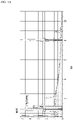
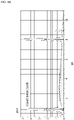
- Example 1 the cross-sectional structure and components of the current collector on which the coating layer was formed were measured, and the results are shown in FIGS. 3 and 4a and 4b .
- FIG. 3 is an SEM photograph of a cross section of the current collector on which the coating layer is formed
- FIGS. 4a and 4b show the component analysis results for the current collector on which the coating layer is formed.
- Component analysis was performed by Energy Dispersive X-ray Spectroscopy by processing a cross section with a focused ion beam.
- the magnesium coating layer is uniformly formed on the surface of the current collector.
- the negative active material layer was formed by the same method as in Example 1 and Comparative Example 1, but the electrodeposition process time was shortened to 1 minute, 2 minutes, and 3 minutes to measure the surface microstructure of the negative active material layer formed in the initial stage of the electrodeposition process.
- the microstructure was measured by scanning electron microscopy by processing a cross section with a focused ion beam, and the results are shown in FIG. 5 .
- the negative active material layer when preparing the negative active material layer to comprise a metal seed that is easy to alloy with lithium when performing the electrodeposition process for forming the negative active material layer as in this Example, even in a high-speed electrodeposition process in which a high current must be applied from the beginning, excessive nucleation is prevented, thereby preventing an increase in the specific surface area of the negative active material.
- a lithium secondary battery (2032 type coin full cell) having the structure as shown in FIG. 7 was manufactured using the negative electrode for a lithium secondary battery manufactured according to Example 1 and Comparative Example 1, and then the charge/discharge characteristics were evaluated.
- the positive electrode was manufactured so that the positive active material layer was laminated on one side of the current collector (Al foil) using a positive active material slurry comprising LiCoO 2 (99 wt%) active material, conductive material and binder. At this time, the capacity per unit area of the positive electrode was prepared at 3.1 mAh/cm 2 , which is the positive electrode capacity level of the currently commercially available lithium secondary battery (using graphite negative electrode).
- electrolyte solution a mixed solvent (3:7 volume ratio) of ethylene carbonate and ethyl methyl carbonate in which 1M LiPF 6 is dissolved was used.
- Celgard's Model 2400 made of polypropylene was used for the separator, and Hohsen's 2032 type coin cell product was used for the battery container.
- the charging/discharging performance evaluation of the lithium secondary battery prepared by the above method was performed as follows.
- the lithium secondary battery to which a negative electrode for a lithium secondary battery manufactured according to Example 1 is applied has significantly superior charge and discharge cycle-life compared to a lithium secondary battery to which a negative electrode for a lithium secondary battery manufactured according to Comparative Example 1 is applied.
- the surface area of the negative electrode in contact with the electrolyte solution is reduced, thereby reducing the side reaction between the negative electrode surface and the electrolyte solution during the charging and discharging process, it is thought that this is because the film on the surface of the negative active material layer formed in the electrodeposition process acts as a protective layer.
- the negative active material layer may be formed at high speed without deterioration of the performance of the negative active material layer formed even when the electrodeposition process is performed under a high current condition. Accordingly, it is possible to secure commercially available and manufacturing competitiveness in the manufacture of a negative electrode in which a negative active material layer comprising a lithium metal layer is formed.
- the present invention is not limited to the exemplary embodiments, but may be manufactured in a variety of different forms, and a person of an ordinary skill in the technical field to which the present invention belongs is without changing the technical idea or essential features of the present invention It will be understood that the invention may be embodied in other specific forms. Therefore, it should be understood that the exemplary embodiments described above are exemplary in all respects and not restrictive.
Landscapes
- Chemical & Material Sciences (AREA)
- Engineering & Computer Science (AREA)
- Chemical Kinetics & Catalysis (AREA)
- Electrochemistry (AREA)
- General Chemical & Material Sciences (AREA)
- Manufacturing & Machinery (AREA)
- Materials Engineering (AREA)
- Composite Materials (AREA)
- Battery Electrode And Active Subsutance (AREA)
- Secondary Cells (AREA)
Applications Claiming Priority (2)
| Application Number | Priority Date | Filing Date | Title |
|---|---|---|---|
| KR1020190138110A KR102324692B1 (ko) | 2019-10-31 | 2019-10-31 | 리튬 이차 전지용 음극, 이의 제조 방법 및 이를 이용한 리튬 이차 전지 |
| PCT/KR2020/010093 WO2021085809A1 (ko) | 2019-10-31 | 2020-07-30 | 리튬 이차 전지용 음극, 이의 제조 방법 및 이를 이용한 리튬 이차 전지 |
Publications (2)
| Publication Number | Publication Date |
|---|---|
| EP4053938A1 true EP4053938A1 (de) | 2022-09-07 |
| EP4053938A4 EP4053938A4 (de) | 2023-10-11 |
Family
ID=75714535
Family Applications (1)
| Application Number | Title | Priority Date | Filing Date |
|---|---|---|---|
| EP20880677.8A Pending EP4053938A4 (de) | 2019-10-31 | 2020-07-30 | Negativelektrode für lithiumsekundärbatterie, verfahren zur herstellung derselben und lithiumsekundärbatterie damit |
Country Status (6)
| Country | Link |
|---|---|
| US (1) | US20220376236A1 (de) |
| EP (1) | EP4053938A4 (de) |
| JP (1) | JP7416928B2 (de) |
| KR (1) | KR102324692B1 (de) |
| CN (1) | CN114631206B (de) |
| WO (1) | WO2021085809A1 (de) |
Families Citing this family (7)
| Publication number | Priority date | Publication date | Assignee | Title |
|---|---|---|---|---|
| KR102678947B1 (ko) * | 2021-09-13 | 2024-06-26 | 재단법인 포항산업과학연구원 | 이차 전지용 리튬 금속 전극, 이의 제조 방법 및 이를 포함하는 리튬 이차 전지 |
| KR20230082757A (ko) * | 2021-12-02 | 2023-06-09 | 재단법인 포항산업과학연구원 | 리튬 금속 전극, 이의 제조 방법 및 이를 포함하는 리튬 이차 전지 |
| CN114284567B (zh) * | 2021-12-29 | 2024-05-10 | 中南大学 | 一种高能量密度无负极锂金属电池制备方法 |
| JP2025533053A (ja) * | 2022-10-14 | 2025-10-03 | リサーチ インスティチュート オブ インダストリアル サイエンス アンド テクノロジー | 二次電池用リチウム金属電極、その製造方法、およびこれを含むリチウム二次電池 |
| KR102821507B1 (ko) * | 2022-11-30 | 2025-06-17 | 한국생산기술연구원 | 리튬금속 박막 및 리튬금속 박막 제조방법 |
| JP2026508613A (ja) * | 2023-03-14 | 2026-03-11 | エスケー オン カンパニー リミテッド | リチウム金属電池用負極 |
| KR20250093037A (ko) * | 2023-12-15 | 2025-06-24 | 포스코홀딩스 주식회사 | 리튬 이차전지용 리튬 금속 전극 및 이의 제조 방법 |
Family Cites Families (18)
| Publication number | Priority date | Publication date | Assignee | Title |
|---|---|---|---|---|
| JPS63143744A (ja) * | 1986-12-06 | 1988-06-16 | Hitachi Maxell Ltd | リチウム電池 |
| US6402795B1 (en) * | 1998-02-18 | 2002-06-11 | Polyplus Battery Company, Inc. | Plating metal negative electrodes under protective coatings |
| CN1179432C (zh) * | 2001-05-31 | 2004-12-08 | 三星Sdi株式会社 | 锂电池的锂金属阳级保护层的形成方法 |
| JP2005063805A (ja) * | 2003-08-12 | 2005-03-10 | Matsushita Electric Ind Co Ltd | 負極およびそれを用いたリチウム二次電池 |
| JP3799049B2 (ja) * | 2004-05-12 | 2006-07-19 | 三井金属鉱業株式会社 | 非水電解液二次電池用負極及びその製造方法 |
| JP4796294B2 (ja) * | 2004-11-11 | 2011-10-19 | 三井金属鉱業株式会社 | 非水電解液二次電池用負極 |
| US8486549B2 (en) * | 2007-07-19 | 2013-07-16 | Panasonic Corporation | Lithium ion secondary battery |
| JP2009054484A (ja) * | 2007-08-28 | 2009-03-12 | Seiko Epson Corp | 全固体リチウム二次電池およびその製造方法 |
| US9577289B2 (en) * | 2012-12-17 | 2017-02-21 | Sion Power Corporation | Lithium-ion electrochemical cell, components thereof, and methods of making and using same |
| CN109478635B (zh) * | 2016-10-05 | 2022-04-08 | 株式会社Lg化学 | 锂金属二次电池用负极和包含其的锂金属二次电池 |
| KR102142552B1 (ko) * | 2016-10-05 | 2020-08-10 | 주식회사 엘지화학 | 리튬금속 이차전지용 음극 및 이를 포함하는 리튬금속 이차전지 |
| CN110291666B (zh) * | 2016-12-23 | 2022-08-16 | 株式会社Posco | 锂金属负极、它的制备方法及包含它的锂二次电池 |
| KR102043776B1 (ko) * | 2017-10-31 | 2019-12-02 | 주식회사 포스코 | 리튬 금속 음극, 이의 제조 방법 및 이를 포함하는 리튬 이차 전지 |
| KR101990618B1 (ko) * | 2017-04-14 | 2019-06-18 | 주식회사 엘지화학 | 리튬 금속용 전기 도금용액 및 이를 이용한 리튬 금속전극의 제조방법 |
| KR102183659B1 (ko) * | 2017-06-20 | 2020-11-26 | 주식회사 엘지화학 | 전극의 제조방법 |
| KR102115602B1 (ko) * | 2017-06-21 | 2020-05-26 | 주식회사 엘지화학 | 리튬 이차전지 |
| US10741835B1 (en) * | 2017-08-18 | 2020-08-11 | Apple Inc. | Anode structure for a lithium metal battery |
| KR102601605B1 (ko) * | 2017-12-27 | 2023-11-14 | 삼성전자주식회사 | 음극, 이를 포함하는 리튬전지 및 음극 제조방법 |
-
2019
- 2019-10-31 KR KR1020190138110A patent/KR102324692B1/ko active Active
-
2020
- 2020-07-30 US US17/771,932 patent/US20220376236A1/en active Pending
- 2020-07-30 EP EP20880677.8A patent/EP4053938A4/de active Pending
- 2020-07-30 JP JP2022523340A patent/JP7416928B2/ja active Active
- 2020-07-30 CN CN202080074965.9A patent/CN114631206B/zh active Active
- 2020-07-30 WO PCT/KR2020/010093 patent/WO2021085809A1/ko not_active Ceased
Also Published As
| Publication number | Publication date |
|---|---|
| CN114631206B (zh) | 2025-02-18 |
| JP7416928B2 (ja) | 2024-01-17 |
| CN114631206A (zh) | 2022-06-14 |
| EP4053938A4 (de) | 2023-10-11 |
| KR102324692B1 (ko) | 2021-11-09 |
| US20220376236A1 (en) | 2022-11-24 |
| JP2022552733A (ja) | 2022-12-19 |
| WO2021085809A1 (ko) | 2021-05-06 |
| KR20210052056A (ko) | 2021-05-10 |
Similar Documents
| Publication | Publication Date | Title |
|---|---|---|
| US12573609B2 (en) | Lithium metal anode, fabrication method thereof, and lithium secondary battery comprising same anode | |
| JP7802931B2 (ja) | リチウム金属電極、その製造方法およびこれを含むリチウム二次電池 | |
| EP4053938A1 (de) | Negativelektrode für lithiumsekundärbatterie, verfahren zur herstellung derselben und lithiumsekundärbatterie damit | |
| CN115053363B (zh) | 阳极极片、采用该极片的电池及电子装置 | |
| KR101400994B1 (ko) | 고용량 리튬 이차전지용 전극 및 이를 함유하는 리튬이차전지 | |
| JPWO2001031723A1 (ja) | リチウム二次電池用電極及びリチウム二次電池 | |
| KR102678947B1 (ko) | 이차 전지용 리튬 금속 전극, 이의 제조 방법 및 이를 포함하는 리튬 이차 전지 | |
| JPWO2001031722A1 (ja) | リチウム電池用電極及びリチウム二次電池 | |
| KR102043776B1 (ko) | 리튬 금속 음극, 이의 제조 방법 및 이를 포함하는 리튬 이차 전지 | |
| JPH08180853A (ja) | セパレータ及びLi二次電池 | |
| JPH07245099A (ja) | 非水電解液型Li二次電池用負極 | |
| KR102759977B1 (ko) | 리튬 이차 전지용 음극, 이의 제조 방법 및 이를 포함하는 리튬 이차 전지 | |
| JP3202880B2 (ja) | 結晶性リチウム金属、その製造方法およびリチウム二次電池 | |
| JP2009093943A (ja) | 二次電池用負極活物質およびこれを用いた二次電池 | |
| US20250029987A1 (en) | Composite active material particle, battery, and method for manufacturing composite active material particle | |
| JP2025533053A (ja) | 二次電池用リチウム金属電極、その製造方法、およびこれを含むリチウム二次電池 | |
| KR20250093038A (ko) | 리튬 이차전지용 리튬 금속 전극 및 이의 제조 방법 | |
| KR20250093037A (ko) | 리튬 이차전지용 리튬 금속 전극 및 이의 제조 방법 | |
| KR20250092963A (ko) | 리튬 이차전지용 리튬 금속 전극 및 이의 제조 방법 | |
| KR20250092986A (ko) | 리튬 이차전지용 리튬 금속 전극 및 이의 제조 방법 | |
| KR20250092987A (ko) | 리튬 이차전지용 리튬 금속 전극 및 이의 제조 방법 | |
| JP6184978B2 (ja) | 非水電解液電池用電極および非水電解液電池 | |
| KR20250093875A (ko) | 리튬 이차전지용 리튬 금속 전극 및 이의 제조 방법 | |
| JPH07161349A (ja) | Li二次電池用負極及びその製造方法 | |
| JPH07192752A (ja) | リチウム二次電池 |
Legal Events
| Date | Code | Title | Description |
|---|---|---|---|
| STAA | Information on the status of an ep patent application or granted ep patent |
Free format text: STATUS: THE INTERNATIONAL PUBLICATION HAS BEEN MADE |
|
| PUAI | Public reference made under article 153(3) epc to a published international application that has entered the european phase |
Free format text: ORIGINAL CODE: 0009012 |
|
| STAA | Information on the status of an ep patent application or granted ep patent |
Free format text: STATUS: REQUEST FOR EXAMINATION WAS MADE |
|
| 17P | Request for examination filed |
Effective date: 20220512 |
|
| AK | Designated contracting states |
Kind code of ref document: A1 Designated state(s): AL AT BE BG CH CY CZ DE DK EE ES FI FR GB GR HR HU IE IS IT LI LT LU LV MC MK MT NL NO PL PT RO RS SE SI SK SM TR |
|
| DAV | Request for validation of the european patent (deleted) | ||
| DAX | Request for extension of the european patent (deleted) | ||
| A4 | Supplementary search report drawn up and despatched |
Effective date: 20230907 |
|
| RIC1 | Information provided on ipc code assigned before grant |
Ipc: H01M 4/02 20060101ALN20230901BHEP Ipc: H01M 4/40 20060101ALI20230901BHEP Ipc: H01M 4/38 20060101ALI20230901BHEP Ipc: H01M 10/052 20100101ALI20230901BHEP Ipc: H01M 4/62 20060101ALI20230901BHEP Ipc: H01M 4/04 20060101ALI20230901BHEP Ipc: H01M 4/1395 20100101ALI20230901BHEP Ipc: H01M 4/134 20100101AFI20230901BHEP |