EP4040568B1 - Verfahren zur vorhersage der zyklenlebensdauer einer sekundärbatterie mit hybrid-anode auf kohlenstoffbasis - Google Patents
Verfahren zur vorhersage der zyklenlebensdauer einer sekundärbatterie mit hybrid-anode auf kohlenstoffbasis Download PDFInfo
- Publication number
- EP4040568B1 EP4040568B1 EP20885382.0A EP20885382A EP4040568B1 EP 4040568 B1 EP4040568 B1 EP 4040568B1 EP 20885382 A EP20885382 A EP 20885382A EP 4040568 B1 EP4040568 B1 EP 4040568B1
- Authority
- EP
- European Patent Office
- Prior art keywords
- secondary battery
- negative electrode
- active material
- carbon
- graph
- Prior art date
- Legal status (The legal status is an assumption and is not a legal conclusion. Google has not performed a legal analysis and makes no representation as to the accuracy of the status listed.)
- Active
Links
Images


Classifications
-
- G—PHYSICS
- G01—MEASURING; TESTING
- G01R—MEASURING ELECTRIC VARIABLES; MEASURING MAGNETIC VARIABLES
- G01R31/00—Arrangements for testing electric properties; Arrangements for locating electric faults; Arrangements for electrical testing characterised by what is being tested not provided for elsewhere
- G01R31/36—Arrangements for testing, measuring or monitoring the electrical condition of accumulators or electric batteries, e.g. capacity or state of charge [SoC]
- G01R31/392—Determining battery ageing or deterioration, e.g. state of health
-
- H—ELECTRICITY
- H01—ELECTRIC ELEMENTS
- H01M—PROCESSES OR MEANS, e.g. BATTERIES, FOR THE DIRECT CONVERSION OF CHEMICAL ENERGY INTO ELECTRICAL ENERGY
- H01M10/00—Secondary cells; Manufacture thereof
- H01M10/42—Methods or arrangements for servicing or maintenance of secondary cells or secondary half-cells
- H01M10/44—Methods for charging or discharging
-
- H—ELECTRICITY
- H01—ELECTRIC ELEMENTS
- H01M—PROCESSES OR MEANS, e.g. BATTERIES, FOR THE DIRECT CONVERSION OF CHEMICAL ENERGY INTO ELECTRICAL ENERGY
- H01M4/00—Electrodes
- H01M4/02—Electrodes composed of, or comprising, active material
- H01M4/36—Selection of substances as active materials, active masses, active liquids
- H01M4/58—Selection of substances as active materials, active masses, active liquids of inorganic compounds other than oxides or hydroxides, e.g. sulfides, selenides, tellurides, halogenides or LiCoFy; of polyanionic structures, e.g. phosphates, silicates or borates
- H01M4/583—Carbonaceous material, e.g. graphite-intercalation compounds or CFx
- H01M4/587—Carbonaceous material, e.g. graphite-intercalation compounds or CFx for inserting or intercalating light metals
-
- G—PHYSICS
- G01—MEASURING; TESTING
- G01N—INVESTIGATING OR ANALYSING MATERIALS BY DETERMINING THEIR CHEMICAL OR PHYSICAL PROPERTIES
- G01N23/00—Investigating or analysing materials by the use of wave or particle radiation, e.g. X-rays or neutrons, not covered by groups G01N3/00 – G01N17/00, G01N21/00 or G01N22/00
- G01N23/20—Investigating or analysing materials by the use of wave or particle radiation, e.g. X-rays or neutrons, not covered by groups G01N3/00 – G01N17/00, G01N21/00 or G01N22/00 by using diffraction of the radiation by the materials, e.g. for investigating crystal structure; by using scattering of the radiation by the materials, e.g. for investigating non-crystalline materials; by using reflection of the radiation by the materials
-
- G—PHYSICS
- G01—MEASURING; TESTING
- G01N—INVESTIGATING OR ANALYSING MATERIALS BY DETERMINING THEIR CHEMICAL OR PHYSICAL PROPERTIES
- G01N23/00—Investigating or analysing materials by the use of wave or particle radiation, e.g. X-rays or neutrons, not covered by groups G01N3/00 – G01N17/00, G01N21/00 or G01N22/00
- G01N23/20—Investigating or analysing materials by the use of wave or particle radiation, e.g. X-rays or neutrons, not covered by groups G01N3/00 – G01N17/00, G01N21/00 or G01N22/00 by using diffraction of the radiation by the materials, e.g. for investigating crystal structure; by using scattering of the radiation by the materials, e.g. for investigating non-crystalline materials; by using reflection of the radiation by the materials
- G01N23/207—Diffractometry using detectors, e.g. using a probe in a central position and one or more displaceable detectors in circumferential positions
-
- H—ELECTRICITY
- H01—ELECTRIC ELEMENTS
- H01M—PROCESSES OR MEANS, e.g. BATTERIES, FOR THE DIRECT CONVERSION OF CHEMICAL ENERGY INTO ELECTRICAL ENERGY
- H01M10/00—Secondary cells; Manufacture thereof
- H01M10/05—Accumulators with non-aqueous electrolyte
- H01M10/052—Li-accumulators
- H01M10/0525—Rocking-chair batteries, i.e. batteries with lithium insertion or intercalation in both electrodes; Lithium-ion batteries
-
- H—ELECTRICITY
- H01—ELECTRIC ELEMENTS
- H01M—PROCESSES OR MEANS, e.g. BATTERIES, FOR THE DIRECT CONVERSION OF CHEMICAL ENERGY INTO ELECTRICAL ENERGY
- H01M10/00—Secondary cells; Manufacture thereof
- H01M10/42—Methods or arrangements for servicing or maintenance of secondary cells or secondary half-cells
-
- H—ELECTRICITY
- H01—ELECTRIC ELEMENTS
- H01M—PROCESSES OR MEANS, e.g. BATTERIES, FOR THE DIRECT CONVERSION OF CHEMICAL ENERGY INTO ELECTRICAL ENERGY
- H01M10/00—Secondary cells; Manufacture thereof
- H01M10/42—Methods or arrangements for servicing or maintenance of secondary cells or secondary half-cells
- H01M10/4285—Testing apparatus
-
- H—ELECTRICITY
- H01—ELECTRIC ELEMENTS
- H01M—PROCESSES OR MEANS, e.g. BATTERIES, FOR THE DIRECT CONVERSION OF CHEMICAL ENERGY INTO ELECTRICAL ENERGY
- H01M4/00—Electrodes
- H01M4/02—Electrodes composed of, or comprising, active material
- H01M4/13—Electrodes for accumulators with non-aqueous electrolyte, e.g. for lithium-accumulators; Processes of manufacture thereof
-
- H—ELECTRICITY
- H01—ELECTRIC ELEMENTS
- H01M—PROCESSES OR MEANS, e.g. BATTERIES, FOR THE DIRECT CONVERSION OF CHEMICAL ENERGY INTO ELECTRICAL ENERGY
- H01M4/00—Electrodes
- H01M4/02—Electrodes composed of, or comprising, active material
- H01M4/13—Electrodes for accumulators with non-aqueous electrolyte, e.g. for lithium-accumulators; Processes of manufacture thereof
- H01M4/133—Electrodes based on carbonaceous material, e.g. graphite-intercalation compounds or CFx
-
- H—ELECTRICITY
- H01—ELECTRIC ELEMENTS
- H01M—PROCESSES OR MEANS, e.g. BATTERIES, FOR THE DIRECT CONVERSION OF CHEMICAL ENERGY INTO ELECTRICAL ENERGY
- H01M4/00—Electrodes
- H01M4/02—Electrodes composed of, or comprising, active material
- H01M4/13—Electrodes for accumulators with non-aqueous electrolyte, e.g. for lithium-accumulators; Processes of manufacture thereof
- H01M4/134—Electrodes based on metals, Si or alloys
-
- H—ELECTRICITY
- H01—ELECTRIC ELEMENTS
- H01M—PROCESSES OR MEANS, e.g. BATTERIES, FOR THE DIRECT CONVERSION OF CHEMICAL ENERGY INTO ELECTRICAL ENERGY
- H01M4/00—Electrodes
- H01M4/02—Electrodes composed of, or comprising, active material
- H01M4/36—Selection of substances as active materials, active masses, active liquids
- H01M4/362—Composites
- H01M4/364—Composites as mixtures
-
- H—ELECTRICITY
- H01—ELECTRIC ELEMENTS
- H01M—PROCESSES OR MEANS, e.g. BATTERIES, FOR THE DIRECT CONVERSION OF CHEMICAL ENERGY INTO ELECTRICAL ENERGY
- H01M4/00—Electrodes
- H01M4/02—Electrodes composed of, or comprising, active material
- H01M4/36—Selection of substances as active materials, active masses, active liquids
- H01M4/38—Selection of substances as active materials, active masses, active liquids of elements or alloys
-
- H—ELECTRICITY
- H01—ELECTRIC ELEMENTS
- H01M—PROCESSES OR MEANS, e.g. BATTERIES, FOR THE DIRECT CONVERSION OF CHEMICAL ENERGY INTO ELECTRICAL ENERGY
- H01M4/00—Electrodes
- H01M4/02—Electrodes composed of, or comprising, active material
- H01M4/36—Selection of substances as active materials, active masses, active liquids
- H01M4/38—Selection of substances as active materials, active masses, active liquids of elements or alloys
- H01M4/381—Alkaline or alkaline earth metals elements
-
- H—ELECTRICITY
- H01—ELECTRIC ELEMENTS
- H01M—PROCESSES OR MEANS, e.g. BATTERIES, FOR THE DIRECT CONVERSION OF CHEMICAL ENERGY INTO ELECTRICAL ENERGY
- H01M4/00—Electrodes
- H01M4/02—Electrodes composed of, or comprising, active material
- H01M4/36—Selection of substances as active materials, active masses, active liquids
- H01M4/38—Selection of substances as active materials, active masses, active liquids of elements or alloys
- H01M4/386—Silicon or alloys based on silicon
-
- H—ELECTRICITY
- H01—ELECTRIC ELEMENTS
- H01M—PROCESSES OR MEANS, e.g. BATTERIES, FOR THE DIRECT CONVERSION OF CHEMICAL ENERGY INTO ELECTRICAL ENERGY
- H01M4/00—Electrodes
- H01M4/02—Electrodes composed of, or comprising, active material
- H01M4/36—Selection of substances as active materials, active masses, active liquids
- H01M4/38—Selection of substances as active materials, active masses, active liquids of elements or alloys
- H01M4/387—Tin or alloys based on tin
-
- H—ELECTRICITY
- H01—ELECTRIC ELEMENTS
- H01M—PROCESSES OR MEANS, e.g. BATTERIES, FOR THE DIRECT CONVERSION OF CHEMICAL ENERGY INTO ELECTRICAL ENERGY
- H01M4/00—Electrodes
- H01M4/02—Electrodes composed of, or comprising, active material
- H01M4/36—Selection of substances as active materials, active masses, active liquids
- H01M4/48—Selection of substances as active materials, active masses, active liquids of inorganic oxides or hydroxides
- H01M4/483—Selection of substances as active materials, active masses, active liquids of inorganic oxides or hydroxides for non-aqueous cells
-
- G—PHYSICS
- G01—MEASURING; TESTING
- G01R—MEASURING ELECTRIC VARIABLES; MEASURING MAGNETIC VARIABLES
- G01R31/00—Arrangements for testing electric properties; Arrangements for locating electric faults; Arrangements for electrical testing characterised by what is being tested not provided for elsewhere
- G01R31/36—Arrangements for testing, measuring or monitoring the electrical condition of accumulators or electric batteries, e.g. capacity or state of charge [SoC]
- G01R31/378—Arrangements for testing, measuring or monitoring the electrical condition of accumulators or electric batteries, e.g. capacity or state of charge [SoC] specially adapted for the type of battery or accumulator
-
- H—ELECTRICITY
- H01—ELECTRIC ELEMENTS
- H01M—PROCESSES OR MEANS, e.g. BATTERIES, FOR THE DIRECT CONVERSION OF CHEMICAL ENERGY INTO ELECTRICAL ENERGY
- H01M10/00—Secondary cells; Manufacture thereof
- H01M10/05—Accumulators with non-aqueous electrolyte
- H01M10/052—Li-accumulators
-
- H—ELECTRICITY
- H01—ELECTRIC ELEMENTS
- H01M—PROCESSES OR MEANS, e.g. BATTERIES, FOR THE DIRECT CONVERSION OF CHEMICAL ENERGY INTO ELECTRICAL ENERGY
- H01M4/00—Electrodes
- H01M4/02—Electrodes composed of, or comprising, active material
- H01M4/36—Selection of substances as active materials, active masses, active liquids
- H01M4/58—Selection of substances as active materials, active masses, active liquids of inorganic compounds other than oxides or hydroxides, e.g. sulfides, selenides, tellurides, halogenides or LiCoFy; of polyanionic structures, e.g. phosphates, silicates or borates
- H01M4/583—Carbonaceous material, e.g. graphite-intercalation compounds or CFx
-
- Y—GENERAL TAGGING OF NEW TECHNOLOGICAL DEVELOPMENTS; GENERAL TAGGING OF CROSS-SECTIONAL TECHNOLOGIES SPANNING OVER SEVERAL SECTIONS OF THE IPC; TECHNICAL SUBJECTS COVERED BY FORMER USPC CROSS-REFERENCE ART COLLECTIONS [XRACs] AND DIGESTS
- Y02—TECHNOLOGIES OR APPLICATIONS FOR MITIGATION OR ADAPTATION AGAINST CLIMATE CHANGE
- Y02E—REDUCTION OF GREENHOUSE GAS [GHG] EMISSIONS, RELATED TO ENERGY GENERATION, TRANSMISSION OR DISTRIBUTION
- Y02E60/00—Enabling technologies; Technologies with a potential or indirect contribution to GHG emissions mitigation
- Y02E60/10—Energy storage using batteries
Definitions
- the present disclosure relates to a method of predicting the cycle life of a secondary battery comprising a carbon based hybrid negative electrode.
- Graphite is a negative electrode active material of currently available lithium ion batteries, and it has the limited theoretical capacity of 372 mAh/g (about 160 Wh/kg).
- Si silicon
- Si silicon
- non-carbon -based materials including Si may cause cracks in the electrode and on the electrode surface and splitting failures of the active material due to the high volume expansion rate during alloying with lithium, resulting in the electrical contact reduction and sharp reduction in cycle capacity of secondary batteries.
- a hybrid negative electrode including a mixture of non-carbon based materials such as non-carbon -based materials including Si and carbon based materials.
- KR 101 802 482 B1 relates to a negative electrode active material for a lithium secondary battery, a method for producing the same, and a lithium secondary battery including the negative active material.
- JP 2017 139089 A relates to a secondary battery evaluation method, a secondary battery evaluation device, and a secondary battery evaluation program.
- the present disclosure is directed to providing a method of predicting the cycle life of a secondary battery comprising a carbon based hybrid negative electrode.
- a method of predicting the cycle life of a secondary battery comprising a carbon-based hybrid negative electrode comprising: measuring a lattice d-spacing of a carbon based negative electrode active material of a target carbon-based hybrid negative electrode using an X-ray diffractometer during charging/discharging of a target secondary battery comprising the target carbon-based hybrid negative electrode comprising a carbon based negative electrode active material and a non-carbon based negative electrode active material, and plotting a graph of changes in lattice d-spacing value as a function of charge/discharge capacity (X axis); calculating a target slope difference corresponding to a difference in slope value changed with respect to an inflection point of the graph during discharging in the plotted graph; comparing the target slope difference with a reference slope difference corresponding to a difference in the slope value changed with respect to an inflection point in a graph showing changes in lattice d-spacing value as
- the reference slope difference may be obtained by measuring a lattice d-spacing of a carbon based negative electrode active material of the reference carbon-based hybrid negative electrode using an X-ray diffractometer during charging/discharging of the reference secondary battery comprising a reference carbon-based hybrid negative electrode comprising the carbon based negative electrode active material and a non-carbon based negative electrode active material, and plotting a graph of changes in lattice d-spacing value as a function of charge/discharge capacity (X axis); and calculating the reference slope difference corresponding to the difference in slope value changed with respect to the inflection point of the graph during discharging in the plotted graph.
- the discharge capacity after the inflection point of the graph during discharging in the plotted graph may correspond to capacity contribution of the non-carbon based negative electrode active material, and the discharge capacity before the inflection point may correspond to capacity contribution of the carbon based negative electrode active material.
- any one of the first to fourth embodiments it may be determined that the cycle life of the target secondary battery is improved compared to the reference secondary battery when the target slope difference is larger than the reference slope difference from a result of the comparison.
- any one of the first to fifth embodiments it may be determined that the cycle life of the target secondary battery is degraded compared to the reference secondary battery when the target slope difference is smaller than the reference slope difference from a result of the comparison.
- the carbon based negative electrode active material may comprise at least one of natural graphite, artificial graphite, soft carbon, hard carbon, pitch carbide, sintered cokes, graphene, or carbon nano tubes.
- the non-carbon based negative electrode active material may comprise a metal or metalloid that can form an alloy with lithium.
- the non-carbon based negative electrode active material may comprise a metal or metalloid selected from Si, Sn, In, Pb, Ga, Ge, Al, Bi, Sb, Ag, Mg, Zn, Pt, Ti or a combination thereof; their oxide; their carbon composite; a carbon composite of the metal or metalloid oxide;, or a mixture thereof.
- the non-carbon based negative electrode active material may comprise Si, SiO x (0 ⁇ x ⁇ 2), or a mixture thereof.
- a target secondary battery comprising a target hybrid negative electrode whose cycle life is to be predicted, has an improved cycle life over a reference secondary battery comprising a reference hybrid negative electrode, as a result of separating the singular behaviors of the non-carbon based material from the combined behaviors of the non-carbon based material by observing a change in the lattice d-spacing of the carbon based material as a function of the charge/discharge capacity (X axis) during the charge and discharge of the full cell secondary battery having the carbon based hybrid negative electrode including the carbon based material and the non-carbon based material by the non-destructive analysis method.
- a method of predicting the cycle life of a target secondary battery is a method of determining whether the cycle life of the target secondary battery is improved or degraded compared to a particular existing secondary battery, not a method of predicting the absolute value of the cycle life of the target secondary battery.
- a carbon-based hybrid negative electrode of the reference secondary battery is referred to as a 'reference carbon-based hybrid negative electrode'.
- the secondary battery intended to predict the cycle life compared to the reference secondary battery is referred to as a 'target secondary battery', and in this instance, a carbon-based hybrid negative electrode of the target secondary battery is referred to as a 'target carbon-based hybrid negative electrode'.
- the present disclosure is developed to predict the cycle life of a target secondary battery comprising a target hybrid negative electrode compared to a reference secondary battery comprising a reference hybrid negative electrode according to the degree of a lattice d-spacing decreasing slope at the late stage of discharge after an inflection point at which the lattice d-spacing of a carbon-based negative electrode active material included in the negative electrode rapidly changes with changes in capacity while observing the lithiation and delithiation behaviors of a carbon based material and a non-carbon based material during charging/discharging of the secondary battery having the carbon based hybrid negative electrode in a charging/discharging environment.
- Another cycle life prediction method may be performed by directly observing the behaviors of a mixed electrode of a carbon based material and a non-carbon based material by operando analysis during the charge/discharge of a secondary battery having a carbon based hybrid negative electrode, by a non-destructive analysis method using a full-cell secondary battery.
- a secondary battery using a carbon based negative electrode active material alone does not have competitive lithiation and delithiation of lithium ions in the negative electrode active material.
- deceleration/acceleration of lithiation and delithiation of lithium ions is observed in a hybrid negative electrode including both a carbon based negative electrode active material and a non-carbon based negative electrode active material due to competitive reactions of lithiation and delithiation of lithium ions in the carbon based negative electrode active material with the non-carbon based negative electrode active material according to the reaction voltage.
- An increase or decrease in the lattice d-spacing of a carbon layer of the carbon based negative electrode active material reflects such a change.
- a method of predicting the cycle life of a secondary battery comprising a carbon based hybrid negative electrode according to an aspect of the present disclosure includes:
- the carbon based hybrid negative electrode refers to a negative electrode including not only the carbon based negative electrode active material but also the non-carbon based negative electrode active material as the negative electrode active material.
- the carbon based negative electrode active material includes any type of carbon based material that allows lithiation and delithiation during charging/discharging of the battery, and is not limited to a particular type.
- the carbon based negative electrode active material may include amorphous carbon, crystalline carbon, or a mixture thereof.
- the carbon based negative electrode active material may include at least one of natural graphite, artificial graphite, soft carbon, hard carbon, pitch carbide, sintered cokes, graphene, or carbon nano tubes.
- graphite is a negative electrode material commonly in lithium secondary batteries, and when mixed with silicon to manufacture an electrode, graphite stably ensures its capacity, has good initial efficiency, and can compensate for the low initial efficiency of the silicon-based negative electrode material. Since these advantages contribute to the increase in initial efficiency of the electrode, graphite-based materials such as artificial graphite or natural graphite are desirable.
- the non-carbon based negative electrode active material includes any material that can form an alloy with lithium, and is not limited to a particular type.
- the non-carbon based negative electrode active material may include a metal or metalloid selected from Si, Sn, In, Pb, Ga, Ge, Al, Bi, Sb, Ag, Mg, Zn, Pt, Ti or a combination thereof; an oxide of the metal or metalloid such as SiO x (0 ⁇ x ⁇ 2), SnO, SnO 2 , TiO 2 ; a carbon composite of the metal or metalloid; a carbon composite of the metal or metalloid oxide, or a mixture thereof.
- the non-carbon based negative electrode active material may include Si, SiO x (0 ⁇ x ⁇ 2), or a mixture thereof.
- the carbon based hybrid negative electrode according to an embodiment of the present disclosure may be prepared by coating a mixture of the negative electrode active material including the carbon based negative electrode active material and the non-carbon based negative electrode active material, a conductive material and a binder on a negative electrode current collector and drying, and if necessary, the mixture may further include fillers.
- the current collector is generally 3 to 500 ⁇ m in thickness.
- the current collector may include, without limitation, any type having high conductivity while not causing a chemical change to the corresponding battery, and for example, stainless steel, aluminum, nickel, titanium, sintered carbon, or aluminum or stainless steel surface-treated with carbon, nickel, titanium and silver. They may be appropriately selected and used depending on the polarity of the positive electrode or the negative electrode.
- the binder helps the bonding between the active material and the conductive material and the bonding to the current collector, and is generally added in an amount of 1 to 50 weight% based on the total weight of the electrode material.
- the binder may include the high molecular weight polyacrylonitrile-acrylic acid copolymer, but is not limited thereto.
- the binder may include polyvinylidene fluoride, polyvinylalcohol, carboxymethylcellulose (CMC), starch, hydroxypropylcellulose, regenerated cellulose, polyvinylpyrrolidone, tetrafluoroethylene, polyethylene, polypropylene, ethylene-propylene-diene ter polymer (EPDM), sulfonated EPDM, styrene-butadiene rubber (SBR), polyacrylate, alkali cation or ammonium ion substituted polyacrylate, alkali cation or ammonium ion substituted poly(alkylene-co-maleic anhydride), alkali cation or ammonium ion substituted poly(alkylene-co-maleic acid), polyethylene oxide, fluorine rubber, or a mixture thereof.
- CMC carboxymethylcellulose
- SBR styrene-butadiene rubber
- the alkali cation substituted polyacrylate may include lithium-polyacrylate (Li-PAA), and the alkali cation substituted poly(alkylene-co-maleic anhydride) may include lithium substituted polyisobutylene-maleic anhydride.
- Li-PAA lithium-polyacrylate
- alkali cation substituted poly(alkylene-co-maleic anhydride) may include lithium substituted polyisobutylene-maleic anhydride.
- the conductive material may include any type of material that does not cause a chemical change to the battery, and for example, graphite such as natural graphite or artificial graphite; carbon black such as carbon black, acetylene black, ketjen black (trade name), carbon nano tubes, carbon nano fiber, channel black, furnace black, lamp black, thermal black, conductive fiber such as carbon fiber or metal fiber, metal powder such as fluorocarbon, aluminum, nickel powder; conductive whiskers such as zinc oxide, potassium titanate, conductive metal oxide such as titanium oxide; conductive materials such as polyphenylene derivatives.
- graphite such as natural graphite or artificial graphite
- carbon black such as carbon black, acetylene black, ketjen black (trade name), carbon nano tubes, carbon nano fiber, channel black, furnace black, lamp black, thermal black, conductive fiber such as carbon fiber or metal fiber, metal powder such as fluorocarbon, aluminum, nickel powder
- conductive whiskers such as zinc oxide, potassium titanate, conductive metal oxide such as titanium oxide
- the negative electrode when preparing the negative electrode by coating the mixture of the negative electrode active material including the carbon based negative electrode active material and the non-carbon based negative electrode active material, the conductive material and the binder on the negative electrode current collector, the negative electrode may be prepared by a dry method including directly coating a solid mixture including the negative electrode active material, the conductive material and the binder, and a wet method including adding the negative electrode active material, the conductive material and the binder to a dispersion medium, stirring, coating in the form of a slurry and drying to remove the dispersion medium.
- the dispersion medium used in the wet method may include an aqueous medium such as water (deionized water), or an organic medium such as N-methyl-2-pyrrolidone (NMP) and acetone.
- the secondary battery according to an embodiment of the present disclosure includes the carbon based hybrid negative electrode, a positive electrode, and a separator interposed between the positive electrode and the negative electrode.
- the positive electrode may be prepared by coating a mixture of a positive electrode active material, a conductive material and a binder on a positive electrode current collector and drying, and if necessary, the mixture may further include fillers.
- the current collector and the binder of the positive electrode reference may be made to the above description of the negative electrode.
- the separator is interposed between the positive electrode and the negative electrode, and includes an insulating thin film having high ion permittivity and mechanical strength.
- the separator generally has a pore size of 0.01 ⁇ 10 ⁇ m, and is generally 5 ⁇ 300 ⁇ m in thickness.
- the separator includes, for example, a film, a sheet or a nonwoven fabric made of olefin-based polymers with chemical resistance and hydrophobic property such as polypropylene; glass fibers or polyethylene. Meanwhile, the separator may further include a porous layer including a mixture of inorganic particles and a binder resin on the outermost surface.
- the electrolyte solution includes an organic solvent and a predetermined amount of lithium salt
- the organic solvent includes, for example, propylene carbonate (PC), ethylene carbonate (EC), butylene carbonate (BC), diethylcarbonate (DEC), dimethylcarbonate (DMC), dipropylcarbonate (DPC), methyl propionate (MP), dimethylsulfoxide, acetonitrile, dimethoxyethane, diethoxyethane, tetrahydrofurane, N-methyl-2-pyrrolidone (NMP), ethylmethylcarbonate (EMC), vinylenecarbonate (VC), gamma butyrolactone (GBL), fluoroethylene carbonate (FEC), methyl formate, ethyl formate, propyl formate, methyl acetate, ethyl acetate, propyl acetate, pentyl acetate, methyl propionate, ethyl propionate
- PC propylene carbon
- Halogen derivatives of the organic solvent may be used, and linear esters may be used.
- the lithium salt may include materials that dissolve well in the nonaqueous electrolyte, and for example, LiCl, LiBr, LiI, LiClO 4 , LiBF 4 , LiB 10 Cl 10 , LiPF 6 , LiCF 3 SO 3 , LiCF 3 CO 2 , LiAsF 6 , LiSbF 6 , LiAlCl 4 , CH 3 SO 3 Li, (CF 3 SO 2 ) 2 NLi, chloro borane lithium, lower aliphatic carboxylic acid lithium, lithium tetraphenyl borate and imide.
- the secondary battery according to an embodiment of the present disclosure may be manufactured by receiving an electrode assembly including the positive electrode and the negative electrode stacked in an alternating manner together with the separator in a packaging such as a battery case together with the electrolyte solution, followed by sealing.
- a method for manufacturing the secondary battery may include any common method without limitation.
- a battery module including the secondary battery as a unit cell and a battery pack including the same.
- the battery module and the battery pack include the secondary battery showing rapid charge characteristics at high loading, they may be used as a power source of electric vehicles, hybrid electric vehicles, plug-in hybrid electric vehicles and energy storage systems.
- battery components not described herein for example, a conductive material
- the lattice d-spacing of the carbon based negative electrode active material of the target carbon based hybrid negative electrode is measured using an X-ray diffractometer, and a graph of changes in lattice d-spacing value as a function of charge/discharge capacity (X axis) is plotted.
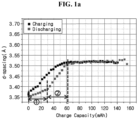
- the lattice d-spacing of the carbon based negative electrode active material may be calculated by fitting the (002) lattice interface peak of the carbon based negative electrode active material included in the negative electrode obtained by scanning (for details of an example of application, see FIGS. 1a and 1b ).
- a difference in slope value changed with respect to an inflection point (an inflection point at which the absolute value of the slope changes from a large value to a small value) of the slope of the graph during discharging in the plotted graph is calculated.
- a target slope difference is compared with a reference slope difference corresponding to a difference of slope value changed with respect to an inflection point in a graph showing changes in lattice d-spacing value as a function of charge/discharge capacity (X axis) of a reference secondary battery.
- the reference slope difference may be obtained by:
- the discharge capacity after the inflection point of the graph may correspond to the capacity contribution of the non-carbon based negative electrode active material
- the discharge capacity before the inflection point may correspond to the capacity contribution of the carbon based negative electrode active material
- Target slope difference Absolute value of the slope of the graph before the inflection point in the graph of the target secondary battery ⁇ the slope of the graph after the inflection point in the graph of the target secondary battery
- Reference slope difference Absolute value of the slope of the graph before the inflection point in the graph of the reference secondary battery ⁇ the slope of the graph after the inflection point in the graph of the reference secondary battery
- the target slope difference is the absolute value of [(-2) - (0)], which equals 2.
- the reference slope difference is the absolute value of [(-2) - (-1)] which equals 1.
- an inflection point at which the slope changes from a large value to a small value at the late stage of discharge may be detected in the lattice d-spacing decreasing curve as a function of the discharge capacity of the reference secondary battery and the target secondary battery comprising the carbon-based hybrid negative electrode, and the C-rate applied to the carbon based negative electrode active material in the hybrid negative electrode may be determined according to the change of the slope (a slope difference) with respect to the inflection point.
- prediction whether the cycle life of the target secondary battery is improved or degraded compared to the reference secondary battery may be performed by comparing a reference slope difference corresponding to a difference in slope value changed with respect to the inflection point in the graph showing changes in lattice d-spacing value as a function of charge/discharge capacity (X axis) of the reference secondary battery with a target slope difference corresponding to a difference in slope value changed with respect to the inflection point in the graph showing changes in lattice d-spacing value as a function of charge/discharge capacity (X axis) of the target secondary battery.
- the target slope difference of the target secondary battery is much larger than the reference slope difference of the reference secondary battery, there may be a plateau range where the lattice d-spacing decreasing slope with changes in capacity at the late stage of discharge after the inflection point in the graph of the target secondary battery is much smaller than that before the inflection point .
- the plateau range there is no or little change in lattice d-spacing of the carbon based material, but the capacity changes, thus stress applied to the carbon based material may be minimized due to a very low delithiation rate from the carbon based material.
- the target slope difference is larger than the reference slope difference from a result of the comparison, it may be determined that the cycle life of the target secondary battery is improved compared to the reference secondary battery.
- the target slope difference when the target slope difference is smaller than the reference slope difference from a result of the comparison, it may be determined that the cycle life of the target secondary battery is degraded compared to the reference secondary battery.
- stress applied to the carbon based material of the target secondary battery is higher than that of the reference secondary battery, and thus it may be predicted that the cycle life of the target secondary battery is degraded compared to the reference secondary battery.
- SiO silicon oxide
- the weight of SiO is 5 weight% based on the total weight of the mixed negative electrode active material of artificial graphite and SiO and a weight ratio of the styrene-butadiene rubber (SBR) and the carboxymethyl cellulose (CMC) is 2.3:1.2.
- the active material layer slurry is coated on one surface of a copper (Cu) film as a 10 ⁇ m thick negative electrode current collector, and dried under 130°C vacuum for 1 hour to form an active material layer on the copper film.
- Cu copper
- the active material layer is roll pressed to prepare a negative electrode having 80,um thick active material layer of single layer structure.
- a loading amount is 17 mg/cm 2 based on the dry weight of the negative electrode active material layer.
- NCM-811 Li(Ni 0.8 Mn 0.1 Co 0.1 )O 2 (NCM-811) as a positive electrode active material, carbon black as a conductive material and polyvinylidene fluoride (PVdF) as a binder are added to N-methylpyrrolidone (NMP) as a solvent at a weight ratio of 96:2:2 to prepare a positive electrode active material slurry.
- NMP N-methylpyrrolidone
- the slurry is coated on one surface of a 15 ⁇ m thick aluminum current collector, and dried and pressed in the same condition as the negative electrode to prepare a positive electrode.
- a loading amount is 20 mg/cm 2 based on the dry weight of the positive electrode active material layer.
- LiPF 6 is dissolved in an organic solvent of ethylene carbonate (EC), propylenecarbonate (PC) and ethylmethyl carbonate (EMC) mixed at a volume ratio of 3:1:6 such that the concentration is 1.0M to prepare a nonaqueous electrolyte solution.
- EC ethylene carbonate
- PC propylenecarbonate
- EMC ethylmethyl carbonate
- a polyolefin separator is interposed between the positive electrode and the negative electrode prepared as above, and the electrolyte solution is injected to prepare a lithium secondary battery (sample A, reference secondary battery).
- a mixture of artificial graphite as a carbon based active material, a binder polymer (styrene-butadiene rubber (SBR) and carboxymethyl cellulose (CMC)) and carbon black as a conductive material at a weight ratio of 95:3.5:1.5 is mixed with water as a dispersion medium at a weight ratio of 1:2 to prepare a first active material layer slurry.
- a weight ratio of the styrene-butadiene rubber (SBR) and the carboxymethyl cellulose (CMC) is 2.3:1.2.
- a second active material layer slurry is prepared by the same method as the first active material layer slurry, except that instead of artificial graphite, a non-carbon based active material, silicon oxide (SiO) having Coulombic efficiency of 80% or more at 0.1C charge/discharge is used, and the SiO is included in an amount of 5 weight% based on the total weight of artificial graphite and SiO.
- SiO silicon oxide
- the first active material layer slurry is coated on one surface of a copper (Cu) film as a 10 ⁇ m thick negative electrode current collector, and subsequently the second active material layer slurry is coated on the first active material layer slurry and dried under 130°C vacuum for 1 hour to form a first active material layer and a second active material layer on the copper film.
- Cu copper
- the first active material layer and the second active material layer are roll pressed at the same time to prepare a negative electrode having a 80 ⁇ m thick double layered active material layer.
- a loading amount is 17 mg/cm 2 based on the dry weight of the negative electrode active material layer.
- a positive electrode is prepared by the same method as preparation example 1.
- a nonaqueous electrolyte solution is prepared by the same method as preparation example 1.
- a polyolefin separator is interposed between the positive electrode and the negative electrode prepared as above, and the electrolyte solution is injected to prepare a lithium secondary battery (sample B, target secondary battery).
- FIGS. 1a and 1b are graphs showing the results of observing in real time changes in lattice d-spacing of artificial graphite included in each negative electrode with changes in capacity during charging/discharging of sample A (the reference secondary battery) of preparation example 1 and sample B (the target secondary battery) of preparation example 2.
- the lattice d-spacing decreasing slope is smaller at the late stage of discharge with respect to the inflection point than at the early stage of discharge, but there is no rapid slope change as much as the target secondary battery shown in FIG. 1b . That is, it can be seen that the target slope difference is larger than the reference slope difference.
- the lattice d-spacing change slope shows a rapid decrease in the range 2 and a smaller slope than the slope of the range 2 when entering the range 1 at the late stage of discharge, and delithiation of lithium ions takes place at a constant rate.
- step reaction in the target secondary battery (sample B) of preparation example 2 comprising the hybrid negative electrode of double layer structure in which the carbon based negative electrode active material layer and the non-carbon based negative electrode active material layer are completely separated as shown in FIG. 1b , a clear plateau (step reaction) is observed in the range 1.
- all lithium ions remaining in artificial graphite as the carbon based negative electrode active material move out during delithiation, and in the range 1, and is shifted to the reaction range in which lithium ions are only delithiated in the non-carbon based negative electrode active material (for example, SiO). Since the reaction takes place stepwise from the range 2 to the range 1, the plateau may be referred to as "step reaction".
- the discharge capacity constantly increases for about 20 to 25 min in the range 1 at the late stage of discharge, but the lattice d-spacing of artificial graphite does not change, and in the hybrid negative electrode system of sample B, delithiation of lithium ions occurs in the non-carbon based negative electrode active material earlier than artificial graphite as the carbon based negative electrode active material. It will be expected to relieve the structural stress related to the volume expansion of artificial graphite.
- the target slope difference of the target secondary battery (sample B) is larger than the reference slope difference of the reference secondary battery (sample A), and it may be predicted that the target secondary battery (sample B) in which lower stress is applied to artificial graphite has a longer cycle life than the reference secondary battery (sample A).
- cycle life testing is performed by charging and discharging the reference secondary battery (sample A) of preparation example 1 and the target secondary battery (sample B) of preparation example 2 under the same condition as the cycle test, 0.33 CC/CV charge and 0.33 CC discharge conditions for 200 cycles.
- FIG. 2 is a graph showing the cycle life results of sample A of preparation example 1 (the reference secondary battery) and sample B of preparation example 2 (the target secondary battery).
- the target secondary battery (sample B) comprising the negative electrode showing the plateau from about 20 to 25 min has superior discharge capacity retention in terms of the cycle life for initial 200 cycles.
Landscapes
- Chemical & Material Sciences (AREA)
- General Chemical & Material Sciences (AREA)
- Electrochemistry (AREA)
- Chemical Kinetics & Catalysis (AREA)
- Engineering & Computer Science (AREA)
- Manufacturing & Machinery (AREA)
- Physics & Mathematics (AREA)
- General Physics & Mathematics (AREA)
- Materials Engineering (AREA)
- Composite Materials (AREA)
- Inorganic Chemistry (AREA)
- Analytical Chemistry (AREA)
- Pathology (AREA)
- Immunology (AREA)
- General Health & Medical Sciences (AREA)
- Biochemistry (AREA)
- Life Sciences & Earth Sciences (AREA)
- Health & Medical Sciences (AREA)
- Crystallography & Structural Chemistry (AREA)
- Battery Electrode And Active Subsutance (AREA)
- Secondary Cells (AREA)
Claims (10)
- Verfahren zur Vorhersage der Zyklenlebensdauer einer Sekundärbatterie, die eine hybride negative Elektrode auf Kohlenstoffbasis umfasst, wobei das Verfahren Folgendes umfasst:Messen eines Gitter-d-Abstandes eines aktiven Materials einer negativen Elektrode auf Kohlenstoffbasis einer hybriden negativen Zielelektrode auf Kohlenstoffbasis unter Verwendung eines Röntgendiffraktometers während des Ladens/Entladens einer Zielsekundärbatterie, die die hybride negative Zielelektrode auf Kohlenstoffbasis umfasst, die ein aktives Material einer negativen Elektrode auf Kohlenstoffbasis und ein aktives Material einer negativen Elektrode auf Nicht-Kohlenstoffbasis umfasst, und Erstellen eines Graphen der Änderungen des Wertes des Gitter-d-Abstandes als Funktion der Lade-/Entladekapazität (X-Achse);Berechnen einer Zielsteigungsdifferenz, die einer Differenz im Steigungswert entspricht, der sich in Bezug auf einen Wendepunkt des Graphen während des Entladens in dem aufgezeichneten Graphen ändert;Vergleichen der Zielsteigungsdifferenz mit einer Referenzsteigungsdifferenz, die einer Differenz im Steigungswert entspricht, der sich in Bezug auf einen Wendepunkt in einem Graphen ändert, der Änderungen im Gitter-d-Abstandswert als eine Funktion der Lade-/Entladekapazität (X-Achse) einer Referenzsekundärbatterie zeigt; undVorhersagen, ob die Zyklenlebensdauer der Zielsekundärbatterie im Vergleich zur Referenzsekundärbatterie aus einem Ergebnis des Vergleichs verbessert ist.
- Verfahren zur Vorhersage der Zyklenlebensdauer einer Sekundärbatterie nach Anspruch 1, wobei die Referenzsteigungsdifferenz erhalten wird durch Messen eines Gitter-d-Abstandes eines aktiven Materials einer negativen Elektrode auf Kohlenstoffbasis der hybriden negativen Referenzelektrode auf Kohlenstoffbasis unter Verwendung eines Röntgendiffraktometers während des Ladens/Entladens der Referenzsekundärbatterie, die die hybride negative Referenzelektrode auf Kohlenstoffbasis umfasst, die das aktive Material einer negativen Elektrode auf Kohlenstoffbasis und ein aktives Material einer negativen Elektrode auf Nicht-Kohlenstoffbasis umfasst, und Erstellen eines Graphen der Änderungen des Wertes des Gitter-d-Abstandes als Funktion der Lade-/Entladekapazität (X-Achse); und
Berechnen der Referenzsteigungsdifferenz, die der Differenz im Steigungswert entspricht, der sich in Bezug auf den Wendepunkt des Graphen während des Entladens in dem aufgezeichneten Graphen ändert. - Verfahren zur Vorhersage der Zyklenlebensdauer einer Sekundärbatterie nach Anspruch 1, wobei die Entladekapazität nach dem Wendepunkt des Graphen während des Entladens in dem erstellten Graphen dem Kapazitätsanteil des aktiven Materials der negativen Elektrode auf Nicht-Kohlenstoffbasis entspricht, und die Entladekapazität vor dem Wendepunkt dem Kapazitätsanteil des aktiven Materials der negativen Elektrode auf Kohlenstoffbasis entspricht.
- Verfahren zur Vorhersage der Zyklenlebensdauer einer Sekundärbatterie nach Anspruch 1, wobei die Zielsteigungsdifferenz und die Referenzsteigungsdifferenz durch die folgende Gleichung berechnet werden:


- Verfahren zur Vorhersage der Zyklenlebensdauer einer Sekundärbatterie nach Anspruch 1, wobei ermittelt wird, dass die Zyklenlebensdauer der Zielsekundärbatterie im Vergleich zur Referenzsekundärbatterie verbessert ist, wenn die Zielsteigungsdifferenz größer ist als die Referenzsteigungsdifferenz aus einem Ergebnis des Vergleichs.
- Verfahren zur Vorhersage der Zyklenlebensdauer einer Sekundärbatterie nach Anspruch 1, wobei ermittelt wird, dass die Zyklenlebensdauer der Zielsekundärbatterie im Vergleich zur Referenzsekundärbatterie verschlechtert ist, wenn die Zielsteigungsdifferenz kleiner ist als die Referenzsteigungsdifferenz aus einem Ergebnis des Vergleichs.
- Verfahren zur Vorhersage der Zyklenlebensdauer einer Sekundärbatterie nach Anspruch 1, wobei das aktive Material der negativen Elektrode auf Kohlenstoffbasis mindestens eines aus Naturgraphit, künstlichem Graphit, weichem Kohlenstoff, hartem Kohlenstoff, Pechcarbid, gesinterten Koksen, Graphen oder Kohlenstoffnanoröhrchen umfasst.
- Verfahren zur Vorhersage der Zyklenlebensdauer einer Sekundärbatterie nach Anspruch 1, wobei das aktive Material der negativen Elektrode auf Nicht-Kohlenstoffbasis ein Metall oder Metalloid umfasst, das eine Legierung mit Lithium bilden kann.
- Verfahren zur Vorhersage der Zyklenlebensdauer einer Sekundärbatterie nach Anspruch 1, wobei das aktive Material der negativen Elektrode auf Nicht-Kohlenstoffbasis ein Metall oder Metalloid, ausgewählt aus Si, Sn, In, Pb, Ga, Ge, Al, Bi, Sb, Ag, Mg, Zn, Pt, Ti oder einer Kombination davon, ihr Oxid, ihren Kohlenstoffverbundstoff, einen Kohlenstoffverbundstoff des Metall- oder Metalloidoxids oder eine Mischung davon umfasst.
- Verfahren zur Vorhersage der Zyklenlebensdauer einer Sekundärbatterie nach Anspruch 1, wobei das aktive Material der negativen Elektrode auf Nicht-Kohlenstoffbasis Si, SiOx(0<x<2) oder eine Mischung davon umfasst.
Applications Claiming Priority (2)
| Application Number | Priority Date | Filing Date | Title |
|---|---|---|---|
| KR1020190139765A KR102766561B1 (ko) | 2019-11-04 | 2019-11-04 | 탄소계 기반 하이브리드 음극을 구비한 이차전지의 수명 특성 예측 방법 |
| PCT/KR2020/015352 WO2021091236A1 (ko) | 2019-11-04 | 2020-11-04 | 탄소계 기반 하이브리드 음극을 구비한 이차전지의 수명 특성 예측 방법 |
Publications (3)
| Publication Number | Publication Date |
|---|---|
| EP4040568A1 EP4040568A1 (de) | 2022-08-10 |
| EP4040568A4 EP4040568A4 (de) | 2022-12-28 |
| EP4040568B1 true EP4040568B1 (de) | 2024-03-27 |
Family
ID=75848901
Family Applications (1)
| Application Number | Title | Priority Date | Filing Date |
|---|---|---|---|
| EP20885382.0A Active EP4040568B1 (de) | 2019-11-04 | 2020-11-04 | Verfahren zur vorhersage der zyklenlebensdauer einer sekundärbatterie mit hybrid-anode auf kohlenstoffbasis |
Country Status (9)
| Country | Link |
|---|---|
| US (1) | US12392840B2 (de) |
| EP (1) | EP4040568B1 (de) |
| JP (1) | JP7158592B2 (de) |
| KR (1) | KR102766561B1 (de) |
| CN (1) | CN114599983B (de) |
| ES (1) | ES2977811T3 (de) |
| HU (1) | HUE067182T2 (de) |
| PL (1) | PL4040568T3 (de) |
| WO (1) | WO2021091236A1 (de) |
Families Citing this family (7)
| Publication number | Priority date | Publication date | Assignee | Title |
|---|---|---|---|---|
| CN114114049B (zh) * | 2021-09-30 | 2022-10-18 | 北京交通大学 | 一种基于样本迁移的锂离子电池寿命预测方法 |
| CN114062934B (zh) * | 2021-11-19 | 2022-05-06 | 湖南苏科智能科技有限公司 | 一种基于x光图像处理的充电电池容量检测方法 |
| KR20230166506A (ko) * | 2022-05-31 | 2023-12-07 | 주식회사 엘지에너지솔루션 | 배터리 진단 장치 및 방법 |
| CN115338149B (zh) * | 2022-07-06 | 2024-08-13 | 南开大学 | 一种快速判别锂电池三元层状正极材料循环寿命的方法 |
| KR20240038253A (ko) * | 2022-09-16 | 2024-03-25 | 주식회사 엘지에너지솔루션 | 전지 용량 특성 산출 방법 |
| JP7729322B2 (ja) * | 2022-12-12 | 2025-08-26 | 株式会社デンソー | 残容量算出装置及びプログラム |
| CN119490182B (zh) * | 2024-11-18 | 2025-10-24 | 湖南中科星城石墨有限公司 | 负极材料的制备方法及其应用 |
Family Cites Families (30)
| Publication number | Priority date | Publication date | Assignee | Title |
|---|---|---|---|---|
| US6083646A (en) * | 1996-08-29 | 2000-07-04 | Sony Corporation | Non-aqueous electrolyte secondary battery and method for producing cathode material |
| JP2000021392A (ja) * | 1998-07-06 | 2000-01-21 | Fuji Photo Film Co Ltd | 非水二次電池 |
| JP2000212677A (ja) * | 1999-01-26 | 2000-08-02 | Japan Storage Battery Co Ltd | リチウム貯蔵性金属間化合物およびこれを用いたリチウム二次電池 |
| JP2003007354A (ja) | 2001-06-25 | 2003-01-10 | Toyota Motor Corp | リチウム二次電池の特性評価方法及び特性評価装置 |
| JP4900888B2 (ja) | 2004-03-10 | 2012-03-21 | 三井金属鉱業株式会社 | リチウム電池用リチウム遷移金属酸化物 |
| KR101463112B1 (ko) | 2007-12-18 | 2014-11-21 | 삼성에스디아이 주식회사 | 복합체 음극 활물질, 그 제조 방법 및 이를 채용한 음극과리튬 전지 |
| KR101211327B1 (ko) | 2007-12-18 | 2012-12-11 | 주식회사 엘지화학 | 이차 전지용 음극활물질 및 그 제조방법 |
| JP2011040281A (ja) * | 2009-08-11 | 2011-02-24 | Samsung Electronics Co Ltd | 全固体二次電池 |
| US20110039162A1 (en) * | 2009-08-11 | 2011-02-17 | Samsung Electronics Co., Ltd. | All-solid secondary battery and positive electrode used therefor |
| JP5711483B2 (ja) * | 2009-08-27 | 2015-04-30 | 古河電池株式会社 | 鉛蓄電池用複合キャパシタ負極板の製造法及び鉛蓄電池 |
| US10355305B2 (en) * | 2012-01-16 | 2019-07-16 | Enlighten Innovations Inc. | Alkali metal intercalation material as an electrode in an electrolytic cell |
| KR101488828B1 (ko) * | 2012-05-08 | 2015-02-04 | 주식회사 엘지화학 | 이차전지 수명 측정 장치, 이를 포함하는 전자기기 및 이차전지 수명 측정 방법 |
| EP2965379B1 (de) * | 2013-03-04 | 2020-07-08 | Enlighten Innovations Inc. | Alkalimetall-einlagerungsmaterial als elektrode in einer elektrolysezelle |
| CN103137973A (zh) * | 2013-03-08 | 2013-06-05 | 张泽森 | 一种碳化基电极材料 |
| US9564632B2 (en) * | 2013-03-12 | 2017-02-07 | The Trustees Of Boston College | Layered titanium disilicide, method of preparation and applications thereof |
| KR101749187B1 (ko) * | 2013-11-19 | 2017-06-20 | 삼성에스디아이 주식회사 | 음극 활물질, 이를 채용한 음극과 리튬 전지 및 상기 음극 활물질의 제조방법 |
| EP3235028B1 (de) * | 2014-12-18 | 2021-05-12 | Dow Global Technologies LLC | Lithiumionenbatterie mit erhöhter wärmestabilität |
| JP6487205B2 (ja) | 2014-12-25 | 2019-03-20 | 住友金属鉱山株式会社 | X線回折測定用非水系電解質二次電池及びx線回折測定方法 |
| JP6693529B2 (ja) * | 2015-11-10 | 2020-05-13 | 株式会社村田製作所 | 負極活物質、二次電池用の負極及びリチウムイオン二次電池 |
| JP2017139089A (ja) * | 2016-02-02 | 2017-08-10 | 日本電気株式会社 | 二次電池評価方法、二次電池評価装置および二次電池評価プログラム |
| KR101950859B1 (ko) * | 2016-02-15 | 2019-02-22 | 주식회사 엘지화학 | 음극 제조방법 및 음극 |
| CN107579275B (zh) * | 2016-07-04 | 2022-02-11 | 松下知识产权经营株式会社 | 含有氧氮化物的固体电解质和使用它的二次电池 |
| KR101802482B1 (ko) * | 2017-04-26 | 2017-11-28 | 한국기초과학지원연구원 | 리튬 이차 전지용 음극 활물질, 그의 제조 방법 및 그를 포함하는 리튬 이차전지 |
| JP6939057B2 (ja) | 2017-04-27 | 2021-09-22 | トヨタ自動車株式会社 | 車載の電池システムおよび電池の経年劣化推定方法 |
| JP6569703B2 (ja) | 2017-06-20 | 2019-09-04 | マツダ株式会社 | リチウムイオン電池の電極材分析方法 |
| KR101963164B1 (ko) | 2017-07-14 | 2019-03-28 | (주)에스제이신소재 | 리튬 이차전지용 음극 활물질 및 그 제조방법 |
| KR102288792B1 (ko) * | 2017-07-31 | 2021-08-11 | 엘지이노텍 주식회사 | 슈퍼 캐패시터 및 이의 제조 방법 |
| KR102258821B1 (ko) * | 2018-04-30 | 2021-05-31 | 주식회사 엘지에너지솔루션 | 이차 전지 테스트 장치 및 방법 |
| KR20190139765A (ko) | 2018-06-08 | 2019-12-18 | 한국전자통신연구원 | 선형 회귀 쉬프트 레지스터를 이용한 신뢰 필드 생성 방법 및 장치 |
| KR102721680B1 (ko) * | 2019-11-04 | 2024-10-23 | 주식회사 엘지에너지솔루션 | 탄소계 기반 하이브리드 음극의 정량적 분석 방법 |
-
2019
- 2019-11-04 KR KR1020190139765A patent/KR102766561B1/ko active Active
-
2020
- 2020-11-04 CN CN202080073250.1A patent/CN114599983B/zh active Active
- 2020-11-04 EP EP20885382.0A patent/EP4040568B1/de active Active
- 2020-11-04 WO PCT/KR2020/015352 patent/WO2021091236A1/ko not_active Ceased
- 2020-11-04 PL PL20885382.0T patent/PL4040568T3/pl unknown
- 2020-11-04 JP JP2021541260A patent/JP7158592B2/ja active Active
- 2020-11-04 ES ES20885382T patent/ES2977811T3/es active Active
- 2020-11-04 US US17/772,038 patent/US12392840B2/en active Active
- 2020-11-04 HU HUE20885382A patent/HUE067182T2/hu unknown
Also Published As
| Publication number | Publication date |
|---|---|
| CN114599983B (zh) | 2025-08-19 |
| US12392840B2 (en) | 2025-08-19 |
| KR102766561B1 (ko) | 2025-02-10 |
| EP4040568A1 (de) | 2022-08-10 |
| PL4040568T3 (pl) | 2024-06-10 |
| EP4040568A4 (de) | 2022-12-28 |
| HUE067182T2 (hu) | 2024-10-28 |
| JP7158592B2 (ja) | 2022-10-21 |
| US20220373610A1 (en) | 2022-11-24 |
| WO2021091236A1 (ko) | 2021-05-14 |
| JP2022518896A (ja) | 2022-03-17 |
| CN114599983A (zh) | 2022-06-07 |
| ES2977811T3 (es) | 2024-08-30 |
| KR20210053748A (ko) | 2021-05-12 |
Similar Documents
| Publication | Publication Date | Title |
|---|---|---|
| EP4040568B1 (de) | Verfahren zur vorhersage der zyklenlebensdauer einer sekundärbatterie mit hybrid-anode auf kohlenstoffbasis | |
| KR102453274B1 (ko) | 리튬이차전지용 양극재, 이를 포함하는 양극 및 리튬이차전지 | |
| EP3754761B1 (de) | Anode mit graphit- und silikonbasiertem material mit unterschiedlichen durchmessern und lithiumsekundärbatterie damit | |
| KR101956971B1 (ko) | 리튬 이온 배터리용 전도성 탄소 | |
| EP3754762B1 (de) | Anode mit graphit- und siliciumbasiertem material mit unterschiedlichen durchmessern und lithiumsekundärbatterie damit | |
| EP3651241A1 (de) | Sekundärbatterie, batteriepack, elektrofahrzeug, energiespeichersystem, elektrowerkzeug und elektronische vorrichtung | |
| US10074850B2 (en) | High-capacity negative electrode active material and lithium secondary battery including the same | |
| EP3783708B1 (de) | Positive elektrode aktivmaterial für eine lithiumsekundärbatterie sowie lithiumsekundärbatterie | |
| EP4224559B1 (de) | Kathode für lithiumsekundärbatterie und lithiumsekundärbatterie damit | |
| EP2874227A1 (de) | Lithiumsekundärbatterie | |
| EP4043872B1 (de) | Quantitatives analyseverfahren für hybride negative elektrode auf kohlenstoffbasis | |
| EP3651240A1 (de) | Sekundärbatterie, batteriepack, elektrofahrzeug, stromspeichersystem, elektrowerkzeug und elektronische vorrichtung | |
| EP4535453B1 (de) | Anode mit graphit- und siliciumbasiertem material mit verschiedenen durchmessern und lithiumsekundärbatterie damit | |
| EP3579309B1 (de) | Negativelektrode für sekundärbatterie, sekundärbatterie, batteriepack, elektrofahrzeug, energiespeichersystem, elektrowerkzeug und elektronische vorrichtung | |
| US12463241B2 (en) | Secondary battery | |
| US20250219078A1 (en) | POSITIVE ELECTRODE INCLUDING LiFexMn1-xPO4-BASED POSITIVE ELECTRODE ACTIVE MATERIAL AND LITHIUM SECONDARY BATTERY INCLUDING THE SAME | |
| EP4738468A1 (de) | Kathodenaktivmaterial für lithiumsekundärbatterie und lithiumsekundärbatterie damit |
Legal Events
| Date | Code | Title | Description |
|---|---|---|---|
| STAA | Information on the status of an ep patent application or granted ep patent |
Free format text: STATUS: THE INTERNATIONAL PUBLICATION HAS BEEN MADE |
|
| PUAI | Public reference made under article 153(3) epc to a published international application that has entered the european phase |
Free format text: ORIGINAL CODE: 0009012 |
|
| STAA | Information on the status of an ep patent application or granted ep patent |
Free format text: STATUS: REQUEST FOR EXAMINATION WAS MADE |
|
| 17P | Request for examination filed |
Effective date: 20220504 |
|
| AK | Designated contracting states |
Kind code of ref document: A1 Designated state(s): AL AT BE BG CH CY CZ DE DK EE ES FI FR GB GR HR HU IE IS IT LI LT LU LV MC MK MT NL NO PL PT RO RS SE SI SK SM TR |
|
| A4 | Supplementary search report drawn up and despatched |
Effective date: 20221128 |
|
| RIC1 | Information provided on ipc code assigned before grant |
Ipc: H01M 4/48 20100101ALI20221122BHEP Ipc: H01M 4/38 20060101ALI20221122BHEP Ipc: H01M 4/13 20100101ALI20221122BHEP Ipc: H01M 10/0525 20100101ALI20221122BHEP Ipc: H01M 4/587 20100101ALI20221122BHEP Ipc: H01M 4/134 20100101ALI20221122BHEP Ipc: H01M 4/133 20100101ALI20221122BHEP Ipc: H01M 10/052 20100101ALI20221122BHEP Ipc: H01M 4/36 20060101ALI20221122BHEP Ipc: H01M 4/583 20100101ALI20221122BHEP Ipc: G01N 23/20 20180101ALI20221122BHEP Ipc: G01R 31/392 20190101ALI20221122BHEP Ipc: H01M 10/42 20060101ALI20221122BHEP Ipc: H01M 10/44 20060101AFI20221122BHEP |
|
| DAV | Request for validation of the european patent (deleted) | ||
| DAX | Request for extension of the european patent (deleted) | ||
| GRAP | Despatch of communication of intention to grant a patent |
Free format text: ORIGINAL CODE: EPIDOSNIGR1 |
|
| STAA | Information on the status of an ep patent application or granted ep patent |
Free format text: STATUS: GRANT OF PATENT IS INTENDED |
|
| RIC1 | Information provided on ipc code assigned before grant |
Ipc: G01N 23/207 20180101ALI20231220BHEP Ipc: H01M 4/48 20100101ALI20231220BHEP Ipc: H01M 4/38 20060101ALI20231220BHEP Ipc: H01M 4/13 20100101ALI20231220BHEP Ipc: H01M 10/0525 20100101ALI20231220BHEP Ipc: H01M 4/587 20100101ALI20231220BHEP Ipc: H01M 4/134 20100101ALI20231220BHEP Ipc: H01M 4/133 20100101ALI20231220BHEP Ipc: H01M 10/052 20100101ALI20231220BHEP Ipc: H01M 4/36 20060101ALI20231220BHEP Ipc: H01M 4/583 20100101ALI20231220BHEP Ipc: G01N 23/20 20180101ALI20231220BHEP Ipc: G01R 31/392 20190101ALI20231220BHEP Ipc: H01M 10/42 20060101ALI20231220BHEP Ipc: H01M 10/44 20060101AFI20231220BHEP |
|
| INTG | Intention to grant announced |
Effective date: 20240112 |
|
| GRAS | Grant fee paid |
Free format text: ORIGINAL CODE: EPIDOSNIGR3 |
|
| GRAA | (expected) grant |
Free format text: ORIGINAL CODE: 0009210 |
|
| STAA | Information on the status of an ep patent application or granted ep patent |
Free format text: STATUS: THE PATENT HAS BEEN GRANTED |
|
| P01 | Opt-out of the competence of the unified patent court (upc) registered |
Effective date: 20240130 |
|
| AK | Designated contracting states |
Kind code of ref document: B1 Designated state(s): AL AT BE BG CH CY CZ DE DK EE ES FI FR GB GR HR HU IE IS IT LI LT LU LV MC MK MT NL NO PL PT RO RS SE SI SK SM TR |
|
| REG | Reference to a national code |
Ref country code: GB Ref legal event code: FG4D |
|
| REG | Reference to a national code |
Ref country code: CH Ref legal event code: EP |
|
| REG | Reference to a national code |
Ref country code: DE Ref legal event code: R096 Ref document number: 602020028103 Country of ref document: DE |
|
| REG | Reference to a national code |
Ref country code: IE Ref legal event code: FG4D |
|
| REG | Reference to a national code |
Ref country code: SE Ref legal event code: TRGR |
|
| PG25 | Lapsed in a contracting state [announced via postgrant information from national office to epo] |
Ref country code: LT Free format text: LAPSE BECAUSE OF FAILURE TO SUBMIT A TRANSLATION OF THE DESCRIPTION OR TO PAY THE FEE WITHIN THE PRESCRIBED TIME-LIMIT Effective date: 20240327 |
|
| REG | Reference to a national code |
Ref country code: LT Ref legal event code: MG9D |
|
| PG25 | Lapsed in a contracting state [announced via postgrant information from national office to epo] |
Ref country code: GR Free format text: LAPSE BECAUSE OF FAILURE TO SUBMIT A TRANSLATION OF THE DESCRIPTION OR TO PAY THE FEE WITHIN THE PRESCRIBED TIME-LIMIT Effective date: 20240628 |
|
| PG25 | Lapsed in a contracting state [announced via postgrant information from national office to epo] |
Ref country code: HR Free format text: LAPSE BECAUSE OF FAILURE TO SUBMIT A TRANSLATION OF THE DESCRIPTION OR TO PAY THE FEE WITHIN THE PRESCRIBED TIME-LIMIT Effective date: 20240327 Ref country code: RS Free format text: LAPSE BECAUSE OF FAILURE TO SUBMIT A TRANSLATION OF THE DESCRIPTION OR TO PAY THE FEE WITHIN THE PRESCRIBED TIME-LIMIT Effective date: 20240627 |
|
| PG25 | Lapsed in a contracting state [announced via postgrant information from national office to epo] |
Ref country code: RS Free format text: LAPSE BECAUSE OF FAILURE TO SUBMIT A TRANSLATION OF THE DESCRIPTION OR TO PAY THE FEE WITHIN THE PRESCRIBED TIME-LIMIT Effective date: 20240627 Ref country code: NO Free format text: LAPSE BECAUSE OF FAILURE TO SUBMIT A TRANSLATION OF THE DESCRIPTION OR TO PAY THE FEE WITHIN THE PRESCRIBED TIME-LIMIT Effective date: 20240627 Ref country code: LT Free format text: LAPSE BECAUSE OF FAILURE TO SUBMIT A TRANSLATION OF THE DESCRIPTION OR TO PAY THE FEE WITHIN THE PRESCRIBED TIME-LIMIT Effective date: 20240327 Ref country code: HR Free format text: LAPSE BECAUSE OF FAILURE TO SUBMIT A TRANSLATION OF THE DESCRIPTION OR TO PAY THE FEE WITHIN THE PRESCRIBED TIME-LIMIT Effective date: 20240327 Ref country code: GR Free format text: LAPSE BECAUSE OF FAILURE TO SUBMIT A TRANSLATION OF THE DESCRIPTION OR TO PAY THE FEE WITHIN THE PRESCRIBED TIME-LIMIT Effective date: 20240628 Ref country code: FI Free format text: LAPSE BECAUSE OF FAILURE TO SUBMIT A TRANSLATION OF THE DESCRIPTION OR TO PAY THE FEE WITHIN THE PRESCRIBED TIME-LIMIT Effective date: 20240327 Ref country code: BG Free format text: LAPSE BECAUSE OF FAILURE TO SUBMIT A TRANSLATION OF THE DESCRIPTION OR TO PAY THE FEE WITHIN THE PRESCRIBED TIME-LIMIT Effective date: 20240327 |
|
| REG | Reference to a national code |
Ref country code: NL Ref legal event code: MP Effective date: 20240327 |
|
| PG25 | Lapsed in a contracting state [announced via postgrant information from national office to epo] |
Ref country code: LV Free format text: LAPSE BECAUSE OF FAILURE TO SUBMIT A TRANSLATION OF THE DESCRIPTION OR TO PAY THE FEE WITHIN THE PRESCRIBED TIME-LIMIT Effective date: 20240327 |
|
| REG | Reference to a national code |
Ref country code: ES Ref legal event code: FG2A Ref document number: 2977811 Country of ref document: ES Kind code of ref document: T3 Effective date: 20240830 |
|
| PG25 | Lapsed in a contracting state [announced via postgrant information from national office to epo] |
Ref country code: NL Free format text: LAPSE BECAUSE OF FAILURE TO SUBMIT A TRANSLATION OF THE DESCRIPTION OR TO PAY THE FEE WITHIN THE PRESCRIBED TIME-LIMIT Effective date: 20240327 |
|
| REG | Reference to a national code |
Ref country code: AT Ref legal event code: MK05 Ref document number: 1670803 Country of ref document: AT Kind code of ref document: T Effective date: 20240327 |
|
| PG25 | Lapsed in a contracting state [announced via postgrant information from national office to epo] |
Ref country code: NL Free format text: LAPSE BECAUSE OF FAILURE TO SUBMIT A TRANSLATION OF THE DESCRIPTION OR TO PAY THE FEE WITHIN THE PRESCRIBED TIME-LIMIT Effective date: 20240327 |
|
| PG25 | Lapsed in a contracting state [announced via postgrant information from national office to epo] |
Ref country code: IS Free format text: LAPSE BECAUSE OF FAILURE TO SUBMIT A TRANSLATION OF THE DESCRIPTION OR TO PAY THE FEE WITHIN THE PRESCRIBED TIME-LIMIT Effective date: 20240727 |
|
| PG25 | Lapsed in a contracting state [announced via postgrant information from national office to epo] |
Ref country code: PT Free format text: LAPSE BECAUSE OF FAILURE TO SUBMIT A TRANSLATION OF THE DESCRIPTION OR TO PAY THE FEE WITHIN THE PRESCRIBED TIME-LIMIT Effective date: 20240729 Ref country code: SM Free format text: LAPSE BECAUSE OF FAILURE TO SUBMIT A TRANSLATION OF THE DESCRIPTION OR TO PAY THE FEE WITHIN THE PRESCRIBED TIME-LIMIT Effective date: 20240327 |
|
| PG25 | Lapsed in a contracting state [announced via postgrant information from national office to epo] |
Ref country code: EE Free format text: LAPSE BECAUSE OF FAILURE TO SUBMIT A TRANSLATION OF THE DESCRIPTION OR TO PAY THE FEE WITHIN THE PRESCRIBED TIME-LIMIT Effective date: 20240327 Ref country code: CZ Free format text: LAPSE BECAUSE OF FAILURE TO SUBMIT A TRANSLATION OF THE DESCRIPTION OR TO PAY THE FEE WITHIN THE PRESCRIBED TIME-LIMIT Effective date: 20240327 |
|
| PG25 | Lapsed in a contracting state [announced via postgrant information from national office to epo] |
Ref country code: AT Free format text: LAPSE BECAUSE OF FAILURE TO SUBMIT A TRANSLATION OF THE DESCRIPTION OR TO PAY THE FEE WITHIN THE PRESCRIBED TIME-LIMIT Effective date: 20240327 |
|
| REG | Reference to a national code |
Ref country code: HU Ref legal event code: AG4A Ref document number: E067182 Country of ref document: HU |
|
| PG25 | Lapsed in a contracting state [announced via postgrant information from national office to epo] |
Ref country code: SK Free format text: LAPSE BECAUSE OF FAILURE TO SUBMIT A TRANSLATION OF THE DESCRIPTION OR TO PAY THE FEE WITHIN THE PRESCRIBED TIME-LIMIT Effective date: 20240327 |
|
| PG25 | Lapsed in a contracting state [announced via postgrant information from national office to epo] |
Ref country code: SM Free format text: LAPSE BECAUSE OF FAILURE TO SUBMIT A TRANSLATION OF THE DESCRIPTION OR TO PAY THE FEE WITHIN THE PRESCRIBED TIME-LIMIT Effective date: 20240327 Ref country code: SK Free format text: LAPSE BECAUSE OF FAILURE TO SUBMIT A TRANSLATION OF THE DESCRIPTION OR TO PAY THE FEE WITHIN THE PRESCRIBED TIME-LIMIT Effective date: 20240327 Ref country code: RO Free format text: LAPSE BECAUSE OF FAILURE TO SUBMIT A TRANSLATION OF THE DESCRIPTION OR TO PAY THE FEE WITHIN THE PRESCRIBED TIME-LIMIT Effective date: 20240327 Ref country code: PT Free format text: LAPSE BECAUSE OF FAILURE TO SUBMIT A TRANSLATION OF THE DESCRIPTION OR TO PAY THE FEE WITHIN THE PRESCRIBED TIME-LIMIT Effective date: 20240729 Ref country code: IS Free format text: LAPSE BECAUSE OF FAILURE TO SUBMIT A TRANSLATION OF THE DESCRIPTION OR TO PAY THE FEE WITHIN THE PRESCRIBED TIME-LIMIT Effective date: 20240727 Ref country code: EE Free format text: LAPSE BECAUSE OF FAILURE TO SUBMIT A TRANSLATION OF THE DESCRIPTION OR TO PAY THE FEE WITHIN THE PRESCRIBED TIME-LIMIT Effective date: 20240327 Ref country code: CZ Free format text: LAPSE BECAUSE OF FAILURE TO SUBMIT A TRANSLATION OF THE DESCRIPTION OR TO PAY THE FEE WITHIN THE PRESCRIBED TIME-LIMIT Effective date: 20240327 Ref country code: AT Free format text: LAPSE BECAUSE OF FAILURE TO SUBMIT A TRANSLATION OF THE DESCRIPTION OR TO PAY THE FEE WITHIN THE PRESCRIBED TIME-LIMIT Effective date: 20240327 |
|
| PG25 | Lapsed in a contracting state [announced via postgrant information from national office to epo] |
Ref country code: IT Free format text: LAPSE BECAUSE OF FAILURE TO SUBMIT A TRANSLATION OF THE DESCRIPTION OR TO PAY THE FEE WITHIN THE PRESCRIBED TIME-LIMIT Effective date: 20240327 |
|
| PG25 | Lapsed in a contracting state [announced via postgrant information from national office to epo] |
Ref country code: IT Free format text: LAPSE BECAUSE OF FAILURE TO SUBMIT A TRANSLATION OF THE DESCRIPTION OR TO PAY THE FEE WITHIN THE PRESCRIBED TIME-LIMIT Effective date: 20240327 |
|
| REG | Reference to a national code |
Ref country code: DE Ref legal event code: R097 Ref document number: 602020028103 Country of ref document: DE |
|
| PG25 | Lapsed in a contracting state [announced via postgrant information from national office to epo] |
Ref country code: DK Free format text: LAPSE BECAUSE OF FAILURE TO SUBMIT A TRANSLATION OF THE DESCRIPTION OR TO PAY THE FEE WITHIN THE PRESCRIBED TIME-LIMIT Effective date: 20240327 |
|
| PG25 | Lapsed in a contracting state [announced via postgrant information from national office to epo] |
Ref country code: DK Free format text: LAPSE BECAUSE OF FAILURE TO SUBMIT A TRANSLATION OF THE DESCRIPTION OR TO PAY THE FEE WITHIN THE PRESCRIBED TIME-LIMIT Effective date: 20240327 |
|
| PLBE | No opposition filed within time limit |
Free format text: ORIGINAL CODE: 0009261 |
|
| STAA | Information on the status of an ep patent application or granted ep patent |
Free format text: STATUS: NO OPPOSITION FILED WITHIN TIME LIMIT |
|
| 26N | No opposition filed |
Effective date: 20250103 |
|
| PG25 | Lapsed in a contracting state [announced via postgrant information from national office to epo] |
Ref country code: SI Free format text: LAPSE BECAUSE OF FAILURE TO SUBMIT A TRANSLATION OF THE DESCRIPTION OR TO PAY THE FEE WITHIN THE PRESCRIBED TIME-LIMIT Effective date: 20240327 |
|
| REG | Reference to a national code |
Ref country code: CH Ref legal event code: PL |
|
| PG25 | Lapsed in a contracting state [announced via postgrant information from national office to epo] |
Ref country code: MC Free format text: LAPSE BECAUSE OF FAILURE TO SUBMIT A TRANSLATION OF THE DESCRIPTION OR TO PAY THE FEE WITHIN THE PRESCRIBED TIME-LIMIT Effective date: 20240327 |
|
| PG25 | Lapsed in a contracting state [announced via postgrant information from national office to epo] |
Ref country code: LU Free format text: LAPSE BECAUSE OF NON-PAYMENT OF DUE FEES Effective date: 20241104 |
|
| REG | Reference to a national code |
Ref country code: CH Ref legal event code: PL |
|
| PG25 | Lapsed in a contracting state [announced via postgrant information from national office to epo] |
Ref country code: CH Free format text: LAPSE BECAUSE OF NON-PAYMENT OF DUE FEES Effective date: 20241130 |
|
| PG25 | Lapsed in a contracting state [announced via postgrant information from national office to epo] |
Ref country code: IE Free format text: LAPSE BECAUSE OF NON-PAYMENT OF DUE FEES Effective date: 20241104 |
|
| PGFP | Annual fee paid to national office [announced via postgrant information from national office to epo] |
Ref country code: HU Payment date: 20251127 Year of fee payment: 6 |
|
| PGFP | Annual fee paid to national office [announced via postgrant information from national office to epo] |
Ref country code: DE Payment date: 20251020 Year of fee payment: 6 |
|
| PGFP | Annual fee paid to national office [announced via postgrant information from national office to epo] |
Ref country code: GB Payment date: 20251023 Year of fee payment: 6 |
|
| PGFP | Annual fee paid to national office [announced via postgrant information from national office to epo] |
Ref country code: FR Payment date: 20251021 Year of fee payment: 6 |
|
| PGFP | Annual fee paid to national office [announced via postgrant information from national office to epo] |
Ref country code: BE Payment date: 20251020 Year of fee payment: 6 |
|
| PGFP | Annual fee paid to national office [announced via postgrant information from national office to epo] |
Ref country code: SE Payment date: 20251021 Year of fee payment: 6 |
|
| PGFP | Annual fee paid to national office [announced via postgrant information from national office to epo] |
Ref country code: PL Payment date: 20251020 Year of fee payment: 6 |
|
| PGFP | Annual fee paid to national office [announced via postgrant information from national office to epo] |
Ref country code: ES Payment date: 20251215 Year of fee payment: 6 |
|
| PG25 | Lapsed in a contracting state [announced via postgrant information from national office to epo] |
Ref country code: CY Free format text: LAPSE BECAUSE OF FAILURE TO SUBMIT A TRANSLATION OF THE DESCRIPTION OR TO PAY THE FEE WITHIN THE PRESCRIBED TIME-LIMIT; INVALID AB INITIO Effective date: 20201104 |