EP4032985A1 - Mikropeptide und ihre verwendung zur modulation von genexpressionen - Google Patents
Mikropeptide und ihre verwendung zur modulation von genexpressionen Download PDFInfo
- Publication number
- EP4032985A1 EP4032985A1 EP21215711.9A EP21215711A EP4032985A1 EP 4032985 A1 EP4032985 A1 EP 4032985A1 EP 21215711 A EP21215711 A EP 21215711A EP 4032985 A1 EP4032985 A1 EP 4032985A1
- Authority
- EP
- European Patent Office
- Prior art keywords
- seq
- mipep
- plant
- accumulation
- peptide
- Prior art date
- Legal status (The legal status is an assumption and is not a legal conclusion. Google has not performed a legal analysis and makes no representation as to the accuracy of the status listed.)
- Granted
Links
Images











Classifications
-
- C—CHEMISTRY; METALLURGY
- C07—ORGANIC CHEMISTRY
- C07K—PEPTIDES
- C07K14/00—Peptides having more than 20 amino acids; Gastrins; Somatostatins; Melanotropins; Derivatives thereof
- C07K14/415—Peptides having more than 20 amino acids; Gastrins; Somatostatins; Melanotropins; Derivatives thereof from plants
-
- A—HUMAN NECESSITIES
- A01—AGRICULTURE; FORESTRY; ANIMAL HUSBANDRY; HUNTING; TRAPPING; FISHING
- A01N—PRESERVATION OF BODIES OF HUMANS OR ANIMALS OR PLANTS OR PARTS THEREOF; BIOCIDES, e.g. AS DISINFECTANTS, AS PESTICIDES OR AS HERBICIDES; PEST REPELLANTS OR ATTRACTANTS; PLANT GROWTH REGULATORS
- A01N37/00—Biocides, pest repellants or attractants, or plant growth regulators containing organic compounds containing a carbon atom having three bonds to hetero atoms with at the most two bonds to halogen, e.g. carboxylic acids
- A01N37/44—Biocides, pest repellants or attractants, or plant growth regulators containing organic compounds containing a carbon atom having three bonds to hetero atoms with at the most two bonds to halogen, e.g. carboxylic acids containing at least one carboxylic group or a thio analogue, or a derivative thereof, and a nitrogen atom attached to the same carbon skeleton by a single or double bond, this nitrogen atom not being a member of a derivative or of a thio analogue of a carboxylic group, e.g. amino-carboxylic acids
- A01N37/46—N-acyl derivatives
-
- A—HUMAN NECESSITIES
- A01—AGRICULTURE; FORESTRY; ANIMAL HUSBANDRY; HUNTING; TRAPPING; FISHING
- A01N—PRESERVATION OF BODIES OF HUMANS OR ANIMALS OR PLANTS OR PARTS THEREOF; BIOCIDES, e.g. AS DISINFECTANTS, AS PESTICIDES OR AS HERBICIDES; PEST REPELLANTS OR ATTRACTANTS; PLANT GROWTH REGULATORS
- A01N57/00—Biocides, pest repellants or attractants, or plant growth regulators containing organic phosphorus compounds
- A01N57/10—Biocides, pest repellants or attractants, or plant growth regulators containing organic phosphorus compounds having phosphorus-to-oxygen bonds or phosphorus-to-sulfur bonds
- A01N57/16—Biocides, pest repellants or attractants, or plant growth regulators containing organic phosphorus compounds having phosphorus-to-oxygen bonds or phosphorus-to-sulfur bonds containing heterocyclic radicals
-
- A—HUMAN NECESSITIES
- A01—AGRICULTURE; FORESTRY; ANIMAL HUSBANDRY; HUNTING; TRAPPING; FISHING
- A01N—PRESERVATION OF BODIES OF HUMANS OR ANIMALS OR PLANTS OR PARTS THEREOF; BIOCIDES, e.g. AS DISINFECTANTS, AS PESTICIDES OR AS HERBICIDES; PEST REPELLANTS OR ATTRACTANTS; PLANT GROWTH REGULATORS
- A01N65/00—Biocides, pest repellants or attractants, or plant growth regulators containing material from algae, lichens, bryophyta, multi-cellular fungi or plants, or extracts thereof
-
- A—HUMAN NECESSITIES
- A01—AGRICULTURE; FORESTRY; ANIMAL HUSBANDRY; HUNTING; TRAPPING; FISHING
- A01N—PRESERVATION OF BODIES OF HUMANS OR ANIMALS OR PLANTS OR PARTS THEREOF; BIOCIDES, e.g. AS DISINFECTANTS, AS PESTICIDES OR AS HERBICIDES; PEST REPELLANTS OR ATTRACTANTS; PLANT GROWTH REGULATORS
- A01N65/00—Biocides, pest repellants or attractants, or plant growth regulators containing material from algae, lichens, bryophyta, multi-cellular fungi or plants, or extracts thereof
- A01N65/08—Magnoliopsida [dicotyledons]
-
- A—HUMAN NECESSITIES
- A01—AGRICULTURE; FORESTRY; ANIMAL HUSBANDRY; HUNTING; TRAPPING; FISHING
- A01N—PRESERVATION OF BODIES OF HUMANS OR ANIMALS OR PLANTS OR PARTS THEREOF; BIOCIDES, e.g. AS DISINFECTANTS, AS PESTICIDES OR AS HERBICIDES; PEST REPELLANTS OR ATTRACTANTS; PLANT GROWTH REGULATORS
- A01N65/00—Biocides, pest repellants or attractants, or plant growth regulators containing material from algae, lichens, bryophyta, multi-cellular fungi or plants, or extracts thereof
- A01N65/08—Magnoliopsida [dicotyledons]
- A01N65/20—Fabaceae or Leguminosae [Pea or Legume family], e.g. pea, lentil, soybean, clover, acacia, honey locust, derris or millettia
-
- A—HUMAN NECESSITIES
- A01—AGRICULTURE; FORESTRY; ANIMAL HUSBANDRY; HUNTING; TRAPPING; FISHING
- A01N—PRESERVATION OF BODIES OF HUMANS OR ANIMALS OR PLANTS OR PARTS THEREOF; BIOCIDES, e.g. AS DISINFECTANTS, AS PESTICIDES OR AS HERBICIDES; PEST REPELLANTS OR ATTRACTANTS; PLANT GROWTH REGULATORS
- A01N65/00—Biocides, pest repellants or attractants, or plant growth regulators containing material from algae, lichens, bryophyta, multi-cellular fungi or plants, or extracts thereof
- A01N65/08—Magnoliopsida [dicotyledons]
- A01N65/28—Myrtaceae [Myrtle family], e.g. teatree or clove
-
- A—HUMAN NECESSITIES
- A01—AGRICULTURE; FORESTRY; ANIMAL HUSBANDRY; HUNTING; TRAPPING; FISHING
- A01N—PRESERVATION OF BODIES OF HUMANS OR ANIMALS OR PLANTS OR PARTS THEREOF; BIOCIDES, e.g. AS DISINFECTANTS, AS PESTICIDES OR AS HERBICIDES; PEST REPELLANTS OR ATTRACTANTS; PLANT GROWTH REGULATORS
- A01N65/00—Biocides, pest repellants or attractants, or plant growth regulators containing material from algae, lichens, bryophyta, multi-cellular fungi or plants, or extracts thereof
- A01N65/40—Liliopsida [monocotyledons]
- A01N65/44—Poaceae or Gramineae [Grass family], e.g. bamboo, lemon grass or citronella grass
-
- A—HUMAN NECESSITIES
- A61—MEDICAL OR VETERINARY SCIENCE; HYGIENE
- A61P—SPECIFIC THERAPEUTIC ACTIVITY OF CHEMICAL COMPOUNDS OR MEDICINAL PREPARATIONS
- A61P25/00—Drugs for disorders of the nervous system
-
- A—HUMAN NECESSITIES
- A61—MEDICAL OR VETERINARY SCIENCE; HYGIENE
- A61P—SPECIFIC THERAPEUTIC ACTIVITY OF CHEMICAL COMPOUNDS OR MEDICINAL PREPARATIONS
- A61P3/00—Drugs for disorders of the metabolism
- A61P3/04—Anorexiants; Antiobesity agents
-
- A—HUMAN NECESSITIES
- A61—MEDICAL OR VETERINARY SCIENCE; HYGIENE
- A61P—SPECIFIC THERAPEUTIC ACTIVITY OF CHEMICAL COMPOUNDS OR MEDICINAL PREPARATIONS
- A61P3/00—Drugs for disorders of the metabolism
- A61P3/08—Drugs for disorders of the metabolism for glucose homeostasis
- A61P3/10—Drugs for disorders of the metabolism for glucose homeostasis for hyperglycaemia, e.g. antidiabetics
-
- A—HUMAN NECESSITIES
- A61—MEDICAL OR VETERINARY SCIENCE; HYGIENE
- A61P—SPECIFIC THERAPEUTIC ACTIVITY OF CHEMICAL COMPOUNDS OR MEDICINAL PREPARATIONS
- A61P31/00—Antiinfectives, i.e. antibiotics, antiseptics, chemotherapeutics
- A61P31/04—Antibacterial agents
-
- A—HUMAN NECESSITIES
- A61—MEDICAL OR VETERINARY SCIENCE; HYGIENE
- A61P—SPECIFIC THERAPEUTIC ACTIVITY OF CHEMICAL COMPOUNDS OR MEDICINAL PREPARATIONS
- A61P35/00—Antineoplastic agents
-
- A—HUMAN NECESSITIES
- A61—MEDICAL OR VETERINARY SCIENCE; HYGIENE
- A61P—SPECIFIC THERAPEUTIC ACTIVITY OF CHEMICAL COMPOUNDS OR MEDICINAL PREPARATIONS
- A61P37/00—Drugs for immunological or allergic disorders
- A61P37/02—Immunomodulators
-
- A—HUMAN NECESSITIES
- A61—MEDICAL OR VETERINARY SCIENCE; HYGIENE
- A61P—SPECIFIC THERAPEUTIC ACTIVITY OF CHEMICAL COMPOUNDS OR MEDICINAL PREPARATIONS
- A61P43/00—Drugs for specific purposes, not provided for in groups A61P1/00-A61P41/00
-
- A—HUMAN NECESSITIES
- A61—MEDICAL OR VETERINARY SCIENCE; HYGIENE
- A61P—SPECIFIC THERAPEUTIC ACTIVITY OF CHEMICAL COMPOUNDS OR MEDICINAL PREPARATIONS
- A61P9/00—Drugs for disorders of the cardiovascular system
-
- C—CHEMISTRY; METALLURGY
- C07—ORGANIC CHEMISTRY
- C07K—PEPTIDES
- C07K5/00—Peptides containing up to four amino acids in a fully defined sequence; Derivatives thereof
- C07K5/04—Peptides containing up to four amino acids in a fully defined sequence; Derivatives thereof containing only normal peptide links
- C07K5/10—Tetrapeptides
-
- C—CHEMISTRY; METALLURGY
- C07—ORGANIC CHEMISTRY
- C07K—PEPTIDES
- C07K5/00—Peptides containing up to four amino acids in a fully defined sequence; Derivatives thereof
- C07K5/04—Peptides containing up to four amino acids in a fully defined sequence; Derivatives thereof containing only normal peptide links
- C07K5/10—Tetrapeptides
- C07K5/1002—Tetrapeptides with the first amino acid being neutral
- C07K5/1005—Tetrapeptides with the first amino acid being neutral and aliphatic
- C07K5/1013—Tetrapeptides with the first amino acid being neutral and aliphatic the side chain containing O or S as heteroatoms, e.g. Cys, Ser
-
- C—CHEMISTRY; METALLURGY
- C07—ORGANIC CHEMISTRY
- C07K—PEPTIDES
- C07K7/00—Peptides having 5 to 20 amino acids in a fully defined sequence; Derivatives thereof
- C07K7/04—Linear peptides containing only normal peptide links
- C07K7/06—Linear peptides containing only normal peptide links having 5 to 11 amino acids
-
- C—CHEMISTRY; METALLURGY
- C07—ORGANIC CHEMISTRY
- C07K—PEPTIDES
- C07K7/00—Peptides having 5 to 20 amino acids in a fully defined sequence; Derivatives thereof
- C07K7/04—Linear peptides containing only normal peptide links
- C07K7/08—Linear peptides containing only normal peptide links having 12 to 20 amino acids
-
- C—CHEMISTRY; METALLURGY
- C12—BIOCHEMISTRY; BEER; SPIRITS; WINE; VINEGAR; MICROBIOLOGY; ENZYMOLOGY; MUTATION OR GENETIC ENGINEERING
- C12N—MICROORGANISMS OR ENZYMES; COMPOSITIONS THEREOF; PROPAGATING, PRESERVING, OR MAINTAINING MICROORGANISMS; MUTATION OR GENETIC ENGINEERING; CULTURE MEDIA
- C12N15/00—Mutation or genetic engineering; DNA or RNA concerning genetic engineering, vectors, e.g. plasmids, or their isolation, preparation or purification; Use of hosts therefor
- C12N15/09—Recombinant DNA-technology
- C12N15/11—DNA or RNA fragments; Modified forms thereof; Non-coding nucleic acids having a biological activity
- C12N15/113—Non-coding nucleic acids modulating the expression of genes, e.g. antisense oligonucleotides; Antisense DNA or RNA; Triplex- forming oligonucleotides; Catalytic nucleic acids, e.g. ribozymes; Nucleic acids used in co-suppression or gene silencing
-
- C—CHEMISTRY; METALLURGY
- C12—BIOCHEMISTRY; BEER; SPIRITS; WINE; VINEGAR; MICROBIOLOGY; ENZYMOLOGY; MUTATION OR GENETIC ENGINEERING
- C12N—MICROORGANISMS OR ENZYMES; COMPOSITIONS THEREOF; PROPAGATING, PRESERVING, OR MAINTAINING MICROORGANISMS; MUTATION OR GENETIC ENGINEERING; CULTURE MEDIA
- C12N15/00—Mutation or genetic engineering; DNA or RNA concerning genetic engineering, vectors, e.g. plasmids, or their isolation, preparation or purification; Use of hosts therefor
- C12N15/09—Recombinant DNA-technology
- C12N15/63—Introduction of foreign genetic material using vectors; Vectors; Use of hosts therefor; Regulation of expression
-
- C—CHEMISTRY; METALLURGY
- C12—BIOCHEMISTRY; BEER; SPIRITS; WINE; VINEGAR; MICROBIOLOGY; ENZYMOLOGY; MUTATION OR GENETIC ENGINEERING
- C12N—MICROORGANISMS OR ENZYMES; COMPOSITIONS THEREOF; PROPAGATING, PRESERVING, OR MAINTAINING MICROORGANISMS; MUTATION OR GENETIC ENGINEERING; CULTURE MEDIA
- C12N15/00—Mutation or genetic engineering; DNA or RNA concerning genetic engineering, vectors, e.g. plasmids, or their isolation, preparation or purification; Use of hosts therefor
- C12N15/09—Recombinant DNA-technology
- C12N15/63—Introduction of foreign genetic material using vectors; Vectors; Use of hosts therefor; Regulation of expression
- C12N15/79—Vectors or expression systems specially adapted for eukaryotic hosts
- C12N15/82—Vectors or expression systems specially adapted for eukaryotic hosts for plant cells, e.g. plant artificial chromosomes (PACs)
- C12N15/8216—Methods for controlling, regulating or enhancing expression of transgenes in plant cells
- C12N15/8218—Antisense, co-suppression, viral induced gene silencing [VIGS], post-transcriptional induced gene silencing [PTGS]
-
- C—CHEMISTRY; METALLURGY
- C12—BIOCHEMISTRY; BEER; SPIRITS; WINE; VINEGAR; MICROBIOLOGY; ENZYMOLOGY; MUTATION OR GENETIC ENGINEERING
- C12N—MICROORGANISMS OR ENZYMES; COMPOSITIONS THEREOF; PROPAGATING, PRESERVING, OR MAINTAINING MICROORGANISMS; MUTATION OR GENETIC ENGINEERING; CULTURE MEDIA
- C12N15/00—Mutation or genetic engineering; DNA or RNA concerning genetic engineering, vectors, e.g. plasmids, or their isolation, preparation or purification; Use of hosts therefor
- C12N15/09—Recombinant DNA-technology
- C12N15/63—Introduction of foreign genetic material using vectors; Vectors; Use of hosts therefor; Regulation of expression
- C12N15/79—Vectors or expression systems specially adapted for eukaryotic hosts
- C12N15/82—Vectors or expression systems specially adapted for eukaryotic hosts for plant cells, e.g. plant artificial chromosomes (PACs)
- C12N15/8241—Phenotypically and genetically modified plants via recombinant DNA technology
- C12N15/8261—Phenotypically and genetically modified plants via recombinant DNA technology with agronomic (input) traits, e.g. crop yield
-
- C—CHEMISTRY; METALLURGY
- C12—BIOCHEMISTRY; BEER; SPIRITS; WINE; VINEGAR; MICROBIOLOGY; ENZYMOLOGY; MUTATION OR GENETIC ENGINEERING
- C12Q—MEASURING OR TESTING PROCESSES INVOLVING ENZYMES, NUCLEIC ACIDS OR MICROORGANISMS; COMPOSITIONS OR TEST PAPERS THEREFOR; PROCESSES OF PREPARING SUCH COMPOSITIONS; CONDITION-RESPONSIVE CONTROL IN MICROBIOLOGICAL OR ENZYMOLOGICAL PROCESSES
- C12Q1/00—Measuring or testing processes involving enzymes, nucleic acids or microorganisms; Compositions therefor; Processes of preparing such compositions
- C12Q1/68—Measuring or testing processes involving enzymes, nucleic acids or microorganisms; Compositions therefor; Processes of preparing such compositions involving nucleic acids
-
- C—CHEMISTRY; METALLURGY
- C12—BIOCHEMISTRY; BEER; SPIRITS; WINE; VINEGAR; MICROBIOLOGY; ENZYMOLOGY; MUTATION OR GENETIC ENGINEERING
- C12Q—MEASURING OR TESTING PROCESSES INVOLVING ENZYMES, NUCLEIC ACIDS OR MICROORGANISMS; COMPOSITIONS OR TEST PAPERS THEREFOR; PROCESSES OF PREPARING SUCH COMPOSITIONS; CONDITION-RESPONSIVE CONTROL IN MICROBIOLOGICAL OR ENZYMOLOGICAL PROCESSES
- C12Q1/00—Measuring or testing processes involving enzymes, nucleic acids or microorganisms; Compositions therefor; Processes of preparing such compositions
- C12Q1/68—Measuring or testing processes involving enzymes, nucleic acids or microorganisms; Compositions therefor; Processes of preparing such compositions involving nucleic acids
- C12Q1/6876—Nucleic acid products used in the analysis of nucleic acids, e.g. primers or probes
- C12Q1/6888—Nucleic acid products used in the analysis of nucleic acids, e.g. primers or probes for detection or identification of organisms
- C12Q1/6895—Nucleic acid products used in the analysis of nucleic acids, e.g. primers or probes for detection or identification of organisms for plants, fungi or algae
-
- A—HUMAN NECESSITIES
- A61—MEDICAL OR VETERINARY SCIENCE; HYGIENE
- A61K—PREPARATIONS FOR MEDICAL, DENTAL OR TOILETRY PURPOSES
- A61K38/00—Medicinal preparations containing peptides
-
- A—HUMAN NECESSITIES
- A61—MEDICAL OR VETERINARY SCIENCE; HYGIENE
- A61K—PREPARATIONS FOR MEDICAL, DENTAL OR TOILETRY PURPOSES
- A61K48/00—Medicinal preparations containing genetic material which is inserted into cells of the living body to treat genetic diseases; Gene therapy
-
- C—CHEMISTRY; METALLURGY
- C12—BIOCHEMISTRY; BEER; SPIRITS; WINE; VINEGAR; MICROBIOLOGY; ENZYMOLOGY; MUTATION OR GENETIC ENGINEERING
- C12Q—MEASURING OR TESTING PROCESSES INVOLVING ENZYMES, NUCLEIC ACIDS OR MICROORGANISMS; COMPOSITIONS OR TEST PAPERS THEREFOR; PROCESSES OF PREPARING SUCH COMPOSITIONS; CONDITION-RESPONSIVE CONTROL IN MICROBIOLOGICAL OR ENZYMOLOGICAL PROCESSES
- C12Q2600/00—Oligonucleotides characterized by their use
- C12Q2600/13—Plant traits
-
- C—CHEMISTRY; METALLURGY
- C12—BIOCHEMISTRY; BEER; SPIRITS; WINE; VINEGAR; MICROBIOLOGY; ENZYMOLOGY; MUTATION OR GENETIC ENGINEERING
- C12Q—MEASURING OR TESTING PROCESSES INVOLVING ENZYMES, NUCLEIC ACIDS OR MICROORGANISMS; COMPOSITIONS OR TEST PAPERS THEREFOR; PROCESSES OF PREPARING SUCH COMPOSITIONS; CONDITION-RESPONSIVE CONTROL IN MICROBIOLOGICAL OR ENZYMOLOGICAL PROCESSES
- C12Q2600/00—Oligonucleotides characterized by their use
- C12Q2600/158—Expression markers
-
- C—CHEMISTRY; METALLURGY
- C12—BIOCHEMISTRY; BEER; SPIRITS; WINE; VINEGAR; MICROBIOLOGY; ENZYMOLOGY; MUTATION OR GENETIC ENGINEERING
- C12Q—MEASURING OR TESTING PROCESSES INVOLVING ENZYMES, NUCLEIC ACIDS OR MICROORGANISMS; COMPOSITIONS OR TEST PAPERS THEREFOR; PROCESSES OF PREPARING SUCH COMPOSITIONS; CONDITION-RESPONSIVE CONTROL IN MICROBIOLOGICAL OR ENZYMOLOGICAL PROCESSES
- C12Q2600/00—Oligonucleotides characterized by their use
- C12Q2600/178—Oligonucleotides characterized by their use miRNA, siRNA or ncRNA
-
- Y—GENERAL TAGGING OF NEW TECHNOLOGICAL DEVELOPMENTS; GENERAL TAGGING OF CROSS-SECTIONAL TECHNOLOGIES SPANNING OVER SEVERAL SECTIONS OF THE IPC; TECHNICAL SUBJECTS COVERED BY FORMER USPC CROSS-REFERENCE ART COLLECTIONS [XRACs] AND DIGESTS
- Y02—TECHNOLOGIES OR APPLICATIONS FOR MITIGATION OR ADAPTATION AGAINST CLIMATE CHANGE
- Y02A—TECHNOLOGIES FOR ADAPTATION TO CLIMATE CHANGE
- Y02A40/00—Adaptation technologies in agriculture, forestry, livestock or agroalimentary production
- Y02A40/10—Adaptation technologies in agriculture, forestry, livestock or agroalimentary production in agriculture
- Y02A40/146—Genetically Modified [GMO] plants, e.g. transgenic plants
Definitions
- micropeptides peptides encoded by microRNAs or “miPEPs”
- microRNAs peptides encoded by microRNAs or “miPEPs”
- MicroRNAs are small non-coding RNAs, of approximately 21 nucleotides after maturation, which control the expression of target genes at the post-transcriptional level, by degrading the target mRNA or by inhibiting its translation. miRs are found in plants and animals.
- the target genes are often key genes of developmental processes. They encode, for example, transcription factors or proteasome proteins.
- RNA polymerase II this enzyme produces a primary transcript, called " pri -miR ”, which is then matured by a protein complex containing in particular Dicer type enzymes.
- This maturation first leads to the formation of a precursor of miR called " pre-miR ", having a stem-loop secondary structure containing the miR and its complementary miR ⁇ sequence. Then the precursor is matured, which leads to the formation of a shorter double-stranded RNA containing the miR and the miR ⁇ .
- the miR is then taken up by the RISC complex which cleaves the mRNA of the target gene or else inhibits its translation.
- uORFs small open reading frames
- uORFs can play a translation regulatory role, mainly in cis, by modulating the attachment and speed of ribosomes on the mRNA, but also in trans according to a mechanism still unknown, via peptides encoded by said uORFs ( Combier et al., Gene Dev, 22:1549-1559, 2008 ).
- uORFS are present upstream of coding genes.
- One of the aspects of the invention is to provide peptides capable of modulating the expression of microRNAs.
- Another aspect of the invention is to propose a means making it possible to modulate the expression of one or more target genes of a microRNA
- the present invention has the advantage of allowing easier and more effective control of the expression of genes targeted by the microRNAs, using a means other than the microRNA
- the method for detecting and identifying a micropeptide therefore consists in detecting on the primary transcript of a microRNA the existence of an open reading frame potentially encoding a peptide.
- the second step allows, for its part, to characterize said peptide, that is to say to determine whether said peptide corresponds to a peptide actually produced in the cell, by looking for an effect of said peptide on the accumulation of said microRNA
- a large quantity of peptide is introduced into a first cell expressing said microRNA.
- the accumulation of microRNA in this first cell is then measured and compared with the accumulation of the microRNA in a second cell identical to the first, but not containing said peptide.
- the invention is therefore based on the unexpected double observation made by the inventors that on the one hand, there are open reading frames capable of coding micropeptides present on the primary transcripts of microRNAs, and on the other hand that said micropeptides are capable to modulate the accumulation of said microRNAs.
- microRNA non-coding microRNA
- miR miRNA receptor
- microRNAs ensure a function of regulation of certain genes via post-transcriptional mechanisms, such as for example via the RISC complex.
- the primary transcript of the microRNA or “pri-miR” corresponds to the RNA molecule directly obtained from the transcription of the DNA molecule. Generally, this primary transcript undergoes one or more post-transcriptional modifications, which lead for example to a particular structure of the RNA or a cleavage of certain parts of the RNA by splicing phenomena, and which lead to the precursor form of the microRNA or “pre-miR ”, then to the mature form of the microRNA or “miR”.
- micropeptides and “miPEPs” (microRNA encoded PEPtides) are equivalent and can be used interchangeably. They define a peptide which is coded by an open reading frame present on the primary transcript of a microRNA, and which is capable of modulating the accumulation of said microRNA.
- the micropeptides within the meaning of the present invention should not be understood as necessarily being small-sized peptides, insofar as “micro” does not correspond to the size of the peptide.
- a miPEP can also be likened to a transcription modulator, and in particular a transcriptional activator.
- a transcriptional modulator can act at the transcriptional level to modulate the accumulation of pri-miR, pre-miR and miR.
- the same micropeptide can be encoded by several nucleotide sequences. Such nucleotide sequences, different from each other by at least one nucleotide but encoding the same peptide, are called “ degenerate sequences ” .
- open reading frame or “ORF” ( open reading frame ) are equivalent and can be used interchangeably. They correspond to a sequence of nucleotides in a DNA or RNA molecule that can potentially code for a peptide or a protein: said open reading frame begins with a start codon (the start codon generally encoding a methionine), followed by a series of codons (each codon encoding an amino acid), and ends with a stop codon (the stop codon not being translated).
- start codon the start codon generally encoding a methionine
- a series of codons each codon encoding an amino acid
- stop codon the stop codon not being translated
- the ORFs can be called specifically “ miORFs” when these are present on the primary transcripts of microRNAs.
- the particular miORFs as defined in the invention can have a size of 12 to 303 nucleotides and encode peptides of 3 to 100 amino acids.
- the miORFs as defined in the invention can have a size of 15 to 303 nucleotides. Since an amino acid is encoded by a codon of 3 nucleotides, miORFs of 15 to 303 nucleotides encode miPEPS of 4 to 100 amino acids.
- the miORFs have a size of: 15, 18, 21, 24, 27, 30, 33, 36, 39, 42, 45, 47, 51, 54, 57, 60, 63, 66, 69, 72, 75, 78, 81, 84, 87, 90, 93, 96, 99, 102, 105, 108, 111, 114, 117, 120, 123, 126, 129, 132, 135, 138, 141, 144, 147, 150, 153, 156, 159, 162, 165, 168, 171, 174, 177, 180, 183, 186, 189, 192, 195, 198, 201, 204, 207, 210, 213, 216, 219, 222, 225, 228, 231, 234, 237, 240, 243, 246, 249, 252, 255, 258, 261, 264, 267, 270, 273, 276, 279, 282, 285, 288, 291, 294, 297, 300 or
- accumulation means the production of a molecule, such as a microRNA or a micropeptide, in the cell.
- the “modulation” of the accumulation of a molecule in a cell corresponds to a modification of the quantity of this molecule present in the cell.
- the effect of a miPEP can be observed via the modulation of the accumulation of the miR, but also through the modulation of the accumulation of the corresponding pri-miR or pre-miR.
- the invention relates to a method of detecting and identifying a miPEP as defined above, in which the modulation of the accumulation of said microRNA is a decrease or an increase in the accumulation of said microRNA, in particular an increase.
- a "decrease in accumulation” corresponds to a decrease in the quantity of said molecule in the cell.
- an “increase in accumulation” corresponds to an increase in the quantity of said molecule in the cell.
- a cell model expressing a microRNA and in which said peptide to be tested is present In order to characterize a miPEP, it is necessary to have a cell model expressing a microRNA and in which said peptide to be tested is present. For this, it is possible to introduce a peptide into the cell, either by bringing the cell into contact with said peptide, or by introducing into the cell a nucleic acid encoding said peptide, which nucleic acid will then be translated into a peptide at the end of the cell. inside the cell.
- the invention relates to a method for detecting and identifying a miPEP as defined above, in which the said open reading frame of step a) is contained in the 5' part or 3' of said primary transcript of the microRNA, preferably in the 5' part.
- the 5' or 3' parts of the primary transcript of the microRNA correspond to the terminal parts of the RNA molecule which are cleaved during the maturation of the microRNA
- the invention relates to a method for detecting and identifying a miPEP as defined above, in which said microRNA is present in a wild-type plant cell.
- a wild plant cell corresponds to a plant cell which has not been genetically modified by humans.
- the invention relates to a method for detecting and identifying a miPEP as defined above, in which said microRNA is present in a wild-type animal cell, and in particular a wild-type human cell or a cell of wild Drosophila.
- a wild animal cell corresponds to an animal cell, and in particular a human cell, which has not been genetically modified by humans.
- the invention relates to a method for detecting and identifying a miPEP as defined above, in which said determined eukaryotic cell and said eukaryotic cell of the same type as the aforesaid determined eukaryotic cell, used in step b, are plant cells from a cruciferous plant such as Arabidopsis thaliana, a leguminous plant such as Glycine max (soybean), Medicago truncatula and Medicago sativa (alfalfa) or a solanaceous plant such as Nicotiana benthamiana (tobacco), Solanum tuberosum (potato), Solanum lycopersicum (tomato) or Solanum melongena (eggplant).
- a cruciferous plant such as Arabidopsis thaliana
- a leguminous plant such as Glycine max (soybean), Medicago truncatula and Medicago sativa (
- the invention relates to a method for detecting and identifying a miPEP as defined above, in which said determined eukaryotic cell and said eukaryotic cell of the same type as the aforesaid determined eukaryotic cell, used in step b, are plant cells, preferably Medicago truncatula, Nicotiana benthamiana or Arabidopsis thaliana cells.
- the cell model used to observe an effect of the peptide is the same as that in which the primary transcript of said microRNA was isolated.
- the determined eukaryotic cells naturally contain said microRNA and only the peptide to be tested must be introduced into these cells.
- said microRNA is qualified as “of endogenous origin” because it exists naturally in cells. Nevertheless, in a cell, other copies of a microRNA of endogenous origin can be added, such as for example by introducing into the cell a vector encoding said microRNA of endogenous origin.
- the cell model used to observe an effect of the peptide is different from that in which the primary transcript of said microRNA was isolated.
- the determined eukaryotic cells contain neither the microRNA nor the peptide to be tested. These two elements must therefore be introduced into these cells.
- said microRNA is qualified as “of exogenous origin” because it does not exist naturally in cells.
- the invention relates to a method for detecting and identifying a miPEP as defined above, in which said microRNA is of endogenous origin in said eukaryotic cell and in said eukaryotic cell of the same type than the aforesaid determined eukaryotic cell, used in step b).
- the invention relates to a method for detecting and identifying a miPEP as defined above, in which said microRNA is of exogenous origin in said eukaryotic cell and in said eukaryotic cell of the same type as said determined eukaryotic cell, used in step b), said eukaryotic cells containing a vector allowing the expression of said microRNA
- the invention relates to a method for detecting and identifying a miPEP as defined above, in which the accumulation of said microRNA is determined by implementing quantitative RT-PCR or Northern blot.
- the invention relates to a method for detecting and identifying a miPEP as defined above, in which the accumulation of said microRNA is determined by implementing a DNA or RNA chip
- microRNA can be determined using molecular biology techniques allowing the assay of specific nucleic acid molecules.
- the invention relates to a method for detecting and identifying a microRNA as defined above, in which the modulation of the accumulation of said microRNA is a decrease or an increase in the accumulation of said microRNA, in particular an increase.
- the invention relates to a method for detecting and identifying a microRNA as defined above, in which the said open reading frame of step a) is contained in the 5' part or 3' of said primary transcript of the microRNA, preferably in the 5' part.
- the invention relates to a method for detecting and identifying a microRNA as defined above, in which said microRNA is present in a wild-type plant cell.
- the invention relates to a method for detecting and identifying a microRNA as defined above, in which said microRNA is present in an animal, and in particular human, wild-type cell.
- the invention relates to a method for detecting and identifying a microRNA as defined above, in which said eukaryotic cell, and said eukaryotic cell of the same type as the aforesaid determined eukaryotic cell, used in step b) are plant cells, preferably Medicago truncatula cells.
- the invention relates to a method for detecting and identifying a microRNA as defined above, in which said eukaryotic cell, and said eukaryotic cell of the same type as the aforesaid determined eukaryotic cell, used in step b) are animal cells, preferably Drosophila cells.
- the invention relates to a method for detecting and identifying a microRNA as defined above, in which said microRNA is of endogenous origin in said eukaryotic cell and in said eukaryotic cell of the same type than the aforesaid determined eukaryotic cell, used in step b).
- the invention relates to a method for detecting and identifying a microRNA as defined above, in which said microRNA is of exogenous origin in said eukaryotic cell and in said eukaryotic cell of the same type as said determined eukaryotic cell, used in step b), said eukaryotic cells containing a vector allowing the expression of said microRNA.
- the invention relates to a method for detecting and identifying a microRNA as defined above, in which the accumulation of said microRNA is determined by implementing a quantitative RT-PCR or a Northern blot.
- the invention relates to a method for detecting and identifying a microRNA as defined above, in which the accumulation of said microRNA is determined by implementing a DNA or RNA chip
- the invention relates to a miPEP as obtained by implementing the method as defined above.
- the invention relates to a miPEP encoded by a nucleotide sequence as obtained by implementing the method as defined above.
- the invention relates to a miPEP encoded by a nucleotide sequence detected and identified by implementing the method as defined above.
- Another aspect of the invention also relates to a miPEP of 3 to 100 amino acids, in particular of 4 to 100 amino acids, in particular of 4 to 60 amino acids, preferably of 4 to 40 amino acids, encoded by a nucleotide sequence contained in the primary transcript of a microRNA, said miPEP being able to modulate the accumulation of said microRNA in a eukaryotic cell.
- Another aspect of the invention also relates to a miPEP of 4 to 100 amino acids, or of 3 amino acids, encoded by a nucleotide sequence contained in the primary transcript of a microRNA, said miPEP being capable of modulating the accumulation of said microRNA in a eukaryotic cell.
- Another aspect of the invention also relates to a miPEP of 3 amino acids, encoded by a nucleotide sequence contained in the primary transcript of a microRNA, said miPEP being capable of modulating the accumulation of said microRNA in a eukaryotic cell.
- the miPEP as defined in the invention is encoded by a miORF of 15 to 303 nucleotides and has a size of 4, 5, 6, 7, 8, 9, 10, 11, 12, 13, 14, 15 , 16, 17, 18, 19, 20, 21, 22, 23, 24, 25, 26, 27, 28, 29, 30, 31, 32, 33, 34, 35, 36, 37, 38, 39, 40 , 41, 42, 43, 44, 45, 46, 47, 48, 49, 50, 51, 52, 53, 54, 55, 56, 57, 58, 59, 60, 61, 62, 63, 64, 65 , 66, 67, 68, 69, 70, 71, 72, 73, 74, 75, 76, 77, 78, 79, 80, 81, 82, 83, 84, 85, 86, 87, 88, 89, 90, 91, 92, 93, 94, 95, 96, 97, 98, 99 or 100 amino acids, in particular 5, 8, 10, 18, 19, 23, 37, 50 or 59
- the miPEP of the invention has a size ranging from 4 to 10 amino acids, 4 to 20 amino acids, 4 to 30 amino acids, 4 to 40 amino acids, 4 to 50 amino acids, 4 to 60 amino acids, 4 to 70 amino acids, 4 to 80 amino acids, 4 to 90 amino acids, or 4 to 100 amino acids.
- miORFS can be identified on the primary transcript of a microRNA, indicating that a primary transcript of microRNA can potentially encode several miPEPs.
- miPEP effect of a miPEP is generally specific to a single microRNA, namely that resulting from the primary transcript encoding said miPEP.
- the modulation of the microRNA by said miPEP can be demonstrated after observing a variation in the amounts of microRNA between the cells in the presence and in the absence of miPEP.
- the invention relates to a miPEP as defined above, said nucleotide sequence being contained in the 5' or 3' part of said primary transcript of a microRNA, preferably in the 5' part.
- the invention relates to a miPEP as defined above, said nucleotide sequence corresponding to the first open reading frame present on said primary transcript of a microRNA.
- the invention relates to a miPEP as defined above, said miPEP having a basic isoelectric point, preferably greater than 8.
- the invention relates to a miPEP as defined above, said miPEP having an acidic isoelectric point.
- the invention relates to a miPEP as defined above, said miPEP being chosen from the group of peptides consisting of SEQ ID NO: 1 to SEQ ID NO: 104, SEQ ID NO: 375 to SEQ ID NO: 386, and SEQ ID NO: 355 (Table 1).
- the invention relates to a miPEP as defined above, consisting of the amino acid sequence MVT.
- the invention relates to a nucleic acid molecule encoding a miPEP as defined above.
- the invention relates to a nucleic acid molecule as defined above, said molecule being chosen from the group of nucleic acids consisting of SEQ ID NO: 105 to SEQ ID NO 208, SEQ ID NO : 387 to SEQ ID NO: 399 and SEQ ID NO: 356 (Table 2).
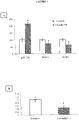
- the invention relates to MtmiPEP171b1 (SEQ ID NO: 59) encoded by the nucleotide sequence (SEQ ID NO: 163) contained in the primary transcript of miR171b (SEQ ID NO: 319), said MtmiPEP171b1 being capable of modulating the accumulation of said miR171b in a eukaryotic cell.
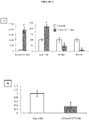
- the invention relates to AtmiPEP164a1 (SEQ ID NO: 24) encoded by the nucleotide sequence (SEQ ID NO: 128) contained in the primary transcript of miR164a (SEQ ID NO: 297), said AtmiPEP164a1 being capable of modulating the accumulation of said miR164a in a eukaryotic cell.
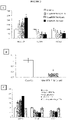
- the invention relates to AtmiPEP165a (SEQ ID NO: 43) encoded by the nucleotide sequence (SEQ ID NO: 147) contained in the primary transcript of miR165a (SEQ ID NO: 305), said miPEP165a being capable of modulating the accumulation of said miR165a in a eukaryotic cell.
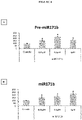
- the invention relates to AtmiPEP319a1 (SEQ ID NO: 76) encoded by the nucleotide sequence (SEQ ID NO: 180) contained in the primary transcript of miR319a (SEQ ID NO: 331), said AtmiPEP319a1 being capable of modulating the accumulation of said miR319a in a eukaryotic cell.
- the invention relates to AtmiPEP319a2 (SEQ ID NO: 77) encoded by the nucleotide sequence (SEQ ID NO: 181) contained in the transcript primary miR319a (SEQ ID NO: 331), said AtmiPEP319a2 being capable of modulating the accumulation of said miR319a in a eukaryotic cell.
- the invention relates to AtmiPEP160b1 (SEQ ID NO: 14) encoded by the nucleotide sequence (SEQ ID NO: 118) contained in the primary transcript of miR160b (SEQ ID NO: 291), said AtmiPEP160b1 being capable of modulating the accumulation of said miR160b in a eukaryotic cell.
- the invention relates to MtmiPEP169d (SEQ ID NO: 424) encoded by the nucleotide sequence (SEQ ID NO: 425) contained in the primary transcript of miR169d (SEQ ID NO: 427), said MtmiPEP169d being capable of modulating the accumulation of said miR169d in a eukaryotic cell.
- the invention relates to MtmiPEP171e (SEQ ID NO: 63) encoded by the nucleotide sequence (SEQ ID NO: 167) contained in the primary transcript of miR171e (SEQ ID NO: 322), said MtmiPEP171e being capable of modulating the accumulation of said miR171e in a eukaryotic cell.
- the invention relates to DmmiPEPla (SEQ ID NO: 102) encoded by the nucleotide sequence (SEQ ID NO: 206) contained in the primary transcript of miR1 (SEQ ID NO: 353), said dmmiPEPla being capable of modulating the accumulation of said miR1 in a eukaryotic cell.
- the invention relates to DmmiPEP1b (SEQ ID NO: 103) encoded by the nucleotide sequence (SEQ ID NO: 207) contained in the primary transcript of miR1 (SEQ ID NO: 353), said dmmiPEP1b being capable of modulating the accumulation of said miR1 in a eukaryotic cell.
- the invention relates to dmmiPEP8 (SEQ ID NO: 104) encoded by the nucleotide sequence (SEQ ID NO: 208) contained in the primary transcript of miR8 (SEQ ID NO: 354), said dmmiPEP8 being capable of modulating the accumulation of said miR8 in a eukaryotic cell.
- the invention relates to HsmiPEP155 (SEQ ID NO: 355) encoded by the nucleotide sequence (SEQ ID NO: 356) contained in the primary transcript of miR155 (SEQ ID NO: 358), said HsmiPEP155 being capable of modulating the accumulation of said miR155 in a eukaryotic cell.
- the invention relates to an isolated peptide, or an isolated and purified peptide, or a synthetic peptide or a recombinant peptide, comprising or consisting of a sequence identical to that of a miPEP, said miPEP being in particular naturally present in a plant, or in an animal, such as humans.
- the invention in another aspect, relates to a vector comprising at least one nucleic acid molecule as defined above.
- the invention is based on the surprising observation made by the inventors that it is possible to modulate the expression of one or more target genes of the same microRNA by modulating the accumulation of said microRNA using a miPEP .
- the invention relates to the use as defined above in which said determined eukaryotic cell is a plant cell.
- the invention relates to the use as defined above in which said specific eukaryotic cell is a plant cell of a cruciferous plant such as Arabidopsis thaliana, of a leguminous plant such as Glycine max ( soya), Medicago truncatula and Medicago sativa (alfalfa) or a solanaceous plant such as Nicotiana benthamiana (tobacco), Solanum tuberosum (potato), Solanum lycopersicum (tomato) or Solanum melongena (aubergine).
- a cruciferous plant such as Arabidopsis thaliana
- leguminous plant such as Glycine max ( soya), Medicago truncatula and Medicago sativa (alfalfa) or a solanaceous plant
- Nicotiana benthamiana tobacco
- Solanum tuberosum potato
- Solanum lycopersicum tomato
- the invention relates to the use as defined above in which said determined eukaryotic cell is an animal cell, in particular a human cell.
- the invention relates to the use as defined above in which said determined eukaryotic cell is an animal cell, in particular human, said miPEP not being used for the surgical or therapeutic treatment of the human body or animal, nor to modify the genetic identity of the human being.
- the invention relates to the use as defined above in which said determined eukaryotic cell is an animal cell, said miPEP being used for the surgical or therapeutic treatment of the human or animal body.
- the invention relates to the use as defined above in which said microRNA and said gene are of endogenous origin in said determined eukaryotic cell.
- the invention relates to the use as defined above in which said microRNA and said gene are of exogenous origin in said determined eukaryotic cell, said determined eukaryotic cell containing at least one vector allowing the expression said microRNA and said gene.
- the expressions “ of endogenous origin” and “of exogenous origin” are used to distinguish said microRNAs and/or the genes of different species, given the conservation of the sequences between species.
- the term “of endogenous origin ” indicates that the microRNA and/or the gene may be naturally present in the cell in question. Artificially, other copies of the microRNA and/or of the gene of endogenous origin can nevertheless be added to the cell in question, such as for example by cloning.
- the term “of exogenous origin” indicates that the microRNA and/or the gene are never present naturally in the cell in question. It is a microRNA and/or a gene identified in another cell type or in an organism of another species, this microRNA and/or this gene are therefore necessarily introduced artificially into the cell in question.
- a genetically transformed cell can therefore contain 2 groups of microRNAs and/or genes potentially close in terms of sequence, one of endogenous origin and the other of exogenous origin.
- the invention relates to the use as defined above in which the primary transcript of the miRNA and said gene are of exogenous origin in said determined eukaryotic cell, said determined eukaryotic cell containing at least one vector allowing expression of the microRNA primary transcript
- the invention relates to the use as defined above in which the primary transcript of the miRNA is encoded by a vector artificially introduced into the cell.
- the invention relates to the use as defined above in which said miPEP is chosen from MtmiPEP171b1 (SEQ ID NO: 59), AtmiPEP164a1 (SEQ ID NO: 24), AtmiPEP165a (SEQ ID NO: 43), AtmiPEP319a1 (SEQ ID NO: 76) and AtmiPEP319a2 (SEQ ID NO: 77).
- the invention relates to the use as defined above in which said miPEP is chosen from: MtmiPEP171b1 (SEQ ID NO: 59), AtmiPEP164a1 (SEQ ID NO: 24), AtmiPEP165a ( SEQ ID NO: 43), AtmiPEP319a1 (SEQ ID NO: 76), AtmiPEP319a2 (SEQ ID NO: 77), AtmiPEP160b1 (SEQ ID NO: 14), MtmiPEP171e (SEQ ID NO: 63) and MtmiPEP169d ( SEQ ID NO: 424).
- MtmiPEP171b1 SEQ ID NO: 59
- AtmiPEP164a1 SEQ ID NO: 24
- AtmiPEP165a SEQ ID NO: 43
- AtmiPEP319a1 SEQ ID NO: 76
- AtmiPEP319a2 SEQ ID NO: 77
- AtmiPEP160b1
- the invention relates to the use as defined above in which said miPEP is chosen from DmmiPEPla (SEQ ID NO: 102), DmmiPEP1b (SEQ ID NO: 103) and DmmiPEP8 (SEQ ID NO: 104).
- the invention relates to the use as defined above wherein said miPEP is HsmiPEP155a (SEQ ID NO: 355).
- the invention relates to the use as defined above in which said nucleic acid is chosen from the group of nucleic acids consisting of SEQ ID NO: 105 to SEQ ID NO: 208 and SEQ ID NO : 356 (Table 2).
- the invention relates to the use as defined above in which said nucleic acid is chosen from miORF171b (SEQ ID NO: 163), miORF164a1 (SEQ ID NO: 128), miORF165a ( SEQ ID NO: 147), miORF319a1 (SEQ ID NO: 180) and miORF319a2 (SEQ ID NO: 181).
- the invention relates to the use as defined above in which said nucleic acid is chosen from miORF171b (SEQ ID NO: 163), miORF164a1 (SEQ ID NO: 128), miORF165a ( SEQ ID NO: 147), miORF319a1 (SEQ ID NO: 180), miORF319a2 (SEQ ID NO: 181), miORF160b1 (SEQ ID NO: 118), miORF169d (SEQ ID NO: 425) and miORF171e ( SEQ ID NO: 167).
- the invention relates to the use as defined above in which said nucleic acid is chosen from miORFla (SEQ ID NO: 206), miORF1b (SEQ ID NO: 207) and miORF8 ( SEQ ID NO: 208).
- the invention relates to the use as defined above in which said nucleic acid is chosen from miORF155 (SEQ ID NO: 356). In one embodiment, the invention relates to the use as defined above in which said microRNA is chosen from the group of nucleic acids consisting of SEQ ID NO: 282 to SEQ ID NO: 354 and SEQ ID NO: 358.
- the invention relates to the use as defined above in which said microRNA is chosen from miR171b (SEQ ID NO: 319), miR165a (SEQ ID NO: 305) and miR319a (SEQ ID NO: 331).
- the invention relates to the use as defined above in which said microRNA is chosen from miR171b (SEQ ID NO: 319), miR164a (SEQ ID NO: 297), miR165a (SEQ ID NO: 305), miR319a (SEQ ID NO: 331), miR160b (SEQ ID NO: 291), miR171e (SEQ ID NO: 322) and miR169d (SEQ ID NO: 427).
- the invention relates to the use as defined above in which said microRNA is chosen from miR1a (SEQ ID NO: 353) and miR8 (SEQ ID NO: 354).
- the invention relates to the use as defined above in which said microRNA is chosen from miR155 (SEQ ID NO: 358).
- the invention relates to a method for modulating the expression of a gene as defined above, in which said eukaryotic cell is a plant cell.
- the invention relates to a method for modulating the expression of a gene as defined above, in which said eukaryotic cell is an animal cell and in particular a human cell.
- the invention relates to a method for modulating the expression of a gene as defined above, in which said eukaryotic cell is an animal cell and in particular a human cell, said method not being used for the surgical or therapeutic treatment of the human or animal body, nor for modifying the genetic identity of the human being.
- the invention relates to a method for modulating the expression of a gene as defined above, in which said microRNA and said gene are of endogenous origin in said eukaryotic cell.
- the invention relates to a method for modulating the expression of a gene as defined above, in which said microRNA and said gene are of exogenous origin in said eukaryotic cell, said eukaryotic cell containing at at least one vector allowing the expression of said microRNA and of said gene.
- the invention relates to a method for modulating the expression of a gene as defined above, in which said miPEP is chosen from the group of peptides consisting of SEQ ID NO: 1 to SEQ ID NO : 104, SEQ ID NO: 375 to SEQ ID NO: 386 and SEQ ID NO: 355.
- the invention relates to a method for modulating the expression of a gene regulated by miR1 (SEQ ID NO: 353) in a eukaryotic cell, comprising the implementation of a step of accumulation of DmmiPEPla (SEQ ID NO: 102) in said eukaryotic cell, wherein, accumulation of said DmmiPEPla in said eukaryotic cell induces modulation of expression of said gene relative to expression of said gene without accumulation of said DmmiPEPla.
- miR1 SEQ ID NO: 353
- DmmiPEPla SEQ ID NO: 102
- the invention relates to a method for modulating the expression of a gene regulated by miR1 (SEQ ID NO: 353) in a eukaryotic cell, comprising the implementation of a step of accumulation of DmmiPEP1b (SEQ ID NO: 103) in said eukaryotic cell, wherein, accumulation of said DmmiPEP1b in said eukaryotic cell induces modulation of expression of said gene relative to expression of said gene without accumulation of said DmmiPEP1b.
- the invention relates to a method for modulating the expression of a gene regulated by miR8 (SEQ ID NO: 354) in a eukaryotic cell, comprising the implementation of a step of accumulation of DmmiPEP8 (SEQ ID NO: 104) in said eukaryotic cell, wherein, accumulation of said DmmiPEP8 in said eukaryotic cell induces modulation of expression of said gene relative to expression of said gene without accumulation of said DmmiPEP8.
- the invention relates to a method for modulating the expression of a gene regulated by miR155 (SEQ ID NO: 358) in a eukaryotic cell, comprising the implementation of a step of accumulation of hsmiPEP155 (SEQ ID NO: 355) in said eukaryotic cell, wherein, accumulation of said hsmiPEP155 in said eukaryotic cell induces modulation of expression of said gene relative to expression of said gene without accumulation of said hsmiPEP155.
- the invention relates to a modified eukaryotic cell containing a peptide identical to a miPEP as defined above, which peptide is present in said eukaryotic cell independently of the transcription of the primary transcript of the microRNA carrying the nucleotide sequence encoding said miPEP.
- modified eukaryotic cell means that said eukaryotic cell contains a miPEP artificially introduced into the cell, either as a peptide, or via a vector encoding said miPEP.
- a eukaryotic cell modified according to the invention also contains at least one nucleic acid corresponding to the miORF encoding said miPEP.
- a eukaryotic cell modified according to the invention also contains at least one miR, the primary transcript of which contains said miORF.
- the invention relates to a modified eukaryotic cell as defined above, in which said microRNA is of endogenous origin.
- the invention relates to a modified eukaryotic cell as defined above in which said microRNA is of exogenous origin, said modified eukaryotic cell containing a vector allowing the expression of said microRNA
- the invention relates to a modified eukaryotic cell as defined above, said cell being a plant cell.
- the invention relates to a modified eukaryotic cell as defined above, in which said plant cell is a cell of Medicago truncatula or Arabidopsis thaliana, said peptide is chosen from the group of peptides consisting of SEQ ID NO: 43, SEQ ID NO: 59 and SEQ ID NO: 77.
- the invention relates to a modified eukaryotic cell as defined above, in which said plant cell is a cell of Medicago truncatula or Arabidopsis thaliana, said peptide is chosen from the group of peptides consisting of SEQ ID NO: 59, SEQ ID NO: 24, SEQ ID NO: 43, SEQ ID NO: 76, SEQ ID NO: 77, SEQ ID NO: 14, SEQ ID NO: 424 and SEQ ID NO: 63
- the invention relates to a modified eukaryotic cell as defined above, said cell being an animal cell.
- the invention relates to a modified eukaryotic cell as defined above, in which the said animal cell is a Drosophila cell and the said peptide is chosen from the group of peptides consisting of SEQ ID NO: 102, SEQ ID NO: 103 and SEQ ID NO: 104.
- the invention relates to a modified eukaryotic cell as defined above, in which said animal cell is a human cell and said peptide consists of SEQ ID NO: 355.
- the invention in another aspect, relates to a plant comprising at least one modified eukaryotic cell as defined above.
- the invention also relates to a non-human animal organism comprising at least one modified eukaryotic cell as defined above.
- elicitor composition denotes a composition capable of conferring on the plant a better aptitude for symbiosis or a better resistance to various stresses, whether of a thermal, water or chemical nature.
- the invention also relates to compositions acting on the growth (inhibition of growth or, on the contrary, increase in growth) and the physiology (better ability to mycorrhize, nodulate, better tolerance to various stresses) of the plant.
- the invention relates to compositions for promoting plant growth.
- the invention relates to a composition, in particular a phytosanitary composition, comprising miPEP164a as an active substance, said miPEP164a preferably consisting of SEQ ID NO: 24.
- the invention relates to a composition, in particular a phytosanitary composition, comprising miPEP319a as an active substance, said miPEP319a preferably consisting of SEQ ID NO: 76.
- the invention relates to a composition, in particular a phytosanitary composition, comprising miPEP171b as an active substance, said miPEP171b preferably consisting of SEQ ID NO: 59.
- the invention relates to a composition, in particular a phytosanitary composition, comprising miPEP165a as an active substance, said miPEP165a preferably consisting of SEQ ID NO: 43.
- the invention relates to a composition, in particular a phytosanitary composition, comprising miPEP319a2 as an active substance, said miPEP319a2 preferably consisting of SEQ ID NO: 77.
- the invention relates to a composition, in particular a phytosanitary composition, comprising miPEP160b1 as an active substance, said miPEP160b1 preferably consisting of SEQ ID NO: 14.
- the invention relates to a composition, in particular a phytosanitary composition, comprising miPEP169d as an active substance, said miPEP169d preferably consisting of SEQ ID NO: 424.
- the invention relates to a composition, in particular a phytosanitary composition, comprising miPEP171e as an active substance, said miPEP171e preferably consisting of SEQ ID NO: 63.
- the soluble properties of miPEPs are determined in particular by their amino acid composition.
- Hydrophilic miPEPs can be solubilized and packaged in aqueous solutions, such as water.
- Hydrophobic miPEPs can be solubilized and packaged in solvents, such as organic solvents.
- the organic solvents are non-toxic solvents for plants in small quantities, that is to say they have no deleterious effect on the development of the plant.
- the organic solvents can be chosen from acetonitrile and acetic acid.
- the miPEPs can also be dissolved and packaged in mixtures of organic solvents, such as for example a mixture of acetonitrile and acetic acid.
- the miPEPs can be dissolved in a solution comprising 50% acetonitrile, 10% acetic acid and 40% water (volume/volume/volume).
- miPEPs 164a and 165a are dissolved in water, and miPEPs 171b and 319a are dissolved in a solution comprising 50% acetonitrile, 10% acetic acid and 40% water (v/v /volume).
- compositions, pesticidal compositions, phytopharmaceutical compositions, herbicidal compositions and insecticidal compositions as defined above may comprise 10 -9 M to 10 -4 M of miPEP, in particular 10 -9 M, 10 -8 M, 10 -7 M, 10 -6 M, 10 -5 M or 10 -4 M of miPEP.
- compositions comprising 10 -1 M to 10 -3 M of miPEP, in particular 10 -1 M, 10 -2 M or 10 -3 M of miPEP, can be envisaged in the case where the miPEP must be administered to the plant by spreading.
- the invention relates to the use of a composition as defined above, as a herbicide for eliminating plants or slowing down their growth, preferably as a species-specific herbicide or of a genus of plants.
- the invention relates to the use of a composition as defined above, to modulate the physiological parameters of a plant, in particular the biomass, the leaf surface, or the size of the fruit.
- the invention relates to the use of a composition as defined above, for the thinning of orchards in order to increase the size of the fruits. In one embodiment, the invention relates to the use of a composition as defined above, for the production and/or selection of plant seeds, said composition being used to control the parthenocarpy or the monoecia of a plant. In one embodiment, the invention relates to the use of a composition as defined above, said composition being administered to said plant by the foliar route or by the root route.
- the invention relates to the use of a composition as defined above, for the production and/or selection of plant seeds.
- the invention relates to the use of a composition as defined above, in which said composition is used to modify the physiological parameters of said plant seeds, in particular root implantation, germination and resistance to water stress.
- the invention relates to the use of a composition as defined above, in which said composition is applied by coating or film-coating on said plant seeds.
- the invention relates to the use of a composition as defined above, as a pesticide, for eliminating harmful organisms of plants or capable of being classified as such, in particular as an insecticide. , arachnicide, slug or rodenticide.
- the invention relates to the use of a composition as defined above, as an insecticide.
- the invention relates to the use of a composition as defined above, to eliminate insect pests.
- the invention relates to the use of a composition as defined above, to eliminate animal species classified as harmful or likely to be classified as such, in particular muridae, in particular the rat.
- the invention relates to the use of a composition as defined above, in which said composition is applied to a plant to protect it from insect pests.
- the invention relates to the use of a peptide for promoting the growth of a plant, said peptide being introduced into the plant, said peptide having an amino acid sequence comprising or consisting of a sequence identical to that of a miPEP naturally present in said plant, said miPEP naturally present in said plant being a peptide of 4 to 100 amino acids whose sequence is coded by an open reading frame located on the primary transcript of a miR, said miPEP being capable of modulating the accumulation of said miR in said plant, which miR regulates the expression of at least one gene involved in the development of the vegetative or reproductive parts of the plant, in particular the roots, the stem, the leaves or the flowers.
- the inventors have observed, surprisingly, that the use of peptides whose sequence comprises or consists of a sequence identical to that of miPEPs coded on the primary transcripts of miRs, makes it possible to promote plant growth.
- the term " plant” generally refers to all or part of a plant whatever its stage of development (including the plant in the form of a seed or a young shoot), to one or more organs of the plant (such as for example the leaves, the roots, the stem, the flowers), to one or more cells of the plant, or even to a cluster of cells of the plant.
- the term “ growth” refers to the development of all or part of a plant over time.
- the growth of the plant can thus be determined and quantified by monitoring observable evolutionary parameters for certain parts, cells or organs of the plant, such as the leaves, the roots, the stems or even the flowers.
- the growth of the plant can also be related to the rate of nodulation, or to the size and number of nodules on the roots.
- the use according to the invention has the advantage of being ecological, in comparison with the chemical methods conventionally used in the botanical industry or in agriculture, because miPEP is a peptide which is present naturally in the plant.
- the expression “ introduced miPEP ” refers to a miPEP artificially introduced into the plant as opposed to “ miPEP naturally present in the plant ”.
- the introduction of a miPEP into the plant therefore involves a technical step, which step is not a natural phenomenon and does not correspond to either crossing or selection.
- the introduced miPEP can be either a peptide produced outside the plant (such as for example an isolated and/or purified peptide, a synthetic peptide or a recombinant peptide), or a peptide produced in the plant following the non-natural introduction of a nucleic acid encoding said miPEP into said plant.
- the plant into which the miPEP has not been introduced has a basal quantity of said miPEP, which corresponds to that of said naturally present miPEP.
- the use of a miPEP comprising, or consisting of, a sequence identical to that of said miPEP leads to an increase in the total quantity of miPEP, which modulates the accumulation of the miR whose primary transcript contains the sequence encoding said miPEP.
- the introduced miPEP is found in the plant and its introduction has no impact on its stability.
- the invention relates to the use as defined above, in which said gene, involved in the development of the vegetative or reproductive parts of the plant, is chosen from the group consisting of: NAC1 (Accession n °AT1G56010.1), NAC4 (Accession n° AT5G07680.1), NAC5 (Accession n° AT5G61430.1), CUC1 (Accession n° AT3G15170.1), CUC2 (Accession n° AT5G53950.1), TCP3 (Accession n° °AT1G53230.1) and TCP4 (Accession No. AT3G15030.1) (accession numbers according to The Arabidopsis Information Resource “TAIR” database).
- NAC1 Accession n °AT1G56010.1
- NAC4 Accession n° AT5G07680.1
- NAC5 Accession n° AT5G61430.1
- CUC1 Accession n° AT3G15170.1
- the invention relates to the use as defined above, in which said gene, involved in the development of the vegetative or reproductive parts of the plant, is chosen from the group consisting of: NAC1, NAC4, NAC5, CUC1 and CUC2.
- the invention relates to the use as defined above, in which said gene, involved in the development of the vegetative or reproductive parts of the plant, is chosen from the group consisting of: TCP3 and TCP4.
- the invention relates to the use as defined above, in which said miRNA is chosen from miR164a and mir319a.
- the invention relates to the use as defined above, in which said miR is chosen from among miR164a, miR319a, miR171b, miR165a, miR160b, miR169d and miR171e.
- the invention relates to the use as defined above, in which said miPEP is chosen from AtmiPEP164a1, AtmiPEP319a1, AtmiPEP319a2, MtmiPEP171b1, AtmiPEP165a1, AtmiPEP160b1, MtmiPEP169d, MtmiPEP171e .
- the invention relates to the use as defined above, in which said miR164a has a nucleotide sequence consisting of SEQ ID NO: 297.
- the invention relates to the use as defined above, in which said said miR164a has a nucleotide sequence exhibiting at least 80% identity, preferably at least 90% identity, with the nucleotide sequence SEQ ID NO: 297.
- said miPEP is AtmiPEP164a1, in particular, wherein said AtmiPEP164a1 has an amino acid sequence consisting of SEQ ID NO: 24.
- the invention relates to the use as defined above, in which said miR319a has a nucleotide sequence consisting of SEQ ID NO: 331.
- the invention relates to the use as defined above, in which said said miR319a has a nucleotide sequence exhibiting at least 80% identity, preferably at least 90% identity, with the nucleotide sequence SEQ ID NO: 331.
- the invention relates to the use as defined above, wherein said miPEP is AtmiPEP319a1, in particular, wherein said AtmiPEP319a1 has an amino acid sequence consisting of SEQ ID NO: 76.
- the invention relates to the use as defined above, wherein said plant is a cruciferous plant such as Arabidopsis thaliana, a leguminous plant such as Glycine max (soya), Medicago truncatula and Medicago sativa (alfalfa) or a solanaceous plant such as Nicotiana benthamiana (tobacco), Solanum tuberosum (potato), Solanum lycopersicum (tomato) or Solanum melongena (eggplant).
- the invention relates to the use as defined above, wherein said plant is a cruciferous plant.
- the invention relates to the use as defined above, wherein said plant is Arabidopsis thaliana.
- the invention relates to the use as defined above, in which said miPEP is introduced externally into the plant, preferably by watering, by spraying or by adding a fertilizer, potting soil, growing medium or inert medium.
- the invention relates to the use as defined above, in which said miPEP is introduced by watering and by spraying.
- the invention relates to the use as defined above, in which said miPEP is introduced by watering and by the addition of a fertilizer.
- the invention relates to the use as defined above, in which said miPEP is introduced by spraying and by the addition of a fertilizer.
- the invention relates to the use as defined above, in which said miPEP is introduced, by watering, by spraying and by the addition of a fertilizer.
- the inventors have in fact observed unexpectedly that it is possible to apply a composition comprising a miPEP directly to the plant to modulate the accumulation of the corresponding miR in the plant, which indicates that the miPEP is picked up by the plant.
- the invention relates to the use as defined above, in which the plant is treated with a composition comprising 10 -9 M to 10 -4 M of said miPEP, in particular 10 -9 M, 10 - 8 M, 10 -7 M, 10 -6 M, 10 -5 M or 10 -4 M of said miPEP.
- compositions have a concentration of 10 -8 M to 10 -5 M for application by watering or by spraying on the plant.
- more or less concentrated compositions can be envisaged for treating the plant with miPEP.
- more concentrated compositions comprising 10 -1 M to 10 -3 M, in particular 10 -2 M of miPEP, can be used in the case where the miPEP introduced exogenously is administered to the plant. by spreading.
- the invention relates to the use as defined above, in which said miPEP is introduced into the plant via a nucleic acid encoding said miPEP, said nucleic acid being introduced into the plant.
- the invention relates to the use as defined above, in which the size of the stem is increased in the plant in which said miPEP has been introduced compared to the size of the stem of a identical plant of the same age in which no miPEP has been introduced, or with respect to the size of the stem of an identical plant of the same age in which said miPEP has not been introduced.
- the invention relates to the use as defined above, in which the number of leaves is increased in the plant in which said miPEP has been introduced compared to the number of leaves of an identical plant and of the same age in which no miPEP has been introduced, or in relation to the number of leaves of an identical plant and of the same age in which said miPEP has not been introduced.
- the invention relates to the use as defined above, in which the size of the leaves is increased in the plant in which said miPEP has been introduced compared to the size of the leaves of an identical plant and of the same age in which no miPEP has been introduced, or else relative to the size of the leaves of an identical plant and of the same age in which said miPEP has not been introduced.
- the invention relates to the use as defined above, in which the number of roots is increased in the plant in which said miPEP has been introduced compared to the number of roots of an identical plant and of the same age in which no miPEP has been introduced, or in relation to the number of roots of an identical plant and of the same age in which said miPEP has not been introduced.
- the invention relates to the use as defined above, in which the length of the roots is increased in the plant in which said miPEP has been introduced compared to the length of the roots of an identical plant and of the same age in which no miPEP has been introduced, or else relative to the length of the roots of an identical plant and of the same age in which said miPEP has not been introduced.
- the invention relates to the use as defined above, in which the nodulation rate is increased in the plant in which said miPEP has been introduced compared to the nodulation rate of an identical plant and of the same age in which no miPEP has been introduced, or else relative to the nodulation rate of an identical plant and of the same age in which said miPEP has not been introduced.
- the invention relates to a method as defined above, in which said gene, involved in the development of the vegetative or reproductive parts of the plant, is chosen from the group consisting of: NAC1 (Accession no. AT1G56010.1), NAC4 (Accession n° AT5G07680.1), NAC5 (Accession n° AT5G61430.1), CUC1 (Accession n° AT3G15170.1), CUC2 (Accession n° AT5G53950.1), TCP3 (Accession n° AT1G53230.1) and TCP4 (Accession no. AT3G15030.1).
- NAC1 Accession no. AT1G56010.1
- NAC4 Accession n° AT5G07680.1
- NAC5 Accession n° AT5G61430.1
- CUC1 Accession n° AT3G15170.1
- CUC2 Accession n° AT5G53950.1
- TCP3 Accession n
- the invention relates to a method as defined above, in which said gene, involved in the development of the vegetative or reproductive parts of the plant, is chosen from the group consisting of: NAC1, NAC4, NAC5, CUC1 and CUC2.
- the invention relates to a method as defined above, in which said gene, involved in the development of the vegetative or reproductive parts of the plant, is chosen from the group consisting of: TCP3 and TCP4.
- the invention relates to a method as defined above, in which said miR is chosen from among miR164a, miR319a, miR171b, miR165a, miR160b, miR169d and miR171e.
- the invention relates to a method as defined above, in which said miPEP is chosen from among AtmiPEP164a1, AtmiPEP319a1, AtmiPEP319a2, MtmiPEP171b1, AtmiPEP165a1, AtmiPEP160b1, MtmiPEP169d, MtmiPEP171e.
- the invention relates to a method as defined above, wherein said miRNA is miR164a, in particular, wherein said miR164a has a nucleotide sequence consisting of SEQ ID NO: 297.
- the invention relates to a method as defined above, wherein said miPEP is AtmiPEP164a1, in particular, wherein said AtmiPEP164a1 has an amino acid sequence consisting of SEQ ID NO: 24.
- the invention relates to a method as defined above, wherein said miRNA is miR319a, in particular, wherein said miR319a has a nucleotide sequence consisting of SEQ ID NO: 331.
- the invention relates to a method as defined above, wherein said miPEP is AtmiPEP319a1, in particular, wherein said AtmiPEP319a1 has an amino acid sequence consisting of SEQ ID NO: 76.
- the invention relates to a method as defined above, wherein said plant is a cruciferous plant such as Arabidopsis thaliana, a leguminous plant such as Glycine max (soya), Medicago truncatula and Medicago sativa ( alfalfa) or a solanaceous plant such as Nicotiana benthamiana (tobacco), Solanum tuberosum (potato), Solanum lycopersicum (tomato) or Solanum melongena (aubergine).
- the invention relates to a method as defined above, wherein said plant is a cruciferous plant.
- the invention relates to a method as defined above, wherein said plant is Arabidopsis thaliana.
- the invention relates to a method as defined above, wherein said miPEP is introduced externally into the plant, preferably by watering, spraying or adding a fertilizer, d a soil, a culture substrate or an inert support.
- the invention relates to a method as defined above, wherein said miPEP is administered to the plant in the form of a composition comprising 10 -9 M to 10 -4 M of said miPEP, in particular 10 -9 , 10 -8 , 10 -7 , 10 -6 , 10 -5 or 10 -4 M of said miPEP.
- the invention relates to a method as defined above, wherein said miPEP is introduced into the plant via a nucleic acid encoding said miPEP, said nucleic acid being introduced into the plant.
- the invention relates to a method as defined above, in which the height of the stem is increased in the plant in which said miPEP has been introduced compared to the height of the stem of a plant identical and of the same age in which no miPEP has been introduced, or else relative to the size of the stem of an identical plant and of the same age in which said miPEP has not been introduced.
- the invention relates to a method as defined above, in which the number of leaves is increased in the plant in which said miPEP has been introduced compared to the number of leaves of an identical plant and same age in which no miPEP has been introduced, or with respect to the number of leaves of an identical plant and of the same age in which said miPEP has not been introduced.
- the invention relates to a method as defined above, in which the size of the leaves is increased in the plant in which said miPEP has been introduced compared to the size of the leaves of an identical plant and of the same age in which no miPEP has been introduced, or in relation to the size of the leaves of an identical plant and of the same age in which said miPEP has not been introduced.
- the invention relates to a method as defined above, in which the number of roots is increased in the plant into which said miPEP in relation to the number of roots of an identical plant of the same age in which no miPEP has been introduced, or else in relation to the number of roots of an identical plant of the same age in which said miPEP has not been not been introduced.
- the invention relates to a method as defined above, in which the length of the roots is increased in the plant in which said miPEP has been introduced compared to the length of the roots of an identical plant and of the same age in which no miPEP has been introduced, or with respect to the length of the roots of an identical plant and of the same age in which said miPEP has not been introduced.
- the invention relates to a method as defined above, in which the nodulation rate is increased in the plant in which said miPEP has been introduced compared to the nodulation rate of an identical plant and of the same age in which no miPEP has been introduced, or else relative to the nodulation rate of an identical plant and of the same age in which said miPEP has not been introduced.
- the invention relates to a method as defined above, in which the number of nodules is increased in the plant in which said miPEP has been introduced compared to the number of nodules of an identical plant and of same age in which no miPEP was introduced, or relative to the number of nodules of an identical plant and of the same age in which said miPEP was not introduced.
- the invention relates to a method for producing a transgenic plant as defined above, in which said transgenic plant obtained in step b) has improved growth compared to an identical plant in which said nucleic acid has not been introduced.
- the invention relates to a method of producing a transgenic plant as defined above, in which the expression of said miPEP encoded by the acid nucleic acid introduced into the plant results in improved growth compared to an identical plant in which said nucleic acid has not been introduced.
- the invention relates to a method for producing a transgenic plant as defined above, in which step a) is carried out using a vector containing said nucleic acid, preferably a plasmid.
- the invention relates to a method for producing a transgenic plant as defined above, in which the expression of said nucleic acid of step a) is placed under the control of a strong promoter , preferably a strong constitutive promoter such as the 35S promoter.
- a strong promoter preferably a strong constitutive promoter such as the 35S promoter.
- the invention relates to a method for producing a transgenic plant as defined above, in which said gene, involved in the development of the vegetative or reproductive parts of the plant, is chosen from the group consisting of in: NAC1 (Accession n° AT1G56010.1), NAC4 (Accession n° AT5G07680.1), NAC5 (Accession n° AT5G61430.1), CUC1 (Accession n° AT3G15170.1), CUC2 (Accession n° AT5G53950.1 ), TCP3 (Accession no. AT1G53230.1) and TCP4 (Accession no. AT3G15030.1).
- NAC1 Accession n° AT1G56010.1
- NAC4 Accession n° AT5G07680.1
- NAC5 Accession n° AT5G61430.1
- CUC1 Accession n° AT3G15170.1
- CUC2 Accession n° AT5G53950.1
- the invention relates to a method of producing a transgenic plant as defined above, wherein said miPEP has an amino acid sequence comprising or consisting of a sequence selected from the group consisting of SEQ ID NO: 1 to SEQ ID NO: 101 and SEQ ID NO: 375 to SEQ ID NO: 386.
- the invention relates to a method of producing a transgenic plant as defined above, wherein said miRNA is miR164a, in particular, wherein said miR164a has a nucleotide sequence consisting of SEQ ID NO : 297.
- the invention relates to a method of producing a transgenic plant as defined above, wherein said miPEP is AtmiPEP164a1, in particular, wherein said AtmiPEP164a1 has an amino acid sequence consisting of SEQ ID NO: 24.
- the invention relates to a method of producing a transgenic plant as defined above, wherein said miRNA is miR319a, in particular, wherein said miR319a has a nucleotide sequence consisting of SEQ ID NO : 331.
- the invention relates to a method of producing a transgenic plant as defined above, wherein said miPEP is AtmiPEP319a1, in particular, wherein said AtmiPEP319a1 has an amino acid sequence consisting of SEQ ID NO: 76.
- the invention relates to a method for producing a transgenic plant as defined above, in which said nucleic acid introduced in step a) comprises a nucleotide sequence chosen from SEQ ID NO: 128 and SEQ ID NO: 180.
- the invention relates to a process for producing a transgenic plant as defined above, in which said plant is a cruciferous plant such as Arabidopsis thaliana, a leguminous plant such as such as Glycine max (soya), Medicago truncatula and Medicago sativa (alfalfa) or a solanaceous plant such as Nicotiana benthamiana (tobacco), Solanum tuberosum (potato), Solanum lycopersicum (tomato) or Solanum melongena (aubergine).
- the invention relates to a method of producing a transgenic plant as defined above, wherein said transgenic plant is a cruciferous plant.
- the invention relates to a method of producing a transgenic plant as defined above, wherein said transgenic plant is Arabidopsis thaliana.
- the invention relates to a method of production as defined above, wherein said miPEP is introduced into the plant via a nucleic acid encoding said miPEP, said nucleic acid being introduced into the plant .
- the invention relates to a method for producing a transgenic plant as defined above, in which the size of the stem is increased in the plant into which said miPEP has been introduced compared to the size of the stem of an identical plant of the same age in which no miPEP has been introduced, or in relation to the size of the stem of an identical plant of the same age in which said miPEP has not been introduced.
- the invention relates to a method of producing a transgenic plant as defined above, in which the number of leaves is increased in the plant in which the said miPEP has been introduced in relation to the number of leaves of an identical plant of the same age in which no miPEP has been introduced, or else in relation to the number of leaves of an identical plant and of the same age in which said miPEP was not introduced.
- the invention relates to a method for producing a transgenic plant as defined above, in which the size of the leaves is increased in the plant in which said miPEP has been introduced compared to the size of the leaves of an identical plant of the same age in which no miPEP has been introduced, or with respect to the size of the leaves of an identical plant of the same age in which said miPEP has not been introduced.
- the invention relates to a method for producing a transgenic plant as defined above, in which the number of roots is increased in the plant into which said miPEP has been introduced compared to the number of roots of an identical plant of the same age in which no miPEP has been introduced, or with respect to the number of roots of an identical plant of the same age in which said miPEP has not been introduced.
- the invention relates to a method for producing a transgenic plant as defined above, in which the length of the roots is increased in the plant in which said miPEP has been introduced compared to the length of the roots of an identical plant of the same age in which no miPEP has been introduced, or with respect to the length of the roots of an identical plant of the same age in which said miPEP has not been introduced.
- the invention relates to a method for producing a transgenic plant as defined above, in which the nodulation rate is increased in the plant into which said miPEP has been introduced compared to the rate of nodulation of an identical plant of the same age in which no miPEP has not been introduced, or with respect to the rate of nodulation of an identical plant of the same age in which said miPEP has not been introduced.
- the invention relates to a method for producing a transgenic plant as defined above, in which the number of nodules is increased in the plant into which said miPEP has been introduced compared to the number of nodules of an identical plant of the same age in which no miPEP has been introduced, or else by relative to the number of nodules of an identical plant of the same age in which said miPEP has not been introduced.
- the invention also relates to a transgenic plant as obtained by the production method as defined above.
- the invention in another aspect, relates to a transgenic plant containing a vector encoding a miPEP, said miPEP also being naturally present in said plant, said naturally present miPEP being a peptide whose sequence is encoded by an open reading frame located at 5 'on the primary transcript of a miR, said miPEP being capable of modulating the accumulation of said miR in the plant, which miR regulates the expression of at least one gene, the expression of said miPEP encoded by the vector introduced into the plant resulting in a modulation of the expression of said gene relative to an identical plant into which said nucleic acid has not been introduced.
- the invention relates to a transgenic plant as defined above in which said gene is involved in the development of the vegetative or reproductive parts of the plant, in particular the roots, the stem, the leaves or the flowers, and expression of said miPEP encoded by the nucleic acid introduced into the plant results in improved growth of the transgenic plant relative to an identical plant into which said nucleic acid has not been introduced.
- the invention relates to a transgenic plant as defined above in which said nucleic acid is of endogenous origin.
- nucleic acid is of endogenous origin, at least one copy of said nucleic acid is already present naturally in the plant, independently of the vector introduced into the plant.
- the invention relates to a transgenic plant as defined above in which said nucleic acid is of exogenous origin.
- nucleic acid is of exogenous origin, no copy of said nucleic acid is naturally present in the plant.
- the invention relates to a transgenic plant as defined above in which said gene is involved in the development of the vegetative or reproductive parts of the plant, in particular the roots, the stem, the leaves or the flowers, and expression of said miPEP encoded by the nucleic acid introduced into the plant results in improved growth of the transgenic plant relative to an identical plant into which said nucleic acid has not been introduced.
- the invention in another aspect, relates to a composition
- a composition comprising in combination a quantity of seeds of a plant and a quantity of a peptide whose sequence comprises or consists of a sequence identical to that of a miPEP naturally present in said plant .
- the invention relates to a composition
- a composition comprising in combination a quantity of seeds of a plant, in particular A. thaliana, and a quantity of a peptide whose sequence comprises or consists of a sequence identical to that of AtmiPEP164a1 .
- the invention relates to a composition
- a composition comprising in combination a quantity of seeds of a plant, in particular A. thaliana , and a quantity of a peptide whose sequence comprises or consists of a sequence identical to that of AtmiPEP319a1 .
- the invention relates to a composition
- a composition comprising in combination a quantity of seeds of a plant, in particular M. truncatula , and a quantity of a peptide whose sequence comprises or consists of a sequence identical to that of MtmiPEP171b .
- the invention relates to a composition as defined above formulated so as to form a coated seed.
- the coating can be carried out according to the methods conventionally used in the food industry and can be obtained by using a material capable of disintegrating in a solvent or in the earth, such as a binder or clay.
- the coating can be used for example to confer particular properties on a miPEP composition, or even on a seed composition in combination with a miPEP.
- compositions of the invention are applicable in human medicine and in veterinary medicine.
- the invention relates to the composition as defined above in which said pathology is chosen from cancer, diabetes, obesity, infectious diseases and neurodegenerative diseases.
- the invention relates to the composition as defined above in which said pathology is chosen from: cancer, diabetes, obesity, infectious diseases, neurodegenerative diseases, cardiovascular diseases and autoimmune.
- the invention relates to the composition as defined above in which said pathology is chosen from: cancer, diabetes, obesity, infectious diseases and neurodegenerative diseases, or chosen from cardiovascular diseases and autoimmune diseases.
- the invention relates to the composition as defined above, in which said pathology is chosen from cardiovascular diseases and autoimmune diseases.
- the invention relates to a miPEP of 4 to 100 amino acids, or of 3 amino acids, encoded by a nucleotide sequence contained in the primary transcript of a microRNA, said miPEP being capable of modulating the accumulation of said microRNA in a eukaryotic cell, for its use as a drug.
- the invention relates to an antibody specifically recognizing a miPEP.
- the invention relates to an antibody specifically recognizing AtmiPEP165a.
- the invention relates to an antibody specifically recognizing MtmiPEP171b.
- the invention relates to an antibody specifically recognizing AtmiPEP164a1.
- the invention relates to an antibody specifically recognizing AtmiPEP319a1.
- Such an antibody can be obtained from a method known to those skilled in the art, such as for example by injecting said miPEP into a non-human animal to trigger an immunization reaction and the production of antibodies by said animal.
- the invention in another aspect, relates to a method for immunolocalization of a miPEP comprising a step of labeling a biological sample from a plant with an antibody specifically recognizing a miPEP.
- the invention relates to a method for the immunolocalization of AtmiPEP165a using an antibody specifically recognizing AtmiPEP165a.
- the invention relates to a method for the immunolocalization of MtmiPEP171b using an antibody specifically recognizing MtmiPEP171b.
- the invention relates to a method for the immunolocalization of AtmiPEP164a1 using an antibody specifically recognizing AtmiPEP164a1.
- the invention relates to a method for the immunolocalization of MtmiPEP319a1 using an antibody specifically recognizing AtmiPEP319a1.
- the invention relates to an antibody specifically recognizing a miPEP according to the invention, for its use as a medicament.
- the invention relates to a pharmaceutical composition
- a pharmaceutical composition comprising an antibody specifically recognizing a miPEP according to the invention and a pharmaceutically acceptable excipient.
- the invention relates to a protocol for the production of a recombinant peptide, the sequence of which comprises or consists of a sequence identical to that of a miPEP as defined above, comprising a step of transformation of a organism with an expression vector encoding said recombinant peptide.
- said organism is chosen from the group comprising bacteria, yeasts, fungi (other than yeasts), animal cells, plants and animals.
- said organism is Escherichia coli.
- the set of sequences of miPEPs, miORFs, miRs and primary transcripts of miRs is indicated in tables 1, 2, 3, 4, 5 and 6.
- Table 7 presents an analysis of the polymorphism of the DNA sequence of the different regions of pri-miR171b (a haplotype is defined when it differs by at least one amino acid from the other haplotypes).
- miR156a Arabidopsis thaliana SPL gene family, involved in stem development and flowering SEQ ID NO: 1 AtmiPEP156a2 miR156a Arabidopsis thaliana MRRQTSVPFACKRDKESDKSHKER SEQ ID NO:2 AtmiPEP156a3 miR156a Arabidopsis thaliana SEQ ID NO:3 AtmiPEP156c1 (8.5/1359) miR156c Arabidopsis thaliana MKDNFPLLLRL SEQ ID NO
- AtmiPEP156a1 Arabidopsis thaliana ugacagaagagagugagcac SEQ ID NO:282 AtmiPEP156a2 AtmiPEP156a3 AtmiPEP156c1 Arabidopsis thaliana ugacagaagagagugagcac SEQ ID NO:283 AtmiPEP156c2 AtmiPEP156e1 Arabidopsis thaliana ugacagaagagagugagcac SEQ ID NO:284 AtmiPEP156f1 Arabidopsis thaliana ugacagaagagagugagcac SEQ ID NO:285 AlmiPEP159a Arabidopsis lyrata uuuggauugaagggagcucua SEQ ID NO:286 AtmiPEP159a1 Arabidopsis thaliana uuuggauugaagggagcucucucua SEQ ID NO:286 AtmiPEP159a1 Arabidopsis thal
- FIGURE 1 Effects of overexpression of MtmiR171b (miR171b identified in Medicago truncatula) on the expression of the HAM1 and HAM2 genes (A) or on the number of lateral roots (B) in M. truncatula.
- FIGURE 2 Effects of MtmiPEP171b1 overexpression on the expression of MtmiR171b and the HAM1 and HAM2 genes (A) or on the number of lateral roots (B) in M. truncatula.
- FIGURE 3 Effects of MtmiPEP171b1 on the expression of MtmiR171b and the HAM1 and HAM2 genes (A) and on the number of lateral roots (B) in M. truncatula.
- FIGURE 4 Effects of MtmiPEP171b1 on the expression of pre-MtmiR171b (A) and MtmiR171b (B) in M. truncatula.
- the y-axis indicates the relative expression of the precursors of the different forms of the microRNA in control plants (left column) or in plants treated by watering for 5 days and once a day with MtmiPEP 171b1 at 0.01 ⁇ M , 0.1 ⁇ M or 1 ⁇ M (right columns).
- Application of MtmiPEP171b1 at different concentrations results in increased accumulation of pre-MtmiR171b (A) and MtmiR171b (B).
- FIGURE 5 Effects of overexpression of MtmiPEP171b1 (A) and effects of MtmiPEP171b1 (B) on the expression of different microRNA precursors in M. truncatula.
- the y-axis indicates the ratio of the expression of microRNA precursors in plants overexpressing MtmiPEP171b1 to the expression of these same precursors in control roots (A), or the ratio of the expression of microRNA precursors in plants treated with MtmiPEP171b1 (0.1 ⁇ M) on the expression of these same precursors in control roots (B).
- the various microRNA precursors tested are indicated from left to right on the abscissa axis, namely pre-MtmiR171b (SEQ ID NO: 246), pre-MtmiR169 (SEQ ID NO: 359), pre-MtmiR169a (SEQ ID NO: : 360), pre-MtmiR171a (SEQ ID NO: 361), pre-MtmiR171h (SEQ ID NO: 362), pre-MtmiR393a (SEQ ID NO: 363), pre-MtmiR393b (SEQ ID NO: 364), pre- MtmiR396a (SEQ ID NO: 365) and pre-MtmiR396b (SEQ ID NO: 366).
- FIGURE 6 Effects of MtmiPEP171b1 translation on MtmiR171b expression demonstrated in the model plant Nicotiana benthamiana.
- the y-axis indicates the relative expression of MtmiR171b in tobacco plants transformed to express pri-MtmiR171b (white column) or a mutated pri-MtmiR171b in which the ATG codon has been replaced by ATT (black column).
- the mutated pri-MtmiR171b is therefore unable to produce MtmiPEP171b1.
- FIGURE 7 Effects of overexpression of MtmiPEP171b1 on the expression of pre-MtmiR171b demonstrated in the model plant Nicotiana benthamiana.
- the y-axis indicates the relative expression of pre-MtmiR171b in tobacco plants that have been transformed to express MtmiR171b (left column), MtmiR171b and MtmiPEP171b1 (middle column), or MtmiR171b and a version mutated MtmiORF171b in which the ATG initiation codon has been replaced by ATT (right column).
- FIGURE 8 Effects of MtmiPEP171b1 on the expression of pre-MtmiR171b demonstrated in the model plant Nicotiana benthamiana.
- the y-axis indicates the relative expression of MtmiR171b in tobacco plants transformed to express MtmiR171b on which MtmiPEP171b1 was sprayed (0.1 ⁇ M) twice, 12h then 30min before sampling (right column) or not (left column).
- the MtmiPEP171b1 peptide used by spraying induces an increase in the accumulation of MtmiR171b.
- FIGURE 9 Effects of MtmiPEP171b1 on the expression of pri-miR171b (A), pre-MtmiR171b (B) and MtmiR171b (C) demonstrated in the model plant Nicotiana benthamiana.
- the y-axis indicates the relative expression of precursors of the different forms of the microRNA in tobacco plants modified to express MtmiR171b (left column) or modified to express MtmiR171b and overexpress MtmiPEP171b1 (right columns, fig. 9A ) or treated with 0.1 ⁇ M of miPEP171b1 ( Fig. 9B and C ).
- Overexpression of MtmiPEP171b1 or application of miPEP171b1 increases the accumulation of pri-MtmiR171b (A), pre-MtmiR171b (B) and MtmiR171b (C).
- FIGURE 10 Localization of MtmiPEP171b1 in tobacco leaf cells that have been engineered to express MtmiPEP171b1.
- FIGURE 12 Effects of AtmiPEP165a treatment on root growth of Arabidopsis thaliana.
- the photograph shows two plants of the same age: a control plant (plant on the left) and a plant treated with AtmiPEP165a (plant on the right). Treatment with AtmiPEP165a leads to a very accelerated root growth phenotype in Arabidopsis thaliana .
- the graph shows the expression of pre-miR165 in response to treatment with increasing doses of AtmiPEP165a.
- FIGURE 13 Conservation of the sequence of miPEP8 identified in Drosophila.
- sequences of miPEP8 were deduced from the sequences of miORF8 (SEQ ID NO: 208) of 12 different Drosophila species and were aligned.
- a histogram represents the conservation of each amino acid between the sequences of miORF8 in the 12 species analyzed.
- FIGURE 14 Evolution of the mass (kDa) and isoelectric point (pI) of miPEP8 in Drosophila species.
- the left y-axis indicates the size of miPEP8 (in kD).
- the right y-axis indicates the isoelectric point of miPEP.
- the x-axis indicates the origin of the miPEP, i.e. the Drosophila species. It can be seen that despite a significant change in their size (more than a factor of 3), the charge of miPEPs remains very basic (>9.8) in the 12 species studied.
- FIGURE 15 Effect of added sequences on miPEP function.
- Tobacco leaves were transformed to overexpress miPEP171b.
- These graphs show that the addition of sequences (His, HA or GFP tag) does not alter the function of miPEP.
- the y-axis indicates the relative expression of pre-MtmiR171b in tobacco plants that have been transformed to express MtmiR171b (left column), MtmiR171b and MtmiPEP171b1 with or without added protein tags (right columns).
- FIGURE 16 Expression of MtmiPEP171b1 in the root system of Medicago truncatula.
- Medicago truncatula roots were transformed to express fusions between GUS protein (blue) and miR17b promoter (A, E), miPEP171b1 ATG (B, F), whole miPEP171b1 (C, G) or alternatively ATG2 (second ATG on the precursor, after miPEP) (D, H).
- A, E miR17b promoter
- B, F miPEP171b1 ATG
- C, G whole miPEP171b1
- D second ATG on the precursor, after miPEP
- FIGURE 17 Expression of DmmiPEP8 in Drosophila melanogaster cells Drosphila melanogaster cells Drosphila melanogaster cells were transfected to overexpress DmmiPEP8 (OE miPEP8) or else miPEP8 whose translation initiation codons have been mutated (OE miPEP8 mut).
- the y-axis indicates the relative expression of Pre-miR8.
- DmmiPEP8 expression is found to increase DmmiR8 expression, and this effect is related to mRNA translation.
- FIGURE 18 Impact of DmmiPEP8 on DmmiR8 accumulation in D. melanogaster cells
- Drosphila melanogaster cells were transfected to overexpress wild-type DmmiR8 (OE miR8) or DmmiR8 in which the translation initiation codons were mutated (OE miR8 miPEP8 mut)
- the y-axis indicates relative expression of the Pre-miR8.
- FIGURE 19 Impact of HsmiPEP155 on HsmiR155 accumulation in Homo sapiens cells
- HsmiPEP155 Homo sapiens HeLA cells were transfected to overexpress HsmiPEP155 (OE miPEP155).
- the y-axis indicates the relative expression of Pre-miR155.
- FIGURE 20 Effects of MtmiPEP171b1 translation on MtmiR171b expression demonstrated in the model plant Nicotiana benthamiana.
- the y-axis indicates the relative expression of MtmiR171b in tobacco plants transformed to express pri-miR171b (left column), a pri-miR171b in which miORF171b has been deleted (middle column) or a pri- mutated miR171b in which the ATG codon has been replaced by ATT (right column).
- the mutated pri-miR171b is therefore unable to produce miPEP171b1.
- FIGURE 21 Effects of MtmiPEP171b1 overexpression on MtmiR171b expression demonstrated in the model plant Nicotiana benthamiana.
- the y-axis indicates the relative expression of MtmiR171b in tobacco plants that have been transformed with a vector allowing the expression of miPEP171b and either a second empty vector (white column) or a vector allowing the expression of mtmiPEP171b (left black column), either a vector in which the ATG codon of the ORF encoding mtmiPEP171b has been replaced by ATT (middle black column), or a vector in which the nucleotide sequence of the ORF has been mutated without modify the amino acid sequence of the translated peptide (miPEP encoded by a degenerate ORF) (right black column).
- FIGURE 22 Effects of AtmiPEP165a on the accumulation of AtmiR165a and its target genes ( PHAVOLUTA: PHV, PHABOLUSA: PHB and REVOLUTA : REV ) .
- the y-axis indicates the relative expression of AtmiR165a, PHV, PHB and REV in Arabidopsis thaliana roots treated with water (control) or different concentrations of AtmiPEP165a (0.01 ⁇ M, 0.1 ⁇ M, 1 ⁇ M or 10 ⁇ M).
- AtmiPEP165a The treatment of plants with increasingly high concentrations of AtmiPEP165a demonstrates a dose-dependent effect of the accumulation of AtmiR165a and the negative regulation of its target genes depending on the amount of AtmiPEP165a.
- FIGURE 23 Effects of treatment with AtmiPEP164a on the expression of AtmiR164a in A. thaliana.
- the photographs represent the results of a Northern blot analysis of the accumulation of AtmiR164a in roots treated with water (control, left photograph) or with 0.1 ⁇ M of a synthetic peptide, having an identical sequence to that of AtmiPEP164a, dissolved in water (0.1 ⁇ M miPEP164a).
- the U6 RNA is used as a load control making it possible to quantify the quantity of AtmiR164a.
- FIGURE 24 Effects of AtmiPEP164a treatment on the growth of Arabidopsis thaliana.
- the photographs show two plants (top and side views) after 3 weeks of growth: a control plant watered with water (A), and a plant watered with a composition of 0.1 ⁇ M of synthetic peptide corresponding to AtmiPEP164a (B). Watering Arabidopsis thaliana plants with AtmiPEP164a significantly increased plant growth.
- FIGURE 25 Effects of treatment with AtmiPEP165a on the expression of AtmiR165a in A. thaliana.
- the photographs represent the results of a Northern blot analysis of the accumulation of AtmiR165a in roots treated with water (control, left photograph) or with 0.1 ⁇ M of a synthetic peptide, having an identical sequence to that of AtmiPEP165a, dissolved in water (0.1 ⁇ M miPEP165a).
- the U6 RNA is used as a load control making it possible to quantify the quantity of AtmiR165a.
- FIGURE 26 Effects of AtmiPEP319a1 overexpression on AtmiR319a expression in A. thaliana.
- the y-axis indicates the relative expression of AtmiR319a in a control plant (left column) or in a plant in which AtmiPEP319a1 is overexpressed (right column).
- FIGURE 27 Effects of AtmiPEP319a treatment on the growth of Arabidopsis thaliana.
- the photographs show two plants (top and side views) after 3 weeks of growth: a control plant watered with water (A), and a plant watered with a composition of 0.1 ⁇ M of synthetic peptide corresponding to AtmiPEP319a1 (B).
- FIGURE 28 Immunolocalization.
- the roots of Medicago truncatula were transformed to express fusions between the GUS protein (in blue) and the ATG of miPEP171b (Pro miR171b -ATG1:GUS) or ATG2 (second ATG on the precursor, after the miPEP) (Pro miR171b- ATG2:GUS). Labeling was also carried out with an anti-miPEP171b antibody (miPEP171b). Immunolocalization of miPEP171b in M. truncatula roots reveals the presence of miPEP171b in lateral root initiation sites, showing co-localization between the microRNA and the corresponding miPEP.
- FIGURE 29 Effects of AtmiPEP160b1 overexpression on AtmiR160b expression in A. thaliana.
- the y-axis indicates the relative expression of AtmiR160b in a control plant (left bar) or in a plant in which AtmiPEP160b1 is overexpressed (right bar).
- AtmiPEP160b1 Overexpression of AtmiPEP160b1 leads to an increase in the relative expression of AtmiR160b.
- FIGURE 30 Effects of AtmiPEP164a1 on AtmiR164A expression.
- the y-axis indicates the relative expression of AtmiR164a in a control plant (left bar) or in a plant treated by watering once a day with AtmiPEP164a1 at 0.1 ⁇ M (right bar).
- AtmiPEP164a1 leads to an increase in the relative expression of AtmiR164a.
- FIGURE 31 Effects of AtmiPEP319a1 overexpression on AtmiR319a expression in A. thaliana.
- the y-axis indicates the relative expression of AtmiR319a in a control plant (left bar) or in a plant in which AtmiPEP319a1 is overexpressed (right bar).
- AtmiPEP319a1 results in increased relative expression of AtmiR319a.
- FIGURE 32 Effects of MtmiPEP169d on MtmiR169d expression in M. truncatula.
- the y-axis indicates the relative expression of MtmiR169d in a control plant (left bar) or in a plant treated by watering once a day with MtmiPEP169d at 0.1 ⁇ M (right bar).
- MtmiPEP169d leads to an increase in the relative expression of MtmiR169d.
- FIGURE 33 Effects of MtmiPEP171e overexpression on MtmiR171e expression in M. truncatula
- the y-axis indicates the relative expression of MtmiR171e in a control plant (left bar) or in a plant in which MtmiPEP171e is overexpressed (right bar).
- FIGURE 34 Localization of MtmiPEP171b1 in a wild M. truncatula plant. Different amounts of synthetic MtmiPEP171b1 peptides (1, 0.5, or 0.1 nmol) and a total root extract of M. truncatula were analyzed by immunoblot with an antibody specific for MtmiPEP171b1.
- MtmiPEP171b1 is naturally produced in the roots of M. truncated.
- FIGURE 35 Presence of AtmiPEP165a in a wild A. thaliana plant.
- the top photograph corresponds to a western blot analysis of the amount of AtmiPEP165a in a young plant of A. thaliana wild Col-0 (left) and a young plant of A. thaliana overexpressing AtmiPEP165a (right).
- the bottom photograph corresponds to the western blot analysis of the quantity of a control protein, tubulin, in a young plant of A. thaliana wild Col-0 (left) and a young plant of A. thaliana overexpressing AtmiPEP165a (right).
- AtmiPEP165a is naturally produced in A. thaliana and is present in greater amounts in plants overexpressing AtmiPEP165a.
- FIGURE 36 Mode of action of AtmiPEP165a in A. thaliana .
- Mutated plants unlike wild plants, are not able to accumulate AtmiR165a in response to AtmiPEP165a.
- FIGURE 37 Effects of pri-miR171b on the number of lateral roots in M. truncatula.
- the y-axis indicates the average number of lateral roots observed in a control plant (white bar) or in a plant in which pri-miR171b is overexpressed. (black bar).
- FIGURE 38 Translatability of DmmiPEP8 in cells of Drosophila melanogaster.
- Drosphila melanogaster cells were transfected to overexpress DmmiPEP8 (miPEP8::GFP) or else DmmiPEP8 mt (whose translation initiation codons have been mutated (miPEP8 mt::GFP)).
- a plasmid producing the moesin-RFP protein (bottom images) was co-transfected with the plasmids encoding DmmiPEP8 (left image) and DmmiPEP 8 mt (right image). It can be seen that the initiator codons present in the DmmiPEP8 sequence are functional since they allow the synthesis of GFP (top left image) while the mutated constructions on the ATGs hardly produce any more GFP (top right image) .
- the MtmiR171b microRNA is expressed in the meristematic region of roots. Overexpression of this microRNA leads in particular to a reduction in the expression of the HAM1 (Accession no. MtGI9-TC114268) and HAM2 (Accession no. MtGI9-TC120850) genes ( Figure 1A ), as well as a reduction in the number of lateral roots ( tricks 1B ). Overexpression of pri-miR171b also leads to a reduction in the number of lateral roots ( Picture 37 ).
- the sequence of the primary transcript of MtmiR171b was determined using the RACE-PCR technique. Analysis of the sequence of the primary transcript made it possible to identify the presence of several completely unexpected small open reading frames (ORFs). These ORFs have been named miORFs for " microRNA ORF ". These miORFs potentially encode short peptides, from about 4 to 100 amino acids. No significant homology regarding these miORFS was found in the databases.
- MtmiORF171b Overexpression of the first miORF, named MtmiORF171b, leads to an increase in the accumulation of MtmiR171b and a reduction in the expression of the HAM1 and HAM2 genes (see Figure 2A ), as well as a reduction in the number of lateral roots ( Figure 2B ), as has already been observed during the overexpression of MtmiR171b.
- MtmiORF171b encodes a peptide capable of modulating the accumulation of MtmiR171b, and the expression of the target genes of MtmiR171b: HAM1 and HAM2.
- Said peptide was called MtmiPEP171b1 (“miPEP” corresponding to microRNA encoded PEPtide).
- MtPEP171b1 leads to increased accumulation of MtmiR171b ( Figure 4A ) and pre-MtmiR171b ( figure 4B ).
- MtmiPEP171b1 only leads to an increase in the accumulation of MtmiR171b and not of other miRs, which indicates that a miPEP only has an effect on the microRNA from which it is derived.
- MtmiPEP169d it has been demonstrated in vivo in M. truncatula that the addition of MtmiPEP169d leads to an accumulation of MtmiR169d ( Picture 32 ).
- MtmiPEP171e it has been demonstrated in vivo in M. truncatula that the overexpression of this miPEP leads to an accumulation of MtmiR171e ( Picture 33 ).
- MtmiR171b was tested in a different cell model. For this, MtmiR171b and MtmiPEP171b1 were introduced into tobacco leaves.
- MtmiR171b was measured in tobacco leaves transformed to express the MtmiR171b of Medicago truncatula from the wild-type pri-miR capable of producing MtmiPEP171b1, or from a mutated version of the pri-miR incapable of produce MtmiPEP171b1 (in which the ATG initiation codon of MtmiORF171b has been replaced by ATT) ( Figure 6 and Picture 20 ).
- the absence of translation of MtmiPEP171b1 leads to a strong decrease in the accumulation of MtmiR171b.
- Accumulation of pre-MtmiR171b was measured in tobacco leaves transformed to express MtmiR171b from Medicago truncatula alone (control), or additionally expressing wild-type MtmiORF171b from Medicago truncatula (35SmiPEP171b1 ATG), or a mutated version of MtmiORF171b in which the ATG start codon was replaced ATT (35SmiPEP171b1 ATT) ( Picture 7 and Picture 21 ).
- Expression of MtmiORF171b results in increased accumulation of pre-miR171b, and this accumulation of pre-miR171b depends on translation of MtmiORF171b into a micropeptide.
- MtmiPEP171b1 can be used directly as a peptide through foliar sprays ( Figure 8 ).
- MtmiPEP171b1 leads to an increase in the accumulation of mtmiR171b ( Figure 9A ) and pre-MtmiR171b ( Figure 9B ), but decreases the accumulation of pri-MtmiR171b ( Figure 9C ).
- Tobacco leaves were transformed to overexpress Medicago truncatula fused fluorescent protein (GFP) MtmiPEP 171b1 ( Picture 10 ).
- GFP Medicago truncatula fused fluorescent protein
- AtmiPEP165a and AtmiPEP319a2 identified in Arabidopsis thaliana, have already been characterized.
- miR165a regulates transcription factors like Revoluta, Phavoluta and Phabulosa.
- miR319 regulates genes of the TCP family.
- AtmiPEP165a it has been demonstrated in vivo in Arabidopsis thaliana that treatment with AtmiPEP165a leads to a very accelerated root growth phenotype ( Picture 12 ).
- miPEP165a the treatment of plants with increasingly high concentrations indicates a dose-dependent effect of the accumulation of miR165a and the negative regulation of its target genes (PHAVOLUTA: PHV, PHABOLUSA: PHB and REVOLUTA: REV ) depending on the amount of miPEP165A (see figure 22 ).
- AtmiPEP164a this one was synthesized and was used to search for an increase in the accumulation of miR164a in roots of A. thaliana treated with the synthetic peptide.
- AtmiPEP165a this one was synthesized and was used to search for an increase in the accumulation of miR165a in roots of A. thaliana treated with the synthetic peptide.
- pri-miR165a was analyzed in wild plants and in plants transformed to overexpress miPEP165a ( Picture 35 ).
- pri-miR165a is enhanced in plants overexpressing miPEP165a ( Figure 36A ).
- pri-miR165a In the presence of cordycepin, an RNA synthesis inhibitor, the quantity of pri-miR165a is identical in wild plants and in transformed plants ( Figure 36B ), indicating that miPEP165a does not act as an RNA stabilizer, but rather as a transcriptional activator of pri-miR165a.
- pri-miR165 was analyzed in wild plants (Col-0 plants) and in mutated plants carrying a weak allele of the second large subunit of RNA polymerase II ( nrpb2-3 plants) .
- the results obtained indicate that the mutated plants do not show an increase in the accumulation of pri-miR165 in response to miPEP165a, unlike the wild plants. This suggests that miPEP acts as a transcriptional regulator.
- AtmiPEP319a1 this one was also synthesized and used to search for an increase in the accumulation of miR319a in roots of A. thaliana treated with the synthetic peptide.
- qRT-PCR analyzes indicate that overexpression of AtmiPEP319a1 results in increased accumulation of miR319a ( Figures 26 and 31 ).
- AtmiPEP160b1 it has been demonstrated in vivo in A. thaliana that the overexpression of this miPEP leads to an accumulation of AtmiR160b ( Picture 29 ).
- the peptides were synthesized by Eurogentec or Smartox-Biotech. MtmiPEP171b1 was resuspended in a 40% water/50% acetonitrile/10% (v/v/v) acetic acid solution, and the other peptides were resuspended in water.
- the leaves were sprayed with peptides using solutions of peptides at different concentrations (0.01, 0.1, 1 ⁇ M), a first time 12 hours before sampling then a second time 30 min before sampling.
- RNA was added to MIR171b stem loop primer (0.2 ⁇ M), hexamer (500 ng), RT buffer (1X), SuperScript Reverse transcriptase (SSIII) enzyme (a unit), dNTPs (0.2 mM each), DTT (0.8 mM) in a final reaction mixture of 25 ⁇ l.
- MIR171b stem loop primer 0.2 ⁇ M
- hexamer 500 ng
- RT buffer (1X)
- SSIII SuperScript Reverse transcriptase
- dNTPs 0.2 mM each
- DTT 0.8 mM
- DNA fragments of interest were amplified with Pfu polymerase (Promega).
- the DNA fragments were cloned using the XhoI and NotI enzymes into a pPEX-DsRED plasmid for overexpression under the control of the strong constitutive 35S promoter, and using the KpnI-NcoI enzymes into a pPEX GUS plasmid. for the reporter genes, according to the method described in Combier et al. (Genes & Dev, 22: 1549-1559, 2008 ).
- miPEPs 165a and 319a the corresponding miORFs were cloned into pBIN19 according to the method described in Combier et al. (Genes & Dev, 22: 1549-1559, 2008 ).
- the composite plants possessing roots transformed with Agrobacterium Rhizogenes were obtained by the method described in Drink-Dernier et al. (Mol Plant-Microbe Interact, 18:1269-1276, 2005 ).
- the transformed roots were checked and selected by DsRED observations with a fluorescent binocular magnifying glass.
- the control roots correspond to roots transformed with A. rhizogenes not containing the pPEX-DsRED vector.
- the transformation of the tobacco leaves was carried out according to the method described in Combier et al. (Genes & Dev, 22: 1549-1559, 2008 ) .
- the biological samples were homogenized in a buffer containing 0.1 M NaCl, 2% SDS, 50 mM Tris-HCl (pH 9), 10 mM EDTA (PH 8) and 20 mM mercaptoethanol, and the RNA was extracted twice with a phenol/chloroform mixture and precipitated with ethanol.
- RNA was loaded onto a 15% PAGE gel and transferred onto a nylon membrane (HybondNX, Amersham).
- the RNA was hybridized with an oligonucleotide probe, radioactively labeled at its end, to detect U6 RNA or for miR164a.
- Hybridization signals were quantified using a phosphorimager (Fuji) and normalized with the signal from the U6 RNA-specific probe.
- the labeling with GUS was carried out according to the method described in Combier et al., (Genes & Dev, 22: 1549-1559, 2008 ). The samples were observed with a microscope (axiozoom).
- Roots or seedlings of Medicago tissues were fixed for 2 hours in 4% (v/v) formalin in 50 mM phosphate buffer (pH 7.2), then embedded in 5% LMP agarose in water (low melting point). Thin sections (100 ⁇ m) were obtained and placed in Pbi (phosphate buffer for immunology) on Teflon coated slides, blocked in Pbi, 2% Tween and 1% bovine serum albumin for 2 hours. (PbiT-BSA), then labeled overnight (12 h) at 4°C with the diluted primary antibody in BSA-PbiT. Sections were washed with PBiT and incubated at room temperature for 2 h with secondary antibody diluted in PbiT-BSA.
- PbiT-BSA phosphate buffer for immunology
- the slides were then washed in Pbi for 30 min and mounted in citifluor (mounting medium).
- Primary antibodies and dilutions were as follows: 1716a (1:500, v/v).
- the secondary antibody was a goat anti-rabbit IgG antibody coupled to the fluorescent probe Alexa Fluor 633 (Molecular Probes), and was used at a dilution of 1:1000 (v/v).
- a total protein extract was obtained according to the method described in Combier et al., (Genes & Dev, 22: 1549-1559, 2008 ) and separated by SDS-PAGE. The transfer was carried out in a phosphate buffer overnight at 4° C., at 15 V, then the membrane was incubated for 45 min at room temperature in a 0.2% (v/v) glutaraldehyde solution. Primary antibodies were used at a 1:1000 (v/v) dilution and HRP-conjugated goat anti-rabbit IgG antibodies were used as secondary antibodies at a 1:40,000 (v/v) dilution. ⁇ b>Table 8.
- AtmiR160bq5 SEQ ID NO:429) TCCCCAAATTCTTGACCAAA AtmiR160bq3 (SEQ ID NO:430) TTGAGGGGAAAACATGAACC AtmiR164aq5 (SEQ ID NO:431) ACGAAATCCGTCTCATTTGC AtmiR164aq3 (SEQ ID NO:432) GGGTGAAGAGCTCATGTTGG AtmiR165q5 (SEQ ID NO:433) TGAGGGGAATGTTGTCTGG AtmiR165q3 (SEQ ID NO: 434) GAAGCCTGGTCCGAGGATA AtmiR319q5 (SEQ ID NO: 435) CGAGTCGCCAAAATTCAAAC AtmiR319q3 (SEQ ID NO: 436) GCTCCCTTCAGTCCAATCAA AtPHVq5 (SEQ ID NO: 437) GCAACTGCAGTGGAATAGCA AtPHVq3 (SEQ ID NO: 438) GCGACC
- a first study carried out by RACE-PCR in the animal model Drosophila melanogaster shows the existence of miRs which are expressed during embryogenesis, miR1 and miR8.
- miORFs have been identified in each of the two miRs studied.
- miR8 known for its role in insect growth regulation, features a miORF potentially encoding miPEP8.
- DmmiR1 (identified in Drosophila melanogaster ) has two DmmiORFs potentially encoding DmmiPEP1a and DmmiPEP1b.
- a phylogenetic analysis shows the evolutionary conservation of the presence of miORFs through the dozen species of Drosophila analyzed, i.e. since their divergence more than 60 million years ago ( Figure 13 ).
- the miPEPs identified in Drosophila also show several similarities with plant miPEPs. If their primary sequence and therefore their size evolve rapidly between species, we find a reduced size (from 32 to 104 aa), as well as a strong conservation for a basic global charge (pHi from 9.5 to 12) ( Picture 14 ).
- Drosphila melanogaster cells were transfected to overexpress DmmiPEP8 (from the sequence SEQ ID NO: 494) or DmmiPEP8 mt whose translation initiation codons were mutated (from the sequence SEQ ID NO: 495).
- a transfection control a plasmid producing the moesin-RFP protein was co-transfected with the plasmids encoding DmmiPEP8 and DmmiPEP 8 mt. It is observed that the initiator codons present in the DmmiPEP8 sequence are functional since they allow the synthesis of a miPEP::GFP fusion protein visualized by GFP, whereas the constructions mutated on the ATG hardly produce any more GFP.
- the S2 cells are cultured in a T75 flask in 12mL of Schneider's medium (GIBCO), containing 1% penicillin 100U/mL and streptavidin 100mg/mL (Sigma) and 10% decomplemented fetal calf serum (30' at 56°C ).
- GEBCO Schneider's medium
- the transient transfections are carried out using the FuGENE® HD transfection kit (Roche), according to their recommendations.
- FuGENE® HD transfection kit (Roche), according to their recommendations.
- the DNA is brought into contact with Fugene (3 ⁇ l) in 100 ⁇ l of OPTIMEM (GIBCO). After 20 minutes, the transfection reagent formed is brought into contact with the cells in the culture medium.
- the RNA of the cells is extracted 66 h after transfection.
- the DNA fragments corresponding to the sequences of DmmiPEP8 (SEQ ID NO: 494) and of DmmiPEP8 mutated on the initiator codons (SEQ ID NO: 495) were amplified by PCR in order to be cloned in frame with the GFP in a pUAS plasmid.
- S2 insect cells were co-transfected with a mixture of plasmids (ratio 1/1/1, 300 ng in total) encoding DmmiPEP8::GFP or its mutated version DmmiPEP8 mt::GFP, a pACT-GAL4 allowing their overexpression through the transcription factor GAL4 produced under the control of the actin promoter and an expression vector encoding the moesin-RFP protein used as transfection control, also placed under the control of the actin promoter.
- the cells were fixed by adding formaldehyde to the final 4% (W/V) culture medium for 10 min. The cells were then rinsed 2X with PBS1X and mounted on slides to be observed under the microscope (Leica SPE).
- the DNA fragments of interest (the HsmiPEP155 and the mutated miPEP) were synthesized or amplified by PCR using specific primers, then cloned using the enzymes XhoI and NotI into a pUAS plasmid allowing their overexpression through the transcription factor GAL4 whose expression is controlled by a strong constitutive promoter.
- the various constructions were carried out either by PCR amplification on genomic DNA from HeLa cells, or by RT-PCR on total RNA from human L428 cells.
- the amplified PCR fragments are digested with HindIII/EcoRI restriction enzymes and then cloned into the pcDNA3.1 vector.
- the Escherichia coli DH5 ⁇ strain is electroporated and then cultured on a solid medium (2YT+agar+Ampicillin). Plasmid DNA from different clones is then prepared and sequenced for verification.
- the constructs are then prepared using the QIAfilter Plasmid Midi kit (QIAGEN) and stored at -20°C.
- the HeLa cells (established tumor line, ATCC CCL-2.2) are cultured in a 6-well plate in complete medium [(DMEM (1x) + Glutamax + 4.5 g/L glucose without pyruvate + 1x Penicillin/Streptomycin + 1 mM Na-pyruvate + 10% calf serum] and placed in an incubator at 37°C and 5% CO2.
- the cells are transfected when they are at 50% confluence.
- the complete medium containing the antibiotics is replaced by complete medium without antibiotics.
- a mix A [250 ⁇ l of Optimem (+Glutamax) (Gibco) + 2 ⁇ g of DNA] and a mix B [250 ⁇ l of Optimem + 4 ⁇ l of Lipofectamine 2000 (Invitrogen)] is prepared, we leave 5 ' at room temperature. Then mix B is mixed in mix A drop by drop, and left to incubate for 25' at ambient temperature. The mixture is then deposited in the well, drop by drop. 4-5 hours later, the medium is changed and replaced with complete medium with antibiotics. 48 hours after transfection, the cells are stopped. The medium is aspirated and eliminated, the cells are rinsed with 1X PBS. It is then possible to keep the cells at -20°C or to extract the total RNA directly.
- RNAs are extracted by depositing 1 ml of Tri-Reagent (Euromedex) on the cells.
- the Tri-reagent is aspirated and pushed several times in order to correctly lyse the cells, then it is transferred to a 1.5 ml tube.
- 0.2 ml of chloroform saturated with water is added. Mix by vortex, then leave for 2 to 3 minutes at room temperature. It is centrifuged for 5 minutes at 15300 rpm and at 4°C.
- the aqueous phase is precipitated with 0.5 ml of isopropanol after incubation for 10 minutes at ambient temperature and centrifugation for 15 minutes at 15300 rpm and at 4°C.
- the supernatant is removed and the pellet is rinsed with 1ml of 70% Ethanol and centrifugation for 5 minutes at 15300rpm at 4°C. Again the supernatant is removed and the pellet is dried for a few minutes in the air.
- the RNAs are treated with DNase.
- the pellet is resuspended in 170 ⁇ l of ultrapure water, 20 ⁇ l of 10x DNase buffer and 10 ⁇ l of RQ1 RNase free-DNase and placed for 30 minutes at 37°C. Then, 20 ⁇ l of SDS10% and 5 ⁇ l of proteinase K (20mg/ml) are added for 20 minutes at 37°C.
- a final phenol extraction is carried out with 225 ⁇ l of a Phenol/H 2 O/Chloroform mixture, and centrifuged for 5 minutes at 15300 rpm at 4°C.
- the aqueous phase is then precipitated with 20 ⁇ l of Sodium Acetate 3M and 600 ⁇ l of 100% Ethanol for 20 minutes at -80°C. Then, it is centrifuged for 15' at 4° C. at 15,300 rpm. The supernatant is discarded. The pellet is rinsed in 1 ml of 70% Ethanol, centrifuged for 5' at 15,300 rpm at 4° C., the supernatant is again removed and the pellet is left to air dry for a few minutes.
- the pellet is then taken up in 15-20 ⁇ l of ultrapure water and the RNAs are assayed.
- RNA is then analyzed by Northern Blot on a 15% acrylamide gel [40% acrylamide/bis-acrylamide solution, ratio 19:1], 7M Urea in TBE 1x.
- the migration is carried out at 400V, in TBE1x as migration buffer, after having preheated the gel.
- the RNAs are then electro-transferred onto a 0.45 ⁇ m Biodyne Plus nylon membrane, for 2 hours, at 1 V and 4° C. in a transfer tank. At the end of the transfer, the membrane is irradiated with UV at 0.124 J/cm2.
- the membrane is then pre-hybridized in a buffer 5xSSPE, 1xDenhardt's, 1% SDS and 150 ⁇ g/ml of yeast tRNA, 1 hour at 50° C. in a hybridization oven. Then, the nucleotide probe labeled at the 5' end of the ⁇ - 32 P-ATP is added. (0.5 to 1.10 6 cpm/ml of hybridization buffer) and hybridized overnight at 50°C.
- the membrane is then washed twice in 0.1xSSPE/0.1%SDS at room temperature and exposed in an autoradiography cassette containing a BioMax HE screen (Kodak) and a BioMax MS film (Kodak), to detect a microRNA, for 24 -48 hours, at -80°C.
Landscapes
- Health & Medical Sciences (AREA)
- Life Sciences & Earth Sciences (AREA)
- Chemical & Material Sciences (AREA)
- Engineering & Computer Science (AREA)
- Organic Chemistry (AREA)
- Genetics & Genomics (AREA)
- General Health & Medical Sciences (AREA)
- Zoology (AREA)
- Wood Science & Technology (AREA)
- Biotechnology (AREA)
- Bioinformatics & Cheminformatics (AREA)
- Molecular Biology (AREA)
- Biochemistry (AREA)
- Biophysics (AREA)
- General Engineering & Computer Science (AREA)
- Proteomics, Peptides & Aminoacids (AREA)
- Microbiology (AREA)
- Biomedical Technology (AREA)
- Medicinal Chemistry (AREA)
- Plant Pathology (AREA)
- Physics & Mathematics (AREA)
- General Chemical & Material Sciences (AREA)
- Nuclear Medicine, Radiotherapy & Molecular Imaging (AREA)
- Pharmacology & Pharmacy (AREA)
- Public Health (AREA)
- Chemical Kinetics & Catalysis (AREA)
- Animal Behavior & Ethology (AREA)
- Veterinary Medicine (AREA)
- Environmental Sciences (AREA)
- Dentistry (AREA)
- Agronomy & Crop Science (AREA)
- Natural Medicines & Medicinal Plants (AREA)
- Mycology (AREA)
- Analytical Chemistry (AREA)
- Botany (AREA)
- Immunology (AREA)
- Cell Biology (AREA)
- Diabetes (AREA)
- Pest Control & Pesticides (AREA)
- Gastroenterology & Hepatology (AREA)
Applications Claiming Priority (5)
| Application Number | Priority Date | Filing Date | Title |
|---|---|---|---|
| FR1360727A FR3012471A1 (fr) | 2013-10-31 | 2013-10-31 | Micropeptides et leur utilisation pour moduler l'expression de genes |
| FR1455044 | 2014-06-03 | ||
| EP19152673.0A EP3536804B1 (de) | 2013-10-31 | 2014-10-31 | Mikropeptide und ihr einsatz zur modulation der expression von genen |
| EP14809449.3A EP3063300B1 (de) | 2013-10-31 | 2014-10-31 | Mikropeptide und verwendung davon zur modulation der genexpression |
| PCT/FR2014/052781 WO2015063431A1 (fr) | 2013-10-31 | 2014-10-31 | Micropeptides et leur utilisation pour moduler l'expression de gènes |
Related Parent Applications (2)
| Application Number | Title | Priority Date | Filing Date |
|---|---|---|---|
| EP14809449.3A Division EP3063300B1 (de) | 2013-10-31 | 2014-10-31 | Mikropeptide und verwendung davon zur modulation der genexpression |
| EP19152673.0A Division EP3536804B1 (de) | 2013-10-31 | 2014-10-31 | Mikropeptide und ihr einsatz zur modulation der expression von genen |
Publications (2)
| Publication Number | Publication Date |
|---|---|
| EP4032985A1 true EP4032985A1 (de) | 2022-07-27 |
| EP4032985B1 EP4032985B1 (de) | 2024-03-13 |
Family
ID=52016107
Family Applications (3)
| Application Number | Title | Priority Date | Filing Date |
|---|---|---|---|
| EP14809449.3A Active EP3063300B1 (de) | 2013-10-31 | 2014-10-31 | Mikropeptide und verwendung davon zur modulation der genexpression |
| EP19152673.0A Active EP3536804B1 (de) | 2013-10-31 | 2014-10-31 | Mikropeptide und ihr einsatz zur modulation der expression von genen |
| EP21215711.9A Active EP4032985B1 (de) | 2013-10-31 | 2014-10-31 | Mikropeptide und ihre verwendung zur modulation von genexpressionen |
Family Applications Before (2)
| Application Number | Title | Priority Date | Filing Date |
|---|---|---|---|
| EP14809449.3A Active EP3063300B1 (de) | 2013-10-31 | 2014-10-31 | Mikropeptide und verwendung davon zur modulation der genexpression |
| EP19152673.0A Active EP3536804B1 (de) | 2013-10-31 | 2014-10-31 | Mikropeptide und ihr einsatz zur modulation der expression von genen |
Country Status (14)
| Country | Link |
|---|---|
| US (5) | US20150121569A1 (de) |
| EP (3) | EP3063300B1 (de) |
| JP (2) | JP6506278B2 (de) |
| CN (2) | CN105874083B (de) |
| BR (1) | BR112016009697A2 (de) |
| CA (1) | CA2927427C (de) |
| DK (3) | DK4032985T3 (de) |
| ES (3) | ES2983744T3 (de) |
| HU (1) | HUE044944T2 (de) |
| LT (1) | LT3063300T (de) |
| PL (3) | PL3063300T3 (de) |
| PT (3) | PT3536804T (de) |
| RS (1) | RS58834B1 (de) |
| WO (1) | WO2015063431A1 (de) |
Families Citing this family (21)
| Publication number | Priority date | Publication date | Assignee | Title |
|---|---|---|---|---|
| US20150121569A1 (en) * | 2013-10-31 | 2015-04-30 | Centre National De La Recherche Scientifique | Micropeptides and use thereof for modulating gene expression |
| ES2834576T3 (es) | 2014-06-03 | 2021-06-17 | Univ Toulouse 3 Paul Sabatier | Uso de micropéptidos para favorecer el crecimiento de las plantas |
| WO2015185862A1 (fr) * | 2014-06-03 | 2015-12-10 | Universite Toulouse Iii-Paul Sabatier | Utilisation de micropeptides pour favoriser la symbiose mycorhizienne |
| FR3061179A1 (fr) * | 2016-12-22 | 2018-06-29 | Universite Toulouse Iii-Paul Sabatier | Peptides therapeutiques |
| EP3604529A4 (de) * | 2017-03-29 | 2021-01-06 | Institute of Basic Medical Sciences, Chinese Academy of Medical Sciences | Mikro-rna und verwendungen davon zur prävention und behandlung von medizinischen anzeichen und/oder syndrom der fibroplasie |
| EP3539975A1 (de) * | 2018-03-15 | 2019-09-18 | Fundació Privada Institut d'Investigació Oncològica de Vall-Hebron | Mikropeptide und verwendungen davon |
| CN108690123B (zh) * | 2018-06-21 | 2021-11-19 | 上海交通大学医学院 | 短肽在制备免疫调节药物中的应用 |
| CN110540589B (zh) * | 2019-01-08 | 2021-07-20 | 西南大学 | 一种多肽、多肽修饰的脂质载体及应用 |
| CN112301029B (zh) * | 2019-07-31 | 2023-02-24 | 上海交通大学医学院附属仁济医院 | 靶向调节miRNA的功能性小肽、其获得方法及其应用 |
| CN111500579A (zh) * | 2020-04-23 | 2020-08-07 | 九圣禾种业股份有限公司 | 棉花miR164a和NAC100L及其在调控植物黄萎病抗性中的应用 |
| EP4066629A1 (de) * | 2021-04-02 | 2022-10-05 | Université de Rennes 1 | Verfahren zur veränderung des von wurzeln einer pflanze beeinflussten mikrobioms unter verwendung von mikropeptiden |
| CN115093484B (zh) * | 2022-06-27 | 2024-06-25 | 苏州乙水茉生物科技有限公司 | miPEP156a与噁霉灵偶联体及其制备方法和应用 |
| CN115772526B (zh) * | 2022-07-20 | 2025-01-24 | 西北农林科技大学 | 西瓜ClmiR159-3P及其前体基因的应用 |
| FR3141176A1 (fr) | 2022-10-19 | 2024-04-26 | Université Toulouse III - Paul Sabatier | Nouveaux peptides et leur utilisation pour moduler l’accumulation d’une proteine |
| FR3141177A1 (fr) | 2022-10-19 | 2024-04-26 | Université Toulouse III - Paul Sabatier | Nouveaux peptides et leur utilisation pour moduler l’accumulation d’une proteine |
| CN115710588B (zh) * | 2022-11-10 | 2024-05-03 | 西南大学 | 超量表达bna-miR166f在改良油菜收获指数等复杂数量性状中的应用 |
| WO2024184381A1 (en) * | 2023-03-08 | 2024-09-12 | Universite Toulouse Iii - Paul Sabatier | Micropeptides and use of the same for inhibiting the growth of parasitic plants |
| CN118955674A (zh) * | 2023-05-15 | 2024-11-15 | 南京安吉生物科技有限公司 | 一种新型微肽hmbj及其应用 |
| CN117683103B (zh) | 2023-11-24 | 2024-05-14 | 南京林业大学 | 一种小肽miPEP166i及其在植物组织培养中的应用 |
| CN118684748B (zh) * | 2024-01-25 | 2026-04-14 | 华中农业大学 | 一种微肽及其应用 |
| CN119241643B (zh) * | 2024-12-06 | 2025-04-22 | 杭州康源食品科技有限公司 | 一种促进骨骼生长的四肽 |
Family Cites Families (7)
| Publication number | Priority date | Publication date | Assignee | Title |
|---|---|---|---|---|
| US50106A (en) * | 1865-09-26 | Combined knife | ||
| US20040268441A1 (en) * | 2002-07-19 | 2004-12-30 | University Of South Carolina | Compositions and methods for the modulation of gene expression in plants |
| WO2004067728A2 (en) * | 2003-01-17 | 2004-08-12 | Ptc Therapeutics | Methods and systems for the identification of rna regulatory sequences and compounds that modulate their function |
| EP1874936B1 (de) * | 2005-04-19 | 2013-10-30 | BASF Plant Science GmbH | Verbesserte verfahren zur kontrolle der genexpression |
| CN101747417B (zh) * | 2008-12-22 | 2012-12-26 | 浙江省农业科学院 | 调节植物光能利用及油脂积累的基因及其应用 |
| WO2013096567A2 (en) * | 2011-12-21 | 2013-06-27 | Duke University | The hsf-like transcription factor, tbf1, is a major molecular switch for growth-to-defense transition in plants |
| US20150121569A1 (en) * | 2013-10-31 | 2015-04-30 | Centre National De La Recherche Scientifique | Micropeptides and use thereof for modulating gene expression |
-
2014
- 2014-07-01 US US14/320,703 patent/US20150121569A1/en not_active Abandoned
- 2014-10-31 EP EP14809449.3A patent/EP3063300B1/de active Active
- 2014-10-31 DK DK21215711.9T patent/DK4032985T3/da active
- 2014-10-31 ES ES21215711T patent/ES2983744T3/es active Active
- 2014-10-31 CA CA2927427A patent/CA2927427C/fr active Active
- 2014-10-31 EP EP19152673.0A patent/EP3536804B1/de active Active
- 2014-10-31 RS RS20190705A patent/RS58834B1/sr unknown
- 2014-10-31 CN CN201480070078.9A patent/CN105874083B/zh active Active
- 2014-10-31 DK DK19152673.0T patent/DK3536804T3/da active
- 2014-10-31 HU HUE14809449 patent/HUE044944T2/hu unknown
- 2014-10-31 PT PT191526730T patent/PT3536804T/pt unknown
- 2014-10-31 BR BR112016009697A patent/BR112016009697A2/pt not_active Application Discontinuation
- 2014-10-31 PL PL14809449T patent/PL3063300T3/pl unknown
- 2014-10-31 LT LTEP14809449.3T patent/LT3063300T/lt unknown
- 2014-10-31 DK DK14809449.3T patent/DK3063300T3/da active
- 2014-10-31 WO PCT/FR2014/052781 patent/WO2015063431A1/fr not_active Ceased
- 2014-10-31 JP JP2016526869A patent/JP6506278B2/ja active Active
- 2014-10-31 EP EP21215711.9A patent/EP4032985B1/de active Active
- 2014-10-31 ES ES14809449T patent/ES2729402T3/es active Active
- 2014-10-31 PL PL19152673T patent/PL3536804T3/pl unknown
- 2014-10-31 PT PT14809449T patent/PT3063300T/pt unknown
- 2014-10-31 PL PL21215711.9T patent/PL4032985T3/pl unknown
- 2014-10-31 CN CN202110730785.8A patent/CN113430295B/zh active Active
- 2014-10-31 ES ES19152673T patent/ES2907768T3/es active Active
- 2014-10-31 PT PT212157119T patent/PT4032985T/pt unknown
-
2016
- 2016-05-02 US US15/143,963 patent/US20160251402A1/en not_active Abandoned
-
2019
- 2019-03-28 JP JP2019064030A patent/JP2019170379A/ja active Pending
- 2019-10-08 US US16/595,926 patent/US12024543B2/en active Active
- 2019-10-08 US US16/595,861 patent/US20200031884A1/en not_active Abandoned
-
2024
- 2024-05-20 US US18/668,366 patent/US20240301014A1/en active Pending
Non-Patent Citations (12)
| Title |
|---|
| AXEL BRENNICKE: "Micropeptide als Gen-Regulatoren", BIOL. UNSERER ZEIT, vol. 40, 1 June 2010 (2010-06-01), pages 371, XP055168530, DOI: 10.1002/biuz.201090090 * |
| BALZERGUE ET AL., JOURNAL OF EXPERIMENTAL BOTANY, no. 62, 2011, pages 1049 - 1060 |
| BOISSON-DERNIER ET AL., MOL PLANT-MICROBE INTERACT, vol. 18, 2005, pages 1269 - 1276 |
| COMBIER ET AL., GENE DEV, vol. 22, 2008, pages 1549 - 1559 |
| COMBIER ET AL., GENES & DEV, vol. 22, 2008, pages 1549 - 1559 |
| GUTTMANRINN, NATURE, vol. 482, no. 7385, 2012, pages 339 - 46 |
| INGOLIA ET AL., CELL, vol. 147, no. 4, 2011, pages 789 - 802 |
| JEROEN CRAPPÉ ET AL: "Micro peptides as a new class of bio-active peptides in Eukaryotes", BENELUX BIOINFORMATICS CONFERENCE: PROCEEDINGS OF BBC11, 9 December 2011 (2011-12-09), pages 77, XP055168531 * |
| LAURESSERGUES ET AL., PLANT J, vol. 72, no. 3, 2012, pages 512 - 22 |
| LAURESSERGUES ET AL., PLANT J., vol. 72, no. 3, 2012, pages 512 - 22 |
| MÁXIMO IBO GALINDO ET AL: "Peptides Encoded by Short ORFs Control Development and Define a New Eukaryotic Gene Family", CURRENT SCIENCE, vol. 83, no. 5, 1 January 2007 (2007-01-01), pages 426, XP055168533, ISSN: 0011-3891, DOI: 10.1371/journal.pbio.0050106 * |
| SCHWAB ET AL., EMBO REP., vol. 14, no. 7, 2013, pages 615 - 21 |
Also Published As
Similar Documents
| Publication | Publication Date | Title |
|---|---|---|
| EP3536804B1 (de) | Mikropeptide und ihr einsatz zur modulation der expression von genen | |
| EP3152228B1 (de) | Verwendung von mikropeptiden zur stimulierung von mykorrhizaler symbiose | |
| EP3152309B1 (de) | Verwendung von mikropeptiden zur stimulierung des pflanzenwachstums | |
| EP3274362B1 (de) | Neuartiges verfahren zur förderung von nodulation in pflanzen | |
| WO1999002717A1 (fr) | Gene chimere codant pour la drosomicine, vecteur le contenant et obtention des plantes transgeniques resistantes aux maladies | |
| FR3012471A1 (fr) | Micropeptides et leur utilisation pour moduler l'expression de genes | |
| FR3021503A1 (fr) | Utilisation de micropeptides pour favoriser la croissance des plantes | |
| EP4605416A1 (de) | Neue peptide und ihre verwendung zur modulierung der proteinakkumulation | |
| EP1525217B1 (de) | Peptid aus pflanzen mit antimikrobieller aktivität | |
| FR3021502A1 (fr) | Utilisation de micropeptides pour favoriser la croissance des plantes | |
| FR3021504A1 (fr) | Utilisation de micropeptides pour favoriser la symbiose mycorhizienne | |
| CA2931974A1 (fr) | Polypeptides entomotoxiques |
Legal Events
| Date | Code | Title | Description |
|---|---|---|---|
| PUAI | Public reference made under article 153(3) epc to a published international application that has entered the european phase |
Free format text: ORIGINAL CODE: 0009012 |
|
| STAA | Information on the status of an ep patent application or granted ep patent |
Free format text: STATUS: REQUEST FOR EXAMINATION WAS MADE |
|
| 17P | Request for examination filed |
Effective date: 20211217 |
|
| AC | Divisional application: reference to earlier application |
Ref document number: 3063300 Country of ref document: EP Kind code of ref document: P Ref document number: 3536804 Country of ref document: EP Kind code of ref document: P |
|
| AK | Designated contracting states |
Kind code of ref document: A1 Designated state(s): AL AT BE BG CH CY CZ DE DK EE ES FI FR GB GR HR HU IE IS IT LI LT LU LV MC MK MT NL NO PL PT RO RS SE SI SK SM TR |
|
| REG | Reference to a national code |
Ref country code: DE Ref legal event code: R079 Free format text: PREVIOUS MAIN CLASS: C12Q0001680000 Ipc: C12Q0001689500 Ref document number: 602014089723 Country of ref document: DE |
|
| GRAP | Despatch of communication of intention to grant a patent |
Free format text: ORIGINAL CODE: EPIDOSNIGR1 |
|
| STAA | Information on the status of an ep patent application or granted ep patent |
Free format text: STATUS: GRANT OF PATENT IS INTENDED |
|
| INTG | Intention to grant announced |
Effective date: 20231009 |
|
| RIC1 | Information provided on ipc code assigned before grant |
Ipc: C12Q 1/6895 20180101AFI20230925BHEP |
|
| P01 | Opt-out of the competence of the unified patent court (upc) registered |
Effective date: 20231113 |
|
| GRAS | Grant fee paid |
Free format text: ORIGINAL CODE: EPIDOSNIGR3 |
|
| GRAA | (expected) grant |
Free format text: ORIGINAL CODE: 0009210 |
|
| STAA | Information on the status of an ep patent application or granted ep patent |
Free format text: STATUS: THE PATENT HAS BEEN GRANTED |
|
| AC | Divisional application: reference to earlier application |
Ref document number: 3063300 Country of ref document: EP Kind code of ref document: P Ref document number: 3536804 Country of ref document: EP Kind code of ref document: P |
|
| AK | Designated contracting states |
Kind code of ref document: B1 Designated state(s): AL AT BE BG CH CY CZ DE DK EE ES FI FR GB GR HR HU IE IS IT LI LT LU LV MC MK MT NL NO PL PT RO RS SE SI SK SM TR |
|
| REG | Reference to a national code |
Ref country code: GB Ref legal event code: FG4D Free format text: NOT ENGLISH |
|
| REG | Reference to a national code |
Ref country code: CH Ref legal event code: EP |
|
| REG | Reference to a national code |
Ref country code: DE Ref legal event code: R096 Ref document number: 602014089723 Country of ref document: DE |
|
| REG | Reference to a national code |
Ref country code: IE Ref legal event code: FG4D Free format text: LANGUAGE OF EP DOCUMENT: FRENCH |
|
| REG | Reference to a national code |
Ref country code: DK Ref legal event code: T3 Effective date: 20240610 |
|
| REG | Reference to a national code |
Ref country code: PT Ref legal event code: SC4A Ref document number: 4032985 Country of ref document: PT Date of ref document: 20240619 Kind code of ref document: T Free format text: AVAILABILITY OF NATIONAL TRANSLATION Effective date: 20240612 |
|
| REG | Reference to a national code |
Ref country code: SE Ref legal event code: TRGR |
|
| PG25 | Lapsed in a contracting state [announced via postgrant information from national office to epo] |
Ref country code: LT Free format text: LAPSE BECAUSE OF FAILURE TO SUBMIT A TRANSLATION OF THE DESCRIPTION OR TO PAY THE FEE WITHIN THE PRESCRIBED TIME-LIMIT Effective date: 20240313 |
|
| REG | Reference to a national code |
Ref country code: LT Ref legal event code: MG9D |
|
| PG25 | Lapsed in a contracting state [announced via postgrant information from national office to epo] |
Ref country code: GR Free format text: LAPSE BECAUSE OF FAILURE TO SUBMIT A TRANSLATION OF THE DESCRIPTION OR TO PAY THE FEE WITHIN THE PRESCRIBED TIME-LIMIT Effective date: 20240614 |
|
| PG25 | Lapsed in a contracting state [announced via postgrant information from national office to epo] |
Ref country code: RS Free format text: LAPSE BECAUSE OF FAILURE TO SUBMIT A TRANSLATION OF THE DESCRIPTION OR TO PAY THE FEE WITHIN THE PRESCRIBED TIME-LIMIT Effective date: 20240613 Ref country code: HR Free format text: LAPSE BECAUSE OF FAILURE TO SUBMIT A TRANSLATION OF THE DESCRIPTION OR TO PAY THE FEE WITHIN THE PRESCRIBED TIME-LIMIT Effective date: 20240313 |
|
| REG | Reference to a national code |
Ref country code: NL Ref legal event code: FP |
|
| PG25 | Lapsed in a contracting state [announced via postgrant information from national office to epo] |
Ref country code: RS Free format text: LAPSE BECAUSE OF FAILURE TO SUBMIT A TRANSLATION OF THE DESCRIPTION OR TO PAY THE FEE WITHIN THE PRESCRIBED TIME-LIMIT Effective date: 20240613 Ref country code: NO Free format text: LAPSE BECAUSE OF FAILURE TO SUBMIT A TRANSLATION OF THE DESCRIPTION OR TO PAY THE FEE WITHIN THE PRESCRIBED TIME-LIMIT Effective date: 20240613 Ref country code: LT Free format text: LAPSE BECAUSE OF FAILURE TO SUBMIT A TRANSLATION OF THE DESCRIPTION OR TO PAY THE FEE WITHIN THE PRESCRIBED TIME-LIMIT Effective date: 20240313 Ref country code: HR Free format text: LAPSE BECAUSE OF FAILURE TO SUBMIT A TRANSLATION OF THE DESCRIPTION OR TO PAY THE FEE WITHIN THE PRESCRIBED TIME-LIMIT Effective date: 20240313 Ref country code: GR Free format text: LAPSE BECAUSE OF FAILURE TO SUBMIT A TRANSLATION OF THE DESCRIPTION OR TO PAY THE FEE WITHIN THE PRESCRIBED TIME-LIMIT Effective date: 20240614 Ref country code: FI Free format text: LAPSE BECAUSE OF FAILURE TO SUBMIT A TRANSLATION OF THE DESCRIPTION OR TO PAY THE FEE WITHIN THE PRESCRIBED TIME-LIMIT Effective date: 20240313 Ref country code: BG Free format text: LAPSE BECAUSE OF FAILURE TO SUBMIT A TRANSLATION OF THE DESCRIPTION OR TO PAY THE FEE WITHIN THE PRESCRIBED TIME-LIMIT Effective date: 20240313 |
|
| REG | Reference to a national code |
Ref country code: AT Ref legal event code: MK05 Ref document number: 1665806 Country of ref document: AT Kind code of ref document: T Effective date: 20240313 |
|
| PG25 | Lapsed in a contracting state [announced via postgrant information from national office to epo] |
Ref country code: LV Free format text: LAPSE BECAUSE OF FAILURE TO SUBMIT A TRANSLATION OF THE DESCRIPTION OR TO PAY THE FEE WITHIN THE PRESCRIBED TIME-LIMIT Effective date: 20240313 |
|
| PG25 | Lapsed in a contracting state [announced via postgrant information from national office to epo] |
Ref country code: IS Free format text: LAPSE BECAUSE OF FAILURE TO SUBMIT A TRANSLATION OF THE DESCRIPTION OR TO PAY THE FEE WITHIN THE PRESCRIBED TIME-LIMIT Effective date: 20240713 |
|
| PG25 | Lapsed in a contracting state [announced via postgrant information from national office to epo] |
Ref country code: SM Free format text: LAPSE BECAUSE OF FAILURE TO SUBMIT A TRANSLATION OF THE DESCRIPTION OR TO PAY THE FEE WITHIN THE PRESCRIBED TIME-LIMIT Effective date: 20240313 |
|
| PG25 | Lapsed in a contracting state [announced via postgrant information from national office to epo] |
Ref country code: CZ Free format text: LAPSE BECAUSE OF FAILURE TO SUBMIT A TRANSLATION OF THE DESCRIPTION OR TO PAY THE FEE WITHIN THE PRESCRIBED TIME-LIMIT Effective date: 20240313 Ref country code: EE Free format text: LAPSE BECAUSE OF FAILURE TO SUBMIT A TRANSLATION OF THE DESCRIPTION OR TO PAY THE FEE WITHIN THE PRESCRIBED TIME-LIMIT Effective date: 20240313 |
|
| PG25 | Lapsed in a contracting state [announced via postgrant information from national office to epo] |
Ref country code: AT Free format text: LAPSE BECAUSE OF FAILURE TO SUBMIT A TRANSLATION OF THE DESCRIPTION OR TO PAY THE FEE WITHIN THE PRESCRIBED TIME-LIMIT Effective date: 20240313 |
|
| REG | Reference to a national code |
Ref country code: ES Ref legal event code: FG2A Ref document number: 2983744 Country of ref document: ES Kind code of ref document: T3 Effective date: 20241024 |
|
| PG25 | Lapsed in a contracting state [announced via postgrant information from national office to epo] |
Ref country code: SK Free format text: LAPSE BECAUSE OF FAILURE TO SUBMIT A TRANSLATION OF THE DESCRIPTION OR TO PAY THE FEE WITHIN THE PRESCRIBED TIME-LIMIT Effective date: 20240313 |
|
| PG25 | Lapsed in a contracting state [announced via postgrant information from national office to epo] |
Ref country code: SM Free format text: LAPSE BECAUSE OF FAILURE TO SUBMIT A TRANSLATION OF THE DESCRIPTION OR TO PAY THE FEE WITHIN THE PRESCRIBED TIME-LIMIT Effective date: 20240313 Ref country code: SK Free format text: LAPSE BECAUSE OF FAILURE TO SUBMIT A TRANSLATION OF THE DESCRIPTION OR TO PAY THE FEE WITHIN THE PRESCRIBED TIME-LIMIT Effective date: 20240313 Ref country code: RO Free format text: LAPSE BECAUSE OF FAILURE TO SUBMIT A TRANSLATION OF THE DESCRIPTION OR TO PAY THE FEE WITHIN THE PRESCRIBED TIME-LIMIT Effective date: 20240313 Ref country code: IS Free format text: LAPSE BECAUSE OF FAILURE TO SUBMIT A TRANSLATION OF THE DESCRIPTION OR TO PAY THE FEE WITHIN THE PRESCRIBED TIME-LIMIT Effective date: 20240713 Ref country code: EE Free format text: LAPSE BECAUSE OF FAILURE TO SUBMIT A TRANSLATION OF THE DESCRIPTION OR TO PAY THE FEE WITHIN THE PRESCRIBED TIME-LIMIT Effective date: 20240313 Ref country code: CZ Free format text: LAPSE BECAUSE OF FAILURE TO SUBMIT A TRANSLATION OF THE DESCRIPTION OR TO PAY THE FEE WITHIN THE PRESCRIBED TIME-LIMIT Effective date: 20240313 Ref country code: AT Free format text: LAPSE BECAUSE OF FAILURE TO SUBMIT A TRANSLATION OF THE DESCRIPTION OR TO PAY THE FEE WITHIN THE PRESCRIBED TIME-LIMIT Effective date: 20240313 |
|
| REG | Reference to a national code |
Ref country code: DE Ref legal event code: R097 Ref document number: 602014089723 Country of ref document: DE |
|
| PLBE | No opposition filed within time limit |
Free format text: ORIGINAL CODE: 0009261 |
|
| STAA | Information on the status of an ep patent application or granted ep patent |
Free format text: STATUS: NO OPPOSITION FILED WITHIN TIME LIMIT |
|
| 26N | No opposition filed |
Effective date: 20241216 |
|
| PG25 | Lapsed in a contracting state [announced via postgrant information from national office to epo] |
Ref country code: SI Free format text: LAPSE BECAUSE OF FAILURE TO SUBMIT A TRANSLATION OF THE DESCRIPTION OR TO PAY THE FEE WITHIN THE PRESCRIBED TIME-LIMIT Effective date: 20240313 |
|
| REG | Reference to a national code |
Ref country code: CH Ref legal event code: PL |
|
| PG25 | Lapsed in a contracting state [announced via postgrant information from national office to epo] |
Ref country code: MC Free format text: LAPSE BECAUSE OF FAILURE TO SUBMIT A TRANSLATION OF THE DESCRIPTION OR TO PAY THE FEE WITHIN THE PRESCRIBED TIME-LIMIT Effective date: 20240313 |
|
| PG25 | Lapsed in a contracting state [announced via postgrant information from national office to epo] |
Ref country code: LU Free format text: LAPSE BECAUSE OF NON-PAYMENT OF DUE FEES Effective date: 20241031 |
|
| PG25 | Lapsed in a contracting state [announced via postgrant information from national office to epo] |
Ref country code: CH Free format text: LAPSE BECAUSE OF NON-PAYMENT OF DUE FEES Effective date: 20241031 |
|
| PGFP | Annual fee paid to national office [announced via postgrant information from national office to epo] |
Ref country code: PT Payment date: 20250926 Year of fee payment: 12 |
|
| PGFP | Annual fee paid to national office [announced via postgrant information from national office to epo] |
Ref country code: DK Payment date: 20250923 Year of fee payment: 12 |
|
| PGFP | Annual fee paid to national office [announced via postgrant information from national office to epo] |
Ref country code: NL Payment date: 20250923 Year of fee payment: 12 Ref country code: IT Payment date: 20250923 Year of fee payment: 12 |
|
| PGFP | Annual fee paid to national office [announced via postgrant information from national office to epo] |
Ref country code: BE Payment date: 20250923 Year of fee payment: 12 Ref country code: GB Payment date: 20250923 Year of fee payment: 12 |
|
| PGFP | Annual fee paid to national office [announced via postgrant information from national office to epo] |
Ref country code: FR Payment date: 20250924 Year of fee payment: 12 |
|
| PGFP | Annual fee paid to national office [announced via postgrant information from national office to epo] |
Ref country code: SE Payment date: 20250923 Year of fee payment: 12 |
|
| PG25 | Lapsed in a contracting state [announced via postgrant information from national office to epo] |
Ref country code: IE Free format text: LAPSE BECAUSE OF NON-PAYMENT OF DUE FEES Effective date: 20241031 |
|
| PGFP | Annual fee paid to national office [announced via postgrant information from national office to epo] |
Ref country code: DE Payment date: 20250923 Year of fee payment: 12 |
|
| PGFP | Annual fee paid to national office [announced via postgrant information from national office to epo] |
Ref country code: TR Payment date: 20251001 Year of fee payment: 12 |
|
| PGFP | Annual fee paid to national office [announced via postgrant information from national office to epo] |
Ref country code: PL Payment date: 20251014 Year of fee payment: 12 |
|
| PGFP | Annual fee paid to national office [announced via postgrant information from national office to epo] |
Ref country code: ES Payment date: 20251103 Year of fee payment: 12 |
|
| PG25 | Lapsed in a contracting state [announced via postgrant information from national office to epo] |
Ref country code: HU Free format text: LAPSE BECAUSE OF FAILURE TO SUBMIT A TRANSLATION OF THE DESCRIPTION OR TO PAY THE FEE WITHIN THE PRESCRIBED TIME-LIMIT; INVALID AB INITIO Effective date: 20141031 |
|
| PG25 | Lapsed in a contracting state [announced via postgrant information from national office to epo] |
Ref country code: CY Free format text: LAPSE BECAUSE OF FAILURE TO SUBMIT A TRANSLATION OF THE DESCRIPTION OR TO PAY THE FEE WITHIN THE PRESCRIBED TIME-LIMIT; INVALID AB INITIO Effective date: 20141031 |