EP4023328A1 - Radikalherstellungsverfahren, sporensterilisationsverfahren und arzneimittel gegen krebs - Google Patents
Radikalherstellungsverfahren, sporensterilisationsverfahren und arzneimittel gegen krebs Download PDFInfo
- Publication number
- EP4023328A1 EP4023328A1 EP20870997.2A EP20870997A EP4023328A1 EP 4023328 A1 EP4023328 A1 EP 4023328A1 EP 20870997 A EP20870997 A EP 20870997A EP 4023328 A1 EP4023328 A1 EP 4023328A1
- Authority
- EP
- European Patent Office
- Prior art keywords
- cancer
- generation source
- radical generation
- radicals
- reagent
- Prior art date
- Legal status (The legal status is an assumption and is not a legal conclusion. Google has not performed a legal analysis and makes no representation as to the accuracy of the status listed.)
- Pending
Links
Images


Classifications
-
- B—PERFORMING OPERATIONS; TRANSPORTING
- B01—PHYSICAL OR CHEMICAL PROCESSES OR APPARATUS IN GENERAL
- B01J—CHEMICAL OR PHYSICAL PROCESSES, e.g. CATALYSIS OR COLLOID CHEMISTRY; THEIR RELEVANT APPARATUS
- B01J19/00—Chemical, physical or physico-chemical processes in general; Their relevant apparatus
- B01J19/08—Processes employing the direct application of electric or wave energy, or particle radiation; Apparatus therefor
- B01J19/12—Processes employing the direct application of electric or wave energy, or particle radiation; Apparatus therefor employing electromagnetic waves
-
- A—HUMAN NECESSITIES
- A23—FOODS OR FOODSTUFFS; TREATMENT THEREOF, NOT COVERED BY OTHER CLASSES
- A23B—PRESERVATION OF FOODS, FOODSTUFFS OR NON-ALCOHOLIC BEVERAGES; CHEMICAL RIPENING OF FRUIT OR VEGETABLES
- A23B2/00—Preservation of foods or foodstuffs, in general
- A23B2/50—Preservation of foods or foodstuffs, in general by irradiation without heating
-
- A—HUMAN NECESSITIES
- A23—FOODS OR FOODSTUFFS; TREATMENT THEREOF, NOT COVERED BY OTHER CLASSES
- A23B—PRESERVATION OF FOODS, FOODSTUFFS OR NON-ALCOHOLIC BEVERAGES; CHEMICAL RIPENING OF FRUIT OR VEGETABLES
- A23B2/00—Preservation of foods or foodstuffs, in general
- A23B2/70—Preservation of foods or foodstuffs, in general by treatment with chemicals
- A23B2/725—Preservation of foods or foodstuffs, in general by treatment with chemicals in the form of liquids or solids
- A23B2/788—Inorganic compounds
-
- A—HUMAN NECESSITIES
- A23—FOODS OR FOODSTUFFS; TREATMENT THEREOF, NOT COVERED BY OTHER CLASSES
- A23B—PRESERVATION OF FOODS, FOODSTUFFS OR NON-ALCOHOLIC BEVERAGES; CHEMICAL RIPENING OF FRUIT OR VEGETABLES
- A23B7/00—Preservation of fruit or vegetables; Chemical ripening of fruit or vegetables
- A23B7/015—Preserving by irradiation or electric treatment without heating effect
-
- A—HUMAN NECESSITIES
- A23—FOODS OR FOODSTUFFS; TREATMENT THEREOF, NOT COVERED BY OTHER CLASSES
- A23B—PRESERVATION OF FOODS, FOODSTUFFS OR NON-ALCOHOLIC BEVERAGES; CHEMICAL RIPENING OF FRUIT OR VEGETABLES
- A23B7/00—Preservation of fruit or vegetables; Chemical ripening of fruit or vegetables
- A23B7/14—Preserving or ripening with chemicals not covered by group A23B7/08 or A23B7/10
- A23B7/153—Preserving or ripening with chemicals not covered by group A23B7/08 or A23B7/10 in the form of liquids or solids
- A23B7/157—Inorganic compounds
-
- A—HUMAN NECESSITIES
- A61—MEDICAL OR VETERINARY SCIENCE; HYGIENE
- A61K—PREPARATIONS FOR MEDICAL, DENTAL OR TOILETRY PURPOSES
- A61K33/00—Medicinal preparations containing inorganic active ingredients
-
- A—HUMAN NECESSITIES
- A61—MEDICAL OR VETERINARY SCIENCE; HYGIENE
- A61K—PREPARATIONS FOR MEDICAL, DENTAL OR TOILETRY PURPOSES
- A61K33/00—Medicinal preparations containing inorganic active ingredients
- A61K33/20—Elemental chlorine; Inorganic compounds releasing chlorine
-
- A—HUMAN NECESSITIES
- A61—MEDICAL OR VETERINARY SCIENCE; HYGIENE
- A61K—PREPARATIONS FOR MEDICAL, DENTAL OR TOILETRY PURPOSES
- A61K41/00—Medicinal preparations obtained by treating materials with wave energy or particle radiation ; Therapies using these preparations
-
- A—HUMAN NECESSITIES
- A61—MEDICAL OR VETERINARY SCIENCE; HYGIENE
- A61K—PREPARATIONS FOR MEDICAL, DENTAL OR TOILETRY PURPOSES
- A61K41/00—Medicinal preparations obtained by treating materials with wave energy or particle radiation ; Therapies using these preparations
- A61K41/10—Inactivation or decontamination of a medicinal preparation prior to administration to an animal or a person
- A61K41/17—Inactivation or decontamination of a medicinal preparation prior to administration to an animal or a person by ultraviolet [UV] or infrared [IR] light, X-rays or gamma rays
-
- A—HUMAN NECESSITIES
- A61—MEDICAL OR VETERINARY SCIENCE; HYGIENE
- A61K—PREPARATIONS FOR MEDICAL, DENTAL OR TOILETRY PURPOSES
- A61K9/00—Medicinal preparations characterised by special physical form
- A61K9/06—Ointments; Bases therefor; Other semi-solid forms, e.g. creams, sticks, gels
-
- A—HUMAN NECESSITIES
- A61—MEDICAL OR VETERINARY SCIENCE; HYGIENE
- A61K—PREPARATIONS FOR MEDICAL, DENTAL OR TOILETRY PURPOSES
- A61K9/00—Medicinal preparations characterised by special physical form
- A61K9/08—Solutions
-
- A—HUMAN NECESSITIES
- A61—MEDICAL OR VETERINARY SCIENCE; HYGIENE
- A61L—METHODS OR APPARATUS FOR STERILISING MATERIALS OR OBJECTS IN GENERAL; DISINFECTION, STERILISATION OR DEODORISATION OF AIR; CHEMICAL ASPECTS OF BANDAGES, DRESSINGS, ABSORBENT PADS OR SURGICAL ARTICLES; MATERIALS FOR BANDAGES, DRESSINGS, ABSORBENT PADS OR SURGICAL ARTICLES
- A61L2/00—Disinfection or sterilisation of materials or objects, in general; Accessories therefor
- A61L2/02—Disinfection or sterilisation of materials or objects, in general; Accessories therefor using physical processes
- A61L2/08—Radiation
- A61L2/10—Ultraviolet [UV] radiation
-
- A—HUMAN NECESSITIES
- A61—MEDICAL OR VETERINARY SCIENCE; HYGIENE
- A61L—METHODS OR APPARATUS FOR STERILISING MATERIALS OR OBJECTS IN GENERAL; DISINFECTION, STERILISATION OR DEODORISATION OF AIR; CHEMICAL ASPECTS OF BANDAGES, DRESSINGS, ABSORBENT PADS OR SURGICAL ARTICLES; MATERIALS FOR BANDAGES, DRESSINGS, ABSORBENT PADS OR SURGICAL ARTICLES
- A61L2/00—Disinfection or sterilisation of materials or objects, in general; Accessories therefor
- A61L2/16—Disinfection or sterilisation of materials or objects, in general; Accessories therefor using chemical substances
- A61L2/18—Liquid substances
-
- A—HUMAN NECESSITIES
- A61—MEDICAL OR VETERINARY SCIENCE; HYGIENE
- A61L—METHODS OR APPARATUS FOR STERILISING MATERIALS OR OBJECTS IN GENERAL; DISINFECTION, STERILISATION OR DEODORISATION OF AIR; CHEMICAL ASPECTS OF BANDAGES, DRESSINGS, ABSORBENT PADS OR SURGICAL ARTICLES; MATERIALS FOR BANDAGES, DRESSINGS, ABSORBENT PADS OR SURGICAL ARTICLES
- A61L2/00—Disinfection or sterilisation of materials or objects, in general; Accessories therefor
- A61L2/16—Disinfection or sterilisation of materials or objects, in general; Accessories therefor using chemical substances
- A61L2/20—Gaseous substances, e.g. vapours
-
- A—HUMAN NECESSITIES
- A61—MEDICAL OR VETERINARY SCIENCE; HYGIENE
- A61L—METHODS OR APPARATUS FOR STERILISING MATERIALS OR OBJECTS IN GENERAL; DISINFECTION, STERILISATION OR DEODORISATION OF AIR; CHEMICAL ASPECTS OF BANDAGES, DRESSINGS, ABSORBENT PADS OR SURGICAL ARTICLES; MATERIALS FOR BANDAGES, DRESSINGS, ABSORBENT PADS OR SURGICAL ARTICLES
- A61L2/00—Disinfection or sterilisation of materials or objects, in general; Accessories therefor
- A61L2/16—Disinfection or sterilisation of materials or objects, in general; Accessories therefor using chemical substances
- A61L2/23—Solid materials, e.g. granules, powders, blocks or tablets
-
- A—HUMAN NECESSITIES
- A61—MEDICAL OR VETERINARY SCIENCE; HYGIENE
- A61P—SPECIFIC THERAPEUTIC ACTIVITY OF CHEMICAL COMPOUNDS OR MEDICINAL PREPARATIONS
- A61P35/00—Antineoplastic agents
-
- A—HUMAN NECESSITIES
- A61—MEDICAL OR VETERINARY SCIENCE; HYGIENE
- A61P—SPECIFIC THERAPEUTIC ACTIVITY OF CHEMICAL COMPOUNDS OR MEDICINAL PREPARATIONS
- A61P39/00—General protective or antinoxious agents
- A61P39/06—Free radical scavengers or antioxidants
-
- B—PERFORMING OPERATIONS; TRANSPORTING
- B01—PHYSICAL OR CHEMICAL PROCESSES OR APPARATUS IN GENERAL
- B01J—CHEMICAL OR PHYSICAL PROCESSES, e.g. CATALYSIS OR COLLOID CHEMISTRY; THEIR RELEVANT APPARATUS
- B01J19/00—Chemical, physical or physico-chemical processes in general; Their relevant apparatus
- B01J19/08—Processes employing the direct application of electric or wave energy, or particle radiation; Apparatus therefor
- B01J19/12—Processes employing the direct application of electric or wave energy, or particle radiation; Apparatus therefor employing electromagnetic waves
- B01J19/122—Incoherent waves
- B01J19/127—Sunlight; Visible light
-
- C—CHEMISTRY; METALLURGY
- C01—INORGANIC CHEMISTRY
- C01B—NON-METALLIC ELEMENTS; COMPOUNDS THEREOF; METALLOIDS OR COMPOUNDS THEREOF NOT COVERED BY SUBCLASS C01C
- C01B11/00—Oxides or oxyacids of halogens; Salts thereof
- C01B11/02—Oxides of chlorine
-
- C—CHEMISTRY; METALLURGY
- C01—INORGANIC CHEMISTRY
- C01B—NON-METALLIC ELEMENTS; COMPOUNDS THEREOF; METALLOIDS OR COMPOUNDS THEREOF NOT COVERED BY SUBCLASS C01C
- C01B11/00—Oxides or oxyacids of halogens; Salts thereof
- C01B11/02—Oxides of chlorine
- C01B11/022—Chlorine dioxide (ClO2)
- C01B11/023—Preparation from chlorites or chlorates
- C01B11/024—Preparation from chlorites or chlorates from chlorites
-
- A—HUMAN NECESSITIES
- A61—MEDICAL OR VETERINARY SCIENCE; HYGIENE
- A61L—METHODS OR APPARATUS FOR STERILISING MATERIALS OR OBJECTS IN GENERAL; DISINFECTION, STERILISATION OR DEODORISATION OF AIR; CHEMICAL ASPECTS OF BANDAGES, DRESSINGS, ABSORBENT PADS OR SURGICAL ARTICLES; MATERIALS FOR BANDAGES, DRESSINGS, ABSORBENT PADS OR SURGICAL ARTICLES
- A61L11/00—Methods specially adapted for refuse
-
- A—HUMAN NECESSITIES
- A61—MEDICAL OR VETERINARY SCIENCE; HYGIENE
- A61L—METHODS OR APPARATUS FOR STERILISING MATERIALS OR OBJECTS IN GENERAL; DISINFECTION, STERILISATION OR DEODORISATION OF AIR; CHEMICAL ASPECTS OF BANDAGES, DRESSINGS, ABSORBENT PADS OR SURGICAL ARTICLES; MATERIALS FOR BANDAGES, DRESSINGS, ABSORBENT PADS OR SURGICAL ARTICLES
- A61L2103/00—Materials or objects being the target of disinfection or sterilisation
- A61L2103/05—Living organisms or biological materials
-
- A—HUMAN NECESSITIES
- A61—MEDICAL OR VETERINARY SCIENCE; HYGIENE
- A61L—METHODS OR APPARATUS FOR STERILISING MATERIALS OR OBJECTS IN GENERAL; DISINFECTION, STERILISATION OR DEODORISATION OF AIR; CHEMICAL ASPECTS OF BANDAGES, DRESSINGS, ABSORBENT PADS OR SURGICAL ARTICLES; MATERIALS FOR BANDAGES, DRESSINGS, ABSORBENT PADS OR SURGICAL ARTICLES
- A61L2103/00—Materials or objects being the target of disinfection or sterilisation
- A61L2103/15—Laboratory, medical or dentistry appliances, e.g. catheters or sharps
-
- A—HUMAN NECESSITIES
- A61—MEDICAL OR VETERINARY SCIENCE; HYGIENE
- A61L—METHODS OR APPARATUS FOR STERILISING MATERIALS OR OBJECTS IN GENERAL; DISINFECTION, STERILISATION OR DEODORISATION OF AIR; CHEMICAL ASPECTS OF BANDAGES, DRESSINGS, ABSORBENT PADS OR SURGICAL ARTICLES; MATERIALS FOR BANDAGES, DRESSINGS, ABSORBENT PADS OR SURGICAL ARTICLES
- A61L2202/00—Aspects relating to methods or apparatus for disinfecting or sterilising materials or objects
- A61L2202/10—Apparatus features
- A61L2202/11—Apparatus for generating biocidal substances, e.g. vaporisers, UV lamps
-
- B—PERFORMING OPERATIONS; TRANSPORTING
- B01—PHYSICAL OR CHEMICAL PROCESSES OR APPARATUS IN GENERAL
- B01J—CHEMICAL OR PHYSICAL PROCESSES, e.g. CATALYSIS OR COLLOID CHEMISTRY; THEIR RELEVANT APPARATUS
- B01J2219/00—Chemical, physical or physico-chemical processes in general; Their relevant apparatus
- B01J2219/08—Processes employing the direct application of electric or wave energy, or particle radiation; Apparatus therefor
- B01J2219/12—Processes employing electromagnetic waves
- B01J2219/1203—Incoherent waves
Definitions
- the present invention relates to a method for producing radicals, a method for sterilizing spores, and a cancer treatment drug.
- spore-forming bacteria or spore-bearing bacteria
- Bacillus anthracis, Clostridium tetani, and Clostridium boturinum are well known spore-forming bacteria.
- These spore-forming bacteria exist in a vegetative state when growing, but in a bad environment such as a dry environment, a high-temperature environment, or in the presence of a growth inhibiting substance or radioactive rays, the spore-forming bacteria stop growing and survive by changing into spores that exchange hardly any nutritive substances or the like with the external environment.
- Non Patent Literature 1 When a normal environment is restored, the spores change to the vegetative state and start to grow again. Therefore, it is difficult to sterilize the spore-forming bacteria in the true sense of the word, namely, to inhibit the initiation of growth of the spore-forming bacteria in a normal environment, by using a common alcohol-based disinfectant or through heating, for example (Non Patent Literature 1).
- glutaraldehyde, peracetic acid, or the like is known as a method for sterilizing spore-forming bacteria.
- these substances are highly toxic to cells and tissues, for example, and cannot be used on a living body, for example, and also cannot be used for medical instruments or the like made of metal because these substances cause metal corrosion.
- Non Patent Literature 1 M. J. Leggett, G. McDonnell, S. P. Denyer, P. Setlow, and J.-Y. Maillard, Bacterial spore structures and their protective role in biocide resistance. Journal Applied Microbiology, 113: 485-498 (2012 )
- an object of the present invention is to provide a novel method that makes it possible to easily sterilize spores and the like in a highly safe manner, for example.
- a production method for producing radicals according to the present invention includes:
- a sterilization method for sterilizing spores according to the present invention includes:
- a sterilization apparatus for sterilizing an instrument according to the present invention includes:
- a cancer treatment drug according to the present invention includes a radical generation source, wherein cancer cells are treated with radicals generated from the radical generation source.
- the inventors of the present invention found that it is possible to generate radicals from a radical generation source by merely irradiating the radical generation source with light whose peak wavelength is greater than UV wavelengths and 600 nm or less, rather than UV rays that affect human bodies, nature, and the like, for example.
- Conditions of the photoirradiation are not conditions that are harsh on the environment, living bodies, and the like, and therefore, spores can be sterilized in a highly safe manner for the environment or an instrument to be treated, an operator, or the like.
- the method for producing radicals according to the present invention includes a generation step of generating radicals through photoirradiation of a radical generation source, and a peak wavelength of light used in the photoirradiation is greater than UV wavelengths and 600 nm or less.
- the radical generation source is not particularly limited and is only required to generate radicals under non-solid conditions, for example.
- the radical generation source is a generation source that generates radicals when irradiated with light, for example.
- WO2017/104797 is applicable in terms of the radical generation source and a radical generation catalyst, which will be described later.
- the radical generation source may include, for example, at least one selected from the group consisting of halogen ions, hypohalous acid ions, halous acid ions, halogen acid ions, and perhalogen acid ions, and preferably includes halous acid ions.
- halous acid ions for example, chlorite ions are preferable.
- the radical generation source may be any of the abovelisted ions or a salt of the ions, for example. Examples of the salt of the ions include a sodium salt and a potassium salt.
- the radical generation source may include, for example, an oxoacid or a salt thereof, and specific examples thereof include halogen oxoacids and salts thereof.
- the oxoacid include boric acid, carbonic acid, orthocarbonic acid, carboxylic acid, silicic acid, nitrous acid, nitric acid, phosphorous acid, phosphoric acid, arsenic acid, sulfurous acid, sulfuric acid, sulfonic acid, sulfinic acid, chromic acid, dichromic acid, and permanganic acid.
- halogen oxoacids examples include: chlorine oxoacids such as hypochlorous acid, chlorous acid, chloric acid, and perchloric acid; bromine oxoacids such as hypobromous acid, bromous acid, bromic acid, and perbromic acid; and iodine oxoacids such as hypoiodous acid, iodous acid, iodic acid, and periodic acid.
- the radical generation source may include, for example, electron donor-acceptor linked molecules.
- electron donor-acceptor linked molecules There is no particular limitation on the electron donor-acceptor linked molecules, and the electron donor moiety may be one or more electron donating substituents and the electron acceptor moiety may be one or more aromatic cations.
- the aromatic cation may be a monocyclic cation or a fused ring cation, and the aromatic ring may optionally include a heteroatom, and may optionally include a substituent other than the electron donating substituent.
- the number of atoms constituting the aromatic ring that forms the aromatic cation and the aromatic ring is, for example, a 5 to 26-membered ring.
- Examples of the aromatic ring forming the aromatic cation include a pyrrolinium ring, a pyridinium ring, a quinolinium ring, an isoquinolinium ring, an acridinium ring, a 3,4-benzoquinolinium ring, a 5,6-benzoquinolinium ring, a 6,7-benzoquinolinium ring, a 7,8-benzoquinolinium ring, a 3,4-benzoisoquinolinium ring, a 5,6-benzoisoquinolinium ring, a 6,7-benzoisoquinolinium ring, a 7,8-benzoisoquinolinium ring, and a ring in which at least one of the carbon atoms constituting any of these rings is substituted with a heteroatom.
- Photoirradiation performed in the generation step of the present invention may be performed in a state where a radical generation catalyst is present together with the radical generation source.
- radical generation catalyst examples thereof include a radical generation catalyst that contains at least one of ammonium and a salt thereof and a radical generation catalyst that contains an organic compound that includes at least one of a Lewis acid and a Br ⁇ nsted acid.
- radical generation catalyst examples include cationic surfactants such as quaternary ammonium-type cationic surfactants.
- quaternary ammonium-type cationic surfactants include benzalkonium chloride, benzethonium chloride, cetylpyridinium chloride, hexadecyltrimethylammonium bromide, dequalinium chloride, edrophonium, didecyldimethylammonium chloride, tetramethylammonium chloride, tetrabutylammonium chloride, benzyltriethylammonium chloride, oxitropium, carbachol, glycopyrronium, safranin, sinapine, tetraethylammonium bromide, hexadecyltrimethylammonium bromide, suxamethonium, sphingomyelin, denatonium, trigonelline, neostigmine, para
- the generation step is a step of generating radicals through photoirradiation of the radical generation source, and the peak wavelength of light used in the photoirradiation is greater than UV wavelengths and 600 nm or less as described above.
- the photoirradiation of the radical generation source may be performed in a state where the radical generation catalyst is present together with the radical generation source, for example.
- the peak wavelength is within the above range, and therefore, it is possible to generate a product such as radicals from the radical generation source through the photoirradiation while sufficiently suppressing an influence on the environment and the human body, for example.
- the generated radicals can be used for various applications in which radicals are used, for example.
- the description of a method for sterilizing spores, which will be described later, is applicable to conditions and the like of the photoirradiation.
- Examples of the applications include sterilization of spores, which will be described later.
- Application of the present invention is not limited to this example, and the present invention is also applicable to sterilization of fungi, bacteria, viruses, and the like.
- fungi examples include Basidiomycota (mushrooms), Ascomycota (yeast and mold), Blastocladiomycota, and Chytridiomycota.
- Basidiomycota Mushrooms
- Ascomycota yeast and mold
- Blastocladiomycota examples of sterilization targets that belong to the Basidiomycota
- examples of sterilization targets that belong to the Basidiomycota include Rigidoporus microporus that causes root rot of gum trees, cacao, cassava, and the like
- smut fungus that causes smut in wheat and barley
- examples of sterilization targets that belong to the Ascomycota include Mycosphaerella fijiensis that causes sigatoka disease of bananas and the like, Fusarium that causes wilt disease of bananas, tomatoes, sweet potatoes, beans, and the like (e.g., F.
- the method of the present invention may be performed on plants themselves, or on soil, for example.
- the method for sterilizing spores according to the present invention includes a treatment step of generating radicals through photoirradiation of the radical generation source and treating spores with the radicals, and the peak wavelength of light used in the photoirradiation is greater than UV wavelengths and 600 nm or less.
- sterilizing spores means reducing the number of spores that have the ability to grow.
- spores there is no particular limitation on spores to which the present invention is applicable, and examples thereof include spores of spore-bearing bacteria.
- the spore-bearing bacteria include gram-positive bacilli such as the genus Bacillus and the genus Clostridium.
- the genus Bacillus include Bacillus anthracis, Bacillus cereus, and Bacillus subtilis, and examples of the genus Clostridium include Clostridium tetani, Clostridium boturinum, Clostridium perfringens, and Clostridium difficile.
- the treatment step is a step of generating radicals through photoirradiation of the radical generation source and treating spores with the radicals.
- the photoirradiation of the radical generation source may be performed in a state where the radical generation catalyst is present together with the radical generation source, for example.
- the peak wavelength of light used in the photoirradiation is greater than UV wavelengths and 600 nm or less.
- UV ultraviolet rays
- the peak wavelength is within the above range, and therefore, it is possible to sterilize highly durable spores by generating a product such as radicals from the radical generation source through the photoirradiation while sufficiently suppressing the impact on the environment and the human body, for example.
- Irradiation with ultraviolet rays whose peak wavelength is a UV wavelength is commonly performed as a sterilization treatment in laboratories, for example, and a clean bench or the like is used and a shield or the like is provided when performing the photoirradiation to shield the external environment from the ultraviolet rays in view of their influence on living bodies and the environment.
- the peak wavelength is within the above range, and accordingly, there is no need to provide a shield, for example.
- spores cannot be sufficiently killed through ultraviolet irradiation, but according to the present invention, spores can be killed as shown in the Examples, which will be described later, without the risks involved in the ultraviolet irradiation.
- the lower limit of the peak wavelength of the light used in the photoirradiation is greater than the UV wavelengths described above, specifically, more than 380 nm, for example, preferably 400 nm or more, or more than 400 nm, and more preferably 405 nm or more, 415 nm or more, 440 nm or more, or 455 nm or more in terms of being able to sufficiently suppress influence on the environment and living bodies, for example.
- the upper limit of the peak wavelength of the light used in the photoirradiation is 600 nm or less, for example, 520 nm or less, 500 nm or less, or 480 nm or less, and preferably 470 nm or less, 465 nm or less, or 460 nm or less in terms of being able to sufficiently generate from the radical generation source a product, such as radicals, that is effective for sterilizing spores, for example.
- the lower limit of the range of wavelengths included in the light used in the photoirradiation is more than 380 nm, for example, 400 nm or more, or more than 400 nm, and more preferably 405 nm or more, 415 nm or more, or 440 nm or more for the same reason as that described for the peak wavelength.
- the upper limit of the range of wavelengths included in the light used in the photoirradiation is 600 nm or less, 520 nm or less, 500 nm or less, or 480 nm or less, for example, and for the same reason as that described for the peak wavelength, the upper limit is 470 nm or less, 465 nm or less, or 460 nm or less, for example.
- a spectral line half width (full width at half maximum) of the light used in the photoirradiation is, for example, 2 to 100 nm, 5 to 50 nm, or 12 to 35 nm.
- the type of light source of the light used in the photoirradiation there is no particular limitation on the type of light source of the light used in the photoirradiation, and an LED can be used, for example.
- the LED when the LED is used, the peak wavelength and the spectral line half width of the LED are the same as those described above, for example.
- the irradiance of the light used in the photoirradiation there is no particular limitation on the irradiance of the light used in the photoirradiation, and the irradiance is, for example, 1 to 500 mW/cm 2 , 2 to 300 mW/cm 2 , or 100 to 200 mW/cm 2 .
- the radiant energy of the light used in the photoirradiation is, for example, 0.05 to 4000 J/cm 2 , 1 to 2000 J/cm 2 , or 100 to 400 J/cm 2 .
- the treatment step is performed using a first method or a second method, for example.
- the first method will be described.
- the treatment step includes a step of generating radicals by irradiating the radical generation source with light in the absence of spores and a step of treating spores with the radicals. That is, the first method is a method of generating radicals in advance and then treating spores with the radicals.
- conditions such as the temperature and the period of the photoirradiation performed in the absence of spores, and the conditions can be set as appropriate according to the type of spores to be treated later, the type of a treatment target in which spores may exist, the type of the radical generation source, and the like, for example.
- the temperature is, for example, 0°C to 100°C or 4°C to 50°C. So-called room temperature may be adopted.
- the period is, for example, 1 minute to 48 hours, or 1 minute to 24 hours.
- a reagent of the radical generation source there is no particular limitation on the form of a reagent of the radical generation source, and examples thereof include fluid forms.
- the reagent is a fluid reagent that contains the radical generation source
- the reagent may be a liquid or a gel, and is preferably a liquid from the standpoint of ease of use.
- the liquid may be used as a mist by being sprayed, for example, or may be formed into nano particles and used in a dispersed state.
- the fluid reagent can be prepared by mixing the radical generation source and a solvent (fluid solvent), for example, and examples of the solvent include water (e.g., purified water, ion exchange water, pure water, or sterilized water), a buffer solution, alcohol such as ethanol, and an acetic acid solvent.
- buffer solution examples thereof include a potassium phosphate buffer solution.
- the above solvents may be used alone or in combinations of two or more of them, for example.
- pH of the fluid reagent and the pH is, for example, 5 to 10, 6 to 9, or 7 to 8.
- the acetic acid solvent also functions as a Lewis acid or a Br ⁇ nsted acid of the second radical generation catalyst, as well as the solvent, for example.
- the radical generation source may be optionally dissolved in the solvent, or may be dispersed, suspended, sedimented, or diffused in the solvent, for example.
- the radical generation source may be in the colloidal state, for example.
- the concentration of the radical generation source in the reagent is, for example, 0.5 to 80 mmol/L, 1 to 40 mmol/L, or 4 to 15 mmol/L.
- the reagent containing the radical generation source may further contain the radical generation catalyst, or the reagent containing the radical generation source may be used together with a reagent that contains the radical generation catalyst.
- the molar ratio between the radical generation source and the radical generation catalyst is, for example, 1:0.01 to 100, 1:0.1 to 50, or 1: 1 to 5.
- the reagent may further contain other substances, for example, and examples of the other substances include a pH adjusting agent and a buffer agent.
- the amount of the reagent added to the target in the first method can be set as appropriate according to the type of target, the type of spores to be sterilized, and the like.
- the addition amount of the reagent can be expressed indirectly using the amount of the radical generation source contained in the reagent before the photoirradiation, and is, for example, 0.1 to 100 ⁇ mol, 1 to 20 ⁇ mol, or 5 to 10 ⁇ mol per 1 cm 2 of the target.
- the addition amount of the reagent can be expressed indirectly using the amount of the radical generation source contained in the reagent before the photoirradiation, and is, for example, 0.5 to 500 ⁇ mol, 5 to 100 ⁇ mol, or 25 to 50 ⁇ mol per 1 cm 3 of the target.
- the reagent that does not contain spores is irradiated with light to generate radicals in the reagent, for example.
- the radical-containing reagent in which radicals have been generated is added to a target in which spores exist (including a target in which spores may exist) to treat spores in the target with the radicals.
- this method makes it possible to treat spores in the target with radicals by adding, to the target, the radical-containing reagent in which the radicals have been generated in advance. Specifically, this method is useful when a light source to be used for the photoirradiation is not available in the place where the target is present, for example.
- the method for adding the radical-containing reagent to the target there is no particular limitation on the method for adding the radical-containing reagent to the target, and the reagent may be dripped into the target, applied to the target, sprayed or scattered over the target, the target may be immersed in the reagent, or a space in which the target is placed may be filled with the reagent, for example.
- a method of impregnating a carrier such as gauze or absorbent cotton with the reagent and bringing the carrier into contact with the target, for example.
- the target in which spores exist and examples thereof include solids, liquids, and semisolids.
- the present invention is applicable to various targets and specific examples thereof include objects and places that may be touched by people (e.g., a door handle, a table, goods used around a bed, clothes, a toilet, a car, a bath, etc.), tools that are used by people (e.g., a chopping board, a kitchen knife, etc.), machines (e.g., agricultural equipment), a humidifier, food and drink, soil, agricultural land, water, wastewater, and a swimming pool.
- people e.g., a door handle, a table, goods used around a bed, clothes, a toilet, a car, a bath, etc.
- tools that are used by people e.g., a chopping board, a kitchen knife, etc.
- machines e.g., agricultural equipment
- a humidifier e.g., food and drink, soil, agricultural land, water, wastewater, and a swimming pool.
- the treatment step includes a step of generating radicals by irradiating the radical generation source with light in the presence of spores and treating the spores with the radicals. That is, the second method is a method of generating radicals while treating spores with the radicals at the same time.
- conditions such as the temperature and the period of the photoirradiation performed in the presence of spores, and the conditions can be set as appropriate according to the type of target spores, the type of a treatment target in which spores may exist, the type of the radical generation source, and the like, for example.
- the temperature is, for example, 0°C to 100°C or 4°C to 50°C, and so-called room temperature may be adopted.
- the period is, for example, 1 minute to 24 hours.
- the concentration of the radical generation source in the reagent is, for example, 0.5 to 80 mmol/L, 1 to 20 mmol/L, or 2 to 7 mmol/L.
- the reagent is added to a target in which spores exist (including a target in which spores may exist), and the above-described photoirradiation is performed on the reagent, for example.
- the second method it is possible to generate radicals and treat spores in the target with the generated radicals by dripping the reagent onto the target, for example, and irradiating the reagent with light. Therefore, the treatment can be performed more easily, for example. Also, in the second method, an effective product generated through the photoirradiation of the reagent immediately acts on the spores, for example, and accordingly, the amount of the product (e.g., radicals) that disappears before acting on the spores can be reduced when compared with the first method, for example, and therefore, it is possible to reduce the amount of the radical generation source contained in the reagent.
- the product e.g., radicals
- Examples of effective components generated through the photoirradiation of the reagent other than the radicals include singlet oxygen.
- singlet oxygen that has a short half-life immediately acts on the spores, and therefore, even when the concentration of the radical generation source is set lower than that in the second method, the spores can be efficiently sterilized in a similar manner. Therefore, a cost can be reduced, for example.
- the singlet oxygen can be measured by, for example, placing, into a vial, a sample that has a total volume of 650 ⁇ L and is prepared by adding NaClO 2 powder such that its final concentration is 14.5 mmol/L, 13 ⁇ L of a 1 mol/L potassium phosphate buffer solution, and 637 ⁇ L of D 2 O, irradiating the sample with light having a wavelength of 405 nm using a measurement device (QE-5000 manufactured by Otsuka Electronics Co., Ltd.), and confirming emission of light having a wavelength of 1270 nm.
- a measurement device QE-5000 manufactured by Otsuka Electronics Co., Ltd.
- the amount of the radical generation source added to the target in the second method there is no particular limitation on the amount of the radical generation source added to the target in the second method, and the amount can be set as appropriate according to the type of target, the type of spores to be sterilized, and the like.
- the addition amount of the radical generation source is, for example, 0.1 to 100 ⁇ mol, 1 to 10 ⁇ mol, or 3 to 5 ⁇ mol per 1 cm 2 of the target.
- the addition amount of the radical generation source is, for example, 0.5 to 500 ⁇ mol, 5 to 50 ⁇ mol, or 15 to 30 ⁇ mol per 1 cm 3 of the target.
- fields to which the present invention can be applied there is no particular limitation on fields to which the present invention can be applied, and the present invention can be used in fields in which it is necessary or advantageous to sterilize spores.
- fields include various fields such as medical fields, food fields, agricultural fields, dairy fields, and processing fields.
- surgical instruments such as a photogastroscope, a catheter, a nebulizer, a scalpel, and a laparoscope, a dialyzer, collected blood, and body wastes such as urine, for example.
- the sterilization method of the present invention is also applicable to, for example, living bodies, and examples thereof include humans and non-human animals excluding humans.
- the site of the living body to which the reagent is added there is no particular limitation on the site of the living body to which the reagent is added.
- the reagent is added to a site in which spores may exist, and specific examples thereof include skin, cells, tissues, and organs.
- the sterilization method of the present invention may be applied in vivo or in vitro, for example.
- radical generation source When the radical generation source is irradiated with light, radicals, singlet oxygen, superoxide ions, hydrogen peroxide, and the like are generated.
- An infection treatment method for treating spore infection according to the present invention includes a treatment step of generating radicals through photoirradiation of the radical generation source and treating an affected part with the radicals, and the peak wavelength of light used in the photoirradiation is greater than UV wavelengths and 600 nm or less.
- the above description of the sterilization method of the present invention is applicable to the infection treatment method of the present invention.
- the treatment step may be performed using either: a first method in which the treatment step includes a step of generating radicals by irradiating the radical generation source with light in the absence of the affected part and a step of treating the affected part by administering the radicals to the affected part; or a second method in which radicals are generated and at the same time the affected part is treated with the radicals in the treatment step.
- the first method is a method of generating radicals in advance in a reagent that contains the radical generation source, and administering the reagent containing the radicals to the affected part to sterilize spores in the affected part with the radicals
- the second method is a method of administering a reagent that contains the radical generation source to the affected part and generating radicals through photoirradiation while at the same time sterilizing spores in in the affected part with the generated radicals.
- treatment encompasses preventing infection of an affected part by sterilizing spores, suppressing the spread of infection by sterilizing spores in an affected part that is infected, and curing infection, and may refer to any of these according to the purpose.
- an "affected part” encompasses not only a part that has already been infected, but also a part that has the potential to be infected, and may refer to either of these according to the purpose.
- an administration target is a human or a non-human animal excluding humans, for example.
- the non-human animal include a mouse, a rat, a rabbit, a monkey, a dog, and cattle.
- the affected part and examples thereof include skin, cells, tissues, and organs.
- a sterilization apparatus for sterilizing an instrument includes a reagent housing portion, an instrument housing portion, a connector, and a photoirradiation portion.
- the instrument housing portion and the reagent housing portion are connected to the connector such that a reagent housed in the reagent housing portion is introduced into the instrument housing portion.
- the reagent housing portion can house a reagent that contains a radical generation source, and the instrument housing portion can house an instrument that is to be sterilized.
- the photoirradiation portion includes a light source that emits light toward at least one of the reagent housing portion and the instrument housing portion. The peak wavelength of light emitted from the light source is greater than UV wavelengths and 600 nm or less.
- the sterilization apparatus of the present invention is an apparatus for performing the predetermined photoirradiation described above, and accordingly, can be used for spore sterilization treatment of instruments as described above, for example.
- the sterilization target is not limited to spores, and the apparatus can also be used to sterilize various bacteria, fungi, viruses, and the like, as well as spores.
- the reagent housed in the reagent housing portion is only required to contain the radical generation source.
- the reagent is preferably a fluid reagent in which the radical generation source is contained in the fluid solvent.
- the fluid reagent that already contains the radical generation source may be housed in the reagent housing portion, or the fluid reagent may be prepared in the reagent housing portion, for example.
- the reagent housing portion houses the fluid solvent, and the fluid reagent containing the radical generation source can be obtained by adding the radical generation source to the fluid solvent housed in the housing portion.
- the fluid reagent containing the radical generation source in the reagent housing portion by housing the fluid solvent in the reagent housing portion and adding the radical generation source into the reagent housing portion.
- the fluid reagent can be prepared easily when the radical generation source is a solid, for example.
- the reagent housing portion may further include a stirring portion, for example, and by operating the stirring portion in a state where the fluid solvent and the radical generation source are housed, it is possible to effectively prepare the fluid reagent containing the radical generation source.
- the instrument housing portion is only required to have a size and a shape that allow instruments that are potential sterilization targets to be housed in the instrument housing portion, for example.
- examples of such instruments include endoscopes such as a laparoscope and a thoracoscope, a photogastroscope, and dialysis instruments (a blood purifier, a tube, etc.).
- the sterilization apparatus of the present invention may be installed on an instrument that is used in surgery or the like, for example.
- the light source is only required to be arranged at a position from which light can be emitted toward the inside of at least one of the reagent housing portion and the instrument housing portion.
- the light source is arranged at a position from which light can be emitted toward the reagent housing portion
- a fluid reagent containing the radical generation source is housed in the reagent housing portion
- the fluid reagent housed in the reagent housing portion is irradiated with light emitted from the light source
- the fluid reagent containing radicals generated through the photoirradiation is introduced via the connector into the instrument housing portion in which the instrument is housed.
- the light source is arranged at a position from which light can be emitted toward the instrument housing portion
- a fluid reagent containing the radical generation source is housed in the reagent housing portion, and then introduced via the connector into the instrument housing portion in which the instrument is housed, and the fluid reagent introduced into the instrument housing portion is irradiated with light emitted from the light source.
- sterilization treatment of the instrument housed in the instrument housing portion can be performed with the radicals.
- the reagent housing portion or the instrument housing portion which is irradiated with light to generate radicals, may be optionally provided with a light shield, for example.
- a shield is usually arranged such that UV rays do not reach an operator, because UV rays are known to affect human bodies and the environment, for example.
- the light shield does not necessarily have to be provided in the present invention because the predetermined light that is highly safety, is used. Accordingly, for example, a production cost can be suppressed with the use of the sterilization apparatus of the present invention.
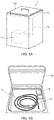
- FIG. 5 shows an example of the sterilization apparatus of the present invention.
- FIG. 5 merely shows an example, and the present invention is not limited to this example.
- FIG. 5(A) is a perspective view schematically showing a sterilization apparatus 1
- FIG. 5(B) is a perspective view of an instrument housing portion 12 of the sterilization apparatus 1 in a state where a cover 121 is opened.
- the sterilization apparatus 1 includes a reagent housing portion 11, the instrument housing portion 12 provided with the cover 121 that can be opened and closed, a connector 13 that connects the reagent housing portion 11 and the instrument housing portion 12 to each other, and an LED light source 14 is arranged inside the instrument housing portion 12.
- the LED light source 14 is arranged on an inner side surface of the instrument housing portion 12, but there is no limitation to this configuration, and the LED light source 14 may be arranged on the cover 121 of the instrument housing portion 12 so as to face the inside of the instrument housing portion 12, for example.
- the sterilization apparatus 1 can be used as follows, for example.
- the fluid reagent is housed in the reagent housing portion 11 of the sterilization apparatus 1.
- the cover 112 of the instrument housing portion 12 is opened, an instrument 13 (a photogastroscope is shown as an example in FIG. 5(B) ) is housed in the instrument housing portion 12, the cover 121 is closed, and the fluid reagent is introduced from the reagent housing portion 11 via the connector 13 into the instrument housing portion 12.
- light is emitted from the LED light source 14 toward the fluid reagent introduced into the instrument housing portion 12.
- radicals are generated from the radical generation source, and the instrument 13 arranged in the instrument housing portion 12 is sterilized with the radicals.
- a photogastroscope is shown as an example in FIG. 5 , there is no limitation thereto, and the sterilization apparatus is applicable to various instruments that need to be sterilized.
- the cancer treatment drug according to the present invention contains a radical generation source, and cancer cells are treated with radicals generated from the radical generation source.
- a cancer treatment method includes a cancer cell treatment step of generating radicals from a radical generation source and treating cancer cells with the radicals.
- target portions of the yeast cells and the candida cells may be a respiratory chain and a GTP synthesis pathway in mitochondria.
- Tissues of animals are constituted by cells that belong to eukaryotes, similarly to yeast and candida. Accordingly, the internal structure of the cells of animals is similar to that of eukaryotes such as yeast and candida, and in particular, the mitochondrial respiratory chain, ATP synthase, and the like of the cells of animals are very similar to those of eukaryotes. Therefore, it is supposed that not only cell spores, but also cancer cells can be killed using the present invention.
- Cancer cells depend on glycolysis for the production of energy, and suppress the usage rate of the respiratory chain, when compared with normal cells (Warburg's effect).
- mitochondria are present in cancer cells as well, and the respiratory chain functions even though its usage rate is low.
- ROS reactive Oxygen Species
- the GTP synthesis amount in cancer cells is about twice as much as that in normal cells due to peptide synthesis being actively carried out by ribosomes, and an example in which the GTP synthesis pathway is targeted by an anticancer agent is known.
- portions targeted by radicals or ROS generated using the present invention are the respiratory chain and the GTP synthesis pathway in mitochondria as described above, there is a possibility that the radicals or ROS cause great damage to cancer cells, when compared with normal cells.
- the document shown below discloses that when yeast (not spores) is irradiated with light from an LED having a wavelength of 455 nm with strong energy (526 J/cm 2 ), the survival rate decreases to one tenth of the survival rate of a case where the irradiation is not performed.
- singlet oxygen is generated as a result of flavin in the cells being irradiated with the light from the LED.
- the radical generation source is used, and therefore, the energy of photoirradiation can be reduced to a very low energy compared with that in the document shown below, for example. Therefore, it is possible to selectively damage cancer cells or cancer tissues while suppressing damage to normal cells, for example.
- the cancer treatment drug of the present invention may be configured such that radicals can be generated when the radical generation source is irradiated with light, for example.
- the cancer treatment drug of the present invention may be configured such that the peak wavelength of light used in the photoirradiation is greater than UV wavelengths and 600 nm or less, for example.
- the cancer treatment drug of the present invention may be configured such that the peak wavelength of light used in the photoirradiation is 405 to 470 nm, for example.
- the cancer treatment drug of the present invention may be configured such that the lower limit of the range of wavelengths included in the light is 380 nm or more, for example.
- the cancer treatment drug of the present invention may be configured such that the photoirradiation is performed using an LED, for example.
- the cancer treatment drug of the present invention may be configured such that the peak wavelength of the LED is greater than UV wavelengths and 600 nm or less, and a spectral line half width (full width at half maximum) of the LED is 12 to 35 nm.
- the cancer treatment drug of the present invention may be configured such that radicals are generated from the radical generation source in the absence of cancer cells, and cancer cells are treated with the radicals, for example.
- the cancer treatment drug of the present invention may be configured such that radicals are generated from the radical generation source in the presence of cancer cells, and the cancer cells are treated with the radicals, for example.
- the cancer treatment drug of the present invention may be a fluid medicine that contains the radical generation source, for example.
- the fluid medicine that is the cancer treatment drug of the present invention may be a liquid or a gel, for example.
- a solvent in the fluid medicine may be water or a buffer solution, for example.
- the pH of the fluid medicine may be 5 to 10, for example.
- the radical generation source may include at least one selected from the group consisting of halogen ions, hypohalous acid ions, halous acid ions, halogen acid ions, and perhalogen acid ions, for example.
- the halous acid ions may be chlorite ions, for example.
- the cancer cells may be epithelial carcinoma cells, and the cancer may be epithelial carcinoma, for example.
- the epithelial carcinoma may be cancer of at least one tissue selected from the group consisting of the urinary system, the reproductive system, the digestive system, the circulatory system, and the respiratory system, for example.
- the epithelial carcinoma may be at least one cancer of tissue selected from the group consisting of bladder cancer, uterine cancer, cervical cancer, ovarian cancer, carcinoma of a fallopian tube, testis cancer, prostate cancer, colon cancer, small intestinal cancer, duodenal cancer, gastric cancer, esophageal cancer, laryngeal cancer, oral cancer, tongue cancer, pharyngeal cancer, liver cancer, pancreatic cancer, gallbladder cancer, spleen cancer, peritoneal cancer, lung cancer, and eye cancer.
- tissue selected from the group consisting of bladder cancer, uterine cancer, cervical cancer, ovarian cancer, carcinoma of a fallopian tube, testis cancer, prostate cancer, colon cancer, small intestinal cancer, duodenal cancer, gastric cancer, esophageal cancer, laryngeal cancer, oral cancer, tongue cancer, pharyngeal cancer, liver cancer, pancreatic cancer, gallbladder cancer, spleen cancer, peritoneal cancer, lung cancer, and eye cancer.
- the cancer treatment drug of the present invention may be in the form of solid, powder, semisolid, or liquid, for example.
- the cancer treatment drug may be a solid, the drug may be a tablet or a capsule, for example.
- the cancer treatment drug of the present invention can be manufactured using a method that is the same as or similar to a common method for manufacturing a medicine, for example.
- the cancer treatment drug of the present invention may be manufactured by merely mixing all the components thereof, for example.
- the mixture may be formed into a tablet by being pressed or may be enclosed in a capsule, for example.
- the cancer treatment drug of the present invention may optionally contain an optional component other than the radical generation source.
- an optional component may be the same as or similar to that contained in a common medicine, for example.
- the optional component include water, a pH buffer solution, and a physiological saline solution.
- the cancer treatment drug of the present invention may further contain, as the optional component, one or more pharmaceutically acceptable additives, for example. That is, for example, a sulfated polysaccharide or a sulfated oligosaccharide may be formulated with one or more pharmaceutically acceptable additives prior to administration.
- the additives are not particularly limited, and examples thereof include inert substances such as carriers, diluents, flavoring agents, sweeteners, lubricants, solubilizers, suspending agents, binders, tablet disintegrants, and encapsulants. In addition to these, for example, any additive that is commonly used in the field of medicine may be used as appropriate.
- the following substances can be used as the additives, for example.
- the carrier for example, lactose, starch, sucrose, glucose, sodium carbonate, mannitol, sorbitol, calcium carbonate, calcium phosphate, calcium sulfate, methyl cellulose, and the like can be used.
- the disintegrant for example, corn flour, starch, methyl cellulose, agar, bentonite, xanthan gum, alginic acid, and the like can be used.
- binder for example, gelatin, natural sugar, betalactose, corn sweetener, natural and synthetic rubber, gum arabic, tragacanth gum, sodium alginate, carboxymethyl cellulose, polyethylene glycol, wax, and the like
- lubricant for example, magnesium stearate, sodium stearate, stearic acid, sodium oleate, sodium benzoate, sodium acetate, salt, talc, and the like can be used.
- the radical generation source and optionally other optional components may be mixed with a diluent or enclosed in a carrier, for example.
- the carrier can be in the form of, for example, capsules, sachets, paper, or other containers.
- the carrier may also serve as a diluent, and may be a solid, a semisolid, or a liquid that acts as a vehicle.
- the form of the medicine of the present invention is not particularly limited, and it is possible to employ various forms such as tablets, pills, powder, lozenge, elixir, suspension, emulsion, solution, syrup, aerosol, ointment, soft or hard gelatin capsules, suppository, sterilized injection solution, and packaged sterilized powder.
- the cancer treatment drug of the present invention can be administered orally or nonorally according to the purpose.
- the form of the drug is not particular limited, and can be selected from forms that are ordinarily used by those skilled in the art, such as ordinary and enteric tablets, capsules, pills, powder, granules, elixir, tincture, solvent, suspension, syrup, solid or liquid aerosol, and emulsion.
- the manner of administration of the drug is not particularly limited, and can be selected from manners that are ordinarily used by those skilled in the art, such as intravenous administration, intraperitoneal administration, subcutaneous administration, intramuscular administration, injection, and infusion.
- the dose, administration intervals, and the like of the cancer treatment drug of the present invention are not particularly limited and can be selected as appropriate according to the purpose. Those skilled in the art can select these in view of various factors such as the age, the weight, the sex, and a medical state of a patient, the state of a disease, the route of administration, the level of metabolic and excretory functions of the patient, the form of medicine to be used, a specific oxoacid, oxoacid ions, or a salt of an oxoacid to be administered.
- the cancer treatment method according to the present invention includes a cancer cell treatment step of generating radicals from a radical generation source and treating cancer cells with the radicals.
- radicals may be generated by irradiating the radical generation source with light in the cancer cell treatment step, for example.
- the peak wavelength of light used in the photoirradiation may be greater than UV wavelengths and 600 nm or less, for example.
- the peak wavelength of light used in the photoirradiation may be 405 to 470 nm, for example.
- the lower limit of the range of wavelengths included in the light may be 380 nm or more, for example.
- the photoirradiation may be performed using an LED, for example.
- the peak wavelength of the LED may be greater than UV wavelengths and 600 nm or less, and a spectral line half width (full width at half maximum) of the LED may be 12 to 35 nm, for example.
- the treatment step may include a step of generating radicals from the radical generation source in the absence of cancer cells, and a step of treating cancer cells with the radicals, for example.
- the treatment step may include a step of generating radicals from the radical generation source in the presence of cancer cells and treating the cancer cells with the radicals, for example.
- the radicals may be generated from a fluid reagent that contains the radical generation source, for example.
- the fluid reagent may be a liquid or a gel, for example.
- a solvent in the fluid reagent may be water or a buffer solution, for example.
- the pH of the fluid reagent may be 5 to 10, for example.
- the radical generation source may include at least one selected from the group consisting of halogen ions, hypohalous acid ions, halous acid ions, halogen acid ions, and perhalogen acid ions, for example.
- the halous acid ions may be chlorite ions, for example.
- the cancer cells may be epithelial carcinoma cells, and the cancer may be epithelial carcinoma, for example.
- the epithelial carcinoma may be cancer of at least one tissue selected from the group consisting of the urinary system, the reproductive system, the digestive system, the circulatory system, and the respiratory system, for example.
- the epithelial carcinoma may be at least one cancer of tissue selected from the group consisting of bladder cancer, uterine cancer, cervical cancer, ovarian cancer, carcinoma of a fallopian tube, testis cancer, prostate cancer, colon cancer, small intestinal cancer, duodenal cancer, gastric cancer, esophageal cancer, laryngeal cancer, oral cancer, tongue cancer, pharyngeal cancer, liver cancer, pancreatic cancer, gallbladder cancer, spleen cancer, peritoneal cancer, lung cancer, and eye cancer, for example.
- tissue selected from the group consisting of bladder cancer, uterine cancer, cervical cancer, ovarian cancer, carcinoma of a fallopian tube, testis cancer, prostate cancer, colon cancer, small intestinal cancer, duodenal cancer, gastric cancer, esophageal cancer, laryngeal cancer, oral cancer, tongue cancer, pharyngeal cancer, liver cancer, pancreatic cancer, gallbladder cancer, spleen cancer, peritoneal cancer, lung cancer, and eye
- the radical generation source may be the radical generation source contained in the cancer treatment drug of the present invention, and the cancer treatment method may further include an administration step of administering the cancer treatment drug to a patient, for example.
- the method of using the cancer treatment drug of the present invention may include an administration step of administering the cancer treatment drug of the present invention to a patient, for example.
- the present invention it is possible to further provide a method of using the radical generation source to manufacture the cancer treatment drug of the present invention. As described above, there is no particular limitation on the method for manufacturing the cancer treatment drug of the present invention.
- Examples of the patient to which the cancer treatment drug is administered or that is treated using the cancer treatment method of the present invention include a human and a non-human animal excluding humans, for example.
- Examples of the non-human animal include a mouse, a rat, a rabbit, a monkey, a dog, and cattle.
- a sodium chlorite solution (a chlorite ion standard solution, FUJIFILM Wako Pure Chemical Corporation) was used as the radical generation source.
- the molar concentration of sodium chlorite was set to 14.5 mmol/L, and reagents of which the pH was adjusted to 7.0, 7.5, and 8.0 were prepared by adding a 20 mmol/L potassium phosphate buffer solution. 1 mL of each of the reagents was placed in a disposable cell UV (product name: Two-face transparent semimicro #1941, Nikko Hansen & CO., LTD.), and was irradiated with light via a side surface of the cell using an LED.
- a commercially available LED (product name: M455L4, Thorlabs Japan Inc.) having a peak wavelength of 455 nm and a spectral line half width of 15 nm was used as the LED, a distance between the side surface of the cell irradiated with light and a light emitting surface of the LED was set to 0.3 cm, and the irradiation was performed with an irradiance of 157 mW/cm 2 for 40 minutes.
- Bacillus subtilis was scattered over a nutrient agar medium and incubated at 37°C for 1 week. Colonies were scraped off from the agar medium and washed by being suspended in a physiological saline solution, and Bacillus subtilis collected through centrifugal separation was taken to be cell spores.
- the cell spores were suspended in a physiological saline solution at a concentration of about 6 ⁇ 10 6 spores/mL.
- the suspension of cell spores was prepared so as to have the target concentration of cell spores by being diluted with purified water as appropriate.
- a reagent having a pH of 7.0 was prepared and irradiated with light using the LED in the same manner as that described above in (1) to generate radicals.
- the reagent chlorine dioxide radical concentration: 600 ⁇ mol/L
- the reagent was diluted with a 10 mmol/L potassium phosphate buffer solution (pH: 7.0) as appropriate to prepare samples containing radicals at predetermined concentrations.
- 0.5 mL of each of the samples was mixed with 0.5 mL of the suspension of cell spores described above, and the liquid mixture was let to stand at room temperature for 30 minutes. Thereafter, the liquid mixture was scattered over brain heart agar, incubation was performed at 37°C for 12 hours, and then the number of colonies was counted.
- control 1 a reagent having a pH of 7.0 that was not irradiated with light was added to the suspension of cell spores and was left to stand, and incubation was performed as described above, and then the number of colonies was counted.
- control 2 the suspension of cell spores to which the reagent was not added was irradiated with light for 30 minutes under the irradiation conditions described above in (1) using the LED, thereafter incubation was performed as described above, and then the number of colonies was counted.
- FIG. 1 The results are shown in FIG. 1 .
- the vertical axis indicates the number of grown spores
- the horizontal axis indicates the chlorine dioxide radical concentration in the spore suspension scattered over the agar medium.
- a reduction in the number of spores was not confirmed in controls 1 and 2, whereas it was confirmed that chlorine dioxide radicals were generated through the photoirradiation in this Example, and cell spores were killed according to the chlorine dioxide radical concentration as shown in FIG. 1 .
- the chlorine dioxide radical concentration was 300 ⁇ mol/L, the number of spores decreased to 10 -6 or less, and it was also confirmed that the sterilization method was very effective.
- the wavelength of light used in the photoirradiation did not include ultraviolet rays that affect human bodies, for example, and the reagent and generated radicals were used at concentrations that were safe for human bodies, and therefore, it can be said that killing of spores, which has conventionally been difficult, can be realized very safely.
- a sodium chlorite solution (a chlorite ion standard solution, FUJIFILM Wako Pure Chemical Corporation) was used as the radical generation source.
- Reagents having molar concentrations of sodium chlorite of 14.5 mmol/L, 7.25 mmol/L, and 3.63mmol/L were prepared using a 20 mmol/L potassium phosphate buffer solution (pH: 7.0). 1 mL of each of the reagents was placed in a disposable cell UV (product name: Two-face transparent semimicro #1941, Nikko Hansen & CO., LTD.), and was irradiated with light via a side surface of the cell using an LED in the same manner as in Example 1 (1) described above.
- the photoirradiation was performed similarly to Example 1 described above, unless otherwise specified. That is, the same commercially available LED (product name: M455L4, Thorlabs Japan Inc.) as that used in Example 1, which had a peak wavelength of 455 nm and a spectral line half width of 15 nm, was used, the distance between the side surface of the cell irradiated with light and the light emitting surface of the LED was set to 0.3 cm, and the irradiation was performed with an irradiance of 81.5 mW/cm 2 or 157 mW/cm 2 .
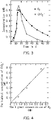
- the horizontal axis indicates the irradiation time (graduations are the same as those in the lower graph) and the vertical axis indicates the molar concentration of ClO 2 -
- the horizontal axis indicates the irradiation time and the vertical axis indicates the molar concentration of ClO 2 ⁇
- black plotted points show results obtained with the irradiance of 81.5 mW/cm 2
- white plotted points show results obtained with the irradiance of 157 mW/cm 2 .
- H 2 O 2 has extremely low toxicity to living bodies, and its toxicity to cells and living bodies is extremely low at a concentration of about 800 ⁇ M (0.0027 W/V%, 27 ppm), which is an estimated maximum concentration of H 2 O 2 to be generated.
- a sodium chlorite solution (a chlorite standard solution, FUJIFILM Wako Pure Chemical Corporation) was used as the radical generation source.
- Reagents having molar concentrations of sodium chlorite of 14.5 mmol/L, 7.25 mmol/L, and 3.63mmol/L were prepared using a 20 mmol/L potassium phosphate buffer solution (pH: 7.0).
- the same spores as those used in Example 1 described above were added to each of the reagents such that 1 ⁇ 10 6 to 1 ⁇ 10 7 spores were contained in each reagent.
- 300 ⁇ L of each of the reagents having the respective concentrations to which the spores were added was placed in an oxygen measurement device provided with an oxygen electrode.
- the oxygen electrode product name: Biological dissolved oxygen monitor, digital 1ch OXY018A
- a 2.5 mL Perspex electrode OXY042A
- Rank Brothers Ltd. The oxygen electrode (product name: Biological dissolved oxygen monitor, digital 1ch OXY018A) and a 2.5 mL Perspex electrode (OXY042A), Rank Brothers Ltd.) were disposed in the oxygen measurement device.
- An LED was attached to an upper portion of the oxygen electrode, and the reagent was irradiated with light.
- the commercially available LED (product name: M455L4, Thorlabs Japan Inc.) having a peak wavelength of 455 nm and a spectral line half width of 15 nm was used as the LED, a distance between the surface of the reagent irradiated with light and a light emitting surface of the LED was set to 3 cm, and the irradiation was performed with an irradiance of 300 mW/cm 2 .
- FIG. 3 shows changes in the chlorine dioxide radical concentration and the oxygen concentration over time with respect to the reagent having a sodium chlorite molar concentration of 14.5 mmol/L.
- the vertical axis indicates molar concentrations of oxygen and chlorine dioxide radicals
- the horizontal axis indicates the irradiation time.
- FIG. 4 shows results of maximum values of the molar concentrations of oxygen and chlorine dioxide radicals with respect to the reagents having sodium chlorite molar concentrations of 14.5 mmol/L, 7.25 mmol/L, and 3.63 mmol/L.
- FIG. 3 shows changes in the chlorine dioxide radical concentration and the oxygen concentration over time with respect to the reagent having a sodium chlorite molar concentration of 14.5 mmol/L.
- the vertical axis indicates molar concentrations of oxygen and chlorine dioxide radicals
- the horizontal axis indicates the irradiation time.
- FIG. 4 shows results of maximum values of the molar concentrations of oxygen and chlorine dioxide radicals
- the vertical axis indicates the maximum value of the molar concentration of chlorine dioxide radicals and the horizontal axis indicates the maximum value of the molar concentration of oxygen.
- the left plotted point shows the result of the reagent having a sodium chlorite molar concentration of 14.5 mmol/L
- the middle plotted point shows the result of the reagent having a sodium chlorite molar concentration of 7.25 mmol/L
- the right plotted point shows the result of the reagent having a sodium chlorite molar concentration of 3.63 mmol/L.
- Yeast cells and candida cells were sterilized by being irradiated with light in the presence of sodium chlorite, and a reduction in the number of colonies was confirmed.
- Yeast was inoculated into a modified YPE liquid medium (2% of polypeptone, 1% of yeast extract, 2% of ethanol, and 0.2% of glucose) and was incubated at 30°C for 1 day.
- a bacterial liquid was collected from the liquid medium and washed by being suspended in purified water, and yeast cells collected through centrifugal separation were taken as a specimen.
- the cells were suspended in a 100 mmol/L potassium phosphate buffer solution (pH: 7.0) at a concentration of about 5 ⁇ 10 8 cells/mL.
- the suspension of cells was diluted with a 100 mmol/L potassium phosphate buffer solution as appropriate so as to have a target concentration of cells.
- a sodium chlorite solution (a chlorite ion standard solution, FUJIFILM Wako Pure Chemical Corporation) was used as the radical generation source.
- the molar concentration of sodium chlorite was set to 7.25 mmol/L, and a reagent having a pH of 7.0 was prepared by adding a 20 mmol/L potassium phosphate buffer solution.
- the reagent prepared as described above in (2) was irradiated with light having a peak wavelength of 455 nm and a spectral line half width of 15 nm using an LED in the same manner as that described in Example 1 "(1) Radical concentration check", except that the molar concentration of sodium chlorite was 7.25 mmol/L.
- the irradiation was performed with an irradiance of 157 mW/cm 2 for 40 minutes.
- Yeast sterilization treatment was performed using two methods described in the following Experiment 1 and Experiment 2.
- the reagent containing chlorine dioxide radicals prepared as described above in (3) was diluted with a 10 mmol/L potassium phosphate buffer solution (pH: 7.0) to prepare a sample containing chlorine dioxide radicals at a concentration of 20 ⁇ mol/L.
- the suspension of cells prepared in (1) was diluted with a 10 mmol/L potassium phosphate buffer solution (pH: 7.0) such that the concentration of cells was about 5 ⁇ 10 8 cells/mL.
- 0.5 mL of the sample containing chlorine dioxide radicals was mixed with 0.5 mL of the suspension of cell spores, and the liquid mixture was left to stand at room temperature for 30 minutes.
- the liquid mixture was scattered over brain heart agar and incubated at 30°C for 1 day, and then the number of colonies was counted. As a result, it was confirmed that the concentration of cells was about 2.5 ⁇ 10 7 cells/mL and the survival rate decreased to about one tenth of the survival rate of a case where the above treatment was not performed.
- a sodium chlorite solution (a chlorite ion standard solution, FUJIFILM Wako Pure Chemical Corporation) was used as the radical generation source.
- the same commercially available LED (product name: M455L4, Thorlabs Japan Inc.) as that used in Experiment 1, which had a peak wavelength of 455 nm and a spectral line half width of 15 nm, was used, the distance between the side surface of the cell irradiated with light and the light emitting surface of the LED was set to 0.3 cm, and the irradiation was performed with an irradiance of 21 mW/cm 2 for 30 minutes at 25°C. The radiant energy under the above condition was calculated as 37.8 J/cm 2 .
- the solution after the treatment was scattered over brain heart agar after being diluted as appropriate, and incubated at 30°C for 1 day, and then the number of colonies was counted. As a result, it was confirmed that the concentration of cells was about 2.5 ⁇ 10 7 cells/mL and the survival rate decreased to about one tenth of the survival rate of a case where the above treatment was not performed.
- chlorine dioxide radicals (ClO 2 ⁇ ) were not generated when only the sodium chlorite aqueous solution was used or only photoirradiation was performed, but when the sodium chlorite aqueous solution was used and photoirradiation was performed, chlorine dioxide radicals were generated and the effect of sterilizing cells was achieved. Also, when the sodium chlorite aqueous solution was used and photoirradiation was performed, singlet oxygen may have been generated in addition to chlorine dioxide radicals, and the effect of sterilizing cells may have been achieved as a synergistic effect of chlorine dioxide radicals and singlet oxygen.
- Treatment was performed in the same manner as that described in (1) to (4), except that a 2.90 mmol/L aqueous solution of cGMP (cyclic guanosine monophosphate) was used instead of the suspension of cells.
- cGMP cyclic guanosine monophosphate
- the generated substance may be a compound that hinders the GTP synthesis pathway, when making a presumption based on the structure of cGMP used as the raw material.
- the GTP synthesis pathway may be one target portion of yeast cells and candida cells treated with chlorine dioxide radicals in this Example.
- Cancer cells were treated using the method of the present invention, and a reduction in the number of cancer cells was confirmed.
- HT-29 cells human colon adenocarcinoma cells
- a cell incubation microplate subjected to surface treatment
- a CO 2 incubator at 37°C in the presence of 5% of CO 2 until the number of cells reached about 2000 cells/well.
- 90 ⁇ L of McCoy's 5a Medium (the name of a product manufactured by FUJIFILM Wako Pure Chemical Corporation) was used as the cell culture medium.
- the medium was replaced with 90 ⁇ L of McCoy's 5a Medium and the cells were incubated in the CO 2 incubator for 2 days under the above conditions.
- Conditions of treatments (1) to (6) and percentages of absorbances of samples obtained through the treatments were as follows. The amount by which the percentage of an absorbance decreased from 100% is presumed to be substantially equal to a death rate (%) of cancer cells.
- cancer cells were treated using the method of the present invention, and a reduction in the number of cancer cells was confirmed.
- human tissues are constituted by cells that belong to eukaryotes, similarly to yeast and candida. Accordingly, the internal structure of human cells is similar to that of eukaryotes such as yeast and candida, and in particular, the mitochondrial respiratory chain, ATP synthase, and the like of human cells are very similar to those of eukaryotes. It is thought that, similarly to Example 4, in this Example, chlorine dioxide radicals and singlet oxygen were quantitatively generated as a result of chlorite ions and violet LED (455 nm) being used in combination, and human cancer cells were killed.
- radicals from a radical generation source by merely performing photoirradiation using light whose peak wavelength is greater than UV wavelengths and 600 nm or less. Accordingly, for example, spores can be sterilized with the generated radicals. Also, the conditions of the photoirradiation are not conditions that are harsh on the environment, living bodies, and the like, and therefore, spores can be sterilized in a highly safe manner for the environment or an instrument to be treated, an operator, or the like.
Landscapes
- Health & Medical Sciences (AREA)
- Chemical & Material Sciences (AREA)
- Life Sciences & Earth Sciences (AREA)
- General Health & Medical Sciences (AREA)
- Animal Behavior & Ethology (AREA)
- Public Health (AREA)
- Veterinary Medicine (AREA)
- Epidemiology (AREA)
- Medicinal Chemistry (AREA)
- Pharmacology & Pharmacy (AREA)
- Chemical Kinetics & Catalysis (AREA)
- Engineering & Computer Science (AREA)
- General Chemical & Material Sciences (AREA)
- Organic Chemistry (AREA)
- Inorganic Chemistry (AREA)
- Wood Science & Technology (AREA)
- Zoology (AREA)
- Food Science & Technology (AREA)
- Polymers & Plastics (AREA)
- Nuclear Medicine, Radiotherapy & Molecular Imaging (AREA)
- Toxicology (AREA)
- Physics & Mathematics (AREA)
- Electromagnetism (AREA)
- Geology (AREA)
- General Life Sciences & Earth Sciences (AREA)
- Biochemistry (AREA)
- Apparatus For Disinfection Or Sterilisation (AREA)
- Medicines That Contain Protein Lipid Enzymes And Other Medicines (AREA)
- Pharmaceuticals Containing Other Organic And Inorganic Compounds (AREA)
- Agricultural Chemicals And Associated Chemicals (AREA)
Applications Claiming Priority (3)
| Application Number | Priority Date | Filing Date | Title |
|---|---|---|---|
| JP2019181758 | 2019-10-01 | ||
| JP2020089254 | 2020-05-21 | ||
| PCT/JP2020/037371 WO2021066081A1 (ja) | 2019-10-01 | 2020-09-30 | ラジカルの製造方法、芽胞の殺菌方法およびがんの治療薬 |
Publications (2)
| Publication Number | Publication Date |
|---|---|
| EP4023328A1 true EP4023328A1 (de) | 2022-07-06 |
| EP4023328A4 EP4023328A4 (de) | 2023-12-13 |
Family
ID=75337071
Family Applications (1)
| Application Number | Title | Priority Date | Filing Date |
|---|---|---|---|
| EP20870997.2A Pending EP4023328A4 (de) | 2019-10-01 | 2020-09-30 | Radikalherstellungsverfahren, sporensterilisationsverfahren und arzneimittel gegen krebs |
Country Status (5)
| Country | Link |
|---|---|
| US (1) | US20220339596A1 (de) |
| EP (1) | EP4023328A4 (de) |
| JP (2) | JPWO2021066081A1 (de) |
| CN (1) | CN114555097A (de) |
| WO (1) | WO2021066081A1 (de) |
Families Citing this family (1)
| Publication number | Priority date | Publication date | Assignee | Title |
|---|---|---|---|---|
| JP7742109B2 (ja) * | 2021-08-20 | 2025-09-19 | 恭治 栗木 | 塩素系酸化剤と配合して医療機器用洗浄組成物を調製するための助剤およびそれを用いた医療機器用洗浄組成物 |
Family Cites Families (23)
| Publication number | Priority date | Publication date | Assignee | Title |
|---|---|---|---|---|
| JPS5329155B2 (de) * | 1974-04-05 | 1978-08-18 | ||
| JPS5515627A (en) * | 1978-07-18 | 1980-02-02 | Mitsubishi Electric Corp | Washing and deodorizing method for malodorous gas |
| JPH0649562B2 (ja) * | 1991-03-28 | 1994-06-29 | 積水化成品工業株式会社 | 亜塩素酸塩溶液への光照射による二酸化塩素の生成方法 |
| JP2004215930A (ja) * | 2003-01-15 | 2004-08-05 | Kitano Takahiro | 内視鏡の殺菌洗浄方法と殺菌洗浄装置 |
| WO2005096787A2 (en) * | 2004-04-09 | 2005-10-20 | Williams Stuart K | Transportable gas sterilization unit, disposable gas generator, light activated anti-infective coating and method of disinfection and sterilization using chlorine dioxide |
| JP2007089635A (ja) * | 2005-09-27 | 2007-04-12 | Fujinon Corp | 内視鏡用洗浄消毒装置 |
| JP2011067285A (ja) * | 2009-09-24 | 2011-04-07 | Wada Kinzoku Kogyo Kk | 殺菌性ガス供給装置 |
| CA2684767A1 (en) * | 2009-11-06 | 2011-05-06 | 2221489 Ontario Limited | Sanitization process for objects and sanitization chamber |
| JP2012111673A (ja) * | 2010-11-25 | 2012-06-14 | Cleancare Inc | 可視光応答性二酸化塩素発生剤の組成ならびに当該組成による二酸化塩素徐放製品 |
| KR101527883B1 (ko) * | 2013-04-17 | 2015-06-10 | 가부시키가이샤 에프엠아이 | 이산화염소가스 발생장치 및 의료기구용 멸균박스 |
| KR101465563B1 (ko) * | 2013-08-26 | 2014-11-26 | (주)옥시테라피 | 습윤이산화염소가스를 이용한 멸균장치 및 멸균방법 |
| CN103720709A (zh) * | 2013-12-12 | 2014-04-16 | 刘学武 | 包含二氧化氯的细胞凋亡诱导剂及其在制备化妆品或抗衰老或抗肿瘤药物中的用途 |
| SG11201604863QA (en) * | 2013-12-27 | 2016-07-28 | Taiko Pharmaceutical Co Ltd | Unit for chlorine dioxide generation and chlorine dioxide generation device |
| JP6607688B2 (ja) * | 2014-04-02 | 2019-11-20 | 花王株式会社 | 殺芽方法 |
| JP2016164099A (ja) * | 2015-02-09 | 2016-09-08 | 株式会社トレンタ | 二酸化塩素発生装置および方法 |
| TWI687370B (zh) * | 2015-06-03 | 2020-03-11 | 日商大幸藥品股份有限公司 | 二氧化氯產生用單元及二氧化氯產生裝置 |
| TWI754614B (zh) * | 2015-06-03 | 2022-02-11 | 日商大幸藥品股份有限公司 | 使空間中之漂浮微生物失活之方法 |
| KR20160145434A (ko) * | 2015-06-10 | 2016-12-20 | 고려대학교 산학협력단 | 암 치료용 약학 조성물 |
| EP3391965B1 (de) | 2015-12-18 | 2023-08-30 | Acenet Inc. | Verwendung eines radikalbildenden katalysators und verfahren zur herstellung eines oxidationsreaktionsprodukts |
| US10105389B1 (en) * | 2016-04-01 | 2018-10-23 | Howard Alliger | Method and compositions for treating cancerous tumors |
| WO2019046648A1 (en) * | 2017-08-31 | 2019-03-07 | Prodew, Inc. | AIR TREATMENT SYSTEMS |
| JP7043326B2 (ja) | 2018-04-06 | 2022-03-29 | 株式会社ミマキエンジニアリング | キャッピング機構およびインクジェットプリンタ |
| KR102085676B1 (ko) | 2018-11-21 | 2020-04-20 | 엘에스일렉트릭(주) | 분전반의 접촉자어셈블리 |
-
2020
- 2020-09-30 EP EP20870997.2A patent/EP4023328A4/de active Pending
- 2020-09-30 WO PCT/JP2020/037371 patent/WO2021066081A1/ja not_active Ceased
- 2020-09-30 CN CN202080069115.XA patent/CN114555097A/zh active Pending
- 2020-09-30 JP JP2021551437A patent/JPWO2021066081A1/ja active Pending
- 2020-09-30 US US17/766,127 patent/US20220339596A1/en active Pending
-
2025
- 2025-07-29 JP JP2025126627A patent/JP2025176002A/ja active Pending
Also Published As
| Publication number | Publication date |
|---|---|
| WO2021066081A1 (ja) | 2021-04-08 |
| EP4023328A4 (de) | 2023-12-13 |
| US20220339596A1 (en) | 2022-10-27 |
| CN114555097A (zh) | 2022-05-27 |
| JPWO2021066081A1 (de) | 2021-04-08 |
| JP2025176002A (ja) | 2025-12-03 |
Similar Documents
| Publication | Publication Date | Title |
|---|---|---|
| Wu et al. | Reactivity differences enable ROS for selective ablation of bacteria | |
| ES2878065T3 (es) | Solución acuosa de ácido cloroso para uso como desinfectante | |
| US20230264181A1 (en) | Radical generating catalyst, method for producing radical, method for producing oxidation reaction product, drug, and drug for agriculture and livestock | |
| FI114852B (fi) | Antimikrobisena aineena käytettävä hapotettu nitraatti | |
| KR100365151B1 (ko) | 어류 병원성 세균과 바이러스의 감염 예방 및 치료를 위한δ-아미노레불린산의 신규한 용도 | |
| JP5711846B1 (ja) | 養殖用水中の水カビ防除方法 | |
| Wu et al. | Effect of allyl isothiocyanate on ultra-structure and the activities of four enzymes in adult Sitophilus zeamais | |
| JP2025176002A (ja) | ラジカルの製造方法、芽胞の殺菌方法およびがんの治療薬 | |
| WO2012098772A1 (ja) | 殺菌方法、殺菌装置および光を利用する殺菌剤 | |
| Atac et al. | Selective antibacterial and antibiofilm activity of chlorinated hemicyanine against gram-positive bacteria | |
| KR101297712B1 (ko) | 차아염소산수에 대두 단백질을 포함하는 살균 소독제 | |
| JP2016000005A (ja) | イネ種子の催芽時殺菌処理方法 | |
| Tarhan et al. | The effects of copper, zinc and bicarbonate in blood, kidney and liver in rats under intermittent hypobaric hypoxia | |
| Hartman et al. | Novel inactivation of the causative fungal pathogen of white-nose syndrome with methoxsalen plus ultraviolet A or B radiation | |
| JP7692611B2 (ja) | マイコバクテリウム属菌殺傷剤 | |
| CN106719639A (zh) | 一种酚类复合醇消毒剂的中和剂 | |
| KR101785149B1 (ko) | 살충 방법 | |
| Ogunwa et al. | Modulation of Saprolegnia parasitica growth with copper and ionophores | |
| A Hamed | Protective effect of quercetin against oxidative stress and mitochondrial bioenergetic deficiency caused by lambda-cyhalothrin | |
| CN104521992B (zh) | 含甲磺酰菌唑和二羧酰亚胺类杀菌剂的复配组合物及制剂 | |
| CN108684680A (zh) | 一种杀菌组合物 | |
| CN107410355A (zh) | 一种含碘水杨酸泡腾片及其制备方法 | |
| Fukui | 222 nm UV-C Light Irradiation for Treatment of Infections | |
| Nhung et al. | Protective effect of Bead tree (Melia azedarach Linn.) leaves extract against oxidative stress and immunosuppression induced by Trichodina nigra in Whitespotted freshwater catfish (Clarias fuscus) | |
| Santos | UV Radiation in Disinfection and Infection Management: Established Practices and Emerging Applications |
Legal Events
| Date | Code | Title | Description |
|---|---|---|---|
| STAA | Information on the status of an ep patent application or granted ep patent |
Free format text: STATUS: THE INTERNATIONAL PUBLICATION HAS BEEN MADE |
|
| PUAI | Public reference made under article 153(3) epc to a published international application that has entered the european phase |
Free format text: ORIGINAL CODE: 0009012 |
|
| STAA | Information on the status of an ep patent application or granted ep patent |
Free format text: STATUS: REQUEST FOR EXAMINATION WAS MADE |
|
| 17P | Request for examination filed |
Effective date: 20220331 |
|
| AK | Designated contracting states |
Kind code of ref document: A1 Designated state(s): AL AT BE BG CH CY CZ DE DK EE ES FI FR GB GR HR HU IE IS IT LI LT LU LV MC MK MT NL NO PL PT RO RS SE SI SK SM TR |
|
| DAV | Request for validation of the european patent (deleted) | ||
| DAX | Request for extension of the european patent (deleted) | ||
| RIC1 | Information provided on ipc code assigned before grant |
Ipc: A61L 2/20 20060101ALI20230808BHEP Ipc: A61L 2/10 20060101ALI20230808BHEP Ipc: A61L 101/06 20060101ALI20230808BHEP Ipc: C01B 11/02 20060101ALI20230808BHEP Ipc: A61P 35/00 20060101ALI20230808BHEP Ipc: A61L 2/18 20060101ALI20230808BHEP Ipc: A61L 2/16 20060101ALI20230808BHEP Ipc: A61L 2/14 20060101ALI20230808BHEP Ipc: A61K 41/10 20200101ALI20230808BHEP Ipc: A61K 41/00 20200101ALI20230808BHEP Ipc: A61K 33/40 20060101ALI20230808BHEP Ipc: A61K 33/00 20060101ALI20230808BHEP Ipc: A61K 9/08 20060101ALI20230808BHEP Ipc: A61K 9/06 20060101ALI20230808BHEP Ipc: A23L 3/34 20060101ALI20230808BHEP Ipc: B01J 19/12 20060101AFI20230808BHEP |
|
| A4 | Supplementary search report drawn up and despatched |
Effective date: 20231114 |
|
| RIC1 | Information provided on ipc code assigned before grant |
Ipc: A61L 2/20 20060101ALI20231108BHEP Ipc: A61L 2/10 20060101ALI20231108BHEP Ipc: A61L 101/06 20060101ALI20231108BHEP Ipc: C01B 11/02 20060101ALI20231108BHEP Ipc: A61P 35/00 20060101ALI20231108BHEP Ipc: A61L 2/18 20060101ALI20231108BHEP Ipc: A61L 2/16 20060101ALI20231108BHEP Ipc: A61L 2/14 20060101ALI20231108BHEP Ipc: A61K 41/10 20200101ALI20231108BHEP Ipc: A61K 41/00 20200101ALI20231108BHEP Ipc: A61K 33/40 20060101ALI20231108BHEP Ipc: A61K 33/00 20060101ALI20231108BHEP Ipc: A61K 9/08 20060101ALI20231108BHEP Ipc: A61K 9/06 20060101ALI20231108BHEP Ipc: A23L 3/34 20060101ALI20231108BHEP Ipc: B01J 19/12 20060101AFI20231108BHEP |
|
| STAA | Information on the status of an ep patent application or granted ep patent |
Free format text: STATUS: EXAMINATION IS IN PROGRESS |
|
| 17Q | First examination report despatched |
Effective date: 20250328 |