EP4008718B1 - Heteroarylamidopyridinolderivate und pharmazeutische zusammensetzungen, die diese umfassen, zur vorbeugung oder behandlung von autoimmunerkrankungen - Google Patents
Heteroarylamidopyridinolderivate und pharmazeutische zusammensetzungen, die diese umfassen, zur vorbeugung oder behandlung von autoimmunerkrankungen Download PDFInfo
- Publication number
- EP4008718B1 EP4008718B1 EP20868510.7A EP20868510A EP4008718B1 EP 4008718 B1 EP4008718 B1 EP 4008718B1 EP 20868510 A EP20868510 A EP 20868510A EP 4008718 B1 EP4008718 B1 EP 4008718B1
- Authority
- EP
- European Patent Office
- Prior art keywords
- trimethylpyridin
- carboxamide
- formula
- hydroxy
- thiophene
- Prior art date
- Legal status (The legal status is an assumption and is not a legal conclusion. Google has not performed a legal analysis and makes no representation as to the accuracy of the status listed.)
- Active
Links
Images









Classifications
-
- C—CHEMISTRY; METALLURGY
- C07—ORGANIC CHEMISTRY
- C07D—HETEROCYCLIC COMPOUNDS
- C07D401/00—Heterocyclic compounds containing two or more hetero rings, having nitrogen atoms as the only ring hetero atoms, at least one ring being a six-membered ring with only one nitrogen atom
- C07D401/02—Heterocyclic compounds containing two or more hetero rings, having nitrogen atoms as the only ring hetero atoms, at least one ring being a six-membered ring with only one nitrogen atom containing two hetero rings
- C07D401/12—Heterocyclic compounds containing two or more hetero rings, having nitrogen atoms as the only ring hetero atoms, at least one ring being a six-membered ring with only one nitrogen atom containing two hetero rings linked by a chain containing hetero atoms as chain links
-
- A—HUMAN NECESSITIES
- A23—FOODS OR FOODSTUFFS; TREATMENT THEREOF, NOT COVERED BY OTHER CLASSES
- A23L—FOODS, FOODSTUFFS OR NON-ALCOHOLIC BEVERAGES, NOT OTHERWISE PROVIDED FOR; PREPARATION OR TREATMENT THEREOF
- A23L33/00—Modifying nutritive qualities of foods; Dietetic products; Preparation or treatment thereof
- A23L33/10—Modifying nutritive qualities of foods; Dietetic products; Preparation or treatment thereof using additives
-
- A—HUMAN NECESSITIES
- A61—MEDICAL OR VETERINARY SCIENCE; HYGIENE
- A61K—PREPARATIONS FOR MEDICAL, DENTAL OR TOILETRY PURPOSES
- A61K31/00—Medicinal preparations containing organic active ingredients
- A61K31/33—Heterocyclic compounds
- A61K31/395—Heterocyclic compounds having nitrogen as a ring hetero atom, e.g. guanethidine or rifamycins
- A61K31/435—Heterocyclic compounds having nitrogen as a ring hetero atom, e.g. guanethidine or rifamycins having six-membered rings with one nitrogen as the only ring hetero atom
- A61K31/44—Non condensed pyridines; Hydrogenated derivatives thereof
- A61K31/4427—Non condensed pyridines; Hydrogenated derivatives thereof containing further heterocyclic ring systems
- A61K31/443—Non condensed pyridines; Hydrogenated derivatives thereof containing further heterocyclic ring systems containing a five-membered ring with oxygen as a ring hetero atom
-
- A—HUMAN NECESSITIES
- A61—MEDICAL OR VETERINARY SCIENCE; HYGIENE
- A61K—PREPARATIONS FOR MEDICAL, DENTAL OR TOILETRY PURPOSES
- A61K31/00—Medicinal preparations containing organic active ingredients
- A61K31/33—Heterocyclic compounds
- A61K31/395—Heterocyclic compounds having nitrogen as a ring hetero atom, e.g. guanethidine or rifamycins
- A61K31/435—Heterocyclic compounds having nitrogen as a ring hetero atom, e.g. guanethidine or rifamycins having six-membered rings with one nitrogen as the only ring hetero atom
- A61K31/44—Non condensed pyridines; Hydrogenated derivatives thereof
- A61K31/4427—Non condensed pyridines; Hydrogenated derivatives thereof containing further heterocyclic ring systems
- A61K31/4439—Non condensed pyridines; Hydrogenated derivatives thereof containing further heterocyclic ring systems containing a five-membered ring with nitrogen as a ring hetero atom, e.g. omeprazole
-
- A—HUMAN NECESSITIES
- A61—MEDICAL OR VETERINARY SCIENCE; HYGIENE
- A61P—SPECIFIC THERAPEUTIC ACTIVITY OF CHEMICAL COMPOUNDS OR MEDICINAL PREPARATIONS
- A61P1/00—Drugs for disorders of the alimentary tract or the digestive system
-
- A—HUMAN NECESSITIES
- A61—MEDICAL OR VETERINARY SCIENCE; HYGIENE
- A61P—SPECIFIC THERAPEUTIC ACTIVITY OF CHEMICAL COMPOUNDS OR MEDICINAL PREPARATIONS
- A61P1/00—Drugs for disorders of the alimentary tract or the digestive system
- A61P1/04—Drugs for disorders of the alimentary tract or the digestive system for ulcers, gastritis or reflux esophagitis, e.g. antacids, inhibitors of acid secretion, mucosal protectants
-
- A—HUMAN NECESSITIES
- A61—MEDICAL OR VETERINARY SCIENCE; HYGIENE
- A61P—SPECIFIC THERAPEUTIC ACTIVITY OF CHEMICAL COMPOUNDS OR MEDICINAL PREPARATIONS
- A61P1/00—Drugs for disorders of the alimentary tract or the digestive system
- A61P1/12—Antidiarrhoeals
-
- A—HUMAN NECESSITIES
- A61—MEDICAL OR VETERINARY SCIENCE; HYGIENE
- A61P—SPECIFIC THERAPEUTIC ACTIVITY OF CHEMICAL COMPOUNDS OR MEDICINAL PREPARATIONS
- A61P1/00—Drugs for disorders of the alimentary tract or the digestive system
- A61P1/16—Drugs for disorders of the alimentary tract or the digestive system for liver or gallbladder disorders, e.g. hepatoprotective agents, cholagogues, litholytics
-
- A—HUMAN NECESSITIES
- A61—MEDICAL OR VETERINARY SCIENCE; HYGIENE
- A61P—SPECIFIC THERAPEUTIC ACTIVITY OF CHEMICAL COMPOUNDS OR MEDICINAL PREPARATIONS
- A61P13/00—Drugs for disorders of the urinary system
- A61P13/12—Drugs for disorders of the urinary system of the kidneys
-
- A—HUMAN NECESSITIES
- A61—MEDICAL OR VETERINARY SCIENCE; HYGIENE
- A61P—SPECIFIC THERAPEUTIC ACTIVITY OF CHEMICAL COMPOUNDS OR MEDICINAL PREPARATIONS
- A61P17/00—Drugs for dermatological disorders
-
- A—HUMAN NECESSITIES
- A61—MEDICAL OR VETERINARY SCIENCE; HYGIENE
- A61P—SPECIFIC THERAPEUTIC ACTIVITY OF CHEMICAL COMPOUNDS OR MEDICINAL PREPARATIONS
- A61P17/00—Drugs for dermatological disorders
- A61P17/06—Antipsoriatics
-
- A—HUMAN NECESSITIES
- A61—MEDICAL OR VETERINARY SCIENCE; HYGIENE
- A61P—SPECIFIC THERAPEUTIC ACTIVITY OF CHEMICAL COMPOUNDS OR MEDICINAL PREPARATIONS
- A61P17/00—Drugs for dermatological disorders
- A61P17/14—Drugs for dermatological disorders for baldness or alopecia
-
- A—HUMAN NECESSITIES
- A61—MEDICAL OR VETERINARY SCIENCE; HYGIENE
- A61P—SPECIFIC THERAPEUTIC ACTIVITY OF CHEMICAL COMPOUNDS OR MEDICINAL PREPARATIONS
- A61P19/00—Drugs for skeletal disorders
- A61P19/02—Drugs for skeletal disorders for joint disorders, e.g. arthritis, arthrosis
-
- A—HUMAN NECESSITIES
- A61—MEDICAL OR VETERINARY SCIENCE; HYGIENE
- A61P—SPECIFIC THERAPEUTIC ACTIVITY OF CHEMICAL COMPOUNDS OR MEDICINAL PREPARATIONS
- A61P21/00—Drugs for disorders of the muscular or neuromuscular system
- A61P21/04—Drugs for disorders of the muscular or neuromuscular system for myasthenia gravis
-
- A—HUMAN NECESSITIES
- A61—MEDICAL OR VETERINARY SCIENCE; HYGIENE
- A61P—SPECIFIC THERAPEUTIC ACTIVITY OF CHEMICAL COMPOUNDS OR MEDICINAL PREPARATIONS
- A61P25/00—Drugs for disorders of the nervous system
- A61P25/28—Drugs for disorders of the nervous system for treating neurodegenerative disorders of the central nervous system, e.g. nootropic agents, cognition enhancers, drugs for treating Alzheimer's disease or other forms of dementia
-
- A—HUMAN NECESSITIES
- A61—MEDICAL OR VETERINARY SCIENCE; HYGIENE
- A61P—SPECIFIC THERAPEUTIC ACTIVITY OF CHEMICAL COMPOUNDS OR MEDICINAL PREPARATIONS
- A61P27/00—Drugs for disorders of the senses
- A61P27/02—Ophthalmic agents
-
- A—HUMAN NECESSITIES
- A61—MEDICAL OR VETERINARY SCIENCE; HYGIENE
- A61P—SPECIFIC THERAPEUTIC ACTIVITY OF CHEMICAL COMPOUNDS OR MEDICINAL PREPARATIONS
- A61P29/00—Non-central analgesic, antipyretic or antiinflammatory agents, e.g. antirheumatic agents; Non-steroidal antiinflammatory drugs [NSAID]
-
- A—HUMAN NECESSITIES
- A61—MEDICAL OR VETERINARY SCIENCE; HYGIENE
- A61P—SPECIFIC THERAPEUTIC ACTIVITY OF CHEMICAL COMPOUNDS OR MEDICINAL PREPARATIONS
- A61P3/00—Drugs for disorders of the metabolism
- A61P3/08—Drugs for disorders of the metabolism for glucose homeostasis
- A61P3/10—Drugs for disorders of the metabolism for glucose homeostasis for hyperglycaemia, e.g. antidiabetics
-
- A—HUMAN NECESSITIES
- A61—MEDICAL OR VETERINARY SCIENCE; HYGIENE
- A61P—SPECIFIC THERAPEUTIC ACTIVITY OF CHEMICAL COMPOUNDS OR MEDICINAL PREPARATIONS
- A61P37/00—Drugs for immunological or allergic disorders
-
- A—HUMAN NECESSITIES
- A61—MEDICAL OR VETERINARY SCIENCE; HYGIENE
- A61P—SPECIFIC THERAPEUTIC ACTIVITY OF CHEMICAL COMPOUNDS OR MEDICINAL PREPARATIONS
- A61P37/00—Drugs for immunological or allergic disorders
- A61P37/02—Immunomodulators
- A61P37/06—Immunosuppressants, e.g. drugs for graft rejection
-
- A—HUMAN NECESSITIES
- A61—MEDICAL OR VETERINARY SCIENCE; HYGIENE
- A61P—SPECIFIC THERAPEUTIC ACTIVITY OF CHEMICAL COMPOUNDS OR MEDICINAL PREPARATIONS
- A61P7/00—Drugs for disorders of the blood or the extracellular fluid
- A61P7/06—Antianaemics
-
- C—CHEMISTRY; METALLURGY
- C07—ORGANIC CHEMISTRY
- C07D—HETEROCYCLIC COMPOUNDS
- C07D333/00—Heterocyclic compounds containing five-membered rings having one sulfur atom as the only ring hetero atom
- C07D333/50—Heterocyclic compounds containing five-membered rings having one sulfur atom as the only ring hetero atom condensed with carbocyclic rings or ring systems
- C07D333/52—Benzo[b]thiophenes; Hydrogenated benzo[b]thiophenes
- C07D333/62—Benzo[b]thiophenes; Hydrogenated benzo[b]thiophenes with hetero atoms or with carbon atoms having three bonds to hetero atoms with at the most one bond to halogen, e.g. ester or nitrile radicals, directly attached to carbon atoms of the hetero ring
- C07D333/68—Carbon atoms having three bonds to hetero atoms with at the most one bond to halogen
- C07D333/70—Carbon atoms having three bonds to hetero atoms with at the most one bond to halogen attached in position 2
-
- C—CHEMISTRY; METALLURGY
- C07—ORGANIC CHEMISTRY
- C07D—HETEROCYCLIC COMPOUNDS
- C07D405/00—Heterocyclic compounds containing both one or more hetero rings having oxygen atoms as the only ring hetero atoms, and one or more rings having nitrogen as the only ring hetero atom
- C07D405/02—Heterocyclic compounds containing both one or more hetero rings having oxygen atoms as the only ring hetero atoms, and one or more rings having nitrogen as the only ring hetero atom containing two hetero rings
- C07D405/12—Heterocyclic compounds containing both one or more hetero rings having oxygen atoms as the only ring hetero atoms, and one or more rings having nitrogen as the only ring hetero atom containing two hetero rings linked by a chain containing hetero atoms as chain links
-
- C—CHEMISTRY; METALLURGY
- C07—ORGANIC CHEMISTRY
- C07D—HETEROCYCLIC COMPOUNDS
- C07D409/00—Heterocyclic compounds containing two or more hetero rings, at least one ring having sulfur atoms as the only ring hetero atoms
- C07D409/02—Heterocyclic compounds containing two or more hetero rings, at least one ring having sulfur atoms as the only ring hetero atoms containing two hetero rings
- C07D409/12—Heterocyclic compounds containing two or more hetero rings, at least one ring having sulfur atoms as the only ring hetero atoms containing two hetero rings linked by a chain containing hetero atoms as chain links
-
- C—CHEMISTRY; METALLURGY
- C07—ORGANIC CHEMISTRY
- C07D—HETEROCYCLIC COMPOUNDS
- C07D409/00—Heterocyclic compounds containing two or more hetero rings, at least one ring having sulfur atoms as the only ring hetero atoms
- C07D409/14—Heterocyclic compounds containing two or more hetero rings, at least one ring having sulfur atoms as the only ring hetero atoms containing three or more hetero rings
-
- A—HUMAN NECESSITIES
- A23—FOODS OR FOODSTUFFS; TREATMENT THEREOF, NOT COVERED BY OTHER CLASSES
- A23V—INDEXING SCHEME RELATING TO FOODS, FOODSTUFFS OR NON-ALCOHOLIC BEVERAGES AND LACTIC OR PROPIONIC ACID BACTERIA USED IN FOODSTUFFS OR FOOD PREPARATION
- A23V2002/00—Food compositions, function of food ingredients or processes for food or foodstuffs
Definitions
- the present invention relates to a heteroarylamidopyridinol derivative and a pharmaceutical composition comprising the same as an active ingredient for the prevention or treatment of autoimmune diseases such as inflammatory bowel disease and rheumatoid arthritis.
- Immunity is one of the self-protection systems of a living body against all the foreign polymers that invade or are injected into the living tissues. All normal individuals do not react detrimentally to antigens constituting the self, whereas they have the ability to recognize and react to non-self antigens and remove them. However, if the host's immune system fails to distinguish foreign antigens from self-antigens and induces an abnormal immune response, the immune cells in the body attack their own cellular components and cause various diseases, which are called autoimmune diseases.
- Autoimmune disease is caused by a variety of causes, such as heredity, stress, hormones, heavy metals, food, infection, and pesticides, and occurs in about 5 to 8% of the world's population.
- autoimmune diseases include inflammatory bowel disease, autism, asthma, type 1 diabetes, rheumatoid arthritis, polymyalgia rheumatica, ankylosing spondylitis, psoriatic arthritis, psoriasis, eczema, scleroderma, vitiligo, multiple sclerosis, IL-17-induced dementia, peripheral neuritis, uveitis, dry eye syndrome, organ transplantation rejection, and cancer.
- anti-inflammatory and immunosuppressive drugs are used as therapeutic agents for autoimmune disease, but some patients are resistant to these drugs, making treatment difficult.
- EP2987786 describes an amidopyridinol derivative which may inhibit angiogenic growth and which may be useful as a medicament for preventing or treating diseases associated with angiogenesis, inflammatory bowel diseases or for inhibition of cancer growth and metastasis.
- WO2016089060 , WO2019087129 and US20150322012 describe compounds having a bicyclic core linked to a monocyclic heteroaryl and which are useful against auto-immune diseases like rheumatoid arthritis or inflammatory bowels disease.
- inflammatory bowel disease is an inflammatory disease of the digestive tract with a chronic and recurrent course, and is classified into two diseases: ulcerative colitis and Crohn's disease.
- the exact cause of the disease is not yet known, but it is caused by an inappropriate immune response to bacteria in the intestinal tract in a person with a genetic predisposition.
- Continuous or inappropriate activation of the enteric immune system such as neutrophils and macrophages, which are innate immune cells, as well as lymphocytes, which are acquired immune cells, eventually leads to mucosal destruction and ulceration.
- TNF- ⁇ tumor necrosis factor- ⁇
- TNF- ⁇ tumor necrosis factor- ⁇
- Infliximab an anti-TNF- ⁇ antibody
- furuncles but also in the treatment of Crohn's disease previously untreated.
- Tofacitinib Xeljanz ®
- JK Janus kinase
- rheumatoid arthritis is a disease that is common enough to account for about 1% of the adult population, and is a disease that results in joint destruction and joint deformity in most patients, eventually resulting in disability.
- the disease is reported to occur by the activation of autoreactive T cells specific to neopeptides made by the antigens in the joint such as collagen or proteoglycan due to chronic inflammation after an inflammatory response according to viral or bacterial infection.
- the correlation between rheumatoid arthritis and T lymphocytes as well as B lymphocytes and synovial cells is well known.
- TNF- ⁇ TNF- ⁇
- IL-1 IL-1
- IL-6 Important cytokines associated with rheumatoid arthritis are TNF- ⁇ , IL-1, and IL-6. They increase the expression of adhesion molecules in endothelial cells to increase the influx of leukocytes into the joint, and promote the secretion of matrix metalloproteinase in synovial cells and chondrocytes to induce tissue destruction.
- anti-TNF- ⁇ antibody preparations are the most representative, and among them, etanercept (Enbrel ® ), infliximab (Remicade ® ), and adalimumab (Humira ® ) are the most commonly used drugs.
- T cells which play a central role in the immune system, a biological defense system against various pathogens, exist as various types of differentiated cells.
- Th1 cells are involved in cell-mediated immunity
- Th2 cells are involved in humoral immunity
- Th17 cells are involved in infectious and inflammatory diseases
- Treg cells are responsible for maintaining homeostasis by suppressing immunity.
- autoimmune disease occurs when the activities of Th1 cells and Th17 cells are abnormally increased
- immune disease occurs when the activity of Th2 cells is abnormally increased due to hypersensitivity reaction.
- Treg cells that can regulate the activity of these cells have the property of controlling the inflammatory response by suppressing the functions of abnormally activated immune cells, many experiments have been reported to treat immune diseases through the action of increasing the activity of Treg cells.
- the heteroarylamidopyridinol derivative of the present invention exhibits an excellent effect of inhibiting TNF- ⁇ - or IL-6-induced monocyte adhesion to gut epithelial cells and is proven to have a therapeutic effect on inflammatory bowel disease and rheumatoid arthritis in vivo.
- the heteroarylamidopyridinol derivative can be advantageously used for the treatment of autoimmune disease, specifically, inflammatory bowel disease or rheumatoid arthritis.
- the present invention provides a compound represented by formula 1, a solvate thereof, a hydrate thereof or a pharmaceutically acceptable salt thereof. (In formula 1,
- A is NR a , O or S, wherein the R a is hydrogen or straight chained or branched C 1-3 alkyl;
- A is NR a , O or S, wherein the R a is hydrogen or methyl;
- Examples of the compound represented by formula 1 according to the present invention include the following compounds:
- the compound represented by formula 1 of the present invention can be used as a form of a pharmaceutically acceptable salt, in which the salt is preferably acid addition salt formed by pharmaceutically acceptable free acids.
- the acid addition salt herein can be obtained from inorganic acids such as hydrochloric acid, nitric acid, phosphoric acid, sulfuric acid, hydrobromic acid, hydroiodic acid, nitrous acid, and phosphorous acid; non-toxic organic acids such as aliphatic mono/dicarboxylate, phenyl-substituted alkanoate, hydroxy alkanoate, alkandioate, aromatic acids, and aliphatic/aromatic sulfonic acids; or organic acids such as acetic acid, benzoic acid, citric acid, lactic acid, maleic acid, gluconic acid, methanesulfonic acid, 4-toluenesulfonic acid, tartaric acid, and fumaric acid.
- inorganic acids such as hydrochloric acid, nitric
- the pharmaceutically non-toxic salts are exemplified by sulfate, pyrosulfate, bisulfate, sulphite, bisulphite, nitrate, phosphate, monohydrogen phosphate, dihydrogen phosphate, metaphosphate, pyrophosphate, chloride, bromide, iodide, fluoride, acetate, propionate, decanoate, caprylate, acrylate, formate, isobutylate, caprate, heptanoate, propiolate, oxalate, malonate, succinate, suberate, cabacate, fumarate, maliate, butyne-1,4-dioate, hexane-1,6-dioate, benzoate, chlorobenzoate, methylbenzoate, dinitrobenzoate, hydroxybenzoate, methoxybenzoate, phthalate, terephthalate, benzenesulfonate, tolu
- the acid addition salt according to the present disclosure can be prepared by the conventional method known to those in the art.
- the derivative represented by formula 1 is dissolved in an organic solvent such as methanol, ethanol, acetone, methylene chloride and acetonitrile, to which organic acid or inorganic acid is added to induce precipitation.
- the precipitate is filtered and dried to give the salt.
- the solvent and the excessive acid are distillated under reduced pressure, and dried to give the salt.
- the precipitate is crystallized in an organic solvent to give the same.
- a pharmaceutically acceptable metal salt can be prepared by using a base.
- Alkali metal or alkali earth metal salt is obtained by the following processes: dissolving the compound in excessive alkali metal hydroxide or alkali earth metal hydroxide solution; filtering non-soluble compound salt; evaporating the remaining solution and drying thereof.
- the metal salt is preferably prepared in the pharmaceutically suitable form of sodium, potassium, or calcium salt.
- the corresponding salt is prepared by the reaction of alkali metal or alkali earth metal salt with proper silver salt (ex; silver nitrate).
- the present invention includes not only the compound represented by formula 1 but also a pharmaceutically acceptable salt thereof, and a solvate, or a hydrate possibly produced from the same.
- hydrate refers to a compound or a salt thereof of the present invention containing a stoichiometric or non-stoichiometric amount of water bound by a non-covalent intermolecular force.
- the hydrate of the compound represented by formula 1 of the present invention can contain a stoichiometric or non-stoichiometric amount of water bonded by a non-covalent intermolecular force.
- the hydrate can contain 1 equivalent or more of water, preferably 1 to 5 equivalents of water.
- the hydrate can be prepared by crystallizing the compound represented by formula 1, the isomer thereof, or the pharmaceutically acceptable salt thereof from water or the solvent containing water.
- solvate refers to a compound or a salt thereof of the present invention containing a stoichiometric or non-stoichiometric amount of solvent bound by a non-covalent intermolecular force.
- Preferred solvents therefor include volatile, non-toxic, and/or solvents suitable for administration to human.
- isomers refers to a compound or a salt thereof having the same chemical formula or molecular formula, but structurally or sterically different.
- isomers include structural isomers such as tautomers, R or S isomers having an asymmetric carbon center, stereoisomers such as geometric isomers (trans, cis), and optical isomers (enantiomers).
- the compound represented by formula 1 of the present invention can be prepared according to the preparation method shown in reaction formula 1 or reaction formula 2 below, but this is only an example, and is not limited thereto, and each preparation step can be performed using a method well known to those in the art.
- the compound represented by formula 1 according to the present invention can be prepared by a method for preparing a compound represented by formula 1 comprising a step of preparing a compound represented by formula 1 by reacting a compound represented by formula 2 with a compound represented by formula 3, as shown in reaction formula 1 below: (In reaction formula 1, A, R 1 , R 2 , R 3 , R 4 , R 5 , R 6 , R 7 , R 8 , R 9 , and R 10 are as defined in formula 1).
- reaction formula 1 As shown in reaction formula 1, amine of the compound represented by formula 2 and Cl of the compound represented by formula 3 react to prepare a compound represented by Formula 1 in which an amide bond is formed.
- the above step can be performed using a method well known to those in the art, and the compound can be prepared according to an embodiment of the present invention, but this is only an example and is not limited thereto.
- the compound represented by formula 1 according to the present invention can be prepared by a method for preparing a compound represented by formula 1 comprising the following steps, as shown in reaction formula 2 below:
- step 1 of reaction formula 2 amine of the compound represented by formula 2a and Cl of the compound represented by formula 3 react to prepare a compound represented by Formula 4 in which an amide bond is formed.
- the above step can be performed using a method well known to those in the art, and the compound can be prepared according to an embodiment of the present invention, but this is only an example and is not limited thereto.
- Step 2 of reaction formula 2 is a step of preparing an alcohol compound represented by formula 1a by removing an alcohol protecting group of the compound represented by formula 4.
- the step can be performed according to a known method capable of removing the alcohol protecting group, and those skilled in the art can easily select and proceed under what conditions the removal reaction can be performed according to the type of the protecting group.
- the compound can be prepared according to an embodiment of the present invention, but this is only an example and is not limited thereto.
- Step 3 of Scheme 2 is a step of preparing a compound represented by formula 1b by reacting hydroxyl of the compound represented by formula 1a with halide of the compound represented by formula 4.
- the above step can be performed using a method well known to those in the art, and the compound can be prepared according to an embodiment of the present invention, but this is only an example and is not limited thereto.
- the present invention provides a pharmaceutical composition
- a pharmaceutical composition comprising a compound represented by formula 1, a solvate thereof, a hydrate thereof, or a pharmaceutically acceptable salt thereof as an active ingredient for use in the prevention or treatment of autoimmune disease.
- the compound may inhibit the adhesion of monocytes to intestinal epithelial cells by TNF- ⁇ or IL-6.
- the autoimmune disease can be at least one selected from the group consisting of inflammatory bowel disease, asthma, type 1 diabetes, rheumatoid arthritis, polymyalgia rheumatica, ankylosing spondylitis, psoriatic arthritis, psoriasis, eczema, sclerosis, vitiligo, multiple sclerosis, IL-17-induced dementia, peripheral neuritis, uveitis, polymyositis/dermatomyositis, autoimmune cytopenia, autoimmune myocarditis, atopic dermatitis, primary cirrhosis, dry eye syndrome, fibromyalgia, Goodpasture's syndrome, autoimmune meningitis, Sjogren's syndrome, systemic lupus erythematosus, Addison's disease, alopecia areata, autoimmune hepatitis, autoimmune mumps, dystrophic epidermolysis bullosa, epididymit
- the inflammatory bowel disease can be any one selected from the group consisting of enteritis, colitis, ulcerative enteritis, Crohn's disease, Crohn's cytoma, irritable bowel syndrome, hemorrhagic rectal ulcer, pouchitis, peptic ulcer, intestinal Behcet's disease and gastritis.
- the compound represented by formula 1 or the pharmaceutically acceptable salt thereof can be administered orally or parenterally, preferably parenterally, and be used in general forms of pharmaceutical formulation. That is, the compound or the pharmaceutically acceptable salt thereof can be prepared for oral or parenteral administration by mixing with generally used diluents or excipients such as fillers, extenders, binders, wetting agents, disintegrating agents and surfactants.
- Solid formulations for oral administration are tablets, pills, powders, granules and capsules. These solid formulations are prepared by mixing one or more compounds with one or more suitable excipients such as starch, calcium carbonate, sucrose or lactose, gelatin, etc.
- Liquid formulations for oral administrations are suspensions, solutions, emulsions and syrups, and the above-mentioned formulations can contain various excipients such as wetting agents, sweeteners, aromatics and preservatives in addition to generally used simple diluents such as water and liquid paraffin.
- Formulations for parenteral administration are sterilized aqueous solutions, water-insoluble excipients, suspensions and emulsions.
- Water insoluble excipients and suspensions can contain, in addition to the active compound or compounds, propylene glycol, polyethylene glycol, vegetable oil like olive oil, injectable ester like ethylolate, etc.
- the pharmaceutical composition comprising the compound represented by formula 1 or the pharmaceutically acceptable salt thereof as an active ingredient can be administered by parenterally and the parenteral administration includes subcutaneous injection, intravenous injection, intramuscular injection, or intrathoracic injection.
- the compound represented by formula 1 or the pharmaceutically acceptable salt thereof is mixed with a stabilizer or a buffering agent in water to produce a solution or suspension, which is then formulated as ampoules or vials.
- the composition herein can be sterilized and additionally contains preservatives, stabilizers, wettable powders or emulsifiers, salts and/or buffers for the regulation of osmotic pressure, and other therapeutically useful materials, and the composition can be formulated by the conventional mixing, granulating or coating method.
- the formulations for oral administration are exemplified by tablets, pills, hard/soft capsules, solutions, suspensions, emulsions, syrups, granules, elixirs, and troches, etc.
- These formulations can include diluents (for example: lactose, dextrose, sucrose, mannitol, sorbitol, cellulose and/or glycine) and lubricants (for example: silica, talc, stearate and its magnesium or calcium salt and/or polyethylene glycol) in addition to the active ingredient.
- Tablets can include binding agents such as magnesium aluminum silicate, starch paste, gelatin, methylcellulose, sodium carboxymethylcellulose and/or polyvinylpyrolidone, and if necessary disintegrating agents such as starch, agarose, alginic acid or its sodium salt or azeotropic mixtures and/or absorbents, coloring agents, flavours, and sweeteners can be additionally included thereto.
- binding agents such as magnesium aluminum silicate, starch paste, gelatin, methylcellulose, sodium carboxymethylcellulose and/or polyvinylpyrolidone
- disintegrating agents such as starch, agarose, alginic acid or its sodium salt or azeotropic mixtures and/or absorbents, coloring agents, flavours, and sweeteners can be additionally included thereto.
- the present disclosure includes a health functional food comprising a compound represented by formula 1, a solvate thereof, a hydrate thereof or a pharmaceutically acceptable salt thereof as an active ingredient for the prevention or amelioration of autoimmune disease (not part of the invention).
- Also described is a method for preventing or treating autoimmune disease which comprises a step of administering a pharmaceutical composition or a health functional food comprising a compound represented by formula 1, a solvate thereof, a hydrate thereof or a pharmaceutically acceptable salt thereof as an active ingredient to a subject in need (not part of the invention).
- the present invention provides the pharmaceutical composition above comprising a compound represented by formula 1, a solvate thereof, a hydrate thereof or a pharmaceutically acceptable salt thereof as an active ingredient for use in the prevention or treatment of autoimmune disease.
- Zinc powder (8.08 g) was added in small portions to the acetic acid (50 mL) suspension of compound II (10 g) several times, and the mixture was stirred under reflux at 130 °C for 2 hours.
- the reaction mixture was cooled to room temperature, and the solid in the reaction solution was removed by filtration under reduced pressure. Then, the pH of the filtrate was adjusted to 6 using 10 M NaOH solution.
- reaction formula A the compounds of examples 1-26 (Compounds IX-01 ⁇ IX-26) were prepared.
- Examples 1-26 are not according to the claimed invention.
- reaction formula A above A, R 1 , R 2 , R 3 , R 4 and R 5 are as defined in this specification.
- the target compound was prepared according to the method of general preparation procedure 1 of examples.
- the target compound was prepared according to the method of general preparation procedure 1 of examples.
- the target compound was prepared according to the method of general preparation procedure 1 of examples.
- the target compound was prepared according to the method of general preparation procedure 1 of examples.
- the target compound was prepared according to the method of general preparation procedure 1 of examples.
- the target compound was prepared according to the method of general preparation procedure 1 of examples.
- the target compound was prepared according to the method of general preparation procedure 1 of examples.
- the target compound was prepared according to the method of general preparation procedure 1 of examples.
- the target compound was prepared according to the method of general preparation procedure 1 of examples.
- the target compound was prepared according to the method of general preparation procedure 1 of examples.
- the target compound was prepared according to the method of general preparation procedure 1 of examples.
- the target compound was prepared according to the method of general preparation procedure 1 of examples.
- the target compound was prepared according to the method of general preparation procedure 1 of examples.
- the target compound was prepared according to the method of general preparation procedure 1 of examples.
- the target compound was prepared according to the method of general preparation procedure 1 of examples.
- the target compound was prepared according to the method of general preparation procedure 1 of examples.
- the target compound was prepared according to the method of general preparation procedure 1 of examples.
- the target compound was prepared according to the method of general preparation procedure 1 of examples.
- the target compound was prepared according to the method of general preparation procedure 1 of examples.
- the target compound was prepared according to the method of general preparation procedure 1 of examples.
- the target compound was prepared according to the method of general preparation procedure 1 of examples.
- the target compound was prepared according to the method of general preparation procedure 1 of examples.
- the target compound was prepared according to the method of general preparation procedure 1 of examples.
- the target compound was prepared according to the method of general preparation procedure 1 of examples.
- the target compound was prepared according to the method of general preparation procedure 1 of examples.
- the target compound was prepared according to the method of general preparation procedure 1 of examples.
- reaction formula B A, R 1 , R 2 , R 3 , R 4 and R 5 are as defined in this specification.
- Pentamethylbenzene (3.0 mmol) was added to a CH 2 Cl 2 (10 mL) of compound IX (1.0 mmol), and the reaction solution was cooled with ice. A CH 2 Cl 2 solution (2.0 mmol) of 1 M BCl 3 was slowly added thereto, and the reaction mixture was stirred under ice cooling until the compound IX disappeared on TLC. To the reaction solution, 10 mL of a 9:1 mixed solution of CHCl 3 and MeOH was added, stirred at room temperature for 30 minutes, and then concentrated under reduced pressure. The residue was purified by silica gel column chromatography to give compounds X-01 ⁇ X-26.
- the target compound was prepared according to the method of general preparation procedure 2 of examples.
- the target compound was prepared according to the method of general preparation procedure 2 of examples.
- the target compound was prepared according to the method of general preparation procedure 2 of examples.
- the target compound was prepared according to the method of general preparation procedure 2 of examples.
- the target compound was prepared according to the method of general preparation procedure 2 of examples.
- the target compound was prepared according to the method of general preparation procedure 2 of examples.
- the target compound was prepared according to the method of general preparation procedure 2 of examples.
- the target compound was prepared according to the method of general preparation procedure 2 of examples.
- the target compound was prepared according to the method of general preparation procedure 2 of examples.
- the target compound was prepared according to the method of general preparation procedure 2 of examples.
- the target compound was prepared according to the method of general preparation procedure 2 of examples.
- the target compound was prepared according to the method of general preparation procedure 2 of examples.
- the target compound was prepared according to the method of general preparation procedure 2 of examples.
- the target compound was prepared according to the method of general preparation procedure 2 of examples.
- the target compound was prepared according to the method of general preparation procedure 2 of examples.
- the target compound was prepared according to the method of general preparation procedure 2 of examples.
- the target compound was prepared according to the method of general preparation procedure 2 of examples.
- the target compound was prepared according to the method of general preparation procedure 2 of examples.
- the target compound was prepared according to the method of general preparation procedure 2 of examples.
- the target compound was prepared according to the method of general preparation procedure 2 of examples.
- the target compound was prepared according to the method of general preparation procedure 2 of examples.
- the target compound was prepared according to the method of general preparation procedure 2 of examples.
- the target compound was prepared according to the method of general preparation procedure 2 of examples.
- the target compound was prepared according to the method of general preparation procedure 2 of examples.
- the target compound was prepared according to the method of general preparation procedure 2 of examples.
- the target compound was prepared according to the method of general preparation procedure 2 of examples.
- the target compound was prepared according to the method of general preparation procedure 3 of examples.
- the target compound was prepared according to the method of general preparation procedure 3 of examples.
- the target compound was prepared according to the method of general preparation procedure 3 of examples.
- the target compound was prepared according to the method of general preparation procedure 3 of examples.
- the target compound was prepared according to the method of general preparation procedure 3 of examples.
- R c is as defined in this specification.
- the target compound was prepared according to the method (1) of general preparation procedure 4 of examples.
- the target compound was prepared according to the method (1) of general preparation procedure 4 of examples.
- the target compound was prepared according to the method (1) of general preparation procedure 4 of examples.
- the target compound was prepared according to the method (1) of general preparation procedure 4 of examples.
- the target compound was prepared according to the method (2) of general preparation procedure 4 of examples.
- the target compound was prepared according to the method (2) of general preparation procedure 4 of examples.
- the target compound was prepared according to the method (2) of general preparation procedure 4 of examples.
- the target compound was prepared according to the method (1) of general preparation procedure 4 of examples.
- the target compound was prepared according to the method (1) of general preparation procedure 4 of examples.
- HT-29 human colon cancer-derived epithelial cells and U937 human-derived monocytes were cultured in RPMI 1640 medium containing 10% FBS and 1% penicillin/streptomycin (PS) in a 37°C, 5% CO 2 incubator. When the cells grew more than 80% of the bottom area of the culture flask, they were passaged at a ratio of 1:3 and used in this experiment.
- HT-29 cells were cultured in a 24-well plate at the density of 2 ⁇ 10 5 cells/cm 2 , and the test drug was pretreated in a medium containing 1% FBS and 1% PS for 1 hour. Thereafter, 10 ug/mL of BCECF-AM was treated thereto and reacted at 37°C for 30 minutes.
- U937 cells loaded with BCECF and TNF- ⁇ (10 ng/mL) were reacted with HT-29 cells previously treated with the test drug at 37°C for 3 hours.
- the medium was removed, and the culture flask was washed twice with PBS to remove non-adherent U937 cells.
- the cells were lysed by treating with 0.1% Triton X-100 (0.1 M Tris) and reacted at room temperature for 30 minutes. Then, fluorescence was measured and quantified using a fluostar optima microplate reader (BMG Labtechnologies, Germany) (Carvalho et al., 1996; Thapa et al., 2008).
- compound X-07 showed the inhibitory rate of 88.9%
- compound XI-07 showed the inhibitory rate of 84.1%
- compound X-09 showed the inhibitory rate of 82.8%
- compound XI-11 showed the inhibitory rate of 77.2%.
- the compounds showing the inhibitory rate of 50% or more are listed in the order of excellent inhibitory activity as follows: compound XI-17 > compound XI-06 > compound XI-03 > compound X-10 > compound X-18 > compound X-12. Except for compound XI-09, all other compounds were confirmed to have better inhibitory activity than that of 5-ASA.
- the inhibitory activity test for intestinal epithelial cell-monocyte adhesion by IL-6 was performed using the same method as in the case of TNF- ⁇ .
- HT-29 cells were cultured in a 24-well plate at the density of 2 ⁇ 10 5 cells/cm 2 , and the test drug was pretreated in a medium containing 1% FBS and 1% PS for 1 hour. Thereafter, 10 ug/mL of BCECF-AM was treated thereto and reacted at 37°C for 30 minutes.
- U937 cells loaded with BCECF and IL-6 (10 ng/mL) were reacted with HT-29 cells previously treated with the test drug at 37°C for 3 hours.
- the medium was removed, and the culture flask was washed twice with PBS to remove non-adherent U937 cells.
- the cells were lysed by treating with 0.1% Triton X-100 (0.1 M Tris) and reacted at room temperature for 30 minutes. Then, fluorescence was measured and quantified using a fluostar optima microplate reader (BMG Labtechnologies, Germany).
- the inhibitory rate of compound X-07 of the present invention was 80.3%, showing very good activity.
- compound X-24 showed the inhibitory rate of 79.2%
- compound XI-07 showed the inhibitory rate of 72.8%
- compound X-09 showed the inhibitory rate of 71.7%
- compound XI-11 showed the inhibitory rate of 67%
- compound XI-17 showed the inhibitory rate of 59.6%
- compound XI-06 showed the inhibitory rate of 54.1%. All other compounds were confirmed to have better inhibitory activity than that of 5-ASA.
- the IC 50 for inhibition of adhesion by TNF- ⁇ was 18.1 mM
- the IC 50 for inhibition of adhesion by IL-6 was 25.1 mM.
- the IC 50 for inhibition of adhesion by TNF- ⁇ and IL-6 were 0.30 ⁇ M and 0.34 ⁇ M, respectively.
- the IC 50 for inhibition of adhesion by TNF- ⁇ and IL-6 were 0.23 ⁇ M and 0.35 ⁇ M, respectively.
- Compounds X-09 and X-24 respectively showed excellent activity that was tens of thousands of times greater than that of 5-ASA, and also showed superior activity compared to that of tofacitinib.
- Sprague Dawley rats aged 7-8 weeks were purchased from OrientBio (Korea), stabilized with general solid feed for 3 days, and then used in this experiment. Feed and water were freely supplied during the experiment period, and the temperature of the breeding room was maintained at 25 ⁇ 1°C and the relative humidity at 50 ⁇ 10%. Lighting management was controlled in a 12-hour light-dark cycle by an automatic lighting controller.
- mice were divided into 5 groups (control group, TNBS alone treated group, TNBS+sulfasalazine (300 mg/kg) treated group, TNBS+tofacitinib (30 mg/kg) treated group, TNBS+test drug (1 mg/kg) treated group) in which 6 animals in each group and the average body weight were 180 ⁇ 10 g according to a randomized block design.
- the drug was administered at a constant time every day for 5 days from the day after the TNBS treatment.
- the colon of the rat was extracted, and the tissue 5-6 cm away from the anus was cut into a length of 1 cm, and the weight of the tissue was measured.
- the weighed rat tissues were fixed with 4% paraformaldehyde solution, and then transferred to 30% sucrose solution. When the tissues subside, they were taken out and cut into 25 um thick using a cryomicrotome (Microm HM 450, Thermo Fisher Scientific, Germany) and stored in a cryopreservation solution. After washing the tissue section with KPBS, the tissue section was attached to a slide glass, dried, and then stained with hematoxylin & Eosin and observed under a microscope. The degree of mucosal damage and recovery was scored as shown in table 5 below, and a total score of 6 points per rat was confirmed.
- the in vivo enteritis inhibitory activity at a fixed dose (1 mg/kg) of the compounds showing excellent activity in the in vitro adhesion inhibition test was measured as the intestinal weight recovery rate and body weight recovery rate, and the results are shown in table 6.
- the dose-dependent activity of compound X-09 is shown in table 7.
- the pyridinol compounds showed a recovery rate of 60.2% ⁇ 86.6% when 1 mg/kg was administered.
- the compounds are listed in the order of excellent weight recovery rate as follows: compounds X-24, XI-07, X-07, X-09, and XI-17.
- the dose-dependent activity was measured by adding 10 mg/kg of triamcinolone in addition to 300 mg/kg of sulfasalazine, a positive control. As a result, it was confirmed that the compound X-09 exhibited a dose-dependent body weight recovery activity and was more effective than triamcinolone at the same concentration.
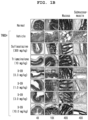
- the colon was extracted and visually inspected.
- the colon of the rats treated with TNBS showed edema and hyperemia compared to the control group rats, and edema and congestion of the appendix and adhesions of the intestinal tissues were observed.
- the symptoms observed with the naked eye and adhesions between other organs and colonic congestion were also significantly suppressed.
- the symptoms improved more than the group treated with 300 mg/kg of sulfasalazine. It was also confirmed that the compound X-09 exhibited a dose-dependent therapeutic activity for enteritis and was more effective than triamcinolone at the same concentration.
- the degree of inflammation of the rat colon is a key scale (important index) of IBD progression that is more important than body weight change.
- the colon was extracted and the weight of the tissue 5-6 cm away from the anus was measured.
- the weight of the colon with edema was significantly increased in the rats of the group treated with TNBS alone, compared to the vehicle-treated control group rats.
- the weight recovery rate of the colon tissue was 69.6%.
- the pyridinol compounds showed a recovery rate of 79.8% ⁇ 97.4% when 1 mg/kg was administered.
- the compounds are listed in the order of excellent weight recovery rate as follows: compounds X-24, XI-07, X-07, X-09, and XI-17. It was also confirmed that the compound X-09 exhibited a dose-dependent body weight recovery activity and was more effective than triamcinolone at the same concentration.
- C57BL/6 mice aged 7-8 weeks were purchased from OrientBio (Korea), stabilized with general solid feed for 7 days, and then used in this experiment. Feed and water were freely supplied during the experiment period, and the temperature of the breeding room was maintained at 25 ⁇ 1°C and the relative humidity at 50 ⁇ 10%. Lighting management was controlled in a 12-hour light-dark cycle by an automatic lighting controller.
- Enteritis was induced in mice by allowing them to freely ingest drinking water containing 2% DSS salt (M.W. 36,000-50,000, MP Biomedicals, LLC, OH, USA).
- DSS was administered using a schedule of DSS administration for the first 7 days, administration of normal drinking water for 14 days, repeated administration of DSS for 7 days from the 21 st day, and administration of normal drinking water for 7 days.
- the drug was administered once a day, 6 days a week from the first day of DSS treatment ( Figure 2A ).
- mice were divided into 6 groups (control group, DSS alone treated group, DSS+sulfasalazine (300 mg/kg) treated group, DSS+tofacitinib (30 mg/kg) treated group, DSS+test drug (1 mg/kg) treated group, and DSS+test drug (3 mg/kg) treated group) in which 6 animals in each group and the average body weight were 20 ⁇ 1 g according to a randomized block design.
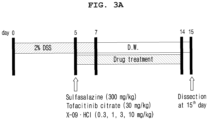
- DSS was administered for 5 days to induce enteritis, and then the drug was administered for 14 days to measure the degree of recovery and treatment of enteritis ( Figure 3A ). The drug was administered orally once daily for 10 days at a fixed time.
- the colon of the mouse was extracted, and the length and weight from the anus to the cecum were measured.
- the degree of neutrophil infiltration in the tissue was measured by the amount of MPO, a neutrophil marker enzyme.
- the colon tissue with a size of 1 cm was washed with cold PBS and weighed, to which a lysis buffer (pH7.4, 200 mM NaCl, 5 mM EDTA, 10 mM tris, 10% glycerin, 1 mM PMSF, 1 ug/mL leupeptin and 28 ug/mL aprotinin) was added (500 ⁇ L of per 10 mg of tissue weight), and then homogenized using Bead Blaster ® D2400 homogenizer (Benchmark Scientific, NJ, USA).
- a lysis buffer pH7.4, 200 mM NaCl, 5 mM EDTA, 10 mM tris, 10% glycerin, 1 mM PMSF, 1 ug/mL leupeptin and 28 ug/mL aprotinin
- the homogenized sample was centrifuged twice at 1500 ⁇ g for 5 minutes to obtain a supernatant, and then 100 ⁇ L of this supernatant was measured using a kit.
- the homogenized sample was centrifuged twice at 1500 ⁇ g for 5 minutes to obtain a supernatant, and then 100 ⁇ L of this supernatant was measured using MPO ELISA kit (HK210, Hycult Biotechnology, Netherlands).
- MPO ELISA kit HK210, Hycult Biotechnology, Netherlands.
- the supernatant was added to a 96 well plate (100 ⁇ L/well) coated with an anti-mouse MPO antibody, and incubated for 1 hour at room temperature, followed by washing 3 times with a washing buffer.
- a reconstituted tracer was added to the plate (100 ⁇ L/well), which was reacted at room temperature for 1 hour, washed 3 times, and then 100 ⁇ L of streptavidin-peroxidase conjugate was added to each well of the plate.
- the plate was reacted at room temperature for 1 hour, washed, and 100 ⁇ l of TMB substrate solution was added to each well of the plate, followed by reaction for 30 minutes.
- the reaction was terminated by adding 100 ⁇ L of a stop solution to each well of the plate, and absorbance was measured at 450 nm.
- MPO activity means the amount of 1 ⁇ M hydrogen peroxide reduced from water at 25°C for 1 minute. This was calculated as the amount of MPO contained in 1 mL of the colon tissue homogenate.
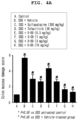
- Tissue staining was performed in the same manner as in the case of hematoxylin/eosin staining of the rat colon tissue, and scoring indexes of mucosal damage and recovery were applied in the same way.
- the weight recovery rate of the mouse of the group treated with 300 mg/kg of sulfasalazine or 30 mg/kg of tofacitinib, a positive control group, after 35 days was 22.8% and 29.4%, respectively, compared to the vehicle-treated control group mouse.
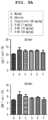
- the mouse of the group treated with the pyridinol compound X-24 showed a dose-dependent body weight recovery rate (22.8%, 73.3%) ( Figure 2B ).
- mice treated with 300 mg/kg of sulfasalazine or 30 mg/kg of tofacitinib, a positive control group was gradually recovered, and although the body weight was decreased compared to that of the vehicle-treated control group rats, it was significantly increased compared to the body weight of the mice treated with DSS alone, resulting in a weight recovery rate of 65.9% and 80.9%, respectively.
- the dose-dependent efficacy of the compound X-09 on DSS-induced acute intestinal inflammation according to the oral administration was measured.
- mice of the group treated with the pyridinol compound X-09 showed weight recovery rates of 56.5, 72.0, 80.7, and 88.1% at the compound concentrations of 0.3, 1, 3, and 10 mg/kg, respectively ( Figure 3B ).
- the colon was extracted and visually inspected.
- the colon of the mice treated with DSS was significantly shorter compared to the control group, and edema and hyperemia were observed.
- edema and congestion of the appendix and adhesions of intestinal tissues were observed.
- the group treated with 300 mg/kg of sulfasalazine or 30 mg/kg of tofacitinib a positive control group, the recovery of intestinal length was observed, and the macroscopic symptoms and adhesions between other organs and colonic congestion were also significantly suppressed.
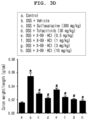
- the colon of the mouse was extracted and the tissue weight between the anus and the cecum was measured. As a result, the weight of the colon with edema was significantly increased in the mice of the group treated with DSS alone, compared to the vehicle-treated control group mice.
- the recovery rate of intestinal tissue weight of the mice treated with 300 mg/kg of sulfasalazine or 30 mg/kg of tofacitinib, a positive control was 67.3% and 68.8%, respectively.
- Compound X-24 showed dose-dependent recovery rates (58.1% and 98.2%) at 1 mg/kg and 3 mg/kg ( Figure 2D ).
- the therapeutic efficacy of the compounds was measured in the acute enteritis model.
- the intestinal tissue weight recovery was observed in the group treated with 300 mg/kg of sulfasalazine or 30 mg/kg of tofacitinib, a positive control.
- Compound X-09 showed a dose-dependent effect, and exhibited a superior effect than the positive control group at 3 mg/kg and 10 mg/kg ( Figure 3D ).
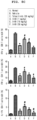
- the level of MPO a biochemical index of tissue inflammation, was measured.
- the highest score for arthritic lesions was 16 per mouse. Observations were performed twice a week for 5 weeks from the day of drug administration, and the evaluation data were prepared by two people who did not know the experimental group and the control group.
- the hind paw thickness which is one of the pathological indices of rheumatoid arthritis, was measured using a caliper.
- the right hind leg of each mouse was extracted, and all skin and muscles were removed, leaving only the bones and joints.
- the hind leg was fixed in 4% paraformaldehyde solution for 2 days, then immersed in 10% formic acid for 5 days to decalcify, and then immersed in 30% sucrose solution.
- the articular tissue was cut into 30 um thick using a cryomicrotome (Microm HM 450, Thermo Fisher Scientific, Germany) and stored in a cryopreservation solution. Staining was performed using the stored tissue sections.
- tissue sections After attaching the tissue sections to the slide glass, they were hydrated with 100%, 95%, 70%, and 50% ethanol solutions, and some were stained with safranin and others were stained with hematoxylin/eosin.
- tissue sections were first stained with 0.1% fast green solution, washed with 1% acetic acid solution, and then stained with 1% safranin solution. Thereafter, the tissue sections were dehydrated by immersing in ethanol solutions in the reverse order of hydration, and then preserved in xylene solution and mounting solution, and photographed under a microscope. Hematoxylin/eosin staining was performed in the same manner as in the colon tissue staining. The tissue sections were dehydrated, preserved in xylene solution and mounting solution, and observed under a microscope.
- the degree of microscopic tissue damage of the stained articular tissue was measured using the following scores.
- the number of immune cells was counted.
- the immune cells obtained from each organ were stimulated using PMA/Ionomycin and Golgi stop.
- the group treated with 50 mg/kg of compound X-09 showed the best efficacy with an arthritis score of 7.2, followed by the group treated with 50 mg/kg of tofacitinib, the group treated with 10 mg/kg of compound X-09, and the group treated with 1 mg/kg of compound X-09 ( Figure 5A ).
- the hind paw thickness of arthritic mice was 2.58 to 2.61 mm on the fourth day of drug administration, which was significantly increased compared to the average hind paw thickness of normal mice, 1.64 mm.
- the hind paw thickness increased by inflammatory edema was maintained at 2.65 mm, and was significantly reduced to 1.70 mm in the group treated with 50 mg/kg of compound X-09, and the hind paw thickness was reduced in the order of the group treated with 50 mg/kg of tofacitinib, the group treated with 10 mg/kg of compound X-09, and the group treated with 1 mg/kg of compound X-09 ( Figure 5B ).
- the body weight of the arthritis mice was significantly reduced compared to that of the normal mice of the same age, and the body weight was gradually recovered in proportion to the degree of arthritis improvement ( Figure 5C ).
- the compounds according to the present invention can be effectively used as a pharmaceutical composition for the prevention and treatment of autoimmune diseases, in particular, inflammatory bowel disease or rheumatoid arthritis, as confirmed in the above experiments.
Landscapes
- Health & Medical Sciences (AREA)
- Chemical & Material Sciences (AREA)
- Organic Chemistry (AREA)
- Life Sciences & Earth Sciences (AREA)
- Pharmacology & Pharmacy (AREA)
- Veterinary Medicine (AREA)
- Public Health (AREA)
- General Health & Medical Sciences (AREA)
- Animal Behavior & Ethology (AREA)
- Medicinal Chemistry (AREA)
- Engineering & Computer Science (AREA)
- General Chemical & Material Sciences (AREA)
- Nuclear Medicine, Radiotherapy & Molecular Imaging (AREA)
- Chemical Kinetics & Catalysis (AREA)
- Bioinformatics & Cheminformatics (AREA)
- Immunology (AREA)
- Diabetes (AREA)
- Rheumatology (AREA)
- Neurology (AREA)
- Dermatology (AREA)
- Physical Education & Sports Medicine (AREA)
- Orthopedic Medicine & Surgery (AREA)
- Pain & Pain Management (AREA)
- Neurosurgery (AREA)
- Biomedical Technology (AREA)
- Hematology (AREA)
- Epidemiology (AREA)
- Psychiatry (AREA)
- Endocrinology (AREA)
- Hospice & Palliative Care (AREA)
- Transplantation (AREA)
- Gastroenterology & Hepatology (AREA)
- Ophthalmology & Optometry (AREA)
- Emergency Medicine (AREA)
- Urology & Nephrology (AREA)
- Obesity (AREA)
- Mycology (AREA)
- Nutrition Science (AREA)
- Food Science & Technology (AREA)
- Polymers & Plastics (AREA)
Claims (10)
- Verbindung, wiedergegeben durch Formel 1, Solvat davon, Hydrat davon oder pharmazeutisch unbedenkliches Salz davon:
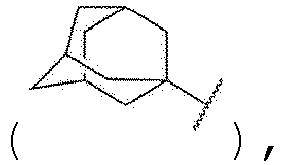
 A für NRa, O oder S steht, wobei das Ra für Wasserstoff oder geradkettiges oder verzweigtes C1-5-Alkyl steht;R1, R2, R3, R4 und R5 unabhängig für Wasserstoff, Halogen, geradkettiges oder verzweigtes C1-5-Alkyl oder geradkettiges oder verzweigtes C1-5-Alkoxy stehen, wobei das Alkyl und Alkoxy unabhängig durch ein oder mehrere Halogene substituiert sein können;R6 für Wasserstoff, geradkettiges oder verzweigtes C1-5-Alkyl, -(CH2)mC(=O)NH(CH2)nRb oder -C(=O)Rc steht, wobei das Alkyl durch ein oder mehrere Halogene substituiert sein kann und m und n unabhängig für ganze Zahlen von 0 bis 5 stehen,Rb für Wasserstoff, geradkettiges oder verzweigtes C1-10-Alkyl, C3-10-Cycloalkyl oder C6-10-Aryl steht,Rc für Adamantanyl
 R7, R8 und R9 unabhängig für geradkettiges oder verzweigtes C1-5-Alkyl stehen; undR10 für Wasserstoff oder geradkettiges oder verzweigtes C1-5-Alkyl steht.
 - Verbindung, Solvat davon, Hydrat davon oder pharmazeutisch unbedenkliches Salz davon nach Anspruch 1, wobei:A für NRa, O oder S steht, wobei das Ra für Wasserstoff oder geradkettiges oder verzweigtes C1-3-Alkyl steht;R1, R2, R3, R4 und R5 unabhängig für Wasserstoff, Halogen, geradkettiges oder verzweigtes C1-3-Alkyl oder geradkettiges oder verzweigtes C1-3-Alkoxy stehen, wobei das Alkyl und Alkoxy unabhängig durch ein oder mehrere Halogene substituiert sein können;R6 für Wasserstoff, geradkettiges oder verzweigtes C1-3-Alkyl, -(CH2)mC(=O)NH(CH2)nRb oder -C(=O)Rc steht, wobei das Alkyl durch ein oder mehrere Halogene substituiert sein kann und m und n unabhängig für ganze Zahlen von 0 bis 3 stehen,Rb für Wasserstoff, geradkettiges oder verzweigtes C1-6-Alkyl, C3-8-Cycloalkyl oder Phenyl steht,Rc für Adamantanyl
 R7, R8 und R9 unabhängig für geradkettiges oder verzweigtes C1-3-Alkyl stehen; undR10 für Wasserstoff oder geradkettiges oder verzweigtes C1-3-Alkyl steht.
 - Verbindung, Solvat davon, Hydrat davon oder pharmazeutisch unbedenkliches Salz davon nach Anspruch 1, wobei:A für NRa, O oder S steht, wobei das Ra für Wasserstoff oder Methyl steht;R1, R2, R3, R4 und R5 unabhängig für Wasserstoff, - Cl, -Br, -F, Methyl, Methoxy, -CF3 oder -OCF3 stehen;R6 für Wasserstoff, Methyl, - (CH2)mC(=O)NH(CH2)nRb oder -C(=O)Rc steht, wobei m für 1 steht und n für 0 oder 1 steht,Rb für Wasserstoff, geradkettiges oder verzweigtes C1-3-Alkyl, C3-6-Cycloalkyl oder Phenyl steht,Rc für Adamantanyl
 R7, R8 und R9 für Methyl stehen; undR10 für Wasserstoff oder Methyl steht.
 - Verbindung, Solvat davon, Hydrat davon oder pharmazeutisch unbedenkliches Salz davon nach Anspruch 1, wobei:R6 für Wasserstoff, Methyl, -(CH2)C(=O)NHRb oder - C(=O)Rc steht,Rb für Wasserstoff, Isopropyl, Cyclopropyl, Cyclohexyl, Phenyl oder Benzyl steht,Rc für Adamantanyl

- Verbindung, Solvat davon, Hydrat davon oder pharmazeutisch unbedenkliches Salz davon nach Anspruch 1, wobei die durch Formel 1 wiedergegebene Verbindung aus der Gruppe bestehend aus den folgenden Verbindungen ausgewählt ist:<27> N-(5-Hydroxy-3,4,6-trimethylpyridin-2-yl)-1H-indol-2-carboxamid;<28> N-(5-Hydroxy-3,4,6-trimethylpyridin-2-yl)-1-methyl-1H-indol-2-carboxamid;<29> 7-Brom-N-(5-hydroxy-3,4,6-trimethylpyridin-2-yl)-1H-indol-2-carboxamid;<30> 6-Chlor-N-(5-hydroxy-3,4,6-trimethylpyridin-2-yl)-1H-indol-2-carboxamid;<31> 6-Brom-N-(5-hydroxy-3,4,6-trimethylpyridin-2-yl)-1H-indol-2-carboxamid;<32> 5-Fluor-N-(5-hydroxy-3,4,6-trimethylpyridin-2-yl)-1H-indol-2-carboxamid;<33> 5-Brom-N-(5-hydroxy-3,4,6-trimethylpyridin-2-yl)-1H-indol-2-carboxamid;<34> 5-Chlor-N-(5-hydroxy-3,4,6-trimethylpyridin-2-yl)-1H-indol-2-carboxamid;<35> N-(5-Hydroxy-3,4,6-trimethylpyridin-2-yl)-5-methyl-1H-indol-2-carboxamid;<36> N-(5-Hydroxy-3,4,6-trimethylpyridin-2-yl)-5-(trifluormethyl)-1H-indol-2-carboxamid;<37> N-(5-Hydroxy-3,4,6-trimethylpyridin-2-yl)-5-(trifluormethoxy)-1H-indol-2-carboxamid;<38> N-(5-Hydroxy-3,4,6-trimethylpyridin-2-yl)-6-methoxy-1H-indol-2-carboxamid;<39> N-(5-Hydroxy-3,4,6-trimethylpyridin-2-yl)-5-methoxy-1H-indol-2-carboxamid;<40> N-(5-Hydroxy-3,4,6-trimethylpyridin-2-yl)-5,6-dimethoxy-1H-indol-2-carboxamid;<41> N-(5-Hydroxy-3,4,6-trimethylpyridin-2-yl)benzofuran-2-carboxamid;<42> 5-Chlor-N-(5-hydroxy-3,4,6-trimethylpyridin-2-yl)benzofuran-2-carboxamid;<43> 5-Brom-N-(5-hydroxy-3,4,6-trimethylpyridin-2-yl)benzofuran-2-carboxamid;<44> N-(5-Hydroxy-3,4,6-trimethylpyridin-2-yl)-7-methoxybenzofuran-2-carboxamid;<45> N-(5-Hydroxy-3,4,6-trimethylpyridin-2-yl)-3-methylbenzofuran-2-carboxamid;<46> N-(5-Hydroxy-3,4,6-trimethylpyridin-2-yl)benzo[b]thiophen-2-carboxamid;<47> 3-Chlor-N-(5-hydroxy-3,4,6-trimethylpyridin-2-yl)benzo[b]thiophen-2-carboxamid;<48> 3-Brom-N-(5-hydroxy-3,4,6-trimethylpyridin-2-yl)benzo[b]thiophen-2-carboxamid;<49> 3-Chlor-N-(5-hydroxy-3,4,6-trimethylpyridin-2-yl)-6-methylbenzo[b]thiophen-2-carboxamid;<50> 3-Chlor-6-fluor-N-(5-hydroxy-3,4,6-trimethylpyridin-2-yl)benzo[b]thiophen-2-carboxamid;<51> 3,6-Dichlor-N-(5-hydroxy-3,4,6-trimethylpyridin-2-yl)benzo[b]thiophen-2-carboxamid;<52> 3-Chlor-N-(5-hydroxy-3,4,6-trimethylpyridin-2-yl)-6-methoxybenzo[b]thiophen-2-carboxamid;<53> 3-Chlor-6-fluor-N-(5-methoxy-3,4,6-trimethylpyridin-2-yl)benzo[b]thiophen-2-carboxamid;<54> 3-Chlor-6-fluor-N-(5-methoxy-3,4,6-trimethylpyridin-2-yl)-N-methylbenzo[b]thiophen-2-carboxamid;<55> 3-Chlor-6-fluor-N-(5-(2-(isopropylamino)-2-oxoethoxy)-3,4,6-trimethylpyridin-2-yl)benzo[b]thiophen-2-carboxamid;<56> 3-Chlor-N-(5-(2-(cyclopropylamino)-2-oxoethoxy)-3,4,6-trimethylpyridin-2-yl)-6-fluorbenzo[b]thiophen-2-carboxamid;<57> 3-Chlor-N-(5-(2-(cyclohexylamino)-2-oxoethoxy)-3,4,6-trimethylpyridin-2-yl)-6-fluorbenzo[b]thiophen-2-carboxamid;<58> N-(5-(2-(Benzylamino)-2-oxoethoxy)-3,4,6-trimethylpyridin-2-yl)-3-chlor-6-fluorbenzo[b]thiophen-2-carboxamid;<59> 3-Chlor-6-fluor-N-(3,4,6-trimethyl-5-(2-oxo-2-(phenylamino)ethoxy)pyridin-2-yl)benzo[b]thiophen-2-carboxamid;<60> Benzoesäure-6-(3-chlor-6-fluorbenzo[b]thiophen-2-carboxamido)-2,4,5-trimethylpyridin-3-ylester;<61> 4-Fluorbenzoesäure-6-(3-chlor-6-fluorbenzo[b]thiophen-2-carboxamido)-2,4,5-trimethylpyridin-3-ylester;<62> 3-Methoxybenzoesäure-6-(3-chlor-6-fluorbenzo[b]thiophen-2-carboxamido)-2,4,5-trimethylpyridin-3-ylester;<63> 4-Methoxybenzoesäure-6-(3-chlor-6-fluorbenzo[b]thiophen-2-carboxamido)-2,4,5-trimethylpyridin-3-ylester;<64> 5-Fluorpicolinsäure-6-(3-chlor-6-fluorbenzo[b]thiophen-2-carboxamido)-2,4,5-trimethylpyridin-3-ylester;<65> 6-Fluornicotinsäure-6-(3-chlor-6-fluorbenzo[b]thiophen-2-carboxamido)-2,4,5-trimethylpyridin-3-ylester;<66> 5-Chlorpicolinsäure-6-(3-chlor-6-fluorbenzo[b]thiophen-2-carboxamido)-2,4,5-trimethylpyridin-3-ylester;<67> 6-Chlorpicolinsäure-6-(3-chlor-6-fluorbenzo[b]thiophen-2-carboxamido)-2,4,5-trimethylpyridin-3-ylester;<68> (3r,5r,7r)-Adamantan-1-carbonsäure-6-(3-chlor-6-fluorbenzo[b]thiophen-2-carboxamido)-2,4,5-trimethylpyridin-3-ylester;<69> Morpholin-4-carbonsäure-6-(3-chlor-6-fluorbenzo[b]thiophen-2-carboxamido)-2,4,5-trimethylpyridin-3-ylester.
- Verfahren zur Herstellung einer durch Formel 1 wiedergegebene Verbindung, umfassend einen Schritt des Herstellens einer durch Formel 1 wiedergegebene Verbindung durch Umsetzen einer durch Formel 2 wiedergegebene Verbindung mit einer durch Formel 3 wiedergegebene Verbindung, wie in nachstehender Reaktionsformel 1 gezeigt:

A, R1, R2, R3, R4, R5, R6, R7, R8, R9 und R10 wie in Formel 1 von Anspruch 1 definiert sind. - Verfahren zur Herstellung einer durch Formel 1 wiedergegebene Verbindung, umfassend die folgenden Schritte, wie in nachstehender Reaktionsformel 2 gezeigt:Herstellen einer durch Formel 4 wiedergegebenen Verbindung durch Umsetzen einer durch Formel 2a wiedergegebenen Verbindung mit einer durch Formel 3 wiedergegebene Verbindung (Schritt 1);Herstellen einer durch Formel 1a wiedergegebenen Verbindung durch Entschützen der in obigem Schritt 1 erhaltenen durch Formel 4 wiedergegebenen Verbindung (Schritt 2); undHerstellen einer durch Formel 1b wiedergegebenen Verbindung durch Umsetzen der in obigem Schritt 2 erhaltenen durch Formel 1a wiedergegebenen Verbindung mit einer durch Formel 5 wiedergegebenen Verbindung (Schritt 3) :

 A, R1, R2, R3, R4, R5, R6, R7, R8, R9 und R10 wie in Formel 1 von Anspruch 1 definiert sind, außer wenn R6 für Wasserstoff steht;die durch Formel 1a wiedergegebene Verbindung ein Derivat von Formel 1 ist, wobei R6 für Wasserstoff steht;die durch Formel 1b wiedergegebene Verbindung ein Derivat der Formel 1 ist, außer wenn R6 für Wasserstoff steht;PG1 für eine Alkohol-Schutzgruppe steht, die aus der Gruppe bestehend aus Acetyl (Ac), Benzoyl (Bz), Benzyl (Bn), Methylthiomethylether, MEM (β-Methoxyethoxymethylether), DMT (Dimethoxytrityl, [Bis(4-methoxyphenyl)phenylmethyl]), MOM (Methoxymethylether), MMT (Methoxytrityl [(4-Methoxyphenyl)diphenylmethyl]), PMP (p-Methoxybenzylether), Piv (Pivaloyl), THP (Tetrahydropyranyl), THF (Tetrahydrofuran) und Trityl (Triphenylmethyl, Tr) ausgewählt ist; undX für Halogen steht.
 - Pharmazeutische Zusammensetzung, umfassend eine durch Formel 1 von Anspruch 1 wiedergegebene Verbindung, ein Solvat davon, ein Hydrat davon oder ein pharmazeutisch unbedenkliches Salz davon als Wirkstoff zur Verwendung bei der Prävention oder Behandlung einer Autoimmunerkrankung.
- Pharmazeutische Zusammensetzung zur Verwendung nach Anspruch 8, wobei es sich bei der Autoimmunerkrankung um mindestens eine Erkrankung handelt, die aus der Gruppe bestehend aus entzündlicher Darmerkrankung, Asthma, Typ-1-Diabetes, rheumatoider Arthritis, Polymyalgia rheumatica, Spondylitis ankylosans, Arthritis psoriatica, Psoriasis, Ekzem, Sklerose, Vitiligo, multipler Sklerose, IL-17-induzierter Demenz, peripherer Neuritis, Uveitis, Polymyositis/Dermatomyositis, Autoimmunzytopenie, Autoimmunmyokarditis, atopischer Dermatitis, primärer Zirrhose, Syndrom des trockenen Auges, Fibromyalgie, Goodpasture-Syndrom, Autoimmunmeningitis, Sjögren-Syndrom, systemischem Lupus erythematodes, Addison-Krankheit, Alopecia areata, Autoimmunhepatitis, Autoimmunmumps, dystropher Epidermolysis bullosa, Epididymitis, Glomerulonephritis, Morbus Basedow, Zöliakie, Guillain-Barré-Syndrom, Hashimoto-Krankheit, hämolytischer Anämie, Myasthenia gravis, amyotropher Lateralsklerose, Pemphigus vulgaris, rheumatischem Fieber, Sarkoidose, Hautsklerose, Spondyloarthrose, Thyroiditis, Vaskulitis, Vitiligo, Myxödem, perniziöser Anämie, Antiphospholipid-Syndrom, später und chronischer Abstoßung bei Transplantation fester Organe und Graft-versus-Host-Krankheit ausgewählt ist.
- Pharmazeutische Zusammensetzung zur Verwendung nach Anspruch 9, wobei es sich bei der entzündlichen Darmerkrankung um mindestens eine Erkrankung handelt, die aus der Gruppe bestehend aus Enteritis, Colitis, ulzerativer Enteritis, Morbus Crohn, Crohn-Zytom, Reizdarmsyndrom, hämorrhagischem rektalem Ulkus, Pouchitis, peptischem Ulkus, intestinaler Behcet-Krankheit und Gastritis ausgewählt ist.
Applications Claiming Priority (2)
| Application Number | Priority Date | Filing Date | Title |
|---|---|---|---|
| KR1020190117253A KR102426921B1 (ko) | 2019-09-24 | 2019-09-24 | 헤테로아릴아미도피리딘올 유도체 및 이를 유효성분으로 포함하는 자가면역질환의 예방 또는 치료용 약학적 조성물 |
| PCT/KR2020/013003 WO2021060890A1 (ko) | 2019-09-24 | 2020-09-24 | 헤테로아릴아미도피리딘올 유도체 및 이를 유효성분으로 포함하는 자가면역질환의 예방 또는 치료용 약학적 조성물. |
Publications (4)
| Publication Number | Publication Date |
|---|---|
| EP4008718A1 EP4008718A1 (de) | 2022-06-08 |
| EP4008718A4 EP4008718A4 (de) | 2022-08-17 |
| EP4008718B1 true EP4008718B1 (de) | 2024-10-30 |
| EP4008718C0 EP4008718C0 (de) | 2024-10-30 |
Family
ID=75166776
Family Applications (1)
| Application Number | Title | Priority Date | Filing Date |
|---|---|---|---|
| EP20868510.7A Active EP4008718B1 (de) | 2019-09-24 | 2020-09-24 | Heteroarylamidopyridinolderivate und pharmazeutische zusammensetzungen, die diese umfassen, zur vorbeugung oder behandlung von autoimmunerkrankungen |
Country Status (16)
| Country | Link |
|---|---|
| US (1) | US12398117B2 (de) |
| EP (1) | EP4008718B1 (de) |
| JP (1) | JP7353683B2 (de) |
| KR (1) | KR102426921B1 (de) |
| CN (1) | CN114450275B (de) |
| AU (2) | AU2020354138B2 (de) |
| BR (1) | BR112022004925A2 (de) |
| CA (1) | CA3154502C (de) |
| CL (1) | CL2022000729A1 (de) |
| CO (1) | CO2022002998A2 (de) |
| ES (1) | ES2994781T3 (de) |
| IL (1) | IL291168B1 (de) |
| MX (1) | MX2022003422A (de) |
| PH (1) | PH12022550617A1 (de) |
| UA (1) | UA128298C2 (de) |
| WO (1) | WO2021060890A1 (de) |
Families Citing this family (6)
| Publication number | Priority date | Publication date | Assignee | Title |
|---|---|---|---|---|
| EP4370207B1 (de) | 2021-07-12 | 2025-12-17 | Nido Biosciences, Inc. | Bicyclische verbindungen als androgenrezeptormodulatoren |
| EP4561991A1 (de) * | 2022-07-25 | 2025-06-04 | Cayman Chemical Company, Inc. | Neue heterocyclen als spla2-x-inhibitoren |
| KR20240055482A (ko) | 2022-10-20 | 2024-04-29 | 주식회사 이노보테라퓨틱스 | 글리코겐 가인산분해효소 (pygl) 저해제를 유효성분으로 포함하는 염증성 장 질환 치료용 약학적 조성물 |
| KR102875287B1 (ko) | 2023-01-10 | 2025-10-23 | 광주과학기술원 | 신규한 화합물 및 이를 포함하는 약학 조성물 |
| KR20240031874A (ko) | 2023-06-28 | 2024-03-08 | 주식회사 이노보테라퓨틱스 | 글리코겐 포스포릴라제(pygl) 저해제를 포함하는 자가면역 질환의 예방 또는 치료용 약학 조성물 |
| KR20250075304A (ko) * | 2023-11-21 | 2025-05-28 | (주)신테카바이오 | 지팔러티닙 또는 이의 약학적으로 허용 가능한 염을 포함하는 탈모 치료 및 발모 촉진용 조성물 |
Family Cites Families (15)
| Publication number | Priority date | Publication date | Assignee | Title |
|---|---|---|---|---|
| US6022884A (en) | 1997-11-07 | 2000-02-08 | Amgen Inc. | Substituted pyridine compounds and methods of use |
| JP4695588B2 (ja) * | 2003-02-26 | 2011-06-08 | スージェン, インク. | プロテインキナーゼ阻害剤としてのアミノヘテロアリール化合物 |
| UA80474C2 (en) * | 2003-02-26 | 2007-09-25 | Sugen Inc | Aminoheteroaryl compounds as inhibitors of protein kinase |
| US7754717B2 (en) | 2005-08-15 | 2010-07-13 | Amgen Inc. | Bis-aryl amide compounds and methods of use |
| PT2563776T (pt) * | 2010-04-27 | 2016-09-19 | Calcimedica Inc | Compostos que modulam o cálcio intracelular |
| US10703722B2 (en) | 2010-04-27 | 2020-07-07 | Calcimedica, Inc. | Compounds that modulate intracellular calcium |
| JP2012107001A (ja) | 2010-10-22 | 2012-06-07 | Shionogi & Co Ltd | インドールアミド化合物を含有する医薬 |
| KR102189529B1 (ko) | 2013-03-14 | 2020-12-11 | 큐라데브 파마 프라이버트 리미티드 | 키누레닌 경로의 억제제 |
| KR101652577B1 (ko) | 2013-04-19 | 2016-08-30 | 영남대학교 산학협력단 | 아미도피리딘올 유도체 또는 이의 약제학적 허용가능한 염 및 이를 유효성분으로 함유하는 혈관신생으로 인한 질환의 예방 또는 치료용 약학조성물 |
| KR101600613B1 (ko) | 2014-10-29 | 2016-03-09 | 한국화학연구원 | 펩타이드 유도체, 이의 제조방법 및 이를 유효성분으로 함유하는 염증성 질환의 예방 또는 치료용 약학적 조성물 |
| KR20160066490A (ko) * | 2014-12-02 | 2016-06-10 | 주식회사 씨앤드씨신약연구소 | 헤테로사이클 유도체 및 그의 용도 |
| KR101770310B1 (ko) | 2015-08-24 | 2017-08-24 | 이화여자대학교 산학협력단 | 2-(페닐아미노)벤조[d]옥사졸-5-올 유도체, 이의 제조방법 및 이를 유효성분으로 함유하는 염증성 질환의 예방 또는 치료용 약학적 조성물 |
| KR101909910B1 (ko) * | 2016-01-14 | 2018-10-22 | 영남대학교 산학협력단 | 피리딘올 유도체 또는 이의 약제학적 허용 가능한 염 및 이를 유효성분으로 함유하는 약학 조성물 |
| KR20180083994A (ko) | 2017-01-13 | 2018-07-24 | 영남대학교 산학협력단 | 피리딘올 유도체 또는 이의 약제학적 허용 가능한 염 및 이를 유효성분으로 함유하는 자가면역 질환의 예방 또는 치료용 약학 조성물 |
| CA3080695A1 (en) | 2017-11-03 | 2019-05-09 | Universite De Montreal | Compounds and use thereof in the expansion of stem cells and/or progenitor cells |
-
2019
- 2019-09-24 KR KR1020190117253A patent/KR102426921B1/ko active Active
-
2020
- 2020-09-24 PH PH1/2022/550617A patent/PH12022550617A1/en unknown
- 2020-09-24 BR BR112022004925A patent/BR112022004925A2/pt unknown
- 2020-09-24 US US17/639,886 patent/US12398117B2/en active Active
- 2020-09-24 ES ES20868510T patent/ES2994781T3/es active Active
- 2020-09-24 EP EP20868510.7A patent/EP4008718B1/de active Active
- 2020-09-24 MX MX2022003422A patent/MX2022003422A/es unknown
- 2020-09-24 CN CN202080067429.6A patent/CN114450275B/zh active Active
- 2020-09-24 CA CA3154502A patent/CA3154502C/en active Active
- 2020-09-24 JP JP2022519313A patent/JP7353683B2/ja active Active
- 2020-09-24 AU AU2020354138A patent/AU2020354138B2/en not_active Expired - Fee Related
- 2020-09-24 UA UAA202201311A patent/UA128298C2/uk unknown
- 2020-09-24 WO PCT/KR2020/013003 patent/WO2021060890A1/ko not_active Ceased
-
2022
- 2022-03-07 IL IL291168A patent/IL291168B1/en unknown
- 2022-03-15 CO CONC2022/0002998A patent/CO2022002998A2/es unknown
- 2022-03-23 CL CL2022000729A patent/CL2022000729A1/es unknown
-
2023
- 2023-09-08 AU AU2023226778A patent/AU2023226778B2/en active Active
Also Published As
| Publication number | Publication date |
|---|---|
| AU2020354138A1 (en) | 2022-03-24 |
| IL291168B1 (en) | 2025-11-01 |
| CL2022000729A1 (es) | 2023-01-20 |
| KR20210035454A (ko) | 2021-04-01 |
| US20220324834A1 (en) | 2022-10-13 |
| JP2022551431A (ja) | 2022-12-09 |
| EP4008718A4 (de) | 2022-08-17 |
| BR112022004925A2 (pt) | 2022-06-14 |
| WO2021060890A1 (ko) | 2021-04-01 |
| CN114450275A (zh) | 2022-05-06 |
| ES2994781T3 (en) | 2025-01-31 |
| US12398117B2 (en) | 2025-08-26 |
| NZ785829A (en) | 2024-08-30 |
| CA3154502A1 (en) | 2021-04-01 |
| UA128298C2 (uk) | 2024-05-29 |
| KR102426921B1 (ko) | 2022-07-29 |
| AU2020354138B2 (en) | 2023-07-13 |
| CN114450275B (zh) | 2024-11-19 |
| PH12022550617A1 (en) | 2022-11-21 |
| JP7353683B2 (ja) | 2023-10-02 |
| AU2023226778A1 (en) | 2023-09-28 |
| AU2023226778B2 (en) | 2025-01-09 |
| IL291168A (en) | 2022-05-01 |
| CO2022002998A2 (es) | 2022-04-19 |
| EP4008718C0 (de) | 2024-10-30 |
| MX2022003422A (es) | 2022-04-18 |
| CA3154502C (en) | 2024-04-23 |
| EP4008718A1 (de) | 2022-06-08 |
Similar Documents
| Publication | Publication Date | Title |
|---|---|---|
| EP4008718B1 (de) | Heteroarylamidopyridinolderivate und pharmazeutische zusammensetzungen, die diese umfassen, zur vorbeugung oder behandlung von autoimmunerkrankungen | |
| RU2625309C2 (ru) | Замещенные диаминокарбоксамидные и диаминокарбонитрильные производные пиримидинов, их композиции и способы лечения с их помощью | |
| UA64791C2 (en) | Quinoline derivatives, a method for the preparation thereof, a pharmaceutical composition and a method for treatment of diseases resulting from pathological inflammation or autoimmunity | |
| JP2002513006A (ja) | キノリン誘導体 | |
| CA2378499A1 (en) | Cyclic amine ccr3 antagonists | |
| JPH07504201A (ja) | 環式ampホスホジエステラーゼ及び腫瘍壊死因子の阻害剤としての1−アルコキシ−(2−アルコキシ−またはシクロアルコキシ)−4−(シクロチオアルキル−またはシクロチオアルケニル)ベンゼン | |
| KR101770310B1 (ko) | 2-(페닐아미노)벤조[d]옥사졸-5-올 유도체, 이의 제조방법 및 이를 유효성분으로 함유하는 염증성 질환의 예방 또는 치료용 약학적 조성물 | |
| CN111518031A (zh) | 一种含有异羟肟酸的化合物及其制备方法、应用 | |
| JP6345337B2 (ja) | 置換二環式ジヒドロピリミジノンおよび好中球エラスターゼ活性の阻害薬としてのそれらの使用 | |
| EP3327001B1 (de) | Neuartige verbindung mit blt-hemmender wirkung und zusammensetzung damit als wirkstoff zur prävention oder behandlung von entzündlichen erkrankungen | |
| JP7312745B2 (ja) | アゼチジン誘導体及びそのプロドラッグ | |
| US7470708B2 (en) | Acidic quinoline derivatives and their use for the prevention and/or treatment of hyperglycaemia-related pathologies | |
| JP6279773B2 (ja) | ロイコトリエン受容体拮抗薬として用いるシクロプロピル不飽和キノリン化合物及びその使用 | |
| HUP0103947A2 (hu) | Egy piridopirazinszármazék metán-szulfonát sója és annak kristályai és ezek gyógyászati alkalmazása | |
| EA047433B1 (ru) | Производное гетероариламидопиридинола и фармацевтическая композиция, содержащая его в качестве активного ингредиента, для профилактики или лечения аутоиммунного заболевания | |
| HUT69375A (en) | Crystalline salts of optically active aminocumaran derivatives, their production and use | |
| KR20210123321A (ko) | 류코트리엔 합성 억제제 | |
| CN110183348B (zh) | N-(3-硝基-4-烷氧基苯甲酰基)氨基酸类化合物、制备方法及其用途 | |
| WO2025096550A1 (en) | Methods of treating cardiomyopathy | |
| JP2010132637A (ja) | 炎症関連疾患治療剤用2,4−二重置換−5−アミノカルボニル−1,3−チアゾール誘導体、その製造方法及びそれを有効成分として含有するspc受容体活性により誘発される炎症関連疾患の治療剤、外傷後傷跡形成抑制及び傷治癒促進用皮膚外用剤、腫瘍内部の血管新生阻害剤 | |
| JPH0542432B2 (de) | ||
| JPH0967331A (ja) | 芳香族ヒドロキサム酸誘導体、その製造法および剤 | |
| JPWO2006082822A1 (ja) | アシクロビル耐性ヘルペスウイルスによる疾患の予防・治療剤 | |
| JPH06298730A (ja) | グアニジノ安息香酸エステル誘導体 |
Legal Events
| Date | Code | Title | Description |
|---|---|---|---|
| STAA | Information on the status of an ep patent application or granted ep patent |
Free format text: STATUS: THE INTERNATIONAL PUBLICATION HAS BEEN MADE |
|
| PUAI | Public reference made under article 153(3) epc to a published international application that has entered the european phase |
Free format text: ORIGINAL CODE: 0009012 |
|
| STAA | Information on the status of an ep patent application or granted ep patent |
Free format text: STATUS: REQUEST FOR EXAMINATION WAS MADE |
|
| 17P | Request for examination filed |
Effective date: 20220304 |
|
| AK | Designated contracting states |
Kind code of ref document: A1 Designated state(s): AL AT BE BG CH CY CZ DE DK EE ES FI FR GB GR HR HU IE IS IT LI LT LU LV MC MK MT NL NO PL PT RO RS SE SI SK SM TR |
|
| A4 | Supplementary search report drawn up and despatched |
Effective date: 20220720 |
|
| RIC1 | Information provided on ipc code assigned before grant |
Ipc: A61P 37/00 20060101ALI20220714BHEP Ipc: A61P 29/00 20060101ALI20220714BHEP Ipc: A61P 1/00 20060101ALI20220714BHEP Ipc: A61K 31/443 20060101ALI20220714BHEP Ipc: A61K 31/444 20060101ALI20220714BHEP Ipc: A61K 31/4436 20060101ALI20220714BHEP Ipc: A61K 31/4439 20060101ALI20220714BHEP Ipc: C07D 409/14 20060101ALI20220714BHEP Ipc: C07D 409/12 20060101ALI20220714BHEP Ipc: C07D 405/12 20060101ALI20220714BHEP Ipc: C07D 401/12 20060101AFI20220714BHEP |
|
| DAV | Request for validation of the european patent (deleted) | ||
| DAX | Request for extension of the european patent (deleted) | ||
| STAA | Information on the status of an ep patent application or granted ep patent |
Free format text: STATUS: EXAMINATION IS IN PROGRESS |
|
| 17Q | First examination report despatched |
Effective date: 20230728 |
|
| GRAP | Despatch of communication of intention to grant a patent |
Free format text: ORIGINAL CODE: EPIDOSNIGR1 |
|
| STAA | Information on the status of an ep patent application or granted ep patent |
Free format text: STATUS: GRANT OF PATENT IS INTENDED |
|
| INTG | Intention to grant announced |
Effective date: 20240529 |
|
| GRAS | Grant fee paid |
Free format text: ORIGINAL CODE: EPIDOSNIGR3 |
|
| GRAA | (expected) grant |
Free format text: ORIGINAL CODE: 0009210 |
|
| STAA | Information on the status of an ep patent application or granted ep patent |
Free format text: STATUS: THE PATENT HAS BEEN GRANTED |
|
| AK | Designated contracting states |
Kind code of ref document: B1 Designated state(s): AL AT BE BG CH CY CZ DE DK EE ES FI FR GB GR HR HU IE IS IT LI LT LU LV MC MK MT NL NO PL PT RO RS SE SI SK SM TR |
|
| REG | Reference to a national code |
Ref country code: GB Ref legal event code: FG4D |
|
| REG | Reference to a national code |
Ref country code: CH Ref legal event code: EP |
|
| REG | Reference to a national code |
Ref country code: IE Ref legal event code: FG4D |
|
| REG | Reference to a national code |
Ref country code: DE Ref legal event code: R096 Ref document number: 602020040527 Country of ref document: DE |
|
| U01 | Request for unitary effect filed |
Effective date: 20241126 |
|
| U07 | Unitary effect registered |
Designated state(s): AT BE BG DE DK EE FI FR IT LT LU LV MT NL PT RO SE SI Effective date: 20241202 |
|
| REG | Reference to a national code |
Ref country code: ES Ref legal event code: FG2A Ref document number: 2994781 Country of ref document: ES Kind code of ref document: T3 Effective date: 20250131 |
|
| PG25 | Lapsed in a contracting state [announced via postgrant information from national office to epo] |
Ref country code: IS Free format text: LAPSE BECAUSE OF FAILURE TO SUBMIT A TRANSLATION OF THE DESCRIPTION OR TO PAY THE FEE WITHIN THE PRESCRIBED TIME-LIMIT Effective date: 20250228 Ref country code: HR Free format text: LAPSE BECAUSE OF FAILURE TO SUBMIT A TRANSLATION OF THE DESCRIPTION OR TO PAY THE FEE WITHIN THE PRESCRIBED TIME-LIMIT Effective date: 20241030 |
|
| PG25 | Lapsed in a contracting state [announced via postgrant information from national office to epo] |
Ref country code: NO Free format text: LAPSE BECAUSE OF FAILURE TO SUBMIT A TRANSLATION OF THE DESCRIPTION OR TO PAY THE FEE WITHIN THE PRESCRIBED TIME-LIMIT Effective date: 20250130 |
|
| PG25 | Lapsed in a contracting state [announced via postgrant information from national office to epo] |
Ref country code: GR Free format text: LAPSE BECAUSE OF FAILURE TO SUBMIT A TRANSLATION OF THE DESCRIPTION OR TO PAY THE FEE WITHIN THE PRESCRIBED TIME-LIMIT Effective date: 20250131 |
|
| PG25 | Lapsed in a contracting state [announced via postgrant information from national office to epo] |
Ref country code: PL Free format text: LAPSE BECAUSE OF FAILURE TO SUBMIT A TRANSLATION OF THE DESCRIPTION OR TO PAY THE FEE WITHIN THE PRESCRIBED TIME-LIMIT Effective date: 20241030 |
|
| PG25 | Lapsed in a contracting state [announced via postgrant information from national office to epo] |
Ref country code: RS Free format text: LAPSE BECAUSE OF FAILURE TO SUBMIT A TRANSLATION OF THE DESCRIPTION OR TO PAY THE FEE WITHIN THE PRESCRIBED TIME-LIMIT Effective date: 20250130 |
|
| PG25 | Lapsed in a contracting state [announced via postgrant information from national office to epo] |
Ref country code: SM Free format text: LAPSE BECAUSE OF FAILURE TO SUBMIT A TRANSLATION OF THE DESCRIPTION OR TO PAY THE FEE WITHIN THE PRESCRIBED TIME-LIMIT Effective date: 20241030 |
|
| PG25 | Lapsed in a contracting state [announced via postgrant information from national office to epo] |
Ref country code: SK Free format text: LAPSE BECAUSE OF FAILURE TO SUBMIT A TRANSLATION OF THE DESCRIPTION OR TO PAY THE FEE WITHIN THE PRESCRIBED TIME-LIMIT Effective date: 20241030 |
|
| PG25 | Lapsed in a contracting state [announced via postgrant information from national office to epo] |
Ref country code: CZ Free format text: LAPSE BECAUSE OF FAILURE TO SUBMIT A TRANSLATION OF THE DESCRIPTION OR TO PAY THE FEE WITHIN THE PRESCRIBED TIME-LIMIT Effective date: 20241030 |
|
| PLBE | No opposition filed within time limit |
Free format text: ORIGINAL CODE: 0009261 |
|
| STAA | Information on the status of an ep patent application or granted ep patent |
Free format text: STATUS: NO OPPOSITION FILED WITHIN TIME LIMIT |
|
| U20 | Renewal fee for the european patent with unitary effect paid |
Year of fee payment: 6 Effective date: 20250821 |
|
| REG | Reference to a national code |
Ref country code: CH Ref legal event code: U11 Free format text: ST27 STATUS EVENT CODE: U-0-0-U10-U11 (AS PROVIDED BY THE NATIONAL OFFICE) Effective date: 20251001 |
|
| 26N | No opposition filed |
Effective date: 20250731 |
|
| PGFP | Annual fee paid to national office [announced via postgrant information from national office to epo] |
Ref country code: TR Payment date: 20250918 Year of fee payment: 6 |
|
| PGFP | Annual fee paid to national office [announced via postgrant information from national office to epo] |
Ref country code: GB Payment date: 20250821 Year of fee payment: 6 |
|
| PGFP | Annual fee paid to national office [announced via postgrant information from national office to epo] |
Ref country code: IE Payment date: 20250827 Year of fee payment: 6 |
|
| PGFP | Annual fee paid to national office [announced via postgrant information from national office to epo] |
Ref country code: CH Payment date: 20251001 Year of fee payment: 6 |
|
| PGFP | Annual fee paid to national office [announced via postgrant information from national office to epo] |
Ref country code: ES Payment date: 20251017 Year of fee payment: 6 |