EP3973695B1 - Vorrichtung und verfahren zur verarbeitung von fahrzeugsignalen zur berechnung einer verhaltensrisikomassnahme - Google Patents
Vorrichtung und verfahren zur verarbeitung von fahrzeugsignalen zur berechnung einer verhaltensrisikomassnahme Download PDFInfo
- Publication number
- EP3973695B1 EP3973695B1 EP20809682.6A EP20809682A EP3973695B1 EP 3973695 B1 EP3973695 B1 EP 3973695B1 EP 20809682 A EP20809682 A EP 20809682A EP 3973695 B1 EP3973695 B1 EP 3973695B1
- Authority
- EP
- European Patent Office
- Prior art keywords
- measure
- relative speed
- instructions
- separation distance
- combine
- Prior art date
- Legal status (The legal status is an assumption and is not a legal conclusion. Google has not performed a legal analysis and makes no representation as to the accuracy of the status listed.)
- Active
Links
Images





Classifications
-
- B—PERFORMING OPERATIONS; TRANSPORTING
- B60—VEHICLES IN GENERAL
- B60W—CONJOINT CONTROL OF VEHICLE SUB-UNITS OF DIFFERENT TYPE OR DIFFERENT FUNCTION; CONTROL SYSTEMS SPECIALLY ADAPTED FOR HYBRID VEHICLES; ROAD VEHICLE DRIVE CONTROL SYSTEMS FOR PURPOSES NOT RELATED TO THE CONTROL OF A PARTICULAR SUB-UNIT
- B60W30/00—Purposes of road vehicle drive control systems not related to the control of a particular sub-unit, e.g. of systems using conjoint control of vehicle sub-units
- B60W30/08—Active safety systems predicting or avoiding probable or impending collision or attempting to minimise its consequences
- B60W30/095—Predicting travel path or likelihood of collision
- B60W30/0956—Predicting travel path or likelihood of collision the prediction being responsive to traffic or environmental parameters
-
- B—PERFORMING OPERATIONS; TRANSPORTING
- B60—VEHICLES IN GENERAL
- B60W—CONJOINT CONTROL OF VEHICLE SUB-UNITS OF DIFFERENT TYPE OR DIFFERENT FUNCTION; CONTROL SYSTEMS SPECIALLY ADAPTED FOR HYBRID VEHICLES; ROAD VEHICLE DRIVE CONTROL SYSTEMS FOR PURPOSES NOT RELATED TO THE CONTROL OF A PARTICULAR SUB-UNIT
- B60W30/00—Purposes of road vehicle drive control systems not related to the control of a particular sub-unit, e.g. of systems using conjoint control of vehicle sub-units
- B60W30/08—Active safety systems predicting or avoiding probable or impending collision or attempting to minimise its consequences
- B60W30/09—Taking automatic action to avoid collision, e.g. braking and steering
-
- B—PERFORMING OPERATIONS; TRANSPORTING
- B60—VEHICLES IN GENERAL
- B60W—CONJOINT CONTROL OF VEHICLE SUB-UNITS OF DIFFERENT TYPE OR DIFFERENT FUNCTION; CONTROL SYSTEMS SPECIALLY ADAPTED FOR HYBRID VEHICLES; ROAD VEHICLE DRIVE CONTROL SYSTEMS FOR PURPOSES NOT RELATED TO THE CONTROL OF A PARTICULAR SUB-UNIT
- B60W30/00—Purposes of road vehicle drive control systems not related to the control of a particular sub-unit, e.g. of systems using conjoint control of vehicle sub-units
- B60W30/08—Active safety systems predicting or avoiding probable or impending collision or attempting to minimise its consequences
- B60W30/095—Predicting travel path or likelihood of collision
-
- B—PERFORMING OPERATIONS; TRANSPORTING
- B60—VEHICLES IN GENERAL
- B60W—CONJOINT CONTROL OF VEHICLE SUB-UNITS OF DIFFERENT TYPE OR DIFFERENT FUNCTION; CONTROL SYSTEMS SPECIALLY ADAPTED FOR HYBRID VEHICLES; ROAD VEHICLE DRIVE CONTROL SYSTEMS FOR PURPOSES NOT RELATED TO THE CONTROL OF A PARTICULAR SUB-UNIT
- B60W30/00—Purposes of road vehicle drive control systems not related to the control of a particular sub-unit, e.g. of systems using conjoint control of vehicle sub-units
- B60W30/08—Active safety systems predicting or avoiding probable or impending collision or attempting to minimise its consequences
- B60W30/095—Predicting travel path or likelihood of collision
- B60W30/0953—Predicting travel path or likelihood of collision the prediction being responsive to vehicle dynamic parameters
-
- B—PERFORMING OPERATIONS; TRANSPORTING
- B60—VEHICLES IN GENERAL
- B60W—CONJOINT CONTROL OF VEHICLE SUB-UNITS OF DIFFERENT TYPE OR DIFFERENT FUNCTION; CONTROL SYSTEMS SPECIALLY ADAPTED FOR HYBRID VEHICLES; ROAD VEHICLE DRIVE CONTROL SYSTEMS FOR PURPOSES NOT RELATED TO THE CONTROL OF A PARTICULAR SUB-UNIT
- B60W30/00—Purposes of road vehicle drive control systems not related to the control of a particular sub-unit, e.g. of systems using conjoint control of vehicle sub-units
- B60W30/14—Adaptive cruise control
- B60W30/16—Control of distance between vehicles, e.g. keeping a distance to preceding vehicle
- B60W30/162—Speed limiting therefor
-
- B—PERFORMING OPERATIONS; TRANSPORTING
- B60—VEHICLES IN GENERAL
- B60W—CONJOINT CONTROL OF VEHICLE SUB-UNITS OF DIFFERENT TYPE OR DIFFERENT FUNCTION; CONTROL SYSTEMS SPECIALLY ADAPTED FOR HYBRID VEHICLES; ROAD VEHICLE DRIVE CONTROL SYSTEMS FOR PURPOSES NOT RELATED TO THE CONTROL OF A PARTICULAR SUB-UNIT
- B60W30/00—Purposes of road vehicle drive control systems not related to the control of a particular sub-unit, e.g. of systems using conjoint control of vehicle sub-units
- B60W30/18—Propelling the vehicle
- B60W30/18009—Propelling the vehicle related to particular drive situations
- B60W30/18163—Lane change; Overtaking manoeuvres
-
- B—PERFORMING OPERATIONS; TRANSPORTING
- B60—VEHICLES IN GENERAL
- B60W—CONJOINT CONTROL OF VEHICLE SUB-UNITS OF DIFFERENT TYPE OR DIFFERENT FUNCTION; CONTROL SYSTEMS SPECIALLY ADAPTED FOR HYBRID VEHICLES; ROAD VEHICLE DRIVE CONTROL SYSTEMS FOR PURPOSES NOT RELATED TO THE CONTROL OF A PARTICULAR SUB-UNIT
- B60W40/00—Estimation or calculation of non-directly measurable driving parameters for road vehicle drive control systems not related to the control of a particular sub unit, e.g. by using mathematical models
- B60W40/02—Estimation or calculation of non-directly measurable driving parameters for road vehicle drive control systems not related to the control of a particular sub unit, e.g. by using mathematical models related to ambient conditions
- B60W40/06—Road conditions
- B60W40/064—Degree of grip
-
- G—PHYSICS
- G08—SIGNALLING
- G08G—TRAFFIC CONTROL SYSTEMS
- G08G1/00—Traffic control systems for road vehicles
- G08G1/01—Detecting movement of traffic to be counted or controlled
- G08G1/0104—Measuring and analyzing of parameters relative to traffic conditions
- G08G1/0108—Measuring and analyzing of parameters relative to traffic conditions based on the source of data
- G08G1/0112—Measuring and analyzing of parameters relative to traffic conditions based on the source of data from the vehicle, e.g. floating car data [FCD]
-
- G—PHYSICS
- G08—SIGNALLING
- G08G—TRAFFIC CONTROL SYSTEMS
- G08G1/00—Traffic control systems for road vehicles
- G08G1/01—Detecting movement of traffic to be counted or controlled
- G08G1/0104—Measuring and analyzing of parameters relative to traffic conditions
- G08G1/0108—Measuring and analyzing of parameters relative to traffic conditions based on the source of data
- G08G1/0116—Measuring and analyzing of parameters relative to traffic conditions based on the source of data from roadside infrastructure, e.g. beacons
-
- G—PHYSICS
- G08—SIGNALLING
- G08G—TRAFFIC CONTROL SYSTEMS
- G08G1/00—Traffic control systems for road vehicles
- G08G1/01—Detecting movement of traffic to be counted or controlled
- G08G1/0104—Measuring and analyzing of parameters relative to traffic conditions
- G08G1/0125—Traffic data processing
- G08G1/0129—Traffic data processing for creating historical data or processing based on historical data
-
- G—PHYSICS
- G08—SIGNALLING
- G08G—TRAFFIC CONTROL SYSTEMS
- G08G1/00—Traffic control systems for road vehicles
- G08G1/01—Detecting movement of traffic to be counted or controlled
- G08G1/0104—Measuring and analyzing of parameters relative to traffic conditions
- G08G1/0125—Traffic data processing
- G08G1/0133—Traffic data processing for classifying traffic situation
-
- G—PHYSICS
- G08—SIGNALLING
- G08G—TRAFFIC CONTROL SYSTEMS
- G08G1/00—Traffic control systems for road vehicles
- G08G1/01—Detecting movement of traffic to be counted or controlled
- G08G1/0104—Measuring and analyzing of parameters relative to traffic conditions
- G08G1/0137—Measuring and analyzing of parameters relative to traffic conditions for specific applications
- G08G1/0141—Measuring and analyzing of parameters relative to traffic conditions for specific applications for traffic information dissemination
-
- G—PHYSICS
- G08—SIGNALLING
- G08G—TRAFFIC CONTROL SYSTEMS
- G08G1/00—Traffic control systems for road vehicles
- G08G1/01—Detecting movement of traffic to be counted or controlled
- G08G1/0104—Measuring and analyzing of parameters relative to traffic conditions
- G08G1/0137—Measuring and analyzing of parameters relative to traffic conditions for specific applications
- G08G1/0145—Measuring and analyzing of parameters relative to traffic conditions for specific applications for active traffic flow control
-
- G—PHYSICS
- G08—SIGNALLING
- G08G—TRAFFIC CONTROL SYSTEMS
- G08G1/00—Traffic control systems for road vehicles
- G08G1/16—Anti-collision systems
- G08G1/164—Centralised systems, e.g. external to vehicles
-
- G—PHYSICS
- G08—SIGNALLING
- G08G—TRAFFIC CONTROL SYSTEMS
- G08G1/00—Traffic control systems for road vehicles
- G08G1/16—Anti-collision systems
- G08G1/166—Anti-collision systems for active traffic, e.g. moving vehicles, pedestrians, bikes
-
- B—PERFORMING OPERATIONS; TRANSPORTING
- B60—VEHICLES IN GENERAL
- B60W—CONJOINT CONTROL OF VEHICLE SUB-UNITS OF DIFFERENT TYPE OR DIFFERENT FUNCTION; CONTROL SYSTEMS SPECIALLY ADAPTED FOR HYBRID VEHICLES; ROAD VEHICLE DRIVE CONTROL SYSTEMS FOR PURPOSES NOT RELATED TO THE CONTROL OF A PARTICULAR SUB-UNIT
- B60W2520/00—Input parameters relating to overall vehicle dynamics
- B60W2520/10—Longitudinal speed
-
- B—PERFORMING OPERATIONS; TRANSPORTING
- B60—VEHICLES IN GENERAL
- B60W—CONJOINT CONTROL OF VEHICLE SUB-UNITS OF DIFFERENT TYPE OR DIFFERENT FUNCTION; CONTROL SYSTEMS SPECIALLY ADAPTED FOR HYBRID VEHICLES; ROAD VEHICLE DRIVE CONTROL SYSTEMS FOR PURPOSES NOT RELATED TO THE CONTROL OF A PARTICULAR SUB-UNIT
- B60W2520/00—Input parameters relating to overall vehicle dynamics
- B60W2520/10—Longitudinal speed
- B60W2520/105—Longitudinal acceleration
-
- B—PERFORMING OPERATIONS; TRANSPORTING
- B60—VEHICLES IN GENERAL
- B60W—CONJOINT CONTROL OF VEHICLE SUB-UNITS OF DIFFERENT TYPE OR DIFFERENT FUNCTION; CONTROL SYSTEMS SPECIALLY ADAPTED FOR HYBRID VEHICLES; ROAD VEHICLE DRIVE CONTROL SYSTEMS FOR PURPOSES NOT RELATED TO THE CONTROL OF A PARTICULAR SUB-UNIT
- B60W2540/00—Input parameters relating to occupants
- B60W2540/10—Accelerator pedal position
-
- B—PERFORMING OPERATIONS; TRANSPORTING
- B60—VEHICLES IN GENERAL
- B60W—CONJOINT CONTROL OF VEHICLE SUB-UNITS OF DIFFERENT TYPE OR DIFFERENT FUNCTION; CONTROL SYSTEMS SPECIALLY ADAPTED FOR HYBRID VEHICLES; ROAD VEHICLE DRIVE CONTROL SYSTEMS FOR PURPOSES NOT RELATED TO THE CONTROL OF A PARTICULAR SUB-UNIT
- B60W2540/00—Input parameters relating to occupants
- B60W2540/12—Brake pedal position
-
- B—PERFORMING OPERATIONS; TRANSPORTING
- B60—VEHICLES IN GENERAL
- B60W—CONJOINT CONTROL OF VEHICLE SUB-UNITS OF DIFFERENT TYPE OR DIFFERENT FUNCTION; CONTROL SYSTEMS SPECIALLY ADAPTED FOR HYBRID VEHICLES; ROAD VEHICLE DRIVE CONTROL SYSTEMS FOR PURPOSES NOT RELATED TO THE CONTROL OF A PARTICULAR SUB-UNIT
- B60W2540/00—Input parameters relating to occupants
- B60W2540/18—Steering angle
-
- B—PERFORMING OPERATIONS; TRANSPORTING
- B60—VEHICLES IN GENERAL
- B60W—CONJOINT CONTROL OF VEHICLE SUB-UNITS OF DIFFERENT TYPE OR DIFFERENT FUNCTION; CONTROL SYSTEMS SPECIALLY ADAPTED FOR HYBRID VEHICLES; ROAD VEHICLE DRIVE CONTROL SYSTEMS FOR PURPOSES NOT RELATED TO THE CONTROL OF A PARTICULAR SUB-UNIT
- B60W2552/00—Input parameters relating to infrastructure
- B60W2552/40—Coefficient of friction
-
- B—PERFORMING OPERATIONS; TRANSPORTING
- B60—VEHICLES IN GENERAL
- B60W—CONJOINT CONTROL OF VEHICLE SUB-UNITS OF DIFFERENT TYPE OR DIFFERENT FUNCTION; CONTROL SYSTEMS SPECIALLY ADAPTED FOR HYBRID VEHICLES; ROAD VEHICLE DRIVE CONTROL SYSTEMS FOR PURPOSES NOT RELATED TO THE CONTROL OF A PARTICULAR SUB-UNIT
- B60W2554/00—Input parameters relating to objects
- B60W2554/40—Dynamic objects, e.g. animals, windblown objects
- B60W2554/404—Characteristics
- B60W2554/4041—Position
-
- B—PERFORMING OPERATIONS; TRANSPORTING
- B60—VEHICLES IN GENERAL
- B60W—CONJOINT CONTROL OF VEHICLE SUB-UNITS OF DIFFERENT TYPE OR DIFFERENT FUNCTION; CONTROL SYSTEMS SPECIALLY ADAPTED FOR HYBRID VEHICLES; ROAD VEHICLE DRIVE CONTROL SYSTEMS FOR PURPOSES NOT RELATED TO THE CONTROL OF A PARTICULAR SUB-UNIT
- B60W2554/00—Input parameters relating to objects
- B60W2554/40—Dynamic objects, e.g. animals, windblown objects
- B60W2554/404—Characteristics
- B60W2554/4042—Longitudinal speed
-
- B—PERFORMING OPERATIONS; TRANSPORTING
- B60—VEHICLES IN GENERAL
- B60W—CONJOINT CONTROL OF VEHICLE SUB-UNITS OF DIFFERENT TYPE OR DIFFERENT FUNCTION; CONTROL SYSTEMS SPECIALLY ADAPTED FOR HYBRID VEHICLES; ROAD VEHICLE DRIVE CONTROL SYSTEMS FOR PURPOSES NOT RELATED TO THE CONTROL OF A PARTICULAR SUB-UNIT
- B60W2554/00—Input parameters relating to objects
- B60W2554/40—Dynamic objects, e.g. animals, windblown objects
- B60W2554/404—Characteristics
- B60W2554/4044—Direction of movement, e.g. backwards
-
- B—PERFORMING OPERATIONS; TRANSPORTING
- B60—VEHICLES IN GENERAL
- B60W—CONJOINT CONTROL OF VEHICLE SUB-UNITS OF DIFFERENT TYPE OR DIFFERENT FUNCTION; CONTROL SYSTEMS SPECIALLY ADAPTED FOR HYBRID VEHICLES; ROAD VEHICLE DRIVE CONTROL SYSTEMS FOR PURPOSES NOT RELATED TO THE CONTROL OF A PARTICULAR SUB-UNIT
- B60W2554/00—Input parameters relating to objects
- B60W2554/40—Dynamic objects, e.g. animals, windblown objects
- B60W2554/404—Characteristics
- B60W2554/4049—Relationship among other objects, e.g. converging dynamic objects
-
- B—PERFORMING OPERATIONS; TRANSPORTING
- B60—VEHICLES IN GENERAL
- B60W—CONJOINT CONTROL OF VEHICLE SUB-UNITS OF DIFFERENT TYPE OR DIFFERENT FUNCTION; CONTROL SYSTEMS SPECIALLY ADAPTED FOR HYBRID VEHICLES; ROAD VEHICLE DRIVE CONTROL SYSTEMS FOR PURPOSES NOT RELATED TO THE CONTROL OF A PARTICULAR SUB-UNIT
- B60W2554/00—Input parameters relating to objects
- B60W2554/80—Spatial relation or speed relative to objects
- B60W2554/801—Lateral distance
-
- B—PERFORMING OPERATIONS; TRANSPORTING
- B60—VEHICLES IN GENERAL
- B60W—CONJOINT CONTROL OF VEHICLE SUB-UNITS OF DIFFERENT TYPE OR DIFFERENT FUNCTION; CONTROL SYSTEMS SPECIALLY ADAPTED FOR HYBRID VEHICLES; ROAD VEHICLE DRIVE CONTROL SYSTEMS FOR PURPOSES NOT RELATED TO THE CONTROL OF A PARTICULAR SUB-UNIT
- B60W2554/00—Input parameters relating to objects
- B60W2554/80—Spatial relation or speed relative to objects
- B60W2554/802—Longitudinal distance
-
- B—PERFORMING OPERATIONS; TRANSPORTING
- B60—VEHICLES IN GENERAL
- B60W—CONJOINT CONTROL OF VEHICLE SUB-UNITS OF DIFFERENT TYPE OR DIFFERENT FUNCTION; CONTROL SYSTEMS SPECIALLY ADAPTED FOR HYBRID VEHICLES; ROAD VEHICLE DRIVE CONTROL SYSTEMS FOR PURPOSES NOT RELATED TO THE CONTROL OF A PARTICULAR SUB-UNIT
- B60W2554/00—Input parameters relating to objects
- B60W2554/80—Spatial relation or speed relative to objects
- B60W2554/803—Relative lateral speed
-
- B—PERFORMING OPERATIONS; TRANSPORTING
- B60—VEHICLES IN GENERAL
- B60W—CONJOINT CONTROL OF VEHICLE SUB-UNITS OF DIFFERENT TYPE OR DIFFERENT FUNCTION; CONTROL SYSTEMS SPECIALLY ADAPTED FOR HYBRID VEHICLES; ROAD VEHICLE DRIVE CONTROL SYSTEMS FOR PURPOSES NOT RELATED TO THE CONTROL OF A PARTICULAR SUB-UNIT
- B60W2554/00—Input parameters relating to objects
- B60W2554/80—Spatial relation or speed relative to objects
- B60W2554/804—Relative longitudinal speed
-
- B—PERFORMING OPERATIONS; TRANSPORTING
- B60—VEHICLES IN GENERAL
- B60W—CONJOINT CONTROL OF VEHICLE SUB-UNITS OF DIFFERENT TYPE OR DIFFERENT FUNCTION; CONTROL SYSTEMS SPECIALLY ADAPTED FOR HYBRID VEHICLES; ROAD VEHICLE DRIVE CONTROL SYSTEMS FOR PURPOSES NOT RELATED TO THE CONTROL OF A PARTICULAR SUB-UNIT
- B60W2556/00—Input parameters relating to data
- B60W2556/10—Historical data
Definitions
- This invention relates generally to measuring the safety of the operation of vehicles. More particularly, this invention is directed toward techniques for processing sensor signals to compute a behavioral hazard measure characterizing near-miss behaviors to assess safety.
- the current practice to measure the safety of the behavior and control of a vehicle is on the basis of the frequency of occurrence of collisions. In some cases, a measure of time-to-collision is used.
- collision occurrences are relatively infrequent, and many collisions occur as a result of multiple causes. As a result, collision occurrence data is not able to provide a repeatable, computable nearly continuous measure of the safety and risk of the behavior of a subject vehicle.
- Time-to-collision is dependent on the street or road conditions and on the speed and maneuverability of each object in each traffic scenario. As a result, time-to-collision is not independent of road conditions nor speed nor capabilities of the subject vehicle and traffic objects, and as a result cannot be used as an independent, computable, nearly continuous measure of the safety and risk of the behavior of a subject vehicle.
- the number of “disengagements” per mile is not a useful measure of the behavior or safety or risk of an automated vehicle. “Disengagements” can have many causes, which may not be related to the behavior or decision-making system of the vehicle. They are not repeat- able, are subject to the judgment of the safety driver and therefore occur due to subjective considerations and as a result are not objective, and are influenced by the selection of the conditions and scenarios under which the vehicle is operated and the operational policy or policies under which the driver operates.
- Loss of separation incorporates no information on the speeds (relative nor absolute) of the vehicle an object and therefore is not able to indicate important characteristics of the severity of a near-miss.
- a driving support device has a deceleration detection unit, an information calculation unit and an index calculation unit.
- the information calculation unit obtains at least one type of front information including a time until collision, until a driven vehicle collides with the vehicle in front, a time interval until the driven vehicle reaches a position of the vehicle in front, and a following distance between the driven vehicle and the vehicle in front, when the driven vehicle stops, after the driven vehicle deceleration starts.
- the index calculation unit obtains an index indicating a driving characteristic, which is a characteristic of a driving operation of the driver, based on the front information.
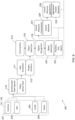
- a system comprising: a first server connected to a network via a first network interface circuit, the first server including a memory storing transit data; a second server connected to the network via a second network interface circuit, the second server including a memory for storing a behavioural hazard measure module which includes data collected from a subject vehicle and traffic objects connected to the network and transit data; a client machine connected to the network via a third network interface circuit, the client machine including a memory which stores a visualization module with instructions for execution by a processor to display visualizations of data generated by the behavioural hazard measure module.
- the behavioural hazard measure module including instructions for execution by a processor in the second server to: obtain the relative speed between a first traffic object and a second traffic object; receive the separation distance between the first traffic object and the second traffic object; combine the relative speed and the separation distance to form a quantitative measure of hazard encountered by the first traffic object; repeat the obtain, receive and combine operations to form cumulative measures of hazard associated with the first traffic object; and analyze the cumulative measures of hazard to derive a first traffic object safety score for the first traffic object.
- the instructions to combine including instructions to: apply a compensating factor to the relative speed to form a compensated relative speed; and divide the compensated relative speed by the separation distance.
- the compensating factor may be the square of the relative speed.
- the instructions to combine the relative speed and the separation distance may be executed for each new value of the relative speed and the separation distance.
- the instructions to combine the relative speed and the separation distance may include instructions to incorporate a deceleration measure.
- the instructions to combine the relative speed and the separation distance may include instructions to incorporate a change of direction measure.
- the instructions to combine the relative speed and the separation distance may include instructions to incorporate a road condition measure.
- the instructions to combine the relative speed and the separation distance may include instructions to subtract lateral acceleration required to cause a collision from the quantity of one divided by the traffic object maximum safe acceleration measure.
- Hazard A source or circumstance of potential damage or harm to an object or a person.
- Subject Vehicle is the vehicle analyzed for behavior, safety and risk.
- Traffic Objects are other vehicles, pedestrians, bicyclists, and other moving objects in a traffic scenario. In any particular traffic scenario or situation there will be N traffic objects (in addition to the subject vehicle). Each traffic object is identified by a number from 1 to N.
- Traffic Scenario is a physical arrangement of roads and/or streets including traffic controls, street markings, curbs, crosswalks, and traffic objects.
- a typical traffic scenario may last 15-30 seconds, but may be shorter or longer in duration.
- Near-Miss is a circumstance where the subject vehicle moves at some distance from a traffic object at some speed in relation to the traffic object, but a collision does not occur.
- Position p is the vector position of the subject vehicle ( p v ) and each traffic object ( p o i ) .
- d sep is the nearest distance between the subject vehicle and a traffic object, as shown in Equation (1) and illustrated in Figure 1 .
- d sep p o i ⁇ ⁇ p v ⁇
- Separation Distance d sep can also be a distance between representative points or locations on the subject vehicle and a traffic object, such as the center point of a bounding box or quadrilateral enclosing or representing the vehicle or object.
- Separation Distance unit vector u d sep is the unit vector in the direction of d sep as shown in Equation (2).
- Velocity v is the vector velocity of the subject vehicle ( v v ) and each traffic object ( v o i ).
- Relative Speed S rel is the relative scalar speed of the subject vehicle in relation to a traffic object, as shown in Equation (5) and illustrated in Figures 1 and 2 .
- Absolute Speed is the rate (expressed in units of distance divided by time, e.g. , feet per second, meters per second, km per hour, miles per hour) of movement of one traffic object with respect to the ground or with respect to a coordinate frame fixed to the earth.
- Grip is the maximum safe acceleration that the subject vehicle or traffic objects can exhibit.
- the invention uses both braking grip (maximum safe acceleration or deceleration in the longitudinal direction) and lateral grip (maximum safe change of direction or acceleration or deceleration in the lateral direction) to incorporate the different capabilities of the subject vehicle or traffic objects to brake, steer, or change direction.
- grip is adjusted to account for road or street conditions, e.g. , grip will be reduced by slippery road or street conditions.
- the value of grip is a measure of maneuverability of the subject vehicle and traffic objects.
- Acceleration is the rate of change of speed (expressed in units of distance divided by time squared, e.g. , feet per second squared or feet per second per second, meters per second squared or meters per second per second). Acceleration can be either in the direction of travel ( i.e., due to braking: braking deceleration) or transverse to the direction of travel ( i.e., due to steering: lateral acceleration).
- Lateral Acceleration a lat is the lateral acceleration exhibited by the subject vehicle or a traffic object when turning.
- Saturation is a limitation on the maximum value that the numerical value of the measure produced by the invention can achieve.
- Pair-wise is the successive consideration of the movement of the subject vehicle with each traffic object.
- PRT Perception-Reaction Time
- Figure 1 shows an overhead view of the Subject Vehicle 101 moving with velocity v v 102 and Traffic Object i 103 moving with velocity v o i 104.
- the Subject Vehicle 101 and Traffic Object i 103 are approaching each other at an intersection of two streets, not shown.
- Separation Distance ( d sep ) 105 between the Subject Vehicle 101 and Traffic Object i 103 is shown.
- Relative Speed ( S rel ) is between the Subject Vehicle 101 moving with velocity v v 102 and Traffic Object i 103 moving with velocity v o i 104.
- Relative Speed ( S rel ) is computed from speed ( S v ) 106 of the Subject Vehicle 101 along the direction of the Separation Distance ( d sep ) 105 minus the speed ( S o i ) 107 of the Traffic Object i 103 along the direction of the Separation Distance ( d sep ) 105 .
- Figure 3 shows an overhead view of the Radius r t 109 of curved path path v 110 required (with the relative positions shown in the figure) for the Subject Vehicle 101 to collide with the Traffic Object i 103.
- Server 504 includes a processor 530, input/output devices 532, bus 534 and network interface circuit 536.
- a memory 540 is connected to bus 534.
- the memory 540 stores a behavioral hazard measure module 542, which includes instructions executed by processor 530 to implement the operations disclosed herein.
- the behavioral hazard measure module 542 may collect data from a Subject Vehicle 101 and Traffic Objects 103 1 through 103 N and the transit data 522 to perform the operations disclosed herein.
- m 3 and particularly m 3 raw has values that can be directly related to traffic and vehicle behavior and safety.
- the near-miss measure produced by the invention equals the maximum safe acceleration that the subject vehicle can exhibit. While thresholds are for traffic safety authorities to set, a near-miss that would require the maximum safe acceleration of the subject vehicle to avoid is likely a cause for concern.
- the invention maintains the sign convention established by m 1 in that the value of m 3 is negative when the subject vehicle and a traffic object are approaching each other (i.e., the relative speed between them is negative).
- the opposite sign convention i.e. , m 3 is positive when the subject vehicle and a traffic object are approaching each other, is within the scope of the invention.
- a fourth embodiment of the invention incorporates a modulation (i.e. , reduction) of the results of the measure by the lateral acceleration (steering or change or direction) capabilities of the subject vehicle and traffic objects, and limited by the minimum turning radius r turning of the subject vehicle and each traffic object.
- This modulation is u vehicle in Equations (14) and (15), and u object in Equations (18) and (19).
- the modulation (or reduction) of m 3 accounts for situations where the severity of the near-miss (measured strictly by ( S rel ) 2 / d sep ) is reduced by the limitation of the ability of the subject vehicle or the traffic object to accelerate laterally (steer) to cause a collision.
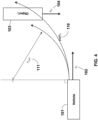
- Figure 4 illustrates the curved path with radius r t min which is a sharper turn ( i.e., smaller radius) than path v and is the sharpest turn possible without exceeding a lateral acceleration of grip.
- r t min S abs 2 / grip
- r t min is limited to be greater than or equal to the minimum turning radius r turning of the subject vehicle and the traffic object, as shown in Equations (15) and (19).
- m 4 accounts for consideration of the following: if the subject vehicle and the traffic object were to collide, what lateral acceleration (steering or change or direction) would be required to do so? m 4 reduces m 3 by the portion of grip that would be required to steer to cause a collision.
- the invention maintains the sign convention established by m 1 and maintained by m 3 in that the value of m 4 is negative when the subject vehicle and a traffic object are approaching each other (i.e., the relative speed between them is negative).
- the opposite sign convention i.e. , m 4 is positive when the subject vehicle and a traffic object are approaching each other, is within the scope of the invention.
- a further embodiment of the invention incorporates a limitation (or “saturation”) of the maximum value that the measure can achieve.
- m 3 (and therefore also m 4 ) can become arbitrarily large when the denominator d sep (separation distance) becomes small, and in the limit m 3 and m 4 can grow to infinity when d sep goes to zero ( i.e., in a collision).
- m 5 introduces a limitation (or "saturation”) at a pre-determined maximum value.
- the invention uses an integral of the sigmoid function (rather than the sigmoid function itself) to provide a smooth transition from increasing values of m' 3 to a saturation level.
- Functions other than the sigmoid or integral of the sigmoid could be used to provide a limitation or saturation of hazard measure values, including a logarithm, natural logarithm, exponential, polynomial, transcendental, or simple maximum or minimum functions.
- h is the largest (negative) value of m 5 , typically 100.
- m 5 ranges continuously from 0 to -h.
- sat is the level of m 4 at which m 5 saturates (or is limited).
- ⁇ is a parameter to adjust the curvature of the transition from m 3 to the saturation level.
- the invention maintains the sign convention established by m 1 and maintained by m 3 and m 4 in that the value of m 5 is negative when the subject vehicle and a traffic object are approaching each other (i.e., the relative speed between them is negative).
- the opposite sign convention i.e. , m 5 is positive when the subject vehicle and a traffic object are approaching each other, is within the scope of the invention.
- the embodiments of the invention described above can be augmented by incorporating the perception-reaction time (PRT) of the driver or controller of the vehicle.
- PRT perception-reaction time
- Typical human driver PRTs are around 1.5 seconds, and range from 750 milliseconds to over 3.5 seconds. There is little published data on automated or autonomous vehicle PRTs, but the published data suggests that they are between 11 and 200 milliseconds.
- the influence of the speed of the subject vehicle in relation to the traffic object is considerably magnified in m 6 compared to m 1 or m 2 .
- This magnification is desired and is an important characteristic of the invention since the square of the speed is directly proportional to the kinetic energy of the subject vehicle in relation to the traffic object and the dissipation of kinetic energy in a collision is the cause of damage and injury.
- m 6 raw m 6 / grip
- grip is the maximum safe acceleration that the vehicle can exert in either braking (deceleration) or turning (lateral acceleration).
- m 6 raw has the units of [fraction of grip ] .
- grip has a value of approximately 0.5 g or 5 m / s 2 .
- m 6 and particularly m 6 raw has values that can be directly related to traffic and vehicle behavior and safety.
- the near-miss measure produced by the invention equals the maximum safe acceleration that the subject vehicle can exhibit. While thresholds are for traffic safety authorities to set, a near-miss that would require the maximum safe acceleration of the subject vehicle to avoid is likely a cause for concern.
- the invention maintains the sign convention established by m 1 and maintained by m 3 , m 4 , and m 5 in that the value of m 6 and m 6 raw is negative when the subject vehicle and a traffic object are approaching each other (i.e., the relative speed between them is negative).
- the opposite sign convention i.e. , m 6 is positive when the subject vehicle and a traffic object are approaching each other, is within the scope of the invention.
- a further embodiment of the invention incorporates a modulation (i.e., reduction) of the results of the measure by the lateral acceleration (steering) capabilities of the subject vehicle and traffic objects, and limited by the minimum turning radius r turning of the subject vehicle and each traffic object, in the same manner as described above in relation to m 4 , and shown in Equations (12) through (21).
- m 8 incorporates a limitation (or “saturation”) of the maximum value that the measure m 7 can achieve, in the same manner as described above in relation to m 5 , and shown in Equations (22) through (24).
- a hazard measure value can be computed as described above for each pair of vehicle(s) and object(s). These individual values can usefully be aggregated into composite scores for a variety of purposes and uses.
- a first embodiment of aggregation of hazard measure values is to establish one or more levels or thresholds and count the number of hazard measure values for one or more vehicle(s) and/or objects(s) that fall above and/or below each threshold over a period of time.
- a second embodiment of aggregation of hazard measure values is to establish one or more levels or thresholds and count the number of hazard measure values for one or more vehicle(s) and/or objects(s) that fall above and/or below each threshold over a distance of travel.
- a third embodiment of aggregation of hazard measure values is to establish one or more levels or thresholds and count the number of hazard measure values for one or more vehicle(s) and/or objects(s) that fall above and/or below each threshold over a route.
- a fourth embodiment of aggregation of hazard measure values is to establish one or more levels or thresholds and count the number of hazard measure values for one or more vehicle(s) and/or objects(s) that fall above and/or below each threshold within a region.
- a fifth embodiment of aggregation of hazard measure values is to establish one or more levels or thresholds and count the number of hazard measure values for one or more vehicle(s) and/or objects(s) that fall above and/or below each threshold within an intersection or segment of a road or street.
- a sixth embodiment of aggregation of hazard measure values is to establish one or more levels or thresholds and count the number of hazard measure values for one or more vehicle(s) and/or objects(s) that fall above and/or below each threshold for one or more road or street condition(s).
- a seventh embodiment of aggregation of hazard measure values is to establish one or more levels or thresholds and count the number of hazard measure values for one or more vehicle(s) and/or objects(s) that fall above and/or below each threshold for one or more visibility condition(s), including weather, precipitation, fog, sun angle, lighting condition, etc.
- An eighth embodiment of aggregation of hazard measure values is to establish one or more levels or thresholds and count the number of hazard measure values for one or more vehicle(s) and/or objects(s) that fall above and/or below each threshold for one or more traffic condition(s).
- a ninth embodiment of aggregation of hazard measure values is to determine the extremal values of the hazard measure, e.g ., the maximum and/or minimum (best and/or worst) value, or a combination of a number of the maximum and/or minimum values.
- a tenth embodiment of aggregation of hazard measure values is to utilize a static and/or moving average of the values.
- An eleventh embodiment of aggregation of hazard measure values is to utilize a static and/or moving average of the values where more recent values are weighted more than older values.
- a twelfth embodiment of aggregation of hazard measure values is to utilize an exponentially weighted moving average (EMWA) of the values where more recent values are weighted more than older values according to an exponential or geometric rate of decrease, shown in Equation (30).
- EMWA exponentially weighted moving average
- n is the number of values to be included in the EMWA
- the coefficient ⁇ represents the degree of weighting decrease, a constant between 0 and 1.
- a larger value of ⁇ reduces the contribution of older observations faster than a smaller value of ⁇ .
- a thirteenth embodiment of aggregation of hazard measure values is to aggregate the values of the hazard measure for one or more individual operators of each vehicle and/or traffic object.
- This method of aggregation which can utilize any of the aggregation methods described above, can form a safety score for each operator.
- Hazard data gathered over time in the form of frequency of occurrence of hazard values can be correlated with historical traffic risk data and/or historical collision and/or loss data, such as frequency of occurrence and severity or risk of damage or harm.
- the correlation can be utilized to form one or more forecast values of frequency of occurrence and severity or risk of damage or harm.
- comparisons of the performance of subsystems are commonly performed.
- the invention can be applied to the assessment of the results of such comparisons to measure the safety and risk of the behavior of the AV or vehicle safety system, and to compare the numerical results of the invention from one subsystem to another, or from one situation or scenario or test condition to another.
Landscapes
- Engineering & Computer Science (AREA)
- Automation & Control Theory (AREA)
- Transportation (AREA)
- Mechanical Engineering (AREA)
- Physics & Mathematics (AREA)
- General Physics & Mathematics (AREA)
- Chemical & Material Sciences (AREA)
- Analytical Chemistry (AREA)
- Mathematical Physics (AREA)
- Traffic Control Systems (AREA)
- Control Of Driving Devices And Active Controlling Of Vehicle (AREA)
- Control Of Position, Course, Altitude, Or Attitude Of Moving Bodies (AREA)
- Radar Systems Or Details Thereof (AREA)
Claims (14)
- System (500), umfassend:einen ersten Server (502), der über eine erste Netzschnittstellenschaltung (516) mit einem Netz (506) verbunden ist, wobei der erste Server (502) einen Speicher (520) aufweist, der Transitdaten (522) speichert;einen zweiten Server (504), der über eine zweite Netzschnittstellenschaltung (536) mit dem Netz (506) verbunden ist, wobei der zweite Server (504) einen Speicher (540) zum Speichern eines Verhaltensrisiko-Messmoduls (542) aufweist, das Daten, die von einem untersuchten Fahrzeug (101) und Verkehrsobjekten, die mit dem Netz (506) verbunden sind, erfasst werden sowie Transitdaten (522) enthält;eine Client-Maschine (560), die über eine dritte Netzschnittstellenschaltung (566) mit dem Netz (506) verbunden ist, wobei die Client-Maschine (560) einen Speicher (570) aufweist, der ein Visualisierungsmodul (572) mit Anweisungen zur Ausführung durch einen Prozessor (561) speichert, um Visualisierungen von Daten anzuzeigen, die durch das Verhaltensrisiko-Messmodul (542) erzeugt wurden;wobei das Verhaltensrisiko-Messmodul (542) Anweisungen zur Ausführung durch einen Prozessor (530) im zweiten Server (504) enthält, um:die Relativgeschwindigkeit zwischen einem ersten Verkehrsobjekt und einem zweiten Verkehrsobjekt zu erhalten;den Trennungsabstand zwischen dem ersten Verkehrsobjekt und dem zweiten Verkehrsobjekt zu empfangen;die Relativgeschwindigkeit und den Trennungsabstand zu kombinieren, um ein quantitatives Maß für das Risiko zu bilden, dem das erste Verkehrsobjekt ausgesetzt ist, wobei die Anweisungen zum Kombinieren Anweisungen umfassen, um:einen Kompensationsfaktor auf die Relativgeschwindigkeit anzuwenden, um eine kompensierte Relativgeschwindigkeit zu bilden; unddie kompensierte Relativgeschwindigkeit durch den Trennungsabstand zu dividieren;die Operationen des Erhaltens, Empfangens und Kombinierens zu wiederholen, um kumulative Risikomaße in Verbindung mit dem ersten Verkehrsobjekt zu bilden; unddie kumulativen Risikomaße zu analysieren, um eine erste Verkehrsobjekt-Sicherheitsbewertung für das erste Verkehrsobjekt abzuleiten.
- System nach Anspruch 1, wobei der Kompensationsfaktor das Quadrat der Relativgeschwindigkeit ist.
- System nach Anspruch 1, wobei die Anweisungen zum Kombinieren der Relativgeschwindigkeit und des Trennabstands für jeden neuen Wert der Relativgeschwindigkeit und des Trennabstands ausgeführt werden.
- System nach Anspruch 1, wobei die Anweisungen zum Kombinieren der Relativgeschwindigkeit und des Trennungsabstands Anweisungen zum Einbeziehen eines Verzögerungsmaßes enthalten.
- System nach Anspruch 1, wobei die Anweisungen zum Kombinieren der Relativgeschwindigkeit und des Trennungsabstands Anweisungen zum Einbeziehen eines Richtungsänderungsmaßes enthalten.
- System nach Anspruch 1, wobei die Anweisungen zum Kombinieren der Relativgeschwindigkeit und des Trennungsabstands Anweisungen zum Einbeziehen eines Straßenzustandsmaßes enthalten.
- System nach Anspruch 1, wobei die Anweisungen zum Kombinieren der Relativgeschwindigkeit und des Trennungsabstands Anweisungen zum Einbeziehen eines Absolutgeschwindigkeitsmaßes enthalten.
- System nach Anspruch 7, wobei die Anweisungen zum Kombinieren der Relativgeschwindigkeit und des Trennungsabstands Anweisungen zum Kombinieren des Quadrats des absoluten Geschwindigkeitsmaßes und der Relativgeschwindigkeit und zum anschließenden Dividieren durch den Trennungsabstand enthalten.
- System nach Anspruch 1, wobei die Anweisungen zum Kombinieren der Relativgeschwindigkeit und des Trennungsabstands Anweisungen zum Einbeziehen eines Maßes für eine maximale sichere Beschleunigung des Verkehrsobjekts enthalten.
- System nach Anspruch 9, wobei die Anweisungen zum Kombinieren der Relativgeschwindigkeit und des Trennungsabstands Anweisungen zum Subtrahieren einer Querbeschleunigung, die zum Verursachen einer Kollision erforderlich ist, von der Größe eins geteilt durch das Maß der maximalen sicheren Beschleunigung des Verkehrsobjekts umfassen.
- System nach Anspruch 1, wobei die Anweisungen zum Kombinieren der Relativgeschwindigkeit und des Trennungsabstands Anweisungen zum Einbeziehen eines Manövrierbarkeitsmaßes eines Verkehrsobjekts enthalten.
- System nach Anspruch 1, wobei die Sigmoidfunktion auf die kumulativen Risikomaße angewendet wird.
- System nach Anspruch 1, wobei die Anweisungen zum Kombinieren der Relativgeschwindigkeit und des Trennungsabstands Anweisungen zum Einbeziehen eines Maßes für eine Wahrnehmungs-Reaktionszeit (PRT, Perception-Reaction Time) enthalten.
- System nach Anspruch 13, wobei der Trennungsabstand um das PRT-Maß verringert wird.
Priority Applications (1)
| Application Number | Priority Date | Filing Date | Title |
|---|---|---|---|
| EP25174962.8A EP4574606A3 (de) | 2019-05-23 | 2020-05-22 | Vorrichtung und verfahren zur verarbeitung von fahrzeugsignalen zur berechnung einer verhaltensgefahrenmessung |
Applications Claiming Priority (2)
| Application Number | Priority Date | Filing Date | Title |
|---|---|---|---|
| US201962851930P | 2019-05-23 | 2019-05-23 | |
| PCT/US2020/034365 WO2020237207A1 (en) | 2019-05-23 | 2020-05-22 | Apparatus and method for processing vehicle signals to compute a behavioral hazard measure |
Related Child Applications (2)
| Application Number | Title | Priority Date | Filing Date |
|---|---|---|---|
| EP25174962.8A Division-Into EP4574606A3 (de) | 2019-05-23 | 2020-05-22 | Vorrichtung und verfahren zur verarbeitung von fahrzeugsignalen zur berechnung einer verhaltensgefahrenmessung |
| EP25174962.8A Division EP4574606A3 (de) | 2019-05-23 | 2020-05-22 | Vorrichtung und verfahren zur verarbeitung von fahrzeugsignalen zur berechnung einer verhaltensgefahrenmessung |
Publications (3)
| Publication Number | Publication Date |
|---|---|
| EP3973695A1 EP3973695A1 (de) | 2022-03-30 |
| EP3973695A4 EP3973695A4 (de) | 2023-08-02 |
| EP3973695B1 true EP3973695B1 (de) | 2025-07-02 |
Family
ID=73457490
Family Applications (2)
| Application Number | Title | Priority Date | Filing Date |
|---|---|---|---|
| EP25174962.8A Pending EP4574606A3 (de) | 2019-05-23 | 2020-05-22 | Vorrichtung und verfahren zur verarbeitung von fahrzeugsignalen zur berechnung einer verhaltensgefahrenmessung |
| EP20809682.6A Active EP3973695B1 (de) | 2019-05-23 | 2020-05-22 | Vorrichtung und verfahren zur verarbeitung von fahrzeugsignalen zur berechnung einer verhaltensrisikomassnahme |
Family Applications Before (1)
| Application Number | Title | Priority Date | Filing Date |
|---|---|---|---|
| EP25174962.8A Pending EP4574606A3 (de) | 2019-05-23 | 2020-05-22 | Vorrichtung und verfahren zur verarbeitung von fahrzeugsignalen zur berechnung einer verhaltensgefahrenmessung |
Country Status (5)
| Country | Link |
|---|---|
| US (3) | US11511737B2 (de) |
| EP (2) | EP4574606A3 (de) |
| JP (1) | JP7354295B2 (de) |
| ES (1) | ES3041273T3 (de) |
| WO (1) | WO2020237207A1 (de) |
Families Citing this family (6)
| Publication number | Priority date | Publication date | Assignee | Title |
|---|---|---|---|---|
| JP7354295B2 (ja) * | 2019-05-23 | 2023-10-02 | ストリートスコープ,インコーポレイテッド | 車両信号を処理して挙動危険性の測度を計算するための装置及び方法 |
| CN114834443B (zh) * | 2019-09-16 | 2025-11-11 | 深圳引望智能技术有限公司 | 车辆控制的方法、装置、控制器和智能汽车 |
| KR20220032708A (ko) * | 2020-09-08 | 2022-03-15 | 현대자동차주식회사 | 차량 및 그 제어방법 |
| JP7384181B2 (ja) * | 2021-02-16 | 2023-11-21 | トヨタ自動車株式会社 | 画像収集装置、画像収集方法及び画像収集用コンピュータプログラム |
| US12220946B2 (en) * | 2021-06-08 | 2025-02-11 | The Goodyear Tire & Rubber Company | Tire replacement forecasting system and method |
| US12183192B2 (en) * | 2021-08-23 | 2024-12-31 | Nissan North America, Inc. | Intersection risk indicator |
Family Cites Families (89)
| Publication number | Priority date | Publication date | Assignee | Title |
|---|---|---|---|---|
| US5798949A (en) | 1995-01-13 | 1998-08-25 | Kaub; Alan Richard | Traffic safety prediction model |
| US6662141B2 (en) | 1995-01-13 | 2003-12-09 | Alan R. Kaub | Traffic safety prediction model |
| JP3574235B2 (ja) * | 1995-08-31 | 2004-10-06 | 本田技研工業株式会社 | 車両の操舵力補正装置 |
| US8255144B2 (en) * | 1997-10-22 | 2012-08-28 | Intelligent Technologies International, Inc. | Intra-vehicle information conveyance system and method |
| US7720712B1 (en) | 1999-12-23 | 2010-05-18 | Amazon.Com, Inc. | Placing a purchase order using one of multiple procurement options |
| US7113867B1 (en) | 2000-11-26 | 2006-09-26 | Mobileye Technologies Limited | System and method for detecting obstacles to vehicle motion and determining time to contact therewith using sequences of images |
| JP2003058872A (ja) | 2001-08-21 | 2003-02-28 | Sony Corp | 指紋検出装置、その製造方法及び成膜装置 |
| US20040051659A1 (en) | 2002-09-18 | 2004-03-18 | Garrison Darwin A. | Vehicular situational awareness system |
| JP3885716B2 (ja) | 2002-11-21 | 2007-02-28 | 日産自動車株式会社 | 車両用推奨操作量生成装置 |
| JP3867665B2 (ja) | 2002-12-12 | 2007-01-10 | 日産自動車株式会社 | 車両用運転操作補助装置およびその装置を備えた車両 |
| JP2005161929A (ja) | 2003-12-01 | 2005-06-23 | Nissan Motor Co Ltd | 車両用乗員保護装置 |
| JP2005219639A (ja) | 2004-02-05 | 2005-08-18 | Nissan Motor Co Ltd | 走行状況検出装置及び走行状況検出方法 |
| US8082101B2 (en) | 2004-04-08 | 2011-12-20 | Mobileye Technologies Ltd. | Collision warning system |
| JP4329622B2 (ja) | 2004-06-02 | 2009-09-09 | 日産自動車株式会社 | 車両用運転操作補助装置および車両用運転操作補助装置を備えた車両 |
| EP1717778B1 (de) | 2005-04-29 | 2007-07-11 | Ford Global Technologies, LLC | Verfahren und System zur Vorwärts-Kollisionsverhinderung für ein Kraftfahrzeug |
| US7330103B2 (en) | 2005-07-21 | 2008-02-12 | International Business Machines Corporation | Vehicle collision avoidance system enhancement using in-car air bag deployment system |
| ITRM20060110A1 (it) | 2006-03-03 | 2007-09-04 | Cnr Consiglio Naz Delle Ricerche | Metodo e sistema per la rilevazione automatica di eventi in ambito sportivo |
| WO2007123176A1 (ja) | 2006-04-24 | 2007-11-01 | Pioneer Corporation | 運転支援装置、運転支援方法、運転支援プログラムおよび記録媒体 |
| US8269617B2 (en) | 2009-01-26 | 2012-09-18 | Drivecam, Inc. | Method and system for tuning the effect of vehicle characteristics on risk prediction |
| US8849501B2 (en) | 2009-01-26 | 2014-09-30 | Lytx, Inc. | Driver risk assessment system and method employing selectively automatic event scoring |
| US10096038B2 (en) * | 2007-05-10 | 2018-10-09 | Allstate Insurance Company | Road segment safety rating system |
| US8606512B1 (en) | 2007-05-10 | 2013-12-10 | Allstate Insurance Company | Route risk mitigation |
| JP5447371B2 (ja) | 2008-04-15 | 2014-03-19 | 日本電気株式会社 | 移動体警告装置、移動体警告方法および移動体警告プログラム |
| EP2159779B1 (de) | 2008-08-27 | 2013-01-16 | Saab Ab | Verwendung von Bildsensor und Nachlauffilter für verbleibende Zeit, um Kollisionen in der Luft zu vermeiden |
| US8812226B2 (en) | 2009-01-26 | 2014-08-19 | GM Global Technology Operations LLC | Multiobject fusion module for collision preparation system |
| US8854199B2 (en) | 2009-01-26 | 2014-10-07 | Lytx, Inc. | Driver risk assessment system and method employing automated driver log |
| JP4873068B2 (ja) | 2009-11-20 | 2012-02-08 | 株式会社デンソー | 衝突被害軽減装置 |
| US8805707B2 (en) | 2009-12-31 | 2014-08-12 | Hartford Fire Insurance Company | Systems and methods for providing a safety score associated with a user location |
| JP5583540B2 (ja) | 2010-10-01 | 2014-09-03 | パナソニック株式会社 | 事故要因領域特定装置および事故要因領域特定プログラム |
| US9233659B2 (en) | 2011-04-27 | 2016-01-12 | Mobileye Vision Technologies Ltd. | Pedestrian collision warning system |
| US20120287276A1 (en) | 2011-05-12 | 2012-11-15 | Delphi Technologies, Inc. | Vision based night-time rear collision warning system, controller, and method of operating the same |
| US9318023B2 (en) * | 2011-08-31 | 2016-04-19 | GM Global Technology Operations LLC | System and method for collision avoidance maneuver path determination with jerk limit |
| US8884759B2 (en) | 2011-09-12 | 2014-11-11 | Near-Miss Management, Llc | Dynamic prediction of risk levels for manufacturing operations through leading risk indicators |
| KR101361360B1 (ko) | 2011-12-26 | 2014-02-11 | 현대자동차주식회사 | 측후방 감지센서를 이용한 차간거리 제어 시스템 및 그 제어 방법 |
| US9253753B2 (en) * | 2012-04-24 | 2016-02-02 | Zetta Research And Development Llc-Forc Series | Vehicle-to-vehicle safety transceiver using time slots |
| US9989637B2 (en) | 2012-08-03 | 2018-06-05 | Safie Holdings LLC | Portable collision warning apparatus |
| DE102012216386A1 (de) | 2012-09-14 | 2014-03-20 | Robert Bosch Gmbh | Verfahren zum Betreiben eines Fahrerassistenzsystems eines Fahrzeugs |
| BR112015009456B1 (pt) | 2012-10-26 | 2020-06-02 | Toyota Jidosha Kabushiki Kaisha | Dispositivo de suporte de direcionamento e método de suporte de direcionamento |
| US9081650B1 (en) | 2012-12-19 | 2015-07-14 | Allstate Insurance Company | Traffic based driving analysis |
| US9535878B1 (en) | 2012-12-19 | 2017-01-03 | Allstate Insurance Company | Driving event data analysis |
| DE112013006385B4 (de) | 2013-01-09 | 2018-09-06 | Mitsubishi Electric Corporation | Fahrzeugperipherie-Anzeigevorrichtung |
| US9367065B2 (en) | 2013-01-25 | 2016-06-14 | Google Inc. | Modifying behavior of autonomous vehicles based on sensor blind spots and limitations |
| GB2512317A (en) | 2013-03-26 | 2014-10-01 | Jaguar Land Rover Ltd | Vehicle control system and method |
| JP5878491B2 (ja) | 2013-03-27 | 2016-03-08 | 株式会社日本自動車部品総合研究所 | 運転支援装置 |
| US9349228B2 (en) * | 2013-10-23 | 2016-05-24 | Trimble Navigation Limited | Driver scorecard system and method |
| US9174672B2 (en) * | 2013-10-28 | 2015-11-03 | GM Global Technology Operations LLC | Path planning for evasive steering maneuver in presence of target vehicle and surrounding objects |
| CN106255985B (zh) | 2014-03-11 | 2019-11-19 | 环联公司 | 数字预审定向营销系统及方法 |
| EP2950294B1 (de) | 2014-05-30 | 2019-05-08 | Honda Research Institute Europe GmbH | Verfahren und Fahrzeug mit fortschrittlichem Fahrerassistenzsystem zur risikobasierten Verkehrsszenenanalyse |
| JP6274048B2 (ja) | 2014-08-05 | 2018-02-07 | 株式会社デンソー | 危険地点警告装置及び危険地点警告プログラム |
| JP6486640B2 (ja) * | 2014-10-09 | 2019-03-20 | 株式会社日立製作所 | 運転特性診断装置、運転特性診断システム、運転特性診断方法、情報出力装置、情報出力方法 |
| US9886856B2 (en) * | 2014-12-04 | 2018-02-06 | Here Global B.V. | Near miss system |
| JP6246392B2 (ja) | 2014-12-09 | 2017-12-13 | 三菱電機株式会社 | 衝突リスク算出装置、衝突リスク表示装置、車体制御装置 |
| US9573592B2 (en) | 2014-12-23 | 2017-02-21 | Toyota Motor Engineering & Manufacturing North America, Inc. | Risk mitigation for autonomous vehicles relative to oncoming objects |
| US10521749B2 (en) | 2014-12-26 | 2019-12-31 | Panasonic Intellectual Property Corporation Of America | Risk information processing method and server device |
| GB201503413D0 (en) | 2015-02-27 | 2015-04-15 | Caring Community Sa | Improved navigation system |
| US10035509B2 (en) | 2015-08-06 | 2018-07-31 | Safer Technology Solutions LLC | Early warning intersection device |
| JP6742704B2 (ja) | 2015-08-07 | 2020-08-19 | キヤノン株式会社 | 通信装置、通信装置の制御方法、及びプログラム |
| WO2017038166A1 (ja) | 2015-08-28 | 2017-03-09 | ソニー株式会社 | 情報処理装置、情報処理方法及びプログラム |
| DE102015115135A1 (de) | 2015-09-09 | 2017-03-09 | Valeo Schalter Und Sensoren Gmbh | Verfahren zum Bestimmen einer Schwere einer möglichen Kollision zwischen einem Kraftfahrzeug und einem weiteren Fahrzeug, Steuereinrichtung, Fahrerassistenzsystem sowie Kraftfahrzeug |
| US11307042B2 (en) | 2015-09-24 | 2022-04-19 | Allstate Insurance Company | Three-dimensional risk maps |
| US9914460B2 (en) | 2015-09-25 | 2018-03-13 | Mcafee, Llc | Contextual scoring of automobile drivers |
| JP6443381B2 (ja) | 2015-09-30 | 2018-12-26 | 株式会社デンソー | 運転支援装置 |
| US9718468B2 (en) | 2015-10-13 | 2017-08-01 | Verizon Patent And Licensing Inc. | Collision prediction system |
| US10460600B2 (en) | 2016-01-11 | 2019-10-29 | NetraDyne, Inc. | Driver behavior monitoring |
| JP2017138694A (ja) | 2016-02-02 | 2017-08-10 | ソニー株式会社 | 映像処理装置及び映像処理方法 |
| US10247565B2 (en) | 2016-04-11 | 2019-04-02 | State Farm Mutual Automobile Insurance Company | Traffic risk avoidance for a route selection system |
| US9701307B1 (en) * | 2016-04-11 | 2017-07-11 | David E. Newman | Systems and methods for hazard mitigation |
| BR112018074374B1 (pt) * | 2016-05-27 | 2022-12-13 | Nissan Motor Co., Ltd | Método de controle de direção e aparelho de controle de direção |
| EP3418150B1 (de) * | 2016-08-29 | 2024-05-29 | Mazda Motor Corporation | Fahrzeugsteuerungsvorrichtung |
| WO2018053175A1 (en) | 2016-09-14 | 2018-03-22 | Nauto Global Limited | Systems and methods for near-crash determination |
| JP2018084989A (ja) | 2016-11-24 | 2018-05-31 | 本田技研工業株式会社 | 車両用情報出力装置、車両制御システム、情報出力方法、および情報出力プログラム |
| US10752239B2 (en) | 2017-02-22 | 2020-08-25 | International Business Machines Corporation | Training a self-driving vehicle |
| CN108288312A (zh) * | 2017-03-06 | 2018-07-17 | 腾讯科技(深圳)有限公司 | 驾驶行为确定方法及装置 |
| JP2018156462A (ja) | 2017-03-17 | 2018-10-04 | 東芝メモリ株式会社 | 移動体及びそれを含む運転支援システム |
| FR3065098A1 (fr) * | 2017-04-05 | 2018-10-12 | Stmicroelectronics (Rousset) Sas | Procede de detection en temps reel d'une scene par un appareil, par exemple un appareil de communication sans fil, et appareil correspondant |
| US10492355B2 (en) * | 2017-06-19 | 2019-12-03 | Cnh Industrial America Llc | Path planning system for a work vehicle |
| WO2019017216A1 (ja) * | 2017-07-21 | 2019-01-24 | ソニーセミコンダクタソリューションズ株式会社 | 車両制御装置及び車両制御方法 |
| KR102025809B1 (ko) * | 2017-09-29 | 2019-09-26 | 엘지전자 주식회사 | 차량 주행 제어 장치 및 차량 주행 방법 |
| JP6573224B2 (ja) * | 2017-10-24 | 2019-09-11 | マツダ株式会社 | 車両制御装置 |
| JP2019142333A (ja) * | 2018-02-20 | 2019-08-29 | 株式会社デンソー | 減速度決定装置、プログラム |
| WO2020026318A1 (en) | 2018-07-30 | 2020-02-06 | Accenture Global Solutions Limited | Distracted driving predictive system |
| JP2020026154A (ja) * | 2018-08-09 | 2020-02-20 | トヨタ自動車株式会社 | 運転支援装置 |
| WO2020123567A1 (en) * | 2018-12-11 | 2020-06-18 | Edge Case Research, Inc. | Human-supervised autonomous systems performance and safety monitoring methods and apparatus |
| JP7354295B2 (ja) | 2019-05-23 | 2023-10-02 | ストリートスコープ,インコーポレイテッド | 車両信号を処理して挙動危険性の測度を計算するための装置及び方法 |
| US20210300354A1 (en) * | 2020-03-31 | 2021-09-30 | Toyota Research Institute, Inc. | Systems and Methods for Controlling Operation of a Vehicle Feature According to a Learned Risk Preference |
| US12086724B2 (en) * | 2020-04-09 | 2024-09-10 | Allstate Insurance Company | Determining driver and vehicle characteristics based on an edge-computer device |
| US11465619B2 (en) * | 2020-05-27 | 2022-10-11 | Zoox, Inc. | Vehicle collision avoidance based on perturbed object trajectories |
| US11511767B2 (en) | 2020-07-23 | 2022-11-29 | Qualcomm Incorporated | Techniques for utilizing CV2X registration data |
| US12097845B2 (en) * | 2020-10-28 | 2024-09-24 | Toyota Research Institute, Inc. | Systems and methods for identifying high-risk driving situations from driving data |
-
2020
- 2020-05-22 JP JP2021569895A patent/JP7354295B2/ja active Active
- 2020-05-22 EP EP25174962.8A patent/EP4574606A3/de active Pending
- 2020-05-22 WO PCT/US2020/034365 patent/WO2020237207A1/en not_active Ceased
- 2020-05-22 EP EP20809682.6A patent/EP3973695B1/de active Active
- 2020-05-22 ES ES20809682T patent/ES3041273T3/es active Active
- 2020-05-22 US US16/881,998 patent/US11511737B2/en active Active
-
2022
- 2022-10-26 US US18/049,981 patent/US12325415B2/en active Active
-
2025
- 2025-05-16 US US19/210,844 patent/US20250276685A1/en active Pending
Also Published As
| Publication number | Publication date |
|---|---|
| EP3973695A4 (de) | 2023-08-02 |
| JP2022532941A (ja) | 2022-07-20 |
| US20230071808A1 (en) | 2023-03-09 |
| JP7354295B2 (ja) | 2023-10-02 |
| US12325415B2 (en) | 2025-06-10 |
| EP3973695A1 (de) | 2022-03-30 |
| EP4574606A2 (de) | 2025-06-25 |
| US11511737B2 (en) | 2022-11-29 |
| US20250276685A1 (en) | 2025-09-04 |
| ES3041273T3 (en) | 2025-11-11 |
| WO2020237207A1 (en) | 2020-11-26 |
| EP4574606A3 (de) | 2025-09-24 |
| US20200369270A1 (en) | 2020-11-26 |
Similar Documents
| Publication | Publication Date | Title |
|---|---|---|
| US12325415B2 (en) | Apparatus and method for processing vehicle signals to compute a behavioral hazard measure | |
| US12561585B2 (en) | Systems and methods for classifying driver behavior | |
| CN112673407B (zh) | 用于预测的车辆事故警告和规避的系统和方法 | |
| CN113190921B (zh) | 用于智能汽车驾乘性能测试的自动评价方法及系统 | |
| CN113635897B (zh) | 一种基于风险场的安全驾驶预警方法 | |
| Zheng et al. | Empirical validation of vehicle type-dependent car-following heterogeneity from micro-and macro-viewpoints | |
| US12337868B2 (en) | Systems and methods for scenario dependent trajectory scoring | |
| EP4222033A1 (de) | Systeme und verfahren zur vermeidung drohender kollisionen | |
| CN108320553A (zh) | 基于道路驾驶事件的路况预测方法 | |
| Peng et al. | Rough set based method for vehicle collision risk assessment through inferring driver's braking actions in near-crash situations | |
| CN120439955B (zh) | 一种车辆隐患识别以及安全预警的方法及其装置 | |
| CN114684197A (zh) | 避障场景的检测方法、装置、设备及存储介质 | |
| CN113570747A (zh) | 一种基于大数据分析的行驶安全监测系统和方法 | |
| CN115997138A (zh) | 用于从激光雷达、地图和图像数据估计长方体的系统和方法 | |
| Kanjee et al. | Vision-based adaptive cruise control using pattern matching | |
| Gorman et al. | Model of fleet-wide safety benefits of Lane Departure Warning systems | |
| Scanlon | Evaluating the Potential of an Intersection Driver Assistance System to Prevent US Intersection Crashes | |
| CN117724137A (zh) | 一种基于多模态传感器的汽车事故自动检测系统及方法 | |
| Sarkar et al. | Analysis of car cut-ins between trucks based on existing naturalistic driving data | |
| Tsai et al. | A safety driving assistance system by integrating in-vehicle dynamics and real-time traffic information | |
| CN116168542B (zh) | 一种基于大型车辆的行为监测的预警方法及系统 | |
| Ghasemi et al. | Traffic Lane Change Detection using mobile phone sensors and geolocation | |
| US20250050873A1 (en) | Vehicle control systems for vehicle driving behavior detection and automated vehicle avoidance control | |
| Galloway | Assessing Effects of Object Detection Performance on Simulated Crash Outcomes for an Automated Driving System | |
| CN121084373A (zh) | 一种车辆碰撞风险评估方法、装置、设备和存储介质 |
Legal Events
| Date | Code | Title | Description |
|---|---|---|---|
| STAA | Information on the status of an ep patent application or granted ep patent |
Free format text: STATUS: THE INTERNATIONAL PUBLICATION HAS BEEN MADE |
|
| PUAI | Public reference made under article 153(3) epc to a published international application that has entered the european phase |
Free format text: ORIGINAL CODE: 0009012 |
|
| STAA | Information on the status of an ep patent application or granted ep patent |
Free format text: STATUS: REQUEST FOR EXAMINATION WAS MADE |
|
| 17P | Request for examination filed |
Effective date: 20211220 |
|
| AK | Designated contracting states |
Kind code of ref document: A1 Designated state(s): AL AT BE BG CH CY CZ DE DK EE ES FI FR GB GR HR HU IE IS IT LI LT LU LV MC MK MT NL NO PL PT RO RS SE SI SK SM TR |
|
| DAV | Request for validation of the european patent (deleted) | ||
| DAX | Request for extension of the european patent (deleted) | ||
| A4 | Supplementary search report drawn up and despatched |
Effective date: 20230703 |
|
| RIC1 | Information provided on ipc code assigned before grant |
Ipc: G08G 1/00 20060101ALI20230627BHEP Ipc: B60W 30/095 20120101ALI20230627BHEP Ipc: H04N 5/33 20060101AFI20230627BHEP |
|
| STAA | Information on the status of an ep patent application or granted ep patent |
Free format text: STATUS: EXAMINATION IS IN PROGRESS |
|
| 17Q | First examination report despatched |
Effective date: 20241024 |
|
| REG | Reference to a national code |
Ref country code: DE Ref legal event code: R079 Ipc: B60W0040064000 Ref country code: DE Ref legal event code: R079 Ref document number: 602020053907 Country of ref document: DE Free format text: PREVIOUS MAIN CLASS: H04N0005330000 Ipc: B60W0040064000 |
|
| GRAP | Despatch of communication of intention to grant a patent |
Free format text: ORIGINAL CODE: EPIDOSNIGR1 |
|
| STAA | Information on the status of an ep patent application or granted ep patent |
Free format text: STATUS: GRANT OF PATENT IS INTENDED |
|
| RIC1 | Information provided on ipc code assigned before grant |
Ipc: B60W 30/095 20120101ALI20241216BHEP Ipc: G08G 1/16 20060101ALI20241216BHEP Ipc: G08G 1/01 20060101ALI20241216BHEP Ipc: B60W 40/064 20120101AFI20241216BHEP |
|
| INTG | Intention to grant announced |
Effective date: 20250109 |
|
| GRAS | Grant fee paid |
Free format text: ORIGINAL CODE: EPIDOSNIGR3 |
|
| GRAA | (expected) grant |
Free format text: ORIGINAL CODE: 0009210 |
|
| STAA | Information on the status of an ep patent application or granted ep patent |
Free format text: STATUS: THE PATENT HAS BEEN GRANTED |
|
| AK | Designated contracting states |
Kind code of ref document: B1 Designated state(s): AL AT BE BG CH CY CZ DE DK EE ES FI FR GB GR HR HU IE IS IT LI LT LU LV MC MK MT NL NO PL PT RO RS SE SI SK SM TR |
|
| REG | Reference to a national code |
Ref country code: GB Ref legal event code: FG4D |
|
| REG | Reference to a national code |
Ref country code: CH Ref legal event code: EP |
|
| REG | Reference to a national code |
Ref country code: DE Ref legal event code: R096 Ref document number: 602020053907 Country of ref document: DE |
|
| REG | Reference to a national code |
Ref country code: IE Ref legal event code: FG4D |
|
| P01 | Opt-out of the competence of the unified patent court (upc) registered |
Free format text: CASE NUMBER: UPC_APP_2238_3973695/2025 Effective date: 20250801 |
|
| REG | Reference to a national code |
Ref country code: SE Ref legal event code: TRGR |
|
| REG | Reference to a national code |
Ref country code: NL Ref legal event code: MP Effective date: 20250702 |
|
| REG | Reference to a national code |
Ref country code: ES Ref legal event code: FG2A Ref document number: 3041273 Country of ref document: ES Kind code of ref document: T3 Effective date: 20251111 |
|
| PG25 | Lapsed in a contracting state [announced via postgrant information from national office to epo] |
Ref country code: PT Free format text: LAPSE BECAUSE OF FAILURE TO SUBMIT A TRANSLATION OF THE DESCRIPTION OR TO PAY THE FEE WITHIN THE PRESCRIBED TIME-LIMIT Effective date: 20251103 |
|
| PG25 | Lapsed in a contracting state [announced via postgrant information from national office to epo] |
Ref country code: NL Free format text: LAPSE BECAUSE OF FAILURE TO SUBMIT A TRANSLATION OF THE DESCRIPTION OR TO PAY THE FEE WITHIN THE PRESCRIBED TIME-LIMIT Effective date: 20250702 |
|
| REG | Reference to a national code |
Ref country code: AT Ref legal event code: MK05 Ref document number: 1808927 Country of ref document: AT Kind code of ref document: T Effective date: 20250702 |
|
| PG25 | Lapsed in a contracting state [announced via postgrant information from national office to epo] |
Ref country code: IS Free format text: LAPSE BECAUSE OF FAILURE TO SUBMIT A TRANSLATION OF THE DESCRIPTION OR TO PAY THE FEE WITHIN THE PRESCRIBED TIME-LIMIT Effective date: 20251102 |
|
| PG25 | Lapsed in a contracting state [announced via postgrant information from national office to epo] |
Ref country code: NO Free format text: LAPSE BECAUSE OF FAILURE TO SUBMIT A TRANSLATION OF THE DESCRIPTION OR TO PAY THE FEE WITHIN THE PRESCRIBED TIME-LIMIT Effective date: 20251002 |
|
| REG | Reference to a national code |
Ref country code: LT Ref legal event code: MG9D |
|
| PG25 | Lapsed in a contracting state [announced via postgrant information from national office to epo] |
Ref country code: AT Free format text: LAPSE BECAUSE OF FAILURE TO SUBMIT A TRANSLATION OF THE DESCRIPTION OR TO PAY THE FEE WITHIN THE PRESCRIBED TIME-LIMIT Effective date: 20250702 |
|
| PG25 | Lapsed in a contracting state [announced via postgrant information from national office to epo] |
Ref country code: FI Free format text: LAPSE BECAUSE OF FAILURE TO SUBMIT A TRANSLATION OF THE DESCRIPTION OR TO PAY THE FEE WITHIN THE PRESCRIBED TIME-LIMIT Effective date: 20250702 |
|
| PG25 | Lapsed in a contracting state [announced via postgrant information from national office to epo] |
Ref country code: HR Free format text: LAPSE BECAUSE OF FAILURE TO SUBMIT A TRANSLATION OF THE DESCRIPTION OR TO PAY THE FEE WITHIN THE PRESCRIBED TIME-LIMIT Effective date: 20250702 |
|
| PG25 | Lapsed in a contracting state [announced via postgrant information from national office to epo] |
Ref country code: GR Free format text: LAPSE BECAUSE OF FAILURE TO SUBMIT A TRANSLATION OF THE DESCRIPTION OR TO PAY THE FEE WITHIN THE PRESCRIBED TIME-LIMIT Effective date: 20251003 |
|
| PG25 | Lapsed in a contracting state [announced via postgrant information from national office to epo] |
Ref country code: CZ Free format text: LAPSE BECAUSE OF FAILURE TO SUBMIT A TRANSLATION OF THE DESCRIPTION OR TO PAY THE FEE WITHIN THE PRESCRIBED TIME-LIMIT Effective date: 20250702 |
|
| PG25 | Lapsed in a contracting state [announced via postgrant information from national office to epo] |
Ref country code: LV Free format text: LAPSE BECAUSE OF FAILURE TO SUBMIT A TRANSLATION OF THE DESCRIPTION OR TO PAY THE FEE WITHIN THE PRESCRIBED TIME-LIMIT Effective date: 20250702 |
|
| PG25 | Lapsed in a contracting state [announced via postgrant information from national office to epo] |
Ref country code: PL Free format text: LAPSE BECAUSE OF FAILURE TO SUBMIT A TRANSLATION OF THE DESCRIPTION OR TO PAY THE FEE WITHIN THE PRESCRIBED TIME-LIMIT Effective date: 20250702 Ref country code: BG Free format text: LAPSE BECAUSE OF FAILURE TO SUBMIT A TRANSLATION OF THE DESCRIPTION OR TO PAY THE FEE WITHIN THE PRESCRIBED TIME-LIMIT Effective date: 20250702 |
|
| PG25 | Lapsed in a contracting state [announced via postgrant information from national office to epo] |
Ref country code: RS Free format text: LAPSE BECAUSE OF FAILURE TO SUBMIT A TRANSLATION OF THE DESCRIPTION OR TO PAY THE FEE WITHIN THE PRESCRIBED TIME-LIMIT Effective date: 20251002 |
|
| PG25 | Lapsed in a contracting state [announced via postgrant information from national office to epo] |
Ref country code: SM Free format text: LAPSE BECAUSE OF FAILURE TO SUBMIT A TRANSLATION OF THE DESCRIPTION OR TO PAY THE FEE WITHIN THE PRESCRIBED TIME-LIMIT Effective date: 20250702 |
|
| PG25 | Lapsed in a contracting state [announced via postgrant information from national office to epo] |
Ref country code: DK Free format text: LAPSE BECAUSE OF FAILURE TO SUBMIT A TRANSLATION OF THE DESCRIPTION OR TO PAY THE FEE WITHIN THE PRESCRIBED TIME-LIMIT Effective date: 20250702 |
|
| PG25 | Lapsed in a contracting state [announced via postgrant information from national office to epo] |
Ref country code: SK Free format text: LAPSE BECAUSE OF FAILURE TO SUBMIT A TRANSLATION OF THE DESCRIPTION OR TO PAY THE FEE WITHIN THE PRESCRIBED TIME-LIMIT Effective date: 20250702 Ref country code: EE Free format text: LAPSE BECAUSE OF FAILURE TO SUBMIT A TRANSLATION OF THE DESCRIPTION OR TO PAY THE FEE WITHIN THE PRESCRIBED TIME-LIMIT Effective date: 20250702 |