EP3971673B1 - Planarstrahl, lichtdetektion und vermessungssystem - Google Patents
Planarstrahl, lichtdetektion und vermessungssystem Download PDFInfo
- Publication number
- EP3971673B1 EP3971673B1 EP21208121.0A EP21208121A EP3971673B1 EP 3971673 B1 EP3971673 B1 EP 3971673B1 EP 21208121 A EP21208121 A EP 21208121A EP 3971673 B1 EP3971673 B1 EP 3971673B1
- Authority
- EP
- European Patent Office
- Prior art keywords
- pladar
- photodetectors
- autonomous vehicle
- data
- lidar system
- Prior art date
- Legal status (The legal status is an assumption and is not a legal conclusion. Google has not performed a legal analysis and makes no representation as to the accuracy of the status listed.)
- Active
Links
Images



Classifications
-
- G—PHYSICS
- G05—CONTROLLING; REGULATING
- G05D—SYSTEMS FOR CONTROLLING OR REGULATING NON-ELECTRIC VARIABLES
- G05D1/00—Control of position, course, altitude or attitude of land, water, air or space vehicles, e.g. using automatic pilots
- G05D1/02—Control of position or course in two dimensions
- G05D1/021—Control of position or course in two dimensions specially adapted to land vehicles
- G05D1/0231—Control of position or course in two dimensions specially adapted to land vehicles using optical position detecting means
- G05D1/0238—Control of position or course in two dimensions specially adapted to land vehicles using optical position detecting means using obstacle or wall sensors
- G05D1/024—Control of position or course in two dimensions specially adapted to land vehicles using optical position detecting means using obstacle or wall sensors in combination with a laser
-
- G—PHYSICS
- G01—MEASURING; TESTING
- G01C—MEASURING DISTANCES, LEVELS OR BEARINGS; SURVEYING; NAVIGATION; GYROSCOPIC INSTRUMENTS; PHOTOGRAMMETRY OR VIDEOGRAMMETRY
- G01C21/00—Navigation; Navigational instruments not provided for in groups G01C1/00 - G01C19/00
- G01C21/26—Navigation; Navigational instruments not provided for in groups G01C1/00 - G01C19/00 specially adapted for navigation in a road network
- G01C21/34—Route searching; Route guidance
-
- G—PHYSICS
- G01—MEASURING; TESTING
- G01S—RADIO DIRECTION-FINDING; RADIO NAVIGATION; DETERMINING DISTANCE OR VELOCITY BY USE OF RADIO WAVES; LOCATING OR PRESENCE-DETECTING BY USE OF THE REFLECTION OR RERADIATION OF RADIO WAVES; ANALOGOUS ARRANGEMENTS USING OTHER WAVES
- G01S17/00—Systems using the reflection or reradiation of electromagnetic waves other than radio waves, e.g. lidar systems
- G01S17/88—Lidar systems specially adapted for specific applications
- G01S17/93—Lidar systems specially adapted for specific applications for anti-collision purposes
- G01S17/931—Lidar systems specially adapted for specific applications for anti-collision purposes of land vehicles
-
- G—PHYSICS
- G01—MEASURING; TESTING
- G01S—RADIO DIRECTION-FINDING; RADIO NAVIGATION; DETERMINING DISTANCE OR VELOCITY BY USE OF RADIO WAVES; LOCATING OR PRESENCE-DETECTING BY USE OF THE REFLECTION OR RERADIATION OF RADIO WAVES; ANALOGOUS ARRANGEMENTS USING OTHER WAVES
- G01S7/00—Details of systems according to groups G01S13/00, G01S15/00, G01S17/00
- G01S7/48—Details of systems according to groups G01S13/00, G01S15/00, G01S17/00 of systems according to group G01S17/00
- G01S7/481—Constructional features, e.g. arrangements of optical elements
- G01S7/4814—Constructional features, e.g. arrangements of optical elements of transmitters alone
- G01S7/4815—Constructional features, e.g. arrangements of optical elements of transmitters alone using multiple transmitters
-
- G—PHYSICS
- G01—MEASURING; TESTING
- G01S—RADIO DIRECTION-FINDING; RADIO NAVIGATION; DETERMINING DISTANCE OR VELOCITY BY USE OF RADIO WAVES; LOCATING OR PRESENCE-DETECTING BY USE OF THE REFLECTION OR RERADIATION OF RADIO WAVES; ANALOGOUS ARRANGEMENTS USING OTHER WAVES
- G01S7/00—Details of systems according to groups G01S13/00, G01S15/00, G01S17/00
- G01S7/48—Details of systems according to groups G01S13/00, G01S15/00, G01S17/00 of systems according to group G01S17/00
- G01S7/481—Constructional features, e.g. arrangements of optical elements
- G01S7/4816—Constructional features, e.g. arrangements of optical elements of receivers alone
-
- G—PHYSICS
- G01—MEASURING; TESTING
- G01S—RADIO DIRECTION-FINDING; RADIO NAVIGATION; DETERMINING DISTANCE OR VELOCITY BY USE OF RADIO WAVES; LOCATING OR PRESENCE-DETECTING BY USE OF THE REFLECTION OR RERADIATION OF RADIO WAVES; ANALOGOUS ARRANGEMENTS USING OTHER WAVES
- G01S7/00—Details of systems according to groups G01S13/00, G01S15/00, G01S17/00
- G01S7/48—Details of systems according to groups G01S13/00, G01S15/00, G01S17/00 of systems according to group G01S17/00
- G01S7/481—Constructional features, e.g. arrangements of optical elements
- G01S7/4817—Constructional features, e.g. arrangements of optical elements relating to scanning
-
- G—PHYSICS
- G01—MEASURING; TESTING
- G01S—RADIO DIRECTION-FINDING; RADIO NAVIGATION; DETERMINING DISTANCE OR VELOCITY BY USE OF RADIO WAVES; LOCATING OR PRESENCE-DETECTING BY USE OF THE REFLECTION OR RERADIATION OF RADIO WAVES; ANALOGOUS ARRANGEMENTS USING OTHER WAVES
- G01S7/00—Details of systems according to groups G01S13/00, G01S15/00, G01S17/00
- G01S7/48—Details of systems according to groups G01S13/00, G01S15/00, G01S17/00 of systems according to group G01S17/00
- G01S7/497—Means for monitoring or calibrating
- G01S7/4972—Alignment of sensor
-
- G—PHYSICS
- G05—CONTROLLING; REGULATING
- G05D—SYSTEMS FOR CONTROLLING OR REGULATING NON-ELECTRIC VARIABLES
- G05D1/00—Control of position, course, altitude or attitude of land, water, air or space vehicles, e.g. using automatic pilots
- G05D1/0088—Control of position, course, altitude or attitude of land, water, air or space vehicles, e.g. using automatic pilots characterized by the autonomous decision making process, e.g. artificial intelligence, predefined behaviours
-
- G—PHYSICS
- G05—CONTROLLING; REGULATING
- G05D—SYSTEMS FOR CONTROLLING OR REGULATING NON-ELECTRIC VARIABLES
- G05D1/00—Control of position, course, altitude or attitude of land, water, air or space vehicles, e.g. using automatic pilots
- G05D1/02—Control of position or course in two dimensions
- G05D1/021—Control of position or course in two dimensions specially adapted to land vehicles
- G05D1/0231—Control of position or course in two dimensions specially adapted to land vehicles using optical position detecting means
- G05D1/0246—Control of position or course in two dimensions specially adapted to land vehicles using optical position detecting means using a video camera in combination with image processing means
- G05D1/0251—Control of position or course in two dimensions specially adapted to land vehicles using optical position detecting means using a video camera in combination with image processing means extracting 3D information from a plurality of images taken from different locations, e.g. stereo vision
-
- G—PHYSICS
- G05—CONTROLLING; REGULATING
- G05D—SYSTEMS FOR CONTROLLING OR REGULATING NON-ELECTRIC VARIABLES
- G05D1/00—Control of position, course, altitude or attitude of land, water, air or space vehicles, e.g. using automatic pilots
- G05D1/20—Control system inputs
- G05D1/22—Command input arrangements
- G05D1/221—Remote-control arrangements
- G05D1/227—Handing over between remote control and on-board control; Handing over between remote control arrangements
-
- G—PHYSICS
- G05—CONTROLLING; REGULATING
- G05D—SYSTEMS FOR CONTROLLING OR REGULATING NON-ELECTRIC VARIABLES
- G05D1/00—Control of position, course, altitude or attitude of land, water, air or space vehicles, e.g. using automatic pilots
- G05D1/20—Control system inputs
- G05D1/24—Arrangements for determining position or orientation
- G05D1/243—Means capturing signals occurring naturally from the environment, e.g. ambient optical, acoustic, gravitational or magnetic signals
- G05D1/2435—Extracting 3D information
-
- G—PHYSICS
- G05—CONTROLLING; REGULATING
- G05D—SYSTEMS FOR CONTROLLING OR REGULATING NON-ELECTRIC VARIABLES
- G05D1/00—Control of position, course, altitude or attitude of land, water, air or space vehicles, e.g. using automatic pilots
- G05D1/20—Control system inputs
- G05D1/24—Arrangements for determining position or orientation
- G05D1/247—Arrangements for determining position or orientation using signals provided by artificial sources external to the vehicle, e.g. navigation beacons
-
- G—PHYSICS
- G05—CONTROLLING; REGULATING
- G05D—SYSTEMS FOR CONTROLLING OR REGULATING NON-ELECTRIC VARIABLES
- G05D1/00—Control of position, course, altitude or attitude of land, water, air or space vehicles, e.g. using automatic pilots
- G05D1/80—Arrangements for reacting to or preventing system or operator failure
- G05D1/81—Handing over between on-board automatic and on-board manual control
Definitions
- Light detection, and ranging (LIDAR or LADAR) systems utilize a number of laser beams to detect reflectance or backscatter from the laser beams to map surface features or for remote sensing.
- LIDAR Light detection, and ranging
- each beam is precisely configured with a dedicated photodetector that detects the reflectance and/or backscatter from that particular beam. As the beam count increases, so do cost and space requirements for the individual lasers and photodetectors.
- LIDAR technology involves fixed-beam LIDAR systems that include laser sources, scanners, optical systems (e.g., beam splitters and/or collimators), and photodetectors.
- cutting edge LIDAR systems can include pulse rates on the order of one million pulses per second producing a detailed point cloud map of an autonomous vehicle's surroundings at ranges upwards of one hundred-plus meters.
- These LIDAR systems require precision pulse sequencing for the laser beams for multiple reasons, such as power constraints, sampling and/or processing constraints, and the like.
- operational speed may be limited by the nature of the beam pattern produced by the LIDAR system.
- a LIDAR system may require several separate beams to readily detect potential hazards with sufficient granularity to decelerate, maneuver, and/or stop the autonomous vehicle accordingly.
- a fixed-beam LIDAR system may require well over seventy separate beams.
- LIDAR Low-power laser desorption spectroscopy
- the LIDAR system will require more power, greater processing capability, larger or more sensitive photodetector and receiving equipment, constrained optics, and generally greater weight and more space.
- cost and waste quickly become an issue when increasing the number of fixed-beams, since the beam pattern for the fixed-beam LIDAR system must be tuned for a maximum operational speed of the autonomous vehicle. If autonomous vehicles are to operate safely with LIDAR technology on public highways at high speed, then alternative arrangements may be necessary to avoid spiraling costs, wasted power, additional equipment, and increased processing requirements.
- the PLADAR system can include a laser scanner that emits a planar-beam, and a detector array to detect reflected light (e.g., backscatter) from the planar beam.
- the laser scanner can include a collimation component that collimates a laser beam generated by the laser scanner into the planar beam.
- the laser scanner can utilize a single laser collimated on an axis (e.g., a vertical axis) to generate the planar beam, which can extend from the laser scanner approximately triangularly as opposed to linearly.
- the laser scanner can include a fiber laser that generates the laser beam for axial collimation.
- Fiber lasers can offer vibrational stability, ideal optical quality, and compact size in addition to other desirable qualities.
- any type of laser with appropriate emission characteristics may be used, such as certain types of gas lasers, excimer lasers, dye lasers, other forms of solid state lasers, semi-conductor based lasers, metal vapor lasers, etc. utilizing continuous wave or pulsed emissions.
- wavelengths on the order of 1000 nanometers (nm) e.g., 1200-1550 nm
- nm nanometers
- the detector array of the PLADAR system can include at least one set of photodetectors, such as one or more linear rows of photodetectors, which can be included on a circuit board of the PLADAR system.
- the circuit board can include a number of adjustment components for the photodetector array(s) to calibrate the photodetectors in concert.
- the PLADAR system can further include an adjustment controller to dynamically adjust the adjustment components to optimally configure the row(s) of photodetectors in response to a command signal.
- the command signal may be generated by a calibration system pre-implementation, or dynamically when the PLADAR system is in use.
- the adjustment components can be tuned manually by a user or technician when calibrating the photodetector array to the planar beam.
- the PLADAR system can be implemented on an autonomous vehicle to provide sensor data to an on-board data processing system of the autonomous vehicle.
- the PLADAR system can include an analog-to-digital converter (ADC) chain coupled to the photodetector array.
- ADC analog-to-digital converter
- the ADC chain can generate output from all of the photodetectors simultaneously, and the outputted data can be processed (e.g., by the on-board data processing system of the autonomous vehicle) accordingly.
- the pulse rate of the planar beam can be significantly reduced compared to fixed-beam LIDAR systems.
- examples described herein can transmit a single (or multiple) beam planes with the same or similar data quality at ⁇ 1/100th the pulse rate.
- a PLADAR system can maintain or increase data quality while reducing cost and complexity, which are increasing concerns in autonomous vehicle technology and currently function as hindrances in the rollout of autonomous vehicles for common use.
- PLADAR implements remote sensing using planar beams as opposed to linear beams.
- PADAR is used herein to represent any light detection and ranging system that uses two-dimensional beam planes for remote sensing.
- a computing device refers to devices corresponding to desktop computers, cellular devices or smartphones, personal digital assistants (PDAs), field programmable gate arrays (FPGAs), laptop computers, tablet devices, television (IP Television), etc., that can provide network connectivity and processing resources for communicating with the system over a network.
- PDAs personal digital assistants
- FPGAs field programmable gate arrays
- a computing device can also correspond to custom hardware, in-vehicle devices, or on-board computers, etc.
- the computing device can also operate a designated application configured to communicate with the network service.
- One or more examples described herein provide that methods, techniques, and actions performed by a computing device are performed programmatically, or as a computer-implemented method.
- Programmatically means through the use of code or computer-executable instructions. These instructions can be stored in one or more memory resources of the computing device.
- a programmatically performed step may or may not be automatic.
- a programmatic module, engine, or component can include a program, a sub-routine, a portion of a program, or a software component or a hardware component capable of performing one or more stated tasks or functions.
- a module or component can exist on a hardware component independently of other modules or components. Alternatively, a module or component can be a shared element or process of other modules, programs or machines.
- computing devices including processing and memory resources.
- one or more examples described herein may be implemented, in whole or in part, on computing devices such as servers, desktop computers, cellular or smartphones, personal digital assistants (e.g., PDAs), laptop computers, printers, digital picture frames, network equipment (e.g., routers) and tablet devices.
- PDAs personal digital assistants
- Memory, processing, and network resources may all be used in connection with the establishment, use, or performance of any example described herein (including with the performance of any method or with the implementation of any system).
- one or more examples described herein may be implemented through the use of instructions that are executable by one or more processors. These instructions may be carried on a computer-readable medium.
- Machines shown or described with figures below provide examples of processing resources and computer-readable mediums on which instructions for implementing examples disclosed herein can be carried and/or executed.
- the numerous machines shown with examples of the invention include processor(s) and various forms of memory for holding data and instructions.
- Examples of computer-readable mediums include permanent memory storage devices, such as hard drives on personal computers or servers.
- Other examples of computer storage mediums include portable storage units, such as CD or DVD units, flash memory (such as carried on smartphones, multifunctional devices or tablets), and magnetic memory.
- Computers, terminals, network enabled devices are all examples of machines and devices that utilize processors, memory, and instructions stored on computer-readable mediums. Additionally, examples may be implemented in the form of computer-programs, or a computer usable carrier medium capable of carrying such a program.
- FIG. 1 is a block diagram illustrating an example planar-beam, light detection and ranging (PLADAR) system, as described herein.
- the PLADAR system 100 can include a PLADAR scanner and optics 114 that generate a two-dimensional beam plane 118.
- the scanner/optics 114 can include a single laser source (or multiple laser sources) that generates a laser beam.
- the laser source of the beam plane 118 can be a fiber laser emitting in the near to mid infrared spectral range.
- the optics of the scanner/optics 114 can include a number mirrors and/or a collimation component that collimates the laser beam axially to form the beam plane 118.
- the collimation component can include a number of lenses, spatial filters, mirrors, fiber optics, and/or gratings, which can filter, amplify, and/or narrow a resultant planar beam 118. Accordingly, the collimation component of the scanner/optics 114 collimates the laser beam on a single axis to generate the beam plane 118.
- the PLADAR system 100 can include a photodetector array 119 including a number of individual photodetectors.
- the photodetector array 119 can comprise a linear arrangement (e.g., as a one or more linear rows of photodetectors) to correlate with the beam plane 118 emitted by the PLADAR system 100.
- the individual photodetectors can be included and calibrated on a circuit board to be aligned with the beam plane 118.
- the photodetector array 119 can include a number of adjustable components 123 (e.g., calibration screws) that can allow for straightforward calibration of the photodetector array 119 with the beam plane 118.
- the photodetector array 119 can include a sufficient number of individual photodetectors (e.g., tens to hundreds) for generating sensor data with sufficient granularity to detect any possible road hazards (e.g., objects with size on the order of feet or inches) for operating an autonomous vehicle on public roads.
- the photodetector array 119 can include as many or more photodetectors as current or future state of the art fixed-beam LIDAR systems.
- the photodetector array 119 can include multiple linear arrangements of photodetectors, and/or interleaved detectors across the multiple linear arrangements.
- the photodetector array 119 can include two or more lines of photodetectors to take advantage of the beam spread of the beam plane 118.
- the nature of the beam plane 118 can allow for any suitable arrangement for the photodetector array 119, such as separate staggered photodetector lines of varying lengths, a wider central arrangement, a narrower central arrangement, and the like.
- the photodetector array can include a plurality of photodetector rows aligned in a manner corresponding to the beam plane 118.
- the photodetector array 119 detects reflection and/or backscatter 126 from the beam plane 118, and a timing component 135 is utilized to perform ranging operations for the PLADAR system 100. Accordingly, the PLADAR system 100 actively transmits the beam plane 118, light from the beam plane 118 is reflected off objects and surfaces, and this reflection/backscatter 126 is detected by the individual receivers of the photodetector array 119. Data from the detected light is precisely timed to perform the ranging operations (e.g., dynamic calculations of distance to each surface) and generate a dynamic point cloud map of the situational environment of the PLADAR system 100.
- the ranging operations e.g., dynamic calculations of distance to each surface
- LIDAR systems sequence the individual beams and detectors in order to decrease power and processing loads, which can constrain data quality.
- the PLADAR system 100 can utilize a single beam plane 118 at a single pulse rate, which may be increased or decreased accordingly depending on the situational environment (e.g., a crowded city environment, a rural road with little or no traffic, etc.).
- PLADAR sensor data 129 from the photodetectors of the photodetector array 119 may be sampled simultaneously from all photodetectors by a local or external data processor 130.
- the data processor 130 can be included as a component of the PLADAR system 100.
- the data processor 130 may be remote, and/or can be included as a part of, for example, an on-board data processing system of an autonomous vehicle.
- Each detector of the photodetector array 119 can include an analog-to-digital converter (ADC), which converts the detected light signal from the reflection/backscatter 126 of the beam plane 118 into a digital signal for processing.
- ADC analog-to-digital converter
- the photodetector array 119 can include an ADC chain, similar to certain LIDAR systems.
- the combined data from the ADC chain i.e., PLADAR sensor data 129) can be sampled by the data processor 130 (e.g., simultaneously or near-simultaneously for each pulse) to generate the point cloud map of the situational environment.
- Feedback 132 can be provided by the data processor 130 to a PLADAR controller 150, or adjustment controller, which can make adjustments to the configurable parameters of the PLADAR system 100.
- the individual detectors of the photodetector array 119 can be adjusted in concert using the adjustable components 123.
- the photodetector array 119 can be pre-calibrated and aligned with the beam plane 118 during the manufacturing process. Additionally or alternatively, when a misalignment is detected (e.g., by the data processor 130), the photodetector array 119 may be manually calibrated during servicing. Additionally or alternatively still, the feedback 132 provided by the data processor 130 can indicate the misalignment, and can be processed by the PLADAR controller 150.
- the PLADAR controller 150 can determine a number of adjustments based on the feedback 132, and can utilize the adjustable components 123 to re-calibrate the photodetector array 119 automatically and on the fly.
- the PLADAR controller 150 can further operate the PLADAR motor 120, which can, for example, control a rotational rate of the PLADAR system 100.
- the PLADAR controller can further control the timing component 135 and the PLADAR scanner/optics 114 to increase or decrease the pulse rate when, for example, finer granularity in the generated point cloud is needed (e.g., in pedestrian rich environments).
- the pulse rate of the beam plane 118 can be far less (e.g., 100x less) than those of typical LIDAR systems, since the PLADAR system 100 utilizes a single light source.
- the PLADAR scanner/optics 114 can generate the beam plane 118 along with one or more linear beams having dedicated detectors.
- the PLADAR scanner/optics 114 can generate multiple beam planes 118.
- the embodiment illustrated in FIG. 1 shows a rotational PLADAR system 100 operated by a PLADAR motor 120.
- example PLADAR systems 100 described herein can include a scanning motor that uses a beam plane 118 to scan a certain directional aspect (e.g., directly in front of an autonomous vehicle).
- the beam plane 118 is axially collimated on a single axis, and can be collimated vertically, horizontally, in a slanted manner (as shown), and can provide almost any desired vertical field of view (e.g., a 45° VFOV at 25 meters).
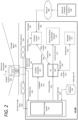
- FIG. 2 is a block diagram illustrating an example autonomous vehicle including a PLADAR system, as described herein.
- the PLADAR system 205 of the autonomous vehicle (AV) 200 can provide PLADAR data 202 to an on-board data processing system 210 of the autonomous vehicle 200.
- the PLADAR system 205 can comprise a light source (e.g., a laser), a photodetector, scanner components (e.g., which can include one or more lens(es), mirror(s), motor(s), actuator(s), etc.), and circuitry to couple to various components of the autonomous vehicle 200.
- the data processing system 210 can utilize the PLADAR data 202 to detect the situational conditions of the autonomous vehicle 200 as the AV 100 travels along a current route. For example, the data processing system 210 can identify potential obstacles or road hazards-such as pedestrians, bicyclists, objects on the road, road cones, road signs, animals, etc.-in order to enable an AV control system 220 to react accordingly.
- the data processing system 210 can utilize sub-maps 233 stored in a database 230 of the autonomous vehicle 200 in order to perform localization and pose operations to determine a current location and orientation of the autonomous vehicle 200 in relation to a given region (e.g., a city).
- the sub-maps 233 can comprise previously recorded sensor data, such as stereo camera data, radar maps, and/or point cloud LIDAR maps that enable the data processing system 210 to compare the PLADAR data 202 from the PLADAR system 205 with a current sub-map 234 to identify such obstacles and potential road hazards in real time.
- the data processing system 210 can provide the processed sensor data 213-identifying such obstacles and road hazards-to AV control system 220, which can react accordingly by operating the steering, braking, and acceleration systems 225 of the autonomous vehicle 200.
- the autonomous vehicle 200 further includes a number of stereo cameras 260 that generate dynamic image data 262 of the autonomous vehicle's 200 surroundings.
- the autonomous vehicle 200 can include stereo cameras 260 with fields of view showing a 360° panorama (or forward and rearward directions) of the autonomous vehicle 200.
- the on-board data processing system 210 can further process the dynamic image data 262 to identify features or potential hazards along the current route traveled.
- the processed data 213 can include processed image data from the stereo cameras 260, which can be utilized by the AV control system 220 to perform low level maneuvering.
- the AV control system 220 can receive a destination 219 from, for example, an interface system 215 of the autonomous vehicle 200.
- the interface system 215 can include any number of touch-screens, voice sensors, mapping resources, etc. that enable a passenger 239 to provide a passenger input 241 indicating the destination 219.
- the passenger 239 can type the destination 219 into a mapping engine 275 of the autonomous vehicle 200, or can speak the destination 219 into the interface system 215.
- the interface system 215 can include a wireless communication module that can connect the autonomous vehicle 200 to a network 280 to communicate with a backend transport arrangement system 290 to receive invitations 282 to service a pick-up or drop-off request.
- Such invitations 282 can include destination 219 (e.g., a pick-up location), and can be received by the autonomous vehicle 200 as a communication over the network 280 from the backend transport arrangement system 290.
- the backend transport arrangement system 290 can manage routes and/or facilitate transportation for users using a fleet of autonomous vehicles throughout a given region.
- the backend transport arrangement system 290 can be operative to facilitate passenger pick-ups and drop-offs to generally service pick-up requests, facilitate delivery such as packages, food, or animals, and the like.
- the AV control system 220 can utilize the mapping engine 275 to receive route data 232 indicating a route to the destination 219.
- the mapping engine 275 can also generate map content 226 dynamically indicating the route traveled to the destination 219.
- the route data 232 and/or map content 226 can be utilized by the AV control system 220 to maneuver the autonomous vehicle 200 to the destination 219 along the selected route.
- the AV control system 220 can dynamically generate control commands 221 for the autonomous vehicle's steering, braking, and acceleration system 225 to actively drive the autonomous vehicle 200 to the destination 219 along the selected route.
- the map content 226 showing the current route traveled can be streamed to the interior interface system 215 so that the passenger(s) 239 can view the route and route progress in real time.
- the processed data 213 provided to the AV control system 220 can indicate low level occurrences, such as obstacles and potential hazards to which the AV control system 220 can make decisions and react.
- the processed data 213 can indicate a pedestrian crossing the road, traffic signals, stop signs, other vehicles, road conditions, traffic conditions, bicycle lanes, crosswalks, pedestrian activity (e.g., a crowded adjacent sidewalk), and the like.
- the AV control system 220 can respond to the processed data 213 by generating control commands 221 to reactively operate the steering, braking, and acceleration systems 225 accordingly.
- the autonomous vehicle 200 can include a PLADAR controller 235 to receive feedback data 223 from the data processing system 210 in order to configure various adjustable parameters of the PLADAR system 205.
- the feedback data 223 can include information indicating data quality, such as errors or uncertainty in the data from certain individual photodetectors, which can be extrapolated by the PLADAR controller 235 to determine a number of adjustment commands 237 for the PLADAR system 205 that can correct the error(s).
- the PLADAR controller 235 can identify a pattern in the feedback data 223 indicating a misalignment of the photodetector array with respect to the PLADAR beam 207.
- the PLADAR controller 235 can identify the misalignment and generate the adjustment commands 237 for execution on the adjustable components of the photodetector array to re-calibrate the PLADAR system 205.
- the adjustment commands 237 can be executed on the adjustable components dynamically as the autonomous vehicle 200 travels along a current route, or during garage servicing of the autonomous vehicle 200.
- the feedback data 223 can include requests from the data processing system 210 for the PLADAR controller 235 to configure the PLADAR system 205 for increased or decreased granularity.
- the data processing system 210 can identify a substantial decrease in potential hazards (e.g., when the autonomous vehicle 200 leaves a city and enters open rural road with little traffic).
- the feedback data 223 can include a request to save power in such conditions by decreasing the pulse rate and/or scan rate of the PLADAR system 205.
- the adjustment commands 237 can be generated by the PLADAR controller 235 to adjust a rotational parameter 209 (e.g., decrease a rotational rate) and/or decrease the pulse rate of the PLADAR beam 207-thereby enabling a decrease in sample rate by the data processing system 210.
- a rotational parameter 209 e.g., decrease a rotational rate
- the on-board data processing system 210 can identify an increase in potential hazards (e.g., entering an area of increased pedestrian activity) or an increased probability of experiencing hazards (e.g., when traveling at high speeds), and request that the PLADAR controller 235 generate adjustment commands 237 to increase the sample rate.
- Such commands 237 can be executed on the adjustable parameters of the PLADAR system 205 to increase a pulse rate of the PLADAR beam 207 and/or increase the rotational rate-thereby enabling the data processing system 210 to increase the sample rate and bolster point cloud granularity.
- FIG. 3 is a flow chart describing an example method of processing PLADAR data, according to one or more examples described herein.
- the method described with respect to FIG. 3 may be performed by an example data processor 130 shown and described with respect to FIG. 1 , or an on-board data processing system 230 shown and described with respect to FIG. 2 .
- the data processor 130 can sample data from each detector of the PLADAR system 100 simultaneously (300). For example, the data processor 130 can monitor each ADC of an ADC chain coupled to the photodetector array 119.
- return light signals e.g., reflection/backscatter 126
- Each detector can include an ADC that converts the detected light signal into a digital signal, and a timing component 135 can be utilized by the data processor 130 to precisely perform ranging for each ADC of the ADC chain and for every beam plane 118 pulse.
- the data processor 130 can process the PLADAR data 129 to perform ranging and identify potential hazards (305).
- the data processor 130 can be programmed to identify aspects of the autonomous vehicle's situational environment that causes the autonomous vehicle 200 to operate safely on public roads. Such aspects can include pedestrians, bicyclists, hazardous objects on the road (e.g., rocks), stop lights, signs, other vehicles, and the like.
- the processor 130 can identify such aspects by, for example, comparing the PLADAR data 129 to a stored sub-map including prerecorded data on the same current route, as described with respect to FIG. 2 .
- the data processor 130 transmits the processed sensor data 213 to an AV control system 220, which can control the autonomous vehicle's 200 steering braking, and acceleration systems 225 to make decisions and react to each processed object for low level maneuvering (310). Additionally, the AV control system 220 can further utilize dynamic image data 262 from a stereo camera system 260 of the autonomous vehicle 200 for low level maneuvering.
- the data processor 130 can identify, in the PLADAR data 129, a misalignment between the photodetector array 119 and the beam plane 118 (315).
- the PLADAR data 129 can indicate unreliable data for the top detectors and the bottom detectors, which can indicate a diagonal misalignment of the photodetector array 118.
- the data processor 130 can determine the nature of the misalignment based on the sampled PLADAR data 129.
- the data processor 130 can generally identify the error in the data, and generate feedback 132 requesting the PLADAR controller 150 to perform a diagnostics test. In either aspect, the data processor 130 can generate feedback 132 indicating the misalignment (320), and transmit the feedback to the PLADAR controller 150 to re-calibrate the photodetector array 119 to the planar beam 118 (325).
- the data processor 130 can determine a condition change in the situational environment of the autonomous vehicle 200 (330). As an example, the data processor 130 can identify that the autonomous vehicle 200 is traveling at higher speeds, and that more detailed data from a forward direction of the autonomous vehicle 200 is desired. The data processor 130 can generate a request to adjust the PLADAR system 100 configurations to, for example, increase a pulse rate, scan rate, detector sensitivity, and/or a laser intensity to increase the data quality (335). Conversely, to optimize power and processing resources, in certain circumstances (e.g., low speed operation), the data processor 130 can generate a request to decrease such configurable parameters when situational conditions are conducive to such decreases (335). These requests can be transmitted to the PLADAR controller 150 (340), which can execute adjustment commands 237 on the configurable components of the PLADAR system 100 accordingly.
- the PLADAR controller 150 340
- FIGS. 4A and 4B are a flow chart describing example methods of configuring a PLADAR system, as described herein.
- the methods described with respect to FIGS. 4A and 4B may be performed by an example PLADAR controller 150, 235 shown and described with respect to FIGS. 1 and 2 .
- the PLADAR controller 150 can receive feedback 132 from the data processor 130 indicating a misalignment (400).
- the feedback 132 identifies the specific misalignment (e.g., leftward, rightward, topward, downward, clockwise or counterclockwise diagonal misalignments or any combination of the foregoing).
- the feedback 132 can include samplings of the PLADAR data 129, which the PLADAR controller 150 can analyze to identify a data pattern that describes or details the misalignment (405).
- data from the photodetector array 119 can indicate a consistent pattern of bad or unreliable data from any number of individual detectors in the array 119.
- the PLADAR controller 150 can perform an initial set of adjustments on the adjustable components 123 to diagnose the misalignment. In other situations, the misalignment may be readily identified by the PLADAR controller 150, and the calibration can be made directly.
- the PLADAR controller 150 can generate and execute adjustment commands 237 on the adjustable components 123 of the photodetector array 119 to realign or re-calibrate the photodetector array 119 to the beam plane 118 (410).
- the PLADAR controller 150 can receive a request from the data processor 130 to adjust PLADAR system 100 configurations (450). For example, based on changing situational conditions (e.g., changing weather such as rain or snow, changing speed, changing environmental complexity or potential hazard count, etc.), the data processor 130 can determine that an increased or decreased pulse rate (451) and/or scan rate (452) is preferable. Additionally or alternatively, the data processor 130 may determine that conditions require an increase in laser intensity (453) to enhance reflectance, or an increase in detector sensitivity (454). Alternatively, the data processor 130 may determine that conditions are conducive to power savings (e.g., in low speed uncrowded situations), and may request to decrease such configurations.
- changing situational conditions e.g., changing weather such as rain or snow, changing speed, changing environmental complexity or potential hazard count, etc.
- the data processor 130 can determine that an increased or decreased pulse rate (451) and/or scan rate (452) is preferable. Additionally or alternatively, the data processor 130 may determine that conditions require an increase in
- the PLADAR controller 150 can generate adjustment commands 237 based on the requests from the data processor 130 (455). The PLADAR controller 150 can then execute the adjustment commands 237 on the relevant components of the PLADAR system 100 to configure the PLADAR system 100 accordingly (460). For example, the PLADAR controller 150 can execute commands 237 on the PLADAR motor 120 to increase or decrease the scan rate (461). As another example, the PLADAR controller 150 can execute commands 237 on the timing component 135 to increase or decrease a pulse rate of the laser (462). Further, the PLADAR controller 150 can execute commands 237 on the laser source itself to increase or decrease laser intensity (e.g., increase or decrease power or beam frequency) (463). Still further, in some implementations, the PLADAR controller 150 can execute commands 237 on the detector array 119 to increase or decrease detector sensitivity (464).
- the PLADAR controller 150 can execute commands 237 on the detector array 119 to increase or decrease detector sensitivity (464).
- data processor 130 and PLADAR controller 150 are shown as separate components in FIGS. 1 and 2 , it is contemplated that certain embodiments can include a single component (e.g., one or more blade computers of an autonomous vehicle 200 that perform all of the operations described with respect to FIG. 3 and FIGS. 4A and 4B .
- FIG. 5 is a block diagram that illustrates a computer system upon which examples described herein may be implemented.
- a computer system 500 can be implemented on, for example, a server or combination of servers.
- the computer system 500 may be implemented as part of a data processing system 130, which itself may be implemented as a part of the AV's on-board data processing system 210.
- the data processing system 130 may be implemented with the PLADAR controller 150 as a single computer system 500, or using a combination of multiple computer systems as described in connection with FIG. 5 .
- the computer system 500 includes processing resources 510, a main memory 520, a read-only memory (ROM) 530, a storage device 540, and a communication interface 550.
- the computer system 500 includes at least one processor 510 for processing information stored in the main memory 520, such as provided by a random access memory (RAM) or other dynamic storage device, for storing information and instructions which are executable by the processor 510.
- the main memory 520 also may be used for storing temporary variables or other intermediate information during execution of instructions to be executed by the processor 510.
- the computer system 500 may also include the ROM 530 or other static storage device for storing static information and instructions for the processor 510.
- a storage device 540 such as a magnetic disk or optical disk, is provided for storing information and instructions.
- the communication interface 550 enables the computer system 500 to communicate with the PLADAR system 580 over a network link (e.g., a wireless or wired link).
- the computer system 500 receives PLADAR data 582 from the PLADAR system 580.
- the executable instructions stored in the memory 530 can include configuration instructions 522, which the processor 510 executes to generate a set of adjustment commands 554 to configure the adjustable parameters of the autonomous vehicle's PLADAR system 580 based on the PLADAR data 582 and the situational conditions of the autonomous vehicle 200.
- the processor 510 is configured with software and/or other logic to perform one or more processes, steps and other functions described with implementations, such as described by FIGS. 1 through 4B , and elsewhere in the present application.
- Examples described herein are related to the use of the computer system 500 for implementing the techniques described herein. According to one example, those techniques are performed by the computer system 500 in response to the processor 510 executing one or more sequences of one or more instructions contained in the main memory 520. Such instructions may be read into the main memory 520 from another machine-readable medium, such as the storage device 540. Execution of the sequences of instructions contained in the main memory 520 causes the processor 510 to perform the process steps described herein. In alternative implementations, hard-wired circuitry may be used in place of or in combination with software instructions to implement examples described herein. Thus, the examples described are not limited to any specific combination of hardware circuitry and software.
Landscapes
- Engineering & Computer Science (AREA)
- Physics & Mathematics (AREA)
- Radar, Positioning & Navigation (AREA)
- Remote Sensing (AREA)
- General Physics & Mathematics (AREA)
- Computer Networks & Wireless Communication (AREA)
- Automation & Control Theory (AREA)
- Aviation & Aerospace Engineering (AREA)
- Electromagnetism (AREA)
- Computer Vision & Pattern Recognition (AREA)
- Optics & Photonics (AREA)
- Multimedia (AREA)
- Business, Economics & Management (AREA)
- Evolutionary Computation (AREA)
- Game Theory and Decision Science (AREA)
- Medical Informatics (AREA)
- Artificial Intelligence (AREA)
- Health & Medical Sciences (AREA)
- Optical Radar Systems And Details Thereof (AREA)
- Traffic Control Systems (AREA)
- Indole Compounds (AREA)
Claims (14)
- Lichtdetektions- und Entfernungsmess(LIDAR)-System, das Folgendes umfasst:einen Laser, der dazu ausgelegt ist, einen ersten Laserstrahl auszugeben;einen Kollimator, der dazu ausgelegt ist, den ersten Laserstrahl auf einer Achse zu kollimieren, um einen zweiten Laserstrahl entlang einer Strahlebene zu emittieren; undein Detektorarray, das dazu ausgelegt ist, zurückkehrendes Licht vom zweiten Laserstrahl zu detektieren, wobei das zurückkehrende Licht von Objekten reflektiert wird, wobei das Detektorarray eine Vielzahl von Photodetektoren umfasst, die auf einer Leiterplatte angeordnet sind; undeinen oder mehrere Prozessoren, die zu Folgendem ausgelegt sind:Erhalten von Daten, die das zurückkehrende Licht anzeigen, von einem oder mehreren der Photodetektoren;Bestimmen einer Fehlausrichtung zwischen der Strahlebene und einem oder mehreren der Photodetektoren mindestens teilweise auf Basis der Daten undErzeugen von einem oder mehreren Kalibrierparametern auf Basis der Fehlausrichtung, wobei der eine oder die mehreren Kalibrierparameter mit dem Einstellen einer Position von mindestens einem der Photodetektoren verknüpft sind.
- LIDAR-System nach Anspruch 1, wobei der Laser einen Faserlaser umfasst, der den ersten Laserstrahl ausgibt.
- LIDAR-System nach einem der vorhergehenden Ansprüche, wobei der Kollimator einen Satz von Spiegeln umfasst, die den zweiten Laserstrahl aus dem ersten Laserstrahl herstellen.
- LIDAR-System nach einem der vorhergehenden Ansprüche, wobei der Kollimator einen Satz von Linsen umfasst, die den zweiten Laserstrahl aus dem ersten Laserstrahl herstellen.
- LIDAR-System nach einem der vorhergehenden Ansprüche, wobei die Vielzahl von Photodetektoren mindestens eine Reihe von Photodetektoren beinhalten.
- LIDAR-System nach Anspruch 5, das ferner Folgendes umfasst:
eine Analog-Digital-Wandler(ADC)-Kette, die an die mindestens eine Reihe von Photodetektoren gekoppelt ist. - LIDAR-System nach Anspruch 6, wobei der eine oder die mehreren Prozessoren dazu ausgelegt sind, von jedem ADC der ADC-Kette gleichzeitig Daten abzutasten, um die Daten zu erhalten, die das zurückkehrende Licht anzeigen.
- LIDAR-System nach einem der vorhergehenden Ansprüche, das ferner Folgendes umfasst:
eine Vielzahl von Einstellungskomponenten, die auf der Leiterplatte angebracht sind, wobei die Vielzahl von Einstellungskomponenten dazu ausgelegt sind, die Position von einem oder mehreren der Photodetektoren einzustellen. - LIDAR-System nach Anspruch 8, wobei der eine oder die mehreren Prozessoren dazu ausgelegt sind, für eine oder mehrere der Einstellungskomponenten ein Befehlssignal bereitzustellen, wobei das Befehlssignal mit dem Einstellen der Position des mindestens einen der Photodetektoren verknüpft ist.
- LIDAR-System nach einem der vorhergehenden Ansprüche, wobei die Strahlebene eine zweidimensionale Strahlebene umfasst, entlang der der zweite Laserstrahl emittiert wird.
- Autonomes Fahrzeugsteuersystem, das das in einem der Ansprüche 1-10 angegebene LIDAR-System umfasst.
- Autonomes Fahrzeug, das das in einem der Ansprüche 1-10 angegebene LIDAR-System umfasst.
- Autonomes Fahrzeug nach Anspruch 12, das ferner Folgendes umfasst:ein Beschleunigungs-, ein Brems- und ein Lenksystem;ein Steuersystem zum autonomen Bedienen des Beschleunigungs-, des Brems- und des Lenksystems.
- Autonomes Fahrzeug nach Anspruch 12, das ferner Folgendes umfasst:
ein Steuersystem, das Sensordaten vom LIDAR-System verarbeitet, um dynamisch Merkmale zu identifizieren, wenn das autonome Fahrzeug beschleunigt und manövriert.
Applications Claiming Priority (4)
| Application Number | Priority Date | Filing Date | Title |
|---|---|---|---|
| US201662303013P | 2016-03-03 | 2016-03-03 | |
| US15/446,953 US10281923B2 (en) | 2016-03-03 | 2017-03-01 | Planar-beam, light detection and ranging system |
| EP17760835.3A EP3423912B1 (de) | 2016-03-03 | 2017-03-02 | Planarstrahl, lichtdetektion und vermessungssystem |
| PCT/US2017/020483 WO2017151943A1 (en) | 2016-03-03 | 2017-03-02 | Planar-beam, light detection and ranging system |
Related Parent Applications (1)
| Application Number | Title | Priority Date | Filing Date |
|---|---|---|---|
| EP17760835.3A Division EP3423912B1 (de) | 2016-03-03 | 2017-03-02 | Planarstrahl, lichtdetektion und vermessungssystem |
Publications (2)
| Publication Number | Publication Date |
|---|---|
| EP3971673A1 EP3971673A1 (de) | 2022-03-23 |
| EP3971673B1 true EP3971673B1 (de) | 2024-09-04 |
Family
ID=59722176
Family Applications (2)
| Application Number | Title | Priority Date | Filing Date |
|---|---|---|---|
| EP21208121.0A Active EP3971673B1 (de) | 2016-03-03 | 2017-03-02 | Planarstrahl, lichtdetektion und vermessungssystem |
| EP17760835.3A Active EP3423912B1 (de) | 2016-03-03 | 2017-03-02 | Planarstrahl, lichtdetektion und vermessungssystem |
Family Applications After (1)
| Application Number | Title | Priority Date | Filing Date |
|---|---|---|---|
| EP17760835.3A Active EP3423912B1 (de) | 2016-03-03 | 2017-03-02 | Planarstrahl, lichtdetektion und vermessungssystem |
Country Status (8)
| Country | Link |
|---|---|
| US (5) | US10281923B2 (de) |
| EP (2) | EP3971673B1 (de) |
| CN (1) | CN109074073B (de) |
| AU (1) | AU2017225790B2 (de) |
| CA (1) | CA3015894C (de) |
| IL (1) | IL261434B (de) |
| SG (1) | SG11201807249YA (de) |
| WO (1) | WO2017151943A1 (de) |
Families Citing this family (29)
| Publication number | Priority date | Publication date | Assignee | Title |
|---|---|---|---|---|
| US12377317B2 (en) | 2014-04-25 | 2025-08-05 | Christopher DeCarlo | Sporting sensor-based apparatus, system, method, and computer program product |
| US10821345B2 (en) | 2014-04-25 | 2020-11-03 | Christopher DeCarlo | Sporting device for analyzing an element in a tunnel, apparatus, system, method, and computer program product |
| US11446550B2 (en) | 2017-10-10 | 2022-09-20 | Christopher DeCarlo | Entertainment forum digital video camera, audio microphone, speaker and display device enabling entertainment participant and remote virtual spectator interaction, apparatus, system, method, and computer program product |
| US11370422B2 (en) * | 2015-02-12 | 2022-06-28 | Honda Research Institute Europe Gmbh | Method and system in a vehicle for improving prediction results of an advantageous driver assistant system |
| US10338225B2 (en) * | 2015-12-15 | 2019-07-02 | Uber Technologies, Inc. | Dynamic LIDAR sensor controller |
| US10281923B2 (en) | 2016-03-03 | 2019-05-07 | Uber Technologies, Inc. | Planar-beam, light detection and ranging system |
| US10234856B2 (en) * | 2016-05-12 | 2019-03-19 | Caterpillar Inc. | System and method for controlling a machine |
| US9952317B2 (en) | 2016-05-27 | 2018-04-24 | Uber Technologies, Inc. | Vehicle sensor calibration system |
| US11889393B2 (en) * | 2017-06-23 | 2024-01-30 | Veniam, Inc. | Methods and systems for detecting anomalies and forecasting optimizations to improve urban living management using networks of autonomous vehicles |
| US10558224B1 (en) * | 2017-08-10 | 2020-02-11 | Zoox, Inc. | Shared vehicle obstacle data |
| US10746858B2 (en) | 2017-08-17 | 2020-08-18 | Uatc, Llc | Calibration for an autonomous vehicle LIDAR module |
| US10775488B2 (en) | 2017-08-17 | 2020-09-15 | Uatc, Llc | Calibration for an autonomous vehicle LIDAR module |
| WO2019131002A1 (ja) * | 2017-12-25 | 2019-07-04 | 日立オートモティブシステムズ株式会社 | 車両制御装置および電子制御システム |
| US10914820B2 (en) | 2018-01-31 | 2021-02-09 | Uatc, Llc | Sensor assembly for vehicles |
| US10627487B2 (en) * | 2018-02-10 | 2020-04-21 | Delphi Technologies, Llc | Enclosure |
| US11143760B2 (en) * | 2018-02-19 | 2021-10-12 | Motional Ad Llc | Object-detector configuration based on human-override of automated vehicle control |
| US10331128B1 (en) * | 2018-04-20 | 2019-06-25 | Lyft, Inc. | Control redundancy |
| EP3710859B1 (de) | 2018-04-28 | 2023-04-19 | SZ DJI Technology Co., Ltd. | Lichtdetektions- und entfernungsmesssensoren mit mehreren emittern und mehreren empfängern sowie zugehörige systeme und verfahren |
| US11079492B1 (en) * | 2018-09-28 | 2021-08-03 | Zoox, Inc. | Condition dependent parameters for large-scale localization and/or mapping |
| US20200133270A1 (en) * | 2018-10-31 | 2020-04-30 | Baidu Usa Llc | Lidar device with cylindrical lens for autonomous driving vehicles |
| DE102018220932A1 (de) * | 2018-12-04 | 2020-06-04 | Osram Gmbh | Verfahren zum Bestimmen des Abstands und Rückstrahlvermögens einer Objektoberfläche |
| FR3096788B1 (fr) * | 2019-05-29 | 2021-06-11 | Thales Sa | Système lidar comprenant un élément diffractif interférentiel et procédé d'imagerie lidar |
| FR3103219B1 (fr) * | 2019-11-19 | 2021-10-08 | Vitesco Technologies | Procédé de gestion des anomalies sporadiques d’un système de motorisation d’un véhicule automobile |
| JP7452044B2 (ja) | 2020-01-31 | 2024-03-19 | 株式会社デンソー | 光検出装置 |
| JP7380269B2 (ja) | 2020-01-31 | 2023-11-15 | 株式会社デンソー | 光検出装置 |
| JP7406432B2 (ja) * | 2020-03-31 | 2023-12-27 | 本田技研工業株式会社 | 移動体制御装置、移動体制御方法、およびプログラム |
| CN114089311B (zh) * | 2022-01-19 | 2022-05-17 | 探维科技(北京)有限公司 | 一种激光雷达系统 |
| US11702096B1 (en) * | 2022-03-25 | 2023-07-18 | GM Global Technology Operations LLC | Systems and methods for providing a graphical representation of following distances to an augmented reality vehicle heads-up display system |
| US12511995B2 (en) * | 2024-02-12 | 2025-12-30 | GM Global Technology Operations LLC | Identifying roadway safety events in remote vehicles |
Citations (1)
| Publication number | Priority date | Publication date | Assignee | Title |
|---|---|---|---|---|
| US20030042303A1 (en) * | 1999-06-07 | 2003-03-06 | Metrologic Instruments, Inc. | Automatic vehicle identification (AVI) system employing planar laser illumination imaging (PLIIM) based subsystems |
Family Cites Families (196)
| Publication number | Priority date | Publication date | Assignee | Title |
|---|---|---|---|---|
| EP0068626B1 (de) * | 1981-07-01 | 1987-08-19 | Imperial Chemical Industries Plc | System zum Führen eines Fahrzeuges insbesondere zur landwirtschaftlichen Nutzung |
| JPS60128304A (ja) * | 1983-12-15 | 1985-07-09 | Nippon Tsushin Gijutsu Kk | 溶接機計測ヘツド |
| EP0185816A1 (de) | 1984-12-27 | 1986-07-02 | THE GENERAL ELECTRIC COMPANY, p.l.c. | Fahrzeugführungs- und Steuersystem |
| JPH0768797B2 (ja) | 1989-03-08 | 1995-07-26 | 光洋自動機株式会社 | 回転テーブル装置 |
| JP3292729B2 (ja) | 1990-11-26 | 2002-06-17 | 三菱電機株式会社 | 光ファイバ形光増幅装置 |
| US6822563B2 (en) | 1997-09-22 | 2004-11-23 | Donnelly Corporation | Vehicle imaging system with accessory control |
| DE19512644A1 (de) | 1995-04-05 | 1996-10-10 | Bayerische Motoren Werke Ag | Verfahren zum Vermeiden einer Kollision eines Kraftfahrzeugs |
| US5598783A (en) | 1995-06-07 | 1997-02-04 | Autran Corp. | Integrated transportation system including transfer vehicles |
| US5590604A (en) | 1995-06-07 | 1997-01-07 | Autran Corp. | Transportation system with high speed vehicles and automatic control |
| JPH09163197A (ja) | 1995-12-09 | 1997-06-20 | Sony Corp | ビデオカメラ装置 |
| JP3866328B2 (ja) | 1996-06-06 | 2007-01-10 | 富士重工業株式会社 | 車両周辺立体物認識装置 |
| US7028899B2 (en) * | 1999-06-07 | 2006-04-18 | Metrologic Instruments, Inc. | Method of speckle-noise pattern reduction and apparatus therefore based on reducing the temporal-coherence of the planar laser illumination beam before it illuminates the target object by applying temporal phase modulation techniques during the transmission of the plib towards the target |
| US7070106B2 (en) * | 1998-03-24 | 2006-07-04 | Metrologic Instruments, Inc. | Internet-based remote monitoring, configuration and service (RMCS) system capable of monitoring, configuring and servicing a planar laser illumination and imaging (PLIIM) based network |
| US7979173B2 (en) | 1997-10-22 | 2011-07-12 | Intelligent Technologies International, Inc. | Autonomous vehicle travel control systems and methods |
| JPH11142520A (ja) | 1997-11-06 | 1999-05-28 | Omron Corp | 測距装置の軸調整方法及び軸ずれ検出方法並びに測距装置 |
| US6434302B1 (en) | 1998-03-04 | 2002-08-13 | Jds Uniphase Corporation | Optical couplers for multimode fibers |
| US7755668B1 (en) | 1998-04-09 | 2010-07-13 | Johnston Gregory E | Mobile surveillance system |
| US6727849B1 (en) * | 1998-10-22 | 2004-04-27 | Trimble Navigation Limited | Seamless surveying system |
| US6343254B1 (en) * | 1998-10-22 | 2002-01-29 | Trimble Navigation Limited | Seamless surveying system |
| US6988660B2 (en) * | 1999-06-07 | 2006-01-24 | Metrologic Instruments, Inc. | Planar laser illumination and imaging (PLIIM) based camera system for producing high-resolution 3-D images of moving 3-D objects |
| JP3877475B2 (ja) | 1999-09-22 | 2007-02-07 | 富士重工業株式会社 | 車載カメラの取付構造 |
| DE19962997B4 (de) | 1999-12-24 | 2010-06-02 | Robert Bosch Gmbh | Verfahren zur Kalibrierung eines Sensorsystems |
| WO2002008545A2 (en) | 2000-07-20 | 2002-01-31 | Maurice Segal | Vehicle parking building and system |
| JP4810763B2 (ja) | 2001-06-20 | 2011-11-09 | 株式会社デンソー | 距離測定装置 |
| EP1407224B1 (de) | 2001-07-16 | 2005-12-28 | Werth Messtechnik GmbH | Verfahren zur messung von oberflächeneigenschaften sowie koordinatenmessgerät |
| US6665063B2 (en) * | 2001-09-04 | 2003-12-16 | Rosemount Aerospace Inc. | Distributed laser obstacle awareness system |
| US7085642B2 (en) | 2002-08-05 | 2006-08-01 | Ford Global Technologies, Llc | Method and system for correcting sensor offsets |
| AU2003264048A1 (en) * | 2002-08-09 | 2004-02-25 | Intersense, Inc. | Motion tracking system and method |
| DE10244638A1 (de) | 2002-09-25 | 2004-04-08 | Ibeo Automobile Sensor Gmbh | Optoelektronische Erfassungseinrichtung |
| JP2004125739A (ja) | 2002-10-07 | 2004-04-22 | Omron Corp | 物体検知装置および方法 |
| US7342650B2 (en) | 2002-10-12 | 2008-03-11 | Leica Geosystems Ag | Electronic display and control device for a measuring device |
| US6860350B2 (en) | 2002-12-20 | 2005-03-01 | Motorola, Inc. | CMOS camera with integral laser ranging and velocity measurement |
| JP2004286724A (ja) | 2003-01-27 | 2004-10-14 | Denso Corp | 車両挙動検出装置、車載処理システム、検出情報較正装置及び車載処理装置 |
| US7248342B1 (en) | 2003-02-14 | 2007-07-24 | United States Of America As Represented By The Administrator Of The National Aeronautics And Space Administration | Three-dimension imaging lidar |
| JP2005024463A (ja) | 2003-07-04 | 2005-01-27 | Fuji Heavy Ind Ltd | ステレオ広視野画像処理装置 |
| US7276696B2 (en) | 2003-07-15 | 2007-10-02 | Ford Global Technologies, Llc | Active night vision thermal control system using wavelength-temperature characteristic of light source |
| US7064810B2 (en) * | 2003-09-15 | 2006-06-20 | Deere & Company | Optical range finder with directed attention |
| US7064817B1 (en) * | 2003-11-04 | 2006-06-20 | Sandia Corporation | Method to determine and adjust the alignment of the transmitter and receiver fields of view of a LIDAR system |
| EP1691666B1 (de) | 2003-12-12 | 2012-05-30 | University of Washington | Katheterskop-3d-führung und schnittstellensystem |
| US7636479B2 (en) | 2004-02-24 | 2009-12-22 | Trw Automotive U.S. Llc | Method and apparatus for controlling classification and classification switching in a vision system |
| US20050196015A1 (en) | 2004-03-02 | 2005-09-08 | Trw Automotive U.S. Llc | Method and apparatus for tracking head candidate locations in an actuatable occupant restraining system |
| US7609893B2 (en) | 2004-03-03 | 2009-10-27 | Trw Automotive U.S. Llc | Method and apparatus for producing classifier training images via construction and manipulation of a three-dimensional image model |
| US20100013615A1 (en) | 2004-03-31 | 2010-01-21 | Carnegie Mellon University | Obstacle detection having enhanced classification |
| US8078338B2 (en) | 2004-10-22 | 2011-12-13 | Irobot Corporation | System and method for behavior based control of an autonomous vehicle |
| EP2357527B1 (de) | 2004-11-15 | 2012-10-17 | Hitachi Ltd. | Stereokamera mit zwei auf einer gemeinsamen Abstützung montierten bildgebenden Elementen |
| JP4428208B2 (ja) | 2004-11-16 | 2010-03-10 | 株式会社デンソー | 車両用物体認識装置 |
| US7532311B2 (en) | 2005-04-06 | 2009-05-12 | Lockheed Martin Coherent Technologies, Inc. | Efficient lidar with flexible target interrogation pattern |
| CN101535087B (zh) | 2005-11-01 | 2013-05-15 | 唐纳利公司 | 具有显示装置的内部后视镜 |
| KR101321303B1 (ko) | 2005-12-08 | 2013-10-25 | 어드밴스트 사이언티픽 컨셉츠 인크. | 3d 초점면을 사용하는 레이저 범위측정과 추적 및 지정 |
| JP2007187618A (ja) | 2006-01-16 | 2007-07-26 | Omron Corp | 物体識別装置 |
| US7544945B2 (en) * | 2006-02-06 | 2009-06-09 | Avago Technologies General Ip (Singapore) Pte. Ltd. | Vertical cavity surface emitting laser (VCSEL) array laser scanner |
| US8744224B2 (en) | 2006-03-07 | 2014-06-03 | Alcatel Lucent | Tapered fiber bundle apparatus with monitoring capability |
| US7406220B1 (en) | 2006-03-09 | 2008-07-29 | Lockheed Martin Coherent Technologies, Inc. | Beam steering and combination |
| US8050863B2 (en) | 2006-03-16 | 2011-11-01 | Gray & Company, Inc. | Navigation and control system for autonomous vehicles |
| JP4467534B2 (ja) | 2006-03-16 | 2010-05-26 | 富士通株式会社 | 障害物のある環境下で自律移動する移動ロボットおよび移動ロボットの制御方法。 |
| US9373149B2 (en) | 2006-03-17 | 2016-06-21 | Fatdoor, Inc. | Autonomous neighborhood vehicle commerce network and community |
| JP4759423B2 (ja) * | 2006-03-27 | 2011-08-31 | 富士通株式会社 | 光伝送システム |
| CZ307329B6 (cs) * | 2006-05-15 | 2018-06-13 | Varroc Lighting Systems, s.r.o. | Světelné zařízení pro motorové vozidlo, obsahující planární světlovod |
| WO2008008970A2 (en) | 2006-07-13 | 2008-01-17 | Velodyne Acoustics, Inc | High definition lidar system |
| DE102006035232A1 (de) | 2006-07-26 | 2008-01-31 | Robert Bosch Gmbh | Optische Messeinrichtung mit einer Bildaufnahmeeinheit |
| US20080039991A1 (en) | 2006-08-10 | 2008-02-14 | May Reed R | Methods and systems for providing accurate vehicle positioning |
| US8884763B2 (en) | 2006-10-02 | 2014-11-11 | iRobert Corporation | Threat detection sensor suite |
| JP5049546B2 (ja) | 2006-10-17 | 2012-10-17 | 株式会社ツバキエマソン | 密閉型回転センサ内蔵モータ |
| CN101589316B (zh) | 2006-10-30 | 2012-08-29 | 奥拓诺塞斯有限公司 | 用于激光雷达的扫描系统 |
| US7993005B2 (en) * | 2006-11-10 | 2011-08-09 | Seiko Epson Corporation | Color laser image generation |
| US8532862B2 (en) | 2006-11-29 | 2013-09-10 | Ryan A. Neff | Driverless vehicle |
| KR100834577B1 (ko) | 2006-12-07 | 2008-06-02 | 한국전자통신연구원 | 스테레오 비전 처리를 통해 목표물 검색 및 추종 방법, 및이를 적용한 가정용 지능형 서비스 로봇 장치 |
| DE102007001103A1 (de) | 2007-01-04 | 2008-07-10 | Siemens Ag | Vertikale Ausrichtung eines Lidar-Sensors |
| JP2008266975A (ja) | 2007-04-19 | 2008-11-06 | Caterpillar Japan Ltd | 作業機械の制御装置 |
| CA2635155C (en) * | 2007-06-18 | 2015-11-24 | Institut National D'optique | Method for detecting objects with visible light |
| KR100918480B1 (ko) | 2007-09-03 | 2009-09-28 | 한국전자통신연구원 | 스테레오 비전 시스템 및 그 처리 방법 |
| US8102514B2 (en) * | 2007-09-14 | 2012-01-24 | Sanyo Electric Co., Ltd. | Beam irradiation apparatus |
| US7979174B2 (en) | 2007-09-28 | 2011-07-12 | Honeywell International Inc. | Automatic planning and regulation of the speed of autonomous vehicles |
| US8027029B2 (en) | 2007-11-07 | 2011-09-27 | Magna Electronics Inc. | Object detection and tracking system |
| US7961301B2 (en) | 2008-05-09 | 2011-06-14 | Ball Aerospace & Technologies Corp. | Flash LADAR system |
| US8126642B2 (en) * | 2008-10-24 | 2012-02-28 | Gray & Company, Inc. | Control and systems for autonomously driven vehicles |
| DE102008055159A1 (de) | 2008-12-29 | 2010-07-01 | Robert Bosch Gmbh | Adaptive Winkel- und Leistungsanpassung bei 3D-Mikrospiegel-Lidar |
| EP2770394B1 (de) | 2009-01-17 | 2019-08-07 | Boomerang Systems, Inc. | Automatisiertes Lagersystem |
| US8089617B2 (en) | 2009-01-21 | 2012-01-03 | Raytheon Company | Energy efficient laser detection and ranging system |
| US8344940B2 (en) | 2009-01-22 | 2013-01-01 | Mando Corporation | Apparatus and sensor for adjusting sensor vertical alignment |
| US8120644B2 (en) | 2009-02-17 | 2012-02-21 | Autoliv Asp, Inc. | Method and system for the dynamic calibration of stereovision cameras |
| SE534188C2 (sv) | 2009-06-10 | 2011-05-24 | Scania Cv Ab | Metod och modul för bestämning av börvärden till ett fordons styrsystem |
| CN101959022B (zh) | 2009-07-17 | 2012-11-28 | 深圳泰山在线科技有限公司 | 一种同步电路和摄像装置及其同步曝光控制方法 |
| US8125622B2 (en) | 2009-07-28 | 2012-02-28 | Applied Concepts, Inc. | Lidar measurement device with target tracking and method for use of same |
| JP5462110B2 (ja) | 2009-09-22 | 2014-04-02 | 日本車輌製造株式会社 | 鉄道車両の制振用ダンパ |
| US8400511B2 (en) * | 2009-12-04 | 2013-03-19 | Lockheed Martin Corporation | Optical detection and ranging sensor system for sense and avoid, and related methods |
| US8964028B2 (en) * | 2009-12-21 | 2015-02-24 | Mesa Imaging Ag | Stray light compensation method and system for time of flight camera systems |
| US8332109B2 (en) | 2010-01-04 | 2012-12-11 | GM Global Technology Operations LLC | Closed-loop feedback control and reduction of the torque converter clutch slip for enhanced drivability for heavy tip-in maneuvers |
| US8573363B2 (en) | 2010-02-12 | 2013-11-05 | Snap-On Incorporated | Apparatus for guiding a vehicle onto a service lift using a machine vision wheel alignment system |
| US8797828B1 (en) * | 2010-02-15 | 2014-08-05 | Soreq NRC | Remote optical seismic surveying and detection and imaging of underground objects |
| US9303989B2 (en) | 2010-02-23 | 2016-04-05 | Ben-Gurion University Of The Negev | System and method for providing 3D imaging |
| US8494687B2 (en) | 2010-03-12 | 2013-07-23 | The United States Of America As Represented By The Administrator Of The National Aeronautics And Space Administration | Method for enhancing a three dimensional image from a plurality of frames of flash LIDAR data |
| US20110241845A1 (en) | 2010-04-06 | 2011-10-06 | Sullivan Robert P | Automated Material Handling System with Identification Features |
| US20110245964A1 (en) | 2010-04-06 | 2011-10-06 | Sullivan Robert P | Self Aligning Automated Material Handling System |
| CA2799208C (en) | 2010-05-12 | 2016-10-18 | Irobot Corporation | Remote vehicle control system and method |
| US8899903B1 (en) | 2010-05-18 | 2014-12-02 | The Boeing Company | Vehicle base station |
| US20110317993A1 (en) | 2010-06-23 | 2011-12-29 | Outwest Systems, Inc. | Apparatus for Mounting a Webcam to Another Optical Instrument |
| US8736818B2 (en) | 2010-08-16 | 2014-05-27 | Ball Aerospace & Technologies Corp. | Electronically steered flash LIDAR |
| US8692980B2 (en) * | 2010-11-01 | 2014-04-08 | Advanced Scientific Concepts, Inc. | Flash LADAR collision avoidance system |
| US8946637B2 (en) | 2010-11-23 | 2015-02-03 | The United States Of America As Represented By The Secretary Of The Army | Compact fiber-based scanning laser detection and ranging system |
| US8704887B2 (en) | 2010-12-02 | 2014-04-22 | GM Global Technology Operations LLC | Multi-object appearance-enhanced fusion of camera and range sensor data |
| US8433469B2 (en) | 2011-03-18 | 2013-04-30 | The Raymond Corporation | Communication technique by which an autonomous guidance system controls an industrial vehicle |
| US9146559B2 (en) | 2011-03-18 | 2015-09-29 | The Raymond Corporation | System and method for gathering video data related to operation of an autonomous industrial vehicle |
| JP2012198075A (ja) | 2011-03-18 | 2012-10-18 | Ricoh Co Ltd | ステレオカメラ装置、画像補整方法 |
| CN102230962B (zh) * | 2011-04-08 | 2012-11-28 | 哈尔滨工业大学 | 激光雷达的同轴发射与接收系统及该系统的同轴调整方法 |
| KR101832958B1 (ko) | 2011-06-01 | 2018-02-28 | 엘지전자 주식회사 | 이동 단말기 및 그의 3d영상 표시방법 |
| US10684362B2 (en) * | 2011-06-30 | 2020-06-16 | The Regents Of The University Of Colorado | Remote measurement of shallow depths in semi-transparent media |
| US11313678B2 (en) * | 2011-06-30 | 2022-04-26 | The Regents Of The University Of Colorado | Remote measurement of shallow depths in semi-transparent media |
| US20130049985A1 (en) * | 2011-08-24 | 2013-02-28 | Henry Eisenson | Device and system to alert vehicles and pedestrians of approaching emergency vehicles and emergency situations |
| US9453914B2 (en) * | 2011-09-08 | 2016-09-27 | Continental Advanced Lidar Solutions Us, Inc. | Terrain mapping LADAR system |
| US9328526B2 (en) | 2011-09-22 | 2016-05-03 | Unitronics Automated Solutions Ltd | Vehicle positioning system |
| CN102494609B (zh) | 2011-11-18 | 2013-09-18 | 李志扬 | 一种基于激光探针阵列的三维摄影方法及装置 |
| GB2497118B (en) | 2011-12-01 | 2013-12-18 | Sony Corp | Image processing system and method |
| GB2497119B (en) | 2011-12-01 | 2013-12-25 | Sony Corp | Image processing system and method |
| CN103146355B (zh) | 2011-12-07 | 2016-02-10 | 北京中石伟业科技股份有限公司 | 一种吸热材料 |
| US10273704B2 (en) | 2011-12-22 | 2019-04-30 | Park Plus, Inc. | Automated parking garage/self-storage apparatus |
| CN102540195B (zh) * | 2011-12-29 | 2014-06-25 | 东风汽车公司 | 一种车用五路激光雷达及其控制方法 |
| US9530060B2 (en) | 2012-01-17 | 2016-12-27 | Avigilon Fortress Corporation | System and method for building automation using video content analysis with depth sensing |
| US9180890B2 (en) | 2012-02-27 | 2015-11-10 | Ford Global Technologies | Smart adaptive cruise control |
| DE202012013188U1 (de) * | 2012-05-04 | 2015-07-14 | STABILA Messgeräte Gustav Ullrich GmbH | Anordnung zum Detektieren und Anzeigen einer Laserstrahlung |
| US9091535B2 (en) * | 2012-05-22 | 2015-07-28 | Korea Institute Of Industrial Technology | 3D scanning system and method of obtaining 3D image |
| US8909375B2 (en) | 2012-05-25 | 2014-12-09 | The United States Of America, As Represented By The Secretary Of The Navy | Nodding mechanism for a single-scan sensor |
| US9629523B2 (en) | 2012-06-27 | 2017-04-25 | Camplex, Inc. | Binocular viewing assembly for a surgical visualization system |
| US9228833B2 (en) | 2012-06-28 | 2016-01-05 | GM Global Technology Operations LLC | Wide baseline binocular object matching method using minimal cost flow network |
| KR101380888B1 (ko) | 2012-07-24 | 2014-04-02 | 현대모비스 주식회사 | 차간 거리 산출 장치 및 방법 |
| US8994581B1 (en) | 2012-09-25 | 2015-03-31 | Adam Brown | Direction of arrival (DOA) estimation using multiple offset receive channels |
| US9383753B1 (en) | 2012-09-26 | 2016-07-05 | Google Inc. | Wide-view LIDAR with areas of special attention |
| RU2571871C2 (ru) | 2012-12-06 | 2015-12-27 | Александр ГУРЕВИЧ | Способ определения границ дороги, формы и положения объектов, находящихся на дороге, и устройство для его выполнения |
| US9823351B2 (en) | 2012-12-18 | 2017-11-21 | Uber Technologies, Inc. | Multi-clad fiber based optical apparatus and methods for light detection and ranging sensors |
| CN103001428B (zh) | 2012-12-26 | 2015-05-20 | 上海摩软通讯技术有限公司 | 扁平马达和移动终端 |
| EP2767846B1 (de) * | 2013-02-18 | 2017-01-11 | Volvo Car Corporation | Verfahren zur Kalibrierung eines Sensorclusters in einem Kraftfahrzeug |
| US9063549B1 (en) * | 2013-03-06 | 2015-06-23 | Google Inc. | Light detection and ranging device with oscillating mirror driven by magnetically interactive coil |
| US9128190B1 (en) | 2013-03-06 | 2015-09-08 | Google Inc. | Light steering device with an array of oscillating reflective slats |
| US9086273B1 (en) * | 2013-03-08 | 2015-07-21 | Google Inc. | Microrod compression of laser beam in combination with transmit lens |
| US9110169B2 (en) * | 2013-03-08 | 2015-08-18 | Advanced Scientific Concepts, Inc. | LADAR enabled impact mitigation system |
| EP2972478B1 (de) | 2013-03-15 | 2020-12-16 | Uatc, Llc | Verfahren, systeme und vorrichtungen für eine multisensorische stereovision für robotersysteme |
| US8996224B1 (en) | 2013-03-15 | 2015-03-31 | Google Inc. | Detecting that an autonomous vehicle is in a stuck condition |
| US8965561B2 (en) | 2013-03-15 | 2015-02-24 | Cybernet Systems Corporation | Automated warehousing using robotic forklifts |
| US20140286744A1 (en) | 2013-03-21 | 2014-09-25 | Unitronics Parking Solutions Ltd. | Vehicle centering system |
| CN103293531B (zh) * | 2013-05-23 | 2016-01-06 | 奇瑞汽车股份有限公司 | 一种激光雷达 |
| CN203353019U (zh) | 2013-05-28 | 2013-12-18 | 东莞劲胜精密组件股份有限公司 | 一种石墨烯金属散热片和电子产品散热结构 |
| DE102013211877B4 (de) * | 2013-06-24 | 2025-03-20 | Bayerische Motoren Werke Aktiengesellschaft | Kraftfahrzeug |
| US9454150B2 (en) | 2013-07-17 | 2016-09-27 | Toyota Motor Engineering & Manufacturing North America, Inc. | Interactive automated driving system |
| US9719801B1 (en) | 2013-07-23 | 2017-08-01 | Waymo Llc | Methods and systems for calibrating sensors using road map data |
| US9224053B1 (en) | 2013-07-31 | 2015-12-29 | Google Inc. | Combining multiple estimates of an environment into a consolidated estimate for an autonomous vehicle |
| US9201424B1 (en) | 2013-08-27 | 2015-12-01 | Google Inc. | Camera calibration using structure from motion techniques |
| US9425654B2 (en) | 2013-09-30 | 2016-08-23 | Google Inc. | Contactless electrical coupling for a rotatable LIDAR device |
| US9517771B2 (en) | 2013-11-22 | 2016-12-13 | Ford Global Technologies, Llc | Autonomous vehicle modes |
| US9606235B2 (en) * | 2014-01-16 | 2017-03-28 | The Boeing Company | Laser metrology system and method |
| US9231998B2 (en) | 2014-01-22 | 2016-01-05 | Ford Global Technologies, Llc | Vehicle-specific computation management system for cloud computing |
| CN103760567B (zh) * | 2014-01-27 | 2016-06-15 | 中国科学院半导体研究所 | 一种具有测距功能的被动成像系统及其测距方法 |
| US9831630B2 (en) * | 2014-02-06 | 2017-11-28 | GM Global Technology Operations LLC | Low cost small size LiDAR for automotive |
| CN106134289B (zh) * | 2014-02-26 | 2019-08-27 | 飞利浦灯具控股公司 | 基于光反射率的检测 |
| US9360554B2 (en) | 2014-04-11 | 2016-06-07 | Facet Technology Corp. | Methods and apparatus for object detection and identification in a multiple detector lidar array |
| US9933521B2 (en) | 2014-04-14 | 2018-04-03 | The Boeing Company | Aerial positioning systems and methods |
| JP2015212647A (ja) | 2014-05-02 | 2015-11-26 | 株式会社リコー | 物体検出装置及びセンシング装置 |
| JP2016001464A (ja) | 2014-05-19 | 2016-01-07 | 株式会社リコー | 処理装置、処理システム、処理プログラム、及び、処理方法 |
| US9575184B2 (en) * | 2014-07-03 | 2017-02-21 | Continental Advanced Lidar Solutions Us, Inc. | LADAR sensor for a dense environment |
| US9746323B2 (en) * | 2014-07-25 | 2017-08-29 | Lockheed Martin Corporation | Enhanced optical detection and ranging |
| US9869753B2 (en) | 2014-08-15 | 2018-01-16 | Quanergy Systems, Inc. | Three-dimensional-mapping two-dimensional-scanning lidar based on one-dimensional-steering optical phased arrays and method of using same |
| US9248834B1 (en) | 2014-10-02 | 2016-02-02 | Google Inc. | Predicting trajectories of objects based on contextual information |
| US9804594B2 (en) | 2014-11-07 | 2017-10-31 | Clearpath Robotics, Inc. | Self-calibrating sensors and actuators for unmanned vehicles |
| JP2016110008A (ja) * | 2014-12-10 | 2016-06-20 | スタンレー電気株式会社 | 二軸光偏向器 |
| JP6485732B2 (ja) * | 2014-12-10 | 2019-03-20 | 株式会社リコー | 情報提供装置、情報提供方法及び情報提供用制御プログラム |
| EP3300941B1 (de) * | 2014-12-10 | 2020-05-13 | Ricoh Company, Ltd. | Informationsbereitstellungsvorrichtung und informationsbereitstellungsverfahren |
| US20160231746A1 (en) | 2015-02-06 | 2016-08-11 | Delphi Technologies, Inc. | System And Method To Operate An Automated Vehicle |
| US9625582B2 (en) | 2015-03-25 | 2017-04-18 | Google Inc. | Vehicle with multiple light detection and ranging devices (LIDARs) |
| US9529079B1 (en) * | 2015-03-26 | 2016-12-27 | Google Inc. | Multiplexed multichannel photodetector |
| US9880263B2 (en) | 2015-04-06 | 2018-01-30 | Waymo Llc | Long range steerable LIDAR system |
| US10300804B2 (en) | 2015-04-29 | 2019-05-28 | General Electric Company | Apparatus and method for automated positioning of a vehicle |
| US20160349746A1 (en) * | 2015-05-29 | 2016-12-01 | Faro Technologies, Inc. | Unmanned aerial vehicle having a projector and being tracked by a laser tracker |
| US10042042B2 (en) | 2015-06-12 | 2018-08-07 | Aero Vironment, Inc. | Rotating lidar |
| CN204990755U (zh) * | 2015-09-29 | 2016-01-20 | 成都川睿科技有限公司 | 一种基于激光雷达的智能交通车载装置 |
| US9937922B2 (en) | 2015-10-06 | 2018-04-10 | Ford Global Technologies, Llc | Collision avoidance using auditory data augmented with map data |
| US9916703B2 (en) * | 2015-11-04 | 2018-03-13 | Zoox, Inc. | Calibration for autonomous vehicle operation |
| US9720415B2 (en) | 2015-11-04 | 2017-08-01 | Zoox, Inc. | Sensor-based object-detection optimization for autonomous vehicles |
| US10488496B2 (en) | 2015-11-05 | 2019-11-26 | Luminar Technologies, Inc. | Lidar system with improved scanning speed for high-resolution depth mapping |
| US10215846B2 (en) * | 2015-11-20 | 2019-02-26 | Texas Instruments Incorporated | Compact chip scale LIDAR solution |
| WO2017095817A1 (en) | 2015-11-30 | 2017-06-08 | Luminar Technologies, Inc. | Lidar system with distributed laser and multiple sensor heads and pulsed laser for lidar system |
| US10338225B2 (en) | 2015-12-15 | 2019-07-02 | Uber Technologies, Inc. | Dynamic LIDAR sensor controller |
| US9840256B1 (en) | 2015-12-16 | 2017-12-12 | Uber Technologies, Inc. | Predictive sensor array configuration system for an autonomous vehicle |
| US9841763B1 (en) | 2015-12-16 | 2017-12-12 | Uber Technologies, Inc. | Predictive sensor array configuration system for an autonomous vehicle |
| US9946259B2 (en) * | 2015-12-18 | 2018-04-17 | Raytheon Company | Negative obstacle detector |
| DE102015226502A1 (de) * | 2015-12-22 | 2017-06-22 | Robert Bosch Gmbh | Lidar-Abtasteinrichtung an einem Kraftfahrzeug |
| US9752341B2 (en) | 2016-02-09 | 2017-09-05 | Space Maker International Inc. | Vehicle parking with automated guided vehicles, vertically reciprocating conveyors and safety barriers |
| US10281923B2 (en) | 2016-03-03 | 2019-05-07 | Uber Technologies, Inc. | Planar-beam, light detection and ranging system |
| CN106313078A (zh) | 2016-10-27 | 2017-01-11 | 上海思岚科技有限公司 | 一种移动机器人平台 |
| US9869754B1 (en) | 2017-03-22 | 2018-01-16 | Luminar Technologies, Inc. | Scan patterns for lidar systems |
| US10677897B2 (en) * | 2017-04-14 | 2020-06-09 | Luminar Technologies, Inc. | Combining lidar and camera data |
| EP3615961B1 (de) * | 2017-05-15 | 2024-10-02 | Ouster, Inc. | Verstärkung von panoramischen lidar-ergebnissen mit farbe |
| CN207908673U (zh) | 2018-01-04 | 2018-09-25 | 北京汽车股份有限公司 | 自动驾驶汽车激光雷达组件及自动驾驶汽车 |
| US10914820B2 (en) | 2018-01-31 | 2021-02-09 | Uatc, Llc | Sensor assembly for vehicles |
| JP6990725B2 (ja) * | 2020-01-30 | 2022-01-12 | 株式会社ソディック | 積層造形装置および三次元造形物の製造方法 |
| US12566274B2 (en) * | 2022-12-08 | 2026-03-03 | Ouster, Inc. | Guided flash LiDAR |
| US20250208273A1 (en) * | 2023-12-21 | 2025-06-26 | Luminar Technologies, Inc. | Automated lidar system calibration |
| US20250224495A1 (en) * | 2024-01-09 | 2025-07-10 | Innoviz Technologies Ltd. | Rotating LIDAR |
-
2017
- 2017-03-01 US US15/446,953 patent/US10281923B2/en active Active
- 2017-03-02 EP EP21208121.0A patent/EP3971673B1/de active Active
- 2017-03-02 AU AU2017225790A patent/AU2017225790B2/en active Active
- 2017-03-02 CN CN201780022918.8A patent/CN109074073B/zh active Active
- 2017-03-02 EP EP17760835.3A patent/EP3423912B1/de active Active
- 2017-03-02 SG SG11201807249YA patent/SG11201807249YA/en unknown
- 2017-03-02 WO PCT/US2017/020483 patent/WO2017151943A1/en not_active Ceased
- 2017-03-02 CA CA3015894A patent/CA3015894C/en active Active
-
2018
- 2018-08-28 IL IL261434A patent/IL261434B/en active IP Right Grant
-
2019
- 2019-01-08 US US16/242,657 patent/US10942524B2/en active Active
-
2021
- 2021-02-09 US US17/171,660 patent/US11604475B2/en active Active
-
2023
- 2023-02-17 US US18/170,841 patent/US12105517B2/en active Active
-
2024
- 2024-08-22 US US18/812,632 patent/US20240411311A1/en active Pending
Patent Citations (1)
| Publication number | Priority date | Publication date | Assignee | Title |
|---|---|---|---|---|
| US20030042303A1 (en) * | 1999-06-07 | 2003-03-06 | Metrologic Instruments, Inc. | Automatic vehicle identification (AVI) system employing planar laser illumination imaging (PLIIM) based subsystems |
Also Published As
| Publication number | Publication date |
|---|---|
| CN109074073B (zh) | 2020-09-01 |
| US10942524B2 (en) | 2021-03-09 |
| US11604475B2 (en) | 2023-03-14 |
| EP3423912A1 (de) | 2019-01-09 |
| CA3015894A1 (en) | 2017-09-08 |
| US20170255199A1 (en) | 2017-09-07 |
| IL261434A (en) | 2018-10-31 |
| EP3423912B1 (de) | 2021-12-01 |
| US20240411311A1 (en) | 2024-12-12 |
| SG11201807249YA (en) | 2018-09-27 |
| EP3971673A1 (de) | 2022-03-23 |
| WO2017151943A1 (en) | 2017-09-08 |
| CN109074073A (zh) | 2018-12-21 |
| AU2017225790B2 (en) | 2019-02-14 |
| IL261434B (en) | 2020-07-30 |
| CA3015894C (en) | 2019-02-26 |
| US12105517B2 (en) | 2024-10-01 |
| AU2017225790A1 (en) | 2018-09-13 |
| US10281923B2 (en) | 2019-05-07 |
| US20230205222A1 (en) | 2023-06-29 |
| EP3423912A4 (de) | 2019-05-29 |
| US20190146505A1 (en) | 2019-05-16 |
| US20210181746A1 (en) | 2021-06-17 |
Similar Documents
| Publication | Publication Date | Title |
|---|---|---|
| US12105517B2 (en) | Planar-beam, light detection and ranging system | |
| US20230358886A1 (en) | Adjustable Beam Pattern for LIDAR Sensor | |
| US20220276352A1 (en) | Optical package for a lidar sensor system and lidar sensor system technical field | |
| CN108427123B (zh) | Lidar装置和用于操作lidar装置的方法 | |
| US12204033B2 (en) | Multimodal detection with integrated sensors | |
| CN116249913B (zh) | 使用检流计控制曲线对多边形和电机容差进行动态补偿 | |
| CN118974594A (zh) | 实时监测LiDAR系统ADC数据的DC偏移 | |
| US11372090B2 (en) | Light detection and range (LIDAR) device with SPAD and APD sensors for autonomous driving vehicles | |
| CN121969955A (zh) | 混合探测和测距系统中的性能退化探测 | |
| CN119213332A (zh) | 激光雷达上雪崩光电二极管的动态校准方法 | |
| WO2024049500A2 (en) | Multimodal detection with integrated sensors | |
| US20250123366A1 (en) | Laser output array, reception optics, and lidar device using same | |
| RU2829904C1 (ru) | Лидарная система и способ калибровки лидарной системы | |
| CN120569647A (zh) | 用于跟踪检流计镜的零角度的方法和系统 | |
| CN120390889A (zh) | 用于激光雷达生产的探测器对准方法 | |
| WO2026024295A1 (en) | Dynamic biasing of photodetectors in lidar applications | |
| WO2025144967A1 (en) | Dynamic calibration of lidar system | |
| CN121128048A (zh) | 用于LiDAR系统的光纤激光放大器 | |
| CN119731573A (zh) | 膜电磁镜 |
Legal Events
| Date | Code | Title | Description |
|---|---|---|---|
| PUAI | Public reference made under article 153(3) epc to a published international application that has entered the european phase |
Free format text: ORIGINAL CODE: 0009012 |
|
| STAA | Information on the status of an ep patent application or granted ep patent |
Free format text: STATUS: REQUEST FOR EXAMINATION WAS MADE |
|
| 17P | Request for examination filed |
Effective date: 20211115 |
|
| AC | Divisional application: reference to earlier application |
Ref document number: 3423912 Country of ref document: EP Kind code of ref document: P |
|
| AK | Designated contracting states |
Kind code of ref document: A1 Designated state(s): AL AT BE BG CH CY CZ DE DK EE ES FI FR GB GR HR HU IE IS IT LI LT LU LV MC MK MT NL NO PL PT RO RS SE SI SK SM TR |
|
| REG | Reference to a national code |
Ref country code: DE Ref legal event code: R079 Free format text: PREVIOUS MAIN CLASS: G05D0001020000 Ipc: G05D0001000000 Ref document number: 602017084745 Country of ref document: DE |
|
| GRAP | Despatch of communication of intention to grant a patent |
Free format text: ORIGINAL CODE: EPIDOSNIGR1 |
|
| STAA | Information on the status of an ep patent application or granted ep patent |
Free format text: STATUS: GRANT OF PATENT IS INTENDED |
|
| RIC1 | Information provided on ipc code assigned before grant |
Ipc: G01S 7/497 20060101ALI20240216BHEP Ipc: G01S 7/481 20060101ALI20240216BHEP Ipc: G01S 17/931 20200101ALI20240216BHEP Ipc: G05D 1/00 20060101AFI20240216BHEP |
|
| RAP3 | Party data changed (applicant data changed or rights of an application transferred) |
Owner name: UATC, LLC |
|
| INTG | Intention to grant announced |
Effective date: 20240325 |
|
| RAP1 | Party data changed (applicant data changed or rights of an application transferred) |
Owner name: AURORA OPERATIONS, INC. |
|
| GRAS | Grant fee paid |
Free format text: ORIGINAL CODE: EPIDOSNIGR3 |
|
| GRAA | (expected) grant |
Free format text: ORIGINAL CODE: 0009210 |
|
| STAA | Information on the status of an ep patent application or granted ep patent |
Free format text: STATUS: THE PATENT HAS BEEN GRANTED |
|
| AC | Divisional application: reference to earlier application |
Ref document number: 3423912 Country of ref document: EP Kind code of ref document: P |
|
| AK | Designated contracting states |
Kind code of ref document: B1 Designated state(s): AL AT BE BG CH CY CZ DE DK EE ES FI FR GB GR HR HU IE IS IT LI LT LU LV MC MK MT NL NO PL PT RO RS SE SI SK SM TR |
|
| REG | Reference to a national code |
Ref country code: GB Ref legal event code: FG4D |
|
| REG | Reference to a national code |
Ref country code: CH Ref legal event code: EP |
|
| REG | Reference to a national code |
Ref country code: IE Ref legal event code: FG4D |
|
| REG | Reference to a national code |
Ref country code: DE Ref legal event code: R096 Ref document number: 602017084745 Country of ref document: DE |
|
| REG | Reference to a national code |
Ref country code: LT Ref legal event code: MG9D |
|
| REG | Reference to a national code |
Ref country code: NL Ref legal event code: MP Effective date: 20240904 |
|
| PG25 | Lapsed in a contracting state [announced via postgrant information from national office to epo] |
Ref country code: NO Free format text: LAPSE BECAUSE OF FAILURE TO SUBMIT A TRANSLATION OF THE DESCRIPTION OR TO PAY THE FEE WITHIN THE PRESCRIBED TIME-LIMIT Effective date: 20241204 |
|
| PG25 | Lapsed in a contracting state [announced via postgrant information from national office to epo] |
Ref country code: GR Free format text: LAPSE BECAUSE OF FAILURE TO SUBMIT A TRANSLATION OF THE DESCRIPTION OR TO PAY THE FEE WITHIN THE PRESCRIBED TIME-LIMIT Effective date: 20241205 Ref country code: PL Free format text: LAPSE BECAUSE OF FAILURE TO SUBMIT A TRANSLATION OF THE DESCRIPTION OR TO PAY THE FEE WITHIN THE PRESCRIBED TIME-LIMIT Effective date: 20240904 Ref country code: FI Free format text: LAPSE BECAUSE OF FAILURE TO SUBMIT A TRANSLATION OF THE DESCRIPTION OR TO PAY THE FEE WITHIN THE PRESCRIBED TIME-LIMIT Effective date: 20240904 |
|
| PG25 | Lapsed in a contracting state [announced via postgrant information from national office to epo] |
Ref country code: BG Free format text: LAPSE BECAUSE OF FAILURE TO SUBMIT A TRANSLATION OF THE DESCRIPTION OR TO PAY THE FEE WITHIN THE PRESCRIBED TIME-LIMIT Effective date: 20240904 |
|
| PG25 | Lapsed in a contracting state [announced via postgrant information from national office to epo] |
Ref country code: LV Free format text: LAPSE BECAUSE OF FAILURE TO SUBMIT A TRANSLATION OF THE DESCRIPTION OR TO PAY THE FEE WITHIN THE PRESCRIBED TIME-LIMIT Effective date: 20240904 |
|
| PG25 | Lapsed in a contracting state [announced via postgrant information from national office to epo] |
Ref country code: HR Free format text: LAPSE BECAUSE OF FAILURE TO SUBMIT A TRANSLATION OF THE DESCRIPTION OR TO PAY THE FEE WITHIN THE PRESCRIBED TIME-LIMIT Effective date: 20240904 |
|
| PG25 | Lapsed in a contracting state [announced via postgrant information from national office to epo] |
Ref country code: ES Free format text: LAPSE BECAUSE OF FAILURE TO SUBMIT A TRANSLATION OF THE DESCRIPTION OR TO PAY THE FEE WITHIN THE PRESCRIBED TIME-LIMIT Effective date: 20240904 Ref country code: RS Free format text: LAPSE BECAUSE OF FAILURE TO SUBMIT A TRANSLATION OF THE DESCRIPTION OR TO PAY THE FEE WITHIN THE PRESCRIBED TIME-LIMIT Effective date: 20241204 |
|
| PG25 | Lapsed in a contracting state [announced via postgrant information from national office to epo] |
Ref country code: RS Free format text: LAPSE BECAUSE OF FAILURE TO SUBMIT A TRANSLATION OF THE DESCRIPTION OR TO PAY THE FEE WITHIN THE PRESCRIBED TIME-LIMIT Effective date: 20241204 Ref country code: PL Free format text: LAPSE BECAUSE OF FAILURE TO SUBMIT A TRANSLATION OF THE DESCRIPTION OR TO PAY THE FEE WITHIN THE PRESCRIBED TIME-LIMIT Effective date: 20240904 Ref country code: NO Free format text: LAPSE BECAUSE OF FAILURE TO SUBMIT A TRANSLATION OF THE DESCRIPTION OR TO PAY THE FEE WITHIN THE PRESCRIBED TIME-LIMIT Effective date: 20241204 Ref country code: LV Free format text: LAPSE BECAUSE OF FAILURE TO SUBMIT A TRANSLATION OF THE DESCRIPTION OR TO PAY THE FEE WITHIN THE PRESCRIBED TIME-LIMIT Effective date: 20240904 Ref country code: HR Free format text: LAPSE BECAUSE OF FAILURE TO SUBMIT A TRANSLATION OF THE DESCRIPTION OR TO PAY THE FEE WITHIN THE PRESCRIBED TIME-LIMIT Effective date: 20240904 Ref country code: GR Free format text: LAPSE BECAUSE OF FAILURE TO SUBMIT A TRANSLATION OF THE DESCRIPTION OR TO PAY THE FEE WITHIN THE PRESCRIBED TIME-LIMIT Effective date: 20241205 Ref country code: FI Free format text: LAPSE BECAUSE OF FAILURE TO SUBMIT A TRANSLATION OF THE DESCRIPTION OR TO PAY THE FEE WITHIN THE PRESCRIBED TIME-LIMIT Effective date: 20240904 Ref country code: ES Free format text: LAPSE BECAUSE OF FAILURE TO SUBMIT A TRANSLATION OF THE DESCRIPTION OR TO PAY THE FEE WITHIN THE PRESCRIBED TIME-LIMIT Effective date: 20240904 Ref country code: BG Free format text: LAPSE BECAUSE OF FAILURE TO SUBMIT A TRANSLATION OF THE DESCRIPTION OR TO PAY THE FEE WITHIN THE PRESCRIBED TIME-LIMIT Effective date: 20240904 |
|
| REG | Reference to a national code |
Ref country code: AT Ref legal event code: MK05 Ref document number: 1721034 Country of ref document: AT Kind code of ref document: T Effective date: 20240904 |
|
| PG25 | Lapsed in a contracting state [announced via postgrant information from national office to epo] |
Ref country code: NL Free format text: LAPSE BECAUSE OF FAILURE TO SUBMIT A TRANSLATION OF THE DESCRIPTION OR TO PAY THE FEE WITHIN THE PRESCRIBED TIME-LIMIT Effective date: 20240904 |
|
| PG25 | Lapsed in a contracting state [announced via postgrant information from national office to epo] |
Ref country code: PT Free format text: LAPSE BECAUSE OF FAILURE TO SUBMIT A TRANSLATION OF THE DESCRIPTION OR TO PAY THE FEE WITHIN THE PRESCRIBED TIME-LIMIT Effective date: 20250106 Ref country code: IS Free format text: LAPSE BECAUSE OF FAILURE TO SUBMIT A TRANSLATION OF THE DESCRIPTION OR TO PAY THE FEE WITHIN THE PRESCRIBED TIME-LIMIT Effective date: 20250104 |
|
| PG25 | Lapsed in a contracting state [announced via postgrant information from national office to epo] |
Ref country code: SM Free format text: LAPSE BECAUSE OF FAILURE TO SUBMIT A TRANSLATION OF THE DESCRIPTION OR TO PAY THE FEE WITHIN THE PRESCRIBED TIME-LIMIT Effective date: 20240904 Ref country code: RO Free format text: LAPSE BECAUSE OF FAILURE TO SUBMIT A TRANSLATION OF THE DESCRIPTION OR TO PAY THE FEE WITHIN THE PRESCRIBED TIME-LIMIT Effective date: 20240904 |
|
| PG25 | Lapsed in a contracting state [announced via postgrant information from national office to epo] |
Ref country code: EE Free format text: LAPSE BECAUSE OF FAILURE TO SUBMIT A TRANSLATION OF THE DESCRIPTION OR TO PAY THE FEE WITHIN THE PRESCRIBED TIME-LIMIT Effective date: 20240904 Ref country code: AT Free format text: LAPSE BECAUSE OF FAILURE TO SUBMIT A TRANSLATION OF THE DESCRIPTION OR TO PAY THE FEE WITHIN THE PRESCRIBED TIME-LIMIT Effective date: 20240904 |
|
| PG25 | Lapsed in a contracting state [announced via postgrant information from national office to epo] |
Ref country code: CZ Free format text: LAPSE BECAUSE OF FAILURE TO SUBMIT A TRANSLATION OF THE DESCRIPTION OR TO PAY THE FEE WITHIN THE PRESCRIBED TIME-LIMIT Effective date: 20240904 |
|
| PG25 | Lapsed in a contracting state [announced via postgrant information from national office to epo] |
Ref country code: SK Free format text: LAPSE BECAUSE OF FAILURE TO SUBMIT A TRANSLATION OF THE DESCRIPTION OR TO PAY THE FEE WITHIN THE PRESCRIBED TIME-LIMIT Effective date: 20240904 Ref country code: IT Free format text: LAPSE BECAUSE OF FAILURE TO SUBMIT A TRANSLATION OF THE DESCRIPTION OR TO PAY THE FEE WITHIN THE PRESCRIBED TIME-LIMIT Effective date: 20240904 |
|
| REG | Reference to a national code |
Ref country code: DE Ref legal event code: R097 Ref document number: 602017084745 Country of ref document: DE |
|
| PG25 | Lapsed in a contracting state [announced via postgrant information from national office to epo] |
Ref country code: DK Free format text: LAPSE BECAUSE OF FAILURE TO SUBMIT A TRANSLATION OF THE DESCRIPTION OR TO PAY THE FEE WITHIN THE PRESCRIBED TIME-LIMIT Effective date: 20240904 |
|
| PLBE | No opposition filed within time limit |
Free format text: ORIGINAL CODE: 0009261 |
|
| STAA | Information on the status of an ep patent application or granted ep patent |
Free format text: STATUS: NO OPPOSITION FILED WITHIN TIME LIMIT |
|
| 26N | No opposition filed |
Effective date: 20250605 |
|
| PG25 | Lapsed in a contracting state [announced via postgrant information from national office to epo] |
Ref country code: SE Free format text: LAPSE BECAUSE OF FAILURE TO SUBMIT A TRANSLATION OF THE DESCRIPTION OR TO PAY THE FEE WITHIN THE PRESCRIBED TIME-LIMIT Effective date: 20240904 |
|
| PG25 | Lapsed in a contracting state [announced via postgrant information from national office to epo] |
Ref country code: MC Free format text: LAPSE BECAUSE OF FAILURE TO SUBMIT A TRANSLATION OF THE DESCRIPTION OR TO PAY THE FEE WITHIN THE PRESCRIBED TIME-LIMIT Effective date: 20240904 |
|
| REG | Reference to a national code |
Ref country code: CH Ref legal event code: H13 Free format text: ST27 STATUS EVENT CODE: U-0-0-H10-H13 (AS PROVIDED BY THE NATIONAL OFFICE) Effective date: 20251023 |
|
| PG25 | Lapsed in a contracting state [announced via postgrant information from national office to epo] |
Ref country code: LU Free format text: LAPSE BECAUSE OF NON-PAYMENT OF DUE FEES Effective date: 20250302 |
|
| GBPC | Gb: european patent ceased through non-payment of renewal fee |
Effective date: 20250302 |
|
| REG | Reference to a national code |
Ref country code: BE Ref legal event code: MM Effective date: 20250331 |
|
| PG25 | Lapsed in a contracting state [announced via postgrant information from national office to epo] |
Ref country code: GB Free format text: LAPSE BECAUSE OF NON-PAYMENT OF DUE FEES Effective date: 20250302 |
|
| PG25 | Lapsed in a contracting state [announced via postgrant information from national office to epo] |
Ref country code: FR Free format text: LAPSE BECAUSE OF NON-PAYMENT OF DUE FEES Effective date: 20250331 |
|
| PG25 | Lapsed in a contracting state [announced via postgrant information from national office to epo] |
Ref country code: BE Free format text: LAPSE BECAUSE OF NON-PAYMENT OF DUE FEES Effective date: 20250331 |
|
| PG25 | Lapsed in a contracting state [announced via postgrant information from national office to epo] |
Ref country code: CH Free format text: LAPSE BECAUSE OF NON-PAYMENT OF DUE FEES Effective date: 20250331 |
|
| PG25 | Lapsed in a contracting state [announced via postgrant information from national office to epo] |
Ref country code: IE Free format text: LAPSE BECAUSE OF NON-PAYMENT OF DUE FEES Effective date: 20250302 |
|
| PGFP | Annual fee paid to national office [announced via postgrant information from national office to epo] |
Ref country code: DE Payment date: 20260320 Year of fee payment: 10 |