EP3936255B1 - Korrosionsbeständiges legierungspulver auf ni-basis zur verwendung in der generativen fertigung und verfahren zur herstellung eines generativen fertigungsproduktes mit diesem pulver - Google Patents
Korrosionsbeständiges legierungspulver auf ni-basis zur verwendung in der generativen fertigung und verfahren zur herstellung eines generativen fertigungsproduktes mit diesem pulver Download PDFInfo
- Publication number
- EP3936255B1 EP3936255B1 EP19918486.2A EP19918486A EP3936255B1 EP 3936255 B1 EP3936255 B1 EP 3936255B1 EP 19918486 A EP19918486 A EP 19918486A EP 3936255 B1 EP3936255 B1 EP 3936255B1
- Authority
- EP
- European Patent Office
- Prior art keywords
- powder
- additive manufacturing
- less
- remainder
- particle size
- Prior art date
- Legal status (The legal status is an assumption and is not a legal conclusion. Google has not performed a legal analysis and makes no representation as to the accuracy of the status listed.)
- Active
Links
Images
Classifications
-
- C—CHEMISTRY; METALLURGY
- C22—METALLURGY; FERROUS OR NON-FERROUS ALLOYS; TREATMENT OF ALLOYS OR NON-FERROUS METALS
- C22C—ALLOYS
- C22C19/00—Alloys based on nickel or cobalt
- C22C19/03—Alloys based on nickel or cobalt based on nickel
- C22C19/05—Alloys based on nickel or cobalt based on nickel with chromium
- C22C19/051—Alloys based on nickel or cobalt based on nickel with chromium and Mo or W
- C22C19/055—Alloys based on nickel or cobalt based on nickel with chromium and Mo or W with the maximum Cr content being at least 20% but less than 30%
-
- B—PERFORMING OPERATIONS; TRANSPORTING
- B22—CASTING; POWDER METALLURGY
- B22F—WORKING METALLIC POWDER; MANUFACTURE OF ARTICLES FROM METALLIC POWDER; MAKING METALLIC POWDER; APPARATUS OR DEVICES SPECIALLY ADAPTED FOR METALLIC POWDER
- B22F1/00—Metallic powder; Treatment of metallic powder, e.g. to facilitate working or to improve properties
- B22F1/05—Metallic powder characterised by the size or surface area of the particles
- B22F1/052—Metallic powder characterised by the size or surface area of the particles characterised by a mixture of particles of different sizes or by the particle size distribution
-
- B—PERFORMING OPERATIONS; TRANSPORTING
- B33—ADDITIVE MANUFACTURING TECHNOLOGY
- B33Y—ADDITIVE MANUFACTURING, i.e. MANUFACTURING OF THREE-DIMENSIONAL [3D] OBJECTS BY ADDITIVE DEPOSITION, ADDITIVE AGGLOMERATION OR ADDITIVE LAYERING, e.g. BY 3D PRINTING, STEREOLITHOGRAPHY OR SELECTIVE LASER SINTERING
- B33Y70/00—Materials specially adapted for additive manufacturing
-
- B—PERFORMING OPERATIONS; TRANSPORTING
- B33—ADDITIVE MANUFACTURING TECHNOLOGY
- B33Y—ADDITIVE MANUFACTURING, i.e. MANUFACTURING OF THREE-DIMENSIONAL [3D] OBJECTS BY ADDITIVE DEPOSITION, ADDITIVE AGGLOMERATION OR ADDITIVE LAYERING, e.g. BY 3D PRINTING, STEREOLITHOGRAPHY OR SELECTIVE LASER SINTERING
- B33Y80/00—Products made by additive manufacturing
-
- C—CHEMISTRY; METALLURGY
- C22—METALLURGY; FERROUS OR NON-FERROUS ALLOYS; TREATMENT OF ALLOYS OR NON-FERROUS METALS
- C22C—ALLOYS
- C22C19/00—Alloys based on nickel or cobalt
- C22C19/03—Alloys based on nickel or cobalt based on nickel
- C22C19/05—Alloys based on nickel or cobalt based on nickel with chromium
- C22C19/051—Alloys based on nickel or cobalt based on nickel with chromium and Mo or W
- C22C19/056—Alloys based on nickel or cobalt based on nickel with chromium and Mo or W with the maximum Cr content being at least 10% but less than 20%
-
- B—PERFORMING OPERATIONS; TRANSPORTING
- B22—CASTING; POWDER METALLURGY
- B22F—WORKING METALLIC POWDER; MANUFACTURE OF ARTICLES FROM METALLIC POWDER; MAKING METALLIC POWDER; APPARATUS OR DEVICES SPECIALLY ADAPTED FOR METALLIC POWDER
- B22F10/00—Additive manufacturing of workpieces or articles from metallic powder
- B22F10/20—Direct sintering or melting
-
- B—PERFORMING OPERATIONS; TRANSPORTING
- B22—CASTING; POWDER METALLURGY
- B22F—WORKING METALLIC POWDER; MANUFACTURE OF ARTICLES FROM METALLIC POWDER; MAKING METALLIC POWDER; APPARATUS OR DEVICES SPECIALLY ADAPTED FOR METALLIC POWDER
- B22F10/00—Additive manufacturing of workpieces or articles from metallic powder
- B22F10/20—Direct sintering or melting
- B22F10/28—Powder bed fusion, e.g. selective laser melting [SLM] or electron beam melting [EBM]
-
- B—PERFORMING OPERATIONS; TRANSPORTING
- B22—CASTING; POWDER METALLURGY
- B22F—WORKING METALLIC POWDER; MANUFACTURE OF ARTICLES FROM METALLIC POWDER; MAKING METALLIC POWDER; APPARATUS OR DEVICES SPECIALLY ADAPTED FOR METALLIC POWDER
- B22F2301/00—Metallic composition of the powder or its coating
- B22F2301/15—Nickel or cobalt
-
- B—PERFORMING OPERATIONS; TRANSPORTING
- B33—ADDITIVE MANUFACTURING TECHNOLOGY
- B33Y—ADDITIVE MANUFACTURING, i.e. MANUFACTURING OF THREE-DIMENSIONAL [3D] OBJECTS BY ADDITIVE DEPOSITION, ADDITIVE AGGLOMERATION OR ADDITIVE LAYERING, e.g. BY 3D PRINTING, STEREOLITHOGRAPHY OR SELECTIVE LASER SINTERING
- B33Y10/00—Processes of additive manufacturing
-
- Y—GENERAL TAGGING OF NEW TECHNOLOGICAL DEVELOPMENTS; GENERAL TAGGING OF CROSS-SECTIONAL TECHNOLOGIES SPANNING OVER SEVERAL SECTIONS OF THE IPC; TECHNICAL SUBJECTS COVERED BY FORMER USPC CROSS-REFERENCE ART COLLECTIONS [XRACs] AND DIGESTS
- Y02—TECHNOLOGIES OR APPLICATIONS FOR MITIGATION OR ADAPTATION AGAINST CLIMATE CHANGE
- Y02P—CLIMATE CHANGE MITIGATION TECHNOLOGIES IN THE PRODUCTION OR PROCESSING OF GOODS
- Y02P10/00—Technologies related to metal processing
- Y02P10/25—Process efficiency
Definitions
- the present invention relates to, for example, a member used in a corrosive environment such as a wet corrosive environment, and in a semiconductor manufacturing device that handles halogen-containing gases causing severe corrosion such as HCl, Cl 2 , HF, F 2 , NF 3 , ClF 3 and HBr, a member and the like with which these gases come into direct contact, a Ni-based corrosion resistant alloy powder for additive manufacturing required for additive manufacturing of this member, and a method of manufacturing an additive manufacturing product using this powder.
- halogen-containing gases such as HCl, Cl 2 , HF, F 2 , NF 3 , ClF 3 and HBr, which cause a particularly severely corrosive environment, in semiconductor manufacturing process gases, and for that purpose, ultra-pure gases are used.
- halogen-containing gases such as HCl, Cl 2 , HF, F 2 , NF 3 , ClF 3 and HBr
- semiconductor manufacturing process gases and for that purpose, ultra-pure gases are used.
- semiconductors have become finer and higher in definition such as in 3D printing, the allowable size of particles has become smaller and the demand for corrosion resistance of metal materials forming device members and pipe members has become stricter due to the corrosion of metal members with corrosive gases. Therefore, materials have been upgraded from the conventional SUS316L to so-called Ni-based corrosion resistant alloys containing mainly Ni and about 15 mass% or more of Cr and Mo, and having better corrosion resistance.
- JP H07-47989 B2 it has been proposed to use a Ni-based alloy composed of, in mass% (hereinafter % indicates mass%), Ni: 50% or more, Cr: 14.5 to 16.5%, Mo: 15.0 to 17.0%, W: 3.0 to 4.5%, Fe: 4.0 to 7.0%, and a low carbon content and a low silicon content or a Ni-based alloy composed of Ni: 50% or more, Cr: 20.0 to 22.5%, Mo: 12.5 to 14.5%, W: 2.5 to 3.5%, Fe: 2.0 to 6.0%, and a low carbon content and a low silicon content, as a bellows member of a corrosion resistant valve for ultra-high purity gas control in a semiconductor manufacturing device.
- % indicates mass%
- Ni-based alloys such as a Ni-based alloy (Ni-based alloy composed of Ni: 58% or more, Cr: 20 to 23%, Fe: 5.0% or less, Mo: 8.0 to 10.0%, Nb (+Ta): 3.15 to 4.15%, and a low carbon content and a low silicon content) known as UNS N06625 (corresponding to Inconel 625 (registered trademark)), a Ni-based alloy (Ni-based alloy composed of Ni: 50% or more, Cr: 14.5 to 16.5%, Mo: 15.0 to 17.0%, W: 3.0 to 4.5%, Fe: 4.0 to 7.0%, and a low carbon content and a low silicon content) known as UNS N10276 (corresponding to Hastelloy C276 (registered trademark)), and a Ni-based alloy (Ni-based alloy composed of Ni: 50% or more, Cr: 20 to
- NUS indicating an alloy type of a Ni alloy is "Unified Numbering System” defined in ASE HS-1086 and ASTM DS-566, and N06625, N10276, N06022, N07718 (described below), and the like are unique numbers for these registered alloys.
- JP 2010 - 001558 A as a material for producing a valve attached to a cylinder for being filled with, storing and transporting halogen compound gases causing severe corrosion such as HCl, HF, and HBr, and additionally halogen-containing gases such as chlorine, fluorine, and bromine, a Ni-based corrosion resistant alloy having a component composition including Cr: 14.5 to 24%, Mo: 12 to 23%, Fe: 0.01 to 6%, Mg: 0.001 to 0.05%, N: 0.001 to 0.04%, Mn: 0.05 to 0.5%, Si: 0.01 to 0.1%, Al: 0.01 to 0.5, Ti: 0.001 to 0.5%, Cu: 0.01 to 1.8%, V: 0.01 to 0.5%, and B: 5 to 50 ppm, and optionally further including Ta: more than 1% and 3.4% or less, W: 2 to 5%, and Co: 0.01 to 5%, with the remainder composed of Ni and unavoidable impurities, contents of C, S
- the Ni-based alloys in the above conventional technologies are molded into members having a predetermined shape by machining or welding a material of a forged product or a rolled plate, but it is difficult to impart a complex shape with high accuracy to a member by machining, welding or the like.
- metal powders have also come to be used as raw materials which are applied in additive manufacturing.
- additive manufacturing methods as additive manufacturing methods in which metal layers are laminated using a metal powder, a method (Powder Bed Fusion method, PBF) in which a process of forming a metal powder layer and a process in which a laser or electron beam is emitted to a predetermined area of the metal powder layer and the metal powder in the area is melted and solidified are alternately repeated, and a method (Directed Energy Deposition method, DED) in which a metal powder is continuously injected at a forward position in a direction in which a laser or electron beam is moved and the supplied metal powder is irradiated with the laser or electron beam and melted and solidified are mainstream.
- a selective laser melting method (SLM), an electron beam melting method (EBM) or the like may be used for the laser or electron beam.
- a laser for example, a fiber laser can be used.
- Ni-based ultra heat-resistant alloy powder having a composition corresponding to a Ni-based ultra heat-resistant alloy (nominal composition: Ni-19%Cr-3%Mo-5%(Nb+Ta)-0.9%Ti-0.5%Al-19%Fe) known as UNS N07718 (corresponding to Inconel 718 (registered trademark)) shown in US 3,046,108 A has already been applied, and is mainly used for producing a member having a complex shape for aircraft that require heat resistance.
- UNS N07718 corresponding to Inconel 718 (registered trademark)
- EP 3 680 043 A1 discloses a Ni-based corrosion-resistant alloy powder for additive manufacturing, comprising, in mass%: 14.5 to 24.0% of Cr; 12.0 to 23.0% of Mo; 0.01 to 7.00% of Fe; 0.001 to 2.500% of Co; 0.0001 to 0.0050% of Mg; 0.001 to 0.040% of N; 0.005 to 0.50% of Mn; 0.001 to 0.200% of Si; 0.01 to 0.50% of Al; 0.001 to 0.500% of Ti; 0.001 to 0.250% of Cu; 0.001 to 0.300% of V; 0.0001 to 0.0050% of B; 0.0001 to 0.0100% of Zr; and 0.0010 to 0.0300% of O, and the balance of Ni with inevitable impurities.
- US 2016/0002471 A1 discloses a method for treating a powder, including: dry mixing the powder with an effective amount of a treating additive to distribute a layer of the treating additive on a surface of a particle of the powder, a primary particle size of the treating additive being smaller than an average particle size of the powder. An associated treated powder is also described.
- halogen-containing gas used as a process gas in the semiconductor manufacture technology
- a gas with ultra-high purity is used.
- contamination management has become extremely strict.
- chemical plants and pharmaceutical devices often have severely corrosive environments, and even if this is not as severe as with halogen-containing gases, fluids used often contain chlorine ions, and corrosion resistance against chlorine ions with a high concentration is desired.
- additive manufacturing can be applied for manufacturing members with complex shapes, but a method of producing a corrosion resistant alloy that can withstand a severely corrosive environment in the above additive manufacturing and a powder suitable for achieving this with high quality have not yet been provided. That is, there is a strong demand for a Ni-based corrosion resistant alloy powder suitable for additive manufacturing, which has excellent corrosion resistance, and with which complex shapes with few defects can be imparted, and there is a strong demand for the development of an additive manufacturing product such as a member for semiconductor manufacturing device using this Ni-based corrosion resistant alloy powder.
- an objective of the present invention is to provide a Ni-based corrosion resistant alloy powder for additive manufacturing which has excellent corrosion resistance in a severely corrosive environment (for example, a wet environment containing chlorine or a semiconductor process gas environment) and is suitable for reducing the defect rate during additive manufacturing, and a method of manufacturing an additive manufacturing product using this powder.
- a severely corrosive environment for example, a wet environment containing chlorine or a semiconductor process gas environment
- a first aspect of the present invention relates to a Ni-based corrosion resistant alloy powder for additive manufacturing, composed of a powder of a Ni-based alloy having a component composition including, in mass%, Cr: 14.5 to 24.5%, Mo: 12.0 to 23.0%, Fe: 0.01 to 7.00%, Co: 0.001 to 2.500%, Mg: 0.010% or less, N: 0.040% or less, Mn: 0.001 to 0.50%, Si: 0.001 to 0.200%, Al: more than 0 and 0.50% or less, Ti: 0.001 to 0.500%, Cu: 0.250% or less, V: 0.001 to 0.300%, B: 0.0001 to 0.0050%, Zr: 0.0001 to 0.0200%, and O: 0.0010 to 0.0300%, with the remainder being Ni and unavoidable impurities, wherein C, S and P are contained as the unavoidable impurities (C: less than 0.05%, S: less than 0.01% and P: less than 0.01%),
- a particle size d10 corresponding to a cumulative frequency of 10 volume% of the powder is 7 ⁇ m or more and 35 ⁇ m or less
- a particle size d50 corresponding to a cumulative frequency of 50 volume% of the powder is 10 ⁇ m or more and 60 ⁇ m or less
- a particle size d90 corresponding to a cumulative frequency of 90 volume% of the powder is 20 ⁇ m or more and 98 ⁇ m or less.
- the uniformity represented by (d90-d10)/d50 may be 1.5 or less.
- the component composition may further include, as necessary, at least one of Ta: 2.5% or less and W: 5.0% or less, and preferably, Ta: more than 1.0 and 2.5% or less, W: 2.0 to 5.0%.
- a second aspect of the present invention relates to a a method of manufacturing a metal additive manufacturing product including performing additive manufacturing using the Ni-based corrosion resistant alloy powder for additive manufacturing of the first aspect of as a raw material powder.
- the additive manufacturing product is preferably a member for semiconductor manufacturing device.
- the additive manufacturing in this case is preferably a powder bed fusion method.
- the Ni-based corrosion resistant alloy powder for additive manufacturing of the present invention is suitable for minimizing the occurrence of defects and has excellent spreading properties during additive manufacturing and has excellent additive manufacturing properties.
- additive manufacturing products produced by additive manufacturing for example, member or component for semiconductor manufacturing device (hereinafter simply referred to as "member for semiconductor manufacturing device")) have excellent corrosion resistance at least under a wet environment, and also exhibit excellent corrosion resistance under a semiconductor process gas environment with Cl 2 , HBr, NF 3 and the like.
- the member for semiconductor manufacturing device is produced by additive manufacturing using the Ni-based corrosion resistant alloy powder for additive manufacturing, since it is possible to produce a member for semiconductor manufacturing device made of an additive manufacturing product having few defects and high corrosion resistance, the degree of freedom in design of the member for semiconductor manufacturing device increases significantly, the advance can be made in semiconductor manufacturing devices, and industrial effects are excellent.
- Ni-based corrosion resistant alloy powder for additive manufacturing of the present invention
- a particle size distribution and a powder particle size will be then described.
- Cr is effective in improving corrosion resistance in a corrosive environment.
- the additive manufacturing product when used as a member for semiconductor manufacturing device, it is effective in improving corrosion resistance against halogen-containing gases such as HCl, Cl 2 , HF, F 2 , NF 3 , ClF 3 and HBr.
- halogen-containing gases such as HCl, Cl 2 , HF, F 2 , NF 3 , ClF 3 and HBr.
- halogen-containing gases such as HCl, Cl 2 , HF, F 2 , NF 3 , ClF 3 and HBr.
- the member for semiconductor manufacturing device is temporarily exposed to the outside air when it is opened, water from the atmosphere may be adsorbed on the metal surface, the adsorbed water and a halogen process gas may be hydrated, and electrochemical corrosion may occur.
- Cr exhibits corrosion resistance with respect to a hydrated acid particularly in an area with a relatively low concentration.
- Cr is required to be contained in an amount of 14.5% or more, but when it is contained in an amount of more than 24.5%, in combination with Mo, phase stability is impaired during additive manufacturing, it is difficult to maintain a single phase, a coarse ⁇ phase is formed, and corrosion resistance deteriorates. Therefore, the content thereof is set to 14.5% to 24.5%.
- the upper limit of Cr is preferably 22.5%, and more preferably 20.5%.
- the lower limit of Cr is preferably 15.0%, and more preferably 18.0%.
- the upper limit values and the lower limit values of the Cr content can be arbitrarily combined.
- the upper limit values and the lower limit values for respective elements to be described below can be arbitrarily combined.
- Mo is effective in improving corrosion resistance in a corrosive environment. That is, it is effective in improving corrosion resistance against halogen-containing gases such as HCl, Cl 2 , HF, F 2 , NF 3 , ClF 3 and HBr.
- halogen-containing gases such as HCl, Cl 2 , HF, F 2 , NF 3 , ClF 3 and HBr.
- Mo is required to be contained in an amount of 12.0% or more, but if it is contained in an amount of more than 23.0%, since Mo is inferior in oxidation at a high temperature, when the powder is produced by a gas atomization method or the like, an oxide film formed on the surface of each powder becomes thick.
- the additive manufacturing product produced using this powder is not preferable because defects caused by oxides become significant. Therefore, the content thereof is set to 12.0% to 23.0%.
- the upper limit of Mo is preferably 20.5%, and more preferably 19.5%.
- the lower limit of Mo is preferably 14.0%, and more preferably 16.0%.
- Fe and Co have a higher melting point than Ni and have an effect of increasing the molten viscosity.
- the powder can be produced by, for example, blowing a molten metal in a spray form into an atmospheric gas and quenching it.
- a powder is produced by adding Fe and Co, it is possible to easily control the particle size, and it is possible to minimize formation of a fine powder (particle size of less than 5 ⁇ m) with which additive manufacturing tends to be difficult.
- Fe is required to be contained in an amount of 0.01% or more, but if it is contained in an amount of more than 7.00%, corrosion resistance with respect to a hydrated acid deteriorates, and thus the content thereof is set to 0.01% to 7.00%.
- the upper limit of Fe is preferably 5.50%, and more preferably 1.00%.
- the lower limit of Fe is preferably 0.05%, and more preferably 0.10%.
- Co is required to be contained in an amount of 0.001% or more, but if it is contained in an amount of more than 2.500%, this is not preferable because defects caused by shrinkage cavities at the micro level during powder solidification during additive manufacturing become significant. Therefore, the content of Co is set to 0.001 to 2.500%.
- the upper limit of Co is preferably 1.000%, and more preferably 0.500%.
- the lower limit of Co is preferably 0.005%, and more preferably 0.010%.
- microsegregation When N, Mn and Mg are incorporated together, an effect of minimizing microsegregation is provided.
- individual powder particles are instantly melted by a laser, while they are solidified by relative quenching and molded. In this case, there is a concern that microsegregation may occur. Due to the occurrence of micro segregation, a dilute area of elements such as Cr and Mo which exhibit corrosion resistance is formed, and corrosion resistance is overcome in this dilute area. Therefore, microsegregation should be minimized.
- N, Mn and Mg have effects of stabilizing a Ni-fcc phase, which is a parent phase and promoting solid-solutionizing of Cr and Mo, and therefore, as a result, the occurrence of microsegregation during quench solidification is minimized.
- N is contained in a very small amount, it has an effect of minimizing microsegregation during additive manufacturing, but if it is contained in an amount of more than 0.040%, a nitride is formed and the number of defects in the additive manufacturing product increases. Therefore, the content thereof is set to 0.040% or less.
- the upper limit of N is preferably 0.030%, and more preferably 0.020%.
- the lower limit of the content of N is more than 0, preferably 0.001%, more preferably 0.003%, and still more preferably 0.005%.
- Mg is contained in a very small amount, it has an effect of minimizing microsegregation during additive manufacturing, but if it is contained in an amount of more than 0.010%, microsegregation is promoted conversely, and it tends to deteriorate corrosion resistance of the additive manufacturing product. Therefore, the content thereof is set to 0.010% or less.
- the upper limit of Mg is preferably 0.0050%, more preferably 0.0030%, and still more preferably 0.0020%.
- the lower limit of the content of Mg is more than 0, preferably 0.0001%, more preferably 0.0003%, and still more preferably 0.0005%.
- the content of Mn is less than 0.001%, there is no effect of minimizing microsegregation during additive manufacturing, and when it is contained in an amount of more than 0.50%, microsegregation is promoted conversely, and for example, corrosion resistance of the additive manufacturing product with respect to a semiconductor process gas tends to deteriorate. Therefore, the content thereof is set to 0.001% to 0.50%.
- the upper limit of Mn is preferably 0.40%, and more preferably 0.35%.
- the lower limit of Mn is preferably 0.005%, more preferably 0.006%, and still more preferably 0.007%.
- Si, Al and Ti have an effect of improving the cleanliness in the alloy when added as deoxidizing agents. Thereby, a powder and another powder are smoothly bonded during additive manufacturing, and as a result, the occurrence of defects in the additive manufacturing product is minimized.
- Si is contained in an amount of 0.001% or more, the effect thereof is exhibited, but if it is contained in an amount of more than 0.200%, segregation occurs in the grain boundaries and the corrosion resistance tends to deteriorate. Therefore, the content of Si is set to 0.001% to 0.200%.
- the upper limit of Si is preferably 0.100%, and more preferably 0.010%.
- the lower limit of Si is preferably 0.002%, and more preferably 0.005%.
- the content of Al is set to more than 0 and 0.50% or less.
- the upper limit of Al is preferably 0.40%, and more preferably 0.30%.
- the lower limit of Al is preferably more than 0, preferably 0.001%, more preferably 0.003%, and still more preferably 0.005%.
- Ti is contained in an amount of 0.001% or more, a cleaning effect in the alloy is exhibited, but if it is contained in an amount of more than 0.500%, oxide formation during additive manufacturing becomes significant, and the number of defects in the additive manufacturing product increases. Therefore, the content of Ti is set to 0.001% to 0.500%.
- the upper limit of Ti is preferably 0.200%, and more preferably 0.100%.
- lower limit of Ti is preferably 0.003%, and more preferably 0.005%.
- Cu is effective in improving corrosion resistance in a reducing wet corrosive environment with hydrochloric acid and hydrofluoric acid. Therefore, it is effective against electrochemical corrosion caused by the process gas and water adsorbed on the metal surface. If Cu is contained in a very small amount, the effect is exhibited, but if it is contained in an amount of more than 0.250%, oxides on the surface of the produced powder make the defects in the additive manufacturing product significant. Therefore, the content of Cu is set to 0.250% or less.
- the upper limit of Cu is preferably 0.100%, and more preferably 0.010%.
- the lower limit of the content of Cu is more than 0, preferably 0.001%, more preferably 0.002%, and still more preferably 0.005%.
- V is effective in minimizing the formation of powder particles with a large diameter when the powder is produced in the form of a mist from the molten metal.
- a powder with a diameter that is too large is not preferable because in this case defects become significant due to large gaps between particles during additive manufacturing. Therefore, large powder particles are removed during powder classification, but the yield (powder yield) thereby decreases, which causes a problem in industrial production.
- V is added in an amount of 0.001% or more, an effect of minimizing coarse powder is not obtained, but if it is contained in an amount of more than 0.300%, this is not preferable because micronization proceeds conversely, and the required yield (powder yield) of the particle size is also reduced. Therefore, the content of V is set to 0.001% to 0.300%.
- the upper limit of V is preferably 0.200%, and more preferably 0.100%.
- the lower limit of V is preferably 0.003%, and more preferably 0.005%.
- B and Zr become nuclei in the solidification process and are effective in preventing the occurrence of shrinkage cavities.
- the process of melting and solidifying individual powder particles is repeated, but when shrinkage cavities occur in the solidification process, these defects become the source of particle generation, and thus it is inappropriate for an additive manufacturing product used as a member or component for the semiconductor manufacturing device.
- B is contained in an amount of 0.0001% or more, an effect of preventing the occurrence of shrinkage cavities is exhibited, but if it is contained in an amount of more than 0.0050%, segregation occurs in the grain boundaries and the corrosion resistance tends to deteriorate. Therefore, the content of B is set to 0.0001% to 0.0050%.
- the upper limit of B is preferably 0.0040%, and more preferably 0.0030%.
- the lower limit of B is preferably 0.0002%, and more preferably 0.0005%.
- Zr is contained in an amount of 0.0001% or more, an effect of preventing the occurrence of shrinkage cavities is exhibited, but if it is contained in an amount of more than 0.0200%, as in B, segregation occurs in the grain boundaries and the corrosion resistance tends to deteriorate. Therefore, the content of Zr is set to 0.0001% to 0.0200%.
- the upper limit of Zr is preferably 0.0100%, more preferably 0.0080%, and still more preferably 0.0060%.
- the lower limit of Zr is preferably 0.0005%, and more preferably 0.0008%.
- O is mainly instantly combined with Cr in a high temperature state immediately after solidification in the spraying process of the molten metal during powder production, and forms a very thin and strong oxide film on the powder surface, and thereby it has an effect of minimizing further progress of oxidation. Thereby, the amount of powder-derived oxides incorporated as a foreign substance into the additive manufacturing product is reduced to a very low level. If O is contained in an amount of 0.0010% or more, the effect is exhibited, but if it is contained in an amount of more than 0.0300%, oxides on the surface of the powder make the defects in the additive manufacturing product significant. Therefore, the content of O is set to 0.0010% to 0.0300%.
- the upper limit of O is preferably 0.0200%, and more preferably 0.0100%.
- the lower limit of O is preferably 0.0020%, and more preferably 0.0050%.
- Ta is effective in improving corrosion resistance against a reducing acid or an oxidizing acid and corrosion resistance against pitting corrosion and crevice corrosion, and thus it is added as necessary. If added, 2.5% or less may be added. Here, if it is contained in an amount of more than 1.0%, an effect of significantly improving corrosion resistance is exhibited, but if it is contained in an amount of more than 2.5%, the amount of oxides formed on the powder surface during powder production increases, and thereby defects in the laminated product become significant. Therefore, the content is preferably more than 1.0% and 2.5% or less.
- the upper limit of Ta is preferably 2.3%, and more preferably 2.2%.
- the lower limit of Ta is preferably 1.1%, and more preferably 1.2%.
- W is effective in improving corrosion resistance against a reducing acid, and at the same time, it increases the melting point, and increases the viscosity of the molten metal, which makes it easy to control the particle size when the powder is produced. Simultaneously, it can minimize formation of a fine powder (particle size of less than 5 ⁇ m) with which additive manufacturing tends to be difficult, and thus it is added as necessary. If added, 5.0% or less may be added. In order to obtain a greater effect, it is preferable to add 2.0% or more. However, if it is contained in an amount of more than 5.0%, the melting point becomes higher than necessary, and thus the powder tends to become coarse, and the yield (powder yield) for classifying an appropriate powder diameter decreases. Therefore, the content is preferably 2.0% to 5.0%.
- the upper limit of W is preferably 4.9%, and more preferably 4.5%.
- the lower limit of W is preferably 2.2%, and more preferably 2.5%.
- the remainder is Ni and unavoidable impurities.
- C forms carbides with Cr near crystal grain boundaries, and increases deterioration of corrosion resistance. Therefore, the content of C is set to less than 0.05%.
- S and P segregate at the grain boundaries and cause cracks at a high temperature, and thus the amount thereof should be minimized to less than 0.01%.
- the content of these unavoidable impurities is preferably small and may be 0%.
- the component composition of the Ni-based corrosion resistant alloy powder for additive manufacturing of the present invention can be determined by the following measurement method.
- the powder for additive manufacturing after classification is melted in an appropriate aqueous solution, the aqueous solution is subjected to high frequency inductively coupled plasma (ICP) analysis, and the content of a predetermined component is measured.
- ICP inductively coupled plasma
- the content of C and S is determined using a carbon sulfur analysis device
- the content of N and O is determined using an oxygen nitrogen analysis device by performing gas analysis according to a combustion method.
- the Ni-based corrosion resistant alloy powder of the present invention is used for the above additive manufacturing (additive manufacturing).
- additive manufacturing additive manufacturing by a powder bed fusion method (hereinafter referred to as a powder bed method)
- a powder bed method it is necessary to spread the metal powder on the stage bed to form a flat and uniform metal powder layer having a thickness of about 20 to 100 ⁇ m, and repeat this operation.
- Surface roughness and defects are affected according to powder properties of the metal powder in this case. Therefore, it is required that the metal powder be smoothly supplied, and flow efficiently when squeegeed, and spread to a flat and uniform thickness. That is, good fluidity and good spreading properties are required.
- the powder properties, the fluidity, and the spreading properties of the Ni-based corrosion resistant alloy powder will be described.
- the fluidity of the Ni-based corrosion resistant alloy powder is evaluated by a repose angle according to JIS R9301-2-2. When the repose angle exceeds 48 degrees, the fluidity is poor and spreading properties are poor.
- the repose angle needs to be 48 degrees or less, and is preferably 40 degrees or less.
- the lower limit is not particularly limited and can be, for example, 20 degrees or more.
- the particle size distribution of the Ni-based corrosion resistant alloy powder of the present invention is determined by a laser diffraction method using a laser diffraction type particle size distribution measurement device.
- d10 is 7 ⁇ m or more and 35 ⁇ m or less.
- the lower limit of d10 is preferably 10 ⁇ m.
- the upper limit of d10 is preferably 25 ⁇ m.
- the upper limit values and the lower limit values of the d10 can be arbitrarily combined. Although the description is omitted, the same applies to the following d50 and d90.
- d50 is 10 ⁇ m or more and 60 ⁇ m or less.
- the lower limit of d50 is preferably 20 ⁇ m.
- the upper limit of d50 is preferably 40 ⁇ m.
- d90 is 20 ⁇ m or more and 98 ⁇ m or less.
- the lower limit of d90 is preferably 40 ⁇ m.
- the upper limit of d90 is preferably 80 ⁇ m.
- Ni-based alloy powder having the above particle size distribution is suitable for SLM.
- a numerical value represented by (d90-d10)/d50 is defined as uniformity.
- the uniformity of the Ni-based corrosion resistant alloy powder is 1.5 or less, the spreading properties are good, and the uniformity is preferably 1.2 or less, and more preferably 1.1 or less.
- the value of the uniformity can be reduced by classification or the like, but the powder yield and the productivity are lowered, for example, 0.8 or more is preferable and 0.9 or more is more preferable.
- the uniformity represented by the above formula it can be said that, when the numerical value is smaller, the width of the particle size distribution is narrower, the variation is smaller and the median diameter is uniform.
- the cohesiveness is weaker, the fluidity is higher, and spreading properties are favorable, and this suitable for additive manufacturing.
- the Ni-based corrosion resistant alloy powder of the present invention has favorable fluidity and excellent spreading properties. As a result, it is possible to reduce the defect rate during additive manufacturing and it is possible to obtain an additive manufacturing product in which the occurrence of defects is minimized
- Additive manufacturing is a molding method in which individual powder parpticles are repeatedly melted and solidified to impart a shape.
- the particle size of the Ni-based corrosion resistant alloy powder is less than 5 ⁇ m, it is difficult to obtain a volume required for one melting and solidification, and thus it is difficult to obtain a sound additive manufacturing product.
- the amount of the powder having a particle size of less than 5 ⁇ m is small, the powder yield is improved, and it contributes to reduction of the defect rate.
- the particle size of the Ni-based corrosion resistant alloy powder exceeds 100 ⁇ m, a volume required for one melting and solidification is too large and it is difficult to obtain a sound additive manufacturing product.
- Ni-based corrosion resistant alloy powder having a particle size distribution range of 5 ⁇ m or more and 100 ⁇ m or less.
- the particle size distribution range of the Ni-based corrosion resistant alloy powder is more preferably a range of 20 ⁇ m or more and 80 ⁇ m or less.
- the Ni-based corrosion resistant alloy powder can be produced using a gas atomization method, a water atomization method, a jet atomization method or the like.
- the particle shape of the Ni-based corrosion resistant alloy powder is preferably spherical, and the powder is more preferably produced by the gas atomization method.
- the Ni-based corrosion resistant alloy powder for additive manufacturing of the present invention can be suitably used for the powder bed method (SLM) using a laser.
- SLM powder bed method
- the Ni-based corrosion resistant alloy powder for additive manufacturing of the present invention is supplied, a powder layer having a thickness of 20 to 100 ⁇ m, and preferably 30 to 60 ⁇ m is formed by squeezing, a high energy laser with an output adjusted to, for example, 400 W or less, is emitted to an area in which the powder is provided, and the alloy powder is selectively melted and bonded.
- the scanning speed in this case may be adjusted to, for example, 7,000 mm/s or less.
- valve member of a cylinder for being filled with halogen-containing gases and halogen compound gases which exhibits excellent corrosion resistance under a wet environment or semiconductor process gas environment, a gas contact member in a mass flow meter, a gas block member, and a member for semiconductor manufacturing device such as gas fittings can be obtained.
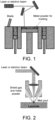
- the additive manufacturing device not only the device shown in Fig. 1 , but also a directed energy deposition method additive manufacturing device shown in Fig. 2 can be used depending on the shape of the additive manufacturing product and the like.
- the model of the additive manufacturing device and the like are not particularly limited.
- the raw gas atomized powders obtained above were directly classified into powders having a particle size of 20 to 80 ⁇ m for additive manufacturing and other powders using a plurality of sieves.
- Example 1 additive manufacturing was performed by a powder bed method (SLM) using a laser, and the corrosion resistance (wet environment and semiconductor process gas) of the Ni-based corrosion resistant alloy powder was confirmed.
- SLM powder bed method
- No. 41 to No. 48, No. 52, No. 54 to No. 60, No. 62 to No. 67, and No. 69 to No. 70 marked with * are examples outside the range of the composition according to the present invention.
- the powder yield (%) was determined as the value of (a mass of powders with a particle size of 20 to 80 ⁇ m) ⁇ 100/(a mass of gas atomized powders without change).
- Table 5 and Table 6 show the values of the powder yield (%).
- the particle size distribution before classification was measured, and in powders having an excellent yield, the proportion of powders with a particle size of less than 5 ⁇ m was 10% or less, and the proportion of powders with a particle size of 5 ⁇ m or more was high according to adjustment of the composition.
- a cross section of the plate (30 ⁇ 30 ⁇ 5 mm) as the evaluation additive manufacturing product was cut and embedded in a resin, and the plate was polished to #1500 with water resistant emery paper, and then additionally polished with a diamond paste having a particle size of 1 ⁇ m to achieve a mirror-finished surface.
- the mirror-finished surface was observed under an optical microscope, defects (voids and nests of 1 ⁇ m square or more) within a range of 1 mm ⁇ 1 mm were identified by an image analysis device (digital microscope VHX6000: commercially available from Keyence Corporation), and the area ratio thereof was determined as a defect rate (area%).
- the resolution was 1,024 ⁇ 1,280 pixels
- binarization was performed by image analysis software
- a black part of 8 or more pixels was defined as a defect.
- Table 5 and Table 6 show the values of the defect rate (area%).
- the surface of the plate (30 ⁇ 30 ⁇ 5 mm) as the evaluation additive manufacturing product was polished, and finally finished to #400 with water resistant emery paper. Then, electropolishing was performed, and the polished sample was kept in an ultrasonic vibration state in acetone for 5 minutes and degreased to prepare a corrosion test piece.
- a corrosion test was performed using these corrosion test pieces in boiling 1% HCl and 35% HCl for 24 hours.
- the surface of the plate (30 ⁇ 30 ⁇ 5 mm) as the evaluation additive manufacturing product was polished, and finally finished to #400 with water resistant emery paper. Then, electropolishing was performed, and the polished sample was kept in an ultrasonic vibration state in acetone for 5 minutes and degreased to prepare a corrosion test piece.
- the corrosion test pieces were sequentially subjected to SEM observation, and an area ratio of the corroded part observed in an island shape from the captured image was measured by image analysis software (winRooF2015).
- the resolution was 1,024 ⁇ 1,280, and the magnification was 500, and an area of 8 pixels or more was defined as a corroded area.
- Samples with different particle size distributions were prepared for the No.1 alloy powder from the Ni-based corrosion resistant alloy powders for additive manufacturing having the above component compositions, and d10, d50, and d90 were measured using a laser diffraction type particle size distribution measurement device (SALD-2300: commercially available from SHIMADZU). In addition, the uniformity represented by (d90-d10)/d50 was determined.
- SALD-2300 laser diffraction type particle size distribution measurement device
- the repose angle of these samples was measured according to JIS R9301-2-2. Specifically, using a repose angle measurement instrument (ASK-01), the sample was supplied to a saucer, and the angle of the formed mountain was measured.
- ASK-01 repose angle measurement instrument
- Ni-based corrosion resistant alloy powder of the invention When used as a raw material powder for additive manufacturing, an additive manufacturing product having excellent corrosion resistance and very few defects can be obtained.
- a member for semiconductor manufacturing device made of an additive manufacturing product but it is expected to be applied as a corrosion resistant metal powder for additive manufacturing of a member having a complex shape not only for a member for semiconductor manufacturing device, but also in a wide range of fields such as chemical plants, pharmaceutical manufacturing facilities, and oil and gas fields.
Landscapes
- Chemical & Material Sciences (AREA)
- Engineering & Computer Science (AREA)
- Materials Engineering (AREA)
- Manufacturing & Machinery (AREA)
- Mechanical Engineering (AREA)
- Metallurgy (AREA)
- Organic Chemistry (AREA)
- Powder Metallurgy (AREA)
- Laminated Bodies (AREA)
Claims (4)
- Ni-basiertes korrosionsbeständiges Legierungspulver für additive Fertigung, zusammengesetzt aus einem Ni-basierten Legierungspulver, aufweisend eine Bestandteilzusammensetzung, die in Massenprozent enthält:Cr: 14,5 bis 24,5 %,Mo: 12,0 bis 23,0 %,Fe: 0,01 bis 7,00 %,Co: 0,001 bis 2,500 %,Mg: 0,010 % oder weniger,N: 0,040 % oder weniger,Mn: 0,001 bis 0,50 %,Si: 0,001 bis 0,200 %,Al: mehr als 0 und 0,50 % oder weniger,Ti: 0,001 bis 0,500 %,Cu: 0,250 % oder weniger,V: 0,001 bis 0,300 %,B: 0,0001 bis 0,0050 %,Zr: 0,0001 bis 0,0200 %,O: 0,0010 bis 0,0300 % undoptional Ta: 2,5 % oder weniger oder W: 5,0 % oder weniger,wobei der Rest Ni und unvermeidbare Verunreinigungen sind,wobei C, S und P als unvermeidbare Verunreinigungen enthalten sind (C: weniger als 0,05 %, S: weniger als 0,01 % und P: weniger als 0,01 %), undwobei ein Schüttwinkel des Ni-basierten Legierungspulvers 48 Grad oder weniger beträgt und der Schüttwinkel gemäß JIS R9301-2-2 unter Verwendung eines Schüttwinkelmessgeräts ASK-01 gemessen wurde,in dem Ni-basierten Legierungspulver in einer kumulativen Verteilungskurve, die die Beziehung zwischen einer Teilchengröße und einem kumulativen Volumen von einer Seite mit kleiner Teilchengröße zeigt, die durch ein Laserbeugungsverfahren erhalten wurde,eine Partikelgröße d10, die einer kumulativen Häufigkeit von 10 Volumenprozent des Pulvers entspricht, 7 µm oder mehr und 35 µm oder weniger beträgt,eine Partikelgröße d50, die einer kumulativen Häufigkeit von 50 Volumenprozent des Pulvers entspricht, 10 µm oder mehr und 60 µm oder weniger beträgt,eine Partikelgröße d90, die einer kumulativen Häufigkeit von 90 Volumenprozent des Pulvers entspricht, 20 µm oder mehr und 98 µm oder weniger beträgt, undin der kumulativen Verteilungskurve die durch (d90-d10)/d50 dargestellte Gleichförmigkeit 1,5 oder weniger beträgt.
- Herstellungsverfahren eines additiv gefertigten Produkts, umfassend
Durchführen einer additiven Fertigung unter Verwendung des Ni-basierten korrosionsbeständigen Legierungspulvers für die additive Fertigung gemäß Anspruch 1 als Rohmaterialpulver. - Herstellungsverfahren eines additiven Fertigungsprodukts gemäß Anspruch 2,
wobei das additive Fertigungsprodukt ein Element für eine Halbleiterfertigungsvorrichtung ist. - Herstellungsverfahren eines additiven Fertigungsprodukts gemäß Anspruch 2 oder 3,
wobei die additive Fertigung ein Pulverbettschmelzverfahren ist.
Applications Claiming Priority (3)
| Application Number | Priority Date | Filing Date | Title |
|---|---|---|---|
| JP2019038157 | 2019-03-04 | ||
| JP2019038159 | 2019-03-04 | ||
| PCT/JP2019/046502 WO2020179154A1 (ja) | 2019-03-04 | 2019-11-28 | 積層造形用Ni基耐食合金粉末、この粉末を用いた積層造形品の製造方法 |
Publications (3)
| Publication Number | Publication Date |
|---|---|
| EP3936255A1 EP3936255A1 (de) | 2022-01-12 |
| EP3936255A4 EP3936255A4 (de) | 2022-12-07 |
| EP3936255B1 true EP3936255B1 (de) | 2025-04-02 |
Family
ID=72337858
Family Applications (1)
| Application Number | Title | Priority Date | Filing Date |
|---|---|---|---|
| EP19918486.2A Active EP3936255B1 (de) | 2019-03-04 | 2019-11-28 | Korrosionsbeständiges legierungspulver auf ni-basis zur verwendung in der generativen fertigung und verfahren zur herstellung eines generativen fertigungsproduktes mit diesem pulver |
Country Status (7)
| Country | Link |
|---|---|
| US (1) | US20220145427A1 (de) |
| EP (1) | EP3936255B1 (de) |
| JP (1) | JP6948584B2 (de) |
| CN (1) | CN113490558B (de) |
| FI (1) | FI3936255T3 (de) |
| SG (1) | SG11202109400WA (de) |
| WO (1) | WO2020179154A1 (de) |
Families Citing this family (4)
| Publication number | Priority date | Publication date | Assignee | Title |
|---|---|---|---|---|
| JPWO2023136233A1 (de) * | 2022-01-14 | 2023-07-20 | ||
| CN115344997B (zh) * | 2022-07-11 | 2024-05-31 | 中国水利水电科学研究院 | 夏玉米植株叶片-冠层-像元尺度氮浓度协同预测方法 |
| CN115287501B (zh) * | 2022-08-02 | 2023-04-07 | 中国航发北京航空材料研究院 | 激光增材制造用gh3536高温合金粉末及其制备方法 |
| JPWO2025013690A1 (de) | 2023-07-10 | 2025-01-16 |
Family Cites Families (21)
| Publication number | Priority date | Publication date | Assignee | Title |
|---|---|---|---|---|
| DE1250642B (de) | 1958-11-13 | 1967-09-21 | ||
| JPH0747989B2 (ja) | 1992-12-28 | 1995-05-24 | 富士精工株式会社 | 超高純度ガス制御用耐食性バルブ |
| JP4981291B2 (ja) * | 2005-09-30 | 2012-07-18 | 株式会社フジミインコーポレーテッド | 溶射用粉末及び溶射皮膜の形成方法 |
| JP5305078B2 (ja) | 2008-05-22 | 2013-10-02 | 三菱マテリアル株式会社 | ハロゲンガスおよびハロゲン化合物ガス充填用ボンベのバルブ部材 |
| EP2289462B1 (de) * | 2009-08-25 | 2012-05-30 | BEGO Medical GmbH | Vorrichtung und Verfahren zur kontinuierlichen, generativen Fertigung |
| WO2015194678A1 (ja) * | 2014-06-20 | 2015-12-23 | 株式会社フジミインコーポレーテッド | 粉末積層造形に用いる粉末材料およびそれを用いた粉末積層造形法 |
| CN105290388B (zh) * | 2014-07-04 | 2020-04-07 | 通用电气公司 | 粉末处理方法和相应处理过的粉末 |
| JP6519274B2 (ja) * | 2015-03-30 | 2019-05-29 | 株式会社リコー | 立体造形用粉末材料、立体造形材料セット、立体造形物製造装置、及び立体造形物の製造方法 |
| JP6620029B2 (ja) * | 2015-03-31 | 2019-12-11 | 山陽特殊製鋼株式会社 | 球状粒子からなる金属粉末 |
| JP6455328B2 (ja) * | 2015-06-16 | 2019-01-23 | トヨタ自動車株式会社 | 積層造形方法 |
| EP3120953A1 (de) * | 2015-07-21 | 2017-01-25 | General Electric Technology GmbH | Hochtemperatur-superlegierung auf nickelbasis zur verwendung in pulverbasiertem herstellungsverfahren |
| JP6797513B2 (ja) * | 2015-07-24 | 2020-12-09 | Jx金属株式会社 | 電子ビーム方式の3dプリンタ用表面処理金属粉およびその製造方法 |
| JP6499546B2 (ja) * | 2015-08-12 | 2019-04-10 | 山陽特殊製鋼株式会社 | 積層造形用Ni基超合金粉末 |
| JP6764228B2 (ja) * | 2015-12-22 | 2020-09-30 | 株式会社フジミインコーポレーテッド | 粉末積層造形に用いるための造形用材料 |
| JP6188171B2 (ja) * | 2016-02-24 | 2017-08-30 | 日立金属Mmcスーパーアロイ株式会社 | 熱間鍛造性に優れた高強度高耐食性Ni基合金 |
| JP2018080359A (ja) * | 2016-11-15 | 2018-05-24 | 株式会社リコー | 立体造形用粉末材料、立体造形材料セット、立体造形物製造装置、及び立体造形物の製造方法 |
| DE102016124588A1 (de) * | 2016-12-16 | 2018-06-21 | Vdm Metals International Gmbh | Verwendung einer nickel-chrom-molybdän-legierung |
| JP2018123375A (ja) * | 2017-02-01 | 2018-08-09 | 山陽特殊製鋼株式会社 | 多孔質粉末及びその製造方法 |
| JP6941271B2 (ja) * | 2017-03-21 | 2021-09-29 | 株式会社リコー | 積層造形用粉末材料、積層造形装置、積層造形用セット及び積層造形方法 |
| JP6519961B2 (ja) * | 2017-09-07 | 2019-05-29 | 日立金属株式会社 | 積層造形用Ni基耐食合金粉末、この粉末を用いた積層造形品と半導体製造装置用部材の製造方法 |
| EP3936257B1 (de) * | 2019-03-04 | 2025-07-16 | Proterial, Ltd. | Korrosionsbeständiges legierungspulver auf ni-basis zur generativen fertigung und verfahren zur herstellung eines generativ gefertigten produktes unter verwendung dieses pulvers |
-
2019
- 2019-11-28 EP EP19918486.2A patent/EP3936255B1/de active Active
- 2019-11-28 US US17/434,425 patent/US20220145427A1/en active Pending
- 2019-11-28 JP JP2020571561A patent/JP6948584B2/ja active Active
- 2019-11-28 WO PCT/JP2019/046502 patent/WO2020179154A1/ja not_active Ceased
- 2019-11-28 CN CN201980093172.9A patent/CN113490558B/zh active Active
- 2019-11-28 FI FIEP19918486.2T patent/FI3936255T3/fi active
- 2019-11-28 SG SG11202109400WA patent/SG11202109400WA/en unknown
Also Published As
| Publication number | Publication date |
|---|---|
| JPWO2020179154A1 (ja) | 2021-04-30 |
| SG11202109400WA (en) | 2021-09-29 |
| CN113490558A (zh) | 2021-10-08 |
| CN113490558B (zh) | 2023-12-22 |
| FI3936255T3 (fi) | 2025-07-10 |
| JP6948584B2 (ja) | 2021-10-13 |
| EP3936255A1 (de) | 2022-01-12 |
| US20220145427A1 (en) | 2022-05-12 |
| WO2020179154A1 (ja) | 2020-09-10 |
| EP3936255A4 (de) | 2022-12-07 |
Similar Documents
| Publication | Publication Date | Title |
|---|---|---|
| EP3680043B1 (de) | Ni-basiertes korrosionsbeständiges legierungspulver für die additive fertigung und verfahren zur herstellung eines mittels additivem herstellungsverfahren gefertigten produkts | |
| EP3936257B1 (de) | Korrosionsbeständiges legierungspulver auf ni-basis zur generativen fertigung und verfahren zur herstellung eines generativ gefertigten produktes unter verwendung dieses pulvers | |
| EP3936255A1 (de) | Korrosionsbeständiges legierungspulver auf ni-basis zur verwendung in der generativen fertigung und verfahren zur herstellung eines generativen fertigungsproduktes mit diesem pulver | |
| JP7521174B2 (ja) | 積層造形体および積層造形体の製造方法 | |
| TWI820307B (zh) | 由積層成型體構成的Ni基合金構件、Ni基合金構件的製造方法以及使用Ni基合金構件的產品 | |
| TW201734224A (zh) | 濺鍍靶材及濺鍍靶材的製造方法 | |
| KR20220085777A (ko) | 적층 가공을 위한 FeCrAl 의 프린트가능한 분말 재료 및 적층 가공된 대상물 및 그 용도 | |
| JP7589859B2 (ja) | 積層造形用Ni基合金粉末、積層造形品、及び積層造形品の製造方法 | |
| US20090134020A1 (en) | Sputtering target and process for producing the same | |
| EP4567144A1 (de) | Fe-cr-al-basiertes legierungspulver zur generativen fertigung, fe-cr-al-basiertes legierungselement und verfahren zur herstellung eines fe-cr-al-basierten legierungselements | |
| EP4495282B1 (de) | Ni-cr-legierungselement mit generativ gefertigtem artikel, verfahren zur herstellung eines ni-cr-legierungselements und produkt mit ni-cr-legierungselement | |
| EP3412795B1 (de) | Verfahren zur herstellung eines sputtertargets aus cu-ga-legierung | |
| JP7761177B2 (ja) | 付加製造用Ni基合金粉末及びNi基合金造形物の製造方法 |
Legal Events
| Date | Code | Title | Description |
|---|---|---|---|
| STAA | Information on the status of an ep patent application or granted ep patent |
Free format text: STATUS: THE INTERNATIONAL PUBLICATION HAS BEEN MADE |
|
| PUAI | Public reference made under article 153(3) epc to a published international application that has entered the european phase |
Free format text: ORIGINAL CODE: 0009012 |
|
| STAA | Information on the status of an ep patent application or granted ep patent |
Free format text: STATUS: REQUEST FOR EXAMINATION WAS MADE |
|
| 17P | Request for examination filed |
Effective date: 20210826 |
|
| AK | Designated contracting states |
Kind code of ref document: A1 Designated state(s): AL AT BE BG CH CY CZ DE DK EE ES FI FR GB GR HR HU IE IS IT LI LT LU LV MC MK MT NL NO PL PT RO RS SE SI SK SM TR |
|
| DAV | Request for validation of the european patent (deleted) | ||
| DAX | Request for extension of the european patent (deleted) | ||
| RIN1 | Information on inventor provided before grant (corrected) |
Inventor name: SUGAHARA, KATSUO Inventor name: DAIGO, YUZO |
|
| REG | Reference to a national code |
Ref country code: DE Ref legal event code: R079 Free format text: PREVIOUS MAIN CLASS: B22F0001000000 Ipc: B22F0003160000 Ref document number: 602019068272 Country of ref document: DE |
|
| A4 | Supplementary search report drawn up and despatched |
Effective date: 20221104 |
|
| RIC1 | Information provided on ipc code assigned before grant |
Ipc: B22F 1/052 20220101ALI20221028BHEP Ipc: C22C 1/04 20060101ALI20221028BHEP Ipc: B33Y 80/00 20150101ALI20221028BHEP Ipc: B22F 10/20 20210101ALI20221028BHEP Ipc: B33Y 70/00 20200101ALI20221028BHEP Ipc: B33Y 10/00 20150101ALI20221028BHEP Ipc: C22C 19/05 20060101ALI20221028BHEP Ipc: B22F 3/16 20060101AFI20221028BHEP |
|
| RAP3 | Party data changed (applicant data changed or rights of an application transferred) |
Owner name: PROTERIAL, LTD. |
|
| GRAP | Despatch of communication of intention to grant a patent |
Free format text: ORIGINAL CODE: EPIDOSNIGR1 |
|
| STAA | Information on the status of an ep patent application or granted ep patent |
Free format text: STATUS: GRANT OF PATENT IS INTENDED |
|
| INTG | Intention to grant announced |
Effective date: 20241105 |
|
| GRAS | Grant fee paid |
Free format text: ORIGINAL CODE: EPIDOSNIGR3 |
|
| GRAA | (expected) grant |
Free format text: ORIGINAL CODE: 0009210 |
|
| STAA | Information on the status of an ep patent application or granted ep patent |
Free format text: STATUS: THE PATENT HAS BEEN GRANTED |
|
| P01 | Opt-out of the competence of the unified patent court (upc) registered |
Free format text: CASE NUMBER: APP_6959/2025 Effective date: 20250211 |
|
| AK | Designated contracting states |
Kind code of ref document: B1 Designated state(s): AL AT BE BG CH CY CZ DE DK EE ES FI FR GB GR HR HU IE IS IT LI LT LU LV MC MK MT NL NO PL PT RO RS SE SI SK SM TR |
|
| REG | Reference to a national code |
Ref country code: GB Ref legal event code: FG4D |
|
| REG | Reference to a national code |
Ref country code: CH Ref legal event code: EP |
|
| REG | Reference to a national code |
Ref country code: IE Ref legal event code: FG4D |
|
| REG | Reference to a national code |
Ref country code: DE Ref legal event code: R096 Ref document number: 602019068272 Country of ref document: DE |
|
| REG | Reference to a national code |
Ref country code: SE Ref legal event code: TRGR |
|
| REG | Reference to a national code |
Ref country code: FI Ref legal event code: FGE |
|
| REG | Reference to a national code |
Ref country code: NL Ref legal event code: MP Effective date: 20250402 |
|
| PG25 | Lapsed in a contracting state [announced via postgrant information from national office to epo] |
Ref country code: NL Free format text: LAPSE BECAUSE OF FAILURE TO SUBMIT A TRANSLATION OF THE DESCRIPTION OR TO PAY THE FEE WITHIN THE PRESCRIBED TIME-LIMIT Effective date: 20250402 |
|
| REG | Reference to a national code |
Ref country code: AT Ref legal event code: MK05 Ref document number: 1780812 Country of ref document: AT Kind code of ref document: T Effective date: 20250402 |
|
| PG25 | Lapsed in a contracting state [announced via postgrant information from national office to epo] |
Ref country code: PT Free format text: LAPSE BECAUSE OF FAILURE TO SUBMIT A TRANSLATION OF THE DESCRIPTION OR TO PAY THE FEE WITHIN THE PRESCRIBED TIME-LIMIT Effective date: 20250804 Ref country code: ES Free format text: LAPSE BECAUSE OF FAILURE TO SUBMIT A TRANSLATION OF THE DESCRIPTION OR TO PAY THE FEE WITHIN THE PRESCRIBED TIME-LIMIT Effective date: 20250402 |
|
| REG | Reference to a national code |
Ref country code: LT Ref legal event code: MG9D |
|
| PG25 | Lapsed in a contracting state [announced via postgrant information from national office to epo] |
Ref country code: NO Free format text: LAPSE BECAUSE OF FAILURE TO SUBMIT A TRANSLATION OF THE DESCRIPTION OR TO PAY THE FEE WITHIN THE PRESCRIBED TIME-LIMIT Effective date: 20250702 Ref country code: GR Free format text: LAPSE BECAUSE OF FAILURE TO SUBMIT A TRANSLATION OF THE DESCRIPTION OR TO PAY THE FEE WITHIN THE PRESCRIBED TIME-LIMIT Effective date: 20250703 |
|
| PG25 | Lapsed in a contracting state [announced via postgrant information from national office to epo] |
Ref country code: PL Free format text: LAPSE BECAUSE OF FAILURE TO SUBMIT A TRANSLATION OF THE DESCRIPTION OR TO PAY THE FEE WITHIN THE PRESCRIBED TIME-LIMIT Effective date: 20250402 |
|
| PG25 | Lapsed in a contracting state [announced via postgrant information from national office to epo] |
Ref country code: BG Free format text: LAPSE BECAUSE OF FAILURE TO SUBMIT A TRANSLATION OF THE DESCRIPTION OR TO PAY THE FEE WITHIN THE PRESCRIBED TIME-LIMIT Effective date: 20250402 |
|
| PG25 | Lapsed in a contracting state [announced via postgrant information from national office to epo] |
Ref country code: HR Free format text: LAPSE BECAUSE OF FAILURE TO SUBMIT A TRANSLATION OF THE DESCRIPTION OR TO PAY THE FEE WITHIN THE PRESCRIBED TIME-LIMIT Effective date: 20250402 |
|
| PG25 | Lapsed in a contracting state [announced via postgrant information from national office to epo] |
Ref country code: AT Free format text: LAPSE BECAUSE OF FAILURE TO SUBMIT A TRANSLATION OF THE DESCRIPTION OR TO PAY THE FEE WITHIN THE PRESCRIBED TIME-LIMIT Effective date: 20250402 |
|
| PGFP | Annual fee paid to national office [announced via postgrant information from national office to epo] |
Ref country code: FR Payment date: 20250930 Year of fee payment: 7 |
|
| PG25 | Lapsed in a contracting state [announced via postgrant information from national office to epo] |
Ref country code: RS Free format text: LAPSE BECAUSE OF FAILURE TO SUBMIT A TRANSLATION OF THE DESCRIPTION OR TO PAY THE FEE WITHIN THE PRESCRIBED TIME-LIMIT Effective date: 20250702 |
|
| PG25 | Lapsed in a contracting state [announced via postgrant information from national office to epo] |
Ref country code: IS Free format text: LAPSE BECAUSE OF FAILURE TO SUBMIT A TRANSLATION OF THE DESCRIPTION OR TO PAY THE FEE WITHIN THE PRESCRIBED TIME-LIMIT Effective date: 20250802 |
|
| PG25 | Lapsed in a contracting state [announced via postgrant information from national office to epo] |
Ref country code: LV Free format text: LAPSE BECAUSE OF FAILURE TO SUBMIT A TRANSLATION OF THE DESCRIPTION OR TO PAY THE FEE WITHIN THE PRESCRIBED TIME-LIMIT Effective date: 20250402 |
|
| REG | Reference to a national code |
Ref country code: DE Ref legal event code: R097 Ref document number: 602019068272 Country of ref document: DE |
|
| PGFP | Annual fee paid to national office [announced via postgrant information from national office to epo] |
Ref country code: DE Payment date: 20250930 Year of fee payment: 7 |
|
| PGFP | Annual fee paid to national office [announced via postgrant information from national office to epo] |
Ref country code: GB Payment date: 20251001 Year of fee payment: 7 |
|
| PG25 | Lapsed in a contracting state [announced via postgrant information from national office to epo] |
Ref country code: SM Free format text: LAPSE BECAUSE OF FAILURE TO SUBMIT A TRANSLATION OF THE DESCRIPTION OR TO PAY THE FEE WITHIN THE PRESCRIBED TIME-LIMIT Effective date: 20250402 Ref country code: DK Free format text: LAPSE BECAUSE OF FAILURE TO SUBMIT A TRANSLATION OF THE DESCRIPTION OR TO PAY THE FEE WITHIN THE PRESCRIBED TIME-LIMIT Effective date: 20250402 |
|
| PGFP | Annual fee paid to national office [announced via postgrant information from national office to epo] |
Ref country code: FI Payment date: 20251113 Year of fee payment: 7 |
|
| PGFP | Annual fee paid to national office [announced via postgrant information from national office to epo] |
Ref country code: BE Payment date: 20251006 Year of fee payment: 7 |
|
| PGFP | Annual fee paid to national office [announced via postgrant information from national office to epo] |
Ref country code: SE Payment date: 20251001 Year of fee payment: 7 |
|
| PG25 | Lapsed in a contracting state [announced via postgrant information from national office to epo] |
Ref country code: CZ Free format text: LAPSE BECAUSE OF FAILURE TO SUBMIT A TRANSLATION OF THE DESCRIPTION OR TO PAY THE FEE WITHIN THE PRESCRIBED TIME-LIMIT Effective date: 20250402 |
|
| PG25 | Lapsed in a contracting state [announced via postgrant information from national office to epo] |
Ref country code: EE Free format text: LAPSE BECAUSE OF FAILURE TO SUBMIT A TRANSLATION OF THE DESCRIPTION OR TO PAY THE FEE WITHIN THE PRESCRIBED TIME-LIMIT Effective date: 20250402 |
|
| PG25 | Lapsed in a contracting state [announced via postgrant information from national office to epo] |
Ref country code: SK Free format text: LAPSE BECAUSE OF FAILURE TO SUBMIT A TRANSLATION OF THE DESCRIPTION OR TO PAY THE FEE WITHIN THE PRESCRIBED TIME-LIMIT Effective date: 20250402 Ref country code: RO Free format text: LAPSE BECAUSE OF FAILURE TO SUBMIT A TRANSLATION OF THE DESCRIPTION OR TO PAY THE FEE WITHIN THE PRESCRIBED TIME-LIMIT Effective date: 20250402 |
|
| PG25 | Lapsed in a contracting state [announced via postgrant information from national office to epo] |
Ref country code: IT Free format text: LAPSE BECAUSE OF FAILURE TO SUBMIT A TRANSLATION OF THE DESCRIPTION OR TO PAY THE FEE WITHIN THE PRESCRIBED TIME-LIMIT Effective date: 20250402 |
|
| PLBE | No opposition filed within time limit |
Free format text: ORIGINAL CODE: 0009261 |
|
| STAA | Information on the status of an ep patent application or granted ep patent |
Free format text: STATUS: NO OPPOSITION FILED WITHIN TIME LIMIT |
|
| REG | Reference to a national code |
Ref country code: CH Ref legal event code: L10 Free format text: ST27 STATUS EVENT CODE: U-0-0-L10-L00 (AS PROVIDED BY THE NATIONAL OFFICE) Effective date: 20260211 |
|
| 26N | No opposition filed |
Effective date: 20260105 |