EP3798221A1 - Fluoreszenzsonde und herstellungsverfahren und verwendung davon - Google Patents
Fluoreszenzsonde und herstellungsverfahren und verwendung davon Download PDFInfo
- Publication number
- EP3798221A1 EP3798221A1 EP19803374.8A EP19803374A EP3798221A1 EP 3798221 A1 EP3798221 A1 EP 3798221A1 EP 19803374 A EP19803374 A EP 19803374A EP 3798221 A1 EP3798221 A1 EP 3798221A1
- Authority
- EP
- European Patent Office
- Prior art keywords
- group
- probe
- optionally
- protein
- alkyl
- Prior art date
- Legal status (The legal status is an assumption and is not a legal conclusion. Google has not performed a legal analysis and makes no representation as to the accuracy of the status listed.)
- Withdrawn
Links
- 0 CC(CC1)(CC1(*)ONP)C(N)=C(*)N Chemical compound CC(CC1)(CC1(*)ONP)C(N)=C(*)N 0.000 description 4
- UHOVQNZJYSORNB-UHFFFAOYSA-N c1ccccc1 Chemical compound c1ccccc1 UHOVQNZJYSORNB-UHFFFAOYSA-N 0.000 description 2
- PRKKLOARYAPXLC-OBGWFSINSA-N CC(C)(C)OC(/C(/C#N)=C/c1ccc(-c(cc2)ccc2N(C)CCOC(NOc2nccc(N)n2)=O)[o]1)=O Chemical compound CC(C)(C)OC(/C(/C#N)=C/c1ccc(-c(cc2)ccc2N(C)CCOC(NOc2nccc(N)n2)=O)[o]1)=O PRKKLOARYAPXLC-OBGWFSINSA-N 0.000 description 1
- PCAINQNFLFKCIP-UHFFFAOYSA-N CC1(C)c(cc(cc2)N(C)CCO)c2-c2c1cc(C=O)[s]2 Chemical compound CC1(C)c(cc(cc2)N(C)CCO)c2-c2c1cc(C=O)[s]2 PCAINQNFLFKCIP-UHFFFAOYSA-N 0.000 description 1
- HJTCNHLTKMWYRK-VFCFBJKWSA-N CC1(C)c(cc(cc2)N(C)CCOC(C(Cc3ccc(COc4nccc(N)n4)cc3)=C)=O)c2-c2c1cc(/C=C(/c1nc3ccccc3[o]1)\C#N)[s]2 Chemical compound CC1(C)c(cc(cc2)N(C)CCOC(C(Cc3ccc(COc4nccc(N)n4)cc3)=C)=O)c2-c2c1cc(/C=C(/c1nc3ccccc3[o]1)\C#N)[s]2 HJTCNHLTKMWYRK-VFCFBJKWSA-N 0.000 description 1
- BPICVMDXBQGGSY-UHFFFAOYSA-N CC1(COc2nc(N)nc3c2N=CCC3)C=CC(CN)=CC1 Chemical compound CC1(COc2nc(N)nc3c2N=CCC3)C=CC(CN)=CC1 BPICVMDXBQGGSY-UHFFFAOYSA-N 0.000 description 1
- DDMUOXQPMTVTPH-UHFFFAOYSA-N Nc1ccnc(ON)n1 Chemical compound Nc1ccnc(ON)n1 DDMUOXQPMTVTPH-UHFFFAOYSA-N 0.000 description 1
- JUJWROOIHBZHMG-UHFFFAOYSA-N c1ccncc1 Chemical compound c1ccncc1 JUJWROOIHBZHMG-UHFFFAOYSA-N 0.000 description 1
- KYQCOXFCLRTKLS-UHFFFAOYSA-N c1nccnc1 Chemical compound c1nccnc1 KYQCOXFCLRTKLS-UHFFFAOYSA-N 0.000 description 1
Images



Classifications
-
- G—PHYSICS
- G01—MEASURING; TESTING
- G01N—INVESTIGATING OR ANALYSING MATERIALS BY DETERMINING THEIR CHEMICAL OR PHYSICAL PROPERTIES
- G01N33/00—Investigating or analysing materials by specific methods not covered by groups G01N1/00 - G01N31/00
- G01N33/48—Biological material, e.g. blood, urine; Haemocytometers
- G01N33/50—Chemical analysis of biological material, e.g. blood, urine; Testing involving biospecific ligand binding methods; Immunological testing
- G01N33/58—Chemical analysis of biological material, e.g. blood, urine; Testing involving biospecific ligand binding methods; Immunological testing involving labelled substances
- G01N33/582—Chemical analysis of biological material, e.g. blood, urine; Testing involving biospecific ligand binding methods; Immunological testing involving labelled substances with fluorescent label
-
- C—CHEMISTRY; METALLURGY
- C09—DYES; PAINTS; POLISHES; NATURAL RESINS; ADHESIVES; COMPOSITIONS NOT OTHERWISE PROVIDED FOR; APPLICATIONS OF MATERIALS NOT OTHERWISE PROVIDED FOR
- C09B—ORGANIC DYES OR CLOSELY-RELATED COMPOUNDS FOR PRODUCING DYES, e.g. PIGMENTS; MORDANTS; LAKES
- C09B23/00—Methine or polymethine dyes, e.g. cyanine dyes
- C09B23/10—The polymethine chain containing an even number of >CH- groups
- C09B23/105—The polymethine chain containing an even number of >CH- groups two >CH- groups
-
- C—CHEMISTRY; METALLURGY
- C07—ORGANIC CHEMISTRY
- C07D—HETEROCYCLIC COMPOUNDS
- C07D401/00—Heterocyclic compounds containing two or more hetero rings, having nitrogen atoms as the only ring hetero atoms, at least one ring being a six-membered ring with only one nitrogen atom
- C07D401/02—Heterocyclic compounds containing two or more hetero rings, having nitrogen atoms as the only ring hetero atoms, at least one ring being a six-membered ring with only one nitrogen atom containing two hetero rings
- C07D401/12—Heterocyclic compounds containing two or more hetero rings, having nitrogen atoms as the only ring hetero atoms, at least one ring being a six-membered ring with only one nitrogen atom containing two hetero rings linked by a chain containing hetero atoms as chain links
-
- C—CHEMISTRY; METALLURGY
- C07—ORGANIC CHEMISTRY
- C07D—HETEROCYCLIC COMPOUNDS
- C07D403/00—Heterocyclic compounds containing two or more hetero rings, having nitrogen atoms as the only ring hetero atoms, not provided for by group C07D401/00
- C07D403/02—Heterocyclic compounds containing two or more hetero rings, having nitrogen atoms as the only ring hetero atoms, not provided for by group C07D401/00 containing two hetero rings
- C07D403/12—Heterocyclic compounds containing two or more hetero rings, having nitrogen atoms as the only ring hetero atoms, not provided for by group C07D401/00 containing two hetero rings linked by a chain containing hetero atoms as chain links
-
- C—CHEMISTRY; METALLURGY
- C07—ORGANIC CHEMISTRY
- C07D—HETEROCYCLIC COMPOUNDS
- C07D405/00—Heterocyclic compounds containing both one or more hetero rings having oxygen atoms as the only ring hetero atoms, and one or more rings having nitrogen as the only ring hetero atom
- C07D405/02—Heterocyclic compounds containing both one or more hetero rings having oxygen atoms as the only ring hetero atoms, and one or more rings having nitrogen as the only ring hetero atom containing two hetero rings
- C07D405/12—Heterocyclic compounds containing both one or more hetero rings having oxygen atoms as the only ring hetero atoms, and one or more rings having nitrogen as the only ring hetero atom containing two hetero rings linked by a chain containing hetero atoms as chain links
-
- C—CHEMISTRY; METALLURGY
- C07—ORGANIC CHEMISTRY
- C07D—HETEROCYCLIC COMPOUNDS
- C07D405/00—Heterocyclic compounds containing both one or more hetero rings having oxygen atoms as the only ring hetero atoms, and one or more rings having nitrogen as the only ring hetero atom
- C07D405/14—Heterocyclic compounds containing both one or more hetero rings having oxygen atoms as the only ring hetero atoms, and one or more rings having nitrogen as the only ring hetero atom containing three or more hetero rings
-
- C—CHEMISTRY; METALLURGY
- C07—ORGANIC CHEMISTRY
- C07D—HETEROCYCLIC COMPOUNDS
- C07D409/00—Heterocyclic compounds containing two or more hetero rings, at least one ring having sulfur atoms as the only ring hetero atoms
- C07D409/02—Heterocyclic compounds containing two or more hetero rings, at least one ring having sulfur atoms as the only ring hetero atoms containing two hetero rings
- C07D409/12—Heterocyclic compounds containing two or more hetero rings, at least one ring having sulfur atoms as the only ring hetero atoms containing two hetero rings linked by a chain containing hetero atoms as chain links
-
- C—CHEMISTRY; METALLURGY
- C07—ORGANIC CHEMISTRY
- C07D—HETEROCYCLIC COMPOUNDS
- C07D413/00—Heterocyclic compounds containing two or more hetero rings, at least one ring having nitrogen and oxygen atoms as the only ring hetero atoms
- C07D413/14—Heterocyclic compounds containing two or more hetero rings, at least one ring having nitrogen and oxygen atoms as the only ring hetero atoms containing three or more hetero rings
-
- C—CHEMISTRY; METALLURGY
- C07—ORGANIC CHEMISTRY
- C07D—HETEROCYCLIC COMPOUNDS
- C07D417/00—Heterocyclic compounds containing two or more hetero rings, at least one ring having nitrogen and sulfur atoms as the only ring hetero atoms, not provided for by group C07D415/00
- C07D417/14—Heterocyclic compounds containing two or more hetero rings, at least one ring having nitrogen and sulfur atoms as the only ring hetero atoms, not provided for by group C07D415/00 containing three or more hetero rings
-
- C—CHEMISTRY; METALLURGY
- C09—DYES; PAINTS; POLISHES; NATURAL RESINS; ADHESIVES; COMPOSITIONS NOT OTHERWISE PROVIDED FOR; APPLICATIONS OF MATERIALS NOT OTHERWISE PROVIDED FOR
- C09B—ORGANIC DYES OR CLOSELY-RELATED COMPOUNDS FOR PRODUCING DYES, e.g. PIGMENTS; MORDANTS; LAKES
- C09B23/00—Methine or polymethine dyes, e.g. cyanine dyes
- C09B23/0008—Methine or polymethine dyes, e.g. cyanine dyes substituted on the polymethine chain
- C09B23/005—Methine or polymethine dyes, e.g. cyanine dyes substituted on the polymethine chain the substituent being a COOH and/or a functional derivative thereof
- C09B23/0058—Methine or polymethine dyes, e.g. cyanine dyes substituted on the polymethine chain the substituent being a COOH and/or a functional derivative thereof the substituent being CN
-
- C—CHEMISTRY; METALLURGY
- C09—DYES; PAINTS; POLISHES; NATURAL RESINS; ADHESIVES; COMPOSITIONS NOT OTHERWISE PROVIDED FOR; APPLICATIONS OF MATERIALS NOT OTHERWISE PROVIDED FOR
- C09K—MATERIALS FOR MISCELLANEOUS APPLICATIONS, NOT PROVIDED FOR ELSEWHERE
- C09K11/00—Luminescent materials, e.g. electroluminescent or chemiluminescent
- C09K11/06—Luminescent materials, e.g. electroluminescent or chemiluminescent containing organic luminescent materials
-
- G—PHYSICS
- G01—MEASURING; TESTING
- G01N—INVESTIGATING OR ANALYSING MATERIALS BY DETERMINING THEIR CHEMICAL OR PHYSICAL PROPERTIES
- G01N21/00—Investigating or analysing materials by the use of optical means, i.e. using sub-millimetre waves, infrared, visible or ultraviolet light
- G01N21/62—Systems in which the material investigated is excited whereby it emits light or causes a change in wavelength of the incident light
- G01N21/63—Systems in which the material investigated is excited whereby it emits light or causes a change in wavelength of the incident light optically excited
- G01N21/64—Fluorescence; Phosphorescence
- G01N21/6402—Atomic fluorescence; Laser induced fluorescence
-
- G—PHYSICS
- G01—MEASURING; TESTING
- G01N—INVESTIGATING OR ANALYSING MATERIALS BY DETERMINING THEIR CHEMICAL OR PHYSICAL PROPERTIES
- G01N21/00—Investigating or analysing materials by the use of optical means, i.e. using sub-millimetre waves, infrared, visible or ultraviolet light
- G01N21/62—Systems in which the material investigated is excited whereby it emits light or causes a change in wavelength of the incident light
- G01N21/63—Systems in which the material investigated is excited whereby it emits light or causes a change in wavelength of the incident light optically excited
- G01N21/64—Fluorescence; Phosphorescence
- G01N21/6428—Measuring fluorescence of fluorescent products of reactions or of fluorochrome labelled reactive substances, e.g. measuring quenching effects, using measuring "optrodes"
-
- G—PHYSICS
- G01—MEASURING; TESTING
- G01N—INVESTIGATING OR ANALYSING MATERIALS BY DETERMINING THEIR CHEMICAL OR PHYSICAL PROPERTIES
- G01N21/00—Investigating or analysing materials by the use of optical means, i.e. using sub-millimetre waves, infrared, visible or ultraviolet light
- G01N21/62—Systems in which the material investigated is excited whereby it emits light or causes a change in wavelength of the incident light
- G01N21/63—Systems in which the material investigated is excited whereby it emits light or causes a change in wavelength of the incident light optically excited
- G01N21/64—Fluorescence; Phosphorescence
- G01N21/6486—Measuring fluorescence of biological material, e.g. DNA, RNA, cells
-
- G—PHYSICS
- G01—MEASURING; TESTING
- G01N—INVESTIGATING OR ANALYSING MATERIALS BY DETERMINING THEIR CHEMICAL OR PHYSICAL PROPERTIES
- G01N33/00—Investigating or analysing materials by specific methods not covered by groups G01N1/00 - G01N31/00
- G01N33/48—Biological material, e.g. blood, urine; Haemocytometers
- G01N33/50—Chemical analysis of biological material, e.g. blood, urine; Testing involving biospecific ligand binding methods; Immunological testing
- G01N33/68—Chemical analysis of biological material, e.g. blood, urine; Testing involving biospecific ligand binding methods; Immunological testing involving proteins, peptides or amino acids
-
- C—CHEMISTRY; METALLURGY
- C07—ORGANIC CHEMISTRY
- C07D—HETEROCYCLIC COMPOUNDS
- C07D239/00—Heterocyclic compounds containing 1,3-diazine or hydrogenated 1,3-diazine rings
- C07D239/02—Heterocyclic compounds containing 1,3-diazine or hydrogenated 1,3-diazine rings not condensed with other rings
- C07D239/24—Heterocyclic compounds containing 1,3-diazine or hydrogenated 1,3-diazine rings not condensed with other rings having three or more double bonds between ring members or between ring members and non-ring members
- C07D239/28—Heterocyclic compounds containing 1,3-diazine or hydrogenated 1,3-diazine rings not condensed with other rings having three or more double bonds between ring members or between ring members and non-ring members with hetero atoms or with carbon atoms having three bonds to hetero atoms with at the most one bond to halogen, directly attached to ring carbon atoms
- C07D239/46—Two or more oxygen, sulphur or nitrogen atoms
- C07D239/47—One nitrogen atom and one oxygen or sulfur atom, e.g. cytosine
-
- C—CHEMISTRY; METALLURGY
- C07—ORGANIC CHEMISTRY
- C07D—HETEROCYCLIC COMPOUNDS
- C07D473/00—Heterocyclic compounds containing purine ring systems
- C07D473/02—Heterocyclic compounds containing purine ring systems with oxygen, sulphur, or nitrogen atoms directly attached in positions 2 and 6
- C07D473/18—Heterocyclic compounds containing purine ring systems with oxygen, sulphur, or nitrogen atoms directly attached in positions 2 and 6 one oxygen and one nitrogen atom, e.g. guanine
-
- C—CHEMISTRY; METALLURGY
- C09—DYES; PAINTS; POLISHES; NATURAL RESINS; ADHESIVES; COMPOSITIONS NOT OTHERWISE PROVIDED FOR; APPLICATIONS OF MATERIALS NOT OTHERWISE PROVIDED FOR
- C09K—MATERIALS FOR MISCELLANEOUS APPLICATIONS, NOT PROVIDED FOR ELSEWHERE
- C09K2211/00—Chemical nature of organic luminescent or tenebrescent compounds
- C09K2211/10—Non-macromolecular compounds
- C09K2211/1003—Carbocyclic compounds
- C09K2211/1007—Non-condensed systems
-
- C—CHEMISTRY; METALLURGY
- C09—DYES; PAINTS; POLISHES; NATURAL RESINS; ADHESIVES; COMPOSITIONS NOT OTHERWISE PROVIDED FOR; APPLICATIONS OF MATERIALS NOT OTHERWISE PROVIDED FOR
- C09K—MATERIALS FOR MISCELLANEOUS APPLICATIONS, NOT PROVIDED FOR ELSEWHERE
- C09K2211/00—Chemical nature of organic luminescent or tenebrescent compounds
- C09K2211/10—Non-macromolecular compounds
- C09K2211/1018—Heterocyclic compounds
- C09K2211/1025—Heterocyclic compounds characterised by ligands
- C09K2211/1029—Heterocyclic compounds characterised by ligands containing one nitrogen atom as the heteroatom
-
- C—CHEMISTRY; METALLURGY
- C09—DYES; PAINTS; POLISHES; NATURAL RESINS; ADHESIVES; COMPOSITIONS NOT OTHERWISE PROVIDED FOR; APPLICATIONS OF MATERIALS NOT OTHERWISE PROVIDED FOR
- C09K—MATERIALS FOR MISCELLANEOUS APPLICATIONS, NOT PROVIDED FOR ELSEWHERE
- C09K2211/00—Chemical nature of organic luminescent or tenebrescent compounds
- C09K2211/10—Non-macromolecular compounds
- C09K2211/1018—Heterocyclic compounds
- C09K2211/1025—Heterocyclic compounds characterised by ligands
- C09K2211/1029—Heterocyclic compounds characterised by ligands containing one nitrogen atom as the heteroatom
- C09K2211/1033—Heterocyclic compounds characterised by ligands containing one nitrogen atom as the heteroatom with oxygen
-
- C—CHEMISTRY; METALLURGY
- C09—DYES; PAINTS; POLISHES; NATURAL RESINS; ADHESIVES; COMPOSITIONS NOT OTHERWISE PROVIDED FOR; APPLICATIONS OF MATERIALS NOT OTHERWISE PROVIDED FOR
- C09K—MATERIALS FOR MISCELLANEOUS APPLICATIONS, NOT PROVIDED FOR ELSEWHERE
- C09K2211/00—Chemical nature of organic luminescent or tenebrescent compounds
- C09K2211/10—Non-macromolecular compounds
- C09K2211/1018—Heterocyclic compounds
- C09K2211/1025—Heterocyclic compounds characterised by ligands
- C09K2211/1029—Heterocyclic compounds characterised by ligands containing one nitrogen atom as the heteroatom
- C09K2211/1037—Heterocyclic compounds characterised by ligands containing one nitrogen atom as the heteroatom with sulfur
-
- C—CHEMISTRY; METALLURGY
- C09—DYES; PAINTS; POLISHES; NATURAL RESINS; ADHESIVES; COMPOSITIONS NOT OTHERWISE PROVIDED FOR; APPLICATIONS OF MATERIALS NOT OTHERWISE PROVIDED FOR
- C09K—MATERIALS FOR MISCELLANEOUS APPLICATIONS, NOT PROVIDED FOR ELSEWHERE
- C09K2211/00—Chemical nature of organic luminescent or tenebrescent compounds
- C09K2211/10—Non-macromolecular compounds
- C09K2211/1018—Heterocyclic compounds
- C09K2211/1025—Heterocyclic compounds characterised by ligands
- C09K2211/1044—Heterocyclic compounds characterised by ligands containing two nitrogen atoms as heteroatoms
-
- C—CHEMISTRY; METALLURGY
- C09—DYES; PAINTS; POLISHES; NATURAL RESINS; ADHESIVES; COMPOSITIONS NOT OTHERWISE PROVIDED FOR; APPLICATIONS OF MATERIALS NOT OTHERWISE PROVIDED FOR
- C09K—MATERIALS FOR MISCELLANEOUS APPLICATIONS, NOT PROVIDED FOR ELSEWHERE
- C09K2211/00—Chemical nature of organic luminescent or tenebrescent compounds
- C09K2211/10—Non-macromolecular compounds
- C09K2211/1018—Heterocyclic compounds
- C09K2211/1025—Heterocyclic compounds characterised by ligands
- C09K2211/1074—Heterocyclic compounds characterised by ligands containing more than three nitrogen atoms as heteroatoms
-
- C—CHEMISTRY; METALLURGY
- C09—DYES; PAINTS; POLISHES; NATURAL RESINS; ADHESIVES; COMPOSITIONS NOT OTHERWISE PROVIDED FOR; APPLICATIONS OF MATERIALS NOT OTHERWISE PROVIDED FOR
- C09K—MATERIALS FOR MISCELLANEOUS APPLICATIONS, NOT PROVIDED FOR ELSEWHERE
- C09K2211/00—Chemical nature of organic luminescent or tenebrescent compounds
- C09K2211/10—Non-macromolecular compounds
- C09K2211/1018—Heterocyclic compounds
- C09K2211/1025—Heterocyclic compounds characterised by ligands
- C09K2211/1088—Heterocyclic compounds characterised by ligands containing oxygen as the only heteroatom
-
- C—CHEMISTRY; METALLURGY
- C09—DYES; PAINTS; POLISHES; NATURAL RESINS; ADHESIVES; COMPOSITIONS NOT OTHERWISE PROVIDED FOR; APPLICATIONS OF MATERIALS NOT OTHERWISE PROVIDED FOR
- C09K—MATERIALS FOR MISCELLANEOUS APPLICATIONS, NOT PROVIDED FOR ELSEWHERE
- C09K2211/00—Chemical nature of organic luminescent or tenebrescent compounds
- C09K2211/10—Non-macromolecular compounds
- C09K2211/1018—Heterocyclic compounds
- C09K2211/1025—Heterocyclic compounds characterised by ligands
- C09K2211/1092—Heterocyclic compounds characterised by ligands containing sulfur as the only heteroatom
-
- G—PHYSICS
- G01—MEASURING; TESTING
- G01N—INVESTIGATING OR ANALYSING MATERIALS BY DETERMINING THEIR CHEMICAL OR PHYSICAL PROPERTIES
- G01N21/00—Investigating or analysing materials by the use of optical means, i.e. using sub-millimetre waves, infrared, visible or ultraviolet light
- G01N21/62—Systems in which the material investigated is excited whereby it emits light or causes a change in wavelength of the incident light
- G01N21/63—Systems in which the material investigated is excited whereby it emits light or causes a change in wavelength of the incident light optically excited
- G01N21/64—Fluorescence; Phosphorescence
- G01N21/6428—Measuring fluorescence of fluorescent products of reactions or of fluorochrome labelled reactive substances, e.g. measuring quenching effects, using measuring "optrodes"
- G01N2021/6439—Measuring fluorescence of fluorescent products of reactions or of fluorochrome labelled reactive substances, e.g. measuring quenching effects, using measuring "optrodes" with indicators, stains, dyes, tags, labels, marks
Definitions
- the present invention relates to a fluorescent probe, and a preparation method and use thereof.
- Fluorescence specific labeling is a powerful tool for studying and quantifying protein function. Contrast to other study methods, fluorescent labeling has such irreplaceable advantages as being sensitive, in situ, instant, and visual.
- the most common method of fluorescent labeling proteins is to express the fluorescent protein in situ on the target protein by means of gene fusion technology, thereby lighting up specificity of the target protein and making it possible to perform tracking studies of the target protein in cells or tissues under a fluorescence microscope.
- Fluorescent protein technology has been developed for a long time and is relatively mature, but there are still a few shortcomings. For example, fluorescent proteins mature and fold slowly, and will easily aggregate; once the fluorescent protein is expressed, post-modification will be difficult; in addition, most fluorescent proteins still have a bad photostability and other shortcomings. These shortcomings limit the application of fluorescent proteins to some extent.
- chemical tag technology inherits not only the advantages of gene fusion technology, but also those of organic dye probes compared to fluorescent proteins.
- protein tag technologies such as SNAP-tag (K. Johnsson et. al. WO 2004031405 .), CLIP-tag ( K. Johnsson et. al. WO 2008012296 .), Halo-tag ( Wood, Keith V et. al. WO 2004072232 ), have been commercialized, wherein SNAP-tag and CLIP-tag are the most widely used chemical tags, and have got unanimous approval of the market.
- Chemical tags such as SNAP-tag and CLIP-tag are capable of specifically labeling their protein of interest.
- both free probes and labeled probes have the same problem of fluorescent emission. That is, either labeled probes or unlabeled probes emit fluorescence within the system.. This non-characteristic fluorescence emission is clearly a serious defect in current chemical labeling technology. Therefore, strictly speaking, this method still cannot achieve the same specificity as fluorescent protein. The only effective way to solve this problem is washing out the unlabeled probe. Apparently, the application of this technology will be severely limited in situations where speediness is needed or the probe cannot be washed.
- a method of fluorescent-activated protein-specific labeling suitable for SNAP-tag and CLIP-tag is designed, it remains dark or emits very weak fluorescence before labeling, and the fluorescence of the dye is sharply enhanced once it is labeled onto the protein.
- this kind of probes will be able to achieve the same specificity as fluorescent proteins, which can avoid washing out free probes and greatly reduce the background interference of free probes, as well as widen the application of SNAP-tag and CLIP-tag technology.
- a method for designing a fluorescent-activated protein-specific label suitable for this technique must consider a suitable fluorescence ON/OFF mechanism.
- the FRET mechanism is first applied to this design, which additionally adds the ligand with a fluorescence quenching group, and the small molecule fluorescence is quenched by the quenching group in normal situations; once the ligand combines with the chemical tag, the quenching group will be released, thereby achieving fluorescence activation ( T. Komatsu. et. al. J. Am. Chem. Soc. 2011, 133, 6745-6751 .).
- the introduction of the quenching group greatly increases the molecular volume of the probe, which greatly reduces the labeling speed and severely limits the real-time tracking and detection of proteins in cells and tissues by the probe.
- the protein surface itself has a hydration layer with great polarity, so the fluorescence enhancement of the probe is limited; on the other hand, the cell or tissue per se is a very complex system, and the polarity of each organelle varies greatly, which can all lead to a high background of the polar-sensitive probes in cell or tissue imaging.
- the literature T.Y. Wang et. al. Chem Sci. 2016, 7, 301-307 .
- the inventors have discovered that, by linking a ligand moiety to the electron donor of a viscosity-responsive fluorescent dye, a significant increase in fluorescent intensity is achieved after the fluorescent is activated by the combination of the ligand with a tag protein, thereby obtaining a fluorescent probe with a novel structured and viscosity response, and can be used for protein specific labeling with rapid labeling speed, high brightness of fluorescent activation, excellent bleaching resistance and wide range of application, which can be effectively used for labeling, tracking, localization and quantification of target proteins.
- the present invention provides a fluorescent probe, comprising a ligand moiety A, an optional linker moiety C, and a fluorescent dye moiety, wherein the fluorescent dye moiety is a viscosity-responsive fluorescent dye which comprises an electron donor portion D, a conjugated system B and an electron acceptor moiety, and the ligand moiety A is a group capable of identifying and labeling specificity of a target protein of a protein tag or a fusion protein tag, optionally, the ligand moiety A is a group capable of identifying and covalently labeling specificity of a target protein of a protein tag or a fusion protein tag, characterized in that the ligand moiety A is directly and covalently connected to the electron donor moiety D of the fluorescent dye moiety, or is covalently connected to the electron donor moiety D of the fluorescent dye moiety via the linker moiety C.
- the fluorescent dye moiety is a viscosity-responsive fluorescent dye which comprises an electron donor portion D, a conjugated system B and an electron accept
- said fluorescent probe has a structure represented by formula (I), wherein:
- said fluorescent probe is characterized in that:
- a method for preparing said fluorescent probe comprises a step of reacting the fluorescent dye represented by formula (II) with a ligand and an optional linker: wherein, after reaction D- group is formed from D' and is bound to a linking group or a ligand.
- the present invention also provides a fluorescent activated protein specific labeling method, comprising steps of: contacting the said fluorescent probe with a target protein of a protein tag or a fusion protein tag; performing labeling reaction between the ligand moiety of the fluorescent probe and the protein tag to label the protein tag with the fluorescent probe; optionally, the labeling of the protein tag with the fluorescent probe is covalently labeling; optionally, a reaction medium of said labeling reaction is selected from a pure protein solution, a cell lysate or an in situ medium in which the target protein of a protein tag or a fusion protein tag is located; optionally, the in situ medium is intracellular media, organelle media, living tissue media, blood or body fluids.
- the present invention also provides use of the above-mentioend fluorescent probe for fluorescent labeling, quantification, detection or kinetic studies of proteins, and for imaging of cells, tissues, and living bodies.
- the present invention also provides a probe kit comprising said fluorescent probe.
- said probe kit further comprises a biocompatible medium; optionally, said biocompatible medium is at least one selected from dimethyl sulfoxide, a buffer, and physiological saline; optionally, said buffer includes phosphate buffer.
- Said target protein of a protein tag or a fusion protein tag can be prepared by the existing genetic engineering techniques.
- Said viscosity-responsive fluorescent dye means that the fluorescence intensity of the dye responds to the viscosity of the solution. As the viscosity of the solution increases, the fluorescence intensity is strengthened.
- said viscosity-responsive fluorescent dye is an organic dye molecule which, under the same concentration and excitation wavelength, at 25°C has a ratio of the maximum fluorescence emission intensity of the dye in glycerol to the fluorescence intensity in methanol is greater than 2, preferably greater than 5, and more preferably greater than 10.
- the concentration of the viscosity-responsive dye ranges from 1 ⁇ 10 -7 M to 1 ⁇ 10 -5 M. Depending on the specific situation, the person skilled in the art can select the corresponding tags and ligands as needed.
- the equipment used includes devices and facilities capable of testing or displaying fluorescence, such as fluorescence spectrometers, fluorescence Microscopes, confocal fluorescence microscopes, microplate readers, flow cytometers, and in vivo imagers.
- the operator can choose different types of dyes with different emission/excitation wavelengths.
- the fluorescent probe has a wide range of fluorescence emission wavelengths.
- the fluorescence intensity of the fluorescent probe increases as the environmental viscosity increases, is sensitive to viscosity and has viscosity responsiveness.
- the fluorescent probe can be used for specific labeling of a protein tag of a protein tag or a fusion protein tag. After the fluorescent probe is bound to the protein tag, fluorescence can be activated, the fluorescent probe has good fluorescent molecular switching properties, and the fluorescence activation multiple is high, and the fluorescence activation brightness is high.
- the fluorescent probe has a very fast speed of labeling the protein.
- the fluorescent probe has a good linear relationship between the fluorescence intensity and the protein tag concentration and can be used for the quantitative detection of a target protein.
- the fluorescent probe can achieve specific labeling of intracellular protein tags, and achieve fluorescence-specific lighting, and, at the same time, the probe fluorescence is not affected by the intracellular environment.
- a fluorescent probe can be used as a powerful tool for labeling cell subcellular organelle, such as labeling nucleus, mitochondria, Golgi apparatus, endoplasmic reticulum, whole cells, cytoskeleton, extracellular membrane, lysosome, intracellular membrane, or the like.
- cell subcellular organelle such as labeling nucleus, mitochondria, Golgi apparatus, endoplasmic reticulum, whole cells, cytoskeleton, extracellular membrane, lysosome, intracellular membrane, or the like.
- the spectra of fluorophores of different fluorescent probes do not interfere with each other, and fluorescent probes of different colors can be used for multi-color labeling of samples, and can simultaneously perform orthogonal label imaging.
- the fluorescence of the fluorescent probe is not affected by the internal environment of the animal, and can be applied to a living animal, for example, to specifically label a SNAP-tag protein tag expressed in the liver and generate a strong fluorescent signal.
- a fluorescent probe can be used to track and monitor the degradation process of a target protein.
- the fluorescent probe monitors the assembly and degradation process of biological macromolecules in mammalian cells in real time.
- the fluorescent probe can perform rapid contrast imaging on a sample that is not suitable for washing, such as tissues, living bodies, and the like.
- the fluorescent probe has excellent bleaching resistance and better photostability.
- the fluorescent probe does not exhibit any detection signal when the fluorescent probe does not label the target protein of the protein tag or the fusion protein tag, and does not interfere with the detection of the sample, and can realize rapid quantitative detection of target protein in complex samples, and can also track the dynamics of the labeling reaction process.
- a fluorescent activated covalent probe 1 was constructed for SNAP protein taging:
- a fluorescent activated covalent probe 2 was constructed for SNAP protein taging:
- the compound 4 was synthesized according to the procedure of compound 2 with a field of 86%.
- the probe 2 was synthesized according to the procedure of probe 1 with a field of 82%.
- a fluorescent activated covalent probe 3 was constructed for CLIP protein taging:
- the probe 3 was synthesized according to the procedure of probe 1 with a field of 62%.
- a fluorescent activated covalent probe 4 was constructed for SNAP protein taging:
- the probe 4 was synthesized according to the procedure of probe 1 with a field of 62%.
- a fluorescent activated covalent probe 5 was constructed for SNAP protein taging:
- the probe 5 was synthesized according to the procedure of probe 1 with a field of 54%.
- a fluorescent activated covalent probe 6 was constructed for SNAP protein taging:
- the probe 6 was synthesized according to the procedure of probe 1 with a field of 45%.
- a fluorescent activated covalent probe 7 was constructed for SNAP protein taging:
- the probe 7 was synthesized according to the procedure of probe 1 with a field of 55%.
- a fluorescent activated covalent probe 8 was constructed for CLIP protein taging:
- the probe 8 was synthesized according to the procedure of probe 1 with a field of 73%.
- a fluorescent activated covalent probe 9 was constructed for SNAP protein taging:
- 6-Bromo-1-benzofuran (0.4g, 2mmol) was dissolved in 15 mL of 2-(N-Methylphenylamino)ethanol with the addition of copper powder (6.4 mg, 0.01 mmol), cuprous iodide (19 mg, 0.01 mmol) and tripotassium phosphate (0.850 g, 4mmol).
- the solution was stirred at 80 °C overnight under the protection of Ar.
- the system was added into 50 mL of water, DCM (50 mL) was added for extraction three times, and the organic phase was collected and then evaporated to dryness.
- the compound 15 was synthesized according to the procedure of compound 2 with a field of 91%.
- the probe 9 was synthesized according to the procedure of probe 1 with a field of 66%.
- a fluorescent activated covalent probe 10 was constructed for SNAP protein taging:
- the compound 16 was synthesized according to the procedure of compound 2 with a field of 93%.
- the probe 10 was synthesized according to the procedure of probe 1 with a field of 71%.
- a fluorescent activated covalent probe 11 was constructed for SNAP protein taging:
- the compound 17 was synthesized according to the procedure of compound 2 with a field of 89%.
- the probe 11 was synthesized according to the procedure of probe 1 with a field of 66%.
- a fluorescent activated covalent probe 12 was constructed for SNAP protein taging:
- the probe 12 was synthesized according to the procedure of probe 1 with a field of 61%.
- a fluorescent activated covalent probe 13 was constructed for SNAP protein taging:
- the compound 20 was synthesized according to the procedure of compound 14 with a field of 65%.
- the probe 13 was synthesized according to the procedure of probe 1 with a field of 45%.
- a fluorescent activated covalent probe 14 was constructed for SNAP protein taging:
- the probe 14 was synthesized according to the procedure of probe 1 with a field of 48%.
- a fluorescent activated covalent probe 15 was constructed for CLIP protein taging:
- the probe 15 was synthesized according to the procedure of probe 1 with a field of 56%.
- a fluorescent activated covalent probe 16 was constructed for SNAP protein taging:
- the compound 23 was prepared according to the previously reported procedure ( Kimin Lim et al. J. Phys. Chem. C. 201, 115, 22640-22646 .).
- the compound 24 was synthesized according to the procedure of compound 13 with a field of 66%.
- the compound 25 was synthesized according to the procedure of compound 14 with a field of 75%.
- the compound 26 was synthesized according to the procedure of compound 2 with a field of 95%.
- the probe 16 was synthesized according to the procedure of probe 1 with a field of 45%.
- a fluorescent activated covalent probe 17 was constructed for SNAP protein taging:
- the compound 27 was synthesized according to the procedure of compound 2 with a field of 89%.
- the probe 17 was synthesized according to the procedure of probe 1 with a field of 56%.
- a fluorescent activated covalent probe 18 was constructed for SNAP protein taging:
- the compound 28 was synthesized according to the procedure of compound 2 with a field of 95%.
- the probe 18 was synthesized according to the procedure of probe 1 with a field of 54%.
- a fluorescent activated covalent probe 19 was constructed for SNAP protein taging:
- the compound 29 was synthesized according to the procedure of compound 11 with a field of 87%.
- the probe 19 was synthesized according to the procedure of probe 1 with a field of 67%.
- a fluorescent activated covalent probe 20 was constructed for SNAP protein taging:
- the compound 30 was prepared according to the previously reported procedure ( Gamba-Sánchez. et. al. Tetrahedron Lett. 2015, 56, 4308-4311 ).
- the compound 31 was synthesized according to the procedure of compound 11 with a field of 73%.
- the probe 20 was synthesized according to the procedure of probe 1 with a field of 70%.
- a fluorescent activated covalent probe 20 was constructed for SNAP protein taging:
- the compound 32 was prepared according to the previously reported procedure ( Gamba-Sánchez. et. al. Tetrahedron Lett. 2015, 56, 4308-4311 ).
- 1 H-NMR (400 MHz, CDCl 3 ) : ⁇ 6.56 (s, 2H), 3.42 (s, 3H).
- the compound 33 was synthesized according to the procedure of compound 2 with a field of 65%.
- the probe 21 was synthesized according to the procedure of probe 1 with a field of 33%.
- a fluorescent activated covalent probe 22 was constructed for SNAP protein taging:
- the compound 34 was synthesized according to the procedure of compound 2 with a field of 67%.
- the probe 22 was synthesized according to the procedure of probe 1 with a field of 85%.
- a fluorescent activated covalent probe 23 was constructed for SNAP protein taging:
- the compound 35 was synthesized according to the procedure of compound 2 with a field of 55%.
- the probe 23 was synthesized according to the procedure of probe 1 with a field of 58%.
- a fluorescent activated covalent probe 24 was constructed for CLIP protein taging:
- the probe 24 was synthesized according to the procedure of probe 1 with a field of 85%.
- a fluorescent activated covalent probe 25 was constructed for CLIP protein taging:
- the probe 25 was synthesized according to the procedure of probe 1 with a field of 88%.
- a fluorescent activated covalent probe 26 was constructed for CLIP protein taging:
- the probe 26 was synthesized according to the procedure of probe 1 with a field of 88%.
- a fluorescent activated covalent probe 27 was constructed for SNAP protein taging:
- the probe 27 was synthesized according to the procedure of probe 1 with a field of 86%.
- a fluorescent activated covalent probe 28 was constructed for SNAP protein taging:
- the compound 36 was prepared according to the previously reported procedure ( Kimin Lim et al. J. Phys. Chem. C. 201, 115, 22640-22646 .).
- the compound 37 was synthesized according to the procedure of compound 13 with a field of 56%.
- the compound 38 was synthesized according to the procedure of compound 14 with a field of 70%.
- the compound 39 was synthesized according to the procedure of compound 2 with a field of 95%.
- the probe 28 was synthesized according to the procedure of probe 1 with a field of 75%.
- a fluorescent activated covalent probe 29 was constructed for CLIP protein taging:
- the probe 29 was synthesized according to the procedure of probe 1 with a field of 74%.
- a fluorescent activated covalent probe 30 was constructed for SNAP protein taging:
- the compound 40 was prepared according to the previously reported procedure ( Eric A.Owens et. al. Dyes and Pigments, 2015, 113, 27-37 .).
- the compound 42 was synthesized according to the procedure of compound 13 with a field of 58%.
- the compound 43 was synthesized according to the procedure of compound 2 with a field of 98%.
- the probe 30 was synthesized according to the procedure of probe 1 with a field of 75%.
- a fluorescent activated covalent probe 31 was constructed for SNAP protein taging:
- the compound 44 was synthesized according to the procedure of compound 2 with a field of 93%.
- the probe 31 was synthesized according to the procedure of probe 1 with a field of 67%.
- a fluorescent activated covalent probe 32 was constructed for SNAP protein taging:
- the probe 32 was synthesized according to the procedure of probe 1 with a field of 87%.
- the Reference Probes BG-CCVJ and BG-Gly-CCVJ are prepared according to the method reported in literature ( T. Y. Wang et. al. Chem Sci. 2016, 7, 301-307 .).
- the fluorescence emission wavelength ranges of the probes in Example 33 are wide, and their fluorescent intensities are quite different in glycerol and methanol.
- the probes are sensitive to the change of viscosity and have viscosity response.
- the fluorescence of the probes of and reference probes are extremely low before the reaction with the protein tag, and is close to the background fluorescence level of PBS buffer solution. It indicates that the fluorescence of the viscosity responsive fluorescent probe is not activated when the probe does not react with the protein tag.
- the fluorescence signal enhancement can be detected in the corresponding excitation emission channel after the probe reacts with the protein tag with hundreds to one thousand fold fluorescence activation times and very high brightness; the reference probes also can activate fluorescence, but the fluorescence quantum yield and brightness after activation are quite low.
- fluorescence can be activated after the probes in Example 34 are combined with the protein tag, and the probes have a fantastic fluorescence molecular switching property.
- Table 1 The results of fluorescence emission spectra of various probes Name Quantum yield of free probe Quantum yield of binding protein tags Emission wavelength /nm Fluorescence activation multiple Fluorescence ratio in glycerol methanol Probe 1 ⁇ 0.001 0.41 550 490 562 Probe2 ⁇ 0.001 0.44 630 556 790 Probe 3 ⁇ 0.001 0.41 550 473 621 Probe 4 ⁇ 0.001 0.39 550 567 601 Probe 5 ⁇ 0.001 0.44 615 669 821 Probe6 ⁇ 0.001 0.41 627 745 851 Probe 7 ⁇ 0.001 0.45 666 701 814 Probe 8 ⁇ 0.001 0.40 630 555 574 Probe 9 ⁇ 0.001 0.61 580 911 890 Probe 10 ⁇ 0.001 0.55 622 777 623 Probe 11 ⁇ 0.001 0.56
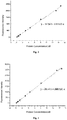
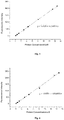
- SNAP protein tag to the solution (30 ⁇ M) of Probe 1, Probe 5, Probe 13, Probe 16 and Probe 28to prepare SNAP tags with final concentrations of 0.1 ⁇ M. 0.5 ⁇ M, 0.7 ⁇ M, 1.2 ⁇ M, 4.5 ⁇ M, 8.1 ⁇ M, 13.1 ⁇ M, and 14.8 ⁇ M; put the mixed sample solutions at 37 °C for 1h, and detect the change of excitation emission spectrum of the sample by using the fluorescence spectrophotometer, and depict the relationship graph between SNAP protein tag concentration and fluorescence intensity according to the strength of emission spectrum. The results are shown in Figs. 2-6 .
- Hela cells Take Hela cells as an example to detect the labeling effect of the compounds in mammalian cells.
- Hela cells and Hela-WT cells Hela primitive cells without expressing protein tags
- Detect the fluorescence changes of labeled cells by using Leica TPS-8 confocal microscopy. As shown in Fig.
- the probe can specifically label the intracellular protein tag, and achieve fluorescence specific lighting. Meanwhile, the probe fluorescence is not affected by the intracellular environment.
- Probe 17 and Probe 18 can be used to label target proteins located in different organelles, take Hela cells as an example to test the effect of different subcellular protein tags. Plant Hela cells (5000 cells/well) in a glass bottom plate of 96-well for 14h, and then use Lipo2000 kit to transfect protein tags to locate plasmids in different organelles. After 24h of transfection, remove the original culture medium, wash the culture medium twice with phenol free red DMEM culture medium, and hatch the cells with phenol free red medium containing probe (0.2 ⁇ M) for 2h, and detect the effect of cell labeling by using Leica TCS-8 confocal microscopy imaging. As shown in Fig. 8 , the probe can clearly display a variety of subcellular organelle structures without washing, including but not limited to matrix of cytoplasm, Golgi apparatus, mitochondria, chromosome and cytoskeleton.
- Plant Hela cells (5000 cells/well) in a glass bottom plate of 96-well for 14h; transfect pcdna3.1-CLIP-histone (CLIP protein labeled chromosome localization plasmid) and pcdna3.1-mito-SNAP (SNAP protein labeled chromosome localization plasmid) by using Lipo2000 kit (0.1 ⁇ g/well).
- Lipo2000 kit 0.1 ⁇ g/well.
- remove the original culture medium remove the original culture medium, and wash the culture medium twice with phenol free red DMEM culture medium, and hatch the cells respectively with phenol free red medium containing Probe 16 and Probe 9 (0.2 ⁇ M) for 2h, and detect the effect of cell labeling by using Leica TCS-8 confocal microscopy imaging.
- Probe 16 and Probe 9 can clearly and simultaneously display the structure of mitochondria and chromosomes without washing, and the co localization coefficient of chromosome fluorescence labled by Probe 9 labeled and the mitochondrial fluorescence channel labeled by Probe 16 is less than 0.1, which indicates that there is no interference between two fluorescence channels.
- the plasmid pcdna3.1-SNAP sample group
- the contrastive plasmid pcdna3.1-CAT contrastive group without SNAP protein expressing
- the plasmid is dissolved in a large volume of solution and rapidly injected into mice intravenously.
- the plasmid is absorbed by mouse liver, and then express the target protein.
- inject the Probe 16 0.4 ⁇ M
- SNAP protein tag After 6h, dissect the mice, and detect liver fluorescence differences by using Kodak multispectral vivo imaging system. As shown in Fig.
- the liver fluorescence of mice injected with the contrastive plasmid pcdna3.1-CAT of Probe 16 is very low, while that of mice injected with the plasmid pcdna3.1-SNAP of Probe 16 have strong fluorescence with an intensity of more than 20 fold of the contrastive group.
- the fluorescence of the probe is not affected by the internal environment of animals, can be applied to live animals and can specifically label the SNAP protein tag expressed in the liver, and generate strong fluorescence signal.
- SNAP protein of mammalian cells is taken as an example, and AID degradation system is an example of detecting the fluorescence changes of probes combined with SNAP after protein degradation in Hela cells.
- plant Hela cells (20000/cm 2 ) in a glass bottom cell culture medium of 20mm for 14h, and then transect the plasmids pcdna3.1-TIR1 and pcdna3.1-SNAP-IAA17-H2B by means of Lipofectmain2000 transfection reagent (Invertogen Co.).
- the cells After the cells are transfected for 24h, replace the cells labeled by the original cell culture medium with phenol red DMEM culture medium containing Probe 16 (1 ⁇ M), and hatch the cee sample in a carbon dioxide incubator at 37°C for 1h.
- detect the fluorescence signal of the labeled cells by using Leica SP8 laser confocal microscopy imaging, and add indoleacetic acid (IAA) to induce the protein degradation of SNAP-IAA17-H2B, and detect the changes of cell fluorescence during protein degradation.
- IAA indoleacetic acid
- the fluorescence signal of SNAP-IAA17-H2B protein gradually decreases, and is almost negligible after IAA has been added for 140 min, wherein the protein degradation rate is consistent with the results reported in literature.
- the above results show that the fluorescence properties of the probe in mammalian cells also depend on the presence of protein., The fluorescence is activated when the protein exists, and disappears when the protein is degraded, and this can be used to track and monitor the degradation process of the target protein.
- SNAP protein of mammalian cells is taken as an example, and the photostabilities of Probe 16, Probe 17 and Probe 18 after labeling proteins in Hela cells are detected; meanwhile, the fluorescent protein IFP682 is expressed, and their photostabilities are contrasted under the same conditions.
- Plant Hela cells (5000 cells/well) in a glass bottom plate of 96-well for 12h, and transect SNAP or fluorescent protein expressing histone specific, and use Leica SP8 laser confocal microscopy imaging after 36h, and use 633nm laser with an output power of 200 ⁇ W for shooting (2x zoom, 93 ⁇ m*93 ⁇ m, scanning voltage 600 V, 0.833s/frame).
- FIG. 12 shows the variation of fluorescence intensity following the bleaching time, in which A to C are respectively Probe 16, Probe 17 and Probe 18, and D is fluorescent protein IFP682. It is shown in Fig. 12 that the bleaching resistance of Probe 16, Probe 17 and Probe 18 is significantly better than that of IFP682 reported in previous literature.
- the Reference Probe 33 is prepared according to the method disclosed in patent ( CN107641121A ) with a field of 45%.
- FIG. 13 shows the variation of fluorescence intensity following the bleaching time, in which A to C are respectively Probe 16, Probe 17 and Probe 18, and D is Reference Probe 33. It is shown in Fig. 13 that the bleaching resistance of Probe 16, Probe 17 and Probe 18 is significantly better than that of Reference Probe 33 reported in the patent.
- Fig. 14 shows the variation of fluorescence intensity following the bleaching time, in which A to G are respectively Probe 16, Probe 28, Probe 5, Probe 11, Probe 30, Probe 2 and Probe 13. It is shown in Fig. 14 that the probes have strong bleaching resistance after labeling protein.
Landscapes
- Chemical & Material Sciences (AREA)
- Organic Chemistry (AREA)
- Health & Medical Sciences (AREA)
- Life Sciences & Earth Sciences (AREA)
- Immunology (AREA)
- Engineering & Computer Science (AREA)
- Physics & Mathematics (AREA)
- General Health & Medical Sciences (AREA)
- Pathology (AREA)
- General Physics & Mathematics (AREA)
- Analytical Chemistry (AREA)
- Biochemistry (AREA)
- Molecular Biology (AREA)
- Biomedical Technology (AREA)
- Urology & Nephrology (AREA)
- Hematology (AREA)
- Nuclear Medicine, Radiotherapy & Molecular Imaging (AREA)
- Optics & Photonics (AREA)
- Medicinal Chemistry (AREA)
- Food Science & Technology (AREA)
- Microbiology (AREA)
- Cell Biology (AREA)
- Biotechnology (AREA)
- Chemical Kinetics & Catalysis (AREA)
- Materials Engineering (AREA)
- Proteomics, Peptides & Aminoacids (AREA)
- Investigating Or Analysing Biological Materials (AREA)
- Measuring Or Testing Involving Enzymes Or Micro-Organisms (AREA)
Applications Claiming Priority (2)
| Application Number | Priority Date | Filing Date | Title |
|---|---|---|---|
| CN201810485224.4A CN110498799B (zh) | 2018-05-18 | 2018-05-18 | 一种荧光探针及其制备方法和用途 |
| PCT/CN2019/085192 WO2019218876A1 (zh) | 2018-05-18 | 2019-04-30 | 一种荧光探针及其制备方法和用途 |
Publications (2)
| Publication Number | Publication Date |
|---|---|
| EP3798221A1 true EP3798221A1 (de) | 2021-03-31 |
| EP3798221A4 EP3798221A4 (de) | 2022-07-06 |
Family
ID=68539423
Family Applications (1)
| Application Number | Title | Priority Date | Filing Date |
|---|---|---|---|
| EP19803374.8A Withdrawn EP3798221A4 (de) | 2018-05-18 | 2019-04-30 | Fluoreszenzsonde und herstellungsverfahren und verwendung davon |
Country Status (4)
| Country | Link |
|---|---|
| US (1) | US12613246B2 (de) |
| EP (1) | EP3798221A4 (de) |
| CN (1) | CN110498799B (de) |
| WO (1) | WO2019218876A1 (de) |
Cited By (1)
| Publication number | Priority date | Publication date | Assignee | Title |
|---|---|---|---|---|
| EP4382526A4 (de) * | 2021-08-06 | 2025-03-26 | Fluorescence Diagnosis (shanghai) Biotech Company Ltd. | Fluoreszierender farbstoff und herstellungsverfahren dafür und verwendung davon |
Families Citing this family (7)
| Publication number | Priority date | Publication date | Assignee | Title |
|---|---|---|---|---|
| CN111349070B (zh) * | 2020-02-12 | 2022-09-20 | 曲阜师范大学 | 一种用于检测生物细胞粘度的近红外荧光分子探针及其制备方法和应用 |
| CN113501790B (zh) * | 2020-03-23 | 2025-10-03 | 纳莹(上海)生物科技有限公司 | 一种荧光染料及其制备方法和用途 |
| CN112592283B (zh) * | 2021-01-25 | 2022-06-07 | 井冈山大学 | 一种用于酒类饮品粘度检测的荧光化合物及其制备和应用 |
| CN114181204B (zh) * | 2021-12-13 | 2023-07-11 | 洛兮医疗科技(杭州)有限公司 | 一种检测粘度的近红外荧光探针及其制备和应用 |
| CN115650963B (zh) * | 2022-09-09 | 2024-04-23 | 安徽大学 | 一种测定线粒体粘度的近红外双光子荧光探针及其应用 |
| CN117229279B (zh) * | 2023-09-26 | 2025-10-17 | 湖南师范大学 | 一种同时检测同型半胱氨酸和粘度的双功能荧光探针的合成与应用 |
| KR102868214B1 (ko) * | 2024-02-27 | 2025-10-14 | 경상국립대학교산학협력단 | 로다닌기가 도입된 헤테로환 화합물, 이를 포함하는 유기 반도체 및 광전 변환 소자 |
Family Cites Families (9)
| Publication number | Priority date | Publication date | Assignee | Title |
|---|---|---|---|---|
| JPH11140083A (ja) * | 1997-08-06 | 1999-05-25 | Kumiai Chem Ind Co Ltd | ベンゾフラン誘導体及び除草剤 |
| NZ538986A (en) | 2002-10-03 | 2006-06-30 | Ecole Polytech | Substrates for O6-alkylguanine-DNA alkyltransferase |
| EP1594962B1 (de) | 2003-01-31 | 2014-08-27 | Promega Corporation | Kovalentes anbinden funktioneller gruppen an proteine |
| WO2007041241A2 (en) * | 2005-09-30 | 2007-04-12 | The Trustees Of Columbia University In The City Of New York | Compositions and methods for detecting ligand-receptor interactions |
| EP1882688A1 (de) | 2006-07-25 | 2008-01-30 | EPFL Ecole Polytechnique Fédérale de Lausanne | Markierung von Fusionsproteinen mit synthetischen Proben |
| WO2014051521A1 (en) * | 2012-09-26 | 2014-04-03 | Agency For Science, Technology And Research | Fluorescent molecular rotors |
| CN104745177A (zh) * | 2015-04-07 | 2015-07-01 | 华东理工大学 | 一种具有蛋白标签定位的光激活荧光探针及其制备方法和应用 |
| CN107663384B (zh) * | 2016-07-20 | 2020-05-12 | 上海高驰资产管理有限公司 | 一种荧光染料及其制备方法和用途 |
| CN113444046B (zh) * | 2016-07-20 | 2023-10-27 | 纳莹(上海)生物科技有限公司 | 一种荧光探针及其制备方法和用途 |
-
2018
- 2018-05-18 CN CN201810485224.4A patent/CN110498799B/zh active Active
-
2019
- 2019-04-30 US US17/250,061 patent/US12613246B2/en active Active
- 2019-04-30 EP EP19803374.8A patent/EP3798221A4/de not_active Withdrawn
- 2019-04-30 WO PCT/CN2019/085192 patent/WO2019218876A1/zh not_active Ceased
Cited By (1)
| Publication number | Priority date | Publication date | Assignee | Title |
|---|---|---|---|---|
| EP4382526A4 (de) * | 2021-08-06 | 2025-03-26 | Fluorescence Diagnosis (shanghai) Biotech Company Ltd. | Fluoreszierender farbstoff und herstellungsverfahren dafür und verwendung davon |
Also Published As
| Publication number | Publication date |
|---|---|
| EP3798221A4 (de) | 2022-07-06 |
| US20210382060A1 (en) | 2021-12-09 |
| WO2019218876A1 (zh) | 2019-11-21 |
| CN110498799B (zh) | 2022-07-05 |
| US12613246B2 (en) | 2026-04-28 |
| CN110498799A (zh) | 2019-11-26 |
Similar Documents
| Publication | Publication Date | Title |
|---|---|---|
| EP3690002A1 (de) | Fluoreszierende sonde, verfahren zu ihrer herstellung und ihre verwendung | |
| EP3489324A1 (de) | Fluoreszenzsonde sowie herstellungsverfahren und verwendung davon | |
| US12613246B2 (en) | Fluorescent probe and protein labeling method | |
| JP5526124B2 (ja) | 近赤外蛍光化合物 | |
| CN102146284B (zh) | 一种比率型荧光探针及其应用 | |
| CN107098923A (zh) | 一类红光与近红外发射溶酶体靶向荧光染料及其制备方法与用途 | |
| Guo et al. | Sensing for intracellular thiols by water-insoluble two-photon fluorescent probe incorporating nanogel | |
| WO2013131235A1 (zh) | 一类以萘为母体的双光子荧光探针、其制备方法及应用 | |
| CN103820104B (zh) | 一类以尼罗蓝为母体的近红外荧光探针、其制法及应用 | |
| Liu et al. | A squaraine-based red emission off–on chemosensor for biothiols and its application in living cells imaging | |
| Yu et al. | Efficiently emissive, strongly solvatochromic and lipid droplet-specific, fluorescent probes for mapping polarity in vitro | |
| CN108329302A (zh) | 一种硫化物特异性响应的半花菁类近红外荧光探针化合物及其制备方法和应用 | |
| Choi et al. | A tetrazine-fused aggregation induced emission luminogen for bioorthogonal fluorogenic bioprobe | |
| CN115650897A (zh) | 一种同时检测Cys和线粒体粘度的荧光探针及其制备方法和应用 | |
| CN110498758A (zh) | 用于识别谷胱甘肽的近红外荧光探针及其制备和应用 | |
| CN110642882A (zh) | 一种兼具双氧水检测和光动力杀伤癌细胞活性的荧光探针及其制备方法和应用 | |
| CN110981842A (zh) | 一种区分正常细胞和癌细胞的特异性检测脂滴的荧光探针及应用 | |
| CN107383067A (zh) | 一种具有大斯托克斯位移的近红外发射氧杂蒽荧光染料制备方法 | |
| CN106432312A (zh) | 一种线粒体靶向荧光探针及其制备方法和应用 | |
| Sun et al. | Near-infrared dual-functional AIEgens for lipid droplets imaging in multispecies and photodynamic therapy | |
| CN114470244B (zh) | 一种靶向脂滴的免洗荧光成像纳米探针制备及使用方法 | |
| Herrero-Foncubierta et al. | Simple and non-charged long-lived fluorescent intracellular organelle trackers | |
| CN113620963A (zh) | 一种线粒体粘度探针及其制备方法和应用 | |
| CN111334080B (zh) | 一种高亮度、高光稳定性的碳酸酐酶荧光探针 | |
| CN102617554A (zh) | 一类以萘为母体的双光子荧光探针、其制备方法及应用 |
Legal Events
| Date | Code | Title | Description |
|---|---|---|---|
| STAA | Information on the status of an ep patent application or granted ep patent |
Free format text: STATUS: THE INTERNATIONAL PUBLICATION HAS BEEN MADE |
|
| PUAI | Public reference made under article 153(3) epc to a published international application that has entered the european phase |
Free format text: ORIGINAL CODE: 0009012 |
|
| STAA | Information on the status of an ep patent application or granted ep patent |
Free format text: STATUS: REQUEST FOR EXAMINATION WAS MADE |
|
| 17P | Request for examination filed |
Effective date: 20201218 |
|
| AK | Designated contracting states |
Kind code of ref document: A1 Designated state(s): AL AT BE BG CH CY CZ DE DK EE ES FI FR GB GR HR HU IE IS IT LI LT LU LV MC MK MT NL NO PL PT RO RS SE SI SK SM TR |
|
| AX | Request for extension of the european patent |
Extension state: BA ME |
|
| DAV | Request for validation of the european patent (deleted) | ||
| DAX | Request for extension of the european patent (deleted) | ||
| RAP1 | Party data changed (applicant data changed or rights of an application transferred) |
Owner name: FLUORESCENCE DIAGNOSIS (SHANGHAI) BIOTECH COMPANY LTD. |
|
| RIC1 | Information provided on ipc code assigned before grant |
Ipc: C09B 23/10 20060101ALI20220119BHEP Ipc: C12Q 1/02 20060101ALI20220119BHEP Ipc: G01N 21/64 20060101ALI20220119BHEP Ipc: C09K 11/06 20060101ALI20220119BHEP Ipc: C07D 519/00 20060101ALI20220119BHEP Ipc: C07D 403/12 20060101ALI20220119BHEP Ipc: C07D 417/12 20060101ALI20220119BHEP Ipc: C07D 413/12 20060101ALI20220119BHEP Ipc: C07D 473/18 20060101AFI20220119BHEP |
|
| A4 | Supplementary search report drawn up and despatched |
Effective date: 20220603 |
|
| RIC1 | Information provided on ipc code assigned before grant |
Ipc: C09B 23/10 20060101ALI20220530BHEP Ipc: C12Q 1/02 20060101ALI20220530BHEP Ipc: G01N 21/64 20060101ALI20220530BHEP Ipc: C09K 11/06 20060101ALI20220530BHEP Ipc: C07D 519/00 20060101ALI20220530BHEP Ipc: C07D 403/12 20060101ALI20220530BHEP Ipc: C07D 417/12 20060101ALI20220530BHEP Ipc: C07D 413/12 20060101ALI20220530BHEP Ipc: C07D 473/18 20060101AFI20220530BHEP |
|
| STAA | Information on the status of an ep patent application or granted ep patent |
Free format text: STATUS: EXAMINATION IS IN PROGRESS |
|
| 17Q | First examination report despatched |
Effective date: 20250630 |
|
| STAA | Information on the status of an ep patent application or granted ep patent |
Free format text: STATUS: THE APPLICATION IS DEEMED TO BE WITHDRAWN |
|
| 18D | Application deemed to be withdrawn |
Effective date: 20251031 |