EP3747464B1 - Methods for treating progressive multiple sclerosis using an anti-cd20 antibody - Google Patents
Methods for treating progressive multiple sclerosis using an anti-cd20 antibody Download PDFInfo
- Publication number
- EP3747464B1 EP3747464B1 EP20176370.3A EP20176370A EP3747464B1 EP 3747464 B1 EP3747464 B1 EP 3747464B1 EP 20176370 A EP20176370 A EP 20176370A EP 3747464 B1 EP3747464 B1 EP 3747464B1
- Authority
- EP
- European Patent Office
- Prior art keywords
- ocrelizumab
- antibody
- edss
- patient
- treatment
- Prior art date
- Legal status (The legal status is an assumption and is not a legal conclusion. Google has not performed a legal analysis and makes no representation as to the accuracy of the status listed.)
- Active
Links
Images




Classifications
-
- A—HUMAN NECESSITIES
- A61—MEDICAL OR VETERINARY SCIENCE; HYGIENE
- A61B—DIAGNOSIS; SURGERY; IDENTIFICATION
- A61B5/00—Measuring for diagnostic purposes; Identification of persons
- A61B5/05—Detecting, measuring or recording for diagnosis by means of electric currents or magnetic fields; Measuring using microwaves or radio waves
- A61B5/055—Detecting, measuring or recording for diagnosis by means of electric currents or magnetic fields; Measuring using microwaves or radio waves involving electronic [EMR] or nuclear [NMR] magnetic resonance, e.g. magnetic resonance imaging
-
- A—HUMAN NECESSITIES
- A61—MEDICAL OR VETERINARY SCIENCE; HYGIENE
- A61K—PREPARATIONS FOR MEDICAL, DENTAL OR TOILETRY PURPOSES
- A61K39/00—Medicinal preparations containing antigens or antibodies
-
- A—HUMAN NECESSITIES
- A61—MEDICAL OR VETERINARY SCIENCE; HYGIENE
- A61K—PREPARATIONS FOR MEDICAL, DENTAL OR TOILETRY PURPOSES
- A61K39/00—Medicinal preparations containing antigens or antibodies
- A61K39/395—Antibodies; Immunoglobulins; Immune serum, e.g. antilymphocytic serum
- A61K39/39533—Antibodies; Immunoglobulins; Immune serum, e.g. antilymphocytic serum against materials from animals
- A61K39/3955—Antibodies; Immunoglobulins; Immune serum, e.g. antilymphocytic serum against materials from animals against proteinaceous materials, e.g. enzymes, hormones, lymphokines
-
- A—HUMAN NECESSITIES
- A61—MEDICAL OR VETERINARY SCIENCE; HYGIENE
- A61K—PREPARATIONS FOR MEDICAL, DENTAL OR TOILETRY PURPOSES
- A61K45/00—Medicinal preparations containing active ingredients not provided for in groups A61K31/00 - A61K41/00
- A61K45/06—Mixtures of active ingredients without chemical characterisation, e.g. antiphlogistics and cardiaca
-
- A—HUMAN NECESSITIES
- A61—MEDICAL OR VETERINARY SCIENCE; HYGIENE
- A61K—PREPARATIONS FOR MEDICAL, DENTAL OR TOILETRY PURPOSES
- A61K9/00—Medicinal preparations characterised by special physical form
- A61K9/0012—Galenical forms characterised by the site of application
- A61K9/0019—Injectable compositions; Intramuscular, intravenous, arterial, subcutaneous administration; Compositions to be administered through the skin in an invasive manner
-
- A—HUMAN NECESSITIES
- A61—MEDICAL OR VETERINARY SCIENCE; HYGIENE
- A61P—SPECIFIC THERAPEUTIC ACTIVITY OF CHEMICAL COMPOUNDS OR MEDICINAL PREPARATIONS
- A61P25/00—Drugs for disorders of the nervous system
-
- A—HUMAN NECESSITIES
- A61—MEDICAL OR VETERINARY SCIENCE; HYGIENE
- A61P—SPECIFIC THERAPEUTIC ACTIVITY OF CHEMICAL COMPOUNDS OR MEDICINAL PREPARATIONS
- A61P25/00—Drugs for disorders of the nervous system
- A61P25/28—Drugs for disorders of the nervous system for treating neurodegenerative disorders of the central nervous system, e.g. nootropic agents, cognition enhancers, drugs for treating Alzheimer's disease or other forms of dementia
-
- A—HUMAN NECESSITIES
- A61—MEDICAL OR VETERINARY SCIENCE; HYGIENE
- A61P—SPECIFIC THERAPEUTIC ACTIVITY OF CHEMICAL COMPOUNDS OR MEDICINAL PREPARATIONS
- A61P29/00—Non-central analgesic, antipyretic or antiinflammatory agents, e.g. antirheumatic agents; Non-steroidal antiinflammatory drugs [NSAID]
-
- A—HUMAN NECESSITIES
- A61—MEDICAL OR VETERINARY SCIENCE; HYGIENE
- A61P—SPECIFIC THERAPEUTIC ACTIVITY OF CHEMICAL COMPOUNDS OR MEDICINAL PREPARATIONS
- A61P37/00—Drugs for immunological or allergic disorders
-
- A—HUMAN NECESSITIES
- A61—MEDICAL OR VETERINARY SCIENCE; HYGIENE
- A61P—SPECIFIC THERAPEUTIC ACTIVITY OF CHEMICAL COMPOUNDS OR MEDICINAL PREPARATIONS
- A61P37/00—Drugs for immunological or allergic disorders
- A61P37/02—Immunomodulators
-
- A—HUMAN NECESSITIES
- A61—MEDICAL OR VETERINARY SCIENCE; HYGIENE
- A61P—SPECIFIC THERAPEUTIC ACTIVITY OF CHEMICAL COMPOUNDS OR MEDICINAL PREPARATIONS
- A61P37/00—Drugs for immunological or allergic disorders
- A61P37/02—Immunomodulators
- A61P37/06—Immunosuppressants, e.g. drugs for graft rejection
-
- C—CHEMISTRY; METALLURGY
- C07—ORGANIC CHEMISTRY
- C07K—PEPTIDES
- C07K16/00—Immunoglobulins [IGs], e.g. monoclonal or polyclonal antibodies
- C07K16/18—Immunoglobulins [IGs], e.g. monoclonal or polyclonal antibodies against material from animals or humans
- C07K16/28—Immunoglobulins [IGs], e.g. monoclonal or polyclonal antibodies against material from animals or humans against receptors, cell surface antigens or cell surface determinants
- C07K16/2887—Immunoglobulins [IGs], e.g. monoclonal or polyclonal antibodies against material from animals or humans against receptors, cell surface antigens or cell surface determinants against CD20
-
- G—PHYSICS
- G01—MEASURING; TESTING
- G01N—INVESTIGATING OR ANALYSING MATERIALS BY DETERMINING THEIR CHEMICAL OR PHYSICAL PROPERTIES
- G01N33/00—Investigating or analysing materials by specific methods not covered by groups G01N1/00 - G01N31/00
- G01N33/48—Biological material, e.g. blood, urine; Haemocytometers
- G01N33/50—Chemical analysis of biological material, e.g. blood, urine; Testing involving biospecific ligand binding methods; Immunological testing
- G01N33/68—Chemical analysis of biological material, e.g. blood, urine; Testing involving biospecific ligand binding methods; Immunological testing involving proteins, peptides or amino acids
- G01N33/6854—Immunoglobulins
- G01N33/686—Anti-idiotype
-
- G—PHYSICS
- G06—COMPUTING OR CALCULATING; COUNTING
- G06Q—INFORMATION AND COMMUNICATION TECHNOLOGY [ICT] SPECIALLY ADAPTED FOR ADMINISTRATIVE, COMMERCIAL, FINANCIAL, MANAGERIAL OR SUPERVISORY PURPOSES; SYSTEMS OR METHODS SPECIALLY ADAPTED FOR ADMINISTRATIVE, COMMERCIAL, FINANCIAL, MANAGERIAL OR SUPERVISORY PURPOSES, NOT OTHERWISE PROVIDED FOR
- G06Q99/00—Subject matter not provided for in other groups of this subclass
-
- A—HUMAN NECESSITIES
- A61—MEDICAL OR VETERINARY SCIENCE; HYGIENE
- A61K—PREPARATIONS FOR MEDICAL, DENTAL OR TOILETRY PURPOSES
- A61K39/00—Medicinal preparations containing antigens or antibodies
- A61K2039/505—Medicinal preparations containing antigens or antibodies comprising antibodies
-
- A—HUMAN NECESSITIES
- A61—MEDICAL OR VETERINARY SCIENCE; HYGIENE
- A61K—PREPARATIONS FOR MEDICAL, DENTAL OR TOILETRY PURPOSES
- A61K39/00—Medicinal preparations containing antigens or antibodies
- A61K2039/505—Medicinal preparations containing antigens or antibodies comprising antibodies
- A61K2039/507—Comprising a combination of two or more separate antibodies
-
- A—HUMAN NECESSITIES
- A61—MEDICAL OR VETERINARY SCIENCE; HYGIENE
- A61K—PREPARATIONS FOR MEDICAL, DENTAL OR TOILETRY PURPOSES
- A61K39/00—Medicinal preparations containing antigens or antibodies
- A61K2039/545—Medicinal preparations containing antigens or antibodies characterised by the dose, timing or administration schedule
-
- A—HUMAN NECESSITIES
- A61—MEDICAL OR VETERINARY SCIENCE; HYGIENE
- A61K—PREPARATIONS FOR MEDICAL, DENTAL OR TOILETRY PURPOSES
- A61K39/00—Medicinal preparations containing antigens or antibodies
- A61K2039/55—Medicinal preparations containing antigens or antibodies characterised by the host/recipient, e.g. newborn with maternal antibodies
-
- C—CHEMISTRY; METALLURGY
- C07—ORGANIC CHEMISTRY
- C07K—PEPTIDES
- C07K2317/00—Immunoglobulins specific features
- C07K2317/20—Immunoglobulins specific features characterized by taxonomic origin
- C07K2317/24—Immunoglobulins specific features characterized by taxonomic origin containing regions, domains or residues from different species, e.g. chimeric, humanized or veneered
-
- C—CHEMISTRY; METALLURGY
- C07—ORGANIC CHEMISTRY
- C07K—PEPTIDES
- C07K2317/00—Immunoglobulins specific features
- C07K2317/50—Immunoglobulins specific features characterized by immunoglobulin fragments
- C07K2317/56—Immunoglobulins specific features characterized by immunoglobulin fragments variable (Fv) region, i.e. VH and/or VL
- C07K2317/565—Complementarity determining region [CDR]
-
- C—CHEMISTRY; METALLURGY
- C07—ORGANIC CHEMISTRY
- C07K—PEPTIDES
- C07K2317/00—Immunoglobulins specific features
- C07K2317/70—Immunoglobulins specific features characterized by effect upon binding to a cell or to an antigen
- C07K2317/76—Antagonist effect on antigen, e.g. neutralization or inhibition of binding
-
- G—PHYSICS
- G01—MEASURING; TESTING
- G01N—INVESTIGATING OR ANALYSING MATERIALS BY DETERMINING THEIR CHEMICAL OR PHYSICAL PROPERTIES
- G01N2800/00—Detection or diagnosis of diseases
- G01N2800/52—Predicting or monitoring the response to treatment, e.g. for selection of therapy based on assay results in personalised medicine; Prognosis
-
- G—PHYSICS
- G01—MEASURING; TESTING
- G01N—INVESTIGATING OR ANALYSING MATERIALS BY DETERMINING THEIR CHEMICAL OR PHYSICAL PROPERTIES
- G01N2800/00—Detection or diagnosis of diseases
- G01N2800/70—Mechanisms involved in disease identification
- G01N2800/7095—Inflammation
Definitions
- the present invention concerns an anti-CD20 antibody which is ocrelizumab for use in the treatment of primary progressive multiple sclerosis, as further defined in the claims.
- MS Multiple Sclerosis
- CNS central nervous system
- MS cerebrospinal fluid
- MS has four patterns of disease: relapsing-remitting MS (RRMS; 80%-85% of cases at onset), primary progressive MS (PPMS; 10%-15% at onset), progressive relapsing MS (PRMS; 5% at onset); and secondary progressive MS (SPMS) ( Kremenchutzky et al. Brain 122 (Pt 10):1941-50 (1999 ); Confavreux et al. N Engl J Med 343(20):1430-8 (2000 )).
- RRMS relapsing-remitting MS
- PPMS primary progressive MS
- PRMS progressive relapsing MS
- SPMS secondary progressive MS
- the RRMS treatments include the following: interferon class, IFN-beta-1a (REBIF ® and AVONEX ® ) and IFN-beta-lb (BETASERON ® ); glatiramer acetate (COPAXONE ® ), a polypeptide; natalizumab (TYSABRI ® ); and mitoxantrone (NOVANTRONE ® ), a cytotoxic agent.
- Anti-myelin antibodies (myelin basic protein (MBP) and myelin oligodendrocyte glycoprotein (MOG)) have been detected in the serum of patients with progressive and relapsing forms of MS ( Reindl et al. Brain 122:2047-56 (1999 ); Egg et al. Mult Scler 7(5):285-9 (2001 )). Anti-myelin antibodies have also been detected in the CSF of MS patients ( Reindl et al. Brain 122:2047-56 (1999 ); Egg et al. Mult Scler 7(5):285-9 (2001 ); Andersson et al. Eur J Neurol 9:243-51 (2002 )).
- MBP myelin basic protein
- MOG myelin oligodendrocyte glycoprotein
- Rituximab In patients with RRMS or opsoclonus-myoclonus syndrome, Rituximab reportedly depleted peripheral B-cells in all patients and decreased the number of CSF B cells in some patients ( Pranzatelli et al. Neurology 60(Suppl1) PO5.128:A395 (2003 ); Cross et al. "Preliminary Results from a Phase II Trial of Rituximab in MS" (abstract) Eighth Annual Meeting of the Americas Committees for Research and Treatment in Multiple Sclerosis ACTRIMS 20-1 (October, 2003 ); Cross et al. J. Neuroimmunol. 180:63-70 (2006 )). See also Cree et al.
- Lymphocytes are one of many types of white blood cells produced in the bone marrow during the process of hematopoiesis. There are two major populations of lymphocytes: B lymphocytes (B cells) and T lymphocytes (T cells). The lymphocytes of particular interest herein are B cells.
- B cells mature within the bone marrow and leave the marrow expressing an antigen-binding antibody on their cell surface.
- a naive B cell first encounters the antigen for which its membrane-bound antibody is specific, the cell begins to divide rapidly and its progeny differentiate into memory B cells and effector cells called "plasma cells".
- Memory B cells have a longer life span and continue to express membrane-bound antibody with the same specificity as the original parent cell.
- Plasma cells do not produce membrane-bound antibody but instead produce the antibody in a form that can be secreted. Secreted antibodies are the major effector molecule of humoral immunity.
- the CD20 antigen also called human B-lymphocyte-restricted differentiation antigen, Bp35
- Bp35 human B-lymphocyte-restricted differentiation antigen
- CD20 regulates an early step(s) in the activation process for, cell cycle initiation and differentiation (Tedder et al., supra ) and possibly functions as a calcium ion channel ( Tedder et al. J. Cell. Biochem. 14D:195 (1990 )).
- this antigen can serve as a candidate for "targeting" of such lymphomas.
- targeting can be generalized as follows: antibodies specific to the CD20 surface antigen of B cells are administered to a patient. These anti-CD20 antibodies specifically bind to the CD20 antigen of (ostensibly) both normal and malignant B cells; the antibody bound to the CD20 surface antigen may lead to the destruction and depletion of neoplastic B cells. Additionally, chemical agents or radioactive labels having the potential to destroy the tumor can be conjugated to the anti-CD20 antibody such that the agent is specifically "delivered" to the neoplastic B cells. Irrespective of the approach, a primary goal is to destroy the tumor; the specific approach can be determined by the particular anti-CD20 antibody that is utilized and, thus, the available approaches to targeting the CD20 antigen can vary considerably.
- the Rituximab (RITUXAN ® ) antibody is a genetically engineered chimeric murine/human monoclonal antibody directed against the CD20 antigen.
- Rituximab is the antibody called "C2B8" in US Patent No. 5,736,137 issued April 7, 1998 (Anderson et al. ) .
- RITUXAN ® is indicated for the treatment of patients with relapsed or refractory low-grade or follicular, CD20-positive, B-cell non-Hodgkin's lymphoma.
- CDC complement-dependent cytotoxicity
- RITUXAN ® has been shown to have anti-proliferative effects in tritiated thymidine incorporation assays and to induce apoptosis directly, while other anti-CD19 and CD20 antibodies do not ( Maloney et al. Blood 88(10):637a (1996 )). Synergy between RITUXAN ® and chemotherapies and toxins has also been observed experimentally.
- RITUXAN ® sensitizes drug-resistant human B-cell lymphoma cell lines to the cytotoxic effects of doxorubicin, CDDP, VP-16, diphtheria toxin and ricin ( Demidem et al. Cancer Chemotherapy & Radiopharmaceuticals 12(3):177-186 (1997 )).
- RITUXAN ® depletes B cells from the peripheral blood, lymph nodes, and bone marrow of cynomolgus monkeys, presumably through complement and cell-mediated processes ( Reff et al. Blood 83(2):435-445 (1994 )).
- Rituximab was approved in the United States in November 1997 for the treatment of patients with relapsed or refractory low-grade or follicular CD20 + B-cell non-Hodgkin's lymphoma (NHL) at a dose of 375 mg/m 2 weekly for four doses.
- the Food and Drug Administration (FDA) approved additional claims for the treatment of low-grade NHL: retreatment (weekly for four doses) and an additional dosing regimen (weekly for eight doses).
- FDA Food and Drug Administration
- Rituximab has also been studied in a variety of non-malignant autoimmune disorders, in which B cells and autoantibodies appear to play a role in disease pathophysiology ( Edwards et al. Biochem Soc Trans 30:824-8 (2002 )).
- Rituximab has been reported to potentially relieve signs and symptoms of rheumatoid arthritis (RA) ( Leandro et al. Ann Rheum Dis. 61:883-8 (2002 ); Emery et al. Arthritis Rheum 48(9):S439 (2003 )), lupus ( Eisenberg R. Arthritis Res Ther 5:157-9 (2003 ); Leandro et al.
- RA rheumatoid arthritis
- Patents and patent publications concerning CD20 antibodies, CD20-binding molecules, and self-antigen vaccines include U.S. 5,776,456, 5,736,137 , 5,843,439 , 6,399,061, and 6,682,734 , as well as US 2002/0197255 , US 2003/0021781 , US 2003/0082172 , US 2003/0095963 , US 2003/0147885 , US 2005/0186205 , and WO 1994/11026 (Anderson et al. ) ; U.S.
- WO 2006/29224 (Ashkenazi, A .); US 2006/0110387 and WO 2006/41680 (Brunetta, P .); US 2006/0134111 and WO 2006/066086 (Agarwal, S.); WO 2006/069403 (Ernst and Yansura ); US 2006/0188495 and WO 2006/076651 (Dummer, W .); WO 2006/084264 (Lowman, H .); WO 2006/093923 (Quan and Sewell ); WO 2006/106959 (Numazaki et al.
- WO 2006/126069 (Morawala ); WO 2006/130458 (Gazit-Bornstein et al .); US 2006/0275284 (Hanna, G .); US 2007/0014785 (Golay et al. ); US 2007/0014720 (Gazit-Bomstein et al. ); and US 2007/0020259 (Hansen et al. ); US 2007/0020265 (Goldenberg and Hansen ); US 2007/0014797 (Hitraya ); US 2007/0224189 (Lazar et al. ); WO 2007/014238 (Bruge and Bruger ); and WO 2008/003319 (Parren and Baadsgaard ). Certain of these include, inter alia, treatment of multiple sclerosis.
- the present invention relates to ocrelizumab for use in the treatment of primary progressive multiple sclerosis, wherein treatment is based upon the patient having one or more characteristics selected from the group consisting of (a) an age less than 51 years, (b) one or more gadolinium staining lesions, and (c) a Multiple Sclerosis Severity Score (MSSS) greater than 5 points, wherein an effective amount of ocrelizumab is administered to the patient to provide an initial ocrelizumab exposure of 0.6 grams followed by a second ocrelizumab exposure of 0.6 grams, the second exposure is administered from about 24 weeks from the initial exposure, and each of the ocrelizumab exposures is provided to the patient as two doses of ocrelizumab, wherein the first dose and the second dose of ocrelizumab is 0.3 grams, and wherein the second dose is administered from 13 to 16 days from the time the first dose was administered.
- MSSS Multiple Sclerosis Severity Score
- the patient further has evidence of inflammation in a sample, wherein the sample is a cerebrospinal fluid sample, and wherein evidence of inflammation is indicated by an elevated IgG index or by IgG oligoclonal bands detected by isoelectric focusing.
- the patient has (a) an age less than 51 years, (b) one or more gadolinium staining lesions, (c) at least a one point increase in Expanded Disability Status Scale (EDSS) over two years prior to starting treatment, and (d) a Multiple Sclerosis Severity Score (MSSS) greater than 5 points.
- EDSS Expanded Disability Status Scale
- MSSS Multiple Sclerosis Severity Score
- the patient has had an EDSS of greater than about 5.0 for less than about 15 years. In some embodiments, the patient has had an EDSS less than or equal to about 5.0 for less than about 10 years. In some embodiments, the increase in EDSS over two years prior to starting treatment is not attributable to relapse. In some embodiments, the increase in EDSS is at least about a 1.5 point increase in EDSS over two years prior to starting treatment. In some embodiments, the at least about a 1.5 point increase in EDSS over two years prior to starting treatment is not attributable to relapse. In some embodiments, the EDSS when starting treatment is between about 3.0 and about 6.5.
- the treatment reduces the time to confirmed disease progression.
- the confirmed disease progression is an increase in EDSS that is sustained for twelve weeks. In some embodiments, the confirmed disease progression is an increase in EDSS that is sustained for twenty-four weeks.
- references in the description to methods of treatment refer to the compounds, pharmaceutical compositions and medicaments of the present invention for use in a method for treatment of the human (or animal) body by therapy or diagnosis.
- a "B-cell” is a lymphocyte that matures within the bone marrow, and includes a naive B cell, memory B cell, or effector B cell (plasma cells).
- the B-cell herein may be a normal or non-malignant B cell.
- B-cell surface marker or "B-cell surface antigen” herein is an antigen expressed on the surface of a B cell that can be targeted with an antibody that binds thereto.
- Exemplary B-cell surface markers include the CD10, CD19, CD20, CD21, CD22, CD23, CD24, CD37, CD40, CD53, CD72, CD73, CD74, CDw75, CDw76, CD77, CDw78, CD79a, CD79b, CD80, CD81, CD82, CD83, CDw84, CD85 and CD86 leukocyte surface markers (for descriptions, see The Leukocyte Antigen Facts Book, 2nd Edition. 1997, ed. Barclay et al. Academic Press, Harcourt Brace & Co., New York ).
- B-cell surface markers include RP105, FcRH2, B-cell CR2, CCR6, P2X5, HLA-DOB, CXCR5, FCER2, BR3, Btig, NAG14, SLGC16270, FcRH1, IRTA2, ATWD578, FcRH3, IRTA1, FcRH6, BCMA, and 239287.
- the B-cell surface marker of particular interest herein is preferentially expressed on B cells compared to other non-B-cell tissues of a mammal and may be expressed on both precursor B cells and mature B cells.
- the preferred B-cell surface marker herein is CD20.
- CD20 antigen is an about 35-kDa, non-glycosylated phosphoprotein found on the surface of greater than 90% of B cells from peripheral blood or lymphoid organs. CD20 is present on both normal B cells as well as malignant B cells, but is not expressed on stem cells. Other names for CD20 in the literature include "B-lymphocyte-restricted antigen” and "Bp35". The CD20 antigen is described in Clark et al. Proc. Natl. Acad. Sci. (USA) 82:1766 (1985 ), for example.
- an "antibody antagonist” herein is a antibody that, upon binding to a B cell surface marker on B cells, destroys or depletes B cells in a mammal and/or interferes with one or more B-cell functions, e.g. by reducing or preventing a humoral response elicited by the B cell.
- the antibody antagonist preferably is able to deplete B cells (i.e . reduce circulating B-cell levels) in a mammal treated therewith. Such depletion may be achieved via various mechanisms such antibody-dependent cell-mediated cytotoxicity (ADCC) and/or complement dependent cytotoxicity (CDC), inhibition of B-cell proliferation and/or induction of B-cell death ( e.g . via apoptosis).
- ADCC antibody-dependent cell-mediated cytotoxicity
- CDC complement dependent cytotoxicity
- Antibody-dependent cell-mediated cytotoxicity and “ADCC” refer to a cell-mediated reaction in which nonspecific cytotoxic cells that express Fc receptors (FcRs) (e.g . Natural Killer (NK) cells, neutrophils, and macrophages) recognize bound antibody on a target cell and subsequently cause lysis of the target cell.
- FcRs Fc receptors
- FcR expression on hematopoietic cells in summarized is Table 3 on page 464 of Ravetch and Kinet, Annu. Rev. Immunol 9:457-92 (1991 ).
- ADCC activity of a molecule of interest may be assessed in vitro, such as that described in US Patent No. 5,500,362 or 5,821,337.
- useful effector cells for such assays include peripheral blood mononuclear cells (PBMC) and Natural Killer (NK) cells.
- PBMC peripheral blood mononuclear cells
- NK Natural Killer
- ADCC activity of the molecule of interest may be assessed in vivo, e.g., in a animal model such as that disclosed in Clynes et al. PNAS (USA) 95:652-656 (1998 ).
- Human effector cells are leukocytes that express one or more FcRs and perform effector functions. In some embodiments, the cells express at least FcyRIII and carry out ADCC effector function. Examples of human leukocytes that mediate ADCC include peripheral blood mononuclear cells (PBMC), natural killer (NK) cells, monocytes, cytotoxic T cells and neutrophils; with PBMCs and NK cells being preferred.
- PBMC peripheral blood mononuclear cells
- NK natural killer cells
- monocytes monocytes
- cytotoxic T cells and neutrophils cytotoxic T cells and neutrophils
- Fc receptor or “FcR” are used to describe a receptor that binds to the Fc region of an antibody.
- the FcR is a native sequence human FcR.
- a preferred FcR is one that binds an IgG antibody (a gamma receptor) and includes receptors of the FcyRI, FcyRII, and Fc ⁇ RIII subclasses, including allelic variants and alternatively spliced forms of these receptors.
- Fc ⁇ RII receptors include FcyRIIA (an “activating receptor") and Fc ⁇ RIIB (an “inhibiting receptor”), which have similar amino acid sequences that differ primarily in the cytoplasmic domains thereof.
- Activating receptor FcyRIIA contains an immunoreceptor tyrosine-based activation motif (ITAM) in its cytoplasmic domain.
- Inhibiting receptor Fc ⁇ RIIB contains an immunoreceptor tyrosine-based inhibition motif (ITIM) in its cytoplasmic domain.
- ITAM immunoreceptor tyrosine-based activation motif
- ITIM immunoreceptor tyrosine-based inhibition motif
- FcR FcR
- FcRn neonatal receptor
- “Complement dependent cytotoxicity” or “CDC” refer to the ability of a molecule to lyse a target in the presence of complement.
- the complement activation pathway is initiated by the binding of the first component of the complement system (Clq) to a molecule (e.g . an antibody) complexed with a cognate antigen.
- a CDC assay e.g. as described in Gazzano-Santoro et al., J. Immunol. Methods 202:163 (1996 ), may be performed.
- “Growth inhibitory” antibodies are those that prevent or reduce proliferation of a cell expressing an antigen to which the antibody binds.
- the antibody may prevent or reduce proliferation of B cells in vitro and/or in vivo.
- Antibodies that "induce apoptosis” are those that induce programmed cell death, e.g. of a B cell, as determined by standard apoptosis assays, such as binding of annexin V, fragmentation of DNA, cell shrinkage, dilation of endoplasmic reticulum, cell fragmentation, and/or formation of membrane vesicles (called apoptotic bodies).
- antibody herein is used in the broadest sense and specifically covers monoclonal antibodies, polyclonal antibodies, multispecific antibodies (e.g. bispecific antibodies) formed from at least two intact antibodies, and antibody fragments so long as they exhibit the desired biological activity.
- Antibody fragments comprise a portion of an intact antibody, preferably comprising the antigen binding region thereof.
- antibody fragments include Fab, Fab', F(ab') 2 , and Fv fragments; diabodies; linear antibodies; single-chain antibody molecules; and multispecific antibodies formed from antibody fragments.
- an “intact antibody” is one comprising heavy and light variable domains as well as an Fc region.
- “Native antibodies” are usually heterotetrameric glycoproteins of about 150,000 daltons, composed of two identical light (L) chains and two identical heavy (H) chains. Each light chain is linked to a heavy chain by one covalent disulfide bond, while the number of disulfide linkages varies among the heavy chains of different immunoglobulin isotypes. Each heavy and light chain also has regularly spaced intrachain disulfide bridges. Each heavy chain has at one end a variable domain (V H ) followed by a number of constant domains.
- V H variable domain
- Each light chain has a variable domain at one end (V L ) and a constant domain at its other end; the constant domain of the light chain is aligned with the first constant domain of the heavy chain, and the light chain variable domain is aligned with the variable domain of the heavy chain. Particular amino acid residues are believed to form an interface between the light chain and heavy chain variable domains.
- variable refers to the fact that certain portions of the variable domains differ extensively in sequence among antibodies and are used in the binding and specificity of each particular antibody for its particular antigen. However, the variability is not evenly distributed throughout the variable domains of antibodies. It is concentrated in three segments called hypervariable regions both in the light chain and the heavy chain variable domains. The more highly conserved portions of variable domains are called the framework regions (FRs).
- the variable domains of native heavy and light chains each comprise four FRs, largely adopting a B-sheet configuration, connected by three hypervariable regions, which form loops connecting, and in some cases forming part of, the ⁇ -sheet structure.
- the hypervariable regions in each chain are held together in close proximity by the FRs and, with the hypervariable regions from the other chain, contribute to the formation of the antigen-binding site of antibodies ( see Kabat et al., Sequences of Proteins of Immunological Interest, 5th Ed. Public Health Service, National Institutes of Health, Bethesda, MD. (1991 )).
- the constant domains are not involved directly in binding an antibody to an antigen, but exhibit various effector functions, such as participation of the antibody in antibody dependent cellular cytotoxicity (ADCC).
- Papain digestion of antibodies produces two identical antigen-binding fragments, called “Fab” fragments, each with a single antigen-binding site, and a residual "Fc” fragment, whose name reflects its ability to crystallize readily. Pepsin treatment yields an F(ab') 2 fragment that has two antigen-binding sites and is still capable of cross-linking antigen.
- Fv is the minimum antibody fragment that contains a complete antigen-recognition and antigen-binding site. This region consists of a dimer of one heavy chain and one light chain variable domain in tight, non-covalent association. It is in this configuration that the three hypervariable regions of each variable domain interact to define an antigen-binding site on the surface of the V H -V L dimer. Collectively, the six hypervariable regions confer antigen-binding specificity to the antibody. However, even a single variable domain (or half of an Fv comprising only three hypervariable regions specific for an antigen) has the ability to recognize and bind antigen, although at a lower affinity than the entire binding site.
- the Fab fragment also contains the constant domain of the light chain and the first constant domain (CH1) of the heavy chain.
- Fab' fragments differ from Fab fragments by the addition of a few residues at the carboxy terminus of the heavy chain CH1 domain including one or more cysteines from the antibody hinge region.
- Fab'-SH is the designation herein for Fab' in which the cysteine residue(s) of the constant domains bear at least one free thiol group.
- F(ab') 2 antibody fragments originally were produced as pairs of Fab' fragments that have hinge cysteines between them. Other chemical couplings of antibody fragments are also known.
- the "light chains" of antibodies (immunoglobulins) from any vertebrate species can be assigned to one of two clearly distinct types, called kappa ( ⁇ ) and lambda ( ⁇ ), based on the amino acid sequences of their constant domains.
- antibodies can be assigned to different classes. There are five major classes of intact antibodies: IgA, IgD, IgE, IgG, and IgM, and several of these may be further divided into subclasses (isotypes), e.g., IgG1, IgG2, IgG3, IgG4, IgA, and IgA2.
- the heavy chain constant domains that correspond to the different classes of antibodies are called a, d, e, ⁇ , and ⁇ , respectively.
- the subunit structures and three-dimensional configurations of different classes of immunoglobulins are well known.
- Single-chain Fv or “scFv” antibody fragments comprise the V H and V L domains of antibody, wherein these domains are present in a single polypeptide chain.
- the Fv polypeptide further comprises a polypeptide linker between the V H and V L domains that enables the scFv to form the desired structure for antigen binding.
- diabodies refers to small antibody fragments with two antigen-binding sites, which fragments comprise a heavy chain variable domain (V H ) connected to a light chain variable domain (V L ) in the same polypeptide chain (V H - V L ).
- V H heavy chain variable domain
- V L light chain variable domain
- the domains are forced to pair with the complementary domains of another chain and create two antigen-binding sites.
- Diabodies are described more fully in, for example, EP 404,097 ; WO 93/11161 ; and Hollinger et al., Proc. Natl. Acad. Sci. USA, 90:6444-6448 (1993 ).
- the term "monoclonal antibody” as used herein refers to an antibody obtained from a population of substantially homogeneous antibodies, i.e., the individual antibodies comprising the population are identical and/or bind the same epitope, except for possible variants that may arise during production of the monoclonal antibody, such variants generally being present in minor amounts.
- each monoclonal antibody is directed against a single determinant on the antigen.
- the monoclonal antibodies are advantageous in that they are uncontaminated by other immunoglobulins.
- the modifier "monoclonal” indicates the character of the antibody as being obtained from a substantially homogeneous population of antibodies, and is not to be construed as requiring production of the antibody by any particular method.
- the monoclonal antibodies to be used in accordance with the present invention may be made by the hybridoma method first described by Kohler et al., Nature, 256:495 (1975 ), or may be made by recombinant DNA methods ( see, e.g., U.S. Patent No. 4,816,567 ).
- the "monoclonal antibodies” may also be isolated from phage antibody libraries using the techniques described in Clackson et al., Nature, 352:624-628 (1991 ) and Marks et al., J. Mol. Biol., 222:581-597 (1991 ), for example.
- the monoclonal antibodies herein specifically include "chimeric" antibodies (immunoglobulins) in which a portion of the heavy and/or light chain is identical with or homologous to corresponding sequences in antibodies derived from a particular species or belonging to a particular antibody class or subclass, while the remainder of the chain(s) is identical with or homologous to corresponding sequences in antibodies derived from another species or belonging to another antibody class or subclass, as well as fragments of such antibodies, so long as they exhibit the desired biological activity ( U.S. Patent No. 4,816,567 ; Morrison et al., Proc. Natl. Acad. Sci. USA, 81:6851-6855 (1984 )).
- chimeric antibodies immunoglobulins in which a portion of the heavy and/or light chain is identical with or homologous to corresponding sequences in antibodies derived from a particular species or belonging to a particular antibody class or subclass, while the remainder of the chain(s) is identical with or homologous to corresponding sequence
- Chimeric antibodies of interest herein include "primatized" antibodies comprising variable domain antigen-binding sequences derived from a non-human primate (e.g. Old World Monkey, such as baboon, rhesus or cynomolgus monkey) and human constant region sequences ( US Pat No. 5,693,780 ).
- a non-human primate e.g. Old World Monkey, such as baboon, rhesus or cynomolgus monkey
- human constant region sequences US Pat No. 5,693,780
- Humanized forms of non-human (e.g., murine) antibodies are chimeric antibodies that contain minimal sequence derived from non-human immunoglobulin.
- humanized antibodies are human immunoglobulins (recipient antibody) in which residues from a hypervariable region of the recipient are replaced by residues from a hypervariable region of a non-human species (donor antibody) such as mouse, rat, rabbit or nonhuman primate having the desired specificity, affinity, and capacity.
- donor antibody such as mouse, rat, rabbit or nonhuman primate having the desired specificity, affinity, and capacity.
- framework region (FR) residues of the human immunoglobulin are replaced by corresponding non-human residues.
- humanized antibodies may comprise residues that are not found in the recipient antibody or in the donor antibody. These modifications are made to further refine antibody performance.
- the humanized antibody will comprise substantially all of at least one, and typically two, variable domains, in which all or substantially all of the hypervariable loops correspond to those of a nonhuman immunoglobulin and all or substantially all of the FRs are those of a human immunoglobulin sequence, except for FR substitution(s) as noted above.
- the humanized antibody optionally also will comprise at least a portion of an immunoglobulin constant region, typically that of a human immunoglobulin. For further details, see Jones et al., Nature 321:522-525 (1986 ); Riechmann et al., Nature 332:323-329 (1988 ); and Presta, Curr. Op. Struct. Biol. 2:593-596 (1992 ).
- hypervariable region when used herein refers to the amino acid residues of an antibody that are responsible for antigen binding.
- the hypervariable region comprises amino acid residues from a "complementarity determining region" or "CDR" (e.g. residues 24-34 (L1), 50-56 (L2) and 89-97 (L3) in the light chain variable domain and 31-35 (H1), 50-65 (H2) and 95-102 (H3) in the heavy chain variable domain; Kabat et al., Sequences of Proteins of Immunological Interest, 5th Ed. Public Health Service, National Institutes of Health, Bethesda, MD. (1991 )) and/or those residues from a "hypervariable loop" (e.g.
- naked antibody is an antibody (as herein defined) that is not conjugated to a heterologous molecule, such as a cytotoxic moiety or radiolabel.
- Rituximab or “RITUXAN ®” herein refer to the genetically engineered chimeric murine/human monoclonal antibody directed against the CD20 antigen and designated “C2B8" in US Patent No. 5,736,137 , including fragments thereof that retain the ability to bind CD20.
- Rituximab is commercially available from Genentech.
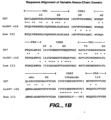
- humanized 2H7 refers to a humanized antibody that binds human CD20, or an antigen-binding fragment thereof, wherein the antibody is effective to deplete primate B cells in vivo, the antibody comprising in the H chain variable region (V H ) thereof at least a CDR H3 sequence of SEQ ID NO:12 ( Fig. 1B ) from an anti-human CD20 antibody and substantially the human consensus framework (FR) residues of the human heavy- chain subgroup III (V H III).
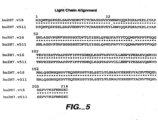
- this antibody further comprises the H chain CDR H1 sequence of SEQ ID NO:10 and CDR H2 sequence of SEQ ID NO:11, and, in some embodiments, further comprises the L chain CDR L1 sequence of SEQ ID NO:4, CDR L2 sequence of SEQ ID NO:5, CDR L3 sequence of SEQ ID NO:6 and substantially the human consensus framework (FR) residues of the human light chain subgroup I (VI), wherein the V H region may be joined to a human IgG chain constant region, wherein the region may be, for example, IgG1 or IgG3.
- such antibody comprises the V H sequence of SEQ ID NO:8 (vl6, as shown in Fig.
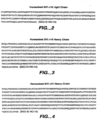
- the antibody is an intact antibody comprising the light and heavy chain amino acid sequences of SEQ ID NOS:13 and 14, respectively, as shown in Figs. 2 and 3 .
- the antibody is 2H7.v31 comprising the light and heavy chain amino acid sequences of SEQ ID NOS: 13 and 15, respectively, as shown in Figs. 2 and 4 .
- the antibody herein may further comprise at least one amino acid substitution in the Fc region that improves ADCC and/or CDC activity, such as one wherein the amino acid substitutions are S298A/E333A/K334A, and in some embodiments, the 2H7.v31 having the heavy chain amino acid sequence of SEQ ID NO:15 (as shown in Fig. 4 ). Any of these antibodies may further comprise at least one amino acid substitution in the Fc region that decreases CDC activity, for example, comprising at least the substitution K322A. See U.S. Patent No. 6,528,624B1 (Idusogie et al .).
- Ocrelizumab refers to the genetically engineered humanized monoclonal antibody directed against the CD20 antigen and comprising (a) a light chain comprising the amino acid sequence of SEQ ID NO: 13 and (b) a heavy chain comprising the amino acid sequence of SEQ ID NO:14, including fragments thereof that retain the ability to bind CD20. Ocrelizumab is available from Genentech.
- an “isolated” antibody is one that has been identified and separated and/or recovered from a component of its natural environment. Contaminant components of its natural environment are materials that would interfere with diagnostic or therapeutic uses for the antibody, and may include enzymes, hormones, and other proteinaceous or non-proteinaceous solutes.
- the antibody will be purified (1) to greater than 95% by weight of antibody as determined by the Lowry method, and in some embodiments, more than 99% by weight, (2) to a degree sufficient to obtain at least 15 residues of N-terminal or internal amino acid sequence by use of a spinning cup sequenator, or (3) to homogeneity by SDS-PAGE under reducing or nonreducing conditions using Coomassie blue or, in some embodiments, silver stain.
- Isolated antibody includes the antibody in situ within recombinant cells since at least one component of the antibody's natural environment will not be present. Ordinarily, however, isolated antibody will be prepared by at least one purification step.
- a “subject” or “patient” herein is a human subject or patient.
- the subject or patient is eligible for treatment for multiple sclerosis.
- such eligible subject or patient is one who is experiencing, has experienced, or is likely to experience, one or more signs, symptoms or other indicators of multiple sclerosis; has been diagnosed with multiple sclerosis, whether, for example, newly diagnosed (with "new onset” MS), previously diagnosed with a new relapse or exacerbation, previously diagnosed and in remission, etc; and/or is at risk for developing multiple sclerosis.
- One suffering from or at risk for suffering from multiple sclerosis may optionally be identified as one who has been screened for elevated levels of CD20-positive B cells in serum, cerebrospinal fluid (CSF) and/or MS lesion(s) and/or is screened for using an assay to detect autoantibodies, assessed qualitatively, and preferably quantitatively.
- autoantibodies associated with multiple sclerosis include anti-myelin basic protein (MBP), anti-myelin oligodendrocytic glycoprotein (MOG), anti-ganglioside and/or anti-neurofilament antibodies.
- MBP myelin basic protein
- MOG anti-myelin oligodendrocytic glycoprotein
- Such autoantibodies may be detected in the subject's serum, cerebrospinal fluid (CSF) and/or MS lesion.
- Elevated autoantibody or B cell level(s) herein level(s) of such autoantibodies or B cells which significantly exceed the level(s) in an individual
- treatment is an approach for obtaining beneficial or desired results including clinical results.
- beneficial or desired clinical results include, but are not limited to, one or more of the following: decreasing one or more symptoms resulting from the disease, diminishing the extent of the disease, stabilizing the disease (e.g ., preventing or delaying the worsening of the disease), delay or slowing the progression of the disease, ameliorating the disease state, decreasing the dose of one or more other medications required to treat the disease, and/or increasing the quality of life.
- delaying the progression of multiple sclerosis means to defer, hinder, slow, retard, stabilize, and/or postpone development of the disease. This delay can be of varying lengths of time, depending on the history of the disease and/or individual being treated.
- “at the time of starting treatment” refers to the time period at or prior to the first exposure to a multiple sclerosis drug, such as an anti-CD20 antibody. In some embodiments, “at the time of starting treatment” is about any of one year, nine months, six months, three months, second months, or one month prior to a multiple sclerosis drug, such as an anti-CD20 antibody. In some embodiments, "at the time of starting treatment” is immediately prior to coincidental with the first exposure to a multiple sclerosis drug, such as an anti-CD20 antibody.
- based upon includes (1) assessing, determining, or measuring the patient characteristics as described herein (and preferably selecting a patient suitable for receiving treatment; and (2) administering the treatment(s) as described herein.
- a "symptom" of MS is any morbid phenomenon or departure from the normal in structure, function, or sensation, experienced by the subject and indicative of MS.
- Multiple sclerosis refers to the chronic and often disabling disease of the central nervous system characterized by the progressive destruction of the myelin.
- MS primary progressive multiple sclerosis
- RRMS relapsing-remitting multiple sclerosis
- SPMS secondary progressive multiple sclerosis
- PRMS progressive relapsing multiple sclerosis
- Progressive multiple sclerosis refers to primary progressive multiple sclerosis (PPMS), secondary progressive multiple sclerosis (SPMS), and progressive relapsing multiple sclerosis (PRMS).
- PPMS primary progressive multiple sclerosis
- SPMS secondary progressive multiple sclerosis
- PRMS progressive relapsing multiple sclerosis
- PPMS Primary progressive multiple sclerosis
- PPMS is the sub-type of MS that is least likely to show inflammatory (gadolinium enhancing) lesions on MRI scans.
- the Primary Progressive form of the disease affects between 10 and 15% of all people with multiple sclerosis.
- PPMS may be defined according to the criteria in McDonald et al. Ann Neurol 50:121-7 (2001 ).
- the subject with PPMS treated herein is usually one with probable or definitive diagnosis of PPMS.
- RRMS Relapsing-remitting multiple sclerosis
- RRMS Relapsing-remitting multiple sclerosis
- RRMS Relapses
- the relapses are followed by periods of remission, during which time the person fully or partially recovers from the deficits acquired during the relapse.
- Relapses can last for days, weeks or months and recovery can be slow and gradual or almost instantaneous.
- the vast majority of people presenting with MS are first diagnosed with RRMS. This is typically when they are in their twenties or thirties, though diagnoses much earlier or later are known. Twice as many women as men present with this sub-type of MS.
- myelin a protective insulating sheath around the nerve fibers (neurons) in the white matter regions of the central nervous system (CNS)
- CNS central nervous system
- an oligodendrocyte sponsors remyelination - a process whereby the myelin sheath around the axon may be repaired. It is this remyelination that may be responsible for the remission.
- Approximately 50% of patients with RRMS convert to SPMS within 10 years of disease onset. After 30 years, this figure rises to 90%. At any one time, the relapsing-remitting form of the disease accounts around 55% of all people with MS.
- SPMS Secondary progressive multiple sclerosis
- PRMS Progressive relapsing multiple sclerosis
- PRMS is characterized by a steady progression of clinical neurological damage with superimposed relapses and remissions. There is significant recovery immediately following a relapse but between relapses there is a gradual worsening of symptoms. PRMS affects around 5% of all people with multiple sclerosis. Some neurologists believe PRMS is a variant of PPMS.
- an effective amount refers to an amount of the antibody (or other drug) that is effective for ameliorating or treating the multiple sclerosis. Such an effective amount will generally result in an improvement in the signs, symptoms or other indicators of MS, such as reducing relapse rate, preventing disability, reducing number and/or volume of brain MRI lesions, improving timed 25-foot walk, slow or delay the progression of the disease such as extending the time to disease progression (e.g . using Expanded Disability Status Scale, EDSS), etc.
- Antibody exposure refers to contact with or exposure to the antibody herein in one or more doses administered over a period of time of about 1-20 days. The doses may be given at one time or at fixed or irregular time intervals over this period of exposure. Initial and later (e.g. second or third) antibody exposures are separated in time from each other as described in detail herein.
- immunosuppressive agent refers to substances that act to suppress or mask the immune system of the mammal being treated herein. This would include substances that suppress cytokine production, down-regulate or suppress self-antigen expression, or mask the MHC antigens. Examples of such agents include 2-amino-6-aryl-5-substituted pyrimidines ( see U.S. Pat. No.
- nonsteroidal anti-inflammatory drugs NSAIDs
- ganciclovir tacrolimus, glucocorticoids such as cortisol or aldosterone
- anti-inflammatory agents such as a cyclooxygenase inhibitor, a 5-lipoxygenase inhibitor, or a leukotriene receptor antagonist
- purine antagonists such as azathioprine or mycophenolate mofetil (MMF)
- alkylating agents such as cyclophosphamide; bromocryptine; danazol; dapsone; glutaraldehyde (which masks the MHC antigens, as described in U.S. Pat. No.
- antiidiotypic antibodies for MHC antigens and MHC fragments include cyclosporin A; steroids such as corticosteroids or glucocorticosteroids or glucocorticoid analogs, e.g ., prednisone, methylprednisolone, and dexamethasone; dihydrofolate reductase inhibitors such as methotrexate (oral or subcutaneous); hydroxycloroquine; sulfasalazine; leflunomide; cytokine or cytokine receptor antagonists including anti-interferon-alpha, -beta, or -gamma antibodies, anti-tumor necrosis factor-alpha antibodies (infliximab or adalimumab), anti-TNF-alpha immunoahesin (etanercept), anti-tumor necrosis factor-beta antibodies, anti-interleukin-2 antibodies and anti-IL-2 receptor antibodies;
- steroids such as cor
- T-cell receptor fragments Offner et al., Science, 251: 430-432 (1991 ); WO 90/11294 ; Ianeway, Nature, 341: 482 (1989 ); and WO 91/01133 ); and T cell receptor antibodies ( EP 340,109 ) such as T10B9.
- cytotoxic agent refers to a substance that inhibits or prevents the function of cells and/or causes destruction of cells.
- the term is intended to include radioactive isotopes (e.g. At 211 , I 131 , I 125 , Y 90 , Re 186 , Re 188 , Sm 153 , Bi 2l2 , P 32 and radioactive isotopes of Lu), chemotherapeutic agents, and toxins such as small molecule toxins or enzymatically active toxins of bacterial, fungal, plant or animal origin, or fragments thereof.
- radioactive isotopes e.g. At 211 , I 131 , I 125 , Y 90 , Re 186 , Re 188 , Sm 153 , Bi 2l2 , P 32 and radioactive isotopes of Lu
- chemotherapeutic agents e.g. At 211 , I 131 , I 125 , Y 90 , Re 186 , Re
- chemotherapeutic agent is a chemical compound useful in the treatment of cancer.
- examples of chemotherapeutic agents include alkylating agents such as thiotepa and CYTOXAN ® cyclosphosphamide; alkyl sulfonates such as busulfan, improsulfan and piposulfan; aziridines such as benzodopa, carboquone, meturedopa, and uredopa; ethylenimines and methylamelamines including altretamine, triethylenemelamine, trietylenephosphoramide, triethiylenethiophosphoramide and trimethylolomelamine; acetogenins (especially bullatacin and bullatacinone); a camptothecin (including the synthetic analogue topotecan); bryostatin; callystatin; CC-1065 (including its adozelesin, carzelesin and bizelesin synthetic analogues); cryptophy
- calicheamicin especially calicheamicin gammalI and calicheamicin omegaI1 (see, e.g., Agnew, Chem Intl. Ed. Engl., 33: 183-186 (1994 )); dynemicin, including dynemicin A; bisphosphonates, such as clodronate; an esperamicin; as well as neocarzinostatin chromophore and related chromoprotein enediyne antiobiotic chromophores), aclacinomysins, actinomycin, authramycin, azaserine, bleomycins, cactinomycin, carabicin, carminomycin, carzinophilin, chromomycinis, dactinomycin, daunorubicin, detorubicin, 6-diazo-5-oxo-L-norleucine, ADRIAMYCIN ® doxorubicin (including
- anti-hormonal agents that act to regulate or inhibit hormone action on tumors
- SERMs selective estrogen receptor modulators
- tamoxifen including NOLVADEX ® tamoxifen
- raloxifene including NOLVADEX ® tamoxifen
- droloxifene 4-hydroxytamoxifen
- trioxifene keoxifene
- LY117018 onapristone
- aromatase inhibitors that inhibit the enzyme aromatase, which regulates estrogen production in the adrenal glands, such as, for example, 4(5)-imidazoles, amino glutethimide, MEGASE ® megestrol acetate, AROMASIN ® exemestane, formestanie, fadrozole, REVISOR ® vorozole, FEMARA ® letrozole, and ARIMIDEX ® anastrozole
- antiandrogens such as flutamide
- cytokine is a generic term for proteins released by one cell population that act on another cell as intercellular mediators.
- cytokines are lymphokines, monokines; interleukins (ILs) such as IL-1, IL-1a, IL-2, IL-3, IL-4, IL-5, IL-6, IL-7, IL-8, IL-9, IL-11, IL-12, IL-15; a tumor necrosis factor such as TNF-a or TNF- ⁇ ; and other polypeptide factors including LIF and kit ligand (KL).
- cytokine includes proteins from natural sources or from recombinant cell culture and biologically active equivalents of the native sequence cytokines, including synthetically produced small-molecule entities and pharmaceutically acceptable derivatives and salts thereof.
- hormone refers to polypeptide hormones, which are generally secreted by glandular organs with ducts. Included among the hormones are, for example, growth hormone such as human growth hormone, N-methionyl human growth hormone, and bovine growth hormone; parathyroid hormone; thyroxine; insulin; proinsulin; relaxin; prorelaxin; glycoprotein hormones such as follicle stimulating hormone (FSH), thyroid stimulating hormone (TSH), and luteinizing hormone (LH); prolactin, placental lactogen, mouse gonadotropin-associated peptide, inhibin; activin; mullerian-inhibiting substance; and thrombopoietin.
- growth hormone such as human growth hormone, N-methionyl human growth hormone, and bovine growth hormone
- parathyroid hormone thyroxine
- insulin proinsulin
- relaxin prorelaxin
- glycoprotein hormones such as follicle stimulating hormone (FSH), thyroid stimulating hormone (TSH), and luteinizing
- growth factor refers to proteins that promote growth, and include, for example, hepatic growth factor; fibroblast growth factor; vascular endothelial growth factor; nerve growth factors such as NGF- ⁇ ; platelet-derived growth factor; transforming growth factors (TGFs) such as TGF-a and TGF-B; insulin-like growth factor-I and -II; erythropoietin (EPO); osteoinductive factors; interferons such as interferon-a, - ⁇ , and - ⁇ ; and colony stimulating factors (CSFs) such as macrophage-CSF (M-CSF); granulocyte-macrophage-CSF (GM-CSF); and granulocyte-CSF (G-CSF).
- TGFs transforming growth factors
- EPO erythropoietin
- CSFs colony stimulating factors
- growth factor includes proteins from natural sources or from recombinant cell culture and biologically active equivalents of the native sequence growth factor, including synthetically produced small-
- integrin refers to a receptor protein that allows cells both to bind to and to respond to the extracellular matrix and is involved in a variety of cellular functions such as wound healing, cell differentiation, homing of tumor cells and apoptosis. They are part of a large family of cell adhesion receptors that are involved in cell-extracellular matrix and cell-cell interactions.
- Functional integrins consist of two transmembrane glycoprotein subunits, called alpha and beta that are non-covalently bound. The alpha subunits all share some homology to each other, as do the beta subunits.
- the receptors always contain one alpha chain and one beta chain.
- integrin includes proteins from natural sources or from recombinant cell culture and biologically active equivalents of the native sequence integrin, including synthetically produced small-molecule entities and pharmaceutically acceptable derivatives and salts thereof.
- integrin antagonists or antibodies examples include an LFA-1 antibody such as Efalizumab (RAPTIVA ® ) commercially available from Genentech; an alpha 4 integrin antibody such as natalizumab (TYSABRI ® ) available from Biogen Idec/Elan Pharmaceuticals, Inc.; diazacyclic phenylalanine derivatives ( WO 2003/89410 ); phenylalanine derivatives ( WO 2003/70709 , WO 2002/28830 , WO 2002/16329 and WO 2003/53926 ); phenylpropionic acid derivatives ( WO 2003/10135 ); enamine derivatives ( WO 2001/79173 ); propanoic acid derivatives ( WO 2000/37444 ); alkanoic acid derivatives ( WO 2000/32575 ); substituted phenyl derivatives ( US Pat.
- LFA-1 antibody such as Efalizumab (RAPTIVA ® ) commercially available from Genentech
- TNF-alpha tumor necrosis factor alpha
- TNF-alpha refers to a human TNF-alpha molecule comprising the amino acid sequence as described in Pennica et al., Nature, 312:721 (1984 ) or Aggarwal et al., JBC, 260:2345 (1985 ).
- TNF-alpha inhibitor herein is an agent that inhibits, to some extent, a biological function of TNF-alpha, generally through binding to TNF-alpha and neutralizing its activity.
- TNF inhibitors specifically contemplated herein are Etanercept (ENBREL ® ), Infliximab (REMICADE ® ) and Adalimumab (HUMIRA TM ).
- DMARDs Disease-modifying anti-rheumatic drugs
- hydroxycloroquine sulfasalazine, methotrexate, leflunomide, etanercept, infliximab (plus oral and subcutaneous methrotrexate), azathioprine, D-penicillamine, Gold (oral), Gold (intramuscular), minocycline, cyclosporine, Staphylococcal protein A immunoadsorption, including salts and derivatives thereof, etc.
- nonsteroidal anti-inflammatory drugs or “NSAIDs” are acetylsalicylic acid, ibuprofen, naproxen, indomethacin, sulindac, tolmetin, including salts and derivatives thereof, etc.
- Corticosteroid refers to any one of several synthetic or naturally occurring substances with the general chemical structure of steroids that mimic or augment the effects of the naturally occurring corticosteroids.
- synthetic corticosteroids include prednisone, prednisolone (including methylprednisolone), dexamethasone, glucocorticoid and betamethasone.
- a "package insert” is used to refer to instructions customarily included in commercial packages of therapeutic products, that contain information about the indications, usage, dosage, administration, contraindications, other therapeutic products to be combined with the packaged product, and/or warnings concerning the use of such therapeutic products, etc.
- label is used herein to refer to information customarily included with commercial packages of pharmaceutical formulations including containers such as vials and package inserts, as well as other types of packaging.
- references to "about” a value or parameter herein includes (and describes) variations that are directed to that value or parameter per se. For example, description referring to "about X” includes description of "X”.'
- the present invention relates to ocrelizumab for use in the treatment of primary progressive multiple sclerosis, wherein treatment is based upon the patient having one or more characteristics selected from the group consisting of (a) an age less than 51 years, (b) one or more gadolinium staining lesions, and (c) a Multiple Sclerosis Severity Score (MSSS) greater than 5 points, wherein an effective amount of ocrelizumab is administered to the patient to provide an initial ocrelizumab exposure of 0.6 grams followed by a second ocrelizumab exposure of 0.6 grams, the second exposure is administered from about 24 weeks from the initial exposure, and each of the ocrelizumab exposures is provided to the patient as two doses of ocrelizumab, wherein the first dose and the second dose of ocrelizumab is 0.3 grams, and wherein the second dose is administered from 13 to 16 days from the time the first dose was administered.
- MSSS Multiple Sclerosis Severity Score
- the patients have one or more characteristics selected from the group consisting of (a) an age less than 51 years and (b) one or more gadolinium staining lesions,
- the patient has more than one characteristic selected from the group consisting of (a) an age less than 51 years, (b) one or more gadolinium staining lesions, and (c) a Multiple Sclerosis Severity Score (MSSS) greater than 5 points.
- the patient has two characteristics selected from the group consisting of (a) an age less than 51 years, (b) one or more gadolinium staining lesions, (c) at least a one point increase in Expanded Disability Status Scale (EDSS) over two years prior to starting treatment, and (d) a Multiple Sclerosis Severity Score (MSSS) greater than 5 points.
- EDSS Expanded Disability Status Scale
- MSSS Multiple Sclerosis Severity Score
- the patient has three characteristics selected from the group consisting of (a) an age less than 51 years, (b) one or more gadolinium staining lesions, and (c) at least a one point increase in EDSS over two years prior to starting treatment. In some embodiments, the patient has (a) an age less than 51 years, (b) one or more gadolinium staining lesions, (c) at least a one point increase in Expanded Disability Status Scale (EDSS) over two years prior to starting treatment, and (d) a Multiple Sclerosis Severity Score (MSSS) greater than 5 points.
- EDSS Expanded Disability Status Scale
- MSSS Multiple Sclerosis Severity Score
- the patient further has evidence of inflammation in a sample.
- Evidence of inflammation is indicated by assessing one or more indicia of inflammation.
- the sample can be any suitable sample to assess inflammation.
- the sample is tissue or fluid.
- the fluid sample is a cerebrospinal fluid sample.
- the evidence of inflammation is indicated by an elevated IgG index.
- the evidence of inflammation is indicated by IgG oligoclonal bands detected by isoelectric focusing.
- the evidence of inflammation is detected by MRI.
- the evidence of inflammation is detected by the presence of Gd-enhancing lesions or T2 lesions. Other methods of assessing evidence of inflammation are known in the art.
- the patient is characterized by a change in EDSS over a period of time.
- the patient and/or patient population is characterized by at least about any of 1 point, 1.25 point, 1.5 point, 1.75 point, 2 point, 2.25 point, 2.5 point, 2.75 point, or 3 point increase in EDSS over two years prior to starting the treatment.
- the increase in EDSS is at least about a 1.5 point increase in EDSS over two years prior to starting treatment.
- the increase in EDSS over two years prior to starting treatment is not attributable to relapse.
- the patient and/or patient population is characterized by having had an EDSS of greater than about 5.0 for less than about any of 5 years, 6 years, 7 years, 8 years, 9 years, 10 years, 11 years, 12 years, 13 years, 14 years, 15 years, 16 years, 17 years, 18 years, 19 years, or 20 years.
- the patient and/or patient population is characterized by having had an EDSS of greater than about 5.0 for less than about 15 years.
- the patient and/or patient population is characterized by having had an EDSS less than or equal to about 5.0 for less than about any of 5 years, 6 years, 7 years, 8 years, 9 years, 10 years, 11 years, 12 years, 13 years, 14 years, or 15 years.
- the patient and/or patient population is characterized by having had an EDSS less than or equal to about 5.0 for less than about 10 years.
- the patient is characterized by having an EDSS of between about any of 1.5 points to 7 points, 1.5 points to 6.5 points, 2 points to 6.5 points, or 3 points to 6.5 points. In some embodiments, the patient is characterized by having an EDSS when starting treatment is between about 3.0 and about 6.5.
- the patient is characterized by having an MSSS of greater than about any of 6, 7, 8, or 9. In some embodiments the patient is characterized by having an MSSS of greater than about 9.
- the patient is characterized by an age. In some embodiments, the patient is characterized by having an age less than about any of 55 years, 54 years, 53 years, 52 years, 51 years, or 50 years. In some embodiments, the patient and/or patient population is characterized by having an age of less than about 51 years.
- the treatment reduces time to confirmed disease progression.
- the confirmed disease progression is an increase in EDSS that is sustained for about any of 4 weeks, 8 weeks, 12 weeks, 16 weeks, 20 weeks, 24 weeks, 28 weeks, or 32 weeks.
- the confirmed disease progression is an increase in EDSS that is sustained for twelve weeks.
- the confirmed disease progression is an increase in EDSS that is sustained for twenty-four weeks.
- the invention described herein may encompass any combination of the embodiments described herein.
- the invention includes ocrelizumab for use as defined in claims, wherein the patient has (a) an age less than about 55 years and (b) one or more gadolinium staining lesions.
- the present invention relates to an anti-CD20 antibody which is ocrelizumab for use in the treatment of primary progressive multiple sclerosis, wherein treatment is based upon the patient having one or more characteristics selected from the group consisting of (a) an age less than 51 years, (b) one or more gadolinium staining lesions, and (c) a Multiple Sclerosis Severity Score (MSSS) greater than 5 points, wherein an effective amount of ocrelizumab is administered to the patient to provide an initial ocrelizumab exposure of 0.6 grams followed by a second ocrelizumab exposure of 0.6 grams, the second exposure is administered from about 24 weeks from the initial exposure, and each of the ocrelizumab exposures is provided to the patient as two doses of ocrelizumab, wherein the first dose and the second dose of ocrelizumab is 0.3 grams, and wherein the second dose is administered from 13 to 16 days from the time the first dose was administered.
- MSSS Multiple Sclerosis Severity
- the second antibody exposure is the next time the patient is treated with the anti-CD20 antibody after the initial antibody exposure, there being no intervening anti-CD20 antibody treatment or exposure between the initial and second exposures.
- the interval between the initial and second or subsequent antibody exposures can be measured from either the first or second dose of the initial antibody exposure, but in some embodiments, from the first dose of the initial antibody exposure.
- the ocrelizumab exposures are provided to the patient as two separate doses of the antibody (i.e., constituting a first and second dose).
- the second dose is administered from 13 to 16 days from the time the first dose was administered, in some embodiments, about 14 days.
- the patient is provided at least about three, at least about four, or at least about five exposures of the antibody, for example, from about 3 to 60 exposures, and more particularly about 3 to 40 exposures, most particularly, about 3 to 20 exposures.
- the use further comprises providing between about one to about three subsequent ocrelizumab exposures. In some embodiments, such exposures are administered at intervals each of approximately 24 weeks
- the patient has never been previously treated with drug(s), such as immunosuppressive agent(s), to treat the multiple sclerosis and/or has never been previously treated with an antibody to a B-cell surface marker (e.g . never previously treated with a CD20 antibody).
- drug(s) such as immunosuppressive agent(s)
- an antibody to a B-cell surface marker e.g . never previously treated with a CD20 antibody
- the antibody is administered by any suitable means, including parenteral, topical, subcutaneous, intraperitoneal, intrapulmonary, intranasal, and/or intralesional administration.
- Parenteral infusions include intramuscular, intravenous, intraarterial, intraperitoneal, or subcutaneous administration.
- Intrathecal administration is also contemplated (see, e.g., US Patent Appln No. 2002/0009444 , Grillo-Lopez, A concerning intrathecal delivery of a CD20 antibody).
- the antibody may suitably be administered by pulse infusion, e.g ., with declining doses of the antibody.
- the dosing is given intravenously, subcutaneously or intrathecally.
- the dosing is given by intravenous infusion(s).
- the CD20 antibody may be the only drug administered to the patient to treat the multiple sclerosis, one may optionally administer a second medicament, such as a cytotoxic agent, chemotherapeutic agent, immunosuppressive agent, cytokine, cytokine antagonist or antibody, growth factor, hormone, integrin, integrin antagonist or antibody (e.g. an LFA-1 antibody such as efalizumab (RAPTIVA ® ) commercially available from Genentech, or an alpha 4 integrin antibody such as natalizumab (TYSABRI ® ) available from Biogen Idec/Elan Pharmaceuticals, Inc) etc, with the antibody that binds a B cell surface marker (e.g. with the CD20 antibody).
- a cytotoxic agent chemotherapeutic agent, immunosuppressive agent, cytokine, cytokine antagonist or antibody
- growth factor hormone
- integrin integrin antagonist or antibody
- an LFA-1 antibody such as efalizumab (RAPTIVA
- the antibody is combined with an interferon class drug such as IFN-beta-1a (REBIF ® and AVONEX ® ) or IFN-beta-lb (BETASERON ® ); an oligopeptide such a glatiramer acetate (COPAXONE ® ); a cytotoxic agent such as mitoxantrone (NOVANTRONE ® ), methotrexate, cyclophosphamide, chlorambucil, azathioprine; intravenous immunoglobulin (gamma globulin); lymphocyte-depleting therapy ( e.g., mitoxantrone, cyclophosphamide, Campath, anti-CD4, cladribine, total body irradiation, bone marrow transplantation); corticosteroid (e.g.
- an interferon class drug such as IFN-beta-1a (REBIF ® and AVONEX ® ) or IFN-be
- methylprednisolone, prednisone, dexamethasone, or glucorticoid including systemic corticosteroid therapy; non-lymphocyte-depleting immunosuppressive therapy (e.g., mycophenolate mofetil (MMF) or cyclosporine); cholesterol-lowering drug of the "statin” class, which includes cerivastatin (BAYCOL ® ), fluvastatin (LESCOL ® ), atorvastatin (LIPITOR ® ), lovastatin (MEVACOR ® ), pravastatin (PRAVACHOL ® ), Simvastatin (ZOCOR ® ); estradiol; testosterone (optionally at elevated dosages; Stuve et al.
- MS e.g., spasticity, incontinence, pain, fatigue
- DMARD disease-modifying anti-rheumatic drug
- NSAID non-steroidal anti-inflammatory drug
- plasmapheresis plasmapheresis
- levothyroxine cyclosporin A
- somatastatin analogue somatastatin analogue
- the second medicament is administered with the initial exposure and/or later exposures of the CD20 antibody, such combined administration includes co-administration, using separate formulations or a single pharmaceutical formulation, and consecutive administration in either order, wherein preferably there is a time period while both (or all) active agents simultaneously exert their biological activities.
- the present application contemplates administration of antibodies by gene therapy.
- Such administration of nucleic acid encoding the antibody is encompassed by the expression administering an "effective amount" of an antibody. See, for example, WO96/07321 published March 14, 1996 concerning the use of gene therapy to generate intracellular antibodies.
- nucleic acid (optionally contained in a vector) into the patient's cells
- in vivo and ex vivo the nucleic acid is injected directly into the patient, usually at the site where the antibody is required.
- ex vivo treatment the patient's cells are removed, the nucleic acid is introduced into these isolated cells and the modified cells are administered to the patient either directly or, for example, encapsulated within porous membranes that are implanted into the patient ( see, e.g. U.S. Patent Nos. 4,892,538 and 5,283,187 ).
- techniques available for introducing nucleic acids into viable cells There are a variety of techniques available for introducing nucleic acids into viable cells.
- the techniques vary depending upon whether the nucleic acid is transferred into cultured cells in vitro, or in vivo in the cells of the intended host.
- Techniques suitable for the transfer of nucleic acid into mammalian cells in vitro include the use of liposomes, electroporation, microinjection, cell fusion, DEAE-dextran, the calcium phosphate precipitation method, etc.
- a commonly used vector for ex vivo delivery of the gene is a retrovirus.
- the in vivo nucleic acid transfer techniques include transfection with viral vectors (such as adenovirus, Herpes simplex I virus, or adeno-associated virus) and lipid-based systems (useful lipids for lipid-mediated transfer of the gene are DOTMA, DOPE and DC-Chol, for example).
- viral vectors such as adenovirus, Herpes simplex I virus, or adeno-associated virus
- lipid-based systems useful lipids for lipid-mediated transfer of the gene are DOTMA, DOPE and DC-Chol, for example.
- an agent that targets the target cells such as an antibody specific for a cell surface membrane protein or the target cell, a ligand for a receptor on the target cell, etc.
- proteins that bind to a cell surface membrane protein associated with endocytosis may be used for targeting and/or to facilitate uptake, e.g.
- capsid proteins or fragments thereof tropic for a particular cell type antibodies for proteins that undergo internalization in cycling, and proteins that target intracellular localization and enhance intracellular half-life.
- the technique of receptor-mediated endocytosis is described, for example, by Wu et al., J. Biol. Chem. 262:4429-4432 (1987 ); and Wagner et al., Proc. Natl. Acad. Sci. USA 87:3410-3414 (1990 ).
- For review of the currently known gene marking and gene therapy protocols see Anderson et al., Science 256:808-813 (1992 ). See also WO 93/25673 and the references cited therein.
- Therapeutic formulations of the antibody can be prepared for storage by mixing the antibody having the desired degree of purity with optional pharmaceutically acceptable carriers, excipients or stabilizers ( Remington's Pharmaceutical Sciences 16th edition, Osol, A. Ed. (1980 )), in the form of lyophilized formulations or aqueous solutions.
- Acceptable carriers, excipients, or stabilizers are nontoxic to recipients at the dosages and concentrations employed, and include buffers such as phosphate, citrate, and other organic acids; antioxidants including ascorbic acid and methionine; preservatives (such as octadecyldimethylbenzyl ammonium chloride; hexamethonium chloride; benzalkonium chloride, benzethonium chloride; phenol, butyl or benzyl alcohol; alkyl parabens such as methyl or propyl paraben; catechol; resorcinol; cyclohexanol; 3-pentanol; and m-cresol); low molecular weight (less than about 10 residues) polypeptides; proteins, such as serum albumin, gelatin, or immunoglobulins; hydrophilic polymers such as polyvinylpyrrolidone; amino acids such as glycine, glutamine, asparagine, histidine,
- anti-CD20 antibody formulations are described in WO98/56418 .
- Lyophilized formulations adapted for subcutaneous administration are described in US Pat No. 6,267,958 (Andya et al. ). Such lyophilized formulations may be reconstituted with a suitable diluent to a high protein concentration and the reconstituted formulation may be administered subcutaneously to the mammal to be treated herein.
- Crystalized forms of the antibody or antibody are also contemplated. See, for example, US 2002/0136719A1 (Shenoy et al .).
- the formulation herein may also contain more than one active compound as necessary for the particular indication being treated, in some embodiments, those with complementary activities that do not adversely affect each other.
- a cytotoxic agent chemotherapeutic agent
- immunosuppressive agent cytokine
- cytokine antagonist or antibody growth factor
- hormone integrin
- integrin antagonist or antibody e.g.
- an LFA-1 antibody such as efalizumab/RAPTIVA commercially available from Genentech, or an alpha 4 integrin antibody such as natalizumab/TYSABRI ® ) available from Biogen Idec/Elan Pharmaceuticals, Inc.
- interferon class drug such as IFN-beta-1a (REBIF ® and AVONEX ® ) or IFN-beta-lb (BETASERON ® ); an oligopeptide such a glatiramer acetate (COPAXONE ® ); a cytotoxic agent such as mitoxantrone (NOVANTRONE ® ), methotrexate, cyclophosphamide, chlorambucil, or azathioprine; intravenous immunoglobulin (gamma globulin); lymphocyte-depleting drug (e.g.
- non-lymphocyte-depleting immunosuppressive drug e.g., mycophenolate mofetil (MMF) or cyclosporine
- MMF mycophenolate mofetil
- cholesterol-lowering drug of the "statin" class estradiol
- estradiol testosterone
- hormone replacement therapy drug that treats symptoms secondary or related to MS (e.g., spasticity, incontinence, pain, fatigue)
- TNF inhibitor disease-modifying anti-rheumatic drug (DMARD); non-steroidal anti-inflammatory drug (NSAID); corticosteroid (e.g.
- methylprednisolone, prednisone, dexamethasone, or glucorticoid levothyroxine; cyclosporin A; somatastatin analogue; cytokine antagonist; anti-metabolite; immunosuppressive agent; integrin antagonist or antibody (e.g. an LFA-1 antibody, such as efalizumab or an alpha 4 integrin antibody such as natalizumab); or another B-cell surface antagonist/antibody; etc in the formulation.
- integrin antagonist or antibody e.g. an LFA-1 antibody, such as efalizumab or an alpha 4 integrin antibody such as natalizumab
- another B-cell surface antagonist/antibody etc in the formulation.
- the type and effective amounts of such other agents depend, for example, on the amount of antibody present in the formulation, the type of multiple sclerosis being treated, and clinical parameters of the patients. These are generally used in the same dosages and with administration routes as used hereinbefore or
- the active ingredients may also be entrapped in microcapsules prepared, for example, by coacervation techniques or by interfacial polymerization, for example, hydroxymethylcellulose or gelatin-microcapsules and poly-(methylmethacylate) microcapsules, respectively, in colloidal drug delivery systems (for example, liposomes, albumin microspheres, microemulsions, nano-particles and nanocapsules) or in macroemulsions.
- colloidal drug delivery systems for example, liposomes, albumin microspheres, microemulsions, nano-particles and nanocapsules
- Sustained-release preparations may be prepared. Suitable examples of sustained-release preparations include semipermeable matrices of solid hydrophobic polymers containing the antibody, which matrices are in the form of shaped articles, e.g . films, or microcapsules. Examples of sustained-release matrices include polyesters, hydrogels (for example, poly(2-hydroxyethyl-methacrylate), or poly(vinylalcohol)), polylactides ( U.S. Pat. No.
- copolymers of L-glutamic acid and ⁇ ethyl-L-glutamate copolymers of L-glutamic acid and ⁇ ethyl-L-glutamate, non-degradable ethylene-vinyl acetate, degradable lactic acid-glycolic acid copolymers such as the LUPRON DEPOT TM (injectable microspheres composed of lactic acid-glycolic acid copolymer and leuprolide acetate), and poly-D-(-)-3-hydroxybutyric acid.
- LUPRON DEPOT TM injectable microspheres composed of lactic acid-glycolic acid copolymer and leuprolide acetate
- poly-D-(-)-3-hydroxybutyric acid poly-D-(-)-3-hydroxybutyric acid.
- the formulations to be used for in vivo administration must be sterile. This is readily accomplished by filtration through sterile filtration membranes.
- the formulation comprises one or more of the group consisting of a histidine buffer, trehalose, sucrose, and polysorbate 20.
- the histidine buffer is a histidine-acetate buffer, pH 6.0. Examples of formulations suitable for the administration of the anti-CD20 antibody are found in Andya et al., US2006/0088523 .
- anti-CD20 antibody formulations are described in Andya et al., US2006/0088523 and WO98/56418 .
- formulation is a liquid multidose formulation comprising the anti-CD20 antibody at 40 mg/mL, 25 mM acetate, 150 mM trehalose, 0.9% benzyl alcohol, 0.02% polysorbate 20 at pH 5.0 that has a minimum shelf life of two years storage at 2-8°C.
- anti-CD20 formulation of interest comprises 10mg/mL antibody in 9.0 mg/mL sodium chloride, 7.35 mg/mL sodium citrate dihydrate, 0.7mg/mL polysorbate 80, and Sterile Water for Injection, pH 6.5.
- the anti-CD20 antibody is in an aqueous pharmaceutical formulation comprising 10-30 mM sodium acetate from about pH 4.8 to about pH 5.5, preferably at pH5.5, polysorbate as a surfactant in a an amount of about 0.01-0.1% v/v, trehalose at an amount of about 2-10% w/v, and benzyl alcohol as a preservative ( U.S. 6,171,586 ).
- Lyophilized formulations adapted for subcutaneous administration are described in WO97/04801 , Such lyophilized formulations may be reconstituted with a suitable diluent to a high protein concentration and the reconstituted formulation may be administered subcutaneously to the mammal to be treated herein.
- the humanized 2H7 variants formulation is antibody at 12-14 mg/mL in 10 mM histidine, 6% sucrose, 0.02% polysorbate 20, pH 5.8.
- 2H7 variants and in particular 2H7.v16 is formulated at 20mg/mL antibody in 10mM histidine sulfate, 60mg/ml sucrose., 0.2 mg/ml polysorbate 20, and Sterile Water for Injection, at pH5.8.
- one IV formulation of humanized 2H7 v16 is: 30mg/ml antibody in 20mM sodium acetate, 4% trehalose dihydrate, 0.02% polysorbate 20 (Tween 20 TM ), pH 5.3.
- the humanized 2H7.v511 variant formulation is 15-30mg/ml antibody, preferably 20mg/mL antibody, in 10mM histidine sulfate, 60mg/ml sucrose (6%), 0.2 mg/ml polysorbate 20 (0.02%), and Sterile Water for Injection, at pH5.8.
- the formulation for 2H7 variants and in particular 2H7.v511 is 20 mg/ml 2H7, 20 mM sodium acetate, 4% trehalose dihydrate, 0.02% polysorbate 20, pH 5.5, for intravenous administration.
- 2H7.v 114 formulation is antibody at 15-25 mg/ml, preferably 20mg/ml, in 20mM Sodium Acetate, 240mM (8%) trehalose dihydrate, 0.02% Polysorbate 20, pH 5.3.
- Example 1 A Phase II Study of Ocrelizumab in Relapsing-Remitting Multiple Sclerosis (RRMS)
- MRI Magnetic Resonance Imaging
- RRMS Relapsing-Remitting Multiple Sclerosis
- the two ocrelizumab dose regimens under investigation are as follows: 1) ocrelizumab 1000 mg dose regimen: consisting of a dual infusion of 1000 mg for the first treatment cycle followed by single infusions of 1000 mg for the subsequent treatment cycles and 2) ocrelizumab 600 mg dose regimen: consisting of a dual infusion of 300 mg for the first treatment cycle followed by single infusions of 600 mg for the subsequent treatment cycles.
- Eligible patients are randomized (1:1:1:1) into one of four treatment groups A, B, C or D as described in Figure 7 .
- the overview of the study design is illustrated in Figure 7 .
- Group A (ocrelizumab 1000 mg): Two intravenous (i.v.) infusions of ocrelizumab each of 1000 mg separated by 14 days for the 1st treatment cycle. Patients then receive the maintenance dose regimen, i.e., a single infusion of 1000 mg for every subsequent 24-week treatment cycle. Subsequently, in order to maintain the study double-blind during the 2nd treatment cycle, patients receive two infusions separated by 14 days, the first infusion is ocrelizumab 1000 mg and the second infusion placebo. In the 3rd and 4th treatment cycles, patients are treated with a single 1000 mg infusion, without a second placebo infusion, in a double-blind manner until a preferred dose is chosen on the basis of the primary analysis.
- Group B (ocrelizumab 600 mg): Two i.v. infusions of ocrelizumab each of 300 mg separated by 14 days for the 1st treatment cycle. Patients then receive the maintenance dose regimen, i.e ., a single infusion of 600 mg for every subsequent 24-week treatment cycle. Subsequently, in order to maintain the study double-blind during the 2nd treatment cycle, patients receive two infusions separated by 14 days, the first infusion is ocrelizumab 600 mg and the second infusion placebo. In the 3rd and 4th treatment cycles, patients are treated with a single 600 mg infusion, without a second placebo infusion in a double-blind manner until a preferred dose is chosen on the basis of the primary analysis.
- Group C Two i.v. infusions of placebo separated by 14 days for the 1st treatment cycle. Thereafter, patients are placed on the 600 mg dose regimen of ocrelizumab starting with two double-blind i.v. infusions of ocrelizumab 300 mg separated by 14 days at the start of the 2nd treatment cycle. Patients then receive the maintenance dose regimen, i.e., a single infusion of 600 mg administered in a double-blind manner for the 3rd and 4th treatment cycles, until a preferred dose is chosen on the basis of the primary analysis.
- the maintenance dose regimen i.e., a single infusion of 600 mg administered in a double-blind manner for the 3rd and 4th treatment cycles, until a preferred dose is chosen on the basis of the primary analysis.
- Group D Avonex 30 ⁇ g intra-muscular (i.m.) weekly for the 1st treatment cycle. Thereafter, patients are offered, on a voluntary and open label basis, the 600 mg dose regimen of ocrelizumab starting with two i.v. infusions of ocrelizumab 300 mg separated by 14 days at the start of the 2nd treatment cycle. Patients in the 3rd and 4th treatment cycles are treated with a single 600 mg infusion until a preferred dose is chosen on the basis of the primary analysis.
- the first administration of study medication whether an i.v. infusion (ocrelizumab or placebo) or the first i.m. injection of Avonex will define the start of the Treatment Period (Day 1). All patients also receive an i.v. infusion of methylprednisolone 100 mg on study day 1 and with each subsequent ocrelizumab or placebo infusion or, for patients receiving Avonex (Group D) according to the time points required for the ocrelizumab infusions.
- 1st cycle infusion visits Visits 2 and 3, Day 1 and Week 2, respectively
- visits occur at Week 4 and every 4 weeks thereafter for the first 24 weeks.
- 2nd cycle infusion visits Visits 9 and 10, Week 24 and 26, respectively
- visits occur at Week 36 and every 12 weeks thereafter through the end of the Treatment and Follow-up Periods. All effort should be made to schedule the visits within the provided windows. Additional unscheduled visits for the assessment of potential relapses, new neurological symptoms or safety events may occur at any time.
- the primary objective in this study is to investigate the effect of ocrelizumab given as two dose regimens of 600 or 1000 mg intravenously ( see Figure 7 ) on the total number of gadolinium-enhancing T1 lesions observed on MRI scans of the brain at weeks 12, 16, 20 and 24 as compared with placebo.
- the secondary objectives of this study are to evaluate the efficacy and safety of ocrelizumab compared with placebo, as reflected by the following: the annualized protocol defined relapse rate by Week 24; proportion of patients who remain relapse-free by Week 24 (protocol defined relapses); the total number of gadolinium-enhancing T1 lesions observed on MRI scans of the brain at Weeks 4, 8, 12, 16, 20 and 24; the total number of new and/or persisting gadolinium-enhancing T1 lesions on MRI scans of the brain at Weeks 4, 8, 12, 16, 20 and 24; change in total volume of T2 lesions on MRI scans of the brain from baseline to Week 24, to evaluate the safety and tolerability of two dose regimens of ocrelizumab in patients with RRMS as compared with placebo and Avonex at Week 24 and the overall safety of ocrelizumab administered for up to 96 weeks, and to investigate the pharmacokinetics and other pharmacodynamic study endpoints of ocrelizumab.
- a relapse is defined as the occurrence of new or worsening neurological symptoms attributable to MS and immediately preceded by a relatively stable or improving neurological state of least 30 days. Symptoms must persist for >24 hours and should not be attributable to confounding clinical factors (e.g. , fever, infection, injury, adverse reactions to concomitant medications). The new or worsening neurological symptoms must be accompanied by objective neurological worsening consistent with an increase of at least half a step on the EDSS, or 2 points on one of the appropriate Functional System Scores (FSS), or 1 point on two or more of the appropriate FSS. The change must affect the selected FSS (i.e., pyramidal, gait, cerebellar, brainstem, sensory, or visual). Sensory changes, episodic spasms, fatigue, mood change or bladder or bowel urgency or incontinence do not suffice to establish a relapse. The examining investigator confirms those relapses that adhere to the above criteria.
- FSS Functional System Scores
- the exploratory objectives in this study will include, but may not be limited to: change in brain volume on MRI scans of the brain from the baseline scan to Week 12; change in brain volume on MRI scans of the brain from Week 12 to Week 96 in a subgroup of patients receiving ocrelizumab; the total number of new and/or enlarging T2 lesions observed on MRI scans of the brain at Weeks 4, 8, 12, 16, 20 and 24; the proportion of patients who remain free of new gadolinium-enhancing T1 lesions by Week 24; time to first new gadolinium-enhancing T1 lesions developing over 24 weeks; to evaluate the treatment withdrawal effect by means of the total number of gadolinium-enhancing T1 lesions 48 weeks after receiving up to 4 treatment cycles of ocrelizumab in a subgroup of patients; proportion of patients who remain free from relapses (clinical and protocol-defined relapses) during each treatment cycle and at Weeks 48 and 96; proportion of patients requiring systemic methylprednisolone treatment for an MS
- Avonex to explore the correlation of polymorphic variants in genes associated with RRMS susceptibility and ocrelizumab activity and therapeutic response to ocrelizumab in RRMS patients; to explore the relationship between circulating biomarkers associated with RRMS susceptibility and ocrelizumab activity and therapeutic response to ocrelizumab treatment in RRMS patients; change in the Modified Fatigue Impact Scale (MFIS) from baseline to Weeks 24 and 48; change in the Fatigue Scale for Motor and Cognitive Functions (FSMC) from baseline to Weeks 24 and 48; change in the proportion of patients who moved from "severe” to "moderate” and from “moderate” to “mild” fatigue on the FSMC, comparing baseline to Weeks 24 and 48; change in the Center for Epidemiological Studies-Depression Scale (CES-D) from baseline to Weeks 24 and 48; and change in the proportion of patients who moved from a state of greater depressive symptomatology to a state of less depressive symptomatology on
- MRI central nervous system
- Brain MRI scans are only obtained at screening in some patients ( see Secondary Endpoints) and in all patients at baseline and at four-week intervals between baseline and week 24.
- a brain MRI scan is performed at weeks 96 (Visit 16) and 48 weeks later, i.e., week 144.
- the MRI includes the acquisition of the following scans at each time point: T2-weighted MRI scan, T1-weighted MRI scan (without gadolinium-enhancement), and T1-weighted MRI scan (with gadolinium-enhancement).
- Disease progression is considered sustained when the increase in the EDSS is confirmed at a regularly scheduled visit at least 12 weeks after the initial documentation of the progression.
- An alternative definition of sustained disability progression requires that the increase in EDSS be confirmed at least 24 weeks after the initial documentation of the progression.
- the EDSS is based on a standard neurological examination; the seven categories of the EDSS representing functional systems (pyramidal, cerebellar, brainstem, sensory, bowel and bladder, visual, and cerebral and/or mental, plus "other") are rated and scored (collectively, functional system scores or FSS). Each score of the FSS is an ordinal clinical rating scale ranging from 0 to 5 or 6. These ratings are then used in conjunction with observations and information concerning ambulation and use of assistive devices to determine the EDSS score.
- the EDSS is a disability scale that ranges in 0.5-point steps from 0 (normal) to 10 (death).
- Example 2 A Phase II / III Study of Rituximab in Primary Progressive Multiple Sclerosis (PPMS)
- rituximab commercially available from Genentech, was formulated for i.v. administration as a sterile product in 9.0 mg/ml sodium chloride, 0.7 mg/ml polysorbate 80, 7.35 mg/ml sodium citrate dehydrate, and sterile water for injection (pH 6.5).
- Each course of study drug consisted of two i.v. infusions (separated by 14 days) of 1000 mg rituximab or placebo. Subjects received the first course of treatment at Days 1 and 15 and received additional courses at Weeks 24, 48, and 72.
- Randomization was stratified according to study site; baseline disease severity defined by EDSS ( ⁇ 4.0, > 4.0). Baseline EDSS is summarized in Table 5. As a result of the dynamic randomization, the percentage of subjects in each treatment group was similar at all levels of the stratification factors. Table 5: Baseline Stratification Factors, Disease Severity Intent-to-Treat Subjects.
- the two treatment groups were similar in other baseline disease severity measures: EDSS, Kurtzke Functional System Scores, the Multiple Sclerosis Functional Composite Scale (MSFCS) score and the MSFCS components (Timed 25-Foot Walk, 9-Hole Peg Test, and PASAT-3).
- etiology e.g. , fever, concurrent illness, MS relapse or exacerbation, or concomitant medication.
- Secondary efficacy endpoints included change from baseline to Week 96 in the total volume of T2 lesions and change from baseline to Week 96 in the brain volume.
- a Hochberg-Bonferroni procedure was used to control the type I error rate in testing these two secondary endpoints.
- Table 7 Change in Brain Volume from Baseline to Week 96.
- Subgroup analysis for the primary endpoints included time to confirmed disease progression according to the following demographic and baseline disease characteristics: sites, age, gender, race, prior MS therapies, baseline EDSS, duration since MS symptom onset and baseline gadolinium (Gd) lesion, and baseline Multiple Sclerosis Severity Score (MSSS) (an index of how fast the patient progressed; see Roxburgh et al. Neurology 64; 1144-1151 (2005 )).
- Gd gadolinium
- MSSS Multiple Sclerosis Severity Score
- Example 3 A Phase III Study of Ocrelizumab in Progressive Multiple Sclerosis
- This study consists of the following three periods that apply to all patients: a screening period, a treatment period and a treatment free follow up period.
- drug treatment 300 mg ocrelizumab or placebo infusion ⁇ 2
- patients are dosed (600 mg ocrelizumab single infusion) every 24 weeks until the last patient enrolled receives his/her last course of treatment to be administered at Week 96.
- analgesic/antipyretic such as acetaminophen/paracetamol (1 grams) and an i.v. or oral antihistamine (such as diphenhydramine 50 mg), and 100mg methylprednisolone intravenously, or equivalents, to reduce the incidence of potential infusion reactions.
- analgesic/antipyretic such as acetaminophen/paracetamol (1 grams) and an i.v. or oral antihistamine (such as diphenhydramine 50 mg), and 100mg methylprednisolone intravenously, or equivalents, to reduce the incidence of potential infusion reactions.
- CCAE Common Terminology for Adverse Events
- bronchodilators may be indicated.
- the target population for this study includes patients with progressive MS with or without a history of superimposed relapses.
- Patients with progressive MS eligible for this study are characterized by a diagnosis in accordance with the revised McDonald criteria (2005) and a period of 6 months or greater of documented irreversible loss of neurological function in the absence of relapses.
- Patients are selected with evidence of active disease and higher risk for more rapid disability progression, using criteria identified as potential risk factors in previous clinical trials with progressive MS patients. These factors include younger age, evidence of inflammation in the cerebrospinal fluid (CSF) (oligoclonal bands or elevated IgG index), contrast enhancing lesions on brain MRI, high relapse activity superimposed on non-relapse related progression, and more rapid historical accumulation of disability.
- CSF cerebrospinal fluid
- Inclusion Criteria include:
- Exclusion criteria include:
- the primary efficacy endpoint is the time to confirmed disease progression.
- the EDSS is based on a standard neurological examination; the seven categories of the EDSS representing functional systems (pyramidal, cerebellar, brainstem, sensory, bowel and bladder, visual, and cerebral and/or mental, plus "other") are rated and scored (collectively, functional system scores or FSS). Each score of the FSS is an ordinal clinical rating scale ranging from 0 to 5 or 6. These ratings are then used in conjunction with observations and information concerning ambulation and use of assistive devices to determine the EDSS score.
- the EDSS is a disability scale that ranges in 0.5-point steps from 0 (normal) to 10 (death).
- relapses Patients are evaluated for relapses by the treating investigator at each visit throughout the study and, if necessary, at unscheduled visits to confirm relapses occurring between the visits.
- the relapse is defined as the occurrence of new or worsening neurological symptoms attributable to MS and immediately preceded by a relatively stable or improving neurological state of least 30 days. Symptoms must persist for >24 hours and should not be attributable to confounding clinical factors (e.g ., fever, infection, injury, adverse reactions to concomitant medications).
- the new or worsening neurological symptoms must be accompanied by objective neurological worsening consistent with an increase of at least half a step on the EDSS, or 2 points on one of the appropriate FSS, or 1 point on two or more of the appropriate FSS.
- the change must affect the selected FSS (i.e ., pyramidal, ambulation, cerebellar, brainstem, sensory, or visual). Episodic spasms, sexual dysfunction, fatigue, mood change or bladder or bowel urgency or incontinence do not suffice to establish a relapse.
- Magnetic resonance imaging of the brain and cervical spinal cord are obtained at multiple time points during this study, including at baseline.
- the brain MRI includes the acquisition of the following scans at each time point: T2-weighted MRI scan and T1-weighted MRI scan (without gadolinium-enhancement).
- Example 4 A Phase III Study of Ocrelizumab in Primary Progressive Multiple Sclerosis
- a Phase III, randomized, double-blind, parallel-group, multicenter study to evaluate the safety and efficacy of one of two dose regimens of ocrelizumab as compared with placebo in adults with primary progressive MS is performed.
- the two ocrelizumab dose regimens under investigation are as follows: 1) ocrelizumab 1000 mg dose regimen: consisting of a dual infusion of 1000 mg for the first treatment cycle followed by single infusions of 1000 mg for the subsequent treatment cycles and 2) ocrelizumab 600 mg dose regimen: consisting of a dual infusion of 300 mg for the first treatment cycle followed by single infusions of 600 mg for the subsequent treatment cycles.
- a total of 630 primary progressive MS patients are enrolled and assigned (2:1 randomization) to either ocrelizumab arm or placebo arm stratified by site and type of multiple sclerosis.
- This study consists of the following three periods that apply to all patients: a screening period, a treatment period and a safety follow up period.
- drug treatment ocrelizumab or placebo infusion ⁇ 2
- days 1 and 15 are administered on Days 1 and 15.
- patients are dosed (ocrelizumab or placebo single infusion) every 24 weeks until the last patient enrolled receives his/her last course of treatment to be administered at Week 96.
- analgesic/antipyretic such as acetaminophen/paracetamol (1 grams) and an i.v. or oral antihistamine (such as diphenhydramine 50 mg), and 100mg methylprednisolone intravenously, or equivalents, to reduce the incidence of potential infusion reactions.
- analgesic/antipyretic such as acetaminophen/paracetamol (1 grams) and an i.v. or oral antihistamine (such as diphenhydramine 50 mg), and 100mg methylprednisolone intravenously, or equivalents, to reduce the incidence of potential infusion reactions.
- CCAE Common Terminology for Adverse Events
- bronchodilators may be indicated.
- the target population for this study includes patients with primary progressive MS.
- Patients with primary progressive MS eligible for this study are characterized by a diagnosis in accordance with the revised McDonald criteria (2005).
- Patients are selected with evidence of active disease and higher risk for more rapid disability progression, using criteria identified as potential risk factors in previous clinical trials with progressive MS patients. These factors include younger age, evidence of inflammation in the cerebrospinal fluid (CSF) (oligoclonal bands or elevated IgG index), and more rapid historical accumulation of disability.
- CSF cerebrospinal fluid
- Inclusion Criteria include:
- Exclusion criteria include:
- the primary efficacy endpoint is the time to confirmed disease progression.
- the EDSS is based on a standard neurological examination; the seven categories of the EDSS representing functional systems (pyramidal, cerebellar, brainstem, sensory, bowel and bladder, visual, and cerebral and/or mental, plus "other") are rated and scored (collectively, functional system scores or FSS). Each score of the FSS is an ordinal clinical rating scale ranging from 0 to 5 or 6. These ratings are then used in conjunction with observations and information concerning ambulation and use of assistive devices to determine the EDSS score.
- the EDSS is a disability scale that ranges in 0.5-point steps from 0 (normal) to 10 (death).
- relapses Patients are evaluated for relapses by the treating investigator at each visit throughout the study and, if necessary, at unscheduled visits to confirm relapses occurring between the visits.
- the relapse is defined as the occurrence of new or worsening neurological symptoms attributable to MS and immediately preceded by a relatively stable or improving neurological state of least 30 days. Symptoms must persist for >24 hours and should not be attributable to confounding clinical factors (e.g. , fever, infection, injury, adverse reactions to concomitant medications).
- the new or worsening neurological symptoms must be accompanied by objective neurological worsening consistent with an increase of at least half a step on the EDSS, or 2 points on one of the appropriate FSS, or 1 point on two or more of the appropriate FSS.
- the change must affect the selected FSS (i.e ., pyramidal, ambulation, cerebellar, brainstem, sensory, or visual). Episodic spasms, sexual dysfunction, fatigue, mood change or bladder or bowel urgency or incontinence do not suffice to establish a relapse.
- Magnetic resonance imaging of the brain and cervical spinal cord are obtained at multiple time points during this study, including at baseline.
- the brain MRI includes the acquisition of the following scans at each time point: T2-weighted MRI scan and T1-weighted MRI scan (without gadolinium-enhancement).
Landscapes
- Health & Medical Sciences (AREA)
- Life Sciences & Earth Sciences (AREA)
- Chemical & Material Sciences (AREA)
- Immunology (AREA)
- Medicinal Chemistry (AREA)
- General Health & Medical Sciences (AREA)
- Engineering & Computer Science (AREA)
- Public Health (AREA)
- Veterinary Medicine (AREA)
- Animal Behavior & Ethology (AREA)
- Pharmacology & Pharmacy (AREA)
- Organic Chemistry (AREA)
- Nuclear Medicine, Radiotherapy & Molecular Imaging (AREA)
- Molecular Biology (AREA)
- Epidemiology (AREA)
- Physics & Mathematics (AREA)
- Biomedical Technology (AREA)
- Bioinformatics & Cheminformatics (AREA)
- Microbiology (AREA)
- Chemical Kinetics & Catalysis (AREA)
- General Chemical & Material Sciences (AREA)
- Proteomics, Peptides & Aminoacids (AREA)
- Biochemistry (AREA)
- Biophysics (AREA)
- Mycology (AREA)
- General Physics & Mathematics (AREA)
- Hematology (AREA)
- Pathology (AREA)
- Urology & Nephrology (AREA)
- Genetics & Genomics (AREA)
- General Business, Economics & Management (AREA)
- Business, Economics & Management (AREA)
- Theoretical Computer Science (AREA)
- Neurosurgery (AREA)
- Neurology (AREA)
- Endocrinology (AREA)
- Food Science & Technology (AREA)
- Dermatology (AREA)
- Cell Biology (AREA)
- Analytical Chemistry (AREA)
Priority Applications (3)
| Application Number | Priority Date | Filing Date | Title |
|---|---|---|---|
| HRP20241143TT HRP20241143T1 (hr) | 2008-09-16 | 2009-09-16 | Postupci za liječenje progresivne multiple skleroze primjenom protutijela anti-cd20 |
| EP23216476.4A EP4364800A3 (en) | 2008-09-16 | 2009-09-16 | Methods for treating progressive multiple sclerosis |
| SI200932201T SI3747464T1 (sl) | 2008-09-16 | 2009-09-16 | Postopki zdravljenja progresivne multiple skleroze s protitelesom proti CD20 |
Applications Claiming Priority (4)
| Application Number | Priority Date | Filing Date | Title |
|---|---|---|---|
| US9746408P | 2008-09-16 | 2008-09-16 | |
| PCT/US2009/057151 WO2010033587A2 (en) | 2008-09-16 | 2009-09-16 | Methods for treating progressive multiple sclerosis |
| EP16151683.6A EP3095463B1 (en) | 2008-09-16 | 2009-09-16 | Methods for treating progressive multiple sclerosis |
| EP09792609A EP2331132A2 (en) | 2008-09-16 | 2009-09-16 | Methods for treating progressive multiple sclerosis |
Related Parent Applications (4)
| Application Number | Title | Priority Date | Filing Date |
|---|---|---|---|
| PCT/US2009/057151 Previously-Filed-Application WO2010033587A2 (en) | 2008-09-16 | 2009-09-16 | Methods for treating progressive multiple sclerosis |
| EP16151683.6A Division-Into EP3095463B1 (en) | 2008-09-16 | 2009-09-16 | Methods for treating progressive multiple sclerosis |
| EP16151683.6A Division EP3095463B1 (en) | 2008-09-16 | 2009-09-16 | Methods for treating progressive multiple sclerosis |
| EP09792609A Division EP2331132A2 (en) | 2008-09-16 | 2009-09-16 | Methods for treating progressive multiple sclerosis |
Related Child Applications (2)
| Application Number | Title | Priority Date | Filing Date |
|---|---|---|---|
| EP23216476.4A Division-Into EP4364800A3 (en) | 2008-09-16 | 2009-09-16 | Methods for treating progressive multiple sclerosis |
| EP23216476.4A Division EP4364800A3 (en) | 2008-09-16 | 2009-09-16 | Methods for treating progressive multiple sclerosis |
Publications (2)
| Publication Number | Publication Date |
|---|---|
| EP3747464A1 EP3747464A1 (en) | 2020-12-09 |
| EP3747464B1 true EP3747464B1 (en) | 2024-06-26 |
Family
ID=41571287
Family Applications (4)
| Application Number | Title | Priority Date | Filing Date |
|---|---|---|---|
| EP16151683.6A Active EP3095463B1 (en) | 2008-09-16 | 2009-09-16 | Methods for treating progressive multiple sclerosis |
| EP09792609A Ceased EP2331132A2 (en) | 2008-09-16 | 2009-09-16 | Methods for treating progressive multiple sclerosis |
| EP23216476.4A Pending EP4364800A3 (en) | 2008-09-16 | 2009-09-16 | Methods for treating progressive multiple sclerosis |
| EP20176370.3A Active EP3747464B1 (en) | 2008-09-16 | 2009-09-16 | Methods for treating progressive multiple sclerosis using an anti-cd20 antibody |
Family Applications Before (3)
| Application Number | Title | Priority Date | Filing Date |
|---|---|---|---|
| EP16151683.6A Active EP3095463B1 (en) | 2008-09-16 | 2009-09-16 | Methods for treating progressive multiple sclerosis |
| EP09792609A Ceased EP2331132A2 (en) | 2008-09-16 | 2009-09-16 | Methods for treating progressive multiple sclerosis |
| EP23216476.4A Pending EP4364800A3 (en) | 2008-09-16 | 2009-09-16 | Methods for treating progressive multiple sclerosis |
Country Status (25)
| Country | Link |
|---|---|
| US (12) | US20100158903A1 (enExample) |
| EP (4) | EP3095463B1 (enExample) |
| JP (5) | JP2012502919A (enExample) |
| CN (2) | CN104826107B (enExample) |
| AR (2) | AR073295A1 (enExample) |
| AU (1) | AU2009293363B2 (enExample) |
| BR (1) | BRPI0918604A2 (enExample) |
| CA (1) | CA2737074C (enExample) |
| CL (1) | CL2011000553A1 (enExample) |
| DK (2) | DK3095463T3 (enExample) |
| EA (1) | EA034369B1 (enExample) |
| ES (2) | ES2988466T3 (enExample) |
| FI (1) | FI3747464T3 (enExample) |
| HR (2) | HRP20241143T1 (enExample) |
| HU (2) | HUE051206T2 (enExample) |
| IL (3) | IL211710A0 (enExample) |
| LT (2) | LT3747464T (enExample) |
| MX (2) | MX2011002627A (enExample) |
| PL (2) | PL3095463T3 (enExample) |
| PT (2) | PT3747464T (enExample) |
| SG (2) | SG10201406297TA (enExample) |
| SI (2) | SI3747464T1 (enExample) |
| TW (2) | TW201014605A (enExample) |
| WO (1) | WO2010033587A2 (enExample) |
| ZA (1) | ZA201101854B (enExample) |
Cited By (1)
| Publication number | Priority date | Publication date | Assignee | Title |
|---|---|---|---|---|
| EP3359572B1 (en) | 2015-10-06 | 2024-11-27 | F. Hoffmann-La Roche AG | Method for treating multiple sclerosis |
Families Citing this family (48)
| Publication number | Priority date | Publication date | Assignee | Title |
|---|---|---|---|---|
| CN103833854B (zh) | 2002-12-16 | 2017-12-12 | 健泰科生物技术公司 | 免疫球蛋白变体及其用途 |
| BRPI0416262B1 (pt) | 2003-11-05 | 2022-04-12 | Roche Glycart Ag | Anticorpo anti-cd20 humano tipo ii humanizado, seu método de produção, seus usos, bem como polinucleotídeo isolado, vetor de expressão e composição farmacêutica |
| TW201422238A (zh) * | 2004-06-04 | 2014-06-16 | Genentech Inc | Cd20抗體於治療多發性硬化症之用途及用於該用途之物品 |
| TW201014605A (en) | 2008-09-16 | 2010-04-16 | Genentech Inc | Methods for treating progressive multiple sclerosis |
| PT2467372T (pt) | 2009-08-10 | 2016-08-23 | Teva Pharma | Tratamento de distúrbios relacionados com bdnf usando laquinimod |
| AR078161A1 (es) | 2009-09-11 | 2011-10-19 | Hoffmann La Roche | Formulaciones farmaceuticas muy concentradas de un anticuerpo anti cd20. uso de la formulacion. metodo de tratamiento. |
| KR20160129093A (ko) * | 2010-03-03 | 2016-11-08 | 테바 파마슈티컬 인더스트리즈 리미티드 | 라퀴니모드를 이용한 루푸스 신장염의 치료 |
| US8822663B2 (en) | 2010-08-06 | 2014-09-02 | Moderna Therapeutics, Inc. | Engineered nucleic acids and methods of use thereof |
| CA2821992A1 (en) | 2010-10-01 | 2012-04-05 | Moderna Therapeutics, Inc. | Engineered nucleic acids and methods of use thereof |
| EP2663331A4 (en) * | 2011-01-10 | 2015-07-15 | Glaxosmithkline Intellectual Property Man Ltd | NEW USES |
| DE12722942T1 (de) | 2011-03-31 | 2021-09-30 | Modernatx, Inc. | Freisetzung und formulierung von manipulierten nukleinsäuren |
| EP2530088A1 (en) | 2011-05-30 | 2012-12-05 | Klinikum rechts der Isar der Technischen Universität München | Means and methods for diagnosing and treating multiple sclerosis |
| IN2014MN00333A (enExample) * | 2011-07-28 | 2015-09-25 | Teva Pharma | |
| US9464124B2 (en) | 2011-09-12 | 2016-10-11 | Moderna Therapeutics, Inc. | Engineered nucleic acids and methods of use thereof |
| HRP20220250T1 (hr) | 2011-10-03 | 2022-04-29 | Modernatx, Inc. | Modificirani nukleozidi, nukleotidi i nukleinske kiseline, te njihove uporabe |
| EP2766020A4 (en) | 2011-10-12 | 2015-04-01 | Teva Pharma | TREATMENT OF MULTIPLE SCLEROSIS BY COMBINING LAQUINIMOD AND FINGOLIMOD |
| SI2791160T1 (sl) | 2011-12-16 | 2022-07-29 | Modernatx, Inc. | Sestave modificirane MRNA |
| JP2015505564A (ja) | 2012-02-03 | 2015-02-23 | テバ ファーマシューティカル インダストリーズ リミティド | 第一選択の抗TNEα療法に失敗したクローン病患者を治療するためのラキニモドの使用 |
| HK1206283A1 (en) * | 2012-03-12 | 2016-01-08 | Medimmune, Llc | Treatment of multiple sclerosis with anti-cd19 antibody |
| AU2013243952A1 (en) | 2012-04-02 | 2014-10-30 | Modernatx, Inc. | Modified polynucleotides for the production of cytoplasmic and cytoskeletal proteins |
| US9572897B2 (en) | 2012-04-02 | 2017-02-21 | Modernatx, Inc. | Modified polynucleotides for the production of cytoplasmic and cytoskeletal proteins |
| US9283287B2 (en) | 2012-04-02 | 2016-03-15 | Moderna Therapeutics, Inc. | Modified polynucleotides for the production of nuclear proteins |
| US10501512B2 (en) | 2012-04-02 | 2019-12-10 | Modernatx, Inc. | Modified polynucleotides |
| US20140107154A1 (en) * | 2012-10-12 | 2014-04-17 | Teva Pharmaceutical Industries, Ltd. | Laquinimod for reducing thalamic damage in multiple sclerosis |
| ITFI20120238A1 (it) * | 2012-11-06 | 2014-05-07 | Casalife S R L | Dispositivo e apparato di misura e monitoraggio ambientale domestico |
| HK1215210A1 (zh) | 2012-11-07 | 2016-08-19 | Teva Pharmaceutical Industries Ltd. | 拉喹莫德胺盐 |
| SMT202200337T1 (it) | 2012-11-26 | 2022-09-14 | Modernatx Inc | Rna modificato al livello del terminale |
| CA2899032A1 (en) | 2013-02-01 | 2014-08-07 | Glialogix, Inc. | Compositions and methods for the treatment of neurodegenerative and other diseases |
| MX2015010296A (es) * | 2013-02-15 | 2016-05-05 | Teva Pharma | Tratamiento de formas progresivas de esclerosis multiple con laquinimod. |
| US10905663B2 (en) | 2013-03-05 | 2021-02-02 | The University Of Chicago | Treatment of demyelinating disorders |
| US9233927B2 (en) | 2013-03-14 | 2016-01-12 | Teva Pharmaceutical Industries, Ltd. | Crystals of laquinimod sodium and improved process for the manufacture thereof |
| US8980864B2 (en) | 2013-03-15 | 2015-03-17 | Moderna Therapeutics, Inc. | Compositions and methods of altering cholesterol levels |
| US10023626B2 (en) | 2013-09-30 | 2018-07-17 | Modernatx, Inc. | Polynucleotides encoding immune modulating polypeptides |
| US10323076B2 (en) | 2013-10-03 | 2019-06-18 | Modernatx, Inc. | Polynucleotides encoding low density lipoprotein receptor |
| AR098924A1 (es) * | 2013-12-23 | 2016-06-22 | Teva Pharma | Tratamiento de la esclerosis múltiple con una combinación de laquinimod y teriflunomida |
| AU2015253330A1 (en) | 2014-04-29 | 2016-12-01 | Teva Pharmaceutical Industries Ltd. | Laquinimod for the treatment of relapsing-remitting multiple sclerosis (RRMS) patients with a high disability status |
| IL302486A (en) | 2015-06-24 | 2023-06-01 | Hoffmann La Roche | Antibodies against the transnephrine receptor with adapted affinity |
| AR106189A1 (es) | 2015-10-02 | 2017-12-20 | Hoffmann La Roche | ANTICUERPOS BIESPECÍFICOS CONTRA EL A-b HUMANO Y EL RECEPTOR DE TRANSFERRINA HUMANO Y MÉTODOS DE USO |
| CN114057885A (zh) * | 2015-10-02 | 2022-02-18 | 豪夫迈·罗氏有限公司 | 双特异性抗人cd20/人转铁蛋白受体抗体及使用方法 |
| AU2016204393A1 (en) * | 2015-10-06 | 2017-04-20 | Genentech, Inc. | Method for treating multiple sclerosis |
| RU2757961C2 (ru) * | 2015-10-06 | 2021-10-25 | Дженентек, Инк. | Способ лечения рассеянного склероза |
| US11161909B2 (en) | 2016-08-15 | 2021-11-02 | Novartis Ag | Regimens and methods of treating multiple sclerosis using ofatumumab |
| US12097292B2 (en) | 2016-08-28 | 2024-09-24 | Mapi Pharma Ltd. | Process for preparing microparticles containing glatiramer acetate |
| US12370233B2 (en) | 2016-08-31 | 2025-07-29 | Mapi Pharma Ltd. | Depot systems comprising glatiramer acetate |
| WO2018178973A1 (en) | 2017-03-26 | 2018-10-04 | Mapi Pharma Ltd. | Glatiramer depot systems for treating progressive forms of multiple sclerosis |
| EP3720880A1 (en) * | 2017-12-05 | 2020-10-14 | Mabion SA | Combination therapy of multiple sclerosis comprising a cd20 ligand |
| LT3864053T (lt) * | 2019-09-11 | 2023-09-11 | Novartis Ag | Rms gydymas, pakeičiant terapiją |
| WO2022036129A1 (en) * | 2020-08-14 | 2022-02-17 | F. Hoffmann-La Roche Ag | Methods for treating multiple sclerosis with ocrelizumab |
Citations (4)
| Publication number | Priority date | Publication date | Assignee | Title |
|---|---|---|---|---|
| WO2004056312A2 (en) | 2002-12-16 | 2004-07-08 | Genentech, Inc. | Immunoglobulin variants and uses thereof |
| WO2005117976A2 (en) | 2004-06-03 | 2005-12-15 | The Regent Of The University Of California | Method of increasing radiation sensitivity by inhibition of beta one integrin |
| WO2005117978A2 (en) | 2004-06-04 | 2005-12-15 | Genentech, Inc. | Method for treating multiple sclerosis |
| EP3747464A1 (en) | 2008-09-16 | 2020-12-09 | F. Hoffmann-La Roche AG | Methods for treating progessive multiple sclerosis using an anti-cd20 antibody |
Family Cites Families (247)
| Publication number | Priority date | Publication date | Assignee | Title |
|---|---|---|---|---|
| US61945A (en) | 1867-02-12 | James maeshall | ||
| US2229275A (en) | 1939-07-15 | 1941-01-21 | M J B Company | Key for cans |
| US3773919A (en) | 1969-10-23 | 1973-11-20 | Du Pont | Polylactide-drug mixtures |
| IL47062A (en) | 1975-04-10 | 1979-07-25 | Yeda Res & Dev | Process for diminishing antigenicity of tissues to be usedas transplants by treatment with glutaraldehyde |
| FR2413974A1 (fr) | 1978-01-06 | 1979-08-03 | David Bernard | Sechoir pour feuilles imprimees par serigraphie |
| US4665077A (en) | 1979-03-19 | 1987-05-12 | The Upjohn Company | Method for treating rejection of organ or skin grafts with 6-aryl pyrimidine compounds |
| WO1981001145A1 (en) | 1979-10-18 | 1981-04-30 | Univ Illinois | Hydrolytic enzyme-activatible pro-drugs |
| US4485045A (en) | 1981-07-06 | 1984-11-27 | Research Corporation | Synthetic phosphatidyl cholines useful in forming liposomes |
| US4816567A (en) | 1983-04-08 | 1989-03-28 | Genentech, Inc. | Recombinant immunoglobin preparations |
| US4544545A (en) | 1983-06-20 | 1985-10-01 | Trustees University Of Massachusetts | Liposomes containing modified cholesterol for organ targeting |
| US4676980A (en) | 1985-09-23 | 1987-06-30 | The United States Of America As Represented By The Secretary Of The Department Of Health And Human Services | Target specific cross-linked heteroantibodies |
| US5567610A (en) | 1986-09-04 | 1996-10-22 | Bioinvent International Ab | Method of producing human monoclonal antibodies and kit therefor |
| US6893625B1 (en) * | 1986-10-27 | 2005-05-17 | Royalty Pharma Finance Trust | Chimeric antibody with specificity to human B cell surface antigen |
| IL85035A0 (en) | 1987-01-08 | 1988-06-30 | Int Genetic Eng | Polynucleotide molecule,a chimeric antibody with specificity for human b cell surface antigen,a process for the preparation and methods utilizing the same |
| GB8705477D0 (en) | 1987-03-09 | 1987-04-15 | Carlton Med Prod | Drug delivery systems |
| US4975278A (en) | 1988-02-26 | 1990-12-04 | Bristol-Myers Company | Antibody-enzyme conjugates in combination with prodrugs for the delivery of cytotoxic agents to tumor cells |
| US5283187A (en) | 1987-11-17 | 1994-02-01 | Brown University Research Foundation | Cell culture-containing tubular capsule produced by co-extrusion |
| US4892538A (en) | 1987-11-17 | 1990-01-09 | Brown University Research Foundation | In vivo delivery of neurotransmitters by implanted, encapsulated cells |
| HUT53672A (en) | 1988-02-25 | 1990-11-28 | Gen Hospital Corp | Quick immunoselective cloning process |
| US5506126A (en) | 1988-02-25 | 1996-04-09 | The General Hospital Corporation | Rapid immunoselection cloning method |
| IL85746A (en) | 1988-03-15 | 1994-05-30 | Yeda Res & Dev | Preparations comprising t-lymphocyte cells treated with 8-methoxypsoralen or cell membranes separated therefrom for preventing or treating autoimmune diseases |
| US4861579A (en) | 1988-03-17 | 1989-08-29 | American Cyanamid Company | Suppression of B-lymphocytes in mammals by administration of anti-B-lymphocyte antibodies |
| FI891226L (fi) | 1988-04-28 | 1989-10-29 | Univ Leland Stanford Junior | Reseptordeterminanter i anti-t-celler foer behandling av autoimmunsjukdom. |
| GB8823869D0 (en) | 1988-10-12 | 1988-11-16 | Medical Res Council | Production of antibodies |
| US5175384A (en) | 1988-12-05 | 1992-12-29 | Genpharm International | Transgenic mice depleted in mature t-cells and methods for making transgenic mice |
| WO1990008187A1 (en) | 1989-01-19 | 1990-07-26 | Dana Farber Cancer Institute | Soluble two domain cd2 protein |
| JP3472297B2 (ja) | 1989-03-21 | 2003-12-02 | ザ イミューン レスポンス コーポレイション | 特定のt細胞集団の病原性応答により生じる疾患に対するワクチン接種および方法 |
| DE3920358A1 (de) | 1989-06-22 | 1991-01-17 | Behringwerke Ag | Bispezifische und oligospezifische, mono- und oligovalente antikoerperkonstrukte, ihre herstellung und verwendung |
| DE69029036T2 (de) | 1989-06-29 | 1997-05-22 | Medarex Inc | Bispezifische reagenzien für die aids-therapie |
| ATE161850T1 (de) | 1989-07-19 | 1998-01-15 | Connetics Corp | T-zell-rezeptor-peptide als heilmittel für autoimmune und bösartige krankheiten |
| US5013556A (en) | 1989-10-20 | 1991-05-07 | Liposome Technology, Inc. | Liposomes with enhanced circulation time |
| US5208020A (en) | 1989-10-25 | 1993-05-04 | Immunogen Inc. | Cytotoxic agents comprising maytansinoids and their therapeutic use |
| US5229275A (en) | 1990-04-26 | 1993-07-20 | Akzo N.V. | In-vitro method for producing antigen-specific human monoclonal antibodies |
| WO1992000373A1 (en) | 1990-06-29 | 1992-01-09 | Biosource Genetics Corporation | Melanin production by transformed microorganisms |
| US5571894A (en) | 1991-02-05 | 1996-11-05 | Ciba-Geigy Corporation | Recombinant antibodies specific for a growth factor receptor |
| EP0586505A1 (en) | 1991-05-14 | 1994-03-16 | Repligen Corporation | Heteroconjugate antibodies for treatment of hiv infection |
| EP0940468A1 (en) | 1991-06-14 | 1999-09-08 | Genentech, Inc. | Humanized antibody variable domain |
| MX9204374A (es) | 1991-07-25 | 1993-03-01 | Idec Pharma Corp | Anticuerpo recombinante y metodo para su produccion. |
| US5565332A (en) | 1991-09-23 | 1996-10-15 | Medical Research Council | Production of chimeric antibodies - a combinatorial approach |
| FI941572A7 (fi) | 1991-10-07 | 1994-05-27 | Oncologix Inc | Anti-erbB-2-monoklonaalisten vasta-aineiden yhdistelmä ja käyttömenete lmä |
| WO1993008829A1 (en) | 1991-11-04 | 1993-05-13 | The Regents Of The University Of California | Compositions that mediate killing of hiv-infected cells |
| EP0617706B1 (en) | 1991-11-25 | 2001-10-17 | Enzon, Inc. | Multivalent antigen-binding proteins |
| DE69334255D1 (de) | 1992-02-06 | 2009-02-12 | Novartis Vaccines & Diagnostic | Marker für Krebs und biosynthetisches Bindeprotein dafür |
| JP3571337B2 (ja) | 1992-02-11 | 2004-09-29 | セル ジェネシス,インコーポレーテッド | 遺伝子標的現象による同型遺伝子接合 |
| US5573905A (en) | 1992-03-30 | 1996-11-12 | The Scripps Research Institute | Encoded combinatorial chemical libraries |
| DE69322860T2 (de) | 1992-04-03 | 1999-07-01 | Genentech, Inc., South San Francisco, Calif. | Antikörper gegen alpha v beta 3 integrin |
| ZA932522B (en) | 1992-04-10 | 1993-12-20 | Res Dev Foundation | Immunotoxins directed against c-erbB-2(HER/neu) related surface antigens |
| EP0646178A1 (en) | 1992-06-04 | 1995-04-05 | The Regents Of The University Of California | expression cassette with regularoty regions functional in the mammmlian host |
| JPH08500017A (ja) | 1992-08-17 | 1996-01-09 | ジェネンテク,インコーポレイテッド | 二特異的免疫アドヘジン |
| DK0669986T3 (da) | 1992-11-13 | 2003-07-28 | Idec Pharma Corp | Fuldstændigt inaktiverede kozac-sekvenser til ekspression i pattedyr |
| DE69303494T2 (de) | 1992-11-13 | 1997-01-16 | Idec Pharma Corp | Therapeutische verwendung von chimerischen und markierten antikörper gegen menschlichen b lymphozyt beschränkter differenzierung antigen für die behandlung von b-zell-lymphoma |
| US5648267A (en) | 1992-11-13 | 1997-07-15 | Idec Pharmaceuticals Corporation | Impaired dominant selectable marker sequence and intronic insertion strategies for enhancement of expression of gene product and expression vector systems comprising same |
| US5736137A (en) | 1992-11-13 | 1998-04-07 | Idec Pharmaceuticals Corporation | Therapeutic application of chimeric and radiolabeled antibodies to human B lymphocyte restricted differentiation antigen for treatment of B cell lymphoma |
| US7744877B2 (en) | 1992-11-13 | 2010-06-29 | Biogen Idec Inc. | Expression and use of anti-CD20 Antibodies |
| US5417972A (en) | 1993-08-02 | 1995-05-23 | The Board Of Trustees Of The Leland Stanford Junior University | Method of killing B-cells in a complement independent and an ADCC independent manner using antibodies which specifically bind CDIM |
| US5595721A (en) | 1993-09-16 | 1997-01-21 | Coulter Pharmaceutical, Inc. | Radioimmunotherapy of lymphoma using anti-CD20 |
| WO1996004925A1 (en) | 1994-08-12 | 1996-02-22 | Immunomedics, Inc. | Immunoconjugates and humanized antibodies specific for b-cell lymphoma and leukemia cells |
| US5910486A (en) | 1994-09-06 | 1999-06-08 | Uab Research Foundation | Methods for modulating protein function in cells using, intracellular antibody homologues |
| US6214388B1 (en) | 1994-11-09 | 2001-04-10 | The Regents Of The University Of California | Immunoliposomes that optimize internalization into target cells |
| US5731168A (en) | 1995-03-01 | 1998-03-24 | Genentech, Inc. | Method for making heteromultimeric polypeptides |
| US5641870A (en) | 1995-04-20 | 1997-06-24 | Genentech, Inc. | Low pH hydrophobic interaction chromatography for antibody purification |
| US5739277A (en) | 1995-04-14 | 1998-04-14 | Genentech Inc. | Altered polypeptides with increased half-life |
| US6267958B1 (en) | 1995-07-27 | 2001-07-31 | Genentech, Inc. | Protein formulation |
| SI1516628T1 (sl) | 1995-07-27 | 2013-10-30 | Genentech, Inc. | Stabilna izotonična liofilizirana proteinska formulacija |
| GB9603256D0 (en) | 1996-02-16 | 1996-04-17 | Wellcome Found | Antibodies |
| US20010056066A1 (en) | 1996-07-26 | 2001-12-27 | Smithkline Beecham Corporation | Method of treating immune cell mediated systemic diseases |
| US6024965A (en) | 1996-10-18 | 2000-02-15 | Erasums University Rotterdam | Induction of REV and TAT specific cytotoxic T-cells for prevention and treatment of human immunodeficiency virus (HIV) infection |
| ES2335365T3 (es) | 1996-11-27 | 2010-03-25 | Genentech, Inc. | Purificacion por afinidad de polipeptido en una matriz de proteina a. |
| US6306393B1 (en) | 1997-03-24 | 2001-10-23 | Immunomedics, Inc. | Immunotherapy of B-cell malignancies using anti-CD22 antibodies |
| US6183744B1 (en) | 1997-03-24 | 2001-02-06 | Immunomedics, Inc. | Immunotherapy of B-cell malignancies using anti-CD22 antibodies |
| US6991790B1 (en) | 1997-06-13 | 2006-01-31 | Genentech, Inc. | Antibody formulation |
| US6171586B1 (en) | 1997-06-13 | 2001-01-09 | Genentech, Inc. | Antibody formulation |
| JP3919235B2 (ja) | 1997-06-13 | 2007-05-23 | ジェネンテク,インコーポレイテッド | 抗体製剤 |
| US20040191256A1 (en) | 1997-06-24 | 2004-09-30 | Genentech, Inc. | Methods and compositions for galactosylated glycoproteins |
| JP2002506353A (ja) | 1997-06-24 | 2002-02-26 | ジェネンテック・インコーポレーテッド | ガラクトシル化糖タンパク質の方法及び組成物 |
| US6368596B1 (en) | 1997-07-08 | 2002-04-09 | Board Of Regents, The University Of Texas System | Compositions and methods for homoconjugates of antibodies which induce growth arrest or apoptosis of tumor cells |
| WO1999022764A1 (en) | 1997-10-31 | 1999-05-14 | Genentech, Inc. | Methods and compositions comprising glycoprotein glycoforms |
| US6194551B1 (en) * | 1998-04-02 | 2001-02-27 | Genentech, Inc. | Polypeptide variants |
| US6242195B1 (en) | 1998-04-02 | 2001-06-05 | Genentech, Inc. | Methods for determining binding of an analyte to a receptor |
| US6528624B1 (en) | 1998-04-02 | 2003-03-04 | Genentech, Inc. | Polypeptide variants |
| PT1068241E (pt) | 1998-04-02 | 2007-11-19 | Genentech Inc | Variantes de anticorpos e respectivos fragmentos |
| DK1071700T3 (da) | 1998-04-20 | 2010-06-07 | Glycart Biotechnology Ag | Glykosylerings-modifikation af antistoffer til forbedring af antistofafhængig cellulær cytotoksicitet |
| US20030175884A1 (en) | 2001-08-03 | 2003-09-18 | Pablo Umana | Antibody glycosylation variants having increased antibody-dependent cellular cytotoxicity |
| KR20010043323A (ko) | 1998-05-06 | 2001-05-25 | 제넨테크, 인크. | 이온 교환 크로마토그래피에 의한 단백질 정제 방법 |
| GB9811969D0 (en) | 1998-06-03 | 1998-07-29 | Celltech Therapeutics Ltd | Chemical compounds |
| KR101063278B1 (ko) | 1998-08-11 | 2011-09-07 | 바이오겐 아이덱 인크. | B-세포 림프종을 치료하기 위한 항-cd20 항체를 포함하는 약제 |
| GB9821061D0 (en) | 1998-09-28 | 1998-11-18 | Celltech Therapeutics Ltd | Chemical compounds |
| US6224866B1 (en) | 1998-10-07 | 2001-05-01 | Biocrystal Ltd. | Immunotherapy of B cell involvement in progression of solid, nonlymphoid tumors |
| EP1131093A4 (en) | 1998-11-09 | 2002-05-02 | Idec Pharma Corp | TREATMENT OF HEMATOLOGICAL VILTIES ASSOCIATED WITH CIRCULATING TUMOR CELLS USING CHIMERIC ANTI-CD20 ANTIBODIES |
| AU761516B2 (en) | 1998-11-09 | 2003-06-05 | Biogen Inc. | Chimeric anti-CD20 antibody treatment of patients receiving BMT or PBSC transplants |
| GB9826174D0 (en) | 1998-11-30 | 1999-01-20 | Celltech Therapeutics Ltd | Chemical compounds |
| GB9828074D0 (en) | 1998-12-18 | 1999-02-17 | Glaxo Group Ltd | Therapeutically useful compounds |
| US6737056B1 (en) | 1999-01-15 | 2004-05-18 | Genentech, Inc. | Polypeptide variants with altered effector function |
| KR101077001B1 (ko) | 1999-01-15 | 2011-10-26 | 제넨테크, 인크. | 효과기 기능이 변화된 폴리펩티드 변이체 |
| US6897044B1 (en) | 1999-01-28 | 2005-05-24 | Biogen Idec, Inc. | Production of tetravalent antibodies |
| US6596657B1 (en) * | 1999-02-17 | 2003-07-22 | Poly-Med, Inc. | Antimicrobial fabrics |
| US6383276B1 (en) | 1999-03-12 | 2002-05-07 | Fuji Photo Film Co., Ltd. | Azomethine compound and oily magenta ink |
| AU3672800A (en) | 1999-04-09 | 2000-11-14 | Kyowa Hakko Kogyo Co. Ltd. | Method for controlling the activity of immunologically functional molecule |
| KR20020027311A (ko) | 1999-05-07 | 2002-04-13 | 제넨테크, 인크. | B 세포 표면 마커에 결합하는 길항물질을 이용한자가면역 질환의 치료 |
| EP1194167B1 (en) | 1999-06-09 | 2009-08-19 | Immunomedics, Inc. | Immunotherapy of autoimmune disorders using antibodies which target b-cells |
| ITMI991299A1 (it) * | 1999-06-11 | 2000-12-11 | Consiglio Nazionale Ricerche | Uso di anticorpi contro antigeni di superficie per il trattamento della malattia trapianto contro ospite |
| DE19930748C2 (de) | 1999-07-02 | 2001-05-17 | Infineon Technologies Ag | Verfahren zur Herstellung von EEPROM- und DRAM-Grabenspeicherzellbereichen auf einem Chip |
| CN1373672A (zh) | 1999-07-12 | 2002-10-09 | 杰南技术公司 | 应用结合cd20的拮抗剂阻断对外来抗原的免疫应答 |
| US8557244B1 (en) | 1999-08-11 | 2013-10-15 | Biogen Idec Inc. | Treatment of aggressive non-Hodgkins lymphoma with anti-CD20 antibody |
| CN100389825C (zh) | 1999-08-11 | 2008-05-28 | 拜奥根Idec公司 | 用抗cd20抗体治疗累及骨髓的非霍奇金淋巴瘤患者 |
| US6451284B1 (en) | 1999-08-11 | 2002-09-17 | Idec Pharmaceuticals Corporation | Clinical parameters for determining hematologic toxicity prior to radioimmunotheraphy |
| AU6929100A (en) | 1999-08-23 | 2001-03-19 | Biocrystal Limited | Methods and compositions for immunotherapy of b cell involvement in promotion ofa disease condition comprising multiple sclerosis |
| US6238302B1 (en) * | 1999-09-03 | 2001-05-29 | Callaway Golf Company | Golf club head with an insert having integral tabs |
| US20030039659A1 (en) | 1999-09-24 | 2003-02-27 | Mccormick Alison A. | Self antigen vaccines for treating B cell lymphomas and other cancers |
| EP1229125A4 (en) | 1999-10-19 | 2005-06-01 | Kyowa Hakko Kogyo Kk | PROCESS FOR PREPARING A POLYPEPTIDE |
| EP1229935A1 (en) | 1999-11-08 | 2002-08-14 | Idec Pharmaceuticals Corporation | Treatment of b cell malignancies using anti-cd40l antibodies in combination with anti-cd20 antibodies and/or chemotherapeutics and radiotherapy |
| US20020028178A1 (en) * | 2000-07-12 | 2002-03-07 | Nabil Hanna | Treatment of B cell malignancies using combination of B cell depleting antibody and immune modulating antibody related applications |
| US20020006404A1 (en) | 1999-11-08 | 2002-01-17 | Idec Pharmaceuticals Corporation | Treatment of cell malignancies using combination of B cell depleting antibody and immune modulating antibody related applications |
| AU4721901A (en) | 2000-02-25 | 2001-09-03 | Immunex Corp | Integrin antagonists |
| CA2404390A1 (en) | 2000-03-24 | 2001-10-04 | Chiron Corporation | Methods of therapy for non-hodgkin's lymphoma using a combination of an antibody to cd20 and interleukin-2 |
| US20030185796A1 (en) | 2000-03-24 | 2003-10-02 | Chiron Corporation | Methods of therapy for non-hodgkin's lymphoma |
| KR20020091170A (ko) * | 2000-03-31 | 2002-12-05 | 아이덱 파마슈티칼즈 코포레이션 | B 세포 림프종의 치료를 위한 항-사이토카인 항체 또는길항제 및 항-cd20의 조합된 사용 |
| MXPA02010011A (es) | 2000-04-11 | 2003-04-25 | Genentech Inc | Anticuerpos multivalentes y usos para los mismos. |
| EP1332132B1 (en) | 2000-04-17 | 2007-10-10 | UCB Pharma, S.A. | Enamine derivatives as cell adhesion molecules |
| BR0110364A (pt) | 2000-04-25 | 2003-12-30 | Idec Pharma Corp | Administração intratecal de rituximab para tratamento de linfomas do sistema nervoso central |
| JP2004512262A (ja) | 2000-06-20 | 2004-04-22 | アイデック ファーマスーティカルズ コーポレイション | 非放射性抗cd20抗体/放射標識抗cd22抗体の組合せ |
| CA2410371C (en) | 2000-06-22 | 2015-11-17 | University Of Iowa Research Foundation | Methods for enhancing antibody-induced cell lysis and treating cancer |
| US6960597B2 (en) | 2000-06-30 | 2005-11-01 | Orth-Mcneil Pharmaceutical, Inc. | Aza-bridged-bicyclic amino acid derivatives as α4 integrin antagonists |
| AU6461201A (en) | 2000-07-12 | 2002-01-21 | Idec Pharma Corp | Treatment of b cell malignancies using combination of b cell depleting antibody and immune modulating antibody related applications |
| AU7874001A (en) | 2000-08-18 | 2002-03-04 | Ajinomoto Kk | Novel phenylalanine derivatives |
| US7332168B2 (en) | 2000-08-22 | 2008-02-19 | Micromet Ag | Composition for the elimination of autoreactive B-cells |
| JP2004508420A (ja) | 2000-09-18 | 2004-03-18 | アイデック ファーマスーティカルズ コーポレイション | B細胞枯渇抗体/免疫調節性抗体の組合せを用いて自己免疫疾患を治療するための併用療法 |
| AU2001290303A1 (en) | 2000-09-29 | 2002-04-15 | Ajinomoto Co., Inc. | Novel phenylalanine derivatives |
| US6946292B2 (en) | 2000-10-06 | 2005-09-20 | Kyowa Hakko Kogyo Co., Ltd. | Cells producing antibody compositions with increased antibody dependent cytotoxic activity |
| US7064191B2 (en) | 2000-10-06 | 2006-06-20 | Kyowa Hakko Kogyo Co., Ltd. | Process for purifying antibody |
| US20020128448A1 (en) | 2000-10-20 | 2002-09-12 | Idec Pharmaceuticals Corporation | Variant IgG3 Rituxan and therapeutic use thereof |
| US6866866B1 (en) * | 2000-11-03 | 2005-03-15 | Andrx Labs, Llc | Controlled release metformin compositions |
| JP4731793B2 (ja) | 2000-12-28 | 2011-07-27 | アルセア テクノロジーズ インコーポレイテッド | 抗体全体またはそのフラグメントの結晶、ならびにこの結晶を作製および使用するための方法 |
| US7754208B2 (en) | 2001-01-17 | 2010-07-13 | Trubion Pharmaceuticals, Inc. | Binding domain-immunoglobulin fusion proteins |
| US20030133939A1 (en) | 2001-01-17 | 2003-07-17 | Genecraft, Inc. | Binding domain-immunoglobulin fusion proteins |
| EP2316951A1 (en) | 2001-01-17 | 2011-05-04 | Trubion Pharmaceuticals, Inc. | Binding domain-immunoglobulin fusion proteins |
| US7829084B2 (en) | 2001-01-17 | 2010-11-09 | Trubion Pharmaceuticals, Inc. | Binding constructs and methods for use thereof |
| US7319139B2 (en) | 2001-01-29 | 2008-01-15 | Biogen Idec, Inc. | TAG-72 specific CH2 domain deleted antibodies |
| PL372140A1 (en) | 2001-01-29 | 2005-07-11 | Idec Pharmaceuticals Corporation | Modified antibodies and methods of use |
| US20030103971A1 (en) | 2001-11-09 | 2003-06-05 | Kandasamy Hariharan | Immunoregulatory antibodies and uses thereof |
| JP2005500018A (ja) | 2001-04-02 | 2005-01-06 | アイデック ファーマスーティカルズ コーポレイション | GnTIIIと同時発現する組換え抗体 |
| ES2364816T3 (es) | 2001-04-02 | 2011-09-14 | Genentech, Inc. | Terapia de combinación. |
| WO2003061694A1 (en) | 2001-05-10 | 2003-07-31 | Seattle Genetics, Inc. | Immunosuppression of the humoral immune response by anti-cd20 antibodies |
| AU2002315168A1 (en) | 2001-06-14 | 2003-01-02 | Intermune, Inc. | Combination therapy of gamma-interferon and b cell specific antibodies |
| US7321026B2 (en) | 2001-06-27 | 2008-01-22 | Skytech Technology Limited | Framework-patched immunoglobulins |
| JP4164871B2 (ja) | 2001-07-26 | 2008-10-15 | 味の素株式会社 | 新規フェニルプロピオン酸誘導体 |
| US7718387B2 (en) | 2001-09-20 | 2010-05-18 | Board Of Regents, The University Of Texas System | Measuring circulating therapeutic antibody, antigen and antigen/antibody complexes using ELISA assays |
| ATE430580T1 (de) | 2001-10-25 | 2009-05-15 | Genentech Inc | Glycoprotein-zusammensetzungen |
| CN1210307C (zh) | 2001-11-16 | 2005-07-13 | 上海中信国健药业有限公司 | 抗cd20人源化单克隆抗体 |
| WO2003049694A2 (en) | 2001-12-07 | 2003-06-19 | Chiron Corporation | Methods of therapy for non-hodgkin's lymphoma |
| EP1454898A4 (en) | 2001-12-13 | 2006-12-13 | Ajinomoto Kk | NEW PHENYL ALANIDE DERIVATIVES |
| US20040093621A1 (en) | 2001-12-25 | 2004-05-13 | Kyowa Hakko Kogyo Co., Ltd | Antibody composition which specifically binds to CD20 |
| EP2295468B1 (en) | 2002-02-14 | 2015-07-08 | Immunomedics, Inc. | Anti-CD20 antibodies and fusion proteins thereof and methods of use |
| EP1477482B1 (en) | 2002-02-20 | 2010-04-14 | Ajinomoto Co., Inc. | Novel phenylalanine derivative |
| US20040002587A1 (en) | 2002-02-20 | 2004-01-01 | Watkins Jeffry D. | Fc region variants |
| US7317091B2 (en) | 2002-03-01 | 2008-01-08 | Xencor, Inc. | Optimized Fc variants |
| EP2292247A3 (en) * | 2002-03-05 | 2011-10-05 | Ramot at Tel Aviv University Ltd. | Immunizing composition and method for inducing an immune response against the beta-secretase cleavage site of amyloid precursor protein |
| US7166441B2 (en) | 2002-03-12 | 2007-01-23 | Perseptive Biosystems Inc. | Method and apparatus for the identification and quantification of biomolecules |
| US20030180292A1 (en) | 2002-03-14 | 2003-09-25 | Idec Pharmaceuticals | Treatment of B cell malignancies using anti-CD40L antibodies in combination with anti-CD20 antibodies and/or chemotherapeutics and radiotherapy |
| CA2481837A1 (en) | 2002-04-09 | 2003-10-16 | Kyowa Hakko Kogyo Co., Ltd. | Production process for antibody composition |
| EP1498491A4 (en) * | 2002-04-09 | 2006-12-13 | Kyowa Hakko Kogyo Kk | METHOD FOR ENHANCING ACTIVITY OF BINDING ANTIBODY COMPOSITION WITH FC GAMMA IIIA RECEPTOR |
| EP1498485A4 (en) | 2002-04-09 | 2006-09-06 | Kyowa Hakko Kogyo Kk | MODIFIED GENOME CELLS |
| WO2003085102A1 (en) | 2002-04-09 | 2003-10-16 | Kyowa Hakko Kogyo Co., Ltd. | Cell with depression or deletion of the activity of protein participating in gdp-fucose transport |
| WO2003084569A1 (en) * | 2002-04-09 | 2003-10-16 | Kyowa Hakko Kogyo Co., Ltd. | Drug containing antibody composition |
| JP4832719B2 (ja) * | 2002-04-09 | 2011-12-07 | 協和発酵キリン株式会社 | FcγRIIIa多型患者に適応する抗体組成物含有医薬 |
| JPWO2003089410A1 (ja) | 2002-04-19 | 2005-08-25 | 協和醗酵工業株式会社 | フェニルアラニン誘導体 |
| US20030219818A1 (en) | 2002-05-10 | 2003-11-27 | Bohen Sean P. | Methods and compositions for determining neoplastic disease responsiveness to antibody therapy |
| WO2004032828A2 (en) | 2002-07-31 | 2004-04-22 | Seattle Genetics, Inc. | Anti-cd20 antibody-drug conjugates for the treatment of cancer and immune disorders |
| KR100932340B1 (ko) | 2002-10-17 | 2009-12-16 | 젠맵 에이/에스 | Cd20에 대한 인간 모노클로날 항체 |
| US7402728B2 (en) | 2002-12-16 | 2008-07-22 | Genentech, Inc. | Transgenic mice expressing human CD20 and/or CD16 |
| US7534427B2 (en) | 2002-12-31 | 2009-05-19 | Immunomedics, Inc. | Immunotherapy of B cell malignancies and autoimmune diseases using unconjugated antibodies and conjugated antibodies and antibody combinations and fusion proteins |
| US8084582B2 (en) | 2003-03-03 | 2011-12-27 | Xencor, Inc. | Optimized anti-CD20 monoclonal antibodies having Fc variants |
| EP1613350B1 (en) | 2003-04-09 | 2009-03-18 | Genentech, Inc. | Therapy of autoimmune disease in a patient with an inadequate response to a tnf-alpha inhibitor |
| KR101118460B1 (ko) | 2003-04-09 | 2012-04-13 | 허큘레스 인코포레이티드 | 컨디셔닝 용도에서의 양이온성의 산화된 다당류 |
| KR101412271B1 (ko) | 2003-05-09 | 2014-06-25 | 듀크 유니버시티 | Cd20-특이적 항체 및 이를 이용한 방법 |
| AR044388A1 (es) | 2003-05-20 | 2005-09-07 | Applied Molecular Evolution | Moleculas de union a cd20 |
| PT1631313E (pt) * | 2003-06-05 | 2015-07-02 | Genentech Inc | Terapêutica de combinação para distúrbios de células b |
| US20050163775A1 (en) | 2003-06-05 | 2005-07-28 | Genentech, Inc. | Combination therapy for B cell disorders |
| US7286240B2 (en) * | 2003-06-19 | 2007-10-23 | Zygo Corporation | Compensation for geometric effects of beam misalignments in plane mirror interferometer metrology systems |
| EP1667546B1 (en) | 2003-07-25 | 2011-01-26 | Bally Gaming International, Inc. | A method to produce uniquely identifiable casino gaming chips |
| KR20060052921A (ko) | 2003-07-29 | 2006-05-19 | 제넨테크, 인크. | 인간 항 cd20 항체 어세이 및 그 용도 |
| JP4818917B2 (ja) | 2003-08-08 | 2011-11-16 | イミューノメディクス、インコーポレイテッド | 腫瘍および罹患細胞のアポトーシスを誘発するための二重特異性抗体 |
| US8147832B2 (en) | 2003-08-14 | 2012-04-03 | Merck Patent Gmbh | CD20-binding polypeptide compositions and methods |
| RU2006110036A (ru) | 2003-08-29 | 2006-08-10 | Дженентек, Инк. (Us) | Лечение глазных расстройств анти-cd20 |
| CA2542046A1 (en) | 2003-10-08 | 2005-04-21 | Kyowa Hakko Kogyo Co., Ltd. | Fused protein composition |
| EP1705251A4 (en) | 2003-10-09 | 2009-10-28 | Kyowa Hakko Kirin Co Ltd | PROCESS FOR PRODUCING ANTIBODY COMPOSITION BY RNA INHIBITION OF FUNCTION OF $ G (A) 1,6-FUCOSYLTRANSFERASE |
| BRPI0416262B1 (pt) | 2003-11-05 | 2022-04-12 | Roche Glycart Ag | Anticorpo anti-cd20 humano tipo ii humanizado, seu método de produção, seus usos, bem como polinucleotídeo isolado, vetor de expressão e composição farmacêutica |
| WO2005061542A2 (en) | 2003-12-19 | 2005-07-07 | Genentech, Inc. | Detection of cd20 in transplant rejection |
| US20050186206A1 (en) | 2003-12-19 | 2005-08-25 | Genentech, Inc. | Detection of CD20 in therapy of autoimmune diseases |
| DE602005015542D1 (de) | 2004-01-12 | 2009-09-03 | Applied Molecular Evolution | Varianten der fc-region |
| US7290012B2 (en) | 2004-01-16 | 2007-10-30 | International Business Machines Corporation | Apparatus, system, and method for passing data between an extensible markup language document and a hierarchical database |
| WO2005113003A2 (en) | 2004-04-16 | 2005-12-01 | Genentech, Inc. | Method for augmenting b cell depletion |
| ZA200608572B (en) | 2004-04-16 | 2008-06-25 | Genentech Inc | Assay for antibodies |
| AU2005247303A1 (en) | 2004-04-16 | 2005-12-08 | Genentech, Inc. | Treatment of polychondritis and mononeuritis multiplex with anti-CD20 antibodies |
| EP1740946B1 (en) | 2004-04-20 | 2013-11-06 | Genmab A/S | Human monoclonal antibodies against cd20 |
| WO2005117972A2 (en) | 2004-05-05 | 2005-12-15 | Genentech, Inc. | Preventing autoimmune disease by using an anti-cd20 antibody |
| WO2005114218A2 (en) | 2004-05-15 | 2005-12-01 | Genentech, Inc. | Cross-screening system and methods for detecting a molecule having binding affinity for a target molecule |
| DOP2005000108A (es) * | 2004-06-04 | 2007-06-15 | Genentech Inc | Method for treating lupus |
| RU2394596C2 (ru) | 2004-07-09 | 2010-07-20 | Байер Шеринг Фарма Акциенгезельшафт | Комбинированная терапия радиоактивно меченым антителом анти-cd20 при лечении в-клеточной лимфомы |
| JP4501572B2 (ja) * | 2004-07-20 | 2010-07-14 | 富士ゼロックス株式会社 | 書類管理装置および書類管理システム |
| WO2006012508A2 (en) | 2004-07-22 | 2006-02-02 | Genentech, Inc. | Method of treating sjögren's syndrome |
| US20060067930A1 (en) | 2004-08-19 | 2006-03-30 | Genentech, Inc. | Polypeptide variants with altered effector function |
| EP1802660A2 (en) | 2004-09-08 | 2007-07-04 | Genentech, Inc. | Methods of using death receptor ligands and cd20 antibodies |
| BRPI0515615A (pt) | 2004-09-08 | 2008-07-29 | Genentech Inc | métodos para tratar células cancerosas e doença imune relacionada |
| CA2580271A1 (en) | 2004-10-05 | 2006-04-20 | Genentech, Inc. | Method for treating vasculitis |
| AR052774A1 (es) | 2004-10-08 | 2007-04-04 | Wyeth Corp | Inmunoterapia para trastornos autoinmunes |
| JO3000B1 (ar) | 2004-10-20 | 2016-09-05 | Genentech Inc | مركبات أجسام مضادة . |
| FR2879204B1 (fr) * | 2004-12-15 | 2007-02-16 | Lab Francais Du Fractionnement | Anticorps cytotoxique dirige contre les proliferations hematopoietiques lymphoides de type b. |
| MX2007007165A (es) | 2004-12-17 | 2007-08-14 | Genentech Inc | Terapia de antiangiogenesis de enfermedad autoinmune en pacientes en quienes ha fallado la terapia anterior. |
| CN101128586A (zh) | 2004-12-22 | 2008-02-20 | 健泰科生物技术公司 | 制备可溶性多跨膜蛋白的方法 |
| JP2008526998A (ja) | 2005-01-13 | 2008-07-24 | ジェネンテック・インコーポレーテッド | 治療方法 |
| DOP2006000029A (es) | 2005-02-07 | 2006-08-15 | Genentech Inc | Antibody variants and uses thereof. (variantes de un anticuerpo y usos de las mismas) |
| TW200714289A (en) | 2005-02-28 | 2007-04-16 | Genentech Inc | Treatment of bone disorders |
| CN101870730A (zh) | 2005-03-31 | 2010-10-27 | 生物医药股份有限公司 | 抗cd20单克隆抗体 |
| AR053579A1 (es) | 2005-04-15 | 2007-05-09 | Genentech Inc | Tratamiento de la enfermedad inflamatoria intestinal (eii) |
| US20060240007A1 (en) | 2005-04-22 | 2006-10-26 | Genentech, Inc. | Method for treating dementia or Alzheimer's disease |
| KR20080025066A (ko) | 2005-05-18 | 2008-03-19 | 바이오겐 아이덱 인크. | 섬유성 상태의 치료 방법 |
| US7601335B2 (en) | 2005-05-20 | 2009-10-13 | Genentech, Inc. | Pretreatment of a biological sample from an autoimmune disease subject |
| AU2006250888A1 (en) | 2005-05-24 | 2006-11-30 | Avesthagen Limited | A method for the production of a monoclonal antibody to CD20 for the treatment of B-cell lymphoma |
| BRPI0611220A2 (pt) | 2005-06-02 | 2010-08-24 | Astrazeneca Ab | anticorpos direcionados para cd20 e usos dos mesmos |
| EP1888638A2 (en) | 2005-06-03 | 2008-02-20 | Genentech, Inc. | Method of producing antibodies with modified fucosylation level |
| CN1290864C (zh) | 2005-07-11 | 2006-12-20 | 中国人民解放军军事医学科学院生物工程研究所 | 一种抗cd20嵌合抗体 |
| WO2007014238A2 (en) | 2005-07-25 | 2007-02-01 | Trubion Pharmaceuticals, Inc. | Single dose use of cd20-specific binding molecules |
| MY149159A (en) | 2005-11-15 | 2013-07-31 | Hoffmann La Roche | Method for treating joint damage |
| AU2006318539B2 (en) | 2005-11-23 | 2012-09-13 | Genentech, Inc. | Methods and compositions related to B cell assays |
| US20070136826A1 (en) | 2005-12-02 | 2007-06-14 | Biogen Idec Inc. | Anti-mouse CD20 antibodies and uses thereof |
| HRP20140172T1 (hr) * | 2006-05-30 | 2014-03-28 | Genentech, Inc. | Protutijela i imunokonjugati kao i njihove uporabe |
| CA2656620C (en) | 2006-07-04 | 2018-03-13 | Genmab A/S | Cd20 binding molecules for the treatment of copd |
| JP2010502841A (ja) | 2006-09-08 | 2010-01-28 | トーソー エスエムディー,インク. | 非常に小さな結晶粒径と高エレクトロマイグレーション抵抗とを有する銅スパッタリングターゲットおよびそれを製造する方法 |
| JP2010527325A (ja) | 2007-04-02 | 2010-08-12 | ジェネンテック, インコーポレイテッド | B細胞アンタゴニストに応答する関節リウマチを予測するバイオマーカー |
| US20090004189A1 (en) | 2007-06-18 | 2009-01-01 | Genentech, Inc. | Biological markers predictive of rheumatoid arthritis response to b-cell antagonists |
| PL4365189T3 (pl) | 2007-07-09 | 2025-05-26 | F. Hoffmann-La Roche Ag | Zapobieganie redukcji wiązania disiarczkowego podczas rekombinacyjnego wytwarzania polipeptydów |
| US8144978B2 (en) | 2007-08-01 | 2012-03-27 | Tandent Vision Science, Inc. | System and method for identifying complex tokens in an image |
| AU2008295140A1 (en) | 2007-09-05 | 2009-03-12 | F. Hoffmann-La Roche Ag | Combination therapy with type I and type II anti-CD20 antibodies |
| GB0718684D0 (en) | 2007-09-24 | 2007-10-31 | Roche Products Ltd | Treatment method |
| US20090098118A1 (en) | 2007-10-15 | 2009-04-16 | Thomas Friess | Combination therapy of a type ii anti-cd20 antibody with an anti-bcl-2 active agent |
| US20090110688A1 (en) | 2007-10-24 | 2009-04-30 | Georg Fertig | Combination therapy of type ii anti-cd20 antibody with a proteasome inhibitor |
| PE20091434A1 (es) | 2007-10-30 | 2009-10-17 | Genentech Inc | Purificacion de anticuerpos por cromatografia de intercambio cationico |
| BRPI0820604A2 (pt) | 2007-12-21 | 2017-05-09 | Genentech Inc | método de purificação de um anticorpo cd20, cristal de um anticorpo cd20, composição e método destinado ao tratamento de uma condição ou doença associada ao cd20 |
| JP2011507897A (ja) | 2007-12-21 | 2011-03-10 | ジェネンテック, インコーポレイテッド | リツキシマブ抵抗性関節リウマチ患者の治療 |
| NZ585516A (en) | 2007-12-21 | 2012-07-27 | Hoffmann La Roche | Anti-cd20 antibody formulation |
| MX2010009647A (es) | 2008-03-25 | 2010-09-28 | Roche Glycart Ag | Uso de un anticuerpo anti-cd20 de tipo ii con citotoxicidad celular dependiente del anticuerpo aumentada en combinacion con ciclofosfamida, vincristina y doxorubicina para el tratamiento de linfoma no hodgkiniano. |
| US20090269339A1 (en) | 2008-04-29 | 2009-10-29 | Genentech, Inc. | Responses to immunizations in rheumatoid arthritis patients treated with a cd20 antibody |
| PE20120204A1 (es) | 2008-11-17 | 2012-03-03 | Genentech Inc | Metodo y formulacion para reducir la agregacion de una macromolecula bajo condiciones fisiologicas |
| CA2742988A1 (en) | 2008-11-17 | 2010-05-20 | Genentech, Inc. | Method and formulation for reducing aggregation of a macromolecule under physiological conditions |
| MX2012002766A (es) * | 2009-09-03 | 2012-04-02 | Genentech Inc | Metodos para el tratamiento, diagnosis y monitoreo de artritis reumatoide. |
| KR20160061492A (ko) | 2014-11-21 | 2016-06-01 | 삼성디스플레이 주식회사 | 휴대용 먼지 센서 및 이를 이용한 휴대전화 |
-
2009
- 2009-09-15 TW TW098131063A patent/TW201014605A/zh unknown
- 2009-09-15 TW TW103124167A patent/TW201438738A/zh unknown
- 2009-09-15 AR ARP090103528A patent/AR073295A1/es not_active Application Discontinuation
- 2009-09-16 AU AU2009293363A patent/AU2009293363B2/en active Active
- 2009-09-16 FI FIEP20176370.3T patent/FI3747464T3/fi active
- 2009-09-16 HU HUE16151683A patent/HUE051206T2/hu unknown
- 2009-09-16 CA CA2737074A patent/CA2737074C/en active Active
- 2009-09-16 ES ES20176370T patent/ES2988466T3/es active Active
- 2009-09-16 WO PCT/US2009/057151 patent/WO2010033587A2/en not_active Ceased
- 2009-09-16 EA EA201170465A patent/EA034369B1/ru unknown
- 2009-09-16 DK DK16151683.6T patent/DK3095463T3/da active
- 2009-09-16 CN CN201510185687.5A patent/CN104826107B/zh active Active
- 2009-09-16 JP JP2011527065A patent/JP2012502919A/ja not_active Withdrawn
- 2009-09-16 HU HUE20176370A patent/HUE067882T2/hu unknown
- 2009-09-16 PT PT201763703T patent/PT3747464T/pt unknown
- 2009-09-16 SI SI200932201T patent/SI3747464T1/sl unknown
- 2009-09-16 CN CN200980145206.0A patent/CN102215868B/zh active Active
- 2009-09-16 PT PT161516836T patent/PT3095463T/pt unknown
- 2009-09-16 PL PL16151683T patent/PL3095463T3/pl unknown
- 2009-09-16 HR HRP20241143TT patent/HRP20241143T1/hr unknown
- 2009-09-16 MX MX2011002627A patent/MX2011002627A/es not_active Application Discontinuation
- 2009-09-16 LT LTEP20176370.3T patent/LT3747464T/lt unknown
- 2009-09-16 SG SG10201406297TA patent/SG10201406297TA/en unknown
- 2009-09-16 DK DK20176370.3T patent/DK3747464T3/da active
- 2009-09-16 SG SG10201913368UA patent/SG10201913368UA/en unknown
- 2009-09-16 SI SI200932096T patent/SI3095463T1/sl unknown
- 2009-09-16 ES ES16151683T patent/ES2830255T3/es active Active
- 2009-09-16 EP EP16151683.6A patent/EP3095463B1/en active Active
- 2009-09-16 EP EP09792609A patent/EP2331132A2/en not_active Ceased
- 2009-09-16 MX MX2014005589A patent/MX357820B/es unknown
- 2009-09-16 PL PL20176370.3T patent/PL3747464T3/pl unknown
- 2009-09-16 EP EP23216476.4A patent/EP4364800A3/en active Pending
- 2009-09-16 LT LTEP16151683.6T patent/LT3095463T/lt unknown
- 2009-09-16 EP EP20176370.3A patent/EP3747464B1/en active Active
- 2009-09-16 BR BRPI0918604A patent/BRPI0918604A2/pt not_active Application Discontinuation
- 2009-09-16 US US12/561,131 patent/US20100158903A1/en not_active Abandoned
-
2011
- 2011-03-10 ZA ZA2011/01854A patent/ZA201101854B/en unknown
- 2011-03-14 IL IL211710A patent/IL211710A0/en unknown
- 2011-03-16 CL CL2011000553A patent/CL2011000553A1/es unknown
-
2012
- 2012-03-07 US US13/414,698 patent/US20120225070A1/en not_active Abandoned
-
2013
- 2013-10-08 US US14/049,130 patent/US20140363431A1/en not_active Abandoned
-
2014
- 2014-04-24 IL IL232222A patent/IL232222B/en active IP Right Grant
- 2014-07-25 JP JP2014151366A patent/JP2015007057A/ja not_active Withdrawn
-
2015
- 2015-05-01 US US14/702,583 patent/US20150307618A1/en not_active Abandoned
-
2016
- 2016-02-09 JP JP2016022890A patent/JP6306070B2/ja active Active
- 2016-07-01 US US15/201,300 patent/US9683047B2/en active Active
-
2017
- 2017-05-16 US US15/597,021 patent/US9994642B2/en active Active
-
2018
- 2018-03-07 JP JP2018040425A patent/JP2018127461A/ja active Pending
- 2018-05-11 US US15/978,064 patent/US20190106500A1/en not_active Abandoned
-
2019
- 2019-04-23 IL IL266189A patent/IL266189A/en unknown
- 2019-07-10 US US16/507,765 patent/US20200157235A1/en not_active Abandoned
- 2019-09-25 JP JP2019173818A patent/JP2020023507A/ja active Pending
- 2019-10-25 AR ARP190103089A patent/AR116859A2/es not_active Application Discontinuation
-
2020
- 2020-10-05 US US17/063,394 patent/US20210206869A1/en not_active Abandoned
- 2020-10-28 HR HRP20201740TT patent/HRP20201740T1/hr unknown
-
2022
- 2022-02-22 US US17/677,820 patent/US20220363772A1/en not_active Abandoned
-
2023
- 2023-08-17 US US18/451,514 patent/US20240124603A1/en not_active Abandoned
-
2024
- 2024-12-05 US US18/969,726 patent/US20250171551A1/en active Pending
Patent Citations (5)
| Publication number | Priority date | Publication date | Assignee | Title |
|---|---|---|---|---|
| WO2004056312A2 (en) | 2002-12-16 | 2004-07-08 | Genentech, Inc. | Immunoglobulin variants and uses thereof |
| WO2005117976A2 (en) | 2004-06-03 | 2005-12-15 | The Regent Of The University Of California | Method of increasing radiation sensitivity by inhibition of beta one integrin |
| WO2005117978A2 (en) | 2004-06-04 | 2005-12-15 | Genentech, Inc. | Method for treating multiple sclerosis |
| US20060051345A1 (en) | 2004-06-04 | 2006-03-09 | Genentech, Inc. | Method for treating multiple sclerosis |
| EP3747464A1 (en) | 2008-09-16 | 2020-12-09 | F. Hoffmann-La Roche AG | Methods for treating progessive multiple sclerosis using an anti-cd20 antibody |
Non-Patent Citations (48)
| Title |
|---|
| ANONYMOUS: "A Dose-Finding Study of Ocrelizumab in Patients With Relapsing-Remitting Multiple Sclerosis. ", HOFFMANN-LA ROCHE; GENENTECH INC, PHARMACEUTICAL, PROTOCOL NUMBER WA21493, 28 August 2008 (2008-08-28), pages 1 - 10, XP093268706 |
| ANONYMOUS: "A Study to Evaluate the Ecacy, Safety and Pharmacokinetics (PK) of a Higher Dose of Ocrelizumab in Adults With Primary Progressive Multiple Sclerosis (PPMS) (GAVOTTE)", CLINICAL TRIALS, NCT04548999, 19 March 2025 (2025-03-19), pages 1 - 27, XP093268718 |
| ANONYMOUS: "CME overview The role of B cells in multiple sclerosis (MS): novel approaches to understanding the pathophysiology and treatment of MS", CURRENT OPINION IN NEUROLOGY, vol. 21, no. 1, 1 March 2009 (2009-03-01), pages 51 - 52, XP093268753 |
| ANONYMOUS: "Late Breaking News , Platform Presentations", MULTIPLE SCLEROSIS, 1 January 2008 (2008-01-01), pages S299 - S301, XP093269103 |
| ANONYMOUS: "Ocrevus EPAR", PRODUCT INFORMATION, 21 September 2022 (2022-09-21), pages 1 - 89, XP093268608 |
| BAR-OR AMIT ET AL: "Rituximab in relapsing-remitting multiple sclerosis: A 72-week, open-label, phase I trial", ANNALS OF NEUROLOGY, JOHN WILEY AND SONS, BOSTON , US, vol. 63, no. 3, 1 March 2008 (2008-03-01), Boston , US , pages 395 - 400, XP002567455, ISSN: 0364-5134, DOI: 10.1002/ana.21363 |
| BOSTER, A. ET AL: "Intense immunosuppression in patients with rapidly worsening multiple sclerosis: treatment guidelines for the clinician", THE LANCET NEUROLOGY, ELSEVIER, AMSTERDAM, NL, vol. 7, no. 2, 18 January 2008 (2008-01-18), AMSTERDAM, NL, pages 173 - 183, XP022427034, ISSN: 1474-4422, DOI: 10.1016/S1474-4422(08)70020-6 |
| BUTTMANN MATHIAS; RIECKMANN PETER: "Treating multiple sclerosis with monoclonal antibodies.", EXPERT REVIEW OF NEUROTHERAPEUTICS, INFORMA UK LTD, UK, vol. 8, no. 3, 1 March 2008 (2008-03-01), UK , pages 433 - 455, XP009186339, ISSN: 1744-8360, DOI: 10.1586/14737175.8.3.433 |
| CHRISTIAN KLEIN ET AL: "Epitope interactions of monoclonal antibodies targeting CD20 and their relationship to functional properties", MABS, vol. 5, no. 1, 1 January 2013 (2013-01-01), pages 22 - 33, XP055117097, ISSN: 19420862, DOI: 10.4161/mabs.22771 |
| CLAUDIA LUCCHINETTI ET AL: "Heterogeneity of multiple sclerosis lesions: Implications for the pathogenesis of demyelination", ANNALS OF NEUROLOGY, JOHN WILEY AND SONS, BOSTON , US, vol. 47, no. 6, 1 June 2000 (2000-06-01), Boston , US , pages 707 - 717, XP008147679, ISSN: 0364-5134, DOI: 10.1002/1531-8249(200006)47:6<707::AID-ANA3>3.0.CO;2-Q |
| CROSS, A.H. ET AL: "Rituximab reduces B cells and T cells in cerebrospinal fluid of multiple sclerosis patients", JOURNAL OF NEUROIMMUNOLOGY, ELSEVIER SCIENCE PUBLISHERS BV., NL, vol. 180, no. 1-2, 6 November 2006 (2006-11-06), NL , pages 63 - 70, XP005775069, ISSN: 0165-5728, DOI: 10.1016/j.jneuroim.2006.06.029 |
| D04: Patentee submission of 11 January 2023 |
| D05: Preliminary Opinion in EP 16 151 683.6 of 27 November 2023 |
| D12: Grounds for the decision revoking the parent EP 16 151 683.6 |
| D15: Originally filed application underlying the Opposed Patent (EP 3 747 464 A1) |
| D16: Originally filed parent application (EP 3 095 463 A2) of the Opposed Patent K Ö N I G . S Z Y N K A . T I L M A N N . v o n R E N E S S E 4 |
| D17: Originally filed grandparent application (EP 2 331 132 A2), published as WO 2010/033587 A2 |
| D24: Feature analysis of claim 1 of the Opposed Patent |
| D26: Proprietor’s submission of January 11, 2023 during examination procedure of the Opposed Paten |
| D31: Rituximab FDA label, U.S. BL 103705 Supplement Amendment: Rituxan Rheumatoid Arthritis - Genentech, Inc. February (2006) |
| D454: Phoenix Neurological Associates, Ltd., Ocrelizumab in patients with Relapsing-Remitting Multiple Sclerosis (RRMS) |
| D57A - SUPPLEMENTARY APPENDIX TO MONTALBAN X ET AL., "OCRELIZUMAB VERSUS PLACEBO IN PRIMARY PROGRESSIVE MULTIPLE SCLEROSIS", N ENGL J M |
| DE SÈZE JÉRÔME ET AL: "Anti-CD20 therapies in multiple sclerosis: From pathology to the clinic", FRONTIERS IN IMMUNOLOGY, vol. 14, XP093100060, DOI: 10.3389/fimmu.2023.1004795 |
| HAUSER STEPHEN L ET AL: "B-cell depletion with Rituximab in relapsing-remitting multiple sclerosis", THE NEW ENGLAND JOURNAL OF MEDICINE, MASSACHUSETTS MEDICAL SOCIETY, US, vol. 358, no. 7, 14 February 2008 (2008-02-14), US , pages 676 - 688, XP002567454, ISSN: 0028-4793, DOI: 10.1056/NEJMoa0706383 |
| HAWKER KATHLEEN ET AL: "Rituximab in Patients with Primary Progressive Multiple Sclerosis Results of a Randomized Double-Blind Placebo-Controlled Multicenter Trial", ANNALS OF NEUROLOGY, JOHN WILEY AND SONS, BOSTON , US, vol. 66, no. 4, 1 October 2009 (2009-10-01), Boston , US , pages 460 - 471, XP002567460, ISSN: 0364-5134, DOI: 10.1002/ANA.21867 |
| HAWKER KATHLEEN, WILLIAMS LIPPINCOTT,: "B-cell-targeted treatment for multiple sclerosis: mechanism of action and clinical data", CURRENT OPINION IN NEUROLOGY, vol. 21, 1 January 2008 (2008-01-01), pages S19 - S25, XP093269107 |
| HAWKER KS, O'CONNER P, FREEDMAN MS: "Efficacy and safety of rituximab in patients with primary progressive multiple sclerosis: results of a randomized, double-blind, placebo-controlled, multicenter trial", MULTIPLE SCLEROSIS JOURNAL, SAGE, US, vol. 14, 1 January 2008 (2008-01-01), US , pages S299, XP009128819, ISSN: 1352-4585 |
| HAY MARION ET AL: "Anti-CD20 Therapies in Drug-Naive Patients With Primary Progressive Multiple Sclerosis : A Multicenter Real-Life Study", NEUROLOGY, LIPPINCOTT WILLIAMS & WILKINS, vol. 103, no. 8, 22 October 2024 (2024-10-22), pages 1 - 13, XP093269111, ISSN: 0028-3878, DOI: 10.1212/WNL.0000000000209886 |
| INGLE G T: "Is inflammation important in early PPMS? a longitudinal MRI study", JOURNAL OF NEUROLOGY NEUROSURGERY & PSYCHIATRY., BMJ PUBLISHING GROUP, GB, vol. 76, no. 9, 1 September 2005 (2005-09-01), GB , pages 1255 - 1258, XP093269095, ISSN: 0022-3050, DOI: 10.1136/jnnp.2004.036590 |
| JOHNSON PETER; GLENNIE MARTIN: "The mechanisms of action of rituximab in the elimination of tumor cells.", SEMINARS IN ONCOLOGY, W.B. SAUNDERS, vol. 30, no. 1, Suppl.2, 1 February 2003 (2003-02-01), pages 3 - 8, XP009142226, ISSN: 0093-7754 |
| MAIA MARGARIDA: "Disability progression in PPMS Anti-CD20 therapies appear to be ineffective in real-world study", MULTIPLE SCLEROSIS, NEWS TODAY, 2 October 2024 (2024-10-02), pages 1 - 9, XP093269112 |
| MARK C. GENOVESE ET AL: "Ocrelizumab, a humanized anti-CD20 monoclonal antibody, in the treatment of patients with rheumatoid arthritis: A phase I/II randomized, blinded, placebo-controlled, dose-ranging study", ARTHRITIS & RHEUMATISM, J.B. LIPPINCOTT CO., vol. 58, no. 9, 1 September 2008 (2008-09-01), pages 2652 - 2661, XP055190940, ISSN: 00043591, DOI: 10.1002/art.23732 |
| MONSON NANCY L ET AL: "EFFECT OF RITUXIMAB ON THE PERIPHERAL BLOOD AND CEREBROSPINAL FLUID B CELLS IN PATIENTS WITH PRIMARY PROGRESSIVE MULTIPLE SCLEROSIS.", ARCHIVES OF NEUROLOGY, AMERICAN MEDICAL ASSOCIATION, vol. 62, no. 2, 1 February 2005 (2005-02-01), pages 258 - 264, XP009085313, ISSN: 0003-9942, DOI: 10.1001/archneur.62.2.258 |
| PALKHIVALA ALISON: "Rituximab Effective Only in Selected Patients With Primary Progressive Multiple Sclerosis", INTERNET CITATION, 22 September 2008 (2008-09-22), pages 1 - 2, XP093269108, Retrieved from the Internet <URL:https://www.medscape.com/viewarticle/580869_print> |
| PELFREY, C.M. ET AL: "Immunological studies of mitoxantrone in primary progressive MS", JOURNAL OF NEUROIMMUNOLOGY, ELSEVIER SCIENCE PUBLISHERS BV., NL, vol. 175, no. 1-2, 1 June 2006 (2006-06-01), NL , pages 192 - 199, XP005451130, ISSN: 0165-5728, DOI: 10.1016/j.jneuroim.2006.03.003 |
| PENDER, M.P.: "Infection of autoreactive B lymphocytes with EBV, causing chronic autoimmune diseases", TRENDS IN IMMUNOLOGY, ELSEVIER LTD. TRENDS JOURNALS, GB, vol. 24, no. 11, 1 November 2003 (2003-11-01), GB , pages 584 - 588, XP004468365, ISSN: 1471-4906, DOI: 10.1016/j.it.2003.09.005 |
| PENDER, M.P.: "The pathogenesis of primary progressive multiple sclerosis: antibody-mediated attack and no repair?", JOURNAL OF CLINICAL NEUROSCIENCE, CHURCHILL LIVINGSTONE, GB, vol. 11, no. 7, 1 September 2004 (2004-09-01), GB , pages 689 - 692, XP004540790, ISSN: 0967-5868, DOI: 10.1016/j.jocn.2003.12.013 |
| PETEREIT H F ET AL: "Rituximab in a patient with multiple sclerosis--effect on B cells, plasma cells and intrathecal IgG synthesis.", ACTA NEUROLOGICA SCANDINAVICA., MUNKSGAARD, COPENHAGEN., DK, vol. 117, no. 6, 1 June 2008 (2008-06-01), DK , pages 399 - 403, XP002687505, ISSN: 0001-6314, DOI: 10.1111/j.1600-0404.2007.00958.x |
| PITIOT AUBIN, HEUZÉ-VOURC’H NATHALIE, SÉCHER THOMAS: "Alternative Routes of Administration for Therapeutic Antibodies—State of the Art", ANTIBODIES, M D P I AG, CH, vol. 11, no. 3, 26 August 2022 (2022-08-26), CH , pages 1 - 25, XP093182433, ISSN: 2073-4468, DOI: 10.3390/antib11030056 |
| ROBAK TADEUSZ; ROBAK EWA: "New anti-CD20 monoclonal antibodies for the treatment of B-cell lymphoid malignancies.", BIODRUGS, ADIS INTERNATIONAL LTD., NZ, vol. 258, no. 1, 1 February 2011 (2011-02-01), NZ , pages 13 - 25, XP008154329, ISSN: 1173-8804, DOI: 10.2165/11539590-000000000-00000 |
| ROXBURGH R H S R ET AL: "Multiple sclerosis severity score - Using disability and disease duration to rate disease severity", NEUROLOGY, LIPPINCOTT WILLIAMS & WILKINS, vol. 64, no. 7, 1 April 2005 (2005-04-01), pages 1144 - 1151, XP002567456, ISSN: 0028-3878 |
| SIMON JACK H, ET AL: "Standardized MR Imaging Protocol for Multiple Sclerosis: Consortium of MS Centers Consensus Guidelines", AJNR AM J NEURORADIOL, vol. 27, 1 February 2006 (2006-02-01), pages 455 - 461, XP093268740 |
| WAUBANT E.: "Sclerose en plaques", REV. NEUROL., vol. 163, no. 6-7, 1 January 2007 (2007-01-01), pages 688 - 696, XP055821012 |
| WAUBANT E: "Spotlight on Anti-CD20", THE INTERNATIONAL MS JOURNAL, vol. 15, 1 January 2008 (2008-01-01), pages 19 - 25, XP093269105 |
| WEINSTOCK-GUTTMAN BIANCA, JACOBS LAWRENCE D.: "What is New in the Treatment of Multiple Sclerosis? : ", DRUGS, vol. 59, no. 3, 1 March 2000 (2000-03-01), pages 401 - 410, XP093269098, ISSN: 0012-6667, DOI: 10.2165/00003495-200059030-00002 |
| WOLINSKY JERRY S ET AL: "Glatiramer acetate in primary progressive multiple sclerosis: Results of a multinational, multicenter, double-blind, placebo-controlled trial", ANNALS OF NEUROLOGY, JOHN WILEY AND SONS, BOSTON , US, vol. 61, no. 1, 1 January 2007 (2007-01-01), Boston , US , pages 14 - 24, XP002567459, ISSN: 0364-5134, DOI: 10.1002/ANA.21079 |
| WOLINSKY JERRY S: "The diagnosis of primary progressive multiple sclerosis", JOURNAL OF NEUROLOGICAL SCIENCES., ELSEVIER SCIENTIFIC PUBLISHING CO, AMSTERDAM., NL, vol. 206, no. 2, 15 February 2003 (2003-02-15), NL , pages 145 - 152, XP093177834, ISSN: 0022-510X, DOI: 10.1016/S0022-510X(02)00346-5 |
| XAVIER MONTALBAN: "Ocrelizumab versus Placebo in Primary Progressive Multiple Sclerosis", THE NEW ENGLAND JOURNAL OF MEDICINE, MASSACHUSETTS MEDICAL SOCIETY, US, vol. 376, no. 3, 19 January 2017 (2017-01-19), US , pages 209 - 220, XP093166692, ISSN: 0028-4793, DOI: 10.1056/NEJMoa1606468 |
Cited By (1)
| Publication number | Priority date | Publication date | Assignee | Title |
|---|---|---|---|---|
| EP3359572B1 (en) | 2015-10-06 | 2024-11-27 | F. Hoffmann-La Roche AG | Method for treating multiple sclerosis |
Also Published As
Similar Documents
| Publication | Publication Date | Title |
|---|---|---|
| EP3747464B1 (en) | Methods for treating progressive multiple sclerosis using an anti-cd20 antibody | |
| AU2005249566B2 (en) | Method for treating multiple sclerosis | |
| EP1874350A2 (en) | Method for treating dementia or alzheimer's disease with a cd20 antibody | |
| NZ552433A (en) | Method of treating sjogrenÆs syndrome | |
| EP3359572B1 (en) | Method for treating multiple sclerosis |
Legal Events
| Date | Code | Title | Description |
|---|---|---|---|
| REG | Reference to a national code |
Ref country code: HR Ref legal event code: TUEP Ref document number: P20241143T Country of ref document: HR |
|
| PUAI | Public reference made under article 153(3) epc to a published international application that has entered the european phase |
Free format text: ORIGINAL CODE: 0009012 |
|
| STAA | Information on the status of an ep patent application or granted ep patent |
Free format text: STATUS: THE APPLICATION HAS BEEN PUBLISHED |
|
| AC | Divisional application: reference to earlier application |
Ref document number: 3095463 Country of ref document: EP Kind code of ref document: P Ref document number: 2331132 Country of ref document: EP Kind code of ref document: P |
|
| AK | Designated contracting states |
Kind code of ref document: A1 Designated state(s): AT BE BG CH CY CZ DE DK EE ES FI FR GB GR HR HU IE IS IT LI LT LU LV MC MK MT NL NO PL PT RO SE SI SK SM TR |
|
| STAA | Information on the status of an ep patent application or granted ep patent |
Free format text: STATUS: REQUEST FOR EXAMINATION WAS MADE |
|
| 17P | Request for examination filed |
Effective date: 20210609 |
|
| RBV | Designated contracting states (corrected) |
Designated state(s): AT BE BG CH CY CZ DE DK EE ES FI FR GB GR HR HU IE IS IT LI LT LU LV MC MK MT NL NO PL PT RO SE SI SK SM TR |
|
| TPAC | Observations filed by third parties |
Free format text: ORIGINAL CODE: EPIDOSNTIPA |
|
| STAA | Information on the status of an ep patent application or granted ep patent |
Free format text: STATUS: EXAMINATION IS IN PROGRESS |
|
| 17Q | First examination report despatched |
Effective date: 20220330 |
|
| GRAP | Despatch of communication of intention to grant a patent |
Free format text: ORIGINAL CODE: EPIDOSNIGR1 |
|
| STAA | Information on the status of an ep patent application or granted ep patent |
Free format text: STATUS: GRANT OF PATENT IS INTENDED |
|
| INTG | Intention to grant announced |
Effective date: 20240118 |
|
| GRAS | Grant fee paid |
Free format text: ORIGINAL CODE: EPIDOSNIGR3 |
|
| GRAA | (expected) grant |
Free format text: ORIGINAL CODE: 0009210 |
|
| STAA | Information on the status of an ep patent application or granted ep patent |
Free format text: STATUS: THE PATENT HAS BEEN GRANTED |
|
| P01 | Opt-out of the competence of the unified patent court (upc) registered |
Effective date: 20240507 |
|
| AC | Divisional application: reference to earlier application |
Ref document number: 2331132 Country of ref document: EP Kind code of ref document: P Ref document number: 3095463 Country of ref document: EP Kind code of ref document: P |
|
| AK | Designated contracting states |
Kind code of ref document: B1 Designated state(s): AT BE BG CH CY CZ DE DK EE ES FI FR GB GR HR HU IE IS IT LI LT LU LV MC MK MT NL NO PL PT RO SE SI SK SM TR |
|
| REG | Reference to a national code |
Ref country code: GB Ref legal event code: FG4D |
|
| REG | Reference to a national code |
Ref country code: CH Ref legal event code: EP |
|
| REG | Reference to a national code |
Ref country code: DE Ref legal event code: R096 Ref document number: 602009065288 Country of ref document: DE |
|
| REG | Reference to a national code |
Ref country code: PT Ref legal event code: SC4A Ref document number: 3747464 Country of ref document: PT Date of ref document: 20240730 Kind code of ref document: T Free format text: AVAILABILITY OF NATIONAL TRANSLATION Effective date: 20240725 |
|
| REG | Reference to a national code |
Ref country code: NL Ref legal event code: FP |
|
| REG | Reference to a national code |
Ref country code: DK Ref legal event code: T3 Effective date: 20240822 |
|
| REG | Reference to a national code |
Ref country code: FI Ref legal event code: FGE |
|
| REG | Reference to a national code |
Ref country code: SE Ref legal event code: TRGR |
|
| REG | Reference to a national code |
Ref country code: SK Ref legal event code: T3 Ref document number: E 44690 Country of ref document: SK |
|
| REG | Reference to a national code |
Ref country code: GR Ref legal event code: EP Ref document number: 20240401847 Country of ref document: GR Effective date: 20241007 |
|
| PG25 | Lapsed in a contracting state [announced via postgrant information from national office to epo] |
Ref country code: LV Free format text: LAPSE BECAUSE OF FAILURE TO SUBMIT A TRANSLATION OF THE DESCRIPTION OR TO PAY THE FEE WITHIN THE PRESCRIBED TIME-LIMIT Effective date: 20240626 |
|
| PG25 | Lapsed in a contracting state [announced via postgrant information from national office to epo] |
Ref country code: LV Free format text: LAPSE BECAUSE OF FAILURE TO SUBMIT A TRANSLATION OF THE DESCRIPTION OR TO PAY THE FEE WITHIN THE PRESCRIBED TIME-LIMIT Effective date: 20240626 |
|
| REG | Reference to a national code |
Ref country code: HR Ref legal event code: ODRP Ref document number: P20241143T Country of ref document: HR Payment date: 20240826 Year of fee payment: 16 |
|
| REG | Reference to a national code |
Ref country code: AT Ref legal event code: UEP Ref document number: 1697159 Country of ref document: AT Kind code of ref document: T Effective date: 20240626 |
|
| REG | Reference to a national code |
Ref country code: ES Ref legal event code: FG2A Ref document number: 2988466 Country of ref document: ES Kind code of ref document: T3 Effective date: 20241120 |
|
| REG | Reference to a national code |
Ref country code: HR Ref legal event code: T1PR Ref document number: P20241143 Country of ref document: HR |
|
| REG | Reference to a national code |
Ref country code: HU Ref legal event code: AG4A Ref document number: E067882 Country of ref document: HU |
|
| PG25 | Lapsed in a contracting state [announced via postgrant information from national office to epo] |
Ref country code: EE Free format text: LAPSE BECAUSE OF FAILURE TO SUBMIT A TRANSLATION OF THE DESCRIPTION OR TO PAY THE FEE WITHIN THE PRESCRIBED TIME-LIMIT Effective date: 20240626 |
|
| PG25 | Lapsed in a contracting state [announced via postgrant information from national office to epo] |
Ref country code: IS Free format text: LAPSE BECAUSE OF FAILURE TO SUBMIT A TRANSLATION OF THE DESCRIPTION OR TO PAY THE FEE WITHIN THE PRESCRIBED TIME-LIMIT Effective date: 20241026 |
|
| PG25 | Lapsed in a contracting state [announced via postgrant information from national office to epo] |
Ref country code: SM Free format text: LAPSE BECAUSE OF FAILURE TO SUBMIT A TRANSLATION OF THE DESCRIPTION OR TO PAY THE FEE WITHIN THE PRESCRIBED TIME-LIMIT Effective date: 20240626 |
|
| PGFP | Annual fee paid to national office [announced via postgrant information from national office to epo] |
Ref country code: ES Payment date: 20241001 Year of fee payment: 16 |
|
| PG25 | Lapsed in a contracting state [announced via postgrant information from national office to epo] |
Ref country code: SM Free format text: LAPSE BECAUSE OF FAILURE TO SUBMIT A TRANSLATION OF THE DESCRIPTION OR TO PAY THE FEE WITHIN THE PRESCRIBED TIME-LIMIT Effective date: 20240626 Ref country code: IS Free format text: LAPSE BECAUSE OF FAILURE TO SUBMIT A TRANSLATION OF THE DESCRIPTION OR TO PAY THE FEE WITHIN THE PRESCRIBED TIME-LIMIT Effective date: 20241026 Ref country code: EE Free format text: LAPSE BECAUSE OF FAILURE TO SUBMIT A TRANSLATION OF THE DESCRIPTION OR TO PAY THE FEE WITHIN THE PRESCRIBED TIME-LIMIT Effective date: 20240626 |
|
| PGFP | Annual fee paid to national office [announced via postgrant information from national office to epo] |
Ref country code: CH Payment date: 20241001 Year of fee payment: 16 |
|
| REG | Reference to a national code |
Ref country code: DE Ref legal event code: R026 Ref document number: 602009065288 Country of ref document: DE |
|
| PLBI | Opposition filed |
Free format text: ORIGINAL CODE: 0009260 |
|
| PLAB | Opposition data, opponent's data or that of the opponent's representative modified |
Free format text: ORIGINAL CODE: 0009299OPPO |
|
| PLBI | Opposition filed |
Free format text: ORIGINAL CODE: 0009260 |
|
| PLAX | Notice of opposition and request to file observation + time limit sent |
Free format text: ORIGINAL CODE: EPIDOSNOBS2 |
|
| PG25 | Lapsed in a contracting state [announced via postgrant information from national office to epo] |
Ref country code: MC Free format text: LAPSE BECAUSE OF FAILURE TO SUBMIT A TRANSLATION OF THE DESCRIPTION OR TO PAY THE FEE WITHIN THE PRESCRIBED TIME-LIMIT Effective date: 20240626 |
|
| 26 | Opposition filed |
Opponent name: HEXAL AG Effective date: 20250326 Opponent name: POLPHARMA BIOLOGICS S.A. Effective date: 20250325 |
|
| 26 | Opposition filed |
Opponent name: GRUENECKER PATENT- UND RECHTSANWAELTE PARTG MBB Effective date: 20250326 |
|
| R26 | Opposition filed (corrected) |
Opponent name: HEXAL AG Effective date: 20250326 |
|
| PG25 | Lapsed in a contracting state [announced via postgrant information from national office to epo] |
Ref country code: LU Free format text: LAPSE BECAUSE OF NON-PAYMENT OF DUE FEES Effective date: 20240916 |
|
| PLBB | Reply of patent proprietor to notice(s) of opposition received |
Free format text: ORIGINAL CODE: EPIDOSNOBS3 |
|
| PGFP | Annual fee paid to national office [announced via postgrant information from national office to epo] |
Ref country code: NL Payment date: 20250820 Year of fee payment: 17 |
|
| REG | Reference to a national code |
Ref country code: HR Ref legal event code: ODRP Ref document number: P20241143 Country of ref document: HR Payment date: 20250903 Year of fee payment: 17 |
|
| REG | Reference to a national code |
Ref country code: CH Ref legal event code: U11 Free format text: ST27 STATUS EVENT CODE: U-0-0-U10-U11 (AS PROVIDED BY THE NATIONAL OFFICE) Effective date: 20251001 |
|
| PGFP | Annual fee paid to national office [announced via postgrant information from national office to epo] |
Ref country code: FI Payment date: 20250820 Year of fee payment: 17 Ref country code: PT Payment date: 20250825 Year of fee payment: 17 |
|
| PGFP | Annual fee paid to national office [announced via postgrant information from national office to epo] |
Ref country code: LT Payment date: 20250820 Year of fee payment: 17 Ref country code: DK Payment date: 20250820 Year of fee payment: 17 Ref country code: DE Payment date: 20250820 Year of fee payment: 17 |
|
| PGFP | Annual fee paid to national office [announced via postgrant information from national office to epo] |
Ref country code: GR Payment date: 20250822 Year of fee payment: 17 Ref country code: NO Payment date: 20250825 Year of fee payment: 17 |
|
| PGFP | Annual fee paid to national office [announced via postgrant information from national office to epo] |
Ref country code: PL Payment date: 20250825 Year of fee payment: 17 Ref country code: TR Payment date: 20250827 Year of fee payment: 17 Ref country code: IT Payment date: 20250820 Year of fee payment: 17 |
|
| PGFP | Annual fee paid to national office [announced via postgrant information from national office to epo] |
Ref country code: BG Payment date: 20250826 Year of fee payment: 17 Ref country code: BE Payment date: 20250820 Year of fee payment: 17 Ref country code: HU Payment date: 20250917 Year of fee payment: 17 Ref country code: GB Payment date: 20250822 Year of fee payment: 17 |
|
| PGFP | Annual fee paid to national office [announced via postgrant information from national office to epo] |
Ref country code: HR Payment date: 20250903 Year of fee payment: 17 |
|
| PLAB | Opposition data, opponent's data or that of the opponent's representative modified |
Free format text: ORIGINAL CODE: 0009299OPPO |
|
| PGFP | Annual fee paid to national office [announced via postgrant information from national office to epo] |
Ref country code: AT Payment date: 20250822 Year of fee payment: 17 Ref country code: FR Payment date: 20250820 Year of fee payment: 17 |
|
| PGFP | Annual fee paid to national office [announced via postgrant information from national office to epo] |
Ref country code: SE Payment date: 20250820 Year of fee payment: 17 |
|
| PGFP | Annual fee paid to national office [announced via postgrant information from national office to epo] |
Ref country code: CZ Payment date: 20250828 Year of fee payment: 17 Ref country code: IE Payment date: 20250822 Year of fee payment: 17 |
|
| PGFP | Annual fee paid to national office [announced via postgrant information from national office to epo] |
Ref country code: RO Payment date: 20250902 Year of fee payment: 17 |
|
| PGFP | Annual fee paid to national office [announced via postgrant information from national office to epo] |
Ref country code: SK Payment date: 20250827 Year of fee payment: 17 |
|
| PGFP | Annual fee paid to national office [announced via postgrant information from national office to epo] |
Ref country code: SI Payment date: 20250828 Year of fee payment: 17 |
|
| R26 | Opposition filed (corrected) |
Opponent name: HEXAL AG Effective date: 20250326 |