EP3710417B1 - Organolithiumprozess unter kontinuierlichen flussbedingungen - Google Patents
Organolithiumprozess unter kontinuierlichen flussbedingungen Download PDFInfo
- Publication number
- EP3710417B1 EP3710417B1 EP18803628.9A EP18803628A EP3710417B1 EP 3710417 B1 EP3710417 B1 EP 3710417B1 EP 18803628 A EP18803628 A EP 18803628A EP 3710417 B1 EP3710417 B1 EP 3710417B1
- Authority
- EP
- European Patent Office
- Prior art keywords
- organolithium
- weight
- concentration
- ether
- butyllithium
- Prior art date
- Legal status (The legal status is an assumption and is not a legal conclusion. Google has not performed a legal analysis and makes no representation as to the accuracy of the status listed.)
- Active
Links
Images

Classifications
-
- C—CHEMISTRY; METALLURGY
- C07—ORGANIC CHEMISTRY
- C07B—GENERAL METHODS OF ORGANIC CHEMISTRY; APPARATUS THEREFOR
- C07B37/00—Reactions without formation or introduction of functional groups containing hetero atoms, involving either the formation of a carbon-to-carbon bond between two carbon atoms not directly linked already or the disconnection of two directly linked carbon atoms
- C07B37/02—Addition
-
- C—CHEMISTRY; METALLURGY
- C07—ORGANIC CHEMISTRY
- C07F—ACYCLIC, CARBOCYCLIC OR HETEROCYCLIC COMPOUNDS CONTAINING ELEMENTS OTHER THAN CARBON, HYDROGEN, HALOGEN, OXYGEN, NITROGEN, SULFUR, SELENIUM OR TELLURIUM
- C07F1/00—Compounds containing elements of Groups 1 or 11 of the Periodic Table
- C07F1/02—Lithium compounds
-
- B—PERFORMING OPERATIONS; TRANSPORTING
- B01—PHYSICAL OR CHEMICAL PROCESSES OR APPARATUS IN GENERAL
- B01J—CHEMICAL OR PHYSICAL PROCESSES, e.g. CATALYSIS OR COLLOID CHEMISTRY; THEIR RELEVANT APPARATUS
- B01J19/00—Chemical, physical or physico-chemical processes in general; Their relevant apparatus
- B01J19/0093—Microreactors, e.g. miniaturised or microfabricated reactors
-
- C—CHEMISTRY; METALLURGY
- C07—ORGANIC CHEMISTRY
- C07F—ACYCLIC, CARBOCYCLIC OR HETEROCYCLIC COMPOUNDS CONTAINING ELEMENTS OTHER THAN CARBON, HYDROGEN, HALOGEN, OXYGEN, NITROGEN, SULFUR, SELENIUM OR TELLURIUM
- C07F5/00—Compounds containing elements of Groups 3 or 13 of the Periodic Table
- C07F5/02—Boron compounds
- C07F5/025—Boronic and borinic acid compounds
Definitions
- the invention relates to methods for CC bond formation using organolithium compounds under continuous flow conditions in a micro- or meso-reactor system.
- organometallic species in particular organolithium compounds, are indispensable tools in organic synthesis as they serve as carbanion equivalents and can be used directly or indirectly for various carbon–carbon (CC) bond formation reactions.
- the most important reactions are additions to unsaturated functional groups, eg 1,2-additions to carbonyl compounds or carbon-nitrogen (CN) double and triple bonds; deprotonation reactions and halogen/metal exchange reactions.
- organolithium compounds are used for transmetallations (e.g. production of organozinc or organocopper compounds) and for transition metal-catalyzed CC coupling reactions. These reactions have been known for a long time and are summarized in relevant textbooks ( BJ Wakefield, "Organolithium Methods", Academic Press London, 1988 Etc).
- organolithium products such as the butyllithium isomers n-butyllithium, sec-butyllithium and tert-butyllithium, as well as hexyllithium and octyllithium, are commercially available as solutions in hexane, heptane, cyclohexane, toluene and the like. available. What all of these solutions have in common is that they do not contain any donor solvent, such as an ether or an amine.
- lithium alkyls are very readily soluble in such donor compounds, these mixtures have only unsatisfactory thermal stability.
- donor solvents are indispensable for many reactions with RLi compounds, since they can positively influence the reactivity and selectivity.
- Butyllithium exists in hydrocarbons essentially as a hexameric aggregate. The addition of THF breaks these aggregates and significantly more reactive dimeric and trimeric species are formed.
- reaction acceleration by means of donor solvents is necessary, the latter are generally only used in situ , ie they are only added together with the substrate used for the respective reaction.
- the reaction temperature is chosen so that the desired reaction proceeds much faster than attack on the donor solvent.
- Many reactions using organolithium compounds are carried out at low temperatures (often in the temperature range between -100 and 0 °C). It is known that, for example, bromine/lithium exchange reactions in the presence of THF or diethyl ether take place very quickly at -78 °C, so that the side reaction - attack on the solvent - is irrelevant.
- Organolithium compounds predominantly n-butyllithium and hexyllithium, are increasingly being used in continuous processes in micro and meso reactors (“flow processes”). Safety considerations are the main drivers behind this trend, as organolithium compounds are highly reactive and can ignite in air. There are also savings from process intensification and lower
- reaction yields are often lower compared to the batch procedure under analogous reaction conditions.
- EP 0 956 023 A1 discloses a method of conducting lithium exchange reactions using a lithium exchange reagent such as phenyllithium, methyllithium, n-butyllithium, tert-butyllithium, or n-hexyllithium.
- the object is achieved by reacting an organic substrate in the presence of a donor solvent with an organolithium compound to form a Li intermediate for CC bond formation processes under continuous flow conditions in a micro- or meso-reactor system, which is reacted in situ or subsequently in a second reaction step with an electrophile can be reacted to form an organic secondary product and the organolithium compound RLi is used as a solution in a hydrocarbon or hydrocarbon mixture and the RLi concentration is at least 3M, preferably at least 4M.
- butyllithium this corresponds to concentrations of at least 27% or at least 36% by weight, and in the case of hexyllithium to at least 39% or at least 53% by weight.
- the process of the present invention further provides for a more concentrated butyllithium solution in hydrocarbon solvents than established prior art and the substrate and one or more donor solvents. These are selected from the group of ethers, amines, sulfoxides, phosphorus triamides and similarly functionalized substances. All of the components mentioned are brought together and mixed in a flow micro- or meso-reactor.
- the reactions according to the invention are, for example, addition, deprotonation or halogen/lithium exchange reactions and the lithium intermediate formed can be reacted with an electrophile in a known manner. Depending on the reaction system, the electrophile can be added together (i.e. as a homogeneous mixture) or in parallel, or added to the reaction system only after formation of the lithium intermediate.
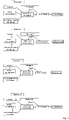
- the donor solvent can be added according to process variants A to D ( 1 ).
- Method A the donor solvent is separately pumped into the reactor module; in method B it is mixed in two mixing modules both with the more concentrated RLi solution and with the substrate, in method C it is mixed the donor solvent is only added to the substrate and in method D the donor solvent is only added to the more concentrated RLi solution.
- reactors for small-scale continuous processes are referred to as microreactors (channel structures ⁇ 1 mm) or meso-reactors (channel structures > 1 mm down to the cm range). They are available from various providers, such as Corning Glass, Vapourtec, Fraunhofer-ICT-IMM or Ehrfeld Mikrotechnik.
- the use of more concentrated RLi solutions reduces the introduction of hydrocarbon solvents into the reaction system, i.e. the donor solvent:hydrocarbon weight ratio is increased. Surprisingly, it was found that this measure generally reduces the tendency to form solids, i.e. the continuous reaction can be operated over a longer period of time without having to insert a cleaning/rinsing cycle.
- the optimum RLi concentration in the case of butyllithium is in the range between about 3M and 8M (26 to 75% by weight), more preferably between 3.5 and 7M (32 to 64% by weight) .
- Substances that can react with organolithium compounds depending on the intended type of reaction serve as substrates.
- it is preferably CH-acidic compounds, ie substances whose acidity is higher than that of aliphatic CH-compounds, ie for example aromatics or heteroaromatics with a directing functional group.
- substances containing a halogen ligand, with iodide and bromide being preferred are bonded to an aromatic or heteroaromatic Scaffolding system, preferred.
- the halogenated aromatics or heteroaromatics can have one or more functional groups selected from the group consisting of: F, Cl, Br, CN, CO 2 R, OR, OH, NR 2 , NHR, NH 2 , PR 2 , P(O )R2, CONR2 , CONHR , SR, SH, CF3 , NO2 .
- the following compounds from the group of ethers are preferably used as donor solvents: dimethyl ether, diethyl ether, dibutyl ether, cyclopentyl methyl ether, methyl tert-butyl ether, methyl tert-amyl ether; tetrahydrofuran, 2-methyltetrahydrofuran, tetrahydropyran; 4-methyl-tetrahydropyran; 1,2-dimethoxymethane and higher glymes; of amines, the following compounds are preferably used: ammonia, trimethylamine, triethylamine, tributylamine, tetramethylethylenediamine (TMEDA), bis(2-dimethylaminoethyl)methylamine (PMDTA), and also hexamethylphosphoric triamide (HMPA), dimethyl sulfoxide (DMSO), N-methyl-2-pyrrolidone (NMP), dimethylacetamide (DMAC), 1,3-dimethyl-3
- the more concentrated organolithium reagent is employed as a solution in a hydrocarbon solvent.
- the hydrocarbon solvent preferably contains hexanes, heptanes, octanes, toluene, ethylbenzene, cumene and/or xylenes.
- the lithium intermediate is reacted with an electrophile, the electrophile being selected from carbonyl compounds (aldehydes, ketones, carboxylic acid esters, carboxamides), nitriles, imines, halogens, halogen compounds, disulfides, water.
- an electrophile selected from carbonyl compounds (aldehydes, ketones, carboxylic acid esters, carboxamides), nitriles, imines, halogens, halogen compounds, disulfides, water.
- the reaction according to: was performed in batch mode with 1.6 M butyllithium solution in hexane at -5°C. After treatment with isopropoxypinacolborate at -78 °C and warming to room temperature, the borylated species was obtained in 51 % yield ( WO2007/120729A2 , p. 62).
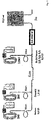
- the experimental setup is shown in figure ( 2 ) shown:
- the starting materials butyllithium (BuLi) and the N-methylpyrazole (pyrazole) as a 0.8 M solution in THF were placed in hose loops (loops) and mixed homogeneously by means of pumps in a static mixer with a volume of 400 ⁇ l.
- the combined product stream was post-reacted in a residence time module P4 with a volume of 10 ml.
- the residence time in P4 was about 5 minutes.
- Vapourtec R2/R4 ( 3 ) was carried out as follows: three dosing loops, each with a volume of 2 ml, were filled with the starting materials. All components were used as THF-containing solutions (details see table). BuLi solutions of different concentrations were diluted with THF to the desired volume of 2 ml before filling into the loop. All starting materials were used in a 1:1:1 molar ratio.
- the two substrate streams of the bis(4-chlorophenyl)ketone (ketone) and the bromide were T-jointed and mixed and then the BuLi solution was added.
- the combined streams were pumped into a static mixer and intensively mixed there.
- the mixture was then transferred to a residence time module P4, in which the actual reaction took place.
- Both the static mixer and the residence time module were cooled to -78 °C using a dry ice/acetone bath.
- the product stream flowing out of the residence time module was quenched with a saturated ammonium chloride solution. Aliquots were checked for conversion using HPLC analysis.
Landscapes
- Chemical & Material Sciences (AREA)
- Organic Chemistry (AREA)
- Chemical Kinetics & Catalysis (AREA)
- Engineering & Computer Science (AREA)
- Materials Engineering (AREA)
- Organic Low-Molecular-Weight Compounds And Preparation Thereof (AREA)
- Preparation Of Compounds By Using Micro-Organisms (AREA)
Description
- Die Erfindung betrifft Verfahren zur CC-Bindungsbildung unter Verwendung von Organolithiumverbindungen unter kontinuierlichen Flußbedingungen in einem Mikro- oder Mesoreaktorsystem.
- Organometallische Spezies der 1. Hauptgruppe, insbesondere Organolithium-Verbindungen, sind unverzichtbare Werkzeuge für die organische Synthese, da sie als Carbanionäquivalente dienen und direkt oder indirekt für diverse Kohlenstoff-Kohlenstoff-(CC)-Verknüpfungsreaktionen eingesetzt werden können. Die wichtigsten Reaktionen sind Additionen an ungesättigte funktionelle Gruppen, z.B. 1,2-Additionen an Carbonylverbindungen oder Kohlenstoff-Stickstoff (CN)-Doppel- und Dreifachbindungen; Deprotonierungsreaktionen sowie Halogen/Metall-Austauschreaktionen. Ferner werden Organolithiumverbindungen für Ummetallierungen (z.B. Herstellung von Organozink- oder Organokupferverbindungen) und für Übergangsmetall-katalysierte CC-Kupplungsreaktionen verwendet. Diese Reaktionen sind seit langem bekannt und in entsprechenden Lehrbüchern zusammengefasst (B. J. Wakefield, "Organolithium Methods", Academic Press London, 1988 etc).
- Organolithiumverbindungen RLi mit R = Alkylgruppe mit 2 - 12 C-Atomen werden aufgrund ihrer guten Löslichkeit und Stabilität bevorzugt als Lösungen in Kohlenwasserstoffen produziert und eingesetzt. Viele solcher Organolithiumprodukte, beispielsweise die Butyllithiumisomere n-Butyllithium, sec-Butyllithium und tert-Butyllithium sowie Hexyllithium und Octyllithium, sind im industriellen Maßstab als Lösungen in Hexan, Heptan, Cyclohexan, Toluol u.ä. erhältlich. Allen diesen Lösungen ist gemein, dass sie kein Donorlösemittel, wie beispielsweise einen Ether oder ein Amin, enthalten. Lithiumalkyle sind zwar in solchen Donorverbindungen sehr gut löslich, jedoch weisen diese Mischungen nur eine unbefriedigende thermische Stabilität auf. So zersetzt sich Butyllithium bei 0 °C in THF mit einer Halbwertszeit von 23,5 h. Die Zersetzung erfolgt unter Bildung von Ethylen und dem Enolat des Acetaldehyds:
C4H8O + C4H9Li → H2C=CH2 + LiO-CH=CH2 + C4H10
- Donorlösemittel sind aber für viele Reaktionen mit RLi-Verbindungen unabkömmlich, da sie die Reaktivität und Selektivität positiv beeinflussen können. Butyllithium liegt in Kohlenwasserstoffen im Wesentlichen als hexameres Aggregat vor. Durch Zugabe von THF werden diese Aggregate gebrochen und es bilden sich deutlich reaktivere dimere und trimere Spezies.
- Wenn eine solche Reaktionsbeschleunigung durch Donorlösemittel notwendig ist, werden letztere in der Regel nur in situ verwendet, d.h. sie werden erst mit dem für die jeweilige Reaktion verwendeten Substrat zugegeben. Die Reaktionstemperatur wird so gewählt, dass die gewünschte Reaktion wesentlich schneller verläuft als der Angriff auf das Donorlösungsmittel. Viele Reaktionen unter Verwendung von Organolithiumverbindungen werden bei tiefen Temperaturen (häufig im Temperaturbereich zwischen -100 und 0 °C) durchgeführt. Es ist bekannt, dass beispielsweise Brom/Lithium-Austauschreaktionen in Gegenwart von THF oder Diethylether bei -78 °C sehr schnell ablaufen, so dass die Nebenreaktion -der Angriff auf das Lösungsmittel- keine Rolle spielt. Organolithiumverbindungen, ganz überwiegend n-Butyllithium und Hexyllithium, werden in zunehmendem Maße in kontinuierlichen Prozessen in Mikro- und Mesoreaktoren ("Flow-Prozessen") eingesetzt. Hinter diesem Trend stehen vor allem Sicherheitsüberlegungen, da Organolithiumverbindungen hochreaktiv sind und sich an Luft entzünden können. Des Weiteren sind Einsparungen durch Prozeßintensivierung und geringeren
- Energieverbrauch möglich, da aufgrund der dramatisch verbesserten Mischbedingungen, der schnelleren Wärmeabfuhr und der dadurch realisier- und steuerbaren, meist geringeren Verweilzeiten, Reaktionen häufig bei höheren (nicht-kryogenen) Temperaturen durchgeführt werden können, als dies beim klassischen Batch-Prozeß der Fall ist. Für einen Überblick: siehe A. Nagaki und J.-I. Yoshida, Top. Organomet. Chem. (2016) 57, 137-76. In der Regel werden die standardmäßig verfügbaren Organolithiumreagenzien als verdünnte Hexan-Lösungen mit einer Konzentration zwischen 1,5 und 2,5 M (M = Mol/L; 15 - 23 Gew.-%ig im Falle von Butyllithium) eingesetzt (s.
US2016/0090361A1 ). - Die im Vergleich zu Batchreaktoren wesentlich höheren spezifischen Oberflächen von Flow-Reaktoren und die geringen Durchmesser ihrer Kanalstrukturen bringen bei Reaktionen mit Butyllithium jedoch auch Nachteile mit sich. So werden häufig Flußminderungen und Verstopfungen, sogenanntes "Reaktorfouling" beobachtet. Diese Phänomene werden auf unterschiedliche Ursachen, beispielsweise das Ausfällen von Salzen allgemein bzw. speziell Lithiumhydroxid zurückgeführt (S. Laue, V. Haverkamp, L. Mleczko, Org. Proc. Res. Dev. 2016, 20, 480-6). Diese Phänomene bewirken, dass Flow-Reaktionen nicht über längere Zeit stabil laufen können, so dass immer wieder Reinigungszyklen zwischengeschaltet werden müssen. Dadurch werden die prinzipiellen Vorteile einer kontinuierlichen Reaktionsführung konterkariert.
- Weiterhin fallen häufig auch die Reaktionsausbeuten gegenüber der Batchfahrweise unter analogen Reaktionsbedingungen niedriger aus.
-
EP 0 956 023 A1 offenbart ein Verfahren zur Durchführung von Lithiumaustauschreaktionen bei dnen ein Lithiumaustauschreagenz wie beispielsweise Phenyllithium, Methyllithium, n-Butyllithium, tert.-Butyllithium oder n-Hexyllithium verwendet wird. - Es ist eine Verfahrensweise gesucht, die die Nachteile des Stands der Technik vermeidet, d.h. die beim Einsatz von Organolithiumverbindungen bei kontinuierlicher Reaktionsführung (Flow-Reaktionen)
- Feststoffausfällungen und Reaktorfouling verhindert und
- mindestens gleichwertige Reaktionsausbeuten im Vergleich zur Batchfahrweise ermöglicht.
- Erfindungsgemäß wird die Aufgabe gelöst, indem für CC-Bindungsbildungverfahren unter kontinuierlichen Flußbedingungen in einem Mikro- oder Mesoreaktorsystem ein organisches Substrat in Gegenwart eines Donorlösungsmittels mit einer Organolithiumverbindung zu einem Li-Intermediat umgesetzt wird, welches in situ oder anschließend in einem zweiten Reaktionssschritt mit einem Elektrophil zu einem organischen Folgeprodukt reagiert werden kann und wobei die Organolithiumverbindung RLi als Lösung in einem Kohlenwasserstoff oder Kohlenwasserstoffgemisch eingesetzt wird und die RLi-Konzentration mindestens 3 M, bevorzugt mindestens 4 M beträgt.
- Die Nachteile des Standes der Technik werden durch den Einsatz höherkonzentrierter Organolithiumverbindungen in einem Kohlenwasserstoff-basierten Lösungsmittel überwunden. Vorzugsweise wird eine RLi-Konzentration von mindestens 3 M, besonders bevorzugt von mindestens 4 M eingesetzt. Dies entspricht im Falle von Butyllithium Konzentrationen von mindestens 27 bzw. mindestens 36 Gew.-%, im Falle von Hexyllithium mindestens 39 bzw. mindestens 53 Gew.-%.
- Das erfindungsgemäße Verfahren sieht weiterhin eine gegenüber dem etablierten Stand der Technik konzentriertere Butyllithiumlösung in Kohlenwasserstofflösungsmitteln und das Substrat sowie ein oder mehrere Donorlösungsmittel vor. Diese sind ausgewählt aus der Gruppe Ether, Amine, Sulfoxide, Phosphortriamide und ähnlich funktionalisierten Stoffen. Alle genannten Komponenten werden in einem Flow-Mikro- oder Mesoreaktor zusammengeführt und vermischt. Die erfindungsgemäßen Reaktionen sind z.B. Additions-, Deprotonierungs- oder Halogen/Lithium-Austauschreaktionen und das entstehende LithiumIntermediat kann mit einem Elektrophil in bekannter Art und Weise umgesetzt werden. Je nach Reaktionssystem kann das Elektrophil zusammen (das heißt als homogene Mischung) oder parallel dosiert oder erst nach Bildung des Lithiumintermediats dem Reaktionssystem zugeführt werden. Der Zusatz des Donorlösungsmittels kann gemäß der VerfahrensVarianten A bis D erfolgen (
Fig. 1 ). Bei Verfahren A wird das Donorlösungsmittel getrennt in das Reaktormodul gepumpt; bei Verfahren B wird es in zwei Mischmodulen sowohl mit der höherkonzentrierten RLi-Lösung als auch mit dem Substrat gemischt, bei Verfahren C wird das Donorlösungsmittel nur dem Substrat und bei Verfahren D wird das Donorlösungsmittel nur die höherkonzentrierte RLi-Lösung beigemischt. - Reaktoren für kleinskalige Konti-Verfahren werden je nach ihrer Dimensionierung, d.h. dem Durchmesser ihrer Kanalstrukturen, als Mikroreaktoren (Kanalstrukturen < 1 mm) bzw. Mesoreaktoren (Kanalstrukturen > 1 mm bis in den cm-Bereich) bezeichnet. Sie sind von diversen Anbietern, beispielsweise Corning Glass, Vapourtec, dem Fraunhofer-ICT-IMM oder Ehrfeld Mikrotechnik erhältlich.
- Durch die Verwendung höherkonzentrierter RLi-Lösungen wird der Eintrag von Kohlenwasserstofflösungsmitteln in das Reaktionssystem vermindert, d.h. das Gewichtsverhältnis von Donorlösungsmittel : Kohlenwasserstoff wird erhöht. Es wurde überraschend gefunden, dass durch diese Maßnahme im Allgemeinen die Tendenz zur Feststoffbildung gemindert wird, d.h. die kontinuierliche Reaktion kann über längere Zeit betrieben werden, ohne dass ein Reinigungs-/Spülzyklus eingeschoben werden muß. Der Gewichtsanteil von Kohlenwasserstofflösungsmitteln (ohne Berücksichtigung des aus der Organolithiumverbindung RLi bei der Reaktion gegebenenfalls gebildeten Alkans RH bzw. Halogenids R-Hal (Hal = Cl, Br oder I)) im Reaktionsgemisch nach Vereinigung aller Komponenten (also Organolithiumlösung, Donorlösungsmittel, Substrat und gegebenfalls Elektrophil) und vor Aufarbeitung beispielsweise durch Hydrolyse beträgt maximal 11 Gew.-%, besonders bevorzugt maximal 8 Gew.-%.
- Zusätzlich werden im Allgemeinen gegenüber der Batchfahrweise erhöhte Ausbeuten beobachtet. Überraschenderweise wird aber kein linearer Effekt beobachtet, sondern ein Optimum bei einer bestimmten RLi-Konzentration. Die genaue Lage dieses Optimums ist von der jeweiligen Reaktion und den verwendeten individuellen Substanzen abhängig. Im Allgemeinen liegt das Optimum der RLi-Konzentration im Falle von Butyllithium im Bereich zwischen etwa 3 M und 8 M (26 bis 75 Gew.-%), besonders bevorzugt zwischen 3,5 und 7 M (32 bis 64 Gew.-%).
- Als Substrate dienen Stoffe, die mit Organolithiumverbindungen in Abhängigkeit vom beabsichtigten Reaktionstyp reagieren können. Im Falle einer Deprotonierung handelt es sich bevorzugt um CH-acide Verbindungen, d.h. Substanzen, deren Acididät höher ist als diejenige von aliphatischen CH-Verbindungen, also beispielsweise Aromaten oder Heteroaromaten mit einer dirigierenden funktionellen Gruppe. Für die Halogen/Lithium-Austauschreaktion werden Substanzen enthaltend einen Halogenliganden, wobei lodid und Bromid bevorzugt sind, gebunden an ein aromatisches oder heteroaromatisches Gerüstsystem, bevorzugt. Die halogenierten Aromaten oder Heteroaromaten können eine oder mehrere funktionelle Gruppen besitzen, auswählt aus der Gruppe bestehend aus: F, Cl, Br, CN, CO2R, OR, OH, NR2, NHR, NH2, PR2, P(O)R2, CONR2, CONHR, SR, SH, CF3, NO2.
- Als Donorlösungsmittel werden aus der Gruppe von Ethern folgende Verbindungen bevorzugt eingesetzt: Dimethylether, Diethylether, Dibutylether, Cyclopentylmethylether, Methyl-tert-butylether, Methyl-tert-amylether; Tetrahydrofuran, 2-Methyltetrahydrofuran, Tetrahydropyran; 4-Methyl-tetrahydropyran; 1,2-Dimethoxymethan sowie höhere Glymes; von Aminen folgende Verbindungen bevorzugt eingesetzt: Ammoniak, Trimethylamin, Triethylamin, Tributylamin, Tetramethylethylendiamin (TMEDA), Bis(2-dimethylaminoethyl)methylamin (PMDTA), sowie weiterhin Hexamethylphosphorsäuretriamid (HMPA), Dimethylsulfoxid (DMSO), N-Methyl-2-pyrrolidon (NMP), Dimethylacetamid (DMAC), 1,3-Dimethyl-3,4,5,6-tetrahydro-2(1H)-pyrimidinon (DMPU).
- Das höherkonzentrierte Organolithiumreagenz wird als eine Lösung in einem Kohlenwasserstofflösemittel eingesetzt. Das Kohlenwasserstofflösungsmittel enthält bevorzugt Hexane, Heptane, Octane, Toluol, Ethylbenzol, Cumol und/oder Xylole.
- Im Falle von Deprotonierungen oder Halogen/Lithium-Austauschreaktionen wird das Lithiumintermediat mit einem Elektrophil umgesetzt, wobei das Elektrophil ausgewählt ist aus Carbonylverbindungen (Aldehyde, Ketone, Carbonsäureester, Carbonsäureamide), Nitrilen, Iminen, Halogenen, Halogenverbindungen, Disulfiden, Wasser.
- Die Erfindung wird anhand folgender Beispiele erläutert.
- Alle Reaktionen wurden in einem Flow-Reaktorsystem (4-Pumpen R2/R4) der Firma Vapourtec durchgeführt. Die Chemikalien wurden ohne weitere Reinigung von Sigma Aldrich bezogen. Höherkonzentrierte Butyllithiumlösungen wurden von Albemarle beigestellt.
- Die Reaktion gemäß:

WO2007/120729A2 , S. 62). - Dieselbe Reaktion wurde im Flow-Modus untersucht. Der Versuchsaufbau ist in der Abbildung (
Fig. 2 ) dargestellt:
Die Startmaterialien Butyllithium (BuLi) und das N-Methylpyrazol (Pyrazol) als 0,8 M Lösung in THF wurden in Schlauchschleifen (loops) vorgelegt und mittels Pumpen in einem statischen Mischer mit einem Volumen von 400 µl homogen vermengt. Zu diesem Produktstrom wurde das Isopropoxypinakolborat (Boronat) aus einem weiteren loop, ebenfalls als 0,8 M Lösung in THF, bei Raumtemperatur dosiert. Der vereinigte Produktstrom wurde in einem Verweilzeitmodul P4 mit einem Volumen von 10 ml nachreagieren gelassen. Die Verweilzeit in P4 betrug ca. 5 Minuten. - Die Reaktionslösung wurde sauer gequencht, aufgearbeitet und NMR-spektroskopisch unter Verwendung eines internen Standards untersucht. Die Ergebnisse werden in der folgenden Tabelle festgehalten:
Experiment Nummer Loop Start-Material Konzentration (Mol/l) Loop size/ml Ausbeute (%) Gew% Hexan im Reaktionsgemisch 1* 1 Pyrazol 0,8 2 3 Boronat 0,8 2 29 13 2 BuLi 1,6 1 2 1 Pyrazol 0,64 2,5 3 Boronat 0,8 2 61 5,5 2 BuLi 3,2 0,5 3 1 Pyrazol 0,59 2,7 3 Boronat 0,8 2 66 2 2 BuLi 5,3 0,3 4 1 Pyrazol 0,57 2,8 3 Boronat 0,8 2 51 0,6 2 BuLi 8 0,2 * Vergleichsbeispiel, nicht erfinderisch - Bei der Verwendung der 1,6 M (15 Gew.-%igen) BuLi-Lösung in Hexan liegt ein relativ hoher Hexananteil von 17 % im Reaktionsgemisch vor. Die Produktausbeute von 29 % ist unbefriedigend und sie liegt unter dem Vergleichswert der Batchreaktion (51 %). Bei einer Steigerung der BuLi-Konzentration auf 3,2 und 5,3 M (entspr. 29 bzw. 49 Gew.-%) werden sehr deutlich erhöhte Ausbeuten von 61 bzw. 66 % beobachtet. Bei einer weiteren Steigerung der BuLi-Konzentration auf 8 M (73 Gew.-%) wird ein leichter Einbruch bei der Produktausbeute registriert, sie liegt aber immer noch mit der Batchfahrweise gleichauf.
- Beim Einsatz der 1,6 M BuLi-Lösung wurde beobachtet, dass das Reaktionsgemisch vor dem Quenchen deutlich trübe war (es waren Feststoffe ausgefallen), während beim Einsatz der höherkonzentrierten BuLi-Lösungen homogene, klare Lösungen vorlagen.
- Der Lithium-Bromaustausch von 5-Brompyrimidin (Bromid) wird im Batchansatz bei -95 °C durchgeführt. Unter Verwendung der 1,6 M Lösung von Butyllithium in Hexan liegt die Ausbeute bei 34 % (H. M. Taylor, C.D. Jones, J.D. Davenport, K.S. Hirsch, T.J. Kress, D. Weaver, J. Med. Chem. 1987, 30, 1359-65, see table I, ex. 1).

- Die Umsetzung im Vapourtec R2/R4 (
Fig. 3 ) wurde wie folgt durchgeführt: drei Dosierloops mit je 2 ml Volumen wurden mit den Startmaterialien gefüllt. Alle Komponenten wurden als THF-haltige Lösungen eingesetzt (Details s.u. Tabelle). Verschieden konzentrierte BuLi-Lösungen wurden vor dem Einfüllen in den loop mit THF auf das gewünschte Volumen von 2 ml verdünnt. Alle Startmaterialien wurden im molaren 1:1:1 - Verhältnis eingesetzt. - Die beiden Substratströme des Bis(4-chlorphenyl)ketons (Keton) und des Bromids wurden mittels T-Stück vereinigt und gemischt und dann wurde die BuLi-Lösung zugegeben. Die vereinigten Ströme wurden in einen statischen Mischer gepumpt und dort intensiv gemischt. Die Mischung wurde dann in ein Verweilzeitmodul P4 überführt, in dem die eigentliche Reaktion stattfand. Sowohl der statische Mischer als auch das Verweilzeitmodul wurden mittels Trockeneis/Aceton-Bad auf -78 °C gekühlt. Der aus dem Verweilzeitmodul fließende Produktstrom wurde mit einer gesättigten Ammoniumchloridlösung gequencht. Aliquots wurden mittels HPLC-Analytik auf Umsatz geprüft.
- In der folgenden Tabelle werden die Reaktionsergebnisse festgehalten:
Experiment Nummer Loop Startmaterial Konzentration (mol/l) Loop Volumen (ml) Ausbeute (%) Gew% Hexan im Rk.Gemisch 1* 1 Keton 1,6 2 22 2 Bromid 1,6 2 23 3 BuLi 1,6 2 2 1 Keton 1,6 2 34 2 Bromid 1,6 2 9 3 BuLi 3,2** 2 3 1 Keton 1,6 2 42 2 Bromid 1,6 2 4 3 BuLi 5,3** 2 4 1 Keton 1,6 2 31 2 Bromid 1,6 2 1 3 BuLi 8** 2 *Vergleichsexperiment, nicht erfinderisch; ** eingesetzte BuLi/Hexan-Konzentration, mit THF auf ein Volumen von 2 ml verdünnt - Beim Einsatz der verdünnten 1,6 molaren BuLi-Lösung wird eine sehr geringe Produktausbeute von 22 % beobachtet. Mit Steigerung der BuLi-Konzentration bzw. einer Verringerung des Hexananteils im Reaktionsgemisch steigt die Ausbeute deutlich an und sie liegt bei Verwendung der 5,3 molaren (49 Gew.-%) Lösung mit 42 % deutlich über dem Ergebnis der Batch-Umsetzung (34 %).
Claims (12)
- Verfahren zur CC-Bindungsbildung unter Verwendung von Organolithiumverbindungen unter kontinuierlichen Flußbedingungen in einem Mikro- oder Mesoreaktorsystem, dadurch gekennzeichnet, dass ein organisches Substrat in Gegenwart eines Donorlösungsmittels mit einer Alkyllithiumverbindung zu einem Li-Intermediat umgesetzt wird, das in situ oder anschließend in einem zweiten Reaktionsschritt mit einem Elektrophil zu einem organischen Folgeprodukt reagiert werden kann,
wobei die Organolithiumverbindung RLi als Lösung in einem Kohlenwasserstoff oder Kohlenwasserstoffgemisch verwendet wird und die RLi-Konzentration mindestens 3 M, bevorzugt mindestens 4 M beträgt. - Verfahren nach Anspruch 1, dadurch gekennzeichnet, dass die Organolithiumverbindung ausgewählt ist aus Alkyllithiumverbindungen RLi mit R = Alkylgruppe mit 2 - 12 C-Atomen.
- Verfahren nach Anspruch 1 oder 2, dadurch gekennzeichnet, dass als Organolithiumverbindung Butyllithium oder Hexyllithium verwendet wird und dass die Butyllithium-Konzentration mindestens 27 Gew.-% oder die Hexyllithium-Konzentration mindestens 39 Gew.-% beträgt.
- Verfahren nach Anspruch 3, dadurch gekennzeichnet, dass die Butyllithium-Konzentration mindestens 36 Gew.-% oder die Hexyllithium-Konzentration mindestens 53 Gew.-% beträgt.
- Verfahren nach Anspruch 1 bis 3, dadurch gekennzeichnet, dass die Organolithiumkonzentration im Bereich 3 - 8 M liegt.
- Verfahren nach Anspruch 5, dadurch gekennzeichnet, dass die Organolithiumkonzentration im Bereich 3,5 - 7 M liegt.
- Verfahren nach Anspruch 1 bis 6, dadurch gekennzeichnet, dass die Organolithiumverbindung als eine Lösung in einem Kohlenwasserstofflösungsmittel vorliegt, welche bevorzugt Hexane, Heptane, Octane, Toluol, Ethylbenzol, Cumol und/oder Xylole enthält.
- Verfahren nach Anspruch 1 bis 7, dadurch gekennzeichnet, dass das Donorlösungsmittel ausgewählt ist aus der Gruppe Ether, Amine, Sulfoxide, Phosphortriamide.
- Verfahren nach Anspruch 8, dadurch gekennzeichnet, dass als Donorlösungsmittel Dimethylether, Diethylether, Dibutylether, Cyclopentylmethylether, Methyl-tert-butylether, Methyl-tert-amylether, Tetrahydrofuran, 2-Methyltetrahydrofuran, Tetrahydropyran, 4-Methyl-tetrahydropyran, 1,2-Dimethoxymethan sowie höhere Glymes; Ammoniak, Trimethylamin, Triethylamin, Tributylamin, Tetramethylethylendiamin, Bis(2-dimethylaminoethyl)methylamin, Hexamethylphosphorsäuretriamid, Dimethylsulfoxid, N-Methyl-2-pyrrolidon, Dimethylacetamid, 1,3-Dimethyl-3,4,5,6-tetrahydro-2(1H)-pyrimidinon oder eine beliebige Mischung daraus eingesetzt wird.
- Verfahren nach Anspruch 1 bis 9, dadurch gekennzeichnet, dass der Gewichtsanteil von Kohlenwasserstofflösungsmitteln ohne Berücksichtigung des aus der Organolithiumverbindung bei der Reaktion gegebenenfalls gebildeten Alkans RH bzw. Halogenids R-Hal (Hal = Cl, Br oder I) im Reaktionsgemisch nach Vereinigung der Komponenten Organolithiumlösung, dem Donorlösungsmittel, dem Substrat und dem Elektrophil und vor der Aufarbeitung maximal 11 Gew.-% beträgt.
- Verfahren nach Anspruch 10, dadurch gekennzeichnet, dass der Gewichtsanteil von Kohlenwasserstofflösungsmitteln maximal 8 Gew.% beträgt.
- Verfahren nach Anspruch 1 bis 11, dadurch gekennzeichnet, dass als Elektrophil Carbonylverbindungen ausgewählt aus der Gruppe bestehend aus Aldehyden, Ketonen, Carbonsäureestern, Carbonsäureamiden oder Nitrile, Imine, Halogene, Halogenverbindungen, Disulfide sowie Wasser eingesetzt werden.
Applications Claiming Priority (2)
| Application Number | Priority Date | Filing Date | Title |
|---|---|---|---|
| DE102017010643 | 2017-11-14 | ||
| PCT/EP2018/081017 WO2019096762A1 (de) | 2017-11-14 | 2018-11-13 | ORGANOLITHIUMPROZEß UNTER KONTINUIERLICHEN FLUßBEDINGUNGEN |
Publications (2)
| Publication Number | Publication Date |
|---|---|
| EP3710417A1 EP3710417A1 (de) | 2020-09-23 |
| EP3710417B1 true EP3710417B1 (de) | 2022-04-06 |
Family
ID=64316535
Family Applications (1)
| Application Number | Title | Priority Date | Filing Date |
|---|---|---|---|
| EP18803628.9A Active EP3710417B1 (de) | 2017-11-14 | 2018-11-13 | Organolithiumprozess unter kontinuierlichen flussbedingungen |
Country Status (10)
| Country | Link |
|---|---|
| US (1) | US11407769B2 (de) |
| EP (1) | EP3710417B1 (de) |
| JP (3) | JP7754624B2 (de) |
| KR (1) | KR102650254B1 (de) |
| CN (1) | CN111465588B (de) |
| ES (1) | ES2917410T3 (de) |
| HU (1) | HUE059090T2 (de) |
| PL (1) | PL3710417T3 (de) |
| TW (1) | TWI793211B (de) |
| WO (1) | WO2019096762A1 (de) |
Families Citing this family (2)
| Publication number | Priority date | Publication date | Assignee | Title |
|---|---|---|---|---|
| KR102650254B1 (ko) * | 2017-11-14 | 2024-03-21 | 알베마를 저머니 게엠베하 | 연속 유동 조건 하에 유기리튬 공정 |
| CN117339507B (zh) * | 2023-08-29 | 2024-06-11 | 珠海奥博凯生物医药技术有限公司 | 基于连续流反应的化合物合成设备及制备化合物的方法 |
Family Cites Families (7)
| Publication number | Priority date | Publication date | Assignee | Title |
|---|---|---|---|---|
| US3438420A (en) * | 1967-07-25 | 1969-04-15 | Lithium Corp | Preparation of concentrated alkyllithium solutions |
| JP4794873B2 (ja) * | 2005-03-03 | 2011-10-19 | 富士フイルムファインケミカルズ株式会社 | ハロゲン−リチウム交換反応を用いる有機化合物の製造法 |
| ES2566481T3 (es) | 2006-04-12 | 2016-04-13 | Merck Sharp & Dohme Corp. | Antagonistas del canal de calcio de tipo T de piridil amida |
| EP1956023A1 (de) | 2007-02-06 | 2008-08-13 | Lonza Ag | Methode für Lithiumaustausch-Reaktionen |
| WO2012121301A1 (ja) * | 2011-03-10 | 2012-09-13 | 国立大学法人京都大学 | 含フッ素置換化合物の製造方法及び含フッ素置換化合物 |
| AU2015320349B2 (en) | 2014-09-25 | 2020-03-12 | Bausch + Lomb Ireland Limited | Continuous flow carboxylation reaction |
| KR102650254B1 (ko) * | 2017-11-14 | 2024-03-21 | 알베마를 저머니 게엠베하 | 연속 유동 조건 하에 유기리튬 공정 |
-
2018
- 2018-11-13 KR KR1020207013828A patent/KR102650254B1/ko active Active
- 2018-11-13 JP JP2020526511A patent/JP7754624B2/ja active Active
- 2018-11-13 WO PCT/EP2018/081017 patent/WO2019096762A1/de not_active Ceased
- 2018-11-13 TW TW107140246A patent/TWI793211B/zh active
- 2018-11-13 ES ES18803628T patent/ES2917410T3/es active Active
- 2018-11-13 US US16/763,775 patent/US11407769B2/en active Active
- 2018-11-13 HU HUE18803628A patent/HUE059090T2/hu unknown
- 2018-11-13 CN CN201880073864.2A patent/CN111465588B/zh active Active
- 2018-11-13 PL PL18803628.9T patent/PL3710417T3/pl unknown
- 2018-11-13 EP EP18803628.9A patent/EP3710417B1/de active Active
-
2023
- 2023-11-02 JP JP2023188269A patent/JP2024012496A/ja active Pending
-
2025
- 2025-04-01 JP JP2025060247A patent/JP2025098251A/ja active Pending
Also Published As
| Publication number | Publication date |
|---|---|
| JP2021502985A (ja) | 2021-02-04 |
| KR20200080260A (ko) | 2020-07-06 |
| TW201936617A (zh) | 2019-09-16 |
| EP3710417A1 (de) | 2020-09-23 |
| US11407769B2 (en) | 2022-08-09 |
| WO2019096762A1 (de) | 2019-05-23 |
| JP7754624B2 (ja) | 2025-10-15 |
| CN111465588A (zh) | 2020-07-28 |
| KR102650254B1 (ko) | 2024-03-21 |
| JP2024012496A (ja) | 2024-01-30 |
| PL3710417T3 (pl) | 2022-08-01 |
| TWI793211B (zh) | 2023-02-21 |
| JP2025098251A (ja) | 2025-07-01 |
| ES2917410T3 (es) | 2022-07-08 |
| US20210040124A1 (en) | 2021-02-11 |
| CN111465588B (zh) | 2023-04-28 |
| HUE059090T2 (hu) | 2022-10-28 |
Similar Documents
| Publication | Publication Date | Title |
|---|---|---|
| EP1860086B1 (de) | Verfahren zur Herstellung von Cyclododecatrien | |
| EP3116637B1 (de) | Verfahren zur herstellung von reinem trisilylamin | |
| JP2025098251A (ja) | 連続フロー条件下での有機リチウムプロセス | |
| DE69533739T2 (de) | Herstellung von Triorganozinn-Lithium-Zusammensetzungen und deren Verwendung als Initiatoren | |
| DE69807700T2 (de) | Herstehhung von alkalimetal diarylphosphid und cycloalkyldiarylphosphine | |
| DE1668544C3 (de) | Verfahren zur Dimerisation acyclischer konjugierter Dienkohlenwasserstoffe und Komplexkatalysator zur Durchführung dieses Verfahrens | |
| DE19808570C1 (de) | Benzylmagnesiumhalogenide oder Allylmagnesiumhalogenide enthaltende Synthesemittel und Verfahren zu deren Herstellung | |
| EP2888221B1 (de) | Verfahren zur herstellung von acetylendicarbonsäure aus acetylen und kohlenstoffdioxid | |
| DE60201223T2 (de) | Verfahren zur Herstellung von 3,4-Dihydroxybenzonitril | |
| EP3089938B1 (de) | Verfahren zur herstellung von zinkbromid und lithiumbromid enthaltenden aprotischen lösungen | |
| DE19719054A1 (de) | Verfahren zur Herstellung von Acetophenonen, die am aromatischen Kern mit Fluoralkyl substituiert sind | |
| EP1937692B1 (de) | Verfahren zur herstellung von diorganomagnesiumhaltigen synthesemitteln | |
| EP2297101A1 (de) | Verfahren zur herstellung von magnesiumamiden | |
| WO1981001406A1 (fr) | Procede pour la preparation de derives d'acide trifluoroacetyles | |
| DE10146233C1 (de) | Verfahren zur Herstellung von reinen Aryllithiumverbindungen und deren Verwendung | |
| DE10016802C1 (de) | Verfahren zur Herstellung von Alkalimetallmonohydrido-boranaten und -aluminaten und deren Verwendung | |
| DE60202583T2 (de) | Verfahren zur Herstellung von optisch reinem (R)- oder (S)-Tetrahydrofuranylketon | |
| DE2202204A1 (de) | Verfahren zur kontinuierlichen herstellung von 2-mercaptobenzimidazol | |
| DE2332206C3 (de) | Verfahren zur Herstellung von Tricyclohexylzinnchlorid oder -bromid | |
| DE2545698A1 (de) | Verfahren zur herstellung von butendioldiacetaten | |
| EP1632495B1 (de) | Methyllithium/Lithiumbromid enthaltendes Synthesemittel und Verfahren zu dessen Herstellung | |
| DE910410C (de) | Verfahren zur Herstellung von Vinylchlorid | |
| DE69906016T2 (de) | Verfahren zur Herstellung von Cyanobenzyl-Verbindungen | |
| EP3166953A1 (de) | Verfahren zur herstellung von hydridocarbonyltris(triphenylphosphin)rhodium(i) | |
| DE1154473B (de) | Verfahren zur Herstellung von Arylaluminiumverbindungen |
Legal Events
| Date | Code | Title | Description |
|---|---|---|---|
| STAA | Information on the status of an ep patent application or granted ep patent |
Free format text: STATUS: UNKNOWN |
|
| STAA | Information on the status of an ep patent application or granted ep patent |
Free format text: STATUS: THE INTERNATIONAL PUBLICATION HAS BEEN MADE |
|
| PUAI | Public reference made under article 153(3) epc to a published international application that has entered the european phase |
Free format text: ORIGINAL CODE: 0009012 |
|
| STAA | Information on the status of an ep patent application or granted ep patent |
Free format text: STATUS: REQUEST FOR EXAMINATION WAS MADE |
|
| 17P | Request for examination filed |
Effective date: 20200615 |
|
| AK | Designated contracting states |
Kind code of ref document: A1 Designated state(s): AL AT BE BG CH CY CZ DE DK EE ES FI FR GB GR HR HU IE IS IT LI LT LU LV MC MK MT NL NO PL PT RO RS SE SI SK SM TR |
|
| AX | Request for extension of the european patent |
Extension state: BA ME |
|
| DAV | Request for validation of the european patent (deleted) | ||
| DAX | Request for extension of the european patent (deleted) | ||
| STAA | Information on the status of an ep patent application or granted ep patent |
Free format text: STATUS: EXAMINATION IS IN PROGRESS |
|
| 17Q | First examination report despatched |
Effective date: 20210531 |
|
| REG | Reference to a national code |
Ref country code: DE Ref legal event code: R079 Ref document number: 502018009358 Country of ref document: DE Free format text: PREVIOUS MAIN CLASS: C07B0037040000 Ipc: C07B0037020000 |
|
| RIC1 | Information provided on ipc code assigned before grant |
Ipc: C07B 37/02 20060101ALI20211013BHEP Ipc: C07F 5/02 20060101AFI20211013BHEP |
|
| GRAP | Despatch of communication of intention to grant a patent |
Free format text: ORIGINAL CODE: EPIDOSNIGR1 |
|
| STAA | Information on the status of an ep patent application or granted ep patent |
Free format text: STATUS: GRANT OF PATENT IS INTENDED |
|
| RIC1 | Information provided on ipc code assigned before grant |
Ipc: C07B 37/02 20060101AFI20211112BHEP |
|
| INTG | Intention to grant announced |
Effective date: 20211208 |
|
| GRAS | Grant fee paid |
Free format text: ORIGINAL CODE: EPIDOSNIGR3 |
|
| GRAA | (expected) grant |
Free format text: ORIGINAL CODE: 0009210 |
|
| STAA | Information on the status of an ep patent application or granted ep patent |
Free format text: STATUS: THE PATENT HAS BEEN GRANTED |
|
| AK | Designated contracting states |
Kind code of ref document: B1 Designated state(s): AL AT BE BG CH CY CZ DE DK EE ES FI FR GB GR HR HU IE IS IT LI LT LU LV MC MK MT NL NO PL PT RO RS SE SI SK SM TR |
|
| REG | Reference to a national code |
Ref country code: GB Ref legal event code: FG4D Free format text: NOT ENGLISH |
|
| REG | Reference to a national code |
Ref country code: CH Ref legal event code: EP |
|
| REG | Reference to a national code |
Ref country code: AT Ref legal event code: REF Ref document number: 1481217 Country of ref document: AT Kind code of ref document: T Effective date: 20220415 |
|
| REG | Reference to a national code |
Ref country code: IE Ref legal event code: FG4D Free format text: LANGUAGE OF EP DOCUMENT: GERMAN |
|
| REG | Reference to a national code |
Ref country code: DE Ref legal event code: R096 Ref document number: 502018009358 Country of ref document: DE |
|
| REG | Reference to a national code |
Ref country code: ES Ref legal event code: FG2A Ref document number: 2917410 Country of ref document: ES Kind code of ref document: T3 Effective date: 20220708 |
|
| REG | Reference to a national code |
Ref country code: LT Ref legal event code: MG9D |
|
| REG | Reference to a national code |
Ref country code: NL Ref legal event code: MP Effective date: 20220406 |
|
| PG25 | Lapsed in a contracting state [announced via postgrant information from national office to epo] |
Ref country code: NL Free format text: LAPSE BECAUSE OF FAILURE TO SUBMIT A TRANSLATION OF THE DESCRIPTION OR TO PAY THE FEE WITHIN THE PRESCRIBED TIME-LIMIT Effective date: 20220406 |
|
| REG | Reference to a national code |
Ref country code: HU Ref legal event code: AG4A Ref document number: E059090 Country of ref document: HU |
|
| PG25 | Lapsed in a contracting state [announced via postgrant information from national office to epo] |
Ref country code: SE Free format text: LAPSE BECAUSE OF FAILURE TO SUBMIT A TRANSLATION OF THE DESCRIPTION OR TO PAY THE FEE WITHIN THE PRESCRIBED TIME-LIMIT Effective date: 20220406 Ref country code: PT Free format text: LAPSE BECAUSE OF FAILURE TO SUBMIT A TRANSLATION OF THE DESCRIPTION OR TO PAY THE FEE WITHIN THE PRESCRIBED TIME-LIMIT Effective date: 20220808 Ref country code: NO Free format text: LAPSE BECAUSE OF FAILURE TO SUBMIT A TRANSLATION OF THE DESCRIPTION OR TO PAY THE FEE WITHIN THE PRESCRIBED TIME-LIMIT Effective date: 20220706 Ref country code: LT Free format text: LAPSE BECAUSE OF FAILURE TO SUBMIT A TRANSLATION OF THE DESCRIPTION OR TO PAY THE FEE WITHIN THE PRESCRIBED TIME-LIMIT Effective date: 20220406 Ref country code: HR Free format text: LAPSE BECAUSE OF FAILURE TO SUBMIT A TRANSLATION OF THE DESCRIPTION OR TO PAY THE FEE WITHIN THE PRESCRIBED TIME-LIMIT Effective date: 20220406 Ref country code: GR Free format text: LAPSE BECAUSE OF FAILURE TO SUBMIT A TRANSLATION OF THE DESCRIPTION OR TO PAY THE FEE WITHIN THE PRESCRIBED TIME-LIMIT Effective date: 20220707 Ref country code: FI Free format text: LAPSE BECAUSE OF FAILURE TO SUBMIT A TRANSLATION OF THE DESCRIPTION OR TO PAY THE FEE WITHIN THE PRESCRIBED TIME-LIMIT Effective date: 20220406 Ref country code: BG Free format text: LAPSE BECAUSE OF FAILURE TO SUBMIT A TRANSLATION OF THE DESCRIPTION OR TO PAY THE FEE WITHIN THE PRESCRIBED TIME-LIMIT Effective date: 20220706 |
|
| PG25 | Lapsed in a contracting state [announced via postgrant information from national office to epo] |
Ref country code: RS Free format text: LAPSE BECAUSE OF FAILURE TO SUBMIT A TRANSLATION OF THE DESCRIPTION OR TO PAY THE FEE WITHIN THE PRESCRIBED TIME-LIMIT Effective date: 20220406 Ref country code: LV Free format text: LAPSE BECAUSE OF FAILURE TO SUBMIT A TRANSLATION OF THE DESCRIPTION OR TO PAY THE FEE WITHIN THE PRESCRIBED TIME-LIMIT Effective date: 20220406 Ref country code: IS Free format text: LAPSE BECAUSE OF FAILURE TO SUBMIT A TRANSLATION OF THE DESCRIPTION OR TO PAY THE FEE WITHIN THE PRESCRIBED TIME-LIMIT Effective date: 20220806 |
|
| REG | Reference to a national code |
Ref country code: DE Ref legal event code: R097 Ref document number: 502018009358 Country of ref document: DE |
|
| PG25 | Lapsed in a contracting state [announced via postgrant information from national office to epo] |
Ref country code: SM Free format text: LAPSE BECAUSE OF FAILURE TO SUBMIT A TRANSLATION OF THE DESCRIPTION OR TO PAY THE FEE WITHIN THE PRESCRIBED TIME-LIMIT Effective date: 20220406 Ref country code: SK Free format text: LAPSE BECAUSE OF FAILURE TO SUBMIT A TRANSLATION OF THE DESCRIPTION OR TO PAY THE FEE WITHIN THE PRESCRIBED TIME-LIMIT Effective date: 20220406 Ref country code: RO Free format text: LAPSE BECAUSE OF FAILURE TO SUBMIT A TRANSLATION OF THE DESCRIPTION OR TO PAY THE FEE WITHIN THE PRESCRIBED TIME-LIMIT Effective date: 20220406 Ref country code: EE Free format text: LAPSE BECAUSE OF FAILURE TO SUBMIT A TRANSLATION OF THE DESCRIPTION OR TO PAY THE FEE WITHIN THE PRESCRIBED TIME-LIMIT Effective date: 20220406 Ref country code: DK Free format text: LAPSE BECAUSE OF FAILURE TO SUBMIT A TRANSLATION OF THE DESCRIPTION OR TO PAY THE FEE WITHIN THE PRESCRIBED TIME-LIMIT Effective date: 20220406 Ref country code: CZ Free format text: LAPSE BECAUSE OF FAILURE TO SUBMIT A TRANSLATION OF THE DESCRIPTION OR TO PAY THE FEE WITHIN THE PRESCRIBED TIME-LIMIT Effective date: 20220406 |
|
| PLBE | No opposition filed within time limit |
Free format text: ORIGINAL CODE: 0009261 |
|
| STAA | Information on the status of an ep patent application or granted ep patent |
Free format text: STATUS: NO OPPOSITION FILED WITHIN TIME LIMIT |
|
| 26N | No opposition filed |
Effective date: 20230110 |
|
| PG25 | Lapsed in a contracting state [announced via postgrant information from national office to epo] |
Ref country code: AL Free format text: LAPSE BECAUSE OF FAILURE TO SUBMIT A TRANSLATION OF THE DESCRIPTION OR TO PAY THE FEE WITHIN THE PRESCRIBED TIME-LIMIT Effective date: 20220406 |
|
| PG25 | Lapsed in a contracting state [announced via postgrant information from national office to epo] |
Ref country code: SI Free format text: LAPSE BECAUSE OF FAILURE TO SUBMIT A TRANSLATION OF THE DESCRIPTION OR TO PAY THE FEE WITHIN THE PRESCRIBED TIME-LIMIT Effective date: 20220406 |
|
| PG25 | Lapsed in a contracting state [announced via postgrant information from national office to epo] |
Ref country code: MC Free format text: LAPSE BECAUSE OF FAILURE TO SUBMIT A TRANSLATION OF THE DESCRIPTION OR TO PAY THE FEE WITHIN THE PRESCRIBED TIME-LIMIT Effective date: 20220406 |
|
| PG25 | Lapsed in a contracting state [announced via postgrant information from national office to epo] |
Ref country code: LU Free format text: LAPSE BECAUSE OF NON-PAYMENT OF DUE FEES Effective date: 20221113 |
|
| REG | Reference to a national code |
Ref country code: DE Ref legal event code: R081 Ref document number: 502018009358 Country of ref document: DE Owner name: ALBEMARLE GERMANY GMBH, DE Free format text: FORMER OWNER: ALBEMARLE GERMANY GMBH, 65929 FRANKFURT, DE |
|
| REG | Reference to a national code |
Ref country code: HU Ref legal event code: HC9C Owner name: ALBEMARLE GERMANY GMBH, DE Free format text: FORMER OWNER(S): ALBEMARLE GERMANY GMBH, DE |
|
| PG25 | Lapsed in a contracting state [announced via postgrant information from national office to epo] |
Ref country code: CY Free format text: LAPSE BECAUSE OF FAILURE TO SUBMIT A TRANSLATION OF THE DESCRIPTION OR TO PAY THE FEE WITHIN THE PRESCRIBED TIME-LIMIT Effective date: 20220406 |
|
| PG25 | Lapsed in a contracting state [announced via postgrant information from national office to epo] |
Ref country code: MK Free format text: LAPSE BECAUSE OF FAILURE TO SUBMIT A TRANSLATION OF THE DESCRIPTION OR TO PAY THE FEE WITHIN THE PRESCRIBED TIME-LIMIT Effective date: 20220406 |
|
| PG25 | Lapsed in a contracting state [announced via postgrant information from national office to epo] |
Ref country code: MT Free format text: LAPSE BECAUSE OF FAILURE TO SUBMIT A TRANSLATION OF THE DESCRIPTION OR TO PAY THE FEE WITHIN THE PRESCRIBED TIME-LIMIT Effective date: 20220406 |
|
| PG25 | Lapsed in a contracting state [announced via postgrant information from national office to epo] |
Ref country code: BG Free format text: LAPSE BECAUSE OF FAILURE TO SUBMIT A TRANSLATION OF THE DESCRIPTION OR TO PAY THE FEE WITHIN THE PRESCRIBED TIME-LIMIT Effective date: 20220406 |
|
| PG25 | Lapsed in a contracting state [announced via postgrant information from national office to epo] |
Ref country code: BG Free format text: LAPSE BECAUSE OF FAILURE TO SUBMIT A TRANSLATION OF THE DESCRIPTION OR TO PAY THE FEE WITHIN THE PRESCRIBED TIME-LIMIT Effective date: 20220406 |
|
| REG | Reference to a national code |
Ref country code: AT Ref legal event code: MM01 Ref document number: 1481217 Country of ref document: AT Kind code of ref document: T Effective date: 20231113 |
|
| PG25 | Lapsed in a contracting state [announced via postgrant information from national office to epo] |
Ref country code: AT Free format text: LAPSE BECAUSE OF NON-PAYMENT OF DUE FEES Effective date: 20231113 |
|
| PG25 | Lapsed in a contracting state [announced via postgrant information from national office to epo] |
Ref country code: AT Free format text: LAPSE BECAUSE OF NON-PAYMENT OF DUE FEES Effective date: 20231113 |
|
| REG | Reference to a national code |
Ref country code: CH Ref legal event code: U11 Free format text: ST27 STATUS EVENT CODE: U-0-0-U10-U11 (AS PROVIDED BY THE NATIONAL OFFICE) Effective date: 20251201 |
|
| PG25 | Lapsed in a contracting state [announced via postgrant information from national office to epo] |
Ref country code: TR Free format text: LAPSE BECAUSE OF FAILURE TO SUBMIT A TRANSLATION OF THE DESCRIPTION OR TO PAY THE FEE WITHIN THE PRESCRIBED TIME-LIMIT Effective date: 20220406 |
|
| PGFP | Annual fee paid to national office [announced via postgrant information from national office to epo] |
Ref country code: HU Payment date: 20251029 Year of fee payment: 8 |
|
| REG | Reference to a national code |
Ref country code: CH Ref legal event code: R17 Free format text: ST27 STATUS EVENT CODE: U-0-0-R10-R17 (AS PROVIDED BY THE NATIONAL OFFICE) Effective date: 20251212 |
|
| PGFP | Annual fee paid to national office [announced via postgrant information from national office to epo] |
Ref country code: DE Payment date: 20251128 Year of fee payment: 8 |
|
| PGFP | Annual fee paid to national office [announced via postgrant information from national office to epo] |
Ref country code: GB Payment date: 20251127 Year of fee payment: 8 |
|
| PGFP | Annual fee paid to national office [announced via postgrant information from national office to epo] |
Ref country code: IT Payment date: 20251119 Year of fee payment: 8 |
|
| PGFP | Annual fee paid to national office [announced via postgrant information from national office to epo] |
Ref country code: FR Payment date: 20251125 Year of fee payment: 8 |
|
| PGFP | Annual fee paid to national office [announced via postgrant information from national office to epo] |
Ref country code: BE Payment date: 20251127 Year of fee payment: 8 |
|
| PGFP | Annual fee paid to national office [announced via postgrant information from national office to epo] |
Ref country code: CH Payment date: 20251201 Year of fee payment: 8 |
|
| PGFP | Annual fee paid to national office [announced via postgrant information from national office to epo] |
Ref country code: IE Payment date: 20251127 Year of fee payment: 8 |
|
| PGFP | Annual fee paid to national office [announced via postgrant information from national office to epo] |
Ref country code: PL Payment date: 20251024 Year of fee payment: 8 |
|
| PGFP | Annual fee paid to national office [announced via postgrant information from national office to epo] |
Ref country code: ES Payment date: 20251201 Year of fee payment: 8 |
|
| PGFP | Annual fee paid to national office [announced via postgrant information from national office to epo] |
Ref country code: AT Payment date: 20260410 Year of fee payment: 5 |