EP3690989B1 - Flexible batterie - Google Patents
Flexible batterie Download PDFInfo
- Publication number
- EP3690989B1 EP3690989B1 EP18861677.5A EP18861677A EP3690989B1 EP 3690989 B1 EP3690989 B1 EP 3690989B1 EP 18861677 A EP18861677 A EP 18861677A EP 3690989 B1 EP3690989 B1 EP 3690989B1
- Authority
- EP
- European Patent Office
- Prior art keywords
- active material
- material layer
- cross
- adhesive
- flexible battery
- Prior art date
- Legal status (The legal status is an assumption and is not a legal conclusion. Google has not performed a legal analysis and makes no representation as to the accuracy of the status listed.)
- Active
Links
Images

Classifications
-
- H—ELECTRICITY
- H01—ELECTRIC ELEMENTS
- H01M—PROCESSES OR MEANS, e.g. BATTERIES, FOR THE DIRECT CONVERSION OF CHEMICAL ENERGY INTO ELECTRICAL ENERGY
- H01M10/00—Secondary cells; Manufacture thereof
- H01M10/04—Construction or manufacture in general
- H01M10/0436—Small-sized flat cells or batteries for portable equipment
-
- H—ELECTRICITY
- H01—ELECTRIC ELEMENTS
- H01M—PROCESSES OR MEANS, e.g. BATTERIES, FOR THE DIRECT CONVERSION OF CHEMICAL ENERGY INTO ELECTRICAL ENERGY
- H01M10/00—Secondary cells; Manufacture thereof
- H01M10/04—Construction or manufacture in general
-
- H—ELECTRICITY
- H01—ELECTRIC ELEMENTS
- H01M—PROCESSES OR MEANS, e.g. BATTERIES, FOR THE DIRECT CONVERSION OF CHEMICAL ENERGY INTO ELECTRICAL ENERGY
- H01M10/00—Secondary cells; Manufacture thereof
- H01M10/05—Accumulators with non-aqueous electrolyte
- H01M10/052—Li-accumulators
-
- H—ELECTRICITY
- H01—ELECTRIC ELEMENTS
- H01M—PROCESSES OR MEANS, e.g. BATTERIES, FOR THE DIRECT CONVERSION OF CHEMICAL ENERGY INTO ELECTRICAL ENERGY
- H01M10/00—Secondary cells; Manufacture thereof
- H01M10/05—Accumulators with non-aqueous electrolyte
- H01M10/058—Construction or manufacture
-
- H—ELECTRICITY
- H01—ELECTRIC ELEMENTS
- H01M—PROCESSES OR MEANS, e.g. BATTERIES, FOR THE DIRECT CONVERSION OF CHEMICAL ENERGY INTO ELECTRICAL ENERGY
- H01M10/00—Secondary cells; Manufacture thereof
- H01M10/05—Accumulators with non-aqueous electrolyte
- H01M10/058—Construction or manufacture
- H01M10/0585—Construction or manufacture of accumulators having only flat construction elements, i.e. flat positive electrodes, flat negative electrodes and flat separators
-
- H—ELECTRICITY
- H01—ELECTRIC ELEMENTS
- H01M—PROCESSES OR MEANS, e.g. BATTERIES, FOR THE DIRECT CONVERSION OF CHEMICAL ENERGY INTO ELECTRICAL ENERGY
- H01M10/00—Secondary cells; Manufacture thereof
- H01M10/42—Methods or arrangements for servicing or maintenance of secondary cells or secondary half-cells
- H01M10/4235—Safety or regulating additives or arrangements in electrodes, separators or electrolyte
-
- H—ELECTRICITY
- H01—ELECTRIC ELEMENTS
- H01M—PROCESSES OR MEANS, e.g. BATTERIES, FOR THE DIRECT CONVERSION OF CHEMICAL ENERGY INTO ELECTRICAL ENERGY
- H01M4/00—Electrodes
- H01M4/02—Electrodes composed of, or comprising, active material
- H01M4/62—Selection of inactive substances as ingredients for active masses, e.g. binders, fillers
-
- H—ELECTRICITY
- H01—ELECTRIC ELEMENTS
- H01M—PROCESSES OR MEANS, e.g. BATTERIES, FOR THE DIRECT CONVERSION OF CHEMICAL ENERGY INTO ELECTRICAL ENERGY
- H01M4/00—Electrodes
- H01M4/02—Electrodes composed of, or comprising, active material
- H01M4/62—Selection of inactive substances as ingredients for active masses, e.g. binders, fillers
- H01M4/621—Binders
- H01M4/622—Binders being polymers
-
- H—ELECTRICITY
- H01—ELECTRIC ELEMENTS
- H01M—PROCESSES OR MEANS, e.g. BATTERIES, FOR THE DIRECT CONVERSION OF CHEMICAL ENERGY INTO ELECTRICAL ENERGY
- H01M4/00—Electrodes
- H01M4/02—Electrodes composed of, or comprising, active material
- H01M4/64—Carriers or collectors
- H01M4/66—Selection of materials
- H01M4/665—Composites
- H01M4/667—Composites in the form of layers, e.g. coatings
-
- H—ELECTRICITY
- H01—ELECTRIC ELEMENTS
- H01M—PROCESSES OR MEANS, e.g. BATTERIES, FOR THE DIRECT CONVERSION OF CHEMICAL ENERGY INTO ELECTRICAL ENERGY
- H01M4/00—Electrodes
- H01M4/02—Electrodes composed of, or comprising, active material
- H01M4/64—Carriers or collectors
- H01M4/66—Selection of materials
- H01M4/668—Composites of electroconductive material and synthetic resins
-
- H—ELECTRICITY
- H01—ELECTRIC ELEMENTS
- H01M—PROCESSES OR MEANS, e.g. BATTERIES, FOR THE DIRECT CONVERSION OF CHEMICAL ENERGY INTO ELECTRICAL ENERGY
- H01M50/00—Constructional details or processes of manufacture of the non-active parts of electrochemical cells other than fuel cells, e.g. hybrid cells
- H01M50/40—Separators; Membranes; Diaphragms; Spacing elements inside cells
- H01M50/46—Separators, membranes or diaphragms characterised by their combination with electrodes
- H01M50/461—Separators, membranes or diaphragms characterised by their combination with electrodes with adhesive layers between electrodes and separators
-
- H—ELECTRICITY
- H01—ELECTRIC ELEMENTS
- H01M—PROCESSES OR MEANS, e.g. BATTERIES, FOR THE DIRECT CONVERSION OF CHEMICAL ENERGY INTO ELECTRICAL ENERGY
- H01M2220/00—Batteries for particular applications
- H01M2220/30—Batteries in portable systems, e.g. mobile phone, laptop
-
- H—ELECTRICITY
- H01—ELECTRIC ELEMENTS
- H01M—PROCESSES OR MEANS, e.g. BATTERIES, FOR THE DIRECT CONVERSION OF CHEMICAL ENERGY INTO ELECTRICAL ENERGY
- H01M50/00—Constructional details or processes of manufacture of the non-active parts of electrochemical cells other than fuel cells, e.g. hybrid cells
- H01M50/20—Mountings; Secondary casings or frames; Racks, modules or packs; Suspension devices; Shock absorbers; Transport or carrying devices; Holders
- H01M50/233—Mountings; Secondary casings or frames; Racks, modules or packs; Suspension devices; Shock absorbers; Transport or carrying devices; Holders characterised by physical properties of casings or racks, e.g. dimensions
- H01M50/238—Flexibility or foldability
-
- Y—GENERAL TAGGING OF NEW TECHNOLOGICAL DEVELOPMENTS; GENERAL TAGGING OF CROSS-SECTIONAL TECHNOLOGIES SPANNING OVER SEVERAL SECTIONS OF THE IPC; TECHNICAL SUBJECTS COVERED BY FORMER USPC CROSS-REFERENCE ART COLLECTIONS [XRACs] AND DIGESTS
- Y02—TECHNOLOGIES OR APPLICATIONS FOR MITIGATION OR ADAPTATION AGAINST CLIMATE CHANGE
- Y02E—REDUCTION OF GREENHOUSE GAS [GHG] EMISSIONS, RELATED TO ENERGY GENERATION, TRANSMISSION OR DISTRIBUTION
- Y02E60/00—Enabling technologies; Technologies with a potential or indirect contribution to GHG emissions mitigation
- Y02E60/10—Energy storage using batteries
Definitions
- the present invention relates to a flexible battery, in particular to a flexible battery which the internal structure of the electrochemical reaction elements would not be cracked or separated after bending.
- the electrode includes an active material layer and a current collector. If a better adhesion is existed between the active material layer and the current collector, the distances of the electron and ion migration in the electrode can be effectively shortened. Meanwhile, the resistance in the electrode is reduced, and the electrochemical conversion efficiency is improved. More specifically, when the active material layer and the current collector are tightly bonded, the distances of the electron and ion migration are shortened. The resistances between each interfaces of the layers are reduced, and the coulombic efficiency is further improved. The battery capacity can still be maintained after being repeatedly charged and discharged.
- the chosen binder in the active material layer would significantly affect the adhesion between the layers. And the content and distribution of the active materials in the active material layer could be directly determined. Along with the active material and the binder better connection relationship, the active materials in the active material layer have more desirable content and distribution, of course, can improve the capacity of the battery.
- the binder in the separator can provide adhesive forces of the separator and the active material layer.
- separator structure such as a ceramic separator
- the selected binder may affect the properties of the separator, such as content of ceramic material, ability of electrolyte adsorption, ability of electrical isolation, and etc.
- the flexible adhesives such as Polyvinylidene fluoride (PVDF), poly(vinylidenefluoride-co-hexafluoropropylene) (PVDF-HFP) or styrene-butadiene rubber (SBR) are usually used in the lithium battery.
- PVDF Polyvinylidene fluoride
- PVDF-HFP poly(vinylidenefluoride-co-hexafluoropropylene)
- SBR styrene-butadiene rubber
- the ability of the adhesion for the active materials is reduced resulting from that the structure or the crystalline structure of the adhesive is damaged by the external force.
- the electrodes and the separators would be cracked, even the active material layers, the separators and the current collectors would be separated.
- both of the ionic and electrical conductivities are significantly decreased and the efficiency of charging and discharging are worse.
- the adhesives such as epoxy, acrylic acid glue or polyacrylonitrile (PAN) are completely used, the adhesion is very well. But the rigidity is too high and the flexible is not enough to meet the requirement of the bending for the battery.
- Document JP H071 149408 discloses a secondary battery wherein the electrodes are made of a mixture of an electrode active material and an adhesive.
- Document US 2015/207167 A1 discloses a flexible thin battery including an electrochemical reaction element wherein the support of the electrolyte layer comprises a non-woven fabric made of at least one first linear polymer and at least one first cross-linked polymer.
- the battery includes a first substrate, a second substrate and a glue frame, wherein the glue frame is sandwiched between the first substrate and the second substrate in an orthogonal direction. Therefore, the first substrate, the second substrate and the glue frame form an enclosed space for accommodating an electrochemical reaction element.
- the electrochemical reaction element includes a first active material layer, a second active material layer and an intermediate layer. The first active material layer is disposed adjacent to the first substrate and electrically connected to the first substrate. The second active material layer is disposed adjacent to the second substrate and electrically connected to the second substrate.
- the intermediate layer is sandwiched between the first active material layer and the second active material layer to provide electrical insulation for electrically isolating the first active material layer and the second active material layer.
- a first interface is located between the first active material layer and the intermediate layer.
- a second interface is located between the second active material layer and the intermediate layer.
- This invention is characterized in that one of the first active material layer, the second active material layer, the intermediate layer, the first interface and the second interface includes a first adhesive, and the first adhesive includes a first linear polymer and a first crystallization inhibitor, wherein the first crystallization inhibitor is a first cross-linked polymer, and wherein the first adhesive contains 0.05 to 70 percent by weight of the first crystallization inhibitor.
- the first crystallization inhibitor is selected from a polymer with a side chain, a first cross-linked polymer, or a nanoscale powder. According to the invention, the first crystallization inhibitor is a first cross-linked polymer. In the whole description the term crystallization inhibitor is to be regarded as equivalent to first cross-linked polymer.
- the first substrate and the second substrate are a positive current collector and a negative current collector.
- the first active material layer is a positive active material layer and the second active material layer is a negative active material layer.
- the intermediate layer is a separator.
- the intermediate layer is an electrolyte layer.
- the first linear polymer is selected from polyvinylidene fluoride (PVDF), poly(vinylidene fluoride-co-hexafluoropropylene) (PVDF-HFP), polytetrafluoroethylene (PTFE), acrylic acid glue, epoxy, polyethylene oxide (PEO), polyacrylonitrile (PAN), sodium carboxymethyl cellulose, styrene-butadiene rubber (SBR), polymethylacrylate, polyacrylamide, polyvinylpyrrolidone (PVP) and combinations thereof.
- PVDF polyvinylidene fluoride
- PVDF-HFP poly(vinylidene fluoride-co-hexafluoropropylene)
- PTFE polytetrafluoroethylene
- acrylic acid glue epoxy
- PEO polyethylene oxide
- PAN polyacrylonitrile
- SBR sodium carboxymethyl cellulose
- SBR styrene-butadiene rubber
- PVP polymethylacrylate
- PVDF polyvin
- the first cross-linked polymer is selected from epoxy, acrylic acid resin, polyacrylonitrile (PAN) and combinations thereof with network-structure.
- the first cross-linked polymer is a polyimide (PI) and derivatives thereof with ladder-structure.
- one of the first active material layer, the second active material layer, the intermediate layer, the first interface and the second interface includes the first adhesive
- one of the remaining includes a second adhesive
- the second adhesive includes at least one second linear polymer and at least one second crystallization inhibitor
- the second crystallization inhibitor is a second cross-linked polymer
- the first adhesive and the second adhesive are different.
- the second linear polymer is selected from polyvinylidene fluoride (PVDF), poly(vinylidene fluoride-co-hexafluoropropylene) (PVDF-HFP), polytetrafluoroethylene (PTFE), acrylic acid glue, epoxy, polyethylene oxide (PEO), polyacrylonitrile (PAN), sodium carboxymethyl cellulose, styrene-butadiene rubber (SBR), polymethylacrylate, polyacrylamide, polyvinylpyrrolidone (PVP) and combinations thereof.
- the second cross-linked polymer is selected from epoxy, acrylic acid resin, polyacrylonitrile (PAN) and combinations thereof with network-structure.
- the second cross-linked polymer is a polyimide (PI) and derivatives thereof with ladder-structure.
- the first linear polymer is the same as the second linear polymer.
- the first cross-linked polymer is the same as the second cross-linked polymer.
- the weight percent of the first cross-linked polymer in the first adhesive is different from the weight percent of the second cross-linked polymer in the second adhesive.
- the advantages of this invention is to make the active material layers, the intermediate layer and the interfaces have sufficient adhesion and flexibility. Therefore, the electrochemical reaction element would not easy to be cracked or separated after bending, and the ionic and electrical conductivities of the battery is greatly improved.
- the flexible battery 1 includes a first substrate 22, a second substrate 22' and a glue frame 24, wherein the glue frame 24 is sandwiched between the first substrate 22 and the second substrate 22' in an orthogonal direction. Therefore, the first substrate 22, the second substrate 22' and the glue frame 24 form an enclosed space.
- the electrochemical reaction element 30 includes a first active material layer 302, a second active material layer 302' and an intermediate layer 304.
- the first active material layer 302 is disposed adjacent to the first substrate 22.
- the second active material layer 302' is disposed adjacent to the second substrate 22'.
- the intermediate layer 304 is sandwiched between the first active material layer 302 and the second active material layer 302' to provide electrical insulation for electrically isolating the first active material layer 302 and the second active material layer 302', which located at two sides of the intermediate layer 304.
- a first interface a is located between the first active material layer 302 and the intermediate layer 304.
- a second interface b is located between the second active material layer 302' and the intermediate layer 304.
- one of the first active material layer 302, the intermediate layer 304, the second active material layer 302', the first interface a and the second interface b is added with a first adhesive.
- the first adhesive includes a first linear polymer and a first crystallization inhibitor, that is a first cross-linked polymer, and the first adhesive contains 0.05 to 70 percent by weight of the first crystallization inhibitor.
- the first crystallization inhibitor can be any additive capable of hindering the linear polymer to generate lattice orientation in it, such as a polymer with a side chain, a first cross-linked polymer, a nanoscale powder or the likes. According to the invention it is a cross-linked polymer. Therefore, the first adhesive can provide good adhesion ability, and the main composition in the first adhesive, i.e. the first linear polymer, can maintain to be flexible. Moreover, the capacity of the bending strength of the electrochemical reaction element can be enhance. Therefore, the bending strength or the flexibility of the whole battery can also be increased.
- the first linear polymer is made of a liner polymer with certain flexibility.
- the linear polymer is selected from polyvinylidene fluoride (PVDF), poly(vinylidene fluoride-co-hexafluoropropylene) (PVDF-HFP), polytetrafluoroethylene (PTFE), acrylic acid glue, epoxy, polyethylene oxide (PEO), polyacrylonitrile (PAN), sodium carboxymethyl cellulose, styrene-butadiene rubber (SBR), polymethylacrylate, polyacrylamide, polyvinylpyrrolidone (PVP) and combinations thereof.
- the cross-linked polymer is selected from epoxy, acrylic acid resin, polyacrylonitrile (PAN) and combinations thereof with network-structure, or the ladder cross-linked polymer LP, such as polyimide (PI) and derivatives thereof with ladder-structure.
- the first linear polymer of the electrochemical reaction element would be crystallized due to its material properties.
- the pressure treatment is also applied, the crystallization is more significant. Once the crystal size is too large or the degree of crystallization is too high, the formed crystals will become a steric hindrance in the structure. Therefore, the ion channels inside the flexible battery 1 are hindered, and the internal resistance of the battery is greatly increased.
- the crystallization location such as inside of the first active material layer 302, the second active material layer 302',or the intermediate layer 304, or the first interface a and the second interface b, it is easy to be cracked along the grain boundary when the flexible battery 1 is bent.
- the characteristic of the good thermal stability and heat resistance of the first cross-linked polymer are utilized in this invention.
- the first cross-linked polymer can bear high temperature without melting.
- the first cross-linked polymer has more steric side-chains compared with the first linear polymer.
- the first cross-linked polymer is served as the hindrance to the crystallization of the first linear polymer.
- the crystal size or the degree of crystallization of the first linear polymer can be limited, and the steric hindrance caused by crystallization can be reduced to make the ions pass more smoothly
- the second adhesive includes at least one second linear polymer and at least one second crystallization inhibitor, and the first adhesive and the second adhesive are different.
- the first linear polymer and the second linear polymer may be the same, but the first crystallization inhibitor and the second crystallization inhibitor are different, or each different in weight percent within itself.
- the first linear polymer and the second linear polymer may be different, but the first crystallization inhibitor and the second crystallization inhibitor are the same.
- compositions of the second linear polymer and the second crystallization inhibitor may be the same as the compositions of the first linear polymer and the first crystallization inhibitor of the first adhesive, and are not repeated here.
- the first active material layer 302 has the first adhesive
- the intermediate layer 304 has the second adhesive.
- the second adhesive consists of the second linear polymer and the second crystallization inhibitor, and the second crystallization inhibitor accounts for no less than 50% by weight of the second adhesive.
- the first linear polymer may be the same or different as the second linear polymer, that is, the first linear polymer may be composed of the same linear polymer as the second linear polymer, and likewise, the first crystallization inhibitor and the second crystallization inhibitor may be the same or different.
- the crystallization inhibitor with a side chain will have a better adhesion in Z-axis direction.
- the first interface a contains the first adhesive and the first crystallization inhibitor is a first cross-linked polymer
- the first cross-linked polymer adhere the first active material layer 302 to the intermediate layer 304 firmly in the Z-axis direction, such that a good electrical conductivity is maintained between the first active material layer 302 and the intermediate layer 304.
- the first cross-linked polymer and/or the second cross-linked polymer may be a ladder-structure polymer, such as polyimide (PI) and derivatives thereof.
- PI polyimide
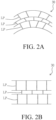
- This type of the cross-linked polymer has higher elasticity than the above-mentioned cross-linked polymer with network structure. Therefore, as shown in FIG. 2A and FIG. 2B , the electrochemical reaction element 30 can extend in the Z-axis direction without crack due to the bending stress is absorbed by the ladder-structure cross-linked polymer LP during bending of the external force.
- the ladder-structure cross-linked polymer LP can be restored to the original state after the external force borne by the electrochemical reaction element 30 is removed. Therefore, the purpose of repeatedly bending without damaging the electrochemical reaction element 30 is achieved.
- the first substrate 22 and the second substrate 22' described above may be a positive current collector or a negative current collector.
- the first active material layer 302 and the second active material layer 302' may be a positive active material layer or a negative active material layer.
- the first active material layer 302 is the positive active material layer
- the second active material layer 302' is the negative active material layer, and vice versa.
- the intermediate layer 304 is a separator or an electrolyte layer of the battery. Therefore, the intermediate layer 304 has certain ionic conductivity and electrical insulation properties, and also has flexibility due to the flexible characteristics of the battery.
- the second cross-linked polymer accounts for no less than 50% by weight of the second adhesive.
- the network-structure cross-linked polymer such as epoxy, acrylic acid resin, or polyacrylonitrile (PAN)
- PAN polyacrylonitrile
- the second adhesive is composed of the appropriate ratio of the above cross-linked polymer and the linear polymer to add into the intermediate layer 304, so that a better balance between the ion conduction and the electrical insulation in the intermediate layer 304 are achieved.
- Linear polymers can be used to promote adhesion on the X-Y plane.
- the first cross-linked polymer and the second cross-linked polymer are composed of the cross-linked polymer.
- the cross-linked polymer can be used to improve the adhesion and ion conduction capability in the Z-axis direction. And, the probability or degree of the polymer crystallization generated after heat treatment or pressure treatment among the layers is disturbed or reduced.
- the adhesion of this invention refers to the ability of inter-layer (eg, between the substrate and the active material layer, between the active material layer and the separator) to adhere to one another, the ability of the material within layers (eg, within the active material layer or within the separator) to adhere to one another.
- one of the first active material layer 302, the second active material layer 302', the intermediate layer 304, the first interface a and the second interface b includes the first adhesive, one of the remaining includes the second adhesive.
- the flexible battery of the invention will not be easily separated from the intermediate layer 304 when the flexible battery is bent. So that a better balance is achieved among the ions, the electrical conduction and the insulation property, and then the electrical performance of the flexible battery 1 is improved.
- All of the structures, the materials and the processes disclosed herein are suitable for use in a variety of battery systems such as, for example, liquid batteries, gel batteries, solid state batteries, liquid/gel hybrid batteries, liquid/solid state hybrid batteries or gel/solid state hybrid batteries, or so-called flexible lithium batteries, flexible lithium ion batteries, flexible lithium polymer batteries, flexible lithium metal batteries, flexible lithium ceramic batteries, or flexible lithium metal ceramic batteries.
- battery systems such as, for example, liquid batteries, gel batteries, solid state batteries, liquid/gel hybrid batteries, liquid/solid state hybrid batteries or gel/solid state hybrid batteries, or so-called flexible lithium batteries, flexible lithium ion batteries, flexible lithium polymer batteries, flexible lithium metal batteries, flexible lithium ceramic batteries, or flexible lithium metal ceramic batteries.
Landscapes
- Chemical & Material Sciences (AREA)
- Chemical Kinetics & Catalysis (AREA)
- Electrochemistry (AREA)
- General Chemical & Material Sciences (AREA)
- Engineering & Computer Science (AREA)
- Manufacturing & Machinery (AREA)
- Composite Materials (AREA)
- Materials Engineering (AREA)
- Secondary Cells (AREA)
- Battery Electrode And Active Subsutance (AREA)
- Cell Separators (AREA)
- Laminated Bodies (AREA)
- Sealing Battery Cases Or Jackets (AREA)
- Primary Cells (AREA)
Claims (14)
- - Flexible Batterie, umfassend:ein erstes Substrat;ein zweites Substrat;einen Kleberahmen, der zwischen das erste Substrat und das zweite Substrat in einer orthogonalen Richtung eingefügt ist, um einen geschlossenen Raum zu bilden;ein elektrochemisches Reaktionselement, das in dem geschlossenen Raum angeordnet ist und wobei das elektrochemische Reaktionselement Folgendes beinhaltet:eine erste aktive Materialschicht, die angrenzend an das erste Substrat angeordnet und elektrisch mit dem ersten Substrat verbunden ist;eine zweite aktive Materialschicht, die angrenzend an das zweite Substrat angeordnet und elektrisch mit dem zweiten Substrat verbunden ist;eine Zwischenschicht, die zwischen die erste aktive Materialschicht und die zweite aktive Materialschicht eingefügt ist, um die erste aktive Materialschicht unddie zweite aktive Materialschicht elektrisch zu isolieren;eine erste Grenzfläche, die sich zwischen der ersten aktiven Materialschicht und der Zwischenschicht befindet; undeine zweite Grenzfläche, die sich zwischen der zweiten aktiven Materialschicht und der Zwischenschicht befindet;dadurch gekennzeichnet, dass:eine von der ersten aktiven Materialschicht, der zweiten aktiven Materialschicht, der Zwischenschicht, der ersten Grenzfläche und der zweiten Grenzfläche einen ersten Klebstoff beinhaltet, und der erste Klebstoff mindestens ein erstes lineares Polymer und mindestens ein erstes vernetztes Polymer beinhaltet, wobei der erste Klebstoff 0,05 bis 70 Gewichtsprozent des ersten vernetzten Polymers enthält;wobei, wenn eine von der ersten aktiven Materialschicht, der zweiten aktiven Materialschicht, der Zwischenschicht, der ersten Grenzfläche und der zweiten Grenzfläche den ersten Klebstoff beinhaltet, eine der übrigen mindestens einen zweiten Klebstoff beinhaltet, wobei der zweite Klebstoff mindestens ein zweites lineares Polymer und mindestens ein zweites vernetztes Polymer beinhaltet; undwobei der erste Klebstoff und der zweite Klebstoff verschieden sind.
- - Flexible Batterie nach Anspruch 1, wobei das erste Substrat und das zweite Substrat ein positiver Stromkollektor und ein negativer Stromkollektor sind.
- - Flexible Batterie nach Anspruch 1, wobei die erste aktive Materialschicht eine positive aktive Materialschicht ist und die zweite aktive Materialschicht eine negative aktive Materialschicht ist.
- - Flexible Batterie nach Anspruch 1, wobei die Zwischenschicht ein Trennelement ist.
- - Flexible Batterie nach Anspruch 1, wobei die Zwischenschicht eine Elektrolytschicht ist.
- - Flexible Batterie nach Anspruch 1, wobei das erste lineare Polymer ausgewählt ist aus Polyvinylidenfluorid (PVDF), Poly(vinylidenfluorid-co-hexafluorpropylen) (PVDF-HFP), Polytetrafluorethylen (PTFE), Polyethylenoxid (PEO), Polyacrylnitril (PAN), Natriumcarboxymethylcellulose, Styrol-Butadien-Kautschuk (SBR), Polymethylacrylat, Polyacrylamid, Polyvinylpyrrolidon (PVP) und Kombinationen davon.
- - Flexible Batterie nach Anspruch 1, wobei das erste vernetzte Polymer ausgewählt ist aus Epoxid, Acrylsäureharz, Polyacrylnitril (PAN) und Kombinationen davon mit Netzstruktur.
- - Flexible Batterie nach Anspruch 1, wobei das erste vernetzte Polymer ein Polyimid (PI) und Derivate davon mit Leiterstruktur ist.
- - Flexible Batterie nach Anspruch 1, wobei das zweite lineare Polymer ausgewählt ist aus Polyvinylidenfluorid (PVDF), Poly(vinylidenfluorid-co-hexafluorpropylen) (PVDF-HFP), Polytetrafluorethylen (PTFE), Polyethylenoxid (PEO), Polyacrylnitril (PAN), Natriumcarboxymethylcellulose, Styrol-Butadien-Kautschuk (SBR), Polymethylacrylat, Polyacrylamid, Polyvinylpyrrolidon (PVP) und Kombinationen davon.
- - Flexible Batterie nach Anspruch 1, wobei das zweite vernetzte Polymer ausgewählt ist aus Epoxid, Acrylsäureharz, Polyacrylnitril (PAN) und Kombinationen davon mit Netzstruktur.
- - Flexible Batterie nach Anspruch 1, wobei das zweite vernetzte Polymer ein Polyimid (PI) und Derivate davon mit Leiterstruktur ist.
- - Flexible Batterie nach Anspruch 1, wobei das erste lineare Polymer gleich ist wie das zweite lineare Polymer.
- - Flexible Batterie nach Anspruch 1, wobei das erste vernetzte Polymer gleich ist wie das zweite vernetzte Polymer.
- - Flexible Batterie nach Anspruch 1, wobei sich die Gewichtsprozent des ersten vernetzten Polymers in dem ersten Klebstoff von den Gewichtsprozent des zweiten vernetzten Polymers in dem zweiten Klebstoff unterscheiden.
Applications Claiming Priority (2)
| Application Number | Priority Date | Filing Date | Title |
|---|---|---|---|
| CN201710908077.2A CN109585896A (zh) | 2017-09-29 | 2017-09-29 | 可挠电池 |
| PCT/CN2018/100672 WO2019062367A2 (zh) | 2017-09-29 | 2018-08-15 | 可挠电池 |
Publications (4)
| Publication Number | Publication Date |
|---|---|
| EP3690989A2 EP3690989A2 (de) | 2020-08-05 |
| EP3690989A4 EP3690989A4 (de) | 2021-06-09 |
| EP3690989C0 EP3690989C0 (de) | 2024-10-09 |
| EP3690989B1 true EP3690989B1 (de) | 2024-10-09 |
Family
ID=65900509
Family Applications (1)
| Application Number | Title | Priority Date | Filing Date |
|---|---|---|---|
| EP18861677.5A Active EP3690989B1 (de) | 2017-09-29 | 2018-08-15 | Flexible batterie |
Country Status (14)
| Country | Link |
|---|---|
| US (1) | US12107207B2 (de) |
| EP (1) | EP3690989B1 (de) |
| JP (1) | JP6960530B2 (de) |
| KR (1) | KR102364223B1 (de) |
| CN (1) | CN109585896A (de) |
| AU (1) | AU2018342378B2 (de) |
| CA (1) | CA3076705C (de) |
| ES (1) | ES2993479T3 (de) |
| HU (1) | HUE069198T2 (de) |
| IL (1) | IL273221B2 (de) |
| MX (1) | MX2020003402A (de) |
| MY (1) | MY195469A (de) |
| RU (1) | RU2737952C1 (de) |
| WO (1) | WO2019062367A2 (de) |
Families Citing this family (1)
| Publication number | Priority date | Publication date | Assignee | Title |
|---|---|---|---|---|
| WO2022092714A1 (ko) * | 2020-11-02 | 2022-05-05 | 삼성전자 주식회사 | 배터리 및 배터리를 포함하는 전자 장치 |
Citations (1)
| Publication number | Priority date | Publication date | Assignee | Title |
|---|---|---|---|---|
| US20150207167A1 (en) * | 2012-09-24 | 2015-07-23 | Panasonic Intellectual Property Management Co., Ltd. | Thin battery and production method thereof |
Family Cites Families (32)
| Publication number | Priority date | Publication date | Assignee | Title |
|---|---|---|---|---|
| JP3610589B2 (ja) | 1994-03-10 | 2005-01-12 | ソニー株式会社 | 非水電解液二次電池 |
| US5558957A (en) * | 1994-10-26 | 1996-09-24 | International Business Machines Corporation | Method for making a thin flexible primary battery for microelectronics applications |
| US5939223A (en) * | 1996-10-08 | 1999-08-17 | International Business Machines Corporation | Lithium polymer electrolyte battery for sub-ambient temperature applications |
| JPH10172573A (ja) * | 1996-12-13 | 1998-06-26 | Furukawa Electric Co Ltd:The | リチウム二次電池用負極とその製造方法及びこれを用いた二次電池 |
| JP2003257488A (ja) * | 2002-02-27 | 2003-09-12 | Nippon Zeon Co Ltd | 高分子ゲル電解質 |
| US20140162108A1 (en) * | 2005-08-09 | 2014-06-12 | Polyplus Battery Company | Lithium battery with hermetically sealed anode |
| CN100397700C (zh) * | 2005-11-18 | 2008-06-25 | 中国科学院上海微系统与信息技术研究所 | 薄型锂离子电池及制备方法 |
| JP5202824B2 (ja) | 2006-07-14 | 2013-06-05 | Necエナジーデバイス株式会社 | 非水電解質二次電池 |
| CN101207222B (zh) * | 2006-12-22 | 2011-03-16 | 辉能科技股份有限公司 | 电能供应系统 |
| US9105930B2 (en) | 2006-12-18 | 2015-08-11 | Prologium Holding Inc. | Electricity supply system and electricity supply element thereof |
| FR2912555B1 (fr) | 2007-02-09 | 2011-02-25 | Commissariat Energie Atomique | Liant pour electrode de systeme electrochimique, electrode comprenant ce liant, et systeme electrochimique comprenant cette electrode. |
| US9570728B2 (en) | 2007-05-30 | 2017-02-14 | Prologium Holding Inc. | Electricity supply element and ceramic separator thereof |
| US9231239B2 (en) | 2007-05-30 | 2016-01-05 | Prologium Holding Inc. | Electricity supply element and ceramic separator thereof |
| JP5317435B2 (ja) | 2007-06-22 | 2013-10-16 | パナソニック株式会社 | 全固体型ポリマー電池用負極活物質および全固体型ポリマー電池 |
| KR101002161B1 (ko) | 2007-11-29 | 2010-12-17 | 주식회사 엘지화학 | 다공성 코팅층이 형성된 세퍼레이터, 그 제조방법 및 이를 구비한 전기화학소자 |
| JP4803240B2 (ja) * | 2008-11-26 | 2011-10-26 | ソニー株式会社 | 非水電解質二次電池 |
| TWI406444B (zh) | 2010-03-05 | 2013-08-21 | Prologium Technology Co | 電能供應系統之封裝結構及其應用之電能供應系統 |
| CN201673947U (zh) * | 2010-04-30 | 2010-12-15 | 辉能科技股份有限公司 | 一种电能供应系统的封装结构 |
| KR101599658B1 (ko) | 2012-01-24 | 2016-03-03 | 다이킨 고교 가부시키가이샤 | 결착제, 정극합제 및 부극합제 |
| CN107452928B (zh) * | 2012-02-07 | 2021-07-27 | 辉能科技股份有限公司 | 电能供应系统及其陶瓷隔离层 |
| KR101968640B1 (ko) * | 2012-04-03 | 2019-04-12 | 삼성전자주식회사 | 가요성 2차전지 |
| JP5673648B2 (ja) * | 2012-04-27 | 2015-02-18 | 株式会社豊田自動織機 | 二次電池用正極とその製造方法及び非水系二次電池 |
| KR101315672B1 (ko) | 2012-07-06 | 2013-10-08 | (주)오렌지파워 | 전극 조립체, 이를 포함하는 전지 및 이의 제조 방법 |
| JP6220342B2 (ja) * | 2012-10-26 | 2017-10-25 | 和光純薬工業株式会社 | リチウム電池用結着剤、電極作製用組成物および電極 |
| US9564660B2 (en) | 2013-06-27 | 2017-02-07 | QingHong Technology Co., Ltd. | Electric core for thin film battery |
| US9383593B2 (en) * | 2014-08-21 | 2016-07-05 | Johnson & Johnson Vision Care, Inc. | Methods to form biocompatible energization elements for biomedical devices comprising laminates and placed separators |
| US9899700B2 (en) * | 2014-08-21 | 2018-02-20 | Johnson & Johnson Vision Care, Inc. | Methods to form biocompatible energization elements for biomedical devices comprising laminates and deposited separators |
| CN106340613B (zh) * | 2015-07-13 | 2019-11-05 | 宁德时代新能源科技股份有限公司 | 负极片及锂离子电池 |
| CN109792054B (zh) * | 2016-10-06 | 2022-02-25 | 株式会社丰田自动织机 | 高分子化合物、中间组成物、负极电极、蓄电装置以及高分子化合物的制造方法 |
| CN106784993A (zh) * | 2016-12-29 | 2017-05-31 | 中国电子科技集团公司第十八研究所 | 一种柔性聚合物薄型锂离子电池及其制备方法 |
| CN106866846B (zh) * | 2017-03-09 | 2020-09-08 | 宣城研一新能源科技有限公司 | 一种锂离子电池用水性粘结剂及其制备方法和锂离子电池极片 |
| CN110364661B (zh) * | 2018-04-11 | 2022-11-25 | 宁德新能源科技有限公司 | 隔离膜及储能装置 |
-
2017
- 2017-09-29 CN CN201710908077.2A patent/CN109585896A/zh active Pending
-
2018
- 2018-08-15 AU AU2018342378A patent/AU2018342378B2/en active Active
- 2018-08-15 WO PCT/CN2018/100672 patent/WO2019062367A2/zh not_active Ceased
- 2018-08-15 CA CA3076705A patent/CA3076705C/en active Active
- 2018-08-15 HU HUE18861677A patent/HUE069198T2/hu unknown
- 2018-08-15 RU RU2020113235A patent/RU2737952C1/ru active
- 2018-08-15 US US16/646,421 patent/US12107207B2/en active Active
- 2018-08-15 KR KR1020207009722A patent/KR102364223B1/ko active Active
- 2018-08-15 IL IL273221A patent/IL273221B2/en unknown
- 2018-08-15 ES ES18861677T patent/ES2993479T3/es active Active
- 2018-08-15 MX MX2020003402A patent/MX2020003402A/es unknown
- 2018-08-15 JP JP2020517518A patent/JP6960530B2/ja active Active
- 2018-08-15 MY MYPI2020001454A patent/MY195469A/en unknown
- 2018-08-15 EP EP18861677.5A patent/EP3690989B1/de active Active
Patent Citations (1)
| Publication number | Priority date | Publication date | Assignee | Title |
|---|---|---|---|---|
| US20150207167A1 (en) * | 2012-09-24 | 2015-07-23 | Panasonic Intellectual Property Management Co., Ltd. | Thin battery and production method thereof |
Also Published As
| Publication number | Publication date |
|---|---|
| EP3690989A2 (de) | 2020-08-05 |
| CA3076705A1 (en) | 2019-04-04 |
| AU2018342378A1 (en) | 2020-03-26 |
| JP6960530B2 (ja) | 2021-11-05 |
| EP3690989C0 (de) | 2024-10-09 |
| ES2993479T3 (en) | 2024-12-30 |
| US20200280089A1 (en) | 2020-09-03 |
| EP3690989A4 (de) | 2021-06-09 |
| CN109585896A (zh) | 2019-04-05 |
| BR112020006178A2 (pt) | 2020-12-01 |
| JP2020535609A (ja) | 2020-12-03 |
| WO2019062367A3 (zh) | 2019-07-25 |
| KR20200081358A (ko) | 2020-07-07 |
| HUE069198T2 (hu) | 2025-02-28 |
| WO2019062367A2 (zh) | 2019-04-04 |
| IL273221B2 (en) | 2024-04-01 |
| AU2018342378B2 (en) | 2021-12-02 |
| MY195469A (en) | 2023-01-26 |
| CA3076705C (en) | 2021-12-14 |
| KR102364223B1 (ko) | 2022-02-16 |
| US12107207B2 (en) | 2024-10-01 |
| IL273221A (en) | 2020-04-30 |
| RU2737952C1 (ru) | 2020-12-07 |
| IL273221B1 (en) | 2023-12-01 |
| MX2020003402A (es) | 2020-07-20 |
Similar Documents
| Publication | Publication Date | Title |
|---|---|---|
| JP6856042B2 (ja) | 全固体電池 | |
| JP5492999B2 (ja) | ケーブル型二次電池 | |
| US20090136839A1 (en) | Thin film battery comprising stacked battery cells and method | |
| US20160308243A1 (en) | Electrochemical cell with solid and liquid electrolytes | |
| KR101905984B1 (ko) | 바이폴라 전고체 전지 및 그 제조방법 | |
| JP6522494B2 (ja) | 全固体蓄電デバイスおよびその製造方法 | |
| KR101493584B1 (ko) | 전기 공급 소자 및 이의 세라믹 분리판 | |
| KR102124057B1 (ko) | 전고체 전지 | |
| JP2019186102A (ja) | 積層電池 | |
| CN118472347B (zh) | 电池的制备方法、电池以及用电装置 | |
| JP2011154900A (ja) | 全固体電池 | |
| CN113140699A (zh) | 一种复合负极片及包含该负极片的锂离子电池 | |
| JP2022110492A (ja) | 固体電池及び固体電池ユニット | |
| EP3690989B1 (de) | Flexible batterie | |
| CN120357160B (zh) | 全固态电池及其制备方法和应用 | |
| JP2025535067A (ja) | 電流リミッタを含む二次バッテリ用の電極アセンブリ | |
| CN112103567A (zh) | 基于复合材料电极的固态电池电芯、叠层电池电芯及复合动力电池电芯 | |
| TWI664253B (zh) | 可撓電池 | |
| BR112020006178B1 (pt) | Bateria flexível | |
| CN119419209A (zh) | 负极极片及其制备方法、电池及用电设备 | |
| KR20230045568A (ko) | 이차 전지용 전극 조립체 및 이를 포함하는 이차 전지 | |
| CN117637993A (zh) | 电池用的电极、电池和电极的制造方法 | |
| JP2011065840A (ja) | リチウムイオン二次電池用電極 |
Legal Events
| Date | Code | Title | Description |
|---|---|---|---|
| STAA | Information on the status of an ep patent application or granted ep patent |
Free format text: STATUS: THE INTERNATIONAL PUBLICATION HAS BEEN MADE |
|
| PUAI | Public reference made under article 153(3) epc to a published international application that has entered the european phase |
Free format text: ORIGINAL CODE: 0009012 |
|
| STAA | Information on the status of an ep patent application or granted ep patent |
Free format text: STATUS: REQUEST FOR EXAMINATION WAS MADE |
|
| 17P | Request for examination filed |
Effective date: 20200330 |
|
| AK | Designated contracting states |
Kind code of ref document: A2 Designated state(s): AL AT BE BG CH CY CZ DE DK EE ES FI FR GB GR HR HU IE IS IT LI LT LU LV MC MK MT NL NO PL PT RO RS SE SI SK SM TR |
|
| AX | Request for extension of the european patent |
Extension state: BA ME |
|
| DAV | Request for validation of the european patent (deleted) | ||
| DAX | Request for extension of the european patent (deleted) | ||
| REG | Reference to a national code |
Ref country code: DE Free format text: PREVIOUS MAIN CLASS: H01M0002340000 Ref country code: DE Ref legal event code: R079 Ref document number: 602018075331 Country of ref document: DE Free format text: PREVIOUS MAIN CLASS: H01M0002340000 Ipc: H01M0010058000 |
|
| A4 | Supplementary search report drawn up and despatched |
Effective date: 20210511 |
|
| RIC1 | Information provided on ipc code assigned before grant |
Ipc: H01M 10/058 20100101AFI20210504BHEP Ipc: H01M 4/62 20060101ALI20210504BHEP Ipc: H01M 10/0585 20100101ALI20210504BHEP Ipc: H01M 50/46 20210101ALI20210504BHEP Ipc: H01M 10/052 20100101ALI20210504BHEP Ipc: H01M 10/04 20060101ALI20210504BHEP |
|
| STAA | Information on the status of an ep patent application or granted ep patent |
Free format text: STATUS: EXAMINATION IS IN PROGRESS |
|
| 17Q | First examination report despatched |
Effective date: 20230602 |
|
| GRAP | Despatch of communication of intention to grant a patent |
Free format text: ORIGINAL CODE: EPIDOSNIGR1 |
|
| STAA | Information on the status of an ep patent application or granted ep patent |
Free format text: STATUS: GRANT OF PATENT IS INTENDED |
|
| RIC1 | Information provided on ipc code assigned before grant |
Ipc: H01M 10/04 20060101ALI20240301BHEP Ipc: H01M 10/052 20100101ALI20240301BHEP Ipc: H01M 50/46 20210101ALI20240301BHEP Ipc: H01M 10/0585 20100101ALI20240301BHEP Ipc: H01M 4/62 20060101ALI20240301BHEP Ipc: H01M 10/058 20100101AFI20240301BHEP |
|
| INTG | Intention to grant announced |
Effective date: 20240405 |
|
| GRAS | Grant fee paid |
Free format text: ORIGINAL CODE: EPIDOSNIGR3 |
|
| GRAA | (expected) grant |
Free format text: ORIGINAL CODE: 0009210 |
|
| STAA | Information on the status of an ep patent application or granted ep patent |
Free format text: STATUS: THE PATENT HAS BEEN GRANTED |
|
| AK | Designated contracting states |
Kind code of ref document: B1 Designated state(s): AL AT BE BG CH CY CZ DE DK EE ES FI FR GB GR HR HU IE IS IT LI LT LU LV MC MK MT NL NO PL PT RO RS SE SI SK SM TR |
|
| REG | Reference to a national code |
Ref country code: CH Ref legal event code: EP |
|
| REG | Reference to a national code |
Ref country code: DE Ref legal event code: R096 Ref document number: 602018075331 Country of ref document: DE |
|
| REG | Reference to a national code |
Ref country code: IE Ref legal event code: FG4D |
|
| U01 | Request for unitary effect filed |
Effective date: 20241025 |
|
| U07 | Unitary effect registered |
Designated state(s): AT BE BG DE DK EE FI FR IT LT LU LV MT NL PT RO SE SI Effective date: 20241107 |
|
| REG | Reference to a national code |
Ref country code: ES Ref legal event code: FG2A Ref document number: 2993479 Country of ref document: ES Kind code of ref document: T3 Effective date: 20241230 |
|
| REG | Reference to a national code |
Ref country code: HU Ref legal event code: AG4A Ref document number: E069198 Country of ref document: HU |
|
| PG25 | Lapsed in a contracting state [announced via postgrant information from national office to epo] |
Ref country code: HR Free format text: LAPSE BECAUSE OF FAILURE TO SUBMIT A TRANSLATION OF THE DESCRIPTION OR TO PAY THE FEE WITHIN THE PRESCRIBED TIME-LIMIT Effective date: 20241009 Ref country code: IS Free format text: LAPSE BECAUSE OF FAILURE TO SUBMIT A TRANSLATION OF THE DESCRIPTION OR TO PAY THE FEE WITHIN THE PRESCRIBED TIME-LIMIT Effective date: 20250209 |
|
| PG25 | Lapsed in a contracting state [announced via postgrant information from national office to epo] |
Ref country code: NO Free format text: LAPSE BECAUSE OF FAILURE TO SUBMIT A TRANSLATION OF THE DESCRIPTION OR TO PAY THE FEE WITHIN THE PRESCRIBED TIME-LIMIT Effective date: 20250109 |
|
| PG25 | Lapsed in a contracting state [announced via postgrant information from national office to epo] |
Ref country code: GR Free format text: LAPSE BECAUSE OF FAILURE TO SUBMIT A TRANSLATION OF THE DESCRIPTION OR TO PAY THE FEE WITHIN THE PRESCRIBED TIME-LIMIT Effective date: 20250110 |
|
| PG25 | Lapsed in a contracting state [announced via postgrant information from national office to epo] |
Ref country code: PL Free format text: LAPSE BECAUSE OF FAILURE TO SUBMIT A TRANSLATION OF THE DESCRIPTION OR TO PAY THE FEE WITHIN THE PRESCRIBED TIME-LIMIT Effective date: 20241009 |
|
| PG25 | Lapsed in a contracting state [announced via postgrant information from national office to epo] |
Ref country code: RS Free format text: LAPSE BECAUSE OF FAILURE TO SUBMIT A TRANSLATION OF THE DESCRIPTION OR TO PAY THE FEE WITHIN THE PRESCRIBED TIME-LIMIT Effective date: 20250109 |
|
| PG25 | Lapsed in a contracting state [announced via postgrant information from national office to epo] |
Ref country code: SM Free format text: LAPSE BECAUSE OF FAILURE TO SUBMIT A TRANSLATION OF THE DESCRIPTION OR TO PAY THE FEE WITHIN THE PRESCRIBED TIME-LIMIT Effective date: 20241009 |
|
| PG25 | Lapsed in a contracting state [announced via postgrant information from national office to epo] |
Ref country code: SK Free format text: LAPSE BECAUSE OF FAILURE TO SUBMIT A TRANSLATION OF THE DESCRIPTION OR TO PAY THE FEE WITHIN THE PRESCRIBED TIME-LIMIT Effective date: 20241009 |
|
| PG25 | Lapsed in a contracting state [announced via postgrant information from national office to epo] |
Ref country code: CZ Free format text: LAPSE BECAUSE OF FAILURE TO SUBMIT A TRANSLATION OF THE DESCRIPTION OR TO PAY THE FEE WITHIN THE PRESCRIBED TIME-LIMIT Effective date: 20241009 |
|
| PLBE | No opposition filed within time limit |
Free format text: ORIGINAL CODE: 0009261 |
|
| STAA | Information on the status of an ep patent application or granted ep patent |
Free format text: STATUS: NO OPPOSITION FILED WITHIN TIME LIMIT |
|
| 26N | No opposition filed |
Effective date: 20250710 |
|
| PGFP | Annual fee paid to national office [announced via postgrant information from national office to epo] |
Ref country code: HU Payment date: 20250724 Year of fee payment: 8 |
|
| U20 | Renewal fee for the european patent with unitary effect paid |
Year of fee payment: 8 Effective date: 20250828 |
|
| PGFP | Annual fee paid to national office [announced via postgrant information from national office to epo] |
Ref country code: ES Payment date: 20250902 Year of fee payment: 8 |
|
| PGFP | Annual fee paid to national office [announced via postgrant information from national office to epo] |
Ref country code: GB Payment date: 20250826 Year of fee payment: 8 |