EP3674437B1 - Formkörper aus einem dekorativen film und verfahren zur herstellung eines formkörpers aus einem dekorativen film - Google Patents
Formkörper aus einem dekorativen film und verfahren zur herstellung eines formkörpers aus einem dekorativen film Download PDFInfo
- Publication number
- EP3674437B1 EP3674437B1 EP19219081.7A EP19219081A EP3674437B1 EP 3674437 B1 EP3674437 B1 EP 3674437B1 EP 19219081 A EP19219081 A EP 19219081A EP 3674437 B1 EP3674437 B1 EP 3674437B1
- Authority
- EP
- European Patent Office
- Prior art keywords
- layer
- forming step
- vapor deposition
- film formed
- decorative film
- Prior art date
- Legal status (The legal status is an assumption and is not a legal conclusion. Google has not performed a legal analysis and makes no representation as to the accuracy of the status listed.)
- Active
Links
Images


Classifications
-
- B—PERFORMING OPERATIONS; TRANSPORTING
- B44—DECORATIVE ARTS
- B44C—PRODUCING DECORATIVE EFFECTS; MOSAICS; TARSIA WORK; PAPERHANGING
- B44C5/00—Processes for producing special ornamental bodies
-
- B—PERFORMING OPERATIONS; TRANSPORTING
- B44—DECORATIVE ARTS
- B44C—PRODUCING DECORATIVE EFFECTS; MOSAICS; TARSIA WORK; PAPERHANGING
- B44C1/00—Processes, not specifically provided for elsewhere, for producing decorative surface effects
- B44C1/16—Processes, not specifically provided for elsewhere, for producing decorative surface effects for applying transfer pictures or the like
- B44C1/165—Processes, not specifically provided for elsewhere, for producing decorative surface effects for applying transfer pictures or the like for decalcomanias; sheet material therefor
- B44C1/17—Dry transfer
- B44C1/1704—Decalcomanias provided with a particular decorative layer, e.g. specially adapted to allow the formation of a metallic or dyestuff layer on a substrate unsuitable for direct deposition
-
- C—CHEMISTRY; METALLURGY
- C23—COATING METALLIC MATERIAL; COATING MATERIAL WITH METALLIC MATERIAL; CHEMICAL SURFACE TREATMENT; DIFFUSION TREATMENT OF METALLIC MATERIAL; COATING BY VACUUM EVAPORATION, BY SPUTTERING, BY ION IMPLANTATION OR BY CHEMICAL VAPOUR DEPOSITION, IN GENERAL; INHIBITING CORROSION OF METALLIC MATERIAL OR INCRUSTATION IN GENERAL
- C23C—COATING METALLIC MATERIAL; COATING MATERIAL WITH METALLIC MATERIAL; SURFACE TREATMENT OF METALLIC MATERIAL BY DIFFUSION INTO THE SURFACE, BY CHEMICAL CONVERSION OR SUBSTITUTION; COATING BY VACUUM EVAPORATION, BY SPUTTERING, BY ION IMPLANTATION OR BY CHEMICAL VAPOUR DEPOSITION, IN GENERAL
- C23C14/00—Coating by vacuum evaporation, by sputtering or by ion implantation of the coating forming material
- C23C14/06—Coating by vacuum evaporation, by sputtering or by ion implantation of the coating forming material characterised by the coating material
- C23C14/14—Metallic material, boron or silicon
- C23C14/20—Metallic material, boron or silicon on organic substrates
-
- B—PERFORMING OPERATIONS; TRANSPORTING
- B05—SPRAYING OR ATOMISING IN GENERAL; APPLYING FLUENT MATERIALS TO SURFACES, IN GENERAL
- B05D—PROCESSES FOR APPLYING FLUENT MATERIALS TO SURFACES, IN GENERAL
- B05D1/00—Processes for applying liquids or other fluent materials
- B05D1/40—Distributing applied liquids or other fluent materials by members moving relatively to surface
-
- B—PERFORMING OPERATIONS; TRANSPORTING
- B05—SPRAYING OR ATOMISING IN GENERAL; APPLYING FLUENT MATERIALS TO SURFACES, IN GENERAL
- B05D—PROCESSES FOR APPLYING FLUENT MATERIALS TO SURFACES, IN GENERAL
- B05D5/00—Processes for applying liquids or other fluent materials to surfaces to obtain special surface effects, finishes or structures
- B05D5/06—Processes for applying liquids or other fluent materials to surfaces to obtain special surface effects, finishes or structures to obtain multicolour or other optical effects
- B05D5/061—Special surface effect
- B05D5/063—Reflective effect
-
- B—PERFORMING OPERATIONS; TRANSPORTING
- B05—SPRAYING OR ATOMISING IN GENERAL; APPLYING FLUENT MATERIALS TO SURFACES, IN GENERAL
- B05D—PROCESSES FOR APPLYING FLUENT MATERIALS TO SURFACES, IN GENERAL
- B05D5/00—Processes for applying liquids or other fluent materials to surfaces to obtain special surface effects, finishes or structures
- B05D5/06—Processes for applying liquids or other fluent materials to surfaces to obtain special surface effects, finishes or structures to obtain multicolour or other optical effects
- B05D5/067—Metallic effect
- B05D5/068—Metallic effect achieved by multilayers
-
- B—PERFORMING OPERATIONS; TRANSPORTING
- B05—SPRAYING OR ATOMISING IN GENERAL; APPLYING FLUENT MATERIALS TO SURFACES, IN GENERAL
- B05D—PROCESSES FOR APPLYING FLUENT MATERIALS TO SURFACES, IN GENERAL
- B05D5/00—Processes for applying liquids or other fluent materials to surfaces to obtain special surface effects, finishes or structures
- B05D5/10—Processes for applying liquids or other fluent materials to surfaces to obtain special surface effects, finishes or structures to obtain an adhesive surface
-
- B—PERFORMING OPERATIONS; TRANSPORTING
- B05—SPRAYING OR ATOMISING IN GENERAL; APPLYING FLUENT MATERIALS TO SURFACES, IN GENERAL
- B05D—PROCESSES FOR APPLYING FLUENT MATERIALS TO SURFACES, IN GENERAL
- B05D7/00—Processes, other than flocking, specially adapted for applying liquids or other fluent materials to particular surfaces or for applying particular liquids or other fluent materials
- B05D7/50—Multilayers
- B05D7/56—Three layers or more
-
- B—PERFORMING OPERATIONS; TRANSPORTING
- B32—LAYERED PRODUCTS
- B32B—LAYERED PRODUCTS, i.e. PRODUCTS BUILT-UP OF STRATA OF FLAT OR NON-FLAT, e.g. CELLULAR OR HONEYCOMB, FORM
- B32B3/00—Layered products comprising a layer with external or internal discontinuities or unevennesses, or a layer of non-planar shape; Layered products comprising a layer having particular features of form
- B32B3/26—Layered products comprising a layer with external or internal discontinuities or unevennesses, or a layer of non-planar shape; Layered products comprising a layer having particular features of form characterised by a particular shape of the outline of the cross-section of a continuous layer; characterised by a layer with cavities or internal voids ; characterised by an apertured layer
- B32B3/263—Layered products comprising a layer with external or internal discontinuities or unevennesses, or a layer of non-planar shape; Layered products comprising a layer having particular features of form characterised by a particular shape of the outline of the cross-section of a continuous layer; characterised by a layer with cavities or internal voids ; characterised by an apertured layer characterised by a layer having non-uniform thickness
-
- B—PERFORMING OPERATIONS; TRANSPORTING
- B44—DECORATIVE ARTS
- B44C—PRODUCING DECORATIVE EFFECTS; MOSAICS; TARSIA WORK; PAPERHANGING
- B44C5/00—Processes for producing special ornamental bodies
- B44C5/04—Ornamental plaques, e.g. decorative panels, decorative veneers
-
- B—PERFORMING OPERATIONS; TRANSPORTING
- B60—VEHICLES IN GENERAL
- B60R—VEHICLES, VEHICLE FITTINGS, OR VEHICLE PARTS, NOT OTHERWISE PROVIDED FOR
- B60R13/00—Elements for body-finishing, identifying, or decorating; Arrangements or adaptations for advertising purposes
- B60R13/02—Internal Trim mouldings ; Internal Ledges; Wall liners for passenger compartments; Roof liners
-
- B—PERFORMING OPERATIONS; TRANSPORTING
- B60—VEHICLES IN GENERAL
- B60R—VEHICLES, VEHICLE FITTINGS, OR VEHICLE PARTS, NOT OTHERWISE PROVIDED FOR
- B60R13/00—Elements for body-finishing, identifying, or decorating; Arrangements or adaptations for advertising purposes
- B60R13/04—External Ornamental or guard strips; Ornamental inscriptive devices thereon
-
- C—CHEMISTRY; METALLURGY
- C23—COATING METALLIC MATERIAL; COATING MATERIAL WITH METALLIC MATERIAL; CHEMICAL SURFACE TREATMENT; DIFFUSION TREATMENT OF METALLIC MATERIAL; COATING BY VACUUM EVAPORATION, BY SPUTTERING, BY ION IMPLANTATION OR BY CHEMICAL VAPOUR DEPOSITION, IN GENERAL; INHIBITING CORROSION OF METALLIC MATERIAL OR INCRUSTATION IN GENERAL
- C23C—COATING METALLIC MATERIAL; COATING MATERIAL WITH METALLIC MATERIAL; SURFACE TREATMENT OF METALLIC MATERIAL BY DIFFUSION INTO THE SURFACE, BY CHEMICAL CONVERSION OR SUBSTITUTION; COATING BY VACUUM EVAPORATION, BY SPUTTERING, BY ION IMPLANTATION OR BY CHEMICAL VAPOUR DEPOSITION, IN GENERAL
- C23C14/00—Coating by vacuum evaporation, by sputtering or by ion implantation of the coating forming material
- C23C14/0015—Coating by vacuum evaporation, by sputtering or by ion implantation of the coating forming material characterized by the colour of the layer
-
- C—CHEMISTRY; METALLURGY
- C23—COATING METALLIC MATERIAL; COATING MATERIAL WITH METALLIC MATERIAL; CHEMICAL SURFACE TREATMENT; DIFFUSION TREATMENT OF METALLIC MATERIAL; COATING BY VACUUM EVAPORATION, BY SPUTTERING, BY ION IMPLANTATION OR BY CHEMICAL VAPOUR DEPOSITION, IN GENERAL; INHIBITING CORROSION OF METALLIC MATERIAL OR INCRUSTATION IN GENERAL
- C23C—COATING METALLIC MATERIAL; COATING MATERIAL WITH METALLIC MATERIAL; SURFACE TREATMENT OF METALLIC MATERIAL BY DIFFUSION INTO THE SURFACE, BY CHEMICAL CONVERSION OR SUBSTITUTION; COATING BY VACUUM EVAPORATION, BY SPUTTERING, BY ION IMPLANTATION OR BY CHEMICAL VAPOUR DEPOSITION, IN GENERAL
- C23C14/00—Coating by vacuum evaporation, by sputtering or by ion implantation of the coating forming material
- C23C14/02—Pretreatment of the material to be coated
- C23C14/024—Deposition of sublayers, e.g. to promote adhesion of the coating
-
- C—CHEMISTRY; METALLURGY
- C23—COATING METALLIC MATERIAL; COATING MATERIAL WITH METALLIC MATERIAL; CHEMICAL SURFACE TREATMENT; DIFFUSION TREATMENT OF METALLIC MATERIAL; COATING BY VACUUM EVAPORATION, BY SPUTTERING, BY ION IMPLANTATION OR BY CHEMICAL VAPOUR DEPOSITION, IN GENERAL; INHIBITING CORROSION OF METALLIC MATERIAL OR INCRUSTATION IN GENERAL
- C23C—COATING METALLIC MATERIAL; COATING MATERIAL WITH METALLIC MATERIAL; SURFACE TREATMENT OF METALLIC MATERIAL BY DIFFUSION INTO THE SURFACE, BY CHEMICAL CONVERSION OR SUBSTITUTION; COATING BY VACUUM EVAPORATION, BY SPUTTERING, BY ION IMPLANTATION OR BY CHEMICAL VAPOUR DEPOSITION, IN GENERAL
- C23C14/00—Coating by vacuum evaporation, by sputtering or by ion implantation of the coating forming material
- C23C14/58—After-treatment
-
- C—CHEMISTRY; METALLURGY
- C23—COATING METALLIC MATERIAL; COATING MATERIAL WITH METALLIC MATERIAL; CHEMICAL SURFACE TREATMENT; DIFFUSION TREATMENT OF METALLIC MATERIAL; COATING BY VACUUM EVAPORATION, BY SPUTTERING, BY ION IMPLANTATION OR BY CHEMICAL VAPOUR DEPOSITION, IN GENERAL; INHIBITING CORROSION OF METALLIC MATERIAL OR INCRUSTATION IN GENERAL
- C23C—COATING METALLIC MATERIAL; COATING MATERIAL WITH METALLIC MATERIAL; SURFACE TREATMENT OF METALLIC MATERIAL BY DIFFUSION INTO THE SURFACE, BY CHEMICAL CONVERSION OR SUBSTITUTION; COATING BY VACUUM EVAPORATION, BY SPUTTERING, BY ION IMPLANTATION OR BY CHEMICAL VAPOUR DEPOSITION, IN GENERAL
- C23C16/00—Chemical coating by decomposition of gaseous compounds, without leaving reaction products of surface material in the coating, i.e. chemical vapour deposition [CVD] processes
- C23C16/06—Chemical coating by decomposition of gaseous compounds, without leaving reaction products of surface material in the coating, i.e. chemical vapour deposition [CVD] processes characterised by the deposition of metallic material
Definitions
- the present invention relates to a decorative film formed body, a manufacturing method for a decorative film formed body, a mounting method for a transfer base material, a satin-plated preparation, a container, a casing, and a vehicle interior/exterior member. More specifically, the present invention relates to a decorative formed body being a decorative formed product decorated with a vapor deposition film and being capable of exhibiting excellent metallic design presentation of satin plating with less color blur, a manufacturing method for such a decorative film formed body, a mounting method for a transfer base material, a satin-plated preparation using such a decorative film formed body, a container, a casing, and a vehicle interior/exterior member.
- the satin plating is a way of finishing a product into a matte state by applying nickel plating and thereafter performing buff polishing with use of a satiner abrasive.
- the satin plating exhibits a settled texture and is often used for interior components and emblems for vehicles.
- JP 6 198112 B2 is directed to a decorative synthetic resin molding obtained by laminating an undercoat layer atop the surface thereof, by laminating a metal deposition layer atop the undercoat layer, and by further laminating a top clear coat layer atop the latter.
- the undercoat layer is provided by dispersing particulates in the form of beads, whereby a roughness is formed on the upper surface of the undercoat layer via these particulates.
- a metallic luster reveals on the surface of the molding by virtue of the metal deposition layer laminated along this roughness.
- JP 2018 130859 A is related to a decorative sheet having a metallic glossy appearance and a mat texture and a method of producing the same.
- the decorative sheet has a transparent first resin layer as a surface layer, a first adhesion layer, a metal layer, a second adhesion layer, and a second resin layer as a base material, which are laminated in this order and wherein the metal layer has satin-like irregularities.
- the present invention has been made in view of such related-art invention, in accordance with JP 2016-160488 , and has an object to provide a decorative film formed body in accordance with appended claims 1 to 3 being capable of exhibiting excellent metallic design presentation of satin plating with less color blur through decoration with use of a vapor deposition film and a manufacturing method for a decorative film formed body in accordance with appende claim 4.
- the disclosure is further related to a mounting method for a transfer base material, a satin-plated preparation, a container, a casing, and a vehicle interior/exterior member.
- the inventors of the present invention have found that the metallic design presentation of satin plating with less color blur can more accurately be reproduced in the following manner.
- the vapor deposition layer has recesses and projections formed on a surface thereof, and the adhesive layer includes scale-shaped fillers.
- the disclosure further relates to the following:
- the inventors of the present invention have found that the metallic design presentation of satin plating with less color blur can more accurately be reproduced in the following manner.
- the vapor deposition layer has recesses and projections formed on a surface thereof, and the protection layer includes lens-shaped fillers. Based on the findings described above, the inventors have completed the present invention (second group).
- a decorative film formed body a manufacturing method for a decorative film formed body, a mounting method for a transfer base material, a satin-plated preparation, a container, a casing, and a vehicle interior/exterior member according to the disclosure (not according to the invention) (second group) for solving the problem described above mainly have the following configuration.
- the inventors of the present invention have found that the metallic design presentation of satin plating with less color blur can more accurately be reproduced in the following manner.
- the vapor deposition layer has recesses and projections formed on a surface thereof, and the adhesive layer includes lens-shaped fillers.
- a decorative film formed body, a manufacturing method for a decorative film formed body, a mounting method for a transfer base material, a satin-plated preparation, a container, a casing, and a vehicle interior/exterior member according to the disclosure (not according to the invention) (third group) for solving the problem described above mainly have the following configuration.
- the inventors of the present invention have found that the metallic design presentation of sating plating with less color blur can more accurately be reproduced in the following manner.
- the vapor deposition layer has predetermined recesses and projections formed on a surface thereof, and the protection layer includes scale-shaped fillers.
- a decorative film formed body a manufacturing method for a decorative film formed body, a mounting method for a transfer base material, a satin-plated preparation, a container, a casing, and a vehicle interior/exterior member according to the disclosure (not according to the invention) (fourth group) for solving the problem described above mainly have the following configuration.
- a decorative film formed body being capable of exhibiting excellent metallic design presentation of satin plating with less color blur through decoration with use of a vapor deposition film and a manufacturing method for a decorative film formed body is provided. Further in the disclosure a mounting method for a transfer base material, a satin-plated preparation, a container, a casing, and a vehicle interior/exterior member can be provided. Further (second group), a decorative film formed body being capable of exhibiting excellent metallic design presentation of satin plating with less color blur through decoration with use of a vapor deposition film, a manufacturing method for a decorative film formed body, a satin-plated preparation, a container, a casing, and a vehicle interior/exterior member can be provided.
- a decorative film formed body being capable of exhibiting excellent metallic design presentation of satin plating with less color blur through decoration with use of a vapor deposition film, a manufacturing method for a decorative film formed body, a mounting method for a transfer base material, a satin-plated preparation, a container, a casing, and a vehicle interior/exterior member can be provided.
- a decorative film formed body being capable of exhibiting excellent metallic design presentation of satin plating with less color blur through decoration with use of a vapor deposition film, a manufacturing method for a decorative film formed body, a satin-plated preparation, a container, a casing, and a vehicle interior/exterior member can be provided.
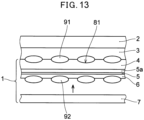
- FIGS 1 to 6 and 13 represent embodiments that do not form part of the invention but represent art that is useful for understanding the invention.
- a decorative film formed body includes a base material, an adhesive layer, a vapor deposition layer, and a protection layer.
- the vapor deposition layer has recesses and projections formed on a surface thereof.
- the adhesive layer includes scale-shaped fillers (only in the case of the first group) or lens-shaped fillers (only in the case of the third group).
- the recesses and projections include projecting portions projecting toward the adhesive layer side, and the protection layer includes lens-shaped fillers (only in the case of the second group).
- the recesses and projections include projecting portions projecting toward the adhesive layer side, and the protection layer includes scale-shaped fillers (only in the case of the fourth group).
- the decorative film formed body have a distinctness of image of from 10 to 92, and that a ratio (GS60°/L*45) of a specular glossiness (GS60°) given when an incident angle is 60° to an L* value (L*45) given when an incident angle and an acceptance angle are 45° be from 5 to 55. That is, the decorative formed body according to the present embodiment is a vapor deposition film including a vapor deposition layer, and it is preferred that the distinctness of image and the ratio (GS60°/L*45) be adjusted so as to fall within the ranges described above.
- the decorative film formed body accurately reproduces metallic design presentation of satin plating with less color blur.
- the base material is not particularly limited.
- the base material include a resin sheet, paper, fabric, a rubber sheet, and a foam sheet.
- the resin sheet include: a polyolefin-based resin sheet made of polyethylene (PE), polypropylene (PP), or an ethylene-propylene copolymer; a polyester-based resin sheet made of polyethylene terephthalate (PET), polybutylene terephthalate (PBT), or polyethylene naphthalate (PEN); a vinyl chloride resin sheet; a vinyl acetate resin sheet; a polyimide resin sheet; a polyamide resin sheet; a fluorocarbon resin sheet; and cellophane.
- PE polyethylene
- PP polypropylene
- PEN polyethylene naphthalate
- Examples of the paper include Japanese paper, kraft paper, glassine paper, woodfree paper, synthetic paper, and topcoat paper.
- Examples of the fabric include woven fabric and nonwoven fabric formed through spinning of a single fibrous material or various fibrous materials.
- Examples of the rubber sheet include a natural rubber sheet and a butyl rubber sheet.
- Examples of the foam sheet include a foamed PE sheet, a foamed polyolefin sheet, a foamed polyester sheet, a foamed polyurethane sheet, and a foamed polychloroprene rubber sheet.
- the base material be made of polyethylene terephthalate (PET) in consideration of, for example, physical characteristics (for example, dimension stability, thickness accuracy, workability, and tensile strength) and economic efficiency.
- PET polyethylene terephthalate
- a thickness of the base material is not particularly limited.
- the base material has a thickness of from about 4 pm to 200 pm.
- the base material is less liable to have a curl or wrinkles, is excellent in transfer performance, and involves less cost.
- the adhesive layer includes scale-shaped fillers.
- a resin forming the adhesive layer is not particularly limited.
- the adhesive layer is made of an acrylic resin, a urethane resin, a urethane-modified polyester resin, a polyester resin, an epoxy resin, an ethylene vinyl acetate copolymer resin (EVA), a vinyl resin (vinyl chloride copolymer resin, vinyl acetate copolymer resin, or vinyl chloride-vinyl acetate copolymer resin), a styrene-ethylene-butylene copolymer resin, a polyvinyl alcohol resin, a polyacrylamide resin, isobutylene rubber, isoprene rubber, natural rubber, SBR, NBR, or silicone rubber. Those resins may be dissolved in a solvent for use or may be used without any solvent.
- a thickness of the adhesive layer is not particularly limited.
- the adhesive layer has a thickness of from about 0.5 pm to about 5 pm.
- the vapor deposition layer is not particularly limited.
- the vapor deposition layer is at least one kind selected from the group consisting of nonmetal, metal, metal oxide, and metal nitride (also referred to as "metal or the like").
- the nonmetal and the metal or the like are not particularly limited. Examples of the nonmetal include amorphous carbon (DLC) and a composite thereof.
- Examples of the metal or the like include at least one metal selected from the group consisting of silicon, titanium, tin, zinc, aluminum, indium, and magnesium, an oxide thereof, and a nitride thereof.
- the metal or the like be, for example, aluminum, aluminum oxide, indium, tin, silicon oxide, silicon nitride, silicon oxynitride, aluminum zinc oxide (AZO), or zinc tin oxide (ZTO), more preferably aluminum, aluminum oxide, indium or tin.
- the vapor deposition layer is made of aluminum, aluminum oxide, indium or tin, a decorative film formed body to be obtained is likely to exhibit the metallic design presentation of satin plating.
- a thickness of the vapor deposition layer is not particularly limited.
- the vapor deposition layer have a thickness of equal to or larger than 7 nm, more preferably equal to or larger than 20 nm.
- the vapor deposition layer have a thickness of equal to or smaller than 100 nm, more preferably equal to or smaller than 80 nm.
- the vapor deposition layer has suitable flexibility.
- the protection layer is not particularly limited.
- a material of the protection layer include poly(meth)acrylate ester, polycarbonate, polyethylene terephthalate, polyethylene-2,6-naphthalate, polyvinyl fluoride (PVF), polyvinylidene difluoride (PVDF), polytetrafluoroethylene (PTFE), polychlorotrifluoroethylene (PCTFE), an ethylene-tetrafluoroethylene copolymer (ETFE), an ethylene-chlorotrifluoroethylene copolymer (ECTFE), a tetrafluoroethylene-perfluoroalkylvinyl ether copolymer (PFA), and a tetrafluoroethylene-hexafluoropropylene copolymer (FEP).
- PVF polyvinyl fluoride
- PVDF polyvinylidene difluoride
- PTFE polytetrafluoroethylene
- PCTFE polychlorotrifluoroethylene
- the protection layer includes lens-shaped fillers. Other configurations of the protection layer of the second group are similar to those of the first group and the third group. Moreover, only in the case of the fourth group, the protection layer includes scale-shaped fillers. Other configurations of the protection layer of the fourth group are similar to those of the first group and the third group.
- a thickness of the protection layer is not particularly limited.
- the protection layer have a thickness of equal to or larger than 1.0 pm and equal to or smaller than 20 pm.
- the decorative film formed body is excellent in abrasion resistance and wear resistance.
- the distinctness of image be equal to or more than 10. Moreover, it is preferred that the distinctness of image be equal to or less than 92, more preferably equal to or less than 72, still more preferably equal to or less than 48.
- the distinctness of image is less than 10
- the decorative film formed body has an excessively high degree of matteness, with the result that the design presentation of the satin plating pattern is less likely to be expressed.
- the distinctness of image is more than 92
- the decorative film formed body has an excessively low degree of matteness, with the result that the design presentation of the satin plating pattern is less likely to be expressed.
- the distinctness of image (unit: %) is measured in accordance with ASTM-D5767, and may be calculated by measuring a distinctness of image (DOI) of a surface of the formed body with use of, for example, Appearance Analyzer (Rhopoint IQ-S, manufactured by Rhopont Instruments).
- DOE distinctness of image
- the ratio (GS60°/L*45) be equal to or more than 5, more preferably equal to or more than 15. Moreover, it is preferred that the ratio (GS60°/L*45) be equal to or less than 55, more preferably equal to or less than 45.
- the ratio (GS60°/L*45) is less than 5
- the decorative film formed body has an excessively small value of GS60° or an excessively larger value of L*45, with the result that the dull metallic gloss of the satin pattern is less likely to be expressed.
- the decorative film formed body has an excessively large value of GS60° or an excessively small value of L*45, with the result that the metallic gloss is liable to be excessively expressed, and an appearance thereof is liable to be different from the characteristic metallic gloss of the satin pattern.
- the specular glossiness given when an incident angle is 60° can be measured by irradiating the surface of the formed body with light at an incident angle of 60° and receiving specular reflection light, for example, with use of Appearance Analyzer (Rhopoint IQ-S, manufactured by Rhopont Instruments).
- the L* value given when an incident angle and an acceptance angle are 45° can be measured by measuring color of the surface of the formed body and calculating an L value given when the incident angle and the acceptance angle are 45° with use of, for example, a multi-angle spectrophotometer (MA-T6, manufactured by X-Rite, Incorporated).
- the ratio (GS60°/L*45) can be calculated by dividing the obtained value of the specular glossiness (GS60°) by the value of L*45.
- a method of adjusting the distinctness of image and the ratio (GS60°/L*45) within the ranges described above is not particularly limited.
- the distinctness of image and the ratio (GS60°/L*45) of the decorative film formed body of the present embodiment may be adjusted within the ranges described above by processing a surface texture of any one of the layers or adding fillers.
- the distinctness of image and the ratio (GS60°/L*45) of the decorative film formed body of the present embodiment may be adjusted within the ranges described above by (1) a method of adding fillers to form recesses and projections on a surface of any one of the layers, (2) a method of causing micro layer separation in the protection layer to form recesses and projections on the surface of the protection layer, (3) a method of volatilizing a solvent used for formation of each layer (solvent containing resin) to form a coarse surface texture of the layer, (4) a method of pressing a die having recesses and projections onto each layer to form recesses and projections on the surface, (5) a method of causing any one of the layers to include air, and (6) a method of performing laser etching on any one of the layers.
- a case of adding fillers to form recesses and projections on respective surfaces of the vapor deposition layer and the protection layer is exemplified.
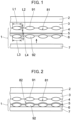
- FIG. 1 is a schematic sectional view for illustrating a manufacturing method for a decorative film formed body 1 according to the present embodiment.
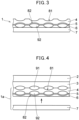
- FIG. 2 is a schematic sectional view for illustrating the manufacturing method for the decorative film formed body 1 according to the present embodiment.
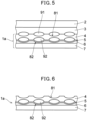
- FIG. 3 is a schematic sectional view for illustrating the decorative film formed body 1 according to the present embodiment.
- the manufacturing method for the decorative film formed body 1 and a mounting method for a transfer base material include: a release layer forming step of forming a release layer 3 on a separation base material 2; a protection layer forming step of forming a protection layer 4 on the release layer 3; a vapor deposition layer forming step of forming a vapor deposition layer 5 on the protection layer 4; an adhesive layer forming step of forming an adhesive layer 6 on the vapor deposition layer 5; a transfer base material forming step of forming a transfer base material 7 on the adhesive layer 6; and a separating step of separating the separation base material 2 and the release layer 3.
- the protection layer forming step includes a first recesses/projections forming step of forming recesses and projections 81 on a surface of the protection layer 4.
- the transfer base material forming step includes a second recesses/projections forming step of forming recesses and projections 82 on a surface of the vapor deposition layer 5.
- the release layer forming step is a step of forming the release layer 3 on the separation base material 2.
- the separation base material 2 is not particularly limited.
- the separation base material 2 include a resin sheet, paper, fabric, a rubber sheet, and a foam sheet.
- the resin sheet include: a polyolefin-based resin sheet made of polyethylene (PE), polypropylene (PP), or an ethylene-propylene copolymer; a polyester-based resin sheet made of polyethylene terephthalate (PET), polybutylene terephthalate (PBT), or polyethylene naphthalate (PEN); a vinyl chloride resin sheet; a vinyl acetate resin sheet; a polyimide resin sheet; a polyamide resin sheet; a fluorocarbon resin sheet; and cellophane.
- Examples of the paper include Japanese paper, kraft paper, glassine paper, woodfree paper, synthetic paper, and topcoat paper.
- Examples of the fabric include woven fabric and nonwoven fabric formed through spinning of a single fibrous material or various fibrous materials.
- Examples of the rubber sheet include a natural rubber sheet and a butyl rubber sheet.
- Examples of the foam sheet include a foamed PE sheet, a foamed polyolefin sheet, a foamed polyester sheet, a foamed polyurethane sheet, and a foamed polychloroprene rubber sheet.
- the base material be made of polyethylene terephthalate (PET) in consideration of, for example, physical characteristics (for example, dimension stability, thickness accuracy, workability, and tensile strength) and economic efficiency.
- PET polyethylene terephthalate
- a thickness of the separation base material 2 is not particularly limited.
- the separation base material 2 has a thickness of from about 4 pm to 200 pm.
- the base material is less liable to have a curl or wrinkles, is excellent in transfer performance, and involves less cost.
- the release layer 3 is not particularly limited.
- the release layer 3 is a release agent made of a silicone resin, a fluororesin, a cellulose-derivative resin, a urea resin a polyolefin resin, or a melamine resin.
- a method of forming the release layer 3 is not particularly limited.
- the release layer 3 may be formed by applying a release agent on the separation base material 2 with use of a roll coater.
- a thickness of the release layer 3 is not particularly limited.
- the release layer 3 has a thickness of from about 0.01 pm to about 5 pm.
- the release layer 3 of the present embodiment includes amorphous fillers.
- a raw material of the amorphous fillers is not particularly limited.
- the raw material of the amorphous fillers include melamine-based resin particles, acryl-based resin particles, acrylic styrene-based copolymer particles, polycarbonate-based particles, polyethylene-based particles, and polystyrene-based particles.
- examples of inorganic fillers include silica particles, talc, and boron nitride. The amorphous fillers may be used in combination.
- each of the amorphous fillers be a shape other than a true spherical shape, more preferably a lens-like (oval sphere) shape or a scale-like shape.
- the amorphous fillers each have a shape other than the true spherical shape, the fillers do not scatter light in all directions and are less liable to have a whity appearance.
- the decorative film formed body 1 to be obtained is likely to express the metallic pattern of satin plating.
- FIG. 1 to FIG. 3 an example of using lens-shaped fillers 91 is disclosed.
- An example of using scale-shaped fillers 92 is described later as a third embodiment and a fourth embodiment.
- each of the amorphous fillers are not particularly limited.
- the lens-shaped fillers 91 each have a major diameter L1 of equal to or larger than 2.0 pm, more preferably equal to or larger than 6.0 pm.
- the lens-shaped fillers 91 each have a major diameter L1 of equal to or smaller than 20 pm, more preferably equal to or smaller than 10 pm.
- the lens-shaped fillers 91 each have a thickness L2 of equal to or larger than 1.0 pm, more preferably equal to or larger than 2.0 pm.
- the lens-shaped fillers 91 each have a thickness L2 of equal to or smaller than 5.0 pm, more preferably equal to or smaller than 3.0 pm. Moreover, it is preferred that the lens-shaped fillers 91 each have an aspect ratio (major diameter/thickness) of equal to or more than 1.0, more preferably equal to or more than 2.0. Moreover, it is preferred that the lens-shaped fillers 91 each have an aspect ratio of equal to or less than 10, more preferably equal to or less than 5.0.
- the recesses and projections 81 each having desired dimensions are likely to be formed on a surface of the protection layer 4 formed on the release layer 3 in the protection layer forming step described later.
- the decorative film formed body 1 to be obtained is likely to achieve, in particular, both the metallic gloss and the low distinctness of image.
- the release layer 3 including the lens-shaped fillers 91 is formed on the separation layer, the release layer 3 is cured under a state in which some of the lens-shaped fillers 91 are exposed from the surface of the release layer 3.
- the protection layer forming step is a step of forming the protection layer 4 on the release layer 3.
- a raw material, dimensions, and other features of the protection layer 4 are similar to those described above.
- a method of forming the protection layer 4 is not particularly limited.
- the protection layer 4 may be formed by applying a resin solution, which is suitably dissolved in a solvent and forms the protection layer 4, on the release layer 3 with use of a roll coater.
- the protection layer 4 is formed on the release layer 3 having the lens-shaped fillers 91 exposed therefrom.
- the recesses and projections 81 are formed (first recesses/projections forming step) along the shape of the lens-shaped fillers 91 exposed from the release layer 3 on the surface of the protection layer 4 which is located on a side in contact with the release layer 3.
- the vapor deposition layer forming step is a step of forming the vapor deposition layer 5 on the protection layer 4.
- a raw material, dimensions, and other features of the vapor deposition layer 5 are similar to those described above.
- a method of forming the vapor deposition layer 5 on the protection layer 4 is not particularly limited.
- a vapor deposition method to be suitably adopted may include physical vapor deposition methods such as a vacuum vapor deposition method, a sputtering method, and an ion plating method, and chemical vapor deposition methods, which have hitherto been well known. It is preferred that, in the manufacturing method for the decorative film formed body 1 according to the present invention, the vapor deposition layer 5 be provided by the vacuum vapor deposition method among the methods described above because of high productivity.
- vapor deposition conditions conditions having hitherto been known are suitably adopted based on a material of the vapor deposition layer 5 and a desired thickness of the vapor deposition layer 5.
- a metal material it is preferred that a metal material have less impurities and have a purity of equal to or higher than 99 weight%, more preferably 99.5 weight%.
- the metal material be processed into a particle shape, a rod shape, a tablet shape, a wire shape, or a shape of a crucible to be used.
- a heating method for vaporizing the metal material a well-known method may be used, such as a method of performing resistance heating or high-frequency heating after placing a metal material into a crucible, a method of performing electron beam heating, a method of directly placing a metal material into a board made of ceramic such as boron nitride and directly performing resistance heating.
- the crucible to be used for the vacuum vapor deposition be made of carbon, and may be a crucible made of alumina, magnesia, titania, or berylia.
- the adhesive layer forming step is a step of forming the adhesive layer 6 on the vapor deposition layer 5.
- a raw material, dimensions, and other features of the adhesive layer 6 are similar to those described above.
- a method of forming the adhesive layer 6 is not particularly limited.
- the adhesive layer 6 may be formed by applying a resin solution, which is suitably dissolved in a solvent and forms the adhesive layer 6, on the vapor deposition layer 5 with use of a roll coater.
- the adhesive layer 6 of the present embodiment includes lens-shaped fillers 92.
- a raw material and other features of the lens-shaped fillers 92 are similar to those described above.
- the lens-shaped fillers 92 each have a major diameter L3 of equal to or larger than 2.0 pm and equal to or smaller than 20 pm. Moreover, it is preferred that the lens-shaped fillers 92 each have a thickness L4 of equal to or larger than 1.0 pm and equal to or smaller than 5.0 pm. Further, it is preferred that the lens-shaped fillers 92 each have an aspect ratio (major diameter /thickness) of equal to or more than 1.0 and equal to or less than 20.
- the recesses and projections 81 each having desired dimensions are likely to be formed on a surface of the protection layer 4 formed on the release layer 3 in the protection layer forming step described later.
- the decorative film formed body 1 to be obtained is likely to achieve, in particular, both the metallic gloss and the low distinctness of image.
- the lens-shaped fillers 92 each have a thickness larger than a thickness of the adhesive layer 6, more particularly larger than the thickness of the adhesive layer 6 by 0.5 pm or larger so that, in the transfer base material forming step described later, the vapor deposition layer 5 can be deformed by bringing the transfer base material 7 into abutment against the adhesive layer 6 to press the lens-shaped fillers 92 in the thickness direction of the adhesive layer 6. With this, in the transfer base material forming step described later, the vapor deposition layer 5 is likely to be deformed so that the recesses and projections 82 having the desired sizes are formed.
- the adhesive layer 6 including the lens-shaped fillers 92 is formed on the vapor deposition layer 5
- the adhesive layer 6 is solidified under a state in which some of the lens-shaped fillers 92 are exposed from the surface of the adhesive layer 6.
- the transfer base material forming step is a step of forming (mounting) the transfer base material 7 on the adhesive layer 6.
- a raw material, dimensions, and other features of the transfer base material 7 are similar to those described above.
- the lens-shaped fillers 92 are embedded in the thickness direction of the adhesive layer 6, and the vapor deposition layer 5 is deformed.
- recesses and projections 82 projecting portions each having a substantially cup shape and projecting toward the protection layer 4 side
- the lens-shaped fillers each have a thickness larger than a thickness of the adhesive layer 6. With this, the recesses and projections 82 are likely to be formed on the surface of the vapor deposition layer 5.
- the projecting portions each have a maximum diameter of equal to or larger than 2.0 pm and equal to or smaller than 20 pm. It is preferred that the projecting portions each have a height of equal to or larger than 0.5 pm and equal to or smaller than 5.0 pm.
- the maximum diameter and the height of each of the projecting portions fall within the ranges described above, the decorative film formed body 1 to be obtained is likely to be suitably adjusted in degree of matteness, and hence the distinctness of image is likely to be adjusted so as to fall within the range described above.
- the distinctness of image contributing to the matteness and the glossiness contributing to the contrast are more likely to fall within predetermined ranges, thereby being capable of more accurately reproducing the metallic design presentation of satin plating with less color blur.
- the separating step is a step of separating the separation base material 2 and the release layer 3 from each other. As illustrated in FIG. 3 , in the separating step, the separation base material 2 and the release layer 3 (including lens-shaped fillers 91) are separated from each other. As a result, on the surface of the protection layer 4, the recesses and projections 81 (recessed portions each having a substantially cup shape recessed in the thickness direction of the protection layer 4) having a shape complementary to the lens-shaped fillers 91 exposed from the release layer 3 are formed.
- the recessed portions each have a maximum diameter of equal to or larger than 2.0 pm and equal to or smaller than 20 pm. It is preferred that the recessed portions each have a depth of equal to or larger than 0.5 pm and equal to or smaller than 5.0 pm.
- the maximum diameter and the depth of each of the recessed portions fall within the ranges described above, the decorative film formed body 1 to be obtained is likely to be suitably adjusted in degree of contrast, and hence the ratio (GS60°/L*45) is likely to be adjusted so as to fall within the range described above.
- the distinctness of image contributing to the matteness and the glossiness contributing to the contrast are more likely to fall within predetermined ranges, thereby being capable of more accurately reproducing the metallic design presentation of satin plating with less color blur.
- the maximum diameter of each of the projecting portions or the maximum diameter of each of the recessed portions is obtained by observing a surface of the decorative film formed body from a perpendicular direction with use of an electron microscope or an optical microscope, randomly sampling twenty projecting portions or recessed portions, measuring maximum diameters of contours of the projecting portions or the recessed portions, and calculating the maximum diameter based on an average value of the twenty samples.
- the decorative film formed body 1 has the recesses and projections (recesses and projections 81 and recesses and projections 82) on the surfaces of the protection layer 4 and the vapor deposition layer 5.
- the recesses and projections 81 formed on the surface of the protection layer 4 mainly contribute to the matteness.
- the recesses and projections 82 formed on the surface of the vapor deposition layer 5 mainly contribute to the contrast.
- the decorative film formed body 1 is likely to be adjusted so that a distinctness of image is set to from 10 to 92 and that a ratio (GS60°/L*45) of a specular glossiness (GS60°) given when an incident angle is 60° to an L* value (L*45) given when an incident angle and an acceptance angle are 45° is set to from 5 to 55.
- Such decorative film formed body 1 is capable of exhibiting excellent metallic design presentation of satin plating with less color blur.
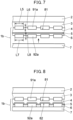
- FIG. 4 is a schematic sectional view for illustrating a manufacturing method for a decorative film formed body 1a according to the present embodiment.
- FIG. 5 is a schematic sectional view for illustrating the manufacturing method for the decorative film formed body 1a according to the present embodiment.
- FIG. 6 is a schematic sectional view for illustrating the decorative film formed body 1a according to the present embodiment.
- the decorative film formed body 1a and the manufacturing method for the decorative film formed body 1a according to the present embodiment are similar to the decorative film formed body 1 (see FIG.
- a release layer forming step is similar to the release layer forming step described above in relation to the first embodiment.
- the protection layer forming step is a step of forming the protection layer 4 on the release layer 3.
- a raw material, dimensions, and other features of the protection layer 4 are similar to those described above.
- a method of forming the protection layer 4 is not particularly limited.
- the protection layer 4 may be formed by applying a resin solution, which is suitably dissolved in a solvent and forms the protection layer 4, on the release layer 3 with use of a roll coater.
- the protection layer 4 of the present embodiment includes the lens-shaped fillers 92.
- a raw material, dimensions, and other features of each of the lens-shaped fillers 92 are similar to those described above.
- the protection layer 4 including the lens-shaped fillers 92 is formed on the release layer 3, the protection layer 4 is solidified under a state in which some of the lens-shaped fillers 92 are exposed from the surface of the protection layer 4.
- the vapor deposition layer forming step is a step of forming the vapor deposition layer 5 on the protection layer 4.
- a raw material, dimensions, a vapor deposition method, and other features of the vapor deposition layer 5 are similar to those described above.
- the vapor deposition layer 5 is formed on the protection layer 4 having the lens-shaped fillers 92 exposed therefrom.
- the vapor deposition layer 5 has the recesses and projections 82 formed on a surface thereof on a side in contact with the protection layer 4 along a shape of the lens-shaped fillers 92 exposed from the protection layer 4.
- the adhesive layer forming step is a step of forming the adhesive layer 6 on the vapor deposition layer 5.
- a raw material, dimensions, and other features of the adhesive layer 6 are similar to those described above.
- a method of forming the adhesive layer 6 is not particularly limited.
- the adhesive layer 6 may be formed by applying a resin solution, which is suitably dissolved in a solvent and forms the adhesive layer 6, on the vapor deposition layer 5 with use of a roll coater.
- the transfer base material forming step is a step of forming (mounting) the transfer base material 7 on the adhesive layer 6.
- a raw material, dimensions, and other features of the transfer base material 7 are similar to those described above.
- the separating step is a step of separating the separation base material 2 and the release layer 3 from each other. As illustrated in FIG. 5 and FIG. 6 , in the separating step, the separation base material 2 and the release layer 3 (including lens-shaped fillers 91) are separated from each other. As a result, on the surface of the protection layer 4, the recesses and projections 81 having a shape complementary to the lens-shaped fillers 91 exposed from the release layer 3 are formed.
- the decorative film formed body 1a has the recesses and projections (recesses and projections 81 and recesses and projections 82) on the surfaces of the protection layer 4 and the vapor deposition layer 5.
- the recesses and projections 81 formed on the surface of the protection layer 4 mainly contribute to the matteness.
- the recesses and projections 82 formed on the surface of the vapor deposition layer 5 mainly contribute to the contrast.
- the decorative film formed body 1a is likely to be adjusted so that a distinctness of image is set to from 10 to 92 and that a ratio (GS60°/L*45) of a specular glossiness (GS60°) given when an incident angle is 60° to an L* value (L*45) given when an incident angle and an acceptance angle are 45° is set to from 5 to 55.
- Such decorative film formed body 1a is capable of exhibiting excellent metallic design presentation of satin plating with less color blur.
- FIG. 7 is a schematic sectional view for illustrating a manufacturing method for a decorative film formed body 1b according to the present embodiment.
- FIG. 8 is a schematic sectional view for illustrating the manufacturing method for the decorative film formed body 1b according to the present embodiment.
- FIG. 9 is a schematic sectional view for illustrating the decorative film formed body 1b according to the present embodiment.
- the decorative film formed body 1b and the manufacturing method for the decorative film formed body 1b according to the present invention are similar to the decorative film formed body 1 (see FIG.
- the release layer forming step is a step of forming the release layer 3 on the separation base material 2.
- the release layer forming step of the present embodiment is similar to the release layer forming step of the first embodiment except that scale-shaped fillers 91a are used as the amorphous fillers.
- the fillers 91a each having a scale-like shape have a major diameter L5 of equal to or larger than 0.5 pm and equal to or smaller than 10 pm. Moreover, it is preferred that the scale-shaped fillers 91a each have a thickness L6 of equal to or larger than 0.05 pm and equal to or smaller than 0.5 pm. Further, it is preferred that the scale-shaped fillers 91a each have an aspect ratio (major diameter/thickness) of equal to or more than 10 and equal to or less than 150.
- the recesses and projections 81 each having desired dimensions are likely to be formed on a surface of the protection layer 4 formed on the release layer 3 in the protection layer forming step described later.
- the decorative film formed body 1b to be obtained is likely to achieve, in particular, both the metallic gloss and low distinctness of image.
- the release layer 3 including the scale-shaped fillers 91a is formed on the separation base material 2, the release layer 3 is solidified under a state in which some of the scale-shaped fillers 91a are exposed from the surface of the release layer 3.
- a protection layer forming step and a vapor deposition layer forming step are similar to the protection layer forming step and the vapor deposition layer forming step of the first embodiment.
- the adhesive layer forming step is a step of forming the adhesive layer 6 on the vapor deposition layer 5.
- a raw material, dimensions, and other features of the adhesive layer 6 are similar to those described above.
- a method of forming the adhesive layer 6 is not particularly limited.
- the adhesive layer 6 may be formed by applying a resin solution, which is suitably dissolved in a solvent and forms the adhesive layer 6, on the vapor deposition layer 5 with use of a roll coater.
- the adhesive layer 6 of the present embodiment includes scale-shaped fillers 92a.
- a raw material and other features of each of the scale-shaped fillers 92a are similar to those described above.
- a major diameter L7 and a thickness L8 of each of the scale-shaped fillers 92a are similar to the major diameter L5 and the thickness L6 of each of the scale-shaped fillers 91a described above.
- the scale-shaped fillers 92a each have a thickness larger than a thickness of the adhesive layer 6 so that, in the transfer base material forming step described later, the vapor deposition layer 5 can be deformed by bringing the transfer base material 7 into abutment against the adhesive layer 6 to press the scale-shaped fillers 92a in the thickness direction of the adhesive layer 6.
- the vapor deposition layer 5 is likely to be deformed so that the recesses and projections 82 each having desired sizes are formed.
- the adhesive layer 6 including the scale-shaped fillers 92a is formed on the vapor deposition layer 5
- the adhesive layer 6 is solidified under a state in which some of the scale-shaped fillers 92a are exposed from the surface of the adhesive layer 6.
- the transfer base material forming step is a step of forming (mounting) the transfer base material 7 on the adhesive layer 6.
- the transfer base material forming step of the present embodiment is similar to the transfer base material forming step of the first embodiment except that the scale-shaped fillers 92a are used as the amorphous fillers.
- the recesses and projections 82 formed on the vapor deposition layer 5 are recesses and projections formed so as to follow the shape of the scale-shaped fillers 92a. Therefore, the shape of each of the recesses and projections 82 is not a rectangular sectional shape in strict sense and is a substantially rectangular shape with somewhat rounded corners.
- the separating step is a step of separating the separation base material 2 and the release layer 3 from each other.
- the separation base material 2 and the release layer 3 including the scale-shaped fillers 91a
- the recesses and projections 81 having a shape complementary to the scale-shaped fillers 91a exposed from the release layer 3 is formed.
- the recesses and projections formed on the surface of the protection layer 4 are recesses and projections formed so as to follow the shape of the scale-shaped fillers 91a. Therefore, the shape of each of the recesses and projections 81 is not a rectangular sectional shape in strict sense and is a substantially rectangular shape with somewhat rounded corners.
- the decorative film formed body 1b has the recesses and projections (recesses and projections 81 and recesses and projections 82) on the surfaces of the protection layer 4 and the vapor deposition layer 5.
- the recesses and projections 81 formed on the surface of the protection layer 4 mainly contribute to the matteness.
- the recesses and projections 82 formed on the surface of the vapor deposition layer 5 mainly contribute to the contrast.
- the decorative film formed body 1b is likely to be adjusted so that a distinctness of image is set to from 10 to 92 and that a ratio (GS60°/L*45) of a specular glossiness (GS60°) given when an incident angle is 60° to an L* value (L*45) given when an incident angle and an acceptance angle are 45° is set to from 5 to 55.
- Such decorative film formed body 1b is capable of exhibiting excellent metallic design presentation of satin plating with less color blur.
- FIG. 10 is a schematic sectional view for illustrating a manufacturing method for a decorative film formed body 1c according to the present embodiment.
- FIG. 11 is a schematic sectional view for illustrating the manufacturing method for the decorative film formed body 1c according to the present embodiment.
- FIG. 12 is a schematic sectional view for illustrating the decorative film formed body 1c according to the present embodiment.
- the decorative film formed body 1c and the manufacturing method for the decorative film formed body 1c according to the present embodiment are similar to the decorative film formed body 1a (see FIG.
- the release layer forming step is a step of forming the release layer 3 on the separation base material 2.
- the release layer forming step of the present embodiment is similar to the release layer forming step of the second embodiment except that the scale-shaped fillers 91a are used as the amorphous fillers. Moreover, dimensions of each of the scale-shaped fillers 91a are similar to the dimensions described above in the third embodiment.
- the release layer 3 including the scale-shaped fillers is formed on the separation layer, the release layer 3 is solidified under a state in which some of the scale-shaped fillers 91a are exposed from the surface of the release layer 3.
- the protection layer forming step to the separating step are similar to the protection layer forming step and the vapor deposition layer forming step of the second embodiment except that the scale-shaped fillers 92a are used as the amorphous fillers. Moreover, dimensions of each of the scale-shaped fillers 92a are similar to the dimensions described above in the third embodiment.
- the decorative film formed body 1c has the recesses and projections (recesses and projections 81 and recesses and projections 82) on the surfaces of the protection layer 4 and the vapor deposition layer 5.
- the recesses and projections 81 formed on the surface of the protection layer 4 mainly contribute to the matteness.
- the recesses and projections 82 formed on the surface of the vapor deposition layer 5 mainly contribute to the contrast.
- the decorative film formed body 1c is likely to be adjusted so that a distinctness of image is set to from 10 to 92 and that a ratio (GS60°/L*45) of a specular glossiness (GS60°) given when an incident angle is 60° to an L* value (L*45) given when an incident angle and an acceptance angle are 45°is set to from 5 to 55.
- Such decorative film formed body 1c is capable of exhibiting excellent metallic design presentation of satin plating with less color blur.
- the decorative film formed bodies produced in the embodiments described above each exhibit excellent metallic design presentation of satin plating with less color blur. Therefore, such decorative film formed bodies can be used for various products having the metallic pattern of satin plating (satin-plated preparation, for example, various containers, various casings and various vehicle interior/exterior members). With this, the satin-plated preparation to be obtained exhibits excellent metallic design presentation of satin plating with less color blur.
- the decorative film formed bodies according to the present embodiments are applied to various containers, thereby being capable of obtaining various containers exhibiting excellent metallic design presentation of satin plating with less color blur with regard to containers for which an outer appearance with gloss presentation and luxurious presentation are desired, such as a container for cosmetics and a container for beverage.
- the decorative film formed bodies according to the present embodiments are applied to various casings, thereby being capable of obtaining various casings exhibiting excellent metallic design presentation of satin plating with less color blur with regard to casings for which an outer appearance with gloss presentation and luxurious presentation are desired, such as casings for communication devices like a mobile phone and home electric appliances.
- the decorative film formed bodies according to the present embodiments are applied to various vehicle interior/exterior members, thereby being capable of obtaining various vehicle interior/exterior members exhibiting excellent metallic design presentation of satin plating with less color blur with regard to various vehicle interior/exterior members for which an outer appearance with gloss presentation and luxurious presentation are desired.
- the decorative film formed bodies according to the present embodiments are favorably applied to a part or an entirety of items for which security and inimitability, such as a membership certificate, a product tag, a patient registration card, a student identification card, a cash card, a credit card, a boarding ticket, a mileage card, a point card, and a magnetic card, in which identification information of a customer, an item, and the like are stored.
- security and inimitability such as a membership certificate, a product tag, a patient registration card, a student identification card, a cash card, a credit card, a boarding ticket, a mileage card, a point card, and a magnetic card, in which identification information of a customer, an item, and the like are stored.
- the recesses and projections formed on the surface of the protection layer are recessed portions.
- projecting portions may be formed on the surface of the protection layer.
- the projecting portions on the surface of the protection layer may be formed by adding fillers each having a large particle diameter to the adhesive layer, pushing up the fillers at the time of transfer similarly to the contents of the embodiments, and affecting not only the metal layer but also the surface of the protection layer.
- the vapor deposition layer forming step there is exemplified the step of forming the vapor deposition layer on the protection layer.
- the vapor deposition layer forming step may be a step of forming the vapor deposition anchor layer on the protection layer and then forming the vapor deposition layer on the vapor deposition anchor layer.
- FIG. 13 is a schematic sectional view for illustrating the decorative film formed body obtained by forming a vapor deposition anchor layer 5a on the protection layer 4 and then forming the vapor deposition layer 5 on the vapor deposition anchor layer 5a.
- the vapor deposition anchor layer 5a is preferably provided to improve the adhesion between the protection layer 4 and the vapor deposition layer 5.
- the vapor deposition anchor layer 5a is not particularly limited. For example, it is only required that the vapor deposition anchor layer 5a exhibit excellent adhesion with respect to the protection layer 4 and be made of a raw material that is likely to receive the metal forming the vapor deposition layer 5. Examples of the raw material include acryl-based resin, nitrocellulose-based resin, polyurethane-based resin, polyester-based resin, styrene-male-based acid resin, and chlorinated PP-based resin.
- a method of forming the vapor deposition anchor layer 5a is not particularly limited.
- the vapor deposition anchor layer 5a may be formed by applying a resin solution, which is suitably dissolved in a solvent and forms the vapor deposition anchor layer 5a, on the protection layer 4 with use of a roll coater.
- a thickness of the vapor deposition anchor layer 5a is not particularly limited.
- the vapor deposition anchor layer 5a have a thickness of from 0.1 pm to 3 pm.
- a polyfunctional acrylate resin solution (97 parts) and a photopolymerization curing agent (additive amount: 3 part) were applied on the release layer with use of a bar coater, thereby producing a protection layer (thickness: 5.0 pm) (protection layer forming step).
- Acrylic resin (additive amount: 100 parts) was applied on the protection layer with use of a bar coater.
- This uncured resin layer was cured at 110°C with a duration of 30 seconds, thereby producing a vapor deposition anchor layer (thickness: 1.0 pm). Vacuum vapor deposition of indium was performed on the vapor deposition anchor layer with use of a resistance heating vapor deposition machine.
- An indium film (vapor deposition layer) having a thickness of 50 nm was formed (vapor deposition layer forming step).
- Acrylic resin additive amount: 38 parts
- a urethane resin solution additive amount: 57 parts
- lens-shaped fillers acryl, manufactured by SEKISUI PLASTICS CO., LTD., dimension: major diameter 7.2 pm, thickness 2.8 pm, additive amount: 5 parts
- the separation base material and the release layer were separated, and the recesses and projections were formed on the protection layer (details of recesses and projections: a recessed shape with an average diameter of 7.2 pm and a depth of from 1.0 pm to 1.5 pm).
- the protection layer was cured with an integrated light intensity of 500 mJ/cm 2 , thereby obtaining a decorative film formed body.
- a decorative film formed body was produced by a method similar to that of Example 1 except that the following steps were adopted as the release layer forming step and the adhesive layer forming step.
- lens-shaped fillers composition: acryl, manufactured by SEKISUI PLASTICS CO., LTD., dimension: major diameter 2.9 pm, thickness 2.1 pm, additive amount: 10 parts
- acrylic styrene resin additive amount: 91 parts
- a curing agent additive amount: 9 part
- amorphous fillers (AEROSIL 300, manufactured by NIPPON AEROSIL CO., LTD., primary particles about 7 nm, specific surface area 300 g/m 2 , additive amount: 3 parts) were incorporated into acrylic resin (additive amount: 39 parts) and a urethane resin solution (additive amount: 58 parts), and a resultant was applied with use of a bar coater and dried at 110°C with a duration of 30 seconds, thereby producing an adhesive layer (thickness: 1.0 pm) (adhesive layer forming step).
- AEROSIL 300 manufactured by NIPPON AEROSIL CO., LTD., primary particles about 7 nm, specific surface area 300 g/m 2 , additive amount: 3 parts
- a decorative film formed body was produced by a method similar to that of Example 1 except that the following steps were adopted as the release layer forming step and the adhesive layer forming step.
- the release layer forming step scale-shaped fillers (boron nitride, manufactured by Denka Company Limited., GP, dimension: major diameter 4.1 pm, thickness 0.2 pm, additive amount: 10 parts) were incorporated into an acrylic styrene resin solution (additive amount: 82 parts) and a curing agent (isocyanate, additive amount: 8 parts), and a resultant was applied with use of a bar coater.
- This uncured resin layer was cured at 50°C with a duration of 48 hours, thereby producing a release layer (thickness: 1.0 pm) (release layer forming step).
- scale-shaped fillers boron nitride, manufactured by Denka Company Limited., GP, dimension: major diameter 4.1 um, thickness 0.2 pm, additive amount: 10 parts
- amorphous fillers AEROSIL 300, manufactured by NIPPON AEROSIL CO., LTD., primary particles about 7 nm, specific surface area 300 g/m 2 , additive amount: 5 parts
- acrylic resin additive amount: 34 parts
- urethane resin additive amount: 51 parts
- a decorative film formed body was produced by a method similar to that of Example 1 except that the following steps were adopted as the release layer forming step and the adhesive layer forming step.
- the release layer forming step scale-shaped fillers (boron nitride, manufactured by Denka Company Limited., GP, dimension: major diameter 4.1 pm, thickness 0.2 pm, additive amount: 10 parts) were incorporated into acrylic styrene resin (additive amount: 82 parts) and a curing agent (isocyanate, additive amount: 8 parts), and a resultant was applied with use of a bar coater.
- This uncured resin layer was cured at 50°C with a duration of 48 hours, thereby producing a release layer (thickness: 1.0 pm) (release layer forming step).
- amorphous fillers (AEROSIL 300, manufactured by NIPPON AEROSIL CO., LTD., primary particles about 7 nm, specific surface area 300 g/m 2 , additive amount: 5 parts) were incorporated into acrylic resin (additive amount: 38 parts) and urethane resin (additive amount: 57 parts), and a resultant was applied with use of a bar coater, thereby producing an adhesive layer (thickness: 1.0 pm) (adhesive layer forming step).
- AEROSIL 300 manufactured by NIPPON AEROSIL CO., LTD., primary particles about 7 nm, specific surface area 300 g/m 2 , additive amount: 5 parts
- a decorative film formed body was produced by a method similar to that of Example 1 except that the following steps were adopted as the release layer forming step and the adhesive layer forming step.
- the release layer forming step acrylic styrene resin (content percentage: 91%) and a curing agent (isocyanate, content percentage: 9%) having no filler incorporated therein were applied with use of a bar coater.
- This uncured resin layer was cured at 50°C with a duration of 48 hours, thereby producing a release layer (thickness: 1.0 um) (release layer forming step).
- scale-shaped fillers (boron nitride, manufactured by Denka Company Limited., product name: GP, dimension: major diameter 4.1 pm, thickness 0.2 pm, additive amount :10 parts) were incorporated into an acrylic resin solution (additive amount: 36 parts) and a urethane resin solution (additive amount: 54 parts), and a resultant was applied with use of a bar coater, thereby producing an adhesive layer (thickness: 1.0 pm) (adhesive layer forming step).
- a decorative film formed body was produced by a method similar to that of Example 1.
- acrylic styrene resin additive amount: 91 parts
- a curing agent isocyanate, content percentage: 9 parts
- This uncured resin layer was cured at 50°C with a duration of 48 hours, thereby producing a release layer (thickness: 1.0 pm) (release layer forming step).
- scale-shaped fillers (boron nitride, manufactured by Denka Company Limited., GP, dimension: major diameter 4.1 um, thickness 0.2 ⁇ m, additive amount: 30 parts) were incorporated into an acrylic resin solution (additive amount: 28 parts) and a urethane resin solution (additive amount: 42 parts), and a resultant was applied with use of a bar coater, thereby producing an adhesive layer (thickness: 1.0 ⁇ m) (adhesive layer forming step).
- a decorative film formed body was produced by a method similar to that of Example 1 except that the following steps were adopted as the release layer forming step and the adhesive layer forming step.
- the release layer forming step acrylic styrene resin (additive amount: 91 parts) and a curing agent (isocyanate, additive amount: 9 parts) having no filler incorporated therein were applied with use of a bar coater.
- This uncured resin layer was cured at 50°C with a duration of 48 hours, thereby producing a release layer (thickness: 1.0 ⁇ m) (release layer forming step).
- amorphous fillers (AEROSIL 300, manufactured by NIPPON AEROSIL CO., LTD., primary particles about 7 nm, specific surface area 300 g/m 2 , additive amount: 3 parts) were incorporated into acrylic resin (additive amount: 39 parts) and urethane resin (additive amount: 58 parts), and a resultant was applied with use of a bar coater, thereby producing an adhesive layer (thickness: 1.0 ⁇ m) (adhesive layer forming step).
- AEROSIL 300 manufactured by NIPPON AEROSIL CO., LTD., primary particles about 7 nm, specific surface area 300 g/m 2 , additive amount: 3 parts
- lens-shaped fillers (acryl, manufactured by SEKISUI PLASTICS CO., LTD., dimension: major diameter 7.2 ⁇ m, thickness 2.8 ⁇ m, additive amount: 8 parts) were incorporated into acrylic melamine resin (additive amount: 93 parts) and a curing agent (p-toluenesulfonic acid, additive amount: 7 parts), and a resultant was applied with use of a bar coater.
- This uncured resin layer was cured at 150°C with a duration of 60 seconds, thereby producing a release layer (thickness: 1.0 ⁇ m) (release layer forming step).
- the fillers were exposed from the surface of the release layer.
- the lens-shaped fillers (acryl, manufactured by SEKISUI PLASTICS CO., LTD., dimension: major diameter 7.2 ⁇ m, thickness 2.8 ⁇ m, content percentage: 30%) were incorporated into polyfunctional acrylate resin, and a resultant was applied on the release layer with use of a bar coater.
- an ultraviolet ray curing device manufactured by EYE GRAPHICS Co., Ltd., ECS-4011GX, high-pressure mercury lamp
- the uncured resin was cured under a condition with an integrated light intensity of 500 mJ/cm 2 , thereby producing a protection layer (thickness: 2.5 ⁇ m) (protection layer forming step).
- Acrylic resin additive amount: 86 parts
- a curing agent isocyanate, additive amount: 14 parts
- This uncured resin layer was cured at 150°C with a duration of 60 seconds, thereby producing the vapor deposition anchor layer (thickness: 1.0 ⁇ m).
- Vacuum vapor deposition of indium was performed on the vapor deposition anchor layer with use of a resistance heating vapor deposition machine.
- Polyethylene resin was applied on the vapor deposition layer with use of a bar coater, thereby producing an adhesive layer (thickness: 1.0 ⁇ m) (adhesive layer forming step).
- a roll transfer machine manufactured by Navitas CO., LTD., RT150B
- a black ABS sheet was pressed against the adhesive layer under conditions of temperature: 180°C, speed: 30 mm/sec.
- the separation base material and the release layer were separated, and the recesses and projections were formed on the surface of the protection layer, thereby obtaining a decorative film formed body.
- a decorative film formed body was produced by a method similar to that of Example 8 except that the following step was adopted as the release layer forming step.
- lens-shaped fillers acryl, manufactured by SEKISUI PLASTICS CO., LTD., dimension: major diameter 7.2 ⁇ m, thickness 2.8 pm, additive amount: 8 parts
- acrylic melamine resin additive amount: 93 parts
- a curing agent p-toluenesulfonic acid, additive amount: 7 parts
- a decorative film formed body was produced by a method similar to that of Example 1 except that the following steps were adopted as the release layer forming step and the protection layer forming step.
- acrylic melamine resin additive amount: 93 parts
- a curing agent p-toluenesulfonic acid, additive amount: 7 parts
- This uncured resin layer was cured at 150°C with a duration of 60 seconds, thereby producing a release layer (thickness: 1.0 ⁇ m) (release layer forming step).
- lens-shaped fillers (acryl, manufactured by SEKISUI PLASTICS CO., LTD., dimension :major diameter (i) 2.9 ⁇ m, (ii) 9.6 pm, thickness (i) 2.1 ⁇ m, (ii) 2.6 ⁇ m, (i) 6.7%, (ii) 3.3%) were incorporated into the polyfunctional acrylate resin, and a resultant was applied with use of a bar coater.
- the uncured resin was cured under a condition with an integrated light intensity of 500 mJ/cm 2 , thereby producing a protection layer (thickness: 2.0 ⁇ m) (protection layer forming step).
- a decorative film formed body was produced by a method similar to that of Example 8 except that the following steps were adopted as the release layer forming step, the protection layer forming step, and the vapor deposition layer forming step.
- acrylic melamine resin additive amount: 93 parts
- a curing agent p-toluenesulfonic acid, additive amount: 7 parts
- This uncured resin layer was cured at 150°C with a duration of 60 seconds, thereby producing a release layer (thickness: 1.0 ⁇ m) (release layer forming step).
- lens-shaped fillers (acryl, manufactured by SEKISUI PLASTICS CO., LTD., dimension: major diameter 7.2 ⁇ m, thickness 2.8 pm, additive amount: 5%) were incorporated into a polyfunctional acrylate resin solution, and a resultant was applied with use of a bar coater.
- an ultraviolet ray curing device manufactured by EYE GRAPHICS Co., Ltd., ECS-4011GX, high-pressure mercury lamp
- the uncured resin was cured under a condition with an integrated light intensity of 500 mJ/cm 2 , thereby producing a protection layer (thickness: 2.0 ⁇ m) (protection layer forming step).
- vacuum vapor deposition of aluminum was performed with use of a resistance heating vapor deposition machine.
- An aluminum film (vapor deposition layer) having a thickness of 50 nm was formed (vapor deposition layer forming step).
- a decorative film formed body was produced by a method similar to that of Example 8 except that the following steps were adopted as the release layer forming step and the protection layer forming step.
- acrylic melamine resin additive amount: 93 parts
- a curing agent p-toluenesulfonic acid, additive amount: 7 parts
- This uncured resin layer was cured at 150°C with a duration of 60 seconds, thereby producing a release layer (thickness: 1.0 ⁇ m) (release layer forming step).
- amorphous fillers (silica, Sylophobic 100, manufactured by FUJI SILYSIA CHEMICAL LTD., dimension: average particle diameter 2.7 ⁇ m, additive amount: 0.5%) were incorporated into polyfunctional acrylate resin, and a resultant was applied with use of a bar coater.
- an ultraviolet ray curing device manufactured by EYE GRAPHICS Co., Ltd., ECS-4011GX, high-pressure mercury lamp
- the uncured resin was cured under a condition with an integrated light intensity of 500 mJ/cm 2 , thereby producing a protection layer (thickness: 2.0 ⁇ m) (protection layer forming step).
- a decorative film formed body was produced by a method similar to that of Example 8 except that the following steps were adopted as the release layer forming step and the protection layer forming step.
- acrylic melamine resin additive amount: 93%) and a curing agent (p-toluenesulfonic acid, additive amount: 7%) having no filler incorporated therein was applied with use of a bar coater.
- This uncured resin layer was cured at 150°C with a duration of 60 seconds, thereby producing a release layer (thickness: 1.0 ⁇ m) (release layer forming step).
- amorphous fillers (silica, Sylophobic 100, manufactured by FUJI SILYSIA CHEMICAL LTD., dimension: average particle diameter 2.7 ⁇ m, additive amount: 1.0%) were incorporated into polyfunctional acrylate resin, and a resultant was applied with use of a bar coater.
- an ultraviolet ray curing device manufactured by EYE GRAPHICS Co., Ltd., ECS-4011GX, high-pressure mercury lamp
- the uncured resin was cured under a condition with an integrated light intensity of 500 mJ/cm 2 , thereby producing a protection layer (thickness: 2.0 ⁇ m) (protection layer forming step).
- a decorative film formed body was produced by a method similar to that of Example 8 except that the following steps were adopted as the release layer forming step and the protection layer forming step.
- acrylic melamine resin additive amount: 93 parts
- a curing agent p-toluenesulfonic acid, additive amount: 7 parts
- This uncured resin layer was cured at 150°C with a duration of 60 seconds, thereby producing a release layer (thickness: 1.0 ⁇ m) (release layer forming step).
- amorphous fillers (silica, Sylophobic 100, manufactured by FUJI SILYSIA CHEMICAL LTD., dimension: average particle diameter 2.7 pm, additive amount: 1.5%) were incorporated into polyfunctional acrylate resin, and a resultant was applied with use of a bar coater.
- an ultraviolet ray curing device manufactured by EYE GRAPHICS Co., Ltd., ECS-4011GX, high-pressure mercury lamp
- the uncured resin was cured under a condition with an integrated light intensity of 500 mJ/cm 2 , thereby producing a protection layer (thickness: 2.0 ⁇ m) (protection layer forming step).
- a decorative film formed body was produced by a method similar to that of Example 8 except that the following steps were adopted as the release layer forming step, the vapor deposition layer forming step, and the adhesive layer forming step.
- the release layer forming step with a polyethylene terephthalate (PET) film (matte film, thickness: 25 ⁇ m) as a separation base material, acrylic polyol resin (additive amount: 82.6 parts) and a curing agent (isocyanate, additive amount: 17.3 parts) were applied with use of a bar coater, and this uncured resin layer was cured at 150°C with a duration of 30 seconds, thereby producing the protection layer (thickness: 1.8 ⁇ m) (protection layer forming step).
- PET polyethylene terephthalate
- acrylic polyol resin additive amount: 82.6 parts
- a curing agent isocyanate, additive amount: 17.3 parts
- Vacuum vapor deposition of aluminum was performed on the protection layer with use of a resistance heating vapor deposition machine.
- An aluminum film (vapor deposition layer) having a thickness of 50 nm was formed (vapor deposition layer forming step).
- a vinyl chloride acetate resin solution was applied on the vapor deposition layer with use of a bar coater, thereby producing an adhesive layer (thickness: 1.0 ⁇ m) (adhesive layer forming step).
- a decorative film formed body was produced by a method similar to that of Example 15 except that the following steps were adopted as the protection layer forming step.
- an acrylic polyol solution additive amount: 82.6 parts
- a curing agent isocyanate, additive amount: 17.3 parts
- this uncured resin layer was cured at 150°C with a duration of 30 seconds, thereby producing the protection layer (thickness: 0.5 ⁇ m) (protection layer forming step).
- a decorative film formed body was produced by a method similar to that of Example 8 except that the following steps were adopted as the release layer forming step, the vapor deposition layer forming step, and the adhesive layer forming step.
- a polyethylene terephthalate (PET) film (thickness: 25 ⁇ m) was used as a separation base material.
- An acrylic melamine resin solution additive amount: 93 parts
- a curing agent p-toluenesulfonic acid, additive amount: 7 parts
- This uncured resin layer was cured at 150°C with a duration of 60 seconds, thereby producing a release layer (thickness: 1.0 ⁇ m) (release layer forming step).
- a polyfunctional acrylate resin solution was applied on the release layer with use of a bar coater, and this uncured resin was cured with use of an ultraviolet ray curing device (manufactured by EYE GRAPHICS Co., Ltd., ECS-4011GX, high-pressure mercury lamp).
- an ultraviolet ray curing device manufactured by EYE GRAPHICS Co., Ltd., ECS-4011GX, high-pressure mercury lamp.
- vacuum vapor deposition of chromium was performed with use of a resistance heating vapor deposition machine.
- a chromium film (vapor deposition layer) having a thickness of 50 nm was formed (vapor deposition layer forming step).
- a vinyl chloride acetate resin solution was applied on the vapor deposition layer with use of a bar coater, thereby producing an adhesive layer (th
- a decorative film formed body was produced by a method similar to that of Example 15 except that the following step was adopted as the release layer forming step.
- a polyethylene terephthalate (PET) film (thickness: 25 ⁇ m) was used as a separation base material.
- True spherical fillers (acryl, Art Pearl J4PY, manufactured by Negami Chemical Industrial Co., Ltd, dimension: average particle diameter 2.2 ⁇ m, additive amount: 10 parts) were incorporated into an acrylic melamine resin solution (additive amount: 93 parts) and a curing agent (p-toluenesulfonic acid, additive amount: 7 parts), and a resultant was applied with use of a bar coater.
- This uncured resin layer was cured at 150°C with a duration of 60 seconds, thereby producing a release layer (thickness: 1.0 ⁇ m) (release layer forming step).
- a decorative film formed body was produced by a method similar to that of Example 15 except that the following steps were adopted as the release layer forming step and the protection layer forming step.
- a polyethylene terephthalate (PET) film (thickness: 25 ⁇ m) was used as a separation base material.
- True spherical fillers (acryl, Art Pearl J4PY, manufactured by Negami Chemical Industrial Co., Ltd, dimension: average particle diameter 2.2 ⁇ m, additive amount: 10 parts) were incorporated into acrylic melamine resin (additive amount: 93 parts) and a curing agent (p-toluenesulfonic acid, additive amount: 7 parts), and a resultant was applied with use of a bar coater.
- This uncured resin layer was cured at 150°C with a duration of 60 seconds, thereby producing a release layer (thickness: 1.0 ⁇ m) (release layer forming step).
- scale-shaped fillers Talc, FG-15, Nippon Talc Co., Ltd., average particle diameter: 1.5 ⁇ m, additive amount: 15 parts
- acrylic polyol solution additive amount: 82.6 parts
- a curing agent isocyanate, additive amount: 17.3 parts
- a decorative film formed body was produced by a method similar to that of Example 8 except that the following steps were adopted as the release layer forming step and the protection layer forming step.
- true spherical fillers (acryl, manufactured by SEKISUI PLASTICS CO., LTD., dimension: average particle diameter 2.0 ⁇ m, content percentage: 8%) were incorporated into acrylic melamine resin (content percentage: 93%) and a curing agent (p-toluenesulfonic acid, content percentage: 7%), and a resultant was applied with use of a bar coater.
- This uncured resin layer was cured at 150°C with a duration of 60 seconds, thereby producing the release layer (thickness: 0.5 ⁇ m) (release layer forming step).
- the fillers were exposed from the surface of the release layer.
- Lens-shaped fillers (acryl, manufactured by SEKISUI PLASTICS CO., LTD., dimension: major diameter 7.2 ⁇ m, thickness 2.8 ⁇ m, content percentage: 30%) were incorporated into polyfunctional acrylate resin, and a resultant was applied on the release layer with use of a bar coater.
- an ultraviolet ray curing device manufactured by EYE GRAPHICS Co., Ltd., ECS-4011GX, high-pressure mercury lamp
- the uncured resin was cured under a condition with an integrated light intensity of 500 mJ/cm 2 , thereby producing a protection layer (thickness: 2.5 ⁇ m) (protection layer forming step).
- the distinctness of image and the ratio (GS60°/L*45) were calculated by the following method.
- evaluation was made by the following methods in terms of visual check (metallic presentation), visual check (reflection), and comprehensive evaluation (difference with respect to satin plating).
- a maximum diameter ( ⁇ m) of each of the recessed portions or the projecting portions of the vapor deposition layer and a maximum diameter ( ⁇ m) of each of the recessed portions of the protection layer were measured. Results are shown in Table 1.
- the distinctness of image was calculated by measuring a distinctness of image (DOI) of the surface of the formed body with use of Appearance Analyzer (Rhopoint IQ-S, manufactured by Rhopont Instruments) in accordance with ASTM-D5767.
- DOE distinctness of image
- a specular glossiness given when an incident angle is 60° was measured, with use of an appearance analyzer (Rhopoint IQ-S, manufactured by Rhopoint), irradiating the surface of the formed body with light at an incident angle of 60° and receiving specular reflection light, thereby measuring the specular glossiness (GS60°).
- An L* value given when an incident angle and an acceptance angle are 45°(L*45) was measured, with use of a multi-angle spectrophotometer (MA-T6, manufactured by X-Rite Inc.), by measuring color of the surface of the formed body and calculating an L value given when an incident angle and an acceptance angle are 45°.
- the ratio (GS60°/L*45) was calculated by dividing the obtained value of the specular glossiness (GS60°) by the value of L*45.
- the maximum diameter of each of the projecting portions or the maximum diameter of each of the recessed portions was obtained by observing a surface of the decorative film formed body from a perpendicular direction with use of an electron microscope or an optical microscope, randomly sampling twenty projecting portions or recessed portions, measuring maximum diameters of contours of the projecting portions or the recessed portions, and calculating an average value of twenty samples.
- the metallic presentation (visual check) was observed by visually checking each of the decorative film formed bodies, and the degree of the metallic presentation was evaluated in 6 levels including levels 1 to 6. The level 6 exhibits the highest degree of metallic presentation.
- the metallic presentation was observed by visually checking each of the decorative film formed bodies, and the degree of reflection was evaluated in 5 levels including levels 1 to 5.
- the level 5 exhibits minimum reflection.
- the comprehensive evaluation was carried out by visually checking each of the decorative film formed bodies, and a degree of similarity to the satin plating was evaluated in 7 levels including levels 1 to 7. The level 7 is closest to the satin plating.
- each of the decorative film formed bodies of Examples 1 to 16 had appropriate distinctness of image and ratio (GS60°/L*45), and metallic design presentation similar to satin plating could be exhibited. Meanwhile, the decorative film formed bodies of Comparative examples 1 to 4 which did not satisfy any of the distinctness of image and the ratio (GS60°/L*45) could not obtain the metallic design presentation similar to the satin plating.
Landscapes
- Chemical & Material Sciences (AREA)
- Engineering & Computer Science (AREA)
- Mechanical Engineering (AREA)
- Chemical Kinetics & Catalysis (AREA)
- Materials Engineering (AREA)
- Metallurgy (AREA)
- Organic Chemistry (AREA)
- General Chemical & Material Sciences (AREA)
- Life Sciences & Earth Sciences (AREA)
- Wood Science & Technology (AREA)
- Laminated Bodies (AREA)
- Physical Vapour Deposition (AREA)
Claims (4)
- Formkörper mit dekorativer Folie, umfassend:ein Basismaterial;eine Haftschicht;eine Dampfabscheidungsschicht; undeine Schutzschicht,wobei das Basismaterial, die Haftschicht, die Dampfabscheidungsschicht, und die Schutzschicht in der angegebenen Reihenfolge gebildet sind;wobei die Dampfabscheidungsschicht Aussparungen und Vorsprünge aufweist, die an einer Oberfläche von dieser gebildet sind, undwobei die Haftschicht schuppenförmige Füller umfasst, die schuppenförmigen Füller in der Haftschicht eingebettet sind, und die Aussparungen und Vorsprünge der Dampfabscheidungsschicht Aussparungen und Vorsprünge umfassen, die entlang einer Form der eingebetteten schuppenförmigen Füller verformt sind.
- Formkörper mit dekorativer Folie nach Anspruch 1, wobei die Aussparungen und Vorsprünge vorstehende Abschnitte umfassen, die zu der Seite der Schutzschicht hin vorstehen.
- Formkörper mit dekorativer Folie nach Anspruch 1 oder 2, wobei die Schutzschicht Aussparungen und Vorsprünge aufweist, die an einer Oberfläche von dieser auf einer Seite gebildet sind, die gegenüber einer Oberfläche ist, an der die Dampfabscheidungsschicht vorgesehen ist.
- Herstellungsverfahren für einen Formkörper mit dekorativer Folie, umfassend:Durchführen eines Freigabeschichtbildungsschritts durch Bilden einer Freigabeschicht an einem Trennbasismaterial;Durchführen eines Schutzschichtbildungsschritts nach dem Freigabeschichtbildungsschritt durch Bilden einer Schutzschicht an der Freigabeschicht;Durchführen eines Dampfabscheidungsschichtbildungsschritts nach dem Schutzschichtbildungsschritt durch Bilden einer Dampfabscheidungsschicht an der Schutzschicht;Durchführen eines Haftschichtbildungsschritts nach dem Dampfabscheidungsschichtbildungsschritt durch Bilden einer Haftschicht an der Dampfabscheidungsschicht, wobei die Haftschicht schuppenförmige Füller umfasst, die von ihr exponiert sind;Durchführen eines Transferbasismaterialbildungsschritts nach dem Haftschichtbildungsschritt durch Bilden eines Transferbasismaterials an der Haftschicht, wobei der Transferbasismaterialbildungsschritt einen Aussparungen-/Vorsprünge-Bildungsschritt zum Bilden von Aussparungen und Vorsprüngen an einer Oberfläche der Dampfabscheidungsschicht durch In-Anlage-Bringen des Transferbasismaterials gegen die Haftschicht umfasst, wodurch die exponierten schuppenförmigen Füller in die Dickenrichtung der Haftschicht gepresst werden und die schuppenförmigen Füller in die Haftschicht eingebettet werden; undDurchführen eines Trennschritts zum Trennen von sowohl dem Trennungsbasismaterial als auch der Freigabeschicht nach dem Transferbasismaterialbildungsschritt.
Applications Claiming Priority (4)
| Application Number | Priority Date | Filing Date | Title |
|---|---|---|---|
| JP2018245558A JP6683997B1 (ja) | 2018-12-27 | 2018-12-27 | 加飾フィルム成形体、加飾フィルム成形体の製造方法、転写基材の装着方法、サテンめっき調製品、容器、筐体、車両用内外装部材 |
| JP2018245560A JP6683999B1 (ja) | 2018-12-27 | 2018-12-27 | 加飾フィルム成形体、加飾フィルム成形体の製造方法、サテンめっき調製品、容器、筐体、車両用内外装部材 |
| JP2018245559A JP6683998B1 (ja) | 2018-12-27 | 2018-12-27 | 加飾フィルム成形体、加飾フィルム成形体の製造方法、サテンめっき調製品、容器、筐体、車両用内外装部材 |
| JP2018245557A JP6683996B1 (ja) | 2018-12-27 | 2018-12-27 | 加飾フィルム成形体、加飾フィルム成形体の製造方法、転写基材の装着方法、サテンめっき調製品、容器、筐体、車両用内外装部材 |
Publications (2)
| Publication Number | Publication Date |
|---|---|
| EP3674437A1 EP3674437A1 (de) | 2020-07-01 |
| EP3674437B1 true EP3674437B1 (de) | 2023-09-20 |
Family
ID=69005450
Family Applications (1)
| Application Number | Title | Priority Date | Filing Date |
|---|---|---|---|
| EP19219081.7A Active EP3674437B1 (de) | 2018-12-27 | 2019-12-20 | Formkörper aus einem dekorativen film und verfahren zur herstellung eines formkörpers aus einem dekorativen film |
Country Status (3)
| Country | Link |
|---|---|
| US (1) | US11338609B2 (de) |
| EP (1) | EP3674437B1 (de) |
| CN (1) | CN111376638B (de) |
Families Citing this family (1)
| Publication number | Priority date | Publication date | Assignee | Title |
|---|---|---|---|---|
| KR102868790B1 (ko) * | 2020-06-05 | 2025-10-02 | 현대자동차주식회사 | 엠블렘 구조체 |
Citations (1)
| Publication number | Priority date | Publication date | Assignee | Title |
|---|---|---|---|---|
| JP6198112B2 (ja) * | 2013-05-31 | 2017-09-20 | 株式会社吉野工業所 | 加飾合成樹脂成形品及びその製造方法 |
Family Cites Families (11)
| Publication number | Priority date | Publication date | Assignee | Title |
|---|---|---|---|---|
| JPS6198112A (ja) | 1984-10-19 | 1986-05-16 | 松下電工株式会社 | パネル壁はさみ金具 |
| JP3146553B2 (ja) * | 1991-09-24 | 2001-03-19 | 凸版印刷株式会社 | 通気性シートの金属光沢加工等表面処理加工方法 |
| EP0816123B1 (de) | 1996-06-27 | 2009-02-18 | Daiwa Seiko Inc. | Element für Angel- oder Sportgerät |
| JP3146553U (ja) | 2008-09-09 | 2008-11-20 | ケン リエン インダストリアル カンパニー リミテッド | 車両用発光装飾トリム構造 |
| JP6410640B2 (ja) | 2015-03-02 | 2018-10-24 | 株式会社Jcu | サテンニッケルめっき浴およびサテンニッケルめっき方法 |
| JP6868953B2 (ja) | 2015-09-30 | 2021-05-12 | 大日本印刷株式会社 | 加飾シート及び加飾樹脂成形品 |
| JP2018084613A (ja) | 2016-11-21 | 2018-05-31 | 凸版印刷株式会社 | ホログラム転写箔 |
| JP6940956B2 (ja) | 2017-02-14 | 2021-09-29 | 株式会社ウェーブロック・アドバンスト・テクノロジー | 加飾シート、及び、その製造方法 |
| CN207274255U (zh) | 2017-09-08 | 2018-04-27 | 昇印光电(昆山)股份有限公司 | 一种装饰片 |
| CN108891182B (zh) | 2018-07-13 | 2020-08-04 | 浙江龙游道明光学有限公司 | 一种机动车号牌用反光烫印膜的制作方法 |
| US11198277B2 (en) * | 2018-11-30 | 2021-12-14 | Panasonic Intellectual Property Management Co., Ltd. | Wooden decorative board, method for manufacturing the same, and molded article with wooden decorative board |
-
2019
- 2019-11-27 US US16/697,383 patent/US11338609B2/en active Active
- 2019-12-20 EP EP19219081.7A patent/EP3674437B1/de active Active
- 2019-12-24 CN CN201911347782.5A patent/CN111376638B/zh active Active
Patent Citations (1)
| Publication number | Priority date | Publication date | Assignee | Title |
|---|---|---|---|---|
| JP6198112B2 (ja) * | 2013-05-31 | 2017-09-20 | 株式会社吉野工業所 | 加飾合成樹脂成形品及びその製造方法 |
Also Published As
| Publication number | Publication date |
|---|---|
| US11338609B2 (en) | 2022-05-24 |
| US20200207145A1 (en) | 2020-07-02 |
| CN111376638A (zh) | 2020-07-07 |
| CN111376638B (zh) | 2021-10-01 |
| EP3674437A1 (de) | 2020-07-01 |
Similar Documents
| Publication | Publication Date | Title |
|---|---|---|
| KR101571189B1 (ko) | 장식용 시트 | |
| CN109562599B (zh) | 装饰性膜以及附着有装饰性膜的制品 | |
| CA2456949C (en) | Formable bright, reflecttive film having discontinuous metallic layers | |
| JP5176319B2 (ja) | 積層フィルムおよび成形体 | |
| KR101276992B1 (ko) | 폴리에스테르 적층 필름 및 전사박 | |
| TWI327105B (en) | Thermal adhesive polyester film, production method of ic card or ic tag using it, and ic card or ic tag | |
| JP6831611B2 (ja) | 加飾フィルム成形体、加飾フィルム成形体の製造方法、サテンめっき調製品、容器、筐体、車両用内外装部材 | |
| EP3778235B1 (de) | Polyesterlaminatfolie und verfahren zu ihrer herstellung | |
| MX2012011811A (es) | Lamina de decoracion de efecto metalico, metodo de fabricacion de la misma y objeto de resina moldeado. | |
| TW201433457A (zh) | 轉印薄膜 | |
| US5077118A (en) | Stamping foil | |
| JP2021084356A (ja) | 加飾フィルム成形体 | |
| JP2004323766A (ja) | 離形フイルム | |
| JP2003511271A (ja) | 粒状充填物を有する光沢調整マスク層 | |
| EP3674437A1 (de) | Formkörper mit dekorativer folie, verfahren zur herstellung eines formkörpers mit dekorativer folie, montageverfahren eines transfergrundmaterials, satinplattierte zubereitung, behälter, gehäuse und fahrzeuginnen-/aussenelement | |
| JP7244103B2 (ja) | 金属調加飾フィルム、金属調成形体および金属調車両内外装部材 | |
| JP6683996B1 (ja) | 加飾フィルム成形体、加飾フィルム成形体の製造方法、転写基材の装着方法、サテンめっき調製品、容器、筐体、車両用内外装部材 | |
| JP6683997B1 (ja) | 加飾フィルム成形体、加飾フィルム成形体の製造方法、転写基材の装着方法、サテンめっき調製品、容器、筐体、車両用内外装部材 | |
| KR20190006973A (ko) | 화장 시트 | |
| CN112659709A (zh) | 具有表面触感和透明电镀效果的ins膜及其制备方法 | |
| JP7552040B2 (ja) | 離型フィルム | |
| JP6683999B1 (ja) | 加飾フィルム成形体、加飾フィルム成形体の製造方法、サテンめっき調製品、容器、筐体、車両用内外装部材 | |
| JP6683998B1 (ja) | 加飾フィルム成形体、加飾フィルム成形体の製造方法、サテンめっき調製品、容器、筐体、車両用内外装部材 | |
| JP5531854B2 (ja) | 成型用積層体 | |
| JP2020157691A (ja) | 加飾フィルム成形体、加飾フィルム成形体の製造方法、サテンめっき調製品、容器、筐体、車両用内外装部材 |
Legal Events
| Date | Code | Title | Description |
|---|---|---|---|
| PUAI | Public reference made under article 153(3) epc to a published international application that has entered the european phase |
Free format text: ORIGINAL CODE: 0009012 |
|
| STAA | Information on the status of an ep patent application or granted ep patent |
Free format text: STATUS: REQUEST FOR EXAMINATION WAS MADE |
|
| 17P | Request for examination filed |
Effective date: 20191220 |
|
| AK | Designated contracting states |
Kind code of ref document: A1 Designated state(s): AL AT BE BG CH CY CZ DE DK EE ES FI FR GB GR HR HU IE IS IT LI LT LU LV MC MK MT NL NO PL PT RO RS SE SI SK SM TR |
|
| AX | Request for extension of the european patent |
Extension state: BA ME |
|
| RIN1 | Information on inventor provided before grant (corrected) |
Inventor name: KIZAKI, KOHEI Inventor name: MITSUSHIO, TATSUYA Inventor name: HAKIRI, NORIO Inventor name: YOSHIDA, ATSUSHI |
|
| STAA | Information on the status of an ep patent application or granted ep patent |
Free format text: STATUS: EXAMINATION IS IN PROGRESS |
|
| 17Q | First examination report despatched |
Effective date: 20221103 |
|
| GRAP | Despatch of communication of intention to grant a patent |
Free format text: ORIGINAL CODE: EPIDOSNIGR1 |
|
| STAA | Information on the status of an ep patent application or granted ep patent |
Free format text: STATUS: GRANT OF PATENT IS INTENDED |
|
| INTG | Intention to grant announced |
Effective date: 20230406 |
|
| GRAS | Grant fee paid |
Free format text: ORIGINAL CODE: EPIDOSNIGR3 |
|
| GRAA | (expected) grant |
Free format text: ORIGINAL CODE: 0009210 |
|
| STAA | Information on the status of an ep patent application or granted ep patent |
Free format text: STATUS: THE PATENT HAS BEEN GRANTED |
|
| AK | Designated contracting states |
Kind code of ref document: B1 Designated state(s): AL AT BE BG CH CY CZ DE DK EE ES FI FR GB GR HR HU IE IS IT LI LT LU LV MC MK MT NL NO PL PT RO RS SE SI SK SM TR |
|
| RAP3 | Party data changed (applicant data changed or rights of an application transferred) |
Owner name: OIKE & CO., LTD. |
|
| REG | Reference to a national code |
Ref country code: GB Ref legal event code: FG4D |
|
| REG | Reference to a national code |
Ref country code: CH Ref legal event code: EP |
|
| REG | Reference to a national code |
Ref country code: IE Ref legal event code: FG4D |
|
| REG | Reference to a national code |
Ref country code: DE Ref legal event code: R096 Ref document number: 602019037758 Country of ref document: DE |
|
| REG | Reference to a national code |
Ref country code: LT Ref legal event code: MG9D |
|
| PG25 | Lapsed in a contracting state [announced via postgrant information from national office to epo] |
Ref country code: GR Free format text: LAPSE BECAUSE OF FAILURE TO SUBMIT A TRANSLATION OF THE DESCRIPTION OR TO PAY THE FEE WITHIN THE PRESCRIBED TIME-LIMIT Effective date: 20231221 |
|
| REG | Reference to a national code |
Ref country code: NL Ref legal event code: MP Effective date: 20230920 |
|
| PG25 | Lapsed in a contracting state [announced via postgrant information from national office to epo] |
Ref country code: SE Free format text: LAPSE BECAUSE OF FAILURE TO SUBMIT A TRANSLATION OF THE DESCRIPTION OR TO PAY THE FEE WITHIN THE PRESCRIBED TIME-LIMIT Effective date: 20230920 Ref country code: RS Free format text: LAPSE BECAUSE OF FAILURE TO SUBMIT A TRANSLATION OF THE DESCRIPTION OR TO PAY THE FEE WITHIN THE PRESCRIBED TIME-LIMIT Effective date: 20230920 Ref country code: NO Free format text: LAPSE BECAUSE OF FAILURE TO SUBMIT A TRANSLATION OF THE DESCRIPTION OR TO PAY THE FEE WITHIN THE PRESCRIBED TIME-LIMIT Effective date: 20231220 Ref country code: LV Free format text: LAPSE BECAUSE OF FAILURE TO SUBMIT A TRANSLATION OF THE DESCRIPTION OR TO PAY THE FEE WITHIN THE PRESCRIBED TIME-LIMIT Effective date: 20230920 Ref country code: LT Free format text: LAPSE BECAUSE OF FAILURE TO SUBMIT A TRANSLATION OF THE DESCRIPTION OR TO PAY THE FEE WITHIN THE PRESCRIBED TIME-LIMIT Effective date: 20230920 Ref country code: HR Free format text: LAPSE BECAUSE OF FAILURE TO SUBMIT A TRANSLATION OF THE DESCRIPTION OR TO PAY THE FEE WITHIN THE PRESCRIBED TIME-LIMIT Effective date: 20230920 Ref country code: GR Free format text: LAPSE BECAUSE OF FAILURE TO SUBMIT A TRANSLATION OF THE DESCRIPTION OR TO PAY THE FEE WITHIN THE PRESCRIBED TIME-LIMIT Effective date: 20231221 Ref country code: FI Free format text: LAPSE BECAUSE OF FAILURE TO SUBMIT A TRANSLATION OF THE DESCRIPTION OR TO PAY THE FEE WITHIN THE PRESCRIBED TIME-LIMIT Effective date: 20230920 |
|
| REG | Reference to a national code |
Ref country code: AT Ref legal event code: MK05 Ref document number: 1613451 Country of ref document: AT Kind code of ref document: T Effective date: 20230920 |
|
| PG25 | Lapsed in a contracting state [announced via postgrant information from national office to epo] |
Ref country code: NL Free format text: LAPSE BECAUSE OF FAILURE TO SUBMIT A TRANSLATION OF THE DESCRIPTION OR TO PAY THE FEE WITHIN THE PRESCRIBED TIME-LIMIT Effective date: 20230920 |
|
| PG25 | Lapsed in a contracting state [announced via postgrant information from national office to epo] |
Ref country code: IS Free format text: LAPSE BECAUSE OF FAILURE TO SUBMIT A TRANSLATION OF THE DESCRIPTION OR TO PAY THE FEE WITHIN THE PRESCRIBED TIME-LIMIT Effective date: 20240120 |
|
| PG25 | Lapsed in a contracting state [announced via postgrant information from national office to epo] |
Ref country code: AT Free format text: LAPSE BECAUSE OF FAILURE TO SUBMIT A TRANSLATION OF THE DESCRIPTION OR TO PAY THE FEE WITHIN THE PRESCRIBED TIME-LIMIT Effective date: 20230920 |
|
| PG25 | Lapsed in a contracting state [announced via postgrant information from national office to epo] |
Ref country code: ES Free format text: LAPSE BECAUSE OF FAILURE TO SUBMIT A TRANSLATION OF THE DESCRIPTION OR TO PAY THE FEE WITHIN THE PRESCRIBED TIME-LIMIT Effective date: 20230920 |
|
| PG25 | Lapsed in a contracting state [announced via postgrant information from national office to epo] |
Ref country code: SM Free format text: LAPSE BECAUSE OF FAILURE TO SUBMIT A TRANSLATION OF THE DESCRIPTION OR TO PAY THE FEE WITHIN THE PRESCRIBED TIME-LIMIT Effective date: 20230920 Ref country code: RO Free format text: LAPSE BECAUSE OF FAILURE TO SUBMIT A TRANSLATION OF THE DESCRIPTION OR TO PAY THE FEE WITHIN THE PRESCRIBED TIME-LIMIT Effective date: 20230920 Ref country code: IS Free format text: LAPSE BECAUSE OF FAILURE TO SUBMIT A TRANSLATION OF THE DESCRIPTION OR TO PAY THE FEE WITHIN THE PRESCRIBED TIME-LIMIT Effective date: 20240120 Ref country code: ES Free format text: LAPSE BECAUSE OF FAILURE TO SUBMIT A TRANSLATION OF THE DESCRIPTION OR TO PAY THE FEE WITHIN THE PRESCRIBED TIME-LIMIT Effective date: 20230920 Ref country code: EE Free format text: LAPSE BECAUSE OF FAILURE TO SUBMIT A TRANSLATION OF THE DESCRIPTION OR TO PAY THE FEE WITHIN THE PRESCRIBED TIME-LIMIT Effective date: 20230920 Ref country code: CZ Free format text: LAPSE BECAUSE OF FAILURE TO SUBMIT A TRANSLATION OF THE DESCRIPTION OR TO PAY THE FEE WITHIN THE PRESCRIBED TIME-LIMIT Effective date: 20230920 Ref country code: AT Free format text: LAPSE BECAUSE OF FAILURE TO SUBMIT A TRANSLATION OF THE DESCRIPTION OR TO PAY THE FEE WITHIN THE PRESCRIBED TIME-LIMIT Effective date: 20230920 Ref country code: PT Free format text: LAPSE BECAUSE OF FAILURE TO SUBMIT A TRANSLATION OF THE DESCRIPTION OR TO PAY THE FEE WITHIN THE PRESCRIBED TIME-LIMIT Effective date: 20240122 Ref country code: SK Free format text: LAPSE BECAUSE OF FAILURE TO SUBMIT A TRANSLATION OF THE DESCRIPTION OR TO PAY THE FEE WITHIN THE PRESCRIBED TIME-LIMIT Effective date: 20230920 |
|
| PG25 | Lapsed in a contracting state [announced via postgrant information from national office to epo] |
Ref country code: PL Free format text: LAPSE BECAUSE OF FAILURE TO SUBMIT A TRANSLATION OF THE DESCRIPTION OR TO PAY THE FEE WITHIN THE PRESCRIBED TIME-LIMIT Effective date: 20230920 Ref country code: IT Free format text: LAPSE BECAUSE OF FAILURE TO SUBMIT A TRANSLATION OF THE DESCRIPTION OR TO PAY THE FEE WITHIN THE PRESCRIBED TIME-LIMIT Effective date: 20230920 |
|
| REG | Reference to a national code |
Ref country code: DE Ref legal event code: R097 Ref document number: 602019037758 Country of ref document: DE |
|
| PG25 | Lapsed in a contracting state [announced via postgrant information from national office to epo] |
Ref country code: DK Free format text: LAPSE BECAUSE OF FAILURE TO SUBMIT A TRANSLATION OF THE DESCRIPTION OR TO PAY THE FEE WITHIN THE PRESCRIBED TIME-LIMIT Effective date: 20230920 |
|
| PLBE | No opposition filed within time limit |
Free format text: ORIGINAL CODE: 0009261 |
|
| STAA | Information on the status of an ep patent application or granted ep patent |
Free format text: STATUS: NO OPPOSITION FILED WITHIN TIME LIMIT |
|
| PG25 | Lapsed in a contracting state [announced via postgrant information from national office to epo] |
Ref country code: DK Free format text: LAPSE BECAUSE OF FAILURE TO SUBMIT A TRANSLATION OF THE DESCRIPTION OR TO PAY THE FEE WITHIN THE PRESCRIBED TIME-LIMIT Effective date: 20230920 |
|
| REG | Reference to a national code |
Ref country code: CH Ref legal event code: PL |
|
| PG25 | Lapsed in a contracting state [announced via postgrant information from national office to epo] |
Ref country code: LU Free format text: LAPSE BECAUSE OF NON-PAYMENT OF DUE FEES Effective date: 20231220 |
|
| PG25 | Lapsed in a contracting state [announced via postgrant information from national office to epo] |
Ref country code: MC Free format text: LAPSE BECAUSE OF FAILURE TO SUBMIT A TRANSLATION OF THE DESCRIPTION OR TO PAY THE FEE WITHIN THE PRESCRIBED TIME-LIMIT Effective date: 20230920 |
|
| 26N | No opposition filed |
Effective date: 20240621 |
|
| GBPC | Gb: european patent ceased through non-payment of renewal fee |
Effective date: 20231220 |
|
| REG | Reference to a national code |
Ref country code: BE Ref legal event code: MM Effective date: 20231231 |
|
| PG25 | Lapsed in a contracting state [announced via postgrant information from national office to epo] |
Ref country code: MC Free format text: LAPSE BECAUSE OF FAILURE TO SUBMIT A TRANSLATION OF THE DESCRIPTION OR TO PAY THE FEE WITHIN THE PRESCRIBED TIME-LIMIT Effective date: 20230920 Ref country code: LU Free format text: LAPSE BECAUSE OF NON-PAYMENT OF DUE FEES Effective date: 20231220 |
|
| REG | Reference to a national code |
Ref country code: IE Ref legal event code: MM4A |
|
| PG25 | Lapsed in a contracting state [announced via postgrant information from national office to epo] |
Ref country code: IE Free format text: LAPSE BECAUSE OF NON-PAYMENT OF DUE FEES Effective date: 20231220 |
|
| PG25 | Lapsed in a contracting state [announced via postgrant information from national office to epo] |
Ref country code: GB Free format text: LAPSE BECAUSE OF NON-PAYMENT OF DUE FEES Effective date: 20231220 |
|
| PG25 | Lapsed in a contracting state [announced via postgrant information from national office to epo] |
Ref country code: BE Free format text: LAPSE BECAUSE OF NON-PAYMENT OF DUE FEES Effective date: 20231231 |
|
| PG25 | Lapsed in a contracting state [announced via postgrant information from national office to epo] |
Ref country code: CH Free format text: LAPSE BECAUSE OF NON-PAYMENT OF DUE FEES Effective date: 20231231 |
|
| PG25 | Lapsed in a contracting state [announced via postgrant information from national office to epo] |
Ref country code: SI Free format text: LAPSE BECAUSE OF FAILURE TO SUBMIT A TRANSLATION OF THE DESCRIPTION OR TO PAY THE FEE WITHIN THE PRESCRIBED TIME-LIMIT Effective date: 20230920 |
|
| PG25 | Lapsed in a contracting state [announced via postgrant information from national office to epo] |
Ref country code: SI Free format text: LAPSE BECAUSE OF FAILURE TO SUBMIT A TRANSLATION OF THE DESCRIPTION OR TO PAY THE FEE WITHIN THE PRESCRIBED TIME-LIMIT Effective date: 20230920 Ref country code: IE Free format text: LAPSE BECAUSE OF NON-PAYMENT OF DUE FEES Effective date: 20231220 Ref country code: GB Free format text: LAPSE BECAUSE OF NON-PAYMENT OF DUE FEES Effective date: 20231220 Ref country code: CH Free format text: LAPSE BECAUSE OF NON-PAYMENT OF DUE FEES Effective date: 20231231 Ref country code: BE Free format text: LAPSE BECAUSE OF NON-PAYMENT OF DUE FEES Effective date: 20231231 |
|
| PG25 | Lapsed in a contracting state [announced via postgrant information from national office to epo] |
Ref country code: BG Free format text: LAPSE BECAUSE OF FAILURE TO SUBMIT A TRANSLATION OF THE DESCRIPTION OR TO PAY THE FEE WITHIN THE PRESCRIBED TIME-LIMIT Effective date: 20230920 |
|
| PG25 | Lapsed in a contracting state [announced via postgrant information from national office to epo] |
Ref country code: BG Free format text: LAPSE BECAUSE OF FAILURE TO SUBMIT A TRANSLATION OF THE DESCRIPTION OR TO PAY THE FEE WITHIN THE PRESCRIBED TIME-LIMIT Effective date: 20230920 |
|
| PG25 | Lapsed in a contracting state [announced via postgrant information from national office to epo] |
Ref country code: CY Free format text: LAPSE BECAUSE OF FAILURE TO SUBMIT A TRANSLATION OF THE DESCRIPTION OR TO PAY THE FEE WITHIN THE PRESCRIBED TIME-LIMIT; INVALID AB INITIO Effective date: 20191220 |
|
| PG25 | Lapsed in a contracting state [announced via postgrant information from national office to epo] |
Ref country code: HU Free format text: LAPSE BECAUSE OF FAILURE TO SUBMIT A TRANSLATION OF THE DESCRIPTION OR TO PAY THE FEE WITHIN THE PRESCRIBED TIME-LIMIT; INVALID AB INITIO Effective date: 20191220 |
|
| PG25 | Lapsed in a contracting state [announced via postgrant information from national office to epo] |
Ref country code: TR Free format text: LAPSE BECAUSE OF FAILURE TO SUBMIT A TRANSLATION OF THE DESCRIPTION OR TO PAY THE FEE WITHIN THE PRESCRIBED TIME-LIMIT Effective date: 20230920 |
|
| PGFP | Annual fee paid to national office [announced via postgrant information from national office to epo] |
Ref country code: DE Payment date: 20251126 Year of fee payment: 7 |
|
| PGFP | Annual fee paid to national office [announced via postgrant information from national office to epo] |
Ref country code: FR Payment date: 20251229 Year of fee payment: 7 |