EP3673038B1 - Verfahren zur herstellung einer polyphenolischen zusammensetzung aus gerstenmalz - Google Patents
Verfahren zur herstellung einer polyphenolischen zusammensetzung aus gerstenmalz Download PDFInfo
- Publication number
- EP3673038B1 EP3673038B1 EP18765747.3A EP18765747A EP3673038B1 EP 3673038 B1 EP3673038 B1 EP 3673038B1 EP 18765747 A EP18765747 A EP 18765747A EP 3673038 B1 EP3673038 B1 EP 3673038B1
- Authority
- EP
- European Patent Office
- Prior art keywords
- minutes
- acid
- mixture
- polyphenolic
- malt
- Prior art date
- Legal status (The legal status is an assumption and is not a legal conclusion. Google has not performed a legal analysis and makes no representation as to the accuracy of the status listed.)
- Active
Links
Images
Classifications
-
- A—HUMAN NECESSITIES
- A61—MEDICAL OR VETERINARY SCIENCE; HYGIENE
- A61K—PREPARATIONS FOR MEDICAL, DENTAL OR TOILETRY PURPOSES
- A61K31/00—Medicinal preparations containing organic active ingredients
- A61K31/185—Acids; Anhydrides, halides or salts thereof, e.g. sulfur acids, imidic, hydrazonic or hydroximic acids
- A61K31/19—Carboxylic acids, e.g. valproic acid
- A61K31/192—Carboxylic acids, e.g. valproic acid having aromatic groups, e.g. sulindac, 2-aryl-propionic acids, ethacrynic acid
-
- A—HUMAN NECESSITIES
- A23—FOODS OR FOODSTUFFS; TREATMENT THEREOF, NOT COVERED BY OTHER CLASSES
- A23L—FOODS, FOODSTUFFS OR NON-ALCOHOLIC BEVERAGES, NOT OTHERWISE PROVIDED FOR; PREPARATION OR TREATMENT THEREOF
- A23L2/00—Non-alcoholic beverages; Dry compositions or concentrates therefor; Preparation or treatment thereof
- A23L2/38—Other non-alcoholic beverages
-
- A—HUMAN NECESSITIES
- A23—FOODS OR FOODSTUFFS; TREATMENT THEREOF, NOT COVERED BY OTHER CLASSES
- A23L—FOODS, FOODSTUFFS OR NON-ALCOHOLIC BEVERAGES, NOT OTHERWISE PROVIDED FOR; PREPARATION OR TREATMENT THEREOF
- A23L2/00—Non-alcoholic beverages; Dry compositions or concentrates therefor; Preparation or treatment thereof
- A23L2/385—Concentrates of non-alcoholic beverages
- A23L2/39—Dry compositions
-
- A—HUMAN NECESSITIES
- A23—FOODS OR FOODSTUFFS; TREATMENT THEREOF, NOT COVERED BY OTHER CLASSES
- A23L—FOODS, FOODSTUFFS OR NON-ALCOHOLIC BEVERAGES, NOT OTHERWISE PROVIDED FOR; PREPARATION OR TREATMENT THEREOF
- A23L2/00—Non-alcoholic beverages; Dry compositions or concentrates therefor; Preparation or treatment thereof
- A23L2/52—Adding ingredients
-
- A—HUMAN NECESSITIES
- A61—MEDICAL OR VETERINARY SCIENCE; HYGIENE
- A61K—PREPARATIONS FOR MEDICAL, DENTAL OR TOILETRY PURPOSES
- A61K31/00—Medicinal preparations containing organic active ingredients
- A61K31/045—Hydroxy compounds, e.g. alcohols; Salts thereof, e.g. alcoholates
- A61K31/05—Phenols
-
- A—HUMAN NECESSITIES
- A61—MEDICAL OR VETERINARY SCIENCE; HYGIENE
- A61K—PREPARATIONS FOR MEDICAL, DENTAL OR TOILETRY PURPOSES
- A61K31/00—Medicinal preparations containing organic active ingredients
- A61K31/21—Esters, e.g. nitroglycerine, selenocyanates
- A61K31/215—Esters, e.g. nitroglycerine, selenocyanates of carboxylic acids
- A61K31/216—Esters, e.g. nitroglycerine, selenocyanates of carboxylic acids of acids having aromatic rings, e.g. benactizyne, clofibrate
-
- A—HUMAN NECESSITIES
- A61—MEDICAL OR VETERINARY SCIENCE; HYGIENE
- A61K—PREPARATIONS FOR MEDICAL, DENTAL OR TOILETRY PURPOSES
- A61K31/00—Medicinal preparations containing organic active ingredients
- A61K31/33—Heterocyclic compounds
- A61K31/335—Heterocyclic compounds having oxygen as the only ring hetero atom, e.g. fungichromin
- A61K31/35—Heterocyclic compounds having oxygen as the only ring hetero atom, e.g. fungichromin having six-membered rings with one oxygen as the only ring hetero atom
- A61K31/351—Heterocyclic compounds having oxygen as the only ring hetero atom, e.g. fungichromin having six-membered rings with one oxygen as the only ring hetero atom not condensed with another ring
-
- A—HUMAN NECESSITIES
- A61—MEDICAL OR VETERINARY SCIENCE; HYGIENE
- A61K—PREPARATIONS FOR MEDICAL, DENTAL OR TOILETRY PURPOSES
- A61K31/00—Medicinal preparations containing organic active ingredients
- A61K31/33—Heterocyclic compounds
- A61K31/335—Heterocyclic compounds having oxygen as the only ring hetero atom, e.g. fungichromin
- A61K31/35—Heterocyclic compounds having oxygen as the only ring hetero atom, e.g. fungichromin having six-membered rings with one oxygen as the only ring hetero atom
- A61K31/352—Heterocyclic compounds having oxygen as the only ring hetero atom, e.g. fungichromin having six-membered rings with one oxygen as the only ring hetero atom condensed with carbocyclic rings, e.g. methantheline
- A61K31/353—3,4-Dihydrobenzopyrans, e.g. chroman, catechin
-
- A—HUMAN NECESSITIES
- A61—MEDICAL OR VETERINARY SCIENCE; HYGIENE
- A61K—PREPARATIONS FOR MEDICAL, DENTAL OR TOILETRY PURPOSES
- A61K31/00—Medicinal preparations containing organic active ingredients
- A61K31/658—Medicinal preparations containing organic active ingredients o-phenolic cannabinoids, e.g. cannabidiol, cannabigerolic acid, cannabichromene or tetrahydrocannabinol
-
- A—HUMAN NECESSITIES
- A61—MEDICAL OR VETERINARY SCIENCE; HYGIENE
- A61K—PREPARATIONS FOR MEDICAL, DENTAL OR TOILETRY PURPOSES
- A61K31/00—Medicinal preparations containing organic active ingredients
- A61K31/70—Carbohydrates; Sugars; Derivatives thereof
- A61K31/7028—Compounds having saccharide radicals attached to non-saccharide compounds by glycosidic linkages
- A61K31/7034—Compounds having saccharide radicals attached to non-saccharide compounds by glycosidic linkages attached to a carbocyclic compound, e.g. phloridzin
-
- A—HUMAN NECESSITIES
- A61—MEDICAL OR VETERINARY SCIENCE; HYGIENE
- A61P—SPECIFIC THERAPEUTIC ACTIVITY OF CHEMICAL COMPOUNDS OR MEDICINAL PREPARATIONS
- A61P35/00—Antineoplastic agents
-
- C—CHEMISTRY; METALLURGY
- C12—BIOCHEMISTRY; BEER; SPIRITS; WINE; VINEGAR; MICROBIOLOGY; ENZYMOLOGY; MUTATION OR GENETIC ENGINEERING
- C12C—BEER; PREPARATION OF BEER BY FERMENTATION; PREPARATION OF MALT FOR MAKING BEER; PREPARATION OF HOPS FOR MAKING BEER
- C12C1/00—Preparation of malt
- C12C1/16—After-treatment of malt, e.g. malt cleaning, detachment of the germ
-
- C—CHEMISTRY; METALLURGY
- C12—BIOCHEMISTRY; BEER; SPIRITS; WINE; VINEGAR; MICROBIOLOGY; ENZYMOLOGY; MUTATION OR GENETIC ENGINEERING
- C12C—BEER; PREPARATION OF BEER BY FERMENTATION; PREPARATION OF MALT FOR MAKING BEER; PREPARATION OF HOPS FOR MAKING BEER
- C12C1/00—Preparation of malt
- C12C1/18—Preparation of malt extract or of special kinds of malt, e.g. caramel, black malt
-
- C—CHEMISTRY; METALLURGY
- C12—BIOCHEMISTRY; BEER; SPIRITS; WINE; VINEGAR; MICROBIOLOGY; ENZYMOLOGY; MUTATION OR GENETIC ENGINEERING
- C12C—BEER; PREPARATION OF BEER BY FERMENTATION; PREPARATION OF MALT FOR MAKING BEER; PREPARATION OF HOPS FOR MAKING BEER
- C12C12/00—Processes specially adapted for making special kinds of beer
- C12C12/04—Beer with low alcohol content
-
- C—CHEMISTRY; METALLURGY
- C12—BIOCHEMISTRY; BEER; SPIRITS; WINE; VINEGAR; MICROBIOLOGY; ENZYMOLOGY; MUTATION OR GENETIC ENGINEERING
- C12C—BEER; PREPARATION OF BEER BY FERMENTATION; PREPARATION OF MALT FOR MAKING BEER; PREPARATION OF HOPS FOR MAKING BEER
- C12C5/00—Other raw materials for the preparation of beer
- C12C5/02—Additives for beer
-
- C—CHEMISTRY; METALLURGY
- C12—BIOCHEMISTRY; BEER; SPIRITS; WINE; VINEGAR; MICROBIOLOGY; ENZYMOLOGY; MUTATION OR GENETIC ENGINEERING
- C12C—BEER; PREPARATION OF BEER BY FERMENTATION; PREPARATION OF MALT FOR MAKING BEER; PREPARATION OF HOPS FOR MAKING BEER
- C12C7/00—Preparation of wort
- C12C7/04—Preparation or treatment of the mash
-
- C—CHEMISTRY; METALLURGY
- C12—BIOCHEMISTRY; BEER; SPIRITS; WINE; VINEGAR; MICROBIOLOGY; ENZYMOLOGY; MUTATION OR GENETIC ENGINEERING
- C12C—BEER; PREPARATION OF BEER BY FERMENTATION; PREPARATION OF MALT FOR MAKING BEER; PREPARATION OF HOPS FOR MAKING BEER
- C12C7/00—Preparation of wort
- C12C7/04—Preparation or treatment of the mash
- C12C7/042—Mixing malt with water
-
- C—CHEMISTRY; METALLURGY
- C12—BIOCHEMISTRY; BEER; SPIRITS; WINE; VINEGAR; MICROBIOLOGY; ENZYMOLOGY; MUTATION OR GENETIC ENGINEERING
- C12C—BEER; PREPARATION OF BEER BY FERMENTATION; PREPARATION OF MALT FOR MAKING BEER; PREPARATION OF HOPS FOR MAKING BEER
- C12C7/00—Preparation of wort
- C12C7/20—Boiling the beerwort
- C12C7/205—Boiling with hops
-
- C—CHEMISTRY; METALLURGY
- C12—BIOCHEMISTRY; BEER; SPIRITS; WINE; VINEGAR; MICROBIOLOGY; ENZYMOLOGY; MUTATION OR GENETIC ENGINEERING
- C12C—BEER; PREPARATION OF BEER BY FERMENTATION; PREPARATION OF MALT FOR MAKING BEER; PREPARATION OF HOPS FOR MAKING BEER
- C12C7/00—Preparation of wort
- C12C7/28—After-treatment, e.g. sterilisation
- C12C7/287—Treating beerwort with hopextract
-
- C—CHEMISTRY; METALLURGY
- C12—BIOCHEMISTRY; BEER; SPIRITS; WINE; VINEGAR; MICROBIOLOGY; ENZYMOLOGY; MUTATION OR GENETIC ENGINEERING
- C12H—PASTEURISATION, STERILISATION, PRESERVATION, PURIFICATION, CLARIFICATION OR AGEING OF ALCOHOLIC BEVERAGES; METHODS FOR ALTERING THE ALCOHOL CONTENT OF FERMENTED SOLUTIONS OR ALCOHOLIC BEVERAGES
- C12H1/00—Pasteurisation, sterilisation, preservation, purification, clarification, or ageing of alcoholic beverages
- C12H1/22—Ageing or ripening by storing, e.g. lagering of beer
-
- A—HUMAN NECESSITIES
- A23—FOODS OR FOODSTUFFS; TREATMENT THEREOF, NOT COVERED BY OTHER CLASSES
- A23V—INDEXING SCHEME RELATING TO FOODS, FOODSTUFFS OR NON-ALCOHOLIC BEVERAGES AND LACTIC OR PROPIONIC ACID BACTERIA USED IN FOODSTUFFS OR FOOD PREPARATION
- A23V2002/00—Food compositions, function of food ingredients or processes for food or foodstuffs
-
- A—HUMAN NECESSITIES
- A23—FOODS OR FOODSTUFFS; TREATMENT THEREOF, NOT COVERED BY OTHER CLASSES
- A23V—INDEXING SCHEME RELATING TO FOODS, FOODSTUFFS OR NON-ALCOHOLIC BEVERAGES AND LACTIC OR PROPIONIC ACID BACTERIA USED IN FOODSTUFFS OR FOOD PREPARATION
- A23V2200/00—Function of food ingredients
- A23V2200/30—Foods, ingredients or supplements having a functional effect on health
- A23V2200/308—Foods, ingredients or supplements having a functional effect on health having an effect on cancer prevention
Definitions
- This invention refers in general to the food, nutraceutical, and pharmaceutical sectors applied to cereal by-products, more specifically to a polyphenolic composition obtained from cereals.
- this invention refers to a method for producing a polyphenolic composition from malt and hops; the abovementioned polyphenolic composition has evident healthy effects. More specifically, this polyphenolic composition obtained from malt and hops is characterized by a high content of natural polyphenols, demonstrating significant anti-oxidant and anti-tumor effects.
- phenolic substances are a class of natural organic compounds characterized by the presence of at least one aromatic ring, mono- or multi-substituted by hydroxyl groups.
- flavonoids have a base structure with two aromatic rings linked by a heterocyclic compound through either a hydroxylated, glycosylated, or methylated connection.
- the most common vegetable flavonoids are the flavans, which are more commonly present in beer, (+) catechin, (-) epicatechin, gallocatechin, and epigallocatechin, in a monomer, dimer, trimer, or polymer form.
- Phenolic compounds as donors of hydrogen possess an anti-oxidant quality linked in hydroxyl groups linked to aromatic structures and to the geometry of the molecule; also the degree of polymerization influences the anti-oxidant action.
- xanthohumol acts as an anti-tumor agent both in vitro and in ex vivo models of chronic lymphocytic leukemia (Lust et al., 2005; Miranda et al., 1999).
- Tedesco et al. (2005) verified the high probability that the synergic effect of phenolic compounds in beer triggers the inhibition of the proliferation of tumor cells and the induction of apoptosis. Indeed, the anti-proliferative activity of individual molecules added to the tumor cells, at an average concentration found in commercial beers used, was absent in tests where the biological activity of the lyophilizate in toto was measured.
- Patent US2005266120 describes a method for the production of a fermented beverage similar to beer and non-alcoholic, fermented using a slow fermentation process; this beverage contains a very low quantity of alcohol - 0,5% (p/v) - obtained by the fermentation of fungi of the genre Monascus; these fungi ferment alcohol slowly and have a high anti-oxidant activity to control the fermentation of the alcohol.
- the patent document US20080213433 describes a non-alcoholic beverage with a polyphenol base, making particular reference to the trans-resveratrol in a concentration between 5-300 mg/kg. This document also contains a description of a method that provides for the addition of this polyphenol composition to a variety of beverages, including coffee and other barley products.
- the patent document US 2015/313271 A1 discloses a non-alcohol beer-taste beverage, non-fermented, comprising polyphenol(s).
- a non-alcohol beer comprising relatively high amounts of polyphenols being obtained by a method of mashing malt at temperatures of 50 to 77°C, filtering the mash to obtain wort, and boiling the wort while adding hops to obtain the non-alcoholic beer having an elevated content of polyphenols.
- a production method for producing said non-alcohol beer-taste beverage comprising a step of adding a seasoning component and carbon rich gas to wort having a weight ratio of a polyphenol(s) to the total amount of an extract component(s) (percentage by weight of the polyphenol(s)/percentage by weight of the total amount of the extract component(s)) that is from 20 ⁇ 10 -4 to 50 ⁇ 10 -4 inclusive.
- the patent application discloses a method where one portion of malt is mixed and the mash is heated in one phase.
- the patent application is silent about the polyphenolic composition.
- the patent document WO 2005/123897 A1 discloses a functional alcoholic beverage which comprises polyphenols and a spirituous liquor.
- the document teaches a functional beverage comprising up to 10% by weight of polyphenols for the prevention of cancer.
- Polyphenols described in said patent application may be polyphenols which are extracted, separated, or purified from green tea, grapes, or onions.
- the patent application is silent about the method proposed in the present invention.
- the patent document DE 10256166 A1 discloses a method for producing a xanthohumol-containing beverage from malt and / or raw fruit wort. Such methods are required in particular in the field of brewing technology, in particular in the production of beers or also low-alcohol or non-alcoholic beers or other beverages. It is claimed a process for the production of a xanthohumol-containing beverage from malt and / or raw fruit wort, wherein the wort is boiled for a long time, with heating and cooling steps, characterized in that the wort contains a xanthohumol immediately before, during or after the end of boiling step. The content of xanthohumol is at least five times that of the hops used in the production.
- the need to create a polyphenolic composition to add to the beverages marketed, or directly produced in beverage form derives from the fact that normal cooking processes, like in the production of beer, or toasting, like in the production of coffee, cause a depletion of the polyphenol content naturally found in the original foodstuff.
- This invention describes an all-natural method for preserving the high quantity of natural polyphenols present in barley malt to obtain a characteristic polyphenol composition.
- the denomination 'light beer' is reserved for the product with a Plato degree no less than 5 and no higher than 10.5 and with an alcoholic strength by volume between 1.2% and 3.5%.
- the denomination "beer” is reserved for the product with a Plato degree higher than 10.5 and with an alcoholic strength by volume higher than 3.5%.
- the scope of the present invention is therefore to provide a natural polyphenolic composition starting from malt and hops that preserves most of the polyphenols present in the raw materials intact, thereby obtaining a composition characterized by high anti-oxidant and anti-tumor activities. It is also scope of the present invention to provide a method for producing the above-mentioned polyphenolic composition that preserves the largest possible quantity of polyphenols present in the malt, thereby obtaining a composition characterized by high anti-oxidant and anti-tumor activities. Said method does not provide for the use of the fermentation phase.
- Yet another scope of this invention is to provide a polyphenolic composition starting from unfermented malt and hops in the form of a completely non-alcoholic functional beverage, containing 0% alcohol, naturally rich in polyphenols and not artificially enriched with polyphenols.
- Said beverage obtained from unfermented malt, naturally rich in polyphenols, is completely non-alcoholic.
- a beverage with no alcohol, 0% alcohol content it can be used by any type of user: children, the elderly, or people with specific pathologies for which the consumption of polyphenolic compositions is suggested but the consumption of alcoholic beverages is not recommended, even if in moderate quantities.
- This invention therefore provides a method for the production of a polyphenolic composition starting from unfermented malt.
- this invention provides a polyphenolic composition starting from unfermented malt comprising polyphenols such as: caffeic acid, m-Coumaric acid, p-hydroxybenzoic acid, sinapinic acid, epicatechin, protocatechuic acid, catechin, p-Coumaric acid, ferulic acid, vanillic acid, chlorogenic acid and their mixtures, and characterized in that it contains chlorogenic acid.
- polyphenols such as: caffeic acid, m-Coumaric acid, p-hydroxybenzoic acid, sinapinic acid, epicatechin, protocatechuic acid, catechin, p-Coumaric acid, ferulic acid, vanillic acid, chlorogenic acid and their mixtures, and characterized in that it contains chlorogenic acid.
- the production method of the above-mentioned polyphenolic composition provides the use, by way of example, of the following raw materials mixed with water: light and dark barley malt in varying proportions depending on the color desired for the final product, the larger the proportion of dark malt (more toasted) the more intense the color of the finished product; hops; acidifiers, those usually used in this field, preferably citric acid, lactic acid, and orthophosphoric acid, useful for bringing the pH of the final mixture within the interval of 4.0 - 4.6, preferably 4.2.
- the production method for the polyphenolic composition from unfermented malt is characterized by a thermal cycle (step 3) which makes it possible to preserve the largest quantity of polyphenols naturally present in the malt, immediately after its grinding.
- This thermal cycle consists of a first phase and a second phase.
- the first phase of this thermal cycle is applied only to the 20% of the malt mixture (mixture A), and the second phase is applied to the entire batch, or the 20% previously treated to which the remaining 80% (mixture B) has been added.
- the first phase of the thermal cycle is characterized by a heating process when an initial gelatinization of the starch takes place.
- the heating in conducted for a period of 1-2 minutes, preferably 1 minute, until it reaches a temperature of 71°C, preferably 66 ⁇ 5 °C, or more preferably 66°C.
- This heating phase is followed by a holding pause of temperature maintenance for 20-30 minutes, preferably 20 minutes, followed by an increase in the temperature for about 10-20 minutes, preferably 15-16 minutes, until the mixture boils (typically at 100°C).
- the second phase of the thermal cycle is applied to all the mixture, which means that the remaining portion (mixture B) is added, after being heated to the same temperature reached by mixture A, or between 45 - 55 °C, preferably 50 °C.
- the temperature between 45 - 55 °C is maintained for 15-30 minutes and constitutes the pause proteolytic phase during which the protease enzyme breaks up the proteins into polypeptide fractions.
- mixture undergoes successive heating in three stages with temperatures increasing between 60°C and 80°C.
- the first stage of heating to 63 ⁇ 2 °C is reached in 7-11 minutes and maintained for about 37-42 minutes.
- the second heating stage at 72 ⁇ 5 °C is reached in 4 -10 minutes and maintained for about 37- 42 minutes;
- the third heating stage at 76 ⁇ 2 °C is reached in 3 -10 minutes and maintained for about 100- 300 minutes.
- the first two stages of heating constitute the saccharification stages that make it possible for the beta-amylase and alpha-amylase enzymes to break up the starches.
- the final stage of heating is followed by the pouring of the mixture into a filtering vat.
- the separation for example for filtration and/or decanting, of the dregs (essentially the spent grains) from the liquid component (the wort)
- the dregs are washed with water and the washing water is added to the wort. It is preferable to carry out at least three washes of the spent grains.
- the wort, maintained at the temperature of the third heating stage, is collected in a storage container (optional phase for the cooking room management needs, and can be omitted) and transferred to a heater where the hops are added in a quantity of up to 0.5%, preferably 0.2% - 0.3%.
- a quantity of malt of 1830 kg 4 kg of hops extract and 1.5 kg of spalt hops can be used (these quantities may vary in relation to the alpha acids content).
- This wort with the hops added then undergoes a further heating and boiling phase lasting between 40 - 100 minutes, typically at 108 °C for about 60 minutes.
- the hops are added to make the beer more bitter, thanks to the component of the alpha acids, and aromatic, thanks to the beta acids and essential oils.
- steam is preferably added to the wort at a temperature > 100 °C, from the bottom up to eliminate unpleasant volatile compounds.
- the boiling phase of the wort with the hops added is followed by a cooling until a temperature between 2 - 10°C, preferably 2 - 4°C, is reached.
- wort After cooling, wort is sent into storage and aging tanks for at least 3 days. After cooling the wort is sent to a storage tank and aged for at least 3 days. This aging process may be prolonged for several months. This step does not call for any yeasts to be added, contrary to the beer production process where yeasts are added at this step. Not adding these yeasts influences the polyphenolic composition and the obtaining of a product with a 0% alcohol content; it is indeed known that yeasts normally use fermentable sugars to obtain alcohol and carbon dioxide.
- Step 107 may take place through a simple decanting or by means of filtering with Diatomaceous earth to obtain the final beverage.
- Step 108 which is optional, will be a treatment of the beverage with natural preservatives; in a preferred embodiment, these preservatives would be coloring malt and ascorbic acid.
- the polyphenolic composition obtained with the method provided with this invention is characterized by the following ratios between the main phenolic components: Table 1.
- Polyphenolic composition obtained with the method provided with this invention Main phenolic compounds of the polyphenolic composition Ratio ranges relative to the phenolic compositions (Caffeic Acid molecule concentration is set as equal to 1) Caffeic Acid 1 Chlorogenic Acid 0.83 - 1.01 m-Coumaric Acid 1.04 - 1.27 P-hydroxybenzoic Acid 1.13 - 1.39 Sinapinic acid 1.33 - 1.63 Epicatechin 1.67 - 2.04 Protocatechuic Acid 1.73-2.11 Catechin 2.39 - 2.93 p-Coumaric Acid 5.13 - 6.27 Ferulic Acid 8.46 - 10.3 Vanillic acid 2.47 - 3.01
- the method provided by this invention differs from standard methods of beer production for the fact that, while in a beer production process the polyphenolic content tends to be reduced due to the cloudiness and the flavor granted by some polyphenols, in the method provided in the invention each passage was modified in order to preserve the polyphenolic content of the malt, thereby obtaining an original polyphenolic composition that, in its liquid form, is different from those commonly known to be contained in beers.
- the abovementioned method does not need yeasts to be added and therefore fermentation is not induced, making it possible to obtain a beverage from malt and hops that contains 0% alcohol and preserves a high polyphenol content, as well as obtain the polyphenolic composition as illustrated in Table 1.
- the polyphenolic composition from unfermented malt and hops that this invention provides is characterised by the fact that it can be in either liquid or powdered form (dried or lyophilized). Said composition can be used as a food or beverage, as a functional food, as dietary supplement, or as a pharmaceutical in typical pharmaceutical forms like, by way of example and not limited to:
- polyphenolic composition from unfermented malt and hops provided by this invention is related to its use in a generic non-alcoholic beverage that, by way of example but my no means exhaustive, belongs to the group that comprises fruit juices, milk, soy-based beverages, rise-based beverages, energy drinks, etc.
- Yet another embodiment of the polyphenolic composition obtained from unfermented malt and hops provided by this invention is related to its use in dietary supplements and/or a generic foodstuff.
- the relative quantity ratios in Table 1 are also important in the light of the 'synergistic' type biological activity that can be attributed to the polyphenols that make up the polyphenolic composition provided by this invention and its embodiment as a functional beverage.
- the polyphenolic profile of the functional beverage in question is characteristic and original above all if compared to that of non-alcoholic beers.
- the functional beverage has an intermediate profile between a dark and a light beer and this profile is characterized by the presence of chlorogenic acid.
- Chlorogenic acid an ester of caffeic acid, rarely present in the list of phenolic compositions identified in the most common types of beer (light beer, dark beer, and non-alcoholic beer) instead appears to be present and in measurable quantities in the list of polyphenols of the functional beverage.
- Chlorogenic acid is known for its anti-oxidant power.
- the characteristic presence of chlorogenic acid in the polyphenolic composition obtained from malt and hops can represent a specific marker of this composition.
- the pharmaceutical indications of the composition are the following: treatment of chronic and degenerative pathologies (cardiovascular, neuro-degenerative, autoimmune, metabolic disorders and tumors).
- the use of polyphenolic compositions is described as an aid in treating chronic and degenerative pathologies, like: Francesco Visioli et al. (2011) and Daniele del Rio et al. (2013).
- the polyphenolic composition according to the invention can be administered as a food, as a dietary supplement, or as a pharmaceutical to animal and elderly, adult, adolescent, children, and infant.
- the polyphenolic composition is provided in liquid form, as a functional non-alcoholic beverage, using the method explained above or as a powder to be dissolved in a liquid, like water or milk or fruit juice.
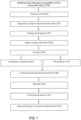
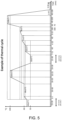
- the thermal cycle 102 provides the processing of the A and B mixtures of malt and water (containing respectively 20% and 80% of the malt) at different temperatures and times according to the following table, where the process parameters are indicated: Process details Temperature (°C) Time (min) Infusion of the 20% malt mixture 60 17 Heating 66 1 Pause 66 20 Heating 100 16 Boiling 100 15 Pause 100 5 Cooling 50 14 Addition of the 80% malt mixture 50 15 Pause 50 20 Heating 63 9 Pause 63 40 Heating 72 6 Pause 72 40 Heating 76 5 Pouring into the filtration tank 11
- the filtration step 103 takes place during the preparation of the wort in the "cooking room” with the aim to remove the spent grains from the wort. This takes place in the filtration tank by the force of gravity; said filtration consists of a filtration of the wort and is carried out for the purpose of separating the solid component (spent grains) from the liquid component (beer wort). In particular, the separated spent grains are washed three times for the purpose of extracting more nutritional substances from the spent grains themselves. Process details Temperature (°C) Time (min) Quantity (hl) Pause for 5 minutes in the filtration tank 76 5 90 Cloudy wort 76 7 First wort 76 84 53 First washing 76 20 15 Second washing 76 25 15 Third washing 76 15 10
- the boiling and hopping step 104 provides the boiling of the filtered wort and hopping.
- This process consists of the filtered wort being collected in a storage tank called "5 th heater". Once the 5 th heater is full, and so at the end of the wort filtration, the wort is sent in the Whirlpool where the successive heating and boiling phases will take place.
- the adding of the hops (4.0 kg of hops extract at 30%, 1.8 kg of Hops pellets 4.6%) takes place when the Whirlpool is full, so when all the filtered wort has been poured from the 5 th heater to the Whirlpool and heating can begin.
- phase denominated “stripper” consists of the injection of steam into the wort, from below upwards, before the cooling, in order to remove unpleasant volatile compounds released with the boiling.
- the wort cooling step 105 calls for the cooling of the wort until it reaches a temperature of 2°C to send it into the aging tank and hence start the storing stage 106. Cooling is obtained through a plate heat exchanger with cold water cross-flow.
- the storage step 106 consists of the transfer of the wort into an aging tank for a storage time of about 3 days, without the addition of yeasts, contrary to what occurs during the beer production process where yeasts are added during this stage.
- the filtration phase 107 consists of the use of Diatomaceous earth to remove the impurities from the aged beverage, thereby clarifying it.
- the filtration phase 107 takes place in a room called the "filtration room” using a horizontal pressure filter with cardboard filtering layers and using Diatomaceous earth as a technological adjuvant.
- the sequestrants used during this phase also reduce the polyphenol content.
- Some beer producers use sequestrants to deliberately reduce or eliminate the polyphenol content, as these compounds generate cloudiness.
- the filtration phase 107 is replaced by a decantation phase 113, which consists of the removal of impurities from the aged beverage by collecting the upper part with no impurities; the replacement of the filtration phase 107 with a decantation phase113 results in a further increase of polyphenols in the polyphenolic composition.
- the treatment phase 108 consists of adding coloring malt extract and ascorbic acid.
- the coloring malt extract is added to mask the cloudiness and reduce the degree of the polyphenols to a minimum, thereby boosting the functional capacity of the functional beverage.
- drying 111 include also the 50°C treatment.
- the total quantity of polyphenols in the polyphenolic composition in liquid form as a functional beverage is about 300 mg/l, which is comparable to the quantity of polyphenols in a typical light beer (>250 mg/l) and almost double that of non-alcoholic beers on the market.
- Table 2 comparison of total polyphenol concentrations Type of beer Polyphenols (mg/l) 1 Polyphenols (mg/l) 2 Functional Beverage 300 --- Light Beer 303 280 Dark Beer 533 420 Non-alcoholic Beer --- 122 1
- the data collected concerning the polyphenolic composition of the functional beverage were obtained at CNR laboratories. 2
- the data collected concerning the polyphenolic composition of the different beers were obtained from the Phenol -Explorer data bank ( http://phenol-explorer.eu/ ), which are the averages calculated using measurements taken by various authors.
- the polyphenolic composition in liquid form as a functional beverage shows a characteristic polyphenolic profile that stands, more or less, in an intermediate level between the polyphenolic profile of light beers and the polyphenolic profile of dark beers, and is also obviously different from the polyphenolic profile of non-alcoholic beers.
- the polyphenolic composition of the functional beverage provided with this invention is characteristic and new compared to standard polyphenolic compositions of beers in that it contains measurable quantities of chlorogenic acid, generally not reported in the literature as a component of the polyphenolic compositions of beers.
- Table 3 illustrates the polyphenolic profile of the polyphenolic composition in functional beverage form obtained with the method described according to this invention, with the detail of the relative ratios between the polyphenolic molecules present.
- Table 3: polyphenolic profile of the polyphenolic composition in functional beverage form Main phenolic compounds of the polyphenolic composition Relative ratios of the phenolic compositions (Caffeic Acid molecule concentration is set as equal to 1) Caffeic Acid 1 Chlorogenic Acid 0.92 m-Coumaric Acid 1.15 p-Hydroxybenzoic Acid 1.26 Sinapinic Acid 1.48 Epicatechin 1.85 Protocatechuic Acid 1.92 Catechin 2.66 p-Coumaric Acid 5.70 Ferulic Acid 9.40 Vanillic acid 2.74 1 The data collected concerning the polyphenolic composition of the functional beverage were obtained at CNR laboratories.
- the polyphenolic composition obtained with the method described according to this invention has demonstrated an anti-tumor activity in murine models at a dosage D between 3 and 60 mg/kg, or higher than 3 and lower than 60 mg/kg, or 3 ⁇ D ⁇ 60.
- the anti-tumor activity both in the onset phase of the cancer and in the reduction of existing tumor, is noticeable at doses of 3 mg/kg; with higher doses of 30 mg/kg, the polyphenolic composition acts mostly by preventing the transformation of preneoplastic lesions in tumors.
- the anti-oxidant activity is demonstrable at doses of 30 mg/kg; a significant reduction in the peroxides in the serum can be noticed with doses of 100-300 mg/kg.
- Table 5 correspondence between dosages and volumes of the polyphenolic composition administered to murine models and humans. Concentration of the polyphenolic composition by weight Concentration of the polyphenolic composition by volume Mouse Man 1 g/kg 8.5 ml/kg 0.3 ml 600 ml 30 mg/kg 0.25 ml/kg 0.008 ml 17.5 ml 3 mg/kg 0.025 ml/kg 0.0008 ml 1.75 ml
- Table 5 illustrates a series of equivalences to calculate the correspondence in volume of polyphenolic composition, administered in beverage form, administered to a man of an average weight of 70 kg to obtain the desired biological effects as observed in mice, which is to say anti-tumor and anti-oxidant actions at indicated doses of 3 and 30 mg/kg.
- the quantity of the polyphenolic composition, administered in functional beverage form, administered to a subject with an average weight of 70 kg are extremely low; this indicates an extremely active composition at very low doses, as is demonstrated by the experimentations that follow.
- the anti-tumor activity was studied in vitro on pre-clinical models (cellular lines and animal models) using the above-mentioned functional composition in lyophilized form and /or dried.
- the studies conducted highlighted the following effects:
- the anti-oxidant activity was demonstrated by measuring peroxide concentration (equivalents of H 2 O 2 ) in the serum of treated mice; the concentration of peroxides is an index of the oxidative stress status of the organism.
- the experimentation included the use of the polyphenolic composition in the form of samples concentrated by drying. As illustrated in Table 5, treatment by drying causes a lesser reduction in polyphenols than lyophilization. Moreover, a slight increase in anti-oxidant activity and cytotoxicity of the dried samples was evident. Table 6: content in polyphenols, anti-oxidant activity and cytotoxicity of the lyophilized and dried samples of polyphenolic composition.
- Polyphenolic composition Polyphenols ( ⁇ M EqQ) Anti-oxidant activity (DPPH%) Vitality (% ctrl) liquid (control) 887 9.2 65 Lyophilized 558 7.12 65 Dried 748 10.9 60
- the first experiment consisted in the administration of the polyphenolic composition in dried form (hereinafter Db0%) in mice treated with azomethane (AOM); the experimentation lasted 14 weeks.
- the treatment with AOM called for the administration of 10 mg/kg via intraperitoneal injection in 4 successive doses over 4 consecutive weeks (one dose every weekend).
- the dried Db0% was administered orally 5 times per week for each week, beginning with the first week to the fourteenth, following which the mice were sacrificed.
- mice were represented by mice that were inoculated via intraperitoneal injection 5 ml/kg of physiological solution (AOM control) and mice administered spring water (Db0% control).
- the dosage used for the test was a range of doses between 3-300 mg/kg.
- This dosage was identified by conducting a preliminary acute toxicity test, in which it was found that at doses between 5-10 g/kg, the dried product caused the death of animals; on the other hand, doses between 0.3 and 1 g/kg resulted in a reduction in the body weight of the mice, which became significant at doses of 1 g/kg.
- the maximum dose used was therefore 300 mg/kg.
- mice developed both aberrant crypt foci (preneoplastic lesions); in the colon-rectum of the mice there were also noticeable polyps and tumor.
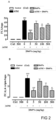
- Figures 2A and 2B illustrate the effect of administering different concentrations of the dried Db0% (3, 30, 100, 300 mg/kg) on the formation of total aberrant crypt foci ( Figure 2A ) and foci consisting of 4 or more aberrant crypts in the colons ( Figure 2B ) of the mice treated with AOM.
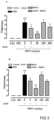
- Figure 3 illustrates the effect of administering different concentrations of the dried Db0% (3-30-100-300 mg/kg) on the formation of polyps ( Figure 3A ) and tumors ( Figure 3B ) induced in the colons of mice treated with AOM.
- the extract of the lowest dosage, or 3 mg/kg act as soon as the first phase of the onset of the tumor, or by reducing the formation of the preneoplastic lesions during the transformation of the preneoplastic lesion in neoplastic lesions (polyps and tumors).
- the dosage of 30 mg/kg acts mainly during the second phase or, in other words, by impeding the transformation of preneoplastic lesions in neoplastic lesions (polyps and tumors), especially in comparison to previous dosages.
- Some of these events may depend on different bio-availability and/or bio-transformation of the bioactive compounds, on hormetic phenomenon and/or induced adaptation, or on the synergistic/additive effects of these compounds.
- the second experiment consisted of the measuring of the concentration of peroxides in the serum of mice treated with AOM compared to untreated controls and the verification of the protective effect of the Db0%.
- the concentration of peroxides (measured as equivalents of H 2 O 2 ) is a parameter that is an index of the oxidative stress of the individual.
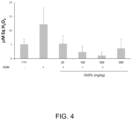
- Figure 4 highlights the concentration of peroxides in samples of serum from treated mice with different concentrations of dried Db0% (3-30-100-300 mg/kg) both in the presence and absence of AOM.
- Figure 4 illustrates how the treatment with AOM to which the mice were subjected, causes a significant increase in the concentration of the peroxides in the serum; the treatment with Db0% causes a reduction in the concentration of peroxides in the serum of mice and, in particular, at higher concentrations of 100-300 mg/kg, the concentration of peroxides become less than the control value.
- the advantages of this invention are represented by having perfected an innovative method that preserves the polyphenolic content in barley malt naturally, without having to add polyphenols, beginning with raw materials that are easy to find.
- One of the advantages of this invention is represented by the doses necessary to achieve a potentially therapeutic action; indeed, in the experiments reported, it is the lowest dosage, or 3 mg/kg, that causes the most important therapeutic activity in both preneoplastic lesions and tumoral lesions; in making a correspondence and calculating the quantity in ml that a man of an average weight of 70 kg should take to obtain the anti-tumor effect observed with concentrations of 3-30 mg/kg, extremely low values of about 2-20 ml were obtained.
- this invention describes a method for the production of a polyphenolic composition from unfermented malt and hops, wherein the illustrated embodiments provide a composition with a high content of natural polyphenols and an anti-oxidant and anti-tumor action in experimental models at doses 100 times lower than toxic ones.
Landscapes
- Health & Medical Sciences (AREA)
- Chemical & Material Sciences (AREA)
- Life Sciences & Earth Sciences (AREA)
- Engineering & Computer Science (AREA)
- Organic Chemistry (AREA)
- General Health & Medical Sciences (AREA)
- Food Science & Technology (AREA)
- General Engineering & Computer Science (AREA)
- Zoology (AREA)
- Wood Science & Technology (AREA)
- Genetics & Genomics (AREA)
- Bioinformatics & Cheminformatics (AREA)
- Biochemistry (AREA)
- Pharmacology & Pharmacy (AREA)
- Animal Behavior & Ethology (AREA)
- Medicinal Chemistry (AREA)
- Veterinary Medicine (AREA)
- Public Health (AREA)
- Epidemiology (AREA)
- Nutrition Science (AREA)
- Polymers & Plastics (AREA)
- Microbiology (AREA)
- Molecular Biology (AREA)
- Chemical Kinetics & Catalysis (AREA)
- General Chemical & Material Sciences (AREA)
- Nuclear Medicine, Radiotherapy & Molecular Imaging (AREA)
- Emergency Medicine (AREA)
- Medicines Containing Plant Substances (AREA)
- Coloring Foods And Improving Nutritive Qualities (AREA)
- Pharmaceuticals Containing Other Organic And Inorganic Compounds (AREA)
- Non-Alcoholic Beverages (AREA)
Claims (12)
- Verfahren zur Herstellung einer polyphenolischen Zusammensetzung aus Gerstenmalz, umfassend die folgenden grundlegenden Schritte:1) Mahlen der Malzkörner und Aufteilen in zwei Portionen (20 % und 80 %);2) Mischen der beiden Portionen mit Wasser zu einer Mischung A und einer Mischung B. Mischung A wird mit der 20 %-Mischung zubereitet, um eine Malzmischung in Wasser mit einer Endkonzentration von 9,5 % bis 20 % zu erhalten. Mischung B wird mit der 80 %-Mischung zubereitet, um eine Malzmischung in Wasser mit einer Endkonzentration von 33 % bis 60 % zu erhalten;3) Thermozyklus mit zwei aufeinanderfolgenden Phasen;4) Trennung der flüssigen von der festen Komponente bei der im Thermozyklus erreichten Endtemperatur von 76 ± 5 °C und anschließendes Waschen der Treber bei derselben Temperatur von 76 ± 5 °C;5) Kochen der aus Schritt 4 resultierenden flüssigen Komponente und Zugabe von Hopfen zur Herstellung der Bierwürze;6) Schnelle Würzekühlung mit einer Geschwindigkeit von 1,85 ± 0,8 °C pro Minute;7) Lagerung bei der Endtemperatur von 2 - 4°C nach der Kühlung;8) optionale Reinigungsbehandlung;9) optionale Behandlung mit natürlichem Konservierungsmittel;10) optionale Abfüllung in Flaschen;11) optionale thermische Pasteurisierungsbehandlung; wobei der thermische Zyklus eine erste und eine zweite Phase umfasst, wobei die erste Phase auf den 20 %-Anteil (Mischung A) und die zweite Phase auf Mischung A unter Zugabe von Mischung B angewendet wird. Die erste Phase des thermischen Zyklus umfasst eine Erhitzung für einen Zeitraum von 1 - 2 Minuten, bis eine Temperatur von 71 °C erreicht ist; eine anschließende Pause, in der die Temperatur 20 - 30 Minuten, vorzugsweise 20 Minuten, gehalten wird, gefolgt von einer Temperaturerhöhung für eine Dauer von 10 - 20 Minuten, vorzugsweise 15 - 16 Minuten, bis die Mischung siedet; eine anschließende Siedepause von 10 - 25 Minuten, gefolgt von einer Abkühlung für eine Dauer von 10 - 18 Minuten auf eine Temperatur zwischen 45 °C und 55 °C, vorzugsweise 12 ± 2 Minuten, besonders bevorzugt 14 Minuten; die zweite Phase des Wärmezyklus umfasst eine Haltetemperatur zwischen 45 °C und 55 °C für 15 - 30 Minuten, gefolgt von einer anschließenden dreistufigen Erwärmung mit steigenden Temperaturen zwischen 60 °C und 80 °C.
- Verfahren nach Anspruch 1, wobei die Stufen mit den steigenden Temperaturen wie folgt durchgeführt werden:- die erste Erwärmungsstufe bei 63 ± 5 °C wird in 7 - 11 Minuten erreicht und für etwa 37 - 42 Minuten gehalten;- die zweite Erwärmungsstufe bei 72 ± 5 °C wird in 4 - 10 Minuten erreicht und für etwa 37 - 42 Minuten gehalten;die dritte Erwärmungsstufe bei 76 ± 5 °C wird in 3 - 10 Minuten erreicht und für etwa 100 - 300 Minuten gehalten.
- Verfahren nach Anspruch 2, wobei der auf der Temperatur der dritten Erwärmungsstufe gehaltenen Würze Hopfen in einer Menge von bis zu 0,5 Gew.-%, vorzugsweise 0,2 - 0,3 Gew.-%, zugesetzt wird.
- Verfahren nach Anspruch 3, wobei die mit Hopfen versetzte Würze einer zusätzlichen Erwärmungsphase bis zum Siedepunkt von 40 bis 100 Minuten, typischerweise bei 108 °C, für etwa 60 Minuten unterzogen wird, gefolgt von einer Abkühlung auf eine Temperatur von 2 - 10 °C, vorzugsweise 2 - 4 °C.
- Verfahren nach den Ansprüchen 1 bis 4, dadurch gekennzeichnet, dass keine Hefe zugesetzt wird.
- Polyphenolzusammensetzung, erhalten nach einem der Ansprüche 1 bis 5, gekennzeichnet durch die folgenden Verhältnisse zwischen den Polyphenolkomponenten und der Kaffeesäure, die gleich 1 gesetzt sind:Kaffeesäure 1Chlorogensäure 0,83 - 1,01m-Cumarsäure 1,04 - 1,27p-Hydroxybenzoesäure 1,13 - 1,39Sinapinsäure 1,33 - 1,63Epicatechin 1,67 - 2,04Protocatechusäure 1,73 - 2,11Catechin 2,39 - 2,93p-Cumarsäure 5,13 - 6,27Ferulasäure 8,46 - 10,3Vanillinsäure 2,47 - 3,01
- Polyphenolzusammensetzung nach Anspruch 6, dadurch gekennzeichnet, dass sie in flüssiger, pulverisierter, getrockneter oder gefriergetrockneter Form vorliegt.
- Polyphenolzusammensetzung nach einem der Ansprüche 6 bis 7 zur Verabreichung als Lebensmittel oder Getränk, als Nahrungsergänzungsmittel oder Arzneimittel, in fester Form wie Tabletten, Pillen, Hartkapseln, Pulver, Granulaten, Zäpfchen, in halbfester Form wie Gel, Salben, Gleitmittel, Pasten, in flüssiger Form wie Getränke, Sirupe, Ampullen, Tropfen, Augentropfen.
- Polyphenolzusammensetzung nach Anspruch 8 zur Behandlung chronischer und degenerativer Erkrankungen wie Herz-Kreislauf-, neurodegenerativen, Autoimmun-, Stoffwechsel- und Tumorerkrankungen.
- Polyphenolzusammensetzung nach Anspruch 8 zur Verabreichung an Tiere und Menschen, ältere Menschen, Erwachsene, Jugendliche, Kinder und Säuglinge.
- Polyphenolzusammensetzung nach einem der vorhergehenden Ansprüche, dadurch gekennzeichnet, dass sie in flüssiger Form, als alkoholfreies Funktionsgetränk, oder in Pulverform zur Rekonstitution in einem flüssigen Medium wie Wasser, Milch, Säften, Soja- oder Reisgetränken vorliegt.
- Getränk oder Bier nach einem der vorhergehenden Ansprüche, umfassend die Polyphenolzusammensetzung nach Anspruch 6.
Priority Applications (1)
| Application Number | Priority Date | Filing Date | Title |
|---|---|---|---|
| SM20250344T SMT202500344T1 (it) | 2017-08-25 | 2018-08-20 | Metodo per la produzione di una composizione polifenolica a partire da malto d’orzo |
Applications Claiming Priority (2)
| Application Number | Priority Date | Filing Date | Title |
|---|---|---|---|
| IT102017000096298A IT201700096298A1 (it) | 2017-08-25 | 2017-08-25 | Metodo per la produzione di una composizione polifenolica a partire da malto d’orzo |
| PCT/IB2018/056283 WO2019038658A1 (en) | 2017-08-25 | 2018-08-20 | PROCESS FOR PRODUCING POLYPHENOLIC COMPOSITION FROM BARLEY MALT |
Publications (3)
| Publication Number | Publication Date |
|---|---|
| EP3673038A1 EP3673038A1 (de) | 2020-07-01 |
| EP3673038B1 true EP3673038B1 (de) | 2025-06-11 |
| EP3673038C0 EP3673038C0 (de) | 2025-06-11 |
Family
ID=60991218
Family Applications (1)
| Application Number | Title | Priority Date | Filing Date |
|---|---|---|---|
| EP18765747.3A Active EP3673038B1 (de) | 2017-08-25 | 2018-08-20 | Verfahren zur herstellung einer polyphenolischen zusammensetzung aus gerstenmalz |
Country Status (9)
| Country | Link |
|---|---|
| US (2) | US11564897B2 (de) |
| EP (1) | EP3673038B1 (de) |
| CN (1) | CN111263805B (de) |
| AR (1) | AR112952A1 (de) |
| CA (1) | CA3073374A1 (de) |
| ES (1) | ES3041254T3 (de) |
| IT (1) | IT201700096298A1 (de) |
| SM (1) | SMT202500344T1 (de) |
| WO (1) | WO2019038658A1 (de) |
Families Citing this family (5)
| Publication number | Priority date | Publication date | Assignee | Title |
|---|---|---|---|---|
| CA3078545A1 (en) | 2017-10-06 | 2019-04-11 | Cargill, Incorporated | Stabilized steviol glycoside compositions and uses thereof |
| AU2020273144B2 (en) | 2019-04-06 | 2025-07-03 | Cargill, Incorporated | Methods for making botanical extract composition |
| BR112021019811A2 (pt) | 2019-04-06 | 2021-12-07 | Cargill Inc | Composição de glicosídeo de esteviol, bebida, métodos para reduzir um atributo sensorial indesejável de uma solução aquosa de glicosídeo de esteviol, para reduzir a persistência de doçura de um componente de glicosídeo de esteviol em uma composição comestível e para reduzir o amargor de um componente de glicosídeo de esteviol em uma composição comestível, e, soluções aquosa de glicosídeo de esteviol com reduzida persistência de doçura e aquosa de glicosídeo de esteviol com reduzido amargor |
| JP7750651B2 (ja) * | 2020-12-17 | 2025-10-07 | 株式会社 伊藤園 | 麦抽出物含有顆粒状組成物、その顆粒状組成物の製造方法及びその顆粒状組成物の甘味付与方法 |
| CN113897242B (zh) * | 2021-09-28 | 2024-05-14 | 深圳市真味生物科技有限公司 | 一种以焦麦芽制备的天然香料及电子雾化液 |
Family Cites Families (12)
| Publication number | Priority date | Publication date | Assignee | Title |
|---|---|---|---|---|
| GB962286A (en) * | 1962-04-25 | 1964-07-01 | Falstaff Brewing Corp | Process for producing a boiled malt wort |
| DE10132953A1 (de) * | 2001-07-06 | 2003-01-16 | Beiersdorf Ag | Verwendung von Hopfen-bzw. Hopfen-Malz-Extrakten in kosmetischen oder dermatologischen Zubereitungen zur Prophylaxe gegen und Behandlung von degenerativen Hauterscheinungen |
| DE10256166B4 (de) * | 2002-12-02 | 2008-10-23 | Technische Universität München | Verfahren zur Herstellung eines xanthohumolhaltigen Getränkes aus Malz- und/oder Rohfruchtwürze sowie derart hergestelltes Getränk |
| TWI253468B (en) | 2004-05-25 | 2006-04-21 | Taiwan Tobacco & Liquor Corp | Method for producing beer-like and alcohol-free fermented beverage |
| KR100671460B1 (ko) * | 2004-06-22 | 2007-01-18 | (주)현덕비엔티 | 폴리페놀을 함유한 기능성 알코올 음료 |
| WO2007016578A2 (en) * | 2005-07-29 | 2007-02-08 | Bioactives, Inc. | Prenylflavonoid formulations |
| DE102005056652A1 (de) | 2005-11-25 | 2007-05-31 | Südzucker AG Mannheim/Ochsenfurt | Präparat enthaltend eine polyphenolhaltige Zusammensetzung und Isomaltulose |
| CA2544488A1 (en) * | 2006-05-01 | 2007-11-01 | Chemisch Biochemisch Onderzoekscn | Use of hop polyphenols in beer |
| EP2035538A2 (de) | 2006-06-13 | 2009-03-18 | IdeaMed LLC | Polyphenole enthaltende fluidzusammensetzungen und verfahren zur herstellung und verpackung davon |
| HUE052388T2 (hu) * | 2012-07-26 | 2021-04-28 | Arcaini Antonio | Pörkölt kivonatot és xantohumolt tartalmazó kompozíciók alkalmazásai |
| CN103834516A (zh) * | 2012-09-03 | 2014-06-04 | 高岩 | 一种麦芽汁中添加啤酒花的工艺方法 |
| ES2690595T3 (es) * | 2012-12-28 | 2018-11-21 | Suntory Holdings Limited | Bebida con sabor a cerveza sin alcochol que tiene un sabor a Shimari |
-
2017
- 2017-08-25 IT IT102017000096298A patent/IT201700096298A1/it unknown
-
2018
- 2018-08-16 AR ARP180102353A patent/AR112952A1/es unknown
- 2018-08-20 EP EP18765747.3A patent/EP3673038B1/de active Active
- 2018-08-20 SM SM20250344T patent/SMT202500344T1/it unknown
- 2018-08-20 CA CA3073374A patent/CA3073374A1/en active Pending
- 2018-08-20 ES ES18765747T patent/ES3041254T3/es active Active
- 2018-08-20 CN CN201880069150.4A patent/CN111263805B/zh active Active
- 2018-08-20 WO PCT/IB2018/056283 patent/WO2019038658A1/en not_active Ceased
- 2018-08-20 US US16/641,888 patent/US11564897B2/en active Active
-
2022
- 2022-12-06 US US18/062,105 patent/US12233037B2/en active Active
Also Published As
| Publication number | Publication date |
|---|---|
| US20230101466A1 (en) | 2023-03-30 |
| US12233037B2 (en) | 2025-02-25 |
| ES3041254T3 (en) | 2025-11-11 |
| WO2019038658A1 (en) | 2019-02-28 |
| CN111263805A (zh) | 2020-06-09 |
| US11564897B2 (en) | 2023-01-31 |
| EP3673038A1 (de) | 2020-07-01 |
| US20200197342A1 (en) | 2020-06-25 |
| CA3073374A1 (en) | 2019-02-28 |
| IT201700096298A1 (it) | 2019-02-25 |
| AR112952A1 (es) | 2020-01-08 |
| EP3673038C0 (de) | 2025-06-11 |
| SMT202500344T1 (it) | 2025-11-10 |
| CN111263805B (zh) | 2023-07-25 |
Similar Documents
| Publication | Publication Date | Title |
|---|---|---|
| US12233037B2 (en) | Method for producing a polyphenolic composition from barley malt | |
| JP5937596B2 (ja) | 活性型フラボノイド化合物の含量が増加されたウルシ抽出物及びその製造方法 | |
| KR101426311B1 (ko) | 복분자를 포함하는 베리즙 조성물 및 이의 제조방법 | |
| KR102120323B1 (ko) | 식용곤충 효소처리물 및 생약 추출물을 함유하는 숙취해소 또는 간보호용 조성물 | |
| EP2003988B1 (de) | Natürliche pflanzenextraktzusammensetzung für die vorbeugung und rekonvaleszenz bei hyperlipidämie und schlaganfall, natürlicher tee, der diese als wirkstoff enthält, sowie verfahren zur herstellung des natürlichen tees | |
| KR102387371B1 (ko) | 항산화 활성이 증대된 멀꿀 발효물 및 이의 용도 | |
| KR101394358B1 (ko) | 숙취 해소용 조성물 | |
| CN110800852A (zh) | 一种去油脂的山楂荷叶茶饮品及制备方法 | |
| KR20180078658A (ko) | 인삼 추출물을 함유하는 건강식품 조성물 | |
| KR101768084B1 (ko) | 홍삼 추출물 및 그의 제조 방법 | |
| KR101636608B1 (ko) | 산수유 추출물을 포함하는 항산화용 조성물 | |
| KR101050162B1 (ko) | 효소처리루틴을 이용한 주류 또는 음료의 제조방법 | |
| JP7463058B2 (ja) | Ace阻害活性を有する組成物 | |
| KR20230036758A (ko) | 수면유도 및 불면증 치료용 효소처리 초고압 혼합추출물 | |
| KR20190006702A (ko) | 모과, 박하, 산수유 함유 기능성음료의 제조방법 및 이로부터 제조된 기능성음료 | |
| EP3895544A1 (de) | Verfahren zur herstellung eines raffinierten produkts aus birnensaft | |
| KR102044607B1 (ko) | 활성형 진세노사이드, 클로르제닉산 및 쿼르세틴이 강화된 산양삼 전초차 및 그 제조방법 | |
| Selvamuthukumaran et al. | Loquat (Chinese Plums): Medicinal and Therapeutic Values and Their Processed Products | |
| CN102630780A (zh) | 一种银杏大蒜黑茶复合颗粒饮料 | |
| KR101889856B1 (ko) | 가압증숙을 이용한 항산화 활성이 증진된 산수유 추출물의 제조방법 | |
| Garg et al. | Indian gooseberry (Amla) juice | |
| Rios-Corripio et al. | Health Benefits of Fermented Alcoholic Beverages | |
| JP7253372B2 (ja) | 血圧降下用組成物 | |
| KR20230139906A (ko) | 폐기능 개선 효과가 증진된 홍삼 및 개복숭아 추출물을 유효성분으로 함유하는 조성물 | |
| KR101783550B1 (ko) | 가야보리수 추출물을 포함하는 직장암 예방 또는 치료용 조성물 |
Legal Events
| Date | Code | Title | Description |
|---|---|---|---|
| STAA | Information on the status of an ep patent application or granted ep patent |
Free format text: STATUS: UNKNOWN |
|
| STAA | Information on the status of an ep patent application or granted ep patent |
Free format text: STATUS: THE INTERNATIONAL PUBLICATION HAS BEEN MADE |
|
| PUAI | Public reference made under article 153(3) epc to a published international application that has entered the european phase |
Free format text: ORIGINAL CODE: 0009012 |
|
| STAA | Information on the status of an ep patent application or granted ep patent |
Free format text: STATUS: REQUEST FOR EXAMINATION WAS MADE |
|
| 17P | Request for examination filed |
Effective date: 20200324 |
|
| AK | Designated contracting states |
Kind code of ref document: A1 Designated state(s): AL AT BE BG CH CY CZ DE DK EE ES FI FR GB GR HR HU IE IS IT LI LT LU LV MC MK MT NL NO PL PT RO RS SE SI SK SM TR |
|
| AX | Request for extension of the european patent |
Extension state: BA ME |
|
| DAV | Request for validation of the european patent (deleted) | ||
| DAX | Request for extension of the european patent (deleted) | ||
| STAA | Information on the status of an ep patent application or granted ep patent |
Free format text: STATUS: EXAMINATION IS IN PROGRESS |
|
| 17Q | First examination report despatched |
Effective date: 20210510 |
|
| GRAP | Despatch of communication of intention to grant a patent |
Free format text: ORIGINAL CODE: EPIDOSNIGR1 |
|
| STAA | Information on the status of an ep patent application or granted ep patent |
Free format text: STATUS: GRANT OF PATENT IS INTENDED |
|
| INTG | Intention to grant announced |
Effective date: 20250304 |
|
| GRAS | Grant fee paid |
Free format text: ORIGINAL CODE: EPIDOSNIGR3 |
|
| GRAA | (expected) grant |
Free format text: ORIGINAL CODE: 0009210 |
|
| STAA | Information on the status of an ep patent application or granted ep patent |
Free format text: STATUS: THE PATENT HAS BEEN GRANTED |
|
| AK | Designated contracting states |
Kind code of ref document: B1 Designated state(s): AL AT BE BG CH CY CZ DE DK EE ES FI FR GB GR HR HU IE IS IT LI LT LU LV MC MK MT NL NO PL PT RO RS SE SI SK SM TR |
|
| RAP3 | Party data changed (applicant data changed or rights of an application transferred) |
Owner name: CONSIGLIO NAZIONALE DELLE RICERCHE Owner name: ALIOPHARM S.R.L. |
|
| REG | Reference to a national code |
Ref country code: GB Ref legal event code: FG4D |
|
| REG | Reference to a national code |
Ref country code: CH Ref legal event code: EP |
|
| REG | Reference to a national code |
Ref country code: IE Ref legal event code: FG4D |
|
| REG | Reference to a national code |
Ref country code: DE Ref legal event code: R096 Ref document number: 602018082543 Country of ref document: DE |
|
| U01 | Request for unitary effect filed |
Effective date: 20250710 |
|
| U07 | Unitary effect registered |
Designated state(s): AT BE BG DE DK EE FI FR IT LT LU LV MT NL PT RO SE SI Effective date: 20250723 |
|
| U1N | Appointed representative for the unitary patent procedure changed after the registration of the unitary effect |
Representative=s name: DE TULLIO, MICHELE ELIO; IT |
|
| U20 | Renewal fee for the european patent with unitary effect paid |
Year of fee payment: 8 Effective date: 20250828 |
|
| PG25 | Lapsed in a contracting state [announced via postgrant information from national office to epo] |
Ref country code: GR Free format text: LAPSE BECAUSE OF FAILURE TO SUBMIT A TRANSLATION OF THE DESCRIPTION OR TO PAY THE FEE WITHIN THE PRESCRIBED TIME-LIMIT Effective date: 20250912 |
|
| PGFP | Annual fee paid to national office [announced via postgrant information from national office to epo] |
Ref country code: NO Payment date: 20250912 Year of fee payment: 8 |
|
| PGFP | Annual fee paid to national office [announced via postgrant information from national office to epo] |
Ref country code: GB Payment date: 20250919 Year of fee payment: 8 |
|
| PG25 | Lapsed in a contracting state [announced via postgrant information from national office to epo] |
Ref country code: HR Free format text: LAPSE BECAUSE OF FAILURE TO SUBMIT A TRANSLATION OF THE DESCRIPTION OR TO PAY THE FEE WITHIN THE PRESCRIBED TIME-LIMIT Effective date: 20250611 |
|
| PG25 | Lapsed in a contracting state [announced via postgrant information from national office to epo] |
Ref country code: RS Free format text: LAPSE BECAUSE OF FAILURE TO SUBMIT A TRANSLATION OF THE DESCRIPTION OR TO PAY THE FEE WITHIN THE PRESCRIBED TIME-LIMIT Effective date: 20250911 |
|
| REG | Reference to a national code |
Ref country code: ES Ref legal event code: FG2A Ref document number: 3041254 Country of ref document: ES Kind code of ref document: T3 Effective date: 20251111 |