EP3633359B1 - Method for measuring pore distribution in electrode for secondary battery - Google Patents
Method for measuring pore distribution in electrode for secondary battery Download PDFInfo
- Publication number
- EP3633359B1 EP3633359B1 EP18809590.5A EP18809590A EP3633359B1 EP 3633359 B1 EP3633359 B1 EP 3633359B1 EP 18809590 A EP18809590 A EP 18809590A EP 3633359 B1 EP3633359 B1 EP 3633359B1
- Authority
- EP
- European Patent Office
- Prior art keywords
- electrode
- secondary battery
- pores
- negative electrode
- binder
- Prior art date
- Legal status (The legal status is an assumption and is not a legal conclusion. Google has not performed a legal analysis and makes no representation as to the accuracy of the status listed.)
- Active
Links
Images





Classifications
-
- G—PHYSICS
- G01—MEASURING; TESTING
- G01N—INVESTIGATING OR ANALYSING MATERIALS BY DETERMINING THEIR CHEMICAL OR PHYSICAL PROPERTIES
- G01N23/00—Investigating or analysing materials by the use of wave or particle radiation, e.g. X-rays or neutrons, not covered by groups G01N3/00 – G01N17/00, G01N21/00 or G01N22/00
- G01N23/22—Investigating or analysing materials by the use of wave or particle radiation, e.g. X-rays or neutrons, not covered by groups G01N3/00 – G01N17/00, G01N21/00 or G01N22/00 by measuring secondary emission from the material
- G01N23/2202—Preparing specimens therefor
-
- G—PHYSICS
- G01—MEASURING; TESTING
- G01N—INVESTIGATING OR ANALYSING MATERIALS BY DETERMINING THEIR CHEMICAL OR PHYSICAL PROPERTIES
- G01N1/00—Sampling; Preparing specimens for investigation
- G01N1/28—Preparing specimens for investigation including physical details of (bio-)chemical methods covered elsewhere, e.g. G01N33/50, C12Q
- G01N1/30—Staining; Impregnating ; Fixation; Dehydration; Multistep processes for preparing samples of tissue, cell or nucleic acid material and the like for analysis
-
- G—PHYSICS
- G01—MEASURING; TESTING
- G01N—INVESTIGATING OR ANALYSING MATERIALS BY DETERMINING THEIR CHEMICAL OR PHYSICAL PROPERTIES
- G01N1/00—Sampling; Preparing specimens for investigation
- G01N1/02—Devices for withdrawing samples
- G01N1/04—Devices for withdrawing samples in the solid state, e.g. by cutting
-
- G—PHYSICS
- G01—MEASURING; TESTING
- G01N—INVESTIGATING OR ANALYSING MATERIALS BY DETERMINING THEIR CHEMICAL OR PHYSICAL PROPERTIES
- G01N1/00—Sampling; Preparing specimens for investigation
- G01N1/28—Preparing specimens for investigation including physical details of (bio-)chemical methods covered elsewhere, e.g. G01N33/50, C12Q
-
- G—PHYSICS
- G01—MEASURING; TESTING
- G01N—INVESTIGATING OR ANALYSING MATERIALS BY DETERMINING THEIR CHEMICAL OR PHYSICAL PROPERTIES
- G01N1/00—Sampling; Preparing specimens for investigation
- G01N1/28—Preparing specimens for investigation including physical details of (bio-)chemical methods covered elsewhere, e.g. G01N33/50, C12Q
- G01N1/286—Preparing specimens for investigation including physical details of (bio-)chemical methods covered elsewhere, e.g. G01N33/50, C12Q involving mechanical work, e.g. chopping, disintegrating, compacting, homogenising
-
- G—PHYSICS
- G01—MEASURING; TESTING
- G01N—INVESTIGATING OR ANALYSING MATERIALS BY DETERMINING THEIR CHEMICAL OR PHYSICAL PROPERTIES
- G01N15/00—Investigating characteristics of particles; Investigating permeability, pore-volume or surface-area of porous materials
- G01N15/08—Investigating permeability, pore-volume, or surface area of porous materials
-
- G—PHYSICS
- G01—MEASURING; TESTING
- G01N—INVESTIGATING OR ANALYSING MATERIALS BY DETERMINING THEIR CHEMICAL OR PHYSICAL PROPERTIES
- G01N23/00—Investigating or analysing materials by the use of wave or particle radiation, e.g. X-rays or neutrons, not covered by groups G01N3/00 – G01N17/00, G01N21/00 or G01N22/00
- G01N23/20—Investigating or analysing materials by the use of wave or particle radiation, e.g. X-rays or neutrons, not covered by groups G01N3/00 – G01N17/00, G01N21/00 or G01N22/00 by using diffraction of the radiation by the materials, e.g. for investigating crystal structure; by using scattering of the radiation by the materials, e.g. for investigating non-crystalline materials; by using reflection of the radiation by the materials
- G01N23/207—Diffractometry using detectors, e.g. using a probe in a central position and one or more displaceable detectors in circumferential positions
- G01N23/2076—Diffractometry using detectors, e.g. using a probe in a central position and one or more displaceable detectors in circumferential positions for spectrometry, i.e. using an analysing crystal, e.g. for measuring X-ray fluorescence spectrum of a sample with wavelength-dispersion, i.e. WDXFS
-
- G—PHYSICS
- G01—MEASURING; TESTING
- G01N—INVESTIGATING OR ANALYSING MATERIALS BY DETERMINING THEIR CHEMICAL OR PHYSICAL PROPERTIES
- G01N23/00—Investigating or analysing materials by the use of wave or particle radiation, e.g. X-rays or neutrons, not covered by groups G01N3/00 – G01N17/00, G01N21/00 or G01N22/00
- G01N23/22—Investigating or analysing materials by the use of wave or particle radiation, e.g. X-rays or neutrons, not covered by groups G01N3/00 – G01N17/00, G01N21/00 or G01N22/00 by measuring secondary emission from the material
- G01N23/223—Investigating or analysing materials by the use of wave or particle radiation, e.g. X-rays or neutrons, not covered by groups G01N3/00 – G01N17/00, G01N21/00 or G01N22/00 by measuring secondary emission from the material by irradiating the sample with X-rays or gamma-rays and by measuring X-ray fluorescence
-
- G—PHYSICS
- G01—MEASURING; TESTING
- G01N—INVESTIGATING OR ANALYSING MATERIALS BY DETERMINING THEIR CHEMICAL OR PHYSICAL PROPERTIES
- G01N23/00—Investigating or analysing materials by the use of wave or particle radiation, e.g. X-rays or neutrons, not covered by groups G01N3/00 – G01N17/00, G01N21/00 or G01N22/00
- G01N23/22—Investigating or analysing materials by the use of wave or particle radiation, e.g. X-rays or neutrons, not covered by groups G01N3/00 – G01N17/00, G01N21/00 or G01N22/00 by measuring secondary emission from the material
- G01N23/225—Investigating or analysing materials by the use of wave or particle radiation, e.g. X-rays or neutrons, not covered by groups G01N3/00 – G01N17/00, G01N21/00 or G01N22/00 by measuring secondary emission from the material using electron or ion
- G01N23/2251—Investigating or analysing materials by the use of wave or particle radiation, e.g. X-rays or neutrons, not covered by groups G01N3/00 – G01N17/00, G01N21/00 or G01N22/00 by measuring secondary emission from the material using electron or ion using incident electron beams, e.g. scanning electron microscopy [SEM]
- G01N23/2252—Measuring emitted X-rays, e.g. electron probe microanalysis [EPMA]
-
- H—ELECTRICITY
- H01—ELECTRIC ELEMENTS
- H01B—CABLES; CONDUCTORS; INSULATORS; SELECTION OF MATERIALS FOR THEIR CONDUCTIVE, INSULATING OR DIELECTRIC PROPERTIES
- H01B1/00—Conductors or conductive bodies characterised by the conductive materials; Selection of materials as conductors
- H01B1/04—Conductors or conductive bodies characterised by the conductive materials; Selection of materials as conductors mainly consisting of carbon-silicon compounds, carbon or silicon
-
- H—ELECTRICITY
- H01—ELECTRIC ELEMENTS
- H01M—PROCESSES OR MEANS, e.g. BATTERIES, FOR THE DIRECT CONVERSION OF CHEMICAL ENERGY INTO ELECTRICAL ENERGY
- H01M4/00—Electrodes
- H01M4/02—Electrodes composed of, or comprising, active material
-
- H—ELECTRICITY
- H01—ELECTRIC ELEMENTS
- H01M—PROCESSES OR MEANS, e.g. BATTERIES, FOR THE DIRECT CONVERSION OF CHEMICAL ENERGY INTO ELECTRICAL ENERGY
- H01M4/00—Electrodes
- H01M4/02—Electrodes composed of, or comprising, active material
- H01M4/13—Electrodes for accumulators with non-aqueous electrolyte, e.g. for lithium-accumulators; Processes of manufacture thereof
-
- H—ELECTRICITY
- H01—ELECTRIC ELEMENTS
- H01M—PROCESSES OR MEANS, e.g. BATTERIES, FOR THE DIRECT CONVERSION OF CHEMICAL ENERGY INTO ELECTRICAL ENERGY
- H01M4/00—Electrodes
- H01M4/02—Electrodes composed of, or comprising, active material
- H01M4/62—Selection of inactive substances as ingredients for active masses, e.g. binders, fillers
- H01M4/621—Binders
-
- G—PHYSICS
- G01—MEASURING; TESTING
- G01N—INVESTIGATING OR ANALYSING MATERIALS BY DETERMINING THEIR CHEMICAL OR PHYSICAL PROPERTIES
- G01N2223/00—Investigating materials by wave or particle radiation
- G01N2223/07—Investigating materials by wave or particle radiation secondary emission
- G01N2223/079—Investigating materials by wave or particle radiation secondary emission incident electron beam and measuring excited X-rays
-
- G—PHYSICS
- G01—MEASURING; TESTING
- G01N—INVESTIGATING OR ANALYSING MATERIALS BY DETERMINING THEIR CHEMICAL OR PHYSICAL PROPERTIES
- G01N2223/00—Investigating materials by wave or particle radiation
- G01N2223/40—Imaging
- G01N2223/402—Imaging mapping distribution of elements
-
- G—PHYSICS
- G01—MEASURING; TESTING
- G01N—INVESTIGATING OR ANALYSING MATERIALS BY DETERMINING THEIR CHEMICAL OR PHYSICAL PROPERTIES
- G01N2223/00—Investigating materials by wave or particle radiation
- G01N2223/40—Imaging
- G01N2223/409—Imaging embedding or impregnating the object
-
- G—PHYSICS
- G01—MEASURING; TESTING
- G01N—INVESTIGATING OR ANALYSING MATERIALS BY DETERMINING THEIR CHEMICAL OR PHYSICAL PROPERTIES
- G01N2223/00—Investigating materials by wave or particle radiation
- G01N2223/40—Imaging
- G01N2223/418—Imaging electron microscope
-
- G—PHYSICS
- G01—MEASURING; TESTING
- G01N—INVESTIGATING OR ANALYSING MATERIALS BY DETERMINING THEIR CHEMICAL OR PHYSICAL PROPERTIES
- G01N2223/00—Investigating materials by wave or particle radiation
- G01N2223/60—Specific applications or type of materials
- G01N2223/649—Specific applications or type of materials porosity
-
- H—ELECTRICITY
- H01—ELECTRIC ELEMENTS
- H01M—PROCESSES OR MEANS, e.g. BATTERIES, FOR THE DIRECT CONVERSION OF CHEMICAL ENERGY INTO ELECTRICAL ENERGY
- H01M4/00—Electrodes
- H01M4/02—Electrodes composed of, or comprising, active material
- H01M2004/021—Physical characteristics, e.g. porosity, surface area
-
- Y—GENERAL TAGGING OF NEW TECHNOLOGICAL DEVELOPMENTS; GENERAL TAGGING OF CROSS-SECTIONAL TECHNOLOGIES SPANNING OVER SEVERAL SECTIONS OF THE IPC; TECHNICAL SUBJECTS COVERED BY FORMER USPC CROSS-REFERENCE ART COLLECTIONS [XRACs] AND DIGESTS
- Y02—TECHNOLOGIES OR APPLICATIONS FOR MITIGATION OR ADAPTATION AGAINST CLIMATE CHANGE
- Y02E—REDUCTION OF GREENHOUSE GAS [GHG] EMISSIONS, RELATED TO ENERGY GENERATION, TRANSMISSION OR DISTRIBUTION
- Y02E60/00—Enabling technologies; Technologies with a potential or indirect contribution to GHG emissions mitigation
- Y02E60/10—Energy storage using batteries
Definitions
- the present invention relates to a method for measuring a distribution of pores in an electrode for a secondary battery, which can easily measure a distribution of pores inside the electrode for a secondary battery.
- a secondary battery is largely composed of electrodes, a separator, and an electrolytic solution, and the electrodes are classified into a negative electrode and a positive electrode. Since constituent materials such as an active material, a conductive material, and a binder are three-dimensionally distributed in the electrodes, a plurality of pores is present in gaps therebetween. The pores present in the electrodes are filled with an electrolytic solution in the secondary battery, and thus become channels for ions, and the like. Accordingly, since the size, number, distribution, and the like of pores affect the diffusivity of ions and significantly affect the performance of a secondary battery, it is important to exactly analyze the distribution of pores inside the electrode.
- the present invention provides a method for measuring a distribution of pores in an electrode for a secondary battery, the method including: preparing an electrode for a secondary battery including an electrode active material, a binder, and a conductive material; filling pores inside the electrode for a secondary battery with a polymer including silicon by impregnating the polymer including silicon into the electrode for a secondary battery; producing an electrode cross-sectional sample by irradiating the electrode for a secondary battery with an ion beam of an ion milling device; detecting silicon present on the electrode cross-sectional sample by using an energy-dispersive X-ray spectroscopy; and confirming a distribution of pores by analyzing an image in which points of silicon detected by the energy-dispersive X-ray spectroscopy are mapped.
- the electrode for a secondary battery includes an electrode active material, a binder, and a conductive material. Further, the electrode of a secondary battery may further include various additives capable of improving the performance thereof.
- the electrode active material, the binder, the conductive material, and the like are three-dimensionally distributed in an electrode for a secondary battery, and a plurality of pores are present in gaps therebetween. That is, electrode constituent materials such as an electrode active material, a binder, and a conductive material and a plurality of pores constitute the electrode for a secondary battery.
- FIG. 1 is a view illustrating an ion milling device used in the producing of the electrode cross-sectional sample according to an exemplary embodiment of the present invention.
- a focused ion beam produced from an ion gun may pass through a mask, and then the surface of the sample may be irradiated with the focused ion beam.
- an ion beam current of the ion milling device may be 100 ⁇ A or more and 250 ⁇ A or less.
- the ion beam current of the ion milling device may be 110 ⁇ A or more and 150 ⁇ A or less, or 200 ⁇ A or more and 230 ⁇ A or less.
- a point where silicon is present in the electrode cross-sectional sample is grasped by using the energy-dispersive X-ray spectroscopy.
- the pores of the electrode for a secondary battery are filled with the polymer including silicon, and it is possible to detect silicon included in the polymer filling the pores by using the energy-dispersive X-ray spectroscopy. Accordingly, it is possible to grasp a point where pores are located in the electrode for a secondary battery, and the size, number, distribution, and the like of the pores.
- the constituent materials of the negative electrode for a secondary battery expressed as a dark color and the pores expressed as a brighter color are clearly distinguished from each other.
- FIG. 3B it is possible to classify the image of the cross section of the negative electrode cross-sectional sample extracted by the image processing into the upper, middle, and lower regions. In addition, it is possible to classify the image into a total of nine unit regions by equally dividing each region, which is classified into the upper, middle, and lower regions, into three parts in a vertical direction and to quantitatively analyze the pores of the negative electrode for a secondary battery by using the same.
- the binder, the electrode active material, the pores, and the like can be clearly distinguished from one another, thereby more precisely analyzing the pores of the electrode for a secondary battery.
- the method includes: detecting a staining material in the binder by using an energy-dispersive X-ray spectroscopy; and calculating an area ratio of the binder by analyzing an image in which points of the staining material detected by the energy-dispersive X-ray spectroscopy are mapped.
- the staining material when OsO 4 is used as the staining material, it is possible to detect osmium stained by staining the binder by using the energy-dispersive X-ray spectroscopy, and to extract an EDS mapping image in which points of the detected osmium are marked. Through the image in which the points of osmium are mapped, it is possible to grasp the area, position, distribution, and the like of the binder included in the electrode for a secondary battery. Accordingly, it is possible to more exactly confirm the distribution, size, number, position, and the like of pores present in the electrode for a secondary battery.
- the calculating of the area ratio of the binder by analyzing the image in which the points of the staining material detected by the energy-dispersive X-ray spectroscopy are mapped may include quantitatively analyzing an area of the binder at each portion of the electrode for a secondary battery by applying the EDS mapping image extracted by the energy-dispersive X-ray spectroscopy to image processing. Further, it is possible to classify the cross section of the electrode cross-sectional sample produced from the electrode for a secondary battery into the upper portion, the middle portion, and the lower portion, and to precisely calculate the area ratio of the binder by classifying each of the upper portion, the middle portion, and the lower portion into smaller unit regions.
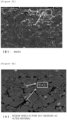
- FIG. 4A is a view illustrating an EDS mapping image for a binder of the negative electrode cross-sectional sample obtained by using the EDS according to an exemplary embodiment of the present invention
- FIG. 4B is a view illustrating an image extracted by applying the EDS mapping image for the binder of the negative electrode cross-sectional sample to image processing.
- the constituent materials of the negative electrode for a secondary battery expressed as a dark color and the binder expressed as a brighter color are clearly distinguished from each other.
- FIG. 4B it is possible to classify the image of the cross section of the negative electrode cross-sectional sample extracted by the image processing into the upper, middle, and lower regions.
- the area ratio of the binder of the electrode for a secondary battery may be quantitatively analyzed by using a mapping image extracted by the energy-dispersive X-ray spectroscopy. Accordingly, the distribution of pores of the electrode for a secondary battery can be more exactly grasped, and the performance of the electrode for a secondary battery and a secondary battery including the same can be calculated in advance.
- the method for measuring a distribution of pores of an electrode for a secondary battery may be applied to a positive electrode and a negative electrode for a secondary battery.
- a negative electrode for a secondary battery (manufactured by LG CHEM) was prepared, and OsO 4 as a staining material and polydimethylsiloxane (PDMS) as a polymer including silicon were prepared.
- the binder of the negative electrode for a secondary battery was stained by using the prepared OsO 4 , and pores of the negative electrode for a secondary battery were filled with the PDMS by impregnating the negative electrode for a secondary battery into the prepared PDMS.
- the surface of the negative electrode for a secondary battery was trimmed by irradiating the negative electrode for a secondary battery with focused argon (Ar) ion beam using an ion milling device (IM 4000, manufactured by Hitachi, Ltd.) irradiating an argon ion beam, thereby producing a negative electrode cross-sectional sample having a clean cross section.
- the irradiation with argon ion beam was carried out by setting a discharge current and an ion beam current to 400 ⁇ A and 130 ⁇ A, respectively, and was carried out at a gas flow of 1 cm 3 /min for 3 hours.
- a negative electrode for a secondary battery which is the same as that in Example 1, was prepared, and a negative electrode cross-sectional sample was produced in the same manner as in Example 1, except that pores of the negative electrode for a secondary battery were filled with polydimethylsiloxane in a state where a binder of the negative electrode for a secondary battery was not stained.
- a negative electrode for a secondary battery which is the same as that in Example 1, was prepared, and a negative electrode cross-sectional sample was produced in the same manner as in Example 1, except that a binder of the negative electrode for a secondary battery was stained with OsO 4 , and pores of the negative electrode for a secondary battery were filled with a polymer including epoxy.
- a negative electrode for a secondary battery which is the same as that in Example 1, was prepared, and a negative electrode cross-sectional sample was produced in the same manner as in Example 1, except that a binder of the negative electrode for a secondary battery was not stained, and pores of the negative electrode for a secondary battery were not filled with a polymer including silicon.
- a negative electrode for a secondary battery which is the same as that in Example 1, was prepared, and a negative electrode cross-sectional sample was produced in the same manner as in Example 1, except that a binder of the negative electrode for a secondary battery was not stained, and pores of the negative electrode for a secondary battery were filled with a polymer including epoxy.
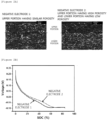
- the negative electrode cross-sectional samples produced in Examples 1 and 2 and Comparative Examples 1 to 3 were observed with a scanning electron microscope (SU8020, manufactured by Hitachi, Ltd.), and the SEM photographs thereof were captured.
- FIG. 5A is a scanning electron microscope (SEM) photograph of the negative electrode cross-sectional sample produced in Example 1
- FIG. 5B is a SEM photograph of the negative electrode cross-sectional sample produced in Example 2
- FIG. 5C is a SEM photograph of the negative electrode cross-sectional sample produced in Comparative Example 1
- FIG. 5D is a SEM photograph of the negative electrode cross-sectional sample produced in Comparative Example 2
- FIG. 5E is a SEM photograph of the negative electrode cross-sectional sample produced in Comparative Example 3.
- the negative electrode constituent materials for a secondary battery such as an active material present on different focal planes at the bottom of the pore, were not observed because the pores of the negative electrodes for a secondary battery according to Examples 1 and 2 were impregnated into the PDMS, and as a result, the negative electrode constituent materials for a secondary battery and pores were clearly distinguished from each other.
- FIG. 5A it could be seen that in the case of Example 1 in which the binder of the negative electrode for a secondary battery was stained by using OsO 4 , the negative electrode constituent materials for a secondary battery, the binder, and the pores were clearly distinguished from one another, and as a result, the pores could be more exactly confirmed.
- an energy-dispersive X-ray spectroscopy having an energy resolution of 5.9 keV or more and 136 keV or less and a minimum detection limit of 0.1 wt% was used.
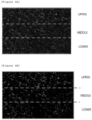
- FIG. 6A is a set of views illustrating the EDS mapping images of the negative electrode cross-sectional samples according to Examples 1 and 2 obtained by using the EDS
- FIG. 6B illustrates images extracted by applying the EDS mapping images for the negative electrode cross-sectional samples according to Examples 1 and 2 to image processing.
- the images of the cross section of the negative electrode cross-sectional sample extracted by the image processing can be classified into the upper, middle, and lower regions, and the image was classified into a total of nine unit regions by dividing each region, which was classified into the upper, middle, and lower regions, into three parts in a vertical direction, thereby quantitatively analyzing pores of a negative electrode for a secondary battery.
- Table 1 describes a porosity exhibiting the distribution of pores present in each area of the 9 unit regions of the negative electrode for a secondary battery produced in Example 1 and the ratio of the negative electrode active material and the binder region
- Table 2 describes the porosity of each area of the 9 unit regions of the negative electrode for a secondary battery produced in Example 2.
- Example 1 the distribution of pores of the negative electrode for a secondary battery could be more exactly confirmed in Example 1 in which the pores were impregnated into the PDMS and the binder was stained with OsO 4 , as compared to Example 2 in which the binder was not stained. Specifically, it could be confirmed that in the case of Example 1 in which the binder was stained, the pores and the negative electrode active material were distinguished from the binder, and as a result, the porosity in a unit region was smaller than that in Example 2, and accordingly, it could be seen that the porosity of the negative electrode for a secondary battery could be more exactly confirmed.
- the present invention it is possible to quantitatively analyze the pores, the active material, and the binder present in the electrode for a secondary battery, thereby predicting the performance of a secondary battery in which an electrode for a secondary battery is used.
Landscapes
- Chemical & Material Sciences (AREA)
- Health & Medical Sciences (AREA)
- Life Sciences & Earth Sciences (AREA)
- Physics & Mathematics (AREA)
- Analytical Chemistry (AREA)
- Biochemistry (AREA)
- General Health & Medical Sciences (AREA)
- General Physics & Mathematics (AREA)
- Immunology (AREA)
- Pathology (AREA)
- Engineering & Computer Science (AREA)
- Chemical Kinetics & Catalysis (AREA)
- Electrochemistry (AREA)
- General Chemical & Material Sciences (AREA)
- Dispersion Chemistry (AREA)
- Biomedical Technology (AREA)
- Molecular Biology (AREA)
- Materials Engineering (AREA)
- Spectroscopy & Molecular Physics (AREA)
- Crystallography & Structural Chemistry (AREA)
- Battery Electrode And Active Subsutance (AREA)
- Analysing Materials By The Use Of Radiation (AREA)
- Sampling And Sample Adjustment (AREA)
Applications Claiming Priority (2)
| Application Number | Priority Date | Filing Date | Title |
|---|---|---|---|
| KR20170065845 | 2017-05-29 | ||
| PCT/KR2018/006076 WO2018221929A1 (ko) | 2017-05-29 | 2018-05-29 | 이차 전지용 전극의 기공 분포 측정 방법 |
Publications (3)
| Publication Number | Publication Date |
|---|---|
| EP3633359A1 EP3633359A1 (en) | 2020-04-08 |
| EP3633359A4 EP3633359A4 (en) | 2020-06-24 |
| EP3633359B1 true EP3633359B1 (en) | 2024-06-12 |
Family
ID=64455067
Family Applications (1)
| Application Number | Title | Priority Date | Filing Date |
|---|---|---|---|
| EP18809590.5A Active EP3633359B1 (en) | 2017-05-29 | 2018-05-29 | Method for measuring pore distribution in electrode for secondary battery |
Country Status (8)
| Country | Link |
|---|---|
| US (1) | US12196651B2 (es) |
| EP (1) | EP3633359B1 (es) |
| JP (1) | JP6860129B2 (es) |
| KR (1) | KR102097613B1 (es) |
| CN (1) | CN110352347B (es) |
| ES (1) | ES2992774T3 (es) |
| HU (1) | HUE067672T2 (es) |
| WO (1) | WO2018221929A1 (es) |
Families Citing this family (8)
| Publication number | Priority date | Publication date | Assignee | Title |
|---|---|---|---|---|
| KR102420242B1 (ko) | 2019-07-10 | 2022-07-13 | 주식회사 엘지에너지솔루션 | 리튬 이차전지용 전극의 전극 활물질 깨짐율 분석 방법 |
| KR102757591B1 (ko) * | 2019-11-14 | 2025-01-21 | 주식회사 엘지화학 | 복합소재 내 탄소소재의 분산성 평가 방법 |
| WO2021128092A1 (zh) * | 2019-12-25 | 2021-07-01 | 宁德新能源科技有限公司 | 电化学装置及包含其的电子装置 |
| KR102852673B1 (ko) | 2020-09-29 | 2025-08-28 | 주식회사 엘지에너지솔루션 | 전극 구조에 따른 이차전지 성능 추정 장치 및 그 방법 |
| KR102648343B1 (ko) * | 2021-04-06 | 2024-03-14 | 주식회사 엘지에너지솔루션 | 분리막용 다공성 고분자 기재의 불량품 사전 검출 방법 |
| CN115979907B (zh) * | 2021-10-14 | 2024-11-19 | 比亚迪股份有限公司 | 一种电极片的孔隙检测方法及电极片 |
| US20260086051A1 (en) * | 2022-09-06 | 2026-03-26 | Lg Chem, Ltd. | Analysis Method of Pore Distribution of Porous Structures |
| KR102886424B1 (ko) * | 2023-12-22 | 2025-11-17 | 에스케이이노베이션 주식회사 | 이차전지용 분리막의 3차원 형상구조 제작 및 이를 활용한 기공 형상 분석 방법 |
Family Cites Families (16)
| Publication number | Priority date | Publication date | Assignee | Title |
|---|---|---|---|---|
| JP3686952B2 (ja) | 1998-12-08 | 2005-08-24 | 独立行政法人 国立印刷局 | インキ転移物の断面観察法 |
| JP2003139728A (ja) | 2001-11-05 | 2003-05-14 | Toray Res Center:Kk | 多孔性材料の構造解析方法および構造解析写真 |
| JP3922064B2 (ja) * | 2002-03-25 | 2007-05-30 | 松下電器産業株式会社 | 電池極板中の結着剤の分散状態を評価する方法 |
| KR100766967B1 (ko) | 2006-11-20 | 2007-10-15 | 삼성에스디아이 주식회사 | 리튬 이차 전지용 전극, 및 이로부터 제조된 리튬 이차전지 |
| KR20070011543A (ko) * | 2006-11-27 | 2007-01-24 | 니폰 쇼쿠바이 컴파니 리미티드 | 고체 산화물형 연료 전지용 애노드 지지 기판 및 그의 제조방법 |
| CN103493264A (zh) | 2011-04-07 | 2014-01-01 | 古河电气工业株式会社 | 正极活性物质材料、非水电解质二次电池及正极活性物质材料的制造方法 |
| WO2013003846A2 (en) | 2011-06-30 | 2013-01-03 | The Regents Of The University Of California | Surface insulated porous current collectors as dendrite free electrodeposition electrodes |
| JP5675519B2 (ja) * | 2011-07-11 | 2015-02-25 | 株式会社日立製作所 | 二次電池用負極,二次電池用負極を用いた非水電解質二次電池およびそれらの製造方法 |
| CN102735599B (zh) | 2012-06-21 | 2016-12-21 | 宁德新能源科技有限公司 | 测量多孔结构体孔隙分布的方法 |
| KR101864904B1 (ko) | 2013-05-09 | 2018-06-05 | 주식회사 엘지화학 | 전극 밀도 및 전극 공극률의 측정 방법 |
| JP5596875B1 (ja) * | 2013-07-19 | 2014-09-24 | 日本碍子株式会社 | 燃料電池セル及び空気極材料 |
| KR101813302B1 (ko) | 2013-10-31 | 2017-12-28 | 주식회사 엘지화학 | 음극 활물질 및 이의 제조 방법 |
| KR102048342B1 (ko) * | 2015-07-09 | 2019-11-25 | 주식회사 엘지화학 | 이차 전지 양극 내부 기공 분포 분석 방법 및 이를 위한 고분자 |
| KR20170019146A (ko) * | 2015-08-11 | 2017-02-21 | 주식회사 엘지화학 | 이차 전지 전극 내부 구성 물질 및 기공의 분포를 분석하는 방법 및 이를 위한 조성물 |
| US20190097222A1 (en) | 2015-08-14 | 2019-03-28 | Energ2 Technologies, Inc. | Composites of porous nano-featured silicon materials and carbon materials |
| KR101803739B1 (ko) * | 2016-07-05 | 2017-12-01 | 주식회사 유니온커뮤니티 | 휴대 단말기를 이용한 자외선 미러 장치 및 그 방법 |
-
2018
- 2018-05-29 EP EP18809590.5A patent/EP3633359B1/en active Active
- 2018-05-29 CN CN201880014563.2A patent/CN110352347B/zh active Active
- 2018-05-29 KR KR1020180061024A patent/KR102097613B1/ko active Active
- 2018-05-29 US US16/607,526 patent/US12196651B2/en active Active
- 2018-05-29 JP JP2019541699A patent/JP6860129B2/ja active Active
- 2018-05-29 ES ES18809590T patent/ES2992774T3/es active Active
- 2018-05-29 WO PCT/KR2018/006076 patent/WO2018221929A1/ko not_active Ceased
- 2018-05-29 HU HUE18809590A patent/HUE067672T2/hu unknown
Also Published As
| Publication number | Publication date |
|---|---|
| ES2992774T3 (en) | 2024-12-18 |
| JP6860129B2 (ja) | 2021-04-14 |
| CN110352347A (zh) | 2019-10-18 |
| CN110352347B (zh) | 2022-04-15 |
| JP2020507889A (ja) | 2020-03-12 |
| EP3633359A1 (en) | 2020-04-08 |
| HUE067672T2 (hu) | 2024-11-28 |
| KR102097613B1 (ko) | 2020-04-06 |
| EP3633359A4 (en) | 2020-06-24 |
| WO2018221929A1 (ko) | 2018-12-06 |
| US20200141841A1 (en) | 2020-05-07 |
| US12196651B2 (en) | 2025-01-14 |
| KR20180130462A (ko) | 2018-12-07 |
Similar Documents
| Publication | Publication Date | Title |
|---|---|---|
| EP3633359B1 (en) | Method for measuring pore distribution in electrode for secondary battery | |
| Zekri et al. | Microstructure degradation of Ni/CGO anodes for solid oxide fuel cells after long operation time using 3D reconstructions by FIB tomography | |
| KR102048342B1 (ko) | 이차 전지 양극 내부 기공 분포 분석 방법 및 이를 위한 고분자 | |
| Muto et al. | Capacity-fading mechanisms of LiNiO2-based lithium-ion batteries: II. Diagnostic analysis by electron microscopy and spectroscopy | |
| Cantoni et al. | Advances in 3D focused ion beam tomography | |
| Ebner et al. | X-Ray Tomography of Porous, Transition Metal Oxide Based Lithium Ion Battery Electrodes. | |
| Hamann et al. | The Effects of Constriction Factor and Geometric Tortuosity on Li‐Ion Transport in Porous Solid‐State Li‐Ion Electrolytes | |
| Diercks et al. | Three-dimensional quantification of composition and electrostatic potential at individual grain boundaries in doped ceria | |
| KR102068764B1 (ko) | 배터리 음극 내 기공 분포 관찰방법 및 관찰시스템 | |
| Cooper et al. | Methods—Kintsugi imaging of battery electrodes: distinguishing pores from the carbon binder domain using Pt deposition | |
| Bailey et al. | Quantitative assessment of machine-learning segmentation of battery electrode materials for active material quantification | |
| Mahbub et al. | A method for quantitative 3D mesoscale analysis of solid oxide fuel cell microstructures using Xe-plasma focused ion beam (PFIB) coupled with SEM | |
| Meffert et al. | Optimization of material contrast for efficient FIB‐SEM tomography of solid oxide fuel cells | |
| CN112189142B (zh) | 电池电极的分析方法 | |
| KR102606425B1 (ko) | 이차 전지용 전극의 성능 예측 방법 | |
| Sar et al. | Three dimensional analysis of Ce0. 9Gd0. 1O1. 95–La0. 6Sr0. 4Co0. 2Fe0. 8O3− δ oxygen electrode for solid oxide cells | |
| KR102197898B1 (ko) | 전극 내 탄소나노튜브의 분산성 평가 방법 | |
| Nakajo et al. | Characterization of cracks and their effects on the effective transport pathways in Ni-YSZ anodes after reoxidation using X-ray nanotomography | |
| JP7589491B2 (ja) | 多孔質二次粒子における一次粒子の評価方法 | |
| Young et al. | Informed Solid-state Electrochemical Cell Design for Operando X-ray Characterisation | |
| Bieneck et al. | Electrode Properties from Blocking Condition Impedance Spectra: Influence of Manufacturing Parameters | |
| Cooper et al. | Kintsugi Imaging of Battery Electrodes: Unambiguously Distinguishing Pores from the Carbon Binder Domain using Pt Deposition | |
| Singh | Atom probe tomography characterization of engineering ceramics | |
| Wied | Studying Ionic Conductivity and Mechanics in Lithium-Ion Batteries with X-ray Tomography | |
| Uzakbaiuly et al. | Strengths and limitations of various analytical methods for all-solid state microbatteries |
Legal Events
| Date | Code | Title | Description |
|---|---|---|---|
| STAA | Information on the status of an ep patent application or granted ep patent |
Free format text: STATUS: THE INTERNATIONAL PUBLICATION HAS BEEN MADE |
|
| PUAI | Public reference made under article 153(3) epc to a published international application that has entered the european phase |
Free format text: ORIGINAL CODE: 0009012 |
|
| STAA | Information on the status of an ep patent application or granted ep patent |
Free format text: STATUS: REQUEST FOR EXAMINATION WAS MADE |
|
| 17P | Request for examination filed |
Effective date: 20190820 |
|
| AK | Designated contracting states |
Kind code of ref document: A1 Designated state(s): AL AT BE BG CH CY CZ DE DK EE ES FI FR GB GR HR HU IE IS IT LI LT LU LV MC MK MT NL NO PL PT RO RS SE SI SK SM TR |
|
| AX | Request for extension of the european patent |
Extension state: BA ME |
|
| A4 | Supplementary search report drawn up and despatched |
Effective date: 20200527 |
|
| RIC1 | Information provided on ipc code assigned before grant |
Ipc: G01N 23/207 20180101AFI20200519BHEP Ipc: G01N 23/2257 20180101ALI20200519BHEP Ipc: G01N 1/04 20060101ALI20200519BHEP Ipc: H01M 4/02 20060101ALI20200519BHEP Ipc: G01N 1/28 20060101ALI20200519BHEP Ipc: G01N 23/2252 20180101ALI20200519BHEP Ipc: G01N 23/2202 20180101ALI20200519BHEP Ipc: H01M 4/13 20100101ALI20200519BHEP Ipc: G01N 1/30 20060101ALI20200519BHEP |
|
| DAV | Request for validation of the european patent (deleted) | ||
| DAX | Request for extension of the european patent (deleted) | ||
| RAP1 | Party data changed (applicant data changed or rights of an application transferred) |
Owner name: LG ENERGY SOLUTION LTD. |
|
| RAP3 | Party data changed (applicant data changed or rights of an application transferred) |
Owner name: LG ENERGY SOLUTION, LTD. |
|
| STAA | Information on the status of an ep patent application or granted ep patent |
Free format text: STATUS: EXAMINATION IS IN PROGRESS |
|
| 17Q | First examination report despatched |
Effective date: 20220426 |
|
| GRAP | Despatch of communication of intention to grant a patent |
Free format text: ORIGINAL CODE: EPIDOSNIGR1 |
|
| STAA | Information on the status of an ep patent application or granted ep patent |
Free format text: STATUS: GRANT OF PATENT IS INTENDED |
|
| INTG | Intention to grant announced |
Effective date: 20240307 |
|
| GRAS | Grant fee paid |
Free format text: ORIGINAL CODE: EPIDOSNIGR3 |
|
| GRAA | (expected) grant |
Free format text: ORIGINAL CODE: 0009210 |
|
| STAA | Information on the status of an ep patent application or granted ep patent |
Free format text: STATUS: THE PATENT HAS BEEN GRANTED |
|
| P01 | Opt-out of the competence of the unified patent court (upc) registered |
Effective date: 20240429 |
|
| AK | Designated contracting states |
Kind code of ref document: B1 Designated state(s): AL AT BE BG CH CY CZ DE DK EE ES FI FR GB GR HR HU IE IS IT LI LT LU LV MC MK MT NL NO PL PT RO RS SE SI SK SM TR |
|
| REG | Reference to a national code |
Ref country code: GB Ref legal event code: FG4D |
|
| REG | Reference to a national code |
Ref country code: CH Ref legal event code: EP |
|
| REG | Reference to a national code |
Ref country code: IE Ref legal event code: FG4D |
|
| REG | Reference to a national code |
Ref country code: DE Ref legal event code: R096 Ref document number: 602018070578 Country of ref document: DE |
|
| PG25 | Lapsed in a contracting state [announced via postgrant information from national office to epo] |
Ref country code: BG Free format text: LAPSE BECAUSE OF FAILURE TO SUBMIT A TRANSLATION OF THE DESCRIPTION OR TO PAY THE FEE WITHIN THE PRESCRIBED TIME-LIMIT Effective date: 20240612 |
|
| PG25 | Lapsed in a contracting state [announced via postgrant information from national office to epo] |
Ref country code: FI Free format text: LAPSE BECAUSE OF FAILURE TO SUBMIT A TRANSLATION OF THE DESCRIPTION OR TO PAY THE FEE WITHIN THE PRESCRIBED TIME-LIMIT Effective date: 20240612 Ref country code: HR Free format text: LAPSE BECAUSE OF FAILURE TO SUBMIT A TRANSLATION OF THE DESCRIPTION OR TO PAY THE FEE WITHIN THE PRESCRIBED TIME-LIMIT Effective date: 20240612 |
|
| REG | Reference to a national code |
Ref country code: LT Ref legal event code: MG9D |
|
| PG25 | Lapsed in a contracting state [announced via postgrant information from national office to epo] |
Ref country code: GR Free format text: LAPSE BECAUSE OF FAILURE TO SUBMIT A TRANSLATION OF THE DESCRIPTION OR TO PAY THE FEE WITHIN THE PRESCRIBED TIME-LIMIT Effective date: 20240913 |
|
| REG | Reference to a national code |
Ref country code: NL Ref legal event code: MP Effective date: 20240612 |
|
| PG25 | Lapsed in a contracting state [announced via postgrant information from national office to epo] |
Ref country code: LV Free format text: LAPSE BECAUSE OF FAILURE TO SUBMIT A TRANSLATION OF THE DESCRIPTION OR TO PAY THE FEE WITHIN THE PRESCRIBED TIME-LIMIT Effective date: 20240612 |
|
| PG25 | Lapsed in a contracting state [announced via postgrant information from national office to epo] |
Ref country code: NO Free format text: LAPSE BECAUSE OF FAILURE TO SUBMIT A TRANSLATION OF THE DESCRIPTION OR TO PAY THE FEE WITHIN THE PRESCRIBED TIME-LIMIT Effective date: 20240912 Ref country code: LV Free format text: LAPSE BECAUSE OF FAILURE TO SUBMIT A TRANSLATION OF THE DESCRIPTION OR TO PAY THE FEE WITHIN THE PRESCRIBED TIME-LIMIT Effective date: 20240612 Ref country code: HR Free format text: LAPSE BECAUSE OF FAILURE TO SUBMIT A TRANSLATION OF THE DESCRIPTION OR TO PAY THE FEE WITHIN THE PRESCRIBED TIME-LIMIT Effective date: 20240612 Ref country code: GR Free format text: LAPSE BECAUSE OF FAILURE TO SUBMIT A TRANSLATION OF THE DESCRIPTION OR TO PAY THE FEE WITHIN THE PRESCRIBED TIME-LIMIT Effective date: 20240913 Ref country code: FI Free format text: LAPSE BECAUSE OF FAILURE TO SUBMIT A TRANSLATION OF THE DESCRIPTION OR TO PAY THE FEE WITHIN THE PRESCRIBED TIME-LIMIT Effective date: 20240612 Ref country code: BG Free format text: LAPSE BECAUSE OF FAILURE TO SUBMIT A TRANSLATION OF THE DESCRIPTION OR TO PAY THE FEE WITHIN THE PRESCRIBED TIME-LIMIT Effective date: 20240612 Ref country code: RS Free format text: LAPSE BECAUSE OF FAILURE TO SUBMIT A TRANSLATION OF THE DESCRIPTION OR TO PAY THE FEE WITHIN THE PRESCRIBED TIME-LIMIT Effective date: 20240912 |
|
| PG25 | Lapsed in a contracting state [announced via postgrant information from national office to epo] |
Ref country code: NL Free format text: LAPSE BECAUSE OF FAILURE TO SUBMIT A TRANSLATION OF THE DESCRIPTION OR TO PAY THE FEE WITHIN THE PRESCRIBED TIME-LIMIT Effective date: 20240612 |
|
| REG | Reference to a national code |
Ref country code: AT Ref legal event code: MK05 Ref document number: 1694680 Country of ref document: AT Kind code of ref document: T Effective date: 20240612 |
|
| REG | Reference to a national code |
Ref country code: HU Ref legal event code: AG4A Ref document number: E067672 Country of ref document: HU |
|
| PG25 | Lapsed in a contracting state [announced via postgrant information from national office to epo] |
Ref country code: NL Free format text: LAPSE BECAUSE OF FAILURE TO SUBMIT A TRANSLATION OF THE DESCRIPTION OR TO PAY THE FEE WITHIN THE PRESCRIBED TIME-LIMIT Effective date: 20240612 |
|
| PG25 | Lapsed in a contracting state [announced via postgrant information from national office to epo] |
Ref country code: PT Free format text: LAPSE BECAUSE OF FAILURE TO SUBMIT A TRANSLATION OF THE DESCRIPTION OR TO PAY THE FEE WITHIN THE PRESCRIBED TIME-LIMIT Effective date: 20241014 |
|
| REG | Reference to a national code |
Ref country code: ES Ref legal event code: FG2A Ref document number: 2992774 Country of ref document: ES Kind code of ref document: T3 Effective date: 20241218 |
|
| PG25 | Lapsed in a contracting state [announced via postgrant information from national office to epo] |
Ref country code: PT Free format text: LAPSE BECAUSE OF FAILURE TO SUBMIT A TRANSLATION OF THE DESCRIPTION OR TO PAY THE FEE WITHIN THE PRESCRIBED TIME-LIMIT Effective date: 20241014 |
|
| PG25 | Lapsed in a contracting state [announced via postgrant information from national office to epo] |
Ref country code: PL Free format text: LAPSE BECAUSE OF FAILURE TO SUBMIT A TRANSLATION OF THE DESCRIPTION OR TO PAY THE FEE WITHIN THE PRESCRIBED TIME-LIMIT Effective date: 20240612 |
|
| PG25 | Lapsed in a contracting state [announced via postgrant information from national office to epo] |
Ref country code: EE Free format text: LAPSE BECAUSE OF FAILURE TO SUBMIT A TRANSLATION OF THE DESCRIPTION OR TO PAY THE FEE WITHIN THE PRESCRIBED TIME-LIMIT Effective date: 20240612 |
|
| PG25 | Lapsed in a contracting state [announced via postgrant information from national office to epo] |
Ref country code: AT Free format text: LAPSE BECAUSE OF FAILURE TO SUBMIT A TRANSLATION OF THE DESCRIPTION OR TO PAY THE FEE WITHIN THE PRESCRIBED TIME-LIMIT Effective date: 20240612 Ref country code: IS Free format text: LAPSE BECAUSE OF FAILURE TO SUBMIT A TRANSLATION OF THE DESCRIPTION OR TO PAY THE FEE WITHIN THE PRESCRIBED TIME-LIMIT Effective date: 20241012 |
|
| PG25 | Lapsed in a contracting state [announced via postgrant information from national office to epo] |
Ref country code: CZ Free format text: LAPSE BECAUSE OF FAILURE TO SUBMIT A TRANSLATION OF THE DESCRIPTION OR TO PAY THE FEE WITHIN THE PRESCRIBED TIME-LIMIT Effective date: 20240612 |
|
| PG25 | Lapsed in a contracting state [announced via postgrant information from national office to epo] |
Ref country code: RO Free format text: LAPSE BECAUSE OF FAILURE TO SUBMIT A TRANSLATION OF THE DESCRIPTION OR TO PAY THE FEE WITHIN THE PRESCRIBED TIME-LIMIT Effective date: 20240612 Ref country code: SK Free format text: LAPSE BECAUSE OF FAILURE TO SUBMIT A TRANSLATION OF THE DESCRIPTION OR TO PAY THE FEE WITHIN THE PRESCRIBED TIME-LIMIT Effective date: 20240612 |
|
| PG25 | Lapsed in a contracting state [announced via postgrant information from national office to epo] |
Ref country code: SM Free format text: LAPSE BECAUSE OF FAILURE TO SUBMIT A TRANSLATION OF THE DESCRIPTION OR TO PAY THE FEE WITHIN THE PRESCRIBED TIME-LIMIT Effective date: 20240612 |
|
| PG25 | Lapsed in a contracting state [announced via postgrant information from national office to epo] |
Ref country code: SM Free format text: LAPSE BECAUSE OF FAILURE TO SUBMIT A TRANSLATION OF THE DESCRIPTION OR TO PAY THE FEE WITHIN THE PRESCRIBED TIME-LIMIT Effective date: 20240612 Ref country code: SK Free format text: LAPSE BECAUSE OF FAILURE TO SUBMIT A TRANSLATION OF THE DESCRIPTION OR TO PAY THE FEE WITHIN THE PRESCRIBED TIME-LIMIT Effective date: 20240612 Ref country code: RO Free format text: LAPSE BECAUSE OF FAILURE TO SUBMIT A TRANSLATION OF THE DESCRIPTION OR TO PAY THE FEE WITHIN THE PRESCRIBED TIME-LIMIT Effective date: 20240612 Ref country code: PL Free format text: LAPSE BECAUSE OF FAILURE TO SUBMIT A TRANSLATION OF THE DESCRIPTION OR TO PAY THE FEE WITHIN THE PRESCRIBED TIME-LIMIT Effective date: 20240612 Ref country code: IS Free format text: LAPSE BECAUSE OF FAILURE TO SUBMIT A TRANSLATION OF THE DESCRIPTION OR TO PAY THE FEE WITHIN THE PRESCRIBED TIME-LIMIT Effective date: 20241012 Ref country code: EE Free format text: LAPSE BECAUSE OF FAILURE TO SUBMIT A TRANSLATION OF THE DESCRIPTION OR TO PAY THE FEE WITHIN THE PRESCRIBED TIME-LIMIT Effective date: 20240612 Ref country code: CZ Free format text: LAPSE BECAUSE OF FAILURE TO SUBMIT A TRANSLATION OF THE DESCRIPTION OR TO PAY THE FEE WITHIN THE PRESCRIBED TIME-LIMIT Effective date: 20240612 Ref country code: AT Free format text: LAPSE BECAUSE OF FAILURE TO SUBMIT A TRANSLATION OF THE DESCRIPTION OR TO PAY THE FEE WITHIN THE PRESCRIBED TIME-LIMIT Effective date: 20240612 |
|
| PG25 | Lapsed in a contracting state [announced via postgrant information from national office to epo] |
Ref country code: IT Free format text: LAPSE BECAUSE OF FAILURE TO SUBMIT A TRANSLATION OF THE DESCRIPTION OR TO PAY THE FEE WITHIN THE PRESCRIBED TIME-LIMIT Effective date: 20240612 |
|
| REG | Reference to a national code |
Ref country code: DE Ref legal event code: R097 Ref document number: 602018070578 Country of ref document: DE |
|
| PG25 | Lapsed in a contracting state [announced via postgrant information from national office to epo] |
Ref country code: DK Free format text: LAPSE BECAUSE OF FAILURE TO SUBMIT A TRANSLATION OF THE DESCRIPTION OR TO PAY THE FEE WITHIN THE PRESCRIBED TIME-LIMIT Effective date: 20240612 |
|
| PLBE | No opposition filed within time limit |
Free format text: ORIGINAL CODE: 0009261 |
|
| STAA | Information on the status of an ep patent application or granted ep patent |
Free format text: STATUS: NO OPPOSITION FILED WITHIN TIME LIMIT |
|
| 26N | No opposition filed |
Effective date: 20250313 |
|
| PGFP | Annual fee paid to national office [announced via postgrant information from national office to epo] |
Ref country code: DE Payment date: 20250422 Year of fee payment: 8 |
|
| PGFP | Annual fee paid to national office [announced via postgrant information from national office to epo] |
Ref country code: ES Payment date: 20250613 Year of fee payment: 8 |
|
| PGFP | Annual fee paid to national office [announced via postgrant information from national office to epo] |
Ref country code: HU Payment date: 20250526 Year of fee payment: 8 |
|
| PGFP | Annual fee paid to national office [announced via postgrant information from national office to epo] |
Ref country code: BE Payment date: 20250407 Year of fee payment: 8 |
|
| PGFP | Annual fee paid to national office [announced via postgrant information from national office to epo] |
Ref country code: FR Payment date: 20250422 Year of fee payment: 8 |
|
| PG25 | Lapsed in a contracting state [announced via postgrant information from national office to epo] |
Ref country code: SE Free format text: LAPSE BECAUSE OF FAILURE TO SUBMIT A TRANSLATION OF THE DESCRIPTION OR TO PAY THE FEE WITHIN THE PRESCRIBED TIME-LIMIT Effective date: 20240612 |
|
| REG | Reference to a national code |
Ref country code: CH Ref legal event code: H13 Free format text: ST27 STATUS EVENT CODE: U-0-0-H10-H13 (AS PROVIDED BY THE NATIONAL OFFICE) Effective date: 20251223 |
|
| PG25 | Lapsed in a contracting state [announced via postgrant information from national office to epo] |
Ref country code: LU Free format text: LAPSE BECAUSE OF NON-PAYMENT OF DUE FEES Effective date: 20250529 |
|
| PG25 | Lapsed in a contracting state [announced via postgrant information from national office to epo] |
Ref country code: CH Free format text: LAPSE BECAUSE OF NON-PAYMENT OF DUE FEES Effective date: 20250531 |
|
| PG25 | Lapsed in a contracting state [announced via postgrant information from national office to epo] |
Ref country code: MC Free format text: LAPSE BECAUSE OF FAILURE TO SUBMIT A TRANSLATION OF THE DESCRIPTION OR TO PAY THE FEE WITHIN THE PRESCRIBED TIME-LIMIT Effective date: 20240612 |
|
| PGFP | Annual fee paid to national office [announced via postgrant information from national office to epo] |
Ref country code: GB Payment date: 20260324 Year of fee payment: 9 |
|
| PG25 | Lapsed in a contracting state [announced via postgrant information from national office to epo] |
Ref country code: IE Free format text: LAPSE BECAUSE OF NON-PAYMENT OF DUE FEES Effective date: 20250529 |