EP3565907B1 - Methods of assessing nuclease cleavage - Google Patents
Methods of assessing nuclease cleavage Download PDFInfo
- Publication number
- EP3565907B1 EP3565907B1 EP18701862.7A EP18701862A EP3565907B1 EP 3565907 B1 EP3565907 B1 EP 3565907B1 EP 18701862 A EP18701862 A EP 18701862A EP 3565907 B1 EP3565907 B1 EP 3565907B1
- Authority
- EP
- European Patent Office
- Prior art keywords
- nucleic acid
- genomic dna
- acid fragments
- transposon
- sequencing
- Prior art date
- Legal status (The legal status is an assumption and is not a legal conclusion. Google has not performed a legal analysis and makes no representation as to the accuracy of the status listed.)
- Active
Links
Images






Classifications
-
- C—CHEMISTRY; METALLURGY
- C12—BIOCHEMISTRY; BEER; SPIRITS; WINE; VINEGAR; MICROBIOLOGY; ENZYMOLOGY; MUTATION OR GENETIC ENGINEERING
- C12Q—MEASURING OR TESTING PROCESSES INVOLVING ENZYMES, NUCLEIC ACIDS OR MICROORGANISMS; COMPOSITIONS OR TEST PAPERS THEREFOR; PROCESSES OF PREPARING SUCH COMPOSITIONS; CONDITION-RESPONSIVE CONTROL IN MICROBIOLOGICAL OR ENZYMOLOGICAL PROCESSES
- C12Q1/00—Measuring or testing processes involving enzymes, nucleic acids or microorganisms; Compositions therefor; Processes of preparing such compositions
- C12Q1/68—Measuring or testing processes involving enzymes, nucleic acids or microorganisms; Compositions therefor; Processes of preparing such compositions involving nucleic acids
- C12Q1/6869—Methods for sequencing
-
- G—PHYSICS
- G16—INFORMATION AND COMMUNICATION TECHNOLOGY [ICT] SPECIALLY ADAPTED FOR SPECIFIC APPLICATION FIELDS
- G16B—BIOINFORMATICS, i.e. INFORMATION AND COMMUNICATION TECHNOLOGY [ICT] SPECIALLY ADAPTED FOR GENETIC OR PROTEIN-RELATED DATA PROCESSING IN COMPUTATIONAL MOLECULAR BIOLOGY
- G16B20/00—ICT specially adapted for functional genomics or proteomics, e.g. genotype-phenotype associations
- G16B20/50—Mutagenesis
-
- G—PHYSICS
- G16—INFORMATION AND COMMUNICATION TECHNOLOGY [ICT] SPECIALLY ADAPTED FOR SPECIFIC APPLICATION FIELDS
- G16B—BIOINFORMATICS, i.e. INFORMATION AND COMMUNICATION TECHNOLOGY [ICT] SPECIALLY ADAPTED FOR GENETIC OR PROTEIN-RELATED DATA PROCESSING IN COMPUTATIONAL MOLECULAR BIOLOGY
- G16B30/00—ICT specially adapted for sequence analysis involving nucleotides or amino acids
- G16B30/10—Sequence alignment; Homology search
Definitions
- Nucleases such as zinc finger nucleases (ZFNs), transcription activator-like effector nucleases (TALENs), and clustered regularly-interspersed short palindromic repeat (CRISPR)-associated nucleases have become increasingly used because of their ability to be targeted to particular DNA sequences.
- ZFNs zinc finger nucleases
- TALENs transcription activator-like effector nucleases
- CRISPR clustered regularly-interspersed short palindromic repeat
- gRNA Cas9/guide RNA
- RNP ribonucleoprotein
- PCRmediated assays are fundamentally unable to measure structural changes to the genome (e.g., deletions larger than 100 bp, inversions and translocations), in conjunction with small indels.
- Unintended translocations, and other structural changes have been specifically cited for study in genome editing therapies by the NIH Recombinant DNA Advisory Committee (RAC) and the FDA ( Atkins et al. RAC Review 2016 ; Witten, Cell and Gene Meeting on the Mesa, La Jolla, CA, 2016 ).
- AMP-Seq Anchored Multiplex PCR sequencing
- HTGTS High Throughput, Genome-wide Translocation Sequencing
- LAM-HTGTS Linear Amplification-Mediated-HTGTS
- GUIDE-seq a modification of AMP-seq
- CRISPR RNA-guided nucleases Tsai et al. Nat. Biotechnol. 2014;33:187-197 . All these methods utilize a target specific primer, in addition to an adapter ligated universal priming site on sheared DNA, to achieve "uni-directional" amplification, and sequencing.
- DNA shearing is a cumbersome step in library preparation used in all these methods. DNA shearing requires specialized equipment and it is not readily amenable to studies of large numbers of samples. Consequently, DNA shearing has not been broadly applied in the gene editing field.
- the disclosure features a method comprising: (a) contacting a genomic DNA sample, obtained from a cell or tissue contacted with a site specific nuclease, with a transposon comprising a first detection sequence at the 5' end of the transposon, under conditions whereby the transposon is inserted into the genomic DNA and the genomic DNA is fragmented into a plurality of tagmented double-stranded nucleic acid fragments comprising the transposon attached to the 5' end of the nucleic acid fragments; (b) amplifying the tagmented nucleic acid fragments using (i) a first fixed primer comprising a nucleotide sequence complementary to a predetermined location in the genomic DNA and comprising a second detection sequence at its 5' end, and (ii) a second selective primer comprising a nucleotide sequence complementary to at least a portion of
- the first detection sequence comprises a first sequencing tag. In some embodiments, step (c) comprises contacting the amplified nucleic acid fragments with a first sequencing primer that hybridizes to the first sequencing tag. In some embodiments, the second detection sequence comprises a second sequencing tag. In some embodiments, step (c) comprises contacting the amplified nucleic acid fragments with a second sequencing primer that hybridizes to the second sequencing tag.
- the genomic DNA sample is obtained from a single cell.
- step (b) comprises using a plurality of first fixed primers, wherein each comprises a nucleotide sequence complementary to a different predetermined location in the genomic DNA.
- step (b) comprises performing a plurality of amplification reactions, each reaction using a different first fixed primer.
- each of the plurality of first fixed primers comprises a detection sequence comprising (i) the same sequencing tag and (ii) a unique barcode.
- the plurality of first fixed primers are used in a multiplexing assay.
- the double-stranded nucleic acid fragments comprise about 500 to about 5000 bps, e.g., about 100 to about 4000 bps, e.g., about 500 to about 3000 bp.
- the site-specific nuclease is Cas9.
- the disclosure features a method comprising: (a) contacting a genomic DNA sample obtained from a cell or tissue contacted with an RNA-guided nuclease under conditions favorable for cleavage of the genomic DNA by the nuclease; (b) contacting the cleaved genomic DNA with a transposon comprising a first detection sequence at the 5' end of the transposon, under conditions whereby the transposon is inserted into the cleaved genomic DNA and the cleaved genomic DNA is fragmented into a plurality of tagmented double-stranded nucleic acid fragments comprising the transposon attached to the 5' end of the nucleic acid fragments; (c) amplifying the tagmented nucleic acid fragments using (i) a first fixed primer comprising a nucleotide sequence complementary to a predetermined location in the genomic DNA and comprising a second detection sequence at its 5' end, and (ii) a second selective primer comprising a nucleotide sequence complementary to
- the first detection sequence comprises a first sequencing tag. In some embodiments, step (d) comprises contacting the amplified nucleic acid fragments with a first sequencing primer that hybridizes to the first sequencing tag. In some embodiments, the second detection sequence comprises a second sequencing tag. In some embodiments, step (d) comprises contacting the amplified nucleic acid fragments with a second sequencing primer that hybridizes to the second sequencing tag.
- the genomic DNA sample is obtained from a single cell.
- step (c) comprises using a plurality of first fixed primers, wherein each comprises a nucleotide sequence complementary to a different predetermined location in the genomic DNA.
- step (c) comprises performing a plurality of amplification reactions, each reaction using a different first fixed primer.
- each of the plurality of first fixed primers comprises a detection sequence comprising (i) the same sequencing tag and (ii) a unique barcode.
- the plurality of first fixed primers are used in a multiplexing assay.
- the double-stranded nucleic acid fragments comprise about 500 to about 5000 bps, e.g., about 100 to about 4000 bps, e.g., about 500 to about 3000 bp.
- the RNA-guided nuclease is Cas9.
- the disclosure features a method comprising: (a) contacting a genomic DNA sample obtained from a cell or tissue with a transposon comprising a first detection sequence at the 5' end of the transposon, under conditions whereby the transposon is inserted into the genomic DNA and the genomic DNA is fragmented into a plurality of tagmented double-stranded nucleic acid fragments comprising the transposon attached to the 5' end of the nucleic acid fragments, wherein the genomic DNA comprises a double-stranded oligonucleotide integrated into at least one site cleaved by a site specific nuclease; (b) amplifying the tagmented nucleic acid fragments using (i) a first fixed primer comprising a nucleotide sequence complementary to at least a portion of the double-stranded oligonucleotide and comprising a second detection sequence at its 5' end, and (ii) a second selective primer comprising a nucleotide sequence complementary to at least
- the site-specific nuclease is Cas9.
- the disclosure features a method comprising: (a) contacting a genomic DNA sample obtained from a cell or tissue with an RNA-guided nuclease and a double-stranded oligonucleotide under conditions favorable for cleavage of the genomic DNA by the nuclease and integration of the double-stranded oligonucleotide into at least one cleavage site, thereby generating tagged genomic DNA comprising the integrated double-stranded oligonucleotide; (b) contacting the tagged genomic DNA with a transposon comprising a first detection sequence at the 5' end of the transposon, under conditions whereby the transposon is inserted into the tagged genomic DNA and the tagged genomic DNA is fragmented into a plurality of tagmented double-stranded nucleic acid fragments comprising the transposon attached to the 5' end of the nucleic acid fragments; (c) amplifying the tagmented nucleic acid fragments using (i) a first fixed primer
- the RNA-guided nuclease is Cas9.
- both strands of the double-stranded oligonucleotide are orthologous to the genomic DNA.
- each 5' end of the double-stranded oligonucleotide comprises a phosphate group. In some embodiments, each 3' end of the double-stranded oligonucleotide comprises a phosphorothioate linkage. In some embodiments, each 5' end of the double-stranded oligonucleotide comprises a phosphorothioate linkage. In some embodiments, the double-stranded oligonucleotide comprises 30-35 nucleotides or 60-65 nucleotides. In some embodiments, the double-stranded oligonucleotide is blunt-ended. In some embodiments, the double-stranded oligonucleotide comprises a 5' end having 1, 2, 3, or 4 overhanging nucleotides.
- the first detection sequence comprises a first sequencing tag. In some embodiments, sequencing comprises contacting the amplified nucleic acid fragments with a first sequencing primer that hybridizes to the first sequencing tag. In some embodiments, the second detection sequence comprises a second sequencing tag. In some embodiments, sequencing comprises contacting the amplified nucleic acid fragments with a second sequencing primer that hybridizes to the second sequencing tag.
- the double-stranded nucleic acid fragments comprise about 500 to about 5000 bps.
- sequenced nucleic acid fragments comprise a translocation relative to a reference genomic DNA sample.
- genomic DNA sample comprises a virally-transduced sequence.
- methods further comprise a step of transducing a sequence into the genomic DNA using a viral vector before contacting the genomic DNA, the cleaved genomic DNA, or the tagged genomic DNA with the transposon.
- methods further comprise a step of comparing the sequenced nucleic acid fragments to a reference genomic DNA sample.
- At least one sequenced nucleic acid comprises a translocation, relative to the reference genomic DNA sample. In some embodiments, less than 1% of the sequenced nucleic acids comprise a translocation relative to the reference genomic DNA sample.
- the disclosure features a library of tagmented nucleic acid fragments described herein.
- the disclosure features a system for sequencing target nucleic acid, e.g., DNA, e.g., genomic DNA, comprising transposase, primers, and/or capture probes described herein.
- At least part of the processes, methods, systems, and techniques described herein including, but not limited to, computer-implemented processes for assessing nuclease cleavage may be implemented as a computer program product that includes instructions that are stored on one or more non-transitory machine-readable storage media, and that are executable on one or more processing devices.
- Examples of non-transitory machine-readable storage media include, e.g., read-only memory, an optical disk drive, memory disk drive, random access memory, and the like.
- At least part of the processes, methods, systems, and techniques described herein may be implemented as an apparatus, method, or system that includes one or more processing devices and memory storing instructions that are executable by the one or more processing devices to perform stated operations.
- the terms “about” and “approximately,” in reference to a number, is used herein to include numbers that fall within a range of 20%, 10%, 5%, or 1% in either direction (greater than or less than) of the number unless otherwise stated or otherwise evident from the context (except where such number would exceed 100% of a possible value).
- Barcode refers to an oligonucleotide sequence.
- random barcodes are not associated with any particular sequence and may be used, e.g., for quality control purposes.
- the random barcode can be used to assess amplification bias of a particular ligation product.
- the over- or under- representation of a given random barcode among amplification products may indicate amplification bias.
- data associated with such biased amplification products is excluded.
- Suitable sizes for the random barcode may vary depending on the embodiment.
- the random barcode is 2, 3, 4, 5, 6, 7, 8, 9, 10, 11, or 12 nucleotides in length.
- a barcode is a Hamming code, i.e., an error-correcting barcodes.
- Hamming codes are sequences that can be used, for example, to identify a particular sample when samples are multiplexed.
- there are collectively a defined number of possible Hamming codes such as, by way of non-limiting example, up to 2, 3, 4, 5, 6, 7, 8, 9, 10, 11, 12, 13, 14, 15, 16, 17, 18, 19, or 20 possible Hamming codes.
- a barcode is a sample barcode.
- a sample barcode is unique to a particular sample such that all members of a sequencing library derived from the particular sample comprise the same barcode.
- a sample barcode is used to identify and/or classify results of sequence analysis, for example when multiple samples are analyzed together.
- a sample barcode is referred to as a pooling barcode.
- Cleavage refers to the breakage of the covalent backbone of a DNA molecule. Cleavage can be initiated by a variety of methods including, but not limited to, enzymatic or chemical hydrolysis of a phosphodiester bond. Both single-stranded cleavage and double-stranded cleavage are possible, and double-stranded cleavage can occur as a result of two distinct single-stranded cleavage events. DNA cleavage can result in the production of either blunt ends or cohesive ends.
- degenerate when used to refer to an oligonucleotide or nucleotide sequence, refers to one or more positions which may contain any of a plurality of different bases.
- Degenerate residues within an oligonucleotide or nucleotide sequence are denoted by standard IUPAC nucleic acid notation, as shown below: Character Degenerate Bases K G or T/U M AorC R A or G Y C or T/U S C or G W A or T/U B C, G or T/U V A, C or G H A, C or T/U D A, G or T/U N A, C, G or T/U Unless otherwise specified, a degenerate residue does not imply a random or equal distribution of possible bases, e.g., an "N" residue does not denote an equal distribution of A, C, G and/or T/U residues.
- the term "detecting" a nucleic acid molecule or fragment thereof refers to determining the presence of the nucleic acid molecule, typically when the nucleic acid molecule or fragment thereof has been fully or partially separated from other components of a sample or composition, and also can include determining the charge-to-mass ratio, the mass, the amount, the absorbance, the fluorescence, or other property of the nucleic acid molecule or fragment thereof.
- detectable label refers to any element, molecule, functional group, compound, fragment or moiety that is detectable.
- a detectable entity is provided or utilized alone.
- a detectable entity is provided and/or utilized in association with (e.g., joined to) another agent.
- detectable entities include, but are not limited to: various ligands, radionuclides (e.g., 3 H, 14 C, 18 F , 19 F , 32 P, 35 S , 135 I, 125 I, 123 I, 64 Cu, 187 Re, 111 In, 90 Y, 99m Tc, 177 Lu, 89 Zr etc.), fluorescent dyes (for specific exemplary fluorescent dyes, see below), chemiluminescent agents (such as, for example, acridinium esters, stabilized dioxetanes, and the like), bioluminescent agents, spectrally resolvable inorganic fluorescent semiconductors nanocrystals (i.e., quantum dots), metal nanoparticles (e.g., gold, silver, copper, platinum, etc.) nanoclusters, paramagnetic metal ions, enzymes (for specific examples of enzymes, see below), colorimetric labels (such as, for example, dyes, colloidal gold, and the like), biotin, dioxi
- ligation refers to forming a covalent bond or linkage between the termini of two or more nucleic acids, e.g., oligonucleotides and/or polynucleotides, typically in a template-driven reaction.
- the nature of the bond or linkage may vary widely and the ligation may be carried out enzymatically or chemically.
- ligations are usually carried out enzymatically to form a phosphodiester linkage between a 5' carbon terminal nucleotide of one oligonucleotide with a 3' carbon of another nucleotide.
- ligation also encompasses non-enzymatic formation of phosphodiester bonds, as well as the formation of non-phosphodiester covalent bonds between the ends of oligonucleotides, such as phosphorothioate bonds, disulfide bonds, and the like.
- nuclease refers to a polypeptide capable of cleaving the phosphodiester bonds between the nucleotide subunits of nucleic acids; the term “endonuclease” refers to a polypeptide capable of cleaving the phosphodiester bond within a polynucleotide chain.
- nucleic acid As used herein, the terms “nucleic acid”, “nucleic acid molecule” or “polynucleotide” are used herein interchangeably. They refer to a polymer of deoxyribonucleotides or ribonucleotides in either single- or double-stranded form, and unless otherwise stated, encompass known analogs of natural nucleotides that can function in a similar manner as naturally occurring nucleotides. The terms encompass nucleic acid-like structures with synthetic backbones, as well as amplification products. DNAs and RNAs are both polynucleotides.
- the polymer may include natural nucleosides (i.e., adenosine, thymidine, guanosine, cytidine, uridine, deoxyadenosine, deoxythymidine, deoxyguanosine, and deoxycytidine), nucleoside analogs (e.g., 2-aminoadenosine, 2-thiothymidine, inosine, pyrrolopyrimidine, 3-methyl adenosine, C5-propynylcytidine, C5-propynyluridine, C5-bromouridine, C5-fluorouridine, C5-iodouridine, C5-methylcytidine, 7-deazaadenosine, 7-deazaguanosine, 8-oxoadenosine, 8-oxoguanosine, O(6)-methylguanine, and 2-thiocytidine), chemically modified bases, biologically modified bases (e
- oligonucleotide refers to a string of nucleotides or analogues thereof. Oligonucleotides may be obtained by a number of methods including, for example, chemical synthesis, restriction enzyme digestion or PCR. As will be appreciated by one skilled in the art, the length of an oligonucleotide (i.e., the number of nucleotides) can vary widely, often depending on the intended function or use of the oligonucleotide. Generally, oligonucleotides comprise between about 5 and about 300 nucleotides, for example, between about 15 and about 200 nucleotides, between about 15 and about 100 nucleotides, or between about 15 and about 50 nucleotides.
- an oligonucleotide is represented by a sequence of letters (chosen from the four base letters: A, C, G, and T, which denote adenosine, cytidine, guanosine, and thymidine, respectively), the nucleotides are presented in the 5' to 3' order from the left to the right.
- the sequence of an oligonucleotide includes one or more degenerate residues described herein.
- the term "reference" describes a standard or control relative to which a comparison is performed. For example, in some embodiments, an agent, animal, individual, population, sample, sequence or value of interest is compared with a reference or control agent, animal, individual, population, sample, sequence or value. In some embodiments, a reference or control is tested and/or determined substantially simultaneously with the testing or determination of interest. In some embodiments, a reference or control is a historical reference or control, optionally embodied in a tangible medium. Typically, as would be understood by those skilled in the art, a reference or control is determined or characterized under comparable conditions or circumstances to those under assessment. Those skilled in the art will appreciate when sufficient similarities are present to justify reliance on and/or comparison to a particular possible reference or control.
- target site refers to a nucleic acid sequence that defines a portion of a nucleic acid to which a binding molecule will bind, provided sufficient conditions for binding exist.
- a target site is a nucleic acid sequence to which a nuclease described herein binds and/or that is cleaved by such nuclease.
- a target site is a nucleic acid sequence to which a guide RNA described herein binds.
- a target site may be single-stranded or double- stranded.
- a target site typically comprises a left-half site (bound by one monomer of the nuclease), a right-half site (bound by the second monomer of the nuclease), and a spacer sequence between the half sites in which the cut is made.
- the left-half site and/or the right -half site is between 10-18 nucleotides long.
- either or both half- sites are shorter or longer.
- the left and right half sites comprise different nucleic acid sequences.
- target sites may, in some embodiments, comprise two half-sites that are each 6-18 bp long flanking a non-specified spacer region that is 4-8 bp long.
- target sites may, in some embodiments, comprise two half-sites sites that are each 10-23 bp long flanking a non-specified spacer region that is 10-30 bp long.
- a target site typically comprises a nucleotide sequence that is complementary to a guide RNA of the RNA-programmable nuclease, and a protospacer adjacent motif (PAM) at the 3' end or 5' end adjacent to the guide RNAcomplementary sequence.
- the target site may be, in some embodiments, 16-24 base pairs plus a 3-6 base pair PAM (e.g., NNN, wherein N represents any nucleotide).
- Exemplary target sites for RNA-guided nucleases are known to those of skill in the art and include, without limitation, NNG, NGN, NAG, and NGG, wherein N represents any nucleotide.
- Cas9 nucleases from different species e.g., S. thermophilus instead of S. pyogenes
- S. thermophilus instead of S. pyogenes
- PAM sequences are known, including, but not limited to NNAGAAW and NAAR (see, e.g., Esvelt and Wang, Molecular Systems Biology, 9:641 (2013 )).
- the target site of an RNA-guided nuclease such as, e.g., Cas9
- z is at least 2, at least 3, at least 4, at least 5, at least 6, at least 7, at least 8, at least 9, at least 10, at least 11, at least 12, at least 13, at least 14, at least 15, at least 16, at least 17, at least 18, at least 19, at least 20, at least 25, at least 30, at least 35, at least 40, at least 45, or at least 50.
- z is 5, 6, 7, 8, 9, 10, 11, 12, 13, 14, 15, 16, 17, 18, 19, 20, 21, 22, 23, 24, 25, 26, 27, 28, 29, 30, 31, 32, 33, 34, 35, 36, 37, 38, 39, 40, 41, 42, 43, 44, 45, 46, 47, 48,49, or 50. In some embodiments, Z is 20.
- a tag refers to a non-target nucleic acid component, generally DNA, that provides a means of addressing a nucleic acid fragment to which it is joined.
- a tag is or comprises a nucleotide sequence that permits identification, recognition, and/or molecular or biochemical manipulation of the DNA to which the tag is attached (e.g., by providing a site for annealing an oligonucleotide, such as a primer for extension by a DNA polymerase, or an oligonucleotide for capture or for a ligation reaction).
- the process of joining a tag to a DNA molecule is sometimes referred to herein as "tagging” and DNA that undergoes tagging or that contains a tag is referred to as "tagged” (e.g., "tagged DNA”).
- a "transposase” means an enzyme that is capable of forming a functional complex with a transposon-containing composition (e.g., transposons) and catalyzing insertion or transposition of the transposon into a double-stranded target nucleic acid, e.g., DNA, with which it is incubated in an in vitro transposition reaction.
- a transposon-containing composition e.g., transposons
- a transposon means a double-stranded nucleic acid, e.g., DNA, that includes nucleotide sequences (the "transposon sequences") that are necessary to form a complex with a transposase or integrase enzyme that is functional in an in vitro transposition reaction.
- a transposon forms a "complex” or a “synaptic complex” or a “transposome complex” or a “transposome composition” with a transposase or integrase that recognizes and binds to the transposon, and which complex is capable of inserting or transposing the transposon into target DNA with which it is incubated in an in vitro transposition reaction.
- a transposon exhibits two complementary sequences consisting of a "transferred transposon sequence” or “transferred strand” and a “nontransferred transposon sequence” or “nontransferred strand”.
- the 3'-end of a transferred strand is joined or transferred to target DNA in an in vitro transposition reaction.
- the nontransferred strand which exhibits a transposon sequence that is complementary to the transferred transposon sequence, is not joined or transferred to the target DNA in an in vitro transposition reaction.
- a transposon comprises a detection sequence.
- a detection sequence comprises additional sequences, for example, a UMI barcode, a pooling or sample barcode and/or a sequence tag.
- a "transposon joining end” means the end of a double stranded transposon DNA, which joins to a target DNA at an insertion site.
- the transposon joining end does not refer to the strand actually ligating to a target DNA.
- the 3' end of the transposon MuA joining end ligates to the 5' end of the target DNA leaving a gap between the 3' end of the target DNA and 5' end of transposon joining end.
- transposase means an enzyme capable of forming a functional complex with a transposon or transposons needed in a transposition reaction including integrases from retrotransposons and retroviruses.
- a "transposition reaction” is a reaction wherein a transposon inserts into a target DNA at random or at almost random sites.
- Essential components in a transposition reaction are a transposon and a transposase or an integrase enzyme or some other components needed to form a functional transposition complex.
- All transposition systems capable of inserting amplification primer sites in a random or in an almost random manner are useful in methods described herein ( Craig, Science 270: 253-254, 1995 ). Examples of such systems are Ty1 ( Devine and Boeke, Nucleic Acids Research, 1994, 22(18): 3765-3772 , and International Patent Application WO 95/23875 ), Transposon Tn7 ( Craig, Curr. Top. Microbiol.
- sequencing tag means a tag that is or comprises a sequence for the purposes of facilitating sequencing of a nucleic acid to which the tag is joined (e.g., to provide a priming site for sequencing by synthesis, or to provide annealing sites for sequencing by ligation, or to provide annealing sites for sequencing by hybridization).
- a sequencing tag provides a site for priming DNA synthesis of a DNA fragment or the complement of a DNA fragment.
- a sequencing tag is a full-length Illumina forward adapter (i5).
- a sequencing tag is a full-length Illumina reverse adapter (i7).
- an amplification tag means a tag that is or comprises a sequence for the purpose of facilitating amplification of a nucleic acid to which said tag is appended.
- an amplification tag provides a priming site for a nucleic acid amplification reaction using a DNA polymerase (e.g., a PCR amplification reaction or a strand-displacement amplification reaction, or a rolling circle amplification reaction), or a ligation template for ligation of probes using a template-dependent ligase in a nucleic acid amplification reaction (e.g., a ligation chain reaction).
- the terms "amplify”, “amplified”, or “amplifying” as used in reference to a nucleic acid or nucleic acid reactions refers to in vitro methods of making copies of a particular nucleic acid, such as a target nucleic acid, or a tagged nucleic acid produced, for example, by a method described herein.
- amplification reactions include polymerase chain reactions, ligase chain reactions, strand displacement amplification reactions, rolling circle amplification reactions, transcription-mediated amplification methods such as NASBA (e.g., U.S. Pat. No.
- a nucleic acid that is amplified can be DNA comprising, consisting of, or derived from DNA or RNA or a mixture of DNA and RNA, including modified DNA and/or RNA.
- the products resulting from amplification of a nucleic acid molecule or molecules can be either DNA or RNA, or a mixture of both DNA and RNA nucleosides or nucleotides, or they can comprise modified DNA or RNA nucleosides or nucleotides.
- a "copy” does not necessarily mean perfect sequence complementarity or identity to the target sequence. For example, copies can include nucleotide analogs such as deoxyinosine or deoxyuridine, intentional sequence alterations (such as sequence alterations introduced through a primer comprising a sequence that is hybridizable, but not complementary, to the target sequence), and/or sequence errors that occur during amplification.
- a “primer” is an oligonucleotide, generally with a free 3'-OH group, that can be extended by a nucleic acid polymerase.
- a primer for a template-dependent polymerase, generally at least the 3'-portion of a primer is complementary to a portion of a template nucleic acid, to which the oligonucleotide "binds” (or “complexes", “anneals”, or “hybridizes”), by hydrogen bonding and other molecular forces, to the template to give a primer/template complex for initiation of synthesis by a DNA polymerase, and which is extended (i.e., "primer extended”) by the addition of covalently bonded bases linked at its 3'-end which are complementary to the template in the process of DNA synthesis.
- Template-dependent DNA polymerases (including reverse transcriptases) generally require complexing of an oligonucleotide primer to a single-stranded template to initiate DNA synthesis ("priming"), but RNA polymerases generally do not require a primer for synthesis of RNA that is complementary to a DNA template (transcription).
- a "fixed primer” as used herein means a primer having a sequence complementary to a known sequence in a target or template nucleic acid, e.g., DNA.
- a “selective primer” as used herein means a primer having a sequence complementary to a sequence of the transposon DNA (complementary to that strand having 5' end at the joining).
- a selective primer is in 5'-->3' direction towards a target or template nucleic acid, e.g., DNA.
- the present disclosure provides, among other things, methods and systems for characterization of nuclease activity by fragmenting and tagging DNA using transposon compositions.
- the methods, compositions, and kits described herein are useful for generating and amplifying nucleic acid fragments from target or template nucleic acids (e.g., DNA, e.g., genomic DNA), which have been subjected to cleavage with a nuclease described herein.
- target or template nucleic acids e.g., DNA, e.g., genomic DNA
- such amplified nucleic acid fragments can be sequenced, e.g., to characterize nuclease activity.
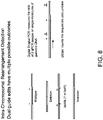
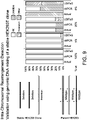
- compositions, and kits described herein are particularly useful to assess large insertions, large deletions, inversions, and/or translocations within a target or template nucleic acid.
- disclosed methods, compositions, and/or kits can detect chromosomal rearrangements (e.g., large insertions, large deletions, inversions, and/or translocations) that are present in abundances of less than 5%, less than 1%, less than 0.5%, less than 0.3%, less than 0.1%, less than 0.05%, and/or less than 0.01% of a sample (e.g., a genomic DNA sample).
- the methods of the disclosure are advantageous over known methods including, e.g., Anchored Multiplex PCR sequencing (AMP-seq) (see, e.g., Zheng et al., Nat Med. 2014 Dec; 20(12):1479-84 ; Adey et al., Genome Biology, 11(12), R119 (2010 )).
- AMP-seq Anchored Multiplex PCR sequencing
- the disclosure provides Uni-Directional Targeted Sequencing ("UDiTaS").
- UMI Uni-Directional Targeted Sequencing
- such method utilizes a single primer targeting approach, e.g., a single adapter complexed with a transposase, a unique molecular index (UMI) (e.g., a UMI barcode) on adapter and/or a pooling or sample barcode, labeling of DNA directly with UMI during tagmentation, and a PCR tagmented product.
- UMI unique molecular index
- a second round our PCR adds an adapter (e.g., a reverse Illumina adapter, e.g., i7) and an additional sample barcode.
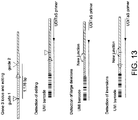
- single primer extension through a target site to end of genomic DNA fragment can identify translocation events. Such methods are also adaptable to multiplexing as described herein.
- the strategies, methods, and reagents provided herein can be utilized to analyze cleavage and/or repair events for any site-specific nuclease, for example, Zinc Finger Nucleases (ZFNs), Transcription Activator-Like Effector Nucleases (TALENs), homing endonucleases, organic compound nucleases, and enediyne antibiotics (e.g., dynemicin, neocarzinostatin, calicheamicin, esperamicin, bleomycin).
- ZFNs Zinc Finger Nucleases
- TALENs Transcription Activator-Like Effector Nucleases
- homing endonucleases e.g., dynemicin, neocarzinostatin, calicheamicin, esperamicin, bleomycin.
- Suitable nucleases in addition to the ones described herein will be apparent to those of skill in the art based on
- the methods, reagents, and strategies provided herein allow those of skill in the art to identify, design, and/or select nucleases with enhanced specificity and/or to minimize the off-target effects of any given nuclease (e.g., site-specific nucleases such as ZFNs, and TALENS as well as RNA- programmable nucleases, for example Cas9). While of particular relevance to DNA and DNA-cleaving nucleases, the inventive concepts, methods, strategies, and reagents provided herein are not limited in this respect, but can be applied to any nucleic acid:nuclease pair.
- the present disclosure provides methods of assessing nuclease and/or nuclease variants for ability to cleave a particular target site.
- UDiTaS removes biases associated with variable-length PCR amplification, and measures structural changes in addition to small insertion and deletion events (indels), in a single reaction.
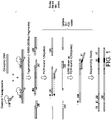
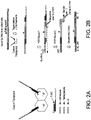
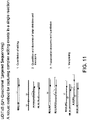
- a UDiTaS method uses a custom designed Tn5 transposon comprising a full-length Illumina forward adapter (i5), a sample barcode and/or a unique molecular identifier (UMI) ( Figure 2A ).
- such methods comprise contacting a nucleic acid template (e.g., DNA, e.g., genomic DNA, e.g., genomic DNA that has been cleaved, modified, and/or edited using a nuclease described herein) with a transposon under conditions whereby the transposon is inserted into the nucleic acid template.
- a nucleic acid template e.g., DNA, e.g., genomic DNA, e.g., genomic DNA that has been cleaved, modified, and/or edited using a nuclease described herein
- transposition reaction results in fragmentation of the nucleic acid template into a plurality of tagmented double-stranded nucleic acid fragments, where the 3' end of the transferred strand of the transposon is attached to the 5' end of the nucleic acid fragments.
- the transferred strand of the transposon comprises a first detection sequence at the 5' end of the transferred strand.
- a first detection sequence comprises a UMI barcode, a pooling barcode and/or an adapter (full-length Illumina forward adapter (i5)).
- a first primer can be a fixed primer, comprising a nucleotide sequence complementary to a predetermined location in the genomic DNA.
- a first primer can also be a fixed primer, comprising a nucleotide sequence complementary to at least a portion of a double-stranded oligonucleotide as described herein.
- the first primer also includes a second detection sequence at its 5' end.
- a second primer is a selective primer, comprising a nucleotide sequence complementary to at least a portion of the first detection sequence.
- the amplification forms amplified nucleic acid fragments, which include (in 5' to 3' orientation): the first detection sequence, the transferred strand of the transposon attached to the 5' end of the nucleic acid fragments, and the second detection sequence.
- a second round of PCR is performed using a second selective primer comprising a nucleotide sequence complementary to at least a portion of the first detection sequence and a third selective primer comprising a nucleotide sequence complementary to at least a portion of the second detection sequence.
- a third selective primer comprises a barcode (e.g., a pooling barcode) and/or a sequence tag (e.g., reverse Illumina adapter (i7)). Exemplary methods are depicted in Figures 1 and 2A -2C.
- the amplified nucleic acid fragments can then be sequenced.
- the first and second detection sequences can include sequencing tags described herein to facilitate sequencing.
- the method can include a size separation step after tagmentation and before PCR.
- relative abundances of particular alleles (e.g., wild type having one or more indels and/ or having one or more chromosomal rearrangements) in the genomic DNA sample are the same as relative abundances of those alleles in the amplified nucleic acid fragments.
- a plurality of tagmented double-stranded nucleic acid fragments can be a library of such fragments.
- the library includes about 10 2 , 10 3 , 10 4 , 10 5 , 10 6 , 10 7 , 10 8 , 10 9 , 10 10 or more nucleic acid fragments.
- methods described herein can sequence 500 bp, 1000 bp, 1500 bp, 2000 bp, 2500 bp, 3000 bp, 3500 bp, 4000 bp, 5000 bp, 6000 bp, 7000 bp, 8000 bp, 9000 bp, 10000 bp, or more.
- the method comprises (a) contacting a nucleic acid template with a transposon comprising a first detection sequence at the 5' end of the transposon, under conditions whereby the transposon is inserted into the nucleic acid template and the nucleic acid template is fragmented into a plurality of tagmented double-stranded nucleic acid fragments comprising the transposon attached to the 5' end of the nucleic acid fragments; (b) amplifying the tagmented nucleic acid fragments using (i) a first fixed primer comprising a nucleotide sequence complementary to a predetermined location in the nucleic acid template and comprising a second detection sequence at its 5' end, and (ii) a second selective primer comprising a nucleotide sequence complementary to at least a portion of the first detection sequence, to form amplified nucleic acid fragments comprising the first detection sequence, the transposon attached to the 5' end of the nucleic acid fragments, and the second detection sequence; and (c)
- amplified nucleic acid fragments of step (b) are amplified using a second selective primer comprising a nucleotide sequence complementary to at least a portion of the first detection sequence and a third selective primer comprising a nucleotide sequence complementary to at least a portion of the second detection sequence.
- a third selective primer comprises a barcode (e.g., a pooling barcode) and/or a sequence tag (e.g., reverse Illumina adapter (i7)).
- the method comprises (a) contacting a genomic DNA sample obtained from a cell or tissue with an RNA-guided nuclease and a double-stranded oligonucleotide (dsODN) under conditions favorable for cleavage of the genomic DNA by the nuclease and integration of the double-stranded oligonucleotide into at least one cleavage site, thereby generating tagged genomic DNA comprising the integrated double-stranded oligonucleotide; (b) contacting the tagged genomic DNA with a transposon comprising a first detection sequence at the 5' end of the transposon, under conditions whereby the transposon is inserted into the tagged genomic DNA and the tagged genomic DNA is fragmented into a plurality of tagmented double-stranded nucleic acid fragments comprising the transposon attached to the 5' end of the nucleic acid fragments; (c) amplifying the tagmented nucleic acid fragments using (i) a first fixed
- amplified nucleic acid fragments of step (c) are amplified using a second selective primer comprising a nucleotide sequence complementary to at least a portion of the first detection sequence and a third selective primer comprising a nucleotide sequence complementary to at least a portion of the second detection sequence.
- a third selective primer comprises a barcode (e.g., a pooling barcode) and/or a sequence tag (e.g., reverse Illumina adapter (i7)).
- sequences obtained from the step of sequencing are compared to one or more sequences from a reference genomic DNA sample (e.g., a control sample).
- presently disclosed methods can be used as a diagnostic tool.
- a decision can be made based on sequence(s) obtained from the step of sequencing and/or based on a comparison of such sequence(s) to a sequence(s) from a reference genomic DNA sample.
- a nucleic acid template is contacted with a transposon under conditions and for sufficient time wherein multiple insertions into the target DNA occur, each of which results in joining of a first tag comprising or consisting of the transferred strand to the 5' end of a nucleotide in the target DNA, thereby fragmenting the target DNA and generating a population of annealed 5'-tagged DNA fragments, each of which has the first tag on the 5'-end.
- the amount of the transposase and the transposon or of the transposome composition used in the in vitro transposition reaction is between about 1 picomole and about 25 picomoles per 50 nanograms of target DNA per 50-microliter reaction. In some embodiments, the amount of the transposase and the transposon composition or of the transposome composition used in the in vitro transposition reaction is between about 5 picomoles and about 50 picomoles per 50 nanograms of target DNA per 50-microliter reaction.
- the final concentrations of the transposase and the transposon or of the transposome used in the in vitro transposition reaction is at least 250 nM; in some other embodiments, the final concentrations of hyperactive Tn5 transposase or MuA transposase and of their respective transposon end composition or transposome composition is at least 500 nM.
- the reaction time for the in vitro transposition reaction is two hours or less, one hour or less, 30 minutes or less, or 15 minutes or less. In some embodiments, the reaction time for the in vitro transposition reaction is 5 minutes or less. In some embodiments wherein the transposome composition comprises a hyperactive Tn5 transposase, the reaction time for the in vitro transposition reaction is 5 minutes or less.
- the transposon can be labeled with a detectable label.
- a detectable label may be useful, for example, to capture, purify, and /or enrich for nucleic acids containing the transposon.
- Any of a wide variety of detectable labels may be suitable for this purpose, including, for example, biotin, a fluorescent label, an antibody label, an antibody fragment label, and/or other detectable labels mentioned herein.
- sequencing tags are used for generation of templates for next-generation sequencing for a particular sequencing platform (e.g., sequencing tags for: a ROCHE 454A or 454B sequencing platform; for an ILLUMINA SOLEXA sequencing platform; for an APPLIED BIOSYSTEMS SOLID TM sequencing platform; for a PACIFIC BIOSCIENCES' SMRT TM sequencing platform; for a POLLONATOR POLONY sequencing platform; for a HELICOS sequencing platform; for a COMPLETE GENOMICS sequencing platform; for an INTELLIGENT BIOSYSTEMS sequencing platform; or for any other sequencing platform).
- a sequencing tag is a full-length Illumina forward (i5) adapter.
- a sequencing tag is a full-length Illumina reverse (i7) adapter.
- a PCR amplification is performed using either the FAILSAFE TM PCR System or the MASTERAMP TM Extra-Long PCR System from EPICENTRE Biotechnologies, Madison, Wis., as described by the manufacturer. These systems permit rapid optimization of the PCR reaction conditions using a series of 2xPCR PreMixes provided with each system to identify the optimal PreMix for a particular template and primer pair.
- thermostable DNA polymerase and reaction mixture that permits amplification of the sequence between the primer that anneals to the target sequence and the primer that anneals to the transposon can be used.
- a non-strand displacing polymerase or a strand-displacing polymerase can be used in any of the methods described herein.
- Protocols for amplification of nucleic acids are known in the art and can include, e.g., one round of amplification or multiple rounds of amplification. For example, a first amplification round can be followed by a second amplification round with or without one or more processing (e.g., cleanup, concentrating, etc.) steps in between the two rounds of amplification. Additional rounds of amplification may be used in some embodiments, with or without one or more processing steps in between.
- each round of amplification can comprise at least 8, 10, 12, 14, 16, 18, 20, 22, 24, 26, 28, 30, or 32 cycles.
- the number of amplification cycles used in each round can be the same or it can be different.
- the first round can comprise more cycles or it may comprise fewer cycles than the second round.
- a first round of amplification can comprise 12 cycles and a second round of amplification can comprise 15 cycles.
- a first round of amplification can comprise 10 cycles and a second round of amplification can comprise 12 cycles.
- the same or different set of primers can be used.
- a nested amplification scheme e.g., nested PCR
- a forward primer in one round is used as a forward primer in another round, but the reverse primers in the two rounds differ.
- the forward and reverse primers can be different in the two rounds.
- a reverse primer in one round is used as a reverse primer in the other round, but the forward primers in the two rounds differ.
- Final concentrations of primers in amplification reactions can vary depending on the embodiment.
- concentrations of the primers can differ or they can be the same.
- primers can be present in an amplification reaction at concentrations ranging from between about 100 nM and about 500 nM, e.g., about 100 nM, about 150 nM, about 200 nM, about 250 nM, about 300 nM, about 350 nM, about 400 nM, about 450 nM, or about 400 nM.
- an excess of one primer relative to another primer present during the same round of amplification is used.
- at least one primer in at least one round of amplification is present at a concentration greater than 500 nM, e.g., 1 ⁇ M, 2 ⁇ M, 3 ⁇ M, 4 ⁇ M, 5 ⁇ M etc.
- reactions are carried out in a buffer containing magnesium, e.g., MgCl 2 .
- suitable concentrations of magnesium include, but are not limited to, about 1 mM, about 1.5 mM, about 2 mM, about 2.5 mM, about 3 mM, about 3.5 mM, about 4 mM, about 4.5 mM, or about 5 mM.
- a mix of dNTPs is used at a concentration ranging from about 0.2 mM to about 0.8 mM, e.g., about 0.2 mM, about 0.3 mM, about 0.4 mM, about 0.5 mM, about 0.6 mM, about 0.7 mM, or about 0.8 mM.
- Total volumes of amplification reactions can vary depending on the embodiment. For example, reaction volumes between about 10 ⁇ L and about 200 ⁇ L, e.g., about 10 ⁇ L, about 15 ⁇ L, about 20 ⁇ L, about 25 ⁇ L, about 30 ⁇ L, about 35 ⁇ L, about 40 ⁇ L, about 45 ⁇ L, about 50 ⁇ L, about 55 ⁇ L, about 60 ⁇ L, about 65 ⁇ L, about 70 ⁇ L, about 75 ⁇ L, about 80 ⁇ L, about 85 ⁇ L, about 90 ⁇ L, about 95 ⁇ L, about 100 ⁇ L, about 110 ⁇ L, about 120 ⁇ L, about 130 ⁇ L, about 140 ⁇ L, about 150 ⁇ L, about 160 ⁇ L, about 170 ⁇ L, about 180 ⁇ L, about 190 ⁇ L, or about 200 ⁇ L can be used.
- a cycle of amplification comprises a denaturation phase (during which strands of nucleic acids are separated), an annealing phase (during which primers anneal to nucleic acid templates), and an extension phase (during which an annealed primer is extended using a nucleic acid template).
- Temperatures for each phase differ, with the temperature used during the denaturation phase tending to be higher than that of the extension phase, which tends to be higher than that used during annealing phase.
- suitable temperatures for the denaturation phase can range from about 90 °C to about 100 °C, e.g., about 90 °C, about 91 °C, about 92 °C, about 93 °C, about 94 °C, about 95 °C, about 96 °C, about 97 °C, about 98 °C, about 99 °C, or about 100 °C.
- suitable temperatures for the annealing phase can range from about 50 °C to about 65 °C, e.g., about 50 °C, about 51 °C, about 52 °C, about 53 °C, about 54 °C, about 55 °C, about 56 °C, about 57 °C, about 58 °C, about 59 °C, about 60 °C, about 61 °C, about 62 °C, about 63 °C, about 64 °C, or about 65 °C.
- suitable temperatures for the extension phase can range from about 68 °C to about 80 °C, e.g., about 68 °C, about 69 °C, about 70 °C, about 71 °C, about 72 °C, about 73 °C, about 74 °C, about 75 °C, about 76 °C, about 77 °C, about 78 °C, about 79 °C, or about 80 °C.
- the durations of each phase during a single cycle can vary. Generally, the durations of the annealing and extension phases can be longer than that of the denaturation phase.
- the denaturation phase can last between about 4 seconds and about 20 seconds, e.g., about 4 seconds, about 5 seconds, about 6 seconds, about 7 seconds, about 8 seconds, about 9 seconds, about 10 seconds, about 11 seconds, about 12 seconds, about 13 seconds, about 14 seconds, about 15 seconds, about 16 seconds, about 17 seconds, about 18 seconds, about 19 seconds, or about 20 seconds in each cycle.
- an annealing or an extension phase can last between about 20 seconds and about 2 minutes, e.g., about 20 seconds, about 25 seconds, about 30 seconds, about 35 seconds, about 40 seconds, about 45 seconds, about 50 seconds, about 55 seconds, about 60 seconds, about 65 seconds, about 70 seconds, about 75 seconds, about 80 seconds, about 85 seconds, about 90 seconds, about 95 seconds, about 100 seconds, about 105 seconds, about 110 seconds, or about 120 seconds in each cycle.
- one or more processing steps can be used between rounds.
- one or more cleanup and/or concentration steps can be used. Suitable cleanup steps include, but are not limited to, treatment with Proteinase K, treatment with chemical denaturants of proteins (e.g., urea), bead-based methods (e.g., using a Solid Phase Reversible Immobilization technique), on-column DNA cleanup methods, etc.
- DNA cleanup and/or concentrator kits are commercially available and include, for example, kits from Zymo Research, Thermo Fisher Scientific, Sigma Aldrich, etc.
- one or more steps to inactivate a component of the reaction can be used, e.g., inactivation of an enzyme such as a polymerase by heat, a change in pH, and/or a chemical.
- an enzyme such as a polymerase by heat, a change in pH, and/or a chemical.
- the disclosure is also not limited to the use of PCR to amplify DNA fragments.
- Any suitable amplification method e.g., rolling circle amplification, riboprimer amplification (e.g., U.S. Pat. No. 7,413,857 ), ICAN, UCAN, ribospia, terminal tagging ( U.S. Patent Application No. 20050153333 ), Eberwine-type aRNA amplification or strand-displacement amplification
- a suitable composition and amount of amplification product for the intended purpose can be used in embodiments of the present disclosure.
- some strand displacement methods that can be used are described in PCT Patent Publication Nos.
- Genomic DNA samples used in methods disclosed herein can generally be obtained from any type of cell and/or tissue e.g., primary cells and/or tissues, cells or tissues cultured for at least a period of time, or a combination of primary and cultured cells and/or tissues.
- tissue e.g., primary cells and/or tissues, cells or tissues cultured for at least a period of time, or a combination of primary and cultured cells and/or tissues.
- UDiTaS is performed on genomic DNA from a single cell.
- genomic DNA from a single cell can be amplified before performing UDiTaS.
- Whole genome amplification methods are known in the art. Any of a variety of protocols and/or commercially available kits may be used. Examples of commercially available kits include, but are not limited to, the REPLI-g Single Cell Kit from QIAGEN, GENOMEPLEX ® Single Cell Whole Genome Amplification Kit from Sigma Aldrich, Ampli1 TM WGA Kit from Silicon Biosystems, and illustra Single Cell GenomiPhi DNA Amplification Kit from GE Healthcare Life Sciences.
- UDiTaS is performed on genomic DNA from a single cell
- Methods of the disclosure can also be performed using a genomic DNA sample comprising a virally-transduced sequence, and/or comprising a double-stranded oligonucleotide described herein.
- methods of the disclosure can comprise a step of transducing a sequence into genomic DNA using a viral vector, and/or inserting a double-stranded oligonucleotide into genomic DNA as described herein. This step of transducing a sequence is generally performed before the step of contacting the genomic DNA with a transposon.
- genomic DNA samples are obtained from samples that do not contain live cells and/or tissues or contain cells and/or tissues in trace amounts.
- methods of the present disclosure can be used on forensic DNA samples, such as, but not limited to, blood, bone, fingernail, hair, teeth, swab (such as, for example, buccal swab, genital swab, cervical swab, anal swab, etc.), and urine samples. Samples from used gauze or wound dressings can also be used.
- methods disclosed herein can be used with genomic DNA samples from eukaryotic cells and/or tissues or from prokaryotic cells.
- methods of the present disclosure can be performed using genomic DNA from microorganisms and/or from isolates from patients (e.g., patients receiving antibiotics).
- genomic DNA from microbial communities and/or one or more microbiomes is used, e.g., for metagenomic mining. (See, for example, Delmont et al, "Metagenomic mining for microbiologists," ISME J. 2011 Dec; 5(12):1837-43 .)
- Genomic DNA can be prepared using any of a variety of suitable methods, including, for example, certain manipulations to cells and/or tissues described herein.
- exemplary, non-limiting manipulations include contacting a cell and/or tissue with a nuclease (e.g., a site-specific nuclease and/or an RNA-guided nuclease) or a genome editing system comprising such a nuclease.
- a nuclease e.g., a site-specific nuclease and/or an RNA-guided nuclease
- a genome editing system comprising such a nuclease.
- Detection sequences refer to sequence elements that may be present on a nucleic acid template, transposon, and/or primer described herein, and that facilitate recovery and/or detection of nucleic acids, or nucleic acid fragments, containing them.
- one or more detection sequences facilitate or mediate capture by an oligonucleotide array and/or facilitate or mediate sequencing, e.g., sequencing of ligation products described herein.
- detection sequences facilitate amplification and/or sequencing. In some embodiments, detection sequences comprise one or more sequences that can be recognized by amplification and/or sequencing primers.
- a detection sequence comprises a UMI. In some embodiments, a detection sequence comprises a barcode. In some embodiments, a detection sequence comprises a sample barcode.
- detection sequences comprise a sequence adapter for use in a sequencing method.
- sequence adapters comprise an amplification primer binding site and a sequencing primer binding site.
- sequence adapters comprising a primer binding site that serves as both an amplification and sequencing primer binding site.
- the amplification primer binding site overlaps with the sequencing primer binding site.
- the amplification primer binding site is used for long-range amplification.
- sequence adapters further comprise a marker sequence that marks one end of the adapter.
- sequence adapters further comprise a barcode sequence.
- Detection sequences that can be used in the methods described herein are known in the art.
- sequencing adapters e.g., MiSeq adapters
- detection sequences e.g., i5, i7).
- genomic DNA can include a double-stranded oligonucleotide.
- a cell or tissue from which a genomic DNA sample is obtained is contacted with a double-stranded oligonucleotide and a nuclease (e.g., a site specific nuclease and/or an RNA-guided nuclease), e.g., under conditions favorable for cleavage of the genomic DNA by the nuclease.
- a double-stranded oligonucleotide may be integrated into one or more nuclease cleavage sites within the genomic DNA.
- a nuclease may induce one or more double-stranded breaks in the genomic DNA, and the double-stranded oligonucleotide may integrate into at least one of the one or more double-stranded breaks.
- methods described herein include using a fixed primer comprising a nucleotide sequence complementary to at least a portion of the double-stranded oligonucleotide, e.g., in an amplifying step.
- both strands of the double-stranded oligonucleotide are orthologous to the genomic DNA.
- the genomic DNA is human genomic DNA
- both strands of the double-stranded oligonucleotide, if present, may be orthologous to human genomic DNA.
- the double-stranded oligonucleotide comprises a chemical modification.
- each 5' end of the double-stranded oligonucleotide can comprise a phosphate group.
- the double-stranded oligonucleotide can contain phosphorothioate linkages.
- each 3' end and/or each 5' end of the double-stranded oligonucleotide can comprise a phosphorothioate linkage.
- the double-stranded oligonucleotide is phosphorylated at both 5' ends, contains phosphorothioate linkages on both 5' ends, and contains phosphorothioate linkages on both 3' ends.
- the double stranded oligonucleotide comprises 30-35 nucleotides or 60-65 nucleotides.
- Ends of the double-stranded oligonucleotide may be blunt or comprise an overhang (e.g., comprising a 5' end having 1, 2, 3, or 4 overhanging nucleotides), or one end may be blunt while the other comprises an overhang.
- an overhang e.g., comprising a 5' end having 1, 2, 3, or 4 overhanging nucleotides
- the amplification step comprises performing a rolling circle PCR using a fixed primer that comprises a nucleotide sequence complementary to a predetermined sequence in the double-stranded oligonucleotide.
- a transposon, double-stranded oligonucleotide, and/or primer described herein is labeled with a detectable label.
- a detectable label may be useful, for example, to capture, purify, and /or enrich for nucleic acids containing the transposon, double-stranded oligonucleotide, and/or primer.
- Any of a wide variety of detectable labels may be suitable for this purpose, including, for example, biotin, a fluorescent label, an antibody label, an antibody fragment label, and/or other detectable labels mentioned herein.
- a nucleic acid template, transposon, and/or primer described herein can include a unique molecular identifiers (abbreviated as "UMIs" herein).
- UMIs refer to sequences that can be used to retrieve information about a nucleic acid template, a, or a portion thereof.
- each UMI may be associated with a particular primer, e.g., a primer that binds to a specific target sequence.
- UMIs are referred to as UMI barcodes.
- detection of the detection sequence can be used to identify a particular UMI and, e.g., to identify the target, transposon, or primer associated with the particular UMI.
- the UMI is a randomly generated sequence. In some embodiments, the UMI is between eight and 20 nucleotides in length, for example, between 10 and 16 nucleotides in length, such as 10, 11, 12, 13, 14, 15, and 16 nucleotides in length.
- the production and use of UMIs in various contexts are known in the art.
- nuclease is site-specific in that it is known or expected to cleave only at a specific sequence or set of sequences, referred to herein as the nuclease's "target site”.
- incubation step(s) with the nuclease are generally carried under out under conditions favorable for the cleavage by the nuclease. That is, even though a given candidate target site or variant target site might not actually be cleaved by the nuclease, the incubation conditions are such that the nuclease would have cleaved at least a significant portion (e.g., at least 10%, at least 20%, at least 30% , at least 40%, at least 50%, at least 60%, at least 70%, at least 80%, at least 90%, or at least 95%) of templates containing its known target site.
- such conditions are generally known in the art and/or can easily be discovered or optimized.
- such conditions can generally be approximated using information about related nucleases that are better characterized (e.g., homologs and orthologs).
- the nuclease is an endonuclease. In some embodiments, the nuclease is a site-specific endonuclease (e.g., a restriction endonuclease, a meganuclease, a transcription activator-like effector nucleases (TALEN), a zinc finger nuclease, etc.).
- a site-specific endonuclease e.g., a restriction endonuclease, a meganuclease, a transcription activator-like effector nucleases (TALEN), a zinc finger nuclease, etc.
- the site specificity of a site-specific nuclease is conferred by an accessory molecule.
- the CRISPR-associated (Cas) nucleases are guided to specific sites by "guide RNAs" or gRNAs as described herein.
- the nuclease is an RNA-guided nuclease.
- the nuclease is a CRISPR-associated nuclease.
- the nuclease is a homolog or an ortholog of a previously known nuclease, for example, a newly discovered homolog or ortholog.
- RNA-guided nucleases include, but are not limited to, naturally-occurring Class 2 CRISPR nucleases such as Cas9, and Cpfl, as well as other nucleases derived or obtained therefrom.
- RNA-guided nucleases are defined as those nucleases that: (a) interact with (e.g., complex with) a gRNA; and (b) together with the gRNA, associate with, and optionally cleave or modify, a target region of a DNA that includes (i) a sequence complementary to the targeting domain of the gRNA and, optionally, (ii) an additional sequence referred to as a "protospacer adjacent motif,” or "PAM,” which is described in greater detail below.
- PAM protospacer adjacent motif
- RNA-guided nucleases can be defined, in broad terms, by their PAM specificity and cleavage activity, even though variations may exist between individual RNA-guided nucleases that share the same PAM specificity or cleavage activity.
- Skilled artisans will appreciate that some aspects of the present disclosure relate to systems, methods and compositions that can be implemented using any suitable RNA-guided nuclease having a certain PAM specificity and/or cleavage activity.
- the term RNA-guided nuclease should be understood as a generic term, and not limited to any particular type (e.g., Cas9 vs. Cpfl), species (e.g., S.
- RNA-guided nuclease pyogenes vs. S. aureus ) or variation (e.g., full-length vs. truncated or split; naturally-occurring PAM specificity vs. engineered PAM specificity, etc.) of RNA-guided nuclease.
- the PAM sequence takes its name from its sequential relationship to the "protospacer” sequence that is complementary to gRNA targeting domains (or “spacers”). Together with protospacer sequences, PAM sequences define target regions or sequences for specific RNA-guided nuclease / gRNA combinations.
- RNA-guided nucleases may require different sequential relationships between PAMs and protospacers.
- Cas9s recognize PAM sequences that are 3' of the protospacer as visualized relative to the guide RNA targeting domain.
- Cpfl on the other hand, generally recognizes PAM sequences that are 5' of the protospacer.
- RNA-guided nucleases can also recognize specific PAM sequences.
- S. aureus Cas9 for instance, recognizes a PAM sequence of NNGRRT or NNGRRV, wherein the N residues are immediately 3' of the region recognized by the gRNA targeting domain.
- S . pyogenes Cas9 recognizes NGG PAM sequences.
- F. novicida Cpfl recognizes a TTN PAM sequence.
- engineered RNA-guided nucleases can have PAM specificities that differ from the PAM specificities of reference molecules (for instance, in the case of an engineered RNA-guided nuclease, the reference molecule may be the naturally occurring variant from which the RNA-guided nuclease is derived, or the naturally occurring variant having the greatest amino acid sequence homology to the engineered RNA-guided nuclease).
- RNA-guided nucleases can be characterized by their DNA cleavage activity: naturally-occurring RNA-guided nucleases typically form DSBs in target nucleic acids, but engineered variants have been produced that generate only SSBs (discussed above) Ran & Hsu, et al., Cell 154(6), 1380-1389, September 12, 2013 (“Ran”), or that that do not cut at all.
- a naturally occurring Cas9 protein comprises two lobes: a recognition (REC) lobe and a nuclease (NUC) lobe; each of which comprise particular structural and/or functional domains.
- the REC lobe comprises an arginine-rich bridge helix (BH) domain, and at least one REC domain (e.g., a REC1 domain and, optionally, a REC2 domain).
- the REC lobe does not share structural similarity with other known proteins, indicating that it is a unique functional domain.
- the BH domain appears to play a role in gRNA:DNA recognition, while the REC domain is thought to interact with the repeat:anti-repeat duplex of the gRNA and to mediate the formation of the Cas9/gRNA complex.
- the NUC lobe comprises a RuvC domain, an HNH domain, and a PAMinteracting (PI) domain.
- the RuvC domain shares structural similarity to retroviral integrase superfamily members and cleaves the non-complementary (i.e., bottom) strand of the target nucleic acid. It may be formed from two or more split RuvC motifs (such as RuvC I, RuvCII, and RuvCIII in S. pyogenes and S. aureus ) .
- the HNH domain meanwhile, is structurally similar to HNN endonuclease motifs, and cleaves the complementary (i.e., top) strand of the target nucleic acid.
- the PI domain as its name suggests, contributes to PAM specificity.
- Cas9 While certain functions of Cas9 are linked to (but not necessarily fully determined by) the specific domains set forth above, these and other functions may be mediated or influenced by other Cas9 domains, or by multiple domains on either lobe.
- the repeat:antirepeat duplex of the gRNA falls into a groove between the REC and NUC lobes, and nucleotides in the duplex interact with amino acids in the BH, PI, and REC domains.
- Some nucleotides in the first stem loop structure also interact with amino acids in multiple domains (PI, BH and REC1), as do some nucleotides in the second and third stem loops (RuvC and PI domains).
- Cpf1 like Cas9, has two lobes: a REC (recognition) lobe, and a NUC (nuclease) lobe.
- the REC lobe includes REC1 and REC2 domains, which lack similarity to any known protein structures.
- the NUC lobe includes three RuvC domains (RuvC-I, -II and -III) and a BH domain.
- the Cpfl REC lobe lacks an HNH domain, and includes other domains that also lack similarity to known protein structures: a structurally unique PI domain, three Wedge (WED) domains (WED-I, -II and -III), and a nuclease (Nuc) domain.
- Cpfl activities are mediated by structural domains that are not analogous to any Cas9 domains. For instance, cleavage of the complementary strand of the target DNA appears to be mediated by the Nuc domain, which differs sequentially and spatially from the HNH domain of Cas9. Additionally, the non-targeting portion of Cpfl gRNA (the handle) adopts a pseudoknot structure, rather than a stem loop structure formed by the repeat:antirepeat duplex in Cas9 gRNAs.
- Nucleic acids encoding RNA-guided nucleases are provided herein.
- Exemplary nucleic acids encoding RNA-guided nucleases have been described previously (see, e.g., Cong et al., Science. 2013 Feb 15;339(6121):819-23 ("Cong 2013”); Wang et al., PLoS One. 2013 Dec 31;8(12):e85650 ("Wang 2013”); Mali 2013; Jinek 2012).
- a nucleic acid encoding an RNA-guided nuclease can be a synthetic nucleic acid sequence.
- the synthetic nucleic acid molecule can be chemically modified.
- an mRNA encoding an RNA-guided nuclease will have one or more (e.g., all) of the following properties: it can be capped; polyadenylated; and substituted with 5-methylcytidine and/or pseudouridine.
- Synthetic nucleic acid sequences can also be codon optimized, e.g., at least one non-common codon or less-common codon has been replaced by a common codon.
- the synthetic nucleic acid can direct the synthesis of an optimized messenger mRNA, e.g., optimized for expression in a mammalian expression system, e.g., described herein. Examples of codon optimized Cas9 coding sequences are presented in WO 2016/073990 ("Cotta-Ramusino").
- a nucleic acid encoding an RNA-guided nuclease may comprise a nuclear localization sequence (NLS).
- NLS nuclear localization sequences are known in the art.
- gRNA Guide RNA
- guide RNA and "gRNA” refer to any nucleic acid that promotes the specific association (or “targeting") of an RNA-guided nuclease such as a Cas9 or a Cpfl to a target sequence such as a genomic or episomal sequence in a cell.
- gRNAs can be unimolecular (comprising a single RNA molecule, and referred to alternatively as chimeric), or modular (comprising more than one, and typically two, separate RNA molecules, such as a crRNA and a tracrRNA, which are usually associated with one another, for instance by duplexing).
- gRNAs and their component parts are described throughout the literature, for instance in Briner et al. (Molecular Cell 56(2), 333-339, October 23, 2014 (“Briner”), and in Cotta-Ramusino.
- type II CRISPR systems generally comprise an RNA-guided nuclease protein such as Cas9, a CRISPR RNA (crRNA) that includes a 5' region that is complementary to a foreign sequence, and a trans-activating crRNA (tracrRNA) that includes a 5' region that is complementary to, and forms a duplex with, a 3' region of the crRNA. While not intending to be bound by any theory, it is thought that this duplex facilitates the formation of - and is necessary for the activity of - the Cas9/gRNA complex.
- Cas9 CRISPR RNA
- tracrRNA trans-activating crRNA
- Guide RNAs include a "targeting domain” that is fully or partially complementary to a target domain within a target sequence, such as a DNA sequence in the genome of a cell where editing is desired.
- Targeting domains are referred to by various names in the literature, including without limitation "guide sequences” ( Hsu et al., Nat Biotechnol. 2013 Sep; 31(9): 827-832 , (“Hsu”), “complementarity regions” (Cotta-Ramusino), “spacers” (Briner) and generically as “crRNAs” (Jiang).
- targeting domains are typically 10-30 nucleotides in length, and in certain embodiments are 16-24 nucleotides in length (for instance, 16, 17, 18, 19, 20, 21, 22, 23 or 24 nucleotides in length), and are at or near the 5' terminus of in the case of a Cas9 gRNA, and at or near the 3' terminus in the case of a Cpfl gRNA.
- gRNAs typically (but not necessarily, as discussed below) include a plurality of domains that may influence the formation or activity of gRNA/Cas9 complexes.
- the duplexed structure formed by first and secondary complementarity domains of a gRNA also referred to as a repeat:anti-repeat duplex
- REC recognition lobe of Cas9 and can mediate the formation of Cas9/gRNA complexes.
- first and/or second complementarity domains may contain one or more poly-A tracts, which can be recognized by RNA polymerases as a termination signal.
- the sequence of the first and second complementarity domains are, therefore, optionally modified to eliminate these tracts and promote the complete in vitro transcription of gRNAs, for instance through the use of A-G swaps as described in Briner, or A-U swaps.
- Cas9 gRNAs typically include two or more additional duplexed regions that are involved in nuclease activity in vivo but not necessarily in vitro.
- a first stem-loop one near the 3' portion of the second complementarity domain is referred to variously as the "proximal domain,” (Cotta-Ramusino) "stem loop 1" (Nishimasu 2014 and 2015) and the “nexus” (Briner).
- One or more additional stem loop structures are generally present near the 3' end of the gRNA, with the number varying by species: S.
- pyogenes gRNAs typically include two 3' stem loops (for a total of four stem loop structures including the repeat: anti-repeat duplex), while S. aureus and other species have only one (for a total of three stem loop structures).
- a description of conserved stem loop structures (and gRNA structures more generally) organized by species is provided in Briner.
- gRNAs for use with Cas9
- Cpfl CRISPR from Prevotella and Franciscella 1
- a gRNA for use in a Cpfl genome editing system generally includes a targeting domain and a complementarity domain (alternately referred to as a "handle").
- the targeting domain is usually present at or near the 3' end, rather than the 5' end as described above in connection with Cas9 gRNAs (the handle is at or near the 5' end of a Cpfl gRNA).
- gRNAs can be defined, in broad terms, by their targeting domain sequences, and skilled artisans will appreciate that a given targeting domain sequence can be incorporated in any suitable gRNA, including a unimolecular or chimeric gRNA, or a gRNA that includes one or more chemical modifications and/or sequential modifications (substitutions, additional nucleotides, truncations, etc.). Thus, for economy of presentation in this disclosure, gRNAs may be described solely in terms of their targeting domain sequences.
- gRNA should be understood to encompass any suitable gRNA that can be used with any RNA-guided nuclease, and not only those gRNAs that are compatible with a particular species of Cas9 or Cpfl.
- the term gRNA can, in certain embodiments, include a gRNA for use with any RNA-guided nuclease occurring in a Class 2 CRISPR system, such as a type II or type V or CRISPR system, or an RNA-guided nuclease derived or adapted therefrom.
- Some embodiments of presently disclosed methods comprise a step of ligating nucleic acid sequences, e.g., cleaved ends of a nucleic acid template with an oligonucleotide capture probe or a mixture thereof.
- the step of ligating is accomplished using a ligase enzyme that acts on nucleic acids, e.g., a DNA and/or RNA ligase.
- a ligase enzyme that acts on nucleic acids, e.g., a DNA and/or RNA ligase.
- a variety of such ligases are known in the art, many of which are commercially available.
- ligases examples include, but are not limited to, T4 DNA ligase, T3 DNA ligase, T7 DNA ligase, and E. coli ligase.
- the type of ligase chosen may depend on the type of cleaved ends present in the cleavage composition and/or the capture end of oligonucleotide capture probe.
- cleaved ends in the cleavage composition comprise blunt ends, or comprise cleaved ends that are blunted before ligation (e.g., during an additional step of blunting, as described herein), a ligase suitable for ligating blunt ends may be chosen.
- cleaved ends in the cleavage composition comprise overhangs ("cohesive ends") that will not be blunted before ligation (e.g., during an additional step of blunting, as described herein), a ligase suitable for ligating sticky ends may be chosen.
- ligases work well for both blunt ends and ends with overhangs, and any of these ligases may be used in methods of the present disclosure. Furthermore, any combination of two or more ligases may also be used during a ligating step.
- a plurality of ligation products described herein is analyzed. In some embodiments, a plurality of ligation products is amplified. In some embodiments in which the plurality of ligation products comprises one or more detection sequences, amplification primers that recognize one or more of the detection sequences can be used.
- methods further comprise a step of determining the levels of ligation products.
- the levels that are determined can be absolute and/or relative.
- methods further comprise a step of calculating a relative abundance of a ligation product.
- the analysis may comprise nucleic acid sequencing of the ligation product and/or amplification product thereof.
- next generation also known as high throughput sequencing
- Sanger sequencing is used to analyze at least some of the ligation products and/or amplification products thereof.
- sequencing data is processed using bioinformatics, e.g., one or more steps depicted in Figure 12 .
- sequencing reads can first be demultiplexed into different experiments in the run using appropriate sequencing barcodes. In some instances, up to 1, 2, or 3 mismatches are allowed in each barcode. UMIs for each read can then be extracted for further downstream analysis.
- adapters e.g., 3' adapters
- cutadapt as described in, e.g., Martin, EMBnet.journal 17:10-12 (2011 )
- one or more reference amplicons are created.
- expected cut sites can be used to build reference amplicons with the expected chromosomal rearrangements (e.g., wild type, large deletion, inversion, translocation, etc.).
- a reference amplicon may comprise any predicted gene editing events as well as "off-target" events.
- reference amplicons may include vector or plasmid sequence. Reference amplicons which include sequence from vectors or plasmids may also comprise any predicted gene editing events and/or any "off-target" events.
- paired reads can then be globally aligned to all or nearly all the reference amplicons using, e.g., a sequence aligner.
- a sequence aligner is bowtie2 (as described in, e.g., Langmead et al., Nat. Methods 9:357-9 (2012 )).
- sorted bam files can be created and/or indexed using suitable tools, such as SAMtools (as described in, e.g., Li et al., Bioinformatics 25:2078-9 (2009 )).
- sequence reads completely covering a window around predicted junctions can be extracted and the total number of unique UMIs counted.
- sequence reads that are unable to be mapped to a reference amplicon can be extracted and mapped globally using, e.g., bowtie2 to an appropriate background reference genome.
- At least part of the example process described herein for assessing nuclease cleavage may be implemented using one or more computer systems comprising hardware or a combination of hardware and software.
- computer systems may include various controllers and/or processing devices located at various points to control operation of automated elements.
- a central computer may coordinate operation among the various controllers or processing devices.
- the central computer, controllers, and processing devices may execute various software routines to implement control and coordination of the various automated elements.
- the example process can be implemented, at least in part, using one or more computer program products, e.g., one or more computer program tangibly embodied in one or more information carriers, such as one or more non-transitory machine-readable media, for execution by, or to control the operation of, one or more data processing apparatus, e.g., a programmable processor, a computer, multiple computers, and/or programmable logic components.
- one or more data processing apparatus e.g., a programmable processor, a computer, multiple computers, and/or programmable logic components.
- a computer program can be written in any form of programming language, including compiled or interpreted languages, and it can be deployed in any form, including as a stand-alone program or as a module, component, subroutine, or other unit suitable for use in a computing environment.
- a computer program can be deployed to be executed on one computer or on multiple computers at one site or distributed across multiple sites and interconnected by a network.
- Actions associated with implementing all or part of the example process can be performed by one or more programmable processors executing one or more computer programs to perform the functions described herein. All or part of the example process can be implemented using special purpose logic circuitry, e.g., an FPGA (field programmable gate array) and/or an ASIC (application-specific integrated circuit).
- FPGA field programmable gate array
- ASIC application-specific integrated circuit
- processors suitable for the execution of a computer program include, by way of example, both general and special purpose microprocessors, and any one or more processors of any kind of digital computer.
- a processor will receive instructions and data from a read-only storage area or a random access storage area or both.
- Elements of a computer include one or more processors for executing instructions and one or more storage area devices for storing instructions and data.
- a computer will also include, or be operatively coupled to receive data from, or transfer data to, or both, one or more machine-readable storage media, such as mass storage devices for storing data, e.g., magnetic, magneto-optical disks, or optical disks.
- Machine-readable storage media suitable for embodying computer program instructions and data include all forms of non-volatile storage area, including by way of example, semiconductor storage area devices, e.g., EPROM, EEPROM, and flash storage area devices; magnetic disks, e.g., internal hard disks or removable disks; magneto-optical disks; and CD-ROM and DVD-ROM disks.
- semiconductor storage area devices e.g., EPROM, EEPROM, and flash storage area devices
- magnetic disks e.g., internal hard disks or removable disks
- magneto-optical disks e.g., CD-ROM and DVD-ROM disks.
- a transposon was used in a method of the disclosure to sequence a genomic DNA sample from K562 cells treated with a site-specific nuclease and various guide RNAs.
- a primer pair was used that included (1) a first fixed primer comprising a complementary sequence to a portion of the G1 gene, and (2) a selective primer comprising a nucleotide sequence complementary to the transposon.
- a primer pair was used that included (1) a first fixed primer comprising a complementary sequence to a portion of the G2 gene, and (2) a selective primer comprising a nucleotide sequence complementary to the transposon.
- the primers are depicted in Figure 4 (fixed primers “G1_F1” and “G2_F1”; selective primers “Seq15_G1_F_UDITASdev” and “Seq16_G2_F_UDITASdev”). DNA fragments were subsequently amplified and sequenced.
- Figure 5 depicts the % sequence reads that were on either G1 or G2 target. As shown in Figure 5 , 78-93% of MiSeq reads correctly sequenced G1 or G2 targets. This demonstrates that a target gene can be successfully sequenced using only one fixed primer specific for the target gene.
- Figure 6 depicts the sequence reads in GenomeView.
- UDiTaS The ability of UDiTaS to identify small indel rates for a model genome target was assayed. After contacting the model genome target with a transposon, DNA fragments were amplified using a primer pair included (1) a first fixed primer comprising a complementary sequence to a portion of the model genome target, and (2) a selective primer comprising a nucleotide sequence complementary to the transposon.
- the UDiTaS method was compared to two known methods - amplicon sequencing and T7E1 sequencing. As shown in Figure 7 , the ability of UDiTaS to detect indels correlated well with targeted sequencing and T7E1 assays.
- Treating genomic DNA with a site-specific nuclease and dual guides can have multiple possible outcomes. As shown in Figure 8 , dual guides can result in deletions, indels in one or both strands, and inversions.
- genomic DNA from wild type HEK293T cells or from a stable HEK293T clone were used.
- the genomic DNA of the stable clone includes a deletion in 66% of its genomic DNA and an inversion in 33% of its genomic DNA (see Figure 9 , left side).
- the genomic DNA from the wild type and the clone were mixed in various ratios and subjected to sequencing by UDiTaS as described herein. The sequencing results were compared to ddPCR sequencing.
- UDiTaS The ability of UDiTaS to detect intra-chromosomal rearrangements was also assessed using genomic DNA samples that included various fractions of wild type genomic DNA, genomic DNA that included an inversion, and genomic DNA that included a large deletion, using two different primers (see Figure 10 ). As shown in Figure 10 , UDiTaS was able to accurately determine percentages of particular types of rearrangements in samples having 1) as low as 0.1% large deletions or 2) substantially less than 1% inversions. (See right side of Figure 10 ). Using a different primer, UDiTaS was able to detect even lower levels of inversions and deletions, though with less accuracy for lower levels of the relevant alleles. (See left side of Figure 10 .)
- sequencing data was processed using a bioinformatics pipeline.
- the analysis pipeline was built using python code that called additional software for specialized steps.
- the bioinformatics pipeline is schematically depicted in Figure 12 and consisted of the following steps.
- Sequencing reads were first demultiplexed into the different experiments in the run using the appropriate sequencing barcodes, allowing up to one mismatch in each barcode. UMIs for each read were extracted for further downstream analysis.
- reference amplicons may comprise any predicted gene editing events, e.g., "off-target” events.
- reference amplicons may include vector or plasmid sequence.
- Reference amplicons which include sequence from vectors or plasmids may also comprise one or more predicted gene editing events, e.g., "off-target” events.
- a pair of S. aureus Cas9 (SaCas9) sgRNA were used to target a region within an intron of Gene 3. Reduction of Gene 3 expression leads to several human diseases. Removal of the deleterious intron splice donor site is predicted to restore function of Gene 3.
- a single guide RNA pair, Gene 3-guide 1 and Gene 3-guide 2, that cuts ⁇ 1000 base pairs around the splice donor was selected from an internal screen for characterization.
- U-2 OS cells were transfected with linear DNA fragments expressing sgRNA Gene 3-guide 1 and Gene 3-guide 2 along with a plasmid expressing SaCas9. After three days genomic DNA was isolated and UDiTaS sequencing libraries were created. The libraries were sequenced on a MiSeq and the data was processed through a bioinformatics pipeline ( Figure 12 ).
- the UDiTaS protocol used 50 ng of input DNA, which is equivalent to approximately 14,300 human haplomes. Assuming a binomial sampling distribution and ⁇ 20% process yield, 2-3 observations at 0.1% were expected (95% confidence) in the UDiTaS library. This was consistent with the observed rate ( Figure 16 ). Sensitivity was increased by increasing input DNA along and increasing sequencing read depth, as both are needed to increase the number of unique UMIs in the analysis. On-target mapping rates to the genome were >95%, demonstrating that the process was robust and productive ( Figure 17 ).
- Plasmids used in this example Plasmid Name Description
- PLA380 IVT PCR template for Gene 1 and Gene 2 Spy guides PLA379 pUC57_Amp_Gene3_SNPs1 PLA370 pUC57_Amp_ Gene3_large_inversion_SNPs_1 PLA367 pUC57_Amp_ Gene3_large_deletion_SNPs_1 PLA371 pUC57_Amp_ Gene3_large_inversion_SNPs_2 PLA368 pUC57_Amp_ Gene3_large_deletion_SNPs_2 PLA372 pUC57_Amp_ Gene3_large_inversion_SNPs_3 PLA369 pUC57_Amp_Gene3_large_deletion_SNPs_3 PLA369 pUC57_Amp_Gene3_large_deletion_SNPs_3 PLA369 pUC57_Amp_Gene3_large_deletion_SNPs_3 PLA369 p
- Plasmids containing either the Gene 1/Gene 2 balanced translocation or Gene 3 structural variants were synthesized and contained engineered unique SNPs in the insert to identify the plasmid after sequencing.
- the plasmids ranging from ⁇ 2,200 to ⁇ 714,000 genome equivalents, were spiked into mouse genomic DNA and processed through the UDiTaS and AMP-Seq methods.
- the number of input plasmids versus the number of plasmids detected was plotted for both UDiTaS and AMP-Seq.
- UDiTaS showed excellent linearity down to the lowest dilution ( Figures 18A and 18B ).
- UDiTaS showed greater accuracy and linearity when compared to AMP-Seq ( Figures 18A and 18B ).
- UDiTaS libraries were more linear and had higher dynamic range as compared to AMP-Seq given the same DNA input material. This was attributed to the more efficient tagmentation process, as compared to shearing and adapter ligation of AMP-Seq. Also UDiTas required fewer and more streamlined processing steps that increased the overall yield as compared to AMP-Seq.
- Figure 19A shows Gene 3 plasmids containing wild type, large deletion, or large insertion sequence (PLA379, PLA367, and PLA370).
- UDiTaS also measured inter-chromosomal translocation rates.
- SpCas9 S. pyogenes Cas9
- RNP ribonucleoprotein
- sgRNAs targeting Gene1 and Gene2 genes were nucleofected into activated human CD4 + T-cells.
- UDiTaS libraries from these cells were prepared using primers that flanked each guide site. Of 10 possible end joining outcomes, it was possible to measure 7 using two targeting primers. All 7 outcomes were detected and quantified.
- UDiTaS is a sequencing and analysis methodology that enabled simultaneous measurement of small indels and larger structural rearrangements, such as large deletions, inversions, and translocations.
- the UDiTaS method was robust, scalable and amenable to multiplexing of anchor primers when using low (50 ng) input DNA. This enabled monitoring of panels of candidate off-target editing sites when a sample was limited.
- the custom transposon described here has potential to improve methods that utilize DNA shearing along with an anchor primer, such as GUIDE-Seq.
- the UDiTas method was also accurate and linear.
- UDiTaS is an important sequencing methodology enabling accurate quantification of intended, or unintended large structural changes, important for assessment of the efficacy of gene-editing technologies.
- U-2 OS cells were maintained in DMEM, high glucose with Glutamax and sodium pyruvate (ThermoFisher), 10% Fetal Bovine Serum, and supplemented with 1% penicillin/streptomycin.
- Cells were transfected by Lonza nucleofection using the 4D nucleofector system. Briefly, 250,000 cells were transfected with 1.5 ug plasmid pAF003 expressing SaCas9 driven by a CMV promoter and 500 ng of linear DNA fragment expressing gRNAs driven by U6 promoter (250 ng each guide). Cells were nucleofected using the SE kit and pulse code DN-100 and plated in 6-well plates. Cells were cultured for 3 days post-nucleofection and 3 transfection technical replicates were pooled together. Genomic DNA was isolated using the Agencourt DNAdvance kit (Beckman Coulter) according to manufacturer's instructions.
- HEK293 cells (ATCC) were maintained in DMEM, high glucose with Glutamax and sodium pyruvate (ThermoFisher), 10% Fetal Bovine Serum and supplemented with 1% penicillin/streptomycin.
- Cells were transfected using the Mirus TransIT 293 kit, according to manufacturer's instructions. Briefly, 120,000 cells were seeded in a well of a 24-well plate 24 hours pre-transfection. Cells were transfected with 750 ng plasmid pAF003 expressing SaCas9 driven by a CMV promoter and 250 ng of linear DNA fragment expressing gRNAs driven by a U6 promoter (125 ng each guide).
- S. pyogenes guide RNAs targeting the Gene 1 and Gene 2 loci were generated by in vitro transcription of a PCR product using the T7-ScribeTM Standard RNA IVT Kit (CELLSCRIPT) following the manufacturer's protocol.
- the PCR product for the in vitro transcription reaction was generated using plasmid PLA380 as a template and the indicated forward primers (OLI7076 for Gene 2, and OLI7077 for Gene 1) with a common reverse primer (OLI7078).
- the in vitro transcribed guide RNAs were complexed to wild type Cas9 protein at a molar ratio of 2:1 to generate ribonucleoprotein (RNP).
- the complexation integrity was evaluated by differential scanning fluorimetry (DSF).
- DSF differential scanning fluorimetry
- 5 ⁇ L of complexed RNP was diluted in 5 ⁇ L 2X Dye Mix.
- the 2X Dye Mix was generated from the 5000X stock SYPRO Orange Protein Gel Stain dye (Life Technologies, S6651) in 10 x HEPES-Saline solution with MgCl 2 (Boston Bio Products, C-6767) diluted to 1 x in nuclease-free water.
- the complexed samples and uncomplexed protein controls were placed in a 384-well plate and placed in a BioRad thermocycler using the following protocol: 1 minute at 20°C, Melt Curve from 20°C to 95°C with increment changes of 1°C, 1 minute at 4°C.
- Successful complexation is defined as a clear temperature shift between uncomplexed control samples and complexed RNP.
- T cells Human T cells were isolated from buffy coats using Miltenyi CD4 microbeads following the manufacturer's protocol. On day 0, T-cells were activated using Dynabeads ® Human T-Activator CD3/CD28 for T Cell Expansion and Activation (ThermoFisher Scientific). Beads were removed on day 2. On day 4, cells were counted using Trypan Blue (ThermoFisher Scientific) and TC20 TM Automated Cell Counter (Bio-Rad) according to manufacturer's protocol. For each condition 500,000 T cells were resuspended in 22 ⁇ L of Primary Cell Nucleofector Solution P2 (Lonza) containing 2 ⁇ M of total RNP.
- UDiTaS genomic DNA purified using the Agencourt DNAdvance kit (Beckman Coulter) according to the manufacturer's protocol.
- UDiTaS was performed with the following modification. After tagmentation, the enzyme was inactivated with the addition of 1 ⁇ L of 0.2% SDS, pipette mixing and 5 min room temperature incubation. The tagmented DNA was added directly into round 1 PCR using primers OLI6259 and OLI6256 ( Figure 14C ).
- PLA370, PLA367, and PLA379 were used ( Figure 19A ).
- PLA365, PLA366, PLA377, and PLA378 were used ( Figure 19B ).
- Plasmid concentrations were determined using a NanoDrop2000 Spectrophotometer and working dilutions of 10 ng/ ⁇ l were generated for all plasmids.
- the first sample consists of a 50% mix of PLA370 (Inversion) and PLA367 (Large Deletion) and contains no control plasmid (PLA379).
- Plasmids spiked into mouse DNA different amounts of unique plasmids were mixed into mouse gDNA.
- Gene 3 plasmid spike in experiments plasmids with the estimated copy number shown in Table 3 were spiked into 10 ng/ ⁇ L mouse gDNA. Table 3. Plasmids and amount used in Gene 3 spike-in experiment. Plasmid Name Expected Plasmid Copy Number (per 50 ng reaction) PLA370 1,032,035 PLA367 326,363 PLA371 103,204 PLA368 32,636 PLA372 10,320 PLA369 3,264 PLA379 4,684,365
- Plasmid Name Expected Plasmid Copy Number (per 50 ng reaction) PLA361 1,031,968 PLA362 PLA363 PLA364 PLA365 PLA366 PLA377/PLA378 (equal mix) PLA361 PLA362 326,339 PLA363 103,197 PLA364 32,634 PLA365 10,320 PLA366 3,263 PLA377/PLA378 (Equal mix) 4,695,992 Table 5: Adapter oligo sequences used for annealing step and complexing with the Tn5: Oligos.
- P5 / i5 oligo sequence for Round 1 and 2 PCR Oligo Name Sequence 5'-3' i5 AATGATACGGCGACCACCGAGATCTACAC (SEQ ID NO:49) Table 8.
- i7 Barcoded oligo sequences for Round 2 PCR Oligo Name Sequence (5'-3') i7 BC Seq i7 BC READ i7_N701_SBS12 AGCGGAAT (SEQ ID NO:62) ATTCCGCT (SEQ ID NO:74) i7_N702_SBS12 GATCATGC (SEQ ID NO:63) GCATGATG (SEQ ID NO:75) i7_N703_SBS12 AAGACGGA (SEQ ID NO:64) TCCGTCTT (SEQ ID NO:76) i7_N704_SBS12 CGAGTCCT (SEQ ID NO:65) AGGACTCG (SEQ ID NO:77) i7_N705_SBS12 TCCTCAGG
Landscapes
- Life Sciences & Earth Sciences (AREA)
- Chemical & Material Sciences (AREA)
- Proteomics, Peptides & Aminoacids (AREA)
- Health & Medical Sciences (AREA)
- Engineering & Computer Science (AREA)
- Physics & Mathematics (AREA)
- Organic Chemistry (AREA)
- Bioinformatics & Cheminformatics (AREA)
- Biotechnology (AREA)
- Biophysics (AREA)
- Analytical Chemistry (AREA)
- General Health & Medical Sciences (AREA)
- Wood Science & Technology (AREA)
- Zoology (AREA)
- Genetics & Genomics (AREA)
- Molecular Biology (AREA)
- Medical Informatics (AREA)
- Bioinformatics & Computational Biology (AREA)
- Evolutionary Biology (AREA)
- Spectroscopy & Molecular Physics (AREA)
- Theoretical Computer Science (AREA)
- General Engineering & Computer Science (AREA)
- Biochemistry (AREA)
- Microbiology (AREA)
- Immunology (AREA)
- Measuring Or Testing Involving Enzymes Or Micro-Organisms (AREA)
- Apparatus Associated With Microorganisms And Enzymes (AREA)
Priority Applications (1)
| Application Number | Priority Date | Filing Date | Title |
|---|---|---|---|
| EP22169194.2A EP4095263B1 (en) | 2017-01-06 | 2018-01-05 | Methods of assessing nuclease cleavage |
Applications Claiming Priority (4)
| Application Number | Priority Date | Filing Date | Title |
|---|---|---|---|
| US201762443212P | 2017-01-06 | 2017-01-06 | |
| US201762502434P | 2017-05-05 | 2017-05-05 | |
| US201762570300P | 2017-10-10 | 2017-10-10 | |
| PCT/US2018/012652 WO2018129368A2 (en) | 2017-01-06 | 2018-01-05 | Methods of assessing nuclease cleavage |
Related Child Applications (1)
| Application Number | Title | Priority Date | Filing Date |
|---|---|---|---|
| EP22169194.2A Division EP4095263B1 (en) | 2017-01-06 | 2018-01-05 | Methods of assessing nuclease cleavage |
Publications (2)
| Publication Number | Publication Date |
|---|---|
| EP3565907A2 EP3565907A2 (en) | 2019-11-13 |
| EP3565907B1 true EP3565907B1 (en) | 2022-05-04 |
Family
ID=61054546
Family Applications (2)
| Application Number | Title | Priority Date | Filing Date |
|---|---|---|---|
| EP18701862.7A Active EP3565907B1 (en) | 2017-01-06 | 2018-01-05 | Methods of assessing nuclease cleavage |
| EP22169194.2A Active EP4095263B1 (en) | 2017-01-06 | 2018-01-05 | Methods of assessing nuclease cleavage |
Family Applications After (1)
| Application Number | Title | Priority Date | Filing Date |
|---|---|---|---|
| EP22169194.2A Active EP4095263B1 (en) | 2017-01-06 | 2018-01-05 | Methods of assessing nuclease cleavage |
Country Status (4)
| Country | Link |
|---|---|
| US (1) | US12110545B2 (enExample) |
| EP (2) | EP3565907B1 (enExample) |
| JP (2) | JP7229923B2 (enExample) |
| WO (1) | WO2018129368A2 (enExample) |
Families Citing this family (46)
| Publication number | Priority date | Publication date | Assignee | Title |
|---|---|---|---|---|
| US11591637B2 (en) | 2012-08-14 | 2023-02-28 | 10X Genomics, Inc. | Compositions and methods for sample processing |
| CN114891871A (zh) | 2012-08-14 | 2022-08-12 | 10X基因组学有限公司 | 微胶囊组合物及方法 |
| US9701998B2 (en) | 2012-12-14 | 2017-07-11 | 10X Genomics, Inc. | Methods and systems for processing polynucleotides |
| US9951386B2 (en) | 2014-06-26 | 2018-04-24 | 10X Genomics, Inc. | Methods and systems for processing polynucleotides |
| US10323279B2 (en) | 2012-08-14 | 2019-06-18 | 10X Genomics, Inc. | Methods and systems for processing polynucleotides |
| US10584381B2 (en) | 2012-08-14 | 2020-03-10 | 10X Genomics, Inc. | Methods and systems for processing polynucleotides |
| US10752949B2 (en) | 2012-08-14 | 2020-08-25 | 10X Genomics, Inc. | Methods and systems for processing polynucleotides |
| EP3567116A1 (en) | 2012-12-14 | 2019-11-13 | 10X Genomics, Inc. | Methods and systems for processing polynucleotides |
| US10533221B2 (en) | 2012-12-14 | 2020-01-14 | 10X Genomics, Inc. | Methods and systems for processing polynucleotides |
| KR20230003659A (ko) | 2013-02-08 | 2023-01-06 | 10엑스 제노믹스, 인크. | 폴리뉴클레오티드 바코드 생성 |
| US11028388B2 (en) | 2014-03-05 | 2021-06-08 | Editas Medicine, Inc. | CRISPR/Cas-related methods and compositions for treating Usher syndrome and retinitis pigmentosa |
| US9938521B2 (en) | 2014-03-10 | 2018-04-10 | Editas Medicine, Inc. | CRISPR/CAS-related methods and compositions for treating leber's congenital amaurosis 10 (LCA10) |
| EP3540061A1 (en) | 2014-04-02 | 2019-09-18 | Editas Medicine, Inc. | Crispr/cas-related methods and compositions for treating primary open angle glaucoma |
| US9694361B2 (en) | 2014-04-10 | 2017-07-04 | 10X Genomics, Inc. | Fluidic devices, systems, and methods for encapsulating and partitioning reagents, and applications of same |
| KR20170026383A (ko) | 2014-06-26 | 2017-03-08 | 10엑스 제노믹스, 인크. | 핵산 서열의 분석 |
| US12312640B2 (en) | 2014-06-26 | 2025-05-27 | 10X Genomics, Inc. | Analysis of nucleic acid sequences |
| EP4574974A3 (en) | 2014-06-26 | 2025-10-08 | 10x Genomics, Inc. | Methods of analyzing nucleic acids from individual cells or cell populations |
| AU2016207023B2 (en) | 2015-01-12 | 2019-12-05 | 10X Genomics, Inc. | Processes and systems for preparing nucleic acid sequencing libraries and libraries prepared using same |
| EP4286516A3 (en) | 2015-02-24 | 2024-03-06 | 10X Genomics, Inc. | Partition processing methods and systems |
| US11566263B2 (en) | 2016-08-02 | 2023-01-31 | Editas Medicine, Inc. | Compositions and methods for treating CEP290 associated disease |
| EP3555297A1 (en) | 2016-12-19 | 2019-10-23 | Editas Medicine, Inc. | Assessing nuclease cleavage |
| WO2018129368A2 (en) | 2017-01-06 | 2018-07-12 | Editas Medicine, Inc. | Methods of assessing nuclease cleavage |
| EP4310183B1 (en) | 2017-01-30 | 2025-07-09 | 10X Genomics, Inc. | Methods and systems for droplet-based single cell barcoding |
| US10844372B2 (en) | 2017-05-26 | 2020-11-24 | 10X Genomics, Inc. | Single cell analysis of transposase accessible chromatin |
| CN116064732A (zh) | 2017-05-26 | 2023-05-05 | 10X基因组学有限公司 | 转座酶可接近性染色质的单细胞分析 |
| CN110997908A (zh) | 2017-06-09 | 2020-04-10 | 爱迪塔斯医药公司 | 工程化的cas9核酸酶 |
| WO2019084043A1 (en) | 2017-10-26 | 2019-05-02 | 10X Genomics, Inc. | METHODS AND SYSTEMS FOR NUCLEIC ACID PREPARATION AND CHROMATIN ANALYSIS |
| EP3625361A1 (en) | 2017-11-15 | 2020-03-25 | 10X Genomics, Inc. | Functionalized gel beads |
| WO2019099908A1 (en) | 2017-11-17 | 2019-05-23 | 10X Genomics, Inc. | Methods and systems for associating physical and genetic properties of biological particles |
| CA3089756A1 (en) | 2018-01-29 | 2019-08-01 | St. Jude Children's Research Hospital, Inc. | Method for nucleic acid amplification |
| EP3752832A1 (en) | 2018-02-12 | 2020-12-23 | 10X Genomics, Inc. | Methods characterizing multiple analytes from individual cells or cell populations |
| EP3775271B1 (en) | 2018-04-06 | 2025-03-12 | 10X Genomics, Inc. | Systems and methods for quality control in single cell processing |
| US11932899B2 (en) | 2018-06-07 | 2024-03-19 | 10X Genomics, Inc. | Methods and systems for characterizing nucleic acid molecules |
| US12163179B2 (en) | 2018-08-03 | 2024-12-10 | 10X Gemomics, Inc. | Methods and systems to minimize barcode exchange |
| US12065688B2 (en) | 2018-08-20 | 2024-08-20 | 10X Genomics, Inc. | Compositions and methods for cellular processing |
| EP3628748A1 (en) * | 2018-09-25 | 2020-04-01 | Albert-Ludwigs-Universität Freiburg | Method for characterization of modifications caused by the use of designer nucleases |
| US11845983B1 (en) | 2019-01-09 | 2023-12-19 | 10X Genomics, Inc. | Methods and systems for multiplexing of droplet based assays |
| WO2020167866A1 (en) | 2019-02-12 | 2020-08-20 | 10X Genomics, Inc. | Systems and methods for transposon loading |
| US11467153B2 (en) | 2019-02-12 | 2022-10-11 | 10X Genomics, Inc. | Methods for processing nucleic acid molecules |
| WO2020168013A1 (en) | 2019-02-12 | 2020-08-20 | 10X Genomics, Inc. | Methods for processing nucleic acid molecules |
| CN111690724B (zh) * | 2019-03-15 | 2022-04-26 | 北京大学 | 一种检测双链断裂产生试剂活性的方法 |
| EP4004230A4 (en) * | 2019-07-31 | 2023-08-09 | Bioskryb Genomics, Inc. | GENETIC MUTATION ANALYSIS |
| US11514575B2 (en) * | 2019-10-01 | 2022-11-29 | 10X Genomics, Inc. | Systems and methods for identifying morphological patterns in tissue samples |
| US20230366009A1 (en) * | 2020-10-19 | 2023-11-16 | The Hong Kong University Of Science And Technology | Simultaneous amplification of dna and rna from single cells |
| WO2022221741A1 (en) | 2021-04-16 | 2022-10-20 | Editas Medicine, Inc. | Crispr/rna-guided nuclease-related methods and compositions for treating rho-associated autosomal-dominant retinitis pigmentosa (adrp) |
| KR20230107750A (ko) * | 2022-01-07 | 2023-07-18 | 주식회사 툴젠 | 유전자 편집 과정에서 발생 가능한 오프 타겟을 예측하는 방법 |
Family Cites Families (220)
| Publication number | Priority date | Publication date | Assignee | Title |
|---|---|---|---|---|
| CA1340807C (en) | 1988-02-24 | 1999-11-02 | Lawrence T. Malek | Nucleic acid amplification process |
| US6261808B1 (en) | 1992-08-04 | 2001-07-17 | Replicon, Inc. | Amplification of nucleic acid molecules via circular replicons |
| US5834202A (en) | 1992-08-04 | 1998-11-10 | Replicon, Inc. | Methods for the isothermal amplification of nucleic acid molecules |
| US5614389A (en) | 1992-08-04 | 1997-03-25 | Replicon, Inc. | Methods for the isothermal amplification of nucleic acid molecules |
| WO1994003624A1 (en) | 1992-08-04 | 1994-02-17 | Auerbach Jeffrey I | Methods for the isothermal amplification of nucleic acid molecules |
| US5422252A (en) | 1993-06-04 | 1995-06-06 | Becton, Dickinson And Company | Simultaneous amplification of multiple targets |
| CA2122203C (en) | 1993-05-11 | 2001-12-18 | Melinda S. Fraiser | Decontamination of nucleic acid amplification reactions |
| JP3026843B2 (ja) | 1993-07-23 | 2000-03-27 | ジェン−プローブ・インコーポレーテッド | 核酸増幅の促進法 |
| FR2708288B1 (fr) | 1993-07-26 | 1995-09-01 | Bio Merieux | Procédé d'amplification d'acides nucléiques par transcription utilisant le déplacement, réactifs et nécessaire pour la mise en Óoeuvre de ce procédé. |
| US5523204A (en) | 1993-12-10 | 1996-06-04 | Becton Dickinson And Company | Detection of nucleic acids in cells by strand displacement amplification |
| US5677170A (en) | 1994-03-02 | 1997-10-14 | The Johns Hopkins University | In vitro transposition of artificial transposons |
| CA2185239C (en) | 1994-03-16 | 2002-12-17 | Nanibhushan Dattagupta | Isothermal strand displacement nucleic acid amplification |
| US5648211A (en) | 1994-04-18 | 1997-07-15 | Becton, Dickinson And Company | Strand displacement amplification using thermophilic enzymes |
| FR2726277B1 (fr) | 1994-10-28 | 1996-12-27 | Bio Merieux | Oligonucleotide utilisable comme amorce dans une methode d'amplification basee sur une replication avec deplacement de brin |
| US5916779A (en) | 1995-09-21 | 1999-06-29 | Becton, Dickinson And Company | Strand displacement amplification of RNA targets |
| US5631147A (en) | 1995-09-21 | 1997-05-20 | Becton, Dickinson And Company | Detection of nucleic acids in cells by thermophilic strand displacement amplification |
| JP2000505312A (ja) | 1996-03-18 | 2000-05-09 | モレキュラー バイオロジー リソーシーズ,インコーポレイテッド | 標的核酸配列増幅 |
| US5773733A (en) | 1996-04-12 | 1998-06-30 | National Science Council | Alumina-aluminum nitride-nickel composites |
| FI103809B1 (fi) | 1997-07-14 | 1999-09-30 | Finnzymes Oy | In vitro -menetelmä templaattien tuottamiseksi DNA-sekventointia varten |
| US6124120A (en) | 1997-10-08 | 2000-09-26 | Yale University | Multiple displacement amplification |
| EP1020534B2 (en) | 1998-11-09 | 2011-01-05 | Eiken Kagaku Kabushiki Kaisha | Process for synthesizing nucleic acid |
| US6155972A (en) | 1999-02-02 | 2000-12-05 | Acorn Cardiovascular, Inc. | Cardiac constraint jacket construction |
| ATE362532T1 (de) | 1999-03-19 | 2007-06-15 | Takara Bio Inc | Verfahren zur amplifizierung einer nukleinsäuresequenz unter verwendung eines chimären primers |
| US6309833B1 (en) | 1999-04-12 | 2001-10-30 | Nanogen/Becton Dickinson Partnership | Multiplex amplification and separation of nucleic acid sequences on a bioelectronic microchip using asymmetric structures |
| US6238868B1 (en) | 1999-04-12 | 2001-05-29 | Nanogen/Becton Dickinson Partnership | Multiplex amplification and separation of nucleic acid sequences using ligation-dependant strand displacement amplification and bioelectronic chip technology |
| US6326173B1 (en) | 1999-04-12 | 2001-12-04 | Nanogen/Becton Dickinson Partnership | Electronically mediated nucleic acid amplification in NASBA |
| ATE262595T1 (de) | 1999-09-13 | 2004-04-15 | Nugen Technologies Inc | Methoden und zusammensetzungen zur linearen isothermalen amplifikation von polynukleotidsequenzen |
| AU7878301A (en) | 2000-08-23 | 2002-03-04 | Takara Shuzo Co | Method of amplifying nucleic acid |
| AU2003297557B2 (en) | 2002-11-21 | 2009-02-26 | Cellscript, Inc. | Methods for using primers that encode one strand of a double-stranded promoter |
| US20050153333A1 (en) | 2003-12-02 | 2005-07-14 | Sooknanan Roy R. | Selective terminal tagging of nucleic acids |
| EP2325332B1 (en) | 2005-08-26 | 2012-10-31 | DuPont Nutrition Biosciences ApS | Use of CRISPR associated genes (CAS) |
| US8546553B2 (en) | 2008-07-25 | 2013-10-01 | University Of Georgia Research Foundation, Inc. | Prokaryotic RNAi-like system and methods of use |
| JP5908725B2 (ja) | 2008-08-22 | 2016-04-26 | サンガモ バイオサイエンシーズ, インコーポレイテッド | 標的一本鎖開裂および標的組込みのための方法、並びに組成物 |
| US20100076057A1 (en) | 2008-09-23 | 2010-03-25 | Northwestern University | TARGET DNA INTERFERENCE WITH crRNA |
| US9080211B2 (en) | 2008-10-24 | 2015-07-14 | Epicentre Technologies Corporation | Transposon end compositions and methods for modifying nucleic acids |
| WO2010054108A2 (en) | 2008-11-06 | 2010-05-14 | University Of Georgia Research Foundation, Inc. | Cas6 polypeptides and methods of use |
| KR20120096395A (ko) | 2011-02-22 | 2012-08-30 | 주식회사 툴젠 | 뉴클레아제에 의해 유전자 변형된 세포를 농축시키는 방법 |
| GB201122458D0 (en) | 2011-12-30 | 2012-02-08 | Univ Wageningen | Modified cascade ribonucleoproteins and uses thereof |
| WO2013141680A1 (en) | 2012-03-20 | 2013-09-26 | Vilnius University | RNA-DIRECTED DNA CLEAVAGE BY THE Cas9-crRNA COMPLEX |
| US9637739B2 (en) | 2012-03-20 | 2017-05-02 | Vilnius University | RNA-directed DNA cleavage by the Cas9-crRNA complex |
| US11120889B2 (en) | 2012-05-09 | 2021-09-14 | Georgia Tech Research Corporation | Method for synthesizing a nuclease with reduced off-site cleavage |
| ES2728782T3 (es) | 2012-05-25 | 2019-10-28 | Univ California | Métodos y composiciones para la modificación de ADN objetivo dirigida por ARN y para la modulación de la transcripción dirigida por ARN |
| WO2013188638A2 (en) | 2012-06-15 | 2013-12-19 | The Regents Of The University Of California | Endoribonucleases and methods of use thereof |
| CN116622704A (zh) | 2012-07-25 | 2023-08-22 | 布罗德研究所有限公司 | 可诱导的dna结合蛋白和基因组干扰工具及其应用 |
| HK1207111A1 (en) | 2012-08-03 | 2016-01-22 | 加利福尼亚大学董事会 | Methods and compositions for controlling gene expression by rna processing |
| EP4397759A3 (en) | 2012-10-23 | 2024-10-09 | Toolgen Incorporated | Composition for cleaving a target dna comprising a guide rna specific for the target dna and cas protein-encoding nucleic acid or cas protein, and use thereof |
| US20160010154A1 (en) | 2012-11-30 | 2016-01-14 | The Parkinson's Institute | Screening assays for therapeutics for parkinson's disease |
| DK3363902T3 (da) | 2012-12-06 | 2020-01-02 | Sigma Aldrich Co Llc | Crispr-baseret genommodifikation og -regulering |
| WO2014093479A1 (en) | 2012-12-11 | 2014-06-19 | Montana State University | Crispr (clustered regularly interspaced short palindromic repeats) rna-guided control of gene regulation |
| SG10201707569YA (en) | 2012-12-12 | 2017-10-30 | Broad Inst Inc | Delivery, Engineering and Optimization of Systems, Methods and Compositions for Sequence Manipulation and Therapeutic Applications |
| MX380562B (es) | 2012-12-12 | 2025-03-12 | Broad Inst Inc | Modificaciones de sistemas, métodos y composiciones guía optimizadas para la manipulación de secuencias. |
| CN105209621B (zh) | 2012-12-12 | 2021-05-25 | 布罗德研究所有限公司 | 对用于序列操纵的改进的系统、方法和酶组合物进行的工程化和优化 |
| WO2014093709A1 (en) | 2012-12-12 | 2014-06-19 | The Broad Institute, Inc. | Methods, models, systems, and apparatus for identifying target sequences for cas enzymes or crispr-cas systems for target sequences and conveying results thereof |
| EP2931899A1 (en) | 2012-12-12 | 2015-10-21 | The Broad Institute, Inc. | Functional genomics using crispr-cas systems, compositions, methods, knock out libraries and applications thereof |
| US8697359B1 (en) | 2012-12-12 | 2014-04-15 | The Broad Institute, Inc. | CRISPR-Cas systems and methods for altering expression of gene products |
| EP3064585B1 (en) | 2012-12-12 | 2020-02-05 | The Broad Institute, Inc. | Engineering and optimization of improved systems, methods and enzyme compositions for sequence manipulation |
| KR102955556B1 (ko) | 2012-12-12 | 2026-04-22 | 더 브로드 인스티튜트, 인코퍼레이티드 | 서열 조작을 위한 crispr-cas 성분 시스템, 방법 및 조성물 |
| PT2931898E (pt) | 2012-12-12 | 2016-06-16 | Harvard College | Manipulação e otimização de sistemas, métodos e composições para manipulação de sequências com domínios funcionais |
| WO2014093694A1 (en) | 2012-12-12 | 2014-06-19 | The Broad Institute, Inc. | Crispr-cas nickase systems, methods and compositions for sequence manipulation in eukaryotes |
| IL308158A (en) | 2012-12-17 | 2023-12-01 | Harvard College | Rna-guided human genome engineering |
| WO2014113493A1 (en) | 2013-01-16 | 2014-07-24 | Emory University | Cas9-nucleic acid complexes and uses related thereto |
| EP2970951B1 (en) | 2013-03-13 | 2019-02-20 | Illumina, Inc. | Methods for nucleic acid sequencing |
| ES2749624T3 (es) | 2013-03-14 | 2020-03-23 | Caribou Biosciences Inc | Composiciones y métodos de ácidos nucleicos dirigidos a ácido nucleico |
| US11332719B2 (en) | 2013-03-15 | 2022-05-17 | The Broad Institute, Inc. | Recombinant virus and preparations thereof |
| US9234213B2 (en) | 2013-03-15 | 2016-01-12 | System Biosciences, Llc | Compositions and methods directed to CRISPR/Cas genomic engineering systems |
| CN105408483A (zh) | 2013-03-15 | 2016-03-16 | 通用医疗公司 | 遗传和表观遗传调节蛋白至特定基因组基因座的rna引导的靶向 |
| US20140273230A1 (en) | 2013-03-15 | 2014-09-18 | Sigma-Aldrich Co., Llc | Crispr-based genome modification and regulation |
| US10760064B2 (en) | 2013-03-15 | 2020-09-01 | The General Hospital Corporation | RNA-guided targeting of genetic and epigenomic regulatory proteins to specific genomic loci |
| EP4286517A3 (en) | 2013-04-04 | 2024-03-13 | President and Fellows of Harvard College | Therapeutic uses of genome editing with crispr/cas systems |
| EP2997146A4 (en) | 2013-05-15 | 2017-04-26 | Sangamo BioSciences, Inc. | Methods and compositions for treatment of a genetic condition |
| JP6608807B2 (ja) | 2013-05-29 | 2019-11-20 | セレクティス | Rnaガイドcasヌクレアーゼ系を用いることによって免疫療法のためにt細胞を操作するための方法 |
| US9873907B2 (en) | 2013-05-29 | 2018-01-23 | Agilent Technologies, Inc. | Method for fragmenting genomic DNA using CAS9 |
| EP3004339B1 (en) | 2013-05-29 | 2021-07-07 | Cellectis | New compact scaffold of cas9 in the type ii crispr system |
| DK3004349T3 (en) | 2013-05-29 | 2018-06-06 | Cellectis Sa | A method for producing precise DNA cleavage using CAS9 nickase activity |
| EP3603679B1 (en) | 2013-06-04 | 2022-08-10 | President and Fellows of Harvard College | Rna-guided transcriptional regulation |
| WO2014197748A2 (en) | 2013-06-05 | 2014-12-11 | Duke University | Rna-guided gene editing and gene regulation |
| EP3011033B1 (en) | 2013-06-17 | 2020-02-19 | The Broad Institute, Inc. | Functional genomics using crispr-cas systems, compositions methods, screens and applications thereof |
| KR20250012194A (ko) | 2013-06-17 | 2025-01-23 | 더 브로드 인스티튜트, 인코퍼레이티드 | 바이러스 구성성분을 사용하여 장애 및 질환을 표적화하기 위한 crispr-cas 시스템 및 조성물의 전달, 용도 및 치료 적용 |
| SG11201510327TA (en) | 2013-06-17 | 2016-01-28 | Broad Inst Inc | Delivery, engineering and optimization of systems, methods and compositions for targeting and modeling diseases and disorders of post mitotic cells |
| WO2014204725A1 (en) | 2013-06-17 | 2014-12-24 | The Broad Institute Inc. | Optimized crispr-cas double nickase systems, methods and compositions for sequence manipulation |
| ES2777217T3 (es) | 2013-06-17 | 2020-08-04 | Broad Inst Inc | Suministro, modificación y optimización de sistemas de guía en tándem, métodos y composiciones para la manipulación de secuencias |
| US10011850B2 (en) | 2013-06-21 | 2018-07-03 | The General Hospital Corporation | Using RNA-guided FokI Nucleases (RFNs) to increase specificity for RNA-Guided Genome Editing |
| KR20260047646A (ko) | 2013-07-09 | 2026-04-08 | 프레지던트 앤드 펠로우즈 오브 하바드 칼리지 | 멀티플렉스 rna-가이드된 게놈 조작 |
| CN105517579B (zh) | 2013-07-10 | 2019-11-15 | 哈佛大学校长及研究员协会 | 用于RNA向导的基因调节和编辑的正交Cas9蛋白 |
| EP3022304B1 (en) | 2013-07-19 | 2018-12-26 | Larix Biosciences LLC | Methods and compositions for producing double allele knock outs |
| US11306328B2 (en) | 2013-07-26 | 2022-04-19 | President And Fellows Of Harvard College | Genome engineering |
| US20150044772A1 (en) | 2013-08-09 | 2015-02-12 | Sage Labs, Inc. | Crispr/cas system-based novel fusion protein and its applications in genome editing |
| US9163284B2 (en) | 2013-08-09 | 2015-10-20 | President And Fellows Of Harvard College | Methods for identifying a target site of a Cas9 nuclease |
| US9322037B2 (en) | 2013-09-06 | 2016-04-26 | President And Fellows Of Harvard College | Cas9-FokI fusion proteins and uses thereof |
| WO2015048577A2 (en) | 2013-09-27 | 2015-04-02 | Editas Medicine, Inc. | Crispr-related methods and compositions |
| US9074199B1 (en) | 2013-11-19 | 2015-07-07 | President And Fellows Of Harvard College | Mutant Cas9 proteins |
| KR20160097338A (ko) | 2013-12-12 | 2016-08-17 | 더 브로드 인스티튜트, 인코퍼레이티드 | 뉴클레오티드 반복 장애에서의 crispr-cas 시스템의 조성물 및 방법 및 용도 |
| JP6793547B2 (ja) | 2013-12-12 | 2020-12-02 | ザ・ブロード・インスティテュート・インコーポレイテッド | 最適化機能CRISPR−Cas系による配列操作のための系、方法および組成物 |
| CA2932439A1 (en) | 2013-12-12 | 2015-06-18 | The Broad Institute, Inc. | Crispr-cas systems and methods for altering expression of gene products, structural information and inducible modular cas enzymes |
| EP3089989B1 (en) | 2013-12-31 | 2020-06-24 | The Regents of The University of California | Cas9 crystals and methods of use thereof |
| WO2015113063A1 (en) | 2014-01-27 | 2015-07-30 | Georgia Tech Research Corporation | Methods and systems for identifying crispr/cas off-target sites |
| US20170076039A1 (en) | 2014-04-24 | 2017-03-16 | Institute For Basic Science | A Method of Selecting a Nuclease Target Sequence for Gene Knockout Based on Microhomology |
| US9970001B2 (en) | 2014-06-05 | 2018-05-15 | Sangamo Therapeutics, Inc. | Methods and compositions for nuclease design |
| AU2015280069B2 (en) | 2014-06-23 | 2021-08-12 | The General Hospital Corporation | Genomewide unbiased identification of dsbs evaluated by sequencing (guide-seq) |
| EP3172321B2 (en) * | 2014-07-21 | 2023-01-04 | Illumina, Inc. | Polynucleotide enrichment using crispr-cas systems |
| AU2015298571B2 (en) | 2014-07-30 | 2020-09-03 | President And Fellows Of Harvard College | Cas9 proteins including ligand-dependent inteins |
| EP3180426B1 (en) | 2014-08-17 | 2019-12-25 | The Broad Institute, Inc. | Genome editing using cas9 nickases |
| ES2730378T3 (es) | 2014-08-27 | 2019-11-11 | Caribou Biosciences Inc | Procedimientos para incrementar la eficiencia de la modificación mediada por Cas9 |
| WO2016073990A2 (en) | 2014-11-07 | 2016-05-12 | Editas Medicine, Inc. | Methods for improving crispr/cas-mediated genome-editing |
| WO2016076672A1 (ko) | 2014-11-14 | 2016-05-19 | 기초과학연구원 | 유전체에서 유전자 가위의 비표적 위치를 검출하는 방법 |
| WO2016081798A1 (en) * | 2014-11-20 | 2016-05-26 | Children's Medical Center Corporation | Methods relating to the detection of recurrent and non-specific double strand breaks in the genome |
| EP3221457B1 (en) | 2014-11-21 | 2019-03-20 | Regeneron Pharmaceuticals, Inc. | Methods and compositions for targeted genetic modification using paired guide rnas |
| EP3234192B1 (en) | 2014-12-19 | 2021-07-14 | The Broad Institute, Inc. | Unbiased identification of double-strand breaks and genomic rearrangement by genome-wide insert capture sequencing |
| WO2016106236A1 (en) | 2014-12-23 | 2016-06-30 | The Broad Institute Inc. | Rna-targeting system |
| WO2016106244A1 (en) | 2014-12-24 | 2016-06-30 | The Broad Institute Inc. | Crispr having or associated with destabilization domains |
| WO2016112242A1 (en) | 2015-01-08 | 2016-07-14 | President And Fellows Of Harvard College | Split cas9 proteins |
| US11208638B2 (en) | 2015-01-12 | 2021-12-28 | The Regents Of The University Of California | Heterodimeric Cas9 and methods of use thereof |
| AU2016211517B2 (en) | 2015-01-28 | 2021-05-13 | Caribou Biosciences, Inc. | CRISPR hybrid DNA/RNA polynucleotides and methods of use |
| AU2016226077B2 (en) | 2015-03-03 | 2021-12-23 | The General Hospital Corporation | Engineered CRISPR-Cas9 nucleases with altered PAM specificity |
| EP4600366A3 (en) | 2015-03-31 | 2025-10-22 | SOHM, Inc. | Cas 9 retroviral integrase systems for targeted incorporation of a dna sequence into a genome of a cell |
| WO2016164797A1 (en) | 2015-04-08 | 2016-10-13 | University Of Pittsburgh - Of The Commonwealth System Of Higher Education | Activatable crispr/cas9 for spatial and temporal control of genome editing |
| EP3284749B1 (en) | 2015-04-13 | 2024-08-14 | The University of Tokyo | Set of polypeptides exhibiting nuclease activity or nickase activity with dependence on light or in presence of drug or suppressing or activating expression of target gene |
| GB201506509D0 (en) | 2015-04-16 | 2015-06-03 | Univ Wageningen | Nuclease-mediated genome editing |
| CN106011104B (zh) | 2015-05-21 | 2019-09-27 | 清华大学 | 利用拆分Cas系统进行基因编辑和表达调控方法 |
| US10392607B2 (en) | 2015-06-03 | 2019-08-27 | The Regents Of The University Of California | Cas9 variants and methods of use thereof |
| AU2016279062A1 (en) | 2015-06-18 | 2019-03-28 | Omar O. Abudayyeh | Novel CRISPR enzymes and systems |
| US9790490B2 (en) | 2015-06-18 | 2017-10-17 | The Broad Institute Inc. | CRISPR enzymes and systems |
| US10648020B2 (en) | 2015-06-18 | 2020-05-12 | The Broad Institute, Inc. | CRISPR enzymes and systems |
| EP3929287A3 (en) | 2015-06-18 | 2022-04-13 | The Broad Institute, Inc. | Crispr enzyme mutations reducing off-target effects |
| WO2016205759A1 (en) | 2015-06-18 | 2016-12-22 | The Broad Institute Inc. | Engineering and optimization of systems, methods, enzymes and guide scaffolds of cas9 orthologs and variants for sequence manipulation |
| WO2017015015A1 (en) | 2015-07-17 | 2017-01-26 | Emory University | Crispr-associated protein from francisella and uses related thereto |
| KR20240132120A (ko) | 2015-08-25 | 2024-09-02 | 듀크 유니버시티 | Rna-가이드된 엔도뉴클레아제를 이용하는 게놈 조작에서 특이성을 개선하는 조성물 및 방법 |
| WO2017040348A1 (en) | 2015-08-28 | 2017-03-09 | The General Hospital Corporation | Engineered crispr-cas9 nucleases |
| US9512446B1 (en) | 2015-08-28 | 2016-12-06 | The General Hospital Corporation | Engineered CRISPR-Cas9 nucleases |
| US9926546B2 (en) | 2015-08-28 | 2018-03-27 | The General Hospital Corporation | Engineered CRISPR-Cas9 nucleases |
| CA3000816A1 (en) | 2015-09-11 | 2017-03-16 | The General Hospital Corporation | Full interrogation of nuclease dsbs and sequencing (find-seq) |
| US11008555B2 (en) | 2015-09-17 | 2021-05-18 | The Regents Of The University Of California | Variant Cas9 polypeptides comprising internal insertions |
| US11261439B2 (en) | 2015-09-18 | 2022-03-01 | President And Fellows Of Harvard College | Methods of making guide RNA |
| WO2017064546A1 (en) | 2015-09-24 | 2017-04-20 | Crispr Therapeutics Ag | Novel family of rna-programmable endonucleases and their uses in genome editing and other applications |
| CA3000762A1 (en) | 2015-09-30 | 2017-04-06 | The General Hospital Corporation | Comprehensive in vitro reporting of cleavage events by sequencing (circle-seq) |
| CA3001130A1 (en) | 2015-10-16 | 2017-04-20 | Temple University - Of The Commonwealth System Of Higher Education | Methods and compositions utilizing cpf1 for rna-guided gene editing |
| CN116814590A (zh) | 2015-10-22 | 2023-09-29 | 布罗德研究所有限公司 | Vi-b型crispr酶和系统 |
| WO2017070632A2 (en) | 2015-10-23 | 2017-04-27 | President And Fellows Of Harvard College | Nucleobase editors and uses thereof |
| US11306308B2 (en) | 2015-11-13 | 2022-04-19 | Massachusetts Institute Of Technology | High-throughput CRISPR-based library screening |
| WO2017099494A1 (ko) | 2015-12-08 | 2017-06-15 | 기초과학연구원 | Cpf1을 포함하는 유전체 교정용 조성물 및 그 용도 |
| US20190264186A1 (en) | 2016-01-22 | 2019-08-29 | The Broad Institute Inc. | Crystal structure of crispr cpf1 |
| WO2017136335A1 (en) | 2016-02-01 | 2017-08-10 | The Regents Of The University Of California | Self-inactivating endonuclease-encoding nucleic acids and methods of using the same |
| US9896696B2 (en) | 2016-02-15 | 2018-02-20 | Benson Hill Biosystems, Inc. | Compositions and methods for modifying genomes |
| US10538750B2 (en) | 2016-02-29 | 2020-01-21 | Agilent Technologies, Inc. | Methods and compositions for blocking off-target nucleic acids from cleavage by CRISPR proteins |
| US20200291370A1 (en) | 2016-03-18 | 2020-09-17 | President And Fellows Of Harvard College | Mutant Cas Proteins |
| WO2017181107A2 (en) | 2016-04-16 | 2017-10-19 | Ohio State Innovation Foundation | Modified cpf1 mrna, modified guide rna, and uses thereof |
| CA3026110A1 (en) | 2016-04-19 | 2017-11-02 | The Broad Institute, Inc. | Novel crispr enzymes and systems |
| KR20260004568A (ko) | 2016-04-19 | 2026-01-08 | 더 브로드 인스티튜트, 인코퍼레이티드 | 신규한 crispr 효소 및 시스템 |
| JP2019514379A (ja) | 2016-04-28 | 2019-06-06 | インダストリ−アカデミック コオペレーション ファウンデイション, ヨンセイ ユニヴァーシティIndustry−Academic Cooperation Foundation, Yonsei University | Rna誘導型ヌクレアーゼ活性のインビボ高スループット評価のための方法 |
| WO2017197238A1 (en) | 2016-05-12 | 2017-11-16 | President And Fellows Of Harvard College | Aav split cas9 genome editing and transcriptional regulation |
| CN109312386B (zh) | 2016-06-15 | 2022-10-25 | 株式会社图尔金 | 使用中靶靶标和脱靶靶标的多重靶标系统筛选靶特异性核酸酶的方法及其用途 |
| EP3472311A4 (en) | 2016-06-17 | 2020-03-04 | Montana State University | BIDIRECTIONAL TARGETING FOR GENOMEDITATION |
| AU2017283713B2 (en) | 2016-06-17 | 2021-04-08 | Massachusetts Institute Of Technology | Type VI CRISPR orthologs and systems |
| US20190100745A1 (en) | 2016-06-20 | 2019-04-04 | Pioneer Hi-Bred International, Inc. | Novel cas systems and methods of use |
| US10927383B2 (en) | 2016-06-30 | 2021-02-23 | Ethris Gmbh | Cas9 mRNAs |
| WO2018013558A1 (en) | 2016-07-12 | 2018-01-18 | Life Technologies Corporation | Compositions and methods for detecting nucleic acid regions |
| AU2017302551B2 (en) | 2016-07-26 | 2023-04-27 | The General Hospital Corporation | Variants of CRISPR from Prevotella and Francisella 1 (Cpf1) |
| US11352647B2 (en) | 2016-08-17 | 2022-06-07 | The Broad Institute, Inc. | Crispr enzymes and systems |
| WO2018035387A1 (en) | 2016-08-17 | 2018-02-22 | The Broad Institute, Inc. | Novel crispr enzymes and systems |
| WO2018049075A1 (en) | 2016-09-07 | 2018-03-15 | Flagship Pioneering, Inc. | Methods and compositions for modulating gene expression |
| WO2018052247A1 (ko) | 2016-09-13 | 2018-03-22 | 주식회사 툴젠 | 시토신 디아미나제에 의한 dna에서의 염기 교정 확인 방법 |
| US12188059B2 (en) | 2016-09-13 | 2025-01-07 | The Broad Institute, Inc. | Proximity-dependent biotinylation and uses thereof |
| WO2018053070A1 (en) | 2016-09-14 | 2018-03-22 | Intellia Therapeutics, Inc. | Improved methods for analyzing edited dna |
| JP2019532644A (ja) | 2016-09-30 | 2019-11-14 | ザ リージェンツ オブ ザ ユニバーシティ オブ カリフォルニア | Rna誘導型核酸修飾酵素及びその使用方法 |
| CA3038982A1 (en) | 2016-09-30 | 2018-04-05 | The Regents Of The University Of California | Rna-guided nucleic acid modifying enzymes and methods of use thereof |
| WO2018067447A1 (en) | 2016-10-03 | 2018-04-12 | Itellia Therapeutics, Inc. | Improved methods for identifying double strand break sites |
| WO2018068053A2 (en) | 2016-10-07 | 2018-04-12 | Integrated Dna Technologies, Inc. | S. pyogenes cas9 mutant genes and polypeptides encoded by same |
| US11242542B2 (en) | 2016-10-07 | 2022-02-08 | Integrated Dna Technologies, Inc. | S. pyogenes Cas9 mutant genes and polypeptides encoded by same |
| IT201600102542A1 (it) | 2016-10-12 | 2018-04-12 | Univ Degli Studi Di Trento | Plasmide e sistema lentivirale contenente un circuito autolimitante della Cas9 che ne incrementa la sicurezza. |
| KR20240007715A (ko) | 2016-10-14 | 2024-01-16 | 프레지던트 앤드 펠로우즈 오브 하바드 칼리지 | 핵염기 에디터의 aav 전달 |
| KR102662249B1 (ko) | 2016-10-14 | 2024-05-03 | 더 제너럴 하스피탈 코포레이션 | 후성적으로 조절되는 부위-특이적 뉴클레아제 |
| WO2018074979A1 (en) | 2016-10-17 | 2018-04-26 | Nanyang Technological University | Truncated crispr-cas proteins for dna targeting |
| US11180778B2 (en) | 2016-11-11 | 2021-11-23 | The Regents Of The University Of California | Variant RNA-guided polypeptides and methods of use |
| CA3044101A1 (en) | 2016-11-22 | 2018-05-31 | Integrated Dna Technologies, Inc. | Crispr/cpf1 systems and methods |
| WO2018097657A1 (ko) | 2016-11-25 | 2018-05-31 | 주식회사 툴젠 | 크로마틴 dna를 이용한 유전체 서열분석 방법 및 유전체 교정 확인 방법 |
| WO2018209712A1 (en) | 2017-05-19 | 2018-11-22 | Tsinghua University | Engineering of a minimal sacas9 crispr/cas system for gene editing and transcriptional regulation optimized by enhanced guide rna |
| US11674128B2 (en) | 2016-12-12 | 2023-06-13 | Tsinghua University | Engineering of a minimal SaCas9 CRISPR/Cas system for gene editing and transcriptional regulation optimized by enhanced guide RNA |
| US11242513B2 (en) | 2016-12-14 | 2022-02-08 | Wageningen Universiteit | Thermostable Cas9 nucleases |
| WO2018112451A1 (en) | 2016-12-16 | 2018-06-21 | The Rockefeller University | Compositions and methods using cas9 with enhanced spacer acquisition function |
| WO2018129368A2 (en) | 2017-01-06 | 2018-07-12 | Editas Medicine, Inc. | Methods of assessing nuclease cleavage |
| IT201700016321A1 (it) | 2017-02-14 | 2018-08-14 | Univ Degli Studi Di Trento | Mutanti di cas9 ad alta specificita' e loro applicazioni. |
| US11111492B2 (en) | 2017-03-06 | 2021-09-07 | Florida State University Research Foundation, Inc. | Genome engineering methods using a cytosine-specific Cas9 |
| GB2574561A (en) | 2017-03-14 | 2019-12-11 | Univ California | Engineering CRISPR CAS9 immune stealth |
| MX2019011215A (es) | 2017-03-24 | 2020-02-12 | Curevac Ag | Ácidos nucleicos que codifican proteínas asociadas a crispr y usos de los mismos. |
| CN108690845B (zh) | 2017-04-10 | 2021-04-27 | 中国科学院动物研究所 | 基因组编辑系统和方法 |
| US20180362590A1 (en) | 2017-04-14 | 2018-12-20 | Synthetic Genomics, Inc. | Polypeptides with type v crispr activity and uses thereof |
| EP3612204A4 (en) | 2017-04-21 | 2021-01-27 | The General Hospital Corporation | INDUCTIBLE, TUNING AND MULTIPLEX HUMAN GENE REGULATION USING CRISPR-CPF1 |
| WO2018195545A2 (en) | 2017-04-21 | 2018-10-25 | The General Hospital Corporation | Variants of cpf1 (cas12a) with altered pam specificity |
| WO2018197495A1 (en) | 2017-04-24 | 2018-11-01 | Dupont Nutrition Biosciences Aps | Novel anti-crispr genes and proteins and methods of use |
| US11692184B2 (en) | 2017-05-16 | 2023-07-04 | The Regents Of The University Of California | Thermostable RNA-guided endonucleases and methods of use thereof |
| US11371030B2 (en) | 2017-05-31 | 2022-06-28 | The University Of Tokyo | Modified Cas9 protein and use thereof |
| US20200140835A1 (en) | 2017-06-06 | 2020-05-07 | The General Hospital Corporation | Engineered CRISPR-Cas9 Nucleases |
| CN110997908A (zh) | 2017-06-09 | 2020-04-10 | 爱迪塔斯医药公司 | 工程化的cas9核酸酶 |
| US20200140896A1 (en) | 2017-06-30 | 2020-05-07 | Novartis Ag | Methods for the treatment of disease with gene editing systems |
| US10392616B2 (en) | 2017-06-30 | 2019-08-27 | Arbor Biotechnologies, Inc. | CRISPR RNA targeting enzymes and systems and uses thereof |
| US11441135B2 (en) | 2017-07-07 | 2022-09-13 | Toolgen Incorporated | Target-specific CRISPR mutant |
| WO2019018041A1 (en) | 2017-07-21 | 2019-01-24 | Arizona Board Of Regents On Behalf Of Arizona State University | MODULATION OF THE IMMUNE RESPONSE OF A HOST SPECIFIC TO HUMAN CAS9 |
| JP2020532961A (ja) | 2017-08-15 | 2020-11-19 | インテリア セラピューティクス,インコーポレイテッド | メッセンジャーリボ核酸(mRNA)をコードする安定化された核酸 |
| WO2019040650A1 (en) | 2017-08-23 | 2019-02-28 | The General Hospital Corporation | GENETICALLY MODIFIED CRISPR-CAS9 NUCLEASES HAVING MODIFIED PAM SPECIFICITY |
| EP3676378A4 (en) | 2017-08-31 | 2021-06-09 | The New York Genome Center | PROCEDURES AND COMPOSITIONS USING CRIMP-CPF1 AND PAIRED GUIDE-CRISPR-RNA FOR PROGRAMMABLE GENOMIC DELETIONS |
| JP6628387B2 (ja) | 2017-09-05 | 2020-01-08 | 国立大学法人 東京大学 | 改変されたCas9タンパク質及びその用途 |
| WO2019051419A1 (en) | 2017-09-08 | 2019-03-14 | University Of North Texas Health Science Center | Engineered cas9 variants |
| WO2019060469A2 (en) | 2017-09-19 | 2019-03-28 | Massachusetts Institute Of Technology | CAS9 STREPTOCOCCUS CANIS AS A GENOMIC ENGINEERING PLATFORM WITH NEW PAM SPECIFICITY |
| CA3111479A1 (en) | 2017-09-26 | 2019-04-04 | The Board Of Trustees Of The University Of Illinois | Crispr/cas system and method for genome editing and modulating transcription |
| GB201716590D0 (en) | 2017-10-10 | 2017-11-22 | Univ Wageningen | Thermostable cas9 nucleases with reduced off-target activity |
| WO2019089808A1 (en) | 2017-11-01 | 2019-05-09 | The Regents Of The University Of California | Class 2 crispr/cas compositions and methods of use |
| EP3704254A4 (en) | 2017-11-01 | 2021-09-01 | The Regents of The University of California | CAS12C COMPOSITIONS AND METHOD OF USE |
| WO2019089804A1 (en) | 2017-11-01 | 2019-05-09 | The Regents Of The University Of California | Casy compositions and methods of use |
| CN117487776A (zh) | 2017-11-01 | 2024-02-02 | 加利福尼亚大学董事会 | Casz组合物和使用方法 |
| US20200255829A1 (en) | 2017-11-02 | 2020-08-13 | Arbor Biotechnologies, Inc. | Novel crispr-associated transposon systems and components |
| EP3707252A1 (en) | 2017-11-10 | 2020-09-16 | Novozymes A/S | Temperature-sensitive cas9 protein |
| JP7423520B2 (ja) | 2017-11-16 | 2024-01-29 | アストラゼネカ・アクチエボラーグ | Cas9ベースノックイン方針の効力を改善するための組成物及び方法 |
| WO2019126762A2 (en) | 2017-12-22 | 2019-06-27 | The Broad Institute, Inc. | Cas12a systems, methods, and compositions for targeted rna base editing |
| US20230193242A1 (en) | 2017-12-22 | 2023-06-22 | The Broad Institute, Inc. | Cas12b systems, methods, and compositions for targeted dna base editing |
| WO2019126774A1 (en) | 2017-12-22 | 2019-06-27 | The Broad Institute, Inc. | Novel crispr enzymes and systems |
| EP3728576A4 (en) | 2017-12-22 | 2021-11-24 | The Broad Institute, Inc. | CAS12B SYSTEMS, METHODS AND COMPOSITIONS FOR SPECIFIC EDITING OF RNA BASES |
| WO2019168953A1 (en) | 2018-02-27 | 2019-09-06 | President And Fellows Of Harvard College | Evolved cas9 variants and uses thereof |
| DK3765616T3 (da) | 2018-03-14 | 2023-08-21 | Arbor Biotechnologies Inc | Nye enzymer og systemer målrettet crispr dna og rna |
| PL3765615T3 (pl) | 2018-03-14 | 2023-11-13 | Arbor Biotechnologies, Inc. | Nowe enzymy i układy crispr ukierunkowane na dna |
| JP7550648B2 (ja) | 2018-03-19 | 2024-09-13 | クリスパー セラピューティクス アーゲー | 新規rnaプログラム可能エンドヌクレアーゼ系およびその使用 |
-
2018
- 2018-01-05 WO PCT/US2018/012652 patent/WO2018129368A2/en not_active Ceased
- 2018-01-05 EP EP18701862.7A patent/EP3565907B1/en active Active
- 2018-01-05 JP JP2019536933A patent/JP7229923B2/ja active Active
- 2018-01-05 EP EP22169194.2A patent/EP4095263B1/en active Active
- 2018-01-05 US US16/475,862 patent/US12110545B2/en active Active
-
2022
- 2022-11-04 JP JP2022177341A patent/JP2022190130A/ja active Pending
Also Published As
| Publication number | Publication date |
|---|---|
| JP2022190130A (ja) | 2022-12-22 |
| EP3565907A2 (en) | 2019-11-13 |
| US12110545B2 (en) | 2024-10-08 |
| WO2018129368A3 (en) | 2018-08-16 |
| US20200232022A1 (en) | 2020-07-23 |
| WO2018129368A2 (en) | 2018-07-12 |
| EP4095263B1 (en) | 2026-07-08 |
| JP2020503056A (ja) | 2020-01-30 |
| EP4095263A1 (en) | 2022-11-30 |
| JP7229923B2 (ja) | 2023-02-28 |
Similar Documents
| Publication | Publication Date | Title |
|---|---|---|
| US12110545B2 (en) | Methods of assessing nuclease cleavage | |
| US12116571B2 (en) | Compositions and methods for detecting nucleic acid regions | |
| EP3821011B1 (en) | Transposome enabled dna/rna-sequencing (ted rna-seq) | |
| EP4090766B1 (en) | Methods of targeted sequencing | |
| US20220333186A1 (en) | Method and system for targeted nucleic acid sequencing | |
| US20130123117A1 (en) | Capture probe and assay for analysis of fragmented nucleic acids | |
| US12286727B2 (en) | Assessing nuclease cleavage | |
| US12553044B2 (en) | Methylation detection and analysis of mammalian DNA | |
| JP2025538503A (ja) | 効率的な再編成検出のための選択的増幅のための方法 | |
| HK40017230B (en) | Methods of assessing nuclease cleavage | |
| HK40017230A (en) | Methods of assessing nuclease cleavage | |
| WO2022192186A1 (en) | Genomic library preparation and targeted epigenetic assays using cas-grna ribonucleoproteins | |
| EP4471159A1 (en) | Crispr nuclease off-target detection by sequencing (croft-seq) | |
| US20250163407A1 (en) | Methods selectively depleting nucleic acid using rnase h | |
| WO2025151661A1 (en) | Methods for single-ended oligonucleotide enrichment and sequencing | |
| HK40058153A (en) | Compositions and methods for detecting nucleic acid regions | |
| CN119932155A (zh) | 用于靶向基因组富集的方法和试剂盒 | |
| HK40008963B (en) | Compositions and methods for detecting nucleic acid regions |
Legal Events
| Date | Code | Title | Description |
|---|---|---|---|
| STAA | Information on the status of an ep patent application or granted ep patent |
Free format text: STATUS: UNKNOWN |
|
| STAA | Information on the status of an ep patent application or granted ep patent |
Free format text: STATUS: THE INTERNATIONAL PUBLICATION HAS BEEN MADE |
|
| PUAI | Public reference made under article 153(3) epc to a published international application that has entered the european phase |
Free format text: ORIGINAL CODE: 0009012 |
|
| STAA | Information on the status of an ep patent application or granted ep patent |
Free format text: STATUS: REQUEST FOR EXAMINATION WAS MADE |
|
| 17P | Request for examination filed |
Effective date: 20190806 |
|
| AK | Designated contracting states |
Kind code of ref document: A2 Designated state(s): AL AT BE BG CH CY CZ DE DK EE ES FI FR GB GR HR HU IE IS IT LI LT LU LV MC MK MT NL NO PL PT RO RS SE SI SK SM TR |
|
| AX | Request for extension of the european patent |
Extension state: BA ME |
|
| DAV | Request for validation of the european patent (deleted) | ||
| DAX | Request for extension of the european patent (deleted) | ||
| STAA | Information on the status of an ep patent application or granted ep patent |
Free format text: STATUS: EXAMINATION IS IN PROGRESS |
|
| 17Q | First examination report despatched |
Effective date: 20200709 |
|
| REG | Reference to a national code |
Ref country code: HK Ref legal event code: DE Ref document number: 40017230 Country of ref document: HK |
|
| GRAP | Despatch of communication of intention to grant a patent |
Free format text: ORIGINAL CODE: EPIDOSNIGR1 |
|
| STAA | Information on the status of an ep patent application or granted ep patent |
Free format text: STATUS: GRANT OF PATENT IS INTENDED |
|
| INTG | Intention to grant announced |
Effective date: 20211125 |
|
| GRAS | Grant fee paid |
Free format text: ORIGINAL CODE: EPIDOSNIGR3 |
|
| GRAA | (expected) grant |
Free format text: ORIGINAL CODE: 0009210 |
|
| STAA | Information on the status of an ep patent application or granted ep patent |
Free format text: STATUS: THE PATENT HAS BEEN GRANTED |
|
| AK | Designated contracting states |
Kind code of ref document: B1 Designated state(s): AL AT BE BG CH CY CZ DE DK EE ES FI FR GB GR HR HU IE IS IT LI LT LU LV MC MK MT NL NO PL PT RO RS SE SI SK SM TR |
|
| REG | Reference to a national code |
Ref country code: GB Ref legal event code: FG4D |
|
| REG | Reference to a national code |
Ref country code: CH Ref legal event code: EP |
|
| REG | Reference to a national code |
Ref country code: AT Ref legal event code: REF Ref document number: 1489114 Country of ref document: AT Kind code of ref document: T Effective date: 20220515 |
|
| REG | Reference to a national code |
Ref country code: IE Ref legal event code: FG4D Ref country code: DE Ref legal event code: R096 Ref document number: 602018034871 Country of ref document: DE |
|
| REG | Reference to a national code |
Ref country code: LT Ref legal event code: MG9D |
|
| REG | Reference to a national code |
Ref country code: NL Ref legal event code: MP Effective date: 20220504 |
|
| REG | Reference to a national code |
Ref country code: AT Ref legal event code: MK05 Ref document number: 1489114 Country of ref document: AT Kind code of ref document: T Effective date: 20220504 |
|
| PG25 | Lapsed in a contracting state [announced via postgrant information from national office to epo] |
Ref country code: SE Free format text: LAPSE BECAUSE OF FAILURE TO SUBMIT A TRANSLATION OF THE DESCRIPTION OR TO PAY THE FEE WITHIN THE PRESCRIBED TIME-LIMIT Effective date: 20220504 Ref country code: PT Free format text: LAPSE BECAUSE OF FAILURE TO SUBMIT A TRANSLATION OF THE DESCRIPTION OR TO PAY THE FEE WITHIN THE PRESCRIBED TIME-LIMIT Effective date: 20220905 Ref country code: NO Free format text: LAPSE BECAUSE OF FAILURE TO SUBMIT A TRANSLATION OF THE DESCRIPTION OR TO PAY THE FEE WITHIN THE PRESCRIBED TIME-LIMIT Effective date: 20220804 Ref country code: NL Free format text: LAPSE BECAUSE OF FAILURE TO SUBMIT A TRANSLATION OF THE DESCRIPTION OR TO PAY THE FEE WITHIN THE PRESCRIBED TIME-LIMIT Effective date: 20220504 Ref country code: LT Free format text: LAPSE BECAUSE OF FAILURE TO SUBMIT A TRANSLATION OF THE DESCRIPTION OR TO PAY THE FEE WITHIN THE PRESCRIBED TIME-LIMIT Effective date: 20220504 Ref country code: HR Free format text: LAPSE BECAUSE OF FAILURE TO SUBMIT A TRANSLATION OF THE DESCRIPTION OR TO PAY THE FEE WITHIN THE PRESCRIBED TIME-LIMIT Effective date: 20220504 Ref country code: GR Free format text: LAPSE BECAUSE OF FAILURE TO SUBMIT A TRANSLATION OF THE DESCRIPTION OR TO PAY THE FEE WITHIN THE PRESCRIBED TIME-LIMIT Effective date: 20220805 Ref country code: FI Free format text: LAPSE BECAUSE OF FAILURE TO SUBMIT A TRANSLATION OF THE DESCRIPTION OR TO PAY THE FEE WITHIN THE PRESCRIBED TIME-LIMIT Effective date: 20220504 Ref country code: ES Free format text: LAPSE BECAUSE OF FAILURE TO SUBMIT A TRANSLATION OF THE DESCRIPTION OR TO PAY THE FEE WITHIN THE PRESCRIBED TIME-LIMIT Effective date: 20220504 Ref country code: BG Free format text: LAPSE BECAUSE OF FAILURE TO SUBMIT A TRANSLATION OF THE DESCRIPTION OR TO PAY THE FEE WITHIN THE PRESCRIBED TIME-LIMIT Effective date: 20220804 Ref country code: AT Free format text: LAPSE BECAUSE OF FAILURE TO SUBMIT A TRANSLATION OF THE DESCRIPTION OR TO PAY THE FEE WITHIN THE PRESCRIBED TIME-LIMIT Effective date: 20220504 |
|
| PG25 | Lapsed in a contracting state [announced via postgrant information from national office to epo] |
Ref country code: RS Free format text: LAPSE BECAUSE OF FAILURE TO SUBMIT A TRANSLATION OF THE DESCRIPTION OR TO PAY THE FEE WITHIN THE PRESCRIBED TIME-LIMIT Effective date: 20220504 Ref country code: PL Free format text: LAPSE BECAUSE OF FAILURE TO SUBMIT A TRANSLATION OF THE DESCRIPTION OR TO PAY THE FEE WITHIN THE PRESCRIBED TIME-LIMIT Effective date: 20220504 Ref country code: LV Free format text: LAPSE BECAUSE OF FAILURE TO SUBMIT A TRANSLATION OF THE DESCRIPTION OR TO PAY THE FEE WITHIN THE PRESCRIBED TIME-LIMIT Effective date: 20220504 Ref country code: IS Free format text: LAPSE BECAUSE OF FAILURE TO SUBMIT A TRANSLATION OF THE DESCRIPTION OR TO PAY THE FEE WITHIN THE PRESCRIBED TIME-LIMIT Effective date: 20220904 |
|
| PG25 | Lapsed in a contracting state [announced via postgrant information from national office to epo] |
Ref country code: SM Free format text: LAPSE BECAUSE OF FAILURE TO SUBMIT A TRANSLATION OF THE DESCRIPTION OR TO PAY THE FEE WITHIN THE PRESCRIBED TIME-LIMIT Effective date: 20220504 Ref country code: SK Free format text: LAPSE BECAUSE OF FAILURE TO SUBMIT A TRANSLATION OF THE DESCRIPTION OR TO PAY THE FEE WITHIN THE PRESCRIBED TIME-LIMIT Effective date: 20220504 Ref country code: RO Free format text: LAPSE BECAUSE OF FAILURE TO SUBMIT A TRANSLATION OF THE DESCRIPTION OR TO PAY THE FEE WITHIN THE PRESCRIBED TIME-LIMIT Effective date: 20220504 Ref country code: EE Free format text: LAPSE BECAUSE OF FAILURE TO SUBMIT A TRANSLATION OF THE DESCRIPTION OR TO PAY THE FEE WITHIN THE PRESCRIBED TIME-LIMIT Effective date: 20220504 Ref country code: DK Free format text: LAPSE BECAUSE OF FAILURE TO SUBMIT A TRANSLATION OF THE DESCRIPTION OR TO PAY THE FEE WITHIN THE PRESCRIBED TIME-LIMIT Effective date: 20220504 Ref country code: CZ Free format text: LAPSE BECAUSE OF FAILURE TO SUBMIT A TRANSLATION OF THE DESCRIPTION OR TO PAY THE FEE WITHIN THE PRESCRIBED TIME-LIMIT Effective date: 20220504 |
|
| REG | Reference to a national code |
Ref country code: DE Ref legal event code: R097 Ref document number: 602018034871 Country of ref document: DE |
|
| PLBE | No opposition filed within time limit |
Free format text: ORIGINAL CODE: 0009261 |
|
| STAA | Information on the status of an ep patent application or granted ep patent |
Free format text: STATUS: NO OPPOSITION FILED WITHIN TIME LIMIT |
|
| PG25 | Lapsed in a contracting state [announced via postgrant information from national office to epo] |
Ref country code: AL Free format text: LAPSE BECAUSE OF FAILURE TO SUBMIT A TRANSLATION OF THE DESCRIPTION OR TO PAY THE FEE WITHIN THE PRESCRIBED TIME-LIMIT Effective date: 20220504 |
|
| 26N | No opposition filed |
Effective date: 20230207 |
|
| PG25 | Lapsed in a contracting state [announced via postgrant information from national office to epo] |
Ref country code: SI Free format text: LAPSE BECAUSE OF FAILURE TO SUBMIT A TRANSLATION OF THE DESCRIPTION OR TO PAY THE FEE WITHIN THE PRESCRIBED TIME-LIMIT Effective date: 20220504 |
|
| P01 | Opt-out of the competence of the unified patent court (upc) registered |
Effective date: 20230518 |
|
| REG | Reference to a national code |
Ref country code: CH Ref legal event code: PL |
|
| PG25 | Lapsed in a contracting state [announced via postgrant information from national office to epo] |
Ref country code: LU Free format text: LAPSE BECAUSE OF NON-PAYMENT OF DUE FEES Effective date: 20230105 |
|
| REG | Reference to a national code |
Ref country code: BE Ref legal event code: MM Effective date: 20230131 |
|
| PG25 | Lapsed in a contracting state [announced via postgrant information from national office to epo] |
Ref country code: LI Free format text: LAPSE BECAUSE OF NON-PAYMENT OF DUE FEES Effective date: 20230131 Ref country code: CH Free format text: LAPSE BECAUSE OF NON-PAYMENT OF DUE FEES Effective date: 20230131 |
|
| PG25 | Lapsed in a contracting state [announced via postgrant information from national office to epo] |
Ref country code: BE Free format text: LAPSE BECAUSE OF NON-PAYMENT OF DUE FEES Effective date: 20230131 |
|
| PG25 | Lapsed in a contracting state [announced via postgrant information from national office to epo] |
Ref country code: IT Free format text: LAPSE BECAUSE OF FAILURE TO SUBMIT A TRANSLATION OF THE DESCRIPTION OR TO PAY THE FEE WITHIN THE PRESCRIBED TIME-LIMIT Effective date: 20220504 Ref country code: IE Free format text: LAPSE BECAUSE OF NON-PAYMENT OF DUE FEES Effective date: 20230105 |
|
| PG25 | Lapsed in a contracting state [announced via postgrant information from national office to epo] |
Ref country code: MC Free format text: LAPSE BECAUSE OF FAILURE TO SUBMIT A TRANSLATION OF THE DESCRIPTION OR TO PAY THE FEE WITHIN THE PRESCRIBED TIME-LIMIT Effective date: 20220504 |
|
| PG25 | Lapsed in a contracting state [announced via postgrant information from national office to epo] |
Ref country code: MC Free format text: LAPSE BECAUSE OF FAILURE TO SUBMIT A TRANSLATION OF THE DESCRIPTION OR TO PAY THE FEE WITHIN THE PRESCRIBED TIME-LIMIT Effective date: 20220504 |
|
| PG25 | Lapsed in a contracting state [announced via postgrant information from national office to epo] |
Ref country code: BG Free format text: LAPSE BECAUSE OF FAILURE TO SUBMIT A TRANSLATION OF THE DESCRIPTION OR TO PAY THE FEE WITHIN THE PRESCRIBED TIME-LIMIT Effective date: 20220504 |
|
| PG25 | Lapsed in a contracting state [announced via postgrant information from national office to epo] |
Ref country code: BG Free format text: LAPSE BECAUSE OF FAILURE TO SUBMIT A TRANSLATION OF THE DESCRIPTION OR TO PAY THE FEE WITHIN THE PRESCRIBED TIME-LIMIT Effective date: 20220504 |
|
| PG25 | Lapsed in a contracting state [announced via postgrant information from national office to epo] |
Ref country code: CY Free format text: LAPSE BECAUSE OF FAILURE TO SUBMIT A TRANSLATION OF THE DESCRIPTION OR TO PAY THE FEE WITHIN THE PRESCRIBED TIME-LIMIT; INVALID AB INITIO Effective date: 20180105 |
|
| PG25 | Lapsed in a contracting state [announced via postgrant information from national office to epo] |
Ref country code: HU Free format text: LAPSE BECAUSE OF FAILURE TO SUBMIT A TRANSLATION OF THE DESCRIPTION OR TO PAY THE FEE WITHIN THE PRESCRIBED TIME-LIMIT; INVALID AB INITIO Effective date: 20180105 |
|
| PG25 | Lapsed in a contracting state [announced via postgrant information from national office to epo] |
Ref country code: TR Free format text: LAPSE BECAUSE OF FAILURE TO SUBMIT A TRANSLATION OF THE DESCRIPTION OR TO PAY THE FEE WITHIN THE PRESCRIBED TIME-LIMIT Effective date: 20220504 |
|
| PGFP | Annual fee paid to national office [announced via postgrant information from national office to epo] |
Ref country code: GB Payment date: 20260127 Year of fee payment: 9 |
|
| PGFP | Annual fee paid to national office [announced via postgrant information from national office to epo] |
Ref country code: DE Payment date: 20260128 Year of fee payment: 9 |
|
| PGFP | Annual fee paid to national office [announced via postgrant information from national office to epo] |
Ref country code: FR Payment date: 20260126 Year of fee payment: 9 |