EP3563671A2 - Ausbreitungsvorrichtung und verfahren zur bekämpfung von waldpathogenen an baumstümpfen - Google Patents
Ausbreitungsvorrichtung und verfahren zur bekämpfung von waldpathogenen an baumstümpfen Download PDFInfo
- Publication number
- EP3563671A2 EP3563671A2 EP19157566.1A EP19157566A EP3563671A2 EP 3563671 A2 EP3563671 A2 EP 3563671A2 EP 19157566 A EP19157566 A EP 19157566A EP 3563671 A2 EP3563671 A2 EP 3563671A2
- Authority
- EP
- European Patent Office
- Prior art keywords
- powder
- mixture
- pressurized air
- frame
- spores
- Prior art date
- Legal status (The legal status is an assumption and is not a legal conclusion. Google has not performed a legal analysis and makes no representation as to the accuracy of the status listed.)
- Granted
Links
Images



Classifications
-
- A—HUMAN NECESSITIES
- A01—AGRICULTURE; FORESTRY; ANIMAL HUSBANDRY; HUNTING; TRAPPING; FISHING
- A01G—HORTICULTURE; CULTIVATION OF VEGETABLES, FLOWERS, RICE, FRUIT, VINES, HOPS OR SEAWEED; FORESTRY; WATERING
- A01G23/00—Forestry
- A01G23/02—Transplanting, uprooting, felling or delimbing trees
- A01G23/099—Auxiliary devices, e.g. felling wedges
-
- A—HUMAN NECESSITIES
- A01—AGRICULTURE; FORESTRY; ANIMAL HUSBANDRY; HUNTING; TRAPPING; FISHING
- A01G—HORTICULTURE; CULTIVATION OF VEGETABLES, FLOWERS, RICE, FRUIT, VINES, HOPS OR SEAWEED; FORESTRY; WATERING
- A01G24/00—Growth substrates; Culture media; Apparatus or methods therefor
- A01G24/10—Growth substrates; Culture media; Apparatus or methods therefor based on or containing inorganic material
- A01G24/12—Growth substrates; Culture media; Apparatus or methods therefor based on or containing inorganic material containing soil minerals
-
- A—HUMAN NECESSITIES
- A01—AGRICULTURE; FORESTRY; ANIMAL HUSBANDRY; HUNTING; TRAPPING; FISHING
- A01G—HORTICULTURE; CULTIVATION OF VEGETABLES, FLOWERS, RICE, FRUIT, VINES, HOPS OR SEAWEED; FORESTRY; WATERING
- A01G24/00—Growth substrates; Culture media; Apparatus or methods therefor
- A01G24/20—Growth substrates; Culture media; Apparatus or methods therefor based on or containing natural organic material
- A01G24/22—Growth substrates; Culture media; Apparatus or methods therefor based on or containing natural organic material containing plant material
-
- A—HUMAN NECESSITIES
- A01—AGRICULTURE; FORESTRY; ANIMAL HUSBANDRY; HUNTING; TRAPPING; FISHING
- A01G—HORTICULTURE; CULTIVATION OF VEGETABLES, FLOWERS, RICE, FRUIT, VINES, HOPS OR SEAWEED; FORESTRY; WATERING
- A01G7/00—Botany in general
- A01G7/06—Treatment of growing trees or plants, e.g. for preventing decay of wood, for tingeing flowers or wood, for prolonging the life of plants
-
- A—HUMAN NECESSITIES
- A01—AGRICULTURE; FORESTRY; ANIMAL HUSBANDRY; HUNTING; TRAPPING; FISHING
- A01M—CATCHING, TRAPPING OR SCARING OF ANIMALS; APPARATUS FOR THE DESTRUCTION OF NOXIOUS ANIMALS OR NOXIOUS PLANTS
- A01M9/00—Special adaptations or arrangements of powder-spraying apparatus for purposes covered by this subclass
-
- A—HUMAN NECESSITIES
- A01—AGRICULTURE; FORESTRY; ANIMAL HUSBANDRY; HUNTING; TRAPPING; FISHING
- A01M—CATCHING, TRAPPING OR SCARING OF ANIMALS; APPARATUS FOR THE DESTRUCTION OF NOXIOUS ANIMALS OR NOXIOUS PLANTS
- A01M9/00—Special adaptations or arrangements of powder-spraying apparatus for purposes covered by this subclass
- A01M9/0007—Pneumatic dusters
-
- A—HUMAN NECESSITIES
- A01—AGRICULTURE; FORESTRY; ANIMAL HUSBANDRY; HUNTING; TRAPPING; FISHING
- A01M—CATCHING, TRAPPING OR SCARING OF ANIMALS; APPARATUS FOR THE DESTRUCTION OF NOXIOUS ANIMALS OR NOXIOUS PLANTS
- A01M9/00—Special adaptations or arrangements of powder-spraying apparatus for purposes covered by this subclass
- A01M9/0053—Mechanical dusters
-
- A—HUMAN NECESSITIES
- A01—AGRICULTURE; FORESTRY; ANIMAL HUSBANDRY; HUNTING; TRAPPING; FISHING
- A01N—PRESERVATION OF BODIES OF HUMANS OR ANIMALS OR PLANTS OR PARTS THEREOF; BIOCIDES, e.g. AS DISINFECTANTS, AS PESTICIDES OR AS HERBICIDES; PEST REPELLANTS OR ATTRACTANTS; PLANT GROWTH REGULATORS
- A01N25/00—Biocides, pest repellants or attractants, or plant growth regulators, characterised by their forms, or by their non-active ingredients or by their methods of application, e.g. seed treatment or sequential application; Substances for reducing the noxious effect of the active ingredients to organisms other than pests
- A01N25/08—Biocides, pest repellants or attractants, or plant growth regulators, characterised by their forms, or by their non-active ingredients or by their methods of application, e.g. seed treatment or sequential application; Substances for reducing the noxious effect of the active ingredients to organisms other than pests containing solids as carriers or diluents
-
- A—HUMAN NECESSITIES
- A01—AGRICULTURE; FORESTRY; ANIMAL HUSBANDRY; HUNTING; TRAPPING; FISHING
- A01N—PRESERVATION OF BODIES OF HUMANS OR ANIMALS OR PLANTS OR PARTS THEREOF; BIOCIDES, e.g. AS DISINFECTANTS, AS PESTICIDES OR AS HERBICIDES; PEST REPELLANTS OR ATTRACTANTS; PLANT GROWTH REGULATORS
- A01N25/00—Biocides, pest repellants or attractants, or plant growth regulators, characterised by their forms, or by their non-active ingredients or by their methods of application, e.g. seed treatment or sequential application; Substances for reducing the noxious effect of the active ingredients to organisms other than pests
- A01N25/12—Powders or granules
-
- A—HUMAN NECESSITIES
- A01—AGRICULTURE; FORESTRY; ANIMAL HUSBANDRY; HUNTING; TRAPPING; FISHING
- A01N—PRESERVATION OF BODIES OF HUMANS OR ANIMALS OR PLANTS OR PARTS THEREOF; BIOCIDES, e.g. AS DISINFECTANTS, AS PESTICIDES OR AS HERBICIDES; PEST REPELLANTS OR ATTRACTANTS; PLANT GROWTH REGULATORS
- A01N63/00—Biocides, pest repellants or attractants, or plant growth regulators containing microorganisms, viruses, microbial fungi, animals or substances produced by, or obtained from, microorganisms, viruses, microbial fungi or animals, e.g. enzymes or fermentates
- A01N63/30—Microbial fungi; Substances produced thereby or obtained therefrom
-
- B—PERFORMING OPERATIONS; TRANSPORTING
- B05—SPRAYING OR ATOMISING IN GENERAL; APPLYING FLUENT MATERIALS TO SURFACES, IN GENERAL
- B05B—SPRAYING APPARATUS; ATOMISING APPARATUS; NOZZLES
- B05B7/00—Spraying apparatus for discharge of liquids or other fluent materials from two or more sources, e.g. of liquid and air, of powder and gas
- B05B7/14—Spraying apparatus for discharge of liquids or other fluent materials from two or more sources, e.g. of liquid and air, of powder and gas designed for spraying particulate materials
-
- B—PERFORMING OPERATIONS; TRANSPORTING
- B65—CONVEYING; PACKING; STORING; HANDLING THIN OR FILAMENTARY MATERIAL
- B65D—CONTAINERS FOR STORAGE OR TRANSPORT OF ARTICLES OR MATERIALS, e.g. BAGS, BARRELS, BOTTLES, BOXES, CANS, CARTONS, CRATES, DRUMS, JARS, TANKS, HOPPERS, FORWARDING CONTAINERS; ACCESSORIES, CLOSURES, OR FITTINGS THEREFOR; PACKAGING ELEMENTS; PACKAGES
- B65D83/00—Containers or packages with special means for dispensing contents
- B65D83/06—Containers or packages with special means for dispensing contents for dispensing powdered or granular material
-
- B—PERFORMING OPERATIONS; TRANSPORTING
- B65—CONVEYING; PACKING; STORING; HANDLING THIN OR FILAMENTARY MATERIAL
- B65D—CONTAINERS FOR STORAGE OR TRANSPORT OF ARTICLES OR MATERIALS, e.g. BAGS, BARRELS, BOTTLES, BOXES, CANS, CARTONS, CRATES, DRUMS, JARS, TANKS, HOPPERS, FORWARDING CONTAINERS; ACCESSORIES, CLOSURES, OR FITTINGS THEREFOR; PACKAGING ELEMENTS; PACKAGES
- B65D83/00—Containers or packages with special means for dispensing contents
- B65D83/14—Containers for dispensing liquid or semi-liquid contents by internal gaseous pressure, i.e. aerosol containers comprising propellant
- B65D83/38—Details of the container body
- B65D83/384—Details of the container body the container body being an aerosol container located in an outer shell or in an external container
-
- C—CHEMISTRY; METALLURGY
- C12—BIOCHEMISTRY; BEER; SPIRITS; WINE; VINEGAR; MICROBIOLOGY; ENZYMOLOGY; MUTATION OR GENETIC ENGINEERING
- C12N—MICROORGANISMS OR ENZYMES; COMPOSITIONS THEREOF; PROPAGATING, PRESERVING, OR MAINTAINING MICROORGANISMS; MUTATION OR GENETIC ENGINEERING; CULTURE MEDIA
- C12N1/00—Microorganisms; Compositions thereof; Processes of propagating, maintaining or preserving microorganisms or compositions thereof; Processes of preparing or isolating a composition containing a microorganism; Culture media therefor
- C12N1/04—Preserving or maintaining viable microorganisms
-
- C—CHEMISTRY; METALLURGY
- C12—BIOCHEMISTRY; BEER; SPIRITS; WINE; VINEGAR; MICROBIOLOGY; ENZYMOLOGY; MUTATION OR GENETIC ENGINEERING
- C12N—MICROORGANISMS OR ENZYMES; COMPOSITIONS THEREOF; PROPAGATING, PRESERVING, OR MAINTAINING MICROORGANISMS; MUTATION OR GENETIC ENGINEERING; CULTURE MEDIA
- C12N1/00—Microorganisms; Compositions thereof; Processes of propagating, maintaining or preserving microorganisms or compositions thereof; Processes of preparing or isolating a composition containing a microorganism; Culture media therefor
- C12N1/14—Fungi; Culture media therefor
- C12N1/145—Fungi isolates
Definitions
- This invention relates to methods and compositions to control or prevent growth of forest pathogens.
- the invention also relates to devices in use of such methods.
- Root diseases of the root system are some of the most serious problems of forest and nursery trees.
- the major root diseases of trees are caused by wood decaying fungal pathogens that are capable of persisting long periods as saprophytes.
- trees exhibiting good growth and vigor are resistant to root diseases while those suffering from various stresses and/or less vigor are most susceptible to root diseases.
- Root diseases caused, for example, by the following forest pathogens Armillaria species, Heterobasidion species, Leptographium species or Phytophthora species are widely distributed. More particularly, Heterobasidion species (e.g. H. annosum ) are highly destructive and cause a root rot in most pines and butt rot inside the trunk of spruce trees.
- the fungus mainly spreads via airborne spores and successful infection can occur when spores germinate on a freshly cut, moist surface that is not immediately subjected to drying or heat. The fungus may then grow into the stump and roots and nearby trees through root connections. Nearly one-fourth of spruce stands in southern Finland have already been damaged by the root and butt rot fungus. The disease will spread to healthy forests unless aerial infection is prevented by treating the stumps in connection with tree felling.
- Root and butt rot infection caused by Heterobasidion species can be prevented by performing all logging operations in the winter or by treating the exposed surfaces of the cut stumps with a protective substance in summertime logging. Since the disease cannot be completely eliminated by any procedures, it is very important to protect healthy forest stands where root and butt rot fungus is not yet established.
- Phlebiopsis gigantea is a natural competitor of the root and butt rot fungus, and treating the freshly cut stumps with spores of this fungus prevents the root and but rot fungus from infecting them.
- the main problem in the application of the Phlebiopsis gigantea fungus composition in liquid form to prevent root and butt rot by stump treatment is the large amount of water needed for application of the aqueous solution of the Phlebiopsis gigantea preparation on stumps in commercial logging operations.
- An additional problem is the limited survival of Phlebiopsis gigantea in an aqueous solution.
- mixing the Phlebiopsis gigantea preparation i.e. spores
- homogeneously with water can be problematic.
- the present invention is intended to eliminate or at least alleviate the above-mentioned problems.
- the object of the invention is intended to specifically provide a method and apparatus for applying microbial propagules onto a tree stump in a composition which allows considerably lower amounts of the composition containing the microbial propagules to be applied.
- the object of the present invention is intended to provide an applicator device for administering microbial propagules onto a tree stump for controlling or preventing forest pathogens, for example bacterial or fungal pathogens.
- the pathogens are forestry pathogenic fungi.
- the object is to provide microbial propagules, which comprise spores of a Phlebiopsis or microbial propagules which comprise spores of Phlebiopsis gigantea.
- the objective of the present invention is to provide a composition in the form of a powder-like mixture comprising Phlebiopsis gigantea spores in which the fungus would be more stable compared to a conventional liquid formulation comprising Phlebiopsis gigantea spores.
- a conventional liquid formulation comprising Phlebiopsis gigantea spores.
- the objective of the invention is to provide a composition in which Phlebiopsis gigantea spores would be homogeneously distributed.
- the object of the present invention is to provide a composition in the form of a powder-like mixture comprising microbial propagules in a stable form.
- This spreading device comprises: a spreading end connected to a pipe-like frame, and administering means for administering said composition, wherein the administering means comprise a pressure accumulator for loading pressurized air, the pressure accumulator being connected to a first end of the spreading device's frame via a supply pipe and regulating means which comprises at least one regulating valve for regulating flow of the pressurized air entering the frame which regulating means further comprises communication means for providing to the at least one regulating valve data about starting time of pressurized air delivery and data about duration of said pressurized air delivery, wherein said pressure level delivered pressurized air depends on the diameter of the tree stump and which administering means further comprises: a powder storage which contains a powder-like mixture comprising microbial propagule and a solid fine carrier, which powder storage is configured to be capable of being brought into a flow connection
- a powder cartridge containing a powder-like mixture which powder cartridge is adapted to be used in a spreading device disclosed herein, wherein the powder-like mixture of the powder cartridge can be brought into the flow connection with the frame of the spreading device by the usage of a control apparatus, and which powder-like mixture comprises microbial propagules and a solid fine carrier, wherein said solid fine carrier has volumetric weight of at least 0.50 g/cm 3 , at least 0.60 g/cm 3 or at least 1 g/cm 3 and wherein amount of the powder-like mixture to be administered on a tree stump is arranged to be depend on diameter of the tree stump to be treated.
- the invention also relate to a composition in the form of powder-like mixture, the composition comprising microbial propagules and a solid fine carrier and the microbial propagules being fungal spores which control or prevent the growth of forest pathogens on a tree stump and wherein said solid fine carrier has a volumetric weight of at least 0.50 g/cm 3 , at least 0.60 g/cm 3 , or at least 1 g/cm 3 .
- a further solution to above mentioned problems which fulfil the above objections of this invention is to provide a method to control or prevent growth of Heterobasidion fungal pathogen on a tree stump, the method comprising the steps of: a) providing a composition as described herein, and b) spreading or dispersing the composition in a powder-like mixture on said tree stump by a machine or manually.
- Yet another solution to above mention objections of the invention is to provide a method or spreading or dispersing onto a tree stump a powder-like mixture comprising microbial propagules controlling or preventing growth of a forest pathogen, and a solid fine carrier having a volumetric weight of at least 0.50 g/cm 3 , at least 0.60 g/cm 3 or at least 1 g/cm 3 ,wherein the method comprises the steps of: a) receiving data about dosage of a powder-like mixture by regulating means of a dispersing device, b) dosing the powder-like mixture to an amount which depends on the diameter of the tree stump to be treated, c) forming an aerosol from pressurized gas and the powder-like mixture by delivering pressurized gas on an adjusted amount and possible also on an adjusted rate into the powder like-mixture, d) spreading or dispersing the aerosol onto a tree stump by means of pressurized gas flow.
- the present invention relates to the use of the composition comprising the powder-like mixture for controlling or preventing growth of forest pathogens on a tree stump, which use includes the spreading or dispersing of the powder-like mixture on said tree stump by machine or manually.
- the powder-like mixture comprises (or consists of) fungal spores, in the presence or not of a culture medium (S), and, additionally, a solid fine-grained carrier (K) and can include a marker dye or a nutritional supplement, or a mixture thereof.
- the powdery mixture of the present invention is capable of absorbing water.
- microbial propagules is intended to refer to a material that can used for the purpose of propagating an organism to the next stage in their life cycle via dispersal and comprises spores or vegetative cells of microbiological origin including all bacteria, fungi, viruses, protozoans, yeasts, slime molds, chlamydospores, hyphae, and cysts.
- spores in this application mean either spores of fungi or bacteria, preferably spores of fungi.
- "spores” are reproductive structures, usually adapted for dispersal and surviving for extended periods of time in unfavorable conditions.
- Fungal propagules also include conidia (also termed conidiospores or mitospores) which are asexual non-mobile spores.
- the microorganism is cultivated on a culture medium as, for example, a solid growth medium.
- a culture medium i.e. silica gel
- rice can be used as a culture medium (or solid growth medium) for the cultivation of fungal spores.
- any of the well-known solid growth medium can be used in the context of the present invention.
- the colonized culture or growth medium is dried to obtain a powdery product comprising fungal spores.
- a colonized growth medium usually does not contain enough nutrients to promote the growth of the fungus on a tree stump.
- nutritional supplements can be dispensed into the powdery-like mixture comprising fungal spores to accelerate the growth of the fungus (as, for example, the growth of Phlebiopsis sp.) on a tree stump as well as to improve its efficacy against the forest pathogen.
- Such nutritional supplements can be e.g. lignin and its derivatives such as lignosulphonates or lignohumates.
- the invention relate to a spreading device for administering onto a tree stump a composition which comprises microbial propagules to treat or prevent pathogen, which spreading device has a spreading end connected to a pipe-like frame, and administering means for administering said composition.
- Administering means comprise a feeding device for pressurized air connected to the first end of the spreading device's frame and regulating means for regulating the pressure of pressurized air entering the frame, a powder storage in contact with the frame, which storage contains a powder-like mixture made up of microbial propagules and a solid fine-grained carrier, and a regulating device connected to the second end of the frame for administering the powder-like mixture (S, K) inside the frame and means for blowing the powder-like mixture (S, K) onto a tree stump, via the spreading end connected to the frame.
- the feeder apparatus comprises a powder storage with a container having powder-like mixture and means for bringing the powder-like mixture to the inside of the frame.
- the powder-like mixture of the present invention comprises microbial propagules which control or prevent the growth of Heterobasidion spp. More particularly, the powder-like mixture of the present invention controls or prevents the growth of Heterobasidion occidentale, Heterobasidion irregulare, Heterobasidion parviporum or Heterobasidion annosum.
- the powder-like mixture (S, K) is made up of microbial propagules in the presence or not of the culture medium used for producing the microbial propagules and a solid fine carrier and can include a marker dye and a nutritional support.
- the microbial propagules are free of culture medium.
- the microbial propagules are in combination with a culture medium used for producing the microbial propagules.
- the microbial propagules are fungal spores.
- the fungal spores are from the genera Phlebiopsis.
- the spores are from Phlebiopsis gigantea.
- An advantage of using Phlebiopsis gigantea is its ability to colonize a stump surface, Phlebiopsis gigantea grows into the stump and penetrates deep into the root system, naturally outcompeting Heterobasidion spp. and preventing it from becoming established or spreading.
- the strains of Phlebiopsis gigantea used in the present invention are Phlebiopsis gigantea strain ATCC 90304, Phlebiopsis gigantea strain DSMZ 26191, Phlebiopsis gigantea strain DSMZ 26192 or Phlebiopsis gigantea strain DSMZ 16201, or a combination thereof. These strains are highly effective against Heterobasidion spp.
- the powder cartridge according to present invention which is used in a feeding device contains a powder-like mixture, which comprises microbial propagules and a solid fine carrier.
- the volume weight (or volumetric weight or density) ratio of the solid fine carrier is at least 0.3 g/cm 3 (or g/ml), 0.4 g/cm 3 , 0.5 g/cm 3 , 0.6 g/cm 3 , 0.7 g/cm 3 , 0.8 g/cm 3 , 0.9 g/cm 3 or at least 1.0 g/cm 3 or more than 1.0 g/cm 3 .
- the powder cartridge available in the applicator includes powdery mixture comprising fungal spores of Phlebiopsis gigantea in the presence or not of a culture medium used for producing the spores and a solid fine-grained carrier having a volume weight ratio of at least 0.5 g/ml (or g/cm 3 ).
- the fungal spores are in the presence of the culture medium used for producing the spores.
- the culture medium for fungal spores comprises preferably amorphous silica.
- the invention is based on the one hand to the general idea that microbial propagules, which may or may not include their culture or growth medium, are applied in the form of powder onto a tree stump in combination with a solid fine carrier having a volume weight ratio of at least 0.5 g/ml (0.5 g/cm 3 ) in order to obtain a high density powder-like mixture.
- This high density powder-like mixture facilitates the application of fungal spores and their retention onto the stumps.
- Application of microbial propagules as a powdery mixture of the present invention makes it possible to use significantly smaller amounts of powder-like-mixture compared to an equivalent preparation applied as an aqueous solution while maintaining the same activity or efficacy.
- the present invention is based on the general idea of spreading or dispensing above mentioned microbial propagules in combination with a solid fine carrier onto a tree stump by using a spreading device which uses pressurized air for spreading microbial propagules in combination with a solid fine carrier onto tree stump.
- this spreading device will receive wireless control commands relating to amount of microbial propagules in combination with a solid fine carrier and the amount and delivery time automatically from harvester head hydraulic system.
- control commands are received from hydraulic circuit which controls the hydraulic actuator connected to the use of chain saw when a standing tree is cutted to a tree stump.
- fungal spores of Phlebiopsis (as, for example, fungal spores of P . gigantea ) in the presence or not of amorphous silica used as a solid growth media, are applied in the form of powder onto a tree stump in combination with a solid carrier having a volume weight ratio of at least 0.5 g/ml to obtain a high density powder-like mixture.
- This high density powder-like mixture facilitates the application of fungal spores and their retention onto the stumps.
- Application of fungal spores of Phlebiopsis as a powder mixture makes possible to use significantly smaller amounts of powder-like mixture compared to an equivalent preparation applied as an aqueous solution while maintaining the same activity or efficacy.
- the required amount of Phlebiopsis gigantea spores is of about 25 to 100 g per hectare of harvested forest area, regardless of the application method. If the composition is in an aqueous solution, the spores of Phlebiopsis gigantea are mixed in water and the solution is applied at a rate of 25 to 100 liters per hectare of harvested area. Thus, the application rate of the composition comprising Phlebiopsis gigantea microbial propagules, in the presence or not of the culture medium used for producing the microbial propagules, in a liquid form is about 25-100 kg per hectare of harvested area.
- the application rate of the powder-like mixture according to the present invention is only 0.25-1 kg per hectare of harvested area. This represents about 1/100 of the consumption of a similar formulation applied as an aqueous solution as described above. Both the powder-like mixture and the aqueous solution contain the same number of active spores of Phlebiopsis gigantea, but the spore content per unit of weight of the powder-like mixture is considerably higher than the spore content of aqueous solution per unit of weight in the aqueous solution.
- the spores of Phlebiopsis gigantea in combination or not with the solid growth medium used for the cultivation of the fungus form a cultivation powder (or a colonized growth medium).
- the volume weight density of this combination is very low (e.g. if the medium is silica gel, the volume weight of the colonized growth medium is only about 0.22 g/ml), which implies that its mechanical application can be problematic as the colonized growth media sprayed on the tree stumps may easily be blown away.
- a suitable solid carrier such as, for example lime which has a sufficiently high volume weight (about 1.44 g/ml)
- a powder-like mixture according to the present invention is obtained which powdery-like mixture allows a better distribution and surface colonization of the stump by the fungus.
- This concept may be broadened to application of any microbial propagules as a powder mixture. Indeed, as mentioned, very light microbial propagules may easily be blown away from the tree stump by wind. Adding a suitable high volume weight (or density) solid carrier to a spore mixture will allow a better surface colonization by the microbial propagules.
- an aerosol of solid matter is formed in the spreading device by means of pressurized air, after which the powder-like mixture can be aimed at and mechanically applied to a desired location.
- the invention achieves the significant benefit that in a powder-like mixture such as powdery mixture comprising spores of Phlebiopsis gigantea, fungal spores remain alive much longer than in an aqueous solution.
- a powder-like mixture such as a powdery mixture further achieves a significant additional benefit compared with a liquid formulation, as a powdery mixture does not need to be mixed with water at the place of use.
- the powdery mixture can simply be mounted in the container of the applicator in the form of a powder cartridge and thereafter the powder contained in the powder cartridge can be delivered to the target by means of an applicator using pressurized air.
- the powder cartridge includes a solid fine-grained carrier.
- the solid carrier comprises one or more organic or inorganic carriers or a mixture thereof.
- inorganic carriers that could be used in the context of the present invention comprise, but are not limited to, lime, calcium carbonate, kaolin, bentonite, talc, gypsum, vermiculite, perlite, amorphous silica, granular clay or a mixture thereof.
- the solid carrier is lime or calcium carbonate.
- the fine-grained carrier is calcium carbonate.
- organic carriers comprise, for example, fine-grained cellulose powder (e.g.
- microcrystalline cellulose microcrystalline cellulose
- polysaccharides chitin, chitosan, polyacrylamide
- sugars lignin derivatives
- cereal flours yeast extract
- betaine fine-grained composition made of cereal grains, bran, sawdust, peat or wood chips or a mixture thereof.
- any other suitable solid fine-grained carrier can be used in the context of the present invention.
- the solid carriers used in the context of the present invention have a sufficient specific gravity (or density) to allow the powder-like mixture to be mechanically applied onto the tree stump.
- the volume weight density of lime or calcium carbonate is relatively high and in addition, their particle size is favorable from the standpoint of distribution of the powder mixture on the stumps. If the grain size of the carrier particles is too small, the powdery mixture easily flies away with the wind, and an excessive grain size of the carrier particles relative to the particle size of the culture powder colonized growth media in turn causes uneven spread of the powder and the fungal spores of Phlebiopsis gigantea therein onto the tree stump.
- the size distribution of the lime or calcium carbonate particles is the same order of magnitude as with the solid growth media (e.g. amorphous silica) (about 0.01 mm). Therefore, the fungal spores of Phlebiopsis gigantea spread evenly into the powdered mixture.
- the powder-like mixture of the present invention is an inoculant comprising (or consisting of) 5 to 50 w-% of microbial propagules, 5 to 90 w-% of a solid carrier, 0 to 5 w-% of a marker dye (or a colouring substance) and 0 to 40 w-% of a nutritional supplement.
- the powder-like mixture of the present invention comprises (or consists of) 10 to 30 w-% of microbial propagules and 20 to 80 w-% of a solid carrier and may further comprises 0.5 to 5 w-% of a marker dye (or a colouring substance) or 0.5 to 20 w-% of a nutritional supplement, or a mixture thereof.
- the powder-like mixture comprises (or consists of) 20 to 30% w-% of Phlebiopsis gigantea spores, 60 to 70 w-% of calcium carbonate, 0.5 to 3 w-% of marker dye and 0.5 to 10 w-% of a nutritional supplement.
- the powder cartridge further comprises (or contains) microbial propagules in the presence or not of the culture medium used for producing the microbial propagules and can include a marker dye and/or supplemental nutrients.
- a marker dye can be used in the context of the present invention.
- the supplemental nutrient is selected from a group including lignin and its derivatives such as lignosulfonate and lignohumate.
- Supplemental nutrients are beneficial for starting the growth of Phlebiopsis gigantea spores while the dye is for marking a treated tree stump.
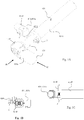
- FIGS 1A-1C show fungal spore applicator (spreading device) 1 according to the invention from slightly different angles of view but without any regulating means 41 or pressure accumulator needed for controlling and storing of the pressurized air (I).
- the feeding of pressurized air I is illustrated in figure 3 .
- Figure 2 shows the spreading device as an exploded view.
- Spreading device 1 such as aerosol applicator, has a tubular frame 2. Aerosol spreading head 3, is associated with the first end of tubular frame 2 seen in the forefront. Frame 2 also includes administering means 4 for forming a spore-containing aerosol A which is applied using spreading head 3, equipped with a back-pressure valve, onto a tree stump T. Tubular frame 2 may also include measurement means 21 such as measuring devices for measuring flow, pressure and temperature of pressurized air. Through the measurement data obtained from these measuring devices, the formation of aerosol A from the pressurized air I and the powder-like mixture S, K to be combined with it can be adjusted first. Subsequently, information received from the measuring means 21 can still be used while applying the formed aerosol A onto a tree stump in a manner described later.
- measurement means 21 such as measuring devices for measuring flow, pressure and temperature of pressurized air.
- Administering means 4 for dispensing of pressurized air I and powder-like mixture S, K comprises regulating means 4; 41 associated with the frame 2 of the aerosol applicator 1; for adjusting the volume flow of pressurized air I entering frame 2 via a pressurized air supply pipe 413
- the volume flow of pressurized air I may be adjusted using valve 4; 415 such as solenoid valve shown in figure 1A and 1B .
- the volume flow of the pressurized air I is controlled automatically using a pressure accumulator 42 and electromagnetic on/off valves 411; 411a and 411; 411b shown in Figure 3 .
- Administering means 4 also includes pressure accumulator 42 of pressurized air I for generating and supplying pressurized air I to electromagnetic valve 411; 411a, 411b as well as further inside of the frame 2, through a short supply pipe 413 of pressurized air (compare to Figure 3 ).
- Administering means 4 further comprises communication means 47 ( Figure 3 ) for providing to the regulating means 41, preferable electromagnetic regulating valves, for example, data about starting time of pressurized air I delivery and data about pressure level of said pressurized air I.. Said communication means 47 also provide the control apparatus 43 with the data relating to starting time and duration of the dosage of powder-like mixture S, K inside the frame 2.
- the pressure of delivered pressurized air and dosage of powder-like mixture S, K depends primarily on the diameter of the tree stump T to be sawed from a trunk (see Figure 7 ).
- Communication means are preferably wireless communication means which comprise a transmitter and a receiver of an electromagnetic signal. Suitable wireless communication means comprises of a receiver in connection of electromagnetic valve or control apparatus and an electromagnetic signal transmitter in connection with chain saw hydraulic circuit 91 or in connection with a hydraulic circuit controlling the actuator affecting to a stump treatment device for liquid 97 (see Figure 5 ).
- Administering means 4 further comprises control apparatus 43, incorporating a stepper motor 431; 431a to dispense / dosage powder-like mixture S, K onto the inside of frame 2.
- the aerosol A can thereafter be formed on the inside of frame 2 and dispensed to the target, i.e. to the tree stump, by supplying a burst of pressurized air I flow inside of frame via supply pipe 413.
- Tubular frame 2 also includes a powder storage 4; 45 communicating with the inside of body 2 by means of supply tube 453 shown in exploded view of Figure 2 .
- Powder storage 45 comprises container 451 having powder cartridge 452, which contains powdery mixture beeing powder-like mixture S, K.
- the powder-like mixture S, K is composed of a mixture of Phlebiopsis gigantea spores, in the presence or not of the culture medium S used for producing the spores, mixed with a heavier solid powdery carrier K (compare Figure 3 ).
- Powder storage 45 is operatively coupled with the previously described control apparatus 43 having a stepper motor 431 for dispensing and bringing the powder-like mixture S, K to the inside of frame 2 with supply tube 453.
- the powder-like mixture S, K arrives from container 451 to the inside of tubular frame 2 along supply tube 453.
- Pressurized air I is then supplied from pressure accumulator 42 via pressurized air supply pipe 413 first to the inside of frame 2 and from there to spreading head 3.
- Regulating means 41 of pressurized air I may also be used for adjusting the rate of powder-like mixture S, K coming from the powder storage 45 in a case regulating means comprises solenoid valve or like. However, normally regulating means 41 began their action only after powder-like mixture S, K have been dispended inside of the frame by means of the stepper motor 431.
- the regulating means 41 are controlled by communication means 47, which are used delivering proper control commands to regulating valve(s) 411 for dispensing of pressurized air (compressed air) I and to control apparatus 43 for adjusting the dosage of powder-like mixture by the use powder cartridge 452.
- Communication means 47 which are used delivering proper control commands to regulating valve(s) 411 for dispensing of pressurized air (compressed air) I and to control apparatus 43 for adjusting the dosage of powder-like mixture by the use powder cartridge 452.
- Said method comprises first receiving data about dosage of the powder-like mixture (S, K) by the regulating means 41.
- a powder-like mixture which comprises microbial propagules which control or prevent the growth of a forest pathogen and a solid fine carrier having a volumetric weight of at least at least 0.50 g/cm 3 , preferable at least 0.60 g/cm 3 or most preferable at least 1 g/cm 3
- Said method comprises the following steps:
- the amount of powder-like mixture S, K dispensed automatically inside the frame 2 depends on the diameter of the tree stump T. Also, the pressure level and starting time of pressurized air I delivered automatically inside the frame 2 depends on the diameter of the tree stump T.
- Proper control commands to regulating means 41, which control the delivery of pressurized air I inside the frame 2 is done by the action of communication means 47.
- These communication means 47 operate automatically and receives data which comprise control commands for starting time of delivery, the duration of the delivery and pressure level of the pressurized air I and/or starting time and the duration of the dosage of powder-like mixture S, K from the overall harvester control system 100 presented in figure 5 .
- FIG 5 is schematically illustrated a part of a forest harvester.
- This part of forest harvester comprises crane with a boom 7 and harvester head 6.
- Harvester head 6 comprises harvester head tilting device (not shown), feed rollers 61, delimbing knives 62, chain saw 5, stump treatments device for liquid (urea) and stump treatment device (spreading device) 1 for microbial propagules.
- the latter uses pneumatics circuit whereas the other devices, which are connected to harvester head, are controlled by hydraulic circuits.
- Each hydraulic circuit comprises hydraulic pump driven by an electric or a combustion motor (for example diesel motor) and proper valve, piping, filter and the actuator, Actuator can be hydraulic motor, hydraulic cylinder, electric motor or like which uses harvester head 1 device. Same hydraulic pump may provide hydraulic fluid to several harvester head 6 devices.
- the hydraulic circuits of different device may be controlled in different way depending on the overall harvester control system 100.
- overall hydraulic system 100 may employ only one hydraulic pump, which then gives power to crane 92, base machine, electricity 103 and also to working hydraulics 105 of the harvester head 6 devices.
- we will consider here the most common harvester control system 100 which uses the same hydraulic pump to employ all working hydraulics 105 in a harvester head 6.
- Working hydraulics 105 comprises then following device controls controlled by corresponding hydraulic circuits, shown in figure 5 : Chain saw 91, knives 92, harvester head tilt 94, feed rollers 95, stump treatment device for microbial propagules 96 and stump treatment device for liquid 97.
- Each hydraulic circuit for controlling corresponding harvester head 6 device includes hydraulic pump, electromagnetic valve and proper hydraulic fluid tubes or pipe leading hydraulic fluid to actuator (hydraulic motor hydraulic cylinder) connected to this specific device.
- Fluid pipes leading to harvester head device may be provided by pressure gauges for measuring fluid pressure.
- Control system 100 may also comprise data measurements 80, for example trunk shape measurement 81, trunk diameter measurement 82 and trunk length measurement 83.
- the information (data) derived from data measurement(s) can be used in combination of data derived from hydraulic circuit of a harvester head 6 device to compose control command(s) for controlling other harvester head devices.
- data derived from chain saw 5, knives 92, harvester head tilt device 94, feed rollers 95, and stump treatment device for liquid 97 can be combined to data measurements 80 and this combined information can then be used for structuring a control command.
- control commands which are derived from harvester control system 100 and which comprise control commands which relate to working hydraulics of the harvester head 6 and which specifically are derived from the hydraulics circuit 91 of the chain saw 5 or/and derived from the hydraulic circuit of the tree stump treatment device for liquid 97.
- Control commands from chain saw hydraulic circuit 91 are generated by the electromagnetic valve(s) which open /close the fluid pressure connection between hydraulic pump and chain saw 5.
- Control commands derived from the hydraulic circuit 91 connected to the usage of chain saw 5 or/and usage of the tree stump treatment device for liquid 97 relate, for example to start/shut down chain saw motor (hydraulic motor) or to turn/swing the bar with saw chain into a saw box or out from the saw box.
- the saw box is connected to the harvester head 6 (see also Figure 7 ).
- Control commands from chain saw 5 hydraulic circuit 91 can be also generated by the pressure gauge in the pipe or tube of the hydraulic circuit 91 of the chain saw 5.
- the measurement derived from the pressure gauge may indicate, for instance when the bar of the chain saw is turned back and forth when the standing tree is sawed and cutted at its lowermost part. This will result a tree stump T which can be treated with liquid urea, liquid colour markings or as in the present invention, with powder-like mixture.
- control commands derived from chain saw 5 hydraulic circuit 91 and which relate to hydraulic actuators of employing chain saw are then delivered by means of communication means 47 to control apparatus 43 for the dosage of the powder-like mixture (S, K) with the stepper motor 431.
- Same kind of control commands are also delivered by the action of communication means 47 to regulating means for controlling first and second electromagnetic valve 411a, 411b and pressure accumulator 42.
- communication means 47 comprise preferable from wireless transmitter-receiver systems.
- This kind of wireless communication means 47 based on wireless technology is widely known and we refer here to existing literature on this field.
- Exemplary wireless communication means 47 are transmitter using electromagnetic signals transmitted from an antenna and a proper receiver of these signals (receptor),
- pressurized air is arranged to flow automatically inside the frame 2 and onward to the spreading end 3 from pressure accumulator 42 by means of two on/off electromagnetic valves 411.
- FIG. 7 there has been schematically presented in a side view a chain saw 5, which is connected to a harvester head 6 of the forest machine from its saw box (not shown in figure).
- the harvester head 1 has been placed against the standing tree and chain saw 5 has been activated the.
- the bar 51 with the saw chain 53 swings out from the saw box and cuts the tree forming a tree stump T.
- the tree is cutted so that the bar 5 moves in path P having starting poin P2 and end point P1. At the end point of this path P tree has been cutted and began to fell down and the bar with the saw chain swings back to the saw box.
- the control commands from chain saw 5 hydraulic circuit 91 is generated from hydraulic actuators which controls the actions of chain saw 5 after the chain saw 5 have reached the starting P2 at its path P in cutting a standing tree.
- These actuators are for example hydraulic motor for using the saw chain 53 and and a hydraulic cylinder for swinging the bar.
- chain saw bar51 is turned outside of the saw box connected to the harvester head 6.
- Control command defining the beginning of the loading of accumulator 42 by opening the first electromagnetic valve 411a and also the starting point of the dosage of the powder-like mixture S, K containing microbial propagules and their possible culture medium S with the proper carrier K inside the frame 2 is generated by means of the control commands derived from chain saw 5 hydraulic circuit 91.
- This hydraulic circuit 91 controls the actuators which will be connected to actions of chain saw 5 when cutting the standing tree and forming a tree stump T.
- FIG 7 it has been presented how bar 51 of the chain saw 5 reaches the end point P1 at its path P in sawing/cutting a tree.
- This event generates a new control command identifying the end of the loading of pressure accumulator 42 by closing the first electromagnetic valve 411a and end of dosage of powder-like mixture S, K inside frame by means of the control apparatus 43.
- the timing of the opening and closing each valve 411a, 411b depends on the diameter of the tree stump, which can be also measured in the beginning of the method, at the stage 110. However, as stated above the diameter of the tree stump T to be achieved, can also be derived from the actions of chain saw 5 when it goes in its path P from point P2 to point P1.
- Control command defining the delivery time of the pressurized air I inside the frame 2 by opening the second electromagnetic valve 411b is generated by the control command which is identified or derived from the chain saw hydraulic circuit 91 when the tree began to fell and tree stump T will be formed. Because delivering /spreading of mixture of microbial propagules and their possible culture medium S in connection with the carrier K onto the tree stump T should be made immediately after the tree stump T has been formed or when the cutted tree T is still felling down this event should be connected with turning of bar 51 of the chain saw 5 back in to saw box. This event can also be connected to a certain time delay from the release of control command(s) identifying the end of the loading of accumulator 42 by closing the first electromagnetic valve 411a. This means that the second electromagnetic valve 411b is opened only after some time delay has been elapsed from the dosage of powder-like mixture S, K inside the frame 2.
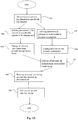
- FIG. 6B Diameter of the tree stump T is measured or will be get from the actions of chain saw when sawing a tree, in the beginning of the method at the stage 110.
- Powder cartridge 452 containing a powder-like mixture S, K is brought into the storage 451 of a powder feeding device 45, which powder-like mixture comprises microbial propagules and a solid fine carrier, having a volumetric weight of at least 0.50 g/cm 3 , at least 0.6 g/cm 3 or at least 1.0 g/cm 3 .
- Aerosol A can then be formed from pressurized air I and powder-like mixture S, K.
- First is released /dosed the powder-like mixture S, K into the pressurized air I inside the frame 2 (stage 200). This is done by receiving and defining automatically data about administering time and duration of the powder-like mixture S, K from the hydraulic circuit control commands derived from chain saw 5 hydraulic circuit 91 and by transmitting these control commands to control means 43 (stage 200) which will dosage said powder-like mixture into frame by means of stepper motor 431. Due to small amount of powder-like mixture the stepper-motor should be provided with a suitable reduction gear.
- Powder-like mixture S, K is first brought with powder cartridge 452 having a removable cap into the container 451 of the powder storage 45. Cap is removed from the cartridge 452 which may be tube made of plastic, cardboard or thin metal. Hollow frame 2 of the spreading device 1 can be connected into flow connection of the powder-like mixture S, K via a supply tube 453. From the container 451 the powder-like mixture S, K can be dispensed by means of stepper motor 431 along the supply tube 453 to the inside of frame 2.
- the amount of powder-like mixture S, K depends preferably on the diameter of the tree stump, which is measured in the beginning of the method, at the stage 110.
- the pressurized air I is brought inside the frame 2 along pressurized air I supply pipe 413. Aerosol A is formed (stage 600), as shown in Fig. 3 , inside of frame 2 from the powder-like mixture S, K and the pressurized air I.
- This pressurized air I is first loaded into pressure accumulator 42 (stage 350) by opening the first electromagnetic valve 411a and then delivered inside the frame by closing the first electromagnetic valve 411 and opening the second electromagnetic valve 411b (stage 401). Control commands defining these valve actions and loading of pressure accumulator into a certain pressure level has been described above. Shortly said, these control commands are generated from chain saw 5 hydraulic circuit 91 and transmitted to valves 411a, 411b by means of communication means 47 (stage 301).
- first electromagnetic valve 411a which is located just after pressure accumulator 42 in the flow direction of pressurized air I. Aerosol A of dry matter formed on the inside of frame 2 is dispensed through application head 3 to the target, i.e. onto a tree stump T.
- Powder-like mixture S, K in powder cartridge 452 contains fungus spores as well culture medium S of these fungal spores as well as solid fine-grained carrier K.
- their culture medium may be, for example, powdery silica gel.
- the fungal spores associated with the culture medium have a particle size of about 10 ⁇ m and therefore the particle size K of the fine-grained carrier K should be of the same order of magnitude as the relatively dry powder S.
- Figure 4 further presents a screen chart showing the particle size distribution of a preferred fine-grained carrier K, i.e. lime filler.
- Figure 4 presents on the vertical axis (Y axis) the pass-through percentage of powder passing the screen, and the size of openings of the screen respectively on the horizontal axis (x-axis).
- the particle size of lime according to a screen analysis is approximately equal to the particle size of the culture medium and the fungal spores of Phlebiopsis gigantea, whereby a homogeneous, dry powdery mixture S, K can be formed of lime, culture medium (silica gel) and fungal spores Phlebiopsis gigantea.
- Table 1 further shows volume weights of some powdery substances.
- Rotstop contains silica gel and fungal spores, and ammonium lignosulphonate can be used as an additive in a powdery mixture.
- Other powder-likesubstances such as, for example but not limited to, lime, gypsum, kaolin
- the volume weight of lime is about 1.44 g/ml, so it is sufficiently heavy to carry the mixture of fungal spores and their culture medium to the target, i.e.
- Gypsum and kaolin may also be used as a solid carrier K, although their volume weight is somewhat lower than that of lime (volume weight of phosphogypsum is 1.04 g/ml and of kaolin, 0.58 g/ml, compare Table 1).
- the volume weight of the solid carrier K should at least be approximately 0.50 g/ml, however preferably at least 1 g/ml.
- the Rotstop powder which mainly contains fungal spores and the medium (silica gel) used to grow them, has a relatively low volume weight of only about 0.22 g/ml, whereby the spreading of a dry matter aerosol A onto a tree stump matter containing it alone could be troublesome, at least in windy conditions.
- Table 1 Densities of some ingredients contained in the powder-like mixture S, K. Material/density g/ml g/l Ammonium lignosulphonate 0.60 604 Filler lime (Nordkalk) 1.44 1442 Phosphogypsum (Siilinjärvi) 1.04 1043 Kaolin (standard porcelain) 0.58 583 Rotsop WP 0.22 220
- Dispensing of aerosol A can be done for example by using a servo motor or like with a feedback instead of a stepping motor.
- Control valve 411 may in some cases also be a damper plate.
- the powdery mixture S, K contained in powder cartridge 452 may also preferably contain dye and supplemental nutrients.
- the supplemental nutrients are preferably selected from a group including lignin and its derivatives such as lignosulphonate and lignohumate and those will help increase the growth rate of fungal spores on a tree stump.
- the activity of the fungal spores remains at a high level significantly longer than in a solution-based product.
- the powder-like mixture S, K blown onto the tree stump with aerosol A should be water-absorbent so that the fungal spores will adhere properly.
- Water absorption can be increased either by selecting a suitable water absorbing culture medium for fungal spores (for example silica gel) or a suitable fine-grained carrier.
- Phlebiopsis gigantea strain ATCC 90304
- Spores were obtained by cultivating Phlebiopsis gigantea on solid silica carrier and drying the colonized growth medium.
- each billet length about 30 cm, diameter 14-18 cm
- the surface of each billet was divided in two sectors, one section was treated with the powder mixture comprising the fungal spores and a root rot fungus Heterobasidion parviporum, and the second section was treated only with Heterobasidion parviporum.
- Control billets were treated with a commercial stump treatment agent, Rotstop SC, as a 1 g/l water suspension. The billets were kept in open air for 2.5 months. Then the billets were cut 5 cm below the surface and a 2 cm thick disc was taken, incubated in a plastic bag for one week and analyzed under a dissecting microscope for Heterobasidion covered area based on conidiophore development during the incubation. Only discs where an established Heterobasidion infection in the control side was observed were taken into account in calculation of the results.
- Table 2 Area infested with Heterobasidion in spruce discs treated with different preparations containing Phlebiopsis gigantea in comparison with control discs with Heterobasidion only. Number of discs pes Discs with no Heterobasidion Area treated with the product and Hererobasidion Control area treated with Hererobasidion only Efficacy of treatment pcs % Total disc area cm 2 Infested area Total disc area cm 2 Infested area cm 2 % cm 2 % Powder, 1 mg/cm2 21 16 76 % 1428 1,62 0,113% 1488 20,53 1,38% 92 % Powder, 2 mg/cm2 24 22 92 % 1596 1,75 0,110% 1799 27,53 1,53% 94 % Rotstop suspension 23 14 61 % 1394 1,34 0,096% 1520 48,59 3,20% 97 %
Landscapes
- Life Sciences & Earth Sciences (AREA)
- Engineering & Computer Science (AREA)
- Health & Medical Sciences (AREA)
- General Health & Medical Sciences (AREA)
- Zoology (AREA)
- Environmental Sciences (AREA)
- Wood Science & Technology (AREA)
- Pest Control & Pesticides (AREA)
- Dentistry (AREA)
- Plant Pathology (AREA)
- Agronomy & Crop Science (AREA)
- Chemical & Material Sciences (AREA)
- Microbiology (AREA)
- Biotechnology (AREA)
- Toxicology (AREA)
- Virology (AREA)
- Biodiversity & Conservation Biology (AREA)
- Forests & Forestry (AREA)
- Ecology (AREA)
- Bioinformatics & Cheminformatics (AREA)
- Organic Chemistry (AREA)
- Genetics & Genomics (AREA)
- Mycology (AREA)
- Insects & Arthropods (AREA)
- Mechanical Engineering (AREA)
- Botany (AREA)
- General Engineering & Computer Science (AREA)
- Medicinal Chemistry (AREA)
- Biomedical Technology (AREA)
- Tropical Medicine & Parasitology (AREA)
- Biochemistry (AREA)
- Soil Sciences (AREA)
- Inorganic Chemistry (AREA)
- Dispersion Chemistry (AREA)
- Agricultural Chemicals And Associated Chemicals (AREA)
- Details Of Rigid Or Semi-Rigid Containers (AREA)
- Catching Or Destruction (AREA)
Priority Applications (3)
| Application Number | Priority Date | Filing Date | Title |
|---|---|---|---|
| EP20202174.7A EP3785525B1 (de) | 2018-02-15 | 2019-02-15 | Komposition zur bekämpfung oder vorbeugung von waldpathogenen an baumstümpfen |
| DK20202174.7T DK3785525T3 (da) | 2018-02-15 | 2019-02-15 | Sammensætning til bekæmpelse af skovpatogener på træstubbe |
| PL19157566T PL3563671T3 (pl) | 2018-02-15 | 2019-02-15 | Urządzenie rozprowadzające i sposób zwalczania patogenów leśnych na karpach drzew |
Applications Claiming Priority (1)
| Application Number | Priority Date | Filing Date | Title |
|---|---|---|---|
| FI20185135A FI129554B (en) | 2018-02-15 | 2018-02-15 | Spreader and powder cartridge available therein and powdered mixture in a powder cartridge |
Related Child Applications (2)
| Application Number | Title | Priority Date | Filing Date |
|---|---|---|---|
| EP20202174.7A Division EP3785525B1 (de) | 2018-02-15 | 2019-02-15 | Komposition zur bekämpfung oder vorbeugung von waldpathogenen an baumstümpfen |
| EP20202174.7A Division-Into EP3785525B1 (de) | 2018-02-15 | 2019-02-15 | Komposition zur bekämpfung oder vorbeugung von waldpathogenen an baumstümpfen |
Publications (3)
| Publication Number | Publication Date |
|---|---|
| EP3563671A2 true EP3563671A2 (de) | 2019-11-06 |
| EP3563671A3 EP3563671A3 (de) | 2020-02-26 |
| EP3563671B1 EP3563671B1 (de) | 2021-12-01 |
Family
ID=65443810
Family Applications (2)
| Application Number | Title | Priority Date | Filing Date |
|---|---|---|---|
| EP20202174.7A Active EP3785525B1 (de) | 2018-02-15 | 2019-02-15 | Komposition zur bekämpfung oder vorbeugung von waldpathogenen an baumstümpfen |
| EP19157566.1A Active EP3563671B1 (de) | 2018-02-15 | 2019-02-15 | Ausbreitungsvorrichtung und verfahren zur bekämpfung von waldpathogenen an baumstümpfen |
Family Applications Before (1)
| Application Number | Title | Priority Date | Filing Date |
|---|---|---|---|
| EP20202174.7A Active EP3785525B1 (de) | 2018-02-15 | 2019-02-15 | Komposition zur bekämpfung oder vorbeugung von waldpathogenen an baumstümpfen |
Country Status (8)
| Country | Link |
|---|---|
| US (2) | US11432480B2 (de) |
| EP (2) | EP3785525B1 (de) |
| CA (2) | CA3034087C (de) |
| DK (2) | DK3563671T3 (de) |
| FI (2) | FI129554B (de) |
| LT (2) | LT3563671T (de) |
| PL (2) | PL3785525T3 (de) |
| SE (2) | SE2050627A1 (de) |
Families Citing this family (1)
| Publication number | Priority date | Publication date | Assignee | Title |
|---|---|---|---|---|
| EP4732663A1 (de) * | 2024-10-24 | 2026-04-29 | Dahlbäck, Gunnar | Erntewerkzeug und verfahren zum fernsammeln von ganzen bäumen |
Family Cites Families (35)
| Publication number | Priority date | Publication date | Assignee | Title |
|---|---|---|---|---|
| CA875912A (en) | 1971-07-20 | H. Wilkinson Robert | Combined tree feller and fungicide applicator | |
| US3070263A (en) * | 1959-03-04 | 1962-12-25 | Grace W R & Co | Dispensing device for micro-pulverized material |
| GB1090403A (en) | 1963-06-24 | 1967-11-08 | Nat Res Dev | Biological control of wood rotting fungus in trees |
| US3832803A (en) * | 1969-09-25 | 1974-09-03 | R Blake | Means and method for treating trees |
| DE2335293C2 (de) | 1973-07-11 | 1982-04-22 | Östbergs Fabriks AB, 82200 Alfta | Vorrichtung an der Einrichtung für die Bearbeitung von gefällten Bäumen |
| US4071170A (en) * | 1975-12-29 | 1978-01-31 | Meiko, Inc. | Portable motor driven dusting apparatus |
| US4089441A (en) * | 1976-05-24 | 1978-05-16 | Cole John M | Portable manually operated duster |
| US5683689A (en) | 1991-04-18 | 1997-11-04 | University Of Florida Research Foundation, Inc. | Controlling cockroaches, carpenter ants, and pharaoh ants using strains of beauveria bassiana |
| NZ240177A (en) | 1991-10-10 | 1996-06-25 | David Stephen John Gale | Horticultural injectable formulation containing trichoderma viride |
| FI107224B (fi) | 1999-05-07 | 2001-06-29 | Markku Raimo Halonen | Biologinen lahoa aiheuttavien juurikääpä-sienten torjuntamenetelmä ja menetelmällä valmistettu taimipaakku |
| AU2001254564A1 (en) * | 2000-05-02 | 2001-11-12 | University Of Victoria | Sprayable formulations of mycelium-based biological control agents produced by solid state fermention |
| FI112319B (fi) | 2000-08-17 | 2003-11-28 | Markku Raimo Halonen | Biologinen sammalten, levien ja rikkakasvien torjuntamenetelmä |
| FI117012B (fi) | 2004-09-28 | 2006-05-15 | Verdera Oy | Reaktori ja menetelmä kiinteän alustan kasvatuksiin |
| US9283335B2 (en) | 2004-10-06 | 2016-03-15 | Boehringer Ingelheim International Gmbh | Dispensing device, storage device and method for dispensing powder |
| FI119597B (fi) | 2004-12-31 | 2009-01-15 | Verdera Oy | Stabiilit mikrobisiirrosteet ja menetelmät niiden valmistamiseksi |
| NZ599466A (en) * | 2009-10-12 | 2014-03-28 | Deere & Co | Load sense and hydraulic pump management |
| US8726567B1 (en) * | 2010-03-15 | 2014-05-20 | Arborjet Inc. | Hand-held electronic tree injection device and method for identifying the state of health of a tree |
| WO2012050857A1 (en) | 2010-09-29 | 2012-04-19 | Smithsonian Institution | Method of biologically controlling leaf-cutting ants |
| JP6182158B2 (ja) | 2012-01-25 | 2017-08-16 | バイエル・インテレクチュアル・プロパティ・ゲゼルシャフト・ミット・ベシュレンクテル・ハフツングBayer Intellectual Property GmbH | フルオピラムとバシルス(Bacillus)と生物学的防除剤とを含んだ活性化合物組合せ |
| CN202722340U (zh) | 2012-06-12 | 2013-02-13 | 淮海工业集团有限公司 | 一种带滑石粉的灭虫粉孢 |
| CN203058162U (zh) | 2012-12-11 | 2013-07-17 | 冉菊英 | 单连球微型喷粉器 |
| WO2014147528A1 (en) * | 2013-03-20 | 2014-09-25 | Basf Corporation | Synergistic compositions comprising a bacillus subtilis strain and a biopesticide |
| MX2016000861A (es) * | 2013-07-24 | 2016-05-05 | Bayer Cropscience Ag | Composicion fungicida binaria. |
| US20150083755A1 (en) | 2013-09-26 | 2015-03-26 | Alex Mecker | Dispensing System with Bracket |
| LV14791B (lv) | 2013-10-21 | 2014-05-20 | Latvijas Valsts Mežzinātnes Institūts 'silava' | Bioloģisks līdzeklis skuju koku celmu aizsardzībai pret HETEROBASIDION ANNOSUM S.L bazīdijsporu infekciju |
| GB2527141A (en) | 2014-06-13 | 2015-12-16 | Exosect Ltd | Control of arthropod infestation |
| CN104877937B (zh) | 2015-05-18 | 2018-10-12 | 青岛根源生物技术集团有限公司 | 一种促进辣椒生长的解淀粉芽孢杆菌菌肥及其制备方法和应用 |
| JP6718627B2 (ja) * | 2015-11-10 | 2020-07-08 | 株式会社いけうち | 植物栽培室の防除装置 |
| BR112018012839A2 (pt) * | 2015-12-21 | 2018-12-04 | Indigo Ag Inc | composições endofíticas e métodos para melhoramento de traços de plantas em plantas de importância agronômica |
| US10681874B1 (en) * | 2017-03-17 | 2020-06-16 | James Scarlata Consulting Forester, LLC | Tree injection apparatus and treatment system |
| KR102784395B1 (ko) * | 2017-05-04 | 2025-03-19 | 아루까 에이. 아이 파밍 엘티디 | 식물 처리 시스템 및 방법 |
| CN107163949A (zh) | 2017-06-07 | 2017-09-15 | 刘铜 | 土壤改良剂深绿木霉dq1复合粉剂tlb制备及应用 |
| JP7166300B2 (ja) * | 2017-07-06 | 2022-11-07 | バイエル、アクチエンゲゼルシャフト | 雑草防除装置 |
| CA3022253A1 (en) * | 2017-10-27 | 2019-04-27 | Gerard V. Sunnen | Apparatus and method for inactivating plant pathogens while stimulating plant growth via selective application of oxygen/ozone gas mixtures, and carbon dioxide, in a multi compartment system |
| US10617064B2 (en) * | 2017-12-27 | 2020-04-14 | X Development Llc | Plant phenotyping techniques using mechanical manipulation, and associated systems and methods |
-
2018
- 2018-02-15 FI FI20185135A patent/FI129554B/en active IP Right Grant
-
2019
- 2019-02-15 SE SE2050627A patent/SE2050627A1/en not_active Application Discontinuation
- 2019-02-15 FI FI20190010A patent/FI20190010A1/en not_active Application Discontinuation
- 2019-02-15 DK DK19157566.1T patent/DK3563671T3/da active
- 2019-02-15 US US16/276,827 patent/US11432480B2/en active Active
- 2019-02-15 PL PL20202174.7T patent/PL3785525T3/pl unknown
- 2019-02-15 CA CA3034087A patent/CA3034087C/en active Active
- 2019-02-15 LT LTEP19157566.1T patent/LT3563671T/lt unknown
- 2019-02-15 LT LTEP20202174.7T patent/LT3785525T/lt unknown
- 2019-02-15 SE SE1950191A patent/SE1950191A1/en not_active Application Discontinuation
- 2019-02-15 EP EP20202174.7A patent/EP3785525B1/de active Active
- 2019-02-15 CA CA3241462A patent/CA3241462A1/en active Pending
- 2019-02-15 DK DK20202174.7T patent/DK3785525T3/da active
- 2019-02-15 PL PL19157566T patent/PL3563671T3/pl unknown
- 2019-02-15 EP EP19157566.1A patent/EP3563671B1/de active Active
-
2022
- 2022-07-26 US US17/874,034 patent/US12610899B2/en active Active
Also Published As
| Publication number | Publication date |
|---|---|
| CA3034087C (en) | 2026-04-07 |
| EP3785525A1 (de) | 2021-03-03 |
| CA3034087A1 (en) | 2019-08-15 |
| US12610899B2 (en) | 2026-04-28 |
| SE1950191A1 (en) | 2019-08-16 |
| EP3785525B1 (de) | 2022-08-10 |
| SE2050627A1 (en) | 2020-06-01 |
| FI20190010A1 (en) | 2019-08-16 |
| EP3563671B1 (de) | 2021-12-01 |
| FI20185135A1 (en) | 2019-08-16 |
| US11432480B2 (en) | 2022-09-06 |
| DK3563671T3 (da) | 2022-02-21 |
| LT3563671T (lt) | 2022-03-10 |
| DK3785525T3 (da) | 2022-10-17 |
| LT3785525T (lt) | 2022-11-10 |
| FI129554B (en) | 2022-04-14 |
| EP3563671A3 (de) | 2020-02-26 |
| PL3785525T3 (pl) | 2022-12-05 |
| US20220354071A1 (en) | 2022-11-10 |
| US20190313625A1 (en) | 2019-10-17 |
| CA3241462A1 (en) | 2019-08-15 |
| PL3563671T3 (pl) | 2022-05-02 |
Similar Documents
| Publication | Publication Date | Title |
|---|---|---|
| US8728460B2 (en) | Biological soil nutrient system | |
| CN102696462B (zh) | 一种实用高效无土栽培花卉营养土的生产方法 | |
| CA2616578C (en) | Biological soil nutrient system | |
| JPS63502241A (ja) | 脱水した植物種子類似物 | |
| JPS63500911A (ja) | ゲルカプセル中の水和させた催芽種子を製造するための改良方法 | |
| US12610899B2 (en) | Spreading device, method and powder-like mixture composition for controlling or preventing forest pathogens on tree stumps | |
| JP3045546B2 (ja) | アルカリ金属ホルムオノネチンと菌根刺激方法 | |
| CN114568445A (zh) | 一种种子处理剂及制备方法和应用 | |
| JPH0569081B2 (de) | ||
| US5676726A (en) | Matrix and agricultural materials | |
| CN111727972B (zh) | 一种5%精甲霜灵·咯·嘧菌组合物及其悬浮种衣剂 | |
| EP3087044B1 (de) | Eisen(iii)oxid-haltige bodenbindende zusammensetzung | |
| JPH01137924A (ja) | 培地改良法 | |
| CN108450471A (zh) | 一种含有氟唑菌苯胺、吡唑醚菌酯和氟噻唑吡乙酮的种衣剂 | |
| RU2380906C2 (ru) | Самоконсервирующийся биопрепарат для защиты растений от болезней (варианты) и способ его получения (варианты) | |
| Jiao et al. | Antagonistic effects of uniconazole and GA4+ 7 on shoot elongation and flower development in ‘Nellie White’Easter lily | |
| CN119969409B (zh) | 一种抗紫外线的纳米农药制剂及其应用 | |
| CN115251066B (zh) | 一种含嘧菌环胺的杀菌组合物 | |
| JPH05153853A (ja) | 茸の人工栽培方法 | |
| CN110250190A (zh) | 一种组合物、制剂及其应用、制备方法 | |
| CN104904720B (zh) | 一种含zj5337和甲氧基丙烯酸酯类杀菌剂的杀菌组合物 | |
| RU2400980C1 (ru) | Способ увеличения урожая плодоовощной и растениеводческой продукции | |
| CN120391436A (zh) | 一种提高棉花苗期耐盐性的物质、方法及应用 | |
| RU2345518C1 (ru) | Искусственная почва | |
| JPS60259127A (ja) | 食用菌茸類栽培における害菌防除法 |
Legal Events
| Date | Code | Title | Description |
|---|---|---|---|
| PUAI | Public reference made under article 153(3) epc to a published international application that has entered the european phase |
Free format text: ORIGINAL CODE: 0009012 |
|
| STAA | Information on the status of an ep patent application or granted ep patent |
Free format text: STATUS: THE APPLICATION HAS BEEN PUBLISHED |
|
| AK | Designated contracting states |
Kind code of ref document: A2 Designated state(s): AL AT BE BG CH CY CZ DE DK EE ES FI FR GB GR HR HU IE IS IT LI LT LU LV MC MK MT NL NO PL PT RO RS SE SI SK SM TR |
|
| AX | Request for extension of the european patent |
Extension state: BA ME |
|
| PUAL | Search report despatched |
Free format text: ORIGINAL CODE: 0009013 |
|
| AK | Designated contracting states |
Kind code of ref document: A3 Designated state(s): AL AT BE BG CH CY CZ DE DK EE ES FI FR GB GR HR HU IE IS IT LI LT LU LV MC MK MT NL NO PL PT RO RS SE SI SK SM TR |
|
| AX | Request for extension of the european patent |
Extension state: BA ME |
|
| RIC1 | Information provided on ipc code assigned before grant |
Ipc: A01N 25/08 20060101ALI20200121BHEP Ipc: A01G 23/099 20060101AFI20200121BHEP Ipc: A01N 25/12 20060101ALI20200121BHEP |
|
| STAA | Information on the status of an ep patent application or granted ep patent |
Free format text: STATUS: REQUEST FOR EXAMINATION WAS MADE |
|
| 17P | Request for examination filed |
Effective date: 20200826 |
|
| RBV | Designated contracting states (corrected) |
Designated state(s): AL AT BE BG CH CY CZ DE DK EE ES FI FR GB GR HR HU IE IS IT LI LT LU LV MC MK MT NL NO PL PT RO RS SE SI SK SM TR |
|
| GRAP | Despatch of communication of intention to grant a patent |
Free format text: ORIGINAL CODE: EPIDOSNIGR1 |
|
| STAA | Information on the status of an ep patent application or granted ep patent |
Free format text: STATUS: GRANT OF PATENT IS INTENDED |
|
| INTG | Intention to grant announced |
Effective date: 20210119 |
|
| GRAS | Grant fee paid |
Free format text: ORIGINAL CODE: EPIDOSNIGR3 |
|
| GRAJ | Information related to disapproval of communication of intention to grant by the applicant or resumption of examination proceedings by the epo deleted |
Free format text: ORIGINAL CODE: EPIDOSDIGR1 |
|
| GRAL | Information related to payment of fee for publishing/printing deleted |
Free format text: ORIGINAL CODE: EPIDOSDIGR3 |
|
| STAA | Information on the status of an ep patent application or granted ep patent |
Free format text: STATUS: REQUEST FOR EXAMINATION WAS MADE |
|
| GRAP | Despatch of communication of intention to grant a patent |
Free format text: ORIGINAL CODE: EPIDOSNIGR1 |
|
| STAA | Information on the status of an ep patent application or granted ep patent |
Free format text: STATUS: GRANT OF PATENT IS INTENDED |
|
| INTC | Intention to grant announced (deleted) | ||
| INTG | Intention to grant announced |
Effective date: 20210629 |
|
| GRAA | (expected) grant |
Free format text: ORIGINAL CODE: 0009210 |
|
| STAA | Information on the status of an ep patent application or granted ep patent |
Free format text: STATUS: THE PATENT HAS BEEN GRANTED |
|
| RAP1 | Party data changed (applicant data changed or rights of an application transferred) |
Owner name: DANSTAR FERMENT AG |
|
| AK | Designated contracting states |
Kind code of ref document: B1 Designated state(s): AL AT BE BG CH CY CZ DE DK EE ES FI FR GB GR HR HU IE IS IT LI LT LU LV MC MK MT NL NO PL PT RO RS SE SI SK SM TR |
|
| REG | Reference to a national code |
Ref country code: GB Ref legal event code: FG4D |
|
| REG | Reference to a national code |
Ref country code: AT Ref legal event code: REF Ref document number: 1450899 Country of ref document: AT Kind code of ref document: T Effective date: 20211215 Ref country code: CH Ref legal event code: EP |
|
| REG | Reference to a national code |
Ref country code: IE Ref legal event code: FG4D |
|
| REG | Reference to a national code |
Ref country code: DE Ref legal event code: R096 Ref document number: 602019009598 Country of ref document: DE |
|
| REG | Reference to a national code |
Ref country code: DK Ref legal event code: T3 Effective date: 20220214 |
|
| REG | Reference to a national code |
Ref country code: FI Ref legal event code: FGE Ref country code: SE Ref legal event code: TRGR |
|
| REG | Reference to a national code |
Ref country code: NO Ref legal event code: T2 Effective date: 20211201 |
|
| REG | Reference to a national code |
Ref country code: NL Ref legal event code: MP Effective date: 20211201 |
|
| REG | Reference to a national code |
Ref country code: AT Ref legal event code: MK05 Ref document number: 1450899 Country of ref document: AT Kind code of ref document: T Effective date: 20211201 |
|
| REG | Reference to a national code |
Ref country code: EE Ref legal event code: FG4A Ref document number: E021964 Country of ref document: EE Effective date: 20220218 |
|
| PG25 | Lapsed in a contracting state [announced via postgrant information from national office to epo] |
Ref country code: RS Free format text: LAPSE BECAUSE OF FAILURE TO SUBMIT A TRANSLATION OF THE DESCRIPTION OR TO PAY THE FEE WITHIN THE PRESCRIBED TIME-LIMIT Effective date: 20211201 Ref country code: BG Free format text: LAPSE BECAUSE OF FAILURE TO SUBMIT A TRANSLATION OF THE DESCRIPTION OR TO PAY THE FEE WITHIN THE PRESCRIBED TIME-LIMIT Effective date: 20220301 Ref country code: AT Free format text: LAPSE BECAUSE OF FAILURE TO SUBMIT A TRANSLATION OF THE DESCRIPTION OR TO PAY THE FEE WITHIN THE PRESCRIBED TIME-LIMIT Effective date: 20211201 |
|
| PG25 | Lapsed in a contracting state [announced via postgrant information from national office to epo] |
Ref country code: HR Free format text: LAPSE BECAUSE OF FAILURE TO SUBMIT A TRANSLATION OF THE DESCRIPTION OR TO PAY THE FEE WITHIN THE PRESCRIBED TIME-LIMIT Effective date: 20211201 Ref country code: GR Free format text: LAPSE BECAUSE OF FAILURE TO SUBMIT A TRANSLATION OF THE DESCRIPTION OR TO PAY THE FEE WITHIN THE PRESCRIBED TIME-LIMIT Effective date: 20220302 Ref country code: ES Free format text: LAPSE BECAUSE OF FAILURE TO SUBMIT A TRANSLATION OF THE DESCRIPTION OR TO PAY THE FEE WITHIN THE PRESCRIBED TIME-LIMIT Effective date: 20211201 |
|
| PG25 | Lapsed in a contracting state [announced via postgrant information from national office to epo] |
Ref country code: NL Free format text: LAPSE BECAUSE OF FAILURE TO SUBMIT A TRANSLATION OF THE DESCRIPTION OR TO PAY THE FEE WITHIN THE PRESCRIBED TIME-LIMIT Effective date: 20211201 |
|
| PG25 | Lapsed in a contracting state [announced via postgrant information from national office to epo] |
Ref country code: SM Free format text: LAPSE BECAUSE OF FAILURE TO SUBMIT A TRANSLATION OF THE DESCRIPTION OR TO PAY THE FEE WITHIN THE PRESCRIBED TIME-LIMIT Effective date: 20211201 Ref country code: SK Free format text: LAPSE BECAUSE OF FAILURE TO SUBMIT A TRANSLATION OF THE DESCRIPTION OR TO PAY THE FEE WITHIN THE PRESCRIBED TIME-LIMIT Effective date: 20211201 Ref country code: RO Free format text: LAPSE BECAUSE OF FAILURE TO SUBMIT A TRANSLATION OF THE DESCRIPTION OR TO PAY THE FEE WITHIN THE PRESCRIBED TIME-LIMIT Effective date: 20211201 Ref country code: PT Free format text: LAPSE BECAUSE OF FAILURE TO SUBMIT A TRANSLATION OF THE DESCRIPTION OR TO PAY THE FEE WITHIN THE PRESCRIBED TIME-LIMIT Effective date: 20220401 Ref country code: CZ Free format text: LAPSE BECAUSE OF FAILURE TO SUBMIT A TRANSLATION OF THE DESCRIPTION OR TO PAY THE FEE WITHIN THE PRESCRIBED TIME-LIMIT Effective date: 20211201 |
|
| REG | Reference to a national code |
Ref country code: DE Ref legal event code: R097 Ref document number: 602019009598 Country of ref document: DE |
|
| PG25 | Lapsed in a contracting state [announced via postgrant information from national office to epo] |
Ref country code: MC Free format text: LAPSE BECAUSE OF FAILURE TO SUBMIT A TRANSLATION OF THE DESCRIPTION OR TO PAY THE FEE WITHIN THE PRESCRIBED TIME-LIMIT Effective date: 20211201 Ref country code: IS Free format text: LAPSE BECAUSE OF FAILURE TO SUBMIT A TRANSLATION OF THE DESCRIPTION OR TO PAY THE FEE WITHIN THE PRESCRIBED TIME-LIMIT Effective date: 20220401 |
|
| PLBE | No opposition filed within time limit |
Free format text: ORIGINAL CODE: 0009261 |
|
| STAA | Information on the status of an ep patent application or granted ep patent |
Free format text: STATUS: NO OPPOSITION FILED WITHIN TIME LIMIT |
|
| REG | Reference to a national code |
Ref country code: CH Ref legal event code: PL |
|
| REG | Reference to a national code |
Ref country code: BE Ref legal event code: MM Effective date: 20220228 |
|
| PG25 | Lapsed in a contracting state [announced via postgrant information from national office to epo] |
Ref country code: LU Free format text: LAPSE BECAUSE OF NON-PAYMENT OF DUE FEES Effective date: 20220215 Ref country code: AL Free format text: LAPSE BECAUSE OF FAILURE TO SUBMIT A TRANSLATION OF THE DESCRIPTION OR TO PAY THE FEE WITHIN THE PRESCRIBED TIME-LIMIT Effective date: 20211201 |
|
| 26N | No opposition filed |
Effective date: 20220902 |
|
| PG25 | Lapsed in a contracting state [announced via postgrant information from national office to epo] |
Ref country code: SI Free format text: LAPSE BECAUSE OF FAILURE TO SUBMIT A TRANSLATION OF THE DESCRIPTION OR TO PAY THE FEE WITHIN THE PRESCRIBED TIME-LIMIT Effective date: 20211201 |
|
| PG25 | Lapsed in a contracting state [announced via postgrant information from national office to epo] |
Ref country code: LI Free format text: LAPSE BECAUSE OF NON-PAYMENT OF DUE FEES Effective date: 20220228 Ref country code: IE Free format text: LAPSE BECAUSE OF NON-PAYMENT OF DUE FEES Effective date: 20220215 Ref country code: CH Free format text: LAPSE BECAUSE OF NON-PAYMENT OF DUE FEES Effective date: 20220228 |
|
| PG25 | Lapsed in a contracting state [announced via postgrant information from national office to epo] |
Ref country code: BE Free format text: LAPSE BECAUSE OF NON-PAYMENT OF DUE FEES Effective date: 20220228 |
|
| PG25 | Lapsed in a contracting state [announced via postgrant information from national office to epo] |
Ref country code: IT Free format text: LAPSE BECAUSE OF FAILURE TO SUBMIT A TRANSLATION OF THE DESCRIPTION OR TO PAY THE FEE WITHIN THE PRESCRIBED TIME-LIMIT Effective date: 20211201 |
|
| P01 | Opt-out of the competence of the unified patent court (upc) registered |
Effective date: 20230515 |
|
| PG25 | Lapsed in a contracting state [announced via postgrant information from national office to epo] |
Ref country code: MK Free format text: LAPSE BECAUSE OF FAILURE TO SUBMIT A TRANSLATION OF THE DESCRIPTION OR TO PAY THE FEE WITHIN THE PRESCRIBED TIME-LIMIT Effective date: 20211201 Ref country code: CY Free format text: LAPSE BECAUSE OF FAILURE TO SUBMIT A TRANSLATION OF THE DESCRIPTION OR TO PAY THE FEE WITHIN THE PRESCRIBED TIME-LIMIT Effective date: 20211201 |
|
| PG25 | Lapsed in a contracting state [announced via postgrant information from national office to epo] |
Ref country code: HU Free format text: LAPSE BECAUSE OF FAILURE TO SUBMIT A TRANSLATION OF THE DESCRIPTION OR TO PAY THE FEE WITHIN THE PRESCRIBED TIME-LIMIT; INVALID AB INITIO Effective date: 20190215 |
|
| PG25 | Lapsed in a contracting state [announced via postgrant information from national office to epo] |
Ref country code: MT Free format text: LAPSE BECAUSE OF FAILURE TO SUBMIT A TRANSLATION OF THE DESCRIPTION OR TO PAY THE FEE WITHIN THE PRESCRIBED TIME-LIMIT Effective date: 20211201 |
|
| PG25 | Lapsed in a contracting state [announced via postgrant information from national office to epo] |
Ref country code: TR Free format text: LAPSE BECAUSE OF FAILURE TO SUBMIT A TRANSLATION OF THE DESCRIPTION OR TO PAY THE FEE WITHIN THE PRESCRIBED TIME-LIMIT Effective date: 20211201 |
|
| PGFP | Annual fee paid to national office [announced via postgrant information from national office to epo] |
Ref country code: LT Payment date: 20251222 Year of fee payment: 8 |
|
| PGFP | Annual fee paid to national office [announced via postgrant information from national office to epo] |
Ref country code: FI Payment date: 20251230 Year of fee payment: 8 |
|
| PGFP | Annual fee paid to national office [announced via postgrant information from national office to epo] |
Ref country code: FR Payment date: 20251208 Year of fee payment: 8 |
|
| PGFP | Annual fee paid to national office [announced via postgrant information from national office to epo] |
Ref country code: SE Payment date: 20251210 Year of fee payment: 8 |
|
| PGFP | Annual fee paid to national office [announced via postgrant information from national office to epo] |
Ref country code: LV Payment date: 20251219 Year of fee payment: 8 |
|
| PGFP | Annual fee paid to national office [announced via postgrant information from national office to epo] |
Ref country code: PL Payment date: 20251212 Year of fee payment: 8 |
|
| PGFP | Annual fee paid to national office [announced via postgrant information from national office to epo] |
Ref country code: GB Payment date: 20260106 Year of fee payment: 8 |
|
| PGFP | Annual fee paid to national office [announced via postgrant information from national office to epo] |
Ref country code: DE Payment date: 20251224 Year of fee payment: 8 Ref country code: DK Payment date: 20260213 Year of fee payment: 8 Ref country code: NO Payment date: 20260211 Year of fee payment: 8 |
|
| PGFP | Annual fee paid to national office [announced via postgrant information from national office to epo] |
Ref country code: EE Payment date: 20260105 Year of fee payment: 8 |