EP3552629B1 - Capsule dure présentant un dépôt amélioré d'adjuvant de gélification et procédé de préparation associé - Google Patents
Capsule dure présentant un dépôt amélioré d'adjuvant de gélification et procédé de préparation associé Download PDFInfo
- Publication number
- EP3552629B1 EP3552629B1 EP17878539.0A EP17878539A EP3552629B1 EP 3552629 B1 EP3552629 B1 EP 3552629B1 EP 17878539 A EP17878539 A EP 17878539A EP 3552629 B1 EP3552629 B1 EP 3552629B1
- Authority
- EP
- European Patent Office
- Prior art keywords
- hard capsule
- mass
- capsule
- gelling
- film
- Prior art date
- Legal status (The legal status is an assumption and is not a legal conclusion. Google has not performed a legal analysis and makes no representation as to the accuracy of the status listed.)
- Active
Links
Images
Classifications
-
- A—HUMAN NECESSITIES
- A61—MEDICAL OR VETERINARY SCIENCE; HYGIENE
- A61K—PREPARATIONS FOR MEDICAL, DENTAL OR TOILETRY PURPOSES
- A61K9/00—Medicinal preparations characterised by special physical form
- A61K9/48—Preparations in capsules, e.g. of gelatin, of chocolate
- A61K9/4816—Wall or shell material
-
- A—HUMAN NECESSITIES
- A23—FOODS OR FOODSTUFFS; TREATMENT THEREOF, NOT COVERED BY OTHER CLASSES
- A23L—FOODS, FOODSTUFFS OR NON-ALCOHOLIC BEVERAGES, NOT OTHERWISE PROVIDED FOR; PREPARATION OR TREATMENT THEREOF
- A23L29/00—Foods or foodstuffs containing additives; Preparation or treatment thereof
- A23L29/20—Foods or foodstuffs containing additives; Preparation or treatment thereof containing gelling or thickening agents
- A23L29/206—Foods or foodstuffs containing additives; Preparation or treatment thereof containing gelling or thickening agents of vegetable origin
- A23L29/231—Pectin; Derivatives thereof
-
- A—HUMAN NECESSITIES
- A23—FOODS OR FOODSTUFFS; TREATMENT THEREOF, NOT COVERED BY OTHER CLASSES
- A23L—FOODS, FOODSTUFFS OR NON-ALCOHOLIC BEVERAGES, NOT OTHERWISE PROVIDED FOR; PREPARATION OR TREATMENT THEREOF
- A23L29/00—Foods or foodstuffs containing additives; Preparation or treatment thereof
- A23L29/20—Foods or foodstuffs containing additives; Preparation or treatment thereof containing gelling or thickening agents
- A23L29/206—Foods or foodstuffs containing additives; Preparation or treatment thereof containing gelling or thickening agents of vegetable origin
- A23L29/256—Foods or foodstuffs containing additives; Preparation or treatment thereof containing gelling or thickening agents of vegetable origin from seaweeds, e.g. alginates, agar or carrageenan
-
- A—HUMAN NECESSITIES
- A23—FOODS OR FOODSTUFFS; TREATMENT THEREOF, NOT COVERED BY OTHER CLASSES
- A23L—FOODS, FOODSTUFFS OR NON-ALCOHOLIC BEVERAGES, NOT OTHERWISE PROVIDED FOR; PREPARATION OR TREATMENT THEREOF
- A23L29/00—Foods or foodstuffs containing additives; Preparation or treatment thereof
- A23L29/20—Foods or foodstuffs containing additives; Preparation or treatment thereof containing gelling or thickening agents
- A23L29/269—Foods or foodstuffs containing additives; Preparation or treatment thereof containing gelling or thickening agents of microbial origin, e.g. xanthan or dextran
-
- A—HUMAN NECESSITIES
- A23—FOODS OR FOODSTUFFS; TREATMENT THEREOF, NOT COVERED BY OTHER CLASSES
- A23L—FOODS, FOODSTUFFS OR NON-ALCOHOLIC BEVERAGES, NOT OTHERWISE PROVIDED FOR; PREPARATION OR TREATMENT THEREOF
- A23L5/00—Preparation or treatment of foods or foodstuffs, in general; Food or foodstuffs obtained thereby; Materials therefor
-
- A—HUMAN NECESSITIES
- A23—FOODS OR FOODSTUFFS; TREATMENT THEREOF, NOT COVERED BY OTHER CLASSES
- A23P—SHAPING OR WORKING OF FOODSTUFFS, NOT FULLY COVERED BY A SINGLE OTHER SUBCLASS
- A23P10/00—Shaping or working of foodstuffs characterised by the products
- A23P10/30—Encapsulation of particles, e.g. foodstuff additives
-
- A—HUMAN NECESSITIES
- A61—MEDICAL OR VETERINARY SCIENCE; HYGIENE
- A61J—CONTAINERS SPECIALLY ADAPTED FOR MEDICAL OR PHARMACEUTICAL PURPOSES; DEVICES OR METHODS SPECIALLY ADAPTED FOR BRINGING PHARMACEUTICAL PRODUCTS INTO PARTICULAR PHYSICAL OR ADMINISTERING FORMS; DEVICES FOR ADMINISTERING FOOD OR MEDICINES ORALLY; BABY COMFORTERS; DEVICES FOR RECEIVING SPITTLE
- A61J3/00—Devices or methods specially adapted for bringing pharmaceutical products into particular physical or administering forms
- A61J3/07—Devices or methods specially adapted for bringing pharmaceutical products into particular physical or administering forms into the form of capsules or similar small containers for oral use
-
- A—HUMAN NECESSITIES
- A61—MEDICAL OR VETERINARY SCIENCE; HYGIENE
- A61K—PREPARATIONS FOR MEDICAL, DENTAL OR TOILETRY PURPOSES
- A61K47/00—Medicinal preparations characterised by the non-active ingredients used, e.g. carriers or inert additives; Targeting or modifying agents chemically bound to the active ingredient
- A61K47/02—Inorganic compounds
-
- A—HUMAN NECESSITIES
- A61—MEDICAL OR VETERINARY SCIENCE; HYGIENE
- A61K—PREPARATIONS FOR MEDICAL, DENTAL OR TOILETRY PURPOSES
- A61K47/00—Medicinal preparations characterised by the non-active ingredients used, e.g. carriers or inert additives; Targeting or modifying agents chemically bound to the active ingredient
- A61K47/06—Organic compounds, e.g. natural or synthetic hydrocarbons, polyolefins, mineral oil, petrolatum or ozokerite
- A61K47/26—Carbohydrates, e.g. sugar alcohols, amino sugars, nucleic acids, mono-, di- or oligo-saccharides; Derivatives thereof, e.g. polysorbates, sorbitan fatty acid esters or glycyrrhizin
-
- A—HUMAN NECESSITIES
- A61—MEDICAL OR VETERINARY SCIENCE; HYGIENE
- A61K—PREPARATIONS FOR MEDICAL, DENTAL OR TOILETRY PURPOSES
- A61K47/00—Medicinal preparations characterised by the non-active ingredients used, e.g. carriers or inert additives; Targeting or modifying agents chemically bound to the active ingredient
- A61K47/30—Macromolecular organic or inorganic compounds, e.g. inorganic polyphosphates
- A61K47/36—Polysaccharides; Derivatives thereof, e.g. gums, starch, alginate, dextrin, hyaluronic acid, chitosan, inulin, agar or pectin
-
- A—HUMAN NECESSITIES
- A61—MEDICAL OR VETERINARY SCIENCE; HYGIENE
- A61K—PREPARATIONS FOR MEDICAL, DENTAL OR TOILETRY PURPOSES
- A61K47/00—Medicinal preparations characterised by the non-active ingredients used, e.g. carriers or inert additives; Targeting or modifying agents chemically bound to the active ingredient
- A61K47/30—Macromolecular organic or inorganic compounds, e.g. inorganic polyphosphates
- A61K47/36—Polysaccharides; Derivatives thereof, e.g. gums, starch, alginate, dextrin, hyaluronic acid, chitosan, inulin, agar or pectin
- A61K47/38—Cellulose; Derivatives thereof
-
- A—HUMAN NECESSITIES
- A61—MEDICAL OR VETERINARY SCIENCE; HYGIENE
- A61K—PREPARATIONS FOR MEDICAL, DENTAL OR TOILETRY PURPOSES
- A61K8/00—Cosmetics or similar toiletry preparations
- A61K8/02—Cosmetics or similar toiletry preparations characterised by special physical form
- A61K8/11—Encapsulated compositions
-
- A—HUMAN NECESSITIES
- A61—MEDICAL OR VETERINARY SCIENCE; HYGIENE
- A61K—PREPARATIONS FOR MEDICAL, DENTAL OR TOILETRY PURPOSES
- A61K8/00—Cosmetics or similar toiletry preparations
- A61K8/18—Cosmetics or similar toiletry preparations characterised by the composition
- A61K8/19—Cosmetics or similar toiletry preparations characterised by the composition containing inorganic ingredients
- A61K8/20—Halogens; Compounds thereof
-
- A—HUMAN NECESSITIES
- A61—MEDICAL OR VETERINARY SCIENCE; HYGIENE
- A61K—PREPARATIONS FOR MEDICAL, DENTAL OR TOILETRY PURPOSES
- A61K8/00—Cosmetics or similar toiletry preparations
- A61K8/18—Cosmetics or similar toiletry preparations characterised by the composition
- A61K8/30—Cosmetics or similar toiletry preparations characterised by the composition containing organic compounds
- A61K8/33—Cosmetics or similar toiletry preparations characterised by the composition containing organic compounds containing oxygen
- A61K8/34—Alcohols
-
- A—HUMAN NECESSITIES
- A61—MEDICAL OR VETERINARY SCIENCE; HYGIENE
- A61K—PREPARATIONS FOR MEDICAL, DENTAL OR TOILETRY PURPOSES
- A61K8/00—Cosmetics or similar toiletry preparations
- A61K8/18—Cosmetics or similar toiletry preparations characterised by the composition
- A61K8/30—Cosmetics or similar toiletry preparations characterised by the composition containing organic compounds
- A61K8/60—Sugars; Derivatives thereof
-
- A—HUMAN NECESSITIES
- A61—MEDICAL OR VETERINARY SCIENCE; HYGIENE
- A61K—PREPARATIONS FOR MEDICAL, DENTAL OR TOILETRY PURPOSES
- A61K8/00—Cosmetics or similar toiletry preparations
- A61K8/18—Cosmetics or similar toiletry preparations characterised by the composition
- A61K8/72—Cosmetics or similar toiletry preparations characterised by the composition containing organic macromolecular compounds
- A61K8/73—Polysaccharides
-
- A—HUMAN NECESSITIES
- A61—MEDICAL OR VETERINARY SCIENCE; HYGIENE
- A61K—PREPARATIONS FOR MEDICAL, DENTAL OR TOILETRY PURPOSES
- A61K9/00—Medicinal preparations characterised by special physical form
- A61K9/48—Preparations in capsules, e.g. of gelatin, of chocolate
-
- A—HUMAN NECESSITIES
- A61—MEDICAL OR VETERINARY SCIENCE; HYGIENE
- A61K—PREPARATIONS FOR MEDICAL, DENTAL OR TOILETRY PURPOSES
- A61K9/00—Medicinal preparations characterised by special physical form
- A61K9/48—Preparations in capsules, e.g. of gelatin, of chocolate
- A61K9/4841—Filling excipients; Inactive ingredients
- A61K9/485—Inorganic compounds
-
- A—HUMAN NECESSITIES
- A61—MEDICAL OR VETERINARY SCIENCE; HYGIENE
- A61K—PREPARATIONS FOR MEDICAL, DENTAL OR TOILETRY PURPOSES
- A61K9/00—Medicinal preparations characterised by special physical form
- A61K9/48—Preparations in capsules, e.g. of gelatin, of chocolate
- A61K9/4841—Filling excipients; Inactive ingredients
- A61K9/4858—Organic compounds
-
- A—HUMAN NECESSITIES
- A61—MEDICAL OR VETERINARY SCIENCE; HYGIENE
- A61K—PREPARATIONS FOR MEDICAL, DENTAL OR TOILETRY PURPOSES
- A61K9/00—Medicinal preparations characterised by special physical form
- A61K9/48—Preparations in capsules, e.g. of gelatin, of chocolate
- A61K9/4841—Filling excipients; Inactive ingredients
- A61K9/4866—Organic macromolecular compounds
-
- A—HUMAN NECESSITIES
- A23—FOODS OR FOODSTUFFS; TREATMENT THEREOF, NOT COVERED BY OTHER CLASSES
- A23V—INDEXING SCHEME RELATING TO FOODS, FOODSTUFFS OR NON-ALCOHOLIC BEVERAGES AND LACTIC OR PROPIONIC ACID BACTERIA USED IN FOODSTUFFS OR FOOD PREPARATION
- A23V2002/00—Food compositions, function of food ingredients or processes for food or foodstuffs
-
- A—HUMAN NECESSITIES
- A23—FOODS OR FOODSTUFFS; TREATMENT THEREOF, NOT COVERED BY OTHER CLASSES
- A23V—INDEXING SCHEME RELATING TO FOODS, FOODSTUFFS OR NON-ALCOHOLIC BEVERAGES AND LACTIC OR PROPIONIC ACID BACTERIA USED IN FOODSTUFFS OR FOOD PREPARATION
- A23V2250/00—Food ingredients
- A23V2250/60—Sugars, e.g. mono-, di-, tri-, tetra-saccharides
-
- A—HUMAN NECESSITIES
- A23—FOODS OR FOODSTUFFS; TREATMENT THEREOF, NOT COVERED BY OTHER CLASSES
- A23V—INDEXING SCHEME RELATING TO FOODS, FOODSTUFFS OR NON-ALCOHOLIC BEVERAGES AND LACTIC OR PROPIONIC ACID BACTERIA USED IN FOODSTUFFS OR FOOD PREPARATION
- A23V2250/00—Food ingredients
- A23V2250/60—Sugars, e.g. mono-, di-, tri-, tetra-saccharides
- A23V2250/64—Sugar alcohols
-
- A—HUMAN NECESSITIES
- A61—MEDICAL OR VETERINARY SCIENCE; HYGIENE
- A61K—PREPARATIONS FOR MEDICAL, DENTAL OR TOILETRY PURPOSES
- A61K9/00—Medicinal preparations characterised by special physical form
- A61K9/48—Preparations in capsules, e.g. of gelatin, of chocolate
- A61K9/4833—Encapsulating processes; Filling of capsules
Definitions
- the present invention relates to a hard capsule improved in deposition of a gelling aid, a solution for preparing the hard capsule, and a method of preparing the hard capsule.
- the method for producing hard capsules comprising a cellulose compound as a main component of a base includes thermal gelation methods and cold gelation methods.
- the cold gelation method can produce hard capsules by the same process as the hard capsule production using gelatin, thereby reducing device cost. Further, the cold gelation method is advantageous in terms of energy cost because the temperature at the time of drying can be as low as room temperature to about 40°C, and is also preferable in terms of environmental protection.
- a gelling agent and a gelling aid are used.
- kappa-carrageenan used as a gelling agent and KCl used as a gelling aid exhibit high gelling performance at low temperatures, are excellent in terms of manufacturability (productivity) of hard capsules, and are effective for maintaining film hardness of hard capsules.
- the high gelling performance at low temperature means that when a mold pin kept at around room temperature is immersed in a hard capsule-preparing solution and withdrawn therefrom, and the hard capsule-preparing solution is then cooled, the hard capsule-preparing solution exhibits a rapid and sharp viscosity increase with a decrease in temperature; and tends to gel more readily. If a hard capsule-preparing solution adhered to the mold pin surface is cured only by moisture evaporation, it takes several minutes to several tens of minutes to completely cure the capsule-preparing solution. During the curing time, the film material adhered to the pin drips, and thus fails to obtain a uniform capsule film. When the capsule-preparing solution has a high gelling performance, the solution is cured in a short period of time.
- hard capsules of a uniform film thickness can be obtained. Furthermore, if a hard capsule film that is almost completely cured by gelation is then dried at an accelerated rate (for example, air of a higher temperature is blown during drying, or the amount of air is increased) to evaporate moisture from the film, the obtained hard capsule is less likely to have defects, such as wrinkles. High gelling performance also leads to shortening of the drying time, and can increase the number of hard capsules produced per unit time.
- an accelerated rate for example, air of a higher temperature is blown during drying, or the amount of air is increased
- the amount of gelling agent added is typically 0.4 parts by mass, based on 100 parts by mass of hypromellose (Patent Literature (PTL) 1).
- PTL hypromellose
- the amount of gelling aid is increased as a larger amount of gelling agent is used.
- the amount of gelling aid added is typically 0.6 parts by mass or less, based on 100 parts by mass of hypromellose (PTL 1).
- gelling performance it is desirable to shorten the curing time as much as possible by improving gelling performance.
- One conceivable way to improve the gelling performance is, in addition to improving the gelling performance of the gelling agent itself, increasing the amount of gelling aid so as to promote gelation.
- the addition of a large amount of gelling aid incurs a problem concerning deposition of the gelling aid due to its crystallization, particularly when the obtained hard capsule is stored under high humidity conditions.
- the hard capsule is transparent, white powder adhesion is easily visually confirmed. Therefore, it is also undesirable in terms of external appearance and/or aesthetics.
- An object of the present invention is to provide a hard capsule inhibited from deposition of a gelling aid, i.e., a hard capsule improved in deposition of a gelling aid, even when an increased amount of gelling aid is used.
- the present inventors conducted extensive research, and found that the addition of a non-reducing disaccharide or a non-reducing disaccharide alcohol to a hard capsule film can provide a remarkable deposition inhibitory effect without impairing the advantageous properties of a hard capsule comprising a cellulose compound as a main component of a base, such as mechanical strength (hardness, cracking resistance) and dissolution.
- the present invention has been accomplished based on this finding, and includes the embodiments as characterized in the accompanying claims.
- a hard capsule improved in terms of deposition of a gelling aid can be provided.
- the hard capsule has improved gelation performance, and further can be expected to enhance manufacturability (productivity) of hard capsules.
- the hard capsule of the present invention comprises a film containing (1) a cellulose compound, (2) a gelling agent, (3) a gelling aid, and (4) at least one member selected from the group consisting of non-reducing disaccharides and non-reducing disaccharide alcohols.
- hard capsule refers to a type of capsule that is produced by first producing a capsule film, and then encapsulating content in the capsule film produced.
- the capsule is usually composed of a cap portion and a body portion, and is also called a hard capsule or a two-piece capsule.
- the "hard capsule” of the present invention does not encompass soft capsules, which are produced by placing content between two sheets of film, and then adhering the two sheets of film to each other; seamless capsules, which are produced by dropwise adding content with a film solution to a solidification liquid; or microcapsules, which are prepared by incorporating an active ingredient inside via base material deposition or emulsification.
- Examples of cellulose compounds that can be used in the present invention include water-soluble cellulose ethers in which one or more hydrogen atoms of hydroxyl groups of cellulose are replaced with at least one of alkyl groups or hydroxyalkyl groups.
- Examples of "alkyl groups" in the alkyl groups or hydroxyalkyl groups include linear or branched lower alkyl groups having 1 to 6 carbon atoms, and preferably 1 to 4 carbon atoms. Specific examples include methyl, ethyl, butyl, and propyl.
- water-soluble cellulose compounds include lower alkyl celluloses, such as methyl cellulose; hydroxy-lower alkyl celluloses, such as hydroxyethylcellulose and hydroxypropylcellulose; and hydroxy-lower alkyl alkyl celluloses, such as hydroxyethylmethylcellulose, hydroxyethylethylcellulose, and hydroxypropylmethylcellulose (herein sometimes also referred to as hypromellose or HPMC).
- hydroxypropylmethylcellulose is the most preferable because of its excellent film-forming properties and mechanical strength under low-moisture conditions.
- the application of a cellulose compound to a hard capsule includes, for example, those disclosed in U.S. Patent No.
- hydroxypropylmethylcellulose examples include the hypromellose shown in Table 1, which is prescribed in the Japanese Pharmacopoeia. Table 1 Degree-of-substitution type Methoxy group Hydroxypropoxy group 1828 16.5-20.0 23.0-32.0 2208 19.0-24.0 4.0-12.0 2906 27.0-30.0 4.0-7.5 2910 28.0-30.0 7.0-12.0
- hydroxypropylmethylcellulose of the present invention further include hypromellose of the following molecular weight, which has been approved for use as a food additive in Japan.
- hydroxypropylmethylcellulose typically has a weight average molecular weight (Mw)/number average molecular weight (Mn) (Mw/Mn) ratio within the range of 1.5 to 4.
- the weight average molecular weight (Mw) and the number average molecular weight (Mn) used to calculate this ratio (Mw/Mn) can both be determined by gel chromatography (size exclusion chromatography).
- the principle and method of the gel chromatography are not limited. For example, reference can be made to the description in the section "Size-Exclusion Chromatography" of the chapter “Chromatography” in "The United States Pharmacopeia: USP30/The National Formulary: NF25.”
- hypromellose examples include the TC-5 series, the SB-4 (trademark) series, and the METOLOSE (trademark) series of Shin-Etsu Chemical Co., Ltd.; the AnyCoat-C (trademark) series of Lotte (formerly Samsung) Precision Chemistry Co. Ltd.; and the Methocel (trademark) series of The Dow Chemical Company.
- the hypromellose that can be used in the present invention includes hypromellose having a viscosity of 3 to 50 mPa ⁇ s as measured at 20°C ⁇ 0.1°C in the form of a 2 wt% aqueous solution of hypromellose.
- hypromellose can be used singly, or in a combination of two or more.
- hypromellose having a "hypromellose viscosity value" within the range of 300 to 5000, preferably 300 to 1500, and more preferably 300 to 960 can be preferably used.
- the "hypromellose viscosity value” refers to the sum of products obtained by multiplying the viscosity of each hypromellose used to prepare a capsule film, as measured at 20°C ⁇ 0.1°C in the form of a 2 wt% aqueous solution of hypromellose, by the proportion (parts by weight) of each hypromellose, based on 100 parts by weight of the total hypromellose amount.
- the "hypromellose viscosity value" is 600, which is obtained by the following calculation: 6 mPa ⁇ s ⁇ 100 parts by weight.
- the "hypromellose viscosity value" is 540, which is obtained by the following calculation: 4 mPa ⁇ s ⁇ 30 parts by weight + 6 mPa ⁇ s ⁇ 70 parts by weight.
- a lower molecular weight leads to a lower viscosity.
- a low molecular weight i.e., a low viscosity, provides better solubility of hard capsules; however, hard capsules with a low viscosity tend to be easily broken.
- the viscosity is preferably 300 to 960.
- the viscosity is preferably 500 to 1500.
- gelling agents include those that can be combined with a gelling agent, such as carrageenan, pectin, or gellan gum to gel the hard capsule-preparing solution. These can be used singly, or in a combination of two or more.
- carrageenan has a high gel strength. Furthermore, carrageenan, even when used in a small amount, can provide an excellent gelation effect in the presence of specific ions. Therefore, carrageenan is the most preferable gelling agent.
- three types of carrageenan are known: kappa-carrageenan, iota-carrageenan, and lambda-carrageenan.
- kappa-carrageenan and iota-carrageenan with relatively high hardness and gelation ability can be preferably used.
- Pectin can be classified into LM pectin and HM pectin, according to the difference in the degree of esterification.
- Gellan gum can also be classified into acylated gellan gum (native gellan gum) and deacylated gellan gum, according to the presence or absence of acylation. In the present invention, any of the above can be used, regardless of type.
- the amount of gelling agent contained in the film of the hard capsule of the present invention is 0.05 to 10 mass%, preferably 0.1 to 9.5 mass%, more preferably 0.2 to 9 mass%, and even more preferably 0.3 to 8 mass%, based on 100 mass% of the total hard capsule film components, excluding moisture.
- the gelling aid can also be selected according to the type of gelling agent used.
- the gelling aid has an effect of promoting gelation of the gelling agent, or may contribute to acceleration of the gelation by directly acting on the cellulose compound to raise or lower the gelation temperature or cloud point temperature.
- carrageenan is used as a gelling agent
- the following gelling aids can be used in combination with carrageenan.
- examples of usable gelling aids include compounds capable of generating one or more ions selected from sodium, potassium, ammonium, and calcium ions, such as potassium chloride, potassium phosphate, ammonium chloride, ammonium acetate, and calcium chloride.
- examples of usable gelling aids include compounds capable of generating calcium ions in water, such as calcium chloride.
- examples of gelling aids that can be used in combination with the gelling agent include compounds capable of generating in water one or more ions selected from sodium, potassium, calcium, and magnesium ions, such as sodium chloride, potassium chloride, calcium chloride, and magnesium sulfate.
- citric acid or sodium citrate can also be used as an organic acid or a water-soluble salt thereof.
- the amount of gelling aid contained in the film of the hard capsule of the present invention can be set according to the amount of gelling agent and is in the range of more than 0.6 mass% to not more than 5 mass%, based on 100 mass% of the total hard capsule film components, excluding moisture.
- the lower limit of the amount of gelling aid is preferably 0.65 mass% or more, more preferably 0.7 mass% or more, even more preferably 1 mass% or more, and still even more preferably 2.6 mass% or more.
- the upper limit of the amount of gelling aid is preferably 4 mass% or less, and still more preferably 3.5 mass% or less. The upper limit and the lower limit can be suitably combined.
- the gelling agent used in combination with this cellulose compound is preferably, for example, carrageenan, and particularly preferably kappa-carrageenan; and the gelling aid used with this carrageenan is preferably, for example, potassium chloride.
- the "disaccharide” means a sugar composed of two monosaccharides bonded together, such as sucrose, trehalose, maltose, lactose, turanose, and cellobiose.
- a non-reducing disaccharide is used as the disaccharide.
- the presence or absence of reducibility depends on the presence or absence of an aldehyde group in the molecule.
- the non-reducing disaccharide is preferably at least one member selected from the group consisting of sucrose and trehalose.
- Sucrose and trehalose are both represented by the chemical formula C 12 H 22 O 11 and have non-reducing properties, which are exceptional for disaccharides.
- disaccharide alcohol includes sugar alcohols produced by reduction of carbonyl of aldose or ketose as a component of disaccharide.
- a non-reducing disaccharide alcohol is used as the disaccharide alcohol.
- the non-reducing disaccharide alcohol is preferably at least one member selected from the group consisting of maltitol, lactitol, and isomalt.
- the reducibility of saccharides or sugar alcohols can be determined in aqueous solutions by the Fehling reaction disclosed in the "4.03 Digestion Test" of the "General Tests" in the 16th Japanese Pharmacopoeia.
- the reducibility of a sugar or sugar alcohol is derived from the reducibility of the aldehyde group contained in the chemical structure that can be formed in an aqueous solution.
- the present inventors conducted extensive research on the effect of adding a carbohydrate, such as various monosaccharides, disaccharides, or disaccharide alcohols, to a capsule film mainly comprising a cellulose compound.
- a carbohydrate such as various monosaccharides, disaccharides, or disaccharide alcohols
- the inventors found that non-reducing disaccharides and disaccharide alcohols can provide remarkable inhibitory effects on gelling aid deposition.
- non-reducing disaccharides were found to be more preferable, because the addition thereof provides a gelling aid deposition inhibitory effect with substantially no reduction in hardness of the capsule film.
- the gelling aid deposition inhibitory effect achieved by using hypromellose of degree-of-substitution type 2208 as described in PTL 2 is not so high as the effect achieved by at least one carbohydrate selected from the group consisting of non-reducing disaccharides and non-reducing disaccharide alcohols.
- a combination of the hypromellose and at least one carbohydrate selected from the group consisting of non-reducing disaccharides and non-reducing disaccharide alcohols can provide a more remarkable inhibitory effect on gelling aid deposition.
- the content of the at least one member selected from the group consisting of non-reducing disaccharides and non-reducing disaccharide alcohols in the hard capsule film is set within the range of amount described below.
- the total amount of the carbohydrates is set within the range of amount described below.
- the content of the at least one member selected from the group consisting of non-reducing disaccharides and non-reducing disaccharide alcohols is within the range of 2 mass% to 10 mass%, based on 100 mass% of the total hard capsule film components, excluding moisture.
- the lower limit of the content is preferably 3 mass% or more.
- the upper limit of the content is preferably 9 mass% or less, and more preferably 8 mass% or less.
- the total amount of the at least one member selected from the group consisting of non-reducing disaccharides and non-reducing disaccharide alcohols exceeds 10% by mass, the hard capsule has reduced hardness. Therefore, it is defined that the total amount does not exceed 10 mass%.
- the hard capsule film of the present invention may comprise a plasticizer, a lubricant, a sequestrant, a colorant, a light-shielding agent, residual moisture (also simply referred to as moisture), etc., as components of the hard capsule film, if necessary.
- plasticizer can be used without limitation, as long as it can be used for pharmaceutical products or food compositions.
- plasticizers include dioctyl adipate, adipic acid polyester, epoxidated soybean oil, diester of epoxyhexahydrophthalic acid, kaolin, triethyl citrate, glycerol, glycerol fatty acid ester, sesame oil, a mixture of dimethylpolysiloxane and silicon dioxide, D-sorbitol, medium-chain triglyceride, corn starch-derived liquid sugar alcohol, triacetin, concentrated glycerin, castor oil, phytosterol, diethyl phthalate, dioctyl phthalate, dibutyl phthalate, butyl phthalyl butyl glycolate, propylene glycol, polyoxyethylene (105) polyoxypropylene (5) glycol, Polysorbate 80, Macrogol 1500, Macrogol 400, Macrogol 4000, Macrogol 600, Macrogol
- the plasticizer can be usually added, for example, in an amount of 15 mass% or less, preferably 13 mass% or less, more preferably 11 mass% or less, and even more preferably 8 mass% or less, based on 100 mass% of the total hard capsule film components, excluding moisture.
- sequestrants include ethylenediaminetetraacetic acid, acetic acid, boric acid, citric acid, gluconic acid, lactic acid, phosphoric acid, tartaric acid, or salts of these acids, metaphosphate, dihydroxyethylglycine, lecithin, ⁇ -cyclodextrin, and combinations thereof.
- Lubricant can be used without limitation, as long as it can be used for pharmaceutical products or food compositions.
- examples of lubricants include calcium stearate, magnesium stearate, sodium stearyl fumarate, carnauba wax, starch, sucrose fatty acid ester, light anhydrous silicic acid, macrogol, talc, hydrogenated vegetable oil, and the like.
- colorant and any light-shielding agent can be used without limitation, as long as they can be used for pharmaceutical products or food compositions.
- colorants include powdered gambir tannin, turmeric extract, methylrosanilinium chloride, yellow iron oxide, yellow iron sesquioxide, OPASPRAY K-1-24904, orange essence, brown iron oxide, carbon black, caramel, carmine, carotene liquid, ⁇ -carotene, light-sensitive element No. 201, licorice extract, gold leaf, Sasa albomarginata extract, black iron oxide, light anhydrous silicic acid, Daemonorops draco ( kekketsu ) , zinc oxide, titanium oxide, iron sesquioxide, disazo yellow, Food Blue No.
- Examples of light-shielding agents include titanium oxide, iron sesquioxide, yellow iron sesquioxide, black iron oxide, Food Blue No. 1 aluminium lake, Food Blue No. 2 aluminium lake, Food Yellow No. 4 aluminium lake, Food Yellow No. 5 aluminium lake, Food Green No. 3 aluminium lake, Food Red No. 2 aluminium lake, Food Red No. 3 aluminum lake, Food Red No. 102 aluminium lake, Food Red No. 104 aluminium lake, Food Red No. 105 aluminium lake, Food Red No. 106 aluminium lake, Red No. 40 aluminium lake, and the like.
- Pharmaceutical hard capsules may contain titanium oxide as a light-shielding agent to prevent degradation of content due to ultraviolet rays etc.
- the capsule film after preparation preferably contains a small percentage of residual moisture.
- the moisture content of the capsules settles to a specific saturated residual moisture level according to the solids content and the composition of the capsules.
- the moisture content settles to a saturated moisture level in a shorter period of time.
- the residual moisture content depends on environmental humidity during capsule storage, and changes almost reversibly. That is, the saturated moisture level of the capsule film after fully drying at 30 to 100°C settles to a constant value, if the film is further stored at a constant temperature and relative humidity for several days after the drying.
- the saturated moisture level after storage at room temperature and a relative humidity of 43% for several days is used.
- the residual moisture content is preferably at least 1% or more, preferably 2% or more, and more preferably 3% or more, based on the total weight of the capsule film.
- an excessively large residual moisture content may cause a reaction with an encapsulated drug during long-term storage. Therefore, the residual moisture content is preferably 8% or less, and more preferably 6% or less.
- the residual saturated moisture level can be expressed in terms of water content calculated from loss-on-drying, and can be measured in the following manner.
- a sample (a hard capsule or a film) is placed into a desiccator having an atmosphere in which the humidity is made constant by placing a saturated aqueous solution of potassium carbonate in the desiccator, and the desiccator is sealed.
- the sample is moisture-controlled at 25°C for 1 week.
- an atmosphere with a relative humidity of approximately 43% can be created.
- the weight (wet weight) of the sample after the moisture control is measured.
- the sample is then heated at 105°C for 2 hours, and the weight (dry weight) of the sample is measured again.
- Water content [(Wet weight of sample) - (Dry weight of sample) / Wet weight of sample] ⁇ 100
- the capsule-preparing solution for forming the hard capsule according to this embodiment comprises a solvent and film components described above in section 1.
- the solvent is not particularly limited, as long as it is an aqueous solvent.
- preferable solvents include water, ethanol, and a mixture thereof. Water is more preferable.
- the film of the hard capsule can be formed by the cold gelation method. Based on 100 mass% of the total film components of the solution, excluding solvent, the amount of gelling agent in the total film components, excluding moisture, of the solution is 0.05 to 10 mass%, preferably 0.1 to 9.5 mass%, more preferably 0.2 to 9 mass%, and even more preferably 0.3 to 8 mass%.
- the total amount of the carbohydrates used should fall within the range of the content described above.
- the final concentration in the capsule-preparing solution may be, for example, the following concentration.
- the final concentration refers to the concentration in the final solution, that is, the concentration in the solution actually used to prepare the capsule.
- the final concentration range of the total amount of the film components, excluding solvent, in the capsule-preparing solution may be, for example, in the range of 10 to 30 mass%, preferably 12 to 25 mass%, and more preferably 14 to 20 mass%.
- the final concentration range of the cellulose compound, which is a main component may be, for example, 10 to 30 mass%, preferably 12 to 25 mass%, and more preferably 14 to 20 mass%.
- the final concentration of the gelling agent may be, for example, 0.005 to 0.5 mass%, preferably 0.01 to 0.45 mass%, and more preferably 0.015 to 0.4 mass%.
- the final concentration of the gelling aid may be, for example, 0.06 to 3% by mass.
- the lower limit of the amount of gelling aid is preferably 0.07 mass% or more, more preferably 0.1 mass% or more.
- the upper limit of the amount of gelling aid is preferably 1.8 mass% or less, more preferably 1.5 mass% or less, and still more preferably 1.2 mass% or less. The upper limit and the lower limit can be suitably combined.
- the final concentration of the at least one member selected from the group consisting of non-reducing disaccharides and non-reducing disaccharide alcohols can be within the range of 0.03 to 2.5 mass%.
- the lower limit of the content is preferably 0.1 mass% or more, and more preferably 0.2 mass% or more.
- the upper limit of the content is preferably 3.5 mass% or less, more preferably 3 mass% or less, and still more preferably 2.5 mass% or less.
- the capsule-preparing solution contains a lubricant, a colorant, a light-shielding agent, a sequestrant, a flavoring agent, and the like, the amount of each of such additives can be set within the range of 0.5 mass% or less.
- the method for preparing the capsule-preparing solution (immersion liquid) is not particularly limited. Examples of methods include, but are not limited to, a method in which after a gelling agent, a gelling aid, a non-reducing disaccharide, and a non-reducing disaccharide alcohol are dispersed and/or dissolved in purified water heated to about 70 to 80°C, a water-soluble cellulose compound is dispersed in the purified water, and the dispersion is then cooled to a desired temperature of immersion liquid (usually 35 to 60°C, preferably 40 to 60°C) to dissolve the water-soluble cellulose compound, thus preparing a uniform capsule-preparing solution (immersion liquid); and a method in which after a water-soluble cellulose compound is dispersed in hot water of about 70 to 90°C and the dispersion is once cooled to dissolve the water-soluble cellulose compound, the resulting solution is heated again to about 30 to 60°C, and a gelling agent and a gelling aid are added to and dissolved in the solution to prepare
- the viscosity of the capsule-preparing solution is not particularly limited.
- the viscosity of the capsule-preparing solution can be adjusted to 100 to 20,000 mPa ⁇ s, and more preferably 300 to 10,000 mPa ⁇ s, under the temperature conditions used for immersion of a capsule-forming pin (temperature of immersion liquid) (30 to 80°C, preferably 40 to 60°C).
- the solvent content of the capsule-preparing solution may be, for example, typically 60 to 90 mass%, and preferably 70 to 85 mass%.
- the viscosity herein refers to a viscosity as measured with a Brookfield rotational viscometer at a predetermined temperature at 60 rpm for 1 minute using a No. 2 rotor for a viscosity of less than 500 mPa ⁇ s, a No. 3 rotor for a viscosity of at least 500 mPa ⁇ s and less than 2000 mPa ⁇ s, and a No. 4 rotor for a viscosity of 2000 mPa ⁇ s or more.
- concentration of each component contained in the capsule-preparing solution is described below.
- the method for preparing (molding) a hard capsule is not particularly limited, as long as the capsule-preparing solution according to the present invention is used to prepare a capsule.
- a hard capsule is generally produced by immersing a mold pin, which is a mold for forming capsules, into an aqueous solution of capsule film-forming components; then curing and drying the film adhering to the mold pin when the mold pin is withdrawn from the solution, to thereby obtain a capsule with a desired shape and thickness (the dipping method).
- the method for preparing a hard capsule may comprise the steps of: preparing a capsule-preparing solution, for example, by producing a capsule-preparing solution by the above method, or purchasing a capsule-preparing solution; and dipping a capsule-forming pin into the capsule-preparing solution and then withdrawing the pin from the solution to allow the solution adhering to the capsule-forming pin to gel, followed by drying the gelled film at 20 to 80°C to prepare a capsule.
- the hard capsule used in the present invention can be produced through the following molding steps:
- the following heating step may be performed after step (4): (5) a step of heating the gelled capsule film (gelled film) to 30 to 150°C, which is performed after the gelation step (2) and which may be before, after, or simultaneously with the drying step (3) or after the removal step (4).
- the gelation step (2) can be performed by adjusting the surrounding temperature of the capsule manufacturing machine to typically 35°C or less, preferably 30°C or less, and more preferably room temperature or lower, so as to allow the capsule-preparing solution adhering to the outer surface of the capsule-forming pin to cool (cold gelation method), which relies on the fact that the gelling agent becomes a gel at a temperature of about 40°C or less.
- a capsule-forming pin which is adjusted to an appropriate temperature of 10 to 30°C, preferably 13 to 28°C, and more preferably 15 to 25°C, according to the liquid temperature of a capsule-preparing solution (immersion liquid), is immersed in the capsule-preparing solution, which is kept at a constant temperature of 35 to 60°C, preferably 40 to 60°C.
- the capsule-forming pin is withdrawn from the capsule-preparing solution (immersion liquid) to allow the capsule-preparing solution adhering to the outer surface of the capsule-forming pin to gel.
- the drying step (3) can be performed at room temperature.
- the drying step (3) is usually performed by blowing room-temperature air.
- the removal step (4) is performed by detaching, from the capsule-forming pin, the dry capsule film formed on the surface of the capsule-molding pin.
- the optional heating step (5) can be performed after the gelation step (2), that is, after the capsule-preparing solution becomes a gel (is solidified).
- the heating treatment may be performed at any stage after the gelation step (2); and can be performed, for example, before, after, or simultaneously with the drying step (3), or after the removal step (4).
- the gelled capsule film is subjected to a drying step at room temperature, and a heating treatment is performed with the gelled capsule film being in a dried or semi-dried state.
- the heating treatment can be usually performed by sending air of 20 to 50°C.
- the heating temperature is not particularly limited, as long as it is within the range of 20 to 150°C.
- the heating temperature is preferably in the range of 25 to 80°C, and more preferably 30 to 50°C.
- the capsule film thus prepared is cut to a predetermined length, and then provided as a hard capsule with a pair of a body portion and a cap portion being engaged or not engaged with each other.
- the film thickness of hard capsules is usually in the range of 50 to 200 um.
- the side-wall thickness of currently commercially available capsules is typically 70 to 150 ⁇ m, and preferably 80 to 120 ⁇ m.
- the size of hard capsules includes Size No. 00, No. 0, No. 1, No. 2, No. 3, No. 4, No. 5, etc. In the present invention, any size of hard capsules can be used.
- the method for preparing a hard capsule is also a method for inhibiting deposition of a gelling aid on the hard capsule after preparation.
- the method of filling the hard capsule with content is not particularly limited.
- Filling of the hard capsule with content can be performed, for example, by using a known capsule-filling machine, such as a fully automatic capsule-filling machine (model name: LIQFIL super 80/150, produced by Qualicaps Co., Ltd.) or a capsule-filing and sealing machine (model name: LIQFIL super FS, produced by Qualicaps Co., Ltd.), as disclosed, for example, in JP2007-144014A or JP2000-226097A .
- a known capsule-filling machine such as a fully automatic capsule-filling machine (model name: LIQFIL super 80/150, produced by Qualicaps Co., Ltd.) or a capsule-filing and sealing machine (model name: LIQFIL super FS, produced by Qualicaps Co., Ltd.), as disclosed, for example, in JP2007-144014A or JP2000-226097A .
- the capsule fitting portion may be sealed by using the band seal disclosed in JP2005-187412A or JP2009-504630A .
- the use of the hard capsule of the present invention is not particularly limited. Preferable examples of uses include oral preparations, inhalation preparations, and the like.
- enteric capsules can also be formed by the capsule film surface with an enteric base material.
- Enteric capsules can also be formed by making a capsule film itself exclusively or partially using an enteric base material.
- the enteric capsule is not particularly limited as long as it has a property of not being dissolved in the stomach, but being dissolved in the intestines.
- the enteric capsules may be capsules that are hardly dissolved in a dilute hydrochloric acid solution of pH 1.2 (Japanese Pharmacopoeia, first fluid) for more than 2 hours, and that are dissolved in a buffer solution of pH 6.8 (Japanese Pharmacopoeia, second fluid).
- a drug can be released from the hard capsule in a sustained manner.
- the capsule film surface may be coated with a sustained-release film.
- Inhalation preparations can be produced by sealing a single dose of a drug in each hard capsule and placing the capsule in a device, as disclosed in, for example, U.S. Patent No. 4069819 , U.S. Patent No. 4210140 , U.S. Patent No. 7669596 , or U.S. Patent No. 2010-0300440A .
- the capsule is pierced with a small pin, or broken to enable inhalation of the drug inside at an appropriate flow rate.
- the content encapsulated in the hard capsule is not particularly limited. Examples include, but are not limited to, pharmaceutical products for humans and animals, quasi-drugs, cosmetics, and foods.
- the form of the content is also not particularly limited.
- the content may be in the form of a liquid, gel, powder, granules, tablets, pellets, or a mixture thereof (a hybridized state).
- examples of the pharmaceutical product include at least one kind of pharmaceutical ingredient selected from nourishment tonics, antipyretic/analgesic/anti-inflammatory drugs, psychotropic drugs, anti-anxiety drugs, antidepressant drugs, hypnotic/sedative drugs, antispasmodic drugs, drugs acting on the central nervous system, cerebral metabolism improvers, cerebral circulation improvers, antiepileptic drugs, sympathetic nerve stimulants, digestives, antacids, antiulcer drugs, antitussive/expectorant drugs, antiemetic drugs, respiration promoters, bronchodilators, antiallergic drugs, drugs for dentistry and oral cavity, antihistaminic drugs, cardiotonic drugs, antiarrhythmic drugs, diuretic drugs, antihypertensive drugs, vasoconstrictors, coronary vasodilators, peripheral vasodilators, antihyperlipidemic drugs, cholagogues, antibiotics, chemotherapeutic drugs, antidia
- examples include, but are not limited to, functional ingredients, such as docosahexaenoic acid, eicosapentaenoic acid, ⁇ -lipoic acid, royal jelly, isoflavone, agaricus, acerola, aloe, aloe vera, turmeric, L-carnitine, oligosaccharide, cacao, catechin, capsaicin, chamomile, agar, tocopherol, linolenic acid, xylitol, chitosan, GABA, citric acid, chlorella, glucosamine, ginseng, coenzyme Q10, brown sugar, collagen, chondroitin, bracket fungus, squalene, stevia, ceramide, taurine, saponin, lecithin, dextrin, Houttuynia cordata, niacin, Bacillus natto, bittern,
- functional ingredients such as docosahexaenoic
- ma-yuen Japanese apricot (ume) extract, pantothenic acid, hyaluronic acid, vitamin A, vitamin K, vitamin C, vitamin D, vitamin B1, vitamin B2, vitamin B6, vitamin B12, quercetin, protein, propolis, mulukhiya, folic acid, lycopene, linoleic acid, rutin, and Ganoderma lucidum.
- the deposition of the gelling aid on the hard capsule film is evaluated, for example, by preparing the capsule-preparing solution described above; then forming a film using a cast film applicator, and evaluating deposition of the gelling aid on the film.
- the obtained film has a thickness of 100 um ⁇ 5 ⁇ m.
- the film is cut into a size of 10 mm ⁇ 50 mm, and then allowed to stand under the conditions of 25°C and a relative humidity of 60% (in the presence of a saturated aqueous ammonium nitrate solution) for one week.
- the deposition of the gelling aid can be evaluated by visually checking whether the film becomes turbid. When no turbidity is visually observed, the capsule film can be evaluated as having "no deposition.”
- the hardness of the hard capsule can be evaluated, for example, by preparing the capsule-preparing solution described above, then forming a film using a cast-film applicator, and evaluating hardness of the film.
- the obtained film has a thickness of 100 ⁇ m ⁇ 5 um.
- the film is cut into a size of 10 mm ⁇ 50 mm, and then moisture-controlled at 25°C and a relative humidity of 43% (a saturated aqueous solution of potassium carbonate), for example, for 1 week, and the hardness of the film is then evaluated in a compression test.
- the hardness is evaluated in the following manner.
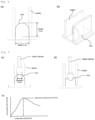
- the moisture-controlled film curved into an arch shape is set in the holder of an autograph tester (for example, AGS-J: Shimadzu Corporation) (as shown in Fig. 1a , the film set in the holder had a width of 2 cm and a height of 2 cm).
- a 5- to 8-mm film top is compressed with a metal indenter ( Fig. 2b ), and the peak of the compression test force value of the film is determined ( Fig. 2c ).
- the obtained value is compared with the value of the compression test force of a reference standard (a film produced using the same components as those of the test specimen, except for the carbohydrate; and containing the base in an amount increased by an amount corresponding to the amount of carbohydrate), thereby evaluating the hardness.
- the compression speed is, for example, 50 mm/min
- the diameter of the metallic indenter is, for example, 9 mm ( Fig. 2b ).
- the hardness can be evaluated, for example, according to the following criteria, with the compression test force of the carbohydrate-free standard reference described below being defined as 100.
- a compression test force of 90 can be assessed as "unchanged hardness.”
- a compression test force of less than 90 can be assessed as "weakening.”
- the measurement values change depending on the capsule film thickness, in particular, the film thickness of the capsule body portion compressed by a metal indenter.
- the hardness evaluation it is important to make a comparison using film samples having an identical thickness. Therefore, the deposition of a gelling aid and the hardness, which depend on the kinds and amounts of hard capsule components, were evaluated by producing, instead of hard capsules formed by a dipping method, films having the same compositions as those of the hard capsules by a casting method, for each composition of the hard capsule; and evaluating these films.
- the evaluation was performed by producing, instead of hard capsules formed by a dipping method, films having the same compositions as those of the hard capsules.
- the films have excellent uniformity in thickness and excellent reproducibility in the evaluation, thus desirably reflecting inhibitory effects on gelling aid deposition and hardness of the capsule film.
- the HPMC used as a base in the following Examples is a mixture of two or three kinds of HPMC of degree-of-substitution type 2910 having different molecular weights. It has been confirmed that the gelling aid deposition and capsule film hardness do not depend on the hypromellose viscosity value.
- the hypromellose products of a degree-of-substitution type 2910 used in the experiments were AW4 and AW6, which are AnyCoat-C series with viscosity grades 4 and 6 produced by Samsung (currently known as Lotte) ; and TC-5R, which is a TC-5 series with viscosity grade 6 produced by Shin-Etsu Chemical Co., Ltd. When the viscosity grade (viscosity value) level was the same, no influence due to the difference in hypromellose manufacturer was observed in the gelling aid deposition or hardness.
- the concentration of the film components of the hard capsule, excluding solvent, in the capsule-preparing solution was appropriately adjusted within the range of 10 to 25 mass%, in order to obtain a cast film of a desired thickness.
- Tables 2 and 3 show the amount of each component, based on 100 mass% of the total capsule film components, excluding moisture.
- Kappa-carrageenan, and sodium chloride or potassium chloride as a gelling aid were added to purified water and dispersed by stirring, and heated to 80°C. After dissolution of the materials was confirmed, at least one member selected from the group consisting of non-reducing disaccharides and non-reducing disaccharide alcohols was dissolved. Thereafter, while the liquid temperature was kept at 80°C, HPMC was added and dispersed, and the dispersion was allowed to stand for 30 minutes. Air bubbles were removed by vacuum deaeration. Subsequently, while stirring with a three-one motor, the dispersion was cooled to 50°C to 60°C and stirred with the three-one motor for 1 hour, thereby preparing a jelly-like capsule-preparing solution.
- a metallic applicator was set on a glass surface or a PET film kept at room temperature.
- a capsule-preparing solution of 50°C to 60°C was poured and moved at a constant speed, thereby producing a 100 ⁇ m uniform film.
- an applicator having a gap of 0.4 mm to 1.5 mm was used as necessary. The film was then dried at room temperature to 30°C for about 10 hours.
- the film was allowed to stand under the conditions of 25°C and a relative humidity of 60% (in the presence of a saturated aqueous solution of ammonium nitrate) for 1 week.
- the deposition of the gelling aid was evaluated by visually checking for whether the film became turbid.
- the capsule film can be evaluated as having "no deposition" of the gelling aid.
- the prepared film was cut into 10 mm ⁇ 50 mm strips, and then moisture-controlled at 25°C and a relative humidity of 43% (a saturated aqueous solution of potassium carbonate) for one week. After the moisture control, the hardness was evaluated by a compression test.
- the hardness was evaluated by setting the moisture-controlled film curved into an arch shape in the holder of an Autograph tester (AGS-J: Shimadzu Corporation) (as shown in Fig. 1a , the film set in the holder had a width of 2 cm and a height of 2 cm).
- a 5- to 8-mm film top was compressed with a metal indenter ( Fig. 2b ), and the peak of the compression test force of the film was determined ( Fig. 2c ).
- the compression speed is, for example, 50 mm/min, and the diameter of the metallic indenter is 9 mm ( Fig. 2b ).
- the state of applying the compression test force to the body portion of a hard capsule was thus simulatively reproduced.
- the measured compressive stress of each film was compared with the value of compression test force of a reference standard (a film produced using the same components as those of the test specimen, except for a hardness improving agent; and containing the base in an amount increased by an amount corresponding to the amount of the hardness improving agent), thereby evaluating the hardness.
- the relative compressive stress was evaluated with the compression test force of the reference standard being assumed as 100.
- Tables 2 and 3 show the compositions of the obtained films, as well as evaluation results of gelling aid deposition inhibitory effect and hardness.
- "o" indicates that no deposition of the gelling aid was observed even 1 week after the film preparation.
- the composition of Reference Example 1 shown in Table 2 comprises potassium chloride as a gelling aid whose content is at the same level as the gelling aid content of conventional hard capsule film. Since no deposition of the gelling aid was observed in Reference Example 1, the results show that when the potassium chloride content is at the same level as the conventional gelling aid content, problematic deposition of the gelling aid does not occur after preparing capsules.
- gelling aid deposition inhibitory effects of various monosaccharides, disaccharides, and disaccharide alcohols were confirmed under conditions of increased gelling aid contents. Only when either a non-reducing disaccharide, such as trehalose or sucrose; or a non-reducing disaccharide alcohol, such as maltitol, lactitol, or isomalt, was added, no deposition of potassium chloride was observed even after 1 week. When other carbohydrates were added to the film in the same amount as that of the non-reducing disaccharide or non-reducing disaccharide alcohol, the saccharides other than non-reducing disaccharides and non-reducing disaccharide alcohols did not inhibit deposition of the gelling aid. When lactose was added in Comparative Example 3, as shown in Table 2, transparency was lost.
Landscapes
- Health & Medical Sciences (AREA)
- Life Sciences & Earth Sciences (AREA)
- Chemical & Material Sciences (AREA)
- Veterinary Medicine (AREA)
- Animal Behavior & Ethology (AREA)
- General Health & Medical Sciences (AREA)
- Public Health (AREA)
- Epidemiology (AREA)
- Pharmacology & Pharmacy (AREA)
- Medicinal Chemistry (AREA)
- Birds (AREA)
- Engineering & Computer Science (AREA)
- Inorganic Chemistry (AREA)
- Polymers & Plastics (AREA)
- Food Science & Technology (AREA)
- Nutrition Science (AREA)
- Dispersion Chemistry (AREA)
- Emergency Medicine (AREA)
- Biochemistry (AREA)
- Molecular Biology (AREA)
- Chemical Kinetics & Catalysis (AREA)
- General Chemical & Material Sciences (AREA)
- Oil, Petroleum & Natural Gas (AREA)
- Medicinal Preparation (AREA)
Claims (22)
- Capsule dure comprenantun film contenant(1) un composé de cellulose,(2) un agent gélifiant,(3) un adjuvant gélifiant, et(4) au moins un élément sélectionné parmi le groupe constitué d'un disaccharide non réducteur et d'un alcool de disaccharide non réducteur,dans laquellele film contient l'agent gélifiant en une quantité de 0,05 à 10 % en masse, l'adjuvant gélifiant en une quantité de plus de 0,6 % en masse et pas plus de 5 % en masse, et l'au moins un élément sélectionné parmi le groupe constitué d'un disaccharide non réducteur et d'un alcool de disaccharide non réducteur en une quantité de 2 à 10 % en masse, basée sur 100 % en masse des composants de film totaux de la capsule dure, excluant l'humidité.
- Capsule dure selon la revendication 1, dans laquelle le composé de cellulose est un éther de cellulose hydrosoluble dans lequel un ou plusieurs atomes d'hydrogène de groupes hydroxyle de cellulose sont remplacés par au moins un groupe sélectionné parmi le groupe constitué de groupes alkyle inférieurs linéaires ou ramifiés ayant 1 à 6 atomes de carbone et de groupes hydroxyalkyle inférieurs linéaires ou ramifiés ayant 1 à 6 atomes de carbone.
- Capsule dure selon la revendication 1 ou 2, dans laquelle le composé de cellulose est l'hydroxypropylméthylcellulose.
- Capsule dure selon l'une quelconque des revendications 1 à 3, dans laquelle l'agent gélifiant est au moins un élément sélectionné parmi le groupe constitué de la carraghénine, la pectine et la gomme gellane.
- Capsule dure selon l'une quelconque des revendications 1 à 4, dans laquelle l'agent gélifiant est la kappa-carraghénine.
- Capsule dure selon l'une quelconque des revendications 1 à 5, dans laquelle l'adjuvant gélifiant est un composé capable de générer des ions sodium, ions potassium ou ions calcium dans une solution aqueuse.
- Capsule dure selon l'une quelconque des revendications 1 à 6, dans laquelle l'adjuvant gélifiant est le chlorure de potassium.
- Capsule dure selon l'une quelconque des revendications 1 à 7, dans laquelle le disaccharide non réducteur est au moins un élément sélectionné parmi le groupe constitué du tréhalose et saccharose.
- Capsule dure selon l'une quelconque des revendications 1 à 8, dans laquelle l'alcool de disaccharide non réducteur est au moins un élément sélectionné parmi le groupe constitué du maltitol, lactitol et de l'isomalt.
- Capsule dure selon l'une quelconque des revendications 1 à 9, comprenant en outre un plastifiant et/ou un agent de protection lumineuse.
- Solution de préparation de capsule dure contenant(1) un composé de cellulose,(2) un agent gélifiant,(3) un adjuvant gélifiant, et(4) au moins un élément sélectionné parmi le groupe constitué d'un disaccharide non réducteur et d'un alcool de disaccharide non réducteur,dans laquelle
la solution contient l'agent gélifiant en une quantité de 0,05 à 10 % en masse, l'adjuvant gélifiant en une quantité de plus de 0,6 % en masse et pas plus de 5 % en masse, et l'au moins un élément sélectionné parmi le groupe constitué d'un disaccharide non réducteur et d'un alcool de disaccharide non réducteur en une quantité de 2 à 10 % en masse, dans les composants de film totaux, excluant un solvant, basée sur 100 % en masse des composants totaux de la solution, excluant un solvant. - Solution de préparation de capsule dure selon la revendication 11, dans laquelle le composé de cellulose est un éther de cellulose hydrosoluble dans lequel un ou plusieurs atomes d'hydrogène de groupes hydroxyle de cellulose sont remplacés par au moins un groupe sélectionné parmi le groupe constitué de groupes alkyle inférieurs linéaires ou ramifiés ayant 1 à 6 atomes de carbone et de groupes hydroxyalkyle inférieurs linéaires ou ramifiés ayant 1 à 6 atomes de carbone.
- Solution de préparation de capsule dure selon la revendication 11 ou 12, dans laquelle le composé de cellulose est l'hydroxypropylméthylcellulose.
- Solution de préparation de capsule dure selon l'une quelconque des revendications 11 à 13, dans laquelle l'agent gélifiant est au moins un élément sélectionné parmi le groupe constitué de la carraghénine, la pectine et la gomme gellane.
- Solution de préparation de capsule dure selon l'une quelconque des revendications 11 à 14, dans laquelle l'agent gélifiant est la kappa-carraghénine.
- Solution de préparation de capsule dure selon l'une quelconque des revendications 11 à 15, dans laquelle l'adjuvant gélifiant est un composé capable de générer des ions sodium, ions potassium ou ions calcium dans une solution aqueuse.
- Solution de préparation de capsule dure selon l'une quelconque des revendications 11 à 16, dans laquelle l'adjuvant gélifiant est le chlorure de potassium.
- Solution de préparation de capsule dure selon l'une quelconque des revendications 11 à 17, dans laquelle le disaccharide non réducteur est au moins un élément sélectionné parmi le groupe constitué du tréhalose et saccharose.
- Solution de préparation de capsule dure selon l'une quelconque des revendications 11 à 18, dans laquelle l'alcool de disaccharide non réducteur est au moins un élément sélectionné parmi le groupe constitué du maltitol, lactitol et de l'isomalt.
- Solution de préparation de capsule dure selon l'une quelconque des revendications 11 à 19, comprenant en outre un plastifiant et/ou un agent de protection lumineuse.
- Procédé de préparation d'une capsule dure comprenant l'étape de préparation d'une capsule dure en utilisant la solution de préparation de capsule dure selon l'une quelconque des revendications 11 à 20.
- Procédé de préparation d'une capsule dure selon la revendication 21, dans lequel le procédé est un procédé de gélification froide.
Applications Claiming Priority (2)
| Application Number | Priority Date | Filing Date | Title |
|---|---|---|---|
| JP2016237791 | 2016-12-07 | ||
| PCT/JP2017/041048 WO2018105339A1 (fr) | 2016-12-07 | 2017-11-15 | Capsule dure présentant un dépôt amélioré d'adjuvant de gélification et procédé de préparation associé |
Publications (3)
| Publication Number | Publication Date |
|---|---|
| EP3552629A1 EP3552629A1 (fr) | 2019-10-16 |
| EP3552629A4 EP3552629A4 (fr) | 2020-02-05 |
| EP3552629B1 true EP3552629B1 (fr) | 2025-01-08 |
Family
ID=62490861
Family Applications (1)
| Application Number | Title | Priority Date | Filing Date |
|---|---|---|---|
| EP17878539.0A Active EP3552629B1 (fr) | 2016-12-07 | 2017-11-15 | Capsule dure présentant un dépôt amélioré d'adjuvant de gélification et procédé de préparation associé |
Country Status (10)
| Country | Link |
|---|---|
| US (1) | US11318102B2 (fr) |
| EP (1) | EP3552629B1 (fr) |
| JP (1) | JP7039486B2 (fr) |
| KR (1) | KR102406542B1 (fr) |
| CN (1) | CN110191723B (fr) |
| BR (1) | BR112019011253A2 (fr) |
| CA (1) | CA3044929A1 (fr) |
| ES (1) | ES3015728T3 (fr) |
| TW (1) | TW201832760A (fr) |
| WO (1) | WO2018105339A1 (fr) |
Families Citing this family (3)
| Publication number | Priority date | Publication date | Assignee | Title |
|---|---|---|---|---|
| EP3485911B1 (fr) * | 2016-07-06 | 2025-01-29 | Qualicaps Co., Ltd. | Capsule dure à dureté améliorée et son procédé de fabrication |
| CN109771285B (zh) * | 2019-01-16 | 2021-03-16 | 温州大学 | 基于药用植物材料来源的粉末和药机 |
| WO2021024930A1 (fr) | 2019-08-02 | 2021-02-11 | クオリカプス株式会社 | Formulation de capsule dure scellée avec un bande de scellement comprenant une étiquette |
Family Cites Families (33)
| Publication number | Priority date | Publication date | Assignee | Title |
|---|---|---|---|---|
| US2526683A (en) | 1946-04-13 | 1950-10-24 | Lilly Co Eli | Methyl cellulose capsules and process of manufacture |
| US2718667A (en) | 1952-05-01 | 1955-09-27 | Eastman Kodak Co | Method of preparing enteric capsules |
| US3508678A (en) | 1968-04-29 | 1970-04-28 | Parke Davis & Co | Locking capsule |
| US3617588A (en) | 1969-06-16 | 1971-11-02 | Dow Chemical Co | Dip-coating process for preparing cellulose ether capsule shells |
| US3823843A (en) | 1972-10-26 | 1974-07-16 | Lilly Co Eli | Locking capsule |
| US4069819A (en) | 1973-04-13 | 1978-01-24 | Societa Farmaceutici S.P.A. | Inhalation device |
| US4040536A (en) | 1975-05-05 | 1977-08-09 | R. P. Scherer Corporation | Locking hard gelatin capsule |
| GB1598081A (en) | 1977-02-10 | 1981-09-16 | Allen & Hanburys Ltd | Inhaler device for dispensing medicaments |
| US4365060A (en) | 1979-04-28 | 1982-12-21 | Shin-Etsu Chemical Co. Ltd. | Enterosoluble capsules |
| KR900000254B1 (ko) | 1986-05-12 | 1990-01-24 | 신에쯔까 가가꾸 고우교우 가부시끼가이샤 | 의약용 경질 캅셀의 제조방법과 그 제조장치 |
| GB8611905D0 (en) | 1986-05-15 | 1986-06-25 | Lilly Industries Ltd | Capsules |
| JP2552937B2 (ja) * | 1990-03-29 | 1996-11-13 | 日本エランコ株式会社 | 医薬用硬質カプセルおよびその製造方法 |
| US5264223A (en) | 1990-03-29 | 1993-11-23 | Japan Elanco Company, Ltd. | Hard capsule for pharmaceutical drugs and method for producing the same |
| US5431917A (en) | 1992-10-08 | 1995-07-11 | Japan Elanco Company, Ltd. | Hard capsule for pharmaceutical drugs and method for producing the same |
| JP2959423B2 (ja) * | 1994-12-01 | 1999-10-06 | シオノギクオリカプス株式会社 | カプセル用皮膜組成物 |
| US5756123A (en) | 1994-12-01 | 1998-05-26 | Japan Elanco Co., Ltd. | Capsule shell |
| US5769267A (en) | 1995-11-09 | 1998-06-23 | Warner-Lambert Company | Container |
| FR2757173A1 (fr) | 1996-12-17 | 1998-06-19 | Warner Lambert Co | Compositions polymeres d'origine non-animale pour la formation de films |
| JP2000226097A (ja) | 1999-02-03 | 2000-08-15 | Shionogi Qualicaps Kk | カプセル充填機 |
| JP3716901B2 (ja) | 1999-04-14 | 2005-11-16 | シオノギクオリカプス株式会社 | セルロースエーテルフィルム |
| US20030072731A1 (en) | 2001-05-15 | 2003-04-17 | Cynthia Gulian | Dip coating compositions containing starch or dextrin |
| US7669596B2 (en) | 2002-12-31 | 2010-03-02 | Novartis Pharma Ag | Aerosolization apparatus with rotating capsule |
| US20060254583A1 (en) | 2003-03-20 | 2006-11-16 | Arthur Deboeck | Dry powder inhaler system |
| JP4471647B2 (ja) | 2003-12-26 | 2010-06-02 | クオリカプス株式会社 | 硬質カプセル剤の製造方法 |
| JPWO2006070578A1 (ja) | 2004-12-28 | 2008-06-12 | クオリカプス株式会社 | 硬カプセルのバンドシール |
| EP1752140A1 (fr) | 2005-08-12 | 2007-02-14 | Warner-Lambert Company LLC | Procédé de fermeture de capsules dures utilisant une composition à base d'hydroxypropylméthyl cellulose (HPMC) |
| JP4273350B2 (ja) | 2005-11-30 | 2009-06-03 | クオリカプス株式会社 | カプセル充填装置および方法 |
| US20100233252A1 (en) | 2006-01-24 | 2010-09-16 | Qualicaps Co., Ltd. | Low-Moisture-Content Hard Capsule and Production Method Therefor |
| CN1927186A (zh) | 2006-08-26 | 2007-03-14 | 青岛大学 | 一种植物源硬胶囊壳的配方及其制备方法 |
| SI2083786T1 (sl) | 2006-10-26 | 2011-04-29 | Pfizer Prod Inc | Oblikovanje kapsul |
| WO2008050209A1 (fr) | 2006-10-27 | 2008-05-02 | Pfizer Products Inc. | Capsules dures en hydroxypropylméthylcellulose et leur procédé de fabrication |
| JP5104619B2 (ja) | 2008-07-24 | 2012-12-19 | 富士通株式会社 | 情報処理装置、情報処理方法、およびプログラム |
| JP5355215B2 (ja) | 2009-05-20 | 2013-11-27 | クオリカプス株式会社 | 溶解性または硬度が改善された硬質カプセル |
-
2017
- 2017-11-15 CN CN201780083938.6A patent/CN110191723B/zh active Active
- 2017-11-15 US US16/465,009 patent/US11318102B2/en active Active
- 2017-11-15 KR KR1020197017722A patent/KR102406542B1/ko active Active
- 2017-11-15 EP EP17878539.0A patent/EP3552629B1/fr active Active
- 2017-11-15 CA CA3044929A patent/CA3044929A1/fr active Pending
- 2017-11-15 JP JP2018554891A patent/JP7039486B2/ja active Active
- 2017-11-15 BR BR112019011253A patent/BR112019011253A2/pt not_active IP Right Cessation
- 2017-11-15 WO PCT/JP2017/041048 patent/WO2018105339A1/fr not_active Ceased
- 2017-11-15 ES ES17878539T patent/ES3015728T3/es active Active
- 2017-12-04 TW TW106142327A patent/TW201832760A/zh unknown
Also Published As
| Publication number | Publication date |
|---|---|
| JP7039486B2 (ja) | 2022-03-22 |
| US20190282509A1 (en) | 2019-09-19 |
| US11318102B2 (en) | 2022-05-03 |
| ES3015728T3 (en) | 2025-05-07 |
| CN110191723B (zh) | 2023-03-10 |
| JPWO2018105339A1 (ja) | 2019-10-24 |
| EP3552629A1 (fr) | 2019-10-16 |
| CN110191723A (zh) | 2019-08-30 |
| TW201832760A (zh) | 2018-09-16 |
| EP3552629A4 (fr) | 2020-02-05 |
| CA3044929A1 (fr) | 2018-06-14 |
| BR112019011253A2 (pt) | 2019-10-08 |
| KR102406542B1 (ko) | 2022-06-13 |
| KR20190093201A (ko) | 2019-08-08 |
| WO2018105339A1 (fr) | 2018-06-14 |
Similar Documents
| Publication | Publication Date | Title |
|---|---|---|
| JP5253235B2 (ja) | 腸溶性カプセル | |
| EP3485911B1 (fr) | Capsule dure à dureté améliorée et son procédé de fabrication | |
| JP5860480B2 (ja) | プルランを含む新しい硬カプセル | |
| JP5178236B2 (ja) | 腸溶性カプセル | |
| US20090010975A1 (en) | Non-transparent composition for film | |
| JP5253162B2 (ja) | 低水分硬質カプセル、及びその製造方法 | |
| EP2852412B1 (fr) | Utilisation d'une solution resistant aux acides pour sceller les gélules en deux parties | |
| EP3552629B1 (fr) | Capsule dure présentant un dépôt amélioré d'adjuvant de gélification et procédé de préparation associé | |
| JP5489471B2 (ja) | Peg充填硬質カプセル剤のバンドシール | |
| EP4643880A1 (fr) | Capsule dure comprenant un revêtement contenant un agent bloquant la lumière, solution de préparation de capsule dure, et procédé de préparation de capsule dure | |
| JPWO2009125485A1 (ja) | 硬質カプセル剤 | |
| KR20150069842A (ko) | 수산화이온 종을 용해시키는 플랫폼 시스템을 이용한 난용성약제의 투명한 캡슐 제조방법 |
Legal Events
| Date | Code | Title | Description |
|---|---|---|---|
| STAA | Information on the status of an ep patent application or granted ep patent |
Free format text: STATUS: THE INTERNATIONAL PUBLICATION HAS BEEN MADE |
|
| PUAI | Public reference made under article 153(3) epc to a published international application that has entered the european phase |
Free format text: ORIGINAL CODE: 0009012 |
|
| STAA | Information on the status of an ep patent application or granted ep patent |
Free format text: STATUS: REQUEST FOR EXAMINATION WAS MADE |
|
| 17P | Request for examination filed |
Effective date: 20190606 |
|
| AK | Designated contracting states |
Kind code of ref document: A1 Designated state(s): AL AT BE BG CH CY CZ DE DK EE ES FI FR GB GR HR HU IE IS IT LI LT LU LV MC MK MT NL NO PL PT RO RS SE SI SK SM TR |
|
| AX | Request for extension of the european patent |
Extension state: BA ME |
|
| RIC1 | Information provided on ipc code assigned before grant |
Ipc: A61K 47/38 20060101AFI20191219BHEP Ipc: A61K 8/34 20060101ALI20191219BHEP Ipc: A61K 8/20 20060101ALI20191219BHEP Ipc: A61J 3/07 20060101ALI20191219BHEP Ipc: A23L 29/256 20160101ALI20191219BHEP Ipc: A61K 8/73 20060101ALI20191219BHEP Ipc: A61K 8/11 20060101ALI20191219BHEP Ipc: A23L 5/00 20160101ALI20191219BHEP Ipc: A23L 29/269 20160101ALI20191219BHEP Ipc: A61K 47/36 20060101ALI20191219BHEP Ipc: A61K 47/26 20060101ALI20191219BHEP Ipc: A23L 29/231 20160101ALI20191219BHEP Ipc: A61K 47/02 20060101ALI20191219BHEP Ipc: A61K 9/48 20060101ALI20191219BHEP |
|
| A4 | Supplementary search report drawn up and despatched |
Effective date: 20200109 |
|
| DAV | Request for validation of the european patent (deleted) | ||
| DAX | Request for extension of the european patent (deleted) | ||
| STAA | Information on the status of an ep patent application or granted ep patent |
Free format text: STATUS: EXAMINATION IS IN PROGRESS |
|
| 17Q | First examination report despatched |
Effective date: 20220111 |
|
| REG | Reference to a national code |
Ref country code: DE Ref legal event code: R079 Free format text: PREVIOUS MAIN CLASS: A61K0047380000 Ipc: A61K0009480000 Ref country code: DE Ref legal event code: R079 Ref document number: 602017087291 Country of ref document: DE Free format text: PREVIOUS MAIN CLASS: A61K0047380000 Ipc: A61K0009480000 |
|
| GRAP | Despatch of communication of intention to grant a patent |
Free format text: ORIGINAL CODE: EPIDOSNIGR1 |
|
| STAA | Information on the status of an ep patent application or granted ep patent |
Free format text: STATUS: GRANT OF PATENT IS INTENDED |
|
| RIC1 | Information provided on ipc code assigned before grant |
Ipc: A23L 29/269 20160101ALI20240712BHEP Ipc: A23L 29/256 20160101ALI20240712BHEP Ipc: A23L 29/231 20160101ALI20240712BHEP Ipc: A23L 5/00 20160101ALI20240712BHEP Ipc: A61J 3/07 20060101ALI20240712BHEP Ipc: A61K 8/73 20060101ALI20240712BHEP Ipc: A61K 8/34 20060101ALI20240712BHEP Ipc: A61K 8/20 20060101ALI20240712BHEP Ipc: A61K 8/11 20060101ALI20240712BHEP Ipc: A61K 9/48 20060101AFI20240712BHEP |
|
| INTG | Intention to grant announced |
Effective date: 20240726 |
|
| GRAS | Grant fee paid |
Free format text: ORIGINAL CODE: EPIDOSNIGR3 |
|
| P01 | Opt-out of the competence of the unified patent court (upc) registered |
Free format text: CASE NUMBER: APP_54652/2024 Effective date: 20241004 |
|
| GRAA | (expected) grant |
Free format text: ORIGINAL CODE: 0009210 |
|
| STAA | Information on the status of an ep patent application or granted ep patent |
Free format text: STATUS: THE PATENT HAS BEEN GRANTED |
|
| AK | Designated contracting states |
Kind code of ref document: B1 Designated state(s): AL AT BE BG CH CY CZ DE DK EE ES FI FR GB GR HR HU IE IS IT LI LT LU LV MC MK MT NL NO PL PT RO RS SE SI SK SM TR |
|
| REG | Reference to a national code |
Ref country code: GB Ref legal event code: FG4D |
|
| REG | Reference to a national code |
Ref country code: CH Ref legal event code: EP |
|
| REG | Reference to a national code |
Ref country code: DE Ref legal event code: R096 Ref document number: 602017087291 Country of ref document: DE |
|
| REG | Reference to a national code |
Ref country code: IE Ref legal event code: FG4D |
|
| REG | Reference to a national code |
Ref country code: LT Ref legal event code: MG9D |
|
| REG | Reference to a national code |
Ref country code: NL Ref legal event code: MP Effective date: 20250108 |
|
| REG | Reference to a national code |
Ref country code: AT Ref legal event code: MK05 Ref document number: 1757894 Country of ref document: AT Kind code of ref document: T Effective date: 20250108 |
|
| PG25 | Lapsed in a contracting state [announced via postgrant information from national office to epo] |
Ref country code: NL Free format text: LAPSE BECAUSE OF FAILURE TO SUBMIT A TRANSLATION OF THE DESCRIPTION OR TO PAY THE FEE WITHIN THE PRESCRIBED TIME-LIMIT Effective date: 20250108 |
|
| PG25 | Lapsed in a contracting state [announced via postgrant information from national office to epo] |
Ref country code: RS Free format text: LAPSE BECAUSE OF FAILURE TO SUBMIT A TRANSLATION OF THE DESCRIPTION OR TO PAY THE FEE WITHIN THE PRESCRIBED TIME-LIMIT Effective date: 20250408 |
|
| PG25 | Lapsed in a contracting state [announced via postgrant information from national office to epo] |
Ref country code: FI Free format text: LAPSE BECAUSE OF FAILURE TO SUBMIT A TRANSLATION OF THE DESCRIPTION OR TO PAY THE FEE WITHIN THE PRESCRIBED TIME-LIMIT Effective date: 20250108 |
|
| PG25 | Lapsed in a contracting state [announced via postgrant information from national office to epo] |
Ref country code: PL Free format text: LAPSE BECAUSE OF FAILURE TO SUBMIT A TRANSLATION OF THE DESCRIPTION OR TO PAY THE FEE WITHIN THE PRESCRIBED TIME-LIMIT Effective date: 20250108 |
|
| PG25 | Lapsed in a contracting state [announced via postgrant information from national office to epo] |
Ref country code: IS Free format text: LAPSE BECAUSE OF FAILURE TO SUBMIT A TRANSLATION OF THE DESCRIPTION OR TO PAY THE FEE WITHIN THE PRESCRIBED TIME-LIMIT Effective date: 20250508 Ref country code: NO Free format text: LAPSE BECAUSE OF FAILURE TO SUBMIT A TRANSLATION OF THE DESCRIPTION OR TO PAY THE FEE WITHIN THE PRESCRIBED TIME-LIMIT Effective date: 20250408 |
|
| PG25 | Lapsed in a contracting state [announced via postgrant information from national office to epo] |
Ref country code: HR Free format text: LAPSE BECAUSE OF FAILURE TO SUBMIT A TRANSLATION OF THE DESCRIPTION OR TO PAY THE FEE WITHIN THE PRESCRIBED TIME-LIMIT Effective date: 20250108 |
|
| PG25 | Lapsed in a contracting state [announced via postgrant information from national office to epo] |
Ref country code: LV Free format text: LAPSE BECAUSE OF FAILURE TO SUBMIT A TRANSLATION OF THE DESCRIPTION OR TO PAY THE FEE WITHIN THE PRESCRIBED TIME-LIMIT Effective date: 20250108 Ref country code: PT Free format text: LAPSE BECAUSE OF FAILURE TO SUBMIT A TRANSLATION OF THE DESCRIPTION OR TO PAY THE FEE WITHIN THE PRESCRIBED TIME-LIMIT Effective date: 20250508 |
|
| PG25 | Lapsed in a contracting state [announced via postgrant information from national office to epo] |
Ref country code: GR Free format text: LAPSE BECAUSE OF FAILURE TO SUBMIT A TRANSLATION OF THE DESCRIPTION OR TO PAY THE FEE WITHIN THE PRESCRIBED TIME-LIMIT Effective date: 20250409 Ref country code: BG Free format text: LAPSE BECAUSE OF FAILURE TO SUBMIT A TRANSLATION OF THE DESCRIPTION OR TO PAY THE FEE WITHIN THE PRESCRIBED TIME-LIMIT Effective date: 20250108 |
|
| PG25 | Lapsed in a contracting state [announced via postgrant information from national office to epo] |
Ref country code: AT Free format text: LAPSE BECAUSE OF FAILURE TO SUBMIT A TRANSLATION OF THE DESCRIPTION OR TO PAY THE FEE WITHIN THE PRESCRIBED TIME-LIMIT Effective date: 20250108 |
|
| PG25 | Lapsed in a contracting state [announced via postgrant information from national office to epo] |
Ref country code: SE Free format text: LAPSE BECAUSE OF FAILURE TO SUBMIT A TRANSLATION OF THE DESCRIPTION OR TO PAY THE FEE WITHIN THE PRESCRIBED TIME-LIMIT Effective date: 20250108 |
|
| PG25 | Lapsed in a contracting state [announced via postgrant information from national office to epo] |
Ref country code: SM Free format text: LAPSE BECAUSE OF FAILURE TO SUBMIT A TRANSLATION OF THE DESCRIPTION OR TO PAY THE FEE WITHIN THE PRESCRIBED TIME-LIMIT Effective date: 20250108 |
|
| REG | Reference to a national code |
Ref country code: DE Ref legal event code: R097 Ref document number: 602017087291 Country of ref document: DE |
|
| PG25 | Lapsed in a contracting state [announced via postgrant information from national office to epo] |
Ref country code: DK Free format text: LAPSE BECAUSE OF FAILURE TO SUBMIT A TRANSLATION OF THE DESCRIPTION OR TO PAY THE FEE WITHIN THE PRESCRIBED TIME-LIMIT Effective date: 20250108 |
|
| PG25 | Lapsed in a contracting state [announced via postgrant information from national office to epo] |
Ref country code: EE Free format text: LAPSE BECAUSE OF FAILURE TO SUBMIT A TRANSLATION OF THE DESCRIPTION OR TO PAY THE FEE WITHIN THE PRESCRIBED TIME-LIMIT Effective date: 20250108 Ref country code: CZ Free format text: LAPSE BECAUSE OF FAILURE TO SUBMIT A TRANSLATION OF THE DESCRIPTION OR TO PAY THE FEE WITHIN THE PRESCRIBED TIME-LIMIT Effective date: 20250108 |
|
| PG25 | Lapsed in a contracting state [announced via postgrant information from national office to epo] |
Ref country code: RO Free format text: LAPSE BECAUSE OF FAILURE TO SUBMIT A TRANSLATION OF THE DESCRIPTION OR TO PAY THE FEE WITHIN THE PRESCRIBED TIME-LIMIT Effective date: 20250108 |
|
| PG25 | Lapsed in a contracting state [announced via postgrant information from national office to epo] |
Ref country code: SK Free format text: LAPSE BECAUSE OF FAILURE TO SUBMIT A TRANSLATION OF THE DESCRIPTION OR TO PAY THE FEE WITHIN THE PRESCRIBED TIME-LIMIT Effective date: 20250108 |
|
| PLBE | No opposition filed within time limit |
Free format text: ORIGINAL CODE: 0009261 |
|
| STAA | Information on the status of an ep patent application or granted ep patent |
Free format text: STATUS: NO OPPOSITION FILED WITHIN TIME LIMIT |
|
| 26N | No opposition filed |
Effective date: 20251009 |