EP3549818A1 - Fahrzeugsitz mit einer sensoreinheit zur sitzbelegungserkennung - Google Patents
Fahrzeugsitz mit einer sensoreinheit zur sitzbelegungserkennung Download PDFInfo
- Publication number
- EP3549818A1 EP3549818A1 EP19000119.8A EP19000119A EP3549818A1 EP 3549818 A1 EP3549818 A1 EP 3549818A1 EP 19000119 A EP19000119 A EP 19000119A EP 3549818 A1 EP3549818 A1 EP 3549818A1
- Authority
- EP
- European Patent Office
- Prior art keywords
- sensor unit
- foam pad
- vehicle seat
- foam
- seat according
- Prior art date
- Legal status (The legal status is an assumption and is not a legal conclusion. Google has not performed a legal analysis and makes no representation as to the accuracy of the status listed.)
- Granted
Links
Images

Classifications
-
- B—PERFORMING OPERATIONS; TRANSPORTING
- B60—VEHICLES IN GENERAL
- B60N—SEATS SPECIALLY ADAPTED FOR VEHICLES; VEHICLE PASSENGER ACCOMMODATION NOT OTHERWISE PROVIDED FOR
- B60N2/00—Seats specially adapted for vehicles; Arrangement or mounting of seats in vehicles
- B60N2/70—Upholstery springs ; Upholstery
-
- B—PERFORMING OPERATIONS; TRANSPORTING
- B60—VEHICLES IN GENERAL
- B60N—SEATS SPECIALLY ADAPTED FOR VEHICLES; VEHICLE PASSENGER ACCOMMODATION NOT OTHERWISE PROVIDED FOR
- B60N2/00—Seats specially adapted for vehicles; Arrangement or mounting of seats in vehicles
- B60N2/002—Seats provided with an occupancy detection means mounted therein or thereon
- B60N2/0021—Seats provided with an occupancy detection means mounted therein or thereon characterised by the type of sensor or measurement
- B60N2/003—Seats provided with an occupancy detection means mounted therein or thereon characterised by the type of sensor or measurement characterised by the sensor mounting location in or on the seat
- B60N2/0033—Seats provided with an occupancy detection means mounted therein or thereon characterised by the type of sensor or measurement characterised by the sensor mounting location in or on the seat mounted on or in the foam cushion
-
- B—PERFORMING OPERATIONS; TRANSPORTING
- B60—VEHICLES IN GENERAL
- B60N—SEATS SPECIALLY ADAPTED FOR VEHICLES; VEHICLE PASSENGER ACCOMMODATION NOT OTHERWISE PROVIDED FOR
- B60N2210/00—Sensor types, e.g. for passenger detection systems or for controlling seats
- B60N2210/40—Force or pressure sensors
Definitions
- the present invention relates to a vehicle seat with a sensor unit for seat occupancy detection according to the preamble of claim 1.
- Such a sensor unit is arranged on the side facing away from the seat side of a foam pad underside, which is also referred to as B-side.
- the sensor unit lies at least partially against areas of the foam pad.
- Such a sensor unit comprises a carrier structure, on or on which at least one sensor element is arranged.
- the DE 197 52 976 C2 describes the integration of a flexible and pressure-sensitive switch into a cushion body formed of polyurethane foam of a motor vehicle seat.
- the switch is embedded in a recess arranged on the side of the cushion body opposite the seat and covered with an insert of polyurethane foam, this insert supporting the switch.
- Upholstery body and insert lie on a metal sheet, which also serves as an adjustment.
- the switch consists of a flexible carrier film, a flexible cover film and two electrically conductive layers disposed therebetween.
- the DE 20 2017 005 093 U1 describes a device for detecting a seat occupancy on a motor vehicle seat, which can also be integrated into a rear seat of a motor vehicle.
- the motor vehicle seat in this case has a seat foam with a seat surface and a structural frame, wherein either the structural frame supports the seat foam or the seat foam on a surrounding the structural frame Hard foam body is arranged.
- a pressure switch On a side opposite to the seat side of the seat foam, a pressure switch is positioned, which is fixed to a retaining plate.
- the retaining plate is connected via a hook connection with the structural frame.
- the hook connection on the underside of the seat foam through this to the structural frame, which is designed as a wire frame, out.
- the DE 10 2014 014 395 A1 describes a pressure sensor unit for detecting the occupancy state of a motor vehicle seat with a substantially dimensionally stable support plate on top of which a film pressure sensor is arranged.
- the film-pressure sensor comprises at least one carrier film and at least one sensor element which is arranged on the carrier film.
- the carrier film has at least one positioning means associated with a corresponding positioning means on the carrier plate.
- the at least one positioning means is a holding lug extending from a side edge of the carrier foil and having a web which has at its free end at least one holding section which hooks against the corresponding positioning means of the carrier plate.
- the DE 10 2008 005 399 A1 describes a functional insert, which is formed from a fleece or a textile and can be used for example for the seat occupancy recognition or a seat heater.
- the functional insert is placed below the cover on the top of a seat cushion and secured on two opposite sides in a Abspanngraben by means of tabs on a guy wire.
- anchoring parts are used.
- Each anchoring member has at one end a button-like plate which engages in an opening of the respective tab, and at the other end a clamping part which engages in the guy wire.
- a further object of the invention is to construct the sensor unit for seat occupancy recognition independently of a structure carrying a foam cushion, which can also be used in a seat set / rear seat is and in the distance tolerances between the sensor unit and foam pad are reduced in terms of sensitivity.
- the vehicle seat according to the invention which is equipped with a sensor unit for seat occupancy detection, is characterized in that the sensor unit is held on at least one fastening device to the foam pad.
- This fastening device has an anchoring part assigned to the foam cushion.
- This anchoring part is in turn subdivided into a base part integrated in the foam cushion and at least one connection part protruding from the foam cushion.
- the sensor unit is associated with a connecting element, which engages positively and / or positively in the connection part of the anchoring part.
- the sensor unit can consequently be arranged on the vehicle seat by a simple assembly process, by being fastened via its connecting element (e) on the B side of the foam cushion.
- the sensor unit is held by at least two fasteners that receive the support structure on opposite sides or hold.
- the respective connection between the connecting part of the anchoring part and the connecting element of the support structure is formed by a tongue and groove connection.
- the corresponding connecting element of the carrier structure for example a spring
- the groove is preferably provided on the connection part.
- the support structure may be configured on the opposite sides with at least two connecting elements, so that the connecting elements at a certain distance from each other, in horizontal and / or in the vertical direction, are arranged. By this measure, an even higher positioning accuracy can be achieved.
- connection between the anchoring part and the connecting element assigned to the carrier structure of the sensor unit has interlocking parts, so that the interlocking parts are locked.
- interlocking parts can themselves make the connection, or be used as an additional measure to prevent a displacement of the connected elements.
- the sensor unit can be arranged in a recess of the foam pad.
- two anchoring parts can be used, which are positioned on the foam pad, that their connection parts protrude from opposite side walls of the recess and hold the support structure of the sensor unit such that the sensor unit is in contact with the bottom surface of the recess, so that the sensor unit on the Bottom surface of the recess is actuated by a person under load of the seat.
- the connecting part of the anchoring part is arranged in such a position that it protrudes from the underside of the seat cushion and the sensor unit is in contact with the underside of the seat cushion. If the sensor unit is arranged in a recess of the foam cushion, as described above, the bottom surface of the recess is to be regarded as the underside of the seat cushion.
- the connecting element which is part of the support structure of the sensor unit, may at least partially have a tab-like or wing-like or wing-like shape.
- Such a surface element may serve as a spring of a tongue and groove connection between the connecting element and the connecting part of the fastening device.
- the base part of the fastening device can be foamed into the foam pad in one embodiment. But it may also be advantageous to insert the base part in an incision or slot of the foam pad. While a foaming of the base part of the anchoring part must be carried out with the production of the foam pad, insertion of the base part of the anchoring part can be carried out in a slot of the foam pad after the production of the foam pad.
- the base part is at least partially executed as a perforated plate.
- a perforated plate is considered a plate or a plate-shaped part having a plurality of holes or slots into which the foam of the foam pad pushes, regardless of whether the base is foamed into the foam cushion or whether the base part is inserted into a slot of the foam pad.
- the base part of the anchoring part which is integrated in the material of the foam pad, may have a spring arm section which serves as an additional anchoring aid on the one hand and on the other hand represents a resilient region when the foam pad compresses under a seat occupancy.
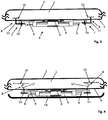
- FIGS. 1 to 5 show a sectional view of a foam pad 1 of a vehicle seat or a Fontsitzgamitur, on the side facing away from the seat side 2 underside 3, also referred to as the B side of the foam pad of the vehicle seat, a sensor unit 4 is arranged for seat occupancy detection.
- the sensor unit 4 comprises a support structure 5, on which a sensor unit 4 with at least one sensor element 6, preferably a film pressure sensor, is arranged.
- This sensor unit 4 and thus its sensor element 6 is positioned to the underside 3 of the pad 1 so that when the foam pad load the sensor element 6 responds and so indicates a seat occupancy.
- a sensor element another switching element, in particular a mechanical switch can be used.
- the sensor unit 4 is held on opposite sides of the support structure 5 via a respective fastening device 7.
- Each of these fastening devices 7 is composed of an anchoring part 8 assigned to the foam pad 1 and a connecting element 9 assigned to the support structure 5.
- the integrally constructed anchoring part 8 is divided into a base part 10 and a connection part 11.
- the base part 10 is referred to as the portion of the Anchoring part 8 denotes, which is integrated into the foam pad 1, while the connecting part 11 is referred to as that portion of the anchoring part 8, which projects from the underside 3 of the foam pad 1.
- the respective connecting element 9 of the support structure 5 of the sensor unit 4 is a tab-shaped or tab-like or wing-shaped or wing-like surface element 9, as in FIG. 6 illustrated sensor unit 4 illustrates.
- the sensor unit 4 is pushed by means arranged on the support structure 5 connecting elements 9 in the end portions 12 of the connecting parts 11 of the fastening device 7, as shown in FIGS FIGS. 1, 2 and 5 is apparent. It should be noted that in these figures, only a kind of end position is indicated, ie after the sensor unit 4 is inserted in accordance with the respective end portions 12 of the connecting parts 11.
- the respective tab-shaped or tab-like or wing-shaped or wing-like surface element 9 is used, for which purpose the surface elements 9 of the sensor unit 4 are inserted perpendicular to the plane of the drawing.
- the base part 10 of the anchoring part 8 is foamed into the foam pad 1, so that it is firmly anchored in the foam of the foam pad 1.
- a cut or slot corresponding to the base part 10 of the anchoring part 8 is made in the shape and the course, into which the base part 10 is subsequently inserted.
- the foam material of the foam pad 1 is tight on all sides of the base part 10.
- the base member 10 may be glued in the recess or slot.
- the embodiment, as in FIG. 2 is different from that of the FIG. 1 in that the part of the anchoring part 8 anchored in the foam of the foam pad 1, ie the base part 10, consists of two webs 13 which are connected together at their ends by a transverse web 14 and which are arranged on the underside 3 of the foam pad 1 in two Continue arms 15 of the connection part 11 and between the ends of a groove is formed, into which the connecting element 9 inserts by clamping.
- the connecting part 11 of the respective anchoring part 8 is formed angularly, so that the respective executed as a surface element connecting element 9 of the support structure 5 on the connection part 11 such that it positions between the leg of the connecting part 11 and the bottom 3 of the foam pad 1 is.
- the respective connecting element 9 is locked and secured to the connecting part 11 with a pin 16.
- a pin 16 As a pin 16, a screw, a rivet or a pin with Ras parts that get caught in a bore of the connecting element 9, can be used.
- the base part 10 of the anchoring part 8 has a designed as a spring arm portion 17 and connected to this spring arm portion 17 connecting part 11 of the anchoring part 8 is T-shaped.
- the connecting element 9 of the support structure 5 has, for example, a slot open towards the end, so that it can be placed on the plate-shaped end of the T-shaped connecting part 11.
- the formed as a spring arm portion 17 of the base member 10 which is located within the foam pad 1, creates a region within which the base member 10 resiliently a movement of the foam pad 1 when it is loaded on the seat side 2 of the foam pad 1, can follow.
- the spring arm portion 17 may have the shape of a multi-folded leaf spring or a coil spring.
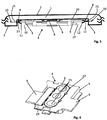
- FIG. 4 is on the bottom 3 of the foam pad 1, a vehicle-side seat pan 18 indicated that covers the bottom 3 of the foam pad 1 and supported and also forms an additional support for the support structure 5 of the sensor unit 4.
- the sensor unit 4 in a recess 19 of the foam pad 1, which has a bottom surface 20 and side walls 21 is used.
- the connection part 11 of the respective anchoring part 8 protrudes from the side wall 21 of the recess 19.
- the free end of the connecting part 11 is corresponding to the in FIG. 1 shown embodiment having a C- or U-shaped cross-section as a groove, in which the sheet-like connecting element 9 of the support structure 5 of the sensor unit 4 is inserted in the form of a tongue and groove connection, so that the sensor unit 4 at two opposite ends of the support structure. 5 is held.
- the sensor unit 4 is positioned so that it is in contact with the bottom surface 20 of the recess 19. Also for the embodiments of the FIGS. 1 to 4 the sensor unit 4 is arranged so that it rests against the underside 3 of the foam pad 1, so that a pressure transmission from the foam pad 1 to the sensor unit 4 occurs without delay.
- the FIG. 6 shows a detailed structure of the sensor unit 4, as in the embodiments according to the FIGS. 1 to 5 is used.
- the support structure 5 of the sensor unit 4 is a substantially plate-shaped element having a central region 22 which receives the sensor element 6, for example one with three individual sensor cells 23.
- all connections of the sensor element 6 are led to a connection region 24. All connections can be made via this connection region 24 or directly to a plug connection, not shown in detail, preferably at the edge of the support structure 5, so that when the sensor unit 4 is fastened to the anchoring parts 8, for example by placing them in the end sections 12 of the connection parts 11 is inserted, at the same time an electrical connection with an evaluation unit of the seat occupancy recognition is obtained.
- the connecting elements 9, as they are provided on the support structure 5 of the sensor unit 4, can be structured, for example with projections and undercuts, so that correspondingly structured regions of the respective connecting part 11 engage in correspondingly structured regions of the connecting element 9 and, if appropriate, additionally latch or hook with the connecting element 9.
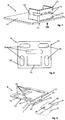
- FIGS. 7 to 9 different anchoring parts 8 are shown, as in the embodiments of the FIGS. 1 to 5 can be used.
- the anchoring part 8 of FIG. 7 and that of the FIG. 9 is comparable to that used in the embodiment of the FIG. 2 is shown schematically in cross section.
- the base part 10 has a base plate 25, which ensures a good anchoring of the base part 10 in the foam of the foam pad 1. From the base plate 25 extend, approximately perpendicular to the plane of their surface, the webs 13, which continue in arms 15 of the portion which forms the connecting part 11 of the anchoring part 8. The ends or edges of the two arms 15 are opposite so that a gap or a groove is present, in which then the connecting element 9 of the support structure 5 is inserted.
- the one arm 15 of the connecting part 11 is slightly resilient so that when inserting the connecting element 9, the opening width of the groove increases and, accordingly, the connecting element 9 is clamped between the arms 15 to securely attach the sensor unit 4 to the anchoring part 8.
- FIG. 8 shows a plan view of an anchoring part 8 corresponding to that in FIG. 7 is shown from the direction of the arrow VIII in FIG. 7 ,
- a plurality of slots 26 are present, which form a kind anchoring openings, in which the foam of the foam pad 1 can penetrate and thus anchored the base member 10 in addition.
- FIG. 9 shows an anchoring part 8 in a perspective view corresponding to that in the FIGS. 7 and 8 is shown, from the direction of the viewing arrow VIII in FIG. 7 , where in FIG. 9
- one of the fastening device 7 associated, adapted connecting element 9 of the support structure 5 is shown.
- the FIG. 9 However, in the base plate 25 of the base part 10 shows a plurality of slots 26, which also in the anchoring part 8 of FIG. 8 are shown, but not in the figure 7 , Compared with the embodiment, as in FIG. 7 is shown, the one arm 15 of the embodiment of the FIG.
- FIG. 9 moreover shows a partial section of the connecting element 9 of the support structure 5 corresponding to that shown in FIG. 6 is shown.
- the shape and the number of the through holes 28 and the projections 27 corresponding thereto are not limited to those shown in FIG FIG. 9 are shown. It can also be used, for example, pins and hook parts.
Landscapes
- Engineering & Computer Science (AREA)
- Aviation & Aerospace Engineering (AREA)
- Transportation (AREA)
- Mechanical Engineering (AREA)
- Seats For Vehicles (AREA)
- Chair Legs, Seat Parts, And Backrests (AREA)
Abstract
Description
- Die vorliegende Erfindung betrifft einen Fahrzeugsitz mit einer Sensoreinheit zur Sitzbelegungserkennung gemäß dem Oberbegriff des Anspruchs 1.
- Eine solche Sensoreinheit ist auf der der Sitzseite eines Schaumpolsters abgewandten Unterseite, die auch als B-Seite bezeichnet wird, angeordnet. Bei Belastung des Schaumpolsters durch eine auf dem Sitz sitzende Person liegt die Sensoreinheit zumindest teilweise an Bereichen des Schaumpolsters an. Eine derartige Sensoreinheit umfasst eine Trägerstruktur, an oder auf der mindestens ein Sensorelement angeordnet ist.
- Im Stand der Technik sind verschiedene Maßnahmen bekannt, um eine solche Sensoreinheit für die Sitzbelegungserkennung in einen Fahrzeugsitz zu integrieren oder an diesem zu halten.
- Die
DE 197 52 976 C2 beschreibt die Integration eines flexiblen und druckempfindlichen Schalters in einen aus Polyurethanschaum gebildeten Polsterkörper eines Kraftfahrzeugsitzes. Der Schalter ist in einer auf der der Sitzfläche gegenüberliegenden Seite des Polsterkörpers angeordneten Aussparung eingelassen und mit einem Einlegeteil aus Polyurethanschaum abgedeckt, wobei dieses Einlegeteil den Schalter stützt. Polsterkörper und Einlegeteil liegen auf einem Metallblech auf, das gleichzeitig als Einstellvorrichtung dient. Der Schalter besteht aus einem flexiblen Trägerfilm, einem flexiblen Abdeckfilm und zwei dazwischen angeordneten elektrisch leitfähigen Schichten. Bei einer auf die Sitzfläche wirkenden Kraft wird diese über den Polsterkörper auf den Schalter übertragen, wobei dann die beiden elektrisch leitfähigen Schichten des Schalters aufeinander gedrückt werden. Über einen elektrischen Stromfluss ist damit die Sitzbelegung erkennbar. - Die
DE 20 2017 005 093 U1 beschreibt eine Vorrichtung zur Erfassung einer Sitzbelegung an einem Kraftfahrzeugsitz, die auch in eine Rücksitzbank eines Kraftfahrzeugs integrierbar ist. Der Kraftfahrzeugsitz weist dabei einen Sitzschaum mit einer Sitzfläche und einen Strukturrahmen auf, wobei entweder der Strukturrahmen den Sitzschaum stützt oder der Sitzschaum auf einem den Strukturrahmen umgebenden Hartschaumkörper angeordnet ist. Auf einer zur Sitzfläche gegenüberliegenden Seite des Sitzschaums ist ein Druckschalter positioniert, der an einer Halteplatte befestigt ist. Die Halteplatte ist über eine Hakenverbindung mit dem Strukturrahmen verbunden. Hierfür ist die Hakenverbindung auf der Unterseite des Sitzschaums durch diesen zum Strukturrahmen, der als Drahtrahmen ausgestaltet ist, geführt. - Die
DE 10 2014 014 395 A1 beschreibt eine Drucksensor-Einheit zum Detektieren des Belegungszustands eines Kraftfahrzeugsitzes mit einer im Wesentlichen formstabilen Trägerplatte, auf deren Oberseite ein Foliendrucksensor angeordnet ist. Der Foliendrucksensor umfasst mindestens eine Trägerfolie und mindestens ein Sensorelement, das auf der Trägerfolie angeordnet ist. Die Trägerfolie besitzt mindestens ein Positionierungsmittel, das einem korrespondierenden Positionierungsmittel an der Trägerplatte zugeordnet ist. Das mindestens eine Positionierungsmittel ist eine sich von einer Seitenkante der Trägerfolie erstreckende Haltelasche mit einem Steg, der an seinem freien Ende mindestens einen Halteabschnitt aufweist, der sich an dem korrespondierenden Positionierungsmittel der Trägerplatte verhakt. - Die
DE 10 2008 005 399 A1 beschreibt einen Funktionseinleger, der aus einem Vlies oder einem Textil gebildet ist und zum Beispiel für die Sitzbelegungserkennung oder eine Sitzheizung einsetzbar ist. Der Funktionseinleger ist unterhalb des Bezugs auf der Oberseite eines Sitzpolsters aufgelegt und an zwei gegenüberliegenden Seiten in einem Abspanngraben mittels Laschen an einem Abspanndraht befestigt. Hierzu werden Verankerungsteile verwendet. Jedes Verankerungsteil besitzt an dem einen Ende eine knopfartige Platte, die in eine Öffnung der jeweiligen Lasche eingreift, und an dem anderen Ende ein Klemmteil, das in den Abspanndraht eingreift. - Es ist Aufgabe der Erfindung, einen Fahrzeugsitz mit einer Sensoreinheit zur Sitzbelegungserkennung anzugeben, bei dem die Sensoreinheit in einem einfachen Montagevorgang an einem Sitz befestigt werden kann und hierbei die Sensoreinheit jeweils eine exakte Position einnimmt. Eine weitere Aufgabe der Erfindung ist es, die Sensoreinheit zur Sitzbelegungserkennung unabhängig von einer ein Schaumpolster tragenden Struktur aufzubauen, die auch in einer Fontsitzgarnitur/Rücksitzbank einsetzbar ist und bei der Abstandstoleranzen zwischen Sensoreinheit und Schaumpolster im Hinblick auf die Empfindlichkeit reduziert werden.
- Gelöst wird diese Aufgabe, durch einen Fahrzeugsitz mit den Merkmalen des Anspruchs 1. Bevorzugte Ausführungsformen sind in den abhängigen Ansprüchen angegeben.
- Der Fahrzeugsitz gemäß der Erfindung, der mit einer Sensoreinheit zur Sitzbelegungserkennung ausgestattet ist, zeichnet sich dadurch aus, dass die Sensoreinheit über mindestens eine Befestigungseinrichtung an dem Schaumpolster gehalten ist. Diese Befestigungseinrichtung weist ein dem Schaumpolster zugeordnetes Verankerungsteil auf. Dieses Verankerungsteil ist wiederum in ein in dem Schaumpolster integrierten Basisteil und mindestens ein von dem Schaumpolster vorstehendes Anschlussteil unterteilt. Der Sensoreinheit ist ein Verbindungselement zugeordnet, das in das Anschlussteil des Verankerungsteils kraft- und/oder formschlüssig eingreift. Die Sensoreinheit kann folglich durch einen einfachen Montagevorgang an dem Fahrzeugsitz angeordnet werden, indem es über dessen Verbindungselement(e) auf der B-Seite des Schaumpolsters befestigt wird. Durch das Basisteil der Befestigungseinrichtung, die dem Schaumpolster zugeordnet ist, wird die Sensoreinheit bzw. deren Trägerstruktur sicher an dem Schaumpolster verankert.
- Vorzugsweise wird die Sensoreinheit über mindestens zwei Befestigungseinrichtungen gehalten ist, die die Trägerstruktur an gegenüberliegenden Seiten aufnehmen bzw. halten. In einer vorteilhaften Ausgestaltung wird die jeweilige Verbindung zwischen dem Anschlussteil des Verankerungsteils und dem Verbindungselement der Trägerstruktur durch eine Nut-Feder-Verbindung gebildet. Durch diese Maßnahme kann das entsprechende Verbindungselement der Trägerstruktur, beispielsweise eine Feder, in das entsprechend ausgebildete Anschlussteil des dem Schaumpolster zugeordneten Verbindungselements, beispielsweise eine Nut, eingeschoben werden. Bevorzugt wird hierbei die Nut an dem Anschlussteil vorgesehen.
- In einer weiteren Ausgestaltungsform kann die Trägerstruktur an den gegenüberliegenden Seiten mit mindestens zwei Verbindungselementen ausgestaltet sein, so dass die Verbindungselemente in einem gewissen Abstand zueinander, in horizontaler und/oder in vertikaler Richtung, angeordnet sind. Durch diese Maßnahme kann eine noch höhere Positioniergenauigkeit erreicht werden.
- Es ist auch vorgesehen, dass die jeweilige Verbindung zwischen dem Verankerungsteil und dem der Trägerstruktur der Sensoreinheit zugeordneten Verbindungselement ineinanderrastende Teile aufweist, so dass die ineinandergreifenden Teile verriegelt sind. Diese ineinander einrastenden Teile können selbst die Verbindung herstellen, oder als zusätzliche Maßnahme eingesetzt werden, um ein Verschieben der verbundenen Elemente zu verhindern.
- Die Sensoreinheit kann in einer Ausnehmung des Schaumpolsters angeordnet werden. Hierfür können zwei Verankerungsteile eingesetzt werden, die so an dem Schaumpolster positioniert sind, dass deren Anschlussteile von gegenüberliegenden Seitenwänden der Ausnehmung vorstehen und die Trägerstruktur der Sensoreinheit derart halten, dass die Sensoreinheit mit der Bodenfläche der Ausnehmung in Kontakt steht, so dass die Sensoreinheit über die Bodenfläche der Ausnehmung bei Belastung des Sitzes durch eine Person betätigt wird.
- In einer weiteren Ausführungsform wird das Anschlussteil des Verankerungsteils in einer solchen Position angeordnet, dass es von der Unterseite des Sitzpolsters vorsteht und die Sensoreinheit mit der Unterseite des Sitzpolsters in Kontakt steht. Falls die Sensoreinheit in einer Ausnehmung des Schaumpolsters angeordnet ist, wie dies vorstehend beschrieben ist, ist die Bodenfläche der Ausnehmung als Unterseite des Sitzpolsters anzusehen.
- Das Verbindungselement, das Teil der Trägerstruktur der Sensoreinheit ist, kann zumindest teilweise eine laschenförmige bzw. laschenartige oder flügelförmige bzw. flügelartige Form aufweisen. Ein derartiges Flächenelement kann als Feder einer Nut-Feder-Verbindung zwischen dem Verbindungselement und dem Anschlussteil der Befestigungseinrichtung dienen.
- Das Basisteil der Befestigungseinrichtung kann in einer Ausführungsform in das Schaumpolster eingeschäumt werden. Es kann aber auch von Vorteil sein, das Basisteil in einen Einschnitt oder Schlitz des Schaumpolsters einzustecken. Während ein Einschäumen des Basisteils des Verankerungsteils mit der Herstellung des Schaumpolsters erfolgen muss, kann ein Einstecken des Basisteils des Verankerungsteils in einen Schlitz des Schaumpolsters nach der Herstellung des Schaumpolsters erfolgen.
- Um eine zusätzliche Verankerung des Basisteils in dem Schaumpolster zu ermöglichen, wird das Basisteil zumindest teilweise als Lochplatte ausgeführt. Als Lochplatte wird eine Platte oder ein plattenförmiges Teil angesehen, das mehrere Löcher oder Schlitze aufweist, in die sich der Schaum des Schaumpolsters hineindrückt, unabhängig davon, ob das Basisteil in das Schaumpolster eingeschäumt ist oder ob das Basisteil in einen Schlitz des Schaumpolsters eingesteckt ist.
- Das Basisteil des Verankerungsteils, das in dem Material des Schaumpolsters integriert ist, kann einen Federarm-Abschnitt aufweisen, der zum einen als zusätzliche Verankerungshilfe dient und zum anderen einen federnd nachgiebigen Bereich darstellt, wenn sich das Schaumpolster unter einer Sitzbelegung zusammendrückt.
- Weitere Einzelheiten und Merkmale der Erfindung ergeben sich aus der nachfolgenden Beschreibung von Ausführungsbeispielen anhand der Zeichnung. In der Zeichnung zeigt
- Figur 1
- eine schematische Schnittdarstellung des unteren Teils, d. h. der B-Seite, eines Schaumpolsters eines Fahrzeugsitzes mit daran angeordneter Sensoreinheit gemäß einer ersten Ausführungsform der Erfindung,
- Figur 2
- eine Schnittdarstellung entsprechend der
Figur 1 gemäß einer weiteren Ausführungsform einer Befestigung der Sensoreinheit an dem Sitzpolster, - Figur 3
- eine dritte Ausführungsform,
- Figur 4
- eine vierte Ausführungsform mit zusätzlichem, fahrzeugseitigem Wannenteil,
- Figur 5
- eine Schnittdarstellung, bei der die Sensoreinheit in einer Ausnehmung des Schaumpolsters angeordnet ist,
- Figur 6
- eine Sensoreinheit mit Trägerstruktur, wie sie in den Ausführungsformen der
Figuren 1 bis 5 eingesetzt ist, - Figur 7
- ein Basisteil des dem Schaumpolster zugeordneten Verankerungsteils in einer perspektivischen Darstellung,
- Figur 8
- eine Draufsicht auf ein Basisteil vergleichbar mit demjenigen der
Figur 7 mit zusätzlichen Verankerungsschlitzen und - Figur 9
- ein Basisteil, vergleichbar mit demjenigen der
Figur 7 , und ein diesem zugeordnetes Verbindungselement der Trägerstruktur der Sensoreinheit. - Die
Figuren 1 bis 5 zeigen in einer Schnittdarstellung ein Schaumpolster 1 eines Fahrzeugsitzes oder einer Fontsitzgamitur, auf dessen der Sitzseite 2 abgewandten Unterseite 3, auch als B-Seite des Schaumpolsters des Fahrzeugsitzes bezeichnet, eine Sensoreinheit 4 zur Sitzbelegungserkennung angeordnet ist. - Die Sensoreinheit 4 umfasst eine Trägerstruktur 5, auf der eine Sensoreinheit 4 mit mindestens einem Sensorelement 6, vorzugsweise ein Foliendrucksensor, angeordnet ist. Diese Sensoreinheit 4 und damit deren Sensorelement 6 ist derart zu der Unterseite 3 des Polsters 1 positioniert, dass bei Belastung des Schaumpolsters das Sensorelement 6 anspricht und so eine Sitzbelegung anzeigt. Als Sensorelement kann auch ein anderes Schaltelement, insbesondere ein mechanischer Schalter, eingesetzt werden.
- Die Sensoreinheit 4 ist an gegenüberliegenden Seiten der Trägerstruktur 5 über jeweils eine Befestigungseinrichtung 7 gehalten. Jede dieser Befestigungseinrichtungen 7 ist aus einem dem Schaumpolster 1 zugeordnetes Verankerungsteil 8 und einem der Trägerstruktur 5 zugeordnetes Verbindungselement 9 zusammengesetzt. Das einstückig aufgebaute Verankerungsteil 8 ist in ein Basisteil 10 und ein Anschlussteil 11 unterteilt werden. Das Basisteil 10 wird als derjenige Abschnitt des Verankerungsteils 8 bezeichnet, der in das Schaumpolster 1 integriert ist, während das Anschlussteil 11 als derjenige Abschnitt des Verankerungsteils 8 bezeichnet wird, der von der Unterseite 3 des Schaumpolsters 1 vorsteht.
- Das jeweilige Verbindungselement 9 der Trägerstruktur 5 der Sensoreinheit 4 ist ein laschenförmiges bzw. laschenartiges oder flügelförmiges bzw. flügelartiges Flächenelement 9, wie die in
Figur 6 dargestellte Sensoreinheit 4 verdeutlicht. - Die Sensoreinheit 4 wird mittels der an der Trägerstruktur 5 angeordneten Verbindungselemente 9 in die Endabschnitte 12 der Anschlussteile 11 der Befestigungseinrichtung 7 geschoben, wie dies aus den
Figuren 1, 2 und5 ersichtlich ist. Hierbei ist anzumerken, das in diesen Figuren lediglich eine Art Endposition angedeutet ist, d.h. nachdem die Sensoreinheit 4 entsprechend in die jeweiligen Endabschnitte 12 der Anschlussteile 11 eingeschoben ist. - Wie die Ausführungsform der
Figur 1 zeigt, ist das freie Ende des Anschlussteils 11 des Verankerungsteils 8, das bedeutet dessen Endabschnitt 12, als Nut mit einem C-förmigen oder U-förmigen Querschnitt ausgebildet. In diese Nuten der beiden Verankerungsteile 8 ist das jeweilige laschenförmige bzw. laschenartige oder flügelförmige bzw. flügelartige Flächenelement 9 eingesetzt, wozu die Flächenelemente 9 der Sensoreinheit 4 senkrecht zur Zeichnungsebene eingeschoben werden. Hierdurch ist eine einfache Montage der Sensoreinheit 4 auf der Unterseite 3 des Schaumpolsters 1 über die durch den jeweiligen Endabschnitt 12 und das jeweilige Flächenelement 9 gebildete Nut-Feder-Verbindung möglich. - Das Basisteil 10 des Verankerungsteils 8 wird in das Schaumpolster 1 eingeschäumt, so dass es fest in dem Schaum des Schaumpolsters 1 verankert ist. In einer weiteren Ausführungsform, die besonders bevorzugt ist, wird in dem Schaumpolster 1 ein dem Basisteil 10 des Verankerungsteils 8 in der Form und dem Verlauf entsprechender Einschnitt oder Schlitz ausgeführt, in den dann anschließend das Basisteil 10 eingesteckt wird. In vorteilhafter Weise liegt das Schaummaterial des Schaumpolsters 1 an allen Seiten des Basisteils 10 eng an. Zusätzlich kann das Basisteil 10 in dem Einschnitt oder Schlitz verklebt werden.
- Die Ausführungsform, wie sie in
Figur 2 dargestellt ist, unterscheidet sich von derjenigen derFigur 1 dadurch, dass der in dem Schaum des Schaumpolsters 1 verankerte Teil des Verankerungsteils 8, d. h. das Basisteil 10, aus zwei Stegen 13 besteht, die an ihren Enden über einen Quersteg 14 miteinander verbunden sind und die sich an der Unterseite 3 des Schaumpolsters 1 in zwei Arme 15 des Anschlussteils 11 fortsetzen und zwischen deren Enden eine Nut gebildet ist, in die sich das Verbindungselement 9 klemmend einfügt. - Bei der dritten Ausführungsform, die in
Figur 3 gezeigt ist, ist das Anschlussteil 11 des jeweiligen Verankerungsteils 8 winkelförmig ausgebildet, so dass sich das jeweilige als Flächenelement ausgeführte Verbindungselement 9 der Trägerstruktur 5 auf das Anschlussteil 11 derart auflegt, dass es zwischen dem Schenkel des Anschlussteils 11 und der Unterseite 3 des Schaumpolsters 1 positioniert ist. Zusätzlich ist das jeweilige Verbindungselement 9 an dem Anschlussteil 11 mit einem Stift 16 verriegelt und gesichert. Als Stift 16 kann eine Schraube, eine Niete oder auch ein Pin mit Rasteilen, die sich in einer Bohrung des Verbindungselements 9 verhaken, verwendet werden. - In der vierten Ausführungsform, die in
Figur 4 gezeigt ist, besitzt das Basisteil 10 des Verankerungsteils 8 einen als Federarm ausgebildeten Abschnitt 17 und das mit diesem Federarm-Abschnitt 17 verbundene Anschlussteil 11 des Verankerungsteils 8 ist T-förmig ausgebildet. Das Verbindungselement 9 der Trägerstruktur 5 weist beispielsweise einen zum Ende hin offenen Schlitz auf, so dass er auf das tellerförmige Ende des T-förmigen Anschlussteils 11 aufgelegt werden kann. Der als Federarm ausgebildete Abschnitt 17 des Basisteils 10, der sich innerhalb des Schaumpolsters 1 befindet, schafft einen Bereich, innerhalb dem das Basisteil 10 federnd einer Bewegung des Schaumpolsters 1, wenn dieses auf der Sitzseite 2 des Schaumpolsters 1 belastet wird, folgen kann. Der Federarm-Abschnitt 17 kann die Form einer mehrfach gefalteten Blattfeder oder einer Schraubenfeder haben. - In
Figur 4 ist auf der Unterseite 3 des Schaumpolsters 1 eine fahrzeugseitige Sitzwanne 18 angedeutet, die die Unterseite 3 des Schaumpolsters 1 abdeckt bzw. abstützt und auch eine zusätzliche Auflage für die Trägerstruktur 5 der Sensoreinheit 4 bildet. - In der Ausführungsform, die in
Figur 5 dargestellt ist, ist die Sensoreinheit 4 in einer Ausnehmung 19 des Schaumpolsters 1, die eine Bodenfläche 20 und Seitenwände 21 aufweist, eingesetzt. Das Anschlussteil 11 des jeweiligen Verankerungsteils 8 steht von der Seitenwand 21 der Ausnehmung 19 vor. Das freie Ende des Anschlussteils 11 ist entsprechend der inFigur 1 gezeigten Ausführungsform mit einem C- oder U-förmigen Querschnitt als Nut ausgebildet, in die das flächenartige Verbindungselement 9 der Trägerstruktur 5 der Sensoreinheit 4 in Form einer Nut-Feder-Verbindung eingesetzt ist, so dass die Sensoreinheit 4 an zwei gegenüberliegenden Enden der Trägerstruktur 5 gehalten ist. - In der Ausführungsform der
Figur 5 ist die Sensoreinheit 4 so positioniert, dass sie mit der Bodenfläche 20 der Ausnehmung 19 in Kontakt steht. Auch für die Ausführungsformen derFiguren 1 bis 4 wird die Sensoreinheit 4 so angeordnet, dass sie an der Unterseite 3 des Schaumpolsters 1 anliegt, so dass eine Druckübertragung von dem Schaumpolster 1 auf die Sensoreinheit 4 ohne zeitliche Verzögerung auftritt. - Die
Figur 6 zeigt einen detaillierten Aufbau der Sensoreinheit 4, wie sie in den Ausführungsformen entsprechend denFiguren 1 bis 5 verwendet wird. Die Trägerstruktur 5 der Sensoreinheit 4 ist ein im Wesentlichen plattenförmiges Element mit einem zentralen Bereich 22, der das Sensorelement 6, beispielsweise ein solches mit drei einzelnen Sensorzellen 23, aufnimmt. Außerdem sind alle Anschlüsse des Sensorelements 6 zu einem Anschlussbereich 24 geführt. Alle Anschlüsse können über diesen Anschlussbereich 24 oder direkt zu einer nicht näher gezeigten Steckverbindung, bevorzugt am Rand der Trägerstruktur 5, geführt sein, so dass dann, wenn die Sensoreinheit 4 an den Verankerungsteilen 8 befestigt wird, beispielsweise indem sie in die Endabschnitte 12 der Anschlussteile 11 eingeschoben wird, gleichzeitig eine elektrische Verbindung mit einer Auswerteeinheit der Sitzbelegungserkennung erhalten wird. - Die Verbindungselemente 9, wie sie an der Trägerstruktur 5 der Sensoreinheit 4 vorgesehen sind, können strukturiert werden, beispielsweise mit Vorsprüngen und Hinterschneidungen, so dass entsprechend strukturierte Bereiche des jeweiligen Anschlussteils 11 in entsprechend strukturierte Bereiche des Verbindungselements 9 eingreifen und sich gegebenenfalls mit dem Verbindungselement 9 zusätzlich verrasten oder sich verhaken.
- In den
Figuren 7 bis 9 sind verschiedene Verankerungsteile 8 gezeigt, wie sie in den Ausführungsformen derFiguren 1 bis 5 eingesetzt werden können. - Das Verankerungsteil 8 der
Figur 7 und dasjenige derFigur 9 ist mit demjenigen vergleichbar, das in der Ausführungsform derFigur 2 schematisch im Querschnitt dargestellt ist. Das Basisteil 10 besitzt eine Grundplatte 25, die eine gute Verankerung des Basisteils 10 in dem Schaum des Schaumpolsters 1 sicherstellt. Von der Grundplatte 25 erstrecken sich, etwa senkrecht zu deren Flächenebene, die Stege 13, die sich in Arme 15 des Abschnitts fortsetzen, der das Anschlussteil 11 des Verankerungsteils 8 bildet. Die Enden bzw. Kanten der beiden Arme 15 liegen so gegenüber, dass ein Spalt oder eine Nut vorhanden ist, in die sich dann das Verbindungselement 9 der Trägerstruktur 5 einfügt. Der eine Arm 15 des Anschlussteils 11 ist geringfügig derart federnd ausgeführt, dass sich beim Einfügen des Verbindungselements 9 die Öffnungsweite der Nut vergrößert und entsprechend das Verbindungselement 9 zwischen den Armen 15 eingeklemmt wird, um die Sensoreinheit 4 an den Verankerungsteil 8 sicher zu befestigen. - Die
Figur 8 zeigt eine Draufsicht auf ein Verankerungsteil 8 entsprechend demjenigen, das inFigur 7 gezeigt ist, aus Richtung des Sichtpfeils VIII inFigur 7 . In der Grundplatte 25 dieses Basisteils 10 sind mehrere Schlitze 26 vorhanden, die eine Art Verankerungsöffnungen bilden, in die der Schaum des Schaumpolsters 1 eindringen kann und so das Basisteil 10 zusätzlich verankert. - Die
Figur 9 zeigt ein Verankerungsteil 8 in einer perspektivischen Darstellung entsprechend demjenigen, das in denFiguren 7 und 8 dargestellt ist, aus Richtung des Sichtpfeils VIII inFigur 7 , wobei inFigur 9 zusätzlich ein der Befestigungseinrichtung 7 zugeordnetes, angepasstes Verbindungselement 9 der Trägerstruktur 5 gezeigt ist. DieFigur 9 zeigt jedoch in der Grundplatte 25 des Basisteils 10 mehrere Schlitze 26, die auch in dem Verankerungsteil 8 derFigur 8 gezeigt sind, jedoch nicht in derFigur 7 . Verglichen mit der Ausführungsform, wie sie inFigur 7 dargestellt ist, besitzt der eine Arm 15 der Ausführungsform derFigur 9 , der sich weiter entfernt von der Grundplatte 25 befindet, an seiner freien Kante zwei Vorsprünge 27. Wenn das Verbindungselement 9 der Trägerstruktur 5 in das Anschlussteil 11 des Verankerungsteils 8 eingesetzt bzw. eingeschoben ist, greifen die zwei Vorsprünge 27 in korrespondierende Ausnehmungen oder Durchgangslöcher 28 in dem Verbindungselement 9 ein und verriegeln auf diese Weise das Verbindungselement 9 zusätzlich an dem Anschlussteil 11. DieFigur 9 zeigt darüber hinaus einen Teilausschnitt des Verbindungselements 9 der Trägerstruktur 5 entsprechend demjenigen, das inFigur 6 gezeigt ist. Die Form und die Anzahl der Durchgangslöcher 28 und der dazu korrespondierenden Vorsprünge 27 sind nicht auf diejenigen beschränkt, die inFigur 9 dargestellt sind. Es können beispielsweise auch Stifte und Hakenteile verwendet werden.
Claims (12)
- Fahrzeugsitz mit einer Sensoreinheit zur Sitzbelegungserkennung, die auf der der Sitzseite eines Schaumpolsters (1) abgewandten Unterseite (3) angeordnet ist und bei Belastung des Schaumpolsters (1) an diesem zumindest teilweise anliegt, wobei die Sensoreinheit (4) eine Trägerstruktur (5) umfasst, an oder auf der mindestens ein Sensorelement (6) angeordnet ist, dadurch gekennzeichnet, dass die Sensoreinheit (4) über mindestens eine Befestigungseinrichtung (7), die ein dem Schaumpolster (1) zugeordnetes Verankerungsteil (8) mit einem in dem Schaumpolster (1) integrierten Basisteil (10) und mit mindestens einem von dem Schaumpolster (1) vorstehenden Anschlussteil (11) und mindestens ein der Trägerstruktur (5) zugeordnetes Verbindungselement (9) aufweist, an dem Schaumpolster (1) angeordnet ist, wobei das Anschlussteil (11) des Verankerungsteils (8) und das Verbindungselement (9) der Trägerstruktur (5) kraft- und/oder formschlüssig ineinander greifen.
- Fahrzeugsitz nach Anspruch 1, dadurch gekennzeichnet, dass die Sensoreinheit (4) über mindestens zwei Befestigungseinrichtungen (7) gehalten ist, die die Trägerstruktur (5) an gegenüberliegenden Seiten halten.
- Fahrzeugsitz nach Anspruch 1 oder 2, dadurch gekennzeichnet, dass die jeweilige Verbindung zwischen dem Anschlussteil (11) des Verankerungsteils (8) und dem Verbindungselement (9) der Trägerstruktur (5) eine Nut-Feder-Verbindung ist.
- Fahrzeugsitz nach Anspruch 1 bis 3, dadurch gekennzeichnet, dass die jeweilige Verbindung ineinander einrastende Teile aufweist.
- Fahrzeugsitz nach einem der Ansprüche 1 bis 4, dadurch gekennzeichnet, dass die Sensoreinheit (4) in einer Ausnehmung (19) des Schaumpolsters (1), die eine Bodenfläche (20) und Seitenwände (21) aufweist, angeordnet ist.
- Fahrzeugsitz nach Anspruch 5, dadurch gekennzeichnet, dass das Anschlussteil (11) des Verankerungsteils (8) von einer Seitenwand (21) der Ausnehmung (19) vorsteht.
- Fahrzeugsitz nach einem der Ansprüche 1 bis 6, dadurch gekennzeichnet, dass das Anschlussteil (11) des Verankerungsteils (8) von der Unterseite (3) des Schaumpolsters (1) vorsteht.
- Fahrzeugsitz nach Anspruch 2, dadurch gekennzeichnet, dass das Verbindungselement (9) zumindest teilweise eine flügelartige Form aufweist.
- Fahrzeugsitz nach einem der Ansprüche 1 bis 8, dadurch gekennzeichnet, dass das Basisteil (10) in das Schaumpolster (1) eingeschäumt ist.
- Fahrzeugsitz nach einem der Ansprüche 1 bis 8, dadurch gekennzeichnet, dass das Basisteil (10) in einen Einschnitt des Schaumpolsters (1) eingesteckt ist.
- Fahrzeugsitz nach einem der Ansprüche 1 bis 10, dadurch gekennzeichnet, dass das Basisteil (10) zumindest teilweise als Platte (25) mit Öffnungen (26) ausgeführt ist.
- Fahrzeugsitz nach einem der Ansprüche 1 bis 11, dadurch gekennzeichnet, dass das Basisteil (10) einen Federarm-Abschnitt (17) aufweist.
Applications Claiming Priority (1)
| Application Number | Priority Date | Filing Date | Title |
|---|---|---|---|
| DE202018001736.1U DE202018001736U1 (de) | 2018-04-03 | 2018-04-03 | Fahrzeugsitz mit einer Sensoreinheit zur Sitzbelegungserkennung |
Publications (2)
| Publication Number | Publication Date |
|---|---|
| EP3549818A1 true EP3549818A1 (de) | 2019-10-09 |
| EP3549818B1 EP3549818B1 (de) | 2023-08-02 |
Family
ID=65729046
Family Applications (1)
| Application Number | Title | Priority Date | Filing Date |
|---|---|---|---|
| EP19000119.8A Active EP3549818B1 (de) | 2018-04-03 | 2019-03-07 | Fahrzeugsitz mit einer sensoreinheit zur sitzbelegungserkennung |
Country Status (2)
| Country | Link |
|---|---|
| EP (1) | EP3549818B1 (de) |
| DE (1) | DE202018001736U1 (de) |
Families Citing this family (1)
| Publication number | Priority date | Publication date | Assignee | Title |
|---|---|---|---|---|
| DE202019003941U1 (de) * | 2019-09-20 | 2020-12-23 | Scherdel Marienberg Gmbh | Sitzbelegungssensoreinheit |
Citations (5)
| Publication number | Priority date | Publication date | Assignee | Title |
|---|---|---|---|---|
| FR2853057A1 (fr) * | 2003-03-26 | 2004-10-01 | Cera | Dispositif de detection d'enfoncement a amplificateur de detection |
| EP2492137A2 (de) * | 2011-02-24 | 2012-08-29 | I.G. Bauerhin GmbH | Belegungserfassungseinrichtung zum Detektieren des Belegungszustandes eines Kraftfahrzeugsitzes |
| WO2016171143A1 (ja) * | 2015-04-20 | 2016-10-27 | 株式会社フジクラ | 荷重検出装置 |
| DE202017005093U1 (de) * | 2016-10-13 | 2017-12-06 | Scherdel Marienberg Gmbh | Vorrichtung zur Erfassung einer Sitzbelegung an einem Kraftfahrzeugsitz |
| FR3056476A1 (fr) * | 2016-09-23 | 2018-03-30 | Faurecia Sieges D'automobile | Element de siege et siege comportant un tel element de siege |
Family Cites Families (4)
| Publication number | Priority date | Publication date | Assignee | Title |
|---|---|---|---|---|
| JP3728711B2 (ja) | 1996-11-29 | 2005-12-21 | アイシン精機株式会社 | 着座検出装置 |
| DE102008005399A1 (de) | 2008-01-21 | 2009-07-30 | Proseat Gmbh & Co. Kg | Funktionseinleger beispielsweise für Sitze |
| DE202013009078U1 (de) | 2013-10-14 | 2015-01-16 | I.G. Bauerhin Gmbh | Drucksensor-Einheit zum Detektieren des Belegungszustands eines Kraftfahrzeugsitzes |
| DE102018201409A1 (de) * | 2018-01-30 | 2019-08-01 | Audi Ag | Schaumteil eines Kraftfahrzeugsitzes mit Sitzbelegungserkennung sowie Verfahren zur Herstellung eines solchen |
-
2018
- 2018-04-03 DE DE202018001736.1U patent/DE202018001736U1/de active Active
-
2019
- 2019-03-07 EP EP19000119.8A patent/EP3549818B1/de active Active
Patent Citations (5)
| Publication number | Priority date | Publication date | Assignee | Title |
|---|---|---|---|---|
| FR2853057A1 (fr) * | 2003-03-26 | 2004-10-01 | Cera | Dispositif de detection d'enfoncement a amplificateur de detection |
| EP2492137A2 (de) * | 2011-02-24 | 2012-08-29 | I.G. Bauerhin GmbH | Belegungserfassungseinrichtung zum Detektieren des Belegungszustandes eines Kraftfahrzeugsitzes |
| WO2016171143A1 (ja) * | 2015-04-20 | 2016-10-27 | 株式会社フジクラ | 荷重検出装置 |
| FR3056476A1 (fr) * | 2016-09-23 | 2018-03-30 | Faurecia Sieges D'automobile | Element de siege et siege comportant un tel element de siege |
| DE202017005093U1 (de) * | 2016-10-13 | 2017-12-06 | Scherdel Marienberg Gmbh | Vorrichtung zur Erfassung einer Sitzbelegung an einem Kraftfahrzeugsitz |
Also Published As
| Publication number | Publication date |
|---|---|
| DE202018001736U1 (de) | 2019-07-31 |
| EP3549818B1 (de) | 2023-08-02 |
Similar Documents
| Publication | Publication Date | Title |
|---|---|---|
| DE60104456T2 (de) | Rohrbefestigungsanordnung | |
| DE10100805C2 (de) | Fahrzeugsitzaufbau | |
| DE112013002367B4 (de) | Auf Druck reagierende Sitzbelegungssensoreinheit und Autositz | |
| DE69607325T2 (de) | Schnappbefestigung für sonnenblende und elektrische verbinder für sonnenblendbefestigungen | |
| DE112011100271T5 (de) | Vorrichtung für eine Sitzbaugruppe mit Querträger | |
| EP2450228A2 (de) | Fahrzeugsitz | |
| DE102021123374A1 (de) | Hängende Auflage für einen Fahrzeugsitz mit Führungshalterung der elektrischen Kabel | |
| EP3549818B1 (de) | Fahrzeugsitz mit einer sensoreinheit zur sitzbelegungserkennung | |
| DE102018002741B4 (de) | Fahrzeugsitz mit einer Sensoreinheit zur Sitzbelegungserkennung | |
| DE102018102725A1 (de) | Klemmmontagesitz | |
| EP0926791A2 (de) | Adapter mit Adaptergehäuse und daran befestigbarem Gerätehalter für elektrische Installationsgeräte | |
| EP1410959B1 (de) | Baugruppe mit einem Lenkradgrundkörper und einem Gassackmodul | |
| DE10344045A1 (de) | Verbindungsaufbau einer Halterung | |
| DE102017200946A1 (de) | Befestigungsvorrichtung zur Befestigung eines Sitzbezugs | |
| DE202016104021U1 (de) | Sitzbelegungssensoreinheit und Sitz | |
| EP3473496A1 (de) | Haltevorrichtung und baugruppe mit einer haltevorrichtung | |
| DE69108634T2 (de) | Verriegelungsmechanismus für Steckverbinder. | |
| DE2527318C3 (de) | Steckvorrichtung | |
| EP2884246B1 (de) | Modul für die Sitzbelegungserkennung eines Fahrzeugsitzes | |
| DE202015001912U1 (de) | Sitzbelegungssensoreinheit und Sitz | |
| DE3884770T2 (de) | Polymertyp-PTC-Anordnung. | |
| EP0809333B1 (de) | Mehrfachsteckdose | |
| DE19941500A1 (de) | Automobilsitz-Stecker | |
| DE3109011C2 (de) | ||
| DE2813107C3 (de) | Blechklammer zur Befestigung von Instrumentgehäusen in Armaturentafeln, insbesondere bei Kraftfahrzeugen |
Legal Events
| Date | Code | Title | Description |
|---|---|---|---|
| PUAI | Public reference made under article 153(3) epc to a published international application that has entered the european phase |
Free format text: ORIGINAL CODE: 0009012 |
|
| STAA | Information on the status of an ep patent application or granted ep patent |
Free format text: STATUS: THE APPLICATION HAS BEEN PUBLISHED |
|
| AK | Designated contracting states |
Kind code of ref document: A1 Designated state(s): AL AT BE BG CH CY CZ DE DK EE ES FI FR GB GR HR HU IE IS IT LI LT LU LV MC MK MT NL NO PL PT RO RS SE SI SK SM TR |
|
| AX | Request for extension of the european patent |
Extension state: BA ME |
|
| STAA | Information on the status of an ep patent application or granted ep patent |
Free format text: STATUS: REQUEST FOR EXAMINATION WAS MADE |
|
| 17P | Request for examination filed |
Effective date: 20200310 |
|
| RBV | Designated contracting states (corrected) |
Designated state(s): AL AT BE BG CH CY CZ DE DK EE ES FI FR GB GR HR HU IE IS IT LI LT LU LV MC MK MT NL NO PL PT RO RS SE SI SK SM TR |
|
| STAA | Information on the status of an ep patent application or granted ep patent |
Free format text: STATUS: EXAMINATION IS IN PROGRESS |
|
| 17Q | First examination report despatched |
Effective date: 20210224 |
|
| GRAP | Despatch of communication of intention to grant a patent |
Free format text: ORIGINAL CODE: EPIDOSNIGR1 |
|
| STAA | Information on the status of an ep patent application or granted ep patent |
Free format text: STATUS: GRANT OF PATENT IS INTENDED |
|
| INTG | Intention to grant announced |
Effective date: 20230322 |
|
| GRAS | Grant fee paid |
Free format text: ORIGINAL CODE: EPIDOSNIGR3 |
|
| GRAA | (expected) grant |
Free format text: ORIGINAL CODE: 0009210 |
|
| STAA | Information on the status of an ep patent application or granted ep patent |
Free format text: STATUS: THE PATENT HAS BEEN GRANTED |
|
| AK | Designated contracting states |
Kind code of ref document: B1 Designated state(s): AL AT BE BG CH CY CZ DE DK EE ES FI FR GB GR HR HU IE IS IT LI LT LU LV MC MK MT NL NO PL PT RO RS SE SI SK SM TR |
|
| REG | Reference to a national code |
Ref country code: GB Ref legal event code: FG4D Free format text: NOT ENGLISH |
|
| REG | Reference to a national code |
Ref country code: CH Ref legal event code: EP |
|
| REG | Reference to a national code |
Ref country code: DE Ref legal event code: R096 Ref document number: 502019008710 Country of ref document: DE |
|
| REG | Reference to a national code |
Ref country code: IE Ref legal event code: FG4D Free format text: LANGUAGE OF EP DOCUMENT: GERMAN |
|
| REG | Reference to a national code |
Ref country code: SE Ref legal event code: TRGR |
|
| REG | Reference to a national code |
Ref country code: LT Ref legal event code: MG9D |
|
| REG | Reference to a national code |
Ref country code: NL Ref legal event code: MP Effective date: 20230802 |
|
| PG25 | Lapsed in a contracting state [announced via postgrant information from national office to epo] |
Ref country code: GR Free format text: LAPSE BECAUSE OF FAILURE TO SUBMIT A TRANSLATION OF THE DESCRIPTION OR TO PAY THE FEE WITHIN THE PRESCRIBED TIME-LIMIT Effective date: 20231103 |
|
| PG25 | Lapsed in a contracting state [announced via postgrant information from national office to epo] |
Ref country code: IS Free format text: LAPSE BECAUSE OF FAILURE TO SUBMIT A TRANSLATION OF THE DESCRIPTION OR TO PAY THE FEE WITHIN THE PRESCRIBED TIME-LIMIT Effective date: 20231202 |
|
| PG25 | Lapsed in a contracting state [announced via postgrant information from national office to epo] |
Ref country code: RS Free format text: LAPSE BECAUSE OF FAILURE TO SUBMIT A TRANSLATION OF THE DESCRIPTION OR TO PAY THE FEE WITHIN THE PRESCRIBED TIME-LIMIT Effective date: 20230802 Ref country code: PT Free format text: LAPSE BECAUSE OF FAILURE TO SUBMIT A TRANSLATION OF THE DESCRIPTION OR TO PAY THE FEE WITHIN THE PRESCRIBED TIME-LIMIT Effective date: 20231204 Ref country code: NO Free format text: LAPSE BECAUSE OF FAILURE TO SUBMIT A TRANSLATION OF THE DESCRIPTION OR TO PAY THE FEE WITHIN THE PRESCRIBED TIME-LIMIT Effective date: 20231102 Ref country code: NL Free format text: LAPSE BECAUSE OF FAILURE TO SUBMIT A TRANSLATION OF THE DESCRIPTION OR TO PAY THE FEE WITHIN THE PRESCRIBED TIME-LIMIT Effective date: 20230802 Ref country code: LV Free format text: LAPSE BECAUSE OF FAILURE TO SUBMIT A TRANSLATION OF THE DESCRIPTION OR TO PAY THE FEE WITHIN THE PRESCRIBED TIME-LIMIT Effective date: 20230802 Ref country code: LT Free format text: LAPSE BECAUSE OF FAILURE TO SUBMIT A TRANSLATION OF THE DESCRIPTION OR TO PAY THE FEE WITHIN THE PRESCRIBED TIME-LIMIT Effective date: 20230802 Ref country code: IS Free format text: LAPSE BECAUSE OF FAILURE TO SUBMIT A TRANSLATION OF THE DESCRIPTION OR TO PAY THE FEE WITHIN THE PRESCRIBED TIME-LIMIT Effective date: 20231202 Ref country code: HR Free format text: LAPSE BECAUSE OF FAILURE TO SUBMIT A TRANSLATION OF THE DESCRIPTION OR TO PAY THE FEE WITHIN THE PRESCRIBED TIME-LIMIT Effective date: 20230802 Ref country code: GR Free format text: LAPSE BECAUSE OF FAILURE TO SUBMIT A TRANSLATION OF THE DESCRIPTION OR TO PAY THE FEE WITHIN THE PRESCRIBED TIME-LIMIT Effective date: 20231103 Ref country code: FI Free format text: LAPSE BECAUSE OF FAILURE TO SUBMIT A TRANSLATION OF THE DESCRIPTION OR TO PAY THE FEE WITHIN THE PRESCRIBED TIME-LIMIT Effective date: 20230802 |
|
| PG25 | Lapsed in a contracting state [announced via postgrant information from national office to epo] |
Ref country code: PL Free format text: LAPSE BECAUSE OF FAILURE TO SUBMIT A TRANSLATION OF THE DESCRIPTION OR TO PAY THE FEE WITHIN THE PRESCRIBED TIME-LIMIT Effective date: 20230802 |
|
| PG25 | Lapsed in a contracting state [announced via postgrant information from national office to epo] |
Ref country code: ES Free format text: LAPSE BECAUSE OF FAILURE TO SUBMIT A TRANSLATION OF THE DESCRIPTION OR TO PAY THE FEE WITHIN THE PRESCRIBED TIME-LIMIT Effective date: 20230802 |
|
| PG25 | Lapsed in a contracting state [announced via postgrant information from national office to epo] |
Ref country code: SM Free format text: LAPSE BECAUSE OF FAILURE TO SUBMIT A TRANSLATION OF THE DESCRIPTION OR TO PAY THE FEE WITHIN THE PRESCRIBED TIME-LIMIT Effective date: 20230802 Ref country code: RO Free format text: LAPSE BECAUSE OF FAILURE TO SUBMIT A TRANSLATION OF THE DESCRIPTION OR TO PAY THE FEE WITHIN THE PRESCRIBED TIME-LIMIT Effective date: 20230802 Ref country code: ES Free format text: LAPSE BECAUSE OF FAILURE TO SUBMIT A TRANSLATION OF THE DESCRIPTION OR TO PAY THE FEE WITHIN THE PRESCRIBED TIME-LIMIT Effective date: 20230802 Ref country code: EE Free format text: LAPSE BECAUSE OF FAILURE TO SUBMIT A TRANSLATION OF THE DESCRIPTION OR TO PAY THE FEE WITHIN THE PRESCRIBED TIME-LIMIT Effective date: 20230802 Ref country code: DK Free format text: LAPSE BECAUSE OF FAILURE TO SUBMIT A TRANSLATION OF THE DESCRIPTION OR TO PAY THE FEE WITHIN THE PRESCRIBED TIME-LIMIT Effective date: 20230802 Ref country code: SK Free format text: LAPSE BECAUSE OF FAILURE TO SUBMIT A TRANSLATION OF THE DESCRIPTION OR TO PAY THE FEE WITHIN THE PRESCRIBED TIME-LIMIT Effective date: 20230802 |
|
| REG | Reference to a national code |
Ref country code: DE Ref legal event code: R097 Ref document number: 502019008710 Country of ref document: DE |
|
| PLBE | No opposition filed within time limit |
Free format text: ORIGINAL CODE: 0009261 |
|
| STAA | Information on the status of an ep patent application or granted ep patent |
Free format text: STATUS: NO OPPOSITION FILED WITHIN TIME LIMIT |
|
| 26N | No opposition filed |
Effective date: 20240503 |
|
| PG25 | Lapsed in a contracting state [announced via postgrant information from national office to epo] |
Ref country code: SI Free format text: LAPSE BECAUSE OF FAILURE TO SUBMIT A TRANSLATION OF THE DESCRIPTION OR TO PAY THE FEE WITHIN THE PRESCRIBED TIME-LIMIT Effective date: 20230802 |
|
| REG | Reference to a national code |
Ref country code: DE Ref legal event code: R119 Ref document number: 502019008710 Country of ref document: DE |
|
| REG | Reference to a national code |
Ref country code: CH Ref legal event code: PL |
|
| PG25 | Lapsed in a contracting state [announced via postgrant information from national office to epo] |
Ref country code: BG Free format text: LAPSE BECAUSE OF FAILURE TO SUBMIT A TRANSLATION OF THE DESCRIPTION OR TO PAY THE FEE WITHIN THE PRESCRIBED TIME-LIMIT Effective date: 20230802 |
|
| PG25 | Lapsed in a contracting state [announced via postgrant information from national office to epo] |
Ref country code: LU Free format text: LAPSE BECAUSE OF NON-PAYMENT OF DUE FEES Effective date: 20240307 |
|
| PG25 | Lapsed in a contracting state [announced via postgrant information from national office to epo] |
Ref country code: MC Free format text: LAPSE BECAUSE OF FAILURE TO SUBMIT A TRANSLATION OF THE DESCRIPTION OR TO PAY THE FEE WITHIN THE PRESCRIBED TIME-LIMIT Effective date: 20230802 |
|
| GBPC | Gb: european patent ceased through non-payment of renewal fee |
Effective date: 20240307 |
|
| PG25 | Lapsed in a contracting state [announced via postgrant information from national office to epo] |
Ref country code: MC Free format text: LAPSE BECAUSE OF FAILURE TO SUBMIT A TRANSLATION OF THE DESCRIPTION OR TO PAY THE FEE WITHIN THE PRESCRIBED TIME-LIMIT Effective date: 20230802 Ref country code: LU Free format text: LAPSE BECAUSE OF NON-PAYMENT OF DUE FEES Effective date: 20240307 Ref country code: BG Free format text: LAPSE BECAUSE OF FAILURE TO SUBMIT A TRANSLATION OF THE DESCRIPTION OR TO PAY THE FEE WITHIN THE PRESCRIBED TIME-LIMIT Effective date: 20230802 |
|
| REG | Reference to a national code |
Ref country code: BE Ref legal event code: MM Effective date: 20240331 |
|
| PG25 | Lapsed in a contracting state [announced via postgrant information from national office to epo] |
Ref country code: DE Free format text: LAPSE BECAUSE OF NON-PAYMENT OF DUE FEES Effective date: 20241001 |
|
| PG25 | Lapsed in a contracting state [announced via postgrant information from national office to epo] |
Ref country code: BE Free format text: LAPSE BECAUSE OF NON-PAYMENT OF DUE FEES Effective date: 20240331 |
|
| PG25 | Lapsed in a contracting state [announced via postgrant information from national office to epo] |
Ref country code: GB Free format text: LAPSE BECAUSE OF NON-PAYMENT OF DUE FEES Effective date: 20240307 |
|
| PG25 | Lapsed in a contracting state [announced via postgrant information from national office to epo] |
Ref country code: IE Free format text: LAPSE BECAUSE OF NON-PAYMENT OF DUE FEES Effective date: 20240307 |
|
| PG25 | Lapsed in a contracting state [announced via postgrant information from national office to epo] |
Ref country code: IE Free format text: LAPSE BECAUSE OF NON-PAYMENT OF DUE FEES Effective date: 20240307 Ref country code: GB Free format text: LAPSE BECAUSE OF NON-PAYMENT OF DUE FEES Effective date: 20240307 Ref country code: DE Free format text: LAPSE BECAUSE OF NON-PAYMENT OF DUE FEES Effective date: 20241001 Ref country code: BE Free format text: LAPSE BECAUSE OF NON-PAYMENT OF DUE FEES Effective date: 20240331 Ref country code: CH Free format text: LAPSE BECAUSE OF NON-PAYMENT OF DUE FEES Effective date: 20240331 |
|
| REG | Reference to a national code |
Ref country code: AT Ref legal event code: MM01 Ref document number: 1594328 Country of ref document: AT Kind code of ref document: T Effective date: 20240307 |
|
| PG25 | Lapsed in a contracting state [announced via postgrant information from national office to epo] |
Ref country code: AT Free format text: LAPSE BECAUSE OF NON-PAYMENT OF DUE FEES Effective date: 20240307 |
|
| PG25 | Lapsed in a contracting state [announced via postgrant information from national office to epo] |
Ref country code: CY Free format text: LAPSE BECAUSE OF FAILURE TO SUBMIT A TRANSLATION OF THE DESCRIPTION OR TO PAY THE FEE WITHIN THE PRESCRIBED TIME-LIMIT; INVALID AB INITIO Effective date: 20190307 |
|
| PG25 | Lapsed in a contracting state [announced via postgrant information from national office to epo] |
Ref country code: HU Free format text: LAPSE BECAUSE OF FAILURE TO SUBMIT A TRANSLATION OF THE DESCRIPTION OR TO PAY THE FEE WITHIN THE PRESCRIBED TIME-LIMIT; INVALID AB INITIO Effective date: 20190307 |
|
| PG25 | Lapsed in a contracting state [announced via postgrant information from national office to epo] |
Ref country code: TR Free format text: LAPSE BECAUSE OF FAILURE TO SUBMIT A TRANSLATION OF THE DESCRIPTION OR TO PAY THE FEE WITHIN THE PRESCRIBED TIME-LIMIT Effective date: 20230802 |
|
| PGFP | Annual fee paid to national office [announced via postgrant information from national office to epo] |
Ref country code: SE Payment date: 20260323 Year of fee payment: 8 |
|
| PGFP | Annual fee paid to national office [announced via postgrant information from national office to epo] |
Ref country code: IT Payment date: 20260320 Year of fee payment: 8 |
|
| PGFP | Annual fee paid to national office [announced via postgrant information from national office to epo] |
Ref country code: FR Payment date: 20260323 Year of fee payment: 8 |
|
| PGFP | Annual fee paid to national office [announced via postgrant information from national office to epo] |
Ref country code: CZ Payment date: 20260226 Year of fee payment: 8 |