EP3544092B1 - Electrode mix, method for producing electrode mix, electrode structure, method for producing electrode structure, and secondary battery - Google Patents
Electrode mix, method for producing electrode mix, electrode structure, method for producing electrode structure, and secondary battery Download PDFInfo
- Publication number
- EP3544092B1 EP3544092B1 EP17872096.7A EP17872096A EP3544092B1 EP 3544092 B1 EP3544092 B1 EP 3544092B1 EP 17872096 A EP17872096 A EP 17872096A EP 3544092 B1 EP3544092 B1 EP 3544092B1
- Authority
- EP
- European Patent Office
- Prior art keywords
- copolymer
- vinylidene fluoride
- electrode
- electrode mixture
- metal oxide
- Prior art date
- Legal status (The legal status is an assumption and is not a legal conclusion. Google has not performed a legal analysis and makes no representation as to the accuracy of the status listed.)
- Active
Links
Images

Classifications
-
- H—ELECTRICITY
- H01—ELECTRIC ELEMENTS
- H01M—PROCESSES OR MEANS, e.g. BATTERIES, FOR THE DIRECT CONVERSION OF CHEMICAL ENERGY INTO ELECTRICAL ENERGY
- H01M4/00—Electrodes
- H01M4/02—Electrodes composed of, or comprising, active material
- H01M4/62—Selection of inactive substances as ingredients for active masses, e.g. binders, fillers
- H01M4/621—Binders
- H01M4/622—Binders being polymers
- H01M4/623—Binders being polymers fluorinated polymers
-
- H—ELECTRICITY
- H01—ELECTRIC ELEMENTS
- H01M—PROCESSES OR MEANS, e.g. BATTERIES, FOR THE DIRECT CONVERSION OF CHEMICAL ENERGY INTO ELECTRICAL ENERGY
- H01M4/00—Electrodes
- H01M4/02—Electrodes composed of, or comprising, active material
- H01M4/13—Electrodes for accumulators with non-aqueous electrolyte, e.g. for lithium-accumulators; Processes of manufacture thereof
- H01M4/131—Electrodes based on mixed oxides or hydroxides, or on mixtures of oxides or hydroxides, e.g. LiCoOx
-
- H—ELECTRICITY
- H01—ELECTRIC ELEMENTS
- H01M—PROCESSES OR MEANS, e.g. BATTERIES, FOR THE DIRECT CONVERSION OF CHEMICAL ENERGY INTO ELECTRICAL ENERGY
- H01M10/00—Secondary cells; Manufacture thereof
- H01M10/05—Accumulators with non-aqueous electrolyte
- H01M10/052—Li-accumulators
-
- H—ELECTRICITY
- H01—ELECTRIC ELEMENTS
- H01M—PROCESSES OR MEANS, e.g. BATTERIES, FOR THE DIRECT CONVERSION OF CHEMICAL ENERGY INTO ELECTRICAL ENERGY
- H01M4/00—Electrodes
- H01M4/02—Electrodes composed of, or comprising, active material
- H01M4/04—Processes of manufacture in general
- H01M4/0402—Methods of deposition of the material
- H01M4/0404—Methods of deposition of the material by coating on electrode collectors
-
- H—ELECTRICITY
- H01—ELECTRIC ELEMENTS
- H01M—PROCESSES OR MEANS, e.g. BATTERIES, FOR THE DIRECT CONVERSION OF CHEMICAL ENERGY INTO ELECTRICAL ENERGY
- H01M4/00—Electrodes
- H01M4/02—Electrodes composed of, or comprising, active material
- H01M4/04—Processes of manufacture in general
- H01M4/0471—Processes of manufacture in general involving thermal treatment, e.g. firing, sintering, backing particulate active material, thermal decomposition, pyrolysis
-
- H—ELECTRICITY
- H01—ELECTRIC ELEMENTS
- H01M—PROCESSES OR MEANS, e.g. BATTERIES, FOR THE DIRECT CONVERSION OF CHEMICAL ENERGY INTO ELECTRICAL ENERGY
- H01M4/00—Electrodes
- H01M4/02—Electrodes composed of, or comprising, active material
- H01M4/13—Electrodes for accumulators with non-aqueous electrolyte, e.g. for lithium-accumulators; Processes of manufacture thereof
- H01M4/139—Processes of manufacture
- H01M4/1391—Processes of manufacture of electrodes based on mixed oxides or hydroxides, or on mixtures of oxides or hydroxides, e.g. LiCoOx
-
- H—ELECTRICITY
- H01—ELECTRIC ELEMENTS
- H01M—PROCESSES OR MEANS, e.g. BATTERIES, FOR THE DIRECT CONVERSION OF CHEMICAL ENERGY INTO ELECTRICAL ENERGY
- H01M4/00—Electrodes
- H01M4/02—Electrodes composed of, or comprising, active material
- H01M4/36—Selection of substances as active materials, active masses, active liquids
- H01M4/362—Composites
- H01M4/366—Composites as layered products
-
- H—ELECTRICITY
- H01—ELECTRIC ELEMENTS
- H01M—PROCESSES OR MEANS, e.g. BATTERIES, FOR THE DIRECT CONVERSION OF CHEMICAL ENERGY INTO ELECTRICAL ENERGY
- H01M4/00—Electrodes
- H01M4/02—Electrodes composed of, or comprising, active material
- H01M4/36—Selection of substances as active materials, active masses, active liquids
- H01M4/48—Selection of substances as active materials, active masses, active liquids of inorganic oxides or hydroxides
-
- H—ELECTRICITY
- H01—ELECTRIC ELEMENTS
- H01M—PROCESSES OR MEANS, e.g. BATTERIES, FOR THE DIRECT CONVERSION OF CHEMICAL ENERGY INTO ELECTRICAL ENERGY
- H01M4/00—Electrodes
- H01M4/02—Electrodes composed of, or comprising, active material
- H01M4/36—Selection of substances as active materials, active masses, active liquids
- H01M4/48—Selection of substances as active materials, active masses, active liquids of inorganic oxides or hydroxides
- H01M4/50—Selection of substances as active materials, active masses, active liquids of inorganic oxides or hydroxides of manganese
- H01M4/505—Selection of substances as active materials, active masses, active liquids of inorganic oxides or hydroxides of manganese of mixed oxides or hydroxides containing manganese for inserting or intercalating light metals, e.g. LiMn2O4 or LiMn2OxFy
-
- H—ELECTRICITY
- H01—ELECTRIC ELEMENTS
- H01M—PROCESSES OR MEANS, e.g. BATTERIES, FOR THE DIRECT CONVERSION OF CHEMICAL ENERGY INTO ELECTRICAL ENERGY
- H01M4/00—Electrodes
- H01M4/02—Electrodes composed of, or comprising, active material
- H01M4/36—Selection of substances as active materials, active masses, active liquids
- H01M4/48—Selection of substances as active materials, active masses, active liquids of inorganic oxides or hydroxides
- H01M4/52—Selection of substances as active materials, active masses, active liquids of inorganic oxides or hydroxides of nickel, cobalt or iron
- H01M4/525—Selection of substances as active materials, active masses, active liquids of inorganic oxides or hydroxides of nickel, cobalt or iron of mixed oxides or hydroxides containing iron, cobalt or nickel for inserting or intercalating light metals, e.g. LiNiO2, LiCoO2 or LiCoOxFy
-
- H—ELECTRICITY
- H01—ELECTRIC ELEMENTS
- H01M—PROCESSES OR MEANS, e.g. BATTERIES, FOR THE DIRECT CONVERSION OF CHEMICAL ENERGY INTO ELECTRICAL ENERGY
- H01M4/00—Electrodes
- H01M4/02—Electrodes composed of, or comprising, active material
- H01M4/62—Selection of inactive substances as ingredients for active masses, e.g. binders, fillers
- H01M4/621—Binders
-
- H—ELECTRICITY
- H01—ELECTRIC ELEMENTS
- H01M—PROCESSES OR MEANS, e.g. BATTERIES, FOR THE DIRECT CONVERSION OF CHEMICAL ENERGY INTO ELECTRICAL ENERGY
- H01M10/00—Secondary cells; Manufacture thereof
- H01M10/05—Accumulators with non-aqueous electrolyte
- H01M10/052—Li-accumulators
- H01M10/0525—Rocking-chair batteries, i.e. batteries with lithium insertion or intercalation in both electrodes; Lithium-ion batteries
-
- H—ELECTRICITY
- H01—ELECTRIC ELEMENTS
- H01M—PROCESSES OR MEANS, e.g. BATTERIES, FOR THE DIRECT CONVERSION OF CHEMICAL ENERGY INTO ELECTRICAL ENERGY
- H01M4/00—Electrodes
- H01M4/02—Electrodes composed of, or comprising, active material
- H01M2004/026—Electrodes composed of, or comprising, active material characterised by the polarity
- H01M2004/028—Positive electrodes
-
- Y—GENERAL TAGGING OF NEW TECHNOLOGICAL DEVELOPMENTS; GENERAL TAGGING OF CROSS-SECTIONAL TECHNOLOGIES SPANNING OVER SEVERAL SECTIONS OF THE IPC; TECHNICAL SUBJECTS COVERED BY FORMER USPC CROSS-REFERENCE ART COLLECTIONS [XRACs] AND DIGESTS
- Y02—TECHNOLOGIES OR APPLICATIONS FOR MITIGATION OR ADAPTATION AGAINST CLIMATE CHANGE
- Y02E—REDUCTION OF GREENHOUSE GAS [GHG] EMISSIONS, RELATED TO ENERGY GENERATION, TRANSMISSION OR DISTRIBUTION
- Y02E60/00—Enabling technologies; Technologies with a potential or indirect contribution to GHG emissions mitigation
- Y02E60/10—Energy storage using batteries
Definitions
- the present invention relates to an electrode mixture, and more specifically relates to an electrode mixture for a lithium-ion secondary battery.
- Lithium-ion secondary batteries have a high energy density and therefore are used not only in the power source of portable devices, but also in various settings such as hybrid electric vehicles and electric vehicles.
- a lithium ion secondary battery is obtained by applying an electrode mixture slurry onto a current collector and thus forming an electrode mixture layer on the current collector.
- the electrode mixture slurry is obtained by kneading a powdery electrode forming material of an electrode active material, a conductive auxiliary that is added as necessary, and the like into a binder (binding agent), which binds the electrode active material and the current collector, and dissolving or dispersing the kneaded material in a suitable solvent.
- Vinylidene fluoride polymers have been used as binders for lithium-ion secondary batteries in the related art. However, in a case where a vinylidene fluoride polymer is used as a binder, gelling of the slurry often occurs when the electrode mixture slurry is produced. Once the slurry has gelled, even in a case where the electrode mixture is heated or a new solvent is added, only a non-uniform slurry can be obtained.
- Patent Document 1 discloses a binder composition that includes polyvinylidene fluoride and a copolymer of vinylidene fluoride and chlorotrifluoroethylene as a binder composition for binding an electrode active material and a current collector.
- Patent Document 2 discloses, as an electrode-forming composition, a composition including a polymer including a repeating unit derived from vinylidene fluoride and hydrophilic (meth) acrylic monomer.
- Patent Document 3 discloses, as a negative electrode mixture for a non-aqueous electrode secondary battery, an electrode mixture containing a polar group-containing vinylidene fluoride-based polymer, a chlorine atom-containing vinylidene fluoride-based polymer, an electrode active material, and an organic solvent.
- an electrode mixture slurry is produced, and it may take a certain amount of time to coat the slurry onto the entire current collector. Therefore, a demand exists for a binder composition that maintains a high binding capacity between the electrode active material and the current collector even after an extended period of time has elapsed since the electrode mixture slurry was produced.
- the present invention was conceived in light of the above-mentioned problems, and an object of the present invention is to provide an electrode mixture that suppresses gelling of the electrode mixture slurry and maintains a high binding capacity between the electrode active material and the current collector even after an extended period of time has elapsed since the electrode mixture slurry was produced.
- an electrode mixture according to the present invention includes: an electrode mixture comprising:
- a method for producing an electrode mixture according to the present invention includes kneading: a first copolymer obtained by copolymerizing vinylidene fluoride and a polar group-containing compound; a second copolymer obtained by colpolymerizing vinylidene fluoride and chlorotrifluoroethylene; and a lithium metal oxide, wherein a compounding ratio of the first copolymer and the second copolymer is from 35:65 to 85:15 in terms of a mass ratio, and a pH of water when the lithium metal oxide is extracted with water at ordinary temperature (25°C) by an extraction method defined by JIS K 5101-16-2 is not less than 10.5.
- An electrode structure includes a current collector; and an electrode mixture layer provided on the current collector, wherein the electrode mixture layer comprises at least a binder composition and an electrode active material, the binder composition comprises a first copolymer of vinylidene fluoride and a polar group-containing compound; and a second copolymer of vinylidene fluoride and chlorotrifluoroethylene, a compounding ratio of the first copolymer and the second copolymer comprised in the binder composition is from 35:65 to 85:15 in terms of a mass ratio, the electrode active material comprises a lithium metal oxide, and a pH of water when the electrode mixture layer is extracted with water is not less than 10.5.
- a method for producing an electrode structure according to the present invention includes: applying and drying an electrode mixture comprising a vinylidene fluoride copolymer, a lithium metal oxide, and a solvent onto a surface of a current collector to form a coating film on the surface of the current collector; and heat treating the coating film to obtain an electrode mixture layer, wherein the vinylidene fluoride copolymer comprises a first copolymer of vinylidene fluoride and a polar group-containing compound; and a second copolymer of vinylidene fluoride and chlorotrifluoroethylene, a compounding ratio of the first copolymer and the second copolymer comprised in the vinylidene fluoride copolymer is from 35:65 to 85:15 in terms of a mass ratio, a pH of water when the electrode mixture layer is extracted with water at ordinary temperature (25°C) by an extraction method defined by JIS K 5101-16-2 is not less than 10.5, and wherein the lithium metal oxide is a ternary lithium metal
- the electrode mixture of the present invention gelling of the electrode mixture slurry is suppressed, and a high binding capacity between the electrode active material and the current collector can be maintained even after an extended period of time has passed since the electrode mixture slurry was produced.
- the electrode mixture of an embodiment of the present invention contains: an electrode active material provided on a current collector; and a binder composition for binding the elecrode active material to the current collector; wherein the binder composition comprises a first copolymer of vinylidene fluoride and a polar group-containing compound; and a second copolymer of vinylidene fluoride and chlorotrifluoroethylene, a compounding ratio of the first colpolymer and the second copolymer comprised in the binder composition is from 35:65 to 85:15 in terms of a mass ratio, the electrode active material comprises a lithium metal oxide, a pH of water when the lithium metal oxide is extracted with water at ordinary temperature (25°C) by an extraction method defined by JIS K 5101-16-2 is not less than 10.5, and wherein the lithium metal oxide is a ternary lithium metal oxide represented by Formula (3): LiNi x Co y N2 z O 2 (3) where N2 represents either Mn or Al, 0 ⁇ x ⁇ 1, 0 ⁇
- the binder composition of an embodiment of the present invention is used as a binding agent for binding an electrode active material onto a current collector.
- the binder composition according to an embodiment of the present invention includes a first copolymer and a second copolymer.
- first and second copolymers will be described in detail below.
- the first copolymer used in an embodiment of the present invention is a copolymer of vinylidene fluoride and a polar group-containing compound.
- the polar group-containing compound in the first copolymer is, for example, a compound containing a polar group such as a carboxyl group, an epoxy group, a hydroxyl group, and a sulfonic acid group.
- the polar group-containing compound is preferably a compound containing a carboxyl group.
- the inclusion of carboxyl groups in the polar group-containing compound is preferable from the perspective of obtaining a good binding capacity between the electrode active material and the current collector or between electrode active materials.
- examples of the compound having a carboxyl group include unsaturated monobasic acids, unsaturated dibasic acids, and unsaturated dibasic acid monoesters. More specifically, examples include acrylic acid (AA), 2-carboxyethyl acrylate (CEA), 2-carboxyethyl methacrylate, acryloyloxy ethyl succinate (AES), acryloyloxy propyl succinate (APS), and other acrylic acid derivatives; monomethyl maleate (MMM); and monoethyl maleate.
- acrylic acid AA
- CEA 2-carboxyethyl acrylate
- AES acryloyloxy ethyl succinate
- APS acryloyloxy propyl succinate
- MMMM monomethyl maleate
- MMMM monoethyl maleate
- examples of the compound including an epoxy group include acrylic glycidyl ether, methallyl glycidyl ether, glycidyl crotonate, and glycidyl allyl acetate.
- examples of the compound including a hydroxyl group include hydroxyl ethyl acrylate and hydroxypropyl acrylate.
- the first copolymer preferably includes from 90.00 to 99.99 mol%, more preferably from 93.00 to 99.98 mol%, and particularly preferably from 96.00 to 99.97 mol%, of vinylidene fluoride units. This range is preferable from the perspective of good binding capacity between the electrode active material and the current collector or between electrode active materials.
- the term "vinylidene fluoride unit” refers to a structural unit derived from vinylidene fluoride.
- the total of the vinylidene fluoride units that is, the structural units derived from vinylidene fluoride, and structural units derived from the polar group-containing compound is considered to be 100.00 mol%.
- the amount of vinylidene fluoride units in the first copolymer can typically be determined by the 1 H NMR spectrum of the first copolymer or by neutralization titration.
- the first copolymer may also include, as a structural unit, a component of another compound besides the vinylidene fluoride and polar group-containing compound.
- the other compound include vinyl fluoride, trifluoroethylene, chlorotrifluoroethylene, tetrafluoroethylene, hexafluoropropylene, and perfluoromethyl vinyl ether.
- the first copolymer includes another compound unit described above
- the first copolymer preferably includes from 0.01 to 10 mol% of the other compound unit based on the amount of all compound (monomer) units constituting the first copolymer being 100 mol%.
- the first copolymer used in an embodiment of the present invention has an inherent viscosity (logarithmic viscosity at 30°C of a solution obtained by dissolving 4 g of resin in 1 liter of N,N-dimethylformamide; same hereinafter) of preferably from 0.3 to 5.0 dL/g, more preferably from 0.5 to 4.5 dL/g, and particularly preferably from 0.8 to 4.0 dL/g.
- inherent viscosity logarithmic viscosity at 30°C of a solution obtained by dissolving 4 g of resin in 1 liter of N,N-dimethylformamide; same hereinafter
- the first copolymer used in an embodiment of the present invention is obtained by copolymerizing vinylidene fluoride and a polar group-containing compound; and as necessary, the other compound described above.
- the method of copolymerizing the first copolymer is not particularly limited, and for example, a method such as suspension polymerization, emulsion polymerization, and solution polymerization can be used.
- the polymerization method is preferably a suspension polymerization or emulsion polymerization of a water-based system.
- the vinylidene fluoride and polar group-containing compound used in copolymerization are each already known compounds, and common commercially available products may be used.
- the first copolymer used in an embodiment of the present invention is typically obtained by copolymerizing from 90.00 to 99.99 parts by weight of vinylidene fluoride and from 0.01 to 10.00 parts by weight of a polar group-containing compound; and preferably from 95.00 to 99.99 parts by weight of vinylidene fluoride and from 0.01 to 5.00 parts by weight of the polar group-containing compound (provided that the total of vinylidene fluoride and polar group-containing compound is 100 parts by weight).
- the second copolymer used in an embodiment of the present invention is a copolymer of vinylidene fluoride and chlorotrifluoroethylene.
- the second copolymer preferably includes from 70.00 to 99.50 mol% and more preferably from 85.00 to 99.00 mol% of vinylidene fluoride units. So far, this is based on the total of the vinylidene fluoride units and chlorotrifluoroethylene being 100.00 mol%.
- the amount of the vinylidene fluoride unit of the second copolymer can typically be determined by the 1 H NMR spectrum of the second copolymer or by neutralization titration.
- the second copolymer may include another compound unit besides the vinylidene fluoride and chlorotrifluoroethylene.
- the other compound include fluorine monomers such as vinylene fluoride, trifluoroethylene, tetrafluoroethylene, hexafluoropropylene, and fluoroalkyl vinyl ethers; or epoxy group-containing vinyl monomers such as allyl glycidyl ether and glycidyl crotonate.
- the second copolymer may include an unsaturated monobasic acid, unsaturated dibasic acid, or unsaturated dibasic acid monoester, and more specific examples include acrylic acid (AA), 2-carboxyethyl acrylate (CEA), 2-carboxyethyl methacrylate, acryloyloxy ethyl succinate (AES), acryloyloxy propyl succinate (APS), and other acrylic acid derivatives; monomethyl maleate (MMM); and monoethyl maleate.
- acrylic acid AA
- CEA 2-carboxyethyl acrylate
- AES acryloyloxy ethyl succinate
- APS acryloyloxy propyl succinate
- MMMM monomethyl maleate
- MMMM monoethyl maleate
- the second copolymer includes another compound unit described above
- the second copolymer preferably includes from 0.01 to 10 mol% of the other compound unit based on the amount of all compound (monomer) units constituting the second copolymer being 100 mol%.
- the second copolymer used in an embodiment of the present invention has an inherent viscosity of preferably from 0.3 to 5.0 dL/g, more preferably from 0.5 to 4.5 dL/g, and particularly preferably from 0.8 to 4.0 dL/g.
- the second copolymer used in an embodiment of the present invention is obtained by copolymerizing the vinylidene fluoride and chlorotrifluoroethylene; and as necessary, the other compound described above.
- the method for copolymerizing the second copolymer is not particularly limited, and the above-described methods given as polymerization methods for the first copolymer can be used.
- the vinylidene fluoride and chlorotrifluoroethylene used in the second copolymer are each already known compounds, and common commercial products can be used.
- the second copolymer used in an embodiment of the present invention is typically obtained by copolymerizing from 90.00 to 99.50 parts by weight of vinylidene fluoride and from 0.05 to 10.00 parts by weight of chlorotrifluoroethylene; and preferably from 92.00 to 98.50 parts by weight of vinylidene fluoride and from 1.50 to 8.00 parts by weight of chlorotrifluoroethylene (provided that the total of the vinylidene fluoride and chlorotrifluoroethylene is 100 parts by weight).
- the compounding ratio of the first copolymer and the second copolymer included in the binder composition is from 35:65 to 85:15 in terms of a mass ratio. This range is beneficial because in this range, the effect of suppressing gelling of the electrode mixture slurry, the binding capacity between the electrode active material and the current collector with the binder composition, and the binding stability are respectively improved.
- the binder composition is 100 parts by weight
- the binder composition exhibits a high binding capacity between the electrode active material and the current collector.
- the second copolymer is from 15 to 65 parts by weight, gelling of the electrode mixture slurry can be suitably suppressed, and therefore when a below-described electrode structure is produced using such an electrode mixture, productivity of the electrode structure is improved.
- the electrode active material used in an embodiment of the present invention includes a lithium metal oxide.
- the electrode active material may also include, for example, impurities, and additives in addition to the lithium metal oxide.
- the types of impurities, additives, and the like included in the electrode active material are not particularly limited.
- the pH value is obtained by adding an electrode active material to ultrapure water of an amount that is 50 times the weight of the electrode active material, stirring the solution for 10 minutes using a magnetic stirrer with a rotation speed of 600 rpm, and then measuring the pH of the solution by using a pH meter MODEL: F-21 available from Horiba Ltd.
- the pH of the water is at least not less than 10.5, the capacity of the secondary battery can be increased, and thus such a pH level is preferable.
- the pH of the water is not particularly limited.
- the electrode active material used in an embodiment of the present invention is a lithium metal oxide that satisfies the pH condition described above, and examples of such a lithium metal oxide are lithium metal oxides represented by Formula (3).
- the proportion of Ni is preferably not less than 30 mol%, and more preferably not less than 50 mol%.
- a ternary lithium metal oxide has a high charging potential and excellent cycle characteristics, and thus a ternary lithium metal oxide is used as the electrode active material of an embodiment of the present invention.
- composition of the ternary lithium metal oxide used in an embodiment of the present invention is not particularly limited, and examples of the composition thereof include Li 1.00 Ni 0.35 CO 0.34 Mn 0.34 O2 (NCM111), Li 1.00 Ni 0.52 CO 0.20 Mn 0.30 O 2 (NCM523), Li 1.00 Ni 0 . 50 C O0 . 30 Mn 0 . 20 O 2 (NCM532), Li 1.00 Ni 0 . 6 CO 0 . 2 Mn 0 . 2 O 2 (NCM622), Li 1.00 Ni 0.83 CO 0.12 Mn 0.05 O 2 (NCM811), and Li 1.00 Ni 0.85 CO 0.15 Al 0.05 O 2 (NCA811).
- NCM111 Li 1.00 Ni 0.35 CO 0.34 Mn 0.34 O2
- NCM523 Li 1.00 Ni 0.52 CO 0.20 Mn 0.30 O 2
- NCM532 Li 1.00 Ni 0 . 50 C O0 . 30 Mn 0 . 20 O 2
- NCM622 Li 1.00 Ni 0
- the electrode active material used in an embodiment of the present invention may include a plurality of different types of lithium metal oxides and, for example, may include a plurality of LiNi x Co y Mn z O 2 of different compositions or may include LiNi x Co y Mn z O 2 and LiNi x Co y Al z O 2 .
- the binder composition used in an embodiment of the present invention may include a solvent.
- the solvent can be water or a non-aqueous solvent.
- the non-aqueous solvent include N-methyl-2-pyrrolidone (also called "NMP" hereafter), dimethylformamide, N-dimethylformamide, N,N-dimethylacetamide, dimethyl sulfoxide, N,N-dimethyl sulfoxide, hexamethylphosphoramide, dioxane, tetrahydrofuran, tetramethylurea, triethyl phosphate, trimethyl phosphate, acetone, cyclohexanone, methyl ethyl ketone, and tetrahydrofuran.
- NMP N-methyl-2-pyrrolidone
- dimethylformamide N-dimethylformamide
- N,N-dimethylacetamide dimethyl sulfoxide
- N,N-dimethyl sulfoxide hexa
- the content of the solvent in the binder composition is, for example, preferably from 400 to 10000 parts by weight and more preferably from 600 to 5000 parts by weight when the binder composition is considered to be 100 parts by weight.
- the content is in such a range, an appropriate solution viscosity is obtained along with excellent handling properties, and thus such a content is preferable.
- the binder composition of an embodiment of the present invention may include other components as necessary.
- the other components include conductive auxiliaries and pigment dispersants such as those described below.
- a conductive auxiliary is added for the purpose of improving the conductivity of a below-described electrode mixture layer.
- the conductive auxiliary include graphites such as natural graphite (scaly graphite, etc.), artificial graphite, fine graphite powder, and graphite fiber; carbon blacks such as acetylene black, Ketjen black, channel black, and furnace black; and carbon materials such as carbon fibers and carbon nanonanotubes.
- Other examples include conductive fibers such as metal fibers of Ni, Al and the like; metal powders; conductive metal oxides; and organic conductive materials.
- pigment dispersant examples include polyvinylpyrrolidone.
- the binder composition of an embodiment of the present invention ordinarily includes the other components described above at an amount of from 0 to 10 parts by weight and preferably from 0 to 5 parts by weight per 100 parts by weight of the binder composition of an embodiment of the present invention.
- gelling indicates a state in which the electrode mixture slurry does not become a uniform paste-like mixture and a slurry in which solid material is present cannot be measured when, for example, the electrode mixture slurry is stored for 96 hours at 40°C in a nitrogen atmosphere, and then subsequently stirred for 30 seconds using a mixer (for example, the Awatori Rentaro ARE310 (rotational speed of 800 rpm, orbital speed of 2000 rpm) available from Thinky Corporation).
- solid material refers to substances that remain on top of a mesh after the slurry is passed through a mesh having an aperture of 2.36 mm and then left to stand for one hour.
- the slurry viscosity of the electrode mixture of an embodiment of the present invention is preferably from 2000 to 50000 mPa ⁇ s, and more preferably from 5000 to 30000 mPa ⁇ s when measured using an E-type viscometer at 25°C and a shear rate of 2 s -1 .
- the slurry viscosity is preferably within this range from the perspective of being able to suitably suppress gelling of the electrode mixture of an embodiment of the present invention and to form the electrode mixture into a uniform paste-like state.
- such a range is also preferable in that when the slurry viscosity is in this range, electrodes are easily produced without the occurrence of: a reduction in production volume due to a reduction in slurry solids; and uneven thickness of the electrode when the electrode mixture is applied.
- the method for producing the electrode mixture of an embodiment of the present invention includes kneading a first copolymer obtained by copolymerizing vinylidene fluoride and a polar group-containing compound; a second copolymer obtained by copolymerizing vinylidene fluoride and chlorofluoroethylene; and a lithium metal oxide, wherein a compounding ratio of the first copolymer and the second copolymer is from 35:65 to 85:15 in terms of a mass ratio, and a pH of water when the lithium metal oxide is extracted with water at ordinary temperature (25°C) by an extraction method defined by JIS K 5101-16-2 is not less than 10.5.
- solvents and other components may be kneaded as necessary, and the method is not particularly limited. Furthermore, the order in which the various components are added when kneading is not particularly limited. Moreover, in a case where the solvent is added, the electrode active material and the solvent may be stirred and mixed in advance, and then the first and second copolymers may be added.
- FIG. 1 is a cross-sectional view of an electrode structure according to an embodiment of the present invention.
- an electrode structure 10 includes a current collector 11, and electrode mixture layers 12a and 12b.
- the current collector 11 is a substrate of the electrode structure 10 and is a terminal for producing electricity.
- Examples of materials for the current collector 11 include iron, stainless steel, steel, aluminum, nickel, and titanium.
- the shape of the current collector 11 is preferably a foil or a mesh. In an embodiment of the present invention, the current collector 11 is preferably an aluminum foil.
- the thickness of the current collector 11 is preferably from 5 to 100 ⁇ m and more preferably from 5 to 20 ⁇ m.
- the electrode mixture layers 12a and 12b are layers including the electrode mixture of an embodiment of the present invention and are formed using the electrode mixture of an embodiment of the present invention as described in detail below.
- the thickness of the electrode mixture layers 12a and 12b is from 10 ⁇ m to 1000 ⁇ m, more preferably from 20 to 250 ⁇ m, and even more preferably from 20 to 150 ⁇ m.
- the pH of the water is not less than 10.5. More specifically, the pH is measured by the method described in the electrode active material section with the exception that the electrode mixture layer is peeled from the current collector foil, and this is then used as a sample.
- the electrode structure 10 includes the electrode mixture layers 12a, 12b formed on the upper and lower surfaces of the current collector 11 as illustrated in FIG. 1 , but the electrode structure 10 is not limited thereto and may be an electrode structure in which an electrode mixture layer is formed on only one side of either side of the current collector 11, that is, an electrode structure in which the electrode mixture layer 12a or 12b is formed.
- the electrode structure 10 of an embodiment of the present invention can be used, for example, as a positive electrode of a lithium secondary battery described below.
- the method for producing an electrode structure of an embodiment of the present invention is a method that uses the electrode mixture of an embodiment of the present invention. More specifically, the method includes applying and drying an electrode mixture in a slurry state (hereinafter, also referred to as an "electrode mixture slurry") comprising a vinylidene fluoride copolymer, a lithium metal oxide, and a solvent onto a surface of a current collector to form a coating film on the surface of the current collector; and heat treating the coating film to obtain an electrode mixture layer, wherein the vinylidene fluoride copolymer comprises a first copolymer of vinylidene fluoride and a polar group-containing compound; and a second copolymer of vinylidene fluoride and chlorotrifluoroethylene, a compounding ratio of the first copolymer and the second copolymer comprised in the vinylidene fluoride polymer is from 35:65 to 85:15 in terms of a mass ratio, a pH of water when the
- This provides the electrode structure 10 with the electrode mixture layers 12a and 12b formed on the upper and lower surfaces of the current collector 11.
- a known method can be used as the method for applying the electrode mixture slurry, and examples include a bar coater, a die coater, or a comma coater.
- the drying temperature when drying the electrode mixture slurry applied to the upper and lower surfaces of the current collector 11 can be from 50 to 170°C and preferably from 50 to 150°C.
- the method for producing the electrode of an embodiment of the present invention is not limited thereto, and the electrode mixture of an embodiment of the present invention may be applied to at least one side of the current collector.
- the peel strength refers to the peel strength that is obtained when a one-side coated electrode with a one-side basis weight of 200 g/m 2 according to the electrode structure of an embodiment of the present invention is cut to a length of 50 mm and width of 20 mm, and a 90 degree peel test is conducted at a head speed of 10 mm/minute in accordance with JIS K-6854 using a tensile tester ("STA-1150 Universal Testing Machine” available from Orientec Co., Ltd.).
- the peel strength indicates the binding capacity between the binder composition and the current collector, and a higher peel strength indicates a higher binding capacity between the electrode active material and the current collector with the binder composition.
- the obtained electrode structure of an embodiment of the present invention preferably maintains sufficient peel strength even when the electrode structure is produced as described above after a certain amount of time, for example, 24 hours or 96 hours, has elapsed since the electrode mixture slurry was adjusted.
- the secondary battery of an embodiment of the present invention is a non-aqueous electrolyte secondary battery including the electrode structure of an embodiment of the present invention.
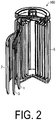
- An embodiment of the secondary battery of the present invention will be described with reference to FIG. 2.
- FIG. 2 is an exploded perspective view of a secondary battery according to the present embodiment.
- a secondary battery 100 has a structure in which an electricity-generating element, obtained by disposing and stacking a separator 3 between a positive electrode 1 and a negative electrode 2, and then winding the laminate structure into a spiral shape, is housed in a metal casing 5.
- the positive electrode 1 corresponds to the electrode structure 10 of FIG. 1 .
- a known material such as a porous film of a polymeric material such as polypropylene or polyethylene may be used as the separator 3.
- a porous film of a polymeric material such as polypropylene or polyethylene
- those members which are ordinarily used in the present field can be used as appropriate.
- the secondary battery 100 is a cylindrical battery, but of course the secondary battery 100 of an embodiment of the present invention is not limited thereto and, for example, may be a secondary battery having another shape such as a coin shape, a square shape, or a paper shape.
- the present invention refers to an electrode mixture according to independent claim 1.
- the first copolymer includes from 90.00 to 99.99 mol% of vinylidene fluoride units
- the second copolymer includes from 70.00 to 99.50 mol% of vinylidene fluoride units (based on the total of the vinylidene fluoride units; and constituent units derived from the polar group-containing compound or the chlorotrifluoroethylene being 100.00 mol%).
- the lithium metal oxide is represented by a ternary lithium metal oxide represented by Formula (3): LiNi x Co y N2 z O 2 ⁇ ⁇ ⁇ (3) where N2 represents either Mn or Al, 0 ⁇ x ⁇ 1, 0 ⁇ y ⁇ 1, and 0 ⁇ z ⁇ 1.
- the polar group-containing compound contains a carboxyl group.
- the polar group-containing compound is an acrylic acid, an acrylic acid derivative, or an unsaturated dibasic acid monoester.
- the compounding ratio of the first copolymer and the second copolymer included in the binder composition is from 35:65 to 85:15 in terms of a mass ratio.
- the present invention also refers to a method for producing an electrode mixture according to independent claim 5.
- the present invention further refers to an electrode structure according to independent claim 6.
- the present invention refers to a method for producing an electrode structure according to independent claim 7.
- the secondary battery according to an embodiment of the present invention includes an electrode structure described in an embodiment of the present invention.
- the pH of the electrode active material was set as the pH of water when the electrode active material was extracted with water at ordinary temperature (25°C). Extraction of the electrode active material into water was performed by an extraction method defined by JIS K 5101-16-2. More specifically, the electrode active material was added to ultrapure water of an amount that was 50 times the weight of the electrode active material, and stirred the mixture for 10 minutes using a magnetic stirrer with a rotation speed of 600 rpm, and then the pH of the solution thereof was measured using a pH meter MODEL: F-21 available from Horiba Ltd.
- ⁇ i 1 / C ⁇ ln ⁇ / ⁇ 0
- ⁇ 0 is the viscosity of the solvent N,N-dimethylformamide
- C is 0.4 g/dL.
- the slurry viscosity of the electrode mixture of the present invention was measured by an E-type viscometer at 25°C with a shear rate of 2 s -1 . Note that the viscosity was measured by charging the slurry into a measuring device, waiting for 60 seconds, and then rotating the rotor. In addition, a value obtained after 300 seconds from the startup of rotation of the rotor was used as the slurry viscosity.
- the viscosity increase change rate was calculated as a percentage by dividing the slurry viscosity after standing for a predetermined amount of time (24 hours or 96 hours) in a nitrogen atmosphere at 40°C by the slurry viscosity before standing for the predetermined amount of time (at 0 hours).
- a one side-coated electrode with a one-side basis weight of 200 g/m 2 was cut to a length of 50 mm and width of 20 mm, and a 90 degree peel test was conducted at a head speed of 10 mm/minute in accordance with JIS K-6854 using a tensile tester ("STA-1150 Universal Testing Machine” available from Orientec Co., Ltd.) to measure the peel strength.
- the peel strength was measured by the following method using a slurry for which a certain amount of time had elapsed.
- the slurry was left to stand in a nitrogen atmosphere at 40°C for 0, 24, and 96 hours. After the slurry was left to stand, electrodes were fabricated, and the peel strength was measured in a similar manner.
- the peel strength change rate was calculated as a percentage by dividing the peel strength of the electrode fabricated from the slurry after standing for a predetermined amount of time (24 hours or 96 hours) by the peel strength of the electrode fabricated from the slurry before standing for the predetermined amount of time (at 0 hours).
- the 1 H NMR spectrum of the polymer powder was determined under the following conditions.
- the amount of constituent units derived from the vinylidene fluoride of the polymer; and the amount of constituent units derived from the polar group-containing compound were calculated from the 1 H NMR spectrum. Specifically, the amounts of the constituent units were calculated on the basis of an integrated intensity of a signal derived mainly from the polar group-containing compound and signals at 2.24 ppm and 2.87 ppm derived mainly from vinylidene fluoride.
- the amount of constituent units derived from acrylic acid of the polymer was determined by neutralization titration using 0.03 mol/L of a sodium hydroxide aqueous solution. More specifically, a solution to be titrated was prepared by dissolving 0.3 g of the polymer in 9.7 g of acetone at approximately 80°C and then adding 3 g of pure water. Phenolphthalein was used as an indicator, and neutralization titration was performed at room temperature using a 0.03 mol/L sodium hydroxide aqueous solution.
- a 6 wt.% acryloyloxy propyl succinate aqueous solution was gradually added at a rate of 0.5 g/minute while the temperature was maintained at 26°C.
- the obtained polymer slurry was dehydrated and dried to obtain a vinylidene fluoride copolymer (VDF/APS copolymer) including a polar group.
- a total of 4.0 g of acryloyloxy propyl succinate was added, including the amount added initially.
- Amounts of 1040 g of ion-exchanged water, 0.4 g of methyl cellulose, 1.6 g of diisopropyl peroxy dicarbonate, 2 g of ethyl acetate, 372 g of vinylidene fluoride, and 28 g of chlorotrifluoroethylene were charged into an autoclave with an internal volume of 2 liters, and suspension polymerization was performed at 28°C.
- VDF/CTFE copolymer a vinylidene fluoride copolymer containing chlorine atoms.
- NMP was added to the VDF/APS copolymer of the first copolymer and the VDF/CTFE copolymer of the second copolymer to produce a 6% binder solution.
- the above-mentioned 6% binder solution was added to an electrode active material (NCA811) and carbon black (SP; SuperP (trade name) available from Timcal Japan KK, average particle size of 40 nm, specific surface area of 60 m 2 /g) as a conductive auxiliary, and primary kneading was performed for 1 minute using a mixer (Awatori Rentaro ARE310, rotational speed of 800 rpm, orbital speed of 2000 rpm, available from Thinky Corporation).
- the composition of this binder composition was 90 wt.% of the first copolymer and 10 wt.% of the second copolymer. Furthermore, in a case where the mass of the electrode active material was considered to be 100 parts, the mass of the binder composition was 2 parts. In addition, when the mass of the electrode active material was considered to be 100 parts, the mass of the conductive auxiliary was 2 parts.
- the electrode mixture obtained as described above was applied onto an aluminum foil having a thickness of 15 ⁇ m with a bar coater, and the thickness of the electrode mixture was approximately 90 ⁇ m.
- the electrode mixture was dried at 110°C for 30 minutes, after which the electrode mixture was further dried at 130°C for 2 hours to obtain a positive electrode.
- a positive electrode was obtained in the same manner as in Example 1 with the exception that, with respect to the electrode mixture, the amount of the first copolymer was set to 75 wt.%, and the amount of the second copolymer was set to 25 wt.%.
- a positive electrode was obtained in the same manner as in Example 1 with the exception that, with respect to the electrode mixture, the amount of the first copolymer was set to 50 wt.%, and the amount of the second copolymer was set to 50 wt.%.
- Amounts of 900 g of ion-exchanged water, 0.4 g of hydroxypropyl methylcellulose, 2 g of butyl peroxypivalate, 396 g of vinylidene fluoride, and an initial addition amount of 0.2 g of acrylic acid were charged in an autoclave with an internal volume of 2 liters, and the mixture was heated to 50°C.
- a 1 wt.% acrylic acid aqueous solution including acrylic acid was continuously supplied to a reaction vessel under a condition of maintaining a constant pressure during polymerization.
- the obtained polymer slurry was dehydrated and dried to obtain a vinylidene fluoride copolymer (VDF/AA copolymer) including a polar group.
- a total of 4 g of acrylic acid was added, including the initially added amount.
- a positive electrode was obtained in the same manner as in Example 1 with the exception that in the binder composition of the electrode mixture, the VDF/AA copolymer was used as the first copolymer, and the VDF/CTFE copolymer was used as the second copolymer,
- Amounts of 1040 g of ion-exchanged water, 0.8 g of methyl cellulose, 2 g of diisopropyl peroxy dicarbonate, 396 g of vinylidene fluoride, and 4 g of monomethyl maleate (vinylidene fluoride: monomethyl maleate 100:1.01) were added to an autoclave with an internal volume of 2 liters, and suspension polymerization was performed at 28°C.
- VDF/MMM copolymer a vinylidene fluoride copolymer
- a positive electrode was obtained in the same manner as in Example 1 with the exception that in the binder composition of the electrode mixture, the VDF/MMM copolymer was used as the first copolymer, and the VDF/CTFE copolymer was used as the second copolymer.
- a positive electrode was obtained in the same manner as in Example 1 with the exception that in the binder composition of the electrode mixture, the VDF/APS copolymer was used as the first copolymer, and the VDF/CTFE/APS copolymer was used as the second copolymer.
- a positive electrode was obtained in the same manner as in Example 1 with the exception that in the binder composition of the electrode mixture, the VDF/CEA copolymer was used as the first copolymer, and the VDF/CTFE copolymer was used as the second copolymer.
- a positive electrode was obtained in the same manner as in Example 1 with the exception that with respect to the electrode mixture, the VDF/CTFE copolymer was set to 100 wt.%.
- a positive electrode was obtained in the same manner as in Comparative Example 1 with the exception that with respect to the electrode mixture, KF #7200 (PVDF) available from Kureha Corporation was set to 100 wt.%.
- a positive electrode was obtained in the same manner as in Example 3 with the exception that with respect to the electrode mixture, #7200 (PVDF) available from Kureha Corporation was used as a first polymer, and a VDF/CTFE copolymer was used as a second copolymer.
- PVDF PVDF
- a positive electrode was obtained in the same manner as in Example 1 with the exception that with respect to the electrode mixture, the VDF/APS copolymer was set to 100 wt.%.
- the electrode active material, the pH of the electrode mixture layer, the slurry viscosity of the electrode mixture, and the peel test results for the electrodes produced using the electrode mixtures are shown in Tables 1 and 2 for each of the examples and comparative examples.
- Table 1 Positive electrode pH Binder Blend ratio Binder inherent viscosity Electrode active material Electrode mixture layer First copolymer Second copolymer wt.% dL/ g First copolymer Second copolymer First copolymer Second copolymer First copolymer Second copolymer Comparative Example 1 NCA811 11.5 11.4 VDF/APS Copolymer VDF/CTFE Copolymer 90 10 2.6 2.1 Comparative Example 2 NCA811 11.5 11.3 VDF/APS Copolymer VDF/CTFE Copolymer 75 25 2.6 2.1
- the electrode mixture of the present invention can be suitably used as a material for producing a positive electrode of a lithium-ion secondary battery.
Landscapes
- Chemical & Material Sciences (AREA)
- Chemical Kinetics & Catalysis (AREA)
- Electrochemistry (AREA)
- General Chemical & Material Sciences (AREA)
- Engineering & Computer Science (AREA)
- Manufacturing & Machinery (AREA)
- Materials Engineering (AREA)
- Inorganic Chemistry (AREA)
- Composite Materials (AREA)
- Battery Electrode And Active Subsutance (AREA)
Priority Applications (1)
| Application Number | Priority Date | Filing Date | Title |
|---|---|---|---|
| PL17872096T PL3544092T3 (pl) | 2016-11-15 | 2017-11-09 | Mieszanina elektrodowa, sposób wytwarzania mieszaniny elektrodowej, struktura elektrody, sposób wytwarzania struktury elektrody i baterii akumulatorowej |
Applications Claiming Priority (2)
| Application Number | Priority Date | Filing Date | Title |
|---|---|---|---|
| JP2016222767 | 2016-11-15 | ||
| PCT/JP2017/040409 WO2018092677A1 (ja) | 2016-11-15 | 2017-11-09 | 電極合剤、電極合剤の製造方法、電極構造体、電極構造体の製造方法および二次電池 |
Publications (3)
| Publication Number | Publication Date |
|---|---|
| EP3544092A1 EP3544092A1 (en) | 2019-09-25 |
| EP3544092A4 EP3544092A4 (en) | 2019-10-23 |
| EP3544092B1 true EP3544092B1 (en) | 2021-10-13 |
Family
ID=62146045
Family Applications (1)
| Application Number | Title | Priority Date | Filing Date |
|---|---|---|---|
| EP17872096.7A Active EP3544092B1 (en) | 2016-11-15 | 2017-11-09 | Electrode mix, method for producing electrode mix, electrode structure, method for producing electrode structure, and secondary battery |
Country Status (8)
| Country | Link |
|---|---|
| US (1) | US11322744B2 (pl) |
| EP (1) | EP3544092B1 (pl) |
| JP (1) | JP6931658B2 (pl) |
| KR (1) | KR102255875B1 (pl) |
| CN (1) | CN109923701B (pl) |
| HU (1) | HUE056701T2 (pl) |
| PL (1) | PL3544092T3 (pl) |
| WO (1) | WO2018092677A1 (pl) |
Families Citing this family (9)
| Publication number | Priority date | Publication date | Assignee | Title |
|---|---|---|---|---|
| JP7017468B2 (ja) * | 2018-05-15 | 2022-02-08 | 株式会社クレハ | 電極合剤、電極合剤の製造方法、電極構造体、電極構造体の製造方法および二次電池 |
| JP6733796B2 (ja) * | 2018-10-03 | 2020-08-05 | ダイキン工業株式会社 | 正極構造体および二次電池 |
| WO2021018615A1 (en) * | 2019-07-29 | 2021-02-04 | Solvay Specialty Polymers Italy S.P.A. | Secondary batteries |
| FR3106702B1 (fr) * | 2020-01-29 | 2022-10-07 | Arkema France | Formulation d’electrode pour batterie li-ion et procede de fabrication d’electrode sans solvant |
| KR102864401B1 (ko) * | 2021-03-26 | 2025-09-24 | 주식회사 엘지에너지솔루션 | 리튬 이차전지용 양극 및 리튬 이차전지 |
| CN113871623B (zh) * | 2021-09-28 | 2022-12-27 | 星恒电源股份有限公司 | 锂离子电池高镍正极材料浆料,其制备方法及锂离子电池 |
| WO2023182308A1 (ja) | 2022-03-25 | 2023-09-28 | 株式会社クレハ | バインダー、電極合剤、電極、およびリチウムイオン二次電池 |
| US11643486B1 (en) * | 2022-06-08 | 2023-05-09 | Arkema Inc. | Non-linear vinylidene fluoride copolymers |
| WO2025182503A1 (ja) * | 2024-02-28 | 2025-09-04 | 株式会社クレハ | バインダー、電極合剤、電極、および電池 |
Family Cites Families (18)
| Publication number | Priority date | Publication date | Assignee | Title |
|---|---|---|---|---|
| JP3518712B2 (ja) * | 1996-05-27 | 2004-04-12 | 呉羽化学工業株式会社 | 非水系電池電極形成用バインダー、電極合剤、電極構造体および電池 |
| JPH1167274A (ja) | 1997-08-22 | 1999-03-09 | Daikin Ind Ltd | リチウム二次電池及び高分子ゲル電解質並びにリチウム二次電池用結着剤 |
| JP4253051B2 (ja) * | 1997-12-26 | 2009-04-08 | 株式会社クレハ | 非水系電池用電極合剤および非水系電池 |
| JP2003257480A (ja) * | 2002-02-27 | 2003-09-12 | Fuji Photo Film Co Ltd | 電解質組成物及び非水二次電池 |
| TW200410439A (en) * | 2002-11-22 | 2004-06-16 | Kureha Chemical Ind Co Ltd | Binder composition for electrode of nonaqueous electrolyte battery, and use thereof |
| CN100508256C (zh) * | 2004-03-23 | 2009-07-01 | 株式会社吴羽 | 非水性电化学元件电极形成用粘合剂、电极合剂、电极结构体及电化学元件 |
| JP2007317534A (ja) * | 2006-05-26 | 2007-12-06 | Sony Corp | 非水電解質二次電池 |
| TWI437009B (zh) * | 2007-04-24 | 2014-05-11 | Solvay Solexis Spa | 1,1-二氟乙烯共聚物類 |
| CN102187503A (zh) | 2008-12-26 | 2011-09-14 | 株式会社吴羽 | 非水电解质二次电池用负极混合物、非水电解质二次电池用负极及非水电解质二次电池 |
| CN102308417B (zh) | 2009-02-12 | 2014-04-02 | 大金工业株式会社 | 锂二次电池的正极合剂用浆料、使用了该浆料的正极和锂二次电池 |
| KR20130143551A (ko) | 2010-09-30 | 2013-12-31 | 아사히 가라스 가부시키가이샤 | 비수계 이차 전지용 정극 합제, 그것을 사용한 비수계 이차 전지용 정극 및 이차 전지 |
| JP5797206B2 (ja) | 2010-12-28 | 2015-10-21 | 株式会社クレハ | フッ化ビニリデン系共重合体、および該共重合体の用途 |
| JP2012174569A (ja) | 2011-02-23 | 2012-09-10 | Hitachi Maxell Energy Ltd | 正極合剤層形成用スラリーの調製方法および非水電解液二次電池の製造方法 |
| WO2012177088A1 (ko) | 2011-06-23 | 2012-12-27 | 주식회사 나노브릭 | 자성 입자 표면 처리 방법, 이에 의해 제조된 자성 복합체, 및 타겟 물질 표지용 자성 복합체 |
| JP5932471B2 (ja) | 2012-05-08 | 2016-06-08 | 日立オートモティブシステムズ株式会社 | リチウムイオン二次電池及びその製造方法 |
| JP2014007088A (ja) | 2012-06-26 | 2014-01-16 | Hitachi Maxell Ltd | 非水電解質二次電池およびその製造方法 |
| CN104725545A (zh) * | 2013-12-23 | 2015-06-24 | 浙江蓝天环保高科技股份有限公司 | 一种新型高粘结性偏氟乙烯共聚物 |
| KR102222117B1 (ko) * | 2014-01-10 | 2021-03-03 | 삼성에스디아이 주식회사 | 2차전지용 바인더 조성물, 이를 채용한 양극과 리튬전지 |
-
2017
- 2017-11-09 US US16/348,216 patent/US11322744B2/en active Active
- 2017-11-09 HU HUE17872096A patent/HUE056701T2/hu unknown
- 2017-11-09 CN CN201780067246.2A patent/CN109923701B/zh active Active
- 2017-11-09 WO PCT/JP2017/040409 patent/WO2018092677A1/ja not_active Ceased
- 2017-11-09 EP EP17872096.7A patent/EP3544092B1/en active Active
- 2017-11-09 JP JP2018551596A patent/JP6931658B2/ja active Active
- 2017-11-09 KR KR1020197012164A patent/KR102255875B1/ko active Active
- 2017-11-09 PL PL17872096T patent/PL3544092T3/pl unknown
Also Published As
| Publication number | Publication date |
|---|---|
| HUE056701T2 (hu) | 2022-03-28 |
| JPWO2018092677A1 (ja) | 2019-10-17 |
| CN109923701A (zh) | 2019-06-21 |
| KR20190058595A (ko) | 2019-05-29 |
| KR102255875B1 (ko) | 2021-05-25 |
| WO2018092677A1 (ja) | 2018-05-24 |
| EP3544092A4 (en) | 2019-10-23 |
| US20190326602A1 (en) | 2019-10-24 |
| JP6931658B2 (ja) | 2021-09-08 |
| CN109923701B (zh) | 2022-08-02 |
| EP3544092A1 (en) | 2019-09-25 |
| PL3544092T3 (pl) | 2022-01-03 |
| US11322744B2 (en) | 2022-05-03 |
Similar Documents
| Publication | Publication Date | Title |
|---|---|---|
| EP3544092B1 (en) | Electrode mix, method for producing electrode mix, electrode structure, method for producing electrode structure, and secondary battery | |
| EP3358662B1 (en) | Binder composition, non-aqueous electrolyte secondary battery electrode, and non-aqueous electrolyte secondary battery | |
| EP3796430B1 (en) | Electrode mixture, electrode mixture production method, electrode structure, electrode structure production method, and secondary battery | |
| KR102325232B1 (ko) | 바인더 조성물, 전극 합제, 전극 및 비수 전해질 이차전지 | |
| EP3483962B1 (en) | Electrode mixture, electrode, non-aqueous electrolyte secondary battery, and electrode mixture production method | |
| EP3809500A1 (en) | Binder composition, electrode mixture, electrode structure, method for manufacturing electrode structure, and secondary cell | |
| KR102561871B1 (ko) | 전극 합제, 전극 합제의 제조방법, 전극 구조체, 전극 구조체의 제조방법 및 이차전지 | |
| JPWO2018235722A1 (ja) | 電気化学素子電極用バインダー組成物、電気化学素子電極用組成物、電気化学素子用電極、及び電気化学素子 | |
| JP7062476B2 (ja) | バインダー組成物、電極合剤原料、電極合剤、電極、非水電解質二次電池および電極合剤の製造方法 | |
| EP2911225A1 (en) | Method for producing binder composition for electrical storage devices | |
| WO2018092676A1 (ja) | 電極合剤、電極合剤の製造方法、電極構造体、電極構造体の製造方法および二次電池 | |
| JP7209420B2 (ja) | 非水電解質二次電池用電極 | |
| KR20200090820A (ko) | 흑연/규소 애노드용 pvdf 결합제 | |
| EP4459719A1 (en) | Adhesive, electrode composition, and electrode | |
| KR20240055012A (ko) | 바인더 조성물, 전극 합제, 전극 및 비수 전해질 이차 전지 |
Legal Events
| Date | Code | Title | Description |
|---|---|---|---|
| STAA | Information on the status of an ep patent application or granted ep patent |
Free format text: STATUS: THE INTERNATIONAL PUBLICATION HAS BEEN MADE |
|
| PUAI | Public reference made under article 153(3) epc to a published international application that has entered the european phase |
Free format text: ORIGINAL CODE: 0009012 |
|
| STAA | Information on the status of an ep patent application or granted ep patent |
Free format text: STATUS: REQUEST FOR EXAMINATION WAS MADE |
|
| 17P | Request for examination filed |
Effective date: 20190503 |
|
| AK | Designated contracting states |
Kind code of ref document: A1 Designated state(s): AL AT BE BG CH CY CZ DE DK EE ES FI FR GB GR HR HU IE IS IT LI LT LU LV MC MK MT NL NO PL PT RO RS SE SI SK SM TR |
|
| AX | Request for extension of the european patent |
Extension state: BA ME |
|
| A4 | Supplementary search report drawn up and despatched |
Effective date: 20190923 |
|
| RIC1 | Information provided on ipc code assigned before grant |
Ipc: H01M 4/48 20100101ALI20190917BHEP Ipc: H01M 4/131 20100101AFI20190917BHEP Ipc: H01M 4/62 20060101ALI20190917BHEP |
|
| DAV | Request for validation of the european patent (deleted) | ||
| DAX | Request for extension of the european patent (deleted) | ||
| GRAP | Despatch of communication of intention to grant a patent |
Free format text: ORIGINAL CODE: EPIDOSNIGR1 |
|
| STAA | Information on the status of an ep patent application or granted ep patent |
Free format text: STATUS: GRANT OF PATENT IS INTENDED |
|
| INTG | Intention to grant announced |
Effective date: 20210512 |
|
| GRAS | Grant fee paid |
Free format text: ORIGINAL CODE: EPIDOSNIGR3 |
|
| GRAA | (expected) grant |
Free format text: ORIGINAL CODE: 0009210 |
|
| STAA | Information on the status of an ep patent application or granted ep patent |
Free format text: STATUS: THE PATENT HAS BEEN GRANTED |
|
| AK | Designated contracting states |
Kind code of ref document: B1 Designated state(s): AL AT BE BG CH CY CZ DE DK EE ES FI FR GB GR HR HU IE IS IT LI LT LU LV MC MK MT NL NO PL PT RO RS SE SI SK SM TR |
|
| REG | Reference to a national code |
Ref country code: GB Ref legal event code: FG4D |
|
| REG | Reference to a national code |
Ref country code: CH Ref legal event code: EP |
|
| REG | Reference to a national code |
Ref country code: DE Ref legal event code: R096 Ref document number: 602017047721 Country of ref document: DE |
|
| REG | Reference to a national code |
Ref country code: IE Ref legal event code: FG4D |
|
| REG | Reference to a national code |
Ref country code: AT Ref legal event code: REF Ref document number: 1438821 Country of ref document: AT Kind code of ref document: T Effective date: 20211115 |
|
| REG | Reference to a national code |
Ref country code: SE Ref legal event code: TRGR |
|
| REG | Reference to a national code |
Ref country code: LT Ref legal event code: MG9D |
|
| REG | Reference to a national code |
Ref country code: NL Ref legal event code: MP Effective date: 20211013 |
|
| REG | Reference to a national code |
Ref country code: AT Ref legal event code: MK05 Ref document number: 1438821 Country of ref document: AT Kind code of ref document: T Effective date: 20211013 |
|
| REG | Reference to a national code |
Ref country code: HU Ref legal event code: AG4A Ref document number: E056701 Country of ref document: HU |
|
| PG25 | Lapsed in a contracting state [announced via postgrant information from national office to epo] |
Ref country code: RS Free format text: LAPSE BECAUSE OF FAILURE TO SUBMIT A TRANSLATION OF THE DESCRIPTION OR TO PAY THE FEE WITHIN THE PRESCRIBED TIME-LIMIT Effective date: 20211013 Ref country code: LT Free format text: LAPSE BECAUSE OF FAILURE TO SUBMIT A TRANSLATION OF THE DESCRIPTION OR TO PAY THE FEE WITHIN THE PRESCRIBED TIME-LIMIT Effective date: 20211013 Ref country code: FI Free format text: LAPSE BECAUSE OF FAILURE TO SUBMIT A TRANSLATION OF THE DESCRIPTION OR TO PAY THE FEE WITHIN THE PRESCRIBED TIME-LIMIT Effective date: 20211013 Ref country code: BG Free format text: LAPSE BECAUSE OF FAILURE TO SUBMIT A TRANSLATION OF THE DESCRIPTION OR TO PAY THE FEE WITHIN THE PRESCRIBED TIME-LIMIT Effective date: 20220113 Ref country code: AT Free format text: LAPSE BECAUSE OF FAILURE TO SUBMIT A TRANSLATION OF THE DESCRIPTION OR TO PAY THE FEE WITHIN THE PRESCRIBED TIME-LIMIT Effective date: 20211013 |
|
| PG25 | Lapsed in a contracting state [announced via postgrant information from national office to epo] |
Ref country code: IS Free format text: LAPSE BECAUSE OF FAILURE TO SUBMIT A TRANSLATION OF THE DESCRIPTION OR TO PAY THE FEE WITHIN THE PRESCRIBED TIME-LIMIT Effective date: 20220213 Ref country code: PT Free format text: LAPSE BECAUSE OF FAILURE TO SUBMIT A TRANSLATION OF THE DESCRIPTION OR TO PAY THE FEE WITHIN THE PRESCRIBED TIME-LIMIT Effective date: 20220214 Ref country code: NO Free format text: LAPSE BECAUSE OF FAILURE TO SUBMIT A TRANSLATION OF THE DESCRIPTION OR TO PAY THE FEE WITHIN THE PRESCRIBED TIME-LIMIT Effective date: 20220113 Ref country code: NL Free format text: LAPSE BECAUSE OF FAILURE TO SUBMIT A TRANSLATION OF THE DESCRIPTION OR TO PAY THE FEE WITHIN THE PRESCRIBED TIME-LIMIT Effective date: 20211013 Ref country code: LV Free format text: LAPSE BECAUSE OF FAILURE TO SUBMIT A TRANSLATION OF THE DESCRIPTION OR TO PAY THE FEE WITHIN THE PRESCRIBED TIME-LIMIT Effective date: 20211013 Ref country code: HR Free format text: LAPSE BECAUSE OF FAILURE TO SUBMIT A TRANSLATION OF THE DESCRIPTION OR TO PAY THE FEE WITHIN THE PRESCRIBED TIME-LIMIT Effective date: 20211013 Ref country code: GR Free format text: LAPSE BECAUSE OF FAILURE TO SUBMIT A TRANSLATION OF THE DESCRIPTION OR TO PAY THE FEE WITHIN THE PRESCRIBED TIME-LIMIT Effective date: 20220114 Ref country code: ES Free format text: LAPSE BECAUSE OF FAILURE TO SUBMIT A TRANSLATION OF THE DESCRIPTION OR TO PAY THE FEE WITHIN THE PRESCRIBED TIME-LIMIT Effective date: 20211013 |
|
| REG | Reference to a national code |
Ref country code: DE Ref legal event code: R097 Ref document number: 602017047721 Country of ref document: DE |
|
| REG | Reference to a national code |
Ref country code: CH Ref legal event code: PL |
|
| PG25 | Lapsed in a contracting state [announced via postgrant information from national office to epo] |
Ref country code: SM Free format text: LAPSE BECAUSE OF FAILURE TO SUBMIT A TRANSLATION OF THE DESCRIPTION OR TO PAY THE FEE WITHIN THE PRESCRIBED TIME-LIMIT Effective date: 20211013 Ref country code: SK Free format text: LAPSE BECAUSE OF FAILURE TO SUBMIT A TRANSLATION OF THE DESCRIPTION OR TO PAY THE FEE WITHIN THE PRESCRIBED TIME-LIMIT Effective date: 20211013 Ref country code: RO Free format text: LAPSE BECAUSE OF FAILURE TO SUBMIT A TRANSLATION OF THE DESCRIPTION OR TO PAY THE FEE WITHIN THE PRESCRIBED TIME-LIMIT Effective date: 20211013 Ref country code: MC Free format text: LAPSE BECAUSE OF FAILURE TO SUBMIT A TRANSLATION OF THE DESCRIPTION OR TO PAY THE FEE WITHIN THE PRESCRIBED TIME-LIMIT Effective date: 20211013 Ref country code: LU Free format text: LAPSE BECAUSE OF NON-PAYMENT OF DUE FEES Effective date: 20211109 Ref country code: EE Free format text: LAPSE BECAUSE OF FAILURE TO SUBMIT A TRANSLATION OF THE DESCRIPTION OR TO PAY THE FEE WITHIN THE PRESCRIBED TIME-LIMIT Effective date: 20211013 Ref country code: DK Free format text: LAPSE BECAUSE OF FAILURE TO SUBMIT A TRANSLATION OF THE DESCRIPTION OR TO PAY THE FEE WITHIN THE PRESCRIBED TIME-LIMIT Effective date: 20211013 Ref country code: CZ Free format text: LAPSE BECAUSE OF FAILURE TO SUBMIT A TRANSLATION OF THE DESCRIPTION OR TO PAY THE FEE WITHIN THE PRESCRIBED TIME-LIMIT Effective date: 20211013 Ref country code: BE Free format text: LAPSE BECAUSE OF NON-PAYMENT OF DUE FEES Effective date: 20211130 |
|
| REG | Reference to a national code |
Ref country code: BE Ref legal event code: MM Effective date: 20211130 |
|
| PLBE | No opposition filed within time limit |
Free format text: ORIGINAL CODE: 0009261 |
|
| STAA | Information on the status of an ep patent application or granted ep patent |
Free format text: STATUS: NO OPPOSITION FILED WITHIN TIME LIMIT |
|
| 26N | No opposition filed |
Effective date: 20220714 |
|
| PG25 | Lapsed in a contracting state [announced via postgrant information from national office to epo] |
Ref country code: IE Free format text: LAPSE BECAUSE OF NON-PAYMENT OF DUE FEES Effective date: 20211109 Ref country code: AL Free format text: LAPSE BECAUSE OF FAILURE TO SUBMIT A TRANSLATION OF THE DESCRIPTION OR TO PAY THE FEE WITHIN THE PRESCRIBED TIME-LIMIT Effective date: 20211013 |
|
| PG25 | Lapsed in a contracting state [announced via postgrant information from national office to epo] |
Ref country code: SI Free format text: LAPSE BECAUSE OF FAILURE TO SUBMIT A TRANSLATION OF THE DESCRIPTION OR TO PAY THE FEE WITHIN THE PRESCRIBED TIME-LIMIT Effective date: 20211013 |
|
| PG25 | Lapsed in a contracting state [announced via postgrant information from national office to epo] |
Ref country code: IT Free format text: LAPSE BECAUSE OF FAILURE TO SUBMIT A TRANSLATION OF THE DESCRIPTION OR TO PAY THE FEE WITHIN THE PRESCRIBED TIME-LIMIT Effective date: 20211013 |
|
| P01 | Opt-out of the competence of the unified patent court (upc) registered |
Effective date: 20230512 |
|
| PG25 | Lapsed in a contracting state [announced via postgrant information from national office to epo] |
Ref country code: CY Free format text: LAPSE BECAUSE OF FAILURE TO SUBMIT A TRANSLATION OF THE DESCRIPTION OR TO PAY THE FEE WITHIN THE PRESCRIBED TIME-LIMIT Effective date: 20211013 |
|
| PG25 | Lapsed in a contracting state [announced via postgrant information from national office to epo] |
Ref country code: LI Free format text: LAPSE BECAUSE OF NON-PAYMENT OF DUE FEES Effective date: 20220701 Ref country code: CH Free format text: LAPSE BECAUSE OF NON-PAYMENT OF DUE FEES Effective date: 20220701 |
|
| PG25 | Lapsed in a contracting state [announced via postgrant information from national office to epo] |
Ref country code: MK Free format text: LAPSE BECAUSE OF FAILURE TO SUBMIT A TRANSLATION OF THE DESCRIPTION OR TO PAY THE FEE WITHIN THE PRESCRIBED TIME-LIMIT Effective date: 20211013 |
|
| PG25 | Lapsed in a contracting state [announced via postgrant information from national office to epo] |
Ref country code: MT Free format text: LAPSE BECAUSE OF FAILURE TO SUBMIT A TRANSLATION OF THE DESCRIPTION OR TO PAY THE FEE WITHIN THE PRESCRIBED TIME-LIMIT Effective date: 20211013 |
|
| PG25 | Lapsed in a contracting state [announced via postgrant information from national office to epo] |
Ref country code: TR Free format text: LAPSE BECAUSE OF FAILURE TO SUBMIT A TRANSLATION OF THE DESCRIPTION OR TO PAY THE FEE WITHIN THE PRESCRIBED TIME-LIMIT Effective date: 20211013 |
|
| PGFP | Annual fee paid to national office [announced via postgrant information from national office to epo] |
Ref country code: HU Payment date: 20251121 Year of fee payment: 9 |
|
| PGFP | Annual fee paid to national office [announced via postgrant information from national office to epo] |
Ref country code: DE Payment date: 20251119 Year of fee payment: 9 |
|
| PGFP | Annual fee paid to national office [announced via postgrant information from national office to epo] |
Ref country code: GB Payment date: 20251121 Year of fee payment: 9 |
|
| PGFP | Annual fee paid to national office [announced via postgrant information from national office to epo] |
Ref country code: FR Payment date: 20251126 Year of fee payment: 9 |
|
| PGFP | Annual fee paid to national office [announced via postgrant information from national office to epo] |
Ref country code: SE Payment date: 20251119 Year of fee payment: 9 |
|
| PGFP | Annual fee paid to national office [announced via postgrant information from national office to epo] |
Ref country code: PL Payment date: 20251022 Year of fee payment: 9 |