EP3512850B1 - Inhibitors of the menin-mll interaction - Google Patents
Inhibitors of the menin-mll interaction Download PDFInfo
- Publication number
- EP3512850B1 EP3512850B1 EP17772585.0A EP17772585A EP3512850B1 EP 3512850 B1 EP3512850 B1 EP 3512850B1 EP 17772585 A EP17772585 A EP 17772585A EP 3512850 B1 EP3512850 B1 EP 3512850B1
- Authority
- EP
- European Patent Office
- Prior art keywords
- pyrrolo
- methyl
- pyridin
- fluoro
- isopropyl
- Prior art date
- Legal status (The legal status is an assumption and is not a legal conclusion. Google has not performed a legal analysis and makes no representation as to the accuracy of the status listed.)
- Active
Links
Images
Classifications
-
- C—CHEMISTRY; METALLURGY
- C07—ORGANIC CHEMISTRY
- C07D—HETEROCYCLIC COMPOUNDS
- C07D471/00—Heterocyclic compounds containing nitrogen atoms as the only ring hetero atoms in the condensed system, at least one ring being a six-membered ring with one nitrogen atom, not provided for by groups C07D451/00 - C07D463/00
- C07D471/02—Heterocyclic compounds containing nitrogen atoms as the only ring hetero atoms in the condensed system, at least one ring being a six-membered ring with one nitrogen atom, not provided for by groups C07D451/00 - C07D463/00 in which the condensed system contains two hetero rings
- C07D471/04—Ortho-condensed systems
-
- A—HUMAN NECESSITIES
- A61—MEDICAL OR VETERINARY SCIENCE; HYGIENE
- A61K—PREPARATIONS FOR MEDICAL, DENTAL OR TOILETRY PURPOSES
- A61K31/00—Medicinal preparations containing organic active ingredients
- A61K31/33—Heterocyclic compounds
- A61K31/395—Heterocyclic compounds having nitrogen as a ring hetero atom, e.g. guanethidine or rifamycins
- A61K31/435—Heterocyclic compounds having nitrogen as a ring hetero atom, e.g. guanethidine or rifamycins having six-membered rings with one nitrogen as the only ring hetero atom
- A61K31/4353—Heterocyclic compounds having nitrogen as a ring hetero atom, e.g. guanethidine or rifamycins having six-membered rings with one nitrogen as the only ring hetero atom ortho- or peri-condensed with heterocyclic ring systems
- A61K31/437—Heterocyclic compounds having nitrogen as a ring hetero atom, e.g. guanethidine or rifamycins having six-membered rings with one nitrogen as the only ring hetero atom ortho- or peri-condensed with heterocyclic ring systems the heterocyclic ring system containing a five-membered ring having nitrogen as a ring hetero atom, e.g. indolizine, beta-carboline
-
- A—HUMAN NECESSITIES
- A61—MEDICAL OR VETERINARY SCIENCE; HYGIENE
- A61K—PREPARATIONS FOR MEDICAL, DENTAL OR TOILETRY PURPOSES
- A61K31/00—Medicinal preparations containing organic active ingredients
- A61K31/33—Heterocyclic compounds
- A61K31/395—Heterocyclic compounds having nitrogen as a ring hetero atom, e.g. guanethidine or rifamycins
- A61K31/495—Heterocyclic compounds having nitrogen as a ring hetero atom, e.g. guanethidine or rifamycins having six-membered rings with two or more nitrogen atoms as the only ring heteroatoms, e.g. piperazine or tetrazines
- A61K31/50—Pyridazines; Hydrogenated pyridazines
- A61K31/5025—Pyridazines; Hydrogenated pyridazines ortho- or peri-condensed with heterocyclic ring systems
-
- A—HUMAN NECESSITIES
- A61—MEDICAL OR VETERINARY SCIENCE; HYGIENE
- A61K—PREPARATIONS FOR MEDICAL, DENTAL OR TOILETRY PURPOSES
- A61K31/00—Medicinal preparations containing organic active ingredients
- A61K31/33—Heterocyclic compounds
- A61K31/395—Heterocyclic compounds having nitrogen as a ring hetero atom, e.g. guanethidine or rifamycins
- A61K31/495—Heterocyclic compounds having nitrogen as a ring hetero atom, e.g. guanethidine or rifamycins having six-membered rings with two or more nitrogen atoms as the only ring heteroatoms, e.g. piperazine or tetrazines
- A61K31/505—Pyrimidines; Hydrogenated pyrimidines, e.g. trimethoprim
- A61K31/519—Pyrimidines; Hydrogenated pyrimidines, e.g. trimethoprim ortho- or peri-condensed with heterocyclic rings
-
- A—HUMAN NECESSITIES
- A61—MEDICAL OR VETERINARY SCIENCE; HYGIENE
- A61P—SPECIFIC THERAPEUTIC ACTIVITY OF CHEMICAL COMPOUNDS OR MEDICINAL PREPARATIONS
- A61P3/00—Drugs for disorders of the metabolism
- A61P3/08—Drugs for disorders of the metabolism for glucose homeostasis
- A61P3/10—Drugs for disorders of the metabolism for glucose homeostasis for hyperglycaemia, e.g. antidiabetics
-
- A—HUMAN NECESSITIES
- A61—MEDICAL OR VETERINARY SCIENCE; HYGIENE
- A61P—SPECIFIC THERAPEUTIC ACTIVITY OF CHEMICAL COMPOUNDS OR MEDICINAL PREPARATIONS
- A61P35/00—Antineoplastic agents
-
- A—HUMAN NECESSITIES
- A61—MEDICAL OR VETERINARY SCIENCE; HYGIENE
- A61P—SPECIFIC THERAPEUTIC ACTIVITY OF CHEMICAL COMPOUNDS OR MEDICINAL PREPARATIONS
- A61P35/00—Antineoplastic agents
- A61P35/02—Antineoplastic agents specific for leukemia
-
- A—HUMAN NECESSITIES
- A61—MEDICAL OR VETERINARY SCIENCE; HYGIENE
- A61P—SPECIFIC THERAPEUTIC ACTIVITY OF CHEMICAL COMPOUNDS OR MEDICINAL PREPARATIONS
- A61P5/00—Drugs for disorders of the endocrine system
- A61P5/48—Drugs for disorders of the endocrine system of the pancreatic hormones
- A61P5/50—Drugs for disorders of the endocrine system of the pancreatic hormones for increasing or potentiating the activity of insulin
-
- C—CHEMISTRY; METALLURGY
- C07—ORGANIC CHEMISTRY
- C07D—HETEROCYCLIC COMPOUNDS
- C07D487/00—Heterocyclic compounds containing nitrogen atoms as the only ring hetero atoms in the condensed system, not provided for by groups C07D451/00 - C07D477/00
- C07D487/02—Heterocyclic compounds containing nitrogen atoms as the only ring hetero atoms in the condensed system, not provided for by groups C07D451/00 - C07D477/00 in which the condensed system contains two hetero rings
- C07D487/04—Ortho-condensed systems
Definitions
- the present invention is directed to inhibitors of the interaction of menin with MLL and MLL fusion proteins, pharmaceutical compositions containing the same, and their use in the treatment of cancer and other diseases mediated by the menin-MLL interaction.
- the mixed-lineage leukemia (MLL) protein is a histone methyltransferase that is mutated in clinically and biologically distinctive subsets of acute leukemia.
- Rearranged mixed lineage leukemia (MLL-r) involves recurrent translocations of the 11q23 chromosome locus which lead to an aggressive form of acute leukemia with limited therapeutic options. These translocations target the MLL gene creating an oncogenic fusion protein comprising the amino-terminus of MLL fused in frame with more than 60 different fusion protein partners.
- Menin a ubiquitously expressed, nuclear protein encoded by the multiple endocrine neoplasia type 1 (MEN1) tumor suppressor gene, has a high affinity binding interaction with MLL fusion proteins and is an essential co-factor of oncogenic MLL-r fusion proteins ( Yokoyama et al., 2005, Cell, 123:207-18 ; Cierpicki & Grembecka, 2014, Future Med. Chem., 6:447-462 ). Disruption of this interaction leads to selective growth inhibition and apoptosis of MLL-r leukemia cells both in vitro ( Grembecka et al., 2012, Nat. Chem. Biol., 8:277-284 ) and in vivo (Yokoyama et al., 2005, op. cit.; Borkin et al., 2015, Cancer Cell, 27:589-602 ).
- MEN1 multiple endocrine neoplasia type 1
- the menin-MLL complex plays a role in castration-resistant/advanced prostate cancer, and a menin-MLL inhibitor has been shown to reduce tumor growth in vivo ( Malik et al., 2015, Nat. Med., 21:344-352 ). Additionally, a menin-MLL inhibitor has been shown to enhance human ⁇ cell proliferation ( Chamberlain et al., 2014, J. Clin. Invest., 124:4093-4101 ), supporting a role for inhibitors of the menin-MLL interaction in the treatment of diabetes ( Yang et al., 2010, Proc Natl Acad Sci U S A., 107:20358-20363 ). The interaction between menin and MLL or MLL fusion proteins is an attractive target for therapeutic intervention, and there is a need for novel agents that inhibit the menin-MLL interaction for the treatment of various diseases and conditions, including leukemia, other cancers and diabetes.
- WO 2011/113798 A2 discloses new enzyme inhibitor compounds.
- US 2010/144758 A1 discloses azaindole P2X3 and P2X2/3 modulators.
- WO 2015/058084 A1 discloses heterocyclic compounds and methods of use.
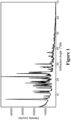
- Figure 1 shows an XRPD pattern characteristic of 5-fluoro-N-isopropyl-N-methyl-2-(3-(1-((2-oxo-2,3-dihydro-1H-benzo[d]imidazol-5-yl)methyl)piperidin-3-yl)-1H-pyrrolo[2,3-c]pyridin-1-yl)benzamide mono-(2R,3S,4R,5S)-2,3,4,5-tetrahydroxyhexanedioic acid (mucate) salt.
- the present invention provides inhibitors of the menin-MLL interaction, such as a compound of Formula I: or a pharmaceutically acceptable salt thereof, wherein constituent variables are defined herein.
- the present invention further provides a pharmaceutical composition
- a pharmaceutical composition comprising a compound of Formula I, or a pharmaceutically acceptable salt thereof, and at least one pharmaceutically acceptable carrier.
- the present application further provides a compound of Formula I, or a pharmaceutically acceptable salt thereof, for use in inhibiting the interaction between menin and MLL.
- the present application further provides a compound of Formula I, or a pharmaceutically acceptable salt thereof, for use in treatment of cancer in a patient.
- the present application further provides a compound of Formula I, or a pharmaceutically acceptable salt thereof, for use in treatment of insulin resistance, pre-diabetes, diabetes, risk of diabetes, or hyperglycemia in a patient.
- the present invention provides inhibitors of the menin-MLL interaction, such as a compound of Formula I: or a pharmaceutically acceptable salt thereof, wherein:
- L is selected from -C 1-6 alkylene- and -(C 1-4 alkylene) a -Q-(C 1-4 alkylene) b -, wherein the C 1-6 alkylene group and any C 1-4 alkylene group of the -(C 1-4 alkylene) a -Q-(C 1-4 alkylene) b - group is optionally substituted with 1, 2, or 3 substituents independently selected from halo, CN, OH, C 1-3 alkyl, C 1-3 alkoxy, C 1-3 haloalkyl, C 1-3 haloalkoxy, amino, C 1-3 alkylamino, and di(C 1-3 alkyl)amino; each R q1 is independently selected from H and C 1-6 alkyl;
- U is N.
- U is CR U .
- X is F
- X is Cl
- the moiety is N-(2-aminoethyl)-2-aminoethyl-N-(2-aminoethyl)-2-aminoethyl-N-(2-aminoethyl)-2-aminoethyl-N-(2-aminoethyl)-2-aminoethyl-N-(2-aminoethyl)-2-aminoethyl
- the moiety is N-(2-aminoethyl)-2-aminoethyl-N-(2-aminoethyl)-2-aminoethyl-N-(2-aminoethyl)-2-aminoethyl-N-(2-aminoethyl)-2-aminoethyl-N-(2-aminoethyl)-2-aminoethyl
- the moiety is N-(2-aminoethyl)-2-aminoethyl-N-(2-aminoethyl)-2-aminoethyl-N-(2-aminoethyl)-2-aminoethyl-N-(2-aminoethyl)-2-aminoethyl-N-(2-aminoethyl)-2-aminoethyl
- the moiety is N-(2-aminoethyl)-2-aminoethyl-N-(2-aminoethyl)-2-aminoethyl-N-(2-aminoethyl)-2-aminoethyl-N-(2-aminoethyl)-2-aminoethyl-N-(2-aminoethyl)-2-aminoethyl
- the moiety is N-(2-aminoethyl)-2-aminoethyl-N-(2-aminoethyl)-2-aminoethyl-N-(2-aminoethyl)-2-aminoethyl-N-(2-aminoethyl)-2-aminoethyl-N-(2-aminoethyl)-2-aminoethyl
- the moiety is N-(2-aminoethyl)-2-aminoethyl-N-(2-aminoethyl)-2-aminoethyl-N-(2-aminoethyl)-2-aminoethyl-N-(2-aminoethyl)-2-aminoethyl-N-(2-aminoethyl)-2-aminoethyl
- the moiety is N-(2-aminoethyl)-2-aminoethyl-N-(2-aminoethyl)-2-aminoethyl-N-(2-aminoethyl)-2-aminoethyl-N-(2-aminoethyl)-2-aminoethyl-N-(2-aminoethyl)-2-aminoethyl
- Ring A is a 5-10 membered heteroaryl group, C 3-10 cycloalkyl group, or a 4-10 membered heterocycloalkyl group. In some embodiments, Ring A is a C 3-6 cycloalkyl group or 4-10 membered heterocycloalkyl group. In some embodiments, Ring A is a monocyclic ring group. In some embodiments, Ring A is a polycyclic ring group (e.g., a bicyclic, fused, or spiro ring group).
- Ring A is a group having the formula: wherein e and f indicate points of attachment to the remainder of the molecule.
- Ring A is a group having the formula: wherein e and f indicate points of attachment to the remainder of the molecule.
- L is selected from -C 1-6 alkylene- and -(C 1-4 alkylene) a -Q-(C 1-4 alkylene) b -, wherein the C 1-6 alkylene group and any C 1-4 alkylene group of the - (C 1-4 alkylene) a -Q-(C 1-4 alkylene) b - group is optionally substituted with 1, 2, or 3 substituents independently selected from halo, CN, OH, C 1-3 alkyl, C 1-3 alkoxy, C 1-3 hydroxyalkyl, C 1-3 haloalkyl, C 1-3 haloalkoxy, amino, C 1-3 alkylamino, and di(C 1-3 alkyl)amino;
- L is -C 1-6 alkylene- optionally substituted with 1, 2, or 3 substituents independently selected from halo, CN, OH, C 1-3 alkyl, C 1-3 alkoxy, C 1-3 haloalkyl, C 1-3 haloalkoxy, amino, C 1-3 alkylamino, and di(C 1-3 alkyl)amino.
- L is -C 1-6 alkylene-.
- L is selected from methylene, ethylene, and butylene.
- L is -(C 1-4 alkylene) a -Q-(C 1-4 alkylene) b -, wherein any C 1-4 alkylene group of the -(C 1-4 alkylene) a -Q-(C 1-4 alkylene) b - group is optionally substituted with 1, 2, or 3 substituents independently selected from halo, CN, OH, C 1-3 alkyl, C 1-3 alkoxy, C 1-3 haloalkyl, C 1-3 haloalkoxy, amino, C 1-3 alkylamino, and di(C 1-3 alkyl)amino.
- L is selected from -NHCH 2 -, -N(CH 3 )CH 2 -, -O-, -C(O)-, and -C(O)CH 2 -.
- Cy is a linking C 6-10 aryl, linking C 3-10 cycloalkyl, linking 5-10 membered heteroaryl, or linking 4-10 membered heterocycloalkyl group, each of which is optionally substituted with 1, 2, 3, or 4 substituents independently selected from R Cy .
- Cy is a linking C 6-10 aryl, linking C 6-10 cycloalkyl, linking 5-10 membered heteroaryl, or linking 4-10 membered heterocycloalkyl group, each of which is optionally substituted with 1 or 2 substituents independently selected from R Cy .
- Cy is a linking phenyl, linking C 3-10 cycloalkyl, linking 5-10 membered heteroaryl, or linking 4-10 membered heterocycloalkyl group, each of which is optionally substituted with 1, 2, 3, or 4 substituents independently selected from R Cy .
- Cy is a linking phenyl, linking C 3-10 cycloalkyl, linking 5-10 membered heteroaryl, or linking 4-10 membered heterocycloalkyl group, each of which is optionally substituted with 1 or 2 substituents independently selected from R Cy .
- Cy is a linking group having the formula: or each of which is optionally substituted with 1, 2, 3, or 4 substituents independently selected from R Cy .
- Cy is a linking group having the formula: each of which is optionally substituted with 1, 2, 3, or 4 substituents independently selected from R Cy .
- each R Cy is independently selected from halo, C 1-6 alkyl, C 1-4 haloalkyl, C 1-4 cyanoalkyl, CN, OR a1 , C(O)R b1 , C(O)NR c1 R d1 , C(O)OR a1 , OC(O)R b1 , OC(O)NR c1 R d1 , NR c1 R d1 , NR c1 C(O)R b1 , NR c1 C(O)OR a1 , NR c1 C(O)NR c1 R d1 , NR c1 S(O)R b1 , NR c1 S(O) 2 R b1 , NR c1 S(O) 2 NR c1 R d1 , S(O)R b1 , S(O)NR c1 R d1 , S(O) 2 R b1 ,
- each R Cy is independently selected from halo, C 1-6 alkyl, C 1-4 haloalkyl, C 1-4 cyanoalkyl, CN, OR a1 , C(O)R b1 , C(O)NR c1 R d1 , C(O)OR a1 , OC(O)R b1 , OC(O)NR c1 R d1 , NR c1 R d1 , NR c1 C(O)R b1 , NR c1 C(O)OR a1 , NR c1 C(O)NR c1 R d1 , NR c1 S(O)R b1 , NR c1 S(O) 2 R b1 , NR c1 S(O) 2 NR c1 R d1 , S(O)R b1 , S(O)NR c1 R d1 , S(O) 2 R b1 ,
- each R Cy is independently selected from halo, C 1-6 alkyl, C 1-4 haloalkyl, C1-a cyanoalkyl, CN, OR a1 , C(O)OR a1 , C(O)NR c1 R d1 , NR c1 C(O)R b1 , NR c1 C(O)OR a1 , NR c1 S(O) 2 R b1 , and S(O) 2 R b1 , wherein said C 1-6 alkyl is optionally substituted by 1 or 2 substituents independently selected from OR a1 and OC(O)R b1 .
- Z is Cy 2 , OR a3 , or C(O)NR c3 R d3 , wherein Cy 2 is optionally substituted with 1 or 2 substituents independently selected from R Cy2 .
- Z is C(O)NR c3 R d3 .
- Z is C(O)NR c3 R d3
- R c3 and R d3 are independently selected from H and C 1-6 alkyl, wherein said C 1-6 alkyl is optionally substituted with 1 or 2 substituents independently selected from R g .
- Z is C(O)NR c3 R d3
- R c3 and R d3 are independently selected from H and C 1-6 alkyl.
- Z is C(O)NR c3 R d3 , and R c3 and R d3 are both C 1-6 alkyl.
- Z is C(O)NR c3 R d3
- R c3 and R d3 are independently selected from methyl and isopropyl.
- R 3 is H.
- R 4 is H.
- R 5 is H.
- n 0.
- n 1
- m is 0.
- m is 1.
- p is 0.
- p is 1.
- r is 0.
- r is 1.
- a is 0.
- a is 1.
- b is 0.
- b is 1.
- the compound of Formula I is a compound having Formula IIa, IIb, IIc, IId, IIe, IIIa, IIIb, IIIc, or IIId: or a pharmaceutically acceptable salt thereof.
- the compound of Formula I, or a pharmaceutically acceptable salt thereof is a compound having Formula IVa, IVb, IVc, IVd, Va, Vb, or Vc: or a pharmaceutically acceptable salt thereof.
- the compound or pharmaceutically acceptable salt of the compound of Formula I provided herein is crystalline.
- crystalline or “crystalline form” is meant to refer to a certain lattice configuration of a crystalline substance. Different crystalline forms of the same substance typically have different crystalline lattices (e.g., unit cells) which are attributed to different physical properties that are characteristic of each of the crystalline forms. In some instances, different lattice configurations have different water or solvent content.
- Different crystalline forms of the same compound or salt can have different bulk properties relating to, for example, hygroscopicity, solubility, and stability.
- Forms with high melting points often have good thermodynamic stability which is advantageous in prolonging shelf-life drug formulations containing the solid form.
- Forms with lower melting points often are less thermodynamically stable, but are advantageous in that they have increased water solubility, translating to increased drug bioavailability.
- Forms that are weakly hygroscopic are desirable for their stability to heat and humidity and are resistant to degradation during long storage.
- the different crystalline forms can be identified by solid state characterization methods such as by X-ray powder diffraction (XRPD). Other characterization methods such as differential scanning calorimetry (DSC), thermogravimetric analysis (TGA), and dynamic vapor sorption (DVS) further help identify the form as well as help determine stability and solvent/water content.
- XRPD X-ray powder diffraction
- DSC differential scanning calorimetry
- TGA thermogravimetric analysis
- DVD dynamic vapor sorption
- An XRPD pattern of reflections is typically considered a fingerprint of a particular crystalline form. It is well known that the relative intensities of the XRPD peaks can widely vary depending on, inter alia, the sample preparation technique, crystal size distribution, various filters used, the sample mounting procedure, and the particular instrument employed. In some instances, new peaks may be observed or existing peaks may disappear, depending on the type of the instrument or the settings. As used herein, the term "peak" refers to a reflection having a relative height/intensity of at least about 5% of the maximum peak height/intensity. Moreover, instrument variation and other factors can affect the 2-theta values.
- peak assignments such as those reported herein, can vary by plus or minus about 0.2° (2-theta), and the term “substantially” and “about” as used in the context of XRPD herein is meant to encompass the above-mentioned variations.
- the present invention provides crystalline forms of certain compounds of Formula I, or salts thereof.
- the present invention is directed to a pharmaceutically acceptable salt of 5-fluoro-N-isopropyl-N-methyl-2-(3-(1-((2-oxo-2,3-dihydro-1H-benzo[d]imidazol-5-yl)methyl)piperidin-3-yl)-1H-pyrrolo[2,3-c]pyridin-1-yl)benzamide.
- the pharmaceutically acceptable salt is 5-fluoro-N-isopropyl-N-methyl-2-(3-(1-((2-oxo-2,3-dihydro-1H-benzo[d]imidazol-5-yl)methyl)piperidin-3-yl)-1H-pyrrolo[2,3-c]pyridin-1-yl)benzamide mono-(2R,3S,4R,5S)-2,3,4,5-tetrahydroxyhexanedioic acid (mucate) salt.
- the mucate salt is crystalline.
- the crystalline form of 5-fluoro-N-isopropyl-N-methyl-2-(3-(1-((2-oxo-2,3-dihydro-1H-benzo[d]imidazol-5-yl)methyl)piperidin-3-yl)-1H-pyrrolo[2,3-c]pyridin-1-yl)benzamide mono-(2R,3S,4R,5S)-2,3,4,5-tetrahydroxyhexanedioic acid (mucate) salt is characterized by an XRPD pattern having at least one, at least two, at least three, or at least four peaks, in terms of 2-theta, selected from about 7.2°, about 11.4°, about 12.4°, about 14.5°, about 15.7°, about 16.2°, about 17.6°, about 18.4°, about 18.8°, about 20.9°, about 21.6°, about 21.8°, about 23.9°, about 24.6°, about 24.8°, about 29.9
- the crystalline form of 5-fluoro-N-isopropyl-N-methyl-2-(3-(1-((2-oxo-2,3-dihydro-1H-benzo[d]imidazol-5-yl)methyl)piperidin-3-yl)-1H-pyrrolo[2,3-c]pyridin-1-yl)benzamide mono-(2R,3S,4R,5S)-2,3,4,5-tetrahydroxyhexanedioic acid (mucate) salt is characterized by an XRPD pattern having at least one, at least two, at least three, or at least four peaks, in terms of 2-theta, selected from about 7.2°, about 12.4°, about 17.6°, about 18.4°, about 20.9°, about 21.6°, about 21.8°, about 23.9°, about 24.6°, about 24.8°, and about 29.9°.
- the 5-fluoro-N-isopropyl-N-methyl-2-(3-(1-((2-oxo-2,3-dihydro-1H-benzo[d]imidazol-5-yl)methyl)piperidin-3-yl)-1H-pyrrolo[2,3-c]pyridin-1-yl)benzamide mono-(2R,3S,4R,SS)-2,3,4,5-tetrahydroxyhexanedioic acid (mucate) salt is crystalline and is characterized by an XRPD profile substantially as shown in Figure 1 .
- the phrase "optionally substituted” means unsubstituted or substituted.
- substituted means that a hydrogen atom is removed and replaced by a substituent.
- substituted may also mean that two hydrogen atoms are removed and replaced by a divalent substituent such as an oxo or sulfide group. It is to be understood that substitution at a given atom is limited by valency.
- substituents of compounds of the invention are disclosed in groups or in ranges. It is specifically intended that the invention include each and every individual subcombination of the members of such groups and ranges.
- C 1-6 alkyl is specifically intended to individually disclose methyl, ethyl, C 3 alkyl, C 4 alkyl, C 5 alkyl, and C 6 alkyl.
- z-membered typically describes the number of ring-forming atoms in a moiety where the number of ring-forming atoms is z.
- piperidinyl is an example of a 6-membered heterocycloalkyl ring
- pyrazolyl is an example of a 5-membered heteroaryl ring
- pyridyl is an example of a 6-membered heteroaryl ring
- 1, 2, 3, 4-tetrahydro-naphthalene is an example of a 10-membered cycloalkyl group.
- linking substituents are described. It is specifically intended that each linking substituent include both the forward and backward forms of the linking substituent.
- -NR(CR'R") n - includes both - NR(CR'R") n - and -(CR'R") n NR-.
- the Markush variables listed for that group are understood to be linking groups. For example, if the structure requires a linking group and the Markush group definition for that variable lists "alkyl” or "aryl” then it is understood that the "alkyl” or “aryl” represents a linking alkylene group or arylene group, respectively.
- aryl, heteroaryl, cycloalkyl, and heterocycloalkyl rings are described. Unless otherwise specified, these rings can be attached to the rest of the molecule at any ring member as permitted by valency.
- a pyridine ring or “pyridinyl” may refer to a pyridin-2-yl, pyridin-3-yl, or pyridin-4-yl ring.
- each variable can be a different moiety independently selected from the group defining the variable.
- the two R groups can represent different moieties independently selected from the group defined for R.
- C i-j alkyl refers to a saturated hydrocarbon group that may be straight-chain or branched, having i to j carbons.
- the alkyl group contains from 1 to 6 carbon atoms, or from 1 to 4 carbon atoms, or from 1 to 3 carbon atoms.
- alkyl moieties include chemical groups such as methyl, ethyl, n-propyl, isopropyl, n-butyl, s-butyl, and t-butyl.
- an alkyl group is a linking group, it may be refered to as "C i-j alkylene.”
- C i-j alkoxy refers to a group of formula -O-alkyl, wherein the alkyl group has i to j carbons.
- Example alkoxy groups include methoxy, ethoxy, and propoxy (e.g., n-propoxy and isopropoxy).
- the alkyl group has 1 to 3 carbon atoms.
- C i-j alkenyl refers to an unsaturated hydrocarbon group having one or more double carbon-carbon bonds and having i to j carbons.
- the alkenyl moiety contains 2 to 6 or 2 to 4 carbon atoms.
- Example alkenyl groups include ethenyl, n-propenyl, isopropenyl, n-butenyl, and sec-butenyl.
- C i-j alkynyl employed alone or in combination with other terms, refers to an unsaturated hydrocarbon group having one or more triple carbon-carbon bonds and having i to j carbons.
- Example alkynyl groups include ethynyl, propyn-1-yl, and propyn-2-yl. In some embodiments, the alkynyl moiety contains 2 to 6 or 2 to 4 carbon atoms.
- C i-j alkylamino employed alone or in combination with other terms, refers to a group of formula -NH(alkyl), wherein the alkyl group has i to j carbon atoms. In some embodiments, the alkyl group has 1 to 6 or 1 to 4 carbon atoms.
- di-C i-j -alkylamino refers to a group of formula -N(alkyl) 2 , wherein each of the two alkyl groups has, independently, i to j carbon atoms. In some embodiments, each alkyl group independently has 1 to 6 or 1 to 4 carbon atoms. In some embodiments, the dialkylamino group is -N(C 1-4 alkyl) 2 such as, for example, dimethylamino or diethylamino.
- C i-j alkylthio employed alone or in combination with other terms, refers to a group of formula -S-alkyl, wherein the alkyl group has i to j carbon atoms. In some embodiments, the alkyl group has 1 to 6 or 1 to 4 carbon atoms. In some embodiments, the alkylthio group is C 1-4 alkylthio such as, for example, methylthio or ethylthio.
- thiol employed alone or in combination with other terms, refers to -SH.
- amino employed alone or in combination with other terms, refers to a group of formula -NH 2 .
- C i-j haloalkoxy refers to a group of formula -O-haloalkyl having i to j carbon atoms.
- An example haloalkoxy group is OCF 3 .
- An additional example haloalkoxy group is OCHF 2 .
- the haloalkoxy group is fluorinated only.
- the alkyl group has 1 to 6 or 1 to 4 carbon atoms.
- the haloalkoxy group is C 1-4 haloalkoxy.
- halo refers to a halogen atom selected from F, Cl, I or Br. In some embodiments, "halo" refers to a halogen atom selected from F, Cl, or Br. In some embodiments, the halo substituent is F.
- C i-j haloalkyl refers to an alkyl group having from one halogen atom to 2s+1 halogen atoms which may be the same or different, where "s" is the number of carbon atoms in the alkyl group, wherein the alkyl group has i to j carbon atoms.
- the haloalkyl group is fluorinated only.
- the haloalkyl group is fluoromethyl, difluoromethyl, or trifluoromethyl.
- the haloalkyl group is trifluoromethyl.
- the haloalkyl group is 2,2,2-trifluoroethyl. In some embodiments, the haloalkyl group is 2,2-difluoroethyl. In some embodiments, the haloalkyl group has 1 to 6 or 1 to 4 carbon atoms.
- C i-j cyanoalkyl employed alone or in combination with other terms, refers to a group of formula CN-(C i-j alkyl)-.
- C i-j hydroxyalkyl refers to an alkyl group having from one hydroxy group ( i.e., OH group) to 2s+1 hydroxy groups which may be the same or different, where "s" is the number of carbon atoms in the alkyl group, wherein the alkyl group has i to j carbon atoms.
- the C i-j hydroxyalkyl group comprises one, two, or three hydroxy groups.
- the C i-j hydroxyalkyl group comprises one hydroxy group.
- the hydroxyalkyl group has 1 to 6 or 1 to 3 carbon atoms.
- aryl refers to a monocyclic or polycyclic (e.g., having 2, 3 or 4 fused rings) aromatic hydrocarbon, such as phenyl, 1-naphthyl, 2-naphthyl, anthracenyl, and phenanthrenyl.
- aryl is C 6-10 aryl.
- aryl is C 6-14 aryl.
- the aryl group is a naphthalene ring or phenyl ring.
- the aryl group is phenyl.
- C i-j cycloalkyl refers to a non-aromatic cyclic hydrocarbon moiety having i to j ring-forming carbon atoms, which may optionally contain one or more alkenylene groups as part of the ring structure.
- Cycloalkyl groups can include mono- or polycyclic ring systems.
- Polycyclic ring systems can include fused ring systems and spirocycles.
- cycloalkyl moieties that have one or more aromatic rings fused ( i.e., having a bond in common with) to the cycloalkyl ring, for example, benzo or pyrido derivatives of cyclopentane, cyclopentene, and cyclohexane.
- a heterocycloalkyl group that includes a fused aromatic (e.g., aryl or heteroaryl) moiety can be attached to the molecule through an atom from either the aromatic or non-aromatic portion.
- One or more ring-forming carbon atoms of a cycloalkyl group can be oxidized to form carbonyl linkages.
- cycloalkyl is C 3-10 cycloalkyl, C 3-7 cycloalkyl, or C 5-6 cycloalkyl.
- Exemplary cycloalkyl groups include cyclopropyl, cyclobutyl, cyclopentyl, cyclohexyl, cycloheptyl, cyclopentenyl, cyclohexenyl, cyclohexadienyl, cycloheptatrienyl, norbornyl, norpinyl, and norcamyl.
- Further exemplary cycloalkyl groups include cyclopropyl, cyclobutyl, cyclopentyl, and cyclohexyl.
- cycloalkyl groups where the cycloalkyl group has a fused aryl or heteroaryl moiety, include tetrahydronaphthalen-2-yl, 2,3-dihydro-1H-inden-2-yl; 2,3,4,9-tetrahydro-1H-carbazol-7-yl; 2,6,7,8-tetrahydrobenzo[cd]indazol-4-yl; and 5,6,7,8,9,10-hexahydrocyclohepta[b]indol-3-yl.
- heteroaryl refers to a monocyclic or polycyclic (e.g., having 2, 3 or 4 fused rings) aromatic heterocylic moiety, having one or more heteroatom ring members selected from nitrogen, sulfur and oxygen.
- the heteroaryl group has 1, 2, 3, or 4 heteroatom ring members.
- the heteroaryl group has 1, 2, or 3 heteroatom ring members.
- the heteroaryl group has 1 or 2 heteroatom ring members.
- the heteroaryl group has 1 heteroatom ring member.
- the heteroaryl group is 5- to 10-membered or 5- to 6-membered.
- the heteroaryl group is 5-membered. In some embodiments, the heteroaryl group is 6-membered. In some embodiments, the heteroaryl group is 9- or 10-membered bicyclic. In some embodiments, the heteroaryl is 9-membere bicyclic. When the heteroaryl group contains more than one heteroatom ring member, the heteroatoms may be the same or different. The nitrogen atoms in the ring(s) of the heteroaryl group can be oxidized to form N-oxides.
- Example heteroaryl groups include pyridinyl, pyrimidinyl, pyrazinyl, pyridazinyl, pyrrolyl, pyrazolyl, azolyl, oxazolyl, isoxazolyl, thiazolyl, isothiazolyl, imidazolyl, furanyl, thiophenyl, triazolyl, tetrazolyl, thiadiazolyl, quinolinyl, isoquinolinyl, indolyl, benzothiopheneyl, benzofuranyl, benzisoxazolyl, benzoimidazolyl, imidazo[1, 2-b]thiazolyl, purinyl, and triazinyl.
- the heteroaryl group is 9H-carbazol-2-yl; 1H-benzo[d]imidazol-6-yl; 1H-indol-6-yl; 1H-indazol-6-yl; 2H-indazol-4-yl; 1H-benzo[d][1,2,3]triazol-6-yl; benzo[d]oxazol-2-yl; quinolin-6-yl; or benzo[d]thiazol-2-yl.
- heterocycloalkyl refers to a non-aromatic heterocyclic ring system, which may optionally contain one or more unsaturations as part of the ring structure, and which has at least one heteroatom ring member independently selected from nitrogen, sulfur and oxygen.
- the heterocycloalkyl group has 1, 2, 3, or 4 heteroatom ring members.
- the heterocycloalkyl group has 1, 2, or 3 heteroatom ring members.
- the heterocycloalkyl group has 1 or 2 heteroatom ring members.
- the heterocycloalkyl group has 1 heteroatom ring member.
- heterocycloalkyl group contains more than one heteroatom in the ring
- the heteroatoms may be the same or different.
- Example ring-forming members include CH, CH 2 , C(O), N, NH, O, S, S(O), and S(O) 2 .
- Heterocycloalkyl groups can include mono- or polycyclic (e.g., having 2, 3 or 4 fused rings) ring systems. Polycyclic rings can include both fused systems and spirocycles.
- heterocycloalkyl moieties that have one or more aromatic rings fused ( i.e., having a bond in common with) to the non-aromatic ring, for example, 1, 2, 3, 4-tetrahydroquinoline, and dihydrobenzofuran.
- a heterocycloalkyl group that includes a fused aromatic moiety can be attached to the molecule through an atom from either the aromatic or non-aromatic portion.
- the carbon atoms or heteroatoms in the ring(s) of the heterocycloalkyl group can be oxidized to form a carbonyl, sulfinyl, or sulfonyl group (or other oxidized linkage) or a nitrogen atom can be quaternized.
- heterocycloalkyl is 5- to 10-membered, 4- to 10-membered, 4- to 7-membered, 5-membered, or 6-membered.
- heterocycloalkyl groups include 1, 2, 3, 4-tetrahydro-quinolinyl, dihydrobenzofuranyl, azetidinyl, azepanyl, pyrrolidinyl, piperidinyl, piperazinyl, morpholinyl, thiomorpholinyl, and pyranyl.
- heterocycloalkyl groups that include one or more fused aromatic groups (e.g., aryl or heteroaryl) include N-(2'-oxospiro[cyclohexane-1,3'-indolin]-6'-yl; 1,2,3,4-tetrahydroisoquinolin-6-yl; 2,3-dihydro-1H-benzo[d]imidazol-5-yl; 1,3-dihydrospiro[indene-2,3'-indolin]-6'-yl; 2,3-dihydrobenzo[d]oxazol-5-yl; 1,2-dihydroquinolin-7-yl; indolin-6-yl; spiro[cyclopentane-1,3'-indolin]-6'-yl; spiro[cyclohexane-1,3'-indolin]-6'-yl; chroman-6-yl; 3,4-dihydro-2H-benzo[
- arylalkyl employed alone or in combination with other terms, refers to an alkyl group substituted by an aryl group.
- cycloalkylalkyl employed alone or in combination with other terms, refers to an alkyl group substituted by a cycloalkyl group.
- heteroarylalkyl employed alone or in combination with other terms, refers to an alkyl group substituted by a heteroaryl group.
- heterocycloalkylalkyl employed alone or in combination with other terms, refers to an alkyl group substituted by a heterocycloalkyl group.
- the compounds described herein can be asymmetric (e.g., having one or more stereocenters). All stereoisomers, such as enantiomers and diastereoisomers, are intended unless otherwise indicated. Where a compound name or structure is silent with respect to the stereochemistry of a stereocenter, all possible configurations at the stereocenter are intended.
- Compounds of the present invention that contain asymmetrically substituted carbon atoms can be isolated in optically active or racemic forms. Methods on how to prepare optically active forms from optically inactive starting materials are known in the art, such as by resolution of racemic mixtures or by stereoselective synthesis. Geometric isomers of e.g.
- Cis and trans geometric isomers of the compounds of the present invention are described and may be isolated as a mixture of isomers or as separated isomeric forms.
- the compounds of the invention can be any of the possible stereoisomers.
- the stereochemistry of the chiral center can be (R) or (S).
- the stereochemistry of the chiral centers can each be independently (R) or (S) so the configuration of the chiral centers can be (R) and (R), (R) and (S); (S) and (R), or (S) and (S).
- each of the three chiral centers can each be independently (R) or (S) so the configuration of the chiral centers can be (R), (R) and (R); (R), (R) and (S); (R), (S) and (R); (R), (S) and (S); (S), (R) and (R); (S), (R) and (S); (S), (S) and (R); or (S), (S) and (S).
- An examplary method includes fractional recrystallization using a chiral resolving acid which is an optically active, salt-forming organic acid.
- Suitable resolving agents for fractional recrystallization methods are, for example, optically active acids, such as the D and L forms of tartaric acid, diacetyltartaric acid, dibenzoyltartaric acid, mandelic acid, malic acid, lactic acid or the various optically active camphorsulfonic acids such as ⁇ -camphorsulfonic acid.
- resolving agents suitable for fractional crystallization methods include stereoisomerically pure forms of ⁇ -methylbenzylamine (e.g., S and R forms, or diastereoisomerically pure forms), 2-phenylglycinol, norephedrine, ephedrine, N-methylephedrine, cyclohexylethylamine, and 1, 2-diaminocyclohexane.
- Resolution of racemic mixtures can also be carried out by elution on a column packed with an optically active resolving agent (e.g., dinitrobenzoylphenylglycine).
- an optically active resolving agent e.g., dinitrobenzoylphenylglycine
- Suitable elution solvent composition can be determined by one skilled in the art.
- each of the stereoisomers resulting from the possible stereochemistries at the undefined stereocenter(s) are intended to be encompassed.
- a stereocenter is not designated as R or S, then either or both are intended.
- Tautomeric forms result from the swapping of a single bond with an adjacent double bond together with the concomitant migration of a proton.
- Tautomeric forms include prototropic tautomers which are isomeric protonation states having the same empirical formula and total charge.
- Example prototropic tautomers include ketone - enol pairs, amide - imidic acid pairs, lactam - lactim pairs, amide - imidic acid pairs, enamine - imine pairs, and annular forms where a proton can occupy two or more positions of a heterocyclic system, for example, 1H- and 3H-imidazole, 1H-, 2H- and 4H- 1, 2, 4-triazole, 1H- and 2H-isoindole, and 1H- and 2H-pyrazole.
- Tautomeric forms can be in equilibrium or sterically locked into one form by appropriate substitution.
- Compounds of the invention can also include all isotopes of atoms occurring in the intermediates or final compounds.
- Isotopes include those atoms having the same atomic number but different mass numbers.
- Isotopes of constituent atoms of the compounds of the invention can be present in natural or non-natural abundance.
- isotopes of hydrogen include deuterium and tritium.
- the compounds of the invention are deuterated, meaning at least one deuterium atom is present in the place of a hydrogen atom.
- 1, 2, 3, 4, 5, 6, 7, or 8 hydrogens in a compound of the invention are replaced by deuterium. Methods for replacing hydrogen with deuterium in a molecule are known in the art.
- compound as used herein is meant to include all stereoisomers, geometric isomers, tautomers, and isotopes of the structures depicted.
- Compounds herein identified by name or structure as one particular tautomeric form are intended to include other tautomeric forms unless otherwise specified (e.g., in the case of purine rings, unless otherwise indicated, when the compound name or structure has the 9H tautomer, it is understood that the 7H tautomer is also encompassed).
- All compounds, and pharmaceutically acceptable salts thereof, can be found together with other substances such as water and solvents (e.g., hydrates and solvates) or can be isolated.
- the compounds of the invention, or salts thereof are substantially isolated.
- substantially isolated is meant that the compound is at least partially or substantially separated from the environment in which it was formed or detected.
- Partial separation can include, for example, a composition enriched in a compound of the invention.
- Substantial separation can include compositions containing at least about 50%, at least about 60%, at least about 70%, at least about 80%, at least about 90%, at least about 95%, at least about 97%, or at least about 99% by weight of the compounds of the invention, or salt thereof. Methods for isolating compounds and their salts are routine in the art.
- phrases "pharmaceutically acceptable” is employed herein to refer to those compounds, materials, compositions, and/or dosage forms which are, within the scope of sound medical judgment, suitable for use in contact with the tissues of human beings and animals without excessive toxicity, irritation, allergic response, or other problem or complication, commensurate with a reasonable benefit/risk ratio.
- ambient temperature and “room temperature,” as used herein, are understood in the art, and refer generally to a temperature, e.g., a reaction temperature, that is about the temperature of the room in which the reaction is carried out, for example, a temperature from about 20 °C to about 30 °C.
- the present invention also includes pharmaceutically acceptable salts of the compounds described herein.
- pharmaceutically acceptable salts refers to derivatives of the disclosed compounds wherein the parent compound is modified by converting an existing acid or base moiety to its salt form.
- examples of pharmaceutically acceptable salts include mineral or organic acid salts of basic residues such as amines; alkali or organic salts of acidic residues such as carboxylic acids.
- the pharmaceutically acceptable salts of the present invention include the conventional non-toxic salts of the parent compound formed, for example, from non-toxic inorganic or organic acids.
- the pharmaceutically acceptable salts of the present invention can be synthesized from the parent compound which contains a basic or acidic moiety by conventional chemical methods.
- such salts can be prepared by reacting the free acid or base forms of these compounds with a stoichiometric amount of the appropriate base or acid in water or in an organic solvent, or in a mixture of the two; generally, non-aqueous media like ether, ethyl acetate, alcohols (e.g., methanol, ethanol, iso-propanol, or butanol) or acetonitrile (MeCN) are preferred.
- non-aqueous media like ether, ethyl acetate, alcohols (e.g., methanol, ethanol, iso-propanol, or butanol) or acetonitrile (MeCN) are preferred.
- suitable salts are found in Remington's Pharmaceutical Sciences, 17th Ed., (Mack Publishing Company, Easton, 1985), p. 1418 , Berge et al., J. Pharm. Sci., 1977, 66(1), 1-19 , and in Stahl et al.
- the terms “subject” and “patient” may be used interchangeably, and means a mammal in need of treatment, e.g., companion animals (e.g., dogs, cats), farm animals (e.g., cows, pigs, horses, sheep, goats) and laboratory animals (e.g., rats, mice, guinea pigs).
- the subject or patient is a human in need of treatment.
- the reactions for preparing compounds of the invention can be carried out in suitable solvents which can be readily selected by one of skill in the art of organic synthesis.
- suitable solvents can be substantially non-reactive with the starting materials (reactants), the intermediates, or products at the temperatures at which the reactions are carried out, e.g., temperatures which can range from the solvent's freezing temperature to the solvent's boiling temperature.
- a given reaction can be carried out in one solvent or a mixture of more than one solvent.
- suitable solvents for a particular reaction step can be selected by the skilled artisan.
- Preparation of compounds of the invention can involve the protection and deprotection of various chemical groups.
- the need for protection and deprotection, and the selection of appropriate protecting groups (“Pg”) can be readily determined by one skilled in the art.
- the chemistry of protecting groups (“Pg”) can be found, for example, in P. G. M. Wuts and T. W. Greene, Protective Groups in Organic Synthesis, 4th Ed., Wiley & Sons, Inc., New York (2006 ).
- Suitable method of synthesis are described in the following references: March, Advanced Organic Chemistry, 3rd edition, John Wiley & Sons, 1985 ; Greene and Wuts, Protective Groups in Organic Chemistry, 2nd edition, John Wiley & Sons 1991 ; and Larock, Comprehensive Organic Transformations, 4th edition, VCH publishers Inc., 1989 .
- one or more of the reagents, intermediates or chemicals may be used in excess amount to ensure the completion of reaction.
- Suitable reaction temperatures generally range from about 0 °C to about the boiling point of the solvent. More typically, temperatures are sufficiently high to allow refluxing, for example, about 68 °C for tetrahydrofuran. In some cases, such as microwave conditions, the temperature of the reaction may exceed the boiling point of the solvent.
- the compounds of the invention can be synthesized by the methods described in Schemes 1-3 below. Many of the synthetic steps are well described in as in F.A. Carey, R.J. Sundberg, Advanced Organic Chemistry, 2nd ed., Plenum publication in 1983 . The synthesis of various hydroxyl-substituted heterocycles is well documented in the literature and can be synthesized by known literature methods. The general synthesis of useful heterocyclic rings are referenced in The Handbook of Heterocyclic Chemistry, Alan R. Katritzky, Pergamon Press, NY, USA, 1st ed., 1986 . The depicted intermediates may also be available as commercial reagents from numerous vendors.
- the compounds of the invention can be synthesized by numerous methods, based on retro synthetic analysis of final targets. Exemplary methods are shown in Schemes 1-3.
- the basic condition can include various organic and inorganic bases and can be carried out in wide variety of protic or aprotic solvents at varying temperatures to refluxing temperatures of the solvent.
- various organic or inorganic acids may be used in protic or aprotic solvents at varying temperatures to refluxing temperatures of the solvent.
- One method of synthesis involves use of one or more inorganic bases and and one or more protic solvents.
- An exemplary reaction may be performed using NaOH as base an alcoholic solvent and refluxing conditions as described in Agarwal, Atul et al in JMC, 36(25), 4006-14; 1993 .
- the intermediate described above can be hydrogenated in the presence of a variety of metal catalysts and hydrogen in various solvents.
- the hydrogenation reaction may be performed using hydrogen gas or hydrogen transfer conditions.
- An exemplary method involves use of palladium catalyst in an alcoholic solvent under a hydrogen atmosphere.
- Intermediate 3 of Scheme 1 can be arylated under a variety of conditions.
- the arylation reaction can be selected from from an SNAr reaction or a metal mediated aromatic coupling.
- Various methods of N-arylation of nitrogen heterocycles are described in " Copper-Mediated Cross-Coupling Reactions", Gwilherm Evano (ed.), John Wiley & Sons, 1st ed., 2013 .
- An exemplary method involves reaction of suitably substituted halo-aryl compounds with Intermediate 3 of Scheme 1 in the presence of a metal catalyst, in one or more aprotic solvents, and one or more organic or inorganic bases.
- Exemplary metal catalsyts include palladium or copper with appropriate ligands.
- Exemplary aprotic polar solvents include dioxane, dimethyl formamide, and dimethyl acetamide.
- a further example involves the reaction of appropriately substituted chloro-, bromo- or iodo-aryl compounds with cupreous iodide, in the presence of 1,2-diamine in dimethylformamide along with potassium phosphate or cesium carbonate in 1,4-dioxane.
- the bromoaryl halide can contain one or more appropriate functional groups that can be modified further after the cross coupling reaction.
- the functional groups are chosen such that they are compatible for a cross coupling reaction and can be further modified to introduce a desired group.
- an acid may be chosen as a functional group and then further modified to yield various desired substituents.
- an acid is converted to the corresponding amide by standard amide coupling procedure.
- the first step of Scheme 1A involves N-arylation of a heterocycle.
- the procedure and methods employed are similar to those described in Scheme 1.
- the second step involves reaction of Intermedate 5 or 7 of Scheme 2 with an electrophilic halogenating agent to introduce a halo group into the molecule. This can be achieved by various methods as described in " Heterocyclic Chemistry", John A. Joule & Keith Mills (eds.), John Wiley & Sons, 1st ed., 2013 .
- An exemplary method involves use of an electrophilic halogenating reagent such as N-halo succinimide in an aprotic solvent (e.g., a halogenated solvent or formamide), or the use of a halogen as an electrophile in the presence of a base and an aprotic solvent.
- an electrophilic halogenating reagent such as N-halo succinimide in an aprotic solvent (e.g., a halogenated solvent or formamide)
- an aprotic solvent e.g., a halogenated solvent or formamide
- N-bromosuccinimide in an aprotic solvent (e.g., dimethyl formamide) at RT.
- An exemplary method involves reaction of an aryl boronate or vinyl boronate with Intermediate 6 or 8 of Scheme 2 under palladium catalyzed reaction conditions in the presence of an inorganic base and a solvent (e.g., protic or aprotic) at elevated temperatures.
- a solvent e.g., protic or aprotic
- the Intermediate A of Schemes 1-1A is a compound of Formula I provided herein, or a pharmaceutically acceptable salt thereof.
- Intermediate A1 containing 1,3-dihydro-2H-imidazo or 7,9-dihydro-8H-purin-8-one can be synthesized from appropriate di-halo pyridine or pyrimidine or any other suitable starting material, as described in Burgey et al., 2006, Bioorg. Med. Chem. Lett., 16(19):5052-5056 .
- the halo can be sequentially aminated by appropriate choice of amines at the 3- and 4-position.
- the displacement of halo at the 4-position can be achieved by nucleophilic displacements.
- the displacement of halo at 3-position of pyridine or 5-position of pyrimidine can be achieved through cross coupling reactions using, for example, various palladium or copper catalyzed reactions as described in " Synthesis and Modification of Heterocycles by Metal-Catalyzed Cross-coupling Reactions", Patonay & Kónya (eds.), 1st ed., 2016, Springer .
- An exemplary method involves use of 4-chloropyridine or 4-chloropyrimidine with displacement by amines in the presence of inorganic base, (e.g. cesium carbonate) in DMF.
- the reduction of nitro may be achieved through metal/acid mediated reduction.
- one exemplary method uses zinc and HCl at elevated temperatures.
- An exemplary method for cyclization is performed by condensation of a diamine with 1,1-carbonyldiimidazole at elevated temperature in the presence of one or more aprotic solvent (e.g. acetonitrile).
- aprotic solvent e.g. acetonitrile
- Appropriately substituted pyridine/pyrimidine can be condensed with various aliphatic alcohols, for example, via Mitsunobu reaction or by converting alcohols into suitable nucleophilic displacement, each of which are well known in literature and to those of ordinary skill in the art.
- An exemplary method involves reaction of a heterocycle with an aliphatic alcohol using Mitsunobu conditions in an aprotic solvent.
- the aliphatic alcohol is converted into a suitable leaving group (e.g. triflate), and then reacted with a heterocycle in the presence of an inorganic base (e.g.
- a further exemplary method involves reaction of an aliphatic alcohol with a heterocycle in the presence of triphenylphosphine and diethyl azo dicarboxylate in one or more aprotic solvents (e.g., THF) at RT or elevated temperature.
- aprotic solvents e.g., THF
- the product so obtained can be halogenated using various methods, for example, as shown in Step 2 of Scheme 2B.
- a further exemplary method involves use of N-bromo succinimide in an aprotic solvent, which can be performed at various temperatures.
- the bromo product so obtained can be reacted with an appropriate aryl boronate under standard metal catalyzed reaction conditions (e.g., Suzuki reaction).
- One embodiment involves use of an aryl boronate with a palladium catalyst (e.g., Pd(dppf) 2 Cl 2 ), in the presence of a base (e.g., cesium carbonate), and a combination of aprotic solvent and water at elevated temperature.
- a palladium catalyst e.g., Pd(dppf) 2 Cl 2
- a base e.g., cesium carbonate
- the product so obtained can serve as Intermediate A or can be further elaborated by modification of functional groups as described herein.
- such functional group modification can include conversion of acid to amide or replacement of bromo by various alkyl and amide groups.
- the functional group is an acid or ester that is subsequently converted into an amide.
- Intermediates A3-A4 containing a pyrazole moiety can be synthesized, for example, by numerous methods well known to the art.
- An exemplary synthesis involves the use of an aliphatic acid.
- the aliphatic acid is converted into an aldehyde or Weinreb amide, by procedures well known to the art, and which are then reacted with appropriately substituted 3-halo pyridine or 5-halo pyrimidines (where X is halo, Scheme 2C) by ortho lithiation (see e.g., Tetrahedron, vol. 39, 1983, 2009-2021 ).
- the aryl ketone so obtained is then condensed with appropriately substituted phenylhydrazine to yield the desired Intermediate A3. Further modification by functional group elaboration of the phenyl hydrazine can yield Intermediate A4.
- a further exemplary method involves conversion of an aliphatic acid into a Wienreb amide by reaction of an appropriately substituted acid with N- methyl -O- methyl hydroxylamine under coupling conditions (e.g., reaction with HATU) in presence of an organic base in one or more aprotic solvent.
- the chloro pyrimidine or pyridine can then be lithiated ( e.g., with lithium diisopropylamide at low temperature) in an aprotic solvent (e.g., THF or diethyl ether) and then reacted with the Weinreb amide to yield the desired aryl ketone.
- the aryl ketone is then condensed with an appropriately substituted phenylhydrazine to yield indazole Intermediate A3.
- This reaction may be performed, for example, at elevated temperature in the presence of inorganic base (e.g., potassium carbonate) in one or more aprotic solvents (e.g. DMF) or a protic solvent (e.g., an alcoholic solvent such as ethanol).
- aprotic solvents e.g., an alcoholic solvent such as ethanol
- the phenyl hydrazine is appropriately substituted 2-hydrazinylbenzoic acid, which can be further modified to incorporate various funcational groups as described herein.
- a further embodiment involves conversion of acid into amide.
- the final compound (e.g., a compound of Formula I, or a pharmaceutically acceptable salt thereof) can be synthesized from Intermediate A by further modifying Ring A as shown in Scheme 3, wherein the protecting group (Pg) is connected to a nitrogen atom of Ring A or a nitrogen atom of a functional group attached to Ring A, which may be prepared as described herein.
- protecting groups (Pg) is well known in the literature and protecting groups for e.g. amines, alcohols, ketonesare well documented in Greene and Wuts, Protective Groups in Organic Chemistry, 2nd edition, John Wiley & Sons 1991 .
- the functional group may be, for example, an acid, alcohol, amine, or ketone.
- Exemplary functional groups include amines, alcohols, and ketones that were appropriately protected during the synthesis of Intermediate A.
- An exemplary protecting group for an amine is tert-butoxycarbonyl.
- An exemplary protecting group for a ketone is a ketal.
- an acylation agent e.g., acyl chloride, sulfonyl chloride, isocyanates,
- the free amine can also be reacted with aldehydes and ketones under reductive amination conditions.
- An exemplary method involves the reaction of an aldehyde and amine in a protic or aprotic solvent under reductive amination conditions (e.g., reaction with sodium cyanoborohydride, at either RT or elevated temperature).
- the protecting group is a carbon protecting group (Scheme 3A).
- Pg is a ketone protecting group, (e.g., a ketal, an alcohol, or an acid).
- these functional groups can be further transformed to various other functional groups and additional modifications of the scaffold can be carried out by various synthetic transformations. These reactions are described herein and well known in the literature and are extensively described, for example, in March, Advanced Organic Chemistry, 3rd edition, John Wiley & Sons .
- An exemplary reaction where Pg is a ketone protecting group involves reductive amination with an amine in the presence of a reducing agent in a solvent (e.g., protic or aprotic) and can be performed in a variety of conditions ranging from low temperatures to refluxing of the solvent.
- a solvent e.g., protic or aprotic
- An additional examplary method involves reaction of an amine with a ketone in the presence of an alcoholic solvent and a reducing agent (e.g., sodium cyanoborohydride). The product so obtained from this reductive amination can be further elaborated to yield the final compound of Formula I, or a pharmaceutically acceptable salt thereof, as described herein.
- one or more of the intermediates shown in Scheme 3 may be the final desired product (e.g., a compound of Formula I, or a pharmaceutically acceptable salt thereof) and may not require any additional modifications.
- the compounds of the invention are inhibitors of the interaction of menin with MLL and MLL fusion proteins.
- the present invention provides compounds of the invention for use in a method of inhibiting the interaction between menin and MLL or an MLL fusion protein by contacting menin and MLL or the MLL fusion protein with the compound of the invention. The contacting can be carried out in vitro or in vivo.
- the compounds of the invention can bind to menin, thereby interfering with the binding of MLL to menin.
- the present invention provides compounds of the invention for use in a method of inhibiting the activity of menin by contacting menin with the compound of the invention in the presence of MLL or an MLL fusion protein.
- the present invention provides compounds of the invention for use in a method of inhibiting the binding of MLL or an MLL fusion protein to menin, comprising contacting menin with the compound of the invention in the presence of the MLL or MLL fusion protein.
- the compounds of the invention are also useful in treating diseases associated with the menin-MLL interaction or menin-MLL fusion protein interaction.
- diseases and conditions treatable according to the methods of the invention include cancer, such as leukemia, and other diseases or disorders mediated by the menin-MLL interaction or menin-MLL fusion protein interaction such as diabetes.
- the compounds of the invention are believed to be effective against a broad range of cancers, including hematological cancer (e.g., leukemia and lymphoma), bladder cancer, brain cancer (e.g., glioma, diffuse intrinsic pontine glioma (DIPG)), breast cancer (e.g., triple-negative breast cancer, estrogen-receptor-positive breast cancer ( i.e., ER+ breast cancer)), colorectal cancer, cervical cancer, gastrointestinal cancer (e.g., colorectal carcinoma, gastric cancer), genitourinary cancer, head and neck cancer, liver cancer, lung cancer, melanoma, ovarian cancer, pancreatic cancer, prostate cancer (e.g., castration resistant prostate cancer), renal cancer (e.g., renal cell carcinoma), skin cancer, thyroid cancer (e.g., papillary thyroid carcinoma), testicular cancer, sarcoma (e.g., Ewing's sarcoma), and AIDS-related cancers.
- the specific cancers that may be treated by the compounds, compositions and methods described herein include cardiac cancers, such as for example, sarcoma (e.g., angiosarcoma, fibrosarcoma, rhabdomyosarcoma, and liposarcoma), myxoma, rhabdomyoma, fibroma, lipoma and teratoma; lung cancers, including, for example, bronchogenic carcinoma (e.g., squamous cell, undifferentiated small cell, undifferentiated large cell, and adenocarcinoma), alveolar and bronchiolar carcinoma, bronchial adenoma, sarcoma, lymphoma, chondromatous hamartoma, mesothelioma, non-small cell lung cancer, small cell lung cancer, bronchial adenomas/carcinoids, and pleuropulmonary blastoma; gastrointestinal cancer, including,
- the cancer is a hematological cancer such as leukemia or lymphoma.
- Example leukemia and lymphomas treatable by the compounds of the invention include mixed lineage leukemia (MLL), MLL-related leukemia, MLL-associated leukemia, MLL-positive leukemia, MLL-induced leukemia, rearranged mixed lineage leukemia (MLL-r), leukemia associated with a MLL rearrangement or a rearrangement of the MLL gene, acute leukemia, chronic leukemia, indolent leukemia, lymphoblastic leukemia, lymphocytic leukemia, myeloid leukemia, myelogenous leukemia, childhood leukemia, acute lymphocytic leukemia (ALL) (also referred to as acute lymphoblastic leukemia or acute lymphoid leukemia), acute myeloid leukemia (AML) (also referred to as acute myelogenous leukemia or acute myeloblastic leukemia), acute lymphoc
- compounds of the invention are used to treat leukemia associated with a MLL rearrangement, acute lymphocytic leukemia associated with a MLL rearrangement, acute lymphoblastic leukemia associated with a MLL rearrangement, acute lymphoid leukemia associated with a MLL rearrangement, acute myeloid leukemia associated with a MLL rearrangement, acute myelogenous leukemia associated with a MLL rearrangement, or acute myeloblastic leukemia associated with a MLL rearrangement.
- MLL rearrangement means a rearrangement of the MLL gene.
- diseases and conditions treatable with compounds of the invention include insulin resistance, pre-diabetes, diabetes (e.g., Type 2 diabetes or Type 1 diabetes), and risk of diabetes.
- diseases and conditions treatable with compounds of the invention include hyperglycemia.
- the hyperglycemia is associated with diabetes, such as Type 2 diabetes.
- compounds of the invention are used to treat loss of response to other antidiabetic agents and/or reduced beta cell function in a patient or subject.
- compounds of the invention are used to restore response to other antidiabetic agents and/or to restore beta cell function and/or to reduce the need for insulin in a patient or subject.
- compounds of the invention are used to reduce insulin resistance, reduce the risk of diabetes, or reduce increases in blood glucose caused by a statin in a subject taking a statin.
- compounds of the invention are used to treat diabetes in a subject taking a statin or to prevent diabetes in a subject taking a statin.
- Methods of the invention include decreasing, reducing, inhibiting, suppressing, limiting or controlling in the patient elevated blood glucose levels.
- methods of the invention include increasing, stimulating, enhancing, promoting, inducing or activating in the subject insulin sensitivity.
- Statins include atorvastatin, cerivastatin, fluvastatin, lovastatin, mevastatin, pitavastatin, pravastatin, rousuvastatin and simvastatin.
- a patient is treated with ( e.g., administered) a compound of the present invention in an amount sufficient to treat or ameliorate one or more of the diseases and conditions recited above (e.g., a therapauetically effective amount).
- the compounds of the invention may also be useful in the prevention of one or more of the diseases recited therein.
- the combination therapy may comprise administering at least one compound of the present invention in combination with one or more other pharmaceutically active agents for treating cancer or other disorders mediated by menin/MLL.
- the combination therapy may comprise administering at least one compound of the present invention in combination with one or more other pharmaceutically active agents, such as for the treatment of cancer.
- the pharmaceutically active agents can be combined with a compound of the invention in a single dosage form, or the therapeutics can be administered simultaneously or sequentially as separate dosage forms.
- the compounds according to the invention may also be used in combination with immunotherapies, including cell-based therapies, antibody therapies and cytokine therapies, for the treatment of a disease or disorder disclosed herein.
- Compounds according to the invention may be used in combination with one or more passive immunotherapies, including naked monoclonal antibody drugs and conjugated monoclonal antibody drugs.
- naked monoclonal antibody drugs that can be used include rituximab (Rituxan ® ), an antibody against the CD20 antigen; trastuzumab (Herceptin ® ), an antibody against the HER2 protein; alemtuzumab (Lemtrada ® , Campath ® ), an antibody against the CD52 antigen; cetuximab (Erbitux ® ), an antibody against the EGFR protein; and bevacizumab (Avastin ® ) which is an anti-angiogenesis inhibitor of VEGF protein.
- conjugated monoclonal antibodies examples include radiolabeled antibody ibritumomab tiuxetan (Zevalin ® ); radiolabeled antibody tositumomab (Bexxar ® ); and immunotoxin gemtuzumab ozogamicin (Mylotarg ® ) which contains calicheamicin; BL22, an anti-CD22 monoclonal antibody-immunotoxin conjugate; radiolabeled antibodies such as OncoScint ® and ProstaScint ® ; brentuximab vedotin (Adcetris ® ); ado-trastuzumab emtansine (Kadcyla ® , also called TDM-1).
- Zevalin ® radiolabeled antibody ibritumomab tiuxetan
- Bexxar ® radiolabeled antibody tositumomab
- Mylotarg ®
- therapeutic antibodies include REOPRO ® (abciximab), an antibody against the glycoprotein IIb/IIIa receptor on platelets; ZENAPAX ® (daclizumab) an immunosuppressive, humanized anti-CD25 monoclonal antibody; PANOREX TM , a murine anti-17-IA cell surface antigen IgG2a antibody; BEC2, a murine anti-idiotype (GD3 epitope) IgG antibody; IMC-C225, a chimeric anti-EGFR IgG antibody; VITAXIN TM a humanized anti- ⁇ V ⁇ 3 integrin antibody; Campath 1H/LDP-03, a humanized anti CD52 IgG1 antibody; Smart M195, a humanized anti-CD33 IgG antibody; LYMPHOCIDE TM , a humanized anti-CD22 IgG antibody; LYMPHOCIDE TM Y-90; Lymphoscan; Nuvion ® (agains
- Compounds according to the invention may be used in combination with one or more targeted immunotherapies containing toxins but not an antibody, including denileukin diftitox (Ontak ® ), IL-2 linked to diphtheria toxin.
- targeted immunotherapies containing toxins but not an antibody including denileukin diftitox (Ontak ® ), IL-2 linked to diphtheria toxin.
- the compounds according to the invention may also be used in combination with adjuvant immunotherapies for the treatment of a disease or disorder disclosed herein.
- adjuvant immunotherapies include cytokines, such as granulocyte-macrophage colony-stimulating factor (GM-CSF), granulocyte-colony stimulating factor (G-CSF), macrophage inflammatory protein (MIP)-1-alpha, interleukins (including IL-1, IL-2, IL-4, IL-6, IL-7, IL-12, IL-15, IL-18, IL-21, and IL-27), tumor necrosis factors (including TNF-alpha), and interferons (including IFN-alpha, IFN-beta, and IFN-gamma); aluminum hydroxide (alum); Bacille Calmette-Guérin (BCG); Keyhole limpet hemocyanin (KLH); Incomplete Freund's adjuvant (IFA); QS-21; DETOX; Levamisole; and Dini
- Compounds according to the invention may be used in combination with vaccine therapy, including autologous and allogeneic tumor cell vaccines, antigen vaccines (including polyvalent antigen vaccines), dendritic cell vaccines, and viral vaccines.
- vaccine therapy including autologous and allogeneic tumor cell vaccines, antigen vaccines (including polyvalent antigen vaccines), dendritic cell vaccines, and viral vaccines.
- anti-cancer agents/drugs are described below.
- the anti-cancer agents/drug may be, for example, adriamycin, aactinomycin, bleomycin, vinblastine, cisplatin, acivicin; aclarubicin; acodazole hydrochloride; acronine; adozelesin; aldesleukin; altretamine; ambomycin; ametantrone acetate; aminoglutethimide; amsacrine; anastrozole; anthramycin; asparaginase; asperlin; azacitidine; azetepa; azotomycin; batimastat; benzodepa; bicalutamide; bisantrene hydrochloride; bisnafide dimesylate; bizelesin; bleomycin sulfate; brequinar sodium; bropirimine; busulfan; cactinomycin; calusterone; caracemide; carbetimer; carboplatin
- the compounds according to the present invention can be administered in combination with existing methods of treating cancers, for example by chemotherapy, irradiation, or surgery.
- a method of treating cancer comprising administering an effective amount of a compound of the invention, or a pharmaceutically acceptable salt form thereof, to a subject in need of such treatment, wherein an effective amount of at least one additional cancer chemotherapeutic agent is administered to the subject.
- cancer chemotherapeutic agents include any of: abarelix, ado-trastuzumab emtansine, aldesleukin, alemtuzumab, alitretinoin, allopurinol, altretamine, anastrozole, arsenic trioxide, asparaginase, azacitidine, bevacizumab, bexarotene, bleomycin, bortezombi, bortezomib, busulfan intravenous, busulfan oral, calusterone, capecitabine, carboplatin, carmustine, cetuximab, chlorambucil, cisplatin, cladribine, clofarabine, cyclophosphamide, cytarabine, dacarbazine, dactinomycin, dalteparin sodium, dasatinib, daunorubicin, decitabine, denileukin, denileukin
- Compounds according to the invention may be used in combination with one or more anti-cancer agent selected from methotrexate, paclitaxel albumin-stabilized nanoparticle formulation, ado-trastuzumab emtansine, eribulin, doxorubicin, fluorouracil, everolimus, anastrozole, pamidronate disodium, exemestane, capecitabine, cyclophosphamide, docetaxel, epirubicin, toremifene, fulvestrant, letrozole, gemcitabine, gemcitabine hydrochloride, goserelin acetate, trastuzumab, ixabepilone, lapatinib ditosylate, megestrol acetate, tamoxifen citrate, pamidronate disodium, palbociclib, and pertuzumab for the treatment of breast cancer.
- one or more anti-cancer agent selected from methotrex
- anti-cancer agents/drugs include: 20-epi-1,25 dihydroxyvitamin D3; 5-ethynyluracil; abiraterone; aclarubicin; acylfulvene; adecypenol; adozelesin; aldesleukin; ALL-TK antagonists; altretamine; ambamustine; amidox; amifostine; aminolevulinic acid; amrubicin; amsacrine; anagrelide; andrographolide; angiogenesis inhibitors; antagonist D; antagonist G; antarelix; anti-dorsalizing morphogenetic protein-1; antiandrogen; antiestrogen; antineoplaston; antisense oligonucleotides; aphidicolin glycinate; apoptosis gene modulators; apoptosis regulators; apurinic acid; ara-CDP-DL-PTBA; arginine deaminase; as
- the anti-cancer agent/drug may be an agent that stabilizes microtubules.
- a "microtubulin stabilizer” means an anti-cancer agent/drug which acts by arresting cells in the G2-M phases due to stabilization of microtubules.
- microtubulin stabilizers include ACLITAXEL ® and Taxol ® analogues.
- microtubulin stabilizers include the following marketed drugs and drugs in development: Discodermolide (also known as NVP-XX-A-296); Epothilones (such as Epothilone A, Epothilone B, Epothilone C (also known as desoxyepothilone A or dEpoA); Epothilone D (also referred to as KOS-862, dEpoB, and desoxyepothilone B); Epothilone E; Epothilone F; Epothilone B N-oxide; Epothilone A N-oxide; 16-aza-epothilone B; 21-aminoepothilone B (also known as BMS-310705); 21-hydroxyepothilone D (also known as Desoxyepothilone F and dEpoF), 26-fluoroepothilone); FR-182877 (Fujisawa, also known as WS-9885B), BSF
- the anti-cancer agent/drug may be an agent that inhibits microtubules.
- a "microtubulin inhibitor” means an anti-cancer agent which acts by inhibiting tubulin polymerization or microtubule assembly.
- microtubulin inhibitors include the following marketed drugs and drugs in development: Erbulozole (also known as R-55104); Dolastatin 10 (also known as DLS-10 and NSC-376128); Mivobulin isethionate (also known as CI-980); Vincristine; NSC-639829; ABT-751 (Abbott, also known as E-7010); Altorhyrtins (such as Altorhyrtin A and Altorhyrtin C); Spongistatins (such as Spongistatin 1, Spongistatin 2, Spongistatin 3, Spongistatin 4, Spongistatin 5, Spongistatin 6, Spongistatin 7, Spongistatin 8, and Spongistatin 9); Ce
- Compounds according to the invention may be used in combination with one or more alkylating agents, antimetabolites, natural products, or hormones.
- alkylating agents include nitrogen mustards (e.g., mechloroethamine, cyclophosphamide, chlorambucil, melphalan), ethylenimine and methylmelamines (e.g., hexamethlymelamine, thiotepa), alkyl sulfonates (e.g., busulfan), nitrosoureas (e.g., carmustine, lomusitne, semustine, streptozocin), or triazenes (e.g. decarbazine).
- nitrogen mustards e.g., mechloroethamine, cyclophosphamide, chlorambucil, melphalan
- ethylenimine and methylmelamines e.g., hexamethlymelamine, thiotepa
- alkyl sulfonates e.g., busulfan
- nitrosoureas e
- antimetabolites include folic acid analog (e.g., methotrexate), or pyrimidine analogs (e.g., fluorouracil, floxouridine, cytarabine), and purine analogs (e.g., mercaptopurine, thioguanine, pentostatin).
- folic acid analog e.g., methotrexate
- pyrimidine analogs e.g., fluorouracil, floxouridine, cytarabine
- purine analogs e.g., mercaptopurine, thioguanine, pentostatin
- Examples of natural products include vinca alkaloids (e.g., vinblastin, vincristine), epipodophyllotoxins (e.g., etoposide, teniposide), antibiotics (e.g., actinomycin D, daunorubicin, doxorubicin, bleomycin, plicamycin, mitomycin) or enzymes (e.g., L-asparaginase).
- vinca alkaloids e.g., vinblastin, vincristine
- epipodophyllotoxins e.g., etoposide, teniposide
- antibiotics e.g., actinomycin D, daunorubicin, doxorubicin, bleomycin, plicamycin, mitomycin
- enzymes e.g., L-asparaginase
- hormones and antagonists useful for the treatment of cancer include adrenocorticosteroids (e.g., prednisone), progestins (e.g., hydroxyprogesterone caproate, megestrol acetate, medroxyprogesterone acetate), estrogens ( e.g., diethlystilbestrol, ethinyl estradiol), antiestrogen ( e.g., tamoxifen), androgens ( e.g., testosterone propionate, fluoxymesterone), antiandrogen ( e.g., flutamide), and gonadotropin releasing hormone analog (e.g., leuprolide).
- adrenocorticosteroids e.g., prednisone
- progestins e.g., hydroxyprogesterone caproate, megestrol acetate, medroxyprogesterone acetate
- estrogens e.g., dieth
- platinum coordination complexes e.g., cisplatin, carboblatin
- anthracenedione e.g., mitoxantrone
- substituted urea e.g., hydroxyurea
- methyl hydrazine derivative e.g., procarbazine
- adrenocortical suppressant e.g., mitotane, aminoglutethimide
- liver X receptor (LXR) modulators including LXR agonists and LXR beta-selective agonists; aryl hydrocarbon receptor (AhR) inhibitors; inhibitors of the enzyme poly ADP ribose polymerase (PARP), including olaparib, iniparib, rucaparib, veliparib; inhibitors of vascular endothelial growth factor (VEGF) receptor tyrosine kinases, including cediranib; programmed cell death protein 1 (PD-1) inhibitors, including nivolumab (Bristol-Myers Squibb Co.) and pembrolizumab (Merck & Co., Inc.; MK-3475); MEK inhibitors, including cobimetinib; B-Raf enzyme inhibitors, including vemurafenib; cytotoxic T lymphocyte antigen (CTLA-4) inhibitors, including
- the compounds of the invention can be used in combination with one or more therapeutic strategies including immune checkpoint inhibitors, including inhibitors of PD-1, PD-L1, and CTLA-4.
- the compounds of the invention can be used in combination with one or more anti-cancer agents selected from MCL-1 inhibitors, e.g., homoharringtonin (HHT) and omacetaxine; BCL-2 inhibitors, e.g., venetoclax (ABT-199), navitoclax (ABT-263), ABT-737, gossypol (AT-101), apogossypolone (ApoG2) and obatoclax; selective inhibitors of nuclear export (SINEs), e.g., selinexor (KPT-330).
- MCL-1 inhibitors e.g., homoharringtonin (HHT) and omacetaxine
- BCL-2 inhibitors e.g., venetoclax (ABT-199), navitoclax (ABT-263), ABT-737, gossypol (AT-101), apogossypolone (ApoG2) and obatoclax
- SINEs selective inhibitors
- the compounds of the invention may be used in combination with one or more anti-cancer agents selected from methotrexate (Abitrexate ® ; Folex ® ; Folex PFS ® ; Mexate ® ; Mexate-AQ ® ); nelarabine (Arranon ® ); blinatumomab (Blincyto ® ); rubidomycin hydrochloride or daunorubicin hydrochloride (Cerubidine ® ); cyclophosphamide (Clafen ® ; Cytoxan ® ; Neosar ® ); clofarabine (Clofarex ® ; Clolar ® ); cytarabine (Cytosar-U ® ; Tarabine PFS ® ); dasatinib (Sprycel ® ); doxorubicin hydrochloride; asparaginase Erwinia chrysanthemi (Erwina
- Compounds of the invention can be used in combination with one or more other agents or therapies for the treatment of insulin resistance, pre-diabetes, diabetes (e.g., Type 2 diabetes or Type 1 diabetes), and risk of diabetes, including insulins and insulin analogues, such as Humulin ® (Eli Lilly), Lantus ® (Sanofi Aventis), Novolin ® (Novo Nordisk), and Exubera ® (Pfizer); Avandamet ® (metformin HCI and rosiglitazone maleate, GSK); Avandaryl ® (glimepiride and rosiglitazone maleate, GSK); Metaglip ® (glipizide and metformin HCI, Bristol Myers Squibb); Glucovance ® (glyburide and metformin HCI, Bristol Myers Squibb); PPAR gamma agonists, such as Avandia ® (rosiglitizone maleate, GSK) and Actos,
- the compounds of the invention can be administered in the form of a pharmaceutical composition which refers to a combination of a compound of the invention, or its pharmaceutically acceptable salt, and at least one pharmaceutically acceptable carrier.
- a pharmaceutical composition which refers to a combination of a compound of the invention, or its pharmaceutically acceptable salt, and at least one pharmaceutically acceptable carrier.
- These compositions can be prepared in a manner well known in the pharmaceutical art, and can be administered by a variety of routes, depending upon whether local or systemic treatment is desired and upon the area to be treated.
- Administration may be topical (including ophthalmic and to mucous membranes including intranasal, vaginal and rectal delivery), pulmonary ( e.g., by inhalation or insufflation of powders or aerosols, including by nebulizer; intratracheal, intranasal, epidermal and transdermal), ocular, oral or parenteral.
- Methods for ocular delivery can include topical administration (eye drops), subconjunctival, periocular or intravitreal injection or introduction by balloon catheter or ophthalmic inserts surgically placed in the conjunctival sac.
- Parenteral administration includes intravenous, intraarterial, subcutaneous, intraperitoneal, or intramuscular injection or infusion; or intracranial, e.g., intrathecal or intraventricular, administration.
- Parenteral administration can be in the form of a single bolus dose, or may be, for example, by a continuous perfusion pump.
- Pharmaceutical compositions and formulations for topical administration may include transdermal patches, ointments, lotions, creams, gels, drops, suppositories, sprays, liquids and powders. Conventional pharmaceutical carriers, aqueous, powder or oily bases, thickeners may be necessary or desirable.
- compositions which contain, as the active ingredient, one or more of the compounds of the invention above in combination with one or more pharmaceutically acceptable carriers.
- the active ingredient is typically mixed with an excipient, diluted by an excipient or enclosed within such a carrier in the form of, for example, a capsule, sachet, paper, or other container.
- the excipient serves as a diluent, it can be a solid, semisolid, or liquid material, which acts as a vehicle, carrier or medium for the active ingredient.
- compositions can be in the form of tablets, pills, powders, lozenges, sachets, cachets, elixirs, suspensions, emulsions, solutions, syrups, aerosols (as a solid or in a liquid medium), ointments containing, for example, up to 10% by weight of the active compound, soft and hard gelatin capsules, suppositories, sterile injectable solutions, and sterile packaged powders.
- Compounds or compositions described herein may be administered to a patient using any amount and any route of administration effective for treating or lessening the severity of one or more of the diseases and conditions described herein.
- the exact amount required will vary from subject to subject, depending on e.g. the species, age, and general condition of the subject, the severity of the infection, disease or disorder, the particular agent, and its mode of administration.
- Provided compounds are preferably formulated in a particular unit dosage form for ease of administration and uniformity of dosage.
- the expression "unit dosage form" as used herein refers to a physically discrete unit of agent appropriate for the patient to be treated.
- the therapeutic dosage of the compounds of the present invention can vary according to, for example, the particular use for which the treatment is made, the manner of administration of the compound, the health and condition of the patient, and the judgment of the prescribing physician.
- the proportion or concentration of a compound of the invention in a pharmaceutical composition can vary depending upon a number of factors including dosage, chemical characteristics (e.g., hydrophobicity), and the route of administration.
- the compounds of the invention can be provided in an aqueous physiological buffer solution containing about 0.1 to about 10% w/v of the compound for parenteral administration. Some typical dose ranges are from about 1 ⁇ g/kg to about 1 g/kg of body weight per day.
- the dose range is from about 0.01 mg/kg to about 100 mg/kg of body weight per day.
- the dosage is likely to depend on such variables as the type and extent of progression of the disease or disorder, the overall health status of the particular patient, the relative biological efficacy of the compound selected, formulation of the excipient, and its route of administration. Effective doses can be extrapolated from dose-response curves derived from in vitro or animal model test systems.
- Microwave reactions were performed in a CEM reactor using discovery SP system. Where NMR data are presented, spectra were obtained in a Varian-400 (400 MHz). Spectra are reported as ppm downfield from tetramethylsilane with the number of proton, multiplicities and, in certain instances, coupling constants indicated parenthetically along with reference to deuterated solvent. Compounds were also purified by ISCO flash chromatography system utilizing standard methods described in the manual.
- Mobile phase A water+0.1%TFA
- Mobile phase B CH 3 CN
- Flow rate 30 mL/min
- Detection UV 220 nm / 254 nm
- Column Boston Green ODS 150 ⁇ 30mm ⁇ 5 ⁇ m
- Column temperature 30 °C.
- Time in min %A %B 0.00 81 19 8.00 51 49 8.20 0 100 10.00 0 100
- Mobile phase A water+0.1%TFA
- Mobile phase B CH 3 CN
- Flow rate 25 mL/min
- Detection UV 220 nm / 254 nm
- Time in min %A %B 0.00 75 25 10.00 45 55 10.20 0 100 12.00 0 100
- Mobile phase A water with 0.05% HCl
- Mobile phase B CH 3 CN
- Flow rate 30 mL/min
- Detection UV 220 nm / 254 nm
- Column Phenomenex Gemini 150 ⁇ 30mm ⁇ 4 ⁇ m
- Column temperature 30 °C.
- Time in min %A %B 0.00 82 18 8.00 52 48 8.20 0 100 10.00 0 100
- Mobile phase A water with 0.05% ammonia hydroxide
- Mobile phase B CH 3 CN
- Flow rate 25 mL/min
- Detection UV 220 nm / 254 nm
- Column Phenomenex Gemini 150 ⁇ 25mm ⁇ 10 ⁇ m
- Column temperature 30 °C.
- Mobile phase A water with 0.1% TFA
- Mobile phase B acetonitrile with 0.1% TFA
- Flow rate 25 mL/min
- Detection UV 220 nm / 254 nm
- Mobile phase A water Mobile phase B: CH 3 CN Flow rate: 120 mL/min. Detection: UV 220 nm / 254 nm Column: Phenomenex Synergi Max-RP 250 ⁇ 50mm ⁇ 10 um Column temperature: 30 °C Time in min %A %B 0.00 80 20 23.00 35 65 23.20 0 100 26.00 0 100
- Mobile phase A water (10mM NH 4 HCO 3 )
- Mobile phase B CH 3 CN
- Flow rate 25 mL/min.
- Detection UV 220 nm / 254 nm
- HPLC System Waters ACQUITY; Column: Waters ACQUITY CSH TM C18 1.7 ⁇ M.Guard column: Waters Assy. Frit, 0.2 ⁇ M, 2.1 mm; Column temperature: 40 °C.
- Mass Spectrometer Waters SQD; Ionization: Positive Electrospray Ionization (ESI); Mode Scan (100-1400 m/z in every 0.2 second); ES Capillary Voltage: 3.5 kV; ES Cone Voltage: 25 V.Source Temperature: 120 °C; Desolvation Temperature: 500 °C; Desolvation Gas Flow: Nitrogen Setting 650 (L/h); Cone Gas Flow: Nitrogen Setting 50 (L/h).
- ESI Positive Electrospray Ionization
- Mode Scan 100-1400 m/z in every 0.2 second
- ES Capillary Voltage 3.5 kV
- ES Cone Voltage 25 V.Source Temperature: 120 °C; Desolvation Temperature: 500 °C; Desolvation Gas Flow: Nitrogen Setting 650 (L/h); Cone Gas Flow: Nitrogen Setting 50 (L/h).
- HPLC System Waters ACQUITY; Column: Waters ACQUITY CSH TM C18 1.7 ⁇ M.Guard column: Waters Assy. Frit, 0.2 ⁇ M, 2.1 mm; Column tem: 40 °C.
- Mass Spectrometer Waters SQD; Ionization: Positive Electrospray Ionization (ESI); Mode Scan (100-1400 m/z in every 0.2 second); ES Capillary Voltage: 3.5 kV; ES Cone Voltage: 25 v.Source Temperature: 120 °C; Desolvation Temperature: 500 °C; Desolvation Gas Flow: Nitrogen Setting 650 (L/h); Cone Gas Flow: Nitrogen Setting 50 (L/h).
- HPLC System Waters ACQUITY; Column: Waters ACQUITY CSH TM C18 1.7 ⁇ M.Guard column: Waters Assy. Frit, 0.2 ⁇ M, 2.1 mm; Column tem: 40 °C.
- Mass Spectrometer Waters SQD; Ionization: Positive Electrospray Ionization (ESI); Mode Scan (100-1400 m/z in every 0.2 second); ES Capillary Voltage: 3.5 kV; ES Cone Voltage: 25 v.
- ESI Positive Electrospray Ionization
- Mode Scan 100-1400 m/z in every 0.2 second
- ES Capillary Voltage 3.5 kV
- ES Cone Voltage 25 v.
- Source Temperature 120 °C; Desolvation Temperature: 500 °C; Desolvation Gas Flow: Nitrogen Setting 650 (L/h); Cone Gas Flow: Nitrogen Setting 50 (L/h).
- Step 1 tert-butyl 4-(1H-pyrrolo[2,3-c]pyridin-3-yl)-5,6-dihydropyridine-1(2H)-carboxylate
- Step 2 tert-butyl 4-(1H-pyrrolo[2,3-c]pyridin-3-yl)piperidine-1-carboxylate
- Step 3 2-(3-(1-(tert-butoxycarbonyl)piperidin-4-yl)-1H-pyrrolo [2,3-c] pyridin-1-yl)-5-fluorobenzoic acid
- Step 4 tert-butyl 4-(1-(4 fluoro-2-(isopropyl(methyl)carbamoyl)phenyl)-1H-pyrrolo[2,3-c]pyridin-3-yl)piperidine-1-carboxylate
- Step 3 2-(3-(1,4-dioxaspiro[4.5]decan-8-yl)-1H-pyrrolo[2,3-c]pyridin-1-yl)-5-fluorobenzoic acid
- Step 4 2-(3-(1,4-dioxaspiro[4.5]decan-8-yl)-1H-pyrrolo[2,3-c]pyridin-1-yl)-5-fluoro-N-isopropyl-N-methylbenzamide (Intermediate 17A)
- Step 5 5-fluoro-N-isopropyl-N-methyl-2-(3-(4-oxocyclohexyl)-1H-pyrrolo[2,3-c]pyridin-1-yl)benzamide (Intermediate 17B)
- Step 3 tert-butyl 6-(1-(4 fluoro-2-(isopropyl(methyl)carbamoyl)phenyl)-1H-pyrrolo[2,3-c]pyridin-3-yl)-3,4-dihydroisoquinoline-2(1H)-carboxylate
- Step 4 5-fluoro-N-isopropyl-N-methyl-2-(3-(1, 2, 3,4-tetrahydroisoquinolin-6-yl)-1H-pyrrolo[2,3-c)pyridin-1-yl)benzamide
- Step 1 tert-butyl 4-(5H-pyrrolo[3,2-d]pyrimidin-7-yl)-5,6-dihydropyridine-1(2H)-carboxylate
- Step 1 methyl 4-(2-cyano-1-ethoxy-1-oxopropan-2-yl)-3-nitrobenzoate
- Step 2 methyl 3-cyano-3-methyl-2-oxoindoline-6-carboxylate
- Step 1 5-fluoro-N-isopropyl-N-methyl-2-(3-(piperidin-4-yl)-1H-pyrrolo[2,3-c]pyridin-1-yl)benzamide
- Examples 18-18A tert-butyl (trans-4-(2-(4-(1-(4-fluoro-2-(isopropyl(methyl)carbamoyl)phenyl)-1H-pyrrolo[2,3-c]pyridin-3-yl)piperidin-1-yl)ethyl)cyclohexyl)carbamate (Example 18A) and 2-(3-(1-(2-(trans-4-acetamidocyclohexyl)ethyl)piperidin-4-yl)-1H-pyrrolo[2,3-c]pyridin-1-yl)-5-fluoro-N-isopropyl-N-methylbenzamide (Example 18)
- Step 1 tert-butyl (trans-4-(2-(4-(1-(4-fluoro-2-(isopropyl(methyl)carbamoyl)phenyl)-1H-pyrrolo[2,3-c]pyridin-3-yl)piperidin-1-yl)ethyl)cyclohexyl)carbamate (Example 18A)
- Step 2 2-(3-(1-(2-(trans-4-aminocyclohexyl)ethyl)piperidin-4-yl)-1H-pyrrolo[2,3-c)pyridin-1-yl)-5-fluoro-N-isopropyl-N-methylbenzamide
- Step 3 2-(3-(1-(2-(trans-4-acetamidocyclohexyl)ethyl)piperidin-4-yl)-1H-pyrrolo[2,3-c]pyridin-1-yl)-5-fluoro-N-isopropyl-N-methylbenzamide (Example 18)
- Examples 20-20A tert-butyl (trans-4-((4-(1-(4-fluoro-2-(isopropyl(methyl)carbamoyl)phenyl)-1H-pyrrolo[2,3-c]pyridin-3-yl)piperidin-1-yl)methyl)cyclohexyl)carbamate (Example 20A) and 2-(3-(1-(1-(trans-4-acetamidocyclohexyl)methyl)piperidin-4-yl)-1H-pyrrolo[2,3-c]pyridin-1-yl)-5-fluoro-N-isopropyl-N-methylbenzamide (Example 20)
- Step 1 tert-butyl ((1r,4r)-4-((4-(1-(4-fluoro-2-(isopropyl(methyl)carbamoyl)phenyl)-1H-pyrrolo[2,3-c]pyridin-3-yl)piperidin-1-yl)methyl)cyclohexyl)carbamate (Example 20A)
- Step 2 2-(3-(1-(((1r,4r)-4-aminocyclohexyl)methyl)piperidin-4-yl)-1H-pyrrolo[2,3-c)pyridin-1-yl)-5-fluoro-N-isopropyl-N-methylbenzamide
- Step 3 2-(3-(1-(((1r,4r)-4-acetamidocyclohexyl)methyl)piperidin-4-yl)-1H-pyrrolo[2,3-c]pyridin-1-yl)-5-fluoro-N-isopropyl-N-methylbenzamide (Example 20)
- Step 1 tert-butyl (4-((4-(1-(4-fluoro-2-(isopropyl(methyl)carbamoyl)phenyl)-1H-pyrrolo(2,3-c)pyridin-3-yl)piperidin-1-yl)methyl)phenyl)carbamate
- Step 2 2-(3-(1-(4-aminobenzyl)piperidin-4-yl)-1H-pyrrolo[2,3-c]pyridin-1-yl)-5-fluoro-N-isopropyl-N-methylbenzamide
- Step 3 2-(3-(1-(4-acetamidobenzyl)piperidin-4-yl)-1H-pyrrolo[2,3-c]pyridin-1-yl)-5-fluoro-N-isopropyl-N-methylbenzamide
- Step 3 5-fluoro-N-isopropyl-N-methyl-2-(3-(1-(4-(methylsulfonyl)phenethyl)piperidin-4-yl)-1H-pyrrolo[2,3-c]pyridin-1-yl)benzamide
- Step 1 methyl 3-(2-(4-(1-(4-fluoro-2-(isopropyl(methyl)carbamoyl)phenyl)-1H-pyrrolo[2,3-c]pyridin-3-yl)piperidin-1-yl)ethyl)benzoate
- Step 2 3-(2-(4-(1-(4-fluoro-2-(isopropyl(methyl)carbamoyl)phenyl)-1H-pyrrolo[2,3-c]pyridin-3-yl)piperidin-1-yl)ethyl)benzoic acid
- Step 3 5-fluoro-N-isopropyl-N-methyl-2-(3-(1-(3-methylcarbamoyl)phenethyl)piperidin-4-yl)-1H-pyrrolo[2,3-c]pyridin-1-yl)benzamide
- Examples 27-27A trans-(5-fluoro-2-(3-(1-((4-hydroxycyclohexyl)methyl)piperidin-4-yl)-1H-pyrrolo[2,3-c]pyridin-1-yl)-N-isopropyl-N-methylbenzamide) (Example 27) and cis-(5-fluoro-2-(3-(1-((4-hydroxycyclohexyl)methyl)piperidin-4-yl)-1H-pyrrolo[2,3-c]pyridin-1-yl)-N-isopropyl-N-methylbenzamide) (Example 27A)
- Step 1 2-(3-(1-(1,4-dioxaspiro[4.5]decan-8-ylmethyl)piperidin-4-yl)-1H-pyrrolo [2,3-c]pyridin-1-yl)-5-fluoro-N-isopropyl-N-methylbenzamide
- Step 2 5-fluoro-N-isopropyl-N-methyl-2-(3-(1-((4-oxocyclohexyl)methyl)piperidin-4-yl)-1H-pyrrolo[2,3-c]pyridin-1-yl)benzamide
- Step 3 trans-(5-fluoro-2-(3-(1-((4-hydroxycyclohexyl)methyl)piperidin-4-yl)-1H-pyrrolo[2,3-c]pyridin-1-yl)-N-isopropyl-N-methylbenzamide) and cis-(5-fluoro-2-(3-(1-((4-hydroxycyclohexyl)methyl)piperidin-4-yl)-1H-pyrrolo[2,3-c]pyridin-1-yl)-N-isopropyl-N-methylbenzamide)
- the reaction mixture was purified by preparative RP-HPLC method A to give trans -(5-fluoro-2-(3-(1-((4-hydroxycyclohexyl)methyl)piperidin-4-yl)-1H-pyrrolo[2,3-c]pyridin-1-yl)-N-isopropyl-N-methylbenzamide (TFA salt) and cis -(5-fluoro-2-(3-(1-((4-hydroxycyclohexyl)methyl)piperidin-4-yl)-1H-pyrrolo[2,3-c]pyridin-1-yl)-N-isopropyl-N-methylbenzamide (TFA salt) both as colorless solid.
- 1 H NMR (CD3OD): ⁇ ppm 8.90-8.99 (m, 1H), 8.33-8.38 (m, 2H), 8.12-8.18 (m, 1H), 7.74-7.78 (m, 1H), 7.46-7.58 (m, 2H), 4.40-4.42 (m, 0.5H), 3.95-4.01 (m, 0.5H), 3.60-3.80 (m, 2.0H), 3.43-3.50 (m, 1H), 3.15-3.30 (m, 4H), 3.11 (d, J 6.8 Hz, 1H), 2.56-2.69 (m, 3H), 2.09-2.45 (m, 5H), 1.74-2.08 (m, 3H), 1.53-1.69 (m, 4H), 0.34-1.32 (m, 7H).
- Step 1 tert-butyl 4-(2-(4-(1-(4-fluoro-2-(isopropyl(methyl)carbamoyl)phenyl)-1H-pyrrolo[2,3-c]pyridin-3-yl)piperidin-1-yl)ethyl)piperidine-1-carboxylate
- Step 2 5-fluoro-N-isopropyl-N-methyl-2-(3-(1-(2-(piperidin-4-yl)ethyl)piperidin-4-yl)-1H-pyrrolo[2,3-c]pyridin-1-yl)benzamide
- Step 3 5-fluoro-N-isopropyl-N-methyl-2-(3-(1-(2-(1-(methylsulfonyl)piperidin-4-yl) ethyl)piperidin-4-yl)-1H-pyrrolo[2,3-c]pyridin-1-yl)benzamide
- Step 4 2-(4-(2-((tert-butyldimethylsilyl)oxy)ethyl)phenyl)-2-methylpropanenitrile
- Step 7 2-(3-(1-(4-(2-cyanopropan-2-yl)phenethyl)piperidin-4-yl)-1H-pyrrolo[2,3-c)pyridin-1-yl)-5-fluoro-N-isopropyl-N-methylbenzamide
- Step 1 tert-butyl 2-benzyl-4-(1-(4-fluoro-2-(isopropyl(methyl)carbamoyl)phenyl)-1H-pyrrolo[2,3-c]pyridin-3-yl)piperidine-1-carboxylate
- Step 2 tert-butyl 4-(1-(2-(cyclopropylmethoxy)-4-fluorophenyl)-1H-pyrrolo[2,3-c]pyridin-3-yl)piperidine-1-carboxylate
- Step 4 N-(trans-4-(2-(4-(1-(2-(cyclopropylmethoxy)-4-fluorophenyl)-1H-pyrrolo[2,3-c]pyridin-3-yl)piperidin-1-yl)ethyl)cyclohexyl)methanesulfonamide
- Examples 41-41A 5-fluoro-N-isopropyl-N-methyl-2-(3-(1-(((1r,4r)-4-(methylsulfonamido)cyclohexyl)methyl)azepan-4-yl)-1H-pyrrolo[2,3-c]pyridin-1-yl)benzamide and 2-(3-(azepan-4-yl)-1H-pyrrolo[2,3-c]pyridin-1-yl)-5-fluoro-N-isopropyl-N-methylbenzamide (Example 41A)
- Step 2 5-fluoro-N-isopropyl-N-methyl-2-(3-(1-((trans-4-(methylsulfonamido)cyclohexyl)methyl)azepan-4-yl)-1H-pyrrolo[2,3-c]pyridin-1-yl)benzamide (Example 41)
- Step 1 tert-butyl 4-(1-(4-fluoro-2-formylphenyl)-1H-pyrrolo[2,3-c]pyridine-3-yl)piperidine-1-carboxylate
- Step 2 tert-butyl 4-(1-(4-fluoro-2-(2-methylprop-1-en-1-yl)phenyl)-1H-pyrrolo[2,3-c]pyridin-3-yl)piperidine-1-carboxylate
- Step 3 tert-butyl 4-(1-(4-fluoro-2-isobutylphenyl)-1H-pyrrolo[2,3-c]pyridin-3-yl)piperidine-1-carboxylate
- Example 43 was separated by SFC method A to give two isomers of 5-fluoro-N-isopropyl-N-methyl-2-(3-(1-((2-oxo-2,3-dihydro-1H-benzo[d]imidazol-5-yl)methyl)piperidin-3-yl)-1H-pyrrolo[2,3-c]pyridin-1-yl)benzamide.
- Example 44 was further purified by SFC method A to give two isomers of 5-fluoro-2-(3-(1-((1-(2-hydroxyethyl)-2-oxo-2,3-dihydro-1H-benzo[d]imidazol-5-yl)methyl)piperidin-3-yl)-1H-pyrrolo[2,3-c]pyridin-1-yl)-N-isopropyl-N-methylbenzamide.
- Example 51 was synthesized from Intermediate 3 by the method described in step 1 of Example 1.
- Example 51A 5-fluoro-N-isopropyl-N-methyl-2-(3-(2-methyl-2-azaspiro[3.5]nonan-7-yl)-1H-pyrrolo[2,3-c]pyridin-1-yl)benzamide
- 1 H NMR (CD 3 OD): ⁇ ppm 8.83-8.93 (m, 1H), 8.26-8.32 (m, 2H), 8.06 (d, J 11.2 Hz 1H),7.65-7.75 (m, 1H), 7.42-7.55 (m, 2H), 4.36-4.40 (m 0.5H), 3.65-3.75 (m 0.5H), 3.35-3.45 (m 2H), 2.55-3.20 (m, 9H), 2.23-2.35 (m, 3H), 1.65-1.85 (m, 3H), 0.45-1.15 (m, 8H).
- Step 1 5-fluoro-2-(3-(4-hydroxycyclohexyl)-1H-pyrrolo[2,3-c]pyridin-1-yl)-N-isopropyl-N-methylbenzamide
- Examples 60-60A 5-fluoro-N-isopropyl-N-methyl-2-(3-(4-(((2-oxo-2,3-dihydro-1H-benzo[d]imidazol-5-yl)methyl)amino)cyclohexyl)-1H-pyrrolo[2,3-c]pyridin-1-yl)benzamide (Isomers 1-2)
- Step 1 2-(3-(4-aminocyclohexyl)-1H-pyrrolo[2,3-c]pyridin-1-yl)-5-fluoro-N-isopropyl-N-methylbenzamide
- the title compound was prepared according to the method described in Example 45 and separated by SFC method A to give two isomers of 5-fluoro-N-isopropyl-N-methyl-2-(3-(4-(((2-oxo-2,3-dihydro-1H-benzo[d]imidazol-5-yl)methyl)amino)cyclohexyl)-1H-pyrrolo[2,3-c]pyridin-1-yl)benzamide.
- Step 1 tert-butyl 4-(5-(4-fluoro-2-(methoxycarbonyl)phenyl)-5H-pyrrolo[3,2-d]pyrimidin-7-yl)piperidine-1-carboxylate and 2-(7-(1-(tert-butoxycarbonyl)piperidin-4-yl)-5H-pyrrolo[3,2-d]pyrimidin-5-yl)-5-fluorobenzoic acid
- Step 2 tert-butyl 4-(5-(4-fluoro-2-(isopropyl(methyl)carbamoyl)phenyl)-5H-pyrrolo[3,2-d]pyrimidin-7-yl)piperidine-1-carboxylate
- Step 4 2-(7-(1-((2-cyano-4-methyl-1H-indol-5-yl)methyl)piperidin-4-yl)-5H-pyrrolo[3,2-d]pyrimidin-5-yl)-5-fluoro-N-isopropyl-N-methylbenzamide
- Step 1 tert-butyl 4-(5-(4-fluorophenyl)-5H-pyrrolo[3,2-d]pyrimidin-7-yl)piperidine-1-carboxylate
- Step 1 tert-butyl 3-(3-iodo-1H-pyrrolo[3,2-c]pyridin-1-yl)piperidine-1-carboxylate
- Step 2 2-(1-(1-(tert-butoxycarbonyl)piperidin-3-yl)-1H-pyrrolo[3,2-c]pyridin-3-yl)-5-fluorobenzoic acid
- Step 3 tert-butyl 3-(3-(4-fluoro-2-(isopropyl(methyl)carbamoyl)phenyl)-1H-pyrrolo[3,2-c]pyridin-1-yl)piperidine-1-carboxylate
- Step 4 5-fluoro-N-isopropyl-N-methyl-2-(1-(1-((2-oxo-2,3-dihydro-1H-benzo[d]imidazol-5-yl)methyl)piperidin-3-yl)-1H-pyrrolo[3,2-c]pyridin-3-yl)benzamide
- Example 78 5-fluoro-N-isopropyl-N-methyl-2-(1-(1-(2-((1r,4r)-4-(methylsulfonamido)cyclohexyl)ethyl)piperidin-4-yl)-2-oxo-1,2-dihydro-3H-imidazo[4,5-c]pyridin-3-yl)benzamide
- Step 1 tert-butyl 4-(2-oxo-2,3-dihydro-1H-imidazo[4,5-c]pyridin-1-yl)piperidine-1-carboxylate and tert-butyl 1-(1-(tert-butoxycarbonyl)piperidin-4-yl)-2-oxo-1,2-dihydro-3H-imidazo[4,5-c]pyridine-3-carboxylate
- Step 2 2-(1-(1-(tert-butoxycarbonyl)piperidin-4-yl)-2-oxo-1,2-dihydro-3H-imidazo[4,5-c]pyridin-3-yl)-5-fluorobenzoic acid
- Step 3 tert-butyl 4-(3-(4-fluoro-2-(isopropyl(methyl)carbamoyl)phenyl)-2-oxo-2,3-dihydro-1H-imidazo[4,5-c]pyridin-1-yl)piperidine-1-carboxylate
- Step 4 5-fluoro-N-isopropyl-N-methyl-2-(2-oxo-1-(piperidin-4-yl)-1,2-dihydro-3H-imidazo[4,5-c]pyridin-3-yl)benzamide hydrochloride salt
- Step 5 tert-butyl ((1r,4r)-4-(2-(4-(3-(4-fluoro-2-(isopropyl(methyl)carbamoyl)phenyl)-2-oxo-2,3-dihydro-1H-imidazo[4,5-c]pyridin-1-yl)piperidin-1-yl)ethyl)cyclohexyl)carbamate
- Step 6 2-(1-(1-(2-((1r,4r)-4-aminocyclohexyl)ethyl)piperidin-4-yl)-2-oxo-1,2-dihydro-3H-imidazo[4,5-c]pyridin-3-yl)-5-fluoro-N-isopropyl-N-methylbenzamide
- Step 7 5-fluoro-N-isopropyl-N-methyl-2-(1-(1-(2-((1r,4r)-4-(methylsulfonamido)cyclohexyl)ethyl)piperidin-4-yl)-2-oxo-1,2-dihydro-3H-imidazo[4,5-c)pyridin-3-yl)benzamide
- Step 1 tert-butyl 4-(3-(4-fluorophenyl)-2-oxo-2,3-dihydro-1H-imidazo[4,5-c]pyridin-1-yl)piperidine-1-carboxylate
- Step 2 5-((4-(3-(4-fluorophenyl)-2-oxo-2,3-dihydro-1H-imidazo[4,5-c]pyridin-1-yl)piperidin-1-yl)methyl)-4-methyl-1H-indole-2-carbonitrile
- Example 84 5-fluoro-2-(3-(1-((1-(2-hydroxyethyl)-2-oxo-2,3-dihydro-1H-benzo[d]imidazol-5-yl)methyl)piperidin-3-yl)-1H-pyrrolo[2,3-c]pyridin-1-yl)-N,N-diisopropylbenzamide
- Step 4 tert-butyl 5-(1-(2-(diisopropylcarbamoyl)-4-fluorophenyl)-1H-pyrrolo[2,3-c]pyridin-3-yl)-3,6-dihydropyridine-1(2H)-carboxylate
- Step 5 tert-butyl 3-(1-(2-(diisopropylcarbamoyl)-4-fluorophenyl)-1H-pyrrolo[2,3-c]pyridin-3-yl)piperidine-1-carboxylate
- Step 6 5-fluoro-N,N-diisopropyl-2-(3-(piperidin-3-yl)-1H-pyrrolo[2,3-c]pyridin-1-yl)benzamide
- Step 7 5-fluoro-2-(3-(1-((1-(2-hydroxyethyl)-2-oxo-2,3-dihydro-1H-benzo[d]imidazol-5-yl)methyl)piperidin-3-yl)-1H-pyrrolo[2,3-c]pyridin-1-yl)-N,N-diisopropylbenzamide
- Example 84A 5-fluoro-N,N-diisopropyl-2-(3-(1-((2-oxo-2,3-dihydro-1H-benzo[d]imidazol-5-yl)methyl)piperidin-3-yl)-1H-pyrrolo[2,3-c]pyridin-1-yl)benzamide
- Step 2 (R)-2-(5-((3-(1-(4-fluoro-2-(isopropyl(methyl)carbamoyl)phenyl)-1H-pyrrolo[2,3-c]pyridin-3-yl)piperidin-1-yl)methyl)-2-oxo-2,3-dihydro-1H-benzo[d]imidazol-1-yl)ethyl stearate
- Example 84B The title compound was synthesized by a method similar to Example 72 utilizing 5-fluoro-N,N-diisopropyl-2-(3-(piperidin-4-yl)-1H-pyrrolo[2,3-c]pyridin-1-yl)benzamide (Example 84B) and N-((1r,4r)-4-formylcyclohexyl)methanesulfonamide.
- Step 1 5-fluoro-N-isopropyl-N-methyl-2-(3-(octahydrocyclopenta[c]pyrrol-5-yl)-1H-pyrrolo[2,3-c]pyridin-1-yl)benzamide
- Step 2 tert-butyl (trans-3-((5-(1-(4-fluoro-2-(isopropyl(methyl)carbamoyl)phenyl)-1H-pyrrolo[2,3-c]pyridin-3-yl)hexahydrocyclopenta[c]pyrrol-2(1H)-yl)methyl)cyclobutyl) carbamate
- Step 3 2-(3-(2-((trans-3-aminocyclobutyl)methyl)octahydrocyclopenta[c]pyrrol-5-yl)-1H-pyrrolo[2,3-c] pyridin-1-yl)-5-fluoro-N-isopropyl-N-methylbenzamide
- Step 4 5-fluoro-N-isopropyl-N-methyl-2-(3-(2-((trans-3-(methylsulfonamido)cyclobutyl)methyl)octahydrocyclopenta[c]pyrrol-5-yl)-1H-pyrrolo[2,3-c]pyridin-1-yl)benzamide
- Example 1 The title compound was synthesized by the method described for Example 1, from starting from 5-fluoro-N-isopropyl-N-methyl-2-(3-(piperidin-4-yl)-1H-pyrrolo[2,3-c]pyridin-1-yl)benzamide (Example 1, Step 1) and N-((1r,3r)-3-formylcyclobutyl)methanesulfonamide.
- Step 1 2-(3-(1-(2,2-dimethoxyethyl)piperidin-4-yl)-1H-pyrrolo[2,3-c]pyridine-1-yl)-5-fluoro-N-isopropyl-N-methylbenzamide
- Step 2 5-fluoro-N-isopropyl-N-methyl-2-(3-(1-(2-oxoethyl)piperidin-4-yl)-1H-pyrrolo[2,3-c]pyridin-1-yl)benzamide
- Step 3 tert-butyl (1-(2-(4-(1-(4-fluoro-2-(isopropyl(methyl)carbamoyl)phenyl)-1H-pyrrolo[2,3-c]pyridin-3-yl)piperidin-1-yl)ethyl)piperidin-4-yl)carbamate
- Step 4 2-(3-(1-(2-(4-aminopiperidin-1-yl)ethyl)piperidin-4-yl)-1H-pyrrolo[2,3-c]pyridin-1-yl)-5-fluoro-N-isopropyl-N-methylbenzamide
- Step 5 5-fluoro-N-isopropyl-N-methyl-2-(3-(1-(2-(4-(methylsulfonamido)piperidin-1-yl)ethyl) piperidin-4-yl)-1H-pyrrolo[2,3-c]pyridin-1-yl)benzamide
Landscapes
- Chemical & Material Sciences (AREA)
- Organic Chemistry (AREA)
- Health & Medical Sciences (AREA)
- Veterinary Medicine (AREA)
- Medicinal Chemistry (AREA)
- Pharmacology & Pharmacy (AREA)
- Life Sciences & Earth Sciences (AREA)
- Animal Behavior & Ethology (AREA)
- General Health & Medical Sciences (AREA)
- Public Health (AREA)
- Nuclear Medicine, Radiotherapy & Molecular Imaging (AREA)
- General Chemical & Material Sciences (AREA)
- Chemical Kinetics & Catalysis (AREA)
- Diabetes (AREA)
- Epidemiology (AREA)
- Endocrinology (AREA)
- Engineering & Computer Science (AREA)
- Bioinformatics & Cheminformatics (AREA)
- Hematology (AREA)
- Emergency Medicine (AREA)
- Obesity (AREA)
- Oncology (AREA)
- Pharmaceuticals Containing Other Organic And Inorganic Compounds (AREA)
- Nitrogen Condensed Heterocyclic Rings (AREA)
- Medicines That Contain Protein Lipid Enzymes And Other Medicines (AREA)
- Plural Heterocyclic Compounds (AREA)
Priority Applications (1)
| Application Number | Priority Date | Filing Date | Title |
|---|---|---|---|
| EP23167055.5A EP4230627A3 (en) | 2016-09-16 | 2017-09-15 | Inhibitors of the menin-mll interaction |
Applications Claiming Priority (2)
| Application Number | Priority Date | Filing Date | Title |
|---|---|---|---|
| US201662395618P | 2016-09-16 | 2016-09-16 | |
| PCT/US2017/051780 WO2018053267A1 (en) | 2016-09-16 | 2017-09-15 | Inhibitors of the menin-mll interaction |
Related Child Applications (1)
| Application Number | Title | Priority Date | Filing Date |
|---|---|---|---|
| EP23167055.5A Division EP4230627A3 (en) | 2016-09-16 | 2017-09-15 | Inhibitors of the menin-mll interaction |
Publications (2)
| Publication Number | Publication Date |
|---|---|
| EP3512850A1 EP3512850A1 (en) | 2019-07-24 |
| EP3512850B1 true EP3512850B1 (en) | 2023-04-12 |
Family
ID=59966892
Family Applications (2)
| Application Number | Title | Priority Date | Filing Date |
|---|---|---|---|
| EP17772585.0A Active EP3512850B1 (en) | 2016-09-16 | 2017-09-15 | Inhibitors of the menin-mll interaction |
| EP23167055.5A Pending EP4230627A3 (en) | 2016-09-16 | 2017-09-15 | Inhibitors of the menin-mll interaction |
Family Applications After (1)
| Application Number | Title | Priority Date | Filing Date |
|---|---|---|---|
| EP23167055.5A Pending EP4230627A3 (en) | 2016-09-16 | 2017-09-15 | Inhibitors of the menin-mll interaction |
Country Status (16)
| Country | Link |
|---|---|
| US (3) | US10899758B2 (enExample) |
| EP (2) | EP3512850B1 (enExample) |
| JP (3) | JP2019529421A (enExample) |
| KR (1) | KR102536029B1 (enExample) |
| CN (2) | CN118359610A (enExample) |
| AR (1) | AR109658A1 (enExample) |
| AU (1) | AU2017326006B2 (enExample) |
| CA (1) | CA3036987A1 (enExample) |
| DK (1) | DK3512850T3 (enExample) |
| ES (1) | ES2948949T3 (enExample) |
| FI (1) | FI3512850T3 (enExample) |
| IL (2) | IL295972A (enExample) |
| MX (2) | MX2019003091A (enExample) |
| PL (1) | PL3512850T3 (enExample) |
| TW (1) | TWI757340B (enExample) |
| WO (1) | WO2018053267A1 (enExample) |
Families Citing this family (48)
| Publication number | Priority date | Publication date | Assignee | Title |
|---|---|---|---|---|
| WO2016040330A1 (en) | 2014-09-09 | 2016-03-17 | The Regents Of The University Of Michigan | Thienopyrimidine and thienopyridine compounds and methods of use thereof |
| US10588907B2 (en) | 2015-06-04 | 2020-03-17 | Kura Oncology, Inc. | Methods and compositions for inhibiting the interaction of menin with MLL proteins |
| TWI703150B (zh) | 2015-06-04 | 2020-09-01 | 美商庫拉腫瘤技術股份有限公司 | 用於抑制menin及mll蛋白之交互作用的方法及組合物 |
| PH12018501955B1 (en) | 2016-03-16 | 2024-01-24 | Kura Oncology Inc | Bridged bicyclic inhibitors of menin-mll and methods of use |
| SI3429591T1 (sl) | 2016-03-16 | 2023-07-31 | Kura Oncology, Inc. | Substituirani tieno(2,3-d)pirimidinski derivati kot inhibitorji menin-MLL in postopki uporabe |
| WO2017192543A1 (en) | 2016-05-02 | 2017-11-09 | Regents Of The University Of Michigan | Piperidines as menin inhibitors |
| JP7007302B2 (ja) | 2016-06-10 | 2022-01-24 | ヴァイティー ファーマシューティカルズ,エルエルシー | メニン-mll相互作用の阻害剤 |
| MX392051B (es) | 2016-09-14 | 2025-03-21 | Janssen Pharmaceutica Nv | Inhibidores espirobiciclicos de la interaccion de menina-mll |
| US12084462B2 (en) | 2016-09-14 | 2024-09-10 | Janssen Pharmaceutica Nv | Spiro bicyclic inhibitors of menin-MLL interaction |
| CA3033020A1 (en) | 2016-09-14 | 2018-03-22 | Janssen Pharmaceutica Nv | Fused bicyclic inhibitors of menin-mll interaction |
| JP2019529421A (ja) * | 2016-09-16 | 2019-10-17 | ヴァイティー ファーマシューティカルズ,エルエルシー | menin−MLL相互作用の阻害剤 |
| JP7142010B2 (ja) | 2016-12-15 | 2022-09-26 | ヤンセン ファーマシューティカ エヌ.ベー. | メニン-mll相互作用のアゼパン阻害剤 |
| CN110691779B (zh) | 2017-03-24 | 2023-10-10 | 库拉肿瘤学公司 | 治疗血液系统恶性肿瘤和尤因肉瘤的方法 |
| AU2018243586A1 (en) | 2017-03-31 | 2019-10-17 | The Regents Of The University Of Michigan | Piperidines as covalent menin inhibitors |
| US11542248B2 (en) | 2017-06-08 | 2023-01-03 | Kura Oncology, Inc. | Methods and compositions for inhibiting the interaction of menin with MLL proteins |
| WO2019060365A1 (en) | 2017-09-20 | 2019-03-28 | Kura Oncology, Inc. | SUBSTITUTED MÉNINE-MLL INHIBITORS AND METHODS OF USE |
| KR20190043437A (ko) | 2017-10-18 | 2019-04-26 | 씨제이헬스케어 주식회사 | 단백질 키나제 억제제로서의 헤테로고리 화합물 |
| US11396517B1 (en) | 2017-12-20 | 2022-07-26 | Janssen Pharmaceutica Nv | Exo-aza spiro inhibitors of menin-MLL interaction |
| WO2019146740A1 (ja) * | 2018-01-26 | 2019-08-01 | 塩野義製薬株式会社 | ドーパミンd3受容体拮抗作用を有する環式化合物 |
| CN112105621B (zh) | 2018-03-30 | 2024-02-20 | 住友制药株式会社 | 光学活性桥型环状仲胺衍生物 |
| KR102779601B1 (ko) | 2018-08-27 | 2025-03-12 | 스미토모 파마 가부시키가이샤 | 광학 활성인 아자비시클로환 유도체 |
| IL281391B2 (en) * | 2018-09-13 | 2025-04-01 | Kissei Pharmaceutical | Imidazopyridinone compound |
| KR102195348B1 (ko) | 2018-11-15 | 2020-12-24 | 에이치케이이노엔 주식회사 | 단백질 키나제 억제제로서의 신규 화합물 및 이를 포함하는 약제학적 조성물 |
| US20230030720A1 (en) | 2018-12-06 | 2023-02-02 | Daiichi Sankyo Company, Limited | Cycloalkane-1,3-diamine derivative |
| JP7344372B2 (ja) * | 2019-09-20 | 2023-09-13 | ノバルティス アーゲー | Mll1阻害剤及び抗癌剤 |
| WO2021060453A1 (ja) * | 2019-09-27 | 2021-04-01 | 大日本住友製薬株式会社 | 架橋型光学活性2級アミン誘導体 |
| UA129208C2 (uk) | 2019-12-19 | 2025-02-05 | Янссен Фармацевтика Нв | Заміщені спіропохідні з прямим ланцюгом |
| EP4085056A1 (en) | 2020-01-03 | 2022-11-09 | Berg LLC | Polycyclic amides as ube2k modulators for treating cancer |
| CN111297863B (zh) * | 2020-03-30 | 2021-06-25 | 四川大学华西医院 | menin-MLL抑制剂在制备治疗子宫内膜癌的药物中的应用 |
| TW202200589A (zh) * | 2020-05-28 | 2022-01-01 | 瑞士商諾華公司 | Mll1抑制劑及抗癌劑 |
| AU2021403827B2 (en) | 2020-12-17 | 2024-07-25 | Astrazeneca Ab | N-(2-(4-cyanothiazolidin-3-yl)-2-oxoethyl)- quinoline-4-carboxamides |
| EP4334320A1 (en) | 2021-05-08 | 2024-03-13 | JANSSEN Pharmaceutica NV | Substituted spiro derivatives |
| KR20240006542A (ko) | 2021-05-08 | 2024-01-15 | 얀센 파마슈티카 엔브이 | 치환된 스피로 유도체 |
| MX2023013515A (es) | 2021-05-14 | 2024-02-29 | Syndax Pharmaceuticals Inc | Inhibidores de la interaccion de menina-mll. |
| CR20230605A (es) | 2021-06-01 | 2024-05-24 | Janssen Pharmaceutica Nv | Derivados de fenil-1h-pirrolo[2,3-c]piridina sustituidos |
| US20250333421A1 (en) | 2021-06-03 | 2025-10-30 | Janssen Pharmaceutica Nv | Pyridazines or 1,2,4-triazines substituted by spirocyclic amines |
| IL309359A (en) | 2021-06-17 | 2024-02-01 | Janssen Pharmaceutica Nv | (r)-n-ethyl-5-fluoro-n-isopropyl-2-((5-(2-(6-((2-methoxyethyl)(methyl)amino)-2-methylhexan-3-yl)-2,6-diazaspiro[3.4]octan-6-yl)-1,2,4-triazin-6-yl)oxy)benzamide besylate salt for the treatment of diseases such as cancer |
| CN116903609A (zh) * | 2021-11-05 | 2023-10-20 | 上海优理惠生医药有限公司 | 一种化合物、包含其的药物组合物及其应用 |
| WO2023084320A1 (en) * | 2021-11-11 | 2023-05-19 | V-Ensure Pharma Technologies Private Limited | Reconstitutable, single use antidiabetic compositions |
| WO2023193790A1 (en) * | 2022-04-08 | 2023-10-12 | Janssen Pharmaceutica Nv | Crystalline forms of an inhibitor of the menin/mll interaction |
| KR20250109775A (ko) | 2022-11-24 | 2025-07-17 | 오리존 지노믹스 에스.에이. | 암 치료를 위한 lsd1 억제제 및 메닌 억제제의 조합 |
| WO2024114666A1 (en) * | 2022-11-30 | 2024-06-06 | Janssen Pharmaceutica Nv | Combinations comprising a menin-mll inhibitor and a bcl-2 inhibitor |
| EP4626426A1 (en) * | 2022-11-30 | 2025-10-08 | JANSSEN Pharmaceutica NV | Combinations comprising a menin-mll inhibitor and at least one other therapeutic agent |
| JP2025540682A (ja) * | 2022-11-30 | 2025-12-16 | ヤンセン ファーマシューティカ エヌ.ベー. | シクロブチル置換二環式化合物 |
| CN120435473A (zh) * | 2022-11-30 | 2025-08-05 | 詹森药业有限公司 | 取代的1-苯基-3,4-二氢吡啶并[3,4-d]嘧啶-2-酮衍生物 |
| AR132185A1 (es) * | 2023-03-24 | 2025-06-04 | Acerta Pharma Bv | COMPUESTOS DE 1-H-PIRROLO[2,3-c]PIRIDINA |
| WO2025067111A1 (zh) * | 2023-09-27 | 2025-04-03 | 苏州必扬医药科技有限公司 | 一种Menin-MLL相互作用抑制剂及其制备方法和应用 |
| WO2025119184A1 (zh) * | 2023-12-04 | 2025-06-12 | 首药控股(北京)股份有限公司 | 取代的多环化合物 |
Family Cites Families (13)
| Publication number | Priority date | Publication date | Assignee | Title |
|---|---|---|---|---|
| DE69928414T2 (de) | 1998-09-18 | 2006-08-03 | Abbott Gmbh & Co. Kg | 4-aminopyrrolopyrimidine als kinaseinhibitoren |
| EP1874769B1 (de) | 2005-04-25 | 2011-09-14 | Merck Patent GmbH | Neuartige aza-heterozyklen als kinase-inhibitoren |
| WO2010066629A2 (en) * | 2008-12-09 | 2010-06-17 | F. Hoffmann-La Roche Ag | Novel azaindoles |
| GB201004311D0 (en) * | 2010-03-15 | 2010-04-28 | Proximagen Ltd | New enzyme inhibitor compounds |
| KR101537148B1 (ko) * | 2010-05-31 | 2015-07-15 | 오노 야꾸힝 고교 가부시키가이샤 | 푸리논 유도체 |
| AU2012318896B2 (en) | 2011-10-03 | 2017-03-02 | The University Of North Carolina At Chapel Hill | Pyrrolopyrimidine compounds for the treatment of cancer |
| US8377946B1 (en) * | 2011-12-30 | 2013-02-19 | Pharmacyclics, Inc. | Pyrazolo[3,4-d]pyrimidine and pyrrolo[2,3-d]pyrimidine compounds as kinase inhibitors |
| EP2878601B1 (en) * | 2012-07-27 | 2018-03-28 | Riken | Agent for treating or controlling recurrence of acute myelogenous leukemia |
| BR112015011171A2 (pt) * | 2012-11-15 | 2017-07-11 | Pharmacyclics Inc | compostos de pirrolopirimidina como inibidores da quinase |
| CA2915163A1 (en) * | 2013-06-12 | 2014-12-18 | Proximagen Limited | New therapeutic uses of enzyme inhibitors |
| WO2015058084A1 (en) * | 2013-10-18 | 2015-04-23 | Medivation Technologies, Inc. | Heterocyclic compounds and methods of use |
| JP6793401B2 (ja) * | 2015-03-11 | 2020-12-02 | 国立研究開発法人理化学研究所 | 難治性白血病治療薬 |
| JP2019529421A (ja) * | 2016-09-16 | 2019-10-17 | ヴァイティー ファーマシューティカルズ,エルエルシー | menin−MLL相互作用の阻害剤 |
-
2017
- 2017-09-15 JP JP2019514787A patent/JP2019529421A/ja not_active Withdrawn
- 2017-09-15 EP EP17772585.0A patent/EP3512850B1/en active Active
- 2017-09-15 CN CN202410398451.9A patent/CN118359610A/zh active Pending
- 2017-09-15 CN CN201780063763.2A patent/CN110325533B/zh active Active
- 2017-09-15 ES ES17772585T patent/ES2948949T3/es active Active
- 2017-09-15 AU AU2017326006A patent/AU2017326006B2/en active Active
- 2017-09-15 MX MX2019003091A patent/MX2019003091A/es unknown
- 2017-09-15 AR ARP170102556A patent/AR109658A1/es active IP Right Grant
- 2017-09-15 FI FIEP17772585.0T patent/FI3512850T3/fi active
- 2017-09-15 KR KR1020197010730A patent/KR102536029B1/ko active Active
- 2017-09-15 CA CA3036987A patent/CA3036987A1/en active Pending
- 2017-09-15 DK DK17772585.0T patent/DK3512850T3/da active
- 2017-09-15 US US16/333,852 patent/US10899758B2/en active Active
- 2017-09-15 EP EP23167055.5A patent/EP4230627A3/en active Pending
- 2017-09-15 IL IL295972A patent/IL295972A/en unknown
- 2017-09-15 WO PCT/US2017/051780 patent/WO2018053267A1/en not_active Ceased
- 2017-09-15 IL IL265028A patent/IL265028B/en unknown
- 2017-09-15 PL PL17772585.0T patent/PL3512850T3/pl unknown
- 2017-09-15 TW TW106131767A patent/TWI757340B/zh active
-
2019
- 2019-03-15 MX MX2022013841A patent/MX2022013841A/es unknown
-
2020
- 2020-08-11 US US16/990,657 patent/US11739085B2/en active Active
-
2022
- 2022-10-06 JP JP2022161777A patent/JP2022189853A/ja active Pending
-
2023
- 2023-05-18 US US18/320,111 patent/US20240124447A1/en not_active Abandoned
-
2024
- 2024-11-08 JP JP2024195965A patent/JP2025022910A/ja active Pending
Also Published As
Similar Documents
| Publication | Publication Date | Title |
|---|---|---|
| US20240124447A1 (en) | Inhibitors of the menin-mll interaction | |
| US12312359B2 (en) | Inhibitors of the menin-MLL interaction | |
| EP3394064A1 (en) | Inhibitors of the menin-mll interaction | |
| HK40098918A (en) | Inhibitors of the menin-mll interaction | |
| RU2829484C2 (ru) | Ингибиторы взаимодействия менин-mll | |
| HK40012443A (en) | Inhibitors of the menin-mll interaction | |
| HK40012443B (en) | Inhibitors of the menin-mll interaction | |
| BR112019005030B1 (pt) | Compostos, sais, formas cristalinas, composições farmacêuticas e seus usos como inibidores da interação de menin-llm | |
| HK40007344A (en) | Inhibitors of the menin-mll interaction | |
| HK40007344B (en) | Inhibitors of the menin-mll interaction |
Legal Events
| Date | Code | Title | Description |
|---|---|---|---|
| STAA | Information on the status of an ep patent application or granted ep patent |
Free format text: STATUS: UNKNOWN |
|
| STAA | Information on the status of an ep patent application or granted ep patent |
Free format text: STATUS: THE INTERNATIONAL PUBLICATION HAS BEEN MADE |
|
| PUAI | Public reference made under article 153(3) epc to a published international application that has entered the european phase |
Free format text: ORIGINAL CODE: 0009012 |
|
| STAA | Information on the status of an ep patent application or granted ep patent |
Free format text: STATUS: REQUEST FOR EXAMINATION WAS MADE |
|
| 17P | Request for examination filed |
Effective date: 20190415 |
|
| AK | Designated contracting states |
Kind code of ref document: A1 Designated state(s): AL AT BE BG CH CY CZ DE DK EE ES FI FR GB GR HR HU IE IS IT LI LT LU LV MC MK MT NL NO PL PT RO RS SE SI SK SM TR |
|
| AX | Request for extension of the european patent |
Extension state: BA ME |
|
| RAP1 | Party data changed (applicant data changed or rights of an application transferred) |
Owner name: VITAE PHARMACEUTICALS, LLC |
|
| RIN1 | Information on inventor provided before grant (corrected) |
Inventor name: DONG, CHENGGUO Inventor name: JIA, LANQI Inventor name: FAN, YI Inventor name: CLAREMON, DAVID A. Inventor name: ZHUANG, LINGHANG Inventor name: SINGH, SURESH B. Inventor name: LOTESTA, STEPHEN D. Inventor name: YUAN, JING Inventor name: VENKATRAMAN, SHANKAR Inventor name: ZHENG, YAJUN Inventor name: CACATIAN, SALVACION |
|
| DAV | Request for validation of the european patent (deleted) | ||
| DAX | Request for extension of the european patent (deleted) | ||
| REG | Reference to a national code |
Ref country code: HK Ref legal event code: DE Ref document number: 40012443 Country of ref document: HK |
|
| STAA | Information on the status of an ep patent application or granted ep patent |
Free format text: STATUS: EXAMINATION IS IN PROGRESS |
|
| 17Q | First examination report despatched |
Effective date: 20210609 |
|
| GRAP | Despatch of communication of intention to grant a patent |
Free format text: ORIGINAL CODE: EPIDOSNIGR1 |
|
| STAA | Information on the status of an ep patent application or granted ep patent |
Free format text: STATUS: GRANT OF PATENT IS INTENDED |
|
| RIC1 | Information provided on ipc code assigned before grant |
Ipc: A61P 35/00 20060101AFI20220210BHEP |
|
| INTG | Intention to grant announced |
Effective date: 20220225 |
|
| RIN1 | Information on inventor provided before grant (corrected) |
Inventor name: ZHUANG, LINGHANG Inventor name: ZHENG, YAJUN Inventor name: YUAN, JING Inventor name: VENKATRAMAN, SHANKAR Inventor name: SINGH, SURESH B. Inventor name: LOTESTA, STEPHEN D. Inventor name: JIA, LANQI Inventor name: FAN, YI Inventor name: DONG, CHENGGUO Inventor name: CLAREMON, DAVID A. Inventor name: CACATIAN, SALVACION |
|
| GRAJ | Information related to disapproval of communication of intention to grant by the applicant or resumption of examination proceedings by the epo deleted |
Free format text: ORIGINAL CODE: EPIDOSDIGR1 |
|
| STAA | Information on the status of an ep patent application or granted ep patent |
Free format text: STATUS: EXAMINATION IS IN PROGRESS |
|
| INTC | Intention to grant announced (deleted) | ||
| GRAP | Despatch of communication of intention to grant a patent |
Free format text: ORIGINAL CODE: EPIDOSNIGR1 |
|
| STAA | Information on the status of an ep patent application or granted ep patent |
Free format text: STATUS: GRANT OF PATENT IS INTENDED |
|
| RIC1 | Information provided on ipc code assigned before grant |
Ipc: A61P 35/00 20060101ALI20220804BHEP Ipc: C07D 487/04 20060101ALI20220804BHEP Ipc: C07D 471/04 20060101AFI20220804BHEP |
|
| INTG | Intention to grant announced |
Effective date: 20220901 |
|
| GRAJ | Information related to disapproval of communication of intention to grant by the applicant or resumption of examination proceedings by the epo deleted |
Free format text: ORIGINAL CODE: EPIDOSDIGR1 |
|
| STAA | Information on the status of an ep patent application or granted ep patent |
Free format text: STATUS: EXAMINATION IS IN PROGRESS |
|
| GRAP | Despatch of communication of intention to grant a patent |
Free format text: ORIGINAL CODE: EPIDOSNIGR1 |
|
| STAA | Information on the status of an ep patent application or granted ep patent |
Free format text: STATUS: GRANT OF PATENT IS INTENDED |
|
| INTC | Intention to grant announced (deleted) | ||
| INTG | Intention to grant announced |
Effective date: 20221025 |
|
| GRAS | Grant fee paid |
Free format text: ORIGINAL CODE: EPIDOSNIGR3 |
|
| GRAA | (expected) grant |
Free format text: ORIGINAL CODE: 0009210 |
|
| STAA | Information on the status of an ep patent application or granted ep patent |
Free format text: STATUS: THE PATENT HAS BEEN GRANTED |
|
| AK | Designated contracting states |
Kind code of ref document: B1 Designated state(s): AL AT BE BG CH CY CZ DE DK EE ES FI FR GB GR HR HU IE IS IT LI LT LU LV MC MK MT NL NO PL PT RO RS SE SI SK SM TR |
|
| REG | Reference to a national code |
Ref country code: GB Ref legal event code: FG4D |
|
| REG | Reference to a national code |
Ref country code: CH Ref legal event code: EP |
|
| REG | Reference to a national code |
Ref country code: DE Ref legal event code: R096 Ref document number: 602017067674 Country of ref document: DE |
|
| REG | Reference to a national code |
Ref country code: IE Ref legal event code: FG4D |
|
| REG | Reference to a national code |
Ref country code: AT Ref legal event code: REF Ref document number: 1559733 Country of ref document: AT Kind code of ref document: T Effective date: 20230515 |
|
| P01 | Opt-out of the competence of the unified patent court (upc) registered |
Effective date: 20230331 |
|
| REG | Reference to a national code |
Ref country code: FI Ref legal event code: FGE |
|
| REG | Reference to a national code |
Ref country code: DK Ref legal event code: T3 Effective date: 20230629 |
|
| REG | Reference to a national code |
Ref country code: NL Ref legal event code: FP |
|
| REG | Reference to a national code |
Ref country code: SE Ref legal event code: TRGR |
|
| REG | Reference to a national code |
Ref country code: LT Ref legal event code: MG9D |
|
| REG | Reference to a national code |
Ref country code: NO Ref legal event code: T2 Effective date: 20230412 |
|
| REG | Reference to a national code |
Ref country code: AT Ref legal event code: MK05 Ref document number: 1559733 Country of ref document: AT Kind code of ref document: T Effective date: 20230412 |
|
| REG | Reference to a national code |
Ref country code: ES Ref legal event code: FG2A Ref document number: 2948949 Country of ref document: ES Kind code of ref document: T3 Effective date: 20230922 |
|
| PG25 | Lapsed in a contracting state [announced via postgrant information from national office to epo] |
Ref country code: PT Free format text: LAPSE BECAUSE OF FAILURE TO SUBMIT A TRANSLATION OF THE DESCRIPTION OR TO PAY THE FEE WITHIN THE PRESCRIBED TIME-LIMIT Effective date: 20230814 Ref country code: AT Free format text: LAPSE BECAUSE OF FAILURE TO SUBMIT A TRANSLATION OF THE DESCRIPTION OR TO PAY THE FEE WITHIN THE PRESCRIBED TIME-LIMIT Effective date: 20230412 |
|
| PG25 | Lapsed in a contracting state [announced via postgrant information from national office to epo] |
Ref country code: RS Free format text: LAPSE BECAUSE OF FAILURE TO SUBMIT A TRANSLATION OF THE DESCRIPTION OR TO PAY THE FEE WITHIN THE PRESCRIBED TIME-LIMIT Effective date: 20230412 Ref country code: LV Free format text: LAPSE BECAUSE OF FAILURE TO SUBMIT A TRANSLATION OF THE DESCRIPTION OR TO PAY THE FEE WITHIN THE PRESCRIBED TIME-LIMIT Effective date: 20230412 Ref country code: LT Free format text: LAPSE BECAUSE OF FAILURE TO SUBMIT A TRANSLATION OF THE DESCRIPTION OR TO PAY THE FEE WITHIN THE PRESCRIBED TIME-LIMIT Effective date: 20230412 Ref country code: IS Free format text: LAPSE BECAUSE OF FAILURE TO SUBMIT A TRANSLATION OF THE DESCRIPTION OR TO PAY THE FEE WITHIN THE PRESCRIBED TIME-LIMIT Effective date: 20230812 Ref country code: HR Free format text: LAPSE BECAUSE OF FAILURE TO SUBMIT A TRANSLATION OF THE DESCRIPTION OR TO PAY THE FEE WITHIN THE PRESCRIBED TIME-LIMIT Effective date: 20230412 Ref country code: GR Free format text: LAPSE BECAUSE OF FAILURE TO SUBMIT A TRANSLATION OF THE DESCRIPTION OR TO PAY THE FEE WITHIN THE PRESCRIBED TIME-LIMIT Effective date: 20230713 |
|
| REG | Reference to a national code |
Ref country code: DE Ref legal event code: R097 Ref document number: 602017067674 Country of ref document: DE |
|
| PG25 | Lapsed in a contracting state [announced via postgrant information from national office to epo] |
Ref country code: SK Free format text: LAPSE BECAUSE OF FAILURE TO SUBMIT A TRANSLATION OF THE DESCRIPTION OR TO PAY THE FEE WITHIN THE PRESCRIBED TIME-LIMIT Effective date: 20230412 |
|
| PG25 | Lapsed in a contracting state [announced via postgrant information from national office to epo] |
Ref country code: SM Free format text: LAPSE BECAUSE OF FAILURE TO SUBMIT A TRANSLATION OF THE DESCRIPTION OR TO PAY THE FEE WITHIN THE PRESCRIBED TIME-LIMIT Effective date: 20230412 Ref country code: SK Free format text: LAPSE BECAUSE OF FAILURE TO SUBMIT A TRANSLATION OF THE DESCRIPTION OR TO PAY THE FEE WITHIN THE PRESCRIBED TIME-LIMIT Effective date: 20230412 Ref country code: RO Free format text: LAPSE BECAUSE OF FAILURE TO SUBMIT A TRANSLATION OF THE DESCRIPTION OR TO PAY THE FEE WITHIN THE PRESCRIBED TIME-LIMIT Effective date: 20230412 Ref country code: EE Free format text: LAPSE BECAUSE OF FAILURE TO SUBMIT A TRANSLATION OF THE DESCRIPTION OR TO PAY THE FEE WITHIN THE PRESCRIBED TIME-LIMIT Effective date: 20230412 Ref country code: CZ Free format text: LAPSE BECAUSE OF FAILURE TO SUBMIT A TRANSLATION OF THE DESCRIPTION OR TO PAY THE FEE WITHIN THE PRESCRIBED TIME-LIMIT Effective date: 20230412 |
|
| PLBE | No opposition filed within time limit |
Free format text: ORIGINAL CODE: 0009261 |
|
| STAA | Information on the status of an ep patent application or granted ep patent |
Free format text: STATUS: NO OPPOSITION FILED WITHIN TIME LIMIT |
|
| 26N | No opposition filed |
Effective date: 20240115 |
|
| PG25 | Lapsed in a contracting state [announced via postgrant information from national office to epo] |
Ref country code: SI Free format text: LAPSE BECAUSE OF FAILURE TO SUBMIT A TRANSLATION OF THE DESCRIPTION OR TO PAY THE FEE WITHIN THE PRESCRIBED TIME-LIMIT Effective date: 20230412 |
|
| PG25 | Lapsed in a contracting state [announced via postgrant information from national office to epo] |
Ref country code: SI Free format text: LAPSE BECAUSE OF FAILURE TO SUBMIT A TRANSLATION OF THE DESCRIPTION OR TO PAY THE FEE WITHIN THE PRESCRIBED TIME-LIMIT Effective date: 20230412 Ref country code: MC Free format text: LAPSE BECAUSE OF FAILURE TO SUBMIT A TRANSLATION OF THE DESCRIPTION OR TO PAY THE FEE WITHIN THE PRESCRIBED TIME-LIMIT Effective date: 20230412 |
|
| PG25 | Lapsed in a contracting state [announced via postgrant information from national office to epo] |
Ref country code: BG Free format text: LAPSE BECAUSE OF FAILURE TO SUBMIT A TRANSLATION OF THE DESCRIPTION OR TO PAY THE FEE WITHIN THE PRESCRIBED TIME-LIMIT Effective date: 20230412 |
|
| PG25 | Lapsed in a contracting state [announced via postgrant information from national office to epo] |
Ref country code: BG Free format text: LAPSE BECAUSE OF FAILURE TO SUBMIT A TRANSLATION OF THE DESCRIPTION OR TO PAY THE FEE WITHIN THE PRESCRIBED TIME-LIMIT Effective date: 20230412 |
|
| PGFP | Annual fee paid to national office [announced via postgrant information from national office to epo] |
Ref country code: ES Payment date: 20241028 Year of fee payment: 8 |
|
| PGFP | Annual fee paid to national office [announced via postgrant information from national office to epo] |
Ref country code: CH Payment date: 20241001 Year of fee payment: 8 |
|
| PG25 | Lapsed in a contracting state [announced via postgrant information from national office to epo] |
Ref country code: CY Free format text: LAPSE BECAUSE OF FAILURE TO SUBMIT A TRANSLATION OF THE DESCRIPTION OR TO PAY THE FEE WITHIN THE PRESCRIBED TIME-LIMIT; INVALID AB INITIO Effective date: 20170915 |
|
| PG25 | Lapsed in a contracting state [announced via postgrant information from national office to epo] |
Ref country code: HU Free format text: LAPSE BECAUSE OF FAILURE TO SUBMIT A TRANSLATION OF THE DESCRIPTION OR TO PAY THE FEE WITHIN THE PRESCRIBED TIME-LIMIT; INVALID AB INITIO Effective date: 20170915 |
|
| REG | Reference to a national code |
Ref country code: CH Ref legal event code: U11 Free format text: ST27 STATUS EVENT CODE: U-0-0-U10-U11 (AS PROVIDED BY THE NATIONAL OFFICE) Effective date: 20251001 |
|
| PGFP | Annual fee paid to national office [announced via postgrant information from national office to epo] |
Ref country code: FI Payment date: 20250929 Year of fee payment: 9 |
|
| PGFP | Annual fee paid to national office [announced via postgrant information from national office to epo] |
Ref country code: DE Payment date: 20250919 Year of fee payment: 9 Ref country code: DK Payment date: 20250923 Year of fee payment: 9 |
|
| PGFP | Annual fee paid to national office [announced via postgrant information from national office to epo] |
Ref country code: NO Payment date: 20250923 Year of fee payment: 9 |
|
| PGFP | Annual fee paid to national office [announced via postgrant information from national office to epo] |
Ref country code: NL Payment date: 20250918 Year of fee payment: 9 Ref country code: PL Payment date: 20250905 Year of fee payment: 9 Ref country code: LU Payment date: 20250919 Year of fee payment: 9 Ref country code: IT Payment date: 20250923 Year of fee payment: 9 |
|
| PGFP | Annual fee paid to national office [announced via postgrant information from national office to epo] |
Ref country code: BE Payment date: 20250918 Year of fee payment: 9 Ref country code: GB Payment date: 20250919 Year of fee payment: 9 |
|
| PGFP | Annual fee paid to national office [announced via postgrant information from national office to epo] |
Ref country code: FR Payment date: 20250922 Year of fee payment: 9 |
|
| PGFP | Annual fee paid to national office [announced via postgrant information from national office to epo] |
Ref country code: SE Payment date: 20250918 Year of fee payment: 9 |
|
| PGFP | Annual fee paid to national office [announced via postgrant information from national office to epo] |
Ref country code: IE Payment date: 20250918 Year of fee payment: 9 |
|
| PG25 | Lapsed in a contracting state [announced via postgrant information from national office to epo] |
Ref country code: TR Free format text: LAPSE BECAUSE OF FAILURE TO SUBMIT A TRANSLATION OF THE DESCRIPTION OR TO PAY THE FEE WITHIN THE PRESCRIBED TIME-LIMIT Effective date: 20230412 |