EP3511340B1 - Heterodimere fc-kondensierte zytokine und pharmazeutische zusammensetzung damit - Google Patents
Heterodimere fc-kondensierte zytokine und pharmazeutische zusammensetzung damit Download PDFInfo
- Publication number
- EP3511340B1 EP3511340B1 EP17839824.4A EP17839824A EP3511340B1 EP 3511340 B1 EP3511340 B1 EP 3511340B1 EP 17839824 A EP17839824 A EP 17839824A EP 3511340 B1 EP3511340 B1 EP 3511340B1
- Authority
- EP
- European Patent Office
- Prior art keywords
- region
- cells
- domain
- mil
- heterodimeric
- Prior art date
- Legal status (The legal status is an assumption and is not a legal conclusion. Google has not performed a legal analysis and makes no representation as to the accuracy of the status listed.)
- Active
Links
Images









Classifications
-
- C—CHEMISTRY; METALLURGY
- C07—ORGANIC CHEMISTRY
- C07K—PEPTIDES
- C07K14/00—Peptides having more than 20 amino acids; Gastrins; Somatostatins; Melanotropins; Derivatives thereof
- C07K14/435—Peptides having more than 20 amino acids; Gastrins; Somatostatins; Melanotropins; Derivatives thereof from animals; from humans
- C07K14/52—Cytokines; Lymphokines; Interferons
- C07K14/54—Interleukins [IL]
- C07K14/5434—IL-12
-
- A—HUMAN NECESSITIES
- A61—MEDICAL OR VETERINARY SCIENCE; HYGIENE
- A61K—PREPARATIONS FOR MEDICAL, DENTAL OR TOILETRY PURPOSES
- A61K38/00—Medicinal preparations containing peptides
- A61K38/16—Peptides having more than 20 amino acids; Gastrins; Somatostatins; Melanotropins; Derivatives thereof
- A61K38/17—Peptides having more than 20 amino acids; Gastrins; Somatostatins; Melanotropins; Derivatives thereof from animals; from humans
- A61K38/19—Cytokines; Lymphokines; Interferons
- A61K38/20—Interleukins [IL]
-
- A—HUMAN NECESSITIES
- A61—MEDICAL OR VETERINARY SCIENCE; HYGIENE
- A61K—PREPARATIONS FOR MEDICAL, DENTAL OR TOILETRY PURPOSES
- A61K38/00—Medicinal preparations containing peptides
- A61K38/16—Peptides having more than 20 amino acids; Gastrins; Somatostatins; Melanotropins; Derivatives thereof
- A61K38/17—Peptides having more than 20 amino acids; Gastrins; Somatostatins; Melanotropins; Derivatives thereof from animals; from humans
- A61K38/19—Cytokines; Lymphokines; Interferons
- A61K38/20—Interleukins [IL]
- A61K38/208—IL-12
-
- A—HUMAN NECESSITIES
- A61—MEDICAL OR VETERINARY SCIENCE; HYGIENE
- A61K—PREPARATIONS FOR MEDICAL, DENTAL OR TOILETRY PURPOSES
- A61K38/00—Medicinal preparations containing peptides
- A61K38/16—Peptides having more than 20 amino acids; Gastrins; Somatostatins; Melanotropins; Derivatives thereof
- A61K38/17—Peptides having more than 20 amino acids; Gastrins; Somatostatins; Melanotropins; Derivatives thereof from animals; from humans
- A61K38/22—Hormones
- A61K38/24—Follicle-stimulating hormone [FSH]; Chorionic gonadotropins, e.g. HCG; Luteinising hormone [LH]; Thyroid-stimulating hormone [TSH]
-
- A—HUMAN NECESSITIES
- A61—MEDICAL OR VETERINARY SCIENCE; HYGIENE
- A61P—SPECIFIC THERAPEUTIC ACTIVITY OF CHEMICAL COMPOUNDS OR MEDICINAL PREPARATIONS
- A61P35/00—Antineoplastic agents
-
- C—CHEMISTRY; METALLURGY
- C07—ORGANIC CHEMISTRY
- C07K—PEPTIDES
- C07K14/00—Peptides having more than 20 amino acids; Gastrins; Somatostatins; Melanotropins; Derivatives thereof
- C07K14/435—Peptides having more than 20 amino acids; Gastrins; Somatostatins; Melanotropins; Derivatives thereof from animals; from humans
- C07K14/52—Cytokines; Lymphokines; Interferons
- C07K14/54—Interleukins [IL]
-
- C—CHEMISTRY; METALLURGY
- C07—ORGANIC CHEMISTRY
- C07K—PEPTIDES
- C07K14/00—Peptides having more than 20 amino acids; Gastrins; Somatostatins; Melanotropins; Derivatives thereof
- C07K14/435—Peptides having more than 20 amino acids; Gastrins; Somatostatins; Melanotropins; Derivatives thereof from animals; from humans
- C07K14/575—Hormones
- C07K14/59—Follicle-stimulating hormone [FSH]; Chorionic gonadotropins, e.g.hCG [human chorionic gonadotropin]; Luteinising hormone [LH]; Thyroid-stimulating hormone [TSH]
-
- A—HUMAN NECESSITIES
- A61—MEDICAL OR VETERINARY SCIENCE; HYGIENE
- A61K—PREPARATIONS FOR MEDICAL, DENTAL OR TOILETRY PURPOSES
- A61K38/00—Medicinal preparations containing peptides
-
- C—CHEMISTRY; METALLURGY
- C07—ORGANIC CHEMISTRY
- C07K—PEPTIDES
- C07K2317/00—Immunoglobulins specific features
- C07K2317/50—Immunoglobulins specific features characterized by immunoglobulin fragments
- C07K2317/52—Constant or Fc region; Isotype
- C07K2317/526—CH3 domain
-
- C—CHEMISTRY; METALLURGY
- C07—ORGANIC CHEMISTRY
- C07K—PEPTIDES
- C07K2319/00—Fusion polypeptide
- C07K2319/30—Non-immunoglobulin-derived peptide or protein having an immunoglobulin constant or Fc region, or a fragment thereof, attached thereto
-
- Y—GENERAL TAGGING OF NEW TECHNOLOGICAL DEVELOPMENTS; GENERAL TAGGING OF CROSS-SECTIONAL TECHNOLOGIES SPANNING OVER SEVERAL SECTIONS OF THE IPC; TECHNICAL SUBJECTS COVERED BY FORMER USPC CROSS-REFERENCE ART COLLECTIONS [XRACs] AND DIGESTS
- Y02—TECHNOLOGIES OR APPLICATIONS FOR MITIGATION OR ADAPTATION AGAINST CLIMATE CHANGE
- Y02E—REDUCTION OF GREENHOUSE GAS [GHG] EMISSIONS, RELATED TO ENERGY GENERATION, TRANSMISSION OR DISTRIBUTION
- Y02E60/00—Enabling technologies; Technologies with a potential or indirect contribution to GHG emissions mitigation
- Y02E60/10—Energy storage using batteries
Definitions
- the present invention relates to a heterodimeric Fc-fused protein comprising a first Fc region and a second Fc region of an immunoglobulin Fc pair and a physiologically active protein, wherein one or more subunits of the physiologically active protein are linked to the N-terminus of the first Fc region and/or the second Fc region, and CH3 domains of the first Fc region and the second Fc region are mutated so as to promote Fc heterodimer formation, and a pharmaceutical composition comprising the heterodimeric Fc-fused protein as defined in the claims, namely: a monovalent heterodimeric Fc-fused protein comprising a first Fc region and a second Fc region of an immunoglobulin Fc (fragment crystallizable) pair and subunits p35 (IL-12A) and p40 (IL-12B) of human interleukin-12 (IL-12),
- the heterodimeric Fc-fused protein according to the present invention has an advantage in that it can retain the activity of a naturally occurring physiologically active protein, which is composed of two or more different subunit proteins and thereby exhibit the intact biological activity by forming an assembled protein, because each subunit of the protein can be separately fused to each chain of heterodimeric Fc of immunoglobulin such that the fused protein can maintain the naturally occurring form and structure to the highest possible degree.
- the heterodimeric Fc-fused protein according to the present invention when used, there is an advantage in that the in vivo half-life of the physiologically active protein contained in the heterodimeric Fc-fused protein can be significantly increased due to the Fc-mediated long half-life such that the physiological activities thereof in vivo can be long-lasting.
- the heterodimeric Fc-fused protein according to the present invention has a structure in which one or more subunits of the physiologically active protein are fused to the N-terminus of an immunoglobulin heterodimeric Fc, and the heterodimeric Fc-fused protein is easily purified after its expression, compared to a wild-type Fc-based fusion protein.
- WO2014/145907 A1 relates to methods and compositions for modulating T cells.
- the modulation includes suppressing or inducing regulatory T cells or cytotoxic T cells.
- US2010/015089 A1 relates to methods for producing fusion proteins with the heterodimeric cytokine, interleukin-12.
- J.H. Davis et al (Protein engineering design and selection, vol. 23, no. 4, 1 April 2010, pages 195-202, XP055018770 ) relates to fusion proteins based on strand-exchange engineered domain (SEED) CH3 heterodimers in an Fc analogue platform for asymmetric binders or immunofusions and bispecific antibodies.
- SEED strand-exchange engineered domain
- Kannan Gunasekaran et al (JBC Papers in Press, 16 April 2010, pages 1-20, XP055569730 ) relates to enhancing antibody FC heterodimers formation through electrostatic steering effects: applications to bispecific molecules and monovalent IgG.
- Naturally occurring human antibodies are each present as an assembly of two heavy chains having the same amino acid sequence and two light chains having the same sequence.
- homodimerization between the two identical heavy chains is induced by the non-covalent interactions between the constant region terminal domains (CH3 domains in IgG, IgD and IgA, CH4 domains in IgM, and CH2 and CH4 domains in IgE) and the disulfide bond between hinge domains.
- Antibody heterodimeric Fc technology is a technology that makes heterodimeric fragment crystallizable (Fc) of immunoglobulin heavy chain constant regions by modifications to the CH3 domain interface, with different mutations on each domain such that the engineered Fc fragments, carrying the CH3 variant pair, preferentially form Fc heterodimers in naturally occurring antibodies (IgG, IgM, IgA, IgD, and IgE) rather than the Fc homodimers. More specifically, it is a technology that induces mutations in two different CH3 domains of Fc by genetic engineering, such that the two Fc fragments form a heterodimer with minimal sequence variations while they have tertiary structures very similar to those of naturally occurring antibodies ( US Patent No.
- the heterodimeric Fc technology is a platform technology for making bispecific antibodies, and CH3 domain mutants that induce Fc heterodimer formation known so far were mostly generated by introducing an asymmetric mutation pair into the CH3 domain interface by the structure-based rational design of antibody (Spreter Von Kreudenstein et al., 2014).
- knob-into-hole technology (Ridgway et al., 1996) from Genentech, and many multinational pharmaceutical companies, including Zymeworks (ZW1; Von Kreudenstein et al., 2013), Xencor (HA-TF; Moore GL et al., 2011) and EMD Serono (SEEDbody; Davis JH et al., 2010), have developed and reported the platform technology.
- the A107 variant used in the present invention is a high-yield Fc heterodimer screened from a human antibody heterodimeric Fc library constructed using a yeast cell surface display system, and is a heterodimeric Fc variant which promotes the heterodimeric formation by inducing mutations at charged amino acids to form sterically complementary hydrophobic interactions (K409W CH3A -D399V/F405T CH3B ) and forming hydrogen bonds (K370E CH3A -E357N CH3B ), while retaining hydrophobic core integrity at the CH3 domain interface ( Choi et al. 2016; Korean Patent Application No. 2015-0142181 ).
- physiologically active proteins mostly have small sizes, and thus have the disadvantage of having a short in vivo half-life.
- PEG polyethylene glycol
- Fc crystallizable fragment
- the present inventors have constructed heterodimer variants comprising Fc regions derived not only from IgG1, but also from other isotype antibodies such as IgG2, IgG3 and IgG4, which were previously not reported, and have used these heterodimer variants to develop a novel therapeutic fusion protein in the form of a heterodimeric Fc-fused protein wherein one or more subunits of a protein, which is composed of two or more different subunits and in which two or more subunits exhibit physiological activity by forming a protein complex, are genetically fused to the terminus of the Fc region, thereby completing the present invention.
- interleukin-12 is used as the protein which is composed of two different subunits, p35 and p40, wherein the two subunits exhibit physiological activity by forming the IL-12 protein.
- IL-12 can directly kill tumors by increasing the activity of immune cells such as cytotoxic T lymphocytes (CTLs) or natural killer cells (NKs) among immune cells, or can inhibit tumorigenesis by activating immune responses through secretion of pro-inflammatory cytokines such as interferon-gamma (IFN- ⁇ ) in tumor microenvironments where the immune responses are inhibited.
- CTLs cytotoxic T lymphocytes
- NKs natural killer cells
- IFN- ⁇ interferon-gamma
- IL-12 has been much studied as an anti-cancer cytokine (Lasek et al., 2014).
- the short half-life of the cytokine itself necessitates frequent administration which can lead to toxicity.
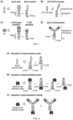
- FIGS. 1(A) to 1(C) there has been used a method of constructing a fusion protein through a strategy such as fusing a selective tag for additional purification only to the C-terminus of a single Fc region or fusing an Fc region and a protein to each other after separately purifying them with high purity.
- this method is not only very costly to produce a large amount of protein, but also requires research to optimize an additional purification process.
- heterodimeric Fc-fused protein makes it possible to easily produce a monovalent heterodimeric Fc-fused protein as shown in FIG. 2 without needing to optimize an additional purification process.
- the invention is defined in the claims and is directed to a monovalent heterodimeric Fc-fused protein comprising a first Fc region and a second Fc region of an immunoglobulin Fc (fragment crystallizable) pair and subunits p35 (IL-12A) and p40 (IL-12B) of human interleukin-12 (IL-12),
- the heterodimeric Fc-fused protein according to the present invention is formed such that it can retain the activity of a naturally occurring physiologically active protein, in which two or more subunits assemble together to form a protein to exhibit physiological activity, such that the fused protein can maintain the naturally occurring form and structure to the highest possible degree.
- heterodimeric Fc-fused protein according to the present invention has an advantage in that the in vivo half-life of the physiologically active protein contained in the heterodimeric Fc-fused protein can be significantly increased due to the Fc-mediated long half-life such that the physiological activities thereof in vivo can be long-lasting.
- Another object of the present invention is to provide a pharmaceutical composition comprising the above-described heterodimeric Fc-fused protein, and a composition for use in a therapeutic method for treating diseases, particularly cancer, using the same.
- the present invention provides a heterodimeric Fc-fused protein comprising a first Fc region and a second Fc region of an immunoglobulin Fc pair and a physiologically active protein,
- the present invention also provides a pharmaceutical composition comprising the above-described heterodimeric Fc-fused protein, and a composition for use in a therapeutic method for treating diseases, particularly cancer, using the same.
- the present invention provides a monovalent heterodimeric Fc-fused protein comprising a first Fc region and a second Fc region of an immunoglobulin Fc (fragment crystallizable) pair and subunits p35 (IL-12A) and p40 (IL-12B) of human interleukin-12 (IL-12),
- the present invention also provides a pharmaceutical composition comprising the heterodimeric Fc-fused protein described above.
- the present invention also provides a pharmaceutical composition for use in therapy.
- the present invention also provides a pharmaceutical composition for use in a method of treating cancer.
- the present invention also provides a pharmaceutical composition, wherein the cancer is selected from the group consisting of colorectal cancer, melanoma, breast cancer, pancreatic cancer, kidney cancer, prostate cancer, ovarian cancer, small intestine cancer, esophageal cancer, cervical cancer, lung cancer, lymphoma, and blood cancer.
- the cancer is selected from the group consisting of colorectal cancer, melanoma, breast cancer, pancreatic cancer, kidney cancer, prostate cancer, ovarian cancer, small intestine cancer, esophageal cancer, cervical cancer, lung cancer, lymphoma, and blood cancer.
- the present invention also provides a pharmaceutical composition for use in a method, wherein the method comprises combination therapy with other anticancer drugs.
- the present invention relates to a heterodimeric Fc-fused protein comprising a first Fc region and a second Fc region of an immunoglobulin Fc pair and a physiologically active protein,
- Fc region or "heavy chain constant region” means a region comprising an immunoglobulin CH2 domain, a CH3 domain and a hinge domain.
- the term means a region comprising a CH2 domain, a CH3 domain, a CH4 domain and a hinge domain.
- the expression "the first Fc region and the second Fc region are mutated so as to promote heterodimer formation” means that a naturally occurring antibody has a homodimeric form in which two Fc regions have the same sequence, and a portion of these Fc region sequences is mutated, so that heterodimer formation can be promoted through a specific non-covalent interaction between the first Fc region and the second Fc region, or homodimer formation can be reduced, or preferably can hardly occur.
- heterodimeric Fc or Fc heterodimer comprises the first Fc region and the second Fc region, and the first Fc region and the second Fc region mean heterodimers in which CH3 domains of the first Fc region and the second Fc region are mutated so as to promote Fc heterodimer formation.
- each of the first Fc region and the second Fc region is derived from an Fc region selected from the group consisting of human IgG1, IgG2, IgG3, and IgG4.
- first Fc region and the second Fc region may be derived from an isotype antibody.
- CH3 domains of the first Fc region and the second Fc region each comprise one or more amino acids promoting heterodimerization.
- Substitution of the amino acid residue at position K409 in the CH3 domain of the first Fc region is K409W
- substitution of the amino acid residue at position F405 in the CH3 domain of the second Fc region is F405T
- substitution of the amino acid residue at position D399 in the CH3 domain of the second Fc region is D399V.
- the mutation of CH3 domain may include one or more mutations selected from (wherein all mutation positions in the present invention are numbered according to the EU index): substitution of the amino acid residue at position K370 in the CH3 domain of the first Fc region; and substitution of the amino acid residue at position(s) E357 and/or S364 in the CH3 domain of the second Fc region.
- substitution of amino acid residue at position K370 in the CH3 domain of the first Fc region may be K370E, K370R, K370M, K370D or K370H
- substitution of the amino acid residue at position E357 in the CH3 domain of the second Fc region may be E357N, E357D, E357A, E357I, E357G or E357M
- substitution of the amino acid residue at position S364 in the CH3 domain of the second Fc region may be S364T or S364W.
- amino acid residue mutation such as K370E means that K at position 370 is mutated to E, and the mutation of all amino acid residues in the present invention is used as the same meaning as described above.
- the mutation of the CH3 domain of the first Fc region or the second Fc region may include one or more mutations selected from the following group (wherein mutation positions are numbered according to the EU index.):
- the CH3 domains in the first Fc region and the second Fc region may further include the following residue:
- mutation of the CH3 domain may include a substitution of the amino acid residue at position K360 in the CH3 domain of the first Fc region; and substitution of the amino acid residue at position E347 in the CH3 domain of the second Fc region.
- substitution of the amino acid residue at position K360 in the CH3 domain of the first Fc region may be K360E
- substitution of the amino acid residue at position E347 in the CH3 domain of the second Fc region may be E347R.
- Substitution of the amino acid residue at position K409 in the CH3 domain of the first Fc region is K409W
- substitution of the amino acid residue at position F405 in the CH3 domain of the second Fc region is F405T
- substitution of the amino acid residue at position D399 in the CH3 domain of the second Fc region is D399V.
- the mutation of the CH3 domain of the first Fc region or the second Fc region may include one or more mutations selected from the following group (wherein mutation positions are numbered according to the EU index):
- the CH3 domains in the first Fc region and the second Fc region may further include the following residue:
- each of the CH3 domains contained in the first Fc region and the second Fc region from immunoglobulin according to the present invention may have an amino acid sequence selected from the group consisting of the amino acid sequences represented by the following SEQ ID NOS:
- first Fc region and second Fc region from immunoglobulin according to the present invention preferably have the sequences of IgG4 CH3 domains shown in Table 1 below.
- Table 1 configuration CH3 sequence of first Fc region (EU number 341 to 447) CH3 sequence of second Fc region (EU number 341 to 447) ⁇ 4-EWRVT ⁇ 4-EWRVT s-s ⁇ 4-A107
- the p40 subunit of IL-12 is linked to the N-terminus of the first Fc region, and the p35 subunit of IL-12 is linked to the N-terminus of the second Fc region via (G 4 S) 3 peptide linker.
- a subunit of the physiologically active protein may be linked only to any one end of the N-terminus or C-terminus of the first Fc region or the second Fc region, and one or more different subunits of a single physiologically active protein may be linked to each of the N-terminus and C-terminus of each of the first Fc region and the second Fc region (see FIGS. 2(B) and 2(C) ).
- a subunit of the physiologically active protein is linked only to any one end of the N-terminus or C-terminus of the first Fc region or the second Fc region" described herein for reference means that one of the subunits of the physiologically active protein is linked only to any one of four ends of the N-terminus or C-terminus of the first Fc region or the second Fc region, and the remaining subunit(s) of the physiologically active protein is(are) linked by a linker to the subunit of physiologically active protein, which is linked to any one end of the N-terminus or C-terminus of the first Fc region or the second Fc region.
- the linker is preferably an amino acid linker, but is not limited thereto.
- one or more different subunits of a single physiologically active protein are linked to each of the N-terminus and C-terminus of each of the first Fc region and the second Fc region
- described herein for reference means that one or more different subunits of a single physiologically active protein are linked to the N-terminus of each of the first Fc region and the second Fc region, one or more different subunits of a single physiologically active protein are linked to the C-terminus of each of the first Fc region and the second Fc region, or one or more different subunits of a single physiologically active protein are respectively linked to the N-terminus and C-terminus of each of the first Fc region and the second Fc region.
- the subunit of the physiologically active protein may be linked to the N-terminus of the first Fc region and/or the second Fc region by genetic fusion.
- the subunit of the physiologically active protein may be linked to the first Fc region and the second Fc region through a linker.
- the linker is preferably an amino acid linker, but is not limited thereto.
- the physiologically active protein is characterized in that it is composed of two or more different subunits, wherein the two or more different subunits exhibit physiological activity by forming a protein complex.
- the physiologically active protein is composed of two or more different subunits, wherein the two or more different subunits exhibit physiological activity by forming a protein complex" means that the physiologically active protein exhibits desired physiological activity when two or more subunits form a protein complex.
- the physiologically active protein is interleukin-12 (IL-12).
- IL-12 which is a physiologically active protein.
- IL-12 is composed of two subunits, p35 (IL-12A) and p40 (IL-12B), and the physiologically active form of IL-12 is p70 which is a heterodimer of p35 and p40.
- IL-12 should be present in the form of p70 which is the heterodimer of p35 and p40 in order for IL-12 to exhibit the activity thereof in nature systems.
- one or more different subunits of a single physiologically active protein may be respectively linked to the N-terminus of each of the first Fc region and the second Fc region.
- an immunoglobulin heterodimeric Fc-fused protein is characterized in that the physiologically active protein is IL-12, and in that the p35 and p40 subunits of IL-12 are linked to the N-terminus of each of the first Fc region and the second Fc region.
- the hinge domain included in the N-terminus of each of the first Fc region and the second Fc region may be characterized in that the cysteine residues contained in the hinge domain is mutated.
- mutation of the cysteine residues in the hinge domain may be characterized in that cysteine residues in an upper hinge region, other than cysteine residues in a core hinge domain for heterodimer formation, are all substituted with serine residues, but the scope of the present invention is not limited thereto.
- the first Fc region and the second Fc region may be included in a whole antibody form consisting of human IgG1, IgG2, IgG3, and IgG4.
- the term "whole antibody form” means an intact antibody further comprising a CH1 domain, a VH domain, a CL domain and a VL domain, in addition to the CH2 domain, CH3 domain and hinge domain (also comprising CH4 domain for IgE) in the Fc region for IgG, IgA and IgD.
- the present invention relates to a pharmaceutical composition comprising the heterodimeric Fc-fused protein according to the present invention.
- the use of the pharmaceutical composition according to the present invention may depend on the use of a physiologically active protein contained in the heterodimeric Fc-fused protein.
- the physiologically active protein contained in the heterodimeric Fc-fused protein according to the present invention may be IL-12 or one or more subunits thereof. Therefore, the present invention provides a pharmaceutical composition for use in treating cancer, which comprises a heterodimeric Fc-fused protein comprising IL-12 as a physiologically active protein.
- a cancer that can be treated with the pharmaceutical composition for treating cancer which comprises a heterodimeric Fc-fused protein comprising IL-12 or one or more subunits as the physiologically active protein may be selected from the group consisting of colorectal cancer, melanoma, breast cancer, pancreatic cancer, kidney cancer, prostate cancer, ovarian cancer, small intestine cancer, esophageal cancer, cervical cancer, lung cancer, lymphoma, and blood cancer, but not limited thereto.
- a pharmaceutical composition according to the present invention may further comprise a pharmaceutically acceptable carrier.
- pharmaceutically acceptable carrier refers to a substance which can be added to the active ingredient to help formulate or stabilize the preparation and causes no significant adverse toxicological effects to the patient.
- the term "pharmaceutically acceptable carrier” refers to a carrier or diluent that does not impair the biological activity and characteristics of a heterodimeric Fc-fused protein according to the present invention without irritating a patient.
- a pharmaceutically acceptable carrier in a composition that is formulated as a liquid solution a sterile and biocompatible carrier is used.
- the pharmaceutically acceptable carrier may be physiological saline, sterile water, Ringer's solution, buffered saline, albumin injection solution, dextrose solution, maltodextrin solution, glycerol, ethanol, or a mixture of two or more thereof.
- composition of the present invention may, if necessary, comprise other conventional additives, including antioxidants, buffers, and bacteriostatic agents.
- composition of the present invention may be formulated as injectable forms such as aqueous solutions, suspensions or emulsions with the aid of diluents, dispersants, surfactants, binders and lubricants.
- composition according to the present invention may be formulated in the form of pills, capsules, granules, or tablets. Other carriers are described in a literature [Remington's Pharmaceutical Sciences (E. W. Martin)].
- compositions include sterile aqueous solutions or dispersions and sterile powders for the extemporaneous preparation of sterile injectable solutions or dispersions.
- the use of such media and agents for pharmaceutically active substances is known in the art.
- the composition is preferably formulated for parenteral injection.
- the composition can be formulated as a solid, a solution, a microemulsion, a liposome, or other ordered structures suitable to high drug concentration.
- the carrier may be a solvent or dispersion medium containing, for example, water, ethanol, polyol (e.g., glycerol, propylene glycol and liquid polyethylene glycol), and suitable mixtures thereof.
- the composition may contain an isotonic agent, for example, sugar, polyalcohol, for example, sorbitol or sodium chloride.
- Sterile injectable solutions can be prepared by the heterodimeric Fc-fused protein in the required amount in an appropriate solvent with one or a combination of ingredients enumerated above, as required, followed by sterile microfiltration.
- dispersions are prepared by incorporating an active compound into a sterile vehicle, which contains a basic dispersion medium and the required other ingredients from those enumerated above.
- the preferred methods of preparation are vacuum drying and freeze-drying, which yield a powder of the active ingredient and any additional desired ingredient from a previously sterile-filtered solution thereof.
- the pharmaceutical composition according to the present invention may be orally or parenterally administered to suffering patients at a dosage and frequency that may vary with the severity of the suffering patients.
- the compositions may be administered to patients in need as a bolus or by continuous infusion.
- the pharmaceutical composition according to the present invention may be administered rectally, intravenously, subcutaneously, intrauterinely, or intracerebrovascularly, but is not limited thereto.
- a pharmaceutical composition for cancer treatment comprising an immunoglobulin heterodimeric Fc-fused protein including IL-12 can be used for combination therapy with other anticancer drugs.
- Other anticancer drugs are preferably cytotoxic T cells and/or natural killer (NK) cells, but not limited thereto, and all the anticancer drugs that can be used in the art to which the present invention pertains can be used for the combination therapy.
- compositions for cancer treatment comprising an immunoglobulin heterodimeric Fc-fused protein including IL-12, it may induce:
- the present invention relates to use of a pharmaceutical composition comprising the heterodimeric Fc-fused protein according to the present invention for treating or preventing diseases.
- a disease that can be treated or prevented depends on the use of a physiologically active protein contained in the heterodimeric Fc-fused protein.
- a physiologically active protein contained in the heterodimeric Fc-fused protein according to the present invention are one or more subunits of IL-12
- the present invention provides use of the pharmaceutical composition for cancer treatment or prevention method for a patient suffering from a cancer, particularly a cancer selected from the group consisting of colorectal cancer, melanoma, breast cancer, pancreatic cancer, kidney cancer, prostate cancer, ovarian cancer, small intestine cancer, esophageal cancer, cervical cancer, lung cancer, lymphoma, and blood cancer.
- heterodimeric Fc variants for each human immunoglobulin isotype by introducing CH3 domain mutations that flavor heterodimer formation
- the amino acid sequence similarity between CH3 domains playing a major role in interactions for heterodimer formation was first analyzed as described below.
- the heterodimeric Fc variant (A107) was generated by introducing asymmetric mutations into the CH3 homodimeric interface to generate heterodimeric CH3A:CH3B pair (in the present invention, CH3A and CH3B mean the CH3 domain of the first Fc region and the CH3 region of the second Fc region, respectively) by a strategy as published in previous literature or patent documents (Choi et al. 2016; Korean Patent Application No.
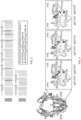
- FIG. 3 aligns and compares the sequences of CH3 domains for each human antibody immunoglobulin G (IgG) isotype.
- IgG human antibody immunoglobulin G
- Each amino acid sequence was obtained from the International ImMunoGeneTics information system (IMGT; URL: http://www.imgt.org/).
- IMGT International ImMunoGeneTics information system
- the sequence of G3m(s,t) whose serum half-life was reported to be maintained at levels similar to those of other IgG isotypes was used for IgG3 (Stapleton NM et al., 2011).
- IgG4 has a sequence conserved in all isotypes, except that the amino acid at position 409 among positions into which the A107 mutation is introduced is arginine, unlike those in IgG1, IgG2 and IgG3. Accordingly, positions having the same amino acid sequence number were selected as positions for introducing the A107 mutation pair into isotypes other than IgG1. All amino acid positions in the present invention are numbered according to the EU index.
- the A107 heterodimeric Fc isotype variants designed through the sequencing in Example 1 and the structural modeling in Example 2 were cloned in-frame into the animal cell expression vector pcDNA3.1(+)(Invitrogen, USA) to have signal sequence-hinge-CH2-CH3 using NotI/HindIII restriction enzymes and synthetic oligonucleotides (Macrogen, Korea) by a site-directed mutagenesis method which is performed by those skilled in the art (see FIG. 5 ).
- the cysteine residues in the upper hinge region other than the cysteine residues in the core hinge region for heterodimer formation, were substituted with serine residues in order to prevent disulfide bonds from being produced during protein fusion.
- ADCC and CDC high antibody effector functions
- Table 2 shows the amino acid sequence information of the CH3 regions in the wild-type and A107 heterodimeric Fc variant pairs of the present invention.
- Table 2 configuration CH3A chain (CH3 sequence of first Fc region) (EU number 341 to 447) CH3B chain (CH3 sequence of second Fc region) (EU number 341 to 447) IgG1 Wild type Same as SEQ ID NO: 7 ⁇ 1-A107 IgG2 Wild type Same as SEQ ID NO: 10 ⁇ 2-A107 IgG3 Wild type Same as SEQ ID NO: 13 ⁇ 3-A107 IgG4 Wild type Same as SEQ ID NO: 16 ⁇ 4-A107
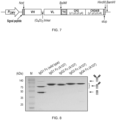
- FIG. 6 is a schematic view showing the scFv-Fc CH3A /Fc CH3B expression system.
- FIG. 7 is a schematic view of the animal cell expression vector pcDNA3.1(+)-scFv-hinge-CH2-CH3A (scFv-Fc CH3A ) used in the scFv-Fc CH3A /Fc CH3B expression system.
- the scFv antibody used is an antibody obtained by linking the VH and VL regions of hAY4a which is an affinity-enhanced version of the humanized antibody hAY4 that binds specifically to DR4 (Lee, Park et al. 2010). Cloning was performed using NotI restriction enzyme and the BsiWI restriction enzyme located immediately before the hinge domain. As a control for the variant, wild-type Fc was constructed in the same format (scFv-Fc/Fc).
- Co-expression of the constructed scFv-Fc CH3A and Fc CH3B was performed by transiently transfecting a mixture of expression vectors (1:1 ratio) and polyethylenimine (PEI) (Polyscience) into HEK293-F cells (Invitrogen) and culturing the cells in a shake flask containing serum-free FreeStyle 293 expression medium.
- the detailed method is as follows.
- HEK293-F cells were seeded into 100 ml of medium at a density of 2.0 ⁇ 10 6 cells/ml, and cultured at 150 rpm under 8% CO 2 .
- heavy chain and light-chain plasmids for each antibody were diluted in 10 ml of FreeStyle 293 expression medium (Invitrogen) in a total amount of 250 ⁇ g (2.5 ⁇ g/ml) (125 ⁇ g for the light chain and 125 ⁇ g for the heavy chain), and the medium was mixed with 10 ml of medium (7.5 ⁇ g/ml) containing 750 ⁇ g of PEI diluted therein.
- the medium mixture was incubated at room temperature for 10 minutes. Next, the incubated medium mixture was added to 100 ml of the seeded cells and incubated for 4 hours at 150 rpm under 8% CO 2 , after which the remaining 100 ml of FreeStyle 293 expression medium was added thereto, followed by incubation for 5 to 7 days. During this incubation, the protein produced by the cells, that is, an antibody comprising the Fc variant, was secreted out of the cells and accumulated in the medium. For this reason, the protein was purified using the protein A Sepharose column (GE Healthcare) from the cell culture supernatant collected by 20 minutes of centrifugation at 2500 rpm after cell culturing.
- the protein A Sepharose column GE Healthcare
- the purification process was performed with reference to the standard protocol provided by the protein A column company.
- the purified protein was quantified by measuring the absorbance at a wavelength of 562 nm using the solution in the BCA protein assay kit (Thermo) and determining the amount thereof according to the prepared standard curve.
- Example 5 5 ⁇ g of the antibody, purified in Example 5 and comprising the A107 heterodimeric Fc variant for each isotype, was analyzed on 12% SDS-PAGE under non-reducing conditions ( FIG. 8 ).
- a homodimer of the CH3A variant was observed at 103 kD; a homodimer of the CH3B variant was observed at 53kD; a monomer of the CH3B variant was observed at 25 kD; and a heterodimer of the CH3A variant and the CH3B variant was observed at 78 kD.
- Western blotting was also performed.
- Western blotting was performed by isolating 0.1 ⁇ g of protein, which was smaller than that in 12% SDS-PAGE analysis, under non-reducing conditions, and then treating the protein with anti-human IgG-AP conjugated antibody (Sigma) according to a conventional method known in the art ( FIG. 9 ).
- an Fc monomer (half Fc) comprising CH3A or CH3B was also observed, which is one of the properties of naturally occurring IgG4 and results from the property of forming half Fc with respect to the hinge domain (particularly, serine at position 228 in the core hinge region) before the occurrence of Fab-arm exchange in blood (Liu H et al., 2012).
- the isotype variants in Examples 1 to 6 were found to retain their heterodimerization ability at a level similar to that of the previously reported IgG1-based A107 heterodimeric Fc variant.
- the IgG4-based variant ( ⁇ 4-A107) was used to construct a long-lasting IL-12 fusion protein.
- Naturally occurring IL-12 is composed of two subunits, a p35 subunit (p35; IL-12A) and a p40 subunit (p40; IL-12B), and the two subunits interact to form a heterodimer having activity.
- this heterodimer is achieved because the two subunits are more strongly and stably coupled by a single disulfide bond present between the two subunits. Accordingly, the two subunits (p35 and p40) of IL12 were genetically fused to the N-terminus of each heterodimeric Fc chain in order to maintain the heterodimeric form of the naturally occurring cytokine.
- ⁇ 4-A107 As a heterodimeric Fc variant for construction of a fusion protein, ⁇ 4-A107 was used, which was based on IgG4 and would form a heterodimer by introduction of the A107 mutation.
- the antibody effector function such as ADCC/CDC
- IgG1 rather promotes in vivo clearance.
- a fusion protein was constructed using an IgG4 isotype which hardly shows the ADCC/CDC function, compared to IgG1 (Gillies SD et al., 1999).
- FIG. 10 shows schematic views of an IL-12 recombinant protein, a monovalent IL-12 fusion protein (mono-IL-12-Fc) obtained using ⁇ 4-A107, and a bivalent IL-12 fusion protein (bi-IL-12-Fc) obtained using wild-type Fc in the present invention.
- FIG. 10(C) shows a fusion protein constructed by introducing the CH3 variant pair in the present invention.
- bi-hIL-12-Fc and bi-mIL-12-Fc were constructed by fusing each of human IL-12 (hIL-12) and mouse IL-12 (mIL-12) to wild-type IgG4 Fc (wt IgG4).
- the two subunits of IL-12 were linked to each other by the 15-amino-acid peptide linker, and then cloned in-frame into an animal cell expression vector containing the ⁇ 4-A107 variant by use of NotI/BsiWI restriction enzymes as shown in FIG. 12 .
- the comparative examples are fusion proteins used in previous studies to make IL-12 fusion proteins (Lisan S. Peng et al., 1999).
- Table 3 shows the amino acid sequences for a mature form of the subunits of the human and mouse IL-12 used for construction of the fusion proteins.
- Table 3 configuration CH3A chain (p40 subunit) CH3B chain (p35 subunit) Mature human IL-12 Mature mouse IL-12
- the mono-IL-12-Fc fusion protein in FIG. 10(C) was expressed/purified from the human/mouse IE-12.p40- ⁇ 4-A107A and human/mouse ZL-12.p35- ⁇ 4-A107B expression vectors (1: 1 ratio) according to the method described in Example 5.
- the bi-IL-12-Fc fusion protein in FIG. 10(B) was expressed/purified through single transfection of the human/mouse scIL-12-IgG4 Fc(wt) expression vector. All the fusion proteins were expressed/purified in an amount of 12 to 13 mg per 100 ml of the HEK293F cell culture.
- FIG. 14 shows the results of analyzing the fusion proteins by size-exclusion chromatography (SEC). An oligomer was partially observed from the Mono-hIL-12-Fc fusion protein.
- Example 8 The binding affinity of the mono-hIL-12-Fc, expressed and purified in Example 8, for the IL-12 receptor, was analyzed comparatively with that of bi-hIL-12-Fc.
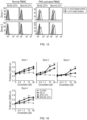
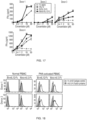
- FIG. 15 shows the results of FACS-Calibur (BD Biosciences) analysis performed to determine that the constructed mono-hIL-12-Fc would show binding affinity for the IL-12 receptor, in comparison with bi-hIL-12-Fc.
- PBMCs immune cells
- 5 ml of Ficoll GE Healthcare
- PBS pH 7.4
- 10 ml of the blood was taken and centrifuged in the Ficoll-containing test tube in a "no break" state at 750 g for 20 minutes so as not to mix with Ficoll.
- the buffy coat formed on the Ficoll was recovered and washed twice with PBS (pH 7.4), and then PBMCs, including T cells, B cells, NK cells and monocytes, were obtained.
- the isolated normal PBMCs did not express IL-12R in such large amounts that the binding of IL-12 could be observed. For this reason, the cells were stimulated by treatment with the mitogen PHA (Sigma-Aldrich) for 72 hours so that T cells and NK cells could be activated. It was reported that when cells are treated with PHA, the IL-12 receptor is expressed in T cells and NK cells while immune cells divide.
- PBMCs were added to 10% FBS-containing RPMI1640 medium at a density of 1 ⁇ 10 6 cells/ml, and the mitogen PHA was added thereto at a concentration of 10 ⁇ g/ml, after which the cells were cultured in a 5% CO 2 incubator at 37°C for 72 hours.
- FIG. 16 shows the results of a WST-1 cell proliferation assay performed to examine the cell proliferation abilities of Fc (A107), rhIL-12, bi-hIL-12-Fc and mono-hIL-12-Fc in PHA-activated PBMCs.
- WST-1 Water-soluble Tetrazolium salts, Sigma-aldrich
- FIG. 17 shows the results of an ELISA performed to measure the amount of IFN- ⁇ secreted from PHA-activated PBMCs by Fc (A107), rhIL-12, bi-hIL-12-Fc and mono-hIL-12-Fc.
- Example 10 in order to measure the concentration of IFN- ⁇ in the culture supernatant cultured for 72 hours in Example 10, a 96-well plate (Thermo Fisher Scientific, Korea) for ELISA was coated with human IFN- ⁇ capture antibody (Thermo Fisher Scientific) for 12 hours, washed with PBST, and then blocked with 1% BSA (PBS with 1% bovine serum albumin) at room temperature for 1 hour. After washing with PBST (PBS with 0.1% Tween-20), the culture supernatant obtained in Example 2 was diluted 5-fold with 1% BSA, and 100 ⁇ l of the dilution was added to each well and incubated at room temperature for 2 hour.
- PBST PBS with 0.1% Tween-20
- each well was incubated with biotin-conjugated IFN- ⁇ detection antibody (Thermo Fisher Scientific) at room temperature for 1 hour. After washing with PBST (PBS with 0.1% Tween-20), each well was incubated with avidin-conjugated horse radish peroxidase (HRP) (Thermo Fisher Scientific) at room temperature for 30 minutes, washed with PBST (PBS with 0.1% Tween-20), and then treated with 3,3',5,5'-tetramethylbenzidine substrate (TMB, sigma-aldrich). The absorbance at 405 nm was measured using a microplate reader.
- HRP horse radish peroxidase
- TMB 3,3',5,5'-tetramethylbenzidine substrate
- FIG. 18 shows the results of flow cytometry performed to determine that the constructed mono-mIL-12-Fc shows a binding affinity for the IL-12 receptor, in comparison with bi-mIL-12-Fc.
- mouse IL-12 binds not only to the mouse IL-12 receptor, but also to the human IL-12 receptor.
- analysis was performed in the same manner as described in Example 9.
- the results of the analysis indicated that bi-mIL-12-Fc and mono-mIL-12-Fc did not bind to normal PBMCs expressing no IL-12 receptor and did bind only to PHA-activated PBMCs expressing the IL-12 receptor.
- the binding affinity of mono-mIL-12-Fc for the IL-12 receptor was the same as that of bi-mIL-12-Fc.
- FIG. 19 shows the results of a WST-1 cell proliferation assay performed to examine effects of abilities of Fc (A107), recombinant mouse IL-12(rmIL-12), bi-mIL-12-Fc, and mono-mIL-12-Fc on the cell proliferation of PHA-activated PBMCs.
- PBMCs (2 ⁇ 10 4 cells, 50 ⁇ l) activated by PHA in the same manner as described in Example 9 were added to a 96-well plate, followed by addition of 50 ⁇ l of each of 50-0.4 pM Fc (A107), rmIL-12, bi-mIL-12-Fc and mono-mIL-12-Fc diluted serially with 10% FBS-containing RPMI1640 medium.
- the cells were cultured at 37°C under 5% CO 2 for 72 hours, and then a WST assay was performed in the same manner as described in Example 10.
- mono-mIL-12-Fc had the ability to induce PBMC proliferation, similar to rmIL-12.
- Example 13 the ability of mono-mIL-12-Fc to induce the proliferation of PHA-activated PBMCs was evaluated. Whether the same effect of mono-mIL-12-Fc would also appear in vivo was examined.
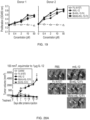
- FIGS. 20(A) and 20(B) show the results of measuring the tumor growth inhibitory activity of mono-mIL-12-Fc on 100 mm 3 tumors in living mice.
- mice 4-week-old female Balb/c mice (NARA Biotech, Korea) were shaved, and CT26 HER2/Neu colorectal cancer cells (1 ⁇ 10 6 cells/mouse) diluted in 150 ⁇ L of PBS were transplanted subcutaneously into the mice.
- Mice having similar tumor volumes were randomly grouped, and each of Fc (A107), rmIL-12 (Thermo Fisher Scientific) , bi-mIL-12-Fc and mono-mIL-12-Fc was intraperitoneally injected a total of six times (twice a week) into each mouse at the dose corresponding to an equivalent molar amount of 1 ⁇ g IL-12.
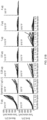
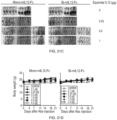
- FIGS. 21(A) , 21(B) and 21(C) show the results of measuring the tumor growth inhibitory activity of various concentrations of mono-mIL-12-Fc on 300 mm 3 tumors in living mice.
- mice 4-week-old female Balb/c mice (NARA Biotech, Korea) were shaved, and CT26 HER2/Neu colorectal cancer cells (1 ⁇ 10 6 cells/mouse) diluted in 150 ⁇ L of PBS were transplanted subcutaneously into the mice.
- Mice having similar tumor volumes were randomly grouped, and each of bi-mIL-12-Fc and mono-mIL-12-Fc was intraperitoneally injected a total of 6 times (twice a week) into each mouse at a concentration equimolar to 0.1-2 ⁇ g rmIL-12.
- mono-mIL-12-Fc showed a high effect of inhibiting the growth of large tumors, compared to bi-IL-12-Fc.
- bi-mIL-12-Fc showed the effect of inhibiting tumor growth, but did not remove the tumor.
- mono-mII,-12-Fc showed the effect of removing the tumor in 40% of the mice.
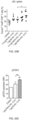
- FIG. 21(D) shows the results of measuring body weight changes to determine the in vivo toxicity of mono-mIL-12-Fc administered at various concentrations.
- FIG. 21(D) shows the results of measuring alanine aminotransferase (ALT) that is a hepatotoxicity marker.
- blood was sampled from the facial veins of the mice of FIG. 21(A) at 24 hours after the last administration.
- the blood was allowed to stand at room temperature for 2 hours so as to induce blood coagulation, and then centrifuged at 8000 rpm for 10 minutes, and the supernatant serum was collected.
- To measure the concentration of ALT in serum blood was sampled from the mouse facial veins at 24 hours after the last administration of the IL-12-Fc fusion protein. The blood was allowed to stand at room temperature for 2 hours so as to induce blood coagulation, and then centrifuged at 8000 rpm for 10 minutes, and the supernatant serum was collected.
- a substrate solution for ALT measurement (a mixture of alanine and ⁇ -ketoglutarate) was taken in a 15-ml test tube and incubated in a constant-temperature water bath at 37°C for 5 minutes.
- Serum isolated from the blood of tumor-transplanted mice administered with each of bi-mII,-12-Fc and mono-mIL-12-Fc was diluted 10-fold, and 200 ⁇ l of the dilution was added to the substrate solution, shaken, and incubated in a constant-temperature water bath at 37°C for 30 minutes.
- a color development reagent (2,4-dinitrophenyl-1-hydrazone) was added to the test tube taken out from the constant-temperature water bath, and the test tube was allowed to stand at room temperature for 20 minutes.
- 10 ml of 0.4 N sodium hydroxide solution was added to the test tube and mixed, and then the test tube was allowed to stand at room temperature for 10 minutes.
- the absorbance at 505 nm was measured using a photoelectric spectrophotometer (GeneQuant100, GE Healthcare). Using a standard curve prepared by adding a standard curve reagent instead of serum, ALT was converted into units.
- Example 15 when bi-mIL-12-Fc and mono-mIL-12-Fc were administered at a concentration corresponding to an equivalent molar amount of 2 ⁇ g IL-12, bi-mIL-12-Fc and mono-mIL-12-Fc all removed the tumor, but when they were administered at a molar concentration lower than 1 ⁇ g IL-12, the tumor growth inhibitory effect of mono-mIL-12-Fc was significantly higher than that of bi-mIL-12-Fc. In fact, analysis was performed to determine whether the high tumor growth inhibitory effect of mono-mIL-12-Fc would be associated with an increase in the number of intrinsic effector cells such as NK cells, CD4 + T cells and CD8 + T cells, which have the IL-12 receptor.
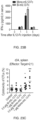
- FIG. 22(A) shows the results of measuring increases in the number of CD4 + T cells, CD8 + T cells and NK cells in the spleen of mice sacrificed on 3 days after the last administration in FIG. 21(A) .
- the mouse spleen was dissected on 34 days after tumor transplantation, crushed using a wide mesh in a Petri dish, and then washed with 10 ml of 2% FBS-containing medium. Next, 1 ml of red blood cell lysis buffer was added thereto to lyse red blood cells, and the resulting cells were washed with PBS to prepare a spleen cell suspension, and the number of the cells was countered with a hemocytometer.
- APC, FITC, PE or PE-cy5-conjugated anti-CD45, anti-CD3, anti-CD4, anti-CD8 and anti-CD49b antibodies were added to the spleen lymphocytes which were then stained at 4°C for 30 minutes, washed with cold PBS (pH 7.4), and then analyzed by flow cytometry (FACS Calibur, BD Bioscience) and Flow jo (Thermo Fisher Scientific).
- CD45 + CD3 + CD4 + cell population, the CD45 + CD3 + CD8 + cell population and the CD45 + CD3 - CD49b + cell population were defined as CD4 + T cells, CD8 + T cells and NK cells, respectively, and the proportions thereof relative to the total spleen cells were calculated and multiplied by the cell number counted with a hemocytometer, and the number of CD4 + T cells, CD8 + T cells and NK cells which increased after administration of mono-mIL-12-Fc was analyzed.
- mono-mIL-12-Fc increased the number of CD4 + T cells and CD8 + T cells in the tumor-transplanted mice in a concentration-dependent manner.
- bi-mIL-12-Fc increased the number of CD8 + T cells only in the group administered with the same at a concentration corresponding to an equivalent molar amount of 0.5 ⁇ g IL-12, and it did not increase the number of CD4 + T cells and CD8 + T cells in the group administered with the same at a concentration corresponding to an equivalent molar amount of 1 ⁇ g IL-12.
- FIG. 22(B) shows the results of measuring the number of total immune cells, CD4 + T cells and CD8 + T cells that infiltrated the tumor in the mice sacrificed on 3 days after the third administration in FIG. 21(A) .
- the mouse tumor was dissected on 24 days after tumor transplantation and weighed. Then, the tumor was crushed using a wire mesh and collagenase (100 ⁇ g/ml) in a Petri dish and centrifuged in 10 ml of 2% FBS-containing medium at 50 g for 5 minutes to remove the parenchymal tissue. Next, 1 ml of red blood cell lysis buffer was added thereto to lyse red blood cells, and the resulting cells were washed with PBS to prepare a cell suspension, and the number of the cells was countered with a hemocytometer.
- APC, FITC, or PE-cy5-conjugated anti-CD45, anti-CD3, anti-CD4, and anti-CD8 antibodies were added to the cells isolated from tumor which were then stained at 4°C for 30 minutes, washed with cold PBS (pH 7.4), and then analyzed by flow cytometry (FACS Calibur,BD Bioscience) and Flow jo (Thermo Fisher Scientific).
- CD45 + cell population, the CD45 + CD3 + CD4 + cell population and the CD45 + CD3 + CD8 + cell population and the CD45 + CD3 - CD49b + cell population were defined as total tumor infiltrating immune cells, tumor infiltrating CD4 + T cells and tumor infiltrating CD8 + T cells, respectively.
- the proportions of these cells relative to the cells isolated from the whole tumor were calculated and multiplied by the cell number counted with a hemocytometer, and then the number of total tumor infiltrating immune cells, tumor infiltrating CD4 + T cells and tumor infiltrating CD8 + T cells that increased after administration of mono-mIL-12-Fc was analyzed.
- mono-mIL-12-Fc significantly increased the total immune cells, CD4 + T cells and CD8 + T cells that infiltrated the tumor, compared to bi-mIL-12-Fc.
- mono-mIL-12-Fc caused greater infiltration of CD4 + T cells and CD8 + T cells in tumor, accounting for the stronger tumor growth inhibition, compared to bi-mIL12-Fc.
- IL-12 is known to inhibit the growth of cancer cells by increasing the secretion of IFN- ⁇ from T cells and NK cells (Trinchieri, 2003). In addition, IL-12 exhibits anticancer effects by enhancing the direct cytotoxic effects of cytotoxic T cells and natural killer cells against cancer cells. Thus, analysis was performed to determine whether the high anticancer effect of mono-IL-12-Fc would be attributable to an increase in the serum IFN- ⁇ concentration of tumor-transplanted mice and to the enhancement of the direct cytotoxic effect of cytotoxic T cells and natural killer cells against cancer cells.
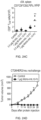
- FIG. 23(A) shows the results of an ELISA performed to measure the concentration of IFN- ⁇ in the serum separated from the blood sampled from mouse facial veins at 24 hours after the last administration in FIG. 21(A) .
- FIG. 23(B) shows the results of an ELISA performed to measure the concentration of IFN- ⁇ in serum at various indicated time points after single intraperitoneal administration of bi-mIL-12-Fc and mono-mIL-12-Fc to Balb/c mice transplanted with CT26 HER2/Neu colorectal cancer cells.
- bi-mIL-12-Fc and mono-mIL-12-Fc was administered intraperitoneally at a concentration equimolar to 1 ⁇ g rmIL-12.
- blood was sampled from the facial veins of the mice. The blood was allowed to stand at room temperature for 2 hours so as to induce blood coagulation and centrifuged at 8000 rpm for 10 minutes, and the supernatant serum was collected.
- a 96-well plate for ELISA was coated with mouse IFN- ⁇ capture antibody for 12 hours, washed with PBST (PBS with 0.1% Tween-20), and then blocked with 1% BSA (PBS with 1% bovine serum albumin) at room temperature for 1 hour. After washing with PBST (PBS with 0.1% Tween-20), the serum was diluted 10-fold with 1% BSA, and incubated at room temperature for 2 hour. After washing with PBST (PBS with 0.1% Tween-20), each well was incubated with biotin-conjugated mouse IFN- ⁇ detection antibody (Thermo Fisher Scientific) at room temperature for 1 hour.
- the group administered with bi-mIL-12-Fc showed a serum IFN- ⁇ concentration similar to that of the mono-mIL-12-Fc group up to 5 days, suggesting that bi-mIL-12-Fc has no intrinsic defect in the ability to induce IFN- ⁇ secretion from effector cells.
- FIG. 23(C) is a graph showing the results of measuring the cytotoxic effect of cytotoxic T cells, isolated from the spleen of mice sacrificed on 3 days after the last administration in FIG. 21(A) , against CT26 HER2/Neu cancer cells.
- mice 72 hours after the last administration of the cytokine in FIG. 21(A) , the mice were sacrificed, and the spleen was dissected therefrom and crushed in a 60 mm dish containing a 70-micron mesh and PBS.
- red blood cell lysis buffer was added to lyse red blood cells.
- the cells were washed with PBS and incubated with APC-conjugated anti-CD3 antibody (Thermo Fisher Scientific) and PE-conjugated anti-CD8 antibody at 4°C for 30 minutes. After the cells were washed with PBS, cytotoxic T cells (CD3 + CD8 + ) were isolated using FACS Aria III (BD biosciences, Korea).
- CT26 HER2/Neu cancer cells were stained with calcein AM (Thermo Fisher Scientific Inc., 10 ⁇ M).
- CT26 HER2/Neu cancer cells (2 ⁇ 10 6 ) were suspended in 2 ml of DPBS, and mixed with 2 ⁇ l of calcein AM (10 mM), and then incubated at 37°C under 5% CO 2 for 45 minutes.
- cytotoxic T cells (1 ⁇ 10 5 /100 ⁇ l/well) were added to each well and incubated at 37°C under 5% CO 2 for 4 hours.
- Living CT26 HER2/Neu cancer cells showing green fluorescence and dead CT26 HER2/Neu cancer cells showing no green fluorescence were analyzed by flow cytometry, and the cytotoxic effect of the cytotoxic T cells was expressed as percentage.
- cytotoxic T cells isolated from the tumor-transplanted mice administered with mono-mIL-12-Fc showed a higher cytotoxic effect against target CT26 HER2/Neu cancer cells compared to the cytotoxic T cells isolated from the tumor-transplanted mice administered with bi-mIL-12-Fc or the cytotoxic T cells isolated from the control group.
- tumor formation inhibitory effect of mono-mIL-12-Fc was attributed to the direct cytotoxic effect of some cytotoxic T cells against cancer cells.
- FIG. 23(D) shows the results of measuring the cytotoxic effect of cytotoxic T cells, isolated from the spleen of mice sacrificed on 3 days after the third administration in FIG. 21(A) , using CT26 HER2/Neu cancer cells expressing tumor antigen and 4T1 cells expressing no tumor antigen, in order to determine whether the cytotoxic effect of cytotoxic T cells that was enhanced by administration of mono-IL-12-Fc to the tumor-transplanted mice would be tumor antigen-specific.
- mice 72 hours after the third administration of mono-IL-12-Fc in FIG. 20(A) , the mice were sacrificed, and the spleen was dissected therefrom and crushed in a 60-mm dish containing a 70-micron mesh and PBS.
- the CT26 HER2/Neu cancer cells and the 4T1 cancer cells were stained with calcein AM (Thermo Fisher Scientific Inc., 10 ⁇ M) according to the method used for FIG. 21(C) .
- cytotoxic T cells (1 ⁇ 10 5 /100 ⁇ l/well) were added to each well and incubated in a 37°C incubator under 5% CO 2 for 4 hours.
- Living CT26 HER2/Neu cancer cells showing green fluorescence and dead CT26 HER2/Neu cancer cells showing no green fluorescence or 4T1 cancer cells were analyzed by flow cytometry, and the cytotoxic effect of the cytotoxic T cells was expressed as percentage. As a result, it was shown that the cytotoxic effect of cytotoxic T cells that was enhanced by administration of mono-mIL-12-Fc was target cell-specific.
- FIG. 23(E) shows the results of measuring the cytotoxic effect of natural killer cells, isolated from the spleen of mice sacrificed on 3 days after the third administration in FIG. 21(A) , against CT26 HER2/Neu cancer cells.
- mice were sacrificed, and the spleen was dissected therefrom and crushed in a 70-mm dish containing a 70-micron mesh and PBS.
- red blood cell lysis buffer was added to lyse red blood cells.
- the cells were washed with PBS and incubated with APC-conjugated anti-CD3 antibody (Thermo Fisher Scientific) and PE-conjugated anti-CD49b antibody at 4°C for 30 minutes.
- natural killer cells CD3 - CD49b +
- FACS Aria III BD biosciences, Korea.
- CT26 HER2/Neu cancer cells were stained with calcein AM (Thermo Fisher Scientific Inc., 10 ⁇ M).
- CT26 HER2/Neu cancer cells (2 ⁇ 10 6 ) were suspended in 2 ml of DPBS, and mixed with 2 ⁇ l of calcein AM (10 mM), and then incubated at 37°C under 5% CO 2 for 45 minutes.
- the cells were added to each well of a 96-well plate at a density of 2 ⁇ 10 4 cells per well, and natural killer cells (1 ⁇ 10 5 /100 ⁇ l/well) were added to each well and incubated at 37°C under 5% CO 2 for 4 hours.
- Living CT26 HER2/Neu cancer cells showing green fluorescence and dead CT26 HER2/Neu cancer cells showing no green fluorescence were analyzed by flow cytometry, and the cytotoxic effect of the natural killer cells was expressed as percentage.
- the production of adaptive immunity in tumor-transplanted mice is evaluated by whether effector memory CD8 + T cells and memory CD8 + T cells are generated. Whether the tumor removal effect of mono-mIL-12-Fc would be attributable to the generation of effector memory CD8 + T cells and memory CD8 + T cells was measured.
- FIGS. 24(A), 24(B) and 24(C) shows the results of measuring the number of effector CD8 + T cells, effector memory CD8 + T cells and memory CD8 + T cells produced when mono-mIL-12-Fc was administered to tumor-bearing mice.
- the mouse spleen was dissected on 34 days after tumor transplantation, crushed using a wide mesh in a Petri dish, and then washed with 10 ml of 2% FBS-containing medium. Next, 1 ml of red blood cell lysis buffer was added thereto to lyse red blood cells, and the resulting cells were washed with PBS to prepare a spleen cell suspension, and the number of the cells was countered with a hemocytometer.
- CD3 + CD8 + CD62L low IL-7R low cell population, the CD3 + CD8 + CD62L low IL-7R hi cell population and the CD3 + CDS + CD62L hi IL-7R hi cell population were defined as effector CD8 + T cells, effector memory CD8 + T cells and memory CD8 + T cells, respectively, and the proportions thereof relative to the total spleen cells were calculated and multiplied by the cell number counted with a hemocytometer, and the number of effector CD8 + T cells, effector memory CD8 + T cells and memory CD8 + T cells which increased after administration of mono-mIL-12-Fc was analyzed.
- FIG. 24(D) shows the results obtained by re-transplanting CT26 HER2/Neu cancer cells into the survived mice on 120 days after administration of 1 ⁇ g mono-IL-12-Fc in FIG. 21(A) and measuring tumor volume changes in the mice.
- FIG. 24(E) shows the results of analyzing the proportions of memory precursor effector cells (KLRG1 - IL-7R + ) and short-lived effector cells (KLRG1 + IL-7R) in the CD8 + T cells present in the spleen of mice sacrificed on 3 days after the third administration in FIG. 21(A) .
- the mouse spleen was dissected on 24 days after tumor transplantation, crushed using a wide mesh in a Petri dish, and then washed with 10 ml of 2% FBS-containing medium. Next, 1 ml of red blood cell lysis buffer was added thereto to lyse red blood cells, and the resulting cells were washed with PBS to prepare a cell suspension.
- APC, FITC, PE or PE-cy5-conjugated anti-CD3, anti-CD8, anti-KLRG1, and anti-IL-7 receptor (IL-7R) antibodies were added to the spleen cells which were then stained at 4°C for 30 minutes, washed with cold PBS (pH 7.4), and then analyzed by flow cytometry (FACS Calibur, BD Bioscience) and Flow jo (Thermo Fisher Scientific).
- CD3 + CD8 + KLRG1 - IL-7R + cell population and the CD3 + CD8 + KLRG1 _ + IL-7R - cell population were defined as memory precursor effector cells and short-lived effector cells, respectively, and the proportions thereof relative to the total spleen cells were analyzed.
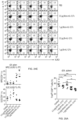
- FIGS. 25(A) and 25(B) show the results of flow cytometry analysis performed to measure the proportions of CD8 + T cells (which show high expression of T-bet that inhibits memory cell differentiation) and CD8 + T cells (which show low expression of Eomes that promotes memory cell differentiation) in the spleen of mice sacrificed on 3 days after the third administration in FIG. 21(A) .
- the mouse spleen was dissected on 24 days after tumor transplantation, crushed using a wire mesh in a Petri dish, and then washed with 10 ml of 2% FBS-containing medium. Next, 1 ml of red blood cell lysis buffer was added thereto to lyse red blood cells, and the resulting cells were washed with PBS to prepare a cell suspension. The spleen cells were stained with PE-cy5- or FITC-conjugated anti-CD3 and anti-CD8 antibodies at 4°C for 30 minutes and washed with cold PBS (pH 7.4).
- the cells were fixed with Foxp3/Transcription Factor Staining Buffer Set (Thermo Fisher Scientific) (which is an intranuclear transcription factor staining reagent), and permeabilized.
- the cells were stained with PE- or efluor 660-conjugated anti-T-bet or anti-Eomes antibody at 4°C for 30 minutes, and then analyzed by flow cytometry (FACS Calibur,BD Bioscience) in permeabilization buffer and Flow jo (Thermo Fisher Scientific) for flow cytometry data analysis.
- bi-mIL-12-Fc reduced the proportion of the CD3 + CD8 + T-bet high cell population only in the group administered with the same at a concentration corresponding to an equivalent molar amount of 0.5 ⁇ g IL-12 and increased the proportion of the CD3 + CD8 + Eomes + T-bet low cell population in the group.
- bi-mIL-12-Fc did not show the effect of reducing the proportion of the CD3 + CD8 + T-bet high cell population or increasing the proportion of the CD3 + CD8 + Eomes + T-bet low cell population.
- mono-mIL-12-Fc had a higher effect of removing tumors by reducing the proportion of the CD3 + CD8 + T-bet high cell population and increasing the proportion of the CD3 + CD8 + Eomes + T-bet low cell population so as to significantly increase the number of effector memory CD8 + T cells and memory CD8 + T cells.
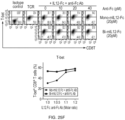
- FIG. 25(C) shows the results of flow cytometry analysis performed to measure the expression level of phosphorylated STAT4 in CD8 + T cells isolated from the tumor draining lymph node on 24 hours after intraperitoneally administrating bi-mIL-12-Fc and mono-mIL-12-Fc once at a concentration corresponding to equivalent molar amount of1 ⁇ g rmIL-12 when the tumor volume in the Balb/c mice transplanted with CT26 HER2/Neu reached 300 mm 3 .
- bi-mIL-12-Fc and mono-mIL-12-Fc were administered intraperitoneally into the mice at a concentration equimolar to 1 ⁇ g rmIL-12.
- the tumor draining lymph node of the mice was dissected, crushed using a wire mesh in a Petri dish, and then washed with 10 ml of 2% FBS-containing medium.
- red blood cell lysis buffer 1 ml of red blood cell lysis buffer was added thereto to lyse red blood cells, and the resulting cells were washed with PBS, thus preparing a cell suspension.
- the draining lymph node cells were stained with PE-cy5- or FITC-conjugated anti-CD3 and anti-CD8 antibodies at 4°C for 30 minutes, washed with PBS (pH 7.4), and then fixed in cold methanol.
- the draining lymph node cells were washed with cold PBS (pH 7.4), stained with APC-conjugated anti-pSTAT4 antibody at 4°C for 30 minutes, washed with cold PBS (pH 7.4), and then analyzed by flow cytometry (FACS Calibur, BD Bioscience) and Flow jo (Thermo Fisher Scientific). Each sample was analyzed by dot plots, and the expression levels of pSTAT4 in CD3 + CD8 + T cells were compared. As a result, in comparison with mono-mIL-12-Fc, bi-mIL-12-Fc showed the effect of increasing the expression of pSTAT4 when CD8 + T cells were activated in the tumor draining lymph nodes of the tumor-transplanted mice.
- FIG. 25(D) shows the results of flow cytometry performed to measure the proportion of CD8 + T cells (which express T-bet that inhibits memory cell differentiation) in the tumor draining lymph node on 72 hours after single intraperitoneal administration in FIG. 25(C) .
- bi-mIL-12-Fc and mono-mIL-12-Fc were administered intraperitoneally into the mice at a concentration corresponding to equivalent molar amount of1 ⁇ g rmIL-12.
- the tumor draining lymph node of the mice was dissected, crushed using a wire mesh in a Petri dish, and then washed with 10 ml of 2% FBS-containing medium.
- red blood cell lysis buffer 1 ml of red blood cell lysis buffer was added thereto to lyse red blood cells, and the resulting cells were washed with PBS, thus preparing a cell suspension.
- the draining lymph node cells were stained with PE-cy5- or FITC-conjugated anti-CD3 and anti-CD8 antibodies at 4°C for 30 minutes, washed with PBS (pH 7.4), fixed using Foxp3/Transcription Factor Staining Buffer Set (Thermo Fisher Scientific) (which is an intranuclear transcription factor staining reagent), and then permeabilized.
- the cells were stained with PE- or APC-conjugated anti-T-bet antibody at 4°C for 30 minutes, and then analyzed by flow cytometry (FACS Calibur (BD Bioscience) in permeabilization buffer and Flow jo (Thermo Fisher Scientific) analysis. Each sample was analyzed by dot plots, and the proportion of CD3 + CD8 + T cells expressing T-bet was compared. As a result, in comparison with mono-mIL-12-Fc, bi-mIL-12-Fc showed the effect of increasing the expression of T-bet when CD8 + T cells were activated in the draining lymph lodes of the tumor-transplanted mice.
- FIGS. 25(E) and 25(F) show the result of measuring whether when mono-mIL-12-Fc was cross-reacted with anti-Fc antibody, like bi-mIL-12-Fc expressing two L-12 molecules, so that CD8 + T cells could be stimulated by two L-12 molecules, the expression of pSTAT4 and T-bet in the cells would be increased to a level similar to the level shown when the cells were treated with bi-mIL-12-Fc.
- spleens and tumor draining lymph nodes were dissected from normal Balb/c mice, crushed using a wire mesh in a Petri dish, and then washed with 10 ml of 2% FBS-containing medium. Next, 1 ml of red blood cell lysis buffer was added thereto to lyse red blood cells, and the resulting cells were washed with PBS, thus preparing a cell suspension.
- lymph node cells were stained with PE-conjugated anti-CD8 antibody at 4°C for 30 minutes, washed with cold PBS (pH 7.4), and incubated with anti-PE microbeads (Miltenyi Biotec) for 15 minutes, and CD8 + T cells were separated therefrom using a MACS separator and an LS column (Miltenyi Biotec). 100 ⁇ l of 0.5 ⁇ g/ml of anti-CD3 antibody was added to each well of a 96-well round bottom plate which was then incubated at 4°C for 12 hours and washed with PBS to remove anti-CD3 antibody not attached to the plate, and 50 ⁇ l of 2 ⁇ g/ml of anti-CD28 antibody was added to each well.
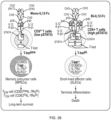
- mono-mIL-12-Fc induces low expression of pSTAT4 and T-bet in CD8 + T cells so that the CD8 + T cells can differentiate into memory precursor effector cells and then into effector memory cells and central memory cells.
- mono-mIL-12-Fc can remove tumors from tumor-transplanted mice even at low concentration (corresponding to equivalent molar amount 0.5 ⁇ g IL-12), thus prolonging the life-span of the mice.
- bi-mIL-12-Fc induces high expression of pSTAT4 and T-bet in CD8 + T cells so that the cells can differentiate into short-livered effector cells precluding the development of memory cells.
- bi-mIL-12-Fc when bi-mIL-12-Fc is administered at the same molar concentration as that of mono-mIL-12-Fc, it cannot completely remove tumors from tumor-transplanted mice. Thus, only when bi-mIL-12-Fc is administered at higher concentration (corresponding to equivalent molar amount of2 ⁇ g IL-12) and cytotoxic CD8 + T cells are expanded in the effector phase that directly destroys tumor cells, bi-mIL-12-Fc can remove tumors.
- the heterodimeric Fc-fused protein according to the present invention has an advantage in that it can retain the activity of a naturally occurring physiologically active protein, which is composed of two or more different subunit proteins and thereby exhibit the physiological activity by forming an assembled protein, because each subunit of the protein can be separately fused to each chain of heterodimeric Fc of immunoglobulin such that the fused protein can maintain the naturally occurring form and structure to the highest possible degree.
- the in vivo half-life of the physiologically active protein contained in the heterodimeric Fc-fused protein can be significantly increased due to the heterodimeric Fc-mediated long half-life such that the physiological activities thereof in vivo can be long-lasting.
- heterodimeric Fc-fused protein according to the present invention has an advantage in that it is possible to easily produce a heterodimeric Fc-fused protein in the native configuration without need to optimize an additional purification process.
Landscapes
- Health & Medical Sciences (AREA)
- Chemical & Material Sciences (AREA)
- Life Sciences & Earth Sciences (AREA)
- Organic Chemistry (AREA)
- General Health & Medical Sciences (AREA)
- Medicinal Chemistry (AREA)
- Proteomics, Peptides & Aminoacids (AREA)
- Zoology (AREA)
- Gastroenterology & Hepatology (AREA)
- Molecular Biology (AREA)
- Biophysics (AREA)
- Biochemistry (AREA)
- Genetics & Genomics (AREA)
- Toxicology (AREA)
- Endocrinology (AREA)
- Pharmacology & Pharmacy (AREA)
- Public Health (AREA)
- Veterinary Medicine (AREA)
- Animal Behavior & Ethology (AREA)
- Reproductive Health (AREA)
- Bioinformatics & Cheminformatics (AREA)
- Engineering & Computer Science (AREA)
- Epidemiology (AREA)
- Immunology (AREA)
- Chemical Kinetics & Catalysis (AREA)
- General Chemical & Material Sciences (AREA)
- Nuclear Medicine, Radiotherapy & Molecular Imaging (AREA)
- Medicines Containing Antibodies Or Antigens For Use As Internal Diagnostic Agents (AREA)
- Peptides Or Proteins (AREA)
- Medicines That Contain Protein Lipid Enzymes And Other Medicines (AREA)
- Medicinal Preparation (AREA)
- Micro-Organisms Or Cultivation Processes Thereof (AREA)
Claims (10)
- Monovalentes heterodimeres Fc-kondensiertes Protein, umfassend eine erste Fc-Region und eine zweite Fc-Region eines Immunglobulin-Fc(fragmentkristallisierbaren)-Paares und Untereinheiten p35 (IL-12A) und p40 (IL-12B) von humanem Interleukin-12 (IL-12),wobei die p40-Untereinheit von IL-12 mit dem N-Terminus der ersten Fc-Region verknüpft ist;wobei die p35-Untereinheit von IL-12 über einen (G4S)3 - Peptidlinker mit dem N-Terminus der zweiten Fc-Region verknüpft ist;wobei jede der ersten Fc-Region und der zweiten Fc-Region von einer Fc-Region abgeleitet ist, die aus der Gruppe bestehend aus humanem IG1, IgG2, IgG3 und IgG4 ausgewählt ist;wobei CH3-Domänen der ersten Fc-Region und der zweiten Fc-Region jeweils eine oder mehrere Aminosäuren umfassen, die die Heterodimerisierung fördern, undwobei die eine oder mehreren Aminosäuren, die die Heterodimerisierung fördern, Tryptophan an Position 409 in der CH3-Domäne der ersten Fc-Region, Valin an Position 399 in der CH3-Domäne der zweiten Fc-Region und Threonin an Position 405 in der CH3-Domäne der zweiten Fc-Region sind (wobei die Aminosäurepositionen gemäß dem EU-Index nummeriert sind).
- Heterodimeres Fc-kondensiertes Protein nach Anspruch 1, wobei die erste Fc-Region und die zweite Fc-Region in einer vollständigen Antikörperform enthalten sind, die aus der Gruppe bestehend aus humanem IgG1, IgG2, IgG3 und IgG4 ausgewählt ist.
- Heterodimeres Fc-kondensiertes Protein nach Anspruch 1 oder 2, wobei die CH3-Domäne der ersten Fc-Region oder der zweiten Fc-Region eine oder mehrere Aminosäuren umfasst, die aus der folgenden Gruppe ausgewählt sind (wobei die Aminosäurepositionen gemäß dem EU-Index nummeriert sind):(1) Glutaminsäure (E), Arginin (R), Methionin (M), Asparaginsäure (D) oder Histidin (H) an Position 370 in der CH3-Domäne der ersten Fc-Region; und(2) Asparagin (N), Asparaginsäure (D), Alanin (A), Isoleucin (I), Glycin (G) oder Methionin (M) an Position 357 in der CH3-Domäne der zweiten Fc-Region und Threonin (T) oder Tryptophan (W) an Position 364 in der CH3-Domäne der zweiten Fc-Region.
- Heterodimeres Fc-kondensiertes Protein nach Anspruch 1 oder 2, wobei die CH3-Domäne der ersten Fc-Region oder der zweiten Fc-Region eine oder mehrere Aminosäuren umfasst, die aus der folgenden Gruppe ausgewählt sind (wobei die Aminosäurepositionen gemäß dem EU-Index nummeriert sind):(1) Glutaminsäure (E) an Position 360 in der CH3-Domäne der ersten Fc-Region, und;(2) Arginin (R) an Position 347 in der CH3-Domäne der zweiten Fc-Region.
- Heterodimeres Fc-kondensiertes Protein nach Anspruch 3 oder 4, wobei die CH3-Domäne in der ersten Fc-Region und die CH3-Domäne in der zweiten Fc-Region zusätzlich die folgenden Reste umfassen (wobei die Aminosäurepositionen gemäß dem EU-Index nummeriert sind):(i) Cystein (C) an Position 349 in der CH3-Domäne der ersten Fc-Region; und(ii) Cystein (C) an Position 354 in der CH3-Domäne der zweiten Fc-Region.
- Pharmazeutische Zusammensetzung, umfassend das heterodimere Fc-kondensierte Protein nach einem der Ansprüche 1 bis 5.
- Pharmazeutische Zusammensetzung nach Anspruch 6 zur Verwendung in der Therapie.
- Pharmazeutische Zusammensetzung nach Anspruch 6 zur Verwendung in einem Verfahren zur Behandlung von Krebs.
- Pharmazeutische Zusammensetzung zur Verwendung nach Anspruch 8, wobei der Krebs ausgewählt ist aus der Gruppe bestehend aus Dickdarmkrebs, Melanom, Brustkrebs, Bauchspeicheldrüsenkrebs, Nierenkrebs, Prostatakrebs, Eierstockkrebs, Dünndarmkrebs, Speiseröhrenkrebs, Gebärmutterhalskrebs, Lungenkrebs, Lymphom und Blutkrebs.
- Pharmazeutische Zusammensetzung zur Verwendung nach Anspruch 8 oder 9, wobei das Verfahren eine Kombinationstherapie mit anderen Krebsmedikamenten umfasst.
Priority Applications (1)
| Application Number | Priority Date | Filing Date | Title |
|---|---|---|---|
| EP24194198.8A EP4470552A3 (de) | 2016-08-10 | 2017-08-10 | Heterodimere fc-kondensierte zytokine und pharmazeutische zusammensetzung damit |
Applications Claiming Priority (2)
| Application Number | Priority Date | Filing Date | Title |
|---|---|---|---|
| KR20160101823 | 2016-08-10 | ||
| PCT/KR2017/008676 WO2018030806A1 (ko) | 2016-08-10 | 2017-08-10 | 항체 중쇄불변부위 이종이중체에 융합된 사이토카인 및 이를 포함하는 약제학적 조성물 |
Related Child Applications (2)
| Application Number | Title | Priority Date | Filing Date |
|---|---|---|---|
| EP24194198.8A Division-Into EP4470552A3 (de) | 2016-08-10 | 2017-08-10 | Heterodimere fc-kondensierte zytokine und pharmazeutische zusammensetzung damit |
| EP24194198.8A Division EP4470552A3 (de) | 2016-08-10 | 2017-08-10 | Heterodimere fc-kondensierte zytokine und pharmazeutische zusammensetzung damit |
Publications (3)
| Publication Number | Publication Date |
|---|---|
| EP3511340A1 EP3511340A1 (de) | 2019-07-17 |
| EP3511340A4 EP3511340A4 (de) | 2020-03-18 |
| EP3511340B1 true EP3511340B1 (de) | 2024-10-02 |
Family
ID=61524969
Family Applications (2)
| Application Number | Title | Priority Date | Filing Date |
|---|---|---|---|
| EP24194198.8A Pending EP4470552A3 (de) | 2016-08-10 | 2017-08-10 | Heterodimere fc-kondensierte zytokine und pharmazeutische zusammensetzung damit |
| EP17839824.4A Active EP3511340B1 (de) | 2016-08-10 | 2017-08-10 | Heterodimere fc-kondensierte zytokine und pharmazeutische zusammensetzung damit |
Family Applications Before (1)
| Application Number | Title | Priority Date | Filing Date |
|---|---|---|---|
| EP24194198.8A Pending EP4470552A3 (de) | 2016-08-10 | 2017-08-10 | Heterodimere fc-kondensierte zytokine und pharmazeutische zusammensetzung damit |
Country Status (14)
| Country | Link |
|---|---|
| US (4) | US10696722B2 (de) |
| EP (2) | EP4470552A3 (de) |
| JP (3) | JP6993403B2 (de) |
| KR (4) | KR102050463B1 (de) |
| CN (1) | CN110267977A (de) |
| AU (2) | AU2017310163B2 (de) |
| BR (1) | BR112019002394B1 (de) |
| CA (1) | CA3033475A1 (de) |
| DK (1) | DK3511340T3 (de) |
| ES (1) | ES3000558T3 (de) |
| IL (1) | IL264692B2 (de) |
| MX (2) | MX386014B (de) |
| SG (1) | SG11201901071TA (de) |
| ZA (1) | ZA201900772B (de) |
Families Citing this family (16)
| Publication number | Priority date | Publication date | Assignee | Title |
|---|---|---|---|---|
| ES3000558T3 (en) | 2016-08-10 | 2025-02-28 | Univ Ajou Ind Academic Coop Found | Heterodimeric fc-fused cytokine and pharmaceutical composition comprising the same |
| AU2018297248A1 (en) | 2017-07-03 | 2020-02-20 | Torque Therapeutics, Inc. | Fusion molecules targeting immune regulatory cells and uses thereof |
| JP6973828B2 (ja) | 2018-02-14 | 2021-12-01 | エルジー・ケム・リミテッド | 触媒の充填方法およびこれを用いたブタジエンの製造方法 |
| CN110396133B (zh) * | 2018-04-25 | 2021-07-23 | 免疫靶向有限公司 | 一种以白介素12为活性成分的融合蛋白型药物前体 |
| SG11202103192RA (en) | 2018-10-03 | 2021-04-29 | Xencor Inc | Il-12 heterodimeric fc-fusion proteins |
| PE20211279A1 (es) | 2018-10-23 | 2021-07-19 | Dragonfly Therapeutics Inc | Proteinas heterodimericas fusionadas con fc |
| CN115916233A (zh) * | 2019-10-03 | 2023-04-04 | Xencor股份有限公司 | 靶向IL-12异源二聚体Fc融合蛋白 |
| MX2022013112A (es) * | 2020-04-22 | 2023-01-16 | Dragonfly Therapeutics Inc | Fórmulacion, regimen de dosificación y proceso de manufactura de proteínas heterodiméricas fusionadas con fc. |
| US12312418B2 (en) | 2020-12-10 | 2025-05-27 | Invenra Inc. | Orthogonal mutations for heterodimerization |
| IL312221A (en) * | 2021-10-20 | 2024-06-01 | Synthekine Inc | Heterodimeric fc cytokines and uses thereof |
| KR102796245B1 (ko) * | 2022-05-10 | 2025-04-18 | 아주대학교산학협력단 | 인터루킨21 변이체, 이를 포함하는 융합단백질 및 이의 용도 |
| WO2024086739A1 (en) | 2022-10-20 | 2024-04-25 | Synthekine, Inc. | Methods and compositions of il12 muteins and il2 muteins |
| EP4612165A1 (de) * | 2022-11-02 | 2025-09-10 | Synerkine Pharma B.V. | Manipulierte immunzytokine, fusionspolypeptide und il10-polypeptide |
| AU2023378481A1 (en) * | 2022-11-10 | 2025-06-19 | Kanglitai Biomedical (Qingdao) Co., Ltd. | Site-specific pegylated heteromeric protein or polypeptide, and preparation method therefor and use thereof |
| WO2024249320A1 (en) * | 2023-05-26 | 2024-12-05 | University Of Florida Research Foundation, Incorporated | In vivo optimization of biologics |
| CN117986386B (zh) * | 2024-02-06 | 2024-11-29 | 康立泰生物医药(青岛)有限公司 | 重组人白细胞介素-35及其制备方法和应用 |
Family Cites Families (82)
| Publication number | Priority date | Publication date | Assignee | Title |
|---|---|---|---|---|
| US4722848A (en) | 1982-12-08 | 1988-02-02 | Health Research, Incorporated | Method for immunizing animals with synthetically modified vaccinia virus |
| DE3883899T3 (de) | 1987-03-18 | 1999-04-22 | Sb2, Inc., Danville, Calif. | Geänderte antikörper. |
| US5173414A (en) | 1990-10-30 | 1992-12-22 | Applied Immune Sciences, Inc. | Production of recombinant adeno-associated virus vectors |
| US5731168A (en) | 1995-03-01 | 1998-03-24 | Genentech, Inc. | Method for making heteromultimeric polypeptides |
| US5849589A (en) | 1996-03-11 | 1998-12-15 | Duke University | Culturing monocytes with IL-4, TNF-α and GM-CSF TO induce differentiation to dendric cells |
| US7951917B1 (en) | 1997-05-02 | 2011-05-31 | Genentech, Inc. | Method for making multispecific antibodies having heteromultimeric and common components |
| ATE267215T1 (de) | 1997-12-08 | 2004-06-15 | Lexigen Pharm Corp | Heterodimäre fusionsproteine zur verwendung für gezielte immuntherapie und allgemeine immunerregung |
| US6194551B1 (en) | 1998-04-02 | 2001-02-27 | Genentech, Inc. | Polypeptide variants |
| US7183387B1 (en) | 1999-01-15 | 2007-02-27 | Genentech, Inc. | Polypeptide variants with altered effector function |
| US6737056B1 (en) | 1999-01-15 | 2004-05-18 | Genentech, Inc. | Polypeptide variants with altered effector function |
| US6864235B1 (en) | 1999-04-01 | 2005-03-08 | Eva A. Turley | Compositions and methods for treating cellular response to injury and other proliferating cell disorders regulated by hyaladherin and hyaluronans |
| US20020055488A1 (en) | 2000-09-21 | 2002-05-09 | Wessels Michael R. | Prevention and treatment of streptococcal and staphylococcal infection |
| US8192744B2 (en) | 2002-08-26 | 2012-06-05 | Ibcc Holding As | Drug for treating states related to the inhibition of angiogenesis and/or endothelial cell proliferation |
| ATE516498T1 (de) | 2004-05-20 | 2011-07-15 | Wako Pure Chem Ind Ltd | Verfahren zum testen von hyaluronsäure mit hyaluronsäure-bindungsprotein |
| WO2006130974A1 (en) | 2005-06-08 | 2006-12-14 | Cangene Corporation | Hyaluronic acid binding peptides enhance host defense against pathogenic bacteria |
| KR101607288B1 (ko) | 2005-07-01 | 2016-04-05 | 이. 알. 스퀴부 앤드 선즈, 엘.엘.씨. | 예정 사멸 리간드 1 (피디-엘1)에 대한 인간 모노클로날 항체 |
| CA2646965C (en) | 2006-03-24 | 2016-06-21 | Jonathan H. Davis | Engineered heterodimeric protein domains |
| JP5466405B2 (ja) | 2006-08-08 | 2014-04-09 | 生化学工業株式会社 | ヒアルロン酸の分子量の測定方法 |
| WO2008089448A2 (en) | 2007-01-19 | 2008-07-24 | Cornell Presearch Foundation, Inc. | Methods and compositions for promoting survival & proliferation of endothelial cells & stimulating angiogenesis |
| ES2563027T3 (es) | 2008-01-07 | 2016-03-10 | Amgen Inc. | Método para fabricación de moléculas heterodímeras Fc de anticuerpos utilizando efectos de conducción electrostática |
| DK2247304T3 (en) | 2008-04-02 | 2016-09-26 | Macrogenics Inc | Her2 / neu-specific antibodies and methods of use thereof |
| US8034630B2 (en) | 2008-04-15 | 2011-10-11 | Wako Pure Chemical Industries, Ltd. | Protein capable of binding to hyaluronic acid, and method for measurement of hyaluronic acid using the same |
| EP2391384A4 (de) | 2009-01-29 | 2012-12-26 | Medimmune Llc | Humane anti-il-6-antikörper mit verlängerter in-vivo-halbwertszeit und ihre verwendung für behandlungen in der onkologie sowie für autoimmun- und entzündungserkranungen |
| MX2011010166A (es) | 2009-04-07 | 2011-10-11 | Roche Glycart Ag | Anticuerpos biespecificos anti-erbb-3/anti-c-met. |
| ES2534085T3 (es) | 2009-08-17 | 2015-04-17 | Roche Glycart Ag | Inmunoconjugados dirigidos |
| US9493578B2 (en) | 2009-09-02 | 2016-11-15 | Xencor, Inc. | Compositions and methods for simultaneous bivalent and monovalent co-engagement of antigens |
| US9150663B2 (en) | 2010-04-20 | 2015-10-06 | Genmab A/S | Heterodimeric antibody Fc-containing proteins and methods for production thereof |
| KR101860963B1 (ko) | 2010-04-23 | 2018-05-24 | 제넨테크, 인크. | 이종다량체 단백질의 생산 |
| WO2012025530A1 (en) | 2010-08-24 | 2012-03-01 | F. Hoffmann-La Roche Ag | Bispecific antibodies comprising a disulfide stabilized - fv fragment |
| WO2012032080A1 (en) | 2010-09-07 | 2012-03-15 | F-Star Biotechnologische Forschungs- Und Entwicklungsges.M.B.H | Stabilised human fc |
| CA2813747A1 (en) | 2010-10-11 | 2012-04-19 | Chen Wang | Processes for purification of proteins |
| RU2604490C2 (ru) | 2010-11-05 | 2016-12-10 | Займворкс Инк. | ДИЗАЙН УСТОЙЧИВОГО ГЕТЕРОДИМЕРНОГО АНТИТЕЛА С МУТАЦИЯМИ В Fc ДОМЕНЕ |
| TWI807362B (zh) | 2010-11-30 | 2023-07-01 | 日商中外製藥股份有限公司 | 細胞傷害誘導治療劑 |
| US10689447B2 (en) | 2011-02-04 | 2020-06-23 | Genentech, Inc. | Fc variants and methods for their production |
| ES2694564T3 (es) | 2011-02-10 | 2018-12-21 | Roche Glycart Ag | Polipéptidos de interleucina-2 mutantes |
| HUE041335T2 (hu) | 2011-03-29 | 2019-05-28 | Roche Glycart Ag | Antitest FC-variánsok |
| EA201892619A1 (ru) | 2011-04-29 | 2019-04-30 | Роше Гликарт Аг | Иммуноконъюгаты, содержащие мутантные полипептиды интерлейкина-2 |
| SG195114A1 (en) | 2011-05-24 | 2013-12-30 | Purdue Research Foundation | Hyaluronic acid-binding synthetic peptidoglycans, preparation, and methods of use |
| US9738707B2 (en) | 2011-07-15 | 2017-08-22 | Biogen Ma Inc. | Heterodimeric Fc regions, binding molecules comprising same, and methods relating thereto |
| AU2012322999B2 (en) | 2011-10-11 | 2017-08-10 | Universitat Zurich Prorektorat Mnw | Combination medicament comprising IL-12 and an agent for blockade of T-cell inhibitory molecules for tumour therapy |
| WO2013110056A1 (en) | 2012-01-19 | 2013-07-25 | The Johns Hopkins University | Biomaterials comprising hyaluronic acid binding peptides and bifunctional biopolymer molecules for hyaluronic acid retention and tissue engineering applications |
| CN120383672A (zh) | 2012-04-20 | 2025-07-29 | 美勒斯公司 | 用于产生免疫球蛋白样分子的方法和手段 |
| US9751919B2 (en) | 2012-05-04 | 2017-09-05 | Emergent Biosolutions Canada Inc. | Antimicrobial compositions comprising a hyaluronic acid binding peptide and a β-lactam antibiotic |
| CA2876099A1 (en) | 2012-08-02 | 2014-02-06 | F. Hoffmann-La Roche Ag | Method for producing monomeric and multimeric molecules and uses thereof |
| CA2876096A1 (en) | 2012-08-02 | 2014-02-06 | Petra Rueger | Method for producing soluble fcr as fc-fusion with inert immunoglobulin fc-region and uses thereof |
| PL3434695T3 (pl) | 2012-08-07 | 2021-05-17 | Roche Glycart Ag | Ulepszona immunoterapia |
| ES2773107T3 (es) | 2012-10-05 | 2020-07-09 | Kyowa Kirin Co Ltd | Composición de proteína heterodimérica |
| AU2013352812B2 (en) | 2012-11-27 | 2019-06-20 | Ajou University Industry-Academic Cooperation Foundation | CH3 domain variant pair inducing formation of heterodimer of heavy chain constant region of antibody at high efficiency, method for preparing same, and use thereof |
| EP3421495A3 (de) * | 2013-03-15 | 2019-05-15 | Xencor, Inc. | Modulation von t-zellen mit bispezifischen antikörpern und fc-fusionen |
| CA2903587C (en) | 2013-03-15 | 2021-09-28 | Genentech, Inc. | Il-22 polypeptides and il-22 fc fusion proteins and methods of use |
| US20140302037A1 (en) | 2013-03-15 | 2014-10-09 | Amgen Inc. | BISPECIFIC-Fc MOLECULES |
| WO2014150973A1 (en) | 2013-03-15 | 2014-09-25 | Eli Lilly And Company | Methods for producing fabs and bi-specific antibodies |
| US20160068613A1 (en) | 2013-04-29 | 2016-03-10 | Hoffmann-La Roche Inc. | Fc-receptor binding modified asymmetric antibodies and methods of use |
| AR096891A1 (es) | 2013-07-12 | 2016-02-03 | Hanmi Pharm Ind Co Ltd | Conjugado de monómero polipéptido biológicamente activo y conjugado de fragmento fc de inmunoglobulina, que muestra aclaramiento mediado por receptor reducido, y el método para la preparación del mismo |
| UA117289C2 (uk) | 2014-04-02 | 2018-07-10 | Ф. Хоффманн-Ля Рош Аг | Мультиспецифічне антитіло |
| KR20230164192A (ko) | 2014-05-06 | 2023-12-01 | 제넨테크, 인크. | 포유동물 세포를 사용한 이종다량체 단백질의 생산 |
| KR101721295B1 (ko) | 2014-06-11 | 2017-04-10 | 주식회사 엘지화학 | 염화비닐계 수지의 제조방법 |
| US10519234B2 (en) | 2014-06-27 | 2019-12-31 | Innate Pharma | NKp46 binding proteins |
| BR112017006591A2 (pt) | 2014-11-06 | 2018-01-16 | Hoffmann La Roche | polipeptídeo heterodimérico, formulação farmacêutica e uso de um polipeptídeo heterodimérico |
| PT3215528T (pt) | 2014-11-06 | 2019-10-11 | Hoffmann La Roche | Variantes da região fc com ligação modificada ao fcrn e métodos de utilização |
| CN104628870A (zh) * | 2015-02-04 | 2015-05-20 | 中国药科大学 | 一种人IL12Rβ1-CHR蛋白及其Fc融合蛋白 |
| US10259859B2 (en) | 2015-08-07 | 2019-04-16 | ALX Oncology Inc. | Constructs having a SIRP-α domain or variant thereof |
| EP3359168A4 (de) | 2015-10-06 | 2019-08-07 | Regents of the University of Minnesota | Therapeutische verbindungen und verfahren |
| KR101851380B1 (ko) | 2015-10-12 | 2018-04-23 | 아주대학교산학협력단 | 효모접합을 이용한 항체 ch3 도메인 이종이중체 돌연변이쌍 제조 방법 및 이에 의하여 제조된 ch3 돌연변이체 쌍 |
| EP3478717B1 (de) | 2016-07-04 | 2022-01-05 | F. Hoffmann-La Roche AG | Neuartiges antikörperformat |
| ES3000558T3 (en) | 2016-08-10 | 2025-02-28 | Univ Ajou Ind Academic Coop Found | Heterodimeric fc-fused cytokine and pharmaceutical composition comprising the same |
| WO2018030806A1 (ko) | 2016-08-10 | 2018-02-15 | 아주대학교산학협력단 | 항체 중쇄불변부위 이종이중체에 융합된 사이토카인 및 이를 포함하는 약제학적 조성물 |
| KR101928981B1 (ko) | 2016-09-02 | 2018-12-13 | 고려대학교 산학협력단 | 항체 중쇄불변부위 이종이중체 (heterodimeric Fc)에 융합된 IL-21 (heterodimeric Fc-fused IL-21) 및 이를 포함하는 약제학적 조성물 |
| CA3040504A1 (en) | 2016-10-14 | 2018-04-19 | Xencor, Inc. | Il15/il15ra heterodimeric fc-fusion proteins |
| CA3235295C (en) | 2017-02-20 | 2024-11-19 | Dragonfly Therapeutics, Inc. | Proteins binding her2, nkg2d and cd16 |
| PE20200152A1 (es) | 2017-03-27 | 2020-01-17 | Hoffmann La Roche | Receptores de union a antigeno mejorados |
| EP3621714A4 (de) | 2017-05-11 | 2021-01-20 | EMD Millipore Corporation | Verfahren zur aufrechterhaltung enger verweilzeitverteilungen in kontinuierlichen strömungssystemen |
| CN111010866A (zh) | 2017-05-24 | 2020-04-14 | 潘迪恩治疗公司 | 靶向免疫耐受性 |
| KR102618831B1 (ko) | 2017-06-21 | 2023-12-28 | 세파론 엘엘씨 | 양이온 교환 크로마토그래피 세척 완충액 |
| JP2019014449A (ja) | 2017-07-10 | 2019-01-31 | トヨタ自動車株式会社 | 車両用動力伝達装置 |
| MX420258B (es) | 2017-09-07 | 2025-02-10 | Dragonfly Therapeutics Inc | Proteínas de unión a nkg2d, cd16 y nectina 4. |
| US11572395B2 (en) | 2017-09-21 | 2023-02-07 | Merck Patent Gmbh | Fusion protein comprising an FGF-18 moiety |
| IL273217B2 (en) | 2017-09-22 | 2025-04-01 | Wuxi Biologics Ireland Ltd | Novel bispecific polypeptide complexes |
| EP3697441B1 (de) | 2017-10-20 | 2023-06-07 | F. Hoffmann-La Roche AG | Verfahren zur erzeugung multispezifischer antikörper aus monospezifischen antikörpern |
| KR20210042326A (ko) | 2018-07-11 | 2021-04-19 | 모멘타 파머슈티컬스 인코포레이티드 | 조작된 Fc-항원 결합 도메인 작제물에 관련된 조성물 및 방법 |
| SG11202103192RA (en) | 2018-10-03 | 2021-04-29 | Xencor Inc | Il-12 heterodimeric fc-fusion proteins |
| PE20211279A1 (es) | 2018-10-23 | 2021-07-19 | Dragonfly Therapeutics Inc | Proteinas heterodimericas fusionadas con fc |
-
2017
- 2017-08-10 ES ES17839824T patent/ES3000558T3/es active Active
- 2017-08-10 EP EP24194198.8A patent/EP4470552A3/de active Pending
- 2017-08-10 DK DK17839824.4T patent/DK3511340T3/da active
- 2017-08-10 US US16/323,839 patent/US10696722B2/en active Active
- 2017-08-10 AU AU2017310163A patent/AU2017310163B2/en active Active
- 2017-08-10 KR KR1020170101594A patent/KR102050463B1/ko active Active
- 2017-08-10 CA CA3033475A patent/CA3033475A1/en active Pending
- 2017-08-10 JP JP2019506697A patent/JP6993403B2/ja active Active
- 2017-08-10 BR BR112019002394-1A patent/BR112019002394B1/pt active IP Right Grant
- 2017-08-10 SG SG11201901071TA patent/SG11201901071TA/en unknown
- 2017-08-10 CN CN201780062851.0A patent/CN110267977A/zh active Pending
- 2017-08-10 EP EP17839824.4A patent/EP3511340B1/de active Active
- 2017-08-10 MX MX2019001651A patent/MX386014B/es unknown
-
2019
- 2019-02-06 ZA ZA2019/00772A patent/ZA201900772B/en unknown
- 2019-02-06 IL IL264692A patent/IL264692B2/en unknown
- 2019-02-08 MX MX2021010809A patent/MX2021010809A/es unknown
- 2019-11-25 KR KR1020190152270A patent/KR102416411B1/ko active Active
-
2020
- 2020-05-28 US US16/886,184 patent/US11692019B2/en active Active
- 2020-05-28 US US16/886,177 patent/US11078249B2/en active Active
-
2021
- 2021-03-03 JP JP2021033816A patent/JP7111855B2/ja active Active
- 2021-11-26 AU AU2021273642A patent/AU2021273642B2/en active Active
-
2022
- 2022-06-29 KR KR1020220079686A patent/KR102607285B1/ko active Active
- 2022-07-21 JP JP2022116329A patent/JP7488854B2/ja active Active
-
2023
- 2023-05-24 US US18/323,124 patent/US12358964B2/en active Active
- 2023-11-23 KR KR1020230164332A patent/KR102652247B1/ko active Active
Also Published As
Similar Documents
| Publication | Publication Date | Title |
|---|---|---|
| US12358964B2 (en) | Heterodimeric Fc-fused cytokine and pharmaceutical composition comprising the same | |
| US11459367B2 (en) | IL-21 (heterodimeric Fc-fused IL-21) fused to immunoglobulin heavy chain constant region heterodimer (heterodimeric Fc), and pharmaceutical composition comprising same | |
| US12319725B2 (en) | IL-2 mutant and application thereof | |
| JP2020536552A (ja) | Ctla−4変異型免疫調節タンパク質およびそれらの使用 | |
| JP2020536552A5 (de) | ||
| HK40014568A (en) | Cytokine fused to immunoglobulin fc heterodimer and pharmaceutical composition comprising same | |
| TW202426503A (zh) | 癌症治療中與pd-1訊息抑制劑組合之抗cldn4-抗cd137雙特異性抗體的用途 | |
| CN118599005A (zh) | 靶向CD40和Claudin18.2的双特异性单链抗体及其用途 |
Legal Events
| Date | Code | Title | Description |
|---|---|---|---|
| STAA | Information on the status of an ep patent application or granted ep patent |
Free format text: STATUS: THE INTERNATIONAL PUBLICATION HAS BEEN MADE |
|
| PUAI | Public reference made under article 153(3) epc to a published international application that has entered the european phase |
Free format text: ORIGINAL CODE: 0009012 |
|
| STAA | Information on the status of an ep patent application or granted ep patent |
Free format text: STATUS: REQUEST FOR EXAMINATION WAS MADE |
|
| 17P | Request for examination filed |
Effective date: 20190227 |
|
| AK | Designated contracting states |
Kind code of ref document: A1 Designated state(s): AL AT BE BG CH CY CZ DE DK EE ES FI FR GB GR HR HU IE IS IT LI LT LU LV MC MK MT NL NO PL PT RO RS SE SI SK SM TR |
|
| AX | Request for extension of the european patent |
Extension state: BA ME |
|
| DAV | Request for validation of the european patent (deleted) | ||
| DAX | Request for extension of the european patent (deleted) | ||
| A4 | Supplementary search report drawn up and despatched |
Effective date: 20200218 |
|
| RIC1 | Information provided on ipc code assigned before grant |
Ipc: C07K 14/59 20060101ALI20200212BHEP Ipc: A61K 38/20 20060101ALI20200212BHEP Ipc: A61K 38/24 20060101ALI20200212BHEP Ipc: C07K 14/54 20060101AFI20200212BHEP |
|
| RIN1 | Information on inventor provided before grant (corrected) |
Inventor name: CHOI, DONG KI Inventor name: JUNG, KEUNOK Inventor name: KIM, YE JIN Inventor name: CHOI, HYE JI Inventor name: KIM, YONG SUNG Inventor name: HA, JI HEE |
|
| STAA | Information on the status of an ep patent application or granted ep patent |
Free format text: STATUS: EXAMINATION IS IN PROGRESS |
|
| 17Q | First examination report despatched |
Effective date: 20210112 |
|
| P01 | Opt-out of the competence of the unified patent court (upc) registered |
Effective date: 20230525 |
|
| RAP3 | Party data changed (applicant data changed or rights of an application transferred) |
Owner name: AJOU UNIVERSITY INDUSTRY-ACADEMIC COOPERATION FOUNDATION |
|
| GRAP | Despatch of communication of intention to grant a patent |
Free format text: ORIGINAL CODE: EPIDOSNIGR1 |
|
| STAA | Information on the status of an ep patent application or granted ep patent |
Free format text: STATUS: GRANT OF PATENT IS INTENDED |
|
| INTG | Intention to grant announced |
Effective date: 20231006 |
|
| GRAJ | Information related to disapproval of communication of intention to grant by the applicant or resumption of examination proceedings by the epo deleted |
Free format text: ORIGINAL CODE: EPIDOSDIGR1 |
|
| GRAP | Despatch of communication of intention to grant a patent |
Free format text: ORIGINAL CODE: EPIDOSNIGR1 |
|
| INTG | Intention to grant announced |
Effective date: 20231213 |
|
| GRAJ | Information related to disapproval of communication of intention to grant by the applicant or resumption of examination proceedings by the epo deleted |
Free format text: ORIGINAL CODE: EPIDOSDIGR1 |
|
| STAA | Information on the status of an ep patent application or granted ep patent |
Free format text: STATUS: EXAMINATION IS IN PROGRESS |
|
| GRAJ | Information related to disapproval of communication of intention to grant by the applicant or resumption of examination proceedings by the epo deleted |
Free format text: ORIGINAL CODE: EPIDOSDIGR1 |
|
| GRAP | Despatch of communication of intention to grant a patent |
Free format text: ORIGINAL CODE: EPIDOSNIGR1 |
|
| STAA | Information on the status of an ep patent application or granted ep patent |
Free format text: STATUS: GRANT OF PATENT IS INTENDED |
|
| INTC | Intention to grant announced (deleted) | ||
| INTG | Intention to grant announced |
Effective date: 20240513 |
|
| GRAS | Grant fee paid |
Free format text: ORIGINAL CODE: EPIDOSNIGR3 |
|
| GRAA | (expected) grant |
Free format text: ORIGINAL CODE: 0009210 |
|
| STAA | Information on the status of an ep patent application or granted ep patent |
Free format text: STATUS: THE PATENT HAS BEEN GRANTED |
|
| AK | Designated contracting states |
Kind code of ref document: B1 Designated state(s): AL AT BE BG CH CY CZ DE DK EE ES FI FR GB GR HR HU IE IS IT LI LT LU LV MC MK MT NL NO PL PT RO RS SE SI SK SM TR |
|
| REG | Reference to a national code |
Ref country code: GB Ref legal event code: FG4D |
|
| REG | Reference to a national code |
Ref country code: CH Ref legal event code: EP |
|
| REG | Reference to a national code |
Ref country code: IE Ref legal event code: FG4D |
|
| REG | Reference to a national code |
Ref country code: DE Ref legal event code: R096 Ref document number: 602017085259 Country of ref document: DE |
|
| REG | Reference to a national code |
Ref country code: DK Ref legal event code: T3 Effective date: 20241217 |
|
| REG | Reference to a national code |
Ref country code: SE Ref legal event code: TRGR |
|
| REG | Reference to a national code |
Ref country code: NL Ref legal event code: FP |
|
| REG | Reference to a national code |
Ref country code: LT Ref legal event code: MG9D |
|
| REG | Reference to a national code |
Ref country code: ES Ref legal event code: FG2A Ref document number: 3000558 Country of ref document: ES Kind code of ref document: T3 Effective date: 20250228 |
|
| REG | Reference to a national code |
Ref country code: AT Ref legal event code: MK05 Ref document number: 1728427 Country of ref document: AT Kind code of ref document: T Effective date: 20241002 |
|
| PG25 | Lapsed in a contracting state [announced via postgrant information from national office to epo] |
Ref country code: IS Free format text: LAPSE BECAUSE OF FAILURE TO SUBMIT A TRANSLATION OF THE DESCRIPTION OR TO PAY THE FEE WITHIN THE PRESCRIBED TIME-LIMIT Effective date: 20250202 Ref country code: HR Free format text: LAPSE BECAUSE OF FAILURE TO SUBMIT A TRANSLATION OF THE DESCRIPTION OR TO PAY THE FEE WITHIN THE PRESCRIBED TIME-LIMIT Effective date: 20241002 Ref country code: PT Free format text: LAPSE BECAUSE OF FAILURE TO SUBMIT A TRANSLATION OF THE DESCRIPTION OR TO PAY THE FEE WITHIN THE PRESCRIBED TIME-LIMIT Effective date: 20250203 |
|
| PG25 | Lapsed in a contracting state [announced via postgrant information from national office to epo] |
Ref country code: FI Free format text: LAPSE BECAUSE OF FAILURE TO SUBMIT A TRANSLATION OF THE DESCRIPTION OR TO PAY THE FEE WITHIN THE PRESCRIBED TIME-LIMIT Effective date: 20241002 |
|
| PG25 | Lapsed in a contracting state [announced via postgrant information from national office to epo] |
Ref country code: BG Free format text: LAPSE BECAUSE OF FAILURE TO SUBMIT A TRANSLATION OF THE DESCRIPTION OR TO PAY THE FEE WITHIN THE PRESCRIBED TIME-LIMIT Effective date: 20241002 |
|
| PG25 | Lapsed in a contracting state [announced via postgrant information from national office to epo] |
Ref country code: AT Free format text: LAPSE BECAUSE OF FAILURE TO SUBMIT A TRANSLATION OF THE DESCRIPTION OR TO PAY THE FEE WITHIN THE PRESCRIBED TIME-LIMIT Effective date: 20241002 Ref country code: LV Free format text: LAPSE BECAUSE OF FAILURE TO SUBMIT A TRANSLATION OF THE DESCRIPTION OR TO PAY THE FEE WITHIN THE PRESCRIBED TIME-LIMIT Effective date: 20241002 Ref country code: GR Free format text: LAPSE BECAUSE OF FAILURE TO SUBMIT A TRANSLATION OF THE DESCRIPTION OR TO PAY THE FEE WITHIN THE PRESCRIBED TIME-LIMIT Effective date: 20250103 |
|
| PG25 | Lapsed in a contracting state [announced via postgrant information from national office to epo] |
Ref country code: PL Free format text: LAPSE BECAUSE OF FAILURE TO SUBMIT A TRANSLATION OF THE DESCRIPTION OR TO PAY THE FEE WITHIN THE PRESCRIBED TIME-LIMIT Effective date: 20241002 Ref country code: CZ Free format text: LAPSE BECAUSE OF FAILURE TO SUBMIT A TRANSLATION OF THE DESCRIPTION OR TO PAY THE FEE WITHIN THE PRESCRIBED TIME-LIMIT Effective date: 20241002 |
|
| PG25 | Lapsed in a contracting state [announced via postgrant information from national office to epo] |
Ref country code: RS Free format text: LAPSE BECAUSE OF FAILURE TO SUBMIT A TRANSLATION OF THE DESCRIPTION OR TO PAY THE FEE WITHIN THE PRESCRIBED TIME-LIMIT Effective date: 20250102 |
|
| PG25 | Lapsed in a contracting state [announced via postgrant information from national office to epo] |
Ref country code: SM Free format text: LAPSE BECAUSE OF FAILURE TO SUBMIT A TRANSLATION OF THE DESCRIPTION OR TO PAY THE FEE WITHIN THE PRESCRIBED TIME-LIMIT Effective date: 20241002 |
|
| REG | Reference to a national code |
Ref country code: DE Ref legal event code: R097 Ref document number: 602017085259 Country of ref document: DE |
|
| PG25 | Lapsed in a contracting state [announced via postgrant information from national office to epo] |
Ref country code: EE Free format text: LAPSE BECAUSE OF FAILURE TO SUBMIT A TRANSLATION OF THE DESCRIPTION OR TO PAY THE FEE WITHIN THE PRESCRIBED TIME-LIMIT Effective date: 20241002 |
|
| PG25 | Lapsed in a contracting state [announced via postgrant information from national office to epo] |
Ref country code: RO Free format text: LAPSE BECAUSE OF FAILURE TO SUBMIT A TRANSLATION OF THE DESCRIPTION OR TO PAY THE FEE WITHIN THE PRESCRIBED TIME-LIMIT Effective date: 20241002 |
|
| PG25 | Lapsed in a contracting state [announced via postgrant information from national office to epo] |
Ref country code: SK Free format text: LAPSE BECAUSE OF FAILURE TO SUBMIT A TRANSLATION OF THE DESCRIPTION OR TO PAY THE FEE WITHIN THE PRESCRIBED TIME-LIMIT Effective date: 20241002 |
|
| PLBE | No opposition filed within time limit |
Free format text: ORIGINAL CODE: 0009261 |
|
| STAA | Information on the status of an ep patent application or granted ep patent |
Free format text: STATUS: NO OPPOSITION FILED WITHIN TIME LIMIT |
|
| 26N | No opposition filed |
Effective date: 20250703 |
|
| PGFP | Annual fee paid to national office [announced via postgrant information from national office to epo] |
Ref country code: NL Payment date: 20250826 Year of fee payment: 9 |
|
| PGFP | Annual fee paid to national office [announced via postgrant information from national office to epo] |
Ref country code: ES Payment date: 20250901 Year of fee payment: 9 |
|
| PGFP | Annual fee paid to national office [announced via postgrant information from national office to epo] |
Ref country code: DK Payment date: 20250825 Year of fee payment: 9 Ref country code: DE Payment date: 20250827 Year of fee payment: 9 |
|
| PGFP | Annual fee paid to national office [announced via postgrant information from national office to epo] |
Ref country code: NO Payment date: 20250827 Year of fee payment: 9 |
|
| PGFP | Annual fee paid to national office [announced via postgrant information from national office to epo] |
Ref country code: IT Payment date: 20250820 Year of fee payment: 9 |
|
| PGFP | Annual fee paid to national office [announced via postgrant information from national office to epo] |
Ref country code: BE Payment date: 20250827 Year of fee payment: 9 Ref country code: GB Payment date: 20250827 Year of fee payment: 9 |
|
| PGFP | Annual fee paid to national office [announced via postgrant information from national office to epo] |
Ref country code: FR Payment date: 20250825 Year of fee payment: 9 |
|
| PGFP | Annual fee paid to national office [announced via postgrant information from national office to epo] |
Ref country code: CH Payment date: 20250901 Year of fee payment: 9 Ref country code: SE Payment date: 20250827 Year of fee payment: 9 |
|
| PGFP | Annual fee paid to national office [announced via postgrant information from national office to epo] |
Ref country code: IE Payment date: 20250827 Year of fee payment: 9 |