EP3502318B1 - Mosx/kohlenstoff schwarz nanoverbundmaterial, herstellungsverfahren dafür und verwendung davon - Google Patents
Mosx/kohlenstoff schwarz nanoverbundmaterial, herstellungsverfahren dafür und verwendung davon Download PDFInfo
- Publication number
- EP3502318B1 EP3502318B1 EP17833534.5A EP17833534A EP3502318B1 EP 3502318 B1 EP3502318 B1 EP 3502318B1 EP 17833534 A EP17833534 A EP 17833534A EP 3502318 B1 EP3502318 B1 EP 3502318B1
- Authority
- EP
- European Patent Office
- Prior art keywords
- mos
- carbon black
- nanocomposite material
- electrode
- present application
- Prior art date
- Legal status (The legal status is an assumption and is not a legal conclusion. Google has not performed a legal analysis and makes no representation as to the accuracy of the status listed.)
- Active
Links
Images


Classifications
-
- H—ELECTRICITY
- H01—ELECTRIC ELEMENTS
- H01M—PROCESSES OR MEANS, e.g. BATTERIES, FOR THE DIRECT CONVERSION OF CHEMICAL ENERGY INTO ELECTRICAL ENERGY
- H01M4/00—Electrodes
- H01M4/02—Electrodes composed of, or comprising, active material
- H01M4/36—Selection of substances as active materials, active masses, active liquids
- H01M4/362—Composites
-
- H—ELECTRICITY
- H01—ELECTRIC ELEMENTS
- H01M—PROCESSES OR MEANS, e.g. BATTERIES, FOR THE DIRECT CONVERSION OF CHEMICAL ENERGY INTO ELECTRICAL ENERGY
- H01M4/00—Electrodes
- H01M4/02—Electrodes composed of, or comprising, active material
- H01M4/36—Selection of substances as active materials, active masses, active liquids
- H01M4/362—Composites
- H01M4/366—Composites as layered products
-
- C—CHEMISTRY; METALLURGY
- C01—INORGANIC CHEMISTRY
- C01G—COMPOUNDS CONTAINING METALS NOT COVERED BY SUBCLASSES C01D OR C01F
- C01G39/00—Compounds of molybdenum
- C01G39/06—Sulfides
-
- C—CHEMISTRY; METALLURGY
- C25—ELECTROLYTIC OR ELECTROPHORETIC PROCESSES; APPARATUS THEREFOR
- C25B—ELECTROLYTIC OR ELECTROPHORETIC PROCESSES FOR THE PRODUCTION OF COMPOUNDS OR NON-METALS; APPARATUS THEREFOR
- C25B1/00—Electrolytic production of inorganic compounds or non-metals
- C25B1/01—Products
- C25B1/02—Hydrogen or oxygen
- C25B1/04—Hydrogen or oxygen by electrolysis of water
-
- C—CHEMISTRY; METALLURGY
- C25—ELECTROLYTIC OR ELECTROPHORETIC PROCESSES; APPARATUS THEREFOR
- C25B—ELECTROLYTIC OR ELECTROPHORETIC PROCESSES FOR THE PRODUCTION OF COMPOUNDS OR NON-METALS; APPARATUS THEREFOR
- C25B11/00—Electrodes; Manufacture thereof not otherwise provided for
- C25B11/04—Electrodes; Manufacture thereof not otherwise provided for characterised by the material
-
- H—ELECTRICITY
- H01—ELECTRIC ELEMENTS
- H01M—PROCESSES OR MEANS, e.g. BATTERIES, FOR THE DIRECT CONVERSION OF CHEMICAL ENERGY INTO ELECTRICAL ENERGY
- H01M4/00—Electrodes
- H01M4/02—Electrodes composed of, or comprising, active material
- H01M4/36—Selection of substances as active materials, active masses, active liquids
- H01M4/58—Selection of substances as active materials, active masses, active liquids of inorganic compounds other than oxides or hydroxides, e.g. sulfides, selenides, tellurides, halogenides or LiCoFy; of polyanionic structures, e.g. phosphates, silicates or borates
- H01M4/581—Chalcogenides or intercalation compounds thereof
- H01M4/5815—Sulfides
-
- H—ELECTRICITY
- H01—ELECTRIC ELEMENTS
- H01M—PROCESSES OR MEANS, e.g. BATTERIES, FOR THE DIRECT CONVERSION OF CHEMICAL ENERGY INTO ELECTRICAL ENERGY
- H01M4/00—Electrodes
- H01M4/02—Electrodes composed of, or comprising, active material
- H01M4/36—Selection of substances as active materials, active masses, active liquids
- H01M4/58—Selection of substances as active materials, active masses, active liquids of inorganic compounds other than oxides or hydroxides, e.g. sulfides, selenides, tellurides, halogenides or LiCoFy; of polyanionic structures, e.g. phosphates, silicates or borates
- H01M4/583—Carbonaceous material, e.g. graphite-intercalation compounds or CFx
-
- H—ELECTRICITY
- H01—ELECTRIC ELEMENTS
- H01M—PROCESSES OR MEANS, e.g. BATTERIES, FOR THE DIRECT CONVERSION OF CHEMICAL ENERGY INTO ELECTRICAL ENERGY
- H01M4/00—Electrodes
- H01M4/86—Inert electrodes with catalytic activity, e.g. for fuel cells
-
- H—ELECTRICITY
- H01—ELECTRIC ELEMENTS
- H01M—PROCESSES OR MEANS, e.g. BATTERIES, FOR THE DIRECT CONVERSION OF CHEMICAL ENERGY INTO ELECTRICAL ENERGY
- H01M8/00—Fuel cells; Manufacture thereof
- H01M8/06—Combination of fuel cells with means for production of reactants or for treatment of residues
- H01M8/0606—Combination of fuel cells with means for production of reactants or for treatment of residues with means for production of gaseous reactants
-
- H—ELECTRICITY
- H01—ELECTRIC ELEMENTS
- H01M—PROCESSES OR MEANS, e.g. BATTERIES, FOR THE DIRECT CONVERSION OF CHEMICAL ENERGY INTO ELECTRICAL ENERGY
- H01M8/00—Fuel cells; Manufacture thereof
- H01M8/06—Combination of fuel cells with means for production of reactants or for treatment of residues
- H01M8/0606—Combination of fuel cells with means for production of reactants or for treatment of residues with means for production of gaseous reactants
- H01M8/0656—Combination of fuel cells with means for production of reactants or for treatment of residues with means for production of gaseous reactants by electrochemical means
-
- H—ELECTRICITY
- H01—ELECTRIC ELEMENTS
- H01M—PROCESSES OR MEANS, e.g. BATTERIES, FOR THE DIRECT CONVERSION OF CHEMICAL ENERGY INTO ELECTRICAL ENERGY
- H01M8/00—Fuel cells; Manufacture thereof
- H01M8/22—Fuel cells in which the fuel is based on materials comprising carbon or oxygen or hydrogen and other elements; Fuel cells in which the fuel is based on materials comprising only elements other than carbon, oxygen or hydrogen
-
- H—ELECTRICITY
- H01—ELECTRIC ELEMENTS
- H01M—PROCESSES OR MEANS, e.g. BATTERIES, FOR THE DIRECT CONVERSION OF CHEMICAL ENERGY INTO ELECTRICAL ENERGY
- H01M4/00—Electrodes
- H01M4/86—Inert electrodes with catalytic activity, e.g. for fuel cells
- H01M2004/8678—Inert electrodes with catalytic activity, e.g. for fuel cells characterised by the polarity
- H01M2004/8689—Positive electrodes
-
- H—ELECTRICITY
- H01—ELECTRIC ELEMENTS
- H01M—PROCESSES OR MEANS, e.g. BATTERIES, FOR THE DIRECT CONVERSION OF CHEMICAL ENERGY INTO ELECTRICAL ENERGY
- H01M2250/00—Fuel cells for particular applications; Specific features of fuel cell system
- H01M2250/20—Fuel cells in motive systems, e.g. vehicle, ship, plane
-
- Y—GENERAL TAGGING OF NEW TECHNOLOGICAL DEVELOPMENTS; GENERAL TAGGING OF CROSS-SECTIONAL TECHNOLOGIES SPANNING OVER SEVERAL SECTIONS OF THE IPC; TECHNICAL SUBJECTS COVERED BY FORMER USPC CROSS-REFERENCE ART COLLECTIONS [XRACs] AND DIGESTS
- Y02—TECHNOLOGIES OR APPLICATIONS FOR MITIGATION OR ADAPTATION AGAINST CLIMATE CHANGE
- Y02E—REDUCTION OF GREENHOUSE GAS [GHG] EMISSIONS, RELATED TO ENERGY GENERATION, TRANSMISSION OR DISTRIBUTION
- Y02E60/00—Enabling technologies; Technologies with a potential or indirect contribution to GHG emissions mitigation
- Y02E60/10—Energy storage using batteries
-
- Y—GENERAL TAGGING OF NEW TECHNOLOGICAL DEVELOPMENTS; GENERAL TAGGING OF CROSS-SECTIONAL TECHNOLOGIES SPANNING OVER SEVERAL SECTIONS OF THE IPC; TECHNICAL SUBJECTS COVERED BY FORMER USPC CROSS-REFERENCE ART COLLECTIONS [XRACs] AND DIGESTS
- Y02—TECHNOLOGIES OR APPLICATIONS FOR MITIGATION OR ADAPTATION AGAINST CLIMATE CHANGE
- Y02E—REDUCTION OF GREENHOUSE GAS [GHG] EMISSIONS, RELATED TO ENERGY GENERATION, TRANSMISSION OR DISTRIBUTION
- Y02E60/00—Enabling technologies; Technologies with a potential or indirect contribution to GHG emissions mitigation
- Y02E60/30—Hydrogen technology
- Y02E60/36—Hydrogen production from non-carbon containing sources, e.g. by water electrolysis
-
- Y—GENERAL TAGGING OF NEW TECHNOLOGICAL DEVELOPMENTS; GENERAL TAGGING OF CROSS-SECTIONAL TECHNOLOGIES SPANNING OVER SEVERAL SECTIONS OF THE IPC; TECHNICAL SUBJECTS COVERED BY FORMER USPC CROSS-REFERENCE ART COLLECTIONS [XRACs] AND DIGESTS
- Y02—TECHNOLOGIES OR APPLICATIONS FOR MITIGATION OR ADAPTATION AGAINST CLIMATE CHANGE
- Y02E—REDUCTION OF GREENHOUSE GAS [GHG] EMISSIONS, RELATED TO ENERGY GENERATION, TRANSMISSION OR DISTRIBUTION
- Y02E60/00—Enabling technologies; Technologies with a potential or indirect contribution to GHG emissions mitigation
- Y02E60/30—Hydrogen technology
- Y02E60/50—Fuel cells
-
- Y—GENERAL TAGGING OF NEW TECHNOLOGICAL DEVELOPMENTS; GENERAL TAGGING OF CROSS-SECTIONAL TECHNOLOGIES SPANNING OVER SEVERAL SECTIONS OF THE IPC; TECHNICAL SUBJECTS COVERED BY FORMER USPC CROSS-REFERENCE ART COLLECTIONS [XRACs] AND DIGESTS
- Y02—TECHNOLOGIES OR APPLICATIONS FOR MITIGATION OR ADAPTATION AGAINST CLIMATE CHANGE
- Y02P—CLIMATE CHANGE MITIGATION TECHNOLOGIES IN THE PRODUCTION OR PROCESSING OF GOODS
- Y02P70/00—Climate change mitigation technologies in the production process for final industrial or consumer products
- Y02P70/50—Manufacturing or production processes characterised by the final manufactured product
-
- Y—GENERAL TAGGING OF NEW TECHNOLOGICAL DEVELOPMENTS; GENERAL TAGGING OF CROSS-SECTIONAL TECHNOLOGIES SPANNING OVER SEVERAL SECTIONS OF THE IPC; TECHNICAL SUBJECTS COVERED BY FORMER USPC CROSS-REFERENCE ART COLLECTIONS [XRACs] AND DIGESTS
- Y02—TECHNOLOGIES OR APPLICATIONS FOR MITIGATION OR ADAPTATION AGAINST CLIMATE CHANGE
- Y02T—CLIMATE CHANGE MITIGATION TECHNOLOGIES RELATED TO TRANSPORTATION
- Y02T90/00—Enabling technologies or technologies with a potential or indirect contribution to GHG emissions mitigation
- Y02T90/40—Application of hydrogen technology to transportation, e.g. using fuel cells
Definitions
- the present application relates to the field of composite material, and particularly to a MoS x /carbon black nanocomposite material, manufacturing method and application thereof.
- Hydrogen as a clean new energy source, has great significance for environmental protection and energy security. How to produce hydrogen on a large scale is a fundamental problem for the commercial use of hydrogen energy. Hydrogen Evolution Reaction (HER) is considered as a feasible solution for a large-scale production of hydrogen, but the reaction has a higher cathode overpotential on the cathode, resulting in a significant increase in the energy costs for hydrogen preparation. Platinum-based noble metal, as a catalyst for this reaction, can well reduce the cathode overpotential, but it cannot meet the requirements of large-scale applications due to the limited reserves of platinum-based noble metals on the earth. Therefore, it becomes the researchers' focus for seeking alternative catalytic materials to reduce the cathode overpotential so as to reduce the production costs.
- HER Hydrogen Evolution Reaction
- Molybdenum disulfide is a compound with a layered structure similar to graphite.
- a molybdenum disulfide bulk when used as a catalyst for HER, results in a relatively high overpotential.
- the physicochemical properties of the molybdenum disulfide will change significantly, when layers of the bulk are reduced to few-layer or even a monolayer.
- the researchers demonstrated that the molybdenum disulfide material with few-layer has better HER catalytic activity ( Berit H., Poul G. M., Bonde, K. P. Jorgensen, J. Nielsen, S. Chorkendorff, J.K N ⁇ rskov Journal of the American Chemistry Society 2005, 127, 5308-5309 ).
- Molybdenum disulfide based nanocomposite materials have been currently reported in many literatures (a, Li Y., Wang H., Xie L, Liang Y., Hong G., Dai H., Journal of the American Chemistry Society 2011, 133, 7296-7299 ; b, Bindumadhavan K., Srivasata S.K., Mahanty S. Chemical Communications 2013,49,(18),1823-1825 ) and patents (for example, Chinese Patent of Invention ZL 201210326035.5 ).
- the preparation methods for nanocomposite materials are generally very complicated, and organic solvents are often used.
- the catalytic performance is still far behind that of platinum-based noble metal catalysts.
- the examples of the present application disclose a MoS x /carbon black nanocomposite material (Mo represents element molybdenum, and S represents element sulfur), manufacturing method and application thereof, so as to solve the problem that the catalytic performance of the current MoS 2 based nanocomposite material is still far behind that of platinum-based noble metal catalysts (for example, the commercial 20% Pt/C catalyst).
- the technical solutions are as follows: A first aspect of the present application provides a MoS x /carbon black nanocomposite material, wherein 2.01 ⁇ x ⁇ 2.20, and MoS x represents 5-50% in mass based on the total mass of the nanocomposite material.
- MoS x as a layered structure is dispersed in carbon black, and MoS x comprised in an aggregate formed by the layered structure has 10 layers or less, preferably 8 layers or less.
- MoS x comprises both a 1T structure and a 2H structure.
- a second aspect of the present application provides a method for preparing the nanocomposite material mentioned above, wherein the method comprises:
- the sulfur source and the molybdenum source come from the same compound, and the compound is present in the mixed solution at a concentration of 1-10 mg/mL.
- the compound is at least one selected from the group consisting of ammonium tetrathiomolybdate and sodium tetrathiomolybdate.
- the sulfur source and the molybdenum source come from the different compounds.
- the sulfur source is present in the mixed solution at a concentration of 2-40 mg/mL, and the molybdenum source is present in the mixed solution at a concentration of 1-10 mg/mL.
- the sulfur source is at least one selected from the group consisting of thiourea and sodium thiosulfate; and the molybdenum source is at least one selected from the group consisting of ammonium molybdate, molybdenum pentachloride and sodium molybdate.
- the ratio of carbon black to water is 1-16 mg: 1 mL.
- the carbon black is at least one selected from the group consisting of acetylene black, Cabot carbon black, and Ketjen black, preferably at least one selected from the group consisting of Cabot carbon black XC-72, Cabot carbon black XC-72R and Cabot carbon black BP-2000.
- a third aspect of the present application provides the use of the MoS x /carbon black nanocomposite material mentioned above in an electrochemical hydrogen evolution reaction.
- a fourth aspect of the present application provides a cathode electrode comprising a base electrode and the MoS x /carbon black nanocomposite material coated on the surface of the base electrode.
- the base electrode is an inert electrode, and is preferably selected from the group consisting of a gold electrode, a platinum electrode, a glassy carbon electrode, a graphite electrode, an ITO electrode, or an FTO electrode.
- a fifth aspect of the present application provides a device of hydrogen production by water electrolysis comprising the cathode electrode mentioned above.
- a sixth aspect of the present application provides a hydrogen fuel cell apparatus comprising a hydrogen fuel cell and the device of hydrogen production by water electrolysis mentioned above.
- a seventh aspect of the present application provides an electric equipment comprising the hydrogen fuel cell apparatus mentioned above.
- the electric equipment is preferably an electric vehicle, an electric tricycle and an electric bicycle.
- the present application firstly provides a MoS x /carbon black nanocomposite material, wherein 2.01 ⁇ x ⁇ 2.20, and MoS x has a mass percentage of 5-50% based on the total mass of the nanocomposite material.
- MoS x is dispersed in carbon black as a layered structure, and MoS x comprised in an aggregate formed by the layered structure has 10 layers or less, preferably 8 layers or less. The fewer layers exist, the more dispersed MoS x is relative to the carbon black, and the more MoS x catalytic active sites will be.
- MoS x is molybdenum-deficient (also referred to as sulfur excessive) molybdenum disulfide (MoS 2 ), that is, an atomic ratio of sulfur to molybdenum is greater than 2, preferably, 2.01 ⁇ x ⁇ 2.20.
- MoS x has the same structural characteristics with MoS 2 , and some defect sites which are formed due to molybdenum deficiency (or sulfur excess).
- the nanocomposite materials comprise MoS x as long as they have the structural characteristics of MoS 2 .
- MoS x contains both a 1T structure and a 2H structure, with 1T structure being 40-60% and 2H structure being 60-40%.
- the present application also provides a method for preparing the nanocomposite material mentioned above, wherein the method comprises:
- the present application also provides application of the MoS x /carbon black nanocomposite material mentioned above in the electrochemical hydrogen evolution reaction.
- the MoS x /carbon black nanocomposite material can be used as a catalyst for the electrochemical hydrogen evolution reaction.
- the present application also provides a cathode electrode for electrolyzing water to produce hydrogen (which is an electrochemical hydrogen evolution reaction), wherein the cathode electrode comprises a base electrode and the MoS x /carbon black nanocomposite material coated on the surface of the base electrode.
- the base electrode is an inert electrode.
- the base electrode can be an inert electrode, such as a gold electrode, a platinum electrode, a glassy carbon electrode, a graphite electrode, an ITO electrode, or an FTO electrode.
- the cathode electrode can be obtained by the following method: firstly dissolving a MoS x /carbon black nanocomposite material and a film-forming agent (for example, a Nafion film solution) in a solvent, dispersing uniformly to obtain a catalyst solution; and then coating the catalyst solution onto the surface of the inert electrode and drying.
- a film-forming agent for example, a Nafion film solution
- the present application further provides a device of hydrogen production by water electrolysis, wherein the device comprises the cathode electrode provided by the present application.
- the device of hydrogen production by water electrolysis provided by the present application employs the cathode electrode provided by the present application.
- the other components required for the device of hydrogen production by water electrolysis such as anode electrode, electrolytic cell, electrolyte and the like can be implemented by the related technical solutions in the prior art, which are not defined herein.
- the present application also provides a hydrogen fuel cell device, wherein the hydrogen fuel cell device comprises a hydrogen fuel cell and the device of hydrogen production by water electrolysis provided by the present application for supplying hydrogen gas to the hydrogen fuel cell.
- the structure and preparation process of the hydrogen fuel cell belong to the prior art.
- any hydrogen fuel cell in the prior art can be used as the hydrogen fuel cell in the present application.
- the hydrogen fuel cell is connected to the device of hydrogen production by water electrolysis provided by the present application, which is used for supplying hydrogen gas to the hydrogen fuel cell.
- the device of hydrogen production by water electrolysis can be connected to the hydrogen fuel cell by using the related technical solutions in the prior art, which are not defined herein.
- the present application also provides an electric equipment comprising the hydrogen fuel cell device provided by the present application.
- the other parts of the electric equipment in addition to the hydrogen fuel cell device can be implemented by the related technical solutions in the prior art, which are not defined herein.
- the electric equipment includes but not limited to an electric vehicle, an electric tricycle, or an electric bicycle.
- Example 1 Preparation and application of MoS x /carbon black nanocomposite material
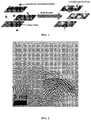
- acetylene black was dispersed into 50 mL deionized water (4 mg/mL), and ultrasonically dispersed for 10 minutes with an ultrasonic processor (at an ultrasonic power of 650 W) at room temperature to obtain an acetylene black dispersion. Then, 200 mg ammonium tetrathiomolybdate was added to obtain a mixed solution. The mixed solution was transferred to a 100 mL hydrothermal reactor lined with polytetrafluoroethylene, placed into a blast oven preheated to 220 °C and reacted for 24 hours. After completion of the reaction, the oven was closed and naturally cooled. The product was filtered, washed with deionized water, dried in a vacuum oven at 40 °C for 12 hours to obtain powdery MoS x /carbon black nanocomposite materials. The preparation process and principle are shown in FIG. 1 .
- TEM characterization was performed for the prepared MoS x /carbon black nanocomposite material. The result of which is shown in FIG. 2 . It can be seen from FIG. 2 that after hydrothermal reaction, an ordered MoS 2 layered structure was formed with a layer spacing of 0.65 nm, a typical layer spacing of MoS 2 . It proves that MoS 2 structure is actually formed after the hydrothermal reaction. Further, it can be seen from FIG. 2 that the MoS 2 structure has fewer layers, i.e., 3-8 layers. In addition, it can be seen from FIG. 2 that MoS x is dispersed in carbon black on a nanometer scale to form a nanocomposite material.
- FIG. 3 the broadening peak at 2 ⁇ of about 24° is the (002) diffraction peak of acetylene black, the small peak at 2 ⁇ of 43° is the (100) diffraction peak of acetylene black, and the diffraction peaks at 2 ⁇ of 33° and 57° correspond to the (100) and (110) diffraction peaks of MoS 2 , respectively. Therefore, the formation of MoS 2 structure is verified. Meanwhile, the absence of the diffraction peak of MoS 2 (002) at 14° indicates that MoS 2 structure generated has fewer layers, and the ordered structure between layers is destroyed. Such structure is beneficial for increasing the number of catalytic sites of MoS x .
- XPS characterization was performed for the prepared MoS x /carbon black nanocomposite material to determine other composition and structural information of MoS x .
- the results are shown in FIG. 4A and FIG. 4B .
- the atomic ratio of Mo to S is 1:2.10 in the nanocomposite material.
- the excess of S atoms indicates that MoS x has defect sites compared with MoS 2 , and these defect sites can serve as active sites of catalytic reactions, thereby increasing catalytic activity.
- two pairs of double peaks can be observed.
- the double peaks with a binding energy at 229.2 eV and 232.3 eV are Mo 3d 5/2 and 3d 3/2 peaks of 2H structure, while the double peaks with a binding energy at 228.6 eV and 231.8 eV are Mo 3d 5/2 and 3d 3/2 peaks of 1T structure, respectively. It indicates that the generated MoS x is of 1T@2H structure (i.e., containing both 1T structure and 2H structure). The content of the 1T structure component in MoS x is determined to be about 50% by integrating the corresponding peak areas.
- the mass percentage of MoS x in the MoS x /carbon black nanocomposite material is determined to be about 25% by element analysis.
- the performance for electrocatalytic hydrogen evolution reaction of the prepared MoS x /carbon black nanocomposite material was tested by a three-electrode system.
- a saturated calomel electrode (SCE) was used as a reference electrode, a 1 cm 2 Pt electrode was used as a counter electrode, and a glassy carbon electrode coated with the MoS 2 /carbon black nanocomposite material was used as a working electrode, with 0.5 M H 2 SO 4 as electrolyte.
- SCE saturated calomel electrode
- a 1 cm 2 Pt electrode was used as a counter electrode
- a glassy carbon electrode coated with the MoS 2 /carbon black nanocomposite material was used as a working electrode, with 0.5 M H 2 SO 4 as electrolyte.
- the Shanghai Chenhua's CHI 760e electrochemical workstation was used for testing.
- the working electrode with a catalyst loading of 0.165, 0.275, 0.385, and 0.495 mg/cm 2 was formed after the surface was completely dried, and was used for linear sweep voltammetry (LSV).
- LSV linear sweep voltammetry
- the linear sweep voltammetry (LSV) has a sweep rate of 5 mV/s and a sweep range of 0.2 to -0.4 V (relative to the reversible hydrogen electrode (RHE)).
- the cyclic voltammetry test has a sweep rate of 50 mV/s and a sweep range of 0 to -0.3 V (relative to RHE).
- the current density can reach 451 mA/cm 2 .
- the commercial 20% Pt/C catalyst is used for electrocatalytic hydrogen evolution reaction, the current density is only 370 mA/cm 2 when the overpotential is 300 mV.
- the MoS x /carbon black nanocomposite material provided by this example has much better catalytic performance than the commercial 20% Pt/C catalyst.
- the loading of the catalyst substantially has no effect on the catalytic performance, indicating that the MoS x /C nanocomposite material has excellent catalytic performance as a catalyst.
- FIG. 7 is a linear sweep voltammetry (LSV) diagram of the MoS x /carbon black nanocomposite material after catalytic cycles.
- LSV linear sweep voltammetry
- the MoS x /carbon black nanocomposite material was prepared under the conditions of Example 1 except that acetylene black in Example 1 was replaced by Cabot carbon black XC-72.
- the mass percentage of MoS x was about 25%, the content of 1T component was about 50%, and atomic ratio of Mo to S is 1:2.11.
- the MoS x /carbon black nanocomposite material was prepared under the conditions of Example 1 except that acetylene black in Example 1 was replaced by Cabot carbon black XC-72R.
- the mass percentage of MoS x was about 25%, the content of 1T component was about 50%, and atomic ratio of Mo to S is 1:2.10.
- the MoS x /carbon black nanocomposite material was prepared under the conditions of Example 1 except that acetylene black in Example 1 was replaced by Cabot carbon black BP-2000.
- the mass percentage of MoS x was about 25%, the content of 1T component was about 50%, and atomic ratio of Mo to S is 1:2.11.
- the MoS x /carbon black nanocomposite material was prepared under the conditions of Example 1 except that acetylene black in Example 1 was replaced by Ketjen black.
- the mass percentage of MoS x was about 25%, the content of 1T component was about 50%, and atomic ratio of Mo to S is 1:2.09.
- the MoS x /C nanocomposite material was prepared under the conditions of Example 1 except that the mass of acetylene black in Example 1 was altered to 400mg.
- the mass percentage of MoS x was about 13%, the content of 1T component was about 50%, and atomic ratio of Mo to S is 1:2.10.
- the MoS x /carbon black nanocomposite material was prepared under the conditions of Example 1 except that the mass of acetylene black in Example 1 was altered to 800mg.
- the mass percentage of MoS x was about 6%, the content of 1T component was about 50%, and atomic ratio of Mo to S is 1:2.10.
- the MoS x /carbon black nanocomposite material was prepared under the conditions of Example 1 except that the mass of ammonium tetrathiomolybdate in Example 1 was altered to 300mg.
- the mass percentage of MoS x was about 35%, the content of 1T component was about 50%, and atomic ratio of Mo to S is 1:2.08.
- the MoS x /carbon black nanocomposite material was prepared under the conditions of Example 1 except that the mass of ammonium tetrathiomolybdate in Example 1 was altered to 400mg.
- the mass percentage of MoS x was about 45%, the content of 1T component was about 50%, and atomic ratio of Mo to S is 1:2.08.
- the MoS x /carbon black nanocomposite material was prepared under the conditions of Example 1 except that the reaction time in Example 1 was altered to 18 hours. MoS x has a more disordered structure.
- the mass percentage of MoS 2 was about 20%, the content of 1T component was about 60%, and atomic ratio of Mo to S is 1:2.16.
- the MoS x /carbon black nanocomposite material was prepared under the conditions of Example 1 except that the reaction time in Example 1 was altered to 30 hours. MoS x has a more orderly structure. The mass percentage of MoS 2 was about 28%, the content of 1T component was about 40%, and atomic ratio of Mo to S is 1:2.05.
- the MoS x /carbon black nanocomposite material was prepared under the conditions of Example 1 except that the reaction temperature in Example 1 was altered to 180°C.
- the mass percentage of MoS x was about 20%, the content of 1T component was about 40%, and atomic ratio of Mo to S is 1:2.19.
- the MoS x /carbon black nanocomposite material was prepared under the conditions of Example 1 except that the reaction temperature in Example 1 was altered to 200°C.
- the mass percentage of MoS x was about 22%, the content of 1T component was about 40%, and atomic ratio of Mo to S is 1:2.14.
- the MoS x /carbon black nanocomposite material was prepared under the conditions of Example 1 except that the reaction temperature in Example 1 was altered to 240°C.
- the mass percentage of MoS x was about 32%, the content of 1T component was about 40%, and atomic ratio of Mo to S is 1:2.03.
- the MoS x /carbon black nanocomposite material was prepared under the conditions of Example 1 except that 200 mg ammonium tetrathiomolybdate in Example 1 was replaced by 200 mg ammonium molybdate and 150 mg thiourea.
- the mass percentage of MoS x was about 30%, the content of 1T component was about 50%, and atomic ratio of Mo to S is 1:2.06.
- Comparative Examples 1-11 11 kinds of catalysts for electrocatalytic hydrogen evolution reaction were prepared according to the description of the references in Table 2. The performance for electrocatalytic hydrogen evolution reaction of the 11 kinds of catalysts prepared in Comparative Examples 1-11 were tested. The test results are shown in Table 2.
- the MoS x /carbon black nanocomposite material prepared in the examples of the present application when used as a catalyst for electrocatalytic hydrogen evolution reaction, not only reduces the aggregation behavior of the molybdenum disulfide material due to the carbon black material as a carrier, but also increases the conductivity of the material due to the high electrical conductivity of the carbon black material, and enhances the intrinsic catalytic performance of molybdenum disulfide due to the chemical interaction between the carbon black material and molybdenum disulfide, thereby resulting in an excellent catalytic performance of the composite material.
- the prepared composite material has a low tafel slope and initial overpotential, and has a large current density at a lower overpotential.
- the initial overpotential of Examples 12-14 is slightly higher than 100 mV
- the initial overpotential of other examples is below 100 mV, and the minimum can reach 80 mV.
- the overpotential at 10 mA/cm 2 is slightly higher than 150 mV in Example 12, but below 150 mV in other examples.
- the current density at an overpotential of 300 mV is above 300 mA/cm 2 , and many examples can reach 400 mA/cm 2 or more.
- the catalyst prepared in Comparative Example 9 has an initial overpotential of 90 mV, it also has an overpotential of 225 mV at 10 mA/cm 2 , which is much higher than that in the examples of the present application; and it has a current density of below 50 mA/cm 2 at an overpotential of 300 mV, which is much lower than that in the examples of the present application.
- the overpotential at 10 mA/cm 2 is significantly higher than that in the examples of the present application, and the current density at an overpotential of 300 mV is also significantly lower than that in the examples of the present application.
- the MoS x /carbon black nanocomposite materials provided by the present application are prepared by a simpler method, lower in cost, and have more excellent catalytic performance than the catalysts prepared in Comparative Examples 1-11, and can meet industrial production requirements.
Landscapes
- Chemical & Material Sciences (AREA)
- Electrochemistry (AREA)
- Chemical Kinetics & Catalysis (AREA)
- General Chemical & Material Sciences (AREA)
- Engineering & Computer Science (AREA)
- Inorganic Chemistry (AREA)
- Organic Chemistry (AREA)
- Manufacturing & Machinery (AREA)
- Sustainable Development (AREA)
- Sustainable Energy (AREA)
- Life Sciences & Earth Sciences (AREA)
- Materials Engineering (AREA)
- Metallurgy (AREA)
- Composite Materials (AREA)
- Catalysts (AREA)
- Electrodes For Compound Or Non-Metal Manufacture (AREA)
- Fuel Cell (AREA)
- Inorganic Compounds Of Heavy Metals (AREA)
Claims (11)
- MoSx/Ruß-Nanokompositmaterial, wobei 2,01 ≤ x ≤ 2,20 und MoSx 5-50 Massen-% ausmacht, bezogen auf die Gesamtmasse des Nanokompositmaterials.
- Nanokompositmaterial nach Anspruch 1, wobei in dem Nanokompositmaterial MoSx als eine Schichtstruktur in Ruß dispergiert ist und MoSx, das von einem Aggregat umfasst wird, das von der Schichtstruktur gebildet wird, 10 Schichten oder weniger, vorzugsweise 8 Schichten oder weniger aufweist.
- Nanokompositmaterial nach Anspruch 1, wobei MoSx sowohl eine 1T-Struktur als auch eine 2H-Struktur umfasst, vorzugsweise wobei 40-60 % von MoSx die 1T- Struktur aufweist.
- Verfahren zur Herstellung des Nanokompositmaterials nach einem der Ansprüche 1-3, umfassend:(1) Dispergieren von Ruß in Wasser, vorzugsweise Dispergieren durch Beschallung für 10-30 Minuten, um eine Rußdispersion zu erhalten;(2) Zugeben einer Schwefelquelle und einer Molybdänquelle zu der Rußdispersion, um eine gemischte Lösung zu erhalten; und(3) Unterziehen der gemischten Lösung einer hydrothermalen Reaktion bei einer Temperatur von 180-240 °C für 15-30 Stunden; und Erhalten des Nanokompositmaterials durch Trennung und Trocknung nach Abschluss der Reaktion.
- Verfahren zur Herstellung des Nanokompositmaterials nach Anspruch 4, wobei die Schwefelquelle und die Molybdänquelle von derselben Verbindung kommen und die Verbindung in der gemischten Lösung in einer Konzentration von 1-10 mg/mL vorliegt; vorzugsweise wobei die Verbindung mindestens eine ist, die aus der Gruppe bestehend aus Ammoniumtetrathiomolybdat und Natriumtetrathiomolybdat ausgewählt ist;
oder
die Schwefelquelle und die Molybdänquelle von den unterschiedlichen Verbindungen kommen, wobei die Schwefelquelle in der gemischten Lösung in einer Konzentration von 2-40 mg/mL vorliegt und die Molybdänquelle in der gemischten Lösung in einer Konzentration von 1-10 mg/mL vorliegt; vorzugsweise wobei die Schwefelquelle mindestens eine ist, die aus der Gruppe bestehend aus Thioharnstoff und Natriumthiosulfat ausgewählt ist, und die Molybdänquelle mindestens eine ist, die aus der Gruppe bestehend aus Ammoniummolybdat, Molybdänpentachlorid und Natriummolybdat ausgewählt ist. - Verfahren zur Herstellung des Nanokompositmaterials nach Anspruch 4, wobei ein Verhältnis von Ruß zu Wasser 1-16 mg:1 mL beträgt, wobei der Ruß mindestens einer ist, der aus Acetylen-Schwarz und Ketjen-Schwarz ausgewählt ist.
- Verwendung des MoSx/Ruß-Nanokompositmaterials nach einem der Ansprüche 1-3 in einer elektrochemischen Wasserstoffentwicklungsreaktion.
- Kathodenelektrode, umfassend eine Basiselektrode und das MoSx/Ruß-Nanokompositmaterial nach einem der Ansprüche 1-3, das auf die Oberfläche der Basiselektrode beschichtet ist, wobei die Basiselektrode eine inerte Elektrode ist und sie vorzugsweise aus der Gruppe bestehend aus einer Glaskohlenstoff-Elektrode, einer Graphit-Elektrode, einer ITO-Elektrode oder einer FTO-Elektrode ausgewählt ist.
- Vorrichtung zur Wasserstoffproduktion durch Wasserelektrolyse, umfassend die Kathodenelektrode nach Anspruch 8.
- Wasserstoffbrennstoffzellenvorrichtung, umfassend ein Wasserstoffbrennstoffzellengehäuse und die Vorrichtung zur Wasserstoffproduktion durch Wasserelektrolyse nach Anspruch 9.
- Elektrische Maschine, umfassend die Wasserstoffbrennstoffzellenvorrichtung nach Anspruch 10, wobei die elektrische Maschine vorzugsweise ein Elektrofahrzeug, ein Elektrodreirad oder ein Elektrofahrrad ist.
Applications Claiming Priority (2)
| Application Number | Priority Date | Filing Date | Title |
|---|---|---|---|
| CN201610600245.7A CN106960948B (zh) | 2016-07-27 | 2016-07-27 | 一种MoSx/碳黑纳米复合材料、其制备方法及其应用 |
| PCT/CN2017/094308 WO2018019231A1 (zh) | 2016-07-27 | 2017-07-25 | 一种MoSx/碳黑纳米复合材料、其制备方法及其应用 |
Publications (3)
| Publication Number | Publication Date |
|---|---|
| EP3502318A1 EP3502318A1 (de) | 2019-06-26 |
| EP3502318A4 EP3502318A4 (de) | 2019-07-24 |
| EP3502318B1 true EP3502318B1 (de) | 2021-01-13 |
Family
ID=59481671
Family Applications (1)
| Application Number | Title | Priority Date | Filing Date |
|---|---|---|---|
| EP17833534.5A Active EP3502318B1 (de) | 2016-07-27 | 2017-07-25 | Mosx/kohlenstoff schwarz nanoverbundmaterial, herstellungsverfahren dafür und verwendung davon |
Country Status (5)
| Country | Link |
|---|---|
| US (1) | US11201323B2 (de) |
| EP (1) | EP3502318B1 (de) |
| JP (1) | JP6782908B2 (de) |
| CN (1) | CN106960948B (de) |
| WO (1) | WO2018019231A1 (de) |
Families Citing this family (18)
| Publication number | Priority date | Publication date | Assignee | Title |
|---|---|---|---|---|
| CN107010670B (zh) | 2016-07-27 | 2018-10-16 | 北京大学 | 一种MoSxOy/碳纳米复合材料、其制备方法及其应用 |
| CN106960948B (zh) * | 2016-07-27 | 2020-07-10 | 北京大学 | 一种MoSx/碳黑纳米复合材料、其制备方法及其应用 |
| CN109088054B (zh) * | 2017-10-24 | 2021-11-16 | 苏州市相城区渭塘城乡发展有限公司 | 一种循环性能优异的锂电池 |
| CN110523418A (zh) * | 2019-01-22 | 2019-12-03 | 上海理工大学 | 石墨烯/硫化钼复合气凝胶电催化剂的制备方法及其电催化析氢性能的检验方法 |
| CN110075872B (zh) * | 2019-04-28 | 2020-04-03 | 湖南大学 | 利用电化学活化二硫化钼/碳复合材料电催化析氢的方法 |
| CN110983373A (zh) * | 2019-11-05 | 2020-04-10 | 江苏大学 | 一种负载型复合硫化物析氢催化剂及其制备方法和应用 |
| CN110993971B (zh) * | 2019-12-12 | 2022-07-29 | 电子科技大学 | 一种NiS2/ZnIn2S4复合材料及其制备方法和应用 |
| CN111250119B (zh) * | 2020-01-22 | 2021-04-30 | 北京大学 | 一种导电基材表面生长CoPxOy纳米阵列复合材料及其制备和应用 |
| CN111359636A (zh) * | 2020-03-06 | 2020-07-03 | 上海应用技术大学 | 一种Mo-S/NF析氢材料及其制备方法与应用 |
| EP4292705A4 (de) * | 2021-02-09 | 2025-07-09 | Dainippon Ink & Chemicals | Katalysator zur wasserstofferzeugung und katalysatortinte |
| JP2022133863A (ja) * | 2021-03-02 | 2022-09-14 | 公立大学法人大阪 | 電極触媒複合体、電極及びこれらの製造方法 |
| CN113410459B (zh) * | 2021-06-11 | 2022-11-29 | 天津大学 | 一种内嵌MoSx纳米片的三维有序大孔类石墨烯炭材料、制备与应用 |
| CN113529126B (zh) * | 2021-06-18 | 2022-08-23 | 复旦大学 | 一种催化活性物种含量可控的非晶硫化钼/石墨烯催化剂及其制备和应用 |
| CN114507875B (zh) * | 2022-01-28 | 2023-06-09 | 中国石油大学(华东) | 一种可调相组成具有大层间距的二硫化钼催化剂及其制备方法和应用 |
| CN115472797B (zh) * | 2022-09-22 | 2025-03-25 | 南京林业大学 | 一种多孔碳负载层间距扩张二硫化钼复合物及其制备方法与应用 |
| CN115513439B (zh) * | 2022-10-24 | 2025-05-27 | 上海海事大学 | 一种弱晶型二硫化钼内嵌介孔碳孔道材料及其制备方法和应用 |
| CN116145153B (zh) * | 2023-02-17 | 2025-08-12 | 中国恩菲工程技术有限公司 | 一种纳米钨钼析氢催化剂及其制备方法和应用 |
| CN116966865B (zh) * | 2023-08-17 | 2026-03-06 | 青岛大学 | 基于二硫化钼的纳米缺陷型高效污水处理剂及其制备方法和应用 |
Family Cites Families (13)
| Publication number | Priority date | Publication date | Assignee | Title |
|---|---|---|---|---|
| US20090081497A1 (en) * | 2007-07-24 | 2009-03-26 | Rovcal, Inc | On-demand high energy density hydrogen gas generation device |
| JP2009082910A (ja) | 2007-09-14 | 2009-04-23 | Toyota Motor Corp | 微粒子コンポジット、その製造方法、固体高分子型燃料電池用触媒、及び固体高分子型燃料電池 |
| JP2012119078A (ja) | 2010-11-29 | 2012-06-21 | Asahi Glass Co Ltd | 蓄電デバイス用電極合剤の製造方法 |
| CN102142537B (zh) * | 2011-02-25 | 2015-03-25 | 浙江大学 | 一种石墨烯/MoS2复合纳米材料锂离子电池电极及制备方法 |
| KR20140008205A (ko) | 2012-07-11 | 2014-01-21 | 김동훈 | 미끄럼 베어링 소재 제조 방법 |
| CN103000887A (zh) | 2012-11-06 | 2013-03-27 | 苏州懿源宏达知识产权代理有限公司 | 一种离子电池石墨硫化钼纳米复合负极材料的制备方法 |
| JP6175596B2 (ja) * | 2014-01-31 | 2017-08-02 | 博 久保田 | 水素生成触媒の製造方法 |
| CN104091936B (zh) * | 2014-07-17 | 2016-08-31 | 浙江大学 | 一种MoS2纳米瓦/石墨烯复合纳米材料及其制备方法 |
| CN104600315A (zh) * | 2015-01-07 | 2015-05-06 | 上海大学 | 一种片状MoS2/石墨烯复合气凝胶及其制备方法 |
| CN105098151B (zh) * | 2015-06-19 | 2017-05-24 | 上海交通大学 | 一种二硫化钼‑碳空心球杂化材料及其制备方法 |
| CN105174311B (zh) * | 2015-07-25 | 2017-03-01 | 复旦大学 | 一种二硫化钼纳米片/碳气凝胶杂化材料及其制备方法 |
| CN105200450B (zh) * | 2015-09-10 | 2017-08-25 | 北京航空航天大学 | 一种二硫化钼/炭黑复合析氢电催化材料及其制备方法 |
| CN106960948B (zh) | 2016-07-27 | 2020-07-10 | 北京大学 | 一种MoSx/碳黑纳米复合材料、其制备方法及其应用 |
-
2016
- 2016-07-27 CN CN201610600245.7A patent/CN106960948B/zh active Active
-
2017
- 2017-07-25 JP JP2019503983A patent/JP6782908B2/ja active Active
- 2017-07-25 EP EP17833534.5A patent/EP3502318B1/de active Active
- 2017-07-25 WO PCT/CN2017/094308 patent/WO2018019231A1/zh not_active Ceased
- 2017-07-25 US US16/320,444 patent/US11201323B2/en active Active
Non-Patent Citations (1)
| Title |
|---|
| None * |
Also Published As
| Publication number | Publication date |
|---|---|
| EP3502318A1 (de) | 2019-06-26 |
| EP3502318A4 (de) | 2019-07-24 |
| WO2018019231A1 (zh) | 2018-02-01 |
| CN106960948A (zh) | 2017-07-18 |
| JP6782908B2 (ja) | 2020-11-11 |
| US20190267620A1 (en) | 2019-08-29 |
| CN106960948B (zh) | 2020-07-10 |
| JP2019524433A (ja) | 2019-09-05 |
| US11201323B2 (en) | 2021-12-14 |
Similar Documents
| Publication | Publication Date | Title |
|---|---|---|
| EP3502318B1 (de) | Mosx/kohlenstoff schwarz nanoverbundmaterial, herstellungsverfahren dafür und verwendung davon | |
| EP3511297B1 (de) | Mosxoy/kohlenstoff-nanoverbundmaterial, herstellungsverfahren dafür und verwendung davon | |
| Gao et al. | Conductive molybdenum sulfide for efficient electrocatalytic hydrogen evolution | |
| Lin et al. | Electrocatalytic conversion of nitrate into ammonia through heterogeneous catalysis of NiMoO4 and Cu/Cu2O | |
| Zhao et al. | Vertically aligned MoS2/Mo2C hybrid nanosheets grown on carbon paper for efficient electrocatalytic hydrogen evolution | |
| Awasthi et al. | Graphene-supported Pd–Ru nanoparticles with superior methanol electrooxidation activity | |
| Reddy et al. | Three dimensional CNTs aerogel/MoSx as an electrocatalyst for hydrogen evolution reaction | |
| Meng et al. | Vertically grown MoS2 nanoplates on VN with an enlarged surface area as an efficient and stable electrocatalyst for HER | |
| Zhang et al. | Tungsten-assisted phase tuning of molybdenum carbide for efficient electrocatalytic hydrogen evolution | |
| Zeng et al. | Heterostructured Ni3N–NiMoN nanowires as bifunctional electrocatalysts for hydrogen evolution and 5-hydroxymethylfurfural oxidation | |
| Hu et al. | Highly dispersed palladium nanoparticles on commercial carbon black with significantly high electro-catalytic activity for methanol and ethanol oxidation | |
| Qi et al. | Self-supported Co-doped FeNi carbonate hydroxide nanosheet array as a highly efficient electrocatalyst towards the oxygen evolution reaction in an alkaline solution | |
| Yang et al. | One-step chemical vapor deposition fabrication of Ni@ NiO@ graphite nanoparticles for the oxygen evolution reaction of water splitting | |
| Carrillo-Rodríguez et al. | Easy synthesis of N-doped graphene by milling exfoliation with electrocatalytic activity towards the Oxygen Reduction Reaction (ORR) | |
| Mir et al. | An ecofriendly route to synthesize C-Mo 2 C and C/N-Mo 2 C utilizing waste polyethene for efficient hydrogen evolution reaction (HER) activity and high performance capacitors | |
| Zhiani et al. | Preparation and evaluation of nickel nanoparticles supported on the polyvinylpyrrolidone-graphene composite as a durable electrocatalyst for HER in alkaline media | |
| Ren et al. | Ru nanoparticle-anchored MoO2 nanoflowers as electrocatalysts for the hydrogen evolution reaction | |
| Lee et al. | Vertically aligned NiCo2S4 nanosheets deposited on N‐doped graphene for bifunctional and durable electrode of overall water splitting | |
| Fu et al. | Boosting hydrogen evolution reaction activities of three-dimensional flower-like tungsten carbonitride via anion regulation | |
| Raj et al. | Nanopalladium-anchored MXene nanoflowers for boosting electrocatalytic hydrogen evolution reaction | |
| He et al. | “Bulk” 1T/2H-MoS2 with tunable phases and residual S, N co-doped carbon as a highly active and durable catalyst for hydrogen evolution | |
| Yan et al. | Bilayer MXene‐Derived Carbon‐Encapsulated Palladium Nanocatalysts: Engineering Robust Electronic and Chemical Interfaces for Oxygen Reduction and Zinc–Air Batteries | |
| Arbab et al. | Ultralow‐overpotential acidic oxygen evolution reaction over bismuth telluride–carbon nanotube heterostructure with organic framework | |
| He et al. | Three-dimensional porous rhodium–copper alloy nanoflowers stereoassembled on Ti 3 C 2 T x MXene as highly-efficient methanol oxidation electrocatalysts | |
| Li et al. | Multi‐chambered, carbon‐coated Ni0. 4Fe2. 6O4 nanoparticle superlattice microspheres for boosting water oxidation reaction |
Legal Events
| Date | Code | Title | Description |
|---|---|---|---|
| STAA | Information on the status of an ep patent application or granted ep patent |
Free format text: STATUS: THE INTERNATIONAL PUBLICATION HAS BEEN MADE |
|
| PUAI | Public reference made under article 153(3) epc to a published international application that has entered the european phase |
Free format text: ORIGINAL CODE: 0009012 |
|
| STAA | Information on the status of an ep patent application or granted ep patent |
Free format text: STATUS: REQUEST FOR EXAMINATION WAS MADE |
|
| 17P | Request for examination filed |
Effective date: 20190212 |
|
| AK | Designated contracting states |
Kind code of ref document: A1 Designated state(s): AL AT BE BG CH CY CZ DE DK EE ES FI FR GB GR HR HU IE IS IT LI LT LU LV MC MK MT NL NO PL PT RO RS SE SI SK SM TR |
|
| AX | Request for extension of the european patent |
Extension state: BA ME |
|
| RIC1 | Information provided on ipc code assigned before grant |
Ipc: C01G 39/06 20060101ALI20190613BHEP Ipc: C25B 1/04 20060101AFI20190613BHEP |
|
| A4 | Supplementary search report drawn up and despatched |
Effective date: 20190624 |
|
| DAV | Request for validation of the european patent (deleted) | ||
| DAX | Request for extension of the european patent (deleted) | ||
| REG | Reference to a national code |
Ref country code: DE Ref legal event code: R079 Ref document number: 602017031492 Country of ref document: DE Free format text: PREVIOUS MAIN CLASS: C25B0011060000 Ipc: C25B0001040000 |
|
| RIC1 | Information provided on ipc code assigned before grant |
Ipc: C25B 1/04 20060101AFI20200703BHEP Ipc: C01G 39/06 20060101ALI20200703BHEP |
|
| GRAP | Despatch of communication of intention to grant a patent |
Free format text: ORIGINAL CODE: EPIDOSNIGR1 |
|
| STAA | Information on the status of an ep patent application or granted ep patent |
Free format text: STATUS: GRANT OF PATENT IS INTENDED |
|
| INTG | Intention to grant announced |
Effective date: 20200825 |
|
| GRAS | Grant fee paid |
Free format text: ORIGINAL CODE: EPIDOSNIGR3 |
|
| GRAA | (expected) grant |
Free format text: ORIGINAL CODE: 0009210 |
|
| STAA | Information on the status of an ep patent application or granted ep patent |
Free format text: STATUS: THE PATENT HAS BEEN GRANTED |
|
| AK | Designated contracting states |
Kind code of ref document: B1 Designated state(s): AL AT BE BG CH CY CZ DE DK EE ES FI FR GB GR HR HU IE IS IT LI LT LU LV MC MK MT NL NO PL PT RO RS SE SI SK SM TR |
|
| REG | Reference to a national code |
Ref country code: GB Ref legal event code: FG4D |
|
| REG | Reference to a national code |
Ref country code: CH Ref legal event code: EP |
|
| REG | Reference to a national code |
Ref country code: IE Ref legal event code: FG4D |
|
| REG | Reference to a national code |
Ref country code: DE Ref legal event code: R096 Ref document number: 602017031492 Country of ref document: DE |
|
| REG | Reference to a national code |
Ref country code: AT Ref legal event code: REF Ref document number: 1354624 Country of ref document: AT Kind code of ref document: T Effective date: 20210215 |
|
| REG | Reference to a national code |
Ref country code: AT Ref legal event code: MK05 Ref document number: 1354624 Country of ref document: AT Kind code of ref document: T Effective date: 20210113 |
|
| REG | Reference to a national code |
Ref country code: NL Ref legal event code: MP Effective date: 20210113 |
|
| REG | Reference to a national code |
Ref country code: LT Ref legal event code: MG9D |
|
| PG25 | Lapsed in a contracting state [announced via postgrant information from national office to epo] |
Ref country code: LT Free format text: LAPSE BECAUSE OF FAILURE TO SUBMIT A TRANSLATION OF THE DESCRIPTION OR TO PAY THE FEE WITHIN THE PRESCRIBED TIME-LIMIT Effective date: 20210113 Ref country code: BG Free format text: LAPSE BECAUSE OF FAILURE TO SUBMIT A TRANSLATION OF THE DESCRIPTION OR TO PAY THE FEE WITHIN THE PRESCRIBED TIME-LIMIT Effective date: 20210413 Ref country code: HR Free format text: LAPSE BECAUSE OF FAILURE TO SUBMIT A TRANSLATION OF THE DESCRIPTION OR TO PAY THE FEE WITHIN THE PRESCRIBED TIME-LIMIT Effective date: 20210113 Ref country code: FI Free format text: LAPSE BECAUSE OF FAILURE TO SUBMIT A TRANSLATION OF THE DESCRIPTION OR TO PAY THE FEE WITHIN THE PRESCRIBED TIME-LIMIT Effective date: 20210113 Ref country code: GR Free format text: LAPSE BECAUSE OF FAILURE TO SUBMIT A TRANSLATION OF THE DESCRIPTION OR TO PAY THE FEE WITHIN THE PRESCRIBED TIME-LIMIT Effective date: 20210414 Ref country code: NO Free format text: LAPSE BECAUSE OF FAILURE TO SUBMIT A TRANSLATION OF THE DESCRIPTION OR TO PAY THE FEE WITHIN THE PRESCRIBED TIME-LIMIT Effective date: 20210413 Ref country code: PT Free format text: LAPSE BECAUSE OF FAILURE TO SUBMIT A TRANSLATION OF THE DESCRIPTION OR TO PAY THE FEE WITHIN THE PRESCRIBED TIME-LIMIT Effective date: 20210513 |
|
| PG25 | Lapsed in a contracting state [announced via postgrant information from national office to epo] |
Ref country code: AT Free format text: LAPSE BECAUSE OF FAILURE TO SUBMIT A TRANSLATION OF THE DESCRIPTION OR TO PAY THE FEE WITHIN THE PRESCRIBED TIME-LIMIT Effective date: 20210113 Ref country code: PL Free format text: LAPSE BECAUSE OF FAILURE TO SUBMIT A TRANSLATION OF THE DESCRIPTION OR TO PAY THE FEE WITHIN THE PRESCRIBED TIME-LIMIT Effective date: 20210113 Ref country code: LV Free format text: LAPSE BECAUSE OF FAILURE TO SUBMIT A TRANSLATION OF THE DESCRIPTION OR TO PAY THE FEE WITHIN THE PRESCRIBED TIME-LIMIT Effective date: 20210113 Ref country code: RS Free format text: LAPSE BECAUSE OF FAILURE TO SUBMIT A TRANSLATION OF THE DESCRIPTION OR TO PAY THE FEE WITHIN THE PRESCRIBED TIME-LIMIT Effective date: 20210113 Ref country code: SE Free format text: LAPSE BECAUSE OF FAILURE TO SUBMIT A TRANSLATION OF THE DESCRIPTION OR TO PAY THE FEE WITHIN THE PRESCRIBED TIME-LIMIT Effective date: 20210113 |
|
| PG25 | Lapsed in a contracting state [announced via postgrant information from national office to epo] |
Ref country code: IS Free format text: LAPSE BECAUSE OF FAILURE TO SUBMIT A TRANSLATION OF THE DESCRIPTION OR TO PAY THE FEE WITHIN THE PRESCRIBED TIME-LIMIT Effective date: 20210513 |
|
| REG | Reference to a national code |
Ref country code: DE Ref legal event code: R097 Ref document number: 602017031492 Country of ref document: DE |
|
| PG25 | Lapsed in a contracting state [announced via postgrant information from national office to epo] |
Ref country code: EE Free format text: LAPSE BECAUSE OF FAILURE TO SUBMIT A TRANSLATION OF THE DESCRIPTION OR TO PAY THE FEE WITHIN THE PRESCRIBED TIME-LIMIT Effective date: 20210113 Ref country code: CZ Free format text: LAPSE BECAUSE OF FAILURE TO SUBMIT A TRANSLATION OF THE DESCRIPTION OR TO PAY THE FEE WITHIN THE PRESCRIBED TIME-LIMIT Effective date: 20210113 Ref country code: SM Free format text: LAPSE BECAUSE OF FAILURE TO SUBMIT A TRANSLATION OF THE DESCRIPTION OR TO PAY THE FEE WITHIN THE PRESCRIBED TIME-LIMIT Effective date: 20210113 |
|
| PLBE | No opposition filed within time limit |
Free format text: ORIGINAL CODE: 0009261 |
|
| STAA | Information on the status of an ep patent application or granted ep patent |
Free format text: STATUS: NO OPPOSITION FILED WITHIN TIME LIMIT |
|
| PG25 | Lapsed in a contracting state [announced via postgrant information from national office to epo] |
Ref country code: RO Free format text: LAPSE BECAUSE OF FAILURE TO SUBMIT A TRANSLATION OF THE DESCRIPTION OR TO PAY THE FEE WITHIN THE PRESCRIBED TIME-LIMIT Effective date: 20210113 Ref country code: DK Free format text: LAPSE BECAUSE OF FAILURE TO SUBMIT A TRANSLATION OF THE DESCRIPTION OR TO PAY THE FEE WITHIN THE PRESCRIBED TIME-LIMIT Effective date: 20210113 Ref country code: SK Free format text: LAPSE BECAUSE OF FAILURE TO SUBMIT A TRANSLATION OF THE DESCRIPTION OR TO PAY THE FEE WITHIN THE PRESCRIBED TIME-LIMIT Effective date: 20210113 |
|
| 26N | No opposition filed |
Effective date: 20211014 |
|
| PG25 | Lapsed in a contracting state [announced via postgrant information from national office to epo] |
Ref country code: ES Free format text: LAPSE BECAUSE OF FAILURE TO SUBMIT A TRANSLATION OF THE DESCRIPTION OR TO PAY THE FEE WITHIN THE PRESCRIBED TIME-LIMIT Effective date: 20210113 Ref country code: AL Free format text: LAPSE BECAUSE OF FAILURE TO SUBMIT A TRANSLATION OF THE DESCRIPTION OR TO PAY THE FEE WITHIN THE PRESCRIBED TIME-LIMIT Effective date: 20210113 |
|
| PG25 | Lapsed in a contracting state [announced via postgrant information from national office to epo] |
Ref country code: SI Free format text: LAPSE BECAUSE OF FAILURE TO SUBMIT A TRANSLATION OF THE DESCRIPTION OR TO PAY THE FEE WITHIN THE PRESCRIBED TIME-LIMIT Effective date: 20210113 |
|
| REG | Reference to a national code |
Ref country code: CH Ref legal event code: PL |
|
| PG25 | Lapsed in a contracting state [announced via postgrant information from national office to epo] |
Ref country code: MC Free format text: LAPSE BECAUSE OF FAILURE TO SUBMIT A TRANSLATION OF THE DESCRIPTION OR TO PAY THE FEE WITHIN THE PRESCRIBED TIME-LIMIT Effective date: 20210113 |
|
| REG | Reference to a national code |
Ref country code: BE Ref legal event code: MM Effective date: 20210731 |
|
| PG25 | Lapsed in a contracting state [announced via postgrant information from national office to epo] |
Ref country code: LI Free format text: LAPSE BECAUSE OF NON-PAYMENT OF DUE FEES Effective date: 20210731 Ref country code: IT Free format text: LAPSE BECAUSE OF FAILURE TO SUBMIT A TRANSLATION OF THE DESCRIPTION OR TO PAY THE FEE WITHIN THE PRESCRIBED TIME-LIMIT Effective date: 20210113 Ref country code: CH Free format text: LAPSE BECAUSE OF NON-PAYMENT OF DUE FEES Effective date: 20210731 |
|
| PG25 | Lapsed in a contracting state [announced via postgrant information from national office to epo] |
Ref country code: IS Free format text: LAPSE BECAUSE OF FAILURE TO SUBMIT A TRANSLATION OF THE DESCRIPTION OR TO PAY THE FEE WITHIN THE PRESCRIBED TIME-LIMIT Effective date: 20210513 Ref country code: LU Free format text: LAPSE BECAUSE OF NON-PAYMENT OF DUE FEES Effective date: 20210725 |
|
| PG25 | Lapsed in a contracting state [announced via postgrant information from national office to epo] |
Ref country code: IE Free format text: LAPSE BECAUSE OF NON-PAYMENT OF DUE FEES Effective date: 20210725 Ref country code: BE Free format text: LAPSE BECAUSE OF NON-PAYMENT OF DUE FEES Effective date: 20210731 |
|
| PG25 | Lapsed in a contracting state [announced via postgrant information from national office to epo] |
Ref country code: NL Free format text: LAPSE BECAUSE OF NON-PAYMENT OF DUE FEES Effective date: 20210113 Ref country code: CY Free format text: LAPSE BECAUSE OF FAILURE TO SUBMIT A TRANSLATION OF THE DESCRIPTION OR TO PAY THE FEE WITHIN THE PRESCRIBED TIME-LIMIT Effective date: 20210113 |
|
| P01 | Opt-out of the competence of the unified patent court (upc) registered |
Effective date: 20230530 |
|
| PG25 | Lapsed in a contracting state [announced via postgrant information from national office to epo] |
Ref country code: HU Free format text: LAPSE BECAUSE OF FAILURE TO SUBMIT A TRANSLATION OF THE DESCRIPTION OR TO PAY THE FEE WITHIN THE PRESCRIBED TIME-LIMIT; INVALID AB INITIO Effective date: 20170725 |
|
| PG25 | Lapsed in a contracting state [announced via postgrant information from national office to epo] |
Ref country code: MK Free format text: LAPSE BECAUSE OF FAILURE TO SUBMIT A TRANSLATION OF THE DESCRIPTION OR TO PAY THE FEE WITHIN THE PRESCRIBED TIME-LIMIT Effective date: 20210113 |
|
| PG25 | Lapsed in a contracting state [announced via postgrant information from national office to epo] |
Ref country code: MT Free format text: LAPSE BECAUSE OF FAILURE TO SUBMIT A TRANSLATION OF THE DESCRIPTION OR TO PAY THE FEE WITHIN THE PRESCRIBED TIME-LIMIT Effective date: 20210113 |
|
| PGFP | Annual fee paid to national office [announced via postgrant information from national office to epo] |
Ref country code: GB Payment date: 20250626 Year of fee payment: 9 |
|
| PGFP | Annual fee paid to national office [announced via postgrant information from national office to epo] |
Ref country code: FR Payment date: 20250623 Year of fee payment: 9 |
|
| PGFP | Annual fee paid to national office [announced via postgrant information from national office to epo] |
Ref country code: DE Payment date: 20250624 Year of fee payment: 9 |
|
| PG25 | Lapsed in a contracting state [announced via postgrant information from national office to epo] |
Ref country code: TR Free format text: LAPSE BECAUSE OF FAILURE TO SUBMIT A TRANSLATION OF THE DESCRIPTION OR TO PAY THE FEE WITHIN THE PRESCRIBED TIME-LIMIT Effective date: 20210113 |