EP3490320B1 - Device communication using a reduced channel bandwidth - Google Patents
Device communication using a reduced channel bandwidth Download PDFInfo
- Publication number
- EP3490320B1 EP3490320B1 EP19151370.4A EP19151370A EP3490320B1 EP 3490320 B1 EP3490320 B1 EP 3490320B1 EP 19151370 A EP19151370 A EP 19151370A EP 3490320 B1 EP3490320 B1 EP 3490320B1
- Authority
- EP
- European Patent Office
- Prior art keywords
- bandwidth
- mtc
- devices
- subframe
- reduced
- Prior art date
- Legal status (The legal status is an assumption and is not a legal conclusion. Google has not performed a legal analysis and makes no representation as to the accuracy of the status listed.)
- Active
Links
Images










Classifications
-
- H—ELECTRICITY
- H04—ELECTRIC COMMUNICATION TECHNIQUE
- H04W—WIRELESS COMMUNICATION NETWORKS
- H04W72/00—Local resource management
- H04W72/04—Wireless resource allocation
- H04W72/044—Wireless resource allocation based on the type of the allocated resource
- H04W72/0453—Resources in frequency domain, e.g. a carrier in FDMA
-
- H—ELECTRICITY
- H04—ELECTRIC COMMUNICATION TECHNIQUE
- H04L—TRANSMISSION OF DIGITAL INFORMATION, e.g. TELEGRAPHIC COMMUNICATION
- H04L1/00—Arrangements for detecting or preventing errors in the information received
- H04L1/0001—Systems modifying transmission characteristics according to link quality, e.g. power backoff
- H04L1/0023—Systems modifying transmission characteristics according to link quality, e.g. power backoff characterised by the signalling
- H04L1/0026—Transmission of channel quality indication
-
- H—ELECTRICITY
- H04—ELECTRIC COMMUNICATION TECHNIQUE
- H04L—TRANSMISSION OF DIGITAL INFORMATION, e.g. TELEGRAPHIC COMMUNICATION
- H04L1/00—Arrangements for detecting or preventing errors in the information received
- H04L1/12—Arrangements for detecting or preventing errors in the information received by using return channel
- H04L1/16—Arrangements for detecting or preventing errors in the information received by using return channel in which the return channel carries supervisory signals, e.g. repetition request signals
- H04L1/18—Automatic repetition systems, e.g. Van Duuren systems
- H04L1/1829—Arrangements specially adapted for the receiver end
- H04L1/1858—Transmission or retransmission of more than one copy of acknowledgement message
-
- H—ELECTRICITY
- H04—ELECTRIC COMMUNICATION TECHNIQUE
- H04W—WIRELESS COMMUNICATION NETWORKS
- H04W4/00—Services specially adapted for wireless communication networks; Facilities therefor
- H04W4/70—Services for machine-to-machine communication [M2M] or machine type communication [MTC]
-
- H—ELECTRICITY
- H04—ELECTRIC COMMUNICATION TECHNIQUE
- H04W—WIRELESS COMMUNICATION NETWORKS
- H04W48/00—Access restriction; Network selection; Access point selection
- H04W48/08—Access restriction or access information delivery, e.g. discovery data delivery
- H04W48/10—Access restriction or access information delivery, e.g. discovery data delivery using broadcasted information
-
- H—ELECTRICITY
- H04—ELECTRIC COMMUNICATION TECHNIQUE
- H04W—WIRELESS COMMUNICATION NETWORKS
- H04W72/00—Local resource management
- H04W72/04—Wireless resource allocation
- H04W72/044—Wireless resource allocation based on the type of the allocated resource
- H04W72/0446—Resources in time domain, e.g. slots or frames
-
- H—ELECTRICITY
- H04—ELECTRIC COMMUNICATION TECHNIQUE
- H04W—WIRELESS COMMUNICATION NETWORKS
- H04W72/00—Local resource management
- H04W72/20—Control channels or signalling for resource management
- H04W72/21—Control channels or signalling for resource management in the uplink direction of a wireless link, i.e. towards the network
-
- H—ELECTRICITY
- H04—ELECTRIC COMMUNICATION TECHNIQUE
- H04W—WIRELESS COMMUNICATION NETWORKS
- H04W72/00—Local resource management
- H04W72/20—Control channels or signalling for resource management
- H04W72/23—Control channels or signalling for resource management in the downlink direction of a wireless link, i.e. towards a terminal
-
- H—ELECTRICITY
- H04—ELECTRIC COMMUNICATION TECHNIQUE
- H04W—WIRELESS COMMUNICATION NETWORKS
- H04W74/00—Wireless channel access
- H04W74/002—Transmission of channel access control information
- H04W74/004—Transmission of channel access control information in the uplink, i.e. towards network
-
- H—ELECTRICITY
- H04—ELECTRIC COMMUNICATION TECHNIQUE
- H04W—WIRELESS COMMUNICATION NETWORKS
- H04W74/00—Wireless channel access
- H04W74/002—Transmission of channel access control information
- H04W74/006—Transmission of channel access control information in the downlink, i.e. towards the terminal
-
- H—ELECTRICITY
- H04—ELECTRIC COMMUNICATION TECHNIQUE
- H04W—WIRELESS COMMUNICATION NETWORKS
- H04W74/00—Wireless channel access
- H04W74/08—Non-scheduled access, e.g. ALOHA
- H04W74/0833—Random access procedures, e.g. with 4-step access
-
- H—ELECTRICITY
- H04—ELECTRIC COMMUNICATION TECHNIQUE
- H04W—WIRELESS COMMUNICATION NETWORKS
- H04W88/00—Devices specially adapted for wireless communication networks, e.g. terminals, base stations or access point devices
- H04W88/02—Terminal devices
-
- H—ELECTRICITY
- H04—ELECTRIC COMMUNICATION TECHNIQUE
- H04L—TRANSMISSION OF DIGITAL INFORMATION, e.g. TELEGRAPHIC COMMUNICATION
- H04L1/00—Arrangements for detecting or preventing errors in the information received
- H04L1/0001—Systems modifying transmission characteristics according to link quality, e.g. power backoff
- H04L1/0023—Systems modifying transmission characteristics according to link quality, e.g. power backoff characterised by the signalling
- H04L1/0028—Formatting
- H04L1/0031—Multiple signaling transmission
-
- H—ELECTRICITY
- H04—ELECTRIC COMMUNICATION TECHNIQUE
- H04W—WIRELESS COMMUNICATION NETWORKS
- H04W72/00—Local resource management
- H04W72/50—Allocation or scheduling criteria for wireless resources
- H04W72/51—Allocation or scheduling criteria for wireless resources based on terminal or device properties
Definitions
- the base station 114a may be part of the RAN 103/104/105, which may also include other base stations and/or network elements (not shown), such as a base station controller (BSC), a radio network controller (RNC), relay nodes, etc.
- BSC base station controller
- RNC radio network controller
- the base station 114a and/or the base station 114b may be configured to transmit and/or receive wireless signals within a particular geographic region, which may be referred to as a cell (not shown).
- the cell may further be divided into cell sectors.
- the cell associated with the base station 114a may be divided into three sectors.
- the base station 114a may include three transceivers, i.e., one for each sector of the cell.
- the base station 114a may employ multiple-input multiple output (MIMO) technology and, therefore, may utilize multiple transceivers for each sector of the cell.
- MIMO multiple-input multiple output
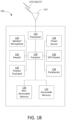
- the processor 118 may receive power from the power source 134, and may be configured to distribute and/or control the power to the other components in the WTRU 102.
- the power source 134 may be any suitable device for powering the WTRU 102.
- the power source 134 may include one or more dry cell batteries (e.g., nickelcadmium (NiCd), nickel-zinc (NiZn), nickel metal hydride (NiMH), lithium-ion (Li-ion), etc.), solar cells, fuel cells, and the like.
- the Node-Bs 140a and/or 140b may be in communication with the RNC 142a. Additionally, the Node-B 140c may be in communication with the RNC142b.
- the Node-Bs 140a, 140b, and/or 140c may communicate with the respective RNCs 142a, 142b via an Iub interface.
- the RNCs 142a, 142b may be in communication with one another via an Iur interface.
- Each of the RNCs 142a, 142b may be configured to control the respective Node-Bs 140a, 140b, and/or 140c to which it is connected.
- each of the RNCs 142a, 142b may be configured to carry out or support other functionality, such as outer loop power control, load control, admission control, packet scheduling, handover control, macrodiversity, security functions, data encryption, and the like.
- the RNC 142a in the RAN 103 may be connected to the MSC 146 in the core network 106 via an IuCS interface.
- the MSC 146 may be connected to the MGW 144.
- the MSC 146 and the MGW 144 may provide the WTRUs 102a, 102b, and/or 102c with access to circuit-switched networks, such as the PSTN 108, to facilitate communications between the WTRUs 102a, 102b, and/or 102c and traditional land-line communications devices.
- the RAN 104 may include cNodc-Bs 160a, 160b, and/or 160c, though it will be appreciated that the RAN 104 may include any number of eNode-Bs while remaining consistent with an embodiment.
- the eNode-Bs 160a, 160b, and/or 160c may each include one or more transceivers for communicating with the WTRUs 102a, 102b, and/or 102c over the air interface 116.
- the eNode-Bs 160a, 160b, and/or 160c may implement MIMO technology.
- the eNode-B 160a for example, may use multiple antennas to transmit wireless signals to, and receive wireless signals from, the WTRU 102a.
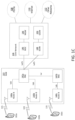
- the core network 107 shown in FIG. 1D may include a mobility management gateway (MME) 162, a serving gateway 164, and a packet data network (PDN) gateway 166. While each of the foregoing elements are depicted as part of the core network 107, it will be appreciated that any one of these elements may be owned and/or operated by an entity other than the core network operator.
- MME mobility management gateway
- PDN packet data network
- the MIP-HA may be responsible for IP address management, and may enable the WTRUs 102a, 102b, and/or 102c to roam between different ASNs and/or different core networks.
- the MIP-HA 184 may provide the WTRUs 102a, 102b, and/or 102c with access to packet-switched networks, such as the Internet 110, to facilitate communications between the WTRUs 102a, 102b, and/or 102c and IP-enabled devices.
- the AAA server 186 may be responsible for user authentication and for supporting user services.
- the gateway 188 may facilitate interworking with other networks.
- MTC Machine-Type Communications
- GSM Global System for Mobile communications
- GPRS General Packet Radio Service
- the MAC that may be used in the network may multiplex logical channels, performs Hybrid ARQ, and does DL and UL scheduling.
- the Physical Layer processing may include functionalities like channel coding and/or decoding, modulation and/or demodulation, multiple antenna mapping, and the like.
- the LTE radio protocol architecture for the user plane PDCP, RLC, MAC and L1 that may be used may be shown in FIG. 2 .
- DCIs may be sent to handsets using the PDCCH.
- a handset may monitor the PDCCH for DCI messages.
- the handset may attempt to demodulate and decode a PDSCH in the data region of that same subframe.
- the handset decodes an UL grant on the PDCCH in subframe n, it may prepare for UL transmission of a PUSCH in subframe n+4.
- the DL assignment for a PDSCH in the same subframe, or the UL grant in DL subframe n that may pertain to a PUSCH transmission resource in UL subframe n+4 may be sent to the handset through the PDCCH DCTs in the form of separate physical layer signaling using the PDCCH (e.g. in LTE).
- downlink control channels may achieve uniform coverage in a cell while providing robustness in high mobility irrespective of the UE architecture or geometry.
- the LTE downlink control channels may occupy the first one to three OFDM symbol(s) in each subframe according to or based on the overhead of the control channels.
- Such a dynamic resource allocation to handle downlink control channel overhead may enable or allow efficient downlink resource utilization that may result in or provide a higher system throughput.
- Different types of downlink control channels may be (e.g.
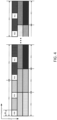
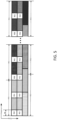
- the downlink control channel resource unit may be defined as or may include four contiguous REs in frequency domain called REG (Resource Elements Group) as shown in FIGS. 4 and 5 .
- REG Resource Elements Group
- FIGS. 4 and 5 show the definition of REGs according to the number of CRS ports.
- a PCFICH Physical Control Format Indicator Channel
- the PCFICH may be transmitted in the 0th OFDM symbol in each subframe and it may indicate the number of OFDM symbols that may be used for downlink control channel in the subframe.
- the subframe-level dynamic downlink control channel resource allocation may be provided or implemented by using the PCFICH.
- a UE may detect a CFI (Control Format Indicator) from a PCFICH and the downlink control channel region may be indicated in the subframe according the CFI value.
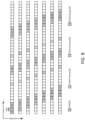
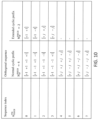
- FIG. 6 shows a CFI codeword that may be detected from the PCFICH, and FIG.
- four REGs may be used for PCFICH transmission in the 0th OFDM symbol in a subframe and the REGs may be uniformly distributed in a whole system bandwidth to exploit frequency diversity gain. Additionally, the starting point of PCFICH transmission may be different based on a physical cell-ID (PCI) as shown in FIG. 8 .
- PCI physical cell-ID
- a PDCCH Physical Downlink Control Channel
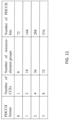
- the PDCCH may be defined with one or multiple consecutive CCE (Control Channel Element) resources in which one CCE may include multiple REGs (e.g. nine REGs).
- the table in FIG. 11 shows example embodiments of available PDCCH formats that may be used herein by definition of number of consecutive CCEs.
- a RA procedure there may be two forms of a RA procedure that may be performed.
- One form may include a contention-based RA procedure, which may apply to a portion of the forgoing events (e.g. the first five events above).
- Another form may include a non-contention-based, which may apply to a handover, DL data arrival, and/or positioning.
- a contention-based random access procedure may be applied, at least two devices or mobiles may select the same resources (e.g. preamble and opportunity) for random access, and, thus, the contention situation may be resolved.
- the non-contention based procedure may be applicable when the base station may signal a reserved random access preamble to a device or mobile, for example, at a handover, uplink synch failure, and/or for positioning.
- information e.g. essentially timing
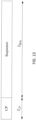
- a contention-based Random Access procedure that may be provided and/or used may be shown in FIG. 12 .
- the contention-based procedure as illustrated in FIG. 12 may be characterized by the following.
- a Random Access Preamble on RACH e.g. a PRACH preamble
- the Random Access Preamble or RACH may be 6 bit to carry including a5 bit preamble ID and 1 bit to indicate the information on the size of a message (e.g. message 3).
- the preamble transmission procedure may be performed.
- a layer 1 receives preamble transmission request from higher layers.
- a preamble index, preamble transmission power (e.g. PREAMBLE_TRANSMISSION_POWER), associated RA-RNTI, and PRACH resources may be indicated by higher layers as part of the request.
- a preamble may be selected from the preamble sequence set using the preamble index and/or the preamble may be transmitted with transmission power PREAMBLE_TRANSMISSION_POWER on the indicated PRACH resource.
- the physical random access may be is exited.
- the corresponding DL-SCH transport block may passed, provided, or transmitted to the higher layers and the physical random access procedure may be exited.
- two groups of RACH preambles may be broadcast in the System information Block 2 (SIB2) (e.g. using the preamble transmission procedure).
- SIB2 System information Block 2
- the broadcast preambles may be used by each of the UEs in the cell.
- the transmission of a random access preamble may be restricted to certain time and frequency resources.
- Such resources may be enumerated in increasing order of the subframe number within the radio frame and the resource blocks in the frequency domain such that index 0 may correspond to the lowest numbered resource block and subframe within the radio frame.
- system information for a cell may include operating parameters (e.g., UL and DL bandwidth), resources for random access, neighbor lists for measurements, and the like may be broadcast by the cell in information blocks.
- operating parameters e.g., UL and DL bandwidth
- resources for random access e.g., UL and DL bandwidth
- neighbor lists for measurements e.g., and the like
- the MIB may be transmitted on a known schedule (e.g. subframe 0 of each frame) and a known set of resources, (2nd timeslot of the subframe, center 6 RBs).
- the MIB may provide a small amount of information including the system frame number (SFN) and the DL BW of the cell to enable UEs to read a SIB 1.
- SFN system frame number
- the SIB 1 may have a known schedule (e.g. subframe 5 each 80 ms), but not a known set of resources that may be PDSCH resources.
- a PDCCH in that subframe using a S1-RNTI may provide the location of the SIB 1 resources.
- a UE may read the PDCCH to obtain the SIB 1 location to read the SIB 1.
- the SIB 1 may provide critical information for cell selection including the cell ID and the PLMN ID, certain operating parameters such as the TDD UL/DL configuration (e.g. for TDD only), and/or scheduling information for the other SIBs.
- a UE in Idle Mode may read the SIBs to perform cell selection and resclcction as well as to obtain the parameters that may be used for random access.
- a UE in a connected mode may read the SIBs, for example, to determine if changes may have occurred or the eNB may provide system information to a connected UE via dedicated signaling.
- a UE may periodically monitor the PDCCH for DL assignments on the PDCCH masked with a P-RNTI (Paging RNTI) both in an Idle Mode and in a Connected Mode.
- P-RNTI Paging RNTI
- the UE may demodulate the assigned PDSCH RBs and may decode the Paging Channel (PCH) carried on that PDSCH.
- PCH Paging Channel
- PFs per paging cycle there may be multiple PFs per paging cycle and multiple PO's within a PF, for example, more than one sub-frame per paging cycle may carry PDCCH masked with a P-RNTI.
- a UE may monitor a PO per paging cycle, and such a PO may determined by the parameters specified herein (e.g. above), provided to the UE via system information, dedicated signaling information, and the like.
- a reduced bandwidth for a physical downlink control channel (PDCCH) and/or a physical downlink shared channel (PDSCH) may be provided and/or used for a network and/or a device such as a MTC device or UE that may support such a reduced bandwidth.
- a device such as an LTE device or UE and/or a MTC device that may support a smaller or reduced bandwidth on a regular channel such as a regular LTE channel may be an inability of the device to receive a DL control channel or signals from the network and/or a cell.
- the UE may not be able to receive the information of DL assignments or UL grants that may be carried as part of the DCIs in the PDCCH that may be transmitted across the entire system bandwidth in the first one to three time-domain OFDM symbols of the frame making up the Control Region of a network or system (e.g. the LTE network or system).
- a network or system e.g. the LTE network or system
- a PDCCH such as a legacy LTE PDCCH may use.
- decoding a R8 PDCCH may result in a much higher decoding complexity ("operations per second") than the PDSCH itself when the PDSCH may carry approximately an order of 10's or 100 kbps.
- the decoding complexity for an order of Mbps PDSCHs may also be higher than for the PDCCH, which may be acceptable for such devices.
- the legacy R8 PDCCH based assignment protocol may be the determining factor in terms of decoding complexity.
- the PDCCH design aspects of embodiments described herein for low-complexity devices may provide decoding at a reduced receive bandwidth, and also, may reducing the PDCCH decoding complexity.
- a PRACH frequency resource within the supported system BW may be allocated in an uplink subframe in FDD (e.g. a frame structure 1) and up to 6 PRACH frequency resources in an uplink subframe may be configured in TDD (i.e., frame structure 2).
- FDD e.g. a frame structure 1
- TDD i.e., frame structure 2
- SIB2 system information block type 2
- Regular devices or UEs may randomly select one of these time and/or frequency resources for a PRACH preamble transmission.
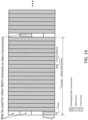
- FIG. 16 illustrates a frequency resources selection method for a PRACH transmission of a regular device or UE.
- UE categories may be equipped with at least two receive antennas (e.g. which may be mandatory) such that the network coverage may be defined based on the assumption of two receive RF chains.
- a single receive RF chain based UE category may be defined, thus resulting in coverage reduction in the downlink.
- the device such as the UE or MTC device may also work with legacy UEs (e.g. Rel-8/9/10)
- the coverage may be kept the same as other networks such as a previous LTE network to not increase network deployment cost while supporting low cost devices such as UEs or MTC devices in the same network.
- reducing the supported channel bandwidth may reduce the analog-to-digital and digital-to-analog interface complexity and power consumption, as well as the baseband component processing complexity as described herein.
- an inband DL assignment e.g. parts of or a RLC or MAC or L1 header, identifier, modulation format information as described above
- the mapping of such header information may exploit the unequal error protection property of higher order modulation alphabets and/or the closeness to pilot symbols or tones to increase its detection reliability.
- selected parts of or entire header information including DL assignment, identifiers, system signals for robust performance, and the like may be first mapped onto transmission resources to the advantageous symbol and/or bit positions in the resources allocated to that DL data transmission. Subsequently, the remaining portion of the DL data transmission, for example, the bits corresponding to the data units, may be mapped (e.g.
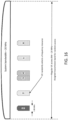
- the identifier may be part of a separate physical signal mapped to the transmission resources that may be assigned to be monitored by the device such as the UE or MTC device in the allocated time and/or frequency resources (e.g. shown in FIG. 18 in subframe n).
- the network may assign a specifically designated schedule for monitoring of the DL transmissions to a device such as an MTC device.
- a device such as a UE or MTC device may monitor one designated subframe per radio frame or one subframe occurring each 4 radio frames for the occurrence of its designated identifier in a DL data transmission.
- the DL transmission may be accompanied by information describing the specific encoding, for example, the transmission format.
- Information about the transmission format may include the modulation type, coding rate, RV, a number of transport blocks, antenna encoding formats or transmission schemes, and the like.
- the identifier and/or specific information pertaining to the transmission format may be sent using a first known or configured transmission format.
- the data units carried as part of the DL signal transmission that may be monitored by the device such as the UE or MTC device may carry regular data traffic such as unicast HTTP, FTP and the like or it may control data such as system information messages or parts thereof, paging signals, and the like.
- a device such as an MTC device or UE may monitor one or more RBs on a designated portion of the Data Region in a subframe such as an LTE subframe for occurrences of inband signaling identifying the intended transmitter for an upcoming or scheduled UL data transmission.
- the associated UL subframe may be given by association such as a fixed rule "UL grant decoded in subframe n corresponds to the PUSCH transmission in subframe n+k", or it may be explicitly signaled as part of the DL signal transmission and associated transmission format.
- a DL signal transmission may include both inband DL assignments and UL grants, or in a specific occurrence (TTI), one of these.
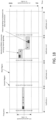
- the inband UL grants may be shown in FIG. 20 for the embodiment where both DL assignments and UL grants may be part of the DL signal transmission to devices such as UEs or MTC devices.
- the device such as a UE or MTC device may monitor a designated time and/or frequency resource for occurrences of its UL identifier.
- the device such as a UE or MTC device may monitor N PRBs in each 2nd subframe such as shown in FIG. 20 .
- the device such as a UE or MTC device may decode its assigned UL identifier as part of the DL signal transmission, it may proceed to prepare for UL transmission of a data unit or units in the associated UL transmission resources in an associated UL subframe. If the decoded UL identifier may not correspond to its assigned UL identifier (e.g. and the UL transmission may be scheduled for another MTC device), the device such as the UE or MTC device may disregard this UL grant and may wait for the next expected occurrence of a DL transmission.
- a UL identifier may be signaled as part of the DL assignment explicitly through a bit field included into the DL signal transmission. Additionally, the identifier may be implicitly encoded via, for example, masking the identifier into the computed CRC of a TB or code block part of the DL signal transmission or the identifier may be encoded through applying a scrambling sequence applied to the DL transmissions or portions thereof as a function of the identifier value.
- the UL identifier may be known by the device such as a UE or MTC device through a pre-arranged transmission schedule or UL transmissions that may correspond to a set of configured or computed number of TTIs for the device such as a UE or MTC device.
- a similar procedure or method may be used for a device such as a UE or MTC device when already registered with the network such as the LTE network to either change the allocated DL transmission resources to be monitored (e.g. in terms of an allocated identifier, a transmission format, a schedule, and the like).
- the network such as a LTE network may allocate devices such as UEs or MTC devices using a flexible reception schedule, and it may allocate both DL and UL transmission resources to MTC devices in a flexible manner even in presence of legacy or high data rate devices such as LTE devices supporting the full nominal bandwidth of the cell.
- the network such as a LTE network may allocate more than one device such as a UE or MTC device to monitor the same DL transmission resource for scheduled DL data transmissions. Given typically small data rates (e.g.
- the rule chosen for such an embodiment may include that a UL grant in subframe n may correspond to a PUSCH transmission in subframe n+4. Additionally, a first set of devices such as UEs or MTC devices may be allocated to monitor PDSCH transmission resources in subframe 1, and once per frame. A second set of devices such as UEs or MTC devices may monitor subframe 1, but another set of designated DL transmission resources every other frame. A third set MTC devices may also monitor subframe 2 and each 2nd frame for DL signal transmissions. The eNB may further dynamically allocate DL transmissions and UL transmissions within the individual groups of monitoring devices such as UEs or MTC devices.
- devices such as UEs or MTC devices may implement support for processing a reduced channel bandwidth with dramatic consequences and reduction onto RF component cost and count and/or scaled down ADC/DAC and BB processing capabilities when compared to devices such as LTE devices supporting full nominal bandwidth, (e.g. up to 10 or 20 MHz).
- Control information signaling in PDSCH (e.g. data) regions may also be provided and/or used with devices such as UEs or MTC devices that may be lower-cost and/or may support a reduced bandwidth.
- a device such as a UE or MTC device may receive downlink control channels in the PDSCH region with the limited bandwidth support.
- the device such as the UE or MTC device may receive the downlink control channels in the PDSCH region since the legacy downlink control channels may be at least partially readable.
- a Physical Control Format Indicator Channel (PCFICH) indication may be provided and/or used as described herein.
- the PDCCH and PDSCH such as the LTE PDCCH and PDSCH may be multiplexed using TDM in a subframe and the boundary between the PDCCH and PDSCH may be indicated by PCFICH in each subframe.
- the device such as the UEs or MTC devices may be informed of the boundary.
- the device such as the UEs or MTC devices may receive the boundary information of PDCCH and PDSCH region using one of the follow mechanisms. For example, to receive such information, higher-layer signaling may be provided and/or used where UE-specific RRC signaling may indicate the boundary of PDCCH and PDSCH in the subframes.
- the boundary information may be valid to a subset of subframes in a radio frame, a subset of radio frames, and/or a subset of subframes in multiple radio frames (e.g. four radio frames).
- the device such as a UE or a MTC device and/or group may have different subsets of subframes and/or radio frames such that the PCFICH value may vary from a subframe to another from eNB perspective. In embodiments, this may provide higher system throughput.
- broadcasting information may be provided and/or used.
- the PCFICH value for MTC devices is informed in broadcasting channel (e.g., SIB-2).
- a new PCFICH (e.g. a M-PCFICH) may be transmitted for devices such as UEs or MTC devices in the PDSCH region.
- a device such as a UE or MTC device may receive an M-PCFICH in a subframe n-k which may be valid in the subframe n.
- the value k may be a fixed positive integer value such as '1' or '2' or variable according to the higher signaling.
- the k may be '0' as a fixed value.
- a radio frame header may be provided and/or used.
- a radio frame header that may indicate the PCFICH for subframes in a radio frame (e.g.10ms) may be transmitted.
- a radio frame may include a single PCFICH that may be valid for subframes or multiple PCFICH values for each subframe or group of subframes in a radio frame.
- the radio frame may be longer than 10ms such as 40ms, and the like.
- the radio frame header may also be transmitted in the first subframe in a radio frame.
- a PCFICH may not be used by narrower BW devices such as UEs or MTC devices.
- PDSCH intended for devices such as UEs or MTC devices may start in a specific symbol of a subframe that may be known to the devices regardless of the actual boundary between PDCCH and PDSCH indicated by PCFICH.
- the PDSCH may be allocated as if PDCCH region was always a fixed number of symbols (e.g. 3 symbols).
- Such an embodiment may also be applicable to the use of ePDCCH by particular devices such as reduced BW UE or MTC devices.
- the ePDCCH that may be intended for such devices may start in a specific symbol of a subframe that may be known to the particular devices regardless of the actual boundary between the PDCCH and PDSCH that may be indicated by the PCFICH.
- the ePDCCH may be allocated as if the PDCCH region may be a fixed number of symbols (e.g. 3 symbols).
- a device such as UE or MTC device may receive the M-PCFICH in the positions of the zero-power CSI-RS or subsets of configured zero-power CSI-RS.
- the use of zero-power CSI-RS for a M-PCFICH transmission may enable the impact of legacy UEs (e.g. LTE Rel-10 UEs) to be avoided or limited as such legacy UE rate-match the zero-power CSI-RS while exploiting frequency diversity gain.
- legacy UEs e.g. LTE Rel-10 UEs
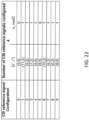
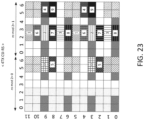
- the 10 zero-power CSI-RS configurations that may be available (e.g. in Rel-10) for FDD and may be used herein may be shown in the table of FIG. 22 and the zero-power CSI-RS patterns according to the CSI reference signal configuration number that may be used herein may be shown in FIG. 23 .
- a single or multiple zero-power CSI-RS(s) may be configured in a subframe with a duty cycle.
- a M-PCFICH transmission may include a duty cycle.
- a device such as a UE or MTC device may receive the boundary information of PDCCH and PDSCH for subframes within duty cycles with one of following: M-PCFICH bundling within a duty cycle, individual M-PCICH transmission, and the like.
- a single zero-power CSI-RS may be configured for M-PCFICH transmission.
- the single zero-power CSI-RS configuration may include a CSI-RS pattern among 4 CSI-RS ports patterns and a duty cycle with a subframe offset. Additionally, four REs may be reserved in a PRB-pair for zero-power CSI-RS.
- a device such as a UE or MTC device may receive the M-PCFICH in the zero-power CSI-RS REs based on one or more of following: a CRS-based transmission scheme, a sequence based transmission, a DM-RS based transmission, and the like.
- the CRS-based transmission scheme may be dependent on or based on the number of antenna ports such as Port- ⁇ 0 ⁇ in a single CRS port, Port- ⁇ 0, 1 ⁇ in two CRS ports with a time domain space time block code (STBC) in the position of zero-power CSI-RS in which a pair of STBCs may be transmitted in the time domain consecutive REs (e.g.
- STBC time domain space time block code
- sequence based transmission may include orthogonal or quasi-orthogonal multiple sequences that may be defined and transmitted in the position of zero-power CSI-RS RE.
- a device such as a UE or MTC device may notice the boundary of PDCCH and PDSCH.
- a new DM-RS based antenna port may be defined.
- the pattern of the new DM-RS port may be one of the two zero-power CSI-RS configuration.
- Multiple orthogonal DM-RS ports may also be defined and the DM-RS port may be configured by higher layer signaling and/or tied with a physical cell ID.
- An MTC device may receive the PDCCH in the PDSCH region in the second slot and the resource definition of the downlink control channels for M-PDCCH including PCFICH, PHICH, and PDCCH are the same as the LTE with the given bandwidth for MTC device.
- the downlink control channels a subset of control channels may be available in the M-PDCCH region such as ⁇ PCFICH, PDCCH ⁇ and ⁇ PHICH, PDCCH ⁇ .
- FIG. 23 shows an example embodiment of such a M-PDCCH transmission within the first three OFDM symbols of a second slot in the MTC bandwidth.
- the M-PDCCH may be defined without the center 6RBs in the 0th subframe.
- the REG and CCE may be defined without center 6RBs with rate matching and, thus, the effective MTC bandwidth for PDCCH may be smaller in such an embodiment.
- the available subframe for M-PDCCH resource allocation may be restricted to a subset of the subframes in a radio frame or multiple radio frames.
- the subframe subset for M-PDCCH resource allocation may be predefined as ⁇ 4, 5, 9 ⁇ subframes or ⁇ 0, 4, 5, 9 ⁇ subframes.
- the subframe subset for M-PDCCH resource allocation may be configured in higher layer with a duty cycle such as 10ms and 40ms.
- the subframe that may include a M-PDCCH resource may be implicitly indicated by one or more of the following: if a subframe may include a CRS in the legacy PDSCH region, if M-PDCCH region is not collide with non-zero power CSI-RS, and the like.
- the subframe subset which may be allowed for M-PDCCH may also be defined.
- the subframe subset such as ⁇ 0, 4, 5, 9 ⁇ or ⁇ 4, 5, 9 ⁇ may be used and/or defined as a fixed subset.
- the subframe subset may be defined by higher layer signaling with 10ms or 40ms duty cycles. Additionally, the subframe subset may be implicitly defined as the subframe including a CRS in the legacy PDSCH region.
- zero-power CSI-RS resources may be used.
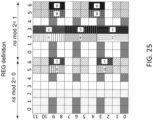
- the REG definition for a M-PDCCH may be the frequency domain four consecutive zero-power CSI-RS REs.
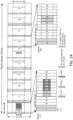
- FIG. 25 depicts an example where possible CSI-RS patterns may be configured as zero-power CSI-RS in a subframe.
- nine REGs may be defined within a PRB such that 9xMPRB may be the available REGs in the subframe if the 4Tx CSI-RS patterns may be configured for zero-power CSI-RS.
- the 4Tx CSI-RS patterns may be configured for the zero-power CSI-RS
- the subframe of the configured zero-power CSI-RS may be used for M-PDCCH resource allocation.
- a device such as the UE or MTC device may receive a PCFICH as described herein.
- the device may receive the PCFICH in the RE position of legacy PCFICH.
- PCFICH bundling in which a device may assume that consecutive multiple subframes may indicate the same CFI value may be used.
- similar PCFICH coverage may be achieved from time domain bundling.
- time domain bundling may use, provide, and/or exploit time diversity gain.
- the readable REGs may be 1, 2, 3, or 4 according to the system bandwidth. If the REGs (e.g. the 4 REGs) may be within the device, UE or MTC supportable bandwidth, the PCFICH bundling may not used and the device behavior may be the same as the legacy device such as LTE UEs.
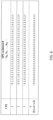
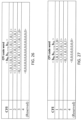
- the CFI codeword for each case may be defined with a subset of codeword associated with the rest of REGs for PCFICH shown in the table of FIG. 26 .
- the CFI codeword that may be used may be shown as the table of FIG. 26 .
- the CFI codeword that may be used may be shown in the table of FIG. 27 .
- such a method may enable or allow a backward compatible PCFICH transmission while keeping similar coverage for a device such as a UE or MTC device.
- a device For blind decoding for PDCCH with CCE aggregation, if the number of REGs readable in a CCE among the CCE blind decoding candidate may be less than a threshold (e.g. 5 REGs), a device such as a UE or MTC device may avoid a blind decoding trial.
- the threshold e.g. N threshold
- a device such as a UE or MTC may skip blind decoding for the DCIs related to PDSCH transmission.
- a subframe may include paging or broadcast SIBs that the device may read, the device may skip looking for other requests such as UL and downlink (DL) grants.
- a PDSCH that may be indicated by an ePDCCH may include a PDSCH carrying at least one of downlink shared channel (DL-SCH), broadcast channel (BCH), paging channel (PCH), random access (RA) response, or any other type of data that a PDSCH may carry.
- DL-SCH downlink shared channel
- BCH broadcast channel
- PCH paging channel
- RA random access
- the BW or the number of RBs that may be supported by the device may mean the BW or the number of RBs that may be supported by the device for the purpose of reception in the PDSCH region of the cell which may be different from the RF BW it may support and/or the BW or the number of RBs it may support for reception of the PDCCH region.
- an ePDCCH may be defined or configured for a cell, for example, for devices such as devices capable of ePDCCH reception or each of the devices capable of ePDCCH reception in the cell, where such a configuration may be included in signaling such as by RRC signaling and may be provided via broadcast signaling or dedicated signaling to one or a group of devices.
- the ePOCCH resources e.g.
- RBs which may be used by or which may be intended for use by certain or particular devices such as reduced BW devices that may be UEs or MTC devices, may be a subset of the ePDCCH resources defined or configured in the cell.
- the subset may be explicitly identified by the cell, for example, via broadcast or dedicated signaling.
- the subset may be derived by the devices themselves in an embodiment.
- the subset may be device specific and/or may be derived by a device based on, for example, at least one of the following: the device IMSI or C-RNTI; a system frame number (SFN); a subframe or timeslot number overall or within a frame; a number of ePDCCH RB groups defined; an ePDCCH hopping pattern; a physical cell ID; a BW supported by the device; a specific set of RBs supported by the device (e.g. center X RBs, where X may be for example 6, 12, or 15); the RBs supported by the device as a result of configuration; and the like.
- the device IMSI or C-RNTI a system frame number (SFN); a subframe or timeslot number overall or within a frame
- SFN system frame number
- a subframe or timeslot number overall or within a frame a number of ePDCCH RB groups defined
- an ePDCCH hopping pattern a physical cell ID
- the frequency span from the lowest (e.g. lowest in in frequency) ePDCCH RB to be monitored by the device to the highest (e.g. in frequency in frequency) PDSCH RB to be read by the device may not exceed the BW supported by the device and the frequency span from the highest (e.g. highest in frequency) ePDCCH RB to be monitored by the device to the lowest (e.g. lowest in frequency) PDSCH RB to be read by the device may not exceed the BW supported by the device.
- the PDSCH RBs may be on one side of the ePDCCH RBs such that the device may assume that the PDSCH RBs may be (e.g. or may typically be or may always be) higher or lower in frequency than the ePDCCH RBs it may monitor.
- the device may monitor N consecutive ePDCCH RBs or certain RBs in a group of N consecutive ePDCCH RBs and the device may support a BW of M RBs
- the PDSCH that may be indicated by the ePDCCH may be located in one or more RBs where these RBs may be located in a set of RBs that includes no more than (M-N)/2 PDSCH RBs above (e.g. directly above) the N ePDCCH RBs and no more than (M-N)/2 PDSCH RBs below (e.g. directly below) the N ePDCCH RBs.
- the PDSCH RBs that may be intended for the device may be in a set of RBs that may be no more than FLOOR[(M-N)/2] RBs on each side of the ePDCCH RBs.
- the device may monitor 4 ePDCCH RBs or one or more RBs in a group of 4 ePDCCH RBs and it may support a BW of 6RBs, the device may understand that there may be up to one PDSCH RB for it to read on each side of the 4 ePDCCH RBs.
- the device may monitor 4 ePDCCH RBs or one or more RBs in a group of 4 ePDCCH RBs, and it may support a BW of 15RBs, the device may understand that there may be one or more RBs in a set of 5 PDSCH RBs for it to read on one side of the 4 ePDCCH RBs and/or one or more RBs in a set of 6 PDSCH RBs for it to read on the other side of the 4 ePDCCH RBs.
- Such an embodiment may enable a device supporting M RBs to know which M RBs to receive before decoding the ePDCCH.
- the PDSCH and ePDCCH RBs may be in a specific window of X RBs which may be defined or configured where X may be less than or equal to M where M may be the BW supported by the device in RBs.
- the device may monitor ePDCCH RBs that may include ePDCCH RBs that may be configured in the cell and/or certain ePDCCH RBs such as ePDCCH RBs that may be designated for the device or for specific devices such as reduced BW devices that may be within that window and may assume that RBs in that window that may not include ePDCCH RBs may include PDSCH RBs that may be intended for the device.
- the device may be provided with configuration information, for example, by the eNB, which may be via signaling such as broadcast or dedicated signaling to one or a group of devices such as reduced BW UEs or devices regarding the relationship between the location of the ePDCCH RBs and the PDSCH RBs they may indicate.
- Such information may include one or more of the following: whether the PDSCH RB(s) may be higher or lower in frequency (e.g.
- the ePDCCH RBs typically higher or lower in frequency
- the ePDCCH RBs typically higher or lower in frequency
- the PDSCH RB(s) may be located on either side of the ePDCCH RBs; a window of less than or equal to M RBs in which the device may find both ePDCCH and PDSCH that may be intended for it where M may be the BW supported by the device in RBs; and the like.
- the device may ignore ePDCCH (e.g., any ePDCCH RBs), which may be outside the BW or set of RBs it may support or be configured with.
- ePDCCH e.g., any ePDCCH RBs
- the RBs which may be supported by the device or for which the device may be configured with may be, for example, the center or another M RBs such as the center or another 6, 12, or 15 RBs.
- the M-PDCCH may be replaced by an ePDCCH in any of the embodiments described herein such as the embodiments described for M-PDCCH and M-PDSCH in different subframes.
- the M-PDSCH in the embodiments described herein may also be replaced by PDSCH which may be intended for reception by certain devices such as reduced BW UEs or devices.
- the BW that a reduced BW device may support may correspond to a limited number of RBs, for example, 6, 12, or 15, where those RBs may not be consecutive.
- the X ePDCCH RBs and the Y PDSCH RBs may not be or may not need to be located in a consecutive window (or group) of less than or equal to M RBs.
- the device may know in advance (e.g. by at least one of a definition, configuration, relationship, rule, function of a device or cell ID, other parameters, and the like that may be in accordance with one or more of the solutions described herein), one or more of the location of a window of consecutive RBs in which the X ePDCCH RBs may be located and the location of a window of consecutive RBs in which the Y PDSCH RBs may be located.
- the sum of the number of RBs in those windows may be less than or equal to M. Such an embodiment may enable the device to buffer the PDSCH RBs while attempting to decode the ePDCCH RBs. This may also be extended to include multiple ePDCCH windows and/or multiple PDSCH windows, for example, provided one or more of the following may apply: the sum of the RBs in those windows may be less than or equal to M and/or the device may know, for example, in advance, where those windows may be (e.g. by at least one of a definition, configuration, relationship, rule, function of a device or cell ID, other parameters, and the like that may be in accordance with one or more of the solutions described herein).
- broadcast SIBs may have the highest priority and/or ordinary DL data may have the lowest priority.
- broadcast data or special data types may have higher priority than ordinary DL data. If in a given subframe, the device may decode a ePDCCH or PDCCH scrambled with the SI-RNTI (or another RNTI designated for broadcast data) or the RNTI for another special data type, the device may assume there may be no ordinary DL data for it to process in that subframe or it may assume that it may not be required to process such data if it may be present.
- a RB index for PDSCH transmission may be indicated.
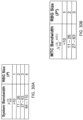
- the RB index may be indicated by bitmap where the RBG size P' may be related to the reduced bandwidth. As such, 6 bits may be used if 6RBs may be defined as reduced bandwidth for the device, which may be shown in the table of FIG. 30B .
- a modulation coding scheme may also be provided and/or used.
- MCS modulation coding scheme
- a MCS set may be reduced from 5 bits to 4 or 3bits. If a single DCI may be applicable for a device for PDSCH transmission, the reduced MCS set may be used and a new DCI format may be defined such as DCI format 2D.
- the reduced MCS set may be used for fall-back transmission mode. For example, if DCI format 1A and DCI format 2D may be used for a device, the DCI format 1A may have 3 or 4 bit MCS set and the DCI format 2D may have 5 bit MCS set.
- a new modulation order may be introduced such as a Binary Phase Shift Keying (BPSK) modulation order.
- BPSK Binary Phase Shift Keying
- a HARQ process number and/or channel state information feedback may further be provided and/or used as described herein.
- the number of bits for HARQ process number may be changed according to the subframe configuration in multi-type subframe configuration.
- various alternatives as described below for reduced bandwidth configuration for low cost device may be considered according to the bandwidth reductions in RF, baseband, control region, and/or data region.
- the reduced BW device may use partial or truncated cell-specific reference signals (CRS) and/or CSI-RS for a rank indicator (RI), channel quality indicator (CQI) and precoding matrix indicator (PMI) measurement.
- CRS cell-specific reference signals
- CSI-RS CSI-RS for a rank indicator (RI), channel quality indicator (CQI) and precoding matrix indicator (PMI) measurement.
- RI rank indicator
- CQI channel quality indicator
- PMI precoding matrix indicator
- a reduced bandwidth may be for baseband for both data channel and control channels and there may be no BW reduction for RF, one or more of the following may be provided, used, and/or applied.
- a reduced BW for MTC may be equal to the minimum BW in a network or system such as LTE systems, there may be no subband CSI reporting used for the device.
- the starting RB location or index for wideband and subband CSI reporting may be signaled by the base station where the signaling may be via a RRC or DL control channel.
- a reduced BW device may use partial or truncated CRS and/or CSI-RS for a RI, CQI and PMI measurement.
- a reduced bandwidth may be for data channel in baseband, while the DL control channels may still be allowed to use the carrier bandwidth and there may be no BW reduction for RF, the following may be used, provided, and/or applied.
- a reduced BW for a device may be equal to the minimum BW in a network or system such as LTE systems, there may be no subband CSI reporting used for the devices.
- the CSI measurement method may be reused from rules such as LTE Release 10 rules or to reduce CSI complexity for the device.
- the starting RB location or index and the number RBs for wideband and subband CSI reporting may be signaled by the base station.
- the subband location index L for periodic CQI reporting may be reused (e.g.
- N RB DL _ MTC may be the BW of the device that may be supported for data channel.
- a device such as a UE or MTC device may be configured to report CSI with at least one of following behaviors.
- a CSI reporting type may include and/or use at least one of following: a subband and/or wideband CQI; a subband and/or wideband PMI; a wideband RI; a best subband index (BSI); and the like.
- more than one subband may be defined within a system bandwidth N RB DL and a subband index (e.g. a preferred subband index) may be selected at a device receiver such as a UE or MTC receiver.
- the subbands may be defined within a reduced bandwidth that may be used as a candidate for device resource allocation such as MTC resource allocation.
- a device such as a UE or MTC device may support one of PUCCH and PUSCH reporting.
- PUCCH reporting modes may be supportable for such a device in an embodiment.
- a device such as a UE or MTC device may be defined as a new UE category that may supports low data rate and/or a reduced bandwidth.
- a UE category specific CSI reporting mode may be defined.
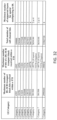
- a UE category 0 may be defined and the supportable soft buffer size, multi-layer transmission, and CA capability may be defined lower than other UE categories.
- multi-layer and carrier aggregation may not be supported for the UE category 0 and the soft buffer size may be smaller than UE category 1 as shown in the table of FIG. 32 .
- a multi-type subframe definition may be provided and/or used.
- a device may receive downlink control channels and data channels in a different subset of subframes and/or radio frames.
- the downlink control channel region e.g. the M-PDCCH region
- the downlink data channel region e.g. the M-PDSCH region
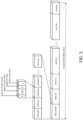
- a fixed structure in a radio frame may be used where the M-PDCCH region and M-PDSCH region may be interlaced in a radio frame and the M-PDCCH region and M-PDSCH region may be defined with consecutive subframes as shown in FIG. 3 .
- a configurable structure or configurations with a predefined set may be used where multiple configurations of a M-PDCCH region and M-PDSCH region may be defined such that the ratio between control channel overhead and downlink resource utilization may be handled by an eNB according to the cell environment.
- the table of FIG. 34 shows an example embodiment for the predefined set based M-PDCCH region that may be defined as 'C' in the table and the M-PDSCH region configuration that may be defined as 'D' in the table.
- a flexible configuration such as a full flexible configuration with a bitmap via higher layer signaling may be used where a bitmap may be transmitted from higher-layer signaling that may indicate the M-PDCCH region and M-PDSCH region configuration. If the configuration may be defined with a radio frame, the bitmap size may be 10-bits.
- the configuration of M-PDCCH region and M-PDSCH region may be further restricted to a subset of M-PDCCH and M-PDSCH subframes in a device-specific manner.
- a device such as a UE or MTC device may receive configuration information from one or more of the following: a preconfigured set, a fully configurable set, and the like.
- a predefined configuration set the multiple of configurations may be pre-defined and the configuration number may be provided or informed to devices in a device-specific manner as shown in the table of FIG.
- 'N' may denote a null subframe in which a device may fall into micro-sleep mode, in which a UE may not receive any signal or perform measurement only. Additionally, in a fully configurable set, a bitmap is transmitted for each region and the subframe not used for either M-PDCCH region or M-PDSCH region may be considered as a null subframe.
- a multi-type subframe operation may also be provided and/or used as described herein.
- behaviors of a device such as a UE or MTC device may be defined according to or using one or more of following methods or procedures.
- a device may assume that the PDCCH transmission for downlink grant may be within a subframe subset in a radio frame.
- the subframe numbers in the subset in a radio frame for a PDCCH transmission may be 10, 4, 5, 9 ⁇ .
- the device may assume that one subframe out of a subframes subset may include a PDCCH for the device.
- the PDCCH transmission for a downlink grant may be confined to ⁇ 4, 9 ⁇ .
- the PDCCH transmission for an uplink grant may be confined to ⁇ 0, 5 ⁇ .
- the search space may be further confined to a UE- or device-specific manner such that a device A may be restricted to see the subframe ⁇ 4 ⁇ for a downlink grant reception while a device B may be restricted to search the subframe ⁇ 9 ⁇ for a downlink grant reception.
- a device such as a UE or MTC device may provide, use, and/or assume that a subset of a radio frame may not include information for the device such that a radio frame based sleep mode may be used to reduce to computational power at the MTC device receiver.
- a transport block size may also be used and/or provided as described herein.
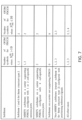
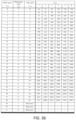
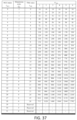
- a TBS table may be defined for devices such as a UE category 0 device as shown in the table of FIG. 36 .
- the subset of TBS table for UE category 1 may be used as the UE category 0 may supports up to 6 PRBs.
- the maximum supportable number of PRBs may not be restricted to 6 PRBs and an additional number of PRBs may be also used.
- the table of FIG. 36 also shows the TBS available for a UE category 0 and its associated MCS index and modulation order.
- broadcast and/or multicast channels may be provided and/or used.
- network techniques may be used (e.g. to schedule DL system information and paging messages, and the like) for low-cost devices such as UEs or MTC devices that may support a reduced bandwidth.
- an indication such as a MIB indication of narrower bandwidth device support may be provided and/or used.
- a E-UTRAN or the eNB may indicate cell support to the narrower bandwidth devices including UEs and low cost MTC devices in the master information block (MIB) broadcast since the MIB may be transmitted in the center frequency of the cell.
- the indication may take some of the current sparing bits.
- the indication may include one or more of the following: general support for narrower bandwidth reception and/or transmission; a narrowest bandwidth UE support category (e.g. 1.4 MHz or 3 MHz or 5 MHz); a narrower bandwidth receive signaling support category (e.g.
- a common search space for a narrower bandwidth device may be provided and/or used.
- a special common search space where the narrower bandwidth device such as a UE or MTC device may find the SI-RNTI, P-RNTI and RA-RNTI may be defined for the narrower bandwidth device to receive the vital system signals. In one embodiment, this may be defined in the data region.
- a narrower bandwidth device indication may be provided to the network.
- a device such as a UE or MTC device may indicate itself as a "special" device such that that the base station, E-UTRAN, eNB, and the like associated with the network may be able to transmit control signals and data in the channels such as a random access response (e.g. with RA-RNTI) that may be suitable for the reception by the narrower bandwidth devices or UEs.
- a random access response e.g. with RA-RNTI
- an indication may be provided to the eNB.
- the device may provide such an indication during a random access procedure such as during an initial connection procedure. For example, in a PRACH transmission (e.g. as shown in FIG. 12 ), a contention-based procedure may be performed where the device may choose a preamble sequence and a time (subframe)-frequency resource.
- a device may use (e.g. choose from) certain random access resources such as preamble sequences and/or time and/or frequency resources that may be designated for use or otherwise known to be usable by at least narrower bandwidth devices, MTC device, or a specific UE category.
- Such resources may be reserved for such devices, may be usable by other devices, and/or may be a new set of resources or a subset of existing resources.
- the device may transmit an additional bit with the preamble transmission (e.g. for RACH message 1 via PRACH, to indicate its device type such as a narrower BW device, the current RACH message 1 may carry 6 bits information with 5 bits for a preamble ID, 1 bit for RACH message, and 3 length indications). This extra bit may be used by the eNB to distinguish PRACH preamble reception from either a regular device or narrower bandwidth device.
- the device may transmit a small payload following (e.g. immediately following), the preamble to convey additional information such as a device type, a UE identity, a scheduling request, other small amounts of data, and the like.
- This may be a single transmission composed of RACH preamble and RACH message where the RACH message may convey additional information as described above.
- the preamble may be used as reference for the demodulation of the RACH message (e.g. payload) part, and, thus, the UL demodulation reference signals may be saved (e.g. may not be needed).
- the eNB may successfully detect the PRACH preamble, it may further proceed to decode the RACH message part.
- FIG. 38 illustrates an example embodiment of the transmission of a PRACH with a payload.
- the UE may transmit a small payload (e.g. a RACH payload) in resources associated with the preamble resources such that based on the preamble and/or time and/or frequency of the preamble the resources including time and/or frequency resources to use for the payload may be known to the device and the eNB.
- a small payload e.g. a RACH payload
- the eNB may successfully detect the PRACH preamble, it may further proceed to decode the RACH message part.
- the eNB or network component may detect the special preamble (e.g. a modified preamble or preamble plus payload) and/or a particular or certain random access resource such as a certain preamble/subframe/frequency combination that may be selected from a certain set of random access resources from the device, the eNB or network component may be able to determine that the incoming message or request may be from a narrower bandwidth device. If the eNB or network component may determine that the incoming random access message or request may be from a narrower bandwidth device, the eNB or network component may following a special set of rules, for example, for signaling and/or data transmission to and/or from this device (e.g. an eNB or network component may keep certain signaling and/or data transmission for this UE within the narrower device receive range and/or into specially defined channels and spaces).
- the special preamble e.g. a modified preamble or preamble plus payload
- a particular or certain random access resource such as a certain preamble
- certain or particular random access resources may be used by narrower bandwidth devices.
- the network may reserve a special set of RACH preambles (e.g. random-access-preamble-group-c) for the use of the narrower bandwidth devices and the narrower bandwidth device may select one of them for random access (e.g. an initial random access).
- RACH preambles e.g. random-access-preamble-group-c
- existing RACH preambles may be partitioned and a subset of RACH preambles may be used for a device such as a UE or a MTC device such that an eNB or network component may differentiate a narrower bandwidth device before transmitting RA response.
- a combination of preamble partitioning and additional PRACH resources may be used. Additional RACH preambles may further be provided and partitioned such that some of such preambles may be used for a narrower bandwidth device.
- the network may provide a set of preambles and/or subframes and/or frequencies that may be used by a narrower band device random access.
- This set of random access resources may be a subset of the cell's or eNB's existing random access resources (e.g. those usable by R8/9/10 UEs) or may be a separate set of random access resources.
- a subset or unique identification may be provided via RRC signaling such as broadcast or handover (e.g. mobility) signaling or may be a fixed identification (e.g. by specification).
- Additional random access (PRACH) resources may be allocated in a different time and/or frequency location. As similar with TDD, an additional PRACH resource or multiple PRACH resources may be defined in FDD.
- a RACH group 1 may be backward compatible (e.g. usable by R8/9/10 UEs).
- RACH group 1, RACH group 2 may be defined (e.g. RACH group 1, RACH group 2) and a device may transmit a RACH preamble in RACH group 1, a device may expect to receive a RA response (e.g. msg2) via a legacy PDCCH. Otherwise, if the device may transmit a RACH preamble in group 2, a RA response may be provided via PDCCH and ePDCCH and a device may use either (e.g. based on its capabilities) to obtain the RA response.
- both RACH groups may be backward compatible (e.g. usable by R8/9/10 UEs).
- the device may be informed of the configuration by the eNB via signaling such as RRC or dedicated signaling which may be broadcast.
- the configuration may also be specific to at least one of the random access response according to one embodiment. For example, based on the random access (PRACH) resources that used by the device, the eNB may provide the random access response in RBs such as PDSCH RBs.
- PRACH random access
- the above examples may be combined such that the eNB may respond by providing both the ePDCCH RBs and the PDSCH RBs for the random access response within the BW or may provide a set of RBs that the devices such as reduced BW UEs or devices may decode.
- the device may be expected, defined, and/or configured to decode a set of up to X RBs
- both the ePDCCH RBs and the PDSCH RBs may be located by the eNB within that set of X RBs, which may be a set of X consecutive RBs.
- a flexible duplexer may be used by a device such as a narrower BW device or UE.
- the device may be able to support uplink transmission outside the narrower BW centered at the center of the BW of the cell as long as the allocation may not exceed the total BW supported by the device. For example, if the device may support a 5MHz BW, it may shift its transmission band to a different 5MHz of a larger, for example, 20MHz band as long as there may be enough time for the switch.
- a device such as a reduced BW UE or device may choose a random access (PRACH) resource that may be defined by a preamble, one or more frequencies and subframes, and the like from the defined or configured set or subset of such resources that may indicate to the eNB that it may be a reduced BW device.
- PRACH random access
- the device may also exclude other PRACH resources from its selection procedure.
- a reduced device may monitor and/or attempt to decode PDCCH and/or ePDCCH known or configured to be intended for one or more DL random access messages, (e.g. the random access response message and/or contention resolution message) for at least a reduced BW UE/device.
- PDCCH and/or ePDCCH known or configured to be intended for one or more DL random access messages, (e.g. the random access response message and/or contention resolution message) for at least a reduced BW UE/device.
- the device may also inform the eNB or, for example, other network components of reduced BW support during a random access procedure.
- a device may perform one or more of the following.
- the device may inform the eNB in one of the random access messages such as in the device or UE response following the random access response or after contention resolution whether it may support flexible UL transmission or not (e.g. via a capability message).
- the device may use a new cause in the RRC Connection Request message that may identify the device as a reduced BW device.
- This cause may indicate a mobile originated (MO) call from a reduced BW device and/or a mobile originated (MO) call from a device that may be both reduced BW and delay tolerant.
- a new cause may be added in the RRC Connection Request message for a mobile terminated (MT) call response from a reduced BW device which may be used by a device to indicate itself as an MT call answer from a device that may be reduced BW or both reduced BW and delay tolerant.
- MT mobile terminated
- the device may include additional information in the RRC connection request such as identification of the device as a reduced BW device and/or an indication of the BW it may support.
- Another scheme for confirming the identity such as a reduced BW of a reduced BW device in the stages of a msg3 (e.g. RRC Connection Request) and/or a msg4 (e.g. Contention Resolution) may be to define a special format or value range that may, for example, be used by a reduced BW device, for the "randomValuc" IE in the InitialUE-Identity part of the RRC Connection Request message (e.g. that may be over CCCH). For example, a certain bit pattern for a portion of the randomValue such as "111" for the 3 most significant bits or a certain value range (e.g. 0 ⁇ 100000 where random Value may be a 40-bit quantity) may be used for the reduced BW devices.
- a certain bit pattern for a portion of the randomValue such as "111" for the 3 most significant bits or a certain value range (e.g. 0 ⁇ 100000 where random Value may be a 40-bit quantity) may be
- the reduced BW supporting eNB may consider the device a reduced BW device and may then in the Contention Resolution message (e.g. msg4) for a reduced BW UE/device add a certain value offset (e.g. 7) to the device's randomValue sent in msg3 as the "UE Contention Resolution Identity.” After adding the offset, the eNB may transmit the UE Contention Resolution Identity back to the device in msg4.
- a certain value offset e.g. 7
- the device may consider the contention resolution successful. Additionally, for the legacy devices, if they may accidentally put a "randomValue” in msg3 as a reduced BW device and may then receive the Contention Resolution Id (msg4), since legacy UEs may not know the new rule, such devices may consider the resolution a failure, because the received "Contention Resolution Id" may not match the initial random Value sent in msg3 as a result of the offset. In this embodiment, the legacy UEs may carry on another round of RRC connection request.
- the narrower BW device may use resources in the BW it may support. For example, when performing the random selection of a PRACH resource from the available PRACH resources, the UE may include in the selection process the available PRACH resources that are within the BW the UE supports (e.g. and may use such resources and not resources outside the BW it may support).
- an extra 1-information bit that may be carried in PRACH preamble to indicate narrower bandwidth devices may be used.
- P PRACH may be the PRACH preamble sequences length in FDD case and x u,v ( n ) may be the u th root Zadoff-Chu sequence.
- a device such as a reduced BW UE or device may add such a bit to its PRACH preamble transmission. Additionally, when an eNB or cell may receive this bit from a device, the eNB or cell may understand the device to be a reduced BW device and may act in accordance with that knowledge, for example, by acting in accordance with one or more of the embodiments described herein.
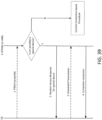
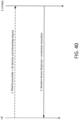
- a modified contention-based RACH procedure for narrower bandwidth device indication based on transmitting a preamble with narrower bandwidth device identity may be shown in FIG. 40 .
- a device such as a UE may transmit a PRACH preamble that may include the device or UE identity (e.g. in a bit or other indication) as well as a scheduling request (SR).
- the E-UTRAN or other network component e.g. a eNB
- the E-UTRAN or other network component e.g. a eNB
- the E-UTRAN or other network component may provide a random access response and contention resolution at 2 as described herein.
- Such an embodiment may apply in various scenarios such as when the device may have a network assigned device or UE identity (e.g. C-RNTI).
- the device may receive its C-RNTI in the RA response (e.g. msg2), and, as such, this embodiment may not be applicable to such an initial access.
- a device such as a reduced BW UE or device may also add a payload to the PRACH preamble transmission (e.g. transmitted at 1 in FIG. 39 and 40 ).
- a payload e.g. transmitted at 1 in FIG. 39 and 40 .
- the eNB or cell may understand the device to be a reduced BW device and may act in accordance with that knowledge, for example, by acting in accordance with one or more of the solutions described herein.
- the BW support of a given device may include or consider at least one of the following items (e.g. that may be useful for a MME or another network entity to have, store, have knowledge of, or otherwise provide or use as described herein).
- BW support of a device may include or consider whether or not the device may be a reduced BW device. It may include or consider whether or not the device may support a full system or cell BW, which may be or may be up to 20MHz, in the UL and/or DL. It may include or consider whether or not the device supports full system or cell BW, which may be or may be up to 20MHz, in the DL, which may include the DL control region and the DL data region, or in the DL data region.
- BW support of a device may include or consider the starting frequency of the supported BW, for example, if the supported BW may not be at the center of the full system or cell BW.
- the BW support of a given device may be included as part of its subscription information, for example, in its subscription record which may, for example, be in a subscriber database.
- the MME or another network entity may then obtain the BW support of a device, for example, from the home subscriber service (HSS) during the registration and/or authentication procedure (e.g. via such subscription information).
- the information may be provided and/or retrieved based on the device ID (e.g. an IMSI) of the device.
- the MME or another network entity may obtain such device BW support information from other network nodes, for example, from at least one of the following: a MTC- Inter Working Function (IWF) which upon MTC device triggering from a MTC-server (e.g. a MTC- Service Capability Server (SCS)) may retrieve the UE/device subscription information from the home subscriber service (HSS) and may pass the device specific information to the serving MME of the device which may be the MME for MTC device triggering for the device; another MME due to UE/device mobility or due to MME overload reduction; and the like.
- IWF MTC- Inter Working Function
- MTC-server e.g. a MTC- Service Capability Server (SCS)
- MTC-Service Capability Server SCS
- HSS home subscriber service
- a reduced BW device may provide a network entity (e.g. a network controlling entity) such as a MME with an indication that it may be a reduced BW device or with its BW support during at least one of the network registration actions such as an attach (e.g. in the "ATTACH REQUEST” message) or during device or UE mobility management actions such as tracking area update (TAU) (e.g. in the "TRACKING AREA UPDATE REQUEST" message).
- a network entity e.g. a network controlling entity
- MME e.g. a network controlling entity
- TAU tracking area update
- the device may include such BW support information in at least one of the aforementioned messages itself, or in at least one of its UE or device capability or network support feature attribute IEs such as "UE network capabilities,” “MS network capabilities,” “MS Classmark 2,” MS Classmark 3,” “MS network feature support,” and the like.
- existing broadcast SIBs may be used such as one or more of the existing SLBs may be used by the narrower BW device.
- these SIBs may be allocated resources in the BW that the narrower BW devices may access.
- a narrower BW device may determine the resources used for system information and/or read system information, one or more of the following may apply, for example in a cell that may support narrower BW devices.
- the number of OFDM symbols for PDCCH may be fixed (e.g. so the device or UE may not or may not need to read PCFICH), for example, to 3 symbols.
- the number of OFDM symbols for PDCCH may be fixed (e.g., so the device or UE may not or may not need to read PCFICH), for example, to 3 symbols.
- the ePDCCH DCI format may include the necessary resource information.
- a PDSCH (e.g. in subframe n) that may be indicated by the ePDCCH may provide additional information regarding the upcoming SIB (e.g. the scheduling and/or resource information).
- the relationship between n and n+x may be known or the relationship (e.g. the value of x) may be provided by the DCI format or a PDSCH in subframe n.
- the ePDCCH may be 1 subframe, or 1 DL subframe before the subframe in which the upcoming SIB will occur.
- the ePDCCH may be in the same subframe, but a number (e.g. 1) frame before the frame in which the upcoming SIB may occur.
- n and n+x may be specific subframes.
- the ePDCCH may be in subframe 0.
- the location may include the RBs.
- x may be 0 such that ePDCCH in one subframe (e.g., subframe n) may be used to inform the location of a SIB in the same subframe (i.e., subframe n).
- ePDCCH in one subframe may be used to inform the location of SIB 1 in an upcoming subframe (e.g., subframe n+x).
- the ePDCCH used to inform (e.g. directly or via PDSCH) the location of an upcoming SIB may have a known schedule and/or resources.
- ePDCCH may be used to inform the location of a SIB (e.g. a new SIB) or other PDSCH that may provide scheduling and/or location information for multiple (e.g., one or more additional) SIBs.
- This ePDCCH may have a known schedule and/or resources.
- a grant e.g. a DL grant
- the grant may include resource information as well as parameters which may be used to read and/or decode the SIB and/or PDSCH such as MCS.
- SI-RNTI may be used.
- ePDCCH for one or more of these SIBs may have a known schedule and/or resources.
- Broadcast information may also be provided and/or used as described herein.
- a cell with large BW e.g. larger than that supported by a narrower BW UE or device such as anMTC device
- separate SIBs or other PDSCH may be provided to support a narrower BW device.
- the new SIBs may be in the supported narrower BW where the narrower BW may be in a fixed location such as the center RBs of the system BW or may be semi-statically or dynamically changed (e.g. via PHY signaling such as a DCI format).
- the device may read one or more of the new SIBs instead of one or more existing SIBs.
- the device may read one or more new SIBs in addition to certain existing SIBs which may be transmitted in the narrower BW that the device may support.
- the device may look for a new SIB based on an existing STB not being supported in the narrower BW.
- the device may determine that an existing SIB may not be supported in the narrower bandwidth from the resource allocation of that SIB, for example, provided in a PDCCH or ePDCCH scrambled with an SI-RNTI. Additionally, a new RNTI may be used for the new SIB(s).
- the ePDCCH or PDCCH may be used to inform the devices the location, for example, PDSCH locations, of the SIBs.
- the location of a SIB or PDSCH may be informed or indicated (e.g. provided) by a grant (e.g., DL grant) for the SIB or PDSCH where such grant may be included in, decoded from, or otherwise determined from an ePDCCH.
- the grant may include resource information as well as parameters which may be used to read and/or decode the SIB/ and/or PDSCH such as MCS.
- SI-RNTI or another specific RNTI may be used.
- predefined and/or known scheduling for DL Control may be used and/or provided.
- certain ePDCCHs may have a known schedule and/or resources defined, for example, to enable the narrower BW devices to obtain system information without reading the associated PDCCH which may span a larger BW than the device may be able to decode.
- These ePDCCHs may be referred to as pre-defined ePDCCHs and they may have a predefined set of corresponding configuration parameters.
- ePDCCH e.g. predefined or not
- M-PDCCH other inband signaling (e.g. in the PDSCH region) or other means to convey DL control information to narrower BW device.
- the predefined ePDCCH may carry grants for UL and/or DL data transmissions; grants for SIBs; grants for data including the configuration parameters of the regular ePDCCH; and the like.
- the device may receive the configuration for the regular ePDCCH, it may monitor their corresponding search spaces.
- the time-domain position of the predefined ePDCCH may be fixed to a certain subframe, subframes, or a set of subframes, and/or subframes within a subframe.
- the device may expect the predefined ePDCCH grants with a certain pre-defined frame and/or subframe periodicity.
- the predefined cPDCCH may exist in the 5 th subframe of each 4 th frame with a periodicity of 40ms. In such an embodiment, the device may not expect a predefined ePDCCH outside of those configured subframes.
- the device may receive the predefined ePDCCH within the configured frequency-domain position in a subframe.
- the device may use blind decoding to detect the existence of the predefined ePDCCH in each subframe.
- the physical resources allocated to the predefined ePDCCH may be used to transmit other information such as DL data.
- the number of OFDM symbols for PDCCH may be fixed (e.g. to avoid the need for UE to read PCFICH) to 3 symbols.
- a predefined ePDCCH may grant a transmission according to the processing of a network or system such as an LTE system with the same reduced bandwidth of the predefined ePDCCH.
- a system with an original bandwidth of 100 RBs may also support devices in a reduced-bandwidth of 25 RBs.
- the ePDCCH designated for those devices in the reduced-bandwidth may be processed (e.g. encoded, interleaved, and the like) and allocated to 25 virtual RBs according to the rules and specifications of a system such as an LTE system with 25 RBs. Then, in an embodiment, those 25 virtual RBs may be mapped to the actual 25 RBs in the reduced-bandwidth region.
- Such an approach may enable the reception of the ePDCCH by devices without accessing the whole system bandwidth of 100 RBs.
- a subframe with a static or dynamic RB offset may be compared to the RB location of the same grant in a system such as an LTE system with the same reduced bandwidth.
- a RB offset may be predefined for the devices or may be linked implicitly or explicitly to other parameters of the system. An example of the latter may be the case where the RB offset may be linked to the RB location of the received grant within the predefined set of the RBs for the predefined ePDCCH.
- the paging schedule e.g., for the group paging, may be independent of UE or device ID and/or a group of UEs or devices may be told to read the same paging channel.
- a ePDCCH may be used in addition to PDCCH in the paging occasions.
- RBs that the device or UE may decode or attempt to decode in the data region which may include PDSCH RBs and/or ePDCCH RBs, for example, to receive a page or paging data or to obtain paging or paging related information, may be located in a set of RBs that may be within the BW or RBs of the reduced BW UE ordcvicc. The location of those RBs and the device's or UE's understanding of that location may be in accordance with one or more of the embodiments described herein.
- an eNB may have knowledge of which devices may be narrower BW devices and may use ePDCCH for paging for Connected Mode devices that may be known to be narrower BW UE/MTC devices.
- ePDCCH paging data
- dedicated signaling may be used instead of the paging channel for devices that are known to be narrower BW devices.
- the eNB may transmit PDSCH carrying paging data which may include paging data (e.g. PCH) for at least one Connected Mode device that it may know to be a narrower BW device in the BW and/or RBs the narrower BW device may support.
- paging data e.g. PCH
- an eNB may not retain knowledge of which devices may be narrower BW devices.
- the network entity that may request the page for example the MME, may provide that information to the eNB, for example, with the paging request.
- the ePDCCH may be used for paging for Idle Mode devices that may be known to be narrower BW devices.
- the eNB may transmit PDSCH carrying paging data which may include paging data (e.g. PCH) for at least one Idle Mode device that it may know to be a narrower BW device in the BW and/or RBs the narrower BW device may support.
- paging data e.g. PCH
- the eNB may transmit a PDSCH carrying paging data (e.g. PCH) for at least one Idle Mode device that it may know to be a narrower BW device and for at least one other device, such as one that may not be a narrower BW device, in the BW and/or RBs the narrower BW device may support.
- paging data e.g. PCH
- support for narrower BW devices may indicate that the cell may assign resources, for example, PDSCH resources, to a narrower BW device in the BW it may support. For example, if a device may support reception of 12 RBs, the cell may assign this device PDSCH resources of 12 RBs or fewer, for example, in a given subframe.
- resources for example, PDSCH resources
- the device may determine whether a cell may support narrower BW devices, and possibly whether it may support the BW of the device or of narrower BW devices, based on one or more of the following: an indication in a MIB as described herein; an indication in SIB 1 or another SIB (e.g. one or more of a bit, flag, one or more BWs, or another indication); an indication in SIB1 that new and/or special SIB(s) for narrower BW devices are being broadcast; a new and/or special SIB(s) for narrower BW devices that may be found by the device to be present; and the like.
- the device may be able to read PDCCH, the normal mechanism for obtaining the resource assignment for SIBs in PDSCH may be used (e.g. via PDCCH scrambled with SI-RNTI). If not, an alternate method such as one described herein may be used.
- a device may do one or more of the following.
- the device e.g., UE or MTC device
- the device may choose a cell, for example, based on measurements.
- the device may read the MIB and the MIB may provide information to enable the device to read PDCCH to obtain the location of SIB 1.
- the device may look for the PDCCH which may give it the location (e.g. resource allocation) of SIB 1.
- the device may consider this cell unsuitable and may then try to find another cell that may be suitable. If the SIB1 resource allocation may be within the BW that may be supported by the device, the device may read SIB 1, which may include information on whether the cell may support narrower BW devices.
- the device e.g., UE or MTC device
- the device may determine that the narrower BW SIB(s) may not be broadcast in this cell (e.g. SIB1 may not indicate that they may be broadcast), the device may consider the cell unsuitable and may then try to find another cell that may be suitable.
- the device may look for a SIB or other transmission instead of, or in addition to, SIB 1.
- This SIB or other transmission may have a known schedule and/or other parameters to enable the device to know when to look for it or know when to monitor a control channel such as PDCCH or ePDCCH to find it.
- the device may monitor a control channel such as PDCCH or ePDCCH to determine whether a SIB or other transmission relevant to reduced BW operation may be present in a subframe and what resources may be assigned to it.
- An RNTI which may be different from SI-RNTI may be used.
- the device may learn from this SIB or other transmissions at least one of whether the cell may support reduced BW devices, parameters relating to the reduced BW operation of the cell, or ePDCCH configuration for the cell, among others.
- the device may not consider the cell for reselection.
- an indication as to whether neighbor cells may support narrower BW devices may be included in the neighbor list information. This may include support or non-support and/or the BW (or BWs) supported.
- a device may measure (or only measure) cells it may know support narrower BW devices or its narrower bandwidth; a device may consider (or only consider) for reselection cells it may know support narrower BW devices or its narrower bandwidth; a device may be asked (or may only be asked) to measure cells that may support narrower BW devices or its narrower bandwidth; and the like.
- a device e.g., a reduced BW device which may be a UE or MTC device
- a device may be provided with a list of cells that may support narrower BW devices and/or its narrower BW.
- the list may be preprogrammed, for example, in the universal subscriber identity module (USIM)), may be provided to the device via operations, administration and maintenance (e.g. OA&M), or may be provided to the device by higher layer signaling.
- the list may include, for example for each cell or group of cells which may be in the list, one or more of a cell ID, frequency, PLMN, system BW, narrower BW supported, and the like.
- a device may read the MIB, SIB1, or another SIB or SIBs of a neighbor cell to determine if it may support narrower BW devices or its narrower bandwidth, for example, when such information may not be available to it otherwise such as in preprogrammed or signaled cell information such as neighbor cell information. Since a narrower BW device may be expected to be a low rate device, it may have time to obtain and read such information.
- a device may store information it may learn about support for reduced BW devices by certain cells such as cells it may have previously visited or cell, e.g., neighbor cell, information it may have received.
- the device may store this information along with cell identification which may include one or more of PLMN ID, physical cell ID, tracking area ID, among others.
- the device may use this information to exclude certain cells such as cells it may have learned may not support reduced BW devices from its cell selection and/or reselection candidates and/or neighbor cell measurements. In an embodiment, there may be a time limit on how long this exclusion may be permitted.
- a narrower bandwidth device connection procedure may be provided and/or used.
- a cell that may support narrower BW devices may provide Random Access Responses (RAR), e.g., all RAR, in the narrower BW that it may support. If it may support multiple narrower BWs, it may provide RAR, e.g., all RAR, in the narrowest BW it may support.
- RAR Random Access Responses
- the device may understand that the cell may not support narrower BW devices or its narrower BW and may or may need to reselect to a new cell.
- the device may provide an indication in its RRC connection request that it may be a narrower BW device and may include an indication of the BW (e.g. the largest BW) it may support.
- a cell that may support narrower BW devices may provide DL assignments to that device in the narrow BW or the narrowest BW it may support.
- a device may be assigned resources (e.g. DL resources), in a BW it may not support, the device may consider this to be an error. The device may wait to see if this may persist before declaring a failure (e.g. possibly radio link failure) and may (e.g. possibly) look for a new cell to connect to. If such an assignment may be received prior to indicating that it may be a narrower bandwidth device, the device may understand that the cell may not support narrower BW devices or its narrower BW and may or may need to reselect to a new cell.
- resources e.g. DL resources
- the device may consider this to be an error. The device may wait to see if this may persist before declaring a failure (e.g. possibly radio link failure) and may (e.g. possibly) look for a new cell to connect to. If such an assignment may be received prior to indicating that it may be a narrower bandwidth device, the device may understand that the cell may not support narrower BW devices or its narrower BW
- a handover procedure involving reduced bandwidth devices may be provided and/or used. For example, one or more of the following items or actions may be used and/or may apply.
- An eNB may handover (or may limit handover of) a reduced BW device to a cell that may support reduced BW operation.
- the source eNB may include an indication as to whether the device to be handed over may be a reduced BW device and/or the BW support of the device (e.g. as described herein above).
- the target eNB may reject the request if it may not support reduced BW devices or at least one aspect of the BW support indicated for the device for which the request may have been made.
- the rejection may include indication of this cause.
- a first eNB e.g. a source eNB which may want to handover a reduced BW device to a target eNB
- may expect a certain response in an X2 reply e.g. a X2 reply to an X2 handover request from the source eNB
- a second eNB e.g. the target eNB for a handover
- An eNB may obtain information regarding reduced BW support of a cell belonging to another eNB via X2 signaling to and/or from that eNB, (e.g. via an X2 SETUP REQUEST or an ENB CONFIGURATION UPDATE message).
- An eNB may obtain information regarding reduced BW support of a cell belonging to another eNB via the network (e.g. via OA&M).
- An eNB may include in its neighbor relation table information regarding the full and/or reduced BW support of its neighboring cells.
- a handover may be performed for a reduced BW device
- a contention free random access procedure may be performed, for example, to gain synchronization in the new cell
- the cell may provide the random access response in the supported BW of the device since it may know that the device may be a reduced BW device based on the handover request over the X2.
- a contention based random access procedure may be performed (e.g. along with or in conjunction with a handover), one or more of the related embodiments described herein may be applied.
- Receiver complexity may also be reduced as described herein.
- systems and/or methods may be provided that may reduce or minimize the implementation complexity of a device receiver such as a UE or MTC receiver.
- a compact set of functions may be defined for devices and the functions may be configured to coexist with legacy devices or UEs (e.g. Rel-8/9/10).
- the system may use a device configured with a single transmission antenna with two receive RF chains as described herein.
- a time shared RNTI may be used and/or provided to help reduce such receiver complexity.
- a new RNTI for a device may defined as a device RNTI such as a MTC-RNTI which may use for downlink and uplink data transmission.
- an eNB may support more than 20000 MTC devices in a cell at the same time.
- an RNTI may given to a specific device or UE as an ID as a result of the random access process in a cell, and it may be masked on a 16-bit CRC in the PDCCH such that the device or UE may blindly detect its control channels by checking the RNTI after decoding a PDCCH.
- the false alarm probability may be kept as it is in the previous networks because the device or MTC-RNTI may be used in a non-overlapped manner and a device may be forced to monitor the subset of the subframe.
- a device or MTC-RNTI and valid subframe information may be provided together such that the device may monitor PDCCHs configured by the device or MTC-RNTI for a subset of subframe.
- the subframe may be defined as follows.
- the valid subframe for a device or MTC-RNTI may be configured with 40ms duty cycle. As such, a 40 bits bitmap may be used to indicate which subframe may be monitored for the PDCCHs configured by the device or MTC-RNTI.
- the valid subframe index may be provided in the first subframe of a radio frame. As such, the radio frame header may be defined to provide the subframe.
- the valid subframe may be defined as a predetermined starting point within the duty cycle.
- a time shared device or MTC-RNTI may be shown in FIG. 41 .
- a device such as an MTC device may support transmission mode and/or a single transmission scheme that may rely on common reference signal (CRS) regardless of the number of eNB antenna ports.
- the CRS may be defined (e.g. in Rel-8) according to the number of antenna ports at an eNB transmitted and supportable up to 4 antenna ports.
- the CRS may be used for downlink control channel transmission including PCFICH, PDCCH, and PHICH
- a device such as an MTC device may read CRS for coherent demodulation of downlink control channels. Therefore, in one embodiment, a single transmission scheme such as transmit diversity scheme may be used for PDSCH transmission for device such as an MTC device.
- the transmit diversity scheme (e.g.
- SFBC may provide diversity gain and robustness of data transmission when channel state information may not be available at the eNB transmitter.
- a single-antenna port such as port-0 may be used for the PDSCH transmission.
- the PDCCH and PDSCH configured by MTC-RNTI (CRS-based) may be shown in the table of FIG. 42 .
- An alternative method may be based on a DM-RS based transmission scheme.
- a single device or UE-specific antenna port may be defined to achieve beamforming gain.
- the receiver design may be simpler than the CRS based transmission scheme, because the same single device or UE-specific antenna port maybe used regardless of the number of antenna port at the eNB transmitter.
- a device such as an MTC device may not implement multiple receivers which fit to transmission schemes.
- PDCCH and PDSCH may be configured by device or MTC-RNTI (e.g. DMRS-based).
- the DM-RS port for DM-RS based transmission may be not restricted to port-7.
- other DM-RS ports may also used such as port-5, port- ⁇ 8, 9, 10, ..., 14 ⁇ .
- the DM-RS port may be indicated by PDCCH and/or higher layers.
- both CRS-based and DMRS-based transmission modes may be used for a device such as an MTC device and configured by a DCI format.
- the transmission scheme may be configured by a higher layer such that if a CRS-based transmission scheme may be configured, a device such as an MTC device may monitors DCI format lA, otherwise DCI format 1 may be monitored to reduce the blind detection trials.
- PDCCH and PDSCH may be configured by device or MTC-RNTI (e.g. CRS/DMRS-based).
- PDCCH and/or PDSCH reception may also be provided and/or used.
- a device such as an MTC device may receive a specific CCE aggregation level for its PDCCH blind detection.
- the CCE aggregation level may be 11, 2, 4, 8 ⁇ and a device may attempts CCE aggregation levels for the PDCCH detection thereby increasing the blind decoding complexity.
- an eNB may configure a specific CCE aggregation level and/or a subset of CCE aggregation level for the device or MTC device.
- a device such as an MTC device may monitor the designated CCE aggregation level resulting in reduced decoding complexity.
- the CCE aggregation level may be tied to the subframe index.
- This alternative method may support various coverage without blind detection by defining subframe specific CCE aggregation level.
- a device such as an MTC device may monitor CCE aggregation level 1 in the subframe n and CCE aggregation level 2 in the subframe n +1 and so forth.
- the PDCCH coverage may be defined according to the subframe index.
- the subframe transmitting larger CCE aggregation level such as 4 and 8 may provide better PDCCH coverage.
- the CCE aggregation level may be tied with the subframe index using one or more of the following techniques.
- the CCE aggregation level for the PDCCH configured with MTC-RNTI may be defined according the subframe index in cell-specific manner. In this method, broadcasting channel may be used for the CCE aggregation level information or the CCE aggregation level may be predefined. Additionally, the CCE aggregation level for the PDCCH configured with MTC-RNTI may be defined in a device or UE-specific manner via higher layer signaling.
- the CCE aggregation level for the PDCCH configured with MTC-RNTI may be implicitly indicated by the device or MTC-RNTI. According to an example embodiment, the device or MTC-RNTI value being within a specific range may imply the CCE aggregation level.
- An example embodiment of the subframe specific CCE aggregation level may be depicted in FIG. 45 .
- a device such as an MTC device may receive the corresponding PDSCH in the subframe n + k upon which the device or MTC may receive PDCCH in the subframe n .
- the k can be defined as a positive integer number including 1, 2, 3, and 4.
- the device or MTC device may assume that there may be no PDCCH for the device or MTC device in the subframe n +1. This may relax the receiver processing time for PDCSCH reception.
- a device such as an MTC device may assume that the PDSCH may span multiple subframes in the same resource blocks.
- burst based semi-persistent scheduling may be used and/or provided as described herein.
- a device such as an MTC device may have burst traffic in which the device may wake up for a short time period and may report the information within the given time.
- the physical resource in time frequency domain may be defined via higher layer signaling and the PDCCH configured by a device or MTC-RNTI may trigger the burst traffic transmitting and/or receiving until another PDCCH configured by a device or MTC-RNTI may release the resources. Because the time/frequency resources for each device may allocated from a higher layer, the triggering PDCCH may be shared with multiple devices.
- DCI format 3B may be defined for a device or MTC command in which the state '0' may imply triggering and ⁇ 1' may imply release the resources, or vice-versa.
- multiple device or MTC command bits may be included such that an independent bit for each device may be allocated, thus, allowing a flexible device specific trigger and/or release.
- two or three bits for a device or MTC command in the DCI format 3B may be be used to indicate multiple status as follows: 2bit MTC command "00": trigger the burst transmission "01”: retransmission of PUSCH “10”: retransmission of PDSCH “11”: release the burst transmission 3bit MTC command "000”: trigger the burst transmission "001”: retransmission of PUSCH "010”: retransmission of PDSCH "011”: bundling TTI for PUSCH (2ms) "100”: bundling TTI for PUSCH (3ms) "101”: bundling TTI for PUSCH (4ms) "110”: release the burst transmission "111 ": reserved
- the device or MTC command may include trigger and/or release physical resouces, retransmission of PUSCH and/or PDSCH, and a TTI bundling command.
- the multiple device or MTC commands in DCI format 3B may transmitted as follows: device or MTC command 1, device or MTC command 2, device or MTC command 3, . . , device orMTC command N.
- the position of the device or MTC command in the DCI format 3B may be provided to a device from higher layer signaling.
- a single RF chain device may also be provided and/or used in an embodiment.
- a device such as an LTE device with single receive antenna may be used and/or introduced.
- the cost-saving in a device such as an MTC device may be achieved by removing the second antenna, one of the RF chains and lower baseband processing associated with the second receive path.
- enhanced control channel designs may be employed. Such an embodiment may be beneficial in HetNet scenarios wherein increasing the transmit power may result in higher interference (e.g. low SINR) for the devices.
- PCFTCH may be semi-statically configured for devices which may imply no specific physical layer mechanism to indicate the size of the control region in terms of the number of OFDM symbols.
- PHICH and PDCCH the device may receive those control channels in the PDSCH region rather than the legacy control region.
- Inter-Cell Interference Coordination may be used to lower the impact of inter-cell interference (1C1) on the devices and to enhance the coverage of the control channels.
- an UL HARQ mechanism may be eliminated.
- a network such as LTE may transmit PHICH in the downlink to indicate the hybrid-ARQ acknowledgements in response to UL data packet transmission.
- a device such as a UE or MTC device may be designed without an UL HARQ mechanism to reduce the signaling overhead.
- the device may autonomously retransmit the data in consecutive or predefined subframes without waiting for ACK/NACK feedback on PHICH.
- ACK/NACK repetition may be provided and/or used.
- the HARQ ACK/NACK in response to UL data packet transmission may be retransmitted in the downlink.
- PHICH may be retransmitted in consecutive or predefined_subframes.
- the repetition factor for ACK/NACK retransmission may be configured through higher layer signaling (e.g. RRC) depending on the required coverage.
- Autonomous PDSCH retransmissions may also be provided and/or used.
- the PDSCH may be retransmitted in consecutive or predefined_subframes without waiting for HARQ feedback on PUCCH from the device or UE side.
- the number of retransmissions may be configured through the higher layer.
- the device or UE may or may not transmit an acknowledgment on the UL. If the device or UE may be expected to transmit feedback, the HARQ acknowledgment may be generated after receiving the last retransmitted PDSCH.
- the Modulation and Coding Scheme may be restricted.
- the device or UE may receive and/or decode a subset of the modulation and coding combinations from the set defined for the legacy network such as LTE.
- the device such as the UE or MTC device may receive and decode the QPSK modulated signal to meet its recover sensitivity requirement. This may be to compensate for the 3dB loss due to the absence of receive diversity gain as a result of eliminating the second antenna.
- UL enhancements may also be provided and/or used. For example, to reduce the cost of a device, the battery power consumption may be lowered. Given that the major source of inefficiency in transmit power may be the power back off due to high signal peakiness of the transmit signal, a number of solutions may be proposed to reduce the signal peakiness for the uplink of a device. According to an embodiment, by reducing the signal peakiness, the same coverage as in a network such as LTE may be achieved with the smaller power amplifier. This, in turn, may lower the cost of a device.
- partial PUSCH transmissions may be provided and/or used.
- PUSCH may be transmitted on the partial granted resources in the uplink. This may help increase the power per subcarrier by using a narrower resource allocation in the frequency domain.
- PUSCH may be transmitted on the even or odd subcarriers within the assigned RB(s) while the power per resource block may be unchanged.
- each transport block may be transmitted in two or multiple subframes.
- the HARQ ACK/NACK in response to DL data packet transmission may be retransmitted (e.g. ACK/NACK. repetition may be provided) in the uplink.
- PUCCH may be retransmitted in consecutive or predefined subframes.
- the repetition factor for ACK/NACK retransmission may be configured through higher layer signaling (e.g. RRC) depending on the coverage.
- introducing a new modulation scheme for devices such as ⁇ /M-shifted MPSK modulation schemes including ⁇ /2-shifted BPSK may enable the coverage to be maintained due to a lower signal peakiness (e.g. as compared to that of QPSK even when the maximum transmission power may be reduced).
- the transport block size and MCS signaled on the downlink may be modified for the devices compared to the legacy network such as LTE. This may be accomplished through remapping of the MCS index received in the DCI to include the newly introduced modulation scheme.
- a spectrum shaping mechanism in the UL may also be introduced.
- spectrum shaping may be used to further reduce signal peakiness.
- RRC Root Raised-Cosine
- Kaiser window spectrum shaping may be introduced as a feature for the devices such as UEs or MTC devices.
- the introduction of spectrum shaping in the UL may slightly increase the complexity at the device, may lower battery power consumption, and/or may lower cost.
- uplink control channesl may be provided and/or used.
- cxamlc the following examples may be considered for a device to transmit PUCCH without interfering with a SRS transmission from a legacy device (e.g. a LTE UE).
- different subframes may be configured for the device or MTC PUCCH transmission and legacy device or UE SRS transmission, respectively.
- a device may be configured with subframe(s) for its PUCCH transmission where the subframe may not be a cell-specific SRS subframe (e.g. a Rel-10 cell-specific SRS subframe).
- the device may be configured to transmit a periodic CSI report on PUCCH in a subframe which may not be a cell-specific SRS subframe (e.g. a Rel-10 cell-specific SRS subframe).
- a device may transmit UCI (e.g., periodic CSI and/or ACK/NACK) on PUSCH in a cell-specific SRS subframe (e.g. Rel-10 cell-specific SRS subframe).
- a PUSCH resource may be allocated in either a dynamic manner (e.g. UL grant in PDCCH), or semi-statically, (e.g. RRC signaling). If there may be a PUSCH transmission (e.g. for UL-SCH) allocated for the device in a cell-specific SRS subframe (e.g. Rel-10 cell-specific SRS subframe), the device may piggy back the UCI transmission on the PUSCH.
- a shortened PUCCH format may be used in each cell-specific SRS subframe (e.g. Rel-10 cell-specific SRS subframe).
- a device may be scheduled to transmit UCI such as ACK/NACK and/or periodic CSI in a cell-specific SRS subframe (e.g. Rel-10 cell-specific SRS subframe)
- the device may use a shortened PUCCH format in the given SRS subframe.
- shortened formats for PUCCH format la/b and PUCCH format 3, respectively may be used.
- a shortened PUCCH format-2 may be defined as described herein.
- Such a format may be defined as puncturing the last 2 bits after (20, O) RM coding, for example, after the periodic CSI sequence with N bits being encoded using (20, N) RM coding, the last 2 bits of the resulting coded bits being punctured, yielding to 18 coded bits.
- a different (M, O) RM coding scheme or a block coding a different (M, N) RM coding may be used for a shortened PUCCH format 2 where M may not be equal to 20.
- the RM coded output bits may be rate-matched to 18 bits.
- a block coding may be used to produce 18 bit long code output.
- Such a format may also be defined as using a different set of basis sequence for (20, O) RM code to enhance the hamming distance of the punctured 18 bit long RM codes.
- MTC device may be replaced by UE or device or reduced BW UE or device and be consistent with the description herein.
- BW may be replaced by a number or set of RBs. This number or set of RBs which may constitute the supported BW of a UE/device such a reduced BW UE/device may be, or may not be, or may be required to be, or may not be required to be, consecutive in frequency.
Landscapes
- Engineering & Computer Science (AREA)
- Computer Networks & Wireless Communication (AREA)
- Signal Processing (AREA)
- Quality & Reliability (AREA)
- Computer Security & Cryptography (AREA)
- Mobile Radio Communication Systems (AREA)
Priority Applications (1)
| Application Number | Priority Date | Filing Date | Title |
|---|---|---|---|
| EP23187626.9A EP4246848A3 (en) | 2011-09-30 | 2012-09-30 | Device communication using a reduced channel bandwidth |
Applications Claiming Priority (8)
| Application Number | Priority Date | Filing Date | Title |
|---|---|---|---|
| US201161542114P | 2011-09-30 | 2011-09-30 | |
| US201161555876P | 2011-11-04 | 2011-11-04 | |
| US201261591632P | 2012-01-27 | 2012-01-27 | |
| US201261644835P | 2012-05-09 | 2012-05-09 | |
| US201261682042P | 2012-08-10 | 2012-08-10 | |
| PCT/US2012/058185 WO2013049768A1 (en) | 2011-09-30 | 2012-09-30 | Device communication using a reduced channel bandwidth |
| EP12772681.8A EP2761955B1 (en) | 2011-09-30 | 2012-09-30 | Device communication using a reduced channel bandwidth |
| EP17175890.7A EP3247160B1 (en) | 2011-09-30 | 2012-09-30 | Device communication using a reduced channel bandwidth |
Related Parent Applications (3)
| Application Number | Title | Priority Date | Filing Date |
|---|---|---|---|
| EP12772681.8A Division EP2761955B1 (en) | 2011-09-30 | 2012-09-30 | Device communication using a reduced channel bandwidth |
| EP17175890.7A Division-Into EP3247160B1 (en) | 2011-09-30 | 2012-09-30 | Device communication using a reduced channel bandwidth |
| EP17175890.7A Division EP3247160B1 (en) | 2011-09-30 | 2012-09-30 | Device communication using a reduced channel bandwidth |
Related Child Applications (1)
| Application Number | Title | Priority Date | Filing Date |
|---|---|---|---|
| EP23187626.9A Division EP4246848A3 (en) | 2011-09-30 | 2012-09-30 | Device communication using a reduced channel bandwidth |
Publications (2)
| Publication Number | Publication Date |
|---|---|
| EP3490320A1 EP3490320A1 (en) | 2019-05-29 |
| EP3490320B1 true EP3490320B1 (en) | 2023-08-23 |
Family
ID=47018574
Family Applications (4)
| Application Number | Title | Priority Date | Filing Date |
|---|---|---|---|
| EP23187626.9A Pending EP4246848A3 (en) | 2011-09-30 | 2012-09-30 | Device communication using a reduced channel bandwidth |
| EP19151370.4A Active EP3490320B1 (en) | 2011-09-30 | 2012-09-30 | Device communication using a reduced channel bandwidth |
| EP12772681.8A Active EP2761955B1 (en) | 2011-09-30 | 2012-09-30 | Device communication using a reduced channel bandwidth |
| EP17175890.7A Active EP3247160B1 (en) | 2011-09-30 | 2012-09-30 | Device communication using a reduced channel bandwidth |
Family Applications Before (1)
| Application Number | Title | Priority Date | Filing Date |
|---|---|---|---|
| EP23187626.9A Pending EP4246848A3 (en) | 2011-09-30 | 2012-09-30 | Device communication using a reduced channel bandwidth |
Family Applications After (2)
| Application Number | Title | Priority Date | Filing Date |
|---|---|---|---|
| EP12772681.8A Active EP2761955B1 (en) | 2011-09-30 | 2012-09-30 | Device communication using a reduced channel bandwidth |
| EP17175890.7A Active EP3247160B1 (en) | 2011-09-30 | 2012-09-30 | Device communication using a reduced channel bandwidth |
Country Status (9)
| Country | Link |
|---|---|
| US (5) | US10111224B2 (enExample) |
| EP (4) | EP4246848A3 (enExample) |
| JP (2) | JP6122855B2 (enExample) |
| KR (6) | KR101973699B1 (enExample) |
| CN (2) | CN108934082B (enExample) |
| CA (1) | CA2850569C (enExample) |
| SG (1) | SG11201401068SA (enExample) |
| TW (2) | TWI670956B (enExample) |
| WO (1) | WO2013049768A1 (enExample) |
Families Citing this family (543)
| Publication number | Priority date | Publication date | Assignee | Title |
|---|---|---|---|---|
| EP1641191A1 (en) * | 2004-09-22 | 2006-03-29 | Alcatel | Multi-service switch for integrated transport networks |
| EP2081395B1 (en) * | 2006-11-10 | 2017-12-06 | Fujitsu Limited | Wireless communication system |
| EP2383920B1 (en) | 2007-12-20 | 2014-07-30 | Optis Wireless Technology, LLC | Control channel signaling using a common signaling field for transport format and redundancy version |
| WO2010126842A1 (en) | 2009-04-27 | 2010-11-04 | Interdigital Patent Holdings, Inc. | Reference signals for positioning measurements |
| KR101897448B1 (ko) | 2009-10-01 | 2018-10-08 | 인터디지탈 패튼 홀딩스, 인크 | 업링크 제어 데이터 전송 |
| CN102396284B (zh) * | 2009-10-30 | 2015-05-06 | 华为技术有限公司 | 用于传输净负荷数据的方法和设备 |
| WO2011085230A2 (en) | 2010-01-08 | 2011-07-14 | Interdigital Patent Holdings, Inc. | Channel state information transmission for multiple carriers |
| CN102215570B (zh) * | 2010-04-02 | 2016-04-13 | 中兴通讯股份有限公司 | 中继链路边界的指示及确定方法、基站 |
| JP2012080416A (ja) * | 2010-10-04 | 2012-04-19 | Sony Corp | 基地局、無線通信方法、プログラム、無線通信システム、および無線端末 |
| KR101932107B1 (ko) | 2011-05-02 | 2018-12-24 | 삼성전자 주식회사 | 단말의 access 수행 및 제어 방법과 장치 |
| US8885560B2 (en) * | 2011-06-27 | 2014-11-11 | Telefonaktiebolaget L M Ericsson (Publ) | Cellular communication system support for limited bandwidth communication devices |
| US8369280B2 (en) | 2011-07-01 | 2013-02-05 | Ofinno Techologies, LLC | Control channels in multicarrier OFDM transmission |
| US8582527B2 (en) | 2011-07-01 | 2013-11-12 | Ofinno Technologies, Llc | Hybrid automatic repeat request in multicarrier systems |
| WO2013006379A1 (en) | 2011-07-01 | 2013-01-10 | Dinan Esmael Hejazi | Synchronization signal and control messages in multicarrier ofdm |
| US8395985B2 (en) | 2011-07-25 | 2013-03-12 | Ofinno Technologies, Llc | Time alignment in multicarrier OFDM network |
| CN103733586B (zh) * | 2011-07-28 | 2017-04-05 | Lg电子株式会社 | 在无线接入系统中发送/接收下行控制信息的方法及其用户设备 |
| EP2747483A4 (en) * | 2011-08-19 | 2015-10-07 | Lg Electronics Inc | METHOD AND DEVICE FOR CARRYING OUT A TRANSMISSION IN A WIRELESS COMMUNICATION SYSTEM |
| US20130051277A1 (en) * | 2011-08-30 | 2013-02-28 | Renesas Mobile Corporation | Method and apparatus for allocating resources for device-to-device discovery |
| KR101962245B1 (ko) * | 2011-09-23 | 2019-03-27 | 삼성전자 주식회사 | 광대역 단말과 협대역 단말을 함께 운용하는 무선통신시스템에서 협대역 단말의 시스템 접속 방법 및 장치 |
| US9232540B2 (en) * | 2011-09-30 | 2016-01-05 | Qualcomm Incorporated | Random access channel design for narrow bandwidth operation in a wide bandwidth system |
| WO2013049768A1 (en) | 2011-09-30 | 2013-04-04 | Interdigital Patent Holdings, Inc. | Device communication using a reduced channel bandwidth |
| KR20130037507A (ko) * | 2011-10-06 | 2013-04-16 | 삼성전자주식회사 | 다중 대역 다중 셀의 운영 방법 및 장치 |
| US20130100900A1 (en) * | 2011-10-21 | 2013-04-25 | Electronics And Telecommunications Research Institute | Data transceiving method and machine type communication device using the same |
| US9565511B2 (en) * | 2011-11-14 | 2017-02-07 | Innovative Sonic Corporation | Method and apparatus for improving low-cost MTC (machine-type communication) devices in a wireless communication system |
| US9826514B2 (en) * | 2011-11-16 | 2017-11-21 | Qualcomm Incorporated | Downlink control information (DCI) design for low cost devices |
| US8446844B1 (en) | 2011-12-04 | 2013-05-21 | Ofinno Technologies, Llc | Handover in multicarrier wireless networks |
| US9144065B2 (en) * | 2011-12-16 | 2015-09-22 | Samsung Electronics Co., Ltd | Communication support for low capability devices |
| WO2013095041A1 (ko) * | 2011-12-23 | 2013-06-27 | 엘지전자 주식회사 | 무선 통신 시스템에서 무선 자원 동적 변경에 기반한 신호 송수신 방법 및 이를 위한 장치 |
| US9113465B2 (en) * | 2011-12-26 | 2015-08-18 | Electronics And Telecommunications Research Institute | Method and apparatus of resource allocation for machine type communication device, method and apparatus for receiving data for machine type communication |
| CN105227266B (zh) * | 2012-01-12 | 2019-06-14 | 华为技术有限公司 | 传输上行控制信息的方法、用户设备和基站 |
| EP3937551A3 (en) | 2012-01-25 | 2022-02-09 | Comcast Cable Communications, LLC | Random access channel in multicarrier wireless communications with timing advance groups |
| US8964683B2 (en) | 2012-04-20 | 2015-02-24 | Ofinno Technologies, Llc | Sounding signal in a multicarrier wireless device |
| US9237537B2 (en) | 2012-01-25 | 2016-01-12 | Ofinno Technologies, Llc | Random access process in a multicarrier base station and wireless device |
| US8526389B2 (en) | 2012-01-25 | 2013-09-03 | Ofinno Technologies, Llc | Power scaling in multicarrier wireless device |
| US10039088B2 (en) | 2012-01-26 | 2018-07-31 | Samsung Electronics Co., Ltd. | Method and apparatus for scheduling communication for low capability devices |
| WO2013116388A1 (en) | 2012-01-30 | 2013-08-08 | Futurewei Technologies, Inc. | System and method for common control channels in a communications system |
| US9271107B2 (en) * | 2012-01-30 | 2016-02-23 | Lg Electronics Inc. | Connection establishment method and apparatus for MTC UE |
| CN103298128B (zh) | 2012-02-23 | 2016-10-05 | 华为技术有限公司 | 随机接入处理方法和设备 |
| CN103313419A (zh) * | 2012-03-09 | 2013-09-18 | 上海贝尔股份有限公司 | 一种随机接入方法及装置 |
| JP6069642B2 (ja) * | 2012-03-09 | 2017-02-01 | サン パテント トラスト | 無線通信端末装置、制御チャネル形成方法、および集積回路 |
| US9215039B2 (en) * | 2012-03-22 | 2015-12-15 | Sharp Laboratories Of America, Inc. | Devices for enabling half-duplex communication |
| US20130250879A1 (en) * | 2012-03-22 | 2013-09-26 | Samsung Electronics Co., Ltd | Method and apparatus for transmission mode design for extension carrier of lte advanced |
| US9497756B2 (en) | 2012-03-25 | 2016-11-15 | Comcast Cable Communications, Llc | Base station radio resource management |
| US11943813B2 (en) | 2012-04-01 | 2024-03-26 | Comcast Cable Communications, Llc | Cell grouping for wireless communications |
| US9084270B2 (en) | 2012-04-01 | 2015-07-14 | Ofinno Technologies, Llc | Radio access for a wireless device and base station |
| EP2835023B1 (en) | 2012-04-01 | 2021-09-01 | Comcast Cable Communications, LLC | Cell group configuration in a wireless device and base station with timing advance groups |
| GB2501080A (en) * | 2012-04-11 | 2013-10-16 | Sca Ipla Holdings Inc | Telecommunication apparatus and methods |
| CN111181708B (zh) * | 2012-04-12 | 2022-09-02 | 北京三星通信技术研究有限公司 | 数据处理的方法及设备 |
| US9210664B2 (en) | 2012-04-17 | 2015-12-08 | Ofinno Technologies. LLC | Preamble transmission in a wireless device |
| US11825419B2 (en) | 2012-04-16 | 2023-11-21 | Comcast Cable Communications, Llc | Cell timing in a wireless device and base station |
| EP2839705B1 (en) | 2012-04-16 | 2017-09-06 | Comcast Cable Communications, LLC | Cell group configuration for uplink transmission in a multicarrier wireless device and base station with timing advance groups |
| US11252679B2 (en) | 2012-04-16 | 2022-02-15 | Comcast Cable Communications, Llc | Signal transmission power adjustment in a wireless device |
| US11582704B2 (en) | 2012-04-16 | 2023-02-14 | Comcast Cable Communications, Llc | Signal transmission power adjustment in a wireless device |
| US8964593B2 (en) | 2012-04-16 | 2015-02-24 | Ofinno Technologies, Llc | Wireless device transmission power |
| US9179425B2 (en) | 2012-04-17 | 2015-11-03 | Ofinno Technologies, Llc | Transmit power control in multicarrier communications |
| WO2013159304A1 (en) * | 2012-04-26 | 2013-10-31 | Nokia Siemens Networks Oy | Switching between downlink and uplink |
| WO2013165183A1 (ko) * | 2012-05-02 | 2013-11-07 | 엘지전자 주식회사 | 저비용 기계 타입 통신을 위한 제어정보전송방법 및 이를 지원하는 장치 |
| ES2987157T3 (es) | 2012-05-03 | 2024-11-13 | Samsung Electronics Co Ltd | Señales de referencia y espacio de búsqueda común para canales de control mejorados |
| US9949265B2 (en) | 2012-05-04 | 2018-04-17 | Comcast Cable Communications, Llc | Control channel in a wireless communication system |
| US9749771B2 (en) * | 2012-05-11 | 2017-08-29 | Qualcomm Incorporated | Methods and apparatus for managing machine-type communications |
| US9515759B2 (en) * | 2012-05-11 | 2016-12-06 | Lg Electronics Inc. | Method of demodulating data on new type of carrier wave |
| US9504057B2 (en) * | 2012-05-11 | 2016-11-22 | Apple Inc. | Methods and apparatus for in-device coexistence detection and mitigation |
| WO2013169165A1 (en) | 2012-05-11 | 2013-11-14 | Telefonaktiebolaget L M Ericsson (Publ) | Apparatus and method for downlink scheduling |
| US9622230B2 (en) * | 2012-05-17 | 2017-04-11 | Qualcomm Incorporated | Narrow band partitioning and efficient resource allocation for low cost user equipments |
| GB2502275B (en) * | 2012-05-21 | 2017-04-19 | Sony Corp | Telecommunications systems and methods |
| GB2502274B (en) * | 2012-05-21 | 2017-04-19 | Sony Corp | Telecommunications systems and methods |
| CN103428809B (zh) | 2012-05-23 | 2017-05-10 | 华为技术有限公司 | 寻呼窄带终端的方法、网络设备及基站 |
| US20150181568A1 (en) * | 2012-06-05 | 2015-06-25 | Lg Electronics Inc. | Method and apparatus for receiving control information in wireless communication system |
| US9160475B2 (en) * | 2012-06-06 | 2015-10-13 | Industrial Technology Research Institute | Method of handling HARQ resource in TDD system and related communication device |
| US9722719B2 (en) * | 2012-06-06 | 2017-08-01 | Industrial Technology Research Institute | Method of handling HARQ resource in TDD system and related communication device |
| WO2013183966A1 (en) * | 2012-06-08 | 2013-12-12 | Lg Electronics Inc. | Method and apparatus for receiving system information in wireless communication system |
| CN103491637B (zh) * | 2012-06-12 | 2017-03-29 | 电信科学技术研究院 | 一种pdsch传输资源的确定方法及装置 |
| CN103517420B (zh) * | 2012-06-15 | 2017-07-28 | 华为终端有限公司 | 配置资源与接收下行控制信息的方法和终端设备 |
| US9107206B2 (en) | 2012-06-18 | 2015-08-11 | Ofinne Technologies, LLC | Carrier grouping in multicarrier wireless networks |
| US11882560B2 (en) | 2012-06-18 | 2024-01-23 | Comcast Cable Communications, Llc | Carrier grouping in multicarrier wireless networks |
| US9084228B2 (en) | 2012-06-20 | 2015-07-14 | Ofinno Technologies, Llc | Automobile communication device |
| US9210619B2 (en) | 2012-06-20 | 2015-12-08 | Ofinno Technologies, Llc | Signalling mechanisms for wireless device handover |
| US9179457B2 (en) | 2012-06-20 | 2015-11-03 | Ofinno Technologies, Llc | Carrier configuration in wireless networks |
| US8971298B2 (en) | 2012-06-18 | 2015-03-03 | Ofinno Technologies, Llc | Wireless device connection to an application server |
| US11622372B2 (en) | 2012-06-18 | 2023-04-04 | Comcast Cable Communications, Llc | Communication device |
| US9113387B2 (en) | 2012-06-20 | 2015-08-18 | Ofinno Technologies, Llc | Handover signalling in wireless networks |
| WO2014003436A1 (en) | 2012-06-27 | 2014-01-03 | Lg Electronics Inc. | Method and apparatus for performing random access procedure in wireless communication system |
| JP6317344B2 (ja) * | 2012-07-24 | 2018-04-25 | サムスン エレクトロニクス カンパニー リミテッド | Harq−ackを送信する方法及び装置 |
| CN104521305B (zh) * | 2012-08-02 | 2019-06-28 | 三菱电机株式会社 | 通信系统 |
| GB2510315B (en) * | 2012-09-07 | 2017-12-06 | Sony Corp | Transmitting a sleep indication signal to a communications device in a virtual carrier narrow band control channel |
| WO2014038218A1 (en) * | 2012-09-10 | 2014-03-13 | Nec Corporation | Wireless communications system and method implemented in a wireless communications system |
| US9019843B2 (en) * | 2012-09-13 | 2015-04-28 | International Business Machines Corporation | Utilizing stored data to reduce packet data loss in a mobile data network with data breakout at the edge |
| WO2014045472A1 (en) | 2012-09-21 | 2014-03-27 | Nec Corporation | Wireless communications system and method in a wireless communications system |
| TWI580235B (zh) | 2012-09-26 | 2017-04-21 | 內數位專利控股公司 | 在長期發展(lte)系統中操作之方法、系統及裝置 |
| CN103716841A (zh) * | 2012-09-29 | 2014-04-09 | 中兴通讯股份有限公司 | 信息传输方法及装置 |
| KR20150067202A (ko) * | 2012-10-09 | 2015-06-17 | 엘지전자 주식회사 | 무선 통신 시스템에서 단말간 통신을 수행하는 방법 및 장치 |
| CN109041018B (zh) | 2012-10-29 | 2021-09-14 | 华为技术有限公司 | 一种资源确定方法、基站及用户设备 |
| CN104823390B (zh) * | 2012-11-01 | 2017-11-14 | Lg 电子株式会社 | 在无线通信系统中发送/接收数据的方法和设备 |
| CN104769857B (zh) * | 2012-11-01 | 2018-05-22 | Lg 电子株式会社 | 在无线通信系统中支持设备特性的调度组的方法和装置 |
| CN103918340B9 (zh) * | 2012-11-02 | 2018-03-23 | 华为技术有限公司 | 确定信道损耗的方法、基站和用户设备 |
| US9426783B2 (en) | 2012-11-02 | 2016-08-23 | Industrial Technology Research Institute | Methods, apparatuses, and systems for resource allocation for terminals |
| CN109152059B (zh) | 2012-11-02 | 2021-08-13 | 中兴通讯股份有限公司 | 用户设备及其搜索空间的资源的配置方法、系统侧 |
| US9386576B2 (en) * | 2012-11-14 | 2016-07-05 | Qualcomm Incorporated | PUCCH resource determination for EPDCCH |
| CN103841603B (zh) * | 2012-11-20 | 2019-05-31 | 北京三星通信技术研究有限公司 | 上行分组调度的方法及设备 |
| EP4102763B1 (en) * | 2012-12-07 | 2024-03-06 | LG Electronics Inc. | Method and device for transmitting and receiving control signal |
| WO2014090287A1 (en) * | 2012-12-11 | 2014-06-19 | Telefonaktiebolaget L M Ericsson (Publ) | Pdcch resource utilization |
| US9730204B2 (en) * | 2012-12-14 | 2017-08-08 | Lg Electronics Inc. | Method and apparatus for supporting transmission efficiency in a wireless communication system |
| US11463211B2 (en) * | 2012-12-21 | 2022-10-04 | Nec Corporation | MTC-IWF entity, SCS entity, signaling method, and computer readable medium |
| GB201300186D0 (en) * | 2013-01-07 | 2013-02-20 | Renesas Mobile Corp | Method and apparatus for extending control signalling in an LTE network |
| JP6284951B2 (ja) * | 2013-01-09 | 2018-02-28 | エルジー エレクトロニクス インコーポレイティド | 信号受信方法及びユーザ機器、並びに信号送信方法及び基地局 |
| US9936523B2 (en) * | 2013-01-16 | 2018-04-03 | Telefonaktiebolaget Lm Ericsson (Publ) | PRACH signals with different bandwidths |
| EP2945405B1 (en) * | 2013-02-06 | 2018-05-30 | Huawei Technologies Co., Ltd. | System information scheduling method and device therefor |
| CN108055112B (zh) * | 2013-02-07 | 2021-01-08 | 华为技术有限公司 | 数据传输方法及装置 |
| US9692495B2 (en) | 2013-04-05 | 2017-06-27 | Qualcomm Incorporated | Control channel overhead assumptions for deriving CSI feedback |
| US9743359B2 (en) * | 2013-04-15 | 2017-08-22 | Sony Corporation | Enodeb restricted banwidth and power boost operation to support MTC devices |
| CN105122906B (zh) | 2013-04-15 | 2020-10-30 | 索尼公司 | 电信装置和方法 |
| GB2513115A (en) * | 2013-04-15 | 2014-10-22 | Sony Corp | Telecommunications apparatus and methods |
| US20140328271A1 (en) * | 2013-05-06 | 2014-11-06 | Mediatek Inc. | Methods for preventing in-device coexistence interference and communications apparatus utilizing the same |
| WO2014182225A1 (en) * | 2013-05-07 | 2014-11-13 | Telefonaktiebolaget L M Ericsson (Publ) | Mobile station, network node, and methods for assigning resource blocks to the mobile station |
| JP6313545B2 (ja) * | 2013-05-09 | 2018-04-18 | 株式会社Nttドコモ | 移動局 |
| JP6172267B2 (ja) * | 2013-05-09 | 2017-08-02 | 富士通株式会社 | 通信システム及び通信方法 |
| CN104144031B (zh) * | 2013-05-09 | 2019-08-30 | 中兴通讯股份有限公司 | 一种下行控制信令传输方法及装置 |
| EP2999142B1 (en) * | 2013-05-12 | 2019-04-10 | LG Electronics Inc. | Method for receiving system information by mtc device located in cell coverage-expanded area |
| WO2014185748A1 (ko) * | 2013-05-16 | 2014-11-20 | 엘지전자 주식회사 | 커버리지 개선을 위한 신호 전송 방법 및 이를 위한 장치 |
| WO2014196908A1 (en) * | 2013-06-05 | 2014-12-11 | Telefonaktiebolaget L M Ericsson (Publ) | Telecommunications apparatus and method relating to a random access procedure |
| US9294951B2 (en) * | 2013-06-06 | 2016-03-22 | Intel Deutschland Gmbh | Method for joint cell measurement and system information identification |
| US9967778B2 (en) * | 2013-06-19 | 2018-05-08 | Lg Electronics Inc. | Reception method of MTC device |
| US20140376426A1 (en) * | 2013-06-20 | 2014-12-25 | Gary David Boudreau | Machine type communication aggregator apparatus and method |
| WO2014201690A1 (zh) * | 2013-06-21 | 2014-12-24 | 华为技术有限公司 | 一种基于tdd模式下基于drx定时器的计数方法和装置 |
| US20160373229A1 (en) * | 2013-06-26 | 2016-12-22 | Lg Electronics Inc. | Operational Method for MTC Device |
| EP3016302B1 (en) * | 2013-06-26 | 2018-05-23 | LG Electronics Inc. | Method and apparatus for acquiring control information in wireless communication system |
| EP2822328B1 (en) * | 2013-07-04 | 2018-10-03 | Alcatel Lucent | Apparatuses, methods, and computer programs for a mobile transceiver and for a base station transceiver |
| CN111294190B (zh) * | 2013-07-16 | 2024-01-19 | 华为技术有限公司 | 控制信息的传输方法、用户设备和基站 |
| WO2015010269A1 (zh) * | 2013-07-24 | 2015-01-29 | 华为技术有限公司 | 一种信道检测方法、装置及终端 |
| US10454651B2 (en) * | 2013-07-25 | 2019-10-22 | Lg Electronics Inc. | Method of reporting channel state information and apparatus thereof |
| US10757698B2 (en) * | 2013-07-26 | 2020-08-25 | Qualcomm Incorporated | Transmission time interval (TTI) bundling for physical downlink shared channel (PDSCH) |
| US10813082B2 (en) * | 2013-07-26 | 2020-10-20 | Qualcomm Incorporated | Transmission time interval (TTI) bundling for control channels in long term evolution (LTE) |
| EP3026829B1 (en) | 2013-07-26 | 2020-09-02 | LG Electronics Inc. | Method for transmitting signal for mtc and apparatus for same |
| US9854609B2 (en) | 2013-07-26 | 2017-12-26 | Lg Electronics Inc. | Method for transmitting signal for MTC and apparatus for same |
| US10404415B2 (en) * | 2013-08-06 | 2019-09-03 | Sony Corporation | Communications system, infrastructure equipment and method |
| TWI663857B (zh) * | 2013-08-06 | 2019-06-21 | 新力股份有限公司 | 傳遞資料的用戶裝置及方法 |
| WO2015018005A1 (en) * | 2013-08-07 | 2015-02-12 | Panasonic Intellectual Property Corporation Of America | Base station apparatus, terminal apparatus, transmitting method, and receiving method |
| CN104349457B (zh) * | 2013-08-08 | 2018-05-11 | 电信科学技术研究院 | 一种寻呼方法、寻呼消息获取方法及基站、终端 |
| CN104349476B (zh) * | 2013-08-09 | 2019-09-24 | 中兴通讯股份有限公司 | 随机接入信道资源配置方法和系统 |
| PL4040875T3 (pl) * | 2013-08-09 | 2025-11-17 | Telefonaktiebolaget Lm Ericsson (Publ) | Rozgłaszanie informacji systemowych dla komunikacji typu maszynowego |
| US9680581B2 (en) | 2013-08-15 | 2017-06-13 | Telefonaktiebolaget Lm Ericsson (Publ) | Method and radio node for handling CSI reporting |
| EP3584985B1 (en) * | 2013-08-16 | 2024-06-26 | Sony Group Corporation | Telecommunications apparatus and methods |
| US10091763B2 (en) | 2013-08-21 | 2018-10-02 | Telefonaktiebolaget L M Ericsson (Publ) | Paging in coverage extension mode |
| WO2015026392A1 (en) * | 2013-08-22 | 2015-02-26 | Fujitsu Limited | System information broadcast in machine-to-machine radio access systems |
| US10165455B2 (en) * | 2013-08-22 | 2018-12-25 | Telefonaktiebolaget Lm Ericsson (Publ) | Coordination for PBCH |
| KR20180008924A (ko) * | 2013-08-23 | 2018-01-24 | 후아웨이 테크놀러지 컴퍼니 리미티드 | Tdd 시스템에서의 정보 전송 방법, 정보 결정 방법, 및 장치, 및 시스템 |
| WO2015024267A1 (zh) * | 2013-08-23 | 2015-02-26 | 华为技术有限公司 | 业务数据的传输方法、终端及基站 |
| WO2015038056A1 (en) * | 2013-09-13 | 2015-03-19 | Telefonaktiebolaget L M Ericsson (Publ) | Flexible transmission scheme for wireless communication |
| WO2015038057A1 (en) | 2013-09-13 | 2015-03-19 | Telefonaktiebolaget L M Ericsson (Publ) | Reference signal allocation for flexible data lengths |
| CN104756428A (zh) | 2013-09-13 | 2015-07-01 | 华为技术有限公司 | 一种信息传输的方法、装置及系统 |
| US10142064B2 (en) * | 2013-09-17 | 2018-11-27 | Intel IP Corporation | Techniques and configurations associated with machine type communication in enhanced coverage mode |
| US9743432B2 (en) * | 2013-09-23 | 2017-08-22 | Qualcomm Incorporated | LTE-U uplink waveform and variable multi-subframe scheduling |
| WO2015042831A1 (zh) * | 2013-09-26 | 2015-04-02 | 华为技术有限公司 | 能力匹配方法、装置及系统 |
| CN105264960B (zh) * | 2013-09-26 | 2019-10-01 | 华为技术有限公司 | 能力匹配方法、装置及系统 |
| JP6298263B2 (ja) * | 2013-09-26 | 2018-03-20 | 株式会社Nttドコモ | 無線基地局、ユーザ端末及び無線通信方法 |
| JP2015065603A (ja) * | 2013-09-26 | 2015-04-09 | 株式会社Nttドコモ | 無線通信端末、無線基地局および無線通信方法 |
| CN104838709B (zh) | 2013-09-27 | 2019-07-09 | 华为技术有限公司 | 寻呼用户设备的方法和装置 |
| WO2015050359A1 (ko) * | 2013-10-04 | 2015-04-09 | 주식회사 케이티 | 하향링크 제어 채널의 송수신 방법 및 그 장치 |
| EP3048826A4 (en) * | 2013-10-09 | 2016-09-28 | Huawei Tech Co Ltd | PROCESS AND DEVICE FOR INFORMATION TRANSMISSION |
| JP6014570B2 (ja) * | 2013-10-25 | 2016-10-25 | 株式会社日立製作所 | 通信端末の接続制御方法および情報収集システム |
| CN105706507A (zh) * | 2013-11-01 | 2016-06-22 | Lg电子株式会社 | 在无线通信系统中发送寻呼消息的方法和设备 |
| WO2015065151A1 (ko) * | 2013-11-04 | 2015-05-07 | 엘지전자 주식회사 | Mtc를 위한 신호 처리 방법 및 이를 위한 장치 |
| US9794004B2 (en) * | 2013-11-08 | 2017-10-17 | Qualcomm Incorporated | Signaling to enable serving cell interference suppression |
| JP2016541217A (ja) * | 2013-11-08 | 2016-12-28 | 富士通株式会社 | システム情報取得方法、装置及びシステム |
| WO2015071025A1 (en) * | 2013-11-14 | 2015-05-21 | Sony Corporation | Communications system, infrastructure equipment, communications devices and method |
| US10257834B2 (en) | 2013-12-02 | 2019-04-09 | Sony Corporation | Communications device, infrastructure equipment and methods for receiving downlink control information |
| ES2764216T3 (es) | 2013-12-03 | 2020-06-02 | Lg Electronics Inc | Métodos y aparatos para transmitir enlace ascendente en sistema de acceso inalámbrico que soporta comunicación de tipo máquina |
| EP3084986B1 (en) | 2013-12-18 | 2019-03-06 | LG Electronics Inc. | A method and apparatus for wireless communication of machine type communication |
| US20150172988A1 (en) * | 2013-12-18 | 2015-06-18 | Telefonaktiebolaget L M Erisson (Publ) | Reduced wireless communication handover command size during handover execution |
| KR20150074831A (ko) * | 2013-12-24 | 2015-07-02 | 주식회사 아이티엘 | MTC(Machine-Type Communication)를 위한 제어정보의 전송 방법 및 장치 |
| US9686736B2 (en) * | 2014-01-17 | 2017-06-20 | Qualcomm Incorporated | Method to improve public land mobile network search |
| US9699809B2 (en) * | 2014-01-20 | 2017-07-04 | Nokia Technologies Oy | Semi-persistent resource allocation of small packet transmission |
| WO2015111957A1 (ko) * | 2014-01-23 | 2015-07-30 | (주)휴맥스 홀딩스 | Lte 단말간 직접 통신의 전송 장치 |
| CN110312319A (zh) * | 2014-01-24 | 2019-10-08 | 华为技术有限公司 | 一种随机接入的方法及装置 |
| WO2015116732A1 (en) * | 2014-01-29 | 2015-08-06 | Interdigital Patent Holdings, Inc. | Method of access and link adaptation for coverage enhanced wireless transmissions |
| CN110582123B (zh) * | 2014-01-29 | 2021-02-12 | 华为技术有限公司 | 数据传输方法和装置 |
| EP2903363B1 (en) * | 2014-01-30 | 2023-08-16 | Alcatel Lucent | Indicating properties of a user equipment to a network control node |
| EP3285449B1 (en) * | 2014-01-30 | 2019-08-21 | Telefonaktiebolaget LM Ericsson (publ) | 256 quadrature amplitude modulation user equipment category handling |
| WO2015114695A1 (ja) | 2014-01-30 | 2015-08-06 | 日本電気株式会社 | 基地局、Machine-to-machine(M2M)端末、方法、及びコンピュータ可読媒体 |
| US10292131B2 (en) * | 2014-01-31 | 2019-05-14 | Telefonaktiebolaget Lm Ericsson (Publ) | Methods and arrangements in a wireless communication network for managing capability information for paging |
| NO2705215T3 (enExample) | 2014-01-31 | 2018-02-17 | ||
| EP3111707B1 (en) | 2014-02-28 | 2022-03-30 | Sony Group Corporation | Terminal devices, methods and circuitries for the terminal devices to transmit or receive user plane data in a device-to-device communication |
| AU2014385762B2 (en) * | 2014-03-03 | 2017-12-14 | Huawei Technologies Co., Ltd. | Information transmission method, base station, and user equipment |
| US9756645B2 (en) * | 2014-03-14 | 2017-09-05 | Intel IP Corporation | ENB, UE and method for physical resource block allocation in MTC UE |
| WO2015141975A1 (ko) | 2014-03-18 | 2015-09-24 | 엘지전자 주식회사 | Mtc 기기가 하향링크 제어 채널을 수신하는 방법 및 단말 |
| KR102222132B1 (ko) * | 2014-03-19 | 2021-03-03 | 삼성전자 주식회사 | 무선통신시스템에서 기계형태통신 단말이 망 선택 및 랜덤액세스 수행하는 방법 및 장치 |
| US20160278127A1 (en) * | 2014-03-20 | 2016-09-22 | Telefonaktiebolaget L M Ericsson (Publ) | A Network Node, a User Equipment and Methods Therein for Random Access |
| KR101982306B1 (ko) * | 2014-03-21 | 2019-05-24 | 후아웨이 테크놀러지 컴퍼니 리미티드 | 랜덤 액세스 응답 방법, 기지국, 및 단말기 |
| WO2015142277A1 (en) * | 2014-03-21 | 2015-09-24 | Telefonaktiebolaget L M Ericsson (Publ) | Methods and arrangements regarding paging of wireless communication devices of a certain category |
| WO2015139666A1 (en) * | 2014-03-21 | 2015-09-24 | Mediatek Singapore Pte. Ltd. | Cell selection and reselection for low cost machine-type communication ue |
| CN105264860A (zh) * | 2014-03-24 | 2016-01-20 | 华为技术有限公司 | 一种通信设备、方法及系统 |
| ES2986537T3 (es) | 2014-03-26 | 2024-11-11 | Sony Group Corp | Dispositivos de comunicación inalámbrica |
| US9578632B2 (en) * | 2014-03-27 | 2017-02-21 | Qualcomm Incorporated | Methods and apparatus for UL DM-RS overhead reduction |
| US9924542B2 (en) * | 2014-03-27 | 2018-03-20 | Telefonaktiebolaget Lm Ericsson (Publ) | Random access procedures for machine-type communications |
| US9661548B2 (en) * | 2014-03-28 | 2017-05-23 | Lg Electronics Inc. | Method and terminal for executing measurement |
| JP6224852B2 (ja) | 2014-03-28 | 2017-11-08 | エルジー エレクトロニクス インコーポレイティド | 機械タイプ通信を支援する無線接続システムにおいてチャネル状態情報送信方法及び装置 |
| JP6253487B2 (ja) * | 2014-04-07 | 2017-12-27 | 三菱電機株式会社 | 通信装置、送信装置、受信装置、及び通信システム |
| US9554397B2 (en) * | 2014-05-05 | 2017-01-24 | Blackberry Limited | Identifying a subframe containing information relating to an uplink grant |
| US9596071B1 (en) * | 2014-05-05 | 2017-03-14 | Sprint Spectrum L.P. | Enhanced TTI bundling in FDD mode |
| CN105099629B (zh) * | 2014-05-05 | 2019-05-31 | 上海诺基亚贝尔股份有限公司 | 一种混合自动重传请求接收方法 |
| US10028300B2 (en) | 2014-05-08 | 2018-07-17 | Lg Electronics Inc. | Signal processing method for low-cost device, and apparatus for same |
| US10681590B2 (en) | 2014-05-09 | 2020-06-09 | Telefonaktiebolaget Lm Ericsson (Publ) | Method and apparatus for handover procedures in a communication network |
| WO2015171065A1 (en) * | 2014-05-09 | 2015-11-12 | Telefonaktiebolaget L M Ericsson (Publ) | Method and apparatus for handover procedures in a communication network |
| US10686560B2 (en) * | 2014-06-23 | 2020-06-16 | Qualcomm Incorporated | Quick RLC retransmission on HARQ failure during tune away |
| CN106664175B (zh) * | 2014-06-27 | 2020-11-06 | 苹果公司 | 用于具有窄带部署的MTC的UE和eNB的方法和装置 |
| CN106664136B (zh) * | 2014-06-27 | 2020-07-28 | 苹果公司 | 用于具有窄带部署的MTC的UE和eNB的方法和装置 |
| US10075864B2 (en) | 2014-07-02 | 2018-09-11 | Intel IP Corporation | System and method for measurement reporting in an unlicensed spectrum |
| US9883480B2 (en) | 2014-07-11 | 2018-01-30 | Apple Inc. | Enhanced paging schemes and connected-state DRX |
| KR101913607B1 (ko) * | 2014-07-17 | 2018-10-31 | 엘지전자 주식회사 | 무선 통신 시스템에서 스케줄링 요청 방법 및 이를 위한 장치 |
| US9820247B2 (en) * | 2014-07-30 | 2017-11-14 | Intel IP Corporation | Enhanced node B (ENB) and method for MTC coexistence |
| US9345028B1 (en) * | 2014-07-30 | 2016-05-17 | Sprint Spectrum L.P. | TTI bundling based on communication type |
| WO2016018469A1 (en) * | 2014-08-01 | 2016-02-04 | Intel IP Corporation | Pdcch design for narrowband deployment |
| US9769817B2 (en) * | 2014-08-06 | 2017-09-19 | Qualcomm Incorporated | Linked narrowband operation for MTC |
| CN105338519A (zh) * | 2014-08-07 | 2016-02-17 | 北京三星通信技术研究有限公司 | 一种支持低复杂度ue接入和寻呼的方法 |
| US10244426B2 (en) * | 2014-08-19 | 2019-03-26 | Qualcomm Incorporated | Frequency error detection with PBCH frequency hypothesis |
| US9749986B2 (en) * | 2014-08-28 | 2017-08-29 | Apple Inc. | Paging mechanisms for link-budget-limited user devices |
| US10880883B2 (en) * | 2014-09-02 | 2020-12-29 | Qualcomm Incorporated | Low-latency, low-bandwidth and low duty cycle operation in a wireless communication system |
| CN105472532B (zh) * | 2014-09-09 | 2020-11-17 | 中兴通讯股份有限公司 | 一种传输数据的方法和装置 |
| US10440710B2 (en) | 2014-09-09 | 2019-10-08 | Telefonaktiebolaget Lm Ericsson (Publ) | Resource structure and indication for Rel-13 MTC UE |
| KR20170063513A (ko) * | 2014-09-24 | 2017-06-08 | 엘지전자 주식회사 | 하향링크 제어 채널을 수신하는 방법 및 mtc 기기 |
| CN106717092B (zh) * | 2014-09-25 | 2020-07-07 | 株式会社Ntt都科摩 | 用户终端、无线基站以及无线通信方法 |
| WO2016048056A1 (ko) * | 2014-09-25 | 2016-03-31 | 엘지전자 주식회사 | 하향링크 채널을 수신하는 방법 및 mtc 기기 |
| KR102249314B1 (ko) | 2014-09-26 | 2021-05-06 | 선 페이턴트 트러스트 | 디바이스 투 디바이스(d2d) 통신에 대한 개선된 자원 할당 |
| GB2530566A (en) | 2014-09-26 | 2016-03-30 | Nec Corp | Communication system |
| CN105517182A (zh) * | 2014-09-26 | 2016-04-20 | 中兴通讯股份有限公司 | 一种随机接入信令的发送方法及装置 |
| US9883533B2 (en) * | 2014-09-26 | 2018-01-30 | Telefonaktiebolaget L M Ericsson (Publ) | Listen-before-talk for discovery signal in license-assisted access LTE |
| US10348397B2 (en) * | 2014-10-06 | 2019-07-09 | Lg Electronics Inc. | Method and apparatus for measuring channel in wireless communication system |
| US10645681B2 (en) * | 2014-10-20 | 2020-05-05 | Qualcomm Incorporated | Control channel design for machine type communications |
| US10575205B2 (en) | 2014-10-20 | 2020-02-25 | Qualcomm Incorporated | Transport block size determination |
| WO2016064196A1 (ko) * | 2014-10-21 | 2016-04-28 | 엘지전자 주식회사 | 무선 통신 시스템에서 d2d 신호 송수신 방법 및 이를 위한 장치 |
| CN105635929B (zh) * | 2014-10-27 | 2019-01-29 | 上海诺基亚贝尔股份有限公司 | 基于机器型通信的通信系统中指示射频块的方法和装置 |
| US10231220B2 (en) | 2014-10-30 | 2019-03-12 | Lg Electronics Inc. | PUCCH transmission method by MTC device |
| CN105554680B (zh) * | 2014-10-31 | 2020-07-31 | 上海诺基亚贝尔股份有限公司 | 为mtc ue配置和接收公共控制信息的方法和装置 |
| US9572106B2 (en) | 2014-10-31 | 2017-02-14 | Qualcomm Incorporated | Dynamic bandwidth switching for reducing power consumption in wireless communication devices |
| US9887822B2 (en) | 2014-11-03 | 2018-02-06 | Intel IP Corporation | System and method to address resource collision for asymmetric region allocation |
| WO2016072746A1 (ko) * | 2014-11-05 | 2016-05-12 | 엘지전자 주식회사 | 기계타입통신을 지원하는 무선 접속 시스템에서 기계타입통신 단말이 데이터를 송수신하는 방법 및 장치 |
| US20160127936A1 (en) * | 2014-11-05 | 2016-05-05 | Debdeep CHATTERJEE | User equipment and methods for csi measurements with reduced bandwidth support |
| US9800387B2 (en) | 2014-11-06 | 2017-10-24 | Intel IP Corporation | Computing apparatus with cross-subframe scheduling |
| CN107079440A (zh) * | 2014-11-06 | 2017-08-18 | 株式会社Ntt都科摩 | 用户终端、无线基站以及无线通信方法 |
| EP3217746B1 (en) * | 2014-11-06 | 2023-08-02 | Ntt Docomo, Inc. | User terminal, wireless base station, and wireless communication method |
| US9648582B2 (en) * | 2014-11-06 | 2017-05-09 | Intel IP Corporation | RAN paging mechanism to enable enhanced coverage mode |
| US9699804B2 (en) * | 2014-11-06 | 2017-07-04 | Alcatel Lucent | Methods and systems for scheduling unlicensed band transmissions |
| CN105765892B (zh) | 2014-11-07 | 2019-08-20 | 华为技术有限公司 | 一种信息传输方法和用户设备以及基站 |
| EP3209050B1 (en) | 2014-11-07 | 2019-01-09 | Huawei Technologies Co., Ltd. | Method for transmitting physical downlink control channel, base station device, and user equipment |
| CN105635932B (zh) * | 2014-11-07 | 2019-07-26 | 上海诺基亚贝尔股份有限公司 | 用于带宽受限设备的传输的方法和设备 |
| US20160165577A1 (en) * | 2014-12-03 | 2016-06-09 | Intel IP Corporation | Systems, methods, and devices for downlink shared channel transmission for mtc using convolutional coding |
| US9602953B2 (en) * | 2014-12-08 | 2017-03-21 | Intel Corporation | Techniques and configurations associated with partitioning of a communication band |
| US9936524B2 (en) * | 2014-12-24 | 2018-04-03 | Intel Corporation | Random access procedure for handover |
| US20160192390A1 (en) * | 2014-12-30 | 2016-06-30 | Electronics And Telecommunications Research Institute | Method for transmitting data based on limited contention |
| US20160205661A1 (en) * | 2015-01-08 | 2016-07-14 | Lg Electronics Inc. | Method for transmitting paging and apparatus for supporting the same in wireless communication system |
| US11382080B2 (en) * | 2015-01-09 | 2022-07-05 | Apple Inc. | System information signaling for link budget limited wireless devices |
| CN112105094A (zh) * | 2015-01-15 | 2020-12-18 | 三菱电机株式会社 | 通信系统 |
| CN112118216B (zh) * | 2015-01-16 | 2024-09-10 | 三星电子株式会社 | 无线通信系统中的控制信息传输方法和装置 |
| US20160212731A1 (en) * | 2015-01-21 | 2016-07-21 | Microsoft Technology Licensing, Llc | Mapping between uplink and downlink resources |
| US10868591B2 (en) | 2015-01-21 | 2020-12-15 | Qualcomm Incorporated | Spatial and frequency diversity design for machine type communications (MTC) |
| CN107211412B (zh) * | 2015-01-23 | 2022-05-31 | 株式会社Ntt都科摩 | 终端、基站以及无线通信方法 |
| EP3048848B1 (en) * | 2015-01-26 | 2020-05-20 | Nokia Technologies Oy | A low cost/complexity ue device, a method and a computer program product |
| WO2016122120A1 (ko) * | 2015-01-26 | 2016-08-04 | 엘지전자 주식회사 | 무선 통신 시스템에서 멀티 qos 프리앰블을 이용하여 랜덤 액세스를 수행하는 방법 및 장치 |
| WO2016122055A1 (en) * | 2015-01-28 | 2016-08-04 | Lg Electronics Inc. | Method and apparatus for performing random access procedure in wireless communication system |
| US10516517B2 (en) * | 2015-01-29 | 2019-12-24 | Intel IP Corporation | System and methods for support of frequency hopping for UEs with reduced bandwidth support |
| EP3253163B1 (en) * | 2015-01-29 | 2019-10-09 | NTT DoCoMo, Inc. | Wireless base station, user terminal, and wireless communication method |
| BR112017015817A2 (pt) * | 2015-01-29 | 2018-03-27 | Ntt Docomo, Inc. | terminal de usuário, estação rádio base e método de radiocomunicação |
| US10536970B2 (en) * | 2015-01-29 | 2020-01-14 | Telefonaktiebolaget Lm Ericsson (Publ) | PDCCH initialization suitable for MTC devices |
| CN107211396B (zh) * | 2015-01-29 | 2021-10-08 | 株式会社Ntt都科摩 | 用户终端及无线通信方法 |
| US10200977B2 (en) * | 2015-01-30 | 2019-02-05 | Qualcomm Incorporated | System information block channel design for enhanced machine type communication with coverage enhancements |
| US10455544B2 (en) | 2015-01-30 | 2019-10-22 | Qualcomm Incorporated | Enhanced paging procedures for machine type communications (MTC) |
| WO2016119881A1 (en) * | 2015-01-30 | 2016-08-04 | Sony Corporation | Adaptive index mapping for low order modulation scheme settings |
| WO2016120419A2 (en) * | 2015-01-30 | 2016-08-04 | Nokia Solutions And Networks Oy | Paging enhancement for low complexity user equipment and/or user equipment in coverage enhancement mode |
| US10555345B2 (en) * | 2015-01-30 | 2020-02-04 | Qualcomm Incorporated | Random access procedure and broadcast prioritization for machine type communications (MTC) |
| CN105992342B (zh) * | 2015-02-05 | 2019-07-12 | 上海诺基亚贝尔股份有限公司 | 在基于机器型通信的通信系统中用于接收寻呼消息的方法 |
| US10098123B2 (en) * | 2015-02-11 | 2018-10-09 | Qualcomm Incorporated | Service type indicator in master information block (MIB) |
| US10326568B2 (en) * | 2015-02-12 | 2019-06-18 | Lg Electronics Inc. | Method and apparatus for supporting frequency hopping for low cost user equipment in wireless communication system |
| EP3255928B1 (en) * | 2015-02-27 | 2020-11-04 | Huawei Technologies Co., Ltd. | Random access method and user equipment |
| CN105991625B (zh) * | 2015-03-06 | 2020-11-06 | 电信科学技术研究院 | 一种进行数据传输的方法和设备 |
| WO2016144384A1 (en) * | 2015-03-06 | 2016-09-15 | Intel Corporation | Synchronization and control channel for flexible radio interface |
| US20160270038A1 (en) * | 2015-03-11 | 2016-09-15 | Samsung Electronics Co., Ltd | Transmissions of downlink control channels for low cost ues |
| US10541780B2 (en) * | 2015-03-15 | 2020-01-21 | Qualcomm Incorporated | Code block level error correction and media access control (MAC) level hybrid automatic repeat requests to mitigate bursty puncturing and interference in a multi-layer protocol wireless system |
| EP3278488A4 (en) | 2015-03-30 | 2018-10-31 | LG Electronics Inc. | Method and apparatus for designing downlink control information in wireless communication system |
| US9654902B2 (en) * | 2015-05-22 | 2017-05-16 | Hyukjun Oh | Methods for performing machine type communication for the purpose of coverage enhancement apparatuses and systems for performing the same |
| US9510134B2 (en) | 2015-04-02 | 2016-11-29 | Hyunyong Song | Method for performing machine type communication for the purpose of coverage improvement, apparatuses and systems for performing the same |
| WO2016159680A1 (ko) * | 2015-04-02 | 2016-10-06 | 오혁준 | 커버리지 확장을 위한 사물 통신 방법, 이를 수행하는 장치 및 시스템 |
| KR101923456B1 (ko) * | 2015-04-03 | 2018-11-29 | 엘지전자 주식회사 | 무선 통신 시스템에서 신호를 송수신하는 방법 및 이를 위한 장치 |
| WO2016163819A1 (ko) * | 2015-04-08 | 2016-10-13 | 엘지전자 주식회사 | 채널 상태 보고를 위한 방법 및 이를 위한 장치 |
| US11316637B2 (en) | 2015-04-09 | 2022-04-26 | Telefonaktiebolaget Lm Ericsson (Publ) | Physical resource block allocation of physical downlink control and data channels |
| WO2016163502A1 (ja) * | 2015-04-09 | 2016-10-13 | 株式会社Nttドコモ | ユーザ端末、無線基地局及び無線通信方法 |
| US10756862B2 (en) | 2015-04-10 | 2020-08-25 | Lg Electronics Inc. | Method and device for controlling transmission of sounding reference signal in wireless access system supporting machine type communication |
| US9877278B2 (en) * | 2015-04-10 | 2018-01-23 | Futurewei Technologies, Inc. | Monitoring a narrowband control channel for a wideband system to reduce power consumption |
| WO2016163645A1 (ko) * | 2015-04-10 | 2016-10-13 | 엘지전자 주식회사 | Pdsch 수신 방법 및 무선 기기 |
| GB2537178A (en) | 2015-04-10 | 2016-10-12 | Nec Corp | Communication system |
| US10433339B2 (en) * | 2015-04-14 | 2019-10-01 | Qualcomm Incorporated | Random access for low latency wireless communications |
| US9788322B2 (en) * | 2015-04-19 | 2017-10-10 | Alcatel Lucent | Random access response position indication for coverage enhanced low complexity machine type communication |
| US10652768B2 (en) * | 2015-04-20 | 2020-05-12 | Qualcomm Incorporated | Control channel based broadcast messaging |
| WO2016171767A1 (en) * | 2015-04-22 | 2016-10-27 | Intel IP Corporation | Low latency contention based scheduling request |
| US11146376B2 (en) | 2015-04-22 | 2021-10-12 | Qualcomm Incorporated | System type dependent master information block (MIB) |
| CN107567702B (zh) | 2015-04-24 | 2021-01-12 | Vid拓展公司 | 在自适应流传送中检测中间人攻击 |
| US10057027B2 (en) * | 2015-05-07 | 2018-08-21 | Electronics And Telecommunications Research Institute | Method and apparatus for receiving reference signal |
| WO2016182391A1 (en) * | 2015-05-13 | 2016-11-17 | Lg Electronics Inc. | Method and apparatus for performing initial access procedure for low cost user equipment in wireless communication system |
| US10326493B2 (en) | 2015-05-13 | 2019-06-18 | Samsung Electronics Co., Ltd. | Control channel transmission and frequency error correction |
| CN107852646A (zh) * | 2015-05-14 | 2018-03-27 | 司亚乐无线通讯股份有限公司 | 无线通信系统中半双工频分复用的资源分配的方法和装置 |
| CN109462464B (zh) * | 2015-05-15 | 2021-10-01 | 上海华为技术有限公司 | 一种控制信道传输的方法、装置及通信节点 |
| US10506591B2 (en) | 2015-05-15 | 2019-12-10 | Qualcomm Incorporated | Narrowband definition for enhanced machine type communication |
| CN107852271B (zh) | 2015-05-15 | 2021-04-20 | 瑞典爱立信有限公司 | 用于跨多个子帧接收或传送下行链路传送的方法和装置 |
| US9860678B2 (en) | 2015-05-22 | 2018-01-02 | Hyukjun Oh | Methods for performing machine type communication for the purpose of coverage enhancement, apparatuses and systems for performing the same |
| US10165599B2 (en) * | 2015-06-10 | 2018-12-25 | Apple Inc. | Random access procedures for link budget constrained wireless devices |
| US10334617B2 (en) * | 2015-06-16 | 2019-06-25 | Qualcomm Incorporated | System information for enhanced machine type communication |
| EP3314967B1 (en) | 2015-06-25 | 2023-06-07 | Apple Inc. | Dynamic partition resource allocation in 5g networks |
| US10652760B2 (en) * | 2015-07-08 | 2020-05-12 | Qualcomm Incorporated | Multi-user multiplexing frame structure for eMTC |
| US11637593B2 (en) * | 2015-07-09 | 2023-04-25 | Qualcomm Incorporated | Machine type communication (MTC) configuration, interference management, and retuning time for uplink transmissions |
| WO2017014715A1 (en) * | 2015-07-17 | 2017-01-26 | Intel IP Corporation | Nb-prach transmission and reception techniques for cellular internet of things |
| WO2017014606A1 (ko) | 2015-07-22 | 2017-01-26 | 삼성전자 주식회사 | 협대역 시스템에서 통신 방법 및 장치 |
| US20180376497A1 (en) * | 2015-07-24 | 2018-12-27 | Lg Electronics Inc. | Control information reception method and user equipment, and control information transmission method and base station |
| WO2017019119A1 (en) * | 2015-07-27 | 2017-02-02 | Intel Corporation | Enhanced rach (random access channel) design for 5g ciot (cellular internet of things) |
| CN108141334B (zh) | 2015-07-27 | 2021-08-10 | 瑞典爱立信有限公司 | Nb lte prach设计 |
| JP6666918B2 (ja) | 2015-08-07 | 2020-03-18 | パナソニック インテレクチュアル プロパティ コーポレーション オブ アメリカPanasonic Intellectual Property Corporation of America | 基地局、端末、送信方法及び受信方法 |
| WO2017028024A1 (en) | 2015-08-14 | 2017-02-23 | Mediatek Singapore Pte. Ltd. | Paging and random access response (rar) scheduling and dci format |
| CN112492684B (zh) * | 2015-08-14 | 2024-04-26 | 华为技术有限公司 | 一种信息的传输方法和基站以及用户设备 |
| EP3806378B1 (en) * | 2015-08-14 | 2024-10-02 | Sun Patent Trust | Modulation order adaptation for partial subframes |
| US10356816B2 (en) * | 2015-08-19 | 2019-07-16 | Qualcomm Incorporated | Re-contention-based co-existence on a shared communication medium |
| KR102496591B1 (ko) * | 2015-08-19 | 2023-02-07 | 가부시키가이샤 와코무 | 스타일러스가 센서 컨트롤러를 검출하는 방법, 스타일러스, 및 센서 컨트롤러 |
| WO2017031643A1 (zh) * | 2015-08-21 | 2017-03-02 | 华为技术有限公司 | 资源分配、指示及识别资源类型、接收数据的方法及装置 |
| TWI823214B (zh) * | 2015-08-25 | 2023-11-21 | 美商內數位專利控股公司 | 無線傳輸/接收單元及由其執行的方法 |
| US10383152B2 (en) * | 2015-08-25 | 2019-08-13 | Lenovo Innovations Limited (Hong Kong) | Random access procedure for machine type communication |
| EP3139679A1 (en) * | 2015-09-03 | 2017-03-08 | Alcatel Lucent | Method to operate a user equipment |
| US10194364B2 (en) * | 2015-09-23 | 2019-01-29 | Mediatek Inc. | Method of enhancing transmission opportunity and wireless device using the same |
| CN106559874B (zh) * | 2015-09-24 | 2020-12-15 | 华为技术有限公司 | 一种子带调度方法、装置 |
| WO2017049629A1 (zh) | 2015-09-25 | 2017-03-30 | 华为技术有限公司 | 一种上行信息的传输方法和基站以及用户设备 |
| US11382082B2 (en) * | 2015-09-25 | 2022-07-05 | Sony Corporation | Wireless telecommunications |
| HUE046548T2 (hu) | 2015-09-25 | 2020-03-30 | Ericsson Telefon Ab L M | UL támogatásokat nyújtó eljárások, ideértve idõtartomány-kialakítást és kapcsolódó vezeték nélküli végberendezési és hálózati csomópontot |
| CN112929884B (zh) * | 2015-09-28 | 2024-08-02 | 苹果公司 | 用于通信的用户设备、方法、基带处理器以及基站 |
| US11382081B2 (en) | 2015-10-16 | 2022-07-05 | Samsung Electronics Co., Ltd. | Method and apparatus for system information acquisition in wireless communication system |
| US10321447B2 (en) * | 2015-10-26 | 2019-06-11 | Qualcomm Incorporated | Determining a DRX configuration parameter based in part on an M-PDCCH parameter |
| KR20250076701A (ko) | 2015-11-04 | 2025-05-29 | 인터디지탈 패튼 홀딩스, 인크 | 감소된 대역폭 wtru들을 위한 페이징 절차의 방법 |
| EP3373672A4 (en) * | 2015-11-05 | 2019-11-13 | NTT DoCoMo, Inc. | USER DEVICE, RADIO BASIS STATION AND RADIO COMMUNICATION PROCESS |
| US10200102B2 (en) * | 2015-11-13 | 2019-02-05 | Qualcomm Incorporated | Channel station information reporting and transmission mode for enhanced machine type communication |
| US10973018B2 (en) * | 2015-11-23 | 2021-04-06 | Qualcomm Incorporated | Wireless resource blocks with integrated control and data |
| CN106877986B (zh) * | 2015-12-14 | 2019-08-09 | 上海朗帛通信技术有限公司 | 一种窄带无线通信的方法和装置 |
| CN110166085B (zh) * | 2015-12-29 | 2020-08-07 | 华为技术有限公司 | 一种下行数据传输方法及设备 |
| JP6165276B2 (ja) * | 2016-01-08 | 2017-07-19 | 株式会社Nttドコモ | ユーザ端末、無線基地局及び無線通信方法 |
| US11109372B2 (en) * | 2016-01-11 | 2021-08-31 | Qualcomm Incorporated | Narrow-band physical control channel design |
| CN106961709B (zh) * | 2016-01-11 | 2021-08-03 | 中兴通讯股份有限公司 | 一种接入信号的生成方法及装置 |
| CN108463987B (zh) | 2016-01-12 | 2021-03-16 | 富士通株式会社 | 无线通信装置、无线通信系统和无线通信方法 |
| JP6924702B2 (ja) | 2016-01-12 | 2021-08-25 | 富士通株式会社 | 無線通信装置、無線通信システム、及び無線通信方法 |
| US10098120B2 (en) * | 2016-01-19 | 2018-10-09 | Qualcomm Incorporated | Uplink grants for narrowband internet-of-things |
| JP2019054307A (ja) * | 2016-01-26 | 2019-04-04 | シャープ株式会社 | 基地局装置、端末装置および通信方法 |
| KR102235419B1 (ko) * | 2016-01-29 | 2021-04-02 | 텔레호낙티에볼라게트 엘엠 에릭슨(피유비엘) | 랜덤 액세스를 위한 주파수 호핑 |
| US10405300B2 (en) * | 2016-02-04 | 2019-09-03 | Huawei Technologies Co., Ltd. | Signaling and control channel structures for multiple services |
| CN110430027B (zh) * | 2016-03-16 | 2024-02-02 | 华为技术有限公司 | 数据发送方法、发送端设备及存储介质 |
| WO2017164142A1 (ja) | 2016-03-23 | 2017-09-28 | 株式会社Nttドコモ | ユーザ端末、無線基地局及び無線通信方法 |
| JP7001582B2 (ja) * | 2016-03-25 | 2022-01-19 | 株式会社Nttドコモ | 基地局及びセル設定方法 |
| WO2017166245A1 (zh) | 2016-03-31 | 2017-10-05 | 华为技术有限公司 | 一种资源管理方法及相关设备 |
| CN108886707A (zh) * | 2016-03-31 | 2018-11-23 | 株式会社Ntt都科摩 | 用户装置、基站及信号收发方法 |
| CN109076094B (zh) * | 2016-04-01 | 2022-02-25 | 惠州Tcl移动通信有限公司 | 设备状态数据的传输方法及传感设备、控制设备 |
| US10887805B2 (en) * | 2016-04-01 | 2021-01-05 | Htc Corporation | Device and method of handling handover |
| CN108886770B (zh) * | 2016-04-12 | 2023-06-30 | 上海诺基亚贝尔股份有限公司 | 通信系统中用于发送和接收控制信令的方法和装置 |
| CN117176221A (zh) | 2016-05-13 | 2023-12-05 | 瑞典爱立信有限公司 | 用于降低密度csi-rs的机制 |
| CN107404761B (zh) * | 2016-05-20 | 2021-01-15 | 华为技术有限公司 | 数据传输方法及设备 |
| CN109155963B (zh) * | 2016-05-26 | 2021-04-20 | 华为技术有限公司 | 一种系统消息的传输方法、相关设备及通信系统 |
| WO2017201741A1 (zh) * | 2016-05-27 | 2017-11-30 | 华为技术有限公司 | 一种切换到中继节点的方法、相关设备及系统 |
| TWI620461B (zh) * | 2016-06-17 | 2018-04-01 | 財團法人資訊工業策進會 | 窄頻物聯網系統及其前置訊號傳輸方法 |
| CN107547178B (zh) * | 2016-06-29 | 2021-02-12 | 中兴通讯股份有限公司 | 数据传输方法、装置、基站、终端设备及系统 |
| US10306441B2 (en) * | 2016-07-08 | 2019-05-28 | Qualcomm Incorporated | Techniques for supporting a wider band mode for enhanced machine type communication |
| US10681684B2 (en) * | 2016-07-18 | 2020-06-09 | Qualcomm Incorporated | Multi-PRB paging/random access for NB-IoT |
| CN107645749B (zh) * | 2016-07-21 | 2021-05-18 | 上海诺基亚贝尔股份有限公司 | 数据传输的方法和设备 |
| PL3491769T3 (pl) * | 2016-08-01 | 2025-10-06 | Nokia Technologies Oy | Wykorzystanie zasobów kontrolnych do transmisji danych |
| CN107690173B (zh) * | 2016-08-05 | 2020-01-14 | 电信科学技术研究院 | 一种随机接入方法和设备 |
| JP2019531623A (ja) * | 2016-08-07 | 2019-10-31 | エルジー エレクトロニクス インコーポレイティド | 狭帯域の無線通信システムにおいて拡張した狭帯域の設定方法及びそのための装置 |
| WO2018030711A1 (en) | 2016-08-10 | 2018-02-15 | Samsung Electronics Co., Ltd. | Method and apparatus for supporting flexible ue bandwidth in next generation communication system |
| WO2018030228A1 (ja) * | 2016-08-10 | 2018-02-15 | 京セラ株式会社 | 移動通信方法、基地局及びユーザ端末 |
| KR102364200B1 (ko) * | 2016-08-11 | 2022-02-17 | 삼성전자 주식회사 | 무선 통신 시스템에서 하향링크 제어 정보를 송수신하기 위한 방법 및 장치 |
| US10602516B2 (en) | 2016-08-11 | 2020-03-24 | Samsung Electronics Co., Ltd. | Method and apparatus of data transmission in next generation cellular networks |
| CN107734693B (zh) * | 2016-08-12 | 2020-09-22 | 华硕电脑股份有限公司 | 无线通信系统中用于确定基础参数带宽的方法和设备 |
| US11337250B2 (en) | 2016-08-16 | 2022-05-17 | Guangdong Oppo Mobile Telecommunications Corp., Ltd. | Method and device for transmitting information |
| CN113630216B (zh) | 2016-08-22 | 2024-05-28 | 三星电子株式会社 | 在无线蜂窝通信系统中用于提供初始接入过程的各种参数的方法和设备 |
| KR102683634B1 (ko) * | 2016-08-22 | 2024-07-11 | 삼성전자 주식회사 | 통신 시스템에서 초기 접속을 수행하는 방법 및 장치 |
| US11051208B2 (en) | 2016-08-25 | 2021-06-29 | Huawei Technologies Co., Ltd. | Co-existence of low latency and latency tolerant downlink communication |
| US11071136B2 (en) | 2016-08-25 | 2021-07-20 | Huawei Technologies Co., Ltd. | System and method for multiplexing traffic |
| US11252717B2 (en) * | 2016-09-02 | 2022-02-15 | Huawei Technologies Co., Ltd. | Co-existence of latency tolerant and low latency communications |
| US20180077689A1 (en) * | 2016-09-15 | 2018-03-15 | Qualcomm Incorporated | Multiple bandwidth operation |
| US20200029307A1 (en) * | 2016-09-21 | 2020-01-23 | Ntt Docomo, Inc. | User terminal and radio communication method |
| US10750457B2 (en) * | 2016-09-26 | 2020-08-18 | Qualcomm Incorporated | Devices and methods for facilitating multiple synchronization channels within a single carrier |
| WO2018062842A1 (en) | 2016-09-27 | 2018-04-05 | Samsung Electronics Co., Ltd. | Method and apparatus for receiving downlink reference signal in wireless communication system |
| CN109952719B (zh) * | 2016-09-28 | 2022-07-29 | Idac控股公司 | 用于波束成形的系统信息传输的方法和系统 |
| US10206232B2 (en) | 2016-09-29 | 2019-02-12 | At&T Intellectual Property I, L.P. | Initial access and radio resource management for integrated access and backhaul (IAB) wireless networks |
| US10602507B2 (en) * | 2016-09-29 | 2020-03-24 | At&T Intellectual Property I, L.P. | Facilitating uplink communication waveform selection |
| US10693605B2 (en) * | 2016-09-30 | 2020-06-23 | Qualcomm Incorporated | RACH transmission using multiple ports |
| WO2018062371A1 (ja) * | 2016-09-30 | 2018-04-05 | 京セラ株式会社 | 移動通信方法 |
| CN109644499A (zh) | 2016-09-30 | 2019-04-16 | 韩国电子通信研究院 | 用于基于通信系统中的公共资源来控制接入的方法和设备 |
| WO2018064606A2 (en) * | 2016-09-30 | 2018-04-05 | Motorola Mobility Llc | Flexible radio resource allocation |
| WO2018063080A1 (en) * | 2016-09-30 | 2018-04-05 | Telefonaktiebolaget Lm Ericsson (Publ) | Indicating the bandwidth of multicast transmission |
| US10966246B2 (en) | 2016-10-21 | 2021-03-30 | Telefonaktiebolaget Lm Ericsson (Publ) | Collision avoidance between EPDCCH and aperiodic CSI-RS |
| TWI652913B (zh) * | 2016-10-28 | 2019-03-01 | 絡達科技股份有限公司 | 多模多頻之收發器、射頻前端電路及應用其之射頻系統 |
| US10405342B2 (en) * | 2016-11-01 | 2019-09-03 | Qualcomm Incorporated | Two step random access procedure |
| CN109906651B (zh) * | 2016-11-01 | 2023-07-21 | Lg电子株式会社 | 在无线通信系统中配置nr载波中的子带聚合的方法和设备 |
| KR102479280B1 (ko) * | 2016-11-01 | 2022-12-20 | 가부시키가이샤 엔티티 도코모 | 유저단말 및 무선 통신 방법 |
| CN109923819B (zh) | 2016-11-02 | 2023-08-22 | 交互数字专利控股公司 | 接收机带宽适配 |
| US10425199B2 (en) * | 2016-11-04 | 2019-09-24 | Qualcomm Incorporated | Efficient handling of control subbands in multiple component carrier configurations |
| CA3043846C (en) | 2016-11-14 | 2022-12-06 | Telefonaktiebolaget Lm Ericsson (Publ) | Methods of wireless device and network node, such wireless device and network node, and computer programs thereof |
| US11191108B2 (en) * | 2016-11-14 | 2021-11-30 | Qualcomm Incorporated | Two step random-access channel (RACH) procedure in millimeter wave (MMW) |
| CN110268792B (zh) * | 2016-12-21 | 2023-09-01 | 弗劳恩霍夫应用研究促进协会 | 用于自适应前导码长度的基站、用户设备和无线通信系统 |
| US10425826B2 (en) * | 2016-12-21 | 2019-09-24 | Qualcomm Incorporated | Autonomous uplink (UL)/downlink (DL) transmission in new radio-spectrum sharing (NR-SS) |
| CN109617575B (zh) | 2016-12-28 | 2020-06-30 | 上海朗帛通信技术有限公司 | 一种被用于多天线传输的ue、基站中的方法和装置 |
| US10492157B2 (en) * | 2017-01-04 | 2019-11-26 | Samsung Electronics Co., Ltd. | Method and apparatus for system information delivery in advanced wireless systems |
| US20190342912A1 (en) * | 2017-01-05 | 2019-11-07 | Sony Mobile Communications Inc. | Low-latency random access for wireless networks |
| WO2018126454A1 (zh) * | 2017-01-06 | 2018-07-12 | 广东欧珀移动通信有限公司 | 一种传输业务的方法、基站及终端 |
| CN110169168B (zh) * | 2017-01-06 | 2023-05-12 | Oppo广东移动通信有限公司 | 一种测量方法、基站、终端及计算机存储介质 |
| US11212813B2 (en) * | 2017-01-13 | 2021-12-28 | Qualcomm Incorporated | Configuration of control resources |
| JP2020047964A (ja) * | 2017-01-20 | 2020-03-26 | シャープ株式会社 | 端末装置、基地局装置、通信方法、および、集積回路 |
| JP2020047963A (ja) * | 2017-01-20 | 2020-03-26 | シャープ株式会社 | 端末装置、基地局装置、通信方法、および、集積回路 |
| US10368353B2 (en) * | 2017-01-27 | 2019-07-30 | Qualcomm Incorporated | Adaptive subcarrier spacing configuration |
| CN115567179B (zh) | 2017-02-03 | 2025-03-28 | 交互数字专利控股公司 | 物理下行链路控制信道的传输和接收 |
| EP3361648B1 (en) * | 2017-02-08 | 2020-09-02 | Fraunhofer-Gesellschaft zur Förderung der angewandten Forschung e.V. | Cellular communication network using a user equipment identifier |
| CN120166456A (zh) * | 2017-03-15 | 2025-06-17 | 高通股份有限公司 | 用于指示pdsch/pusch资源元素映射的方法 |
| CN110393035B (zh) * | 2017-03-24 | 2023-07-07 | 摩托罗拉移动有限责任公司 | 确定用户数据资源指配的方法和装置 |
| CN110463313B (zh) | 2017-03-24 | 2023-09-12 | 苹果公司 | 小区专用参考信号(crs)静默的方法和装置、及存储介质 |
| GB2560770A (en) * | 2017-03-24 | 2018-09-26 | Nec Corp | Communication system |
| US12317273B2 (en) | 2017-03-31 | 2025-05-27 | Qualcomm Incorporated | Reliable delivery of system information |
| AU2017406940A1 (en) * | 2017-03-31 | 2019-10-31 | Telefonaktiebolaget Lm Ericsson (Publ) | Resource allocation signaling |
| KR102711091B1 (ko) * | 2017-04-06 | 2024-09-26 | 광동 오포 모바일 텔레커뮤니케이션즈 코포레이션 리미티드 | 리소스를 결정하는 방법 및 디바이스 및 저장 매체 |
| CN108923896B (zh) | 2017-04-19 | 2021-03-26 | 上海朗帛通信技术有限公司 | 一种被用于寻呼的用户设备、基站中的方法和装置 |
| CN110800345B (zh) * | 2017-05-02 | 2022-11-08 | 株式会社Ntt都科摩 | 用户终端以及无线通信方法 |
| CN110709827A (zh) * | 2017-05-04 | 2020-01-17 | 西门子股份公司 | 非同步实时数据流的内存内对齐和订阅处理 |
| CN108811109B (zh) * | 2017-05-04 | 2021-06-04 | 华为技术有限公司 | 资源映射方法、网络设备和终端设备 |
| WO2018202895A1 (en) | 2017-05-05 | 2018-11-08 | Telefonaktiebolaget Lm Ericsson (Publ) | Indication of modulation and coding scheme for wireless device in coverage enhanced mode |
| US10736077B2 (en) * | 2017-05-05 | 2020-08-04 | Qualcomm Incorporated | Configuration of remaining system information transmission window |
| US10805136B2 (en) * | 2017-05-13 | 2020-10-13 | Qualcomm Incorporated | Multiplexing paging signals with synchronization signals in new radio |
| US10142871B1 (en) * | 2017-05-15 | 2018-11-27 | Apple Inc. | Device, system, and method for optimizations to camp only mode |
| US10284404B2 (en) * | 2017-05-26 | 2019-05-07 | Kt Corporation | Method and apparatus for scheduling data channel in new radio |
| CN113727458A (zh) * | 2017-05-26 | 2021-11-30 | 华为技术有限公司 | 一种发送数据的方法和通信设备 |
| CN109120375B (zh) | 2017-06-23 | 2022-07-12 | 三星电子株式会社 | 使用调制、编码方案和传输块大小的无线通信方法和设备 |
| US11451436B2 (en) * | 2017-07-06 | 2022-09-20 | Lg Electronics Inc. | Method and apparatus for handling multiple numerologies in wireless communication system |
| KR102406365B1 (ko) * | 2017-07-28 | 2022-06-08 | 삼성전자주식회사 | 단말 및 기지국 간의 rach 절차 수행 방법 및 이를 위한 기지국 및 단말 |
| WO2019023849A1 (en) * | 2017-07-31 | 2019-02-07 | Qualcomm Incorporated | UPLINK AND DOWNLINK AUTHORIZATIONS FOR NARROW BAND OPERATIONS |
| US10687365B2 (en) * | 2017-08-01 | 2020-06-16 | Htc Corporation | Device and method of handling bandwidth parts |
| JP6959338B2 (ja) * | 2017-08-02 | 2021-11-02 | 株式会社Nttドコモ | 端末、無線通信方法及びシステム |
| EP4307599A3 (en) | 2017-08-08 | 2024-05-01 | Samsung Electronics Co., Ltd. | Methods and apparatus for transmitting and receiving uplink control information and for requesting random access in wireless communication system |
| JP7430630B2 (ja) * | 2017-08-10 | 2024-02-13 | 富士通株式会社 | 周波数領域リソース割り当て及び受信方法、装置及び通信システム |
| US10779174B2 (en) | 2017-08-11 | 2020-09-15 | Lenovo (Singapore) Pte. Ltd. | Method and apparatus for monitoring control candidates based on assignments of data packets with different reliabilities |
| CN109392129B (zh) * | 2017-08-11 | 2023-04-18 | 华为技术有限公司 | 一种资源分配的方法,终端以及网络设备 |
| CN109392173B (zh) * | 2017-08-11 | 2022-05-17 | 维沃移动通信有限公司 | 一种系统信息的发送方法、获取方法及相关设备 |
| US10979967B2 (en) | 2017-08-11 | 2021-04-13 | Samsung Electronics Co., Ltd. | Method and apparatus for supporting supplementary uplink frequencies in next generation mobile communication system |
| EP3442148A1 (en) * | 2017-08-11 | 2019-02-13 | Panasonic Intellectual Property Corporation of America | Bandwidth part adaptation in downlink communications |
| EP3681115A4 (en) * | 2017-09-07 | 2021-04-14 | NTT DoCoMo, Inc. | USER TERMINAL DEVICE AND RADIO COMMUNICATION PROCEDURES |
| CN109803384B (zh) * | 2017-11-16 | 2024-04-09 | 北京三星通信技术研究有限公司 | 确定资源的方法、资源配置方法及设备 |
| KR102588435B1 (ko) | 2017-09-08 | 2023-10-12 | 삼성전자주식회사 | 리소스 결정, 리소스 구성, 랜덤 액세스 프리엠블 송신 및 랜덤 엑세스를 위한 방법 및 장치 |
| EP4048011B1 (en) | 2017-09-08 | 2025-11-12 | Samsung Electronics Co., Ltd. | Method and apparatus for resource determination, resource configuration, transmitting random access preamble and random access |
| US10512072B2 (en) * | 2017-09-11 | 2019-12-17 | Lg Electronics Inc. | Method and apparatus for transmitting downlink control information in wireless communication system |
| TWI702861B (zh) * | 2017-09-11 | 2020-08-21 | 聯發科技股份有限公司 | 波束故障恢復請求傳輸之方法及其使用者設備 |
| CN109525377B (zh) * | 2017-09-18 | 2021-04-27 | 上海朗帛通信技术有限公司 | 一种被用于窄带通信的用户设备、基站中的方法和装置 |
| WO2019063479A1 (en) * | 2017-09-28 | 2019-04-04 | Sony Corporation | METHOD AND APPARATUS FOR PAGING FOR A WIRELESS COMMUNICATION SYSTEM |
| WO2019066533A1 (en) * | 2017-09-29 | 2019-04-04 | Samsung Electronics Co., Ltd. | APPARATUS AND METHOD FOR MANAGING CONFIGURATION OF BANDWIDTH PARTIES FOR RANDOM ACCESS CHANNEL PROCEDURE IN WIRELESS COMMUNICATION SYSTEM |
| EP3695682A4 (en) | 2017-10-10 | 2021-06-30 | Telefonaktiebolaget LM Ericsson (publ) | MOBILE TERMINATION EARLY DATA TRANSMISSION |
| CN109769300B (zh) * | 2017-11-10 | 2025-11-07 | 华为技术有限公司 | 一种通信方法、装置以及系统 |
| US10469221B2 (en) * | 2017-11-10 | 2019-11-05 | Huawei Technologies Co., Ltd. | Communication method, apparatus, and system |
| EP3711316A4 (en) | 2017-11-14 | 2021-12-08 | Nokia Technologies Oy | BWP HANDLING IN IDLE MODE AND INACTIVE MODE |
| MX2020004977A (es) | 2017-11-15 | 2020-08-24 | Ericsson Telefon Ab L M | Metodo, dispositivo, almacenamiento legible por computadora y portador para acceso aleatorio. |
| CN111434145B (zh) * | 2017-11-15 | 2023-10-13 | 瑞典爱立信有限公司 | 用于跨带宽部分进行负载平衡的方法和设备 |
| CN109788574B (zh) | 2017-11-15 | 2023-10-24 | 华为技术有限公司 | 随机接入的方法、用户设备及网络设备 |
| US10708956B2 (en) * | 2017-11-17 | 2020-07-07 | Qualcomm Incorporated | Physical layer enhancements for early data transmission |
| WO2019095291A1 (en) * | 2017-11-17 | 2019-05-23 | Mediatek Singapore Pte. Ltd. | Methods of remaining minimum system information reception |
| WO2019095243A1 (en) | 2017-11-17 | 2019-05-23 | Apple Inc. | Bandwidth part activation |
| WO2019105328A1 (en) * | 2017-11-28 | 2019-06-06 | Guangdong Oppo Mobile Telecommunications Corp., Ltd. | Bandwidth part operation for random access in rrc connected mode |
| CN107835527B (zh) * | 2017-12-19 | 2020-05-05 | 河海大学 | 一种基于分时休眠的无线传感器网络通信方法 |
| US10849124B2 (en) * | 2017-12-21 | 2020-11-24 | Qualcomm Incorporated | Grant-free downlink transmission |
| EP3738350B1 (en) * | 2018-01-11 | 2023-02-01 | Telefonaktiebolaget Lm Ericsson (Publ) | Methods and apparatus for updating system information |
| US11064473B2 (en) * | 2018-01-12 | 2021-07-13 | Apple Inc. | Transmission downlink control information for new radio (NR) system |
| EP4002733A1 (en) * | 2018-01-12 | 2022-05-25 | Telefonaktiebolaget LM Ericsson (publ) | Physical uplink shared channel with hybrid automatic repeat request acknowledgement |
| EP3706356B1 (en) | 2018-01-18 | 2022-12-21 | LG Electronics Inc. | Method for receiving downlink signals between terminal and base station in wireless communication system, and device supporting same |
| CN110149662B (zh) * | 2018-02-13 | 2025-04-01 | 中兴通讯股份有限公司 | 一种小区处理方法、装置和系统 |
| KR20200119254A (ko) * | 2018-02-14 | 2020-10-19 | 레노보 (싱가포르) 피티이. 엘티디. | 링킹된 대역폭 부분들의 결정 |
| RU2756848C1 (ru) * | 2018-02-15 | 2021-10-06 | Телефонактиеболагет Лм Эрикссон (Пабл) | Переключение частей полосы частот и совмещение физической конфигурации |
| EP3753309B1 (en) * | 2018-02-16 | 2024-07-17 | Telefonaktiebolaget LM Ericsson (publ) | Improved pcfich reliabilty using power boosting |
| WO2019158678A1 (en) * | 2018-02-16 | 2019-08-22 | Telefonaktiebolaget L M Ericsson (Publ) | Flexible demodulation reference signal configuration for msg3 |
| US11064474B2 (en) * | 2018-02-16 | 2021-07-13 | Qualcomm Incorporated | Search space randomization |
| US10785804B2 (en) | 2018-02-17 | 2020-09-22 | Ofinno, Llc | Bandwidth part configuration information |
| US11102676B2 (en) * | 2018-02-20 | 2021-08-24 | Qualcomm Incorporated | Techniques for using downlink control information in new radio |
| US20190268207A1 (en) * | 2018-02-26 | 2019-08-29 | Mediatek Singapore Pte. Ltd. | Compact Downlink Control Information Design And Operations In Mobile Communications |
| CN111801965B (zh) * | 2018-03-06 | 2023-09-15 | 瑞典爱立信有限公司 | 传输功率控制 |
| KR102484832B1 (ko) * | 2018-03-26 | 2023-01-05 | 삼성전자 주식회사 | 무선 통신 시스템에서 하향링크 전송을 검출하는 방법 및 장치 |
| CN108496385B (zh) * | 2018-03-29 | 2022-11-04 | 北京小米移动软件有限公司 | 信息上报方法及装置和基于带宽部分的操作方法及装置 |
| CN110351056B (zh) | 2018-04-04 | 2021-07-09 | 大唐移动通信设备有限公司 | 一种harq-ack消息的传输方法、终端及基站 |
| US11672014B2 (en) | 2018-04-05 | 2023-06-06 | Nokia Technologies Oy | Transmission of a short contention resolution identifier |
| HUE056929T2 (hu) | 2018-04-06 | 2022-03-28 | Ericsson Telefon Ab L M | Sávszélesség rész kapcsolás |
| WO2019192022A1 (zh) * | 2018-04-06 | 2019-10-10 | Oppo广东移动通信有限公司 | 无线通信方法、终端和网络设备 |
| CN111919472B (zh) * | 2018-04-12 | 2023-07-04 | 上海诺基亚贝尔股份有限公司 | 用于bwp的随机接入响应 |
| CN108540269B (zh) * | 2018-04-18 | 2020-09-15 | 南京邮电大学 | 一种基于幅相型离散多电平tcnn的mpsk盲检测方法 |
| US12382527B2 (en) * | 2018-05-09 | 2025-08-05 | Telefonaktiebolaget Lm Ericsson (Publ) | Cell ID selection in multi cell ID scenarios |
| KR20190129662A (ko) | 2018-05-11 | 2019-11-20 | 삼성전자주식회사 | 무선통신시스템에서 신호를 송수신하는 방법 및 장치 |
| CN110492972B (zh) * | 2018-05-14 | 2022-02-08 | 北京小米松果电子有限公司 | 盲检控制方法、装置、基站、用户设备以及存储介质 |
| CN110545582B (zh) * | 2018-05-29 | 2021-09-03 | 维沃移动通信有限公司 | 一种随机接入资源确定方法及终端 |
| JPWO2019244223A1 (ja) * | 2018-06-18 | 2021-06-24 | 株式会社Nttドコモ | ユーザ端末及び無線通信方法 |
| CN110621081B (zh) * | 2018-06-19 | 2021-03-23 | 维沃移动通信有限公司 | 一种随机接入方法及终端设备 |
| US11109436B2 (en) * | 2018-06-21 | 2021-08-31 | Nokia Technologies Oy | Rejection of connection re-establishment |
| KR20210024584A (ko) * | 2018-06-29 | 2021-03-05 | 광동 오포 모바일 텔레커뮤니케이션즈 코포레이션 리미티드 | Pdcch 검출의 구성 방법 및 관련 디바이스 |
| US11533762B2 (en) * | 2018-07-04 | 2022-12-20 | Lg Electronics Inc. | Method for performing uplink transmission in wireless communication system, and apparatus therefor |
| US11064549B2 (en) * | 2018-08-09 | 2021-07-13 | Qualcomm Incorporated | Bandwidth configuration techniques in wireless communications |
| US10404339B1 (en) | 2018-08-09 | 2019-09-03 | At&T Intellectual Property I, L.P. | Precoding matrix indicator determination in wireless communication systems |
| EP3840496A4 (en) | 2018-08-16 | 2021-09-01 | Beijing Xiaomi Mobile Software Co., Ltd. | METHOD AND DEVICE FOR ADJUSTING A BAND WIDTH PART |
| CN112840735B (zh) | 2018-09-27 | 2024-08-16 | 弗劳恩霍夫应用研究促进协会 | 侧链反馈 |
| US11147072B2 (en) | 2018-09-28 | 2021-10-12 | Qualcomm Incorporated | Retuning for flexible resource allocation |
| US11140720B2 (en) | 2018-10-24 | 2021-10-05 | Qualcomm Incorporated | Message 2 of a two-step random access procedure and coexistence with four-step random access procedure |
| WO2020090334A1 (ja) * | 2018-11-01 | 2020-05-07 | パナソニック インテレクチュアル プロパティ コーポレーション オブ アメリカ | 送信装置、受信装置、送信方法及び受信方法 |
| WO2020106643A1 (en) * | 2018-11-20 | 2020-05-28 | Intel Corporation | Sensing-based distributed scheduling of event-based mission critical (mc) vehicle-to-everything (v2x) traffic |
| CN111416697B (zh) * | 2019-01-07 | 2022-04-01 | 中国移动通信有限公司研究院 | 一种小区无线网络临时标识的配置方法及设备 |
| CN114040508A (zh) | 2019-02-02 | 2022-02-11 | 华为技术有限公司 | 通信方法和装置 |
| CN114124330A (zh) | 2019-02-14 | 2022-03-01 | 华为技术有限公司 | 一种状态配置方法和设备 |
| MX2021009773A (es) * | 2019-02-14 | 2021-09-08 | Panasonic Ip Corp America | Dispositivo transmisor, dispositivo receptor, metodo de transmision y metodo de recepcion. |
| US11558853B2 (en) * | 2019-04-05 | 2023-01-17 | Qualcomm Incorporated | Physical uplink shared channel occasion aggregation |
| EP3957107B1 (en) * | 2019-04-18 | 2025-11-05 | ZTE Corporation | Method and apparatus for random access procedure |
| US11303425B2 (en) * | 2019-04-23 | 2022-04-12 | Commscope Technologies Llc | Methods and apparatuses for automatic filter identification |
| US11503647B2 (en) * | 2019-04-29 | 2022-11-15 | Qualcomm Incorporated | Beam management for direct and indirect links |
| CN111865486B (zh) * | 2019-04-30 | 2022-04-05 | 大唐移动通信设备有限公司 | 一种物理下行控制信道pdcch检测方法和设备 |
| CN111867078B (zh) * | 2019-04-30 | 2023-09-29 | 大唐移动通信设备有限公司 | 上行信号传输方法、调度信息确定方法和相关设备 |
| US11234173B2 (en) | 2019-05-09 | 2022-01-25 | Cisco Technology, Inc. | Serving internet of things (IoT) devices in a wireless network |
| CN111615210A (zh) | 2019-05-09 | 2020-09-01 | 维沃移动通信有限公司 | 两步随机接入的方法及终端 |
| US11595982B2 (en) * | 2019-05-13 | 2023-02-28 | Qualcomm Incorporated | Intra-device collision handling |
| CN113261378A (zh) * | 2019-06-14 | 2021-08-13 | Oppo广东移动通信有限公司 | 随机接入方法、终端设备和网络设备 |
| KR20210020397A (ko) * | 2019-08-14 | 2021-02-24 | 삼성전자주식회사 | 무선 통신 시스템에서 네트워크에 액세스하기 위한 장치 및 방법 |
| US12225413B2 (en) * | 2019-08-15 | 2025-02-11 | Telefonaktiebolaget Lm Ericsson (Publ) | Long term evolution-M resource reservation using bitmap |
| US11812450B2 (en) * | 2019-09-27 | 2023-11-07 | Qualcomm Incorporated | Physical downlink shared channel resources for reduced capability user equipment |
| CN114375608B (zh) * | 2019-10-03 | 2024-01-12 | Lg 电子株式会社 | 在无线通信系统中发送和接收信号的方法和设备 |
| US11425760B2 (en) * | 2019-10-04 | 2022-08-23 | Qualcomm Incorporated | Multi-root preamble techniques for wireless communications systems |
| CN112825584B (zh) | 2019-11-20 | 2022-06-14 | 上海华为技术有限公司 | 一种空闲态终端设备检测方法以及相关设备 |
| US20220408479A1 (en) * | 2019-12-06 | 2022-12-22 | Telefonaktiebolaget Lm Ericsson (Publ) | Control Resources for Bandwidth-Restricted Wireless Devices |
| WO2021118434A1 (en) * | 2019-12-09 | 2021-06-17 | Telefonaktiebolaget Lm Ericsson (Publ) | Methods for enabling a reduced bandwidth wireless device to access a cell |
| CN111132232B (zh) * | 2020-01-02 | 2022-10-25 | 重庆邮电大学 | 一种智能接收5g nr rlc umd pdu的方法和装置 |
| CN113329478A (zh) * | 2020-02-28 | 2021-08-31 | 华为技术有限公司 | 一种随机接入响应方法及装置 |
| US20230133904A1 (en) * | 2020-03-12 | 2023-05-04 | Nokia Technologies Oy | Enabling access for a reduced capability new radio (nr) device |
| WO2021203312A1 (en) | 2020-04-08 | 2021-10-14 | Apple Inc. | New radio (nr) multi-input multi-output (mimo) channel state information (csi) design for small bandwidth part (bwp) |
| WO2021206624A1 (en) * | 2020-04-09 | 2021-10-14 | Telefonaktiebolaget Lm Ericsson (Publ) | Bandwidth limited search space partitioning |
| US11665706B2 (en) * | 2020-05-05 | 2023-05-30 | Qualcomm Incorporated | Layer mapping methods for piggybacked downlink control information |
| US20230209511A1 (en) * | 2020-05-14 | 2023-06-29 | Sharp Kabushiki Kaisha | User equipments, base stations and signaling for uplink support of reduced capability new radio devices |
| WO2021254344A1 (en) * | 2020-06-19 | 2021-12-23 | FG Innovation Company Limited | Method of performing feedback transmission for multicast or broadcast service and related device |
| CN116097837A (zh) * | 2020-08-06 | 2023-05-09 | 富士通株式会社 | 信号的发送和接收方法、装置和通信系统 |
| US12015577B2 (en) * | 2020-08-17 | 2024-06-18 | Qualcomm Incorporated | Bandwidth part switching techniques in wireless communications |
| WO2022051756A1 (en) * | 2020-09-04 | 2022-03-10 | Qualcomm Incorporated | Subband beam reporting |
| CN117044142B (zh) | 2020-10-22 | 2025-01-03 | 欧芬诺有限责任公司 | 控制信道重复中的传输 |
| JP7086160B2 (ja) * | 2020-11-25 | 2022-06-17 | オッポ広東移動通信有限公司 | 情報伝送方法及びデバイス |
| US12256441B2 (en) * | 2021-03-15 | 2025-03-18 | Qualcomm Incorporated | Random access channel process using single carrier waveforms |
| US11656958B2 (en) * | 2021-04-29 | 2023-05-23 | Mellanox Technologies, Ltd. | Redundancy data bus inversion sharing |
| CN115334651A (zh) * | 2021-05-10 | 2022-11-11 | 华为技术有限公司 | 一种数据传输方法及装置 |
| CN113395733B (zh) * | 2021-07-30 | 2023-11-21 | 上海瀚讯信息技术股份有限公司 | 基于优化harq缓存利用率的提升基站用户容量的方法 |
| US12166719B2 (en) * | 2022-05-18 | 2024-12-10 | Telefonaktiebolaget Lm Ericsson (Publ) | User equipment, network node and methods in a wireless communications network |
| US20250324317A1 (en) * | 2024-04-11 | 2025-10-16 | Dish Network L.L.C. | System and method for managing network bandwidth for simultaneous data transmission to multiple wireless devices |
Family Cites Families (69)
| Publication number | Priority date | Publication date | Assignee | Title |
|---|---|---|---|---|
| US6374300B2 (en) | 1999-07-15 | 2002-04-16 | F5 Networks, Inc. | Method and system for storing load balancing information with an HTTP cookie |
| US7103374B2 (en) | 2002-07-03 | 2006-09-05 | Nokia Corporation | Synchronization of transmitter and receiver frequencies in multiaccess networks |
| FR2843670B1 (fr) * | 2002-08-14 | 2005-01-14 | Evolium Sas | Procede pour l'allocation de ressources en mode paquet dans un systeme de radiocommunications mobiles |
| US7760704B2 (en) | 2004-06-29 | 2010-07-20 | Interdigital Technology Corporation | System and method for call routing and paging across different types of networks |
| US7921226B2 (en) | 2004-07-20 | 2011-04-05 | Alcatel-Lucent Usa Inc. | User specific request redirection in a content delivery network |
| KR101119095B1 (ko) | 2004-11-04 | 2012-06-12 | 엘지전자 주식회사 | 광대역 무선접속 시스템에서 유휴 모드 이동국의 아이피주소 갱신 방법 및 이를 위한 정보 전송 방법 |
| US20060146861A1 (en) | 2004-12-20 | 2006-07-06 | Ryuji Maeda | System and Method for Communication over a Network with Extended Frequency Range |
| JP4369484B2 (ja) | 2005-01-13 | 2009-11-18 | パナソニック株式会社 | 機器動作制御装置及びその方法 |
| EP1850610A4 (en) | 2005-02-18 | 2010-03-24 | Mitsubishi Electric Corp | MULTI-BAND RADIO COMMUNICATION PROCESS AND BASE STATION |
| KR20070047124A (ko) * | 2005-11-01 | 2007-05-04 | 엘지전자 주식회사 | 무선 자원에 관한 정보를 송수신하는 방법 |
| EP1887822B1 (en) | 2006-08-09 | 2013-07-24 | Alcatel Lucent | A method for acquiring system information by a mobile station |
| JP4879325B2 (ja) | 2006-11-01 | 2012-02-22 | エルジー エレクトロニクス インコーポレイティド | 無線通信システムでページングメッセージを伝送する方法及び受信する方法 |
| US8879573B2 (en) * | 2006-12-01 | 2014-11-04 | Microsoft Corporation | Media access control (MAC) protocol for cognitive wireless networks |
| CN100486375C (zh) | 2007-03-13 | 2009-05-06 | 中兴通讯股份有限公司 | 一种ue调度授权请求分配及提高hsupa调度性能的方法 |
| TW200843538A (en) * | 2007-04-18 | 2008-11-01 | Interdigital Tech Corp | Assisted wireless transmit/receive unit paging and call session routing |
| CA2685687C (en) | 2007-04-30 | 2017-10-03 | Interdigital Technology Corporation | Cell reselection and handover with multimedia broadcast/multicast service |
| CN101772928B (zh) * | 2007-08-03 | 2016-08-24 | 交互数字专利控股公司 | 用于不连续接收、小区重选和rach的系统级信息 |
| US8693409B2 (en) | 2007-08-10 | 2014-04-08 | Interdigital Patent Holdings, Inc. | Method and apparatus for supporting paging over an HS-DSCH in CELL—PCH and URA—PCH states |
| KR101455982B1 (ko) | 2007-09-13 | 2014-11-03 | 엘지전자 주식회사 | 이동 통신 시스템에서의 데이터 통신 방법 |
| HUE034646T2 (hu) | 2007-12-06 | 2018-02-28 | Ericsson Telefon Ab L M | Eljárás UE képességi információ frissítésére mobil távközlési hálózatban |
| US9247420B2 (en) | 2007-12-12 | 2016-01-26 | Lg Electronics Inc. | Method of managing user equipment capabilities |
| US20090196261A1 (en) | 2008-01-04 | 2009-08-06 | Qualcomm, Incorporated | Resource allocation for enhanced uplink using a shared control channel |
| CN101999219B (zh) | 2008-04-14 | 2014-02-19 | Lg电子株式会社 | 执行随机接入过程的方法和装置 |
| US9301320B2 (en) * | 2008-04-15 | 2016-03-29 | Broadcom Corporation | Method and system for method and system for carrier sense multiple access with collision avoidance (CSMA/CA) with directional transmission |
| JP4777480B2 (ja) * | 2008-04-22 | 2011-09-21 | シャープ株式会社 | 通信装置、通信方法 |
| US11272449B2 (en) * | 2008-06-18 | 2022-03-08 | Optis Cellular Technology, Llc | Method and mobile terminal for performing random access |
| KR101548748B1 (ko) * | 2008-08-07 | 2015-09-11 | 엘지전자 주식회사 | 랜덤 접속 절차를 수행하는 방법 |
| US8897266B2 (en) | 2009-03-27 | 2014-11-25 | Qualcomm Incorporated | Method and apparatus for transmitting control information via upper layer |
| US8315273B2 (en) * | 2009-04-10 | 2012-11-20 | Qualcomm Incorporated | Bandwidth segmentation and multi-segment operation and control |
| KR20100113435A (ko) * | 2009-04-13 | 2010-10-21 | 삼성전자주식회사 | 광대역 무선통신 시스템에서 시스템 정보 블록 송신 장치 및 방법 |
| TW201526689A (zh) * | 2009-04-23 | 2015-07-01 | 內數位專利控股公司 | 在哆載波無線通訊中隨機存取方法及裝置 |
| CN102415205B (zh) | 2009-04-28 | 2017-07-28 | 三菱电机株式会社 | 移动通信系统 |
| US9071961B2 (en) * | 2009-06-03 | 2015-06-30 | Lg Electronics Inc. | Method for estimating channel state in a wireless communication system using fractional frequency reuse and mobile station using the same |
| CN101932117A (zh) | 2009-06-20 | 2010-12-29 | 中兴通讯股份有限公司 | 中继节点的随机接入方法 |
| WO2010151197A1 (en) | 2009-06-25 | 2010-12-29 | Telefonaktiebolaget L M Ericsson (Publ) | Core network node selection in radiocommunication systems having home gateways |
| CN101959309B (zh) | 2009-07-14 | 2014-11-12 | 宏达国际电子股份有限公司 | 处理随机存取程序的方法及其相关通讯装置 |
| US8553645B2 (en) | 2009-07-31 | 2013-10-08 | Motorola Mobility Llc | Method and apparatus for service continuity on a mobile communication device |
| US9204373B2 (en) | 2009-08-28 | 2015-12-01 | Blackberry Limited | Method and system for acquisition of neighbour cell information |
| CN102036301B (zh) | 2009-09-29 | 2015-05-20 | 中兴通讯股份有限公司 | 中继链路下行解调参考信号的传输方法、装置及中继系统 |
| KR101382161B1 (ko) * | 2010-02-12 | 2014-04-07 | 알까뗄 루슨트 | 머신형 통신을 위한 네트워크 액세스 방법 및 시스템 |
| EP2534915A2 (en) * | 2010-02-12 | 2012-12-19 | InterDigital Patent Holdings, Inc. | Methods and apparatus for optimizing uplink random access channel transmission |
| WO2011100540A1 (en) * | 2010-02-12 | 2011-08-18 | Interdigital Patent Holdings, Inc. | Access control and congestion control in machine-to-machine communication |
| KR101617916B1 (ko) | 2010-03-26 | 2016-05-03 | 인터디지탈 패튼 홀딩스, 인크 | 회선 교환 폴백 요청간의 레이스 상태 관리 |
| US8462722B2 (en) * | 2010-03-26 | 2013-06-11 | Telefonaktiebolaget L M Ericsson (Publ) | Access control for machine-type communication devices |
| EP2369890A1 (en) * | 2010-03-26 | 2011-09-28 | Panasonic Corporation | Connection peak avoidance for machine-type-communication (MTC) devices |
| US8842567B2 (en) | 2010-04-28 | 2014-09-23 | Lg Electronics Inc. | Method and apparatus for performing random access procedures in a wireless communication system |
| EP2577887A4 (en) | 2010-05-26 | 2016-11-16 | Lg Electronics Inc | NAS-BASED SIGNALING PROTOCOL FOR OVERLOAD PROTECTION OF DIRECT ACCESS IN A MASS MACHINE COMMUNICATION |
| US8681701B2 (en) * | 2010-06-03 | 2014-03-25 | Via Telecom Co., Ltd. | Mobile communications devices and transmission methods for transmitting machine type communication data thereof |
| JP4767357B1 (ja) | 2010-07-30 | 2011-09-07 | 株式会社エヌ・ティ・ティ・ドコモ | 呼び出し方法、コアネットワーク装置、無線アクセスネットワーク装置及びゲートウェイ装置 |
| JP5559634B2 (ja) | 2010-08-06 | 2014-07-23 | シャープ株式会社 | 基地局装置、移動局装置、移動通信システム、通信方法、制御プログラムおよび集積回路 |
| TWI524799B (zh) | 2010-10-12 | 2016-03-01 | 內數位專利控股公司 | 電視閒置頻段頻道選擇及網路配置以服務為基礎之方法 |
| US8837358B2 (en) | 2010-10-18 | 2014-09-16 | Nokia Siemens Networks Oy | UL ACK/NACK for inter-radio access technology carrier aggregation |
| EP2636271A1 (en) | 2010-11-03 | 2013-09-11 | Nokia Siemens Networks Oy | Apparatus and method for communication |
| CN101984719B (zh) * | 2010-11-17 | 2013-01-23 | 华中科技大学 | M2m的下行控制信息资源复用方法及设备 |
| KR101789327B1 (ko) * | 2011-01-04 | 2017-10-24 | 엘지전자 주식회사 | 무선 통신 시스템에서 상향링크 전송방법 및 장치 |
| GB2487907B (en) | 2011-02-04 | 2015-08-26 | Sca Ipla Holdings Inc | Telecommunications method and system |
| US9107184B2 (en) | 2011-02-14 | 2015-08-11 | Alcatel Lucent | Method for reduced-overhead short message transmission |
| JP2012222409A (ja) | 2011-04-04 | 2012-11-12 | Fujitsu Ltd | 無線通信システム、ユーザ端末、及び基地局並びに通信方法 |
| US9544803B2 (en) * | 2011-04-20 | 2017-01-10 | Lg Electronics Inc. | Method for reporting channel state information in a wireless communication system, and apparatus therefor |
| US8848638B2 (en) | 2011-06-27 | 2014-09-30 | Telefonaktiebolaget L M Ericsson (Publ) | Cellular communication system support for limited bandwidth communication devices |
| US8885560B2 (en) * | 2011-06-27 | 2014-11-11 | Telefonaktiebolaget L M Ericsson (Publ) | Cellular communication system support for limited bandwidth communication devices |
| US8837362B2 (en) | 2011-08-03 | 2014-09-16 | Broadcom Corporation | Method and apparatus for inter-cell interference coordination paging of a mobile terminal in an idle state |
| WO2013022261A2 (en) | 2011-08-11 | 2013-02-14 | Samsung Electronics Co., Ltd. | Extension of physical downlink control channels in a communication system |
| US9252918B2 (en) * | 2011-08-15 | 2016-02-02 | Google Technology Holdings LLC | Method and apparatus for control channel transmission and reception |
| WO2013049768A1 (en) | 2011-09-30 | 2013-04-04 | Interdigital Patent Holdings, Inc. | Device communication using a reduced channel bandwidth |
| US9445425B2 (en) | 2011-10-24 | 2016-09-13 | Nokia Solutions And Networks Oy | Method of transmission in a communications network |
| TR201811169T4 (tr) | 2012-05-09 | 2018-08-27 | Ericsson Telefon Ab L M | Rastgele erişim yönetimi için ağ düğümü, kullanıcı donanımı ve usuller. |
| US9253782B2 (en) | 2012-05-11 | 2016-02-02 | Qualcomm Incorporated | Coexistence between LCTS and NCTS |
| TWI580235B (zh) | 2012-09-26 | 2017-04-21 | 內數位專利控股公司 | 在長期發展(lte)系統中操作之方法、系統及裝置 |
-
2012
- 2012-09-30 WO PCT/US2012/058185 patent/WO2013049768A1/en not_active Ceased
- 2012-09-30 CN CN201810797887.XA patent/CN108934082B/zh active Active
- 2012-09-30 EP EP23187626.9A patent/EP4246848A3/en active Pending
- 2012-09-30 KR KR1020147011822A patent/KR101973699B1/ko active Active
- 2012-09-30 KR KR1020217008463A patent/KR102401006B1/ko active Active
- 2012-09-30 KR KR1020227016764A patent/KR102587135B1/ko active Active
- 2012-09-30 US US13/632,037 patent/US10111224B2/en active Active
- 2012-09-30 KR KR1020197011436A patent/KR20190044141A/ko not_active Ceased
- 2012-09-30 KR KR1020237033892A patent/KR102727765B1/ko active Active
- 2012-09-30 EP EP19151370.4A patent/EP3490320B1/en active Active
- 2012-09-30 EP EP12772681.8A patent/EP2761955B1/en active Active
- 2012-09-30 CN CN201280048238.0A patent/CN103999528B/zh active Active
- 2012-09-30 CA CA2850569A patent/CA2850569C/en active Active
- 2012-09-30 JP JP2014533458A patent/JP6122855B2/ja active Active
- 2012-09-30 SG SG11201401068SA patent/SG11201401068SA/en unknown
- 2012-09-30 EP EP17175890.7A patent/EP3247160B1/en active Active
- 2012-09-30 KR KR1020207010711A patent/KR20200044128A/ko not_active Ceased
- 2012-10-01 TW TW106135347A patent/TWI670956B/zh active
- 2012-10-01 TW TW101136253A patent/TWI627849B/zh active
-
2017
- 2017-04-03 JP JP2017073889A patent/JP6367999B2/ja active Active
-
2018
- 2018-08-30 US US16/117,782 patent/US20190069297A1/en not_active Abandoned
-
2020
- 2020-12-21 US US17/128,934 patent/US11582750B2/en active Active
-
2023
- 2023-01-24 US US18/100,649 patent/US12120653B2/en active Active
-
2024
- 2024-09-30 US US18/901,865 patent/US20250031194A1/en active Pending
Also Published As
Similar Documents
| Publication | Publication Date | Title |
|---|---|---|
| US12120653B2 (en) | Device communication using a reduced channel bandwidth | |
| US20250016802A1 (en) | Method and apparatus for enhancing coverage of machine type communication (mtc) devices | |
| HK40052173B (en) | Method and apparatuses for transmitting feedback | |
| HK40007741A (en) | Method and apparatus for enhancing coverage of machine type communication (mtc) devices | |
| HK40007741B (en) | Method and apparatus for enhancing coverage of machine type communication (mtc) devices | |
| HK1240737B (en) | Method and apparatus for enhancing coverage of machine type communication (mtc) devices |
Legal Events
| Date | Code | Title | Description |
|---|---|---|---|
| PUAI | Public reference made under article 153(3) epc to a published international application that has entered the european phase |
Free format text: ORIGINAL CODE: 0009012 |
|
| STAA | Information on the status of an ep patent application or granted ep patent |
Free format text: STATUS: REQUEST FOR EXAMINATION WAS MADE |
|
| 17P | Request for examination filed |
Effective date: 20190111 |
|
| AC | Divisional application: reference to earlier application |
Ref document number: 2761955 Country of ref document: EP Kind code of ref document: P Ref document number: 3247160 Country of ref document: EP Kind code of ref document: P |
|
| AK | Designated contracting states |
Kind code of ref document: A1 Designated state(s): AL AT BE BG CH CY CZ DE DK EE ES FI FR GB GR HR HU IE IS IT LI LT LU LV MC MK MT NL NO PL PT RO RS SE SI SK SM TR |
|
| STAA | Information on the status of an ep patent application or granted ep patent |
Free format text: STATUS: EXAMINATION IS IN PROGRESS |
|
| 17Q | First examination report despatched |
Effective date: 20210527 |
|
| GRAP | Despatch of communication of intention to grant a patent |
Free format text: ORIGINAL CODE: EPIDOSNIGR1 |
|
| RAP3 | Party data changed (applicant data changed or rights of an application transferred) |
Owner name: INTERDIGITAL PATENT HOLDINGS, INC. |
|
| STAA | Information on the status of an ep patent application or granted ep patent |
Free format text: STATUS: GRANT OF PATENT IS INTENDED |
|
| RIC1 | Information provided on ipc code assigned before grant |
Ipc: H04L 1/1829 20230101ALI20230223BHEP Ipc: H04L 1/00 20060101ALI20230223BHEP Ipc: H04W 74/08 20090101ALI20230223BHEP Ipc: H04W 72/04 20090101AFI20230223BHEP |
|
| INTG | Intention to grant announced |
Effective date: 20230316 |
|
| P01 | Opt-out of the competence of the unified patent court (upc) registered |
Effective date: 20230605 |
|
| GRAS | Grant fee paid |
Free format text: ORIGINAL CODE: EPIDOSNIGR3 |
|
| GRAA | (expected) grant |
Free format text: ORIGINAL CODE: 0009210 |
|
| STAA | Information on the status of an ep patent application or granted ep patent |
Free format text: STATUS: THE PATENT HAS BEEN GRANTED |
|
| AC | Divisional application: reference to earlier application |
Ref document number: 2761955 Country of ref document: EP Kind code of ref document: P Ref document number: 3247160 Country of ref document: EP Kind code of ref document: P |
|
| AK | Designated contracting states |
Kind code of ref document: B1 Designated state(s): AL AT BE BG CH CY CZ DE DK EE ES FI FR GB GR HR HU IE IS IT LI LT LU LV MC MK MT NL NO PL PT RO RS SE SI SK SM TR |
|
| REG | Reference to a national code |
Ref country code: GB Ref legal event code: FG4D |
|
| REG | Reference to a national code |
Ref country code: CH Ref legal event code: EP |
|
| REG | Reference to a national code |
Ref country code: DE Ref legal event code: R096 Ref document number: 602012080006 Country of ref document: DE |
|
| REG | Reference to a national code |
Ref country code: IE Ref legal event code: FG4D |
|
| REG | Reference to a national code |
Ref country code: NL Ref legal event code: FP |
|
| REG | Reference to a national code |
Ref country code: LT Ref legal event code: MG9D |
|
| REG | Reference to a national code |
Ref country code: AT Ref legal event code: MK05 Ref document number: 1604036 Country of ref document: AT Kind code of ref document: T Effective date: 20230823 |
|
| PG25 | Lapsed in a contracting state [announced via postgrant information from national office to epo] |
Ref country code: GR Free format text: LAPSE BECAUSE OF FAILURE TO SUBMIT A TRANSLATION OF THE DESCRIPTION OR TO PAY THE FEE WITHIN THE PRESCRIBED TIME-LIMIT Effective date: 20231124 |
|
| PG25 | Lapsed in a contracting state [announced via postgrant information from national office to epo] |
Ref country code: IS Free format text: LAPSE BECAUSE OF FAILURE TO SUBMIT A TRANSLATION OF THE DESCRIPTION OR TO PAY THE FEE WITHIN THE PRESCRIBED TIME-LIMIT Effective date: 20231223 |
|
| PG25 | Lapsed in a contracting state [announced via postgrant information from national office to epo] |
Ref country code: SE Free format text: LAPSE BECAUSE OF FAILURE TO SUBMIT A TRANSLATION OF THE DESCRIPTION OR TO PAY THE FEE WITHIN THE PRESCRIBED TIME-LIMIT Effective date: 20230823 Ref country code: RS Free format text: LAPSE BECAUSE OF FAILURE TO SUBMIT A TRANSLATION OF THE DESCRIPTION OR TO PAY THE FEE WITHIN THE PRESCRIBED TIME-LIMIT Effective date: 20230823 Ref country code: PT Free format text: LAPSE BECAUSE OF FAILURE TO SUBMIT A TRANSLATION OF THE DESCRIPTION OR TO PAY THE FEE WITHIN THE PRESCRIBED TIME-LIMIT Effective date: 20231226 Ref country code: NO Free format text: LAPSE BECAUSE OF FAILURE TO SUBMIT A TRANSLATION OF THE DESCRIPTION OR TO PAY THE FEE WITHIN THE PRESCRIBED TIME-LIMIT Effective date: 20231123 Ref country code: LV Free format text: LAPSE BECAUSE OF FAILURE TO SUBMIT A TRANSLATION OF THE DESCRIPTION OR TO PAY THE FEE WITHIN THE PRESCRIBED TIME-LIMIT Effective date: 20230823 Ref country code: LT Free format text: LAPSE BECAUSE OF FAILURE TO SUBMIT A TRANSLATION OF THE DESCRIPTION OR TO PAY THE FEE WITHIN THE PRESCRIBED TIME-LIMIT Effective date: 20230823 Ref country code: IS Free format text: LAPSE BECAUSE OF FAILURE TO SUBMIT A TRANSLATION OF THE DESCRIPTION OR TO PAY THE FEE WITHIN THE PRESCRIBED TIME-LIMIT Effective date: 20231223 Ref country code: HR Free format text: LAPSE BECAUSE OF FAILURE TO SUBMIT A TRANSLATION OF THE DESCRIPTION OR TO PAY THE FEE WITHIN THE PRESCRIBED TIME-LIMIT Effective date: 20230823 Ref country code: GR Free format text: LAPSE BECAUSE OF FAILURE TO SUBMIT A TRANSLATION OF THE DESCRIPTION OR TO PAY THE FEE WITHIN THE PRESCRIBED TIME-LIMIT Effective date: 20231124 Ref country code: FI Free format text: LAPSE BECAUSE OF FAILURE TO SUBMIT A TRANSLATION OF THE DESCRIPTION OR TO PAY THE FEE WITHIN THE PRESCRIBED TIME-LIMIT Effective date: 20230823 Ref country code: AT Free format text: LAPSE BECAUSE OF FAILURE TO SUBMIT A TRANSLATION OF THE DESCRIPTION OR TO PAY THE FEE WITHIN THE PRESCRIBED TIME-LIMIT Effective date: 20230823 |
|
| PG25 | Lapsed in a contracting state [announced via postgrant information from national office to epo] |
Ref country code: PL Free format text: LAPSE BECAUSE OF FAILURE TO SUBMIT A TRANSLATION OF THE DESCRIPTION OR TO PAY THE FEE WITHIN THE PRESCRIBED TIME-LIMIT Effective date: 20230823 |
|
| PG25 | Lapsed in a contracting state [announced via postgrant information from national office to epo] |
Ref country code: ES Free format text: LAPSE BECAUSE OF FAILURE TO SUBMIT A TRANSLATION OF THE DESCRIPTION OR TO PAY THE FEE WITHIN THE PRESCRIBED TIME-LIMIT Effective date: 20230823 |
|
| PG25 | Lapsed in a contracting state [announced via postgrant information from national office to epo] |
Ref country code: SM Free format text: LAPSE BECAUSE OF FAILURE TO SUBMIT A TRANSLATION OF THE DESCRIPTION OR TO PAY THE FEE WITHIN THE PRESCRIBED TIME-LIMIT Effective date: 20230823 Ref country code: RO Free format text: LAPSE BECAUSE OF FAILURE TO SUBMIT A TRANSLATION OF THE DESCRIPTION OR TO PAY THE FEE WITHIN THE PRESCRIBED TIME-LIMIT Effective date: 20230823 Ref country code: ES Free format text: LAPSE BECAUSE OF FAILURE TO SUBMIT A TRANSLATION OF THE DESCRIPTION OR TO PAY THE FEE WITHIN THE PRESCRIBED TIME-LIMIT Effective date: 20230823 Ref country code: EE Free format text: LAPSE BECAUSE OF FAILURE TO SUBMIT A TRANSLATION OF THE DESCRIPTION OR TO PAY THE FEE WITHIN THE PRESCRIBED TIME-LIMIT Effective date: 20230823 Ref country code: DK Free format text: LAPSE BECAUSE OF FAILURE TO SUBMIT A TRANSLATION OF THE DESCRIPTION OR TO PAY THE FEE WITHIN THE PRESCRIBED TIME-LIMIT Effective date: 20230823 Ref country code: CZ Free format text: LAPSE BECAUSE OF FAILURE TO SUBMIT A TRANSLATION OF THE DESCRIPTION OR TO PAY THE FEE WITHIN THE PRESCRIBED TIME-LIMIT Effective date: 20230823 Ref country code: SK Free format text: LAPSE BECAUSE OF FAILURE TO SUBMIT A TRANSLATION OF THE DESCRIPTION OR TO PAY THE FEE WITHIN THE PRESCRIBED TIME-LIMIT Effective date: 20230823 |
|
| REG | Reference to a national code |
Ref country code: CH Ref legal event code: PL |
|
| PG25 | Lapsed in a contracting state [announced via postgrant information from national office to epo] |
Ref country code: LU Free format text: LAPSE BECAUSE OF NON-PAYMENT OF DUE FEES Effective date: 20230930 |
|
| REG | Reference to a national code |
Ref country code: DE Ref legal event code: R097 Ref document number: 602012080006 Country of ref document: DE |
|
| REG | Reference to a national code |
Ref country code: BE Ref legal event code: MM Effective date: 20230930 |
|
| PG25 | Lapsed in a contracting state [announced via postgrant information from national office to epo] |
Ref country code: LU Free format text: LAPSE BECAUSE OF NON-PAYMENT OF DUE FEES Effective date: 20230930 Ref country code: IT Free format text: LAPSE BECAUSE OF FAILURE TO SUBMIT A TRANSLATION OF THE DESCRIPTION OR TO PAY THE FEE WITHIN THE PRESCRIBED TIME-LIMIT Effective date: 20230823 Ref country code: MC Free format text: LAPSE BECAUSE OF FAILURE TO SUBMIT A TRANSLATION OF THE DESCRIPTION OR TO PAY THE FEE WITHIN THE PRESCRIBED TIME-LIMIT Effective date: 20230823 |
|
| PLBE | No opposition filed within time limit |
Free format text: ORIGINAL CODE: 0009261 |
|
| STAA | Information on the status of an ep patent application or granted ep patent |
Free format text: STATUS: NO OPPOSITION FILED WITHIN TIME LIMIT |
|
| REG | Reference to a national code |
Ref country code: IE Ref legal event code: MM4A |
|
| PG25 | Lapsed in a contracting state [announced via postgrant information from national office to epo] |
Ref country code: IE Free format text: LAPSE BECAUSE OF NON-PAYMENT OF DUE FEES Effective date: 20230930 |
|
| PG25 | Lapsed in a contracting state [announced via postgrant information from national office to epo] |
Ref country code: CH Free format text: LAPSE BECAUSE OF NON-PAYMENT OF DUE FEES Effective date: 20230930 |
|
| 26N | No opposition filed |
Effective date: 20240524 |
|
| PG25 | Lapsed in a contracting state [announced via postgrant information from national office to epo] |
Ref country code: SI Free format text: LAPSE BECAUSE OF FAILURE TO SUBMIT A TRANSLATION OF THE DESCRIPTION OR TO PAY THE FEE WITHIN THE PRESCRIBED TIME-LIMIT Effective date: 20230823 Ref country code: IE Free format text: LAPSE BECAUSE OF NON-PAYMENT OF DUE FEES Effective date: 20230930 Ref country code: CH Free format text: LAPSE BECAUSE OF NON-PAYMENT OF DUE FEES Effective date: 20230930 |
|
| PG25 | Lapsed in a contracting state [announced via postgrant information from national office to epo] |
Ref country code: BE Free format text: LAPSE BECAUSE OF NON-PAYMENT OF DUE FEES Effective date: 20230930 |
|
| PG25 | Lapsed in a contracting state [announced via postgrant information from national office to epo] |
Ref country code: BG Free format text: LAPSE BECAUSE OF FAILURE TO SUBMIT A TRANSLATION OF THE DESCRIPTION OR TO PAY THE FEE WITHIN THE PRESCRIBED TIME-LIMIT Effective date: 20230823 |
|
| PG25 | Lapsed in a contracting state [announced via postgrant information from national office to epo] |
Ref country code: BG Free format text: LAPSE BECAUSE OF FAILURE TO SUBMIT A TRANSLATION OF THE DESCRIPTION OR TO PAY THE FEE WITHIN THE PRESCRIBED TIME-LIMIT Effective date: 20230823 |
|
| PG25 | Lapsed in a contracting state [announced via postgrant information from national office to epo] |
Ref country code: CY Free format text: LAPSE BECAUSE OF FAILURE TO SUBMIT A TRANSLATION OF THE DESCRIPTION OR TO PAY THE FEE WITHIN THE PRESCRIBED TIME-LIMIT; INVALID AB INITIO Effective date: 20120930 |
|
| PG25 | Lapsed in a contracting state [announced via postgrant information from national office to epo] |
Ref country code: HU Free format text: LAPSE BECAUSE OF FAILURE TO SUBMIT A TRANSLATION OF THE DESCRIPTION OR TO PAY THE FEE WITHIN THE PRESCRIBED TIME-LIMIT; INVALID AB INITIO Effective date: 20120930 |
|
| PGFP | Annual fee paid to national office [announced via postgrant information from national office to epo] |
Ref country code: DE Payment date: 20250926 Year of fee payment: 14 |
|
| PGFP | Annual fee paid to national office [announced via postgrant information from national office to epo] |
Ref country code: NL Payment date: 20250925 Year of fee payment: 14 |
|
| PGFP | Annual fee paid to national office [announced via postgrant information from national office to epo] |
Ref country code: GB Payment date: 20250923 Year of fee payment: 14 |
|
| PGFP | Annual fee paid to national office [announced via postgrant information from national office to epo] |
Ref country code: FR Payment date: 20250925 Year of fee payment: 14 |
|
| PG25 | Lapsed in a contracting state [announced via postgrant information from national office to epo] |
Ref country code: TR Free format text: LAPSE BECAUSE OF FAILURE TO SUBMIT A TRANSLATION OF THE DESCRIPTION OR TO PAY THE FEE WITHIN THE PRESCRIBED TIME-LIMIT Effective date: 20230823 |