EP3481228B1 - Process for preparing hydrolysed starch with reduced sugar content - Google Patents
Process for preparing hydrolysed starch with reduced sugar content Download PDFInfo
- Publication number
- EP3481228B1 EP3481228B1 EP17742710.1A EP17742710A EP3481228B1 EP 3481228 B1 EP3481228 B1 EP 3481228B1 EP 17742710 A EP17742710 A EP 17742710A EP 3481228 B1 EP3481228 B1 EP 3481228B1
- Authority
- EP
- European Patent Office
- Prior art keywords
- flour
- temperature
- starch
- mixture
- starting material
- Prior art date
- Legal status (The legal status is an assumption and is not a legal conclusion. Google has not performed a legal analysis and makes no representation as to the accuracy of the status listed.)
- Active
Links
Images


Classifications
-
- A—HUMAN NECESSITIES
- A23—FOODS OR FOODSTUFFS; TREATMENT THEREOF, NOT COVERED BY OTHER CLASSES
- A23L—FOODS, FOODSTUFFS OR NON-ALCOHOLIC BEVERAGES, NOT OTHERWISE PROVIDED FOR; PREPARATION OR TREATMENT THEREOF
- A23L11/00—Pulses, i.e. fruits of leguminous plants, for production of food; Products from legumes; Preparation or treatment thereof
- A23L11/05—Mashed or comminuted pulses or legumes; Products made therefrom
-
- A—HUMAN NECESSITIES
- A23—FOODS OR FOODSTUFFS; TREATMENT THEREOF, NOT COVERED BY OTHER CLASSES
- A23L—FOODS, FOODSTUFFS OR NON-ALCOHOLIC BEVERAGES, NOT OTHERWISE PROVIDED FOR; PREPARATION OR TREATMENT THEREOF
- A23L11/00—Pulses, i.e. fruits of leguminous plants, for production of food; Products from legumes; Preparation or treatment thereof
- A23L11/50—Fermented pulses or legumes; Fermentation of pulses or legumes based on the addition of microorganisms
-
- A—HUMAN NECESSITIES
- A23—FOODS OR FOODSTUFFS; TREATMENT THEREOF, NOT COVERED BY OTHER CLASSES
- A23L—FOODS, FOODSTUFFS OR NON-ALCOHOLIC BEVERAGES, NOT OTHERWISE PROVIDED FOR; PREPARATION OR TREATMENT THEREOF
- A23L19/00—Products from fruits or vegetables; Preparation or treatment thereof
- A23L19/10—Products from fruits or vegetables; Preparation or treatment thereof of tuberous or like starch containing root crops
-
- A—HUMAN NECESSITIES
- A23—FOODS OR FOODSTUFFS; TREATMENT THEREOF, NOT COVERED BY OTHER CLASSES
- A23L—FOODS, FOODSTUFFS OR NON-ALCOHOLIC BEVERAGES, NOT OTHERWISE PROVIDED FOR; PREPARATION OR TREATMENT THEREOF
- A23L19/00—Products from fruits or vegetables; Preparation or treatment thereof
- A23L19/10—Products from fruits or vegetables; Preparation or treatment thereof of tuberous or like starch containing root crops
- A23L19/12—Products from fruits or vegetables; Preparation or treatment thereof of tuberous or like starch containing root crops of potatoes
- A23L19/15—Unshaped dry products, e.g. powders, flakes, granules or agglomerates
-
- A—HUMAN NECESSITIES
- A23—FOODS OR FOODSTUFFS; TREATMENT THEREOF, NOT COVERED BY OTHER CLASSES
- A23L—FOODS, FOODSTUFFS OR NON-ALCOHOLIC BEVERAGES, NOT OTHERWISE PROVIDED FOR; PREPARATION OR TREATMENT THEREOF
- A23L29/00—Foods or foodstuffs containing additives; Preparation or treatment thereof
- A23L29/30—Foods or foodstuffs containing additives; Preparation or treatment thereof containing carbohydrate syrups; containing sugars; containing sugar alcohols, e.g. xylitol; containing starch hydrolysates, e.g. dextrin
- A23L29/35—Degradation products of starch, e.g. hydrolysates, dextrins; Enzymatically modified starches
-
- A—HUMAN NECESSITIES
- A23—FOODS OR FOODSTUFFS; TREATMENT THEREOF, NOT COVERED BY OTHER CLASSES
- A23L—FOODS, FOODSTUFFS OR NON-ALCOHOLIC BEVERAGES, NOT OTHERWISE PROVIDED FOR; PREPARATION OR TREATMENT THEREOF
- A23L7/00—Cereal-derived products; Malt products; Preparation or treatment thereof
- A23L7/10—Cereal-derived products
- A23L7/104—Fermentation of farinaceous cereal or cereal material; Addition of enzymes or microorganisms
- A23L7/107—Addition or treatment with enzymes not combined with fermentation with microorganisms
-
- A—HUMAN NECESSITIES
- A23—FOODS OR FOODSTUFFS; TREATMENT THEREOF, NOT COVERED BY OTHER CLASSES
- A23L—FOODS, FOODSTUFFS OR NON-ALCOHOLIC BEVERAGES, NOT OTHERWISE PROVIDED FOR; PREPARATION OR TREATMENT THEREOF
- A23L7/00—Cereal-derived products; Malt products; Preparation or treatment thereof
- A23L7/10—Cereal-derived products
- A23L7/143—Cereal granules or flakes to be cooked and eaten hot, e.g. oatmeal; Reformed rice products
-
- A—HUMAN NECESSITIES
- A23—FOODS OR FOODSTUFFS; TREATMENT THEREOF, NOT COVERED BY OTHER CLASSES
- A23L—FOODS, FOODSTUFFS OR NON-ALCOHOLIC BEVERAGES, NOT OTHERWISE PROVIDED FOR; PREPARATION OR TREATMENT THEREOF
- A23L7/00—Cereal-derived products; Malt products; Preparation or treatment thereof
- A23L7/10—Cereal-derived products
- A23L7/198—Dry unshaped finely divided cereal products, not provided for in groups A23L7/117 - A23L7/196 and A23L29/00, e.g. meal, flour, powder, dried cereal creams or extracts
-
- C—CHEMISTRY; METALLURGY
- C08—ORGANIC MACROMOLECULAR COMPOUNDS; THEIR PREPARATION OR CHEMICAL WORKING-UP; COMPOSITIONS BASED THEREON
- C08B—POLYSACCHARIDES; DERIVATIVES THEREOF
- C08B30/00—Preparation of starch, degraded or non-chemically modified starch, amylose, or amylopectin
- C08B30/04—Extraction or purification
- C08B30/042—Extraction or purification from cereals or grains
- C08B30/044—Extraction or purification from cereals or grains from corn or maize
-
- C—CHEMISTRY; METALLURGY
- C08—ORGANIC MACROMOLECULAR COMPOUNDS; THEIR PREPARATION OR CHEMICAL WORKING-UP; COMPOSITIONS BASED THEREON
- C08B—POLYSACCHARIDES; DERIVATIVES THEREOF
- C08B30/00—Preparation of starch, degraded or non-chemically modified starch, amylose, or amylopectin
- C08B30/06—Drying; Forming
-
- C—CHEMISTRY; METALLURGY
- C08—ORGANIC MACROMOLECULAR COMPOUNDS; THEIR PREPARATION OR CHEMICAL WORKING-UP; COMPOSITIONS BASED THEREON
- C08B—POLYSACCHARIDES; DERIVATIVES THEREOF
- C08B30/00—Preparation of starch, degraded or non-chemically modified starch, amylose, or amylopectin
- C08B30/12—Degraded, destructured or non-chemically modified starch, e.g. mechanically, enzymatically or by irradiation; Bleaching of starch
-
- A—HUMAN NECESSITIES
- A23—FOODS OR FOODSTUFFS; TREATMENT THEREOF, NOT COVERED BY OTHER CLASSES
- A23V—INDEXING SCHEME RELATING TO FOODS, FOODSTUFFS OR NON-ALCOHOLIC BEVERAGES AND LACTIC OR PROPIONIC ACID BACTERIA USED IN FOODSTUFFS OR FOOD PREPARATION
- A23V2002/00—Food compositions, function of food ingredients or processes for food or foodstuffs
Definitions
- the present invention relates to a method of preparing a food product comprising hydrolysed starch.
- the present invention relates to a method of preparing a food product comprising hydrolysed starch with lower amounts of maltose, as compared to conventional hydrolysis processes.
- amylolytic enzymes are used to break down starch and decrease product viscosity.
- High viscosity products are difficult to handle in the manufacturing line, and therefore the starch is treated with enzymes which results in lower viscosity.
- starch degradation also leads to the production of disaccharides, in particular maltose among others.
- sugar levels are a particularly important concern in the production of food products for infants and/or children.
- cereal flour contains also natural enzymes which produce maltose under specific conditions. Gelatinization and the activity of this enzyme seem to play an important role on extent of maltose production (Effect of Gelatinization and Hydrolysis Conditions on the Selectivity of Starch Hydrolysis with alpha-Amylase from Bacillus licheniformis. T. Baks et al., J. Agric. Food Chem. 2008, 56, 488-495 ; Etude de la measure de l' Document de la bêta et de I'alpha-amylase des farines de froment. R. Geoffroy, Novieri-Décieri 1954).
- US2013/197104A1 discloses a reduced sugar syrup having a low viscosity, prepared by hydrolysis of starch or starchy material using a particular type of alpha amylase enzyme which yields a saccharide distribution having a low DP1-2 and low DP11+ content.
- an object of the present invention relates to providing a method for producing a food product comprising hydrolysed starch.
- one aspect of the invention relates to a method for producing a food product comprising hydrolysed starch, said method comprising the steps of:
- starch refers to the polysaccharide macromolecules used for energy storage by most plants. It consists of a large number of glucose units joined by glycosidic bonds. The two high-molecular weight components of starch are amylose and amylopectin. Starch is found for example in cereals, tubers and legumes. Examples of tubers include potatoes, sweet potatoes, cassava, yams etc. Examples of legumes include beans (such as pinto, red, navy), peas, lentils, chickpeas, peanuts etc. When the term “starch” is used in the context of the present invention, it may indicate starch from one plant origin or a mixture of starches from different plant origins.
- cereal refers any grass cultivated for the edible components of its grain.
- Examples of cereal are wheat, rice, maize, barley, rye, oats, buckwheat, millet, quinoa, sorghum et cetera.
- food product refers to a finished product suitable for human consumption and/or to a intermediate preparation which is meant to deliver a finished product after being subject to additional processing step(s), comprising a heat treatment.
- finished food products are biscuits, wafers, cereals (breakfast and infant), bread, bakery products, pizza, cereal milk drink, baby food and the like.
- preparation which are meant to deliver a finished product after being subject to additional processing steps are batters, doughs, slurries and the like.
- “Infant cereal” products identifies two main categories: complete cereal product which need to be reconstituted in water as they already contain all the necessary nutrients to be delivered with the meal; and standard cereal product which are meant to be reconstituted with milk, infant formula, follow-on formula and/or GUMs .
- all family cereals identifies compositions containing cereals to be consumed by children and adults.
- all family cereals are reconstituted in milk (whole or skimmed) and consumed in the format of a porridge.
- gelatinization refers to the process of swelling and opening of starch granules, where the intermolecular bonds of starch molecules in a starch granule are broken, leading to the binding of water and the irreversible dissolving of the starch granule in water.
- the determination of the gelatinization temperature is well known to the skilled person, and may be performed by e.g. the Kofler hot stage microscopy (see further Table 1 and notes), or for example by Differential Scanning Calorimetry (DSC).
- amylolytic enzymes refers to any enzyme capable of converting starch into dextrins and sugar (mono- or disaccharides).
- amylolytic enzymes include amylases and pullulanase.
- amylases include alpha-amylases, beta-amylases, gamma-amylases.
- the viscosity of the starch presents a problem.
- enzymatic hydrolysis of the starch is often performed.
- Such hydrolysis may lead, among others, to the production of maltose, increasing the level of sugar present in the product of the process.
- the amount of sugars present in food is the subject of some concern, and therefore it is desirable to limit the amount of simple sugars (mono- and disaccharides) present in food products.
- the present invention is based on the surprising finding that implementation of the method of the invention yields a food product comprising hydrolysed starch with lower amounts of maltose, as compared to conventional hydrolysis processes.
- the starch granules of the starting material in the presence of water hydrate and start to swell.
- the starch molecules are thus available to be digested by the added amylolytic enzymes (e.g. amylases) at sites within the long chains rather than at the extremities.
- amylolytic enzymes e.g. amylases
- Endogenous amylases present in the starting material would favour digestion at the extremities (ends of the chains), thereby yielding disaccharides and higher sugar (maltose) content.
- the endogenous amylases present in the starting material are immediately inactivated and thus do not yield disaccharides (i.e. maltose).
- the shear forces present in the method favour the disruption of starch granules thereby contributing to the digestion of the starch molecules, and allow reducing the reaction time and/or the amount of amylase added.
- the surprising effect of the method of the invention noted by the inventors is to synergistically decrease the amount of sugar (in particular maltose) generated during starch hydrolysis.
- the method of the invention thus relates in one embodiment to a method for producing a food product comprising hydrolysed starch, said method comprising the steps of:
- the method of the invention involves providing a starting material which comprises both starch and at least one amylolytic enzyme.
- the starting material is a plant preparation, such as a preparation of that part of the plant which contains the majority of the plant's starch storage granules.
- a plant preparation such as a preparation of that part of the plant which contains the majority of the plant's starch storage granules.
- such preparations may also include other parts of the plant, such as stems, leaves etc.
- Such plant preparations typically also comprise at least one amylolytic enzyme.
- the starting material is a dry plant preparation, such as a flour.
- the starting material may be selected from a flour of one or more grains, such as a flour selected from wheat flour, rice flour, maize flour, barley flour, rye flour, oat flour, buckwheat flour, millet flour, quinoa flour, sorghum flour; a flour made from one or more tubers, such as potato, cassava; a flour made from legumes such as pea flour; or combinations thereof.
- dry means comprising water in the range from 0.01 to 20 % w/w such as from 0.01 to 16% w/w, 0.01 to 15% w/w, 0.01 to 12% w/w, 0.01 to 8% w/w, 0.01 to 5% w/w, 0.01 to 3% w/w, w/w such as 0.01 to 0.5 % w/w%, or for example being essentially free from water.
- wheat flour may contain up to 15% moisture (w/w), such as from 12 to 15% w/w, 12 to 14% w/w or 12 to 13% w/w, and is considered a dry plant preparation.
- flour refers to the product of milling.
- the particle size or particle size distribution of the flour is not considered to be critical for the method.
- Plant preparations in the form of flours which are suitable as starting material for production of hydrolysed starch are known in the art, and selection of such is also within the skill of the person skilled in the art.
- the starting material for the method of the invention comprises both starch and at least one amylolytic enzymes.
- the at least one amylolytic enzymes present in the starting material may be endogenous amylolytic enzymes.
- the starting material may comprise amylolytic enzymes which have not been added by human intervention, but rather have been co-extracted together with the starch (granules) from the plant material, i.e. endogenous amylolytic enzymes.
- endogenous amylolytic enzymes examples include alpha-amylases, and beta-amylases and gamma amylases.
- endogenous amylolytic enzymes in particular endogenous amylases, are typically inactivated above 60-70 degrees C.
- Inactivation temperature of endogenous enzymes in other cereals could be determined according to procedure well known to the skilled person, for example by using commercial kits to determine enzyme activity under different conditions.
- Betamyl method K-beta3 10/10
- Megazyme TM beta amylase activity
- Phadebas® alpha amylase activity
- the invention in one embodiment relates to a method according to the invention wherein in step d) is the temperature of the mixture of step c) is adjusted to a temperature which leads to gelatinization of the starch and inactivation of endogenous amylolytic enzymes in said mixture.
- Such temperature adjustement is simultaneous to subjecting the mixture of step c) to high shear mixing as described in step e).
- the endogenous amylolytic enzymes digest starch molecules and yield maltose.
- One advantage of the method according to the invention is that the endogenous amylolytic enzymes are inactivated very rapidly- almost instantaneously, thereby preventing their production of maltose and reducing the amount of maltose in the final food product.
- the rapid inactivation of the endogenous amylolytic enzymes is believed to be effected by the heating to gelatinization temperature, together with the simultaneous high shear mixing implemented by the method (see further below).
- the method of the invention comprises providing water and mixing with the starting material. Enzymatic hydrolysis of starch requires the presence of water. If the starting material is provided in dry form, such as for example a dry plant preparation, such as for example a plant flour, water may be provided by one or more of steam injection, addition of water, the provision of an aqueous further ingredient, provision of an aqueous solution of at least one further amylolytic enzyme or combinations thereof.
- a dry plant preparation such as for example a plant flour
- water may be provided by one or more of steam injection, addition of water, the provision of an aqueous further ingredient, provision of an aqueous solution of at least one further amylolytic enzyme or combinations thereof.
- the water may be considered to be at least partially provided by the starting material.
- further water may also be provided, for example by one or more of steam injection, addition of water, the provision of an aqueous further ingredient, provision of an aqueous solution of at least one further amylolytic enzyme or combinations thereof.
- the provision of water comprises providing water in the form of steam.
- water in the form of steam is provided by way of steam injection, such as direct steam injection.
- water in the form of steam is provided by way of steam infusion (where ingredients are sprayed in a steam atmosphere).
- Direct steam injection has the advantage of rapidly heating the mixture of starting material, the optionally water provided from above-mentioned other sources, the at least one further amylolytic enzyme and any optional further ingredients, at the same time as water is added.
- Direct steam injection may be achieved by any suitable means, and the selection of such a means is within the skill of a person of ordinary skill in the art.
- step c) has a total solids content in the range of 20 to 60 % w/w, such as 30 to 60 % w/w, such as 35 to 60% w/w, such as such as 40 to 60% w/w, such as 45 to 60%, such as 50 to 60% w/w, such as 55 to 60%; or for example from 20 to 55% w/w, 20 to 50% w/w, 20 to 40% w/w; or for example 30 to 50% w/w, or 30 to 40% w/w.
- the method of the invention comprises a step wherein at least one further amylolytic enzyme is added to the starting material and mixed together with the starting material.
- an amylolytic enzyme is provided, which is in addition to the amylolytic provided in step a), and all ingredients mixed in step c).
- the at least one further amylolytic enzyme is provided in addition to an endogenous amylolytic enzyme provided in step a).
- the at least one further amylolytic enzyme may be any suitable amylolytic enzyme, for example an amylase (such as alpha-amylase and/or beta-amylase) and/or pullalanase.
- the at least one further amylolytic enzyme is one or more of an alpha amylase and a beta amylase.
- the invention in some embodiments relates to a method according to the invention wherein said at least one further amylolytic enzyme comprises or consists of amylase not endogenous to the provided starting material.
- this at least one further amylolytic enzyme may depend on the gelatinization temperature of the starch present in the starting material.
- this at least one further amylolytic enzyme which is provided in step b) is active at or above the temperature to which the mixture is adjusted in step d) (see further below gelatinization temperature).
- the at least one further amylolytic enzyme provided in step b) has a temperature optimum at or above the temperature to which the temperature is adjusted in step d).
- the temperature optimum of an enzyme is a certain temperature or range of temperatures where an enzyme's catalytic activity is at its greatest.
- the at least one further amylolytic enzyme may be provided as an aqueous solution.
- an at least one further amylolytic enzyme which is active or for example has a temperature optimum, at a temperature in or above the gelatinization temperature range of the starch present in the mixture, ensures that hydrolysis of the starch will take place and will be due to the selected enzymes.
- Amylolytic enzymes are commercially available from several distributors, for example from DuPont, Novozymes, DSM, BioCatalysts.
- one or more other ingredients are included.
- the one or more further ingredients may be any ingredient suitable for a food.
- the one or more other ingredients added in step b) are not negatively affected by the temperature and high shear mixing of step d) and e).
- examples of one or more other ingredients may be fats such as oils, protein or amino acid sources, carbohydrate sources such as sugars and/or pre-biotics, minerals, vitamins and the like.
- step b no other ingredients are provided in step b).
- the product obtained by this method would be an intermediate, not finished, food product referred to herein as a hydrolysed carbohydrate ingredient (HCI). See further below "Product obtainable by the method”.
- the food product obtained by a method of the invention is itself a finished food product.
- at least one other ingredient is provided in step b), such as one or more ingredients such as for example fats such as oils, protein or amino acid sources, carbohydrate sources such as sugars and/or pre-biotics, minerals, fruit ingredients, milk based ingredients and vitamins.
- fats such as oils are provided in step b).
- the method of the invention comprises a step of mixing the starting material of step a) and the ingredients of step b).
- the step c) of mixing the starting material of step a) and the ingredients of step b), is performed prior to the step d). This means that the starting material and ingredients are mixed prior to the adjustment of temperature which takes place in step d). This is referred to as "pre-mixing”.
- step c) of mixing takes place simultaneously with step d).
- the starting material of step a) and the ingredients of step b) may be fed to a container, in which heating is performed and in which, at the same time, mixing takes place.
- steps c), d) and e) are performed in a ring layer mixer, simultaneously.
- the method of the invention comprises a step d) where the temperature of the mixture obtained in step c) is adjusted to a temperature which leads to the gelatinization of the starch in said mixture.
- the temperature is adjusted simultaneously with the high shear mixing of the mixture.
- the gelatinizing temperature refers to the temperature (or temperature range) at which a starch gelatinizes. Different species of plants yield starches which may have different gelatinization temperatures, and these are well-known in the art. Gelatinization temperature ranges for some starches, are given below in Table 1 by way of example.
- Table 1 Typical gelatinization temperatures for some starches
- the temperature is adjusted to the appropriate temperature which will result in gelatinization of the starch.
- gelatinizing temperatures of different starches are well known in the art, and the selection of the appropriate gelatinizing temperature is within the skill of a person knowledgeable in the field.
- gelatinization temperature may be determined by Kofler hot stage microscopy (see also Table 1).
- the extent of gelatinization of the starch is that at least half of the starch is gelatinized, such as at least 70% w/w, 80% w/w, 90 % w/w, or may be essentially complete, that is, essentially all the starch in the mixture is gelatinized.
- the temperature in step d) is adjusted to a temperature above starch gelatinization and endogenous amylolytic enzyme inactivation, for example above 70 degrees C, for example in the range from 70 to 95 degrees C, such as from 70-90 degrees C, or 70 -85 degrees, or for example from 75 to 95 degrees, such as from 80 to 95 or 85 to 95 degrees.
- This temperature range will ensure the inactivation of most endogenous amylolytic enzymes (e.g. endogenous amylases), while encompassing the temperature optimum of the at least one further amylolytic enzyme.
- this temperature range will ensure the inactivation of wheat endogenous amylolytic enzymes (e.g. endogenous amylases), while encompassing the temperature optimum of the at least one further amylolytic enzyme.
- a mixture of different starches may be present in the mixture of step c).
- the temperature selected in d) may be the highest gelatinization temperature of the starches present.
- the step d) (adjusting the temperature of the mixture from step c) to a temperature which leads to gelatinization of the starch in said mixture) is performed by direct steam injection.
- the method of the invention comprises a step of subjecting the mixture of step c) to high shear mixing, by use of a Ring Layer mixer.
- the high shear mixing may be for a time period of 0.5 seconds to 10 minutes, such as 1 second to 10 minutes, such as from 1 second to 5 minutes, such as 1 second to 3 minutes, such as 1 second to 120 seconds, such as 1 second to 90 seconds, such as 1 second to 60 seconds.
- the high shear mixing may be such that the mixture is homogenized within a time period of 1 second to 10 minutes, such as from 1 second to 5 minutes, such as 1 second to 3 minutes, such as 1 second to 120 seconds, such as 1 second to 90 seconds, such as 1 second to 60 seconds.
- the high shear mixing is such that the mixture is homogenized within a time period of 1 second to 50 seconds, such as 1 second to 40 seconds, 1 second to 30 seconds.
- homogenized means where the starch granules are swollen and dispersed into the media.
- Said high shear mixing is performed simultaneously with the adjusting of the temperature to a gelatinizing temperature (step c), discussed above). As discussed, it is believed that the simultaneous temperature adjustment and high shear mixing work together to give hydrolysis of the starch, while minimizing the production of mono- and disaccharides, especially maltose.
- Shear forces are unaligned forces pushing one part of the body in one direction, and another part of the body in the opposite direction.
- the heat adjustment together with high shear mixing leads to gelatinization occurring within a very short period of time (milliseconds to seconds, such as from 0.5 seconds to 60 seconds), essentially instantaneously.
- a ring layer mixer delivers high peripheral speeds.
- the resulting centrifugal force brings the product outwards into a ring layer on the vessel side wall.
- the high speed difference between the rotating agitator and the mixing drum, combined with the use of different mixing elements ensures a high shear mixing.
- Direct steam injection is simple to implement when using a ring layer mixer, which is a further advantage of using a ring layer mixer.
- steps c) to e) are performed in a Ring Layer Mixer.
- steps c) up to and including at least a part of step f) are performed in a Ring Layer Mixer
- Particular embodiments relate to methods of the invention wherein the steps a) to e) are performed in a Ring Layer Mixer. As mentioned below, other embodiments relate to methods of the invention wherein steps a to c) are performed prior to use of the ring layer mixer (i.e., pre-mixing step) and steps d) to e) are performed in the ring layer mixer.
- the speed of the ring layer mixer may range from 500 to 2500 rpm.
- the method according to the invention comprises the step f) of incubating the mixture obtained by high shear mixing from step e) such that the desired degree of hydrolysis is achieved.
- This incubation step relates to a step when the mixture from step e) is kept at a certain temperature, for a certain period of time.
- This incubation allows the enzymes, in particular the at least one further amylolytic enzyme of step b) to act.
- mixing may take place in the incubation period. The mixing avoids sedimentation, and/or facilitates an even and stable temperature profile.
- the mixing in step f) is not high shear mixing.
- the temperature may be selected to provide optimal performance of the at least one further amylolytic enzyme, such as amylase, from step b).
- the selection of the conditions for said incubation will depend on the desired degree of hydrolysis of the starch in the mixture, and is within the skill of the person with ordinary skill in the field.
- the desired degree of hydrolysis is determined for example by desired characteristics of the food product. For example, if higher viscosity is desired, then extensive starch hydrolysis may not be necessary.
- Some embodiments relate to the method according to the invention, wherein the incubation of step f) is performed at a temperature in a range selected such that the at least one further amylolytic enzyme has an optimal activity.
- the temperature at which the at least one further amylolytic enzyme has optimal activity may be determined by routine investigation, but this information is also typically provided by the supplier of the enzyme. See also under the heading Further amylolytic enzymes for further discussion of selection of temperature.
- the incubation of step f) is performed at a temperature in the range of from 70 to 95 degrees C, such as from 70 to 90 degrees C, for example from 70 to 85 degrees C, or for example from 75 to 95 degrees C, such as from 75 to 80 degrees C; for a period of time in the range from 1 minute to 24 hours, such as 1 minute to 12 hours, such as from 1 minute to 10 hours, such as from 1 minute to 8 hours, such as 1 minute to 7 hours, such as 1 minute to 6 hours, such as 1 minute to 5 hours, such as 1 minute to 4.5 hrs, such as 1 minute to 4 hours, such as 1 minute to 3.5 hours, such as 1 minute to 3 hours, such as 1 minute to 2.5 hours, such as 1 minute to 120 minutes, such as from 2 minutes to 80 minutes, such as from 10 minutes to 80 minutes, 10 to 60 minutes; or for example from 1 minute to 10 minutes, 1 to 8 minutes, or 1 to 5 minutes, or for example from 2 minutes to 10 minutes.
- 1 minute to 24 hours such as 1 minute to 12 hours, such as from 1 minute
- the intermediate semi finished ingredient obtainable according to method of the present invention may be further processed by admixing with other ingredients, including other cereal based ingredients.
- the length of the equipment (for example pipe and static mixer) is set to have less than 30 seconds, for example less than 20 seconds, holding time for the lowest flow rates.
- Yet further embodiments relate to the method according to the invention, further comprising the step g) additional heat treatment of the mixture which was obtained by high shear mixing according to steps a) to f).
- the purpose of the heat treatment in step g) is to reduce microbiological load of the product, as well as to inactivate enzymes, including the at least one further amylolytic enzyme from step b).
- the temperature and period of time of heat treatment of step g) will be selected in order to fulfil these two requirements and may be performed by any suitable means. It is considered to be within the skill of the person with knowledge in the field to select the means as well as appropriate temperature and time.
- the heat treatment of step g) may be for example performed by bringing the temperature of the homogenized mixture to a temperature in the range from 90 to 170 degrees Celsius, for a period of time from 2 seconds to 5 minutes.
- the temperature in step g) is brought to a temperature in the range from 100 to 140 degrees C for a period of time of 4 seconds to 60 seconds.
- the heat treatment of step g) is performed by direct steam injection.
- step g) The heat treatment of step g) may be performed after step e), such as directly after step e).
- the method of the invention may further comprise one or more further steps wherein one or more yet further ingredients are added to mixture.
- These ingredients may be any ingredient suitable for the food product being manufactured.
- ingredients which are desired to be included in the final food product, but which may be negatively affected by for example the heat and-or the high shear mixing of steps c) and d), may be advantageously added at a point after these said steps.
- ingredients which may be negatively affected include heat sensitive nutrients such as heat-sensitive vitamins, and-or probiotics.
- one or more yet further ingredients may be added after step e), for example after step e) and before step f), or for example immediately after step e), or for example immediately after step e) and before step f).
- the yet further one or more ingredients may be added after step f), such as immediately after step f) and before any further steps.
- the person skilled in the art will recognize the requirements of conventional ingredients, including heat-sensitive nutrients and can determine at which point these may be added.
- the method of the invention further comprises a step i) of cooling the mixture obtained by previous step.
- the cooling may be effected by any suitable means, and may be for example to a temperature in the range from -20 degrees C to 18 degrees C, such as for example 0 to 10 degrees C, such as 0 to 5 degrees C.
- the method of the invention further comprises steps of drying, for example roller drying, and milling in order to produce a dried product which may be reconstituted before use.
- the process comprises a drying step j). Drying is defined as the application of heat under controlled conditions, to remove the water present in liquid or semi-liquid foods and to yield solid products.
- step j) is a roller drying step.
- roller drying process (or drum drying) is that a thin film of material is applied to the smooth surface of a continuously rotating, stema heated metal drum.
- the film of the drying material is continuously scraped off by a stationary knife located oppsite to the point of application of the liquid or semi-liquid material.
- the dryer consists of a single drum or a pair of drums with or without satellite rollers.
- Roller drying is a conventional drying technique in the art.
- the person skilled in the art will be able to select appropriate roller drying temrperature and speed for the preparation of food products according to the method of the invention.
- the product obtained may be a finished infant or all family cereal product to be consumed in the format of a porridge after reconstitution as above described.
- step b) where no optional ingredients are added in step b), the mixture of step f) is subject to a heat treatment step g).
- the product obtained may be an intermediate food product as above defined (HCI).
- the food product obtainable by the method of the invention may be described as comprising hydrolysed starch and reduced amounts of maltose.
- reduced amounts of maltose in this context means that amounts of maltose which are reduced as compared to amounts maltose produced by conventional starch hydrolysis processes, such as the one described in Example 1.
- the amount of maltose is reduced as compared to starch hydrolysis methods which do not comprise the steps d) and e) of the present invented method.
- the amount of maltose present is reduced by up to 100%, for example by 90%, for example by 80%, for example by 70% in comparison to conventional methods for example shown in Example 5 (76%).
- the product obtainable by the method according to the invention comprises from 1 to 25% , such as 1 to 15%, or 5 to 15% , or for example 5 to 10% of the amount of maltose present in corresponding product produced by conventional method.
- the product obtainable by the method of the invention comprises less than 5% w/w, such as 0.1 to 5% w/w, 0,1 to 4% w/w, 0,1 to 4%w/w, 0,1 to 3% w/w, 0,1 to 2.5%w/w or 0,05 to 2%w/w or 0,1 to 2% w/w maltose.
- the product obtainable by the method the invention may be a liquid product, comprising hydrolysed starch, or the liquid may be dried.
- the product may be an ingredient, or a complete food.
- the food product obtained is an intermediate. This means that the food product obtained is itself an ingredient, and as such will be further worked up for example by combining with further ingredients in order to achieve a final food product.
- Such an intermediate may also be referred to as an enzymatically hydrolysed carbohydrate ingredient (HCI).
- HCI carbohydrate ingredient
- a finished food product means a food product as sold to the consumer.
- final food products include infant formulas (e.g. in powder form or ready to drink), cereals, drinks, and the like.
- HCI Hydrolysis carbohydrate ingredient
- semi-finished liquid ingredient an example of an intermediate food product.
- This HCI may be further included as an ingredient to make a final food product.
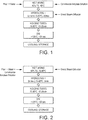
- wheat flour is mixed with water (at ambient or warm temperature) and a solution of amylase by a screw conveyor.
- the resulting "dough” falls in the hydrolysis tank where steam is injected to reach the optimum temperature for the enzyme activity.
- Reaction time is typically 25 min in tank and then 10 to 20 min in tubes at this optimum temperature, depending on the extent of hydrolysis required.
- the obtained slurry has reduced viscosity and a Dextrose Equivalent (DE) around 15-25 under those conditions. It is then heat treated for hygienic reasons and to inactivate enzyme (for example: above 120°C for 20 sec). It is thereafter cooled before storage or direct use.
- HCI may be further wet-mixed with other ingredients (e.g. native flour ⁇ sucrose, oil) before final heat treatment.
- the slurry may also be dried to produce a powder, or used as a liquid food as above described.
- FIG. 1 is a simplified process diagram of the HCI process.
- a Ring Layer Mixer (RLM) is used instead of the screw conveyor described above in Example 1.
- steam is directly injected in the RLM and not in the hydrolysis tank.
- a RLM with 10 litre capacity was used, with speed set to 2000 rpm.
- the RLM had two inlets, wherein the first inlet was used to introduce wheat flour and enzyme solution. Steam was injected via the second inlet. The steam was superheated, and used to bring the temperature of the flour and enzyme mix in the tank to a temperature of 75 to 80 degrees Celsius, as measured by a probe. The ingredient mixture was thus almost instantaneously both heated and homogenized.
- the resulting treated mixture was transported out of the ring layer mixer to holding tanks. The treated mixture was incubated at 75 degrees C for about 25 minutes to allow the further hydrolysis by the enzymes.
- HCI may be further wet-mixed with other ingredients (e.g. native flour ⁇ sucrose, oil) before final heat treatment.
- the slurry may also be dried to produce a powder, or used as a liquid food as above described.
- a wheat flour, water and optionally other ingredients are mixed in a preparation tank.
- the slurry is then pumped into tubes.
- the amylase solution is injected in-line just before the static mixer where steam is injected to reach the optimum temperature for the enzyme activity (for example above 70 degrees C, such as from 70 to 95 degrees C, for example 70 to 90 degrees C, such as from 70 to 85 degrees C, for example from 75-85 degrees C).
- the amylase can also be added in the initial liquid batch preparation tank.
- the slurry is then further processed at this optimum temperature for a residence time (corresponding to the incubation of step f), depending on the extent of hydrolysis required (e.g. 2 to 10 minutes), before final heat treatment for hygienic reasons and enzymes inactivation (example: above 120°C for 20 sec).
- the slurry (comprising around 45% w/w solids) is then subject to a roller drying treatment (heat-treatment step, corresponsing to step j) according to the process of the invention) to provide the finished food product which may be then milled and packed for commercial use.
- Roller drying treatment is performed in a mono-cylinder roller dryer at a temperature comprised between 185 and 190 deg C and at speed comprised between 4 and 5 rpm.
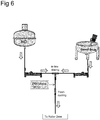
- Figure 3 is a simplified process diagram for the in-line hydrolysis setup.
- Example 4 Method of the invention in in-line hydrolysis
- the method of the invention may also be incorporated as an in-line method of hydrolysis in method for producing a finished food product.
- a RLM with 10 litre capacity was used, with speed set to 2000 rpm.
- the RLM had two inlets, wherein the first inlet was used to introduce ingredients' mixture and enzyme solution. Steam was injected via the second inlet. The steam was superheated, and used to bring the temperature of the flour and enzyme mix in the tank to a temperature of 75 to 80 degrees Celsius, as measured by a probe. The ingredient mixture was thus almost instantaneously both heated and homogenized.
- the resulting treated mixture was transported out of the ring layer mixer to holding tubes. The treated mixture was incubated at 75 degrees C for a time longer than 2 minutes to allow the further hydrolysis by the enzymes.
- HPAEC method Sugars profile (HPAEC method), Dextrose Equivalent DE (Lane Eynon), dry matter (oven) and viscosity (flow curve at 30% solids, 50°C, 50 rpm, 20 min) were analyzed in liquid HCI (obtained analogously as described above in Examples 1 and 2 - reported in Table 1).
- Table 2 shows that the amount of maltose produced in the set up where a high shear mixer (ring layer mixer) is used is drastically reduced as compared to that of the conventional set up.
- Table 3 shows that the amount of maltose produced in the set up where a high shear mixer (ring layer mixer) is used is drastically reduced as compared to that of the conventional set up.
- the relative viscosity is also reduced showing potential to reduce the amount of added amylase and/or residence time.
- Maltose levels resulting from set up described in Example 7 was measured in a roller dried product and compared with maltose levels obtained in a slurry obtained by mixing the same HCI ingredient and cereal based slurry but without applying the in-line dosing conditions described in Example 7.
- Table 5 Maltose levels resuting from use of in-line dosing (Example 7)
- Trial number Setup Description Maltose profile in finished powder after roller-drying (g/100g) 23811.014 Ring Layer Mixer + in-line dosing (Example 7) 2.93
- Table 5 shows that mixing of a cereal based slurry with a semi finished ingredient (HCI) obtained by the use of a Ring Layer Mixer under the conditions described in Example 7 mantains the low maltose levels achieved via the preparation with a ring layer mixer, irrespective of the presence in such slurry of endogenous amylolytic enzymes.
- HCI semi finished ingredient
- Example 7 In-line dosing of HCI and cereal based slurry
- a cereal soup (cereal based slurry) is mixed in-line with a stream of HCI (intermediate product consisting on partially hydrolyzed cereal prepared as described above in Example 2) by means of a static mixer.
- HCI intermediate product consisting on partially hydrolyzed cereal prepared as described above in Example 2
- flow rate is measured and controlled (HCI: 109Kg/h; Cereal based slurry: 141Kg/h).
- DSI direct steam injection
- the product is then flashed at atmospheric pressure and pumped by means of a positive pump for subsequent processing.
- the length of pipe and static mixer is set to have less than 20 seconds holding time ideally for the lowest flow rate.
Landscapes
- Life Sciences & Earth Sciences (AREA)
- Engineering & Computer Science (AREA)
- Chemical & Material Sciences (AREA)
- Health & Medical Sciences (AREA)
- Polymers & Plastics (AREA)
- Nutrition Science (AREA)
- Food Science & Technology (AREA)
- Biotechnology (AREA)
- Microbiology (AREA)
- Botany (AREA)
- Agronomy & Crop Science (AREA)
- Chemical Kinetics & Catalysis (AREA)
- Medicinal Chemistry (AREA)
- Organic Chemistry (AREA)
- Biochemistry (AREA)
- Materials Engineering (AREA)
- Molecular Biology (AREA)
- Crystallography & Structural Chemistry (AREA)
- Cereal-Derived Products (AREA)
- Bakery Products And Manufacturing Methods Therefor (AREA)
- Polysaccharides And Polysaccharide Derivatives (AREA)
- General Preparation And Processing Of Foods (AREA)
- Grain Derivatives (AREA)
- Seasonings (AREA)
- Preparation Of Fruits And Vegetables (AREA)
Priority Applications (1)
| Application Number | Priority Date | Filing Date | Title |
|---|---|---|---|
| PL17742710T PL3481228T3 (pl) | 2016-07-15 | 2017-07-14 | Sposób wytwarzania hydrolizowanej skrobi o zmniejszonej zawartości cukru |
Applications Claiming Priority (3)
| Application Number | Priority Date | Filing Date | Title |
|---|---|---|---|
| EP16179668 | 2016-07-15 | ||
| EP16204620 | 2016-12-16 | ||
| PCT/EP2017/067858 WO2018011401A1 (en) | 2016-07-15 | 2017-07-14 | Process for preparing hydrolysed starch with reduced sugar content |
Publications (2)
| Publication Number | Publication Date |
|---|---|
| EP3481228A1 EP3481228A1 (en) | 2019-05-15 |
| EP3481228B1 true EP3481228B1 (en) | 2021-08-25 |
Family
ID=59337689
Family Applications (2)
| Application Number | Title | Priority Date | Filing Date |
|---|---|---|---|
| EP17742710.1A Active EP3481228B1 (en) | 2016-07-15 | 2017-07-14 | Process for preparing hydrolysed starch with reduced sugar content |
| EP17739582.9A Active EP3481227B1 (en) | 2016-07-15 | 2017-07-14 | Process for preparation of food product comprising hydrolyzed starch |
Family Applications After (1)
| Application Number | Title | Priority Date | Filing Date |
|---|---|---|---|
| EP17739582.9A Active EP3481227B1 (en) | 2016-07-15 | 2017-07-14 | Process for preparation of food product comprising hydrolyzed starch |
Country Status (12)
| Country | Link |
|---|---|
| US (2) | US20190153122A1 (pl) |
| EP (2) | EP3481228B1 (pl) |
| CN (2) | CN109414043B (pl) |
| BR (2) | BR112019000419B1 (pl) |
| CA (2) | CA3030492C (pl) |
| CL (2) | CL2018003602A1 (pl) |
| ES (2) | ES2881814T3 (pl) |
| MX (2) | MX2018014636A (pl) |
| PH (2) | PH12019500066B1 (pl) |
| PL (2) | PL3481228T3 (pl) |
| RU (2) | RU2767194C2 (pl) |
| WO (2) | WO2018011401A1 (pl) |
Families Citing this family (7)
| Publication number | Priority date | Publication date | Assignee | Title |
|---|---|---|---|---|
| US10645950B2 (en) | 2017-05-01 | 2020-05-12 | Usarium Inc. | Methods of manufacturing products from material comprising oilcake, compositions produced from materials comprising processed oilcake, and systems for processing oilcake |
| CA3085556A1 (en) | 2017-12-15 | 2019-06-20 | Societe Des Produits Nestle S.A. | Process for sugar modulation |
| WO2019116182A1 (en) | 2017-12-15 | 2019-06-20 | Nestec S.A. | Process for sugar modulation |
| AT16656U3 (de) | 2018-10-08 | 2020-07-15 | Pga Putz Granitzer Anlagenbau Ges M B H | Verfahren und Vorrichtung zum Aufschluss von Stärke |
| US11839225B2 (en) | 2021-07-14 | 2023-12-12 | Usarium Inc. | Method for manufacturing alternative meat from liquid spent brewers' yeast |
| KR20240167804A (ko) | 2022-04-06 | 2024-11-28 | 소시에떼 데 프로듀이 네슬레 소시에떼아노님 | 즉석 죽 조성물 |
| CN116439350B (zh) * | 2023-05-09 | 2023-10-20 | 高唐鲁缘商通生物科技有限公司 | 酶解法降低大豆膳食纤维中淀粉含量的方法 |
Family Cites Families (34)
| Publication number | Priority date | Publication date | Assignee | Title |
|---|---|---|---|---|
| DK120940B (da) * | 1965-09-09 | 1971-08-02 | Kroyer K K K | Fremgangsmåde og apparat til konvertering af stivelse til dextrose- og maltoseholdige produkter. |
| US3950543A (en) * | 1970-06-05 | 1976-04-13 | United Nations Childrens' Fund | Process for making foods and feeds |
| GB1446965A (en) * | 1974-02-14 | 1976-08-18 | Agricultural Vegetable Prod | Preparation of food products |
| SU869745A2 (ru) * | 1980-01-08 | 1981-10-07 | Всесоюзный Научно-Исследовательский Институт Комбикормовой Промышленности | Способ обработки зерна дл корма |
| US4603110A (en) * | 1983-10-21 | 1986-07-29 | Grain Processing Corporation | Starch hydrolyzates and preparation thereof |
| US4710386A (en) * | 1985-01-29 | 1987-12-01 | General Foods Corporation | All natural, ready-to-eat enzyme-saccharified cereal derived from whole cereal grain |
| US5387426A (en) * | 1990-02-20 | 1995-02-07 | A.E. Staley Manufacturing Company | Method of preparing reduced fat foods |
| ES2032354B1 (es) * | 1990-04-19 | 1993-08-16 | Ganadera Union Ind Agro | Procedimiento para la fabricacion de papillas a base de cereales y papillas obtenidas con dicho procedimiento. |
| DE4013553A1 (de) * | 1990-04-27 | 1991-10-31 | Hoechst Ag | Verfahren und vorrichtung zur herstellung von formkoerpern aus thermotropen, fluessigkristallinen stoffen sowie formkoerper, hergestellt nach dem verfahren |
| JPH06303943A (ja) * | 1993-04-05 | 1994-11-01 | Rhone Poulenc Special Chem Co | 減じられた脂肪微粉砕食肉組成物 |
| GB9407104D0 (en) * | 1994-04-11 | 1994-06-01 | Dalgety Plc | Process for the preparation of food ingredients |
| US6190708B1 (en) * | 1998-10-19 | 2001-02-20 | Cereal Base Ceba Ab | Enzyme preparations for modifying cereal suspensions |
| WO2000030457A1 (en) * | 1998-11-20 | 2000-06-02 | Kellogg Company | Enzymatic preparation of cereal base |
| MXPA03010937A (es) * | 2001-05-31 | 2004-02-27 | Abbott Lab | Sistema de fibra de viscosidad controlada por acido y usos del mismo. |
| ATE500749T1 (de) * | 2001-09-18 | 2011-03-15 | Novozymes As | Enzymatische behandlung von stärkehaltigen lebensmittelprodukten zur verkürzung der temperierenzeit |
| US6753023B2 (en) * | 2001-10-12 | 2004-06-22 | California Natural Products | Rice-flour hydrolysates fat substitute |
| DE102004058079A1 (de) * | 2004-12-01 | 2006-06-08 | Basf Ag | Steigerung des Proteinanteils tierischer Organismen |
| EP2129806B1 (en) * | 2007-06-27 | 2013-08-28 | H R D Corporation | High shear process for dextrose production |
| DE102007034102A1 (de) * | 2007-07-21 | 2009-01-22 | Alzchem Trostberg Gmbh | Abriebfeste und rieselfähige Glycocyamin-haltige Formlinge und Verfahren zu deren Herstellung |
| US20090047385A1 (en) * | 2007-08-15 | 2009-02-19 | The Quaker Oats Company | Natural oat-derived sweetener |
| EP2110025A1 (en) * | 2008-04-18 | 2009-10-21 | Nestec S.A. | Cereal-based instant drink |
| AU2009285815A1 (en) * | 2008-08-27 | 2010-03-04 | Edeniq, Inc. | Materials and methods for converting biomass to biofuel |
| FI121844B (fi) * | 2008-09-01 | 2011-05-13 | Ravintoraisio Oy | Parannettu syötävä koostumus ja menetelmä sen valmistamiseksi |
| US10980244B2 (en) * | 2008-11-04 | 2021-04-20 | The Quaker Oats Company | Whole grain composition comprising hydrolyzed starch |
| MX2011010297A (es) * | 2009-03-31 | 2011-10-11 | Dow Global Technologies Llc | Estabilizador de sal tartarica para el vino. |
| US20120135466A1 (en) * | 2009-05-11 | 2012-05-31 | Danisco Us Inc. | Production Of Maltotetraose Syrup Using A Pseudomonas Saccharophila Maltotetraohydrolase Variant And A Debranching Enzyme |
| BRPI1007120A8 (pt) * | 2009-05-18 | 2017-04-25 | Dow Global Technologies Inc | Mistura de empanamento seca, método para reduzir a retenção de óleo em alimentos fritos e método para preparar alimentos empanados |
| AU2010285965B2 (en) * | 2009-08-18 | 2013-08-29 | Glico Nutrition Co., Ltd. | Food product containing starch gel |
| EP2335499A1 (en) * | 2009-12-09 | 2011-06-22 | Nestec S.A. | Process for making a whole-grain cereal bar and cereal bar |
| AU2010365332A1 (en) * | 2010-12-08 | 2013-06-06 | Nestec S.A. | Cereal milk drink comprising hydrolyzed whole grain for infants |
| EP2744349B1 (en) * | 2011-08-19 | 2016-04-20 | DSM IP Assets B.V. | Process for preparation of a dry instant porridge |
| GB2499463B (en) * | 2012-01-31 | 2014-04-02 | Verenium Corp | Reduced sugar syrups and methods of making reduced sugar syrups |
| JP2016501512A (ja) * | 2012-10-10 | 2016-01-21 | ダニスコ・ユーエス・インク | 糖化のためにタラロミセス・エメルソニ(TALAROMYCESEMERSONII)由来のα−アミラーゼを使用する方法 |
| CN107709556B (zh) * | 2015-04-22 | 2021-09-24 | 葛兰素史克消费者保健控股(美国)有限责任公司 | 新的方法 |
-
2017
- 2017-07-14 PL PL17742710T patent/PL3481228T3/pl unknown
- 2017-07-14 WO PCT/EP2017/067858 patent/WO2018011401A1/en not_active Ceased
- 2017-07-14 EP EP17742710.1A patent/EP3481228B1/en active Active
- 2017-07-14 ES ES17739582T patent/ES2881814T3/es active Active
- 2017-07-14 BR BR112019000419-0A patent/BR112019000419B1/pt active IP Right Grant
- 2017-07-14 EP EP17739582.9A patent/EP3481227B1/en active Active
- 2017-07-14 MX MX2018014636A patent/MX2018014636A/es unknown
- 2017-07-14 CN CN201780039581.1A patent/CN109414043B/zh active Active
- 2017-07-14 PL PL17739582T patent/PL3481227T3/pl unknown
- 2017-07-14 WO PCT/EP2017/067855 patent/WO2018011400A1/en not_active Ceased
- 2017-07-14 CA CA3030492A patent/CA3030492C/en active Active
- 2017-07-14 CA CA3030631A patent/CA3030631A1/en active Pending
- 2017-07-14 CN CN201780038126.XA patent/CN109310125B/zh active Active
- 2017-07-14 ES ES17742710T patent/ES2893111T3/es active Active
- 2017-07-14 MX MX2018014799A patent/MX393671B/es unknown
- 2017-07-14 RU RU2019103957A patent/RU2767194C2/ru active
- 2017-07-14 BR BR112019000404-1A patent/BR112019000404B1/pt active IP Right Grant
- 2017-07-14 PH PH1/2019/500066A patent/PH12019500066B1/en unknown
- 2017-07-14 US US16/316,701 patent/US20190153122A1/en not_active Abandoned
- 2017-07-14 US US16/316,668 patent/US20190166890A1/en not_active Abandoned
- 2017-07-14 RU RU2019103937A patent/RU2744136C2/ru active
-
2018
- 2018-12-14 CL CL2018003602A patent/CL2018003602A1/es unknown
- 2018-12-14 CL CL2018003603A patent/CL2018003603A1/es unknown
-
2019
- 2019-01-14 PH PH12019500093A patent/PH12019500093A1/en unknown
Non-Patent Citations (1)
| Title |
|---|
| None * |
Also Published As
Similar Documents
| Publication | Publication Date | Title |
|---|---|---|
| EP3481228B1 (en) | Process for preparing hydrolysed starch with reduced sugar content | |
| US11136606B2 (en) | Process for sugar modulation | |
| US11172695B2 (en) | Method, apparatus, and product providing hydrolyzed starch and fiber | |
| US11445741B2 (en) | Process for sugar modulation | |
| RU2797428C2 (ru) | Способ регуляции образования сахара | |
| RU2820111C2 (ru) | Способ получения пищевого продукта, содержащего гидролизованный крахмал и пониженное количество мальтозы по сравнению со стандартным способом гидролиза крахмала | |
| JP2010004866A (ja) | 澱粉貯蔵植物粉末の製造方法 | |
| BR112020009000B1 (pt) | Produto alimentício, que compreende amido hidrolisado e seu método de produção | |
| LT6000B (lt) | Grūdų produktas ir jo gamybos būdas |
Legal Events
| Date | Code | Title | Description |
|---|---|---|---|
| STAA | Information on the status of an ep patent application or granted ep patent |
Free format text: STATUS: UNKNOWN |
|
| STAA | Information on the status of an ep patent application or granted ep patent |
Free format text: STATUS: THE INTERNATIONAL PUBLICATION HAS BEEN MADE |
|
| PUAI | Public reference made under article 153(3) epc to a published international application that has entered the european phase |
Free format text: ORIGINAL CODE: 0009012 |
|
| STAA | Information on the status of an ep patent application or granted ep patent |
Free format text: STATUS: REQUEST FOR EXAMINATION WAS MADE |
|
| 17P | Request for examination filed |
Effective date: 20190205 |
|
| AK | Designated contracting states |
Kind code of ref document: A1 Designated state(s): AL AT BE BG CH CY CZ DE DK EE ES FI FR GB GR HR HU IE IS IT LI LT LU LV MC MK MT NL NO PL PT RO RS SE SI SK SM TR |
|
| AX | Request for extension of the european patent |
Extension state: BA ME |
|
| RAP1 | Party data changed (applicant data changed or rights of an application transferred) |
Owner name: NESTEC S.A. |
|
| RAP1 | Party data changed (applicant data changed or rights of an application transferred) |
Owner name: SOCIETE DES PRODUITS NESTLE S.A. |
|
| DAV | Request for validation of the european patent (deleted) | ||
| DAX | Request for extension of the european patent (deleted) | ||
| STAA | Information on the status of an ep patent application or granted ep patent |
Free format text: STATUS: EXAMINATION IS IN PROGRESS |
|
| 17Q | First examination report despatched |
Effective date: 20200424 |
|
| GRAP | Despatch of communication of intention to grant a patent |
Free format text: ORIGINAL CODE: EPIDOSNIGR1 |
|
| STAA | Information on the status of an ep patent application or granted ep patent |
Free format text: STATUS: GRANT OF PATENT IS INTENDED |
|
| RIC1 | Information provided on ipc code assigned before grant |
Ipc: A23L 11/50 20210101ALI20210518BHEP Ipc: A23L 7/143 20160101ALI20210518BHEP Ipc: A23L 7/10 20160101ALI20210518BHEP Ipc: A23L 19/15 20160101ALI20210518BHEP Ipc: C08B 30/12 20060101ALI20210518BHEP Ipc: A23L 29/30 20160101ALI20210518BHEP Ipc: A23L 19/12 20160101ALI20210518BHEP Ipc: A23L 19/10 20160101ALI20210518BHEP Ipc: A23L 11/00 20210101ALI20210518BHEP Ipc: A23L 7/104 20160101AFI20210518BHEP |
|
| INTG | Intention to grant announced |
Effective date: 20210607 |
|
| GRAS | Grant fee paid |
Free format text: ORIGINAL CODE: EPIDOSNIGR3 |
|
| GRAA | (expected) grant |
Free format text: ORIGINAL CODE: 0009210 |
|
| STAA | Information on the status of an ep patent application or granted ep patent |
Free format text: STATUS: THE PATENT HAS BEEN GRANTED |
|
| AK | Designated contracting states |
Kind code of ref document: B1 Designated state(s): AL AT BE BG CH CY CZ DE DK EE ES FI FR GB GR HR HU IE IS IT LI LT LU LV MC MK MT NL NO PL PT RO RS SE SI SK SM TR |
|
| REG | Reference to a national code |
Ref country code: CH Ref legal event code: EP |
|
| REG | Reference to a national code |
Ref country code: DE Ref legal event code: R096 Ref document number: 602017044725 Country of ref document: DE |
|
| REG | Reference to a national code |
Ref country code: IE Ref legal event code: FG4D Ref country code: AT Ref legal event code: REF Ref document number: 1422867 Country of ref document: AT Kind code of ref document: T Effective date: 20210915 |
|
| REG | Reference to a national code |
Ref country code: SE Ref legal event code: TRGR |
|
| REG | Reference to a national code |
Ref country code: PT Ref legal event code: SC4A Ref document number: 3481228 Country of ref document: PT Date of ref document: 20211027 Kind code of ref document: T Free format text: AVAILABILITY OF NATIONAL TRANSLATION Effective date: 20211020 |
|
| REG | Reference to a national code |
Ref country code: NL Ref legal event code: FP |
|
| REG | Reference to a national code |
Ref country code: LT Ref legal event code: MG9D |
|
| REG | Reference to a national code |
Ref country code: AT Ref legal event code: MK05 Ref document number: 1422867 Country of ref document: AT Kind code of ref document: T Effective date: 20210825 |
|
| PG25 | Lapsed in a contracting state [announced via postgrant information from national office to epo] |
Ref country code: HR Free format text: LAPSE BECAUSE OF FAILURE TO SUBMIT A TRANSLATION OF THE DESCRIPTION OR TO PAY THE FEE WITHIN THE PRESCRIBED TIME-LIMIT Effective date: 20210825 Ref country code: RS Free format text: LAPSE BECAUSE OF FAILURE TO SUBMIT A TRANSLATION OF THE DESCRIPTION OR TO PAY THE FEE WITHIN THE PRESCRIBED TIME-LIMIT Effective date: 20210825 Ref country code: LT Free format text: LAPSE BECAUSE OF FAILURE TO SUBMIT A TRANSLATION OF THE DESCRIPTION OR TO PAY THE FEE WITHIN THE PRESCRIBED TIME-LIMIT Effective date: 20210825 Ref country code: AT Free format text: LAPSE BECAUSE OF FAILURE TO SUBMIT A TRANSLATION OF THE DESCRIPTION OR TO PAY THE FEE WITHIN THE PRESCRIBED TIME-LIMIT Effective date: 20210825 Ref country code: BG Free format text: LAPSE BECAUSE OF FAILURE TO SUBMIT A TRANSLATION OF THE DESCRIPTION OR TO PAY THE FEE WITHIN THE PRESCRIBED TIME-LIMIT Effective date: 20211125 Ref country code: NO Free format text: LAPSE BECAUSE OF FAILURE TO SUBMIT A TRANSLATION OF THE DESCRIPTION OR TO PAY THE FEE WITHIN THE PRESCRIBED TIME-LIMIT Effective date: 20211125 Ref country code: FI Free format text: LAPSE BECAUSE OF FAILURE TO SUBMIT A TRANSLATION OF THE DESCRIPTION OR TO PAY THE FEE WITHIN THE PRESCRIBED TIME-LIMIT Effective date: 20210825 |
|
| REG | Reference to a national code |
Ref country code: ES Ref legal event code: FG2A Ref document number: 2893111 Country of ref document: ES Kind code of ref document: T3 Effective date: 20220208 |
|
| PG25 | Lapsed in a contracting state [announced via postgrant information from national office to epo] |
Ref country code: LV Free format text: LAPSE BECAUSE OF FAILURE TO SUBMIT A TRANSLATION OF THE DESCRIPTION OR TO PAY THE FEE WITHIN THE PRESCRIBED TIME-LIMIT Effective date: 20210825 Ref country code: GR Free format text: LAPSE BECAUSE OF FAILURE TO SUBMIT A TRANSLATION OF THE DESCRIPTION OR TO PAY THE FEE WITHIN THE PRESCRIBED TIME-LIMIT Effective date: 20211126 |
|
| PG25 | Lapsed in a contracting state [announced via postgrant information from national office to epo] |
Ref country code: DK Free format text: LAPSE BECAUSE OF FAILURE TO SUBMIT A TRANSLATION OF THE DESCRIPTION OR TO PAY THE FEE WITHIN THE PRESCRIBED TIME-LIMIT Effective date: 20210825 |
|
| REG | Reference to a national code |
Ref country code: DE Ref legal event code: R097 Ref document number: 602017044725 Country of ref document: DE |
|
| PG25 | Lapsed in a contracting state [announced via postgrant information from national office to epo] |
Ref country code: SM Free format text: LAPSE BECAUSE OF FAILURE TO SUBMIT A TRANSLATION OF THE DESCRIPTION OR TO PAY THE FEE WITHIN THE PRESCRIBED TIME-LIMIT Effective date: 20210825 Ref country code: SK Free format text: LAPSE BECAUSE OF FAILURE TO SUBMIT A TRANSLATION OF THE DESCRIPTION OR TO PAY THE FEE WITHIN THE PRESCRIBED TIME-LIMIT Effective date: 20210825 Ref country code: RO Free format text: LAPSE BECAUSE OF FAILURE TO SUBMIT A TRANSLATION OF THE DESCRIPTION OR TO PAY THE FEE WITHIN THE PRESCRIBED TIME-LIMIT Effective date: 20210825 Ref country code: EE Free format text: LAPSE BECAUSE OF FAILURE TO SUBMIT A TRANSLATION OF THE DESCRIPTION OR TO PAY THE FEE WITHIN THE PRESCRIBED TIME-LIMIT Effective date: 20210825 Ref country code: CZ Free format text: LAPSE BECAUSE OF FAILURE TO SUBMIT A TRANSLATION OF THE DESCRIPTION OR TO PAY THE FEE WITHIN THE PRESCRIBED TIME-LIMIT Effective date: 20210825 Ref country code: AL Free format text: LAPSE BECAUSE OF FAILURE TO SUBMIT A TRANSLATION OF THE DESCRIPTION OR TO PAY THE FEE WITHIN THE PRESCRIBED TIME-LIMIT Effective date: 20210825 |
|
| PLBE | No opposition filed within time limit |
Free format text: ORIGINAL CODE: 0009261 |
|
| STAA | Information on the status of an ep patent application or granted ep patent |
Free format text: STATUS: NO OPPOSITION FILED WITHIN TIME LIMIT |
|
| PG25 | Lapsed in a contracting state [announced via postgrant information from national office to epo] |
Ref country code: IT Free format text: LAPSE BECAUSE OF FAILURE TO SUBMIT A TRANSLATION OF THE DESCRIPTION OR TO PAY THE FEE WITHIN THE PRESCRIBED TIME-LIMIT Effective date: 20210825 |
|
| 26N | No opposition filed |
Effective date: 20220527 |
|
| PG25 | Lapsed in a contracting state [announced via postgrant information from national office to epo] |
Ref country code: SI Free format text: LAPSE BECAUSE OF FAILURE TO SUBMIT A TRANSLATION OF THE DESCRIPTION OR TO PAY THE FEE WITHIN THE PRESCRIBED TIME-LIMIT Effective date: 20210825 |
|
| REG | Reference to a national code |
Ref country code: DE Ref legal event code: R119 Ref document number: 602017044725 Country of ref document: DE |
|
| PG25 | Lapsed in a contracting state [announced via postgrant information from national office to epo] |
Ref country code: MC Free format text: LAPSE BECAUSE OF FAILURE TO SUBMIT A TRANSLATION OF THE DESCRIPTION OR TO PAY THE FEE WITHIN THE PRESCRIBED TIME-LIMIT Effective date: 20210825 |
|
| REG | Reference to a national code |
Ref country code: CH Ref legal event code: PL |
|
| REG | Reference to a national code |
Ref country code: BE Ref legal event code: MM Effective date: 20220731 |
|
| PG25 | Lapsed in a contracting state [announced via postgrant information from national office to epo] |
Ref country code: LU Free format text: LAPSE BECAUSE OF NON-PAYMENT OF DUE FEES Effective date: 20220714 Ref country code: LI Free format text: LAPSE BECAUSE OF NON-PAYMENT OF DUE FEES Effective date: 20220731 Ref country code: CH Free format text: LAPSE BECAUSE OF NON-PAYMENT OF DUE FEES Effective date: 20220731 |
|
| PG25 | Lapsed in a contracting state [announced via postgrant information from national office to epo] |
Ref country code: DE Free format text: LAPSE BECAUSE OF NON-PAYMENT OF DUE FEES Effective date: 20230201 Ref country code: BE Free format text: LAPSE BECAUSE OF NON-PAYMENT OF DUE FEES Effective date: 20220731 |
|
| P01 | Opt-out of the competence of the unified patent court (upc) registered |
Effective date: 20230527 |
|
| PG25 | Lapsed in a contracting state [announced via postgrant information from national office to epo] |
Ref country code: IE Free format text: LAPSE BECAUSE OF NON-PAYMENT OF DUE FEES Effective date: 20220714 |
|
| PG25 | Lapsed in a contracting state [announced via postgrant information from national office to epo] |
Ref country code: HU Free format text: LAPSE BECAUSE OF FAILURE TO SUBMIT A TRANSLATION OF THE DESCRIPTION OR TO PAY THE FEE WITHIN THE PRESCRIBED TIME-LIMIT; INVALID AB INITIO Effective date: 20170714 |
|
| PG25 | Lapsed in a contracting state [announced via postgrant information from national office to epo] |
Ref country code: MK Free format text: LAPSE BECAUSE OF FAILURE TO SUBMIT A TRANSLATION OF THE DESCRIPTION OR TO PAY THE FEE WITHIN THE PRESCRIBED TIME-LIMIT Effective date: 20210825 Ref country code: CY Free format text: LAPSE BECAUSE OF FAILURE TO SUBMIT A TRANSLATION OF THE DESCRIPTION OR TO PAY THE FEE WITHIN THE PRESCRIBED TIME-LIMIT Effective date: 20210825 |
|
| PG25 | Lapsed in a contracting state [announced via postgrant information from national office to epo] |
Ref country code: TR Free format text: LAPSE BECAUSE OF FAILURE TO SUBMIT A TRANSLATION OF THE DESCRIPTION OR TO PAY THE FEE WITHIN THE PRESCRIBED TIME-LIMIT Effective date: 20210825 |
|
| PG25 | Lapsed in a contracting state [announced via postgrant information from national office to epo] |
Ref country code: MT Free format text: LAPSE BECAUSE OF FAILURE TO SUBMIT A TRANSLATION OF THE DESCRIPTION OR TO PAY THE FEE WITHIN THE PRESCRIBED TIME-LIMIT Effective date: 20210825 |
|
| PGFP | Annual fee paid to national office [announced via postgrant information from national office to epo] |
Ref country code: PL Payment date: 20250612 Year of fee payment: 9 |
|
| PGFP | Annual fee paid to national office [announced via postgrant information from national office to epo] |
Ref country code: GB Payment date: 20250529 Year of fee payment: 9 |
|
| PGFP | Annual fee paid to national office [announced via postgrant information from national office to epo] |
Ref country code: NL Payment date: 20250613 Year of fee payment: 9 |
|
| PGFP | Annual fee paid to national office [announced via postgrant information from national office to epo] |
Ref country code: PT Payment date: 20250624 Year of fee payment: 9 |
|
| PGFP | Annual fee paid to national office [announced via postgrant information from national office to epo] |
Ref country code: FR Payment date: 20250610 Year of fee payment: 9 |
|
| PGFP | Annual fee paid to national office [announced via postgrant information from national office to epo] |
Ref country code: SE Payment date: 20250610 Year of fee payment: 9 |
|
| PGFP | Annual fee paid to national office [announced via postgrant information from national office to epo] |
Ref country code: ES Payment date: 20250807 Year of fee payment: 9 |