EP3478535B1 - Verfahren zum betrieb eines kraftfahrzeugs - Google Patents
Verfahren zum betrieb eines kraftfahrzeugs Download PDFInfo
- Publication number
- EP3478535B1 EP3478535B1 EP17777799.2A EP17777799A EP3478535B1 EP 3478535 B1 EP3478535 B1 EP 3478535B1 EP 17777799 A EP17777799 A EP 17777799A EP 3478535 B1 EP3478535 B1 EP 3478535B1
- Authority
- EP
- European Patent Office
- Prior art keywords
- person
- motor vehicle
- vehicle
- detected
- images
- Prior art date
- Legal status (The legal status is an assumption and is not a legal conclusion. Google has not performed a legal analysis and makes no representation as to the accuracy of the status listed.)
- Active
Links
Images

Classifications
-
- B—PERFORMING OPERATIONS; TRANSPORTING
- B60—VEHICLES IN GENERAL
- B60W—CONJOINT CONTROL OF VEHICLE SUB-UNITS OF DIFFERENT TYPE OR DIFFERENT FUNCTION; CONTROL SYSTEMS SPECIALLY ADAPTED FOR HYBRID VEHICLES; ROAD VEHICLE DRIVE CONTROL SYSTEMS FOR PURPOSES NOT RELATED TO THE CONTROL OF A PARTICULAR SUB-UNIT
- B60W50/00—Details of control systems for road vehicle drive control not related to the control of a particular sub-unit, e.g. process diagnostic or vehicle driver interfaces
- B60W50/0098—Details of control systems ensuring comfort, safety or stability not otherwise provided for
-
- G—PHYSICS
- G06—COMPUTING OR CALCULATING; COUNTING
- G06F—ELECTRIC DIGITAL DATA PROCESSING
- G06F3/00—Input arrangements for transferring data to be processed into a form capable of being handled by the computer; Output arrangements for transferring data from processing unit to output unit, e.g. interface arrangements
- G06F3/01—Input arrangements or combined input and output arrangements for interaction between user and computer
- G06F3/017—Gesture based interaction, e.g. based on a set of recognized hand gestures
-
- B—PERFORMING OPERATIONS; TRANSPORTING
- B60—VEHICLES IN GENERAL
- B60W—CONJOINT CONTROL OF VEHICLE SUB-UNITS OF DIFFERENT TYPE OR DIFFERENT FUNCTION; CONTROL SYSTEMS SPECIALLY ADAPTED FOR HYBRID VEHICLES; ROAD VEHICLE DRIVE CONTROL SYSTEMS FOR PURPOSES NOT RELATED TO THE CONTROL OF A PARTICULAR SUB-UNIT
- B60W60/00—Drive control systems specially adapted for autonomous road vehicles
- B60W60/001—Planning or execution of driving tasks
- B60W60/0025—Planning or execution of driving tasks specially adapted for specific operations
-
- G—PHYSICS
- G06—COMPUTING OR CALCULATING; COUNTING
- G06F—ELECTRIC DIGITAL DATA PROCESSING
- G06F3/00—Input arrangements for transferring data to be processed into a form capable of being handled by the computer; Output arrangements for transferring data from processing unit to output unit, e.g. interface arrangements
- G06F3/01—Input arrangements or combined input and output arrangements for interaction between user and computer
- G06F3/011—Arrangements for interaction with the human body, e.g. for user immersion in virtual reality
- G06F3/013—Eye tracking input arrangements
-
- G—PHYSICS
- G06—COMPUTING OR CALCULATING; COUNTING
- G06V—IMAGE OR VIDEO RECOGNITION OR UNDERSTANDING
- G06V40/00—Recognition of biometric, human-related or animal-related patterns in image or video data
- G06V40/10—Human or animal bodies, e.g. vehicle occupants or pedestrians; Body parts, e.g. hands
- G06V40/107—Static hand or arm
-
- G—PHYSICS
- G06—COMPUTING OR CALCULATING; COUNTING
- G06V—IMAGE OR VIDEO RECOGNITION OR UNDERSTANDING
- G06V40/00—Recognition of biometric, human-related or animal-related patterns in image or video data
- G06V40/10—Human or animal bodies, e.g. vehicle occupants or pedestrians; Body parts, e.g. hands
- G06V40/18—Eye characteristics, e.g. of the iris
- G06V40/19—Sensors therefor
-
- G—PHYSICS
- G06—COMPUTING OR CALCULATING; COUNTING
- G06V—IMAGE OR VIDEO RECOGNITION OR UNDERSTANDING
- G06V40/00—Recognition of biometric, human-related or animal-related patterns in image or video data
- G06V40/20—Movements or behaviour, e.g. gesture recognition
- G06V40/28—Recognition of hand or arm movements, e.g. recognition of deaf sign language
-
- G—PHYSICS
- G07—CHECKING-DEVICES
- G07C—TIME OR ATTENDANCE REGISTERS; REGISTERING OR INDICATING THE WORKING OF MACHINES; GENERATING RANDOM NUMBERS; VOTING OR LOTTERY APPARATUS; ARRANGEMENTS, SYSTEMS OR APPARATUS FOR CHECKING NOT PROVIDED FOR ELSEWHERE
- G07C9/00—Individual registration on entry or exit
-
- G—PHYSICS
- G08—SIGNALLING
- G08G—TRAFFIC CONTROL SYSTEMS
- G08G1/00—Traffic control systems for road vehicles
- G08G1/09—Arrangements for giving variable traffic instructions
- G08G1/0962—Arrangements for giving variable traffic instructions having an indicator mounted inside the vehicle, e.g. giving voice messages
- G08G1/0967—Systems involving transmission of highway information, e.g. weather, speed limits
- G08G1/096708—Systems involving transmission of highway information, e.g. weather, speed limits where the received information might be used to generate an automatic action on the vehicle control
- G08G1/096716—Systems involving transmission of highway information, e.g. weather, speed limits where the received information might be used to generate an automatic action on the vehicle control where the received information does not generate an automatic action on the vehicle control
-
- G—PHYSICS
- G08—SIGNALLING
- G08G—TRAFFIC CONTROL SYSTEMS
- G08G1/00—Traffic control systems for road vehicles
- G08G1/09—Arrangements for giving variable traffic instructions
- G08G1/0962—Arrangements for giving variable traffic instructions having an indicator mounted inside the vehicle, e.g. giving voice messages
- G08G1/0967—Systems involving transmission of highway information, e.g. weather, speed limits
- G08G1/096708—Systems involving transmission of highway information, e.g. weather, speed limits where the received information might be used to generate an automatic action on the vehicle control
- G08G1/096725—Systems involving transmission of highway information, e.g. weather, speed limits where the received information might be used to generate an automatic action on the vehicle control where the received information generates an automatic action on the vehicle control
-
- B—PERFORMING OPERATIONS; TRANSPORTING
- B60—VEHICLES IN GENERAL
- B60W—CONJOINT CONTROL OF VEHICLE SUB-UNITS OF DIFFERENT TYPE OR DIFFERENT FUNCTION; CONTROL SYSTEMS SPECIALLY ADAPTED FOR HYBRID VEHICLES; ROAD VEHICLE DRIVE CONTROL SYSTEMS FOR PURPOSES NOT RELATED TO THE CONTROL OF A PARTICULAR SUB-UNIT
- B60W2540/00—Input parameters relating to occupants
- B60W2540/041—Potential occupants
-
- G—PHYSICS
- G08—SIGNALLING
- G08C—TRANSMISSION SYSTEMS FOR MEASURED VALUES, CONTROL OR SIMILAR SIGNALS
- G08C2201/00—Transmission systems of control signals via wireless link
- G08C2201/30—User interface
- G08C2201/32—Remote control based on movements, attitude of remote control device
Definitions
- the invention relates to a method for operating a motor vehicle comprising a camera device recording the vehicle area with an associated control device for evaluating the images.
- the invention is therefore based on the problem of specifying a method for operating a motor vehicle which is improved in comparison.
- the invention provides that the control device evaluates the images to capture at least one hand movement carried out by a person shown in the images, whereby when a hand movement describing a gesture indicating a stop request is detected, either the self-driving motor vehicle is controlled to stop in the vicinity of the person, or the driver of the motor vehicle is given a signal indicating the desire to stop.
- the camera device continuously detects the vehicle in front of it.
- a control device continuously evaluates the captured images to determine whether the images show a person. If such a person is detected, it is evaluated whether this person is making a hand movement, that is to say making a gesture that can be assessed as a gesture indicating a request to stop.
- An image evaluation is therefore carried out via the control device to determine whether there is a person in the vicinity of the vehicle who is waving or a similar defined gesture signals that the motor vehicle would like to take it along.
- the further method is designed differently. If it is a self-driving vehicle without a driver, after the gesture indicating the stopping request has been detected, the self-driving motor vehicle is automatically steered close to the person and stopped so that the person can get in. A fully automatic operation is therefore provided for detecting a passenger request and for driving the vehicle to such a person in order to pick them up.
- the motor vehicle is a conventional motor vehicle with a driver
- the driver is given a corresponding signal that signals the stopping request, for example an optical signal by flashing or an indication in a display, an acoustic signal, for example in the form of a voice output, or a haptic signal, possibly also several different signals at the same time.
- the driver can then stop the vehicle in a targeted manner as soon as he has detected the waving person, who he may have previously overlooked.
- the person can be given an optical or acoustic feedback that the request to stop has been recognized, e.g. B. by switching on the lights or a taxi sign, a message on a display or the like.
- the hand movement can be detected via the control device and, for example, compared with gesture or comparison patterns defined in advance in a gesture or movement pool, which the motor vehicle can also learn beforehand. If it turns out that the given hand gesture corresponds to a comparison sample, a ride can be derived from it. If it turns out that the gesture does not match the gesture or comparison patterns, the detected hand movement is not evaluated and rejected as a gesture indicating a request to stop.
- the sample pool can e.g. B. regionally designed differently, so on z. B. European or North American behavior.
- the control device can further evaluate the images to capture the direction of view of the person, the motor vehicle being controlled to stop near the person if the direction of view corresponds to a defined direction of view. Accordingly, not only the hand gesture is recorded and evaluated, but also the viewing direction. Because it can be assumed that the person who "waves" to the motor vehicle is also looking in its direction. The camera or control device is now able to detect the viewing direction based on the head position or eye position. If this is directed at the motor vehicle, this corresponds, for example, to a previously defined viewing direction; the hand gesture recorded in parallel is consequently verified as a “stopping gesture”. However, if the person looks in a different direction, the hand movement is obviously not necessarily a movement indicating a request to stop or it is not related to the motor vehicle, but possibly to another, so that the hand movement is rejected due to the negative direction of view detection .
- the hand movement can be grouped into a classification grid, by means of which it can be more precisely qualified with regard to the unambiguity that the movement indicates a wish to stop. It can therefore be used to determine how reliably or uncertainly the stopping request was determined.
- This classification can also be used to exclude hand movements that tend to be derogatory gestures and discard them as hand movements that do not lead to a stop.
- a possible calling or whistling noise of the person can be detected, for example via a microphone on the motor vehicle, and evaluated by the control device and taken into account in the control of the driving operation.
- the control device is configured with respect to the respective national language of the country in which the vehicle is traveling.
- a person waves to a motor vehicle for example a taxi
- several people want to get on although only one person waves to the motor vehicle.
- the number of fingers of the hand performing the hand movement or of the second hand of the person shown in the image can be recorded according to a development of the invention via the control device and as information about the number of the passengers to be picked up. It is conceivable, for example, that the person carries out the hand movement for the ride-along gesture with the right hand, while the other hand is raised, for example, with three fingers spread apart.
- the control device can now record the number of fingers and deduce from this that a total of three people want to get on.
- a call signal can automatically be sent to another piloted motor vehicle, which call signal includes the position coordinates for the automatic approach of the further motor vehicle.
- the motor vehicle itself can, for example, output a visual message to the calling person via a display that it is not suitable or is not available for fulfilling the request for a ride. This can also be used to report that an automatic call signal has already been sent to another piloted motor vehicle and will arrive shortly, possibly with information about how long it will take to arrive.
- the control device detects one or more pieces of luggage to be assigned to the person, with the trunk of the motor vehicle being opened automatically when at least one piece of luggage is detected.
- an image analysis is carried out to determine whether and, if so, how many pieces of luggage, for example larger bags or suitcases, are shown in the image that are adjacent to the person making the hand movement. From this it can now be deduced that, for example, two additional bags or cases are to be accommodated.
- the trunk of the motor vehicle is then automatically opened, depending on the size of the luggage item (s), so that the person can load the luggage items.
- a request can be issued to the person as to whether the trunk should be opened.
- An answer e.g. B. again by a gesture, can be detected and responded accordingly.
- a motor vehicle call system is set up, so to speak, in which a person who wishes to participate can log on online can register.
- This person can be registered for this service and receives, for example, an object to be carried by him, for example a key with a chip or a corresponding application that can be played on the mobile phone and which is used to identify the person.
- a personal identification signal sent by the object carried by the person can now be detected via a detection device on the motor vehicle.
- This signal can be sent, for example, continuously or when a button or a key or the like is pressed.
- the control device that gave this personal identification signal can now determine, for example, via internal data comparison, whether the person is registered, that is to say is authorized for the service, or not. If so, it can be stopped, if not, the request to stop is not served, which is possibly also displayed to the person.
- the recorded personal identification signal can also be forwarded to an external data processing device for identification and / or billing purposes and / or for obtaining personal information that is transmitted from the data processing device to the recording device.
- the identification or verification can take place on the part of the external data processing device, so that it is ensured, as it were, via the external data processing device, that only registered persons can use the service.
- this can also be used for billing, for example via an account that is stored in the data processing device and can be assigned to the person. If the motor vehicle provides corresponding information via the control device that the person actually got on, the billing can take place. For example, a lump sum can be billed if the trip takes place at a lump sum.
- a corresponding end-of- journey signal can be sent to the data processing device so that the specific route is then billed.
- personal information can also be requested from the data processing device, for example typical travel destinations for the person, a seat position usually set by the person or other personal information that is required for driving.
- a recorded request for a ride can be served immediately, for example when the motor vehicle is at a traffic light and first has to wait for the green phase.
- the person can be signaled via an optical or acoustic signal output device whether the motor vehicle is stopping, that is to say that the request to stop has been recognized and / or how long it will take to stop.
- the person receives, on the one hand, information that his / her wish to ride has been recorded, and, on the other hand, information about how long he or she will have to wait until the motor vehicle will approximately arrive.
- the signaling device can be on the vehicle itself, e.g. B. for this purpose the front lighting can be switched on or a taxi sign or a message can be output on a display device.
- information can also be sent to the object carried by the person, in particular a smartphone, and the signal can be output there.
- the invention also relates to a motor vehicle designed for piloted driving, comprising a camera device recording the vehicle area with an associated control device for evaluating the images, designed to carry out the method described.
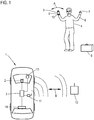
- Fig. 1 shows a basic illustration of a motor vehicle according to the invention and a relevant situation for explaining the method according to the invention.
- a motor vehicle 1 comprising a camera device 2 that records the area in front of the vehicle and has an associated control device 3 that is used to process the image data from the camera device 2.
- a person 4 who makes a quasi-waving hand movement with his right hand 5 by moving the hand multiple times from right to left, as indicated by the double arrow A.
- This hand movement is intended to signal to the motor vehicle 1, which is, for example, a self-driving taxi, with or without a driver, that the person standing at the roadside wants to be taken along. Waving is therefore a gesture that describes a request to stop.
- the person 4 indicates that only one person should be taken along. This is represented by the one raised finger 7.
- the camera device 2 now takes pictures of the vehicle area including the person 4.
- the control device 3 now analyzes the continuously incoming images, on the one hand, for the presence of a person, that is to say that in the present case the person 4 is recorded as such. In addition, the control device 3 analyzes whether the person is appropriate Carries out movement patterns or hand movements that describe a possible gesture indicating a stop request.
- the control device 3 detects the waving of the hand 5 here.
- the detected hand movement is analyzed and compared, for example, with comparison gestures or comparison movements previously stored in a memory.
- the comparison gestures or comparison movements can be learned, for example, but they can also be stored as an existing data record. This data record can comprise a large number of locally or nationally customary hand movements that are used to call a taxi or the like. It is also conceivable to group the hand movements nationally, which means that in the European area a corresponding data set describing the typical European hand movements is stored, while for the USA a specific comparison data set is stored.
- control device 3 is also able to detect from the camera images in which direction the person 4 is looking. For example, an established wish to stop can be verified as such via a gaze detection. This is because the person 4 usually makes eye contact with the motor vehicle 1 when they recognize it and when they want to signal a wish to stop. However, if the person 4 is looking in a completely different direction, but still executes the hand movement, it can be assumed that the hand movement is more of a random movement, or a gesture that applies to someone else or the like. This means that the gaze direction detection can also be used to verify the gesture, provided that the gaze direction detection is possible in individual cases.
- control device 3 If the control device 3 now determines that it is a hand movement, possibly verified via the line of sight detection, which indicates a wish to stop, then, based on this information, the motor vehicle 1 can be controlled specifically via the control device 3 to stop near the person.
- the control device 3 also detects the raised finger 7 of the second hand 6 and deduces from this that only this person wants to ride, i.e. that no other people want to get on. Depending on the number of people recorded, a comparison is made as to whether the specified number of people is sufficient to be accommodated in the vehicle or whether the number of people exceeds the free spaces.
- the motor vehicle 1 stops in the vicinity of the person; in the last-mentioned case, for example, another motor vehicle can be called automatically via a corresponding call signal, which then has the corresponding recording capacity. Informing feedback about this can be given to the person.
- control device 3 can also be designed to detect the size of the luggage. If it turns out that the person 4 only has a small bag with him, for example, which can be easily accommodated in the vehicle, this is registered, but no specific action takes place. If, however, it turns out that the item of luggage 8 is a larger suitcase, the trunk of the motor vehicle, for example, can automatically be opened so that the person 4 can stow the item of luggage 8. If the item of luggage cannot be stowed in the trunk, the person is shown to stow the item of luggage inside the vehicle. Any trunk that is open is automatically closed when the journey begins.
- the person 4 wears an object 9 here in the form of an armband on which a transmitter or transponder device 10 is arranged.
- the control device 3 communicates with a transmitting and receiving device 11, which is able to detect a personal identification signal sent via the transmitting or transponder device 10.
- the personal identification signal can include, for example, the name of the person or special driving requests or the like. Naturally the personal identification signal can also include a personal code so that no real names are transmitted.
- the control device 3 can now, for example, via an internal memory, where corresponding comparison data are stored, record corresponding information on this person, based on the person identification signal.
- the control device 3 transmits the personal identification signal to an external data processing device 12 via the transmitting and receiving device 11, as shown by the double arrow B.
- Corresponding information on the person who is identified via the personal identification signal is stored there. This involves bidirectional communication, that is to say that corresponding information is also transmitted back to the transmitting and receiving device 11 from the data processing device 12, which information is then processed by the control device 3.
- This personal identification signal can be used, for example, to detect whether the person 4 is authorized to use the driving service at all.
- the data processing device 12 can also automatically bill the upcoming trip after the identification has been recorded, if it is clear that the person 4 actually carried out the trip and the like.
- a front display device 13 can signal to the person 4, for example, that the wish to stop has been detected and the vehicle is approaching. If necessary, information about how long it will still take before motor vehicle 1 is with the person can also be output. In the event that a ride is requested can not be operated, information can also be output that the motor vehicle 1 will not approach.
- control device 3 controls a corresponding drive device 14 of the motor vehicle, whereupon it automatically starts moving and drives to the person 4 in order to pick up this.
- Fig. 2 shows a typical situation in which the person 4 is standing behind an intersection, while the motor vehicle 1 is standing in front of the intersection at a traffic light 15 which, for example, shows a red light.
- the person 4 has recognized the motor vehicle 1 as a taxi that they could basically pick up.
- the motor vehicle 1 can of course have a corresponding taxi identification or the like.
- the person 4 now waves, as shown by the double arrow A, with a corresponding hand movement indicating the desire to ride, the motor vehicle 1 detects this and makes the decision that the person 4 will be admitted.
- the motor vehicle 1 starts moving in accordance with the lane 16 shown in dashed lines and drives in the direction of the person 4, who is standing at a parking space 17, for example.
- the automatically that is, autonomously driving motor vehicle 1 then automatically steers into the parking bay 17 and stops next to the person 4 so that the person can get on.
- the motor vehicle 1 starts moving with the person and carries out the transport.
- the transmitting and receiving device 11 can send a signal to the external data processing device 12 that the journey has been completed successfully, whereupon the billing can take place there.
- the external data processing device 12 can send a signal to the external data processing device 12 that the journey has been completed successfully, whereupon the billing can take place there.
- the person 4 wears a bracelet with the transmitting device 10.
- this can also be a key with a chip or an application that is loaded onto the person 4's mobile phone.
- the person can wave their hand 5 and identify themselves either before or afterwards via the application of the mobile phone, quasi on the external data processing device 12 or via the transmitting and receiving device 11 on the control device 3.
- Any payment information can then also be communicated via this application before boarding, or typical travel destinations or other personalization measures such as seat position, activated services, etc. This means that the person does not have to register after boarding or enter a destination, if one can already be recorded here.
- an identification of the potential passenger before stopping, in combination with the gesture makes it possible to offer the potential passenger a preselection from different, differently expensive service categories, for example if the passenger wants a certain vehicle category. If the motor vehicle 1 is the desired vehicle category, the desire to ride along can be fulfilled. If not, a corresponding call signal can be sent via the transmitting and receiving device 11 to another motor vehicle in the vicinity that corresponds to the category. This can also be made known to the person 4 via the display device 13, but possibly also via a corresponding message that is sent to the mobile phone or the like. Any number of communication options are conceivable here.
- the above example is based on a fully autonomous vehicle. However, if it is a question of a vehicle that drives only partially autonomously or also completely autonomously, but necessarily with the driver present, then the method according to the invention and the system can equally be used.
- a display is made via a suitable display device which is directed at the driver and draws his attention to person 4. Because it is possible that the driver overlooks the waving person standing at the roadside, especially when there is a lot of traffic. After signaling the driver, the driver can then move the motor vehicle 1 to the person 4 himself if he has to drive himself, or the motor vehicle 1 also drives largely autonomously in this case, but with additional information from the driver.
Landscapes
- Engineering & Computer Science (AREA)
- Physics & Mathematics (AREA)
- General Physics & Mathematics (AREA)
- Theoretical Computer Science (AREA)
- Human Computer Interaction (AREA)
- General Engineering & Computer Science (AREA)
- Multimedia (AREA)
- Life Sciences & Earth Sciences (AREA)
- Atmospheric Sciences (AREA)
- Health & Medical Sciences (AREA)
- General Health & Medical Sciences (AREA)
- Automation & Control Theory (AREA)
- Mechanical Engineering (AREA)
- Transportation (AREA)
- Ophthalmology & Optometry (AREA)
- Computer Vision & Pattern Recognition (AREA)
- Psychiatry (AREA)
- Social Psychology (AREA)
- Traffic Control Systems (AREA)
- Lock And Its Accessories (AREA)
- User Interface Of Digital Computer (AREA)
Description
- Die Erfindung betrifft ein Verfahren zum Betrieb eines Kraftfahrzeugs umfassend eine das Fahrzeugvorfeld aufnehmende Kameraeinrichtung mit zugeordneter Steuerungseinrichtung zum Auswerten der Bilder.
- Die Entwicklung von immer mehr Aufgaben eigenständig übernehmenden Kraftfahrzeugen nimmt stetig zu. Es sind bereits Fahrzeuge bekannt, die weitgehend selbständig fahren, also selbstfahrende oder pilotierte Kraftfahrzeuge, in denen ein Fahrer lediglich noch anwesend sein muss, um im Notfall die Kontrolle über das Fahrzeug selbst zu übernehmen, oder die auch ohne anwesenden Fahrer völlig selbständig am Verkehr teilnehmen. Solche weitgehend oder vollständig selbstfahrende Kraftfahrzeuge können beispielsweise als eine Art Taxi oder Ähnliches, der Personenbeförderung dienende Fahrzeuge eingesetzt werden.
- Bei bisher üblichen Taxis oder dergleichen, die als konventionelle Kraftfahrzeuge ausgebildet sind und über einen Fahrer verfügen, ist es oft der Fall, dass das Taxi fährt, beispielsweise um zu einem Taxistand zu gelangen. Steht ein Fahrgast am Straßenrand und sieht er das herannahende Taxi, so winkt er üblicherweise, gibt also eine Handgeste, die der Fahrer sieht, woraufhin das Taxi anhält, um die Person aufzunehmen. Auch ein beispielsweise an einer Ampel stehendes Taxi kann auf diese Weise gerufen werden. Bei einem selbstfahrenden Kraftfahrzeug, das wie beschrieben keinen Fahrer an Bord hat, fällt der Mensch zum Erkennen der Rufgeste aus.
- Aber auch bei konventionellen Taxis mit Fahrer besteht mitunter das Problem, dass der Fahrer die am Straßenrand stehende, winkende Person nicht erkennt, mithin also den Anhaltewunsch nicht erfasst und folglich die Person nicht aufnehmen kann.
- Aus
US 2015/0279131 A1 ist bekannt, ein fahrerloses Fahrzeug mit Hilfe einer Sendeeinrichtung, die von einer Person bewegt wird, zu rufen. Die Sendeeinrichtung veranlasst das Aussenden eines entsprechenden Steuersignals an das Kraftfahrzeug, wenn die Sendeeinrichtung von der sie tragenden Person hinreichend stark bewegt wird. Das Fahrzeug kann sodann automatisch zu der Person fahren. - Aus
US 2015/0339928 A1 , ähnlich wie auch ausDE 10 2015 219 463 A1 , ist bekannt, unter Verwendung eines Mobilfunkgeräts wie beispielsweise einem Mobiltelefon, z. B. über eine darauf abgelegte Applikation, ein autonom fahrendes Kraftfahrzeug zu rufen. - Verfahren nach dem Oberbegriff des Anspruchs 1 sind bekannt aus
US 2016/167648 A1 ,US 2010/235034 A1 ,DE 10 2014 111023 A1 , undDE 10 2012 017934 A1 . - Der Erfindung liegt damit das Problem zugrunde, ein demgegenüber verbessertes Verfahren zum Betrieb eines Kraftfahrzeugs anzugeben.
- Zur Lösung dieses Problems ist bei einem Verfahren der eingangs genannten Art erfindungsgemäß vorgesehen, dass die Steuerungseinrichtung die Bilder zum Erfassen wenigstens einer von einer in den Bildern gezeigten Person durchgeführten Handbewegung auswertet, wobei bei Erfassen einer Handbewegung, die eine einen Anhaltewunsch anzeigende Geste beschreibt, entweder das selbstfahrende Kraftfahrzeug zum Anhalten in der Nähe der Person gesteuert wird, oder dem Fahrer des Kraftfahrzeugs ein den Anhaltewunsch signalisierendes Signal gegeben wird.
- Erfindungsgemäß erfolgt über die Kameraeinrichtung eine kontinuierliche Erfassung des Fahrzeugvorfelds. Eine Steuerungseinrichtung wertet kontinuierlich die erfassten Bilder dahingehend aus, ob in den Bildern eine Person gezeigt ist. Wird eine solche Person erfasst, so wird ausgewertet, ob diese Person eine Handbewegung durchführt, also eine Geste gibt, die als einen Anhaltewunsch anzeigende Geste beurteilt werden kann. Es wird also über die Steuerungseinrichtung eine Bildauswertung dahingehend vorgenommen, ob sich in der Fahrzeugumgebung eine Person befindet, die durch Winken oder eine ähnliche definierte Geste signalisiert, dass sie von dem Kraftfahrzeug mitgenommen werden möchte.
- Je nach Ausgestaltung des Kraftfahrzeugs, ob es sich also um ein selbstfahrendes Kraftfahrzeug handelt oder ob es ein Fahrzeug mit einem Fahrer ist, gestaltet sich das weitere Verfahren unterschiedlich. Handelt es sich um ein selbstfahrendes Fahrzeug ohne Fahrer, so wird nach Erfassen der den Anhaltewunsch anzeigende Geste das selbstfahrende Kraftfahrzeug automatisch in die Nähe der Person gesteuert und angehalten, so dass die Person einsteigen kann. Es ist also ein vollautomatischer Betrieb zum Erfassen eines Mitfahrerwunschs und zum Ansteuern des Fahrzeugs zu einer solchen Person, um diese aufzunehmen, vorgesehen.
- Ist das Kraftfahrzeug ein konventionelles Kraftfahrzeug mit Fahrer, so wird dem Fahrer ein entsprechendes, den Anhaltewunsch signalisierendes Signal gegeben, beispielsweise ein optisches Signal durch Blinken oder eine Anzeige in einem Display, ein akustisches Signal, beispielsweise in Form einer Sprachausgabe, oder ein haptisches Signal, gegebenenfalls auch mehrere verschiedene Signale gleichzeitig. Der Fahrer kann daraufhin das Fahrzeug gezielt anhalten, sobald er die winkende Person, die er vorher gegebenenfalls übersehen hat, erfasst hat.
- Das heißt, dass durch die erfindungsgemäße Erfassung des Mitfahrerwunschs und die entsprechende Steuerung des Fahrzeugs respektive die Ausgabe des Signals sichergestellt wird, dass allein durch Erfassen einer Handbewegung respektive einer Geste ein entsprechender Mitfahrerwunsch erfasst wird und das Fahrzeug entsprechend gesteuert werden kann.
- In jedem Fall kann an die Person eine optische oder akustische Rückmeldung, dass der Haltewunsch erkannt wurde, gegeben werden, z. B. durch Einschalten der Beleuchtung oder eines Taxischilds, eine Nachricht an einem Display oder dergleichen.
- Die Handbewegung kann über die Steuerungseinrichtung erfasst werden und beispielsweise mit vorab in einem Gesten- oder Bewegungspool definierten Gesten- oder Vergleichsmustern, die seitens des Kraftfahrzeugs auch zuvor gelernt werden können, verglichen werden. Stellt sich heraus, dass die gegebene Handgeste einem Vergleichsmuster entspricht, kann daraus ein Mitfahrwunsch abgeleitet werden. Stellt sich heraus, dass die Geste nicht zu den Gesten- oder Vergleichsmustern passt, so wird die erfasste Handbewegung nicht als Geste, die einen Anhaltewunsch anzeigt, gewertet und verworfen. Der Musterpool kann z. B. regional unterschiedlich ausgelegt sein, also an z. B. europäischen oder nordamerikanischen Verhaltensweisen angepasst sein.
- Das erfindungsgemäße Verfahren lässt also eine Gestenerfassung, die ein Anhalten signalisiert, zu. Um den konkreten Anhaltewunsch noch weiter zu verifizieren, kann gemäß einer vorteilhaften Weiterbildung der Erfindung die Steuerungseinrichtung ferner die Bilder zum Erfassen der Blickrichtung der Person auswerten, wobei das Kraftfahrzeug zum Anhalten in der Nähe der Person gesteuert wird, wenn die Blickrichtung einer definierten Blickrichtung entspricht. Demgemäß wird folglich nicht nur die Handgeste erfasst und ausgewertet, sondern auch die Blickrichtung. Denn es ist davon auszugehen, dass die Person, die dem Kraftfahrzeug "winkt", auch in dessen Richtung blickt. Die Kamera respektive Steuerungseinrichtung ist nun in der Lage, die Blickrichtung anhand der Kopfposition respektive Augenposition zu erfassen. Ist diese auf das Kraftfahrzeug gerichtet, so entspricht dies beispielsweise einer vorab definierten Blickrichtung, die parallel erfasste Handgeste wird folglich hierüber als eine "Anhaltegeste" verifiziert. Schaut die Person jedoch in eine andere Richtung, so handelt es sich bei der Handbewegung offensichtlich nicht zwingend um eine einen Anhaltewunsch anzeigende Bewegung oder sie ist nicht auf das Kraftfahrzeug bezogen, sondern möglicherweise auf ein anderes, so dass aufgrund der negativen Blickrichtungserfassung die Handbewegung verworfen wird.
- Denkbar ist es dabei ferner, über die Steuerungseinrichtung die erfasste Handbewegung zu klassifizieren, wobei die Handbewegung in Abhängigkeit der Klassifizierung berücksichtigt oder verworfen wird. Hierüber kann die Handbewegung quasi in ein Klassifizierungsraster eingruppiert werden, über das sie hinsichtlich der Eindeutigkeit, dass die Bewegung einen Anhaltewunsch andeutet, näher qualifiziert werden kann. Es kann darüber also eine Festlegung erfolgen, wie sicher oder unsicher der Anhaltewunsch ermittelt wurde. Über diese Klassifizierung können auch Handbewegungen, die eher abfällige Gesten darstellen, ausgeschlossen werden und als nicht zum Anhalten führende Handbewegungen verworfen werden.
- Mitunter rufen oder pfeifen Personen, die ein Kraftfahrzeug, beispielsweise ein Taxi, anhalten möchten, auch. Demgemäß kann beispielsweise über ein kraftfahrzeugseitiges Mikrofon ein etwaiges Ruf- oder Pfeifgeräusch der Person erfasst werden und seitens der Steuerungseinrichtung ausgewertet werden und bei der Steuerung des Fahrbetriebs berücksichtigt werden. Es werden also in diesem Fall nicht nur kamerabasierte Daten ausgewertet, sondern auch akustische Daten, die über das Mikrofon erfasst werden. Zur Auswertung von Rufen ist die Steuerungseinrichtung bezüglich der jeweiligen Landessprache des Landes, in dem das Fahrzeug unterwegs ist, konfiguriert.
- Wenn eine Person einem Kraftfahrzeug, beispielsweise einem Taxi, winkt, kann dies bedeuten, dass nur diese Person zusteigen möchte, dass also nur eine Person das Fahrzeug nutzen möchte. Denkbar ist es aber auch, dass mehrere Personen zusteigen möchten, wenngleich nur eine Person dem Kraftfahrzeug winkt. Um, sofern möglich, über die Anzahl der zusteigenden Personen Kenntnis zu erhalten, kann gemäß einer Weiterbildung der Erfindung über die Steuerungseinrichtung die Anzahl der Finger der die Handbewegung durchführenden Hand oder der zweiten im Bild gezeigten Hand der Person erfasst werden und als Information über die Anzahl der aufzunehmenden Passagiere verarbeitet werden. Denkbar ist es beispielsweise, dass die Person mit der rechten Hand die Handbewegung für die Mitfahrgeste durchführt, während die andere Hand beispielsweise mit drei abgespreizten Fingern gehoben ist. Die Steuerungseinrichtung kann nun die Fingeranzahl erfassen und daraus ableiten, dass insgesamt drei Personen zusteigen möchten.
- Ist hierbei bei Erfassung einer Anzahl an aufzunehmenden Passagieren, die größer ist als die Anzahl der im Kraftfahrzeug vorhandenen freien Plätze, folglich das eigene Kraftfahrzeug nicht geeignet, den Mitfahrwunsch zu erfüllen, so kann automatisch ein Rufsignal an ein weiteres pilotiertes Kraftfahrzeug gesendet werden, welches Rufsignal die Positionskoordinaten für die automatische Anfahrt des weiteren Kraftfahrzeugs umfasst. Das Kraftfahrzeug selbst kann an die rufende Person beispielsweise eine optische Nachricht über ein Display ausgeben, dass es zur Erfüllung des Mitfahrwunschs nicht geeignet ist oder zur Verfügung steht. Hierüber kann auch mitgeteilt werden, dass bereits ein automatisches Rufsignal an ein anderes pilotiertes Kraftfahrzeug ausgesendet wurde, das in Kürze eintrifft, gegebenenfalls unter Angabe einer Information, wie lange es bis zum Eintreffen dauert.
- Mitunter hat die eine Person oder haben die mehreren Personen auch Gepäckstücke dabei. Denkbar ist es nun, dass die Steuerungseinrichtung eine oder mehrere der Person zuzuordnende Gepäckstücke erfasst, wobei gegebenenfalls bei Erfassung wenigstens eines Gepäckstücks automatisch der Kofferraum des Kraftfahrzeugs geöffnet wird. Es erfolgt also auch hier wiederum eine Bildanalyse dahingehend, ob und wenn ja wie viele Gepäckstücke, beispielsweise größere Taschen oder Koffer, im Bild gezeigt sind, die benachbart zu der Person, die die Handbewegung durchführt, stehen. Hieraus kann nun abgeleitet werden, dass beispielsweise zwei zusätzliche Taschen oder Koffer aufzunehmen sind. Beim Erreichen der Anfahrendposition, wenn also das Kraftfahrzeug an seiner Zielposition nahe der winkenden Person angekommen ist, wird sodann, gegebenenfalls abhängig von der Größe des oder der Gepäckstücke, automatisch der Kofferraum des Kraftfahrzeugs geöffnet, so dass die Person die Gepäckstücke verladen kann. Alternativ kann eine Anfrage an die Person ausgegeben werden, ob der Kofferraum geöffnet werden soll. Eine Antwort, z. B. wieder durch eine Geste, kann erfasst und darauf entsprechend reagiert werden.
- Grundsätzlich ist es denkbar, dass quasi ein Kraftfahrzeugrufsystem aufgebaut wird, an dem sich eine Person, die daran teilnehmen möchte, online anmelden kann. Diese Person lässt sich also für diesen Dienst registrieren und erhält beispielsweise einen von ihr zu tragenden Gegenstand, beispielsweise einen Schlüssel mit einem Chip oder eine entsprechende, auf das Mobiltelefon aufspielbare Applikation, der oder die der Identifikation der Person dient. Erfindungsgemäß kann nun über eine kraftfahrzeugseitige Erfassungseinrichtung ein von diesem von der Person getragenen Gegenstand gesendetes Personenidentifikationssignal erfasst werden. Dieses Signal kann beispielsweise kontinuierlich oder bei Betätigung eines Knopfes oder einer Taste oder dergleichen gesendet werden. Die Steuerungseinrichtung, der dieses Personenidentifikationssignal gegeben hat, kann nun über einen beispielsweise internen Datenabgleich feststellen, ob die Person registriert ist, also für den Dienst befugt ist, oder nicht. Falls ja kann angehalten werden, falls nein wird der Anhaltewunsch nicht bedient, was der Person gegebenenfalls auch angezeigt wird.
- Dabei kann in Weiterbildung der Erfindung das erfasste Personenidentifikationssignal auch an eine externe Datenverarbeitungseinrichtung zur Identifikation und/oder zu Abrechnungszwecken und/oder zur Einholung von personenbezogenen Informationen, die von der Datenverarbeitungseinrichtung an die Erfassungseinrichtung übertragen werden, weitergeleitet werden. Demgemäß kann also die Identifikation oder Verifizierung seitens der externen Datenverarbeitungseinrichtung erfolgen, so dass quasi über die externe Datenverarbeitungseinrichtung sichergestellt wird, dass nur registrierte Personen den Dienst nutzen können. Zusätzlich kann hierüber auch eine Abrechnung erfolgen, beispielsweise über ein an der Datenverarbeitungseinrichtung hinterlegtes, der Person zuzuordnendes Konto. Gibt das Kraftfahrzeug über die Steuerungseinrichtung eine entsprechende Information, dass die Person auch tatsächlich zugestiegen ist, kann die Abrechnung erfolgen. Beispielsweise kann ein Pauschalbetrag abgerechnet werden, wenn die Fahrt zu einem Pauschalpreis erfolgt. Alternativ kann nach Beendigung der Fahrt auch ein entsprechendes Fahrtendesignal an die Datenverarbeitungseinrichtung gesandt werden, so dass dann die konkrete Strecke abgerechnet wird.
- Alternativ oder zusätzlich können auch personenbezogene Informationen von der Datenverarbeitungseinrichtung abgefragt werden, also beispielsweise typische Fahrziele der Person, eine von der Person üblicherweise eingestellte Sitzposition oder andere personenbezogene Informationen, die für den Fahrbetrieb erforderlich sind.
- Nicht immer ist es möglich, dass ein erfasster Mitfahrwunsch sofort bedient werden kann, beispielsweise wenn das Kraftfahrzeug an einer Ampel steht und erst auf die Grünphase warten muss. Denkbar ist es nun, dass über eine optische oder akustische Signalausgabeeinrichtung der Person signalisiert wird, ob das Kraftfahrzeug anhält, also dass der Anhaltewunsch erkannt wurde, und/oder wie lange es bis zum Anhalten dauert. Hierüber erhält die Person einerseits Informationen, dass ihr Mitfahrwunsch erfasst wurde, andererseits auch eine Information darüber, wie lange sie sich noch gedulden muss, bis das Kraftfahrzeug ungefähr ankommen wird. Die Signaleinrichtung kann am Fahrzeug selbst sein, z. B. kann hierzu die Frontbeleuchtung eingeschaltet werden oder ein Taxischild oder an einer Anzeigeeinrichtung eine Nachricht ausgegeben werden. Es kann aber auch eine Information an den von der Person getragenen Gegenstand, insbesondere ein Smartphone gesendet und dort das Signal ausgegeben werden.
- Neben dem Verfahren selbst betrifft die Erfindung ferner ein Kraftfahrzeug, ausgebildet zum pilotierten Fahren, umfassend eine das Fahrzeugvorfeld aufnehmende Kameraeinrichtung mit zugeordneter Steuerungseinrichtung zum Auswerten der Bilder, ausgebildet zur Durchführung des beschriebenen Verfahrens.
- Sämtliche Ausführungen betreffend das erfindungsgemäße Verfahren gelten gleichermaßen in Bezug auf das Kraftfahrzeug, das demgemäß ausgebildet ist.
- Weitere Vorteile und Einzelheiten der Erfindung ergeben sich aus dem im folgenden beschriebenen Ausführungsbeispiel sowie anhand der Zeichnung. Dabei zeigen:
- Fig. 1
- eine Prinzipdarstellung des erfindungsgemäßen Kraftfahrzeugs und weitere relevanter Einrichtungskomponenten, und
- Fig. 2
- eine Prinzipdarstellung einer typischen Verkehrs- respektive Rufsituation.
-
Fig. 1 zeigt eine Prinzipdarstellung eines erfindungsgemäßen Kraftfahrzeugs sowie einer relevanten Situation zur Erläuterung des erfindungsgemäßen Verfahrens. - Gezeigt ist ein erfindungsgemäßes Kraftfahrzeug 1, umfassend eine das Fahrzeugvorfeld aufnehmende Kameraeinrichtung 2 mit zugeordneter Steuerungseinrichtung 3, die zum Verarbeiten der Bilddaten der Kameraeinrichtung 2 dient.
- Gezeigt ist des Weiteren eine Person 4, die mit der rechten Hand 5 eine quasi winkende Handbewegung macht, indem die Hand mehrfach von rechts nach links bewegt wird, wie durch den Doppelpfeil A angedeutet ist. Über diese Handbewegung soll dem Kraftfahrzeug 1, bei dem es sich beispielsweise um ein selbstfahrendes Taxi handelt, ohne oder mit Fahrer, signalisiert werden, dass die am Straßenrand stehende Person mitgenommen werden möchte. Das Winken ist folglich eine Geste, die einen Anhaltewunsch beschreibt.
- Mit der linken Hand 6 zeigt die Person 4 an, dass nur eine Person mitgenommen werden soll. Dies wird durch den einen angehobenen Finger 7 dargestellt.
- Die Kameraeinrichtung 2 nimmt nun Bilder vom Fahrzeugvorfeld einschließlich der Person 4 auf. Die Steuerungseinrichtung 3 analysiert nun die laufend eingehenden Bilder einerseits auf das Vorhandensein einer Person, das heißt, dass im vorliegenden Fall die Person 4 als solche erfasst wird. Darüber hinaus analysiert die Steuerungseinrichtung 3, ob die Person entsprechende Bewegungsmuster respektive Handbewegungen durchführt, die eine mögliche einen Anhaltewunsch anzeigende Geste beschreiben. Die Steuerungseinrichtung 3 erfasst hier das Winken der Hand 5. Die erfasste Handbewegung wird analysiert und beispielsweise mit vorab in einem Speicher abgelegten Vergleichsgesten oder Vergleichsbewegungen verglichen. Die Vergleichsgesten oder Vergleichsbewegungen können beispielsweise angelernt sein, sie können aber auch als vorhandener Datensatz abgelegt werden. Dieser Datensatz kann eine Vielzahl von lokal oder national üblichen Handbewegungen, die zum Rufen eines Taxis oder dergleichen verwendet werden, umfassen. Auch ist es denkbar, die Handbewegungen national zu gruppieren, das heißt, dass im europäischen Raum ein entsprechender Datensatz, der die typischen europäischen Handbewegungen beschreibt, abgespeichert wird, während für die USA ein diesbezüglich spezifischer Vergleichsdatensatz abgespeichert wird.
- Des Weiteren ist die Steuerungseinrichtung 3 auch in der Lage, aus den Kamerabildern zu erfassen, in welche Richtung die Person 4 blickt. Beispielsweise kann ein festgestellter Anhaltewunsch als solcher über eine Blickrichtungserfassung verifiziert werden. Denn üblicherweise nimmt die Person 4 mit dem Kraftfahrzeug 1 Blickkontakt auf, wenn sie es erkennt und wenn sie ihm einen Anhaltewunsch signalisieren möchte. Schaut die Person 4 jedoch in eine völlig andere Richtung, führt sie aber dennoch die Handbewegung aus, so kann davon auszugehen sein, dass es sich bei der Handbewegung eher um eine zufällige Bewegung handelt, oder um eine Geste, die jemand anderem gilt oder Ähnliches. Das heißt, dass die Blickrichtungserfassung ebenfalls zur Verifizierung der Geste dienen kann, sofern die Blickrichtungserfassung im Einzelfall möglich ist.
- Stellt die Steuerungseinrichtung 3 nun fest, dass es sich um eine, gegebenenfalls über die Blickrichtungserfassung verifizierte Handbewegung handelt, die einen Anhaltewunsch anzeigt, so kann gestützt auf diese Information das Kraftfahrzeug 1 gezielt über die Steuerungseinrichtung 3 zum Anhalten in der Nähe der Person gesteuert werden.
- Gleichzeitig erfasst die Steuerungseinrichtung 3 aber auch den angehobenen Finger 7 der zweiten Hand 6 und leitet hieraus ab, dass nur diese Person mitfahren möchte, dass also keine weiteren Personen zusteigen wollen. Es wird in Abhängigkeit der erfassten Personenanzahl verglichen, ob die angegebene Personenanzahl ausreichend ist, um im Fahrzeug untergebracht zu werden, oder ob die Personenzahl die freien Plätze übersteigt. Im erstgenannten Fall hält das Kraftfahrzeug 1 in der Nähe der Person an, im zuletzt genannten Fall kann beispielsweise ein anderes Kraftfahrzeug automatisch über ein entsprechendes Rufsignal gerufen werden, das dann über die entsprechende Aufnahmekapazität verfügt. An die Person kann eine hierüber informierende Rückmeldung gegeben werden.
- Des Weiteren besteht die Möglichkeit, über die Steuerungseinrichtung 3 aus den Kamerabildern auch zu erfassen, ob die Person 4 ein Gepäckstück 8 mit sich führt, das zu verstauen ist. Auch kann die Steuerungseinrichtung 3 zur Erfassung der Gepäckgröße ausgelegt sein. Ergibt sich, dass die Person 4 beispielsweise nur eine kleine Tasche mit sich führt, die ohne weiteres im Fahrzeug untergebracht werden kann, so wird dies registriert, eine spezifische Handlung erfolgt jedoch nicht. Ergibt sich jedoch, dass es sich bei dem Gepäckstück 8 um einen größeren Koffer handelt, so kann automatisch beispielsweise der Kofferraum des Kraftfahrzeugs geöffnet werden, damit die Person 4 das Gepäckstück 8 verstauen kann. Ist das Gepäckstück nicht im Kofferraum verstaubar, wird der Person angezeigt, das Gepäckstück im Inneren des Fahrzeugs zu verstauen. Ein gegebenenfalls geöffneter Kofferraum wird automatisch bei Fahrtbeginn geschlossen.
- Wie die
Fig. 1 zeigt, trägt die Person 4 einen Gegenstand 9 hier in Form eines Armbands, an dem eine Sende- oder Transpondereinrichtung 10 angeordnet ist. Die Steuerungseinrichtung 3 kommuniziert mit einer Sende- und Empfangseinrichtung 11, die in der Lage ist, ein über die Sende- oder Transpondereinrichtung 10 gesendetes Personenidentifikationssignal zu erfassen. Das Personenidentifikationssignal kann beispielsweise den Namen der Person oder besondere Fahrwünsche oder dergleichen umfassen. Natürlich kann das Personenidentifikationssignal auch einen Personencode umfassen, so dass keine Klarnamen übertragen werden. - Die Steuerungseinrichtung 3 kann nun beispielsweise über einen internen Speicher, wo entsprechende Vergleichsdaten abgelegt sind, entsprechende Informationen zu dieser Person, gestützt auf das Personenidentifikationssignal erfassen. Alternativ besteht die Möglichkeit, dass die Steuerungseinrichtung 3 über die Sende- und Empfangseinrichtung 11 das Personenidentifikationssignal an eine externe Datenverarbeitungseinrichtung 12 überträgt, wie durch den Doppelpfeil B dargestellt ist. Dort sind entsprechende Informationen zu der Person, die über das Personenidentifikationssignal identifiziert wird, abgelegt. Es handelt sich um eine bidirektionale Kommunikation, das heißt, dass von der Datenverarbeitungseinrichtung 12 auch entsprechende Informationen wieder zurück an die Sende- und Empfangseinrichtung 11 übertragen werden, die sodann seitens der Steuerungseinrichtung 3 verarbeitet werden. Über dieses Personenidentifikationssignal kann beispielsweise erfasst werden, ob die Person 4 berechtigt ist, den Fahrdienst überhaupt in Anspruch zu nehmen. Dies ist beispielsweise dann der Fall, wenn es sich hierbei um ein System handelt, bei dem man sich als Teilnehmer anmelden muss. Nur wenn die Person 4 als ein angemeldeter Teilnehmen identifiziert wird, kann beispielsweise der automatische Anfahrbetrieb überhaupt erfolgen. Zusätzlich oder alternativ könnte die Person auch über ein fahrzeugseitiges Kamerasystem identifiziert werden. Auch kann die Datenverarbeitungseinrichtung 12 nach erfasster Identifikation automatisch die anstehende Fahrt abrechnen, wenn klar ist, dass die Person 4 die Fahrt auch tatsächlich durchgeführt hat und Ähnliches.
- Nach erfolgter Erfassung des Mitfahrwunschs und getroffener Entscheidung, dass der Mitfahrwunsch bearbeitet wird und das Kraftfahrzeug 1 die Person 4 aufnehmen wird, kann beispielsweise über eine frontseitige Anzeigeeinrichtung 13 der Person 4 signalisiert werden, dass der Anhaltewunsch erfasst wurde und sich das Fahrzeug nähert. Gegebenenfalls kann hierüber auch eine Information, wie lange es noch dauern wird, bis das Kraftfahrzeug 1 bei der Person ist, ausgegeben werden. Für den Fall, dass der Mitfahrwunsch nicht bedient werden kann, kann auch eine Information ausgegeben werden, dass sich das Kraftfahrzeug 1 nicht nähern wird.
- Sobald sämtliche Auswertungen erfolgt sind und klar ist, dass das Kraftfahrzeug die Person 4 aufnehmen wird, steuert die Steuerungseinrichtung 3 eine entsprechende Antriebseinrichtung 14 des Kraftfahrzeugs an, woraufhin dieses sich automatisch in Bewegung setzt und zu der Person 4 fährt, um diese aufzunehmen.
-
Fig. 2 zeigt eine typische Situation an, bei der die Person 4 hinter einer Kreuzung steht, während das Kraftfahrzeug 1 vor der Kreuzung an einer Ampel 15 steht, die beispielsweise Rotlicht zeigt. Die Person 4 hat das Kraftfahrzeug 1 als ein Taxi erkannt, das sie also grundsätzlich aufnehmen könnte. Hierzu kann das Kraftfahrzeug 1 natürlich über eine entsprechende Taxi-Kennzeichnung oder dergleichen verfügen. - Die Person 4 winkt nun, wie durch den Doppelpfeil A dargestellt ist, mit einer entsprechenden, den Mitfahrwunsch anzeigenden Handbewegung, das Kraftfahrzeug 1 erfasst diese und trifft die Entscheidung, dass die Person 4 aufgenommen wird.
- Sobald die Ampel 5 auf Grün springt, setzt sich das Kraftfahrzeug 1 entsprechend der gestrichelt gezeigten Spur 16 in Bewegung und fährt in Richtung der Person 4, die beispielsweise an einer Parkbucht 17 steht. Das selbsttätig, also autonom fahrende Kraftfahrzeug 1 steuert sodann automatisch in die Parkbucht 17 und hält benachbart zur Person 4 an, so dass diese zusteigen kann.
- Sobald klar ist, wohin die Fahrt gehen soll, setzt sich das Kraftfahrzeug 1 mit der Person in Bewegung und führt den Transport durch. Am Ziel angekommen kann beispielsweise die Sende- und Empfangseinrichtung 11 ein Signal an die externe Datenverarbeitungseinrichtung 12 geben, dass die Fahrt erfolgreich beendet wurde, woraufhin dortseits die Abrechnung erfolgen kann. Selbstverständlich kann natürlich auch im Kraftfahrzeug 1 selbst gezahlt werden, wenn dort eine entsprechende automatische Zahlvorrichtung vorgesehen ist.
- Im gezeigten Beispiel trägt die Person 4 ein Armband mit der Sendeeinrichtung 10. Alternativ kann es sich hierbei auch um einen Schlüssel mit einem Chip handeln oder um eine Applikation, die auf das Mobiltelefon der Person 4 geladen ist. Im letztgenannten Fall kann die Person mit der Hand 5 winken und sich entweder vorher oder nachher über die Applikation des Mobiltelefons quasi an der externen Datenverarbeitungseinrichtung 12 oder über die Sende- und Empfangseinrichtung 11 an der Steuerungseinrichtung 3 identifizieren. Auch über diese Applikation können sodann etwaige Zahlungsinformationen bereits vor dem Einsteigen kommuniziert werden, oder typische Fahrziele oder weitere Personalisierungsmaßnahmen wie Sitzposition, freigeschaltete Dienstleistungen und Services etc. Dadurch muss sich die Person nicht erst nach dem Einsteigen registrieren oder ein Ziel eingeben, wenn ein solches gegebenenfalls bereits hierüber erfasst werden kann. Zudem ermöglicht eine Identifikation des potentiellen Mitfahrers vor dem Anhalten in Kombination mit der Geste bereits eine Vorauswahl aus verschiedenen, unterschiedlich teuren Servicekategorien dem potentiellen Mitfahrer anzubieten, beispielsweise wenn der Mitfahrer eine bestimmte Fahrzeugkategorie wünscht. Handelt es sich bei dem Kraftfahrzeug 1 um die gewünschte Fahrzeugkategorie, so kann der Mitfahrwunsch erfüllt werden. Falls nicht, kann über die Sende- und Empfangseinrichtung 11 ein entsprechendes Rufsignal an ein anderes, in der Nähe befindliches Kraftfahrzeug geschickt werden, das der Kategorie entspricht. Auch dies kann der Person 4 über die Anzeigeeinrichtung 13 sodann kund getan werden, gegebenenfalls aber auch über eine entsprechende Nachricht, die an das Mobiltelefon geschickt wird oder dergleichen. Hier sind beliebige Kommunikationsmöglichkeiten denkbar.
- Obiges Beispiel geht von einem vollständig autonom fahrenden Fahrzeug aus. Handelt es sich jedoch um ein Fahrzeug, das nur teilautonom oder auch vollständig autonom, jedoch zwingend mit anwesendem Fahrer fährt, so kann das erfindungsgemäße Verfahren respektive das System gleichermaßen angewendet werden. Anders als beim beschriebenen Beispiel erfolgt in diesem Fall nach Erfassen eines Mitfahrwunschs eine Anzeige über eine geeignete Anzeigeeinrichtung, die an den Fahrer gerichtet ist, und ihn auf die Person 4 aufmerksam macht. Denn es kann sein, dass insbesondere bei höherem Verkehrsaufkommen der Fahrer die am Straßenrand stehende, winkende Person übersieht. Nach Signalisierung an den Fahrer kann der Fahrer sodann selbst das Kraftfahrzeug 1 zur Person 4 bewegen, wenn er selber fahren muss, oder das Kraftfahrzeug 1 fährt auch in diesem Fall weitgehend autonom, jedoch mit zusätzlicher Information des Fahrers.
Claims (12)
- Verfahren zum Betrieb eines Kraftfahrzeugs (1) umfassend eine das Fahrzeugvorfeld aufnehmende Kameraeinrichtung (2) mit zugeordneter Steuerungseinrichtung (3) zum Auswerten der Bilder, wobei die Steuerungseinrichtung (3) die Bilder zum Erfassen wenigstens einer von einer in den Bildern gezeigten Person (4) durchgeführten Handbewegung auswertet, dadurch gekennzeichnet, dass die Handbewegung signalisiert, dass die Person (4) von dem Kraftfahrzeug (1) mitgenommen werden möchte, wobei bei Erfassen einer Handbewegung, die eine einen Mitfahrerwunsch anzeigende Geste beschreibt, das selbstfahrende Kraftfahrzeug (1) zum Anhalten in die Nähe der Person gesteuert wird, so dass die Person (4) einsteigen kann.
- Verfahren nach Anspruch 1,
dadurch gekennzeichnet,
dass einem Fahrer des Kraftfahrzeugs (1) ein den Mitfahrerwunsch signalisierendes Signal gegeben wird. - Verfahren nach Anspruch 1 oder 2,
dadurch gekennzeichnet,
dass die Steuerungseinrichtung (3) ferner die Bilder zum Erfassen der Blickrichtung der Person (4) auswertet, wobei das Kraftfahrzeug (1) zum Anhalten in der Nähe der Person (4) gesteuert wird, wenn die Blickrichtung einer definierten Blickrichtung entspricht. - Verfahren nach einem der vorangehenden Ansprüche,
dadurch gekennzeichnet,
dass über die Steuerungseinrichtung (3) die erfasste Handbewegung klassifiziert wird, wobei die Handbewegung in Abhängigkeit der Klassifizierung berücksichtigt oder verworfen wird. - Verfahren nach einem der vorangehenden Ansprüche,
dadurch gekennzeichnet,
dass über ein kraftfahrzeugseitiges Mikrofon Ruf- oder Pfeifgeräusche der Person (4) erfasst und seitens der Steuerungseinrichtung (3) ausgewertet werden und bei der Steuerung des Fahrzeugbetriebs berücksichtigt werden. - Verfahren nach einem der vorangehenden Ansprüche,
dadurch gekennzeichnet,
dass über die Steuerungseinrichtung (3) die Anzahl der Finger (7) der die Handbewegung durchführenden Hand (5) oder der zweiten im Bild gezeigten Hand (6) der Person (4) erfasst und als Information über die Anzahl der aufzunehmenden Passagiere verarbeitet wird. - Verfahren nach Anspruch 6,
dadurch gekennzeichnet,
dass bei Erfassung einer Anzahl an aufzunehmenden Passagieren, die größer ist als die Anzahl der im Kraftfahrzeug (1) vorhandenen freien Plätze, automatisch ein Rufsignal an ein weiteres pilotiertes Kraftfahrzeug gesendet wird, welches Rufsignal die Positionskoordinaten für die automatische Anfahrt des weiteren Kraftfahrzeugs umfasst. - Verfahren nach einem der vorangehenden Ansprüche,
dadurch gekennzeichnet,
dass die Steuerungseinrichtung (6) ein oder mehrere der Person (4) zuzuordnende Gepäckstücke (8) erfasst, wobei gegebenenfalls bei Erfassung wenigstens eines Gepäckstücks (8) automatisch der Kofferraum des Kraftfahrzeugs (1) geöffnet wird. - Verfahren nach einem der vorangehenden Ansprüche,
dadurch gekennzeichnet,
dass über eine kraftfahrzeugseitige Erfassungseinrichtung (11) ein von einem von der Person getragenen Gegenstand gesendetes Personenidentifikationssignal erfasst wird. - Verfahren nach Anspruch 9,
dadurch gekennzeichnet,
dass das erfasste Personenidentifikationssignal an eine externe Datenverarbeitungseinrichtung (12) zur Identifikation und/oder zu Abrechnungszwecken und/oder zur Einholung von personenbezogenen Informationen, die von der Datenverarbeitungseinrichtung an die Erfassungseinrichtung übertragen werden, weitergeleitet wird. - Verfahren nach einem der vorangehenden Ansprüche,
dadurch gekennzeichnet,
dass über eine optische oder akustische Signalausgabeeinrichtung (13) der Person (4) signalisiert wird, ob das Kraftfahrzeug (1) anhält und/oder wie lange es bis zum Anhalten dauert. - Kraftfahrzeug (1) ausgebildet zum pilotierten Fahren, umfassend eine das Fahrzeugvorfeld aufnehmende Kameraeinrichtung (2) mit zugeordneter Steuerungseinrichtung (3) zum Auswerten der Bilder, dadurch gekennzeichnet, dass sie ausgebildet ist zur Durchführung des Verfahrens nach einem der vorangehenden Ansprüche.
Applications Claiming Priority (2)
| Application Number | Priority Date | Filing Date | Title |
|---|---|---|---|
| DE102016217770.2A DE102016217770A1 (de) | 2016-09-16 | 2016-09-16 | Verfahren zum Betrieb eines Kraftfahrzeugs |
| PCT/EP2017/073093 WO2018050729A1 (de) | 2016-09-16 | 2017-09-14 | Verfahren zum betrieb eines kraftfahrzeugs |
Publications (2)
| Publication Number | Publication Date |
|---|---|
| EP3478535A1 EP3478535A1 (de) | 2019-05-08 |
| EP3478535B1 true EP3478535B1 (de) | 2020-11-18 |
Family
ID=60001862
Family Applications (1)
| Application Number | Title | Priority Date | Filing Date |
|---|---|---|---|
| EP17777799.2A Active EP3478535B1 (de) | 2016-09-16 | 2017-09-14 | Verfahren zum betrieb eines kraftfahrzeugs |
Country Status (5)
| Country | Link |
|---|---|
| US (1) | US11535264B2 (de) |
| EP (1) | EP3478535B1 (de) |
| CN (1) | CN109715443B (de) |
| DE (1) | DE102016217770A1 (de) |
| WO (1) | WO2018050729A1 (de) |
Families Citing this family (31)
| Publication number | Priority date | Publication date | Assignee | Title |
|---|---|---|---|---|
| JP6862257B6 (ja) | 2017-04-14 | 2021-06-23 | パナソニック インテレクチュアル プロパティ コーポレーション オブ アメリカPanasonic Intellectual Property Corporation of America | 自動運転車両、自動運転車両の停車方法及びプログラム |
| US10395457B2 (en) * | 2017-08-10 | 2019-08-27 | GM Global Technology Operations LLC | User recognition system and methods for autonomous vehicles |
| US10717412B2 (en) * | 2017-11-13 | 2020-07-21 | Nio Usa, Inc. | System and method for controlling a vehicle using secondary access methods |
| DE102017220116A1 (de) * | 2017-11-13 | 2019-05-16 | Ford Global Technologies, Llc | Verfahren und Vorrichtung um einen schnellen Halt eines autonom fahrenden Fahrzeugs zu ermöglichen |
| US11474519B2 (en) * | 2018-02-26 | 2022-10-18 | Nvidia Corporation | Systems and methods for computer-assisted shuttles, buses, robo-taxis, ride-sharing and on-demand vehicles with situational awareness |
| US20230356728A1 (en) * | 2018-03-26 | 2023-11-09 | Nvidia Corporation | Using gestures to control machines for autonomous systems and applications |
| JP6971187B2 (ja) * | 2018-03-28 | 2021-11-24 | 京セラ株式会社 | 画像処理装置、撮像装置、および移動体 |
| DE102018205050A1 (de) * | 2018-04-04 | 2019-10-10 | Zf Friedrichshafen Ag | Erkennen eines Beförderungswunsches einer Person für eine Beförderung mit einem Personenbeförderungsfahrzeug |
| US11194399B2 (en) * | 2018-06-30 | 2021-12-07 | Chian Chiu Li | Systems and methods for implementing hailing request |
| WO2020022912A1 (en) * | 2018-07-25 | 2020-01-30 | Motorola Solutions, Inc. | Device, system and method for controlling autonomous vehicles using a visual notification device |
| DE102018213600A1 (de) * | 2018-08-13 | 2020-02-13 | Conti Temic Microelectronic Gmbh | - Gestenerkennungsvorrichtung für ein Fahrzeug - |
| DE102018216545B4 (de) * | 2018-09-27 | 2023-02-02 | Audi Ag | Verfahren zum Beladen eines Kraftfahrzeugs mit einer Person |
| DE102018129572A1 (de) * | 2018-11-23 | 2020-05-28 | Bayerische Motoren Werke Aktiengesellschaft | Fahrassistenzsystem für ein automatisiert fahrendes Fahrzeug und Verfahren zum Führen eines automatisiert fahrenden Fahrzeugs |
| DE102018222665B4 (de) | 2018-12-20 | 2022-06-02 | Volkswagen Aktiengesellschaft | Autonom fahrendes Taxi sowie Verfahren zum Betrieb eines autonom fahrenden Taxis |
| WO2020157531A1 (ja) | 2019-01-29 | 2020-08-06 | 日産自動車株式会社 | 乗車許可判断装置及び乗車許可判断方法 |
| US11899448B2 (en) * | 2019-02-21 | 2024-02-13 | GM Global Technology Operations LLC | Autonomous vehicle that is configured to identify a travel characteristic based upon a gesture |
| JP7013407B2 (ja) * | 2019-03-07 | 2022-01-31 | 矢崎総業株式会社 | 車両管理システム |
| DE102019204348A1 (de) * | 2019-03-28 | 2020-10-01 | Volkswagen Aktiengesellschaft | Verfahren zur Zielführung zu einer Zielperson, elektronische Vorrichtung der Zielperson und elektronische Vorrichtung des Abholers sowie Kraftfahrzeug |
| DE102019204780A1 (de) * | 2019-04-03 | 2020-10-08 | Audi Ag | Verfahren zum Betrieb eines Kraftfahrzeugs und Kraftfahrzeug |
| FR3095063B1 (fr) * | 2019-04-10 | 2021-10-22 | Transdev Group | Dispositif électronique et procédé de pilotage d’un véhicule automobile autonome avec gestuelle d’un usager, véhicule automobile autonome et programme d’ordinateur associés |
| FR3095178B1 (fr) * | 2019-04-19 | 2021-05-07 | Transdev Group | Procédé et système de synchronisation de l’arrivée d’un véhicule automobile autonome avec l’arrivée d’un client |
| CN110197150B (zh) * | 2019-05-27 | 2023-06-27 | 大陆投资(中国)有限公司 | 出行服务方法、装置及系统 |
| CN112026686B (zh) * | 2019-06-04 | 2022-04-12 | 上海汽车集团股份有限公司 | 一种自动调节车辆座椅位置的方法及装置 |
| DE102019210758B4 (de) * | 2019-07-19 | 2021-05-12 | Volkswagen Aktiengesellschaft | Bereitstellung und Übertragung von Positionsdaten einer Umgebung eines Kraftfahrzeugs |
| US11676236B2 (en) * | 2019-07-22 | 2023-06-13 | Pony Ai Inc. | Systems and methods for autonomous passenger transport |
| CN111942407B (zh) * | 2020-07-31 | 2022-09-23 | 商汤集团有限公司 | 轨迹预测方法、装置、设备及存储介质 |
| US11738682B2 (en) * | 2020-10-08 | 2023-08-29 | Motional Ad Llc | Communicating vehicle information to pedestrians |
| CN112477886B (zh) * | 2020-12-03 | 2022-03-01 | 南京领行科技股份有限公司 | 无人驾驶车辆的控制方法、装置、电子设备及存储介质 |
| CN112997126B (zh) * | 2020-12-25 | 2022-11-11 | 华为技术有限公司 | 一种车辆召唤方法、智能车以及设备 |
| DE102021214370A1 (de) | 2021-12-15 | 2023-06-15 | Robert Bosch Gesellschaft mit beschränkter Haftung | Verfahren zum Einleiten eines Bremsens eines Personentransportfahrzeugs |
| DE102022000256B3 (de) | 2022-01-25 | 2023-03-23 | Mercedes-Benz Group AG | Verfahren zum Betätigen eines Zugangssystems eines Kraftfahrzeugs, Vorrichtung zur Ausführung des Verfahrens sowie Kraftfahrzeug mit einer solchen Vorrichtung |
Citations (2)
| Publication number | Priority date | Publication date | Assignee | Title |
|---|---|---|---|---|
| DE102012017934A1 (de) * | 2012-09-12 | 2014-03-13 | Daimler Ag | Verfahren zum Durchführen eines automatischen Fahrvorgangs eines Kraftfahrzeugs unter Verwendung einer externen Steuervorrichtung |
| DE102014111023A1 (de) * | 2014-08-04 | 2016-02-04 | Fraunhofer-Gesellschaft zur Förderung der angewandten Forschung e.V. | Verfahren und Vorrichtung zum Steuern eines automatisierten Fahrzeuges |
Family Cites Families (40)
| Publication number | Priority date | Publication date | Assignee | Title |
|---|---|---|---|---|
| US6701143B1 (en) | 1999-12-15 | 2004-03-02 | Vert, Inc. | Apparatus, methods, and computer programs for displaying information on mobile signs |
| US20130267194A1 (en) * | 2002-06-11 | 2013-10-10 | American Vehicular Sciences Llc | Method and System for Notifying a Remote Facility of an Accident Involving a Vehicle |
| KR20060070280A (ko) | 2004-12-20 | 2006-06-23 | 한국전자통신연구원 | 손 제스처 인식을 이용한 사용자 인터페이스 장치 및 그방법 |
| CN101437705B (zh) * | 2006-05-01 | 2013-03-13 | 通用汽车环球科技运作公司 | 可逆地打开和关闭使用活性材料的格栅 |
| JP2007317393A (ja) * | 2006-05-23 | 2007-12-06 | Alps Electric Co Ltd | スイッチ装置及びそれを用いたステアリングスイッチ装置 |
| US20100185341A1 (en) | 2009-01-16 | 2010-07-22 | Gm Global Technology Operations, Inc. | Vehicle mode activation by gesture recognition |
| US7983450B2 (en) * | 2009-03-16 | 2011-07-19 | The Boeing Company | Method, apparatus and computer program product for recognizing a gesture |
| DE102010019764B4 (de) * | 2010-05-07 | 2013-09-19 | Knorr-Bremse Gmbh | Leuchtfähige Fingerschutzvorrichtung für eine Tür eines Fahrzeugs |
| DE102010054625A1 (de) | 2010-12-16 | 2012-06-21 | Daimler Ag | Verfahren und Vorrichtung zum Öffnen und Schließen einer Tür und/oder einer Heckklappe eines Fahrzeugs |
| US20130155237A1 (en) | 2011-12-16 | 2013-06-20 | Microsoft Corporation | Interacting with a mobile device within a vehicle using gestures |
| TW201328340A (zh) | 2011-12-27 | 2013-07-01 | Hon Hai Prec Ind Co Ltd | 乘客攔車提示系統及方法 |
| CN103182983A (zh) * | 2011-12-27 | 2013-07-03 | 鸿富锦精密工业(深圳)有限公司 | 乘客拦车提示系统及方法 |
| CN102622578A (zh) * | 2012-02-06 | 2012-08-01 | 中山大学 | 一种乘客计数系统及方法 |
| IN2015DN01719A (de) * | 2012-09-12 | 2015-05-22 | Toyota Motor Co Ltd | |
| TWM447334U (zh) * | 2012-10-23 | 2013-02-21 | Jing-Jie Huang | 車輛車門警示裝置 |
| CN103809875A (zh) * | 2012-11-14 | 2014-05-21 | 韩鼎楠 | 人机交互方法及界面 |
| CN103971508B (zh) * | 2013-01-31 | 2016-06-01 | 上海飞田通信技术有限公司 | 出租车调度系统、调度服务器及出租车调度终端 |
| US20140300449A1 (en) | 2013-04-05 | 2014-10-09 | Ani Kounavis | Taxi hailing system and mobile application |
| DE102013207223A1 (de) | 2013-04-22 | 2014-10-23 | Ford Global Technologies, Llc | Verfahren zur Erkennung von nicht motorisierten Verkehrsteilnehmern |
| US9904356B2 (en) * | 2013-05-28 | 2018-02-27 | The Boeing Company | Tracking a user to support tasks performed on complex-system components |
| CN103345778A (zh) * | 2013-07-18 | 2013-10-09 | 曹敏娜 | 一种指纹识别动车收费系统 |
| US9760698B2 (en) * | 2013-09-17 | 2017-09-12 | Toyota Motor Sales, U.S.A., Inc. | Integrated wearable article for interactive vehicle control system |
| US9336436B1 (en) * | 2013-09-30 | 2016-05-10 | Google Inc. | Methods and systems for pedestrian avoidance |
| DE102013222048B4 (de) * | 2013-10-30 | 2023-10-05 | Volkswagen Aktiengesellschaft | Verfahren und Vorrichtung zum Aktivieren oder Deaktivieren einer automatischen Fahrfunktion |
| US9988047B2 (en) * | 2013-12-12 | 2018-06-05 | Magna Electronics Inc. | Vehicle control system with traffic driving control |
| DE102013021853B4 (de) * | 2013-12-21 | 2017-06-01 | Audi Ag | Vorrichtung und Verfahren zum Betreiben eines Autopiloten für ein Fahrzeug |
| KR101526426B1 (ko) | 2013-12-31 | 2015-06-05 | 현대자동차 주식회사 | 제스처 인식 장치 및 방법 |
| CN103824184A (zh) * | 2014-02-21 | 2014-05-28 | 杭州九树网络科技有限公司 | 一种自动发送和获取支付信息的系统和方法 |
| US20150279131A1 (en) | 2014-03-28 | 2015-10-01 | Denso International America, Inc. | Key fob and smartdevice gestures for vehicle functions |
| JP6455866B2 (ja) | 2014-03-31 | 2019-01-23 | Necエンベデッドプロダクツ株式会社 | 監視装置、監視方法、及びプログラム |
| CN103911508B (zh) | 2014-04-28 | 2015-11-25 | 北京矿冶研究总院 | 一种从硫化砷加压浸出液中回收铼的方法 |
| CN103927789A (zh) * | 2014-04-29 | 2014-07-16 | 刘兴光 | 一种无人驾驶出租车系统 |
| US9631933B1 (en) * | 2014-05-23 | 2017-04-25 | Google Inc. | Specifying unavailable locations for autonomous vehicles |
| CN104065722A (zh) * | 2014-06-23 | 2014-09-24 | 中国联合网络通信集团有限公司 | 一种出租车合乘叫车方法和服务器 |
| US9377315B2 (en) | 2014-10-22 | 2016-06-28 | Myine Electronics, Inc. | System and method to provide valet instructions for a self-driving vehicle |
| US9855890B2 (en) * | 2014-12-11 | 2018-01-02 | Toyota Motor Engineering & Manufacturing North America, Inc. | Autonomous vehicle interaction with external environment |
| KR101867915B1 (ko) * | 2015-01-16 | 2018-07-19 | 현대자동차주식회사 | 차량에서 웨어러블 기기를 이용한 기능 실행 방법 및 이를 수행하는 차량 |
| DE102015001197B4 (de) * | 2015-01-31 | 2022-07-28 | Audi Ag | Karosseriebauteil und Karosserie für ein Personenkraftfahrzeug |
| US9805605B2 (en) | 2015-08-12 | 2017-10-31 | Madhusoodhan Ramanujam | Using autonomous vehicles in a taxi service |
| CN205330369U (zh) * | 2016-01-11 | 2016-06-22 | 江苏迈隆电子科技有限公司 | 一种智能后备箱自动开启系统 |
-
2016
- 2016-09-16 DE DE102016217770.2A patent/DE102016217770A1/de not_active Withdrawn
-
2017
- 2017-09-14 CN CN201780056642.5A patent/CN109715443B/zh active Active
- 2017-09-14 US US16/332,705 patent/US11535264B2/en active Active
- 2017-09-14 WO PCT/EP2017/073093 patent/WO2018050729A1/de not_active Ceased
- 2017-09-14 EP EP17777799.2A patent/EP3478535B1/de active Active
Patent Citations (2)
| Publication number | Priority date | Publication date | Assignee | Title |
|---|---|---|---|---|
| DE102012017934A1 (de) * | 2012-09-12 | 2014-03-13 | Daimler Ag | Verfahren zum Durchführen eines automatischen Fahrvorgangs eines Kraftfahrzeugs unter Verwendung einer externen Steuervorrichtung |
| DE102014111023A1 (de) * | 2014-08-04 | 2016-02-04 | Fraunhofer-Gesellschaft zur Förderung der angewandten Forschung e.V. | Verfahren und Vorrichtung zum Steuern eines automatisierten Fahrzeuges |
Also Published As
| Publication number | Publication date |
|---|---|
| CN109715443B (zh) | 2022-04-29 |
| US11535264B2 (en) | 2022-12-27 |
| US20190263422A1 (en) | 2019-08-29 |
| CN109715443A (zh) | 2019-05-03 |
| DE102016217770A1 (de) | 2018-03-22 |
| WO2018050729A1 (de) | 2018-03-22 |
| EP3478535A1 (de) | 2019-05-08 |
Similar Documents
| Publication | Publication Date | Title |
|---|---|---|
| WO2018050729A1 (de) | Verfahren zum betrieb eines kraftfahrzeugs | |
| DE102014015075B4 (de) | Verfahren zum Betrieb eines automatisiert geführten, fahrerlosen Kraftfahrzeugs und Überwachungssystem | |
| EP3682367B1 (de) | Gestensteuerung zur kommunikation mit einem autonomen fahrzeug auf basis einer einfachen 2d kamera | |
| DE102018222665B4 (de) | Autonom fahrendes Taxi sowie Verfahren zum Betrieb eines autonom fahrenden Taxis | |
| DE102017216837A1 (de) | Gestik- und Mimiksteuerung für ein Fahrzeug | |
| DE102016211182A1 (de) | Verfahren, Vorrichtung und System zum Durchführen einer automatisierten Fahrt eines Fahrzeugs entlang einer aus einer Karte bereitgestellten Trajektorie | |
| DE102012022563B4 (de) | Verfahren und System zum Erfassen und Verarbeiten von Fahrzeug-relevanten Informationen | |
| DE102015219692A1 (de) | Verfahren zum Bereitstellen von Reiseinformationen und Informationssystem | |
| DE102020211235A1 (de) | Verfahren zur Parkflächenauswahl und Parkflächenauswahlsystem | |
| DE112021008463T5 (de) | Verkehrssicherheit-Unterstützungssystem und Verkehrssicherheit-Unterstützungsverfahren | |
| DE102021001036A1 (de) | Verfahren zur Interaktion eines autonom steuerbaren Fahrzeugs mit wenigstens einer weisungsbefugten Person, Steuersystem zur autonomen Steuerung eines Fahrzeugs und Fahrzeug | |
| EP4021298B1 (de) | Fortbewegungsmittel, vorrichtung und verfahren zum positionieren eines automatisiert fahrfähigen fortbewegungsmittels | |
| EP3573860B1 (de) | Darstellen eines soll-fahrzeugöffnungsvorfelds eines automatisierten fahrzeugs | |
| DE102019125245A1 (de) | System und Verfahren zum bedarfsorientierten Anpassen eines Durchlasses zwischen zwei Fahrzeugen | |
| EP3227637B1 (de) | Verfahren zur erkennung eines zieles einer person und zielerkennungseinheit hierzu | |
| EP3948161B1 (de) | Verfahren zur zielführung zu einer zielperson, elektronische vorrichtung der zielperson und elektronische vorrichtung des abholers sowie kraftfahrzeug | |
| DE102018219668A1 (de) | Steuereinheit zum Steuern einer Fahrzeuginnenraumbeleuchtung | |
| DE102018214506A1 (de) | Verfahren zur Weiterentwicklung eines Fahrerassistenzsystems und Fahrerassistenzsystem für ein Fahrzeug | |
| DE102016013935A1 (de) | Verfahren zum automatisierten Durchführen von Fahrzeugfunktionen | |
| WO2015158706A1 (de) | Verfahren zur überwachung eines gegenwärtigen zustandes eines kraftfahrzeugs | |
| DE102022209561A1 (de) | System zur Erkennung der vorausliegenden Fußgängerintension eines Fußgängers in einem Umfeld, Fahrzeug und Verkehrsüberwachungssystem | |
| DE102018213577B3 (de) | Verfahren zur Durchführung eines automatisierten Grenzübertritts unter Verwendung eines autonomen Fahrzeugs und autonomes Fahrzeug | |
| DE102020207768A1 (de) | Vollautomatisches Parken eines Kraftfahrzeugs | |
| DE102021133398B4 (de) | Steuerung von Verkehrsobjekten | |
| WO2020126216A1 (de) | Autonom fahrendes taxi |
Legal Events
| Date | Code | Title | Description |
|---|---|---|---|
| STAA | Information on the status of an ep patent application or granted ep patent |
Free format text: STATUS: UNKNOWN |
|
| STAA | Information on the status of an ep patent application or granted ep patent |
Free format text: STATUS: THE INTERNATIONAL PUBLICATION HAS BEEN MADE |
|
| PUAI | Public reference made under article 153(3) epc to a published international application that has entered the european phase |
Free format text: ORIGINAL CODE: 0009012 |
|
| STAA | Information on the status of an ep patent application or granted ep patent |
Free format text: STATUS: REQUEST FOR EXAMINATION WAS MADE |
|
| 17P | Request for examination filed |
Effective date: 20190201 |
|
| AK | Designated contracting states |
Kind code of ref document: A1 Designated state(s): AL AT BE BG CH CY CZ DE DK EE ES FI FR GB GR HR HU IE IS IT LI LT LU LV MC MK MT NL NO PL PT RO RS SE SI SK SM TR |
|
| AX | Request for extension of the european patent |
Extension state: BA ME |
|
| DAV | Request for validation of the european patent (deleted) | ||
| DAX | Request for extension of the european patent (deleted) | ||
| STAA | Information on the status of an ep patent application or granted ep patent |
Free format text: STATUS: EXAMINATION IS IN PROGRESS |
|
| 17Q | First examination report despatched |
Effective date: 20200121 |
|
| REG | Reference to a national code |
Ref country code: DE Ref legal event code: R079 Ref document number: 502017008294 Country of ref document: DE Free format text: PREVIOUS MAIN CLASS: B60Q0001500000 Ipc: G06K0009000000 |
|
| GRAP | Despatch of communication of intention to grant a patent |
Free format text: ORIGINAL CODE: EPIDOSNIGR1 |
|
| STAA | Information on the status of an ep patent application or granted ep patent |
Free format text: STATUS: GRANT OF PATENT IS INTENDED |
|
| RIC1 | Information provided on ipc code assigned before grant |
Ipc: G06K 9/00 20060101AFI20200730BHEP Ipc: G06F 3/01 20060101ALI20200730BHEP Ipc: B60W 60/00 20200101ALI20200730BHEP Ipc: G08G 1/0967 20060101ALI20200730BHEP Ipc: G07C 9/00 20200101ALI20200730BHEP |
|
| INTG | Intention to grant announced |
Effective date: 20200824 |
|
| GRAS | Grant fee paid |
Free format text: ORIGINAL CODE: EPIDOSNIGR3 |
|
| GRAA | (expected) grant |
Free format text: ORIGINAL CODE: 0009210 |
|
| STAA | Information on the status of an ep patent application or granted ep patent |
Free format text: STATUS: THE PATENT HAS BEEN GRANTED |
|
| AK | Designated contracting states |
Kind code of ref document: B1 Designated state(s): AL AT BE BG CH CY CZ DE DK EE ES FI FR GB GR HR HU IE IS IT LI LT LU LV MC MK MT NL NO PL PT RO RS SE SI SK SM TR |
|
| REG | Reference to a national code |
Ref country code: GB Ref legal event code: FG4D Free format text: NOT ENGLISH |
|
| REG | Reference to a national code |
Ref country code: CH Ref legal event code: EP |
|
| REG | Reference to a national code |
Ref country code: IE Ref legal event code: FG4D Free format text: LANGUAGE OF EP DOCUMENT: GERMAN |
|
| REG | Reference to a national code |
Ref country code: DE Ref legal event code: R096 Ref document number: 502017008294 Country of ref document: DE |
|
| REG | Reference to a national code |
Ref country code: AT Ref legal event code: REF Ref document number: 1336567 Country of ref document: AT Kind code of ref document: T Effective date: 20201215 |
|
| REG | Reference to a national code |
Ref country code: NL Ref legal event code: MP Effective date: 20201118 |
|
| PG25 | Lapsed in a contracting state [announced via postgrant information from national office to epo] |
Ref country code: RS Free format text: LAPSE BECAUSE OF FAILURE TO SUBMIT A TRANSLATION OF THE DESCRIPTION OR TO PAY THE FEE WITHIN THE PRESCRIBED TIME-LIMIT Effective date: 20201118 Ref country code: PT Free format text: LAPSE BECAUSE OF FAILURE TO SUBMIT A TRANSLATION OF THE DESCRIPTION OR TO PAY THE FEE WITHIN THE PRESCRIBED TIME-LIMIT Effective date: 20210318 Ref country code: FI Free format text: LAPSE BECAUSE OF FAILURE TO SUBMIT A TRANSLATION OF THE DESCRIPTION OR TO PAY THE FEE WITHIN THE PRESCRIBED TIME-LIMIT Effective date: 20201118 Ref country code: NO Free format text: LAPSE BECAUSE OF FAILURE TO SUBMIT A TRANSLATION OF THE DESCRIPTION OR TO PAY THE FEE WITHIN THE PRESCRIBED TIME-LIMIT Effective date: 20210218 Ref country code: GR Free format text: LAPSE BECAUSE OF FAILURE TO SUBMIT A TRANSLATION OF THE DESCRIPTION OR TO PAY THE FEE WITHIN THE PRESCRIBED TIME-LIMIT Effective date: 20210219 |
|
| PG25 | Lapsed in a contracting state [announced via postgrant information from national office to epo] |
Ref country code: BG Free format text: LAPSE BECAUSE OF FAILURE TO SUBMIT A TRANSLATION OF THE DESCRIPTION OR TO PAY THE FEE WITHIN THE PRESCRIBED TIME-LIMIT Effective date: 20210218 Ref country code: IS Free format text: LAPSE BECAUSE OF FAILURE TO SUBMIT A TRANSLATION OF THE DESCRIPTION OR TO PAY THE FEE WITHIN THE PRESCRIBED TIME-LIMIT Effective date: 20210318 Ref country code: PL Free format text: LAPSE BECAUSE OF FAILURE TO SUBMIT A TRANSLATION OF THE DESCRIPTION OR TO PAY THE FEE WITHIN THE PRESCRIBED TIME-LIMIT Effective date: 20201118 Ref country code: LV Free format text: LAPSE BECAUSE OF FAILURE TO SUBMIT A TRANSLATION OF THE DESCRIPTION OR TO PAY THE FEE WITHIN THE PRESCRIBED TIME-LIMIT Effective date: 20201118 Ref country code: SE Free format text: LAPSE BECAUSE OF FAILURE TO SUBMIT A TRANSLATION OF THE DESCRIPTION OR TO PAY THE FEE WITHIN THE PRESCRIBED TIME-LIMIT Effective date: 20201118 |
|
| REG | Reference to a national code |
Ref country code: LT Ref legal event code: MG9D |
|
| PG25 | Lapsed in a contracting state [announced via postgrant information from national office to epo] |
Ref country code: HR Free format text: LAPSE BECAUSE OF FAILURE TO SUBMIT A TRANSLATION OF THE DESCRIPTION OR TO PAY THE FEE WITHIN THE PRESCRIBED TIME-LIMIT Effective date: 20201118 |
|
| PG25 | Lapsed in a contracting state [announced via postgrant information from national office to epo] |
Ref country code: SM Free format text: LAPSE BECAUSE OF FAILURE TO SUBMIT A TRANSLATION OF THE DESCRIPTION OR TO PAY THE FEE WITHIN THE PRESCRIBED TIME-LIMIT Effective date: 20201118 Ref country code: EE Free format text: LAPSE BECAUSE OF FAILURE TO SUBMIT A TRANSLATION OF THE DESCRIPTION OR TO PAY THE FEE WITHIN THE PRESCRIBED TIME-LIMIT Effective date: 20201118 Ref country code: CZ Free format text: LAPSE BECAUSE OF FAILURE TO SUBMIT A TRANSLATION OF THE DESCRIPTION OR TO PAY THE FEE WITHIN THE PRESCRIBED TIME-LIMIT Effective date: 20201118 Ref country code: LT Free format text: LAPSE BECAUSE OF FAILURE TO SUBMIT A TRANSLATION OF THE DESCRIPTION OR TO PAY THE FEE WITHIN THE PRESCRIBED TIME-LIMIT Effective date: 20201118 Ref country code: SK Free format text: LAPSE BECAUSE OF FAILURE TO SUBMIT A TRANSLATION OF THE DESCRIPTION OR TO PAY THE FEE WITHIN THE PRESCRIBED TIME-LIMIT Effective date: 20201118 Ref country code: RO Free format text: LAPSE BECAUSE OF FAILURE TO SUBMIT A TRANSLATION OF THE DESCRIPTION OR TO PAY THE FEE WITHIN THE PRESCRIBED TIME-LIMIT Effective date: 20201118 |
|
| REG | Reference to a national code |
Ref country code: DE Ref legal event code: R097 Ref document number: 502017008294 Country of ref document: DE |
|
| PG25 | Lapsed in a contracting state [announced via postgrant information from national office to epo] |
Ref country code: DK Free format text: LAPSE BECAUSE OF FAILURE TO SUBMIT A TRANSLATION OF THE DESCRIPTION OR TO PAY THE FEE WITHIN THE PRESCRIBED TIME-LIMIT Effective date: 20201118 |
|
| PLBE | No opposition filed within time limit |
Free format text: ORIGINAL CODE: 0009261 |
|
| STAA | Information on the status of an ep patent application or granted ep patent |
Free format text: STATUS: NO OPPOSITION FILED WITHIN TIME LIMIT |
|
| 26N | No opposition filed |
Effective date: 20210819 |
|
| PG25 | Lapsed in a contracting state [announced via postgrant information from national office to epo] |
Ref country code: IT Free format text: LAPSE BECAUSE OF FAILURE TO SUBMIT A TRANSLATION OF THE DESCRIPTION OR TO PAY THE FEE WITHIN THE PRESCRIBED TIME-LIMIT Effective date: 20201118 Ref country code: NL Free format text: LAPSE BECAUSE OF FAILURE TO SUBMIT A TRANSLATION OF THE DESCRIPTION OR TO PAY THE FEE WITHIN THE PRESCRIBED TIME-LIMIT Effective date: 20201118 Ref country code: AL Free format text: LAPSE BECAUSE OF FAILURE TO SUBMIT A TRANSLATION OF THE DESCRIPTION OR TO PAY THE FEE WITHIN THE PRESCRIBED TIME-LIMIT Effective date: 20201118 |
|
| REG | Reference to a national code |
Ref country code: DE Ref legal event code: R079 Ref document number: 502017008294 Country of ref document: DE Free format text: PREVIOUS MAIN CLASS: G06K0009000000 Ipc: G06V0010000000 |
|
| PG25 | Lapsed in a contracting state [announced via postgrant information from national office to epo] |
Ref country code: SI Free format text: LAPSE BECAUSE OF FAILURE TO SUBMIT A TRANSLATION OF THE DESCRIPTION OR TO PAY THE FEE WITHIN THE PRESCRIBED TIME-LIMIT Effective date: 20201118 |
|
| PG25 | Lapsed in a contracting state [announced via postgrant information from national office to epo] |
Ref country code: ES Free format text: LAPSE BECAUSE OF FAILURE TO SUBMIT A TRANSLATION OF THE DESCRIPTION OR TO PAY THE FEE WITHIN THE PRESCRIBED TIME-LIMIT Effective date: 20201118 |
|
| REG | Reference to a national code |
Ref country code: CH Ref legal event code: PL |
|
| REG | Reference to a national code |
Ref country code: BE Ref legal event code: MM Effective date: 20210930 |
|
| PG25 | Lapsed in a contracting state [announced via postgrant information from national office to epo] |
Ref country code: IS Free format text: LAPSE BECAUSE OF FAILURE TO SUBMIT A TRANSLATION OF THE DESCRIPTION OR TO PAY THE FEE WITHIN THE PRESCRIBED TIME-LIMIT Effective date: 20210318 Ref country code: MC Free format text: LAPSE BECAUSE OF FAILURE TO SUBMIT A TRANSLATION OF THE DESCRIPTION OR TO PAY THE FEE WITHIN THE PRESCRIBED TIME-LIMIT Effective date: 20201118 |
|
| PG25 | Lapsed in a contracting state [announced via postgrant information from national office to epo] |
Ref country code: LU Free format text: LAPSE BECAUSE OF NON-PAYMENT OF DUE FEES Effective date: 20210914 Ref country code: IE Free format text: LAPSE BECAUSE OF NON-PAYMENT OF DUE FEES Effective date: 20210914 Ref country code: BE Free format text: LAPSE BECAUSE OF NON-PAYMENT OF DUE FEES Effective date: 20210930 |
|
| PG25 | Lapsed in a contracting state [announced via postgrant information from national office to epo] |
Ref country code: LI Free format text: LAPSE BECAUSE OF NON-PAYMENT OF DUE FEES Effective date: 20210930 Ref country code: CH Free format text: LAPSE BECAUSE OF NON-PAYMENT OF DUE FEES Effective date: 20210930 |
|
| PG25 | Lapsed in a contracting state [announced via postgrant information from national office to epo] |
Ref country code: CY Free format text: LAPSE BECAUSE OF FAILURE TO SUBMIT A TRANSLATION OF THE DESCRIPTION OR TO PAY THE FEE WITHIN THE PRESCRIBED TIME-LIMIT Effective date: 20201118 |
|
| P01 | Opt-out of the competence of the unified patent court (upc) registered |
Effective date: 20230530 |
|
| PG25 | Lapsed in a contracting state [announced via postgrant information from national office to epo] |
Ref country code: HU Free format text: LAPSE BECAUSE OF FAILURE TO SUBMIT A TRANSLATION OF THE DESCRIPTION OR TO PAY THE FEE WITHIN THE PRESCRIBED TIME-LIMIT; INVALID AB INITIO Effective date: 20170914 |
|
| REG | Reference to a national code |
Ref country code: AT Ref legal event code: MM01 Ref document number: 1336567 Country of ref document: AT Kind code of ref document: T Effective date: 20220914 |
|
| PG25 | Lapsed in a contracting state [announced via postgrant information from national office to epo] |
Ref country code: AT Free format text: LAPSE BECAUSE OF NON-PAYMENT OF DUE FEES Effective date: 20220914 |
|
| PG25 | Lapsed in a contracting state [announced via postgrant information from national office to epo] |
Ref country code: MK Free format text: LAPSE BECAUSE OF FAILURE TO SUBMIT A TRANSLATION OF THE DESCRIPTION OR TO PAY THE FEE WITHIN THE PRESCRIBED TIME-LIMIT Effective date: 20201118 |
|
| PG25 | Lapsed in a contracting state [announced via postgrant information from national office to epo] |
Ref country code: MT Free format text: LAPSE BECAUSE OF FAILURE TO SUBMIT A TRANSLATION OF THE DESCRIPTION OR TO PAY THE FEE WITHIN THE PRESCRIBED TIME-LIMIT Effective date: 20201118 |
|
| PGFP | Annual fee paid to national office [announced via postgrant information from national office to epo] |
Ref country code: DE Payment date: 20250930 Year of fee payment: 9 |
|
| PGFP | Annual fee paid to national office [announced via postgrant information from national office to epo] |
Ref country code: GB Payment date: 20250923 Year of fee payment: 9 |
|
| PGFP | Annual fee paid to national office [announced via postgrant information from national office to epo] |
Ref country code: FR Payment date: 20250922 Year of fee payment: 9 |
|
| PG25 | Lapsed in a contracting state [announced via postgrant information from national office to epo] |
Ref country code: TR Free format text: LAPSE BECAUSE OF FAILURE TO SUBMIT A TRANSLATION OF THE DESCRIPTION OR TO PAY THE FEE WITHIN THE PRESCRIBED TIME-LIMIT Effective date: 20201118 |