EP3461261B1 - Single chain variable fragment cd3 binding proteins - Google Patents
Single chain variable fragment cd3 binding proteins Download PDFInfo
- Publication number
- EP3461261B1 EP3461261B1 EP17800304.2A EP17800304A EP3461261B1 EP 3461261 B1 EP3461261 B1 EP 3461261B1 EP 17800304 A EP17800304 A EP 17800304A EP 3461261 B1 EP3461261 B1 EP 3461261B1
- Authority
- EP
- European Patent Office
- Prior art keywords
- chain variable
- seq
- single chain
- variable fragment
- binding protein
- Prior art date
- Legal status (The legal status is an assumption and is not a legal conclusion. Google has not performed a legal analysis and makes no representation as to the accuracy of the status listed.)
- Active
Links
Images


Classifications
-
- C—CHEMISTRY; METALLURGY
- C07—ORGANIC CHEMISTRY
- C07K—PEPTIDES
- C07K16/00—Immunoglobulins [IG], e.g. monoclonal or polyclonal antibodies
- C07K16/18—Immunoglobulins [IG], e.g. monoclonal or polyclonal antibodies against material from animals or humans
- C07K16/28—Immunoglobulins [IG], e.g. monoclonal or polyclonal antibodies against material from animals or humans against receptors, cell surface antigens or cell surface determinants
- C07K16/2803—Immunoglobulins [IG], e.g. monoclonal or polyclonal antibodies against material from animals or humans against receptors, cell surface antigens or cell surface determinants against the immunoglobulin superfamily
- C07K16/2809—Immunoglobulins [IG], e.g. monoclonal or polyclonal antibodies against material from animals or humans against receptors, cell surface antigens or cell surface determinants against the immunoglobulin superfamily against the T-cell receptor (TcR)-CD3 complex
-
- A—HUMAN NECESSITIES
- A61—MEDICAL OR VETERINARY SCIENCE; HYGIENE
- A61P—SPECIFIC THERAPEUTIC ACTIVITY OF CHEMICAL COMPOUNDS OR MEDICINAL PREPARATIONS
- A61P29/00—Non-central analgesic, antipyretic or antiinflammatory agents, e.g. antirheumatic agents; Non-steroidal antiinflammatory drugs [NSAID]
-
- A—HUMAN NECESSITIES
- A61—MEDICAL OR VETERINARY SCIENCE; HYGIENE
- A61P—SPECIFIC THERAPEUTIC ACTIVITY OF CHEMICAL COMPOUNDS OR MEDICINAL PREPARATIONS
- A61P31/00—Antiinfectives, i.e. antibiotics, antiseptics, chemotherapeutics
-
- A—HUMAN NECESSITIES
- A61—MEDICAL OR VETERINARY SCIENCE; HYGIENE
- A61P—SPECIFIC THERAPEUTIC ACTIVITY OF CHEMICAL COMPOUNDS OR MEDICINAL PREPARATIONS
- A61P31/00—Antiinfectives, i.e. antibiotics, antiseptics, chemotherapeutics
- A61P31/12—Antivirals
-
- A—HUMAN NECESSITIES
- A61—MEDICAL OR VETERINARY SCIENCE; HYGIENE
- A61P—SPECIFIC THERAPEUTIC ACTIVITY OF CHEMICAL COMPOUNDS OR MEDICINAL PREPARATIONS
- A61P33/00—Antiparasitic agents
-
- A—HUMAN NECESSITIES
- A61—MEDICAL OR VETERINARY SCIENCE; HYGIENE
- A61P—SPECIFIC THERAPEUTIC ACTIVITY OF CHEMICAL COMPOUNDS OR MEDICINAL PREPARATIONS
- A61P35/00—Antineoplastic agents
-
- A—HUMAN NECESSITIES
- A61—MEDICAL OR VETERINARY SCIENCE; HYGIENE
- A61P—SPECIFIC THERAPEUTIC ACTIVITY OF CHEMICAL COMPOUNDS OR MEDICINAL PREPARATIONS
- A61P37/00—Drugs for immunological or allergic disorders
- A61P37/02—Immunomodulators
-
- A—HUMAN NECESSITIES
- A61—MEDICAL OR VETERINARY SCIENCE; HYGIENE
- A61P—SPECIFIC THERAPEUTIC ACTIVITY OF CHEMICAL COMPOUNDS OR MEDICINAL PREPARATIONS
- A61P37/00—Drugs for immunological or allergic disorders
- A61P37/02—Immunomodulators
- A61P37/06—Immunosuppressants, e.g. drugs for graft rejection
-
- A—HUMAN NECESSITIES
- A61—MEDICAL OR VETERINARY SCIENCE; HYGIENE
- A61P—SPECIFIC THERAPEUTIC ACTIVITY OF CHEMICAL COMPOUNDS OR MEDICINAL PREPARATIONS
- A61P43/00—Drugs for specific purposes, not provided for in groups A61P1/00-A61P41/00
-
- C—CHEMISTRY; METALLURGY
- C07—ORGANIC CHEMISTRY
- C07K—PEPTIDES
- C07K16/00—Immunoglobulins [IG], e.g. monoclonal or polyclonal antibodies
- C07K16/18—Immunoglobulins [IG], e.g. monoclonal or polyclonal antibodies against material from animals or humans
- C07K16/28—Immunoglobulins [IG], e.g. monoclonal or polyclonal antibodies against material from animals or humans against receptors, cell surface antigens or cell surface determinants
- C07K16/2887—Immunoglobulins [IG], e.g. monoclonal or polyclonal antibodies against material from animals or humans against receptors, cell surface antigens or cell surface determinants against CD20
-
- C—CHEMISTRY; METALLURGY
- C07—ORGANIC CHEMISTRY
- C07K—PEPTIDES
- C07K2317/00—Immunoglobulins specific features
- C07K2317/30—Immunoglobulins specific features characterized by aspects of specificity or valency
- C07K2317/31—Immunoglobulins specific features characterized by aspects of specificity or valency multispecific
-
- C—CHEMISTRY; METALLURGY
- C07—ORGANIC CHEMISTRY
- C07K—PEPTIDES
- C07K2317/00—Immunoglobulins specific features
- C07K2317/50—Immunoglobulins specific features characterized by immunoglobulin fragments
- C07K2317/56—Immunoglobulins specific features characterized by immunoglobulin fragments variable (Fv) region, i.e. VH and/or VL
-
- C—CHEMISTRY; METALLURGY
- C07—ORGANIC CHEMISTRY
- C07K—PEPTIDES
- C07K2317/00—Immunoglobulins specific features
- C07K2317/50—Immunoglobulins specific features characterized by immunoglobulin fragments
- C07K2317/56—Immunoglobulins specific features characterized by immunoglobulin fragments variable (Fv) region, i.e. VH and/or VL
- C07K2317/565—Complementarity determining region [CDR]
-
- C—CHEMISTRY; METALLURGY
- C07—ORGANIC CHEMISTRY
- C07K—PEPTIDES
- C07K2317/00—Immunoglobulins specific features
- C07K2317/60—Immunoglobulins specific features characterized by non-natural combinations of immunoglobulin fragments
- C07K2317/62—Immunoglobulins specific features characterized by non-natural combinations of immunoglobulin fragments comprising only variable region components
- C07K2317/622—Single chain antibody (scFv)
-
- C—CHEMISTRY; METALLURGY
- C07—ORGANIC CHEMISTRY
- C07K—PEPTIDES
- C07K2317/00—Immunoglobulins specific features
- C07K2317/70—Immunoglobulins specific features characterized by effect upon binding to a cell or to an antigen
- C07K2317/73—Inducing cell death, e.g. apoptosis, necrosis or inhibition of cell proliferation
-
- C—CHEMISTRY; METALLURGY
- C07—ORGANIC CHEMISTRY
- C07K—PEPTIDES
- C07K2317/00—Immunoglobulins specific features
- C07K2317/90—Immunoglobulins specific features characterized by (pharmaco)kinetic aspects or by stability of the immunoglobulin
- C07K2317/92—Affinity (KD), association rate (Ka), dissociation rate (Kd) or EC50 value
-
- C—CHEMISTRY; METALLURGY
- C07—ORGANIC CHEMISTRY
- C07K—PEPTIDES
- C07K2317/00—Immunoglobulins specific features
- C07K2317/90—Immunoglobulins specific features characterized by (pharmaco)kinetic aspects or by stability of the immunoglobulin
- C07K2317/94—Stability, e.g. half-life, pH, temperature or enzyme-resistance
Definitions
- CD3 is a homodimeric or heterodimeric antigen expressed on T cells in association with the T cell receptor complex (TCR) and is required for T cell activation.
- Anti-CD3 antibodies have therapeutic purposes involving the activation of T cells.
- Present disclosure provides single chain variable fragment CD3 binding proteins, including multispecific antibodies containing the same.
- WO2010/037837 describes bispecific single chain antibodies with a binding domain for CD3.
- the invention relates to single chain variable fragment CD3 binding proteins comprising the amino acid sequence set forth in SEQ ID NO: 8 or SEQ ID NO: 9, polynucleotides encoding said proteins, vectors comprsing said polynucleotides, host cells transformed with said vectors.
- Other proteins, polynucleotides, vectors, or host cells disclosed herein, including those according to SEQ ID NOs: 1 to 7 and 10 to 105, are not according to the claims but are useful for understanding the claimed invention.
- references to methods of treatment in the subsequent paragraphs of this description are to be interpreted as references to the substances, pharmaceutical compositions and medicaments of the present invention for use in a method for treatment of the human (or animal) body by therapy (or for diagnosis).
- a single chain variable fragment CD3 binding protein comprising a variable heavy chain region (VH), a variable light chain region (VL), and a linker, wherein VH comprises complementarity determining regions HC CDR1, HC CDR2, and HC CDR3, wherein VL comprises complementarity determining regions LC CDR1, LC CDR2, and LC CDR3, wherein (a) the amino acid sequence of HC CDR1 is as set forth in GX 1 X 2 X 3 NX 4 YX 5 X 6 N (SEQ ID NO.
- X 1 is phenylalanine or asparagine
- X 2 is threonine, glutamic acid or methionine
- X 3 is phenylalanine or tyrosine
- X 4 is lysine, threonine, glycine, asparagine or glutamic acid
- X 5 is alanine or proline
- X 6 is methionine, leucine, valine or isoleucine
- the amino acid sequence of HC CDR2 is as set forth in RIRSX 7 X 8 NX 9 YX 10 TX 11 YX 12 DX 13 VK (SEQ ID NO.
- X 7 is lysine or glycine
- X 8 is tyrosine or serine
- X 9 is asparagine or lysine
- X 10 is alanine or glutamic acid
- X 11 is tyrosine or glutamic acid
- X 12 is alanine or lysine
- X 13 is serine, glutamic acid, aspartic acid, alanine, or glutamine
- the amino acid sequence of HC CDR3 is as set forth in HX 14 NFX 15 X 16 SX 17 ISYWAX 18 (SEQ ID NO.
- X 19 is glycine or alanine
- X 20 is serine or glutamic acid
- X 21 is serine or tyrosine
- X 22 is threonine, phenylalanine, lysine, or serine
- X 23 is alanine or tyrosine
- X 24 is threonine or valine
- X 25 is serine, aspartic acid, lysine, histidine or valine
- X 26 asparagine or tyrosine
- the amino acid sequence of LC CDR2 is as set forth in GX 27 X 28 X 29 X 30 X 31 P (SEQ ID NO.
- X 27 is threonine or isoleucine
- X 28 is lysine, glutamic acid, tyrosine, asparagine or serine
- X 29 is phenylalanine, leucine, glutamic acid, isoleucine, methionine, or valine
- X 30 is leucine, asparagine, or glycine
- X 31 is alanine or valine
- X 32 is valine, threonine or alanine
- X 33 is serine, aspartic acid or alanine
- X 34 is arginine or serine
- the single chain variable fragment CD3 binding protein comprises the following formula: f1-r1-f2-r2-f3-r3-f4-r4-f5-r5-f6-r6-f7, wherein, r1 is SEQ ID NO: 2; r2 is SEQ ID NO: 3; r3 is SEQ ID NO: 4; r4 is SEQ ID NO:5; r5 is SEQ ID NO:6; and r6 is SEQ ID NO:7; and wherein f 1 , f 2 , f 3 , f 4 , and f 5 are framework residues selected so that said protein is at least eighty percent identical to the amino acid sequence set forth in SEQ ID NO: 22.
- the single chain variable fragment CD3 binding protein comprises an amino acid sequence wherein r1 comprises SEQ ID NO. 29, SEQ ID NO. 30, SEQ ID NO. 31, SEQ ID NO. 32, SEQ ID NO. 33, SEQ ID NO. 34, SEQ ID NO. 35, SEQ ID NO. 36, SEQ ID NO. 37, SEQ ID NO.38, SEQ ID NO. 39, or SEQ ID NO. 40.
- the single chain variable fragment CD3 binding protein comprises an amino acid sequence wherein r2 comprises SEQ ID NO. 41, SEQ ID NO. 42, SEQ ID NO. 43, SEQ ID NO. 44, SEQ ID NO. 45, SEQ ID NO. 46, SEQ ID NO. 47, SEQ ID NO.
- the single chain variable fragment CD3 binding protein comprises an amino acid sequence wherein r6 comprises SEQ ID NO. 87, SEQ ID NO. 88, SEQ ID NO. 89, SEQ ID NO. 90, SEQ ID NO. 91, SEQ ID NO. 92, or SEQ ID NO. 93.
- the single chain variable fragment CD3 binding protein comprises an amino acid sequence wherein r1 is SEQ ID NO. 39, r2 is SEQ ID NO. 49, r3 is SEQ ID NO. 51, r4 is SEQ ID NO. 61, r5 is SEQ ID NO. 86, and r6 is SEQ ID NO. 87.
- the single chain variable fragment CD3 binding protein comprises an amino acid sequence wherein r1 is SEQ ID NO. 30, r2 is SEQ ID NO. 43, r4 is SEQ ID NO. 64, and r6 is SEQ ID NO. 89. In some embodiments, the single chain variable fragment CD3 binding protein comprises an amino acid sequence wherein r3 is SEQ ID NO. 55, r4 is SEQ ID NO. 67, r5 is SEQ ID NO. 77, and r6 is SEQ ID NO. 92. In some embodiments, the single chain variable fragment CD3 binding protein comprises an amino acid sequence wherein r1 is SEQ ID NO. 31, r2 is SEQ ID NO. 42, r3 is SEQ ID NO.
- the single chain variable fragment CD3 binding protein comprises an amino acid sequence wherein r1 is SEQ ID NO. 29, r2 is SEQ ID NO. 44, r3 is SEQ ID NO. 52, r4 is SEQ ID NO. 73, and r5 is SEQ ID NO. 76.
- the single chain variable fragment CD3 binding protein comprises an amino acid sequence wherein r1 is SEQ ID NO. 33, r2 is SEQ ID NO. 48, r3 is SEQ ID NO. 57, r4 is SEQ ID NO. 69, and r5 is SEQ ID NO. 74.
- the single chain variable fragment CD3 binding protein comprises an amino acid sequence wherein r1 is SEQ ID NO. 38, r4 is SEQ ID NO. 62, and r5 is SEQ ID NO. 81. In some embodiments, the single chain variable fragment CD3 binding protein comprises an amino acid sequence wherein r1 is SEQ ID NO. 37, r3 is SEQ ID NO. 53, r4 is SEQ ID NO. 70, r5 is SEQ ID NO. 82, and r6 is SEQ ID NO. 88. In some embodiments, the single chain variable fragment CD3 binding protein comprises an amino acid sequence wherein r1 is SEQ ID NO. 34, r2 is SEQ ID NO. 47, r3 is SEQ ID NO.
- the single chain variable fragment CD3 binding protein comprises an amino acid sequence wherein r1 is SEQ ID NO. 29, r3 is SEQ ID NO. 54, r4 is SEQ ID NO. 71 and r5 is SEQ ID NO. 83. In some embodiments, the single chain variable fragment CD3 binding protein comprises an amino acid sequence wherein r1 is SEQ ID NO. 33, r2 is SEQ ID NO. 41, r4 is SEQ ID NO. 63, r5 is SEQ ID NO. 84 and r6 is SEQ ID NO. 90.
- the single chain variable fragment CD3 binding protein comprises an amino acid sequence wherein r1 is SEQ ID NO. 30, r2 is SEQ ID NO. 44, r3 is SEQ ID NO. 58, r4 is SEQ ID NO. 66 and r5 is SEQ ID NO. 85.
- the single chain variable fragment CD3 binding protein comprises an amino acid sequence wherein r1 is SEQ ID NO. 40, r2 is SEQ ID NO. 45, r3 is SEQ ID NO. 56, r5 is SEQ ID NO. 78 and r6 is SEQ ID NO. 93.
- the single chain variable fragment CD3 binding protein comprises an amino acid sequence wherein r1 is SEQ ID NO. 36, r2 is SEQ ID NO. 50, r3 is SEQ ID NO. 59, r4 is SEQ ID NO. 72 and r5 is SEQ ID NO. 75.
- the single chain variable fragment CD3 binding protein has an amino acid sequence selected from SEQ ID NO. 8, SEQ ID NO. 9, SEQ ID NO. 10, SEQ ID NO. 11, SEQ ID NO. 12, SEQ ID NO. 13, SEQ ID NO. 14, SEQ ID NO. 15, SEQ ID NO. 16, SEQ ID NO. 17, SEQ ID NO. 18, SEQ ID NO. 19, SEQ ID NO. 20, SEQ ID NO. 21, SEQ ID NO. 94, and SEQ ID NO. 95.
- the single chain variable fragment CD3 binding protein has the amino acid sequence set forth as SEQ ID NO. 8.
- the single chain variable fragment CD3 binding protein has the amino acid sequence set forth as SEQ ID NO. 9.
- the single chain variable fragment CD3 binding protein has the amino acid sequence set forth as SEQ ID NO. 14. In some embodiments, the single chain variable fragment CD3 binding protein has the amino acid sequence set forth as SEQ ID NO. 19. In some embodiments, the single chain variable fragment CD3 binding protein has the amino acid sequence set forth as SEQ ID NO. 94. In some embodiments, the single chain variable fragment CD3 binding protein has the amino acid sequence set forth as SEQ ID NO. 10. In some embodiments, the single chain variable fragment CD3 binding protein has the amino acid sequence set forth as SEQ ID NO. 11. In some embodiments, the single chain variable fragment CD3 binding protein has the amino acid sequence set forth as SEQ ID NO. 12.
- the single chain variable fragment CD3 binding protein has the amino acid sequence set forth as SEQ ID NO. 13. In some embodiments, the single chain variable fragment CD3 binding protein has the amino acid sequence set forth as SEQ ID NO. 15. In some embodiments, the single chain variable fragment CD3 binding protein has the amino acid sequence set forth as SEQ ID NO. 16. In some embodiments, the single chain variable fragment CD3 binding protein has the amino acid sequence set forth as SEQ ID NO. 17. In some embodiments, the single chain variable fragment CD3 binding protein has the amino acid sequence set forth as SEQ ID NO. 18. In some embodiments, the single chain variable fragment CD3 binding protein has the amino acid sequence set forth as SEQ ID NO. 20.
- the single chain variable fragment CD3 binding protein has the amino acid sequence set forth as SEQ ID NO. 21. In some embodiments, the single chain variable fragment CD3 binding protein has the amino acid sequence set forth as SEQ ID NO. 25. In some embodiments, the single chain variable fragment CD3 binding protein comprises an amino acid sequence comprising a linker, wherein said linker comprises the amino acid sequence as set forth in GGGGSGGGGSGGGGS (SEQ ID NO: 1). In some embodiments, the single chain variable fragment CD3 binding protein binds to CD3 selected from human CD3 and cynomolgus CD3. In some embodiments, the single chain variable fragment CD3 binding protein binds to human CD3 and cynomolgus CD3 with comparable binding affinity (Kd).
- the single chain variable fragment CD3 binding protein binds to human CD3 with a human Kd (hKd) between about 1 nM and about 200 nM and to cynomolgus CD3 with a cynomolgus Kd (cKd) between about 1 nM and about 300 nM.
- hKd human Kd
- cKd cynomolgus Kd
- the hKd and the cKd are between about 3 nM to about 5 nM, about 6 nM to about 10 nM, about 11 nM to about 20 nM, about 25 nM to about 40 nM,about 40 nM to about 60 nM, about 70 nM to about 90 nM, about 100 nM to about 120 nM, about 125 nM to about 140 nM, about 145 nM to about 160 nM, about 170 nM and to about 200 nM, about 210 nM to about 250 nM, about 260 nM to about 300 nM.
- the single chain variable fragment CD3 binding protein binds to human CD3 with a human Kd (hKd), binds to cynomolgus CD3 with a cynomolgus Kd (cKd), and the hKd and the cKd are about the same as the binding affinity towards CD3 of a protein which has the sequence as set forth in wt anti-CD3 (SEQ ID NO. 22).
- the single chain variable fragment CD3 binding protein binds to human CD3 with a human Kd (hKd), binds to cynomolgus CD3 with a cynomolgus Kd (cKd), and the hKd and the cKd are between about 1.5-fold to about 2-fold higher than the binding affinity towards CD3 of a protein which has the sequence as set forth in wt anti-CD3 (SEQ ID NO. 22).
- the single chain variable fragment CD3 binding protein binds to human CD3 with a human Kd (hKd), binds to cynomolgus CD3 with a cynomolgus Kd (cKd), and the hKd and the cKd are between about 3-fold to about 5-fold higher than the binding affinity towards CD3 of a protein which has the sequence as set forth in wt anti-CD3 (SEQ ID NO.22).
- the single chain variable fragment CD3 binding protein binds to human CD3 with a human Kd (hKd), binds to cynomolgus CD3 with a cynomolgus Kd (cKd), and the hKd and the cKd are between about 6-fold to about 15-fold higher than the binding affinity towards CD3 of a protein which has the sequence as set forth in wt anti-CD3 (SEQ ID NO.22).
- the single chain variable fragment CD3 binding protein has the amino acid sequence set forth as SEQ ID NO. 8, and the hKd and cKd are about the same as the binding affinity towards CD3 of a protein which has the sequence as set forth in wt anti-CD3 (SEQ ID NO. 22). In some embodiments, the single chain variable fragment CD3 binding protein has the amino acid sequence set forth as SEQ ID NO. 8, and the hKd and the cKd are between about 3 nM and about 5 nM. In some embodiments, the single chain variable fragment CD3 binding protein has the amino acid sequence set forth as SEQ ID NO.
- the single chain variable fragment CD3 binding protein has the amino acid sequence set forth as SEQ ID NO. 9, and the hKd and the cKd are between about 3 nM and about 5 nM. In some embodiments, the single chain variable fragment CD3 binding protein has the amino acid sequence set forth as SEQ ID NO. 10, and the hKd and cKd are about the same as the binding affinity towards CD3 of a protein which has the sequence as set forth in wt anti-CD3 (SEQ ID NO. 22).
- the single chain variable fragment CD3 binding protein has the amino acid sequence set forth as SEQ ID NO. 10, and the hKd and the cKd are between about 3 nM and about 5 nM. In some embodiments, the single chain variable fragment CD3 binding protein has the amino acid sequence set forth as SEQ ID NO. 11, and wherein the hKd and cKd are about about the same as the binding affinity towards CD3 of a protein which has the sequence as set forth in wt anti-CD3 (SEQ ID NO. 22). In some embodiments, the single chain variable fragment CD3 binding protein has the amino acid sequence set forth as SEQ ID NO. 11, and the hKd and the cKd are between about 3 nM and about 5 nM.
- the single chain variable fragment CD3 binding protein has the amino acid sequence set forth as SEQ ID NO. 12, and the hKd and cKd are between about 1.5-fold to about 2-fold higher than the binding affinity towards CD3 of a protein which has the sequence as set forth in wt anti-CD3 (SEQ ID NO. 22). In some embodiments, the single chain variable fragment CD3 binding protein has the amino acid sequence set forth as SEQ ID NO. 12, and the hKd and the cKd are between about 6 nM and about 10 nM. In some embodiments, the single chain variable fragment CD3 binding protein has the amino acid sequence set forth as SEQ ID NO.
- the single chain variable fragment CD3 binding protein has the amino acid sequence set forth as SEQ ID NO. 13, and the hKd and the cKd are between about 6 nM and about 10 nM. In some embodiments, the single chain variable fragment CD3 binding protein has the amino acid sequence set forth as SEQ ID NO.
- the hKd and the cKd are about 3-fold to about 5-fold higher than the binding affinity towards CD3 of a protein which has the sequence as set forth in wt anti-CD3 (SEQ ID NO. 22).
- the single chain variable fragment CD3 binding protein has the amino acid sequence set forth as SEQ ID NO. 14, and the hKd and the cKd are between about 11 nM and 20 nM.
- the single chain variable fragment CD3 binding protein has the amino acid sequence set forth as SEQ ID NO. 15, and the hKd and cKd are about 6-fold to about 15-fold higher than the binding affinity towards CD3 of a protein which has the sequence as set forth in wt anti-CD3 (SEQ ID NO. 22).
- the single chain variable fragment CD3 binding protein has the amino acid sequence set forth as SEQ ID NO. 18, and the hKd and the cKd are between about 11 nM and 20 nM. In some embodiments, the single chain variable fragment CD3 binding protein has the amino acid sequence set forth as SEQ ID NO. 19, and the hKd and cKd are about 6-fold to about 15-fold higher than the binding affinity towards CD3 of a protein which has the sequence as set forth in wt anti-CD3 (SEQ ID NO. 22).
- the single chain variable fragment CD3 binding protein comprises a substitution in position 164. In some embodiments, the single chain variable fragment CD3 binding protein comprises a substitution in position 165. In some embodiments, the single chain variable fragment CD3 binding protein comprises a substitution in position 166. In some embodiments, the single chain variable fragment CD3 binding protein comprises a substitution in position 168. In some embodiments, the single chain variable fragment CD3 binding protein comprises a substitution in position 170. In some embodiments, the single chain variable fragment CD3 binding protein comprises a substitution in position 171. In some embodiments, the single chain variable fragment CD3 binding protein comprises a substitution in position 173. In some embodiments, the single chain variable fragment CD3 binding protein comprises a substitution in position 193.
- the single chain variable fragment CD3 binding protein comprises a sequence wherein amino acid positions 27, 59, 102, 173, and 194 are substituted, and wherein the hKd and the cKd are about 3-fold to about 5-fold higher than the binding affinity towards CD3 of a protein which has the sequence as set forth in wt anti-CD3 (SEQ ID NO. 22).
- the single chain variable fragment CD3 binding protein comprises a sequence wherein amino acid positions 27, 59, 102, 173, and 194 are substituted, and wherein the hKd and the cKd are between about 11 nM and 20 nM.
- the single chain variable fragment CD3 binding protein comprises a sequence wherein amino acid positions 31, 65, 108, 171, and 193 are substituted, and wherein the hKd and the cKd are about 6-fold to about 15-fold higher than the binding affinity towards CD3 of a protein which has the sequence as set forth in wt anti-CD3 (SEQ ID NO. 22).
- the single chain variable fragment CD3 binding protein comprises a sequence wherein amino acid positions 31, 65, 108, 171, and 193 are substituted, and wherein the hKd and the cKd are between about 25 nM and about 40 nM.
- the single chain variable fragment CD3 binding protein comprises a sequence wherein amino acid positions 34, 164, and 195 are substituted, and wherein the hKd and the cKd are about 3-fold to about 5-fold higher than the binding affinity towards CD3 of a protein which has the sequence as set forth in wt anti-CD3 (SEQ ID NO. 22).
- the single chain variable fragment CD3 binding protein comprises a sequence wherein amino acid positions 34, 164, and 195 are substituted, and wherein the hKd and the cKd are between about 11 nM and 20 nM.
- the single chain variable fragment CD3 binding protein comprises a sequence wherein amino acid positions 31, 54, 165, 196, and 235 are substituted, and wherein the hKd and the cKd are about 3-fold to about 5-fold higher than the binding affinity towards CD3 of a protein which has the sequence as set forth in wt anti-CD3 (SEQ ID NO. 22).
- the single chain variable fragment CD3 binding protein comprises a sequence wherein amino acid positions 31, 54, 165, 196, and 235 are substituted (10B2), and wherein the hKd and the cKd are between about 11 nM and about 20 nM.
- the single chain variable fragment CD3 binding protein comprises a sequence wherein amino acid positions 34, 61, 108, 194, and 239 are substituted, and wherein the hKd and the cKd are about 20-fold to about 50-fold higher than the binding affinity towards CD3 of a protein which has the sequence as set forth in wt anti-CD3 (SEQ ID NO. 22).
- the single chain variable fragment CD3 binding protein comprises a sequence wherein amino acid positions 34, 61, 108, 194, and 239 are substituted, and wherein the hKd and the cKd are between about 100 nM and about 120 nM.
- a single chain variable fragment CD3 binding protein comprising an amino acid sequence as set forth in wt anti-CD3 (SEQ ID NO: 22), comprising a variable heavy chain region (VH), a variable light chain region (VL), a linker comprising the amino acid sequence as set forth in GGGGSGGGGSGGGGS (SEQ ID NO: 1), wherein VH comprises complementarity determining regions CDR1, CDR2, and CDR3, wherein VL comprises complementarity determining regions LC CDR1, LC CDR2, and LC CDR3, comprising at least one mutation in CDR1, CDR2 or CDR3 of VH, and LC CDR1, LC CDR2 or LC CDR3 of VL, wherein the at least one mutation is not in amino acid positions 26, 30, 32, 35, 50, 51, 52, 53, 56, 58, 60, 62, 64, ,66, 67, 101, 103, 104, 107, 109, 110, 111, 112,
- the single chain variable fragment CD3 binding protein comprises at least one mutation in amino acid position selected from 27, 28, 29, 31, 33, 34, 54,55,57,59,61, 63, 65, 102, 105, 106, 108, 114, 163,164,165,166,168,170,171, 173, 193, 194, 195, 196, 197, 231, 235, 237, and 239.
- amino acid position 34 is mutated to isoleucine
- position 65 is mutated to glutamine
- position 102 is mutated to alanine
- position 163 is mutated to alanine
- position 197 is mutated to valine
- position 231 is mutated to threonine.
- amino acid position 28 is mutated to methionine
- position 55 is mutated to serine
- position 114 is mutated to threonine
- position 166 is mutated to phenylalanine
- position 195 is mutated to leucine
- position 237 is mutated to serine.
- amino acid position 31 is mutated to threonine
- position 63 is mutated to lysine
- position 108 is mutated to proline
- position 170 is mutated to valine
- position 194 is mutated to glutamic acid.
- amino acid position 29 is mutated to tyrosine
- position 65 is mutated to glutamic acid
- position 108 is mutated to proline
- position 166 is mutated to lysine
- position 195 is mutated to glutamic acid
- position 231 is mutated to threonine.
- amino acid position 27 is mutated to asparagine
- position 59 is mutated to glutamic acid
- position 102 is mutated to threonine
- position 173 is mutated to tyrosine
- position 194 is mutated to tyrosine.
- amino acid position amino acid position 31 is mutated to asparagine
- position 65 is mutated to alanine
- position 108 is mutated to glutamine
- position 171 is mutated to aspartic acid
- position 193 is mutated to isoleucine
- amino acid position 34 is mutated to valine
- position 164 is mutated to glutamic acid
- position 195 is mutated to isoleucine.
- amino acid position 33 is mutated to proline
- position 105 is mutated to asparagine
- position 171 is mutated to lysine
- position 195 is mutated to methionine
- position 231 is mutated to alanine.
- amino acid position 31 is mutated to glycine
- position 65 is mutated to glutamic acid
- position 108 is mutated to proline
- position 170 is mutated to valine
- position 194 is mutated to glutamic acid.
- amino acid position 27 is mutated to asparagine
- position 106 is mutated to aspartic acid
- position 171 is mutated to histidine
- position 195 is mutated to valine.
- amino acid position 31 is mutated to asparagine
- position 54 is mutated to glycine
- position 165 is mutated to tyrosine
- position 196 is mutated to asparagine
- position 235 is mutated to alanine.
- amino acid position 28 is mutated to glutamic acid
- position 59 is mutated to glutamic acid
- position 108 is mutated to leucine
- position 166 is mutated to serine
- position 196 is mutated to glycine.
- amino acid position 34 is substituted with leucine
- amino acid position 61 is substituted with glutamic acid
- amino acid position 108 is substituted with proline
- amino acid position 194 is substituted with asparagine
- amino acid position 239 is substituted with alanine.
- amino acid position 31 is substituted with glutamic acid
- amino acid position 65 is substituted with aspartic acid
- amino acid position 108 is substituted with glycine
- amino acid position 171 is substituted with valine
- amino acid position 194 is substituted with glutamic acid.
- the single chain variable fragment CD3 binding protein comprises a sequence wherein amino acid position 34 is mutated to isoleucine, position 65 is mutated to glutamine, position 102 is mutated to alanine, position 163 is mutated to alanine, position 197 is mutated to valine, and position 231 is mutated to threonine, and wherein the hKd and the cKd are about the same as the binding affinity towards CD3 of a protein which has the sequence as set forth in wt anti-CD3 (SEQ ID NO. 22).
- the single chain variable fragment CD3 binding protein comprises a sequence wherein amino acid position 28 is mutated to glutamic acid, position 57 is mutated to lysine, position 166 is mutated to phenylalanine, and position 235 is mutated to aspartic acid, and wherein the hKd and the cKd are about the same as the binding affinity towards CD3 of a protein which has the sequence as set forth in wt anti-CD3 (SEQ ID NO. 22).
- the single chain variable fragment CD3 binding protein comprises a sequence wherein amino acid position 28 is mutated to glutamic acid, position 57 is mutated to lysine, position 166 is mutated to phenylalanine, and position 235 is mutated to aspartic acid, wherein the hKd and the cKd are between about 3 nM and about 5 nM.
- the single chain variable fragment CD3 binding protein comprises a sequence wherein amino acid position 108 is mutated to histidine, position 168 is mutated to tyrosine, position 194 is mutated to serine, and position 239 is mutated to isoleucine, and wherein the hKd and the cKd are about the same as the binding affinity towards CD3 of a protein which has the sequence as set forth in wt anti-CD3 (SEQ ID NO. 22).
- the single chain variable fragment CD3 binding protein comprises a sequence wherein amino acid position 108 is mutated to histidine, position 168 is mutated to tyrosine, position 194 is mutated to serine, and position 239 is mutated to isoleucine, wherein the hKd and the cKd are between about 3 nM and about 5 nM.
- the single chain variable fragment CD3 binding protein comprises a sequence wherein amino acid position 31 is mutated to threonine, position 63 is mutated to lysine, position 108 is mutated to proline, position 170 is mutated to valine, and position 194 is mutated to glutamic acid, and wherein the hKd and the cKd are between about 1.5-fold to about 2-fold higher than the binding affinity towards CD3 of a protein which has the sequence as set forth in wt anti-CD3 (SEQ ID NO. 22).
- the single chain variable fragment CD3 binding protein comprises a sequence wherein amino acid position 33 is mutated to proline, position 90 is mutated to asparagine, position 105 is mutated to asparagine, position 171 is mutated to lysine, position 195 is mutated to methionine, and position 231 is mutated to alanine, wherein the hKd and the cKd are between about 40 nM and 60 nM.
- the single chain variable fragment CD3 binding protein comprises a sequence wherein amino acid position 27 is mutated to asparagine, position 106 is mutated to aspartic acid, position 171 is mutated to histidine, and position 195 is mutated to valine, and wherein the hKd and the cKd are about 6-fold to about 15-fold higher than the binding affinity towards CD3 of a protein which has the sequence as set forth in wt anti-CD3 (SEQ ID NO. 22).
- the single chain variable fragment CD3 binding protein comprises a sequence wherein amino acid position 27 is mutated to asparagine, position 106 is mutated to aspartic acid, position 171 is mutated to histidine, and position 195 is mutated to valine, wherein the hKd and the cKd are between about 40 nM and 60 nM.
- the single chain variable fragment CD3 binding protein comprises a sequence wherein amino acid position 31 is mutated to asparagine, position 54 is mutated to glycine, position 165 is mutated to tyrosine, position 196 is mutated to asparagine, and position 235 is mutated to alanine, wherein the hKd and the cKd are between about 11 nM and about 20 nM.
- the single chain variable fragment CD3 binding protein comprises a sequence wherein amino acid position 28 is mutated to glutamic acid, position 59 is mutated to glutamic acid, position 108 is mutated to leucine, position 166 is mutated to serine, and position 196 is mutated to glycine, and wherein the hKd and the cKd are about 20-fold to about 50-fold higher than the binding affinity towards CD3 of a protein which has the sequence as set forth in wt anti-CD3 (SEQ ID NO. 22).
- the single chain variable fragment CD3 binding protein comprises a sequence wherein amino acid position 28 is mutated to glutamic acid, position 59 is mutated to glutamic acid, position 108 is mutated to leucine, position 166 is mutated to serine, and position 196 is mutated to glycine, wherein the hKd and the cKd are between about 125 nM and about 140 nM.
- the single chain variable fragment CD3 binding protein comprises a sequence wherein amino acid position 34 is mutated to leucine, amino acid position 61 is mutated to glutamic acid, amino acid position 108 is mutated to proline, amino acid position 194 is mutated to asparagine, amino acid position 239 is mutated to alanine, and wherein the hKd and the cKd are about 20-fold to about 50-fold higher than the binding affinity towards CD3 of a protein which has the sequence as set forth in wt anti-CD3 (SEQ ID NO. 22).
- the single chain variable fragment CD3 binding protein comprises a sequence wherein amino acid position 34 is mutated to leucine, amino acid position 61 is mutated to glutamic acid, amino acid position 108 is mutated to proline, amino acid position 194 is mutated to asparagine, , amino acid position 239 is mutated to alanine, wherein the hKd and the cKd are between about 100 nM and about 120 nM.
- the single chain variable fragment CD3 binding protein comprises a sequence wherein amino acid position 31 is mutated to glutamic acid, amino acid position 65 is mutated to aspartic acid, amino acid position 108 is mutated to glycine, amino acid position 171 is mutated to valine, and amino acid position 194 is mutated to glutamic acid, and wherein the hKd and the cKd are about 20-fold to about 50-fold higher than the binding affinity towards CD3 of a protein which has the sequence as set forth in wt anti-CD3 (SEQ ID NO. 22).
- the single chain variable fragment CD3 binding protein comprises a sequence wherein amino acid position 31 is mutated to glutamic acid, amino acid position 65 is mutated to aspartic acid, amino acid position 108 is mutated to glycine, amino acid position 171 is mutated to valine, and amino acid position 194 is mutated to glutamic acid, and wherein the hKd and the cKd are between about 100 nM and about 120 nM.
- the single chain variable fragment CD3 binding protein does not bind to mouse CD3.
- a polynucleotide encoding a single chain variable fragment CD3 binding protein according to the present disclosure.
- a vector comprising the polynucleotide described herein.
- a host cell transformed with the vector described herein.
- a pharmaceutical composition comprising (i) a single chain variable fragment CD3 binding protein according to the present disclosure, the polynucleotide according to present disclosure, the vector according to present disclosure or the host cell according to present disclosure, and (ii) a pharmaceutically acceptable carrier.
- a method for the treatment or amelioration of a proliferative disease, a tumorous disease, an inflammatory disease, an immunological disorder, an autoimmune disease, an infectious disease, a viral disease, an allergic reaction, a parasitic reaction, a graft-versus-host disease or a host-versus-graft disease comprising the administration of the single chain variable fragment CD3 binding protein according to the present disclosure, to a subject in need thereof.
- the subject is human.
- the method further comprises administration of an agent in combination with the single chain variable fragment CD3 binding protein according to the present disclosure.
- a multispecific binding protein comprising the single chain variable fragment CD3 binding protein according the present disclosure.
- One embodiment describes an antibody comprising the single chain variable fragment CD3 binding protein according to the present disclosure.
- a further embodiment provides a multispecific antibody, a bispecific antibody, a single domain antibody, a variable heavy domain, a peptide, or a ligand, comprising the single chain variable fragment CD3 binding protein according to the present disclosure.
- Described herein in one embodiment is an antibody comprising the single chain variable fragment CD3 binding protein according to the present disclosure, wherein said antibody is a scFv antibody.
- Another embodiment describes a multispecific binding protein or antibody comprising the single chain variable fragment CD3 binding protein according to the present disclosure and a serum albumin binding domain.
- the units of these two constants are time -1 and time, respectively.
- Framework residues refer to variable domain residues other than the CDR or hypervariable region residues as herein defined.
- a "human consensus framework” is a framework which represents the most commonly occurring amino acid residue in a selection of human immunoglobulin VL or VH framework sequences.
- a heavy chain variable domain may include a single amino acid insert (residue 52a according to Kabat) after residue 52 of H2 and inserted residues (e.g. residues 82a, 82b, and 82c, etc according to Kabat) after heavy chain FR residue 82.
- the Kabat numbering of residues may be determined for a given antibody by alignment at regions of homology of the sequence of the antibody with a "standard” Kabat numbered sequence. It is not intended that CDRs of the present disclosure necessarily correspond to the Kabat numbering convention.
- binding affinity refers to the affinity of the proteins described in the disclosure to their binding targets, and is expressed numerically using "Kd" values. If two or more proteins are indicated to have comparable binding affinities towards their binding targets, then the Kd values for binding of the respective proteins towards their binding targets, are within ⁇ 2-fold of each other. If two or more proteins are indicated to have comparable binding affinities towards single binding target, then the Kd values for binding of the respective proteins towards said single binding target, are within ⁇ 2-fold of each other. If a protein is indicated to bind two or more targets with comparable binding affinities, then the Kd values for binding of said protein to the two or more targets are within ⁇ 2-fold of each other.
- an "on-rate” or “rate of association” or “association rate” or “kon” and an “off-rate” or “rate of dissociation” or “dissociation rate” or “koff” are also determined with the surface plasmon resonance technique using a BIAcore TM -2000 or a BIAcore TM -3000 (BIAcore, Inc., Piscataway, N.J.).
- the "Kd”, "kon”, and “koff” are measured using the Octet ® Systems (Pall Life Sciences).
- single chain variable fragment CD3 binding proteins Described herein are single chain variable fragment CD3 binding proteins, pharmaceutical compositions as well as nucleic acids, recombinant expression vectors, and host cells for making such single chain variable fragment CD3 binding proteins. Also provided are methods of using the disclosed single chain variable fragment CD3 binding proteins in the prevention, and/or treatment of diseases, conditions and disorders.
- the single chain variable fragment CD3 binding proteins are capable of specifically binding to a CD 3 domain, as well as a target antigen and a half-life extension domain, such as a single domain binding antibody to human serum albumin (HSA).
- HSA human serum albumin
- CD3 is a protein complex that includes a CD3 ⁇ (gamma) chain, a CD3 ⁇ (delta) chain, and two CD3 ⁇ (epsilon) chains which are present on the cell surface.
- CD3 associates with the ⁇ (alpha) and ⁇ (beta) chains of the T cell receptor (TCR) as well as and CD3 ⁇ (zeta) altogether to comprise the T cell receptor complex.
- Clustering of CD3 on T cells, such as by immobilized anti-CD3 antibodies leads to T cell activation similar to the engagement of the T cell receptor but independent of its clone-typical specificity.
- the single chain variable fragment CD3 binding proteins described herein comprise a domain which specifically binds to CD3. In one aspect, the single chain variable fragment CD3 binding proteins described herein comprise a domain which specifically binds to human CD3. In one aspect, the single chain variable fragment CD3 binding proteins described herein comprise a domain which specifically binds to cynomolgus CD3. In one aspect, the single chain variable fragment CD3 binding proteins described herein comprise a domain which binds to human CD3 and cynomolgus CD3. In some embodiments, the single chain variable fragment CD3 binding proteins described herein comprise a domain which specifically binds to CD3 ⁇ . In some embodiments, the single chain variable fragment CD3 binding proteins described herein comprise a domain which specifically binds to CD3 ⁇ . In some embodiments, the single chain variable fragment CD3 binding proteins described herein comprise a domain which specifically binds to CD3 ⁇ . In some embodiments, the single chain variable fragment CD3 binding proteins described herein comprise a domain which specifically binds to CD3 ⁇ .
- a multispecific binding protein comprising a single chain variable fragment CD3 binding protein according to the present disclosure.
- the multispecific protein comprising a single chain variable fragment CD3 binding protein according to the present disclosure specifically binds to the T cell receptor (TCR).
- TCR T cell receptor
- the multispecific protein comprising a single chain variable fragment CD3 binding protein according to the present disclosure binds the ⁇ chain of the TCR.
- multispecific protein comprising a single chain variable fragment CD3 binding protein according to the present disclosure binds the ⁇ chain of the TCR.
- the CD3 binding domain of the single chain variable fragment CD3 binding proteins described herein exhibit not only potent CD3 binding affinities with human CD3, but show also excellent crossreactivity with the respective cynomolgus monkey CD3 proteins. In some instances, the CD3 binding domain of the single chain variable fragment CD3 binding proteins are cross-reactive with CD3 from cynomolgus monkey.
- the Kd for binding human CD3 hKd
- cKd the Kd for binding cynomolgus CD3
- the ratio between hKd and cKd is between about 20:1 to about 1:2.
- the CD3 binding domain of the single chain variable fragment CD3 binding protein can be any domain that binds to CD3 including but not limited to domains from a monoclonal antibody, a polyclonal antibody, a recombinant antibody, a human antibody, a humanized antibody.
- the humanized or human anti-CD3 binding domain comprises a humanized or human light chain variable region specific to CD3 where the light chain variable region specific to CD3 comprises human or non-human light chain CDRs in a human light chain framework region.
- the light chain framework region is a ⁇ (lambda) light chain framework. In other instances, the light chain framework region is a ⁇ (kappa) light chain framework.
- the complementary determining regions of the heavy chain and/or the light chain are derived from known anti-CD3 antibodies, such as, for example, muromonab-CD3 (OKT3), otelixizumab (TRX4), teplizumab (MGA031), visilizumab (Nuvion), SP34, TR-66 or X35-3, VIT3, BMA030 (BW264/56), CLB-T3/3, CRIS7, YTH12.5, F111-409, CLB-T3.4.2, TR-66, WT32, SPv-T3b, 11D8, XIII-141, XIII-46, XIII-87, 12F6, T3/RW2-8C8, T3/RW2-4B6, OKT3D, M-T301, SMC2, F101.01, UCHT-1 and WT-31.
- known anti-CD3 antibodies such as, for example, muromonab-CD3 (OKT3), otelixizumab (TRX
- scFvs which bind to CD3 are prepared according to known methods.
- scFv molecules can be produced by linking VH and VL regions together using flexible polypeptide linkers.
- the scFv molecules comprise a scFv linker (e.g., a Ser-Gly linker) with an optimized length and/or amino acid composition.
- the length of the scFv linker is such that the VH or VL domain can associate intermolecularly with the other variable domain to form the CD3 binding site.
- such scFv linkers are "short", i.e. consist of 0, 1, 2, 3, 4, 5, 6, 7, 8, 9, 10, 11 or 12 amino acid residues.
- the scFv linkers consist of about 12 or less amino acid residues. In the case of 0 amino acid residues, the scFv linker is a peptide bond. In some embodiments, these scFv linkers consist of about 3 to about 15, for example 8, 10 or 15 contiguous amino acid residues. Regarding the amino acid composition of the scFv linkers, peptides are selected that confer flexibility, do not interfere with the variable domains as well as allow inter-chain folding to bring the two variable domains together to form a functional CD3 binding site. For example, scFv linkers comprising glycine and serine residues generally provide protease resistance.
- linkers in a scFv comprise glycine and serine residues.
- the amino acid sequence of the scFv linkers can be optimized, for example, by phage-display methods to improve the CD3 binding and production yield of the scFv.
- Examples of peptide scFv linkers suitable for linking a variable light chain domain and a variable heavy chain domain in a scFv include but are not limited to (GS) n (SEQ ID NO: 96), (GGS) n (SEQ ID NO: 97), (GGGS) n (SEQ ID NO: 98), (GGSG) n (SEQ ID NO: 99), (GGSGG) n (SEQ ID NO: 100), (GGGGS) n (SEQ ID NO: 101), (GGGGG) n (SEQ ID NO: 102), or (GGG) n (SEQ ID NO: 103), wherein n is 1, 2, 3, 4, 5, 6, 7, 8, 9, or 10.
- the scFv linker can be (GGGGS) 4 (SEQ ID NO: 104) or (GGGGS) 3 (SEQ ID NO: 1). Variation in the linker length may retain or enhance activity, giving rise to superior efficacy in activity studies.
- CD3 binding domain of a single chain variable fragment CD3 binding protein has an affinity to CD3 on CD3 expressing cells with a K d of 1000 nM or less, 500 nM or less, 200 nM or less, 100 nM or less, 80 nM or less, 50 nM or less, 20 nM or less, 10 nM or less, 5 nM or less, 1 nM or less, or 0.5 nM or less.
- the CD3 binding domain of a single chain variable fragment CD3 binding protein has an affinity to CD3 ⁇ , ⁇ , or ⁇ with a K d of 1000 nM or less, 500 nM or less, 200 nM or less, 100 nM or less, 80 nM or less, 50 nM or less, 20 nM or less, 10 nM or less, 5 nM or less, 1 nM or less, or 0.5 nM or less.
- CD3 binding domain of a single chain variable fragment CD3 binding protein has low affinity to CD3, i.e., about 100 nM or greater.
- the hKd and cKd of the single chain variable fragment CD3 binding proteins is about the same as the Kd of a CD3 binding protein having the sequence as set forth is SEQ ID NO. 22. In some embodiments, the hKd and cKd of the single chain variable fragment CD3 binding proteins is about 1.1 fold to about 1.5 fold the Kd of a CD3 binding protein having the sequence as set forth is SEQ ID NO. 22. In some embodiments, the hKd and cKd of the single chain variable fragment CD3 binding proteins is about 1.5 fold to about 2 fold the Kd of a CD3 binding protein having the sequence as set forth is SEQ ID NO. 22.
- the hKd and cKd of the single chain variable fragment CD3 binding proteins is about 2.5 fold to about 3 fold the Kd of a CD3 binding protein having the sequence as set forth is SEQ ID NO. 22. In some embodiments, the hKd and cKd of the single chain variable fragment CD3 binding proteins is about 3 fold to about 5 fold the Kd of a CD3 binding protein having the sequence as set forth is SEQ ID NO. 22. In some embodiments, the hKd and cKd of the single chain variable fragment CD3 binding proteins is about 6 fold to about 15 fold the Kd of a CD3 binding protein having the sequence as set forth is SEQ ID NO. 22.
- the hKd and cKd of the single chain variable fragment CD3 binding proteins is about 15 fold to about 20 fold the Kd of a CD3 binding protein having the sequence as set forth is SEQ ID NO. 22. In some embodiments, the hKd and cKd of the single chain variable fragment CD3 binding proteins is about 20 fold to about 50 fold the Kd of a CD3 binding protein having the sequence as set forth is SEQ ID NO. 22. In some embodiments, the hKd and cKd of the single chain variable fragment CD3 binding proteins is about 55 fold to about 70 fold the Kd of a CD3 binding protein having the sequence as set forth is SEQ ID NO. 22.
- the hKd and cKd of the single chain variable fragment CD3 binding proteins is about 75 fold to about 100 fold the Kd of a CD3 binding protein having the sequence as set forth is SEQ ID NO. 22. In some embodiments, the hKd and cKd of the single chain variable fragment CD3 binding proteins is about 120 fold to about 200 fold the Kd of a CD3 binding protein having the sequence as set forth is SEQ ID NO. 22.
- the ratio between the hKd and cKd ranges from about 20:1 to about 1:2.
- the affinity to bind to CD3 can be determined, for example, by the ability of the single chain variable fragment CD3 binding protein itself or its CD3 binding domain to bind to CD3 coated on an assay plate; displayed on a microbial cell surface; in solution; etc.
- the binding activity of the single chain variable fragment CD3 binding protein itself or its CD3 binding domain of the present disclosure to CD3 can be assayed by immobilizing the ligand (e.g., CD3) or the single chain variable fragment CD3 binding protein itself or its CD3 binding domain, to a bead, substrate, cell, etc.
- the single chain variable fragment CD3 binding protein has an amino acid sequence selected from SEQ ID NO. 8, SEQ ID NO. 9, SEQ ID NO. 10, SEQ ID NO. 11, SEQ ID NO. 12, SEQ ID NO. 13, SEQ ID NO. 14, SEQ ID NO. 15, SEQ ID NO. 16, SEQ ID NO. 17, SEQ ID NO. 18, SEQ ID NO. 19, SEQ ID NO. 20, SEQ ID NO. 21, SEQ ID NO. 94), and SEQ ID NO. 95.
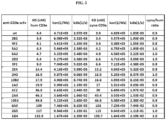
- the single chain variable fragment CD3 binding protein has an amino acid sequence set forth as SEQ ID NO. 8, wherein the hKd is about 3.8 nM, and wherein the cKd is about 3.5 nM. In some embodiments, the single chain variable fragment CD3 binding protein has an amino acid sequence set forth as SEQ ID NO. 9, wherein the hKd is about 4.1 nM, and wherein the cKd is about 3.4 nM. In some embodiments, the single chain variable fragment CD3 binding protein has an amino acid sequence set forth as SEQ ID NO. 10, wherein the hKd is about 4.3 nM, and wherein the cKd is about 4.2 nM.
- the single chain variable fragment CD3 binding protein has an amino acid sequence set forth as SEQ ID NO. 11, wherein the hKd is about 4.7 nM, and wherein the cKd is about 4.9 nM. In some embodiments, the single chain variable fragment CD3 binding protein has an amino acid sequence set forth as SEQ ID NO. 12, wherein the hKd is about 6.4 nM, and wherein the cKd is about 6.6 nM. In some embodiments, the single chain variable fragment CD3 binding protein has an amino acid sequence set forth as SEQ ID NO. 13, wherein the hKd is about 8 nM, and wherein the cKd is about 6.6 nM.
- the single chain variable fragment CD3 binding protein has an amino acid sequence set forth as SEQ ID NO. 14, wherein the hKd is about 20 nM, and wherein the cKd is about 17 nM. In some embodiments, the single chain variable fragment CD3 binding protein has an amino acid sequence set forth as SEQ ID NO. 15, wherein the hKd is about 37 nM, and wherein the cKd is about 30 nM. In some embodiments, the single chain variable fragment CD3 binding protein has an amino acid sequence set forth as SEQ ID NO. 16, wherein the hKd is about 14 nM, and wherein the cKd is about 13 nM.
- the single chain variable fragment CD3 binding protein has an amino acid sequence set forth as SEQ ID NO. 17, wherein the hKd is about 50 nM, and wherein the cKd is about 47 nM. In some embodiments, the single chain variable fragment CD3 binding protein has an amino acid sequence set forth as SEQ ID NO. 18, wherein the hKd is about 16 nM, and wherein the cKd is about 16 nM. In some embodiments, the single chain variable fragment CD3 binding protein has an amino acid sequence set forth as SEQ ID NO. 19, wherein the hKd is about 46 nM, and wherein the cKd is about 43 nM.
- the single chain variable fragment CD3 binding protein has an amino acid sequence set forth as SEQ ID NO. 20, wherein the hKd is about 18 nM, and wherein the cKd is about 17 nM. In some embodiments, the single chain variable fragment CD3 binding protein has an amino acid sequence set forth as SEQ ID NO. 21, wherein the hKd is about 133 nM, and wherein the cKd is about 134 nM. In some embodiments, the single chain variable fragment CD3 binding protein has an amino acid sequence set forth as SEQ ID NO. 94, wherein the hKd is about 117 nM, and wherein the cKd is about 115 nM. In some embodiments, the single chain variable fragment CD3 binding protein has an amino acid sequence set forth as SEQ ID NO. 95, wherein the hKd is about 109 nM, and wherein the cKd is about 103 nM.
- the single chain variable fragment CD3 binding protein has an amino acid sequence set forth as SEQ ID NO. 8, wherein the hKd and cKd are about the same as the Kd towards CD3 of a protein which has the sequence as set forth in wt anti-CD3 (SEQ ID NO. 22). In some embodiments, the single chain variable fragment CD3 binding protein has an amino acid sequence set forth as SEQ ID NO. 9, wherein the hKd and cKd are about the same as the Kd towards CD3 of a protein which has the sequence as set forth in wt anti-CD3 (SEQ ID NO. 22). In some embodiments, the single chain variable fragment CD3 binding protein has an amino acid sequence set forth as SEQ ID NO.
- the single chain variable fragment CD3 binding protein has an amino acid sequence set forth as SEQ ID NO. 11, wherein the hKd and cKd are about the same as the Kd towards CD3 of a protein which has the sequence as set forth in wt anti-CD3 (SEQ ID NO. 22). In some embodiments, the single chain variable fragment CD3 binding protein has an amino acid sequence set forth as SEQ ID NO.
- the single chain variable fragment CD3 binding protein has an amino acid sequence set forth as SEQ ID NO. 15, wherein the hKd and cKd are about 3-fold to about 5-fold higher than the Kd towards CD3 of a protein which has the sequence as set forth in wt anti-CD3 (SEQ ID NO. 22). In some embodiments, the single chain variable fragment CD3 binding protein has an amino acid sequence set forth as SEQ ID NO.
- the single chain variable fragment CD3 binding protein has an amino acid sequence set forth as SEQ ID NO. 17, wherein the hKd and cKd are about 6-fold to about 15-fold higher than the Kd towards CD3 of a protein which has the sequence as set forth in wt anti-CD3 (SEQ ID NO. 22). In some embodiments, the single chain variable fragment CD3 binding protein has an amino acid sequence set forth as SEQ ID NO.
- the single chain variable fragment CD3 binding protein has an amino acid sequence set forth as SEQ ID NO. 19 (2A4), wherein the hKd and cKd are about 6-fold to about 15-fold higher than the Kd towards CD3 of a protein which has the sequence as set forth in wt anti-CD3 (SEQ ID NO. 22). In some embodiments, the single chain variable fragment CD3 binding protein has an amino acid sequence set forth as SEQ ID NO.
- the single chain variable fragment CD3 binding protein has an amino acid sequence set forth as SEQ ID NO. 21, wherein the hKd and cKd are about 20-fold to about 50-fold higher than the Kd towards CD3 of a protein which has the sequence as set forth in wt anti-CD3 (SEQ ID NO. 22). In some embodiments, the single chain variable fragment CD3 binding protein has an amino acid sequence set forth as SEQ ID NO.
- the single chain variable fragment CD3 binding protein has an amino acid sequence set forth as SEQ ID NO. 95, wherein the hKd and cKd are about 20-fold to about 50-fold higher than the Kd towards CD3 of a protein which has the sequence as set forth in wt anti-CD3 (SEQ ID NO. 22).
- HSA Human serum albumin
- Noncovalent association with albumin extends the elimination half-time of short lived proteins. For example, a recombinant fusion of an albumin binding domain to a Fab fragment resulted in a decrease in in vivo clearance of 25- and 58-fold and a half-life extension of 26- and 37-fold when administered intravenously to mice and rabbits respectively as compared to the administration of the Fab fragment alone.
- insulin is acylated with fatty acids to promote association with albumin
- a protracted effect was observed when injected subcutaneously in rabbits or pigs. Together, these studies demonstrate a linkage between albumin binding and prolonged action.
- a multispecific binding protein comprising a single chain variable fragment CD3 binding protein according to the present disclosure and further comprising a half-life extension domain, for example a domain which specifically binds to serum albumin.
- the serum albumin binding domain of a single chain variable fragment CD3 binding protein can be any domain that binds to serum albumin including but not limited to domains from a monoclonal antibody, a polyclonal antibody, a recombinant antibody, a human antibody, a humanized antibody.
- the serum albumin binding domain is a single chain variable fragments (scFv), single-domain antibody such as a heavy chain variable domain (VH), a light chain variable domain (VL) and a variable domain (VHH) of camelid derived sdAb, or antigen binding fragments of the HSA binding antibodies, such as Fab, Fab', F(ab)2, and Fv fragments, fragments comprised of one or more CDRs, single-chain antibodies (e.g., single chain Fv fragments (scFv)), disulfide stabilized (dsFv) Fv fragments, heteroconjugate antibodies (e.g., bispecific antibodies), pFv fragments, heavy chain monomers or dimers, light chain monomers or dimers, and dimers consisting of one heavy chain and one light chain, peptide, ligand or small molecule entity specific for serum albumin.
- scFv single chain variable fragments
- VH heavy chain variable domain
- VL light chain variable domain
- VHH variable
- the HSA binding domain is a single-domain antibody.
- the serum albumin binding domain is a peptide.
- the serum albumin binding domain is a small molecule. It is contemplated that the serum albumin binding domain of the multispecific binding protein comprising a single chain variable fragment CD3 binding protein is fairly small and no more than 25 kD, no more than 20 kD, no more than 15 kD, or no more than 10 kD in some embodiments. In certain instances, the serum albumin binding is 5 kD or less if it is a peptide or small molecule entity.
- the half-life extension domain of a multispecific binding protein comprising a single chain variable fragment CD3 binding protein provides for altered pharmacodynamics and pharmacokinetics of the single chain variable fragment CD3 binding protein itself. As above, the half-life extension domain extends the elimination half-time. The half-life extension domain also alters pharmacodynamic properties including alteration of tissue distribution, penetration, and diffusion of the single chain variable fragment CD3 binding protein. In some embodiments, the half-life extension domain provides for improved tissue (including tumor) targeting, tissue distribution, tissue penetration, diffusion within the tissue, and enhanced efficacy as compared with a protein without a half-life extension domain. In one embodiment, therapeutic methods effectively and efficiently utilize a reduced amount of the multispecific binding protein comprising a single chain variable fragment CD3 binding protein, resulting in reduced side effects, such as reduced non-tumor cell cytotoxicity.
- the binding affinity of the half-life extension domain can be selected so as to target a specific elimination half-time in a particular multispecific binding protein comprising a single chain variable fragment CD3 binding protein.
- the half-life extension domain has a high binding affinity.
- the half-life extension domain has a medium binding affinity.
- the half-life extension domain has a low or marginal binding affinity.
- Exemplary binding affinities include K d of 10 nM or less (high), between 10 nM and 100 nM (medium), and greater than 100 nM (low).
- binding affinities to serum albumin are determined by known methods such as Surface Plasmon Resonance (SPR).
- the multispecific binding proteins described herein in certain embodiments also comprise a domain that binds to a target antigen.
- a target antigen is involved in and/or associated with a disease, disorder or condition.
- a target antigen is a tumor antigen expressed on a tumor cell.
- a target antigen is associated with a pathogen such as a virus or bacterium.
- a target antigen is a cell surface molecule such as a protein, lipid or polysaccharide. In some embodiments, a target antigen is a on a tumor cell, virally infected cell, bacterially infected cell, damaged red blood cell, arterial plaque cell, or fibrotic tissue cell.
- the polynucleotide is inserted into a vector, preferably an expression vector, which represents a further embodiment.
- This recombinant vector can be constructed according to known methods.
- Vectors of particular interest include plasmids, phagemids, phage derivatives, virii (e.g., retroviruses, adenoviruses, adeno-associated viruses, herpes viruses, lentiviruses, and the like), and cosmids.
- a single chain variable fragment CD3 binding protein described herein in some embodiments, induces and/or sustains cytotoxicity towards a cell expressing a target antigen.
- the cell expressing a target antigen is a cancer or tumor cell, a virally infected cell, a bacterially infected cell, an autoreactive T or B cell, damaged red blood cells, arterial plaques, or fibrotic tissue.
- disease, disorders or conditions associated with a target antigen include, but are not limited to, viral infection, bacterial infection, auto-immune disease, transplant rejection, atherosclerosis, or fibrosis.
- the disease, disorder or condition associated with a target antigen is a proliferative disease, a tumorous disease, an inflammatory disease, an immunological disorder, an autoimmune disease, an infectious disease, a viral disease, an allergic reaction, a parasitic reaction, a graft-versus-host disease or a host-versus-graft disease.
- the disease, disorder or condition associated with a target antigen is cancer.
- the cancer is a hematological cancer.
- the cancer is a solid tumor cancer.
- Treatment includes eliciting a clinically significant response without excessive levels of side effects. Treatment also includes prolonging survival as compared to expected survival if not receiving treatment.
- treatment or “treating” or “treated” refers to prophylactic measures, wherein the object is to delay onset of or reduce severity of an undesired physiological condition, disorder or disease, such as, for example is a person who is predisposed to a disease (e.g., an individual who carries a genetic marker for a disease such as breast cancer).
- the single chain variable fragment CD3 binding proteins are administered in combination with anti-diarrheal agents, anti-emetic agents, analgesics, opioids and/or non-steroidal anti-inflammatory agents. In some embodiments, the single chain variable fragment CD3 binding proteins are administered before, during, or after surgery.
- Example 1 Identification of anti-CD3 scFv variants with varying affinities for human CD3 ⁇
- the parental anti-CD3 ⁇ showed good binding to biotin-CD3 ⁇ and low binding to biotin-HSA ( FIG. 1 ).
- a single substitution library was provided for the heavy chain CDR1, heavy chain CDR2, heavy chain CDR3, light chain CDR1, light chain CDR2, and light chain CDR3 domains.
- the amino acid residues varied in each domain are illustrated in the highlighted region in FIG. 2 . Residues were varied one at a time via NNN mutagensis.
- a bispecific antibody directed to CD20 and CD3, containing an anti-CD3 scFv variant identified in Example 1 is evaluated in vitro on its mediation of T cell dependent cytotoxicity to CD20 + target cells.
- Fluorescence labeled CD20 + REC-1 cells (a Mantle cell lymphoma cell line, ATCC CRL-3004) are incubated with isolated PBMC of random donors or CB 15 T-cells (standardized T-cell line) as effector cells in the presence of the CD20-CD3 bispecific antibody containing an anti-CD3 scFv variant identified in Example 1. After incubation for 4 h at 37°C in a humidified incubator, the release of the fluorescent dye from the target cells into the supernatant is determined in a spectrofluorimeter. Target cells incubated without the CD20-CD3 bispecific antibody containing an anti-CD3 scFv variant identified in Example 1 and target cells totally lysed by the addition of saponin at the end of the incubation serve as negative and positive controls, respectively.
- the percentage of specific cell lysis is calculated according to the following formula: [1-(number of living targets (sample) /number of living targets (spontaneous) )] x 100%.
- Sigmoidal dose response curves and EC 50 values are calculated by non-linear regression/4-parameter logistic fit using the GraphPad Software. The lysis values obtained for a given variant concentration are used to calculate sigmoidal dose-response curves by 4 parameter logistic fit analysis using the Prism software.
- Example 3 Thermal stability of anti-CD3 scFv variants with varying affinities for human CD3 ⁇
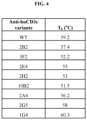
- T h The temperature of hydrophobic exposure (T h ) of a protein corresponds to the derivative of the inflection point of peak dye fluorescence and is known to correlate with melting temperature (T m ), which is a measure of protein stability.
- T m melting temperature
- Expi293F cells (Life Technologies A14527) were maintained in suspension in Optimum Growth Flasks (Thomson) between 0.2 to 8 x 1e6 cells/mL in Expi 293 media. Purified plasmid DNA was transfected into Expi293F cells in accordance with Expi293 Expression System Kit (Life Technologies, A14635) protocols, and maintained for 4-6 days post transfection. Conditioned media was partially purified by affinity and desalting chromatography.
- Anti-human CD3 ⁇ scFv proteins were concentrated with Amicon Ultra centrifugal filtration units (EMD Millipore), applied to Superdex 200 size exclusion media (GE Healthcare) and resolved in a neutral buffer containing excipients. Fraction pooling and final purity were assessed by SDS-PAGE and analytical SEC (size exclusion chromatography). The absorbance of purified protein solutions were determined at 280 nm using a SpectraMax M2 (Molecular Devices) and UV-transparent 96-well plates (Corning 3635) and their concentrations were calculated from molar extinction coefficients..
- Purified anti-human CD3 ⁇ scFv proteins were diluted to cocentrations ranging from 0.2 to 0.25 mg/mL together with 5x SYPRO orange dye (Life Technologies S6651) in 0.15% DMSO final concentration in a neutral buffer containing excipients into MicroAmp EnduraPlate optical microplates and adhesive film (Applied Biosystems 4483485 and 4311971).
- a plate containing diluted protein and dye mixtures was loaded into an ABI 7500 Fast real-time PCR instrument (Applied Biosytems) and subjected to a multi-step thermal gradient from 25 °C to 95 °C.
- the thermal gradient comprised of a two minute hold at each one degree celsius step with excitation at 500 nm and emission collected with a ROX filter.
- T h in degrees celsius is presented, for several purified anti-human CD3 ⁇ scFv protein variants, in FIG. 4 .
Landscapes
- Health & Medical Sciences (AREA)
- Chemical & Material Sciences (AREA)
- Immunology (AREA)
- Organic Chemistry (AREA)
- Life Sciences & Earth Sciences (AREA)
- Medicinal Chemistry (AREA)
- General Health & Medical Sciences (AREA)
- Veterinary Medicine (AREA)
- Nuclear Medicine, Radiotherapy & Molecular Imaging (AREA)
- General Chemical & Material Sciences (AREA)
- Pharmacology & Pharmacy (AREA)
- Chemical Kinetics & Catalysis (AREA)
- Animal Behavior & Ethology (AREA)
- Public Health (AREA)
- Biophysics (AREA)
- Biochemistry (AREA)
- Proteomics, Peptides & Aminoacids (AREA)
- Molecular Biology (AREA)
- Genetics & Genomics (AREA)
- Engineering & Computer Science (AREA)
- Bioinformatics & Cheminformatics (AREA)
- Oncology (AREA)
- Communicable Diseases (AREA)
- Pain & Pain Management (AREA)
- Virology (AREA)
- Tropical Medicine & Parasitology (AREA)
- Transplantation (AREA)
- Rheumatology (AREA)
- Peptides Or Proteins (AREA)
- Micro-Organisms Or Cultivation Processes Thereof (AREA)
- Medicines That Contain Protein Lipid Enzymes And Other Medicines (AREA)
- Preparation Of Compounds By Using Micro-Organisms (AREA)
- Medicines Containing Material From Animals Or Micro-Organisms (AREA)
- Medicines Containing Antibodies Or Antigens For Use As Internal Diagnostic Agents (AREA)
- Pharmaceuticals Containing Other Organic And Inorganic Compounds (AREA)
Priority Applications (3)
| Application Number | Priority Date | Filing Date | Title |
|---|---|---|---|
| SI201731615T SI3461261T1 (sl) | 2016-05-20 | 2017-05-19 | Enoverižni variabilni fragmenti proteinov, ki vežejo cd3 |
| HRP20251020TT HRP20251020T1 (hr) | 2016-05-20 | 2017-05-19 | Proteini s jednolančanim varijabilnim fragmentom koji vežu cd3 |
| RS20250840A RS67145B1 (sr) | 2016-05-20 | 2017-05-19 | Proteini sa jednolančanim varijabilnim fragmentom koji vezuju cd3 |
Applications Claiming Priority (2)
| Application Number | Priority Date | Filing Date | Title |
|---|---|---|---|
| US201662339685P | 2016-05-20 | 2016-05-20 | |
| PCT/US2017/033673 WO2017201493A1 (en) | 2016-05-20 | 2017-05-19 | Single chain variable fragment cd3 binding proteins |
Publications (3)
| Publication Number | Publication Date |
|---|---|
| EP3461261A1 EP3461261A1 (en) | 2019-04-03 |
| EP3461261A4 EP3461261A4 (en) | 2019-12-04 |
| EP3461261B1 true EP3461261B1 (en) | 2025-07-09 |
Family
ID=60326175
Family Applications (1)
| Application Number | Title | Priority Date | Filing Date |
|---|---|---|---|
| EP17800304.2A Active EP3461261B1 (en) | 2016-05-20 | 2017-05-19 | Single chain variable fragment cd3 binding proteins |
Country Status (22)
| Country | Link |
|---|---|
| US (2) | US10544221B2 (enExample) |
| EP (1) | EP3461261B1 (enExample) |
| JP (2) | JP7042467B2 (enExample) |
| KR (1) | KR102365977B1 (enExample) |
| CN (2) | CN116987189A (enExample) |
| AU (2) | AU2017267793B2 (enExample) |
| CA (1) | CA3024683A1 (enExample) |
| DK (1) | DK3461261T3 (enExample) |
| EA (1) | EA201892693A1 (enExample) |
| ES (1) | ES3036522T3 (enExample) |
| FI (1) | FI3461261T3 (enExample) |
| HR (1) | HRP20251020T1 (enExample) |
| HU (1) | HUE072731T2 (enExample) |
| IL (2) | IL263083B2 (enExample) |
| LT (1) | LT3461261T (enExample) |
| MX (2) | MX2018014227A (enExample) |
| PL (1) | PL3461261T3 (enExample) |
| PT (1) | PT3461261T (enExample) |
| RS (1) | RS67145B1 (enExample) |
| SG (1) | SG11201810331YA (enExample) |
| SI (1) | SI3461261T1 (enExample) |
| WO (1) | WO2017201493A1 (enExample) |
Families Citing this family (42)
| Publication number | Priority date | Publication date | Assignee | Title |
|---|---|---|---|---|
| EP3297672B1 (en) | 2015-05-21 | 2021-09-01 | Harpoon Therapeutics, Inc. | Trispecific binding proteins and methods of use |
| US12128102B2 (en) | 2016-03-08 | 2024-10-29 | Takeda Pharmaceutical Company Limited | Constrained conditionally activated binding proteins |
| US11623958B2 (en) | 2016-05-20 | 2023-04-11 | Harpoon Therapeutics, Inc. | Single chain variable fragment CD3 binding proteins |
| KR102530742B1 (ko) | 2016-05-20 | 2023-05-09 | 하푼 테라퓨틱스, 인크. | 단일 도메인 혈청 알부민 결합 단백질 |
| HRP20251020T1 (hr) * | 2016-05-20 | 2025-10-24 | Harpoon Therapeutics, Inc. | Proteini s jednolančanim varijabilnim fragmentom koji vežu cd3 |
| KR102275008B1 (ko) | 2016-11-23 | 2021-07-13 | 하푼 테라퓨틱스, 인크. | 전립선 특이 막 항원 결합 단백질 |
| JP7215997B2 (ja) * | 2016-11-23 | 2023-01-31 | ハープーン セラピューティクス,インク. | 前立腺特異的膜抗原(psma)を標的とする三重特異性タンパク質と使用方法 |
| WO2018160754A2 (en) | 2017-02-28 | 2018-09-07 | Harpoon Therapeutics, Inc. | Inducible monovalent antigen binding protein |
| US10730954B2 (en) | 2017-05-12 | 2020-08-04 | Harpoon Therapeutics, Inc. | MSLN targeting trispecific proteins and methods of use |
| SG10202107880XA (en) | 2017-05-12 | 2021-09-29 | Harpoon Therapeutics Inc | Mesothelin binding proteins |
| EP3409322A1 (en) | 2017-06-01 | 2018-12-05 | F. Hoffmann-La Roche AG | Treatment method |
| US10304254B2 (en) | 2017-08-08 | 2019-05-28 | Smart Picture Technologies, Inc. | Method for measuring and modeling spaces using markerless augmented reality |
| CN111356700A (zh) | 2017-09-08 | 2020-06-30 | 马弗里克治疗公司 | 受约束的条件性活化的结合蛋白 |
| IL315737A (en) | 2017-10-13 | 2024-11-01 | Harpoon Therapeutics Inc | B-cell maturation antigen-binding proteins |
| CA3078969A1 (en) | 2017-10-13 | 2019-04-18 | Harpoon Therapeutics, Inc. | Trispecific proteins and methods of use |
| WO2019084018A1 (en) * | 2017-10-23 | 2019-05-02 | City Of Hope | CAR FOR THE TREATMENT OF HIV INFECTION |
| CN108218993B (zh) * | 2018-01-05 | 2020-11-17 | 阿思科力(苏州)生物科技有限公司 | 一种以robo1为靶点的双特异性抗体及其制备和应用 |
| WO2019166650A1 (en) | 2018-03-02 | 2019-09-06 | Cdr-Life Ag | Trispecific antigen binding proteins |
| MX2020012217A (es) | 2018-05-14 | 2021-03-02 | Harpoon Therapeutics Inc | Porción de unión para activación condicional de moléculas de inmunoglobulina. |
| US12195544B2 (en) | 2018-09-21 | 2025-01-14 | Harpoon Therapeutics, Inc. | EGFR binding proteins and methods of use |
| CN119306844A (zh) | 2018-09-25 | 2025-01-14 | 哈普恩治疗公司 | Dll3结合蛋白及使用方法 |
| EP4592313A3 (en) | 2019-03-05 | 2025-11-19 | Takeda Pharmaceutical Company Limited | Constrained conditionally activated binding proteins |
| AU2020274025B2 (en) | 2019-05-10 | 2022-10-20 | Smart Picture Technologies, Inc. | Methods and systems for measuring and modeling spaces using markerless photo-based augmented reality process |
| WO2020232303A1 (en) | 2019-05-14 | 2020-11-19 | Harpoon Therapeutics, Inc. | EpCAM BINDING PROTEINS AND METHODS OF USE |
| BR112022016550A2 (pt) | 2020-02-21 | 2022-11-16 | Harpoon Therapeutics Inc | Proteínas de ligação a flt3 e métodos de uso |
| US20240092931A1 (en) * | 2020-08-24 | 2024-03-21 | Janux Therapeutics, Inc. | Antibodies targeting trop2 and cd3 and uses thereof |
| JP7518286B2 (ja) | 2020-08-25 | 2024-07-17 | ギリアード サイエンシーズ, インコーポレイテッド | Hivを標的とする多重特異性抗原結合分子及び使用方法 |
| AU2021345124A1 (en) | 2020-09-16 | 2023-03-30 | Amgen Inc. | Methods for administering therapeutic doses of bispecific T-cell engaging molecules for the treatment of cancer |
| EP4259193A4 (en) | 2020-12-09 | 2025-01-15 | Janux Therapeutics, Inc. | Compositions and methods related to tumor activated antibodies targeting psma and effector cell antigens |
| EP4304726A1 (en) | 2021-03-09 | 2024-01-17 | CDR-Life AG | Mage-a4 peptide-mhc antigen binding proteins |
| US12435444B2 (en) | 2021-03-09 | 2025-10-07 | Cdr-Life Ag | Rabbit-derived antigen binding protein nucleic acid libraries and methods of making the same |
| US20240294640A1 (en) * | 2021-06-02 | 2024-09-05 | Qure Biotechnology (Shanghai) Co., Ltd. | Anti-cd3 antibody variant, fusion protein, and application |
| EP4355778A1 (en) | 2021-06-17 | 2024-04-24 | Boehringer Ingelheim International GmbH | Novel tri-specific binding molecules |
| EP4499683A1 (en) | 2022-03-29 | 2025-02-05 | NGM Biopharmaceuticals, Inc. | Ilt3 and cd3 binding agents and methods of use thereof |
| JPWO2023199917A1 (enExample) | 2022-04-11 | 2023-10-19 | ||
| EP4587046A1 (en) | 2022-09-14 | 2025-07-23 | CDR-Life AG | Mage-a4 peptide dual t cell engagers |
| EP4598958A1 (en) | 2022-10-05 | 2025-08-13 | Amgen Inc. | Combination therapies comprising t-cell redirecting therapies and agonistic anti-il-2r antibodies or fragments thereof |
| WO2024088987A1 (en) | 2022-10-26 | 2024-05-02 | F. Hoffmann-La Roche Ag | Combination therapy for the treatment of cancer |
| WO2025109119A1 (en) | 2023-11-22 | 2025-05-30 | Priothera Sas | Methods of treatment with multispecific antigen-binding proteins in combination with s1p receptor modulators |
| TW202602940A (zh) | 2024-04-09 | 2026-01-16 | 美商安進公司 | 激動性抗il-2rbg重鏈抗體 |
| WO2026037330A1 (en) * | 2024-08-14 | 2026-02-19 | Leads Biolabs Inc. | Antibodies binding to cd3 and uses thereof |
| US20260209367A1 (en) | 2024-11-22 | 2026-07-23 | Gilead Sciences, Inc. | SINGLE IMMUNOGLOBULIN DOMAIN BISPECIFIC ANTIBODIES AGAINST IL 10R alpha AND beta SUBUNITS AND METHODS OF USE |
Family Cites Families (132)
| Publication number | Priority date | Publication date | Assignee | Title |
|---|---|---|---|---|
| US5859205A (en) * | 1989-12-21 | 1999-01-12 | Celltech Limited | Humanised antibodies |
| US5061620A (en) | 1990-03-30 | 1991-10-29 | Systemix, Inc. | Human hematopoietic stem cell |
| DE69334275D1 (de) | 1992-08-21 | 2009-05-20 | Univ Bruxelles | Immunoglobuline ohne Leichtkette |
| US6005079A (en) | 1992-08-21 | 1999-12-21 | Vrije Universiteit Brussels | Immunoglobulins devoid of light chains |
| US5773292A (en) | 1995-06-05 | 1998-06-30 | Cornell University | Antibodies binding portions, and probes recognizing an antigen of prostate epithelial cells but not antigens circulating in the blood |
| US6136311A (en) | 1996-05-06 | 2000-10-24 | Cornell Research Foundation, Inc. | Treatment and diagnosis of cancer |
| US6107090A (en) | 1996-05-06 | 2000-08-22 | Cornell Research Foundation, Inc. | Treatment and diagnosis of prostate cancer with antibodies to extracellur PSMA domains |
| DK1027439T3 (da) | 1997-10-27 | 2010-05-10 | Bac Ip Bv | Multivalente antigenbindende proteiner |
| AU3596599A (en) | 1998-01-26 | 1999-08-09 | Unilever Plc | Method for producing antibody fragments |
| HUP9900956A2 (hu) | 1998-04-09 | 2002-04-29 | Aventis Pharma Deutschland Gmbh. | Egyláncú, több antigéntkötőhely kialakítására képes molekulák, előállításuk és alkalmazásuk |
| ATE276359T1 (de) | 1999-01-19 | 2004-10-15 | Unilever Nv | Verfahren zur herstellung von antikörperfragmenten |
| US20060228364A1 (en) | 1999-12-24 | 2006-10-12 | Genentech, Inc. | Serum albumin binding peptides for tumor targeting |
| US20030190598A1 (en) | 2000-05-26 | 2003-10-09 | Jasmid Tanha | Single-domain antigen-binding antibody fragments derived from llama antibodies |
| CN1294148C (zh) | 2001-04-11 | 2007-01-10 | 中国科学院遗传与发育生物学研究所 | 环状单链三特异抗体 |
| GB0110029D0 (en) | 2001-04-24 | 2001-06-13 | Grosveld Frank | Transgenic animal |
| CN1195779C (zh) | 2001-05-24 | 2005-04-06 | 中国科学院遗传与发育生物学研究所 | 抗人卵巢癌抗人cd3双特异性抗体 |
| US7666414B2 (en) | 2001-06-01 | 2010-02-23 | Cornell Research Foundation, Inc. | Methods for treating prostate cancer using modified antibodies to prostate-specific membrane antigen |
| JP4213586B2 (ja) | 2001-09-13 | 2009-01-21 | 株式会社抗体研究所 | ラクダ抗体ライブラリーの作製方法 |
| US20050215472A1 (en) | 2001-10-23 | 2005-09-29 | Psma Development Company, Llc | PSMA formulations and uses thereof |
| WO2003034903A2 (en) | 2001-10-23 | 2003-05-01 | Psma Development Company, L.L.C. | Psma antibodies and protein multimers |
| JP2005289809A (ja) | 2001-10-24 | 2005-10-20 | Vlaams Interuniversitair Inst Voor Biotechnologie Vzw (Vib Vzw) | 突然変異重鎖抗体 |
| EP1519747A4 (en) | 2002-01-28 | 2006-03-29 | Medarex Inc | HUMAN MONOCLONAL ANTIBODIES AGAINST PROSTATE-SPECIFIC MEMBRANE ANTIGEN (PSMA) |
| CN1678634A (zh) | 2002-06-28 | 2005-10-05 | 多曼蒂斯有限公司 | 免疫球蛋白单个变体抗原结合区及其特异性构建体 |
| US9321832B2 (en) | 2002-06-28 | 2016-04-26 | Domantis Limited | Ligand |
| EP1561114B1 (en) | 2002-11-07 | 2008-05-07 | Erasmus Universiteit Rotterdam | Fret probes and methods for detecting interacting molecules |
| EP1558645B1 (en) | 2002-11-08 | 2011-07-27 | Ablynx N.V. | Stabilized single domain antibodies in pharmaceutical composition adapted for inhalation |
| NZ540194A (en) | 2002-11-08 | 2008-07-31 | Ablynx Nv | Single domain antibodies directed against tumour necrosis factor-alpha and uses therefor |
| GB0228210D0 (en) | 2002-12-03 | 2003-01-08 | Babraham Inst | Single chain antibodies |
| AU2004242845B2 (en) | 2003-05-31 | 2011-06-02 | Amgen Research (Munich) Gmbh | Human-anti-human CD3 binding molecules |
| CN100376599C (zh) | 2004-04-01 | 2008-03-26 | 北京安波特基因工程技术有限公司 | 基因工程重组抗cea抗cd3抗cd28线性单链三特异抗体 |
| US8921528B2 (en) | 2004-06-01 | 2014-12-30 | Domantis Limited | Bispecific fusion antibodies with enhanced serum half-life |
| EP1634603A1 (de) | 2004-08-26 | 2006-03-15 | Eberhard-Karls-Universität Tübingen Universitätsklinikum | Behandlung von transformierten oder infizierten biologischen Zellen |
| US20080069772A1 (en) | 2004-08-26 | 2008-03-20 | Eberhard-Karls-Universitaet Tuebingen Universitaetsklinikum | Treatment of transformed or infected biological cells |
| FR2879605B1 (fr) | 2004-12-16 | 2008-10-17 | Centre Nat Rech Scient Cnrse | Production de formats d'anticorps et applications immunologiques de ces formats |
| ATE423140T1 (de) | 2005-01-05 | 2009-03-15 | F Star Biotech Forsch & Entw | Synthetische immunoglobulindomänen mit in regionen des moleküls, die sich von den die komplementarität bestimmenden bereichen unterscheiden, modifizierten bindeeigenschaften |
| US7833979B2 (en) | 2005-04-22 | 2010-11-16 | Amgen Inc. | Toxin peptide therapeutic agents |
| US20060252096A1 (en) | 2005-04-26 | 2006-11-09 | Glycofi, Inc. | Single chain antibody with cleavable linker |
| AU2006249144B2 (en) | 2005-05-18 | 2011-11-17 | Ablynx Nv | Improved NanobodiesTM against Tumor Necrosis Factor-alpha |
| LT2444424T (lt) | 2005-05-20 | 2018-10-25 | Ablynx N.V. | Pagerintos tm nanodalelės, skirtos agregacijos sąlygotų sutrikimų gydymui |
| EP1726650A1 (en) | 2005-05-27 | 2006-11-29 | Universitätsklinikum Freiburg | Monoclonal antibodies and single chain antibody fragments against cell-surface prostate specific membrane antigen |
| US8236308B2 (en) | 2005-10-11 | 2012-08-07 | Micromet Ag | Composition comprising cross-species-specific antibodies and uses thereof |
| EP1962961B1 (en) | 2005-11-29 | 2013-01-09 | The University Of Sydney | Demibodies: dimerisation-activated therapeutic agents |
| US20070269422A1 (en) | 2006-05-17 | 2007-11-22 | Ablynx N.V. | Serum albumin binding proteins with long half-lives |
| JP2010500876A (ja) | 2006-08-18 | 2010-01-14 | アブリンクス エン.ヴェー. | Il−6媒介性シグナル伝達に関連する疾患及び障害の治療のための、il−6rに指向性を有するアミノ酸配列及びこれを含むポリペプチド |
| US20100113339A1 (en) | 2006-09-08 | 2010-05-06 | Ablynx N. V. | Serum albumin binding proteins with long half-lives |
| WO2008119565A2 (en) * | 2007-04-03 | 2008-10-09 | Micromet Ag | Cross-species-specific binding domain |
| EP2014680A1 (en) | 2007-07-10 | 2009-01-14 | Friedrich-Alexander-Universität Erlangen-Nürnberg | Recombinant, single-chain, trivalent tri-specific or bi-specific antibody derivatives |
| EP2190861A4 (en) | 2007-08-22 | 2011-03-30 | Univ California | ACTIVE BINDING POLYPEPTIDES AND METHOD FOR THEIR IDENTIFICATION AND USE |
| CA2698419C (en) | 2007-09-07 | 2019-11-12 | Ablynx N.V. | Binding molecules with multiple binding sites, compositions comprising the same and uses thereof |
| EP2535350B1 (en) | 2007-09-26 | 2018-01-24 | UCB Biopharma SPRL | Dual specificity antibody fusions |
| LT2285408T (lt) | 2008-06-05 | 2019-01-25 | Ablynx N.V. | Aminorūgščių sekos, nukreiptos prieš viruso apvalkalo baltymus, ir tokias sekas turintys polipeptidai, skirti virusinių ligų gydymui |
| US20100122358A1 (en) | 2008-06-06 | 2010-05-13 | Crescendo Biologics Limited | H-Chain-only antibodies |
| JP2011526794A (ja) | 2008-07-02 | 2011-10-20 | エマージェント プロダクト デベロップメント シアトル, エルエルシー | TGF−βアンタゴニスト多重標的結合性分子 |
| US8444976B2 (en) | 2008-07-02 | 2013-05-21 | Argen-X B.V. | Antigen binding polypeptides |
| EP2352763B2 (en) | 2008-10-01 | 2022-09-21 | Amgen Research (Munich) GmbH | Bispecific single chain antibodies with specificity for high molecular weight target antigens |
| AU2009299794B2 (en) * | 2008-10-01 | 2015-08-13 | Amgen Research (Munich) Gmbh | Cross-species-specific single domain bispecific single chain antibody |
| CA2740561C (en) | 2008-10-14 | 2021-01-19 | National Research Council Of Canada | Bsa-specific antibodies |
| US20100189727A1 (en) | 2008-12-08 | 2010-07-29 | Tegopharm Corporation | Masking Ligands For Reversible Inhibition Of Multivalent Compounds |
| EP2210902A1 (en) | 2009-01-14 | 2010-07-28 | TcL Pharma | Recombinant monovalent antibodies |
| CA2781682A1 (en) | 2009-12-04 | 2011-06-09 | Genentech, Inc. | Multispecific antibodies, antibody analogs, compositions, and methods |
| EP2332994A1 (en) | 2009-12-09 | 2011-06-15 | Friedrich-Alexander-Universität Erlangen-Nürnberg | Trispecific therapeutics against acute myeloid leukaemia |
| US20130089554A1 (en) | 2009-12-29 | 2013-04-11 | Emergent Product Development Seattle, Llc | RON Binding Constructs and Methods of Use Thereof |
| GB2476681B (en) | 2010-01-04 | 2012-04-04 | Argen X Bv | Humanized camelid VH, VK and VL immunoglobulin domains |
| WO2011119484A1 (en) | 2010-03-23 | 2011-09-29 | Iogenetics, Llc | Bioinformatic processes for determination of peptide binding |
| EP2552962B1 (en) | 2010-03-26 | 2016-03-23 | Ablynx N.V. | Immunoglobulin single variable domains directed against cxcr7 |
| CN103068846B9 (zh) | 2010-08-24 | 2016-09-28 | 弗·哈夫曼-拉罗切有限公司 | 包含二硫键稳定性Fv片段的双特异性抗体 |
| BR112013002167A2 (pt) | 2010-08-24 | 2016-05-31 | Roche Glycart Ag | anticorpo biespecífico, composição farmacêutica, uso, método de tratamento de um paciente que sofre de câncer e de um paciente que sofre de inflamação |
| WO2012042026A1 (en) | 2010-09-30 | 2012-04-05 | Ablynx Nv | Biological materials related to c-met |
| EP3974453A3 (en) | 2010-11-16 | 2022-08-03 | Amgen Inc. | Agents and methods for treating diseases that correlate with bcma expression |
| AU2012237287B2 (en) | 2011-03-30 | 2016-09-08 | Ablynx Nv | Methods of treating immune disorders with single domain antibodies against TNF-alpha |
| JP6400470B2 (ja) | 2011-05-16 | 2018-10-03 | ジェネロン(シャンハイ)コーポレイション リミテッド | 多重特異性Fab融合タンパク質および使用法 |
| EP2753644A1 (en) | 2011-09-09 | 2014-07-16 | Universiteit Utrecht Holding B.V. | Broadly neutralizing vhh against hiv-1 |
| TWI679212B (zh) | 2011-11-15 | 2019-12-11 | 美商安進股份有限公司 | 針對bcma之e3以及cd3的結合分子 |
| MX359411B (es) | 2012-01-13 | 2018-09-27 | Univ Wuerzburg J Maximilians | Complementación funcional bipartita inducida por antígenos, dual. |
| WO2013110531A1 (en) | 2012-01-23 | 2013-08-01 | Ablynx Nv | Sequences directed against hepatocyte growth factor (hgf) and polypeptides comprising the same for the treatment of cancers and/or tumors |
| GB201203442D0 (en) | 2012-02-28 | 2012-04-11 | Univ Birmingham | Immunotherapeutic molecules and uses |
| JP6407726B2 (ja) | 2012-03-01 | 2018-10-24 | アムゲン リサーチ (ミュンヘン) ゲーエムベーハーAMGEN Research(Munich)GmbH | 長寿命ポリペプチド結合分子 |
| WO2013148248A1 (en) | 2012-03-30 | 2013-10-03 | Bayer Healthcare Llc | Protease-regulated antibodies |
| IN2014MN02293A (enExample) * | 2012-04-20 | 2015-08-07 | Emergent Product Dev Seattle | |
| WO2013192546A1 (en) | 2012-06-22 | 2013-12-27 | Cytomx Therapeutics, Inc. | Activatable antibodies having non-binding steric moieties and mehtods of using the same |
| WO2014004549A2 (en) | 2012-06-27 | 2014-01-03 | Amgen Inc. | Anti-mesothelin binding proteins |
| BR112015000798A2 (pt) * | 2012-07-13 | 2017-06-27 | Zymeworks Inc | heterodímeros assimétricos biespecíficos compreendendo construtos anti-cd3 |
| CN112587671A (zh) | 2012-07-18 | 2021-04-02 | 博笛生物科技有限公司 | 癌症的靶向免疫治疗 |
| US10040870B2 (en) | 2012-08-31 | 2018-08-07 | Argenx Bvba | Highly diverse combinatorial antibody libraries |
| KR101963231B1 (ko) | 2012-09-11 | 2019-03-28 | 삼성전자주식회사 | 이중특이 항체의 제작을 위한 단백질 복합체 및 이를 이용한 이중특이 항체 제조 방법 |
| JOP20200236A1 (ar) | 2012-09-21 | 2017-06-16 | Regeneron Pharma | الأجسام المضادة لمضاد cd3 وجزيئات ربط الأنتيجين ثنائية التحديد التي تربط cd3 وcd20 واستخداماتها |
| US9416190B2 (en) | 2012-09-27 | 2016-08-16 | The United States Of America, As Represented By The Secretary, Department Of Health And Human Services | Mesothelin antibodies and methods for eliciting potent antitumor activity |
| JO3519B1 (ar) * | 2013-01-25 | 2020-07-05 | Amgen Inc | تركيبات أجسام مضادة لأجل cdh19 و cd3 |
| US20160015749A1 (en) | 2013-03-05 | 2016-01-21 | Baylor College Of Medicine | Engager cells for immunotherapy |
| DK2971045T3 (da) | 2013-03-13 | 2019-09-16 | Health Research Inc | Sammensætninger og fremgangsmåder til anvendelse af rekombinante T-celle-receptorer til direkte genkendelse af tumorantigen |
| US20160017058A1 (en) | 2013-03-14 | 2016-01-21 | The California Institute For Biomedical Research | Bispecific antibodies and uses thereof |
| WO2014151910A1 (en) | 2013-03-15 | 2014-09-25 | Amgen Inc. | Heterodimeric bispecific antibodies |
| UY35484A (es) | 2013-03-15 | 2014-10-31 | Amgen Res Munich Gmbh | Molécula de unión de cadena simple que comprenden ABP de extremo N |
| US20140302037A1 (en) | 2013-03-15 | 2014-10-09 | Amgen Inc. | BISPECIFIC-Fc MOLECULES |
| JP6693872B2 (ja) | 2013-07-25 | 2020-05-13 | シトムクス セラピューティクス,インコーポレイティド | 多重特異性抗体、多重特異性活性化可能抗体、及びそれらの使用方法 |
| US20160251440A1 (en) | 2013-09-26 | 2016-09-01 | Ablynx N.V. | Bispecific nanobodies |
| AU2014374055B2 (en) | 2013-12-30 | 2018-11-08 | Epimab Biotherapeutics Inc. | Fabs-in-tandem immunoglobulin and uses thereof |
| US20170183410A1 (en) | 2014-03-25 | 2017-06-29 | Tohoku University | HIGHLY-FUNCTIONAL IgG2 BISPECIFIC ANTIBODY |
| UA117289C2 (uk) | 2014-04-02 | 2018-07-10 | Ф. Хоффманн-Ля Рош Аг | Мультиспецифічне антитіло |
| US10647768B2 (en) | 2014-05-29 | 2020-05-12 | Macrogenics, Inc. | Multi-chain polypeptide-containing tri-specific binding molecules |
| GB201412659D0 (en) | 2014-07-16 | 2014-08-27 | Ucb Biopharma Sprl | Molecules |
| AR101669A1 (es) * | 2014-07-31 | 2017-01-04 | Amgen Res Munich Gmbh | Constructos de anticuerpos para cdh19 y cd3 |
| ES2980787T3 (es) | 2014-07-31 | 2024-10-03 | Amgen Res Munich Gmbh | Constructo de anticuerpo de cadena sencilla biespecífico con distribución tisular potenciada |
| DK3189081T3 (da) * | 2014-09-05 | 2020-05-04 | Janssen Pharmaceutica Nv | Cd123-bindende midler og anvendelser deraf |
| CN109842529B (zh) | 2014-09-05 | 2021-10-26 | 华为技术有限公司 | 用于配置业务的方法、装置和网络系统 |
| EP3197916A2 (en) | 2014-09-25 | 2017-08-02 | Amgen Inc. | Protease-activatable bispecific proteins |
| HK1245171A1 (zh) * | 2014-11-26 | 2018-08-24 | Xencor, Inc. | 结合cd3和cd38的异二聚体抗体 |
| US10428155B2 (en) | 2014-12-22 | 2019-10-01 | Xencor, Inc. | Trispecific antibodies |
| CA2981088A1 (en) | 2015-04-22 | 2016-10-27 | AgBiome, Inc. | Pesticidal genes and methods of use |
| EP3778640A1 (en) | 2015-05-01 | 2021-02-17 | Genentech, Inc. | Masked anti-cd3 antibodies and methods of use |
| EP3297672B1 (en) | 2015-05-21 | 2021-09-01 | Harpoon Therapeutics, Inc. | Trispecific binding proteins and methods of use |
| CN107709356A (zh) | 2015-06-26 | 2018-02-16 | 南加利福尼亚大学 | 用于肿瘤特异性活化的掩蔽嵌合抗原受体t细胞 |
| TWI796283B (zh) | 2015-07-31 | 2023-03-21 | 德商安美基研究(慕尼黑)公司 | Msln及cd3抗體構築體 |
| WO2017025698A1 (en) | 2015-08-11 | 2017-02-16 | Queen Mary University Of London | Bispecific, cleavable antibodies |
| CN106519037B (zh) | 2015-09-11 | 2019-07-23 | 科济生物医药(上海)有限公司 | 可活化的嵌合受体 |
| CA3004299A1 (en) | 2015-11-05 | 2017-05-11 | City Of Hope | Methods for preparing cells for adoptive t cell therapy |
| HUE054131T2 (hu) | 2015-11-19 | 2021-08-30 | Revitope Ltd | Funkcionális ellenanyag-fragmens-komplementáció nemkívánatos sejtek elpusztítására szolgáló kétkomponensû rendszerben |
| WO2017136549A1 (en) | 2016-02-03 | 2017-08-10 | Youhealth Biotech, Limited | Compounds for treating eye disorders or diseases |
| AU2017229687A1 (en) | 2016-03-08 | 2018-09-20 | Takeda Pharmaceutical Company Limited | Inducible binding proteins and methods of use |
| KR102530742B1 (ko) | 2016-05-20 | 2023-05-09 | 하푼 테라퓨틱스, 인크. | 단일 도메인 혈청 알부민 결합 단백질 |
| HRP20251020T1 (hr) * | 2016-05-20 | 2025-10-24 | Harpoon Therapeutics, Inc. | Proteini s jednolančanim varijabilnim fragmentom koji vežu cd3 |
| WO2018071777A1 (en) | 2016-10-14 | 2018-04-19 | Harpoon Therapeutics, Inc. | Innate immune cell trispecific binding proteins and methods of use |
| JP7215997B2 (ja) | 2016-11-23 | 2023-01-31 | ハープーン セラピューティクス,インク. | 前立腺特異的膜抗原(psma)を標的とする三重特異性タンパク質と使用方法 |
| KR102275008B1 (ko) | 2016-11-23 | 2021-07-13 | 하푼 테라퓨틱스, 인크. | 전립선 특이 막 항원 결합 단백질 |
| WO2018136725A1 (en) | 2017-01-19 | 2018-07-26 | Harpoon Therapeutics, Inc. | Innate immune cell inducible binding proteins and methods of use |
| WO2018160671A1 (en) | 2017-02-28 | 2018-09-07 | Harpoon Therapeutics, Inc. | Targeted checkpoint inhibitors and methods of use |
| WO2018160754A2 (en) | 2017-02-28 | 2018-09-07 | Harpoon Therapeutics, Inc. | Inducible monovalent antigen binding protein |
| US20200115461A1 (en) | 2017-05-03 | 2020-04-16 | Harpoon Therapeutics, Inc. | Compositions and methods for adoptive cell therapies |
| US10730954B2 (en) | 2017-05-12 | 2020-08-04 | Harpoon Therapeutics, Inc. | MSLN targeting trispecific proteins and methods of use |
| SG10202107880XA (en) | 2017-05-12 | 2021-09-29 | Harpoon Therapeutics Inc | Mesothelin binding proteins |
| IL315737A (en) | 2017-10-13 | 2024-11-01 | Harpoon Therapeutics Inc | B-cell maturation antigen-binding proteins |
| CA3078969A1 (en) | 2017-10-13 | 2019-04-18 | Harpoon Therapeutics, Inc. | Trispecific proteins and methods of use |
-
2017
- 2017-05-19 HR HRP20251020TT patent/HRP20251020T1/hr unknown
- 2017-05-19 CN CN202310867140.8A patent/CN116987189A/zh active Pending
- 2017-05-19 EP EP17800304.2A patent/EP3461261B1/en active Active
- 2017-05-19 PT PT178003042T patent/PT3461261T/pt unknown
- 2017-05-19 KR KR1020187036930A patent/KR102365977B1/ko active Active
- 2017-05-19 CN CN201780045195.3A patent/CN109641046B/zh active Active
- 2017-05-19 LT LTEPPCT/US2017/033673T patent/LT3461261T/lt unknown
- 2017-05-19 ES ES17800304T patent/ES3036522T3/es active Active
- 2017-05-19 EA EA201892693A patent/EA201892693A1/ru unknown
- 2017-05-19 WO PCT/US2017/033673 patent/WO2017201493A1/en not_active Ceased
- 2017-05-19 IL IL263083A patent/IL263083B2/en unknown
- 2017-05-19 PL PL17800304.2T patent/PL3461261T3/pl unknown
- 2017-05-19 IL IL314953A patent/IL314953A/en unknown
- 2017-05-19 CA CA3024683A patent/CA3024683A1/en active Pending
- 2017-05-19 JP JP2018560557A patent/JP7042467B2/ja active Active
- 2017-05-19 MX MX2018014227A patent/MX2018014227A/es unknown
- 2017-05-19 HU HUE17800304A patent/HUE072731T2/hu unknown
- 2017-05-19 DK DK17800304.2T patent/DK3461261T3/da active
- 2017-05-19 SG SG11201810331YA patent/SG11201810331YA/en unknown
- 2017-05-19 US US15/600,264 patent/US10544221B2/en active Active
- 2017-05-19 AU AU2017267793A patent/AU2017267793B2/en active Active
- 2017-05-19 FI FIEP17800304.2T patent/FI3461261T3/fi active
- 2017-05-19 RS RS20250840A patent/RS67145B1/sr unknown
- 2017-05-19 SI SI201731615T patent/SI3461261T1/sl unknown
- 2017-09-14 US US15/704,620 patent/US10066016B2/en active Active
-
2018
- 2018-11-20 MX MX2024004646A patent/MX2024004646A/es unknown
-
2022
- 2022-01-24 JP JP2022008730A patent/JP7337204B2/ja active Active
-
2024
- 2024-04-23 AU AU2024202642A patent/AU2024202642A1/en active Pending
Non-Patent Citations (2)
| Title |
|---|
| MATHIEU DONDELINGER ET AL: "Understanding the Significance and Implications of Antibody Numbering and Antigen-Binding Surface/Residue Definition", FRONTIERS IN IMMUNOLOGY, vol. 9, 16 October 2018 (2018-10-16), pages 1 - 15, XP055572450, DOI: 10.3389/fimmu.2018.02278 * |
| RUDIKOFF S ET AL: "Single amino acid substitution altering antigen-binding specificity", PROCEEDINGS OF THE NATIONAL ACADEMY OF SCIENCES (PNAS), NATIONAL ACADEMY OF SCIENCES, vol. 79, no. 6, 1 March 1982 (1982-03-01), pages 1979 - 1983, XP002986051, ISSN: 0027-8424, DOI: 10.1073/PNAS.79.6.1979 * |
Also Published As
Similar Documents
| Publication | Publication Date | Title |
|---|---|---|
| US10066016B2 (en) | Single chain variable fragment CD3 binding proteins | |
| US12528859B2 (en) | Single domain serum albumin binding protein | |
| US20240084009A1 (en) | Single chain variable fragment cd3 binding proteins | |
| HK40006942B (en) | Single chain variable fragment cd3 binding proteins | |
| HK40006942A (en) | Single chain variable fragment cd3 binding proteins | |
| EA042731B1 (ru) | Белки, содержащие одноцепочечный вариабельный фрагмент, связывающийся с cd3 | |
| EA043032B1 (ru) | Однодоменный белок, связывающий сывороточный альбумин | |
| BR112018073761B1 (pt) | Proteínas de ligação ao cd3 de fragmento variável de cadeia única, proteína de ligação multiespecífica, e seus usos |
Legal Events
| Date | Code | Title | Description |
|---|---|---|---|
| REG | Reference to a national code |
Ref country code: HR Ref legal event code: TUEP Ref document number: P20251020T Country of ref document: HR |
|
| STAA | Information on the status of an ep patent application or granted ep patent |
Free format text: STATUS: THE INTERNATIONAL PUBLICATION HAS BEEN MADE |
|
| PUAI | Public reference made under article 153(3) epc to a published international application that has entered the european phase |
Free format text: ORIGINAL CODE: 0009012 |
|
| STAA | Information on the status of an ep patent application or granted ep patent |
Free format text: STATUS: REQUEST FOR EXAMINATION WAS MADE |
|
| 17P | Request for examination filed |
Effective date: 20181128 |
|
| AK | Designated contracting states |
Kind code of ref document: A1 Designated state(s): AL AT BE BG CH CY CZ DE DK EE ES FI FR GB GR HR HU IE IS IT LI LT LU LV MC MK MT NL NO PL PT RO RS SE SI SK SM TR |
|
| AX | Request for extension of the european patent |
Extension state: BA ME |
|
| DAV | Request for validation of the european patent (deleted) | ||
| DAX | Request for extension of the european patent (deleted) | ||
| A4 | Supplementary search report drawn up and despatched |
Effective date: 20191107 |
|
| RIC1 | Information provided on ipc code assigned before grant |
Ipc: C07K 16/28 20060101ALI20191031BHEP Ipc: C07K 16/18 20060101ALI20191031BHEP Ipc: A61K 47/50 20170101ALI20191031BHEP Ipc: A61K 39/395 20060101AFI20191031BHEP |
|
| REG | Reference to a national code |
Ref country code: HK Ref legal event code: DE Ref document number: 40006942 Country of ref document: HK |
|
| STAA | Information on the status of an ep patent application or granted ep patent |
Free format text: STATUS: EXAMINATION IS IN PROGRESS |
|
| 17Q | First examination report despatched |
Effective date: 20201012 |
|
| RAP3 | Party data changed (applicant data changed or rights of an application transferred) |
Owner name: HARPOON THERAPEUTICS, INC. |
|
| P01 | Opt-out of the competence of the unified patent court (upc) registered |
Effective date: 20230526 |
|
| GRAP | Despatch of communication of intention to grant a patent |
Free format text: ORIGINAL CODE: EPIDOSNIGR1 |
|
| STAA | Information on the status of an ep patent application or granted ep patent |
Free format text: STATUS: GRANT OF PATENT IS INTENDED |
|
| INTG | Intention to grant announced |
Effective date: 20250205 |
|
| GRAS | Grant fee paid |
Free format text: ORIGINAL CODE: EPIDOSNIGR3 |
|
| GRAA | (expected) grant |
Free format text: ORIGINAL CODE: 0009210 |
|
| STAA | Information on the status of an ep patent application or granted ep patent |
Free format text: STATUS: THE PATENT HAS BEEN GRANTED |
|
| AK | Designated contracting states |
Kind code of ref document: B1 Designated state(s): AL AT BE BG CH CY CZ DE DK EE ES FI FR GB GR HR HU IE IS IT LI LT LU LV MC MK MT NL NO PL PT RO RS SE SI SK SM TR |
|
| REG | Reference to a national code |
Ref country code: GB Ref legal event code: FG4D |
|
| REG | Reference to a national code |
Ref country code: CH Ref legal event code: EP |
|
| REG | Reference to a national code |
Ref country code: IE Ref legal event code: FG4D |
|
| REG | Reference to a national code |
Ref country code: PT Ref legal event code: SC4A Ref document number: 3461261 Country of ref document: PT Date of ref document: 20250731 Kind code of ref document: T Free format text: AVAILABILITY OF NATIONAL TRANSLATION Effective date: 20250724 Ref country code: DE Ref legal event code: R096 Ref document number: 602017090477 Country of ref document: DE |
|
| REG | Reference to a national code |
Ref country code: SE Ref legal event code: TRGR |
|
| REG | Reference to a national code |
Ref country code: ES Ref legal event code: FG2A Ref document number: 3036522 Country of ref document: ES Kind code of ref document: T3 Effective date: 20250919 |
|
| REG | Reference to a national code |
Ref country code: DK Ref legal event code: T3 Effective date: 20250918 |
|
| REG | Reference to a national code |
Ref country code: FI Ref legal event code: FGE |
|
| REG | Reference to a national code |
Ref country code: EE Ref legal event code: FG4A Ref document number: E025220 Country of ref document: EE Effective date: 20250818 Ref country code: SK Ref legal event code: T3 Ref document number: E 46915 Country of ref document: SK Ref country code: NL Ref legal event code: FP |
|
| REG | Reference to a national code |
Ref country code: HR Ref legal event code: T1PR Ref document number: P20251020 Country of ref document: HR |
|
| REG | Reference to a national code |
Ref country code: GR Ref legal event code: EP Ref document number: 20250401838 Country of ref document: GR Effective date: 20251009 |
|
| REG | Reference to a national code |
Ref country code: HU Ref legal event code: AG4A Ref document number: E072731 Country of ref document: HU |
|
| PG25 | Lapsed in a contracting state [announced via postgrant information from national office to epo] |
Ref country code: SM Free format text: LAPSE BECAUSE OF FAILURE TO SUBMIT A TRANSLATION OF THE DESCRIPTION OR TO PAY THE FEE WITHIN THE PRESCRIBED TIME-LIMIT Effective date: 20250709 |
|
| PGFP | Annual fee paid to national office [announced via postgrant information from national office to epo] |
Ref country code: GB Payment date: 20260320 Year of fee payment: 10 |
|
| REG | Reference to a national code |
Ref country code: DE Ref legal event code: R097 Ref document number: 602017090477 Country of ref document: DE |
|
| PGFP | Annual fee paid to national office [announced via postgrant information from national office to epo] |
Ref country code: PL Payment date: 20260323 Year of fee payment: 10 Ref country code: MT Payment date: 20260326 Year of fee payment: 10 |
|
| PGFP | Annual fee paid to national office [announced via postgrant information from national office to epo] |
Ref country code: BG Payment date: 20260320 Year of fee payment: 10 |
|
| PLBE | No opposition filed within time limit |
Free format text: ORIGINAL CODE: 0009261 |
|
| STAA | Information on the status of an ep patent application or granted ep patent |
Free format text: STATUS: NO OPPOSITION FILED WITHIN TIME LIMIT |
|
| PGFP | Annual fee paid to national office [announced via postgrant information from national office to epo] |
Ref country code: LU Payment date: 20260410 Year of fee payment: 10 Ref country code: NL Payment date: 20260413 Year of fee payment: 10 |
|
| REG | Reference to a national code |
Ref country code: CH Ref legal event code: L10 Free format text: ST27 STATUS EVENT CODE: U-0-0-L10-L00 (AS PROVIDED BY THE NATIONAL OFFICE) Effective date: 20260521 |
|
| REG | Reference to a national code |
Ref country code: HR Ref legal event code: ODRP Ref document number: P20251020 Country of ref document: HR Payment date: 20260417 Year of fee payment: 10 |
|
| REG | Reference to a national code |
Ref country code: CH Ref legal event code: U11 Free format text: ST27 STATUS EVENT CODE: U-0-0-U10-U11 (AS PROVIDED BY THE NATIONAL OFFICE) Effective date: 20260601 |
|
| 26N | No opposition filed |
Effective date: 20260410 |
|
| PGFP | Annual fee paid to national office [announced via postgrant information from national office to epo] |
Ref country code: HU Payment date: 20260429 Year of fee payment: 10 |
|
| PGFP | Annual fee paid to national office [announced via postgrant information from national office to epo] |
Ref country code: ES Payment date: 20260602 Year of fee payment: 10 |
|
| PGFP | Annual fee paid to national office [announced via postgrant information from national office to epo] |
Ref country code: RS Payment date: 20260404 Year of fee payment: 10 Ref country code: DK Payment date: 20260429 Year of fee payment: 10 |
|
| PGFP | Annual fee paid to national office [announced via postgrant information from national office to epo] |
Ref country code: GR Payment date: 20260427 Year of fee payment: 10 Ref country code: IT Payment date: 20260512 Year of fee payment: 10 |
|
| PGFP | Annual fee paid to national office [announced via postgrant information from national office to epo] |
Ref country code: LT Payment date: 20260410 Year of fee payment: 10 Ref country code: DE Payment date: 20260414 Year of fee payment: 10 |
|
| PGFP | Annual fee paid to national office [announced via postgrant information from national office to epo] |
Ref country code: NO Payment date: 20260427 Year of fee payment: 10 |
|
| PGFP | Annual fee paid to national office [announced via postgrant information from national office to epo] |
Ref country code: AT Payment date: 20260427 Year of fee payment: 10 Ref country code: SE Payment date: 20260508 Year of fee payment: 10 Ref country code: FI Payment date: 20260428 Year of fee payment: 10 |
|
| PGFP | Annual fee paid to national office [announced via postgrant information from national office to epo] |
Ref country code: RO Payment date: 20260423 Year of fee payment: 10 Ref country code: IE Payment date: 20260409 Year of fee payment: 10 Ref country code: CH Payment date: 20260601 Year of fee payment: 10 Ref country code: BE Payment date: 20260414 Year of fee payment: 10 |
|
| PGFP | Annual fee paid to national office [announced via postgrant information from national office to epo] |
Ref country code: CY Payment date: 20260429 Year of fee payment: 10 Ref country code: HR Payment date: 20260417 Year of fee payment: 10 Ref country code: EE Payment date: 20260413 Year of fee payment: 10 |
|
| PGFP | Annual fee paid to national office [announced via postgrant information from national office to epo] |
Ref country code: IS Payment date: 20260511 Year of fee payment: 10 Ref country code: PT Payment date: 20260427 Year of fee payment: 10 |
|
| PGFP | Annual fee paid to national office [announced via postgrant information from national office to epo] |
Ref country code: CZ Payment date: 20260421 Year of fee payment: 10 Ref country code: TR Payment date: 20260424 Year of fee payment: 10 |
|
| PGFP | Annual fee paid to national office [announced via postgrant information from national office to epo] |
Ref country code: FR Payment date: 20260409 Year of fee payment: 10 |
|
| PGFP | Annual fee paid to national office [announced via postgrant information from national office to epo] |
Ref country code: LV Payment date: 20260409 Year of fee payment: 10 |
|
| PGFP | Annual fee paid to national office [announced via postgrant information from national office to epo] |
Ref country code: SK Payment date: 20260409 Year of fee payment: 10 |
|
| PGFP | Annual fee paid to national office [announced via postgrant information from national office to epo] |
Ref country code: SI Payment date: 20260413 Year of fee payment: 10 |