EP3457481B1 - Organisches positivelektrodenaktivmaterial für wässrige redox-flussbatterie - Google Patents
Organisches positivelektrodenaktivmaterial für wässrige redox-flussbatterie Download PDFInfo
- Publication number
- EP3457481B1 EP3457481B1 EP17853446.7A EP17853446A EP3457481B1 EP 3457481 B1 EP3457481 B1 EP 3457481B1 EP 17853446 A EP17853446 A EP 17853446A EP 3457481 B1 EP3457481 B1 EP 3457481B1
- Authority
- EP
- European Patent Office
- Prior art keywords
- positive electrode
- electrolyte
- redox flow
- negative electrode
- active material
- Prior art date
- Legal status (The legal status is an assumption and is not a legal conclusion. Google has not performed a legal analysis and makes no representation as to the accuracy of the status listed.)
- Active
Links
Images

Classifications
-
- H—ELECTRICITY
- H01—ELECTRIC ELEMENTS
- H01M—PROCESSES OR MEANS, e.g. BATTERIES, FOR THE DIRECT CONVERSION OF CHEMICAL ENERGY INTO ELECTRICAL ENERGY
- H01M8/00—Fuel cells; Manufacture thereof
- H01M8/18—Regenerative fuel cells, e.g. redox flow batteries or secondary fuel cells
- H01M8/184—Regeneration by electrochemical means
- H01M8/188—Regeneration by electrochemical means by recharging of redox couples containing fluids; Redox flow type batteries
-
- H—ELECTRICITY
- H01—ELECTRIC ELEMENTS
- H01M—PROCESSES OR MEANS, e.g. BATTERIES, FOR THE DIRECT CONVERSION OF CHEMICAL ENERGY INTO ELECTRICAL ENERGY
- H01M4/00—Electrodes
- H01M4/02—Electrodes composed of, or comprising, active material
- H01M4/36—Selection of substances as active materials, active masses, active liquids
- H01M4/60—Selection of substances as active materials, active masses, active liquids of organic compounds
-
- C—CHEMISTRY; METALLURGY
- C07—ORGANIC CHEMISTRY
- C07C—ACYCLIC OR CARBOCYCLIC COMPOUNDS
- C07C205/00—Compounds containing nitro groups bound to a carbon skeleton
- C07C205/13—Compounds containing nitro groups bound to a carbon skeleton the carbon skeleton being further substituted by hydroxy groups
- C07C205/20—Compounds containing nitro groups bound to a carbon skeleton the carbon skeleton being further substituted by hydroxy groups having nitro groups and hydroxy groups bound to carbon atoms of six-membered aromatic rings
- C07C205/21—Compounds containing nitro groups bound to a carbon skeleton the carbon skeleton being further substituted by hydroxy groups having nitro groups and hydroxy groups bound to carbon atoms of six-membered aromatic rings having nitro groups and hydroxy groups bound to carbon atoms of the same non-condensed six-membered aromatic ring
- C07C205/22—Compounds containing nitro groups bound to a carbon skeleton the carbon skeleton being further substituted by hydroxy groups having nitro groups and hydroxy groups bound to carbon atoms of six-membered aromatic rings having nitro groups and hydroxy groups bound to carbon atoms of the same non-condensed six-membered aromatic ring having one nitro groups bound to the ring
-
- C—CHEMISTRY; METALLURGY
- C07—ORGANIC CHEMISTRY
- C07C—ACYCLIC OR CARBOCYCLIC COMPOUNDS
- C07C215/00—Compounds containing amino and hydroxy groups bound to the same carbon skeleton
- C07C215/74—Compounds containing amino and hydroxy groups bound to the same carbon skeleton having hydroxy groups and amino groups bound to carbon atoms of six-membered aromatic rings of the same carbon skeleton
- C07C215/76—Compounds containing amino and hydroxy groups bound to the same carbon skeleton having hydroxy groups and amino groups bound to carbon atoms of six-membered aromatic rings of the same carbon skeleton of the same non-condensed six-membered aromatic ring
-
- H—ELECTRICITY
- H01—ELECTRIC ELEMENTS
- H01M—PROCESSES OR MEANS, e.g. BATTERIES, FOR THE DIRECT CONVERSION OF CHEMICAL ENERGY INTO ELECTRICAL ENERGY
- H01M4/00—Electrodes
- H01M4/02—Electrodes composed of, or comprising, active material
- H01M4/36—Selection of substances as active materials, active masses, active liquids
- H01M4/368—Liquid depolarisers
-
- H—ELECTRICITY
- H01—ELECTRIC ELEMENTS
- H01M—PROCESSES OR MEANS, e.g. BATTERIES, FOR THE DIRECT CONVERSION OF CHEMICAL ENERGY INTO ELECTRICAL ENERGY
- H01M8/00—Fuel cells; Manufacture thereof
- H01M8/08—Fuel cells with aqueous electrolytes
-
- H—ELECTRICITY
- H01—ELECTRIC ELEMENTS
- H01M—PROCESSES OR MEANS, e.g. BATTERIES, FOR THE DIRECT CONVERSION OF CHEMICAL ENERGY INTO ELECTRICAL ENERGY
- H01M8/00—Fuel cells; Manufacture thereof
- H01M8/20—Indirect fuel cells, e.g. fuel cells with redox couple being irreversible
-
- H—ELECTRICITY
- H01—ELECTRIC ELEMENTS
- H01M—PROCESSES OR MEANS, e.g. BATTERIES, FOR THE DIRECT CONVERSION OF CHEMICAL ENERGY INTO ELECTRICAL ENERGY
- H01M4/00—Electrodes
- H01M4/02—Electrodes composed of, or comprising, active material
- H01M2004/026—Electrodes composed of, or comprising, active material characterised by the polarity
- H01M2004/028—Positive electrodes
-
- H—ELECTRICITY
- H01—ELECTRIC ELEMENTS
- H01M—PROCESSES OR MEANS, e.g. BATTERIES, FOR THE DIRECT CONVERSION OF CHEMICAL ENERGY INTO ELECTRICAL ENERGY
- H01M2300/00—Electrolytes
- H01M2300/0002—Aqueous electrolytes
-
- Y—GENERAL TAGGING OF NEW TECHNOLOGICAL DEVELOPMENTS; GENERAL TAGGING OF CROSS-SECTIONAL TECHNOLOGIES SPANNING OVER SEVERAL SECTIONS OF THE IPC; TECHNICAL SUBJECTS COVERED BY FORMER USPC CROSS-REFERENCE ART COLLECTIONS [XRACs] AND DIGESTS
- Y02—TECHNOLOGIES OR APPLICATIONS FOR MITIGATION OR ADAPTATION AGAINST CLIMATE CHANGE
- Y02E—REDUCTION OF GREENHOUSE GAS [GHG] EMISSIONS, RELATED TO ENERGY GENERATION, TRANSMISSION OR DISTRIBUTION
- Y02E60/00—Enabling technologies; Technologies with a potential or indirect contribution to GHG emissions mitigation
- Y02E60/10—Energy storage using batteries
-
- Y—GENERAL TAGGING OF NEW TECHNOLOGICAL DEVELOPMENTS; GENERAL TAGGING OF CROSS-SECTIONAL TECHNOLOGIES SPANNING OVER SEVERAL SECTIONS OF THE IPC; TECHNICAL SUBJECTS COVERED BY FORMER USPC CROSS-REFERENCE ART COLLECTIONS [XRACs] AND DIGESTS
- Y02—TECHNOLOGIES OR APPLICATIONS FOR MITIGATION OR ADAPTATION AGAINST CLIMATE CHANGE
- Y02E—REDUCTION OF GREENHOUSE GAS [GHG] EMISSIONS, RELATED TO ENERGY GENERATION, TRANSMISSION OR DISTRIBUTION
- Y02E60/00—Enabling technologies; Technologies with a potential or indirect contribution to GHG emissions mitigation
- Y02E60/30—Hydrogen technology
- Y02E60/50—Fuel cells
Definitions
- the present invention relates to the use of compound of formula 1 as an organic positive electrode active material for aqueous redox flow batteries, and more particularly, to technology of applying an organic positive electrode active material to make up for the drawbacks of conventional aqueous redox flow batteries.
- Redox flow batteries have come into the spotlight as secondary batteries having economic feasibility and a long lifespan. Unlike conventional secondary batteries using lithium and sodium, the redox flow batteries have a capacity expression mechanism in which the battery is charged and discharged through an oxidation-reduction reaction of each of active materials in positive and negative electrodes in a state in which each of the active materials is dissolved in a solvent. Because the redox flow battery is a secondary battery in which the active materials of the electrodes are dissolved in a solvent to react in this way, a change in a standard reduction potential of a redox couple of the active materials dissolved in electrolytes used as the negative and positive electrode electrolytes causes a difference in potential between the active materials to determine a working voltage of a cell.
- the redox flow battery has an advantage in that the entire capacity of a cell may be easily controlled by adjusting the size of an external storage tank.
- the redox flow battery has an advantage in that the battery exhibits superior lifespan characteristics since the electrodes are less deteriorated, compared to conventional batteries (e.g., lithium ion batteries) in which ions are inserted/eliminated into/from an electrode active material.
- Vanadium-based salts and water have been widely used as the active materials and the solvent used in the redox flow batteries, respectively.
- One representative example of such a redox flow battery is an all-vanadium-based redox flow battery.
- a vanadium salt is dissolved and used in the positive and negative electrode electrolytes.
- the redox flow battery has another important feature that a medium/large energy storage system is not affected by ambient environments, that is, a temperature, and the like. Considering these facts, there is a need for improvement in conventional aqueous systems. Because all-vanadium-based batteries use water as a solvent, the batteries have several problems. First, when a cell is driven at a potential of 1.23 V or higher, the value of which is referred to as an electrochemical stability window of water, an electrolyte is lost due to decomposition of the solvent. As a result, aqueous redox flow batteries have limitations in terms of a working voltage.
- the aqueous redox flow battery has limitations in environments in which the battery is used. Further, there are problems caused by the active materials of the all-vanadium battery. For example, the problems are caused because a positive electrode active material precipitates at a high temperature. M.
- JP 2013-232434 relates to an electrolytic solution for a redox flow battery that is said to be capable of reducing deterioration in battery output and battery capacity.
- the electrolytic solution for a redox flow battery is used in a redox flow battery including an electrode comprising carbon fibers.
- An organic substance having a carbon number of 8-24 is contained in the electrolytic solution, which may also contain vanadium ions.
- the conventional redox flow battery When a conventional redox flow battery uses an aqueous-based electrolyte as described above, the conventional redox flow battery has limitations in an increase in concentration of an active material, and has a drawback in that a metal is deposited when the active material is used at a high concentration. Particularly, the all-vanadium-based redox flow battery has a problem in that vanadium is deposited in the form of a metal during a redox reaction while the battery is being operated.
- the present invention is designed to solve the problems of the prior art, and it is an object of the present invention to provide an electrolyte for redox flow batteries having no problems regarding metal deposition because an organic active material is used as an active material and also capable of enhancing solubility to promote improvement of energy density and attaining a high working voltage as well.
- a compound of formula 1 as an organic positive electrode active material for aqueous redox flow batteries: wherein R 1 to R 5 are the same or different from each other, and each independently represent H, NH 2 , NO 2 , X, CX 3 , or CN, and X is a halogen element, provided that at least one of R 1 to R 5 is not H.
- a redox flow battery which is charged/discharged, which includes a positive electrode cell including a positive electrode and a positive electrode electrolyte; a negative electrode cell including a negative electrode and a negative electrode electrolyte; an ion exchange membrane disposed between the positive electrode cell and the negative electrode cell; and a positive electrode electrolyte tank that supplies a positive electrode electrolyte to the positive electrode cell by driving a pump and having a positive electrode electrolyte stored therein and a negative electrode electrolyte tank that supplies a negative electrode electrolyte to the negative electrode cell by driving a pump and having a negative electrode electrolyte stored therein, wherein each of the positive electrode electrolyte and the negative electrode electrolyte includes an electrode active material and an aqueous solvent.
- the positive electrode active material included in the positive electrode electrolyte is the compound represented by Formula 1.
- the aqueous redox flow battery to which the positive electrode active material of the present invention is applied has no problems regarding metal deposition, and can also be useful in realizing a high energy density because the active material may be used at high concentration due to an increase in solubility in a solvent, attaining a high working voltage, and enhancing energy efficiency. Also, the aqueous redox flow battery has excellent economic feasibility because an expensive organic electrolyte is not used.
- the battery When a redox flow battery is a vanadium-based redox flow battery in a typical shape, the battery may be charged and discharged by circulating a positive electrode electrolyte, which includes a sulfuric acid electrolyte containing tetravalent vanadium ions (V 4+ ) and pentavalent vanadium ions (V 5+ ), into a positive electrode cell and circulating a negative electrode electrolyte, which contains trivalent vanadium ions (V 3+ ) and bivalent vanadium ions (V 2+ ), into a negative electrode cell.
- V 4+ because the vanadium ions release electrons, V 4+ is oxidized into V 5+ during a charging cycle in the positive electrode cell, and V 3+ is reduced into V 2+ by the electrons returned through an outside line in the negative electrode cell.
- the present invention provides the use of a compound of formula 1 as an organic positive electrode active material for aqueous redox flow batteries in order to replace vanadium used as a conventional positive electrode active material.
- R 1 to R 5 are the same or different from each other, and each independently represent H, NH 2 , NO 2 , X, CX 3 , or CN, and X is a halogen element, provided that at least one of R 1 to R 5 is not H.
- R 1 is an electron-donating group, that is, an NH 2 functional group, or an electron-withdrawing group, that is, NO 2 or a halogen (F, Cl, Br, or I), and R 2 to R 5 are H.
- the organic positive electrode active material for aqueous redox flow batteries provided in the present invention may be para -aminophenol represented by the following Formula 2, or nitrophenol represented by the following Formula 3.
- the compound of the following Formula 2 or 3 is in a redox state as shown herein, and may be applied under an aqueous electrolyte environment in an aqueous solution state because the compound has a characteristic of being highly soluble in water.
- the compound represented by Formula 1 (including the compounds of Formulas 2 and 3) used as the positive electrode active material may be used at a concentration of 0.01 to 5 M, more preferably a concentration of 0.1 to 2 M in the electrolyte. When the compound is used within this range, excellent energy efficiency may be achieved.
- the positive electrode electrolyte includes the aforementioned positive electrode active material and an aqueous solvent.
- An aqueous solution including at least one selected from sulfate ions (SO 4 2- ), phosphate ions (PO 4 3- ), and nitrate ions (NO 3 - ) may be suitably used as the aqueous solvent.
- Such aqueous acid solutions may have a plurality of effects of promoting improvement of stability or reactivity of the positive electrode active material ions in the electrolyte and improvements of solubility, reducing internal resistance of the battery due to high ionic conductivity, and preventing generation of chlorine gas (Cl 2 ) unlike the use of hydrochloric acid (HCl).
- the aqueous solvent includes one or more selected from the group consisting of H 2 SO 4 , K 2 SO 4 , Na 2 SO 4 , H 3 PO 4 , H 4 P 2 O 7 , K 2 HPO 4 , Na 3 PO 4 , K 3 PO 4 , HNO 3 , KNO 3 , NaNO 3 , and a combination thereof.
- the solvent used in the positive electrode electrolyte and the negative electrode electrolyte may be in the form of an aqueous H 2 SO 4 solution.
- an aqueous sulfuric acid (H 2 SO 4 ) solution is used as the solvent for the electrolyte as described above, improvements of stability and reactivity of the positive electrode active material, a decrease in internal resistance, and the like may be promoted, as described above.
- the concentration of sulfuric acid is preferably less than or equal to 5 M, more preferably in a range of 1 to 3 M.
- the redox flow battery has no problems regarding metal deposition because the organic compound represented by Formula 1 is used as the active material, and may also be useful in realizing a high energy density because the active material may be used at high concentration due to an increase in solubility in the solvent, and attaining a high working voltage when the active material is applied to redox flow batteries.
- the present invention provides a redox flow battery which is charged/discharged, which includes: a positive electrode cell including a positive electrode and a positive electrode electrolyte; a negative electrode cell including a negative electrode and a negative electrode electrolyte; an ion exchange membrane disposed between the positive electrode cell and the negative electrode cell; and a positive electrode electrolyte tank that supplies a positive electrode electrolyte to the positive electrode cell by driving a pump and having a positive electrode electrolyte stored therein and a negative electrode electrolyte tank that supplies a negative electrode electrolyte to the negative electrode cell by driving a pump and having a negative electrode electrolyte stored therein.
- each of the positive electrode electrolyte and the negative electrode electrolyte includes an electrode active material and an aqueous solvent.
- the positive electrode active material included in the positive electrode electrolyte is the compound represented by Formula 1.
- the negative electrode electrolyte may contain positive bivalent vanadium ions (V 2+ ) and positive trivalent vanadium ions (V 3+ ).
- the negative electrode electrolyte may include a vanadium salt, and the vanadium salt is not particularly limited as long as the vanadium salt can release vanadium ions.
- the vanadium salt may include vanadium sulfate, vanadium acetylacetonate, vanadium oxide sulfate hydrate, vanadium oxytriethoxide, and vanadium oxyfluoride.
- vanadium sulfate is used in consideration of solubility.
- the negative electrode electrolyte includes the aforementioned vanadium salt and an aqueous solvent.
- the aqueous solvent preferably includes one or more selected from H 2 SO 4 , K 2 SO 4 , Na 2 SO 4 , H 3 PO 4 , H 4 P 2 O 7 , K 2 HPO 4 , Na 3 PO 4 , K 3 PO 4 , HNO 3 , KNO 3 , NaNO 3 , HCl, and a combination thereof.
- Ion exchange membranes used in the conventional redox flow batteries may be used as the ion exchange membrane without any limitation.
- the ion exchange membrane may be a fluorine-based polymer, a partial fluorine-based polymer, or a hydrocarbon-based polymer. More specifically, the ion exchange membrane may be selected from a homocopolymer, an alternating copolymer, a random copolymer, a block copolymer, a multiblock copolymer or a grafting copolymer.
- these copolymers are composed of one or more polymers selected from the group consisting of a perfluorosulfonic acid-based polymer, a hydrocarbon-based polymer, an aromatic sulfone-based polymer, an aromatic ketone-based polymer, a polybenzimidazole-based polymer, a polystyrene-based polymer, a polyester-based polymer, a polyimide-based polymer, a polyvinylidene fluoride-based polymer, a polyethersulfone-based polymer, a polyphenylene sulfide-based polymer, a polyphenylene oxide-based polymer, a polyphosphagen-based polymer, a polyethylene naphthalate-based polymer, a polyester-based polymer, a doped polybenzimidazole-based polymer, a polyether ketone-based polymer, a polyphenyl quinoxaline-based polymer, a polysulfone-
- cyclic voltammetry was carried out using glassy carbon, Ag/AgCl and a platinum (Pt) wire as a working electrode, a reference electrode, and a counter electrode, respectively.
- Current values measured at a working electrode when a voltage spanning from -0.6 to 1.2 V was applied to the working electrode with a varying scan rate of 50 to 200 mV/s were recorded. The results are shown in FIG. 1 .
- FIG. 2 is an image of the 4-aminophenol aqueous solution before and after the cyclic voltammetry test. It was confirmed that the aqueous solution turned into purple during charging.
- Positive and negative electrodes were manufactured using carbon felt with a size of 5 ⁇ 5 cm 2 , a bipolar plate, and a gold current collector.
- Nafion 115 was used as the ion exchange membrane.
- the electrolyte prepared in Preparative Example 1 was used as the positive electrode electrolyte.
- 1.0 M vanadium sulfate (VOSO 4 ) was dissolved in an aqueous 3.0 M sulfuric acid solution (H 2 SO 4 ) to prepare a tetravalent vanadium (VO 4+ ) solution, and the solution was electrically reduced to form trivalent vanadium ions (V 3+ ), which was then used.
- a redox flow battery was manufactured using the battery thus assembled, the negative electrode electrolyte, and the positive electrode electrolyte prepared in Example 1. In this case, the electrolyte was circulated at a rate of 25 cc/min using a pump.
- a redox flow battery was manufactured in the same manner as in Example 1, except that the positive electrode electrolyte was prepared by dissolving 1.0 M VOSO 4 in an aqueous 3.0 M H 2 SO 4 solution, and trivalent vanadium ions (V 3+ ) obtained by separating ions from the positive electrode electrolyte were used as the negative electrode electrolyte. Thereafter, the electrolyte was circulated.
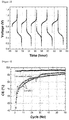
- the redox flow battery was charged and discharged at ⁇ 100 mA in a voltage range of 0.1 to 1.4 V, and charge/discharge voltages with time are shown in FIG. 3 .
- FIG. 3 is a graph illustrating a change in voltage for 16 th to 20 th charge/discharge cycles from the beginning. It was revealed that the redox flow battery was rechargeable and re-dischargeable within the same period of time at the same voltage as previously even when the number of charge/discharge cycles increased. That is, it can be seen that the redox reaction of the electrolyte on surfaces of the electrodes was reversible. Therefore, it can be seen that the charge/discharge behaviors of the single cell using 4-aminophenol as the positive electrode electrolyte were determined, and a working voltage range of the single cell was confirmed.
- the current efficiency is an index that represents a degree of reversibility of a battery as a ratio of the quantity of discharged charges to the quantity of charged charges, and means that the battery is stably charged and discharged without an irreversible change of a material so that the current efficiency reaches 100%. Therefore, the efficiency represents an important value evaluated for the battery, the value of which may indirectly represent the lifespan of the battery.
- Example 1 the redox flow batteries of Example 1 and Comparative Example 1 were assembled to having the same materials and areas, but were driven in different working voltage ranges of 0.4 to 1.2 V and 0.8 to 1.7 V, respectively, due to a difference in electrolytes therebetween.
- Current efficiency 60 th cycle, %) Measured once Measured in duplicate Example 1 91.6 93.1 Comparative Example 1 96.2 97.0
Landscapes
- Chemical & Material Sciences (AREA)
- Chemical Kinetics & Catalysis (AREA)
- Electrochemistry (AREA)
- General Chemical & Material Sciences (AREA)
- Organic Chemistry (AREA)
- Life Sciences & Earth Sciences (AREA)
- Engineering & Computer Science (AREA)
- Manufacturing & Machinery (AREA)
- Sustainable Development (AREA)
- Sustainable Energy (AREA)
- Fuel Cell (AREA)
Claims (9)
- Verwendung einer durch die folgende Formel 1 dargestellten Verbindung als Aktivmaterial einer organischen positiven Elektrode für wässrige Redox-Flow-Batterien:
 worin R1 bis R5 gleich oder verschieden voneinander sind und jeweils unabhängig voneinander H, NH2, NO2, X, CX3, oder CN darstellen, worin X ein Halogenelement ist,vorausgesetzt, dass mindestens eines von R1 bis R5 nicht H ist.
 - Verwendung gemäß Anspruch 1, wobei das Halogenelement F, Cl, Br oder I umfasst.
- Verwendung gemäß Anspruch 1, worin R1 NH2, NO2, oder Cl ist und R2 bis R5 H sind.
- Verwendung gemäß Anspruch 1, wobei die durch Formel 1 dargestellte Verbindung para-Aminophenol oder Nitrophenol ist.
- Verwendung gemäß irgendeinem der Ansprüche 1 bis 4, wobei die Verbindung der Formel 1 in einem positiven Elektrodenelektrolyten für wässrige Redox-Flow-Batterien vorhanden ist, umfassend:die wie in einem der Ansprüche 1 bis 4 definierte Verbindung der Formel 1; undein wässriges Lösungsmittel.
- Verwendung gemäß Anspruch 5, wobei das aktive Material der positiven Elektrode in einer Konzentration von 0,01 bis 5 M vorliegt.
- Verwendung gemäß Anspruch 5, worin das wässrige Lösungsmittel eines oder mehr umfasst, ausgewählt aus der Gruppe bestehend aus H2SO4, K2SO4, Na2SO4, H3PO4, H4P2O7, K2HPO4, Na3PO4, K3PO4, HNO3, KNO3, NaNO3, und einer Kombination hiervon.
- Redox-Flow-Batterie, die geladen/entladen wird, umfassendeine positive Elektrodenzelle, die eine positive Elektrode und einen positiven Elektrodenelektrolyten umfasst;eine negative Elektrodenzelle, die eine negative Elektrode und einen negativen Elektrodenelektrolyten umfasst;eine Ionenaustauschmembran, die zwischen der positiven Elektrodenzelle und der negativen Elektrodenzelle angeordnet ist; undeinen positiven Elektrodenelektrolyttank, der der positiven Elektrodenzelle durch Antrieb einer Pumpe einen positiven Elektrodenelektrolyt zuführt und in dem ein positiver Elektrodenelektrolyt gelagert ist, undeinen negativen Elektrodenelektrolyttank, der der negativen Elektrodenzelle durch Antrieb einer Pumpe einen negativen Elektrodenelektrolyt zuführt und in dem ein negativer Elektrodenelektrolyt gelagert ist,wobei sowohl der positive Elektrodenelektrolyt als auch der negative Elektrodenelektrolyt ein Elektrodenaktivmaterial und ein wässriges Lösungsmittel umfassen, unddas Aktivmaterial der positiven Elektrode, das im positiven Elektrodenelektrolyt enthalten ist, das gemäß einem der Ansprüche 1 bis 4 verwendete Aktivmaterial der positiven Elektrode ist.
- Redox-Flow-Batterie gemäß Anspruch 8, worin der negative Elektrodenelektrolyt positive zweiwertige Vanadium-Ionen V2+ und positive dreiwertige Vanadium-Ionen V3+ enthält.
Applications Claiming Priority (2)
| Application Number | Priority Date | Filing Date | Title |
|---|---|---|---|
| KR1020160121644A KR102229442B1 (ko) | 2016-09-22 | 2016-09-22 | 수계 레독스 플로우 전지용 유기계 양극 활물질 |
| PCT/KR2017/010427 WO2018056732A2 (ko) | 2016-09-22 | 2017-09-22 | 수계 레독스 플로우 전지용 유기계 양극 활물질 |
Publications (3)
| Publication Number | Publication Date |
|---|---|
| EP3457481A2 EP3457481A2 (de) | 2019-03-20 |
| EP3457481A4 EP3457481A4 (de) | 2019-07-31 |
| EP3457481B1 true EP3457481B1 (de) | 2020-11-04 |
Family
ID=61690548
Family Applications (1)
| Application Number | Title | Priority Date | Filing Date |
|---|---|---|---|
| EP17853446.7A Active EP3457481B1 (de) | 2016-09-22 | 2017-09-22 | Organisches positivelektrodenaktivmaterial für wässrige redox-flussbatterie |
Country Status (6)
| Country | Link |
|---|---|
| US (2) | US20190221847A1 (de) |
| EP (1) | EP3457481B1 (de) |
| JP (1) | JP6739810B2 (de) |
| KR (1) | KR102229442B1 (de) |
| CN (1) | CN109417185B (de) |
| WO (1) | WO2018056732A2 (de) |
Families Citing this family (2)
| Publication number | Priority date | Publication date | Assignee | Title |
|---|---|---|---|---|
| CN115863720A (zh) * | 2022-11-02 | 2023-03-28 | 宿迁时代储能科技有限公司 | 一种宽温域的含钒-有机液流电池 |
| CN118610535B (zh) * | 2024-08-08 | 2024-10-01 | 天津泰然储能科技有限公司 | 一种用于全钒液流电池的电极活性原位监测装置及方法 |
Family Cites Families (25)
| Publication number | Priority date | Publication date | Assignee | Title |
|---|---|---|---|---|
| US3338806A (en) * | 1961-08-21 | 1967-08-29 | Continental Oil Co | Process of preparing p-aminophenol by electrolytically reducing nitrobenzene |
| US4636286A (en) * | 1983-03-25 | 1987-01-13 | Ppg Industries, Inc. | Electro organic method |
| KR910005058B1 (ko) * | 1989-09-06 | 1991-07-22 | 한국과학기술 연구원 | 파라-아미노페놀의 제조방법 |
| AU696452B2 (en) | 1993-11-17 | 1998-09-10 | Jd Holding Inc. | Stabilised electrolyte solutions, methods of preparation thereof and redox cells and batteries containing stabilised electrolyte solutions |
| US5804329A (en) * | 1995-12-28 | 1998-09-08 | National Patent Development Corporation | Electroconversion cell |
| JP2005303062A (ja) | 2004-04-13 | 2005-10-27 | Rubycon Corp | 電解コンデンサ駆動用電解液及び電解コンデンサ |
| WO2013012391A1 (en) | 2011-07-21 | 2013-01-24 | National University Of Singapore | A redox flow battery system |
| WO2013028574A2 (en) | 2011-08-19 | 2013-02-28 | Polyplus Battery Company | Aqueous lithium air batteries |
| US9300000B2 (en) | 2012-02-28 | 2016-03-29 | Uchicago Argonne, Llc | Organic non-aqueous cation-based redox flow batteries |
| US8753761B2 (en) | 2012-07-27 | 2014-06-17 | Sun Catalytix Corporation | Aqueous redox flow batteries comprising metal ligand coordination compounds |
| EP2901520B1 (de) * | 2012-09-26 | 2023-11-29 | President and Fellows of Harvard College | Flussbatterie auf basis kleiner organischer moleküle |
| KR101465732B1 (ko) * | 2012-12-04 | 2014-12-01 | 한국에너지기술연구원 | 전 유기계 활물질을 포함하는 레독스 플로우 전지용 전해액 및 이를 포함하는 레독스 플로우 전지 |
| KR102014987B1 (ko) * | 2012-12-14 | 2019-08-27 | 삼성전자주식회사 | 레독스 플로우 전지 |
| JP2014127358A (ja) * | 2012-12-26 | 2014-07-07 | Nihon Univ | レドックスフロー電池 |
| US9583779B2 (en) * | 2013-02-04 | 2017-02-28 | Massachusetts Institute Of Technology | Metal sulfide electrodes and energy storage devices thereof |
| JP2014216203A (ja) * | 2013-04-25 | 2014-11-17 | 住友電気工業株式会社 | レドックスフロー電池用電解液、およびレドックスフロー電池 |
| EP3011627B1 (de) * | 2013-06-17 | 2022-05-04 | University of Southern California | Kostengünstige organische metallfreier redox-durchflussbatterie (orbat) für grid-skalierte speicherung |
| JP5433100B2 (ja) * | 2013-07-11 | 2014-03-05 | 住友電気工業株式会社 | レドックスフロー電池用電解液、レドックスフロー電池、及びレドックスフロー電池の運転方法 |
| JP6643983B2 (ja) | 2013-09-26 | 2020-02-12 | プレジデント アンド フェローズ オブ ハーバード カレッジ | キノン及びヒドロキノン系フロー電池 |
| KR101600141B1 (ko) | 2013-10-11 | 2016-03-04 | 서울대학교산학협력단 | 레독스 플로우 전지용 전해액 및 이를 포함하는 레독스 플로우 전지 |
| WO2015126907A1 (en) | 2014-02-18 | 2015-08-27 | Massachusetts Institute Of Technology | Materials for use with aqueous redox flow batteries and related methods and systems |
| KR101686127B1 (ko) | 2014-09-23 | 2016-12-13 | 한국에너지기술연구원 | 전 유기계 활물질을 포함하는 레독스 흐름전지 |
| KR101596218B1 (ko) * | 2014-09-30 | 2016-02-22 | 한국에너지기술연구원 | 고용량 슬러리 전극 및 고용량 슬러리 전극 기반의 플로우 에너지 저장장치 |
| EP3224266B1 (de) * | 2014-11-26 | 2021-03-03 | Lockheed Martin Energy, LLC | Metallkomplexe mit substituierten katecholaten und redoxflussbatterien dieselben enthaltend |
| JP6621584B2 (ja) * | 2015-02-27 | 2019-12-18 | 昭和電工株式会社 | レドックスフロー電池用電解液およびレドックスフロー電池 |
-
2016
- 2016-09-22 KR KR1020160121644A patent/KR102229442B1/ko active Active
-
2017
- 2017-09-22 WO PCT/KR2017/010427 patent/WO2018056732A2/ko not_active Ceased
- 2017-09-22 JP JP2018563894A patent/JP6739810B2/ja active Active
- 2017-09-22 EP EP17853446.7A patent/EP3457481B1/de active Active
- 2017-09-22 CN CN201780040304.2A patent/CN109417185B/zh active Active
- 2017-09-22 US US16/308,092 patent/US20190221847A1/en not_active Abandoned
-
2021
- 2021-07-07 US US17/369,558 patent/US11621421B2/en active Active
Non-Patent Citations (1)
| Title |
|---|
| None * |
Also Published As
| Publication number | Publication date |
|---|---|
| CN109417185A (zh) | 2019-03-01 |
| JP6739810B2 (ja) | 2020-08-12 |
| EP3457481A4 (de) | 2019-07-31 |
| WO2018056732A2 (ko) | 2018-03-29 |
| EP3457481A2 (de) | 2019-03-20 |
| KR102229442B1 (ko) | 2021-03-17 |
| US20210336264A1 (en) | 2021-10-28 |
| CN109417185B (zh) | 2021-11-19 |
| KR20180032424A (ko) | 2018-03-30 |
| US11621421B2 (en) | 2023-04-04 |
| JP2019521480A (ja) | 2019-07-25 |
| WO2018056732A3 (ko) | 2018-07-12 |
| US20190221847A1 (en) | 2019-07-18 |
Similar Documents
| Publication | Publication Date | Title |
|---|---|---|
| JP5580327B2 (ja) | バナジウム電池 | |
| US9077011B2 (en) | Redox flow batteries based on supporting solutions containing chloride | |
| TWI489687B (zh) | 氧化還原液流電池 | |
| EP2878033B1 (de) | Wässrige redoxflussbatterien mit metallligand-koordinationsverbindungen | |
| US9793566B2 (en) | Aqueous electrolytes for redox flow battery systems | |
| US12119527B2 (en) | Redox flow battery | |
| JP6650444B2 (ja) | 全バナジウム硫酸酸性レドックスフローバッテリーシステム | |
| WO2004095602A2 (en) | Battery with bifunctional electrolyte | |
| JP2009512164A (ja) | 2機能の電解質を有する電池 | |
| US10862153B2 (en) | High-power redox flow battery based on the CrIII/CrVI redox couple and its mediated regeneration | |
| KR102806882B1 (ko) | 음극 전해액 및 이를 포함하는 레독스 플로우 전지 | |
| US11621421B2 (en) | Organic positive electrode active material for aqueous redox flow battery | |
| KR102806877B1 (ko) | 음극 전해액 및 이를 포함하는 레독스 흐름 전지 | |
| KR101864710B1 (ko) | 크라운 에테르 첨가제를 포함하는 레독스 플로우 전지용 전해액 및 이의 제조 방법 | |
| Yu et al. | Improving performance of hybrid Zn–Ce redox flow battery by controlling ion crossover and use of mixed acid positive electrolyte | |
| US11489184B2 (en) | Electrolyte including mixture of active material and precursor thereof | |
| KR20210071231A (ko) | 장기 안정성이 향상된 전해액 조성물 및 이를 포함하는 레독스 흐름전지 장치 | |
| KR102210657B1 (ko) | 니켈을 전극활물질로 포함하는 수계 레독스 흐름 전지 | |
| KR102771093B1 (ko) | 음극 전해액 및 이를 포함하는 레독스 흐름 전지 | |
| US20240186515A1 (en) | Electrolyte solution for redox flow battery including organic active material and redox flow battery using the same | |
| KR20230054222A (ko) | 유기물 및 할로겐화물을 레독스 쌍으로 포함하는 수계 레독스 흐름전지 |
Legal Events
| Date | Code | Title | Description |
|---|---|---|---|
| STAA | Information on the status of an ep patent application or granted ep patent |
Free format text: STATUS: THE INTERNATIONAL PUBLICATION HAS BEEN MADE |
|
| PUAI | Public reference made under article 153(3) epc to a published international application that has entered the european phase |
Free format text: ORIGINAL CODE: 0009012 |
|
| STAA | Information on the status of an ep patent application or granted ep patent |
Free format text: STATUS: REQUEST FOR EXAMINATION WAS MADE |
|
| 17P | Request for examination filed |
Effective date: 20181212 |
|
| AK | Designated contracting states |
Kind code of ref document: A2 Designated state(s): AL AT BE BG CH CY CZ DE DK EE ES FI FR GB GR HR HU IE IS IT LI LT LU LV MC MK MT NL NO PL PT RO RS SE SI SK SM TR |
|
| AX | Request for extension of the european patent |
Extension state: BA ME |
|
| A4 | Supplementary search report drawn up and despatched |
Effective date: 20190701 |
|
| RIC1 | Information provided on ipc code assigned before grant |
Ipc: H01M 8/18 20060101AFI20190625BHEP Ipc: H01M 4/60 20060101ALI20190625BHEP Ipc: H01M 8/20 20060101ALI20190625BHEP |
|
| DAV | Request for validation of the european patent (deleted) | ||
| DAX | Request for extension of the european patent (deleted) | ||
| GRAP | Despatch of communication of intention to grant a patent |
Free format text: ORIGINAL CODE: EPIDOSNIGR1 |
|
| STAA | Information on the status of an ep patent application or granted ep patent |
Free format text: STATUS: GRANT OF PATENT IS INTENDED |
|
| INTG | Intention to grant announced |
Effective date: 20200625 |
|
| GRAS | Grant fee paid |
Free format text: ORIGINAL CODE: EPIDOSNIGR3 |
|
| GRAA | (expected) grant |
Free format text: ORIGINAL CODE: 0009210 |
|
| STAA | Information on the status of an ep patent application or granted ep patent |
Free format text: STATUS: THE PATENT HAS BEEN GRANTED |
|
| AK | Designated contracting states |
Kind code of ref document: B1 Designated state(s): AL AT BE BG CH CY CZ DE DK EE ES FI FR GB GR HR HU IE IS IT LI LT LU LV MC MK MT NL NO PL PT RO RS SE SI SK SM TR |
|
| REG | Reference to a national code |
Ref country code: GB Ref legal event code: FG4D |
|
| REG | Reference to a national code |
Ref country code: CH Ref legal event code: EP |
|
| REG | Reference to a national code |
Ref country code: AT Ref legal event code: REF Ref document number: 1332009 Country of ref document: AT Kind code of ref document: T Effective date: 20201115 |
|
| REG | Reference to a national code |
Ref country code: IE Ref legal event code: FG4D |
|
| REG | Reference to a national code |
Ref country code: DE Ref legal event code: R096 Ref document number: 602017027132 Country of ref document: DE |
|
| REG | Reference to a national code |
Ref country code: NL Ref legal event code: MP Effective date: 20201104 |
|
| REG | Reference to a national code |
Ref country code: AT Ref legal event code: MK05 Ref document number: 1332009 Country of ref document: AT Kind code of ref document: T Effective date: 20201104 |
|
| PG25 | Lapsed in a contracting state [announced via postgrant information from national office to epo] |
Ref country code: RS Free format text: LAPSE BECAUSE OF FAILURE TO SUBMIT A TRANSLATION OF THE DESCRIPTION OR TO PAY THE FEE WITHIN THE PRESCRIBED TIME-LIMIT Effective date: 20201104 Ref country code: PT Free format text: LAPSE BECAUSE OF FAILURE TO SUBMIT A TRANSLATION OF THE DESCRIPTION OR TO PAY THE FEE WITHIN THE PRESCRIBED TIME-LIMIT Effective date: 20210304 Ref country code: FI Free format text: LAPSE BECAUSE OF FAILURE TO SUBMIT A TRANSLATION OF THE DESCRIPTION OR TO PAY THE FEE WITHIN THE PRESCRIBED TIME-LIMIT Effective date: 20201104 Ref country code: GR Free format text: LAPSE BECAUSE OF FAILURE TO SUBMIT A TRANSLATION OF THE DESCRIPTION OR TO PAY THE FEE WITHIN THE PRESCRIBED TIME-LIMIT Effective date: 20210205 Ref country code: NO Free format text: LAPSE BECAUSE OF FAILURE TO SUBMIT A TRANSLATION OF THE DESCRIPTION OR TO PAY THE FEE WITHIN THE PRESCRIBED TIME-LIMIT Effective date: 20210204 |
|
| PG25 | Lapsed in a contracting state [announced via postgrant information from national office to epo] |
Ref country code: BG Free format text: LAPSE BECAUSE OF FAILURE TO SUBMIT A TRANSLATION OF THE DESCRIPTION OR TO PAY THE FEE WITHIN THE PRESCRIBED TIME-LIMIT Effective date: 20210204 Ref country code: SE Free format text: LAPSE BECAUSE OF FAILURE TO SUBMIT A TRANSLATION OF THE DESCRIPTION OR TO PAY THE FEE WITHIN THE PRESCRIBED TIME-LIMIT Effective date: 20201104 Ref country code: LV Free format text: LAPSE BECAUSE OF FAILURE TO SUBMIT A TRANSLATION OF THE DESCRIPTION OR TO PAY THE FEE WITHIN THE PRESCRIBED TIME-LIMIT Effective date: 20201104 Ref country code: PL Free format text: LAPSE BECAUSE OF FAILURE TO SUBMIT A TRANSLATION OF THE DESCRIPTION OR TO PAY THE FEE WITHIN THE PRESCRIBED TIME-LIMIT Effective date: 20201104 Ref country code: IS Free format text: LAPSE BECAUSE OF FAILURE TO SUBMIT A TRANSLATION OF THE DESCRIPTION OR TO PAY THE FEE WITHIN THE PRESCRIBED TIME-LIMIT Effective date: 20210304 Ref country code: ES Free format text: LAPSE BECAUSE OF FAILURE TO SUBMIT A TRANSLATION OF THE DESCRIPTION OR TO PAY THE FEE WITHIN THE PRESCRIBED TIME-LIMIT Effective date: 20201104 Ref country code: AT Free format text: LAPSE BECAUSE OF FAILURE TO SUBMIT A TRANSLATION OF THE DESCRIPTION OR TO PAY THE FEE WITHIN THE PRESCRIBED TIME-LIMIT Effective date: 20201104 |
|
| REG | Reference to a national code |
Ref country code: LT Ref legal event code: MG9D |
|
| PG25 | Lapsed in a contracting state [announced via postgrant information from national office to epo] |
Ref country code: HR Free format text: LAPSE BECAUSE OF FAILURE TO SUBMIT A TRANSLATION OF THE DESCRIPTION OR TO PAY THE FEE WITHIN THE PRESCRIBED TIME-LIMIT Effective date: 20201104 |
|
| PG25 | Lapsed in a contracting state [announced via postgrant information from national office to epo] |
Ref country code: LT Free format text: LAPSE BECAUSE OF FAILURE TO SUBMIT A TRANSLATION OF THE DESCRIPTION OR TO PAY THE FEE WITHIN THE PRESCRIBED TIME-LIMIT Effective date: 20201104 Ref country code: EE Free format text: LAPSE BECAUSE OF FAILURE TO SUBMIT A TRANSLATION OF THE DESCRIPTION OR TO PAY THE FEE WITHIN THE PRESCRIBED TIME-LIMIT Effective date: 20201104 Ref country code: CZ Free format text: LAPSE BECAUSE OF FAILURE TO SUBMIT A TRANSLATION OF THE DESCRIPTION OR TO PAY THE FEE WITHIN THE PRESCRIBED TIME-LIMIT Effective date: 20201104 Ref country code: SM Free format text: LAPSE BECAUSE OF FAILURE TO SUBMIT A TRANSLATION OF THE DESCRIPTION OR TO PAY THE FEE WITHIN THE PRESCRIBED TIME-LIMIT Effective date: 20201104 Ref country code: SK Free format text: LAPSE BECAUSE OF FAILURE TO SUBMIT A TRANSLATION OF THE DESCRIPTION OR TO PAY THE FEE WITHIN THE PRESCRIBED TIME-LIMIT Effective date: 20201104 Ref country code: RO Free format text: LAPSE BECAUSE OF FAILURE TO SUBMIT A TRANSLATION OF THE DESCRIPTION OR TO PAY THE FEE WITHIN THE PRESCRIBED TIME-LIMIT Effective date: 20201104 |
|
| REG | Reference to a national code |
Ref country code: DE Ref legal event code: R097 Ref document number: 602017027132 Country of ref document: DE |
|
| PG25 | Lapsed in a contracting state [announced via postgrant information from national office to epo] |
Ref country code: DK Free format text: LAPSE BECAUSE OF FAILURE TO SUBMIT A TRANSLATION OF THE DESCRIPTION OR TO PAY THE FEE WITHIN THE PRESCRIBED TIME-LIMIT Effective date: 20201104 |
|
| PLBE | No opposition filed within time limit |
Free format text: ORIGINAL CODE: 0009261 |
|
| STAA | Information on the status of an ep patent application or granted ep patent |
Free format text: STATUS: NO OPPOSITION FILED WITHIN TIME LIMIT |
|
| 26N | No opposition filed |
Effective date: 20210805 |
|
| PG25 | Lapsed in a contracting state [announced via postgrant information from national office to epo] |
Ref country code: NL Free format text: LAPSE BECAUSE OF FAILURE TO SUBMIT A TRANSLATION OF THE DESCRIPTION OR TO PAY THE FEE WITHIN THE PRESCRIBED TIME-LIMIT Effective date: 20201104 Ref country code: AL Free format text: LAPSE BECAUSE OF FAILURE TO SUBMIT A TRANSLATION OF THE DESCRIPTION OR TO PAY THE FEE WITHIN THE PRESCRIBED TIME-LIMIT Effective date: 20201104 Ref country code: IT Free format text: LAPSE BECAUSE OF FAILURE TO SUBMIT A TRANSLATION OF THE DESCRIPTION OR TO PAY THE FEE WITHIN THE PRESCRIBED TIME-LIMIT Effective date: 20201104 |
|
| PG25 | Lapsed in a contracting state [announced via postgrant information from national office to epo] |
Ref country code: SI Free format text: LAPSE BECAUSE OF FAILURE TO SUBMIT A TRANSLATION OF THE DESCRIPTION OR TO PAY THE FEE WITHIN THE PRESCRIBED TIME-LIMIT Effective date: 20201104 |
|
| REG | Reference to a national code |
Ref country code: CH Ref legal event code: PL |
|
| REG | Reference to a national code |
Ref country code: BE Ref legal event code: MM Effective date: 20210930 |
|
| PG25 | Lapsed in a contracting state [announced via postgrant information from national office to epo] |
Ref country code: IS Free format text: LAPSE BECAUSE OF FAILURE TO SUBMIT A TRANSLATION OF THE DESCRIPTION OR TO PAY THE FEE WITHIN THE PRESCRIBED TIME-LIMIT Effective date: 20210304 Ref country code: MC Free format text: LAPSE BECAUSE OF FAILURE TO SUBMIT A TRANSLATION OF THE DESCRIPTION OR TO PAY THE FEE WITHIN THE PRESCRIBED TIME-LIMIT Effective date: 20201104 |
|
| PG25 | Lapsed in a contracting state [announced via postgrant information from national office to epo] |
Ref country code: LU Free format text: LAPSE BECAUSE OF NON-PAYMENT OF DUE FEES Effective date: 20210922 Ref country code: IE Free format text: LAPSE BECAUSE OF NON-PAYMENT OF DUE FEES Effective date: 20210922 Ref country code: BE Free format text: LAPSE BECAUSE OF NON-PAYMENT OF DUE FEES Effective date: 20210930 |
|
| PG25 | Lapsed in a contracting state [announced via postgrant information from national office to epo] |
Ref country code: LI Free format text: LAPSE BECAUSE OF NON-PAYMENT OF DUE FEES Effective date: 20210930 Ref country code: CH Free format text: LAPSE BECAUSE OF NON-PAYMENT OF DUE FEES Effective date: 20210930 |
|
| PG25 | Lapsed in a contracting state [announced via postgrant information from national office to epo] |
Ref country code: CY Free format text: LAPSE BECAUSE OF FAILURE TO SUBMIT A TRANSLATION OF THE DESCRIPTION OR TO PAY THE FEE WITHIN THE PRESCRIBED TIME-LIMIT Effective date: 20201104 |
|
| PG25 | Lapsed in a contracting state [announced via postgrant information from national office to epo] |
Ref country code: HU Free format text: LAPSE BECAUSE OF FAILURE TO SUBMIT A TRANSLATION OF THE DESCRIPTION OR TO PAY THE FEE WITHIN THE PRESCRIBED TIME-LIMIT; INVALID AB INITIO Effective date: 20170922 |
|
| PG25 | Lapsed in a contracting state [announced via postgrant information from national office to epo] |
Ref country code: MK Free format text: LAPSE BECAUSE OF FAILURE TO SUBMIT A TRANSLATION OF THE DESCRIPTION OR TO PAY THE FEE WITHIN THE PRESCRIBED TIME-LIMIT Effective date: 20201104 |
|
| PG25 | Lapsed in a contracting state [announced via postgrant information from national office to epo] |
Ref country code: MT Free format text: LAPSE BECAUSE OF FAILURE TO SUBMIT A TRANSLATION OF THE DESCRIPTION OR TO PAY THE FEE WITHIN THE PRESCRIBED TIME-LIMIT Effective date: 20201104 |
|
| PGFP | Annual fee paid to national office [announced via postgrant information from national office to epo] |
Ref country code: DE Payment date: 20250820 Year of fee payment: 9 |
|
| PGFP | Annual fee paid to national office [announced via postgrant information from national office to epo] |
Ref country code: GB Payment date: 20250820 Year of fee payment: 9 |
|
| PGFP | Annual fee paid to national office [announced via postgrant information from national office to epo] |
Ref country code: FR Payment date: 20250821 Year of fee payment: 9 |
|
| PG25 | Lapsed in a contracting state [announced via postgrant information from national office to epo] |
Ref country code: TR Free format text: LAPSE BECAUSE OF FAILURE TO SUBMIT A TRANSLATION OF THE DESCRIPTION OR TO PAY THE FEE WITHIN THE PRESCRIBED TIME-LIMIT Effective date: 20201104 |