EP3434291B1 - Composition for treating intervertebral disc - Google Patents
Composition for treating intervertebral disc Download PDFInfo
- Publication number
- EP3434291B1 EP3434291B1 EP17769650.7A EP17769650A EP3434291B1 EP 3434291 B1 EP3434291 B1 EP 3434291B1 EP 17769650 A EP17769650 A EP 17769650A EP 3434291 B1 EP3434291 B1 EP 3434291B1
- Authority
- EP
- European Patent Office
- Prior art keywords
- nucleus pulposus
- composition
- intervertebral disc
- filling
- cells
- Prior art date
- Legal status (The legal status is an assumption and is not a legal conclusion. Google has not performed a legal analysis and makes no representation as to the accuracy of the status listed.)
- Active
Links
Images





Classifications
-
- A—HUMAN NECESSITIES
- A61—MEDICAL OR VETERINARY SCIENCE; HYGIENE
- A61L—METHODS OR APPARATUS FOR STERILISING MATERIALS OR OBJECTS IN GENERAL; DISINFECTION, STERILISATION OR DEODORISATION OF AIR; CHEMICAL ASPECTS OF BANDAGES, DRESSINGS, ABSORBENT PADS OR SURGICAL ARTICLES; MATERIALS FOR BANDAGES, DRESSINGS, ABSORBENT PADS OR SURGICAL ARTICLES
- A61L27/00—Materials for grafts or prostheses or for coating grafts or prostheses
- A61L27/50—Materials characterised by their function or physical properties, e.g. injectable or lubricating compositions, shape-memory materials, surface modified materials
- A61L27/54—Biologically active materials, e.g. therapeutic substances
-
- A—HUMAN NECESSITIES
- A61—MEDICAL OR VETERINARY SCIENCE; HYGIENE
- A61K—PREPARATIONS FOR MEDICAL, DENTAL OR TOILETRY PURPOSES
- A61K31/00—Medicinal preparations containing organic active ingredients
- A61K31/70—Carbohydrates; Sugars; Derivatives thereof
- A61K31/715—Polysaccharides, i.e. having more than five saccharide radicals attached to each other by glycosidic linkages; Derivatives thereof, e.g. ethers, esters
- A61K31/734—Alginic acid
-
- A—HUMAN NECESSITIES
- A61—MEDICAL OR VETERINARY SCIENCE; HYGIENE
- A61F—FILTERS IMPLANTABLE INTO BLOOD VESSELS; PROSTHESES; DEVICES PROVIDING PATENCY TO, OR PREVENTING COLLAPSING OF, TUBULAR STRUCTURES OF THE BODY, e.g. STENTS; ORTHOPAEDIC, NURSING OR CONTRACEPTIVE DEVICES; FOMENTATION; TREATMENT OR PROTECTION OF EYES OR EARS; BANDAGES, DRESSINGS OR ABSORBENT PADS; FIRST-AID KITS
- A61F2/00—Filters implantable into blood vessels; Prostheses, i.e. artificial substitutes or replacements for parts of the body; Appliances for connecting them with the body; Devices providing patency to, or preventing collapsing of, tubular structures of the body, e.g. stents
- A61F2/02—Prostheses implantable into the body
- A61F2/30—Joints
- A61F2/44—Joints for the spine, e.g. vertebrae, spinal discs
- A61F2/442—Intervertebral or spinal discs, e.g. resilient
-
- A—HUMAN NECESSITIES
- A61—MEDICAL OR VETERINARY SCIENCE; HYGIENE
- A61K—PREPARATIONS FOR MEDICAL, DENTAL OR TOILETRY PURPOSES
- A61K9/00—Medicinal preparations characterised by special physical form
- A61K9/14—Particulate form, e.g. powders, Processes for size reducing of pure drugs or the resulting products, Pure drug nanoparticles
- A61K9/19—Particulate form, e.g. powders, Processes for size reducing of pure drugs or the resulting products, Pure drug nanoparticles lyophilised, i.e. freeze-dried, solutions or dispersions
-
- A—HUMAN NECESSITIES
- A61—MEDICAL OR VETERINARY SCIENCE; HYGIENE
- A61L—METHODS OR APPARATUS FOR STERILISING MATERIALS OR OBJECTS IN GENERAL; DISINFECTION, STERILISATION OR DEODORISATION OF AIR; CHEMICAL ASPECTS OF BANDAGES, DRESSINGS, ABSORBENT PADS OR SURGICAL ARTICLES; MATERIALS FOR BANDAGES, DRESSINGS, ABSORBENT PADS OR SURGICAL ARTICLES
- A61L27/00—Materials for grafts or prostheses or for coating grafts or prostheses
- A61L27/14—Macromolecular materials
- A61L27/20—Polysaccharides
-
- A—HUMAN NECESSITIES
- A61—MEDICAL OR VETERINARY SCIENCE; HYGIENE
- A61F—FILTERS IMPLANTABLE INTO BLOOD VESSELS; PROSTHESES; DEVICES PROVIDING PATENCY TO, OR PREVENTING COLLAPSING OF, TUBULAR STRUCTURES OF THE BODY, e.g. STENTS; ORTHOPAEDIC, NURSING OR CONTRACEPTIVE DEVICES; FOMENTATION; TREATMENT OR PROTECTION OF EYES OR EARS; BANDAGES, DRESSINGS OR ABSORBENT PADS; FIRST-AID KITS
- A61F2/00—Filters implantable into blood vessels; Prostheses, i.e. artificial substitutes or replacements for parts of the body; Appliances for connecting them with the body; Devices providing patency to, or preventing collapsing of, tubular structures of the body, e.g. stents
- A61F2/02—Prostheses implantable into the body
- A61F2/30—Joints
- A61F2/44—Joints for the spine, e.g. vertebrae, spinal discs
- A61F2/442—Intervertebral or spinal discs, e.g. resilient
- A61F2002/444—Intervertebral or spinal discs, e.g. resilient for replacing the nucleus pulposus
-
- A—HUMAN NECESSITIES
- A61—MEDICAL OR VETERINARY SCIENCE; HYGIENE
- A61L—METHODS OR APPARATUS FOR STERILISING MATERIALS OR OBJECTS IN GENERAL; DISINFECTION, STERILISATION OR DEODORISATION OF AIR; CHEMICAL ASPECTS OF BANDAGES, DRESSINGS, ABSORBENT PADS OR SURGICAL ARTICLES; MATERIALS FOR BANDAGES, DRESSINGS, ABSORBENT PADS OR SURGICAL ARTICLES
- A61L2300/00—Biologically active materials used in bandages, wound dressings, absorbent pads or medical devices
- A61L2300/20—Biologically active materials used in bandages, wound dressings, absorbent pads or medical devices containing or releasing organic materials
- A61L2300/23—Carbohydrates
- A61L2300/232—Monosaccharides, disaccharides, polysaccharides, lipopolysaccharides
-
- A—HUMAN NECESSITIES
- A61—MEDICAL OR VETERINARY SCIENCE; HYGIENE
- A61L—METHODS OR APPARATUS FOR STERILISING MATERIALS OR OBJECTS IN GENERAL; DISINFECTION, STERILISATION OR DEODORISATION OF AIR; CHEMICAL ASPECTS OF BANDAGES, DRESSINGS, ABSORBENT PADS OR SURGICAL ARTICLES; MATERIALS FOR BANDAGES, DRESSINGS, ABSORBENT PADS OR SURGICAL ARTICLES
- A61L2300/00—Biologically active materials used in bandages, wound dressings, absorbent pads or medical devices
- A61L2300/40—Biologically active materials used in bandages, wound dressings, absorbent pads or medical devices characterised by a specific therapeutic activity or mode of action
- A61L2300/412—Tissue-regenerating or healing or proliferative agents
-
- A—HUMAN NECESSITIES
- A61—MEDICAL OR VETERINARY SCIENCE; HYGIENE
- A61L—METHODS OR APPARATUS FOR STERILISING MATERIALS OR OBJECTS IN GENERAL; DISINFECTION, STERILISATION OR DEODORISATION OF AIR; CHEMICAL ASPECTS OF BANDAGES, DRESSINGS, ABSORBENT PADS OR SURGICAL ARTICLES; MATERIALS FOR BANDAGES, DRESSINGS, ABSORBENT PADS OR SURGICAL ARTICLES
- A61L2400/00—Materials characterised by their function or physical properties
- A61L2400/06—Flowable or injectable implant compositions
-
- A—HUMAN NECESSITIES
- A61—MEDICAL OR VETERINARY SCIENCE; HYGIENE
- A61L—METHODS OR APPARATUS FOR STERILISING MATERIALS OR OBJECTS IN GENERAL; DISINFECTION, STERILISATION OR DEODORISATION OF AIR; CHEMICAL ASPECTS OF BANDAGES, DRESSINGS, ABSORBENT PADS OR SURGICAL ARTICLES; MATERIALS FOR BANDAGES, DRESSINGS, ABSORBENT PADS OR SURGICAL ARTICLES
- A61L2430/00—Materials or treatment for tissue regeneration
- A61L2430/38—Materials or treatment for tissue regeneration for reconstruction of the spine, vertebrae or intervertebral discs
Definitions
- the present invention relates to a composition for use in filling a nucleus pulposus of an intervertebral disc.
- a vertebral column is a columnar skeleton having a series of vertebrae, which provides support for the trunk and the head. Vertebrae are connected via an intervertebral disc between them.
- An intervertebral disc is a disc-shaped avascular tissue structured to have an annulus fibrosus surrounding a nucleus pulposus at the center and also provided with endplates above and below.
- the nucleus pulposus of the intervertebral disc is a gel-like highly elastic structure with a high water content which consists of nucleus pulposus cells and an extracellular matrix thereof, and serves as a cushion for absorbing force placed between the vertebral bodies.
- the annulus fibrosus consists of lamellae fibrocartilage and collagen layers surround it, and limits the rotary movement between the vertebral bodies.
- the endplates are hyaline cartilage tissue strongly connecting the intervertebral disc to the vertebral body.
- the nucleus pulposus at the center of the intervertebral disc has a distinctive composition compared to the annulus fibrosus, the endplates and other cartilage tissues.
- the extracellular matrix of the nucleus pulposus is mainly composed of water (70-90% ; decreases with age), Type II collagen (20% of the dry weight) and proteoglycans (50% of the dry weight), and is characteristic in having a higher ratio of proteoglycans to collagen as compared to other cartilage tissues such as the endplates and the articular cartilage (Non-patent document 1).
- the extracellular matrix of other cartilage tissues such as articular cartilage has a high ratio of collagen than proteoglycans.
- the function of the intervertebral disc as a shock absorber owes much to its rich water content.
- a rich water content is mainly maintained because glycosaminoglycans attached to the core proteins of the proteoglycans are negatively charged and therefore attract water.
- the structure and the size of the proteoglycans existing in the intervertebral disc differ from the proteoglycans existing in the articular cartilage, and that these differences were particularly significant for the proteoglycans in the nucleus pulposus (Non-patent document 2).
- the nucleus pulposus, the annulus fibrosus and the endplates of an intervertebral disc have different structures and functions, and are respectively maintained by cell groups with distinct phenotypes.
- the nucleus pulposus cells existing in the nucleus pulposus are round and produce a proteoglycan-rich matrix.
- the cells existing in the annulus fibrosus are embedded in a collagen fiber matrix.
- These cells in the intervertebral disc have distinct phenotypes and are also recently reported to be phenotypically different from articular chondrocytes (Non-patent document 1).
- An intervertebral disc can be degenerated or injured due to aging, trauma, disease or the like.
- Degeneration of the intervertebral disc refers to a state where the cell number, the water content, the extracellular matrix (Type II collagen, aggrecan, etc.) and the like are decreased in the intervertebral disc, which may progress such that the intervertebral disc can no longer perform the function as a shock absorber.
- the degeneration and the injury of the intervertebral disc are specifically disc herniation, discopathy, degenerative spondylolisthesis, pyogenic discitis, spondylosis deformans, spinal canal stenosis, intervertebral disc injuries due to trauma, and the like.
- deformation or a crack of the annulus fibrosus encaging the nucleus pulposus constitutes a hernia that protrudes outside the intervertebral disc, where the protruding nucleus pulposus places pressure on the spinal nerve, causing pain, loss of sensation or the like.
- Intervertebral nucleotomy is one of the treatments for disc herniation, which has been confirmed to be effective to a certain extent.
- An intervertebral nucleotomy (resection) is known to sometimes end in the progress of the degenerative changes of the intervertebral disc since the surgical site is not treated after the intervertebral nucleotomy.
- a part of the nucleus pulposus is removed by intervertebral nucleotomy, a cavity is formed at the nucleus pulposus site (herein, also referred to as a "defective part").
- the cavity of the nucleus pulposus is likely to be physically weak as well.
- fibroblast-like cells may accumulate in the cavity part to form a tissue with dynamic characteristics different from those intrinsic to the original nucleus pulposus. Therefore, recurrence rate of herniation after the intervertebral nucleotomy is high.
- the recurrence rate within 5 years after the intervertebral nucleotomy is said to be about 4-15%, but the recent long-term data shows that more than half of the cases are associated with recurrence after 10 years.
- a method of enhancing the function of a intervertebral disc comprising injecting a cartilage-protecting material such as glycosaminoglycan into a site in need has been proposed, where an amphipathic derivative of sodium alginate is included as one of the many specific examples of the cartilage-protecting material (Patent document 2).
- a device for injecting an antacid into an intervertebral disc is also disclosed (Patent document 3).
- it may optionally be used for injecting an intervertebral disc filler, where alginate cross-linked with calcium or barium is included as one of the many specific examples of the filler (Patent document 3).
- alginate is merely included as one of the many specific examples, and no specific method or example is described for using alginate.
- hydrogels of an alginate or the like have been considered as a material for filling the nucleus pulposus.
- their mechanical strength has been a problem. Therefore, a material which can keep its shape for a certain period of time when used in vivo has been recommended and it would be good to have high hardness (Non-patent documents 3-9).
- the objective of the present invention is to provide a composition for filling a nucleus pulposus of an intervertebral disc, which is capable of promoting regeneration of the nucleus pulposus.
- the objective is to provide a composition for filling the nucleus pulposus that allows a relatively easy filling operation with a low risk of complications such as compression on the spinal nerve.
- the present inventors have studied the possibility of fillingthe nucleus pulposus with a biocompatible material, as a therapeutic method for intervertebral disc degeneration and injury.
- use of hydrogels of an alginate or the like as a material for filling the nucleus pulposus has particularly been examined in this therapeutic field with a concern in the mechanical strength of the hydrogels and it has been recommended to keep their shape for a certain period of time upon use in vivo.
- the present inventors found that regeneration of an nucleus pulposus of an intervertebral disc can be promoted by injecting a composition containing a low endotoxin sodium alginate in a sol state into a nucleus pulposus site and brining a crosslinking agent into contact with a composition-filling inlet on the surface of the intervertebral disc in order to cure a part of the composition for preventing leakage, thereby suppressing degeneration of the nucleus pulposus of the intervertebral disc and increasing the ratio of the Type II collagen-positive cells favorable for nucleus pulposus regeneration.
- degeneration of the whole tissue of the intervertebral disc including the annulus fibrosus can also be suppressed.
- the present inventors conducted further studies based on such findings, thereby accomplishing the present invention.
- the present invention provides a composition for use in filling a nucleus pulposus of an intervertebral disc, which is capable of promoting regeneration of the nucleus pulposus.
- the composition for use in filling a nucleus pulposus of an intervertebral disc of the present invention is capable of suppressing degenerative change not only in the nucleus pulposus of the intervertebral disc but also in the whole tissue of the intervertebral disc including the annulus fibrosus.
- the composition for use in filling a nucleus pulposus of an intervertebral disc of the present invention has an effect of increasing the ratio of the Type II collagen-positive hyaline cartilage-like cells in the nucleus pulposus.
- a composition for use in filling a nucleus pulposus of an intervertebral disc of the present invention can be used as a material for filling the nucleus pulposus for treating, preventing, or suppressing recurrence of a disease related to an intervertebral disc degeneration such as disc herniation, and an intervertebral disc injury due to trauma.
- a composition for use in filling a nucleus pulposus of an intervertebral disc of the present invention is capable to be injected in a sol state into a nucleus pulposus site by using a syringe and also allows filling not only under direct vision but also upon transdermal nucleotomy (incision of about 5 mm), under a microscope (incision of about 3-4 cm) and under an endoscope (incision of about 1-2 cm). Therefore, burden on patients can be reduced and manipulation can be relatively easy.
- a conventional material for filling the nucleus pulposus that is entirely gelled has a risk of compressing and damaging the spinal nerve if by any chance it protrudes into the spinal canal.
- a composition for use in filling a nucleus pulposus of an intervertebral disc of the present invention has little concern about such complications and thus is safe since it is gelled only on the surface.
- a composition for use in filling a nucleus pulposus of an intervertebral disc of the present invention is capable of preventing recurrence of herniation and scarring after the intervertebral nucleotomy (resection).
- the application of the composition for use in filling a nucleus pulposus of an intervertebral disc of the present invention to an nucleus pulposus of an intervertebral disc having an intervertebral disc degeneration and/or an intervertebral disc injury for the treatment would reduce burden on an intervertebral disc adjacent to the treated intervertebral disc, thereby preventing and/or alleviating degeneration of the adjacent intervertebral disc.
- composition for use in filling a nucleus pulposus of an intervertebral disc of the present invention satisfies any one or more of the above-described advantages.
- the present invention relates to a composition for use in filling a nucleus pulposus of an intervertebral disc.
- the composition of the present invention is a composition for use in filling a nucleus pulposus of an intervertebral disc comprising a low endotoxin monovalent metal salt of alginic acid, which is used by being applied to a nucleus pulposus site of a subject and partially cured after the application and which has fluidity when applied to the nucleus pulposus site (herein, sometimes referred to as a "composition of the present invention").
- Low endotoxin and "a monovalent metal salt of alginic acid” are as described hereinbelow.
- An "intervertebral disc” is a columnar tissue lying between vertebrae forming the vertebral column.
- An intervertebral disc is a disc-shaped avascular tissue structured to have an annulus fibrosus surrounding a nucleus pulposus at the center and also provided with endplates above and below.
- nucleus pulposus is a gel-like tissue located at the center of the intervertebral disc, which mainly contains nucleus pulposus cells, an extracellular matrix mainly composed of proteoglycan and Type II collagen, and water.
- the nucleus pulposus is considered to have little self-repairing/regenerating capacity.
- “Filling of nucleus pulposus” refers to filling of a degenerated part, a shrunken part or a removed part of a degenerated, shrunken or removed nucleus pulposus resulting from aging, trauma, infection, a surgical operation therefor (for example, an intervertebral nucleotomy (resection)).
- the term "replenishment of the nucleus pulposus” is used in the same meaning as "filling of the nucleus pulposus”
- a “composition for filling the nucleus pulposus” of the present invention is synonymous with a “composition for replenishing the nucleus pulposus”.
- nucleus pulposus site refers to a site where a nucleus pulposus exists, a degenerated or shrunken site of a nucleus pulposus, or a defective part of a nucleus pulposus formed by removing at least a part of the nucleus pulposus, and also includes a peripheral part of the site where the nucleus pulposus exists.
- a "subject” refers to a human or a living thing other than a human, for example, a bird or a non-human mammal (for example, bovine, monkey, cat, mouse, rat, guinea pig, hamster, pig, dog, rabbit, sheep and horse).
- a bird or a non-human mammal for example, bovine, monkey, cat, mouse, rat, guinea pig, hamster, pig, dog, rabbit, sheep and horse.
- “Application” means to fill a nucleus pulposus site of an intervertebral disc with a composition of the present invention in an amount sufficient to embed a degenerated part, a shrunken part, a removed part, or a defective part of the nucleus pulposus site.
- composition of the present invention contains a low endotoxin monovalent metal salt of alginic acid in an amount sufficient to regenerate the applied nucleus pulposus site.
- intervertebral disc degeneration and/or intervertebral disc injury mean as described below.
- the composition of the present invention may be provided in a solution state using a solvent, or in a dry state as a lyophilizate (particularly, lyophilized powder). If the composition of the present invention is provided in a dry state, it should be used in a state with fluidity such as a solution state using a solvent upon application.
- the solvent is not particularly limited as long as it can be applied to a living body, and it may be, for example, injectable water, purified water, distilled water, ion exchange water (or deionized water), Milli-Q water, physiological saline and phosphate buffered physiological saline (PBS). Preferably, it is injectable water, distilled water, or physiological saline that can be used for treating a human and an animal.
- the "monovalent metal salt of alginic acid” is a water-soluble salt formed by ion exchange between a hydrogen atom of carboxylic acid at position 6 of alginic acid and a monovalent metal ion such as Na + or K + .
- a monovalent metal ion such as Na + or K + .
- specific examples of monovalent metal salts of alginic acid include sodium alginate and potassium alginate, sodium alginate acquirable as a commercially available product is particularly preferable.
- a solution of a monovalent metal salt of alginic acid forms a gel when mixed with a crosslinking agent.
- alginic acid used in the present invention is a biodegradable, high molecular weight polysaccharide that is a polymer obtained by linearly polymerizing two types of uronic acids in the form of D-mannuronic acid (M) and L-gluronic acid (G). More specifically, the alginic acid is a block copolymer in which a homopolymer fraction of D-mannuronic acid (MM fraction), homopolymer fraction of L-gluronic acid (GG fraction) and fraction in which D-mannuronic acid and L-gluronic acid are randomly arranged (MG fraction) are linked arbitrarily.
- MM fraction homopolymer fraction of D-mannuronic acid
- GG fraction homopolymer fraction of L-gluronic acid
- MG fraction fraction in which D-mannuronic acid and L-gluronic acid are randomly arranged
- the composite ratio of the D-mannuronic acid to the L-gluronic acid of the alginic acid mainly varies according to the type of algae or other organism serving as the origin thereof, is affected by the habitat and season of that organism, and extends over a wide range from a high G type having an M/G ratio of about 0.4 to a high M type having an M/G ratio of about 5.
- a monovalent metal salt of alginic acid is a high molecular weight polysaccharide and it is difficult to accurately determine the molecular weight thereof, it has a weight-average molecular weight generally in a range of 10,000-10,000,000, preferably 20,000-8,000,000 and more preferably 50,000-5,000,000 since too low molecular weight results in low viscosity, by which adhesion to the tissue surrounding the applied site may become weak and too high molecular weight makes the production difficult, lowers solubility, makes handling poor due to too high viscosity in the solution state, makes it difficult to maintain the physical properties during long-term preservation.
- numerical ranges expressed with "-/to” each represent a range that includes the numerical values preceding and following "-/to" as minimum and maximum values, respectively.
- a weight-average molecular weight measured by gel permeation chromatography (GPC) or gel filtration chromatography (which are also collectively referred to as size exclusion chromatography) is preferably 100,000 or more and more preferably 500,000 or more, while preferably 5,000,000 or less and more preferably 3,000,000 or less, according to the effects shown in the examples of the present invention.
- the preferable range is 100,000 to 5,000,000, and more preferably 500,000 to 3,500,000.
- an absolute weight-average molecular weight can be measured, for example, by a GPC-MALS method employing a combination of gel permeation chromatography (GPC) and a multi-angle light scattering detector (Multi Angle Light Scattering: MALS).
- the weight-average molecular weight (absolute molecular weight) measured by the GPC-MALS method is preferably 10,000 or more, more preferably 80,000 or more and still more preferably 90,000 or more, while preferably 1,000,000 or less, more preferably 800,000 or less, still more preferably 700,000 or less and particularly preferably 500,000 or less, according to the effects shown in the examples of the present invention.
- the preferable range is 10,000 to 1,000,000, more preferably 80,000 to 800,000, still more preferably 90,000 to 700,000, and particularly preferably 90,000 to 500,000.
- a molecular weight of a high molecular weight polysaccharide is calculated by the process described above, usually, there is normally the potential for measurement error of 10 to 20%.
- a molecular weight of 400,000 can fluctuate within the range of 320,000 to 480,000
- a molecular weight of 500,000 can fluctuate within the range of 400,000 to 600,000
- a molecular weight of 1,000,000 can fluctuate within the range of 800,000 to 1,200,000.
- a molecular weight of a monovalent metal salt of alginic acid can be measured according to a common method. Typical conditions for molecular weight measurement using gel permeation chromatography are as described in the examples herein. For example, GMPW-XL ⁇ 2 + G2500PW-XI, (7.8 mm I.D. ⁇ 300 mm) may be used as the columns, a 200 mM aqueous sodium nitrate solution can be used as the eluent, and pullulan can be used as the molecular weight standard.
- Typical conditions for molecular weight measurement using GPC-MALS are as described in the examples herein.
- a RI detector and a light scattering detector (MALS) can be used as the detectors.
- a monovalent metal salt of alginic acid has a large molecular weight and relatively high viscosity when originally extracted from brown algae, the molecular weight becomes smaller and the viscosity becomes lower during the course of heat drying, purification.
- monovalent metal salts of alginic acid with different molecular weights can be produced.
- it can be mixed with a monovalent metal salt of alginic acid from other lot having different molecular weight or viscosity, so as to give a monovalent metal salt of alginic acid having a molecular weight of interest.
- a monovalent metal salt of alginic acid used with the present invention is preferably a solution obtained by dissolving a monovalent metal salt of alginic acid into MilliQ water to a concentration of 1 w/w%, where the apparent viscosity as measured with a cone-plate viscometer under the condition of 20 °C is preferably 40 mPa ⁇ s to 800 mPa ⁇ s and more preferably 50 mPa ⁇ s to 600 mPa ⁇ s.
- the conditions for measuring the apparent viscosity preferably follow the conditions described hereinbelow.
- "apparent viscosity" may simply be referred to as "viscosity”.
- alginic acid used in the present invention may be of a natural origin or synthetic, it is preferably derived from a natural origin.
- examples of naturally-occurring alginic acids include those extracted from brown algae. Although brown algae containing alginic acid are prominently found along seacoasts throughout the world, algae that can actually be used as raw materials of alginic acid are limited, with typical examples thereof including Lessonia found in South America, Macrocystis found in North America, Laminaria and Ascophyllum found in Europe, and Durvillea found in Australia.
- brown algae serving as raw materials of alginic acid include genus Lessonia, genus Macrocystis, genus Laminaria, genus Ascophyllum, genus Durvillea, genus Eisenia and genus Ecklonia.
- the monovalent metal salt of alginic acid used in the present invention is a low endotoxin monovalent metal salt of alginic acid.
- Low endotoxin refers to that in which the endotoxin level thereof has been substantially lowered to an extent that does not induce inflammation or fever.
- the monovalent metal salt of an alginic acid is preferably subjected to an endotoxin reduction treatment.
- Endotoxin reduction treatment can be carried out by a known method or a method complying therewith.
- this treatment can be carried out by the method of Suga et al. involving purification of sodium hyaluronate (see, for example, Japanese Patent Application Laid-open No. H9-324001), the method of Yoshida et al. involving purification of 01,3-glucan (see, for example, Japanese Patent Application Laid-open No. H8-269102), the method of William et al. involving purification of a biopolymer such as alginate or gellan gum (see, for example, Published Japanese Translation No. 2002-530440 of PCT International Publication), the method of James et al.
- the endotoxin reduction treatment disclosed in the present application is not limited to these metods, but rather can be carried out by a known method such as cleaning, purification using filtration with filter (endotoxin removing filter or electrification filter), ultrafiltration or a column (such as an endotoxin adsorption affinity column, gel filtration column or ion exchange column), adsorption to a hydrophobic substance, resin or activated carbon , organic solvent treatment (such as extraction with an organic solvent or precipitation or deposition by addition of organic solvent), surfactant treatment (see, for example, Japanese Patent Application Laid-open No. 2005-036036 ) or a suitable combination thereof.
- a known method such as centrifugal separation may be suitably combined with these treatment steps.
- Endotoxin reduction treatment is preferably suitably selected according to the type of alginic acid.
- the endotoxin level can be confirmed by a known method, and can be measured using a known method such as a method using Limulus reagent (LAL) or Endospecy (registered trademark) ES-24S set (Seikagaku Corporation).
- LAL Limulus reagent
- ES-24S set Seikagaku Corporation
- the endotoxin content of the monovalent metal salt of alginic acid in the case of measuring endotoxin using a limulus reagent is preferably 500 endotoxin units (EU)/g or less, more preferably 100 EU/g or less, even more preferably 50 EU/g or less and particularly preferably 30 EU/g or less as a result thereof.
- EU endotoxin units
- Sodium alginate that has undergone endotoxin reduction treatment can be acquired as a commercially available products such as Sea Matrix (registered trademark) (Mochida Pharmaceutical), PRONOVA TM UP LVG (FMC BioPolymer) or the like.
- the composition for use in filling a nucleus pulposus of an intervertebral disc of the present invention may be prepared by using a solution of a monovalent metal salt of alginic acid.
- the solution of a monovalent metal salt of alginic acid can be prepared by a known method or method complying therewith. Namely, the monovalent metal salt of alginic acid for use in the present invention can be produced by a known method such as an acid method or calcium method using the previously described brown algae.
- alginic acid be obtained by adding an acid (such as hydrochloric acid or sulfuric acid), and a salt of alginic acid can be obtained by ion exchange of the alginic acid.
- Endotoxin reduction treatment is then carried out as previously described.
- the solvent of the monovalent metal salt of alginic acid provided it is a solvent that can be applied in vivo, and examples of such solvents include purified water, distilled water, ion exchange water, Milli-Q water, physiological saline and phosphate-buffered saline (PBS). These are preferably sterilized and preferably subjected to endotoxin reduction treatment.
- Milli-Q water can be used after sterilizing by filtration.
- the above-described solvent can be used to prepare it into a solution having fluidity.
- all of the operations for obtaining the composition for use in filling a nucleus pulposus of an intervertebral disc of the present invention are preferably carried out in an environment at a low endotoxin level and a low bacterial level.
- the operations are preferably carried out in a clean bench using sterilized tools.
- the tools used may be treated with a commercially available endotoxin removal agent.
- compositions for use in filling a nucleus pulposus of an intervertebral disc of the present invention are in a liquid state having fluidity, namely, a solution state.
- the composition of the present invention has fluidity when applied to the nucleus pulposus site.
- the composition for use in filling a nucleus pulposus of an intervertebral disc of the present invention preferably has fluidity that allows injection with a 21G needle following an hour of standing at 20 °C.
- the apparent viscosity of the composition of the present invention in this aspect is not particularly limited as long as the effect of the present invention can be achieved, it is preferably 10 mPa ⁇ s or more, more preferably 100 mPa ⁇ s or more, still more preferably 200 mPa ⁇ s or more and particularly preferably 500 mPa ⁇ s or more since too low viscosity would weaken adhesion to the tissue surrounding the applied site. It is also preferably 50,000 mPa ⁇ s or less, more preferably 20,000 mPa ⁇ s or less and still more preferably 10,000 mPa ⁇ s or less since too high apparent viscosity would deteriorate the handing property.
- composition for use in filling a nucleus pulposus of an intervertebral disc of the present invention is preferably in a range of 10 mPa ⁇ s to 50,000 mPa ⁇ s, more preferably 100 mPa ⁇ s to 30,000 mPa ⁇ s, still more preferably 200 mPa ⁇ s to 20,000 mPa ⁇ s, yet still more preferably 500 mPa ⁇ s to 20,000 mPa ⁇ s, and particularly preferably 700 mPa ⁇ s to 20,000 mPa ⁇ s. In another preferable aspect, it may be 500 mPa ⁇ s to 10,000 mPa ⁇ s, or 2000 mPa ⁇ s to 1 0,000 mPa ⁇ s.
- Compositions for use in filling a nucleus pulposus of an intervertebral disc of the present invention have viscosity that also allows application to a subject with a syring.
- the apparent viscosity of a composition containing a monovalent metal salt of alginic acid can be measured according to a common method.
- a coaxial double cylinder type rotational viscometer, a single cylinder type rotational viscometer (Brookfield viscometer), a cone-plate rotational viscometer (a cone-plate viscometer) or the like can be used for the measurement according to a rotational viscometer method. It is preferable to follow the viscosity measurement method of the Japanese Pharmacopoeia (16th edition). According to the present invention, the viscosity measurement is preferably carried out under the condition of 20 °C.
- the apparent viscosity of the composition is preferably an apparent viscosity free of cells in order to carry out an accurate viscosity measurement.
- an apparent viscosity of a composition for use in filling a nucleus pulposus of an intervertebral disc containing a monovalent metal salt of alginic acid is particularly measured with a cone-plate viscometer.
- a measurement preferably takes place under the following measurement conditions.
- a sample solution is prepared with MilliQ water.
- the measurement temperature is 20 °C.
- the rotation speed of the cone-plate viscometer is 1 rpm for measuring a 1% solution of the monovalent metal salt of alginic acid, 0.5 rpm for measuring a 2% solution, which can be determined so on.
- the reading time is 2 min of measurement to obtain the average of the values taken during the period from 1 to 2 min after the start of such measurement; and for the 2% solution, the reading time is 2.5 min of measurement to obtain the average of the values taken during the period from 0.5 to 2.5 minutes after the start of such measurement.
- the test value is an average value of three times of measurements.
- the apparent viscosity of the composition for use in filling a nucleus pulposus of an intervertebral disc of the present invention can be adjusted, for example, by controlling the concentration, the molecular weight, the M/G ratioe of the monovalent metal salt of alginic acid.
- the apparent viscosity of the monovalent metal salt solution of alginic acid becomes high when the concentration of the monovalent metal salt of alginic acid in the solution is high whereas the viscosity becomes low when the concentration is low. Moreover, the viscosity becomes higher when the molecular weight of the monovalent metal salt of alginic acid is large whereas the viscosity becomes lower when the molecular weight is small.
- an alginic acid can be suitably selected that has an M/G ratio more preferable for viscosity of the solution or the like.
- the M/G ratio of the alginic acid used with the present invention is about 0.1 to 5.0, preferably about 0.1 to 4.0 and more preferably about 0.2 to 3.5.
- the species of the brown alga used as the raw material affects the viscosity of the monovalent metal salt solution of alginic acid.
- the alginic acid used with the present invention is preferably derived from a brown alga of genus Lessonia, genus Macrycystis, genus Laminaria, genus Ascophyllum and genus Durvillea, more preferably from a brown alga of genus Lessonia, and particularly preferably derived from Lessonia nigrescens.
- composition for use in filling a nucleus pulposus of an intervertebral disc of the present invention is characterized by containing a low endotoxin monovalent metal salt of alginic acid as an active ingredient.
- the present inventors found for the first time that when a low endotoxin monovalent metal salt of alginic acid is used to fill a nucleus pulposus site of a living body, the monovalent metal salt of alginic acid per se exerts an effect to regenerate or treat the nucleus pulposus tissue.
- “Contained as an active ingredient” means that the low endotoxin monovalent metal salt of alginic acid is contained in an amount effective to regenerate or treat the nucleus pulposus tissue when it is applied to the affected site, which is at least, preferably 0.1 w/v% or more, more preferably 0.5 w/v% or more and still more preferably 1 w/v% of the whole composition.
- a preferable concentration of the monovalent metal salt of alginic acid in the composition of the present invention cannot be determined unconditionally because it is affected by the molecular weight, it is preferably 0.5 w/v% to 5 w/v%, more preferably 1 w/v% to 5 w/v%, still more preferably 1 w/v% to 3w/v% and particularly preferably 1.5 w/v% to 2.5w/v%.
- the concentration of the monovalent metal salt of alginic acid in the composition of the present invention may be preferably 0.5 w/w% to 5w/w%, more preferably 1 w/w% to 5w/w%, still more preferably 1 w/w% to 3 w/w% and particularly preferably 1.5w/w% to 2.5 w/w%.
- the endotoxin content of the composition is usually 500 EU/g or less, more preferably 300 EU/g or less, still more preferably 150 EU/g or less and particularly preferably 100 EU/g or less.
- compositions for use in filling a nucleus pulposus of an intervertebral disc of the present invention are preferably free of cells.
- the compositions for use in filling a nucleus pulposus of an intervertebral disc of the present invention use cells.
- cells include nucleus pulposus cells, stem cells, stromal cells, mesenchymal stem cells and marrow stromal cells. While their sources are not particularly limited, examples include a nucleus pulposus of an intervertebral disc, a bone marrow, an adipose tissue and an umbilical cord blood.
- the cells also include non human ES cells and iPS cells.
- to use cells refers to addition of cells to the composition of the present invention, wherein the cells are prepared, as may be necessary, by a process in which cells of interest are collected and concentrated from a nucleus pulposus of an intervertebral disc, a bone marrow, an adipose tissue, an umbilical cord blood, or a process where the cells are cultured to increase the amount thereof.
- the cells are contained in the composition of the present invention, for example, for 1 ⁇ 10 4 cells/ml or more, 1 ⁇ 10 5 cells/ml or more, preferably 1 ⁇ 10 4 cells/ml to 1 ⁇ 10 7 cells/ml.
- the cells may be commercially available.
- composition for use in filling a nucleus pulposus of an intervertebral disc of the present invention may also contain a factor for promoting the growth of the cells.
- a factor for promoting the growth of the cells examples include BMP, FGF, VEGF, HGF, TGF- ⁇ , IGF-1, PDGF, CDMP (cartilage-derived-morphogenetic protein), CSF, EPO, IL, PRP (Platelet Rich Plasma), SOX and IF.
- BMP BMP
- FGF vascular endothelial growth factor
- VEGF vascular endothelial growth factor
- the composition of the present invention may containfactors for suppressing cell death.
- a factor that induces cell death include Caspase and TNF ⁇ , and examples of a factor for suppressing them include an antibody and siRNA.
- Suchfactors for suppressing cell death may be produced by a recombination method or may be purified from a protein composition.
- compositions in some aspects of the present invention do not containsuch factors for suppressing cell death. Even in the case of not containing factors for suppressing cell death, however, regeneration of the nucleus pulposus is adequately satisfactory, and safety is higher than in the case of aggressively supressing cell death.
- the composition for use in filling a nucleus pulposus of an intervertebral disc of the present invention does not contain a component demonstrating pharmacological action on a nucleus pulposus tissue of an intervertebral disc other than a low endotoxin monovalent metal salt of alginic acid.
- a composition containing as an active ingredient thereof only a low endotoxin monovalent metal salt of alginic acid is also able to demonstrate adequate effects for regenerating or treating a nucleus pulposus.
- composition for use in filling a nucleus pulposus of an intervertebral disc of the present invention can also contain components ordinarily used in pharmaceuticals, such as other pharmaceutically active ingredients and commonly used stabilizers, emulsifiers, osmotic pressure adjusters, buffers, isotonic agents, preservatives, pain relievers or colorants as necessary.
- composition for use in filling a nucleus pulposus of an intervertebral disc of the present invention is used such that it is partially cured after being applied to the nucleus pulposus site.
- Partially cured means to bring a crosslinking agent into contact with a part of the composition of the present invention having fluidity so as to gel and solidify not the whole but a part of the composition in contact with the crosslinking agent.
- the crosslinking agent is brought into contact with at least a part of the surface of the composition of the present invention having fluidity so as to cure a part of the composition of the present invention.
- At least a part of the surface of the composition refers to, for example, an opening in the surface of the intervertebral disc that leads to the nucleus pulposus, preferably, an opening in the surface of the intervertebral disc that is used for applying the composition to the nucleus pulposus site, namely, an inlet for filling in the composition. Solidification of at least a part of the surface of the composition by gelation can effectively prevent leakage of the composition from the intervertebral disc.
- An composition-filling inlet on the surface of the intervertebral disc is, for example, preferably an opening formed in the surface of the intervertebral disc with a needle of a syringe or a scalpel for filling in the composition, or an opening in the surface of the intervertebral disc formed with a scalpel or the like upon resection of the herniated disc.
- an intervertebral disc preferably refers to an annulus fibrosus.
- the composition for use in filling a nucleus pulposus of an intervertebral disc of the present invention does not contain a crosslinking agent in an amount that results curing of the composition before application to a nucleus pulposus site of a subject. Therefore, the composition for use in filling a nucleus pulposus of an intervertebral disc of the present invention may contain a crosslinking agent in an amount that does not result curing of the composition even after a certain period of time.
- a certain period of time refers to, but not particularly limited to, preferably about 30 min to 12 h.
- compositions not contain a crosslinking agent in an amount that results curing of the composition may be represented, for example, by the composition being injectable with a syringe with a 21G needle after standing at 20 °C for an hour.
- compositions in some aspects of the present invention are free of a crosslinking agent.
- crosslinking agent there are no particular limitations on the crosslinking agent provided it is able to solidify a surface of a solution of a monovalent metal salt of alginic acid by crosslinking that solution.
- the crosslinking agent include divalent or more metal ion compounds such as Ca 2+ , Mg 2+ , Ba 2+ and Sr 2+ , and crosslinking reagents having 2 to 4 amino groups in a molecule thereof.
- divalent or more metal ion compounds include CaCl 2 , MgCl 2 , CaSO 4 , BaCl 2
- crosslinking reagents having 2 to 4 amino groups in a molecule thereof include diaminoalkanes optionally having a lysyl group (-COCH (NH 2 )-(CH 2 ) 4 -NH 2 ) on a nitrogen atom, namely derivatives which form lysylamino groups as a result of a diaminoalkane and amino group thereof being substituted with a lysyl group.
- specific examples thereof include diaminoethane, diaminopropane and N-(lysyl)-diaminoethane
- CaCl 2 solution is particularly preferable for reasons such as ease of acquisition and gel strength.
- the timing of bringing the crosslinking agent into contact with the surface of the composition for use in filling a nucleus pulposus of an intervertebral disc of the present invention is preferably after the application of the composition to the nucleus pulposus site.
- a method for bringing a crosslinking agent (for example, a divalent or higher valent metal ion) into contact with a part of the composition for use in filling a nucleus pulposus of an intervertebral disc of the present invention is not particularly limited and may be, for example, a method in which a solution of the divalent or higher valent metal ion is applied to the surface of the composition with a syringe, or a spray.
- a crosslinking agent may continuously and slowly be applied onto the composition-filling inlet formed in the intervertebral disc by spending several seconds to more than 10 s. Thereafter, if necessary, a treatment for removing the crosslinking agent remaining in the vicinity of the filling inlet may be added.
- the crosslinking agent may be removed, for example, by washing the applied part with a physiological saline.
- the amount of the crosslinking agent used is appropriately adjusted considering the amount of the composition applied, the size of the inlet in the surface of the intervertebral disc for filling the composition, or the size of the site of the nucleus pulposus of the intervertebral disc to be applied.
- the amount of the crosslinking agent used is controlled not to be too much.
- the amount of the divalent or higher valent metal ion used is not particularly limited as long as the surface of the composition containing the monovalent metal salt of an alginic acid can be solidified.
- the amount of the CaCl 2 solution used is preferably about 0.3 ml to 5.0 ml, and more preferably about 0.5 ml to 3.0 ml if the diameter of the filling inlet in the surface of the intervertebral disc is about 1 mm.
- the amount of the 100 mM CaCl 2 solution used is preferably about 0.3 ml to 10 ml and more preferably about 0.5 ml to 6.0 ml. The amount can suitably be increased or decreased while observing the state of the composition at the applied site.
- the calcium concentration is preferably set to 25 mM to 200 mM and more preferably 50 mM to 150 mM.
- the crosslinking agent remaining at the added site after adding the crosslinking agent to the composition and leaving the resultant to stand for a certain period of time is preferably removed by washing. While the certain period of time for leaving the composition to stand is not particularly limited, it is preferably left to stand for about a minute of longer and more preferably about 4 min or longer so as to gel the surface of the composition. Alternatively, it is preferably left to stand for about 1 to 10 min, more preferably about 4 to 10 min, about 4 to 7 min and still more preferably about 5 min.
- the composition and the crosslinking agent are preferably in contact during this certain period of time, and a crosslinking agent may appropriately be added so that the liquid surface of the composition does not dry.
- alginate beads can be obtained by dropping a sodium alginate solution into a CaCl 2 solution to form gel.
- the alinate beads need to be applied by being pressed to the site to be applied and those having a size appropriate for the applied site are required, which is technically difficult in an actual clinical practice.
- a CaCl 2 solution is used as a crosslinking agent, the Ca ion on the bead surface makes contact with the surrounding tissue, causing a problem of calcium cytotoxicity.
- the composition for use in filling a nucleus pulposus of an intervertebral disc of the present invention in a solution state can easily be applied to sites having any kind of shape and can cover the whole area of the site to be applied with good adhesion to the surrounding tissue.
- the calcium concentration of the part of the composition for use in filling a nucleus pulposus of an intervertebral disc of the present invention making contact with the surrounding tissue can be kept low and thus the problem of calcium cytotoxicity is little.
- the composition for use in filling a nucleus pulposus of an intervertebral disc of the present invention making contact with the surrounding tissue is less affected by the crosslinking agent, the composition can easily make contact with the cells and the tissue of the site to be applied.
- the composition for use in filling a nucleus pulposus of an intervertebral disc of the present invention fuses with the tissue of the living body at the applied site to an unnoticeable level in about 4 weeks after the application to the nucleus pulposus site, with high affinity to the living body.
- the composition for use in filling a nucleus pulposus of an intervertebral disc of the present invention When a part of the composition for use in filling a nucleus pulposus of an intervertebral disc of the present invention is gelled with the crosslinking agent upon applying the composition of the present invention to the nucleus pulposus site, the composition is cured at a part of the affected site and localized thereat in the state of being adhered to the surrounding tissue, thereby preventing leakage from the nucleus pulposus site.
- the nucleus pulposus regeneration effects of the composition of the present invention can be demonstrated more potently.
- the cured gel when a cured gel fills the nucleus pulposus site, the cured gel may have a risk of protruding into the spinal canal, which may cause serious neuropathy.
- the composition for use in filling a nucleus pulposus of an intervertebral disc of the present invention in a solution state is hardly associated with such a risk with little risk of onset of complications.
- composition for use in filling a nucleus pulposus of an intervertebral disc of the present invention can be applied to a nucleus pulposus site of an intervertebral disc of a human or an organism other than a human, for example, a bird or a non-human mammal (for example, bovine, monkey, cat, mouse, rat, guinea pig, hamster, pig, dog, rabbit, sheep or horse) to promote regeneration of the nucleus pulposus thereof.
- a non-human mammal for example, bovine, monkey, cat, mouse, rat, guinea pig, hamster, pig, dog, rabbit, sheep or horse
- composition for use in filling a nucleus pulposus of an intervertebral disc of the present invention is preferably in a liquid state having fluidity, namely, in a solution state.
- the phrase "having fluidity" refers to the having of a property that causes the form thereof to change to an amorphous form, and does not require that the form constantly have the property of flowing in the manner of a liquid, for example.
- it has fluidity that allows the composition to be sealed in a syringe and injected into a nucleus pulposus site of an intervertebral disc.
- the composition preferably has fluidity to be injected into a nucleus pulposus site of an intervertebral disc with a syringe with a 14G-26G needle, more preferably a 21G needle, after being left to stand at 20 °C for an hour.
- the composition for use in filling a nucleus pulposus of an intervertebral disc the present invention is provided in a dry state as a lyophilizate, it can be made into a composition to have the above-described fluidity with a solvent upon application.
- the composition of the present invention in a solution state can easily be applied to a nucleus pulposus site of an intervertebral disc with a syringe, a pipette for gel, a specialized syringe, a specialized injector, or a filling tool. Since application with a syringe is difficult when the viscosity of the composition is high, a pressurized or electric syringe may be used. Even without a syringe, application to a defective part of the nucleus pulposus can be carried out, for example, with a spatula, or a stick. When a syringe is used for injection, for example, a 14G-27G or 14G-26G needle is preferably used.
- the composition for use in filling a nucleus pulposus of an intervertebral disc of the present invention to the nucleus pulposus site is not particularly limited, the composition is preferably applied to the nucleus pulposus site by using a syringe, a filling tool after exposing the affected site by a known surgical process under direct vision, or under a microscope or an endoscope.
- a needle of a filling tool can be inserted from the surface of the annulus fibrosus toward the nucleus pulposus site to apply the composition for use in filling a nucleus pulposus of an intervertebral disc of the present invention.
- the composition for use in filling a nucleus pulposus of an intervertebral disc of the present invention is in a solution state, it can suit a nucleus pulposus site with any shape including shrinkage of the nucleus pulposus and a cavity or a defective part of the nucleus pulposus site such that it can fill the entire shrinkage, cavity or defective part.
- the shrinkage of the nucleus pulposus and the cavity and the defective part of the nucleus pulposus site may result from degeneration or injury of the intervertebral disc or upon removal or suction of at least a part of the nucleus pulposus by a surgical operation.
- the composition of the present invention is applied to a nucleus pulposus defective part that is formed by removing at least a part of the nucleus pulposus.
- the removal of at least a part of the nucleus pulposus is not particularly limited, it may, for example, be an intervertebral nucleotomy performed under direct vision, transdermally, under microscopic vision or endoscopically.
- an incision of 2 cm to 10 cm may be made in the back to remove the muscle from the rear surface of the posterior element of the vertebral column called a vertebral arch to resect the ligament between the vertebral arches, confirm the nerve and disc herniation, and excise the hernia pressurizing the nerve (Love's method).
- the nucleus pulposus ma be irradiated with laser to reduce the volume of the nucleus pulposus.
- the composition for use in filling a nucleus pulposus of an intervertebral disc of the present invention to the nucleus pulposus, the composition can partially be cured with a crosslinking agent as described above.
- the amount of the composition for use in filling a nucleus pulposus of an intervertebral disc of the present invention applied is not particularly limited and can be determined according to the volume of the applied site of the nucleus pulposus of the subject to be applied, it may, for example, be 0.01 ml to 10 ml, more preferably, 0.1 ml to 5 ml and still more preferably 0.2 ml to 3 ml.
- the composition is applied to the nucleus pulposus defective part, it is preferably injected so as to sufficiently fill the volume of the defective part of the nucleus pulposus.
- the number of times and the frequency of the application of the composition for use in filling a nucleus pulposus of an intervertebral disc of the present invention can be increased or decreased according to the symptoms and the effect. For example, it may be a single application, or regular application once in a month to a year. Since an alginic acid does not naturally exist in the bodies of animals, animals do not possess an enzyme to specifically degrade the alginic acid. While an alginic acid can be gradually degraded in an animal body due to general hydrolysis, its degradation in the body is milder as compared to a polymer such as hyaluronic acid. In addition, since no blood vessel exists in the nucleus pulposus, the effect of the alginic acid is expected to last long when filled inside the nucleus pulposus.
- compositions for use in filling a nucleus pulposus of an intervertebral disc of the present invention is provided without the above-described cells or growth factors
- the composition of the present invention may be used in combination with the above-described cells, growth factors, cell death suppressing factors, and other drugs mentioned below upon application to the nucleus pulposus site.
- composition for use in filling a nucleus pulposus of an intervertebral disc of the present invention exerts the effects of suppressing degenerative changes in the whole tissue of the intervertebral disc and the nucleus pulposus and promoting regeneration by being applied to the nucleus pulposus site. Therefore, the composition for use in filling a nucleus pulposus of an intervertebral disc of the present invention can favorably be used as a composition for filling a nucleus pulposus of an intervertebral disc.
- One of the preferable aspects of the composition for use in filling a nucleus pulposus of an intervertebral disc of the present invention is its use for suppressing degeneration of an intervertebral disc, and more preferably for suppressing degeneration of an nucleus pulposus of an intervertebral disc.
- “Degeneration of an intervertebral disc or a nucleus pulposus” means that the cell number, the water content, the extracellular matrix (Type II collagen, aggrecan) of an intervertebral disc are decreased due to aging or the like to result morphological changes and dysfunction, and, if they progress, the intervertebral disc can no longer perform a function as a shock absorber.
- “suppression of degeneration” is not necessarily required to result in a state with no degeneration, but rather may result in that the degenerative change is suppressed as compared to an untreated case.
- composition for use in filling a nucleus pulposus of an intervertebral disc of the present invention is its use for regenerating a nucleus pulposus.
- Regeneration of a nucleus pulposus aims at preventing accumulation of fibroblast-like cells to regenerate a nucleus pulposus with a high nucleus pulposus cell ratio, and intends to regenerate a nucleus pulposus tissue rich in Type II collagen and proteoglycan.
- the term regeneration of a nucleus pulposus also comprises to suppress degeneration of the nucleus pulposus.
- composition making up the nucleus pulposus regenerated by applying the composition for use in filling a nucleus pulposus of an intervertebral disc of the present invention is preferably close to the composition making up a natural normal nucleus pulposus.
- composition for use in filling a nucleus pulposus of an intervertebral disc can be used for treating, preventing or suppressing recurrence of an intervertebral disc degeneration and/or an intervertebral disc injury.
- treatment, prevention or suppression of recurrence comprise treatment, prevention, suppression of recurrence, reduction, suppression, improvement, removal, reduction in onset rate, delay of onset, suppression of progress, alleviation of severity, reduction in recurrence rate, delay of recurrence, and alleviation of clinical symptoms.
- An intervertebral disc degeneration and/or an intervertebral disc injury is, for example, at least one condition or disease selected from the group consisting of disc herniation, discopathy, degenerative spondylolisthesis, pyogenic discitis, spondylosis deformans, spinal canal stenosis and an intervertebral disc injury.
- a therapeutic method is a method for treating, preventing or suppressing recurrence of an intervertebral disc degeneration and/or an intervertebral disc injury, the method comprising applying a composition having fluidity comprising a low endotoxin monovalent metal salt of alginic acid to a nucleus pulposus site of an intervertebral disc of a subject in need of such treatment, prevention or suppression of recurrence, and partially curing the applied composition.
- the therapeutic method may comprise a step of removing at least a part of the nucleus pulposus before applying the composition of the present invention to the nucleus pulposus site.
- the intervertebral disc degeneration and/or the intervertebral disc injury is, for example, at least one condition or disease selected from the group consisting of disc herniation, discopathy, degenerative spondylolisthesis, pyogenic discitis, spondylosis deformans, spinal canal stenosis and an intervertebral disc injury.
- the intervertebral disc degeneration and/or the intervertebral disc injury is disc herniation, and particularly lumbar disc herniation.
- a method for suppressing degenerative change in an intervertebral disc uses the above-described composition for use in filling a nucleus pulposus of an intervertebral disc of the present invention.
- These methods comprise applying a composition containing a low endotoxin monovalent metal salt of alginic acid and having fluidity to a nucleus pulposus site of an intervertebral disc of a subject in need of suppressing intervertebral disc degeneration or in need of regenerating a nucleus pulposus regeneration, and partially curing the applied composition.
- the above-described method may comprise a step of removing at least a part of the nucleus pulposus before applying the composition of the present invention to the nucleus pulposus site.
- a co-administered drug for example, an antibiotic such as streptomycin, penicillin, tobramycin, amikacin, gentamycin, neomycin or amphotericin B, an anti-inflammatory agent such as aspirin, a non-steroidal anti-inflammatory drug (NSAID) or acetaminophen, a proteinase, a corticosteroid drug or a HMG-CoA reductase inhibitor such as simvastatin or lovastatin can be filled before, simultaneous to or after application of the the composition for use in filling a nucleus pulposus of an intervertebral disc of the present invention to the nucleus pulposus site.
- an antibiotic such as streptomycin, penicillin, tobramycin, amikacin, gentamycin, neomycin or amphotericin B
- an anti-inflammatory agent such as aspirin, a non-steroidal anti-inflammatory drug (NSAID) or acetaminophen
- These drugs may also be used in a mixing into the composition of the present invention. Alternatively, they may be administered orally or parenterally for co-administration. In addition, if necessary, a muscle relaxant, an opioid analgesic, a neurogenic pain alleviating drug or the like may be administered orally or parenterally for co-administration.
- the above-described cells can be applied to the nucleus pulposus site together with the composition for use in filling a nucleus pulposus of an intervertebral disc of the present invention.
- a factor for promoting the growth of such cells can be applied to the nucleus pulposus site together with the composition for use in filling a nucleus pulposus of an intervertebral disc of the present invention.
- the composition for use in filling a nucleus pulposus of an intervertebral disc of the present invention is not combined with the above-described cells.
- composition for use in filling a nucleus pulposus of an intervertebral disc of the present invention is not combined with a factor for promoting the growth of the cells.
- the composition for use in filling a nucleus pulposus of an intervertebral disc of the present invention can promote the regeneration of a nucleus pulposus even without using such cells or factors.
- compositions for use in filling a nucleus pulposus of an intervertebral disc of the present invention by usinge of a low endotoxin monovalent metal salt of alginic acid.
- a low endotoxin monovalent metal salt of alginic acid to be used for treating, preventing or suppressing recurrence of an intervertebral disc degeneration and/or an intervertebral disc injury, wherein a composition comprising the low endotoxin monovalent metal salt of alginic acid and having fluidity is applied to a nucleus pulposus site of an intervertebral disc of a subject in need of treatment, prevention or suppression of recurrence of the intervertebral disc degeneration and/or the intervertebral disc injury, and the applied composition is partially cured.
- the present invention provides a kit for filling a nucleus pulposus of an intervertebral disc.
- the kit of the present invention comprises a composition for use of a low endotoxin monovalent metal salt of alginic acid of the present invention as described above.
- the composition contained in the kit of the present invention is in a solution state or a dry state, preferably in a dry state, more preferably a lyophilizate, and particularly preferably lyophilized powder.
- the kit preferably contains a dissolving solvent (for example, injectable water).
- the kit of the present invention further comprises a crosslinking agent.
- the kit of the present invention may further comprise a syringe, a needle, a pipette for gel, a specialized filling unit, instructions.
- kits comprising (1) a vial in which a lyophilizate of a low endotoxin sodium alginate is sealed, (2) an ampule in which a solvent such as injectable water as a dissolving liquid is sealed, (3) an ampule in which a divalent or higher valent metal ion compound such as a calcium chloride solution as a crosslinking agent is sealed, in a single pack.
- kits in which a monovalent metal salt of alginic acid is sealed in one compartment of a syringe composed of two integrally formed compartments divided by a partition, and a solvent as a dissolving liquid or a solution containing a crosslinking agent is sealed in the other compartment, and is composed such that the partition between the compartments can be penetrated easily at the time of use to enable the contents of both compartments to be used by mixing and dissolving at the time of use.
- a monovalent metal salt solution of alginic acid is sealed in a pre-filled syringe allowing it to be administered directly at the time of use without requiring a preparation procedure.
- kits in which an alginic acid solution and a crosslinking agent are sealed in separate syringes and packaged together in a single pack may be a kit comprising a vial filled with a monovalent metal salt solution of alginic acid, an ampule in which a crosslinking agent is sealed.
- the "composition for use of a low endotoxin monovalent metal salt of alginic acid of the present invention", the "crosslinking agent", and the "syringe” are as described above.
- the kit of the present invention can, for example, be used in a therapeutic method as described above.
- a nucleus pulposus tissue was collected from a non-degenerated human intervertebral disc tissue and treated in a DMEM (Dulbecco's modified Eagle's medium) containing 0.25% collagenase (Wako) at 37 °C for 4 h to isolate nucleus pulposus cells.
- the resulting nucleus pulposus cells were cultured using DMEM containing 1 % penicillin/streptomycin, 1.25 ⁇ g/ml fungizone (Invitrogen) and 10 % FBS (fetal bovine serum) as a culture solution under the conditions of 37 °C, 5 % CO 2 and 20 % O 2 to use second passage cells in the experiments.
- Milli-Q water was used to prepare respective sodium alginate solutions at a concentration of 2 w/v %.
- 4.0 ⁇ 10 6 cells of the human nucleus pulposus cells obtained in (1) above were suspended in 1.0 ml each of these sodium alginate solutions.
- the cell suspension was dropped into a 102 mM aqueous calcium chloride solution using a 22-gauge needle and left for 10 min, thereby preparing beads encapsulating the sodium alginate solution containing the nucleus pulposus cells.
- the resulting beads were washed twice with 0.9 % physiological saline and placed in a DMEM culture solution containing 1 % penicillin/streptomycin, 1.25 ⁇ g/ml fungizone and 10 % FBS to be three-dimensionally (3D) cultured under the conditions of 37 °C, 5 % CO 2 and 20 % O 2 .
- the cells were collected 48 h, 7, 14 and 28 d after the start of the culture, and used for the following evaluations.
- the beads were collected 48 h, 7, 14 and 28 d after the start of the culture, immersed and dissolved in a 55 mM aqueous sodium citrate solution at 4 °C for 20 min, and subjected to centrifugation to collect the cells.
- 5 ⁇ M Calcein AM and 1.5 ⁇ M propidium iodide (PI) were used to stain the obtained cells, which were observed with a confocal laser microscope (Olympus, FV300).
- ImageJ National Institutes of Health, Bethesda, MD, USA
- Beads were collected on Day 7 of the 3D culture in 1-(2) and washed twice with PBS.
- the beads were added to a serum-free DMEM, 1% penicillin/streptomycin and 1.25 ⁇ g/ml fungizone medium, incubated under the conditions of 37 °C, 5 % CO 2 and 20 % O 2 to induce serum starvation.
- the cells were collected 6 and 48 h after the start of serum starvation.
- evaluations using a confocal laser microscope and evaluations using a flow cytometer were performed.
- Induction of serum starvation in this test assumes the environment of a human nucleus pulposus of a intervertebral disc, that is, an avascular area in a low nutritional environment.
- Culture of the nucleus pulposus cells using a low endotoxin sodium alginate was suggested to be highly resistant to apoptosis induced by serum starvation as compared to the case where a food-grade sodium alginate was used.
- the low endotoxin sodium alginate was suggested to retain a ratio of cell viability without inducing apoptosis of the nucleus pulposus cells when filled into a nucleus pulposus site of an intervertebral disc.
- Example 2 Application of low endotoxin sodium alginate solution to rabbit intervertebral disc nucleus pulposus defect model
- the following two types of low endotoxin sodium alginates were used. Both of them had endotoxin contents of less than 50 EU/g.
- the apparent viscosity and the weight-average molecular weight of each of the low endotoxin sodium alginates are as shown in Table 2.
- the apparent viscosity measurement of a sodium alginate was conducted by employing a rotational viscometer method (cone-plate rotational viscometer) according to the viscosity measurement method of the Japanese Pharmacopoeia (16th edition). Specific measurement conditions were as follows. Sample solutions were prepared using MilliQ water.
- a cone-plate rotational viscometer viscosity/viscoelasticity measurement device RheoStress RS600 (Thermo Haake GmbH) sensor: 35/1
- the rotation speeds were 1 rpm for measuring a 1 w/w% sodium alginate solution, and 0.5 rpm for measuring a 2 w/w% sodium alginate solution.
- the reading times were 2 min of measurement for the 1 w/w% solution to obtain an average value between 1 to 2 min after the start of the measurement, and 2.5 min of measurement for the 2 w/w% solution to obtain an average value between 0.5 to 2.5 min after the start of the measurement.
- An average value of three times of measurements was used as the measured value.
- the temperature for the measurements was 20 °C.
- the weight-average molecular weight of each of the sodium alginates was measured by two types of measurements, namely, gel permeation chromatography (GPC) and GPC-MALS.
- the measurement conditions were as follows.
- the sample was added with an eluent to be dissolved and filtrated through a 0.45 ⁇ m membrane filter to obtain a measurement solution
- Each of the low endotoxin sodium alginates was dissolved in Milli-Q water to prepare a 2 w/v% solution.
- a needle was inserted from the side of the intervertebral disc toward the nucleus pulposus to inject 20 ⁇ l of the low endotoxin sodium alginate solution into the nucleus pulposus defective part.
- a 102 mM aqueous calcium chloride solution was applied for several seconds to the side of the intervertebral disc where the needle had been pulled out (these were named Groups A-1 and A-2, respectively, and collectively referred to as treatment groups).
- the group that only received nucleus pulposus suction was named a suction only group.
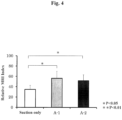
- Analyze 10.0 software (AnalyzeDirect, Overland Park, KS, USA) was used to measure the sagittal MRI index (the product of average signal intensity and area of the nucleus pulposus) for quantitative evaluation. Evaluation was performed based on the ratio of the MRI index for each group with respect to the MRI index of the intervertebral disc of the normal control group as 100 (see Spine (Phila Pa 1976). 2005 Jan 1;30(1):15-24 ).
- tissue specimens of the intervertebral discs were prepared. A sample was fixed with 10% formaldehyde, decalcified with 10% EDTA (pH7.5) and embedded in paraffin. A 5 ⁇ m-thick sagittal paraffin section was deparaffinized with xylene, treated with alcohol, washed with water, and then subjected to HE staining and safranin-O staining. Classification for degenerative change in the annulus fibrosus by Nishimura et al. (Spine (Phila Pa 1976). 1998;23(14):1531-8 ) was used to score the degree of degeneration in the whole tissue of the intervertebral disc. Classification by Nishimura et al. is as follows.
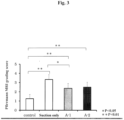
- the suction only group and the treatment groups showed significantly higher scores than those of the normal control group four weeks after the surgery according to the classification by Nishimura et al., indicating degeneration.
- the treatment groups (Groups A-1 and A-2), however, showed significantly lower scores than that of the suction only group, indicating suppression of degeneration ( Figure 5 ).
- tissue specimens prepared in 2-(5) were subjected to immunohistological staining using anti-Type I collagen antibody and anti-Type II collagen antibody to count the positive cell numbers in five randomly selected view fields of the nucleus pulposus of the intervertebral disc.
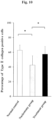
- the ratios of the anti-Type II collagen antibody-positive cells of both of the suction only group and the treatment groups (Groups A-1 and A-2) four weeks after the surgery were significantly lower than that of the normal control group, indicating that production of extracellular matrix seen in a normal intervertebral disc tissue was decreased.
- the ratios of the anti-Type II collagen antibody-positive cells of Group A-2 were significantly higher than those of the suction only group and was showen to be no difference from those of the normal control group.
- Graphs of the ratios of the anti-Type II collagen antibody-positive cells to the cell numbers in the nucleus pulposus tissue sections of the intervertebral discs four and twelve weeks after the surgery are shown in Figure 7 for the normal control group, the suction only group and Group A-2.
- the Type II collagen antibody-positive cells represent the presence of hyaline cartilage-like cells.
- the ratio of the hyaline cartilage-like cells in the rabbit nucleus pulposus of the intervertebral disc was shown to recover to a level comparative to that of the normal control group by twelve weeks after the surgery by using the low endotoxin sodium alginate solution.
- the low endotoxin sodium alginate solution was found to suppress degenerative changes and promote regeneration of the whole tissue of the intervertebral disc and nucleus pulposus by being filled into the nucleus pulposus defective part. Furthermore, the low endotoxin sodium alginates A-1 and A-2 showed effects of suppressing degeneration and regenerating the intervertebral disc to similar degrees.
- the 2% solution of A-2 that had higher viscosity than that of the 2% solution of A-1 was advantageous in that it was more unlikely to flow back from the filled site when being filled into the nucleus pulposus site and in that it can easily be distinguished from the body fluid.
- the 2% solution of A-2 had suitable viscosity for filling and thus was found have an excellent handing property.
- Process (ii) A process in which the 2 % low endotoxin sodium alginate solution of A-2 and a 100 mM calcium chloride solution are simultaneously used 1: 1 to fill the partially resected nucleus pulposus site of the intervertebral disc (the entire sodium alginate injected into the nucleus pulposus site is cured).
- Process (ii) was conducted by placing the low endotoxin sodium alginate solution and the calcium chloride solution in separate syringes and then simultaneously injecting them into the defective site of the nucleus pulposus of the intervertebral disc with a 22G needle.
- process (i) As a result, there was no difficulty in the manipulation of injection when process (i) was performed for the intervertebral disc of the sheep cadaver. Meanwhile, process (ii) seemed to have low reproducibility with respect to keeping a constant mixed ratio of the low endotoxin sodium alginate solution and the calcium chloride solution. Moreover, when partial gelation occurs during filling, it is questionable if the gel can fill the remaining cavity without leaving a space.
- Process (i) can reduce the calcium concentration in the intervertebral disc as compared to process (ii), and has a merit of alleviating cytotoxicity.
- process (ii) has a risk where the curedgel may protrude into the spinal canal to cause serious neuropathy, process (i) has a lower risk.
- process (i) that is, a process in which a low endotoxin sodium alginate solution is injected into the nucleus pulposus site of the intervertebral disc and thereafter a calcium chloride solution is applied to the surface of the intervertebral disc, seemed to be a suitable process for filling the nucleus pulposus with a low endotoxin sodium alginate.
- the process of injecting a sodium alginate solution into the nucleus pulposus of the intervertebral disc and thereafter curing around the injection opening on the surface of the intervertebral disc with a crosslinking agent was suggested to be a filling process that can withstand the compression force and the stretching force on the intervertebral disc caused by change in the posture, or walking, after filling with the sodium alginate solution.
- Sodium alginate solutions were placed into respective micro test tubes (diameter 6 mm, height 25 mm) by the following three methods X, Y and Z, and the test tubes were laid down to stand still. 1, 24, 48 h and 1 week later, the properties of the test substances in the test tubes were evaluated. Since the annulus fibrosus was incised for 5 mm ⁇ 3 mm to resect the nucleus pulposus for the sheep intervertebral nucleotomy model of Example 5, a micro test tube with a diameter of 6 mm was selected as a size that was relatively close to the size of this in vivo test and that allowed operations inside the test tube.
- the low endotoxin sodium alginate of A-2 in Example 2 was dissolved with physiological saline to be used as a 2 w/v% solution.
- the test was conducted at room temperature, i.e., 20 °C.
- Methods X 500 ⁇ l of a 2 w/v% sodium alginate solution was placed in a test tube, 50 ⁇ l of a 100 mM calcium chloride solution was dropped onto the surface of the sodium alginate solution, and the resultant was left to stand for 5 min. Thereafter, the calcium chloride solution on the surface was washed three times with physiological saline.
- Y 200 ⁇ l each of a 2 w/v% sodium alginate solution and a 25 mM calcium chloride solution were placed and agitated in a test tube.
- Z 200 ⁇ l each of a 2 w/v% sodium alginate solution and a 100 mM calcium chloride solution were placed and agitated in a test tube.
- the 2 w/v% sodium alginate solution used for the test had higher viscosity than physiological saline, and thus the liquid surface moved slowly when the vial was inclined and the solution could be suctioned with a syringe with a 21G needle by taking time.
- group X The properties of group X were generally the same from 1 h later to 1 week later. Specifically, while about 2-3 mm of the surface of the sodium alginate solution in the test tube was gel-like, no solidification was observed and the solution was in a sol state in the area other than the surface. While most of the sol state part could be suctioned using a syringe with a 21G needle, it took longer time to be suctioned than the 2 w/v% sodium alginate solution due to higher viscosity.
- group Y were generally the same from 1 h later to 1 week later. Specifically, most of the solution in the test tube gelled like jelly with a small liquid part similar to water. This was assumed to be a "syneresis” phenomenon in which gel shrinks to separate and exude liquid. The gelled part could not be suctioned using a syringe with a 21G needle.
- group Z were generally the same from 1 h later to 1 week later. Specifically, a white cloudy gelled mass with a diameter of about 5 mm was formed with the remaining part being liquid similar to water. This was also assumed to be a "syneresis" phenomenon. The gelled part could not be suctioned using a syringe with a 21G needle.
- the method of group X resembled the method of injection into an nucleus pulposus of an intervertebral disc in the examples of the present invention, and a sodium alginate solution was assumed to exist in a sol state when it was injected into an nucleus pulposus of the intervertebral disc. Meanwhile, they were in gelstate in both groups Y and Z, and thus there was a concern that the cured gel might deviate from the side of the intervertebral disc injected with the gel when compression force was applied from the head and tail sides, after filling the nucleus pulposus of the intervertebral disc with the gel, as confirmed in Example 3 of the present invention.
- Example 5 Application of low endotoxin sodium alginate solution to sheep intervertebral disc nucleus pulposus defect model
- a sheep intervertebral disc nucleus pulposus defect model was filled with a low endotoxin sodium alginate solution to evaluate the effect.
- Intervertebral discs L1/2, L2/3, L3/4, and L4/5 from seven sheep (male, Suffolk) weighing 40 kg-60 kg were used to perform the following evaluations.
- Sheep were anesthetized, and intervertebral discs were exposed with an electric scalpel.
- the annulus fibrosus of each intervertebral disc was incised and removed for 5 mm ⁇ 3 mm. Forceps was inserted into that hole to remove 0.10 g of a nucleus pulposus for preparing an intervertebral disc nucleus pulposus defect model.
- the incision size of the annulus fibrosus, and the amount of the nucleus pulposus removed were determined by performing an intervertebral disc degeneration test by a sheep intervertebral nucleotomy in advance.
- the incised size of the annulus fibrosus was investigated for 5 mm ⁇ 3 mm and 10 mm ⁇ 3 mm, and 5 mm ⁇ 3 mm was selected which showed progress of the intervertebral disc degeneration depending on the volumes of the removed nucleus pulposus.
- Four nucleus pulposus resected volumes namely, 0.02 g, 0.05 g, 0.1 g and 0.2 g, were examined.
- An resected volume of 0.1 g for a sheep nucleus pulposus corresponds to 1.2 g in a human, which is closest to the nucleus pulposus resected volume in human clinical practice.
- a nucleus pulposus resected volume of 0.1 g was selected.
- the low endotoxin sodium alginate of A-2 in Example 2 was prepared into a 2w/v% solution with Milli-Q water, and 0.10 ml of the resultant was injected into the nucleus pulposus defective part of the sheep intervertebral disc prepared in 5-(1) with a syringe.
- HE staining and safranin O staining were conducted according to the description in 2-(5) above to prepare tissue specimens of the intervertebral discs.
- Modified classification based on Boos classification Eur Spine J. 2014 Jan; 23(1):19-26 . Spine 2002 Vol.27, No.23 p.2631-2644 ) was employed to evaluate the degrees of intervertebral disc degeneration. Classification is shown in Table 5. The maximum point of the items for an intervertebral disc was 20 while the maximum point of the items for a vertebral body endplate was 16, and evaluation was conducted with the total point of 36 at the maximum.
- a disc height index is a value derived by dividing the intervertebral disc height (an average of the anterior, mid-disc and posterior heights of the intervertebral disc) by the anterior-posterior diameter of the intervertebral disc ( Eur Spine J. 2014, 23(1):19-26 ).
- the disc height index of the nucleotomy group was significantly decreased as compared to that of the normal control group. Meanwhile, there was no significant difference in the disc height index between the treatment group and the normal control group. Accordingly, filling the nucleus pulposus with a low endotoxin sodium alginate solution was found to suppress decrease in the intervertebral disc height caused by nucleus pulposus resection ( Figure 9 ).
- tissue specimens prepared in 5-(3) above were subjected to immunohistological staining using anti-Type I collagen antibody and anti-Type II collagen antibody to count the positive cell numbers in five randomly selected view fields of the nucleus pulposus of the intervertebral disc.
- the ratios of the anti-Type I collagen antibody-positive cells to the cell numbers in the sections four weeks after the surgery were significantly higher for the nucleotomy group and the treatment group while it was 10 % or lower for the normal control group.
- the ratio of the anti-Type I collagen antibody-positive cells was significantly lower for the treatment group than the nucleotomy group.
- the ratios of the anti-Type II collagen antibody-positive cells to the cell numbers in the sections four weeks after the surgery were about 60% for the normal control group and the treatment group, showing no difference. Meanwhile, the nucleotomy group gave about 40%, which was significantly different from the normal control group and the treatment group ( Figure 10 ). While the ratio of the anti-Type II collagen antibody-positive cells obtained with nucleus pulposus excision alone was lower than that obtained for the normal group, it was found to recover to a level comparative to the normal control group four weeks after the surgery by filling a low endotoxin sodium alginate solution.
- Example 6 Examination of composition making up nucleus pulposus of sheep intervertebral disc
- An extracellular matrix of a nucleus pulposus of an intervertebral disc is mainly composed of water, Type-II collagen and proteoglycan, and is said to have a higher proteoglycan ratio to collagen as compared to other cartilage tissues such as intervertebral disc endplates and an articular cartilage.
- proteoglycan ratio to collagen as a ratio of sulfated glycosaminoglycan (GAG) to hydroxyproline (HYP) ( European Cells and Materials Vol.8. 2004 p.58-64 ).
- a sheep intervertebral disc nucleus pulposus defect model was filled with a low endotoxin sodium alginate solution, and evaluated through a biochemical analysis of the nucleus pulposus tissue four weeks after the surgery according to the above-mentioned document.
- Intervertebral discs L1/2, L2/3, L3/4 and L4/5 from two sheep (male, Suffolk) weighing 35 kg-60 kg were used for the test.
- the nucleus pulposus of the intervertebral disc and the cartilage tissue (articular cartilage) of the untreated left and right femurs were collected four weeks after the surgery to measure sulfated glycosaminoglycan (GAG) and hydroxyproline (HYP) following pretreatment of the specimens.
- GAG glycosaminoglycan
- HEP hydroxyproline
- the specimens were pretreated by lyophilizing the specimens, measuring the dry weights, and adding a 20 mM HEPES buffer (pH7.5) containing 1 ml Pronase solution (Calbiochem) at a concentration of 1 mg/ml to the dried specimens to digest at 60 °C for 3 h while agitating every 1 h.
- the resultants were centrifuged at 8,000 x g for 10 min, and the resulting supernatants were used as sample stock liquids for the measurements.
- the stock liquids were refrigerated until the measurements.
- GAG Sulfated glycosaminoglycan
- Wieslab registered trademark
- GAG201RUO Euro Diagnostica, product number: GAG201RUO
- the sample stock liquids for measurements were 100-fold diluted with purified water so as to use the resulting dilution solutions as samples for the measurement.
- a blank sample was a 100-fold diluted Pronase solution.
- the measurement wavelength was 620 nm, and a calibration curve prepared based on chondroitin 6-sulfate (CS-6) as a standard in the measurement kit was used to calculate the GAG amount in the specimen.
- Hydroxyproline was measured as follows.
- the sample stock liquids for measurements were 100-fold diluted with purified water so as to use the resulting dilution solution as samples for the measurement.
- a blank sample was a 100-fold diluted Pronase solution.
- 50 ⁇ l of the measurement sample was collected into a vial bottle for hydrolysis, to which an equivalent amount of concentrated hydrochloric acid wa added and sealed to allow hydrolysis at 120 °C for 16 h.
- Three hydrolysis samples per specimen were prepared. 20 ⁇ 1L of the hydrolysis sample and 100 ⁇ l of a HYP standard solution were collected into a well plate, and depressurized at 40 °C for 15 h to dry and solidify.
- the average GAG/HYP value of the normal control group was 17.8 which was higher than 3.1 of the untreated articular cartilage.
- the average GAG/HYP values of the nucleotomy group and the treatment groups four weeks after the surgery were lower than that of the normal control group.
- the average GAG/HYP value of the treatment groups showed a tendency of being slightly higher than that of the nucleotomy group.
- the nucleus pulposus of the intervertebral disc had a higher sulfated glycosaminoglycan (GAG)/hydroxyproline (HYP) ratio than the articular cartilage, suggesting that the component ratios constituting these tissues are different, and also that the tissue characteristics are different between the nucleus pulposus of the intervertebral disc and the articular cartilage.
- the composition for use of a low endotoxin monovalent metal salt of alginic acid of the present invention was considered to have possibility of recovering such compositional characteristics of a nucleus pulposus.
Landscapes
- Health & Medical Sciences (AREA)
- Life Sciences & Earth Sciences (AREA)
- Engineering & Computer Science (AREA)
- Animal Behavior & Ethology (AREA)
- General Health & Medical Sciences (AREA)
- Public Health (AREA)
- Veterinary Medicine (AREA)
- Chemical & Material Sciences (AREA)
- Medicinal Chemistry (AREA)
- Biomedical Technology (AREA)
- Epidemiology (AREA)
- Transplantation (AREA)
- Oral & Maxillofacial Surgery (AREA)
- Pharmacology & Pharmacy (AREA)
- Neurology (AREA)
- Orthopedic Medicine & Surgery (AREA)
- Molecular Biology (AREA)
- Dermatology (AREA)
- Cardiology (AREA)
- Bioinformatics & Cheminformatics (AREA)
- Heart & Thoracic Surgery (AREA)
- Vascular Medicine (AREA)
- Pharmaceuticals Containing Other Organic And Inorganic Compounds (AREA)
- Materials For Medical Uses (AREA)
- Medicinal Preparation (AREA)
- Polysaccharides And Polysaccharide Derivatives (AREA)
- Prostheses (AREA)
Priority Applications (1)
| Application Number | Priority Date | Filing Date | Title |
|---|---|---|---|
| EP23212370.3A EP4374886A1 (en) | 2016-03-23 | 2017-01-27 | Composition for treating intervertebral disc |
Applications Claiming Priority (2)
| Application Number | Priority Date | Filing Date | Title |
|---|---|---|---|
| JP2016058396 | 2016-03-23 | ||
| PCT/JP2017/002925 WO2017163603A1 (ja) | 2016-03-23 | 2017-01-27 | 椎間板治療用組成物 |
Related Child Applications (1)
| Application Number | Title | Priority Date | Filing Date |
|---|---|---|---|
| EP23212370.3A Division EP4374886A1 (en) | 2016-03-23 | 2017-01-27 | Composition for treating intervertebral disc |
Publications (3)
| Publication Number | Publication Date |
|---|---|
| EP3434291A1 EP3434291A1 (en) | 2019-01-30 |
| EP3434291A4 EP3434291A4 (en) | 2019-10-23 |
| EP3434291B1 true EP3434291B1 (en) | 2023-11-29 |
Family
ID=59901106
Family Applications (2)
| Application Number | Title | Priority Date | Filing Date |
|---|---|---|---|
| EP17769650.7A Active EP3434291B1 (en) | 2016-03-23 | 2017-01-27 | Composition for treating intervertebral disc |
| EP23212370.3A Pending EP4374886A1 (en) | 2016-03-23 | 2017-01-27 | Composition for treating intervertebral disc |
Family Applications After (1)
| Application Number | Title | Priority Date | Filing Date |
|---|---|---|---|
| EP23212370.3A Pending EP4374886A1 (en) | 2016-03-23 | 2017-01-27 | Composition for treating intervertebral disc |
Country Status (8)
| Country | Link |
|---|---|
| US (1) | US12478636B2 (enExample) |
| EP (2) | EP3434291B1 (enExample) |
| JP (5) | JP6487110B2 (enExample) |
| CN (1) | CN109069692A (enExample) |
| BR (2) | BR122021024709B1 (enExample) |
| CA (1) | CA3018152A1 (enExample) |
| ES (1) | ES2972523T3 (enExample) |
| WO (1) | WO2017163603A1 (enExample) |
Families Citing this family (11)
| Publication number | Priority date | Publication date | Assignee | Title |
|---|---|---|---|---|
| EP3593807B1 (en) | 2017-03-07 | 2023-09-06 | Mochida Pharmaceutical Co., Ltd. | Alginate liquid formulation |
| WO2019151444A1 (ja) * | 2018-01-31 | 2019-08-08 | 国立大学法人神戸大学 | 椎間板変性の治療剤および椎間板細胞培養材 |
| JP7404228B2 (ja) | 2018-03-22 | 2023-12-25 | 持田製薬株式会社 | 非ステロイド性抗炎症性化合物結合アルギン酸誘導体 |
| CN113195083B (zh) * | 2018-12-26 | 2022-12-27 | 东丽株式会社 | 多孔膜、复合膜和多孔膜的制造方法 |
| EP4072608A1 (en) | 2019-12-12 | 2022-10-19 | Instituto de Engenharia Biomédica (INEB) | Fetal decellularized nucleus pulposus material and methods for obtaining pharmaceutic compositions to be used in the treatment of intervertebral disc degeneration and back pain |
| EP4074349A4 (en) * | 2020-01-14 | 2024-02-07 | Mochida Pharmaceutical Co., Ltd. | COMBINATION AND METHOD FOR TREATING SUBJECTS WITH ALGIC ACID SALT |
| US20230080690A1 (en) * | 2020-01-17 | 2023-03-16 | National University Corporation Hokkaido University | Cartilage damage treatment material utilizing bone marrow fluid |
| JP7761941B2 (ja) * | 2020-11-01 | 2025-10-29 | 日本全薬工業株式会社 | 脊髄損傷の治療剤 |
| JPWO2022102093A1 (enExample) * | 2020-11-13 | 2022-05-19 | ||
| US20240100099A1 (en) * | 2021-01-29 | 2024-03-28 | National University Corporation Hokkaido University | Composition for regeneration of intervertebral disc |
| CN116115824B (zh) * | 2022-10-04 | 2025-08-26 | 奥美医疗用品股份有限公司 | 一种注射型髓核修复产品及其制备方法 |
Family Cites Families (20)
| Publication number | Priority date | Publication date | Assignee | Title |
|---|---|---|---|---|
| US5589591A (en) | 1986-07-03 | 1996-12-31 | Advanced Magnetics, Inc. | Endotoxin-free polysaccharides |
| WO1993013136A1 (en) | 1991-12-20 | 1993-07-08 | Howmedica Inc. | Ultra-pure polysaccharide materials for medical use |
| AU2621295A (en) * | 1994-05-24 | 1995-12-18 | Smith & Nephew Plc | Intervertebral disc implant |
| JPH08269102A (ja) | 1995-03-30 | 1996-10-15 | Shiseido Co Ltd | エンドトキシンフリーのβ1,3−グルカン及びその製造法並びに医療用ゲル素材 |
| JPH09324001A (ja) | 1996-04-02 | 1997-12-16 | Kyowa Hakko Kogyo Co Ltd | ヒアルロン酸ナトリウムの精製法 |
| JPH11253547A (ja) * | 1998-03-11 | 1999-09-21 | Kunio Ishikawa | 細胞遮断膜 |
| EP1135418A1 (en) | 1998-11-13 | 2001-09-26 | CP Kelco U.S., Inc. | Biopolymer salts with low endotoxin levels, biopolymer compositions thereof and methods of making the same |
| US20030069639A1 (en) | 2001-04-14 | 2003-04-10 | Tom Sander | Methods and compositions for repair or replacement of joints and soft tissues |
| EP1448089A4 (en) | 2001-11-01 | 2008-06-04 | Spine Wave Inc | DEVICES AND METHODS FOR SPINACH RECOVERY |
| JP2005036036A (ja) | 2003-07-16 | 2005-02-10 | Tanabe Seiyaku Co Ltd | エンドトキシン除去方法 |
| US7938818B2 (en) | 2005-05-03 | 2011-05-10 | Yeung Jeffrey E | Alleviate back pain by increasing pH of the disc |
| JP2008543449A (ja) * | 2005-06-17 | 2008-12-04 | アボット・ラボラトリーズ | 変性脊椎疾患の改良型治療方法 |
| ITPI20050071A1 (it) * | 2005-06-20 | 2006-12-21 | Giuseppe Calvosa | Composizione biocompatibile per la sostituzione/rigenerazione di tessuti |
| US8506633B2 (en) | 2005-12-27 | 2013-08-13 | Warsaw Orthopedic, Inc. | Rehydration and restoration of intervertebral discs with polyelectrolytes |
| MX2009008760A (es) | 2007-02-21 | 2009-08-27 | Mochida Pharm Co Ltd | Composicion para el tratamiento de enfermedades del cartilago. |
| EP2082755A1 (de) | 2008-01-16 | 2009-07-29 | CellMed AG | Monolithische in-situ vernetzte Alginatimplantate |
| US20140213524A1 (en) | 2011-08-23 | 2014-07-31 | National University Corporation Hokkaido University | Composition for regeneration of cartilage |
| CN108135928B (zh) * | 2015-09-07 | 2021-06-08 | 持田制药株式会社 | 藻酸冻结干燥制剂 |
| JP6196283B2 (ja) | 2015-12-10 | 2017-09-13 | トヨタ自動車株式会社 | 燃料電池用電極、燃料電池用電極の製造方法、固体高分子形燃料電池、および触媒インクの製造方法 |
| WO2018159768A1 (ja) | 2017-03-02 | 2018-09-07 | 持田製薬株式会社 | 線維軟骨組織損傷治療用組成物 |
-
2017
- 2017-01-27 ES ES17769650T patent/ES2972523T3/es active Active
- 2017-01-27 BR BR122021024709-9A patent/BR122021024709B1/pt active IP Right Grant
- 2017-01-27 CN CN201780018143.7A patent/CN109069692A/zh active Pending
- 2017-01-27 CA CA3018152A patent/CA3018152A1/en active Pending
- 2017-01-27 JP JP2018507084A patent/JP6487110B2/ja active Active
- 2017-01-27 US US16/086,081 patent/US12478636B2/en active Active
- 2017-01-27 WO PCT/JP2017/002925 patent/WO2017163603A1/ja not_active Ceased
- 2017-01-27 BR BR112018069060A patent/BR112018069060A2/pt not_active Application Discontinuation
- 2017-01-27 EP EP17769650.7A patent/EP3434291B1/en active Active
- 2017-01-27 EP EP23212370.3A patent/EP4374886A1/en active Pending
-
2019
- 2019-02-20 JP JP2019027933A patent/JP6907254B2/ja active Active
-
2021
- 2021-06-29 JP JP2021107910A patent/JP7314207B2/ja active Active
-
2023
- 2023-07-11 JP JP2023113813A patent/JP2023134610A/ja active Pending
-
2025
- 2025-07-29 JP JP2025126019A patent/JP2025160358A/ja active Pending
Also Published As
| Publication number | Publication date |
|---|---|
| CA3018152A1 (en) | 2017-09-28 |
| JP2021154163A (ja) | 2021-10-07 |
| JP6907254B2 (ja) | 2021-07-21 |
| JP2019088900A (ja) | 2019-06-13 |
| EP4374886A1 (en) | 2024-05-29 |
| JPWO2017163603A1 (ja) | 2019-01-31 |
| EP3434291A4 (en) | 2019-10-23 |
| EP3434291A1 (en) | 2019-01-30 |
| US12478636B2 (en) | 2025-11-25 |
| BR122021024709B1 (pt) | 2023-01-03 |
| WO2017163603A1 (ja) | 2017-09-28 |
| JP6487110B2 (ja) | 2019-03-20 |
| JP7314207B2 (ja) | 2023-07-25 |
| JP2023134610A (ja) | 2023-09-27 |
| CN109069692A (zh) | 2018-12-21 |
| JP2025160358A (ja) | 2025-10-22 |
| US20200289547A1 (en) | 2020-09-17 |
| BR112018069060A2 (pt) | 2019-01-29 |
| ES2972523T3 (es) | 2024-06-13 |
Similar Documents
| Publication | Publication Date | Title |
|---|---|---|
| EP3434291B1 (en) | Composition for treating intervertebral disc | |
| EP2127687B1 (en) | Composition for treatment of cartilage disease | |
| EP2749299B1 (en) | Composition for regeneration of cartilage | |
| EP2210621A1 (en) | Composition for treatment of joint disease | |
| US11426425B2 (en) | Composition for treating fibrocartilage tissue damage | |
| JP7607595B2 (ja) | 骨髄液を用いた軟骨損傷治療材 | |
| US12478637B2 (en) | Method for suppressing intervertebral disc pain |
Legal Events
| Date | Code | Title | Description |
|---|---|---|---|
| STAA | Information on the status of an ep patent application or granted ep patent |
Free format text: STATUS: THE INTERNATIONAL PUBLICATION HAS BEEN MADE |
|
| PUAI | Public reference made under article 153(3) epc to a published international application that has entered the european phase |
Free format text: ORIGINAL CODE: 0009012 |
|
| STAA | Information on the status of an ep patent application or granted ep patent |
Free format text: STATUS: REQUEST FOR EXAMINATION WAS MADE |
|
| 17P | Request for examination filed |
Effective date: 20180914 |
|
| AK | Designated contracting states |
Kind code of ref document: A1 Designated state(s): AL AT BE BG CH CY CZ DE DK EE ES FI FR GB GR HR HU IE IS IT LI LT LU LV MC MK MT NL NO PL PT RO RS SE SI SK SM TR |
|
| AX | Request for extension of the european patent |
Extension state: BA ME |
|
| DAV | Request for validation of the european patent (deleted) | ||
| DAX | Request for extension of the european patent (deleted) | ||
| A4 | Supplementary search report drawn up and despatched |
Effective date: 20190924 |
|
| RIC1 | Information provided on ipc code assigned before grant |
Ipc: A61L 26/00 20060101ALI20190918BHEP Ipc: A61L 27/20 20060101AFI20190918BHEP Ipc: A61K 31/734 20060101ALI20190918BHEP Ipc: A61P 19/00 20060101ALI20190918BHEP Ipc: A61K 47/02 20060101ALI20190918BHEP |
|
| STAA | Information on the status of an ep patent application or granted ep patent |
Free format text: STATUS: EXAMINATION IS IN PROGRESS |
|
| 17Q | First examination report despatched |
Effective date: 20210129 |
|
| RIN1 | Information on inventor provided before grant (corrected) |
Inventor name: ISAJI, MITSUKO Inventor name: SHIMIZU, SATOSHI Inventor name: IWASAKI, NORIMASA Inventor name: TSUJIMOTO, TAKERU Inventor name: SUDO, HIDEKI |
|
| GRAP | Despatch of communication of intention to grant a patent |
Free format text: ORIGINAL CODE: EPIDOSNIGR1 |
|
| STAA | Information on the status of an ep patent application or granted ep patent |
Free format text: STATUS: GRANT OF PATENT IS INTENDED |
|
| INTG | Intention to grant announced |
Effective date: 20230613 |
|
| GRAS | Grant fee paid |
Free format text: ORIGINAL CODE: EPIDOSNIGR3 |
|
| GRAA | (expected) grant |
Free format text: ORIGINAL CODE: 0009210 |
|
| STAA | Information on the status of an ep patent application or granted ep patent |
Free format text: STATUS: THE PATENT HAS BEEN GRANTED |
|
| P01 | Opt-out of the competence of the unified patent court (upc) registered |
Effective date: 20231004 |
|
| AK | Designated contracting states |
Kind code of ref document: B1 Designated state(s): AL AT BE BG CH CY CZ DE DK EE ES FI FR GB GR HR HU IE IS IT LI LT LU LV MC MK MT NL NO PL PT RO RS SE SI SK SM TR |
|
| REG | Reference to a national code |
Ref country code: GB Ref legal event code: FG4D |
|
| REG | Reference to a national code |
Ref country code: CH Ref legal event code: EP |
|
| REG | Reference to a national code |
Ref country code: DE Ref legal event code: R096 Ref document number: 602017076994 Country of ref document: DE |
|
| REG | Reference to a national code |
Ref country code: IE Ref legal event code: FG4D |
|
| REG | Reference to a national code |
Ref country code: LT Ref legal event code: MG9D |
|
| REG | Reference to a national code |
Ref country code: NL Ref legal event code: MP Effective date: 20231129 |
|
| PG25 | Lapsed in a contracting state [announced via postgrant information from national office to epo] |
Ref country code: GR Free format text: LAPSE BECAUSE OF FAILURE TO SUBMIT A TRANSLATION OF THE DESCRIPTION OR TO PAY THE FEE WITHIN THE PRESCRIBED TIME-LIMIT Effective date: 20240301 |
|
| PG25 | Lapsed in a contracting state [announced via postgrant information from national office to epo] |
Ref country code: IS Free format text: LAPSE BECAUSE OF FAILURE TO SUBMIT A TRANSLATION OF THE DESCRIPTION OR TO PAY THE FEE WITHIN THE PRESCRIBED TIME-LIMIT Effective date: 20240329 |
|
| PG25 | Lapsed in a contracting state [announced via postgrant information from national office to epo] |
Ref country code: LT Free format text: LAPSE BECAUSE OF FAILURE TO SUBMIT A TRANSLATION OF THE DESCRIPTION OR TO PAY THE FEE WITHIN THE PRESCRIBED TIME-LIMIT Effective date: 20231129 |
|
| PG25 | Lapsed in a contracting state [announced via postgrant information from national office to epo] |
Ref country code: LT Free format text: LAPSE BECAUSE OF FAILURE TO SUBMIT A TRANSLATION OF THE DESCRIPTION OR TO PAY THE FEE WITHIN THE PRESCRIBED TIME-LIMIT Effective date: 20231129 Ref country code: IS Free format text: LAPSE BECAUSE OF FAILURE TO SUBMIT A TRANSLATION OF THE DESCRIPTION OR TO PAY THE FEE WITHIN THE PRESCRIBED TIME-LIMIT Effective date: 20240329 Ref country code: GR Free format text: LAPSE BECAUSE OF FAILURE TO SUBMIT A TRANSLATION OF THE DESCRIPTION OR TO PAY THE FEE WITHIN THE PRESCRIBED TIME-LIMIT Effective date: 20240301 Ref country code: BG Free format text: LAPSE BECAUSE OF FAILURE TO SUBMIT A TRANSLATION OF THE DESCRIPTION OR TO PAY THE FEE WITHIN THE PRESCRIBED TIME-LIMIT Effective date: 20240229 |
|
| REG | Reference to a national code |
Ref country code: AT Ref legal event code: MK05 Ref document number: 1635447 Country of ref document: AT Kind code of ref document: T Effective date: 20231129 |
|
| PG25 | Lapsed in a contracting state [announced via postgrant information from national office to epo] |
Ref country code: NL Free format text: LAPSE BECAUSE OF FAILURE TO SUBMIT A TRANSLATION OF THE DESCRIPTION OR TO PAY THE FEE WITHIN THE PRESCRIBED TIME-LIMIT Effective date: 20231129 |
|
| PG25 | Lapsed in a contracting state [announced via postgrant information from national office to epo] |
Ref country code: SE Free format text: LAPSE BECAUSE OF FAILURE TO SUBMIT A TRANSLATION OF THE DESCRIPTION OR TO PAY THE FEE WITHIN THE PRESCRIBED TIME-LIMIT Effective date: 20231129 Ref country code: RS Free format text: LAPSE BECAUSE OF FAILURE TO SUBMIT A TRANSLATION OF THE DESCRIPTION OR TO PAY THE FEE WITHIN THE PRESCRIBED TIME-LIMIT Effective date: 20231129 Ref country code: PL Free format text: LAPSE BECAUSE OF FAILURE TO SUBMIT A TRANSLATION OF THE DESCRIPTION OR TO PAY THE FEE WITHIN THE PRESCRIBED TIME-LIMIT Effective date: 20231129 Ref country code: NO Free format text: LAPSE BECAUSE OF FAILURE TO SUBMIT A TRANSLATION OF THE DESCRIPTION OR TO PAY THE FEE WITHIN THE PRESCRIBED TIME-LIMIT Effective date: 20240229 Ref country code: NL Free format text: LAPSE BECAUSE OF FAILURE TO SUBMIT A TRANSLATION OF THE DESCRIPTION OR TO PAY THE FEE WITHIN THE PRESCRIBED TIME-LIMIT Effective date: 20231129 Ref country code: LV Free format text: LAPSE BECAUSE OF FAILURE TO SUBMIT A TRANSLATION OF THE DESCRIPTION OR TO PAY THE FEE WITHIN THE PRESCRIBED TIME-LIMIT Effective date: 20231129 Ref country code: HR Free format text: LAPSE BECAUSE OF FAILURE TO SUBMIT A TRANSLATION OF THE DESCRIPTION OR TO PAY THE FEE WITHIN THE PRESCRIBED TIME-LIMIT Effective date: 20231129 |
|
| REG | Reference to a national code |
Ref country code: ES Ref legal event code: FG2A Ref document number: 2972523 Country of ref document: ES Kind code of ref document: T3 Effective date: 20240613 |
|
| PG25 | Lapsed in a contracting state [announced via postgrant information from national office to epo] |
Ref country code: DK Free format text: LAPSE BECAUSE OF FAILURE TO SUBMIT A TRANSLATION OF THE DESCRIPTION OR TO PAY THE FEE WITHIN THE PRESCRIBED TIME-LIMIT Effective date: 20231129 |
|
| PG25 | Lapsed in a contracting state [announced via postgrant information from national office to epo] |
Ref country code: CZ Free format text: LAPSE BECAUSE OF FAILURE TO SUBMIT A TRANSLATION OF THE DESCRIPTION OR TO PAY THE FEE WITHIN THE PRESCRIBED TIME-LIMIT Effective date: 20231129 Ref country code: AT Free format text: LAPSE BECAUSE OF FAILURE TO SUBMIT A TRANSLATION OF THE DESCRIPTION OR TO PAY THE FEE WITHIN THE PRESCRIBED TIME-LIMIT Effective date: 20231129 |
|
| PG25 | Lapsed in a contracting state [announced via postgrant information from national office to epo] |
Ref country code: SK Free format text: LAPSE BECAUSE OF FAILURE TO SUBMIT A TRANSLATION OF THE DESCRIPTION OR TO PAY THE FEE WITHIN THE PRESCRIBED TIME-LIMIT Effective date: 20231129 |
|
| PG25 | Lapsed in a contracting state [announced via postgrant information from national office to epo] |
Ref country code: SM Free format text: LAPSE BECAUSE OF FAILURE TO SUBMIT A TRANSLATION OF THE DESCRIPTION OR TO PAY THE FEE WITHIN THE PRESCRIBED TIME-LIMIT Effective date: 20231129 Ref country code: SK Free format text: LAPSE BECAUSE OF FAILURE TO SUBMIT A TRANSLATION OF THE DESCRIPTION OR TO PAY THE FEE WITHIN THE PRESCRIBED TIME-LIMIT Effective date: 20231129 Ref country code: RO Free format text: LAPSE BECAUSE OF FAILURE TO SUBMIT A TRANSLATION OF THE DESCRIPTION OR TO PAY THE FEE WITHIN THE PRESCRIBED TIME-LIMIT Effective date: 20231129 Ref country code: EE Free format text: LAPSE BECAUSE OF FAILURE TO SUBMIT A TRANSLATION OF THE DESCRIPTION OR TO PAY THE FEE WITHIN THE PRESCRIBED TIME-LIMIT Effective date: 20231129 Ref country code: DK Free format text: LAPSE BECAUSE OF FAILURE TO SUBMIT A TRANSLATION OF THE DESCRIPTION OR TO PAY THE FEE WITHIN THE PRESCRIBED TIME-LIMIT Effective date: 20231129 Ref country code: CZ Free format text: LAPSE BECAUSE OF FAILURE TO SUBMIT A TRANSLATION OF THE DESCRIPTION OR TO PAY THE FEE WITHIN THE PRESCRIBED TIME-LIMIT Effective date: 20231129 Ref country code: AT Free format text: LAPSE BECAUSE OF FAILURE TO SUBMIT A TRANSLATION OF THE DESCRIPTION OR TO PAY THE FEE WITHIN THE PRESCRIBED TIME-LIMIT Effective date: 20231129 |
|
| PG25 | Lapsed in a contracting state [announced via postgrant information from national office to epo] |
Ref country code: PT Free format text: LAPSE BECAUSE OF FAILURE TO SUBMIT A TRANSLATION OF THE DESCRIPTION OR TO PAY THE FEE WITHIN THE PRESCRIBED TIME-LIMIT Effective date: 20240401 |
|
| PG25 | Lapsed in a contracting state [announced via postgrant information from national office to epo] |
Ref country code: MC Free format text: LAPSE BECAUSE OF FAILURE TO SUBMIT A TRANSLATION OF THE DESCRIPTION OR TO PAY THE FEE WITHIN THE PRESCRIBED TIME-LIMIT Effective date: 20231129 |
|
| PG25 | Lapsed in a contracting state [announced via postgrant information from national office to epo] |
Ref country code: PT Free format text: LAPSE BECAUSE OF FAILURE TO SUBMIT A TRANSLATION OF THE DESCRIPTION OR TO PAY THE FEE WITHIN THE PRESCRIBED TIME-LIMIT Effective date: 20240401 Ref country code: MC Free format text: LAPSE BECAUSE OF FAILURE TO SUBMIT A TRANSLATION OF THE DESCRIPTION OR TO PAY THE FEE WITHIN THE PRESCRIBED TIME-LIMIT Effective date: 20231129 |
|
| REG | Reference to a national code |
Ref country code: DE Ref legal event code: R097 Ref document number: 602017076994 Country of ref document: DE |
|
| PG25 | Lapsed in a contracting state [announced via postgrant information from national office to epo] |
Ref country code: LU Free format text: LAPSE BECAUSE OF NON-PAYMENT OF DUE FEES Effective date: 20240127 |
|
| PG25 | Lapsed in a contracting state [announced via postgrant information from national office to epo] |
Ref country code: LU Free format text: LAPSE BECAUSE OF NON-PAYMENT OF DUE FEES Effective date: 20240127 |
|
| PLBE | No opposition filed within time limit |
Free format text: ORIGINAL CODE: 0009261 |
|
| STAA | Information on the status of an ep patent application or granted ep patent |
Free format text: STATUS: NO OPPOSITION FILED WITHIN TIME LIMIT |
|
| PG25 | Lapsed in a contracting state [announced via postgrant information from national office to epo] |
Ref country code: BE Free format text: LAPSE BECAUSE OF NON-PAYMENT OF DUE FEES Effective date: 20240131 |
|
| PG25 | Lapsed in a contracting state [announced via postgrant information from national office to epo] |
Ref country code: SI Free format text: LAPSE BECAUSE OF FAILURE TO SUBMIT A TRANSLATION OF THE DESCRIPTION OR TO PAY THE FEE WITHIN THE PRESCRIBED TIME-LIMIT Effective date: 20231129 |
|
| PG25 | Lapsed in a contracting state [announced via postgrant information from national office to epo] |
Ref country code: SI Free format text: LAPSE BECAUSE OF FAILURE TO SUBMIT A TRANSLATION OF THE DESCRIPTION OR TO PAY THE FEE WITHIN THE PRESCRIBED TIME-LIMIT Effective date: 20231129 Ref country code: BE Free format text: LAPSE BECAUSE OF NON-PAYMENT OF DUE FEES Effective date: 20240131 |
|
| REG | Reference to a national code |
Ref country code: BE Ref legal event code: MM Effective date: 20240131 |
|
| 26N | No opposition filed |
Effective date: 20240830 |
|
| PGFP | Annual fee paid to national office [announced via postgrant information from national office to epo] |
Ref country code: GB Payment date: 20241205 Year of fee payment: 9 |
|
| PGFP | Annual fee paid to national office [announced via postgrant information from national office to epo] |
Ref country code: FR Payment date: 20241209 Year of fee payment: 9 |
|
| PG25 | Lapsed in a contracting state [announced via postgrant information from national office to epo] |
Ref country code: IE Free format text: LAPSE BECAUSE OF NON-PAYMENT OF DUE FEES Effective date: 20240127 |
|
| PG25 | Lapsed in a contracting state [announced via postgrant information from national office to epo] |
Ref country code: IE Free format text: LAPSE BECAUSE OF NON-PAYMENT OF DUE FEES Effective date: 20240127 |
|
| PGFP | Annual fee paid to national office [announced via postgrant information from national office to epo] |
Ref country code: DE Payment date: 20241203 Year of fee payment: 9 |
|
| PGFP | Annual fee paid to national office [announced via postgrant information from national office to epo] |
Ref country code: ES Payment date: 20250204 Year of fee payment: 9 |
|
| PGFP | Annual fee paid to national office [announced via postgrant information from national office to epo] |
Ref country code: CH Payment date: 20250201 Year of fee payment: 9 |
|
| PGFP | Annual fee paid to national office [announced via postgrant information from national office to epo] |
Ref country code: IT Payment date: 20241210 Year of fee payment: 9 |
|
| PG25 | Lapsed in a contracting state [announced via postgrant information from national office to epo] |
Ref country code: CY Free format text: LAPSE BECAUSE OF FAILURE TO SUBMIT A TRANSLATION OF THE DESCRIPTION OR TO PAY THE FEE WITHIN THE PRESCRIBED TIME-LIMIT; INVALID AB INITIO Effective date: 20170127 |
|
| PG25 | Lapsed in a contracting state [announced via postgrant information from national office to epo] |
Ref country code: HU Free format text: LAPSE BECAUSE OF FAILURE TO SUBMIT A TRANSLATION OF THE DESCRIPTION OR TO PAY THE FEE WITHIN THE PRESCRIBED TIME-LIMIT; INVALID AB INITIO Effective date: 20170127 |
|
| PG25 | Lapsed in a contracting state [announced via postgrant information from national office to epo] |
Ref country code: FI Free format text: LAPSE BECAUSE OF FAILURE TO SUBMIT A TRANSLATION OF THE DESCRIPTION OR TO PAY THE FEE WITHIN THE PRESCRIBED TIME-LIMIT Effective date: 20231129 |