EP3428644B1 - Blood staining patch, and method and apparatus for testing blood using same - Google Patents
Blood staining patch, and method and apparatus for testing blood using same Download PDFInfo
- Publication number
- EP3428644B1 EP3428644B1 EP17756844.1A EP17756844A EP3428644B1 EP 3428644 B1 EP3428644 B1 EP 3428644B1 EP 17756844 A EP17756844 A EP 17756844A EP 3428644 B1 EP3428644 B1 EP 3428644B1
- Authority
- EP
- European Patent Office
- Prior art keywords
- patch
- substance
- staining
- blood
- reaction region
- Prior art date
- Legal status (The legal status is an assumption and is not a legal conclusion. Google has not performed a legal analysis and makes no representation as to the accuracy of the status listed.)
- Active
Links
Images













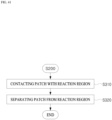
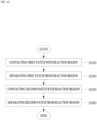

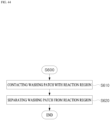
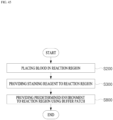









Classifications
-
- G—PHYSICS
- G01—MEASURING; TESTING
- G01N—INVESTIGATING OR ANALYSING MATERIALS BY DETERMINING THEIR CHEMICAL OR PHYSICAL PROPERTIES
- G01N1/00—Sampling; Preparing specimens for investigation
- G01N1/28—Preparing specimens for investigation including physical details of (bio-)chemical methods covered elsewhere, e.g. G01N33/50, C12Q
- G01N1/30—Staining; Impregnating ; Fixation; Dehydration; Multistep processes for preparing samples of tissue, cell or nucleic acid material and the like for analysis
- G01N1/31—Apparatus therefor
- G01N1/312—Apparatus therefor for samples mounted on planar substrates
-
- G—PHYSICS
- G01—MEASURING; TESTING
- G01N—INVESTIGATING OR ANALYSING MATERIALS BY DETERMINING THEIR CHEMICAL OR PHYSICAL PROPERTIES
- G01N33/00—Investigating or analysing materials by specific methods not covered by groups G01N1/00 - G01N31/00
- G01N33/48—Biological material, e.g. blood, urine; Haemocytometers
- G01N33/483—Physical analysis of biological material
- G01N33/4833—Physical analysis of biological material of solid biological material, e.g. tissue samples, cell cultures
-
- C—CHEMISTRY; METALLURGY
- C12—BIOCHEMISTRY; BEER; SPIRITS; WINE; VINEGAR; MICROBIOLOGY; ENZYMOLOGY; MUTATION OR GENETIC ENGINEERING
- C12Q—MEASURING OR TESTING PROCESSES INVOLVING ENZYMES, NUCLEIC ACIDS OR MICROORGANISMS; COMPOSITIONS OR TEST PAPERS THEREFOR; PROCESSES OF PREPARING SUCH COMPOSITIONS; CONDITION-RESPONSIVE CONTROL IN MICROBIOLOGICAL OR ENZYMOLOGICAL PROCESSES
- C12Q1/00—Measuring or testing processes involving enzymes, nucleic acids or microorganisms; Compositions therefor; Processes of preparing such compositions
- C12Q1/02—Measuring or testing processes involving enzymes, nucleic acids or microorganisms; Compositions therefor; Processes of preparing such compositions involving viable microorganisms
- C12Q1/025—Measuring or testing processes involving enzymes, nucleic acids or microorganisms; Compositions therefor; Processes of preparing such compositions involving viable microorganisms for testing or evaluating the effect of chemical or biological compounds, e.g. drugs, cosmetics
-
- B—PERFORMING OPERATIONS; TRANSPORTING
- B01—PHYSICAL OR CHEMICAL PROCESSES OR APPARATUS IN GENERAL
- B01F—MIXING, e.g. DISSOLVING, EMULSIFYING OR DISPERSING
- B01F33/00—Other mixers; Mixing plants; Combinations of mixers
- B01F33/30—Micromixers
- B01F33/3039—Micromixers with mixing achieved by diffusion between layers
-
- B—PERFORMING OPERATIONS; TRANSPORTING
- B01—PHYSICAL OR CHEMICAL PROCESSES OR APPARATUS IN GENERAL
- B01L—CHEMICAL OR PHYSICAL LABORATORY APPARATUS FOR GENERAL USE
- B01L3/00—Containers or dishes for laboratory use, e.g. laboratory glassware; Droppers
-
- C—CHEMISTRY; METALLURGY
- C07—ORGANIC CHEMISTRY
- C07K—PEPTIDES
- C07K16/00—Immunoglobulins [IGs], e.g. monoclonal or polyclonal antibodies
- C07K16/18—Immunoglobulins [IGs], e.g. monoclonal or polyclonal antibodies against material from animals or humans
- C07K16/28—Immunoglobulins [IGs], e.g. monoclonal or polyclonal antibodies against material from animals or humans against receptors, cell surface antigens or cell surface determinants
- C07K16/30—Immunoglobulins [IGs], e.g. monoclonal or polyclonal antibodies against material from animals or humans against receptors, cell surface antigens or cell surface determinants from tumour cells
- C07K16/3061—Blood cells
-
- C—CHEMISTRY; METALLURGY
- C12—BIOCHEMISTRY; BEER; SPIRITS; WINE; VINEGAR; MICROBIOLOGY; ENZYMOLOGY; MUTATION OR GENETIC ENGINEERING
- C12Q—MEASURING OR TESTING PROCESSES INVOLVING ENZYMES, NUCLEIC ACIDS OR MICROORGANISMS; COMPOSITIONS OR TEST PAPERS THEREFOR; PROCESSES OF PREPARING SUCH COMPOSITIONS; CONDITION-RESPONSIVE CONTROL IN MICROBIOLOGICAL OR ENZYMOLOGICAL PROCESSES
- C12Q1/00—Measuring or testing processes involving enzymes, nucleic acids or microorganisms; Compositions therefor; Processes of preparing such compositions
- C12Q1/68—Measuring or testing processes involving enzymes, nucleic acids or microorganisms; Compositions therefor; Processes of preparing such compositions involving nucleic acids
- C12Q1/6844—Nucleic acid amplification reactions
-
- C—CHEMISTRY; METALLURGY
- C12—BIOCHEMISTRY; BEER; SPIRITS; WINE; VINEGAR; MICROBIOLOGY; ENZYMOLOGY; MUTATION OR GENETIC ENGINEERING
- C12Q—MEASURING OR TESTING PROCESSES INVOLVING ENZYMES, NUCLEIC ACIDS OR MICROORGANISMS; COMPOSITIONS OR TEST PAPERS THEREFOR; PROCESSES OF PREPARING SUCH COMPOSITIONS; CONDITION-RESPONSIVE CONTROL IN MICROBIOLOGICAL OR ENZYMOLOGICAL PROCESSES
- C12Q1/00—Measuring or testing processes involving enzymes, nucleic acids or microorganisms; Compositions therefor; Processes of preparing such compositions
- C12Q1/68—Measuring or testing processes involving enzymes, nucleic acids or microorganisms; Compositions therefor; Processes of preparing such compositions involving nucleic acids
- C12Q1/6844—Nucleic acid amplification reactions
- C12Q1/6848—Nucleic acid amplification reactions characterised by the means for preventing contamination or increasing the specificity or sensitivity of an amplification reaction
-
- C—CHEMISTRY; METALLURGY
- C12—BIOCHEMISTRY; BEER; SPIRITS; WINE; VINEGAR; MICROBIOLOGY; ENZYMOLOGY; MUTATION OR GENETIC ENGINEERING
- C12Q—MEASURING OR TESTING PROCESSES INVOLVING ENZYMES, NUCLEIC ACIDS OR MICROORGANISMS; COMPOSITIONS OR TEST PAPERS THEREFOR; PROCESSES OF PREPARING SUCH COMPOSITIONS; CONDITION-RESPONSIVE CONTROL IN MICROBIOLOGICAL OR ENZYMOLOGICAL PROCESSES
- C12Q1/00—Measuring or testing processes involving enzymes, nucleic acids or microorganisms; Compositions therefor; Processes of preparing such compositions
- C12Q1/68—Measuring or testing processes involving enzymes, nucleic acids or microorganisms; Compositions therefor; Processes of preparing such compositions involving nucleic acids
- C12Q1/6844—Nucleic acid amplification reactions
- C12Q1/686—Polymerase chain reaction [PCR]
-
- C—CHEMISTRY; METALLURGY
- C12—BIOCHEMISTRY; BEER; SPIRITS; WINE; VINEGAR; MICROBIOLOGY; ENZYMOLOGY; MUTATION OR GENETIC ENGINEERING
- C12Q—MEASURING OR TESTING PROCESSES INVOLVING ENZYMES, NUCLEIC ACIDS OR MICROORGANISMS; COMPOSITIONS OR TEST PAPERS THEREFOR; PROCESSES OF PREPARING SUCH COMPOSITIONS; CONDITION-RESPONSIVE CONTROL IN MICROBIOLOGICAL OR ENZYMOLOGICAL PROCESSES
- C12Q1/00—Measuring or testing processes involving enzymes, nucleic acids or microorganisms; Compositions therefor; Processes of preparing such compositions
- C12Q1/70—Measuring or testing processes involving enzymes, nucleic acids or microorganisms; Compositions therefor; Processes of preparing such compositions involving virus or bacteriophage
- C12Q1/701—Specific hybridization probes
-
- G—PHYSICS
- G01—MEASURING; TESTING
- G01N—INVESTIGATING OR ANALYSING MATERIALS BY DETERMINING THEIR CHEMICAL OR PHYSICAL PROPERTIES
- G01N1/00—Sampling; Preparing specimens for investigation
- G01N1/28—Preparing specimens for investigation including physical details of (bio-)chemical methods covered elsewhere, e.g. G01N33/50, C12Q
- G01N1/2813—Producing thin layers of samples on a substrate, e.g. smearing, spinning-on
-
- G—PHYSICS
- G01—MEASURING; TESTING
- G01N—INVESTIGATING OR ANALYSING MATERIALS BY DETERMINING THEIR CHEMICAL OR PHYSICAL PROPERTIES
- G01N1/00—Sampling; Preparing specimens for investigation
- G01N1/28—Preparing specimens for investigation including physical details of (bio-)chemical methods covered elsewhere, e.g. G01N33/50, C12Q
- G01N1/30—Staining; Impregnating ; Fixation; Dehydration; Multistep processes for preparing samples of tissue, cell or nucleic acid material and the like for analysis
-
- G—PHYSICS
- G01—MEASURING; TESTING
- G01N—INVESTIGATING OR ANALYSING MATERIALS BY DETERMINING THEIR CHEMICAL OR PHYSICAL PROPERTIES
- G01N1/00—Sampling; Preparing specimens for investigation
- G01N1/28—Preparing specimens for investigation including physical details of (bio-)chemical methods covered elsewhere, e.g. G01N33/50, C12Q
- G01N1/30—Staining; Impregnating ; Fixation; Dehydration; Multistep processes for preparing samples of tissue, cell or nucleic acid material and the like for analysis
- G01N1/31—Apparatus therefor
-
- G—PHYSICS
- G01—MEASURING; TESTING
- G01N—INVESTIGATING OR ANALYSING MATERIALS BY DETERMINING THEIR CHEMICAL OR PHYSICAL PROPERTIES
- G01N15/00—Investigating characteristics of particles; Investigating permeability, pore-volume or surface-area of porous materials
- G01N15/06—Investigating concentration of particle suspensions
-
- G—PHYSICS
- G01—MEASURING; TESTING
- G01N—INVESTIGATING OR ANALYSING MATERIALS BY DETERMINING THEIR CHEMICAL OR PHYSICAL PROPERTIES
- G01N15/00—Investigating characteristics of particles; Investigating permeability, pore-volume or surface-area of porous materials
- G01N15/10—Investigating individual particles
- G01N15/14—Optical investigation techniques, e.g. flow cytometry
-
- G—PHYSICS
- G01—MEASURING; TESTING
- G01N—INVESTIGATING OR ANALYSING MATERIALS BY DETERMINING THEIR CHEMICAL OR PHYSICAL PROPERTIES
- G01N15/00—Investigating characteristics of particles; Investigating permeability, pore-volume or surface-area of porous materials
- G01N15/10—Investigating individual particles
- G01N15/14—Optical investigation techniques, e.g. flow cytometry
- G01N15/1429—Signal processing
- G01N15/1433—Signal processing using image recognition
-
- G—PHYSICS
- G01—MEASURING; TESTING
- G01N—INVESTIGATING OR ANALYSING MATERIALS BY DETERMINING THEIR CHEMICAL OR PHYSICAL PROPERTIES
- G01N21/00—Investigating or analysing materials by the use of optical means, i.e. using sub-millimetre waves, infrared, visible or ultraviolet light
- G01N21/75—Systems in which material is subjected to a chemical reaction, the progress or the result of the reaction being investigated
- G01N21/77—Systems in which material is subjected to a chemical reaction, the progress or the result of the reaction being investigated by observing the effect on a chemical indicator
-
- G—PHYSICS
- G01—MEASURING; TESTING
- G01N—INVESTIGATING OR ANALYSING MATERIALS BY DETERMINING THEIR CHEMICAL OR PHYSICAL PROPERTIES
- G01N21/00—Investigating or analysing materials by the use of optical means, i.e. using sub-millimetre waves, infrared, visible or ultraviolet light
- G01N21/75—Systems in which material is subjected to a chemical reaction, the progress or the result of the reaction being investigated
- G01N21/77—Systems in which material is subjected to a chemical reaction, the progress or the result of the reaction being investigated by observing the effect on a chemical indicator
- G01N21/78—Systems in which material is subjected to a chemical reaction, the progress or the result of the reaction being investigated by observing the effect on a chemical indicator producing a change of colour
-
- G—PHYSICS
- G01—MEASURING; TESTING
- G01N—INVESTIGATING OR ANALYSING MATERIALS BY DETERMINING THEIR CHEMICAL OR PHYSICAL PROPERTIES
- G01N21/00—Investigating or analysing materials by the use of optical means, i.e. using sub-millimetre waves, infrared, visible or ultraviolet light
- G01N21/84—Systems specially adapted for particular applications
-
- G—PHYSICS
- G01—MEASURING; TESTING
- G01N—INVESTIGATING OR ANALYSING MATERIALS BY DETERMINING THEIR CHEMICAL OR PHYSICAL PROPERTIES
- G01N33/00—Investigating or analysing materials by specific methods not covered by groups G01N1/00 - G01N31/00
- G01N33/48—Biological material, e.g. blood, urine; Haemocytometers
- G01N33/483—Physical analysis of biological material
-
- G—PHYSICS
- G01—MEASURING; TESTING
- G01N—INVESTIGATING OR ANALYSING MATERIALS BY DETERMINING THEIR CHEMICAL OR PHYSICAL PROPERTIES
- G01N33/00—Investigating or analysing materials by specific methods not covered by groups G01N1/00 - G01N31/00
- G01N33/48—Biological material, e.g. blood, urine; Haemocytometers
- G01N33/483—Physical analysis of biological material
- G01N33/487—Physical analysis of biological material of liquid biological material
-
- G—PHYSICS
- G01—MEASURING; TESTING
- G01N—INVESTIGATING OR ANALYSING MATERIALS BY DETERMINING THEIR CHEMICAL OR PHYSICAL PROPERTIES
- G01N33/00—Investigating or analysing materials by specific methods not covered by groups G01N1/00 - G01N31/00
- G01N33/48—Biological material, e.g. blood, urine; Haemocytometers
- G01N33/483—Physical analysis of biological material
- G01N33/487—Physical analysis of biological material of liquid biological material
- G01N33/4875—Details of handling test elements, e.g. dispensing or storage, not specific to a particular test method
- G01N33/48778—Containers specially adapted therefor, e.g. for dry storage
-
- G—PHYSICS
- G01—MEASURING; TESTING
- G01N—INVESTIGATING OR ANALYSING MATERIALS BY DETERMINING THEIR CHEMICAL OR PHYSICAL PROPERTIES
- G01N33/00—Investigating or analysing materials by specific methods not covered by groups G01N1/00 - G01N31/00
- G01N33/48—Biological material, e.g. blood, urine; Haemocytometers
- G01N33/483—Physical analysis of biological material
- G01N33/487—Physical analysis of biological material of liquid biological material
- G01N33/48785—Electrical and electronic details of measuring devices for physical analysis of liquid biological material not specific to a particular test method, e.g. user interface or power supply
- G01N33/48792—Data management, e.g. communication with processing unit
-
- G—PHYSICS
- G01—MEASURING; TESTING
- G01N—INVESTIGATING OR ANALYSING MATERIALS BY DETERMINING THEIR CHEMICAL OR PHYSICAL PROPERTIES
- G01N33/00—Investigating or analysing materials by specific methods not covered by groups G01N1/00 - G01N31/00
- G01N33/48—Biological material, e.g. blood, urine; Haemocytometers
- G01N33/483—Physical analysis of biological material
- G01N33/487—Physical analysis of biological material of liquid biological material
- G01N33/49—Blood
-
- G—PHYSICS
- G01—MEASURING; TESTING
- G01N—INVESTIGATING OR ANALYSING MATERIALS BY DETERMINING THEIR CHEMICAL OR PHYSICAL PROPERTIES
- G01N33/00—Investigating or analysing materials by specific methods not covered by groups G01N1/00 - G01N31/00
- G01N33/48—Biological material, e.g. blood, urine; Haemocytometers
- G01N33/50—Chemical analysis of biological material, e.g. blood, urine; Testing involving biospecific ligand binding methods; Immunological testing
- G01N33/5005—Chemical analysis of biological material, e.g. blood, urine; Testing involving biospecific ligand binding methods; Immunological testing involving human or animal cells
- G01N33/5008—Chemical analysis of biological material, e.g. blood, urine; Testing involving biospecific ligand binding methods; Immunological testing involving human or animal cells for testing or evaluating the effect of chemical or biological compounds, e.g. drugs, cosmetics
-
- G—PHYSICS
- G01—MEASURING; TESTING
- G01N—INVESTIGATING OR ANALYSING MATERIALS BY DETERMINING THEIR CHEMICAL OR PHYSICAL PROPERTIES
- G01N33/00—Investigating or analysing materials by specific methods not covered by groups G01N1/00 - G01N31/00
- G01N33/48—Biological material, e.g. blood, urine; Haemocytometers
- G01N33/50—Chemical analysis of biological material, e.g. blood, urine; Testing involving biospecific ligand binding methods; Immunological testing
- G01N33/5005—Chemical analysis of biological material, e.g. blood, urine; Testing involving biospecific ligand binding methods; Immunological testing involving human or animal cells
- G01N33/5008—Chemical analysis of biological material, e.g. blood, urine; Testing involving biospecific ligand binding methods; Immunological testing involving human or animal cells for testing or evaluating the effect of chemical or biological compounds, e.g. drugs, cosmetics
- G01N33/5082—Supracellular entities, e.g. tissue, organisms
-
- G—PHYSICS
- G01—MEASURING; TESTING
- G01N—INVESTIGATING OR ANALYSING MATERIALS BY DETERMINING THEIR CHEMICAL OR PHYSICAL PROPERTIES
- G01N33/00—Investigating or analysing materials by specific methods not covered by groups G01N1/00 - G01N31/00
- G01N33/48—Biological material, e.g. blood, urine; Haemocytometers
- G01N33/50—Chemical analysis of biological material, e.g. blood, urine; Testing involving biospecific ligand binding methods; Immunological testing
- G01N33/52—Use of compounds or compositions for colorimetric, spectrophotometric or fluorometric investigation, e.g. use of reagent paper and including single- and multilayer analytical elements
-
- G—PHYSICS
- G01—MEASURING; TESTING
- G01N—INVESTIGATING OR ANALYSING MATERIALS BY DETERMINING THEIR CHEMICAL OR PHYSICAL PROPERTIES
- G01N33/00—Investigating or analysing materials by specific methods not covered by groups G01N1/00 - G01N31/00
- G01N33/48—Biological material, e.g. blood, urine; Haemocytometers
- G01N33/50—Chemical analysis of biological material, e.g. blood, urine; Testing involving biospecific ligand binding methods; Immunological testing
- G01N33/53—Immunoassay; Biospecific binding assay; Materials therefor
- G01N33/5302—Apparatus specially adapted for immunological test procedures
- G01N33/5304—Reaction vessels, e.g. agglutination plates
-
- G—PHYSICS
- G01—MEASURING; TESTING
- G01N—INVESTIGATING OR ANALYSING MATERIALS BY DETERMINING THEIR CHEMICAL OR PHYSICAL PROPERTIES
- G01N33/00—Investigating or analysing materials by specific methods not covered by groups G01N1/00 - G01N31/00
- G01N33/48—Biological material, e.g. blood, urine; Haemocytometers
- G01N33/50—Chemical analysis of biological material, e.g. blood, urine; Testing involving biospecific ligand binding methods; Immunological testing
- G01N33/53—Immunoassay; Biospecific binding assay; Materials therefor
- G01N33/531—Production of immunochemical test materials
- G01N33/532—Production of labelled immunochemicals
- G01N33/533—Production of labelled immunochemicals with fluorescent label
-
- G—PHYSICS
- G01—MEASURING; TESTING
- G01N—INVESTIGATING OR ANALYSING MATERIALS BY DETERMINING THEIR CHEMICAL OR PHYSICAL PROPERTIES
- G01N33/00—Investigating or analysing materials by specific methods not covered by groups G01N1/00 - G01N31/00
- G01N33/48—Biological material, e.g. blood, urine; Haemocytometers
- G01N33/50—Chemical analysis of biological material, e.g. blood, urine; Testing involving biospecific ligand binding methods; Immunological testing
- G01N33/53—Immunoassay; Biospecific binding assay; Materials therefor
- G01N33/574—Immunoassay; Biospecific binding assay; Materials therefor for cancer
-
- G—PHYSICS
- G01—MEASURING; TESTING
- G01N—INVESTIGATING OR ANALYSING MATERIALS BY DETERMINING THEIR CHEMICAL OR PHYSICAL PROPERTIES
- G01N33/00—Investigating or analysing materials by specific methods not covered by groups G01N1/00 - G01N31/00
- G01N33/48—Biological material, e.g. blood, urine; Haemocytometers
- G01N33/50—Chemical analysis of biological material, e.g. blood, urine; Testing involving biospecific ligand binding methods; Immunological testing
- G01N33/58—Chemical analysis of biological material, e.g. blood, urine; Testing involving biospecific ligand binding methods; Immunological testing involving labelled substances
- G01N33/60—Chemical analysis of biological material, e.g. blood, urine; Testing involving biospecific ligand binding methods; Immunological testing involving labelled substances involving radioactive labelled substances
-
- G—PHYSICS
- G01—MEASURING; TESTING
- G01N—INVESTIGATING OR ANALYSING MATERIALS BY DETERMINING THEIR CHEMICAL OR PHYSICAL PROPERTIES
- G01N35/00—Automatic analysis not limited to methods or materials provided for in any single one of groups G01N1/00 - G01N33/00; Handling materials therefor
- G01N35/00029—Automatic analysis not limited to methods or materials provided for in any single one of groups G01N1/00 - G01N33/00; Handling materials therefor provided with flat sample substrates, e.g. slides
-
- G—PHYSICS
- G06—COMPUTING OR CALCULATING; COUNTING
- G06T—IMAGE DATA PROCESSING OR GENERATION, IN GENERAL
- G06T7/00—Image analysis
- G06T7/0002—Inspection of images, e.g. flaw detection
- G06T7/0012—Biomedical image inspection
-
- G—PHYSICS
- G06—COMPUTING OR CALCULATING; COUNTING
- G06T—IMAGE DATA PROCESSING OR GENERATION, IN GENERAL
- G06T7/00—Image analysis
- G06T7/0002—Inspection of images, e.g. flaw detection
- G06T7/0012—Biomedical image inspection
- G06T7/0014—Biomedical image inspection using an image reference approach
-
- B—PERFORMING OPERATIONS; TRANSPORTING
- B01—PHYSICAL OR CHEMICAL PROCESSES OR APPARATUS IN GENERAL
- B01L—CHEMICAL OR PHYSICAL LABORATORY APPARATUS FOR GENERAL USE
- B01L3/00—Containers or dishes for laboratory use, e.g. laboratory glassware; Droppers
- B01L3/50—Containers for the purpose of retaining a material to be analysed, e.g. test tubes
- B01L3/505—Containers for the purpose of retaining a material to be analysed, e.g. test tubes flexible containers not provided for above
-
- B—PERFORMING OPERATIONS; TRANSPORTING
- B01—PHYSICAL OR CHEMICAL PROCESSES OR APPARATUS IN GENERAL
- B01L—CHEMICAL OR PHYSICAL LABORATORY APPARATUS FOR GENERAL USE
- B01L7/00—Heating or cooling apparatus; Heat insulating devices
- B01L7/52—Heating or cooling apparatus; Heat insulating devices with provision for submitting samples to a predetermined sequence of different temperatures, e.g. for treating nucleic acid samples
-
- C—CHEMISTRY; METALLURGY
- C12—BIOCHEMISTRY; BEER; SPIRITS; WINE; VINEGAR; MICROBIOLOGY; ENZYMOLOGY; MUTATION OR GENETIC ENGINEERING
- C12N—MICROORGANISMS OR ENZYMES; COMPOSITIONS THEREOF; PROPAGATING, PRESERVING, OR MAINTAINING MICROORGANISMS; MUTATION OR GENETIC ENGINEERING; CULTURE MEDIA
- C12N2503/00—Use of cells in diagnostics
- C12N2503/02—Drug screening
-
- G—PHYSICS
- G01—MEASURING; TESTING
- G01N—INVESTIGATING OR ANALYSING MATERIALS BY DETERMINING THEIR CHEMICAL OR PHYSICAL PROPERTIES
- G01N15/00—Investigating characteristics of particles; Investigating permeability, pore-volume or surface-area of porous materials
- G01N15/01—Investigating characteristics of particles; Investigating permeability, pore-volume or surface-area of porous materials specially adapted for biological cells, e.g. blood cells
-
- G—PHYSICS
- G01—MEASURING; TESTING
- G01N—INVESTIGATING OR ANALYSING MATERIALS BY DETERMINING THEIR CHEMICAL OR PHYSICAL PROPERTIES
- G01N15/00—Investigating characteristics of particles; Investigating permeability, pore-volume or surface-area of porous materials
- G01N15/06—Investigating concentration of particle suspensions
- G01N15/075—Investigating concentration of particle suspensions by optical means
-
- G—PHYSICS
- G01—MEASURING; TESTING
- G01N—INVESTIGATING OR ANALYSING MATERIALS BY DETERMINING THEIR CHEMICAL OR PHYSICAL PROPERTIES
- G01N1/00—Sampling; Preparing specimens for investigation
- G01N1/28—Preparing specimens for investigation including physical details of (bio-)chemical methods covered elsewhere, e.g. G01N33/50, C12Q
- G01N1/30—Staining; Impregnating ; Fixation; Dehydration; Multistep processes for preparing samples of tissue, cell or nucleic acid material and the like for analysis
- G01N2001/302—Stain compositions
-
- G—PHYSICS
- G01—MEASURING; TESTING
- G01N—INVESTIGATING OR ANALYSING MATERIALS BY DETERMINING THEIR CHEMICAL OR PHYSICAL PROPERTIES
- G01N21/00—Investigating or analysing materials by the use of optical means, i.e. using sub-millimetre waves, infrared, visible or ultraviolet light
- G01N21/75—Systems in which material is subjected to a chemical reaction, the progress or the result of the reaction being investigated
- G01N21/77—Systems in which material is subjected to a chemical reaction, the progress or the result of the reaction being investigated by observing the effect on a chemical indicator
- G01N21/7703—Systems in which material is subjected to a chemical reaction, the progress or the result of the reaction being investigated by observing the effect on a chemical indicator using reagent-clad optical fibres or optical waveguides
- G01N2021/7706—Reagent provision
- G01N2021/7723—Swelling part, also for adsorption sensor, i.e. without chemical reaction
-
- G—PHYSICS
- G01—MEASURING; TESTING
- G01N—INVESTIGATING OR ANALYSING MATERIALS BY DETERMINING THEIR CHEMICAL OR PHYSICAL PROPERTIES
- G01N21/00—Investigating or analysing materials by the use of optical means, i.e. using sub-millimetre waves, infrared, visible or ultraviolet light
- G01N21/75—Systems in which material is subjected to a chemical reaction, the progress or the result of the reaction being investigated
- G01N21/77—Systems in which material is subjected to a chemical reaction, the progress or the result of the reaction being investigated by observing the effect on a chemical indicator
- G01N2021/7769—Measurement method of reaction-produced change in sensor
- G01N2021/7786—Fluorescence
-
- G—PHYSICS
- G01—MEASURING; TESTING
- G01N—INVESTIGATING OR ANALYSING MATERIALS BY DETERMINING THEIR CHEMICAL OR PHYSICAL PROPERTIES
- G01N35/00—Automatic analysis not limited to methods or materials provided for in any single one of groups G01N1/00 - G01N33/00; Handling materials therefor
- G01N35/00029—Automatic analysis not limited to methods or materials provided for in any single one of groups G01N1/00 - G01N33/00; Handling materials therefor provided with flat sample substrates, e.g. slides
- G01N2035/00039—Transport arrangements specific to flat sample substrates, e.g. pusher blade
-
- G—PHYSICS
- G01—MEASURING; TESTING
- G01N—INVESTIGATING OR ANALYSING MATERIALS BY DETERMINING THEIR CHEMICAL OR PHYSICAL PROPERTIES
- G01N2500/00—Screening for compounds of potential therapeutic value
- G01N2500/10—Screening for compounds of potential therapeutic value involving cells
-
- Y—GENERAL TAGGING OF NEW TECHNOLOGICAL DEVELOPMENTS; GENERAL TAGGING OF CROSS-SECTIONAL TECHNOLOGIES SPANNING OVER SEVERAL SECTIONS OF THE IPC; TECHNICAL SUBJECTS COVERED BY FORMER USPC CROSS-REFERENCE ART COLLECTIONS [XRACs] AND DIGESTS
- Y02—TECHNOLOGIES OR APPLICATIONS FOR MITIGATION OR ADAPTATION AGAINST CLIMATE CHANGE
- Y02A—TECHNOLOGIES FOR ADAPTATION TO CLIMATE CHANGE
- Y02A50/00—TECHNOLOGIES FOR ADAPTATION TO CLIMATE CHANGE in human health protection, e.g. against extreme weather
- Y02A50/30—Against vector-borne diseases, e.g. mosquito-borne, fly-borne, tick-borne or waterborne diseases whose impact is exacerbated by climate change
-
- Y—GENERAL TAGGING OF NEW TECHNOLOGICAL DEVELOPMENTS; GENERAL TAGGING OF CROSS-SECTIONAL TECHNOLOGIES SPANNING OVER SEVERAL SECTIONS OF THE IPC; TECHNICAL SUBJECTS COVERED BY FORMER USPC CROSS-REFERENCE ART COLLECTIONS [XRACs] AND DIGESTS
- Y02—TECHNOLOGIES OR APPLICATIONS FOR MITIGATION OR ADAPTATION AGAINST CLIMATE CHANGE
- Y02P—CLIMATE CHANGE MITIGATION TECHNOLOGIES IN THE PRODUCTION OR PROCESSING OF GOODS
- Y02P20/00—Technologies relating to chemical industry
- Y02P20/50—Improvements relating to the production of bulk chemicals
- Y02P20/582—Recycling of unreacted starting or intermediate materials
Definitions
- the direct testing methods are performed mostly by staining blood which is smeared on a slide glass using a staining solution and then observing staining results through a microscope.
- a process of smearing blood, a process of staining the smeared blood, and a process of observing the stained blood through visual inspection using a microscope depends entirely on work manually performed by a tester. Therefore, due to requiring not only a skilled tester but also a large amount of time for testing, the conventional direct testing methods are not able to be performed outside laboratory units.
- indirect testing methods characteristics of blood are examined through light dispersed as a result of irradiating a laser on blood while blood passing through a micro-fluidic channel, or a change in impedance as a result of applying a current to a blood sample.
- the indirect testing methods are relatively automated and used in large hospitals due to the above-mentioned characteristics.
- blood is not directly observed, and it is difficult to perform a precise blood test with the indirect testing methods due to the indirect technical limitations.
- US 3,870,146 discloses a staining patch that is impregnated with a buffered methanolic solution that can be buffered with sodium barbitol or Giemsa stain.
- PA-254014.06 by Becton Dickinson GmbH, Germany , discloses a procedure using modified Eosin Methylene Blue Agar for the isolation and differentiation of bacilli from clinical samples.
- US 2014/0038230 A1 discloses a device that comprises a reaction chamber that is coated with a staining reagent.
- EP 2 940 474 A1 discloses a sponge of gelatin that contains a labeling composition for a cancer lesion.
- Histology Vol. II by CardinalHealth, Ohio discloses a patch impregnated with dyes.
- An aspect of the present disclosure is to provide a patch capable of storing a substance.
- An aspect of the present disclosure is to provide a patch capable of providing a substance.
- An aspect of the present disclosure is to provide a patch capable of absorbing a substance.
- An aspect of the present disclosure is to provide a patch capable of storing a staining reagent for staining blood.
- An aspect of the present disclosure is to provide a blood testing method using a patch.
- a reaction region for a substance can be provided or a predetermined environment can be provided to a target region.
- a diagnosis result with sufficient validity can be obtained using a small amount of blood.
- diagnosis can be performed by detecting a plurality of targets simultaneously, and patient-specific diagnosis can be performed as a result.
- a staining patch including a staining reagent configured to stain staining targets present in blood, and a mesh structural body provided in a mesh structure forming micro-cavities in which the staining reagent is contained that is configured to come into contact with a reaction region in which the blood is placed and provide a portion of the contained staining reagent to the reaction region.
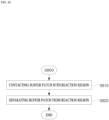
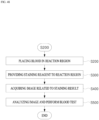
- the blood testing method may further include performing a complete blood cell count (CBC) on the basis of the acquired information.
- CBC complete blood cell count
- the placing of the blood may be performed by any one of a method of fixing the blood to a plate, a method of smearing a sample on a plate, or a method of smearing a sample on a plate and fixing the sample to the plate.
- a base substance BS and an additive substance AS may be taken into consideration separately.
- the patch PA may be in a gel state(gel type).
- the patch PA may be implemented as a gel-type structural body in which colloidal molecules are bound and mesh tissues are formed.
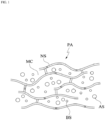
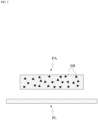
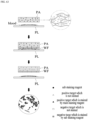
- FIG. 2 illustrates a structure of a patch according to an embodiment of the present application.
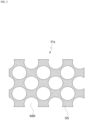
- the mesh structural body of the patch PA may have a sponge structure SS.
- the mesh structural body of the sponge structure SS may include a plurality of micro-holes MH.
- micro-holes MH and the micro-cavities MC may be used interchangeably, and unless particularly mentioned otherwise, the term micro-cavities MC is defined as encompassing the concept of the micro-holes MH.
- a density of the mesh structural body NS may have a value within a predetermined range.
- the predetermined range may be set within a limit in which the form of the liquid substance SB captured in the patch PA is maintained in a form that corresponds to the patch PA.
- the density may be defined as a degree to which the mesh structural body NS is dense or a mass ratio, a volume ratio, or the like that the mesh structural body NS occupies in the patch.
- the patch PA according to the present application may include the liquid substance SB, and the fluidity of the liquid substance SB included in the patch PA may be limited by the form of the mesh structural body NS of the patch PA.
- the liquid substance SB may freely flow within the mesh structural body NS.
- the liquid substance SB is placed in the plurality of micro-cavities formed by the mesh structural body NS.
- An exchange of liquid substance SB may occur between neighboring micro-cavities.
- the liquid substance SB may be present in a state in which the liquid substance SB permeating into a frame structural body that forms the mesh tissues.
- nano-sized pores into which the liquid substances SB may permeate may be formed in the frame structural body.
- whether to the liquid substance SB is filled in the frame structural body of the mesh structure may be determined depending on a molecular weight or a particle size of the liquid substance SB to be captured in the patch PA.
- a substance having a relatively large molecular weight may be captured in the micro-cavities, and a substance having a relatively small molecular weight may be captured by the frame structural body and filled in the micro-cavities and/or the frame structural body of the mesh structural body NS.
- the term "capture” may be defined as a state in which the liquid substance SB is placed in the plurality of micro-cavities and/or nano-sized holes formed by the mesh structural body NS.
- the state in which the liquid substance SB is captured in the patch PA is defined as including a state in which the liquid substance SB may flow between the micro-cavities and/or the nano-sized holes.
- the base substance BS and the additive substance AS may be taken into consideration separately as the liquid substance SB.
- the additive substance AS may be a substance that is mixed with the base substance BS and has fluidity.
- the base substance BS may be a solvent.
- the additive substance AS may be a solute that is dissolved in the solvent or may be particles that are not melted in the solvent.
- the base substance BS may be a substance capable of flowing inside a matrix formed by the mesh structural body NS.
- the base substance BS may be uniformly distributed in the mesh structural body NS or may be distributed only in a partial region of the mesh structural body NS.
- the base substance BS may be a liquid having a single component.
- the additive substance AS may be a substance that is mixed with the base substance BS or dissolved in the base substance BS.
- the additive substance AS may serve as a solute while the base substance BS is a solvent.
- the additive substance AS may be uniformly distributed in the base substance BS.
- the additive substance AS may be fine particles that are not dissolved in the base substance BS.
- the additive substance AS may include colloidal molecules and fine particles such as microorganisms.
- the additive substance AS may include particles larger than the micro-cavities formed by the mesh structural body NS.
- the size of the micro-cavities is smaller than the size of the particles included in the additive substance AS, fluidity of the additive substance AS may be limited.
- the additive substance AS may include a component that is selectively included in the patch PA.
- the additive substance AS does not necessarily refer to a substance that is lower in quantity or inferior in function in comparison to the above-described base substance BS.
- characteristics of the liquid substance SB captured in the patch PA may be presumed as characteristics of the patch PA. That is, the characteristics of the patch PA may depend on characteristics of a substance captured in the patch PA.
- the patch PA may include the mesh structural body NS.
- the patch PA may manage the liquid substance SB through the mesh structural body NS.
- the patch PA may allow the liquid substance SB captured in the patch PA to maintain at least some of its unique characteristics.
- the patch PA may provide a liquid environment in which diffusion of a target substance is caused due to thermal motion of a substance or a difference in density or concentration thereof.
- diffusion refers to a phenomenon in which particles that constitute a substance are spread from a side at which concentration is high to a side at which a concentration is low due to a difference in concentration.
- Such a diffusion phenomenon may be basically understood as a phenomenon that occurs due to motion of molecules (translational motion in a gas or liquid, vibrational motion in a solid, and the like).
- diffusion in addition to referring to the phenomenon in which particles are spread from a side at which a concentration is high toward a side at which a concentration is low due to a difference in concentration or density, “diffusion” also refers to a phenomenon in which particles move due to irregular motion of molecules that occurs even when a concentration is uniform.
- the expression “irregular motion” may also have the same meaning as “diffusion” unless particularly mentioned otherwise.
- the diffused substance may be a solute that is dissolved in the liquid substance SB, and the diffused substance may be provided in a solid, liquid, or gas state.
- a non-uniformly-distributed substance in the liquid substance SB captured by the patch PA may be diffused in a space provided by the patch PA.
- the additive substance AS may be diffused in a space defined by the patch PA.
- the non-uniformly-distributed substance or the additive substance AS in the liquid substance SB managed by the patch PA may be diffused within the micro-cavities provided by the mesh structural body NS of the patch PA.
- a region in which the non-uniformly-distributed substance or the additive substance AS may be diffused may be changed by the patch PA being connected or coming into contact with another substance.
- the patch PA may be implemented to exhibit a hydrophilic or hydrophobic property.
- the mesh structural body NS of the patch PA may have a hydrophilic or hydrophobic property.
- the mesh structural body NS may be able to manage the liquid substance SB more effectively.
- the base substance BS may be a polar hydrophilic substance or a nonpolar hydrophobic substance.
- the additive substance AS may exhibit a hydrophilic or hydrophobic property.
- the properties of the liquid substance SB may be related to the base substance BS and/or the additive substance AS.
- the liquid substance SB may be hydrophilic
- the liquid substance SB may be hydrophobic
- the liquid substance SB may be hydrophilic or hydrophobic.
- the patch PA may be solely used, a plurality of patches PA may be used, or the patch PA may be used with another medium to induce a desired reaction.
- functional aspects of the patch PA will be described.
- the scope of the present application should not be interpreted as being limited to the gel-type patch PA having a hydrophilic property.
- a gel-type patch PA that includes a solution exhibiting a hydrophobic property
- a gel-type patch PA from which a solvent is removed and even a sol-type patch PA may belong to the scope of the present application.
- the patch PA according to the present application may capture the liquid substance SB.
- the patch PA may perform a function as a reservoir.
- the liquid substance SB placed in the patch PA does not lose properties of a liquid even when the liquid substance SB is distributed in the plurality of micro-cavities. That is, the liquid substance SB has fluidity even in the patch PA, and diffusion of a substance may occur in the liquid substance SB distributed in the patch PA, and an appropriate solute may be dissolved in the substance.
- the patch PA may capture a target substance due to the above-described characteristics.
- the patch PA may have resistance to a change in an external environment within a predetermined range. In this way, the patch PA may maintain a state in which the substance is captured therein.
- the liquid substance SB which is a target to be captured, may occupy the three-dimensional mesh structural body NS.
- the patch PA containing the liquid substance is defined to encompass a case in which the liquid substance is contained in a space formed by the mesh structure and/or a case in which the liquid substance is contained in the frame structural body constituting the mesh structural body NS.
- the patch PA may contain the liquid substance SB.
- the patch PA may contain the liquid substance SB, due to an attractive force that acts between the mesh structural body NS of the patch PA and the liquid substance SB.
- the liquid substance SB may be bound to the mesh structural body NS with an attractive force of a predetermined strength or higher and contained in the patch PA.
- the amount of substance that may be contained in the patch PA may be proportional to a volume of the patch PA.
- the amount of substance contained in the patch PA may be proportional to an amount of three-dimensional mesh structural body NS that serves as a support body that contributes to the form of the patch PA.
- the amount of substance contained in the patch PA may be reduced due to evaporation, loss, etc. with time.
- the substance may be additionally injected into the patch PA to increase or maintain the content of the substance contained in the patch PA.
- a moisture keeping agent for suppressing evaporation of moisture may be added to the patch PA.
- the patch PA may perform a function of providing a space.
- the patch PA may provide a space in which the liquid substance SB may move through a space formed by the mesh structural body NS and/or a space constituting the mesh structural body NS.
- the patch PA may provide a space for activity other than diffusion of particles and/or irregular motion of particles (hereinafter referred to as activity other than diffusion).
- the activity other than diffusion may refer to a chemical reaction, but is not limited thereto, and may also refer to a physical state change. More specifically, the activity other than diffusion may include a chemical reaction in which a chemical composition of the substance changes after the activity, a specific binding reaction between components included in the substance, homogenization of solutes or particles included in the substance and non-uniformly distributed therein, condensation of some components included in the substance, or a biological activity of a portion of the substance.
- the plurality of substances When a plurality of substances become involved in the activity, the plurality of substances may be placed together in the patch PA before a reference time point. The plurality of substances may be sequentially inserted into the patch PA.
- the activity may be promoted or a start of the activity may be induced by changing a temperature condition of the patch PA or adding an electrical condition thereto.
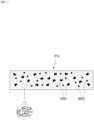
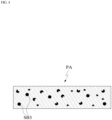
- a first substance SB1 and a second substance SB2 placed in the patch PA may react inside the patch PA and be deformed into a third substance SB3 or generate the third substance SB3.
- Movement of a substance may occur between the patch PA and an external region.
- the substance may be moved from the patch PA to the external region of the patch PA or may be moved from the external region to the patch PA.
- the patch PA may provide a substance movement path. That is, the patch PA may become involved in movement of the substance and provide a substance movement channel.
- the patch PA may provide a substance movement channel based on unique properties of the liquid substance SB.
- the patch PA may be in a state in which the liquid substance SB is movable between the patch PA and the external region or a state in which the liquid substance SB is immovable between the patch PA and the external region.
- the patch PA may have unique functions.
- irregular motion and/or diffusion of the substance are fundamental causes of movement of the liquid substance SB between the patch PA and the external region.
- controlling an external environmental factor e.g., controlling a temperature condition, controlling an electrical condition, or the like
- controlling a temperature condition, controlling an electrical condition, or the like in order to control movement of a substance between the patch PA and the external region has already been described.
- a flow may occur between the liquid substance SB captured in the patch PA and/or the substance placed in the external region.
- substance movement may occur between the liquid substance SB captured in the patch PA and the external region.
- the liquid substance SB or some components of the liquid substance SB may be diffused to the external region or moved due to irregular motion.
- an external substance placed in the external region or some components of the external substance may be diffused to the liquid substance SB in the patch PA or moved due to irregular motion.
- the state in which the substance is movable may be caused by contact.
- the contact may refer to connection between the liquid substance SB captured in the patch PA and the external region.
- Contact may refer to at least a partial overlap between a flow region of the liquid substance SB and the external region.
- the contact may refer to the external substance being connected to at least a portion of the patch PA. It may be understood that the range in which the captured liquid substance SB may flow is expanded in the state in which the substance is movable. In other words, in the state in which the substance is movable, the range in which the liquid substance SB may flow may be expanded to include at least a portion of the external region of the captured liquid substance SB.
- the range in which the captured liquid substance SB may flow may be expanded to include at least a portion of the external region in contact. More specifically, when the external region is an external plate, the region in which the liquid substance SB may flow may be expanded to include a region of the external plate in contact with the liquid substance SB.
- substance movement may not occur between the liquid substance SB captured in the patch PA and the external region.
- substance movement may respectively occur in the liquid substance SB captured in the patch PA and in external substance placed in the external region.
- the state in which the substance is immovable may be a state in which the contact is released. In other words, in the state in which contact between the patch PA and the external region is released, substance movement is not possible between the liquid substance SB remaining in the patch PA and the external region or the external substance.
- the state in which the contact is released may refer to a state in which the liquid substance SB captured in the patch PA is not connected to the external region.
- the state in which the contact is released may refer to a state in which the liquid substance SB is not connected to an external substance placed in the external region.
- the state in which movement of the substance is impossible may be caused by separation between the patch PA and the external region.
- movable state has a meaning differentiated from that of "immovable state”
- a transition may occur between the states due to an elapse of time, an environmental change, and the like.
- the patch PA may be in the immovable state after being in the movable state , in the movable state after being in the immovable state, or may be in the movable state again, after being in the immovable state after being in the movable state.
- the patch PA may deliver at least a portion of the liquid substance SB captured in the patch PA to a desired external region.
- the delivery of the substance may refer to separation of a portion of the liquid substance SB captured in the patch PA from the patch PA due to a predetermined condition being satisfied.
- the separation of the portion of the liquid substance SB may refer to the portion of the substance being extracted, emitted, or released from a region that is affected by the patch PA. This is a concept subordinate to the above-described channeling function of the patch PA, and may be understood as defining transfer(delivery) of the substance placed in the patch PA to the outside of the patch PA.
- the desired external region may be another patch PA, a dried region, or a liquid region.
- the predetermined condition for the delivery to occur may be set as an environmental condition such as a temperature change, a pressure change, a change in an electrical characteristic, and a change in a physical state.
- an environmental condition such as a temperature change, a pressure change, a change in an electrical characteristic, and a change in a physical state.
- delivery the above-described function of the patch PA will be referred to as "delivery.”
- the delivery may occur between the patch PA and the external region, via the state in which the liquid substance SB is movable and the state in which the liquid substance SB is immovable between the patch PA and the external region.
- the liquid substance SB when the liquid substance SB is in the movable state, the liquid substance SB may be diffused between the patch PA and the external region or may be moved to the external region due to irregular motion.
- the base solution and/or the additive substance AS included in the liquid substance SB may be moved from the patch PA to the external region.
- the liquid substance SB In the state in which the liquid substance SB is immovable, the liquid substance SB is unable to move between the patch PA and the external region.
- a portion of the substance that has moved from the patch PA to the external region due to diffusion and/or irregular motion of the liquid substance SB become unable to move back to the patch PA.
- a portion of the liquid substance SB may be provided to the external region.
- the delivery may be performed due to a difference between an attractive force between the liquid substance SB and the mesh structural body NS and an attractive force between the liquid substance SB and the external region or the external substance.
- the attractive force may be caused by similarity between polarities or a specific binding relationship.
- liquid substance SB is hydrophilic and the external region or the external substance is more hydrophilic than the mesh structural body NS
- at least a portion of the liquid substance SB captured in the patch PA may be provided to the external region via the movable state and the immovable state.
- the delivery of the liquid substance SB may also be performed selectively. For example, when a specific binding relationship exists between some components included in the liquid substance SB and the external substance, some of the ingredients may be selectively delivered via the state in which the substance is movable and the state in which the substance is immovable.
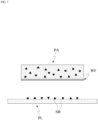
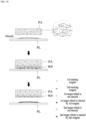
- the patch PA provides a substance to an external plate PL, which is in a form of a flat plate
- a substance that binds specifically to a portion of the liquid substance SB captured in the patch PA e.g., a portion of a solute
- the patch PA may selectively deliver a portion of the solute that binds specifically to the substance applied on the external plate PL from the patch PA to the plate PL via the movable state and the immovable state.
- an attractive force and/or binding force that acts between the substance and the plate PL should be present, and the attractive force and/or the binding force should be larger than the attractive force acting between the substance and the patch PA. Therefore, if the above-described "delivery condition" is not satisfied, delivery of a substance may not occur between the patch PA and the plate PL.
- the movement of a substance from the patch PA to the plate PL may depend on an extent of a contact area between the patch PA and the plate PL.
- the substance movement efficiency between the patch PA and the plate PL may be increased or decreased in accordance with an extent of an area in which the patch PA and the plate PL come into contact.
- the patch PA When the patch PA includes a plurality of components, only some of the components may be selectively moved to the external plate PL. More specifically, a substance that binds specifically to some of the plurality of components may be fixed to the external plate PL. In this case, the substance fixed to the external plate PL may be in a liquid or solid state, or may be fixed to a different region. In this case, a portion of the substance of the plurality of components moves to the plate PL and binds specifically to the plate PL due to contact between the patch PA and the different region, and when the patch PA is separated from the plate PL, only some of the components may be selectively released to the plate PL.
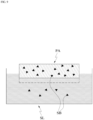
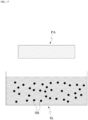
- the substance having fluidity SL may be a liquid substance that is held in other containing space or that is flowing.
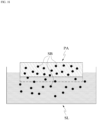
- the patch PA and the substance having fluidity come into contact (for example, the patch PA is put into a solution), at least a portion of the liquid substance SB captured in the patch PA may be diffused or moved due to irregular motion to the substance having fluidity SL.
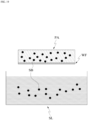
- the patch PA and the substance having fluidity SL are separated, a portion of the liquid substance SB that has been moved from the patch PA to the substance having fluidity become unable to move back to the patch PA so that a portion of the substance in the patch PA may be provided to the substance having fluidity.
- a partial concentration of the additive substance AS in the liquid substance SB and a partial concentration of the additive substance AS in the substance having fluidity may be different, and the additive substance AS may be provided from the patch PA to the substance having fluidity.
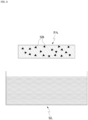
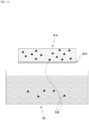
- FIGS. 8 to 10 illustrate delivery of a substance from the patch PA to the substance having fluidity as an example of delivery of a substance from among the functions of the patch PA according to the present application.
- the patch PA may deliver a portion of a substance contained in the patch PA to an external substance having fluidity.
- the delivery of the portion of the contained substance may be performed by the patch PA being inserted into or coming into contact with the substance having fluidity so that substance movement is possible between the liquid substance SB captured in the patch PA and the substance having fluidity.
- the substance movement between the patch PA and another patch PA may depend on an extent of a contact area between the patch PA and the other patch PA.
- the substance movement efficiency between the patch PA and the other patch PA may be increased or decreased in accordance with an extent of an area where the patch PA comes into contact with the other patch PA.
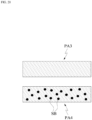
- FIGS. 11 to 13 illustrate delivery of a substance from a patch PA1 to another patch PA2 as an example of delivery of a substance among the functions of the patch PA according to the present application.
- the patch PA1 may deliver a portion of a substance contained in the patch PA1 to the other patch PA2.
- the delivery of the portion of the substance may be performed by the patch PA1 coming into contact with the other patch PA2 and becoming a state in which a liquid substance SB captured in the patch PA1 and a substance captured in the other patch PA2 are exchangeable.
- the absorption may occur by the patch PA via a state in which the substance is movable and a state in which the substance is immovable.
- a substance that is absorbable by the patch PA may be in a liquid or solid state.
- absorption of the substance may be performed due to an attractive force between the solid state substance included in the external substance and the liquid substance SB placed in the patch PA.
- the absorption may be performed due to binding between the liquid external substance and the liquid substance SB placed in the patch PA.
- the external substance absorbed into the patch PA may be moved to the inside of the patch PA through the micro-cavities of the mesh structural body NS forming the patch PA or may be distributed on a surface of the patch PA. Positions at which the external substance is distributed may be set on the basis of a molecular weight or a particle size of the external substance.
- the absorption will be described below as a function of the patch PA according to some examples of an external region that provides a substance to be absorbed into the patch PA when the absorption occurs.
- the patch PA absorbs an external substance from a external plate PL.
- An example of the external plate may include a plate PL in which the external substance may be placed while the external substance is not absorbed thereinto.
- a substance may be applied on the external plate PL.
- a substance may be applied in a form of powder on the plate PL.
- the substance applied on the plate PL may be a single component or a mixture of a plurality of components.
- the plate PL may have the shape of a flat plate.
- the shape of the plate PL may be deformed for improvement in ability to contain the substance or the like.
- a well may be formed to improve the ability to contain the substance
- a surface of the plate PL may be deformed by engraving or embossing, or a patterned plate PL may be used to improve contact with the patch PA.
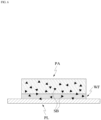
- the absorption of a substance from the plate PL by the patch PA according to the present application may be performed through contact between the plate PL and the patch PA.
- a water film WF may be formed due to the liquid substance SB captured in the patch PA and/or the substance applied on the plate PL.
- the substance applied on the plate PL may be captured by the water film WF.
- the substance captured in the water film WF may freely flow within the patch PA.
- a portion of or the entire substance applied on the plate PL may react specifically with a portion of or the entire substance captured in the patch PA.
- absorption of a substance from the plate PL by the patch PA may be selectively performed.
- the absorption may be performed selectively when the patch PA has a stronger attractive force than the plate PL with respect to a portion of the substance captured in the patch PA.
- a portion of the substance may be fixed to the plate PL.
- a portion of the substance may be fixed to the plate PL while another portion of the substance is applied to have fluidity or not be fixed.
- the substance excluding the portion of the substance fixed to the plate PL of the substance applied on the plate PL, may be selectively absorbed into the patch PA.
- the selective absorption may also occur due to polarities of a substance placed on the plate PL and a substance captured in the patch PA regardless of whether the substance is fixed.
- liquid substance SB captured in the patch PA is bound specifically to at least a portion of a substance applied on the plate PL
- only the portion of the substance applied on the plate PL bound specifically to the liquid substance SB may be absorbed into the patch PA when the patch PA is brought into contact with and then separated from the substance applied on the plate PL.
- a portion of the substance applied on the plate PL may react specifically with a substance fixed to the plate PL in advance.
- a remaining substance excluding the substance that reacts specifically with the substance fixed to the plate PL in advance of the substance being applied to the plate PL, may be absorbed into the patch PA.
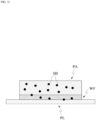
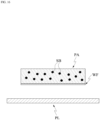
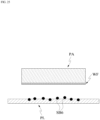
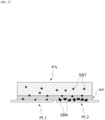
- FIGS. 14 to 16 illustrate absorption of a substance from an external plate PL by the patch PA as an example of absorption of a substance from among the functions of the patch PA according to the present application.
- the patch PA may absorb a portion of a substance placed on the external plate PL from the external plate PL.
- the absorption of the substance may be performed by the patch PA coming into contact with the external plate PL, the water film WF being formed in the vicinity of a contact region between the external plate PL and the patch PA, and the substance being movable to the patch PA through the water film WF.
- the substance having fluidity SL may refer to a liquid external substance that is held in other containing space or that is flowing. More specifically, by having an environment in which the substance having fluidity SL and the liquid substance SB captured in the patch PA may flow to and from each other, a portion of or the entire substance having fluidity SL may be absorbed into the patch PA. In this case, the environment in which the substance having fluidity SL and the liquid substance SB may flow to and from each other may be formed by the patch PA coming into contact with at least a portion of the substance having fluidity SL.
- the absorption of a substance into the patch PA from the substance having fluidity SL may depend on a concentration difference between the substance captured in the patch PA and the substance having fluidity SL.
- concentration difference between the substance captured in the patch PA and the substance having fluidity SL.
- the absorption into the patch PA may also be controlled by adding an electrical factor or changing a physical condition. Further, without direct contact between the substance captured in the patch PA and a substance to be absorbed, the absorption of a substance may also be performed through indirect contact therebetween via a medium.
- FIGS. 17 to 19 illustrate absorption of a substance from the substance having fluidity SL by the patch PA as an example of absorption of a substance from among the functions of the patch PA according to the present application.
- the patch PA may absorb a portion of the substance having fluidity SL.
- the absorption of a substance may be performed by the patch PA being immersed into the substance having fluidity SL or coming into contact with the substance having fluidity SL so that the liquid substance SB captured in the patch PA and the substance having fluidity SL are movable to and from each other.
- the patch PA absorbs an external substance from another patch PA.
- the absorption of an external substance from another patch PA by the patch PA may be performed due to a difference in binding force between the absorbed external substance and the substance already captured in the patch PA and between the absorbed external substance and the external substance not absorbed into the patch PA.
- the absorbed substance exhibits hydrophilic property
- the patch PA exhibits hydrophilic property
- an attractive force between the absorbed substance and the patch PA is stronger than an attractive force between the other patch PA and the absorbed substance (that is, when the patch PA is more hydrophilic than the other patch PA)
- at least a portion of the external substance may be absorbed into the patch PA when the patch PA and the other patch PA are separated after being brought into contact.
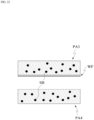
- FIGS. 20 to 22 illustrate absorption of a substance from another patch PA4 by a patch PA3 as an example of absorption of a substance among the functions of the patch PA according to the present application.
- the patch PA3 may absorb a portion of a substance placed in the other patch PA4.
- the absorption of the substance may be performed by the patch PA3 coming into contact with the other patch PA4 so that a liquid substance SB captured in the patch PA3 and a liquid substance SB captured in the other patch PA4 are exchangeable.
- the absorbed external substance may be separated from the other patch PA along with the patch PA.
- the patch PA according to the present application may perform a function of adjusting an environmental condition of a desired region.
- the patch PA may provide an environment due to the patch PA to the desired region.
- the adjustment of the environment may be understood as changing an environmental condition of the desired region.
- the changing of the environmental condition of the desired region may be implemented in a form in which a region affected by the patch PA is expanded to include at least a portion of the desired region or a form in which an environment of the patch PA is shared with the desired region.
- the providing of an environment by the patch PA may be performed in a state in which a substance is movable between the patch PA and an external region subject to provide the environment.
- the providing of an environment by the patch PA may be performed through contact. For example, when the patch PA comes into contact with a desired region (for example, an external substance, a plate PL, or the like), a specific environment may be provided to the desired region by the patch PA.
- a desired region for example, an external substance, a plate PL, or the like
- the patch PA may adjust an environment of a target region TA by providing an environment with an appropriate pH, osmotic pressure, humidity level, concentration, temperature, and the like.
- the patch PA may provide fluidity (liquidity) to the target region TA or a target substance. Such providing of fluidity may occur due to movement of a portion of a substance captured in the patch PA.
- a moist environment may be provided to the target region TA through the liquid substance SB or the base substance BS captured in the patch PA.
- the environmental factors provided by the patch PA may be constantly maintained in accordance with a purpose.
- the patch PA may provide homeostasis to the desired region.
- the substance captured in the patch PA may be adapted to an environmental condition of the desired region
- the patch PA may provide a reaction region for a substance.
- a reaction of a substance may occur in at least a portion of a spatial region affected by the patch PA.
- the reaction of a substance may be a reaction between liquid substances SB captured in the patch PA and/or a reaction between the captured liquid substance SB and a substance provided from the outside of the patch PA.
- the providing of a reaction region for a substance may activate or promote a reaction of a substance.
- the providing of a reaction region for a reaction related to the liquid substance SB captured in the patch PA may be a concept subordinate, in terms of embodiment, to the above-described Section 2.1.3 (that is, providing of reaction space).
- the providing of a reaction region for a reaction related to the liquid substance SB captured in the patch PA may consist of multiple concepts that perform combined functions of the above-described Section 2.1.3 and Section 2.2.4.2 (that is, absorption).
- the providing of a reaction region for a reaction related to the liquid substance SB captured in the patch PA is not limited thereto and may be implemented in the form in which two or more functions are combined.
- the patch PA may perform a function of capturing a substance, and the substance may have fluidity even when the substance is captured.
- the non-uniform components may be diffused.
- the liquid substance SB may have a predetermined level of mobility due to irregular motion of particles. In this case, a reaction between substances, for example, specific binding between substances, may occur inside the patch PA.
- the reaction between the substance having fluidity and the substance that has been captured in the patch PA may also occur after the substance patch being separated from an space that has been provided.
- the patch PA absorbs the substance having fluidity from an arbitrary space
- the patch PA may be separated from the arbitrary space, and a reaction between the absorbed substance and the substance that has been captured in the patch PA may occur in the patch PA.
- the patch PA may allow a reaction of a substance captured therein to occur by performing the absorption function with respect to a substance having fluidity,.
- the absorption of the substance having fluidity by the patch PA may act as a trigger for a reaction between the absorbed substance and the substance that has been captured in the patch PA.
- the reaction may occur inside a space defined by the patch PA.
- the patch PA may perform a function of providing a space for at least a portion of the liquid substance SB contained in the patch PA to react.
- the patch PA may contain a substance and provide a reaction space for the contained substance.
- the reaction space provided by the patch PA may be the micro-cavities formed by the mesh structural body NS of the patch PA or a surface region of the patch PA.
- the reaction space may be the surface region of the patch PA.
- the reaction space provided by the patch PA may serve to provide a specific environmental condition. While a reaction occurs in the liquid substance SB placed in the patch PA, an environmental condition of the reaction may be adjusted by the patch PA.
- the patch PA may serve as a buffer solution.
- the patch PA does not require a container, separately.
- the reaction space of the patch PA is a surface of the patch PA, a reaction may be easily observed through the surface of the patch PA.
- the shape of the patch PA may be deformed into a shape that facilitates the observation.
- the liquid substance SB contained in the patch PA may be denaturalized or react with a different type of substance.
- the composition of the liquid substance SB contained in the patch PA may be changed with time.
- the patch PA that performs a function of providing a substance movement path
- the patch PA may capture, absorb, release, and/or contain a substance having fluidity.
- Various embodiments of the patch PA that performs the function of providing a substance movement path may be implemented by each of the above-described functions of the patch PA or a combination thereof. However, a few embodiments will be disclosed for a better understanding.
- the patch PA may be implemented to perform functions described in Section 2.2.4.1 (that is, the section related to delivery) and Section 2.2.4.2 (that is, the section related to absorption) among the above-described functions of the patch PA.
- the absorption function and the delivery function may be provided together or sequentially provided.
- the providing of the movement path of the external substance by the patch PA may be performed by absorbing the external substance and releasing the external substance. More specifically, the patch PA may come into contact with the external substance, absorb the external substance, come into contact with the external region, and deliver the external substance to the external region. In this case, the capturing of the external substance and the delivery of the captured external substance to the external region by the patch PA may be performed through a process similar to those of the above-described absorption and delivery.
- the external substance absorbed into the patch PA and provided may be in a liquid phase or a solid phase.
- the patch PA may allow a portion of the external substance to be provided to another external substance.
- the external substance and the other external substance may simultaneously come into contact with the patch PA.
- the external substance and the other external substance may come into contact with the patch PA at different time points.
- the external substance and the other external substance may come into contact with the patch PA at different time points.
- the external substances When the external substances come into contact with the patch PA at different time points, the external substance may come into contact with the patch PA first, and after the external substance and the patch PA are separated, the patch PA and the other external substance may come into contact.
- the patch PA may temporarily contain a substance captured from the external substance.
- the patch PA may simultaneously provide a substance movement path and additionally provide a time delay.
- the patch PA may perform a function of suitably adjusting an amount of substance provided to another external substance and a speed of such providing.
- Such a series of processes may be carried out in one direction with respect to the patch PA.
- absorption of a substance may be performed through a surface of the patch PA, an environment may be provided in an inner space of the patch PA, and the substance may be released through another surface facing the surface.
- the patch PA may perform the absorbing and releasing of a substance among the above-described functions of the patch PA and the providing of a reaction space for the substance simultaneously .
- the absorption and release of the substance and the providing of the reaction space may be performed simultaneously or sequentially.
- the patch PA in performing the processes of absorbing and releasing an external substance, may provide a reaction space to the absorbed external substance for at least a predetermined amount of time.
- the patch PA may provide a specific environment for at least some time to the liquid substance SB captured in the patch PA, including the absorbed external substance.
- the liquid substance SB that has been captured in the patch PA and the external substance captured in the patch PA may react inside the patch PA.
- the external substance absorbed into the patch PA may be affected by an environment provided by the patch PA.
- the substance released from the patch PA may include at least a portion of a substance generated through the reaction.
- the external substance may be released from the patch PA after the composition, characteristics, and the like of the external substance are changed.
- the absorbed substance may be released from the patch PA.
- the external substance being absorbed into the patch PA and being released from the patch PA may be understood as the external substance passing through the patch PA.
- the external substance that has passed through the patch PA may lose integrity due to a reaction inside the patch PA or an influence of an environment provided by the patch PA.
- the above-described processes of absorption of an external substance, reaction of a substance, and providing of the substance may be carried out in one direction.
- the absorption of a substance may be performed at one position of the patch PA
- the providing of an environment may be performed at another position of the patch PA
- the release of the substance may be performed at yet another position of the patch PA.
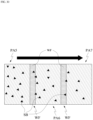
- FIGS. 26 to 28 illustrate providing of a substance movement path between two plates PL as an embodiment of the patch PA according to the present application.
- the patch PA may provide a substance movement path between a plate PL1 on which a seventh substance SB7 is applied and a plate PL2 on which an eighth substance SB8 is applied.
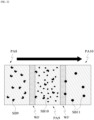
- the patch PA may come into contact with the plates PL1 and PL2 so that the seventh substance SB7 is moved through the patch PA and bound to the eighth substance SB8.
- the seventh substance SB7 and the eighth substance SB8 may be connected to the patch PA through a water film WF formed by the patch PA coming into contact with the plates PL1 and PL2.
- FIGS. 29 and 30 illustrate providing of a substance movement path between two patches as an embodiment of the patch PA according to the present application.
- a patch PA6 configured to provide the movement path may be in contact with a patch PA5 configured to contain a substance to be moved, and a patch PA7 configured to receive the substance to be moved.
- the patch PA6 configured to provide the movement path may come into contact with the patch PA5 configured to contain the substance to be moved and the patch PA7 configured to receive the substance to be moved, and the substance to be moved may be moved to the patch PA7 configured to receive the substance to be moved.
- the movement of the substance between the patches may be performed by a water film WF formed in the vicinity of a contact region between the patches.
- FIGS. 31 and 32 illustrate providing of a substance movement path between two patches as an embodiment of the patch according to the present application.
- a patch PA9 configured to provide the movement path may be in contact with a patch PA8 configured to contain a ninth substance SB9 and a patch PA10 configured to receive a substance.
- the patch PA9 providing the movement path may come into contact with the patch PA8 configured to contain the ninth substance SB9 to absorb the ninth substance SB9.
- the absorbed ninth substance SB9 may react with a tenth substance SB10 contained in the patch PA9, which is configured to provide the movement path, and generate an eleventh substance.
- An eleventh substance SB11 may be provided from the patch PA9 configured to provide the movement path to the patch PA10 configured to receive the substance.
- the movement of a substance between the patches PA may be performed through a water film WF formed in the vicinity of a contact region between the patches PA.
- a patch PA may be solely used, or a plurality of patches PA may be used together.
- the plurality of patches PA being able to be used together includes a case in which the plurality of patches PA are sequentially used as well as a case in which the plurality of patches PA are used simultaneously.
- the patches PA may not come into contact with each other such that substance movement does not occur between the patches PA, or a desired function may be performed in a state in which substances contained in the patches PA are exchangeable.
- the plurality of patches PA used together may be manufactured in shapes similar to each other or in the same size, the plurality of patches PA may be used together even when the plurality of patches PA have different shapes.
- Each patch PA constituting the plurality of patches PA may be manufactured such that densities of the mesh structural bodies NS are different or components constituting the mesh structural bodies NS are different.
- the plurality of patches PA may come into contact with a single target region TA.
- the plurality of patches PA may come into contact with the single target region TA and perform a desired function.
- the plurality of patches PA may come into contact with a substance applied on the target region TA.
- the substance applied on the target region TA may be fixed or have fluidity.
- the desired function may be a function of providing or absorbing the substance.
- each patch PA does not necessarily provide the same substance or absorb the same substance, and the patches PA may provide different substances to the target region TA or absorb different components from a substance placed in the target region TA.
- the substances formed of different components may be provided to the target region TA.
- the plurality of patches PA may be used to detect a plurality of specific bindings from the substances applied on the target region TA, by providing the substances including different components.
- the plurality of patches PA in the form of a cartridge may be suitable when patches PA configured to contain a plurality of types of substances are manufactured to be used by being chosen as necessary.
- FIG. 34 illustrates a case in which the plurality of patches PA are used and the plate PL includes a plurality of target regions TA.
- the plurality of patches PA may simultaneously come into contact with the plurality of target regions TA placed on the plate PL.
- the plurality of patches PA may include a first patch PA and a second patch PA
- the plurality of target regions TA may include a first target region and a second target region
- the first patch may come into contact with the first target region and the second patch may come into contact with the second target region.
- the plurality of patches PA may perform a plurality of functions. As described above, the patches PA may simultaneously perform a plurality of functions, and the patches PA may also simultaneously perform different functions. However, embodiments are not limited to the above, and the functions may also be combined and performed in the plurality of patches PA.
- the patches PA may simultaneously perform containing and release of a substance and providing of an environment.
- the patches PA may separately perform the containing and release of a substance and providing of an environment.
- embodiments are not limited thereto, and the functions may also be performed in combination in the plurality of patches PA.
- a patch PA among the plurality of patches PA may release a substance contained therein to the target region TA.
- another patch PA may provide an environment to the target region TA.
- the providing of an environment may be implemented in the form in which an environmental condition of a substance contained in the other patch PA is provided to the target region TA.
- a reacting substance may be provided to the target region TA by the patch PA, and the other patch PA may come into contact with the target region TA and provide a buffering environment.
- the patch of the present application may be used in various blood testing methods of obtaining numerical and morphological information of blood.
- a few typical blood tests using the patch of the present application will be mentioned.
- the blood test is not limited to the examples which will be described below in the present application.
- a blood test may include a peripheral blood smear examination.
- the peripheral blood smear examination is an examination in which collected blood is smeared on a slide glass and then stained to examine numerical or morphological information of blood cells or discover bacteria or parasites in blood through a microscope.
- red blood cells may be used in distinguishing anemia and determining a cause thereof, and white blood cells may be helpful in determining myelodysplastic syndrome, leukemia, a cause of infection or inflammation, and megaloblastic anemia.
- platelets are helpful in determining a myeloproliferative disorder, platelet satellitism, and the like.
- platelets may also be used for detecting bacterial pathogens such as tubercule bacillus or various parasites including bacteria present in blood.
- a blood test may be performed mostly by smearing blood on a plate PL such as a slide glass, staining the blood, and then observing the stained blood.
- various staining techniques may be used as necessary.
- Romanowsky staining techniques such as a Giemsa staining technique, a Wright staining technique, and a Giemsa-Wright staining technique may be used in staining blood.
- staining techniques such as a simple staining technique, a Gram staining technique, or an AFB [Ziehl-Neelsen] staining technique accompanied by a bacteriological examination, and a Papanicolaou staining technique mostly used in cervical cancer examination may be used in a blood test of the present application.
- a sample may be prepared on a plate PL to examine for blood using the patch PA of the present application.
- the plate PL may refer to a solid plate such as a general slide glass and a plate manufactured with polystyrene, polypropylene, or the like. A plate having a different form of bottom or different transparency may be used as the plate PL in accordance with a detection method.
- the plate PL may include a reaction region that may come into contact with the patch PA or in which a desired reaction may occur.
- the above-described patch PA may be used.
- the patch PA may contain only one type of staining reagent among methylene blue, crystal violet, safranin, etc. which are used in the simple staining technique.
- two or more staining reagents may also be contained together in the patch PA.
- two staining reagents such as eosin, which stains cytoplasm red, and methylene blue, which stains a nucleus violet, may be simultaneously contained in the patch PA.
- the patch PA may contain only some of a plurality of staining reagents used in a staining technique.
- the Giemsa staining technique may also be performed by simultaneously using a patch PA that only contains eosin as a single staining reagent and a patch PA that only contains methylene blue or azure blue as a single reagent.
- the above-described patches PA may be separately used or used in combination.
- the patch PA may contain a staining reagent and a buffer solution together.
- the blood testing method of the present disclosure is not limited to examples which will be described below, and since a plurality of modified detection methods may be present, the methods may be applied throughout the blood testing method performed using the patch PA.
- blood may be smeared on a slide glass by sliding the smearing member SM in one direction up to a point at which the smearing member SM is in contact with the blood drop dropped on the slide glass and then sliding the smearing member SM in the opposite direction.
- blood may be spread on the slide glass by following the smearing member in the opposite direction.
- FIG. 37 is a view related to another example of a blood smearing method according to an embodiment of the present disclosure.
- Staining of blood may be performed by bringing a patch PA including a staining reagent in contact with blood smeared on a plate PL.
- the staining reagent included in the patch PA may move to the blood and stain a granule present inside a cytoplasm, a nucleus, a white blood cell, or the like in blood.
- the patch PA may contain a neutral staining reagent that simultaneously includes a positively-charged portion and a negatively-charged portion.
- the negatively-charged portion of the staining reagent may be bound to a positively-charged portion (e.g., a cytoplasm) in blood and stain the positively-charged portion with a predetermined color
- the positively-charged portion of the staining reagent may be bound to a negatively-charged portion (e.g., a nuclei) in blood and stain the negatively-charged portion with a color that is different from the predetermined color.
- a typical example of a neutral staining reagent may include a Wright staining reagent.
- a fluorescent substance that allows a staining target to be fluorescent color developed may also be used in place of a staining reagent.
- a nucleus may be allowed to develop fluorescent color by a method of adding a fluorescent substance to a substance bound to the nucleus.
- An examination for blood may be performed by acquiring an image related to stained blood and analyzing the acquired image.
- an optical device Any device capable of acquiring an image of stained blood in a magnification appropriate for detecting blood cells such as red blood cells, white blood cells, or platelets stained in blood or pathogens such as bacteria in blood may be used as the optical device.
- an optical device may include an optical sensor configured with a charge-coupled device (CCD) or a complementary metal-oxide semiconductor (CMOS), a lens barrel configured to provide an optical path, a lens configured to adjust a magnification or a focal length, and a memory configured to store an image acquired by the CCD or CMOS.
- CCD charge-coupled device
- CMOS complementary metal-oxide semiconductor
- FIGS. 38 and 39 are views related to acquiring an image of stained blood according to an embodiment of the present disclosure.
- an optical device OD may directly acquire an image while blood stained using the patch PA is smeared on a plate PL.
- the optical device OD may receive light that has been irradiated from a light source LS and passed through the plate PL on which the stained blood is smeared and acquire an image of the stained blood.
- the optical device OD may be disposed on a surface of a slide glass on which blood is smeared (hereinafter referred to as a "front surface"), and the light source LS may be disposed at a surface opposite the front surface, i.e., a rear surface, of the slide glass. Due to such an arrangement, the optical device OD may receive light that has been irradiated from the light source LS at the rear side of the slide glass and has passed through the slide glass, and acquire an image of the stained blood.
- a front surface a surface of a slide glass on which blood is smeared
- the light source LS may be disposed at a surface opposite the front surface, i.e., a rear surface, of the slide glass. Due to such an arrangement, the optical device OD may receive light that has been irradiated from the light source LS at the rear side of the slide glass and has passed through the slide glass, and acquire an image of the stained blood.
- the optical device OD may be disposed on a rear surface of the slide glass, and the light source LS may be disposed on a front surface of the slide glass. Due to such arrangement, the optical device OD may receive light that has been irradiated from the light source LS at the front side of the slide glass and has passed through the slide glass, and acquire an image of the stained blood.
- the plate PL may be prepared with a material through which light output from the light source transmitted easily as possible.
- the light source may output white light or a wavelength in a specific wavelength band.
- a blood test may be performed by acquiring various pieces of information from an acquired image.
- the image may be provided to a tester through a computer or a monitor of medical equipment.
- the tester may identify the number of blood cells, the morphology of the blood cells, a presence of bacteria, the number, morphology, or the like of the bacteria, and determine a testee's health condition or a state of a disease on the basis of the identified results.
- an electronic device in which an image analysis program is installed may acquire an image from an optical device, and pieces of information on the number or the morphology of blood cells or a presence, the number, or the morphology of bacteria may be generated from the image.
- the generated information may be provided to the tester through the computer or the monitor of the medical equipment.
- the tester may determine the testee's health condition or state of the disease on the basis of the received pieces of information.
- the image analysis program may analyze an acquired image. Specifically, the image analysis program may acquire numerical information and morphological information of blood cells or bacteria in blood from an acquired image.
- the image analysis program may determine a type of blood cells from the acquired image.
- the types of blood cells include white blood cells, red blood cells, or platelets, and more specifically, may also include types of white blood cells.
- the image analysis program may also determine whether blood cells are abnormal.
- the image analysis program may determine the type or abnormality of the blood on the basis of the size or morphology of blood cells in the image.
- the image analysis program may determine a presence of bacteria in blood.
- the blood test program may determine the testee's health condition, presence of a disease, progress of disease or the like on the basis of numerical information related to blood cells or bacteria (for example, the number of each type of blood cells, the number of abnormal blood cells, the number of bacteria, or the like) and morphological information (the morphology of blood cells or the morphology of bacteria).
- At least one of the above-described image analysis program and blood test program may perform the above-described determination process in accordance with a preset algorithm or in accordance with an algorithm formed through mechanical learning such as deep learning.
- the blood testing method may include placing blood, which is a target to be tested, in a reaction region (S200), and using a patch PA that contains a staining reagent for staining the blood and providing the staining reagent to the reaction region (S300).
- the placing of the blood, which is the target to be tested (S200) may be performed by the above-described method of smearing a sample on the plate PL.
- FIG. 41 illustrates a flowchart for describing an example of the providing of the staining reagent to the reaction region in the blood testing method according to an embodiment of the present application.
- the providing of the staining reagent to the reaction region (S300) may include contacting the patch with the reaction region so that the staining reagent is movable to the reaction region (S310) and separating the patch PA from the reaction region.
- the staining reagent in the patch PA may move to the reaction region and stain the blood.
- the basic staining reagent may move to the reaction region and stain a nucleus of white blood cells from among blood cells or a nucleus of bacteria present in blood.
- the acidic staining reagent may move to the reaction region and stain a cytoplasm or an extracellular structure of blood cells or bacteria.
- the patch PA is separated from the reaction region (S320).
- a duration for maintaining a contact between the patch PA and the reaction region is extremely short, it is difficult to perform sufficient staining.
- a duration for maintaining the contact is extremely long, not only the time taken for the overall blood test is increased, an excessive amount of staining reagent may be moved to blood and staining quality may be degraded. Therefore, the patch PA is separated from a contact region after a certain amount of time passes after the patch PA has been moved to the reaction region.
- the duration for maintaining a contact may be properly set in consideration of a concentration of the staining reagent of the patch PA, a density of the gel-type structure, and external conditions such as a temperature condition.
- the providing of the staining reagent to the reaction region (S300) may include contacting a first patch PA with the reaction region so that a first staining reagent is movable to the reaction region (S330), separating the first patch PA from the reaction region (S340), contacting a second patch PA with the reaction region so that a second staining reagent is movable to the reaction region (S350), and separating the first patch PA from the reaction region (S360).
- the first patch PA and the second patch PA are patches PA that respectively contain the first staining reagent and the second staining reagent for staining different components of blood.
- the first staining reagent may be any one of a basic staining reagent and an acidic reagent
- the second staining reagent may be the other one of the basic staining reagent and the acidic staining reagent.
- one of the first patch PA and the second staining patch PA may stain a cytoplasm or extracellular structure of blood cells or a cytoplasm or extracellular structure of bacteria in blood, and the other one may stain a nucleus of blood cells or a nucleus of bacteria in blood.
- FIG. 43 illustrates a flowchart for describing another example of a blood testing method according to the present application.
- FIG. 44 illustrates a flowchart for describing an example of the removing of the foreign substance from the reaction region in the blood testing method according to another embodiment of the present application.
- the absorbing of the foreign substance from the reaction region using the washing patch PA may include contacting the patch PA with the reaction region so that the foreign substance is movable from the reaction region to the washing patch PA (S610) and separating the patch PA from the reaction region (S620).
- FIG. 45 illustrates a flowchart for describing yet another example of a blood testing method according to the present application.
- the providing of the predetermined environment to the reaction region using the buffer patch PA may include contacting the buffer patch PA with the reaction region so that the predetermined environment is provided to the reaction region (S810) and separating the buffer patch PA from the reaction region (S820).
- the buffer patch PA may create an appropriate environment for staining in the reaction region, and staining quality may be improved.
- FIG. 47 illustrates a flowchart for describing still another example of a blood testing method according to the present application.
- a method of performing a blood test of the present application may further include smearing blood on the plate PL (S 100) and fixing the smeared blood (S 120).
- the applying of the blood on the plate PL (S 100) may include smearing the blood in a monolayer or in a thin layer similar to the monolayer.
- an effective surface area between the blood smeared on the plate PL and the patches PA coming into contact with the plate PL may be maximized.
- an effective result may be acquired even with a small amount of blood.
- the reaction region may be very simply implemented in comparison to conventional blood testing methods in which a region in which blood is distributed is complexly designed for an expansion of the effective surface area and diagnosis is performed.
- the blood may also be smeared in a thick layer having a predetermined thickness instead of being smeared in a thin layer as necessary.
- the fixing of the blood to the plate PL (S 120) may include smearing the blood in a monolayer or in a thin layer similar to the monolayer and fixing the blood.
- each of Steps S600 and S800 may be performed during at least one time point of time points before the plurality of patches PA come into contact with blood, after the contact, and between time points during which the plurality of patches come into contact with blood.
- Step S600 may also be performed using the buffer patch PA.
- Step S800 may be performed together in a process in which Step S800 is performed by the buffer patch PA.
- Step S800 may also be performed using the washing patch PA.
- Step S600 since the washing patch PA performs the buffering function as well as the washing function upon coming into contact with blood, Step S600 may be performed together in a process in which Step S600 is performed by the washing patch PA.
- Step S800 may be performed together in a process in which Step S200 is performed by the staining patch PA.
- Step S600 may be performed together in a process in which Step S200 is performed by the staining patch PA.
- the patch PA containing the staining reagent may also serve as the washing patch PA and the buffer patch PA. According to this, since the staining patch PA performs the washing function and the buffering function as well as the staining function upon coming into contact with blood, Steps S600 and S800 may be performed together in a process in which Step S200 is performed by the staining patch PA.
- the blood testing method by simple staining may include placing blood in a reaction region (S200), providing staining reagent to the reaction region (S300), acquiring an image related to a staining result (S400), and analyzing the image and performing a blood test (S500).
- the providing of the staining reagent (S300) may include first contacting a staining patch PA that contains the staining reagent with the reaction region on a plate PL such as a slide glass (S310) and separating the staining patch PA from the plate PL.
- the providing of the staining reagent to the plate PL may be due to a reaction between the staining reagent and the blood, particularly, a nucleus, a cytoplasm, an extracellular structure, and the like of blood cells or bacteria included in the blood.
- the staining reagent may be moved from the staining patch PA to the blood which is smeared and fixed in the reaction region, and the moved staining reagent may be bound to a target substance in blood and stain the target substance.
- the washing process and the buffering process which are essentially required in performing staining for a conventional blood test may also be omitted.
- a washing process for removing the remaining staining reagent from the plate PL using the washing solution may be omitted.
- the blood testing method by simple staining may further include at least one of the smearing of the blood on the plate PL (S100), the fixing of the smeared blood (S120), the washing of the reaction region using the washing patch PA (S600), and the providing of the predetermined environment to the reaction region using the buffer patch PA (S800) described above.
- Steps S100 and S120 may be performed before Step S200.
- Steps S600 and S800 may be performed one or more times between Steps S200 and S400.
- the washing (S600) may be performed after blood is fixed to the plate PL as described above, before or after the providing of the staining reagent to the reaction region (S300), or both before and after the providing of the staining reagent to the reaction region (S300).
- the washing (S600) may also be performed before or after the image acquisition (S400) or both before and after the image acquisition (S400).
- the staining of blood, the washing of the reaction region, the providing of a predetermined environment to the reaction region, and the like may not necessarily be performed using the patch PA.
- some of the processes may be performed using a solution required for a corresponding process instead of using the patch PA.
- the washing of the reaction region may be performed by spraying a washing solution on the reaction region instead of contacting the washing patch PA with the reaction region.
- the corresponding processes when the staining of blood, the washing of the reaction region, the providing of a predetermined environment to the reaction region, and the like are performed by contacting the patch PA with the blood, the corresponding processes may be completed with a smaller amount of solution or reagent in comparison to when performing the corresponding processes by directly spraying the solution and an economical advantage may be obtained. Also, since, according to the present embodiment, it is easier to control a degree of staining reaction, a degree of washing, and a degree of buffering in comparison to directly spraying various solutions contained in the patch PA to the plate PL and an over-reaction may be prevented, the corresponding processes may be more precisely performed, and staining quality may be improved as a result.
- the above-described simple staining may be generally used to detect bacteria in blood or check a degree of bacterial infection, a degree of bacterial growth, and the like.
- FIG. 50 when crystal violet is used as a staining reagent, colon bacillus in blood may be stained.
- FIG. 51 when methylene blue is used as a staining reagent, corynebacterium diphtheriae in blood may be stained.
- a basic staining reagent for staining a nucleus may be used mostly to distinguish between bacteria and red blood cells in blood.
- an acidic staining reagent or a neutral staining reagent may also be used in accordance with a staining target.
- the above-described simple staining may also be used for the CBC.
- methylene blue when used as a staining reagent, white blood cells in blood may be stained. In this way, the number of white blood cells in blood may be quantified.
- eosin when used as a staining reagent, blood cells in blood may be stained. In this case, cytoplasm of red blood cells or platelets, as well as white blood cells, are all stained, and different blood cells may be distinguished through an image analysis on the basis of morphologies or sizes of blood cells. When different blood cells are distinguished, each type of blood cells in blood may be quantified. Accordingly, the CBC may be completed.
- each patch PA will be described as containing a few components, and each component may be understood as the above-described base substance BS or additive substance AS. However, the components which will be described as being able to be contained in each patch PA do not represent all components contained in each patch PA, and each patch PA may also contain other unmentioned components.
- a blood test of the present application may be performed using a staining patch PA that contains a staining reagent.
- the patch PA may contain a staining reagent that reacts with a target substance in blood and stains the target substance and may deliver the staining reagent to the plate PL.
- the staining reagent may be the additive substance AS contained in the patch PA.
- the patch PA may contain a solution including the staining reagent.
- the patch PA in which the staining reagent is contained may also contain, in addition to the staining reagent or a solution containing the staining reagent, a base substance BS or additive substance AS that allows the staining reagent to easily bind to a target substance in blood.
- the staining reagent may be a substance that mostly electrochemically binds to the target substance and develops color.
- Examples of the staining reagent include a basic staining reagent, a neutral staining reagent, and an acidic staining reagent. Since the examples have been described in detail above, the detailed description thereof will be omitted.
- the staining reagent When, as in the present embodiment, the staining reagent is contained in the patch PA and provided to the plate PL, a portion of the staining reagent that has not reacted with blood fixed to the plate PL may be re-absorbed into the patch PA. Accordingly, the washing process may be omitted, the patch PA may be reused in some cases, and prompt and efficient diagnosis may be realized.
- the patch PA may be a staining reagent containing patch PA that includes a staining reagent configured to react with a target substance and a mesh structural body NS that is provided in a mesh structure forming micro-cavities in which the staining reagent is contained and configured to come into contact with a reaction region in which blood is placed so that a portion of the contained staining reagent is provided to the reaction region.
- a blood testing method may be performed using a washing patch PA configured to absorb a residue.
- the residue may be absorbed by the washing patch PA being brought into contact with the plate PL and being separated therefrom.
- the residue may refer to a residue that is not absorbed into each patch PA and removed when the above-described staining patch PA is brought into contact with the plate PL and then separated therefrom.
- the washing patch PA may contain a washing solution.
- the washing solution may include a TBS or PBS with Tween 20 added to a portion thereof.
- the washing solution may be provided as a solution in which the residue may be dissolved in accordance with a residue to be absorbed.
- the patch PA containing the washing solution may further contain the base substance BS or additive substance AS that assists in the washing.
- the patch PA containing the washing solution By the patch PA containing the washing solution and being brought into contact with the plate PL and then separated therefrom, impurities or residue on the plate PL, for example, a staining reagent that has not been bound or other foreign substances may be absorbed into the washing patch PA and removed.
- the washing patch PA may come into contact with the plate PL, that is, the plate PL region on which blood is placed, so that the water film WF is formed, and the residue may be dissolved in the water film WF.
- the residue dissolved in the water film WF may be absorbed into the washing patch PA when water film WF is separated from the plate PL and moved along with the washing patch PA.4.5.1.3 Buffer patch
- a blood testing method may be performed using a buffer patch.
- the buffer patch PA may contain a buffer solution and provide a predetermined environment to the plate PL.
- the buffer patch PA may contain a buffer solution that facilitates each step of the blood test.
- the buffer solution may mostly be a buffer solution having an optimal pH required for a desired basic reaction.
- a blood test according to an embodiment of the present application may be performed by a Romanowsky staining technique using the plate PL and the patch PA.
- FIG. 54 illustrates a flowchart for describing a blood testing method by Romanowsky staining as another example of a blood testing method according to the present application.
- the blood testing method by Romanowsky staining may include placing blood in a reaction region (S200), providing a staining reagent to the reaction region (S300), acquiring an image related to a staining result (S400), and analyzing the image to perform a blood test (S500).
- the providing of the staining reagent (S300) in the blood test by Romanowsky staining includes providing at least two or more staining reagents to the blood. In the present embodiment, this may be performed mostly using a plurality of staining patches PA that each contain one of a plurality of staining reagents. However, for convenience of description, description will be given below on the basis of using two staining patches PA, i.e., a first staining patch PA and a second staining patch PA, to stain the blood using two staining reagents. However, in the present embodiment, the number of staining patches PA is not limited to two, and three or more staining patches PA may also be used. In the following description, since a modified example in which three or more staining patches PA are used may be applied without inventiveness of those of ordinary skill in the art, the modified example should be understood as belonging to the present embodiment.
- the providing of the staining reagent (S300) may include first bringing a first staining patch PA that contains the staining reagent into contact with the reaction region on a plate PL such as a slide glass (S330), bringing a second staining patch PA into contact with the reaction region so that a second staining reagent is movable to the reaction region (S350), and separating the first staining patch PA from the reaction region (S360).
- the first staining reagent and the second staining reagent may stain different target substances in blood.
- the first staining reagent may be any one of a basic staining reagent that stains a nucleus and an acidic staining reagent that stains a cytoplasm
- the second staining reagent may be the other, or vice versa.
- the first staining reagent may be methylene blue
- the second staining reagent may be eosin.
- the types of the first staining reagent and the second staining reagent are not limited to the above-mentioned examples.
- the first staining reagent when the first staining patch PA comes into contact with the reaction region, the first staining reagent may stain a first target substance.
- the second staining reagent when the second staining patch PA comes into contact with the reaction region, the second staining reagent may stain a second target substance.
- the first target substance may be any one of a nucleus and a cytoplasm
- the second target substance may be the other one of the nucleus and the cytoplasm.
- a water film WF formed in the vicinity of a contact region is absorbed into the staining patch PA.
- the residual staining reagent that remains in the blood without reacting may also be absorbed into the staining patch PA. Since the absorption of the remaining staining reagent by the staining patch PA has already been described above with respect to Step S320, the detailed description thereof will be omitted.
- an image of the reaction region of the plate PL is acquired to acquire a staining image (S400), and the acquired image is analyzed to perform a blood test (S500).
- the blood testing method by simple staining may further include at least one of the smearing of the blood on the plate PL (S100), the fixing of the smeared blood (S120), the washing of the reaction region using the washing patch PA (S600), and the providing of the predetermined environment to the reaction region using the buffer patch PA (S800) described above.
- Steps S100 and S120 may be performed before Step S200.
- Steps S600 and S800 may be performed one or more times between Steps S200 and S400.
- the washing of the reaction region using the washing patch PA (S600) may include contacting the washing patch PA with the plate PL and absorbing a residue. This step has already been described with respect to the blood testing method by simple staining according to the present disclosure. However, in the present embodiment, the washing (S600) may be performed between the separating of the first staining patch PA from the reaction region (S340) and the contacting of the second staining patch PA with the reaction region (S350), after the separating of the second staining patch PA from the reaction region (S360), or at both time points.
- Step S800 may be performed using two patches PA, a first buffer patch PA that contains a first buffer solution having an optimal pH for a staining reaction of the first staining reagent and a second buffer patch PA that contains a second buffer solution having an optimal pH for a staining reaction of the second staining reagent. That is, Step S800 may include providing a first environment for first staining by the first staining reagent using the first buffer patch PA (S810) and providing a second environment for second staining by the second staining reagent using the second buffer patch PA (S820).
- the first buffer step (S810) and the second buffer step (S820) may be performed respectively after the separation of the first staining patch PA (S340) and the separation of the second staining patch (S360).
- the present Step S800 may also be performed through a single buffer patch PA.
- the buffering (800) may be performed during at least one time point of time points after Steps S340 and S360.
- FIG. 57 relates to a result of staining performed without the buffering (S800)
- FIG. 58 relates to a result of staining performed with the buffering (S800) after Step S360. Since blood staining quality may be degraded due to precipitation between staining reagents when two staining reagents are used, it may be preferable for the buffering (S800) to be performed after Step S360 in which two or more staining reagents are present in the reaction region.
- FIG. 59 is a view illustrating a process in which a first staining reagent and a second staining reagent are provided together in the blood testing method by Romanowsky staining according to the present application.
- the blood test is performed using a plurality of staining patches PA, each including one of a plurality of staining reagents.
- a single staining patch PA may be used even when staining of blood requires a plurality of staining reagents, as shown in FIG. 59 .
- first staining patch PA that contains methylene blue and a second staining patch PA that contains eosin may be used as in the present embodiment to perform Romanowsky staining using methylene blue and eosin
- a Giemsa solution, a Wright solution, or the like in which methylene blue and eosin are mixed may be contained in a single staining patch PA, and then blood may be stained similarly as simple staining.
- the plurality of patches PA each contain only a single staining substance, unlike this, at least one of the plurality of patches PA may contain a plurality of staining substances.
- a Wright solution may be contained in the first staining patch and a Giemsa solution may be contained in the second staining patch to perform Wright-Giemsa staining, and the Wright-Giemsa staining may be performed by each step according to the present embodiment being performed.
- the present embodiment has been described above on the basis of the Romanowsky staining technique, it should be noted that the present embodiment may be universally used for a staining technique in which at least two or more staining substances are used.
- the present embodiment when the staining of blood, the washing of the reaction region, the providing of a predetermined environment to the reaction region, and the like are performed by bringing the patch PA into contact, since the corresponding processes may be completed with a smaller amount of solution or reagent in comparison to when performing the corresponding processes by directly spraying the solution, the present embodiment may be more economical. Also, since, according to the present embodiment, it is easier to control a degree of staining reaction, a degree of washing, and a degree of buffering in comparison to directly spraying various solutions contained in the patch PA on the plate PL and thus an over-reaction may be prevented, the corresponding processes may be more precisely performed, and staining quality may be improved as a result.
- FIG. 60 is a flowchart for describing a blood testing method by Gram staining as yet another example of a blood testing method according to the present application.
- the blood testing method by Gram staining may include placing blood in a reaction region (S200), providing a staining reagent to the reaction region (S300'), acquiring an image related to a staining result (S400), and analyzing the image to perform a blood test (S500).
- the plurality of patches PA may each contain a single reagent related to Gram staining.
- the patches PA may include a main staining patch PA that contains the main staining reagent, a mordanting patch PA that contains the mordanting reagent, a decolorizing patch PA that contains the decolorizing reagent, and a contrast staining patch PA that contains the contrast staining reagent.
- some of the reagents related to Gram staining may be provided to the reaction region in forms in which solutions are directly sprayed instead of being provided on the reaction region in forms of being contained in the patches PA.
- the decolorizing process may be performed by spraying a decolorizing agent on blood instead of bringing a patch PA that contains the decolorizing agent in contact with the reaction region.
- the staining process is carried out by spraying a solution instead of bringing the patch PA into contact, some specific steps of Step S300 which will be described below may be changed into a solution spraying step.
- the plurality of patches PA may contain a plurality of reagents related to Gram staining.
- the Gram staining should be performed in the order of main staining, mordanting, decolorizing, and contrast staining, wherein mordanting and decolorizing should be performed sequentially.
- the main staining reagent and the mordanting reagent may be contained together in a single patch PA.
- the plurality of patches PA each include a single reagent related to Gram staining.
- the providing of the staining reagent (S300') may include first contacting a main staining patch PA t with a reaction region on a plate PL such as a slide glass (S310'), separating the main staining patch PA from the reaction region (S320'), bringing a mordanting patch PA into contact with the reaction region (S330'), separating the mordanting patch PA from the reaction region (S340'), bringing a decolorizing patch PA into contact with the reaction region (S350'), separating the decolorizing patch PA from the reaction region (S360'), bringing a contrast staining patch PA into contact with the reaction region (S370'), and separating the contrast staining patch PA from the reaction region (S380').
- a plate PL such as a slide glass
- FIGS. 61 to 63 are views illustrating main staining, mordanting, decolorizing, and contrast staining processes in the blood testing method by Romanowsky staining according to the present application.
- the mordanting patch PA is brought into contact with the reaction region (S330'), a mordanting reagent is provided to the blood, and the mordanting patch PA is separated from the reaction region (S340').
- the mordanting reagent provided to the blood through a water film WF between the reaction region and the patch PA may strengthen binding between the main staining reagent and a substance positive to the main staining reagent or, conversely, weaken binding between the main staining reagent and a substance negative to the main staining reagent.
- the mordanting agent may strength binding between a Gram main staining agent and Gram-positive bacteria.
- the decolorizing patch PA is brought into contact with the reaction region (S350'), a decolorizing reagent is provided to the blood, and the decolorizing patch PA is separated from the reaction region (S360').
- the decolorizing reagent provided to the blood through a water film WF between the reaction region and the patch PA decolorizes a substance negative to the main staining reagent. That is, the decolorizing reagent may separate the main staining agent from a substance negative to the main staining agent.
- the contrast staining patch PA is brought into contact with the reaction region (S370'), a contrast staining reagent is provided to the blood, and the contrast staining patch PA is separated from the reaction region (S380').
- the contrast staining reagent provided to the blood through a water film WF between the reaction region and the patch PA binds to a substance negative to the main staining reagent and stains the negative substance.
- a Gram contrast staining reagent may stain Gram-negative bacteria red. Since there is a case in which only substances positive to main staining are attempted to be observed in accordance with a type of staining technique, Steps S370' and S380' are not essential.
- an image of the reaction region of the plate PL may be acquired to acquire a staining image (S400), and the acquired image may be analyzed to perform a blood test (S500).
- the blood testing method by simple staining may further include at least one of the smearing of the blood on the plate PL (S 100), the fixing of the smeared blood (S120), the washing of the reaction region using the washing patch PA (S600), and the providing of the predetermined environment to the reaction region using the buffer patch PA (S800) described above.
- Steps S600 and S800 may be performed after Step S300. More specifically, Steps S600 and S800 may be performed during at least one time point of time points between Steps S310' and S380' and after Step S380'.
- a blood test of the present application may be performed using a blood test device.
- FIG. 64 illustrates a blood test device 10 according to an embodiment of the present application.
- the blood test device may include a plate supporter 200, a patch controller 300, and an imaging device(reaction detector) 400.
- the blood test device according to the present embodiment may include a mesh structural body NS forming micro-cavities, and using a patch in which a liquid substance SB may be contained in the micro-cavities, blood may be stained and a staining image may be acquired.
- the plate supporter 200 may support a plate PL on which a sample SM to be diagnosed is placed on a reaction region.
- the patch controller 300 may use at least one or more of the above-described patches PA used in the blood testing method according to an embodiment of the present disclosure and control positions of the patches PA relative to the reaction region so that a staining reagent is provided to the reaction region.
- the imaging device 400 may acquire an image of the reaction region and acquire an image related to stained blood.
- the imaging device 400 may include an image acquisition module.
- the image acquisition module may include a camera module.
- the imaging device 400 may acquire partial images of the reaction region, respectively. Also, the imaging device 400 may combine the partial images.
- the blood test device may further include a controller 100.
- At least one of an image analysis program and a blood test program may be installed in the controller 100, and by operating a program installed therein, the controller 100 may determine a type of blood cells, presence of bacteria, and the like from an image of stained blood, count the number of blood cells and bacteria, generate numerical or morphological information on the blood cells or information on the presence of bacteria and numerical or morphological information on the bacteria on the basis of determined results, and finally determine a testee's health condition, presence of illness, progress of disease, or the like.
- FIG. 65 illustrates an example of the patch controller 300 in an embodiment of the blood test device 10 according to the present application.
- the patch selection module 310 may select a patch PA to be controlled.
- the selection of the patch PA to be controlled by the patch selection module may include selecting one or more staining patches PA that contain a staining reagent or various patches PA that contain a fixing solution, a washing solution, a decolorizing agent, a mordanting agent, or a buffer solution.
Landscapes
- Health & Medical Sciences (AREA)
- Life Sciences & Earth Sciences (AREA)
- Engineering & Computer Science (AREA)
- Chemical & Material Sciences (AREA)
- Immunology (AREA)
- Physics & Mathematics (AREA)
- Biomedical Technology (AREA)
- General Health & Medical Sciences (AREA)
- Biochemistry (AREA)
- Molecular Biology (AREA)
- Analytical Chemistry (AREA)
- General Physics & Mathematics (AREA)
- Pathology (AREA)
- Hematology (AREA)
- Urology & Nephrology (AREA)
- Organic Chemistry (AREA)
- Medicinal Chemistry (AREA)
- Food Science & Technology (AREA)
- Biophysics (AREA)
- Biotechnology (AREA)
- Microbiology (AREA)
- Proteomics, Peptides & Aminoacids (AREA)
- Zoology (AREA)
- Wood Science & Technology (AREA)
- Chemical Kinetics & Catalysis (AREA)
- Cell Biology (AREA)
- Bioinformatics & Cheminformatics (AREA)
- Genetics & Genomics (AREA)
- General Engineering & Computer Science (AREA)
- Medical Informatics (AREA)
- Dispersion Chemistry (AREA)
- Optics & Photonics (AREA)
- Computer Vision & Pattern Recognition (AREA)
- Nuclear Medicine, Radiotherapy & Molecular Imaging (AREA)
- Theoretical Computer Science (AREA)
- Quality & Reliability (AREA)
- Radiology & Medical Imaging (AREA)
- Toxicology (AREA)
- Ecology (AREA)
- Plasma & Fusion (AREA)
Priority Applications (1)
| Application Number | Priority Date | Filing Date | Title |
|---|---|---|---|
| EP23206369.3A EP4293338A3 (en) | 2016-02-23 | 2017-02-23 | Blood staining patch, and method and apparatus for testing blood using same |
Applications Claiming Priority (8)
| Application Number | Priority Date | Filing Date | Title |
|---|---|---|---|
| US201662298959P | 2016-02-23 | 2016-02-23 | |
| KR1020160069936A KR20170099737A (ko) | 2016-02-23 | 2016-06-04 | 접촉식 염색 패치 및 이를 이용하는 염색 방법 |
| KR1020160069938A KR20170099739A (ko) | 2016-02-23 | 2016-06-04 | 접촉식 염색 보조 패치, 그 제조 방법 및 이를 이용하는 염색 방법 |
| KR1020160069937A KR20170099738A (ko) | 2016-02-23 | 2016-06-04 | 접촉식 염색 패치 및 그 제조 방법 |
| KR1020160095739A KR20170099741A (ko) | 2016-02-23 | 2016-07-27 | 테스트 키트 |
| KR1020160118462A KR20170099742A (ko) | 2016-02-23 | 2016-09-13 | 테스트 키트 및 이를 이용하는 염색 방법 |
| KR1020160144551A KR20170099745A (ko) | 2016-02-23 | 2016-11-01 | 진단 방법 및 이를 수행하는 기기 |
| PCT/KR2017/002030 WO2017146506A1 (ko) | 2016-02-23 | 2017-02-23 | 혈액 염색 패치, 이를 이용하는 혈액 검사 방법 및 장치 |
Related Child Applications (2)
| Application Number | Title | Priority Date | Filing Date |
|---|---|---|---|
| EP23206369.3A Division-Into EP4293338A3 (en) | 2016-02-23 | 2017-02-23 | Blood staining patch, and method and apparatus for testing blood using same |
| EP23206369.3A Division EP4293338A3 (en) | 2016-02-23 | 2017-02-23 | Blood staining patch, and method and apparatus for testing blood using same |
Publications (4)
| Publication Number | Publication Date |
|---|---|
| EP3428644A1 EP3428644A1 (en) | 2019-01-16 |
| EP3428644A4 EP3428644A4 (en) | 2019-10-23 |
| EP3428644B1 true EP3428644B1 (en) | 2023-12-20 |
| EP3428644C0 EP3428644C0 (en) | 2023-12-20 |
Family
ID=59923756
Family Applications (13)
| Application Number | Title | Priority Date | Filing Date |
|---|---|---|---|
| EP17756844.1A Active EP3428644B1 (en) | 2016-02-23 | 2017-02-23 | Blood staining patch, and method and apparatus for testing blood using same |
| EP24180166.1A Pending EP4424844A3 (en) | 2016-02-23 | 2017-02-23 | Diagnostic device |
| EP21207600.4A Active EP3982120B1 (en) | 2016-02-23 | 2017-02-23 | Diagnostic method, and device for executing same |
| EP23206371.9A Pending EP4300070A3 (en) | 2016-02-23 | 2017-02-23 | Culture patch, culture method, method and apparatus for testing culture, and method and apparatus for testing medicine |
| EP23206369.3A Pending EP4293338A3 (en) | 2016-02-23 | 2017-02-23 | Blood staining patch, and method and apparatus for testing blood using same |
| EP17756842.5A Active EP3428642B1 (en) | 2016-02-23 | 2017-02-23 | Antibody-providing kit, antibody-storing patch, and immunity diagnosis method and device using same |
| EP23172630.8A Pending EP4239332A3 (en) | 2016-02-23 | 2017-02-23 | Substance-marking patch, and method and apparatus for tissue diagnosis using same |
| EP23172629.0A Pending EP4235144A3 (en) | 2016-02-23 | 2017-02-23 | Antibody-providing kit, antibody-storing patch, and immunity diagnosis method and device using same |
| EP17756841.7A Withdrawn EP3428641A4 (en) | 2016-02-23 | 2017-02-23 | METHOD AND DEVICE FOR CTC DIAGNOSIS USING PATCH |
| EP17756845.8A Active EP3421992B1 (en) | 2016-02-23 | 2017-02-23 | Culture patch, culture method, method and apparatus for testing culture, and method and apparatus for testing medicine |
| EP17756846.6A Active EP3421993B1 (en) | 2016-02-23 | 2017-02-23 | Diagnostic method, and device for executing same |
| EP17756840.9A Withdrawn EP3421991A4 (en) | 2016-02-23 | 2017-02-23 | POLYMERASE CHAIN REACTION PLASTER, AND DIAGNOSTIC METHOD AND DEVICE THEREFOR |
| EP17756843.3A Active EP3428643B1 (en) | 2016-02-23 | 2017-02-23 | Substance-marking patch, and method and apparatus for tissue diagnosis using same |
Family Applications After (12)
| Application Number | Title | Priority Date | Filing Date |
|---|---|---|---|
| EP24180166.1A Pending EP4424844A3 (en) | 2016-02-23 | 2017-02-23 | Diagnostic device |
| EP21207600.4A Active EP3982120B1 (en) | 2016-02-23 | 2017-02-23 | Diagnostic method, and device for executing same |
| EP23206371.9A Pending EP4300070A3 (en) | 2016-02-23 | 2017-02-23 | Culture patch, culture method, method and apparatus for testing culture, and method and apparatus for testing medicine |
| EP23206369.3A Pending EP4293338A3 (en) | 2016-02-23 | 2017-02-23 | Blood staining patch, and method and apparatus for testing blood using same |
| EP17756842.5A Active EP3428642B1 (en) | 2016-02-23 | 2017-02-23 | Antibody-providing kit, antibody-storing patch, and immunity diagnosis method and device using same |
| EP23172630.8A Pending EP4239332A3 (en) | 2016-02-23 | 2017-02-23 | Substance-marking patch, and method and apparatus for tissue diagnosis using same |
| EP23172629.0A Pending EP4235144A3 (en) | 2016-02-23 | 2017-02-23 | Antibody-providing kit, antibody-storing patch, and immunity diagnosis method and device using same |
| EP17756841.7A Withdrawn EP3428641A4 (en) | 2016-02-23 | 2017-02-23 | METHOD AND DEVICE FOR CTC DIAGNOSIS USING PATCH |
| EP17756845.8A Active EP3421992B1 (en) | 2016-02-23 | 2017-02-23 | Culture patch, culture method, method and apparatus for testing culture, and method and apparatus for testing medicine |
| EP17756846.6A Active EP3421993B1 (en) | 2016-02-23 | 2017-02-23 | Diagnostic method, and device for executing same |
| EP17756840.9A Withdrawn EP3421991A4 (en) | 2016-02-23 | 2017-02-23 | POLYMERASE CHAIN REACTION PLASTER, AND DIAGNOSTIC METHOD AND DEVICE THEREFOR |
| EP17756843.3A Active EP3428643B1 (en) | 2016-02-23 | 2017-02-23 | Substance-marking patch, and method and apparatus for tissue diagnosis using same |
Country Status (10)
| Country | Link |
|---|---|
| US (14) | US20190064140A1 (da) |
| EP (13) | EP3428644B1 (da) |
| JP (7) | JP6773304B2 (da) |
| KR (23) | KR20170099739A (da) |
| CN (8) | CN109073629B (da) |
| AU (1) | AU2017224479B2 (da) |
| CA (4) | CA3015603C (da) |
| DK (1) | DK3421993T3 (da) |
| ES (1) | ES2907868T3 (da) |
| PL (1) | PL3421993T3 (da) |
Families Citing this family (19)
| Publication number | Priority date | Publication date | Assignee | Title |
|---|---|---|---|---|
| KR102478639B1 (ko) | 2016-02-23 | 2022-12-19 | 노을 주식회사 | 표지 물질을 저장하는 패치, 이를 이용하는 조직 진단 방법 및 장치 |
| US10371610B2 (en) | 2016-02-23 | 2019-08-06 | Noul Co., Ltd. | Contact-type patch, staining method using the same, and manufacturing method thereof |
| KR20170099739A (ko) | 2016-02-23 | 2017-09-01 | 노을 주식회사 | 접촉식 염색 보조 패치, 그 제조 방법 및 이를 이용하는 염색 방법 |
| JP7018955B2 (ja) * | 2017-10-03 | 2022-02-14 | オリンパス株式会社 | 培養情報処理装置 |
| JP2021501321A (ja) * | 2017-10-26 | 2021-01-14 | エッセンリックス コーポレーション | 組織および細胞染色のためのデバイスおよび方法 |
| KR102074378B1 (ko) * | 2018-05-03 | 2020-02-07 | 노을 주식회사 | 매체 수납 부재, 이를 포함하는 키트 및 이들을 이용하는 검사 방법 |
| KR102140802B1 (ko) * | 2018-05-03 | 2020-08-04 | 노을 주식회사 | 패치의 자세를 제어하기 위한 방법 및 장치 |
| US20210164871A1 (en) * | 2018-05-03 | 2021-06-03 | Noul Co., Ltd. | Specimen inspecting method |
| WO2020183231A1 (en) * | 2019-03-13 | 2020-09-17 | Tomocube, Inc. | Identifying microorganisms using three-dimensional quantitative phase imaging |
| JP2020151270A (ja) * | 2019-03-20 | 2020-09-24 | 学校法人慶應義塾 | 関節状態値取得装置、関節状態学習装置、関節位置特定装置、関節位置学習装置、関節状態値取得方法、関節状態学習方法、関節位置特定方法、関節位置学習方法及びプログラム |
| CN110320079B (zh) * | 2019-07-15 | 2021-10-26 | 黄山学院 | 一种根霉菌玻片标本及其制作方法 |
| EP4153994B1 (en) * | 2020-05-20 | 2025-11-12 | Roche Diagnostics Hematology, Inc. | Use of automated platforms for preparation of biomarker and romanowsky-type stained sample printed on a slide |
| CN112017790B (zh) * | 2020-09-09 | 2023-06-20 | 平安科技(深圳)有限公司 | 基于对抗网络的电子病历筛查方法、装置、设备及介质 |
| KR102227520B1 (ko) * | 2020-11-25 | 2021-03-12 | 주식회사 티맥 | Cdr 항체 반응 장치 |
| CN113390791A (zh) * | 2021-07-08 | 2021-09-14 | 湖南晟瞳科技有限公司 | 计数板及其底片 |
| KR102646529B1 (ko) | 2021-10-08 | 2024-03-13 | 서울대학교병원 | 현장 평가용 조직 염색 키트 |
| US20250251319A1 (en) | 2023-01-16 | 2025-08-07 | Noul Co., Ltd. | Fixative composition for preparing smear specimens of biological samples |
| KR102700713B1 (ko) * | 2023-01-16 | 2024-08-30 | 노을 주식회사 | 생물학적 샘플의 도말 표본 제조용 고정제 조성물 |
| KR20250113266A (ko) | 2024-01-18 | 2025-07-25 | 부산가톨릭대학교 산학협력단 | 세균 부류 분리 염색 장치 |
Family Cites Families (158)
| Publication number | Priority date | Publication date | Assignee | Title |
|---|---|---|---|---|
| US555270A (en) | 1896-02-25 | taylor | ||
| US3870146A (en) * | 1973-12-10 | 1975-03-11 | Sci Med Lab Inc | Wright{3 s stain packet |
| FR2320543A1 (fr) | 1975-08-08 | 1977-03-04 | Gen Electric | Procede de coloration et de scellement d'un echantillon biologique |
| US4250257A (en) | 1978-08-24 | 1981-02-10 | Technicon Instruments Corporation | Whole blood analyses in porous media |
| DE3638654A1 (de) | 1986-11-12 | 1988-05-26 | Boehringer Mannheim Gmbh | Testtraeger zur analytischen bestimmung eines bestandteils einer koerperfluessigkeit |
| US4938593A (en) | 1987-01-30 | 1990-07-03 | The Regents Of The University Of Michigan | Photothermal densitometer for reading electrophoresis gels |
| JPS63281050A (ja) | 1987-05-13 | 1988-11-17 | Bio Meito:Kk | 血液塗抹器 |
| CN1034617A (zh) | 1987-10-09 | 1989-08-09 | 奈吉尼股份有限公司 | 鉴定生化物种之方法及装置 |
| GB8813628D0 (en) | 1988-06-09 | 1988-07-13 | Shandon Southern Prod | Immunostaining |
| US5726064A (en) * | 1990-11-22 | 1998-03-10 | Applied Research Systems Ars Holding Nv | Method of assay having calibration within the assay |
| RU1794088C (ru) | 1991-03-18 | 1993-02-07 | Институт Молекулярной Биологии Ан@ Ссср | Способ определени нуклеотидной последовательности ДНК и устройство дл его осуществлени |
| US5552279A (en) | 1991-03-22 | 1996-09-03 | Amoco Corporation | Nucleic acid probes for the detection of mycoplasma pneumoniae and mycoplasma genitalium |
| US5468648A (en) * | 1991-05-29 | 1995-11-21 | Smithkline Diagnostics, Inc. | Interrupted-flow assay device |
| JPH0587709A (ja) * | 1991-09-26 | 1993-04-06 | Omron Corp | 検査用検体標本自動作製装置 |
| JPH0593678A (ja) * | 1991-10-02 | 1993-04-16 | Omron Corp | 血液標本自動作製装置 |
| WO1994013209A1 (fr) * | 1992-12-07 | 1994-06-23 | Hisamitsu Pharmaceutical Co., Inc. | Emplatre de test et procede de test |
| US5599660A (en) * | 1993-01-19 | 1997-02-04 | Pharmacia Biotech Inc. | Method and preparation for sequential delivery of wax-embedded, inactivated biological and chemical reagents |
| US5364790A (en) | 1993-02-16 | 1994-11-15 | The Perkin-Elmer Corporation | In situ PCR amplification system |
| US5385846A (en) * | 1993-06-03 | 1995-01-31 | Boehringer Mannheim Corporation | Biosensor and method for hematocrit determination |
| US5840338A (en) | 1994-07-18 | 1998-11-24 | Roos; Eric J. | Loading of biologically active solutes into polymer gels |
| JP3976356B2 (ja) * | 1995-03-31 | 2007-09-19 | シスメックス株式会社 | 自動標本作製装置 |
| US5676910A (en) * | 1995-06-07 | 1997-10-14 | Alpha Scientific Corporation | Automatic blood film preparation device |
| US5928879A (en) | 1995-08-25 | 1999-07-27 | The Regents Of The University Of Minnesota | Method of diagnosing human granulocytic Ehrlichiosis |
| US20030086927A1 (en) | 1995-11-01 | 2003-05-08 | University Of Southern California | Expression of cyclin G1 in tumors |
| US5776684A (en) | 1995-12-28 | 1998-07-07 | Edvotek | Method for staining biomolecules using a gelled matrix |
| US20030211507A1 (en) * | 1996-03-29 | 2003-11-13 | Anson Hatch | Microscale diffusion immunoassay in hydrogels |
| US6541213B1 (en) | 1996-03-29 | 2003-04-01 | University Of Washington | Microscale diffusion immunoassay |
| CN1207171A (zh) | 1996-09-18 | 1999-02-03 | 株式会社千代田制作所 | 生物试料的液处理装置 |
| US5948621A (en) * | 1997-09-30 | 1999-09-07 | The United States Of America As Represented By The Secretary Of The Navy | Direct molecular patterning using a micro-stamp gel |
| WO2000000813A1 (en) * | 1998-06-30 | 2000-01-06 | Lamina, Inc. | Cytological and histological fixative composition and methods of use |
| US6174683B1 (en) | 1999-04-26 | 2001-01-16 | Biocept, Inc. | Method of making biochips and the biochips resulting therefrom |
| US6409774B1 (en) | 1999-06-11 | 2002-06-25 | Resolution Sciences Corporation | Electrophoresis-assisted staining of materials |
| AU1918100A (en) | 1999-11-18 | 2001-05-30 | Ikonisys Inc. | Method and apparatus for computer controlled cell based diagnosis |
| AUPQ571400A0 (en) * | 2000-02-18 | 2000-03-16 | Life Therapeutics Limited | Improved electrophoresis gels |
| DE10009503A1 (de) | 2000-02-29 | 2001-08-30 | Roche Diagnostics Gmbh | Verfahren zur Immobilisierung von Konjugaten in diagnostischen Tests |
| CN100409010C (zh) | 2001-02-23 | 2008-08-06 | 清华大学 | 微加工制作的二维光学编码器及应用 |
| DE10111457B4 (de) | 2001-03-09 | 2006-12-14 | Siemens Ag | Diagnoseeinrichtung |
| US6761900B2 (en) | 2001-03-12 | 2004-07-13 | Teikoku Pharma Usa, Inc. | Topical patch preparation containing a delayed-type hypersensitivity inducer and methods for using the same |
| US20040175710A1 (en) | 2001-05-22 | 2004-09-09 | Haushalter Robert C. | Method for in situ, on-chip chemical synthesis |
| IL159053A0 (en) | 2001-05-25 | 2004-05-12 | Univ Duke | Modulators of pharmacological agents |
| JPWO2002103007A1 (ja) | 2001-06-19 | 2004-09-30 | エーザイ株式会社 | Dna断片の量の均一化方法及びサブトラクション法 |
| DE60216777T2 (de) | 2001-08-23 | 2007-10-31 | Merck & Co., Inc. | Multiplex-hpv-pcr-fluoreszenzassays unter verwendung mehrerer fluorophore |
| US6893431B2 (en) * | 2001-10-15 | 2005-05-17 | Scimed Life Systems, Inc. | Medical device for delivering patches |
| JP4144020B2 (ja) | 2001-10-23 | 2008-09-03 | 旭硝子株式会社 | フッ素樹脂粉体塗料用粉末及びそれを用いた塗料組成物 |
| JP4235014B2 (ja) * | 2002-03-19 | 2009-03-04 | ライフケア技研株式会社 | 皮膚反応試験パッチとその試験方法 |
| ES2297184T3 (es) | 2002-03-24 | 2008-05-01 | Mcmaster University | Procedimiento y dispositivo para la prediccion de episodios cardiovasculares. |
| US7102005B2 (en) | 2002-05-03 | 2006-09-05 | Molecular Probes, Inc. | Compositions and methods for detection and isolation of phosphorylated molecules |
| JP2004077387A (ja) * | 2002-08-21 | 2004-03-11 | Mitsubishi Heavy Ind Ltd | タンパク質検出方法及びタンパク質検出装置 |
| US7261800B1 (en) | 2002-08-26 | 2007-08-28 | Helena Laboratories | Automatic in situ electrophoresis method and apparatus |
| CN100412203C (zh) | 2002-09-13 | 2008-08-20 | 株式会社Lg生命科学 | 在芯片基板上凝胶化制备的生物芯片 |
| US7695752B2 (en) * | 2003-01-24 | 2010-04-13 | The Government Of The United States Of America As Represented By The Secretary Of The Department Of Health And Human Services | Target activated microtransfer |
| US7887842B2 (en) | 2003-02-07 | 2011-02-15 | Teikoku Pharma Usa, Inc. | Methods of administering a dermatological agent to a subject |
| US7052652B2 (en) | 2003-03-24 | 2006-05-30 | Rosedale Medical, Inc. | Analyte concentration detection devices and methods |
| JP2004298157A (ja) * | 2003-04-01 | 2004-10-28 | Asahi Kasei Corp | 細胞捕捉方法 |
| JP2004298158A (ja) * | 2003-04-01 | 2004-10-28 | Asahi Kasei Corp | 生物由来粒子検出方法 |
| SE0301592D0 (sv) | 2003-05-28 | 2003-05-28 | Amersham Biosciences Ab | Electrophoretic support |
| JP3895307B2 (ja) * | 2003-06-12 | 2007-03-22 | ローム株式会社 | 対象物質の定量方法及び定量チップ |
| US7073667B2 (en) | 2003-10-24 | 2006-07-11 | Entegris, Inc. | Photochromic substrate container |
| WO2005083394A2 (en) | 2004-02-20 | 2005-09-09 | Molecular Probes, Inc. | Methods for detecting anionic and non-anionic proteins using carbocyanine dyes |
| JP2007526772A (ja) | 2004-02-27 | 2007-09-20 | プレジデント・アンド・フェロウズ・オブ・ハーバード・カレッジ | インサイチュー配列決定用ポロニー蛍光ビーズ |
| DE102004021822B3 (de) | 2004-04-30 | 2005-11-17 | Siemens Ag | Verfahren und Anordnung zur DNA-Amplifikation mittels PCR unter Einsatz von Trockenreagenzien |
| GB0414825D0 (en) | 2004-07-02 | 2004-08-04 | Biostatus Ltd | Gel formulations and uses thereof |
| US7358335B2 (en) | 2004-09-15 | 2008-04-15 | The Trustees Of Columbia University In The City Of New York | ARF-BP1 as mediator of p53-dependent and independent tumor suppression and uses thereof |
| US8039258B2 (en) * | 2004-09-28 | 2011-10-18 | Ethicon, Inc. | Tissue-engineering scaffolds containing self-assembled-peptide hydrogels |
| JP5502279B2 (ja) | 2004-10-28 | 2014-05-28 | エコー セラピューティクス, インコーポレイテッド | ヒドロゲルを使用した検体のサンプリングおよび分析のためのシステムおよび方法 |
| WO2006050032A2 (en) | 2004-10-28 | 2006-05-11 | Sontra Medical Corporation | System and method for analyte sampling and analysis with hydrogel |
| ATE482288T1 (de) | 2004-11-18 | 2010-10-15 | Eppendorf Array Technologies | Echtzeit-pcr von zielen auf einem mikroarray |
| US20060111331A1 (en) | 2004-11-23 | 2006-05-25 | Aventis Pharmaceuticals Inc. | Gave10 agonists for treating inflammation |
| JP2008538282A (ja) | 2005-04-05 | 2008-10-23 | セルポイント ダイアグノスティクス, インコーポレイテッド | 装置および循環腫瘍細胞および他の粒子の濃縮および変更のための方法 |
| US7767414B1 (en) | 2005-04-20 | 2010-08-03 | The Board Of Trustees Of The Leland Stanford Junior University | Optical imaging of molecular characteristics of biological specimen |
| US8486621B2 (en) | 2005-08-11 | 2013-07-16 | Cornell Research Foundation, Inc. | Nucleic acid-based matrixes |
| WO2013183976A1 (ko) | 2012-06-08 | 2013-12-12 | 이화여자대학교 산학협력단 | 섬유형 다공성 삼차원 지지체를 포함하는 조직 재생용 패치 |
| JP2007097448A (ja) * | 2005-09-30 | 2007-04-19 | Sysmex Corp | 組織の性質判定用試薬キット |
| US20070128073A1 (en) | 2005-12-07 | 2007-06-07 | Beckman Coulter, Inc. | Device for automatic preparation of blood smears on plates |
| US20070224701A1 (en) | 2006-02-16 | 2007-09-27 | Becton, Dickinson And Company | Combination vertical and lateral flow immunoassay device |
| US20090220968A1 (en) | 2006-03-10 | 2009-09-03 | President And Fellows Of Harvard College | Methods and Apparatus for Near Field Irradiation |
| WO2007138568A2 (en) * | 2006-05-25 | 2007-12-06 | Yeda Research And Development Co. Ltd. | A device for microscopy flow-through experiments on non-adherent live cells |
| US20080026366A1 (en) * | 2006-06-07 | 2008-01-31 | Newcomer Supply, Inc. | Biological fixative and method of using the biological fixative |
| KR100819122B1 (ko) | 2006-09-30 | 2008-04-04 | 남명진 | 췌장암 진단용 키트 |
| JP4861788B2 (ja) | 2006-10-11 | 2012-01-25 | キヤノン株式会社 | 生体標本の処理方法及び解析方法 |
| US8305579B2 (en) | 2006-11-16 | 2012-11-06 | Thomas Pirrie Treynor | Sequential analysis of biological samples |
| US20080138842A1 (en) * | 2006-12-11 | 2008-06-12 | Hans Boehringer | Indirect lateral flow sandwich assay |
| GB0625595D0 (en) | 2006-12-21 | 2007-01-31 | Oxford Gene Tech Ip Ltd | Sample analyser |
| JP2008164520A (ja) | 2006-12-28 | 2008-07-17 | Aisin Seiki Co Ltd | 抗原抗体反応を利用した検出装置 |
| EP2126587B1 (en) | 2007-01-09 | 2010-09-29 | Cholestech Corporation | Device and method for measuring ldl-associated cholesterol |
| CN100451612C (zh) * | 2007-01-24 | 2009-01-14 | 北京望升伟业科技发展有限公司 | 精子浓度快速诊断试剂盒及其制备和使用方法 |
| WO2009003493A2 (en) * | 2007-07-03 | 2009-01-08 | Dako Denmark A/S | Mhc multimers, methods for their generation, labeling and use |
| GB0716264D0 (en) | 2007-08-21 | 2007-09-26 | Isis Innovation | Bilayers |
| US7892567B2 (en) | 2007-10-01 | 2011-02-22 | Board Of Regents, The University Of Texas System | Methods and compositions for immunization against chlamydial infection and disease |
| US8911938B2 (en) * | 2007-12-10 | 2014-12-16 | The Trustees Of The University Of Pennsylvania | Reaction chamber having pre-stored reagents |
| JP4975599B2 (ja) | 2007-12-17 | 2012-07-11 | シスメックス株式会社 | 標本作製装置および標本作製方法 |
| CN101225430A (zh) | 2008-02-14 | 2008-07-23 | 江苏科技大学 | 抗菌抗结核植物内生菌的分离筛选方法 |
| US9602777B2 (en) | 2008-04-25 | 2017-03-21 | Roche Diagnostics Hematology, Inc. | Systems and methods for analyzing body fluids |
| US9017610B2 (en) | 2008-04-25 | 2015-04-28 | Roche Diagnostics Hematology, Inc. | Method of determining a complete blood count and a white blood cell differential count |
| WO2009151520A2 (en) * | 2008-05-09 | 2009-12-17 | Surmodics Pharmaceuticals, Inc. | Biocompatible and biodegradable elastomeric polymers |
| US20120040397A1 (en) | 2008-08-05 | 2012-02-16 | Dan Luo | Photo-Crosslinked Nucleic Acid Hydrogels |
| US8586310B2 (en) | 2008-09-05 | 2013-11-19 | Washington University | Method for multiplexed nucleic acid patch polymerase chain reaction |
| US20110256531A1 (en) | 2008-09-30 | 2011-10-20 | 3M Innovative Properties Company | Biodetection articles |
| GB0818609D0 (en) * | 2008-10-10 | 2008-11-19 | Univ Hull | apparatus and method |
| US9272073B2 (en) | 2008-10-17 | 2016-03-01 | Sofradim Production | Surgical patch |
| IT1391619B1 (it) * | 2008-11-04 | 2012-01-11 | Silicon Biosystems Spa | Metodo per l'individuazione, selezione e analisi di cellule tumorali |
| US10928398B2 (en) * | 2008-12-17 | 2021-02-23 | Cornell University | Method for double staining colocalized nuclear-markers in histological lymphoid or bone marrow tissue sample |
| EP2206462A1 (en) | 2009-01-13 | 2010-07-14 | Nederlandse Organisatie voor toegepast-natuurwetenschappelijk Onderzoek TNO | A non-invasive chemical sensor, a skin patch, a packaging material and a monitoring system using the same |
| CN101474455B (zh) * | 2009-01-19 | 2012-07-25 | 北京天地和协科技有限公司 | 一种储存和释放多种药物的纳米级微孔结构药物洗脱器械及制备方法 |
| CN104722342B (zh) * | 2009-03-24 | 2017-01-11 | 芝加哥大学 | 滑动式芯片装置和方法 |
| ES2683352T3 (es) | 2009-04-13 | 2018-09-26 | Inserm - Institut National De La Santé Et De La Recherche Médicale | Partículas de HPV y usos de las mismas |
| WO2010123982A2 (en) | 2009-04-21 | 2010-10-28 | Fox Chase Cancer Center | Gene expression signatures associated with response to imatinib mesylate in gastrointestinal stromal tumors and use thereof for predicting patient response to therapy and identification of agents which have efficacy for the treatment of cancer |
| CN101598731B (zh) | 2009-05-07 | 2013-04-24 | 陈志南 | 一种用于肿瘤病理诊断用途的免疫组织化学诊断试剂盒 |
| ITPI20090066A1 (it) | 2009-05-26 | 2010-11-27 | Consiglio Nazionale Ricerche | Metodo per produrre un dispositivo applicabile a tessuti biologici, in particolare un patch per trattare tessuti danneggiati, e dispositivo ottenuto con tale metodo |
| JP5572016B2 (ja) | 2009-08-04 | 2014-08-13 | シスメックス株式会社 | 組織液抽出用デバイス、その製造方法、及び該デバイスを用いた組織液の分析方法 |
| JP5278252B2 (ja) * | 2009-08-31 | 2013-09-04 | ソニー株式会社 | 組織切片像取得表示装置、組織切片像取得表示方法及び組織切片像取得表示プログラム |
| JP5198399B2 (ja) | 2009-09-10 | 2013-05-15 | シャープ株式会社 | 生体由来サンプル保持シートの表面処理装置、生体由来サンプル保持シートの表面処理方法、生体由来サンプル処理装置および生体由来サンプル処理方法 |
| US8809027B1 (en) | 2009-09-27 | 2014-08-19 | Opx Biotechnologies, Inc. | Genetically modified organisms for increased microbial production of 3-hydroxypropionic acid involving an oxaloacetate alpha-decarboxylase |
| WO2011066449A1 (en) | 2009-11-24 | 2011-06-03 | Sevident | Devices for detection of analytes |
| EP2335825A1 (en) | 2009-12-21 | 2011-06-22 | F. Hoffmann-La Roche AG | Unit and device for the preparation of cells and/or particles in a liquid and method for microscopic analysis |
| MX2012007479A (es) | 2009-12-28 | 2012-11-29 | Achira Labs Pvt Ltd | Elemento de diagnostico y un dispositivo de diagnostico que comprende el elemento de diagnostico. |
| KR101546826B1 (ko) * | 2010-01-18 | 2015-08-24 | 엘지전자 주식회사 | 혈액 샘플 분석 카트리지 및 카트리지 리더기 |
| WO2011106693A2 (en) | 2010-02-26 | 2011-09-01 | The Regents Of The University Of Michigan | Microscale western blot |
| US8867803B2 (en) | 2010-04-20 | 2014-10-21 | Eric J. Seibel | Optical projection tomography microscopy (OPTM) for large specimen sizes |
| WO2011143075A2 (en) | 2010-05-08 | 2011-11-17 | Veridex, Llc | A simple and affordable method for immuophenotyping using a microfluidic chip sample preparation with image cytometry |
| AU2011276917C1 (en) | 2010-07-09 | 2017-07-13 | The Governors Of The University Of Alberta | Solid gel amplification method and apparatus for genotyping and pathogen detection |
| WO2012031288A1 (en) | 2010-09-03 | 2012-03-08 | United States Of America As Represented By The Department Of Veterans Affairs | Efficient generation of neurally-induced mesenchymal stem cells and applications thereof |
| WO2012048154A1 (en) | 2010-10-06 | 2012-04-12 | Biocare Medical, Llc | Methods and systems for efficient processing of biological samples |
| US9480772B2 (en) | 2010-11-12 | 2016-11-01 | Nissan Chemical Industries, Ltd. | Gel sheet containing lipid peptide gelator and polymeric compound |
| GB201020236D0 (en) | 2010-11-30 | 2011-01-12 | Convatec Technologies Inc | A composition for detecting biofilms on viable tissues |
| WO2012086802A1 (ja) | 2010-12-24 | 2012-06-28 | アークレイ株式会社 | 癌細胞の検出方法 |
| WO2012092542A2 (en) | 2010-12-30 | 2012-07-05 | University Of Massachusetts Lowell | Responsive cell culture hydrogel |
| SG194064A1 (en) | 2011-04-08 | 2013-11-29 | Panasonic Corp | Diagnosis kit and method of using the same |
| CN107421796B (zh) * | 2011-06-17 | 2021-05-04 | 罗氏血液诊断股份有限公司 | 用于生物样品的组织加工的溶液 |
| WO2013015367A1 (ja) | 2011-07-26 | 2013-01-31 | 独立行政法人産業技術総合研究所 | 上皮性卵巣癌マーカー検出用抗体及び上皮性卵巣癌判定方法 |
| WO2013057050A1 (en) | 2011-10-17 | 2013-04-25 | Victorious Medical Systems Aps | Method, apparatus and system for staining of biological samples |
| AU2012347926B2 (en) | 2011-12-05 | 2018-03-15 | Incept, Llc | Medical organogel processes and compositions |
| US8568991B2 (en) | 2011-12-23 | 2013-10-29 | General Electric Company | Photoactivated chemical bleaching of dyes |
| US8293487B1 (en) | 2012-01-06 | 2012-10-23 | Jiandi Zhang | Zestern, a simple, fast, specific and quantifiable improvement of immunodetection process |
| ES2724232T3 (es) * | 2012-01-24 | 2019-09-09 | Pfizer | Procedimientos de detección de células tumorales circulantes positivas para 5T4 y procedimientos de diagnóstico de cáncer positivo para 5T4 en un sujeto mamífero |
| US20130338016A1 (en) | 2012-04-17 | 2013-12-19 | Vala Sciences, Inc. | Method For Integrated Pathology Diagnosis And Digital Biomarker Pattern Analysis |
| CN104271191B (zh) * | 2012-05-08 | 2017-06-06 | 昊朗科技(佛山)有限公司 | 基于水凝胶的传送和传感器 |
| US9786850B2 (en) * | 2012-09-07 | 2017-10-10 | President And Fellows Of Harvard College | Methods and systems for scaffolds comprising nanoelectronic components |
| WO2014041093A1 (en) | 2012-09-13 | 2014-03-20 | Ge Healthcare Uk Limited | Solid matrix for one step nucleic acid amplification |
| US11326197B2 (en) * | 2012-10-29 | 2022-05-10 | Freshair Sensor, Llc | Molecularly imprinted polymer-based passive sensor |
| KR101552138B1 (ko) * | 2012-12-26 | 2015-09-10 | 국립암센터 | 신규한 암 병변 표지용 조성물 |
| WO2014137860A2 (en) * | 2013-03-07 | 2014-09-12 | Rapid Pathogen Screening, Inc. | Multiplanar lateral flow assay with diverting zone |
| US8809551B1 (en) | 2013-03-08 | 2014-08-19 | Illumina Cambridge Limited | Polymethine compounds and their use as fluorescent labels |
| US9857361B2 (en) | 2013-03-15 | 2018-01-02 | Iris International, Inc. | Flowcell, sheath fluid, and autofocus systems and methods for particle analysis in urine samples |
| EP3299476B1 (en) * | 2013-09-05 | 2023-07-19 | The Jackson Laboratory | Compositions for rna-chromatin interaction analysis and uses thereof |
| CN103808551A (zh) * | 2013-10-15 | 2014-05-21 | 深圳市华中生物药械有限公司 | 用于上皮组织病变细胞检测的诊断试剂及制备工艺及棉签 |
| KR101670232B1 (ko) | 2013-10-28 | 2016-10-31 | 한국과학기술연구원 | 다공성 구조체 및 이의 제조방법 |
| KR102123092B1 (ko) | 2013-11-21 | 2020-06-15 | 삼성전자주식회사 | 지문 인식 방법 및 그 전자 장치 |
| KR101453796B1 (ko) | 2014-03-14 | 2014-10-27 | 동아대학교 산학협력단 | 나노-마이크로 하이브리드섬유 기반 세포배양 구조체 및 이를 포함하는 에세이칩 |
| JP6404587B2 (ja) * | 2014-04-02 | 2018-10-10 | カオス.アプライド株式会社 | 免疫測定方法及びその装置並びに免疫測定用キット |
| CN104651473B (zh) | 2015-01-29 | 2017-08-11 | 淮南市妇幼保健院 | 同时测定亚致死量金黄色葡萄球菌抗药性和耐药性的方法 |
| US10473557B2 (en) * | 2015-06-30 | 2019-11-12 | Clarapath, Inc. | Method, system, and device for automating transfer of tape to microtome sections |
| CN105136795B (zh) * | 2015-07-20 | 2018-12-11 | 爱威科技股份有限公司 | 血液样本检测装置、方法和系统 |
| US10605805B2 (en) * | 2015-09-14 | 2020-03-31 | Essenlix Corporation | Device and system for analyzing a sample, particularly blood, as well as methods of using the same |
| CN105259095A (zh) | 2015-10-14 | 2016-01-20 | 南昌西尔戴尔医疗科技有限公司 | 宫颈癌细胞病理学排阴法智能筛查系统 |
| KR20170099739A (ko) | 2016-02-23 | 2017-09-01 | 노을 주식회사 | 접촉식 염색 보조 패치, 그 제조 방법 및 이를 이용하는 염색 방법 |
| US10371610B2 (en) | 2016-02-23 | 2019-08-06 | Noul Co., Ltd. | Contact-type patch, staining method using the same, and manufacturing method thereof |
| US10724647B2 (en) | 2018-04-12 | 2020-07-28 | Carefusion 303, Inc. | Check valves |
-
2016
- 2016-06-04 KR KR1020160069938A patent/KR20170099739A/ko active Pending
- 2016-06-04 KR KR1020160069937A patent/KR20170099738A/ko active Pending
- 2016-06-04 KR KR1020160069936A patent/KR20170099737A/ko active Pending
- 2016-07-27 KR KR1020160095739A patent/KR20170099741A/ko active Pending
- 2016-09-13 KR KR1020160118462A patent/KR20170099742A/ko active Pending
- 2016-11-01 KR KR1020160144551A patent/KR20170099745A/ko active Pending
-
2017
- 2017-02-23 CN CN201780025111.XA patent/CN109073629B/zh active Active
- 2017-02-23 US US16/079,236 patent/US20190064140A1/en not_active Abandoned
- 2017-02-23 EP EP17756844.1A patent/EP3428644B1/en active Active
- 2017-02-23 CN CN201780025355.8A patent/CN109073631B/zh active Active
- 2017-02-23 CN CN201780025078.0A patent/CN109073628B/zh active Active
- 2017-02-23 EP EP24180166.1A patent/EP4424844A3/en active Pending
- 2017-02-23 AU AU2017224479A patent/AU2017224479B2/en active Active
- 2017-02-23 EP EP21207600.4A patent/EP3982120B1/en active Active
- 2017-02-23 KR KR1020170024391A patent/KR102045071B1/ko active Active
- 2017-02-23 JP JP2018562492A patent/JP6773304B2/ja active Active
- 2017-02-23 EP EP23206371.9A patent/EP4300070A3/en active Pending
- 2017-02-23 EP EP23206369.3A patent/EP4293338A3/en active Pending
- 2017-02-23 US US16/079,271 patent/US20190056296A1/en not_active Abandoned
- 2017-02-23 EP EP17756842.5A patent/EP3428642B1/en active Active
- 2017-02-23 KR KR1020170024389A patent/KR102045070B1/ko active Active
- 2017-02-23 US US16/079,485 patent/US11208685B2/en active Active
- 2017-02-23 CA CA3015603A patent/CA3015603C/en active Active
- 2017-02-23 JP JP2018562489A patent/JP6828986B2/ja active Active
- 2017-02-23 CA CA3015602A patent/CA3015602C/en active Active
- 2017-02-23 EP EP23172630.8A patent/EP4239332A3/en active Pending
- 2017-02-23 KR KR1020170024392A patent/KR102175128B1/ko active Active
- 2017-02-23 CN CN201780025367.0A patent/CN109073632B/zh active Active
- 2017-02-23 JP JP2018562490A patent/JP6773370B2/ja active Active
- 2017-02-23 DK DK17756846.6T patent/DK3421993T3/da active
- 2017-02-23 EP EP23172629.0A patent/EP4235144A3/en active Pending
- 2017-02-23 EP EP17756841.7A patent/EP3428641A4/en not_active Withdrawn
- 2017-02-23 ES ES17756846T patent/ES2907868T3/es active Active
- 2017-02-23 JP JP2018562491A patent/JP6699879B2/ja active Active
- 2017-02-23 US US16/079,299 patent/US11041842B2/en active Active
- 2017-02-23 CA CA3015598A patent/CA3015598C/en active Active
- 2017-02-23 EP EP17756845.8A patent/EP3421992B1/en active Active
- 2017-02-23 PL PL17756846T patent/PL3421993T3/pl unknown
- 2017-02-23 CN CN201780025297.9A patent/CN109477825B/zh active Active
- 2017-02-23 US US16/079,360 patent/US11808677B2/en active Active
- 2017-02-23 CN CN201780025053.0A patent/CN109073627B/zh active Active
- 2017-02-23 US US16/079,406 patent/US20190025281A1/en not_active Abandoned
- 2017-02-23 CN CN201780025321.9A patent/CN109073630B/zh active Active
- 2017-02-23 CA CA3015599A patent/CA3015599C/en active Active
- 2017-02-23 CN CN202110067930.9A patent/CN112795618A/zh not_active Withdrawn
- 2017-02-23 EP EP17756846.6A patent/EP3421993B1/en active Active
- 2017-02-23 EP EP17756840.9A patent/EP3421991A4/en not_active Withdrawn
- 2017-02-23 EP EP17756843.3A patent/EP3428643B1/en active Active
- 2017-02-23 US US16/079,451 patent/US11385144B2/en active Active
- 2017-07-11 KR KR1020170087857A patent/KR20170099809A/ko not_active Ceased
- 2017-07-11 KR KR1020170087860A patent/KR102175127B1/ko active Active
- 2017-07-11 KR KR1020170087859A patent/KR102075702B1/ko active Active
- 2017-07-11 KR KR1020170087856A patent/KR102213840B1/ko active Active
- 2017-07-11 KR KR1020170087858A patent/KR20170099810A/ko not_active Ceased
- 2017-07-11 KR KR1020170087861A patent/KR102045072B1/ko active Active
-
2019
- 2019-11-08 KR KR1020190143009A patent/KR102478638B1/ko active Active
- 2019-11-08 KR KR1020190143008A patent/KR102478637B1/ko active Active
- 2019-11-08 KR KR1020190142553A patent/KR102406592B1/ko active Active
-
2020
- 2020-03-26 KR KR1020200036988A patent/KR102258707B1/ko active Active
- 2020-03-27 KR KR1020200037756A patent/KR102374704B1/ko active Active
- 2020-04-23 JP JP2020076739A patent/JP7036453B2/ja active Active
- 2020-09-28 JP JP2020161952A patent/JP7120515B2/ja active Active
-
2021
- 2021-01-19 JP JP2021006421A patent/JP7173464B2/ja active Active
- 2021-05-17 US US17/322,803 patent/US20210340607A1/en active Pending
- 2021-05-21 KR KR1020210065715A patent/KR102373559B1/ko active Active
- 2021-10-27 US US17/512,571 patent/US11898947B2/en active Active
-
2022
- 2022-03-08 KR KR1020220029461A patent/KR102478640B1/ko active Active
- 2022-06-16 US US17/842,651 patent/US20230009655A1/en active Pending
- 2022-12-12 KR KR1020220173046A patent/KR102603738B1/ko active Active
-
2023
- 2023-01-27 US US18/160,985 patent/US20230194398A1/en active Pending
- 2023-07-13 US US18/351,796 patent/US12216033B2/en active Active
-
2024
- 2024-01-03 US US18/403,459 patent/US12487154B2/en active Active
- 2024-12-23 US US19/000,072 patent/US20250130144A1/en active Pending
Also Published As
Similar Documents
| Publication | Publication Date | Title |
|---|---|---|
| US20230194398A1 (en) | Blood staining patch, method and device for blood test using the same | |
| BR112018017168B1 (pt) | Emplastro de coloração do sangue, método e dispositivo para teste sanguíneo usando o mesmo | |
| US20250067642A1 (en) | Substance labeling patch, method and apparatus for tissue diagnosis using the same | |
| KR102406596B1 (ko) | 패치를 이용하는 ctc 진단 방법 및 장치 | |
| KR20170099785A (ko) | 패치를 이용하는 ctc 진단 방법 및 장치 |
Legal Events
| Date | Code | Title | Description |
|---|---|---|---|
| STAA | Information on the status of an ep patent application or granted ep patent |
Free format text: STATUS: THE INTERNATIONAL PUBLICATION HAS BEEN MADE |
|
| PUAI | Public reference made under article 153(3) epc to a published international application that has entered the european phase |
Free format text: ORIGINAL CODE: 0009012 |
|
| STAA | Information on the status of an ep patent application or granted ep patent |
Free format text: STATUS: REQUEST FOR EXAMINATION WAS MADE |
|
| 17P | Request for examination filed |
Effective date: 20180821 |
|
| AK | Designated contracting states |
Kind code of ref document: A1 Designated state(s): AL AT BE BG CH CY CZ DE DK EE ES FI FR GB GR HR HU IE IS IT LI LT LU LV MC MK MT NL NO PL PT RO RS SE SI SK SM TR |
|
| AX | Request for extension of the european patent |
Extension state: BA ME |
|
| DAV | Request for validation of the european patent (deleted) | ||
| DAX | Request for extension of the european patent (deleted) | ||
| A4 | Supplementary search report drawn up and despatched |
Effective date: 20190920 |
|
| RIC1 | Information provided on ipc code assigned before grant |
Ipc: G01N 15/06 20060101ALI20190914BHEP Ipc: G01N 33/58 20060101ALI20190914BHEP Ipc: B01L 7/00 20060101ALI20190914BHEP Ipc: C12Q 1/6848 20180101ALI20190914BHEP Ipc: G01N 33/487 20060101ALI20190914BHEP Ipc: G01N 21/77 20060101ALI20190914BHEP Ipc: G01N 33/50 20060101ALI20190914BHEP Ipc: G01N 1/28 20060101ALI20190914BHEP Ipc: B01L 3/00 20060101ALI20190914BHEP Ipc: G01N 33/52 20060101ALI20190914BHEP Ipc: G01N 1/30 20060101ALI20190914BHEP Ipc: G01N 33/558 20060101ALI20190914BHEP Ipc: B01F 13/00 20060101ALI20190914BHEP Ipc: G01N 33/60 20060101ALI20190914BHEP Ipc: G01N 33/483 20060101AFI20190914BHEP Ipc: G01N 33/49 20060101ALI20190914BHEP Ipc: G01N 15/14 20060101ALI20190914BHEP Ipc: G01N 1/31 20060101ALI20190914BHEP Ipc: G01N 15/00 20060101ALI20190914BHEP |
|
| STAA | Information on the status of an ep patent application or granted ep patent |
Free format text: STATUS: EXAMINATION IS IN PROGRESS |
|
| 17Q | First examination report despatched |
Effective date: 20200824 |
|
| GRAP | Despatch of communication of intention to grant a patent |
Free format text: ORIGINAL CODE: EPIDOSNIGR1 |
|
| STAA | Information on the status of an ep patent application or granted ep patent |
Free format text: STATUS: GRANT OF PATENT IS INTENDED |
|
| RIC1 | Information provided on ipc code assigned before grant |
Ipc: G01N 1/28 20060101ALI20230830BHEP Ipc: G01N 1/31 20060101ALI20230830BHEP Ipc: G01N 33/50 20060101ALI20230830BHEP Ipc: C12Q 1/6844 20180101ALI20230830BHEP Ipc: G01N 1/14 20060101ALI20230830BHEP Ipc: G01N 33/52 20060101ALI20230830BHEP Ipc: B01L 3/00 20060101ALI20230830BHEP Ipc: G01N 21/77 20060101ALI20230830BHEP Ipc: G01N 15/00 20060101ALI20230830BHEP Ipc: G01N 15/06 20060101ALI20230830BHEP Ipc: C12Q 1/6848 20180101ALI20230830BHEP Ipc: B01L 7/00 20060101ALI20230830BHEP Ipc: G01N 33/558 20060101ALI20230830BHEP Ipc: G01N 33/60 20060101ALI20230830BHEP Ipc: G01N 33/58 20060101ALI20230830BHEP Ipc: G01N 15/14 20060101ALI20230830BHEP Ipc: G01N 33/487 20060101ALI20230830BHEP Ipc: G01N 33/49 20060101ALI20230830BHEP Ipc: G01N 33/483 20060101AFI20230830BHEP |
|
| INTG | Intention to grant announced |
Effective date: 20230914 |
|
| GRAS | Grant fee paid |
Free format text: ORIGINAL CODE: EPIDOSNIGR3 |
|
| GRAA | (expected) grant |
Free format text: ORIGINAL CODE: 0009210 |
|
| STAA | Information on the status of an ep patent application or granted ep patent |
Free format text: STATUS: THE PATENT HAS BEEN GRANTED |
|
| AK | Designated contracting states |
Kind code of ref document: B1 Designated state(s): AL AT BE BG CH CY CZ DE DK EE ES FI FR GB GR HR HU IE IS IT LI LT LU LV MC MK MT NL NO PL PT RO RS SE SI SK SM TR |
|
| REG | Reference to a national code |
Ref country code: GB Ref legal event code: FG4D |
|
| REG | Reference to a national code |
Ref country code: DE Ref legal event code: R096 Ref document number: 602017077705 Country of ref document: DE |
|
| REG | Reference to a national code |
Ref country code: CH Ref legal event code: EP |
|
| REG | Reference to a national code |
Ref country code: IE Ref legal event code: FG4D |
|
| U01 | Request for unitary effect filed |
Effective date: 20240119 |
|
| U07 | Unitary effect registered |
Designated state(s): AT BE BG DE DK EE FI FR IT LT LU LV MT NL PT SE SI Effective date: 20240126 |
|
| U20 | Renewal fee for the european patent with unitary effect paid |
Year of fee payment: 8 Effective date: 20240131 |
|
| PG25 | Lapsed in a contracting state [announced via postgrant information from national office to epo] |
Ref country code: GR Free format text: LAPSE BECAUSE OF FAILURE TO SUBMIT A TRANSLATION OF THE DESCRIPTION OR TO PAY THE FEE WITHIN THE PRESCRIBED TIME-LIMIT Effective date: 20240321 |
|
| PG25 | Lapsed in a contracting state [announced via postgrant information from national office to epo] |
Ref country code: ES Free format text: LAPSE BECAUSE OF FAILURE TO SUBMIT A TRANSLATION OF THE DESCRIPTION OR TO PAY THE FEE WITHIN THE PRESCRIBED TIME-LIMIT Effective date: 20231220 |
|
| PG25 | Lapsed in a contracting state [announced via postgrant information from national office to epo] |
Ref country code: GR Free format text: LAPSE BECAUSE OF FAILURE TO SUBMIT A TRANSLATION OF THE DESCRIPTION OR TO PAY THE FEE WITHIN THE PRESCRIBED TIME-LIMIT Effective date: 20240321 Ref country code: ES Free format text: LAPSE BECAUSE OF FAILURE TO SUBMIT A TRANSLATION OF THE DESCRIPTION OR TO PAY THE FEE WITHIN THE PRESCRIBED TIME-LIMIT Effective date: 20231220 |
|
| PG25 | Lapsed in a contracting state [announced via postgrant information from national office to epo] |
Ref country code: RS Free format text: LAPSE BECAUSE OF FAILURE TO SUBMIT A TRANSLATION OF THE DESCRIPTION OR TO PAY THE FEE WITHIN THE PRESCRIBED TIME-LIMIT Effective date: 20231220 Ref country code: NO Free format text: LAPSE BECAUSE OF FAILURE TO SUBMIT A TRANSLATION OF THE DESCRIPTION OR TO PAY THE FEE WITHIN THE PRESCRIBED TIME-LIMIT Effective date: 20240320 Ref country code: HR Free format text: LAPSE BECAUSE OF FAILURE TO SUBMIT A TRANSLATION OF THE DESCRIPTION OR TO PAY THE FEE WITHIN THE PRESCRIBED TIME-LIMIT Effective date: 20231220 |
|
| PG25 | Lapsed in a contracting state [announced via postgrant information from national office to epo] |
Ref country code: IS Free format text: LAPSE BECAUSE OF FAILURE TO SUBMIT A TRANSLATION OF THE DESCRIPTION OR TO PAY THE FEE WITHIN THE PRESCRIBED TIME-LIMIT Effective date: 20240420 |
|
| PG25 | Lapsed in a contracting state [announced via postgrant information from national office to epo] |
Ref country code: CZ Free format text: LAPSE BECAUSE OF FAILURE TO SUBMIT A TRANSLATION OF THE DESCRIPTION OR TO PAY THE FEE WITHIN THE PRESCRIBED TIME-LIMIT Effective date: 20231220 |
|
| PG25 | Lapsed in a contracting state [announced via postgrant information from national office to epo] |
Ref country code: SK Free format text: LAPSE BECAUSE OF FAILURE TO SUBMIT A TRANSLATION OF THE DESCRIPTION OR TO PAY THE FEE WITHIN THE PRESCRIBED TIME-LIMIT Effective date: 20231220 |
|
| PG25 | Lapsed in a contracting state [announced via postgrant information from national office to epo] |
Ref country code: SM Free format text: LAPSE BECAUSE OF FAILURE TO SUBMIT A TRANSLATION OF THE DESCRIPTION OR TO PAY THE FEE WITHIN THE PRESCRIBED TIME-LIMIT Effective date: 20231220 Ref country code: SK Free format text: LAPSE BECAUSE OF FAILURE TO SUBMIT A TRANSLATION OF THE DESCRIPTION OR TO PAY THE FEE WITHIN THE PRESCRIBED TIME-LIMIT Effective date: 20231220 Ref country code: RO Free format text: LAPSE BECAUSE OF FAILURE TO SUBMIT A TRANSLATION OF THE DESCRIPTION OR TO PAY THE FEE WITHIN THE PRESCRIBED TIME-LIMIT Effective date: 20231220 Ref country code: IS Free format text: LAPSE BECAUSE OF FAILURE TO SUBMIT A TRANSLATION OF THE DESCRIPTION OR TO PAY THE FEE WITHIN THE PRESCRIBED TIME-LIMIT Effective date: 20240420 Ref country code: CZ Free format text: LAPSE BECAUSE OF FAILURE TO SUBMIT A TRANSLATION OF THE DESCRIPTION OR TO PAY THE FEE WITHIN THE PRESCRIBED TIME-LIMIT Effective date: 20231220 |
|
| PG25 | Lapsed in a contracting state [announced via postgrant information from national office to epo] |
Ref country code: PL Free format text: LAPSE BECAUSE OF FAILURE TO SUBMIT A TRANSLATION OF THE DESCRIPTION OR TO PAY THE FEE WITHIN THE PRESCRIBED TIME-LIMIT Effective date: 20231220 |
|
| PG25 | Lapsed in a contracting state [announced via postgrant information from national office to epo] |
Ref country code: PL Free format text: LAPSE BECAUSE OF FAILURE TO SUBMIT A TRANSLATION OF THE DESCRIPTION OR TO PAY THE FEE WITHIN THE PRESCRIBED TIME-LIMIT Effective date: 20231220 |
|
| REG | Reference to a national code |
Ref country code: DE Ref legal event code: R097 Ref document number: 602017077705 Country of ref document: DE |
|
| PG25 | Lapsed in a contracting state [announced via postgrant information from national office to epo] |
Ref country code: MC Free format text: LAPSE BECAUSE OF FAILURE TO SUBMIT A TRANSLATION OF THE DESCRIPTION OR TO PAY THE FEE WITHIN THE PRESCRIBED TIME-LIMIT Effective date: 20231220 |
|
| PLBE | No opposition filed within time limit |
Free format text: ORIGINAL CODE: 0009261 |
|
| STAA | Information on the status of an ep patent application or granted ep patent |
Free format text: STATUS: NO OPPOSITION FILED WITHIN TIME LIMIT |
|
| 26N | No opposition filed |
Effective date: 20240923 |
|
| PG25 | Lapsed in a contracting state [announced via postgrant information from national office to epo] |
Ref country code: IE Free format text: LAPSE BECAUSE OF NON-PAYMENT OF DUE FEES Effective date: 20240223 |
|
| PG25 | Lapsed in a contracting state [announced via postgrant information from national office to epo] |
Ref country code: IE Free format text: LAPSE BECAUSE OF NON-PAYMENT OF DUE FEES Effective date: 20240223 |
|
| U20 | Renewal fee for the european patent with unitary effect paid |
Year of fee payment: 9 Effective date: 20250210 |
|
| PGFP | Annual fee paid to national office [announced via postgrant information from national office to epo] |
Ref country code: CH Payment date: 20250301 Year of fee payment: 9 |
|
| PGFP | Annual fee paid to national office [announced via postgrant information from national office to epo] |
Ref country code: GB Payment date: 20250213 Year of fee payment: 9 |
|
| PG25 | Lapsed in a contracting state [announced via postgrant information from national office to epo] |
Ref country code: CY Free format text: LAPSE BECAUSE OF FAILURE TO SUBMIT A TRANSLATION OF THE DESCRIPTION OR TO PAY THE FEE WITHIN THE PRESCRIBED TIME-LIMIT; INVALID AB INITIO Effective date: 20170223 |
|
| PG25 | Lapsed in a contracting state [announced via postgrant information from national office to epo] |
Ref country code: HU Free format text: LAPSE BECAUSE OF FAILURE TO SUBMIT A TRANSLATION OF THE DESCRIPTION OR TO PAY THE FEE WITHIN THE PRESCRIBED TIME-LIMIT; INVALID AB INITIO Effective date: 20170223 |
|
| PG25 | Lapsed in a contracting state [announced via postgrant information from national office to epo] |
Ref country code: TR Free format text: LAPSE BECAUSE OF FAILURE TO SUBMIT A TRANSLATION OF THE DESCRIPTION OR TO PAY THE FEE WITHIN THE PRESCRIBED TIME-LIMIT Effective date: 20231220 |