EP3344291B1 - Impfstoffzusammensetzungen mit verbesserter stabilität und immunogenität - Google Patents
Impfstoffzusammensetzungen mit verbesserter stabilität und immunogenität Download PDFInfo
- Publication number
- EP3344291B1 EP3344291B1 EP16843191.4A EP16843191A EP3344291B1 EP 3344291 B1 EP3344291 B1 EP 3344291B1 EP 16843191 A EP16843191 A EP 16843191A EP 3344291 B1 EP3344291 B1 EP 3344291B1
- Authority
- EP
- European Patent Office
- Prior art keywords
- rsv
- detergent
- nanoparticle
- glycoprotein
- nanoparticles
- Prior art date
- Legal status (The legal status is an assumption and is not a legal conclusion. Google has not performed a legal analysis and makes no representation as to the accuracy of the status listed.)
- Active
Links
Images
































Classifications
-
- A—HUMAN NECESSITIES
- A61—MEDICAL OR VETERINARY SCIENCE; HYGIENE
- A61K—PREPARATIONS FOR MEDICAL, DENTAL OR TOILETRY PURPOSES
- A61K39/00—Medicinal preparations containing antigens or antibodies
- A61K39/12—Viral antigens
- A61K39/145—Orthomyxoviridae, e.g. influenza virus
-
- A—HUMAN NECESSITIES
- A61—MEDICAL OR VETERINARY SCIENCE; HYGIENE
- A61K—PREPARATIONS FOR MEDICAL, DENTAL OR TOILETRY PURPOSES
- A61K39/00—Medicinal preparations containing antigens or antibodies
- A61K39/385—Haptens or antigens, bound to carriers
-
- A—HUMAN NECESSITIES
- A61—MEDICAL OR VETERINARY SCIENCE; HYGIENE
- A61K—PREPARATIONS FOR MEDICAL, DENTAL OR TOILETRY PURPOSES
- A61K39/00—Medicinal preparations containing antigens or antibodies
- A61K39/12—Viral antigens
- A61K39/155—Paramyxoviridae, e.g. parainfluenza virus
-
- A—HUMAN NECESSITIES
- A61—MEDICAL OR VETERINARY SCIENCE; HYGIENE
- A61K—PREPARATIONS FOR MEDICAL, DENTAL OR TOILETRY PURPOSES
- A61K39/00—Medicinal preparations containing antigens or antibodies
- A61K39/12—Viral antigens
-
- A—HUMAN NECESSITIES
- A61—MEDICAL OR VETERINARY SCIENCE; HYGIENE
- A61K—PREPARATIONS FOR MEDICAL, DENTAL OR TOILETRY PURPOSES
- A61K39/00—Medicinal preparations containing antigens or antibodies
- A61K39/39—Medicinal preparations containing antigens or antibodies characterised by the immunostimulating additives, e.g. chemical adjuvants
-
- A—HUMAN NECESSITIES
- A61—MEDICAL OR VETERINARY SCIENCE; HYGIENE
- A61K—PREPARATIONS FOR MEDICAL, DENTAL OR TOILETRY PURPOSES
- A61K47/00—Medicinal preparations characterised by the non-active ingredients used, e.g. carriers or inert additives; Targeting or modifying agents chemically bound to the active ingredient
- A61K47/02—Inorganic compounds
-
- A—HUMAN NECESSITIES
- A61—MEDICAL OR VETERINARY SCIENCE; HYGIENE
- A61K—PREPARATIONS FOR MEDICAL, DENTAL OR TOILETRY PURPOSES
- A61K47/00—Medicinal preparations characterised by the non-active ingredients used, e.g. carriers or inert additives; Targeting or modifying agents chemically bound to the active ingredient
- A61K47/06—Organic compounds, e.g. natural or synthetic hydrocarbons, polyolefins, mineral oil, petrolatum or ozokerite
- A61K47/16—Organic compounds, e.g. natural or synthetic hydrocarbons, polyolefins, mineral oil, petrolatum or ozokerite containing nitrogen, e.g. nitro-, nitroso-, azo-compounds, nitriles, cyanates
- A61K47/18—Amines; Amides; Ureas; Quaternary ammonium compounds; Amino acids; Oligopeptides having up to five amino acids
- A61K47/183—Amino acids, e.g. glycine, EDTA or aspartame
-
- A—HUMAN NECESSITIES
- A61—MEDICAL OR VETERINARY SCIENCE; HYGIENE
- A61K—PREPARATIONS FOR MEDICAL, DENTAL OR TOILETRY PURPOSES
- A61K9/00—Medicinal preparations characterised by special physical form
- A61K9/0012—Galenical forms characterised by the site of application
- A61K9/0019—Injectable compositions; Intramuscular, intravenous, arterial, subcutaneous administration; Compositions to be administered through the skin in an invasive manner
-
- A—HUMAN NECESSITIES
- A61—MEDICAL OR VETERINARY SCIENCE; HYGIENE
- A61K—PREPARATIONS FOR MEDICAL, DENTAL OR TOILETRY PURPOSES
- A61K9/00—Medicinal preparations characterised by special physical form
- A61K9/14—Particulate form, e.g. powders, Processes for size reducing of pure drugs or the resulting products, Pure drug nanoparticles
- A61K9/16—Agglomerates; Granulates; Microbeadlets ; Microspheres; Pellets; Solid products obtained by spray drying, spray freeze drying, spray congealing,(multiple) emulsion solvent evaporation or extraction
- A61K9/1605—Excipients; Inactive ingredients
- A61K9/1611—Inorganic compounds
-
- A—HUMAN NECESSITIES
- A61—MEDICAL OR VETERINARY SCIENCE; HYGIENE
- A61K—PREPARATIONS FOR MEDICAL, DENTAL OR TOILETRY PURPOSES
- A61K9/00—Medicinal preparations characterised by special physical form
- A61K9/14—Particulate form, e.g. powders, Processes for size reducing of pure drugs or the resulting products, Pure drug nanoparticles
- A61K9/16—Agglomerates; Granulates; Microbeadlets ; Microspheres; Pellets; Solid products obtained by spray drying, spray freeze drying, spray congealing,(multiple) emulsion solvent evaporation or extraction
- A61K9/1605—Excipients; Inactive ingredients
- A61K9/1617—Organic compounds, e.g. phospholipids, fats
-
- A—HUMAN NECESSITIES
- A61—MEDICAL OR VETERINARY SCIENCE; HYGIENE
- A61K—PREPARATIONS FOR MEDICAL, DENTAL OR TOILETRY PURPOSES
- A61K9/00—Medicinal preparations characterised by special physical form
- A61K9/14—Particulate form, e.g. powders, Processes for size reducing of pure drugs or the resulting products, Pure drug nanoparticles
- A61K9/16—Agglomerates; Granulates; Microbeadlets ; Microspheres; Pellets; Solid products obtained by spray drying, spray freeze drying, spray congealing,(multiple) emulsion solvent evaporation or extraction
- A61K9/1605—Excipients; Inactive ingredients
- A61K9/1617—Organic compounds, e.g. phospholipids, fats
- A61K9/1623—Sugars or sugar alcohols, e.g. lactose; Derivatives thereof; Homeopathic globules
-
- A—HUMAN NECESSITIES
- A61—MEDICAL OR VETERINARY SCIENCE; HYGIENE
- A61P—SPECIFIC THERAPEUTIC ACTIVITY OF CHEMICAL COMPOUNDS OR MEDICINAL PREPARATIONS
- A61P31/00—Antiinfectives, i.e. antibiotics, antiseptics, chemotherapeutics
- A61P31/12—Antivirals
-
- A—HUMAN NECESSITIES
- A61—MEDICAL OR VETERINARY SCIENCE; HYGIENE
- A61P—SPECIFIC THERAPEUTIC ACTIVITY OF CHEMICAL COMPOUNDS OR MEDICINAL PREPARATIONS
- A61P31/00—Antiinfectives, i.e. antibiotics, antiseptics, chemotherapeutics
- A61P31/12—Antivirals
- A61P31/14—Antivirals for RNA viruses
-
- A—HUMAN NECESSITIES
- A61—MEDICAL OR VETERINARY SCIENCE; HYGIENE
- A61P—SPECIFIC THERAPEUTIC ACTIVITY OF CHEMICAL COMPOUNDS OR MEDICINAL PREPARATIONS
- A61P31/00—Antiinfectives, i.e. antibiotics, antiseptics, chemotherapeutics
- A61P31/12—Antivirals
- A61P31/14—Antivirals for RNA viruses
- A61P31/16—Antivirals for RNA viruses for influenza or rhinoviruses
-
- A—HUMAN NECESSITIES
- A61—MEDICAL OR VETERINARY SCIENCE; HYGIENE
- A61P—SPECIFIC THERAPEUTIC ACTIVITY OF CHEMICAL COMPOUNDS OR MEDICINAL PREPARATIONS
- A61P37/00—Drugs for immunological or allergic disorders
- A61P37/02—Immunomodulators
- A61P37/04—Immunostimulants
-
- C—CHEMISTRY; METALLURGY
- C12—BIOCHEMISTRY; BEER; SPIRITS; WINE; VINEGAR; MICROBIOLOGY; ENZYMOLOGY; MUTATION OR GENETIC ENGINEERING
- C12N—MICROORGANISMS OR ENZYMES; COMPOSITIONS THEREOF; PROPAGATING, PRESERVING, OR MAINTAINING MICROORGANISMS; MUTATION OR GENETIC ENGINEERING; CULTURE MEDIA
- C12N7/00—Viruses; Bacteriophages; Compositions thereof; Preparation or purification thereof
-
- A—HUMAN NECESSITIES
- A61—MEDICAL OR VETERINARY SCIENCE; HYGIENE
- A61K—PREPARATIONS FOR MEDICAL, DENTAL OR TOILETRY PURPOSES
- A61K39/00—Medicinal preparations containing antigens or antibodies
- A61K2039/54—Medicinal preparations containing antigens or antibodies characterised by the route of administration
-
- A—HUMAN NECESSITIES
- A61—MEDICAL OR VETERINARY SCIENCE; HYGIENE
- A61K—PREPARATIONS FOR MEDICAL, DENTAL OR TOILETRY PURPOSES
- A61K39/00—Medicinal preparations containing antigens or antibodies
- A61K2039/555—Medicinal preparations containing antigens or antibodies characterised by a specific combination antigen/adjuvant
- A61K2039/55505—Inorganic adjuvants
-
- A—HUMAN NECESSITIES
- A61—MEDICAL OR VETERINARY SCIENCE; HYGIENE
- A61K—PREPARATIONS FOR MEDICAL, DENTAL OR TOILETRY PURPOSES
- A61K39/00—Medicinal preparations containing antigens or antibodies
- A61K2039/555—Medicinal preparations containing antigens or antibodies characterised by a specific combination antigen/adjuvant
- A61K2039/55511—Organic adjuvants
- A61K2039/55555—Liposomes; Vesicles, e.g. nanoparticles; Spheres, e.g. nanospheres; Polymers
-
- A—HUMAN NECESSITIES
- A61—MEDICAL OR VETERINARY SCIENCE; HYGIENE
- A61K—PREPARATIONS FOR MEDICAL, DENTAL OR TOILETRY PURPOSES
- A61K39/00—Medicinal preparations containing antigens or antibodies
- A61K2039/555—Medicinal preparations containing antigens or antibodies characterised by a specific combination antigen/adjuvant
- A61K2039/55511—Organic adjuvants
- A61K2039/55577—Saponins; Quil A; QS21; ISCOMS
-
- A—HUMAN NECESSITIES
- A61—MEDICAL OR VETERINARY SCIENCE; HYGIENE
- A61K—PREPARATIONS FOR MEDICAL, DENTAL OR TOILETRY PURPOSES
- A61K39/00—Medicinal preparations containing antigens or antibodies
- A61K2039/60—Medicinal preparations containing antigens or antibodies characteristics by the carrier linked to the antigen
-
- A—HUMAN NECESSITIES
- A61—MEDICAL OR VETERINARY SCIENCE; HYGIENE
- A61K—PREPARATIONS FOR MEDICAL, DENTAL OR TOILETRY PURPOSES
- A61K39/00—Medicinal preparations containing antigens or antibodies
- A61K2039/70—Multivalent vaccine
-
- C—CHEMISTRY; METALLURGY
- C12—BIOCHEMISTRY; BEER; SPIRITS; WINE; VINEGAR; MICROBIOLOGY; ENZYMOLOGY; MUTATION OR GENETIC ENGINEERING
- C12N—MICROORGANISMS OR ENZYMES; COMPOSITIONS THEREOF; PROPAGATING, PRESERVING, OR MAINTAINING MICROORGANISMS; MUTATION OR GENETIC ENGINEERING; CULTURE MEDIA
- C12N2710/00—MICROORGANISMS OR ENZYMES; COMPOSITIONS THEREOF; PROPAGATING, PRESERVING, OR MAINTAINING MICROORGANISMS; MUTATION OR GENETIC ENGINEERING; CULTURE MEDIA dsDNA viruses
- C12N2710/00011—Details
- C12N2710/14011—Baculoviridae
- C12N2710/14111—Nucleopolyhedrovirus, e.g. autographa californica nucleopolyhedrovirus
- C12N2710/14141—Use of virus, viral particle or viral elements as a vector
- C12N2710/14143—Use of virus, viral particle or viral elements as a vector viral genome or elements thereof as genetic vector
-
- C—CHEMISTRY; METALLURGY
- C12—BIOCHEMISTRY; BEER; SPIRITS; WINE; VINEGAR; MICROBIOLOGY; ENZYMOLOGY; MUTATION OR GENETIC ENGINEERING
- C12N—MICROORGANISMS OR ENZYMES; COMPOSITIONS THEREOF; PROPAGATING, PRESERVING, OR MAINTAINING MICROORGANISMS; MUTATION OR GENETIC ENGINEERING; CULTURE MEDIA
- C12N2760/00—MICROORGANISMS OR ENZYMES; COMPOSITIONS THEREOF; PROPAGATING, PRESERVING, OR MAINTAINING MICROORGANISMS; MUTATION OR GENETIC ENGINEERING; CULTURE MEDIA ssRNA viruses negative-sense
- C12N2760/00011—Details
- C12N2760/14011—Filoviridae
- C12N2760/14111—Ebolavirus, e.g. Zaire ebolavirus
- C12N2760/14134—Use of virus or viral component as vaccine, e.g. live-attenuated or inactivated virus, VLP, viral protein
-
- C—CHEMISTRY; METALLURGY
- C12—BIOCHEMISTRY; BEER; SPIRITS; WINE; VINEGAR; MICROBIOLOGY; ENZYMOLOGY; MUTATION OR GENETIC ENGINEERING
- C12N—MICROORGANISMS OR ENZYMES; COMPOSITIONS THEREOF; PROPAGATING, PRESERVING, OR MAINTAINING MICROORGANISMS; MUTATION OR GENETIC ENGINEERING; CULTURE MEDIA
- C12N2760/00—MICROORGANISMS OR ENZYMES; COMPOSITIONS THEREOF; PROPAGATING, PRESERVING, OR MAINTAINING MICROORGANISMS; MUTATION OR GENETIC ENGINEERING; CULTURE MEDIA ssRNA viruses negative-sense
- C12N2760/00011—Details
- C12N2760/14011—Filoviridae
- C12N2760/14111—Ebolavirus, e.g. Zaire ebolavirus
- C12N2760/14171—Demonstrated in vivo effect
-
- C—CHEMISTRY; METALLURGY
- C12—BIOCHEMISTRY; BEER; SPIRITS; WINE; VINEGAR; MICROBIOLOGY; ENZYMOLOGY; MUTATION OR GENETIC ENGINEERING
- C12N—MICROORGANISMS OR ENZYMES; COMPOSITIONS THEREOF; PROPAGATING, PRESERVING, OR MAINTAINING MICROORGANISMS; MUTATION OR GENETIC ENGINEERING; CULTURE MEDIA
- C12N2760/00—MICROORGANISMS OR ENZYMES; COMPOSITIONS THEREOF; PROPAGATING, PRESERVING, OR MAINTAINING MICROORGANISMS; MUTATION OR GENETIC ENGINEERING; CULTURE MEDIA ssRNA viruses negative-sense
- C12N2760/00011—Details
- C12N2760/16011—Orthomyxoviridae
- C12N2760/16111—Influenzavirus A, i.e. influenza A virus
- C12N2760/16122—New viral proteins or individual genes, new structural or functional aspects of known viral proteins or genes
-
- C—CHEMISTRY; METALLURGY
- C12—BIOCHEMISTRY; BEER; SPIRITS; WINE; VINEGAR; MICROBIOLOGY; ENZYMOLOGY; MUTATION OR GENETIC ENGINEERING
- C12N—MICROORGANISMS OR ENZYMES; COMPOSITIONS THEREOF; PROPAGATING, PRESERVING, OR MAINTAINING MICROORGANISMS; MUTATION OR GENETIC ENGINEERING; CULTURE MEDIA
- C12N2760/00—MICROORGANISMS OR ENZYMES; COMPOSITIONS THEREOF; PROPAGATING, PRESERVING, OR MAINTAINING MICROORGANISMS; MUTATION OR GENETIC ENGINEERING; CULTURE MEDIA ssRNA viruses negative-sense
- C12N2760/00011—Details
- C12N2760/16011—Orthomyxoviridae
- C12N2760/16111—Influenzavirus A, i.e. influenza A virus
- C12N2760/16134—Use of virus or viral component as vaccine, e.g. live-attenuated or inactivated virus, VLP, viral protein
-
- C—CHEMISTRY; METALLURGY
- C12—BIOCHEMISTRY; BEER; SPIRITS; WINE; VINEGAR; MICROBIOLOGY; ENZYMOLOGY; MUTATION OR GENETIC ENGINEERING
- C12N—MICROORGANISMS OR ENZYMES; COMPOSITIONS THEREOF; PROPAGATING, PRESERVING, OR MAINTAINING MICROORGANISMS; MUTATION OR GENETIC ENGINEERING; CULTURE MEDIA
- C12N2760/00—MICROORGANISMS OR ENZYMES; COMPOSITIONS THEREOF; PROPAGATING, PRESERVING, OR MAINTAINING MICROORGANISMS; MUTATION OR GENETIC ENGINEERING; CULTURE MEDIA ssRNA viruses negative-sense
- C12N2760/00011—Details
- C12N2760/16011—Orthomyxoviridae
- C12N2760/16111—Influenzavirus A, i.e. influenza A virus
- C12N2760/16151—Methods of production or purification of viral material
-
- C—CHEMISTRY; METALLURGY
- C12—BIOCHEMISTRY; BEER; SPIRITS; WINE; VINEGAR; MICROBIOLOGY; ENZYMOLOGY; MUTATION OR GENETIC ENGINEERING
- C12N—MICROORGANISMS OR ENZYMES; COMPOSITIONS THEREOF; PROPAGATING, PRESERVING, OR MAINTAINING MICROORGANISMS; MUTATION OR GENETIC ENGINEERING; CULTURE MEDIA
- C12N2760/00—MICROORGANISMS OR ENZYMES; COMPOSITIONS THEREOF; PROPAGATING, PRESERVING, OR MAINTAINING MICROORGANISMS; MUTATION OR GENETIC ENGINEERING; CULTURE MEDIA ssRNA viruses negative-sense
- C12N2760/00011—Details
- C12N2760/16011—Orthomyxoviridae
- C12N2760/16211—Influenzavirus B, i.e. influenza B virus
- C12N2760/16222—New viral proteins or individual genes, new structural or functional aspects of known viral proteins or genes
-
- C—CHEMISTRY; METALLURGY
- C12—BIOCHEMISTRY; BEER; SPIRITS; WINE; VINEGAR; MICROBIOLOGY; ENZYMOLOGY; MUTATION OR GENETIC ENGINEERING
- C12N—MICROORGANISMS OR ENZYMES; COMPOSITIONS THEREOF; PROPAGATING, PRESERVING, OR MAINTAINING MICROORGANISMS; MUTATION OR GENETIC ENGINEERING; CULTURE MEDIA
- C12N2760/00—MICROORGANISMS OR ENZYMES; COMPOSITIONS THEREOF; PROPAGATING, PRESERVING, OR MAINTAINING MICROORGANISMS; MUTATION OR GENETIC ENGINEERING; CULTURE MEDIA ssRNA viruses negative-sense
- C12N2760/00011—Details
- C12N2760/16011—Orthomyxoviridae
- C12N2760/16211—Influenzavirus B, i.e. influenza B virus
- C12N2760/16234—Use of virus or viral component as vaccine, e.g. live-attenuated or inactivated virus, VLP, viral protein
-
- C—CHEMISTRY; METALLURGY
- C12—BIOCHEMISTRY; BEER; SPIRITS; WINE; VINEGAR; MICROBIOLOGY; ENZYMOLOGY; MUTATION OR GENETIC ENGINEERING
- C12N—MICROORGANISMS OR ENZYMES; COMPOSITIONS THEREOF; PROPAGATING, PRESERVING, OR MAINTAINING MICROORGANISMS; MUTATION OR GENETIC ENGINEERING; CULTURE MEDIA
- C12N2760/00—MICROORGANISMS OR ENZYMES; COMPOSITIONS THEREOF; PROPAGATING, PRESERVING, OR MAINTAINING MICROORGANISMS; MUTATION OR GENETIC ENGINEERING; CULTURE MEDIA ssRNA viruses negative-sense
- C12N2760/00011—Details
- C12N2760/16011—Orthomyxoviridae
- C12N2760/16211—Influenzavirus B, i.e. influenza B virus
- C12N2760/16251—Methods of production or purification of viral material
-
- C—CHEMISTRY; METALLURGY
- C12—BIOCHEMISTRY; BEER; SPIRITS; WINE; VINEGAR; MICROBIOLOGY; ENZYMOLOGY; MUTATION OR GENETIC ENGINEERING
- C12N—MICROORGANISMS OR ENZYMES; COMPOSITIONS THEREOF; PROPAGATING, PRESERVING, OR MAINTAINING MICROORGANISMS; MUTATION OR GENETIC ENGINEERING; CULTURE MEDIA
- C12N2760/00—MICROORGANISMS OR ENZYMES; COMPOSITIONS THEREOF; PROPAGATING, PRESERVING, OR MAINTAINING MICROORGANISMS; MUTATION OR GENETIC ENGINEERING; CULTURE MEDIA ssRNA viruses negative-sense
- C12N2760/00011—Details
- C12N2760/18011—Paramyxoviridae
- C12N2760/18511—Pneumovirus, e.g. human respiratory syncytial virus
- C12N2760/18522—New viral proteins or individual genes, new structural or functional aspects of known viral proteins or genes
-
- C—CHEMISTRY; METALLURGY
- C12—BIOCHEMISTRY; BEER; SPIRITS; WINE; VINEGAR; MICROBIOLOGY; ENZYMOLOGY; MUTATION OR GENETIC ENGINEERING
- C12N—MICROORGANISMS OR ENZYMES; COMPOSITIONS THEREOF; PROPAGATING, PRESERVING, OR MAINTAINING MICROORGANISMS; MUTATION OR GENETIC ENGINEERING; CULTURE MEDIA
- C12N2760/00—MICROORGANISMS OR ENZYMES; COMPOSITIONS THEREOF; PROPAGATING, PRESERVING, OR MAINTAINING MICROORGANISMS; MUTATION OR GENETIC ENGINEERING; CULTURE MEDIA ssRNA viruses negative-sense
- C12N2760/00011—Details
- C12N2760/18011—Paramyxoviridae
- C12N2760/18511—Pneumovirus, e.g. human respiratory syncytial virus
- C12N2760/18534—Use of virus or viral component as vaccine, e.g. live-attenuated or inactivated virus, VLP, viral protein
Definitions
- the present disclosure is generally related to nanoparticles useful for stimulating immune responses.
- the nanoparticles provide glycoprotein antigens, in particular RSV F glycoprotein antigens, associated with a detergent core and are typically produced using recombinant approaches.
- the nanoparticles have improved stability and enhanced epitope presentation.
- the disclosure also provides compositions containing the nanoparticles, methods for producing them, and methods of stimulating immune responses.
- Infectious diseases remain a problem throughout the world. While progress has been made on developing vaccines against some pathogens, many remain a threat to human health. Most notoriously HIV, for which a vaccine remains elusive. Attempts have been made to produce vaccines to certain pathogens but have resulted in failure that caused additional pathology. Other pathogens also remain a problem, including Ebola, which sporadically arises as epidemics - particularly in Africa - and gives rise to loss of life and global economic impact. Influenza virus is yet another virus for which existing vaccine provide some protection but technical challenges in producing the virus mean that seasonal influenza vaccines may provide inadequate protection.
- the vaccine must stimulate an effective immune response that reduces infection or disease by a sufficient amount to be beneficial.
- a vaccine must also be sufficiently stable to be used in challenging environments where refrigeration may not be available.
- the present invention relates to a vaccine composition
- a vaccine composition comprising: (i) a nanoparticle comprising a non-ionic detergent core and a viral glycoprotein, wherein the viral glycoprotein is associated with the core; wherein the non-ionic detergent is PS80; wherein the viral glycoprotein is an RSV F glycoprotein; and wherein the molar ratio of PS80 to viral glycoprotein is 30:1 to 60:1; and (ii) a pharmaceutically acceptable buffer.
- the present invention further relates to a method of manufacturing an RSV F glycoprotein nanoparticle comprising: preparing an RSV F glycoprotein extract from a host cell using a first detergent and exchanging the first detergent for a second detergent, wherein the second detergent is PS80, whereby the nanoparticle exhibits enhanced stability when the molar ratio of PS80 to viral glycoprotein is 30:1 to 60:1; optionally wherein the enhanced stability is selected from one or more of protease resistance, oxidative stress resistance, thermal stress resistance, and resistance to agitation.
- the present invention further relates to a nanoparticle comprising an RSV F glycoprotein trimer associated with a PS80 detergent core, wherein the molar ratio of the PS80:RSV F glycoprotein trimer is 30:1 to 60:1, preferably 50:1; optionally wherein the nanoparticle has an average diameter (Z-ave) of 20 to 60 nm as measured by dynamic light scattering.
- the present invention further relates to a method of producing a nanoparticle comprising RSV F glycoproteins surrounding a non-ionic detergent core comprising: (i) binding a glycoprotein extract comprising a first detergent to a protein purification column, optionally wherein the first detergent is NP-9; (ii) performing a detergent exchange by substantially replacing the first detergent with a second detergent using a lentil lectin column, and wherein the second detergent is PS80; and (iii) eluting the RSV F glycoprotein extract from the column in the presence of the second detergent to provide the nanoparticle; wherein the molar ratio of the second detergent:RSV F glycoprotein is 30:1 to 60:1, optionally 45:1 to 60:1, optionally 45:1; wherein the method optionally further comprises the step of: (iv) combining the nanoparticle with an alum adjuvant to provide a composition comprising a nanoparticle having at least 80% of the nanoparticle in the composition bound to the alum; optionally wherein at least 90%
- the disclosure provides nanoparticles suitable for inducing immune responses against pathogens.
- the nanoparticles offer improved stability, as well as effective immunogenicity.
- the pathogen is a virus and, typically, the antigen used to produce a viral nanoparticle is a viral glycoprotein.
- the disclosure provides nanoparticles containing viral proteins that have enhanced stability.
- the disclosure comprises a vaccine composition comprising a nanoparticle comprising a nonionic detergent, a viral glycoprotein, and a pharmaceutical buffer.
- the nonionic detergent may be selected from the group consisting of PS20, PS40, PS60, PS65, and PS80.
- the composition does not comprise any free nonionic detergent.
- One or more glycoprotein antigen molecules surround a detergent core, which contains the nonionic detergent, and this provides a nanoparticle structure that promotes immunogenicity and inhibits degradation of the antigen.
- antigen is selected from the group consisting of an RSV F protein, an influenza HA protein, an influenza NA protein, and combinations thereof.
- Other antigens may be used, including Ebola.
- the antigen is a glycoprotein.
- the RSV F protein is a trimeric RSV F protein.
- the RSV F protein induces the production of neutralizing antibodies.
- the neutralizing antibodies recognize the RSV F protein in a post-fusion state and/or a pre-fusion state.
- each PS80 particle may comprise between 4 and 7 RSV F proteins.
- An RSV F composition may comprise sodium phosphate at a concentration of between 15 mM and 25 mM; NaCl at a concentration of between 125 mM and 175 mM; histidine between 0.25% and 2% w/v; and the composition pH is between 5.8 and 7.2.
- an HA or NA influenza composition may comprise sodium phosphate at a concentration of between 15 mM and 25 mM; NaCl at a concentration of between 125 mM and 300 mM; histidine between 0.25% and 2% w/v; and the composition pH is above pH6.8 and typically below about pH 8.0.
- the composition comprises an adjuvant.
- the adjuvant is alum or Martrix M TM .
- the composition does not comprise an adjuvant.
- a method of preventing infection comprises administering one or more doses of the vaccine composition.
- a single dose of the composition is administered and induces a protective immune response.
- each dose consists of between 100 ⁇ g and 150 ⁇ g of the protein antigen.
- the one or more doses are administered subcutaneously.
- the composition comprises an adjuvant.
- the adjuvant is alum.
- the composition is free of adjuvants.
- one or more doses of the composition are administered to an adult.
- the adult is a female, and the female may be pregnant.
- the adult is over the age of 65 or over 60.
- one or more doses of the composition are administered to a child.
- the child is a neonate or an infant.
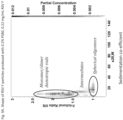
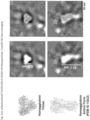
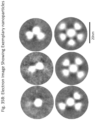
- a composition comprises a heterologous population of at least three RSV F nanoparticle types, wherein each nanoparticle comprises at least one RSV F protein trimer surrounding a detergent-containing core that comprises PS80, and wherein the first RSV F nanoparticle type comprises anisotropic rods, wherein the second RSV F nanoparticle type comprises spherical oligomers, and wherein the third RSV F nanoparticle type comprises intermediates of anisotropic rods and spherical oligomers.
- a method of manufacturing an RSV F protein nanoparticle comprises preparing an RSV F protein extract from a host cell using a first detergent and exchanging the first detergent for a second detergent, wherein the second detergent is PS80, and whereby the nanoparticle exhibits enhanced stability.
- the first detergent is NP-9.
- the enhanced stability is selected from protease resistance, oxidative stress resistance, thermal stress resistance, and resistance to agitation.
- the molar ratio of PS80:RSV F protein is 35 to 65.
- An RSV F nanoparticle comprises one or more RSV F protein trimers associated with a PS80 detergent core.
- the RSV F nanoparticle optionally has an average diameter of 20 nm to 60 nm as measured by dynamic light scattering.
- each RSV F protein trimer contains an RSV F protein selected from the group consisting of RSV F proteins having a deletion of 1 to 10 amino acids corresponding to residues 137-146 of SEQ ID NO:2.
- each RSV F protein trimer contains an RSV F protein selected from the group consisting of RSV F proteins having a deletion of 1 to 10 amino acids corresponding to residues 137-146 of SEQ ID NO:2 and an inactivated primary fusion cleavage site.
- the RSV F protein comprises a deletion of ten amino acids corresponding to residues 137-146 or SEQ ID NO:2, and inactivation of the primary furin cleavage site by mutation of arginine residues at positions 133, 135, and 136 to glutamine.
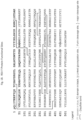
- the RSV F protein may comprise or consist of SEQ ID NO:19, which is the mature peptide.
- the RSV F protein comprises or consists of SEQ ID NO:8.
- Vaccine formulations containing RSV F nanoparticles comprise substantially of the mature peptide with some full-length peptide (SEQ ID NO:8). Over time, small amount of truncated RSV F peptide may arise due to proteolysis.
- the RSV F nanoparticles disclosed herein minimize such degradation and provide extended stability.
- thermostability influenza nanoparticles Unlike prior influenza nanoparticles the methods and compositions provided here exhibit resistance to trypsin and enhanced thermostability and thus immunogenicity.
- the Ebola virus nanoparticles comprise an Ebola virus glycoprotein (GP) trimer attached to a non-ionic detergent core as well as vaccine compositions containing the nanoparticles, optionally in combination with a Matrix M saponin adjuvant.
- the disclosure provides for methods of inducing an immune response against Ebola virus in humans by administering a composition containing an Ebola virus nanoparticle and a saponin adjuvant. Methods of protecting against Ebola infection are also provided.
- nanoparticles containing influenza proteins either HA, NA or both, are provided.
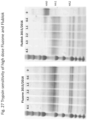
- HA nanoparticles showing trypsin-resistance, an indicator of proper folding are provided.
- Methods of protecting against influenza infection using the influenza nanoparticles in vaccine formulations are also provided.
- nanoparticles for inducing immune responses, methods for producing and administering them and vaccine compositions containing them.
- the nanoparticle provides antigen surrounding and associated with a detergent core that result in a structure that provides enhanced stability by numerous measures.
- the detergent core and antigen associate via a physicochemical interaction mediated by the properties of the antigen and detergent.
- the nanoparticles offer especially good antigen presentation to immune systems which, without being bound by theory, is thought to result from the orientation of the antigens around the detergent core.
- the disclosure provides compositions containing recombinant viral glycoprotein nanoparticles.
- the glycoproteins are recombinantly expressed in a suitable host cell.
- the host cell is an insect cell.
- the insect cell is an Sf9 cell.
- the disclosure provides immunogenic compositions comprising one or more viral glycoprotein species in a nanoparticle structure where the glycoprotein is in the form of a trimer and each nanoparticle contains at least one trimer associated with a non-ionic detergent core.
- a nanoparticle consists of an antigen, such as a viral glycoprotein, from only one pathogen.
- the nanoparticles may be used for the prevention and/or treatment of viral infection.
- the disclosure provides a method for eliciting an immune response against a virus. The method involves administering an immunologically effective amount of a composition containing a nanoparticle to a subject.
- compositions comprising the nanoparticle.
- Compositions may contain nanoparticles having antigens from multiple pathogens.
- the vaccine composition may contain nanoparticles with antigens from more than one viral strain from the same species of virus.
- the vaccine composition may contain nanoparticles with antigens from different virus species.
- the disclosures provide for a pharmaceutical pack or kit comprising one or more containers filled with one or more of the components of the vaccine compositions.
- the disclosure provides a method of formulating a vaccine composition that induces immunity to an infection or at least one disease symptom thereof to a mammal, comprising adding to the composition an effective dose of a nanoparticle.
- the disclosed nanoparticles are useful for preparing compositions that stimulate an immune response that confers immunity or substantial immunity to infectious agents.
- the disclosure provides a method of inducing immunity to infections or at least one disease symptom thereof in a subject, comprising administering at least one effective dose of a nanoparticle.
- the nanoparticles are administered with an adjuvant. In other aspects, the nanoparticles are administered without an adjuvant. In some aspects, the adjuvant may be bound to the nanoparticle, such as by a non-covalent interaction. In other aspects, the adjuvant is co-administered with the nanoparticle but the adjuvant and nanoparticle do not interact substantially.
- the methods provide nanoparticles that are substantially free from contamination by other proteins, such as proteins associated with recombinant expression of proteins in baculovirus/Sf9 systems.
- adjuvant refers to a compound that, when used in combination with an immunogen, augments or otherwise alters or modifies the immune response induced against the immunogen. Modification of the immune response may include intensification or broadening the specificity of either or both antibody and cellular immune responses.
- the term "about” or “approximately” when preceding a numerical value indicates the value plus or minus a range of 10%. For example, “about 100” encompasses 90 and 110.
- immunogen As used herein, the terms “immunogen,” “antigen,” and “epitope” refer to substances such as proteins, including glycoproteins, and peptides that are capable of eliciting an immune response.
- an "immunogenic composition” is a composition that comprises an antigen, where administration of the composition to a subject results in the development in the subject of a humoral and/or a cellular immune response to the antigen.
- a "subunit" composition for example a vaccine, that includes one or more selected antigens but not all antigens from a pathogen.
- a composition is substantially free of intact virus or the lysate of such cells or particles and is typically prepared from at least partially purified, often substantially purified immunogenic polypeptides from the pathogen.
- the antigens in the subunit composition disclosed herein are typically prepared recombinantly, often using a baculovirus system.
- substantially refers to isolation of a substance (e.g. a compound, polynucleotide, or polypeptide) such that the substance forms the majority percent of the sample in which it is contained.
- a substantially purified component comprises 85%, preferably 85%-90%, more preferably at least 95%-99.5%, and most preferably at least 99% of the sample. If a component is substantially replaced the amount remaining in a sample is less than or equal to 0.5% to 10%, preferably less than 0.5% to 1.0%
- beneficial or desired results may include inhibiting or suppressing the initiation or progression of an infection or a disease; ameliorating, or reducing the development of, symptoms of an infection or disease; or a combination thereof.
- Prevention is used interchangeably with “prophylaxis” and can mean complete prevention of an infection or disease, or prevention of the development of symptoms of that infection or disease; a delay in the onset of an infection or disease or its symptoms; or a decrease in the severity of a subsequently developed infection or disease or its symptoms.
- an "effective dose” or “effective amount” refers to an amount of an immunogen sufficient to induce an immune response that reduces at least one symptom of pathogen infection.
- An effective dose or effective amount may be determined e.g., by measuring amounts of neutralizing secretory and/or serum antibodies, e.g., by plaque neutralization, complement fixation, enzyme-linked immunosorbent (ELISA), or microneutralization assay.
- ELISA enzyme-linked immunosorbent
- the term “vaccine” refers to an immunogenic composition, such as an immunogen derived from a pathogen, which is used to induce an immune response against the pathogen that provides protective immunity (e.g., immunity that protects a subject against infection with the pathogen and/or reduces the severity of the disease or condition caused by infection with the pathogen).
- the protective immune response may include formation of antibodies and/or a cell-mediated response.
- the term “vaccine” may also refer to a suspension or solution of an immunogen that is administered to a vertebrate to produce protective immunity.
- the term "subject" includes humans and other animals.
- the subject is a human.
- the subject may be an adult, a teenager, a child (2 years to 14 years of age), an infant (1 month to 24 months), or a neonate (up to 1 month).
- the adults are seniors being 65 years or older, or being 60 years or older.
- the subject is a pregnant woman or a woman intending to become pregnant.
- subject is not a human, for example a non-human primate, such as a baboon, a chimpanzee, a gorilla, or a macaque.
- the subject may be a pet, such as a dog or cat.
- compositions can be useful as a vaccine and/or antigenic compositions for inducing a protective immune response in a vertebrate.
- Antigens derived from pathogens are combined with non-ionic detergents to provide nanoparticles surrounding a detergent core that have improved stability and excellent immunogenicity.
- the disclosure also provides for methods and compositions for vaccinating a subject against pathogens.
- the pathogen is a virus.
- the antigen is typically a protein, often a glycoprotein.
- compositions containing the nanoparticles which find use as vaccine compositions. Methods of producing the nanoparticles and producing the vaccine compositions are also disclosed.
- Nanoparticles of the present disclosure comprise antigens associated with non-ionic detergent core.
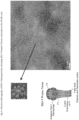
- Figure 6 upper panel illustrates an example of multiple RSV F antigens associated with the detergent core.
- Figures 35 shows Ebola nanoparticles.
- the nanoparticles have improved resistance to environmental stresses such that they provide enhanced stability.
- the nanoparticles are composed of multiple protein trimers surrounding a non-ionic detergent core.
- each nanoparticle may contain 1, 2, 3, 4, 5, 6, 7, 8, 9, 10, 11, 12, or 15 trimers.
- each nanoparticle contains 2 to 9 trimers.
- each nanoparticle contains 2 to 6 trimers.
- Compositions disclosed herein may contain nanoparticles having different numbers of trimers.
- a composition may contain nanoparticles where the number of trimers ranges from 2-9.
- the nanoparticles in a composition may contain from 2-6 trimers.
- the compositions contain a heterogeneous population of nanoparticles having 2 to 6 trimers per nanoparticle, or 2 to 9 trimers per nanoparticle.
- the compositions may contain a substantially homogenous population of nanoparticles.
- the population may contain about 95% nanoparticles having 5 trimers.
- the antigens are associated with the non-ionic detergent-containing core of the nanoparticle.
- the detergent is selected from polysorbate-20 (PS20), polysorbate-40 (PS40), polysorbate-60 (PS60), polysorbate-65 (PS65) and polysorbate-80 (PS80).
- the presence of the detergent facilitates formation of the nanoparticles by forming a core that organizes and presents the antigens.
- the nanoparticles may contain the antigens assembled into multi-oligomeric glycoprotein-PS80 protein-detergent nanoparticles with the head regions projecting outward and hydrophobic regions and PS80 detergent forming a central core surrounded by the antigens.
- the nanoparticles disclosed herein range in Z-ave size from 20 nm to 60 nm, 20 nm to 50 nm, 20 nm to 45 nm, or 25 nm to 45 nm.
- Particle size (Z-ave) is measured by dynamic light scattering (DLS) using a Malvern Zetasizer, unless otherwise specified.
- nanoparticle types may be included in vaccine compositions disclosed herein.
- the nanoparticle type is in the form of an anisotropic rod, which may be a dimer or a monomer.
- the nanoparticle type is a spherical oligomer.
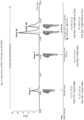
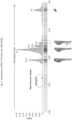
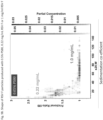
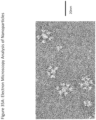
- the nanoparticle may be described as an intermediate nanoparticle, having sedimentation properties intermediate between the first two types. Formation of nanoparticle types may be regulated by controlling detergent and protein concentration during the production process. Nanoparticle type may be determined by measuring sedimentation co-efficient. See Figure 9A and 9B , for examples showing RSV F nanoparticles. See also, Figure 8 illustrating control over nanoparticle size by adjusting detergent and protein concentrations.
- the nanoparticles of the present disclosure are non-naturally occurring products, the components of which do not occur together in nature.
- the methods disclosed herein use a detergent exchange approach wherein a first detergent is used to isolate a protein and then that first detergent is exchanged for a second detergent to form the nanoparticles.
- the antigens contained in the nanoparticles are typically produced by recombinant expression in host cells. Standard recombinant techniques may be used.
- the proteins are expressed in insect host cells using a baculovirus system.
- the baculovirus is a cathepsin-L knock-out baculovirus.
- the bacuolovirus is a chitinase knock-out baculovirus.
- the baculovirus is a double knock-out for both cathepsin-L and chitinase.
- High level expression may be obtained in insect cell expression systems. Examples of insect cells are, Spodoptera frugiperda (Sf) cells, e.g. Sf9, Sf21, Trichoplusia ni cells, e.g. High Five cells, and Drosophila S2 cells.
- Sf Spodoptera frugiperda
- Vectors e.g., vectors comprising polynucleotides that encode fusion proteins
- Vectors can be transfected into host cells according to methods well known in the art. For example, introducing nucleic acids into eukaryotic cells can be achieved by calcium phosphate co-precipitation, electroporation, microinjection, lipofection, and transfection employing polyamine transfection reagents.
- the vector is a recombinant baculovirus.
- Methods to grow host cells include batch, batch-fed, continuous and perfusion cell culture techniques.
- Cell culture means the growth and propagation of cells in a bioreactor (a fermentation chamber) where cells propagate and express protein (e.g. recombinant proteins) for purification and isolation.
- protein e.g. recombinant proteins
- cell culture is performed under sterile, controlled temperature and atmospheric conditions in a bioreactor.
- a bioreactor is a chamber used to culture cells in which environmental conditions such as temperature, atmosphere, agitation and/or pH can be monitored.
- the bioreactor is a stainless-steel chamber.
- the bioreactor is a pre-sterilized plastic bag (e.g. Cellbag ® , Wave Biotech, Bridgewater, NJ).
- the pre-sterilized plastic bags are 50 L to 3500 L bags.
- the protein may be harvested from the host cells using detergents and purification protocols. Once the host cells have grown for 48 to 96 hours, the cells are isolated from the media and a detergent-containing solution is added to solubilize the cell membrane, releasing the protein in a detergent extract. Triton X-100 and tergitol, also known as NP-9, are each preferred detergents for extraction.
- the detergent may be added to a final concentration of 0.1% to 1.0%.
- the concentration may be 0.1%, 0.2%, 0.3%, 0.5%, 0.7%, 0.8%, or 1.0 %. In certain aspects, the range may be 0.1% to 0.3%.
- the concentration is 0.5%.
- first detergents may be used to isolate the protein from the host cell.
- the first detergent may be Bis(polyethylene glycol bis[imidazoylcarbonyl]), nonoxynol-9, Bis(polyethylene glycol bis[imidazoyl carbonyl]), Brij@ 35, Brij ® 56, Brij@ 72, Brij@ 76, Brij@ 92V, Brij@ 97, Brij@ 58P, Cremophor ® EL, Decaethyleneglycol monododecyl ether, N-Decanoyl-N-methylglucamine, n-Decyl alpha-D-glucopyranoside, Decyl beta-D-maltopyranoside, n-Dodecanoyl-N-methylglucamide, n-Dodecyl alpha-D-maltoside, n-Dodecyl beta-D-maltoside, n-Dodecyl beta-maltoside, Hept
- the nanoparticles may then be isolated from cellular debris using centrifugation.
- centrifugation such as using cesium chloride, sucrose and iodixanol, may be used.
- Other techniques may be used as alternatives or in addition, such as standard purification techniques including, e.g., ion exchange, affinity, and gel filtration chromatography.
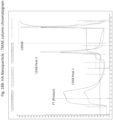
- the first column may be an ion exchange chromatography resin, such as Fractogel ® EMD TMAE (EMD Millipore)
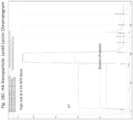
- the second column may be a lentil ( Lens culinaris ) lectin affinity resin
- the third column may be a cation exchange column such as a Fractogel ® EMD SO3 (EMD Millipore) resin.
- the cation exchange column may be an MMC column or a Nuvia C Prime column (Bio-Rad Laboratories, Inc).
- the methods disclosed herein do not use a detergent extraction column, for example a hydrophobic interaction column. Such a column is often used to remove detergents during purification but may negatively impact the methods disclosed here.
- the first detergent, used to extract the protein from the host cell is substantially replaced with a second detergent to arrive at the nanoparticle structure.
- NP-9 is a preferred extraction detergent.
- the nanoparticles do not contain detectable NP-9 when measured by HPLC.
- the second detergent is typically selected from the group consisting of PS20, PS40, PS60, PS65, and PS80.
- the second detergent is PS80.
- the ratio of the second detergent and protein is maintained within a certain range.
- detergent exchange is performed using affinity chromatography to bind glycoproteins via their carbohydrate moiety.
- the affinity chromatography may use a legume lectin column.
- Legume lectins are proteins originally identified in plants and found to interact specifically and reversibly with carbohydrate residues. See, for example, Sharon and Lis, "Legume lectins--a large family of homologous proteins," FASEB J. 1990 Nov;4(14):3198-208 ; Liener, "The Lectins: Properties, Functions, and Applications in Biology and Medicine," Elsevier, 2012 .
- Suitable lectins include concanavalin A (con A), pea lectin, sainfoin lectin, and lentil lectin.
- Lentil lectin is a preferred column for detergent exchange due to its binding properties. See, for instance, Example 10.
- Lectin columns are commercially available. For example, Capto Lentil Lectin, is available from GE Healthcare.
- the lentil lectin column may use a recombinant lectin.
- carbohydrate moieties bind to the lentil lectin, freeing the amino acids of the protein to coalesce around the detergent resulting in the formation of a detergent core providing nanoparticles having multiple copies of the antigen, e.g., glycoprotein oligomers which can be dimers, trimers, or tetramers anchored in the detergent.
- the antigen e.g., glycoprotein oligomers which can be dimers, trimers, or tetramers anchored in the detergent.
- the detergent when incubated with the protein to form the nanoparticles during detergent exchange, may be present at up to 0.1% (w/v) during early purifications steps and this amount is lowered to achieve the final nanoparticles having optimum stability.
- the non-ionic detergent e.g., PS80
- the nanoparticle may contain 0.03% to 0.05% PS80. Amounts below 0.03% PS80 in formulations do not show as good stability. Further, if the PS80 is present above 0.05%, aggregates are formed. Accordingly, 0.03% to 0.05% PS80 provides structural and stability benefits that allow for long-term stability of nanoparticles with reduced degradation.
- Detergent exchange may be performed with proteins purified as discussed above and purified, frozen for storage, and then thawed for detergent exchange.
- nanoparticles disclosed herein provide surprisingly good stability and immunogenicity.
- Advantageous stability is especially useful for vaccines used in countries lacking proper storage; for example, certain locations in Africa may lack refrigeration and so vaccines for diseases prevalent in areas facing difficult storage conditions, such as Ebola virus and RSV, benefit particularly from improved stability.
- the HA influenza nanoparticles produced using the neutral pH approach exhibit superior folding to known recombinant flu vaccines.
- the nanoparticles have enhanced stability as determined by their ability to maintain immunogenicity after exposure to varied stress. Stability may be measured in a variety of ways. In one approach, a peptide map may be prepared to determine the integrity of the antigen protein after various treatments designed to stress the nanoparticles by mimicking harsh storage conditions. Thus, a measure of stability is the relative abundance of antigen peptides in a stressed sample compared to a control sample.
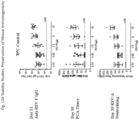
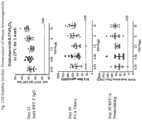
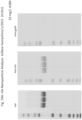
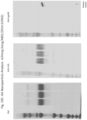
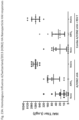
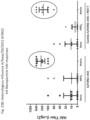
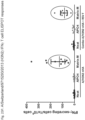
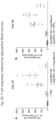
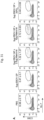
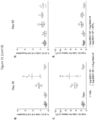
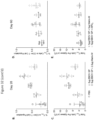
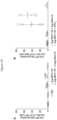
- Figure 12 shows that even after various different stresses to an RSV F nanoparticle composition, robust immune responses are achieved.
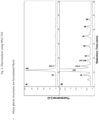
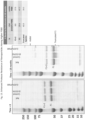
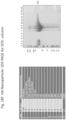
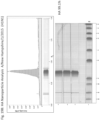
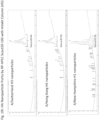
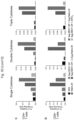
- Figure 13 illustrates the improved protease resistance provided by the nanoparticles using PS80 levels above 0.015%.
- the nanoparticles disclosed herein are stable at 2-8°C.
- they are also stable at 25°C for at least 2 months.
- the compositions are stable at 25°C for at least 3 months, at least 6 months, at least 12 months, at least 18 months, or at least 24 months.
- stability may be determined by measuring formation of truncated F1 protein, as shown in Figure 13 .
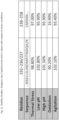
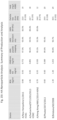
- the RSV-F nanoparticles disclosed herein advantageously retain an intact antigenic site II at an abundance of 90 to 100% as measured by peptide mapping compared to the control RSV-F protein in response to various stresses including pH (pH 3.7), high pH (pH 10), elevated temperature (50°C for 2 weeks), and even oxidation by peroxide as shown in Figure 12 .
- the position of the glycoprotein anchored into the detergent core provides enhanced stability by reducing undesirable interactions.
- the improved protection against protease-based degradation may be achieved through a shielding effect whereby anchoring the glycoproteins into the core at the molar ratios disclosed herein results in steric hindrance blocking protease access.
- RSV-F nanoparticles and compositions containing the same, that retain 90% to 100%, of intact Site II peptide, compared to untreated control, in response to one or more treatments selected from the group consisting of incubation at 50°C for 2 weeks, incubation at pH 3.7 for 1 week at 25°C, incubation at pH 10 for 1 week at 25°C, agitation for 1 week at 25°C, and incubation with an oxidant, such as hydrogen peroxide, for 1 week at 25°C. Additionally, after such treatments, the compositions functionality is retained. See Figures 12A-12D . For example, neutralizing antibody, anti-RSV IgG and PCA titers are preserved compared to control.
- Enhanced immunogenicity is exemplified by the cross-neutralization achieved by the influenza nanoparticles. It is thought that the orientation of the influenza antigens projecting from the core provides a more effective presentation of epitopes to the immune system.
- the antigens used to produce the nanoparticles are viral proteins.
- the proteins may be modified but retain the ability to stimulate immune responses against the natural peptide.
- the protein inherently contains or is adapted to contain a transmembrane domain to promote association of the protein into a detergent core. Often the protein is naturally a glycoprotein.
- the virus is Respiratory Syncytial Virus (RSV) and the viral antigen is the Fusion (F) glycoprotein.
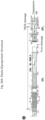
- RSV F proteins The structure and function of RSV F proteins is well characterized. See Figure 1 , for an example of wild-type structure.
- Suitable RSV-F proteins for use in the compositions described herein can be derived from RSV strains such as A2, Long, ATCC VR-26, 19, 6265, E49, E65, B65, RSB89-6256, RSB89-5857, RSB89-6190, and RSB89-6614.
- RSV F proteins are mutated compared to their natural variants. These mutations confer desirable characteristics, such as improved protein expression, enhanced immunogenicity and the like.
- RSV-F protein structure can be found at Swanson et al. A Monomeric Uncleaved Respiratory Syncytial Virus F Antigen Retains Prefusion-Specific Neutralizing Epitopes. Journal of Virology, 2014, 88, 11802-11810 . Jason S. McLellan et al. Structure of RSV Fusion Glycoprotein Trimer Bound to a Prefusion-Specific Neutralizing Antibody. Science, 2013, 340, 1113-1117 .
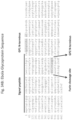
- the primary fusion cleavage is located at residues 131 to 136 corresponding to SEQ ID NO:2.
- Inactivation of the primary fusion cleavage site may be achieved by mutating residues in the site, with the result that furin can no longer recognize the consensus site.
- inactivation of the primary furin cleavage site may be accomplished by introducing at least one amino acid substitution at positions corresponding to arginine 133, arginine 135, and arginine 136 of the wild-type RSV F protein (SEQ ID NO:2).
- one, two, or all three of the arginines are mutated to glutamine.
- inactivation is accomplished by mutating the wild-type site to one of the following sequences: KKQKQQ (SEQ ID NO: 14), QKQKQQ (SEQ ID NO:15), KKQKRQ (SEQ ID NO: 16), and GRRQQR (SEQ ID NO: 17).
- SEQ ID NOs 3-13 may optionally be prepared with an active primary fusion cleavage site KKRKRR (SEQ ID NO:18).
- the wild type strain in SEQ ID NO:2 has sequencing errors (A to P, V to I, and V to M) that are corrected in SEQ ID NOS:3-13.
- the N-terminal signal peptide is cleaved to provide the final sequences.
- the signal peptide is cleaved by host cell proteases.
- the full-length protein may be isolated from the host cell and the signal peptide cleaved subsequently.
- the N-terminal RSV F signal peptide consists of amino acids of SEQ ID NO: 26 (MELLlLKANAITTIL TAVTFCFASG).
- a mature protein having the sequence of SEQ ID NO: 19 is obtained and used to produce a RSV F nanoparticle vaccine. See Fig. 1B .
- one or more up to all of the RSV F signal peptide amino acids may be deleted, mutated, or the entire signal peptide may be deleted and replaced with a different signal peptide to enhance expression.
- the RSV F protein disclosed herein is only altered from a wild-type strain by deletions in the fusion domain, optionally with inactivation of the primary cleavage site.
- additional alterations to the RSV F protein may be made.
- the cysteine residues are mutated.
- the N-linked glycosylation sites are not mutated. See Figure 1B .
- the antigenic site II also referred to herein as the Palivizumab site because of the ability of the palivizumab antibody to bind to that site, is preserved.
- the Motavizumab antibody also binds at site II. Additional suitable RSV-F proteins are found in U.S Publication US 2011/0305727 , including in particular, RSV-F proteins containing the sequences spanning residues 100 to 150 as disclosed in Figure 1C therein.
- the RSV F1 or F2 domains may have modifications relative to the wild-type strain as shown in SEQ ID NO:2.
- the F1 domain may have 1, 2, 3, 4, 5, 6, 7, 8, 9, or 10 alterations, which may be mutations or deletions.
- the F2 domain may have 1, 2, 3, 4, 5, 6, 7, 8, 9, or 10 alterations, which may be mutations or deletions.
- the F1 and F2 domains may each independently retain at least 90%, at least 94% at least 95% at least 96% at least 98% at least 99%, or 100% identity to the wild-type sequence.
- an RSV nanoparticle drug product may contain 0.025% to 0.03% PS80 with RSV F at a range of 270 ⁇ g/mL to 300 ⁇ g/mL, or 60 ⁇ g/mL to 300 ⁇ g/mL.
- the nanoparticle drug product may contain 0.035% to 0.04% PS80 in a composition with RSV F at 300 ⁇ g/mL to 500 ⁇ g/mL.
- the nanoparticle drug product may contain 0.035% to 0.04% PS80 in a composition with RSV F at 350-500 ⁇ g/mL.
- the concentrations of antigen and detergent can vary, the amounts of each may be referred as a molar ratio of non-ionic detergent: protein.
- the molar ratio of PS80 to protein is calculated by using the PS80 concentration and protein concentration of the antigen measured by ELISA/A280 and their respective molecular weights.
- the molecular weight of PS80 used for the calculation is 1310 and, using RSV F as an example, the molecular weight for RSV F is 65kD.
- the molar ratio is calculated as follows: (PS80 concentration ⁇ 10 ⁇ 65000) ⁇ (1310 ⁇ RSV F concentration in mg/mL).
- the nanoparticle concentration, measured by protein is 270 ⁇ g/mL and the PS80 concentrations are 0.015% and 0.03%. These have a molar ratio of PS80 to RSV F protein of 27:1 (that is, 0.015 ⁇ 10 ⁇ 65000 / (1310 ⁇ 0.27)) and 55:1, respectively.
- the molar ratio is in a range of 30:1 to 80:1, 30:1 to 70:1, 30:1 to 60:1, 40:1 to 70:1, or 40:1 to 50:1.
- the replacement non-ionic detergent is PS80 and the molar ratio is 30:1 to 50:1, PS80: protein.
- nanoparticles having a molar ratio in a range of 35:1 to 65:1, and particularly a ratio of about 45:1, are especially stable.
- the nanoparticle platform is especially useful for presenting influenza antigens to the immune system of a subject.
- Previous approaches to producing influenza nanoparticle vaccines have used hydrophobic interaction columns to remove detergent or have contained only minimal amounts of detergent to reduce non-specific interactions that arose during product purification. It has now been discovered, however, that by performing a detergent exchange step nanoparticles having a non-ionic detergent core having excellent properties can be produced.
- the nanoparticles show excellent stability as evidenced by resistance to degradation by environmental stresses, which permits extended storage periods, as especially useful property for vaccines.
- the nanoparticle structure is such that it presents the antigens in a particularly advantageous fashion.
- influenza nanoparticles are especially useful as vaccines as the antibodies they induce contain broadly neutralizing antibodies.
- antibodies induced by a nanoparticle administered in one year can neutralize influenza viral strains arising from the "drift" process in subsequent years. It is thought that these epitopes that induce these broadly neutralizing antibodies have not been exposed at all, or exposed effectively, in prior influenza vaccines, or that the epitopes were insufficiently stable in prior formulations.
- the nanoparticles disclosed herein resolve those problems by presenting cross-protective epitopes anchored around a non-ionic detergent core with enhanced stability.
- the methods disclosed herein provide for especially high yield influenza nanoparticles with good purity, which is advantageous economically in general and especially valuable for viruses that require rapid production of large amounts, such as pandemic influenza virus.
- a nanoparticle may contain an HA or an NA protein.
- a nanoparticle may contain a HA protein selected from the sub-types H1, H2, H3, H4, H5, H6, H7, H8, H9, H10, H11, H12, H13, H14, H15, and H16.
- a nanoparticle may contain an NA protein selected from the sub-types N1, N2, N3, N4, N5, N6, N7, N8 and N9. Phylogenetically, the HA and NA proteins are split into groups. For HA, Group 1 contains H1, H2, H5, H6, H8, H9, H11, H12, H13, and H16, and group 2 contains H3, H4, H7, H10, H14, and H15.
- NAs also form two groups: Group 1 contains N1, N4, N5, and N8, and Group 2 contains N2, N3, N6, N7, and N9.
- the antigen may have at least 90% identity, at least 95% identity, at least 97% identity, or at least 99% to the native influenza HA protein or the NA protein.
- the HA and NA proteins used for the nanoparticles are typically full-length sequences. In certain aspects, portions of the C-terminus may be removed.
- compositions having influenza can induce responses against heterologous strains of influenza, even when additional pathogen nanoparticles disclosed herein are co-administered. By inducing responses against heterologous influenza strains, broader protection is achieved.
- the homologous HAI titer induced with Matrix M-adjuvanted compositions is 800 to 2000.
- the heterologous HAI titer is 1300.
- the heterologous HAI titer induced with Matrix M-adjuvanted compositions is 200 to 400.
- the heterologous HAI titer may be 300.
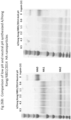
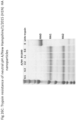
- influenza nanoparticles are trypsin-resistant nanoparticles produced using neutral pH purification. Trypsin resistance is achieved by neutral pH range of above 6.8 to 8.5 during purification and formulation of the HA nanoparticles.
- the pH range during purification and formulation of the HA nanoparticles is 7.0 to 8.5, 7.0 to 7.5, or 7.2 to 7.5.
- HA nanoparticle stability may be measured by Differential Scanning Calorimetry (DSC). DSC measures the thermodynamic profile of macromolecules in solution, specifically, by measuring the difference in heat energy uptake between a sample solution and appropriate reference (buffer/solvent) by varying the temperature in a controlled manner.
- DSC Differential Scanning Calorimetry
- DSC provides data as transition midpoints (Tm), defined as temperatures where half the protein is denatured/unfolded and half in the native/folded state.
- Tm transition midpoints
- the trypsin-resistant HA nanoparticles herein have a Tm peak in a range of 60°C to 75°C.
- the Tm may be 60°C, 65°C, 70°C or 75°C.
- Trypsin resistance indicates that the HA protein is properly folded and thus provides a vaccine product having better stability and immunogenicity.
- the sensitivity of HA proteins varies from strain-to-strain and the neutral pH production disclosed herein thus provides a process for maximizing immunogenicity for all strains, especially pH sensitive strains. Without being bound by theory it is thought that the combination of the detergent exchange and neutral pH levels preserve the HA protein in a structure that renders it resistant to proteases, particularly trypsin.
- the methods of producing the nanoparticles provide excellent levels of protein for use in a vaccine.
- the HA nanoparticles are produced, as measured by A280, at 10 mg/L of cell culture to 30 mg/L, or higher, at 20 mg/L to 30 mg/L.
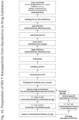
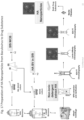
- the trypsin-resistant HA nanoparticles may be prepared as described in Figure 24 . Briefly, the various steps, including detergent exchanges are performed with buffers above pH 7.0; often in the range of pH 7.2 to pH 7.4. Figure 25D provides an example of the better thermostability achieved with trypsin resistant nanoparticles.
- the TFF and MMC production lots were obtained using neutral pH whereas the misfolded low pH lot is substantially degraded and/or misfolded.
- compositions for treating, ameliorating, or preventing Ebola virus infection and/or disease.
- the compositions are vaccine compositions.
- the vaccine compositions disclosed herein provide for 100% survival to lethal challenge in animal models.
- the compositions also maintain a viral load about or below the detectable limit when using RT-PCR to detect viral nucleic acid.
- the disclosure provides compositions containing recombinant Ebola virus glycoprotein (GP) nanoparticles in combination with saponin-based adjuvants.
- GP Ebola virus glycoprotein
- the disclosure provides immunogenic compositions comprising one or Ebola virus GP proteins in a nanoparticle structure where the GP protein is in the form of a trimer and each nanoparticle contains at least one trimer attached to a non-ionic detergent core.
- the Ebola GP nanoparticles may be used for the prevention and/or treatment of Ebola infection.
- the present disclosure provides pharmaceutically acceptable vaccine compositions comprising an Ebola GP nanoparticle.
- nanoparticles from more than one strain are in the vaccine.
- the disclosures provides for a pharmaceutical pack or kit comprising one or more containers filled with one or more of the ingredients of the vaccine formulations.
- the Ebola antigen use to prepare the nanoparticle is typically an Ebola Glycoprotein (GP) antigen.
- the antigen may be derived from a variety of strains.
- the compositions disclosed herein may contain nanoparticles from one, two, three, four, five, or six separate Ebola strains.
- the strain may be Makona, Sudan, Zaire, Reston.
- the Ebola GP may share amino acid or nucleic acid identity with one or more of these strains.
- the GP may be 80% identical, 85% identical, 90% identical, 95% identical, 97% identical, 98% identical, or 99% identical to one or more of the GPs from the Makona, Sudan, Zaire, or Reston viruses, wherein identity is measured over the full length of the protein or nucleic acid.
- the Ebola GP may comprise, or consist of, SEQ ID NO:27 or 28, or a protein having identity thereto.
- a representative Zaire strain sequence is provided at GenBank Accession No. AAB81004 (SEQ ID NO:27).
- the first underlined portion shows the N-terminus for the GP1 protein.
- the preceding signal peptide is cleaved off during processing following expression in the cell prior to purification and formulation into a vaccine. Shown in bold is the furin cleavage site. Following the bold text, the N-terminus for the GP2 protein is shown.
- Figure 7A shows a cartoon of the protein structure.
- the Makona isolate sequence is provided at GenBank Accession No. AJG44192 (SEQ ID NO:28). As above, the first underlined portion shows the N-terminus for the GP1 protein. The preceding signal peptide is cleaved off during processing. Shown in bold is the furin cleavage site. Following the bold text, the N-terminus for the GP2 protein is shown. See also Figure 7B.
- the ability of the vaccine compositions to stimulate immune responses was confirmed in three animal models.
- a mouse model was used.
- a recombinant EBOV/Mak full length GP nanoparticle vaccine formulated with Matrix-M, AIPO 4 or saline was evaluated. Immunization of mice with non-adjuvanted or AIPO 4 adjuvanted EBOV/Mak GP induced modest antibody and cellular responses; however, when adjuvanted with Matrix-M, purified EBOV/Mak GP nanoparticles were highly immunogenic and protective in a murine challenge model.
- Murine IgG2a antibody is the equivalent of human IgG1 antibody that binds efficiently to IgG-Fc receptors (FcyR) and complement (C1q) ( Bruhns, P. Properties of mouse and human IgG receptors and their contribution to disease models Blood. 2012;119: 5640-5649 ; Vidarsson G, Dekkers G, Rispens T. IgG subclasses and allotypes: from structure to effector functions. Front. Immunol. 2014; 5:520 ) and may help resolving viral infections e.g., through antibody-dependent cell-mediated cytotoxicity. All antibodies that were completely protective in vivo were of the IgG2a subclass; i.e. the same as human IgG1. Thus, the compositions disclosed herein stimulate production of IgG1 antibodies as part of a protective immune response.
- FcyR IgG-Fc receptors
- C1q complement
- Matrix-M adjuvant provided a dose dependent increase in the frequency of CD4+ and CD8+ cytokine secreting T cells as well as the number of multifunctional T cells producing more than one cytokine.
- Matrix-M increased the frequency of GC B cells in the spleen and long-lived plasma cells in the bone marrow.
- GCs are the micro-anatomic locations for B cell differentiation, somatic hypermutation, antibody class-switching and formation of memory B cells.
- Co-administration of the EBOV/Mak GP with the saponin adjuvant Matrix-M also resulted in an increase of the numbers of T FH cells which facilitate GC B cell differentiation and development.
- Each dose of Ebola GP may be combined with adjuvant.
- Administering Matrix-M adjuvant with purified EBOV/Mak GP nanoparticles provides robust stimulation of the anti-EBOV/Mak GP immune response resulting in 100% protective efficacy in the mouse model.
- the compositions and methods disclosed herein provide a more rapid onset of anti-EBOV/Mak GP IgG and Ebola virus neutralization antibodies, increased concentration of IgG2a, as well as increased frequency of multifunctional CD4+ and CD8+ T cells, T FH cells, germinal center B cells and persistence of EBOV/Mak GP-specific plasma B cells in the bone marrow.
- a protective effect includes a reduction on viral load beneath the ability of RT-PCR to detect after about 7 days, about 10 days, about 14 days, or about 21 days, after virus exposure.
- the antigens disclosed herein encompass variations and mutants of those antigens.
- the antigen may share identity to a disclosed antigen.
- the protein contained in the nanoparticles consists of that protein. In other aspects, the protein contained in the nanoparticles comprise that protein. Additions to the protein itself may be for various purposes.
- the antigen may be extended at the N-terminus, the C-terminus, or both. In some aspects, the extension is a tag useful for a function, such as purification or detection. In some aspects, the tag contains an epitope.
- the tag may be a polyglutamate tag, a FLAG-tag, a HA-tag, a polyHis-tag (having about 5-10 histidines), a Myc-tag, a Glutathione-S-transferase-tag, a Green fluorescent protein-tag, Maltose binding protein-tag, a Thioredoxin-tag, or an Fc-tag.
- the extension may be an N-terminal signal peptide fused to the protein to enhance expression. While such signal peptides are often cleaved during expression in the cell, some nanoparticles may contain the antigen with an intact signal peptide. Thus, when a nanoparticle comprises an antigen, the antigen may contain an extension and thus may be a fusion protein when incorporated into nanoparticles. For the purposes of calculating identity to the sequence, extensions are not included.
- the antigen may be truncated.
- the N-terminus may be truncated by 10 amino acids, 30 amino acids, 50 amino acids, 75 amino acids, 100 amino acids, or 200 amino acids.
- the C-terminus may be truncated instead of or in addition to the N-terminus.
- the C-terminus may be truncated by 10 amino acids, 30 amino acids, 50 amino acids, 75 amino acids, 100 amino acids, or 200 amino acids.
- identity is measured over the remaining portion of the protein.
- a combination nanoparticle refers to a nanoparticle that induces immune responses against two or more different pathogens.
- the pathogens may be different strains or sub-types of the same species or the pathogens may be different species.
- glycoproteins from multiple pathogens may be combined into a single nanoparticle by binding them at the detergent exchange stage. The binding of the glycoproteins to the column followed by detergent exchange permits multiple glycoproteins types to form around a detergent core, to provide a combination nanoparticle.
- vaccine compositions that induce immune responses against two or more different pathogens by combining two or more nanoparticles that each induce a response against a different pathogen.
- vaccine compositions may contain one or more combination nanoparticles alone or in combination with additional nanoparticles with the purpose being to maximize the immune response against multiple pathogens while reducing the number of vaccine compositions administered to the subject.
- a composition may contain nanoparticles against the strains identified annually by authorities as forming a particular year's seasonal influenza.
- a vaccine composition contains HA and/or NA nanoparticles that induce immune responses against a strain of three, four, or five influenza sub-types.
- different strains of influenza may be combined in a vaccine composition.
- the combination nanoparticle may contain an HA protein from a first strain and an NA protein from a second strain.
- a nanoparticle may contain one or more HA and one or more NA proteins from the same or different sub-types.
- a nanoparticle may contain one or more HA nanoparticles selected from the sub-types H1, H2, H3, H4, H5, H6, H7, H8, H9, H10, H11, H12, H13, H14, H15 and H16 and/or one or more NA nanoparticles selected from the sub-types N1, N2, N3, N4, N5, N6, N7, N8 and N9.
- the HA and NA proteins are split into groups.
- Group 1 contains H1, H2, H5, H6, H8, H9, H11, H12, H13, and H16
- group 2 contains H3, H4, H7, H10, H14, and H15.
- NA proteins also form two groups: Group 1 contains N1, N4, N5, and N8, and Group 2 contains N2, N3, N6, N7, and N9.
- the antigen may have at least 90% identity, at least 95% identity, at least 97% identity, or at least 99% to the native influenza HA protein and/or to the NA protein.
- influenza and RSV both cause respiratory disease and HA, NA, and/or RSV F may therefore be mixed into a combination nanoparticle or multiple nanoparticles may be combined in a vaccine composition to induce responses against RSV and one or more influenza strains.
- compositions disclosed herein may be used either prophylactically or therapeutically, but will typically be prophylactic. Accordingly, the disclosure includes methods for treating or preventing infection. The methods involve administering to the subject a therapeutic or prophylactic amount of the immunogenic compositions of the disclosure.
- the pharmaceutical composition is a vaccine composition that provides a protective effect.
- the protective effect may include amelioration of a symptom associated with infection in a percentage of the exposed population.
- the composition may prevent or reduce one or more virus disease symptoms selected from: fever fatigue, muscle pain, headache, sore throat, vomiting, diarrhea, rash, symptoms of impaired kidney and liver function, internal bleeding and external bleeding, compared to an untreated subject.
- the nanoparticles may be formulated for administration as vaccines in the presence of various excipients, buffers, and the like.
- the vaccine compositions may contain sodium phosphate, sodium chloride, and/or histidine.
- Sodium phosphate may be present at 10 mM to 50 mM, 15 mM to 25 mM, or 25 mM. In particular cases, 22 mM sodium phosphate is present.
- Histidine may be present at 0.1% (w/v), 0.5% (w/v), 0.7% (w/v), 1% (w/v), 1.5% (w/v), 2% (w/v), or 2.5% (w/v).
- Sodium chloride when present, may be 150 mM.
- the sodium chloride may be present at higher amounts, including 200 mM, 300 mM, or 350 mM.
- Certain nanoparticles particularly RSV F nanoparticles, have improved stability at slightly acidic pH levels.
- the pH range for composition containing the nanoparticles may be pH 5.8 to pH 7.0, pH 5.9 to pH 6.8, pH 6.0 to pH 6.5, pH 6.1 to pH 6.4, pH 6.1 to pH 6.3, or pH 6.2.
- the composition for RSV F protein nanoparticles has pH 6.2.
- the composition may tend towards neutral, For example, influenza nanoparticles may have pH 7.0 to pH 7.4, often pH 7.2.
- compositions disclosed herein may be combined with one or more adjuvants to enhance an immune response.
- the compositions are prepared without adjuvants, and are thus available to be administered as adjuvant-free compositions.
- adjuvant-free compositions disclosed herein may provide protective immune responses when administered as a single dose. Alum-free compositions that induce robust immune responses are especially useful in adults about 60 and older.
- the adjuvant may be alum (e.g. AlPO 4 or Al(OH) 3 ).
- the nanoparticle is substantially bound to the alum.
- the nanoparticle may be at least 80% bound, at least 85% bound, at least 90% bound or at least 95% bound to the alum.
- the nanoparticle is 92% to 97% bound to the alum in a composition.
- the amount of alum is present per dose is typically in a range between 400 ⁇ g to 1250 ⁇ g.
- the alum may be present in a per dose amount of 300 ⁇ g to 900 ⁇ g, 400 ⁇ g to 800 ⁇ g, 500 ⁇ g to 700 ⁇ g, 400 ⁇ g to 600 ⁇ g, or 400 ⁇ g to 500 ⁇ g.
- the alum is present at 400 ⁇ g for a dose of 120 ⁇ g of the protein nanoparticle.
- Adjuvants containing saponin may also be combined with the immunogens disclosed herein.
- Saponins are glycosides derived from the bark of the Quillaja saponaria Molina tree. Typically, saponin is prepared using a multi-step purification process resulting in multiple fractions.
- a saponin fraction from Quillaja saponaria Molina is used generically to describe a semi-purified or defined saponin fraction of Quillaja saponaria or a substantially pure fraction thereof.
- Fractions A, B, and C are described in U.S. Pat. No. 6,352,697 and may be prepared as follows.
- a lipophilic fraction from Quil A a crude aqueous Quillaja saponaria Molina extract, is separated by chromatography and eluted with 70% acetonitrile in water to recover the lipophilic fraction.
- This lipophilic fraction is then separated by semi-preparative HPLC with elution using a gradient of from 25% to 60% acetonitrile in acidic water.
- the fraction referred to herein as "Fraction A" or "QH-A" is, or corresponds to, the fraction, which is eluted at approximately 39% acetonitrile.
- Fraction B Fraction B or “QH-B” is, or corresponds to, the fraction, which is eluted at approximately 47% acetonitrile.
- Fraction C Fraction C is, or corresponds to, the fraction, which is eluted at approximately 49% acetonitrile. Additional information regarding purification of Fractions is found in U.S Pat. No. 5,057,540 .
- Fractions A, B and C of Quillaja saponaria Molina each represent groups or families of chemically closely related molecules with definable properties. The chromatographic conditions under which they are obtained are such that the batch-to-batch reproducibility in terms of elution profile and biological activity is highly consistent.
- Fractions B3, B4 and B4b are described in EP 0436620 .
- Fractions QA1-QA22 are described in EP 03 632 279 B2 , Q-VAC (Nor-Feed, AS Denmark), Quillaja saponaria Molina Spikoside (Isconova AB, Ultunaallén 2B, 756 51 Uppsala, Sweden).
- a substantially pure saponin fraction may contain up to 40% by weight, up to 30% by weight, up to 25% by weight, up to 20% by weight, up to 15% by weight, up to 10% by weight, up to 7% by weight, up to 5% by weight, up to 2% by weight, up to 1% by weight, up to 0.5% by weight, or up to 0.1% by weight of other compounds such as other saponins or other adjuvant materials.
- Saponin fractions may be administered in the form of a cage-like particle referred to as an ISCOM (Immune Stimulating COMplex).
- ISCOMs may be prepared as described in EP0109942B1 , EP0242380B1 and EP0180546 B1 .
- a transport and/or a passenger antigen may be used, as described in EP 9600647-3 ( PCT/SE97/00289 ).
- the ISCOM is an ISCOM matrix complex.
- An ISCOM matrix complex comprises at least one saponin fraction and a lipid.
- the lipid is at least a sterol, such as cholesterol.
- the ISCOM matrix complex also contains a phospholipid.
- the ISCOM matrix complexes may also contain one or more other immunomodulatory (adjuvant-active) substances, not necessarily a glycoside, and may be produced as described in EP0436620B1 .
- the ISCOM is an ISCOM complex.
- An ISCOM complex contains at least one saponin, at least one lipid, and at least one kind of antigen or epitope.
- the ISCOM complex contains antigen associated by detergent treatment such that that a portion of the antigen integrates into the particle.
- ISCOM matrix is formulated as an admixture with antigen and the association between ISCOM matrix particles and antigen is mediated by electrostatic and/or hydrophobic interactions.
- the saponin fraction integrated into an ISCOM matrix complex or an ISCOM complex, or at least one additional adjuvant, which also is integrated into the ISCOM or ISCOM matrix complex or mixed therewith is selected from fraction A, fraction B, or fraction C of Quillaja saponaria, a semipurified preparation of Quillaja saponaria, a purified preparation of Quillaja saponaria, or any purified sub-fraction e.g., QA 1-21.
- each ISCOM particle may contain at least two saponin fractions. Any combinations of weight % of different saponin fractions may be used. Any combination of weight % of any two fractions may be used.
- the particle may contain any weight % of fraction A and any weight % of another saponin fraction, such as a crude saponin fraction or fraction C, respectively.
- each ISCOM matrix particle or each ISCOM complex particle may contain from 0.1 to 99.9 by weight, 5 to 95% by weight, 10 to 90% by weight 15 to 85% by weight, 20 to 80% by weight, 25 to 75% by weight, 30 to 70% by weight, 35 to 65% by weight, 40 to 60% by weight, 45 to 55% by weight, 40 to 60% by weight, or 50% by weight of one saponin fraction, e.g. fraction A and the rest up to 100% in each case of another saponin e.g. any crude fraction or any other faction e.g. fraction C. The weight is calculated as the total weight of the saponin fractions.
- Examples of ISCOM matrix complex and ISCOM complex adjuvants are disclosed in U.S Published Application No. 2013/0129770 .
- the ISCOM matrix or ISCOM complex comprises from 5-99% by weight of one fraction, e.g. fraction A and the rest up to 100% of weight of another fraction e.g. a crude saponin fraction or fraction C. The weight is calculated as the total weight of the saponin fractions.
- the ISCOM matrix or ISCOM complex comprises from 40% to 99% by weight of one fraction, e.g. fraction A and from 1% to 60% by weight of another fraction, e.g. a crude saponin fraction or fraction C. The weight is calculated as the total weight of the saponin fractions.
- the ISCOM matrix or ISCOM complex comprises from 70% to 95% by weight of one fraction e.g., fraction A, and from 30% to 5% by weight of another fraction, e.g., a crude saponin fraction, or fraction C. The weight is calculated as the total weight of the saponin fractions.
- the saponin fraction from Quillaja saponaria Molina is selected from any one of QA 1-21.
- ISCOM matrix particles and ISCOM complex particles may each be formed using only one saponin fraction.
- Compositions disclosed herein may contain multiple particles wherein each particle contains only one saponin fraction. That is, certain compositions may contain one or more different types of ISCOM-matrix complexes particles and/or one or more different types of ISCOM complexes particles, where each individual particle contains one saponin fraction from Quillaja saponaria Molina, wherein the saponin fraction in one complex is different from the saponin fraction in the other complex particles.
- one type of saponin fraction or a crude saponin fraction may be integrated into one ISCOM matrix complex or particle and another type of substantially pure saponin fraction, or a crude saponin fraction, may be integrated into another ISCOM matrix complex or particle.
- a composition or vaccine may comprise at least two types of complexes or particles each type having one type of saponins integrated into physically different particles.
- mixtures of ISCOM matrix complex particles and/or ISCOM complex particles may be used in which one saponin fraction Quillaja saponaria Molina and another saponin fraction Quillaja saponaria Molina are separately incorporated into different ISCOM matrix complex particles and/or ISCOM complex particles.
- the ISCOM matrix or ISCOM complex particles which each have one saponin fraction, may be present in composition at any combination of weight %.
- a composition may contain 0.1% to 99.9% by weight, 5% to 95% by weight, 10% to 90% by weight, 15% to 85% by weight, 20% to 80% by weight, 25% to 75% by weight, 30% to 70% by weight, 35% to 65% by weight, 40% to 60% by weight, 45% to 55% by weight, 40 to 60% by weight, or 50% by weight, of an ISCOM matrix or complex containing a first saponin fraction with the remaining portion made up by an ISCOM matrix or complex containing a different saponin fraction.
- the remaining portion is one or more ISCOM matrix or complexes where each matrix or complex particle contains only one saponin fraction.
- the ISCOM matrix or complex particles may contain more than one saponin fraction.
- the saponin fraction in a first ISCOM matrix or ISCOM complex particle is Fraction A and the saponin fraction in a second ISCOM matrix or ISCOM complex particle is Fraction C.
- compositions comprise a first ISCOM matrix containing Fraction A and a second ISCOM matrix containing Fraction C, wherein the Fraction A ISCOM matrix constitutes 70% per weight of the total saponin adjuvant, and the Fraction C ISCOM matrix constitutes 30% per weight of the total saponin adjuvant.
- the Fraction A ISCOM matrix constitutes 85% per weight of the total saponin adjuvant
- the Fraction C ISCOM matrix constitutes 15% per weight of the total saponin adjuvant.
- the Fraction A ISCOM matrix is present in a range of 70% to 85%
- Fraction C ISCOM matrix is present in a range of 15% to 30%, of the total weight amount of saponin adjuvant in the composition.
- compositions other adjuvants may be used in addition or as an alternative.
- adjuvants include complete Freund's adjuvant (a non-specific stimulator of the immune response containing killed Mycobacterium tuberculosis), incomplete Freund's adjuvants and aluminum hydroxide adjuvant.
- adjuvants comprise GMCSP, BCG, MDP compounds, such as thur-MDP and nor-MDP, CGP (MTP-PE), lipid A, and monophosphoryl lipid A (MPL), MF-59, RIBI, which contains three components extracted from bacteria, MPL, trehalose dimycolate (TDM) and cell wall skeleton (CWS) in a 2% squalene/Tween ® 80 emulsion.
- the adjuvant may be a paucilamellar lipid vesicle.
- Novasomes ® are paucilamellar nonphospholipid vesicles ranging from 100 nm to 500 nm.
- compositions disclosed herein may be administered via a systemic route or a mucosal route or a transdermal route or directly into a specific tissue.
- systemic administration includes parenteral routes of administration.
- parenteral administration includes subcutaneous, intraperitoneal, intravenous, intraarterial, intramuscular, or intrasternal injection, intravenous, or kidney dialytic infusion techniques.
- the systemic, parenteral administration is intramuscular injection.
- the term "mucosal administration” includes oral, intranasal, intravaginal, intra-rectal, intra-tracheal, intestinal and ophthalmic administration.
- administration is intramuscular.
- compositions may be administered on a single dose schedule or a multiple dose schedule. Multiple doses may be used in a primary immunization schedule or in a booster immunization schedule. In a multiple dose schedule the various doses may be given by the same or different routes e.g., a parenteral prime and mucosal boost, a mucosal prime and parenteral boost, etc. In some aspects, a follow-on boost dose is administered 2 weeks, 3 weeks, 4 weeks, 5 weeks, or 6 weeks after the prior dose. Typically, however, the compositions disclosed herein are administered only once yet still provide a protective immune response.
- the dose as measured in ⁇ g, may be the total weight of the dose including the solute, or the weight of the RSV F nanoparticles, or the weight of the RSV F protein. Dose is measured using protein concentration assay either A280 or ELISA.
- the dose of antigen may be in the range of 30 ⁇ g to 300 ⁇ g, 90 ⁇ g to 270 ⁇ g, 100 ⁇ g to 160 ⁇ g, 110 ⁇ g to 150 ⁇ g, 120 ⁇ g to 140 ⁇ g, or 140 ⁇ g to 160 ⁇ g.
- the dose is 120 ⁇ g, administered with alum.
- a pediatric dose may be in the range of 30 ⁇ g to 90 ⁇ g.
- Certain populations may be administered with or without adjuvants. For example, when administered to seniors, preferably there is no alum.
- compositions may be free of added adjuvant. In such circumstances, the dose may be increased by 10%.
- the dose may be administered in a volume of 0.1 mL to 1.5 mL, 0.3 mL to 1.0 mL, 0.4 mL to 0.6 mL, or 0.5 mL, which is a typical amount.
- the dose may comprise an RSV F protein concentration of 175 ⁇ g/mL to 325 ⁇ g/mL, 200 ⁇ g/mL to 300 ⁇ g/mL, 220 ⁇ g/mL to 280 ⁇ g/mL, or 240 ⁇ g/mL to 260 ⁇ g/mL.
- RSV F protein having SEQ ID NO: 8 was expressed in a baculovirus expression system and recombinant plaques expressing the RSV F protein were picked and confirmed.
- the recombinant virus was then amplified by infection of Sf9 insect cells.
- the culture and supernatant were harvested 48-72 h post-infection.
- the resulting crude cell harvests containing the RSV F protein were purified as described below.
- Non-ionic surfactant Tergitol ® NP-9 (Nonylphenol Ethoxylate) was used in the membrane protein extraction protocol. NP-9 was Crude extraction was further purified by passing through anion exchange chromatography, lentil lectin affinity/HIC and cation exchange chromatography. The washed cells were lysed by detergent treatment and then subjected to low pH treatment which leads to precipitation of BV and Sf9 host cell DNA and protein. The neutralized low pH treatment lysate is clarified and further purified on anion exchange and affinity chromatography before a second low pH treatment is performed.
- Affinity chromatography was used to remove Sf9/BV proteins, DNA and NP-9, as well as concentrate the RSV F protein.
- lentil lectin is a metalloprotein containing calcium and manganese, which reversibly binds polysaccharides and glycosylated proteins containing glucose or mannose.
- the RSV F-containing anion exchange flow through fraction was loaded onto the lentil lectin affinity chromatography resin (Capto Lentil Lectin, GE Healthcare).
- the glycosylated RSV F protein selectively binds to the resin while non-glycosylated proteins and DNA are removed in the column flow through. Weakly bound glycoproteins were removed by buffers containing high salt and low molar concentration of methyl alpha-D-mannopyranoside (MMP).
- the column washes were also used to detergent exchange the NP-9 detergent with the surfactant polysorbate 80 (PS80).
- PS80 surfactant polysorbate 80
- the column was incubated with 0.1 % PS80 after binding of the RSV F glycoprotein to the lentil lectin column.
- the RSV F protein was eluted from the lentil lectin column with a high concentration of MMP. After elution, the RSV F protein trimers are assembled into micelle nanoparticles composed of RSV F protein trimers and PS80 contained in a detergent core. After detergent exchange there was a low pH inactivation step followed by incubation on a sulfate column in the presence of buffer with PS80 at 0.1%.
- the eluted material was diluted in a solution containing PS80 adequate to provide a drug substance (DS) for bulk storage with a molar ratio of PS80:RSV F protein of 50.
- the adequate composition of the DS was achieved by combining the RSV F nanoparticles in a solution comprising phosphate buffer at 22 mM sodium phosphate, 0.03% PS80, and a pH of 6.2.
- the antigen to PS80 ratio in the composition was maintained at a molar ratio between 35 and 60.
- the molar ratio was calculated using the PS80 concentration and RSV F concentration, as measured by ELISA/A280, and their respective molecular weights.
- the molecular weight of PS80 is 1310 and for RSV is 65 kD.
- the Drug Substance was diluted into a Drug Product, with a PS80:RSV protein molar ratio of 50. Drug Substance was thawed, diluted and filled into glass vials or pre-filled syringes for storage at 2-8°C prior to administration. The nanoparticles bound to alum adjuvant. The alum adjuvant was added and mixed to ensure about 95% of the nanoparticles are bound to the alum is bound, meaning about 0.4 mg per 120 ⁇ g dose of RSV F nanoparticle in a 0.5 mL volume.
- FIG. 3 shows that the highest peak of RSV F protein produced contains palmitoleic acid (Peak 2A). The second largest peak contains palmitic acid (Peak 2B). Residual peaks were obtained lacking either fatty acid (Peak 5) and in soluble form (Peak 1).
- Analysis on SDS-PAGE gel separated additional variants, including the F1+2 protein, F1, F1A, F1B, and F1C portions as well as F2.
- Figure 4 Analysis of the peptide structure was performed using peptide mapping. See Figure 5 .
- HPLC-FLD was performed. The results demonstrated that the major glycan structures are fucosylated.
- Nanoparticles as prepared in Example 1 were visualized by electron microscope. The results confirmed formation of nanoparticles containing the RSV F glycoproteins surrounding the detergent core. The precise composition of the detergent core remains unclear.
- Figure 6 illustrates the types of nanoparticles obtained. The RSV F proteins maintained the trimer structure even after the detergent exchange. Several types of nanoparticles were obtained that vary in the number of trimers/nanoparticle and in morphology. Figure 6 shows that multiple trimers can be found around the detergent core. In the highlighted portion seven trimers are shown surrounding the detergent. The main panel in Figure 6 illustrates the range of trimers around the detergent core that are produced.
- the cartoon structure of the RSV F protein trimer in the bottom left panel illustrates the orientation of the trimers with the bottom portion associated with to the detergent core, facilitated by the fatty acids attached to each RSV F glycoprotein.
- DLS Dynamic light scattering
- Nanoparticle types obtained include monomeric and dimeric anisotropic rods, and spherical oligomers. Structure intermediates between these two nanoparticle types form at concentrations between those that result in anisotropic rods and spherical oligomers.
- Figure 9 shows that nanoparticle type can be controlled by modulating the concentration of the RSV F protein, with higher concentrations (1 mg/mL) resulting in a predominant population of spherical oligomers, while lower concentrations (0.22 mg/mL) resulting in predominant populations of monomeric/dimeric anisotropic rods.
- the five stressors utilized were thermal stress at 50°C with time points at 48 hours, one week, and two weeks; low pH (3.7 at 25°C) with time points at 48 hours, four days, and one week; high pH (10 at 25°C) with time points at 24 hours, 48 hours, and one week; hydrogen peroxide oxidation at 25°C with time points at 12 hours, 48 hours, and one week; and physical agitation at 25°C with time points at four hours, 24 hours, and one week.
- Figure 10 shows a comparison of how particular regions survived stress relative to a control.
- the data show that the nanoparticles have excellent stability across the entire protein, and that only the especially harsh oxidation test using hydrogen peroxide was able to degrade the protein to any particular extent.
- treatment did not reduce the structural integrity of antigenic site II, which is the target of palivizumab.
- the RSV-F protein only deteriorated structurally at positions 63-82, 237-258, and 360-364. Accordingly, even after being subjected to harsh stress, the nanoparticles remained substantially intact.
- Figure 11 further quantifies nanoparticle stability regarding antigenic site II.
- the data show that in response to each of thermal stress, low pH, high pH, and agitation that the antigenic site II remained intact to the extent of 90% in each of the samples.
- the stressed vaccine compositions described in Example 6 were evaluated for immunogenicity in a murine model.
- the vaccines were administered to mice via two intramuscular injections across a range of RSV F doses consisting of 0.15, 0.45, 1.3, 4, and 12 ⁇ g/mL of RSV F protein.
- the immune response was evaluated with regard to the presence of anti-RSV F IgG, PCA titers, and the presence of RSV A neutralizing antibodies.
- the physical and chemical stressors did not significantly affect, in vivo, the RSV F protein immunogenicity.
- the stressed samples induced similar anti-RSV F IgG antibody titers and comparable functional PCA and RSV A neutralizing titers to those of the unstressed RSV F nanoparticle vaccine composition control. (See Figures 12A -12D ). Collectively, these forced degradation studies indicate that even when exposed to severe environmental stresses the nanoparticles induce potent immune responses.
- FIG. 13 illustrates a dramatic improvement in stability up to 18 months when nanoparticles were formed with 0.03% PS80 (i.e. a molar ratio of 55) compared to 0.015% (i.e. a molar ratio of 27).
- the left panel shows an SDS-PAGE of nanoparticles produced at the two concentrations at time zero.
- the data shows that similar results to a reference preparation were obtained for both the nanoparticle preparation. Specifically, both show robust signals for F1, and F1+2 illustrating essentially no degradation. Aliquots of each preparation were then incubated at 4°C for 18 months and then run again on SDS-PAGE.
- nanoparticles containing only 0.015% in the particle resulted in truncated F1.
- nanoparticles prepared with 0.03% in the particle illustrated excellent resistance to protease.
- concentrations of PS80 at or above 0.06% increased aggregate formation.
- the TMAE column was pre-equilibrated with Buffer A1 (25 mM Tris pH 7.5, 70 mM NaCl, 0.02% NP9 for 0.5 CV at Flow Rate: 91.7 cm 30 mL/min.
- Buffer A1 25 mM Tris pH 7.5, 70 mM NaCl, 0.02% NP9
- Sample was loaded at 20 mL/min (25 min resident time) and then washed with EQ buffer A1 (25 mM Tris pH 7.5, 70 mM NaCl, 0.02% NP-9).
- the purified sample was then eluted using 1.25 CV 15% Buffer B (25 mM Tris pH 8, 1 M NaCl, 0.02% NP9) followed 1.1 cv 100% B.
- Buffer B 25 mM Tris pH 8, 1 M NaCl, 0.02% NP9
- a representative chromatogram is shown in Figure 18B .
- the product from the TMAE column was applied to a Lentil lectin affinity chromatography column pre-equilibrated with Buffer A11: 25 mM sodium phosphate pH 6.0, 10 mM NaCl, 0.05% PS80 for 3CV (Flow Rate: 147 cm/h 13 mL/min). Sample was loaded at 9.4 min resident time-6.5mL/min-73.5cm/h. After loading, high-salt washing was performed with 3CV Buffer A12 (25mM sodium phosphate pH 6.0, 500 mM NaCl, 0.5% NP-9).
- HA nanoparticles were prepared as outlined in Figs. 17 and 18 .
- VLPs For comparison, docking on VLPs was performed.
- the VLPs contain a lipid bilayer into which the HA protein is anchored. See Fig. 21B .
- the center panels show HA protein structure overlaid onto the stalk emanating from the bilayer.
- the right hand upper and lower panels shows free HA EM micrograph looking straight down onto the HA trimers, alone (upper panel) and with the corresponding HA structure overlaid on the EM picture (lower panel).
- Certain approaches to producing influenza can result in trypsin sensitivity of the HA protein, which alters folding leading to reduced immunogencity and stability of vaccine formulations.
- To produce a trypsin-resistant HA nanoparticle we used a detergent exchange approach employing neutral pH buffers. See Figs. 24A-C .
- Fig. 24B shows an illustrative chromatogram. The flow through contains the HA. Following anion exchange column, detergent exchange was performed using a Capto Lentil Lectin column (GE) using a high salt/detergent wash containing 0.01% PS80; pH 7.2 and eluted also in 0.01% PS80.
- Fig. 24C shows an illustrative chromatogram for the detergent exchange process.
- FIG. 25A shows that yield of strain A/New Hampshire/1/2015 (H1N1) was about 20 mg/L. B strain influenza nanoparticles also had excellent productivity and purity.
- Figure 25B shows yield and purity of a B strain, B/Brisbane/60/08 HA, assessed as the bulk drug substance. Yield was about 30 mg/L.
- Figure 25C shows yield of an H3N2 strain showing the process gave about 96% purity and a yield of about 20 mg/L.
- Figure 25D provides a thermodynamic profile comparison between HA nanoparticles produced using the trypsin-resistant neutral pH approach in Example 13 versus approaches using low pH purifications steps, such shown in Figure 18 .
- the Differential Scanning Calorimetry (DSC) method was used to determine the thermodynamic profile of macromolecules in solution, specifically, by measuring the difference in heat energy uptake between a sample solution and appropriate reference (buffer/solvent) by varying the temperature in a controlled manner.
- DSC has allowed us to visualize transition midpoints (Tm's), defined as temperatures where half the protein is denatured/unfolded and half in the native/folded state.
- DSC has given us information regarding protein conformation and the estimated stability profiles can be roughly extrapolated for each HA strain undergoing differing process conditions.
- the difference between HA purified by a process step that exposed the HA to pH 6.0 during purification vs HA purified via an alternate step (e.g. MMC resin or TFF membrane) is shown using the B/Brisbane HA as an example.
- the data shows Tm values are higher in intensity, show a shift to higher onset of Tm for the main peak and sharper peaks suggesting proper folding of the HA when purified by the alternate step.
- Figure 26 illustrates the improved trypsin resistance obtained when nanoparticles were produced as described in Example 13.
- HA samples were diluted to 0.24mg/mL, incubated with decreasing trypsin at 37°C for 60 min, Trypsin inhibitor was added to stop the digestion, and then SDS-PAGE analysis was performed. Comparing the left panel and right panel of Fig. 26 illustrates the enhanced trypsin resistance.
- Purified HA nanoparticles made in Sf9 insect cells are HA0. When exposed to trypsin HA0 is cleaved to HA1 and HA2 at Arg AA344 in H1.
- recombinant influenza vaccines that are commercially available suffer from misfolding that may arise from production under low pH conditions and likely explains, at least in part, their poor immunogenicity and the lack of widespread adoption to date.
- the methods disclosed herein confirm that purifying HA nanoparticles using buffers of at least pH7.0 reduces or eliminates misfolding of the HA protein that occurs when HA proteins are exposed to acid conditions during purification.
- the wild-type full-length, unmodified EBOV glycoprotein (GP) gene from the 2014 Makona Ebola virus was cloned into recombinant baculovirus and expressed in Spodoptera frugiperda Sf9 insect cells. After expression, the N-terminal signal peptide is cleaved and the mature protein is purified and formed into nanoparticles.
- Purified Ebola virus GP (EBOV/Mak GP) nanoparticles are composed of multiple GP trimers assembled into spherical particles 36 ⁇ 4nm (as measured by dynamic light scattering).
- Recombinant GP nanoparticles have a core region which contains the glycoprotein 2 (GP2) 'fusion subunits' with 2-9 or up to 15 "chalice-like" glycoprotein 1 (GP1) trimers 'attachment subunits' extending outward.
- GP2 glycoprotein 2
- GP1 glycoprotein 1
- Matrix-M For co-administering Matrix-M, a saponin-based adjuvant consisting of two populations of individually formed 40nm sized Matrix particles, was used.
- the Matrix-M used was 85% Matrix-A and 15% Matrix-C.
- the Matrix particles were formed by formulating purified saponin from Quillaja saponaria Molina with cholesterol and phospholipid.
- mice (6-8 weeks old; Harlan Laboratories Inc., Frederick, MD) were housed in groups of 10 and immunized by subcutaneous (SC) or intramuscular (IM) administration. Phosphate buffered saline (PBS) was used as placebo. Blood samples for serum were collected via the retro-orbital route. Prior to blood collection, animals were anesthetized with isoflurane.
- SC subcutaneous
- IM intramuscular
- PBS Phosphate buffered saline
- Blood samples for serum were collected via the retro-orbital route. Prior to blood collection, animals were anesthetized with isoflurane.
- FBS fetal bovine serum
- Serum samples from day 28 were evaluated for anti-EBOV/Mak neutralizing antibody responses at U.S. Army Medical Research Institute of Infectious Diseases, Fredrick, MD using a pseudovirion neutralization reporter assay.
- a hantavirus pulmonary syndrome (HPS) DNA vaccine delivered using a spring-powered jet injector elicits a potent neutralizing antibody response in rabbits and nonhuman primates.
- Curr Gene Ther. 2014; 14: 200-210 for this assay, the vesicular stomatitis virus G protein was removed and replaced with luciferase reporter.
- This VSV luciferase expressing core was pseudo-typed using the plasmid pWRG/EBOV-Z76 (opt) that expresses the Zaire Ebola virus 1976 (Mayinga) GP.
- the plasmid used to provide the pseudotyping Ebola GP was pWRG/EBOV/Mak-Z76 (opt) expressing the Zaire Ebola virus 1976 (Mayinga) GP.
- PsVs were prepared in 293T cells.
- Vero cell monolayers seeded in clear-bottom black 96-well plates were infected with 50 ⁇ l of each PsVs-serum mixture and then incubated at 37°C for an additional 18-24 hours. The medium was discarded, the cells were lysed, and luciferase substrate was added according to the Renilla Luciferase Assay System protocol (Promega #E2820). The flash luciferase signal was measured using a Tecan M200 microplate reader. Raw values were exported to GraphPad Prism version 6.04, where the data were baseline-corrected to the untreated PsVs signal.
- the data were fit to four parameter logistic nonlinear regression models using GraphPad Prism and then PsVNA 50% (PsVNA50) neutralization titers were interpolated from the curves for each sample. Each sample was analyzed in triplicate.
- the assay positive control was serum from a rabbit vaccinated three times with the pWRG/EBOV-Z76 (opt), a Zaire Ebola virus 1976 Mayinga GP DNA vaccine.
- EBOV/Mak GP specific serum antibodies were quantitated by enzyme linked immunosorbent assay (ELISA). Briefly, NUNC MaxiSorp microtiter plates were coated with 2 ⁇ g/mL of EBOV/Mak GP (Novavax) overnight at 2-8°C. Unreacted surface was blocked with StartingBlock Blocking Buffer (Pierce) for one hour at room temperature (RT).
- ELISA enzyme linked immunosorbent assay
- the plates were reacted sequentially at RT with 5-fold serial dilutions of serum samples starting from 1:100 (two hours), goat anti-mouse IgG (or IgG1 and IgG2a) conjugated to horseradish peroxidase (HRP) (Southern Biotech) (one hour), peroxidase substrate 3,3,5,5-Tetramethylbenzidine (TMB) (Sigma) (ten minutes) and TMB Stop Buffer (Scy Tek Laboratories).
- HRP horseradish peroxidase
- TMB peroxidase substrate 3,3,5,5-Tetramethylbenzidine
- TMB Stop Buffer Scy Tek Laboratories
- the plates were read at 450nm in SpectraMax plus plate readers (Molecular Devices).
- SoftMax pro software (Molecular Devices) was used to fit concentration-responses to a 4-parameter fit curve.
- Antibody titers were defined as the reciprocal of the highest dilution in which there was a 50% maximum antibody binding (EC 50 ) response. If the serum IgG titer is out of the lower detection range, then a titer of ⁇ 100 (starting dilution) was reported and a value of 50 assigned to the sample to calculate the group geometric mean titer (GMT).
- Mouse anti-EBOV/Mak GP monoclonal antibody (mAb) (4F3) from IBT Bioservices (Gaithersburg, MD) was used as the positive control.
- Single cell suspensions were prepared from individual spleens by gently grinding the tissues using the plunger of a syringe.
- Single bone marrow cell suspension was prepared by flushing PBS containing 2% FBS through the bone using a syringe with a 21-gauge needle. Cells were washed twice with PBS containing 2% FBS and counted.
- IFN-y ELISPOT assays were performed using mouse IFN-y ELISPOT kits (eBioscience, San Diego, CA) according to the manufacturer's procedure. Briefly, anti-IFN-y antibody (15 ⁇ g/ml in PBS) was used to coat ELISPOT plates (Millipore, Darmstadt, Germany) at 100 ⁇ l/well, overnight at 4°C.
- the plates were washed four times with PBS and blocked with RPMI1640 medium plus 5% FBS for 1-2 hours at room temperature.
- a total of 3 ⁇ 10 5 splenocytes in a volume of 200 ⁇ l were stimulated with pools of 15-mer EBOV GP peptides with 11 overlapping amino acids (2.5 ⁇ g/ml) covering the entire EBOV GP sequence.
- Phorbol myristic acetate (PMA) (50 ng/ml) plus ionomycin (200 ng/ml) was used as positive control and medium as negative control. Each stimulation condition was carried out in triplicate. Assay plates were incubated overnight at 37°C in a 5% CO 2 incubator and the signals were developed based on manufacturer's instructions.
- cells were first incubated with anti-CD16/32 antibody (clone 2.4 G2) to block the Fc receptor.
- anti-CD16/32 antibody clone 2.4 G2
- 1 ⁇ 10 6 of fresh splenocytes were incubated at 4°C for 30 min with a mixture of the following antibodies: B220-PerCP, CD19-APC, GL7-BV421, CD95-PE-Cy7 (BD Biosciences, CA) and the yellow LIVE/DEAD ® dye (Life Technologies, NY). Cells were washed twice and suspended in PBS containing 2% FBS for analysis.
- splenocytes were cultured in a 96-well U-bottom plate at 1 ⁇ 10 6 cells per well.
- the peptide stimulation was performed as described for the ELISPOT cultures.
- the plate was incubated 6 hours at 37°C in the presence of BD GolgiPlug TM and BD GolgiStop TM (BD Biosciences).
- Cells were washed twice, incubated for 20 min at 4°C with a mixture of antibodies for cell surface markers, including CD3-BV 650, CD4-PerCP, CD8-FITC, CD44-APC-Cy7 and CD62L-PE-Cy7 (BD Pharmingen, CA) and the yellow LIVE/DEAD ® dye (Life Technologies, NY). After two washes, cells were fixed with Cytofix/Cytoperm (BD Biosciences) for 30 min at 4°C, followed by two washes with BD Perm/Wash TM (BD Biosciences). Cells were incubated with antibodies to IFN- ⁇ -APC, IL-2-BV 421 and TNF ⁇ -PE (BD Biosciences) overnight at 4°C.
- BD Perm/Wash TM BD Biosciences
- the cells were washed and re-suspended in 1 ⁇ BD Perm/Wash buffer for data acquisition. All staining samples were acquired using an LSR-Fortessa flow cytometer (Becton Dickinson, San Jose, CA) and the data were analyzed with Flowjo software version Xv10 (Tree Star Inc., Ashland, OR).
- the immunogenicity of the EBOV/Mak GP nanoparticle vaccine was evaluated with and without adjuvant in a mouse model.
- Mice were vaccinated on Days 0, 14 and 28 by SC injection with 5 ⁇ g of EBOV/Mak GP alone or EBOV/Mak GP formulated in Matrix-M or AlPO 4 adjuvant.
- GTT geometric mean titer
- the AlPO 4 adjuvant offered only marginal increase in anti-EBOV/Mak GP IgG in comparison to the EBOV/Mak GP alone.
- the assay is measuring the cross-neutralizing activity of anti-EBOV/Mak GP against the Mayinga GP.
- mice were challenged by an intraperitoneal inoculation of 1,000 pfu mouse adapted Zaire Ebola virus strain 1976 Mayinga.
- Control mice started to succumb to infection after three days while mice vaccinated with EBOV/Mak GP alone or EBOB/Mak GP adjuvanted with AlPO 4 succumbed at day five or six, respectively.
- Twenty-one days after challenge infection all mice vaccinated with Matrix-M adjuvanted EBOV/Mak GP and one mouse vaccinated with EBOV/Mak GP alone was alive and healthy. In contrast, all other mice were dead or had been euthanized by day 8 due to Ebola virus infection ( Fig. 28C ).
- mice In order to further characterize the immune responses to Matrix-M-adjuvanted EBOV/Mak GP in more detail, two groups of Balb/c mice (10/group) were injected with 5 ⁇ g EBOV/Mak GP adjuvanted with either 2.5 or 5 ⁇ g of Matrix-M. Groups of mice injected with PBS, EBOV/Mak GP alone or EBOV/Mak GP with AlPO 4 served as controls. At days 14, 21, 28 and 60, EBOV/Mak GP-specific IgG and IgG subclasses (IgG1 and IgG2a) were measured by ELISA.
- IgG1 and IgG2a EBOV/Mak GP-specific IgG and IgG subclasses
- the IgG response to EBOV/Mak GP increased further in the Matrix-M-adjuvanted groups ( Fig. 29A ). There was still no response in the groups given EBOV/Mak GP alone or with EBOV/Mak GP with AlPO 4 .
- day 28 there was a robust increase in IgG responses in the mice receiving Matrix-M (2.5 or 5 ⁇ g) with ELISA GMT titers of 3.0 ⁇ 10 5 and 4.9 ⁇ 10 5 respectively ( Fig. 29A ).
- days 28 and 60 in the EBOV/Mak GP alone and with AlPO 4 groups specific IgG responses were detected in some of the mice, but were significantly lower than in the mice immunized with EBOV/Mak GP with Matrix-M ( Fig. 29A ).
- the EBOV/Mak GP-specific IgG1 and IgG2a responses were also determined. Similar to total IgG, Matrix-M adjuvanted EBOV/Mak GP vaccine induced high anti-GP IgG1 and IgG2a levels at days 28 and 60 ( Fig. 29B and 29C ). In contrast, only one out of 10 mice given EBOV/Mak GP alone and four of 10 mice given EBOV/Mak GP with AlPO 4 produced low levels of IgG1 at day 28 ( Fig. 29B ).
- the average number of IFN- ⁇ -secreting cells in groups receiving EBOV/Mak GP with 5.0 and 2.5 ⁇ g of Matrix-M were 17- and 10-fold higher respectively than in the group receiving EBOV/Mak GP alone and 8- and 5-fold higher respectively than in the group receiving EBOV/Mak GP with AlPO 4 ( Fig. 30A ).
- Matrix-M induced CD4+ and CD8+ T cell responses by intracellular staining of cytokines combined with cell surface markers. Analysis of splenocytes by flowcytometric staining at day 28 showed that both CD4+ and CD8+ T cells from EBOV/Mak GP with Matrix-M groups secreted IFN- ⁇ , TNF ⁇ and IL-2 ( Fig. 30C and 30D ).
- the frequency of cytokine-secreting CD4+ and CD8+ T cells was much higher in spleens from the EBOV/Mak GP with Matrix-M groups than the baseline or minimal responses observed in control mice, mice receiving EBOV/Mak GP alone or EBOV/Mak GP with AlPO 4 ( Fig. 30C and 30D ).
- the frequency of T cells that simultaneously produce two or more cytokines was also evaluated at day 28. Both CD4+ and CD8+ T cells producing either two or three cytokines were detected at marked levels only in spleens from the mice immunized with EBOV/Mak GP with Matrix-M.
- Fig. 31A The frequency and absolute number of GC B cells in the spleen were analyzed by flowcytometric staining.
- the analysis showed that at day 28 (seven days after the 2 nd injection of vaccine), EBOV/Mak GP adjuvanted with 2.5 and 5 ⁇ g of Matrix-M induced responses with a GC frequency of 1.22 and 2.12% respectively in comparison to placebo, EBOV/Mak GP alone or EBOV/Mak GP with AlPO 4 (0.38, 0.41 and 0.44% respectively) ( Fig. 31B ).
- the absolute GC cell number in the spleen also increased in the groups receiving Matrix-M ( Fig. 31C ).
- the frequency and absolute number returned to background level ( Fig. 31D and 31E )
- T FH cells frequencies at day 28 showed that EBOV/Mak GP with 2.5 or 5 ⁇ g of Matrix-M induced higher frequencies of T FH cells than the EBOV/Mak GP alone or with AlPO 4 ( Fig. 32A and 32B ). Accordingly, the absolute number of T FH cells was also enhanced by EBOV/Mak GP with Matrix-M compared to EBOV/Mak GP alone or with AlPO 4 ( Fig. 32C ). By day 60, the frequency and absolute number of T FH cells retracted to near background levels ( Fig. 32D and 32E ).
- the number of IgG-producing cells in spleen and bone marrow was analyzed at day 60 after immunization.
- the analysis at day 60 demonstrated only a few EBOV/Mak GP-specific IgG-secreting cells ( ⁇ 6/10 6 splenocytes) in the spleens from mice immunized with Matrix-M adjuvanted EBOV/Mak GP vaccine ( Fig. 33A ).
- No IgG-secreting cells were detected in the spleens from mice immunized with EBOV/Mak GP alone and EBOV/Mak GP with AlPO 4 ( Fig. 33A ).
- the antibodies are 13C6, 13F6, 6D8 and KZ52.
- the EC50 curve and values are shown in Figure 36 and additional binding kinetic data are shown in Figure 37 .
- Figure 38 shows potency data using the 13C6 as a reference. Three of four antibodies exhibited excellent binding to the GP.
- a baboon study was performed. The study was designed as shown in Figure 39 . Four groups were formed. Group 1 was the control. Group 2 received antigen with AlPO 4 . Groups 2 and 3 received antigen, 60 ⁇ g and 5 ⁇ g, respectively with Matrix-M at 50 ⁇ g. Baboons were immunized at 0 and 21 days. Robust responses were obtained against both Makona GP and Mayinga GP. See Figure 40 . Additional analysis confirmed that the response was long-lasting. Figure 41 shows EC50 values for IgG against Makona at later timepoints. The data establish the response is sustained.
- a macaque study was performed as indicated in Figure 45 .
- Macaques were immunized intramuscularly at days 0 and 21 with vaccine as shown and challenged at Day 42.
- Anti-GP responses were measure at Day 0 and 28.
- Figure 46 shows, immunized macaques showed a dramatic induction of anti-IgG antibodies.
- the immune response was characterized as shown in Figure 47 .
- IFN-y secreting cells in response to various peptides pools was measured at weeks 0, 3, and 5. The results demonstrate that immunized macaques induced IFN- ⁇ -secreting cells in immunized macaques.
- ELISA data for IgG are shown in Figure 50 .
- the left panel shows that 3 weeks after the first injection, high titers had developed and were sustained.
- the right panel illustrates results in animals with a 6-week gap between administrations. Those animals showed a substantial increase two weeks after the second, booster administration, illustrating the beneficial effect of a prime-boost approach.
- the vaccine composition was fully protective in macaques. 18 days after challenge with live virus, the saline control-treated mice were all dead. In contrast, 100% of macaques immunized with the vaccine compositions survived challenge. Collectively, these data confirm that the immune responses stimulated by the compositions are protective whether a boost administration occurs within 3 weeks or within 6 weeks.
Landscapes
- Health & Medical Sciences (AREA)
- Life Sciences & Earth Sciences (AREA)
- Chemical & Material Sciences (AREA)
- Virology (AREA)
- Medicinal Chemistry (AREA)
- General Health & Medical Sciences (AREA)
- Pharmacology & Pharmacy (AREA)
- Veterinary Medicine (AREA)
- Public Health (AREA)
- Animal Behavior & Ethology (AREA)
- Engineering & Computer Science (AREA)
- Bioinformatics & Cheminformatics (AREA)
- Immunology (AREA)
- Epidemiology (AREA)
- Organic Chemistry (AREA)
- Microbiology (AREA)
- Chemical Kinetics & Catalysis (AREA)
- General Chemical & Material Sciences (AREA)
- Molecular Biology (AREA)
- Nuclear Medicine, Radiotherapy & Molecular Imaging (AREA)
- Mycology (AREA)
- Communicable Diseases (AREA)
- Oncology (AREA)
- Pulmonology (AREA)
- Genetics & Genomics (AREA)
- Wood Science & Technology (AREA)
- Zoology (AREA)
- Biochemistry (AREA)
- Biophysics (AREA)
- Biomedical Technology (AREA)
- Inorganic Chemistry (AREA)
- Biotechnology (AREA)
- General Engineering & Computer Science (AREA)
- Dermatology (AREA)
- Proteomics, Peptides & Aminoacids (AREA)
- Oil, Petroleum & Natural Gas (AREA)
- Medicines Containing Antibodies Or Antigens For Use As Internal Diagnostic Agents (AREA)
- Peptides Or Proteins (AREA)
- Medicinal Preparation (AREA)
- Micro-Organisms Or Cultivation Processes Thereof (AREA)
Claims (17)
- Impfstoffzusammensetzung, aufweisend:(i) ein Nanopartikel, das einen Kern aus nicht-ionischem Detergens sowie ein virales Glykoprotein umfasst, wobei das virale Glykoprotein mit dem Kern assoziiert ist; wobei das nicht-ionische Detergens PS80 ist; wobei das virale Glykoprotein ein RSV F-Glykoprotein ist; und wobei das molare Verhältnis von PS80 zum viralen Glykoprotein 30:1 bis 60:1 beträgt; und(ii) einen pharmazeutisch annehmbaren Puffer.
- Impfstoffzusammensetzung gemäß Anspruch 1, wobei das molare Verhältnis von PS80 zum RSV F-Glykoprotein 45:1 oder 50:1 beträgt
- Impfstoffzusammensetzung gemäß Anspruch 1 oder 2, wobei das RSV F-Glykoprotein eine Deletion von 1 bis 10 Aminosäuren aufweist, die den Aminosäuren 137-146 von SEQ ID NO:2 entsprechen, sowie eine inaktivierte primäre Furin-Schnittstelle, die den Aminosäuren 131-136 von SEQ ID NO:2 entspricht, wobei die primäre Furin-Schnittstelle durch Mutation inaktiviert ist; wobei optional das RSV F-Glykoprotein in F1 und F2 Untereinheiten gespalten ist, die Disulfid-verknüpft sind; und wobei optional das RSV F-Glykoprotein ferner Fettsäuren aufweist, die mit dem Glykoprotein verknüpft sind.
- Impfstoffzusammensetzung gemäß einem der Ansprüche 1-3, wobei der pharmazeutisch annehmbare Puffer aufweist:(i) 15 mM bis 25 mM Natriumphosphat;(ii) 150 mM NaCl;(iii) 0.25% bis 2% w/v Histidin;wobei optional der pharmazeutisch annehmbare Puffer aufweist:(i) 22 mM Natriumphosphat;(ii) 150 mM NaCl;(iii) 1% w/v Histidin;und wobei der pH der Zusammensetzung 6.2 beträgt.
- Impfstoffzusammensetzung gemäß einem der Ansprüche 1-4, wobei die Nanopartikel einen Z-ave Durchmesser von 20 nm bis 60 nm aufweisen; und/oder wobei die Gestalt des Nanopartikels ein sphärisches Oligomer oder ein anisotropes Stäbchen ist; und/oder wobei jedes Nanopartikel zwischen 4 und 7 RSV F-Proteintrimere aufweist
- Impfstoffzusammensetzung gemäß einem der Ansprüche 1-5, wobei die Impfstoffzusammensetzung das RSV F-Glykoprotein in einer Konzentration zwischen 60 µg/ml und 290 µg/ml aufweist; und/oder wobei die Impfstoffzusammensetzung im Wesentlichen frei von jeglichem anderen Detergens ist, optional bestimmt mit Hilfe von analytischer Ultrazentrifugation.
- Impfstoffzusammensetzung gemäß einem der Ansprüche 1-6 zur Verwendung bei der Vorbeugung einer viralen Infektion oder der Induktion einer Immunantwort, wobei die Impfstoffzusammensetzung für die Verabreichung an einen Patienten ist; und wobei optional die Impfstoffzusammensetzung für eine intramuskuläre Verabreichung ist.
- Impfstoffzusammensetzung für die Verwendung gemäß Anspruch 7, wobei die Impfstoffzusammensetzung für eine Verabreichung in einer Dosis ist; wobei jede Dosis aus 30 µg bis 150 µg des RSV F-Glykoproteins besteht; wobei optional die Dosis in einem Volumen von 0.5 ml vorliegt; und wobei optional eine Einzeldosis der Zusammensetzung verabreicht wird.
- Impfstoffzusammensetzung für die Verwendung gemäß Anspruch 7 oder 8, wobei der Patient aus der Gruppe ausgewählt wird, die aus einem Erwachsenen, einem älteren Erwachsenen, einer weiblichen Erwachsenen, einer schwangeren weiblichen Erwachsenen, einem Kind, einem Neugeborenen und einem Kleinkind besteht; und wobei optional das Kleinkind anti-RSV F-Antikörper aufweist und die Zusammensetzung für die Verwendung zur Förderung einer Immunantwort ist.
- Impfstoffzusammensetzung für die Verwendung gemäß einem der Ansprüche 7-9, wobei die Zusammensetzung ein Adjuvans aufweist; wobei optional das Adjuvans ein Alaun-Adjuvans ist und zumindest 80% des Adjuvans an das Nanopartikel gebunden ist; oder wobei die Zusammensetzung kein zugefügtes Adjuvans enthält.
- Verfahren zur Herstellung eines RSV F-Glykoprotein-Nanopartikels, umfassend: Herstellen eines RSV F-Glykoproteinextrakts aus einer Wirtszelle unter Verwendung eines ersten Detergens und Austauschen des ersten Detergens durch ein zweites Detergens, wobei das zweite Detergens PS80 ist, wobei das Nanopartikel eine erhöhte Stabilität aufweist, wenn das molare Verhältnis von PS80 zum viralen Glykoprotein 30:1 bis 60:1 beträgt; und wobei optional die erhöhte Stabilität ausgewählt ist aus Resistenz gegen eine oder mehr Proteasen, Resistenz gegen oxidativen Stress, Resistenz gegen thermalen Stress und Resistenz gegen Agitation.
- Verfahren gemäß Anspruch 11, wobei das erste Detergens NP-9 ist; wobei optional der Austausch des ersten Detergens im Wesentlichen vollständig ist, sodass die Menge des mittels HPLC detektierten NP-9 weniger als 0.1%, weniger als 0.01%, oder weniger als 0.001% beträgt oder nicht detektierbar ist.
- Nanopartikel, aufweisend ein RSV F-Glykoproteintrimer, welches mit einem Kern aus dem Detergens PS80 assoziiert ist, wobei das molare Verhältnis von PS80 zum RSV F-Glykoproteintrimer 30:1 bis 60:1 beträgt, vorzugsweise 50:1; und wobei optional das Nanopartikel einen durchschnittlichen Durchmesser (Z-ave) von 20 bis 60 nm aufweist, bestimmt mit Hilfe von dynamischer Lichtstreuung.
- Nanopartikel gemäß 13, wobei jedes RSV F-Glykoproteintrimer ein RSV F-Glykoprotein enthält, das aus der Gruppe ausgewählt ist, die aus RSV F-Glykoproteinen mit einer Deletion von 1 bis 10 Aminosäuren besteht, welche den Aminosäuren 137-146 von SEQ ID NO:2 entsprechen; wobei optional das RSV F-Glykoprotein eine inaktivierte primäre Furin-Schnittstelle aufweist; wobei optional das RSV F-Glykoprotein eine Deletion von 1 bis 10 Aminosäuren aufweist, die den Aminosäuren 137-146 von SEQ ID NO:2 entsprechen, sowie eine Inaktivierung der primären Furin-Schnittstelle durch Mutation der Arginin-Reste an den Positionen 133, 135 und 136 zu Glutamin; und wobei jedes RSV F-Glykoprotein in F1 und F2 Untereinheiten gespalten ist, die Disulfid-verknüpft sind..
- Impfstoffzusammensetzung gemäß einem der Ansprüche 1-6 oder Nanopartikel gemäß Anspruch 13 oder 14, wobei das RSV F-Glykoprotein aus der Gruppe ausgewählt ist, die aus SEQ ID NOs: 1-13 besteht sowie Varianten von SEQ ID NOs:1-13, denen ein Teil oder das gesamte N-terminale Signalpeptid fehlt; und wobei optional das RSV F-Glykoprotein SEQ ID NO:19 umfasst oder daraus besteht.
- Verfahren zur Herstellung eines Nanopartikels, das RSV F-Glykoproteine aufweist, welche einen Kern aus nicht-ionischem Detergens umgeben, umfassend:(i) Binden eines Glykoproteinextrakts, der ein erstes Detergens umfasst, an eine Proteinreinigungssäule, wobei optional das erste Detergens NP-9 ist;(ii) Durchführen eines Detergens-Austauschs, bei dem das erste Detergens im Wesentlichen durch ein zweites Detergens unter Verwendung einer Linsenlektin-Säule ersetzt wird, und wobei das zweite Detergens PS80 ist;(iii) Eluieren des Glykoproteinextrakts von der Säule in Gegenwart des zweiten Detergens, um das Nanopartikel zu erhalten;wobei das molare Verhältnis des zweiten Detergens zum RSV F-Glykoprotein 30:1 bis 60:1 beträgt, optional 45:1 bis 60:1, optional 45:1; undwobei optional das Verfahren ferner den Schritt umfasst:
(iv) Kombinieren des Nanopartikels mit einem Alaun-Adjuvans, um eine Zusammensetzung zu erhalten, die ein Nanopartikel umfasst, von dem zumindest 80% in der Zusammensetzung an das Alaun gebunden sind; und wobei optional zumindest 90% des Nanopartikels an das Alaun gebunden sind. - Verfahren gemäß Anspruch 16, wobei der Proteinextrakt durch Schritte hergestellt wird, die umfassen: rekombinantes Exprimieren des Glykoproteins in einer Sf9 Wirtszelle und Behandeln der Wirtszelle mit dem ersten Detergens, um einen Proteinextrakt zu erhalten, wobei die Sf9 Zelle einen singulären Knock-out für ein Cathepsin L oder eine Chitinase aufweist oder einen doppelten Knock-out sowohl für ein Cathepsin L als auch eine Chitinase.
Priority Applications (1)
| Application Number | Priority Date | Filing Date | Title |
|---|---|---|---|
| EP24215277.5A EP4494650A3 (de) | 2015-09-03 | 2016-09-06 | Impfstoffzusammensetzungen mit verbesserter stabilität und immunogenität |
Applications Claiming Priority (5)
| Application Number | Priority Date | Filing Date | Title |
|---|---|---|---|
| US201562213947P | 2015-09-03 | 2015-09-03 | |
| US201562255786P | 2015-11-16 | 2015-11-16 | |
| US201662309216P | 2016-03-16 | 2016-03-16 | |
| US201662350973P | 2016-06-16 | 2016-06-16 | |
| PCT/US2016/050413 WO2017041100A2 (en) | 2015-09-03 | 2016-09-06 | Vaccine compositions having improved stability and immunogenicity |
Related Child Applications (1)
| Application Number | Title | Priority Date | Filing Date |
|---|---|---|---|
| EP24215277.5A Division EP4494650A3 (de) | 2015-09-03 | 2016-09-06 | Impfstoffzusammensetzungen mit verbesserter stabilität und immunogenität |
Publications (3)
| Publication Number | Publication Date |
|---|---|
| EP3344291A2 EP3344291A2 (de) | 2018-07-11 |
| EP3344291A4 EP3344291A4 (de) | 2019-04-10 |
| EP3344291B1 true EP3344291B1 (de) | 2024-11-27 |
Family
ID=58188609
Family Applications (2)
| Application Number | Title | Priority Date | Filing Date |
|---|---|---|---|
| EP24215277.5A Pending EP4494650A3 (de) | 2015-09-03 | 2016-09-06 | Impfstoffzusammensetzungen mit verbesserter stabilität und immunogenität |
| EP16843191.4A Active EP3344291B1 (de) | 2015-09-03 | 2016-09-06 | Impfstoffzusammensetzungen mit verbesserter stabilität und immunogenität |
Family Applications Before (1)
| Application Number | Title | Priority Date | Filing Date |
|---|---|---|---|
| EP24215277.5A Pending EP4494650A3 (de) | 2015-09-03 | 2016-09-06 | Impfstoffzusammensetzungen mit verbesserter stabilität und immunogenität |
Country Status (14)
| Country | Link |
|---|---|
| US (4) | US10426829B2 (de) |
| EP (2) | EP4494650A3 (de) |
| JP (5) | JP6670374B2 (de) |
| KR (3) | KR102758377B1 (de) |
| CN (4) | CN108697790B (de) |
| AU (2) | AU2016315478B2 (de) |
| BR (1) | BR112018004242A2 (de) |
| CA (1) | CA2996007A1 (de) |
| ES (1) | ES3015079T3 (de) |
| IL (3) | IL319810A (de) |
| MX (3) | MX2018002728A (de) |
| RU (1) | RU2730625C2 (de) |
| SG (1) | SG10201913145SA (de) |
| WO (1) | WO2017041100A2 (de) |
Families Citing this family (24)
| Publication number | Priority date | Publication date | Assignee | Title |
|---|---|---|---|---|
| US11446374B2 (en) | 2008-12-09 | 2022-09-20 | Novavax, Inc. | Modified RSV F proteins and methods of their use |
| SI3067064T1 (sl) | 2008-12-09 | 2020-09-30 | Novavax, Inc. | Modificirani RSV F proteini in postopki za njih uporabo |
| US9630994B2 (en) | 2014-11-03 | 2017-04-25 | University Of Washington | Polypeptides for use in self-assembling protein nanostructures |
| KR102758377B1 (ko) | 2015-09-03 | 2025-01-23 | 노바백스, 인코포레이티드 | 개선된 안정성 및 면역원성을 갖는 백신 조성물 |
| JP7272792B2 (ja) | 2015-11-01 | 2023-05-12 | グライコバック エルエルシー | ウイルスフリーの細胞株及びそれを取得する方法 |
| SG11201908999QA (en) | 2017-04-04 | 2019-10-30 | Univ Washington | Self-assembling protein nanostructures displaying paramyxovirus and/or pneumovirus f proteins and their use |
| JP7317796B2 (ja) * | 2017-07-24 | 2023-07-31 | ノババックス,インコーポレイテッド | 呼吸器疾患を治療するための方法および組成物 |
| US11771755B2 (en) | 2018-02-28 | 2023-10-03 | University Of Washington | Self-asssembling nanostructure vaccines |
| KR20210004959A (ko) * | 2018-03-19 | 2021-01-13 | 노바백스, 인코포레이티드 | 다가 인플루엔자 나노입자 백신 |
| CN112823021A (zh) * | 2018-08-13 | 2021-05-18 | 扬森疫苗与预防公司 | 稳定化的丝状病毒糖蛋白三聚体 |
| US11495078B2 (en) * | 2018-12-14 | 2022-11-08 | Walmart Apollo, Llc | Automated bakery kiosk with order customization |
| EP3911361A4 (de) * | 2019-01-18 | 2022-10-12 | University of Georgia Research Foundation, Inc. | Salznanopartikel sowie zusammensetzungen und verwendungsverfahren dafür |
| WO2020176524A1 (en) * | 2019-02-28 | 2020-09-03 | Novavax, Inc. | Methods for preventing disease or disorder caused by rsv infection |
| US10953089B1 (en) | 2020-01-27 | 2021-03-23 | Novavax, Inc. | Coronavirus vaccine formulations |
| GB2610070A (en) * | 2020-01-27 | 2023-02-22 | Novavax Inc | Coronavirus vaccine formulations |
| US20210317170A1 (en) * | 2020-04-14 | 2021-10-14 | Ut-Battelle, Llc | Compositions and methods for drug delivery and treating viral infections |
| AU2022249423A1 (en) * | 2021-03-30 | 2023-11-09 | Baylor College Of Medicine | Methods and compositions for high-potency polypeptide-based protein inhibition |
| IL308180A (en) * | 2021-05-05 | 2024-01-01 | Novavax Inc | Preparations and methods for use in corona virus and flu |
| CN118524848A (zh) * | 2021-10-18 | 2024-08-20 | 杨克俭 | 粘膜疫苗、其应用和给药方法 |
| CN114533754B (zh) * | 2022-02-23 | 2023-10-20 | 南京大学 | 一种广谱抗病毒纳米人工抗体及其制备方法和应用 |
| US20240325523A1 (en) * | 2023-04-03 | 2024-10-03 | Novavax, Inc. | Coronavirus and influenza compositions and methods for using them |
| WO2024259624A1 (en) * | 2023-06-21 | 2024-12-26 | Shenzhen Genius Biotech Service Co. Ltd | A modified rsv f protein, a nanoparticle, a composition and a vaccine against respiratory syncytial virus infection |
| CN117298263B (zh) * | 2023-09-27 | 2025-01-28 | 成都迈科康生物科技有限公司 | 一种重组狂犬病疫苗及其制备方法和应用 |
| US20250144200A1 (en) | 2023-11-06 | 2025-05-08 | Novavax, Inc. | Intranasal immunogenic compositions |
Family Cites Families (87)
| Publication number | Priority date | Publication date | Assignee | Title |
|---|---|---|---|---|
| SE8205892D0 (sv) | 1982-10-18 | 1982-10-18 | Bror Morein | Immunogent membranproteinkomplex, sett for framstellning och anvendning derav som immunstimulerande medel och sasom vaccin |
| SE8405493D0 (sv) | 1984-11-01 | 1984-11-01 | Bror Morein | Immunogent komplex samt sett for framstellning derav och anvendning derav som immunstimulerande medel |
| US5149650A (en) | 1986-01-14 | 1992-09-22 | University Of North Carolina At Chapel Hill | Vaccines for human respiratory virus |
| DE3775783D1 (de) | 1986-01-14 | 1992-02-20 | Nederlanden Staat | Verfahren zur herstellung immunologischer komplexe und diese enthaltende pharmazeutische zusammensetzung. |
| US4911928A (en) | 1987-03-13 | 1990-03-27 | Micro-Pak, Inc. | Paucilamellar lipid vesicles |
| US5057540A (en) | 1987-05-29 | 1991-10-15 | Cambridge Biotech Corporation | Saponin adjuvant |
| CA1331443C (en) | 1987-05-29 | 1994-08-16 | Charlotte A. Kensil | Saponin adjuvant |
| NZ230747A (en) | 1988-09-30 | 1992-05-26 | Bror Morein | Immunomodulating matrix comprising a complex of at least one lipid and at least one saponin; certain glycosylated triterpenoid saponins derived from quillaja saponaria molina |
| FR2637324B1 (fr) | 1988-10-04 | 1994-02-25 | Peugeot Automobiles | Dispositif de commande de securite pour electropompe |
| GB8914968D0 (en) | 1989-06-29 | 1989-08-23 | Connaught Lab | Production of virus and purification of viral envelope proteins for vaccine use |
| NL9002314A (nl) | 1990-10-23 | 1992-05-18 | Nederlanden Staat | Immunogene complexen, in het bijzonder iscoms. |
| US5667782A (en) | 1992-07-16 | 1997-09-16 | Oxford University | Multiple particulate antigen delivery system |
| US6387373B1 (en) | 1993-01-15 | 2002-05-14 | Novavax, Inc. | Vaccines containing paucilsmellar lipid vesicles as immunological adjuvants |
| ES2370937T3 (es) | 1993-09-13 | 2011-12-23 | Protein Sciences Corporation | Un método para producir vacunas antigripales polivalentes a base de hemaglutinina. |
| US5762939A (en) | 1993-09-13 | 1998-06-09 | Mg-Pmc, Llc | Method for producing influenza hemagglutinin multivalent vaccines using baculovirus |
| AUPM873294A0 (en) | 1994-10-12 | 1994-11-03 | Csl Limited | Saponin preparations and use thereof in iscoms |
| US5629021A (en) | 1995-01-31 | 1997-05-13 | Novavax, Inc. | Micellar nanoparticles |
| US6846489B1 (en) | 1995-04-25 | 2005-01-25 | Smithkline Beecham Biologicals S.A. | Vaccines containing a saponin and a sterol |
| SE9600647D0 (sv) | 1996-02-21 | 1996-02-21 | Bror Morein | Ny användning |
| US6231859B1 (en) | 1996-12-02 | 2001-05-15 | Aquila Biopharmaceuticals, Inc. | Saponin adjuvant compositions |
| AUPO517897A0 (en) | 1997-02-19 | 1997-04-11 | Csl Limited | Chelating immunostimulating complexes |
| ITMI981138A1 (it) | 1998-05-21 | 1999-11-21 | Getters Spa | Processo per la rimozione di acqua da camere evacuate o da gas |
| AU769992B2 (en) * | 1998-12-17 | 2004-02-12 | Aventis Pasteur Limited | Multivalent immunogenic composition containing RSV subunit composition and influenza virus preparation |
| EP2204186B1 (de) | 1999-02-17 | 2016-04-06 | CSL Limited | Immunogene Komplexe und damit zusammenhängende Verfahren |
| US6558670B1 (en) | 1999-04-19 | 2003-05-06 | Smithkline Beechman Biologicals S.A. | Vaccine adjuvants |
| JP5118798B2 (ja) * | 2000-03-07 | 2013-01-16 | メルク・シャープ・エンド・ドーム・コーポレイション | アデノウイルス製剤 |
| KR100877019B1 (ko) | 2000-06-23 | 2009-01-07 | 와이어쓰 홀딩스 코포레이션 | 야생형 및 키메릭 인플루엔자 바이러스성입자(브이엘피)의 조립 |
| AUPR011700A0 (en) | 2000-09-14 | 2000-10-05 | Austin Research Institute, The | Composition comprising immunogenic virus sized particles (VSP) |
| JP2004509914A (ja) * | 2000-09-28 | 2004-04-02 | カイロン コーポレイション | 微粒子組成物およびその製造方法 |
| WO2002028426A1 (en) | 2000-10-02 | 2002-04-11 | Glaxosmithkline Biologicals S.A. | Split enveloped virus preparation |
| US7211378B2 (en) | 2002-01-31 | 2007-05-01 | Wisconsin Alumni Research Foundation | Filovirus vectors and noninfectious filovirus-based particles |
| SE0202110D0 (sv) | 2002-07-05 | 2002-07-05 | Isconova Ab | Iscom preparation and use thereof |
| CN1756562A (zh) * | 2003-03-07 | 2006-04-05 | 麦克公司 | 流感病毒疫苗 |
| KR101187955B1 (ko) | 2003-04-25 | 2012-10-08 | 비로노바티브 비브이 | 메타뉴모바이러스 유래 이종 항원을 포함하는 재조합파라인플루엔자 바이러스 발현 시스템 및 백신 |
| SE0301998D0 (sv) | 2003-07-07 | 2003-07-07 | Isconova Ab | Quil A fraction with low toxicity and use thereof |
| US8992939B2 (en) | 2003-07-11 | 2015-03-31 | Novavax, Inc. | Highly efficient influenza matrix (M1) proteins |
| US8506967B2 (en) | 2003-07-11 | 2013-08-13 | Novavax, Inc. | Functional influenza virus like particles (VLPs) |
| US8551756B2 (en) | 2003-07-11 | 2013-10-08 | Novavax, Inc. | Avian influenza chimeric VLPS |
| US8592197B2 (en) | 2003-07-11 | 2013-11-26 | Novavax, Inc. | Functional influenza virus-like particles (VLPs) |
| US8080255B2 (en) | 2003-07-11 | 2011-12-20 | Novavax Inc. | Functional influenza virus like particles (VLPs) |
| WO2005080417A2 (en) | 2003-12-10 | 2005-09-01 | The Uab Research Foundation | Recombinant viruses with heterologous envelope proteins |
| RU2007119721A (ru) * | 2004-10-29 | 2008-12-10 | Президент Энд Феллоуз Оф Гарвард Колледж (Us) | Частицы для лечения легочной инфекции |
| US20070292386A9 (en) | 2004-12-02 | 2007-12-20 | Campbell Robert L | Vaccine formulations for intradermal delivery comprising adjuvants and antigenic agents |
| US8252756B2 (en) | 2005-06-14 | 2012-08-28 | Northwestern University | Nucleic acid functionalized nanoparticles for therapeutic applications |
| US7951384B2 (en) | 2005-08-05 | 2011-05-31 | University Of Massachusetts | Virus-like particles as vaccines for paramyxovirus |
| US9216212B2 (en) | 2005-08-05 | 2015-12-22 | University Of Massachusetts | Virus-like particles as vaccines for paramyxovirus |
| BRPI0617486A2 (pt) | 2005-10-18 | 2011-07-26 | Novavax Inc | vacina que compreende partÍculas similares a vÍrus da gripe funcionais (vlp) e uso de uma vlp de gripe |
| WO2008051245A2 (en) * | 2005-12-02 | 2008-05-02 | Novartis Ag | Nanoparticles for use in immunogenic compositions |
| KR20080094910A (ko) | 2006-01-17 | 2008-10-27 | 디나벡크 가부시키가이샤 | 신규 단백질 발현계 |
| CA2652759C (en) * | 2006-04-13 | 2014-07-08 | Midatech Limited | Nanoparticles for providing immune responses against infectious agents |
| WO2007144886A2 (en) | 2006-06-15 | 2007-12-21 | Ben-Gurion University Of The Negev Research And Development Authority | Virus-like particles for treatment of viral infections |
| EP2040746A4 (de) | 2006-06-19 | 2009-12-16 | Progenics Pharm Inc | Verfahren zur rückgewinnung stabilisierter trimerer formulierungen retroviraler hüllproteine |
| EP2035565A4 (de) | 2006-06-30 | 2010-07-21 | Novavax Inc | Verfahren zur erweiterung der proteininkorporation in virusähnlichen partikeln |
| US8980281B2 (en) | 2006-09-05 | 2015-03-17 | Academia Sinica | High-yield transgenic mammalian expression system for generating virus-like particles |
| WO2008061243A2 (en) | 2006-11-16 | 2008-05-22 | Novavax, Inc. | Respiratory syncytial virus-virus like particle (vlps) |
| US8772256B2 (en) | 2006-11-30 | 2014-07-08 | The United States Of America As Represented By The Secretary, Department Of Health And Human Services | Codon modified immunogenic compositions and methods of use |
| JP2010522540A (ja) | 2007-03-21 | 2010-07-08 | アイディー バイオメディカル コーポレイション オブ ケベック | キメラ抗原 |
| JP2010533737A (ja) | 2007-07-19 | 2010-10-28 | ノババックス,インコーポレイテッド | キメラ水痘帯状疱疹ウイルス−ウイルス様粒子 |
| US20100330122A1 (en) * | 2007-07-19 | 2010-12-30 | Gale Smith | VARICELLA ZOSTER VIRUS VIRUS-LIKE PARTICLES (VLPs) AND ANTIGENS |
| US20100239671A1 (en) * | 2007-11-06 | 2010-09-23 | Edelman Elazer R | Tissue-Engineered Endothelial and Epithelial Implants Differentially and Synergistically Regulate Tissue Repair |
| ES2597439T3 (es) | 2007-12-24 | 2017-01-18 | Id Biomedical Corporation Of Quebec | Antígenos recombinantes del VSR |
| CA2716546A1 (en) | 2008-02-25 | 2009-09-03 | Novavax, Inc. | Sugar glassified virus like particles (vlps) |
| SI3067064T1 (sl) | 2008-12-09 | 2020-09-30 | Novavax, Inc. | Modificirani RSV F proteini in postopki za njih uporabo |
| US11446374B2 (en) | 2008-12-09 | 2022-09-20 | Novavax, Inc. | Modified RSV F proteins and methods of their use |
| CN102481376B (zh) * | 2009-05-27 | 2016-12-21 | 西莱克塔生物科技公司 | 免疫调节剂-聚合物化合物 |
| CN102470168A (zh) | 2009-07-10 | 2012-05-23 | 伊斯克诺瓦公司 | 新组合物 |
| PT3178490T (pt) | 2009-07-15 | 2022-06-30 | Glaxosmithkline Biologicals Sa | Composições de proteína f de rsv e métodos para produção das mesmas |
| WO2011040023A1 (ja) | 2009-09-29 | 2011-04-07 | パナソニック株式会社 | 暗号化装置、復号化装置、暗号化方法、復号化方法、および暗号化復号化システム |
| WO2011123495A1 (en) | 2010-03-30 | 2011-10-06 | Mount Sinai School Of Medicine | Influenza virus vaccines and uses thereof |
| WO2012011868A1 (en) | 2010-07-23 | 2012-01-26 | Osterhaus A D M E | Influenza vaccine |
| MX354750B (es) * | 2010-11-05 | 2018-03-20 | Novavax Inc | PARTÍCULAS PSEUDO-VIRALES (PPVs) QUE COMPRENDEN GLICOPROTEÍNAS DEL VIRUS DE LA RABIA. |
| CN102107003A (zh) * | 2011-01-05 | 2011-06-29 | 重庆大学 | 一种猪繁殖与呼吸综合症病毒体疫苗及其制备方法 |
| EP2729168A2 (de) | 2011-07-06 | 2014-05-14 | Novartis AG | Immunogene zusammensetzungen und ihre verwendungen |
| WO2013006797A1 (en) | 2011-07-06 | 2013-01-10 | Nanobio Corporation | Human respiratory syncytial virus vaccine |
| JP6460792B2 (ja) | 2011-09-09 | 2019-01-30 | ナノバイオ コーポレーション | ナノエマルション呼吸器合胞体ウイルス(rsv)サブユニットワクチン |
| AU2013201495B2 (en) | 2011-09-30 | 2015-12-03 | Novavax, Inc. | Recombinant nanoparticle RSV F vaccine for respiratory syncytial virus |
| US20140037680A1 (en) * | 2012-08-06 | 2014-02-06 | Glaxosmithkline Biologicals, S.A. | Novel method |
| JP2016509015A (ja) | 2013-02-11 | 2016-03-24 | ノババックス,インコーポレイテッド | 呼吸器合胞体ウイルス及びインフルエンザ用の混合ワクチン |
| RU2531235C2 (ru) | 2013-02-15 | 2014-10-20 | Общество с ограниченной ответственностью "Универсальные БиоСистемы" (ООО "УБС") | Поливалентная вакцина против гриппа на основе гибридного белка |
| PE20151867A1 (es) * | 2013-04-25 | 2016-01-07 | Crucell Holland Bv | Polipeptidos f de prefusion del virus sincicial respiratorio (rsv )solubles y estabilizados |
| HK1225631A1 (zh) * | 2013-09-19 | 2017-09-15 | Novavax, Inc. | 免疫原性中东呼吸综合征冠状病毒(mers-cov)组合物和方法 |
| AU2014100888A4 (en) | 2014-08-07 | 2014-09-11 | Novartis Ag | Virus clearance and protein purification methods |
| US20160045574A1 (en) | 2014-08-18 | 2016-02-18 | Tamir Biotechnology, Inc. | Antiviral pharmaceutical for topical administration |
| EP3344288A1 (de) | 2015-09-02 | 2018-07-11 | Janssen Vaccines & Prevention B.V. | Fusionsproteine der stabilisierten viralen klasse i |
| KR102758377B1 (ko) | 2015-09-03 | 2025-01-23 | 노바백스, 인코포레이티드 | 개선된 안정성 및 면역원성을 갖는 백신 조성물 |
| JP7317796B2 (ja) | 2017-07-24 | 2023-07-31 | ノババックス,インコーポレイテッド | 呼吸器疾患を治療するための方法および組成物 |
| KR20210004959A (ko) | 2018-03-19 | 2021-01-13 | 노바백스, 인코포레이티드 | 다가 인플루엔자 나노입자 백신 |
-
2016
- 2016-09-06 KR KR1020247016084A patent/KR102758377B1/ko active Active
- 2016-09-06 RU RU2018111760A patent/RU2730625C2/ru active
- 2016-09-06 AU AU2016315478A patent/AU2016315478B2/en active Active
- 2016-09-06 IL IL319810A patent/IL319810A/en unknown
- 2016-09-06 KR KR1020187009467A patent/KR102667355B1/ko active Active
- 2016-09-06 EP EP24215277.5A patent/EP4494650A3/de active Pending
- 2016-09-06 CN CN201680062822.XA patent/CN108697790B/zh active Active
- 2016-09-06 CN CN202210102171.XA patent/CN114796474A/zh active Pending
- 2016-09-06 KR KR1020257001596A patent/KR20250013303A/ko active Pending
- 2016-09-06 BR BR112018004242-0A patent/BR112018004242A2/en active IP Right Grant
- 2016-09-06 JP JP2018511471A patent/JP6670374B2/ja active Active
- 2016-09-06 EP EP16843191.4A patent/EP3344291B1/de active Active
- 2016-09-06 CN CN202210112637.4A patent/CN114699519A/zh active Pending
- 2016-09-06 SG SG10201913145SA patent/SG10201913145SA/en unknown
- 2016-09-06 CN CN202210076945.6A patent/CN114617959A/zh active Pending
- 2016-09-06 US US15/257,436 patent/US10426829B2/en active Active
- 2016-09-06 MX MX2018002728A patent/MX2018002728A/es unknown
- 2016-09-06 CA CA2996007A patent/CA2996007A1/en active Pending
- 2016-09-06 ES ES16843191T patent/ES3015079T3/es active Active
- 2016-09-06 IL IL257800A patent/IL257800B2/en unknown
- 2016-09-06 IL IL303336A patent/IL303336B2/en unknown
- 2016-09-06 WO PCT/US2016/050413 patent/WO2017041100A2/en not_active Ceased
-
2017
- 2017-11-21 US US15/819,962 patent/US11364294B2/en active Active
-
2018
- 2018-03-02 MX MX2020011717A patent/MX2020011717A/es unknown
- 2018-03-02 MX MX2023000211A patent/MX2023000211A/es unknown
- 2018-04-27 JP JP2018087483A patent/JP6929819B2/ja active Active
-
2019
- 2019-08-20 US US16/545,424 patent/US11253585B2/en active Active
-
2021
- 2021-07-07 JP JP2021112811A patent/JP7461323B2/ja active Active
-
2022
- 2022-05-23 US US17/750,612 patent/US12257297B2/en active Active
-
2023
- 2023-10-13 AU AU2023248200A patent/AU2023248200A1/en active Pending
- 2023-12-27 JP JP2023221176A patent/JP7688108B2/ja active Active
-
2025
- 2025-05-22 JP JP2025085823A patent/JP2025128159A/ja active Pending
Also Published As
Similar Documents
| Publication | Publication Date | Title |
|---|---|---|
| US12257297B2 (en) | Vaccine compositions having improved stability and immunogenicity | |
| HK40075642A (en) | Vaccine compositions with improved stability and immunogenicity | |
| HK1250136B (en) | Vaccine compositions having improved stability and immunogenicity | |
| HK40075643A (en) | Vaccine compositions with improved stability and immunogenicity | |
| BR122025013524A2 (pt) | Composição de vacina que possui estabilidade e imunogenicidade aumentadas, e método de preparação de uma nanopartícula de glicoproteína ha de influenza recombinante resistente à tripsina |
Legal Events
| Date | Code | Title | Description |
|---|---|---|---|
| STAA | Information on the status of an ep patent application or granted ep patent |
Free format text: STATUS: THE INTERNATIONAL PUBLICATION HAS BEEN MADE |
|
| PUAI | Public reference made under article 153(3) epc to a published international application that has entered the european phase |
Free format text: ORIGINAL CODE: 0009012 |
|
| STAA | Information on the status of an ep patent application or granted ep patent |
Free format text: STATUS: REQUEST FOR EXAMINATION WAS MADE |
|
| 17P | Request for examination filed |
Effective date: 20180327 |
|
| AK | Designated contracting states |
Kind code of ref document: A2 Designated state(s): AL AT BE BG CH CY CZ DE DK EE ES FI FR GB GR HR HU IE IS IT LI LT LU LV MC MK MT NL NO PL PT RO RS SE SI SK SM TR |
|
| AX | Request for extension of the european patent |
Extension state: BA ME |
|
| REG | Reference to a national code |
Ref country code: HK Ref legal event code: DE Ref document number: 1250136 Country of ref document: HK |
|
| DAV | Request for validation of the european patent (deleted) | ||
| DAX | Request for extension of the european patent (deleted) | ||
| A4 | Supplementary search report drawn up and despatched |
Effective date: 20190314 |
|
| RIC1 | Information provided on ipc code assigned before grant |
Ipc: A61K 39/155 20060101AFI20190307BHEP Ipc: A61K 9/00 20060101ALI20190307BHEP Ipc: A61K 9/16 20060101ALI20190307BHEP Ipc: A61K 39/12 20060101ALI20190307BHEP Ipc: C12N 7/00 20060101ALI20190307BHEP Ipc: A61K 39/00 20060101ALI20190307BHEP |
|
| STAA | Information on the status of an ep patent application or granted ep patent |
Free format text: STATUS: EXAMINATION IS IN PROGRESS |
|
| 17Q | First examination report despatched |
Effective date: 20210331 |
|
| P01 | Opt-out of the competence of the unified patent court (upc) registered |
Effective date: 20230427 |
|
| GRAP | Despatch of communication of intention to grant a patent |
Free format text: ORIGINAL CODE: EPIDOSNIGR1 |
|
| STAA | Information on the status of an ep patent application or granted ep patent |
Free format text: STATUS: GRANT OF PATENT IS INTENDED |
|
| INTG | Intention to grant announced |
Effective date: 20240506 |
|
| GRAJ | Information related to disapproval of communication of intention to grant by the applicant or resumption of examination proceedings by the epo deleted |
Free format text: ORIGINAL CODE: EPIDOSDIGR1 |
|
| STAA | Information on the status of an ep patent application or granted ep patent |
Free format text: STATUS: EXAMINATION IS IN PROGRESS |
|
| GRAP | Despatch of communication of intention to grant a patent |
Free format text: ORIGINAL CODE: EPIDOSNIGR1 |
|
| STAA | Information on the status of an ep patent application or granted ep patent |
Free format text: STATUS: GRANT OF PATENT IS INTENDED |
|
| INTC | Intention to grant announced (deleted) | ||
| RAP3 | Party data changed (applicant data changed or rights of an application transferred) |
Owner name: NOVAVAX, INC. |
|
| GRAS | Grant fee paid |
Free format text: ORIGINAL CODE: EPIDOSNIGR3 |
|
| GRAA | (expected) grant |
Free format text: ORIGINAL CODE: 0009210 |
|
| STAA | Information on the status of an ep patent application or granted ep patent |
Free format text: STATUS: THE PATENT HAS BEEN GRANTED |
|
| INTG | Intention to grant announced |
Effective date: 20241002 |
|
| AK | Designated contracting states |
Kind code of ref document: B1 Designated state(s): AL AT BE BG CH CY CZ DE DK EE ES FI FR GB GR HR HU IE IS IT LI LT LU LV MC MK MT NL NO PL PT RO RS SE SI SK SM TR |
|
| REG | Reference to a national code |
Ref country code: GB Ref legal event code: FG4D |
|
| REG | Reference to a national code |
Ref country code: CH Ref legal event code: EP |
|
| REG | Reference to a national code |
Ref country code: IE Ref legal event code: FG4D |
|
| REG | Reference to a national code |
Ref country code: DE Ref legal event code: R096 Ref document number: 602016090429 Country of ref document: DE |
|
| REG | Reference to a national code |
Ref country code: LT Ref legal event code: MG9D |
|
| REG | Reference to a national code |
Ref country code: NL Ref legal event code: MP Effective date: 20241127 |
|
| PG25 | Lapsed in a contracting state [announced via postgrant information from national office to epo] |
Ref country code: PT Free format text: LAPSE BECAUSE OF FAILURE TO SUBMIT A TRANSLATION OF THE DESCRIPTION OR TO PAY THE FEE WITHIN THE PRESCRIBED TIME-LIMIT Effective date: 20250327 Ref country code: IS Free format text: LAPSE BECAUSE OF FAILURE TO SUBMIT A TRANSLATION OF THE DESCRIPTION OR TO PAY THE FEE WITHIN THE PRESCRIBED TIME-LIMIT Effective date: 20250327 Ref country code: HR Free format text: LAPSE BECAUSE OF FAILURE TO SUBMIT A TRANSLATION OF THE DESCRIPTION OR TO PAY THE FEE WITHIN THE PRESCRIBED TIME-LIMIT Effective date: 20241127 |
|
| PG25 | Lapsed in a contracting state [announced via postgrant information from national office to epo] |
Ref country code: NL Free format text: LAPSE BECAUSE OF FAILURE TO SUBMIT A TRANSLATION OF THE DESCRIPTION OR TO PAY THE FEE WITHIN THE PRESCRIBED TIME-LIMIT Effective date: 20241127 Ref country code: FI Free format text: LAPSE BECAUSE OF FAILURE TO SUBMIT A TRANSLATION OF THE DESCRIPTION OR TO PAY THE FEE WITHIN THE PRESCRIBED TIME-LIMIT Effective date: 20241127 |
|
| REG | Reference to a national code |
Ref country code: AT Ref legal event code: MK05 Ref document number: 1745080 Country of ref document: AT Kind code of ref document: T Effective date: 20241127 |
|
| PG25 | Lapsed in a contracting state [announced via postgrant information from national office to epo] |
Ref country code: BG Free format text: LAPSE BECAUSE OF FAILURE TO SUBMIT A TRANSLATION OF THE DESCRIPTION OR TO PAY THE FEE WITHIN THE PRESCRIBED TIME-LIMIT Effective date: 20241127 |
|
| PG25 | Lapsed in a contracting state [announced via postgrant information from national office to epo] |
Ref country code: NO Free format text: LAPSE BECAUSE OF FAILURE TO SUBMIT A TRANSLATION OF THE DESCRIPTION OR TO PAY THE FEE WITHIN THE PRESCRIBED TIME-LIMIT Effective date: 20250227 |
|
| PG25 | Lapsed in a contracting state [announced via postgrant information from national office to epo] |
Ref country code: LV Free format text: LAPSE BECAUSE OF FAILURE TO SUBMIT A TRANSLATION OF THE DESCRIPTION OR TO PAY THE FEE WITHIN THE PRESCRIBED TIME-LIMIT Effective date: 20241127 Ref country code: GR Free format text: LAPSE BECAUSE OF FAILURE TO SUBMIT A TRANSLATION OF THE DESCRIPTION OR TO PAY THE FEE WITHIN THE PRESCRIBED TIME-LIMIT Effective date: 20250228 Ref country code: AT Free format text: LAPSE BECAUSE OF FAILURE TO SUBMIT A TRANSLATION OF THE DESCRIPTION OR TO PAY THE FEE WITHIN THE PRESCRIBED TIME-LIMIT Effective date: 20241127 |
|
| PG25 | Lapsed in a contracting state [announced via postgrant information from national office to epo] |
Ref country code: PL Free format text: LAPSE BECAUSE OF FAILURE TO SUBMIT A TRANSLATION OF THE DESCRIPTION OR TO PAY THE FEE WITHIN THE PRESCRIBED TIME-LIMIT Effective date: 20241127 |
|
| PG25 | Lapsed in a contracting state [announced via postgrant information from national office to epo] |
Ref country code: RS Free format text: LAPSE BECAUSE OF FAILURE TO SUBMIT A TRANSLATION OF THE DESCRIPTION OR TO PAY THE FEE WITHIN THE PRESCRIBED TIME-LIMIT Effective date: 20250227 |
|
| REG | Reference to a national code |
Ref country code: ES Ref legal event code: FG2A Ref document number: 3015079 Country of ref document: ES Kind code of ref document: T3 Effective date: 20250429 |
|
| PG25 | Lapsed in a contracting state [announced via postgrant information from national office to epo] |
Ref country code: SM Free format text: LAPSE BECAUSE OF FAILURE TO SUBMIT A TRANSLATION OF THE DESCRIPTION OR TO PAY THE FEE WITHIN THE PRESCRIBED TIME-LIMIT Effective date: 20241127 |
|
| PG25 | Lapsed in a contracting state [announced via postgrant information from national office to epo] |
Ref country code: DK Free format text: LAPSE BECAUSE OF FAILURE TO SUBMIT A TRANSLATION OF THE DESCRIPTION OR TO PAY THE FEE WITHIN THE PRESCRIBED TIME-LIMIT Effective date: 20241127 |
|
| PG25 | Lapsed in a contracting state [announced via postgrant information from national office to epo] |
Ref country code: EE Free format text: LAPSE BECAUSE OF FAILURE TO SUBMIT A TRANSLATION OF THE DESCRIPTION OR TO PAY THE FEE WITHIN THE PRESCRIBED TIME-LIMIT Effective date: 20241127 |
|
| PG25 | Lapsed in a contracting state [announced via postgrant information from national office to epo] |
Ref country code: RO Free format text: LAPSE BECAUSE OF FAILURE TO SUBMIT A TRANSLATION OF THE DESCRIPTION OR TO PAY THE FEE WITHIN THE PRESCRIBED TIME-LIMIT Effective date: 20241127 |
|
| PG25 | Lapsed in a contracting state [announced via postgrant information from national office to epo] |
Ref country code: SK Free format text: LAPSE BECAUSE OF FAILURE TO SUBMIT A TRANSLATION OF THE DESCRIPTION OR TO PAY THE FEE WITHIN THE PRESCRIBED TIME-LIMIT Effective date: 20241127 |
|
| PG25 | Lapsed in a contracting state [announced via postgrant information from national office to epo] |
Ref country code: CZ Free format text: LAPSE BECAUSE OF FAILURE TO SUBMIT A TRANSLATION OF THE DESCRIPTION OR TO PAY THE FEE WITHIN THE PRESCRIBED TIME-LIMIT Effective date: 20241127 |
|
| REG | Reference to a national code |
Ref country code: DE Ref legal event code: R097 Ref document number: 602016090429 Country of ref document: DE |
|
| PG25 | Lapsed in a contracting state [announced via postgrant information from national office to epo] |
Ref country code: SE Free format text: LAPSE BECAUSE OF FAILURE TO SUBMIT A TRANSLATION OF THE DESCRIPTION OR TO PAY THE FEE WITHIN THE PRESCRIBED TIME-LIMIT Effective date: 20241127 |
|
| REG | Reference to a national code |
Ref country code: CH Ref legal event code: U11 Free format text: ST27 STATUS EVENT CODE: U-0-0-U10-U11 (AS PROVIDED BY THE NATIONAL OFFICE) Effective date: 20251001 |
|
| PLBE | No opposition filed within time limit |
Free format text: ORIGINAL CODE: 0009261 |
|
| STAA | Information on the status of an ep patent application or granted ep patent |
Free format text: STATUS: NO OPPOSITION FILED WITHIN TIME LIMIT |
|
| REG | Reference to a national code |
Ref country code: CH Ref legal event code: L10 Free format text: ST27 STATUS EVENT CODE: U-0-0-L10-L00 (AS PROVIDED BY THE NATIONAL OFFICE) Effective date: 20251008 |
|
| PGFP | Annual fee paid to national office [announced via postgrant information from national office to epo] |
Ref country code: DE Payment date: 20250929 Year of fee payment: 10 |
|
| PGFP | Annual fee paid to national office [announced via postgrant information from national office to epo] |
Ref country code: IT Payment date: 20250919 Year of fee payment: 10 |
|
| PGFP | Annual fee paid to national office [announced via postgrant information from national office to epo] |
Ref country code: GB Payment date: 20250929 Year of fee payment: 10 |
|
| PGFP | Annual fee paid to national office [announced via postgrant information from national office to epo] |
Ref country code: FR Payment date: 20250925 Year of fee payment: 10 |
|
| 26N | No opposition filed |
Effective date: 20250828 |
|
| PGFP | Annual fee paid to national office [announced via postgrant information from national office to epo] |
Ref country code: CH Payment date: 20251001 Year of fee payment: 10 |
|
| PGFP | Annual fee paid to national office [announced via postgrant information from national office to epo] |
Ref country code: ES Payment date: 20251001 Year of fee payment: 10 |