EP3334412B1 - A pharmaceutical composition comprising electrohydrodynamically obtained fibres, the composition having improved residence time on the application site - Google Patents
A pharmaceutical composition comprising electrohydrodynamically obtained fibres, the composition having improved residence time on the application site Download PDFInfo
- Publication number
- EP3334412B1 EP3334412B1 EP16797943.4A EP16797943A EP3334412B1 EP 3334412 B1 EP3334412 B1 EP 3334412B1 EP 16797943 A EP16797943 A EP 16797943A EP 3334412 B1 EP3334412 B1 EP 3334412B1
- Authority
- EP
- European Patent Office
- Prior art keywords
- fibres
- electrospun fibres
- electrospun
- composition
- substance
- Prior art date
- Legal status (The legal status is an assumption and is not a legal conclusion. Google has not performed a legal analysis and makes no representation as to the accuracy of the status listed.)
- Active
Links
Images


Classifications
-
- A—HUMAN NECESSITIES
- A61—MEDICAL OR VETERINARY SCIENCE; HYGIENE
- A61K—PREPARATIONS FOR MEDICAL, DENTAL OR TOILETRY PURPOSES
- A61K9/00—Medicinal preparations characterised by special physical form
- A61K9/0087—Galenical forms not covered by A61K9/02 - A61K9/7023
- A61K9/0092—Hollow drug-filled fibres, tubes of the core-shell type, coated fibres, coated rods, microtubules or nanotubes
-
- A—HUMAN NECESSITIES
- A61—MEDICAL OR VETERINARY SCIENCE; HYGIENE
- A61K—PREPARATIONS FOR MEDICAL, DENTAL OR TOILETRY PURPOSES
- A61K31/00—Medicinal preparations containing organic active ingredients
- A61K31/56—Compounds containing cyclopenta[a]hydrophenanthrene ring systems; Derivatives thereof, e.g. steroids
- A61K31/57—Compounds containing cyclopenta[a]hydrophenanthrene ring systems; Derivatives thereof, e.g. steroids substituted in position 17 beta by a chain of two carbon atoms, e.g. pregnane or progesterone
- A61K31/573—Compounds containing cyclopenta[a]hydrophenanthrene ring systems; Derivatives thereof, e.g. steroids substituted in position 17 beta by a chain of two carbon atoms, e.g. pregnane or progesterone substituted in position 21, e.g. cortisone, dexamethasone, prednisone or aldosterone
-
- A—HUMAN NECESSITIES
- A61—MEDICAL OR VETERINARY SCIENCE; HYGIENE
- A61K—PREPARATIONS FOR MEDICAL, DENTAL OR TOILETRY PURPOSES
- A61K47/00—Medicinal preparations characterised by the non-active ingredients used, e.g. carriers or inert additives; Targeting or modifying agents chemically bound to the active ingredient
- A61K47/30—Macromolecular organic or inorganic compounds, e.g. inorganic polyphosphates
- A61K47/32—Macromolecular compounds obtained by reactions only involving carbon-to-carbon unsaturated bonds, e.g. carbomers, poly(meth)acrylates, or polyvinyl pyrrolidone
-
- A—HUMAN NECESSITIES
- A61—MEDICAL OR VETERINARY SCIENCE; HYGIENE
- A61K—PREPARATIONS FOR MEDICAL, DENTAL OR TOILETRY PURPOSES
- A61K47/00—Medicinal preparations characterised by the non-active ingredients used, e.g. carriers or inert additives; Targeting or modifying agents chemically bound to the active ingredient
- A61K47/30—Macromolecular organic or inorganic compounds, e.g. inorganic polyphosphates
- A61K47/34—Macromolecular compounds obtained otherwise than by reactions only involving carbon-to-carbon unsaturated bonds, e.g. polyesters, polyamino acids, polysiloxanes, polyphosphazines, copolymers of polyalkylene glycol or poloxamers
-
- A—HUMAN NECESSITIES
- A61—MEDICAL OR VETERINARY SCIENCE; HYGIENE
- A61K—PREPARATIONS FOR MEDICAL, DENTAL OR TOILETRY PURPOSES
- A61K47/00—Medicinal preparations characterised by the non-active ingredients used, e.g. carriers or inert additives; Targeting or modifying agents chemically bound to the active ingredient
- A61K47/30—Macromolecular organic or inorganic compounds, e.g. inorganic polyphosphates
- A61K47/36—Polysaccharides; Derivatives thereof, e.g. gums, starch, alginate, dextrin, hyaluronic acid, chitosan, inulin, agar or pectin
-
- A—HUMAN NECESSITIES
- A61—MEDICAL OR VETERINARY SCIENCE; HYGIENE
- A61K—PREPARATIONS FOR MEDICAL, DENTAL OR TOILETRY PURPOSES
- A61K47/00—Medicinal preparations characterised by the non-active ingredients used, e.g. carriers or inert additives; Targeting or modifying agents chemically bound to the active ingredient
- A61K47/30—Macromolecular organic or inorganic compounds, e.g. inorganic polyphosphates
- A61K47/36—Polysaccharides; Derivatives thereof, e.g. gums, starch, alginate, dextrin, hyaluronic acid, chitosan, inulin, agar or pectin
- A61K47/38—Cellulose; Derivatives thereof
-
- A—HUMAN NECESSITIES
- A61—MEDICAL OR VETERINARY SCIENCE; HYGIENE
- A61K—PREPARATIONS FOR MEDICAL, DENTAL OR TOILETRY PURPOSES
- A61K9/00—Medicinal preparations characterised by special physical form
- A61K9/0012—Galenical forms characterised by the site of application
- A61K9/0053—Mouth and digestive tract, i.e. intraoral and peroral administration
-
- A—HUMAN NECESSITIES
- A61—MEDICAL OR VETERINARY SCIENCE; HYGIENE
- A61K—PREPARATIONS FOR MEDICAL, DENTAL OR TOILETRY PURPOSES
- A61K9/00—Medicinal preparations characterised by special physical form
- A61K9/70—Web, sheet or filament bases ; Films; Fibres of the matrix type containing drug
-
- A—HUMAN NECESSITIES
- A61—MEDICAL OR VETERINARY SCIENCE; HYGIENE
- A61P—SPECIFIC THERAPEUTIC ACTIVITY OF CHEMICAL COMPOUNDS OR MEDICINAL PREPARATIONS
- A61P1/00—Drugs for disorders of the alimentary tract or the digestive system
- A61P1/02—Stomatological preparations, e.g. drugs for caries, aphtae, periodontitis
-
- A—HUMAN NECESSITIES
- A61—MEDICAL OR VETERINARY SCIENCE; HYGIENE
- A61P—SPECIFIC THERAPEUTIC ACTIVITY OF CHEMICAL COMPOUNDS OR MEDICINAL PREPARATIONS
- A61P15/00—Drugs for genital or sexual disorders; Contraceptives
- A61P15/02—Drugs for genital or sexual disorders; Contraceptives for disorders of the vagina
-
- A—HUMAN NECESSITIES
- A61—MEDICAL OR VETERINARY SCIENCE; HYGIENE
- A61P—SPECIFIC THERAPEUTIC ACTIVITY OF CHEMICAL COMPOUNDS OR MEDICINAL PREPARATIONS
- A61P17/00—Drugs for dermatological disorders
Definitions
- the present invention relates to a pharmaceutical composition comprising drug-containing electrohydrodynamically obtained fibres, wherein the residence time - once applied to a humid surface or to a cavity containing a body fluid - is prolonged so as to ensure that the composition does not detach from the application site before it is desired.
- the invention also relates to the drug-containing electrohydrodynamically obtained fibres and a method for preparing the fibres and the pharmaceutical composition.
- the fibres may be in the form of a layer and may be provided with one or more further layers, eg a backing layer that is insoluble in water or saliva and/or a layer that may influence the release of the drug substance from the final composition.
- compositions are suitable for local application to internal wet surfaces such as vagina, vocal cord or the bowel eg for treatment of inflammatory bowel disease.
- the invention relates to compositions comprising electrohydrodynamically obtained fibres for application to the oral cavity to deliver a drug substance to the oral mucosa.
- compositions for use in the treatment of diseases in the skin or mucosa are very often in the form of a creme, an ointment or a gel, which is applied by the patient by spreading a variable amount of the composition on a diseased area of variable size, and the composition is spread on the area in a layer of variable thickness.
- Transdermal systems like plasters are normally used for drug substances that must penetrate the skin, i.e. they are not intended for use in the treatment of diseases of the skin or mucosa, where the drug substances should act locally on or within the skin or mucosa.
- US 4,765,983 relates to an adhesive medical tape for use in stomatitis.
- the tape comprises a support layer consisting of an intestine soluble polymer and at least two medicament-containing layers consisting essentially of a water-soluble polymer containing a steroid.
- the variability of dosage makes it very difficult to control treatment of a skin or mucosa disease and to make a correct decision regarding continuing or discontinuing treatment as it eg may be difficult to judge the benefit/risk profile for the treatment. If eg systemic side effects are observed then it is difficult to know whether the side-effects are due to over-dosing (the patient applies a too large dose by eg spreading the composition over a too large area, or the patient spreads the composition in a too thick layer) or whether the side-effects can only be avoided by termination of the treatment. Under-dosing may also be a problem in the topical therapy, especially when creams, ointments, lotions or other liquid or semi-liquid compositions are used. In general, 30% of patient undergoing topical treatment is subject to under-dosing.
- compositions for use in the treatment of diseases in the oral mucosa must stay on the diseased site for a specific period of time.
- compositions like eg films are not intended to be used in the treatment of diseases in the oral cavity, but are used to obtain a relatively fast absorption into the systemic circulation. Films normally disintegrate relatively fast, which either makes them unsuitable for use or they may be applied many times daily.
- Another problem relates to administration to the oral cavity or other mucosa located in a humid environment such as vagina, ocular mucosa etc.
- Many diseases are located in the oral cavity and require local treatment (eg oral lichen planus).
- Such treatment is often by use of solutions, crèmes, pastes, or ointments, where it is administered by spreading the composition on the diseased area with a finger.
- saliva produced by the salivary glands together with movements of the tongue tends to remove the composition from the administration site and will reduce the effect of the treatment.
- compositions for treatment of a disease located on the skin or mucosa or as described in the Field of the invention wherein the compositions are designed in such a manner that the composition not only has a suitable bioadhesiveness to the application site, but also has the ability to remain on the application site for a desired period of time, i.e. the composition should not easily detach from the application site.
- the composition may stay on the application site for a prolonged period of time.
- WO 2004/014304 A2 discloses electrospun amorphous pharmaceutical compositions.
- WO 01/27365 A1 discloses electrospun fibers and an apparatus for electrospinning a wound dressing.
- EP 2 810 645 A1 discloses a new drug delivery system.
- WO 2014/066297 A1 discloses nonwoven fiber materials.
- WO 2015/189212 A1 discloses compositions comprising electrohydrodynamically obtained fibres for administration of specific dosages of an active substance to skin or mucosa.
- the present invention is a further development of the invention disclosed in PCT/EP2015/062842 .
- the fibres and compositions described therein are based on the principle of employing a fibre-forming hydrophilic polymer together with a bioadhesive substance, where the fibre-forming hydrophilic polymer and the bioadhesive substance have very different solubility in the solvent that is used in the electrospinning process.
- the solubility of the bioadhesive substance in the solvent must be very low (slightly soluble) so that it is employed in the form of a suspension, whereby it is possible to make fibres having a relatively high content of bioadhesive substance in the fibres.
- the bioadhesive substance will be present in solid form and has not been subject to swelling or dissolution during manufacture, which has proven to be important in order to ensure a very strong bioadhesive effect.
- fibres or compositions comprising fibres for application to wet surfaces in contact with body fluid (eg oral mucosa that is in contact with saliva) it is important to provide the fibres with a water-impermeable layer in order to ensure, that a drug substance, if present, is not released within the oral cavity, but only to the oral mucosa, i.e. it should only diffuse into the mucosa (eg diseased mucosa) and not anywhere else.
- body fluid eg oral mucosa that is in contact with saliva
- the swelling of the fibres may then have impact on the water-impermeable layer so that the edges loosen and, accordingly, eg in the oral cavity the tongue movements may increase the detachment time. If there is a high degree of hydration, a slippery, non-adhesive mucilage due to large amounts of saliva will lead to detachment of the fibre or fibre composition.
- WO 2015/189212 describes electrospun fibres made of PVP and Eudragit® RS100, wherein the weight ratio between Eudragit® and PVP employed is 0.5. No drug substance is added. In those jurisdictions where it is applicable, such electrospun fibres are not intended to be within the scope of the present invention and may thus be disclaimed.
- the inventors have found that using two hydrophilic polymers with different solubilities in water solves the problem. By doing so it has been possible to protect the fibres or fibre composition from overhydration and to control the influx of body fluid (eg saliva) into the fibres or fibre composition.
- body fluid eg saliva
- the present invention provides electrospun fibres containing:
- a drug substance is present, but there may be situations (eg in aphtous ulcers or aphtous stomatitis or uncomplicated wounds eg in the oral cavity) where it is the protection of the disease area that is important and not necessary a treatment with a drug substance.
- All the details mentioned herein regarding the fibre-forming hydrophilic polymer, the bioadhesive substance, concentrations thereof, ratios between the bioadhesive substance and the fibre-forming hydrophilic polymer and compositions comprising such fibres apply mutatis mutandis to the fibres or compositions with or without any content of a drug substance.
- the permeability of water into the fibres or fibre composition may also be provided or enforced by cross-linking of said first hydrophilic fibre-forming polymer.
- the European Pharmacopoeia uses the following terms to define the solubility of a substance in a particular solvent (Section 1.4, p. 7): Descriptive term Approximate volume of solvent in mL per g of solute Very soluble Less than 1 Freely soluble From 1 To 10 Soluble From 10 To 20 Sparingly soluble From 30 To 100 Slightly soluble From 100 To 1000 Very slightly soluble From 1000 To 10000 Practically insoluble More than 10000
- the first and the second hydrophilic fibre-forming polymer has a solubility in said hydrophilic solvent of 3 g/100 ml or more at 25 °C or 10 g/100 ml or more at 25 °C.
- a suitable hydrophilic solvent is typically selected from ethanol, or ethanol-water mixtures.
- electrospinning may also be performed in other solvents such as eg acetone. If this is the case, the same solubility as mention above applies.
- the water content should not exceed 20% v/v water. In general the concentration is less or 10% v/v water or less.
- electrospun fibres are obtained using ethanol-water mixtures having a content of 5% v/v water or less such as 3% v/v water of less.
- the first hydrophilic polymer may have a solubility in water that is at least 50 times greater than the water solubility of said second hydrophilic polymer in water, both measured at 37°C.
- the first hydrophilic polymer has a solubility in water that is at least 100 times greater or at least 500 times greater than the water solubility of said second hydrophilic polymer in water, both measured at 37°C.
- the difference may also be so that the first hydrophilic polymer has a solubility in water that is at least 1000 times greater than the water solubility of said second hydrophilic polymer in water, both measured at 37°C.
- the bioadhesive substance is at the most very slightly soluble in said solvent selected from ethanol, or ethanol-water mixtures at a temperature of 25 °C.
- the solvent used in the electrospinning process may be C1-C3 alkanol such as methanol, ethanol, propanol or isopropanol, or acetone or mixtures thereof.
- the solvent or solvent mixture may also contain at the most 20% v/v of an aqueous medium such as water.
- the bioadhesive substance may have a solubility of at the most 0.1% w/w in said solvent selected from ethanol, ethanol-water mixtures and at a temperature of 25 °C.
- the bioadhesive substance has a solubility of at the most 0.01% w/w in said solvent selected from ethanol, ethanol-water mixtures at a temperature of 25 °C.
- the solvent or solvent mixture used in the preparation of the fibres.
- the ingredients are contained in the solvent; the hydrophilic polymer is dissolved in the solvent and the bioadhesive substance is in undissolved form or at least 90% w/w of the bioadhesive substance is in undissolved form.
- the ingredients are dissolved/dispersed in the same type of solvent, but may be applied in the electrospinning process as one, two or three different mixtures.
- the solubilities of the hydrophilic polymer and the bioadhesive substance in the solvent used are important in order to obtain the desired properties of the fibres of the invention.
- the hydrophilic polymer must have a solubility in a first solvent of 3 g/100 ml or more at 25 °C or 10 g/100 ml or more at 25 °C
- the bioadhesive substance must have a solubility in said first solvent of 0.5 g/100 ml or less at 25 °C or 0.1g/100 ml or less at 25 °C.
- the bioadhesive substance may be attached to the fibres as small particles.
- a small amount of the bioadhesive substance may be dissolved in the solvent and may therefore be an integral part of the fibres, but in order to achieve maximal bioadhesive effect it is contemplated that the bioadhesive substance is attached to the fibres and that the fibrous structure essentially is due to electrospinning of the fibre-forming hydrophilic polymer.
- at least 90% w/w of the bioadhesive substance is present in solid form.
- the drug substance may be an integral part of the fibres or may be attached to or admixed with the fibres.
- the drug substance may be soluble in the solvent used and capable of forming fibres. If these conditions are not present the drug substance will be attached to the fibres of present in admixture with the fibres.
- integral part of the fibres means that the substance together with the fibre-forming hydrophilic polymer form the fibrous structure of the fibres.
- the hydrophilic polymer is the basic ingredient in the electrospun fibres and is the ingredient that has the ability to form a fibre material.
- the fibre-forming hydrophilic polymer is suitably a polymer that is soluble in or forms a gel in a C 1 -C 3 alkanol such as methanol, ethanol, propanol or isopropanol, notably ethanol, propanol or isopropanol.
- the spinning process requires that the polymer, which is the main component of the fibres, is in dissolved form to allow a steady stream of the dissolved polymer to flow from a needle to a grounded collecting plate in a jet-like fashion during the spinning process.
- Suitable fibre-forming hydrophilic polymers are polyvinylpyrrolidone (PVP), acrylates and acrylic copolymers (eg Eudragit®), and mixtures thereof.
- PVP polyvinylpyrrolidone
- acrylates and acrylic copolymers eg Eudragit®
- Other polymers like eg ethylcellulose (EC), hydroxypropylcellulose (HPC), or mixtures thereof may also be used.
- Ethylcellulose (EC), hydroxypropylcellulose (HPC), or mixtures thereof may especially be used in combination with polyvinylpyrrolidone (PVP) and/or acrylates includeing acrylic copolymers (eg Eudragit®). In the examples especially PVP and acrylic copolymers have been used.
- the first hydrophilic fibre-forming polymer is selected from polyvinylpyrrolidone (PVP), hydroxypropylcellulose (HPC) and mixtures thereof.
- the second hydrophilic fibre-forming polymer may be selected from acrylates, acrylic copolymers, ethylcellulose and mixtures thereof.
- the first hydrophilic polymer is PVP
- the second hydrophilic polymer is an acrylic copolymer such as Eudragit®.
- the concentration of the first hydrophilic fibre-forming polymer in the fibres is typically in a range of from 10 to 60% w/w, notably from 20 to 50% w/w or from 25 to 45% w/w.
- the concentration of the second hydrophilic fibre-forming polymer in the fibres is typically in a range of from 10 to 60% w/w, notably from 20 to 50% w/w or from 25 to 45% w/w.
- a weight ratio between the first and the second hydrophilic fibre-forming polymer in the fibres is from about 0.1 to about 6. In a preferred embodiment, the ratio is from about 1 to about 6.
- the degree of hydration and the drug release must be balanced so that both a suitable drug release is obtained and the fibres or fibre composition does not detach from the application site until desired and an effective amount of drug substance, if present, has been delivered to the application site or to the desired site.
- the total concentration of the first and the second fibre-forming polymer in the fibres is normally from about 40% to about 92% w/w notably from about 50% to about 85% w/w or from about 60% to 75% w/w.
- Polyvinylpyrrolidone can be used in a grade having an approximate molecular weight of from 2,500 Da to 3,000,000 Da (eg Povidone with K-values of from 12 to 120).
- PVP can be purchased as Kollidon®: Kollidon® Weight average molecular weight M w 12PF 2,000-3,000 17PF 7,000-11,000 25 28,000-34,000 30 44,000-54,000 90F 1,000,000-1,500,000
- a preferred PVP has a M w of from about 900,000 ⁇ about 3,000,000, notably from about 1,000,000 to about 1,500,000.
- Ethylcellulose is sold under the trademark ETHOCELTM (Dow Chemical Company) and is available in many different grades. Dow Chemical Company produces ethylcellulose in two ethoxyl types (denoted Standard and Medium). Dependent on its ethoxyl content ethylcellulose may have different softening point and melting point temperatures. Ethylcellulose is also produced in a number of different viscosities. In the table below is given a listing of available ethylcelluloses. ETHOCEL polymers Product viscosity designation Viscosity range mPa*s Ethoxyl content % Standard 48.0 ⁇ 49.5 Ethoxyl content % Medium 45.0 ⁇ 46.5 4 3-5.5 ETHOCEL Std.
- Ethylcellulose In plasticized form it has excellent thermoplasticity and is useful for compositions made by molding, extrusion or lamination. Ethylcellulose is also an excellent filmformer and is used in coating of eg tablets. The above-mentioned ethylcellulose qualities have an ethoxyl content of at least 45% and, accordingly they are soluble in ethanol and practically insoluble in water.
- Acrylates and acrylic acid derivative include polymethacrylates, methacrylate copolymers, acrylic copolymers and methacrylate polymers.
- Preferred acrylates are those sold under the trademark EUDRAGIT®, which are soluble in ethanol, or acrylates/octaacrylamide copolymer (sold under the name DERMACRYL 79).
- EUDRAGIT®E 12,5 (amino methacrylate copolymer), EUDRAGIT® E100 (amino methacrylate copolymer; basic butylated methacrylate copolymer), EUDRAGIT®E PO ((amino methacrylate copolymer), EUDRAGIT®L 100-55, EUDRAGIT®L 100 (methacrylic acid ⁇ methyl methacrylate copolymer 1:1), EUDRAGIT®S 100 (methacrylic acid-methyl methacrylate copolymer 1:2), EUDRAGIT®RL 100, EUDRAGIT®RL 100 (ammonio methacrylate copolymer type A), EUDRAGIT®RL PO, EUDRAGIT®RS 100 (ammonio methacrylate copolymer type B), EUDRAGIT®RS PO.
- EUDRAGIT®E is a cationic polymer based on dimethylaminoethyl methacrylate and other neutral methacrylic acid ester: EUDRAGIT®L and S are methacrylic acid copolymers and are cationic copolymerization products of methacrylic acid and methyl methacrylate. EUDRAGIT®RL or RS is ammonio methacrylate copolymers synthesized from acrylic acid and methacrylic acid.
- EUDRAGIT® E 100 is soluble up to pH 5.5 and E 12.5 is soluble above pH 5.
- EUDRAGIT® L30 D-55, L-100-55 (methacrylic acid ⁇ ethyl acrylate copolymer 1:1), L 100, L 12,5, are normally used in enteric formulations, but may be used in order to delay release of the drug substance from fibres of the invention.
- EUDRAGIT® L30 D-55, and L-100-55 dissolve at a pH about 5.5 and the grades L 100 and L 12,5 dissolve at pH 6 or above.
- polymers As the pH in saliva normally is about 5-6 these polymers are of interest for fibres for oral use. If sustained or prolonged release is desired polymers being soluble at lower of higher pH may be more suitable for use.
- EUDRAGIT® products are also available for sustained-release formulations and such grades may be of interest to incorporate in fibres of the invention either alone or together with another hydrophilic polymer.
- Relevant grades belong to the RL, RS, NE and NM series such as RL 100, RL PO, RL 30D, and RL 12,5, RS 100, RS PO, RS 30D, and RS 12,5, NE 30D and NE 40D, and NM 30D.
- EUDRAGIT® RL 100 (Type A) and EUDRAGIT® RS 100 (Type B) are described in the monographs quoted above.
- Eudragit® RS 100 is poly (ethyl acrylate-co-methyl methacrylate-co- rimethylammonioethyl methacrylate chloride) 1:2:0.1.
- EUDRAGIT® RL PO Type A
- EUDRAGIT® RS PO Type B
- EUDRAGIT® RL 100 / RL PO and EUDRAGIT® RS 100 / RS PO are copolymers of ethyl acrylate, methyl methacrylate and a low content of a methacrylic acid ester with quaternary ammonium groups (trimethylammonioethyl methacrylate chloride).
- the ammonium groups are present as salts and make the polymers permeable.
- the molar ratio of ethyl acrylate, methyl methacrylate and trimethylammonioethyl methacrylate is approx. 1:2:0.2 in EUDRAGIT® RL and approx. 1:2:0.1 in EUDRAGIT® RS.
- the monomers are randomly distributed along the copolymer chain. Based on SEC method the weight average molar mass (Mw) of EUDRAGIT® RL 100, EUDRAGIT® RL PO, EUDRAGIT® RS 100 and EUDRAGIT® RS PO is approximately 32,000 g/mol.
- EUDRAGIT® RL 100 and EUDRAGIT® RS 100 colourless, clear to cloudy granules with a faint amine like odour.
- EUDRAGIT® RL PO and EUDRAGIT® RS PO white powder with a faint amine-like odour.
- the substances are practically insoluble in petroleum ether, 1 N sodium hydroxide and water.
- EUDRAGIT® RL 100 and RL PO 8.9 - 12.3 % ammonio methacrylate units on DS.
- EUDRAGIT® RS 100 and RS PO 4.5 - 7.0 % ammonio methacrylate units on DS. The test is performed according to the Ph. Eur. monograph.
- the viscosity of the Test solution is determined by means of a Brookfield viscometer (UL adapter / 30 rpm / 20 °C).
- test is performed according to Ph. Eur. 2.2.10 or USP ⁇ 912> method II.
- the product contains 0.7% Sodium Laurilsulfate Ph. Eur. / NF and 2.3% Polysorbate 80 Ph. Eur. / NF on solid substance.
- EUDRAGIT® L 100-55 is described in the monographs quoted above.
- EUDRAGIT® L 100-55 is the dry substance obtained from EUDRAGIT® L 30 D-55.
- EUDRAGIT® L 100-55 contains an anionic copolymer based on methacrylic acid and ethyl acrylate. The ratio of the free carboxyl groups to the ester groups is approx. 1:1.
- the monomers are randomly distributed along the copolymer chain. Based on SEC method the weight average molar mass (Mw) of EUDRAGIT® L 100-55 is approx. 320,000 g/mol.
- EUDRAGIT® L 100-55 dissolves in 7 g methanol, ethanol, isopropyl alcohol and acetone, as well as in 1 N sodium hydroxide to give clear to cloudy solutions.
- EUDRAGIT® L 100-55 is practically insoluble in ethyl acetate, methylene chloride, petroleum ether and water.
- the viscosity of the Test solution is determined by means of a Brookfield viscometer (Spindle 1 / 30 rpm / 20 °C). The test is performed according to Ph. Eur. 2.2.10 or USP ⁇ 912> method I.
- Hydroxypropylcellulose is a non-ionic water-soluble cellulose ether. It combines organic solvent solubiltiy, thermoplasticity and surface activity and that thickening and stabilizing properties. The fibres are flexible and non-tacky at high humidity. Hydroxypropylcellulose is sold under the name KLUCELTM.
- the preferred fibre-forming hydrophilic polymers are selected from PVP, hydroxypropylcellulose (HPC), acrylates and acrylic acid derivatives, and mixtures thereof.
- the concentration of the fibre-forming hydrophilic polymer(s) in the fibres according to the invention is normally from about 40% to about 92% w/w notably from about 50 to about 85% w/w or from about 60% to 75% w/w.
- Fibres of the invention also contain a bioadhesive substance.
- a bioadhesive substance In order to ensure an easy manufacture of the fibres and to obtain the desired bioadhesive properties in situ after application to the mucosa, it is important that the bioadhesive in itself does not contribute significantly to the viscosity of a solution containing the fibre-forming hydrophilic polymer.
- bioadhesive indicates attachment to a specified biological location such as to the surface of the skin, a lip or a mucosal surface.
- a bioadhesive substance imparts bioadhesiveness to the drug-containing fibres of the invention or, in certain cases it may be included in a composition of the invention eg as a separate layer, which ⁇ after application ⁇ is the inner layer facing the skin or mucosa, i.e. the layer that is in contact with the skin or mucosa.
- the bioadhesive substance for use in the present context can be selected from dextran, polyethylene oxides (PEOs), alginate, tragacanth, carrageenan, pectin, gelatin, guar, xanthan, gellan, methylcellulose, hydroxypropylmethylcellulose (HPMC), polyvinylalcohol (PVA), carboxymethylcellulose and alkali salts thereof, polymers of acrylic acids (PAA derivatives), chitosan, lectins, thiolated polymers, polyox WSRA, PAA-co-PEG (PEG is polyethylene glycol), and mixtures thereof.
- PEOs polyethylene oxides
- alginate alginate
- tragacanth carrageenan
- pectin pectin
- gelatin guar
- xanthan gellan
- HPMC hydroxypropylmethylcellulose
- PVA polyvinylalcohol
- carboxymethylcellulose and alkali salts thereof polymers of acrylic acids
- Polyethylene oxide can be used in grade having an approximate molecular weight of from 100,000 to 7,000,000. Preferred grades have an average molecular weight of from 100,000 to 4,000,000, or from about 700,000 to about 4,000,000. Polyethylene oxide is sold under the name POLYOXTM (Dow Chemical Company) with molecular weights ranging from 100,000 to 7,000,000 Da. As seen from the examples herein suitable polyethylene oxides have a molecular weight of 2,000,000 Da or more such as from 1,000,000 ⁇ 700,000 Da, or from 2,000,000 ⁇ 7,000,000 Da, or from 1,000,000 ⁇ 4,000,000 Da, or from 2,000,000-4000,000 Da, or about 2,000,000 Da.
- Dextran can be used in grade having an approximate molecular weight of from 400,000 Da to about 2,000,000 Da.
- Preferred dextrans have a molecular weight of from about 500,000 to about 2,000,000 Da notably from about 700,000 to about 800,000 Da; from about 1,000,000 to about 2,000,000 Da; or about 2,000,000 Da.
- Cellulose derivatives include hydroxypropylmethylcellulose, methylcellulose and carboxymethylcellulose.
- Methylcellulose is sold under the name METHOCELTM (Dow Chemical Company) and is available in a wide range of viscosity grades (from less than 3 to over 100,000 mPA*s).
- HPMC is sold in various qualities depending on the viscosity. HPMC is sold under the names Metocel® and Klucel®. A suitable HPMC has an average molecular weight from about 80,000 to about 140,000.
- Carboxymethylcellulose is available in a broad selection of grades. The viscosity ranges from 10 to 100,000 mPa*s. It is also available as its sodium salt with a broad range of substitution levels. Dow Chemical Company sells sodium carboxymethylcellulose under the name WALOCELTM.
- Polyvinylalcohol can be used in grade having an approximately molecular weight of from 20,000 Da to 200,000 Da.
- Preferred bioadhesive substances are polyethylene oxides, dextrans or combinations thereof.
- bioadhesive substance in the fibres according to the invention makes is possible to obtain a final formulation that is bioadhesive and can remain on the skin or mucosal surface for a prolonged period of time without falling off.
- the amount of the bioadhesive substance in the fibres per surface area is important in order to ensure a suitable bioadhesion.
- the concentration of the bioadhesive substance in the fibres may be from about 5% to about 60% w/w, notably from about 8% to about 50% or from about 10% to about 60%, from about 15% to about 60% or from about 15% to about 40% w/w, based on the sum of the total dry weight.
- the weight ratio between the bioadhesive substance and the hydrophilic fibre-forming polymers in the fibres should preferably be in a range of from 0.1 to 10 such as from 0.2 to 10. It may depend on the particular hydrophilic polymer and the particular bioadhesive substance used, but the above mentioned range is normally applicable. The ratio will to a certain degree depend on the bioadhesive substance chosen so that the higher bioadhesive potential, the bioadhesive substance has, the lower ratio is required and vice versa. The numbers given are, however, regarded as general guidance. In the examples herein further examples are given. In particular, suitable results have been obtained when the weight ratio between the bioadhesive substance and the hydrophilic polymer is from 0.1 to 4 or from 0.1 to 2.
- the fibres according to the invention also contain a drug substance.
- the drug substance is selected from drug substances, which are indicated for treatment of a disease of the skin, lip, or mucosa, or in the case, where the fibres are included in compositions for application on an internal surface as described here, the drug substance may be any drug substance that is indicated for the specific treatment.
- the drug substance may be selected from drug substances, which are indicated for treatment of a disease in the oral or vaginal cavity such as a drug substance that is indicated for local treatment of a disease in the oral cavity.
- Drug substances of particular interest are mentioned herein.
- the drug substance may be present in dissolved, undissolved or partly dissolved form dependent on the drug solubility in the hydrophilic polymer and bioadhesive substance used.
- the fibres according to the invention may also contain one or more pharmaceutically acceptable excipients including those mentioned herein.
- the fibres may contain a plasticizer.
- the plasticizer imparts a certain plasticity to the fibres, it may facilitate the manufacturing process and/or improve the flexibility and processability of the hydrophilic polymer(s).
- plasticizers examples include citric acid esters like acetyl triethyl citrate, tributyl citrate or triethylcitrate, castor oil, diacetylated monoglycerides, dibutyl sebacate, diethyl phthalate, sorbitol, glycerol or glycerol derivatives like triacetin or tributyrin, a cellulose derivative like cellulose nitrate, glycols like polyethylene glycols notably polyethylene glycols with a molecular weight from about 100 to about 1500, polyethylene glycol monomethyl ether, propylene glycol, or mixtures thereof.
- a plasticizer may affect the release rate of the drug substance. Accordingly, a plasticizer may also be regarded as a release rate modifier. Normally, a change in concentration of plasticizer will affect the release rate. Normally and if present the concentration of a plasticizer in the fibres is in a range of from 0 to about 10% w/w such as from about 0.5 to about 5% w/w.
- the electrospun fibres may also contain a solubility improving agent in order to adjust or manipulated the release rate of the drug substance from the electrospun fibres. If present, the drug substance is dissolved in the solubility-improving agent and, optionally in one or more volatile solvents, notably a C 1 -C 3 alkanol, before fed into the apparatus making the electrospun fibres. In this manner it is ensured that the solubility improving agent containing drug substance is located within the electrospun fibres.
- Suitable solubility improving agents include a polyoxyethylene fatty alkyl ester, an isopropyl ester of a straight or branched C 8 -C 14 fatty acid, a propylene glycol mono- or diester of a C 8 -C 14 alkanol or alkenol, a straight or branched C 8 -C 24 alkanol or alkenol, a C 6 -C 22 acylglyceride, N-alkylpyrrolidone or N-alkylpiperidone, and a mineral oil such a paraffin.
- the polyoxyethylene fatty alkyl ester is suitably selected from the group consisting of polyoxyethylene-15-stearyl ether, polyoxyethylene-11-stearyl ether, polyoxyethylene-14-butyl ether, polyoxyethylene-10-cetyl ether, and polyoxyethylene-3-myristyl ether.
- the isopropyl ester of a straight or branched C 8 -C 14 fatty acid is isopropyl myristate, isopropyl palmitate, isopropyl isostearate, isopropyl linolate or isopropyl monooleate.
- the propylene glycol mono- or diester of a C 8 -C 14 alkanol or alkenol is propylene glycol monolaurate, propylene glycol monocaprylate or propylene glycol dipelargonate.
- the straight or branched C 8 -C 24 alkanol or alkenol may be capryl, lauryl, cetyl, stearyl, oleyl, linoyl or myristyl alcohol or 2-octyldodecanol.
- the C 6 -C 22 acylglyceride is a vegetable oil eg sesame oil, sunflower oil, palm kernel oil, corn oil, safflower oil, olive oil, avocado oil, jojoba oil, grape kernel oil, canola oil, wheat germ oil, almond oil, cottonseed oil, peanut oil, watnut oil or soybean oil, a highly purified vegetable oil eg medium chain triglycerides (caprylic/capric triglycerides), long chain triglycerides, castor oil, caprylic monoglyceride, caprylic/capric mono- and diglycerides or caprylic/capric mono-, di- or triglycerides.
- vegetable oil eg sesame oil, sunflower oil, palm kernel oil, corn oil, safflower oil, olive oil, avocado oil, jojoba oil, grape kernel oil, canola oil, wheat germ oil, almond oil, cottonseed oil, peanut oil, watnut oil or soybean oil
- N-alkylpyrrolidone is typically N-methylpyrrolidone and N-alkylpiperidone is typically N-methylpiperidone.
- the solubility-improving agent may also be a fatty acid such as a medium, long or very long chain fatty acid including oleic acid and linoleic acid.
- the concentration of the solubility improving agent in the electrospun fibres is ⁇ if present ⁇ in a range of from 0 to about 10% w/w such as from about 0.5 to about 5% w/w.
- the water content of the fibres is at the most about 5% w/w.
- the thickness of the fibres may be varied depending on the intended use. In order to ensure a suitable strength of the fibres, the thickness normally is in a range of from 10 micrometer to about 3 mm or to about 3-5 mm. The thickness is like the thickness of paper.
- the thickness of the electrospun fibres (which appears as a sheet) is the same throughout the length and width of the sheet.
- the term "same” means that the difference in thickness over a length of 1 m and a width of 1 m is at the most 10%.
- bioadhesive substance and the drug substance are homogeneously distributed in the fiber material, which means that the concentration of the substances carried by the fibres (bioadhesive substance, drug substance and optionally the substances/additives mentioned herein) is the same per surface area, wherein the surface area is measured as length x width of a given part of the sheet of fibres
- Each fibre contains an amount of the bioadhesive substance and the drug substance and, if other additives or ingredients have been employed, such a substance will also be part of the fibres.
- the release of the drug substance from the fibres may be immediate release or modified release dependent on the specific drug substance and the intended use.
- the release rate may be adjusted eg to obtain a slower release by
- a suitable hydrophobic material that can be used as a backing layer is poly(caprolactone).
- the release rate may be adjusted eg to obtain a faster release by
- the fibres according to the invention can be used in medicine, notably for the treatment of a disease located to the skin or mucosa.
- the fibres according to the invention are for use in the treatment of diseases of the oral or vaginal cavity, notably for local treatment of the oral mucosa.
- Such fibres are suitable for use in pharmaceutical compositions for application on the skin or mucosa for the treatment of diseases located to such areas.
- the term "mucosa” includes mucosa in the oral cavity, in the vagina, in the rectum, in the eye, in the ear as well as the lips.
- the fibres are also useful in compositions for application on internal surfaces such as e.g. organs (eg the liver, spleen, heart etc), tissues such as vocal cord, mucosa such as the gastrointestinal mucosa etc. Due to the nature of the electrospun fibres, the compositions of the invention can be provided for immediate release of the drug substance or for controlled release of the drug substance by varying the ingredients employed in the composition or in the electrospun fibres.
- the electrospun fibres typically become invisible after application or they appear as a plaster/patch, which makes it possible to apply the compositions on any part of the skin or mucosa such as in the face. It is also possible to apply eg cosmetics on the applied composition. This enables good patient compliance as the treatment does not leave any visible signs.
- the invention also relates to pharmaceutical compositions comprising the electrospun fibres, to methods for obtaining the electrospun fibres and to use of the electrospun fibres and the pharmaceutical composition in medicine.
- EHD electrohydrodynamic
- the present invention also provides pharmaceutical compositions comprising the electrospun fibres described herein.
- the concentration of the electrospun fibres in the composition is from 70 to 100% w/w.
- compositions are intended for use on the skin or on a mucosal surface, notably a mucosal surface of the oral cavity.
- a composition of the invention is typically in the form of a sheet containing one of more layers, where at least one layer contains the electrospun fibres and wherein the electrospun fibres contain the drug substance.
- the composition may be provided in the form of a sheet. It may be have a round, elongated or polygonal shape.
- the composition or the invention is a dosage form, which could be denoted sheet, layered composition, membrane, or patch.
- the composition only contains one layer, namely the layer of drug-containing electrospun fibres.
- Such a composition is suitable for use on the skin. After application the composition stays on the application site due to its bioadhesive character and it becomes transparent.
- the composition may also contain more than one layer such as two or three or more layers. If the composition for example contains two layers, each layer may be a layer of drug-containing electrospun fibres, where the drug substance in the two layers may be the same or different.
- the two layers may also have different composition with respect to nature and content of fibre-forming hydrophilic polymers and/or bioadhesive substances in order to facilitate a different release pattern of the drug substance from the two different layers.
- the composition contains one or more layer(s) of drug-containing electrospun fibres and another therapeutically inert layer, which functions as a backing layer to protect the drug-containing layer(s) from moisture or saliva or to function as an occlusive layer, which may drive the penetration of the drug substance into the skin or mucosa.
- a backing layer protects the drug-layer from being washed away from the application site, which would result in swallowing of the composition, whereby the desired local therapeutic effect is reduced or eliminated.
- the composition may contain a layer, wherein a specific area is made up of one type of electrospun fibres and another specific area is made up of another type of electrospun fibres.
- electrospun fibres without any content of a drug substance between the layer(s) of drug-containing electrospun fibres and/or a backing layer.
- Such layers of electrospun fibres may have the same composition as the layer of drug-containing electrospun fibres, but without any content of drug substance, or the composition may be different eg containing a fibre-forming hydrophobic polymer or a mixture of a hydrophobic and fibre-forming hydrophilic polymer. It is envisaged that such a layer may be used to adjust the release of the drug substance from the composition.
- a composition is of particular interest in the case where a controlled release composition is desired. In this manner it is contemplated that an improved ratio between side effects and clinical effect can be obtained, i.e. it is possible to reduce the unwanted effects and at the same time achieve a therapeutically effective response.
- the backing layer is typically either co-spun with the drug-containing layer or it is provided as a coating layer on top of a drug-containing layer.
- the backing layer is water-impermeable to enable an occlusive effect and/or a protective effect against eg saliva.
- Suitable materials for backing layer include polyethylene-co-vinyl acetate, ethylcellulose, poly(caprolactone), carbothane or polysoftane.
- materials such as actylates/octylacrylamide copolymer (sold under the name DERMACRL® 79), amino methacrylate copolymer (EUDRAGIT®), dimethylaminoethyl methacrylate, methacrylate, methyl methacrylate (e.g. EUDRAGIT ®E 100) and other acrylates may be used or added.
- Plasticizers like those mentioned herein before (e.g. tributyl citrate) can also be added.
- the backing layer if present, normally has a thickness in the same order of magnitude as the composition.
- the backing layer if present, normally make up about 30-60% w/w of the composition.
- the composition may be subjected to heat treatment in order to melt the substance contained in the backing layer.
- the effect thereof is to obtain a closer structure of the backing layer in order to avoid penetration of water (or saliva or another relevant body fluid) into the composition and thereby avoiding the risk of releasing the drug substance too fast or avoiding the risk of unwanted separation of the backing layer from the drug-containing layer.
- the temperature employed should be a balance between obtaining melting of the substance in the backing layer and avoiding unwanted degradation of the drug substance.
- Poly(caprolactone) melts at about 65 °C.
- a composition of the invention may be provided with a release liner layer.
- This layer is not part of the composition and is an inert layer, which must be removed before application on the skin or mucosa.
- the release liner layer only serves a practical purpose as it is difficult to handle and to pack a sheet of electrospun fibres without protecting the composition from the environment.
- the composition only contains one layer, i.e. the layer of drug-containing electrospun fibres, it may be provided with a release liner layer both on the two outermost surfaces of the layer
- the electronspun fibres and/or the compositions containing the fibres may also contain one or more pharmaceutically acceptable excipients, some of which have already been disclosed herein and they can also be added to a composition of the invention so that they are part of the composition, but not contained inside the electrospun fibres.
- excipients include taste-masking agents such as aromas or sweetening agents; pH adjusting agents such as buffer substances like citrates, acetate, or phosphate; release modifiers; pore-forming agent, stabilizing agents; anti-oxidants; pigments; skin conditioning agents including urea, glycerol etc, anti-irritative agents such as glycerol, menthol, eucalyptol or nicotinamide; anti-nucleating agents such as glycerol,; penetration enhancers such as azone, N-methylpyrrolidone, propylene glycol etc.
- taste-masking agents such as aromas or sweetening agents
- pH adjusting agents such as buffer substances like citrates, acetate, or phosphate
- release modifiers such as citrates, acetate, or phosphate
- pore-forming agent stabilizing agents
- anti-oxidants such as glycerol, menthol, eucalyptol or nicotinamide
- the release of the drug substance from the composition may be immediate or modified dependent on the particular drug substance employed and the intended use.
- the release rate may be adjusted as described herein before under the heading "Electrospun fibres", and/or it may be adjusted by use of specific pharmaceutically acceptable excipient.
- a faster release may be obtained by use of penetration enhancer and/or by inclusion of a plasticizer.
- composition of the invention suitable for use on the skin or mucosa is typically composed of
- composition of the invention suitable for use on the skin or mucosa is typically composed of
- the present invention also provides methods for preparing electrospun fibres.
- a first method comprising
- An alternative method for preparing electrospun fibres according to the invention comprises the steps of
- the first and second hydrophilic fibre-forming polymers may be dissolved in the same step i). Alternatively, they may be dissolved separately and either admixed before spinning or electrospun via different nozzles.
- a suitable solvent is one or more volatile solvents, notably a ethanol or ethanol-water mixtures.
- Water may be present up to about 20% v/v notably from about 3 to about 10% v/v.
- water may be used in concentrations up to about 60% v/v, notably up to about 50% v/v or up to about 40% v/v.
- the solvent for the fibre-forming hydrophilic polymer and the bioadhesive substance is not the same as the solvent used for the bioadhesive substance must be a solvent in which the bioadhesive substance is only slightly soluble or less than slightly soluble.
- a suitable solvent in which the bioadhesive substance is not soluble is notably ethanol or ethanol-water mixtures with a water content up to about 20% v/v, notable from about 3 to about 10% v/v.
- the concentration of the fibre-forming hydrophilic polymer in the first solvent is typically in a range of from about 2 to about 40% w/w, notably from about 3 to about 30% w/w.
- the concentration of the bioadhesive substance in the first solvent or in the second dispersion is typically from about 1 to about 20% w/w notably from about 1 to about 15% w/w.
- the methods mentioned above may include a final step of coating an outer surface of the fibres with a hydrophobic polymer.
- the coating may be in form of spraying, film casting, electrospinning etc.
- the coated fibres may be subject to heating to melt or soften the hydrophobic polymer in order to obtain a more closed structure of the hydrophobic polymer.
- the present invention also relates to a kit as described in the claims.
- the drug-containing electrospun fibres and the compositions containing the drug-containing electrospun fibres are suitable for use in medicine.
- the drug-containing electrospun fibres and compositions are primarily intended for local administration to a diseased site on the skin or on a mucosa.
- a person skilled in the art and based on the present disclosure will be able to utilize the concept of present invention to obtain compositions that enable delivery to the systemic circulation after administration to the skin or mucosa or compositions that enable delivery of the drug substance to a body cavity such as the oral cavity.
- the object of the present invention is to provide electrospun fibres and compositions that stay on the diseased tissue to obtain a local effect.
- Drug substances suitable for use in connection with the present invention may be drug substances that are small molecules or it may be peptides, proteins, biologics including mono- or polyclonal antibodies.
- Examples of skin diseases are actinic keratosis, skin cancers (basal cell carcinoma, Bowen's disease, squamous cell carcinoma, and malignant melanomas), genital warts, acne, dermatitis, psoriasis, rosacea, ichtyoisis, eczema, atopic dermatitis, puritus, pustolis palmophantatis, pain, infections, viral diseases such as herpes.
- skin cancers basic cell carcinoma, Bowen's disease, squamous cell carcinoma, and malignant melanomas
- genital warts acne
- dermatitis psoriasis
- rosacea rosacea
- ichtyoisis ichtyoisis
- eczema atopic dermatitis
- puritus pustolis palmophantatis
- pain infections
- viral diseases such as herpes.
- a gel containing ingenol mebutate is on the market today in two different strengths for use on either the face and scalp (0.015%) or the trunk and extremities (0.05%), respectively. Clinical studies have shown has ingenol mebutate gel applied topically for 2 to 3 days is effective for field treatment of actinic keratosis.
- Ingenol mebutate is sold under the name Picato®.
- the substance is an ester of the diterpene ingenol and angelic acid. Ingenol mebutate is practically not absorbed through the skin.
- a composition containing ingenol mebutate or another ingenol derivative which upon application to the skin is less irritative than the known composition.
- a composition of the invention containing eg ingenol mebutate or imiquimod and being in the form of a sheet with a well-defined area may have improved long term and less recurrence due to correct dosing at every application.
- a composition suitable for use typically comprises electrospun fibres, wherein the fibres are based on PVP and additionally contains a fibre-forming agent, a plasticizer, an anti-irritative agent and the drug substance.
- imiquimod is the drug substance it may be present in the fibres as a dispersion or a solution, where e.g. oleic acid is used as a solvent.
- a typical example of a hydrophilic fibre-forming agent is an acrylate (eg as described herein) or PVP.
- the plasticizer may be tributyl citrate and the anti-irritative agent may be glycerol.
- vitamin D derivatives or analogues corticosteroids, phosphodiesterase 4 inhibitors , ingenol derivatives, retinol such as adaplene, JAK inhibitors, NK-1 receptor antagonists, calcineurin inhibitors such as tacrolimus or picrolimus, keratolytic agents such as salicylic acid or lactic acid, antibiotics such as fucidic acid, bactoban, or clindamycin, non-steroidal antiinflammatory agents such as diclofenac, naproxene, ibuprofen, ketoprofen, anti-neoplastic agents such as 5-fluoracil, local anesthetics such as lidocain, xylocaine, prilocain etc.
- Inflammatory conditions such as oral lichen planus and mouth ulcers. Such conditions are normally treated with corticosteroids.
- the corticosteroid may be selected from the group consisting of amcinonide, betamethasone, budenoside, clobetasol, clobetasone, cortisone, desonide, desoxycortisone, desoximethasone, dexamethasone, diflucortolon, diflorasone, flucortisone, flumethasone, flunisolide, fluocinonide, fluocinolon, fluorometholone, fluprednisolone, flurandrenolide, fluticasone, halcinonide, halobetasol, hydrocortisone, meprednisone, methylprednisone, mometasone, paramethasone, prednicarbate, pred
- the corticosteroid may preferably be selected from betamethasone, budenoside, clobetasol, clobetasone, desoximethasone, diflucortolon, diflorasone, fluocinonide, fluocinolon, halcinonide, halobetasol, hydrocortisone, mometasone and triamcinolone or a pharmaceutically acceptable ester thereof.
- the corticosteroid ester may for instance be betamethasone acetate, betamethasone dipropionate, betamethasone valerate, elobetasol propionate, dexamethasone acetate, flumethasone pivalate, fluticasone propionate, hydrocortisone acetate, hydrocortisone butyrate or mometasone furoate.
- the acetonide may be selected from fluocinolone acetonide or triamcinolone acetonide.
- the corticosteroid is preferably betamethasone dipropionate or betamethasone valerate.
- Pain conditions treatment with analgesics such as NSAIDs - ibuprofen, ketoprofen, diclofenc etc.).
- Viral diseases such as herpes simplex (treatment with acyclovir).
- the oral mucosa is frequently traumatised during mastication and as the result of normal, chemical and physical injury. This usually leads to ulceration of the oral mucosa.
- the ulcerated area is painful, very sensitive to touch, hot foods and drinks, alcohol and strong or spicy flavours. This can be very uncomfortable and make eating, drinking and speech difficult.
- aphthous ulceration recurrent episodes of oral ulceration (known as aphthous ulceration) at some point during their lives. They experience one or several mouth ulcers at a time that develop spontaneously, last a few days to a few weeks and then heal by themselves. These crops of ulcers recur frequently.
- the present invention also relates to such electrospun fibres (as described in detail herein, but without any content of drug substance), to compositions comprising the electrospun fibres and to the use of the fibres and compositions in medicine, i.e. not only to the above-mentioned appliance.
- Surgical procedures in the mouth, particularly extractions, are more common than any other form of surgical procedure.
- the open socket is left unprotected to form a blood clot and heal by itself. Fortunately, healing in the mouth is very effective. None-the-less, post extraction haemorrhage is common ⁇ often due the blood clot being dislodged, infection of the tooth socket ⁇ leading to delay in wound healing or the very painful condition of 'dry socket', is also common. Patients also dislike the sensation of an open socket in the mouth and the associated taste of blood.
- an adhesive electrospun composition eg in the form of a dressing, would help to keep the forming blood clot in place and so reduce post-extraction haemorrhage and improve wound healing. It would also reduce infection and the entry of food debris into the socket again facilitating wound healing and reducing wound infection. As well as physically covering the open socket providing comfort and reassurance to the patient.
- Such compositions would require good adhesion, need to have good strength, low permeability and ideally to stay in place for the first 24 hours while the blood clot stabilises.
- Actinic Keratosis is UV light induced premalignant lesion of the lip that has a significant risk of developing into a lip cancer.
- Such lesions are often surgically excised or treated with cryotherapy but recently the application of Imiquimod (Aldara), diclofenac (Solaraze) and Fluorouracil (Efudix) creams has been shown to be of benefit in treating some cases of actinic keratosis.
- Imiquimod Aldara
- diclofenac Solaraze
- Fluorouracil Fluorouracil
- Oral leukoplakia is a potentially malignant lesion of the oral mucosa that has a significant risk of converting to oral cancer. Oral leukoplakias are more common than actinic keratosis and occur more frequently in smokers. Their potential for malignant change is usually assessed by taking a biopsy of the lesion. A histopathologist then grades the degree of dysplasia in the lesion. Those lesions exhibiting moderate or severe dysplasia are considered at high risk of progressing to cancer. Current treatment of oral dysplastic lesion involves risk reduction e.g. stopping smoking and if the lesion is considered at high risk then surgical excision.
- herpes simplex type 1 virus Between 40% and 70% of the population (depending on geographic area and socioeconomic group) are latently infected with the herpes simplex type 1 virus. Of these, 20-40% experience periods of reactivation of the virus which most commonly presents as cold sores. In many individuals, cold sores are a common and reoccurring problem. Most often they are present as a crop of vesicles (small blisters) at the junction of the lip and the surrounding skin. These then rupture to form small ulcers that exude fluid and then crust over before healing spontaneously over 7 to 10 days. They cause considerable, pain, discomfort and embarrassment.
- topical antiviral agents such as acyclovir (Zovirax) or Penciclovir (Vectavir) cream at the earliest stages of lesion development the duration and severity of episodes can be reduced.
- the cream needs to be applied very frequently (respectively 5 ⁇ daily and 2 hourly) to be effective and does nothing to provide coverage to prevent secondary infection or hide the appearance of the lesions.
- Small electrospun skin adhesive compositions delivering slow release acyclovir or a similar antiviral agent would be more effect and would also provide coverage to hide the lesions and prevent secondary infection.
- composition of the invention can used to treat cold sores on the lips could also be used to treat lesions within the mouth
- steroids are the first line of therapy but there are virtually none formulated for topical drug delivery to lesions in the mouth, particularly as creams and ointments will not adhere to the oral mucosa and therefore easily swallowed and have virtually no duration of action where needed.
- steroid tablets prednisolone and betamethasone valerate
- the contact time of drugs delivered in this way to oral lesions is extremely short and so high doses, high potency steroids and frequent application is required to compensate for this.
- electrospun bioadhesive compositions in accordance with the present invention providing uni-directional drug delivery into the lesion would provide much needed and effective treatment of a wide range of oral mucosal diseases.
- a steroid preparation would be the best starting place.
- Hydrocortisone has the benefit of no significant absorption from the gut. In general it is of too low potency to be effective for oral mucosal diseases but with longer retention times and slow release it may well prove effective when delivered from a uni-directional patch.
- trimacinolone acetonide - that has a proven track record as a topically delivered medium potency steroid (used to be available as triamcinolone in OROBASE® for topical delivery to oral lesions ⁇ but is no longer available). Otherwise betamethasone or fluocinolone have increasing potency and are widely used for treating oral mucosal disease currently. While steroids and other immunomodulatory drugs suppress the underlying disease process they are not effective at providing immediate symptomatic pain relief. Therefore a combined steroid and topical analgesic/antiinflammatory (benzidamine hydrochloride) drug delivery membrane could be of particular value.
- composition in accordance with the present invention include:
- Local anaesthetics are used widely eg within dentistry. In order to deliver sufficient local anaesthesia for tooth extraction it is usually necessary to give it by nerve block injection or local infiltration injection. Because the injection itself is painful it is not uncommon to first apply topical local anaesthetic gel to the oral mucosa at the intended site of injection. This is frequently done for children and apprehensive patients. Unfortunately, the gel often makes poor contact with the mucosa so that local anaesthetic penetration is poor and most of the gel becomes dissipated in the mouth. This causes unpleasant numbness around the mouth and also has a very bitter and unpleasant taste. As a result the procedure is often of limited effect.
- Topical delivery of local anaesthetic via a uni-directional , bioadhesive, electrospun composition would result in better localisation and penetration of the local anaesthetic, and thus better efficacy, as well as limiting the adverse effects of widespread numbness and bad taste.
- the composition would only need a short attachment time or if sterile could be left in place and the injection given through the composition.
- An effective bioadhesive, local anaesthetic composition eg in the form of a drug delivery patch, could potentially provide sufficient analgesia for many types of routine dentistry on upper teeth ⁇ where infiltration local anaesthesia is usually given, or where procedures are relatively minor.
- Local anaesthetic is also extensively used in the mouth for soft tissue surgery including gingival surgery, biopsies etc. Again infiltration anaesthesia is usually given in these situations and it is likely that efficient local anaesthesia could be obtained in these situations, because bone penetration of the local anaesthetic agent is not required, simply by using a uni-directional, bioadhesive, electrospun local anaesthetic drug composition.
- the most obvious local anaesthetic to use in this situation would be lignocaine (lidocaine) hydrochloride although articaine would be a possible alternative.
- the incorporation of adrenaline as occurs in many local anaesthetic injection solutions may be beneficial in causing local vasoconstriction and thereby enhancing and prolonging the effect of the local anaesthetic agent.
- Radiotherapy and chemotherapy for cancers are associated with serious side effects.
- One of the worst is the oral mucositis that occurs. This results in extensive sloughing and ulceration of the oral mucosa. The resulting pain and discomfort often makes eating and drinking impossible and requires the use of narcotic analgesics.
- the cancer treatment has to be abandoned or reduced because of the severity and distress caused by oral mucositis.
- bioadhesive wound dressings in accordance with the present invention as discussed above would be helpful in their own right but the inclusion of a local analgesic e.g. benzidamine hydrochloride could be even more effective at alleviating pain.
- Benzidamine hydrochloride mouthwashes do provide symptomatic relief but their effect is very short lived. This could be extended and enhanced by a composition of the invention, which provides uni-directional delivery to the affected mucosa from the composition eg in the form of a drug delivery patch.
- composition in accordance with the present invention eg a uni-directional, bioadhesive, electrospun drug delivery patch or membrane delivery system would be far more efficient and effective.
- compositions eg in the form of membranes or patches
- electrospun compositions eg in the form of membranes or patches
- compositions that adhere to the oral mucosa but deliver drugs into the oral cavity.
- These can be used to treat more widespread problems in the mouth e.g. oral candidiasis or to slowly deliver drugs to the throat, oesophagus and upper GI tract.
- the main advantage of such systems is the ability of the composition (eg in the form of a membrane or a patch) to act as a drug reservoir and slowly but continuously release the drug into the mouth.
- electrospun fibres and compositions according to the invention primarily are intended for local treatment of the skin or mucosa, it is contemplated that electrospun fibres or compositions made in accordance with the present invention but comprising a drug substance that is intended for delivery into the systemic circulation may be suitable for application to the oral mucosa, but for systemic administration through the oral mucosa.
- the oral mucosa is readily accessible is more permeable than skin and better supplied with blood vessels. It also has the advantage that drugs delivered across the oral mucosa and into the circulation avoid the problem of first pass metabolism in the liver. This means that drugs that need rapid administration, including some emergency drugs, and some drugs that would otherwise need to be delivered by injection or would be inactivated in the liver can be more effectively administered across the oral mucosa. Electrospun adhesive drug delivery compositions that uni-directionally deliver such drugs across the oral mucosa can be very effective. They can be used to deliver emergency drugs in the unconscious patients or where injections not possible e.g. where suitably trained staff are not available.
- the solubility of the bioadhesive substances or hydrophilic fibre-forming polymers was determined using a method recommended by the European Pharmacopoeia 5.0 (Section 5.11, p. 565).
- the European Pharmacopoeia uses the following terms to define the solubility of a substance in a particular solvent (Section 1.4, p. 7): Descriptive term Approximate volume of solvent in mL per g of solute Very soluble Less than 1 Freely soluble From 1 To 10 Soluble From 10 To 20 Sparingly soluble From 30 To 100 Slightly soluble From 100 To 1000 Very slightly soluble From 1000 To 10000 Practically insoluble More than 10000
- the experimental method used to determine the solubility of a substance is described in the following: Dissolving procedure: Shake tube (1 min) and place in a constant temperature device at a temperature of 25 ⁇ 0.5 °C for 15 min. If the substance is not completely dissolved, repeat the shaking (1 min) and place the tube in the constant temperature device for 15 min.
- polymeric dispersions were prepared by adding the different components to the solvent and then stirring overnight on a magnetic stirrer.
- the fibre-forming hydrophilic polymer(s) was/were soluble in the solvent, whereas the bioadhesive substance has a lower solubility and is mainly present as solid material.
- Fibres were also spun with a content of a drug substance.
- the drug substance is dissolved/dispersed in the solvent together with the bioadhesive substance and/or hydrophilic polymers.
- PVP and Eudragit® RS100 are dissolved in ethanol 97 vol% and subjected to electrospinning as described herein. Polymer blends were homogeneous and no phase separation was observed at any point. The results obtained are: PVP (wt%) Eudragit RS100 (wt%) 97% ethanol (wt%) Outcomes 10 2.5 87.5 All compositions could be electrospun. Fibres became more rigid as the proportion of RS100 increased. Consequently, the resulting material exhibited an increased compactness and a decreased porosity. The solubility of the material decreased significantly with the addition of RS100, even as little as 2.5 wt%. Significant shrinkage of samples as water is absorbed. 3 87 4 86 5 85 6 84 7 83 8 82 10 80 15 75
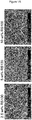
- Figure 1A and 1B show SEM micrographs of all compositions. The above-mentioned examples were repeated with a content of 0.05-1% w/w of a drug substance.
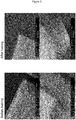
- Figure 2 shows SEM micrographs of the compositins with 10% dextran and 10% PEO, respectively.
- Aim To demonstrate the fabrication of bioadhesive fibres containing dextran particles as bioadhesive substance.
- Aim To demonstrate the fabrication of bioadhesive fibres containing polyethylene oxide particles as bioadhesive substance.
- bioadhesive fibres containing the drug clobetasol propionate, and dextran or polyethylene oxide particles as bioadhesive substances To demonstrate the fabrication of bioadhesive fibres containing the drug clobetasol propionate, and dextran or polyethylene oxide particles as bioadhesive substances.
- compositions with hydrophobic backing layer are provided.
- Electrospun fibres as described in Example 2 was coated with a backing layer.
- Figure 3 shows the results before and after baking (subjecting the backing layer to a temperature of at least 60°C and at the most 200 °C.
- Aim To demonstrate the fabrication of two-layered bioadhesive fibres, made of a layer containing the drug clobetasol propionate and a hydrophobic and non adhesive backing layer.
- Aim To demonstrate the bioadhesive properties of the fibres in vitro.
- PCL layer is either casted or electrospun.
- Electrospun fibres containing Eudragit® RS100 (ammonio methacrylate copolymer type B; molecular weight 32,000 g/mol) and PVP were prepared as previously described. Compositions were made containing: 10% w/w PVP, from 2.5-20% w/w Eudragit® RS100, and from 5-10% w/w of either dextran or PEO. The results are shown below.
- the fibre compositions were applied to porcine mucosa with force for 1 minute in order to ensure bioadhesion. Then the mucosa was submerged in simulated saliva with a rotation of 40 rpm. The residence time was measured as the time it takes for 50% or more of the composition to detach from the oral mucosa. The results are shown in below.
- compositions Same as in example 4.
Landscapes
- Health & Medical Sciences (AREA)
- Chemical & Material Sciences (AREA)
- Life Sciences & Earth Sciences (AREA)
- Medicinal Chemistry (AREA)
- Pharmacology & Pharmacy (AREA)
- Animal Behavior & Ethology (AREA)
- General Health & Medical Sciences (AREA)
- Public Health (AREA)
- Veterinary Medicine (AREA)
- Epidemiology (AREA)
- Inorganic Chemistry (AREA)
- Engineering & Computer Science (AREA)
- Bioinformatics & Cheminformatics (AREA)
- General Chemical & Material Sciences (AREA)
- Nuclear Medicine, Radiotherapy & Molecular Imaging (AREA)
- Organic Chemistry (AREA)
- Chemical Kinetics & Catalysis (AREA)
- Nanotechnology (AREA)
- Proteomics, Peptides & Aminoacids (AREA)
- Dermatology (AREA)
- Reproductive Health (AREA)
- Endocrinology (AREA)
- Gynecology & Obstetrics (AREA)
- Nutrition Science (AREA)
- Physiology (AREA)
- Medicinal Preparation (AREA)
- Pharmaceuticals Containing Other Organic And Inorganic Compounds (AREA)
- Materials For Medical Uses (AREA)
- Medicines That Contain Protein Lipid Enzymes And Other Medicines (AREA)
- Spinning Methods And Devices For Manufacturing Artificial Fibers (AREA)
- Nonwoven Fabrics (AREA)
Applications Claiming Priority (2)
| Application Number | Priority Date | Filing Date | Title |
|---|---|---|---|
| DKPA201570745 | 2015-11-19 | ||
| PCT/EP2016/078151 WO2017085264A1 (en) | 2015-11-19 | 2016-11-18 | A pharmaceutical composition comprising electrohydrodynamically obtained fibres, the composition having improved residence time on the application site |
Publications (2)
| Publication Number | Publication Date |
|---|---|
| EP3334412A1 EP3334412A1 (en) | 2018-06-20 |
| EP3334412B1 true EP3334412B1 (en) | 2021-10-20 |
Family
ID=58718438
Family Applications (1)
| Application Number | Title | Priority Date | Filing Date |
|---|---|---|---|
| EP16797943.4A Active EP3334412B1 (en) | 2015-11-19 | 2016-11-18 | A pharmaceutical composition comprising electrohydrodynamically obtained fibres, the composition having improved residence time on the application site |
Country Status (17)
| Country | Link |
|---|---|
| US (4) | US20180221295A1 (enExample) |
| EP (1) | EP3334412B1 (enExample) |
| JP (2) | JP6606279B2 (enExample) |
| KR (3) | KR102435996B1 (enExample) |
| CN (1) | CN108135833B (enExample) |
| AU (2) | AU2016358266B2 (enExample) |
| BR (1) | BR112018001978A2 (enExample) |
| CA (1) | CA2993377C (enExample) |
| DK (1) | DK3334412T3 (enExample) |
| ES (1) | ES2900741T3 (enExample) |
| IL (1) | IL258093B (enExample) |
| MX (1) | MX391778B (enExample) |
| MY (1) | MY167777A (enExample) |
| NZ (1) | NZ740615A (enExample) |
| RU (2) | RU2019129082A (enExample) |
| SG (1) | SG10201913222XA (enExample) |
| WO (1) | WO2017085264A1 (enExample) |
Families Citing this family (15)
| Publication number | Priority date | Publication date | Assignee | Title |
|---|---|---|---|---|
| CA3050026A1 (en) | 2017-01-23 | 2018-07-26 | Afyx Therapeutics A/S | Method for preparing electrospun fibers with a high content of a bioadhesive substance |
| BR112019014236A2 (pt) | 2017-01-23 | 2020-03-17 | Afyx Therapeutics A/S | Método para a fabricação de um produto de duas camadas à base de fibras eletrofiadas |
| WO2021050532A1 (en) * | 2019-09-09 | 2021-03-18 | Afyx Therapeutics A/S | Compositions for treating fungal infections |
| CA3157209A1 (en) * | 2019-10-08 | 2021-04-15 | Afyx Therapeutics A/S | Compositions for the delivery of proteins |
| EP4121017A4 (en) * | 2020-03-17 | 2024-07-03 | Blaesi, Aron H. | EXPANDABLE, MULTI-EXCIPIENT STRUCTURED DOSAGE FORM FOR EXTENDED ACTIVE INGREDIENT RELEASE |
| IL303390A (en) | 2020-12-03 | 2023-08-01 | Battelle Memorial Institute | Compositions of polymer nanoparticles and DNA nanostructures and methods for non-viral transport |
| WO2022216977A1 (en) | 2021-04-07 | 2022-10-13 | Batelle Memorial Institute | Rapid design, build, test, and learn technologies for identifying and using non-viral carriers |
| EP4108231A1 (en) * | 2021-06-25 | 2022-12-28 | Johann-Wolfgang-Goethe-Universität Frankfurt am Main | In-situ dissolving electrospun polymer fibers for ocular drug delivery |
| EP4124336B1 (en) * | 2021-07-30 | 2023-10-25 | Cannamedical Pharma GmbH | Transmucosal patch comprising a cannabinoid and/or an opioid |
| WO2023094457A1 (en) | 2021-11-23 | 2023-06-01 | Afyx Therapeutics A/S | Mucosal patches and methods of use thereof |
| WO2024160792A1 (en) * | 2023-01-30 | 2024-08-08 | Cannamedical Pharma Gmbh | Improved transmucosal patch comprising a cannabinoid and/or an opioid |
| EP4773947A1 (en) | 2023-09-06 | 2026-07-15 | Afyx Development A/S | Compositions and methods for treating and preventing oral cancer |
| WO2025072751A1 (en) | 2023-09-29 | 2025-04-03 | Battelle Memorial Institute | Polymer nanoparticle compositions for in vivo expression of polypeptides |
| AU2024393766A1 (en) | 2023-12-08 | 2026-06-18 | Battelle Memorial Institute | Use of dna origami nanostructures for molecular information based data storage systems |
| KR20250176151A (ko) * | 2024-06-11 | 2025-12-18 | 주식회사 아이메디텍 | 중재시술용 지혈 의료용 나노섬유 제조방법 및 이에 의한 의료용 나노섬유 |
Family Cites Families (13)
| Publication number | Priority date | Publication date | Assignee | Title |
|---|---|---|---|---|
| JPS61280423A (ja) | 1985-06-05 | 1986-12-11 | Kiyuukiyuu Yakuhin Kogyo Kk | 口腔内粘膜貼付剤 |
| US6753454B1 (en) * | 1999-10-08 | 2004-06-22 | The University Of Akron | Electrospun fibers and an apparatus therefor |
| KR100806412B1 (ko) * | 2000-01-28 | 2008-02-21 | 스미스클라인 비참 코포레이션 | 전기방사 약제학적 조성물 |
| US7309498B2 (en) * | 2001-10-10 | 2007-12-18 | Belenkaya Bronislava G | Biodegradable absorbents and methods of preparation |
| US20030017208A1 (en) * | 2002-07-19 | 2003-01-23 | Francis Ignatious | Electrospun pharmaceutical compositions |
| TW200410714A (en) * | 2002-08-07 | 2004-07-01 | Smithkline Beecham Corp | Electrospun amorphous pharmaceutical compositions |
| CA2495181A1 (en) * | 2002-08-13 | 2004-02-19 | Medtronic, Inc. | Active agent delivery system including a hydrophilic polymer, medical device, and method |
| EP2271301A4 (en) * | 2008-03-27 | 2014-07-02 | Agigma Inc | METHOD AND COMPOSITIONS FOR THE DELIVERY OF FUNDS |
| US20130295143A1 (en) * | 2012-05-02 | 2013-11-07 | Massachusetts Institute Of Technology | Electroprocessing of active pharmaceutical ingredients |
| CN102670483B (zh) * | 2012-05-09 | 2014-04-02 | 上海交通大学 | 一种用于高血脂症治疗的静电纺丝纤维膜制剂及其制备方法 |
| US20150290354A1 (en) * | 2012-10-22 | 2015-10-15 | North Carolina State University | Nonwoven fiber materials |
| EP2810645B1 (en) * | 2013-06-06 | 2017-05-24 | A. Sezai Sarac | New Drug Delivery System |
| IL291842A (en) * | 2014-06-10 | 2022-06-01 | Afyx Therapeutics As | Compositions comprising electrohydrodynamically obtained fibres for administration of specific dosages of an active substance to skin or mucosa |
-
2016
- 2016-11-18 KR KR1020197004754A patent/KR102435996B1/ko not_active Expired - Fee Related
- 2016-11-18 CN CN201680046647.5A patent/CN108135833B/zh active Active
- 2016-11-18 MX MX2018005206A patent/MX391778B/es unknown
- 2016-11-18 EP EP16797943.4A patent/EP3334412B1/en active Active
- 2016-11-18 SG SG10201913222XA patent/SG10201913222XA/en unknown
- 2016-11-18 AU AU2016358266A patent/AU2016358266B2/en not_active Ceased
- 2016-11-18 MY MYPI2018700176A patent/MY167777A/en unknown
- 2016-11-18 CA CA2993377A patent/CA2993377C/en active Active
- 2016-11-18 NZ NZ740615A patent/NZ740615A/en not_active IP Right Cessation
- 2016-11-18 BR BR112018001978A patent/BR112018001978A2/pt not_active Application Discontinuation
- 2016-11-18 WO PCT/EP2016/078151 patent/WO2017085264A1/en not_active Ceased
- 2016-11-18 DK DK16797943.4T patent/DK3334412T3/da active
- 2016-11-18 KR KR1020187008505A patent/KR102001163B1/ko not_active Expired - Fee Related
- 2016-11-18 RU RU2019129082A patent/RU2019129082A/ru unknown
- 2016-11-18 RU RU2018109496A patent/RU2701513C2/ru active
- 2016-11-18 KR KR1020197016484A patent/KR20190067280A/ko not_active Withdrawn
- 2016-11-18 JP JP2018516015A patent/JP6606279B2/ja active Active
- 2016-11-18 ES ES16797943T patent/ES2900741T3/es active Active
-
2018
- 2018-01-29 US US15/882,637 patent/US20180221295A1/en not_active Abandoned
- 2018-03-13 IL IL258093A patent/IL258093B/en unknown
- 2018-08-21 AU AU2018220020A patent/AU2018220020C1/en not_active Ceased
-
2019
- 2019-04-24 US US16/393,597 patent/US20190254985A1/en not_active Abandoned
- 2019-10-16 JP JP2019189500A patent/JP6929916B2/ja active Active
-
2023
- 2023-05-17 US US18/198,582 patent/US20230285313A1/en not_active Abandoned
-
2024
- 2024-01-05 US US18/406,022 patent/US20240139117A1/en active Pending
Non-Patent Citations (1)
| Title |
|---|
| None * |
Also Published As
Similar Documents
| Publication | Publication Date | Title |
|---|---|---|
| US20240058276A1 (en) | Compositions comprising electrohydrodynamically obtained fibres for administration of specific dosages of an active substance to skin or mucosa | |
| US20240139117A1 (en) | Pharmaceutical composition comprising electrohydrodynamically obtained fibres, the composition having improved residence time on the application site | |
| WO2016079246A1 (en) | Bioadhesive films | |
| WO2017085262A1 (en) | A pharmaceutical film composition having improved residence time on the application site | |
| HK1256209B (en) | A pharmaceutical composition comprising electrohydrodynamically obtained fibres, the composition having improved residence time on the application site | |
| HK40016288A (en) | Compositions comprising electrohydrodynamically obtained fibres for administration of specific dosages of an active substance to skin or mucosa | |
| HK1235690A1 (en) | Compositions comprising electrohydrodynamically obtained fibres for administration of specific dosages of an active substance to skin or mucosa | |
| HK1235690B (en) | Compositions comprising electrohydrodynamically obtained fibres for administration of specific dosages of an active substance to skin or mucosa |
Legal Events
| Date | Code | Title | Description |
|---|---|---|---|
| STAA | Information on the status of an ep patent application or granted ep patent |
Free format text: STATUS: UNKNOWN |
|
| STAA | Information on the status of an ep patent application or granted ep patent |
Free format text: STATUS: THE INTERNATIONAL PUBLICATION HAS BEEN MADE |
|
| PUAI | Public reference made under article 153(3) epc to a published international application that has entered the european phase |
Free format text: ORIGINAL CODE: 0009012 |
|
| STAA | Information on the status of an ep patent application or granted ep patent |
Free format text: STATUS: REQUEST FOR EXAMINATION WAS MADE |
|
| 17P | Request for examination filed |
Effective date: 20180315 |
|
| AK | Designated contracting states |
Kind code of ref document: A1 Designated state(s): AL AT BE BG CH CY CZ DE DK EE ES FI FR GB GR HR HU IE IS IT LI LT LU LV MC MK MT NL NO PL PT RO RS SE SI SK SM TR |
|
| AX | Request for extension of the european patent |
Extension state: BA ME |
|
| DAV | Request for validation of the european patent (deleted) | ||
| DAX | Request for extension of the european patent (deleted) | ||
| RAP1 | Party data changed (applicant data changed or rights of an application transferred) |
Owner name: AFYX THERAPEUTICS A/S |
|
| STAA | Information on the status of an ep patent application or granted ep patent |
Free format text: STATUS: EXAMINATION IS IN PROGRESS |
|
| 17Q | First examination report despatched |
Effective date: 20190731 |
|
| REG | Reference to a national code |
Ref country code: HK Ref legal event code: DE Ref document number: 1256209 Country of ref document: HK |
|
| GRAP | Despatch of communication of intention to grant a patent |
Free format text: ORIGINAL CODE: EPIDOSNIGR1 |
|
| STAA | Information on the status of an ep patent application or granted ep patent |
Free format text: STATUS: GRANT OF PATENT IS INTENDED |
|
| RIC1 | Information provided on ipc code assigned before grant |
Ipc: A61K 47/38 20060101ALI20201030BHEP Ipc: A61K 47/34 20170101ALI20201030BHEP Ipc: A61K 31/573 20060101ALI20201030BHEP Ipc: A61P 15/02 20060101ALI20201030BHEP Ipc: A61K 9/00 20060101AFI20201030BHEP Ipc: A61P 1/02 20060101ALI20201030BHEP Ipc: A61K 47/36 20060101ALI20201030BHEP Ipc: A61K 31/00 20060101ALI20201030BHEP Ipc: A61K 47/32 20060101ALI20201030BHEP |
|
| INTG | Intention to grant announced |
Effective date: 20201202 |
|
| GRAJ | Information related to disapproval of communication of intention to grant by the applicant or resumption of examination proceedings by the epo deleted |
Free format text: ORIGINAL CODE: EPIDOSDIGR1 |
|
| STAA | Information on the status of an ep patent application or granted ep patent |
Free format text: STATUS: EXAMINATION IS IN PROGRESS |
|
| GRAP | Despatch of communication of intention to grant a patent |
Free format text: ORIGINAL CODE: EPIDOSNIGR1 |
|
| STAA | Information on the status of an ep patent application or granted ep patent |
Free format text: STATUS: GRANT OF PATENT IS INTENDED |
|
| INTC | Intention to grant announced (deleted) | ||
| INTG | Intention to grant announced |
Effective date: 20210512 |
|
| GRAS | Grant fee paid |
Free format text: ORIGINAL CODE: EPIDOSNIGR3 |
|
| GRAA | (expected) grant |
Free format text: ORIGINAL CODE: 0009210 |
|
| STAA | Information on the status of an ep patent application or granted ep patent |
Free format text: STATUS: THE PATENT HAS BEEN GRANTED |
|
| AK | Designated contracting states |
Kind code of ref document: B1 Designated state(s): AL AT BE BG CH CY CZ DE DK EE ES FI FR GB GR HR HU IE IS IT LI LT LU LV MC MK MT NL NO PL PT RO RS SE SI SK SM TR |
|
| REG | Reference to a national code |
Ref country code: GB Ref legal event code: FG4D |
|
| REG | Reference to a national code |
Ref country code: CH Ref legal event code: EP |
|
| REG | Reference to a national code |
Ref country code: IE Ref legal event code: FG4D |
|
| REG | Reference to a national code |
Ref country code: DE Ref legal event code: R096 Ref document number: 602016065189 Country of ref document: DE |
|
| REG | Reference to a national code |
Ref country code: AT Ref legal event code: REF Ref document number: 1439325 Country of ref document: AT Kind code of ref document: T Effective date: 20211115 |
|
| REG | Reference to a national code |
Ref country code: FI Ref legal event code: FGE |
|
| REG | Reference to a national code |
Ref country code: DK Ref legal event code: T3 Effective date: 20220110 |
|
| REG | Reference to a national code |
Ref country code: SE Ref legal event code: TRGR |
|
| REG | Reference to a national code |
Ref country code: NL Ref legal event code: FP |
|
| REG | Reference to a national code |
Ref country code: LT Ref legal event code: MG9D |
|
| REG | Reference to a national code |
Ref country code: NO Ref legal event code: T2 Effective date: 20211020 |
|
| REG | Reference to a national code |
Ref country code: ES Ref legal event code: FG2A Ref document number: 2900741 Country of ref document: ES Kind code of ref document: T3 Effective date: 20220318 |
|
| PG25 | Lapsed in a contracting state [announced via postgrant information from national office to epo] |
Ref country code: RS Free format text: LAPSE BECAUSE OF FAILURE TO SUBMIT A TRANSLATION OF THE DESCRIPTION OR TO PAY THE FEE WITHIN THE PRESCRIBED TIME-LIMIT Effective date: 20211020 Ref country code: LT Free format text: LAPSE BECAUSE OF FAILURE TO SUBMIT A TRANSLATION OF THE DESCRIPTION OR TO PAY THE FEE WITHIN THE PRESCRIBED TIME-LIMIT Effective date: 20211020 Ref country code: BG Free format text: LAPSE BECAUSE OF FAILURE TO SUBMIT A TRANSLATION OF THE DESCRIPTION OR TO PAY THE FEE WITHIN THE PRESCRIBED TIME-LIMIT Effective date: 20220120 |
|
| PG25 | Lapsed in a contracting state [announced via postgrant information from national office to epo] |
Ref country code: IS Free format text: LAPSE BECAUSE OF FAILURE TO SUBMIT A TRANSLATION OF THE DESCRIPTION OR TO PAY THE FEE WITHIN THE PRESCRIBED TIME-LIMIT Effective date: 20220220 Ref country code: PT Free format text: LAPSE BECAUSE OF FAILURE TO SUBMIT A TRANSLATION OF THE DESCRIPTION OR TO PAY THE FEE WITHIN THE PRESCRIBED TIME-LIMIT Effective date: 20220221 Ref country code: PL Free format text: LAPSE BECAUSE OF FAILURE TO SUBMIT A TRANSLATION OF THE DESCRIPTION OR TO PAY THE FEE WITHIN THE PRESCRIBED TIME-LIMIT Effective date: 20211020 Ref country code: LV Free format text: LAPSE BECAUSE OF FAILURE TO SUBMIT A TRANSLATION OF THE DESCRIPTION OR TO PAY THE FEE WITHIN THE PRESCRIBED TIME-LIMIT Effective date: 20211020 Ref country code: HR Free format text: LAPSE BECAUSE OF FAILURE TO SUBMIT A TRANSLATION OF THE DESCRIPTION OR TO PAY THE FEE WITHIN THE PRESCRIBED TIME-LIMIT Effective date: 20211020 Ref country code: GR Free format text: LAPSE BECAUSE OF FAILURE TO SUBMIT A TRANSLATION OF THE DESCRIPTION OR TO PAY THE FEE WITHIN THE PRESCRIBED TIME-LIMIT Effective date: 20220121 |
|
| REG | Reference to a national code |
Ref country code: DE Ref legal event code: R097 Ref document number: 602016065189 Country of ref document: DE |
|
| PG25 | Lapsed in a contracting state [announced via postgrant information from national office to epo] |
Ref country code: SM Free format text: LAPSE BECAUSE OF FAILURE TO SUBMIT A TRANSLATION OF THE DESCRIPTION OR TO PAY THE FEE WITHIN THE PRESCRIBED TIME-LIMIT Effective date: 20211020 Ref country code: SK Free format text: LAPSE BECAUSE OF FAILURE TO SUBMIT A TRANSLATION OF THE DESCRIPTION OR TO PAY THE FEE WITHIN THE PRESCRIBED TIME-LIMIT Effective date: 20211020 Ref country code: RO Free format text: LAPSE BECAUSE OF FAILURE TO SUBMIT A TRANSLATION OF THE DESCRIPTION OR TO PAY THE FEE WITHIN THE PRESCRIBED TIME-LIMIT Effective date: 20211020 Ref country code: MC Free format text: LAPSE BECAUSE OF FAILURE TO SUBMIT A TRANSLATION OF THE DESCRIPTION OR TO PAY THE FEE WITHIN THE PRESCRIBED TIME-LIMIT Effective date: 20211020 Ref country code: LU Free format text: LAPSE BECAUSE OF NON-PAYMENT OF DUE FEES Effective date: 20211118 Ref country code: EE Free format text: LAPSE BECAUSE OF FAILURE TO SUBMIT A TRANSLATION OF THE DESCRIPTION OR TO PAY THE FEE WITHIN THE PRESCRIBED TIME-LIMIT Effective date: 20211020 Ref country code: CZ Free format text: LAPSE BECAUSE OF FAILURE TO SUBMIT A TRANSLATION OF THE DESCRIPTION OR TO PAY THE FEE WITHIN THE PRESCRIBED TIME-LIMIT Effective date: 20211020 |
|
| PLBE | No opposition filed within time limit |
Free format text: ORIGINAL CODE: 0009261 |
|
| STAA | Information on the status of an ep patent application or granted ep patent |
Free format text: STATUS: NO OPPOSITION FILED WITHIN TIME LIMIT |
|
| 26N | No opposition filed |
Effective date: 20220721 |
|
| PG25 | Lapsed in a contracting state [announced via postgrant information from national office to epo] |
Ref country code: AL Free format text: LAPSE BECAUSE OF FAILURE TO SUBMIT A TRANSLATION OF THE DESCRIPTION OR TO PAY THE FEE WITHIN THE PRESCRIBED TIME-LIMIT Effective date: 20211020 |
|
| PG25 | Lapsed in a contracting state [announced via postgrant information from national office to epo] |
Ref country code: SI Free format text: LAPSE BECAUSE OF FAILURE TO SUBMIT A TRANSLATION OF THE DESCRIPTION OR TO PAY THE FEE WITHIN THE PRESCRIBED TIME-LIMIT Effective date: 20211020 |
|
| REG | Reference to a national code |
Ref country code: AT Ref legal event code: UEP Ref document number: 1439325 Country of ref document: AT Kind code of ref document: T Effective date: 20211020 |
|
| PG25 | Lapsed in a contracting state [announced via postgrant information from national office to epo] |
Ref country code: HU Free format text: LAPSE BECAUSE OF FAILURE TO SUBMIT A TRANSLATION OF THE DESCRIPTION OR TO PAY THE FEE WITHIN THE PRESCRIBED TIME-LIMIT; INVALID AB INITIO Effective date: 20161118 |
|
| P01 | Opt-out of the competence of the unified patent court (upc) registered |
Effective date: 20230424 |
|
| PG25 | Lapsed in a contracting state [announced via postgrant information from national office to epo] |
Ref country code: CY Free format text: LAPSE BECAUSE OF FAILURE TO SUBMIT A TRANSLATION OF THE DESCRIPTION OR TO PAY THE FEE WITHIN THE PRESCRIBED TIME-LIMIT Effective date: 20211020 |
|
| PGFP | Annual fee paid to national office [announced via postgrant information from national office to epo] |
Ref country code: IE Payment date: 20230912 Year of fee payment: 8 |
|
| PGFP | Annual fee paid to national office [announced via postgrant information from national office to epo] |
Ref country code: SE Payment date: 20230912 Year of fee payment: 8 Ref country code: NL Payment date: 20231016 Year of fee payment: 8 |
|
| PGFP | Annual fee paid to national office [announced via postgrant information from national office to epo] |
Ref country code: ES Payment date: 20231207 Year of fee payment: 8 |
|
| PGFP | Annual fee paid to national office [announced via postgrant information from national office to epo] |
Ref country code: TR Payment date: 20231116 Year of fee payment: 8 Ref country code: NO Payment date: 20231108 Year of fee payment: 8 Ref country code: IT Payment date: 20231010 Year of fee payment: 8 Ref country code: FI Payment date: 20231116 Year of fee payment: 8 Ref country code: DK Payment date: 20231116 Year of fee payment: 8 Ref country code: AT Payment date: 20231025 Year of fee payment: 8 |
|
| PGFP | Annual fee paid to national office [announced via postgrant information from national office to epo] |
Ref country code: BE Payment date: 20231016 Year of fee payment: 8 |
|
| PG25 | Lapsed in a contracting state [announced via postgrant information from national office to epo] |
Ref country code: MK Free format text: LAPSE BECAUSE OF FAILURE TO SUBMIT A TRANSLATION OF THE DESCRIPTION OR TO PAY THE FEE WITHIN THE PRESCRIBED TIME-LIMIT Effective date: 20211020 |
|
| PG25 | Lapsed in a contracting state [announced via postgrant information from national office to epo] |
Ref country code: MT Free format text: LAPSE BECAUSE OF FAILURE TO SUBMIT A TRANSLATION OF THE DESCRIPTION OR TO PAY THE FEE WITHIN THE PRESCRIBED TIME-LIMIT Effective date: 20211020 |
|
| REG | Reference to a national code |
Ref country code: DK Ref legal event code: EBP Effective date: 20241130 |
|
| REG | Reference to a national code |
Ref country code: SE Ref legal event code: EUG |
|
| PG25 | Lapsed in a contracting state [announced via postgrant information from national office to epo] |
Ref country code: FI Free format text: LAPSE BECAUSE OF NON-PAYMENT OF DUE FEES Effective date: 20241118 |
|
| REG | Reference to a national code |
Ref country code: NL Ref legal event code: MM Effective date: 20241201 |
|
| PG25 | Lapsed in a contracting state [announced via postgrant information from national office to epo] |
Ref country code: NO Free format text: LAPSE BECAUSE OF NON-PAYMENT OF DUE FEES Effective date: 20241130 |
|
| REG | Reference to a national code |
Ref country code: AT Ref legal event code: MM01 Ref document number: 1439325 Country of ref document: AT Kind code of ref document: T Effective date: 20241118 |
|
| PG25 | Lapsed in a contracting state [announced via postgrant information from national office to epo] |
Ref country code: AT Free format text: LAPSE BECAUSE OF NON-PAYMENT OF DUE FEES Effective date: 20241118 |
|
| PG25 | Lapsed in a contracting state [announced via postgrant information from national office to epo] |
Ref country code: NL Free format text: LAPSE BECAUSE OF NON-PAYMENT OF DUE FEES Effective date: 20241201 |
|
| REG | Reference to a national code |
Ref country code: BE Ref legal event code: MM Effective date: 20241130 |
|
| PG25 | Lapsed in a contracting state [announced via postgrant information from national office to epo] |
Ref country code: DK Free format text: LAPSE BECAUSE OF NON-PAYMENT OF DUE FEES Effective date: 20241130 |
|
| PG25 | Lapsed in a contracting state [announced via postgrant information from national office to epo] |
Ref country code: IT Free format text: LAPSE BECAUSE OF NON-PAYMENT OF DUE FEES Effective date: 20241118 Ref country code: SE Free format text: LAPSE BECAUSE OF NON-PAYMENT OF DUE FEES Effective date: 20241119 |
|
| PG25 | Lapsed in a contracting state [announced via postgrant information from national office to epo] |
Ref country code: BE Free format text: LAPSE BECAUSE OF NON-PAYMENT OF DUE FEES Effective date: 20241130 |
|
| PG25 | Lapsed in a contracting state [announced via postgrant information from national office to epo] |
Ref country code: IE Free format text: LAPSE BECAUSE OF NON-PAYMENT OF DUE FEES Effective date: 20241118 |
|
| REG | Reference to a national code |
Ref country code: CH Ref legal event code: U11 Free format text: ST27 STATUS EVENT CODE: U-0-0-U10-U11 (AS PROVIDED BY THE NATIONAL OFFICE) Effective date: 20251201 |
|
| REG | Reference to a national code |
Ref country code: ES Ref legal event code: FD2A Effective date: 20260105 |
|
| PGFP | Annual fee paid to national office [announced via postgrant information from national office to epo] |
Ref country code: DE Payment date: 20251128 Year of fee payment: 10 |
|
| PGFP | Annual fee paid to national office [announced via postgrant information from national office to epo] |
Ref country code: GB Payment date: 20251127 Year of fee payment: 10 |
|
| PGFP | Annual fee paid to national office [announced via postgrant information from national office to epo] |
Ref country code: FR Payment date: 20251125 Year of fee payment: 10 |
|
| PGFP | Annual fee paid to national office [announced via postgrant information from national office to epo] |
Ref country code: CH Payment date: 20251201 Year of fee payment: 10 |
|
| PG25 | Lapsed in a contracting state [announced via postgrant information from national office to epo] |
Ref country code: ES Free format text: LAPSE BECAUSE OF NON-PAYMENT OF DUE FEES Effective date: 20241119 |
|
| PG25 | Lapsed in a contracting state [announced via postgrant information from national office to epo] |
Ref country code: TR Free format text: LAPSE BECAUSE OF NON-PAYMENT OF DUE FEES Effective date: 20241118 |