EP3327044B1 - Acid-free quaternised nitrogen compounds and their use as additives in fuels and lubricants - Google Patents
Acid-free quaternised nitrogen compounds and their use as additives in fuels and lubricants Download PDFInfo
- Publication number
- EP3327044B1 EP3327044B1 EP17198007.1A EP17198007A EP3327044B1 EP 3327044 B1 EP3327044 B1 EP 3327044B1 EP 17198007 A EP17198007 A EP 17198007A EP 3327044 B1 EP3327044 B1 EP 3327044B1
- Authority
- EP
- European Patent Office
- Prior art keywords
- acid
- oder
- hydrocarbyl
- chain
- fuel
- Prior art date
- Legal status (The legal status is an assumption and is not a legal conclusion. Google has not performed a legal analysis and makes no representation as to the accuracy of the status listed.)
- Active
Links
- PYSGFFTXMUWEOT-UHFFFAOYSA-N CN(C)CCCO Chemical compound CN(C)CCCO PYSGFFTXMUWEOT-UHFFFAOYSA-N 0.000 description 1
Images
Classifications
-
- C—CHEMISTRY; METALLURGY
- C10—PETROLEUM, GAS OR COKE INDUSTRIES; TECHNICAL GASES CONTAINING CARBON MONOXIDE; FUELS; LUBRICANTS; PEAT
- C10L—FUELS NOT OTHERWISE PROVIDED FOR; NATURAL GAS; SYNTHETIC NATURAL GAS OBTAINED BY PROCESSES NOT COVERED BY SUBCLASSES C10G OR C10K; LIQUIFIED PETROLEUM GAS; USE OF ADDITIVES TO FUELS OR FIRES; FIRE-LIGHTERS
- C10L1/00—Liquid carbonaceous fuels
- C10L1/10—Liquid carbonaceous fuels containing additives
- C10L1/14—Organic compounds
- C10L1/22—Organic compounds containing nitrogen
- C10L1/234—Macromolecular compounds
- C10L1/238—Macromolecular compounds obtained otherwise than by reactions involving only carbon-to-carbon unsaturated bonds
- C10L1/2383—Polyamines or polyimines, or derivatives thereof (poly)amines and imines; derivatives thereof (substituted by a macromolecular group containing 30C)
-
- C—CHEMISTRY; METALLURGY
- C08—ORGANIC MACROMOLECULAR COMPOUNDS; THEIR PREPARATION OR CHEMICAL WORKING-UP; COMPOSITIONS BASED THEREON
- C08K—Use of inorganic or non-macromolecular organic substances as compounding ingredients
- C08K5/00—Use of organic ingredients
- C08K5/16—Nitrogen-containing compounds
- C08K5/17—Amines; Quaternary ammonium compounds
- C08K5/19—Quaternary ammonium compounds
-
- C—CHEMISTRY; METALLURGY
- C08—ORGANIC MACROMOLECULAR COMPOUNDS; THEIR PREPARATION OR CHEMICAL WORKING-UP; COMPOSITIONS BASED THEREON
- C08F—MACROMOLECULAR COMPOUNDS OBTAINED BY REACTIONS ONLY INVOLVING CARBON-TO-CARBON UNSATURATED BONDS
- C08F8/00—Chemical modification by after-treatment
- C08F8/30—Introducing nitrogen atoms or nitrogen-containing groups
- C08F8/32—Introducing nitrogen atoms or nitrogen-containing groups by reaction with amines
-
- C—CHEMISTRY; METALLURGY
- C08—ORGANIC MACROMOLECULAR COMPOUNDS; THEIR PREPARATION OR CHEMICAL WORKING-UP; COMPOSITIONS BASED THEREON
- C08F—MACROMOLECULAR COMPOUNDS OBTAINED BY REACTIONS ONLY INVOLVING CARBON-TO-CARBON UNSATURATED BONDS
- C08F8/00—Chemical modification by after-treatment
- C08F8/44—Preparation of metal salts or ammonium salts
-
- C—CHEMISTRY; METALLURGY
- C10—PETROLEUM, GAS OR COKE INDUSTRIES; TECHNICAL GASES CONTAINING CARBON MONOXIDE; FUELS; LUBRICANTS; PEAT
- C10L—FUELS NOT OTHERWISE PROVIDED FOR; NATURAL GAS; SYNTHETIC NATURAL GAS OBTAINED BY PROCESSES NOT COVERED BY SUBCLASSES C10G OR C10K; LIQUIFIED PETROLEUM GAS; USE OF ADDITIVES TO FUELS OR FIRES; FIRE-LIGHTERS
- C10L1/00—Liquid carbonaceous fuels
- C10L1/10—Liquid carbonaceous fuels containing additives
- C10L1/14—Organic compounds
- C10L1/22—Organic compounds containing nitrogen
-
- C—CHEMISTRY; METALLURGY
- C10—PETROLEUM, GAS OR COKE INDUSTRIES; TECHNICAL GASES CONTAINING CARBON MONOXIDE; FUELS; LUBRICANTS; PEAT
- C10L—FUELS NOT OTHERWISE PROVIDED FOR; NATURAL GAS; SYNTHETIC NATURAL GAS OBTAINED BY PROCESSES NOT COVERED BY SUBCLASSES C10G OR C10K; LIQUIFIED PETROLEUM GAS; USE OF ADDITIVES TO FUELS OR FIRES; FIRE-LIGHTERS
- C10L10/00—Use of additives to fuels or fires for particular purposes
- C10L10/14—Use of additives to fuels or fires for particular purposes for improving low temperature properties
-
- C—CHEMISTRY; METALLURGY
- C10—PETROLEUM, GAS OR COKE INDUSTRIES; TECHNICAL GASES CONTAINING CARBON MONOXIDE; FUELS; LUBRICANTS; PEAT
- C10L—FUELS NOT OTHERWISE PROVIDED FOR; NATURAL GAS; SYNTHETIC NATURAL GAS OBTAINED BY PROCESSES NOT COVERED BY SUBCLASSES C10G OR C10K; LIQUIFIED PETROLEUM GAS; USE OF ADDITIVES TO FUELS OR FIRES; FIRE-LIGHTERS
- C10L10/00—Use of additives to fuels or fires for particular purposes
- C10L10/18—Use of additives to fuels or fires for particular purposes use of detergents or dispersants for purposes not provided for in groups C10L10/02 - C10L10/16
-
- C—CHEMISTRY; METALLURGY
- C10—PETROLEUM, GAS OR COKE INDUSTRIES; TECHNICAL GASES CONTAINING CARBON MONOXIDE; FUELS; LUBRICANTS; PEAT
- C10M—LUBRICATING COMPOSITIONS; USE OF CHEMICAL SUBSTANCES EITHER ALONE OR AS LUBRICATING INGREDIENTS IN A LUBRICATING COMPOSITION
- C10M125/00—Lubricating compositions characterised by the additive being an inorganic material
- C10M125/20—Compounds containing nitrogen
-
- C—CHEMISTRY; METALLURGY
- C10—PETROLEUM, GAS OR COKE INDUSTRIES; TECHNICAL GASES CONTAINING CARBON MONOXIDE; FUELS; LUBRICANTS; PEAT
- C10M—LUBRICATING COMPOSITIONS; USE OF CHEMICAL SUBSTANCES EITHER ALONE OR AS LUBRICATING INGREDIENTS IN A LUBRICATING COMPOSITION
- C10M133/00—Lubricating compositions characterised by the additive being an organic non-macromolecular compound containing nitrogen
- C10M133/02—Lubricating compositions characterised by the additive being an organic non-macromolecular compound containing nitrogen having a carbon chain of less than 30 atoms
- C10M133/16—Amides; Imides
-
- C—CHEMISTRY; METALLURGY
- C10—PETROLEUM, GAS OR COKE INDUSTRIES; TECHNICAL GASES CONTAINING CARBON MONOXIDE; FUELS; LUBRICANTS; PEAT
- C10M—LUBRICATING COMPOSITIONS; USE OF CHEMICAL SUBSTANCES EITHER ALONE OR AS LUBRICATING INGREDIENTS IN A LUBRICATING COMPOSITION
- C10M133/00—Lubricating compositions characterised by the additive being an organic non-macromolecular compound containing nitrogen
- C10M133/52—Lubricating compositions characterised by the additive being an organic non-macromolecular compound containing nitrogen having a carbon chain of 30 or more atoms
- C10M133/56—Amides; Imides
-
- C—CHEMISTRY; METALLURGY
- C10—PETROLEUM, GAS OR COKE INDUSTRIES; TECHNICAL GASES CONTAINING CARBON MONOXIDE; FUELS; LUBRICANTS; PEAT
- C10L—FUELS NOT OTHERWISE PROVIDED FOR; NATURAL GAS; SYNTHETIC NATURAL GAS OBTAINED BY PROCESSES NOT COVERED BY SUBCLASSES C10G OR C10K; LIQUIFIED PETROLEUM GAS; USE OF ADDITIVES TO FUELS OR FIRES; FIRE-LIGHTERS
- C10L1/00—Liquid carbonaceous fuels
- C10L1/10—Liquid carbonaceous fuels containing additives
- C10L1/14—Organic compounds
- C10L1/22—Organic compounds containing nitrogen
- C10L1/222—Organic compounds containing nitrogen containing at least one carbon-to-nitrogen single bond
- C10L1/224—Amides; Imides carboxylic acid amides, imides
-
- C—CHEMISTRY; METALLURGY
- C10—PETROLEUM, GAS OR COKE INDUSTRIES; TECHNICAL GASES CONTAINING CARBON MONOXIDE; FUELS; LUBRICANTS; PEAT
- C10M—LUBRICATING COMPOSITIONS; USE OF CHEMICAL SUBSTANCES EITHER ALONE OR AS LUBRICATING INGREDIENTS IN A LUBRICATING COMPOSITION
- C10M2203/00—Organic non-macromolecular hydrocarbon compounds and hydrocarbon fractions as ingredients in lubricant compositions
- C10M2203/10—Petroleum or coal fractions, e.g. tars, solvents, bitumen
-
- C—CHEMISTRY; METALLURGY
- C10—PETROLEUM, GAS OR COKE INDUSTRIES; TECHNICAL GASES CONTAINING CARBON MONOXIDE; FUELS; LUBRICANTS; PEAT
- C10M—LUBRICATING COMPOSITIONS; USE OF CHEMICAL SUBSTANCES EITHER ALONE OR AS LUBRICATING INGREDIENTS IN A LUBRICATING COMPOSITION
- C10M2215/00—Organic non-macromolecular compounds containing nitrogen as ingredients in lubricant Compositions
- C10M2215/08—Amides [having hydrocarbon substituents containing less than thirty carbon atoms]
-
- C—CHEMISTRY; METALLURGY
- C10—PETROLEUM, GAS OR COKE INDUSTRIES; TECHNICAL GASES CONTAINING CARBON MONOXIDE; FUELS; LUBRICANTS; PEAT
- C10M—LUBRICATING COMPOSITIONS; USE OF CHEMICAL SUBSTANCES EITHER ALONE OR AS LUBRICATING INGREDIENTS IN A LUBRICATING COMPOSITION
- C10M2215/00—Organic non-macromolecular compounds containing nitrogen as ingredients in lubricant Compositions
- C10M2215/086—Imides [having hydrocarbon substituents containing less than thirty carbon atoms]
-
- C—CHEMISTRY; METALLURGY
- C10—PETROLEUM, GAS OR COKE INDUSTRIES; TECHNICAL GASES CONTAINING CARBON MONOXIDE; FUELS; LUBRICANTS; PEAT
- C10M—LUBRICATING COMPOSITIONS; USE OF CHEMICAL SUBSTANCES EITHER ALONE OR AS LUBRICATING INGREDIENTS IN A LUBRICATING COMPOSITION
- C10M2215/00—Organic non-macromolecular compounds containing nitrogen as ingredients in lubricant Compositions
- C10M2215/24—Organic non-macromolecular compounds containing nitrogen as ingredients in lubricant Compositions having hydrocarbon substituents containing thirty or more carbon atoms, e.g. nitrogen derivatives of substituted succinic acid
- C10M2215/28—Amides; Imides
-
- C—CHEMISTRY; METALLURGY
- C10—PETROLEUM, GAS OR COKE INDUSTRIES; TECHNICAL GASES CONTAINING CARBON MONOXIDE; FUELS; LUBRICANTS; PEAT
- C10N—INDEXING SCHEME ASSOCIATED WITH SUBCLASS C10M RELATING TO LUBRICATING COMPOSITIONS
- C10N2030/00—Specified physical or chemical properties which is improved by the additive characterising the lubricating composition, e.g. multifunctional additives
- C10N2030/02—Pour-point; Viscosity index
-
- C—CHEMISTRY; METALLURGY
- C10—PETROLEUM, GAS OR COKE INDUSTRIES; TECHNICAL GASES CONTAINING CARBON MONOXIDE; FUELS; LUBRICANTS; PEAT
- C10N—INDEXING SCHEME ASSOCIATED WITH SUBCLASS C10M RELATING TO LUBRICATING COMPOSITIONS
- C10N2030/00—Specified physical or chemical properties which is improved by the additive characterising the lubricating composition, e.g. multifunctional additives
- C10N2030/70—Soluble oils
-
- Y—GENERAL TAGGING OF NEW TECHNOLOGICAL DEVELOPMENTS; GENERAL TAGGING OF CROSS-SECTIONAL TECHNOLOGIES SPANNING OVER SEVERAL SECTIONS OF THE IPC; TECHNICAL SUBJECTS COVERED BY FORMER USPC CROSS-REFERENCE ART COLLECTIONS [XRACs] AND DIGESTS
- Y02—TECHNOLOGIES OR APPLICATIONS FOR MITIGATION OR ADAPTATION AGAINST CLIMATE CHANGE
- Y02T—CLIMATE CHANGE MITIGATION TECHNOLOGIES RELATED TO TRANSPORTATION
- Y02T10/00—Road transport of goods or passengers
- Y02T10/10—Internal combustion engine [ICE] based vehicles
- Y02T10/12—Improving ICE efficiencies
Definitions
- the present invention relates to novel acid-free quaternized nitrogen compounds, their production and use as a fuel and lubricant additive, such as in particular as a detergent additive, as a wax anti-settling additive (WASA) or as an additive for reducing internal diesel injector deposits (IDID); Additive packages containing these compounds; as well as fuels and lubricants with additives. Furthermore, the present invention relates to the use of these acid-free quaternized nitrogen compounds as a fuel additive to reduce or prevent deposits in the injection systems of direct-injection diesel engines, in particular in common rail injection systems, to reduce the fuel consumption of direct-injection diesel engines, in particular diesel engines with common rail Injection systems, and to minimize power loss in direct-injection diesel engines, especially in diesel engines with common rail injection systems.
- a fuel and lubricant additive such as in particular as a detergent additive, as a wax anti-settling additive (WASA) or as an additive for reducing internal diesel injector deposits (IDID); Additive packages containing these compounds; as well as fuels
- direct-injection diesel engines the fuel is injected through a multi-hole injection nozzle of the engine that reaches directly into the combustion chamber and finely distributed (atomized) instead of being introduced into a prechamber or swirl chamber as in the classic (chamber) diesel engine.
- the advantage of direct-injection diesel engines lies in their high performance for diesel engines and yet low consumption. In addition, these motors achieve a very high torque even at low speeds.
- the diesel fuel is pumped into a high pressure line, the common rail, by a pump with pressures of up to 2000 bar.
- branch lines run to the various injectors that supply the fuel inject directly into the combustion chamber.
- Full pressure is always applied to the common rail, which enables multiple injections or a special form of injection.
- the other injection systems on the other hand, only a smaller variation of the injection is possible.
- Injection in the common rail is essentially divided into three groups: (1.) Pre-injection, through which essentially a smoother combustion is achieved, so that hard combustion noises ("pounding") are reduced and the engine appears to run smoothly; (2.) main injection, which is responsible in particular for a good torque curve; and (3.) post-injection, which in particular ensures a low NO x value.
- Pre-injection through which essentially a smoother combustion is achieved, so that hard combustion noises ("pounding") are reduced and the engine appears to run smoothly
- (2.) main injection which is responsible in particular for a good torque curve
- (3.) post-injection which in particular ensures a low NO x value.
- the fuel is usually not burned, but evaporated by residual heat in the cylinder.
- the resulting exhaust gas / fuel mixture is transported to the exhaust system, where the fuel acts as a reducing agent for the nitrogen oxides NO x in the presence of suitable catalysts.
- variable, cylinder-specific injection can have a positive effect on the engine's pollutant emissions, such as nitrogen oxides (NO x ), carbon monoxide (CO) and, in particular, particles (soot).
- NO x nitrogen oxides
- CO carbon monoxide
- particles particles
- deposits can form on the injector openings, which affect the injection behavior of the Negatively affect the fuel and thereby impair the performance of the engine, ie in particular reduce the output, but in some cases also worsen the combustion.
- the formation of deposits is increased by further structural developments of the injectors, in particular by changing the geometry of the nozzles (narrower, conical openings with rounded outlets). In order for the engine and injectors to function optimally over the long term, such deposits in the nozzle openings must be prevented or reduced using suitable fuel additives.
- the WO 2006/135881 describes quaternized ammonium salts prepared by condensation of a hydrocarbyl-substituted acylating agent and an oxygen or Nitrogen atom-containing compound with a tertiary amino group, and subsequent quaternization by means of hydrocarbyl epoxide in combination with stoichiometric amounts of an acid, such as in particular acetic acid. Stoichiometric amounts of the acid are required to ensure complete ring opening of the epoxy quaternizing agent and thus the most quantitative possible quaternization.
- a dicarboxylic acid-based acylating agent such as the PIBSA used in the examples there, is reacted with an amine, such as dimethylaminopropylamine (DMAPA), under condensation conditions, ie elimination of water, the formation of a DMAPA succinimide, which is then combined with epoxide and acid in is quaternized in equimolar amounts.
- DMAPA dimethylaminopropylamine
- the WO 2006/135881 the presence of the stoichiometric amounts of acid, which is also absolutely necessary to balance the charge for the quaternized imide detergent there.
- additional process measures would be required, which would make the production of the product more complex and thus make it significantly more expensive. That according to WO 2006/135881
- the epoxy-quaternized imide produced is therefore used - without further purification - in the form of the carboxylic acid salt as a fuel additive in the tests described in the application.
- the WO2009 / 040586 and D3 WO2009 / 140190 disclose the condensation of a hydrocarbyl-substituted polycarboxylic acid anhydride and a nitrogen atom-containing compound and then quaternization with a hydrocarbyl epoxide.
- the US2004 / 0154216 discloses the reaction between a succinic anhydride substituted with a polyisobutylenyl group and an amine, which leads to an amide, and the use of the amides thus produced as an additive for fuels.
- the object is therefore to provide improved quaternized fuel additives, in particular based on hydrocarbyl-substituted polycarboxylic acid anhydrides, which no longer have the stated disadvantages of the prior art.
- the conduct of the reaction according to the invention makes it possible to completely dispense with the addition of free acid, in particular free protic acid, which according to the prior art must be added to the alkylene oxide quaternizing reagent.
- the process according to the invention generates an intramolecularly bound acid function by adding the nitrogen-containing quaternizable compound to the hydrocarbyl-substituted polycarboxylic acid anhydride and opening the anhydride ring, and it is assumed, without being bound by this model, that this intramolecularly generated carboxyl group makes up the alkylene oxide activated by the quaternization reaction and formed by protonation of the intermediate alcoholate formed after the addition of the alkylene oxide of the reaction product in the form of a betaine structure.
- the additives according to the invention produced in this way are superior in several respects to the additives according to the prior art produced in a conventional manner by epoxy / acid quaternization.
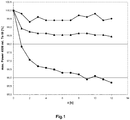
- Figure 1 shows the power loss of various diesel fuels in a DW10 engine test. In particular, this is shown for fuel with no additives (squares) or a fuel with additive according to the invention (rhombuses) compared with a comparison fuel, mixed with additive according to the prior art with the same dosage (triangles).
- H + donor or “proton donor” refers to any chemical compound that is capable of donating a proton to a proton acceptor. Examples are in particular protic acids, but also water.
- acid-free means the absence of low molecular weight inorganic or organic acid and / or its corresponding anion and includes both the lack of addition of acid during the production process according to the invention and, in particular, the absence of acid and / or its anion in the quaternized reaction product used as an additive.
- Acid freedom includes in particular the lack of stoichiometric amounts of such acids and their anions (stoichiometry based on the quaternizing agent used, such as the epoxide in particular) and is given in particular when, based on the epoxy quaternizing agent used, free acid or its anion is only present in substoichiometric amounts , such as in molar ratios of less than 1: 0.1, or less than 1. 0.01 or 1: 0.001, or 1: 0.0001 of quaternizing agent to acid. Freedom from acids also includes, in particular, the complete absence of an inorganic or organic protic acid and / or its anion (i.e. when protic acid and / or its anion can no longer be detected analytically). An "acid" in this context is in particular a free protic acid.
- protic acids examples include inorganic acids or mineral acids, such as HCl, H 2 SO 4 , HNO 3 , H 2 CO 3 , and organic carboxylic acids, such as, in particular, monocarboxylic acids of the RCOOH type, in which R is a short-chain hydrocarbyl radical
- Free or "unbound” acid means that the acid function is not part of a quaternized compound itself, i.e. basically from the quaternized compound, e.g. by ion exchange, is separable.
- Typical "anions" of protic acids are, for example, carboxylate anions, such as, for example, acetate and propionate.
- “Quaternizable” nitrogen groups or amino groups include, in particular, primary, secondary and tertiary amino groups.
- a “condensation” or “condensation reaction” within the meaning of the present invention describes the conversion of two molecules with elimination of a smaller molecule, in particular a water molecule. If such cleavage is undetectable, especially in stoichiometric amounts, and the two molecules react anyway, e.g. with addition, the relevant conversion of the two molecules takes place "without condensation".
- a “betaine” denotes a special salt form of a chemical compound which has both a negative and a positive charge in one and the same molecule, but the charge cannot be canceled by intramolecular ion transfer.
- IDID stands for "deposits inside injection nozzles" or “internal injection nozzle deposits” as can be observed in modern diesel engines. While conventional (external) deposits represent coke-like deposits in the area of the needle tips and the spray holes of the injection nozzles, deposits in the interior of the injection nozzles accumulate and lead to significant performance problems, such as blocking of the inner moving parts of the valve and the associated deterioration or lack of control over fuel injection, loss of power and the like.
- the IDIDs occur both in the form of wax or soap-like deposits (fatty acid residues and / or C 12 or C 16 -alkyl succinic acid residues can be detected analytically) and in the form of polymer-like carbon deposits. The latter in particular have special requirements with regard to their removal / avoidance.
- polyalkylene radicals examples include polyisobutenyl radicals, derived from so-called “highly reactive” polyisobutenes, which are distinguished by a high content of terminally arranged double bonds. Terminal double bonds are alpha-olefinic double bonds of the type which together are also referred to as vinylidene double bonds.
- Suitable highly reactive polyisobutenes are, for example, polyisobutenes which have a vinylidene double bond fraction of greater than 70 mol%, in particular greater than 80 mol% or greater than 85 mol%. Polyisobutenes which have uniform polymer backbones are particularly preferred.
- Uniform polymer backbones have, in particular, those polyisobutenes which are composed of at least 85% by weight, preferably at least 90% by weight, and particularly preferably at least 95% by weight, of isobutene units.
- Such highly reactive polyisobutenes preferably have a number average molecular weight in the abovementioned range.
- the highly reactive polyisobutenes can have a polydispersity in the range from 1.05 to 7, in particular from about 1.1 to 2.5, such as, for example, less than 1.9 or less than 1.5. Polydispersity is understood to be the quotient of the weight average molecular weight Mw divided by the number average molecular weight Mn.
- Glissopal 2300 2300
- Other number-average molecular weights can be set in a manner known in principle by mixing polyisobutenes of different number-average molecular weights or by extractive enrichment of polyisobutenes of specific molecular weight ranges.
- Short-chain hydrocarbyl or “low molecular weight hydrocarbyl” stands in particular for straight-chain or branched alkyl or alkenyl, optionally interrupted by one or more, e.g. 2, 3 or 4 heteroatom groups, such as -O- or -NH-. or optionally one or more times, e.g. 2, 3 or 4 times substituted.
- Short-chain hydrocarbyloxy or “low molecular weight hydrocarbyloxy” stands in particular for straight-chain or branched alkyloxy or alkenyloxy, optionally interrupted by one or more, e.g. 2, 3 or 4 heteroatom groups, such as -O- or -NH- or optionally one or more than one, e.g. 2, 3 or 4 times substituted.
- Hydrocarbyl or “hydroxyhydrocarbyl” particularly stands for the hydroxy-substituted analogs of the alkyl or alkenyl radicals defined herein.
- Alkyl or “lower alkyl” particularly represents saturated, straight-chain or branched hydrocarbon radicals having 1 to 4, 1 to 6, 1 to 8, or 1 to 10 or 1 to 20 carbon atoms, such as, for. B. methyl, ethyl, n-propyl, 1-methylethyl, n-butyl, 1-methyl-propyl, 2-methylpropyl, 1,1-dimethylethyl, n-pentyl, 1-methylbutyl, 2-methylbutyl, 3-methylbutyl, 2,2-dimethylpropyl, 1-ethylpropyl, n-hexyl, 1,1-dimethylpropyl, 1,2-dimethylpropyl, 1-methylpentyl, 2-methylpentyl, 3-methylpentyl, 4-methylpentyl, 1,1-dimethylbutyl, 1,2-dimethylbutyl, 1,3-dimethylbutyl, 2,2-dimethylbutyl, 2,3-diimethyl
- Hydroxyalkyl stands in particular for the mono- or multiply, in particular singly, hydroxylated analogs of the above alkyl radicals, such as e.g. the monohydroxylated analogs of the above straight-chain or branched alkyl radicals, e.g. the linear hydroxyalkyl groups with a primary hydroxyl group, such as hydroxymethyl, 2-hydroxyethyl, 3-hydroxypropyl, 4-hydroxybutyl.
- “Acyl” stands for radicals derived from straight-chain or branched, optionally mono- or polyunsaturated, optionally substituted C 1 -C 24 , in particular C 1 -C 12 or C 1 -C 8 monocarboxylic acids.
- useful acyl radicals are derived from the following carboxylic acids: Saturated acids such as formic, acetic, propionic and n- and i-butyric acid, n- and i-valeric acid, caproic acid, enanthic acid, caprylic acid, pelargonic acid, capric acid, undecanoic acid, lauric acid, Tridecanoic acid, myristic acid, pentadecanoic acid, palmitic acid, margaric acid, stearic acid, nonadecanoic acid, arachidic acid, behenic acid, lignoceric acid, cerotic acid and melissic acid; monounsaturated acids such as acrylic acid, crotonic acid, palmitoleic acid, oleic acid and erucic acid; and diunsaturated acids such as sorbic acid and linoleic acid. If the fatty acids contain double bonds, these can be in both cis and trans form.
- Polycarboxylic acid anhydride compounds such as in particular polycarboxylic acid anhydrides and hydrocarbyl-substituted polycarboxylic acid anhydrides:
- the anhydride used is derived from any aliphatic bivalent or polyvalent (such as, for example, 3- or 4-valent), in particular from di-, tri- or tetracarboxylic acids, and optionally by one or more (such as eg 2 or 3), in particular one long-chain alkyl radical and / or a high molecular weight hydrocarbyl radical, in particular a polyalkylene radical.
- Examples are anhydrides of C 3 -C 10 polycarboxylic acids, such as the dicarboxylic acids malonic acid, succinic acid, glutaric acid, adipic acid, pimelic acid, suberic acid, azelaic acid and sebacic acid, and their branched analogs; and the tricarboxylic acid citric acid.
- the anhydrides can also be produced from the corresponding monounsaturated acids and addition of at least one long-chain alkyl radical and / or high molecular weight hydrocarbyl radical.
- suitable monounsaturated acids are fumaric acid, maleic acid and itaconic acid.
- the hydrophobic "long-chain” or “high molecular weight” hydrocarbyl radical which ensures sufficient solubility of the quaternized product in the fuel, has a number-average molecular weight (M n ) of 85 to 20,000, such as 113 to 10,000, or 200 to 10,000 or 350 to 5,000 such as 350 to 3,000, 500 to 2,500, 700 to 2,500, or 800 to 1,500.
- M n number-average molecular weight
- Typical hydrophobic hydrocarbyl radicals that may be mentioned are polypropenyl, polybutenyl and polyisobutenyl radicals, for example with a number average molecular weight M n of 3,500 to 5,000, 350 to 3,000, 500 to 2,500, 700 to 2,500 and 800 to 1,500.
- Suitable hydrocarbyl substituted anhydrides are described, for example, in DE DE 43 19 672 and the WO2008 / 138836 .
- Suitable hydrocarbyl-substituted polycarboxylic acid anhydrides also include polymeric, in particular dimeric, forms of such hydrocarbyl-substituted polycarboxylic acid anhydrides.
- Dimeric forms contain in particular two acid anhydride groups which can be reacted independently of one another in the production process according to the invention with the quaternizable nitrogen compound.
- the quaternization of the at least one quaternizable tertiary nitrogen atom takes place with a quaternization agent selected from epoxides, in particular hydrocarbyl epoxides.
- epoxides in particular hydrocarbyl epoxides.
- R a radicals contained therein are identical or different and represent H or a hydrocarbyl radical, the hydrocarbyl radical having at least 1 to 10 carbon atoms.
- these are aliphatic or aromatic radicals, such as, for example, linear or branched C 1-10 -alkyl radicals or aromatic radicals, such as phenyl or C 1-4 -alkylphenyl.
- Suitable hydrocarbyl epoxides are, for example, aliphatic and aromatic alkylene oxides, such as in particular C 2-12 alkylene oxides, such as ethylene oxide, propylene oxide, 1,2-butylene oxide, 2,3-butylene oxide, 2-methyl-1,2-propene oxide (isobutene oxide) , 1,2-pentene oxide, 2,3-pentene oxide, 2-methyl-1,2-butene oxide, 3-methyl-1,2-butene oxide, 1,2-hexene oxide, 2,3-hexene oxide, 3,4-hexene oxide , 2-methyl-1,2-pentene oxide, 2-ethyl-1,2-butene oxide, 3-methyl-1,2-pentene oxide, 1,2-decene oxide, 1,2-dodecene oxide or 4-methyl-1,2 -pentene oxide; and also aromatic-substituted ethylene oxides, such as optionally substituted styrene oxide, in particular styrene oxide or 4-methyl s
- the epoxides as quaternizing agents are used in the absence of free acids, in particular in the absence of free protic acids, such as especially C 1-12 monocarboxylic acids, such as formic acid, acetic acid or propionic acid, or C 2-12 dicarboxylic acids such as oxalic acid or adipic acid; or else in the absence of sulfonic acids, such as benzenesulfonic acid or toluenesulfonic acid, or aqueous mineral acids, such as sulfuric acid or hydrochloric acid.
- the quaternization product produced in this way is therefore "acid-free" for the purposes of the present invention.
- Suitable "hydroxyalkyl-substituted mono- or polyamines" are those which are formed with at least one, e.g. 1, 2, 3, 4, 5 or 6, hydroxyalkyl substituents are equipped.
- hydroxyalkyl-substituted monoamines can be mentioned: N-hydroxyalkyl-monoamines, N, N-dihydroxyalkyl-monoamines and N, N, N-trihydroxyalkyl-monoamines, the hydroxyalkyl groups being identical or different and also being as defined above .
- Hydroxyalkyl here stands in particular for 2-hydroxyethyl, 3-hydroxypropyl or 4-hydroxybutyl.
- hydroxyalkyl-substituted polyamines and in particular “hydroxyalkyl-substituted diamines” can be mentioned: (N-hydroxyalkyl) -alkylenediamines, N, N-dihydroxyalkyl-alkylenediamines, the hydroxyalkyl groups being identical or different and also being as defined above.
- Hydroxyalkyl here stands in particular for 2-hydroxyethyl, 3-hydroxypropyl or 4-hydroxybutyl
- Alkylene stands in particular for ethylene, propylene or butylene.
- Suitable “diamines” are alkylenediamines, as well as the N-alkyl-substituted analogs thereof, such as N-monoalkylated alkylenediamines and the N, N- or N, N'-dialkylated alkylenediamines.
- Alkylene is in particular straight-chain or branched C 1-7 or C 1-4 alkylene, as defined above.
- Alkyl stands in particular for C 1-4 -alkyl as defined above.
- Examples are in particular ethylenediamine, 1,2-propylenediamine, 1,3-propylenediamine, 1,4-butylenediamine and isomers thereof, pentanediamine and isomers thereof, hexanediamine and isomers thereof, heptanediamine and isomers thereof, and one or more times, such as, for example, one - Or doubly C 1 -C 4 -alkylated, such as methylated, derivatives of the aforementioned diamine compounds, such as, for example, 3-dimethylamino-1-propylamine (DMAPA), N, N-diethylaminopropylamine, and N, N-dimethylaminoethylamine.
- DMAPA 3-dimethylamino-1-propylamine
- N N-diethylaminopropylamine
- N N-dimethylaminoethylamine
- Suitable straight-chain “polyamines” are, for example, dialkylenetriamine, trialkylenetetramine, tetraalkylenepentamine, pentaalkylenhexamine, and the N-alkyl-substituted analogs thereof, such as N-monoalkylated and the N, N- or N, N'-dialkylated alkylene polyamines.
- Alkylene is in particular straight-chain or branched C 1-7 or C 1-4 alkylene, as defined above.
- Alkyl stands in particular for C 1-4 -alkyl as defined above.
- Examples are, in particular, diethylenetriamine, triethylenetetramine, tetraethylenepentamine, pentaethylenehexamine, dipropylenetriamine, tripropylenetetramine, tetrapropylenepentamine, pentapropylenhexamine, dibutylenetriamine, tributylenetetramine, tetrabutylenpentamine, pentabutylenhexamine; and the N, N-dialkyl derivatives thereof, especially the N, N-di-C 1-4 -alkyl derivatives thereof.
- Examples include: N, N-dimethyldimethylene triamine, N, N-diethyldimethylene triamine, N, N-dipropyldimethylene triamine, N, N-dimethyldiethylene-1,2-triamine, N, N-diethyldiethylene-1,2-triamine, N, N-dipropyldiethylene-1,2-triamine, N, N-dimethyldipropylene-1,3-triamine (ie DMAPAPA), N, N-diethyldipropylene-1,3-triamine, N, N-dipropyldipropylene-1,3-triamine, N, N-dimethyldibutylene-1,4-triamine, N, N-diethyldibutylene-1,4-triamine, N, N-dipropyldibutylene-1,4-triamine, N, N-dimethyldipentylene-1,5-triamine, N, N-diethyldipentylene-1,
- Aromatic carbocyclic diamines with two primary amino groups are the di-amino substituted derivatives of benzene, biphenyl, naphthalene, tetrahydronaphthalene, fluorene, indene and phenanthrene.
- Aromatic or non-aromatic heterocycles with a primary and a tertiary amino group are, for example, the above-mentioned N-heterocycles which are aminoalkylated on at least one ring N atom and in particular have an amino C 1-4 alkyl group.
- Aromatic or non-aromatic heterocycles with a tertiary amino group and a hydroxyalkyl group are for example the above-mentioned N-heterocycles, which are hydroxyalkylated on at least one ring N atom and in particular carry a hydroxy C 1-4 alkyl group.
- SURNAME FORMULA Diamines with a primary second nitrogen atom Ethylenediamine 1,2-propylenediamine 1,3-propylenediamine Isomeric butylenediamines, e.g. 1,5-pentylenediamine Isomeric pentanediamines, e.g. Isomeric hexanediamines, e.g. Isomeric heptanediamines, e.g.
- the conversion of the hydrocarbyl-substituted polycarboxylic acid anhydride compound with the quaternizable nitrogen compound takes place under thermally controlled conditions, so that essentially no condensation reaction takes place.
- the reaction takes place at a temperature in the range from 10 to 80, in particular 20 to 60 or 30 to 50.degree.
- the reaction time can be in the range of a few minutes or a few hours, such as about 1 minute to about 10 hours.
- the reaction can take place at about 0.1 to 2 atmospheres pressure, but in particular at about normal pressure.
- an inert gas atmosphere, such as nitrogen, is expedient.
- the reactants are presented in particular in approximately equimolar amounts, optionally a lower, z. 0.05 to 0.5 times, e.g. 0.1 to 0.3 fold molar excess of the anhydride is desirable. If necessary, the reactants can be initially charged in a suitable inert organic aliphatic or aromatic solvent or a mixture thereof. Typical examples are e.g. Solvesso series solvents, toluene or xylene. The reaction is carried out in the absence of protic solvent.
- the anhydride opens with the addition of the quaternizable nitrogen compound via its reactive oxygen or nitrogen group (such as hydroxyl group or primary or secondary amine group) and without splitting off water of condensation.
- the resulting reaction product comprises a polycarboxylic acid intermediate, with at least one newly formed amide group or ester group and at least one intramolecular, bound, newly formed carboxylic acid or carboxylate group, in a stoichiometric proportion to the quaternizable amino group intramolecularly bound by the addition reaction.
- reaction product formed in this way can theoretically be purified further or the solvent removed. Usually, however, this is not absolutely necessary, so that the reaction product can be transferred to the next synthesis step, the quaternization, without further purification.
- reaction step (b) The epoxide-based quaternization according to reaction step (b) is now carried out in a complete departure from the methods of the prior art described so far without the addition of acid.
- the carboxyl radical formed by amine addition supports the epoxide ring opening and thus the quaternization of the amino group.
- the resulting The reaction product therefore has no free acid anion.
- the product is still charge-neutral due to its betaine structure.
- the reaction product or reaction mixture from step a) is mixed with at least one epoxy compound of the above formula (II), in particular in the stoichiometric amounts required to achieve the desired quaternization.
- at least one epoxy compound of the above formula (II) for each equivalent of quaternizable tertiary nitrogen atom one can e.g. Use 0.1 to 1.5 equivalents, or 0.5 to 1.25 equivalents, of quaternizing agent.
- approximately approximately equimolar proportions of the epoxide are used in order to quaternize a tertiary amine group.
- higher amounts are required in order to quaternize a secondary or primary amine group.
- the reaction time can be in the range of a few minutes or a few hours, e.g. about 10 minutes to about 24 hours.
- the reaction can take place at about 0.1 to 20 bar, e.g. 1 to 10 or 1.5 to 3 bar pressure, but especially about normal pressure.
- an inert gas atmosphere e.g. Nitrogen, appropriate.
- the reactants can be initially charged in a suitable inert organic aliphatic or aromatic solvent or a mixture thereof for the epoxidation, or a sufficient proportion of solvent from reaction step a) is still present.
- suitable inert organic aliphatic or aromatic solvent or a mixture thereof for the epoxidation or a sufficient proportion of solvent from reaction step a) is still present.
- Typical examples are e.g. Solvesso series solvents, toluene or xylene.
- the reaction is carried out in the absence of organic solvents, in particular protic (organic) solvents.
- Protic solvents which are not used according to the invention are in particular those with a dielectric constant of greater than 9.
- Protic solvents of this type usually contain at least one HO group and can also contain water. Typical examples are, for example, glycols and glycol ethers and alcohols, such as aliphatic, cyclic-aliphatic, aromatic or heterocyclic alcohols.
- the final reaction product thus formed can theoretically be further purified or the solvent can be removed. Usually, however, this is not absolutely necessary, so that the reaction product can be used as an additive without further purification, possibly after mixing with further additive components (see below), especially since the reaction product does not contain any corrosive, free protic acids.
- Stage 2a amination and quaternization
- the fuel to which the quaternized additive according to the invention is added is a gasoline fuel or, in particular, a middle distillate fuel, especially a diesel fuel.
- the fuel can contain further conventional additives to improve effectiveness and / or suppress wear.
- these are primarily the usual detergent additives, carrier oils, cold flow improvers, lubricity improvers, corrosion inhibitors, demulsifiers, dehazers, antifoam agents, cetane number improvers, combustion improvers, antioxidants or stabilizers, antistatic agents and / or metallocenes, antistatic agents and / or dyes Solvent.
- lubricity improvers In the case of petrol, these are primarily lubricity improvers (friction modifiers), corrosion inhibitors, demulsifiers, dehazers, antifoam agents, combustion improvers, antioxidants or stabilizers, antistatic agents, metallocenes, metal deactivators, dyes and / or solvents.
- the hydrophobic hydrocarbon radical in the above detergent additives which ensures sufficient solubility in fuel, has a number average molecular weight (M n ) of 85 to 20,000, preferably 113 to 10,000, particularly preferably 300 to 5,000, more preferably 300 to 3,000, even more preferably from 500 to 2,500 and in particular from 700 to 2,500, especially from 800 to 1500.
- Polypropenyl, polybutenyl and polyisobutenyl radicals with a number average molecular weight M n are particularly typical hydrophobic hydrocarbon radicals, especially in connection with the polar groups of preferably 300 to 5,000 each, particularly preferably 300 to 3,000, more preferably 500 to 2,500, even more preferably 700 to 2,500 and especially 800 to 1,500.
- Such additives based on highly reactive polyisobutene which are composed of polyisobutene, which can contain up to 20 wt .-% n-butene units, can be prepared by hydroformylation and reductive amination with ammonia, monoamines or polyamines such as dimethylaminopropylamine, ethylenediamine, diethylenetriamine, triethylenetetramine or tetraethylenepentamine are in particular from the EP-A 244 616 known.
- the production route is by chlorination and subsequent amination or by oxidation of the double bond with air or ozone to form carbonyl or Carboxyl compound and subsequent amination under reductive (hydrogenating) conditions.
- amines such as. B. ammonia
- monoamines or the above polyamines can be used.
- Corresponding additives based on polypropene are particularly in the WO-A 94/24231 described.
- These reaction products are generally mixtures of pure nitro-polyisobutenes (e.g. ⁇ , ⁇ -dinitropolyisobutene) and mixed hydroxynitropolyisobutenes (e.g. ⁇ -nitro- ⁇ -hydroxypolyisobutene).
- Carboxyl groups or their alkali metal or alkaline earth metal salts (Dd) containing additives are preferably copolymers of C 2 - to C 40 olefins with maleic anhydride with a total molecular weight of 500 to 20,000, the carboxyl groups wholly or partially to the alkali metal or alkaline earth metal salts and a remaining Rest of the carboxyl groups are reacted with alcohols or amines.
- Such additives are in particular from EP-A 307 815 known.
- Such additives are mainly used to prevent valve seat wear and can, as in WO-A 87/01126 described, can be used with advantage in combination with conventional fuel detergents such as poly (iso) butenamines or polyetheramines.
- Additives containing sulfonic acid groups or their alkali metal or alkaline earth metal salts are preferably alkali metal or alkaline earth metal salts of an alkyl sulfosuccinate, as it is in particular in US Pat EP-A 639 632 is described.
- Such additives are mainly used to prevent valve seat wear and can be used with advantage in combination with conventional fuel detergents such as poly (iso) butenamines or polyetheramines.
- Additives containing polyoxy-C 2 -C 4 alkylene groups are preferably polyethers or polyetheramines, which are obtained by reacting C 2 to C 60 alkanols, C 6 to C 30 alkanediols, mono- or di-C 2 - to C 30 -alkylamines, C 1 - to C 30 -alkylcyclohexanols or C 1 - to C 30 -alkylphenols with 1 to 30 mol of ethylene oxide and / or propylene oxide and / or butylene oxide per hydroxyl group or amino group and, in the case of the polyetheramines, can be obtained by subsequent reductive amination with ammonia, monoamines or polyamines.
- Such products are particularly popular in the EP-A 310 875 , EP-A 356 725 , EP-A 700 985 and US-A 4,877,416 described.
- polyethers such products also have carrier oil properties.
- Typical examples are tridecanol or isotridecanol butoxylates, isononylphenol butoxylates and polyisobutenol butoxylates and propoxylates and the corresponding reaction products with ammonia.
- Additives containing carboxylic ester groups (Dg) are preferably esters of mono-, di- or tricarboxylic acids with long-chain alkanols or polyols, in particular those with a minimum viscosity of 2 mm 2 / s at 100 ° C., as in particular in the DE-A 38 38 918 are described.
- Aliphatic or aromatic acids can be used as mono-, di- or tricarboxylic acids, and especially long-chain representatives with, for example, 6 to 24 carbon atoms are suitable as ester alcohols or polyols.
- esters are adipates, phthalates, isophthalates, terephthalates and trimellitates of iso-octanol, iso-nonanol, iso-decanol and iso-tridecanol. Such products also meet carrier oil properties.
- the groupings with hydroxyl and / or amino and / or amido and / or imido groups are, for example, carboxylic acid groups, acid amides of monoamines, acid amides of di- or polyamines, which in addition to the amide function also have free amine groups, succinic acid derivatives with a Acid and an amide function, carboximides with monoamines, carboximides with di- or polyamines which, in addition to the imide function, also have free amine groups, or diimides which are formed by the reaction of di- or polyamines with two succinic acid derivatives.
- the further detergent additive for the purposes of the present invention is used only up to a maximum of 100% of the amount by weight of compounds with a betaine structure.
- fuel additives are generally known and are described, for example, in documents (1) and (2). They are preferably the reaction products of alkyl- or alkenyl-substituted succinic acids or derivatives thereof with amines and particularly preferably the reaction products of polyisobutenyl-substituted succinic acids or derivatives thereof with amines.
- reaction products with aliphatic polyamines such as in particular ethylene diamine, diethylene triamine, triethylene tetramine, tetraethylene pentamine, pentaethylene hexamine and hexaethylene heptamine, which have an imide structure.
- polyalkyleneimines such as in particular ethylene diamine, diethylene triamine, triethylene tetramine, tetraethylene pentamine, pentaethylene hexamine and hexaethylene heptamine, which have an imide structure.
- Additives containing (di) groups produced by the Mannich reaction of substituted phenols with aldehydes and mono- or polyamines are preferably reaction products of polyisobutene-substituted phenols with formaldehyde and mono- or polyamines such as ethylene diamine, diethylene triamine, triethylene tetramine, tetraethylene pentamine or dimethylaminopropylamine.
- Such "polyisobutene Mannich bases" are particularly in the EP-A 831 141 described.
- One or more of the detergent additives mentioned can be added to the fuel in such an amount that the metering rate of these detergent additives is preferably 25 to 2500 ppm by weight, in particular 75 to 1500 ppm by weight, especially 150 to 1000 ppm by weight .-ppm.
- Carrier oils used can be mineral or synthetic in nature. Suitable mineral carrier oils are fractions obtained during petroleum processing, such as bright stocks or base oils with viscosities such as from class SN 500 to 2000, but also aromatic hydrocarbons, paraffinic hydrocarbons and alkoxyalkanols. A fraction known as "hydrocrack oil” and obtained during the refining of mineral oil (vacuum distillate cut with a boiling range of about 360 to 500 ° C., obtainable from natural mineral oil catalytically hydrogenated and isomerized and dewaxed under high pressure) can also be used. Mixtures of the abovementioned mineral carrier oils are also suitable.
- suitable synthetic carrier oils are polyolefins (polyalphaolefins or polyinternalolefins), (poly) esters, poly) alkoxylates, polyethers, aliphatic polyetheramines, alkylphenol-started polyethers, alkylphenol-started polyetheramines and carboxylic acid esters of long-chain alkanols.
- suitable polyethers or polyetheramines are preferably compounds containing polyoxy-C 2 to C 4 alkylene groups, which are obtained by reacting C 2 to C 60 alkanols, C 6 to C 30 alkanediols, mono- or di-C 2 - To C 30 alkylamines, C 1 to C 30 alkyl cyclohexanols or C 1 to C 30 alkylphenols with 1 to 30 mol of ethylene oxide and / or propylene oxide and / or butylene oxide per hydroxyl group or amino group and, in the case of the polyetheramines , by subsequent reductive amination with ammonia, monoamines or polyamines are available.
- Such products are particularly popular in the EP-A 310 875 , EP-A 356 725 , EP-A 700 985 and the US-A 4,877,416 described.
- poly-C 2 - to C 6 -alkylene oxide amines or functional derivatives thereof can be used as polyether amines.
- Typical examples are tridecanol or isotridecanol butoxylates, isononylphenol butoxylates and polyisobutenol butoxylates and propoxylates and the corresponding reaction products with ammonia.
- carboxylic acid esters of long-chain alkanols are, in particular, esters of mono-, di- or tricarboxylic acids with long-chain alkanols or polyols, as they are in particular in US Pat DE-A 38 38 918 are described.
- Aliphatic or aromatic acids can be used as mono-, di- or tricarboxylic acids; long-chain representatives with, for example, 6 to 24 carbon atoms are particularly suitable as ester alcohols or polyols.
- esters are adipates, phthalates, isophthalates, terephthalates and trimellitates of isooctanol, isononanol, isodecanol and isotridecanol, e.g. B. di- (n- or isotridecyl) phthalate.
- particularly suitable synthetic carrier oils are alcohol-initiated polyethers with about 5 to 35, preferably about 5 to 30, particularly preferably 10 to 30 and in particular 15 to 30 C 3 to C 6 alkylene oxide units, e.g. B. propylene oxide, n-butylene oxide and isobutylene oxide units or mixtures thereof, per alcohol molecule.
- suitable starter alcohols are long-chain alkanols or long-chain alkyl-substituted phenols, the long-chain alkyl radical in particular being a straight-chain or branched C 6 - to C 18 -alkyl radical.
- Tridecanol and nonylphenol should be mentioned as special examples.
- Particularly preferred alcohol-initiated polyethers are the reaction products (polyetherification products) of monohydric aliphatic C 6 to C 18 alcohols with C 3 to C 6 alkylene oxides.
- monohydric aliphatic C 6 -C 18 alcohols are hexanol, heptanol, octanol, 2-ethylhexanol, nonyl alcohol, decanol, 3-propylheptanol, undecanol, dodecanol, tridecanol, tetradecanol, pentadecanol, hexadecanol, octadecanol and their constitutional and positional isomers.
- the alcohols can be used both in the form of the pure isomers and in the form of technical mixtures.
- a particularly preferred alcohol is tridecanol.
- Examples of C 3 - to C 6 alkylene oxides are propylene oxide, such as 1,2-propylene oxide, Butylene oxide such as 1,2-butylene oxide, 2,3-butylene oxide, isobutylene oxide or tetrahydrofuran, pentylene oxide and hexylene oxide. Particularly preferred among these are C 3 to C 4 alkylene oxides, ie propylene oxide such as 1,2-propylene oxide and butylene oxide such as 1,2-butylene oxide, 2,3-butylene oxide and isobutylene oxide. Butylene oxide is used in particular.
- Particular carrier oils are synthetic carrier oils, the alcohol-initiated polyethers described above being particularly preferred.
- the carrier oil or the mixture of different carrier oils is added to the fuel in an amount of preferably 1 to 1000 ppm by weight, particularly preferably 10 to 500 ppm by weight and in particular 20 to 100 ppm by weight.
- Suitable cold flow improvers are in principle all organic compounds which are able to improve the flow behavior of middle distillate fuels or diesel fuels in the cold. Appropriately, they must have sufficient oil solubility.
- the cold flow improvers (“middle distillate flow improvers”, “MDFI”) used for middle distillates of fossil origin, that is to say for conventional mineral diesel fuels, are suitable for this.
- organic compounds can also be used which, when used in conventional diesel fuels, have partly or predominantly the properties of a wax anti-settling additive ("WASA"). They can also act partly or mainly as nucleators.
- WASA wax anti-settling additive
- Suitable C 2 to C 40 olefin monomers for the copolymers of class (K1) are, for example, those with 2 to 20, in particular 2 to 10 carbon atoms and with 1 to 3, preferably 1 or 2, in particular with a carbon-carbon Double bond.
- the carbon-carbon double bond can be arranged both terminally ( ⁇ -olefins) and also internally.
- ⁇ -olefins particularly preferably ⁇ -olefins having 2 to 6 carbon atoms, for example propene, 1-butene, 1-pentene, 1-hexene and, above all, ethylene.
- the at least one further ethylenically unsaturated monomer is preferably selected from alkenyl carboxylates, (meth) acrylic acid esters and further olefins.
- further olefins are also polymerized in, these are preferably higher molecular weight than the above-mentioned C 2 to C 40 olefin base monomers. If, for example, ethylene or propene is used as the base olefin monomer, suitable further olefins are in particular C 10 to C 40 ⁇ -olefins. In most cases, other olefins are only also incorporated into the system if monomers with carboxylic acid ester functions are also used.
- Suitable (meth) acrylic acid esters are, for example, esters of (meth) acrylic acid with C 1 to C 20 alkanols, in particular C 1 to C 10 alkanols, especially with methanol, ethanol, propanol, isopropanol, n-butanol, sec. -Butanol, isobutanol, tert-butanol, pentanol, hexanol, heptanol, octanol, 2-ethylhexanol, nonanol and decanol and structural isomers thereof.
- Suitable carboxylic acid alkenyl esters are, for example, C 2 - to C 14 -alkenyl esters, for example the vinyl and propenyl esters, of carboxylic acids having 2 to 21 carbon atoms, the hydrocarbon radical of which can be linear or branched. Of these, the vinyl esters are preferred.
- carboxylic acids with a branched hydrocarbon radical are those preferred whose branching is in the ⁇ -position to the carboxyl group, the ⁇ -carbon atom being particularly preferably tertiary, ie the carboxylic acid is a so-called neocarboxylic acid.
- the hydrocarbon radical of the carboxylic acid is preferably linear.
- alkenyl carboxylates examples include vinyl acetate, vinyl propionate, vinyl butyrate, vinyl 2-ethylhexanoate, vinyl neopentanoate, vinyl hexanoate, vinyl neononanoate, vinyl neodecanoate and the corresponding propenyl esters, the vinyl esters being preferred.
- a particularly preferred alkenyl carboxylate is vinyl acetate; typical copolymers of group (K1) resulting therefrom are the ethylene-vinyl acetate copolymers ("EVA”) used most frequently.
- copolymers of class (K1) are those which contain two or more different carboxylic acid alkenyl esters in copolymerized form, these differing in the alkenyl function and / or in the carboxylic acid group. Also suitable are copolymers which, in addition to the carboxylic acid alkenyl ester (s), contain at least one olefin and / or at least one (meth) acrylic acid ester in copolymerized form.
- Terpolymers of a C 2 - to C 40 - ⁇ -olefin, a C 1 - to C 20 -alkyl ester of an ethylenically unsaturated monocarboxylic acid with 3 to 15 carbon atoms and a C 2 - to C 14 -alkenyl ester of a saturated monocarboxylic acid with 2 to 21 Carbon atoms are suitable as copolymers of class (K1).
- Such terpolymers are in the WO 2005/054314 described.
- a typical terpolymer of this type is composed of ethylene, 2-ethylhexyl acrylic acid and vinyl acetate.
- the at least one or the further ethylenically unsaturated monomers are present in the copolymers of class (K1) in an amount of preferably 1 to 50% by weight, in particular 10 to 45% by weight and above all from 20 to 40% by weight %, based on the total copolymer, polymerized.
- the majority by weight of the monomer units in the copolymers of class (K1) thus generally originate from the C 2 to C 40 base olefins.
- the copolymers of class (K1) preferably have a number average molecular weight M n from 1000 to 20,000, particularly preferably from 1000 to 10,000 and in particular from 1000 to 8000.
- Typical comb polymers of component (K2) are, for example, through the copolymerization of maleic anhydride or fumaric acid with another ethylenically unsaturated monomer, for example with an ⁇ -olefin or an unsaturated ester such as vinyl acetate, and subsequent esterification of the anhydride or acid function with an alcohol with at least 10 carbon atoms available.
- Further suitable comb polymers are copolymers of ⁇ -olefins and esterified comonomers, for example esterified copolymers of styrene and maleic anhydride or esterified copolymers of styrene and fumaric acid.
- Suitable comb polymers can also be polyfumarates or polymaleinates.
- homo- and copolymers of vinyl ethers are suitable comb polymers.
- Comb polymers suitable as components of class (K2) are, for example, also those in the WO 2004/035715 and in " Comb-Like Polymers. Structure and Properties ", NA Plate and VP Shibaev, J. Poly. Sci. Macromolecular Revs. 8, pp. 117-253 (1974 ) ". Mixtures of comb polymers are also suitable.
- Polyoxyalkylenes suitable as components of class (K3) are, for example, polyoxyalkylene esters, polyoxyalkylene ethers, mixed polyoxyalkylene ester ethers and mixtures thereof. These polyoxyalkylene compounds preferably contain at least one, preferably at least two, linear alkyl groups each having 10 to 30 carbon atoms and one polyoxyalkylene group with a number average molecular weight of up to 5000. Such polyoxyalkylene compounds are, for example, in EP-A 061 895 as well as in the U.S. 4,491,455 described. Special polyoxyalkylene compounds are based on polyethylene glycols and polypropylene glycols with a number average molecular weight of 100 to 5000. Furthermore, polyoxyalkylene mono- and diesters of fatty acids with 10 to 30 carbon atoms such as stearic acid or behenic acid are suitable.
- Polar nitrogen compounds suitable as component of class (K4) can be both ionic and non-ionic in nature and preferably have at least one, in particular at least two, substituents in the form of a tertiary nitrogen atom of the general formula> NR 7 , where R 7 is a C 8 bis C 40 hydrocarbon residue.
- the nitrogen substituents can also be quaternized, i.e. in cationic form. Examples of such nitrogen compounds are ammonium salts and / or amides which can be obtained by reacting at least one amine substituted by at least one hydrocarbon radical with a carboxylic acid having 1 to 4 carboxyl groups or with a suitable derivative thereof.
- the amines preferably contain at least one linear C 8 - to C 40 -alkyl radical.
- Primary amines suitable for preparing the polar nitrogen compounds mentioned are, for example, octylamine, nonylamine, decylamine, undecylamine, dodecylamine, tetradecylamine and the higher linear homologues; secondary amines suitable for this purpose are, for example, dioctadecylamine and methylbehenylamine.
- Amine mixtures are also suitable for this purpose, in particular amine mixtures available on an industrial scale, such as fatty amines or hydrogenated tall amines, as described, for example, in Ullmann's Encyclopedia of Industrial Chemistry, 6th edition, in the chapter "Amines, aliphatic".
- Acids suitable for the reaction are, for example, cyclohexane-1,2-dicarboxylic acid, cyclohexene-1,2-dicarboxylic acid, cyclopentane-1,2-dicarboxylic acid, naphthalenedicarboxylic acid, phthalic acid, isophthalic acid, terephthalic acid and succinic acids substituted with long-chain hydrocarbon radicals.
- the component of class (K4) is an oil-soluble reaction product of poly (C 2 to C 20 carboxylic acids) having at least one tertiary amino group with primary or secondary amines.
- the poly (C 2 to C 20 carboxylic acids) on which this reaction product is based contain at least one tertiary amino group and preferably contain at least 3 carboxyl groups, in particular 3 to 12, especially 3 to 5 carboxyl groups.
- the carboxylic acid units in the polycarboxylic acids preferably have 2 to 10 carbon atoms, in particular they are acetic acid units.
- the carboxylic acid units are linked to the polycarboxylic acids in a suitable manner, usually via one or more carbon and / or nitrogen atoms. They are preferably attached to tertiary nitrogen atoms which, in the case of several nitrogen atoms, are linked via hydrocarbon chains.
- the component of class (K4) is preferably an oil-soluble reaction product based on poly (C 2 to C 20 carboxylic acids) of the general formula IIa or IIb having at least one tertiary amino group
- variable A is a straight-chain or branched C 2 - to C 6 -alkylene group or the grouping of the formula III and the variable B denotes a C 1 to C 19 alkylene group.
- variable B denotes a C 1 to C 19 alkylene group.
- the compounds of the general formulas IIa and IIb in particular have the properties of a WASA.
- the preferred oil-soluble reaction product of component (K4) in particular that of the general formula IIa or IIb, is an amide, an amide ammonium salt or an ammonium salt in which no, one or more carboxylic acid groups have been converted into amide groups.
- Straight-chain or branched C 2 - to C 6 -alkylene groups of the variable A are, for example, 1,1-ethylene, 1,2-propylene, 1,3-propylene, 1,2-butylene, 1,3-butylene, 1,4- Butylene, 2-methyl-1,3-propylene, 1,5-pentylene, 2-methyl-1,4-butylene, 2,2-dimethyl-1,3-propylene, 1,6-hexylene (hexamethylene) and in particular 1,2-ethylene.
- the variable A preferably comprises 2 to 4, in particular 2 or 3, carbon atoms.
- C 1 - to C 19 -alkylene groups of the variable B are above, for example, 1,2-ethylene, 1,3-propylene, 1,4-butylene, hexamethylene, octamethylene, decamethylene, dodecamethylene, tetradecamethylene, hexadecamethylene, octadecamethylene, nonadecamethylene and, in particular, methylene .
- the variable B preferably comprises 1 to 10, in particular 1 to 4, carbon atoms.
- the primary and secondary amines as reaction partners for the polycarboxylic acids to form component (K4) are usually monoamines, in particular aliphatic monoamines. These primary and secondary amines can be selected from a variety be selected from amines which - carry hydrocarbon radicals - optionally linked to one another.
- amines on which the oil-soluble reaction products of component (K4) are based are secondary amines and have the general formula HN (R 8 ) 2 , in which the two variables R 8, independently of one another, are straight-chain or branched C 10 - to C 30 -alkyl radicals, in particular C 14 - to C 24 -alkyl radicals.
- R 8 the two variables R 8 independently of one another, are straight-chain or branched C 10 - to C 30 -alkyl radicals, in particular C 14 - to C 24 -alkyl radicals.
- These longer-chain alkyl radicals are preferably straight-chain or only branched to a small extent.
- the secondary amines mentioned are derived, with regard to their longer-chain alkyl radicals, from naturally occurring fatty acids or from their derivatives.
- the two radicals R 8 are preferably the same.
- the secondary amines mentioned can be bound to the polycarboxylic acids by means of amide structures or in the form of the ammonium salts, and only some can be present as amide structures and some as ammonium salts. Preferably there are few or no free acid groups.
- the oil-soluble reaction products of component (K4) are preferably completely in the form of the amide structures.
- Typical examples of such components (K4) are reaction products of nitrilotriacetic acid, ethylenediaminetetraacetic acid or propylene-1,2-diamine tetraacetic acid, each with 0.5 to 1.5 mol per carboxyl group, in particular 0.8 to 1.2 mol per carboxyl group, dioleylamine , Dipalmitinamine, dicoconut fatty amine, distearylamine, dibehenylamine or especially ditallow fatty amine.
- a particularly preferred component (K4) is the reaction product of 1 mol of ethylenediaminetetraacetic acid and 4 mol of hydrogenated ditallow fatty amine.
- component (K4) are the N, N-dialkylammonium salts of 2-N ', N' -dialkylamidobenzoates, for example the reaction product of 1 mole of phthalic anhydride and 2 moles of ditallow fatty amine, the latter being hydrogenated or non-hydrogenated , and the reaction product of 1 mol of an alkenyl spirobislactone with 2 mol of a dialkylamine, for example ditallow fatty amine and / or tallow fatty amine, the latter two being hydrogenated or non-hydrogenated, mentioned.
- component of class (K4) are cyclic compounds with tertiary amino groups or condensates of long-chain primary or secondary amines with carboxylic acid-containing polymers, such as those in WO 93/18115 are described.
- Sulfocarboxylic acids, sulfonic acids or their derivatives suitable as cold flow improvers of the component of class (K5) are, for example, the oil-soluble carboxamides and carboxylic acid esters of ortho-sulfobenzoic acid, in which the sulfonic acid function is present as a sulfonate with alkyl-substituted ammonium cations, as described in US Pat EP-A 261 957 to be discribed.
- Poly (meth) acrylic acid esters suitable as cold flow improvers of the component of class (K6) are both homo- and copolymers of acrylic and methacrylic acid esters. Preference is given to copolymers of at least two (meth) acrylic acid esters which are different from one another and differ with regard to the alcohol which has condensed in.
- the copolymer may contain a further, different olefinically unsaturated monomer in copolymerized form.
- the weight average molecular weight of the polymer is preferably 50,000 to 500,000.
- a particularly preferred polymer is a copolymer of methacrylic acid and methacrylic acid esters of saturated C 14 and C 15 alcohols, the acid groups being neutralized with hydrogenated tallamine.
- Suitable poly (meth) acrylic acid esters are, for example, in WO 00/44857 described.
- the cold flow improver or the mixture of different cold flow improvers is added to the middle distillate fuel or diesel fuel in a total amount of preferably 10 to 5000 ppm by weight, particularly preferably 20 to 2000 ppm by weight, more preferably 50 to 1000 ppm by weight and especially from 100 to 700 ppm by weight, e.g. from 200 to 500 ppm by weight added.
- Suitable lubricity improvers or friction modifiers are usually based on fatty acids or fatty acid esters. Typical examples are tall oil fatty acid, such as in WO 98/004656 and glycerol monooleate. Even those in the US 6,743,266 B2 The reaction products described from natural or synthetic oils, for example triglycerides, and alkanolamines are suitable as such lubricity improvers.
- Suitable corrosion inhibitors are e.g. Succinic acid esters, especially with polyols, fatty acid derivatives, e.g. Oleic acid esters, oligomerized fatty acids, substituted ethanolamines and products which are sold under the trade name RC 4801 (Rhein Chemie Mannheim, Germany) or HiTEC 536 (Ethyl Corporation).
- Suitable demulsifiers are e.g. the alkali or alkaline earth salts of alkyl-substituted phenol and naphthalene sulfonates and the alkali or alkaline earth salts of fatty acids, as well as neutral compounds such as alcohol alkoxylates, e.g. Alcohol ethoxylates, phenol alkoxylates, e.g. tert-butylphenol ethoxylate or tert-pentylphenol ethoxylate, fatty acids, alkylphenols, condensation products of ethylene oxide (EO) and propylene oxide (PO), e.g. also in the form of EO / PO block copolymers, polyethyleneimines or polysiloxanes.
- EO ethylene oxide
- PO propylene oxide
- Suitable dehazers are e.g. alkoxylated phenol-formaldehyde condensates, such as the products available under the trade name NALCO 7D07 (Nalco) and TOLAD 2683 (Petrolite).
- Suitable antifoam agents are e.g. Polyether-modified polysiloxanes, for example the products available under the trade name TEGOPREN 5851 (Goldschmidt), Q 25907 (Dow Corning) and RHODOSIL (Rhone Poulenc).
- Suitable cetane number improvers are, for example, aliphatic nitrates such as 2-ethylhexyl nitrate and cyclohexyl nitrate and peroxides such as di-tert-butyl peroxide.
- Suitable antioxidants are e.g. substituted phenols, such as 2,6-di-tert-butylphenol and 6-di-tert-butyl-3-methylphenol, and phenylenediamines such as N, N'-di-sec-butyl-p-phenylenediamine.
- Suitable metal deactivators are e.g. Salicylic acid derivatives such as N, N'-disalicylidene-1,2-propanediamine.
- Suitable ones are e.g. non-polar organic solvents such as aromatic and aliphatic hydrocarbons, for example toluene, xylenes, "white spirit” and products sold under the trade names SHELLSOL (Royal Dutch / Shell Group) and EXXSOL (ExxonMobil), as well as polar organic solvents, for example alcohols such as 2 -Ethylhexanol, Decanol and Isotridecanol.
- solvents usually get into the diesel fuel together with the aforementioned additives and co-additives, which they should dissolve or dilute for better handling.
- the additive according to the invention is outstandingly suitable as a fuel additive and can in principle be used in any fuel. It brings about a number of beneficial effects when operating internal combustion engines with fuels.
- the quaternized additive according to the invention is preferably used in middle distillate fuels, in particular diesel fuels.
- the present invention therefore also relates to fuels, in particular middle distillate fuels, with an effective content as an additive to achieve advantageous effects in the operation of internal combustion engines, for example diesel engines, especially direct-injection diesel engines, especially diesel engines with common rail injection systems on the quaternized additive according to the invention.
- This effective content (dosing rate) is usually 10 up to 5000 ppm by weight, preferably from 20 to 1500 ppm by weight, in particular from 25 to 1000 ppm by weight, especially from 30 to 750 ppm by weight, in each case based on the total amount of fuel.
- Middle distillate fuels such as diesel fuels or heating oils are preferably petroleum raffinates, which usually have a boiling range of 100 to 400.degree. These are mostly distillates with a 95% point up to 360 ° C or even more. However, these can also be so-called “Ultra Low Sulfur Diesel” or "City Diesel", characterized by a 95% point of, for example, a maximum of 345 ° C. and a sulfur content of a maximum of 0.005% by weight or a 95% point of for example 285 ° C and a maximum sulfur content of 0.001% by weight.
- mineral middle distillate fuels or diesel fuels obtainable through refining
- mineral middle distillate fuels or diesel fuels there are also those that are produced through coal gasification or gas liquefaction ["gas to liquid” (GTL) fuels] or through biomass liquefaction ["biomass to liquid” (BTL) fuels]. are available.
- GTL gas to liquid
- BTL biomass liquefaction
- Mixtures of the aforementioned middle distillate fuels or diesel fuels with regenerative fuels, such as biodiesel or bioethanol, are also suitable.
- the quaternized additive according to the invention can also be used in mixtures of such middle distillates with biofuel oils (biodiesel).
- biofuel oils biodiesel
- Such mixtures are also encompassed by the term “middle distillate fuel” in the context of the present invention. They are commercially available and usually contain the biofuel oils in minor amounts, typically in amounts from 1 to 30% by weight, in particular from 3 to 10% by weight, based on the total amount of middle distillate of fossil, vegetable or animal origin and biofuel oil.
- Biofuel oils are usually based on fatty acid esters, preferably essentially on alkyl esters of fatty acids which are derived from vegetable and / or animal oils and / or fats.
- Alkyl esters are usually understood to mean lower alkyl esters, in particular C 1 - to C 4 -alkyl esters, which are obtained by transesterification of the vegetable and / or animal oils and / or fats occurring glycerides, in particular triglycerides, are obtainable by means of lower alcohols, for example ethanol or especially methanol (“FAME").
- Typical lower alkyl esters based on vegetable and / or animal oils and / or fats, which are used as biofuel oil or components for this, are, for example, sunflower methyl ester, palm oil methyl ester (“PME”), soybean oil methyl ester (“SME”) and especially rapeseed oil methyl ester (“RME”) .
- the middle distillate fuels or diesel fuels are particularly preferably those with a low sulfur content, that is to say with a sulfur content of less than 0.05% by weight, preferably less than 0.02% by weight, in particular less than 0.005% by weight and especially less than 0.001% by weight sulfur.
- gasoline compositions can be used as gasoline.
- the common Eurosuper base fuel according to EN 228 should be mentioned here as a typical representative.
- gasoline compositions are also in accordance with the specification WO 00/47698 possible fields of application for the present invention.
- the quaternized additive according to the invention is particularly suitable as a fuel additive in fuel compositions, in particular in diesel fuels, to overcome the problems outlined at the beginning in direct-injection diesel engines, especially those with common rail injection systems.
- the presence of amide or imide in a sample is checked by IR spectrometry.
- the characteristic IR band for amide is 1667 ⁇ 5 cm -1
- the characteristic IR band of the imide is 1705 ⁇ 5 cm -1 .
- the samples were diluted 50% (m / m) in Solvesso and measured in a 29 ⁇ m CaF2 cuvette.
- the power loss was determined based on the official test method CEC F-098-08.
- the loss of power is a direct measure of the formation of deposits in the injectors.
- a direct injection diesel engine with a common rail system according to test methods CEC F-098-08 was used.
- a commercially available diesel fuel from Craigrmann (RF-06-03) was used as fuel.
- 1 ppm by weight of zinc in the form of a zinc didodecanoate solution was added to this to artificially stimulate the formation of deposits on the injectors.
- the results illustrate the relative power loss measured at 4000 rpm during 12 hours of continuous use. The value "t0" indicates the power loss normalized (100%) to the value after 10 minutes; the value "t1" indicates the power loss normalized to the value after one hour.
- the KS test simulates possible sedimentation in vehicle tanks and evaluates it visually. From the paraffin-enriched diesel fuel phase obtained in the test the CP and CFPP values are determined. The comparison of these values with those of the unsedimented fuel allows conclusions to be drawn about the cold behavior of the fuel. Delta CP or Delta CFPP values are determined for this.
- the diesel fuel to be tested is prepared for a total of 16 hours at - 13 ° C. A visual assessment is made. Then 80% by volume of the upper phase of the fuel is carefully sucked off from above. After the remaining 20% lower phase has been heated and homogenized, the cloud point (CPKS) and the cold filter plugging point (CFPPKS) are determined using apparatuses known per se.
- CPKS cloud point
- CFPPKS cold filter plugging point
- sample quantities to remove dirt, coke constituents, water or other undissolved impurities are filtered off using a folded filter (according to DIN EN 116).
- the sample vessel (graduated measuring cylinder) is filled with 550 ml sample liquid. If necessary, additive is added to the sample. It is heated to 50 ° C in a water bath. The sample vessel is removed from the water bath and dried. The sample is homogenized by falling and shaking. The output values CP and CFPP ("original") are determined from subsets. The sample temperature is approached 25 ° C by standing in the air.
- the sample vessel with 500 ml sample content is suspended in a liquid bath using a holding device. Temperature control begins at 25 ° C. The sample is cooled to -13 ° C. within 2 hours 40 minutes. The sample is stored at -13 ° C. for 13 hours and 20 minutes.
- the sample is suctioned off from above, except for a residual amount of 100 ml (20%). Sample movements and turbulence are to be kept as low as possible.
- the sample vessel with the 20% lower phase remaining in it is heated to 50 ° C.
- the lower phase is homogenized and used to determine the final values of CP and CFPP (i.e. CPKS and CFPPKS).
- the matrix is mixed with the respective polymer in a ratio of 1: 1 and 1 ⁇ l of it is dried on the target ("dried-droplet technique").
- the dried fractions are then dissolved in 20 ⁇ l of the matrix solution and then measured. A total of 100 individual spectra are added for each measurement.
- the analysis is also carried out using ESI-LC / MS (Electrospray Ionization Liquid Chromatography Mass Spectrometry) in the THF solvent.
- ESI-LC / MS Electronization Liquid Chromatography Mass Spectrometry
- the LTQ / FT (Thermo) MS system and the LC system consisting of the HP 1100 Bin pump, HP 1100 ALS and HP 1100 DAD are used for this. Approx. 10 mg of test substance are dissolved in 1 ml of THF and measured at room temperature. The resolution is 100,000.
- the additive to be tested is mixed with the same amount of the specified engine oil and conditioned for three days at 90 ° C. After this conditioning becomes the mixture is filled with diesel fuel, mixed and assessed using the SEDAB test (DGMK Report 531, Appendix II-A). The results from both tests allow a statement to be made about the "motor oil compatibility" of the diesel fuel additive to be tested.
- the DK intended for carrying out the test and the engine oil must be assessed using the SEDAB test before they are used for the first time. To do this, 10 g of motor oil are dissolved in 500 ml of DK. It may be necessary to add 10 ml of alpha-methylnaphthalene to improve solubility and to repeat the homogenization. This mixture is assessed immediately in the SEDAB test. If the mixture can be filtered properly, the DK can be used to carry out the test.
- the mixture After conditioning, the mixture is allowed to cool for one hour at room temperature and assessed visually for any excretions, cloudiness, gel formation, etc.
- the mixture is made up to 500 ml with diesel fuel and mixed thoroughly. A visual assessment is made. If excretions have formed, they must be suspended by vigorous shaking before the SEDAB test is carried out. After two hours of standing, the mixture is visually assessed again and then filtered through a 0.8 ⁇ m filter at a pressure difference of 800 mbar (see SEDAB test specification). The total amount must be filterable within the specified time.
- the additive must be classified as not compatible with engine oil. With good filterability and perfect visual results, the additive can be classified as compatible with engine oil.
- the sample container of the original fuel sample is shaken with 20 vertical strokes.
- the sample is left to stand for 16 hours at room temperature.
- the fuel is homogenized again by shaking (10 strokes) and poured into the 500 ml funnel of the test apparatus.
- the membrane filters are conditioned in the drying cabinet at 90 ⁇ 3 ° C for half an hour and then stored in a desiccator until use.
- the appropriately prepared membrane filter is placed in the filtration apparatus.
- the 500 ml funnel is filled with the entire sample (500 ml) and a pressure of 200 hPa (absolute, corresponds to approx. 800 hPa differential pressure) is then immediately applied. It's on it ensure that the fuel sample is not refilled.
- the filtration time is given rounded to full seconds. If a filtration time of two minutes is exceeded without the entire sample being able to be filtered, the test is ended and the volume of fuel that has passed through until then is measured.
- the result is stated as "> 2 minutes” and the amount of sample filtered up to the point of termination (ml). If the filtration time of the sample is longer than two minutes, a corresponding sample should be heated to 50 ° C for 30 minutes and then filtered. If the measurement result is again over two minutes, the total contamination of the fuel should be determined in accordance with DIN 51 419.
- the funnel and filter are rinsed free of DK with n-heptane and then with white spirit (40/80).
- the membrane filter is carefully removed from the filter plate with tweezers, placed in a clean Petri dish and dried for 30 minutes with the lid half open in a drying cabinet at 90 ⁇ 3 ° C.
- the Petri dish is then placed in the desiccator to cool for at least 15 minutes.
- Samples that can be filtered within two minutes using the method described above are classified as "non-critical” with regard to the present test method. Diesel fuels that cannot be filtered within this time are to be classified as “critical” and can lead to filter blockages in vehicles and petrol stations.
- the membrane filter should be examined optically (microscopically) or by means of infrared spectroscopy for the cause of the clogging.
- Preparation example 1 Synthesis of an acid-free, quaternized succinic acid amide according to the invention (PIBSA / DMAPA / styrene oxide; amidation at 40 ° C.)
- the formation of the amide addition product (A) according to the invention could be detected by IR analysis.
- the formation of the imide (B) could be detected by IR analysis.
- the additives are used either as a pure substance (as synthesized in the above production examples) or in the form of an additive package.
- the following packages were used
- test results are in Figure 1 shown.
- the t0 values are shown here.
- Diesel fuel from conceptionoil (CP - 6.5 ° C) was used as the test fuel.
- the additive to be tested is mixed with the same amount of mineral oil (10 g each), conditioned for 3 days at 90 ° C. and assessed visually. The mixture is then made up to 500 ml with diesel fuel, mixed and assessed using the SEDAB filtration test (also defined in DGMK report 531).
- Test # Product a (from production example X) Visually 72h / 90 ° C Solubility in DK Filtration 1 2 (comparison) fixed (fail) cloudy, insoluble Fail 2 1 (invention) liquid (pass) soluble passport a) as both products contained different types of solvents (Solvesso 150 or Pilot 900 ) due to their synthesis, the same amount of the other solvent was added to them before the test was carried out, so that identical test conditions were met.
- a passenger car with common rail injectors (magnet type) with injector deposits found was used to evaluate the additive for removing these internal injector deposits.
- the engine was initially operated on the road with a tank of conventionally additized diesel without the inventive additive EN590 base fuel (50 liters, 750 km in mixed operation on motorways, country roads and city center). There was no improvement in internal deposits when the vehicle was operated with one tank of fuel without additives (see the following table).
- the tank was operated with the same EN590 base fuel, to which, however, the additive according to the invention was added in a dosage of 120 mg / kg of active material.
- the car was driven again 750 km in mixed operation.
- the deposits were significantly reduced after 750 km, as was the case with a softer, less noisy engine was detectable.
- the data read out from the engine control unit also showed that the amount of fuel injected fell back to the target value.
Landscapes
- Chemical & Material Sciences (AREA)
- Organic Chemistry (AREA)
- Chemical Kinetics & Catalysis (AREA)
- Oil, Petroleum & Natural Gas (AREA)
- General Chemical & Material Sciences (AREA)
- Health & Medical Sciences (AREA)
- Medicinal Chemistry (AREA)
- Polymers & Plastics (AREA)
- Engineering & Computer Science (AREA)
- Combustion & Propulsion (AREA)
- Inorganic Chemistry (AREA)
- Organic Low-Molecular-Weight Compounds And Preparation Thereof (AREA)
- Solid Fuels And Fuel-Associated Substances (AREA)
- Lubricants (AREA)
- Liquid Carbonaceous Fuels (AREA)
Priority Applications (2)
| Application Number | Priority Date | Filing Date | Title |
|---|---|---|---|
| EP20182402.6A EP3747915A1 (de) | 2010-07-06 | 2011-07-06 | Verwendung einer quaternisierte stickstoffverbindung als ottokraftstoff-additive |
| PL17198007T PL3327044T3 (pl) | 2010-07-06 | 2011-07-06 | Kwaternizowane związki azotu niezawierające kwasów i ich zastosowanie jako dodatków do paliw silnikowych i smarów |
Applications Claiming Priority (5)
| Application Number | Priority Date | Filing Date | Title |
|---|---|---|---|
| EP10168622 | 2010-07-06 | ||
| EP11165920 | 2011-05-12 | ||
| PCT/EP2011/061398 WO2012004300A1 (de) | 2010-07-06 | 2011-07-06 | Säurefreie quaternisierte stickstoffverbindungen und deren verwendung als additive in kraft- und schmierstoffen |
| EP14172891.5A EP2808350B1 (de) | 2010-07-06 | 2011-07-06 | Säurefreie quaternisierte Stickstoffverbindungen und deren Verwendung als Additive in Kraft- und Schmierstoffen |
| EP11729324.1A EP2591016B1 (de) | 2010-07-06 | 2011-07-06 | Säurefreie quaternisierte stickstoffverbindungen und deren verwendung als additive in kraft- und schmierstoffen |
Related Parent Applications (2)
| Application Number | Title | Priority Date | Filing Date |
|---|---|---|---|
| EP11729324.1A Division EP2591016B1 (de) | 2010-07-06 | 2011-07-06 | Säurefreie quaternisierte stickstoffverbindungen und deren verwendung als additive in kraft- und schmierstoffen |
| EP14172891.5A Division EP2808350B1 (de) | 2010-07-06 | 2011-07-06 | Säurefreie quaternisierte Stickstoffverbindungen und deren Verwendung als Additive in Kraft- und Schmierstoffen |
Related Child Applications (2)
| Application Number | Title | Priority Date | Filing Date |
|---|---|---|---|
| EP20182402.6A Division EP3747915A1 (de) | 2010-07-06 | 2011-07-06 | Verwendung einer quaternisierte stickstoffverbindung als ottokraftstoff-additive |
| EP20182402.6A Division-Into EP3747915A1 (de) | 2010-07-06 | 2011-07-06 | Verwendung einer quaternisierte stickstoffverbindung als ottokraftstoff-additive |
Publications (2)
| Publication Number | Publication Date |
|---|---|
| EP3327044A1 EP3327044A1 (de) | 2018-05-30 |
| EP3327044B1 true EP3327044B1 (de) | 2020-10-28 |
Family
ID=44279100
Family Applications (4)
| Application Number | Title | Priority Date | Filing Date |
|---|---|---|---|
| EP17198007.1A Active EP3327044B1 (de) | 2010-07-06 | 2011-07-06 | Acid-free quaternised nitrogen compounds and their use as additives in fuels and lubricants |
| EP20182402.6A Pending EP3747915A1 (de) | 2010-07-06 | 2011-07-06 | Verwendung einer quaternisierte stickstoffverbindung als ottokraftstoff-additive |
| EP14172891.5A Active EP2808350B1 (de) | 2010-07-06 | 2011-07-06 | Säurefreie quaternisierte Stickstoffverbindungen und deren Verwendung als Additive in Kraft- und Schmierstoffen |
| EP11729324.1A Active EP2591016B1 (de) | 2010-07-06 | 2011-07-06 | Säurefreie quaternisierte stickstoffverbindungen und deren verwendung als additive in kraft- und schmierstoffen |
Family Applications After (3)
| Application Number | Title | Priority Date | Filing Date |
|---|---|---|---|
| EP20182402.6A Pending EP3747915A1 (de) | 2010-07-06 | 2011-07-06 | Verwendung einer quaternisierte stickstoffverbindung als ottokraftstoff-additive |
| EP14172891.5A Active EP2808350B1 (de) | 2010-07-06 | 2011-07-06 | Säurefreie quaternisierte Stickstoffverbindungen und deren Verwendung als Additive in Kraft- und Schmierstoffen |
| EP11729324.1A Active EP2591016B1 (de) | 2010-07-06 | 2011-07-06 | Säurefreie quaternisierte stickstoffverbindungen und deren verwendung als additive in kraft- und schmierstoffen |
Country Status (12)
| Country | Link |
|---|---|
| EP (4) | EP3327044B1 (cg-RX-API-DMAC7.html) |
| JP (1) | JP2013532163A (cg-RX-API-DMAC7.html) |
| KR (1) | KR101886453B1 (cg-RX-API-DMAC7.html) |
| CN (1) | CN103080145B (cg-RX-API-DMAC7.html) |
| AU (4) | AU2011275778B2 (cg-RX-API-DMAC7.html) |
| BR (1) | BR112013000297B1 (cg-RX-API-DMAC7.html) |
| CA (1) | CA2804322C (cg-RX-API-DMAC7.html) |
| ES (3) | ES2655470T3 (cg-RX-API-DMAC7.html) |
| HU (1) | HUE052753T2 (cg-RX-API-DMAC7.html) |
| MX (1) | MX2013000054A (cg-RX-API-DMAC7.html) |
| PL (3) | PL3327044T3 (cg-RX-API-DMAC7.html) |
| WO (1) | WO2012004300A1 (cg-RX-API-DMAC7.html) |
Families Citing this family (84)
| Publication number | Priority date | Publication date | Assignee | Title |
|---|---|---|---|---|
| SG176084A1 (en) | 2009-05-15 | 2011-12-29 | Lubrizol Corp | Quaternary ammonium amide and/or ester salts |
| US9562117B2 (en) | 2010-11-30 | 2017-02-07 | Basf Se | Preparation of derivatives of isobutene copolymers |
| US9006158B2 (en) | 2010-12-09 | 2015-04-14 | Basf Se | Polytetrahydrobenzoxazines and bistetrahydrobenzoxazines and use thereof as a fuel additive or lubricant additive |
| CA2863698A1 (en) | 2012-02-10 | 2013-08-15 | Basf Se | Imidazolium salts as additives for fuels |
| US9062266B2 (en) | 2012-02-10 | 2015-06-23 | Basf Se | Imidazolium salts as additives for fuels |
| US20130276362A1 (en) * | 2012-04-24 | 2013-10-24 | Basf Se | Use of additives with detergent action for further increasing the cetane number of fuel oils |
| AU2013254780A1 (en) | 2012-04-24 | 2014-11-06 | Basf Se | Use of additives with detergent action for further increasing the cetane number of fuel oils |
| US9039791B2 (en) | 2012-05-25 | 2015-05-26 | Basf Se | Use of a reaction product of carboxylic acids with aliphatic polyamines for improving or boosting the separation of water from fuel oils |
| FR2991992B1 (fr) | 2012-06-19 | 2015-07-03 | Total Raffinage Marketing | Compositions d'additifs et leur utilisation pour ameliorer les proprietes a froid de carburants et combustibles |
| US10005978B2 (en) | 2012-10-23 | 2018-06-26 | The Lubrizol Corporation | Diesel detergent without a low molecular weight penalty |
| FR3000101B1 (fr) | 2012-12-21 | 2016-04-01 | Total Raffinage Marketing | Composition gelifiee de carburant ou combustible hydrocarbone et procede de preparation d'une telle composition |
| FR3000102B1 (fr) | 2012-12-21 | 2015-04-10 | Total Raffinage Marketing | Utilisation d'un compose viscosifiant pour ameliorer la stabilite au stockage d'un carburant ou combustible hydrocarbone liquide |
| CN105102594A (zh) | 2013-03-21 | 2015-11-25 | 巴斯夫欧洲公司 | 烃基取代的二羧酸用于改善或促进水从包含净化添加剂的燃料油中的分离的用途 |
| FR3005061B1 (fr) | 2013-04-25 | 2016-05-06 | Total Raffinage Marketing | Additif pour ameliorer la stabilite a l'oxydation et/ou au stockage de carburants ou combustibles hydrocarbones liquides |
| KR102271403B1 (ko) * | 2013-06-07 | 2021-06-30 | 바스프 에스이 | 알킬렌 옥시드 및 히드로카르빌-치환 폴리카르복실산을 이용하여 4차화된 질소 화합물의 연료 및 윤활제의 첨가제로서의 용도 |
| EP2811007A1 (de) * | 2013-06-07 | 2014-12-10 | Basf Se | Verwendung mit Alkylenoxid und Hydrocarbyl-substituierter Polycarbonsäure quaternisierter Alkylamine als Additive in Kraft- und Schmierstoffen |
| JP6361168B2 (ja) * | 2013-06-17 | 2018-07-25 | Jsr株式会社 | 液晶配向剤、液晶配向膜、液晶表示素子、液晶表示素子の製造方法、重合体及び化合物 |
| AU2014283542A1 (en) * | 2013-06-19 | 2015-09-17 | Basf Se | Betaine compounds as additives for fuels |
| CN105378039B (zh) * | 2013-07-12 | 2017-10-03 | 巴斯夫欧洲公司 | 烃基取代的二羧酸用于改善或促进从燃料油和汽油燃料中分离水的用途 |
| JP6407274B2 (ja) | 2013-07-17 | 2018-10-17 | ビーエーエスエフ ソシエタス・ヨーロピアBasf Se | 側鎖中にビニリデン二重結合を多く含有する高反応性ポリイソブチレン |
| US8992636B1 (en) * | 2013-10-08 | 2015-03-31 | Afton Chemical Corporation | Alkoxylated quaternary ammonium salts and fuels containing them |
| US9464252B2 (en) | 2013-10-08 | 2016-10-11 | Afton Chemical Corporation | Quaternary ammonium detergent fuel additives |
| US10377958B2 (en) | 2014-01-29 | 2019-08-13 | Basf Se | Corrosion inhibitors for fuels and lubricants |
| EP3099720B1 (de) | 2014-01-29 | 2018-07-04 | Basf Se | Verwendung von polycarbonsäure-basierten additiven für kraftstoffe |
| FR3017876B1 (fr) * | 2014-02-24 | 2016-03-11 | Total Marketing Services | Composition d'additifs et carburant de performance comprenant une telle composition |
| FR3021663B1 (fr) | 2014-05-28 | 2016-07-01 | Total Marketing Services | Composition gelifiee de carburant ou combustible hydrocarbone liquide et procede de preparation d'une telle composition |
| BR112016028032A2 (pt) * | 2014-05-30 | 2017-08-22 | Lubrizol Corp | Sais de amônio quaternário acoplados |
| SG11201609883PA (en) * | 2014-05-30 | 2016-12-29 | Lubrizol Corp | Imidazole containing quaternary ammonium salts |
| US20170096611A1 (en) * | 2014-05-30 | 2017-04-06 | The Lubrizol Corporation | Branched amine containing quaternary ammonium salts |
| JP2017522403A (ja) | 2014-05-30 | 2017-08-10 | ザ ルブリゾル コーポレイションThe Lubrizol Corporation | 低分子量アミド/エステル含有第四級アンモニウム塩 |
| EP3149130B1 (en) * | 2014-05-30 | 2019-04-03 | The Lubrizol Corporation | Use of epoxide quaternized quaternary ammonium salts |
| BR112016028067A2 (pt) * | 2014-05-30 | 2017-08-22 | Lubrizol Corp | Amida/éster de alto peso molecular contendo sais de amônio quaternário |
| EP3149124B1 (en) | 2014-05-30 | 2019-04-03 | The Lubrizol Corporation | Use of low molecular weight imide containing quaternary ammonium salts |
| CN106536686A (zh) * | 2014-05-30 | 2017-03-22 | 路博润公司 | 高分子量含酰亚胺季铵盐 |
| EP2987845B1 (en) * | 2014-08-19 | 2018-05-09 | Afton Chemical Corporation | Use of quaternary ammonium salts in gasoline fuel to improve performance |
| EP3056527A1 (fr) | 2015-02-11 | 2016-08-17 | Total Marketing Services | Copolymeres a blocs et leur utilisation pour ameliorer les proprietes a froid de carburants ou combustibles |
| EP3056526A1 (fr) | 2015-02-11 | 2016-08-17 | Total Marketing Services | Copolymeres a blocs et leur utilisation pour ameliorer les proprietes a froid de carburants ou combustibles |
| US11085001B2 (en) | 2015-07-16 | 2021-08-10 | Basf Se | Copolymers as additives for fuels and lubricants |
| EP3144059A1 (en) | 2015-09-16 | 2017-03-22 | Total Marketing Services | Method for preparing microcapsules by double emulsion |
| CA3004081A1 (en) * | 2015-11-09 | 2017-05-18 | The Lubrizol Corporation | Using quaternary amine additives to improve water separation |
| JP2017197608A (ja) * | 2016-04-25 | 2017-11-02 | コスモ石油ルブリカンツ株式会社 | 農業機械用潤滑油組成物 |
| EP3464522B1 (en) | 2016-05-23 | 2020-09-23 | Shell International Research Maatschappij B.V. | Use of a wax anti-settling additive in automotive fuel compositions |
| EP3481920B1 (de) | 2016-07-05 | 2021-08-11 | Basf Se | Verwendung von korrosionsinhibitoren für kraft- und schmierstoffe |
| WO2018007375A1 (de) | 2016-07-07 | 2018-01-11 | Basf Se | Copolymere als additive für kraft- und schmierstoffe |
| WO2018007486A1 (de) | 2016-07-07 | 2018-01-11 | Basf Se | Polymere als additive für kraft und schmierstoffe |
| FR3054240B1 (fr) | 2016-07-21 | 2018-08-17 | Total Marketing Services | Utilisation de copolymeres pour ameliorer les proprietes a froid de carburants ou combustibles |
| FR3055135B1 (fr) | 2016-08-18 | 2020-01-10 | Total Marketing Services | Procede de fabrication d'un additif de lubrifiance pour carburant a faible teneur en soufre. |
| US10947467B2 (en) | 2016-12-15 | 2021-03-16 | Basf Se | Polymers as additives for fuels |
| EP3555242B1 (de) | 2016-12-19 | 2020-11-25 | Basf Se | Additive zur verbesserung der thermischen stabilität von kraftstoffen |
| EP3609990B1 (de) | 2017-04-13 | 2021-10-27 | Basf Se | Polymere als additive für kraft- und schmierstoffe |
| FR3075813B1 (fr) | 2017-12-21 | 2021-06-18 | Total Marketing Services | Utilisation de polymeres reticules pour ameliorer les proprietes a froid de carburants ou combustibles |
| FR3081879B1 (fr) | 2018-05-29 | 2020-11-13 | Total Marketing Services | Composition de carburant et procede de fonctionnement d’un moteur a combustion interne |
| CN110551240B (zh) | 2018-05-31 | 2022-05-03 | 中国石油化工股份有限公司 | 一种胺基聚合物、其制备方法及用途 |
| FR3085383B1 (fr) | 2018-08-28 | 2020-07-31 | Total Marketing Services | Composition d'additifs comprenant au moins un copolymere, un additif fluidifiant a froid et un additif anti-sedimentation |
| FR3085384B1 (fr) | 2018-08-28 | 2021-05-28 | Total Marketing Services | Utilisation de copolymeres specifiques pour ameliorer les proprietes a froid de carburants ou combustibles |
| EP3894447B1 (en) | 2018-12-10 | 2025-08-13 | Solenis Technologies Cayman, L.P. | Stabilisers for use in inverse emulsion polymerisation processes |
| FR3091539B1 (fr) | 2019-01-04 | 2021-10-01 | Total Marketing Services | Utilisation de copolymères spécifiques pour abaisser la température limite de filtrabilité de carburants ou combustibles |
| SG11202111935SA (en) | 2019-05-03 | 2021-11-29 | Basf Se | Emulsifier package with quaternary ammonium surfactant for fuel emulsion |
| WO2020260062A1 (en) | 2019-06-26 | 2020-12-30 | Basf Se | New additive packages for gasoline fuels |
| FR3101882B1 (fr) | 2019-10-14 | 2022-03-18 | Total Marketing Services | Utilisation de polymères cationiques particuliers comme additifs pour carburants et combustibles |
| FR3103815B1 (fr) | 2019-11-29 | 2021-12-17 | Total Marketing Services | Utilisation de diols comme additifs de détergence |
| FR3103812B1 (fr) | 2019-11-29 | 2023-04-07 | Total Marketing Services | Utilisation de composés alkyl phénol comme additifs de détergence |
| EP3940043B1 (de) | 2020-07-14 | 2023-08-09 | Basf Se | Korrosionsinhibitoren für kraft- und schmierstoffe |
| FR3113063B1 (fr) | 2020-07-31 | 2022-08-12 | Total Marketing Services | Utilisation de copolymères à distribution de masse molaire spécifique pour abaisser la température limite de filtrabilité de carburants ou de combustibles |
| EP3945126B1 (en) | 2020-07-31 | 2024-03-13 | Basf Se | Dehazing compositions for fuels |
| US20230416627A1 (en) | 2020-11-04 | 2023-12-28 | Basf Se | Aqueous emulsifier package with anionic surfactant for fuel emulsion |
| ES3002982T3 (en) | 2020-11-20 | 2025-03-10 | Basf Se | Use of mixtures for improving or boosting the separation of water from fuels |
| CN116568782A (zh) * | 2020-12-16 | 2023-08-08 | 巴斯夫欧洲公司 | 用于改进添加剂包的稳定性的新的混合物 |
| US20240101919A1 (en) | 2021-01-27 | 2024-03-28 | Basf Se | Branched primary alkyl amines as additives for gasoline fuels |
| HRP20240180T8 (hr) | 2021-04-15 | 2024-09-27 | Basf Se | Novi pripravci za smanjenje kristalizacije kristala parafina u gorivima |
| JP2024514668A (ja) | 2021-04-22 | 2024-04-02 | ビーエーエスエフ ソシエタス・ヨーロピア | ゴム中の添加剤としてのポリイソブテン誘導体 |
| PL4105301T3 (pl) | 2021-06-15 | 2025-03-03 | Basf Se | Paliwo benzynowe i pakiety dodatków do paliw zawierających związek amidowy |
| WO2022263244A1 (en) | 2021-06-16 | 2022-12-22 | Basf Se | Quaternized betaines as additives in fuels |
| FR3125298B1 (fr) | 2021-07-19 | 2025-10-17 | Totalenergies Marketing Services | Utilisation d’une composition d’additifs pour réduire les émissions des véhicules Diesel |
| EP4163353A1 (de) | 2021-10-06 | 2023-04-12 | Basf Se | Verfahren zur verringerung von ablagerungen auf einlassventilen |
| EP4166631A1 (en) | 2021-10-15 | 2023-04-19 | Basf Se | Process for reduction of asphaltenes from marine fuels |
| EP4166630A1 (en) | 2021-10-15 | 2023-04-19 | Basf Se | Process for reduction of asphaltenes from marine fuels |
| JP2025502701A (ja) | 2021-12-21 | 2025-01-28 | ビーエーエスエフ ソシエタス・ヨーロピア | 化学製品パスポート |
| EP4269541A1 (en) | 2022-04-29 | 2023-11-01 | Basf Se | New mixtures for improving or boosting the separation of water from fuels |
| GB202212201D0 (en) * | 2022-08-22 | 2022-10-05 | Innospec Fuel Specialties Llc | Improvements in fuels |
| WO2024061760A1 (de) | 2022-09-23 | 2024-03-28 | Basf Se | Verminderung der kristallisation von paraffinen in kraftstoffen |
| EP4382588A1 (de) | 2022-12-06 | 2024-06-12 | Basf Se | Additive zur verbesserung der thermischen stabilität von kraftstoffen |
| WO2024149635A1 (en) | 2023-01-12 | 2024-07-18 | Basf Se | Branched amines as additives for gasoline fuels |
| EP4559964A1 (de) | 2023-11-23 | 2025-05-28 | Basf Se | Aminderivate als additiv in kautschuken |
Family Cites Families (43)
| Publication number | Priority date | Publication date | Assignee | Title |
|---|---|---|---|---|
| DE838918C (de) | 1950-08-22 | 1952-05-15 | Siemens Ag | Anlasshilfsvorrichtung fuer elektrische Antriebe schwer anlaufender Maschinen |
| US3247110A (en) * | 1963-05-16 | 1966-04-19 | Socony Mobil Oil Co Inc | Fuel oil and lubricating oil compositions containing metal salts of the mono-amidesof tetrapropenyl succinic acid |
| JPS512086B2 (cg-RX-API-DMAC7.html) * | 1971-12-04 | 1976-01-23 | ||
| GB1531945A (en) * | 1976-06-07 | 1978-11-15 | Texaco Development Corp | Alkenylsuccinic acid or anhydride/amine condensation products and lubricating oil compositions containing them |
| US4171959A (en) | 1977-12-14 | 1979-10-23 | Texaco Inc. | Fuel composition containing quaternary ammonium salts of succinimides |
| US4464182A (en) | 1981-03-31 | 1984-08-07 | Exxon Research & Engineering Co. | Glycol ester flow improver additive for distillate fuels |
| JPS58138791A (ja) | 1982-02-10 | 1983-08-17 | Nippon Oil & Fats Co Ltd | 燃料油用流動性向上剤 |
| US4690687A (en) | 1985-08-16 | 1987-09-01 | The Lubrizol Corporation | Fuel products comprising a lead scavenger |
| DE3611230A1 (de) | 1986-04-04 | 1987-10-08 | Basf Ag | Polybutyl- und polyisobutylamine, verfahren zu deren herstellung und diese enthaltende kraft- und schmierstoffzusammensetzungen |
| IN184481B (cg-RX-API-DMAC7.html) | 1986-09-24 | 2000-08-26 | Exxon Chemical Patents Inc | |
| DE3869887D1 (de) | 1987-09-15 | 1992-05-14 | Basf Ag | Kraftstoffe fuer ottomotoren. |
| DE3732908A1 (de) | 1987-09-30 | 1989-04-13 | Basf Ag | Polyetheramine enthaltende kraftstoffe fuer ottomotoren |
| US4877416A (en) | 1987-11-18 | 1989-10-31 | Chevron Research Company | Synergistic fuel compositions |
| DE3826608A1 (de) | 1988-08-05 | 1990-02-08 | Basf Ag | Polyetheramine oder polyetheraminderivate enthaltende kraftstoffe fuer ottomotoren |
| DE3838918A1 (de) | 1988-11-17 | 1990-05-23 | Basf Ag | Kraftstoffe fuer verbrennungsmaschinen |
| DE4030164A1 (de) | 1990-09-24 | 1992-03-26 | Basf Ag | Kraftstoffe fuer verbrennungsmotoren und schmierstoffe enthaltende hochmolekulare aminoalkohole |
| DE4142241A1 (de) | 1991-12-20 | 1993-06-24 | Basf Ag | Kraftstoffe fuer ottomotoren |
| GB9204709D0 (en) | 1992-03-03 | 1992-04-15 | Exxon Chemical Patents Inc | Additives for oils |
| DE4309074A1 (de) | 1993-03-20 | 1994-09-22 | Basf Ag | Als Kraftstoffadditiv geeignete Mischungen |
| DE4313088A1 (de) | 1993-04-22 | 1994-10-27 | Basf Ag | Poly-1-n-alkenamine und diese enthaltende Kraft- und Schmierstoffzusammensetzungen |
| DE4319672A1 (de) | 1993-06-14 | 1994-12-15 | Basf Ag | Verfahren zur Herstellung von Polyisobutylbernsteinsäureanhydriden |
| AT400149B (de) | 1993-08-17 | 1995-10-25 | Oemv Ag | Additiv für unverbleite ottokraftstoffe sowie dieses enthaltender kraftstoff |
| DE4425834A1 (de) | 1994-07-21 | 1996-01-25 | Basf Ag | Umsetzungsprodukte aus Polyisobutenen und Stickoxiden oder Gemischen aus Stickoxiden und Sauerstoff und ihre Verwendung als Kraft- und Schmierstoffadditive |
| DE4425835A1 (de) | 1994-07-21 | 1996-01-25 | Basf Ag | Verwendung von Umsetzungsprodukten aus Polyolefinen und Stickoxiden oder Gemischen aus Stickoxiden und Sauerstoff als Additive für Kraftstoffe |
| DE4432038A1 (de) | 1994-09-09 | 1996-03-14 | Basf Ag | Polyetheramine enthaltende Kraftstoffe für Ottomotoren |
| DE19525938A1 (de) | 1995-07-17 | 1997-01-23 | Basf Ag | Verfahren zur Herstellung von organischen Stickstoffverbindungen, spezielle organische Stickstoffverbindungen und Mischungen aus solchen Verbindungen sowie deren Verwendung als Kraft- und Schmierstoffadditive |
| DE19620262A1 (de) | 1996-05-20 | 1997-11-27 | Basf Ag | Verfahren zur Herstellung von Polyalkenaminen |
| FR2751982B1 (fr) | 1996-07-31 | 2000-03-03 | Elf Antar France | Additif d'onctuosite pour carburant moteurs et composition de carburants |
| GB9618546D0 (en) | 1996-09-05 | 1996-10-16 | Bp Chemicals Additives | Dispersants/detergents for hydrocarbons fuels |
| DE19754039A1 (de) | 1997-12-05 | 1999-06-24 | Basf Ag | Verfahren zur Herstellung von Ethylencopolymeren in segmentierten Rohrreaktoren und Verwendung der Copolymere als Fließverbesserer |
| GB9827366D0 (en) | 1998-12-11 | 1999-02-03 | Exxon Chemical Patents Inc | Macromolecular materials |
| DE19905211A1 (de) | 1999-02-09 | 2000-08-10 | Basf Ag | Kraftstoffzusammensetzung |
| JP5479660B2 (ja) | 2000-03-31 | 2014-04-23 | テキサコ ディベラップメント コーポレイション | 摩擦抑制剤の送り込みを改良するための燃料添加剤組成物 |
| DE10102913A1 (de) | 2001-01-23 | 2002-07-25 | Basf Ag | Alkoxylierte Alkyphenole und deren Verwendung in Kraft- und Schmierstoffen |
| DE10125158A1 (de) * | 2001-05-22 | 2002-12-05 | Basf Ag | Nieder-und hochmolekulare Emulgatoren, insbesondere auf Bassis von Polyisobutylen, sowie deren Mischungen |
| DE10247795A1 (de) | 2002-10-14 | 2004-04-22 | Basf Ag | Verwendung von Hydrocarbylvinyletherhomopolymeren zur Verbesserung der Wirkung von Kaltfliessverbesserern |
| DE10356595A1 (de) | 2003-12-04 | 2005-06-30 | Basf Ag | Brennstoffölzusammensetzungen mit verbesserten Kaltfließeigenschaften |
| KR101314378B1 (ko) * | 2005-06-16 | 2013-10-15 | 더루우브리졸코오포레이션 | 연료용 4차 암모늄염 청정제 |
| WO2008138836A2 (de) | 2007-05-11 | 2008-11-20 | Basf Se | Verfahren zur herstellung von polyisobutylbernsteinsäureanhydriden |
| EP2205705A1 (en) * | 2007-09-27 | 2010-07-14 | Innospec Limited | Additives for diesel engines |
| CA2720502A1 (en) * | 2008-05-15 | 2009-11-19 | The Lubrizol Corporation | Quaternary salts for use as surfactants in dispersions |
| SG176084A1 (en) * | 2009-05-15 | 2011-12-29 | Lubrizol Corp | Quaternary ammonium amide and/or ester salts |
| GB201007756D0 (en) * | 2010-05-10 | 2010-06-23 | Innospec Ltd | Composition, method and use |
-
2011
- 2011-07-06 MX MX2013000054A patent/MX2013000054A/es not_active Application Discontinuation
- 2011-07-06 PL PL17198007T patent/PL3327044T3/pl unknown
- 2011-07-06 EP EP17198007.1A patent/EP3327044B1/de active Active
- 2011-07-06 KR KR1020137002904A patent/KR101886453B1/ko active Active
- 2011-07-06 EP EP20182402.6A patent/EP3747915A1/de active Pending
- 2011-07-06 CA CA2804322A patent/CA2804322C/en active Active
- 2011-07-06 ES ES14172891.5T patent/ES2655470T3/es active Active
- 2011-07-06 HU HUE17198007A patent/HUE052753T2/hu unknown
- 2011-07-06 JP JP2013517376A patent/JP2013532163A/ja active Pending
- 2011-07-06 CN CN201180042299.1A patent/CN103080145B/zh active Active
- 2011-07-06 EP EP14172891.5A patent/EP2808350B1/de active Active
- 2011-07-06 PL PL14172891T patent/PL2808350T3/pl unknown
- 2011-07-06 BR BR112013000297-2A patent/BR112013000297B1/pt active IP Right Grant
- 2011-07-06 ES ES11729324.1T patent/ES2535192T3/es active Active
- 2011-07-06 AU AU2011275778A patent/AU2011275778B2/en active Active
- 2011-07-06 EP EP11729324.1A patent/EP2591016B1/de active Active
- 2011-07-06 ES ES17198007T patent/ES2844403T3/es active Active
- 2011-07-06 WO PCT/EP2011/061398 patent/WO2012004300A1/de not_active Ceased
- 2011-07-06 PL PL11729324T patent/PL2591016T3/pl unknown
-
2016
- 2016-02-11 AU AU2016200898A patent/AU2016200898B2/en active Active
-
2017
- 2017-09-14 AU AU2017228610A patent/AU2017228610B2/en not_active Ceased
-
2019
- 2019-07-31 AU AU2019210580A patent/AU2019210580A1/en not_active Abandoned
Non-Patent Citations (1)
| Title |
|---|
| None * |
Also Published As
| Publication number | Publication date |
|---|---|
| AU2016200898A1 (en) | 2016-03-03 |
| EP2591016B1 (de) | 2015-01-21 |
| AU2019210580A1 (en) | 2019-08-22 |
| PL3327044T3 (pl) | 2021-07-19 |
| PL2591016T3 (pl) | 2015-07-31 |
| AU2017228610B2 (en) | 2019-05-16 |
| WO2012004300A1 (de) | 2012-01-12 |
| PL2808350T3 (pl) | 2018-04-30 |
| EP3747915A1 (de) | 2020-12-09 |
| AU2011275778B2 (en) | 2016-03-03 |
| EP2808350A1 (de) | 2014-12-03 |
| HUE052753T2 (hu) | 2021-05-28 |
| CA2804322A1 (en) | 2012-01-12 |
| CN103080145B (zh) | 2014-12-10 |
| MX2013000054A (es) | 2013-03-18 |
| EP2591016A1 (de) | 2013-05-15 |
| AU2016200898B2 (en) | 2017-06-15 |
| CN103080145A (zh) | 2013-05-01 |
| AU2017228610A1 (en) | 2017-10-05 |
| EP3327044A1 (de) | 2018-05-30 |
| KR20130041926A (ko) | 2013-04-25 |
| BR112013000297B1 (pt) | 2020-10-06 |
| ES2844403T3 (es) | 2021-07-22 |
| BR112013000297A2 (pt) | 2016-05-24 |
| ES2655470T3 (es) | 2018-02-20 |
| JP2013532163A (ja) | 2013-08-15 |
| EP2808350B1 (de) | 2017-10-25 |
| KR101886453B1 (ko) | 2018-08-07 |
| ES2535192T3 (es) | 2015-05-06 |
| AU2011275778A1 (en) | 2013-01-24 |
| CA2804322C (en) | 2020-02-11 |
Similar Documents
| Publication | Publication Date | Title |
|---|---|---|
| EP3327044B1 (de) | Acid-free quaternised nitrogen compounds and their use as additives in fuels and lubricants | |
| US10344241B2 (en) | Acid-free quaternized nitrogen compounds and use thereof as additives in fuels and lubricants | |
| EP2726580B9 (de) | Quaternisierte stickstoffverbindungen und deren verwendung als additive in kraft- und schmierstoffen | |
| EP4190882B1 (de) | Quaternisierte stickstoffverbindungen mit alkylenoxid und hydrocarbyl-substituierter polycarbonsäure als additive in kraftstoffen | |
| EP3099720B1 (de) | Verwendung von polycarbonsäure-basierten additiven für kraftstoffe | |
| EP2912149B1 (de) | Verwendung von quaternisierten ammoniumsalze von hydrocarbylepoxiden als additive in kraft- und schmierstoffen |
Legal Events
| Date | Code | Title | Description |
|---|---|---|---|
| PUAI | Public reference made under article 153(3) epc to a published international application that has entered the european phase |
Free format text: ORIGINAL CODE: 0009012 |
|
| STAA | Information on the status of an ep patent application or granted ep patent |
Free format text: STATUS: THE APPLICATION HAS BEEN PUBLISHED |
|
| AC | Divisional application: reference to earlier application |
Ref document number: 2591016 Country of ref document: EP Kind code of ref document: P Ref document number: 2808350 Country of ref document: EP Kind code of ref document: P |
|
| AK | Designated contracting states |
Kind code of ref document: A1 Designated state(s): AL AT BE BG CH CY CZ DE DK EE ES FI FR GB GR HR HU IE IS IT LI LT LU LV MC MK MT NL NO PL PT RO RS SE SI SK SM TR |
|
| STAA | Information on the status of an ep patent application or granted ep patent |
Free format text: STATUS: REQUEST FOR EXAMINATION WAS MADE |
|
| 17P | Request for examination filed |
Effective date: 20181130 |
|
| RBV | Designated contracting states (corrected) |
Designated state(s): AL AT BE BG CH CY CZ DE DK EE ES FI FR GB GR HR HU IE IS IT LI LT LU LV MC MK MT NL NO PL PT RO RS SE SI SK SM TR |
|
| GRAP | Despatch of communication of intention to grant a patent |
Free format text: ORIGINAL CODE: EPIDOSNIGR1 |
|
| STAA | Information on the status of an ep patent application or granted ep patent |
Free format text: STATUS: GRANT OF PATENT IS INTENDED |
|
| INTG | Intention to grant announced |
Effective date: 20200430 |
|
| GRAJ | Information related to disapproval of communication of intention to grant by the applicant or resumption of examination proceedings by the epo deleted |
Free format text: ORIGINAL CODE: EPIDOSDIGR1 |
|
| STAA | Information on the status of an ep patent application or granted ep patent |
Free format text: STATUS: REQUEST FOR EXAMINATION WAS MADE |
|
| GRAP | Despatch of communication of intention to grant a patent |
Free format text: ORIGINAL CODE: EPIDOSNIGR1 |
|
| STAA | Information on the status of an ep patent application or granted ep patent |
Free format text: STATUS: GRANT OF PATENT IS INTENDED |
|
| INTC | Intention to grant announced (deleted) | ||
| INTG | Intention to grant announced |
Effective date: 20200629 |
|
| GRAS | Grant fee paid |
Free format text: ORIGINAL CODE: EPIDOSNIGR3 |
|
| GRAA | (expected) grant |
Free format text: ORIGINAL CODE: 0009210 |
|
| STAA | Information on the status of an ep patent application or granted ep patent |
Free format text: STATUS: THE PATENT HAS BEEN GRANTED |
|
| AC | Divisional application: reference to earlier application |
Ref document number: 2591016 Country of ref document: EP Kind code of ref document: P Ref document number: 2808350 Country of ref document: EP Kind code of ref document: P |
|
| AK | Designated contracting states |
Kind code of ref document: B1 Designated state(s): AL AT BE BG CH CY CZ DE DK EE ES FI FR GB GR HR HU IE IS IT LI LT LU LV MC MK MT NL NO PL PT RO RS SE SI SK SM TR |
|
| REG | Reference to a national code |
Ref country code: GB Ref legal event code: FG4D Free format text: NOT ENGLISH |
|
| REG | Reference to a national code |
Ref country code: CH Ref legal event code: EP |
|
| REG | Reference to a national code |
Ref country code: AT Ref legal event code: REF Ref document number: 1328150 Country of ref document: AT Kind code of ref document: T Effective date: 20201115 |
|
| REG | Reference to a national code |
Ref country code: DE Ref legal event code: R096 Ref document number: 502011016961 Country of ref document: DE |
|
| REG | Reference to a national code |
Ref country code: IE Ref legal event code: FG4D Free format text: LANGUAGE OF EP DOCUMENT: GERMAN |
|
| REG | Reference to a national code |
Ref country code: NL Ref legal event code: FP |
|
| REG | Reference to a national code |
Ref country code: SE Ref legal event code: TRGR |
|
| REG | Reference to a national code |
Ref country code: NO Ref legal event code: T2 Effective date: 20201028 |
|
| PG25 | Lapsed in a contracting state [announced via postgrant information from national office to epo] |
Ref country code: RS Free format text: LAPSE BECAUSE OF FAILURE TO SUBMIT A TRANSLATION OF THE DESCRIPTION OR TO PAY THE FEE WITHIN THE PRESCRIBED TIME-LIMIT Effective date: 20201028 Ref country code: PT Free format text: LAPSE BECAUSE OF FAILURE TO SUBMIT A TRANSLATION OF THE DESCRIPTION OR TO PAY THE FEE WITHIN THE PRESCRIBED TIME-LIMIT Effective date: 20210301 Ref country code: FI Free format text: LAPSE BECAUSE OF FAILURE TO SUBMIT A TRANSLATION OF THE DESCRIPTION OR TO PAY THE FEE WITHIN THE PRESCRIBED TIME-LIMIT Effective date: 20201028 Ref country code: GR Free format text: LAPSE BECAUSE OF FAILURE TO SUBMIT A TRANSLATION OF THE DESCRIPTION OR TO PAY THE FEE WITHIN THE PRESCRIBED TIME-LIMIT Effective date: 20210129 |
|
| REG | Reference to a national code |
Ref country code: LT Ref legal event code: MG4D |
|
| REG | Reference to a national code |
Ref country code: HU Ref legal event code: AG4A Ref document number: E052753 Country of ref document: HU |
|
| PG25 | Lapsed in a contracting state [announced via postgrant information from national office to epo] |
Ref country code: LV Free format text: LAPSE BECAUSE OF FAILURE TO SUBMIT A TRANSLATION OF THE DESCRIPTION OR TO PAY THE FEE WITHIN THE PRESCRIBED TIME-LIMIT Effective date: 20201028 Ref country code: IS Free format text: LAPSE BECAUSE OF FAILURE TO SUBMIT A TRANSLATION OF THE DESCRIPTION OR TO PAY THE FEE WITHIN THE PRESCRIBED TIME-LIMIT Effective date: 20210228 Ref country code: BG Free format text: LAPSE BECAUSE OF FAILURE TO SUBMIT A TRANSLATION OF THE DESCRIPTION OR TO PAY THE FEE WITHIN THE PRESCRIBED TIME-LIMIT Effective date: 20210128 |
|
| PG25 | Lapsed in a contracting state [announced via postgrant information from national office to epo] |
Ref country code: HR Free format text: LAPSE BECAUSE OF FAILURE TO SUBMIT A TRANSLATION OF THE DESCRIPTION OR TO PAY THE FEE WITHIN THE PRESCRIBED TIME-LIMIT Effective date: 20201028 |
|
| REG | Reference to a national code |
Ref country code: ES Ref legal event code: FG2A Ref document number: 2844403 Country of ref document: ES Kind code of ref document: T3 Effective date: 20210722 |
|
| REG | Reference to a national code |
Ref country code: DE Ref legal event code: R097 Ref document number: 502011016961 Country of ref document: DE |
|
| PG25 | Lapsed in a contracting state [announced via postgrant information from national office to epo] |
Ref country code: LT Free format text: LAPSE BECAUSE OF FAILURE TO SUBMIT A TRANSLATION OF THE DESCRIPTION OR TO PAY THE FEE WITHIN THE PRESCRIBED TIME-LIMIT Effective date: 20201028 Ref country code: CZ Free format text: LAPSE BECAUSE OF FAILURE TO SUBMIT A TRANSLATION OF THE DESCRIPTION OR TO PAY THE FEE WITHIN THE PRESCRIBED TIME-LIMIT Effective date: 20201028 Ref country code: EE Free format text: LAPSE BECAUSE OF FAILURE TO SUBMIT A TRANSLATION OF THE DESCRIPTION OR TO PAY THE FEE WITHIN THE PRESCRIBED TIME-LIMIT Effective date: 20201028 Ref country code: SM Free format text: LAPSE BECAUSE OF FAILURE TO SUBMIT A TRANSLATION OF THE DESCRIPTION OR TO PAY THE FEE WITHIN THE PRESCRIBED TIME-LIMIT Effective date: 20201028 Ref country code: SK Free format text: LAPSE BECAUSE OF FAILURE TO SUBMIT A TRANSLATION OF THE DESCRIPTION OR TO PAY THE FEE WITHIN THE PRESCRIBED TIME-LIMIT Effective date: 20201028 Ref country code: RO Free format text: LAPSE BECAUSE OF FAILURE TO SUBMIT A TRANSLATION OF THE DESCRIPTION OR TO PAY THE FEE WITHIN THE PRESCRIBED TIME-LIMIT Effective date: 20201028 |
|
| PG25 | Lapsed in a contracting state [announced via postgrant information from national office to epo] |
Ref country code: DK Free format text: LAPSE BECAUSE OF FAILURE TO SUBMIT A TRANSLATION OF THE DESCRIPTION OR TO PAY THE FEE WITHIN THE PRESCRIBED TIME-LIMIT Effective date: 20201028 |
|
| PLBE | No opposition filed within time limit |
Free format text: ORIGINAL CODE: 0009261 |
|
| STAA | Information on the status of an ep patent application or granted ep patent |
Free format text: STATUS: NO OPPOSITION FILED WITHIN TIME LIMIT |
|
| 26N | No opposition filed |
Effective date: 20210729 |
|
| PG25 | Lapsed in a contracting state [announced via postgrant information from national office to epo] |
Ref country code: AL Free format text: LAPSE BECAUSE OF FAILURE TO SUBMIT A TRANSLATION OF THE DESCRIPTION OR TO PAY THE FEE WITHIN THE PRESCRIBED TIME-LIMIT Effective date: 20201028 |
|
| PG25 | Lapsed in a contracting state [announced via postgrant information from national office to epo] |
Ref country code: SI Free format text: LAPSE BECAUSE OF FAILURE TO SUBMIT A TRANSLATION OF THE DESCRIPTION OR TO PAY THE FEE WITHIN THE PRESCRIBED TIME-LIMIT Effective date: 20201028 |
|
| REG | Reference to a national code |
Ref country code: CH Ref legal event code: PL |
|
| PG25 | Lapsed in a contracting state [announced via postgrant information from national office to epo] |
Ref country code: MC Free format text: LAPSE BECAUSE OF FAILURE TO SUBMIT A TRANSLATION OF THE DESCRIPTION OR TO PAY THE FEE WITHIN THE PRESCRIBED TIME-LIMIT Effective date: 20201028 |
|
| PG25 | Lapsed in a contracting state [announced via postgrant information from national office to epo] |
Ref country code: LI Free format text: LAPSE BECAUSE OF NON-PAYMENT OF DUE FEES Effective date: 20210731 Ref country code: CH Free format text: LAPSE BECAUSE OF NON-PAYMENT OF DUE FEES Effective date: 20210731 |
|
| PG25 | Lapsed in a contracting state [announced via postgrant information from national office to epo] |
Ref country code: IS Free format text: LAPSE BECAUSE OF FAILURE TO SUBMIT A TRANSLATION OF THE DESCRIPTION OR TO PAY THE FEE WITHIN THE PRESCRIBED TIME-LIMIT Effective date: 20210228 Ref country code: LU Free format text: LAPSE BECAUSE OF NON-PAYMENT OF DUE FEES Effective date: 20210706 |
|
| PG25 | Lapsed in a contracting state [announced via postgrant information from national office to epo] |
Ref country code: IE Free format text: LAPSE BECAUSE OF NON-PAYMENT OF DUE FEES Effective date: 20210706 |
|
| PGFP | Annual fee paid to national office [announced via postgrant information from national office to epo] |
Ref country code: NO Payment date: 20220719 Year of fee payment: 12 Ref country code: IT Payment date: 20220725 Year of fee payment: 12 |
|
| PGFP | Annual fee paid to national office [announced via postgrant information from national office to epo] |
Ref country code: HU Payment date: 20220626 Year of fee payment: 12 |
|
| PG25 | Lapsed in a contracting state [announced via postgrant information from national office to epo] |
Ref country code: CY Free format text: LAPSE BECAUSE OF FAILURE TO SUBMIT A TRANSLATION OF THE DESCRIPTION OR TO PAY THE FEE WITHIN THE PRESCRIBED TIME-LIMIT Effective date: 20201028 |
|
| REG | Reference to a national code |
Ref country code: NO Ref legal event code: MMEP |
|
| PG25 | Lapsed in a contracting state [announced via postgrant information from national office to epo] |
Ref country code: MK Free format text: LAPSE BECAUSE OF FAILURE TO SUBMIT A TRANSLATION OF THE DESCRIPTION OR TO PAY THE FEE WITHIN THE PRESCRIBED TIME-LIMIT Effective date: 20201028 Ref country code: HU Free format text: LAPSE BECAUSE OF NON-PAYMENT OF DUE FEES Effective date: 20230707 |
|
| PG25 | Lapsed in a contracting state [announced via postgrant information from national office to epo] |
Ref country code: NO Free format text: LAPSE BECAUSE OF NON-PAYMENT OF DUE FEES Effective date: 20230731 |
|
| PG25 | Lapsed in a contracting state [announced via postgrant information from national office to epo] |
Ref country code: IT Free format text: LAPSE BECAUSE OF NON-PAYMENT OF DUE FEES Effective date: 20230706 |
|
| PG25 | Lapsed in a contracting state [announced via postgrant information from national office to epo] |
Ref country code: MT Free format text: LAPSE BECAUSE OF FAILURE TO SUBMIT A TRANSLATION OF THE DESCRIPTION OR TO PAY THE FEE WITHIN THE PRESCRIBED TIME-LIMIT Effective date: 20201028 |
|
| PGFP | Annual fee paid to national office [announced via postgrant information from national office to epo] |
Ref country code: PL Payment date: 20250611 Year of fee payment: 15 |
|
| PGFP | Annual fee paid to national office [announced via postgrant information from national office to epo] |
Ref country code: TR Payment date: 20250618 Year of fee payment: 15 |
|
| PGFP | Annual fee paid to national office [announced via postgrant information from national office to epo] |
Ref country code: NL Payment date: 20250724 Year of fee payment: 15 |
|
| PGFP | Annual fee paid to national office [announced via postgrant information from national office to epo] |
Ref country code: ES Payment date: 20250811 Year of fee payment: 15 |
|
| PGFP | Annual fee paid to national office [announced via postgrant information from national office to epo] |
Ref country code: DE Payment date: 20250728 Year of fee payment: 15 |
|
| PGFP | Annual fee paid to national office [announced via postgrant information from national office to epo] |
Ref country code: BE Payment date: 20250724 Year of fee payment: 15 Ref country code: GB Payment date: 20250722 Year of fee payment: 15 |
|
| PGFP | Annual fee paid to national office [announced via postgrant information from national office to epo] |
Ref country code: FR Payment date: 20250725 Year of fee payment: 15 Ref country code: AT Payment date: 20250718 Year of fee payment: 15 |
|
| PGFP | Annual fee paid to national office [announced via postgrant information from national office to epo] |
Ref country code: SE Payment date: 20250725 Year of fee payment: 15 |