EP3307273B1 - Triazinderivate als interferon-gamma-inhibitoren - Google Patents
Triazinderivate als interferon-gamma-inhibitoren Download PDFInfo
- Publication number
- EP3307273B1 EP3307273B1 EP16729340.6A EP16729340A EP3307273B1 EP 3307273 B1 EP3307273 B1 EP 3307273B1 EP 16729340 A EP16729340 A EP 16729340A EP 3307273 B1 EP3307273 B1 EP 3307273B1
- Authority
- EP
- European Patent Office
- Prior art keywords
- triazine
- cen
- carbon atoms
- diamino
- formula
- Prior art date
- Legal status (The legal status is an assumption and is not a legal conclusion. Google has not performed a legal analysis and makes no representation as to the accuracy of the status listed.)
- Active
Links
- 0 CCC(*)C1(C)C=CC(C(C(*)=N2)=NN(*)C2=C=C)=CC=C1 Chemical compound CCC(*)C1(C)C=CC(C(C(*)=N2)=NN(*)C2=C=C)=CC=C1 0.000 description 3
Images


Classifications
-
- A—HUMAN NECESSITIES
- A61—MEDICAL OR VETERINARY SCIENCE; HYGIENE
- A61K—PREPARATIONS FOR MEDICAL, DENTAL OR TOILETRY PURPOSES
- A61K31/00—Medicinal preparations containing organic active ingredients
- A61K31/33—Heterocyclic compounds
- A61K31/395—Heterocyclic compounds having nitrogen as a ring hetero atom, e.g. guanethidine or rifamycins
- A61K31/53—Heterocyclic compounds having nitrogen as a ring hetero atom, e.g. guanethidine or rifamycins having six-membered rings with three nitrogens as the only ring hetero atoms, e.g. chlorazanil, melamine
-
- A—HUMAN NECESSITIES
- A61—MEDICAL OR VETERINARY SCIENCE; HYGIENE
- A61P—SPECIFIC THERAPEUTIC ACTIVITY OF CHEMICAL COMPOUNDS OR MEDICINAL PREPARATIONS
- A61P1/00—Drugs for disorders of the alimentary tract or the digestive system
- A61P1/04—Drugs for disorders of the alimentary tract or the digestive system for ulcers, gastritis or reflux esophagitis, e.g. antacids, inhibitors of acid secretion, mucosal protectants
-
- A—HUMAN NECESSITIES
- A61—MEDICAL OR VETERINARY SCIENCE; HYGIENE
- A61P—SPECIFIC THERAPEUTIC ACTIVITY OF CHEMICAL COMPOUNDS OR MEDICINAL PREPARATIONS
- A61P17/00—Drugs for dermatological disorders
-
- A—HUMAN NECESSITIES
- A61—MEDICAL OR VETERINARY SCIENCE; HYGIENE
- A61P—SPECIFIC THERAPEUTIC ACTIVITY OF CHEMICAL COMPOUNDS OR MEDICINAL PREPARATIONS
- A61P19/00—Drugs for skeletal disorders
- A61P19/02—Drugs for skeletal disorders for joint disorders, e.g. arthritis, arthrosis
-
- A—HUMAN NECESSITIES
- A61—MEDICAL OR VETERINARY SCIENCE; HYGIENE
- A61P—SPECIFIC THERAPEUTIC ACTIVITY OF CHEMICAL COMPOUNDS OR MEDICINAL PREPARATIONS
- A61P25/00—Drugs for disorders of the nervous system
-
- A—HUMAN NECESSITIES
- A61—MEDICAL OR VETERINARY SCIENCE; HYGIENE
- A61P—SPECIFIC THERAPEUTIC ACTIVITY OF CHEMICAL COMPOUNDS OR MEDICINAL PREPARATIONS
- A61P25/00—Drugs for disorders of the nervous system
- A61P25/08—Antiepileptics; Anticonvulsants
-
- A—HUMAN NECESSITIES
- A61—MEDICAL OR VETERINARY SCIENCE; HYGIENE
- A61P—SPECIFIC THERAPEUTIC ACTIVITY OF CHEMICAL COMPOUNDS OR MEDICINAL PREPARATIONS
- A61P25/00—Drugs for disorders of the nervous system
- A61P25/28—Drugs for disorders of the nervous system for treating neurodegenerative disorders of the central nervous system, e.g. nootropic agents, cognition enhancers, drugs for treating Alzheimer's disease or other forms of dementia
-
- A—HUMAN NECESSITIES
- A61—MEDICAL OR VETERINARY SCIENCE; HYGIENE
- A61P—SPECIFIC THERAPEUTIC ACTIVITY OF CHEMICAL COMPOUNDS OR MEDICINAL PREPARATIONS
- A61P3/00—Drugs for disorders of the metabolism
- A61P3/08—Drugs for disorders of the metabolism for glucose homeostasis
- A61P3/10—Drugs for disorders of the metabolism for glucose homeostasis for hyperglycaemia, e.g. antidiabetics
-
- A—HUMAN NECESSITIES
- A61—MEDICAL OR VETERINARY SCIENCE; HYGIENE
- A61P—SPECIFIC THERAPEUTIC ACTIVITY OF CHEMICAL COMPOUNDS OR MEDICINAL PREPARATIONS
- A61P43/00—Drugs for specific purposes, not provided for in groups A61P1/00-A61P41/00
-
- Y—GENERAL TAGGING OF NEW TECHNOLOGICAL DEVELOPMENTS; GENERAL TAGGING OF CROSS-SECTIONAL TECHNOLOGIES SPANNING OVER SEVERAL SECTIONS OF THE IPC; TECHNICAL SUBJECTS COVERED BY FORMER USPC CROSS-REFERENCE ART COLLECTIONS [XRACs] AND DIGESTS
- Y02—TECHNOLOGIES OR APPLICATIONS FOR MITIGATION OR ADAPTATION AGAINST CLIMATE CHANGE
- Y02A—TECHNOLOGIES FOR ADAPTATION TO CLIMATE CHANGE
- Y02A50/00—TECHNOLOGIES FOR ADAPTATION TO CLIMATE CHANGE in human health protection, e.g. against extreme weather
- Y02A50/30—Against vector-borne diseases, e.g. mosquito-borne, fly-borne, tick-borne or waterborne diseases whose impact is exacerbated by climate change
Definitions
- the present invention relates to triazine compounds for use in the treatment of medical conditions that can be treated or controlled by inhibition of interferon gamma (IFN- ⁇ ).
- IFN- ⁇ interferon gamma
- IFN- ⁇ is a cytokine that is involved in pathogenic immunity, and plays an important role in macrophage activation, and in the upregulation of class I and II major histocompatibility complex (MHC) antigens. It is produced by natural killer (NK) T cells, by CD4 T helper 1 (T h 1) cells, and also by CD8 cytotoxic T lymphocytes (CTL) effector T cells.
- NK natural killer
- T h 1 CD4 T helper 1
- CTL cytotoxic T lymphocytes
- IFN- ⁇ One of the crucial roles of IFN- ⁇ is in immunomodulation and immunostimulation. Autoinflammatory and autoimmune conditions can be associated with overproduction or imbalances in IFN- ⁇ secretion, whilst IFN- ⁇ itself has been used to treat patients with immunodeficiencies such as chronic granulomatous disease.
- IFN- ⁇ has, for example, been implicated in Alzheimer's disease and prion-related diseases ( Bate et al; Journal of Neuroinflammation; 2006, 3:7, doi:10.1186/1742-2094-3-7 ), multiple sclerosis ( Traugott et al; Annals of Neurology, 24(2), 1988, 243-251 ), and epilepsy ( Sinha et al; Epilepsy Research, 2008, 82(2-3), 171-176 ).
- a number of cyclic diazo and triazo compounds have been previously reported as being antifolates, and also voltage dependent sodium channel blockers, for example as described in WO 2008/007149 , WO 2009/090431 , WO 2011/004195 and WO 2011/004196 .
- Disorders in mammals that are said to be treatable by sodium channel blocking include epilepsy, multiple sclerosis, glaucoma and uveitis, cerebral traumas and cerebral ischemias, stroke, head injury, spinal cord injury, surgical trauma, neurodegenerative disorders, motor neurone disease, Alzheimers disease, Parkinsons disease, chronic inflammatory pain, neuropathic pain, migraine, bipolar disorder, mood anxiety, cognitive disorders, schizophrenia and trigeminal autonomic cephalalgias.
- Antifolates can be used to treat mammalian cancers, and can also act as antimalarials against plasmodium vivax and plasmodium falciparum malaria, especially in humans.
- WO2007/146712 discusses certain compounds which are stated to act as cytokine inhibitors.
- a compound of Formula 1, Formula 2 or Formula 3 or a solvate, tautomer, or pharmaceutically acceptable salt thereof for use in the treatment or control of medical conditions and diseases that are treatable or controllable by inhibiting interferon gamma (IFN- ⁇ ) production, which medical conditions and disease are selected from prion diseases, rheumatoid arthritis, inflammatory bowel disease, autoimmune skin diseases, psoriasis, Sjögren's syndrome, Crohn's disease, and type 1 diabetes mellitus.
- IFN- ⁇ interferon gamma
- A is an aromatic ring selected from:
- R a is selected from hydrogen, haloalkyl groups having from 1 to 4 carbon atoms, and alkyl-alkoxy groups having from 1 to 6 carbon atoms that are optionally substituted with one or more halogen atoms, with the proviso that when A is a phenyl ring comprising one or more directly bound halogen substituents, the compound is of Formula 2 or Formula 3, and R a is not hydrogen.
- Each R b is independently selected from hydrogen, alkyl groups having from 1 to 4 carbon atoms, and haloalkyl groups having from 1 to 4 carbon atoms.
- substituted is meant that one or more of the hydrogen atoms on the phenyl or thiophene ring are replaced by any of the specified groups.
- Conditions treatable or controllable through IFN- ⁇ inhibition include prion diseases.
- Other conditions include rheumatoid arthritis, inflammatory bowel disease, autoimmune skin diseases, psoriasis, Sjögren's syndrome, Crohn's disease, and type 1 diabetes mellitus.
- the invention relates to a compound of Formula 1, Formula 2 or Formula 3 as defined above, or a solvate, tautomer or pharmaceutically acceptable salt thereof, for use in treating or controlling prion diseases, rheumatoid arthritis, inflammatory bowel disease, autoimmune skin diseases, psoriasis, Sjögren's syndrome, Crohn's disease, and type 1 diabetes mellitus, where the compound inhibits the production of IFN- ⁇ .
- the compounds are useful for treating mammals, especially humans.
- the compounds and salts of Formula 1, Formula 2 and Formula 3 can inhibit production of IFN- ⁇ , and hence are suitable for treating diseases that are associated with the presence or over-production of excess IFN- ⁇ .
- IFN- ⁇ has been shown to increase neuronal death in response to amyloid- ⁇ 1-42 (Bate et al; see above). Because amyloid- ⁇ 1-42 is linked to progression of Alzheimer's disease, and because IFN- ⁇ -treated neurons became sensitised to the toxic effects of amyloid- ⁇ 1-42 and HuPrP82-146 (a neurotoxic peptide found in prion diseases), and had increased neuronal death rate, then IFN- ⁇ inhibition can help to treat or control diseases such as Alzheimer's disease and prion-related diseases.
- Prion-rclatcd diseases include transmissible spongiform encephalopathies (TSEs).
- TSEs transmissible spongiform encephalopathies
- Examples in human include Creutzfeldt-Jakob disease (CJD), new variant CJD (vCJD), Gerstmann-St Hurssler-Scheinker syndrome (GSS), fatal familial insomnia, and multiple system atrophy (MSA).
- Examples in animals include bovine spongiform encephalopathy (BSE) and scrapie.
- IFN- ⁇ has also been linked to multiple sclerosis and epilepsy (Traugott et al; Sinha et al; see above).
- IFN- ⁇ is a representative marker of a T h 1 pro-inflammatory response. Therefore, by inhibiting IFN- ⁇ the compounds can be used to treat T h 1 autoimmune and autoinflammatory diseases in which excessive T h 1-mediated responses are implicated. These include multiple sclerosis, rheumatoid arthritis, inflammatory bowel disease, uveitis, autoimmune skin diseases, psoriasis, Sjögren's syndrome, Crohn's disease and type 1 diabetes mellitus.
- the compounds of Formula 1, Formula 2 and Formula 3 can be provided in the form of pharmaceutically acceptable salts.
- Preferred salts are pharmaceutically acceptable acid addition salts.
- Suitable pharmaceutically acceptable acid addition salts include those formed with both organic and inorganic acids, for example from hydrochloric, sulphuric, citric, tartaric, phosphoric, lactic, pyruvic, acetic, malonic, succinic, oxalic, fumaric, maleic, oxaloacetic, methanesulphonic, p-toluenesulphonic, benzene-sulphonic, glutamic, naphthoic, and isethionic acids. Ethanesulfonate, malate, mandalate, benzoate, and salicylate salts are also suitable.
- the compound is typically selected from those of Formula 1 or Formula 2.
- group A can be an aromatic ring that is either a substituted phenyl ring or an optionally substituted thiophene ring.
- the ring A contains one or more halogen, haloalkyl or haloalkoxy substituents. In further embodiments, all substituents on A are halogen, haloalkyl or haloalkoxy substituents, and in still further embodiments, all substituents on A are halogen or haloalkyl.
- n is an integer from 1 to 5
- each R c is independently selected from haloalkyl groups having from 1 to 4 carbon atoms, alkoxy groups having from 1 to 4 carbon atoms, and haloalkoxy groups having from 1 to 4 carbon atoms.
- R a and R b have the definitions provided above for Formulae 1, 2 and 3.
- n is from 2 to 4, and is preferably 2.
- the compounds are selected from those of Formula 4 of Formula 5.
- At least one substituent is a haloalkyl or haloalkoxy. In further embodiments, all substituents are haloalkyl or haloalkoxy. In still further embodiments, all substituents are haloalkyl.
- the haloalkyl, alkoxy or haloalkoxy substituents have 1 carbon atom. In further embodiments, at least one substituent is trifluoromethyl.
- the total number of alkoxy and haloalkoxy substituents is no more than 3. In further embodiments, there are no alkoxy or haloalkoxy substituents.
- ring A examples include:
- phenyl ring A is 3,5-bis(trifluoromethyl)phenyl.
- A is a phenyl ring and at least one R c is a halogen atom.
- the compound is of Formula 5 or 6, and R a does not include hydrogen.
- the compound is of Formula 5.
- R c all occurrences of R c are halogen atoms.
- n is typically from 1 to 3, and in a further embodiment n is 2.
- the halogen substituents are preferably at the 2-, 3- and 5- positions.
- the halogen substituents are preferably at the 2- and 3- positions.
- the 1- position represents the carbon atom of the phenyl ring that is bound directly to the triazine ring.
- the halogen atom is typically selected (at each occurrence) from fluorine, chlorine and bromine.
- at least one R c is chlorine.
- all R c are chlorine, and n is 2 or 3, preferably 2.
- n is 2 or more
- R c has at least one halogen atom and at least one other substituent
- the other substituent(s) have at least one halogen atom
- phenyl rings A having a halogen substituent include:
- phenyl ring A is a 2,3-dihalo-substituted phenyl or 2,3,5-trihalo-substituted phenyl, such as 2,3-dichlorophenyl or 2,3,5-trichlorophenyl.
- the thiophene ring can be bound to the triazine ring via the carbon atom at the 2- or 3- position, in which the sulphur atom represents the 1- position. Structures below are shown for Formula 7, Formula 8 and Formula 9 (substitution at the 2-position), and also for Formula 10, Formula 11 and Formula 12 (substitution at the 3-position).
- the thiophene ring is bound via the 2- carbon atom, as represented by Formulae 7, 8 and 9.
- the compound is selected from those of Formula 7 or 8.
- n is an integer from 1 to 3.
- Each R c is independently selected from halogen atoms, alkyl groups having from 1 to 4 carbon atoms, haloalkyl groups having from 1 to 4 carbon atoms, alkoxy groups having from 1 to 4 carbon atoms, and haloalkoxy groups having from 1 to 4 carbon atoms.
- R a and R b have the definitions provided above for Formulae 1, 2 and 3.
- all R c substituents are halogen atoms, typically selected from fluorine, chlorine and bromine. In further embodiments, at least one halogen R c substituent is chlorine, and in still further embodiments all halogen R c substituents are chlorine.
- the total number of alkoxy and haloalkoxy substituents is no more than 2. In further embodiments, there are no alkoxy or haloalkoxy substituents.
- Examples of A, when based on a thiophene ring, include:
- A is 3,4,5-trichlorothienyl.
- group A can be C(R d ) 3 .
- R d is independently selected from hydrogen, alkyl groups having from 1 to 4 carbon atoms, and optionally substituted phenyl rings.
- This embodiment is represented by Formula 13, Formula 14 and Formula 15 below.
- n can be 0, or can be an integer in the range of from 1 to 5.
- R c substituents in this case are each independently selected from halogen atoms, alkyl groups having from 1 to 4 carbon atoms, haloalkyl groups having from 1 to 4 carbon atoms, alkoxy groups having from 1 to 4 carbon atoms, and haloalkoxy groups having from 1 to 4 carbon atoms.
- At least one R d is an unsubstituted phenyl ring. In further embodiments, at least one R d is hydrogen. In yet further embodiments, at least one R d is a substituted phenyl ring, and at least one or all R c substituents are independently selected from alkyl groups and alkoxy groups.
- the compound is of Formula 13 or 14.
- R a is a substituent on the nitrogen at the 2- position of the 1,2,4-triazine ring in Formulae 2 and 3 above (and corresponding Formulae 5, 6, 8, 9, 11, 12, 14 and 15).
- R a is selected from hydrogen, haloalkyl groups having from 1 to 4 carbon atoms, and alkyl-alkoxy groups having from 1 to 6 carbon atoms that are optionally substituted with one or more halogen atoms.
- the compound is preferably either of Formula 1, i.e. R a is not present, or the compound is of Formula 2 or Formula 3 and R a is preferably hydrogen.
- R a is present, but is not hydrogen.
- R a is preferably a haloalkyl group or an alkoxy-substituted alkyl group, in which the alkyl or alkoxy group optionally comprises at least one halogen substituent.
- R a is a haloalkyl group having from 1 to 4 carbon atoms, for example 2 to 3 carbon atoms. In further embodiments, R a comprises a trihalomethyl group. In still further embodiments, the carbon atom adjacent to the triazine nitrogen is unsubstituted.
- R a when A is halogen-substituted phenyl examples include:
- R a is 2,2,2-trihaloethyl, for example 2,2,2-trichloroethyl.
- Each R b is independently selected from either hydrogen or alkyl groups having from 1 to 4 carbon atoms that are optionally substituted by one or more halogen atoms. In embodiments, the alkyl groups are unsubstituted.
- At least one R b on each nitrogen is hydrogen. In most preferred embodiments, all occurrences of R b are hydrogen.
- the compounds of Formula 1, Formula 2 or Formula 3, or pharmaceutically acceptable salts, thereof, can be included in a pharmaceutical composition.
- the compounds are present in a therapeutically effective amount, i.e. an amount that is sufficient to be effective against the disorder in vivo.
- the pharmaceutical composition can comprise pharmaceutically acceptable carriers, which can be used to prepare the compound according to Formula 1, Formula 2 or Formula 3 in a form suitable for administration to a patient, but without destroying the pharmaceutically beneficial effects of the compound.
- the pharmaceutical composition may be given orally, parenterally, topically, or as a suppository.
- intradermal, intramuscular, intraperitoneal, intraveneous, subcutaneous, intranasal, or oral routes for example.
- They can be administered by any convenient means, for example by infusion or bolus injection, or by absorption through epithelial or mucotaneous linings (e.g. oral, stomach, rectal or intestinal mucosa).
- the pharmaceutical composition can be formulated into solid or liquid preparations, such as pills, tablets, troches, capsules, powder, granules, syrups, solutions, suspensions or emulsions.
- fine powders or granules can contain diluting, dispersing and/or surface active agents.
- flavouring, preserving, suspending, or thickening agents can be included. They can be formulated in a dry form. For example, dry powders or granules may be provided in a sachet, contained in a capsule, or compressed to form a tablet. They may alternatively be formulated as a syrup, as a draught, or as an aqueous or non-aqueous suspension. Suspending agents may be included.
- additives and excipients which may be included are, for example, medically inert ingredients, e.g., solid and liquid diluents such as lactose, starch, or calcium phosphate for tablet or capsules; olive oil or ethyl oleate for soft capsules; water or vegetable oil for suspensions or emulsions; lubricating agents such as talc or magnesium stearate; gelling agents such as colloidal clays; thickening agents such as gum tragacanth or sodium alginate; and other therapeutically acceptable accessory ingredients such as humectants, preservatives, buffers, and antioxidants which are useful as carriers in such formulations.
- medically inert ingredients e.g., solid and liquid diluents such as lactose, starch, or calcium phosphate for tablet or capsules; olive oil or ethyl oleate for soft capsules; water or vegetable oil for suspensions or emulsions; lubricating agents such as
- compositions may be prepared by the admixture of a compound of Formula 1, Formula 2 or Formula 3 with a pharmaceutically acceptable carrier.
- Conventional pharmaceutical excipients may be admixed as required. Examples of suitable formulations are described in US 4,649,139 .
- the compounds may be presented in sterile aqueous injection solutions, which include for example water, saline, dextrose, water-miscible solvents such as ethanol, polyethylene glycol and propylene glycol, and non-aqueous vehicles such as plant or animal oils.
- the pH is in the range of from 6 to 8, for example 6.5 to 7.5.
- buffers such as citrates, acetates or phosphates, can be present.
- antioxidants such as ascorbic acid or sodium bisulphite can be present.
- solubilising agents and stabilisers such as cyclodextrin, lysolecithin, oleic acid, stearic acid, and dextrin can be present.
- local anaesthetics such as lignocaine and procaine hydrochloridecan can be present.
- Formulations such as those described in US 2004/0029934 , comprising phosphatidylcholine and phosphatidylethanolamine, and those described in US 2004/0053888 comprising cyclodextrin, can be used.
- the pharmaceutical composition can be provided in discrete units, which may conveniently contain an amount of compound of Formula 1, Formula 2 or Formula 3, which is effective at such dosage or as a multiple of the same.
- individual dosage units e.g. each tablet, pill, sachet or 5ml dose of liquid
- Examples of individual dosages include 2 mg, 5 mg, 25 mg, 50 mg, 100 mg and 200 mg of compound or pharmaceutically acceptable salt thereof.
- the compound or salt thereof can be provided in one dose, or more than one dose, for example in the range of from two to eight doses per day, for example from two to four or from two to three doses per day.
- the compounds or salts can be administered in combination with one or more further compounds active for the same or for a different disorder.
- Administration can be simultaneous, sequential or separate.
- the active ingredients can be combined into a single dosage, or they can be provided in the form of a kit comprising the two or more active ingredients in separate dosages.
- Triazine compounds according to Formula 1, Formula 2 and Formula 3 can be prepared using the methods described in WO 2008/007149 , WO 2009/090431 , WO 2011/004195 and WO 2011/004196 , in EP 0 021 121 , and in US 4,649,139 .
- Preferred compounds have haloalkyl as the R a substituent.
- the compound is 5(3)-Amino-6-(2,3-dichlorophenyl)-2,3(2,5)-dihydro-3(5)-imino-2-(2,2,2-trichloroethyl)-1,2,4-triazine [CEN-216]. It can be provided, for example, as a trifluoromethanesulphonic acid salt.
- Preferred compounds have one or more R c haloalkyl substituents on the phenyl ring. Preferably all R c substituents are haloalkyl.
- a preferred compound is 3,5-diamino-6-(3,5-bistrifluoromethylphenyl)-1,2,4-triazine [CEN-092].
- Preferred compounds include those where the thienyl group comprises at least one halogen R c substituent. Preferably, all substituents on the thienyl group are halogen.
- a preferred compound is 3,5-diamino-6-[2-(3,4,5-trichlorothienyl)]-1,2,4-triazine [CEN-079].
- the compounds of Formula 1, 2 or 3 can incorporate solvate molecules, for example originating from the solvent in which they are prepared. If prepared in aqueous media, for example, they can be prepared in the form of hydrates.
- Tautomeric forms of the compounds of Formulae 1, 2 and 3 are, therefore, also compounds for use within the scope of the invention.
- PBMCs peripheral blood mononuclear cells
- Blood samples (40-50 ml) were taken from five healthy volunteer Caucasian subjects (4 male, 1 female) aged between 20 and 40 years. They were not taking any other prescribed medication that could interfere with the results.
- the blood was transferred into 50ml centrifuge tubes (Corning, USA) containing heparin sodium salt 37.5mg heparin powder diluted in 300-500 ⁇ l phosphate buffered saline (PBS) for 50ml blood), and centrifuged at 2000 rpm for 10 minutes, and the plasma portion was separated. The plasma was further centrifuged at 3000 rpm for 10 minutes, and the supernatant separated and kept for later use.
- PBS phosphate buffered saline
- the blood cells from the initial centrifugation were diluted with an equal volume of RPMI-1640 (Sigma, UK), and layered (2:1) onto Lymphoprep (Axis-Shield, Norway) in 25 ml universal tubes (Bibby Sterilin, UK) for density gradient centrifugation at 2500 rpm for 30 minutes.
- PBMCs lymphocytes and monocytes
- the PBMCs were re-suspended in a known volume of culture medium containing RPMI-1640 supplemented with 2mM L-glutamine, 100 U penicillin, and 100 ⁇ g streptomycin (Sigma, UK).
- the cell count was determined by the use of a haemocytometer using 10 ⁇ l of the cell suspension. The number of cells was determined based on a count in 5 random 1 mm squares.
- the cell solution was then diluted with the supplemented RPMI-1640 medium to ensure a cell count of 2x10 6 cells/ml.
- the PBMC suspension was added to tissue culture tubes (Bibby Sterilin, UK) with 5% autologous plasma, 5 ⁇ g/ml phytohaemaglutinin (PHA) to stimulate T-lymphocyte IFN- ⁇ production, and a solution containing various concentrations of the compound to be studied. A control containing no compound was also cultured for each subject.
- tissue culture tubes Bibby Sterilin, UK
- PHA phytohaemaglutinin
- the compounds used were lamotrigine (3,5-diamino-6-(2,3-dichlorophenyl)-1,2,4-triazine) and sipatrigine (4-amino-2-(4-methyl-1-piperazinyl)-(2,3,5-trichlorophenyl)-pyrimidine.
- Their structures are as follows:
- the isethionate salt was used, and diluted with RPMI-1640 to produce 100 ⁇ M, 30 ⁇ M, 10 ⁇ M and 3 ⁇ M solutions that were tested on PBMCs from the first three subjects. With PBMC's from the other two subjects, a 300 ⁇ M solution was also tested.
- the mesylate salt was used, and diluted with RPMI-1640 to produce 30 ⁇ M, 10 ⁇ M, 3 ⁇ M and 1 ⁇ M solutions. It was tested on PBMCs from the first three subjects only.
- the tubes were incubated at 37°C for 24 hours under a 5% CO 2 atmosphere. After incubation, the cells (>75% viable according to trypan blue test) were centrifuged at 3000prm for 10 minutes, and the cell-free supernatants were collected and stored at -70°C before analysis for IFN- ⁇ .
- IFN- ⁇ levels were determined by the DuoSet ELISA Development system for human IFN- ⁇ (RD Systems, UK), with a sensitivity of 15.6-1000 pg/ml.
- Capture antibody, detection antibody, standard and streptavidin-HRP streptavidin conjugated to horseradish peroxidase were provided.
- a 96-well microtitre plate (Corning CoStar, flat bottom, polystyrene, high binding microtitre plate, UK) was coated with 100 ⁇ l per well of capture antibody (mouse anti-human IFN- ⁇ at 4.0 ⁇ g/ml), sealed and incubated overnight. Unbound capture antibody was washed from the wells three times, using a wash buffer (0.05% Tween 20 in PBS).
- Block buffer 1% bovine serum albumin (BSA) in PBS was then added.
- BSA bovine serum albumin
- a 7-point standard curve (in the range 15.6-1000 pg/ml) was produced from 120 ng/ml recombinant human IFN- ⁇ using 2-fold serial dilutions in reagent diluent (0.1% BSA, 0.05%Tween 20 in tris-buffered saline (20mM Trizma base, 150 mM NaCl)). The sealed plates were left to incubate for 2 hours.
- the detection antibody biotinylated goat anti-human IFN- ⁇ at 175 ng/ml
- streptavidin-HRP was added to the wells and the covered plate was incubated for 20 minutes, out of direct light.
- the wells were washed again, the substrate solution (1:1 mixture of colour reagents A (H 2 O 2 ) and B (TMB, tetramethylbenzidine)) was added, and the plates incubated for another 20 minutes, out of direct light.
- Stop solution sulfuric acid
- the absorbance values were found to be above the highest standard value of 1000 pg/ml, the supernatant was diluted with RPMI-1640. The ELISA was then repeated, and results adjusted according to the dilution factor.
- the absorbance/IFN- ⁇ concentration relationship was determined from the linear best fit from the standards data.
- Table 1 shows the effects of the compounds on IFN- ⁇ production in the various subjects compared to the control.
- Table 1 Effects of Comparative Compounds on IFN- ⁇ Production by PBMCs IFN- ⁇ Concentration (pg/ml) Compound Subject 1
- Subject 2 Subject 3
- Subject 4 Subject 5
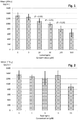
- Lamotrigine inhibits the amount of IFN- ⁇ produced by the PBMCs, with a clear trend towards greater inhibition at increased lamotrigine concentrations, with statistically significant (P ⁇ 0.05) reductions at concentrations of 10 to 100 ⁇ M.
- Subject 3 showed the most pronounced reduction in IFN- ⁇ production, with a 75% reduction observed when using 100 ⁇ M lamotrigine. To ensure that this result didn't affect the significance of the results from the other four subjects, the significance (Student's T-test) value was recalculated without including the results from subject 3. The results still confirmed a statistically significant (P ⁇ 0.05) inhibition of IFN- ⁇ production at 10, 30 and 100 ⁇ M lamotrigine. No significance value was calculated for the results using 300 ⁇ M lamotrigine, since the blood from only two of the subjects was tested. However, the data available show a continuing trend towards further increased inhibition at 300 ⁇ M.
- Sipatrigine did not inhibit IFN- ⁇ production. Although some variations appear to be observed, they are not statistically significant to a P ⁇ 0.05 level.
- CEN-079 3,5-diamino-6-[2-(3,4,5-trichlorothienyl)]-1,2,4-triazine
- CEN-092 3,5-diamino-6-(3,5-bistrifluoromethylphenyl)-1,2,4-triazine
- CEN-216 3,5-diamino-6-(2,3-dichlorophenyl)-2,3(2,5)-dihydro-3(5)-imino-2-(2,2,2-trichloroethyl)-1,2,4-triazine) were compared with lamotrigine.
- CEN-079, CEN-092 and CEN-216 are within the scope of Formulae 1, 2 and 3.
- the cells from the first centrifuged heparinised tube were diluted 1:1 in RPMI-1640, and mixed by multiple inversions.
- the cell mixture was then slowly layered, using a sterile plastic 3ml pipette, along a tube wall containing lymphoprep (Nycomed) at a ratio of 2:1 cells/RPMI-1640 : Lymphoprep in a 25 ml universal tube.
- the mixture was centrifuged at 2400 rpm for 30 minutes, and left to stand for 20 minutes.
- PBMCs were slowly removed from the interface using a sterile plastic pipette, and collected in a 15 ml centrifuge tube.
- the cells were washed twice by diluting in RPMI-1640 with 2mM L-glutamine, 100 U/ml penicillin and 100 ⁇ g/ml streptomycin at a ratio of 1:1. The mixture was centrifuged at 3000 rpm for 15 minutes, and the supernatant decanted. PBMCs were then diluted in RPMI-1640 containing 2 mM L-glutamine, 100 U/ml penicillin and 100 ⁇ g streptomycin, to make up a volume of 6 ml for subjects 1 and 2, and 9ml for subject 3.
- Cells were counted using an Improved Neubauer haemocytometer (Hawksley, UK) on a light microscope. 10 ⁇ l of cell suspension was loaded onto the haemocytometer using a sterile plastic pipette. Cells were counted in five out of 25 1mm squares, from which the total cell count was calculated.
- Cell viability was determined by trypan blue exclusion, using an equal volume of cells and trypan blue.
- PHA 5 ⁇ g/ml PHA was used as a T cell activating agent for the production of IFN- ⁇ .
- the PBMCs were treated with the four test compounds (lamotrigine, CEN-079, CEN-092, CEN-216) at concentrations of 10 ⁇ M, 30 ⁇ M and 300 ⁇ M to assess their effects on IFN- ⁇ production by the stimulated T cells.
- 10 ⁇ M solutions were obtained by adding 1.05 ⁇ l of a 5mM solution of the compounds to the above PBMC-containing solution.
- 30 ⁇ M solutions were obtained by adding 3.15 ⁇ l of the 5mM solution of the compounds.
- 300 ⁇ M solutions were obtained by adding 3.15 ⁇ l of 50mM solutions of the compounds.
- the tubes were covered, gently shaken to mix the contents, and incubated for 24 hours at 37°C.
- the tubes were then centrifuged at 2500 rpm for 10 minutes.
- the supernatant was collected in a 3ml plastic pipette, and aliquots were stored at -70°C before being analysed.
- IFN- ⁇ Quantitative measurement of IFN- ⁇ was achieved in a similar way to Experiment 1, i.e. by enzyme-linked immunosorbent assay (ELISA, R&D Systems Europe Ltd). The test was performed according to the supplier's instructions. Donor samples were diluted 1:1 in phosphate buffered silane (PBS) and assayed simultaneously with IFN- ⁇ standard samples, in duplicate. The standard curve ranged from 15.6pg/ml to 1000 pg/ml.
- PBS phosphate buffered silane
- a 96-well multiwell microplate (high binding Costar) was prepared, by diluting a capture antibody (720 ⁇ g/ml of mouse anti-human IFN- ⁇ ) in PBS to a working concentration of 4.0 ⁇ g/ml. 100 ⁇ l was immediately coated on each well, and left overnight at room temperature. The wells were washed three times in wash buffer, using microplate autowasher (LT-3000, LabTech International Ltd). The remainder of the wash buffer in the wells was removed by blotting on to clean paper towels. The plate was blocked by adding 300 ⁇ l Block buffer (1% BSA in PBS) to each well and incubated at room temperature for 1 hour. The plate was washed three further times as before.
- a capture antibody 720 ⁇ g/ml of mouse anti-human IFN- ⁇
- the standard (120ng/ml recombinant human IFN- ⁇ ) was diluted in the reagent diluent (1% BSA, 0.05% Tween 20 in trisbuffered saline) in the concentration range 15.6 pg/ml - 1000 pg/ml by 2-fold serial dilution.
- the plate was then washed three times, and 100 ⁇ l substrate solution (1:1 H 2 O 2 :tetramethylbenzidine) was added to each well and incubated for 20 minutes at room temperature. 50 ⁇ l stop solution (2% H 2 SO 4 ) was then added to each of the wells.
- Figures 3 to 6 illustrate the results in the form of the averaged percentage of IFN- ⁇ concentration versus control.
- Table 2 Effects of Compounds on IFN- ⁇ Production by PBMCs [IFN- ⁇ ] (pg/ml) [IFN- ⁇ ] vs control (%) Compound Subject 1 Subject 2 Subject 3 Subject 1 Subject 2 Subject 3 Control 698.5 2026 2127.0 Lamotrigine 10 ⁇ M 732 1591.5 1590.0 104.7 78.6 74.8 30 ⁇ M 454 1400.5 833.0 65 69.1 39.2 300 ⁇ M 59.5 215.0 186.0 8.5 10.6 8.7 CEN-079 10 ⁇ M 154.5 757.5 611.5 22.1 36.9 28.7 30 ⁇ M 53 178.5 41.5 7.60 1.80 2.0 300 ⁇ M 0.00 0.0 0.0 0.0 0.0 0.0 0.0 CEN-092 10 ⁇ M 112.5 728.5 423.5 16.1 36.0 19.9 30 ⁇ M 52.0 499.0 91.5 7.4 24.6 4.3 300 ⁇ M
- Table 3 below also shows the IC 50 (concentration to inhibit IFN- ⁇ production by 50%) values for lamotrigine, CEN-079 and CEN-092. These data confirm that much less (lower concentrations of) CEN-079 and CEN-092 is required to inhibit IFN- ⁇ production compared to lamotrigine.
- Table 3 IC 50 values Compound IC 50 ( ⁇ M) Lamotrigine 43 CEN-079 6 CEN-092 3
- lamotrigine is shown to be an inhibitor of IFN- ⁇ production in PBMCs.
- CEN-079, CEN-092 and CEN-216 are shown to be significantly more effective inhibitors compared to lamotrigine. It therefore appears that these compounds could act as potential candidates for treating diseases or medical conditions that are treatable or controllable by inhibiting IFN- ⁇ .
Landscapes
- Health & Medical Sciences (AREA)
- Animal Behavior & Ethology (AREA)
- Medicinal Chemistry (AREA)
- General Health & Medical Sciences (AREA)
- Public Health (AREA)
- Life Sciences & Earth Sciences (AREA)
- Chemical & Material Sciences (AREA)
- Pharmacology & Pharmacy (AREA)
- Veterinary Medicine (AREA)
- Engineering & Computer Science (AREA)
- Bioinformatics & Cheminformatics (AREA)
- General Chemical & Material Sciences (AREA)
- Nuclear Medicine, Radiotherapy & Molecular Imaging (AREA)
- Organic Chemistry (AREA)
- Chemical Kinetics & Catalysis (AREA)
- Neurosurgery (AREA)
- Neurology (AREA)
- Biomedical Technology (AREA)
- Diabetes (AREA)
- Epidemiology (AREA)
- Rheumatology (AREA)
- Hospice & Palliative Care (AREA)
- Immunology (AREA)
- Physical Education & Sports Medicine (AREA)
- Dermatology (AREA)
- Endocrinology (AREA)
- Hematology (AREA)
- Orthopedic Medicine & Surgery (AREA)
- Emergency Medicine (AREA)
- Obesity (AREA)
- Psychiatry (AREA)
- Pain & Pain Management (AREA)
- Pharmaceuticals Containing Other Organic And Inorganic Compounds (AREA)
- Plural Heterocyclic Compounds (AREA)
Claims (13)
- Verbindung der Formel 1, Formel 2 oder Formel 3 oder Solvat, Tautomer oder pharmazeutisch annehmbares Salz davon zur Verwendung bei der Behandlung oder Bekämpfung von medizinischen Zuständen und Erkrankungen, die durch Hemmung der Produktion von Interferon-gamma (IFN-γ) behandelt oder bekämpft werden können, wobei die medizinischen Zustände und Erkrankungen aus Prionkrankheiten, rheumatoider Arthritis, entzündlicher Darmerkrankung, Autoimmunhautkrankheiten, Psoriasis, Sjögren-Syndrom, Morbus Crohn und Diabetes mellitus Typ 1 ausgewählt sind:
 A ausgewählt ist aus:i. einem Phenylring, der mit bis zu fünf Substituenten Rc substituiert ist, die jeweils unabhängig aus Halogenatomen, Halogenalkylgruppen mit 1 bis 4 Kohlenstoffatomen, Alkoxygruppen mit 1 bis 4 Kohlenstoffatomen und Halogenalkoxygruppen mit 1 bis 4 Kohlenstoffatomen ausgewählt sind; undii. einem Thiophenring, der gegebenenfalls mit bis zu drei Substituenten Rc substituiert ist, die jeweils unabhängig aus Halogenatomen, Alkylgruppen mit 1 bis 4 Kohlenstoffatomen, Halogenalkylgruppen mit 1 bis 4 Kohlenstoffatomen, Alkoxygruppen mit 1 bis 4 Kohlenstoffatomen und Halogenalkoxygruppen mit 1 bis 4 Kohlenstoffatomen ausgewählt sind; undiii. eine C(Rd)3-Gruppe, wobei jedes Rd unabhängig aus Wasserstoff, Alkylgruppen mit 1 bis 4 Kohlenstoffatomen und Phenylringen, die gegebenenfalls mit bis zu fünf Substituenten substituiert sind, die jeweils unabhängig aus Halogenatomen, Alkylgruppen mit 1 bis 4 Kohlenstoffatomen, Halogenalkylgruppen mit 1 bis 4 Kohlenstoffatomen, Alkoxygruppen mit 1 bis 4 Kohlenstoffatomen und Halogenalkoxygruppen mit 1 bis 4 Kohlenstoffatomen ausgewählt sind, ausgewählt ist und wobei wenigstens zwei Rd-Gruppen gegebenenfalls substituierte Phenylringe sind;Ra aus Wasserstoff, Halogenalkylgruppen mit 1 bis 4 Kohlenstoffatomen und Alkylalkoxygruppen mit 1 bis 6 Kohlenstoffatomen, die gegebenenfalls mit einem oder mehreren Halogenatomen substituiert sind, ausgewählt ist, mit der Maßgabe, dass dann, wenn A ein Phenylring, der einen oder mehrere direkt gebundene Halogensubstituenten umfasst, ist, die Verbindung der Formel 2 oder 3 entspricht und Ra nicht Wasserstoff ist;Rb jeweils unabhängig aus Wasserstoff, Alkylgruppen mit 1 bis 4 Kohlenstoffatomen und Halogenalkylgruppen mit 1 bis 4 Kohlenstoffatomen ausgewählt ist.
 - Verbindung zur Verwendung gemäß Anspruch 1, wobei die Verbindung der Formel 4, Formel 5 oder Formel 6 entspricht oder ein Solvat, Tautomer oder pharmazeutisch annehmbares Salz davon ist:
 n eine ganze Zahl von 1 bis 5 ist;Ra und Rb wie in Anspruch 1 definiert sind; undRc jeweils unabhängig aus Halogenalkylgruppen mit 1 bis 4 Kohlenstoffatomen, Alkoxygruppen mit 1 bis 4 Kohlenstoffatomen und Halogenalkoxygruppen mit 1 bis 4 Kohlenstoffatomen ausgewählt ist.
 - Verbindung zur Verwendung gemäß Anspruch 2, wobei die Verbindung der Formel 4 oder 5 entspricht.
- Verbindung zur Verwendung gemäß Anspruch 2 oder 3, wobei n = 2 ist.
- Verbindung zur Verwendung gemäß Anspruch 2, 3 oder 4, wobei Rc jeweils unabhängig aus Halogenalkylgruppen ausgewählt ist, bei denen es sich um Fluormethylgruppen handelt.
- Verbindung zur Verwendung gemäß Anspruch 1, wobei die Verbindung der Formel 7, Formel 8, Formel 9, Formel 10, Formel 11 oder Formel 12 entspricht oder ein Solvat, Tautomer oder Salz davon ist:

 n eine ganze Zahl von 1 bis 3 ist;Ra und Rb wie in Anspruch 1 definiert sind; undRc jeweils unabhängig aus Halogenatomen, Alkylgruppen mit 1 bis 4 Kohlenstoffatomen, Halogenalkylgruppen mit 1 bis 4 Kohlenstoffatomen, Alkoxygruppen mit 1 bis 4 Kohlenstoffatomen und Halogenalkoxygruppen mit 1 bis 4 Kohlenstoffatomen ausgewählt ist.
 - Verbindung zur Verwendung gemäß Anspruch 6, wobei die Verbindung der Formel 7, 8 oder 9 entspricht.
- Verbindung zur Verwendung gemäß Anspruch 6 oder 7, wobei es sich bei allen Rc-Substituenten um Chlor handelt.
- Verbindung zur Verwendung gemäß einem der Ansprüche 1 bis 8, wobei es sich bei Rb überall, wo es vorkommt, um Wasserstoff handelt.
- Verbindung zur Verwendung gemäß Anspruch 1 oder 2, wobei die Verbindung der Formel 13, Formel 14 oder Formel 15 entspricht oder ein Solvat, Tautomer oder Salz davon ist:
 Rb wie in Anspruch 1 definiert ist;ein Rd aus Wasserstoff, Alkylgruppen mit 1 bis 4 Kohlenstoffatomen und Phenylringen, die gegebenenfalls mit bis zu fünf Rc-Substituenten substituiert sind, ausgewählt ist;n = 0 bis 5 ist; undRc jeweils unabhängig aus Halogenatomen, Alkylgruppen mit 1 bis 4 Kohlenstoffatomen, Halogenalkylgruppen mit 1 bis 4 Kohlenstoffatomen, Alkoxygruppen mit 1 bis 4 Kohlenstoffatomen und Halogenalkoxygruppen mit 1 bis 4 Kohlenstoffatomen ausgewählt ist.
 - Verbindung zur Verwendung gemäß Anspruch 10, wobei die Verbindung der Formel 13 entspricht.
- Verbindung zur Verwendung bei der Behandlung oder Bekämpfung von medizinischen Zuständen und Erkrankungen, die durch Hemmung der Produktion von Interferon-gamma (IFN-γ) behandelt oder bekämpft werden können, wobei die medizinischen Zustände und Erkrankungen aus Prionkrankheiten, rheumatoider Arthritis, entzündlicher Darmerkrankung, Autoimmunhautkrankheiten, Psoriasis, Sjögren-Syndrom, Morbus Crohn und Diabetes mellitus Typ 1 ausgewählt sind, wobei die Verbindung ausgewählt ist aus:3,5-Diamino-6-(2,5-bis(trifluormethyl)phenyl)-1,2,4-triazin [CEN-198];3,5-Diamino-6-(3,4-dimethoxyphenyl)-1,2,4-triazin [CEN-115];3,5-Diamino-6-(3,5-dimethoxyphenyl)-1,2,4-triazin [CEN-192];3,5-Diamino-6-(3,4,5-trimethoxyphenyl)-1,2,4-triazin [CEN-095];3,5-Diamino-6-(2-difluormethoxyphenyl)-1,2,4-triazin [CEN-142];3,5-Diamino-6-(2-trifluormethoxyphenyl)-1,2,4-triazin [CEN-056];3,5-Diamino-6-[3-(1,1,2,2-tetrafluorethoxy)phenyl]-1,2,4-triazin [CEN-108];3,5-Diamino-6-[2-(1,1,2,2-tetrafluorethoxy)phenyl]-1,2,4-triazin [CEN-137];3,5-Diamino-6-[2,5-bis(2,2,2-trifluorethoxy)phenyl]-1,2,4-triazin [CEN-140];3,5-Diamino-6-[3,5-bis(2,2,2-trifluorethoxy)phenyl]-1,2,4-triazin [CEN-193];5(3)-Amino-6-(2,3-dichlorphenyl)-2,3(2,5)-dihydro-3(5)-imino-2-(2-fluorethyl)-1,2,4-triazin;5(3)-Amino-6-(2,3-dichlorphenyl)-2,3(2,5)-dihydro-3(5)-imino-2-(2,2-di-fluorethyl)-1,2,4-triazin;5(3)-Amino-6-(2,3-dichlorphenyl)-2,3(2,5)-dihydro-3(5)-imino-2-(2,2,2-trifluorethyl)-1,2,4-triazin [CEN-067];5-Amino-6-(2,3-dichlorphenyl)-2,3-dihydro-3-imino-2-(3,3,3-trifluor-propyl)-1,2,4-triazin;5(3)-Amino-6-(2,3-dichlorphenyl)-2,3(2,5)-dihydro-3(5)-imino-2-(2,2,3,3-tetrafluorpropyl)-1,2,4-triazin [CEN-218];5(3)-Amino-6-(2,3-dichlorphenyl)-2,3(2,5)-dihydro-3(5)-imino-2-(2,2,3,3,3-pentafluorpropyl)-1,2,4-triazin [CEN-217];5(3)-Amino-6-(2,3-dichlorphenyl)-2,3(2,5)-dihydro-3(5)-imino-2-(2-iso-propoxy)ethyl-1,2,4-triazin [CEN-091];5(3)-Amino-6-(2,3,5-trichlorphenyl)-2,3(2,5)-dihydro-3(5)-imino-2-(2-fluorethyl)-1,2,4-triazin;5(3)-Amino-6-(2,3,5-trichlorphenyl)-2,3(2,5)-dihydro-3(5)-imino-2-(2,2-difluorethyl)-1,2,4-triazin [CEN-085];5(3)-Amino-6-(2,3,5-trichlorphenyl)-2,3(2,5)-dihydro-3(5)-imino-2-(3,3,3-trifluorpropyl)-1,2,4-triazin;5(3)-Amino-6-(2,3,5-trichlorphenyl)-2,3(2,5)-dihydro-3(5)-imino-2-(2,2,2-trichlorethyl)-1,2,4-triazin [CEN-248];5(3)-Amino-6-(3-chlor-2-fluor-5-trifluormethylphenyl)-2,3(2,5)-dihydro-3(5)-imino-2-(2,2,3,3-tetrafluorpropyl)-1,2,4-triazin [CEN-210];5(3)-Amino-6-(3-chlor-2-fluor-5-trifluormethylphenyl)-2,3(2,5)-dihydro-3(5)-imino-2-(2,2,3,3,3-pentafluorpropyl)-1,2,4-triazin [CEN-211];3,5-Diamino-6-[2-(5-chlorthienyl)]-1,2,4-triazin [CEN-138];3,5-Diamino-6-[3-(2,5-dichlorthienyl)]-1,2,4-triazin [CEN-071];3,5-Diamino-6-[2-(5-bromthienyl)]-1,2,4-triazin [CEN-124];3,5-Diamino-6-[2-(3-bromthienyl)]-1,2,4-triazin [CEN-125];3,5-Diamino-6-[2-(4,5-dibromthienyl)]-1,2,4-triazin [CEN-122];3,5-Diamino-6-[2-(3,4,5-trichlorthienyl)]-1,2,4-triazin [CEN-079];3,5-Diamino-6-(3,5-bis(trifluormethyl)phenyl)-1,2,4-triazin [CEN-092];5(3)-Amino-6-(2,3-dichlorphenyl)-2,3(2,5)-dihydro-3(5)-imino-2-(2,2,2-trichlorethyl)-1,2,4-triazin [CEN-216];und Solvate, Tautomere und pharmazeutisch annehmbare Salze davon;
oder die Verbindung ausgewählt ist aus:3,5-Diamino-6-(diphenylmethyl)-1,2,4-triazin [CEN-130];3,5-Diamino-6-(1,1-diphenylethyl)-1,2,4-triazin [CEN-147];5(3)-Amino-6-(1,1-diphenylethyl)-2,3(2,5)-dihydro-3(5)-imino-2-methyl-1,2,4-triazin [CEN-149];3,5-Diamino-6-(triphenylmethyl)-1,2,4-triazin [R3 = R4 = R5 = Ph] [CEN-153];3,5-Diamino-6-(1-cyclopentyl-l-phenylmethyl)-1,2,4-triazin [CEN-163];3,5-Diamino-6-(1-isopropyl-l-phenylmethyl)-1,2,4-triazin [CEN-201]; und3,5-Diamino-6-[1,1-bis-(4-chlorphenyl)methyl]-1,2,4-triazin [CEN-213]. - Verbindung zur Verwendung gemäß einem der Ansprüche 1 bis 12, wobei der zu behandelnde Patient ein Mensch ist.
Applications Claiming Priority (3)
| Application Number | Priority Date | Filing Date | Title |
|---|---|---|---|
| GBGB1510356.7A GB201510356D0 (en) | 2015-06-12 | 2015-06-12 | Cyclic triazo and diazo sodium channel blockers |
| GBGB1604394.5A GB201604394D0 (en) | 2016-03-15 | 2016-03-15 | Interferon gamma inhibitors |
| PCT/GB2016/051711 WO2016198878A1 (en) | 2015-06-12 | 2016-06-10 | Triazine derivatives as interferon-gamma inhibitors |
Publications (2)
| Publication Number | Publication Date |
|---|---|
| EP3307273A1 EP3307273A1 (de) | 2018-04-18 |
| EP3307273B1 true EP3307273B1 (de) | 2020-12-09 |
Family
ID=56131564
Family Applications (1)
| Application Number | Title | Priority Date | Filing Date |
|---|---|---|---|
| EP16729340.6A Active EP3307273B1 (de) | 2015-06-12 | 2016-06-10 | Triazinderivate als interferon-gamma-inhibitoren |
Country Status (7)
| Country | Link |
|---|---|
| US (1) | US10576086B2 (de) |
| EP (1) | EP3307273B1 (de) |
| JP (2) | JP2018524302A (de) |
| CN (2) | CN107921046B (de) |
| CA (1) | CA3021424C (de) |
| ES (1) | ES2858750T3 (de) |
| WO (1) | WO2016198878A1 (de) |
Families Citing this family (2)
| Publication number | Priority date | Publication date | Assignee | Title |
|---|---|---|---|---|
| GB202006076D0 (en) * | 2020-04-24 | 2020-06-10 | Univ Greenwich | Interleukin inhibitors |
| GB202006080D0 (en) * | 2020-04-24 | 2020-06-10 | Univ Greenwich | Cytokine storm syndrome |
Family Cites Families (14)
| Publication number | Priority date | Publication date | Assignee | Title |
|---|---|---|---|---|
| JPS5625169A (en) | 1979-06-01 | 1981-03-10 | Wellcome Found | Triazine derivative |
| GB8328757D0 (en) | 1983-10-27 | 1983-11-30 | Wellcome Found | Chemical compounds |
| GB9203483D0 (en) * | 1992-02-19 | 1992-04-08 | Wellcome Found | Anti-inflammatory compounds |
| JP2000095737A (ja) * | 1998-09-25 | 2000-04-04 | Fuji Photo Film Co Ltd | キノンメチド化合物 |
| US20040029934A1 (en) | 2000-12-28 | 2004-02-12 | Kiyoshi Ebihara | Pharmaceutical emulsion preparation |
| US20040053888A1 (en) | 2001-01-04 | 2004-03-18 | Norio Suzuki | Cyclodextrin-containing pharmaceutical preparation |
| US20040213842A1 (en) * | 2003-01-30 | 2004-10-28 | Dynogen Pharmaceuticals, Inc. | Methods of treating gastrointestinal tract disorders using sodium channel modulators |
| WO2004069173A2 (en) * | 2003-01-31 | 2004-08-19 | The Trustees Of The University Of Pennsylvania | Methods for modulating an inflammatory response |
| EP2035005A4 (de) | 2006-06-09 | 2011-07-06 | Kemia Inc | Therapie mit zytokinhemmern |
| GB0613836D0 (en) * | 2006-07-13 | 2006-08-23 | Univ Greenwich | New medical use of triazine derivatives |
| GB0800741D0 (en) * | 2008-01-16 | 2008-02-20 | Univ Greenwich | Cyclic triazo and diazo sodium channel blockers |
| GB2471713A (en) * | 2009-07-08 | 2011-01-12 | Univ Greenwich | 1,2,4-triazine derivatives and their use as sodium channel blockers |
| GB2471729A (en) * | 2009-07-08 | 2011-01-12 | Univ Greenwich | 1,2,4-triazine derivatives and their use as sodium channel blockers |
| KR20140097336A (ko) * | 2011-11-23 | 2014-08-06 | 암젠 인크 | 인터페론 감마에 대한 항체를 이용한 치료 방법 |
-
2016
- 2016-06-10 EP EP16729340.6A patent/EP3307273B1/de active Active
- 2016-06-10 CN CN201680046502.5A patent/CN107921046B/zh active Active
- 2016-06-10 WO PCT/GB2016/051711 patent/WO2016198878A1/en not_active Ceased
- 2016-06-10 CN CN202211184577.3A patent/CN115737651A/zh active Pending
- 2016-06-10 ES ES16729340T patent/ES2858750T3/es active Active
- 2016-06-10 CA CA3021424A patent/CA3021424C/en active Active
- 2016-06-10 JP JP2017564601A patent/JP2018524302A/ja active Pending
- 2016-06-10 US US15/735,852 patent/US10576086B2/en active Active
-
2022
- 2022-01-07 JP JP2022001492A patent/JP7332236B2/ja active Active
Non-Patent Citations (1)
| Title |
|---|
| None * |
Also Published As
| Publication number | Publication date |
|---|---|
| CN107921046B (zh) | 2022-10-14 |
| CA3021424A1 (en) | 2016-12-15 |
| CA3021424C (en) | 2023-03-21 |
| CN115737651A (zh) | 2023-03-07 |
| ES2858750T3 (es) | 2021-09-30 |
| JP2018524302A (ja) | 2018-08-30 |
| JP2022037243A (ja) | 2022-03-08 |
| WO2016198878A1 (en) | 2016-12-15 |
| CN107921046A (zh) | 2018-04-17 |
| HK1253913A1 (zh) | 2019-07-05 |
| US20180169105A1 (en) | 2018-06-21 |
| EP3307273A1 (de) | 2018-04-18 |
| US10576086B2 (en) | 2020-03-03 |
| JP7332236B2 (ja) | 2023-08-23 |
Similar Documents
| Publication | Publication Date | Title |
|---|---|---|
| US12370195B2 (en) | Oral compositions of MK2 pathway inhibitor for treatment of immune conditions | |
| Ito et al. | A novel JAK inhibitor, peficitinib, demonstrates potent efficacy in a rat adjuvant-induced arthritis model | |
| US20210085664A1 (en) | Use of 2-substituted indazoles for the treatment and prophylaxis of autoimmune diseases | |
| UA127519C2 (uk) | Інгібітори шляху jak1, призначені для лікування порушень, пов'язаних із цитокінами | |
| JP7332236B2 (ja) | インターフェロン‐γ阻害剤としてのトリアジン誘導体 | |
| CN115068484A (zh) | 免疫相关和炎性疾病的治疗 | |
| JP6977238B2 (ja) | 低増殖性障害の治療のための化合物 | |
| CN115916339A (zh) | 全身免疫激活综合征的治疗 | |
| CN111225903A (zh) | 谷氨酰胺酶抑制剂疗法 | |
| WO2011020849A1 (en) | Cytohesin inhibitors | |
| KR101432246B1 (ko) | 메포민을 포함하는 자가면역질환 예방 및 치료용 조성물 | |
| AU2017205389A1 (en) | Benzothiazole amphiphiles | |
| HK1253913B (en) | Triazine derivatives as interferon-gamma inhibitors | |
| WO2014208354A1 (ja) | 炎症性疾患を治療又は予防するための医薬組成物 | |
| EP4008330A1 (de) | Kombinierte hemmung von aminosäuretransportern zur hemmung der aktivität von menschlicher plasmacytoider dendritischer zellen während der autoimmunität | |
| KR102566028B1 (ko) | 신규한 다중 단백질 키나아제 억제제 | |
| US20230165869A1 (en) | Diazine and triazine compounds to treat cytokine storm syndrome | |
| JP4942084B2 (ja) | アポトーシス抑制剤 | |
| JP2021107329A (ja) | マックル・ウェルズ症候群の治療用医薬組成物 | |
| Kim et al. | AB0174 CLINICAL SIGNIFICANCE OF THE URINARY CD11C+ MYELOID CELLS IN THE PATIENTS WITH LUPUS NEPHRITIS | |
| IL296700A (en) | Process, compositions, and crystalline of substituted pyridinone-pyridinyl compounds | |
| BR112018074919B1 (pt) | Uso de indazóis 2-substituídos para preparação de medicamento para tratamento e profilaxia de doenças autoimunes | |
| HK40015139A (en) | Heterocyclic inhibitors of mct4 |
Legal Events
| Date | Code | Title | Description |
|---|---|---|---|
| STAA | Information on the status of an ep patent application or granted ep patent |
Free format text: STATUS: THE INTERNATIONAL PUBLICATION HAS BEEN MADE |
|
| PUAI | Public reference made under article 153(3) epc to a published international application that has entered the european phase |
Free format text: ORIGINAL CODE: 0009012 |
|
| STAA | Information on the status of an ep patent application or granted ep patent |
Free format text: STATUS: REQUEST FOR EXAMINATION WAS MADE |
|
| 17P | Request for examination filed |
Effective date: 20180112 |
|
| AK | Designated contracting states |
Kind code of ref document: A1 Designated state(s): AL AT BE BG CH CY CZ DE DK EE ES FI FR GB GR HR HU IE IS IT LI LT LU LV MC MK MT NL NO PL PT RO RS SE SI SK SM TR |
|
| AX | Request for extension of the european patent |
Extension state: BA ME |
|
| DAV | Request for validation of the european patent (deleted) | ||
| DAX | Request for extension of the european patent (deleted) | ||
| REG | Reference to a national code |
Ref country code: HK Ref legal event code: DE Ref document number: 1253913 Country of ref document: HK |
|
| STAA | Information on the status of an ep patent application or granted ep patent |
Free format text: STATUS: EXAMINATION IS IN PROGRESS |
|
| 17Q | First examination report despatched |
Effective date: 20190801 |
|
| GRAP | Despatch of communication of intention to grant a patent |
Free format text: ORIGINAL CODE: EPIDOSNIGR1 |
|
| STAA | Information on the status of an ep patent application or granted ep patent |
Free format text: STATUS: GRANT OF PATENT IS INTENDED |
|
| INTG | Intention to grant announced |
Effective date: 20200707 |
|
| GRAS | Grant fee paid |
Free format text: ORIGINAL CODE: EPIDOSNIGR3 |
|
| GRAA | (expected) grant |
Free format text: ORIGINAL CODE: 0009210 |
|
| STAA | Information on the status of an ep patent application or granted ep patent |
Free format text: STATUS: THE PATENT HAS BEEN GRANTED |
|
| AK | Designated contracting states |
Kind code of ref document: B1 Designated state(s): AL AT BE BG CH CY CZ DE DK EE ES FI FR GB GR HR HU IE IS IT LI LT LU LV MC MK MT NL NO PL PT RO RS SE SI SK SM TR |
|
| REG | Reference to a national code |
Ref country code: GB Ref legal event code: FG4D |
|
| REG | Reference to a national code |
Ref country code: AT Ref legal event code: REF Ref document number: 1342674 Country of ref document: AT Kind code of ref document: T Effective date: 20201215 Ref country code: CH Ref legal event code: EP |
|
| REG | Reference to a national code |
Ref country code: DE Ref legal event code: R096 Ref document number: 602016049408 Country of ref document: DE |
|
| REG | Reference to a national code |
Ref country code: IE Ref legal event code: FG4D |
|
| PG25 | Lapsed in a contracting state [announced via postgrant information from national office to epo] |
Ref country code: RS Free format text: LAPSE BECAUSE OF FAILURE TO SUBMIT A TRANSLATION OF THE DESCRIPTION OR TO PAY THE FEE WITHIN THE PRESCRIBED TIME-LIMIT Effective date: 20201209 Ref country code: NO Free format text: LAPSE BECAUSE OF FAILURE TO SUBMIT A TRANSLATION OF THE DESCRIPTION OR TO PAY THE FEE WITHIN THE PRESCRIBED TIME-LIMIT Effective date: 20210309 Ref country code: FI Free format text: LAPSE BECAUSE OF FAILURE TO SUBMIT A TRANSLATION OF THE DESCRIPTION OR TO PAY THE FEE WITHIN THE PRESCRIBED TIME-LIMIT Effective date: 20201209 Ref country code: GR Free format text: LAPSE BECAUSE OF FAILURE TO SUBMIT A TRANSLATION OF THE DESCRIPTION OR TO PAY THE FEE WITHIN THE PRESCRIBED TIME-LIMIT Effective date: 20210310 |
|
| REG | Reference to a national code |
Ref country code: AT Ref legal event code: MK05 Ref document number: 1342674 Country of ref document: AT Kind code of ref document: T Effective date: 20201209 |
|
| PG25 | Lapsed in a contracting state [announced via postgrant information from national office to epo] |
Ref country code: SE Free format text: LAPSE BECAUSE OF FAILURE TO SUBMIT A TRANSLATION OF THE DESCRIPTION OR TO PAY THE FEE WITHIN THE PRESCRIBED TIME-LIMIT Effective date: 20201209 Ref country code: BG Free format text: LAPSE BECAUSE OF FAILURE TO SUBMIT A TRANSLATION OF THE DESCRIPTION OR TO PAY THE FEE WITHIN THE PRESCRIBED TIME-LIMIT Effective date: 20210309 Ref country code: LV Free format text: LAPSE BECAUSE OF FAILURE TO SUBMIT A TRANSLATION OF THE DESCRIPTION OR TO PAY THE FEE WITHIN THE PRESCRIBED TIME-LIMIT Effective date: 20201209 |
|
| REG | Reference to a national code |
Ref country code: NL Ref legal event code: MP Effective date: 20201209 |
|
| PG25 | Lapsed in a contracting state [announced via postgrant information from national office to epo] |
Ref country code: NL Free format text: LAPSE BECAUSE OF FAILURE TO SUBMIT A TRANSLATION OF THE DESCRIPTION OR TO PAY THE FEE WITHIN THE PRESCRIBED TIME-LIMIT Effective date: 20201209 Ref country code: HR Free format text: LAPSE BECAUSE OF FAILURE TO SUBMIT A TRANSLATION OF THE DESCRIPTION OR TO PAY THE FEE WITHIN THE PRESCRIBED TIME-LIMIT Effective date: 20201209 |
|
| REG | Reference to a national code |
Ref country code: LT Ref legal event code: MG9D |
|
| PG25 | Lapsed in a contracting state [announced via postgrant information from national office to epo] |
Ref country code: SM Free format text: LAPSE BECAUSE OF FAILURE TO SUBMIT A TRANSLATION OF THE DESCRIPTION OR TO PAY THE FEE WITHIN THE PRESCRIBED TIME-LIMIT Effective date: 20201209 Ref country code: LT Free format text: LAPSE BECAUSE OF FAILURE TO SUBMIT A TRANSLATION OF THE DESCRIPTION OR TO PAY THE FEE WITHIN THE PRESCRIBED TIME-LIMIT Effective date: 20201209 Ref country code: EE Free format text: LAPSE BECAUSE OF FAILURE TO SUBMIT A TRANSLATION OF THE DESCRIPTION OR TO PAY THE FEE WITHIN THE PRESCRIBED TIME-LIMIT Effective date: 20201209 Ref country code: CZ Free format text: LAPSE BECAUSE OF FAILURE TO SUBMIT A TRANSLATION OF THE DESCRIPTION OR TO PAY THE FEE WITHIN THE PRESCRIBED TIME-LIMIT Effective date: 20201209 Ref country code: RO Free format text: LAPSE BECAUSE OF FAILURE TO SUBMIT A TRANSLATION OF THE DESCRIPTION OR TO PAY THE FEE WITHIN THE PRESCRIBED TIME-LIMIT Effective date: 20201209 Ref country code: SK Free format text: LAPSE BECAUSE OF FAILURE TO SUBMIT A TRANSLATION OF THE DESCRIPTION OR TO PAY THE FEE WITHIN THE PRESCRIBED TIME-LIMIT Effective date: 20201209 Ref country code: PT Free format text: LAPSE BECAUSE OF FAILURE TO SUBMIT A TRANSLATION OF THE DESCRIPTION OR TO PAY THE FEE WITHIN THE PRESCRIBED TIME-LIMIT Effective date: 20210409 |
|
| PG25 | Lapsed in a contracting state [announced via postgrant information from national office to epo] |
Ref country code: AT Free format text: LAPSE BECAUSE OF FAILURE TO SUBMIT A TRANSLATION OF THE DESCRIPTION OR TO PAY THE FEE WITHIN THE PRESCRIBED TIME-LIMIT Effective date: 20201209 Ref country code: PL Free format text: LAPSE BECAUSE OF FAILURE TO SUBMIT A TRANSLATION OF THE DESCRIPTION OR TO PAY THE FEE WITHIN THE PRESCRIBED TIME-LIMIT Effective date: 20201209 |
|
| REG | Reference to a national code |
Ref country code: DE Ref legal event code: R097 Ref document number: 602016049408 Country of ref document: DE |
|
| PG25 | Lapsed in a contracting state [announced via postgrant information from national office to epo] |
Ref country code: IS Free format text: LAPSE BECAUSE OF FAILURE TO SUBMIT A TRANSLATION OF THE DESCRIPTION OR TO PAY THE FEE WITHIN THE PRESCRIBED TIME-LIMIT Effective date: 20210409 |
|
| REG | Reference to a national code |
Ref country code: ES Ref legal event code: FG2A Ref document number: 2858750 Country of ref document: ES Kind code of ref document: T3 Effective date: 20210930 |
|
| PLBE | No opposition filed within time limit |
Free format text: ORIGINAL CODE: 0009261 |
|
| STAA | Information on the status of an ep patent application or granted ep patent |
Free format text: STATUS: NO OPPOSITION FILED WITHIN TIME LIMIT |
|
| PG25 | Lapsed in a contracting state [announced via postgrant information from national office to epo] |
Ref country code: AL Free format text: LAPSE BECAUSE OF FAILURE TO SUBMIT A TRANSLATION OF THE DESCRIPTION OR TO PAY THE FEE WITHIN THE PRESCRIBED TIME-LIMIT Effective date: 20201209 |
|
| 26N | No opposition filed |
Effective date: 20210910 |
|
| PG25 | Lapsed in a contracting state [announced via postgrant information from national office to epo] |
Ref country code: SI Free format text: LAPSE BECAUSE OF FAILURE TO SUBMIT A TRANSLATION OF THE DESCRIPTION OR TO PAY THE FEE WITHIN THE PRESCRIBED TIME-LIMIT Effective date: 20201209 Ref country code: DK Free format text: LAPSE BECAUSE OF FAILURE TO SUBMIT A TRANSLATION OF THE DESCRIPTION OR TO PAY THE FEE WITHIN THE PRESCRIBED TIME-LIMIT Effective date: 20201209 |
|
| PG25 | Lapsed in a contracting state [announced via postgrant information from national office to epo] |
Ref country code: MC Free format text: LAPSE BECAUSE OF FAILURE TO SUBMIT A TRANSLATION OF THE DESCRIPTION OR TO PAY THE FEE WITHIN THE PRESCRIBED TIME-LIMIT Effective date: 20201209 |
|
| REG | Reference to a national code |
Ref country code: CH Ref legal event code: PL |
|
| PG25 | Lapsed in a contracting state [announced via postgrant information from national office to epo] |
Ref country code: LU Free format text: LAPSE BECAUSE OF NON-PAYMENT OF DUE FEES Effective date: 20210610 |
|
| PG25 | Lapsed in a contracting state [announced via postgrant information from national office to epo] |
Ref country code: LI Free format text: LAPSE BECAUSE OF NON-PAYMENT OF DUE FEES Effective date: 20210630 Ref country code: CH Free format text: LAPSE BECAUSE OF NON-PAYMENT OF DUE FEES Effective date: 20210630 |
|
| PG25 | Lapsed in a contracting state [announced via postgrant information from national office to epo] |
Ref country code: IS Free format text: LAPSE BECAUSE OF FAILURE TO SUBMIT A TRANSLATION OF THE DESCRIPTION OR TO PAY THE FEE WITHIN THE PRESCRIBED TIME-LIMIT Effective date: 20210409 |
|
| PG25 | Lapsed in a contracting state [announced via postgrant information from national office to epo] |
Ref country code: CY Free format text: LAPSE BECAUSE OF FAILURE TO SUBMIT A TRANSLATION OF THE DESCRIPTION OR TO PAY THE FEE WITHIN THE PRESCRIBED TIME-LIMIT Effective date: 20201209 |
|
| PG25 | Lapsed in a contracting state [announced via postgrant information from national office to epo] |
Ref country code: HU Free format text: LAPSE BECAUSE OF FAILURE TO SUBMIT A TRANSLATION OF THE DESCRIPTION OR TO PAY THE FEE WITHIN THE PRESCRIBED TIME-LIMIT; INVALID AB INITIO Effective date: 20160610 |
|
| PG25 | Lapsed in a contracting state [announced via postgrant information from national office to epo] |
Ref country code: MK Free format text: LAPSE BECAUSE OF FAILURE TO SUBMIT A TRANSLATION OF THE DESCRIPTION OR TO PAY THE FEE WITHIN THE PRESCRIBED TIME-LIMIT Effective date: 20201209 |
|
| PG25 | Lapsed in a contracting state [announced via postgrant information from national office to epo] |
Ref country code: MT Free format text: LAPSE BECAUSE OF FAILURE TO SUBMIT A TRANSLATION OF THE DESCRIPTION OR TO PAY THE FEE WITHIN THE PRESCRIBED TIME-LIMIT Effective date: 20201209 |
|
| PGFP | Annual fee paid to national office [announced via postgrant information from national office to epo] |
Ref country code: GB Payment date: 20250627 Year of fee payment: 10 |
|
| PGFP | Annual fee paid to national office [announced via postgrant information from national office to epo] |
Ref country code: BE Payment date: 20250627 Year of fee payment: 10 |
|
| PGFP | Annual fee paid to national office [announced via postgrant information from national office to epo] |
Ref country code: FR Payment date: 20250627 Year of fee payment: 10 |
|
| PGFP | Annual fee paid to national office [announced via postgrant information from national office to epo] |
Ref country code: IE Payment date: 20250627 Year of fee payment: 10 |
|
| PGFP | Annual fee paid to national office [announced via postgrant information from national office to epo] |
Ref country code: ES Payment date: 20250728 Year of fee payment: 10 |
|
| PGFP | Annual fee paid to national office [announced via postgrant information from national office to epo] |
Ref country code: DE Payment date: 20250722 Year of fee payment: 10 |
|
| PGFP | Annual fee paid to national office [announced via postgrant information from national office to epo] |
Ref country code: IT Payment date: 20250630 Year of fee payment: 10 |
|
| PG25 | Lapsed in a contracting state [announced via postgrant information from national office to epo] |
Ref country code: TR Free format text: LAPSE BECAUSE OF FAILURE TO SUBMIT A TRANSLATION OF THE DESCRIPTION OR TO PAY THE FEE WITHIN THE PRESCRIBED TIME-LIMIT Effective date: 20201209 |