EP3284457B1 - Kosmetikum - Google Patents
Kosmetikum Download PDFInfo
- Publication number
- EP3284457B1 EP3284457B1 EP17193143.9A EP17193143A EP3284457B1 EP 3284457 B1 EP3284457 B1 EP 3284457B1 EP 17193143 A EP17193143 A EP 17193143A EP 3284457 B1 EP3284457 B1 EP 3284457B1
- Authority
- EP
- European Patent Office
- Prior art keywords
- powder
- note
- oil
- silicone
- treated powder
- Prior art date
- Legal status (The legal status is an assumption and is not a legal conclusion. Google has not performed a legal analysis and makes no representation as to the accuracy of the status listed.)
- Active
Links
Classifications
-
- A—HUMAN NECESSITIES
- A61—MEDICAL OR VETERINARY SCIENCE; HYGIENE
- A61K—PREPARATIONS FOR MEDICAL, DENTAL OR TOILETRY PURPOSES
- A61K8/00—Cosmetics or similar toiletry preparations
- A61K8/18—Cosmetics or similar toiletry preparations characterised by the composition
- A61K8/72—Cosmetics or similar toiletry preparations characterised by the composition containing organic macromolecular compounds
- A61K8/84—Cosmetics or similar toiletry preparations characterised by the composition containing organic macromolecular compounds obtained by reactions otherwise than those involving only carbon-carbon unsaturated bonds
- A61K8/89—Polysiloxanes
- A61K8/891—Polysiloxanes saturated, e.g. dimethicone, phenyl trimethicone, C24-C28 methicone or stearyl dimethicone
- A61K8/893—Polysiloxanes saturated, e.g. dimethicone, phenyl trimethicone, C24-C28 methicone or stearyl dimethicone modified by an alkoxy or aryloxy group, e.g. behenoxy dimethicone or stearoxy dimethicone
-
- A—HUMAN NECESSITIES
- A61—MEDICAL OR VETERINARY SCIENCE; HYGIENE
- A61K—PREPARATIONS FOR MEDICAL, DENTAL OR TOILETRY PURPOSES
- A61K8/00—Cosmetics or similar toiletry preparations
- A61K8/02—Cosmetics or similar toiletry preparations characterised by special physical form
- A61K8/0216—Solid or semisolid forms
- A61K8/022—Powders; Compacted Powders
-
- A—HUMAN NECESSITIES
- A61—MEDICAL OR VETERINARY SCIENCE; HYGIENE
- A61K—PREPARATIONS FOR MEDICAL, DENTAL OR TOILETRY PURPOSES
- A61K8/00—Cosmetics or similar toiletry preparations
- A61K8/02—Cosmetics or similar toiletry preparations characterised by special physical form
- A61K8/0241—Containing particulates characterized by their shape and/or structure
-
- A—HUMAN NECESSITIES
- A61—MEDICAL OR VETERINARY SCIENCE; HYGIENE
- A61K—PREPARATIONS FOR MEDICAL, DENTAL OR TOILETRY PURPOSES
- A61K8/00—Cosmetics or similar toiletry preparations
- A61K8/02—Cosmetics or similar toiletry preparations characterised by special physical form
- A61K8/04—Dispersions; Emulsions
- A61K8/06—Emulsions
- A61K8/062—Oil-in-water emulsions
-
- A—HUMAN NECESSITIES
- A61—MEDICAL OR VETERINARY SCIENCE; HYGIENE
- A61K—PREPARATIONS FOR MEDICAL, DENTAL OR TOILETRY PURPOSES
- A61K8/00—Cosmetics or similar toiletry preparations
- A61K8/02—Cosmetics or similar toiletry preparations characterised by special physical form
- A61K8/04—Dispersions; Emulsions
- A61K8/06—Emulsions
- A61K8/064—Water-in-oil emulsions, e.g. Water-in-silicone emulsions
-
- A—HUMAN NECESSITIES
- A61—MEDICAL OR VETERINARY SCIENCE; HYGIENE
- A61K—PREPARATIONS FOR MEDICAL, DENTAL OR TOILETRY PURPOSES
- A61K8/00—Cosmetics or similar toiletry preparations
- A61K8/18—Cosmetics or similar toiletry preparations characterised by the composition
- A61K8/19—Cosmetics or similar toiletry preparations characterised by the composition containing inorganic ingredients
-
- A—HUMAN NECESSITIES
- A61—MEDICAL OR VETERINARY SCIENCE; HYGIENE
- A61K—PREPARATIONS FOR MEDICAL, DENTAL OR TOILETRY PURPOSES
- A61K8/00—Cosmetics or similar toiletry preparations
- A61K8/18—Cosmetics or similar toiletry preparations characterised by the composition
- A61K8/19—Cosmetics or similar toiletry preparations characterised by the composition containing inorganic ingredients
- A61K8/27—Zinc; Compounds thereof
-
- A—HUMAN NECESSITIES
- A61—MEDICAL OR VETERINARY SCIENCE; HYGIENE
- A61K—PREPARATIONS FOR MEDICAL, DENTAL OR TOILETRY PURPOSES
- A61K8/00—Cosmetics or similar toiletry preparations
- A61K8/18—Cosmetics or similar toiletry preparations characterised by the composition
- A61K8/19—Cosmetics or similar toiletry preparations characterised by the composition containing inorganic ingredients
- A61K8/29—Titanium; Compounds thereof
-
- A—HUMAN NECESSITIES
- A61—MEDICAL OR VETERINARY SCIENCE; HYGIENE
- A61K—PREPARATIONS FOR MEDICAL, DENTAL OR TOILETRY PURPOSES
- A61K8/00—Cosmetics or similar toiletry preparations
- A61K8/18—Cosmetics or similar toiletry preparations characterised by the composition
- A61K8/72—Cosmetics or similar toiletry preparations characterised by the composition containing organic macromolecular compounds
- A61K8/84—Cosmetics or similar toiletry preparations characterised by the composition containing organic macromolecular compounds obtained by reactions otherwise than those involving only carbon-carbon unsaturated bonds
- A61K8/89—Polysiloxanes
-
- A—HUMAN NECESSITIES
- A61—MEDICAL OR VETERINARY SCIENCE; HYGIENE
- A61K—PREPARATIONS FOR MEDICAL, DENTAL OR TOILETRY PURPOSES
- A61K8/00—Cosmetics or similar toiletry preparations
- A61K8/18—Cosmetics or similar toiletry preparations characterised by the composition
- A61K8/72—Cosmetics or similar toiletry preparations characterised by the composition containing organic macromolecular compounds
- A61K8/84—Cosmetics or similar toiletry preparations characterised by the composition containing organic macromolecular compounds obtained by reactions otherwise than those involving only carbon-carbon unsaturated bonds
- A61K8/89—Polysiloxanes
- A61K8/895—Polysiloxanes containing silicon bound to unsaturated aliphatic groups, e.g. vinyl dimethicone
-
- A—HUMAN NECESSITIES
- A61—MEDICAL OR VETERINARY SCIENCE; HYGIENE
- A61K—PREPARATIONS FOR MEDICAL, DENTAL OR TOILETRY PURPOSES
- A61K8/00—Cosmetics or similar toiletry preparations
- A61K8/18—Cosmetics or similar toiletry preparations characterised by the composition
- A61K8/72—Cosmetics or similar toiletry preparations characterised by the composition containing organic macromolecular compounds
- A61K8/91—Graft copolymers
-
- A—HUMAN NECESSITIES
- A61—MEDICAL OR VETERINARY SCIENCE; HYGIENE
- A61K—PREPARATIONS FOR MEDICAL, DENTAL OR TOILETRY PURPOSES
- A61K8/00—Cosmetics or similar toiletry preparations
- A61K8/18—Cosmetics or similar toiletry preparations characterised by the composition
- A61K8/92—Oils, fats or waxes; Derivatives thereof, e.g. hydrogenation products thereof
-
- A—HUMAN NECESSITIES
- A61—MEDICAL OR VETERINARY SCIENCE; HYGIENE
- A61Q—SPECIFIC USE OF COSMETICS OR SIMILAR TOILETRY PREPARATIONS
- A61Q1/00—Make-up preparations; Body powders; Preparations for removing make-up
- A61Q1/02—Preparations containing skin colorants, e.g. pigments
-
- A—HUMAN NECESSITIES
- A61—MEDICAL OR VETERINARY SCIENCE; HYGIENE
- A61Q—SPECIFIC USE OF COSMETICS OR SIMILAR TOILETRY PREPARATIONS
- A61Q17/00—Barrier preparations; Preparations brought into direct contact with the skin for affording protection against external influences, e.g. sunlight, X-rays or other harmful rays, corrosive materials, bacteria or insect stings
- A61Q17/04—Topical preparations for affording protection against sunlight or other radiation; Topical sun tanning preparations
-
- A—HUMAN NECESSITIES
- A61—MEDICAL OR VETERINARY SCIENCE; HYGIENE
- A61Q—SPECIFIC USE OF COSMETICS OR SIMILAR TOILETRY PREPARATIONS
- A61Q19/00—Preparations for care of the skin
-
- C—CHEMISTRY; METALLURGY
- C08—ORGANIC MACROMOLECULAR COMPOUNDS; THEIR PREPARATION OR CHEMICAL WORKING-UP; COMPOSITIONS BASED THEREON
- C08K—Use of inorganic or non-macromolecular organic substances as compounding ingredients
- C08K3/00—Use of inorganic substances as compounding ingredients
- C08K3/18—Oxygen-containing compounds, e.g. metal carbonyls
- C08K3/20—Oxides; Hydroxides
- C08K3/22—Oxides; Hydroxides of metals
-
- C—CHEMISTRY; METALLURGY
- C08—ORGANIC MACROMOLECULAR COMPOUNDS; THEIR PREPARATION OR CHEMICAL WORKING-UP; COMPOSITIONS BASED THEREON
- C08L—COMPOSITIONS OF MACROMOLECULAR COMPOUNDS
- C08L83/00—Compositions of macromolecular compounds obtained by reactions forming in the main chain of the macromolecule a linkage containing silicon with or without sulfur, nitrogen, oxygen or carbon only; Compositions of derivatives of such polymers
- C08L83/04—Polysiloxanes
-
- C—CHEMISTRY; METALLURGY
- C08—ORGANIC MACROMOLECULAR COMPOUNDS; THEIR PREPARATION OR CHEMICAL WORKING-UP; COMPOSITIONS BASED THEREON
- C08L—COMPOSITIONS OF MACROMOLECULAR COMPOUNDS
- C08L83/00—Compositions of macromolecular compounds obtained by reactions forming in the main chain of the macromolecule a linkage containing silicon with or without sulfur, nitrogen, oxygen or carbon only; Compositions of derivatives of such polymers
- C08L83/04—Polysiloxanes
- C08L83/06—Polysiloxanes containing silicon bound to oxygen-containing groups
-
- A—HUMAN NECESSITIES
- A61—MEDICAL OR VETERINARY SCIENCE; HYGIENE
- A61K—PREPARATIONS FOR MEDICAL, DENTAL OR TOILETRY PURPOSES
- A61K2800/00—Properties of cosmetic compositions or active ingredients thereof or formulation aids used therein and process related aspects
- A61K2800/10—General cosmetic use
-
- A—HUMAN NECESSITIES
- A61—MEDICAL OR VETERINARY SCIENCE; HYGIENE
- A61K—PREPARATIONS FOR MEDICAL, DENTAL OR TOILETRY PURPOSES
- A61K2800/00—Properties of cosmetic compositions or active ingredients thereof or formulation aids used therein and process related aspects
- A61K2800/40—Chemical, physico-chemical or functional or structural properties of particular ingredients
- A61K2800/59—Mixtures
- A61K2800/592—Mixtures of compounds complementing their respective functions
-
- A—HUMAN NECESSITIES
- A61—MEDICAL OR VETERINARY SCIENCE; HYGIENE
- A61K—PREPARATIONS FOR MEDICAL, DENTAL OR TOILETRY PURPOSES
- A61K2800/00—Properties of cosmetic compositions or active ingredients thereof or formulation aids used therein and process related aspects
- A61K2800/40—Chemical, physico-chemical or functional or structural properties of particular ingredients
- A61K2800/60—Particulates further characterized by their structure or composition
- A61K2800/61—Surface treated
- A61K2800/62—Coated
- A61K2800/624—Coated by macromolecular compounds
-
- A—HUMAN NECESSITIES
- A61—MEDICAL OR VETERINARY SCIENCE; HYGIENE
- A61K—PREPARATIONS FOR MEDICAL, DENTAL OR TOILETRY PURPOSES
- A61K2800/00—Properties of cosmetic compositions or active ingredients thereof or formulation aids used therein and process related aspects
- A61K2800/40—Chemical, physico-chemical or functional or structural properties of particular ingredients
- A61K2800/60—Particulates further characterized by their structure or composition
- A61K2800/65—Characterized by the composition of the particulate/core
- A61K2800/651—The particulate/core comprising inorganic material
-
- A—HUMAN NECESSITIES
- A61—MEDICAL OR VETERINARY SCIENCE; HYGIENE
- A61Q—SPECIFIC USE OF COSMETICS OR SIMILAR TOILETRY PREPARATIONS
- A61Q15/00—Anti-perspirants or body deodorants
-
- A—HUMAN NECESSITIES
- A61—MEDICAL OR VETERINARY SCIENCE; HYGIENE
- A61Q—SPECIFIC USE OF COSMETICS OR SIMILAR TOILETRY PREPARATIONS
- A61Q5/00—Preparations for care of the hair
- A61Q5/12—Preparations containing hair conditioners
-
- C—CHEMISTRY; METALLURGY
- C08—ORGANIC MACROMOLECULAR COMPOUNDS; THEIR PREPARATION OR CHEMICAL WORKING-UP; COMPOSITIONS BASED THEREON
- C08K—Use of inorganic or non-macromolecular organic substances as compounding ingredients
- C08K3/00—Use of inorganic substances as compounding ingredients
- C08K3/18—Oxygen-containing compounds, e.g. metal carbonyls
- C08K3/20—Oxides; Hydroxides
- C08K3/22—Oxides; Hydroxides of metals
- C08K2003/2237—Oxides; Hydroxides of metals of titanium
- C08K2003/2241—Titanium dioxide
-
- C—CHEMISTRY; METALLURGY
- C08—ORGANIC MACROMOLECULAR COMPOUNDS; THEIR PREPARATION OR CHEMICAL WORKING-UP; COMPOSITIONS BASED THEREON
- C08K—Use of inorganic or non-macromolecular organic substances as compounding ingredients
- C08K3/00—Use of inorganic substances as compounding ingredients
- C08K3/18—Oxygen-containing compounds, e.g. metal carbonyls
- C08K3/20—Oxides; Hydroxides
- C08K3/22—Oxides; Hydroxides of metals
- C08K2003/2296—Oxides; Hydroxides of metals of zinc
Definitions
- the present invention relates to surface-treated powder. Specifically, the present invention relates to surface-treated powder which provides for a cosmetic which forms a uniform cosmetic film having excellent adhesiveness, does not run with time, is not sticky, gives a good feeling in use, and in which the powder remains stably dispersed over time.
- An oil mixture of silicone oils, hydrocarbon oils, ester oils and glyceride oils is often used as an oil agent for cosmetics containing powder in order to improve its feel or compatibility with other components. Further, a highly polar organic ultraviolet absorbent is contained in cosmetics having an ultraviolet absorbing effect. As a result, the cosmetics have poor uniformity, as a whole, of solution or dispersion and, accordingly, poor stability with time, such that the oils separate or powder settles.
- Patent Literature 1 describes a cosmetic comprising an alkyl-modified organopolysiloxane having a long alkyl chain, and methyl trimethicone.
- Patent Literature 2 describes a cosmetic comprising a silicone having a long chain alkyl group and a polyoxyethylene group. In these cosmetics, the oil component is stably suspended, but the powder is not sufficiently stably suspended.
- Patent Literature 3 describes a make-up cosmetic comprising modified powder obtained by coating the surface of powder with methyl hydrogen polysiloxane and heating the powder.
- the methylhydrogenpolysiloxane type surface treating agent such as methylhydrogenpolysiloxane and dimethylmethylhydrogenpolysiloxane
- unreacted Si-H groups remain on the surface of the powder. Accordingly, when the powder is added in a cosmetic, there is a problem that hydrogen gas generates, depending on the property of liquid.
- Patent Literature 4 describes a cosmetic comprising pigments treated with an organic silicon compound, wherein a one-terminal alkoxy-modified linear silicone is orientation-adsorbed on the surface of the pigment and heat treated.
- the one-terminal alkoxy-modified silicone has less points reactive with powder, compared to the methylhydrogenpolysiloxane type treating agent, so that untreated surface remains in the powder. Therefore, when the powder treated with the one-terminal alkoxy-modified silicone is used in a pressed powder cosmetic, the treatment effect is not sufficiently obtained in a solution system.
- Patent Literature 5 describes powder surface-treated with an acrylic/silicone copolymer having a hydrolyzable silyl group.
- Patent Literature 6 describes a silicone treating agent for powder which has a silicone chain having a branched structure and a hydrolyzable alkoxy group.
- Patent Literature 7 describes a water-repellent cosmetic powder obtained by treating powder with a carboxyl group-containing organopolysiloxane. These surface-treated powders have excellent water- and oil-repellency.
- Patent Literature 8 discloses multifunctional polysiloxane coupling agents and a method for preparing the same. The provision of the therein described multifunctional polysiloxane coupling agents having three alkoxyl groups provides for a better effect in relation to the surface treatment of inorganic filler and a higher heat resistance.
- One of the purposes of the present invention is to provide a cosmetic which has excellent adhesiveness, forms a uniform cosmetic film which has no color unevenness and has a good coloring property, does not cause makeup to run with time, is not sticky, gives a good feeling in use, shows stable dispersion of powder, and in which the powder remains stably dispersed over time.
- the purposes of the present invention are to attain the aforesaid effects even in a cosmetic comprising a mixture of a silicone oil and a polar oil.
- the present inventor conducted research to solve the aforesaid problems and found that powder surface-treated with a hydrolysable group containing-reactive silicone compound having a specific structure is suitably compatible with various oil and that a cosmetic comprising the surface-treated powder and oil solves the aforesaid problems.
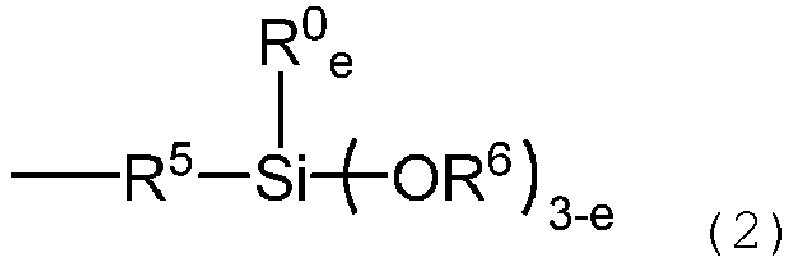
- the present invention provides surface-treated powder, wherein at least one compound represented by the following general formula (1) adheres to the surface of the powder, wherein R 2 is, independently of each other, a monovalent aromatic hydrocarbon group having 6 to 12 carbon atoms, R 4 is, independently of each other, a substituted or unsubstituted, monovalent non-aromatic hydrocarbon group having 1 to 30 carbon atoms, R 1 and R 0 are, independently of each other, a group selected from aforementioned groups defined for R 2 and R 4 , and R 3 is, independently of each other, a group represented by the following formula (2):
- Described herein is also a cosmetic comprising the surface-treated powder and oil.
- the cosmetic comprising the aforesaid surface-treated powder of the present invention has an excellent adhesiveness and forms a uniform cosmetic film which has no color unevenness and has a good coloring property.
- the cosmetic does not cause makeup to run with time, is not sticky, and gives a good feeling in use. Further, dispersion of the powder is stable and provides a cosmetic which changes little with time. These effects can be achieved even in a cosmetic comprising a mixture of a silicone oil and a polar oil. Accordingly, the surface-treated powder of the present invention can be successfully used in cosmetics.
- the surface-treated powder of the present invention is a surface-treated powder, wherein at least one compound represented by the following general formula (1) adheres to the surface of the powder, wherein R 2 is, independently of each other, a monovalent aromatic hydrocarbon group having 6 to 12 carbon atoms, R 4 is, independently of each other, a substituted or unsubstituted, monovalent non-aromatic hydrocarbon group having 1 to 30 carbon atoms, R 1 and R 0 are, independently of each other, a group selected from aforementioned groups defined for R 2 and R 4 , and R 3 is, independently of each other, a group represented by the following formula (2):
- R 4 is a substituted or unsubstituted, monovalent non-aromatic hydrocarbon group having 1 to 30 carbon atoms, preferably a group selected from the groups consisting of alkyl groups having 1 to 30 carbon atoms, cycloalkyl groups having 4 to 10 carbon atoms, and halogen-substituted alkyl groups having 1 to 15 carbon atoms.
- R 4 includes alkyl group such as methyl, ethyl, propyl, butyl, pentyl, hexyl, heptyl, octyl, nonyl, decyl and stearyl groups; cycloalkyl groups such as cyclopentyl and cyclohexyl group; or the foregoing groups where a part or all of their hydrogen atoms are replaced with a halogen atom(s), such as fluorine, chlorine, bromine, and iodine atoms.
- alkyl group such as methyl, ethyl, propyl, butyl, pentyl, hexyl, heptyl, octyl, nonyl, decyl and stearyl groups
- cycloalkyl groups such as cyclopentyl and cyclohexyl group
- halogen atom(s) such as fluorine, chlorine, bromine, and
- the fluorine-substituted groups include, for instance, fluorine-substituted alkyl groups such as a trifluoropropyl group and a heptadecafluorodecyl group. Among these, an alkyl group having 1 to 15 carbon atoms is preferred.
- R 2 is a monovalent aromatic hydrocarbon group having 6 to 12 carbon atoms, preferably a phenyl group, an ethyl phenyl group or a propylphenyl group. Among these, a phenyl group and a propylphenyl group are preferred.
- R 1 and R 0 are, independently of each other, a group selected from aforementioned groups defined for R 2 and R 4 .
- R 1 is an alkyl group having 1 to 15 carbon atoms or a phenyl group
- R 0 is an alkyl group having 1 to 15 carbon atoms.
- R 5 is a divalent hydrocarbon group having 2 to 8 carbon atoms, preferably 2 to 6 carbon atoms.
- R 5 include ethylene, propylene and hexamethylene groups.
- R 6 is an alkyl group having 1 to 6 carbon atoms. Examples of R 6 include methyl, ethyl, propyl, isopropyl and hexyl groups. Among these, methyl and ethyl groups are preferred.
- a is an integer of from 0 to 3, preferably 0 or 1.
- b is an integer of from 0 to 200, preferably an integer of from 0 to 100.
- c is an integer of from 1 to 150, preferably an integer of from 1 to 100.
- d is an integer of from 0 to 50, provided that when a is 0, d is an integer of from 1 to 50, preferably 1 to 20.
- e is an integer of from 0 to 2, preferably 0 or 1.
- c/(b+c+d) is 0.25 to 0.80.
- c/(b+c+d) is less than the aforesaid lower limit, when a polar oil such as glyceride oils and an organo ultraviolet absorbent is added in a cosmetic, an oil phase separates or powder settles out with time, because of less compatibility of the oil.
- the compound represented by the formula (1) may be used singly or two or more of them may be used in combination.
- the compound is such represented by the following formulae:
- Powder to be surface-treated with the aforesaid compound may be one which is commonly used in cosmetics, regardless of: the shape such as spherical, spindle, acicular, fan-like and plate-like; the particle size such as fume size, fine particle and pigment size; and the particle structure such as porous and non-porous.
- the powder include powder of metal salt surfactant, colored pigments, pearl pigments, metal powder pigments, natural colors, and other inorganic or organic powder.
- Examples of the powder of metal salt surfactant include zinc stearate, aluminum stearate, calcium stearate, magnesium stearate, zinc myristate, magnesium myristate, zinc cetyl phosphate, calcium cetyl phosphate, zinc/sodium cetyl phosphate, zinc palmitate, aluminum palmitate and zinc laurate.
- the colored pigments include inorganic red pigments such as iron oxide, iron hydroxide, and iron titanate; inorganic brown pigments such as ⁇ -iron oxide; inorganic yellow pigments such as iron oxide yellow and loess; inorganic black pigments such as iron oxide black and carbon black; inorganic violet pigments such as manganese violet and cobalt violet; inorganic green pigments such as chromium hydroxide, chromium oxide, cobalt oxide, and cobalt titanate; inorganic blue pigments such as prussian blue and ultramarine blue; lakes of tar pigments, lakes of natural dyes, and synthetic resin powder such as a composite of these powders.
- inorganic red pigments such as iron oxide, iron hydroxide, and iron titanate
- inorganic brown pigments such as ⁇ -iron oxide
- inorganic yellow pigments such as iron oxide yellow and loess
- inorganic black pigments such as iron oxide black and carbon black
- inorganic violet pigments such as manganese
- pearl pigments examples include titanium oxide-coated mica, bismuth oxychloride, titanium oxide-coated bismuth oxychloride, titanium oxide-coated talc, fish scales, and titanium oxide-coated colored mica.
- Examples of the metal powder pigments include aluminum powder, copper powder and stainless steel powder.
- Examples of the tar pigments include Red No. 3, Red No. 104, Red No. 106, Red No. 201, Red No. 202, Red No. 204, Red No. 205, Red No. 220, Red No. 226, Red No. 227, Red No. 228, Red No. 230, Red No. 401, Red No. 505, Yellow No. 4, Yellow No. 5, Yellow No. 202, Yellow No. 203, Yellow No. 204, Yellow No. 401, Blue No. 1, Blue No. 2, Blue No. 201, Blue No. 404, Green No. 3, Green No. 201, Green No. 204, Green No. 205, Orange No. 201, Orange No. 203, Orange No. 204, Orange No. 206, and Orange No. 207.
- Examples of the natural pigments include carminic acid, laccaic acid, carthamin, brazilin, and crocin. Powder which absorbes and scatters ultraviolet, such as titanium oxide fine particles, iron-containg titanium oxide fine particles, zinc oxide fine particles, cerium oxide fine particles and complex of these.
- Examples of the other inorganic powder include titanium oxide, zirconium oxide, zinc oxide, cerium oxide, magnesium oxide, barium sulfate, calcium sulfate, magnesium sulfate, calcium carbonate, magnesium carbonate, talc, mica, kaolin, sericite, muscovite, synthetic mica, phlogopite, lepidolite, biotite, lithia mica, silicic acid, silicic anhydride, aluminum silicate, magnesium silicate, aluminum magnesium silicate, calcium silicate, barium silicate, strontium silicate, metal salts of tungstenic acid, hydroxyapatite, vermiculite, higilite, bentonite, montmorillonite, hectolitre, zeolite, ceramics powder, calcium secondary phosphate, alumina, aluminum hydroxide, boron nitride, boron nitride, silica, glass and silylated silica.
- zinc oxide titanium oxide, barium
- Examples of the other organic powder include polyamide powder, poly-acrylic acid/acrylic ester powder, polyester powder, polyethylene powder, polypropylene powder, polystyrene powder, polyurethane powder, benzoguanamine powder, polymethylbenzoguanamine powder, tetrafluoroethylene powder, polymethylmethacrylate powder, cellulose powder, silk powder, nylon powder such as Nylon 6 and Nylon 12, crosslinked silicone fine powder of crosslinked dimethylsilicone, fine powder of polymethylsylsesquioxane, fine powder of spherical crosslinked-organopolysiloxane elastomer coated with polymethylsylsesquioxane, hydrophobized silica, styrene/acrylic acid copolymer, divinylbenzene/styrene copolymer, vinyl resin, urea resin, phenol resin, fluoro resin, silicone resin, acrylic resin, melamine resin, epoxy resin, polycarbonate resin, microcrystalline fiber powder, starch powder
- the weight ratio of the aforesaid compound represented by the formula (1) to the powder is preferably 0.1 to 30 parts by weight, particularly 0.5 to 20 parts by weight, relative to 100 parts by weight of the powder.
- surfactants such as silicone compounds other than the aforesaid compound represented by the formula (1), fluorine compounds, silane coupling agents and amino acids may be used, in addition to the aforesaid compound represented by the formula (1), in order to treat the surface of the powder.
- a cosmetic comprising (A) the surface-treated powder of the present invention and (B) oil is described herein below.
- the amount of the surface-treated powder (A) in the cosmetic may be suitably selected depending on the form of the cosmetic.
- the amount of the surface-treated powder is 1 to 95 weight %, preferably 1 to 50 weight %, based on total weight of the cosmetic.
- the amount of the surface-treated powder is preferably 70 to 95 weight %.
- any oil which is commonly used in cosmetics may be used, such as solid oil, semisolid oil and liquid oil.
- the oil may be used singly or two or more kinds of oil may be used in combination.
- the amount of the oil (B) in the cosmetic may be suitably selected depending on the form of the cosmetic. In particular, the amount of the oil is 1 to 70 weight %, preferably 1 to 50 weight %, based on total weight of the cosmetic.
- the oil component (B) preferably comprises a polar oil having an IOB of 0.05 to 1, more preferably 0.1 to 0.85.
- IOB Inorganic Value (IV) / Organic Value (OV).
- the inorganic value and the organic value are based on an organic conceptual diagram.
- the organic conceptual diagram was proposed by Atsushi Fujita and described in detail in " Fragrance Journal", vol. 50, pp.
- polar oil examples include ester oils such as diisobutyl adipate(0.46), 2-hexyldecyl adipate(0.25), di-2-heptylundecyl adipate(0.18), isocetyl isostearate(0.09), hexyl isostearate(0.13), trimethylolpropane triisostearate(0.58), ethylene glycol di-2-ethylhexanoate(0.35), cetyl 2-ethylhexanoate(0.13), trimethylolpropane tri-2-ethylhexanoate(0.35), pentaerythritol tetra-2-ethylhexanoate(0.38), cetyl octanoate(0.13), oleyl oleate(0.09), octyldodecyl oleate (0.08), isodecyl oleate(0.11), dec
- the oil component (B) may comprise a silicone oil.
- the IOB of silicone oils is approximately 0.15 to 0.40 . Silicone oils may be added in addition to the aforementioned polar oil having the IOB of 0.05 to 1.0. Even when the oil is a mixture of the silicone oil and the polar oil, the cosmetic provides a cosmetic film which has good adhesion, is uniform, has no color unevenness and has good coloring, on account of the powder surface-treated with the compound represented by the formula (1).
- silicone oils include linear or branched organopolysiloxane having a low viscosity to a high viscosity, such as dimethylpolysiloxane, tristrimethylsiloxymethylsilane, caprylyl methicone, phenyl trimethicone, tetrakistrimethylsiloxysilane, methylphenylpolysiloxane, methylhexylpolysiloxane, methylhydrogenpolysiloxane, and dimethylsiloxane-methylphenylsiloxane-copolymer; cyclic organopolysiloxanes such as octamethylcyclotetrasiloxane, decamethylcyclopentasiloxane, dodecamethylcyclohexasiloxane, tetramethyltetrahydrogencyclotetrasiloxane, and tetramethyltetraphenylcyclotetrasilox
- the content of the silicone oil may be suitably selected depending on the form of the cosmetic.
- the amount is 1 to 70 weight %, more preferably 1 to 50 weight %, based on the total weight of the cosmetic.
- the oil is a mixture of the silicone oil and the polar oil, the amount of the silicon oil is properly controlled so that the total amount of the oils is 1 to 70 weight %, preferably 1 to 50 weight %, based on the total weight of the cosmetic.
- hydrocarbon oils higher alcohols and fluorinated oils may be used, besides the polar oil and the silicone oil mentioned above.
- hydrocarbon oils examples include linear or branched hydrocarbon oil which may be volatile, such as ozokerite, ⁇ -olefin oligomers, light isoparaffin, isododecane, isohexadecane, light liquid isoparaffin, squalane, sysnthetic squalane, plant squalane, squalene, ceresin, paraffin, paraffin wax, polyethylene wax, polyethylene-polypropylene wax, (ethylene / propylene / styrene) copolymer, (butylenes / propylene / styrene) copolymer, liquid paraffin, liquid isoparaffin, pristane, polyisobutylene, hydrogenerated polyisobutylene, microcrystalline wax, and vaseline.
- volatile such as ozokerite, ⁇ -olefin oligomers, light isoparaffin, isododecane, isohexadecane, light liquid isopar
- Examples of the higher alcohols include lauryl alcohol, myristyl alcohol, palmityl alcohol, stearyl alcohol, behenyl alcohol, hexadecyl alcohol, oleyl alcohol, isostearyl alcohol, hexyldodecanol, octyl dodecanol, cetostearyl alcohol, 2-decyltetradecinol, cholesterol, phytosterol, POE cholesterol ether, monostearyl glycerin ether (batyl alcohol), and monooleyl glyceryl ether (or cerakyl alcohol).
- fluorinated oil examples include perfluoropolyethers, perfluorodecaline and perfluorooctane.
- Examples of the other oil include natural ester oils such as avocado oil, linseed oil, almond oil, Ibota wax, insect wax, perilla oil, olive oil, cacao butter, kapok wax, kaya oil, carnauba wax, liver oil, candelilla wax, purified candelilla wax, beef tallow, neat's-foot oil, beef bone fat, hydrogenated beef tallow, apricot kernel oil, spermaceti wax, hydrogenated oil, wheat germ oil, sesame oil, rice germ oil, rice bran oil, sugar cane wax, sasanqua oil, safflower oil, shear butter, Chinese tung oil, cinnamon oil, jojoba wax, squalane, squalene, shellac wax, turtle oil, soybean oil, tea seed oil, camellia oil, evening primrose oil, corn oil, lard, rapeseed oil, Japanese tung oil, rice bran oil, germ oil, horse fat, persic oil, palm oil, palm kernel oil, castor
- the cosmetic may contain ultraviolet light absorbents if needed.
- the ultraviolet light absorbents include those of benzoic acid type, such as p-aminobenzoic acid, ethyl p-aminobenzoate, glyceryl p-aminobenzoate and p-dimethylaminooctyl bezoate; those of anthranilic acid type, such as methyl anthranilate; those of salicylic acid type such as methyl salicylate, octyl salicylate, trimethylcyclohexyl salicylate, ethylene glycol salicylate and phenyl salicylate; those of cinnamic acid type such as benzyl cinnamate, octyl p-methoxy cinnamate and 2-ethoxyethyl-p-methoxy cinnamate; those of benzophenone type such as 2,4-dihydroxy benzophenone, tetrahydroxy benzophenone
- the cosmetic may contain one or more silicone surfactants represented by the following general formula (3), depending on the intended application: wherein R is, independently of each other, a substituted or unsubstituted, monovalent hydrocarbon group having 1 to 30 carbon atoms, and R 7 is, independently of each other, represented by the following formula (4) or (5).
- R is, independently of each other, a substituted or unsubstituted, monovalent hydrocarbon group having 1 to 30 carbon atoms
- R 7 is, independently of each other, represented by the following formula (4) or (5).
- the unit derived from ethylene oxide or propylene oxide in the following formula (4) may form a block or bond randomly.
- the unit derived from glycerin in the following formula (5) may have a branched structure to constitute an isomer, -C p H 2p O(C 2 H 4 O) q (C 3 H 6 O) m R 9 (4) -C p H 2p O(C 3 H 5 (OR 10 )O) n R 11 (5) wherein R 8 is a monovalent hydrocarbon group having 6 to 30 carbon atoms, R 9 , R 10 and R 11 are, independently of each other, a hydrogen atom or a monovalent hydrocarbon group having 1 to 6 carbon atoms, and at least one of R 10 and R 11 is a hydrogen atom.
- f is an integer of from 0 to 200
- g is an integer of from 1 to 30
- h is an integer of from 0 to 50
- i is an integer of from 0 to 30
- p is an integer of from 1 to 6
- k is an integer of from 0 to 100
- q is an integer of from 0 to 50
- m is an integer of from 0 to 50, provided that a total of q and m is 1 or more
- n is an integer of from 1 to 6.
- the compound having the group represented by the formula (4) is a silicone surfactant having a moiety derived from ethylene oxide and/or a moiety derived from propylene oxide as a hydrophilic moiety.
- the compound having the group represented by the formula (5) is a silicone surfactant having a moiety derived from glycerin as a hydrophilic moiety.
- R is, independently of each other, a substituted or unsubstituted, monovalent hydrocarbon group having 1 to 30 carbon atoms, preferably an alkyl group having 1 to 30 carbon atoms, a halogen-substituted alkyl group having 1 to 15 carbon atoms, or an aryl group having 6 to 12 carbon atoms.
- R includes an alkyl group such as methyl, ethyl, propyl, butyl, pentyl, hexyl, heptyl, octyl, nonyl, decyl and stearyl groups; a cycloalkyl group such as cyclopentyl and cyclohexyl groups; an aryl group such as phenyl, ethyl phenyl and propylphenyl groups; and the foregoing groups where a part or all of their hydrogen atoms is(are) replaced with a halogen atom(s), such as fluorine, chlorine, bromine, and iodine atoms.
- alkyl group such as methyl, ethyl, propyl, butyl, pentyl, hexyl, heptyl, octyl, nonyl, decyl and stearyl groups
- a cycloalkyl group such as
- the fluorine-substituted groups include fluorine-substituted alkyl groups such as a trifluoropropyl group and a heptadecafluoro decyl group. Among these, an alkyl group having 1 to 15 carbon atoms and a phenyl group are preferred.
- R 9 , R 10 and R 11 are a hydrogen atom or a hydrocarbon group having 1 to 6 carbon atoms.
- the hydrocarbon group include methyl, ethyl, propyl, butyl, pentyl and hexyl groups.
- Preferred are a hydrogen atom, a methyl group and a butyl group.
- At least one of R 10 and R 11 is a hydrogen atom.
- f is 0 to 200, preferably 0 to 100
- g is 1 to 30, preferably 1 to 20
- h is 0 to 50, preferably 0 to 20
- i is 0 to 30, preferably 0 to 10
- p is 1 to 6, preferably 2 to 4
- k is 0 to 100, preferably 0 to 50
- q is 0 to 50, preferably 0 to 30, m is 0 to 50, preferably 0 to 30, provided that a total of q and m is 1 or more
- n is 1 to 6, preferably 1 to 4.
- Examples of the compound having the group represented by the formula (4) include KF-6011, KF-6011P, KF-6012, KF-6013, KF-6015, KF-6017, KF-6017P, KF-6028, KF-6028P, KF-6038 and KF-6043, all from Shin-Etsu Chemical Co., Ltd.
- Examples of the compound having the group represented by the formula (5) include KF-6100, KF-6104 and KF-6105, all from Shin-Etsu Chemical Co., Ltd.
- the amount of the compound represented by the formula (3) may suitably be selected depending on the form of the cosmetic.
- the amount is preferably 1 to 50 weight %, based on the total weight of the cosmetic.
- the cosmetic may contain one or more acryl, silicone-graft copolymers, depending on the intended use.
- acryl, silicone-graft copolymers include KP-541, KP-543, KP-545, KP-549, KP-550, KP-545L, KP-561P, KP-562P, KP-575 and KP-578, all from Shin-Etsu Chemical Co., Ltd.
- the amount of the acryl, silicone-graft copolymer may be suitably selected depending on the form of the cosmetic.
- the amount is preferably 0.1 to 30 weight %, based on the total weight of the cosmetic.
- the cosmetic may contain one or more compounds having an alcoholic hydroxyl group, depending on the intended use.
- the compound having an alcoholic hydroxyl group which can be added in the present cosmetic include lower monohydric alcohols such as ethanol and isopropanol; sugar alcohols such as sorbitol and maltose; sterols such as cholesterol, sitosterol, phytosterol and lanosterol; and polyhydric alcohols such as butylene glycol, propylene glycol, dibutylene glylcol and pentylene glycol.
- the cosmetic may contain one or more water-soluble or water-swellable polymers.
- the polymer include plant polymers such as gum arabic, tragacanth gum, galactan, carob gum, guar gum, karaya gum, carrageenan, pectin, agar, quince seed (i.e., marmelo), starch from rice, corn, potato or wheat, algae colloid, trant gum and locust bean gum; bacteria-derived polymers such as xanthan gum, dextran, succinoglucan, and pullulan; animal-derived polymers such as collagen, casein, albumin, and gelatin; starch-derived polymers such as carboxymethyl starch and methylhydroxypropyl starch; cellulose polymers such as methyl cellulose, ethyl cellulose, methylhydroxypropyl cellulose, carboxymethyl cellulose, hydroxymethyl cellulose, hydroxypropyl cellulose, nitrocellulose, sodium cellulose sulfate, sodium carboxymethyl cellulose, crystalline cellulose
- the cosmetic may contain one or more surfactants, depending on the intended use. Any surfactants usually used in cosmetics can be used. For instance, anionic, cationic, nonionic or amphoteric surfactants can be used.
- anionic surfactants include fatty acid soaps such as sodium stearate and triethanolamine palmitate; alkylether carboxylic acids and salts thereof; salts of condensates of amino acids with fatty acids; alkanesulfonates, alkenesulfonates, sulfonates of fatty acid esters, fatty acid amide sulfonates, sulfonates of formalin condensates, alkylsulfates, sulfates of secondary higher alcohols, alkyl/allyl ether sulfates, sulfates of fatty acid esters, sulfates of fatty acid alkylolamides, and sulfates of Turkey Red oil; and alkyl phosphates, ether phosphates, alkylallylether phosphates, amide phosphates, N-acyl lactate, N-acyl sarcosinate and N-acylamino acid activates.
- fatty acid soaps such as
- cationic surfactants examples include alkylamine salts, amine salts of polyamine and amino alcohol fatty acid derivatives, alkyl quaternary ammonium salts, aromatic quaternary ammonium salts, pyridinium salts and imidazolium salts.
- nonionic surfactants examples include sorbitan fatty acid esters, glycerin fatty acid esters, polyglycerin fatty acid esters, propylene glycol fatty acid esters, polyethylene glycol fatty acid esters, sucrose fatty acid esters, methylglucoside fatty acid esters, alkylpolyglucoside, polyoxyethylene alkylethers, polyoxypropylene alkylethers, polyoxyethylene alkylphenylethers, polyoxyethylene fatty acid esters, polyoxyethylene sorbitan fatty acid esters, polyoxyethylene sorbitol fatty acid esters, polyoxyethylene glycerin fatty acid esters, polyoxyethylene propylene glycol fatty acid esters, polyoxyethylene castor oil, polyoxyethylene hydrogenated castor oil, polyoxyethylene phytostanolether, polyoxyethylene phytosterolether, polyoxyethylene cholestanolether, polyoxyethylene cholesterylether, linear or branched polyoxyalkylene-modifed
- amphoteric surfactants examples include betaine, phosphatidylcholine, aminocarboxylates, imidazoline derivatives and amide or amine type surfactants.
- the cosmetic may contain one or more silicone resins, depending on the intended use.
- the silicone resin is preferably a compound having a three-dimensional cross-linked structure, such as a silicone resin consisting of R 1 3 SiO 0.5 units and SiO 2 units, a silicone resin consisting of R 1 3 SiO 0.5 units, R 1 2 SiO units and SiO 2 units, a silicone resin consisting of R 1 3 SiO 0.5 units and R 1 SiO 1.5 units, a silicone resin consisting of R 1 3 SiO 0.5 units, R 1 2 SiO units and R 1 SiO 1.5 units, a silicone resin consisting of R 1 3 SiO 0.5 units, R 1 2 SiO units, R 1 SiO 1.5 units and SiO 2 units.
- R 1 are as defined above for R 1 .
- Compounds having at least one structure selected from the group consisting of a pyrolidone structure, a long chain alkyl structure, a polyoxyalkylene structure, a fluoroalkyl structure and an amino structure can be used.
- silicone resin examples include KF-7312J, KF-7312K, KF-7312T, X-21-5249, X-21-5250, KF-9021, X-21-5595 and X-21-5616, all from Shin-Etsu Chemical Co., Ltd.
- the cosmetic may contain one or more crosslinking organopolysiloxanes comprising oil which is liquid at room temperature, depending on the intended use.
- the crosslinking organopolysiloxane is swelled with the liquid oil of a larger weight amount than that of the organopolysiloxane.
- liquid oil examples include siliocone oils, hydrocarbon oils, ester oils, natural oils from animals and plants, semi-synthetic oils and flouorinated oils; silicone oils having a low kinetic viscosity of from 0.65 mm 2 /sec to 100.0 mm 2 /sec at 25 degrees C; hydrocarbon oils such as liquid paraffin, squalane, isododecane and isohexadecane; glyceride oils such as trioctanoin; esters such as isotridecyl isononanate, N-acyl glutamic acid ester and lauroylsarcosine ester; and natural oils from animals and plants, such as macadamia nut oil.
- silicone oils having a low kinetic viscosity of from 0.65 mm 2 /sec to 100.0 mm 2 /sec at 25 degrees C
- hydrocarbon oils such as liquid paraffin, squalane, isododecane and isohexadecane
- the cross-linking organopolysiloxane may preferably form a cross-linked structure via an addition reaction between an alkenyl group and a hydrosilyl group, such as an organopolysiloxane having two or more vinyl groups in the molecular, a polyoxyalkylene having two or more allyl groups in the molecular, a polyglycerin having two or more allyl groups in the molecular, and ⁇ , ⁇ -alkenyl diene.
- a cross-linking organopolysiloxane may have at least one selected from the group consisting of a polyoxyalkylene moiety, a polyglycerin moiety, a long chain alkyl moiety, an alkenyl moiety, an aryl moiety and a fluoroalkyl moiety.
- crosslinking organopolysiloxane examples include KSG-15, KSG-1510, KSG-16, KSG-1610, KSG-18A, KSG-41A, KSG-42A, KSG-43, KSG-44, KSG-045Z, KSG-210, KSG-310, KSG-320, KSG-330, KSG-340, KSG-320Z, KSG-350Z, KSG-360Z, KSG-710, KSG-810, KSG-820, KSG-840, KSG-840, KSG-820Z and KSG-850Z, all from Shin-Etsu Chemical Co., Ltd.
- the cosmetic may contain one or more kinds of silicone wax, depending on the intended use.
- the silicone wax is a silicone-modified olefin wax obtained by addition reaction between organohydrogenpolysiloxane having at least one SiH bond in a molecule and an olefin wax which was prepared from ⁇ -olefin and diene and still has an unsaturated group.
- the ⁇ -olefin preferably has 2 to 12 carbon atoms, such as ethylene, propylene, 1-butene, 1-hexene, and 4-methyl-1-pentene.
- the diene is preferably butadiene, isoprene, 1,4-hexadiene, vinyl norbornene, ethylidene norbornene, and dicyclopentadiene.
- the organohydrogenpolysiloxane having an SiH bond may have a linear or branched structure.
- the cosmetic may comprise other components that are commonly used in cosmetics in such an amount as not to adversely affect the effect provided by the surface-treated powder of the present invention.
- the components include oil-soluble gelling agents, clay minerals modified with organic compounds, resins, antiperspirant, moisture retention agents, antiseptics, anti-microbial agents, perfumes, salts, antioxidants, pH regulators, chelating agents, refreshing agents, anti-inflammatory agents, skin-beautifying components such as skin whitener, cell activator, rough dry skin improver, blood circulation promoter, skin astringent and anti-seborrheic agent, vitamins, amino acids, nucleic acids, hormones, clathrate compounds and hair-setting agents.
- oil-soluble gelling agent examples include metal soaps, such as aluminum stearate, magnesium stearate and zinc myristate; amino acid derivatives, such as N-lauroyl-L-glutamic acid and ⁇ , ⁇ -di-n-butylamine; dextrin fatty acid esters, such as dextrin palmitic acid ester, dextrin stearic acid ester and (palmitate / ethylhexanoate) dextrin; sucrose fatty acid esters, such as sucrose palmitic acid ester and sucrose stearic acid ester; fructooligosaccharide fatty acid esters, such as fructooligosaccharide stearate and fructooligosaccharide 2-ethylhexanoate; benzylidene derivatives of sorbitol, such as monobenzylidene sorbitol and dibenzylidene sorbitol; and clay minerals modified with organic compounds,
- antiperspirant examples include aluminum chlorohydrate, aluminum chloride, aluminum sesqui chlorohydrate, zirconyl hydroxychloride, aluminum zirconium hydroxychloride, and aluminum zirconium glycine complex.
- moisture retention agent examples include glycerin, sorbitol, propylene glycol, dipropylene glycol, 1,3-butylene glycol, pentylene glycol, glucose, xylitol, maltitol, polyethylene glycol, hyaluronic acid, chondroitin sulfuric acid, pyrrolidone carboxylate, polyoxyethylene glycoside, polyoxypropylene methylglycoside, egg yolk lecithin, soybean lecithin, phosphatidylcholine, phosphatidylethanolamine, phosphatidylserine, phosphatidylglycerol, phosphatidylinositol, and phosphosphingolipid.
- antiseptics examples include alkyl p-oxybenzoates, benzoic acid, sodium benzoate, sorbic acid, potassium sorbate, and phenoxyethanol.
- benzoic acid salicylic acid, carbolic acid, sorbic acid, paraoxybenzoic acid alkyl esters, parachloromethacresol, hexachlorophene, benzalkonium chloride, chlorohexydine chloride, trichlorocarbanilide, photosensitizers and phenoxyethanol.
- Examples of the salts include inorganic salts, organic acid salts, amine salts and amino acid salts.
- the inorganic salts include sodium salts, potassium salts, magnesium salts, calcium salts, aluminum salts, zirconium salts, or zinc salts of inorganic acids such as hydrochloric acid, sulfuric acid, carbonate, and nitric acid.
- Examples of the organic acid salts include a salt of an organic acid such as acetic acid, dehydro acetic acid, citric acid, malic acid, succinic acid, ascorbic acid and stearic acid.
- the amine salts and the amino acid salts include salts of amines such as triethanolamine and salts of amino acids such as glutamic acid.
- hyaluronic acid, salts such as chondroitin sulfate, and aluminum zirconium glycine complex, and neutralized salt of an acid and an alkali which is usually used in cosmetic formulations can also be used.
- antioxidants examples include tocopherol, p-t-butylphenol, butylhydroxyanisole, dibutylhydroxytoluene and phytic acid.
- pH regulators include lactic acid, citric acid, glycolic acid, succinic acid, tartaric acid, dl-malic acid, potassium carbonate, sodium hydrogen carbonate and ammonium hydrogen carbonate.
- chelating agents include alanine, sodium edetate, sodium polyphosphate, sodium metaphosphate and phosphoric acid.
- refreshing agents include L-menthol and camphor.
- anti-inflammatory agents examples include allantoin, glycyrrhizinic acid and salts thereof, glycyrrhetinic acid and stearyl glycyrrhetinate, tranexamic acid and azulene.
- Examples of the skin-beautifying components include whitening agents, include placenta extract, arbutin, glutathione and Yukinoshita extract; cell activators, such as royal jelly, photosensitizers, cholesterol derivatives and calf blood extract; rough and dry skin improvers; blood circulation improvers, such as nonylic acid vanillyl amide, benzyl nicotinate, beta-butoxyethyl nicotinate, capsaicin, zingerone, cantharis tincture, ichtammol, caffeine, tannic acid, alpha-borneol, tocopheryl nicotinate, inositol hexanicotinate, cyclandelate, cinnarizine, tolazoline, acetyl choline, verapamil, cepharanthin and gamma-oryzanol; skin astringents, such as zinc oxide and tannic acid; and anti-seborrheic
- vitamins examples include vitamin A, such as vitamin A oil, retinol, retinyl acetate and retinyl palmitate; vitamin B, including vitamin B2 such as riboflavin, riboflavin butyrate and flavin adenine nucleotide, vitamin B6 such as pyridoxine hydrochloride, pyridoxine dioctanoate and pyridoxine tripalmitate, vitamin B12 and its derivatives, and vitamin B15 and its derivatives; vitamin C, such as L-ascorbic acid, L-ascorbic acid dipalmitic ester, L-ascorbic acid-2-sodium sulfate and L-ascorbic acid dipotassium diphosphate ester; vitamin D, such as ergocalciferol and cholecarciferol; vitamin E, such as alpha-tocopherol, beta-tocopherol, gamma-tocopherol, dl-alpha-tocopheryl a
- amino acids examples include glycine, valine, leucine, isoleucine, serine, threonine, phenylalanine, arginine, lysine, aspartic acid, glutamic acid, cystine, cysteine, methionine, and tryptophan.
- nucleic acids examples include deoxyribonucleic acid.
- hormones include estradiol and ethenyl estradiol.
- polymers for setting hair include amphoteric, anionic, cationic, or nonionic polymer compounds.
- polyvinyl pyrrolidone polymer compounds such as polyvinyl pyrrolidone and vinyl pyrrolidone/vinyl acetate copolymers
- acidic vinyl ether polymer compounds such as methyl vinyl ether/maleic anhydride alkyl half ester copolymer
- acidic polyvinyl acetate polymers such as vinyl acetate/ crotonic acid copolymers
- acidic acrylic polymer compounds such as (meth) acrylic acid/alkyl (meth) acrylate copolymers, and (meth) acrylic acid/alkyl (meth) acrylate/alkyl acrylamide copolymer
- amphoteric acrylic polymer compounds such as N-methacryloylethyl-N,N-dimethylammonium- ⁇ -N-methyl carboxybetaine/ alkyl(meth)acrylate copolymer,
- the cosmetic may be in any form and is not limited to any particular one.
- the cosmetic may be of powder, oil, water-in-oil emulsion, oil-in-water emulsion, nonaqueous emulsion, and multi-emulsion such as W/O/W or O/W/O.
- the cosmetic can include skincare cosmetics such as a lotion, a milky lotion, a cream, a cleansing, a pack, an oil liquid, a massage agent, a beauty essence, a beauty oil, a detergent, a deodorant, a hand cream, a lip balm, and a wrinkle concealler; makeup cosmetics such as a make-up foundation, a concealer, a face powder, a powder foundation, a liquid foundation, a cream foundation, an oily foundation, a blush, an eye shadow, a mascara, an eyeliner, an eyebrow, and a lipstick; hair cosmetics such as a shampoo, a rinse, a treatments, and a setting agent; antiperspirants; and UV protective cosmetics such as a sunscreen oil, a sunscreen milky lotion, and a sunscreen cream.
- skincare cosmetics such as a lotion, a milky lotion, a cream, a cleansing, a pack, an oil liquid, a massage agent, a beauty essence, a beauty oil, a detergent, a deodor
- the cosmetic may be in various forms such as liquid, emulsion, cream, solid, paste, gel, powder, pressed, laminated, mousse, spray, stick, and pencil forms.
- organohydrogenpolysiloxane represented by the following average composition formula (6): and 41.8 parts by weight of vinyltriethoxysilane, to which were further added 100 parts by weight of toluene.
- 0.1 parts of 0.5 wt% solution of chloroplatinic acid in toluene were added to the mixture, which was then allowed to react for 2 hours under reflux of the solvent.
- the reaction mixture was subsequently heated under a reduced pressure to distill off the solvent and the unreacted starting material to obtain 196 parts by weight of organopolysiloxane represented by the following average compositional formula (7):
- organohydrogenpolysiloxane represented by the following average composition formula (8): and 100 parts by weight of toluene. 0.15 parts of 0.5 wt% solution of a chloroplatinic acid in toluene were added to the mixture. The mixture was heated to 80 degrees C, to which 114 parts by weight of ⁇ -methylstyrene were added dropwise. Then, 31 parts by weight of vinyltriethoxysilane were added and the mixture was heated for 2 hours under reflux of the solvent and subsequently heated under a reduced pressure to distill off the solvent and the unreacted starting material to obtain 310 parts by weight of organopolysiloxane represented by the following average compositional formula (9).
- organohydrogenpolysiloxane represented by the following average composition formula (10): and 100 parts by weight of toluene. 0.15 parts of 0.5 wt% solution of a chloroplatinic acid in toluene were added to the mixture. The mixture was heated to 80 degrees C, to which 59 parts by weight of 1-dodecene and 104 parts by weight of ⁇ -methylstyrene were added dropwise.
- organohydrogenpolysiloxane represented by the following average composition formula (12): and 100 parts by weight of toluene.
- 0.1 parts of 0.5 wt% solution of a chloroplatinic acid in toluene were added to the mixture.
- the mixture was heated to 80 degrees C, to which 58 parts by weight of ⁇ -methylstyrene were added dropwise.
- 50 parts by weight of vinyltriethoxysilane were added and the mixture was heated for 2 hours under reflux of the solvent and subsequently heated under a reduced pressure to distill off the solvent and the unreacted starting material to obtain 273 parts by weight of organopolysiloxane represented by the following average compositional formula (13):
- organohydrogenpolysiloxane represented by the following average composition formula (14): and 125 parts by weight of toluene. 0.3 parts of 0.5 wt% solution of a chloroplatinic acid in toluene were added to the mixture.
- Treated Powder 10 98 parts of talc powder, ex Nippon Talc Co., Ltd., 2 parts of compound obtained in Synthesis Example 1, and 100 parts of toluene were added in a reactor, so that the powder was wet-treated. After distilling off the toluene under heating, the residue was heated for baking at 130 degrees C for 3 hours to obtain Treated Powder 10.
- the W/O liquid foundations obtained above were used by 50 female expert panelists, and the feeling in use, adhesion, uniformity of a film and durability of a makeup were evaluated according to the following criteria.
- Example 1 Example 2 Comparative Example 1 Feeling in use B B C Adhesion A A B Uniformity of a film A A C Durability of makeup A A C Storage stability, after storage at 50 degrees C for one week No change No change Separation occurred and part of the powder precipitated.
- the foundations obtained in Examples 1 and 2 had better feeling in use and adhesion, gave a uniform film without irregular color, and had better durability of makeup, compared to the foundation obtained in Comparative Example 1. Further, after the storage at 50 degrees C for one week, the foundation of Comparative Example 1 caused separation, but the foundations of Examples 1 and 2 were stable with no separation.
- Example 3 Example 4 Comparative Example 2 Comparative Example 3 Feeling in use A A C B Adhesion B A B B Uniformity of a film A A D D Durability of makeup A A D C Storage stability, after storage at 50 degrees C for one week No change No change Separation occurred and part of the powder precipitated. Separation occurred and part of the powder precipitated.
- the foundations obtained in Examples 3 and 4 had better feeling in use and adhesion, gave a uniform film without irregular color, and had better durability of makeup, compared to the foundations obtained in Comparative Examples 2 and 3. Further, after the storage at 50 degrees C for one week, the foundations of Comparative Examples 2 and 3 caused separation, but the foundations of Examples 3 and 4 were stable with no separation.
- the powder foundation comprising the treated powders of the present invention spread lightly on the skin and did not have a powdery feel, was not sticky or oily, had good adhesion to the skin and gave a dry feeling in use.
- Purified water 20.2 (Note 1) Branched-silicone type, polyether-modified silicone: KF-6028, ex Shin-Etsu Chemical Co., Ltd. (Note 2) Hybrid silicone composite powder: KSP-105, ex Shin-Etsu Chemical Co., Ltd. (Note 3) Treated powder 9/Cyclopentasiloxane dispersion: Dispersion prepared by mixing 60 parts of treated powder 9, 35 parts of cyclopentasiloxane, and 5 parts of acryl-silicone graft copolymer, KP-578, ex Shin-Etsu Chemical Co., Ltd., and treating with a beads mill.
- the sunscreen agent comprising the present treated powder had no stickiness and had an excellent adhesion, and gave a uniform film, and an excellent durability of makeup.
- the oil-in-water cream comprising the present treated powder had no stickiness or oiliness, and gave a moist, fresh, and refreshing feeling.
- the durability of makeup was excellent and the makeup did not change with time or upon change of the temperature and, therefore, the stability was excellent.
- Purified water 40.3 (Note 1) Branched-silicone type, polyglycerin-modified silicone: KF-6100, ex Shin-Etsu Chemical Co., Ltd. (Note 2) Hybrid silicone composite powder: KSP-100, ex Shin-Etsu Chemical Co., Ltd.
- the body lotion comprising the present treated powder had no stickiness or oiliness, and gave a moist, fresh, and refreshing feeling.
- the makeup did not change with time or upon change of the temperature and, therefore, the stability was excellent.
- Hydrophobized titanium oxide fine powder Titanium oxide fine particles having an average particle size of 0.05 ⁇ m were dispersed in water at 10 weight %. Subsequently, an aqueous 10 weight % solution of sodium silicate with a molar ratio, SiO 2 / NaO 2 , of 0.5, was added, which corresponds to 2 weight % of SiO 2 relative to the amount of the titanium oxide, and stirred sufficiently. An aqueous 10 weight% solution of aluminum sulfate was gradually added, which corresponds to 7.5 weight % of Al 2 O 3 relative to the amount of the titanium oxide to have a hydrate of silicic acid and a hydrate of alumina deposited on the surface of the titanium oxide.
- the water-in-oil cream comprising the present treated powder had no stickiness or oiliness, and gave a moist, fresh, and refreshing feeling.
- the durability of makeup was excellent, the makeup did not change with time or upon change of the temperature and, therefore, the stability was excellent.
- the water-in-oil cream comprising the present treated powder had no stickiness or oiliness and gave a moist feeling.
- the makeup did not change with time or upon change of the temperature and, therefore, the stability was excellent.
- Purified water 58.6 (Note 1) Alkyl-modified, cross-linked, polyether-modified silicone: KSG-310, ex Shin-Etsu Chemical Co. Ltd. (Note 2) Branched silicone/alkyl, polyglycerin-modified silicone: KF-6105, ex Shin-Etsu Chemical Co. Ltd. (Note 3) Hybrid silicone composite powder: KSP-100, ex Shin-Etsu Chemical Co. Ltd.
- the water-in-oil cream comprising the present treated powder had no stickiness or oiliness, and gave a moist, fresh, and refreshing feeling.
- the durability of makeup was excellent and the makeup did not change with time or upon change of the temperature and, therefore, the stability was excellent.
- the water-in-oil cream comprising the present treated powder spread lightly had an excellent adhesion feel, makeup was very fit and gave a glossy finish.
- the durability of makeup was excellent.
- the makeup did not change with time or upon change of the temperature and, therefore, the stability was excellent.
- the eyeliner comprising the present treated powder elongated lightly, tended to draw easily, gave a fresh feeling, and had no stickiness.
- the makeup did not change with time or upon change of the temperature and, therefore, the stability and usability were excellent, water resistance and perspiration resistance were both excellent, and the durability of makeup was excellent.
- the eyeliner comprising the present treated powder elongated lightly, had no oily or powdery feeling, gave a fresh feeling in use, and had good water resistance, water repellency and perspiration resistance.
- the durability of makeup was excellent, the makeup did not change with time or upon change of the temperature, and, therefore, the stability was excellent.
- the cream eye shadow comprising the present treated powder had no oily or powdery feeling, gave a fresh feeling in use, and adhered well to the skin.
- the cream eye shadow had good water resistance, water repellency and perspiration resistance.
- the durability of makeup was excellent, the makeup did not change with time or upon change of the temperature, and, therefore, the stability was excellent.
- the lipstick obtained had no oily or powdery feeling, gave fresh feeling in use, had good water resistance, water repellency and perspiration resistance.
- the durability of makeup was good and the stability was excellent.
- Example 17 Emulsion liquid foundation
- Treated powder 6 0.7 14.
- Treated powder 8 0.1 15.
- Perfume 0.1 19. Purified water 53.8 (Note 1) Polyether-modified silicone: KF-6017, ex Shin-Etsu Chemical Co. Ltd. (Note 2) Branched silicone/alkyl, polyether-modified silicone: KF-6105, ex Shin-Etsu Chemical Co. Ltd.
- the emulsion liquid foundation comprising the present treated powder had a low viscosity and a fine texture, spread lightly, had no stickiness or oiliness, gave a moist, fresh, and refreshing feeling in use.
- the durability of makeup was excellent, the makeup did not change with time or upon change of the temperature, and, therefore, the stability was excellent.
- Treated powder 2 8.5 17.
- Treated powder 4 0.4 18.
- Treated powder 5 1.0 19.
- Treated powder 8 0.1 20. 1,3-Butylene glycol 7.0 21.
- Purified water 51.6 (Note 1) Long-chain alkyl-containing acrylic silicone resin: KP-561P, ex Shin-Etsu Chemical Co. Ltd. (Note 2) Hybrid silicone composite powder: KSP-100, ex Shin-Etsu Chemical Co. Ltd. (Note 3) Polyether-modified silicone: KF-6013, ex Shin-Etsu Chemical Co. Ltd.
- the oil-in-water liquid foundation obtained had no stickiness, gave a moist, fresh, and beautiful cosmetic film, and had water resistance, water repellency and perspiration resistance.
- the durability of makeup was excellent, the makeup did not change with time or upon change of the temperature, and, therefore, the stability was excellent.
- the water-in-oil cream foundation obtained spread lightly, gave a powdery makeup, had no stickiness, gave a moist, fresh, and beautiful cosmetic film, and had water resistance, water repellency and perspiration resistance.
- the durability of makeup was excellent, the makeup did not change with time or upon change of the temperature, and, therefore, the stability was excellent.
- the water-in-oil compact foundation comprising the present treated powder gave a dry finish feeling, had no stickiness, gave a moist, fresh, and beautiful cosmetic film, and had water resistance, water repellency and perspiration resistance.
- the durability of makeup was excellent, the makeup did not change with time or upon change of the temperature, and, therefore, the stability was excellent.
- Example 21 Water-in-oil stick foundation
- Treated powder 3 0.4 13. Treated powder 5 1.0 14. Treated powder 7 0.1 15. Dipropylene glycol 5.0 16. Sodium citrate 0.2 17. Sodium chloride 0.5 18. Antiseptic 0.1 19. Perfume 0.1 20. Purified water 44.6 (Note 1) Stearoyl Inulin: Rheopearl ISK, ex Chiba Flour Milling Co. Ltd. (Note 2) Cross-linked, polyglycerin-modified silicone: KSG-710, ex Shin-Etsu Chemical Co. Ltd. (Note 3) Branched silicone/alkyl, polyglycerin-modified silicone: KF-6105, ex Shin-Etsu Chemical Co. Ltd. (Note 4) Spherical polymethylsilsesquioxane powder: KMP-590, ex Shin-Etsu Chemical Co. Ltd.
- the water-in-oil stick foundation obtained spread lightly, gave a dry finish feeling, had no stickiness, gave a moist, fresh, and beautiful cosmetic film, and had water resistance, water repellency and perspiration resistance.
- the durability of makeup was excellent, the makeup did not change with time or upon change of the temperature, and, therefore, the stability was excellent.
- the hair treatment agent obtained had no stickiness or heavy feeling in use, gave an excellent glaze, a dry feeling, a smoothness and a sense of volume on hair, made it easy to comb hair, and had excellent usability and durability of makeup.
- the water-in-oil type antiperspirant obtained had a refreshing feeling, and had no stickiness or oiliness.
- the makeup did not change with time or upon change of the temperature, and the usability and the stability were excellent.
- the roll-on type antiperspirant obtained had a refreshing feeling, and had no stickiness or oiliness.
- the makeup did not change with time or upon change of the temperature, and, the usability and the stability were excellent.
- the sunscreen lotion obtained spread lightly, had no stickiness or oiliness, and had a moist and fresh feeling.
- the durability of makeup was excellent, so that the effect of protection from UV could last long, the makeup did not change with time or upon change of the temperature, and the stability was excellent.
- the water-in-oil sunscreen cream obtained had no stickiness, spread lightly, and had good adhesiveness and fitness on the skin.
- the makeup did not become white on the skin, had a glossy finish, the durability of makeup was excellent so that the effect of protection from UV could last long, and the makeup was stable over time and upon a change of temperature.
- Purified water 59.8 (Note 1) Cross-linked, methyl phenyl polysiloxane: KSG-18A, ex Shin-Etsu Chemical Co. Ltd. (Note 2) 95 Parts of titanium oxide fine particles were added to a reactor. A solution, in toluene, of 3 parts of the compound obtained in Synthesis Example 1 and 2 parts of the compound obtained in Synthesis Example 2, which were treating agents for organopolysiloxane powder was gradually added to the reactor with stirring. The toluene was distilled off and the obtained product was subjected to a baking treatment at 150 degrees C for 3 hours. (Note 3) Silicone-branched, polyether-modified silicone: KF-6028, ex Shin-Etsu Chemical Co. Ltd.
- the oil-in-water sunscreen cream obtained spread lightly, had no stickiness or oiliness and was transparent.
- the durability of makeup was excellent so that the effect of protection from UV could last long, and the makeup was stable over time and upon a change of temperature.
- Purified water 30.3 (Note 1) Cross-linked, polyether-modified silicone: KSG-210, ex Shin-Etsu Chemical Co. Ltd. (Note 2) Alkyl-modified, cross-linked dimethylpolysiloxane: KSG-43, ex Shin-Etsu Chemical Co. Ltd. (Note 3) Methyl trimethicone: TMF-1.5, ex Shin-Etsu Chemical Co. Ltd.
- the W/O/W type cream obtained had a fresh feeling, had no stickiness or oiliness, and was transparent.
- the durability of makeup was excellent, the makeup did not change with time or upon a change of temperature, and the stability was excellent.
- Example 29 O/W/O type emulsion
- the O/W/O type emulsion obtained had a fresh feeling, had no stickiness or oiliness, and was transparent.
- the durability of makeup was excellent, the makeup did not change with time or upon a change of temperature, and the stability and usability were excellent.
- a cosmetic comprising (A)the surface-treated powder of the present invention and (B) oil has excellent adhesion and forms a uniform cosmetic film which has no unevenness in color and has a good coloring property.
- the cosmetic does not run with time, does not have stickiness, and gives a good feeling in use. Further, the powder disperses stably to provide a cosmetic which changes little with time. These effects are achieved even in a cosmetic comprising a mixture of a silicone oil and a polar oil. Accordingly, the surface-treated powder of the present invention can be successfully and advantageously used in cosmetics.
Landscapes
- Health & Medical Sciences (AREA)
- Life Sciences & Earth Sciences (AREA)
- Public Health (AREA)
- Veterinary Medicine (AREA)
- Animal Behavior & Ethology (AREA)
- General Health & Medical Sciences (AREA)
- Chemical & Material Sciences (AREA)
- Epidemiology (AREA)
- Birds (AREA)
- Inorganic Chemistry (AREA)
- Chemical Kinetics & Catalysis (AREA)
- Medicinal Chemistry (AREA)
- Polymers & Plastics (AREA)
- Organic Chemistry (AREA)
- Dermatology (AREA)
- Oil, Petroleum & Natural Gas (AREA)
- Dispersion Chemistry (AREA)
- Cosmetics (AREA)
Claims (3)
- Oberflächenbehandeltes Pulver, wobei mindestens eine Verbindung, dargestellt durch die folgende allgemeine Formel (1) an der Oberfläche des Pulvers haftet,

a eine Ganzzahl von von 0 bis 3 ist, b eine Ganzzahl von von 0 bis 200 ist, c eine Ganzzahl von von 1 bis 150 ist, d eine Ganzzahl von von 0 bis 50 ist, vorausgesetzt dass, wenn a 0 ist, d eine Ganzzahl von von 1 bis 50 ist, e eine Ganzzahl von 0 bis 2 ist und c/(b+c+d) 0,25 bis 0,8 ist, und die eingeklammerten Siloxaneinheiten sich willkürlich binden können oder eine Blockeinheit bilden. - Oberflächenbehandeltes Pulver nach Anspruch 1, wobei das Pulver mindestens eines ist, ausgewählt aus der Gruppe, bestehend aus Pulver eines Tensidmetallsalzes, farbigen Pigmenten, Perlglanzpigmenten, Metallpulverpigmenten, natürlichen Farbstoffen und anderem anorganischen oder organischen Pulver.
- Oberflächenbehandeltes Pulver nach Anspruch 2, wobei das Pulver Zinkoxid, Titanoxid oder ein Extenderpigment ist.
Applications Claiming Priority (3)
| Application Number | Priority Date | Filing Date | Title |
|---|---|---|---|
| JP2013260447A JP6032817B2 (ja) | 2013-12-17 | 2013-12-17 | 化粧料 |
| EP14872340.6A EP3085355B1 (de) | 2013-12-17 | 2014-11-28 | Kosmetikum |
| PCT/JP2014/081569 WO2015093258A1 (ja) | 2013-12-17 | 2014-11-28 | 化粧料 |
Related Parent Applications (2)
| Application Number | Title | Priority Date | Filing Date |
|---|---|---|---|
| EP14872340.6A Division EP3085355B1 (de) | 2013-12-17 | 2014-11-28 | Kosmetikum |
| EP14872340.6A Division-Into EP3085355B1 (de) | 2013-12-17 | 2014-11-28 | Kosmetikum |
Publications (2)
| Publication Number | Publication Date |
|---|---|
| EP3284457A1 EP3284457A1 (de) | 2018-02-21 |
| EP3284457B1 true EP3284457B1 (de) | 2019-11-27 |
Family
ID=53402611
Family Applications (2)
| Application Number | Title | Priority Date | Filing Date |
|---|---|---|---|
| EP14872340.6A Active EP3085355B1 (de) | 2013-12-17 | 2014-11-28 | Kosmetikum |
| EP17193143.9A Active EP3284457B1 (de) | 2013-12-17 | 2014-11-28 | Kosmetikum |
Family Applications Before (1)
| Application Number | Title | Priority Date | Filing Date |
|---|---|---|---|
| EP14872340.6A Active EP3085355B1 (de) | 2013-12-17 | 2014-11-28 | Kosmetikum |
Country Status (6)
| Country | Link |
|---|---|
| US (1) | US10098831B2 (de) |
| EP (2) | EP3085355B1 (de) |
| JP (1) | JP6032817B2 (de) |
| KR (1) | KR101908824B1 (de) |
| CN (1) | CN105848633B (de) |
| WO (1) | WO2015093258A1 (de) |
Families Citing this family (34)
| Publication number | Priority date | Publication date | Assignee | Title |
|---|---|---|---|---|
| JP6346465B2 (ja) * | 2014-03-06 | 2018-06-20 | ポーラ化成工業株式会社 | 日焼け止め化粧料 |
| US10300008B2 (en) * | 2014-06-30 | 2019-05-28 | Shiseido Company, Ltd. | Water-based cosmetic |
| US20160367470A1 (en) * | 2015-06-19 | 2016-12-22 | L'oreal | Water-in-oil sunscreen composition having organic sunscreen actives |
| JP6935202B2 (ja) * | 2016-01-28 | 2021-09-15 | 株式会社コーセー | 油中水型日焼け止め料 |
| JP2017193529A (ja) * | 2016-04-14 | 2017-10-26 | 株式会社 資生堂 | 化粧品 |
| WO2017199732A1 (ja) * | 2016-05-16 | 2017-11-23 | 信越化学工業株式会社 | 化粧料組成物 |
| EP3466399B1 (de) * | 2016-05-27 | 2021-05-12 | Sakai Chemical Industry Co., Ltd. | Wässrige dispersion und verwendungen davon |
| JP6733312B2 (ja) * | 2016-05-27 | 2020-07-29 | 堺化学工業株式会社 | 液状分散体及びその用途 |
| JP6733326B2 (ja) * | 2016-06-09 | 2020-07-29 | 堺化学工業株式会社 | 液状分散体及びその用途 |
| JP6813982B2 (ja) | 2016-08-01 | 2021-01-13 | 株式会社日本マイクロニクス | 二次電池 |
| FR3062301B1 (fr) * | 2017-02-02 | 2020-03-13 | Chanel Parfums Beaute | Emulsion cosmetique eau-dans-huile solide |
| WO2019187255A1 (ja) * | 2018-03-28 | 2019-10-03 | 大阪ガスケミカル株式会社 | 疎水化無機粒子、その製造方法、化粧料添加剤、および、その製造方法 |
| CN111954516A (zh) * | 2018-03-30 | 2020-11-17 | 株式会社高丝 | 化妆品 |
| PL3563719T3 (pl) * | 2018-05-01 | 2020-09-21 | The Boots Company Plc | Kompozycje kosmetyczne |
| KR102844511B1 (ko) * | 2018-08-15 | 2025-08-12 | 다우 도레이 캄파니 리미티드 | 수중유형 유화 화장료 |
| KR102199678B1 (ko) * | 2018-08-23 | 2021-01-07 | 주식회사 엘지생활건강 | 인간지방줄기세포의 분화 촉진용 조성물 |
| JP7193980B2 (ja) * | 2018-10-30 | 2022-12-21 | ポーラ化成工業株式会社 | W/o/w型乳化組成物 |
| JP7490350B2 (ja) * | 2018-11-05 | 2024-05-27 | 株式会社コーセー | 乳化化粧料 |
| JP7182469B2 (ja) * | 2019-01-09 | 2022-12-02 | 信越化学工業株式会社 | 分散性粉体及び化粧料 |
| WO2020206343A1 (en) * | 2019-04-05 | 2020-10-08 | Forsight Vision6, Inc. | Fluorosilicone copolymers |
| CN114080415B (zh) * | 2019-07-10 | 2022-06-28 | 大日精化工业株式会社 | 树脂珠的制造方法、树脂珠和使用了树脂珠的制品 |
| JP6762407B1 (ja) * | 2019-07-10 | 2020-09-30 | 大日精化工業株式会社 | 樹脂ビーズの製造方法、樹脂ビーズ、及び樹脂ビーズを用いた製品 |
| JP6779400B1 (ja) | 2020-03-04 | 2020-11-04 | 大日精化工業株式会社 | 樹脂ビーズ、樹脂ビーズの製造方法、及び樹脂ビーズを用いた製品 |
| JP7250725B2 (ja) * | 2020-04-24 | 2023-04-03 | 信越化学工業株式会社 | マイクロエマルション組成物並びにそれを含んだ化粧料 |
| EP4165134A4 (de) | 2020-06-15 | 2024-07-31 | ForSight Vision6, Inc. | Fluorsilikonpolymere, zusammensetzungen und verwendungen davon |
| JP6872068B1 (ja) | 2020-09-01 | 2021-05-19 | 大日精化工業株式会社 | 樹脂ビーズ、樹脂ビーズの製造方法、及び樹脂ビーズを用いた製品 |
| JP6921293B1 (ja) | 2020-12-23 | 2021-08-18 | 大日精化工業株式会社 | 樹脂ビーズ、樹脂ビーズの製造方法、及び樹脂ビーズを用いた製品 |
| KR102919511B1 (ko) | 2021-02-10 | 2026-01-29 | 신에쓰 가가꾸 고교 가부시끼가이샤 | 오르가노폴리실록산 및 이것을 함유하는 화장료 |
| JP7600886B2 (ja) * | 2021-06-08 | 2024-12-17 | 信越化学工業株式会社 | オルガノポリシロキサン変性シクロデキストリン化合物及びこれを含有する化粧料 |
| JP7692296B2 (ja) * | 2021-06-30 | 2025-06-13 | 株式会社コーセー | 共重合体およびそれを含む化粧料 |
| CN114533581B (zh) * | 2022-03-14 | 2023-07-21 | 广州集妍化妆品科技有限公司 | 一种控油复合材料、其制备方法及化妆品 |
| JP2023171114A (ja) * | 2022-05-20 | 2023-12-01 | 花王株式会社 | 乳化化粧料 |
| JP2024176822A (ja) * | 2023-06-09 | 2024-12-19 | ダイキン工業株式会社 | フルオロシリコーン化合物 |
| WO2026004595A1 (ja) * | 2024-06-24 | 2026-01-02 | 株式会社資生堂 | 水中油型乳化組成物 |
Family Cites Families (17)
| Publication number | Priority date | Publication date | Assignee | Title |
|---|---|---|---|---|
| JPS567335B2 (de) | 1973-06-19 | 1981-02-17 | ||
| JPS567335A (en) | 1979-06-29 | 1981-01-26 | Nec Home Electronics Ltd | X-ray antiradiator for cathode-ray tube for projection |
| JP2719303B2 (ja) | 1993-08-12 | 1998-02-25 | 鐘紡株式会社 | メイクアップ化粧料 |
| JP3567335B2 (ja) | 1993-12-28 | 2004-09-22 | 三好化成株式会社 | 有機ケイ素化合物処理顔料または体質顔料、その製法および化粧料 |
| JPH08302020A (ja) * | 1995-04-28 | 1996-11-19 | Toray Dow Corning Silicone Co Ltd | 含フッ素有機ケイ素重合体 |
| JP3450541B2 (ja) | 1995-08-24 | 2003-09-29 | 花王株式会社 | 化粧料用粉体及びこれを含有する化粧料 |
| JPH10226625A (ja) * | 1997-02-18 | 1998-08-25 | Asahi Glass Co Ltd | 化粧用粉体および該粉体を含む化粧料 |
| KR100616400B1 (ko) * | 1999-06-11 | 2006-08-29 | 신에쓰 가가꾸 고교 가부시끼가이샤 | 화장료 |
| KR100650479B1 (ko) | 1999-06-30 | 2006-11-28 | 신에쓰 가가꾸 고교 가부시끼가이샤 | 신규한 실리콘 분체 처리제, 이를 사용하여 표면 처리된분체 및 이 분체를 함유하는 화장료 |
| JP3912961B2 (ja) * | 1999-06-30 | 2007-05-09 | 信越化学工業株式会社 | 新規なシリコーン粉体処理剤及びそれを用いて表面処理された粉体、並びにこの粉体を含有する化粧料 |
| JP3724988B2 (ja) | 1999-07-30 | 2005-12-07 | 信越化学工業株式会社 | 新規シリコーン化合物及びそれを含有してなる化粧料 |
| US7722899B2 (en) | 2001-06-07 | 2010-05-25 | Shin-Etsu Chemical Co., Ltd. | Surface-treated powder and cosmetic preparation |
| EP1992656B9 (de) * | 2002-09-12 | 2012-09-26 | Shin-Etsu Chemical Company, Ltd. | Neues Organopolysiloxanpolymer, pastöse Zusammensetzung und kosmetische Zubereitung, die die Zusammensetzung enthält |
| JP4993983B2 (ja) * | 2005-09-28 | 2012-08-08 | 信越化学工業株式会社 | オルガノポリシロキサン表面処理剤系及び該処理剤系で表面処理された粉体、並びに該粉体を含有する化粧料 |
| JP4955260B2 (ja) | 2005-12-01 | 2012-06-20 | 株式会社コーセー | 化粧料 |
| JP4976216B2 (ja) * | 2007-07-03 | 2012-07-18 | 信越化学工業株式会社 | オルガノポリシロキサン粉体処理剤、該処理剤で処理された粉体、及び該粉体を含む化粧料 |
| CN101260190B (zh) * | 2008-04-28 | 2011-04-27 | 华南理工大学 | 多官能度聚硅氧烷偶联剂及其制备方法 |
-
2013
- 2013-12-17 JP JP2013260447A patent/JP6032817B2/ja active Active
-
2014
- 2014-11-28 US US15/103,391 patent/US10098831B2/en active Active
- 2014-11-28 CN CN201480069333.8A patent/CN105848633B/zh active Active
- 2014-11-28 WO PCT/JP2014/081569 patent/WO2015093258A1/ja not_active Ceased
- 2014-11-28 KR KR1020167016268A patent/KR101908824B1/ko active Active
- 2014-11-28 EP EP14872340.6A patent/EP3085355B1/de active Active
- 2014-11-28 EP EP17193143.9A patent/EP3284457B1/de active Active
Non-Patent Citations (1)
| Title |
|---|
| None * |
Also Published As
| Publication number | Publication date |
|---|---|
| KR101908824B1 (ko) | 2018-10-16 |
| WO2015093258A1 (ja) | 2015-06-25 |
| EP3085355A1 (de) | 2016-10-26 |
| EP3085355A4 (de) | 2017-06-28 |
| EP3284457A1 (de) | 2018-02-21 |
| CN105848633A (zh) | 2016-08-10 |
| US20160303032A1 (en) | 2016-10-20 |
| CN105848633B (zh) | 2019-05-10 |
| EP3085355B1 (de) | 2018-10-03 |
| JP2015117190A (ja) | 2015-06-25 |
| JP6032817B2 (ja) | 2016-11-30 |
| KR20160091931A (ko) | 2016-08-03 |
| US10098831B2 (en) | 2018-10-16 |
Similar Documents
| Publication | Publication Date | Title |
|---|---|---|
| EP3284457B1 (de) | Kosmetikum | |
| EP2266532B1 (de) | Verbundteilchen, Verfahren zu deren Herstellung und kosmetische Zusammensetzung | |
| EP1772138B1 (de) | Organopolysiloxanzusammensetzung zur Oberflächenbehandlung von Pulvern | |
| EP2647366B1 (de) | Kosmetikum | |
| EP1416016B1 (de) | Pulverdispersion, Dispersion von Pulver in Öl und kosmetische Präparation enhaltend polyglycerinmodifiziertes Silikon | |
| EP1481660B1 (de) | Kosmetik | |
| JP5532648B2 (ja) | カルボキシル基を有するオルガノポリシロキサンで表面処理された粉体、該粉体の分散物および該粉体を含む化粧料 | |
| EP2505602B1 (de) | Organopolysiloxan und Kosmetika damit | |
| US9205031B2 (en) | Composite particles, method for preparing the same and cosmetic composition | |
| JP7168005B2 (ja) | シリコーン樹脂及びその製造方法、ならびに化粧料 | |
| EP3438159B1 (de) | Organopolysiloxan, kosmetisches material und verfahren zur herstellung von organopolysiloxan | |
| JP2018002643A (ja) | 化粧料 | |
| EP2487195B1 (de) | Pastenzusammensetzung und Kosmetik damit | |
| EP3699183B1 (de) | Kosmetikum enthaltend ein harnstoffgruppenhaltiges organopolysiloxan | |
| JP7240345B2 (ja) | 化粧料 | |
| JP5345309B2 (ja) | 化粧料 | |
| JP2006213730A (ja) | 化粧料 | |
| JP7787768B2 (ja) | 界面活性剤、及び化粧料 |
Legal Events
| Date | Code | Title | Description |
|---|---|---|---|
| PUAI | Public reference made under article 153(3) epc to a published international application that has entered the european phase |
Free format text: ORIGINAL CODE: 0009012 |
|
| STAA | Information on the status of an ep patent application or granted ep patent |
Free format text: STATUS: REQUEST FOR EXAMINATION WAS MADE |
|
| 17P | Request for examination filed |
Effective date: 20170926 |
|
| AC | Divisional application: reference to earlier application |
Ref document number: 3085355 Country of ref document: EP Kind code of ref document: P |
|
| AK | Designated contracting states |
Kind code of ref document: A1 Designated state(s): AL AT BE BG CH CY CZ DE DK EE ES FI FR GB GR HR HU IE IS IT LI LT LU LV MC MK MT NL NO PL PT RO RS SE SI SK SM TR |
|
| GRAP | Despatch of communication of intention to grant a patent |
Free format text: ORIGINAL CODE: EPIDOSNIGR1 |
|
| STAA | Information on the status of an ep patent application or granted ep patent |
Free format text: STATUS: GRANT OF PATENT IS INTENDED |
|
| INTG | Intention to grant announced |
Effective date: 20190507 |
|
| GRAS | Grant fee paid |
Free format text: ORIGINAL CODE: EPIDOSNIGR3 |
|
| GRAA | (expected) grant |
Free format text: ORIGINAL CODE: 0009210 |
|
| STAA | Information on the status of an ep patent application or granted ep patent |
Free format text: STATUS: THE PATENT HAS BEEN GRANTED |
|
| AC | Divisional application: reference to earlier application |
Ref document number: 3085355 Country of ref document: EP Kind code of ref document: P |
|
| AK | Designated contracting states |
Kind code of ref document: B1 Designated state(s): AL AT BE BG CH CY CZ DE DK EE ES FI FR GB GR HR HU IE IS IT LI LT LU LV MC MK MT NL NO PL PT RO RS SE SI SK SM TR |
|
| REG | Reference to a national code |
Ref country code: GB Ref legal event code: FG4D |
|
| REG | Reference to a national code |
Ref country code: CH Ref legal event code: EP |
|
| REG | Reference to a national code |
Ref country code: AT Ref legal event code: REF Ref document number: 1205926 Country of ref document: AT Kind code of ref document: T Effective date: 20191215 |
|
| REG | Reference to a national code |
Ref country code: DE Ref legal event code: R096 Ref document number: 602014057678 Country of ref document: DE |
|
| REG | Reference to a national code |
Ref country code: IE Ref legal event code: FG4D |
|
| REG | Reference to a national code |
Ref country code: NL Ref legal event code: MP Effective date: 20191127 |
|
| REG | Reference to a national code |
Ref country code: LT Ref legal event code: MG4D |
|
| PG25 | Lapsed in a contracting state [announced via postgrant information from national office to epo] |
Ref country code: NL Free format text: LAPSE BECAUSE OF FAILURE TO SUBMIT A TRANSLATION OF THE DESCRIPTION OR TO PAY THE FEE WITHIN THE PRESCRIBED TIME-LIMIT Effective date: 20191127 Ref country code: LT Free format text: LAPSE BECAUSE OF FAILURE TO SUBMIT A TRANSLATION OF THE DESCRIPTION OR TO PAY THE FEE WITHIN THE PRESCRIBED TIME-LIMIT Effective date: 20191127 Ref country code: GR Free format text: LAPSE BECAUSE OF FAILURE TO SUBMIT A TRANSLATION OF THE DESCRIPTION OR TO PAY THE FEE WITHIN THE PRESCRIBED TIME-LIMIT Effective date: 20200228 Ref country code: FI Free format text: LAPSE BECAUSE OF FAILURE TO SUBMIT A TRANSLATION OF THE DESCRIPTION OR TO PAY THE FEE WITHIN THE PRESCRIBED TIME-LIMIT Effective date: 20191127 Ref country code: BG Free format text: LAPSE BECAUSE OF FAILURE TO SUBMIT A TRANSLATION OF THE DESCRIPTION OR TO PAY THE FEE WITHIN THE PRESCRIBED TIME-LIMIT Effective date: 20200227 Ref country code: NO Free format text: LAPSE BECAUSE OF FAILURE TO SUBMIT A TRANSLATION OF THE DESCRIPTION OR TO PAY THE FEE WITHIN THE PRESCRIBED TIME-LIMIT Effective date: 20200227 Ref country code: LV Free format text: LAPSE BECAUSE OF FAILURE TO SUBMIT A TRANSLATION OF THE DESCRIPTION OR TO PAY THE FEE WITHIN THE PRESCRIBED TIME-LIMIT Effective date: 20191127 Ref country code: SE Free format text: LAPSE BECAUSE OF FAILURE TO SUBMIT A TRANSLATION OF THE DESCRIPTION OR TO PAY THE FEE WITHIN THE PRESCRIBED TIME-LIMIT Effective date: 20191127 |
|
| PG25 | Lapsed in a contracting state [announced via postgrant information from national office to epo] |
Ref country code: HR Free format text: LAPSE BECAUSE OF FAILURE TO SUBMIT A TRANSLATION OF THE DESCRIPTION OR TO PAY THE FEE WITHIN THE PRESCRIBED TIME-LIMIT Effective date: 20191127 Ref country code: IS Free format text: LAPSE BECAUSE OF FAILURE TO SUBMIT A TRANSLATION OF THE DESCRIPTION OR TO PAY THE FEE WITHIN THE PRESCRIBED TIME-LIMIT Effective date: 20200327 Ref country code: RS Free format text: LAPSE BECAUSE OF FAILURE TO SUBMIT A TRANSLATION OF THE DESCRIPTION OR TO PAY THE FEE WITHIN THE PRESCRIBED TIME-LIMIT Effective date: 20191127 |
|
| PG25 | Lapsed in a contracting state [announced via postgrant information from national office to epo] |
Ref country code: AL Free format text: LAPSE BECAUSE OF FAILURE TO SUBMIT A TRANSLATION OF THE DESCRIPTION OR TO PAY THE FEE WITHIN THE PRESCRIBED TIME-LIMIT Effective date: 20191127 |
|
| REG | Reference to a national code |
Ref country code: CH Ref legal event code: PL |
|
| PG25 | Lapsed in a contracting state [announced via postgrant information from national office to epo] |
Ref country code: CZ Free format text: LAPSE BECAUSE OF FAILURE TO SUBMIT A TRANSLATION OF THE DESCRIPTION OR TO PAY THE FEE WITHIN THE PRESCRIBED TIME-LIMIT Effective date: 20191127 Ref country code: RO Free format text: LAPSE BECAUSE OF FAILURE TO SUBMIT A TRANSLATION OF THE DESCRIPTION OR TO PAY THE FEE WITHIN THE PRESCRIBED TIME-LIMIT Effective date: 20191127 Ref country code: LU Free format text: LAPSE BECAUSE OF NON-PAYMENT OF DUE FEES Effective date: 20191128 Ref country code: LI Free format text: LAPSE BECAUSE OF NON-PAYMENT OF DUE FEES Effective date: 20191130 Ref country code: PT Free format text: LAPSE BECAUSE OF FAILURE TO SUBMIT A TRANSLATION OF THE DESCRIPTION OR TO PAY THE FEE WITHIN THE PRESCRIBED TIME-LIMIT Effective date: 20200419 Ref country code: CH Free format text: LAPSE BECAUSE OF NON-PAYMENT OF DUE FEES Effective date: 20191130 Ref country code: EE Free format text: LAPSE BECAUSE OF FAILURE TO SUBMIT A TRANSLATION OF THE DESCRIPTION OR TO PAY THE FEE WITHIN THE PRESCRIBED TIME-LIMIT Effective date: 20191127 Ref country code: DK Free format text: LAPSE BECAUSE OF FAILURE TO SUBMIT A TRANSLATION OF THE DESCRIPTION OR TO PAY THE FEE WITHIN THE PRESCRIBED TIME-LIMIT Effective date: 20191127 Ref country code: ES Free format text: LAPSE BECAUSE OF FAILURE TO SUBMIT A TRANSLATION OF THE DESCRIPTION OR TO PAY THE FEE WITHIN THE PRESCRIBED TIME-LIMIT Effective date: 20191127 |
|
| REG | Reference to a national code |
Ref country code: BE Ref legal event code: MM Effective date: 20191130 |
|
| REG | Reference to a national code |
Ref country code: DE Ref legal event code: R097 Ref document number: 602014057678 Country of ref document: DE |
|
| PG25 | Lapsed in a contracting state [announced via postgrant information from national office to epo] |
Ref country code: SK Free format text: LAPSE BECAUSE OF FAILURE TO SUBMIT A TRANSLATION OF THE DESCRIPTION OR TO PAY THE FEE WITHIN THE PRESCRIBED TIME-LIMIT Effective date: 20191127 Ref country code: SM Free format text: LAPSE BECAUSE OF FAILURE TO SUBMIT A TRANSLATION OF THE DESCRIPTION OR TO PAY THE FEE WITHIN THE PRESCRIBED TIME-LIMIT Effective date: 20191127 Ref country code: MC Free format text: LAPSE BECAUSE OF FAILURE TO SUBMIT A TRANSLATION OF THE DESCRIPTION OR TO PAY THE FEE WITHIN THE PRESCRIBED TIME-LIMIT Effective date: 20191127 |
|
| REG | Reference to a national code |
Ref country code: AT Ref legal event code: MK05 Ref document number: 1205926 Country of ref document: AT Kind code of ref document: T Effective date: 20191127 |
|
| PLBE | No opposition filed within time limit |
Free format text: ORIGINAL CODE: 0009261 |
|
| STAA | Information on the status of an ep patent application or granted ep patent |
Free format text: STATUS: NO OPPOSITION FILED WITHIN TIME LIMIT |
|
| PG25 | Lapsed in a contracting state [announced via postgrant information from national office to epo] |
Ref country code: IE Free format text: LAPSE BECAUSE OF NON-PAYMENT OF DUE FEES Effective date: 20191128 |
|
| 26N | No opposition filed |
Effective date: 20200828 |
|
| PG25 | Lapsed in a contracting state [announced via postgrant information from national office to epo] |
Ref country code: AT Free format text: LAPSE BECAUSE OF FAILURE TO SUBMIT A TRANSLATION OF THE DESCRIPTION OR TO PAY THE FEE WITHIN THE PRESCRIBED TIME-LIMIT Effective date: 20191127 Ref country code: BE Free format text: LAPSE BECAUSE OF NON-PAYMENT OF DUE FEES Effective date: 20191130 Ref country code: SI Free format text: LAPSE BECAUSE OF FAILURE TO SUBMIT A TRANSLATION OF THE DESCRIPTION OR TO PAY THE FEE WITHIN THE PRESCRIBED TIME-LIMIT Effective date: 20191127 Ref country code: PL Free format text: LAPSE BECAUSE OF FAILURE TO SUBMIT A TRANSLATION OF THE DESCRIPTION OR TO PAY THE FEE WITHIN THE PRESCRIBED TIME-LIMIT Effective date: 20191127 |
|
| PG25 | Lapsed in a contracting state [announced via postgrant information from national office to epo] |
Ref country code: IT Free format text: LAPSE BECAUSE OF FAILURE TO SUBMIT A TRANSLATION OF THE DESCRIPTION OR TO PAY THE FEE WITHIN THE PRESCRIBED TIME-LIMIT Effective date: 20191127 |
|
| PG25 | Lapsed in a contracting state [announced via postgrant information from national office to epo] |
Ref country code: CY Free format text: LAPSE BECAUSE OF FAILURE TO SUBMIT A TRANSLATION OF THE DESCRIPTION OR TO PAY THE FEE WITHIN THE PRESCRIBED TIME-LIMIT Effective date: 20191127 |
|
| PG25 | Lapsed in a contracting state [announced via postgrant information from national office to epo] |
Ref country code: MT Free format text: LAPSE BECAUSE OF FAILURE TO SUBMIT A TRANSLATION OF THE DESCRIPTION OR TO PAY THE FEE WITHIN THE PRESCRIBED TIME-LIMIT Effective date: 20191127 Ref country code: HU Free format text: LAPSE BECAUSE OF FAILURE TO SUBMIT A TRANSLATION OF THE DESCRIPTION OR TO PAY THE FEE WITHIN THE PRESCRIBED TIME-LIMIT; INVALID AB INITIO Effective date: 20141128 |
|
| PG25 | Lapsed in a contracting state [announced via postgrant information from national office to epo] |
Ref country code: TR Free format text: LAPSE BECAUSE OF FAILURE TO SUBMIT A TRANSLATION OF THE DESCRIPTION OR TO PAY THE FEE WITHIN THE PRESCRIBED TIME-LIMIT Effective date: 20191127 |
|
| PG25 | Lapsed in a contracting state [announced via postgrant information from national office to epo] |
Ref country code: MK Free format text: LAPSE BECAUSE OF FAILURE TO SUBMIT A TRANSLATION OF THE DESCRIPTION OR TO PAY THE FEE WITHIN THE PRESCRIBED TIME-LIMIT Effective date: 20191127 |
|
| PGFP | Annual fee paid to national office [announced via postgrant information from national office to epo] |
Ref country code: FR Payment date: 20250930 Year of fee payment: 12 |
|
| PGFP | Annual fee paid to national office [announced via postgrant information from national office to epo] |
Ref country code: DE Payment date: 20250930 Year of fee payment: 12 |
|
| PGFP | Annual fee paid to national office [announced via postgrant information from national office to epo] |
Ref country code: GB Payment date: 20251001 Year of fee payment: 12 |