EP3273942B1 - Microneedle patch for delivering an active ingredient to the skin - Google Patents
Microneedle patch for delivering an active ingredient to the skin Download PDFInfo
- Publication number
- EP3273942B1 EP3273942B1 EP16720351.2A EP16720351A EP3273942B1 EP 3273942 B1 EP3273942 B1 EP 3273942B1 EP 16720351 A EP16720351 A EP 16720351A EP 3273942 B1 EP3273942 B1 EP 3273942B1
- Authority
- EP
- European Patent Office
- Prior art keywords
- microneedles
- microneedle
- patch composition
- skin
- composition according
- Prior art date
- Legal status (The legal status is an assumption and is not a legal conclusion. Google has not performed a legal analysis and makes no representation as to the accuracy of the status listed.)
- Active
Links
Images






Classifications
-
- A—HUMAN NECESSITIES
- A61—MEDICAL OR VETERINARY SCIENCE; HYGIENE
- A61K—PREPARATIONS FOR MEDICAL, DENTAL OR TOILETRY PURPOSES
- A61K9/00—Medicinal preparations characterised by special physical form
- A61K9/0012—Galenical forms characterised by the site of application
- A61K9/0019—Injectable compositions; Intramuscular, intravenous, arterial, subcutaneous administration; Compositions to be administered through the skin in an invasive manner
- A61K9/0021—Intradermal administration, e.g. through microneedle arrays or needleless injectors
-
- A—HUMAN NECESSITIES
- A61—MEDICAL OR VETERINARY SCIENCE; HYGIENE
- A61K—PREPARATIONS FOR MEDICAL, DENTAL OR TOILETRY PURPOSES
- A61K31/00—Medicinal preparations containing organic active ingredients
- A61K31/56—Compounds containing cyclopenta[a]hydrophenanthrene ring systems; Derivatives thereof, e.g. steroids
- A61K31/57—Compounds containing cyclopenta[a]hydrophenanthrene ring systems; Derivatives thereof, e.g. steroids substituted in position 17 beta by a chain of two carbon atoms, e.g. pregnane or progesterone
- A61K31/573—Compounds containing cyclopenta[a]hydrophenanthrene ring systems; Derivatives thereof, e.g. steroids substituted in position 17 beta by a chain of two carbon atoms, e.g. pregnane or progesterone substituted in position 21, e.g. cortisone, dexamethasone, prednisone or aldosterone
-
- A—HUMAN NECESSITIES
- A61—MEDICAL OR VETERINARY SCIENCE; HYGIENE
- A61K—PREPARATIONS FOR MEDICAL, DENTAL OR TOILETRY PURPOSES
- A61K31/00—Medicinal preparations containing organic active ingredients
- A61K31/59—Compounds containing 9, 10- seco- cyclopenta[a]hydrophenanthrene ring systems
-
- A—HUMAN NECESSITIES
- A61—MEDICAL OR VETERINARY SCIENCE; HYGIENE
- A61K—PREPARATIONS FOR MEDICAL, DENTAL OR TOILETRY PURPOSES
- A61K31/00—Medicinal preparations containing organic active ingredients
- A61K31/59—Compounds containing 9, 10- seco- cyclopenta[a]hydrophenanthrene ring systems
- A61K31/593—9,10-Secocholestane derivatives, e.g. cholecalciferol, i.e. vitamin D3
-
- A—HUMAN NECESSITIES
- A61—MEDICAL OR VETERINARY SCIENCE; HYGIENE
- A61K—PREPARATIONS FOR MEDICAL, DENTAL OR TOILETRY PURPOSES
- A61K47/00—Medicinal preparations characterised by the non-active ingredients used, e.g. carriers or inert additives; Targeting or modifying agents chemically bound to the active ingredient
- A61K47/30—Macromolecular organic or inorganic compounds, e.g. inorganic polyphosphates
- A61K47/32—Macromolecular compounds obtained by reactions only involving carbon-to-carbon unsaturated bonds, e.g. carbomers, poly(meth)acrylates, or polyvinyl pyrrolidone
-
- A—HUMAN NECESSITIES
- A61—MEDICAL OR VETERINARY SCIENCE; HYGIENE
- A61K—PREPARATIONS FOR MEDICAL, DENTAL OR TOILETRY PURPOSES
- A61K47/00—Medicinal preparations characterised by the non-active ingredients used, e.g. carriers or inert additives; Targeting or modifying agents chemically bound to the active ingredient
- A61K47/30—Macromolecular organic or inorganic compounds, e.g. inorganic polyphosphates
- A61K47/34—Macromolecular compounds obtained otherwise than by reactions only involving carbon-to-carbon unsaturated bonds, e.g. polyesters, polyamino acids, polysiloxanes, polyphosphazines, copolymers of polyalkylene glycol or poloxamers
-
- A—HUMAN NECESSITIES
- A61—MEDICAL OR VETERINARY SCIENCE; HYGIENE
- A61K—PREPARATIONS FOR MEDICAL, DENTAL OR TOILETRY PURPOSES
- A61K47/00—Medicinal preparations characterised by the non-active ingredients used, e.g. carriers or inert additives; Targeting or modifying agents chemically bound to the active ingredient
- A61K47/30—Macromolecular organic or inorganic compounds, e.g. inorganic polyphosphates
- A61K47/36—Polysaccharides; Derivatives thereof, e.g. gums, starch, alginate, dextrin, hyaluronic acid, chitosan, inulin, agar or pectin
-
- A—HUMAN NECESSITIES
- A61—MEDICAL OR VETERINARY SCIENCE; HYGIENE
- A61K—PREPARATIONS FOR MEDICAL, DENTAL OR TOILETRY PURPOSES
- A61K47/00—Medicinal preparations characterised by the non-active ingredients used, e.g. carriers or inert additives; Targeting or modifying agents chemically bound to the active ingredient
- A61K47/30—Macromolecular organic or inorganic compounds, e.g. inorganic polyphosphates
- A61K47/36—Polysaccharides; Derivatives thereof, e.g. gums, starch, alginate, dextrin, hyaluronic acid, chitosan, inulin, agar or pectin
- A61K47/38—Cellulose; Derivatives thereof
-
- A—HUMAN NECESSITIES
- A61—MEDICAL OR VETERINARY SCIENCE; HYGIENE
- A61K—PREPARATIONS FOR MEDICAL, DENTAL OR TOILETRY PURPOSES
- A61K9/00—Medicinal preparations characterised by special physical form
- A61K9/70—Web, sheet or filament bases ; Films; Fibres of the matrix type containing drug
- A61K9/7023—Transdermal patches and similar drug-containing composite devices, e.g. cataplasms
-
- A—HUMAN NECESSITIES
- A61—MEDICAL OR VETERINARY SCIENCE; HYGIENE
- A61M—DEVICES FOR INTRODUCING MEDIA INTO, OR ONTO, THE BODY; DEVICES FOR TRANSDUCING BODY MEDIA OR FOR TAKING MEDIA FROM THE BODY; DEVICES FOR PRODUCING OR ENDING SLEEP OR STUPOR
- A61M37/00—Other apparatus for introducing media into the body; Percutany, i.e. introducing medicines into the body by diffusion through the skin
- A61M37/0015—Other apparatus for introducing media into the body; Percutany, i.e. introducing medicines into the body by diffusion through the skin by using microneedles
-
- A—HUMAN NECESSITIES
- A61—MEDICAL OR VETERINARY SCIENCE; HYGIENE
- A61P—SPECIFIC THERAPEUTIC ACTIVITY OF CHEMICAL COMPOUNDS OR MEDICINAL PREPARATIONS
- A61P17/00—Drugs for dermatological disorders
-
- A—HUMAN NECESSITIES
- A61—MEDICAL OR VETERINARY SCIENCE; HYGIENE
- A61P—SPECIFIC THERAPEUTIC ACTIVITY OF CHEMICAL COMPOUNDS OR MEDICINAL PREPARATIONS
- A61P17/00—Drugs for dermatological disorders
- A61P17/06—Antipsoriatics
-
- A—HUMAN NECESSITIES
- A61—MEDICAL OR VETERINARY SCIENCE; HYGIENE
- A61P—SPECIFIC THERAPEUTIC ACTIVITY OF CHEMICAL COMPOUNDS OR MEDICINAL PREPARATIONS
- A61P17/00—Drugs for dermatological disorders
- A61P17/10—Anti-acne agents
-
- A—HUMAN NECESSITIES
- A61—MEDICAL OR VETERINARY SCIENCE; HYGIENE
- A61P—SPECIFIC THERAPEUTIC ACTIVITY OF CHEMICAL COMPOUNDS OR MEDICINAL PREPARATIONS
- A61P17/00—Drugs for dermatological disorders
- A61P17/12—Keratolytics, e.g. wart or anti-corn preparations
-
- A—HUMAN NECESSITIES
- A61—MEDICAL OR VETERINARY SCIENCE; HYGIENE
- A61P—SPECIFIC THERAPEUTIC ACTIVITY OF CHEMICAL COMPOUNDS OR MEDICINAL PREPARATIONS
- A61P29/00—Non-central analgesic, antipyretic or antiinflammatory agents, e.g. antirheumatic agents; Non-steroidal antiinflammatory drugs [NSAID]
-
- A—HUMAN NECESSITIES
- A61—MEDICAL OR VETERINARY SCIENCE; HYGIENE
- A61P—SPECIFIC THERAPEUTIC ACTIVITY OF CHEMICAL COMPOUNDS OR MEDICINAL PREPARATIONS
- A61P31/00—Antiinfectives, i.e. antibiotics, antiseptics, chemotherapeutics
- A61P31/12—Antivirals
- A61P31/20—Antivirals for DNA viruses
-
- A—HUMAN NECESSITIES
- A61—MEDICAL OR VETERINARY SCIENCE; HYGIENE
- A61P—SPECIFIC THERAPEUTIC ACTIVITY OF CHEMICAL COMPOUNDS OR MEDICINAL PREPARATIONS
- A61P35/00—Antineoplastic agents
-
- A—HUMAN NECESSITIES
- A61—MEDICAL OR VETERINARY SCIENCE; HYGIENE
- A61K—PREPARATIONS FOR MEDICAL, DENTAL OR TOILETRY PURPOSES
- A61K2300/00—Mixtures or combinations of active ingredients, wherein at least one active ingredient is fully defined in groups A61K31/00 - A61K41/00
-
- A—HUMAN NECESSITIES
- A61—MEDICAL OR VETERINARY SCIENCE; HYGIENE
- A61M—DEVICES FOR INTRODUCING MEDIA INTO, OR ONTO, THE BODY; DEVICES FOR TRANSDUCING BODY MEDIA OR FOR TAKING MEDIA FROM THE BODY; DEVICES FOR PRODUCING OR ENDING SLEEP OR STUPOR
- A61M37/00—Other apparatus for introducing media into the body; Percutany, i.e. introducing medicines into the body by diffusion through the skin
- A61M37/0015—Other apparatus for introducing media into the body; Percutany, i.e. introducing medicines into the body by diffusion through the skin by using microneedles
- A61M2037/0023—Drug applicators using microneedles
-
- A—HUMAN NECESSITIES
- A61—MEDICAL OR VETERINARY SCIENCE; HYGIENE
- A61M—DEVICES FOR INTRODUCING MEDIA INTO, OR ONTO, THE BODY; DEVICES FOR TRANSDUCING BODY MEDIA OR FOR TAKING MEDIA FROM THE BODY; DEVICES FOR PRODUCING OR ENDING SLEEP OR STUPOR
- A61M37/00—Other apparatus for introducing media into the body; Percutany, i.e. introducing medicines into the body by diffusion through the skin
- A61M37/0015—Other apparatus for introducing media into the body; Percutany, i.e. introducing medicines into the body by diffusion through the skin by using microneedles
- A61M2037/0046—Solid microneedles
-
- A—HUMAN NECESSITIES
- A61—MEDICAL OR VETERINARY SCIENCE; HYGIENE
- A61M—DEVICES FOR INTRODUCING MEDIA INTO, OR ONTO, THE BODY; DEVICES FOR TRANSDUCING BODY MEDIA OR FOR TAKING MEDIA FROM THE BODY; DEVICES FOR PRODUCING OR ENDING SLEEP OR STUPOR
- A61M37/00—Other apparatus for introducing media into the body; Percutany, i.e. introducing medicines into the body by diffusion through the skin
- A61M37/0015—Other apparatus for introducing media into the body; Percutany, i.e. introducing medicines into the body by diffusion through the skin by using microneedles
- A61M2037/0053—Methods for producing microneedles
-
- A—HUMAN NECESSITIES
- A61—MEDICAL OR VETERINARY SCIENCE; HYGIENE
- A61M—DEVICES FOR INTRODUCING MEDIA INTO, OR ONTO, THE BODY; DEVICES FOR TRANSDUCING BODY MEDIA OR FOR TAKING MEDIA FROM THE BODY; DEVICES FOR PRODUCING OR ENDING SLEEP OR STUPOR
- A61M37/00—Other apparatus for introducing media into the body; Percutany, i.e. introducing medicines into the body by diffusion through the skin
- A61M37/0015—Other apparatus for introducing media into the body; Percutany, i.e. introducing medicines into the body by diffusion through the skin by using microneedles
- A61M2037/0061—Methods for using microneedles
Definitions
- the present invention relates to a microneedle patch composition capable of providing sustained release of a therapeutically active ingredient in skin.
- the composition is intended for use in the treatment of skin conditions.
- Human skin in particular the outer layer, the stratum corneum, provides an effective barrier against penetration into the body of microbial pathogens and toxic chemicals. While this property of the skin is generally beneficial, it complicates the dermal administration of pharmaceuticals in that a significant quantity, if not most, of an active ingredient applied on the skin of a patient suffering from a dermal disease may not penetrate into the viable layers of the skin where it exerts its activity.
- One way to obtain increased penetration of the active ingredient into the skin is to provide occlusion by formulating the active ingredient in a hydrophobic vehicle such as petrolatum.
- Penetration into the dermis and epidermis may be boosted by providing the active ingredient in a dissolved state together with a low molecular weight solvent such as ethanol or propylene glycol which may also act as a penetration enhancer and/or by also adding a penetration enhancer to the formulation.
- a low molecular weight solvent such as ethanol or propylene glycol which may also act as a penetration enhancer and/or by also adding a penetration enhancer to the formulation.
- a hydrophobic excipient e.g. petrolatum
- a tacky or greasy feel that persists for some time after application, and they are consequently considered to be less cosmetically acceptable.
- compositions comprising microneedles have been developed as an alternative to transdermal patch formulations to deliver a therapeutically active ingredient or vaccine through skin.
- Compositions containing microneedles in which an active ingredient is incorporated have also been developed as an alternative to conventional topical formulations such as ointments and creams.
- Microneedles are micron-scale structures designed to pierce the stratum corneum and permit delivery of an active ingredient transdermally or to the epidermis and dermis.
- Microneedle arrays have been prepared from many diverse materials such as silicon, stainless steel and biodegradable polymers.
- microneedle formulation is solid microneedles coated with a formulation of the active ingredient which is released into the epidermis and dermis when the microneedles have pierced the stratum corneum.
- a microneedle formulation is dissolving or biodegradable microneedles prepared from a polymer incorporating the active ingredient which is released gradually as the polymer degrades in the viable layers of the skin.
- WO 02/064193 discloses arrays of microneedles composed of polymers and/or metal, for instance a biodegradable polymer such as polylactic acid or polyglycolic acid.
- the polymer may include a therapeutically active ingredient which is released when the microneedles are inserted into the skin.
- WO 2008/130587 discloses arrays of microneedles containing two layers of different polymers, e.g. polyvinyl alcohol and polylactic co-glycolic acid, respectively. One of the layers may contain a therapeutically active ingredient. The other polymer layer is cast on top of the first layer, the solvent is removed, and the microneedle array is removed from the mould.
- WO 2008/130587 specifically discloses microneedles that comprise a drug-loaded tip composed of a fast dissolving polymer (e.g. polyvinylalcohol) and a base layer of a biodegradable polymer (polylactic co-glycolic acid).
- WO 2012/153266 discloses a method of making microneedle arrays by filling microneedle-shaped cavities in a mould with a solvent, applying a microneedle-forming polymer solution on the cavities to mix the solvent and polymer solution by diffusion, removing the solvent and removing the resulting microneedles from the mould.
- WO 2012/066506 discloses a method of making microneedles by spraying a composition into a mould, drying the composition and removing the dried composition from the mould.
- US 2007/0134829 discloses a method of producing microneedle arrays by wet etching of silicon with a potassium hydroxide solution using a masking material provided with a number of openings for a sufficient period of time to produce microneedles of a specific shape and sharpness.
- the microneedle arrays may be used for medical applications or as masters to cast moulds for making microneedles of polymeric materials.
- microneedle composition with a layered structure that permits insertion into the viable layers of the skin of a microneedle comprising a layer forming a tip and comprising a biodegradable sustained release polymer and one or more active ingredients .
- the microneedle further comprises a second layer on top of the first layer, the second layer comprising a polymer which dissolves shortly after insertion of the microneedle, thus permitting removal of a substrate on which the microneedle is attached.
- the microneedle composition exhibits desired physical and chemical stability and a desired rate of diffusion of the active ingredient from the polymer in which it is dispersed as well as a desired rate of degradation of the polymer to ensure release of the active ingredient over a prolonged period of time allowing less frequent dosing than the one or more times daily required when the composition is an ointment or cream.
- the present invention relates to a microneedle patch composition
- a microneedle patch composition comprising one or more microneedles each comprising (a) a tapered tip portion containing a therapeutically active ingredient dispersed in a matrix of a biodegradable polymer capable of providing sustained release of the therapeutically active ingredient over a period of at least two days after insertion of the microneedle or microneedles into the skin, wherein the biodegradable polymer is polylactic acid or a derivative thereof such as an ester-terminated polylactide, polyglycolic acid or a derivative thereof such as an ester-terminated polyglycolide, or polylactic co-glycolic acid or a derivative thereof such as an ester-terminated polylactide co-glycolide and (b) a fast dissolving microneedle backing layer portion containing a water-soluble polymer overlayering the tip portion, said microneedle or microneedles being attached to and extending from an adhesive surface of a removable substrate
- Calcipotriol has been found to exist in two crystalline forms, an anhydrate and a monohydrate. Calcipotriol monohydrate and its preparation are disclosed in WO 94/15912 .
- the term "calcipotriol" is intended to cover any form of the compound, including crystalline, amorphous and dissolved forms.
- MC1046 is intended to indicate a compound of the formula
- MC1046 is formed as a degradation product of calcipotriol under oxidative conditions.
- betamethasone ester is intended to indicate a carboxylic acid ester of a compound of the formula
- betamethasone esters examples include betamethasone-17-valerate or betamethasone-17,21-dipropionate.
- a preferred betamethasone ester for the present purpose is betamethasone-17,21-dipropionate (referred to in the following as betamethasone dipropionate).
- compositions of the invention suggest that both betamethasone dipropionate and calcipotriol are present as glass solutions molecularly dispersed in the polymer matrix.
- biodegradable is intended to indicate that the polymer swells after insertion into the skin and subsequently degrades due to the hydrolysis of ester linkages in the presence of water.
- sustained release is intended to indicate that the diffusion of active ingredient from the biodegradable polymer and/or the release of the active ingredient as a result of swelling, dissolution and/or degradation of the biodegradable polymer takes place over a prolonged period of time, such as at least two days, to enable delivery of a therapeutically effective dose of an active ingredient over the entire period, thus permitting less frequent dosing.
- fast dissolving is intended to indicate that the backing layer portion of the microneedle dissolves within a period not exceeding 120 minutes, preferably not exceeding 60 minutes and which may be as short as about 15 minutes after insertion into the skin.
- chemical stability or “chemically stable” is intended to indicate that no more than 10%, preferably no more than 5%, of either active ingredient degrades over the shelf-life of the product, which may be at least 1 year, but preferably at least 1.5 year or more preferably at least 2 years.
- An approximation of chemical stability at 5°C is obtained by subjecting the composition to accelerated stability studies at 25°C. If less than about 6% of the substance has degraded after 3 months at 25°C, this is usually taken to correspond to a shelf-life of 2 years at 5°C.
- “chemical stability” of calcipotriol is intended to mean that the calcipotriol does not degrade significantly over time to 24-epi calcipotriol, MC1046 or other degradation products of calcipotriol in the finished pharmaceutical product.
- composition retains its macroscopic and microscopic appearance and physical properties over the shelf-life of the product.
- composition is considered to be physically stable when the microneedles retain their shape and sharpness over time along with their mechanical strength as determined by the force required to provide sudden discontinuities (such as fractures) in the microneedle characteristic of sudden structural failure.
- ester-terminated is intended to mean an alkyl ester of polylactic, polyglycolic or polylactic co-glycolic acid.
- the alkyl is preferably a C 1-20 alkyl, such as methyl, ethyl, propyl, butyl, pentyl, hexyl, heptyl, octyl, nonyl, decyl, undecyl, dodecyl, etc.
- a template is initially prepared from a suitable material such as silicon or a metal such as steel or titanium or a polymer such as polycarbonate or polymethacrylic acid.
- the template comprise a plurality of microneedles which have a size and shape corresponding to the desired shape of the microneedles in the patch composition, i.e. typically either conical or pyramidal with a tapering tip.
- the mould may then be made by casting a liquid polymer material such as polydimethylsiloxane over the microneedle template. When the material is dried and cured the mould comprises microdepressions that retain the negative shape of the microneedles on which it is cast.
- the length and number of microdepressions in the mould determine the length and number of the microneedles in the final patch.
- the number of microneedles per unit area may vary widely, typically between 2 and 100 microneedles per cm 2 , but is more often in the range of 5-75 microneedles, more usually 10-50 microneedles, preferably 15-30 microneedles such as 20-25 microneedles per cm 2 .
- the length of the microneedles may vary, but they should be of sufficient length to penetrate the stratum corneum and not so long as to penetrate into the innervated part of the skin below the dermis as penetration to this depth may cause a painful sensation when the microneedle patch is applied on the skin.
- the microneedles may therefore have a length of 50-1000 ⁇ m, e.g. 100-800 ⁇ m, 300-700 ⁇ m, 400-600 ⁇ m or about 500 ⁇ m. Such a length of the microneedles generally ensures that the drug-loaded tip portion will lodge in the viable layers of the skin, i.e. the dermis and epidermis where the active ingredients exert their effect.
- the shape of the microneedles is also determined by the shape of the microdepressions in the mould and may be conical or pyramidal in shape and with a sharp tip.
- the shape of the microneedle when the shape of the microneedle is pyramidal, it comprises a number, typically 4-8, of longitudinally extending ridges to facilitate the insertion of the microneedles into the skin.
- the aspect ratio of the microneedle (the length to width at the base of the microneedle) may vary according to the method used to produce the mould.
- the mould template is prepared by wet etching (e.g. as described in US 2007/0134829 )
- the aspect ratio is typically 3:2, i.e. the length is 1.5 times greater than the width at the base.
- Microneedle patches according to the invention may then be made by filling the microdepressions in the mould with an appropriate solvent, e.g. dimethylformamide, and applying a solution of the active ingredients and the biodegradable polymer in the same solvent on top of the microdepressions to allow mixing of the two liquids.
- the solvent is then removed, e.g. by drying in a desiccator under vacuum and/or in a drying oven at an appropriate temperature.
- a second solution of the water-soluble polymer in an appropriate solvent is then applied on top of the partially filled microdepressions followed by drying, e.g. in a desiccator under vacuum or in a drying oven at an appropriate temperature.
- the solution of the water-soluble polymer is applied in such a manner that the backing layer portion when dried overlayers the base of the tip portion in such a way that each microneedle is separated from the other microneedles on the patch and forms a discrete entity when the substrate is removed upon application of the patch on the skin.
- the drug-loaded tip portion may constitute 5-95% of the total volume of the microneedle.
- the dried microneedles may then be removed from the mould by applying adhesive tape on top of the mould and applying pressure to ensure good contact between the tape and the base of the microneedles followed by pulling the microneedles out of the mould.
- the tape should preferably be adhesive medical tape as this has been found to provide good adhesion to the base of the microneedles so that subtantially all microneedles are removed from the mould when the tape is pulled.
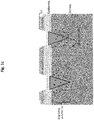
- the composition of the resulting microneedles is shown graphically in Fig. 1a .
- the mould may either be cast to match the desired size of each patch or may be made in a larger size, and individual patches of an appropriate size may be prepared by cutting the tape into pieces of a desired shape and size. The latter option may be as advantage when treating psoriasis as psoriasis plaques are often of different sizes and shapes.
- the dried microneedle patches may be stored in a sealed airtight vial or blister pack, optionally together with an appropirate dessicant, to prevent absorption of water vapour during storage.
- microneedle preparation and alternative embodiments are disclosed in WO 2012/153266 .
- microneedles made from polyvinylpyrrolidone and poly(meth)acrylates or mixtures of these polymers resulted in an unacceptably fast release of the active ingredient(s).
- Microneedles made from polyvinylpyrrolidone alone tended to soften or melt when removed from the primary packaging.
- a microneedle composition comprising a drug-loaded tip portion containing a polylactic acid or a derivative thereof such as an ester-terminated polylactide, polyglycolic acid or a derivative thereof such as an ester-terminated polyglycolide or polylactic co-glycolic acid (PLGA) or a derivative thereof such as an ester-terminated polylactide co-glycolide polymer. Satisfactory results were also obtained when a water-soluble polymer such as polyvinylpyrrolidone was used as the backing layer.
- the biodegradable polymer is PLGA which may optionally be ester-terminated.
- the PLGA may favourably have a molecular weight of >5000, such as a molecular weight of 7000-17000, 24000-38000, 38000-54000, 54000-69000 or 76000-116000, resulting in a viscosity that permits the formulation to be dipensed into the mould and on drying provides a satisfactory physical stability, in particular a sharp tip.
- the ratio of lactic acid to glycolic acid may preferably vary between 85:15 and 50:50, such as 85:15, 82:18, 75:25, 65:35 or 50:50.
- a currently preferred ratio of lactide to glycolide is 50:50.
- an antioxidant to the biodegradable polymer matrix, e.g. butylhydroxytoluene, butylhydroxyanisole or ⁇ -tocopherol, or a mixture thereof, so as to reduce the formation of degradation products of the active ingredient under oxidative conditions.
- the antioxidant may suitably be present in a concentration in the range of 0.01-3% w/w, preferably 0.03-2% w/w such as 0.05-1% w/w of the dry tip portion.
- a currently preferred antioxidant is butylhydroxytoluene, which may be added in a concentration in the range of 0.03-2% by weight, e.g. 0.05% by weight, of the dry tip portion.
- the water-soluble polymer included in the backing layer may be any polymer that dissolves quickly in the skin after the composition has been applied and which is compatible with the other components.
- the water-soluble polymer may for instance be selected from the group consisting of polyvinylpyrrolidone, a sugar such as sucrose or trehalose, dextran, carboxymethylcellulose or sodium alginate.
- a currently preferred water-soluble polymer is polyvinylpyrrolidone. While generally the use of polyvinylpyrrolidone confers favourable properties to the backing layer portion in terms of physical stability of the microneedles, it may be somewhat brittle and its properties may be improved by including a plasticizer, e.g.
- glycerol polyethylene glycol, dibutyl sebacate, diethyl phthalate, triethyl glycerin or triethyl citrate, to reduce the brittleness.
- concentration of the plasticizer in the backing layer portion may suitably be in the range of 0.5-6% by weight of the dry backing layer.
- a currently favoured plasticizer to include in the backing layer portion of the microneedles is glycerol, which may suitably be present in a concentration of about 2% by weight of the dry backing layer.
- the residual solvent remaining in the backing layer after the composition has been dried may also act as a plasticizer.
- An example of such a solvent is ethanol which may be present as a residue in the composition after drying.
- the present composition may comprise an active ingredient in the backing layer of the water-soluble polymer. This will provide immediate (i.e. within 2 hours or preferably 1 hour) release of a portion of the active ingredient(s) administered to the patient.
- the active ingredient included in the backing layer may be the same or different from the active ingredient included in the tip portion of the microneedle.
- the active ingredient(s) included in the present composition may be active ingredient(s) that are suitable for the treatment of skin conditions and where less frequent dosing (less than once a day) is perceived as advantageous by patients.
- the active ingredient may suitably be selected from the group consisting of a vitamin D analogue, a glucocorticoid receptor modulator, ingenol or an ingenol derivative, a calcineurin inhibitor, a JAK inhibitor, a PDE4 inhibitor, a non-steroidal anti-inflammatory agent, an antibiotic, an antifungal agent or a local anesthetic, or mixtures thereof.
- vitamin D analogues examples include calcipotriol, calcitriol, maxacalcitol or tacalcitol.
- glucocorticoid receptor modulators are corticosteroids such as amcinonide, betamethasone, budenoside, clobetasol, clobetasone, cortisone, desonide, desoxycortisone, desoximethasone, dexamethasone, diflucortolon, diflorasone, flucortisone, flumethasone, flunisolide, fluocinonide, fluocinolon, fluorometholone, fluprednisolone, flurandrenolide, fluticasone, halcinonide, halobetasol, hydrocortisone, meprednisone, methylprednisone, mometasone, paramethasone, prednicarbate, prednisone, prednisolone and triamcinolone or a pharmaceutically acceptable ester or acetonide thereof.
- corticosteroids such as amcinonide, betamet
- the corticosteroid may preferably be selected from betamethasone, budenoside, clobetasol, clobetasone, desoximethasone, diflucortolon, diflorasone, fluocinonide, fluocinolon, halcinonide, halobetasol, hydrocortisone, mometasone prednicarbate, or triamcinolone or a pharmaceutically acceptable ester thereof.
- the corticosteroid ester may for instance be betamethasone acetate, betamethasone dipropionate, betamethasone valerate, clobetasol propionate, dexamethasone acetate, flumethasone pivalate, fluticasone propionate, hydrocortisone acetate, hydrocortisone butyrate or mometasone furoate.
- the acetonide may be selected from fluocinolone acetonide or triamcinolone acetonide.
- ingenol mebutate An example of an ingenol derivative is ingenol mebutate.
- calcineurin inhibitors examples include tacrolimus or pimecrolimus.
- JAK inhibitor is tofacitinib.
- PDE4 inhibitors are apremilast, roflumilast or cilomilast.
- non-steroidal anti-inflammatory agents examples include ibuprofen, diclofenac, naproxen, indomethacin, dexibuprofen, ketoprofen, flurbiprofen, piroxicam, tenoxicam, lornoxicam or nabumeton.
- antibiotics examples include fusidic acid or mupirocin.
- lidocain examples of local anesthetics are lidocain, bupivacain, mepivacain or ropivacain.
- antifungal agents examples include ketoconazole, terbinafine, miconazole, clotrimazole, ciclopirox, bifonazole, nystatin, econazole or amorolfine.
- the therapeutically active ingredient may also be selected from antiproliferative agents such as methotrexate or immunosuppressants such as cyclosporin.
- the present invention relates to a method for treating a skin condition comprising
- the mechanical strength of the microneedles should be such that the force required to fracture the microneedle is significantly greater than the force required to insert the microneedle into the skin.
- the force required to insert a microneedle patch into the skin and have it penetrate past the stratum corneum is in the range of 0.4-8N, for instance 2-7N, such as 5N, per patch containing 25 microneedles per cm 2 .
- the failure force of the microneedle can be assessed as either a fracture force or the force required to compress the microneedle by a defined length.
- These forces can be can be determined using a texture analyser (e.g. a TA.XT Plus Texture Analyzer, Stable Micro Systems, Surrey, UK) or using a computer-controlled force-displacement station (Model 5565, Instron, Buckinghamshire, UK).
- the backing layer comprising the water-soluble polymer starts dissolving upon insertion of the microneedles into the skin. This allows removal of the substrate within about 120 minutes, preferably within 60 minutes or 45 minutes or even as little as about 15 minutes, of application of the patch on skin. In general, it is preferred that at least 90% of the microneedles detach from the adhesive surface upon removal of the substrate within this timeframe to avoid that a substantial number of the microneedles are pulled out again when the substrate is peeled off.
- the invention has been found able to provide delivery of the therapeutically active ingredients over a prolonged period of time.
- the therapeutically active ingredients may be released from the microneedles over a period of 2-21 days, preferably 2-14 days such as 2-7 days or 4-7 days.
- 2-21 days preferably 2-14 days such as 2-7 days or 4-7 days.
- increased mRNA levels of the biomarker CYP24A1 are observed 4 days after application of a microneedle patch containing calcipotriol indicating that calcipotriol is released from the microneedles for at least 4 days.
- step (b) may be carried out by applying pressure with a finger or by impact insertion, e.g. by using an applicator device, the latter being preferred as it increases insertion reproducibility (cf. van der Maaden et al., AAPS Journal 16(4), July 2014, pp. 681-684 .
- applicator devices are disclosed in US 2002/0123675 or WO 2008/091602 .
- Skin conditions to be treated using the microneedle patch composition of the invention may be selected from psoriasis, e.g. plaque psoriasis, inverse psoriasis, nail psoriasis or spot psoriasis, pustulosis palmoplantaris, actinic keratosis, squamous cell carcinoma, basal cell carcinoma, contact dermatitis, atopic dermatitis, eczema, hand eczema, warts, genital warts, alopecia, acne, rosacea or skin infections.
- psoriasis e.g. plaque psoriasis, inverse psoriasis, nail psoriasis or spot psoriasis, pustulosis palmoplantaris, actinic keratosis, squamous cell carcinoma, basal cell carcinoma, contact dermatitis, atopic
- Psoriasis is a chronic inflammatory skin disease that manifests as erythematous, dry, scaling plaques resulting from hyperkeratosis.
- the plaques are most often found on the elbows, knees and scalp, though more extensive lesions may appear on other parts of the body, notably the lumbosacral region.
- a common treatment of mild to moderate psoriasis involves topical application of a composition containing a corticosteroid as the active ingredient. While efficacious, application of corticosteroids has the disadvantage of a number of adverse effects such as skin atrophy, striae, acneiform eruptions, perioral dermatitis, overgrowth of skin fungus and bacteria, hypopigmentation of pigmented skin and rosacea.
- Combination products for the treatment of psoriasis have been marketed by LEO Pharma for a number of years under the trade names Daivobet® ointment and Daivobet® gel.
- the product comprises calcipotriol and betamethasone dipropionate as the active ingredients formulated in an ointment or gel vehicle comprising polyoxypropylene stearyl ether as a solvent. While the efficacy of the combination products is significantly superior to that of either active ingredient on its own, the products need to be applied once daily, and many patients, in particular those with extensive psoriatic lesions, would favour a greater ease of application such as less frequent application. It is considered desirable to further improve the biological efficacy of the combination of the two active ingredients by providing a formulation vehicle from which delivery of the active ingredients into the skin is prolonged compared to the commercial product.
- the present invention relates to a microneedle patch composition
- a microneedle patch composition comprising one or more microneedles each comprising
- the betamethasone ester may be betamethasone dipropionate or betamethasone valerate.
- the prolonged delivery is expected to be sustained with a dose of calcipotriol of 0.08-30 ⁇ g of calcipotriol per cm 2 of patch and a dose of betamethasone ester of 1-60 ⁇ g of betamethasone ester per cm 2 of patch.
- the betamethasone ester is preferably betamethasone dipropionate.
- calcipotriol was not chemically stable in a matrix of polylactic acid, polyglycolic acid or polylactic co-glycolic acid, probably due to the presence of acidic residues or impurities therein, while calcipotriol was chemically stable when ester-terminated polylactide, polyglycolide or polylactide co-glycolide were used as the biodegradable polymer.
- the biodegradable polymer is preferably an ester-terminated polylactide co-glycolide.
- the ester-terminated polylactide co-glycolide may favourably have a molecular weight of >5000, such as a molecular weight of 7000-17000, 24000-38000, 38000-54000, 54000-69000 or 76000-116000, resulting in a viscosity that permts the formulation to be dispensed into the mould and on drying provides a satisfactory physical stability, in particular a sharp tip.
- the ratio of lactide to glycolide may preferably vary between 85:15 and 50:50, such as 85:15, 82:18, 75:25, 65:35 or 50:50. A currently preferred ratio of lactide to glycolide is 50:50.
- an antioxidant to the biodegradable polymer matrix, e.g. butylhydroxytoluene, butylhydroxyanisole or ⁇ -tocopherol, or a mixture thereof, so as to reduce the formation of MC 1046.
- the antioxidant may suitably be present in the concentration of the antioxidant is in the range of 0.03-3% w/w, preferably 0.05-2% w/w such as 0.05-1% w/w of the dry tip portion.
- a currently preferred antioxidant is butylhydroxytoluene, which may be added in a concentration in the range of 0.05-2% by weight of the dry tip portion.
- the water-soluble polymer may for instance be selected from the group consisting of polyvinylpyrrolidone, a sugar such as sucrose or trehalose, dextran, carboxymethylcellulose and sodium alginate.
- a currently preferred water-soluble polymer is polyvinylpyrrolidone.
- the backing layer portion may additionally comprise a plasticizer, e.g. glycerol, polyethylene glycol, dibutyl sebacate, diethyl phthalate, triethyl glycerin or triethyl citrate, which may be included in a concentration in the range of 0.5-6% by weight of the dry backing layer.
- a currently favoured plasticizer to include in the backing layer portion of the microneedles is glycerol, which may suitably be present in a concentration of about 2% by weight of the dry backing layer.
- the present composition may comprise calcipotriol and/or a betamethasone ester dispersed in the backing layer of the water-soluble polymer.
- the removable substrate may suitable be composed of adhesive medical tape.
- compositions of the invention are provided.
- a microneedle mould was prepared by mixing about 45 g of polydimethylsiloxane (PDMS) elastomer base (Sylgard 184 silicone elastomer kit, part A) and about 4.5 g of curing agent (Sylgard 184 silicone elastomer kit, part B) by hand using a spatula and beaker until thoroughly mixed. The resulting mixture was placed in a desiccator under vacuum for about 20 minutes. The PDMS was poured over a microneedle template (patterned silicon wafer obtained from the Tyndall National Institute, Ireland, and prepared essentially as disclosed in US 2007/0134829 ) and cured in a drying oven at 100°C for about 60 minutes. After cooling, the mould was peeled off the microneedle template and cut into individual moulds of 1x1 cm (containing 5x5 microdepressions).
- PDMS polydimethylsiloxane
- the PDMS moulds were placed in a glass beaker and cleaned with dimethylformamide (DMF) under vacuum for 30 minutes and an ultrasonic bath for further 30 minutes at room temperature.
- the cleaned moulds were placed in a glass beaker and the microdepressions were prefilled with DMF under vacuum.
- DMF dimethylformamide
- a solution was prepared by dissolving 300 mg ester-terminated polylactide co-glycolide (lactide:glycolide 50:50, Mw 7000-17000, PLGA-E) in 1 ml DMF using a vortex mixer for about 10 minutes until the PLGA-E was completely dissolved.
- 0.5 mg/ml butylhydroxytoluene (BHT) was added to the PLGA-E solution.
- 20 mg calcipotriol and 40 mg betamethasone dipropionate (BDP) were dissolved in 1 ml of the resulting solution using a vortex mixer for about 10 minutes until the active ingredients were completely dissolved.
- the drug-loaded PLGA-E solution was dispensed into the microdepressions of the PDMS moulds prefilled with DMF using a syringe pump and capillary tube dispenser and a flow rate of 0.5 ⁇ l/min. to a total volume of 0.15 ⁇ 0.03 ⁇ l per mould.
- the moulds were dried for about 18 hours in a desiccator under vacuum and subsequently in a vacuum oven under 500 mbars for about 5 hours at 60 ⁇ 2°C.
- a second solution was prepared by dissolving 400 mg of polyvinylpyrrolidone (PVP, Kollidon® 17 PF) in 1 ml of ethanol 96% using a vortex mixer for about 5 minutes. 10 mg of glycerol was added and the mixture was stirred for 2-3 minutes using the vortex mixer.
- the PVP solution was dispensed into the microdepressions of the PDMS moulds containing the dried drug-loaded PLGA-E solution using a syringe pump and capillary tube dispenser at a flow rate of 1.5 ⁇ l/min. so that the dispensed volume was 0.75 ⁇ 0.15 ⁇ l per mould.
- the filled moulds were dried in a desiccator under vacuum for about 2 hours.
- the patches were stored in hermetically sealed vials purged with nitrogen and closed with a rubber stopper, aluminium cap and crimper.
- the dried microneedle patch has the following composition. Ingredient ⁇ g/patch % w/w mg/g Betamethasone dipropionate 6 1.66 16.60 Calcipotriol monohydrate 3 0.83 8.30 PLGA-E 45 12.45 124.48 PVP 300 82.99 829.88 Glycerol 99.5% 7.5 2.07 20.75 Total 378.82 100 1000
- Microneedle patch compositions were prepared as described above with the exception that they contained 0%, 0.5% or 1% BHT by weight of the dry tip.
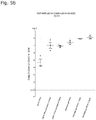
- Fig. 3 illustrates the percentage ratio of peak area of the degradation product MC 1046 to the total calcipotriol peak area for samples without BHT and samples with 0.5% w/w and 1% w/w BHT.
- the percentage peak area of MC 1046 relative to the total amount of calcipotriol was significantly reduced, indicating that the addition of BHT to the composition significantly reduced degradation of calcipotriol.
- compositions prepared as described in Example 1 containing 2 ⁇ g calcipotriol and 6 ⁇ g BDP per cm 2 microneedle patch and 10 ⁇ l Daivobet® gel per cm 2 and Daivobet® gel vehicle were applied topically in triplicate.
- the skin biopsies were maintained in ex vivo culture at 37°C with 5% CO 2 for 48 hours with a change of medium at 24 h.
- a 14 mm biopsy encompassing the dosed area of each explant was punched out and subsequently divided in two for compound analysis (tapestripped 10 times) and biomarker analysis, respectively.
- Compound analysis was performed by extracting the active compounds from the skin biopsy using an organic solvent and subsequently analysing the extract using LC/MS-MS.
- cDNA (equivalent to 5 ng RNA) from each sample was amplified in a total volume of 10 ⁇ L by quantitative realtime PCR using Taqman Gene Expression Assays (CYP24A1 (Hs00167999_m1), CD14 (Hs02621496_s1), PPIA (Hs99999904_m1) GAPDH (Hs99999905_m1), TBP (Hs99999910_m1) and HMBS (Hs00609297_m1)) and PRISM7900HT sequence detection system (SDS 2.3) from Applied Biosystems. PPIA, GAPDH, TBP and HMBS were used for normalization.
- B-17-P is predominantly formed in biological matrices and is thus considered a surrogate marker of BDP available for pharmacological action in skin. It appears that the amount of B-17-P formed in the skin increases over time for both explants treated with Daivobet® gel and with microneedle patch compositions of the invention. The skin concentrations of B-17-P observed after application of Daivobet® gel are higher than what was observed after application of microneedle patch compositions of the invention, however the increase over time may indicate a prolonged release from the patches.
- NativeSkin®Plus skin models with an available surface area of 2.5 cm 2 were acquired from Genoskin, France and cultured according to the manufacturer's specification. Compositions prepared as disclosed in Example 1 containing 0.5 ⁇ g calcipotriol and 6 ⁇ g BDP per cm 2 microneedle patch and 4.3 ⁇ l Daivobet® gel per cm 2 and Daivobet® gel vehicle were applied topically in triplicate. The following treatment schedules were tested: One daily dose of Daivobet® gel or placebo gel with skin sampling at 24h and 96h.
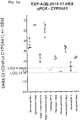
- Fig. 6(a) the biomarker for calcipotriol, CYP24A1 is induced over time by Daivobet® gel applied at time 0, day 1 and day 2 of the experiment and sampled on day 4.
- the level of biomarker induction elicited by the microneedle patch applied once is initially lower (at day 1), but increases over time, indicating a slower onset but potentially a protracted effect of calcipotriol over 4 days compared to what is observed from Daivobet® gel.
- a microneedle patch as described in Example 1 was applied to fresh human ex vivo skin prepared as described in Example 2. 45 minutes after application the medical adhesive tape was removed and it was conformed that none of the microneedles was left on the tape before reflectance confocal microscopy (RCM) imaging was conducted using a Vivascope 1500 multilaser system in accordance with the procedure described in H. Skvara et al. Dermatol Pract Concept 2(1), 2012, pp.3-12 , and Calzavara-Pinton et al., Photochemistry and Photobiology, 84, 2008, pp. 1421-30 . In this technique laser light with a wavelength of 785 nm is passed through a beam splitter and an optical lens in contact with skin.
- RCM reflectance confocal microscopy
- the scanned field of view was 500 x 500 ⁇ m. Depth measurements were done in steps of 3 ⁇ m with an axial resolution of ⁇ 5 ⁇ m. The limit of detection of the RCM is a depth of about 150 ⁇ m.
- Fig. 7 shows a microneedle penetrating the stratum corneum at a depth of 12 ⁇ m.
- the PVP backing layer has dissolved before the removal of the substrate and only a thin octagonal shell of the PLGA-E polymer reflects the light on this plane.
- Fig. 7b shows a microneedle penetrating the stratum corneum at a depth of 27 ⁇ m.
- the PVP backing layer has dissolved before the removal of the substrate and only appears as a circle in the middle of a thin octagonal shell of the PLGA-E biodegradable polymer.
- Fig. 7a shows a microneedle penetrating the stratum corneum at a depth of 12 ⁇ m.
- the PVP backing layer has dissolved before the removal of the substrate and only appears as a circle in the middle of a thin octagonal shell of the PLGA-E biodegradable polymer.
- FIG. 7c shows a microneedle penetrating the stratum corneum at a depth of 45 ⁇ m.
- the PLGA-E polymer microneedle tip reflects the light on this plane as does a thin octagonal shell of the PLGA-E polymer.
- Fig. 7d shows a microneedle penetrating the epidermis at a depth of 96 ⁇ m. Only the tip of the needle composed of the PLGA-E biodegradable polymer is visible.
- Fig. 7e shows a microneedle penetrating the epidermis at a depth of 150 ⁇ m. Only the tip of the needle composed of the PLGA-E biodegradable polymer is visible at this depth.
Landscapes
- Health & Medical Sciences (AREA)
- Chemical & Material Sciences (AREA)
- Life Sciences & Earth Sciences (AREA)
- Animal Behavior & Ethology (AREA)
- Veterinary Medicine (AREA)
- Public Health (AREA)
- General Health & Medical Sciences (AREA)
- Medicinal Chemistry (AREA)
- Pharmacology & Pharmacy (AREA)
- Epidemiology (AREA)
- Dermatology (AREA)
- Engineering & Computer Science (AREA)
- Nuclear Medicine, Radiotherapy & Molecular Imaging (AREA)
- General Chemical & Material Sciences (AREA)
- Organic Chemistry (AREA)
- Chemical Kinetics & Catalysis (AREA)
- Inorganic Chemistry (AREA)
- Bioinformatics & Cheminformatics (AREA)
- Biomedical Technology (AREA)
- Proteomics, Peptides & Aminoacids (AREA)
- Hematology (AREA)
- Heart & Thoracic Surgery (AREA)
- Anesthesiology (AREA)
- Medical Informatics (AREA)
- Virology (AREA)
- Communicable Diseases (AREA)
- Molecular Biology (AREA)
- Pain & Pain Management (AREA)
- Biotechnology (AREA)
- Oncology (AREA)
- Rheumatology (AREA)
- Medicinal Preparation (AREA)
- Pharmaceuticals Containing Other Organic And Inorganic Compounds (AREA)
- Medicines That Contain Protein Lipid Enzymes And Other Medicines (AREA)
Priority Applications (1)
| Application Number | Priority Date | Filing Date | Title |
|---|---|---|---|
| PL16720351T PL3273942T3 (pl) | 2015-03-27 | 2016-03-16 | Plaster mikroigłowy do dostarczania składnika aktywnego do skóry |
Applications Claiming Priority (3)
| Application Number | Priority Date | Filing Date | Title |
|---|---|---|---|
| EP15161262 | 2015-03-27 | ||
| EP15176101 | 2015-07-09 | ||
| PCT/EP2016/025026 WO2016155891A1 (en) | 2015-03-27 | 2016-03-16 | Microneedle patch for delivering an active ingredient to skin |
Publications (2)
| Publication Number | Publication Date |
|---|---|
| EP3273942A1 EP3273942A1 (en) | 2018-01-31 |
| EP3273942B1 true EP3273942B1 (en) | 2021-06-16 |
Family
ID=55910913
Family Applications (1)
| Application Number | Title | Priority Date | Filing Date |
|---|---|---|---|
| EP16720351.2A Active EP3273942B1 (en) | 2015-03-27 | 2016-03-16 | Microneedle patch for delivering an active ingredient to the skin |
Country Status (20)
| Country | Link |
|---|---|
| US (2) | US20180078498A1 (enExample) |
| EP (1) | EP3273942B1 (enExample) |
| JP (1) | JP6929784B2 (enExample) |
| KR (1) | KR20170131642A (enExample) |
| CN (1) | CN107405301B (enExample) |
| AU (1) | AU2016239277B2 (enExample) |
| BR (1) | BR112017020511A2 (enExample) |
| CA (1) | CA2979435A1 (enExample) |
| DK (1) | DK3273942T3 (enExample) |
| ES (1) | ES2886129T3 (enExample) |
| HK (1) | HK1246208A1 (enExample) |
| IL (1) | IL254183A0 (enExample) |
| MA (1) | MA41818A (enExample) |
| MX (1) | MX382471B (enExample) |
| MY (1) | MY191513A (enExample) |
| PL (1) | PL3273942T3 (enExample) |
| SG (1) | SG11201707141TA (enExample) |
| UA (1) | UA124141C2 (enExample) |
| WO (1) | WO2016155891A1 (enExample) |
| ZA (2) | ZA201706259B (enExample) |
Families Citing this family (45)
| Publication number | Priority date | Publication date | Assignee | Title |
|---|---|---|---|---|
| ES3059965T3 (en) | 2014-04-24 | 2026-03-24 | Georgia Tech Res Inst | Microneedles and methods of manufacture thereof |
| EP4205793A1 (en) | 2015-04-17 | 2023-07-05 | Georgia Tech Research Corporation | Drug delivery devices having separable microneedles |
| US20170348218A1 (en) * | 2016-06-03 | 2017-12-07 | Sanova Bioscience Inc | Microneedle patch containing hyaluronic acid for cosmetic use |
| KR102401856B1 (ko) * | 2017-02-17 | 2022-05-26 | 알레간 인코포레이티드 | 활성 성분을 갖는 마이크로니들 어레이 |
| EP4548954A3 (en) * | 2017-08-04 | 2025-07-30 | Vaxxas Pty Limited | Compact high mechanical energy storage and low trigger force actuator for the delivery of microprojection array patches (map) |
| RU2020115446A (ru) * | 2017-10-11 | 2021-11-12 | Джорджия Тек Рисёч Корпорейшн | Отделяемые микроигольные матрицы для длительного высвобождения лекарственного средства |
| SG10201800072YA (en) * | 2018-01-03 | 2019-08-27 | Micropoint Tech Pte Ltd | Microneedle Patches Comprising Corticosteroid |
| KR102094744B1 (ko) * | 2018-01-26 | 2020-03-30 | 가천대학교 산학협력단 | 마이크로 니들 및 이의 제조방법 |
| WO2019168926A1 (en) * | 2018-02-28 | 2019-09-06 | BandGrip, Inc. | Subcutaneous wound closure assembly and method of use |
| US20210145984A1 (en) * | 2018-04-13 | 2021-05-20 | North Carolina State University | Ros-responsive microneedle patch for acne vulgaris treatment |
| KR102146704B1 (ko) * | 2018-04-13 | 2020-08-21 | 가천대학교 산학협력단 | 사이클로스포린 A (CsA) 경피 및 피내 약물전달용 마이크로구조체 |
| ES2967307T3 (es) * | 2018-05-18 | 2024-04-29 | Postech Acad Ind Found | Método para fabricar un parche de administración transdérmica de fármaco |
| EP3795206A4 (en) * | 2018-05-18 | 2022-01-05 | Postech Academy-Industry Foundation | Transdermal drug delivery patch and method for preparing same |
| CN108721204A (zh) * | 2018-06-04 | 2018-11-02 | 南京紫源康医药科技有限公司 | 一种可溶性紫草素微针贴片及其制备方法 |
| CN108703895B (zh) * | 2018-08-21 | 2021-02-09 | 广州香蒲兰电子商务有限公司 | 一种深层渗透的长效保湿凝胶及制备方法 |
| CN110870846A (zh) * | 2018-08-31 | 2020-03-10 | 中科微针(北京)科技有限公司 | 一种可快速植入型缓释微针贴片及其制备方法 |
| CN110917176B (zh) * | 2018-08-31 | 2021-03-30 | 中科微针(北京)科技有限公司 | 一种可植入型缓释微针贴片及其制备方法 |
| CN108888577B (zh) * | 2018-09-11 | 2021-09-14 | 无锡元旭生物技术有限公司 | 一种可溶性玻尿酸美容微针贴及其制备方法 |
| EP3856322A1 (en) * | 2018-09-24 | 2021-08-04 | L'oreal | Device comprising microneedles for in-situ reaction of a skin |
| JP7666887B2 (ja) * | 2018-12-21 | 2025-04-22 | ロレアル | マイクロニードルシートを使用するキット及び美容方法 |
| GB201908229D0 (en) | 2019-06-10 | 2019-07-24 | Univ College Cork National Univ Of Ireland | Microneedles and methods for the manufacture thereof |
| PL3996793T3 (pl) | 2019-07-10 | 2024-04-22 | Mineed Technology Company Limited | Rozpuszczalna mikroigła |
| CA3155522A1 (en) * | 2019-10-22 | 2021-04-29 | Georgia Tech Research Corporation | Methods for making microneedles using adjustment of component solubility in casting formulations |
| US20230073125A1 (en) * | 2019-10-29 | 2023-03-09 | The Regents Of The University Of California | Periodontal micropatch and uses thereof |
| CN115087429A (zh) * | 2019-11-22 | 2022-09-20 | 韦瑞德米克斯公司 | 用于免疫刺激药物递送的微针贴片 |
| US20230015942A1 (en) * | 2019-12-11 | 2023-01-19 | The Regents Of The University Of California | Microneedle delivery device with detachable hybrid microneedle depots for localized delivery of cells |
| BR112022022039A2 (pt) | 2020-04-28 | 2022-12-13 | Ticona Llc | Conjunto de microagulhas |
| US20230190669A1 (en) * | 2020-07-06 | 2023-06-22 | Kindeva Drug Delivery L.P. | Drug delivery device including patch segments |
| NL2026264B1 (en) | 2020-08-13 | 2022-04-13 | Versailles B V | Microneedle applicator with active ingredient for treatment of skin lesions |
| HU231600B1 (hu) | 2020-09-18 | 2025-03-28 | Semmelweis Egyetem 40% | Bőrtapasz a SARS-CoV-2 vírusfertőzöttség elleni immunvédettség celluláris diagnosztikai vizsgálatához |
| CN112294750B (zh) * | 2020-10-29 | 2023-06-20 | 广东药科大学 | 一种吲哚美辛胶束复合微针及其制备方法 |
| CN112516449B (zh) * | 2020-12-03 | 2023-02-21 | 昆明理工大学 | 一种可溶性微针阵列及其制备方法 |
| CA3212891A1 (en) * | 2021-03-23 | 2022-09-29 | Veradermics Incorporated | Perilesional treatment of skin conditions |
| KR102778469B1 (ko) * | 2021-04-12 | 2025-03-11 | 한미약품 주식회사 | 마이크로니들 어레이 및 이의 제조방법 |
| CN118076751A (zh) * | 2021-05-21 | 2024-05-24 | 韦瑞德米克斯公司 | 用于免疫刺激药物递送的微针贴片 |
| CN115581659A (zh) * | 2021-07-05 | 2023-01-10 | 刘野 | 一种非甾体类抗炎药微针及其制备方法 |
| WO2023014375A1 (en) * | 2021-08-06 | 2023-02-09 | Lean Life Sciences, Inc | Cosmetic peptides for improving skin rejuvenation |
| KR20230129639A (ko) * | 2022-03-02 | 2023-09-11 | 연세대학교 산학협력단 | 이중작용 pde5 억제제/질산유기에스터의 국소 혈류 증진을 위한 경피 투약 형태 |
| WO2023194999A1 (en) * | 2022-04-07 | 2023-10-12 | Sheba Impact Ltd. | Flexible biodegradable microneedles |
| WO2023218230A1 (en) * | 2022-05-13 | 2023-11-16 | Mineed Technology Company Limited | Dissolvable microneedle patch |
| CN115317439A (zh) * | 2022-07-18 | 2022-11-11 | 合肥博思科创医药科技有限公司 | 一种克立硼罗微针贴剂及其制备方法 |
| CN116115552B (zh) * | 2023-01-06 | 2025-01-17 | 山东第二医科大学 | 一种托法替布纳米微针制剂及其制备方法和应用 |
| CN116421874A (zh) * | 2023-04-11 | 2023-07-14 | 上海交通大学医学院附属第九人民医院 | 一种载抗血管瘤药物可溶微针贴片及其制备方法 |
| WO2024262953A1 (ko) * | 2023-06-21 | 2024-12-26 | 서석배 | 레이저를 이용한 약물 주입용 니들 패치 |
| CN117883362A (zh) * | 2024-01-17 | 2024-04-16 | 中国医学科学院生物医学工程研究所 | 一种装载富马酸二甲酯的调节性t细胞外泌体微针及其制备方法与应用 |
Family Cites Families (21)
| Publication number | Priority date | Publication date | Assignee | Title |
|---|---|---|---|---|
| USRE39706E1 (en) | 1993-01-15 | 2007-06-26 | Leo Pharma A/S | Crystalline form of a vitamin D analogue |
| ES2388425T5 (es) * | 1999-04-23 | 2020-02-12 | Leo Pharma As | Composición farmacéutica no acuosa para uso dérmico para tratar la psoriasis que comprende una vitamina D, un corticoesteroide y un componente disolvente |
| NZ525294A (en) | 2000-10-13 | 2005-02-25 | Alza Corp | Apparatus and method for piercing skin with microprotrusions |
| EP1345646A2 (en) | 2000-12-14 | 2003-09-24 | Georgia Tech Research Corporation | Microneedle devices and production thereof |
| US6893431B2 (en) * | 2001-10-15 | 2005-05-17 | Scimed Life Systems, Inc. | Medical device for delivering patches |
| EP1827564B1 (en) * | 2004-11-18 | 2015-07-29 | 3M Innovative Properties Company | Masking method for coating a microneedle array |
| US7651946B2 (en) | 2005-12-12 | 2010-01-26 | University College Cork - National University Of Ireland, Cork | Wet etch processing |
| CN1857730B (zh) * | 2006-03-30 | 2010-05-12 | 西安交通大学 | 带微孔的多腔体可降解植入式药物控释载体及其制备工艺 |
| US20090182306A1 (en) * | 2006-07-21 | 2009-07-16 | Georgia Tech Research Corporation | Microneedle Devices and Methods of Drug Delivery or Fluid Withdrawal |
| EP2121111B1 (en) | 2007-01-22 | 2018-03-14 | Corium International, Inc. | Applicators for microneedle arrays |
| JP2010522774A (ja) * | 2007-03-30 | 2010-07-08 | フォベア、ファルマスティカル、ソシエテ、アノニム | 血管新生眼疾患を治療するための方法 |
| AU2014200648B2 (en) * | 2007-04-16 | 2015-09-24 | Corium Pharma Solutions, Inc. | Solvent-cast microneedle arrays containing active |
| EP2146689B1 (en) * | 2007-04-16 | 2020-08-12 | Corium, Inc. | Solvent-cast microneedle arrays containing active |
| EP2383013A4 (en) * | 2008-12-26 | 2012-11-28 | Hisamitsu Pharmaceutical Co | MICRO NEEDLE DEVICE |
| JP6327852B2 (ja) * | 2010-05-04 | 2018-05-23 | コリウム インターナショナル, インコーポレイテッド | 微小突起アレイを使用した副甲状腺ホルモンの経皮送達のための方法及びデバイス |
| GB201019577D0 (en) | 2010-11-18 | 2010-12-29 | Univ Cork | Method |
| GB201107642D0 (en) | 2011-05-09 | 2011-06-22 | Univ Cork | Method |
| CN104027324B (zh) * | 2013-03-06 | 2017-12-15 | 中国科学院理化技术研究所 | 一种可溶性微针疫苗贴片及其制备方法 |
| BR112015022625B1 (pt) * | 2013-03-15 | 2023-01-31 | Corium, Inc | Aparelho de microestrutura para entrega de agente terapêutico |
| EP3028735A4 (en) * | 2013-07-30 | 2017-04-12 | Asti Corporation | Microneedle array and microneedle array manufacturing method |
| US20150057505A1 (en) * | 2013-08-22 | 2015-02-26 | Elwha Llc | Method for Administering a Medicament to a Fetus |
-
2016
- 2016-03-15 MA MA041818A patent/MA41818A/fr unknown
- 2016-03-16 CN CN201680018427.1A patent/CN107405301B/zh not_active Expired - Fee Related
- 2016-03-16 DK DK16720351.2T patent/DK3273942T3/da active
- 2016-03-16 MX MX2017012321A patent/MX382471B/es unknown
- 2016-03-16 EP EP16720351.2A patent/EP3273942B1/en active Active
- 2016-03-16 SG SG11201707141TA patent/SG11201707141TA/en unknown
- 2016-03-16 PL PL16720351T patent/PL3273942T3/pl unknown
- 2016-03-16 UA UAA201710326A patent/UA124141C2/uk unknown
- 2016-03-16 CA CA2979435A patent/CA2979435A1/en not_active Abandoned
- 2016-03-16 HK HK18105946.4A patent/HK1246208A1/zh unknown
- 2016-03-16 ES ES16720351T patent/ES2886129T3/es active Active
- 2016-03-16 BR BR112017020511A patent/BR112017020511A2/pt not_active Application Discontinuation
- 2016-03-16 AU AU2016239277A patent/AU2016239277B2/en not_active Ceased
- 2016-03-16 WO PCT/EP2016/025026 patent/WO2016155891A1/en not_active Ceased
- 2016-03-16 JP JP2017550507A patent/JP6929784B2/ja not_active Expired - Fee Related
- 2016-03-16 MY MYPI2017703556A patent/MY191513A/en unknown
- 2016-03-16 KR KR1020177031075A patent/KR20170131642A/ko not_active Withdrawn
- 2016-03-16 US US15/562,278 patent/US20180078498A1/en not_active Abandoned
-
2017
- 2017-08-28 IL IL254183A patent/IL254183A0/en unknown
- 2017-09-14 ZA ZA2017/06259A patent/ZA201706259B/en unknown
-
2018
- 2018-09-13 ZA ZA2018/06163A patent/ZA201806163B/en unknown
-
2023
- 2023-01-13 US US18/154,566 patent/US20230404909A1/en not_active Abandoned
Non-Patent Citations (1)
| Title |
|---|
| None * |
Also Published As
| Publication number | Publication date |
|---|---|
| CA2979435A1 (en) | 2016-10-06 |
| JP2018510170A (ja) | 2018-04-12 |
| JP6929784B2 (ja) | 2021-09-01 |
| IL254183A0 (en) | 2017-10-31 |
| ES2886129T3 (es) | 2021-12-16 |
| KR20170131642A (ko) | 2017-11-29 |
| HK1246208A1 (zh) | 2018-09-07 |
| PL3273942T3 (pl) | 2021-12-06 |
| MX2017012321A (es) | 2018-01-18 |
| ZA201806163B (en) | 2019-12-18 |
| AU2016239277B2 (en) | 2019-01-24 |
| WO2016155891A1 (en) | 2016-10-06 |
| RU2017134576A3 (enExample) | 2019-08-27 |
| AU2016239277A1 (en) | 2017-09-28 |
| SG11201707141TA (en) | 2017-10-30 |
| ZA201706259B (en) | 2018-12-19 |
| CN107405301B (zh) | 2021-11-30 |
| DK3273942T3 (da) | 2021-09-13 |
| MA41818A (fr) | 2018-01-30 |
| MY191513A (en) | 2022-06-28 |
| BR112017020511A2 (pt) | 2018-07-10 |
| CN107405301A (zh) | 2017-11-28 |
| EP3273942A1 (en) | 2018-01-31 |
| RU2017134576A (ru) | 2019-04-04 |
| US20230404909A1 (en) | 2023-12-21 |
| US20180078498A1 (en) | 2018-03-22 |
| MX382471B (es) | 2025-03-13 |
| UA124141C2 (uk) | 2021-07-28 |
Similar Documents
| Publication | Publication Date | Title |
|---|---|---|
| US20230404909A1 (en) | Microneedle patch for delivering an active ingredient to skin | |
| Patel et al. | Mucoadhesive bilayer tablets of propranolol hydrochloride | |
| EP1673063B1 (en) | Transdermal pharmaceutical composition | |
| CA2834862C (en) | Pharmaceutical composition for administration to nails | |
| AU2013285409B2 (en) | A topical composition comprising a film-forming polymer for delivering an active ingredient to skin | |
| CN102258455B (zh) | 一种甾体激素类涂膜剂及其制备方法 | |
| US20070196323A1 (en) | Polyvinyl alcohol-containing compositions and methods for dermal delivery of drugs | |
| CN109310646A (zh) | 增强递送的肾上腺素组合物 | |
| EP2688560A2 (en) | A composition comprising lipid nanoparticles and a corticosteroid or vitamin d derivative | |
| KR20170023791A (ko) | 국소용 코르티코스테로이드 조성물 | |
| JP2005519985A (ja) | 医薬組成物 | |
| WO2007070695A2 (en) | Flux-enabling compositions and methods for dermal delivery of drugs | |
| Chen et al. | Latest on biomaterial-based therapies for topical treatment of psoriasis | |
| Xu et al. | Localized treatment of oral ulcers via responsive microneedle patch by enhancing mucosal penetration | |
| RU2803383C2 (ru) | Пластырь с микроиглами для доставки активного ингредиента в кожу | |
| CN114269347A (zh) | 局部神经类固醇制剂 | |
| Krishnaiah et al. | Studies on the transdermal delivery of nimodipine from a menthol-based TTS in human volunteers | |
| Zeng et al. | Preparation and in vitro and in vivo evaluation of a testosterone film forming gel for the treatment of hypoactive sexual desire disorder in women | |
| WO2019110306A1 (de) | Transdermales therapeutisches system auf basis von klebenden weichmacher-polymer-matrices | |
| KR102742329B1 (ko) | 고용량 트리암시놀론 아세토나이드 제형 및 상기 제형이 로딩된 마이크로니들 구조체 | |
| Kappes | Evaluation of permeation of active pharmaceutical ingredients through outer biological barriers for topical application | |
| Kshirsagar | Development of Novel Microneedle and Microparticulate Formulations for Drug Delivery Into and Across Skin | |
| Zheng | In Vitro-In Vivo Mechanistic Evaluation of Contraceptive Steroid-PLGA Microneedle Patches | |
| HK1175402A (en) | Flux-enabling compositions and methods for dermal delivery of drugs |
Legal Events
| Date | Code | Title | Description |
|---|---|---|---|
| STAA | Information on the status of an ep patent application or granted ep patent |
Free format text: STATUS: THE INTERNATIONAL PUBLICATION HAS BEEN MADE |
|
| PUAI | Public reference made under article 153(3) epc to a published international application that has entered the european phase |
Free format text: ORIGINAL CODE: 0009012 |
|
| STAA | Information on the status of an ep patent application or granted ep patent |
Free format text: STATUS: REQUEST FOR EXAMINATION WAS MADE |
|
| 17P | Request for examination filed |
Effective date: 20171027 |
|
| AK | Designated contracting states |
Kind code of ref document: A1 Designated state(s): AL AT BE BG CH CY CZ DE DK EE ES FI FR GB GR HR HU IE IS IT LI LT LU LV MC MK MT NL NO PL PT RO RS SE SI SK SM TR |
|
| AX | Request for extension of the european patent |
Extension state: BA ME |
|
| STAA | Information on the status of an ep patent application or granted ep patent |
Free format text: STATUS: EXAMINATION IS IN PROGRESS |
|
| 17Q | First examination report despatched |
Effective date: 20190607 |
|
| REG | Reference to a national code |
Ref country code: DE Ref legal event code: R079 Ref document number: 602016059354 Country of ref document: DE Free format text: PREVIOUS MAIN CLASS: A61K0009000000 Ipc: A61K0009700000 |
|
| RIC1 | Information provided on ipc code assigned before grant |
Ipc: A61P 17/06 20060101ALI20201201BHEP Ipc: A61K 31/661 20060101ALI20201201BHEP Ipc: A61K 9/70 20060101AFI20201201BHEP Ipc: A61K 31/593 20060101ALI20201201BHEP |
|
| GRAP | Despatch of communication of intention to grant a patent |
Free format text: ORIGINAL CODE: EPIDOSNIGR1 |
|
| STAA | Information on the status of an ep patent application or granted ep patent |
Free format text: STATUS: GRANT OF PATENT IS INTENDED |
|
| INTG | Intention to grant announced |
Effective date: 20210118 |
|
| GRAS | Grant fee paid |
Free format text: ORIGINAL CODE: EPIDOSNIGR3 |
|
| GRAA | (expected) grant |
Free format text: ORIGINAL CODE: 0009210 |
|
| STAA | Information on the status of an ep patent application or granted ep patent |
Free format text: STATUS: THE PATENT HAS BEEN GRANTED |
|
| AK | Designated contracting states |
Kind code of ref document: B1 Designated state(s): AL AT BE BG CH CY CZ DE DK EE ES FI FR GB GR HR HU IE IS IT LI LT LU LV MC MK MT NL NO PL PT RO RS SE SI SK SM TR |
|
| REG | Reference to a national code |
Ref country code: GB Ref legal event code: FG4D |
|
| REG | Reference to a national code |
Ref country code: CH Ref legal event code: EP |
|
| REG | Reference to a national code |
Ref country code: DE Ref legal event code: R096 Ref document number: 602016059354 Country of ref document: DE |
|
| REG | Reference to a national code |
Ref country code: AT Ref legal event code: REF Ref document number: 1401737 Country of ref document: AT Kind code of ref document: T Effective date: 20210715 |
|
| REG | Reference to a national code |
Ref country code: IE Ref legal event code: FG4D |
|
| REG | Reference to a national code |
Ref country code: PT Ref legal event code: SC4A Ref document number: 3273942 Country of ref document: PT Date of ref document: 20210910 Kind code of ref document: T Free format text: AVAILABILITY OF NATIONAL TRANSLATION Effective date: 20210906 |
|
| REG | Reference to a national code |
Ref country code: DK Ref legal event code: T3 Effective date: 20210908 |
|
| REG | Reference to a national code |
Ref country code: NL Ref legal event code: FP |
|
| REG | Reference to a national code |
Ref country code: NO Ref legal event code: T2 Effective date: 20210616 |
|
| REG | Reference to a national code |
Ref country code: SE Ref legal event code: TRGR |
|
| REG | Reference to a national code |
Ref country code: LT Ref legal event code: MG9D |
|
| PG25 | Lapsed in a contracting state [announced via postgrant information from national office to epo] |
Ref country code: FI Free format text: LAPSE BECAUSE OF FAILURE TO SUBMIT A TRANSLATION OF THE DESCRIPTION OR TO PAY THE FEE WITHIN THE PRESCRIBED TIME-LIMIT Effective date: 20210616 Ref country code: LT Free format text: LAPSE BECAUSE OF FAILURE TO SUBMIT A TRANSLATION OF THE DESCRIPTION OR TO PAY THE FEE WITHIN THE PRESCRIBED TIME-LIMIT Effective date: 20210616 Ref country code: BG Free format text: LAPSE BECAUSE OF FAILURE TO SUBMIT A TRANSLATION OF THE DESCRIPTION OR TO PAY THE FEE WITHIN THE PRESCRIBED TIME-LIMIT Effective date: 20210916 Ref country code: HR Free format text: LAPSE BECAUSE OF FAILURE TO SUBMIT A TRANSLATION OF THE DESCRIPTION OR TO PAY THE FEE WITHIN THE PRESCRIBED TIME-LIMIT Effective date: 20210616 |
|
| REG | Reference to a national code |
Ref country code: GR Ref legal event code: EP Ref document number: 20210402362 Country of ref document: GR Effective date: 20211013 |
|
| PG25 | Lapsed in a contracting state [announced via postgrant information from national office to epo] |
Ref country code: LV Free format text: LAPSE BECAUSE OF FAILURE TO SUBMIT A TRANSLATION OF THE DESCRIPTION OR TO PAY THE FEE WITHIN THE PRESCRIBED TIME-LIMIT Effective date: 20210616 Ref country code: RS Free format text: LAPSE BECAUSE OF FAILURE TO SUBMIT A TRANSLATION OF THE DESCRIPTION OR TO PAY THE FEE WITHIN THE PRESCRIBED TIME-LIMIT Effective date: 20210616 |
|
| REG | Reference to a national code |
Ref country code: ES Ref legal event code: FG2A Ref document number: 2886129 Country of ref document: ES Kind code of ref document: T3 Effective date: 20211216 |
|
| PG25 | Lapsed in a contracting state [announced via postgrant information from national office to epo] |
Ref country code: EE Free format text: LAPSE BECAUSE OF FAILURE TO SUBMIT A TRANSLATION OF THE DESCRIPTION OR TO PAY THE FEE WITHIN THE PRESCRIBED TIME-LIMIT Effective date: 20210616 Ref country code: CZ Free format text: LAPSE BECAUSE OF FAILURE TO SUBMIT A TRANSLATION OF THE DESCRIPTION OR TO PAY THE FEE WITHIN THE PRESCRIBED TIME-LIMIT Effective date: 20210616 Ref country code: SM Free format text: LAPSE BECAUSE OF FAILURE TO SUBMIT A TRANSLATION OF THE DESCRIPTION OR TO PAY THE FEE WITHIN THE PRESCRIBED TIME-LIMIT Effective date: 20210616 Ref country code: SK Free format text: LAPSE BECAUSE OF FAILURE TO SUBMIT A TRANSLATION OF THE DESCRIPTION OR TO PAY THE FEE WITHIN THE PRESCRIBED TIME-LIMIT Effective date: 20210616 Ref country code: RO Free format text: LAPSE BECAUSE OF FAILURE TO SUBMIT A TRANSLATION OF THE DESCRIPTION OR TO PAY THE FEE WITHIN THE PRESCRIBED TIME-LIMIT Effective date: 20210616 |
|
| VS25 | Lapsed in a validation state [announced via postgrant information from nat. office to epo] |
Ref country code: MD Free format text: LAPSE BECAUSE OF FAILURE TO SUBMIT A TRANSLATION OF THE DESCRIPTION OR TO PAY THE FEE WITHIN THE PRESCRIBED TIME-LIMIT Effective date: 20210616 |
|
| REG | Reference to a national code |
Ref country code: DE Ref legal event code: R097 Ref document number: 602016059354 Country of ref document: DE |
|
| PLBE | No opposition filed within time limit |
Free format text: ORIGINAL CODE: 0009261 |
|
| STAA | Information on the status of an ep patent application or granted ep patent |
Free format text: STATUS: NO OPPOSITION FILED WITHIN TIME LIMIT |
|
| 26N | No opposition filed |
Effective date: 20220317 |
|
| PG25 | Lapsed in a contracting state [announced via postgrant information from national office to epo] |
Ref country code: AL Free format text: LAPSE BECAUSE OF FAILURE TO SUBMIT A TRANSLATION OF THE DESCRIPTION OR TO PAY THE FEE WITHIN THE PRESCRIBED TIME-LIMIT Effective date: 20210616 |
|
| PGFP | Annual fee paid to national office [announced via postgrant information from national office to epo] |
Ref country code: PL Payment date: 20220302 Year of fee payment: 7 |
|
| PG25 | Lapsed in a contracting state [announced via postgrant information from national office to epo] |
Ref country code: MC Free format text: LAPSE BECAUSE OF FAILURE TO SUBMIT A TRANSLATION OF THE DESCRIPTION OR TO PAY THE FEE WITHIN THE PRESCRIBED TIME-LIMIT Effective date: 20210616 |
|
| PG25 | Lapsed in a contracting state [announced via postgrant information from national office to epo] |
Ref country code: LU Free format text: LAPSE BECAUSE OF NON-PAYMENT OF DUE FEES Effective date: 20220316 |
|
| REG | Reference to a national code |
Ref country code: AT Ref legal event code: UEP Ref document number: 1401737 Country of ref document: AT Kind code of ref document: T Effective date: 20210616 |
|
| PGFP | Annual fee paid to national office [announced via postgrant information from national office to epo] |
Ref country code: NL Payment date: 20230203 Year of fee payment: 8 |
|
| PGFP | Annual fee paid to national office [announced via postgrant information from national office to epo] |
Ref country code: NO Payment date: 20230202 Year of fee payment: 8 Ref country code: IE Payment date: 20230206 Year of fee payment: 8 Ref country code: FR Payment date: 20230309 Year of fee payment: 8 Ref country code: DK Payment date: 20230202 Year of fee payment: 8 Ref country code: AT Payment date: 20230224 Year of fee payment: 8 |
|
| PGFP | Annual fee paid to national office [announced via postgrant information from national office to epo] |
Ref country code: SE Payment date: 20230203 Year of fee payment: 8 Ref country code: PT Payment date: 20230117 Year of fee payment: 8 Ref country code: IT Payment date: 20230206 Year of fee payment: 8 Ref country code: GR Payment date: 20230203 Year of fee payment: 8 Ref country code: GB Payment date: 20230203 Year of fee payment: 8 Ref country code: DE Payment date: 20230202 Year of fee payment: 8 Ref country code: BE Payment date: 20230203 Year of fee payment: 8 |
|
| PGFP | Annual fee paid to national office [announced via postgrant information from national office to epo] |
Ref country code: ES Payment date: 20230517 Year of fee payment: 8 Ref country code: CH Payment date: 20230401 Year of fee payment: 8 |
|
| PG25 | Lapsed in a contracting state [announced via postgrant information from national office to epo] |
Ref country code: HU Free format text: LAPSE BECAUSE OF FAILURE TO SUBMIT A TRANSLATION OF THE DESCRIPTION OR TO PAY THE FEE WITHIN THE PRESCRIBED TIME-LIMIT; INVALID AB INITIO Effective date: 20160316 |
|
| PG25 | Lapsed in a contracting state [announced via postgrant information from national office to epo] |
Ref country code: MK Free format text: LAPSE BECAUSE OF FAILURE TO SUBMIT A TRANSLATION OF THE DESCRIPTION OR TO PAY THE FEE WITHIN THE PRESCRIBED TIME-LIMIT Effective date: 20210616 Ref country code: CY Free format text: LAPSE BECAUSE OF FAILURE TO SUBMIT A TRANSLATION OF THE DESCRIPTION OR TO PAY THE FEE WITHIN THE PRESCRIBED TIME-LIMIT Effective date: 20210616 |
|
| VS25 | Lapsed in a validation state [announced via postgrant information from nat. office to epo] |
Ref country code: MA Free format text: LAPSE BECAUSE OF FAILURE TO SUBMIT A TRANSLATION OF THE DESCRIPTION OR TO PAY THE FEE WITHIN THE PRESCRIBED TIME-LIMIT Effective date: 20210616 |
|
| PG25 | Lapsed in a contracting state [announced via postgrant information from national office to epo] |
Ref country code: MT Free format text: LAPSE BECAUSE OF FAILURE TO SUBMIT A TRANSLATION OF THE DESCRIPTION OR TO PAY THE FEE WITHIN THE PRESCRIBED TIME-LIMIT Effective date: 20210616 |
|
| REG | Reference to a national code |
Ref country code: DE Ref legal event code: R119 Ref document number: 602016059354 Country of ref document: DE |
|
| PG25 | Lapsed in a contracting state [announced via postgrant information from national office to epo] |
Ref country code: PT Free format text: LAPSE BECAUSE OF NON-PAYMENT OF DUE FEES Effective date: 20240916 |
|
| REG | Reference to a national code |
Ref country code: DK Ref legal event code: EBP Effective date: 20240331 |
|
| REG | Reference to a national code |
Ref country code: SE Ref legal event code: EUG |
|
| PG25 | Lapsed in a contracting state [announced via postgrant information from national office to epo] |
Ref country code: PT Free format text: LAPSE BECAUSE OF NON-PAYMENT OF DUE FEES Effective date: 20240916 |
|
| REG | Reference to a national code |
Ref country code: CH Ref legal event code: PL |
|
| REG | Reference to a national code |
Ref country code: NL Ref legal event code: MM Effective date: 20240401 |
|
| REG | Reference to a national code |
Ref country code: AT Ref legal event code: MM01 Ref document number: 1401737 Country of ref document: AT Kind code of ref document: T Effective date: 20240316 |
|
| GBPC | Gb: european patent ceased through non-payment of renewal fee |
Effective date: 20240316 |
|
| PG25 | Lapsed in a contracting state [announced via postgrant information from national office to epo] |
Ref country code: NL Free format text: LAPSE BECAUSE OF NON-PAYMENT OF DUE FEES Effective date: 20240401 |
|
| REG | Reference to a national code |
Ref country code: BE Ref legal event code: MM Effective date: 20240331 |
|
| PG25 | Lapsed in a contracting state [announced via postgrant information from national office to epo] |
Ref country code: NL Free format text: LAPSE BECAUSE OF NON-PAYMENT OF DUE FEES Effective date: 20240401 |
|
| PG25 | Lapsed in a contracting state [announced via postgrant information from national office to epo] |
Ref country code: DE Free format text: LAPSE BECAUSE OF NON-PAYMENT OF DUE FEES Effective date: 20241001 |
|
| PG25 | Lapsed in a contracting state [announced via postgrant information from national office to epo] |
Ref country code: NO Free format text: LAPSE BECAUSE OF NON-PAYMENT OF DUE FEES Effective date: 20240331 |
|
| PG25 | Lapsed in a contracting state [announced via postgrant information from national office to epo] |
Ref country code: PL Free format text: LAPSE BECAUSE OF NON-PAYMENT OF DUE FEES Effective date: 20230316 Ref country code: BE Free format text: LAPSE BECAUSE OF NON-PAYMENT OF DUE FEES Effective date: 20240331 Ref country code: GR Free format text: LAPSE BECAUSE OF NON-PAYMENT OF DUE FEES Effective date: 20241004 |
|
| PG25 | Lapsed in a contracting state [announced via postgrant information from national office to epo] |
Ref country code: GB Free format text: LAPSE BECAUSE OF NON-PAYMENT OF DUE FEES Effective date: 20240316 |
|
| PG25 | Lapsed in a contracting state [announced via postgrant information from national office to epo] |
Ref country code: FR Free format text: LAPSE BECAUSE OF NON-PAYMENT OF DUE FEES Effective date: 20240331 |
|
| PG25 | Lapsed in a contracting state [announced via postgrant information from national office to epo] |
Ref country code: AT Free format text: LAPSE BECAUSE OF NON-PAYMENT OF DUE FEES Effective date: 20240316 |
|
| PG25 | Lapsed in a contracting state [announced via postgrant information from national office to epo] |
Ref country code: IE Free format text: LAPSE BECAUSE OF NON-PAYMENT OF DUE FEES Effective date: 20240316 |
|
| PG25 | Lapsed in a contracting state [announced via postgrant information from national office to epo] |
Ref country code: PL Free format text: LAPSE BECAUSE OF NON-PAYMENT OF DUE FEES Effective date: 20230316 Ref country code: NO Free format text: LAPSE BECAUSE OF NON-PAYMENT OF DUE FEES Effective date: 20240331 Ref country code: IE Free format text: LAPSE BECAUSE OF NON-PAYMENT OF DUE FEES Effective date: 20240316 Ref country code: GR Free format text: LAPSE BECAUSE OF NON-PAYMENT OF DUE FEES Effective date: 20241004 Ref country code: GB Free format text: LAPSE BECAUSE OF NON-PAYMENT OF DUE FEES Effective date: 20240316 Ref country code: FR Free format text: LAPSE BECAUSE OF NON-PAYMENT OF DUE FEES Effective date: 20240331 Ref country code: DE Free format text: LAPSE BECAUSE OF NON-PAYMENT OF DUE FEES Effective date: 20241001 Ref country code: BE Free format text: LAPSE BECAUSE OF NON-PAYMENT OF DUE FEES Effective date: 20240331 Ref country code: AT Free format text: LAPSE BECAUSE OF NON-PAYMENT OF DUE FEES Effective date: 20240316 Ref country code: CH Free format text: LAPSE BECAUSE OF NON-PAYMENT OF DUE FEES Effective date: 20240331 |
|
| PG25 | Lapsed in a contracting state [announced via postgrant information from national office to epo] |
Ref country code: DK Free format text: LAPSE BECAUSE OF NON-PAYMENT OF DUE FEES Effective date: 20240331 |
|
| PG25 | Lapsed in a contracting state [announced via postgrant information from national office to epo] |
Ref country code: IT Free format text: LAPSE BECAUSE OF NON-PAYMENT OF DUE FEES Effective date: 20240316 |
|
| PG25 | Lapsed in a contracting state [announced via postgrant information from national office to epo] |
Ref country code: ES Free format text: LAPSE BECAUSE OF NON-PAYMENT OF DUE FEES Effective date: 20240317 |
|
| PG25 | Lapsed in a contracting state [announced via postgrant information from national office to epo] |
Ref country code: SE Free format text: LAPSE BECAUSE OF NON-PAYMENT OF DUE FEES Effective date: 20240317 |
|
| PG25 | Lapsed in a contracting state [announced via postgrant information from national office to epo] |
Ref country code: TR Free format text: LAPSE BECAUSE OF FAILURE TO SUBMIT A TRANSLATION OF THE DESCRIPTION OR TO PAY THE FEE WITHIN THE PRESCRIBED TIME-LIMIT Effective date: 20210616 |