EP3261656B1 - Selection methods for genetically-modified t cells - Google Patents
Selection methods for genetically-modified t cells Download PDFInfo
- Publication number
- EP3261656B1 EP3261656B1 EP16741163.6A EP16741163A EP3261656B1 EP 3261656 B1 EP3261656 B1 EP 3261656B1 EP 16741163 A EP16741163 A EP 16741163A EP 3261656 B1 EP3261656 B1 EP 3261656B1
- Authority
- EP
- European Patent Office
- Prior art keywords
- cells
- dhfr
- cell
- tyms
- mtx
- Prior art date
- Legal status (The legal status is an assumption and is not a legal conclusion. Google has not performed a legal analysis and makes no representation as to the accuracy of the status listed.)
- Active
Links
Images








Classifications
-
- A—HUMAN NECESSITIES
- A61—MEDICAL OR VETERINARY SCIENCE; HYGIENE
- A61K—PREPARATIONS FOR MEDICAL, DENTAL OR TOILETRY PURPOSES
- A61K35/00—Medicinal preparations containing materials or reaction products thereof with undetermined constitution
- A61K35/12—Materials from mammals; Compositions comprising non-specified tissues or cells; Compositions comprising non-embryonic stem cells; Genetically modified cells
- A61K35/14—Blood; Artificial blood
- A61K35/17—Lymphocytes; B-cells; T-cells; Natural killer cells; Interferon-activated or cytokine-activated lymphocytes
-
- A—HUMAN NECESSITIES
- A61—MEDICAL OR VETERINARY SCIENCE; HYGIENE
- A61K—PREPARATIONS FOR MEDICAL, DENTAL OR TOILETRY PURPOSES
- A61K39/00—Medicinal preparations containing antigens or antibodies
- A61K39/0005—Vertebrate antigens
- A61K39/0011—Cancer antigens
-
- A—HUMAN NECESSITIES
- A61—MEDICAL OR VETERINARY SCIENCE; HYGIENE
- A61K—PREPARATIONS FOR MEDICAL, DENTAL OR TOILETRY PURPOSES
- A61K40/00—Cellular immunotherapy
- A61K40/10—Cellular immunotherapy characterised by the cell type used
- A61K40/11—T-cells, e.g. tumour infiltrating lymphocytes [TIL] or regulatory T [Treg] cells; Lymphokine-activated killer [LAK] cells
-
- A—HUMAN NECESSITIES
- A61—MEDICAL OR VETERINARY SCIENCE; HYGIENE
- A61K—PREPARATIONS FOR MEDICAL, DENTAL OR TOILETRY PURPOSES
- A61K40/00—Cellular immunotherapy
- A61K40/10—Cellular immunotherapy characterised by the cell type used
- A61K40/15—Natural-killer [NK] cells; Natural-killer T [NKT] cells
-
- A—HUMAN NECESSITIES
- A61—MEDICAL OR VETERINARY SCIENCE; HYGIENE
- A61K—PREPARATIONS FOR MEDICAL, DENTAL OR TOILETRY PURPOSES
- A61K40/00—Cellular immunotherapy
- A61K40/30—Cellular immunotherapy characterised by the recombinant expression of specific molecules in the cells of the immune system
- A61K40/31—Chimeric antigen receptors [CAR]
-
- A—HUMAN NECESSITIES
- A61—MEDICAL OR VETERINARY SCIENCE; HYGIENE
- A61K—PREPARATIONS FOR MEDICAL, DENTAL OR TOILETRY PURPOSES
- A61K40/00—Cellular immunotherapy
- A61K40/30—Cellular immunotherapy characterised by the recombinant expression of specific molecules in the cells of the immune system
- A61K40/32—T-cell receptors [TCR]
-
- A—HUMAN NECESSITIES
- A61—MEDICAL OR VETERINARY SCIENCE; HYGIENE
- A61K—PREPARATIONS FOR MEDICAL, DENTAL OR TOILETRY PURPOSES
- A61K40/00—Cellular immunotherapy
- A61K40/30—Cellular immunotherapy characterised by the recombinant expression of specific molecules in the cells of the immune system
- A61K40/35—Cytokines
-
- A—HUMAN NECESSITIES
- A61—MEDICAL OR VETERINARY SCIENCE; HYGIENE
- A61K—PREPARATIONS FOR MEDICAL, DENTAL OR TOILETRY PURPOSES
- A61K45/00—Medicinal preparations containing active ingredients not provided for in groups A61K31/00 - A61K41/00
-
- A—HUMAN NECESSITIES
- A61—MEDICAL OR VETERINARY SCIENCE; HYGIENE
- A61K—PREPARATIONS FOR MEDICAL, DENTAL OR TOILETRY PURPOSES
- A61K48/00—Medicinal preparations containing genetic material which is inserted into cells of the living body to treat genetic diseases; Gene therapy
-
- A—HUMAN NECESSITIES
- A61—MEDICAL OR VETERINARY SCIENCE; HYGIENE
- A61K—PREPARATIONS FOR MEDICAL, DENTAL OR TOILETRY PURPOSES
- A61K48/00—Medicinal preparations containing genetic material which is inserted into cells of the living body to treat genetic diseases; Gene therapy
- A61K48/005—Medicinal preparations containing genetic material which is inserted into cells of the living body to treat genetic diseases; Gene therapy characterised by an aspect of the 'active' part of the composition delivered, i.e. the nucleic acid delivered
-
- A—HUMAN NECESSITIES
- A61—MEDICAL OR VETERINARY SCIENCE; HYGIENE
- A61P—SPECIFIC THERAPEUTIC ACTIVITY OF CHEMICAL COMPOUNDS OR MEDICINAL PREPARATIONS
- A61P31/00—Antiinfectives, i.e. antibiotics, antiseptics, chemotherapeutics
-
- A—HUMAN NECESSITIES
- A61—MEDICAL OR VETERINARY SCIENCE; HYGIENE
- A61P—SPECIFIC THERAPEUTIC ACTIVITY OF CHEMICAL COMPOUNDS OR MEDICINAL PREPARATIONS
- A61P35/00—Antineoplastic agents
-
- A—HUMAN NECESSITIES
- A61—MEDICAL OR VETERINARY SCIENCE; HYGIENE
- A61P—SPECIFIC THERAPEUTIC ACTIVITY OF CHEMICAL COMPOUNDS OR MEDICINAL PREPARATIONS
- A61P37/00—Drugs for immunological or allergic disorders
- A61P37/02—Immunomodulators
-
- A—HUMAN NECESSITIES
- A61—MEDICAL OR VETERINARY SCIENCE; HYGIENE
- A61P—SPECIFIC THERAPEUTIC ACTIVITY OF CHEMICAL COMPOUNDS OR MEDICINAL PREPARATIONS
- A61P37/00—Drugs for immunological or allergic disorders
- A61P37/02—Immunomodulators
- A61P37/06—Immunosuppressants, e.g. drugs for graft rejection
-
- A—HUMAN NECESSITIES
- A61—MEDICAL OR VETERINARY SCIENCE; HYGIENE
- A61P—SPECIFIC THERAPEUTIC ACTIVITY OF CHEMICAL COMPOUNDS OR MEDICINAL PREPARATIONS
- A61P43/00—Drugs for specific purposes, not provided for in groups A61P1/00-A61P41/00
-
- C—CHEMISTRY; METALLURGY
- C07—ORGANIC CHEMISTRY
- C07K—PEPTIDES
- C07K14/00—Peptides having more than 20 amino acids; Gastrins; Somatostatins; Melanotropins; Derivatives thereof
- C07K14/435—Peptides having more than 20 amino acids; Gastrins; Somatostatins; Melanotropins; Derivatives thereof from animals; from humans
- C07K14/52—Cytokines; Lymphokines; Interferons
- C07K14/54—Interleukins [IL]
- C07K14/5434—IL-12
-
- C—CHEMISTRY; METALLURGY
- C07—ORGANIC CHEMISTRY
- C07K—PEPTIDES
- C07K14/00—Peptides having more than 20 amino acids; Gastrins; Somatostatins; Melanotropins; Derivatives thereof
- C07K14/435—Peptides having more than 20 amino acids; Gastrins; Somatostatins; Melanotropins; Derivatives thereof from animals; from humans
- C07K14/52—Cytokines; Lymphokines; Interferons
- C07K14/54—Interleukins [IL]
- C07K14/5443—IL-15
-
- C—CHEMISTRY; METALLURGY
- C07—ORGANIC CHEMISTRY
- C07K—PEPTIDES
- C07K14/00—Peptides having more than 20 amino acids; Gastrins; Somatostatins; Melanotropins; Derivatives thereof
- C07K14/435—Peptides having more than 20 amino acids; Gastrins; Somatostatins; Melanotropins; Derivatives thereof from animals; from humans
- C07K14/575—Hormones
-
- C—CHEMISTRY; METALLURGY
- C12—BIOCHEMISTRY; BEER; SPIRITS; WINE; VINEGAR; MICROBIOLOGY; ENZYMOLOGY; MUTATION OR GENETIC ENGINEERING
- C12N—MICROORGANISMS OR ENZYMES; COMPOSITIONS THEREOF; PROPAGATING, PRESERVING, OR MAINTAINING MICROORGANISMS; MUTATION OR GENETIC ENGINEERING; CULTURE MEDIA
- C12N15/00—Mutation or genetic engineering; DNA or RNA concerning genetic engineering, vectors, e.g. plasmids, or their isolation, preparation or purification; Use of hosts therefor
- C12N15/09—Recombinant DNA-technology
- C12N15/63—Introduction of foreign genetic material using vectors; Vectors; Use of hosts therefor; Regulation of expression
- C12N15/79—Vectors or expression systems specially adapted for eukaryotic hosts
- C12N15/85—Vectors or expression systems specially adapted for eukaryotic hosts for animal cells
-
- C—CHEMISTRY; METALLURGY
- C12—BIOCHEMISTRY; BEER; SPIRITS; WINE; VINEGAR; MICROBIOLOGY; ENZYMOLOGY; MUTATION OR GENETIC ENGINEERING
- C12N—MICROORGANISMS OR ENZYMES; COMPOSITIONS THEREOF; PROPAGATING, PRESERVING, OR MAINTAINING MICROORGANISMS; MUTATION OR GENETIC ENGINEERING; CULTURE MEDIA
- C12N5/00—Undifferentiated human, animal or plant cells, e.g. cell lines; Tissues; Cultivation or maintenance thereof; Culture media therefor
- C12N5/06—Animal cells or tissues; Human cells or tissues
- C12N5/0602—Vertebrate cells
- C12N5/0634—Cells from the blood or the immune system
- C12N5/0636—T lymphocytes
-
- C—CHEMISTRY; METALLURGY
- C12—BIOCHEMISTRY; BEER; SPIRITS; WINE; VINEGAR; MICROBIOLOGY; ENZYMOLOGY; MUTATION OR GENETIC ENGINEERING
- C12N—MICROORGANISMS OR ENZYMES; COMPOSITIONS THEREOF; PROPAGATING, PRESERVING, OR MAINTAINING MICROORGANISMS; MUTATION OR GENETIC ENGINEERING; CULTURE MEDIA
- C12N5/00—Undifferentiated human, animal or plant cells, e.g. cell lines; Tissues; Cultivation or maintenance thereof; Culture media therefor
- C12N5/06—Animal cells or tissues; Human cells or tissues
- C12N5/0602—Vertebrate cells
- C12N5/0634—Cells from the blood or the immune system
- C12N5/0636—T lymphocytes
- C12N5/0637—Immunosuppressive T lymphocytes, e.g. regulatory T cells or Treg
-
- C—CHEMISTRY; METALLURGY
- C12—BIOCHEMISTRY; BEER; SPIRITS; WINE; VINEGAR; MICROBIOLOGY; ENZYMOLOGY; MUTATION OR GENETIC ENGINEERING
- C12N—MICROORGANISMS OR ENZYMES; COMPOSITIONS THEREOF; PROPAGATING, PRESERVING, OR MAINTAINING MICROORGANISMS; MUTATION OR GENETIC ENGINEERING; CULTURE MEDIA
- C12N5/00—Undifferentiated human, animal or plant cells, e.g. cell lines; Tissues; Cultivation or maintenance thereof; Culture media therefor
- C12N5/06—Animal cells or tissues; Human cells or tissues
- C12N5/0602—Vertebrate cells
- C12N5/0634—Cells from the blood or the immune system
- C12N5/0636—T lymphocytes
- C12N5/0638—Cytotoxic T lymphocytes [CTL] or lymphokine activated killer cells [LAK]
-
- C—CHEMISTRY; METALLURGY
- C12—BIOCHEMISTRY; BEER; SPIRITS; WINE; VINEGAR; MICROBIOLOGY; ENZYMOLOGY; MUTATION OR GENETIC ENGINEERING
- C12N—MICROORGANISMS OR ENZYMES; COMPOSITIONS THEREOF; PROPAGATING, PRESERVING, OR MAINTAINING MICROORGANISMS; MUTATION OR GENETIC ENGINEERING; CULTURE MEDIA
- C12N9/00—Enzymes; Proenzymes; Compositions thereof; Processes for preparing, activating, inhibiting, separating or purifying enzymes
- C12N9/0004—Oxidoreductases (1.)
- C12N9/0012—Oxidoreductases (1.) acting on nitrogen containing compounds as donors (1.4, 1.5, 1.6, 1.7)
- C12N9/0026—Oxidoreductases (1.) acting on nitrogen containing compounds as donors (1.4, 1.5, 1.6, 1.7) acting on CH-NH groups of donors (1.5)
- C12N9/0028—Oxidoreductases (1.) acting on nitrogen containing compounds as donors (1.4, 1.5, 1.6, 1.7) acting on CH-NH groups of donors (1.5) with NAD or NADP as acceptor (1.5.1)
- C12N9/003—Dihydrofolate reductase [DHFR] (1.5.1.3)
-
- C—CHEMISTRY; METALLURGY
- C12—BIOCHEMISTRY; BEER; SPIRITS; WINE; VINEGAR; MICROBIOLOGY; ENZYMOLOGY; MUTATION OR GENETIC ENGINEERING
- C12N—MICROORGANISMS OR ENZYMES; COMPOSITIONS THEREOF; PROPAGATING, PRESERVING, OR MAINTAINING MICROORGANISMS; MUTATION OR GENETIC ENGINEERING; CULTURE MEDIA
- C12N9/00—Enzymes; Proenzymes; Compositions thereof; Processes for preparing, activating, inhibiting, separating or purifying enzymes
- C12N9/10—Transferases (2.)
- C12N9/1003—Transferases (2.) transferring one-carbon groups (2.1)
- C12N9/1007—Methyltransferases (general) (2.1.1.)
-
- C—CHEMISTRY; METALLURGY
- C12—BIOCHEMISTRY; BEER; SPIRITS; WINE; VINEGAR; MICROBIOLOGY; ENZYMOLOGY; MUTATION OR GENETIC ENGINEERING
- C12N—MICROORGANISMS OR ENZYMES; COMPOSITIONS THEREOF; PROPAGATING, PRESERVING, OR MAINTAINING MICROORGANISMS; MUTATION OR GENETIC ENGINEERING; CULTURE MEDIA
- C12N9/00—Enzymes; Proenzymes; Compositions thereof; Processes for preparing, activating, inhibiting, separating or purifying enzymes
- C12N9/14—Hydrolases (3)
- C12N9/48—Hydrolases (3) acting on peptide bonds (3.4)
-
- C—CHEMISTRY; METALLURGY
- C12—BIOCHEMISTRY; BEER; SPIRITS; WINE; VINEGAR; MICROBIOLOGY; ENZYMOLOGY; MUTATION OR GENETIC ENGINEERING
- C12Y—ENZYMES
- C12Y105/00—Oxidoreductases acting on the CH-NH group of donors (1.5)
- C12Y105/01—Oxidoreductases acting on the CH-NH group of donors (1.5) with NAD+ or NADP+ as acceptor (1.5.1)
- C12Y105/01003—Dihydrofolate reductase (1.5.1.3)
-
- C—CHEMISTRY; METALLURGY
- C12—BIOCHEMISTRY; BEER; SPIRITS; WINE; VINEGAR; MICROBIOLOGY; ENZYMOLOGY; MUTATION OR GENETIC ENGINEERING
- C12Y—ENZYMES
- C12Y201/00—Transferases transferring one-carbon groups (2.1)
- C12Y201/01—Methyltransferases (2.1.1)
- C12Y201/01045—Thymidylate synthase (2.1.1.45)
-
- C—CHEMISTRY; METALLURGY
- C12—BIOCHEMISTRY; BEER; SPIRITS; WINE; VINEGAR; MICROBIOLOGY; ENZYMOLOGY; MUTATION OR GENETIC ENGINEERING
- C12Y—ENZYMES
- C12Y304/00—Hydrolases acting on peptide bonds, i.e. peptidases (3.4)
- C12Y304/22—Cysteine endopeptidases (3.4.22)
- C12Y304/22062—Caspase-9 (3.4.22.62)
-
- G—PHYSICS
- G01—MEASURING; TESTING
- G01N—INVESTIGATING OR ANALYSING MATERIALS BY DETERMINING THEIR CHEMICAL OR PHYSICAL PROPERTIES
- G01N33/00—Investigating or analysing materials by specific methods not covered by groups G01N1/00 - G01N31/00
- G01N33/48—Biological material, e.g. blood, urine; Haemocytometers
- G01N33/50—Chemical analysis of biological material, e.g. blood, urine; Testing involving biospecific ligand binding methods; Immunological testing
- G01N33/53—Immunoassay; Biospecific binding assay; Materials therefor
- G01N33/543—Immunoassay; Biospecific binding assay; Materials therefor with an insoluble carrier for immobilising immunochemicals
- G01N33/54313—Immunoassay; Biospecific binding assay; Materials therefor with an insoluble carrier for immobilising immunochemicals the carrier being characterised by its particulate form
- G01N33/54326—Magnetic particles
-
- A—HUMAN NECESSITIES
- A61—MEDICAL OR VETERINARY SCIENCE; HYGIENE
- A61K—PREPARATIONS FOR MEDICAL, DENTAL OR TOILETRY PURPOSES
- A61K39/00—Medicinal preparations containing antigens or antibodies
- A61K2039/51—Medicinal preparations containing antigens or antibodies comprising whole cells, viruses or DNA/RNA
- A61K2039/515—Animal cells
- A61K2039/5156—Animal cells expressing foreign proteins
-
- A—HUMAN NECESSITIES
- A61—MEDICAL OR VETERINARY SCIENCE; HYGIENE
- A61K—PREPARATIONS FOR MEDICAL, DENTAL OR TOILETRY PURPOSES
- A61K39/00—Medicinal preparations containing antigens or antibodies
- A61K2039/51—Medicinal preparations containing antigens or antibodies comprising whole cells, viruses or DNA/RNA
- A61K2039/515—Animal cells
- A61K2039/5158—Antigen-pulsed cells, e.g. T-cells
-
- A—HUMAN NECESSITIES
- A61—MEDICAL OR VETERINARY SCIENCE; HYGIENE
- A61K—PREPARATIONS FOR MEDICAL, DENTAL OR TOILETRY PURPOSES
- A61K2239/00—Indexing codes associated with cellular immunotherapy of group A61K40/00
- A61K2239/38—Indexing codes associated with cellular immunotherapy of group A61K40/00 characterised by the dose, timing or administration schedule
-
- A—HUMAN NECESSITIES
- A61—MEDICAL OR VETERINARY SCIENCE; HYGIENE
- A61K—PREPARATIONS FOR MEDICAL, DENTAL OR TOILETRY PURPOSES
- A61K38/00—Medicinal preparations containing peptides
-
- C—CHEMISTRY; METALLURGY
- C07—ORGANIC CHEMISTRY
- C07K—PEPTIDES
- C07K14/00—Peptides having more than 20 amino acids; Gastrins; Somatostatins; Melanotropins; Derivatives thereof
- C07K14/435—Peptides having more than 20 amino acids; Gastrins; Somatostatins; Melanotropins; Derivatives thereof from animals; from humans
- C07K14/705—Receptors; Cell surface antigens; Cell surface determinants
- C07K14/70503—Immunoglobulin superfamily
- C07K14/7051—T-cell receptor (TcR)-CD3 complex
-
- C—CHEMISTRY; METALLURGY
- C07—ORGANIC CHEMISTRY
- C07K—PEPTIDES
- C07K2319/00—Fusion polypeptide
- C07K2319/01—Fusion polypeptide containing a localisation/targetting motif
- C07K2319/03—Fusion polypeptide containing a localisation/targetting motif containing a transmembrane segment
-
- C—CHEMISTRY; METALLURGY
- C12—BIOCHEMISTRY; BEER; SPIRITS; WINE; VINEGAR; MICROBIOLOGY; ENZYMOLOGY; MUTATION OR GENETIC ENGINEERING
- C12N—MICROORGANISMS OR ENZYMES; COMPOSITIONS THEREOF; PROPAGATING, PRESERVING, OR MAINTAINING MICROORGANISMS; MUTATION OR GENETIC ENGINEERING; CULTURE MEDIA
- C12N2501/00—Active agents used in cell culture processes, e.g. differentation
- C12N2501/04—Immunosuppressors, e.g. cyclosporin, tacrolimus
-
- C—CHEMISTRY; METALLURGY
- C12—BIOCHEMISTRY; BEER; SPIRITS; WINE; VINEGAR; MICROBIOLOGY; ENZYMOLOGY; MUTATION OR GENETIC ENGINEERING
- C12N—MICROORGANISMS OR ENZYMES; COMPOSITIONS THEREOF; PROPAGATING, PRESERVING, OR MAINTAINING MICROORGANISMS; MUTATION OR GENETIC ENGINEERING; CULTURE MEDIA
- C12N2501/00—Active agents used in cell culture processes, e.g. differentation
- C12N2501/06—Anti-neoplasic drugs, anti-retroviral drugs, e.g. azacytidine, cyclophosphamide
-
- C—CHEMISTRY; METALLURGY
- C12—BIOCHEMISTRY; BEER; SPIRITS; WINE; VINEGAR; MICROBIOLOGY; ENZYMOLOGY; MUTATION OR GENETIC ENGINEERING
- C12N—MICROORGANISMS OR ENZYMES; COMPOSITIONS THEREOF; PROPAGATING, PRESERVING, OR MAINTAINING MICROORGANISMS; MUTATION OR GENETIC ENGINEERING; CULTURE MEDIA
- C12N2501/00—Active agents used in cell culture processes, e.g. differentation
- C12N2501/20—Cytokines; Chemokines
- C12N2501/23—Interleukins [IL]
- C12N2501/2312—Interleukin-12 (IL-12)
-
- C—CHEMISTRY; METALLURGY
- C12—BIOCHEMISTRY; BEER; SPIRITS; WINE; VINEGAR; MICROBIOLOGY; ENZYMOLOGY; MUTATION OR GENETIC ENGINEERING
- C12N—MICROORGANISMS OR ENZYMES; COMPOSITIONS THEREOF; PROPAGATING, PRESERVING, OR MAINTAINING MICROORGANISMS; MUTATION OR GENETIC ENGINEERING; CULTURE MEDIA
- C12N2501/00—Active agents used in cell culture processes, e.g. differentation
- C12N2501/50—Cell markers; Cell surface determinants
- C12N2501/599—Cell markers; Cell surface determinants with CD designations not provided for elsewhere
-
- C—CHEMISTRY; METALLURGY
- C12—BIOCHEMISTRY; BEER; SPIRITS; WINE; VINEGAR; MICROBIOLOGY; ENZYMOLOGY; MUTATION OR GENETIC ENGINEERING
- C12N—MICROORGANISMS OR ENZYMES; COMPOSITIONS THEREOF; PROPAGATING, PRESERVING, OR MAINTAINING MICROORGANISMS; MUTATION OR GENETIC ENGINEERING; CULTURE MEDIA
- C12N2510/00—Genetically modified cells
Definitions
- the disclosure relates to methods and compositions for preparing transgenic T cells and enriching for regulatory T cells in a population of T cells isolated from a mammal.
- T cells to human disease has been in progress for more than 25 years. See Yee C., Immunological reviews 2014, 257(1):250-263 . The initial aim of clinical trials was to direct T cells to target and kill diffuse cancers, for example metastatic melanoma and leukemia. See Yee C., Immunological reviews 2014, 257(1):250-263 and Roddie C and Peggs KS, Expert opinion on biological therapy 2011, 11(4):473-487 .
- Antigens on cancers are often times overexpressed or mutated versions of proteins found on non-cancerous cells. Although cancer antigens ideally demarcate only the cancer, in many instances cancer antigens are found on non-cancerous cells with the risk of off-tumor toxicities that cause serious complications that many times have led to morbidity and death.
- the powerful nature of T cell therapies is one of the reasons that T cells continue to be sought as a therapeutic, but have not yet reached FDA approval in the United States for any form of disease.
- T cell clinical trials are showing strong benefit over standard of care, the cost of producing a T cell therapy and risk to the patient continues to hamper development of these technologies beyond a few specialized centers. Further limitations exist due to the complex immunosuppressive environment of the tumor, and difficulty of identifying appropriate tumor antigens. See Corrigan-Curay J, Kiem HPet al., Molecular therapy : the Journal of the American Society of Gene Therapy 2014, 22(9): 1564-1574 . It should be noted that T cell therapeutics in cancer were initially developed for the treatment of melanoma and leukemia, and in the intervening quarter century have not significantly deviated from those cancer targets. Further improvements in the technical aspects of T cell therapy as well as continuing research and development of immune-modulatory drugs will continue to promote T cell cancer therapies for cancer and potentially broaden the applicability of these therapeutics.
- T regs regulatory T cells
- HSCT hematopoetic stem cell transplantation
- ASIS antigen-specificity-independent selection
- T cells can be genetically-modified for immunotherapy to express chimeric antigen receptors (CAR) that recognize tumor-associated antigens (TAAs) independent of HLA (HLA is the human version of MHC) expression.
- CAR chimeric antigen receptors
- TAA tumor-associated antigens
- HLA human version of MHC
- transgenic T cells notwithstanding what has previously been reported in the literature, there exists a need for improved methods of preparing transgenic T cells, propagating T cells for therapeutic treatments and selecting for regulatory T cells. Additionally, methods of making and using transgenic T cells and agents regulating the propagation and selection of transgenic T cells will greatly aid in the treatment of cancer, autoimmune diseases, infectious diseases and any number of other medical conditions in which the immune system plays a role.
- the invention pertains to an isolated engineered mammalian T cell comprising or expressesing DHFR FS and TYMS SS .
- the isolated engineered mammalian T cell comprises or expresses a transgene.
- a suicide gene is further included.
- codon optimization is performed on DHFR FS , TYMS SS , or both.
- a method for inhibiting anti-thymidylate (AThy) toxicity in a mammalian T cell comprising expressing an anti-thymidylate resistance (AThyR) transgene in said mammalian T cell.
- AThyR transgene is DHFR FS
- the AThyR transgene is TYMS SS .
- the transgene is a suicide gene.
- a suicide gene is further included.
- codon optimization is performed on DHFR FS , TYMS SS , or both.
- the method comprises applying a thymidine synthesis inhibitor to a plurality of T cells that comprises a T cell expressing the transgene of interest and DHFR FS and selecting for one or more T cells surviving after seven or more days of application of the thymidine synthesis inhibitor, wherein the one or more T cells expresses a vector comprising the transgene of interest and DHFR FS .
- the thymidine synthesis inhibitor may be selected from the group consisting of methotrexate (MTX), 5-FU, Raltitrexed and Pemetrexed.
- the transgene is a suicide gene.
- a suicide gene is further included.
- codon optimization is performed on DHFR FS , TYMS SS , or both.
- PBMC peripheral blood mononuclear cells
- the method comprises transfecting peripheral PBMC with a vector comprising an AThyR gene, treating the transfected PBMC with a thymidine synthesis inhibitor and selecting for PBMC that express the AThyR gene.
- the method further comprises propagating a T cell population from the transfected PBMC.
- the thymidine synthesis inhibitor may be selected from the group consisting of methotrexate (MTX), 5-FU, Raltitrexed and Pemetrexed.
- the thymidine synthesis inhibitor is MTX.
- the AThyR gene is TYMS SS . In some embodiments, the AThyR gene is DHFR FS . In some embodiments, codon optimization is performed on DHFR FS , TYMS SS , or both.
- Another aspect is an isolated transgenic mammalian T cell comprising a nucleic acid sequence comprising a transgene of interest and a nucleotide sequence encoding DHFR FS or TYMS SS .
- the isolated transgenic mammalian T cell comprises a nucleic acid comprising a transgene of interest and a nucleotide sequence encoding DHFR FS , wherein the transgene of interest and the nucleotide sequence encoding DHFR FS are operably linked.
- the isolated transgenic mammalian T cell comprises a nucleic acid comprising a transgene of interest and a nucleotide sequence encoding TYMS SS , wherein the transgene of interest and the nucleotide sequence encoding TYMS SS are operably linked.
- the transgene is a suicide gene.
- a suicide gene is further included.
- codon optimization is performed on DHFR FS , TYMS SS , or both.
- an isolated transgenic mammalian T cell expressing a transgene and DHFR FS wherein the T cell comprises (1) a polynucleotide comprising sequence that encodes the transgene and (2) a polynucleotide comprising sequence that encodes the DHFR FS .
- the transgene is a suicide gene.
- a suicide gene is further included.
- codon optimization is performed on DHFR FS .
- an isolated transgenic mammalian T cell expressing a transgene and TYMS SS wherein said T cell comprises (1) a polynucleotide comprising sequence that encodes the transgene and (2) a polynucleotide comprising sequence that encodes the TYMS SS .
- the transgene is a suicide gene.
- a suicide gene is further included.
- codon optimization is performed on TYMS SS .
- a method of treating a patient with a cancer comprising administering to a patient a therapeutically effective amount of an isolated T cell according to the present invention.
- a combination therapy of AThyR + T cells with AThy therapies can be used to improve anti-tumor immunity.
- An isolated T cell with a AThyR + phenotype can be administered with MTX, 5-FU, Raltitrexed and Pemetrexed, or any other thymidine synthesis inhibitor.
- T cell In yet another aspect is provided a T cell, according to the present invention.
- the human T cells are primary human T cells.
- a method of enriching for regulatory T cells in a population of T cells isolated from a mammal by contacting said population with a thymidine synthesis inhibitor selected from the group consisting of MTX, 5-FU, Raltitrexed and Pemetrexed, or a combination thereof, to selectively deplete effector T cells in the population.
- the population of T cells isolated from a mammal is contacted with both MTX and 5-FU.
- the T cells express one or more of DHFR FS and TYMS SS .
- the T cells express both DHFR FS and TYMS SS .
- codon optimization is performed on DHFR FS , TYMS SS , or both.
- a method for depleting regulatory T cells in a population of T cells isolated from a mammal by culturing said population in the presence of one or more aminoglycosidases to selectively deplete the regulatory T cells in said culture express one or more of DHFR FS and TYMS SS .
- the T cells express both DHFR FS and TYMS SS .
- codon optimization is performed on DHFR FS , TYMS SS , or both.
- the method comprises treating a plurality of T cells expressing one or more of DHFR FS and TYMS SS . with a thymidine synthesis inhibitor and selecting a regulatory T cell that expresses a marker for a regulatory T cell.
- the T cells express DHFR FS .
- the selecting step comprises cell isolating with magnetic bead sorting using one or more of an anti-CD4 antibody, an anti-CD25 antibody, an anti-CD3 antibody, an anti-CD8 antibody, an anti-CD25 antibody, an anti-CD39 antibody, an anti-CD45 antibody, an anti-CD152 antibody, an anti-KI-67 antibody, an anti-LAP antibody and an anti-FoxP3 antibody.
- the thymidine synthesis inhibitor is selected from the group consisting of methotrexate (MTX), 5-FU, Raltitrexed or Pemetrexed.
- the method further comprises treating the regulatory T cell with one or more of folate, leucovarin and FU.
- composition comprising a first plurality of T cells isolated from a mammal and a thymidine synthesis inhibitor.
- the first plurality of T cells is enriched for regulatory T cells as compared to a second plurality of T cells isolated from a mammal that does not comprise a thymidine synthesis inhibitor.
- an isolated transgenic mammalian T cell expressing a transgene and DHFR FS wherein the T cell comprises (1) a polynucleotide comprising sequence that encodes the transgene and (2) a polynucleotide comprising sequence that encodes the DHFR FS .
- codon optimization is performed on DHFR FS and/or the sequence encoding the transgene of interest.
- the transgene of interest and the nucleotide sequence encoding DHFR FS upon expression, are encoded on the same mRNA.
- the sequence encoding the transgene of interest and the nucleotide sequence encoding DHFR FS are separated by an internal ribosomal entry site (IRES) or a ribosomal slip sequence.
- the transgene of interest may encode a chimeric antigen receptor (CAR) construct, a T-cell Receptor (TCR), a hormone (e.g. , glucagon), a cytokine, a chemokine, a suicide gene, a transcription factor or a cell surface polypeptide, such as a receptor (e.g., an integrin, cytokine receptor, chemokine receptor or hormone receptor).
- an isolated transgenic mammalian T cell expressing a transgene and TYMS SS wherein said T cell comprises (1) a polynucleotide comprising sequence that encodes the transgene and (2) a polynucleotide comprising sequence that encodes the TYMS SS .
- codon optimization is performed on TYMS SS and/or the sequence encoding the transgene of interest.
- the transgene of interest and the nucleotide sequence encoding TYMS SS upon expression, are encoded on the same mRNA.
- the sequence encoding the transgene of interest and nucleotide sequence encoding TYMS SS are separated by an IRES or a ribosomal slip sequence.
- the isolated transgenic mammalian T cell expressing a transgene and TYMS SS further comprises a nucleotide sequence encoding DHFR FS (optionally, the nucleotide sequence encoding DHFR FS is operably linked to a second transgene of interest).
- the transgene of interest (e.g., operably linked to TYMS SS ) is a growth factor, a CAR construct, a TCR, a hormone (e.g., glucagon), a cytokine, a chemokine, a suicide gene, a transcription factor (e.g., FoxP3) or a cell surface polypeptide, such as a receptor (e.g., an integrin, cytokine receptor, chemokine receptor or hormone receptor).
- the cytokine may be IL-12 or IL-15.
- a method for providing controlled expression of a first transgene comprising providing a transgenic mammalian cell comprising a nucleic acid comprising the first transgene operably linked to a nucleotide sequence encoding TYMS SS , said cell further comprising a nucleotide sequence encoding DHFR FS .
- the first transgene and nucleotide sequence encoding TYMS SS upon expression, are encoded on the same mRNA.
- the sequence encoding the first transgene and the nucleotide sequence encoding TYMS SS . are separated by an IRES or a ribosomal slip sequence.
- the first transgene of interest is a growth factor, is a growth factor, a CAR construct, a TCR, a hormone (e.g., glucagon), a cytokine, a chemokine, a suicide gene, a transcription factor (e.g., FoxP3) or a cell surface polypeptide, such as a receptor (e.g., an integrin, cytokine receptor, chemokine receptor or hormone receptor).
- the cytokine may be IL-12 or IL-15.
- the nucleotide sequence encoding DHFR FS is operably linked to a second transgene.
- the second transgene and the nucleotide sequence encoding DHFR FS upon expression, are encoded on the same mRNA.
- the sequence encoding the second transgene of interest and nucleotide sequence encoding DHFR FS are separated by an IRES or a ribosomal slip sequence.
- the second transgene is a suicide gene.
- the suicide gene is an inducible suicide gene.
- the suicide gene is an inducible Caspase 9.
- the mammalian cell is a T-cell.
- a recombinant nucleic acid molecule encoding TYMS SS and a first transgene coding sequence.
- the sequence encoding TYMS SS . and/or the sequence encoding the transgene of interest is codon optimized.
- recombinant nucleic acid is a DNA or a RNA ( e.g., a mRNA).
- the sequence encoding the transgene of interest and nucleotide sequence encoding TYMS SS . are separated by an IRES or a ribosomal slip sequence.
- the transgene of interest is a growth factor, is a growth factor, a CAR construct, a TCR, a hormone (e.g., glucagon), a cytokine, a chemokine, a suicide gene, a transcription factor (e.g., FoxP3) or a cell surface polypeptide, such as a receptor (e.g., an integrin, cytokine receptor, chemokine receptor or hormone receptor).
- the cytokine may be IL-12 or IL-15.
- “About” as used herein when referring to a measurable value such as an amount, a temporal duration, and the like, is meant to encompass variations of +/- 20% or +/- 10%, more preferably +/- 5%, even more preferably +/- 1%, and still more preferably +/-0.1% from the specified value, as such variations are appropriate to perform the disclosed methods.
- animal is meant any member of the animal kingdom including vertebrates (e.g., frogs, salamanders, chickens, or horses) and invertebrates (e.g., worms, etc .).
- animals e.g., frogs, salamanders, chickens, or horses
- invertebrates e.g., worms, etc .
- Animal is also meant to include “mammals.”
- Preferred mammals include livestock animals (e.g., ungulates, such as cattle, buffalo, horses, sheep, pigs and goats), as well as rodents (e.g., mice, hamsters, rats and guinea pigs), canines, felines, primates, lupine, camelid, cervidae, rodent, avian and ichthyes.
- antibody is meant to refer to complete, intact antibodies, and Fab fragments and F(ab) 2 fragments thereof.
- Complete, intact antibodies include monoclonal antibodies such as murine monoclonal antibodies (mAb), chimeric antibodies and humanized antibodies.
- mAb murine monoclonal antibodies
- the production of antibodies and the protein structures of complete, intact antibodies, Fab fragments and F(ab) 2 fragments and the organization of the genetic sequences that encode such molecules are well known and are described, for example, in Harlow et al., ANTIBODIES: A LABORATORY MANUAL, Cold Spring Harbor Laboratory, Cold Spring Harbor, N.Y. (1988 ).
- autologous is meant to refer to any material derived from the same individual to which it is later to be re-introduced into the individual.
- an “effective amount” as used herein means an amount which provides a therapeutic or prophylactic benefit.
- Encoding refers to the inherent property of specific sequences of nucleotides in a polynucleotide, such as a gene, a cDNA, or an mRNA, to serve as templates for synthesis of other polymers and macromolecules in biological processes having either a defined sequence of nucleotides (i.e., rRNA, tRNA and mRNA) or a defined sequence of amino acids and the biological properties resulting therefrom.
- a gene encodes a protein if transcription and translation of mRNA corresponding to that gene produces the protein in a cell or other biological system.
- Both the coding strand, the nucleotide sequence of which is identical to the mRNA sequence and is usually provided in sequence listings, and the noncoding strand, used as the template for transcription of a gene or cDNA, can be referred to as encoding the protein or other product of that gene or cDNA.
- epitope is meant a region on an antigen molecule to which an antibody or an immunogenic fragment thereof binds specifically.
- the epitope can be a three dimensional epitope formed from residues on different regions of a protein antigen molecule, which, in a native state, are closely apposed due to protein folding.
- Epitope as used herein can also mean an epitope created by a peptide or hapten portion of matriptase and not a three dimensional epitope.
- expression is defined as the transcription and/or translation of a particular nucleotide sequence driven by its promoter.
- “Expression vector” refers to a vector comprising a recombinant polynucleotide comprising expression control sequences operatively linked to a nucleotide sequence to be expressed.
- An expression vector comprises sufficient cis-acting elements for expression; other elements for expression can be supplied by the host cell or in an in vitro expression system.
- Expression vectors include all those known in the art, such as cosmids, plasmids (e.g., naked or contained in liposomes) and viruses (e.g., lentiviruses, retroviruses, adenoviruses, and adeno-associated viruses) that incorporate the recombinant polynucleotide.
- fusion protein or "fusion polypeptide” is a polypeptide comprised of at least two polypeptides and optionally a linking sequence, and that are operatively linked into one continuous protein.
- the two polypeptides linked in a fusion protein are typically derived from two independent sources (i.e., not from the same parental polypeptide), and therefore a fusion protein comprises two linked polypeptides not normally found linked in nature.
- the two polypeptides can be operably attached directly by a peptide bond, or may be connected by a linking group, such as a spacer domain.
- fusion polypeptide is a polypeptide that functions as a receptor for an antigen, wherein an antigen binding polypeptide forming an extracellular domain is fused to a different polypeptide, forming a "chimeric antigen receptor".
- knock-in of a target gene means an alteration in a host cell genome that results in altered expression (e.g., increased, including ectopic) of the target gene, e.g., by introduction of an additional copy of the target gene or by operatively inserting a regulatory sequence that provides for enhanced expression of an endogenous copy of the target gene. See 6,175,057 .
- knock-out of a gene means an alteration in the sequence of the gene that results in a decrease of function of the target gene, preferably such that target gene expression is undetectable or insignificant. See 6,175,057.
- modulating or “regulating” is meant the ability of an agent to alter from the wild type level observed in the individual organism the activity of a particular gene, protein, factor, or other molecule.
- mutant with respect to a polypeptide or portion thereof (such as a functional domain of a polypeptide) is meant a polypeptide that differs in amino acid sequence from the corresponding wild type polypeptide amino acid sequence by deletion, substitution or insertion of at least one amino acid.
- a “deletion” in an amino acid sequence or polypeptide is defined as a change in amino acid sequence in which one or more amino acid residues are absent as compared to the wild-type protein.
- an “insertion” or “addition” in an amino acid sequence or polypeptide is a change in an amino acid sequence that has resulted in the addition of one or more amino acid residues as compared to the wild-type protein.
- substitution results from the replacement of one or more amino acids by different amino acids, respectively, as compared to the wild-type protein.
- isolated means altered or removed from the natural state.
- a nucleic acid or a peptide naturally present in a living animal is not “isolated,” but the same nucleic acid or peptide partially or completely separated from the coexisting materials of its natural state is “isolated.”
- An isolated nucleic acid or protein can exist in substantially purified form, or can exist in a non-native environment such as, for example, a host cell.
- isolated nucleic acid refers to a nucleic acid segment or fragment which has been separated from sequences which flank it in a naturally occurring state, i.e., a DNA fragment which has been removed from the sequences which are normally adjacent to the fragment, i.e., the sequences adjacent to the fragment in a genome in which it naturally occurs.
- the term also applies to nucleic acids which have been substantially purified from other components which naturally accompany the nucleic acid, i.e., RNA or DNA or proteins, which naturally accompany it in the cell.
- the term therefore includes, for example, a recombinant DNA which is incorporated into a vector, into an autonomously replicating plasmid or virus, or into the genomic DNA of a prokaryote or eukaryote, or which exists as a separate molecule (i.e., as a cDNA or a genomic or cDNA fragment produced by PCR or restriction enzyme digestion) independent of other sequences. It also includes a recombinant DNA which is part of a hybrid gene encoding additional polypeptide sequence.
- A refers to adenosine
- C refers to cytosine
- G refers to guanosine
- T refers to thymidine
- U refers to uridine
- nucleotide sequence encoding an amino acid sequence includes all nucleotide sequences that are degenerate versions of each other and that encode the same amino acid sequence.
- the phrase nucleotide sequence that encodes a protein or an RNA may also include introns to the extent that the nucleotide sequence encoding the protein may in some version contain an intron(s).
- a "lentivirus” as used herein refers to a genus of the Retroviridae family. Lentiviruses are unique among the retroviruses in being able to infect non-dividing cells; they can deliver a significant amount of genetic information into the DNA of the host cell, so they are one of the most efficient methods of a gene delivery vector. HIV, SIV, and FIV are all examples of lentiviruses. Vectors derived from lentiviruses offer the means to achieve significant levels of gene transfer in vivo.
- linker also referred to as a "spacer” or “spacer domain” as used herein, refers to a an amino acid or sequence of amino acids that that is optionally located between two amino acid sequences in a fusion protein.
- operably linked refers to functional linkage between a regulatory sequence and a heterologous nucleic acid sequence resulting in expression of the latter.
- a first nucleic acid sequence is operably linked with a second nucleic acid sequence when the first nucleic acid sequence is placed in a functional relationship with the second nucleic acid sequence.
- a promoter is operably linked to a coding sequence if the promoter affects the transcription or expression of the coding sequence.
- operably linked DNA sequences are contiguous and, where necessary to join two protein coding regions, in the same reading frame.
- parenteral administration of an immunogenic composition includes, e.g., subcutaneous (s.c.), intravenous (i.v.), intramuscular (i.m.), or intrasternal injection, or infusion techniques.
- patient refers to a human being.
- polynucleotide is a chain of nucleotides, also known as a "nucleic acid”.
- polynucleotides include, but are not limited to, all nucleic acid sequences which are obtained by any means available in the art, and include both naturally occurring and synthetic nucleic acids.
- peptide refers to a compound comprised of amino acid residues covalently linked by peptide bonds.
- a protein or peptide must contain at least two amino acids, and no limitation is placed on the maximum number of amino acids that can comprise a protein's or peptide's sequence.
- Polypeptides include any peptide or protein comprising two or more amino acids joined to each other by peptide bonds.
- the term refers to both short chains, which also commonly are referred to in the art as peptides, oligopeptides and oligomers, for example, and to longer chains, which generally are referred to in the art as proteins, of which there are many types.
- Polypeptides include, for example, biologically active fragments, substantially homologous polypeptides, oligopeptides, homodimers, heterodimers, variants of polypeptides, modified polypeptides, derivatives, analogs, fusion proteins, among others.
- the polypeptides include natural peptides, recombinant peptides, synthetic peptides, or a combination thereof.
- promoter means a DNA sequence recognized by the synthetic machinery of the cell, or introduced synthetic machinery, required to initiate the specific transcription of a polynucleotide sequence.
- matic cell any cell of a multicellular organism, preferably an animal, that does not become a gamete.
- terapéuticaally effective amount shall mean that amount of drug or pharmaceutical agent that will elicit the biological or medical response of a tissue, system or animal that is being sought by a researcher or clinician.
- transfected or “transformed” or “transduced means to a process by which exogenous nucleic acid is transferred or introduced into the host cell.
- a “transfected” or “transformed” or “transduced” cell is one which has been transfected, transformed or transduced with exogenous nucleic acid.
- the transduced cell includes the primary subject cell and its progeny.
- a disease as the term is used herein, means to reduce the frequency or severity of at least one sign or symptom of a disease or disorder experienced by a subject.
- a "vector” is a composition of matter which comprises an isolated nucleic acid and which can be used to deliver the isolated nucleic acid to the interior of a cell.
- vectors include but are not limited to, linear polynucleotides, polynucleotides associated with ionic or amphiphilic compounds, plasmids, and viruses.
- the term “vector” includes an autonomously replicating plasmid or a virus.
- the term is also construed to include non-plasmid and non-viral compounds which facilitate transfer of nucleic acid into cells, such as, for example, polylysine compounds, liposomes, and the like.
- viral vectors include, but are not limited to, adenoviral vectors, adeno-associated virus vectors, retroviral vectors, and the like.
- ranges throughout this disclosure, various aspects of the invention can be presented in a range format. It should be understood that the description in range format is merely for convenience and brevity and should not be construed as an inflexible limitation on the scope of the invention. Accordingly, the description of a range should be considered to have specifically disclosed all the possible subranges as well as individual numerical values within that range. For example, description of a range such as from 1 to 6 should be considered to have specifically disclosed subranges such as from 1 to 3, from 1 to 4, from 1 to 5, from 2 to 4, from 2 to 6, from 3 to 6 etc., as well as individual numbers within that range, for example, 1, 2, 2.7, 3, 4, 5, 5.3, and 6. This applies regardless of the breadth of the range.
- an isolated transgenic mammalian T cell comprising or expressing a transgene and DHFR FS and TYMS SS.
- the isolated transgenic mammalian T cell comprises or expresses a transgene, DHFR FS and TYMS SS .
- T cells can be obtained from peripheral blood mononuclear cells, bone marrow, lymph node tissue, cord blood, thymus tissue, tissue from a site of infection, ascites, pleural effusion, spleen tissue, and tumors. T cell lines available in the art may be used.
- T cells are obtained from a unit of blood collected from a subject using any number of techniques known to those skilled in the art. Isolation of T cells may proceed according to procedures known in the art, as described in US2013/0287748 A1 . The harvested T cells are then expanded using methods well-known in the art, such as described in US2013/0287748 A1 .
- T-cells are harvested and processed for lentiviral transduction as follows.
- Patient peripheral blood mononuclear cells are purified and washed in phosphate-buffered saline (PBS) with 1% human serum albumin.
- Lymphocytes are enriched using magnetic bead depletion of monocytes, according to known methods. Lymphocytes are cultured according to Good Manufacturing Practice regulations as previously described by Levine et al., (1998), J Hematother 7:437-448 .
- the cells are expanded ex vivo for 14 days in a serum-free hematopoietic cell medium, e.g., X-VIVO 15 of Lonza Group Ltd.
- T cells are genetically modified to express anti-thymidylate resistance (AThyR) transgenes, and other transgenes.
- AThyRs are shown to rescue T cells from anti-thymidylate (AThy) drug toxicity, such as AThy toxicity mediated by 5-FU and anti-folates targeting DHFR and TYMS.
- DHFR muteins such as DHFR FS permits methotrexate (MTX)-inducible increase in transgene expression that is thymidine dependent
- TYMS muteins such as TYMS SS . permit MTX-inducible decrease in transgene expression that is dihydrofolate dependent.
- AThyRs can be used to positively select for transgenes of interest without the use of immunogenic genes or magnetic selection.
- AThyR transgenes DHFR FS and TYMS SS in combination, engineered into T cells expressing a transgene of interest, provides a unique capacity to select for transgene expression within the bulk population, can modulate the expression of cis as well as trans transgenes of interest, and promote survival in toxic concentrations of AThys.
- T cells expressing transgenes of interest such as T cells expressing tumor-targeting chimeric antigen receptors (CARs)
- CARs tumor-targeting chimeric antigen receptors
- AThyRs such as DHFR FS and TYMS SS
- find utility in treating cancers such as lung, colon, breast, and pancreas that are in need of new therapeutic options.
- AThyRs DHFR FS and TYMS SS in T cells leads to significant survival advantages for such cells treated with toxic concentrations of AThys: MTX, Pem, or 5-FU.
- AThy drugs are regularly used to treat lung and colon cancer among other common cancers.
- the findings described herein indicate that AThyRs T cells can survive toxic AThy concentrations. Combining the immunomodulatory effects of chemotherapy like 5-FU with T cells resistant to the cytotoxic effects of 5-FU could substantially improve the anti-cancer response of the patient beyond that of either therapeutic used alone.
- DHFR FS is superior to NeoR in promoting survival, selection, and drug-dependent increases of expression of a representative transgene (eGFP).
- eGFP a representative transgene
- DHFR FS and TYMS SS have lower immunogenicity as human proteins, and MTX can be used both in vitro and in vivo ] to improve transgene selection, whereas G418 cannot.
- the findings described herein demonstrate that DHFR FS can select for cells expressing transgenes such as the suicide gene iC9.
- DHFR FS & TYMS SS are attractive alternatives to alternative to magnetic beads for selecting T cells expressing one or more transgenes of interest.
- the potential to select for AThyR + T cells in vivo using MTX indicates that transgene selection could be performed within the patient rather than ex vivo.
- Disclosed is a method for inhibiting AThy toxicity in a mammalian T cell comprising expressing an AThyR transgene in said mammalian T cell.
- the AThyR transgene is DHFR FS .
- the AThyR transgene is TYMS SS .
- the method comprises applying a thymidine synthesis inhibitor to a plurality of T cells that comprises a T cell expressing the transgene of interest and DHFR FS and selecting for one or more T cells surviving after seven or more days of application of the thymidine synthesis inhibitor, wherein the one or more T cells expresses the vector comprising the transgene of interest and DHFR FS .
- the thymidine synthesis inhibitor may be selected from the group consisting of methotrexate (MTX), 5-FU, Raltitrexed and Pemetrexed.
- a DNA sequence including DNA sequences from genes described herein, is inserted into the vector.
- Vectors derived from retroviruses are preferred, as they provide long-term gene transfer since and allow stable integration of a transgene and its propagation in daughter cells.
- Expression of nucleic acids encoding the AThyRs described herein may be achieved using well-known molecular biology techniques by operably linking a nucleic acid encoding the AThyRs to a promoter, and incorporating the construct into a suitable expression vector.
- the vectors can be suitable for replication and integration eukaryotes. Typical cloning vectors contain transcription and translation terminators, initiation sequences, and promoters useful for regulation of the expression of the desired nucleic acid sequence.
- one or more DNA constructs encode the transgene and one or more DNA constructs encoding one or more AThyRs, DHFR FS and TYMS SS .
- the transgene and the one or more AThyRs, DHFR FS and TYMS SS are operably linked.
- a chimeric construct encoding the various nucleotide sequences encoding one or more transgenes and one or more AThyRs, DHFR FS and TYMS SS may be prepared by well-known molecular biology techniques, from naturally derived or synthetically prepared nucleic acids encoding the components. The chimeric constructs may be prepared using natural sequences.
- the natural genes may be isolated and manipulated as appropriate so as to allow for the proper joining of the various domains.
- PCR polymerase chain reaction
- primer repair where the sequence of interest may be cloned in an appropriate host.
- primers may be employed which result in termini which allow for annealing of the sequences to result in the desired open reading frame encoding the CAR protein.
- the sequences may be selected to provide for restriction sites which are blunt-ended or have complementary overlaps.
- the constructs are prepared by overlapping PCR.
- anti-thymidylates or thymidine synthesis inhibitors can be used to regulate transgene expression either to higher or lower expression levels for a transgene expressed cis to DHFR FS or TYMS SS .
- MTX-inducible positive or negative modulation of cis -transgenes is believed clinically useful in situations where MTX is used to modulate the spatial and temporal expression of dangerous but necessary transgenes in T cells, such as transgenes expressing certain chimeric antigen receptors (CAR) or cytokines.
- CAR chimeric antigen receptors
- DHFR FS trans expressed TYMS SS is also useful in expressing proteins such as TCR ⁇ and ⁇ that need to be expressed at nearly equivalent amounts and where the use of 2A mediated cleavage sites may adversely affect protein structure and function.
- PBMC peripheral blood mononuclear cells
- the method comprises transfecting peripheral PBMC with a vector comprising an AThyR gene, treating the transfected PBMC with a thymidine synthesis inhibitor and selecting for PBMC that express the AThyR gene.
- the method further comprises propagating a T cell population from the transfected PBMC.
- the thymidine synthesis inhibitor may be selected from the group consisting of methotrexate (MTX), 5-FU, Raltitrexed and Pemetrexed.
- the thymidine synthesis inhibitor is MTX.
- the AThyR gene is TYMS SS .
- the AThyR gene is DHFR FS .
- Another aspect is an isolated transgenic mammalian T cell comprising a nucleic acid sequence comprising a transgene of interest and a nucleotide sequence encoding DHFR FS or TYMS SS .
- the isolated transgenic mammalian T cell comprises a nucleic acid comprising a transgene of interest and a nucleotide sequence encoding DHFR FS , wherein the transgene of interest and the nucleotide sequence encoding DHFR FS are operably linked.
- the isolated transgenic mammalian T cell comprises a nucleic acid comprising a transgene of interest and a nucleotide sequence encoding TYMS SS , wherein the transgene of interest and the nucleotide sequence encoding TYMS SS are operably linked.
- an isolated transgenic mammalian T cell expressing a transgene and DHFR FS wherein the T cell comprises (1) a polynucleotide comprising sequence that encodes the transgene and (2) a polynucleotide comprising sequence that encodes the DHFR FS .
- a sequence encoding DHFR FS encodes a polypeptide at least about 80%, 85%, 90%, 91%, 92%, 93%, 94%, 95%, 96%, 97%, 98%, 99% or 100% to SEQ ID NO: 12. In some embodiments, a sequence encoding DHFR FS encodes a polypeptide having no more than 1, 2, 3, 4, 5, 6, 7, 8, 9 or 10 amino acid deletions, insertions or substitutions relative to SEQ ID NO: 12.
- an isolated transgenic mammalian T cell expressing a transgene and TYMS SS wherein said T cell comprises (1) a polynucleotide comprising sequence that encodes the transgene and (2) a polynucleotide comprising sequence that encodes the TYMS SS .
- a sequence encoding TYMS SS encodes a polypeptide at least about 80%, 85%, 90%, 91%, 92%, 93%, 94%, 95%, 96%, 97%, 98%, 99% or 100% to SEQ ID NO: 11. In some embodiments, a sequence encoding TYMS SS encodes a polypeptide having no more than 1, 2, 3, 4, 5, 6, 7, 8, 9 or 10 amino acid deletions, insertions or substitutions relative to SEQ ID NO: 11.
- compositions comprising a plurality of human cells (e.g., T-cells), wherein the cells comprise a sequence encoding TYMS SS and a first transgene, said cells having been treated with MTX (e.g., in culture or in a living organism), thereby changing expression of the transgene.
- the transgene encodes a CAR, TCR, polypeptide hormone (e.g., an endocrinological hormone, such as glucagon), cytokine, a transcription factor or chemokine.
- a transgene of the embodiments encodes a cell surface polypeptide, such as an integrin, cytokine receptor, chemokine receptor or a receptor of a hormone (e.g., a neurological or endocrine hormone).
- a cell surface polypeptide such as an integrin, cytokine receptor, chemokine receptor or a receptor of a hormone (e.g., a neurological or endocrine hormone).
- compositions comprising a plurality of human cells (e.g., T-cells), wherein the cells comprise a sequence encoding DHFR SS and a first transgene, said cells having been treated with MTX (e.g., in culture or in a living organism), thereby changing expression of the transgene.
- the transgene encodes a CAR, TCR, polypeptide hormone (e.g ., an endocrinological hormone, such as glucagon), cytokine, transcription factor or chemokine.
- a transgene of the embodiments encodes a cell surface polypeptide, such as an integrin, cytokine receptor, chemokine receptor or a receptor of a hormone (e.g., a neurological or endocrine hormone).
- a cell surface polypeptide such as an integrin, cytokine receptor, chemokine receptor or a receptor of a hormone (e.g., a neurological or endocrine hormone).
- compositions comprising a first plurality of T cells isolated from a mammal and treated with a thymidine synthesis inhibitor, wherein the first plurality of T cells is enriched for regulatory T cells as compared to a second plurality of T cells isolated from a mammal that is depleted by a thymidine synthesis inhibitor during stimulation with a(n) antibody(ies) compromising any singular or combination use of anti-CD2, anti-CD3, anti-CD27, anti-CD28, anti-41BB, anti-OX40, phytohemagluttinin (PHA), ionomycin or peptide pulsed antigen presenting cells (whether synthetic or biologic and of any cell origin whether human or otherwise if utilized to stimulate T cells in such a way that the T cells begin to replicate).
- a(n) antibody(ies) compromising any singular or combination use of anti-CD2, anti-CD3, anti-CD27, anti-CD28, anti-41BB, anti-OX40, phytohemagluttinin (PHA),
- a method of treating a patient with a cancer comprising to administering to a patient a therapeutically effective amount of a T cell of an isolated T cell of any of the invention. While few cell therapies and no cell-based gene therapies are currently approved by the FDA, any of the transgenic techinques reported herein can be used to prepare a composition to administer to a patient with cancer. Further, CAR-mediated ex vivo expansion can be used to generate a therapeutically effective amount of a T cell of an isolated T cell of any of the above embodiments.
- the processed T cells of the invention can be generated by introducing a lentiviral vector containing any of the above-described nucleic acid constructs into T cells, such as autologous T cells of a patient to be treated for cancer or an IgE-mediated allergic disease.
- a composition comprising autologous T cells is collected from a patient in need of such treatment.
- the cells are engineered into the processed T cells ex vivo, activated and expanded using the methods described herein and known in the art, and then infused back into the patient.
- the processed T cells replicate in vivo resulting in persistent immunity against cancer cells or other cells expressing mIgE.
- any of the above isolated T cells may be processed, with the processed T cells then transduced with lentiviral vectors as described above to generate processed T cells for administration. Transduction is carried out according to known protocols.
- processed T cells that are administered to a subject in need of treatment for an IgE-mediated allergic disease.
- the processed T cells are able to replicate in vivo, providing long-term persistence that can lead to sustained allergic disease control.
- the processed T cells may be administered either alone, or as a pharmaceutical composition in combination with one or more pharmaceutically acceptable carriers, diluents or excipients and/or with other components, such as cytokines or other cell populations.
- compositions may comprise buffers such as neutral buffered saline, phosphate buffered saline and the like; carbohydrates such as glucose, mannose, sucrose or dextrans, mannitol; proteins; polypeptides or amino acids such as glycine; antioxidants; chelating agents such as EDTA or glutathione; adjuvants (e.g., aluminum hydroxide); and preservatives.
- buffers such as neutral buffered saline, phosphate buffered saline and the like
- carbohydrates such as glucose, mannose, sucrose or dextrans, mannitol
- proteins polypeptides or amino acids such as glycine
- antioxidants e.g., chelating agents such as EDTA or glutathione
- adjuvants e.g., aluminum hydroxide
- preservatives e.g., aluminum hydroxide
- the processed T cells or pharmaceutical composition thereof may be administered by a route that results in the effective delivery of an effective amount of cells to the patient for pharmacological effect.
- Administration is typically parenteral.
- Intravenous administration is the preferred route, using infusion techniques that are commonly known in immunotherapy (see, e.g., Rosenberg et al., New Eng. J. of Med. 319:1676, 1988 ).
- the quantity of CAR + T cells and frequency of administration are determined by such factors as the condition of the patient, and the type and severity of the patient's disease, although appropriate dosages may be determined by clinical trials.
- An "effective amount" is determined by a physician with consideration of individual differences in age, weight, disease state, and disease severity of the patient.
- the amount of CAR + T given in a single dosage will range from about 10 6 to 10 9 cells/kg body weight, including all integer values within those ranges.
- the CAR + T may be administered multiple times at these dosages.
- the optimal dosage and treatment regime for a particular patient can readily be determined by one skilled in the art of medicine by monitoring the patient for signs of disease and adjusting the treatment accordingly.
- a method of enriching for regulatory T cells in a population of T cells isolated from a mammal by contacting said population with a thymidine synthesis inhibitor selected from the group consisting of MTX, 5-FU, Raltitrexed and Pemetrexed, or a combination thereof, to selectively deplete effector T cells in the population.
- the population of T cells isolated from a mammal is contacted with both MTX and 5-FU.
- the T cells express one or more of DHFR FS and TYMS SS .
- the T cells express both DHFR FS and TYMS SS .
- AICAR 5-aminoimidazole-4-carboxamide riboside
- the T cells express one or more of DHFR FS and TYMS SS .
- the T cells express both DHFR FS and TYMS SS .
- Treg can be rescuded from G418-mediated depletion when Neomycin resistance gene, which prevents G418 toxicity, was present.
- the aminoglycoside depletion may be specifically limited to regulatory T cells.
- aminoglycosides can be administered to a patient with a tumor in order to enhance anti-tumor activitity.
- Aminoglycosides can be administered by pretreatment in a therapy, for example.
- the method comprises treating a plurality of T cells expressing one or more of DHFR FS and TYMS SS with a thymidine synthesis inhibitor and selecting a regulatory T cell that expresses a marker for a regulatory T cell.
- the T cells express DHFR FS .
- the selecting step comprises cell isolating with magnetic bead sorting using one or more of an anti-CD4 antibody, an anti-CD25 antibody, an anti-CD3 antibody, an anti-CD8 antibody, an anti-CD25 antibody, an anti-CD39 antibody, an anti-CD45 antibody, an anti-CD152 antibody, an anti-KI-67 antibody, and an anti-FoxP3 antibody.
- the thymidine synthesis inhibitor is selected from the group consisting of methotrexate (MTX), 5-FU, Raltitrexed or Pemetrexed.
- the method further comprises treating the regulatory T cell with one or more of folate, leucovarin and FU.
- AThyRs protect AThyRs T cells from anti-folate toxicity from MTX or Pem.
- Results described herein establish that MTX is more toxic to T cells than Pem and that MTX susceptibility to ⁇ 1 ⁇ M MTX could be completely abrogated by the codon optimization of DHFR FS or by the addition of TYMS SS to DHFR FS in T cells.
- Concentrations of up to 1 ⁇ M MTX are achieved during the treatment of rheumatoid arthritis. Higher doses of MTX are achieved in cancer chemotherapy (> 1mM MTX) with the use of leucovorin.
- [DHFR FS & TYMS SS ] + T cells will likely resist cytotoxicity induced by the range of MTX experienced for both immune suppression and cancer treatment.
- composition comprising a first plurality of T cells isolated from a mammal and a thymidine synthesis inhibitor.
- the first plurality of T cells is enriched for regulatory T cells as compared to a second plurality of T cells isolated from a mammal that does not comprise a thymidine synthesis inhibitor.
- T cells may comprise or consist of any naturally occurring or artificially (e.g., synthetically, genetically, recombinantly) engineered immune cells expressing naturally occurring or made to express or present on the cell surface artificially (e.g. , synthetically, genetically, recombinantly) engineered T cell receptors or portions thereof, including, for example but not limited to, chimeric, humanized, heterologous, xenogenic, allogenic, and autologous T cell receptors.
- any naturally occurring or artificially e.g., synthetically, genetically, recombinantly
- engineered immune cells expressing naturally occurring or made to express or present on the cell surface artificially (e.g. , synthetically, genetically, recombinantly) engineered T cell receptors or portions thereof, including, for example but not limited to, chimeric, humanized, heterologous, xenogenic, allogenic, and autologous T cell receptors.
- T cells include all forms of T cells, for example, but not limited to T helper cells (T H cells), cytotoxic T cells (T c cells or CTLs), memory T cells (T CM cells), effector T cells (T EM cells), regulatory T cells (Treg cells; also known as suppressor T cells), natural killer T cells (NKT cells), mucosal associated invariant T cells, alpha-beta T cells (T ⁇ cells), and gamma-delta T cells (T ⁇ cells).
- T H cells T helper cells
- T c cells or CTLs memory T cells
- T EM cells effector T cells
- Treg cells also known as suppressor T cells
- NKT cells natural killer T cells
- T ⁇ cells mucosal associated invariant T cells
- alpha-beta T cells T ⁇ cells
- gamma-delta T cells T ⁇ cells
- PBMC Peripheral blood mononuclear cells
- CM complete media
- RPMI 1640 Thermo Scientific Hyclone, Bridgewater, NJ; Cat. No. SH30096.01
- FBS -Thermo Scientific Hyclone Cat. No. SH30070.03
- 2 mM GlutaMAX supplement Life Technologies, Grand Island, NY; Cat. No. 35050061
- PBMC were frozen using a prepared mixture of 50% heat-inactivated FBS, 40% RPMI 1640, and 10% DMSO (Sigma-Aldrich, PA; Cat. No. D2650) - freeze media (FM) at 4 X 10⁷ cells/ mL.
- PBMC rested or frozen PBMC
- the use of rested or frozen PBMC is outlined in each experiment, below.
- the Jurkat cell line a human T cell acute lymphoblastic leukemia (American Type Culture Collection, Manassas, VA, Cat. No. TIB-152) was used and maintained in CM. The identity of this cell line was assured by short tandem repeat DNA fingerprinting performed by MDACC Cancer Center Support Grant Characterized Cell Line Core. Activating and propagating cells (AaPC) were used to stimulate T cells.
- AaPC Activating and propagating cells
- the AaPC CARL+ K562 Rushworth et al., Journal of immunotherapy 2014, 37(4):204-213 was utilized.
- T cell stimulation included recombinant human IL-2 (Proleukin, Prometheus Labs, San Diego, CA).
- 5-FU 5-FU
- MTX pemetrexed
- raltitrexed G418, and AP20187. Further information regarding each drug is given in Table 1.
- DNA plasmids for testing anti-thymidylate resistance (AThyR) transgenes were generated using the previously described DNA plasmid G4CAR as a backbone (Rushworth et al., supra).
- AThyR anti-thymidylate resistance
- G4CAR anti-thymidylate resistance
- Commercially synthesized FLAG-DHFR FS , codon optimized (CoOp) DHFR FS , FLAG-TYMS ss , and CoOp TYMS SS DNA (Life Technologies, Gene Art), and neomycin resistance gene (NeoR) DNA product were cleaved by NheI and Apal.
- Reporter genes mCherry with N-terminus SV40 nuclear localization sequence (RFP), inducible suicide gene CoOp iC9 (both produced by GeneArt), and enhanced green fluorescent protein.
- Table 1 Chemical Agents Agent Manufacturer ID No. 5-fluorouracil APP Pharmaceuticals, Schaumburg, IL NDC 63323-117-10 Methotrexate Hospira, Lake Forest IL NDC 61703-350-38 Pemetrexed Lilly, Indianapolis, IN NDC 0002-7610-01 Raltitrexed Abcam Biochemicals, Cambridge, MA AB 142974 G418 Invivogen, San Diego, CA Ant-gn-1 AP20187 Clontech, Mountain View, CA 635060
- eGFP eGFP DNA were digested by ApaI and KpnI.
- the drug resistant component (DHFR FS , TYMS ss , or NeoR) was permutated with the transgenes (RFP, CoOp iC9, and GFP) to make the following DNA plasmids: FLAG-DHFR FS -2A-eGFP pSBSO (DG), FLAG-CoOp DHFR FS -2A-eGFP pSBSO (CoOp DG); FLAG-TYMS ss -2A-GFP pSBSO (TSG); FLAG-CoOp TYMS ss -2A-GFP pSBSO (CoOp TSG); FLAG-TYMS ss -2A-RFP pSBSO (TSR); NeoR-2A-GFP pSBSO (NRG); and FLAG-DHFR FS -2A-iC9 pSBSO (DFSiC9).
- FLAG-DHFR FS -2A-eGFP pSBSO FLAG
- FLAG-TYMS SS -2A-IL-12p35-2A-IL-12p40 pSBSO (TS SS IL-12) was synthesized from codon optimized (GeneArt, Life Technologies) IL-12 p35 and IL-12 p40 transgenes and digested within the 2A regions to ligate IL-12 p35 and IL-12 p40 with a TYMS SS fragment also digested within the 2A region.
- TS SS G backbone digestion points 5' to the start site of TYMS SS and 3' to the IL-12p40 stop site ligated the three components into the TS SS G backbone in a four part ligation.
- a construct is also provided, which encodes Myc-DHFR FS -2A (the polypeptide sequence corresponding to Myc-DHFR FS -2A is provided as SEQ ID NO: 10).
- the polypeptide sequence for TYMS SS is provided as SEQ ID NO: 11.
- the polypeptide sequence for DHFR FS is provided as SEQ ID NO: 12. Codon optimization of DHFR FS and TYMS ss DNA was performed to avoid the mRNA transcript from being bound by DHFR and TYMS proteins, respectively.
- Known RNA binding motifs of DHFR and TYMS mRNA are recognized by DHFR ( Tai et al.
- Myc-ffLuc-NeoR pSBSO (NRF) was constructed using the backbone of CD19-2A-Neo pSBSO (Rushworth et al., supra) isolated after restriction digestion with NheI and SpeI. NheI and SpeI digested Myc-firefly Luciferase (ffLuc) insert was ligated to CD19-2A-Neo backbone followed by digestion of the ligation product with SpeI and EcoRV. SpeI and EcoRV digested NeoR fragments were then ligated to the digested backbone to yield NRF. All constructs contain Sleeping Beauty (SB) indirect/ direct repeat (IR/DR) sites to induce genomic integration in the presence of SB transposase.
- SB Sleeping Beauty
- IR/DR indirect/ direct repeat
- Each transgene is promoted using elongation factor 1 alpha (EF1- ⁇ ) promoter.
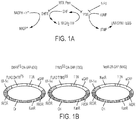
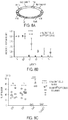
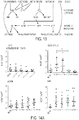
- Cartoon representations of constructs can be seen in FIG. 1 B and FIG. 8A .
- Select DNA and protein sequences can be found in Table 2.
- Table 2. Synthetic DNA/ protein sequences FLAGdmDHFR FLAG-CoOp dmDHFR FLAGdmTYMS FLAG-CoOpdmTYMS eGFP forward 5' cccgggcccggcgccatgccacctcctcgcctctctc 3' (SEQ ID NO: 5) eGFP reverse 5' ggtacccttgtacagctcgtccatgccsagagtgatcccggcggcggtcac 3' (SEQ ID NO: 6) NeoR forward 5' gctagcacatgtgccaccatgattgaacaagatggattgcacgcaggttctcggcggcgc
- the Amaxa Nucleofector® II (Lonza, Allendale, NJ) was used to electroporate both Jurkat and human PBMC. Electroporation of Jurkat cells utilized a modified buffer ( Chicaybam et al., Proceedings of the National Academy of Sciences of the United States of America 2002, 99(6):3400-3405 ) containing 5 mM KCl, 15 mM MgCl 2 , 120 mM Na 2 HPO 4 /NaH 2 PO 4 , pH 7.2, and 50 mM DMSO, where 10 6 Jurkat cells per cuvette were electroporated using program T-14 before immediate transfer to CM.
- PBMC electroporation followed a previously described protocol (Rushworth et al., supra). Briefly, 1 to 2 X 10 7 thawed PBMC per cuvette were electroporated in Amaxa T cell Nucleofector solution (Lonza Biosciences; Cat No. VPA-1002) using program U14. On the following day, PBMC were stimulated in fresh CM with AaPC at a ratio of 1: 1 including 50 IU/ mL IL-2, unless otherwise noted.
- the cellular co-culture concentration of 10 6 cells/ mL was maintained at each stimulation, and PBMC derived T cells were re-stimulated every 7 days using the same concentrations.
- IL-2 was added when media was changed between stimulations.
- Drug treatment initiated 48 hours after co-culture began and continued until day 14. Drug was only added with fresh CM.
- T cells were centrifuged from culture, supernatant aspirated, and the pellet rapidly frozen in liquid nitrogen.
- Whole-cell extracts were harvested using 50 mM Tris, 150 mM NaCl, 1 mM EDTA, 1% NP-40, 0.5% deoxycholate, ImM phenylmethylsulfonyl fluoride, 150 mM p-nitrophenyl phosphate and 0.3 ⁇ M Aprotinin, pH 7.4. Proteins were separated by SDS-PAGE in reducing conditions and analyzed using specific primary antibodies indicated in Table 3. Detection was performed using an enhanced chemiluminescence detection system.
- CD3-APC BD Pharmingen 340661 1:33 CD3-PerCP-Cy5.5 BD Pharmingen 340949 1:33 CD4 FITC BD Pharmingen 340133 1:33 CD4 -PE BD Pharmingen 347327 1:33 CD4-PerCP-Cy5.5 BD Pharmingen 341645 1:33 CD8-APC BD Pharmingen 340359 1:33 Annexin V-PE BD Pharmingen 556422 1:20 7-AAD BD Pharmingen 559925 1:20 Propidium Iodide BD Pharmingen 556463 Human Fc-PE Invitrogen H10104 1:40 Myc- AF488 MBL M047-A48 1:33 FLAG-AF647 Cell Signaling 3916S 1:33
- Antigen specific cytotoxicity was assessed by CRA. This assay was previously described (Rushworth et al., supra). Briefly, antigen positive CD19+ EL-4 were compared to antigen negative CD19 neg EL-4 after each cell line was loaded with 51 Cr for 3 hours and subsequently incubated with CD19-specific CAR+ T cells at a 1 target : 5 effector cell ratio for 6 hours. Release of 51 Cr from cell lysis was assessed by the TopCount NXT scintillation counter.
- DHFR FS were used to determine whether T cells can be genetically-modified to resist toxic doses of AThys used in the initial treatment of malignancy.
- DHFR FS+ T cells resistant to MTX are described by Jonnalagadda et al., PloS one 2013, 8(6):e65519 , and Jonnalagadda et al., Gene therapy 2013, 20(8):853-860 .
- 5-FU resistant TYMS muteins previously identified within a bacterial culture system Landis et al., Cancer research 2001, 61(2):666-672 ) were tested in human cells (data not shown) and TYMS ss was chosen for further study.
- constructs individually expressing DHFR FS , TYMS ss , and NeoR were ligated into the same backbone containing Sleeping Beauty (SB) transposable elements upstream of eGFP ( FIG. 1B ).
- SB Sleeping Beauty
- eGFP was used to track the predominance of surviving genetically-modified T cells.
- Jurkat cells were co-electroporated with each construct and SB11 transposase ( Singhet et al., Cancer Research 2008, 68(8):2961-2971 ), which mediated genomic integration of each construct. Cytotoxic drugs were added two days after electroporation.
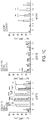
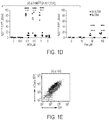
- Jurkat were assessed for eGFP expression in viable cells by propidium iodide (PI) exclusion on day 10-12 ( FIG. 1C ) . Increased percentage expression of eGFP was sought as a measure for transgene selection in the presence of drug. Overall survival and mean fluorescence intensity (MFI) of eGFP are also given in FIG. 2AI and AII , respectively. Overall, the data demonstrate that DHFR FS has much better selection than the traditional drug-resistance transgene NeoR. The data also demonstrate that TYMS SS has no independent capacity to enhance Jurkat survival.
- PI propidium iodide
- DHFR FS confers resistance to MTX at concentrations range of 0.01-0.5 ⁇ M
- codon optimization of DHFR FS enhanced the drug resistance range of CoOp DHFR FS to 0.01-1 ⁇ M ( FIG. 1C ).
- Codon optimization removed potential endogenous DHFR binding to the DHFR FS mRNA as well as possible micro RNA binding domains.
- gating on eGFP + cells demonstrated that DHFR FS constructs lead to a MTX dependent increase in eGFP MFI.
- eGFP expression within a single cell increased based on the addition of MTX.
- NeoR was used to select for enhanced survival of Jurkat in the presence of G418. This was intended to serve as a standard to gauge the utility of DHFR FS and TYMS SS . Electroporation of NeoR into Jurkat improved survival in the presence of G418 at 0.72-1.1 mM G418 ( FIG. 1C ). The survival advantage of NeoR over No DNA was not significant due to variability ( FIG. 2A ), but a G418 dependent increase in GFP MFI was noted. The GFP MFI significantly increased above No DNA Jurkat at 1.4 mM G418 ( FIG. 2A -II). These results reinforce that DHFR FS and NeoR are capable of providing dose-dependent transgene selection advantage in surviving Jurkat. However, only DHFR FS conferred reliable survival advantages to Jurkat in this experiment ( FIG. 2A -II).
- the next experiment combined DHFR FS and TYMS SS by co-electroporating each plasmid into Jurkat.
- drug was added on day 2 and cells were tested on day 10-12.
- [DHFR FS & TYMS SS ] expressing Jurkat in 0.1 - 1 ⁇ M MTX when compared to similarly treated No DNA or untreated [DHFR FS & TYMS SS ] + Jurkat ( FIG. 1D ).
- TYMS SS enhances the ability of Jurkat expressing DHFR FS to survive in the presence of MTX and Pem, which both target endogenous DHFR and TYMS to prevent thymidine synthesis.
- MTX target endogenous DHFR
- TYMS SS mice were tested in human cells by electroporation into human PBMC. The day following electroporation, cells were stimulated with an OKT3-loaded AaPC capable of polyclonal T cell propagation. The propagation schematic is shown in FIG. 3A .
- the co-cultures received 0.1 ⁇ M MTX, 5 ⁇ M 5-FU, or 1.4 mM G418 until day 14, as designated in FIG. 3 .
- the co-cultures were re-stimulated with AaPC at a 1: 1 ratio and given 50 IU / mL IL-2 every 7 days from day 1 to 35. Phenotypic changes in transgene expression were tracked during drug administration for the first 14 days and for the 21 days after drug administration had ended. The weekly changes in transgene expression can be noted in FIG. 3B-I , C-I, D-I .
- TYMS SS demonstrated selection within the population of surviving T cells on Day 21 in the presence of 5-FU.
- the selected TYMS SS expressing T cells did not persist to Day 35, and the lack of persistence was also noted when [DHFR FS & TYMS SS ] were selected using MTX and 5-FU.
- thymidine synthesis may be restored by TYMS SS and thymidine transporters then make thymine available to untransformed cells. Without wishing to be bound by any theory, this is likely mediated by an equilibrative nucleoside transporter as the same transporter that permits 5-FU entry also mediates equilibrative transport of thymine.
- DHFR FS restores thymidine synthesis in the presence of methotrexate
- DHFR FS is no longer able to select for T cells expressing DHFR FS & TYMS SS as noted in FIG. 3B -I .
- NeoR was co-electroporated into primary T cells with DHFR FS , TYMS SS , and [DHFR FS & TYMS SS ].
- the only change made to the propagation method was the addition of 100 IU/ mL IL-2 rather than 50 IU/ mL from days 14-35 to supplement the poor outgrowth already noted in G418 selected T cells.
- the higher doses of IL-2 were insufficient to rescue poor outgrowth when G418 and 5-FU were combined for T cell selection ( FIG. 4B -II).
- With the co-transfection of NeoR into DHFR FS and/or TYMS SS expressing T cells nearly 100% transgenes selection was observed with the same transgene selection kinetics among all groups ( FIG. 3C-I ).
- TYMS SS The influence of TYMS SS on DHFR FS selection in T cells subjected to MTX was tested. Plasmids expressing DHFR FS were co-electroporated into T cells along with either TYMS SS co-expressing RFP or a vector expressing RFP alone. This experiment followed the same strategy as described for FIG. 3B . Due to technical limitations, the total amount of DHFR FS expressing plasmid DNA electroporated into the same number of T cells was decreased. Consequently, fewer T cells initially expressed DHFR FS at the beginning of the experiment and DHFR FS was incompletely selected by the addition of MTX within a 14 day time period ( FIG. 3D -I ) .
- TYMS SS The progressive loss of DHFR FS after day 14 is reminiscent of TYMS SS expression in FIG. 3B - I .
- AThyR transgenes must select for a large portion of the T cell population to maintain stable expression within the population.
- TYMS SS blunts DHFR FS selection in T cells as selection of [DHFR FS & RFP] expressing T cells was more robust than selection of [DHFR FS & TYMS SS ] expressing T cells. This is attributed to the restoration of thymidine synthesis in the presence of TYMS SS ( FIG. 3D - I ).
- the presence of 5-FU prevents selection of DHFR FS with or without TYMS SS , and this is attributed to the TYMS SS independent inhibition of mRNA and rRNA.
- transgenic selection tended to increase the population of CD4 + T cells by day 35 in all T cell experiments, which was not seen with unmodified T cell cultures.
- the experiment in FIG. 3D - II demonstrates that it is not caused by cytotoxic drug, rather, the presence of transgene in combinations with cytotoxic drug leads to CD4 + T cell predominance by day 35.
- CD4 + T cell predominance was not noted 7 days after initial drug selection for AThyR+ T cells ( FIG. 4C ), which is consistent with previously published findings using DHFR FS T cells ( Jonnalagadda et al., Gene therapy 2013, 20(8):853-860 ).
- the longer period of follow-up than prior experiments demonstrated a previously unknown phenomenon that CD8 + T cells are unable to persist for long periods of time following cytotoxic insult, or are selectively outgrown by CD4 + T cells.
- MTX MTX mediated changes in transgene expression are useful for in vivo control of transgene expression in both animals and humans.
- MTX a clinically available drug, is used to mediate transgene expression either up or down in T cells.
- DHFR FS , CoOp DHFR FS , and [DHFR FS & TYMS SS ] expressed in Jurkat were selected in 1 ⁇ M MTX for 2 weeks and rested for 3-5 weeks before testing MTX mediated regulation of DHFR FS expression.
- the expression of DHFR FS and codon optimization (CoOp) DHFR FS selected for uniform expression in Jurkat T cell line is shown in FIG. 5A .
- CoOp DHFR FS did not contribute to a significantly higher expression of DHFR FS as indicated by a cis -expressed eGFP, nor did it prevent MTX induced increases in transgene expression as noted in FIG. 5B . This was unexpected. However, the loss of MTX induced increase in DHFR FS expression was noted when TYMS SS was co-expressed with DHFR FS as seen in FIG. 5A and FIG. 5B . The addition of TYMS SS led to an insignificant reduction in the expression of native DHFR FS in the absence of MTX. The addition of MTX was unable to induce the same increase in DHFR FS expression seen during the sole expression of either DHFR FS version.
- TYMS SS is playing a role in the MTX inducible increase of DHFR FS .
- the co-expression of TYMSSS with DHFRFS in Jurkat blunts the MTX induced increase in eGFP MFI ( FIG. 3B-I ).
- DHFRFS maintains MTX-inducible expression of cis-transgenes which is dependent on MTX mediated inhibition of TYMS.
- DHFR FS , TYMS SS , or [DHFR FS & TYMS SS ] was achieved with stability and purity by selecting from days 2-14 of propagation with the respective drugs MTX, 5-fluorouracil (5-FU), and G418 when the selection vector containing neomycin resistance was included.
- the expression of DHFR FS linked eGFP and TYMS SS linked RFP can be noted in FIG. 5C for DHFR FS , TYMS SS , or [DHFR FS & TYMS SS ].
- DHFR FS expression is increased in the presence of MTX ( FIG. 5D ), but this increase is blunted and no longer significant when TYMS SS is co-expressed with DHFR FS , as in Jurkat.
- expression of TYMS SS without DHFR FS was successfully achieved in primary T cells by selection with 5-FU and a trans neomycin resistance gene selected by G418.
- TYMS SS was tested for inducible changes in the presence of high doses of MTX ( FIG. 5D )
- TYMS SS linked RFP decreased significantly.
- MTX induced a reduction in the expression of TYMS SS that MTX resistant DHFR FS restored.
- TYMS SS is being repressed by a lack of 5, 10 - methylenetetrahydrofolate (5, 10 CH 2 THF).
- 10 CH 2 THF 10 - methylenetetrahydrofolate
- MTX which leads to a drop in 5, 10 CH 2 THF, is causing TYMS protein to bind TYMS and TYMS SS mRNA preventing expression.
- TYMS SS is equivalent to the native sequence with the exception of the point mutations.
- DHFR FS expression is also regulated by the synthesis of thymidine.
- TYMS SS expression is regulated by the synthesis of tetrahydrofolate (THF).
- THF tetrahydrofolate
- DHFR FS linked eGFP MFI and TYMS SS linked RFP MFI for each separate well were then plotted and correlated.
- the linked expression between DHFR FS and TYMS SS was significant and fit a linear regression ( FIG. 5G ).
- FIG. 5H This model is shown in FIG. 5H .
- TYMS SS expression will be stabilized by DHFR FS from strong expression changes in the presence of MTX.
- FIG. 5I was tested in FIG. 5I with primary T cells expressing DHFR FS along with either RFP or TYMS SS linked to RFP by applying increasing doses of MTX.
- DHFR FS linked eGFP was increased by increasing concentrations of MTX, and this increase was blunted by the presence of TYMS SS ( FIG. 5I-J ) . This conserves the model in FIG. 5H where restoration of thymidine synthesis prevents the MTX induced increase in DHFR FS .
- D FS iC9 selects for T cells expressing D FS iC9 in the presence of MTX and ablates D FS iC9 + T cells in the presence of drug that activates iC9 to induce apoptosis.
- the DHFR FS in D FS iC9 could be used to modulate and potentially ablate the expression of a transgene of interest which is otherwise too toxic to express without regulation.
- Interleukin - 12 (IL-12) is such a transgene.
- IL-12 is a cytokine capable of inducing a strong immune response against tumor from tumor specific T cells.
- systemic IL-12 is highly toxic and of low efficacy.
- IL-12 is expressed cis to TYMS SS in order to decrease and stabilize the expression level of IL-12.
- FIG. 5K a flow plot demonstrates the expression of IL-12 cis expressed with TYMS SS and iC9 cis expressed with DHFR FS expression.
- the donor cells were either left untreated or treated with high doses of MTX for 7 days. This expression pattern appears to indicate that IL-12 can be stably expressed even in prolonged toxic doses of MTX.
- FIG. 5L A further analysis of similarly manipulated donors ( FIG. 5L ) demonstrates the potential of TYMS SS when co-expressed with DHFR FS to stabilize the expression of the potentially toxic transgenes of interest - IL-12.
- T cells from the experiment shown in FIG. 3D were also subjected to varying concentrations of MTX.
- T cells received anti-CD3/ CD28 stimulation and were subjected to a range of MTX from 0 to 1 ⁇ M for 72 hours.
- no T cell group significantly expressed DHFR FS , as indicated by co-expressed eGFP, above background ( FIG. 3D - I ).
- DHFR FS + T cells selected with MTX alone persisted enough to significantly improve survival when MTX was re-introduced at concentrations up to 0.5 ⁇ M MTX ( FIG. 7B ).
- AThyR permits independent selection for transgenes of interest
- AThyRs are human proteins and therefore have lower immunogenicity in humans than NeoR or similar drug resistance transgenes, typically originating from bacteria. Thus, using AThyRs to select transgenes of interest is desirable due to lower immunogenicity, and ease of use in vitro.
- the suicide gene inducible caspase 9 iC9 was selected by co-expressing iC9 with DHFR FS in a construct designated DF FS iC9 ( FIG. 8A ) .
- Current methods to select iC9 utilize surface-expressed antigen and isolation by magnetic beads. However, this method of selection is more labor intensive than adding drug and does not add the functionality of AThy resistance.
- CARL CAR exodomain binding ligand
- T cells selected in 0.1 ⁇ M MTX from day 2 - 21 are shown in FIG. 8C compared to mock-electroporated T cells. As before, there is no selection towards CD4 + T cell predominance following MTX selection by day 21.
- DHFR FS has the advantage of selecting transgene expression in T cells independent of antigen-specificity and antigen expression.
- PBMC peripheral blood derived mononuclear cells
- Cell counting was accomplished by 0.1 % Trypan Blue (Sigma-Aldrich, T8154) exclusion using automated cell counting (Nexcelcom, Lawrence, MA).
- Cell Isolation was accomplished using magnetic bead based sorting with the CD4+, CD25+ Regulatory T Cell Isolation Kit following the manufacturer's instructions (Miltenyi Biotec, San Diego, CA, 130-091-301). Briefly, CD4 + T cells were negatively selected before sorting one time with anti-CD25 beads was used to differentiate between effector T cells (CD25 neg ) and T reg (CD25 pos ).
- Acellular stimulation was accomplished as previously described using soluble anti-CD3 - 30 ng/ mL, anti-CD28 - 100 ng/ mL, and human IL-2 - 50 IU/ mL, as previously described .
- the following drugs were used: 5-FU, MTX, cisplatin (CDDP), pemetrexed, raltitrexed, G418, hygromycin B, zeocin, rapamycin, metformin, AICARtf / inosine monophosphate (IMP) cyclohydrolase (ATIC) dimerization inhibitor (iATIC) (Table 5).
- Acellular stimulation experiments received addition of toxic drug or treatment on the same day as stimulation. Table 5 .
- FLAG-DHFRFS-2A-eGFP pSBSO (noted as DHFR FS -GFP (DG)), FLAG-TYMS SS -2A-eGFP pSBSO (noted as TYMS SS -GFP (TSG)), NLS-mCherry pSBSO (RFP), FLAG-TYMS SS -2A-NLS-mCherry pSBSO (noted as TYMS SS -RFP (TRG)), Neomycin Resistance (NeoR)-2A-eGFP pSBSO (noted as NeoR-GFP (NRG)), and Myc-ffLuc-NeoR pSBSO (NRF), were designed constructed and utilized as previously described . Sleeping Beauty (SB) indirect/ direct repeat (IR/DR) sites were present in each construct to induce genomic integration with SB transposase. Each transgene was expressed by elongation factor 1 alpha (EF1 ⁇ ) promoter.
- the Amaxa Nucleofector® II was utilized to transform human PBMC, where 1-2 ⁇ 10 7 thawed PBMC were electroporated in Amaxa T cell Nucleofector solution using program U14, as previously described.
- PBMC were stimulated with CM with AaPC at a ratio of 1: 1 including 50 IU/ mL IL-2.
- the co-culture of T cells and AaPC was maintained at 1 ⁇ 10 6 cells/ mL with each subsequent stimulation.
- Outgrowth of T cells was promoted by re-stimulated of co-cultures every 7 days with IL-2 and AaPC at the concentrations noted. Fresh IL-2 was added when media was changed between stimulations.
- drugs were added 48 hours after co-culture initiation and maintained at the given concentration until day 14. After day 14, no drugs were added to T cell cultures.
- T cells were removed from cultures for western blot by centrifugation of 1 ⁇ 10 6 T cells, and rapid freezing of the cell pellet in liquid nitrogen.
- T cell pellets were lysed and prepared with 50 mM Tris, 150 mM NaCl, 1 mM EDTA, 1% NP-40, 0.5% deoxycholate, ImM phenylmethylsulfonyl fluoride, 150 mM p-nitrophenyl phosphate and 0.3 ⁇ M Aprotinin, pH 7.4.
- SDS-PAGE separated proteins and primary antibodies noted in Table 6 were used to detect the presence of protein via chemiluminescence. Table 6.
- a thymidine incorporation assay was performed with anti-CD3/ CD28 and IL-2 used to stimulate each well containing 2 ⁇ 10 5 viable cells. Varying ratios of effector T cells (Teff) to Treg were combined in each well and all wells were run in triplicate in U-bottom 96 well plates. At 48 hours 1 ⁇ Ci [ 3 H] Thymidine (Perkin-Elmer, Waltham, MA) was added to each well, and 24 hours later the cells were assessed for radioactivity on a Top Count NXT (Perkin-Elmer). T reg mediated suppression of growth was determined by the following equation: (No Treatment T eff [cpm] - (T reg & No Treatment T eff [cpm])) / No Treatment T eff [cpm].
- TCD4, FoxP3 by MTX occurs in part through toxicity.
- F oxP3 freshly derived PBMC were stimulated with anti-CD3/ CD28 antibodies and IL-2 in the presence of cytotoxic drugs or lethal ⁇ -irradiation. After 7 days there was a significant difference in survival markers Annexin V and 7-AAD in stimulated T cells receiving any cytotoxic insult with stimulation ( FIG. 1B-I ). The selection of T CD4, FoxP3 was not as consistent as cytotoxicity. Following 7 days of stimulation, 2 Grey ⁇ -irradiation significantly increased the amount of T CD4, FoxP3 in the surviving population ( FIG. 1B -II ).
- this pathway is likely related to the reduced proliferation rate of T reg , and appears to be ribosomally mediated as G418 can inhibit this general trend of increasing T CD4, FoxP3 percentage. See Cao M. et al., International journal of radiation biology 2011, 87(1):71-80 .
- T reg depletion with G418 and T reg selection by MTX were further evaluated for dose dependence by stimulating thawed PBMC with anti-CD3/CD28 + IL-2 for 7 days, as before.
- G418 was significantly cytotoxic at all doses tested, but significantly depleted T CD4, FoxP3 at two moderate drug doses ( FIG. 10C ).
- MTX was also cytotoxic at all doses tested, but had significant elevation of T CD4, FoxP3 at lower doses ( FIG. 10D ).
- Rapamycin (Rapa) was used as a T reg selection control [138] and showed similar T CD4, FoxP3 selection at a moderate drug concentration independent of cytotoxicity, which only occurred at the highest doses ( FIG. 10F ).
- T reg have a narrow therapeutic window for drug induced selection or depletion.
- a specific inhibitor of ATIC [142] was used to test whether MTX mediates selection of T CD4, FoxP3 through inhibition of ATIC.
- inhibition of AICARtf or the heterodimeric complex ATIC, in which AICARtf is found increases AICAR.
- FIG. 10E demonstrates that ATIC inhibition alone was neither cytotoxic nor selective for T CD4, FoxP3 . Further analysis of flow plots represented by the same donor in FIG. 10G show expression of CD4 and FoxP3 for several of the drugs used.
- iATIC characteristically mediated increased expression of FoxP3 in CD4+ T cells similar to that of Rapa, but did not inhibit proliferation of FoxP3 neg T cells as MTX, G418, or Rapa.
- iATIC enhanced FoxP3 expression in CD4 + T cells but diluted these cells by permitting proliferation of FoxP3neg T cells.
- MTX mediated selection of T CD4
- FoxP3 occurs by depletion of rapidly proliferating effector T cells and enhancement of FoxP3 expression via a pathway similar to Rapa that includes ribosomal inhibition.
- the increased susceptibility of Tregs to ribosomal inhibitor G418 solidifies this relationship between enhanced FoxP3 expression and increased susceptibility to ribosomal inhibition.
- T regs are preferentially expanded in primary T cells resistant to the anti-folate and anti-thymidine actions of MTX. It was hypothesized that regulatory T cells were inhibiting CD8 + T cells proliferation following drug selection. To test this hypothesis, drug resistant T cells were derived by transformation with DHFR FS , TYMS SS , NeoR, or a combination, and numerically expanded as previously described. Briefly, transformed T cells were selected in the presence of 0.1 ⁇ M MTX, 5 ⁇ M 5-FU, or 1.6 mM G418 as designated from day 2 to 14 while stimulation with OKT3-loaded AaPC and 50 IU / mL IL-2 occurred every 7 days until day 35. See Singh H.
- Low IL-2 expression [] is a known trait of T regs and is assessed with FoxP3 expression.
- the percentage of the T cell population with a F oxP3pos , IL-2 neg expression pattern is shown in FIG. 12B .
- the transgenes DHFR FS and TYMS SS were compared individually and in combination to the control selection vector NeoR and un-treated No DNA T cells. Selection towards Treg in this experiment may be noted in FIG. 12A , B, C -I.
- This experiment demonstrated that [DHFR FS -GFP (DG) & TYMS SS -RFP (TSR)] + T cells selected in MTX + 5-FU had an increased population of cells characteristic of Treg when compared to mock-transformed T cells.
- NeoR was co-electroporated with DHFR FS , TYMS ss , or the combination.
- NeoR permitted equivalent selection of DHFR FS , TYMS ss , and the combination in all T cell populations.
- DHFR FS alone, but not TYMS SS alone could select for cells characteristic of T regs ( FIG. 12A , B, and C -II).
- [DG & TSR] + T cells continued to select for cells with Treg features.
- TYMS SS was assessed by co-electroporation of TSR or a control vector- RFP. The characteristics of Tregs from this experiment are shown in FIG. 12A , B, and C-III.
- Ribosomal Inhibition by aminoglycoside G418 selectively depletes replicating T CD4, FoxP3 .
- Thawed PBMC were activated with anti-CD3/CD28 + IL-2 for 7 days in the presence of alternative doses of G418, Hygromycin B - a different aminoglycoside, Zeocin - a DNA targeting antibiotic, and Rapa to assess the dose dependent selection or depletion of TCD4, FoxP3 by aminoglycosides ( FIG. 14A ). Depletion of T CD4, FoxP3 is again noted in the presence of aminoglycoside G418.
- Ribosomal Inhibition by aminoglycoside G418 selectively depletes replicating T CD4,FoxP3 .
- Thawed PBMC were activated with anti-CD3/CD28 + IL-2 for 7 days in the presence of alternative doses of G418, Hygromycin B - a different aminoglycoside,
- G418, Hygromycin B - a different aminoglycoside
- Zeocin - a DNA targeting antibiotic
- Rapa to assess the dose dependent selection or depletion of T CD4, FoxP3 by aminoglycosides ( FIG. 14A ). Depletion of T CD4, FoxP3 is again noted in the presence of aminoglycoside G418.
- T CD4, F oxP3 This dose dependent depletion of T CD4, F oxP3 is consistent with that seen for G418, and was not noted with increasing doses Zeocin or Rapa.
- An increase of T CD4, FoxP3 was noted with increasing doses of Zeocin, yet this was insignificant, similar to that seen for other cytotoxic drugs in FIG. 10B -II.
- a representative flow plot of CD4 and FoxP3 expression from the same donor can be seen in FIG. 14B . Here, the trends can be visualized.
- FIG. 14D - upper panel show the loss in expression of FoxP3 for CD4 + T cells after treatment with G418.
- An alternative view of Ki-67 and FoxP3 expression in FIG. 14D - lower panel demonstrates that FoxP3 neg T cells continue to proliferate in the presence of G418, further supporting the selective targeting of G418 to T CD4, FoxP3 at this concentration.
- proliferating T CD4,FoxP3 are depleted following treatment with aminoglycoside G418.
- FIG. 3E depicts this depletion of T CD4, FoxP3 in resting PBMC after 7 days and demonstrates the consistent action of aminoglycosides in depleting TCD4, FoxP3. It was next tested whether depletion of T CD4, FoxP3 corresponded with a loss of T reg marker expression or selective Treg toxicity.
- Sorted Treg differentiate the effects of MTX, 5-FU, and G418 on selection in bulk PBMC.
- Magnetic sorting for CD4 and CD25 expressing PBMC yielded a CD4+ CD25+ population that is widely considered to contain T reg , and a CD25 neg population of effector T cells (T eff ), See Miyara M. et al., Immunity 2009, 30(6):899-911 .
- These populations were treated with the same concentrations of MTX, 5-FU, G418, or no treatment, as above, for the first 7 days of co-culture with AaPC. After this period of time, co-culture continued without drug by stimulating with AaPC every 7 days until Day 21.
- T reg markers such as CD25 ( FIG. 15C-I ), CTLA-4 ( FIG. 15C - II ), decreased IL-2 expression ( FIG. 4C - III ), or LAP ( FIG. 15C - IV ), in combination with FoxP3 expression was also decreased following stimulation on day 21.
- Treg are lost, likely due to toxicity of G418, rather than inhibited as 2 weeks of growth promoting co-culture conditions could not sufficiently restore T regs following G418 treatment.
- T reg promoting properties of MTX and 5-FU appeared to depend in part upon the presence of T eff , as the enhanced selection of T CD4, FoxP3 was no longer noticeable after T eff were removed from the culture system ( FIG. 15B ).
- the improved selection towards T reg phenotypes may have been accomplished by depletion of T eff which are known to contaminate Treg sorting.
- T reg- specific marker LAP was significantly increased by early treatment with MTX or 5-FU ( FIG. 15C - IV ). As LAP was the only increased marker of those assayed, it is likely that LAP and the associated expression of TGF- ⁇ [143] was the probable cause for improved suppression of MTX and 5-FU treated Treg above untreated Treg ( FIG. 15D ). Thus, MTX and 5-FU appear to have two components in enhancing selection of Treg: 1) T eff are selectively depleted by MTX and 5-FU, and 2) MTX and 5-FU increase the expression of LAP weeks after treatment.
- T CD4, FoxP3 enhances AMPK activation and leads to inhibition of eEF2 - a factor that plays a role in translational elongation.
- AMPK is hypothesized to play a role in selection of T CD4, FoxP3 , as noted above ( FIG. 13 ).
- enhanced activation of AMPK may lead to inhibition of eEF2 in T CD4, FoxP3 .
- Preferential inhibition of translational elongation could explain selection for T CD4, FoxP3 in the presence of many cytotoxic drugs and depletion of T CD4, FoxP3 in the presence of inhibitors of translational elongation.
- FIG. 16B - upper panel flow plots of activated AMPK with FoxP3 show this enhancement of AMPK activation is much more noticeable in the FoxP3-expressing subset.
- FIG. 16B - upper panel A marker of translational initiation -S6 - is susceptible to mTOR regulation, and is phosphorylated when active. See Mahoney SJ et al., Progress in molecular biology and translational science 2009, 90:53-107 . Phosphorylation of S6 (p-S6) was significantly enhanced in TCD4, FoxP3 following stimulation ( FIG. 16A - lower panel ), which was previously shown by Cabone et al. See Carbone F.
- FIG. 16 A-C was performed to assess the inactivation of eEF2 by phosphorylation at T56.
- Image cytometry was used to quantify and visualize all events.
- FIG. 16D demonstrates a significant increase in phosphorylation of eEF2 in the same subset of T cells - T CD4, FoxP3 - following stimulation.
Landscapes
- Health & Medical Sciences (AREA)
- Life Sciences & Earth Sciences (AREA)
- Chemical & Material Sciences (AREA)
- Engineering & Computer Science (AREA)
- Organic Chemistry (AREA)
- Zoology (AREA)
- Genetics & Genomics (AREA)
- General Health & Medical Sciences (AREA)
- Bioinformatics & Cheminformatics (AREA)
- Immunology (AREA)
- Wood Science & Technology (AREA)
- Biomedical Technology (AREA)
- Biotechnology (AREA)
- Biochemistry (AREA)
- Medicinal Chemistry (AREA)
- General Engineering & Computer Science (AREA)
- Microbiology (AREA)
- Molecular Biology (AREA)
- Cell Biology (AREA)
- Public Health (AREA)
- Animal Behavior & Ethology (AREA)
- Veterinary Medicine (AREA)
- Hematology (AREA)
- Pharmacology & Pharmacy (AREA)
- Epidemiology (AREA)
- Proteomics, Peptides & Aminoacids (AREA)
- Biophysics (AREA)
- Gastroenterology & Hepatology (AREA)
- Toxicology (AREA)
- Chemical Kinetics & Catalysis (AREA)
- Nuclear Medicine, Radiotherapy & Molecular Imaging (AREA)
- General Chemical & Material Sciences (AREA)
- Virology (AREA)
- Developmental Biology & Embryology (AREA)
- Oncology (AREA)
- Mycology (AREA)
- Urology & Nephrology (AREA)
- Physics & Mathematics (AREA)
- General Physics & Mathematics (AREA)
- Food Science & Technology (AREA)
Priority Applications (1)
| Application Number | Priority Date | Filing Date | Title |
|---|---|---|---|
| EP20191615.2A EP3804741A3 (en) | 2015-02-24 | 2016-02-24 | Selection methods for genetically-modified t cells |
Applications Claiming Priority (4)
| Application Number | Priority Date | Filing Date | Title |
|---|---|---|---|
| US201562120329P | 2015-02-24 | 2015-02-24 | |
| US201562120790P | 2015-02-25 | 2015-02-25 | |
| US201562175794P | 2015-06-15 | 2015-06-15 | |
| PCT/US2016/019288 WO2016138091A2 (en) | 2015-02-24 | 2016-02-24 | Selection methods for genetically-modified t cells |
Related Child Applications (1)
| Application Number | Title | Priority Date | Filing Date |
|---|---|---|---|
| EP20191615.2A Division EP3804741A3 (en) | 2015-02-24 | 2016-02-24 | Selection methods for genetically-modified t cells |
Publications (2)
| Publication Number | Publication Date |
|---|---|
| EP3261656A2 EP3261656A2 (en) | 2018-01-03 |
| EP3261656B1 true EP3261656B1 (en) | 2020-08-19 |
Family
ID=56464271
Family Applications (2)
| Application Number | Title | Priority Date | Filing Date |
|---|---|---|---|
| EP16741163.6A Active EP3261656B1 (en) | 2015-02-24 | 2016-02-24 | Selection methods for genetically-modified t cells |
| EP20191615.2A Withdrawn EP3804741A3 (en) | 2015-02-24 | 2016-02-24 | Selection methods for genetically-modified t cells |
Family Applications After (1)
| Application Number | Title | Priority Date | Filing Date |
|---|---|---|---|
| EP20191615.2A Withdrawn EP3804741A3 (en) | 2015-02-24 | 2016-02-24 | Selection methods for genetically-modified t cells |
Country Status (8)
| Country | Link |
|---|---|
| US (2) | US10808230B2 (enExample) |
| EP (2) | EP3261656B1 (enExample) |
| JP (1) | JP6947647B2 (enExample) |
| KR (1) | KR20170117095A (enExample) |
| CN (1) | CN107667169B (enExample) |
| AU (2) | AU2016222850B2 (enExample) |
| CA (1) | CA2976126A1 (enExample) |
| WO (1) | WO2016138091A2 (enExample) |
Families Citing this family (14)
| Publication number | Priority date | Publication date | Assignee | Title |
|---|---|---|---|---|
| EP2997134B1 (en) | 2013-05-14 | 2020-06-24 | Board of Regents, The University of Texas System | Human application of engineered chimeric antigen receptor (car) t-cells |
| DK3105335T3 (da) | 2014-02-14 | 2020-01-13 | Univ Texas | Kimære antigenreceptorer og fremgangsmåder til fremstilling heraf |
| CA2964783C (en) | 2014-11-05 | 2024-01-23 | Board Of Regents, The University Of Texas System | Chimeric antigen receptors (car) to selectively target protein complexes |
| JP6775515B2 (ja) | 2015-03-11 | 2020-10-28 | ボード・オブ・リージエンツ,ザ・ユニバーシテイ・オブ・テキサス・システム | トランスポザーゼポリペプチド及びその使用 |
| EP3349791A1 (en) | 2015-09-15 | 2018-07-25 | Board of Regents, The University of Texas System | T-cell receptor (tcr)-binding antibodies and uses thereof |
| WO2017075147A1 (en) | 2015-10-27 | 2017-05-04 | Board Of Regents, The University Of Texas System | Chimeric antigen receptor molecules and uses thereof |
| US11629340B2 (en) | 2017-03-03 | 2023-04-18 | Obsidian Therapeutics, Inc. | DHFR tunable protein regulation |
| CA3064000A1 (en) | 2017-05-24 | 2018-11-29 | Effector Therapeutics, Inc. | Methods and compositions for cellular immunotherapy |
| CN109136282A (zh) * | 2018-09-30 | 2019-01-04 | 北京鼎成肽源生物技术有限公司 | 一种hafft1细胞的构建方法 |
| CA3119599A1 (en) | 2018-11-16 | 2020-05-22 | Rapa Therapeutics, Llc | Als treatment using induced regulatory t (itreg) cells |
| WO2020102726A1 (en) * | 2018-11-16 | 2020-05-22 | Rapa Therapeutics, Llc | Method for manufacturing of human hybrid regulatory t/th2 cells (hybrid treg/th2 cells) from de-differentiated t cells |
| KR102594009B1 (ko) | 2021-02-01 | 2023-10-24 | 서울대학교산학협력단 | 형질전환 생식세포의 제조 방법 및 이를 이용한 형질전환 동물의 제조 방법 |
| EP4408169A4 (en) * | 2021-09-30 | 2025-10-29 | Univ Southern California | Human hepatocyte culture medium and conditioned medium of in vitro cultured human hepatocyte cells and their uses |
| CN114740196B (zh) * | 2022-04-08 | 2023-04-18 | 中南大学湘雅二医院 | 标志物及其在制备评价机体免疫功能的产品中的应用 |
Family Cites Families (19)
| Publication number | Priority date | Publication date | Assignee | Title |
|---|---|---|---|---|
| MX340972B (es) * | 2008-10-08 | 2016-08-02 | Intrexon Corp | Celulas manipuladas por ingenieria que expresan multiples inmunomoduladores, y uso de las mismas. |
| DK3246042T3 (da) * | 2009-11-02 | 2019-10-14 | Univ Emory | Lægemiddelresistent immunterapi til behandling af cancer |
| PH12013501201A1 (en) | 2010-12-09 | 2013-07-29 | Univ Pennsylvania | Use of chimeric antigen receptor-modified t cells to treat cancer |
| AU2012203048A1 (en) * | 2011-05-24 | 2012-12-13 | Agency For Science, Technology And Research | IRES mediated multicistronic vectors |
| WO2013074916A1 (en) | 2011-11-18 | 2013-05-23 | Board Of Regents, The University Of Texas System | Car+ t cells genetically modified to eliminate expression of t- cell receptor and/or hla |
| EP2814846B1 (en) * | 2012-02-13 | 2020-01-08 | Seattle Children's Hospital d/b/a Seattle Children's Research Institute | Bispecific chimeric antigen receptors and therapeutic uses thereof |
| EP2997134B1 (en) | 2013-05-14 | 2020-06-24 | Board of Regents, The University of Texas System | Human application of engineered chimeric antigen receptor (car) t-cells |
| CA2913052A1 (en) | 2013-05-24 | 2014-11-27 | Board Of Regents, The University Of Texas System | Chimeric antigen receptor-targeting monoclonal antibodies |
| US9907820B2 (en) | 2013-10-25 | 2018-03-06 | Board Of Regents, The University Of Texas System | Polyclonal gamma delta T cells for immunotherapy |
| JP6976058B2 (ja) * | 2013-11-22 | 2021-12-01 | セレクティスCellectis | 免疫療法のための化学療法薬耐性t細胞を工学的に作製する方法 |
| DK3105335T3 (da) | 2014-02-14 | 2020-01-13 | Univ Texas | Kimære antigenreceptorer og fremgangsmåder til fremstilling heraf |
| SG10201808811QA (en) * | 2014-04-10 | 2018-11-29 | Seattle Childrens Hospital Dba Seattle Childrens Res Inst | Method and compositions for cellular immunotherapy |
| US20170158749A1 (en) | 2014-04-23 | 2017-06-08 | Board Of Regents, The University Of Texas System | Chimeric antigen receptors (car) and methods for making and using the same |
| KR20160145186A (ko) | 2014-04-24 | 2016-12-19 | 보드 오브 리전츠, 더 유니버시티 오브 텍사스 시스템 | 입양 세포 요법 생성물을 생성하기 위한 유도 만능 줄기 세포의 응용 |
| CA2964785A1 (en) | 2014-11-05 | 2016-05-12 | Board Of Regents, The University Of Texas System | Gene modified immune effector cells and engineered cells for expansion of immune effector cells |
| CA2964783C (en) | 2014-11-05 | 2024-01-23 | Board Of Regents, The University Of Texas System | Chimeric antigen receptors (car) to selectively target protein complexes |
| JP6775515B2 (ja) | 2015-03-11 | 2020-10-28 | ボード・オブ・リージエンツ,ザ・ユニバーシテイ・オブ・テキサス・システム | トランスポザーゼポリペプチド及びその使用 |
| EP3349791A1 (en) | 2015-09-15 | 2018-07-25 | Board of Regents, The University of Texas System | T-cell receptor (tcr)-binding antibodies and uses thereof |
| WO2017075147A1 (en) | 2015-10-27 | 2017-05-04 | Board Of Regents, The University Of Texas System | Chimeric antigen receptor molecules and uses thereof |
-
2016
- 2016-02-24 US US15/552,821 patent/US10808230B2/en active Active
- 2016-02-24 CA CA2976126A patent/CA2976126A1/en active Pending
- 2016-02-24 EP EP16741163.6A patent/EP3261656B1/en active Active
- 2016-02-24 CN CN201680011714.XA patent/CN107667169B/zh not_active Expired - Fee Related
- 2016-02-24 KR KR1020177024195A patent/KR20170117095A/ko not_active Withdrawn
- 2016-02-24 WO PCT/US2016/019288 patent/WO2016138091A2/en not_active Ceased
- 2016-02-24 EP EP20191615.2A patent/EP3804741A3/en not_active Withdrawn
- 2016-02-24 JP JP2017562971A patent/JP6947647B2/ja not_active Expired - Fee Related
- 2016-02-24 AU AU2016222850A patent/AU2016222850B2/en not_active Ceased
-
2020
- 2020-09-04 US US17/013,195 patent/US20210054346A1/en not_active Abandoned
-
2021
- 2021-06-02 AU AU2021203606A patent/AU2021203606A1/en not_active Abandoned
Non-Patent Citations (1)
| Title |
|---|
| None * |
Also Published As
| Publication number | Publication date |
|---|---|
| EP3804741A2 (en) | 2021-04-14 |
| AU2016222850A1 (en) | 2017-08-24 |
| JP6947647B2 (ja) | 2021-10-13 |
| EP3261656A2 (en) | 2018-01-03 |
| HK1248555A1 (zh) | 2018-10-19 |
| WO2016138091A3 (en) | 2016-12-29 |
| JP2018506995A (ja) | 2018-03-15 |
| KR20170117095A (ko) | 2017-10-20 |
| US10808230B2 (en) | 2020-10-20 |
| US20180298349A1 (en) | 2018-10-18 |
| EP3804741A3 (en) | 2021-07-14 |
| CA2976126A1 (en) | 2016-09-01 |
| AU2021203606A1 (en) | 2021-07-01 |
| CN107667169A (zh) | 2018-02-06 |
| CN107667169B (zh) | 2021-10-29 |
| AU2016222850B2 (en) | 2021-04-01 |
| US20210054346A1 (en) | 2021-02-25 |
| WO2016138091A2 (en) | 2016-09-01 |
Similar Documents
| Publication | Publication Date | Title |
|---|---|---|
| US20210054346A1 (en) | Selection methods for genetically-modified t cells | |
| US11344577B2 (en) | Car+ T cells genetically modified to eliminate expression of T-cell receptor and/or HLA | |
| CN113661180B (zh) | Tn-MUC1嵌合抗原受体(CAR)T细胞疗法 | |
| JP7005346B2 (ja) | 養子細胞免疫療法の有効性を増強させるための組成物および方法 | |
| TW202003845A (zh) | 增強功能之經修飾免疫細胞及其篩選方法 | |
| TW201928052A (zh) | 靶向ny-eso-1的基因修飾免疫細胞及其用途 | |
| EP3217989B1 (en) | Compositions and methods of stimulating and expanding t cells | |
| Snook et al. | Inhibition of SHP-1 expands the repertoire of antitumor T cells available to respond to immune checkpoint blockade | |
| TWI878270B (zh) | 源自液體腫瘤之腫瘤浸潤性淋巴細胞的擴增和該腫瘤浸潤性淋巴細胞之治療用途 | |
| WO2022098914A1 (en) | Engineered ipsc and persistent immune effector cells | |
| KR20220004076A (ko) | 리툭시맙-내성 키메라 항원 수용체 및 이의 용도 | |
| JP2024509917A (ja) | 腫瘍溶解性ウイルスによる直交性il-2の送達を用いた、固形腫瘍におけるt細胞の選択的刺激方法 | |
| US20230374454A1 (en) | Human immune cells genomically modified to express orthogonal receptors | |
| JP2024532382A (ja) | アデノシンデアミナーゼの細胞表面発現を有するt細胞及びその使用 | |
| HK40049415A (en) | Selection methods for genetically-modified t cells | |
| JP2024502170A (ja) | 癌のための改良された養子細胞移植療法 | |
| HK1248555B (en) | Selection methods for genetically-modified t cells | |
| Kerr | Modulation of T Cells to Promote an Anti-Tumor Response: Activation and Inhibition of T Cells for Efficacy in T-Cell Lymphomas and Melanoma | |
| US20240325535A1 (en) | Compositions and methods comprising car t cells comprising prdm1 and/or nr4a3 knockout | |
| CN111629737A (zh) | T细胞信号传导的miRNA调节及其应用 | |
| Shankar | Development of Human Natural Killer Cell-based Immunotherapies Via Genome Engineering | |
| TW202444909A (zh) | 用於腫瘤治療之car修飾劑的生成 | |
| AU2021203981A1 (en) | Altering gene expression in CART cells and uses thereof | |
| HK40040871A (en) | Modified immune cells having enhanced function and methods for screening for same | |
| HK1243334B (en) | Compositions and methods of stimulating and expanding t cells |
Legal Events
| Date | Code | Title | Description |
|---|---|---|---|
| STAA | Information on the status of an ep patent application or granted ep patent |
Free format text: STATUS: THE INTERNATIONAL PUBLICATION HAS BEEN MADE |
|
| PUAI | Public reference made under article 153(3) epc to a published international application that has entered the european phase |
Free format text: ORIGINAL CODE: 0009012 |
|
| STAA | Information on the status of an ep patent application or granted ep patent |
Free format text: STATUS: REQUEST FOR EXAMINATION WAS MADE |
|
| 17P | Request for examination filed |
Effective date: 20170919 |
|
| AK | Designated contracting states |
Kind code of ref document: A2 Designated state(s): AL AT BE BG CH CY CZ DE DK EE ES FI FR GB GR HR HU IE IS IT LI LT LU LV MC MK MT NL NO PL PT RO RS SE SI SK SM TR |
|
| AX | Request for extension of the european patent |
Extension state: BA ME |
|
| DAV | Request for validation of the european patent (deleted) | ||
| DAX | Request for extension of the european patent (deleted) | ||
| REG | Reference to a national code |
Ref country code: HK Ref legal event code: DE Ref document number: 1248555 Country of ref document: HK |
|
| STAA | Information on the status of an ep patent application or granted ep patent |
Free format text: STATUS: EXAMINATION IS IN PROGRESS |
|
| 17Q | First examination report despatched |
Effective date: 20190701 |
|
| RAP1 | Party data changed (applicant data changed or rights of an application transferred) |
Owner name: BOARD OF REGENTS, THE UNIVERSITY OF TEXAS SYSTEM |
|
| GRAP | Despatch of communication of intention to grant a patent |
Free format text: ORIGINAL CODE: EPIDOSNIGR1 |
|
| STAA | Information on the status of an ep patent application or granted ep patent |
Free format text: STATUS: GRANT OF PATENT IS INTENDED |
|
| INTG | Intention to grant announced |
Effective date: 20200304 |
|
| GRAS | Grant fee paid |
Free format text: ORIGINAL CODE: EPIDOSNIGR3 |
|
| GRAA | (expected) grant |
Free format text: ORIGINAL CODE: 0009210 |
|
| STAA | Information on the status of an ep patent application or granted ep patent |
Free format text: STATUS: THE PATENT HAS BEEN GRANTED |
|
| AK | Designated contracting states |
Kind code of ref document: B1 Designated state(s): AL AT BE BG CH CY CZ DE DK EE ES FI FR GB GR HR HU IE IS IT LI LT LU LV MC MK MT NL NO PL PT RO RS SE SI SK SM TR |
|
| REG | Reference to a national code |
Ref country code: CH Ref legal event code: EP |
|
| REG | Reference to a national code |
Ref country code: DE Ref legal event code: R096 Ref document number: 602016042284 Country of ref document: DE |
|
| REG | Reference to a national code |
Ref country code: AT Ref legal event code: REF Ref document number: 1303174 Country of ref document: AT Kind code of ref document: T Effective date: 20200915 |
|
| REG | Reference to a national code |
Ref country code: IE Ref legal event code: FG4D |
|
| REG | Reference to a national code |
Ref country code: CH Ref legal event code: NV Representative=s name: STOLMAR AND PARTNER INTELLECTUAL PROPERTY S.A., CH |
|
| REG | Reference to a national code |
Ref country code: LT Ref legal event code: MG4D |
|
| REG | Reference to a national code |
Ref country code: NL Ref legal event code: MP Effective date: 20200819 |
|
| PG25 | Lapsed in a contracting state [announced via postgrant information from national office to epo] |
Ref country code: LT Free format text: LAPSE BECAUSE OF FAILURE TO SUBMIT A TRANSLATION OF THE DESCRIPTION OR TO PAY THE FEE WITHIN THE PRESCRIBED TIME-LIMIT Effective date: 20200819 Ref country code: HR Free format text: LAPSE BECAUSE OF FAILURE TO SUBMIT A TRANSLATION OF THE DESCRIPTION OR TO PAY THE FEE WITHIN THE PRESCRIBED TIME-LIMIT Effective date: 20200819 Ref country code: BG Free format text: LAPSE BECAUSE OF FAILURE TO SUBMIT A TRANSLATION OF THE DESCRIPTION OR TO PAY THE FEE WITHIN THE PRESCRIBED TIME-LIMIT Effective date: 20201119 Ref country code: SE Free format text: LAPSE BECAUSE OF FAILURE TO SUBMIT A TRANSLATION OF THE DESCRIPTION OR TO PAY THE FEE WITHIN THE PRESCRIBED TIME-LIMIT Effective date: 20200819 Ref country code: NO Free format text: LAPSE BECAUSE OF FAILURE TO SUBMIT A TRANSLATION OF THE DESCRIPTION OR TO PAY THE FEE WITHIN THE PRESCRIBED TIME-LIMIT Effective date: 20201119 Ref country code: PT Free format text: LAPSE BECAUSE OF FAILURE TO SUBMIT A TRANSLATION OF THE DESCRIPTION OR TO PAY THE FEE WITHIN THE PRESCRIBED TIME-LIMIT Effective date: 20201221 Ref country code: GR Free format text: LAPSE BECAUSE OF FAILURE TO SUBMIT A TRANSLATION OF THE DESCRIPTION OR TO PAY THE FEE WITHIN THE PRESCRIBED TIME-LIMIT Effective date: 20201120 Ref country code: FI Free format text: LAPSE BECAUSE OF FAILURE TO SUBMIT A TRANSLATION OF THE DESCRIPTION OR TO PAY THE FEE WITHIN THE PRESCRIBED TIME-LIMIT Effective date: 20200819 |
|
| REG | Reference to a national code |
Ref country code: AT Ref legal event code: MK05 Ref document number: 1303174 Country of ref document: AT Kind code of ref document: T Effective date: 20200819 |
|
| PG25 | Lapsed in a contracting state [announced via postgrant information from national office to epo] |
Ref country code: IS Free format text: LAPSE BECAUSE OF FAILURE TO SUBMIT A TRANSLATION OF THE DESCRIPTION OR TO PAY THE FEE WITHIN THE PRESCRIBED TIME-LIMIT Effective date: 20201219 Ref country code: NL Free format text: LAPSE BECAUSE OF FAILURE TO SUBMIT A TRANSLATION OF THE DESCRIPTION OR TO PAY THE FEE WITHIN THE PRESCRIBED TIME-LIMIT Effective date: 20200819 Ref country code: LV Free format text: LAPSE BECAUSE OF FAILURE TO SUBMIT A TRANSLATION OF THE DESCRIPTION OR TO PAY THE FEE WITHIN THE PRESCRIBED TIME-LIMIT Effective date: 20200819 Ref country code: PL Free format text: LAPSE BECAUSE OF FAILURE TO SUBMIT A TRANSLATION OF THE DESCRIPTION OR TO PAY THE FEE WITHIN THE PRESCRIBED TIME-LIMIT Effective date: 20200819 Ref country code: RS Free format text: LAPSE BECAUSE OF FAILURE TO SUBMIT A TRANSLATION OF THE DESCRIPTION OR TO PAY THE FEE WITHIN THE PRESCRIBED TIME-LIMIT Effective date: 20200819 |
|
| PG25 | Lapsed in a contracting state [announced via postgrant information from national office to epo] |
Ref country code: CZ Free format text: LAPSE BECAUSE OF FAILURE TO SUBMIT A TRANSLATION OF THE DESCRIPTION OR TO PAY THE FEE WITHIN THE PRESCRIBED TIME-LIMIT Effective date: 20200819 Ref country code: DK Free format text: LAPSE BECAUSE OF FAILURE TO SUBMIT A TRANSLATION OF THE DESCRIPTION OR TO PAY THE FEE WITHIN THE PRESCRIBED TIME-LIMIT Effective date: 20200819 Ref country code: RO Free format text: LAPSE BECAUSE OF FAILURE TO SUBMIT A TRANSLATION OF THE DESCRIPTION OR TO PAY THE FEE WITHIN THE PRESCRIBED TIME-LIMIT Effective date: 20200819 Ref country code: SM Free format text: LAPSE BECAUSE OF FAILURE TO SUBMIT A TRANSLATION OF THE DESCRIPTION OR TO PAY THE FEE WITHIN THE PRESCRIBED TIME-LIMIT Effective date: 20200819 Ref country code: EE Free format text: LAPSE BECAUSE OF FAILURE TO SUBMIT A TRANSLATION OF THE DESCRIPTION OR TO PAY THE FEE WITHIN THE PRESCRIBED TIME-LIMIT Effective date: 20200819 |
|
| REG | Reference to a national code |
Ref country code: DE Ref legal event code: R097 Ref document number: 602016042284 Country of ref document: DE |
|
| PG25 | Lapsed in a contracting state [announced via postgrant information from national office to epo] |
Ref country code: AT Free format text: LAPSE BECAUSE OF FAILURE TO SUBMIT A TRANSLATION OF THE DESCRIPTION OR TO PAY THE FEE WITHIN THE PRESCRIBED TIME-LIMIT Effective date: 20200819 Ref country code: AL Free format text: LAPSE BECAUSE OF FAILURE TO SUBMIT A TRANSLATION OF THE DESCRIPTION OR TO PAY THE FEE WITHIN THE PRESCRIBED TIME-LIMIT Effective date: 20200819 Ref country code: ES Free format text: LAPSE BECAUSE OF FAILURE TO SUBMIT A TRANSLATION OF THE DESCRIPTION OR TO PAY THE FEE WITHIN THE PRESCRIBED TIME-LIMIT Effective date: 20200819 |
|
| PLBE | No opposition filed within time limit |
Free format text: ORIGINAL CODE: 0009261 |
|
| STAA | Information on the status of an ep patent application or granted ep patent |
Free format text: STATUS: NO OPPOSITION FILED WITHIN TIME LIMIT |
|
| PG25 | Lapsed in a contracting state [announced via postgrant information from national office to epo] |
Ref country code: SK Free format text: LAPSE BECAUSE OF FAILURE TO SUBMIT A TRANSLATION OF THE DESCRIPTION OR TO PAY THE FEE WITHIN THE PRESCRIBED TIME-LIMIT Effective date: 20200819 |
|
| 26N | No opposition filed |
Effective date: 20210520 |
|
| PG25 | Lapsed in a contracting state [announced via postgrant information from national office to epo] |
Ref country code: IT Free format text: LAPSE BECAUSE OF FAILURE TO SUBMIT A TRANSLATION OF THE DESCRIPTION OR TO PAY THE FEE WITHIN THE PRESCRIBED TIME-LIMIT Effective date: 20200819 |
|
| PG25 | Lapsed in a contracting state [announced via postgrant information from national office to epo] |
Ref country code: SI Free format text: LAPSE BECAUSE OF FAILURE TO SUBMIT A TRANSLATION OF THE DESCRIPTION OR TO PAY THE FEE WITHIN THE PRESCRIBED TIME-LIMIT Effective date: 20200819 |
|
| PG25 | Lapsed in a contracting state [announced via postgrant information from national office to epo] |
Ref country code: MC Free format text: LAPSE BECAUSE OF FAILURE TO SUBMIT A TRANSLATION OF THE DESCRIPTION OR TO PAY THE FEE WITHIN THE PRESCRIBED TIME-LIMIT Effective date: 20200819 |
|
| PG25 | Lapsed in a contracting state [announced via postgrant information from national office to epo] |
Ref country code: LU Free format text: LAPSE BECAUSE OF NON-PAYMENT OF DUE FEES Effective date: 20210224 |
|
| PG25 | Lapsed in a contracting state [announced via postgrant information from national office to epo] |
Ref country code: CY Free format text: LAPSE BECAUSE OF FAILURE TO SUBMIT A TRANSLATION OF THE DESCRIPTION OR TO PAY THE FEE WITHIN THE PRESCRIBED TIME-LIMIT Effective date: 20200819 |
|
| PG25 | Lapsed in a contracting state [announced via postgrant information from national office to epo] |
Ref country code: HU Free format text: LAPSE BECAUSE OF FAILURE TO SUBMIT A TRANSLATION OF THE DESCRIPTION OR TO PAY THE FEE WITHIN THE PRESCRIBED TIME-LIMIT; INVALID AB INITIO Effective date: 20160224 |
|
| PG25 | Lapsed in a contracting state [announced via postgrant information from national office to epo] |
Ref country code: MK Free format text: LAPSE BECAUSE OF FAILURE TO SUBMIT A TRANSLATION OF THE DESCRIPTION OR TO PAY THE FEE WITHIN THE PRESCRIBED TIME-LIMIT Effective date: 20200819 |
|
| PGFP | Annual fee paid to national office [announced via postgrant information from national office to epo] |
Ref country code: DE Payment date: 20231229 Year of fee payment: 9 Ref country code: GB Payment date: 20240108 Year of fee payment: 9 Ref country code: CH Payment date: 20240301 Year of fee payment: 9 |
|
| PGFP | Annual fee paid to national office [announced via postgrant information from national office to epo] |
Ref country code: FR Payment date: 20240103 Year of fee payment: 9 Ref country code: BE Payment date: 20240105 Year of fee payment: 9 |
|
| PG25 | Lapsed in a contracting state [announced via postgrant information from national office to epo] |
Ref country code: TR Free format text: LAPSE BECAUSE OF FAILURE TO SUBMIT A TRANSLATION OF THE DESCRIPTION OR TO PAY THE FEE WITHIN THE PRESCRIBED TIME-LIMIT Effective date: 20200819 |
|
| PG25 | Lapsed in a contracting state [announced via postgrant information from national office to epo] |
Ref country code: MT Free format text: LAPSE BECAUSE OF FAILURE TO SUBMIT A TRANSLATION OF THE DESCRIPTION OR TO PAY THE FEE WITHIN THE PRESCRIBED TIME-LIMIT Effective date: 20200819 |
|
| REG | Reference to a national code |
Ref country code: DE Ref legal event code: R119 Ref document number: 602016042284 Country of ref document: DE |
|
| REG | Reference to a national code |
Ref country code: CH Ref legal event code: PL |
|
| PG25 | Lapsed in a contracting state [announced via postgrant information from national office to epo] |
Ref country code: CH Free format text: LAPSE BECAUSE OF NON-PAYMENT OF DUE FEES Effective date: 20250228 |
|
| GBPC | Gb: european patent ceased through non-payment of renewal fee |
Effective date: 20250224 |
|
| REG | Reference to a national code |
Ref country code: BE Ref legal event code: MM Effective date: 20250228 |
|
| PG25 | Lapsed in a contracting state [announced via postgrant information from national office to epo] |
Ref country code: DE Free format text: LAPSE BECAUSE OF NON-PAYMENT OF DUE FEES Effective date: 20250902 |
|
| PG25 | Lapsed in a contracting state [announced via postgrant information from national office to epo] |
Ref country code: GB Free format text: LAPSE BECAUSE OF NON-PAYMENT OF DUE FEES Effective date: 20250224 |
|
| PG25 | Lapsed in a contracting state [announced via postgrant information from national office to epo] |
Ref country code: FR Free format text: LAPSE BECAUSE OF NON-PAYMENT OF DUE FEES Effective date: 20250228 |
|
| PG25 | Lapsed in a contracting state [announced via postgrant information from national office to epo] |
Ref country code: BE Free format text: LAPSE BECAUSE OF NON-PAYMENT OF DUE FEES Effective date: 20250228 |
|
| PG25 | Lapsed in a contracting state [announced via postgrant information from national office to epo] |
Ref country code: IE Free format text: LAPSE BECAUSE OF NON-PAYMENT OF DUE FEES Effective date: 20250224 |
|
| PGFP | Annual fee paid to national office [announced via postgrant information from national office to epo] |
Ref country code: IE Payment date: 20231228 Year of fee payment: 9 |