EP3256662B2 - Fugendichtband mit vorbestimmter geometrie und dichtanordnung mit derartigem fugendichtband - Google Patents
Fugendichtband mit vorbestimmter geometrie und dichtanordnung mit derartigem fugendichtband Download PDFInfo
- Publication number
- EP3256662B2 EP3256662B2 EP16703121.0A EP16703121A EP3256662B2 EP 3256662 B2 EP3256662 B2 EP 3256662B2 EP 16703121 A EP16703121 A EP 16703121A EP 3256662 B2 EP3256662 B2 EP 3256662B2
- Authority
- EP
- European Patent Office
- Prior art keywords
- sealing
- joint
- sealing element
- profile
- sealing tape
- Prior art date
- Legal status (The legal status is an assumption and is not a legal conclusion. Google has not performed a legal analysis and makes no representation as to the accuracy of the status listed.)
- Active
Links
Images



Classifications
-
- E—FIXED CONSTRUCTIONS
- E04—BUILDING
- E04B—GENERAL BUILDING CONSTRUCTIONS; WALLS, e.g. PARTITIONS; ROOFS; FLOORS; CEILINGS; INSULATION OR OTHER PROTECTION OF BUILDINGS
- E04B1/00—Constructions in general; Structures which are not restricted either to walls, e.g. partitions, or floors or ceilings or roofs
- E04B1/62—Insulation or other protection; Elements or use of specified material therefor
- E04B1/92—Protection against other undesired influences or dangers
- E04B1/94—Protection against other undesired influences or dangers against fire
- E04B1/948—Fire-proof sealings or joints
-
- C—CHEMISTRY; METALLURGY
- C09—DYES; PAINTS; POLISHES; NATURAL RESINS; ADHESIVES; COMPOSITIONS NOT OTHERWISE PROVIDED FOR; APPLICATIONS OF MATERIALS NOT OTHERWISE PROVIDED FOR
- C09J—ADHESIVES; NON-MECHANICAL ASPECTS OF ADHESIVE PROCESSES IN GENERAL; ADHESIVE PROCESSES NOT PROVIDED FOR ELSEWHERE; USE OF MATERIALS AS ADHESIVES
- C09J7/00—Adhesives in the form of films or foils
- C09J7/20—Adhesives in the form of films or foils characterised by their carriers
- C09J7/22—Plastics; Metallised plastics
- C09J7/26—Porous or cellular plastics
-
- E—FIXED CONSTRUCTIONS
- E04—BUILDING
- E04B—GENERAL BUILDING CONSTRUCTIONS; WALLS, e.g. PARTITIONS; ROOFS; FLOORS; CEILINGS; INSULATION OR OTHER PROTECTION OF BUILDINGS
- E04B1/00—Constructions in general; Structures which are not restricted either to walls, e.g. partitions, or floors or ceilings or roofs
- E04B1/62—Insulation or other protection; Elements or use of specified material therefor
- E04B1/92—Protection against other undesired influences or dangers
- E04B1/94—Protection against other undesired influences or dangers against fire
- E04B1/946—Protection against smoke or toxic gases
-
- E—FIXED CONSTRUCTIONS
- E04—BUILDING
- E04B—GENERAL BUILDING CONSTRUCTIONS; WALLS, e.g. PARTITIONS; ROOFS; FLOORS; CEILINGS; INSULATION OR OTHER PROTECTION OF BUILDINGS
- E04B1/00—Constructions in general; Structures which are not restricted either to walls, e.g. partitions, or floors or ceilings or roofs
- E04B1/62—Insulation or other protection; Elements or use of specified material therefor
- E04B1/92—Protection against other undesired influences or dangers
- E04B1/94—Protection against other undesired influences or dangers against fire
- E04B1/947—Protection against other undesired influences or dangers against fire by closing openings in walls or the like in the case of fire
-
- E—FIXED CONSTRUCTIONS
- E04—BUILDING
- E04B—GENERAL BUILDING CONSTRUCTIONS; WALLS, e.g. PARTITIONS; ROOFS; FLOORS; CEILINGS; INSULATION OR OTHER PROTECTION OF BUILDINGS
- E04B2/00—Walls, e.g. partitions, for buildings; Wall construction with regard to insulation; Connections specially adapted to walls
- E04B2/74—Removable non-load-bearing partitions; Partitions with a free upper edge
- E04B2/7407—Removable non-load-bearing partitions; Partitions with a free upper edge assembled using frames with infill panels or coverings only; made-up of panels and a support structure incorporating posts
- E04B2/7409—Removable non-load-bearing partitions; Partitions with a free upper edge assembled using frames with infill panels or coverings only; made-up of panels and a support structure incorporating posts special measures for sound or thermal insulation, including fire protection
- E04B2/7411—Details for fire protection
-
- C—CHEMISTRY; METALLURGY
- C09—DYES; PAINTS; POLISHES; NATURAL RESINS; ADHESIVES; COMPOSITIONS NOT OTHERWISE PROVIDED FOR; APPLICATIONS OF MATERIALS NOT OTHERWISE PROVIDED FOR
- C09J—ADHESIVES; NON-MECHANICAL ASPECTS OF ADHESIVE PROCESSES IN GENERAL; ADHESIVE PROCESSES NOT PROVIDED FOR ELSEWHERE; USE OF MATERIALS AS ADHESIVES
- C09J2400/00—Presence of inorganic and organic materials
- C09J2400/20—Presence of organic materials
- C09J2400/24—Presence of a foam
-
- C—CHEMISTRY; METALLURGY
- C09—DYES; PAINTS; POLISHES; NATURAL RESINS; ADHESIVES; COMPOSITIONS NOT OTHERWISE PROVIDED FOR; APPLICATIONS OF MATERIALS NOT OTHERWISE PROVIDED FOR
- C09J—ADHESIVES; NON-MECHANICAL ASPECTS OF ADHESIVE PROCESSES IN GENERAL; ADHESIVE PROCESSES NOT PROVIDED FOR ELSEWHERE; USE OF MATERIALS AS ADHESIVES
- C09J2421/00—Presence of unspecified rubber
- C09J2421/006—Presence of unspecified rubber in the substrate
-
- C—CHEMISTRY; METALLURGY
- C09—DYES; PAINTS; POLISHES; NATURAL RESINS; ADHESIVES; COMPOSITIONS NOT OTHERWISE PROVIDED FOR; APPLICATIONS OF MATERIALS NOT OTHERWISE PROVIDED FOR
- C09J—ADHESIVES; NON-MECHANICAL ASPECTS OF ADHESIVE PROCESSES IN GENERAL; ADHESIVE PROCESSES NOT PROVIDED FOR ELSEWHERE; USE OF MATERIALS AS ADHESIVES
- C09J2475/00—Presence of polyurethane
- C09J2475/006—Presence of polyurethane in the substrate
-
- C—CHEMISTRY; METALLURGY
- C09—DYES; PAINTS; POLISHES; NATURAL RESINS; ADHESIVES; COMPOSITIONS NOT OTHERWISE PROVIDED FOR; APPLICATIONS OF MATERIALS NOT OTHERWISE PROVIDED FOR
- C09K—MATERIALS FOR MISCELLANEOUS APPLICATIONS, NOT PROVIDED FOR ELSEWHERE
- C09K21/00—Fireproofing materials
- C09K21/14—Macromolecular materials
-
- E—FIXED CONSTRUCTIONS
- E04—BUILDING
- E04B—GENERAL BUILDING CONSTRUCTIONS; WALLS, e.g. PARTITIONS; ROOFS; FLOORS; CEILINGS; INSULATION OR OTHER PROTECTION OF BUILDINGS
- E04B1/00—Constructions in general; Structures which are not restricted either to walls, e.g. partitions, or floors or ceilings or roofs
- E04B1/62—Insulation or other protection; Elements or use of specified material therefor
- E04B1/66—Sealings
- E04B1/68—Sealings of joints, e.g. expansion joints
- E04B1/6812—Compressable seals of solid form
-
- E—FIXED CONSTRUCTIONS
- E04—BUILDING
- E04B—GENERAL BUILDING CONSTRUCTIONS; WALLS, e.g. PARTITIONS; ROOFS; FLOORS; CEILINGS; INSULATION OR OTHER PROTECTION OF BUILDINGS
- E04B1/00—Constructions in general; Structures which are not restricted either to walls, e.g. partitions, or floors or ceilings or roofs
- E04B1/62—Insulation or other protection; Elements or use of specified material therefor
- E04B1/66—Sealings
- E04B1/68—Sealings of joints, e.g. expansion joints
- E04B1/6813—Compressable seals of hollow form
-
- E—FIXED CONSTRUCTIONS
- E04—BUILDING
- E04B—GENERAL BUILDING CONSTRUCTIONS; WALLS, e.g. PARTITIONS; ROOFS; FLOORS; CEILINGS; INSULATION OR OTHER PROTECTION OF BUILDINGS
- E04B2/00—Walls, e.g. partitions, for buildings; Wall construction with regard to insulation; Connections specially adapted to walls
- E04B2/74—Removable non-load-bearing partitions; Partitions with a free upper edge
- E04B2/7407—Removable non-load-bearing partitions; Partitions with a free upper edge assembled using frames with infill panels or coverings only; made-up of panels and a support structure incorporating posts
- E04B2/7453—Removable non-load-bearing partitions; Partitions with a free upper edge assembled using frames with infill panels or coverings only; made-up of panels and a support structure incorporating posts with panels and support posts, extending from floor to ceiling
- E04B2/7457—Removable non-load-bearing partitions; Partitions with a free upper edge assembled using frames with infill panels or coverings only; made-up of panels and a support structure incorporating posts with panels and support posts, extending from floor to ceiling with wallboards attached to the outer faces of the posts, parallel to the partition
Definitions
- the present invention relates to a joint sealing tape and a sealing arrangement with such a joint sealing tape for sealing building joints, in particular for sealing against noise and smoke and optionally against fire.
- the invention relates to the acoustic, smoke-proof and/or fire-proof sealing of connection joints in dry construction walls, especially movement joints.
- a joint sealing tape with the features of the preamble of claim 1 is from the document U.S. 3,041,682 known.
- Connection joints usually occur when different components meet. Connection joints are located in the connection area to the storey ceiling, to the floor and to solid walls. Weight loading or thermal influences can cause the ceiling in buildings to sag or rise.
- the upper connection joint is designed as a movement joint to avoid damage to the drywall. Joints that interrupt components are therefore referred to as movement joints in order to prevent stress cracks.
- the ceiling profile is designed in such a way that relative movement between the ceiling profile and the vertical wall components is possible.
- connection components which is part of the framework.
- the gypsum plasterboard itself is attached at a defined distance from the connection component.
- the system is usually sealed in the gap between the plasterboard and the ceiling.
- Sealing compound introduced or the gap filled with mineral wool and provided with a sealing layer on the surface.
- the material in the joint hinders the movement to a relatively large extent, with the consequence that relatively large joint widths have to be used to achieve sufficient movement absorption.
- sealing the gap with sealing compound has some disadvantages. It is particularly labor intensive and the seal tends to crack over time if overstressed. Furthermore, the sealing can only take place after the plasterboard has been installed and requires access to the finished drywall on both sides. In addition, this procedure is error-prone, since the user has to dose the right amount of material himself in order to sufficiently seal the gap. In addition, the drywaller must dimension the width of the joint according to the material and stretch properties of the sealant. When installing the sealant, only the joint can then be filled. If the gap expands, it must be ensured that the sealant adheres sufficiently to the substrate and can absorb the resulting tensile forces.
- the object of the present invention is therefore to provide a joint sealing tape that avoids the disadvantages of the known materials, which is particularly simpler and safer to use, simplifies the assembly of other components, ensures good sealing even when it is used and excellent tightness with maximum movement absorption.
- a further object of the present invention is to provide an arrangement which, in the event of fire, enables better sealing of the joint between two components, in particular between a drywall and a connecting component such as a wall, ceiling or floor, and thus a better and more durable Sealing against sound and / or smoke and optionally provides better and more permanent fire protection and can be installed reliably and correctly with less work.
- the present invention relates to a joint sealing tape for sealing a joint between a first component and a second component, with a sealing element and an adhesive layer, the sealing element having a predetermined geometry, characterized in that the sealing element consists of a deformable, soft material that can recover after compression , Intumescent foam material, wherein the sealing element is firmly connected over its entire circumference to a cover layer, preferably a plastic film, and the adhesive layer is a self-adhesive layer.
- the present invention further relates to a sealing arrangement for sealing a joint between two abutting components, with at least a first component, a second component and the joint sealing tape described above, the sealing element being positioned in the upper area of the joint and being configured to seal the joint from the outside to seal.
- the term “geometry/geometries” in the context of the present invention includes various types and shapes of cross sections.
- Cross-section types include round profile (round cross-section), polygonal profile (polygonal cross-section), in particular square profile (square cross-section), rectangular profile (rectangular cross-section), parallelogram profile (cross-section in the form of a parallelogram), etc.
- Cross-sectional shapes are understood to mean, inter alia, solid profile and hollow profile, with the sealing element consisting entirely of sealing material in the case of the solid profile, whereas the sealing element in the case of the hollow profile consists only partially of sealing material.
- deformable in the context of the present invention means that unevenness in the component can be compensated against which the sealing element is pressed.
- “Plastically deformable” means that the sealing element is deformable and does not return to its original shape after deformation.
- “Elastically deformable” means that the sealing element is deformable and returns to its original shape after deformation, i.e. that the material can be reversibly deformed to a certain degree.
- intumescence in the context of the present invention means that the material expands under the action of heat, for example in the event of a fire, and forms an insulating layer of flame-retardant material, ie intumesces.
- slow-burning foam is understood to mean a foam that offers no possibility of a fire spreading through the foam, is not inherently flammable and also does not drip.
- “Positioned in the upper area of the joint” means that the joint sealing tape is arranged in particular on the second component, preferably a ceiling.
- adheresive layer in the context of the present invention means a self-adhesive layer.
- the present invention relates to a joint sealing tape for sealing a joint between a first component and a second component, with a sealing element and an adhesive layer, the sealing element having a predetermined geometry, characterized in that the sealing element consists of a deformable, soft, Compression-resilient, intumescent foam material, the sealing element being firmly connected over its entire circumference to a cover layer, preferably a plastic film, and the adhesive layer being a self-adhesive layer.
- the present invention relates to a sealing arrangement for sealing a joint between two abutting components, with at least a first component, a second component and the joint sealing tape described above, the joint sealing tape being positioned in the upper area of the joint and configured to seal the joint from the outside.
- the joint sealing tape according to the invention is particularly suitable for reliably sealing a building joint between two adjacent components in a simple manner, in particular against sound and/or smoke and possibly also against fire. So that the joint sealing tape can fulfill its function, the sealing element of the joint sealing tape must have a predetermined geometry. In addition, the joint sealing tape must be positioned at the top of the joint and configured to seal the joint from the outside.
- an object of the present invention is to describe the sealing member.
- the aim of the present invention is to describe the geometry of the sealing element in detail.
- the joint sealing tape according to the invention for sealing a joint between a first component and a second component, with a sealing element and an adhesive layer, the sealing element having a predetermined geometry is characterized in that the sealing element consists of a deformable, soft, intumescent foam material that is capable of restoring itself after compression consists, wherein the sealing element is firmly connected over its entire circumference to a cover layer, preferably a plastic film, and wherein the adhesive layer is a self-adhesive layer.
- Preferred cross-section types of the sealing element according to the present invention are solid profile and hollow profile, wherein the hollow profile can be a closed or open hollow profile.
- Solid profile and hollow profile with a large profile wall thickness have the advantage that no gaps automatically appear at the joint of two sealing elements that are in contact. Hollow profiles can be compressed more, and thus absorb more movement. It is particularly preferred that the sealing element has a solid profile.
- Preferred cross-sectional shapes of the sealing element according to the present invention are round profile, polygonal profile, in particular rectangular profile, square profile, parallelogram profile and triangular profile. Round profile and rectangular profile are particularly preferred, with rectangular profile being most preferred.
- other or mixed cross-sectional shapes are also conceivable and possible, as long as the joint sealing tape adjoins the two components after the installation of the sealing element and can close the joint existing between the components.
- the sealing element has a round profile.
- the sealing element has a rectangular profile.
- the sealing element has a solid profile and a round profile.
- the sealing element has a solid profile and a rectangular profile.
- the geometry of the sealing elements can be prefabricated, for example by defined cutting, extrusion or pressing of suitable sealing material, or directly from flat material, for example by means of folding or rolling from a flat starting material such as fabric, in particular from a non-combustible material such as inorganic fibers , For example, glass fibers, a fleece or the like are produced.
- a flat starting material such as fabric
- a non-combustible material such as inorganic fibers
- glass fibers, a fleece or the like are produced.
- the manufacture of such cross-sectional types and cross-sectional shapes is known to those skilled in the art. It is preferred that the geometry of the sealing element is prefabricated by defined cutting or extrusion.
- the sealing element according to the invention can consist in one piece of one material or in multiple parts of several materials and can be present, for example, as a laminated body.
- the outer area and the inner area of a sealing element can define separate areas of the sealing element, which can have different cross-sectional shapes and/or cross-sectional types and/or consist of different materials.
- the sealing element consists of a deformable, soft, intumescent foam material that can recover after compression.
- the material is elastically deformable.
- the sealing element consists of a material that can recover after compression, such as foam, foam rubber, cellular rubber or the like.
- the sealing element according to the invention consists of a soft foam that is resilient after compression.
- Customary foams such as polyethylene and polyurethane foam or cellular rubber can be mentioned as the foam material.
- the foam can be an open-cell foam with a very low resistance to air passage, or an almost closed-cell foam with extremely low air passage values. Foams with air permeability values lying between the two extreme cases mentioned above can also be used within the scope of the present invention.
- the foam can be impregnated with an impregnate that increases the sealing properties of the foam.
- an impregnate that increases the sealing properties of the foam.
- at least the outer surface of the sealing element should be designed with closed pores.
- an open-cell sealing element can be provided with a cover layer or casing, for example made of a film, in particular a plastic film. It is preferred that the sealing element consists of an open-cell polyurethane foam or of a cellular rubber.
- the sealing element consists of a foam that burns slowly, such as cellular rubber or polyurethane foam.
- a foam that burns slowly should be at least 20%, at least 25%, preferably at least 30%, between 20% to 60%, between 20% to 40%, preferably between 25% in a temperature range between 500° C. and 800° C. up to 30% of its original volume.
- a foam that burns slowly in a temperature range between 500° C. and 800° C. should still contain at least 10%, at least 20%, preferably at least 30%, between 10% and 40%, between 10% and 30%, preferably between 15% up to 20% of its original mass.
- the material can contain appropriate additives.
- the material When exposed to heat, such as in the event of a fire, the material expands and forms an insulating layer of flame-retardant material.
- the formation of a voluminous, insulating layer namely an ash layer, can be formed by the chemical reaction of a mixture of appropriate coordinated compounds that react with each other when exposed to heat.
- Such systems are dem Known to those skilled in the art by the term chemical intumescence and can be used according to the invention.
- the voluminous, insulating layer can be formed by expanding a single compound which, without a chemical reaction having taken place between two compounds, releases gases when exposed to heat.
- Such systems are known to the person skilled in the art by the term physical intumescence and can also be used according to the invention. According to the invention, both systems can each be used alone or together as a combination.
- the sealing element consists of an open-cell foam.
- the sealing element consists of a closed-cell foam.
- the sealing element consists of an open-cell polyurethane foam.
- the sealing element consists of a cellular rubber.
- the sealing element of the joint sealing tape according to the invention is firmly surrounded over its entire circumference by a cover layer or casing, for example made of a film, in particular a plastic film, an open-cell foam material can be used for the sealing element.
- the sealing element can be advantageous to provide with a protruding film, such as a strip of film.
- the adhesive layer of the joint sealing tape according to the invention is a self-adhesive layer.
- the joint sealing tape is positioned on the connection component using a self-adhesive layer.
- the attachment, in particular the gluing, of the joint sealing tape according to the invention can be carried out over a large area or only at certain points, preferably by pressing on.
- the bonding is only necessary for a temporary fixation of the joint sealing tape. Once the plasterboard is installed, the pre-compression will hold the joint sealing tape in place.
- the adhesive layer is attached to the overhanging foil strip, this is folded over and then the joint sealing tape is attached to the component.
- the dimension and the materials of the joint sealing tape are selected according to the intended use of the joint sealing tape.
- the dimension of the joint sealing tape is chosen depending on the profiles and the material used. The dimension must be selected so that the joint sealing tape fills the gap between the plasterboard and the ceiling and forms a seal on both the ceiling and the plasterboard. If vertical movement of the gypsum plasterboard is to be allowed, the joint sealing tape must follow the movement of the gypsum plasterboard so that the contact with the gypsum plasterboard does not tear off and no gap can form between the joint sealing tape and the gypsum plasterboard.
- the sealing element of the joint sealing tape consists of resilient and compressible material and is pre-compressed accordingly when the plasterboard is installed, so that a downward movement of the plasterboard can be followed, which increases the gap between it and the ceiling. The preset freedom of movement of the gypsum plasterboard thus determines the dimensions of the sealing element and thus of the joint sealing tape.
- the height of the narrow side of a rectangular sealing element is selected depending on the desired application of the joint sealing tape, with single planking the height being approximately the thickness of a gypsum plasterboard and with double planking the height being approximately twice the thickness of a gypsum plasterboard becomes.
- the joint sealing tape designed for double paneling in the case of single planking.
- the material and geometry of the sealing element can be selected in such a way that its hardness or compressibility is adjusted in such a way that the sealing elements are compressed to a defined height solely by the weight of the plasterboard panel in the bottom area, for example by a two-layer up -construction of the sealing element from foams with different compression densities. With this, a correct distance between floor and plasterboard can be set without further measuring. This is particularly necessary if damage to the gypsum plasterboard due to rising damp is to be prevented.
- the joint sealing tape according to the invention is positioned after the attachment of a first component to a second component, in particular arranged in abutment with the first component.
- the first component is preferably a frame profile of a drywall post, for example a U-profile
- the second component is a wall, a ceiling or a floor of a building.
- the first component is particularly preferably a U-profile and the second component is a ceiling.
- the joint sealing tape according to the invention is positioned after the attachment of a profile, in particular a U-profile, to the connection components, such as a ceiling, wall or floor, on or in front of that U-profile and on the Connection component, preferably a ceiling fixed.
- the gypsum plasterboards one or two layers, are pressed onto the sealing element at the front, so that with double paneling the two gypsum plasterboards come into contact with the sealing element with their upper edge, thereby sealing the joint.
- the sealing element In order to allow the movement of the gypsum board(s) without creating a gap between the sealing element and the gypsum board(s) at maximum movement, the sealing element must be compressed during assembly of the gypsum board(s). Once the plasterboard is installed, the pre-compression will hold the joint sealing tape in place. Furthermore, any existing bumps are closed by this compression.
- the material and the thickness of the sealing element are selected in such a way that the sealing element does not impede the movement of the gypsum plasterboard(s) and, with the maximum joint width, the upper edge of the gypsum plasterboard(s) continues to touch the sealing element in order to ensure adequate sealing against gases.
- the width of the sealing element is preferably chosen so that it corresponds to approximately twice the width of a plasterboard. It has been found that adequate sealing can also be achieved when the width of the sealing element corresponds to the width of only one plasterboard.
- joint spacing can be controlled by the subsequent positioning of the gypsum plasterboard and by the selection of the sealing materials and/or the geometric design of the joint sealing tape.
- the sealing tape can be partially laminated with a layer of a material which neither impedes the movement of the plasterboard nor is destroyed by it, such as a plastic film.
- the positioning mark for the plasterboard can be easily applied to a film, for example.
- the joint can be sealed if, in the case of double planking, the two plasterboard panels are mounted offset horizontally in such a way that the outer of the two plasterboard panels (also referred to as the outer, second plasterboard panel) is higher (i.e. closer to the ceiling ) as the inner gypsum board (also referred to as the inner, first gypsum board) is mounted.
- the thickness of the sealing element is chosen according to the thickness of a plasterboard.
- the first, inner gypsum board is mounted with its upper edge touching the faces of the sealing element, with little or no pre-compression of the sealing element being required.
- the second, outer plasterboard is offset horizontally, ie it is installed higher than the first, inner plasterboard so that it partially covers the sealing strip.
- the sealing element and the gypsum plasterboard should lie against one another in a sealing manner around the gap between the outer, second gypsum plasterboard and the sealing element, in particular against gases. This creates a seal between the sealing element and the second component, such as a ceiling, a wall or a floor, and between the sealing element and the outer, second plasterboard.
- An empty gap remains between the second component, such as a ceiling, a wall or a floor, and the outer, second plasterboard panel. In the event of a vertical movement of the second component or the plasterboard panels, this gap is completely available for movement absorption.
- the dimension of the sealing element is therefore preferably selected such that its thickness is slightly greater than the thickness of a plasterboard and its height is slightly more than the maximum permissible movement of the components (maximum joint width).
- the plasterboard Due to the fact that the thickness of the sealing element is greater than the thickness of the plasterboard, the plasterboard is pressed against the sealing element and somewhat compressed when it is installed, as a result of which the gap between the sealing element and plasterboard is reliably sealed, in particular against gases.
- markings can be made on the side of the joint sealing tape, a so-called positioning mark.
- the sealing tape can be laminated on one side with a layer of a material that neither impedes the movement of the plasterboard nor is destroyed by it, such as a plastic film.
- the positioning mark for the outer, second plasterboard can be easily applied to a film, for example.
- the joint sealing tape can be applied to all types of connection joints where one component meets another component. Accordingly, the joint sealing tape can be used on all profiles, including closed profiles or wooden beams, that need to be sealed to form a connection surface.
- a particularly preferred application of the joint sealing tape relates to the sealing of profiles in dry construction, with the first component being a ceiling, floor or wall profile or a metal or wooden framework of a dry construction element and the second component being a floor, ceiling or wall of a construction element for example a masonry or concrete building element.
- the profile may be any of the commonly used drywall profiles, whether slotted or unslit web, slotted or unslit flanges.
- the other components are gypsum plasterboards that fit tightly to the profiles and are attached to the stud frame. In order to allow vertical movement of the gypsum plasterboard, for example in the event of an earthquake, the gypsum plasterboard is mounted so that it can move vertically at a distance from a wall, floor or ceiling.
- This joint is filled by the sealing element of the joint sealing tape, so that the sealing element seals the joint against sound and/or smoke and, depending on the material of the sealing element, possibly also against fire.
- the joint sealing tape is applied to the drywall connection joints. It is clear to the person skilled in the art that the sealing tape can also be used on other types of structural joints.
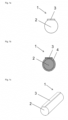
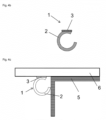
- FIGs 1a to 1c a preferred embodiment of a joint sealing tape 1 according to the invention is shown.
- the joint sealing tape 1 comprises a sealing element 2 and an adhesive layer 3.
- the sealing element 2 has a round profile and a solid profile. Furthermore, the sealing element 2 is completely surrounded by a cover layer 4, ie over its entire circumference.
- the sealing element 2 consists of a compressible foam, which may contain fire protection additives, and the cover layer 4 consists of a plastic film.
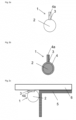
- Figure 1d is a sealing arrangement with the in Figures 1a to 1c shown embodiment of a joint sealing tape according to the invention, wherein the joint sealing tape 1 is positioned after the attachment of a U-profile 5 to a ceiling 6 and abutted with the U-profile 5 and fixed to the ceiling 6.
- Figure 1e shows a sectional view through a finished component with the in Figure 1d shown embodiment of a sealing arrangement according to the invention, wherein the sealing element is positioned in the upper area of the joint and is configured to seal the joint from the outside.
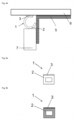
- FIGs 2a and 2b a further preferred embodiment of a joint sealing tape 1 according to the invention is shown.
- the joint sealing tape 1 comprises a sealing element 2 and an adhesive layer 3.
- the sealing element 2 has a round profile and a solid profile. Furthermore, the sealing element 2 is completely surrounded by a cover layer 4, ie over its entire circumference. Furthermore, the sealing element 2 is provided with a protruding foil strip 4a.
- the sealing element 2 consists of a compressible foam, which optionally contains fire protection additives, and the cover layer 4 and the foil strip 4a consist of a plastic foil.
- Figure 2c is a sealing arrangement with the in Figures 2a and 2b shown embodiment of a joint sealing tape according to the invention, wherein the joint sealing tape 1 is positioned after the attachment of a U-profile 5 to a ceiling 6 and abutted with the U-profile 5 and fixed to the ceiling 6.
- the adhesive layer 3 is attached to the protruding film strip 4a, which is folded over and then the joint sealing tape is attached to the component.
- Figure 2d shows a sectional view through a finished component with the in Figure 2c shown embodiment of a sealing arrangement according to the invention, wherein the sealing element is positioned in the upper area of the joint and is configured to seal the joint from the outside.
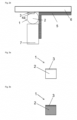
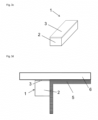
- FIGs 3a to 3c a further preferred embodiment of a joint sealing tape 1 according to the invention is shown.
- the joint sealing tape 1 comprises a sealing element 2 and an adhesive layer 3.
- the sealing element 2 has a rectangular profile and a full profile.
- the sealing element 2 consists of a compressible foam, which optionally contains fire protection additives.
- Figure 3d is a sealing arrangement with the in Figures 3a to 3c shown embodiment of a joint sealing tape according to the invention, wherein the joint sealing tape 1 is positioned after the attachment of a U-profile 5 to a ceiling 6 and abutted with the U-profile 5 and fixed to the ceiling 6.
- Figure 3e shows a sectional view through a finished component with the in Figure 3d shown embodiment of a sealing arrangement according to the invention, wherein the sealing element is positioned in the upper area of the joint and is configured to seal the joint from the outside.
- FIGS 4a and 4b a further preferred embodiment of a joint sealing tape 1 according to the invention is shown.
- the joint sealing tape 1 comprises a sealing element 2 and an adhesive layer 3.
- the sealing element 2 has an open hollow profile and a round profile.
- the sealing element 2 consists of a compressible foam, which optionally contains fire protection additives.
- Figure 4c is a sealing arrangement with the in figures 4a and 4b shown embodiment of a joint sealing tape according to the invention, wherein the joint sealing tape 1 is positioned after the attachment of a U-profile 5 to a ceiling 6 and abutted with the U-profile 5 and fixed to the ceiling 6.
- the open side of the hollow profile of the sealing element 2 points in the direction of the U-profile 5.
- Figure 4d shows a sectional view through a finished component with the in Figure 4c shown embodiment of a sealing arrangement according to the invention, wherein the sealing element is positioned in the upper area of the joint and is configured to seal the joint from the outside.
- FIGs 5a and 5b a further preferred embodiment of a joint sealing tape 1 according to the invention is shown.
- the joint sealing tape 1 comprises a sealing element 2 and an adhesive layer 3.
- the sealing element 2 has a closed hollow profile and a rectangular profile.
- the sealing element 2 consists of a compressible foam, which optionally contains fire protection additives.
- Figure 5c is a sealing arrangement with the in Figures 5a and 5b shown embodiment of a joint sealing tape according to the invention, wherein the joint sealing tape 1 is positioned after the attachment of a U-profile 5 to a ceiling 6 and abutted with the U-profile 5 and fixed to the ceiling 6.
- Figure 5d shows a sectional view through a finished component with the in Figure 5c shown embodiment of a sealing arrangement according to the invention, wherein the sealing element is positioned in the upper area of the joint and is configured to seal the joint from the outside.
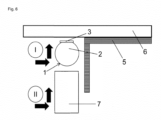
- FIG 6 is the step-by-step procedure for manufacturing a finished component with the in Figures 1a to 1c shown embodiment of a joint sealing tape according to the invention for sealing a gap between a ceiling 6, the U-profile 5 of a drywall framework and a plasterboard 7 outlines.
- the joint sealing tape 1 is positioned after the attachment of a U-profile 5 to a ceiling 6 and abutted with the U-profile 5 and fixed to the ceiling 6 in the usual way, preferably by means of an adhesive layer.
- a second step II the gypsum plasterboard 7 is placed against the flanges of the U-profile 5 and pushed upwards towards the ceiling 6, leaving a gap between the upper edge of the gypsum plasterboard 7 and the ceiling 6, which is sealed with the sealing element 2 of the joint sealing tape 1 is filled to allow approximately vertical movement of the gypsum board 7.
- the sealing element 2 is compressed and thus seals the gap between the ceiling 6 and the U-profile 5 and the gap between the ceiling 6 and the plasterboard 7 .
- the finished structure is in Figure 1e shown.
- figure 6 is an example of the procedure for producing a finished component with joint sealing tapes according to the present invention.
- Each joint sealing tape according to the invention can be used for sealing.
- the joint sealing tape according to the invention is particularly suitable for sealing a building joint in a simple manner to be sealed securely between two adjacent components, in particular against sound and/or smoke and possibly also against fire.
- the application is very easy to assemble, since no additional attachment of the joint sealing tape to the profile or to another connection component, such as a plasterboard, is necessary.
- the installation is therefore extremely easy and the amount of work required to install the joint sealing tape is significantly reduced.
- a double-sided seal can be achieved in just one operation by providing a prefabricated joint sealing tape.
Landscapes
- Engineering & Computer Science (AREA)
- Architecture (AREA)
- Physics & Mathematics (AREA)
- Electromagnetism (AREA)
- Civil Engineering (AREA)
- Structural Engineering (AREA)
- Chemical & Material Sciences (AREA)
- Organic Chemistry (AREA)
- Health & Medical Sciences (AREA)
- Toxicology (AREA)
- Building Environments (AREA)
Description
- Die vorliegende Erfindung betrifft ein Fugendichtband sowie eine Dichtanordnung mit derartigem Fugendichtband zum Abdichten von Bauwerksfugen, insbesondere zur Abdichtung gegen Schall und Rauch und gegebenenfalls gegen Feuer. Insbesondere betrifft die Erfindung die akustische, rauchsichere und/oder brandsichere Abdichtung von Anschlussfugen bei Trockenbauwänden vor allem von Bewegungsfugen. Ein Fugendichtband mit den Merkmalen des Oberbegriffs des Anspruchs 1 ist aus dem Dokument
US 3,041,682 bekannt. - Anschlussfugen entstehen in der Regel, wenn unterschiedliche Bauteile aufeinander treffen. Anschlussfugen befinden sich im Anschlussbereich zur Geschossdecke, zum Fußboden und zu Massivwänden. Durch Gewichtsbelastung oder thermische Einflüsse kann es bei Gebäuden zu einem Senken oder Heben der Decke kommen. Um Beschädigungen der Trockenbauwand zu vermeiden, wird in diesem Fall die obere Anschlussfuge als Bewegungsfuge ausgeführt. Als Bewegungsfugen werden daher Fugen zur Unterbrechung von Bauteilen bezeichnet, um Spannungsrissen vorzubeugen. Das Deckenprofil wird derart ausgeführt, dass eine Relativbewegung zwischen Deckenprofil und den senkrechten Wandkomponenten möglich ist.
- Im Allgemeinen wird auf die Anschlussbauteile ein U-Profil befestigt, welches Teil des Ständerwerkes ist. Die Gipskartonplatten selber werden mit einem definierten Abstand zum Anschlussbauteil angebracht. Üblicherweise erfolgt die Abdichtung des Systems im Spalt zwischen Gipskartonplatte und Decke. Hierzu wird entweder eine geeignete
- Dichtmasse eingebracht oder aber der Spalt mit Mineralwolle gefüllt und an der Oberfläche mit einer abdichtenden Schicht versehen. In beiden Fällen behindert das in der Fuge befindliche Material die Bewegung relativ stark, mit der Konsequenz, dass zur Erzielung einer ausreichenden Bewegungsaufnahme mit verhältnismäßig großen Fugenbreiten gearbeitet werden muss.
- Insbesondere die Abdichtung des Spaltes mit Dichtmasse hat einige Nachteile. Sie ist insbesondere arbeitsintensiv und die Abdichtung neigt im Laufe der Zeit zu Rissbildung bei Überbeanspruchung. Ferner kann die Abdichtung erst nach Montage der Gipskartonplatten erfolgen und erfordert beidseitigen Zugang zu der fertig gestellten Trockenbauwand. Darüber hinaus ist diese Vorgehensweise fehleranfällig, da der Anwender selber die richtige Menge an Material dosieren muss, um den Spalt ausreichend abzudichten. Darüber hinaus muss der Trockenbauer die Fuge, entsprechend den Material und Dehneigenschaften der Dichtmasse, in der Breite dimensionieren. Bei der Installation der Dichtmasse kann dann nur noch die Fuge gefüllt werden. Bei einer Ausdehnung des Spaltes muss gewährleistet sein, dass die Dichtmasse ausreichend stark am Untergrund haftet und die entstehenden Zugkräfte aufnehmen kann. Häufig ist das nicht der Fall und es besteht die Gefahr des Ablösens der Dichtmasse vom Untergrund oder aber die Dichtmasse selber wird überbeansprucht und reißt. Im Falle einer Verringerung des Spaltes kann die Dichtmasse aufgrund ihrer Materialeigenschaften nur begrenzt komprimiert werden und es besteht die Gefahr, dass sie bei falsch dimensionierter Fuge aus dem Spalt gedrückt wird. Aufgrund des begrenzten Dehn- und Komprimiervermögens der Dichtmasse (max. +/- 25%) kommt der ausreichend großen Dimensionierung des Abstandes zwischen Gipskartonplatte und Decke eine große Bedeutung zu. Dies wird häufig unterschätzt, bei der Verwendung von gewöhnlichen Dichtmassen kann daher eine ausreichende Dichtigkeit oft nicht gewährleistet werden.
- Zum Abdichten von Fugen existieren einige weitere Lösungen, insbesondere Fugenschnüre oder Fugensprays, die zum Teil dieselben Nachteile haben, wie sie für die Dichtmassen beschrieben wurden.
- Aufgabe der vorliegenden Erfindung ist es daher, ein Fugendichtband bereitzustellen, das die Nachteile der bekannten Materialien vermeidet, das insbesondere einfacher und sicherer anzuwenden ist, die Montage weiterer Bauteile vereinfacht, eine gute Abdichtung bereits bei seiner Anwendung und eine hervorragende Dichtigkeit bei maximaler Bewegungsaufnahme gewährleistet.
- Eine weitere Aufgabe der vorliegenden Erfindung ist es, eine Anordnung bereitzustellen, die im Brandfall eine bessere Abdichtung der Fuge zwischen zwei Bauteilen, insbesondere zwischen einer Trockenbauwand und einem Anschlussbauteil, wie eine Wand, eine Decke oder ein Boden, ermöglicht und so eine bessere und dauerhafte Abdichtung gegenüber Schall und/oder Rauch und gegebenenfalls einen besseren und dauerhaften Brandschutz bereitstellt und mit geringerem Arbeitsaufwand zuverlässig und fehlerfrei montiert werden kann.
- Diese und weitere Aufgaben, die aus der folgenden Beschreibung der Erfindung ersichtlich sind, werden durch die vorliegende Erfindung, wie sie in dem unabhängigen Anspruch 1 beschrieben ist, gelöst.
- Die abhängigen Ansprüche beziehen sich auf bevorzugte Ausführungsformen.
- Die vorliegende Erfindung betrifft ein Fugendichtband zur Abdichtung einer Fuge zwischen einem ersten Bauteil und einem zweiten Bauteil, mit einem Dichtelement und einer Klebeschicht, wobei das Dichtelement eine vorbestimmte Geometrie aufweist, dadurch gekennzeichnet ist, dass das Dichtelement aus einem verformbaren, weichen, nach Kompression rückstellfähigen, intumeszierenden Schaumstoffmaterial besteht, wobei das Dichtelement über seinen gesamten Umfang fest mit einer Deckschicht, vorzugsweise einer Kunststofffolie, verbunden ist und wobei die Klebeschicht eine Selbstklebeschicht ist.
- Die vorliegende Erfindung betrifft weiter eine Dichtanordnung zur Abdichtung einer Fuge zwischen zwei aneinander anliegenden Bauteilen, mit wenigstens einem ersten Bauteil, einem zweiten Bauteil und dem vorher beschriebenen Fugendichtband, wobei das Dichtelement im oberen Bereich der Fuge positioniert und dazu konfiguriert ist, die Fuge von außen abzudichten.
- Andere Aufgaben und Merkmale dieser Erfindung sind zum Teil offensichtlich und werden zum Teil im Folgenden erläutert. Insbesondere wird der Gegenstand der vorliegenden Erfindung im Detail durch Bezugnahme auf die folgenden Figuren beschrieben:
-
-
Figur 1a zeigt eine skizzierte Vorderansicht eines Fugendichtbandes mit einem Dichtelement und einer Klebeschicht gemäß einer Ausführungsform der vorliegenden Erfindung, wobei das Dichtelement ein Vollprofil und Rundprofil aufweist. -
Figur 1b zeigt einen Querschnitt durch die inFigur 1a gezeigte Ausführungsform eines erfindungsgemäßen Fugendichtbandes. -
Figur 1c zeigt eine Perspektive der inFigur 1a und 1b gezeigten Ausführungsform eines erfindungsgemäßen Fugendichtbandes. -
Figur 1d zeigt eine skizzierte Dichtanordnung mit der inFiguren 1a bis 1c gezeigten Ausführungsform eines erfindungsgemäßen Fugendichtbandes. -
Figur 1e zeigt eine Schnittansicht durch ein fertiges Bauelement mit der inFigur 1d gezeigten Ausführungsform einer erfindungsgemäßen Dichtanordnung. -
Figur 2a zeigt eine skizzierte Vorderansicht eines Fugendichtbandes mit einem Dichtelement und einer Klebeschicht gemäß einer Ausführungsform der vorliegenden Erfindung, wobei das Dichtelement ein Vollprofil und Rundprofil aufweist und wobei das Dichtelement mit einer überstehenden Folie versehen ist. -
Figur 2b zeigt einen Querschnitt durch die inFigur 2a gezeigte Ausführungsform eines erfindungsgemäßen Fugendichtbandes. -
Figur 2c zeigt eine skizzierte Dichtanordnung mit der inFiguren 2a und 2b gezeigten Ausführungsform eines erfindungsgemäßen Fugendichtbandes. -
Figur 2d zeigt eine Schnittansicht durch ein fertiges Bauelement mit der inFigur 2c gezeigten Ausführungsform einer erfindungsgemäßen Dichtanordnung. -
Figur 3a zeigt eine skizzierte Vorderansicht eines Fugendichtbandes mit einem Dichtelement und einer Klebeschicht gemäß einer Ausführungsform der vorliegenden Erfindung, wobei das Dichtelement ein Vollprofil und Rechteckprofil aufweist. -
Figur 3b zeigt einen Querschnitt durch die inFigur 3a gezeigte Ausführungsform eines erfindungsgemäßen Fugendichtbandes. -
Figur 3c zeigt eine Perspektive der inFigur 3a und 3b gezeigten Ausführungsform eines erfindungsgemäßen Fugendichtbandes. -
Figur 3d zeigt eine skizzierte Dichtanordnung mit der inFiguren 3a bis 3c gezeigten Ausführungsform eines erfindungsgemäßen Fugendichtbandes. -
Figur 3e zeigt eine Schnittansicht durch ein fertiges Bauelement mit der inFigur 3d gezeigten Ausführungsform einer erfindungsgemäßen Dichtanordnung. -
Figur 4a zeigt eine skizzierte Vorderansicht eines Fugendichtbandes mit einem Dichtelement und einer Klebeschicht gemäß einer Ausführungsform der vorliegenden Erfindung, wobei das Dichtelement ein offenes Hohlprofil und Rundprofil aufweist. -
Figur 4b zeigt einen Querschnitt durch die inFigur 4a gezeigte Ausführungsform eines erfindungsgemäßen Fugendichtbandes. -
Figur 4c zeigt eine skizzierte Dichtanordnung mit der inFiguren 4a und4b gezeigten Ausführungsform eines erfindungsgemäßen Fugendichtbandes. -
Figur 4d zeigt eine Schnittansicht durch ein fertiges Bauelement mit der inFigur 4c gezeigten Ausführungsform einer erfindungsgemäßen Dichtanordnung. -
Figur 5a zeigt eine skizzierte Vorderansicht eines Fugendichtbandes mit einem Dichtelement und einer Klebeschicht gemäß einer Ausführungsform der vorliegenden Erfindung, wobei das Dichtelement ein geschlossenes Hohlprofil und Rechteckprofil aufweist. -
Figur 5b zeigt einen Querschnitt durch die inFigur 5a gezeigte Ausführungsform eines erfindungsgemäßen Fugendichtbandes. -
Figur 5c zeigt eine skizzierte Dichtanordnung mit der inFiguren 5a und 5b gezeigten Ausführungsform eines erfindungsgemäßen Fugendichtbandes. -
Figur 5d zeigt eine Schnittansicht durch ein fertiges Bauelement mit der inFigur 5c gezeigten Ausführungsform einer erfindungsgemäßen Dichtanordnung. -
Figur 6 zeigt die schrittweise Vorgehensweise zur Herstellung eines fertigen Bauelements mit der inFiguren 1a bis 1c gezeigten Ausführungsform eines erfindungsgemäßen Fugendichtbandes. - Die folgenden Begriffe werden im Rahmen der vorliegenden Erfindung verwendet:
Der Begriff "Geometrie / Geometrien" im Rahmen der vorliegenden Erfindung umfasst verschiedene Querschnittsarten und Querschnittsformen. Dies bedeutet, dass das Dichtelement unterschiedliche Querschnittsarten und Querschnittsformen aufweisen kann. Unter Querschnittsarten werden u.a. Rundprofil (runder Querschnitt), Mehreckprofil (mehreckiger Querschnitt), insbesondere Quadratprofil (quadratischer Querschnitt), Rechteckprofil (rechteckiger Querschnitt), Parallelogrammprofil (Querschnitt in Form eines Parallelogramms), etc., verstanden. Unter Querschnittsformen werden u.a. Vollprofil und Hohlprofil verstanden, wobei beim Vollprofil das Dichtelement vollständig aus Dichtmaterial besteht, wohingegen beim Hohlprofil das Dichtelement nur teilweise aus Dichtmaterial besteht. - Der Begriff "verformbar" im Rahmen der vorliegenden Erfindung bedeutet, dass Unebenheiten im Bauteil ausgeglichen werden können, gegen das das Dichtelement gepresst wird. "Plastisch verformbar" bedeutet dabei, dass das Dichtelement verformbar ist und nach der Verformung nicht wieder in seine ursprüngliche Form zurückkehrt. "Elastisch verformbar" bedeutet dabei, dass das Dichtelement verformbar ist und nach der Verformung wieder in seine ursprüngliche Form zurückkehrt, d.h. dass das Material sich zu einem gewissen Grad reversibel verformen lässt.
- Die Begriffe "aufweisen", "mit" und "haben" sollen einschließend sein und bedeuten, dass auch andere als die genannten Elemente gemeint sein können.
- Der Begriff "Intumeszenz" im Rahmen der vorliegenden Erfindung bedeutet dabei, dass unter Einwirkung von Hitze, beispielsweise im Brandfall, sich das Material aufbläht und eine isolierende Schicht aus schwerentflammbarem Material bildet, also intumesziert.
- Unter "langsam abbrennenden Schaumstoff" wird im Rahmen der vorliegenden Erfindung ein Schaumstoff verstanden, der keine Möglichkeit der Brandausbreitung durch den Schaumstoff bietet, nicht eigenentflammbar ist und auch nicht abtropft.
- Im "oberen Bereich der Fuge positioniert" bedeutet, dass das Fugendichtband dabei insbesondere am zweiten Bauteil, vorzugsweise einer Decke, angeordnet ist.
- Der Begriff "Klebeschicht" im Rahmen der vorliegenden Erfindung bedeutet eine Selbstklebeschicht.
- Im Rahmen der vorliegenden Erfindung verwendet, schließen die Singularformen "ein", "eine" und "einer" auch die entsprechenden Pluralformen ein, sofern der Zusammenhang nicht eindeutig auf etwas anderes schließen lässt. Somit soll zum Beispiel der Begriff "ein" "ein oder mehrere" oder "zumindest ein" bedeuten, sofern nicht anders angegeben.
- In einem Aspekt betrifft die vorliegende Erfindung ein Fugendichtband zur Abdichtung einer Fuge zwischen einem ersten Bauteil und einem zweiten Bauteil, mit einem Dichtelement und einer Klebeschicht, wobei das Dichtelement eine vorbestimmte Geometrie aufweist, dadurch gekennzeichnet, dass das Dichtelement aus einem verformbaren, weichen, nach Kompression rückstellfähigen, intumeszierenden Schaumstoffmaterial besteht, wobei das Dichtelement über seinen gesamten Umfang fest mit einer Deckschicht, vorzugsweise einer Kunststofffolie, verbunden ist und wobei die Klebeschicht eine Selbstklebeschicht ist.
- In einem weiteren Aspekt betrifft die vorliegende Erfindung eine Dichtanordnung zur Abdichtung einer Fuge zwischen zwei aneinander anliegenden Bauteilen, mit wenigstens einem ersten Bauteil, einem zweiten Bauteil und dem vorher beschriebenen Fugendichtband, wobei das Fugendichtband im oberen Bereich der Fuge positioniert und dazu konfiguriert ist, die Fuge von außen abzudichten.
- Es wurde herausgefunden, dass das erfindungsgemäße Fugendichtband sich besonders dazu eignet, in einfacher Weise eine Bauwerksfuge zwischen zwei aneinandergrenzenden Bauteilen sicher abzudichten, insbesondere gegen Schall und/oder Rauch und gegebenenfalls auch gegen Feuer. Damit das Fugendichtband seine Funktion erfüllen kann, muss das Dichtelement des Fugendichtbandes eine vorbestimmte Geometrie aufweisen. Ferner muss das Fugendichtband im oberen Bereich der Fuge positioniert und dazu konfiguriert sein, die Fuge von außen abzudichten.
- Daher ist es ein Ziel der vorliegenden Erfindung, das Dichtelement zu beschreiben. Insbesondere ist es Ziel der vorliegenden Erfindung, die Geometrie des Dichtelementes detailliert zu beschreiben. Ferner ist es Ziel der der vorliegenden Erfindung, die Positionierung des Fugendichtbandes, insbesondere eine Dichtanordnung, zu beschreiben.
- Das erfindungsgemäße Fugendichtband zur Abdichtung einer Fuge zwischen einem ersten Bauteil und einem zweiten Bauteil, mit einem Dichtelement und einer Klebeschicht, wobei das Dichtelement eine vorbestimmte Geometrie aufweist, ist dadurch gekennzeichnet, dass das Dichtelement aus einem verformbaren, weichen, nach Kompression rückstellfähigen, intumeszierenden Schaumstoffmaterial besteht, wobei das Dichtelement über seinen gesamten Umfang fest mit einer Deckschicht, vorzugsweise einer Kunststofffolie, verbunden ist und wobei die Klebeschicht eine Selbstklebeschicht ist.
- Bevorzugte Querschnittsarten des Dichtelementes gemäß der vorliegenden Erfindung sind Vollprofil und Hohlprofil, wobei das Hohlprofil ein geschlossenes oder offenes Hohlprofil sein kann. Vollprofil und Hohlprofil mit großer Profilwandstärke haben den Vorteil, dass am Stoß zweier sich berührender Dichtelemente automatisch keine Lücke entsteht. Hohlprofile können stärker komprimiert werden, und somit mehr Bewegung aufnehmen. Besonders bevorzugt ist, dass das Dichtelement ein Vollprofil aufweist.
- Bevorzugte Querschnittsformen des Dichtelementes gemäß der vorliegenden Erfindung sind Rundprofil, Mehreckprofil, insbesondere Rechteckprofil, Quadratprofil, Parallelogrammprofil, und Dreieckprofil. Besonders bevorzugt sind Rundprofil und Rechteckprofil, wobei Rechteckprofil am bevorzugtesten ist. Es sind jedoch auch andere oder gemischte Querschnittsformen denkbar und möglich, solange das Fugendichtband nach der Installation des Dichtelementes an die beiden Bauteile angrenzt und die zwischen den Bauteilen bestehende Fuge verschließen kann.
- In einer bevorzugten Ausführungsform des erfindungsgemäßen Fugendichtbandes weist das Dichtelement ein Rundprofil auf.
- In einer weiteren, bevorzugten Ausführungsform des erfindungsgemäßen Fugendichtbandes weist das Dichtelement ein Rechteckprofil auf.
- In einer besonders bevorzugten Ausführungsform des erfindungsgemäßen Fugendichtbandes weist das Dichtelement ein Vollprofil und ein Rundprofil auf.
- In einer weiteren, besonders bevorzugten Ausführungsform des erfindungsgemäßen Fugendichtbandes weist das Dichtelement ein Vollprofil und ein Rechteckprofil auf.
- Die Geometrie der Dichtelemente kann vorgefertigt werden, zum Beispiel durch definiertes Zuschneiden, Extrudieren oder Pressen von geeignetem Dichtmaterial, oder direkt aus Flachmaterial, beispielsweise mittels Falten oder Rollen aus einem flachen Ausgangsmaterial, wie zum Beispiel Gewebe, insbesondere aus einem nichtbrennbaren Material, wie anorganische Fasern, beispielsweise Glasfasern, einem Vlies oder dergleichen hergestellt werden. Die Herstellung solcher Querschnittsarten und Querschnittsformen, ist dem Fachmann bekannt. Bevorzugt ist, dass die Geometrie des Dichtelementes durch definiertes Zuschneiden oder Extrudieren vorgefertigt wird.
- Das erfindungsgemäße Dichtelement kann einstückig aus einem Material oder mehrteilig aus mehreren Materialien bestehen und beispielsweise als Schichtkörper vorliegen. In alternativen Ausführungsformen können der Außenbereich und der Innenbereich eines Dichtelementes separate Bereiche des Dichtelementes definieren, die unterschiedliche Querschnittsformen und/oder Querschnittsarten aufweisen und/oder aus unterschiedlichen Materialien bestehen können.
- Erfindungsgemäß besteht das Dichtelement aus einem verformbaren, weichen, nach Kompression rückstellfähigen, intumeszierenden Schaumstoffmaterial. Das Material ist elastisch verformbar. Das Dichtelement besteht aus einem nach Kompression rückstellfähigen Material, wie beispielsweise Schaumstoff, Moosgummi, Zellkautschuk oder dergleichen. Das erfindungsgemäße Dichtelement besteht aus einem weichen, nach Kompression rückstellfähigen Schaumstoff. Als Schaumstoffmaterial sind übliche Schaumstoffe, wie Polyethylen- und Polyurethanschaumstoff oder Zellkautschuk zu nennen. Der Schaumstoff kann dabei ein offenzelliger Schaumstoff mit sehr geringem Luftdurchtrittswiderstand sein, ebenso ein nahezu geschlossenzelliger Schaumstoff mit extrem geringen Luftdurchtrittswerten. Auch Schaumstoffe mit Luftdurchtrittswerten, die zwischen den beiden oben genannten Extremfällen liegen, können im Rahmen der vorliegenden Erfindung verwendet werden. Der Schaumstoff kann mit einem Imprägnat getränkt sein, das die Dichteigenschaften des Schaumstoffs erhöht. Um Dichtigkeit gegenüber Rauch zu erreichen, sollte zumindest die Außenfläche des Dichtelements geschlossenporig ausgebildet sein. Alternativ kann ein offenzelliges Dichtelement mit einer Deckschicht oder Ummantelung, beispielsweise aus einer Folie, insbesondere Kunststofffolie versehen sein. Bevorzugt ist, dass das Dichtelement aus einem offenzelligen Polyurethanschaumstoff oder aus einem Zellkautschuk besteht.
- Es hat sich als vorteilhaft erwiesen, wenn das Dichtelement aus einem langsam abbrennenden Schaumstoff, wie beispielsweise Zellkautschuk oder Polyurethanschaum, bestehen. Bei einem langsam abbrennenden Schaumstoff besteht keine Möglichkeit der Brandausbreitung durch den Schaumstoff. Eine Eigenentflammung ist bei den oben genannten Schaumstoffausgangsmaterialien ausgeschlossen. Vorteilhaft ist, dass im Brandfall auch kein Abtropfen erfolgt. Ein langsam abbrennender Schaumstoff sollte in einem Temperaturbereich zwischen 500°C bis 800°C noch mindestens 20%, noch mindestens 25%, vorzugsweise noch mindestens 30%, zwischen 20% bis 60%, zwischen 20% bis 40%, vorzugsweise zwischen 25% bis 30%, seines Ausgangsvolumens besitzen. Ferner sollte ein langsam abbrennender Schaumstoff in einem Temperaturbereich zwischen 500°C bis 800°C noch mindestens 10%, mindestens 20%, vorzugsweise noch mindestens 30%, zwischen 10% bis 40%, zwischen 10% bis 30%, vorzugsweise zwischen 15% bis 20%, seiner Ausgangsmasse besitzen.
- Ferner kann das Material kann, sofern Brandschutzeigenschaften, wie beispielsweise Intumeszenz, gewünscht sind, entsprechende Additive enthalten. Unter Einwirkung von Hitze, wie im Brandfall, bläht sich das Material auf und bildet eine isolierende Schicht aus schwerentflammbarem Material. Die Bildung einer voluminösen, isolierenden Schicht, nämlich einer Ascheschicht, kann durch die chemische Reaktion eines Gemisches aus entsprechenden aufeinander abgestimmten Verbindungen, die bei Hitzeeinwirkung miteinander reagieren, gebildet werden. Solche Systeme sind dem Fachmann unter dem Begriff chemische Intumeszenz bekannt und können erfindungsgemäß eingesetzt werden. Alternativ kann die voluminöse, isolierende Schicht durch Aufblähen einer einzelnen Verbindung, die, ohne dass eine chemische Reaktion zwischen zwei Verbindungen stattgefunden hat, bei Hitzeeinwirkung Gase freisetzen, gebildet werden. Solche Systeme sind dem Fachmann unter dem Begriff physikalische Intumeszenz bekannt und können ebenfalls erfindungsgemäß eingesetzt werden. Beide Systeme können jeweils alleine oder zusammen als Kombination erfindungsgemäß eingesetzt werden.
- In einer bevorzugten Ausführungsform des erfindungsgemäßen Fugendichtbandes besteht das Dichtelement aus einem offenzelligen Schaum.
- In einer weiteren, bevorzugten Ausführungsform des erfindungsgemäßen Fugendichtbandes besteht das Dichtelement aus einem geschlossenzelligen Schaum.
- In einer besonderen bevorzugten Ausführungsform des erfindungsgemäßen Fugendichtbandes besteht das Dichtelement aus einem offenzelligen Polyurethanschaum.
- In einer weiteren, besonderen bevorzugten Ausführungsform des erfindungsgemäßen Fugendichtbandes besteht das Dichtelement aus einem Zellkautschuk.
- Dadurch, dass das Dichtelement des erfindungsgemäßen Fugendichtbandes über seinen gesamten Umfang fest von einer Deckschicht oder Ummantelung, beispielsweise aus einer Folie, insbesondere Kunststofffolie, umgeben ist, kann ein offenzelliges Schaummaterial für das Dichtelement verwendet werden.
- Aus Fertigungsgründen kann es vorteilhaft sein, das Dichtelement mit einer überstehenden Folie, wie einem Folienstreifen, zu versehen.
- Die Klebeschicht des erfindungsgemäßen Fugendichtbandes ist eine Selbstklebeschicht.
- Die Positionierung des Fugendichtbandes an das Anschlussbauteil erfolgt mittels einer Selbstklebeschicht.
- Die Anbringung, insbesondere die Verklebung, des erfindungsgemäßen Fugendichtbandes kann flächig oder nur punktuell ausgeführt werden, vorzugsweise durch Andrücken. Eigens ist die Verklebung nur für eine temporäre Fixierung des Fugendichtbandes notwendig. Sobald die Gipskartonplatte montiert ist, wird durch die Vorkomprimierung das Fugendichtband an Ort und Stelle gehalten.
- Ist das Dichtelement mit einer überstehenden Folie versehen, wird die Klebeschicht auf dem überstehenden Folienstreifen angebracht, dieser umgeknickt und anschließend das Fugendichtband an das Bauteil angebracht.
- Die Dimension und die Materialen des Fugendichtbandes werden entsprechend der geplanten Verwendung des Fugendichtbandes gewählt.
- Im Allgemeinen wird die Dimension des Fugendichtbandes in Abhängigkeit der verwendeten Profile und des verwendeten Materials gewählt. Die Dimension muss so gewählt werden, dass das Fugendichtband den Spalt zwischen der Gipskartonplatte und der Decke ausfüllt und abdichtend sowohl an der Decke als auch an der Gipskartonplatte anliegt. Soll eine vertikale Bewegung der Gipskartonplatten zugelassen werden, muss das Fugendichtband der Bewegung der Gipskartonplatte folgen, damit der Kontakt mit der Gipskartonplatte nicht abreißt und keine Lücke zwischen Fugendichtband und Gipskartonplatte entstehen kann. Hierzu besteht das Dichtelement des Fugendichtbandes aus rückstellfähigem und komprimierbarem Material und wird bei der Montage der Gipskartonplatten entsprechend vorkomprimiert, damit einer Abwärtsbewegung der Gipskartonplatte, wodurch der Spalt zwischen dieser und der Decke vergrößert wird, gefolgt werden kann. Die voreingestellte Bewegungsfreiheit der Gipskartonplatte bestimmt somit die Dimension des Dichtelementes und somit des Fugendichtbandes.
- Beispielhaft soll erwähnt sein, dass die Höhe der Schmalseite von einem rechteckigen Dichtelement in Abhängigkeit der gewünschten Anwendung des Fugendichtbandes gewählt wird, wobei bei einfacher Beplankung die Höhe etwa in der Dicke einer Gipskartonplatte und bei doppelter Beplankung die Höhe etwa in der doppelten Dicke einer Gipskartonplatte gewählt wird. Es ist aber auch möglich, bei einfacher Beplankung das für die doppelte Beplankung ausgelegte Fugendichtband zu verwenden.
- Beispielhaft soll auch erwähnt werden, dass Material und Geometrie des Dichtelementes derart gewählt werden können, dass dessen Härte bzw. Komprimierbarkeit so eingestellt ist, dass allein durch das Eigengewicht der Gipskartonplatte im Bodenbereich der Dichtelemente auf eine definierte Höhe zusammengedrückt wird, beispielsweise durch einen zweilagigen Auf-bau des Dichtelements aus Schaumstoffen mit unterschiedlicher Stauchdichte. Damit kann ohne weiteres Messen ein korrekter Abstand zwischen Boden und Gipskarton eingestellt werden. Dies ist insbesondere dann erforderlich, wenn eine Beschädigung der Gipskartonplatte durch aufsteigende Nässe verhindert werden soll.
- Im Folgenden wird die Erfindung anhand der Anwendung des Fugendichtbandes auf ein U-Profil eines Trockenbauständerwerks näher beschrieben, ohne dass hierdurch der Schutzbereich eingeschränkt wird.
- Zum Erstellen einer erfindungsgemäßen Dichtanordnung, wird das erfindungsgemäße Fugendichtband nach der Anbringung eines ersten Bauteils an ein zweites Bauteil, positioniert, insbesondere auf Stoß mit dem ersten Bauteil angeordnet. Vorzugsweise ist das erste Bauteil ein Rahmenprofil eines Trockenbauständerwerks, etwa ein U-Profil, und das zweite Bauteil eine Wand, eine Decke oder ein Boden eines Bauwerks. Besonders bevorzugt ist das erste Bauteil ein U-Profil, und das zweite Bauteil eine Decke. Mit dieser Anordnung ist das Fugendichtband im oberen Bereich der Fuge positioniert und dazu konfiguriert, die Fuge von außen abzudichten.
- In einer Möglichkeit zum Abdichten einer Anschlussfuge im Trockenbau wird das erfindungsgemäße Fugendichtband nach der Anbringung eines Profils, insbesondere ein U-Profil, an den Anschlussbauteilen, wie etwa eine Decke, Wand oder Boden, an bzw. vor jenem U-Profil positioniert und an dem Anschlussbauteil, vorzugsweise einer Decke, fixiert. In einem weiteren Arbeitsgang werden die Gipskartonplatten, ein- oder zweilagig, stirnseitig an das Dichtelement gedrückt, so dass bei doppelter Beplankung die beiden Gipskartonplatten mit jeweils ihrer Oberkante in Kontakt mit dem Dichtelement kommen, und dadurch eine Abdichtungder Fuge erreicht wird. Um die Bewegung der Gipskartonplatte(n) zuzulassen, ohne dass bei maximaler Bewegung ein Spalt zwischen dem Dichtelement und der Gipskartonplatte bzw. den Gipskartonplatten entsteht, muss bei der Montage der Gipskartonplatte(n) das Dichtelement komprimiert werden. Sobald die Gipskartonplatte montiert ist, wird durch die Vorkomprimierung das Fugendichtband an Ort und Stelle gehalten. Weiter werden durch diese Komprimierung etwaig vorhandene Unebenheiten verschlossen.
- Hierbei wird das Material und die Dicke des Dichtelements jeweils so gewählt, dass das Dichtelement die Bewegung der Gipskartonplatte(n) nicht behindert und bei maximaler Fugenbreite weiterhin die Oberkante der Gipskartonplatte(n) das Dichtelement berührt, um eine hinreichende Abdichtung gegen Gase sicherzustellen. Die Breite des Dichtelements wird bevorzugt so gewählt, dass diese etwa der doppelten Breite einer Gipskartonplatte entspricht. Es hat sich herausgestellt, dass eine hinreichende Abdichtung auch dann erreicht werden kann, wenn die Breite des Dichtelements der Breite nur einer Gipskartonplatte entspricht.
- Bei der Anordnung des Fugendichtbandes an der Decke und auf Stoß mit dem U-Profil können Unebenheiten in beiden Bauteilen ausgeglichen werden und eine einfache Positionierung mit einer Verklebung an nur einem Bauteil ist möglich. Ferner kann durch die anschließende Positionierung der Gipskartonplatte sowie durch die Auswahl der Dichtmaterialien und/oder Geometriegestaltung des Fugendichtbandes der Fugenabstand kontrolliert werden.
- Alternativ kann bei Verwendung nur einer Gipskartonplatte, diese nicht von unten auf Stoß mit dem Dichtelement montiert werden, sondern so, dass die Gipskartonplatte mit dem Dichtelement teilweise überlappt. Dadurch überragt die Gipskartonplatte das Dichtelement teilweise und der überlappende Teil des Dichtelements wird zwischen das U-Profil und die Gipskartonplatte gepresst. Es hat sich herausgestellt, dass auch hierdurch eine ausreichende Abdichtung, insbesondere gegen Gase, erreicht werden kann. Zur Verbesserung der Dichtigkeit und/oder der Gleiteigenschaften kann das Dichtband teilweise mit einer Schicht aus einem Material, welche die Bewegung der Gipskartonplatte weder behindert noch durch diese zerstört wird, wie etwa eine Kunststofffolie, kaschiert werden. Auf beispielsweise eine Folie lässt sich einfach die Positionierungsmarkierung für die Gipskartonplatte aufbringen.
- Bei dieser Montageart wird eine große Bewegungsaufnahme, im Verhältnis zur Fugenbreite, möglich. Ferner ist diese Art montagefreundlicher als die zuvor erwähnte einfache oder doppelte Beplankung, da die Gipskartonplatte ohne Abstandmessung einfach auf dem Dichtelement montiert werden kann. Bei Verwendung einer Positionierungsmarkierung kann die Gipskartonplatte ohne Abstandmessung montiert werden. Darüber hinaus ist man bei dieser Montageart nicht auf gut komprimierbare Materialien für die Dichtelemente angewiesen und hat daher eine relativ große Freiheit bei der Wahl des Materials.
- In einer weiteren, besonders bevorzugten Alternative kann eine Abdichtung der Fuge erreicht werden, wenn bei doppelter Beplankung die beiden Gipskartonplatten derart horizontal versetzt montiert werden, dass die äußere der beiden Gipskartonplatten (auch als äußere, zweite Gipskartonplatte bezeichnet) höher (d.h. näher an die Decke) als die innere Gipskartonplatte (auch als innere, erste Gipskartonplatte bezeichnet) montiert wird. In dieser Ausführungsform wird die Dicke des Dichtelements entsprechend der Dicke einer Gipskartonplatte gewählt. Die erste, innere Gipskartonplatte wird derart montiert, dass deren Oberkante die Stirnflächen des Dichtelements berührt, wobei keine oder wenig Vorkomprimierung des Dichtelements erforderlich ist. Die zweite, äußere Gipskartonplatte wird horizontal versetzt angebracht, d.h. sie wird höher montiert als die erste, innere Gipskartonplatte, so dass sie den Dichtstreifen teilweise überdeckt. Dabei sollten sich das Dichtelement und die Gipskartonplatte dichtend aneinanderlegen, um den Spalt zwischen der äußeren, zweiten Gipskartonplatte und dem Dichtelement, insbesondere gegen Gase, abzudichten. Damit findet eine Abdichtung zwischen Dichtelement und dem zweiten Bauteil, etwa eine Decke, eine Wand oder ein Boden, sowie zwischen Dichtelement und äußerer, zweiter Gipskartonplatte statt.
- Zwischen dem zweiten Bauteil, etwa eine Decke, eine Wand oder ein Boden, und der äußeren, zweiten Gipskartonplatte verbleibt ein leerer Spalt. Dieser Spalt steht im Falle einer vertikalen Bewegung des zweiten Bauteils oder der Gipskartonplatten vollständig einer Bewegungsaufnahme zur Verfügung.
- Abhängig davon wie weit die äußere, zweite Gipskartonplatte das Dichtelement überdeckt (Größe des Versatzes) kann auch eine Bewegung in die andere Richtung aufgenommen werden. Wichtig ist, dass in diesem Falle eine Überdeckung zwischen der zweiten Gipskartonplatte und dem Dichtstreifen gewährleistet bleibt. Bevorzugt wird daher die Dimension des Dichtelements so gewählt, dass dessen Dicke etwas größer ist als die Dicke einer Gipskartonplatte und dessen Höhe etwas mehr als die maximal zulässige Bewegung der Bauteile (maximale Fugenbreite) umfasst.
- Dadurch dass die Dicke des Dichtelements größer ist als die Dicke der Gipskartonplatte wird die Gipskartonplatte bei deren Montage gegen das Dichtelement gepresst und etwas komprimiert, wodurch der Spalt zwischen Dichtelement und Gipskartonplatte zuverlässig, insbesondere gegen Gase, abgedichtet wird.
- Für eine leichtere Einstellung des richtigen Fugenmaßes bei der äußeren, zweiten Gipskartonplatte können Markierungen seitlich auf dem Fugendichtband angebracht werden, eine sogenannte Positionierungsmarkierung. Zur Verbesserung der Dichtigkeit und/oder der Gleiteigenschaften kann das Dichtband einseitig mit einer Schicht aus einem Material, welche die Bewegung der Gipskartonplatte weder behindert noch durch diese zerstört wird, wie etwa eine Kunststofffolie, kaschiert werden. Auf beispielsweise eine Folie lässt sich einfach die Positionierungsmarkierung für die äußere, zweite Gipskartonplatte aufbringen.
- Bei dieser Montageart wird eine maximale Bewegungsaufnahme, im Verhältnis zur Fugenbreite, möglich. Ferner ist diese Art sehr montagefreundlich, da zum einen die erste Gipskartonplatte ohne Abstandmessung einfach auf Kontakt zu dem Dichtelement montiert werden kann. Zum zweiten kann insbesondere bei Verwendung einer Positionierungsmarkierung die zweite Gipskartonplatte ebenfalls ohne Abstandmessung montiert werden. Darüber hinaus ergibt sich durch diese Montageart eine größtmögliche Freiheit bei der Wahl des Materials für die Dichtelemente, da diese nur wenig komprimiert werden und somit nur geringe Anforderung an die Komprimierbarkeit des Dichtelements gestellt werden.
- Erfindungsgemäß lässt sich das Fugendichtband auf alle Arten von Anschlussfugen, bei denen ein Bauteil auf ein anderes Bauteil trifft. Dementsprechend lässt sich das Fugendichtband auf alle Profile, auch geschlossene Profile oder Holzbalken, anwenden, die zu einer Anschlussfläche abgedichtet werden müssen.
- Eine besonders bevorzugte Anwendung des Fugendichtbandes betrifft die Abdichtung der Profile im Trockenbau, wobei das erste Bauteil ein Decken-, Boden- oder Wandprofil oder ein Metall- oder Holzständerwerk eines Trockenbauelements ist und das zweite Bauteil ein Boden, eine Decke oder eine Wand eines Bauelements, beispielsweise ein Mauerwerk oder Betonbauelement, ist. Bei dem Profil kann es sich um irgendeines der üblicherweise verwendeten Profile für den Trockenbau handeln, unabhängig davon, ob es einen geschlitzten oder ungeschlitzten Steg zw. geschlitzte oder ungeschlitzte Flansche aufweist. Die weiteren Bauteile sind Gipskartonplatten, die eng an die Profile anliegen und am Ständerwerk befestigt werden. Um eine vertikale Bewegung der Gipskartonplatten, etwa im Falle eines Erdbebens, zuzulassen, werden die Gipskartonplatten auf Abstand zu einer Wand, einem Boden oder einer Decke, vertikal beweglich montiert. Dadurch entsteht eine Lücke (hierin auch Fuge genannt) zwischen der Gipskartonplatte und der Wand, dem Boden oder der Decke. Diese Fuge wird durch das Dichtelement des Fugendichtbandes ausgefüllt, so dass das Dichtelement die Fuge gegen Schall und/oder Rauch und je nach Material des Dichtelements gegebenenfalls auch gegen Feuer abdichtet.
- Ohne den Schutzumfang der Erfindung einzuschränken, wird die Erfindung anhand spezieller Ausführungsformen des Fugendichtbandes sowie seiner Positionierung näher beschrieben. In diesen Ausführungsformen wird das Fugendichtband auf die Anschlussfugen bei Trockenbauwänden angewendet. Dem Fachmann ist klar, dass das Dichtband auch auf andere geartete Bauwerksfugen angewendet werden kann.
- In
Figuren 1a bis 1c ist eine bevorzugte Ausführungsform eines erfindungsgemäßen Fugendichtbandes 1 gezeigt. Das Fugendichtband 1 umfasst ein Dichtelement 2 und eine Klebeschicht 3. Das Dichtelement 2 weist ein Rundprofil und ein Vollprofil auf. Weiter ist das Dichtelement 2 vollständig, d.h. über seinen vollen Umfang von einer Deckschicht 4 umgeben. Das Dichtelement 2 besteht aus einem komprimierbaren Schaumstoff, der gegebenenfalls Brandschutzadditive enthält, und die Deckschicht 4 aus einer Kunststofffolie. InFigur 1d ist eine Dichtanordnung mit der inFiguren 1a bis 1c gezeigten Ausführungsform eines erfindungsgemäßen Fugendichtbandes dargestellt, wobei das Fugendichtband 1 nach der Anbringung eines U-Profils 5 an einer Decke 6 und auf Stoß mit dem U-Profil 5 positioniert und an der Decke 6 fixiert ist.Figur 1e zeigt eine Schnittansicht durch ein fertiges Bauelement mit der inFigur 1d gezeigten Ausführungsform einer erfindungsgemäßen Dichtanordnung, wobei das Dichtelement im oberen Bereich der Fuge positioniert und dazu konfiguriert ist, die Fuge von außen abzudichten. Insbesondere ist inFigur 6 die schrittweise Vorgehensweise zur Herstellung eines fertigen Bauelements mit der inFiguren 1a bis 1c gezeigten Ausführungsform eines erfindungsgemäßen Fugendichtbandes zur Abdichtung eines Spalts zwischen einer Decke 6, dem U-Profil 5 eines Trockenbauständerwerks und einer Gipskartonplatte 7 skizziert. - In
Figuren 2a und 2b ist eine weitere bevorzugte Ausführungsform eines erfindungsgemäßen Fugendichtbandes 1 gezeigt. Das Fugendichtband 1 umfasst ein Dichtelement 2 und eine Klebeschicht 3. Das Dichtelement 2 weist ein Rundprofil und ein Vollprofil auf. Weiter ist das Dichtelement 2 vollständig, d.h. über seinen vollen Umfang von einer Deckschicht 4 umgeben. Ferner ist das Dichtelement 2 mit einem überstehenden Folienstreifen 4a versehen. Das Dichtelement 2 besteht aus einem komprimierbaren Schaumstoff, der gegebenenfalls Brandschutzadditive enthält, und die Deckschicht 4 sowie der Folienstreifen 4a aus einer Kunststofffolie. InFigur 2c ist eine Dichtanordnung mit der inFiguren 2a und 2b gezeigten Ausführungsform eines erfindungsgemäßen Fugendichtbandes dargestellt, wobei das Fugendichtband 1 nach der Anbringung eines U-Profils 5 an einer Decke 6 und auf Stoß mit dem U-Profil 5 positioniert und an der Decke 6 fixiert ist. Die Klebeschicht 3 ist in dieser Ausführungsform auf dem überstehenden Folienstreifen 4a angebracht, dieser wird umgeknickt und anschließend das Fugendichtband an das Bauteil angebracht.Figur 2d zeigt eine Schnittansicht durch ein fertiges Bauelement mit der inFigur 2c gezeigten Ausführungsform einer erfindungsgemäßen Dichtanordnung, wobei das Dichtelement im oberen Bereich der Fuge positioniert und dazu konfiguriert ist, die Fuge von außen abzudichten. - In
Figuren 3a bis 3c ist eine weitere bevorzugte Ausführungsform eines erfindungsgemäßen Fugendichtbandes 1 gezeigt. Das Fugendichtband 1 umfasst ein Dichtelement 2 und eine Klebeschicht 3. Das Dichtelement 2 weist ein Rechteckprofil und ein Vollprofil auf. Das Dichtelement 2 besteht aus einem komprimierbaren Schaumstoff, der gegebenenfalls Brandschutzadditive enthält. InFigur 3d ist eine Dichtanordnung mit der inFiguren 3a bis 3c gezeigten Ausführungsform eines erfindungsgemäßen Fugendichtbandes dargestellt, wobei das Fugendichtband 1 nach der Anbringung eines U-Profils 5 an einer Decke 6 und auf Stoß mit dem U-Profil 5 positioniert und an der Decke 6 fixiert ist.Figur 3e zeigt eine Schnittansicht durch ein fertiges Bauelement mit der inFigur 3d gezeigten Ausführungsform einer erfindungsgemäßen Dichtanordnung, wobei das Dichtelement im oberen Bereich der Fuge positioniert und dazu konfiguriert ist, die Fuge von außen abzudichten. - In
Figuren 4a und4b ist eine weitere bevorzugte Ausführungsform eines erfindungsgemäßen Fugendichtbandes 1 gezeigt. Das Fugendichtband 1 umfasst ein Dichtelement 2 und eine Klebeschicht 3. Das Dichtelement 2 weist ein offenes Hohlprofil und ein Rundprofil auf. Das Dichtelement 2 besteht aus einem komprimierbaren Schaumstoff, der gegebenenfalls Brandschutzadditive enthält. InFigur 4c ist eine Dichtanordnung mit der inFiguren 4a und4b gezeigten Ausführungsform eines erfindungsgemäßen Fugendichtbandes dargestellt, wobei das Fugendichtband 1 nach der Anbringung eines U-Profils 5 an einer Decke 6 und auf Stoß mit dem U-Profil 5 positioniert und an der Decke 6 fixiert ist. Die offene Seite des Hohlprofils des Dichtelementes 2 zeigt in Richtung U-Profil 5.Figur 4d zeigt eine Schnittansicht durch ein fertiges Bauelement mit der inFigur 4c gezeigten Ausführungsform einer erfindungsgemäßen Dichtanordnung, wobei das Dichtelement im oberen Bereich der Fuge positioniert und dazu konfiguriert ist, die Fuge von außen abzudichten. - In
Figuren 5a und 5b ist eine weitere bevorzugte Ausführungsform eines erfindungsgemäßen Fugendichtbandes 1 gezeigt. Das Fugendichtband 1 umfasst ein Dichtelement 2 und eine Klebeschicht 3. Das Dichtelement 2 weist ein geschlossenes Hohlprofil und ein Rechteckprofil auf. Das Dichtelement 2 besteht aus einem komprimierbaren Schaumstoff, der gegebenenfalls Brandschutzadditive enthält. InFigur 5c ist eine Dichtanordnung mit der inFiguren 5a und 5b gezeigten Ausführungsform eines erfindungsgemäßen Fugendichtbandes dargestellt, wobei das Fugendichtband 1 nach der Anbringung eines U-Profils 5 an einer Decke 6 und auf Stoß mit dem U-Profil 5 positioniert und an der Decke 6 fixiert ist.Figur 5d zeigt eine Schnittansicht durch ein fertiges Bauelement mit der inFigur 5c gezeigten Ausführungsform einer erfindungsgemäßen Dichtanordnung, wobei das Dichtelement im oberen Bereich der Fuge positioniert und dazu konfiguriert ist, die Fuge von außen abzudichten. - In
Figur 6 ist die schrittweise Vorgehensweise zur Herstellung eines fertigen Bauelements mit der inFiguren 1a bis 1c gezeigten Ausführungsform eines erfindungsgemäßen Fugendichtbandes zur Abdichtung eines Spalts zwischen einer Decke 6, dem U-Profil 5 eines Trockenbauständerwerks und einer Gipskartonplatte 7 skizziert. Zuerst wird in dem ersten Schritt I das Fugendichtband 1 nach der Anbringung eines U-Profils 5 an einer Decke 6 und auf Stoß mit dem U-Profil 5 positioniert und an der Decke 6 in üblicher Weise fixiert, vorzugsweise mittels Klebeschicht. Dann wird in einem zweiten Schritt II die Gipskartonplatte 7 an die Flansche des U-Profils 5 angelegt, nach oben Richtung Decke 6 geschoben, wobei ein Spalt zwischen der Oberkante der Gipskartonplatte 7 und der Decke 6 verbleibt, der mit dem Dichtelement 2 des Fugendichtbandes 1 ausgefüllt ist, um etwa eine vertikale Bewegung der Gipskartonplatte 7 zuzulassen. Dadurch wird das Dichtelement 2 zusammengedrückt und dichtet so den Spalt zwischen der Decke 6 und dem U-Profil 5 und den Spalt zwischen der Decke 6 und der Gipskartonplatte 7 ab. Der fertige Aufbau ist inFigur 1e gezeigt. -
Figur 6 steht beispielhaft für die Vorgehensweise zur Herstellung eines fertigen Bauelements mit Fugendichtbändem gemäß der vorliegenden Erfindung. Jedes erfindungsgemäße Fugendichtband kann so zur Abdichtung verwendet werden. - Wie aus dem oben Ausgeführten ersichtlich wird, eignet sich das erfindungsgemäße Fugendichtband besonders dazu, in einfacher Weise eine Bauwerksfuge zwischen zwei aneinandergrenzenden Bauteilen sicher abzudichten, insbesondere gegen Schall und/oder Rauch und gegebenenfalls auch gegen Feuer.
- Ferner ist die Anwendung sehr montagefreundlich, da keine zusätzliche Befestigung des Fugendichtbandes etwa an dem Profil oder an einem weiteren Anschlussbauteil, wie eine Gipskartonplatte, notwendig ist. Die Montage ist daher denkbar einfach und der Arbeitsaufwand zur Montage des Fugendichtbandes ist deutlich reduziert. Mit der Erfindung wird daher eine sichere und zuverlässige Abdichtung von Fugen zwischen zwei Bauteilen, insbesondere zwischen einem Profil eines Trockenbauständerwerks und einem daran angrenzenden Bauteil, wie etwa eine Decke, Wand oder ein Boden, erreicht. Dabei kann eine beidseitige Abdichtung in nur einem Arbeitsgang erreicht werden, indem ein vorgefertigtes Fugendichtband bereitgestellt wird.
- Weiterhin hat sich gezeigt, dass mit dem erfindungsgemäßen Fugendichtbandhervorragende Dichtigkeiten erzielt werden können, da eine gute Komprimierbarkeit des Dichtelementes durch Auswahl der Dichtmaterialien und/oder Geometriegestaltung ohne zusätzliche Hilfsmittel gewährleistest ist. Die Erfindung ermöglicht es auch, durch entsprechende Auswahl der Dichtmaterialien und/oder Geometriegestaltung den richtigen Abstand dem Anschlussbauteil zu der Gipskartonplatte zu ohne zusätzliche Hilfsmittel einzustellen, um besagte Vorkomprimierung zu erreichen.
- Mit dem erfindungsgemäßen Fugendichtband kann auch sichergestellt werden, das bereits durch die Auswahl der Dichtmaterialien und/oder Geometriegestaltung genügend Material installiert wird, um eine hervorragende Dichtigkeit bei maximaler Bewegungsaufnahme zu gewährleisten.
- Mit dem erfindungsgemäßen Fugendichtband können ferner Unebenheiten einer Bauteiloberfläche bereits beim Anordnen sicher abgedichtet werden, da das Dichtelement des Fugendichtbandes ausreichend fest an die Oberfläche des einen Bauteils und gleichzeitig an die Seitenflächen des anderen Bauteils angepresst wird.
- In Anbetracht des Vorstehenden ist ersichtlich, dass die Aufgaben der Erfindung gelöst werden.
Claims (12)
- Fugendichtband (1) zur Abdichtung einer Fuge zwischen einem ersten Bauteil und einem zweiten Bauteil, mit einem Dichtelement (2) und einer Klebeschicht (3), wobei das Dichtelement (2) eine vorbestimmte Geometrie aufweist, dadurch gekennzeichnet dass das Dichtelement (2) aus einem verformbaren, weichen, nach Kompression rückstellfähigen, intumeszierenden Schaumstoffmaterial besteht, wobei das Dichtelement (2) über seinen gesamten Umfang fest mit einer Deckschicht (4), vorzugsweise einer Kunststofffolie, verbunden ist und wobei die Klebeschicht (3) eine Selbstklebeschicht ist.
- Fugendichtband (1) nach Anspruch 1, dadurch gekennzeichnet, dass das Dichtelement (2) ein Vollprofil oder Hohlprofil, bevorzugt ein Vollprofil, aufweist.
- Fugendichtband (1) nach Anspruch 1 oder 2, dadurch gekennzeichnet, dass das Dichtelement (2) ein Rundprofil oder Mehreckprofil, insbesondere ein Rechteckprofil, Quadratprofil, Parallelogrammprofil oder Dreieckprofil, bevorzugt ein Rundprofil oder Rechteckprofil, aufweist.
- Fugendichtband (1) nach einem der vorhergehenden Ansprüche, dadurch gekennzeichnet, dass das Dichtelement (2) mit einer überstehenden Folie, wie einem Folienstreifen (4a), versehen ist.
- Fugendichtband (1) nach einem der vorhergehenden Ansprüche, dadurch gekennzeichnet, dass das Dichtelement (2) ein Vollprofil und Rundprofil aufweist, die Klebeschicht (3) eine Selbstklebeschicht ist und das Dichtelement (2) aus einem offenzelligen Polyurethanschaum besteht.
- Fugendichtband (1) nach einem der Ansprüche 1 bis 4, dadurch gekennzeichnet, dass das Dichtelement (2) ein Vollprofil und Rundprofil aufweist, die Klebeschicht (3) eine Selbstklebeschicht ist und das Dichtelement (2) aus Zellkautschuk besteht.
- Fugendichtband (1) nach einem der Ansprüche 1 bis 4, dadurch gekennzeichnet, dass das Dichtelement (2) ein Vollprofil und Rechteckprofil aufweist, die Klebeschicht (3) eine Selbstklebeschicht ist und das Dichtelement (2) aus Zellkautschuk besteht.
- Fugendichtband (1) nach einem der Ansprüche 1 bis 4, dadurch gekennzeichnet, dass das Dichtelement (2) ein Vollprofil und Rechteckprofil aufweist, die Klebeschicht (3) eine Selbstklebeschicht ist und das Dichtelement (2) aus einem offenzelligen Polyurethanschaum besteht.
- Dichtanordnung zur Abdichtung einer Fuge zwischen zwei aneinander anliegenden Bauteilen mit wenigstens einem ersten Bauteil (5), einem zweiten Bauteil (6) und einem Fugendichtband (1) nach einem der Ansprüche 1 bis 8,
dadurch gekennzeichnet,
dass das Dichtelement (2) im oberen Bereich der Fuge, vorzugsweise am zweiten Bauteil (6), positioniert und dazu konfiguriert ist, die Fuge von außen abzudichten. - Dichtanordnung nach Anspruch 9, dadurch gekennzeichnet, dass das Dichtelement (2) auf Stoß mit dem ersten Bauteil (5) angeordnet ist.
- Dichtanordnung nach Anspruch 9 oder 10, dadurch gekennzeichnet, dass das Dichtelement (2) an dem zweiten Bauteil (6) positioniert und fixiert ist.
- Dichtanordnung nach einem der Ansprüche 9 bis 11, dadurch gekennzeichnet, dass das erste Bauteil (5) ein Rahmenprofil einer Trockenbauwand und das zweite Bauteil (6) eine Wand, eine Decke oder ein Boden, vorzugsweise eine Decke, eines Bauwerks ist.
Applications Claiming Priority (2)
| Application Number | Priority Date | Filing Date | Title |
|---|---|---|---|
| EP15155102.5A EP3056626A1 (de) | 2015-02-13 | 2015-02-13 | Fugendichtband mit vorbestimmter Geometrie und Dichtanordnung mit derartigem Fugendichtband |
| PCT/EP2016/052461 WO2016128304A1 (de) | 2015-02-13 | 2016-02-05 | Fugendichtband mit vorbestimmter geometrie und dichtanordnung mit derartigem fugendichtband |
Publications (3)
| Publication Number | Publication Date |
|---|---|
| EP3256662A1 EP3256662A1 (de) | 2017-12-20 |
| EP3256662B1 EP3256662B1 (de) | 2020-04-01 |
| EP3256662B2 true EP3256662B2 (de) | 2023-05-24 |
Family
ID=52472224
Family Applications (4)
| Application Number | Title | Priority Date | Filing Date |
|---|---|---|---|
| EP15155102.5A Withdrawn EP3056626A1 (de) | 2015-02-13 | 2015-02-13 | Fugendichtband mit vorbestimmter Geometrie und Dichtanordnung mit derartigem Fugendichtband |
| EP16703118.6A Active EP3256660B1 (de) | 2015-02-13 | 2016-02-05 | Fugendichtungselement und dichtanordnung mit derartigem fugendichtungselement |
| EP16703121.0A Active EP3256662B2 (de) | 2015-02-13 | 2016-02-05 | Fugendichtband mit vorbestimmter geometrie und dichtanordnung mit derartigem fugendichtband |
| EP16703119.4A Withdrawn EP3256661A1 (de) | 2015-02-13 | 2016-02-05 | Fugendichtungselement mit vorbestimmter geometrie und dichtanordnung mit derartigem fugendichtungselement |
Family Applications Before (2)
| Application Number | Title | Priority Date | Filing Date |
|---|---|---|---|
| EP15155102.5A Withdrawn EP3056626A1 (de) | 2015-02-13 | 2015-02-13 | Fugendichtband mit vorbestimmter Geometrie und Dichtanordnung mit derartigem Fugendichtband |
| EP16703118.6A Active EP3256660B1 (de) | 2015-02-13 | 2016-02-05 | Fugendichtungselement und dichtanordnung mit derartigem fugendichtungselement |
Family Applications After (1)
| Application Number | Title | Priority Date | Filing Date |
|---|---|---|---|
| EP16703119.4A Withdrawn EP3256661A1 (de) | 2015-02-13 | 2016-02-05 | Fugendichtungselement mit vorbestimmter geometrie und dichtanordnung mit derartigem fugendichtungselement |
Country Status (5)
| Country | Link |
|---|---|
| US (3) | US10519652B2 (de) |
| EP (4) | EP3056626A1 (de) |
| CA (3) | CA2962191A1 (de) |
| SG (2) | SG11201705262VA (de) |
| WO (3) | WO2016128300A1 (de) |
Families Citing this family (30)
| Publication number | Priority date | Publication date | Assignee | Title |
|---|---|---|---|---|
| US10563399B2 (en) | 2007-08-06 | 2020-02-18 | California Expanded Metal Products Company | Two-piece track system |
| US8555566B2 (en) | 2007-08-06 | 2013-10-15 | California Expanded Metal Products Company | Two-piece track system |
| US10619347B2 (en) | 2007-08-22 | 2020-04-14 | California Expanded Metal Products Company | Fire-rated wall and ceiling system |
| US8671632B2 (en) | 2009-09-21 | 2014-03-18 | California Expanded Metal Products Company | Wall gap fire block device, system and method |
| US10184246B2 (en) | 2010-04-08 | 2019-01-22 | California Expanded Metal Products Company | Fire-rated wall construction product |
| US10077550B2 (en) | 2012-01-20 | 2018-09-18 | California Expanded Metal Products Company | Fire-rated joint system |
| US12215498B2 (en) | 2012-01-20 | 2025-02-04 | Cemco, Llc | Fire-rated joint system |
| EP3256666B1 (de) * | 2015-02-13 | 2024-07-17 | Hilti Aktiengesellschaft | Universelles fugendichtband für unterschiedliche profildimensionen und dichtanordnung mit derartigem fugendichtband |
| CA2989713A1 (en) | 2016-12-20 | 2018-06-20 | Clarkwestern Dietrich Building Systems Llc | Finishing accessory with backing strip seal for wall construction |
| US10626598B2 (en) * | 2017-03-31 | 2020-04-21 | James Alan Klein | Fire rated building construction framing members |
| EP3388591A1 (de) | 2017-04-13 | 2018-10-17 | HILTI Aktiengesellschaft | Dichtband zur abdichtung von anschlussfugen bei trockenbauwänden |
| US10202759B2 (en) * | 2017-05-19 | 2019-02-12 | Hilti Aktiengesellschaft | Dynamic, fire-resistance-rated thermally insulating and sealing system having a F-rating of 120 min for use with curtain wall structures |
| US11713572B2 (en) * | 2017-05-19 | 2023-08-01 | Hilti Aktiengesellschaft | Process for assembling a unitized panel for use within an exterior dynamic curtain wall assembly |
| WO2019045681A1 (en) | 2017-08-28 | 2019-03-07 | Advanced Bionics Ag | SYSTEMS FOR FACILITATING OPTIMAL ALIGNMENT OF COCHLEAR IMPLANT SYSTEM COMPONENTS |
| JP6853776B2 (ja) * | 2017-12-21 | 2021-03-31 | 住友林業株式会社 | 貫通部の耐火被覆構造 |
| US10689842B2 (en) | 2018-03-15 | 2020-06-23 | California Expanded Metal Products Company | Multi-layer fire-rated joint component |
| US10753084B2 (en) | 2018-03-15 | 2020-08-25 | California Expanded Metal Products Company | Fire-rated joint component and wall assembly |
| DE102018108816A1 (de) * | 2018-04-13 | 2019-10-17 | Protektorwerk Florenz Maisch Gmbh & Co. Kg | Profil für den Baukörperanschluss |
| EP3556957A1 (de) * | 2018-04-16 | 2019-10-23 | HILTI Aktiengesellschaft | Dichtungselement, dichtung und verfahren zur installation einer wandkonfiguration |
| US11162259B2 (en) | 2018-04-30 | 2021-11-02 | California Expanded Metal Products Company | Mechanically fastened firestop flute plug |
| EP3584381B1 (de) * | 2018-06-20 | 2025-08-13 | Etex Australia Pty Ltd | Brandschutzverbindung |
| US11111666B2 (en) | 2018-08-16 | 2021-09-07 | California Expanded Metal Products Company | Fire or sound blocking components and wall assemblies with fire or sound blocking components |
| US11274464B2 (en) * | 2018-09-13 | 2022-03-15 | Baker Engineering & Risk Consultants, Inc. | Fragment-, overpressure-, radiation-, and toxic-resistant emergency safety shelter |
| US10914065B2 (en) | 2019-01-24 | 2021-02-09 | California Expanded Metal Products Company | Wall joint or sound block component and wall assemblies |
| US11268274B2 (en) | 2019-03-04 | 2022-03-08 | California Expanded Metal Products Company | Two-piece deflection drift angle |
| US11920343B2 (en) | 2019-12-02 | 2024-03-05 | Cemco, Llc | Fire-rated wall joint component and related assemblies |
| US12454824B2 (en) * | 2020-08-19 | 2025-10-28 | Cemco, Llc | Building joint with compressible firestopping component |
| USD1026252S1 (en) | 2020-11-12 | 2024-05-07 | Clarkwestern Dietrich Building Systems Llc | Control joint |
| US11885138B2 (en) | 2020-11-12 | 2024-01-30 | Clarkwestern Dietrich Building Systems Llc | Control joint |
| US12607009B2 (en) | 2021-12-27 | 2026-04-21 | Cemco, Llc | Fire-rated gaskets and wall assemblies |
Citations (10)
| Publication number | Priority date | Publication date | Assignee | Title |
|---|---|---|---|---|
| DE3404221A1 (de) † | 1984-02-07 | 1985-08-08 | Lentia GmbH Chem. u. pharm. Erzeugnisse - Industriebedarf, 8000 München | Verfahren zur im brandfall wirksamen abdichtung von oeffnungen in bauteilen |
| AT385899B (de) † | 1984-02-15 | 1988-05-25 | Chemie Linz Ag | Anordnung zur im brandfall wirksamen abdichtung von oeffnungen in bauteilen |
| EP0312937A1 (de) † | 1987-10-22 | 1989-04-26 | Irbit Research + Consulting AG | Dichtungselement |
| DE19930836A1 (de) † | 1999-07-03 | 2001-01-04 | Niemann Hans Dieter | Fugenabdichtung und Verfahren zur Herstellung einer Fugenabdichtung |
| EP1983119A1 (de) † | 2007-04-18 | 2008-10-22 | ISO-Chemie GmbH | Dichtband aus weichem Schaumstoff |
| DE102007034112A1 (de) † | 2007-07-21 | 2009-01-22 | Irrgeher, Karin | Brandschutzelement sowie Gebäude-Wärmedämmanordnung |
| US20110123801A1 (en) † | 2009-11-24 | 2011-05-26 | Valenciano Philip F | Intumescent rod |
| DE202010008322U1 (de) † | 2010-08-20 | 2011-11-21 | Tremco Illbruck Produktion Gmbh | Schaumstoff-Dichtband in einer Bauwerksfuge und Schaumstoff-Dichtband |
| US20120023846A1 (en) † | 2010-08-02 | 2012-02-02 | Mattox Timothy M | Intumescent backer rod |
| US8739495B1 (en) † | 2008-11-20 | 2014-06-03 | Emseal Joint Systems Ltd. | Fire and water resistant expansion joint system |
Family Cites Families (31)
| Publication number | Priority date | Publication date | Assignee | Title |
|---|---|---|---|---|
| US1960137A (en) * | 1932-09-26 | 1934-05-22 | Durkee Atwood Company | Article of manufacture |
| US2347158A (en) * | 1939-04-28 | 1944-04-18 | Bridgeport Fabrics Inc | Beading strip |
| US2686747A (en) * | 1950-03-24 | 1954-08-17 | Nat Motor Bearing Co Inc | Method of manufacturing elastic sealing material |
| US3041682A (en) * | 1957-05-21 | 1962-07-03 | Sterling W Alderfer | Foamed sealing strip products |
| US3566541A (en) * | 1969-03-06 | 1971-03-02 | Rixson Inc | Protective barrier for products of combustion |
| BE792282A (fr) * | 1971-12-06 | 1973-06-05 | Schaum Chemie Wilhelm | Element de construction isolant contre le feu |
| SE7603754L (sv) * | 1976-03-29 | 1977-09-30 | Gunnar Hast | Tetningslist |
| DE2645807C2 (de) | 1976-10-11 | 1978-11-02 | Schroeders, Theo, 5140 Erkelenz | Dichtungselement |
| GB2160920B (en) * | 1984-06-26 | 1987-10-14 | Draftex Ind Ltd | Sealing strip |
| US5215806A (en) * | 1988-06-08 | 1993-06-01 | The Carborundum Company | Fire barrier material |
| US5505497A (en) * | 1993-11-15 | 1996-04-09 | Shea; Lawrence E. | Mechanical joint connections for fiberglass reinforced duct sections |
| US5765332A (en) | 1995-02-21 | 1998-06-16 | Minnesota Mining And Manufacturing Company | Fire barrier protected dynamic joint |
| US6110312A (en) * | 1997-12-29 | 2000-08-29 | Arnold; Gregory A. | Process of making a seal and apparatus for sealing doublewide manufactured homes |
| SE507293C2 (sv) * | 1997-08-05 | 1998-05-11 | Forsheda Ab | Anordning vid ett tätningselement |
| US7240905B1 (en) * | 2003-06-13 | 2007-07-10 | Specified Technologies, Inc. | Method and apparatus for sealing a joint gap between two independently movable structural substrates |
| US7654049B2 (en) | 2004-02-09 | 2010-02-02 | Trim-Tex, Inc. | Crown molding member having planar portion, intermediate portion, and mounting flange |
| DE202005006879U1 (de) * | 2005-04-29 | 2006-08-31 | Webasto Ag | Glasdach mit mindestens zwei Glasdeckeln |
| DK1936246T4 (da) * | 2006-12-18 | 2013-06-24 | Iso Chemie Gmbh | Tætningsbånd af skummateriale og fremgangsmåde til fremstilling deraf |
| US8397453B2 (en) * | 2007-08-03 | 2013-03-19 | Fireline 520, Llc | Moisture impermeable fire-barriers |
| US8375666B2 (en) * | 2009-07-14 | 2013-02-19 | Specified Technologies Inc. | Firestopping sealing means for use with gypsum wallboard in head-of-wall construction |
| US8353139B2 (en) | 2009-09-21 | 2013-01-15 | California Expanded Metal Products Company | Wall gap fire block device, system and method |
| US8793947B2 (en) | 2010-04-08 | 2014-08-05 | California Expanded Metal Products Company | Fire-rated wall construction product |
| CA2736834C (en) * | 2010-04-08 | 2015-12-15 | California Expanded Metal Products Company | Fire-rated wall construction product |
| PL2415942T3 (pl) * | 2010-08-05 | 2013-07-31 | Iso Chemie Gmbh | Taśma uszczelniająca |
| DE102010055788A1 (de) * | 2010-12-23 | 2012-06-28 | Hanno-Werk Gmbh & Co. Kg | Fugendichtungsband |
| US8397470B2 (en) * | 2010-12-23 | 2013-03-19 | Sashco, Inc. | System and method of securing roofing components with one another |
| DE102011006223A1 (de) * | 2011-03-28 | 2012-10-04 | August Braun | Anputzleiste sowie Bauwerksecke mit Anputzleiste |
| US9045899B2 (en) * | 2012-01-20 | 2015-06-02 | California Expanded Metal Products Company | Fire-rated joint system |
| US9151106B2 (en) * | 2013-03-15 | 2015-10-06 | Charles A. Noble, III | Fire door stop system |
| CA2886550A1 (en) * | 2014-03-31 | 2015-09-30 | Manfred Klein | Intumescent sealing element for head-of-wall joints |
| US9512614B2 (en) * | 2014-07-21 | 2016-12-06 | Hilti Aktiengesellschaft | Insulating sealing element for construction joints |
-
2015
- 2015-02-13 EP EP15155102.5A patent/EP3056626A1/de not_active Withdrawn
-
2016
- 2016-02-05 WO PCT/EP2016/052448 patent/WO2016128300A1/de not_active Ceased
- 2016-02-05 SG SG11201705262VA patent/SG11201705262VA/en unknown
- 2016-02-05 EP EP16703118.6A patent/EP3256660B1/de active Active
- 2016-02-05 WO PCT/EP2016/052449 patent/WO2016128301A1/de not_active Ceased
- 2016-02-05 CA CA2962191A patent/CA2962191A1/en not_active Abandoned
- 2016-02-05 WO PCT/EP2016/052461 patent/WO2016128304A1/de not_active Ceased
- 2016-02-05 CA CA2971953A patent/CA2971953C/en active Active
- 2016-02-05 US US15/550,578 patent/US10519652B2/en active Active
- 2016-02-05 US US15/547,691 patent/US10982435B2/en active Active
- 2016-02-05 CA CA2972146A patent/CA2972146C/en active Active
- 2016-02-05 EP EP16703121.0A patent/EP3256662B2/de active Active
- 2016-02-05 EP EP16703119.4A patent/EP3256661A1/de not_active Withdrawn
- 2016-02-05 SG SG11201705631WA patent/SG11201705631WA/en unknown
- 2016-02-05 US US15/517,404 patent/US20170306615A1/en not_active Abandoned
Patent Citations (11)
| Publication number | Priority date | Publication date | Assignee | Title |
|---|---|---|---|---|
| DE3404221A1 (de) † | 1984-02-07 | 1985-08-08 | Lentia GmbH Chem. u. pharm. Erzeugnisse - Industriebedarf, 8000 München | Verfahren zur im brandfall wirksamen abdichtung von oeffnungen in bauteilen |
| AT385899B (de) † | 1984-02-15 | 1988-05-25 | Chemie Linz Ag | Anordnung zur im brandfall wirksamen abdichtung von oeffnungen in bauteilen |
| EP0312937A1 (de) † | 1987-10-22 | 1989-04-26 | Irbit Research + Consulting AG | Dichtungselement |
| DE19930836A1 (de) † | 1999-07-03 | 2001-01-04 | Niemann Hans Dieter | Fugenabdichtung und Verfahren zur Herstellung einer Fugenabdichtung |
| EP1983119A1 (de) † | 2007-04-18 | 2008-10-22 | ISO-Chemie GmbH | Dichtband aus weichem Schaumstoff |
| DE102007034112A1 (de) † | 2007-07-21 | 2009-01-22 | Irrgeher, Karin | Brandschutzelement sowie Gebäude-Wärmedämmanordnung |
| US8739495B1 (en) † | 2008-11-20 | 2014-06-03 | Emseal Joint Systems Ltd. | Fire and water resistant expansion joint system |
| US20110123801A1 (en) † | 2009-11-24 | 2011-05-26 | Valenciano Philip F | Intumescent rod |
| US20120023846A1 (en) † | 2010-08-02 | 2012-02-02 | Mattox Timothy M | Intumescent backer rod |
| US20120110934A1 (en) † | 2010-08-02 | 2012-05-10 | Tremco Incorporated | Intumescent backer rod |
| DE202010008322U1 (de) † | 2010-08-20 | 2011-11-21 | Tremco Illbruck Produktion Gmbh | Schaumstoff-Dichtband in einer Bauwerksfuge und Schaumstoff-Dichtband |
Also Published As
| Publication number | Publication date |
|---|---|
| CA2972146A1 (en) | 2016-08-18 |
| US10982435B2 (en) | 2021-04-20 |
| WO2016128304A1 (de) | 2016-08-18 |
| CA2971953C (en) | 2023-05-23 |
| CA2972146C (en) | 2023-09-05 |
| US10519652B2 (en) | 2019-12-31 |
| EP3256662A1 (de) | 2017-12-20 |
| US20180010333A1 (en) | 2018-01-11 |
| SG11201705631WA (en) | 2017-08-30 |
| SG11201705262VA (en) | 2017-07-28 |
| WO2016128300A1 (de) | 2016-08-18 |
| EP3056626A1 (de) | 2016-08-17 |
| EP3256661A1 (de) | 2017-12-20 |
| US20170306615A1 (en) | 2017-10-26 |
| US20180044913A1 (en) | 2018-02-15 |
| EP3256660A1 (de) | 2017-12-20 |
| CA2962191A1 (en) | 2016-08-18 |
| EP3256660B1 (de) | 2021-12-29 |
| EP3256662B1 (de) | 2020-04-01 |
| CA2971953A1 (en) | 2016-08-18 |
| WO2016128301A1 (de) | 2016-08-18 |
Similar Documents
| Publication | Publication Date | Title |
|---|---|---|
| EP3256662B1 (de) | Fugendichtband mit vorbestimmter geometrie und dichtanordnung mit derartigem fugendichtband | |
| EP3256666B1 (de) | Universelles fugendichtband für unterschiedliche profildimensionen und dichtanordnung mit derartigem fugendichtband | |
| EP3256663B1 (de) | Fugendichtband mit vorbestimmter geometrie und dichtanordnung mit derartigem fugendichtband | |
| EP3256664B1 (de) | Fugendichtband und dichtanordnung mit derartigem dichtband | |
| EP3294965B1 (de) | Verfahren und vorrichtung zur herstellung eines profilelements | |
| EP1983121B1 (de) | Imprägniertes Dichtband mit Einschnitten | |
| EP3569791B1 (de) | Anputzleiste, verwendung eines doppelseitig klebenden schaumstoff-klebebands bei einer anputzleiste zur platzierung an einem gebäudeübergang sowie gebäudeübergang mit einer solchen anputzleiste | |
| EP3856988B1 (de) | Wasserableitendes fugendichtband aus schaumstoff | |
| EP2853649B1 (de) | Verbundplatte mit Dichtband | |
| EP4575114A1 (de) | Fugendichtungsband | |
| EP3256665A1 (de) | Fugendichtband und dichtanordnung mit derartigem dichtband | |
| EP4092239A1 (de) | Anputzleiste für ein wärmedämmverbundsystem, wärmedämmverbundsystem sowie verfahren zur herstellung eines wärmedämmverbundsystems | |
| HK1242753B (en) | Sealing tape with predetermined geometry and sealing assembly comprising such a sealing tape | |
| EP3822426B1 (de) | Putzleiste aus kunststoff mit reduziertem entflammungsrisiko | |
| EP1548222A1 (de) | Profilleiste für den Anschluss einer Putzschicht oder Fliesenschicht an Bauteile | |
| EP4471245A1 (de) | Zargenbauteil zur montage an einer für den einbau eines fensters oder einer tür vorgesehene wandöffnung | |
| DE10326014A1 (de) | Gebäudewandkonstruktion mit Wärmedämmplatten mit vorzugsweise vertikaler Fuge |
Legal Events
| Date | Code | Title | Description |
|---|---|---|---|
| STAA | Information on the status of an ep patent application or granted ep patent |
Free format text: STATUS: THE INTERNATIONAL PUBLICATION HAS BEEN MADE |
|
| PUAI | Public reference made under article 153(3) epc to a published international application that has entered the european phase |
Free format text: ORIGINAL CODE: 0009012 |
|
| STAA | Information on the status of an ep patent application or granted ep patent |
Free format text: STATUS: REQUEST FOR EXAMINATION WAS MADE |
|
| 17P | Request for examination filed |
Effective date: 20170913 |
|
| AK | Designated contracting states |
Kind code of ref document: A1 Designated state(s): AL AT BE BG CH CY CZ DE DK EE ES FI FR GB GR HR HU IE IS IT LI LT LU LV MC MK MT NL NO PL PT RO RS SE SI SK SM TR |
|
| AX | Request for extension of the european patent |
Extension state: BA ME |
|
| DAV | Request for validation of the european patent (deleted) | ||
| DAX | Request for extension of the european patent (deleted) | ||
| REG | Reference to a national code |
Ref country code: HK Ref legal event code: DE Ref document number: 1242390 Country of ref document: HK |
|
| GRAP | Despatch of communication of intention to grant a patent |
Free format text: ORIGINAL CODE: EPIDOSNIGR1 |
|
| STAA | Information on the status of an ep patent application or granted ep patent |
Free format text: STATUS: GRANT OF PATENT IS INTENDED |
|
| INTG | Intention to grant announced |
Effective date: 20191115 |
|
| GRAS | Grant fee paid |
Free format text: ORIGINAL CODE: EPIDOSNIGR3 |
|
| GRAA | (expected) grant |
Free format text: ORIGINAL CODE: 0009210 |
|
| STAA | Information on the status of an ep patent application or granted ep patent |
Free format text: STATUS: THE PATENT HAS BEEN GRANTED |
|
| AK | Designated contracting states |
Kind code of ref document: B1 Designated state(s): AL AT BE BG CH CY CZ DE DK EE ES FI FR GB GR HR HU IE IS IT LI LT LU LV MC MK MT NL NO PL PT RO RS SE SI SK SM TR |
|
| REG | Reference to a national code |
Ref country code: GB Ref legal event code: FG4D Free format text: NOT ENGLISH |
|
| REG | Reference to a national code |
Ref country code: AT Ref legal event code: REF Ref document number: 1251497 Country of ref document: AT Kind code of ref document: T Effective date: 20200415 Ref country code: CH Ref legal event code: EP |
|
| REG | Reference to a national code |
Ref country code: DE Ref legal event code: R096 Ref document number: 502016009362 Country of ref document: DE |
|
| REG | Reference to a national code |
Ref country code: IE Ref legal event code: FG4D Free format text: LANGUAGE OF EP DOCUMENT: GERMAN |
|
| REG | Reference to a national code |
Ref country code: SE Ref legal event code: TRGR |
|
| PG25 | Lapsed in a contracting state [announced via postgrant information from national office to epo] |
Ref country code: BG Free format text: LAPSE BECAUSE OF FAILURE TO SUBMIT A TRANSLATION OF THE DESCRIPTION OR TO PAY THE FEE WITHIN THE PRESCRIBED TIME-LIMIT Effective date: 20200701 |
|
| REG | Reference to a national code |
Ref country code: NL Ref legal event code: MP Effective date: 20200401 |
|
| REG | Reference to a national code |
Ref country code: LT Ref legal event code: MG4D |
|
| PG25 | Lapsed in a contracting state [announced via postgrant information from national office to epo] |
Ref country code: CZ Free format text: LAPSE BECAUSE OF FAILURE TO SUBMIT A TRANSLATION OF THE DESCRIPTION OR TO PAY THE FEE WITHIN THE PRESCRIBED TIME-LIMIT Effective date: 20200401 Ref country code: LT Free format text: LAPSE BECAUSE OF FAILURE TO SUBMIT A TRANSLATION OF THE DESCRIPTION OR TO PAY THE FEE WITHIN THE PRESCRIBED TIME-LIMIT Effective date: 20200401 Ref country code: PT Free format text: LAPSE BECAUSE OF FAILURE TO SUBMIT A TRANSLATION OF THE DESCRIPTION OR TO PAY THE FEE WITHIN THE PRESCRIBED TIME-LIMIT Effective date: 20200817 Ref country code: GR Free format text: LAPSE BECAUSE OF FAILURE TO SUBMIT A TRANSLATION OF THE DESCRIPTION OR TO PAY THE FEE WITHIN THE PRESCRIBED TIME-LIMIT Effective date: 20200702 Ref country code: NO Free format text: LAPSE BECAUSE OF FAILURE TO SUBMIT A TRANSLATION OF THE DESCRIPTION OR TO PAY THE FEE WITHIN THE PRESCRIBED TIME-LIMIT Effective date: 20200701 Ref country code: IS Free format text: LAPSE BECAUSE OF FAILURE TO SUBMIT A TRANSLATION OF THE DESCRIPTION OR TO PAY THE FEE WITHIN THE PRESCRIBED TIME-LIMIT Effective date: 20200801 Ref country code: FI Free format text: LAPSE BECAUSE OF FAILURE TO SUBMIT A TRANSLATION OF THE DESCRIPTION OR TO PAY THE FEE WITHIN THE PRESCRIBED TIME-LIMIT Effective date: 20200401 Ref country code: NL Free format text: LAPSE BECAUSE OF FAILURE TO SUBMIT A TRANSLATION OF THE DESCRIPTION OR TO PAY THE FEE WITHIN THE PRESCRIBED TIME-LIMIT Effective date: 20200401 |
|
| PG25 | Lapsed in a contracting state [announced via postgrant information from national office to epo] |
Ref country code: HR Free format text: LAPSE BECAUSE OF FAILURE TO SUBMIT A TRANSLATION OF THE DESCRIPTION OR TO PAY THE FEE WITHIN THE PRESCRIBED TIME-LIMIT Effective date: 20200401 Ref country code: RS Free format text: LAPSE BECAUSE OF FAILURE TO SUBMIT A TRANSLATION OF THE DESCRIPTION OR TO PAY THE FEE WITHIN THE PRESCRIBED TIME-LIMIT Effective date: 20200401 Ref country code: LV Free format text: LAPSE BECAUSE OF FAILURE TO SUBMIT A TRANSLATION OF THE DESCRIPTION OR TO PAY THE FEE WITHIN THE PRESCRIBED TIME-LIMIT Effective date: 20200401 |
|
| REG | Reference to a national code |
Ref country code: DE Ref legal event code: R026 Ref document number: 502016009362 Country of ref document: DE |
|
| PLBI | Opposition filed |
Free format text: ORIGINAL CODE: 0009260 |
|
| PG25 | Lapsed in a contracting state [announced via postgrant information from national office to epo] |
Ref country code: AL Free format text: LAPSE BECAUSE OF FAILURE TO SUBMIT A TRANSLATION OF THE DESCRIPTION OR TO PAY THE FEE WITHIN THE PRESCRIBED TIME-LIMIT Effective date: 20200401 |
|
| 26 | Opposition filed |
Opponent name: TREMCO CPG GERMANY GMBH Effective date: 20201208 |
|
| PG25 | Lapsed in a contracting state [announced via postgrant information from national office to epo] |
Ref country code: ES Free format text: LAPSE BECAUSE OF FAILURE TO SUBMIT A TRANSLATION OF THE DESCRIPTION OR TO PAY THE FEE WITHIN THE PRESCRIBED TIME-LIMIT Effective date: 20200401 Ref country code: DK Free format text: LAPSE BECAUSE OF FAILURE TO SUBMIT A TRANSLATION OF THE DESCRIPTION OR TO PAY THE FEE WITHIN THE PRESCRIBED TIME-LIMIT Effective date: 20200401 Ref country code: SM Free format text: LAPSE BECAUSE OF FAILURE TO SUBMIT A TRANSLATION OF THE DESCRIPTION OR TO PAY THE FEE WITHIN THE PRESCRIBED TIME-LIMIT Effective date: 20200401 Ref country code: EE Free format text: LAPSE BECAUSE OF FAILURE TO SUBMIT A TRANSLATION OF THE DESCRIPTION OR TO PAY THE FEE WITHIN THE PRESCRIBED TIME-LIMIT Effective date: 20200401 Ref country code: RO Free format text: LAPSE BECAUSE OF FAILURE TO SUBMIT A TRANSLATION OF THE DESCRIPTION OR TO PAY THE FEE WITHIN THE PRESCRIBED TIME-LIMIT Effective date: 20200401 |
|
| PLAX | Notice of opposition and request to file observation + time limit sent |
Free format text: ORIGINAL CODE: EPIDOSNOBS2 |
|
| PG25 | Lapsed in a contracting state [announced via postgrant information from national office to epo] |
Ref country code: PL Free format text: LAPSE BECAUSE OF FAILURE TO SUBMIT A TRANSLATION OF THE DESCRIPTION OR TO PAY THE FEE WITHIN THE PRESCRIBED TIME-LIMIT Effective date: 20200401 Ref country code: SK Free format text: LAPSE BECAUSE OF FAILURE TO SUBMIT A TRANSLATION OF THE DESCRIPTION OR TO PAY THE FEE WITHIN THE PRESCRIBED TIME-LIMIT Effective date: 20200401 |
|
| PG25 | Lapsed in a contracting state [announced via postgrant information from national office to epo] |
Ref country code: SI Free format text: LAPSE BECAUSE OF FAILURE TO SUBMIT A TRANSLATION OF THE DESCRIPTION OR TO PAY THE FEE WITHIN THE PRESCRIBED TIME-LIMIT Effective date: 20200401 |
|
| PLBB | Reply of patent proprietor to notice(s) of opposition received |
Free format text: ORIGINAL CODE: EPIDOSNOBS3 |
|
| PG25 | Lapsed in a contracting state [announced via postgrant information from national office to epo] |
Ref country code: MC Free format text: LAPSE BECAUSE OF FAILURE TO SUBMIT A TRANSLATION OF THE DESCRIPTION OR TO PAY THE FEE WITHIN THE PRESCRIBED TIME-LIMIT Effective date: 20200401 |
|
| REG | Reference to a national code |
Ref country code: BE Ref legal event code: MM Effective date: 20210228 |
|
| PG25 | Lapsed in a contracting state [announced via postgrant information from national office to epo] |
Ref country code: LU Free format text: LAPSE BECAUSE OF NON-PAYMENT OF DUE FEES Effective date: 20210205 |
|
| PG25 | Lapsed in a contracting state [announced via postgrant information from national office to epo] |
Ref country code: IE Free format text: LAPSE BECAUSE OF NON-PAYMENT OF DUE FEES Effective date: 20210205 |
|
| PG25 | Lapsed in a contracting state [announced via postgrant information from national office to epo] |
Ref country code: BE Free format text: LAPSE BECAUSE OF NON-PAYMENT OF DUE FEES Effective date: 20210228 |
|
| PUAH | Patent maintained in amended form |
Free format text: ORIGINAL CODE: 0009272 |
|
| STAA | Information on the status of an ep patent application or granted ep patent |
Free format text: STATUS: PATENT MAINTAINED AS AMENDED |
|
| 27A | Patent maintained in amended form |
Effective date: 20230524 |
|
| AK | Designated contracting states |
Kind code of ref document: B2 Designated state(s): AL AT BE BG CH CY CZ DE DK EE ES FI FR GB GR HR HU IE IS IT LI LT LU LV MC MK MT NL NO PL PT RO RS SE SI SK SM TR |
|
| REG | Reference to a national code |
Ref country code: DE Ref legal event code: R102 Ref document number: 502016009362 Country of ref document: DE |
|
| PG25 | Lapsed in a contracting state [announced via postgrant information from national office to epo] |
Ref country code: CY Free format text: LAPSE BECAUSE OF FAILURE TO SUBMIT A TRANSLATION OF THE DESCRIPTION OR TO PAY THE FEE WITHIN THE PRESCRIBED TIME-LIMIT Effective date: 20200401 |
|
| REG | Reference to a national code |
Ref country code: SE Ref legal event code: RPEO |
|
| PG25 | Lapsed in a contracting state [announced via postgrant information from national office to epo] |
Ref country code: HU Free format text: LAPSE BECAUSE OF FAILURE TO SUBMIT A TRANSLATION OF THE DESCRIPTION OR TO PAY THE FEE WITHIN THE PRESCRIBED TIME-LIMIT; INVALID AB INITIO Effective date: 20160205 |
|
| P01 | Opt-out of the competence of the unified patent court (upc) registered |
Effective date: 20230830 |
|
| PG25 | Lapsed in a contracting state [announced via postgrant information from national office to epo] |
Ref country code: MK Free format text: LAPSE BECAUSE OF FAILURE TO SUBMIT A TRANSLATION OF THE DESCRIPTION OR TO PAY THE FEE WITHIN THE PRESCRIBED TIME-LIMIT Effective date: 20200401 |
|
| PG25 | Lapsed in a contracting state [announced via postgrant information from national office to epo] |
Ref country code: TR Free format text: LAPSE BECAUSE OF FAILURE TO SUBMIT A TRANSLATION OF THE DESCRIPTION OR TO PAY THE FEE WITHIN THE PRESCRIBED TIME-LIMIT Effective date: 20200401 |
|
| REG | Reference to a national code |
Ref country code: HK Ref legal event code: WD Ref document number: 1242390 Country of ref document: HK |
|
| PG25 | Lapsed in a contracting state [announced via postgrant information from national office to epo] |
Ref country code: MT Free format text: LAPSE BECAUSE OF FAILURE TO SUBMIT A TRANSLATION OF THE DESCRIPTION OR TO PAY THE FEE WITHIN THE PRESCRIBED TIME-LIMIT Effective date: 20200401 |
|
| REG | Reference to a national code |
Ref country code: CH Ref legal event code: U11 Free format text: ST27 STATUS EVENT CODE: U-0-0-U10-U11 (AS PROVIDED BY THE NATIONAL OFFICE) Effective date: 20260301 |
|
| PGFP | Annual fee paid to national office [announced via postgrant information from national office to epo] |
Ref country code: SE Payment date: 20260218 Year of fee payment: 11 |
|
| PGFP | Annual fee paid to national office [announced via postgrant information from national office to epo] |
Ref country code: GB Payment date: 20260219 Year of fee payment: 11 |
|
| PGFP | Annual fee paid to national office [announced via postgrant information from national office to epo] |
Ref country code: DE Payment date: 20260218 Year of fee payment: 11 |
|
| PGFP | Annual fee paid to national office [announced via postgrant information from national office to epo] |
Ref country code: AT Payment date: 20260219 Year of fee payment: 11 |
|
| PGFP | Annual fee paid to national office [announced via postgrant information from national office to epo] |
Ref country code: IT Payment date: 20260224 Year of fee payment: 11 |
|
| PGFP | Annual fee paid to national office [announced via postgrant information from national office to epo] |
Ref country code: FR Payment date: 20260218 Year of fee payment: 11 |
|
| PGFP | Annual fee paid to national office [announced via postgrant information from national office to epo] |
Ref country code: CH Payment date: 20260301 Year of fee payment: 11 |