EP3172264B1 - Nouveaux polymeres contenant des sels de lithium ou de sodium de bis(sulfonyl)imides greffes, leurs procedes de preparation et leurs utilisations comme electrolytes pour batteries - Google Patents
Nouveaux polymeres contenant des sels de lithium ou de sodium de bis(sulfonyl)imides greffes, leurs procedes de preparation et leurs utilisations comme electrolytes pour batteries Download PDFInfo
- Publication number
- EP3172264B1 EP3172264B1 EP15766891.4A EP15766891A EP3172264B1 EP 3172264 B1 EP3172264 B1 EP 3172264B1 EP 15766891 A EP15766891 A EP 15766891A EP 3172264 B1 EP3172264 B1 EP 3172264B1
- Authority
- EP
- European Patent Office
- Prior art keywords
- percentage
- polymer
- varying
- motif
- trifluoromethyl
- Prior art date
- Legal status (The legal status is an assumption and is not a legal conclusion. Google has not performed a legal analysis and makes no representation as to the accuracy of the status listed.)
- Active
Links
- 0 C*(c(cc1)ccc1C(c(cc1)ccc1Oc1ccc(C(C)(C)c(cc2)ccc2O*(C)N)cc1)=O)OC Chemical compound C*(c(cc1)ccc1C(c(cc1)ccc1Oc1ccc(C(C)(C)c(cc2)ccc2O*(C)N)cc1)=O)OC 0.000 description 12
- JOWRBNHFSTVOKX-UHFFFAOYSA-N CCOc(ccc(Oc(cc1)ccc1S(c1ccc(C(C)C)cc1)(=O)=O)c1)c1S(NC)(=O)=O Chemical compound CCOc(ccc(Oc(cc1)ccc1S(c1ccc(C(C)C)cc1)(=O)=O)c1)c1S(NC)(=O)=O JOWRBNHFSTVOKX-UHFFFAOYSA-N 0.000 description 1
Images
Classifications
-
- H—ELECTRICITY
- H01—ELECTRIC ELEMENTS
- H01M—PROCESSES OR MEANS, e.g. BATTERIES, FOR THE DIRECT CONVERSION OF CHEMICAL ENERGY INTO ELECTRICAL ENERGY
- H01M10/00—Secondary cells; Manufacture thereof
- H01M10/05—Accumulators with non-aqueous electrolyte
- H01M10/056—Accumulators with non-aqueous electrolyte characterised by the materials used as electrolytes, e.g. mixed inorganic/organic electrolytes
- H01M10/0564—Accumulators with non-aqueous electrolyte characterised by the materials used as electrolytes, e.g. mixed inorganic/organic electrolytes the electrolyte being constituted of organic materials only
- H01M10/0565—Polymeric materials, e.g. gel-type or solid-type
-
- B—PERFORMING OPERATIONS; TRANSPORTING
- B01—PHYSICAL OR CHEMICAL PROCESSES OR APPARATUS IN GENERAL
- B01J—CHEMICAL OR PHYSICAL PROCESSES, e.g. CATALYSIS OR COLLOID CHEMISTRY; THEIR RELEVANT APPARATUS
- B01J39/00—Cation exchange; Use of material as cation exchangers; Treatment of material for improving the cation exchange properties
- B01J39/08—Use of material as cation exchangers; Treatment of material for improving the cation exchange properties
- B01J39/16—Organic material
- B01J39/18—Macromolecular compounds
- B01J39/19—Macromolecular compounds obtained otherwise than by reactions only involving unsaturated carbon-to-carbon bonds
-
- C—CHEMISTRY; METALLURGY
- C08—ORGANIC MACROMOLECULAR COMPOUNDS; THEIR PREPARATION OR CHEMICAL WORKING-UP; COMPOSITIONS BASED THEREON
- C08G—MACROMOLECULAR COMPOUNDS OBTAINED OTHERWISE THAN BY REACTIONS ONLY INVOLVING UNSATURATED CARBON-TO-CARBON BONDS
- C08G65/00—Macromolecular compounds obtained by reactions forming an ether link in the main chain of the macromolecule
- C08G65/34—Macromolecular compounds obtained by reactions forming an ether link in the main chain of the macromolecule from hydroxy compounds or their metallic derivatives
- C08G65/38—Macromolecular compounds obtained by reactions forming an ether link in the main chain of the macromolecule from hydroxy compounds or their metallic derivatives derived from phenols
- C08G65/40—Macromolecular compounds obtained by reactions forming an ether link in the main chain of the macromolecule from hydroxy compounds or their metallic derivatives derived from phenols from phenols (I) and other compounds (II), e.g. OH-Ar-OH + X-Ar-X, where X is halogen atom, i.e. leaving group
- C08G65/4012—Other compound (II) containing a ketone group, e.g. X-Ar-C(=O)-Ar-X for polyetherketones
-
- C—CHEMISTRY; METALLURGY
- C08—ORGANIC MACROMOLECULAR COMPOUNDS; THEIR PREPARATION OR CHEMICAL WORKING-UP; COMPOSITIONS BASED THEREON
- C08G—MACROMOLECULAR COMPOUNDS OBTAINED OTHERWISE THAN BY REACTIONS ONLY INVOLVING UNSATURATED CARBON-TO-CARBON BONDS
- C08G65/00—Macromolecular compounds obtained by reactions forming an ether link in the main chain of the macromolecule
- C08G65/34—Macromolecular compounds obtained by reactions forming an ether link in the main chain of the macromolecule from hydroxy compounds or their metallic derivatives
- C08G65/38—Macromolecular compounds obtained by reactions forming an ether link in the main chain of the macromolecule from hydroxy compounds or their metallic derivatives derived from phenols
- C08G65/40—Macromolecular compounds obtained by reactions forming an ether link in the main chain of the macromolecule from hydroxy compounds or their metallic derivatives derived from phenols from phenols (I) and other compounds (II), e.g. OH-Ar-OH + X-Ar-X, where X is halogen atom, i.e. leaving group
- C08G65/4012—Other compound (II) containing a ketone group, e.g. X-Ar-C(=O)-Ar-X for polyetherketones
- C08G65/4056—(I) or (II) containing sulfur
-
- C—CHEMISTRY; METALLURGY
- C08—ORGANIC MACROMOLECULAR COMPOUNDS; THEIR PREPARATION OR CHEMICAL WORKING-UP; COMPOSITIONS BASED THEREON
- C08G—MACROMOLECULAR COMPOUNDS OBTAINED OTHERWISE THAN BY REACTIONS ONLY INVOLVING UNSATURATED CARBON-TO-CARBON BONDS
- C08G65/00—Macromolecular compounds obtained by reactions forming an ether link in the main chain of the macromolecule
- C08G65/34—Macromolecular compounds obtained by reactions forming an ether link in the main chain of the macromolecule from hydroxy compounds or their metallic derivatives
- C08G65/38—Macromolecular compounds obtained by reactions forming an ether link in the main chain of the macromolecule from hydroxy compounds or their metallic derivatives derived from phenols
- C08G65/40—Macromolecular compounds obtained by reactions forming an ether link in the main chain of the macromolecule from hydroxy compounds or their metallic derivatives derived from phenols from phenols (I) and other compounds (II), e.g. OH-Ar-OH + X-Ar-X, where X is halogen atom, i.e. leaving group
- C08G65/4093—Macromolecular compounds obtained by reactions forming an ether link in the main chain of the macromolecule from hydroxy compounds or their metallic derivatives derived from phenols from phenols (I) and other compounds (II), e.g. OH-Ar-OH + X-Ar-X, where X is halogen atom, i.e. leaving group characterised by the process or apparatus used
-
- C—CHEMISTRY; METALLURGY
- C08—ORGANIC MACROMOLECULAR COMPOUNDS; THEIR PREPARATION OR CHEMICAL WORKING-UP; COMPOSITIONS BASED THEREON
- C08G—MACROMOLECULAR COMPOUNDS OBTAINED OTHERWISE THAN BY REACTIONS ONLY INVOLVING UNSATURATED CARBON-TO-CARBON BONDS
- C08G65/00—Macromolecular compounds obtained by reactions forming an ether link in the main chain of the macromolecule
- C08G65/34—Macromolecular compounds obtained by reactions forming an ether link in the main chain of the macromolecule from hydroxy compounds or their metallic derivatives
- C08G65/48—Polymers modified by chemical after-treatment
-
- C—CHEMISTRY; METALLURGY
- C08—ORGANIC MACROMOLECULAR COMPOUNDS; THEIR PREPARATION OR CHEMICAL WORKING-UP; COMPOSITIONS BASED THEREON
- C08G—MACROMOLECULAR COMPOUNDS OBTAINED OTHERWISE THAN BY REACTIONS ONLY INVOLVING UNSATURATED CARBON-TO-CARBON BONDS
- C08G75/00—Macromolecular compounds obtained by reactions forming a linkage containing sulfur with or without nitrogen, oxygen, or carbon in the main chain of the macromolecule
- C08G75/20—Polysulfones
- C08G75/23—Polyethersulfones
-
- C—CHEMISTRY; METALLURGY
- C08—ORGANIC MACROMOLECULAR COMPOUNDS; THEIR PREPARATION OR CHEMICAL WORKING-UP; COMPOSITIONS BASED THEREON
- C08J—WORKING-UP; GENERAL PROCESSES OF COMPOUNDING; AFTER-TREATMENT NOT COVERED BY SUBCLASSES C08B, C08C, C08F, C08G or C08H
- C08J5/00—Manufacture of articles or shaped materials containing macromolecular substances
- C08J5/20—Manufacture of shaped structures of ion-exchange resins
- C08J5/22—Films, membranes or diaphragms
- C08J5/2206—Films, membranes or diaphragms based on organic and/or inorganic macromolecular compounds
- C08J5/2218—Synthetic macromolecular compounds
- C08J5/2256—Synthetic macromolecular compounds based on macromolecular compounds obtained by reactions other than those involving carbon-to-carbon bonds, e.g. obtained by polycondensation
-
- C—CHEMISTRY; METALLURGY
- C08—ORGANIC MACROMOLECULAR COMPOUNDS; THEIR PREPARATION OR CHEMICAL WORKING-UP; COMPOSITIONS BASED THEREON
- C08L—COMPOSITIONS OF MACROMOLECULAR COMPOUNDS
- C08L71/00—Compositions of polyethers obtained by reactions forming an ether link in the main chain; Compositions of derivatives of such polymers
-
- H—ELECTRICITY
- H01—ELECTRIC ELEMENTS
- H01B—CABLES; CONDUCTORS; INSULATORS; SELECTION OF MATERIALS FOR THEIR CONDUCTIVE, INSULATING OR DIELECTRIC PROPERTIES
- H01B1/00—Conductors or conductive bodies characterised by the conductive materials; Selection of materials as conductors
- H01B1/06—Conductors or conductive bodies characterised by the conductive materials; Selection of materials as conductors mainly consisting of other non-metallic substances
- H01B1/12—Conductors or conductive bodies characterised by the conductive materials; Selection of materials as conductors mainly consisting of other non-metallic substances organic substances
- H01B1/124—Intrinsically conductive polymers
- H01B1/128—Intrinsically conductive polymers comprising six-membered aromatic rings in the main chain, e.g. polyanilines, polyphenylenes
-
- H—ELECTRICITY
- H01—ELECTRIC ELEMENTS
- H01M—PROCESSES OR MEANS, e.g. BATTERIES, FOR THE DIRECT CONVERSION OF CHEMICAL ENERGY INTO ELECTRICAL ENERGY
- H01M10/00—Secondary cells; Manufacture thereof
- H01M10/05—Accumulators with non-aqueous electrolyte
- H01M10/052—Li-accumulators
-
- H—ELECTRICITY
- H01—ELECTRIC ELEMENTS
- H01M—PROCESSES OR MEANS, e.g. BATTERIES, FOR THE DIRECT CONVERSION OF CHEMICAL ENERGY INTO ELECTRICAL ENERGY
- H01M10/00—Secondary cells; Manufacture thereof
- H01M10/05—Accumulators with non-aqueous electrolyte
- H01M10/056—Accumulators with non-aqueous electrolyte characterised by the materials used as electrolytes, e.g. mixed inorganic/organic electrolytes
- H01M10/0561—Accumulators with non-aqueous electrolyte characterised by the materials used as electrolytes, e.g. mixed inorganic/organic electrolytes the electrolyte being constituted of inorganic materials only
- H01M10/0563—Liquid materials, e.g. for Li-SOCl2 cells
-
- C—CHEMISTRY; METALLURGY
- C08—ORGANIC MACROMOLECULAR COMPOUNDS; THEIR PREPARATION OR CHEMICAL WORKING-UP; COMPOSITIONS BASED THEREON
- C08G—MACROMOLECULAR COMPOUNDS OBTAINED OTHERWISE THAN BY REACTIONS ONLY INVOLVING UNSATURATED CARBON-TO-CARBON BONDS
- C08G2650/00—Macromolecular compounds obtained by reactions forming an ether link in the main chain of the macromolecule
- C08G2650/28—Macromolecular compounds obtained by reactions forming an ether link in the main chain of the macromolecule characterised by the polymer type
- C08G2650/38—Macromolecular compounds obtained by reactions forming an ether link in the main chain of the macromolecule characterised by the polymer type containing oxygen in addition to the ether group
- C08G2650/40—Macromolecular compounds obtained by reactions forming an ether link in the main chain of the macromolecule characterised by the polymer type containing oxygen in addition to the ether group containing ketone groups, e.g. polyarylethylketones, PEEK or PEK
-
- C—CHEMISTRY; METALLURGY
- C08—ORGANIC MACROMOLECULAR COMPOUNDS; THEIR PREPARATION OR CHEMICAL WORKING-UP; COMPOSITIONS BASED THEREON
- C08J—WORKING-UP; GENERAL PROCESSES OF COMPOUNDING; AFTER-TREATMENT NOT COVERED BY SUBCLASSES C08B, C08C, C08F, C08G or C08H
- C08J2371/00—Characterised by the use of polyethers obtained by reactions forming an ether link in the main chain; Derivatives of such polymers
- C08J2371/08—Polyethers derived from hydroxy compounds or from their metallic derivatives
- C08J2371/10—Polyethers derived from hydroxy compounds or from their metallic derivatives from phenols
-
- C—CHEMISTRY; METALLURGY
- C08—ORGANIC MACROMOLECULAR COMPOUNDS; THEIR PREPARATION OR CHEMICAL WORKING-UP; COMPOSITIONS BASED THEREON
- C08J—WORKING-UP; GENERAL PROCESSES OF COMPOUNDING; AFTER-TREATMENT NOT COVERED BY SUBCLASSES C08B, C08C, C08F, C08G or C08H
- C08J2381/00—Characterised by the use of macromolecular compounds obtained by reactions forming in the main chain of the macromolecule a linkage containing sulfur with or without nitrogen, oxygen, or carbon only; Polysulfones; Derivatives of such polymers
- C08J2381/06—Polysulfones; Polyethersulfones
-
- C—CHEMISTRY; METALLURGY
- C08—ORGANIC MACROMOLECULAR COMPOUNDS; THEIR PREPARATION OR CHEMICAL WORKING-UP; COMPOSITIONS BASED THEREON
- C08J—WORKING-UP; GENERAL PROCESSES OF COMPOUNDING; AFTER-TREATMENT NOT COVERED BY SUBCLASSES C08B, C08C, C08F, C08G or C08H
- C08J5/00—Manufacture of articles or shaped materials containing macromolecular substances
- C08J5/20—Manufacture of shaped structures of ion-exchange resins
- C08J5/22—Films, membranes or diaphragms
-
- H—ELECTRICITY
- H01—ELECTRIC ELEMENTS
- H01M—PROCESSES OR MEANS, e.g. BATTERIES, FOR THE DIRECT CONVERSION OF CHEMICAL ENERGY INTO ELECTRICAL ENERGY
- H01M2300/00—Electrolytes
- H01M2300/0017—Non-aqueous electrolytes
- H01M2300/0065—Solid electrolytes
- H01M2300/0082—Organic polymers
-
- Y—GENERAL TAGGING OF NEW TECHNOLOGICAL DEVELOPMENTS; GENERAL TAGGING OF CROSS-SECTIONAL TECHNOLOGIES SPANNING OVER SEVERAL SECTIONS OF THE IPC; TECHNICAL SUBJECTS COVERED BY FORMER USPC CROSS-REFERENCE ART COLLECTIONS [XRACs] AND DIGESTS
- Y02—TECHNOLOGIES OR APPLICATIONS FOR MITIGATION OR ADAPTATION AGAINST CLIMATE CHANGE
- Y02T—CLIMATE CHANGE MITIGATION TECHNOLOGIES RELATED TO TRANSPORTATION
- Y02T10/00—Road transport of goods or passengers
- Y02T10/60—Other road transportation technologies with climate change mitigation effect
- Y02T10/70—Energy storage systems for electromobility, e.g. batteries
Definitions
- the present invention relates to novel polymers containing lithium or sodium salts of grafted bis (sulfonyl) imides, their preparation processes and their uses as electrolyte in lithium or sodium batteries.
- the subject of the present invention is novel polymer electrolytes obtained from commercially available polymers as well as novel lithium-polymer or sodium polymer type batteries.
- Lead-acid batteries have been the most commonly used for many decades.
- lead technology has several drawbacks related to the weight of the batteries, the toxicity of lead as well as the use of a corrosive liquid.
- This has led to the development of alkaline batteries whose electrodes are either based on nickel and cadmium (nickel-cadmium batteries), or, more recently, based on nickel and metal hydrides (nickel-hydride batteries), or silver oxide base coupled with zinc, cadmium or iron. All these technologies use a solution of potash as electrolyte and have the major drawback of a relatively low specific energy density with regard to the needs associated with the development of portable equipment such as telephones and computers.
- the weight of these batteries constitute a disadvantage for their use in electric vehicles.
- the ionic conductor or electrolyte which separates the electrodes, is a key element.
- its state, liquid, solid or gel affects the safety of the system and on the other hand, its conductivity determines the operating temperature range.
- lithium batteries liquid electrolytes based on an organic solvent, such as dimethylenecarbonate or ethylenecarbonate, and a dissolved salt, such as lithium hexafluorophosphate LiPF 6 or lithium bis (trifloromethanesulfonyl) imide (CF 3 SO 2 ) 2 NLi, are commonly used.
- organic solvent such as dimethylenecarbonate or ethylenecarbonate
- a dissolved salt such as lithium hexafluorophosphate LiPF 6 or lithium bis (trifloromethanesulfonyl) imide (CF 3 SO 2 ) 2 NLi
- LiPF 6 lithium hexafluorophosphate LiPF 6 or lithium bis (trifloromethanesulfonyl) imide (CF 3 SO 2 ) 2 NLi
- the patent FR 2853320 describes electrolytes obtained by polymerization of polyorganosiloxanes with a photoinitiator in the presence of an electrolyte salt. Besides the fact that the anion is not immobilized and migrates into the electrolyte causing polarization phenomena at the electrodes, this technique requires catalysts of the iodonium type which are particularly toxic.
- the document WO 99/61141 A1 describes a process for manufacturing crosslinked polymers for use in ion conducting membranes (ICM).
- the process involves either (i) the crosslinking of a polymer having acid halide groups by reaction with a crosslinking agent which binds to at least two acid halide functions, or (ii) the crosslinking of a polymer. having amide groups by reaction with a crosslinking agent which binds to at least two amide functions.
- the protic conductivity of these crosslinked membranes is typically between 0.02 to 0.06 S / cm at room temperature.
- the document EP 0 574 791 A2 discloses a polymer electrolyte membrane based on a sulfonated aromatic polyether ketone.
- the polymers are crosslinked and contain both sulfonamide functions and sulfonic functions.
- the membranes obtained are used in fuel cells as protic membranes.
- the document JP 2002 324 559 A describes sulfonylimides on a perfluorosulfonic or Nafion basis.
- the polymers prepared are used in the field of fuel cells (protic and non-lithiated membranes), as humidity sensors or gas sensors. These fully perfluorinated polymers are excessively expensive.
- these three documents involve a water treatment of the polymers which is detrimental for electrolytes for lithium batteries.
- the group R is chosen from methyl, ethyl, propyl, cyclopropyl, butyl, 1-decyl, 1-dodecyl, 1-hexanedecyl, 1-octyldecyl, (7,7-dimethyl-2-oxobicyclo [2.2.1] heptan-1-yl) methyl, ((1R) -7,7-dimethyl-2-oxobicyclo [2.2.1] heptan-1-yl) methyl, (1S) - (7,7-dimethyl -2-oxobicyclo [2.2.1] heptan-1-yl) methyl, cyclohexylmethyl, trifluoromethyl, phenyl, tolyl, naphthyl, 4-trifluoromethylphenyl, 3,5-bis (trifluoromethyl) phenyl, 4-cyanophenyl, 1,1,2 , 2,2-pentafluoroethanyl, nonafluor
- the invention further relates to electrolytes formed from the above polymers, for batteries, as well as to batteries comprising such electrolytes.
- the aforementioned polymers according to the invention do not contain sulfonic units — SO 3 H. These units form acid functions whose strength, which is too limited, binds the cations and, in particular, the lithium ions, in an excessively large manner.
- the bis (sulfonyl) imide units of the polymers according to the invention form acid functions whose strength, greater than that of the sulfonic units, binds the cations and, in particular, the lithium ions, to a lesser extent, thus facilitating their migration within of the electrolyte.
- sulfonamides which can be used in the invention, we will cite methanesulfonamide, ethanesulfonamide, propanesulfonamide, butanesulfonamide, 1-decanesulfonamide, 1-dodecanesulfonamide, (7,7-dimethyl- 2-oxobicyclo [2.2.1] heptan-1-yl) methanesulfonamide, ((1R) -7,7-dimethyl-2-oxobicyclo [2.2.1] heptan-1-yl) methanesulfonamide, (1S) - ( 7,7-dimethyl-2-oxobicyclo [2.2.1] heptan-1-yl) methanesulfonamide, cyclohexylmethanesulfonamide,, benzenesulfonamide, toluenesulfonamide, naphthalenesulfonamides, trifluor
- the lithiated or sodium bases are preferably chosen from lithium hydroxide, sodium hydroxide, lithium methoxide, sodium methoxide, lithium ethoxide, sodium ethoxide, lithium isopropoxide, sodium isopropoxide, lithium tert-butylate, sodium tert-butylate, lithium hydride, sodium hydride, n-butyllithium, n-butylsodium, s-butyllithium, lithium diisopropylamide, tert-butyllithium, methyllithium le phenyllithium, phenylsodium, benzyllithium, benzylsodium, lithium dimsylate, sodium dimesylate, lithium carbonate, sodium carbonate, lithium acetate, sodium acetate.
- the preferred bases are those which do not form water during the reaction.
- the solvents used for the condensation reaction of the sulfonamide of formula XXXIX with the chlorosulfonated polymers of formulas XXIV, XXV, XXVI, XVII, XXVIII, XIX, XXX, XXXI, XXXIII, XXXIV, XXXV, XXXVI, XXXVII and XXXVIII are polar aprotic solvents.
- the preferred solvents are THF, methylTHF, dioxane, dichloromethane and dichloroethane, dimethylsulfoxide.
- the R group of the sulfonyl halide (LV) will be chosen an alkyl group having from 1 to 10 linear or branched carbon atoms optionally substituted by a cycloalkyl or aryl unit; a cycloalkyl group; a perfluoro- or polyfluoroalkyl group optionally substituted by aromatic groups; an aryl or polyaryl group optionally substituted with alkyl, cycloalkyl, polyfluoro- or perfluoroalkyl chains, with alkoxy, nitrile or alkylsulfonyl functions, or with one or more fluorine atoms.
- the halide is chosen from chlorides, bromides and fluorides of methyl, ethyl, propyl, cyclopropyl, butyl, 1-decyl, 1-dodecyl, 1-hexanedecyl, 1-octyldecyl, (7,7-dimethyl -2-oxobicyclo [2.2.1] heptan-1-yl) methyl, ((1R) -7,7-dimethyl-2-oxobicyclo [2.2.1] heptan-1-yl) methyl, (1S) - (7 , 7-dimethyl-2-oxobicyclo [2.2.1] heptan-1-yl) methyl, cyclohexylemethyl, trifluoromethyl, phenyl, tolyl, naphthyl, 4-trifluoromethylphenyl, 3,5-bis (trifluoromethyl) phenyl, trifluorophenyl, 4-cyanophenyl, 1,
- the lithiated or sodium bases are preferably chosen from lithium hydroxide, sodium hydroxide, lithium methoxide, sodium methoxide, lithium ethoxide, sodium ethoxide, lithium isopropoxide, sodium isopropoxide, lithium tert-butylate, sodium tert-butylate, lithium hydride, sodium hydride, n-butyllithium, n-butylsodium, s-butyllithium, lithium diisopropylamide, tert-butyllithium, methyllithium, phenyllithium , phenylsodium, benzyllithium, benzylsodium, lithium dimsylate, sodium dimesylate, lithium carbonate, sodium carbonate, lithium acetate, sodium acetate.
- the preferred bases are those which do not form water during the reaction.
- the preferred solvents are dichloromethane, 1,2-dichloroethane, THF, methylTHF, diisopropyl ether, DMSO.
- sulfonylation agents which can be used in the invention, we will mention 4-biphenylsulfonyl chloride, 4-chlorobenzenesulfonyl, methanesulfonyl chloride, ethanesulfonyl chloride, 3-fluorobenzenesulfonyl chloride, 4-fluorosulfonyl chloride, 4-butylbenzenesulfonyl chloride, 2- naphthalenesulfonyl, trifluoromethanesulfonyl chloride, 2,3,5,6-tetrafluorobenzenesulfonyl chloride, 4-fluorobenzenesulfonyl chloride, 3,5-difluorobenzenesulfonyl chloride, 2,3,4,5,6-pentafluorobenzenesulfonyl chloride , 4-cyanobenzenesulfonyl chloride, 4-nitrobenzen
- anhydrous solvent preferably freshly distilled, and under an inert and anhydrous atmosphere.
- anhydrous atmosphere is meant an atmosphere under a stream of nitrogen or argon.
- the process developed by the Applicant uses inexpensive products and results in electrolytes compatible with market expectations and whose performance is greater than or equal to the best products.
- the polymers of formulas I, II, III, IV, V, VI, VII, VIII, IX, X, XI, XII, XIII, XIV and XV were particularly film-forming which is a clear advantage for the intended application. They can be used to form films with a thickness between 10 ⁇ m and 200 ⁇ m, which have good mechanical strength. In practice, these films can be handled by an operator without being torn. It will be noted that polymers I, II, III, IV, V, VI, VII, VIII, IX, X, XI, XII, XIII, XIV and XV are not crosslinked in the films obtained. These polymers according to the invention are in fact sufficiently rigid to obtain mechanically strong films without crosslinking. The films are prepared in anhydrous solvents, preferably DMSO.
- films of the polymers of formulas I, II, III, IV, V, VI, VII, VIII, IX, X, XI, XII, XIII, XIV and XV can be easily obtained by evaporation of a deposited polymer solution. on a surface of a material such as glass, teflon, plastic. Evaporation is carried out at a temperature between 20 and 80 ° C. Evaporation of the solvent is carried out by heating, by flushing with an inert gas or by placing under reduced pressure.
- Films of polymers of formulas I, II, III, IV, V, VI, VII, VIII, IX, X, XI, XII, XIII, XIV and XV are very good electrolytes.
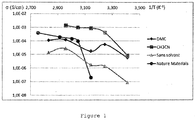
- the conductivities obtained are between 10 -8 and 2 x 10 -3 S / cm in a solvent medium and without solvent.
- the films of polymers of formulas I, II, III, IV, V, VI, VII, VIII, IX, X, XI, XII, XIII, XIV and XV are characterized by a very wide range of use at temperatures ranging from of 20 to 100 ° C. It will be noted that the polymers according to the invention do not have polyoxyethylene glycol units. Now, it is known that these units are a favorable factor for the conductivity of lithium ions, and it was not obvious that with polymers not containing polyoxyethylene glycol units, nor, moreover, necessarily, fluorine, Such high conductivities can be obtained.
- Chlorosulfonic acid (3.24 g, 8 equivalents relative to the number of polymeric units of PEEK (XVI)) is introduced using a syringe (1.85 mL), taking care to handle under flow of 'nitrogen.
- the reaction mixture is stirred at 20 ° C for 5 h. At the end of the reaction, the formation of a viscous orange compound is observed. The supernatant is removed, taking care to handle under a flow of nitrogen.
- the thionyl chloride (12.29 g, 30 equivalents relative to the number of polymeric units of PEEK (XVI)) is then introduced using a syringe (7.50 mL), taking care to handle under flow nitrogen. Then N, N-dimethylformamide (0.76 g, 3 equivalents relative to the number of polymeric units of PEEK (XVI)) is added using a syringe (0.81 mL), taking care to handle under nitrogen flow. The reaction mixture is stirred again at 20 ° C for 5 h, then 40 mL of distilled THF is added. At the end of the reaction, an orange solution is observed.
- the weight yield of PEEKSO 2 Cl (XXIV) polymer is 98% relative to the PEEK (XVI) used.
- Chlorosulfonic acid (2.88 g, 8 equivalents relative to the number of polymeric units of PEES (XVIII)) is introduced using a syringe (1.64 mL), taking care to handle under flow of 'nitrogen.
- the reaction mixture is stirred at 0 ° C for 5 h. At the end of the reaction, the formation of a brown viscous compound is observed. The supernatant is removed, taking care to handle under a flow of nitrogen.
- the thionyl chloride (10.93 g, 30 equivalents relative to the number of polymeric units of PEES (XVIII)) is then introduced using a syringe (6.6 mL), taking care to handle under flow nitrogen.
- N, N-dimethylformamide (0.76 g, 3 equivalents relative to the number of polymeric units of PEES (XVIII)) is added using a syringe (0.68 mL), taking care to handle under nitrogen flow.
- the reaction mixture is stirred again at 20 ° C. for 5 h, then 15 ml of distilled CH 2 Cl 2 are added. At the end of the reaction, a brown solution is observed.
- the brown solution is precipitated in propan-2-ol (250 mL), a white precipitate forms.
- the solid is filtered off, then washed with 2 times 50 mL of propan-2-ol and 2 times 50 mL of acetonitrile, then dried overnight under vacuum (1.10 -2 mbar).
- the weight yield of PEESSO 2 Cl (XXVI) polymer is 93% relative to the PEES (XVIII) engaged.
- Chlorosulfonic acid (0.527 g, 2.1 equivalents relative to the number of polymeric units of PES (XIX)) is introduced using a syringe (0.30 mL) taking care to handle under flow of 'nitrogen.
- the reaction mixture is stirred at 42 ° C for 18 h. At the end of the reaction, the formation of a yellow viscous compound is observed. The supernatant is removed, taking care to handle under a flow of nitrogen.
- the thionyl chloride (2.03 g, 8 equivalents relative to the number of polymeric units of PES (XIX)) is then introduced using a syringe (1.24 mL), taking care to handle under flow nitrogen. Then the N, N-dimethylformamide (0.47 g, 3 equivalents relative to the number of polymeric units of PES (XIX)) is added using a syringe (0.50 mL), taking care to handle under nitrogen flow. The reaction mixture is stirred again at 20 ° C. for 5 h, then 15 ml of distilled CH 2 Cl 2 are added. At the end of the reaction, a yellow solution is not observed.
- the yellow solution is precipitated in propan-2-ol (80 mL), a white precipitate forms.
- the solid is filtered off, then washed with 2 times 20 mL of propan-2-ol and 3 times 20 mL of acetonitrile, then dried overnight under vacuum (1.10 -2 mbar).
- the weight yield of PESSO 2 Cl (XXVII) polymer is 98% relative to the PES (XIX) used.
- reaction mixture is filtered and the solid is washed with 2 times 10 ml of tetrahydrofuran.
- the solvent of the filtrate is evaporated on a rotary evaporator, then the product obtained is dried overnight under vacuum (1.10 -2 mbar).
- the weight yield of PEEKSO 2 NH 2 (XL) polymer is 96% relative to the PEEKSO 2 Cl (XXIV) polymer used.
- PEESSO 2 Cl (XXVI) prepared according to Example 7 is prepared in 17 mL of distilled tetrahydrofuran and 3 mL of N, N- dimethylformamide so as to have a molar concentration of PEESSO 2 Cl (XXVI) of 0.035 M. All the solvents used during these syntheses were distilled, stored and withdrawn under a nitrogen atmosphere.
- reaction mixture is precipitated in methanol, then after filtration, the solid obtained is washed with 2 times 10 mL of acetonitrile, then the product obtained is dried overnight under vacuum (1 ⁇ 10 -2 mbar).
- the weight yield of PEESSO 2 NH 2 (XLII) polymer is 92% relative to the PEESSO 2 Cl (XXVI) polymer used.
- reaction mixture is filtered and the solid is washed with 2 times 10 ml of tetrahydrofuran.
- the solvent of the filtrate is evaporated on a rotary evaporator, then the product obtained is dried overnight under vacuum (1.10 -2 mbar).
- the weight yield of PESSO 2 NH 2 (XLIII) is 98% relative to the PESSO 2 Cl (XXVII) used.
- the PEEKSO 2 Cl (XXIV) solution prepared beforehand is then introduced using a syringe, taking care to handle under a flow of nitrogen.
- the reaction is continued at 20 ° C for 1 hour. At the end of the reaction, a white precipitate is observed.
- the 1 H NMR spectrum shows that there is a methylsulfonamide group relative to the dioxoaryl unit at 2.46 ppm.
- the weight yield of PEEKSO 2 N - (Li + ) SO 2 CH 3 (Ia) is 97% relative to the PEEKSO 2 Cl (XXIV) used.
- the reaction mixture is stirred at 20 ° C for 15 min.
- the PEEKSO 2 Cl (XXIV) solution prepared beforehand is then introduced using a syringe, taking care to handle under a flow of nitrogen.
- the reaction is continued at 20 ° C for 30 min. At the end of the reaction, a white precipitate is observed.
- a solution of 0.200 g of PEESSO 2 Cl (XXVI) prepared according to Example 7 is prepared in 9 mL of distilled tetrahydrofuran and 1 mL of distilled N, N- dimethylformamide so as to have a molar concentration of PEESSO 2 Cl (XXVI) of 0.052 M. All the solvents used during these syntheses were distilled, stored and withdrawn under a nitrogen atmosphere.
- the 1 H NMR spectrum carried out in DMSO-D6 ( 1 H NMR (200 MHz) ⁇ 8.05 - 7.78 (m, 4H), 7.44 (s, 1H), 7.33 - 6.90 ( m, 6H), 2.44 (s, 3H)) confirms the expected structure.
- the 1 H NMR spectrum shows that there is a methylsulfonamide group relative to the dioxoaryl unit at 2.44 ppm.
- the weight yield of PEESSO 2 N - (Li + ) SO 2 CH 3 (IIIa) is 97% relative to the PEESSO 2 Cl (XXVI) used.
- the weight yield of PESSO 2 N - (Li + ) SO 2 CF 3 (IVa) is 83% relative to the PESSO 2 Cl (XXVII) used.
- the 1 H NMR spectrum shows that there is a methylsulfonamide group relative to the dioxoaryl unit at 2.46 ppm.
- the weight yield of PEEKSO 2 N - (Li + ) SO 2 CH 3 (Ia) is 35% relative to the PEEKSO 2 NH 2 (XL) used.
Landscapes
- Chemical & Material Sciences (AREA)
- Chemical Kinetics & Catalysis (AREA)
- Organic Chemistry (AREA)
- Health & Medical Sciences (AREA)
- Medicinal Chemistry (AREA)
- Polymers & Plastics (AREA)
- Manufacturing & Machinery (AREA)
- Engineering & Computer Science (AREA)
- General Chemical & Material Sciences (AREA)
- Electrochemistry (AREA)
- Physics & Mathematics (AREA)
- Inorganic Chemistry (AREA)
- Spectroscopy & Molecular Physics (AREA)
- Materials Engineering (AREA)
- Condensed Matter Physics & Semiconductors (AREA)
- Dispersion Chemistry (AREA)
- General Physics & Mathematics (AREA)
- Addition Polymer Or Copolymer, Post-Treatments, Or Chemical Modifications (AREA)
- Polyethers (AREA)
- Secondary Cells (AREA)
Applications Claiming Priority (2)
| Application Number | Priority Date | Filing Date | Title |
|---|---|---|---|
| FR1401710A FR3024146B1 (fr) | 2014-07-23 | 2014-07-23 | Nouveaux polymeres contenant des sels de lithium ou de sodium de bis(sulfonyl)imides greffes, leurs procedes de preparation et leurs utilisations comme electrolytes pour batteries |
| PCT/FR2015/000154 WO2016012670A1 (fr) | 2014-07-23 | 2015-07-20 | Nouveaux polymeres contenant des sels de lithium ou de sodium de bis(sulfonyl)imides greffes, leurs procedes de preparation et leurs utilisations comme electrolytes pour batteries |
Publications (2)
| Publication Number | Publication Date |
|---|---|
| EP3172264A1 EP3172264A1 (fr) | 2017-05-31 |
| EP3172264B1 true EP3172264B1 (fr) | 2021-06-16 |
Family
ID=52102704
Family Applications (1)
| Application Number | Title | Priority Date | Filing Date |
|---|---|---|---|
| EP15766891.4A Active EP3172264B1 (fr) | 2014-07-23 | 2015-07-20 | Nouveaux polymeres contenant des sels de lithium ou de sodium de bis(sulfonyl)imides greffes, leurs procedes de preparation et leurs utilisations comme electrolytes pour batteries |
Country Status (7)
| Country | Link |
|---|---|
| US (1) | US10141603B2 (enExample) |
| EP (1) | EP3172264B1 (enExample) |
| JP (1) | JP6895376B2 (enExample) |
| KR (1) | KR102441687B1 (enExample) |
| CN (1) | CN107001622B (enExample) |
| FR (1) | FR3024146B1 (enExample) |
| WO (1) | WO2016012670A1 (enExample) |
Families Citing this family (9)
| Publication number | Priority date | Publication date | Assignee | Title |
|---|---|---|---|---|
| FR3024145B1 (fr) * | 2014-07-23 | 2018-03-16 | Cdp Innovation | Nouveaux polymeres contenant des sels de lithium ou de sodium de sulfonamides, leurs procedes de preparation et leurs utilisations comme electrolytes pour batteries |
| WO2018107263A1 (en) | 2016-12-14 | 2018-06-21 | Blue Solutions Canada Inc. | Lithium metal battery containing electrolyte grafted with immobilized anions |
| CN107793564B (zh) * | 2017-10-20 | 2020-07-10 | 萨尔法(武汉)新能源科技有限公司 | 低Tg聚醚类全固态单离子导电聚合物及其制备方法 |
| CN108091930B (zh) * | 2017-12-05 | 2019-10-25 | 厦门大学 | 新型单离子聚合物电解质及其制备方法与应用 |
| CN108152316B (zh) * | 2017-12-14 | 2019-12-31 | 中国日用化学工业研究院 | 一种以马来酸酐含量和磺化率为指标的糖苷磺基琥珀酸酯盐产品的质量检验方法 |
| FR3113676B1 (fr) * | 2020-09-03 | 2023-06-16 | Cdp Innovation | Polymeres contenant des unites de repetition avec plusieurs motifs sulfonates metalliques ou organiques, leurs procedes de preparation et leurs utilisations |
| CN113964376A (zh) * | 2021-10-18 | 2022-01-21 | 南京大学 | 一类新型低共熔剂的制备与应用 |
| FR3134576B1 (fr) | 2022-04-19 | 2025-07-18 | Arkema France | Procédé de préparation d’un sel de lithium fonctionnalisé |
| CN114934287B (zh) * | 2022-06-16 | 2023-08-29 | 浙江师范大学 | 电氧化合成氟烷基取代的磺酰胺并多环类化合物的方法 |
Family Cites Families (14)
| Publication number | Priority date | Publication date | Assignee | Title |
|---|---|---|---|---|
| DE59309908D1 (de) * | 1992-06-13 | 2000-01-27 | Aventis Res & Tech Gmbh & Co | Polymerelektrolyt-Membran und Verfahren zu ihrer Herstellung |
| US6090895A (en) | 1998-05-22 | 2000-07-18 | 3M Innovative Properties Co., | Crosslinked ion conductive membranes |
| JP3630306B2 (ja) * | 2001-02-23 | 2005-03-16 | 株式会社豊田中央研究所 | 多官能化電解質及びこれを用いた電気化学デバイス並びに多官能化電解質の製造方法 |
| TWI236486B (en) * | 2001-10-10 | 2005-07-21 | Mitsui Chemicals Inc | Crosslinkable aromatic resin having protonic acid group, and ion conductive polymer membrane, binder and fuel cell using the resin |
| FR2853320B1 (fr) | 2003-04-03 | 2005-05-06 | Rhodia Chimie Sa | Composition reticulable pour electrolyte de batterie |
| EP1624009B1 (en) * | 2003-04-28 | 2008-02-06 | Sumitomo Chemical Company, Limited | Aromatic-polyether-type ion-conductive ultrahigh molecular weight polymer, intermediate therefor, and processes for producing these |
| CN102634008A (zh) * | 2006-08-11 | 2012-08-15 | 东丽株式会社 | 高分子电解质材料、高分子电解质成型体、膜电极复合体和固体高分子型燃料电池 |
| WO2011077742A1 (ja) * | 2009-12-25 | 2011-06-30 | 三井化学株式会社 | 偏光性拡散フィルムおよびその製造方法、ならびに偏光性拡散フィルムを含む液晶表示装置 |
| US20120308899A1 (en) | 2011-02-16 | 2012-12-06 | Taiwan Textile Research Institute | Polymer-Based Solid Electrolytes and Preparation Methods Thereof |
| FR2979630B1 (fr) * | 2011-09-05 | 2013-10-04 | Univ Provence Aix Marseille 1 | Copolymeres a blocs dont un polyanionique base sur un monomere anion de type tfsili comme electrolyte de batterie. |
| JP6069972B2 (ja) * | 2011-09-13 | 2017-02-01 | 東レ株式会社 | 芳香族スルホンイミド誘導体、スルホンイミド基含有ポリマー、それを用いた高分子電解質材料、高分子電解質成型体および固体高分子型燃料電池 |
| CN102816287B (zh) * | 2012-08-29 | 2014-07-16 | 中国科学院宁波材料技术与工程研究所 | 一种有机聚合物凝胶因子、其制备方法及应用 |
| CN105085847B (zh) * | 2014-05-23 | 2018-05-04 | 中国科学院宁波材料技术与工程研究所 | 一种磺酰胺化芳香族聚合物、其制备方法及应用 |
| FR3024145B1 (fr) * | 2014-07-23 | 2018-03-16 | Cdp Innovation | Nouveaux polymeres contenant des sels de lithium ou de sodium de sulfonamides, leurs procedes de preparation et leurs utilisations comme electrolytes pour batteries |
-
2014
- 2014-07-23 FR FR1401710A patent/FR3024146B1/fr active Active
-
2015
- 2015-07-20 US US15/327,609 patent/US10141603B2/en active Active
- 2015-07-20 JP JP2017524115A patent/JP6895376B2/ja active Active
- 2015-07-20 KR KR1020177005111A patent/KR102441687B1/ko active Active
- 2015-07-20 EP EP15766891.4A patent/EP3172264B1/fr active Active
- 2015-07-20 WO PCT/FR2015/000154 patent/WO2016012670A1/fr not_active Ceased
- 2015-07-20 CN CN201580050808.3A patent/CN107001622B/zh not_active Expired - Fee Related
Non-Patent Citations (1)
| Title |
|---|
| None * |
Also Published As
| Publication number | Publication date |
|---|---|
| EP3172264A1 (fr) | 2017-05-31 |
| KR102441687B1 (ko) | 2022-09-07 |
| KR20170065493A (ko) | 2017-06-13 |
| FR3024146B1 (fr) | 2018-02-16 |
| JP6895376B2 (ja) | 2021-06-30 |
| CN107001622B (zh) | 2020-01-07 |
| FR3024146A1 (fr) | 2016-01-29 |
| JP2017531729A (ja) | 2017-10-26 |
| US10141603B2 (en) | 2018-11-27 |
| WO2016012670A1 (fr) | 2016-01-28 |
| US20170179526A1 (en) | 2017-06-22 |
| CN107001622A (zh) | 2017-08-01 |
Similar Documents
| Publication | Publication Date | Title |
|---|---|---|
| EP3172264B1 (fr) | Nouveaux polymeres contenant des sels de lithium ou de sodium de bis(sulfonyl)imides greffes, leurs procedes de preparation et leurs utilisations comme electrolytes pour batteries | |
| EP3172259B1 (fr) | Nouveaux polymeres contenant des sels de lithium ou de sodium de sulfonamides, leurs procedes de preparation et leurs utilisations comme electrolytes pour batteries | |
| EP2084166B1 (fr) | Procédé de préparation de sulfonylimidures aromatiques | |
| WO2010023413A1 (fr) | Sel d'anion pentacyclique et son utilisation comme électrolyte | |
| JP2002505356A (ja) | 相当にフッ素化されたイオノマー | |
| WO1998029388A1 (fr) | Sels d'amides perfluores, et leurs utilisations comme materiaux a conduction ionique | |
| EP2601172B1 (fr) | Monomère perfluoroalcane aromatique soufré et sulfoné | |
| EP2601700B1 (fr) | Monomère triazine soufré utilisable pour la synthèse d'une membrane polymère pour pile à combustible | |
| WO2011099572A1 (ja) | フルオロアルカン誘導体、ゲル化剤及びゲル状組成物 | |
| EP3326229B1 (fr) | Procédé de préparation d'ionomères à conduction cationique unipolaire à partir de monomères ioniques difluorés | |
| WO2012016780A1 (fr) | Monomere perfluoroalcane aromatique | |
| EP2855445B1 (fr) | Sel d'anions bicycliques aromatiques pour batteries li-ion | |
| KR100977626B1 (ko) | 1,3-프로프-1-엔 설톤의 제조방법 | |
| EP3649107B1 (fr) | Macromolécules de type sulfonamide utiles à titre d'électrolyte polymère à conduction d'ion unique | |
| WO2008009815A2 (fr) | Procede de preparation de sulfonates aromatiques. | |
| EP4648160A1 (fr) | Électrolyte solide pour batterie au lithium | |
| FR2983479A1 (fr) | Monomere alcane aromatique soufre et sulfone | |
| EP2788320A1 (fr) | Monomere alcane aromatique soufre, fluore et sulfone | |
| JP2004059532A (ja) | ビススルホニルイミドモノマーの製造法 |
Legal Events
| Date | Code | Title | Description |
|---|---|---|---|
| STAA | Information on the status of an ep patent application or granted ep patent |
Free format text: STATUS: THE INTERNATIONAL PUBLICATION HAS BEEN MADE |
|
| PUAI | Public reference made under article 153(3) epc to a published international application that has entered the european phase |
Free format text: ORIGINAL CODE: 0009012 |
|
| STAA | Information on the status of an ep patent application or granted ep patent |
Free format text: STATUS: REQUEST FOR EXAMINATION WAS MADE |
|
| 17P | Request for examination filed |
Effective date: 20170130 |
|
| AK | Designated contracting states |
Kind code of ref document: A1 Designated state(s): AL AT BE BG CH CY CZ DE DK EE ES FI FR GB GR HR HU IE IS IT LI LT LU LV MC MK MT NL NO PL PT RO RS SE SI SK SM TR |
|
| AX | Request for extension of the european patent |
Extension state: BA ME |
|
| DAV | Request for validation of the european patent (deleted) | ||
| DAX | Request for extension of the european patent (deleted) | ||
| STAA | Information on the status of an ep patent application or granted ep patent |
Free format text: STATUS: EXAMINATION IS IN PROGRESS |
|
| 17Q | First examination report despatched |
Effective date: 20180305 |
|
| GRAP | Despatch of communication of intention to grant a patent |
Free format text: ORIGINAL CODE: EPIDOSNIGR1 |
|
| STAA | Information on the status of an ep patent application or granted ep patent |
Free format text: STATUS: GRANT OF PATENT IS INTENDED |
|
| INTG | Intention to grant announced |
Effective date: 20201215 |
|
| GRAS | Grant fee paid |
Free format text: ORIGINAL CODE: EPIDOSNIGR3 |
|
| GRAA | (expected) grant |
Free format text: ORIGINAL CODE: 0009210 |
|
| STAA | Information on the status of an ep patent application or granted ep patent |
Free format text: STATUS: THE PATENT HAS BEEN GRANTED |
|
| AK | Designated contracting states |
Kind code of ref document: B1 Designated state(s): AL AT BE BG CH CY CZ DE DK EE ES FI FR GB GR HR HU IE IS IT LI LT LU LV MC MK MT NL NO PL PT RO RS SE SI SK SM TR |
|
| REG | Reference to a national code |
Ref country code: GB Ref legal event code: FG4D Free format text: NOT ENGLISH |
|
| REG | Reference to a national code |
Ref country code: CH Ref legal event code: EP |
|
| REG | Reference to a national code |
Ref country code: DE Ref legal event code: R096 Ref document number: 602015070451 Country of ref document: DE |
|
| REG | Reference to a national code |
Ref country code: AT Ref legal event code: REF Ref document number: 1402313 Country of ref document: AT Kind code of ref document: T Effective date: 20210715 |
|
| REG | Reference to a national code |
Ref country code: IE Ref legal event code: FG4D Free format text: LANGUAGE OF EP DOCUMENT: FRENCH |
|
| REG | Reference to a national code |
Ref country code: LT Ref legal event code: MG9D |
|
| PG25 | Lapsed in a contracting state [announced via postgrant information from national office to epo] |
Ref country code: FI Free format text: LAPSE BECAUSE OF FAILURE TO SUBMIT A TRANSLATION OF THE DESCRIPTION OR TO PAY THE FEE WITHIN THE PRESCRIBED TIME-LIMIT Effective date: 20210616 Ref country code: LT Free format text: LAPSE BECAUSE OF FAILURE TO SUBMIT A TRANSLATION OF THE DESCRIPTION OR TO PAY THE FEE WITHIN THE PRESCRIBED TIME-LIMIT Effective date: 20210616 Ref country code: HR Free format text: LAPSE BECAUSE OF FAILURE TO SUBMIT A TRANSLATION OF THE DESCRIPTION OR TO PAY THE FEE WITHIN THE PRESCRIBED TIME-LIMIT Effective date: 20210616 Ref country code: BG Free format text: LAPSE BECAUSE OF FAILURE TO SUBMIT A TRANSLATION OF THE DESCRIPTION OR TO PAY THE FEE WITHIN THE PRESCRIBED TIME-LIMIT Effective date: 20210916 |
|
| REG | Reference to a national code |
Ref country code: AT Ref legal event code: MK05 Ref document number: 1402313 Country of ref document: AT Kind code of ref document: T Effective date: 20210616 |
|
| REG | Reference to a national code |
Ref country code: NL Ref legal event code: MP Effective date: 20210616 |
|
| PG25 | Lapsed in a contracting state [announced via postgrant information from national office to epo] |
Ref country code: LV Free format text: LAPSE BECAUSE OF FAILURE TO SUBMIT A TRANSLATION OF THE DESCRIPTION OR TO PAY THE FEE WITHIN THE PRESCRIBED TIME-LIMIT Effective date: 20210616 Ref country code: GR Free format text: LAPSE BECAUSE OF FAILURE TO SUBMIT A TRANSLATION OF THE DESCRIPTION OR TO PAY THE FEE WITHIN THE PRESCRIBED TIME-LIMIT Effective date: 20210917 Ref country code: NO Free format text: LAPSE BECAUSE OF FAILURE TO SUBMIT A TRANSLATION OF THE DESCRIPTION OR TO PAY THE FEE WITHIN THE PRESCRIBED TIME-LIMIT Effective date: 20210916 Ref country code: SE Free format text: LAPSE BECAUSE OF FAILURE TO SUBMIT A TRANSLATION OF THE DESCRIPTION OR TO PAY THE FEE WITHIN THE PRESCRIBED TIME-LIMIT Effective date: 20210616 Ref country code: RS Free format text: LAPSE BECAUSE OF FAILURE TO SUBMIT A TRANSLATION OF THE DESCRIPTION OR TO PAY THE FEE WITHIN THE PRESCRIBED TIME-LIMIT Effective date: 20210616 |
|
| PG25 | Lapsed in a contracting state [announced via postgrant information from national office to epo] |
Ref country code: SM Free format text: LAPSE BECAUSE OF FAILURE TO SUBMIT A TRANSLATION OF THE DESCRIPTION OR TO PAY THE FEE WITHIN THE PRESCRIBED TIME-LIMIT Effective date: 20210616 Ref country code: SK Free format text: LAPSE BECAUSE OF FAILURE TO SUBMIT A TRANSLATION OF THE DESCRIPTION OR TO PAY THE FEE WITHIN THE PRESCRIBED TIME-LIMIT Effective date: 20210616 Ref country code: EE Free format text: LAPSE BECAUSE OF FAILURE TO SUBMIT A TRANSLATION OF THE DESCRIPTION OR TO PAY THE FEE WITHIN THE PRESCRIBED TIME-LIMIT Effective date: 20210616 Ref country code: CZ Free format text: LAPSE BECAUSE OF FAILURE TO SUBMIT A TRANSLATION OF THE DESCRIPTION OR TO PAY THE FEE WITHIN THE PRESCRIBED TIME-LIMIT Effective date: 20210616 Ref country code: RO Free format text: LAPSE BECAUSE OF FAILURE TO SUBMIT A TRANSLATION OF THE DESCRIPTION OR TO PAY THE FEE WITHIN THE PRESCRIBED TIME-LIMIT Effective date: 20210616 Ref country code: PT Free format text: LAPSE BECAUSE OF FAILURE TO SUBMIT A TRANSLATION OF THE DESCRIPTION OR TO PAY THE FEE WITHIN THE PRESCRIBED TIME-LIMIT Effective date: 20211018 Ref country code: NL Free format text: LAPSE BECAUSE OF FAILURE TO SUBMIT A TRANSLATION OF THE DESCRIPTION OR TO PAY THE FEE WITHIN THE PRESCRIBED TIME-LIMIT Effective date: 20210616 Ref country code: ES Free format text: LAPSE BECAUSE OF FAILURE TO SUBMIT A TRANSLATION OF THE DESCRIPTION OR TO PAY THE FEE WITHIN THE PRESCRIBED TIME-LIMIT Effective date: 20210616 Ref country code: AT Free format text: LAPSE BECAUSE OF FAILURE TO SUBMIT A TRANSLATION OF THE DESCRIPTION OR TO PAY THE FEE WITHIN THE PRESCRIBED TIME-LIMIT Effective date: 20210616 |
|
| PG25 | Lapsed in a contracting state [announced via postgrant information from national office to epo] |
Ref country code: PL Free format text: LAPSE BECAUSE OF FAILURE TO SUBMIT A TRANSLATION OF THE DESCRIPTION OR TO PAY THE FEE WITHIN THE PRESCRIBED TIME-LIMIT Effective date: 20210616 |
|
| REG | Reference to a national code |
Ref country code: CH Ref legal event code: PL |
|
| REG | Reference to a national code |
Ref country code: DE Ref legal event code: R097 Ref document number: 602015070451 Country of ref document: DE |
|
| PG25 | Lapsed in a contracting state [announced via postgrant information from national office to epo] |
Ref country code: MC Free format text: LAPSE BECAUSE OF FAILURE TO SUBMIT A TRANSLATION OF THE DESCRIPTION OR TO PAY THE FEE WITHIN THE PRESCRIBED TIME-LIMIT Effective date: 20210616 |
|
| PLBE | No opposition filed within time limit |
Free format text: ORIGINAL CODE: 0009261 |
|
| STAA | Information on the status of an ep patent application or granted ep patent |
Free format text: STATUS: NO OPPOSITION FILED WITHIN TIME LIMIT |
|
| PG25 | Lapsed in a contracting state [announced via postgrant information from national office to epo] |
Ref country code: LI Free format text: LAPSE BECAUSE OF NON-PAYMENT OF DUE FEES Effective date: 20210731 Ref country code: DK Free format text: LAPSE BECAUSE OF FAILURE TO SUBMIT A TRANSLATION OF THE DESCRIPTION OR TO PAY THE FEE WITHIN THE PRESCRIBED TIME-LIMIT Effective date: 20210616 Ref country code: CH Free format text: LAPSE BECAUSE OF NON-PAYMENT OF DUE FEES Effective date: 20210731 |
|
| 26N | No opposition filed |
Effective date: 20220317 |
|
| PG25 | Lapsed in a contracting state [announced via postgrant information from national office to epo] |
Ref country code: LU Free format text: LAPSE BECAUSE OF NON-PAYMENT OF DUE FEES Effective date: 20210720 Ref country code: AL Free format text: LAPSE BECAUSE OF FAILURE TO SUBMIT A TRANSLATION OF THE DESCRIPTION OR TO PAY THE FEE WITHIN THE PRESCRIBED TIME-LIMIT Effective date: 20210616 |
|
| PG25 | Lapsed in a contracting state [announced via postgrant information from national office to epo] |
Ref country code: IT Free format text: LAPSE BECAUSE OF FAILURE TO SUBMIT A TRANSLATION OF THE DESCRIPTION OR TO PAY THE FEE WITHIN THE PRESCRIBED TIME-LIMIT Effective date: 20210616 Ref country code: IE Free format text: LAPSE BECAUSE OF NON-PAYMENT OF DUE FEES Effective date: 20210720 |
|
| PG25 | Lapsed in a contracting state [announced via postgrant information from national office to epo] |
Ref country code: HU Free format text: LAPSE BECAUSE OF FAILURE TO SUBMIT A TRANSLATION OF THE DESCRIPTION OR TO PAY THE FEE WITHIN THE PRESCRIBED TIME-LIMIT; INVALID AB INITIO Effective date: 20150720 |
|
| PG25 | Lapsed in a contracting state [announced via postgrant information from national office to epo] |
Ref country code: CY Free format text: LAPSE BECAUSE OF FAILURE TO SUBMIT A TRANSLATION OF THE DESCRIPTION OR TO PAY THE FEE WITHIN THE PRESCRIBED TIME-LIMIT Effective date: 20210616 |
|
| PG25 | Lapsed in a contracting state [announced via postgrant information from national office to epo] |
Ref country code: MK Free format text: LAPSE BECAUSE OF FAILURE TO SUBMIT A TRANSLATION OF THE DESCRIPTION OR TO PAY THE FEE WITHIN THE PRESCRIBED TIME-LIMIT Effective date: 20210616 |
|
| PG25 | Lapsed in a contracting state [announced via postgrant information from national office to epo] |
Ref country code: TR Free format text: LAPSE BECAUSE OF FAILURE TO SUBMIT A TRANSLATION OF THE DESCRIPTION OR TO PAY THE FEE WITHIN THE PRESCRIBED TIME-LIMIT Effective date: 20210616 |
|
| PG25 | Lapsed in a contracting state [announced via postgrant information from national office to epo] |
Ref country code: MT Free format text: LAPSE BECAUSE OF FAILURE TO SUBMIT A TRANSLATION OF THE DESCRIPTION OR TO PAY THE FEE WITHIN THE PRESCRIBED TIME-LIMIT Effective date: 20210616 |
|
| PGFP | Annual fee paid to national office [announced via postgrant information from national office to epo] |
Ref country code: DE Payment date: 20250812 Year of fee payment: 11 |
|
| PGFP | Annual fee paid to national office [announced via postgrant information from national office to epo] |
Ref country code: BE Payment date: 20250730 Year of fee payment: 11 Ref country code: GB Payment date: 20250826 Year of fee payment: 11 |
|
| PGFP | Annual fee paid to national office [announced via postgrant information from national office to epo] |
Ref country code: FR Payment date: 20250731 Year of fee payment: 11 |