EP3148959B1 - Integrierte verfahren zur chemischen analyse - Google Patents
Integrierte verfahren zur chemischen analyse Download PDFInfo
- Publication number
- EP3148959B1 EP3148959B1 EP15799546.5A EP15799546A EP3148959B1 EP 3148959 B1 EP3148959 B1 EP 3148959B1 EP 15799546 A EP15799546 A EP 15799546A EP 3148959 B1 EP3148959 B1 EP 3148959B1
- Authority
- EP
- European Patent Office
- Prior art keywords
- certain embodiments
- stream
- syngas stream
- carbonylation
- syngas
- Prior art date
- Legal status (The legal status is an assumption and is not a legal conclusion. Google has not performed a legal analysis and makes no representation as to the accuracy of the status listed.)
- Active
Links
Images




Classifications
-
- C—CHEMISTRY; METALLURGY
- C01—INORGANIC CHEMISTRY
- C01B—NON-METALLIC ELEMENTS; COMPOUNDS THEREOF; METALLOIDS OR COMPOUNDS THEREOF NOT COVERED BY SUBCLASS C01C
- C01B3/00—Hydrogen; Gaseous mixtures containing hydrogen; Separation of hydrogen from mixtures containing it; Purification of hydrogen; Reversible storage of hydrogen
- C01B3/50—Separation of hydrogen or hydrogen-containing gases from gaseous mixtures, e.g. purification
-
- C—CHEMISTRY; METALLURGY
- C07—ORGANIC CHEMISTRY
- C07C—ACYCLIC OR CARBOCYCLIC COMPOUNDS
- C07C51/00—Preparation of carboxylic acids or their salts, halides or anhydrides
- C07C51/09—Preparation of carboxylic acids or their salts, halides or anhydrides from carboxylic acid esters or lactones
-
- C—CHEMISTRY; METALLURGY
- C07—ORGANIC CHEMISTRY
- C07C—ACYCLIC OR CARBOCYCLIC COMPOUNDS
- C07C1/00—Preparation of hydrocarbons from one or more compounds, none of them being a hydrocarbon
- C07C1/20—Preparation of hydrocarbons from one or more compounds, none of them being a hydrocarbon starting from organic compounds containing only oxygen atoms as heteroatoms
-
- B—PERFORMING OPERATIONS; TRANSPORTING
- B01—PHYSICAL OR CHEMICAL PROCESSES OR APPARATUS IN GENERAL
- B01J—CHEMICAL OR PHYSICAL PROCESSES, e.g. CATALYSIS OR COLLOID CHEMISTRY; THEIR RELEVANT APPARATUS
- B01J31/00—Catalysts comprising hydrides, coordination complexes or organic compounds
-
- C—CHEMISTRY; METALLURGY
- C07—ORGANIC CHEMISTRY
- C07C—ACYCLIC OR CARBOCYCLIC COMPOUNDS
- C07C11/00—Aliphatic unsaturated hydrocarbons
- C07C11/02—Alkenes
- C07C11/04—Ethene
-
- C—CHEMISTRY; METALLURGY
- C07—ORGANIC CHEMISTRY
- C07C—ACYCLIC OR CARBOCYCLIC COMPOUNDS
- C07C11/00—Aliphatic unsaturated hydrocarbons
- C07C11/02—Alkenes
- C07C11/06—Propene
-
- C—CHEMISTRY; METALLURGY
- C07—ORGANIC CHEMISTRY
- C07C—ACYCLIC OR CARBOCYCLIC COMPOUNDS
- C07C29/00—Preparation of compounds having hydroxy or O-metal groups bound to a carbon atom not belonging to a six-membered aromatic ring
- C07C29/132—Preparation of compounds having hydroxy or O-metal groups bound to a carbon atom not belonging to a six-membered aromatic ring by reduction of an oxygen containing functional group
- C07C29/136—Preparation of compounds having hydroxy or O-metal groups bound to a carbon atom not belonging to a six-membered aromatic ring by reduction of an oxygen containing functional group of >C=O containing groups, e.g. —COOH
- C07C29/147—Preparation of compounds having hydroxy or O-metal groups bound to a carbon atom not belonging to a six-membered aromatic ring by reduction of an oxygen containing functional group of >C=O containing groups, e.g. —COOH of carboxylic acids or derivatives thereof
- C07C29/149—Preparation of compounds having hydroxy or O-metal groups bound to a carbon atom not belonging to a six-membered aromatic ring by reduction of an oxygen containing functional group of >C=O containing groups, e.g. —COOH of carboxylic acids or derivatives thereof with hydrogen or hydrogen-containing gases
-
- C—CHEMISTRY; METALLURGY
- C07—ORGANIC CHEMISTRY
- C07C—ACYCLIC OR CARBOCYCLIC COMPOUNDS
- C07C29/00—Preparation of compounds having hydroxy or O-metal groups bound to a carbon atom not belonging to a six-membered aromatic ring
- C07C29/15—Preparation of compounds having hydroxy or O-metal groups bound to a carbon atom not belonging to a six-membered aromatic ring by reduction of oxides of carbon exclusively
- C07C29/151—Preparation of compounds having hydroxy or O-metal groups bound to a carbon atom not belonging to a six-membered aromatic ring by reduction of oxides of carbon exclusively with hydrogen or hydrogen-containing gases
- C07C29/1516—Multisteps
- C07C29/1518—Multisteps one step being the formation of initial mixture of carbon oxides and hydrogen for synthesis
-
- C—CHEMISTRY; METALLURGY
- C07—ORGANIC CHEMISTRY
- C07C—ACYCLIC OR CARBOCYCLIC COMPOUNDS
- C07C31/00—Saturated compounds having hydroxy or O-metal groups bound to acyclic carbon atoms
- C07C31/02—Monohydroxylic acyclic alcohols
- C07C31/04—Methanol
-
- C—CHEMISTRY; METALLURGY
- C07—ORGANIC CHEMISTRY
- C07C—ACYCLIC OR CARBOCYCLIC COMPOUNDS
- C07C31/00—Saturated compounds having hydroxy or O-metal groups bound to acyclic carbon atoms
- C07C31/18—Polyhydroxylic acyclic alcohols
- C07C31/20—Dihydroxylic alcohols
- C07C31/207—1,4-Butanediol; 1,3-Butanediol; 1,2-Butanediol; 2,3-Butanediol
-
- C—CHEMISTRY; METALLURGY
- C07—ORGANIC CHEMISTRY
- C07C—ACYCLIC OR CARBOCYCLIC COMPOUNDS
- C07C43/00—Ethers; Compounds having groups, groups or groups
- C07C43/02—Ethers
- C07C43/03—Ethers having all ether-oxygen atoms bound to acyclic carbon atoms
- C07C43/04—Saturated ethers
- C07C43/043—Dimethyl ether
-
- C—CHEMISTRY; METALLURGY
- C07—ORGANIC CHEMISTRY
- C07C—ACYCLIC OR CARBOCYCLIC COMPOUNDS
- C07C57/00—Unsaturated compounds having carboxyl groups bound to acyclic carbon atoms
- C07C57/02—Unsaturated compounds having carboxyl groups bound to acyclic carbon atoms with only carbon-to-carbon double bonds as unsaturation
- C07C57/03—Monocarboxylic acids
- C07C57/04—Acrylic acid; Methacrylic acid
-
- C—CHEMISTRY; METALLURGY
- C07—ORGANIC CHEMISTRY
- C07D—HETEROCYCLIC COMPOUNDS
- C07D305/00—Heterocyclic compounds containing four-membered rings having one oxygen atom as the only ring hetero atoms
- C07D305/02—Heterocyclic compounds containing four-membered rings having one oxygen atom as the only ring hetero atoms not condensed with other rings
- C07D305/10—Heterocyclic compounds containing four-membered rings having one oxygen atom as the only ring hetero atoms not condensed with other rings having one or more double bonds between ring members or between ring members and non-ring members
- C07D305/12—Beta-lactones
-
- C—CHEMISTRY; METALLURGY
- C07—ORGANIC CHEMISTRY
- C07D—HETEROCYCLIC COMPOUNDS
- C07D307/00—Heterocyclic compounds containing five-membered rings having one oxygen atom as the only ring hetero atom
- C07D307/02—Heterocyclic compounds containing five-membered rings having one oxygen atom as the only ring hetero atom not condensed with other rings
- C07D307/34—Heterocyclic compounds containing five-membered rings having one oxygen atom as the only ring hetero atom not condensed with other rings having two or three double bonds between ring members or between ring members and non-ring members
- C07D307/56—Heterocyclic compounds containing five-membered rings having one oxygen atom as the only ring hetero atom not condensed with other rings having two or three double bonds between ring members or between ring members and non-ring members with hetero atoms or with carbon atoms having three bonds to hetero atoms with at the most one bond to halogen, e.g. ester or nitrile radicals, directly attached to ring carbon atoms
- C07D307/60—Two oxygen atoms, e.g. succinic anhydride
-
- C—CHEMISTRY; METALLURGY
- C10—PETROLEUM, GAS OR COKE INDUSTRIES; TECHNICAL GASES CONTAINING CARBON MONOXIDE; FUELS; LUBRICANTS; PEAT
- C10G—CRACKING HYDROCARBON OILS; PRODUCTION OF LIQUID HYDROCARBON MIXTURES, e.g. BY DESTRUCTIVE HYDROGENATION, OLIGOMERISATION, POLYMERISATION; RECOVERY OF HYDROCARBON OILS FROM OIL-SHALE, OIL-SAND, OR GASES; REFINING MIXTURES MAINLY CONSISTING OF HYDROCARBONS; REFORMING OF NAPHTHA; MINERAL WAXES
- C10G2/00—Production of liquid hydrocarbon mixtures of undefined composition from oxides of carbon
- C10G2/30—Production of liquid hydrocarbon mixtures of undefined composition from oxides of carbon from carbon monoxide with hydrogen
-
- C—CHEMISTRY; METALLURGY
- C10—PETROLEUM, GAS OR COKE INDUSTRIES; TECHNICAL GASES CONTAINING CARBON MONOXIDE; FUELS; LUBRICANTS; PEAT
- C10G—CRACKING HYDROCARBON OILS; PRODUCTION OF LIQUID HYDROCARBON MIXTURES, e.g. BY DESTRUCTIVE HYDROGENATION, OLIGOMERISATION, POLYMERISATION; RECOVERY OF HYDROCARBON OILS FROM OIL-SHALE, OIL-SAND, OR GASES; REFINING MIXTURES MAINLY CONSISTING OF HYDROCARBONS; REFORMING OF NAPHTHA; MINERAL WAXES
- C10G2/00—Production of liquid hydrocarbon mixtures of undefined composition from oxides of carbon
- C10G2/30—Production of liquid hydrocarbon mixtures of undefined composition from oxides of carbon from carbon monoxide with hydrogen
- C10G2/32—Production of liquid hydrocarbon mixtures of undefined composition from oxides of carbon from carbon monoxide with hydrogen with the use of catalysts
-
- H—ELECTRICITY
- H01—ELECTRIC ELEMENTS
- H01M—PROCESSES OR MEANS, e.g. BATTERIES, FOR THE DIRECT CONVERSION OF CHEMICAL ENERGY INTO ELECTRICAL ENERGY
- H01M8/00—Fuel cells; Manufacture thereof
- H01M8/06—Combination of fuel cells with means for production of reactants or for treatment of residues
- H01M8/0606—Combination of fuel cells with means for production of reactants or for treatment of residues with means for production of gaseous reactants
- H01M8/0612—Combination of fuel cells with means for production of reactants or for treatment of residues with means for production of gaseous reactants from carbon-containing material
- H01M8/0625—Combination of fuel cells with means for production of reactants or for treatment of residues with means for production of gaseous reactants from carbon-containing material in a modular combined reactor/fuel cell structure
-
- H—ELECTRICITY
- H01—ELECTRIC ELEMENTS
- H01M—PROCESSES OR MEANS, e.g. BATTERIES, FOR THE DIRECT CONVERSION OF CHEMICAL ENERGY INTO ELECTRICAL ENERGY
- H01M8/00—Fuel cells; Manufacture thereof
- H01M8/06—Combination of fuel cells with means for production of reactants or for treatment of residues
- H01M8/0662—Treatment of gaseous reactants or gaseous residues, e.g. cleaning
- H01M8/0668—Removal of carbon monoxide or carbon dioxide
-
- B—PERFORMING OPERATIONS; TRANSPORTING
- B01—PHYSICAL OR CHEMICAL PROCESSES OR APPARATUS IN GENERAL
- B01J—CHEMICAL OR PHYSICAL PROCESSES, e.g. CATALYSIS OR COLLOID CHEMISTRY; THEIR RELEVANT APPARATUS
- B01J2231/00—Catalytic reactions performed with catalysts classified in B01J31/00
- B01J2231/30—Addition reactions at carbon centres, i.e. to either C-C or C-X multiple bonds
- B01J2231/32—Addition reactions to C=C or C-C triple bonds
- B01J2231/321—Hydroformylation, metalformylation, carbonylation or hydroaminomethylation
-
- B—PERFORMING OPERATIONS; TRANSPORTING
- B01—PHYSICAL OR CHEMICAL PROCESSES OR APPARATUS IN GENERAL
- B01J—CHEMICAL OR PHYSICAL PROCESSES, e.g. CATALYSIS OR COLLOID CHEMISTRY; THEIR RELEVANT APPARATUS
- B01J2531/00—Additional information regarding catalytic systems classified in B01J31/00
- B01J2531/02—Compositional aspects of complexes used, e.g. polynuclearity
- B01J2531/0238—Complexes comprising multidentate ligands, i.e. more than 2 ionic or coordinative bonds from the central metal to the ligand, the latter having at least two donor atoms, e.g. N, O, S, P
- B01J2531/0241—Rigid ligands, e.g. extended sp2-carbon frameworks or geminal di- or trisubstitution
- B01J2531/025—Ligands with a porphyrin ring system or analogues thereof, e.g. phthalocyanines, corroles
-
- B—PERFORMING OPERATIONS; TRANSPORTING
- B01—PHYSICAL OR CHEMICAL PROCESSES OR APPARATUS IN GENERAL
- B01J—CHEMICAL OR PHYSICAL PROCESSES, e.g. CATALYSIS OR COLLOID CHEMISTRY; THEIR RELEVANT APPARATUS
- B01J2531/00—Additional information regarding catalytic systems classified in B01J31/00
- B01J2531/70—Complexes comprising metals of Group VII (VIIB) as the central metal
- B01J2531/72—Manganese
-
- B—PERFORMING OPERATIONS; TRANSPORTING
- B01—PHYSICAL OR CHEMICAL PROCESSES OR APPARATUS IN GENERAL
- B01J—CHEMICAL OR PHYSICAL PROCESSES, e.g. CATALYSIS OR COLLOID CHEMISTRY; THEIR RELEVANT APPARATUS
- B01J2531/00—Additional information regarding catalytic systems classified in B01J31/00
- B01J2531/80—Complexes comprising metals of Group VIII as the central metal
- B01J2531/82—Metals of the platinum group
- B01J2531/822—Rhodium
-
- B—PERFORMING OPERATIONS; TRANSPORTING
- B01—PHYSICAL OR CHEMICAL PROCESSES OR APPARATUS IN GENERAL
- B01J—CHEMICAL OR PHYSICAL PROCESSES, e.g. CATALYSIS OR COLLOID CHEMISTRY; THEIR RELEVANT APPARATUS
- B01J2531/00—Additional information regarding catalytic systems classified in B01J31/00
- B01J2531/80—Complexes comprising metals of Group VIII as the central metal
- B01J2531/82—Metals of the platinum group
- B01J2531/827—Iridium
-
- B—PERFORMING OPERATIONS; TRANSPORTING
- B01—PHYSICAL OR CHEMICAL PROCESSES OR APPARATUS IN GENERAL
- B01J—CHEMICAL OR PHYSICAL PROCESSES, e.g. CATALYSIS OR COLLOID CHEMISTRY; THEIR RELEVANT APPARATUS
- B01J2531/00—Additional information regarding catalytic systems classified in B01J31/00
- B01J2531/80—Complexes comprising metals of Group VIII as the central metal
- B01J2531/84—Metals of the iron group
- B01J2531/842—Iron
-
- B—PERFORMING OPERATIONS; TRANSPORTING
- B01—PHYSICAL OR CHEMICAL PROCESSES OR APPARATUS IN GENERAL
- B01J—CHEMICAL OR PHYSICAL PROCESSES, e.g. CATALYSIS OR COLLOID CHEMISTRY; THEIR RELEVANT APPARATUS
- B01J2531/00—Additional information regarding catalytic systems classified in B01J31/00
- B01J2531/80—Complexes comprising metals of Group VIII as the central metal
- B01J2531/84—Metals of the iron group
- B01J2531/845—Cobalt
-
- B—PERFORMING OPERATIONS; TRANSPORTING
- B01—PHYSICAL OR CHEMICAL PROCESSES OR APPARATUS IN GENERAL
- B01J—CHEMICAL OR PHYSICAL PROCESSES, e.g. CATALYSIS OR COLLOID CHEMISTRY; THEIR RELEVANT APPARATUS
- B01J31/00—Catalysts comprising hydrides, coordination complexes or organic compounds
- B01J31/16—Catalysts comprising hydrides, coordination complexes or organic compounds containing coordination complexes
- B01J31/20—Carbonyls
-
- C—CHEMISTRY; METALLURGY
- C01—INORGANIC CHEMISTRY
- C01B—NON-METALLIC ELEMENTS; COMPOUNDS THEREOF; METALLOIDS OR COMPOUNDS THEREOF NOT COVERED BY SUBCLASS C01C
- C01B2203/00—Integrated processes for the production of hydrogen or synthesis gas
- C01B2203/04—Integrated processes for the production of hydrogen or synthesis gas containing a purification step for the hydrogen or the synthesis gas
-
- C—CHEMISTRY; METALLURGY
- C01—INORGANIC CHEMISTRY
- C01B—NON-METALLIC ELEMENTS; COMPOUNDS THEREOF; METALLOIDS OR COMPOUNDS THEREOF NOT COVERED BY SUBCLASS C01C
- C01B2203/00—Integrated processes for the production of hydrogen or synthesis gas
- C01B2203/04—Integrated processes for the production of hydrogen or synthesis gas containing a purification step for the hydrogen or the synthesis gas
- C01B2203/0435—Catalytic purification
-
- C—CHEMISTRY; METALLURGY
- C01—INORGANIC CHEMISTRY
- C01B—NON-METALLIC ELEMENTS; COMPOUNDS THEREOF; METALLOIDS OR COMPOUNDS THEREOF NOT COVERED BY SUBCLASS C01C
- C01B2203/00—Integrated processes for the production of hydrogen or synthesis gas
- C01B2203/06—Integration with other chemical processes
- C01B2203/062—Hydrocarbon production, e.g. Fischer-Tropsch process
-
- C—CHEMISTRY; METALLURGY
- C01—INORGANIC CHEMISTRY
- C01B—NON-METALLIC ELEMENTS; COMPOUNDS THEREOF; METALLOIDS OR COMPOUNDS THEREOF NOT COVERED BY SUBCLASS C01C
- C01B2203/00—Integrated processes for the production of hydrogen or synthesis gas
- C01B2203/06—Integration with other chemical processes
- C01B2203/063—Refinery processes
- C01B2203/065—Refinery processes using hydrotreating, e.g. hydrogenation, hydrodesulfurisation
-
- C—CHEMISTRY; METALLURGY
- C01—INORGANIC CHEMISTRY
- C01B—NON-METALLIC ELEMENTS; COMPOUNDS THEREOF; METALLOIDS OR COMPOUNDS THEREOF NOT COVERED BY SUBCLASS C01C
- C01B2203/00—Integrated processes for the production of hydrogen or synthesis gas
- C01B2203/06—Integration with other chemical processes
- C01B2203/066—Integration with other chemical processes with fuel cells
-
- Y—GENERAL TAGGING OF NEW TECHNOLOGICAL DEVELOPMENTS; GENERAL TAGGING OF CROSS-SECTIONAL TECHNOLOGIES SPANNING OVER SEVERAL SECTIONS OF THE IPC; TECHNICAL SUBJECTS COVERED BY FORMER USPC CROSS-REFERENCE ART COLLECTIONS [XRACs] AND DIGESTS
- Y02—TECHNOLOGIES OR APPLICATIONS FOR MITIGATION OR ADAPTATION AGAINST CLIMATE CHANGE
- Y02E—REDUCTION OF GREENHOUSE GAS [GHG] EMISSIONS, RELATED TO ENERGY GENERATION, TRANSMISSION OR DISTRIBUTION
- Y02E50/00—Technologies for the production of fuel of non-fossil origin
- Y02E50/10—Biofuels, e.g. bio-diesel
-
- Y—GENERAL TAGGING OF NEW TECHNOLOGICAL DEVELOPMENTS; GENERAL TAGGING OF CROSS-SECTIONAL TECHNOLOGIES SPANNING OVER SEVERAL SECTIONS OF THE IPC; TECHNICAL SUBJECTS COVERED BY FORMER USPC CROSS-REFERENCE ART COLLECTIONS [XRACs] AND DIGESTS
- Y02—TECHNOLOGIES OR APPLICATIONS FOR MITIGATION OR ADAPTATION AGAINST CLIMATE CHANGE
- Y02E—REDUCTION OF GREENHOUSE GAS [GHG] EMISSIONS, RELATED TO ENERGY GENERATION, TRANSMISSION OR DISTRIBUTION
- Y02E60/00—Enabling technologies; Technologies with a potential or indirect contribution to GHG emissions mitigation
- Y02E60/30—Hydrogen technology
- Y02E60/50—Fuel cells
-
- Y—GENERAL TAGGING OF NEW TECHNOLOGICAL DEVELOPMENTS; GENERAL TAGGING OF CROSS-SECTIONAL TECHNOLOGIES SPANNING OVER SEVERAL SECTIONS OF THE IPC; TECHNICAL SUBJECTS COVERED BY FORMER USPC CROSS-REFERENCE ART COLLECTIONS [XRACs] AND DIGESTS
- Y02—TECHNOLOGIES OR APPLICATIONS FOR MITIGATION OR ADAPTATION AGAINST CLIMATE CHANGE
- Y02P—CLIMATE CHANGE MITIGATION TECHNOLOGIES IN THE PRODUCTION OR PROCESSING OF GOODS
- Y02P20/00—Technologies relating to chemical industry
- Y02P20/10—Process efficiency
-
- Y—GENERAL TAGGING OF NEW TECHNOLOGICAL DEVELOPMENTS; GENERAL TAGGING OF CROSS-SECTIONAL TECHNOLOGIES SPANNING OVER SEVERAL SECTIONS OF THE IPC; TECHNICAL SUBJECTS COVERED BY FORMER USPC CROSS-REFERENCE ART COLLECTIONS [XRACs] AND DIGESTS
- Y02—TECHNOLOGIES OR APPLICATIONS FOR MITIGATION OR ADAPTATION AGAINST CLIMATE CHANGE
- Y02P—CLIMATE CHANGE MITIGATION TECHNOLOGIES IN THE PRODUCTION OR PROCESSING OF GOODS
- Y02P20/00—Technologies relating to chemical industry
- Y02P20/50—Improvements relating to the production of bulk chemicals
- Y02P20/52—Improvements relating to the production of bulk chemicals using catalysts, e.g. selective catalysts
-
- Y—GENERAL TAGGING OF NEW TECHNOLOGICAL DEVELOPMENTS; GENERAL TAGGING OF CROSS-SECTIONAL TECHNOLOGIES SPANNING OVER SEVERAL SECTIONS OF THE IPC; TECHNICAL SUBJECTS COVERED BY FORMER USPC CROSS-REFERENCE ART COLLECTIONS [XRACs] AND DIGESTS
- Y02—TECHNOLOGIES OR APPLICATIONS FOR MITIGATION OR ADAPTATION AGAINST CLIMATE CHANGE
- Y02P—CLIMATE CHANGE MITIGATION TECHNOLOGIES IN THE PRODUCTION OR PROCESSING OF GOODS
- Y02P30/00—Technologies relating to oil refining and petrochemical industry
- Y02P30/20—Technologies relating to oil refining and petrochemical industry using bio-feedstock
-
- Y—GENERAL TAGGING OF NEW TECHNOLOGICAL DEVELOPMENTS; GENERAL TAGGING OF CROSS-SECTIONAL TECHNOLOGIES SPANNING OVER SEVERAL SECTIONS OF THE IPC; TECHNICAL SUBJECTS COVERED BY FORMER USPC CROSS-REFERENCE ART COLLECTIONS [XRACs] AND DIGESTS
- Y02—TECHNOLOGIES OR APPLICATIONS FOR MITIGATION OR ADAPTATION AGAINST CLIMATE CHANGE
- Y02P—CLIMATE CHANGE MITIGATION TECHNOLOGIES IN THE PRODUCTION OR PROCESSING OF GOODS
- Y02P30/00—Technologies relating to oil refining and petrochemical industry
- Y02P30/40—Ethylene production
Definitions
- WGSR water gas shift reaction
- FT Fischer Tropsch
- MTO Methanol-to-olefins
- the resulting CO 2 (22kg CO 2 per kg of H 2 produced) is emitted to the atmosphere and erodes the carbon efficiency and environmental benefit of biomass gasification technologies. Furthermore, the water required for the WGSR process could otherwise be consumed or used in agriculture, and the residual water returned from the process is unfit for those uses without further purification.
- the preferred process is methane steam reforming (MSR): CH 4 + H 2 O CO + 3 H 2 .
- MSR methane steam reforming
- the gas stream produced by MSR is typically treated by WGSR to increase the hydrogen content.
- the CO from MSR is instead converted to CO 2 which is then released to the atmosphere.
- WO 2013/122905 discloses a method of making acid anhydrides from epoxide and carbon monoxide feedstocks.
- US 2004/102532 discloses a process for controlling the ratio of hydrogen to carbon monoxide in feed streams to reactors that convert syngas to hydrocarbon liquids.
- the present invention provides solutions to these and related problems.
- the present invention encompasses the applicant's recognition that epoxide carbonylation can be performed industrially utilizing syngas streams containing hydrogen, carbon monoxide and varying amounts carbon dioxide. Contrary to expectation, the epoxide carbonylation reaction proceeds selectively in the presence of these mixed gas streams and incorporates excess CO from the syngas stream into valuable chemical precursors. Where the goal of biomass gasification is to maximize the amount of biomass-derived carbon converted to valuable chemical products, the present invention has the advantage of incorporating the CO present in syngas into those products. This is economically and environmentally preferable to performing WSGR which converts that CO to CO 2 , which is then lost to the atmosphere.
- the integrated processes herein therefore provide improved carbon efficiency for processes based on coal or biomass gasification or steam methane reforming.
- the present invention provides an integrated process for the conversion of biomass or coal to FT products and commodity chemicals derived from epoxide carbonylation.
- such methods comprise the steps of:
- the second chemical process comprises the utilization of the syngas with a H 2 :CO ratio of ⁇ 2 in a Fischer Tropsch synthesis.
- the present invention provides an integrated process for the production of hydrogen and commodity chemicals derived from epoxide carbonylation.
- such methods comprise the steps of:
- the epoxide carbonylation product produced in step (a) of the methods above is selected from the group consisting of: optionally substituted beta propiolactone, optionally substituted succinic anhydride, and optionally substituted polypropiolactone.
- the epoxide in the methods above is ethylene oxide and the epoxide carbonylation product is selected from the group consisting of: beta propiolactone, succinic anhydride and polypropiolactone.
- the epoxide in the methods above is propylene oxide and the epoxide carbonylation product is selected from the group consisting of: beta butyrolactone, methyl succinic anhydride and poly(3-hydroxy butyrate).
- the syngas stream in step (a) is characterized in that it has an H 2 to CO ratio less than 1.2.
- the upgraded gas stream in step (b) is characterized in that it has an H 2 to CO ratio greater than 1.9.
- Also disclosed herein is an integrated process for the production of hydrogen and commodity chemicals derived from beta lactone carbonylation.
- such methods comprise the steps of:
- the syngas in step (a) is derived from methane steam reforming (MSR). In certain embodiments, the syngas in step (a) is an upgraded gas stream produced as described in the first two aspects of the methods described above.
- the beta propiolactone carbonylation reaction zone is operated under conditions such that substantially all of the CO in the syngas stream is consumed.
- Certain compounds of the present invention can comprise one or more asymmetric centers, and thus can exist in various stereoisomeric forms, e.g., enantiomers and/or diastereomers.
- inventive compounds and compositions thereof may be in the form of an individual enantiomer, diastereomer or geometric isomer, or may be in the form of a mixture of stereoisomers.
- the compounds of the invention are enantiopure compounds. In certain other embodiments, mixtures of enantiomers or diastereomers are provided.
- certain compounds, as described herein may have one or more double bonds that can exist as either a Z or E isomer, unless otherwise indicated.
- the invention additionally encompasses the compounds as individual isomers substantially free of other isomers and alternatively, as mixtures of various isomers, e . g ., racemic mixtures of enantiomers.
- this invention also encompasses compositions comprising one or more compounds.
- isomers includes any and all geometric isomers and stereoisomers.
- “isomers” include cis- and trans -isomers, E- and Z - isomers, R - and S -enantiomers, diastereomers, (D)-isomers, (L)-isomers, racemic mixtures thereof, and other mixtures thereof, as falling within the scope of the invention.
- a compound may, in some embodiments, be provided substantially free of one or more corresponding stereoisomers, and may also be referred to as "stereochemically enriched.”
- a particular enantiomer may, in some embodiments be provided substantially free of the opposite enantiomer, and may also be referred to as "optically enriched.”
- “Optically enriched,” as used herein, means that the compound is made up of a significantly greater proportion of one enantiomer. In certain embodiments the compound is made up of at least about 90% by weight of an enantiomer. In some embodiments the compound is made up of at least about 95%, 97%, 98%, 99%, 99.5%, 99.7%, 99.8%, or 99.9% by weight of an enantiomer.
- the enantiomeric excess of provided compounds is at least about 90%, 95%, 97%, 98%, 99%, 99.5%, 99.7%, 99.8%, or 99.9%.
- enantiomers may be isolated from racemic mixtures by any method known to those skilled in the art, including chiral high pressure liquid chromatography (HPLC) and the formation and crystallization of chiral salts or prepared by asymmetric syntheses. See, for example, Jacques, et al., Enantiomers, Racemates and Resolutions (Wiley Interscience, New York, 1981 ); Wilen, S.H., et al., Tetrahedron 33:2725 (1977 ); Eliel, E.L.
- halo and "halogen” as used herein refer to an atom selected from fluorine (fluoro, -F), chlorine (chloro, -Cl), bromine (bromo, -Br), and iodine (iodo, -I).
- aliphatic or "aliphatic group”, as used herein, denotes a hydrocarbon moiety that may be straight-chain (i.e., unbranched), branched, or cyclic (including fused, bridging, and spiro-fused polycyclic) and may be completely saturated or may contain one or more units of unsaturation, but which is not aromatic. Unless otherwise specified, aliphatic groups contain 1-30 carbon atoms. In certain embodiments, aliphatic groups contain 1-12 carbon atoms. In certain embodiments, aliphatic groups contain 1-8 carbon atoms. In certain embodiments, aliphatic groups contain 1-6 carbon atoms.
- aliphatic groups contain 1-5 carbon atoms, in some embodiments, aliphatic groups contain 1-4 carbon atoms, in yet other embodiments aliphatic groups contain 1-3 carbon atoms, and in yet other embodiments aliphatic groups contain 1-2 carbon atoms.
- Suitable aliphatic groups include, but are not limited to, linear or branched, alkyl, alkenyl, and alkynyl groups, and hybrids thereof such as (cycloalkyl)alkyl, (cycloalkenyl)alkyl or (cycloalkyl)alkenyl.
- heteroaliphatic refers to aliphatic groups wherein one or more carbon atoms are independently replaced by one or more atoms selected from the group consisting of oxygen, sulfur, nitrogen, phosphorus, or boron. In certain embodiments, one or two carbon atoms are independently replaced by one or more of oxygen, sulfur, nitrogen, or phosphorus.
- Heteroaliphatic groups may be substituted or unsubstituted, branched or unbranched, cyclic or acyclic, and include "heterocycle,” “hetercyclyl,” “heterocycloaliphatic,” or “heterocyclic” groups.
- epoxide refers to a substituted or unsubstituted oxirane.
- Substituted oxiranes include monosubstituted oxiranes, disubstituted oxiranes, trisubstituted oxiranes, and tetrasubstituted oxiranes. Such epoxides may be further optionally substituted as defined herein.
- epoxides comprise a single oxirane moiety.
- epoxides comprise two or more oxirane moieties.
- glycol refers to an oxirane substituted with a hydroxyl methyl group or a derivative thereof.
- the term glycidyl as used herein is meant to include moieties having additional substitution on one or more of the carbon atoms of the oxirane ring or on the methylene group of the hydroxymethyl moiety, examples of such substitution may include, but are not limited to: alkyl groups, halogen atoms, aryl groups etc.
- the terms glycidyl ester, glycidyl acrylate, glydidyl ether etc. denote substitution at the oxygen atom of the above-mentioned hydroxymethyl group, i.e. that oxygen atom is bonded to an acyl group, an acrylate group, or an alkyl group respectively.
- acrylate or "acrylates” as used herein refer to any acyl group having a vinyl group adjacent to the acyl carbonyl.
- the terms encompass mono-, di- and tri-substituted vinyl groups.
- acrylates include, but are not limited to: acrylate, methacrylate, ethacrylate, cinnamate (3-phenylacrylate), crotonate, tiglate, and senecioate.
- polymer refers to a molecule of high relative molecular mass, the structure of which comprises the multiple repetition of units derived, actually or conceptually, from molecules of low relative molecular mass.
- a polymer is comprised of only one monomer species (e.g., polyethylene oxide).
- a polymer of the present invention is a copolymer, terpolymer, heteropolymer, block copolymer, or tapered heteropolymer of one or more epoxides.
- cycloaliphatic used alone or as part of a larger moiety, refer to a saturated or partially unsaturated cyclic aliphatic monocyclic, bicyclic, or polycyclic ring systems, as described herein, having from 3 to 12 members, wherein the aliphatic ring system is optionally substituted as defined above and described herein.
- Cycloaliphatic groups include, without limitation, cyclopropyl, cyclobutyl, cyclopentyl, cyclopentenyl, cyclohexyl, cyclohexenyl, cycloheptyl, cycloheptenyl, cyclooctyl, cyclooctenyl, and cyclooctadienyl.
- the cycloalkyl has 3-6 carbons.
- cycloaliphatic also include aliphatic rings that are fused to one or more aromatic or nonaromatic rings, such as decahydronaphthyl or tetrahydronaphthyl, where the radical or point of attachment is on the aliphatic ring.
- a carbocyclic groups is bicyclic.
- a carbocyclic group is tricyclic.
- a carbocyclic group is polycyclic.
- alkyl refers to saturated, straight- or branched-chain hydrocarbon radicals derived from an aliphatic moiety containing between one and six carbon atoms by removal of a single hydrogen atom. Unless otherwise specified, alkyl groups contain 1-12 carbon atoms. In certain embodiments, alkyl groups contain 1-8 carbon atoms. In certain embodiments, alkyl groups contain 1-6 carbon atoms. In some embodiments, alkyl groups contain 1-5 carbon atoms, in some embodiments, alkyl groups contain 1-4 carbon atoms, in yet other embodiments alkyl groups contain 1-3 carbon atoms, and in yet other embodiments alkyl groups contain 1-2 carbon atoms.
- alkyl radicals include, but are not limited to, methyl, ethyl, n-propyl, isopropyl, n-butyl, iso-butyl, sec-butyl, sec-pentyl, iso-pentyl, tert-butyl, n-pentyl, neopentyl, n-hexyl, sec-hexyl, n-heptyl, n-octyl, n-decyl, n-undecyl, dodecyl, and the like.
- alkenyl denotes a monovalent group derived from a straight- or branched-chain aliphatic moiety having at least one carbon-carbon double bond by the removal of a single hydrogen atom. Unless otherwise specified, alkenyl groups contain 2-12 carbon atoms. In certain embodiments, alkenyl groups contain 2-8 carbon atoms. In certain embodiments, alkenyl groups contain 2-6 carbon atoms. In some embodiments, alkenyl groups contain 2-5 carbon atoms, in some embodiments, alkenyl groups contain 2-4 carbon atoms, in yet other embodiments alkenyl groups contain 2-3 carbon atoms, and in yet other embodiments alkenyl groups contain 2 carbon atoms. Alkenyl groups include, for example, ethenyl, propenyl, butenyl, 1-methyl-2-buten-1-yl, and the like.
- alkynyl refers to a monovalent group derived from a straight- or branched-chain aliphatic moiety having at least one carbon-carbon triple bond by the removal of a single hydrogen atom. Unless otherwise specified, alkynyl groups contain 2-12 carbon atoms. In certain embodiments, alkynyl groups contain 2-8 carbon atoms. In certain embodiments, alkynyl groups contain 2-6 carbon atoms.
- alkynyl groups contain 2-5 carbon atoms, in some embodiments, alkynyl groups contain 2-4 carbon atoms, in yet other embodiments alkynyl groups contain 2-3 carbon atoms, and in yet other embodiments alkynyl groups contain 2 carbon atoms.
- Representative alkynyl groups include, but are not limited to, ethynyl, 2-propynyl (propargyl), 1-propynyl, and the like.
- Carbocycle and "carbocyclic ring” as used herein, refers to monocyclic and polycyclic moieties wherein the rings contain only carbon atoms. Unless otherwise specified, carbocycles may be saturated, partially unsaturated or aromatic, and contain 3 to 20 carbon atoms.
- Representative carbocyles include cyclopropane, cyclobutane, cyclopentane, cyclohexane, bicyclo[2,2,1]heptane, norbornene, phenyl, cyclohexene, naphthalene, spiro[4.5] decane,
- aryl used alone or as part of a larger moiety as in “aralkyl”, “aralkoxy”, or “aryloxyalkyl”, refers to monocyclic and polycyclic ring systems having a total of five to 20 ring members, wherein at least one ring in the system is aromatic and wherein each ring in the system contains three to twelve ring members.
- aryl may be used interchangeably with the term “aryl ring”.
- aryl refers to an aromatic ring system which includes, but is not limited to, phenyl, naphthyl, anthracyl and the like, which may bear one or more substituents.
- aryl is a group in which an aromatic ring is fused to one or more additional rings, such as benzofuranyl, indanyl, phthalimidyl, naphthimidyl, phenanthridinyl, or tetrahydronaphthyl, and the like.
- heteroaryl and “heteroar-”, used alone or as part of a larger moiety refer to groups having 5 to 14 ring atoms, preferably 5, 6, 9 or 10 ring atoms; having 6, 10, or 14 ⁇ electrons shared in a cyclic array; and having, in addition to carbon atoms, from one to five heteroatoms.
- heteroatom refers to nitrogen, oxygen, or sulfur, and includes any oxidized form of nitrogen or sulfur, and any quaternized form of a basic nitrogen.
- Heteroaryl groups include, without limitation, thienyl, furanyl, pyrrolyl, imidazolyl, pyrazolyl, triazolyl, tetrazolyl, oxazolyl, isoxazolyl, oxadiazolyl, thiazolyl, isothiazolyl, thiadiazolyl, pyridyl, pyridazinyl, pyrimidinyl, pyrazinyl, indolizinyl, purinyl, naphthyridinyl, benzofuranyl and pteridinyl.
- heteroaryl and “heteroar-”, as used herein, also include groups in which a heteroaromatic ring is fused to one or more aryl, cycloaliphatic, or heterocyclyl rings, where the radical or point of attachment is on the heteroaromatic ring.
- Nonlimiting examples include indolyl, isoindolyl, benzothienyl, benzofuranyl, dibenzofuranyl, indazolyl, benzimidazolyl, benzthiazolyl, quinolyl, isoquinolyl, cinnolinyl, phthalazinyl, quinazolinyl, quinoxalinyl, 4H-quinolizinyl, carbazolyl, acridinyl, phenazinyl, phenothiazinyl, phenoxazinyl, tetrahydroquinolinyl, tetrahydroisoquinolinyl, and pyrido[2,3-b]-1,4-oxazin-3(4H)-one.
- heteroaryl group may be mono- or bicyclic.
- heteroaryl may be used interchangeably with the terms “heteroaryl ring”, “heteroaryl group”, or “heteroaromatic”, any of which terms include rings that are optionally substituted.
- heteroarylkyl refers to an alkyl group substituted by a heteroaryl, wherein the alkyl and heteroaryl portions independently are optionally substituted.
- heterocycle As used herein, the terms “heterocycle”, “heterocyclyl”, “heterocyclic radical”, and “heterocyclic ring” are used interchangeably and refer to a stable 5- to 7-membered monocyclic or 7- to 14-membered bicyclic heterocyclic moiety that is either saturated or partially unsaturated, and having, in addition to carbon atoms, one or more, preferably one to four, heteroatoms, as defined above.
- nitrogen includes a substituted nitrogen.
- the nitrogen may be N (as in 3,4-dihydro-2 H -pyrrolyl), NH (as in pyrrolidinyl), or + NR (as in N-substituted pyrrolidinyl).
- a heterocyclic ring can be attached to its pendant group at any heteroatom or carbon atom that results in a stable structure and any of the ring atoms can be optionally substituted.
- saturated or partially unsaturated heterocyclic radicals include, without limitation, tetrahydrofuranyl, tetrahydrothienyl, pyrrolidinyl, pyrrolidonyl, piperidinyl, pyrrolinyl, tetrahydroquinolinyl, tetrahydroisoquinolinyl, decahydroquinolinyl, oxazolidinyl, piperazinyl, dioxanyl, dioxolanyl, diazepinyl, oxazepinyl, thiazepinyl, morpholinyl, and quinuclidinyl.
- heterocycle refers to an alkyl group substituted by a heterocyclyl, wherein the alkyl and heterocyclyl portions independently are optionally substituted.
- partially unsaturated refers to a ring moiety that includes at least one double or triple bond.
- partially unsaturated is intended to encompass rings having multiple sites of unsaturation, but is not intended to include aryl or heteroaryl moieties, as herein defined.
- compounds of the invention may contain "optionally substituted” moieties.
- substituted whether preceded by the term “optionally” or not, means that one or more hydrogens of the designated moiety are replaced with a suitable substituent.
- an “optionally substituted” group may have a suitable substituent at each substitutable position of the group, and when more than one position in any given structure may be substituted with more than one substituent selected from a specified group, the substituent may be either the same or different at every position.
- Combinations of substituents envisioned by this invention are preferably those that result in the formation of stable or chemically feasible compounds.
- stable refers to compounds that are not substantially altered when subjected to conditions to allow for their production, detection, and, in certain embodiments, their recovery, purification, and use for one or more of the purposes disclosed herein.
- substituents are shown attached to a bond which crosses a bond in a ring of the depicted molecule. This means that one or more of the substituents may be attached to the ring at any available position (usually in place of a hydrogen atom of the parent structure). In cases where an atom of a ring so substituted has two substitutable positions, two groups may be present on the same ring atom. When more than one substituent is present, each is defined independently of the others, and each may have a different structure. In cases where the substituent shown crossing a bond of the ring is -R, this has the same meaning as if the ring were said to be "optionally substituted" as described in the preceding paragraph.
- Suitable monovalent substituents on R° are independently halogen, - (CH 2 ) 0-2 R • , -(haloR • ), -(CH 2 ) 0-2 OH, -(CH 2 ) 0-2 OR • , -(CH 2 ) 0-2 CH(OR • ) 2 ; -O(haloR • ), -CN, -N 3 , -(CH 2 ) 0-2 C(O)R • , -(CH 2 ) 0-2 C(O)OH, -(CH 2 ) 0-2 C(O)OR • , -(CH 2 ) 0-4 C(O)N(R°) 2 ; - (CH 2 ) 0-2 SR • , -(CH 2 ) 0-2 SH, -(CH 2 ) 0-2 NH 2 , -(CH 2 ) 0
- Suitable divalent substituents that are bound to vicinal substitutable carbons of an "optionally substituted” group include: -O(CR* 2 ) 2-3 O-, wherein each independent occurrence of R* is selected from hydrogen, C 1-6 aliphatic which may be substituted as defined below, or an unsubstituted 5-6-membered saturated, partially unsaturated, or aryl ring having 0-4 heteroatoms independently selected from nitrogen, oxygen, and sulfur.
- Suitable substituents on the aliphatic group of R* include halogen, -R*, -(haloR*), - OH, -OR • , -O(haloR • ), -CN, -C(O)OH, -C(O)OR • , -NH 2 , -NHR*, -NR • 2 , or NO 2 , wherein each R • is unsubstituted or where preceded by "halo" is substituted only with one or more halogens, and is independently C 1-4 aliphatic, -CH 2 Ph, -O(CH 2 ) 0-1 Ph, or a 5-6-membered saturated, partially unsaturated, or aryl ring having 0-4 heteroatoms independently selected from nitrogen, oxygen, and sulfur.
- Suitable substituents on a substitutable nitrogen of an "optionally substituted" group include -R ⁇ , -NR ⁇ 2 , -C(O)R ⁇ , -C(O)OR ⁇ , -C(O)C(O)R ⁇ , -C(O)CH 2 C(O)R ⁇ , -S(O) 2 R ⁇ , -S(O) 2 NR ⁇ 2 , -C(S)NR ⁇ 2 , -C(NH)NR ⁇ 2 , or -N(R ⁇ )S(O) 2 R ⁇ ; wherein each R ⁇ is independently hydrogen, C 1-6 aliphatic which may be substituted as defined below, unsubstituted -OPh, or an unsubstituted 5-6-membered saturated, partially unsaturated, or aryl ring having 0-4 heteroatoms independently selected from nitrogen, oxygen, and sulfur, or, notwithstanding the definition above, two independent occurrence
- Suitable substituents on the aliphatic group of R ⁇ are independently halogen, -R', - (haloR • ), -OH, -OR • , -O(haloR • ), -CN, -C(O)OH, -C(O)OR • , -NH 2 , -NHR*, -NR • 2 , or -NO 2 , wherein each R • is unsubstituted or where preceded by "halo" is substituted only with one or more halogens, and is independently C 1-4 aliphatic, -CH 2 Ph, -O(CH 2 ) 0-1 Ph, or a 5-6-membered saturated, partially unsaturated, or aryl ring having 0-4 heteroatoms independently selected from nitrogen, oxygen, and sulfur.
- catalyst refers to a substance the presence of which increases the rate of a chemical reaction, while not being consumed or undergoing a permanent chemical change itself.
- Tetradentate refers to ligands having four sites capable of coordinating to a single metal center.
- the present invention provides integrated processes that enable simultaneous production of valuable chemicals or polymers while upgrading synthesis gas by increasing the hydrogen to carbon monoxide ratio.
- inventive processes represent significant economic and environmental improvements versus prior art methods that utilize the water gas shift reaction for the production of H 2 and CO 2 from the reaction of CO and water.
- the integrated processes herein result in improved carbon efficiency for processes based on coal or biomass gasification or steam methane reforming, while producing valuable commodity chemicals instead of waste CO 2 .
- the present invention provides integrated processes for the conversion of biomass, coal or natural gas to synthesize gas and commodity chemicals or polymers derived from epoxide carbonylation.
- such methods comprise the steps of:
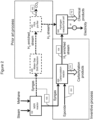
- FIG. 1 A schematic of a process of the invention is shown in Figure 1 .
- the process begins with a gasifier unit which converts biomass, coal or other carbonaceous feedstocks into a synthesis gas stream 101.
- Gas stream 101 is directed to carbonylation reactor 200 where it is brought into contact with an epoxide (fed to reactor 200 via stream 201).
- the epoxide and carbon monoxide in the syngas stream react in the presence of a carbonylation catalyst to produce epoxide carbonylation products which are ultimately recovered via product stream P1.
- a hydrogen-enriched syngas stream 102 is recovered from reactor 200 and fed to reactor 300 where it is consumed as the feedstock for Fischer Tropsch synthesis yielding FT products via product stream P2.
- Figure 1 also illustrates the prior art process wherein water gas shift reactor 400 is utilized in place of carbonylation reactor 200. In this case, CO in the synthesis gas stream 101 is converted to CO 2 and hydrogen in the usual fashion with CO 2 exiting via waste stream W1.
- the present invention provides integrated processes for the conversion of syngas to hydrogen substantially free of carbon monoxide.
- such methods comprise the steps of:
- the present invention provides integrated processes for the conversion of methane into hydrogen.
- such methods comprise the steps of:
- Figure 2 shows a schematic of one embodiment of such a process.
- a methane steam reforming reactor 102 which is fed with steam and methane to produce syngas stream 103.
- Gas stream 103 is fed to carbonylation reactor 200 along with epoxide (via stream 201).
- the epoxide and carbon monoxide react in the presence of a carbonylation catalyst in reactor 200 to produce product stream P1 containing carbonylation products and a hydrogen-enriched gas stream 104.
- the hydrogen enriched gas stream 104 can be used for known purposes requiring hydrogen or hydrogen-rich syngas.
- gas stream 104 can optionally be fed to a chemical reactor which consumes hydrogen to make chemical products (e.g.
- carbonylation reactor 200 is operated under conditions such that essentially all of the carbon monoxide in syngas stream 103 is consumed, in which case stream 104 consists of substantially pure hydrogen.
- stream 104 consists of substantially pure hydrogen.
- the present invention provides an integrated process for the production of hydrogen and commodity chemicals derived from beta lactone carbonylation.
- such methods comprise the steps of:
- FIG 3 shows a schematic of a process according to this embodiment.
- Syngas reactor 103 which is fed with appropriate inputs and produces syngas stream 103.
- Gas stream 103 is fed to carbonylation reactor 200 along with a beta lactone (via stream 202).
- the lactone and carbon monoxide react in the presence of a carbonylation catalyst in reactor 202 to produce a succinic anhydride product along with gas stream 104 which is enriched in hydrogen relative to stream 103.
- the succinic anhydride can optionally be fed to hydrogenation reactor 501 along with the hydrogen stream 104 and contacted under hydrogenation conditions to produce tetrahydrofuran (THF), 1,4 butanediol (BDO), or gamma butyrolactone (GBL).
- THF tetrahydrofuran
- BDO 1,4 butanediol
- GBL gamma butyrolactone
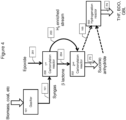
- FIG 4 shows a schematic of another embodiment of the invention where the syngas input is upgraded twice by utilizing two carbonylation stages.
- syngas is produced in gasifier 100 in the usual fashion, the output syngas stream 101 is directed to first carbonylation reactor 200 where it is contacted with an epoxide and a carbonylation catalyst to produce a beta lactone product and hydrogen enriched synthesis gas stream 103.
- Both the beta lactone and the gas stream 103 are directed to a 2 nd carbonylation reactor 202 where they are further reacted in the presence of a carbonylation catalyst (which may be the same or different from the catalyst in the 1 st carbonylation reactor) to produce a succinic anhydride product stream P3 along with a hydrogen stream 105.
- these streams may optionally be combined in hydrogenation reactor 502 where the anhydride reacts with the hydrogen to produce a product stream P4 containing products selected from the group consisting of THF, BDO and GBL.
- Syngas production methods include gasification of coal or biomass and steam reforming of methane or other gaseous or liquid hydrocarbons and similar processes.
- the syngas stream fed to the carbonylation reactor in the methods described herein is characterized in that it has an H 2 to CO ratio between about 0.4:1 and about 1.5:1. Such a range is typical for syngas from solids gasification which tends to produce carbon rich syngas.
- the syngas stream fed to the carbonylation reactor is characterized in that it has an H 2 to CO ratio of 0.4:1, about 0.5:1, about 0.6:1, about 0.7:1, about 0.8:1, about 1:1, about 1.2:1, about 1.4:1, or about 1.5:1.
- the syngas stream fed to the carbonylation reactor is characterized in that it has an H 2 to CO ratio less than about 1.6:1, less than about 1.5:1, less than about 1.3:1, less than about 1.2:1, less than about 1.1:1, less than about 1:1, less than about 0.8:1, less than about 0.7:1, or less than about 0.6:1.
- the syngas stream fed to the carbonylation reactor in the methods described herein is characterized in that it has an H 2 to CO ratio between about 1.5:1 and about 3:1. Such a range is typical for steam reforming processes utilizing methane or other light aliphatic feedstocks.
- the syngas stream fed to the carbonylation reactor is characterized in that it has an H 2 to CO ratio of 1.5:1, about 1.6:1, about 1.8:1, about 2:1, about 2.4:1, about 2.8:1, or about 3:1.
- the syngas stream fed to the carbonylation reactor is characterized in that it has an H 2 to CO ratio than about 3:1, less than about 2.8:1, less than about 2.5:1, less than about 2.2:1, or less than about 2:1.
- Syngas typically contains varying amounts of CO 2 .
- the CO 2 In many catalytic processes the CO 2 must be removed prior to using the gas. This issue is more acute in processes relying on biomass gasification since the high oxygen content of biobased feedstocks typically produces syngas with high CO 2 content (often 20% or more).
- the presence of CO 2 not only potentially compromises downstream catalytic processes, but its presence in the syngas stream means that any process steps (e.g. compression or desulfurization) performed prior to removal of the CO 2 are less efficient since the CO 2 dilutes the stream and therefore requires higher processing capacity.
- any process steps e.g. compression or desulfurization
- the syngas stream fed to the carbonylation reactor in the methods described herein is characterized in that it contains CO 2 .
- the syngas stream contains between about 1 mole percent and about 30 mole percent CO 2 .
- the syngas stream contains between about 1 mole percent and about 5 mole percent CO 2 , between about 5 mole percent and about 10 mole percent CO 2 , between about 10 mole percent and about 20 mole percent CO 2 , or between about 20 mole percent and about 40 mole percent CO 2 .
- the syngas stream fed to the carbonylation reactor in the methods described herein is characterized in that it contains little or no CO 2 .
- the syngas stream fed to the carbonylation reactor contains less than about 2000 ppm, less than about 1000 ppm, less than about 500 ppm, less than about 200 ppm, less than about 100 ppm, less than about 50 ppm, less than about 25 ppm, or less than about 10 ppm CO 2 .
- the syngas stream fed to the carbonylation reactor is substantially free of sulfur.
- the syngas stream fed to the carbonylation reactor contains less than about 500 ppm, less than 200 ppm, less than about 100 ppm, less than about 50 ppm, less than about 40 ppm, or less than about 25 ppm sulfur.
- the syngas stream fed to the carbonylation reactor contains less than about 10 ppm, less than about 5 ppm, less than about 2 ppm, less than about 1 ppm, or less than about 0.5 ppm sulfur. In certain embodiments, the syngas stream fed to the carbonylation reactor contains less than about 0.2 ppm, less than about 0.1 ppm, less than about 0.05 ppm, less than about 0.01 ppm, or less than about 0.001 ppm sulfur.
- syngas is a mature technology which is capable of operating with a diverse array of feedstocks and that numerous process conditions and catalysts for production of syngas are known in the art. Likewise apparatus and methods for the handling and purification of syngas are well known. As such, the selection of appropriate feedstocks and process conditions to produce syngas suitable for practice of the inventive methods described herein will be apparent to the skilled artisan based on the teachings and disclosure herein. The exact choice of feedstocks and processing methods is likely to depend on the local availability of materials and prevailing economic conditions.
- the inventive methods comprise a step of contacting the syngas stream with a carbonylation catalyst in the presence of an epoxide or a beta lactone.
- Catalysts, conditions and processes for these carbonylation reactions are well known in the art and can be employed in the methods described herein.
- epoxide For embodiments where the syngas is reacted with an epoxide, no particular constraints are placed on the identity of the epoxide. Any epoxide or mixture of epoxides may be used, though as a general principle those epoxides lacking other reactive functional groups (for example protic functional groups) are less desirable since there is an increased likelihood for side reactions with use of such substrates. Also, given the large scale on which syngas production is typically practiced, there is a strong preference to utilize epoxides that are available in bulk as commodity chemicals.
- the epoxide is selected from the group consisting of: ethylene oxide, propylene oxide, butylene oxide, 1-hexene oxide, epichlorohydrin, and esters or ethers of glycidol. In certain embodiments, the epoxide is selected from the group consisting of ethylene oxide and propylene oxide. In certain embodiments the epoxide is ethylene oxide. In certain embodiments the epoxide is propylene oxide.
- the catalytic insertion of CO into epoxides is known to yield several possible products the identity of which is influenced by the particular catalyst utilized and the reaction conditions employed.
- the product of the carbonylation is selected from the group consisting of: a beta lactone, a 3-hyroxy propionic acid, a succinic anhydride (via double carbonylation) and polyesters comprising the alternating copolymer of the epoxide and CO.
- carbonylation results in the formation of a beta lactone by the general reaction:
- Examples include:
- Suitable catalysts and reaction conditions for effecting this reaction are disclosed in published PCT applications: WO2003/050154 , WO2004/089923 , WO2012/158573 , WO2010/118128 , WO2013/063191 , and WO2014/008232 ; in US patents 5,359,081 and 5,310,948 and in the publication " Synthesis of beta-Lactones" J. AM. CHEM. SOC., vol. 124, 2002, pages 1174-1175 .
- carbonylation results in the formation of a polyester by the general reaction:
- Examples include propylene oxide + CO ⁇ poly(3-hydroxybutyrate) and ethylene oxide + CO ⁇ poly propiolactone
- methods of the present invention include a step of carbonylative polymerization
- the methods utilize catalysts and/or process conditions disclosed in published PCT applications WO2003/074585A1 , WO2011/063309 , or WO2014004858 .
- epoxide carbonylation results in the formation of a succinic anhydride by insertion of two molecules of CO.
- Such processes conform to the general reaction scheme:
- Examples include propylene oxide + CO ⁇ methylsuccinic anhydride and ethylene oxide + CO ⁇ succinic anhydride
- methods of the present invention include double carbonylation of epoxides
- the methods utilize catalysts and/or process conditions disclosed in published PCT applications WO2012/030619 and WO2013/122905 , and US patent 8,481,756 .
- certain embodiments of the present invention comprise a step of contacting a syngas stream with a beta lactone in the presence of a carbonylation catalyst to yield a succinic anhydride derivative along with a hydrogen-enriched syngas stream.
- Such processes conform to the general reaction scheme:
- carbonylation catalysts utilized in the present methods comprise metal carbonyl complexes.
- the catalysts comprise metal carbonyl complexes in combination with one or more other components such as amines, nitrogen-containing heterocycles, Lewis acids, or metal complexes.
- a carbonylation catalyst utilized in methods herein comprises a metal carbonyl
- a single metal carbonyl compound is provided, but in certain embodiments mixtures of two or more metal carbonyl compounds are provided.
- a provided metal carbonyl compound “comprises”, e.g., a neutral metal carbonyl compound, it is understood that the provided metal carbonyl compound can be a single neutral metal carbonyl compound, or a neutral metal carbonyl compound in combination with one or more additional metal carbonyl compounds.
- the provided metal carbonyl compound is capable of ring-opening an epoxide and facilitating the insertion of CO into the resulting metal carbon bond.
- Metal carbonyl compounds with this reactivity are well known in the art and are used for laboratory experimentation as well as in industrial processes such as hydroformylation. Additional description of suitable metal carbonyl compounds is provided in Appendix I at the end of this specification.
- carbonylation catalysts useful for practicing methods of the present invention may include one or more additional components in combination with a metal carbonyl compound.
- additional components comprise organic bases such as optionally substituted amines, guanidines, or amidines and the like.
- additional components comprise heterocycles such as optionally substituted pyridines, pyrimidines, imidazoles, and the like.
- additional components comprise neutral Lewis acids such as boranes, aluminum alkyls, TiCl 4 , BF 3 , and the like.
- such additional components comprise cationic Lewis acids. Additional description of suitable cationic Lewis acids is provided in Appendix II at the end of this specification.
- the carbonylation catalysts employed in methods of the present invention comprise heterogeneous carbonylation catalysts.
- such heterogeneous catalysts comprise supported metal carbonyl compounds.
- carbonylation catalysts and processes disclosed in WO 2013/063191 may be adapted for use in methods of the present invention.
- the methods of the present invention provide no specific limitations on the reaction conditions utilized in the carbonylation step.
- the carbonylation reaction will typically be performed in a continuous or semi-continuous format.
- the carbonylation reaction may be conducted in any suitable reactor format, such as plug flow reactors (PFRs), continuous stirred-tank reactors (CSTRs) or any hybrid or combination of these.
- PFRs plug flow reactors
- CSTRs continuous stirred-tank reactors
- the carbonylation stage of the methods herein is often described as a single step, it may in fact occur in multiple steps such as within a series of continuous stirred tank reactors or a plug flow reactor fed by one or more CSTRs.
- Continuous operation requires additional processing steps and suitable apparatus to continuously feed reactants, catalysts, solvents and the like as well as provision to continuously withdraw carbonylation products, recycle the catalyst and solvents, purge impurities, and the like.
- a detailed description of such processes and appratus is outside the scope of this disclosure since the requisite knowledge is readily available to the skilled artisan.
- the continuous carbonylation processes described in published PCT applications WO 2010/118128 WO 2012/030619 WO 2013/063191 WO 2013/122905 and WO 2014008232 are suitable for practicing certain embodiments of the methods described herein.
- the syngas will typically be fed to the carbonylation reactor at a superatmospheric pressure. No particular limits are placed on the pressure utilized---as with similar processes the chosen operating pressure will require balance of the reaction rate and selectivity at a given pressure with the cost of the equipment required to operate at that pressure.
- the syngas is provided to the carbonylation reactor at a pressure from about 50 psi to about 5,000 psi. If the source of the synthesis gas provides a gas stream at a pressure lower than the desired pressure in the carbonylation step, then the methods will include an additional step of pressurizing the syngas stream prior to contacting it with the epoxide or beta lactone.
- the carbonylation reactor is integrated with a syngas production source that outputs a pressurized source of syngas and the carbonylation reactor is run at a pressure substantially the same as the output from the syngas source.
- the syngas is provided to the carbonylation reactor at a pressure sufficient to afford a carbon monoxide partial pressure within the reactor from about 0.5 atmospheres to about 350 atmospheres.
- the carbon monoxide partial pressure ranges from about 5 to about 100 atmospheres.
- the carbon monoxide partial pressure ranges from about 10 to about 50 atmospheres, from about 5 to about 20 atmospheres, from about 1 to about 10 atmospheres, or from about 25 to about 50 atmospheres.
- carbon monoxide partial pressure within the carbonylation reactor ranges from about 0.5 atmospheres to about 10 atmospheres.
- a carbon monoxide partial pressure within the carbonylation reactor ranges from about 0.5 to about 50, from about 1 to about 10, from about 1 to about 50, from about 1 to about 100, from about 10 to about 50, from about 10 to about 100, from about 50 to about 100, from about 50 to about 200, from about 100 to about 200, from about 100 to about 250, from about 200 to about 300, or from about 200 to about 500 atmospheres.
- a carbon monoxide partial pressure within the carbonylation reactor is about 10 atmospheres.
- the step of contacting the syngas stream with epoxide or beta lactone in the presence of a carbonylation catalyst is performed under conditions such that the hydrogen-to-carbon monoxide ratio in the upgraded syngas stream exiting the reactor is maintained within a specific range.
- the desired range is dependent on the identity of the downstream process in which the upgraded gas stream is to be used.
- methods of the present invention are characterized in that the upgraded syngas stream obtained from the carbonylation reactor has an H 2 to CO ratio above about 2:1.
- the upgraded syngas stream obtained from the carbonylation reactor has an H 2 to CO ratio above about 2.1:1, above about 2.2:1, above about 2.3:1, above about 2.4:1, above about 2.1:1, above about 2.1:1, above about 2.1:1, above about 2.1:1, above about 2.5:1, above about 2.8:1, above about 3:1, above about 3.5:1, above about 4:1, above about 5:1, or above about 10:1.
- the upgraded syngas stream obtained from the carbonylation reactor has an H 2 to CO ratio above about 2.1:1, above about 10:1, above about 20:1, above about 50:1, above about 100:1, above about 200:1, above about 500:1, or above about 1000:1.
- methods of the present invention are characterized in that the upgraded syngas stream obtained from the carbonylation reactor has an H 2 to CO ratio of about 2:1.
- the upgraded syngas stream obtained from the carbonylation reactor has an H 2 to CO ratio of about 2.1:1, about 2.2:1, about 2.5:1, about 3:1, about 4:1, about 5:1, or about 10:1.
- methods of the present invention are characterized in that the upgraded syngas stream obtained from the carbonylation reactor is essentially free of CO.
- the upgraded syngas stream obtained from the carbonylation reactor contains less than 2%, less than 1%, less than 0.5%, less than 0.2%, or less than 0.1% CO.
- the upgraded syngas stream obtained from the carbonylation reactor contains less than 500 ppm, less than 400 ppm, less than 200 ppm, less than 100 ppm, less than 50 ppm, less than 25 ppm, less than 10 ppm, less than 5 ppm, or less than 1 ppm CO.
- the upgraded syngas stream from the carbonylation reactor may be recovered and handled by any suitable means.
- the upgraded syngas stream will exit the carbonylation reactor via a gas vent, a back-pressure regulator or an outlet port which may include provision for liquids separation, recompression, scrubbing, drying, chilling or heating, and the like as is typically performed in industry.
- the carbonylation reactor is operated at a higher pressure than the downstream process fed with the upgraded syngas stream that exits the carbonylation reactor. This has the advantage of not requiring recompression of the upgraded syngas stream. Nonetheless, this is not always possible if the downstream process is one that requires high hydrogen partial pressures.
- the methods of the present invention will include a step of compressing the upgraded syngas stream prior to utilizing it in next process.
- the upgraded syngas stream exiting the carbonylation reactor will contain impurities that must be removed prior to utilization of the upgraded stream.
- the methods necessarily require an intermediate step to scrub CO 2 from the upgraded stream.
- Such methods are well known in the art and may include membrane separation, pressure swing adsorption, chemical adsorption, cryotreatment and the like.
- volatile residues from the carbonylation reactor may be present in the upgraded syngas stream. Such residues may include solvent, unreacted epoxide, carbonylation side products such as acetaldehyde, volatile metal carbonyl residues and the like.
- the upgraded syngas stream is treated to remove such impurities prior to utilization of the stream in a downstream process.
- the downstream process is tolerant of such residues, it may be preferable to leave the impurities in the upgraded syngas stream and purge them at a later stage in the process.
- a feature of some methods of the present invention is the use of the upgraded syngas stream in a downstream process.
- the carbonylation stage of the methods increases the H 2 :CO ratio in the stream to a range that is desirable for the downstream process.
- the downstream process comprises Fischer-Tropsch (FT) synthesis.
- FT technology is a mature field and appropriate operating conditions, apparatus, catalysts and product isolation techniques for FT processes are well known in the art. The skilled artisan utilizing the wealth of knowledge available in the FT field, together with the teachings herein, will readily apprehend suitable configurations for the FT step described in methods herein. An overview of FT technology is provided in Advance Catalysis, Volume 186, pp 3-12 .
- the downstream process in which the upgraded syngas stream is utilized is an FT gas-to-liquid process for the production of fuels and/or chemicals such as olefins and/or alcohols.
- the downstream process in which the upgraded syngas stream is utilized is a Low Temperature FT synthesis (LTFT).
- the downstream process in which the upgraded syngas stream is utilized is a High Temperature FT synthesis (HTFT).
- the Fischer Tropsch reactor in which the upgraded syngas stream is utilized may be of any known configuration. Suitable configurations include multitubular fixed bed reactors, entrained flow reactors, slurry reactors, bubble reactors, fluidized bed reactors, and riser reactors. Likewise, any known FT catalyst system may be employed in the present methods.
- Suitable catalysts include, but are not limited to: cobalt, iron, ruthenium, nickel, and any combination of two or more of these.
- the FT catalysts may include additional components as are known in the art including alkaki metals, copper, manganese, lanthanide metals or compounds, actinide metals or compounds, alumina, zirconia, and the like.
- the downstream process in which the upgraded syngas stream is utilized is a process for the production of methane.
- Suitable catalysts and conditions for methane synthesis from syngas are known in the art and the skilled artisan utilizing the teachings herein with the known art will apprehend suitable conditions, apparatus and catalyst systems to effect the conversion of the upgraded syngas stream to methane.
- the downstream process in which the upgraded syngas stream is utilized is a process for the production of methanol.
- Suitable catalysts and conditions for methanol synthesis from syngas are known in the art and the skilled artisan utilizing the teachings herein with the known art will apprehend suitable conditions, apparatus and catalyst systems to effect the conversion of the upgraded syngas stream to methanol.
- the downstream process in which the upgraded syngas stream is utilized is a process for the production of dimethyl ether.
- Suitable catalysts and conditions for methanol synthesis from syngas are known in the art and the skilled artisan utilizing the teachings herein with the known art will apprehend suitable conditions, apparatus and catalyst systems to effect the conversion of the upgraded syngas stream to methanol.
- the integrated upgraded syngas stream is utilized as a fuel.
- the upgraded syngas stream can be fed to a fuel cell, combusted in a turbine or boiler, or used to fuel an internal combustion engine. Therefore, depending on the process utilized, processes of the present invention may provide an output comprising steam, thermal energy, electrical energy, or mechanical energy. Due to the higher H 2 to CO ratio in the upgraded gas stream, the upgraded stream may have a higher energy content than the starting syngas stream (it will be appreciated that whether or not this is the case will depend on the amount of other gasses such as CO 2 that may also be present in the streams).
- the present invention encompasses methods for the integrated production of chemicals from syngas derived from gasification.
- such processes produce as final outputs, beta propiolactone or polypropiolactone (or derivatives of these such as acrylic acid, acrylate esters or superabsorbent polymers) by ethylene oxide carbonylation and FT products such as liquid fuels and related chemicals.
- methods of the present invention comprise the steps of:
- step (a) of the method above comprises coal gasification.
- such methods are characterized in that the syngas stream in step (a) has an H 2 to CO ratio of from about 0.6:1 to about 0.8:1.
- such methods are characterized in that the syngas stream in step (a) has an H 2 to CO ratio of about 0.7:1.
- step (a) of the method above comprises biomass gasification.
- the biomass is selected from the group consisting of: corn stover, sugar cane bagasse, switch grass, municipal solid waste, and wood waste.
- such methods are characterized in that the syngas stream in step (a) has an H2 to CO ratio of from about 0.4:1 to about 0.8:1.
- such methods are characterized in that the syngas stream in step (a) has an H 2 to CO ratio of about 0.6:1.
- such methods are characterized in that the syngas stream in step (a) has an H 2 to CO ratio of about 0.5:1.
- the method above comprises an additional step of compressing the syngas stream prior to feeding it to the carbonylation reactor. In certain embodiments, the method above comprises an additional step of removing nitrogenous and sulfurous compounds from the syngas stream prior to feeding it to the carbonylation reactor. In certain embodiments, the method above comprises an additional step of drying the syngas stream prior to feeding it to the carbonylation reactor. In certain embodiments, the method above comprises an additional step of removing CO 2 from the syngas stream prior to feeding it to the carbonylation reactor. In certain embodiments, the method above is characterized in that CO 2 is not removed from the syngas stream prior to feeding it to the carbonylation reactor.
- the product of step (b) of the method above comprises beta propiolactone and the method comprises an additional step of converting the beta propiolactone to acrylic acid, or acrylate esters.
- the product of step (b) of the method above comprises beta propiolactone and the method comprises an additional step of converting the beta propiolactone to succinic anhydride.
- such methods comprise an additional step of converting the succinic anhydride to a product selected from the group consisting of: succinic acid, 1,4 butanediol, tetrahydrofuran, gamma butyrolactone, or any combination of two or more of these.
- the conversion is conducted in a second carbonylation reactor.
- the second carbonylation reactor is also fed with the syngas stream produced in step (a) where it is contacted with the beta propiolactone in the presence of a carbonylation catalyst to deplete the syngas of at least a portion of its CO content and provide succinic anhydride as a second carbonylation product.
- a second upgraded syngas stream characterized in that it has a higher H 2 to CO ratio that the syngas stream produced in step (a) is recovered from the second carbonylation reactor.
- the first and second upgraded syngas streams are combined and utilized in step (d).
- the conversion is conducted in a second carbonylation reactor which is fed with the upgraded syngas stream produced in step (b) where it is contacted with the beta propiolactone in the presence of a carbonylation catalyst to further deplete the upgraded syngas stream of its CO thereby providing a twice-upgraded syngas stream having a higher H 2 to CO ratio than the upgraded syngas stream from step (c).
- the method comprises an additional step of recovering the twice upgraded syngas stream from the second carbonylation reactor and feeding it to the FT reactor in step (d).
- the product of step (b) of the method above comprises polypropiolactone and the method comprises an additional step of pyrolyzing the polypropiolactone to produce acrylic acid.
- the carbonylation catalyst in step (b) of the method above comprises a metal carbonyl compound.
- the metal carbonyl compound is selected from any of those described in Appendix I.
- the metal carbonyl compound comprises a cobalt carbonyl compound.
- metal carbonyl compound comprises a rhodium carbonyl compound.
- the carbonylation catalyst in step (b) of the method above comprises a metal carbonyl compound in combination with another component selected from the group consisting of: organic bases, neutral Lewis acids, and cationic Lewis acids.
- the carbonylation catalyst in step (b) of the method above comprises an anionic cobalt carbonyl compound in combination with a cationic Lewis acid.
- such cationic Lewis acids comprise metal ligand complexes.
- the metal ligand complexes comprise any complex described in Appendix II.
- such metal ligand complexes comprise a metal atom coordinated to a multidentate ligand.
- such metal ligand complexes comprise an aluminum or chromium atom.
- such metal ligand complexes comprise a porphyrin or salen ligand.
- the carbonylation catalyst in step (b) of the method above comprises any combination of a metal carbonyl compound from Appendix I and a metal complex from Appendix II.
- step (c) in the method above is characterized in that the upgraded syngas stream recovered has an H 2 to CO ratio between about 1.2:1 and about 3:1. In certain embodiments, the upgraded syngas stream recovered has an H 2 to CO ratio between about 1.6:1 and about 2.8:1, between about 1.8:1 and about 2.6:1, between about 1.8:1 and about 2.2:1, or between about 1.9:1 and about 2.1:1. In certain embodiments, the upgraded syngas stream recovered has an H 2 to CO ratio of about 2:1.
- the method above is characterized in that the reaction pressure in the carbonylation reactor is higher than the reaction pressure in the FT reactor.
- the upgraded syngas stream is fed to the FT reactor without an intermediate compression step.
- the upgraded syngas stream exits the carbonylation reactor via a backpressure regulator and is fed directly to the FT reactor.
- the method above is characterized in that the upgraded syngas stream is treated to remove one or more components prior to feeding the stream to the FT reactor. In certain embodiments, the upgraded syngas stream is treated to remove residual solvent prior to feeding the stream to the FT reactor. In certain embodiments, the upgraded syngas stream is treated to remove residual epoxide prior to feeding the stream to the FT reactor. In certain embodiments, the upgraded syngas stream is treated to remove carbon dioxide prior to feeding the stream to the FT reactor.
- the method above is characterized in that the FT reactor in step (d) is a Low Temperature FT synthesis (LTFT) reactor.
- the downstream process in which the upgraded syngas stream is utilized is a High Temperature FT synthesis (HTFT) reactor.
- the method above is characterized in that the overall process has a carbon efficiency greater than 50%. That is, at least 50% of the carbon atoms fed to the gasification reactor are contained in the combined products from the EO carbonylation reactor and the FT reactor. In certain embodiments, the method is characterized in that the overall process has a carbon efficiency greater than 55%, greater than 60%, greater than 62%, greater than 63%, greater than 64%, or greater than 65%. In certain embodiments, the method is characterized in that the overall process has a carbon efficiency greater than 66%, greater than 67%, greater than 68%, greater than 69%, or greater than 70%. In certain embodiments, the method is characterized in that the overall process has a carbon efficiency between about 50% and about 60%.
- the method is characterized in that the overall process has a carbon efficiency between about 55% and about 60%. In certain embodiments, the method is characterized in that the overall process has a carbon efficiency between about 60% and about 64%. In certain embodiments, the method is characterized in that the overall process has a carbon efficiency between about 64% and about 67%. In certain embodiments, the method is characterized in that the overall process has a carbon efficiency between about 67% and about 70%.
- the method above is characterized in that the FT process in step (d) is fed with syngas from the gasification process in step (a) without utilizing the water gas shift reaction to increase its H 2 to CO ratio.
- the present invention encompasses methods for the integrated production of chemicals and purified hydrogen.
- such processes produce as final outputs, beta propiolactone or polypropiolactone (or derivatives of these such as acrylic acid, acrylate esters or superabsorbent polymers) by ethylene oxide carbonylation and hydrogen or products of hydrogen such as electrical energy, ammonia, or hydrogenated chemicals.
- methods of the present invention comprise the steps of:
- step (a) of the method above comprises steam methane reforming.
- such methods are characterized in that the syngas stream in step (a) has an H 2 to CO ratio of from about 2.8:1 to about 3.2:1.
- such methods are characterized in that the syngas stream in step (a) has an H 2 to CO ratio of about 3:1.
- the method above comprises an additional step of compressing the syngas stream prior to feeding it to the carbonylation reactor. In certain embodiments, the method above comprises an additional step of removing sulfurous compounds from the syngas stream prior to feeding it to the carbonylation reactor. In certain embodiments, the method above comprises an additional step of drying the syngas stream prior to feeding it to the carbonylation reactor. In certain embodiments, the method above comprises an additional step of removing CO 2 from the syngas stream prior to feeding it to the carbonylation reactor. In certain embodiments, the method above is characterized in that CO 2 is not removed from the syngas stream prior to feeding it to the carbonylation reactor.
- the product of step (b) of the method above comprises beta propiolactone and the method comprises an additional step of converting the beta propiolactone to acrylic acid, or acrylate esters.
- the product of step (b) of the method above comprises polypropiolactone and the method comprises an additional step of pyrolyzing the polypropiolactone to produce acrylic acid.
- the carbonylation catalyst in step (b) of the method above comprises a metal carbonyl compound.
- the metal carbonyl compound is selected from any of those described in Appendix I.
- the metal carbonyl compound comprises a cobalt carbonyl compound.
- metal carbonyl compound comprises a rhodium carbonyl compound.
- the carbonylation catalyst in step (b) of the method above comprises a metal carbonyl compound in combination with another component selected from the group consisting of: organic bases, neutral Lewis acids, and cationic Lewis acids.
- the carbonylation catalyst in step (b) of the method above comprises an anionic cobalt carbonyl compound in combination with a cationic Lewis acid.
- such cationic Lewis acids comprise metal ligand complexes.
- the metal ligand complexes comprise any complex described in Appendix II.
- such metal ligand complexes comprise a metal atom coordinated to a multidentate ligand.
- such metal ligand complexes comprise an aluminum or chromium atom.
- such metal ligand complexes comprise a porphyrin or salen ligand.
- the carbonylation catalyst in step (b) of the method above comprises any combination of a metal carbonyl compound from Appendix I and a metal complex from Appendix II.
- the method above is characterized in that the hydrogen stream recovered in step (c) has an H 2 to CO ratio between about 4:1 and about 1,000:1.
- the upgraded syngas stream recovered has an H 2 to CO ratio between about 5:1 and about 10:1, between about 10:1 and about 50:1, between about 50:1 and about 100:1, or between about 100:1 and about 1000:1.
- the hydrogen stream contains essentially no CO.
- the method above is characterized in that the hydrogen stream is treated to remove one or more components prior to use. In certain embodiments, the hydrogen stream is treated to remove residual solvent prior to use. In certain embodiments, the hydrogen stream is treated to remove residual epoxide prior to use. In certain embodiments, the hydrogen stream is treated to remove carbon dioxide prior to use.
- the method above is characterized in that the hydrogen stream is utilized on site for a process selected from: ammonia synthesis, powering a fuel cell, hydrogenation, and any combination of two or more of these.
- the hydrogen is compressed and distributed for use elsewhere.
- the method above is characterized in that the overall process has a carbon efficiency greater than 50%. That is, at least 50% of the carbon atoms fed to the steam reforming reactor are contained in products from the EO carbonylation reactor. In certain embodiments, the method is characterized in that the overall process has a carbon efficiency greater than 55%, greater than 60%, greater than 62%, greater than 63%, greater than 64%, or greater than 65%. In certain embodiments, the method is characterized in that the overall process has a carbon efficiency greater than 66%, greater than 67%, greater than 68%, greater than 69%, or greater than 70%. In certain embodiments, the method is characterized in that the overall process has a carbon efficiency between about 50% and about 60%.
- the method is characterized in that the overall process has a carbon efficiency between about 55% and about 60%. In certain embodiments, the method is characterized in that the overall process has a carbon efficiency between about 60% and about 64%. In certain embodiments, the method is characterized in that the overall process has a carbon efficiency between about 64% and about 67%. In certain embodiments, the method is characterized in that the overall process has a carbon efficiency between about 67% and about 70%.
- the present invention encompasses methods for the integrated production of C4 chemicals and hydrogen.
- such processes produce as final outputs, succinic anhydride (or derivatives of succinic anhydride such as succinic acid, 1,4-butanediol, THF and gamma butyrolactone) and hydrogen or products of hydrogen such as electrical energy, ammonia, or hydrogenated chemicals.
- succinic anhydride or derivatives of succinic anhydride such as succinic acid, 1,4-butanediol, THF and gamma butyrolactone
- hydrogen or products of hydrogen such as electrical energy, ammonia, or hydrogenated chemicals.
- methods of the present invention comprise the steps of:
- step (a) of the method above comprises steam methane reforming.
- such methods are characterized in that the syngas stream in step (a) has an H 2 to CO ratio of from about 2.8:1 to about 3.2:1.
- such methods are characterized in that the syngas stream in step (a) has an H 2 to CO ratio of about 3:1.
- the method above comprises an additional step of compressing the syngas stream prior to feeding it to the carbonylation reactor. In certain embodiments, the method above comprises an additional step of removing sulfurous compounds from the syngas stream prior to feeding it to the carbonylation reactor. In certain embodiments, the method above comprises an additional step of drying the syngas stream prior to feeding it to the carbonylation reactor. In certain embodiments, the method above comprises an additional step of removing CO 2 from the syngas stream prior to feeding it to the carbonylation reactor. In certain embodiments, the method above is characterized in that CO 2 is not removed from the syngas stream prior to feeding it to the carbonylation reactor.
- step (b) of the method above comprises double carbonylation of ethylene oxide to produce the succinic anhydride.
- the double carbonylation proceeds in the presence of a single carbonylation catalyst, while in other embodiments, the double carbonylation proceeds with the aid of two or more separate catalysts.
- the double carbonylation of ethylene oxide occurs in a single reactor, while in other embodiments, the two carbonylation steps occur in the two or more reactors.
- the utilization of two reactors is advantageous in certain embodiments, because of the kinetics of the two carbonylation steps.
- carbonylation of ethylene oxide to produce beta lactones is zero order in epoxide concentration (i.e. the rate of EO conversion is independent of EO concentration. Therefore, it is believed that a continuous EO carbonylation reactor can be operated efficiently under steady state conditions and maintain a low concentration of EO in the product stream.
- the carbonylation of beta lactones is not zero order in lactone and the reaction rate is sensitive to lactone concentration. Therefore, to achieve high conversion in carbonylation of lactones it is believed this step is best performed under plug flow conditions so that a significant proportion of the lactone is consumed. Therefore, in certain embodiments of the method described above, the conversion of ethylene oxide to succinic anhydride occurs in two or more reactors. In certain embodiments, the reactors are operated under different conditions to maximize the efficiency of each of the two carbonylation steps. In certain embodiments ethylene oxide is contacted with the syngas stream in a first carbonylation reactor to provide beta propiolactone as an intermediate product which is fed to a second carbonylation reactor where it is converted to succinic anhydride.
- the first carbonylation reactor is a steady state reactor.
- the second reactor is a plug flow reactor.
- the first carbonylation reactor is a steady state reactor and the second reactor is a plug flow reactor.
- the second carbonylation reactor is fed with an upgraded syngas stream recovered from the first carbonylation reactor where the upgraded syngas stream has a higher H 2 to CO ratio than the syngas stream produced in step (a).
- each of two carbonylation reactors is fed with the syngas stream from step (a).
- a hydrogen stream is obtained from each of the carbonylation reactors.
- multiple hydrogen streams are obtained from two or more reactors, they are combined.
- each of the streams is used separately.
- the carbonylation catalyst in step (b) of the method above comprises a metal carbonyl compound.
- the metal carbonyl compound is selected from any of those described in Appendix I.
- the metal carbonyl compound comprises a cobalt carbonyl compound.
- metal carbonyl compound comprises a rhodium carbonyl compound.
- the carbonylation catalyst in step (b) of the method above comprises a metal carbonyl compound in combination with another component selected from the group consisting of: organic bases, neutral Lewis acids, and cationic Lewis acids.
- the carbonylation catalyst in step (b) of the method above comprises an anionic cobalt carbonyl compound in combination with a cationic Lewis acid.
- such cationic Lewis acids comprise metal ligand complexes.
- the metal ligand complexes comprise any complex described in Appendix II.
- such metal ligand complexes comprise a metal atom coordinated to a multidentate ligand.
- such metal ligand complexes comprise an aluminum or chromium atom.
- such metal ligand complexes comprise a porphyrin or salen ligand.
- the carbonylation catalyst in step (b) of the method above comprises any combination of a metal carbonyl compound from Appendix I and a metal complex from Appendix II.
- the method above is characterized in that the hydrogen stream recovered in step (c) has an H 2 to CO ratio between about 4:1 and about 1,000:1.
- the upgraded syngas stream recovered has an H 2 to CO ratio between about 5:1 and about 10:1, between about 10:1 and about 50:1, between about 50:1 and about 100:1, or between about 100:1 and about 1000:1.
- the hydrogen stream contains essentially no CO.
- the method above is characterized in that the hydrogen stream is treated to remove one or more components prior to use. In certain embodiments, the hydrogen stream is treated to remove residual solvent prior to use. In certain embodiments, the hydrogen stream is treated to remove residual epoxide prior to use. In certain embodiments, the hydrogen stream is treated to remove carbon dioxide prior to use.
- the method above is characterized in that the hydrogen stream is utilized on site for a process selected from: ammonia synthesis, powering a fuel cell, hydrogenation, and any combination of two or more of these.
- the hydrogen is compressed and distributed for use elsewhere.
- the hydrogen stream is utilized for hydrogenation of the succinic anhydride produced in step (b).
- the hydrogenation of succinic anhydride from step (b) with the hydrogen stream from step (c) produces 1,4-butanediol.
- the hydrogenation of succinic anhydride from step (b) with the hydrogen stream from step (c) produces THF.
- the hydrogenation of succinic anhydride from step (b) with the hydrogen stream from step (c) produces gamma butyrolactone.
- the method above is characterized in that the overall process has a carbon efficiency greater than 50%. That is, at least 50% of the carbon atoms fed to the steam reforming reactor are contained in products from the EO carbonylation reactor. In certain embodiments, the method is characterized in that the overall process has a carbon efficiency greater than 55%, greater than 60%, greater than 62%, greater than 63%, greater than 64%, or greater than 65%. In certain embodiments, the method is characterized in that the overall process has a carbon efficiency greater than 66%, greater than 67%, greater than 68%, greater than 69%, or greater than 70%. In certain embodiments, the method is characterized in that the overall process has a carbon efficiency between about 50% and about 60%.
- the method is characterized in that the overall process has a carbon efficiency between about 55% and about 60%. In certain embodiments, the method is characterized in that the overall process has a carbon efficiency between about 60% and about 64%. In certain embodiments, the method is characterized in that the overall process has a carbon efficiency between about 64% and about 67%. In certain embodiments, the method is characterized in that the overall process has a carbon efficiency between about 67% and about 70%.
- step (b) of the method above comprises two substeps.
- the syngas stream from step (a) is contacted with ethylene oxide to provide beta propiolactone along with an upgraded syngas stream having a higher H 2 to CO ratio than the syngas stream from step (a) and, in a second substep, the beta propiolactone is directed to a second carbonylation reactor where it is contacted with the upgraded syngas stream in the presence of a carbonylation catalyst (which may be the same as or different from the carbonylation catalyst utilized in step the method comprises an additional step of converting the beta propiolactone to succinic anhydride.
- a carbonylation catalyst which may be the same as or different from the carbonylation catalyst utilized in step the method comprises an additional step of converting the beta propiolactone to succinic anhydride.
- such methods comprise an additional step of converting the succinic anhydride to a product selected from the group consisting of: succinic acid, 1,4 butanediol, tetrahydrofuran, gamma butyrolactone, or any combination of two or more of these.
- the conversion is conducted in a second carbonylation reactor.
- the second carbonylation reactor is fed with the upgraded syngas stream produced in step (b) where the upgraded syngas is contacted with the beta propiolactone in the presence of a carbonylation catalyst to further deplete the upgraded syngas stream of its CO thereby providing a twice-upgraded syngas stream having a higher H 2 to CO ratio than the upgraded syngas stream from step (c).
- the present invention encompasses methods for the integrated production of methanol from syngas derived from gasification.
- such processes produce as final outputs, beta propiolactone or polypropiolactone (or derivatives of these such as acrylic acid, acrylate esters or superabsorbent polymers) by ethylene oxide carbonylation and methanol or methanol-derived products such dimethyl ether or olefins via a methanol-to-olefins process (MTO).
- beta propiolactone or polypropiolactone or derivatives of these such as acrylic acid, acrylate esters or superabsorbent polymers
- methods of the present invention comprise the steps of:
- step (a) of the method above comprises coal gasification.
- such methods are characterized in that the syngas stream in step (a) has an H 2 to CO ratio of from about 0.6:1 to about 0.8:1.
- such methods are characterized in that the syngas stream in step (a) has an H 2 to CO ratio of about 0.7:1.
- step (a) of the method above comprises biomass gasification.
- the biomass is selected from the group consisting of: corn stover, sugar cane bagasse, switch grass, municipal solid waste, and wood waste.
- such methods are characterized in that the syngas stream in step (a) has an H 2 to CO ratio of from about 0.4:1 to about 0.8:1.
- such methods are characterized in that the syngas stream in step (a) has an H 2 to CO ratio of about 0.6:1.
- such methods are characterized in that the syngas stream in step (a) has an H 2 to CO ratio of about 0.5:1.
- the method above comprises an additional step of compressing the syngas stream prior to feeding it to the carbonylation reactor. In certain embodiments, the method above comprises an additional step of removing sulfurous compounds from the syngas stream prior to feeding it to the carbonylation reactor. In certain embodiments, the method above comprises an additional step of drying the syngas stream prior to feeding it to the carbonylation reactor. In certain embodiments, the method above comprises an additional step of removing CO 2 from the syngas stream prior to feeding it to the carbonylation reactor. In certain embodiments, the method above is characterized in that CO 2 is not removed from the syngas stream prior to feeding it to the carbonylation reactor.
- the product of step (b) of the method above comprises beta propiolactone and the method comprises an additional step of converting the beta propiolactone to acrylic acid, or acrylate esters.
- the product of step (b) of the method above comprises beta propiolactone and the method comprises an additional step of converting the beta propiolactone to succinic anhydride.
- such methods comprise an additional step of converting the succinic anhydride to a product selected from the group consisting of: succinic acid, 1,4 butanediol, tetrahydrofuran, gamma butyrolactone, or any combination of two or more of these.
- the conversion is conducted in a second carbonylation reactor.
- the second carbonylation reactor is also fed with the syngas stream produced in step (a) where it is contacted with the beta propiolactone in the presence of a carbonylation catalyst to deplete the syngas of at least a portion of its CO content and provide succinic anhydride as a second carbonylation product.
- a second upgraded syngas stream characterized in that it has a higher H 2 to CO ratio that the syngas stream produced in step (a) is recovered from the second carbonylation reactor.
- the first and second upgraded syngas streams are combined and utilized in step (d).
- the conversion is conducted in a second carbonylation reactor which is fed with the upgraded syngas stream produced in step (b) where it is contacted with the beta propiolactone in the presence of a carbonylation catalyst to further deplete the upgraded syngas stream of its CO thereby providing a twice-upgraded syngas stream having a higher H 2 to CO ratio than the upgraded syngas stream from step (c).
- the method comprises an additional step of recovering the twice upgraded syngas stream from the second carbonylation reactor and feeding it to the methanol reactor in step (d).
- the product of step (b) of the method above is polypropiolactone and the method comprises an additional step of pyrolyzing the polypropiolactone to produce acrylic acid.
- the carbonylation catalyst in step (b) of the method above comprises a metal carbonyl compound.
- the metal carbonyl compound is selected from any of those described in Appendix I.
- the metal carbonyl compound comprises a cobalt carbonyl compound.
- metal carbonyl compound comprises a rhodium carbonyl compound.
- the carbonylation catalyst in step (b) of the method above comprises a metal carbonyl compound in combination with another component selected from the group consisting of: organic bases, neutral Lewis acids, and cationic Lewis acids.
- the carbonylation catalyst in step (b) of the method above comprises an anionic cobalt carbonyl compound in combination with a cationic Lewis acid.
- such cationic Lewis acids comprise metal ligand complexes.
- the metal ligand complexes comprise any complex described in Appendix II.
- such metal ligand complexes comprise a metal atom coordinated to a multidentate ligand.
- such metal ligand complexes comprise an aluminum or chromium atom.
- such metal ligand complexes comprise a porphyrin or salen ligand.
- the carbonylation catalyst in step (b) of the method above comprises any combination of a metal carbonyl compound from Appendix I and a metal complex from Appendix II.
- step (c) in the method above is characterized in that the upgraded syngas stream recovered has an H 2 to CO ratio between about 1.2:1 and about 3:1. In certain embodiments, the upgraded syngas stream recovered has an H 2 to CO ratio between about 1.6:1 and about 2.8:1, between about 1.8:1 and about 2.6:1, between about 1.8:1 and about 2.2:1, or between about 1.9:1 and about 2.1:1. In certain embodiments, the upgraded syngas stream recovered has an H 2 to CO ratio of about 2:1.
- the method above is characterized in that the reaction pressure in the carbonylation reactor is higher than the reaction pressure in the methanol synthesis reactor.
- the upgraded syngas stream is fed to the methanol synthesis reactor without an intermediate compression step.
- the upgraded syngas stream exits the carbonylation reactor via a backpressure regulator and is fed directly to the methanol synthesis reactor.
- the method above is characterized in that the upgraded syngas stream is treated to remove one or more components prior to use in the methanol synthesis step.
- the upgraded syngas stream is treated to remove residual solvent prior to feeding the stream to the methanol synthesis reactor.
- the upgraded syngas stream is treated to remove residual epoxide prior to feeding the stream to the methanol synthesis reactor.
- the upgraded syngas stream is treated to remove carbon dioxide prior to feeding the stream to the methanol synthesis reactor.
- the method above is characterized in that the methanol synthesis reactor in step (d) utilizes a catalyst comprising one or more of, copper, alumina and zinc oxide.
- the method above comprises an additional step of feeding methanol produced in the methanol reactor to an MTO reactor where it is converted to olefins.
- the MTO reactor converts the methanol to ethylene, propylene or a mixture of ethylene and propylene.
- the present invention encompasses methods for the production of 100% biomass-derived chemicals.
- such chemicals are the result of the process depicted in Figure 5.
- Figure 5 shows an integrated process for production of acrylic acid from biomass.
- biomass is gasified in Gasifier 101 to produce a syngas stream 101 having an H 2 :CO ratio less than 1 (typically 0.5-0.7:1).
- H 2 :CO ratio less than 1 (typically 0.5-0.7:1).
- Carbonylation Reactor 200 produces beta propiolactone stream 209 along with upgraded syngas stream 210.
- Upgraded syngas stream 210 has an H2 to CO ratio around 2:1 and is therefore suitable for use in methanol synthesis reactor 600.
- the methanol from reactor 600 is fed to MTO reactor 700 where it is converted to ethylene stream 212 (and optionally additional streams such as propylene and higher olefins, not shown).
- Ethylene stream 212 is directed to an oxidation reactor 800 where it is converted to ethylene oxide.
- the resulting ethylene oxide is fed to carbonylation reactor 200 to react with syngas stream 101.
- the beta lactone stream 209 from the carbonylation reactor is fed to AA reactor 900 where it is converted to acrylic acid.
- the three carbon atoms in the resulting AA are all derived from the biomass fed to reactor 101:
- the present invention encompasses acrylic acid wherein all three carbon atoms are derived from biomass in an integrated gasification process characterized in that the carboxylic carbon atom is derived from CO in the syngas, and the two ethylene carbon atoms are derived from ethylene produced by MTO utilizing methanol formed from a syngas stream upgraded to increase its H2 content by carbonylation of the epoxide.
- a closely related process provides biomass derived polymers such as polypropiolactone (PPL) or poly(3-hydroxybutyrolactone) (PHB).
- PPL polypropiolactone
- PHB poly(3-hydroxybutyrolactone)
- Such processes either add a beta lactone polymerization reactor fed by the beta lactone stream, or utilize conditions in the carbonylation reactor to produce polyester as the primary product.
- the MTO reactor would be operated to provide a propylene stream which is then oxidized to propylene oxide which is fed to the carbonylation reactor.
- the present invention encompasses methods for the production of 100% biomass-derived C4 chemicals.
- such chemicals are the result of the process depicted in Figure 6.
- Figure 6 shows an integrated process for production of acrylic acid from biomass.
- biomass is gasified in Gasifier 101 to produce a syngas stream 101 having an H 2 :CO ratio less than 1 (typically 0.5-0.7:1).
- H 2 :CO ratio less than 1 (typically 0.5-0.7:1).
- Carbonylation reactor produces beta propiolactone stream 209 along with upgraded syngas stream 210.
- Upgraded syngas stream 210 has an H2 to CO ratio around 2:1 and is therefore suitable for use in methanol synthesis reactor 600.
- the methanol from reactor 600 is fed to MTO reactor 700 where it is converted to ethylene stream 212 (and optionally additional streams such as propylene and higher olefins, not shown).
- Ethylene stream 212 is directed to an oxidation reactor 800 where it is converted to ethylene oxide.
- the resulting ethylene oxide is fed to carbonylation reactor 200 to react with syngas stream 101.
- the beta lactone stream 209 from the carbonylation reactor is fed to 2 nd carbonylation reactor 202 where it is converted to succinic anhydride.
- Succinic anhydride stream 214 is fed to hydrogenation reactor where it is converted to C4 commodity chemicals such as 1,4 butanediol, tetrahydrofuran, GBL, or combinations of two or more of these.
- C4 commodity chemicals such as 1,4 butanediol, tetrahydrofuran, GBL, or combinations of two or more of these.
- the three carbon atoms in the resulting chemicals are all derived from the biomass fed to reactor 101:
- the present invention encompasses C4 chemicals (THF, BDO and/or GBL) wherein all four carbon atoms are derived from biomass in an integrated gasification process characterized in that the carbon atoms boned to oxygen atoms are derived from CO in syngas, and the two other carbon atoms are derived from ethylene produced by MTO utilizing methanol formed from a syngas stream upgraded to increase its H 2 content by carbonylation of the epoxide.
- C4 chemicals THF, BDO and/or GBL
- the method above is characterized in that the overall process has a carbon efficiency greater than 50%. That is, at least 50% of the carbon atoms fed to the syngas production step are contained in the combined products from the EO carbonylation reactor and the methanol synthesis reactor.
- the method is characterized in that the overall process has a carbon efficiency greater than 55%, greater than 60%, greater than 62%, greater than 63%, greater than 64%, or greater than 65%.
- the method is characterized in that the overall process has a carbon efficiency greater than 66%, greater than 67%, greater than 68%, greater than 69%, or greater than 70%.
- the method is characterized in that the overall process has a carbon efficiency between about 50% and about 60%.
- the method is characterized in that the overall process has a carbon efficiency between about 55% and about 60%. In certain embodiments, the method is characterized in that the overall process has a carbon efficiency between about 60% and about 64%. In certain embodiments, the method is characterized in that the overall process has a carbon efficiency between about 64% and about 67%. In certain embodiments, the method is characterized in that the overall process has a carbon efficiency between about 67% and about 70%.
- the method above is characterized in that the methanol synthesis process in step (d) is fed with syngas from the gasification process in step (a) without utilizing the water gas shift reaction to increase its H 2 to CO ratio.
- Metal carbonyl compounds suitable for certain methods of the invention.
- a provided metal carbonyl compound comprises an anionic metal carbonyl moiety. In other embodiments, a provided metal carbonyl compound comprises a neutral metal carbonyl compound. In certain embodiments, a provided metal carbonyl compound comprises a metal carbonyl hydride or a hydrido metal carbonyl compound. In some embodiments, a provided metal carbonyl compound acts as a precatalyst which reacts in situ with one or more reaction components to provide an active species different from the compound initially provided. Such pre-catalysts are specifically encompassed by the present invention as it is recognized that the active species in a given reaction may not be known with certainty.
- the metal carbonyl compound comprises an anionic metal carbonyl species.
- anionic metal carbonyl species have the general formula [Q d M' e (CO) w ] y - , where Q is any ligand and need not be present, M' is a metal atom, d is an integer between 0 and 8 inclusive, e is an integer between 1 and 6 inclusive, w is a number such as to provide the stable anionic metal carbonyl complex, and y is the charge of the anionic metal carbonyl species.
- the anionic metal carbonyl has the general formula [QM'(CO) w ] y - , where Q is any ligand and need not be present, M' is a metal atom, w is a number such as to provide the stable anionic metal carbonyl, and y is the charge of the anionic metal carbonyl.
- the anionic metal carbonyl species include monoanionic carbonyl complexes of metals from groups 5, 7 or 9 of the periodic table or dianionic carbonyl complexes of metals from groups 4 or 8 of the periodic table.
- the anionic metal carbonyl compound contains cobalt or manganese.
- the anionic metal carbonyl compound contains rhodium.
- Suitable anionic metal carbonyl compounds include, but are not limited to: [Co(CO) 4 ] - , [Ti(CO) 6 ] 2- [V(CO) 6 ] - [Rh(CO) 4 ] - , [Fe(CO) 4 ] 2- [Ru(CO) a ] 2- , [Os(CO) 4 ] 2- [Cr 2 (CO) 10 ] 2- [Fe 2 (CO) 8 ] 2- [Tc(CO) 5 ] - [Re(CO) 5 ] - and [Mn(CO) 5 ] - .
- the anionic metal carbonyl comprises [Co(CO) 4 ] - .
- a mixture of two or more anionic metal carbonyl complexes may be present in the polymerization system.
- metals which can form stable metal carbonyl complexes have known coordinative capacities and propensities to form polynuclear complexes which, together with the number and character of optional ligands Q that may be present and the charge on the complex will determine the number of sites available for CO to coordinate and therefore the value of w .
- such compounds conform to the "18-electron rule".
- the metal carbonyl anion is associated with a cationic Lewis acid.
- a cation associated with a provided anionic metal carbonyl compound is a simple metal cation such as those from Groups 1 or 2 of the periodic table (e.g. Na + , Li + , K + , Mg 2+ and the like).
- a cation associated with a provided anionic metal carbonyl compound is a bulky non electrophilic cation such as an 'onium salt' (e.g. Bu 4 N + , PPN + , Ph 4 P + Ph 4 As + , and the like.
- a provided metal carbonyl compound comprises a neutral metal carbonyl.
- such neutral metal carbonyl compounds have the general formula Q d M' e (CO) w' , where Q is any ligand and need not be present, M' is a metal atom, d is an integer between 0 and 8 inclusive, e is an integer between 1 and 6 inclusive, and w' is a number such as to provide the stable neutral metal carbonyl complex.
- the neutral metal carbonyl has the general formula QM'(CO) w' .
- the neutral metal carbonyl has the general formula M'(CO) w' .
- the neutral metal carbonyl has the general formula QM' 2 (CO) w' . In certain embodiments, the neutral metal carbonyl has the general formula M' 2 (CO) w' .
- Suitable neutral metal carbonyl compounds include, but are not limited to: Ti(CO) 7 ; V 2 (CO) 12 ; Cr(CO) 6 ; Mo(CO) 6 ; W(CO) 6 Mn 2 (CO) 10 , Tc 2 (CO) 10 , and Re 2 (CO) 10 Fe(CO) 5 , Ru(CO) 5 and Os(CO) 5 Ru 3 (CO) 12 , and Os 3 (CO) 12 Fe 3 (CO) 12 and Fe 2 (CO) 9 Co 4 (CO) 12 , Rh 4 (CO) 12 , Rh 6 (CO) 16 , and Ir 4 (CO) 12 Co 2 (CO) 8 Ni(CO) 4 .
- Q d M' e (CO) w' is a species characterizable by analytical means, e.g., NMR, IR, X-ray crystallography, Raman spectroscopy and/or electron spin resonance (EPR) and isolable in pure form or a species formed in situ.
- analytical means e.g., NMR, IR, X-ray crystallography, Raman spectroscopy and/or electron spin resonance (EPR) and isolable in pure form or a species formed in situ.
- metals which can form stable metal carbonyl complexes have known coordinative capacities and propensities to form polynuclear complexes which, together with the number and character of optional ligands Q that may be present will determine the number of sites available for CO to coordinate and therefore the value of w' .
- such compounds conform to stoichiometries conforming to the "18-electron rule".
- one or more of the CO ligands of any of the metal carbonyl compounds described above is replaced with a ligand Q.
- Q is a phosphine ligand.
- Q is a triaryl phosphine.
- Q is trialkyl phosphine.
- Q is a phosphite ligand.
- Q is an optionally substituted cyclopentadienyl ligand.
- Q is cp. In certain embodiments, Q is cp*.
- polymerization systems of the present invention comprise hydrido metal carbonyl compounds.
- such compounds are provided as the hydrido metal carbonyl compound, while in other embodiments, the hydrido metal carbonyl is generated in situ by reaction with hydrogen gas, or with a protic acid using methods known in the art (see for example Chem. Rev., 1972, 72 (3), pp 231-281 DOI: 10.1021/cr60277a003 .
- the hydrido metal carbonyl (either as provided or generated in situ) comprises one or more of HCo(CO) 4 , HCoQ(CO) 3 , HMn(CO) 5 , HMn(CO) 4 Q, HW(CO) 3 Q, HRe(CO) 5 , HMo(CO) 3 Q, HOs(CO) 2 Q, HMo(CO) 2 Q 2 , HFe(CO 2 )Q, HW(CO) 2 Q 2 , HRuCOQ 2 , H 2 Fe(CO) 4 or H 2 Ru(CO) 4 , where each Q is independently as defined above and in the classes and subclasses herein.
- the metal carbonyl hydride (either as provided or generated in situ) comprises HCo(CO) 4 .
- the metal carbonyl hydride (either as provided or generated in situ) comprises HCo(CO) 3 PR 3 , where each R is independently an optionally substituted aryl group, an optionally substituted C 1-20 aliphatic group, an optionally substituted C 1-10 alkoxy group, or an optionally substituted phenoxy group.
- the metal carbonyl hydride (either as provided or generated in situ ) comprises HCo(CO) 3 cp, where cp represents an optionally substituted pentadienyl ligand.
- the metal carbonyl hydride (either as provided or generated in situ ) comprises HMn(CO) 5 . In certain embodiments, the metal carbonyl hydride (either as provided or generated in situ) comprises H 2 Fe(CO) 4 .
- M' comprises a transition metal. In certain embodiments, for any of the metal carbonyl compounds described above, M' is selected from Groups 5 (Ti) to 10 (Ni) of the periodic table. In certain embodiments, M' is a Group 9 metal. In certain embodiments, M' is Co. In certain embodiments, M' is Rh. In certain embodiments, M' is Ir. In certain embodiments, M' is Fe. In certain embodiments, M' is Mn.
- Lewis acidic metal complexes suitable for certain methods of the invention.
- a carbonylation catalyst utilized in any of the methods above comprises a metal carbonyl compound in combination with a cationic Lewis acid
- the Lewis acid has a formula [(L c ) v M b ] z + , where:
- provided Lewis acids conform to structure I: wherein:
- provided metal complexes conform to structure II:
- the charge ( a + ) shown on the metal atom in complexes I and II above represents the net charge on the metal atom after it has satisfied any anionic sites of the multidentate ligand.
- the chromium atom would have a net chage of +1, and a would be 1.
- Suitable multidentate ligands include, but are not limited to: porphyrin derivatives 1, salen derivatives 2, dibenzotetramethyltetraaza[14]annulene (tmtaa) derivatives 3, phthalocyaninate derivatives 4, derivatives of the Trost ligand 5, tetraphenylporphyrin derivatives 6, and corrole derivatives 7.
- the multidentate ligand is a salen derivative.
- the multidentate ligand is a porphyrin derivative.
- the multidentate ligand is a tetraphenylporphyrin derivative.
- the multidentate ligand is a corrole derivative.
- R c , R d , R a , R 1a , R 2a , R 3a , R 1a' , R 2a' , R 3a' , and M is as defined and described in the classes and subclasses herein.
- Lewis acids provided in polymerization systems of the present invention comprise metal-porphinato complexes.
- the moiety has the structure:
- the moiety has the structure: where M, a and R d are as defined above and in the classes and subclasses herein. In certain embodiments, the moiety has the structure: where M, a and R d are as defined above and in the classes and subclasses herein. In certain embodiments, Lewis acids included in polymerization systems of the present invention comprise metallo salenate complexes. In certain embodiments, the moiety has the structure: wherein:
- a provided Lewis acid comprises a metallo salen compound, as shown in formula Ia: wherein each of M, R d , and a, is as defined above and in the classes and subclasses herein, represents is an optionally substituted moiety linking the two nitrogen atoms of the diamine portion of the salen ligand, where is selected from the group consisting of a C 3 -C 14 carbocycle, a C 6 -C 10 aryl group, a C 3 -C 14 heterocycle, and a C 5 -C 10 heteroaryl group; or an optionally substituted C 2-20 aliphatic group, wherein one or more methylene units are optionally and independently replaced by -NR y -, - N(R y )C(O)-, -C(O)N(R y )-, -OC(O)N(R y )-, -N(R y )C(O)O-, -OC(O)O-,
- At least one of the phenyl rings comprising the salicylaldehyde-derived portion of the metal complex is independently selected from the group consisting of: and
- a provided Lewis acid comprises a metallo salen compound, conforming to one of formulae Va or Vb : or where M, a, R d , R 1a , R 3a , R 1a' , R 3a' , and , are as defined above and in the classes and subclasses herein.
- each R 1' and R 3' is, independently, optionally substituted C 1 -C 20 aliphatic.
- the moiety comprises an optionally substituted 1,2-phenyl moiety.
- Lewis acids included in polymerization systems of the present invention comprise metal- tmtaa complexes.
- the moiety has the structure: where M, a and R d are as defined above and in the classes and subclasses herein, and R e at each occurrence is independently hydrogen, halogen, -OR, -NR 2 , -SR, -CN, -NO 2 , - SO 2 R, -SOR, -SO 2 NR 2 ; -CNO, -NRSO 2 R, -NCO, -N 3 , -SiR 3 ; or an optionally substituted group selected from the group consisting of C 1-20 aliphatic; C 1-20 heteroaliphatic having 1-4 heteroatoms independently selected from the group consisting of nitrogen, oxygen, and sulfur; 6- to 10-membered aryl; 5- to 10-membered heteroaryl having 1-4 heteroatoms independently selected from nitrogen, oxygen, and sulfur; and 4- to 7-membered heterocyclic having
- the moiety has the structure: where each of M, a, R c and R d is as defined above and in the classes and subclasses herein.
- the metal atom is selected from the periodic table groups 2-13, inclusive.
- M is a transition metal selected from the periodic table groups 4, 6, 11, 12 and 13.
- M is aluminum, chromium, titanium, indium, gallium, zinc cobalt, or copper.
- M is aluminum.
- M is chromium.
- M has an oxidation state of +2.
- M is Zn(II), Cu(II), Mn(II), Co(II), Ru(II), Fe(II), Co(II), Rh(II), Ni(II), Pd(II) or Mg(II).
- M is Zn(II).
- M is Cu(II).
- M has an oxidation state of +3.
- M is Al(III), Cr(III), Fe(III), Co(III), Ti(III) In(III), Ga(III) or Mn(III).
- M is Al(III).
- M is Cr(III).
- M has an oxidation state of +4. In certain embodiments, M is Ti(IV) or Cr(IV).
- M 1 and M 2 are each independently a metal atom selected from the periodic table groups 2-13, inclusive. In certain embodiments, M is a transition metal selected from the periodic table groups 4, 6, 11, 12 and 13. In certain embodiments, M is aluminum, chromium, titanium, indium, gallium, zinc cobalt, or copper. In certain embodiments, M is aluminum. In other embodiments, M is chromium. In certain embodiments, M 1 and M 2 are the same. In certain embodiments, M 1 and M 2 are the same metal, but have different oxidation states. In certain embodiments, M 1 and M 2 are different metals.
- M 1 and M 2 has an oxidation state of +2.
- M 1 is Zn(II), Cu(II), Mn(II), Co(II), Ru(II), Fe(II), Co(II), Rh(II), Ni(II), Pd(II) or Mg(II).
- M 1 is Zn(II).
- M 1 is Cu(II).
- M 2 is Zn(II), Cu(II), Mn(II), Co(II), Ru(II), Fe(II), Co(II), Rh(II), Ni(II), Pd(II) or Mg(II).
- M 2 is Zn(II).
- M 2 is Cu(II).
- M 1 and M 2 has an oxidation state of +3.
- M 1 is Al(III), Cr(III), Fe(III), Co(III), Ti(III) In(III), Ga(III) or Mn(III).
- M 1 is Al(III).
- M 1 is Cr(III).
- M 2 is Al(III), Cr(III), Fe(III), Co(III), Ti(III) In(III), Ga(III) or Mn(III).
- M 2 is Al(III).
- M 2 is Cr(III).
- M 1 and M 2 has an oxidation state of +4.
- M 1 is Ti(IV) or Cr(IV).
- M 2 is Ti(IV) or Cr(IV).
- one or more neutral two electron donors coordinate to M M 1 or M 2 and fill the coordination valence of the metal atom.
- the neutral two electron donor is a solvent molecule.
- the neutral two electron donor is an ether.
- the neutral two electron donor is tetrahydrofuran, diethyl ether, acetonitrile, carbon disulfide, or pyridine.
- the neutral two electron donor is tetrahydrofuran .
- the neutral two electron donor is an epoxide.
- the neutral two electron donor is an ester or a lactone.
Landscapes
- Chemical & Material Sciences (AREA)
- Organic Chemistry (AREA)
- Engineering & Computer Science (AREA)
- Oil, Petroleum & Natural Gas (AREA)
- Chemical Kinetics & Catalysis (AREA)
- General Chemical & Material Sciences (AREA)
- Electrochemistry (AREA)
- Life Sciences & Earth Sciences (AREA)
- Manufacturing & Machinery (AREA)
- Sustainable Development (AREA)
- Sustainable Energy (AREA)
- Inorganic Chemistry (AREA)
- Combustion & Propulsion (AREA)
- Materials Engineering (AREA)
- Organic Low-Molecular-Weight Compounds And Preparation Thereof (AREA)
- Hydrogen, Water And Hydrids (AREA)
Claims (16)
- Verfahren zur integrierten Produktion von Chemikalien, aufweisend die Schritte:a) in einem ersten Reaktionsbereich, In-Kontakt-bringen eines Epoxids in Anwesenheit eines Carbonylierungskatalysators mit einem Synthesegasstrom umfassend Wasserstoff und Kohlenmonoxid dabei verursachend: Reagieren des Kohlenmonoxids im Industriegas, welches ein Synthesegas ist, mit dem Epoxid, unter Bereitstellen eines Epoxidcarbonylierungsprodukts, undb) Entfernen eines aufbereiteten Gasstroms aus dem ersten Reaktionsbereich wobei der aufbereitete Gasstrom ein höheres Wasserstoff zu Kohlenmonoxid (CO) Verhältnis besitzt als der Ausgangssynthesegasstrom.
- Verfahren nach Anspruch 1, wobei der Synthesegasstrom ein molarer Wasserstoff zu CO Verhältnis zwischen 0.5:1 und 1.2:1 besitzt und der aufbereitete Gasstrom ein Wasserstoff zu CO Verhältnis von mindestens 1.9:1 besitzt.
- Verfahren nach Anspruch 1 oder 2, wobei in einem zweiten Reaktionsbereich das Verfahren weiterhin aufweist: Verwenden des aufbereiteten Gasstroms zum Durchführen eines zweiten chemischen Prozesses, der ein Wasserstoff zu CO Verhältnis benötigt, das höher ist als das Verhältnis in dem Synthesegasstrom aus Schritt a).
- Verfahren nach Anspruch 1, wobei (I) der zweite chemische Prozess die Fischer-Tropsch-Synthese aufweist; oder:
wobei (II) der zweite chemische Prozess die Reaktion in einer Brennstoffzelle aufweist; oder:
wobei (III) der zweite chemische Prozess Hydrieren aufweist. - Verfahren nach Anspruch 1, wobei das Epoxidcarbonylierungsprodukt ausgewählt ist aus der Gruppe bestehend aus: optional substituierten beta-Lactonen, optional substituierten Succinanhydriden, und einem Polyester resultierend aus abwechselnder Polymerisation von CO und dem Epoxid.
- Verfahren nach Anspruch 1, wobei das Epoxid Ethylenoxid ist.
- Verfahren nach Anspruch 6, wobei das Carbonylierungsprodukt beta-Propiolacton ist.
- Verfahren nach Anspruch 6, wobei das Epoxidcarbonylierungsprodukt Succinanhydrid ist und der aufbereitete Gasstrom ein molarer Wasserstoff zu CO Verhältnis größer als 5:1 besitzt; optional:wobei (i) der aufbereitete Gasstrom ein Wasserstoff zu CO Verhältnis größer als 10:1, größer als 20:1, größer als 50:1, größer als 100:1, oder größer als 1.000:1 besitzt; oderwobei (ii) der aufbereitete Gasstrom im Wesentlichen frei von Kohlenmonoxid ist.
- Verfahren zur integrierten Produktion von Chemikalien und gereinigtem Wasserstoff aufweisend die Schritte:a) Produzieren eines Synthesegasstroms durch Gasifizierungs- oder Reformier-Technologien;b) Zuführen des Synthesegasstroms in einen Epoxidcarbonylierungsreaktor, wo der Synthesegasstrom mit Ethylenoxid in Kontakt gebracht, und zwar wird in Anwesenheit eines Carbonylierungskatalysators zum Vermindern des Synthesegases um mindestens einen Anteil seines CO Gehalts und zum Bereitstellen eines Carbonylierungsprodukts; undc) Rückgewinnen eines Wasserstoffstroms aus dem Carbonylierungsreaktor charakterisiert dadurch, dass der Wasserstoffstrom eine höheres H2 zu CO Verhältnis besitzt als der Synthesegasstrom bereitgestellt in Schritt (a).
- Verfahren nach Anspruch 9, wobei (I) der Synthesegasstrom in Schritt (a) ein H2 zu CO Verhältnis von 2.8:1 bis 3.2:1 besitzt; oder:
wobei (II) der Synthesegasstrom in Schritt (a) ein H2 zu CO Verhältnis von 3:1 besitzt. - Verfahren nach Anspruch 9 oder Anspruch 10, wobei, vor dem Zuführen des Synthesegasstroms zu dem Epoxidcarbonylierungsreaktor, das Verfahren weiter aufweist:(i) Komprimieren des Synthesegasstroms;(ii) Entfernen schwefliger Verbindungen aus dem Synthesegasstrom;(iii) Trocknen des Synthesegasstroms; oder(iv) Entfernen von CO2 aus dem Synthesegasstrom.
- Verfahren nach irgendeinem der Ansprüche 9 bis 11, wobei das Carbonylierungsprodukt beta-Propiolacton oder Polypropiolacton ist.
- Verfahren nach irgendeinem der Ansprüche 9 bis 12, wobei (I) der Wasserstoffstrom wie rückgewonnen in Schritt c) ein H2 zu CO Verhältnis zwischen 4:1 und 1.000:1, zwischen 5:1 und 10:1, zwischen 10:1 und 50:1, zwischen 50:1 und 100:1 oder zwischen 100:1 und 1.000:1 besitzt; oder
wobei (II) der Wasserstoffstrom im Wesentlichen kein CO umfasst. - Verfahren nach irgendeinem der Ansprüche 9 bis 13, weiterhin aufweisend:(i) Behandeln des Wasserstoffstroms zum Entfernen einer oder mehrerer Komponenten;(ii) Behandeln des Wasserstoffstroms zum Entfernen restlichen Lösungsmittels;(iii) Behandeln des Wasserstoffstroms zum Entfernen restlichen Epoxids; oder(iv) Behandeln des Wasserstoffstroms zum Entfernen von Kohlendioxid.
- Verfahren nach irgendeinem der Ansprüche 9 bis 14, wobei (I) der Synthesegasstrom CO2 umfasst; oder:
wobei (II) der Synthesegasstrom zwischen 1 Molprozent und 30 Molprozent CO2 umfasst; oder:
wobei (III) der Synthesegasstrom weniger als 2.000 ppm, weniger als 1.000 ppm, weniger als 500 ppm, weniger als 200 ppm, weniger als 100 ppm, weniger als 50 ppm, weniger als 25 ppm, weniger als 10 ppm CO2 umfasst; oder:
wobei (IV) der Synthesegasstrom kein CO2 umfasst. - Verfahren nach irgendeinem der Ansprüche 9 bis 15, wobei (I) der Synthesegasstrom durch Kohlegasifizierung hergestellt wird; oder:
wobei (II) der Synthesegasstrom durch Biomassegasifizierung hergestellt wird.
Applications Claiming Priority (2)
| Application Number | Priority Date | Filing Date | Title |
|---|---|---|---|
| US201462004978P | 2014-05-30 | 2014-05-30 | |
| PCT/US2015/033232 WO2015184289A1 (en) | 2014-05-30 | 2015-05-29 | Integrated methods for chemical synthesis |
Publications (3)
| Publication Number | Publication Date |
|---|---|
| EP3148959A1 EP3148959A1 (de) | 2017-04-05 |
| EP3148959A4 EP3148959A4 (de) | 2017-12-27 |
| EP3148959B1 true EP3148959B1 (de) | 2023-11-22 |
Family
ID=54699877
Family Applications (1)
| Application Number | Title | Priority Date | Filing Date |
|---|---|---|---|
| EP15799546.5A Active EP3148959B1 (de) | 2014-05-30 | 2015-05-29 | Integrierte verfahren zur chemischen analyse |
Country Status (8)
| Country | Link |
|---|---|
| US (2) | US10597294B2 (de) |
| EP (1) | EP3148959B1 (de) |
| KR (1) | KR20170012479A (de) |
| CN (1) | CN106488899B (de) |
| CA (1) | CA2950434A1 (de) |
| SA (1) | SA516380372B1 (de) |
| SG (1) | SG11201610058QA (de) |
| WO (1) | WO2015184289A1 (de) |
Families Citing this family (34)
| Publication number | Priority date | Publication date | Assignee | Title |
|---|---|---|---|---|
| EP2707353B1 (de) | 2011-05-13 | 2021-03-31 | Novomer, Inc. | Carbonylierungskatalysatoren und verfahren |
| CN103987682B (zh) | 2011-10-26 | 2017-06-16 | 诺沃梅尔公司 | 用于由环氧化物制备丙烯酸酯的工艺 |
| EP3077091A4 (de) | 2013-12-07 | 2017-12-20 | Novomer, Inc. | Nanofiltrationsmembranen und verfahren zur verwendung |
| WO2015171372A1 (en) | 2014-05-05 | 2015-11-12 | Novomer, Inc. | Catalyst recycle methods |
| EP3148959B1 (de) | 2014-05-30 | 2023-11-22 | Novomer Inc. | Integrierte verfahren zur chemischen analyse |
| EP3171976B1 (de) | 2014-07-25 | 2023-09-06 | Novomer, Inc. | Synthese von metallkomplexen und verwendungen davon |
| MA41514A (fr) | 2015-02-13 | 2017-12-19 | Novomer Inc | Procédés intégrés de synthèse chimique |
| MA41508A (fr) | 2015-02-13 | 2017-12-19 | Novomer Inc | Systèmes et procédés de production d'acide polyacrylique |
| HK1245308A1 (zh) | 2015-02-13 | 2018-08-24 | 诺沃梅尔公司 | 聚丙内酯生产方法和系统 |
| MA41513A (fr) | 2015-02-13 | 2017-12-19 | Novomer Inc | Procédé de distillation pour la production d'acide acrylique |
| US10221150B2 (en) | 2015-02-13 | 2019-03-05 | Novomer, Inc. | Continuous carbonylation processes |
| MA41507A (fr) | 2015-02-13 | 2017-12-19 | Novomer Inc | Systèmes et procédés de production de polymères |
| MA41510A (fr) | 2015-02-13 | 2017-12-19 | Novomer Inc | Procédé de production d'acide acrylique |
| US20180029005A1 (en) | 2015-02-13 | 2018-02-01 | Novomer, Inc. | Flexible chemical production platform |
| KR20180027631A (ko) | 2015-07-31 | 2018-03-14 | 노보머, 인코포레이티드 | 아크릴산 및 이의 전구체를 위한 제조 시스템/제조 방법 |
| US20180305286A1 (en) | 2016-03-21 | 2018-10-25 | Novomer, Inc. | Systems and Processes for Producing Organic Acids Direct from Beta-Lactones |
| JP6997459B2 (ja) | 2016-03-21 | 2022-02-04 | ノボマー, インコーポレイテッド | 改良されたアクリル酸製造プロセス |
| KR20180127429A (ko) * | 2016-03-21 | 2018-11-28 | 노보머, 인코포레이티드 | 초흡수성 중합체의 제조를 위한 시스템 및 방법 |
| CA3042253A1 (en) | 2016-11-02 | 2018-05-11 | Han Lee | Absorbent polymers, and methods and systems of producing thereof and uses thereof |
| US10144802B2 (en) | 2016-12-05 | 2018-12-04 | Novomer, Inc. | Beta-propiolactone based copolymers containing biogenic carbon, methods for their production and uses thereof |
| US20180155490A1 (en) * | 2016-12-05 | 2018-06-07 | Novomer, Inc. | Biodegradable polyols having higher biobased content |
| US10500104B2 (en) | 2016-12-06 | 2019-12-10 | Novomer, Inc. | Biodegradable sanitary articles with higher biobased content |
| US10065914B1 (en) | 2017-04-24 | 2018-09-04 | Novomer, Inc. | Thermolysis of polypropiolactone to produce acrylic acid |
| US10676426B2 (en) | 2017-06-30 | 2020-06-09 | Novomer, Inc. | Acrylonitrile derivatives from epoxide and carbon monoxide reagents |
| US10590099B1 (en) | 2017-08-10 | 2020-03-17 | Novomer, Inc. | Processes for producing beta-lactone with heterogenous catalysts |
| WO2019221925A1 (en) * | 2018-05-18 | 2019-11-21 | Novomer, Inc. | Integrated systems and processes for chemical production |
| WO2019226570A1 (en) * | 2018-05-22 | 2019-11-28 | Novomer, Inc. | Processes for producing bio-based aromatic compounds and derivatives |
| CN112423962A (zh) | 2018-07-13 | 2021-02-26 | 诺沃梅尔公司 | 聚内酯发泡体及其制造方法 |
| CN113614064A (zh) | 2019-03-08 | 2021-11-05 | 诺沃梅尔公司 | 用于产生酰胺和腈化合物的集成方法和系统 |
| CN110982557A (zh) * | 2019-12-09 | 2020-04-10 | 河北理查德农业科技有限公司 | 一种利用农作物秸秆合成油的方法 |
| WO2022040040A1 (en) | 2020-08-17 | 2022-02-24 | Novomer, Inc. | Betapropiolactone and functionalized betapropiolactone based polymer systems |
| KR20230138465A (ko) | 2021-01-29 | 2023-10-05 | 노보머, 인코포레이티드 | 기체 반응물과 액체 반응물을 반응시키기 위한 개선된반응기 및 방법 |
| CN113637503B (zh) * | 2021-08-13 | 2023-10-20 | 曲靖大为焦化制供气有限公司 | 一种湿法氧化脱硫用双金属fmg脱硫剂 |
| CN119799385B (zh) * | 2024-12-23 | 2025-11-28 | 昌德新材科技股份有限公司 | 燃煤助剂及其制备方法、应用和燃煤 |
Family Cites Families (124)
| Publication number | Priority date | Publication date | Assignee | Title |
|---|---|---|---|---|
| US2302321A (en) | 1942-11-17 | Process for the production of the | ||
| US2245404A (en) | 1939-02-03 | 1941-06-10 | Solvay Process Co | Manufacture of succinic anhydride |
| US2469704A (en) | 1946-04-06 | 1949-05-10 | Eastman Kodak Co | Continuous process of producing beta lactones at reduced pressure |
| US2526554A (en) | 1947-07-28 | 1950-10-17 | Goodrich Co B F | Preparation of beta-hydroxy carboxylic acid esters by alcoholysis of linear polyesters derived from beta-lactones |
| GB762138A (en) | 1953-05-07 | 1956-11-21 | Pechiney Prod Chimiques Sa | Improvements in or relating to processes for the preparation of hydracrylic esters |
| US3002017A (en) | 1959-07-13 | 1961-09-26 | Goodrich Co B F | Method for preparing acrylic acid |
| US3326938A (en) | 1962-11-09 | 1967-06-20 | Du Pont | Beta-lactone production |
| US3800006A (en) | 1968-05-25 | 1974-03-26 | Denki Onkyo Co Ltd | Graft polymers from vinyl compounds with beta-propiolactone, epsilon-caprolactone and ethylene oxide |
| NL7002062A (de) | 1970-02-13 | 1970-04-22 | ||
| US3885155A (en) | 1973-11-01 | 1975-05-20 | Stanford Research Inst | Mass spectrometric determination of carbon 14 |
| US4026967A (en) | 1976-06-25 | 1977-05-31 | E. I. Du Pont De Nemours And Company | Process for making grafted polymeric material |
| US4081253A (en) * | 1976-12-10 | 1978-03-28 | Texaco Development Corporation | Production of purified synthesis gas and carbon monoxide |
| JPS5714596A (en) | 1980-06-30 | 1982-01-25 | Denki Kagaku Kogyo Kk | Accelerating method of disproportionation |
| US4590293A (en) | 1982-01-18 | 1986-05-20 | Ashland Oil, Inc. | Process and apparatus for further processing of pressurized exothermic reactions |
| US4427884A (en) | 1982-01-25 | 1984-01-24 | The Research Foundation Of State University Of New York | Method for detecting and quantifying carbon isotopes |
| US5198578A (en) | 1986-07-17 | 1993-03-30 | Union Carbide Chemicals | Anhydrous diluents for the propylene oxidation reaction to acrolein and acrolein oxidation to acrylic acid |
| US4873378A (en) | 1986-08-20 | 1989-10-10 | Hoechst Celanese Corporation | Process for making 1,3-diols from epoxides |
| CA1339317C (en) | 1988-07-25 | 1997-08-19 | Ann Marie Lauritzen | Process for producing ethylene oxide |
| US4973841A (en) | 1990-02-02 | 1990-11-27 | Genus, Inc. | Precision ultra-sensitive trace detector for carbon-14 when it is at concentration close to that present in recent organic materials |
| CA2034971A1 (en) | 1990-02-05 | 1991-08-06 | Eit Drent | Carbonylation catalyst system |
| US5096470A (en) | 1990-12-05 | 1992-03-17 | The Boc Group, Inc. | Hydrogen and carbon monoxide production by hydrocarbon steam reforming and pressure swing adsorption purification |
| KR940005525A (ko) | 1992-06-29 | 1994-03-21 | 알베르투스 빌헬무스, 요아네스 쩨스트 라텐 | 에폭시드의 카르보닐화 방법 |
| US5438194A (en) | 1993-07-30 | 1995-08-01 | High Voltage Engineering Europa B.V. | Ultra-sensitive molecular identifier |
| HUP9901881A3 (en) | 1995-10-27 | 1999-12-28 | Hoechst Celanese Corp Somervil | Process for improving productivity of a carbonylation catalyst solution and improved carbonylation of methanol |
| US5661299A (en) | 1996-06-25 | 1997-08-26 | High Voltage Engineering Europa B.V. | Miniature AMS detector for ultrasensitive detection of individual carbon-14 and tritium atoms |
| IT1298535B1 (it) | 1998-02-02 | 2000-01-12 | Lonza Spa | Procedimento per la produzione di gamma-butirrolattone |
| US6147126A (en) | 1998-02-10 | 2000-11-14 | Exxon Research And Engineering Company | Gas conversion using hydrogen from syngas gas and hydroconversion tail gas |
| US6392078B1 (en) | 2000-06-12 | 2002-05-21 | Catalytic Distillation Technologies | Process and catalyst for making dialkyl carbonates |
| WO2002009781A2 (en) | 2000-07-28 | 2002-02-07 | The Dow Chemical Company | Sulfonated substantially random interpolymer-based absorbent materials |
| US6573340B1 (en) | 2000-08-23 | 2003-06-03 | Biotec Biologische Naturverpackungen Gmbh & Co. Kg | Biodegradable polymer films and sheets suitable for use as laminate coatings as well as wraps and other packaging materials |
| US6773578B1 (en) | 2000-12-05 | 2004-08-10 | Chevron U.S.A. Inc. | Process for preparing lubes with high viscosity index values |
| KR100447932B1 (ko) | 2001-10-19 | 2004-09-08 | 한국화학연구원 | 실리콘이 함유된 내유기용매성 폴리아미드 나노복합막과 이의 제조방법 |
| ATE437854T1 (de) | 2001-12-06 | 2009-08-15 | Cornell Res Foundation Inc | Katalytische carbonylierung von drei- und viergliedrigen heterocyklen |
| DE10208810A1 (de) | 2002-03-01 | 2003-09-11 | Basf Ag | Verfahren zur Herstellung von Poly(3-hydroxyalkanoaten) in Gegenwart eines Nucleophils |
| EP1501779B1 (de) | 2002-05-06 | 2009-12-23 | Eastman Chemical Company | Kontinuierlicher carbonylierungsprozess |
| DE10221176A1 (de) | 2002-05-13 | 2003-11-27 | Basf Ag | Verfahren zur Herstellung geruchsarmer Hydrogelbildender Polymerisate |
| DE10235316A1 (de) | 2002-08-01 | 2004-02-12 | Basf Ag | Katalysator und Verfahren zur Carbonylierung von Oxiranen |
| US6872753B2 (en) | 2002-11-25 | 2005-03-29 | Conocophillips Company | Managing hydrogen and carbon monoxide in a gas to liquid plant to control the H2/CO ratio in the Fischer-Tropsch reactor feed |
| JP2006524213A (ja) | 2003-04-09 | 2006-10-26 | シエル・インターナシヨネイル・リサーチ・マーチヤツピイ・ベー・ウイ | エポキシドのカルボニル化法 |
| KR101143206B1 (ko) | 2003-07-25 | 2012-05-18 | 디에스엠 아이피 어셋츠 비.브이. | 팔라듐 촉매 시스템을 사용하여 공액 다이엔을카본일화시키는 방법 |
| MXPA06009440A (es) | 2004-02-17 | 2007-03-15 | Thomas E Johnson | Metodos, composiciones y aparatos para la formacion de compuestos macrociclicos. |
| WO2005089106A2 (en) | 2004-02-27 | 2005-09-29 | Molecular Therapeutics, Inc. | Degradable nanoparticles |
| WO2005095320A1 (en) | 2004-04-02 | 2005-10-13 | Ciba Specialty Chemicals Water Treatments Limited | Preparation of acrylic acid derivatives from alpha or beta-hydroxy carboxylic acids |
| JP4759236B2 (ja) | 2004-07-28 | 2011-08-31 | 住友精化株式会社 | カルボキシル基含有水溶性重合体の製造方法 |
| AU2005333585B2 (en) | 2004-10-06 | 2010-12-16 | Research Foundation Of Suny | High flux and low fouling filtration media |
| GB2423300A (en) | 2005-02-17 | 2006-08-23 | Membrane Extraction Tech Ltd | Separating enantiomers & isomers by formation, separation & decomposition of host-guest complex, & separation of host & guest molecules with membrane |
| DE102005017049A1 (de) | 2005-04-12 | 2006-10-19 | Basf Ag | Verfahren zur Herstellung von Polyhydroxyalkanoaten |
| DE102005039156B4 (de) | 2005-08-17 | 2014-12-24 | Evonik Degussa Gmbh | Verfahren zur Herstellung von (Meth)Acrylsäure mit Schwersiedeaufarbeitung durch Kristallisation |
| WO2007064841A2 (en) | 2005-11-30 | 2007-06-07 | North Carolina State University | Porphyrinic compounds for use in flow cytometry |
| US7569709B2 (en) | 2006-03-10 | 2009-08-04 | Cornell Research Foundation, Inc. | Low pressure carbonylation of heterocycles |
| DE102006019242A1 (de) | 2006-04-21 | 2007-10-25 | Bayer Technology Services Gmbh | Prozessanalysensystem mit steriler Probenahme von mechanisch empfindlichem Material aus einem Bioreaktor |
| US7582792B2 (en) | 2006-06-15 | 2009-09-01 | Eastman Chemical Company | Carbonylation process |
| KR101477491B1 (ko) | 2006-09-15 | 2014-12-31 | 알케마 인코포레이티드 | 아크릴산의 제조방법 |
| DE102006045282C5 (de) | 2006-09-22 | 2012-11-22 | Helmholtz-Zentrum Geesthacht Zentrum für Material-und Küstenforschung GmbH | Isoporöse Membran und Verfahren zu ihrer Herstellung |
| CN104672473A (zh) | 2007-03-12 | 2015-06-03 | 巴斯夫欧洲公司 | 再润湿的表面交联的超吸收剂的制备方法 |
| US8481756B1 (en) | 2007-09-04 | 2013-07-09 | Cornell Research Foundation, Inc. | Succinic anhydrides from epoxides |
| US7858729B2 (en) | 2008-05-29 | 2010-12-28 | Novomer, Inc. | Methods of controlling molecular weight distribution of polymers and compositions thereof |
| WO2009155086A2 (en) | 2008-05-30 | 2009-12-23 | E. I. Du Pont De Nemours And Company | Renewably resourced chemicals and intermediates |
| CA2757835A1 (en) | 2009-04-08 | 2010-10-14 | Novomer, Inc. | Process for beta-lactone production |
| WO2010137974A1 (en) | 2009-05-25 | 2010-12-02 | Universiteit Twente | Polymer composition comprising a blend of a multi-block thermoplastic elastomer and a polymer comprising a group 14 metal |
| US8829066B2 (en) | 2009-07-03 | 2014-09-09 | Lg Chem, Ltd. | Polymerization reactor for producing super absorbent polymers and method of producing super absorbent polymers using the polymerization reactor |
| WO2011035195A1 (en) | 2009-09-18 | 2011-03-24 | Nano Terra Inc. | Functional nanofibers and methods of making and using the same |
| JP5731390B2 (ja) | 2009-09-30 | 2015-06-10 | 株式会社日本触媒 | ポリアクリル酸(塩)系吸水性樹脂およびその製造方法 |
| EP2325214B1 (de) | 2009-11-20 | 2015-11-18 | King Saud University | Synthese von Acryl- oder Methacrylsäure bzw. Acrylat- oder Methacrylatesterpolymeren mithilfe von Pervaporation |
| WO2011063309A1 (en) | 2009-11-20 | 2011-05-26 | Infinity Pharmaceuticals, Inc. | Methods and compositions for treating hedgehog-associated cancers |
| BR112012021569A2 (pt) | 2010-03-09 | 2020-08-25 | Polymers Crc Ltd | composição de polímero, membrana, processo para a preparação de uma membrana, uso da composição de polímero, e, composto oligo- ou poliuretano. |
| EP2371869A1 (de) | 2010-03-30 | 2011-10-05 | Evonik Stockhausen GmbH | Verfahren zur Herstellung eines hochabsorbierenden Polymers |
| WO2011123558A1 (en) | 2010-04-01 | 2011-10-06 | Novomer, Inc. | Synthesis of metal complexes |
| WO2011163309A2 (en) | 2010-06-22 | 2011-12-29 | Cornell University | Carbonylative polymerization methods |
| EP2609090A4 (de) | 2010-08-28 | 2013-12-25 | Novomer Inc | Bernsteinsäureanhydrid aus ethylenoxid |
| WO2012051219A2 (en) | 2010-10-11 | 2012-04-19 | Novomer, Inc. | Polymer blends |
| EP2476724A1 (de) | 2011-01-17 | 2012-07-18 | ETH Zurich | Poröse Polymermembrane |
| EP2707353B1 (de) | 2011-05-13 | 2021-03-31 | Novomer, Inc. | Carbonylierungskatalysatoren und verfahren |
| US20110319849A1 (en) | 2011-07-01 | 2011-12-29 | Dimitris Ioannis Collias | Absorbent article comprising a synthetic polymer derived from a renewable resource and methods of producing said article |
| CN103987682B (zh) | 2011-10-26 | 2017-06-16 | 诺沃梅尔公司 | 用于由环氧化物制备丙烯酸酯的工艺 |
| WO2013067460A1 (en) | 2011-11-04 | 2013-05-10 | Novomer, Inc. | Metal complexes for the copolymerization of carbon dioxide and epoxides |
| PH12014500980A1 (en) | 2011-11-09 | 2019-06-26 | Evonik Membrane Extraction Tech Ltd | Membrane-based processes for reducing at least one impurity and making a concentrate comprising at least one natural component from a non-marine fatty acid oil mixture , and compositions resulting thereof |
| US9403788B2 (en) | 2012-02-13 | 2016-08-02 | Novomer, Inc. | Process for the production of acid anhydrides from epoxides |
| RS58521B1 (sr) | 2012-02-22 | 2019-04-30 | Novomer Inc | Postupci dobijanja akrilne kiseline |
| US10106484B2 (en) | 2012-04-11 | 2018-10-23 | The Procter & Gamble Company | Catalysts for the conversion of hydroxypropionic acid or its derivatives to acrylic acid or its derivatives |
| US20150136690A1 (en) | 2012-06-01 | 2015-05-21 | National Unibersity of Singapore | Method of making a membrane and a membrane for water filtration |
| CN104350034B (zh) | 2012-06-08 | 2018-07-31 | Cj 第一制糖株式会社 | 可再生丙烯酸生产和自其制备的产物 |
| JP2015522091A (ja) | 2012-06-27 | 2015-08-03 | ノボマー, インコーポレイテッド | ポリエステル生成のための触媒および方法 |
| BR112015000002A2 (pt) | 2012-07-02 | 2017-06-27 | Novomer Inc | processo para produção de acrilato |
| DE102012212437A1 (de) | 2012-07-16 | 2014-01-16 | Basf Se | Verfahren zur Herstellung von Acrylsäure aus Ethylenoxid und Kohlenmonoxid |
| DE102012212424A1 (de) | 2012-07-16 | 2014-01-16 | Basf Se | Verfahren zur Herstellung von Acrylsäure durch eine mit wenigstens einer molekularen Wirkverbindung katalysierte Thermolyse von Poly-3-hydroxypropionat |
| KR20180069137A (ko) | 2013-09-25 | 2018-06-22 | 후지필름 가부시키가이샤 | 고체 전해질 조성물, 이를 이용한 전지용 전극 시트 및 전고체 이차전지 |
| EP3077091A4 (de) | 2013-12-07 | 2017-12-20 | Novomer, Inc. | Nanofiltrationsmembranen und verfahren zur verwendung |
| CN105916527B (zh) | 2014-01-24 | 2019-06-18 | 巴斯夫欧洲公司 | 一种通过使单体溶液的液滴聚合来制备吸水聚合物颗粒的方法 |
| CN103822811B (zh) | 2014-02-28 | 2016-01-27 | 中国地质大学(武汉) | 一种测试有机物类样品14c丰度的前处理方法和设备 |
| CA2941714A1 (en) | 2014-03-14 | 2015-09-17 | Novomer, Inc. | Catalysts for epoxide carbonylation |
| WO2015171372A1 (en) | 2014-05-05 | 2015-11-12 | Novomer, Inc. | Catalyst recycle methods |
| EP3148959B1 (de) | 2014-05-30 | 2023-11-22 | Novomer Inc. | Integrierte verfahren zur chemischen analyse |
| EP3171976B1 (de) | 2014-07-25 | 2023-09-06 | Novomer, Inc. | Synthese von metallkomplexen und verwendungen davon |
| MA41507A (fr) | 2015-02-13 | 2017-12-19 | Novomer Inc | Systèmes et procédés de production de polymères |
| MA41514A (fr) | 2015-02-13 | 2017-12-19 | Novomer Inc | Procédés intégrés de synthèse chimique |
| HK1245308A1 (zh) | 2015-02-13 | 2018-08-24 | 诺沃梅尔公司 | 聚丙内酯生产方法和系统 |
| MA41510A (fr) | 2015-02-13 | 2017-12-19 | Novomer Inc | Procédé de production d'acide acrylique |
| US20180029005A1 (en) | 2015-02-13 | 2018-02-01 | Novomer, Inc. | Flexible chemical production platform |
| MA41508A (fr) | 2015-02-13 | 2017-12-19 | Novomer Inc | Systèmes et procédés de production d'acide polyacrylique |
| US10221150B2 (en) | 2015-02-13 | 2019-03-05 | Novomer, Inc. | Continuous carbonylation processes |
| MA41513A (fr) | 2015-02-13 | 2017-12-19 | Novomer Inc | Procédé de distillation pour la production d'acide acrylique |
| KR20180027631A (ko) | 2015-07-31 | 2018-03-14 | 노보머, 인코포레이티드 | 아크릴산 및 이의 전구체를 위한 제조 시스템/제조 방법 |
| US20180282251A1 (en) | 2017-03-21 | 2018-10-04 | Novomer, Inc. | Systems and processes for producing organic acids direct from beta-lactones |
| JP6997459B2 (ja) | 2016-03-21 | 2022-02-04 | ノボマー, インコーポレイテッド | 改良されたアクリル酸製造プロセス |
| KR20180127429A (ko) | 2016-03-21 | 2018-11-28 | 노보머, 인코포레이티드 | 초흡수성 중합체의 제조를 위한 시스템 및 방법 |
| US20180305286A1 (en) | 2016-03-21 | 2018-10-25 | Novomer, Inc. | Systems and Processes for Producing Organic Acids Direct from Beta-Lactones |
| CA3042253A1 (en) | 2016-11-02 | 2018-05-11 | Han Lee | Absorbent polymers, and methods and systems of producing thereof and uses thereof |
| KR20190083349A (ko) | 2016-11-02 | 2019-07-11 | 노보머, 인코포레이티드 | 흡수성 중합체, 및 이의 제조 방법 및 이의 용도 |
| US20180155490A1 (en) | 2016-12-05 | 2018-06-07 | Novomer, Inc. | Biodegradable polyols having higher biobased content |
| US10144802B2 (en) | 2016-12-05 | 2018-12-04 | Novomer, Inc. | Beta-propiolactone based copolymers containing biogenic carbon, methods for their production and uses thereof |
| US10500104B2 (en) | 2016-12-06 | 2019-12-10 | Novomer, Inc. | Biodegradable sanitary articles with higher biobased content |
| AR110833A1 (es) | 2017-01-19 | 2019-05-08 | Novomer Inc | Métodos y sistemas para el tratamiento de óxido de etileno |
| KR20190126412A (ko) | 2017-03-17 | 2019-11-11 | 노보머, 인코포레이티드 | 폴리아미드 및 이의 제조방법 |
| US10065914B1 (en) | 2017-04-24 | 2018-09-04 | Novomer, Inc. | Thermolysis of polypropiolactone to produce acrylic acid |
| US10676426B2 (en) | 2017-06-30 | 2020-06-09 | Novomer, Inc. | Acrylonitrile derivatives from epoxide and carbon monoxide reagents |
| US20190002385A1 (en) | 2017-06-30 | 2019-01-03 | Novomer, Inc. | Compositions for improved production of acrylic acid |
| US10781156B2 (en) | 2017-06-30 | 2020-09-22 | Novomer, Inc. | Compositions for improved production of acrylic acid |
| US10899622B2 (en) | 2017-06-30 | 2021-01-26 | Novomer, Inc. | Biobased carbon fibers and carbon black and methods of making the same |
| US10961209B2 (en) | 2017-08-10 | 2021-03-30 | Novomer, Inc. | Processes for producing beta-lactone and beta-lactone derivatives with heterogenous catalysts |
| CN111094237A (zh) | 2017-09-09 | 2020-05-01 | 诺沃梅尔公司 | 酰胺化合物和腈化合物及其生产与使用方法 |
| US20190076835A1 (en) | 2017-09-11 | 2019-03-14 | Novomer, Inc. | Processses using multifunctional catalysts |
| US20190076834A1 (en) | 2017-09-11 | 2019-03-14 | Novomer, Inc. | Processes Using Multifunctional Catalysts |
| EP3691785A4 (de) | 2017-10-05 | 2021-08-04 | Novomer, Inc. | Isocyanate, derivate und verfahren zu ihrer herstellung |
-
2015
- 2015-05-29 EP EP15799546.5A patent/EP3148959B1/de active Active
- 2015-05-29 WO PCT/US2015/033232 patent/WO2015184289A1/en not_active Ceased
- 2015-05-29 US US15/314,429 patent/US10597294B2/en active Active
- 2015-05-29 CA CA2950434A patent/CA2950434A1/en not_active Abandoned
- 2015-05-29 SG SG11201610058QA patent/SG11201610058QA/en unknown
- 2015-05-29 KR KR1020167036953A patent/KR20170012479A/ko not_active Withdrawn
- 2015-05-29 CN CN201580037263.2A patent/CN106488899B/zh active Active
-
2016
- 2016-11-24 SA SA516380372A patent/SA516380372B1/ar unknown
-
2020
- 2020-02-11 US US16/787,510 patent/US10829372B2/en active Active
Also Published As
| Publication number | Publication date |
|---|---|
| WO2015184289A1 (en) | 2015-12-03 |
| CA2950434A1 (en) | 2015-12-03 |
| CN106488899B (zh) | 2020-08-18 |
| US10829372B2 (en) | 2020-11-10 |
| US20200172396A1 (en) | 2020-06-04 |
| EP3148959A4 (de) | 2017-12-27 |
| US20170107103A1 (en) | 2017-04-20 |
| KR20170012479A (ko) | 2017-02-02 |
| SA516380372B1 (ar) | 2020-04-01 |
| EP3148959A1 (de) | 2017-04-05 |
| CN106488899A (zh) | 2017-03-08 |
| SG11201610058QA (en) | 2016-12-29 |
| US10597294B2 (en) | 2020-03-24 |
Similar Documents
| Publication | Publication Date | Title |
|---|---|---|
| EP3148959B1 (de) | Integrierte verfahren zur chemischen analyse | |
| US11807613B2 (en) | Integrated methods for chemical synthesis | |
| US10738022B2 (en) | Continuous carbonylation processes | |
| EP3798247B1 (de) | Verfahren und system zur herstellung von polypropiolacton | |
| US9719037B2 (en) | Methods for production of terephthalic acid from ethylene oxide | |
| US9718755B2 (en) | Methods for coproduction of terephthalic acid and styrene from ethylene oxide | |
| CA2809661A1 (en) | Succinic anhydride from ethylene oxide | |
| HK1234729A1 (en) | Integrated methods for chemical synthesis |
Legal Events
| Date | Code | Title | Description |
|---|---|---|---|
| STAA | Information on the status of an ep patent application or granted ep patent |
Free format text: STATUS: THE INTERNATIONAL PUBLICATION HAS BEEN MADE |
|
| PUAI | Public reference made under article 153(3) epc to a published international application that has entered the european phase |
Free format text: ORIGINAL CODE: 0009012 |
|
| STAA | Information on the status of an ep patent application or granted ep patent |
Free format text: STATUS: REQUEST FOR EXAMINATION WAS MADE |
|
| 17P | Request for examination filed |
Effective date: 20161219 |
|
| AK | Designated contracting states |
Kind code of ref document: A1 Designated state(s): AL AT BE BG CH CY CZ DE DK EE ES FI FR GB GR HR HU IE IS IT LI LT LU LV MC MK MT NL NO PL PT RO RS SE SI SK SM TR |
|
| AX | Request for extension of the european patent |
Extension state: BA ME |
|
| DAV | Request for validation of the european patent (deleted) | ||
| DAX | Request for extension of the european patent (deleted) | ||
| A4 | Supplementary search report drawn up and despatched |
Effective date: 20171124 |
|
| RIC1 | Information provided on ipc code assigned before grant |
Ipc: C07C 27/00 20060101AFI20171120BHEP |
|
| REG | Reference to a national code |
Ref country code: HK Ref legal event code: DE Ref document number: 1236189 Country of ref document: HK |
|
| STAA | Information on the status of an ep patent application or granted ep patent |
Free format text: STATUS: EXAMINATION IS IN PROGRESS |
|
| 17Q | First examination report despatched |
Effective date: 20201124 |
|
| REG | Reference to a national code |
Ref country code: DE Ref legal event code: R079 Free format text: PREVIOUS MAIN CLASS: C07C0027000000 Ipc: C07C0029149000 Ref country code: DE Ref legal event code: R079 Ref document number: 602015086652 Country of ref document: DE Free format text: PREVIOUS MAIN CLASS: C07C0027000000 Ipc: C07C0029149000 |
|
| P01 | Opt-out of the competence of the unified patent court (upc) registered |
Effective date: 20230510 |
|
| GRAP | Despatch of communication of intention to grant a patent |
Free format text: ORIGINAL CODE: EPIDOSNIGR1 |
|
| STAA | Information on the status of an ep patent application or granted ep patent |
Free format text: STATUS: GRANT OF PATENT IS INTENDED |
|
| RIC1 | Information provided on ipc code assigned before grant |
Ipc: B01J 31/20 20060101ALI20230522BHEP Ipc: C10G 2/00 20060101ALI20230522BHEP Ipc: C07D 307/60 20060101ALI20230522BHEP Ipc: C07D 305/12 20060101ALI20230522BHEP Ipc: C07C 51/09 20060101ALI20230522BHEP Ipc: C07C 1/20 20060101ALI20230522BHEP Ipc: C07C 29/151 20060101ALI20230522BHEP Ipc: C07C 29/149 20060101AFI20230522BHEP |
|
| INTG | Intention to grant announced |
Effective date: 20230620 |
|
| GRAS | Grant fee paid |
Free format text: ORIGINAL CODE: EPIDOSNIGR3 |
|
| GRAA | (expected) grant |
Free format text: ORIGINAL CODE: 0009210 |
|
| STAA | Information on the status of an ep patent application or granted ep patent |
Free format text: STATUS: THE PATENT HAS BEEN GRANTED |
|
| AK | Designated contracting states |
Kind code of ref document: B1 Designated state(s): AL AT BE BG CH CY CZ DE DK EE ES FI FR GB GR HR HU IE IS IT LI LT LU LV MC MK MT NL NO PL PT RO RS SE SI SK SM TR |
|
| REG | Reference to a national code |
Ref country code: GB Ref legal event code: FG4D |
|
| REG | Reference to a national code |
Ref country code: CH Ref legal event code: EP |
|
| REG | Reference to a national code |
Ref country code: DE Ref legal event code: R096 Ref document number: 602015086652 Country of ref document: DE |
|
| REG | Reference to a national code |
Ref country code: IE Ref legal event code: FG4D |
|
| REG | Reference to a national code |
Ref country code: HK Ref legal event code: WD Ref document number: 1236189 Country of ref document: HK |
|
| REG | Reference to a national code |
Ref country code: NL Ref legal event code: FP |
|
| REG | Reference to a national code |
Ref country code: LT Ref legal event code: MG9D |
|
| PG25 | Lapsed in a contracting state [announced via postgrant information from national office to epo] |
Ref country code: GR Free format text: LAPSE BECAUSE OF FAILURE TO SUBMIT A TRANSLATION OF THE DESCRIPTION OR TO PAY THE FEE WITHIN THE PRESCRIBED TIME-LIMIT Effective date: 20240223 |
|
| PG25 | Lapsed in a contracting state [announced via postgrant information from national office to epo] |
Ref country code: IS Free format text: LAPSE BECAUSE OF FAILURE TO SUBMIT A TRANSLATION OF THE DESCRIPTION OR TO PAY THE FEE WITHIN THE PRESCRIBED TIME-LIMIT Effective date: 20240322 |
|
| PG25 | Lapsed in a contracting state [announced via postgrant information from national office to epo] |
Ref country code: LT Free format text: LAPSE BECAUSE OF FAILURE TO SUBMIT A TRANSLATION OF THE DESCRIPTION OR TO PAY THE FEE WITHIN THE PRESCRIBED TIME-LIMIT Effective date: 20231122 |
|
| REG | Reference to a national code |
Ref country code: AT Ref legal event code: MK05 Ref document number: 1633714 Country of ref document: AT Kind code of ref document: T Effective date: 20231122 |
|
| PG25 | Lapsed in a contracting state [announced via postgrant information from national office to epo] |
Ref country code: AT Free format text: LAPSE BECAUSE OF FAILURE TO SUBMIT A TRANSLATION OF THE DESCRIPTION OR TO PAY THE FEE WITHIN THE PRESCRIBED TIME-LIMIT Effective date: 20231122 |
|
| PG25 | Lapsed in a contracting state [announced via postgrant information from national office to epo] |
Ref country code: ES Free format text: LAPSE BECAUSE OF FAILURE TO SUBMIT A TRANSLATION OF THE DESCRIPTION OR TO PAY THE FEE WITHIN THE PRESCRIBED TIME-LIMIT Effective date: 20231122 |
|
| PG25 | Lapsed in a contracting state [announced via postgrant information from national office to epo] |
Ref country code: LT Free format text: LAPSE BECAUSE OF FAILURE TO SUBMIT A TRANSLATION OF THE DESCRIPTION OR TO PAY THE FEE WITHIN THE PRESCRIBED TIME-LIMIT Effective date: 20231122 Ref country code: IS Free format text: LAPSE BECAUSE OF FAILURE TO SUBMIT A TRANSLATION OF THE DESCRIPTION OR TO PAY THE FEE WITHIN THE PRESCRIBED TIME-LIMIT Effective date: 20240322 Ref country code: GR Free format text: LAPSE BECAUSE OF FAILURE TO SUBMIT A TRANSLATION OF THE DESCRIPTION OR TO PAY THE FEE WITHIN THE PRESCRIBED TIME-LIMIT Effective date: 20240223 Ref country code: ES Free format text: LAPSE BECAUSE OF FAILURE TO SUBMIT A TRANSLATION OF THE DESCRIPTION OR TO PAY THE FEE WITHIN THE PRESCRIBED TIME-LIMIT Effective date: 20231122 Ref country code: BG Free format text: LAPSE BECAUSE OF FAILURE TO SUBMIT A TRANSLATION OF THE DESCRIPTION OR TO PAY THE FEE WITHIN THE PRESCRIBED TIME-LIMIT Effective date: 20240222 Ref country code: AT Free format text: LAPSE BECAUSE OF FAILURE TO SUBMIT A TRANSLATION OF THE DESCRIPTION OR TO PAY THE FEE WITHIN THE PRESCRIBED TIME-LIMIT Effective date: 20231122 Ref country code: PT Free format text: LAPSE BECAUSE OF FAILURE TO SUBMIT A TRANSLATION OF THE DESCRIPTION OR TO PAY THE FEE WITHIN THE PRESCRIBED TIME-LIMIT Effective date: 20240322 |
|
| PG25 | Lapsed in a contracting state [announced via postgrant information from national office to epo] |
Ref country code: SE Free format text: LAPSE BECAUSE OF FAILURE TO SUBMIT A TRANSLATION OF THE DESCRIPTION OR TO PAY THE FEE WITHIN THE PRESCRIBED TIME-LIMIT Effective date: 20231122 Ref country code: RS Free format text: LAPSE BECAUSE OF FAILURE TO SUBMIT A TRANSLATION OF THE DESCRIPTION OR TO PAY THE FEE WITHIN THE PRESCRIBED TIME-LIMIT Effective date: 20231122 Ref country code: PL Free format text: LAPSE BECAUSE OF FAILURE TO SUBMIT A TRANSLATION OF THE DESCRIPTION OR TO PAY THE FEE WITHIN THE PRESCRIBED TIME-LIMIT Effective date: 20231122 Ref country code: NO Free format text: LAPSE BECAUSE OF FAILURE TO SUBMIT A TRANSLATION OF THE DESCRIPTION OR TO PAY THE FEE WITHIN THE PRESCRIBED TIME-LIMIT Effective date: 20240222 Ref country code: LV Free format text: LAPSE BECAUSE OF FAILURE TO SUBMIT A TRANSLATION OF THE DESCRIPTION OR TO PAY THE FEE WITHIN THE PRESCRIBED TIME-LIMIT Effective date: 20231122 Ref country code: HR Free format text: LAPSE BECAUSE OF FAILURE TO SUBMIT A TRANSLATION OF THE DESCRIPTION OR TO PAY THE FEE WITHIN THE PRESCRIBED TIME-LIMIT Effective date: 20231122 |
|
| PG25 | Lapsed in a contracting state [announced via postgrant information from national office to epo] |
Ref country code: DK Free format text: LAPSE BECAUSE OF FAILURE TO SUBMIT A TRANSLATION OF THE DESCRIPTION OR TO PAY THE FEE WITHIN THE PRESCRIBED TIME-LIMIT Effective date: 20231122 |
|
| PG25 | Lapsed in a contracting state [announced via postgrant information from national office to epo] |
Ref country code: CZ Free format text: LAPSE BECAUSE OF FAILURE TO SUBMIT A TRANSLATION OF THE DESCRIPTION OR TO PAY THE FEE WITHIN THE PRESCRIBED TIME-LIMIT Effective date: 20231122 |
|
| PG25 | Lapsed in a contracting state [announced via postgrant information from national office to epo] |
Ref country code: SK Free format text: LAPSE BECAUSE OF FAILURE TO SUBMIT A TRANSLATION OF THE DESCRIPTION OR TO PAY THE FEE WITHIN THE PRESCRIBED TIME-LIMIT Effective date: 20231122 |
|
| PG25 | Lapsed in a contracting state [announced via postgrant information from national office to epo] |
Ref country code: SM Free format text: LAPSE BECAUSE OF FAILURE TO SUBMIT A TRANSLATION OF THE DESCRIPTION OR TO PAY THE FEE WITHIN THE PRESCRIBED TIME-LIMIT Effective date: 20231122 Ref country code: SK Free format text: LAPSE BECAUSE OF FAILURE TO SUBMIT A TRANSLATION OF THE DESCRIPTION OR TO PAY THE FEE WITHIN THE PRESCRIBED TIME-LIMIT Effective date: 20231122 Ref country code: RO Free format text: LAPSE BECAUSE OF FAILURE TO SUBMIT A TRANSLATION OF THE DESCRIPTION OR TO PAY THE FEE WITHIN THE PRESCRIBED TIME-LIMIT Effective date: 20231122 Ref country code: IT Free format text: LAPSE BECAUSE OF FAILURE TO SUBMIT A TRANSLATION OF THE DESCRIPTION OR TO PAY THE FEE WITHIN THE PRESCRIBED TIME-LIMIT Effective date: 20231122 Ref country code: EE Free format text: LAPSE BECAUSE OF FAILURE TO SUBMIT A TRANSLATION OF THE DESCRIPTION OR TO PAY THE FEE WITHIN THE PRESCRIBED TIME-LIMIT Effective date: 20231122 Ref country code: DK Free format text: LAPSE BECAUSE OF FAILURE TO SUBMIT A TRANSLATION OF THE DESCRIPTION OR TO PAY THE FEE WITHIN THE PRESCRIBED TIME-LIMIT Effective date: 20231122 Ref country code: CZ Free format text: LAPSE BECAUSE OF FAILURE TO SUBMIT A TRANSLATION OF THE DESCRIPTION OR TO PAY THE FEE WITHIN THE PRESCRIBED TIME-LIMIT Effective date: 20231122 |
|
| REG | Reference to a national code |
Ref country code: DE Ref legal event code: R097 Ref document number: 602015086652 Country of ref document: DE |
|
| PLBE | No opposition filed within time limit |
Free format text: ORIGINAL CODE: 0009261 |
|
| STAA | Information on the status of an ep patent application or granted ep patent |
Free format text: STATUS: NO OPPOSITION FILED WITHIN TIME LIMIT |
|
| PG25 | Lapsed in a contracting state [announced via postgrant information from national office to epo] |
Ref country code: SI Free format text: LAPSE BECAUSE OF FAILURE TO SUBMIT A TRANSLATION OF THE DESCRIPTION OR TO PAY THE FEE WITHIN THE PRESCRIBED TIME-LIMIT Effective date: 20231122 |
|
| 26N | No opposition filed |
Effective date: 20240823 |
|
| PG25 | Lapsed in a contracting state [announced via postgrant information from national office to epo] |
Ref country code: SI Free format text: LAPSE BECAUSE OF FAILURE TO SUBMIT A TRANSLATION OF THE DESCRIPTION OR TO PAY THE FEE WITHIN THE PRESCRIBED TIME-LIMIT Effective date: 20231122 |
|
| REG | Reference to a national code |
Ref country code: CH Ref legal event code: PL |
|
| PG25 | Lapsed in a contracting state [announced via postgrant information from national office to epo] |
Ref country code: MC Free format text: LAPSE BECAUSE OF FAILURE TO SUBMIT A TRANSLATION OF THE DESCRIPTION OR TO PAY THE FEE WITHIN THE PRESCRIBED TIME-LIMIT Effective date: 20231122 |
|
| PG25 | Lapsed in a contracting state [announced via postgrant information from national office to epo] |
Ref country code: LU Free format text: LAPSE BECAUSE OF NON-PAYMENT OF DUE FEES Effective date: 20240529 |
|
| PG25 | Lapsed in a contracting state [announced via postgrant information from national office to epo] |
Ref country code: MC Free format text: LAPSE BECAUSE OF FAILURE TO SUBMIT A TRANSLATION OF THE DESCRIPTION OR TO PAY THE FEE WITHIN THE PRESCRIBED TIME-LIMIT Effective date: 20231122 Ref country code: LU Free format text: LAPSE BECAUSE OF NON-PAYMENT OF DUE FEES Effective date: 20240529 Ref country code: CH Free format text: LAPSE BECAUSE OF NON-PAYMENT OF DUE FEES Effective date: 20240531 |
|
| PG25 | Lapsed in a contracting state [announced via postgrant information from national office to epo] |
Ref country code: IE Free format text: LAPSE BECAUSE OF NON-PAYMENT OF DUE FEES Effective date: 20240529 |
|
| PGFP | Annual fee paid to national office [announced via postgrant information from national office to epo] |
Ref country code: NL Payment date: 20250526 Year of fee payment: 11 |
|
| PGFP | Annual fee paid to national office [announced via postgrant information from national office to epo] |
Ref country code: DE Payment date: 20250529 Year of fee payment: 11 |
|
| PGFP | Annual fee paid to national office [announced via postgrant information from national office to epo] |
Ref country code: GB Payment date: 20250527 Year of fee payment: 11 |
|
| PGFP | Annual fee paid to national office [announced via postgrant information from national office to epo] |
Ref country code: BE Payment date: 20250527 Year of fee payment: 11 |
|
| PGFP | Annual fee paid to national office [announced via postgrant information from national office to epo] |
Ref country code: FR Payment date: 20250526 Year of fee payment: 11 |
|
| PG25 | Lapsed in a contracting state [announced via postgrant information from national office to epo] |
Ref country code: CY Free format text: LAPSE BECAUSE OF FAILURE TO SUBMIT A TRANSLATION OF THE DESCRIPTION OR TO PAY THE FEE WITHIN THE PRESCRIBED TIME-LIMIT; INVALID AB INITIO Effective date: 20150529 |
|
| PG25 | Lapsed in a contracting state [announced via postgrant information from national office to epo] |
Ref country code: FI Free format text: LAPSE BECAUSE OF FAILURE TO SUBMIT A TRANSLATION OF THE DESCRIPTION OR TO PAY THE FEE WITHIN THE PRESCRIBED TIME-LIMIT Effective date: 20231122 |
|
| PG25 | Lapsed in a contracting state [announced via postgrant information from national office to epo] |
Ref country code: HU Free format text: LAPSE BECAUSE OF FAILURE TO SUBMIT A TRANSLATION OF THE DESCRIPTION OR TO PAY THE FEE WITHIN THE PRESCRIBED TIME-LIMIT; INVALID AB INITIO Effective date: 20150529 |