EP3138917B1 - Verfahren zur expression von polypeptiden mit modifizierten nukleinsäuren - Google Patents
Verfahren zur expression von polypeptiden mit modifizierten nukleinsäuren Download PDFInfo
- Publication number
- EP3138917B1 EP3138917B1 EP16188552.0A EP16188552A EP3138917B1 EP 3138917 B1 EP3138917 B1 EP 3138917B1 EP 16188552 A EP16188552 A EP 16188552A EP 3138917 B1 EP3138917 B1 EP 3138917B1
- Authority
- EP
- European Patent Office
- Prior art keywords
- amino acid
- codons
- codon
- seq
- group
- Prior art date
- Legal status (The legal status is an assumption and is not a legal conclusion. Google has not performed a legal analysis and makes no representation as to the accuracy of the status listed.)
- Active
Links
Images

Classifications
-
- C—CHEMISTRY; METALLURGY
- C07—ORGANIC CHEMISTRY
- C07K—PEPTIDES
- C07K16/00—Immunoglobulins [IG], e.g. monoclonal or polyclonal antibodies
-
- C—CHEMISTRY; METALLURGY
- C12—BIOCHEMISTRY; BEER; SPIRITS; WINE; VINEGAR; MICROBIOLOGY; ENZYMOLOGY; MUTATION OR GENETIC ENGINEERING
- C12N—MICROORGANISMS OR ENZYMES; COMPOSITIONS THEREOF; PROPAGATING, PRESERVING, OR MAINTAINING MICROORGANISMS; MUTATION OR GENETIC ENGINEERING; CULTURE MEDIA
- C12N15/00—Mutation or genetic engineering; DNA or RNA concerning genetic engineering, vectors, e.g. plasmids, or their isolation, preparation or purification; Use of hosts therefor
- C12N15/09—Recombinant DNA-technology
- C12N15/63—Introduction of foreign genetic material using vectors; Vectors; Use of hosts therefor; Regulation of expression
- C12N15/67—General methods for enhancing the expression
-
- C—CHEMISTRY; METALLURGY
- C07—ORGANIC CHEMISTRY
- C07K—PEPTIDES
- C07K2317/00—Immunoglobulins specific features
- C07K2317/10—Immunoglobulins specific features characterized by their source of isolation or production
- C07K2317/14—Specific host cells or culture conditions, e.g. components, pH or temperature
Definitions
- the methods as reported herein are in the field of optimization of a polypeptide encoding nucleic acid and improved expression of a polypeptide encoded by a nucleic acid optimized with the method as reported herein.
- the polypeptide encoding nucleic acid is characterized in that each amino acid is encoded by a group of codons, whereby each codon in the group of codons is defined by a specific usage frequency within the group that is related to the overall usage frequency of this codon in the genome of the cell, and whereby the usage frequency of the codons in the (total) polypeptide encoding nucleic acid is about the same as the usage frequency within the respective group.
- One aspect as reported herein is a method for recombinantly producing a polypeptide in a cell comprising the step of cultivating a cell which comprises a nucleic acid encoding the polypeptide, and recovering the polypeptide from the cell or the cultivation medium,
- amino acid residues G, A, V, L, I, P, F, S, T, N, Q, Y, C, K, R, H, D, and E are each encoded by a group of codons and the amino acid residues M and W are encoded by a single codon.
- amino acid residues G, A, V, L, I, P, F, S, T, N, Q, Y, C, K, R, H, D, and E are each encoded by a group of codons comprising at least two codons and the amino acid residues M and W are encoded by a single codon.
- the specific usage frequency of a codon is 100 % if the amino acid residue is encoded by exactly one codon.
- the amino acid residue G is encoded by a group of at most 4 codons.
- the amino acid residue A is encoded by a group of at most 4 codons.
- the amino acid residue V is encoded by a group of at most 4 codons.
- the amino acid residue L is encoded by a group of at most 6 codons.
- the amino acid residue I is encoded by a group of at most 3 codons.
- the amino acid residue M is encoded by exactly 1 codon.
- the amino acid residue P is encoded by a group of at most 4 codons.
- the amino acid residue F is encoded by a group of at most 2 codons.
- the amino acid residue W is encoded by exactly 1 codon.
- the amino acid residue S is encoded by a group of at most 6 codons.
- the amino acid residue T is encoded by a group of at most 4 codons.
- the amino acid residue N is encoded by a group of at most 2 codons.
- the amino acid residue Q is encoded by a group of at most 2 codons.
- the amino acid residue Y is encoded by a group of at most 2 codons.
- the amino acid residue C is encoded by a group of at most 2 codons.
- the amino acid residue K is encoded by a group of at most 2 codons.
- amino acid residue R is encoded by a group of at most 6 codons. In one embodiment the amino acid residue H is encoded by a group of at most 2 codons. In one embodiment the amino acid residue D is encoded by a group of at most 2 codons. In one embodiment the amino acid residue E is encoded by a group of at most 2 codons.
- the amino acid residue G is encoded by a group of 1 to 4 codons.
- the amino acid residue A is encoded by a group of 1 to 4 codons.
- the amino acid residue V is encoded by a group of 1 to 4 codons.
- the amino acid residue L is encoded by a group of 1 to 6 codons.
- the amino acid residue I is encoded by a group of 1 to 3 codons.
- the amino acid residue M is encoded by a group of 1 codon, i.e. by exactly 1 codon.
- the amino acid residue P is encoded by a group of 1 to 4 codons.
- the amino acid residue F is encoded by a group of 1 to 2 codons.
- the amino acid residue W is encoded by a group of 1 codon, i.e. by exactly 1 codon.
- the amino acid residue S is encoded by a group of 1 to 6 codons.
- the amino acid residue T is encoded by a group of 1 to 4 codons.
- the amino acid residue N is encoded by a group of 1 to 2 codons.
- the amino acid residue Q is encoded by a group of 1 to 2 codons.
- the amino acid residue Y is encoded by a group of 1 to 2 codons.
- the amino acid residue C is encoded by a group of 1 to 2 codons.
- amino acid residue K is encoded by a group of 1 to 2 codons.
- amino acid residue R is encoded by a group of 1 to 6 codons.
- amino acid residue H is encoded by a group of 1 to 2 codons.
- amino acid residue D is encoded by a group of 1 to 2 codons.
- amino acid residue E is encoded by a group of 1 to 2 codons.
- each of the groups comprises only codons with an overall usage frequency within the genome of the cell of more than 5 %. In one embodiment each of the groups comprises only codons with an overall usage frequency within the genome of the cell of 8 % or more. In one embodiment each of the groups comprises only codons with an overall usage frequency within the genome of the cell of 10 % or more. In one embodiment each of the groups comprises only codons with an overall usage frequency within the genome of the cell of 15 % or more.
- sequence of codons in the nucleic acid encoding the polypeptide for a specific amino acid residue in 5' to 3' direction is, i.e. corresponds to, the sequence of codons in a respective amino acid codon motif.
- the encoding nucleic acid comprises the codon that is the same as that at the corresponding sequential position in the amino acid codon motif of the respective specific amino acid.
- the usage frequency of a codon in the amino acid codon motif is about the same as its specific usage frequency within its group.
- the encoding nucleic acid comprises the codon that is at the first position of the amino acid codon motif.
- the codons in the amino acid codon motif are distributed randomly throughout the amino acid codon motif.
- the amino acid codon motif is selected from a group of amino acid codon motifs comprising all possible amino acid codon motifs obtainable by permutating codons therein wherein all motifs have the same number of codons and the codons in each motif have the same specific usage frequency.
- codons in the amino acid codon motif are arranged with decreasing specific usage frequency whereby all codons of one usage frequency directly succeed each other. In one embodiment the codons of one codon usage frequence are grouped together.
- the (different) codons in the amino acid codon motif are distributed uniformly throughout the amino acid codon motif.
- the codons in the amino acid codon motif are arranged with decreasing specific usage frequency whereby after the codon with the lowest specific usage frequency or the codon with the second lowest specific usage frequency the codon with the highest specific usage frequency is present (used).
- the codons in the amino acid codon motif are arranged with decreasing specific usage frequency whereby after the codon with the lowest specific usage frequency the codon with the highest specific usage frequency is present (used).
- the eukaryotic cell is a CHO cell.
- polypeptide is an antibody, or an antibody fragment, or an antibody fusion polypeptide.
- One aspect as reported herein is a nucleic acid encoding a polypeptide, characterized in that each of the amino acid residues of the polypeptide is encoded by one or more (at least one) codon(s),
- amino acid residues G, A, V, L, I, P, F, S, T, N, Q, Y, C, K, R, H, D, and E are each encoded by a group of codons and the amino acid residues M and W are encoded by a single codon.
- amino acid residues G, A, V, L, I, P, F, S, T, N, Q, Y, C, K, R, H, D, and E are each encoded by a group of codons comprising at least two codons and the amino acid residues M and W are encoded by a single codon.
- the specific usage frequency of a codon is 100 % if the amino acid residue is encoded by exactly one codon.
- the amino acid residue G is encoded by a group of at most 4 codons.
- the amino acid residue A is encoded by a group of at most 4 codons.
- the amino acid residue V is encoded by a group of at most 4 codons.
- the amino acid residue L is encoded by a group of at most 6 codons.
- the amino acid residue I is encoded by a group of at most 3 codons.
- the amino acid residue M is encoded by exactly 1 codon.
- the amino acid residue P is encoded by a group of at most 4 codons.
- the amino acid residue F is encoded by a group of at most 2 codons.
- the amino acid residue W is encoded by exactly 1 codon.
- the amino acid residue S is encoded by a group of at most 6 codons.
- the amino acid residue T is encoded by a group of at most 4 codons.
- the amino acid residue N is encoded by a group of at most 2 codons.
- the amino acid residue Q is encoded by a group of at most 2 codons.
- the amino acid residue Y is encoded by a group of at most 2 codons.
- the amino acid residue C is encoded by a group of at most 2 codons.
- the amino acid residue K is encoded by a group of at most 2 codons.
- amino acid residue R is encoded by a group of at most 6 codons. In one embodiment the amino acid residue H is encoded by a group of at most 2 codons. In one embodiment the amino acid residue D is encoded by a group of at most 2 codons. In one embodiment the amino acid residue E is encoded by a group of at most 2 codons.
- the amino acid residue G is encoded by a group of 1 to 4 codons.
- the amino acid residue A is encoded by a group of 1 to 4 codons.
- the amino acid residue V is encoded by a group of 1 to 4 codons.
- the amino acid residue L is encoded by a group of 1 to 6 codons.
- the amino acid residue I is encoded by a group of 1 to 3 codons.
- the amino acid residue M is encoded by a group of 1 codon.
- the amino acid residue P is encoded by a group of 1 to 4 codons.
- the amino acid residue F is encoded by a group of 1 to 2 codons.
- the amino acid residue W is encoded by a group of 1 codon.
- the amino acid residue S is encoded by a group of 1 to 6 codons.
- the amino acid residue T is encoded by a group of 1 to 4 codons.
- the amino acid residue N is encoded by a group of 1 to 2 codons.
- the amino acid residue Q is encoded by a group of 1 to 2 codons.
- the amino acid residue Y is encoded by a group of 1 to 2 codons.
- the amino acid residue C is encoded by a group of 1 to 2 codons.
- the amino acid residue K is encoded by a group of 1 to 2 codons.
- amino acid residue R is encoded by a group of 1 to 6 codons.
- amino acid residue H is encoded by a group of 1 to 2 codons.
- amino acid residue D is encoded by a group of 1 to 2 codons.
- amino acid residue E is encoded by a group of 1 to 2 codons.
- each of the groups comprises only codons with an overall usage frequency within the genome of the cell of more than 5 %. In one embodiment each of the groups comprises only codons with an overall usage frequency within the genome of the cell of 8 % or more. In one embodiment each of the groups comprises only codons with an overall usage frequency within the genome of the cell of 10 % or more. In one embodiment each of the groups comprises only codons with an overall usage frequency within the genome of the cell of 15 % or more.
- sequence of codons in the nucleic acid encoding the polypeptide for a specific amino acid residue in 5' to 3' direction is, i.e. corresponds to, the sequence of codons in a respective amino acid codon motif.
- the encoding nucleic acid comprises the codon that is the same as that at the corresponding sequential position in the amino acid codon motif of the respective specific amino acid.
- the usage frequency of a codon in the amino acid codon motif is about the same as its specific usage frequency within its group.
- the encoding nucleic acid comprises the codon that is at the first position of the amino acid codon motif.
- each of the codons in the amino acid codon motif is distributed randomly throughout the amino acid codon motif.
- each of the codons in the amino acid codon motif is distributed evenly throughout the amino acid codon motif.
- the codons in the amino acid codon motif are arranged with decreasing specific usage frequency whereby after the codon with the lowest specific usage frequency or the codon with the second lowest specific usage frequency the codon with the highest specific usage frequency is used.
- the codons in the amino acid codon motif are arranged with decreasing specific usage frequency whereby after the codon with the lowest specific usage frequency the codon with the highest specific usage frequency is used.
- One aspect as reported herein is a cell comprising a nucleic acid as reported herein.
- One aspect as reported herein is a method for increasing the expression of a polypeptide in a eukaryotic cell comprising the step of,
- amino acid denotes the group of carboxy ⁇ -amino acids, which directly or in form of a precursor can be encoded by a nucleic acid.
- the individual amino acids are encoded by nucleic acids consisting of three nucleotides, so called codons or base-triplets. Each amino acid is encoded by at least one codon. The encoding of the same amino acid by different codons is known as "degeneration of the genetic code”.
- amino acid denotes the naturally occurring carboxy ⁇ -amino acids and is comprising alanine (three letter code: ala, one letter code: A), arginine (arg, R), asparagine (asn, N), aspartic acid (asp, D), cysteine (cys, C), glutamine (gln, Q), glutamic acid (glu, E), glycine (gly, G), histidine (his, H), isoleucine (ile, I), leucine (leu, L), lysine (lys, K), methionine (met, M), phenylalanine (phe, F), proline (pro, P), serine (ser, S), threonine (thr, T), tryptophan (trp, W), tyrosine (tyr, Y), and valine (val, V).
- alanine three letter code: ala, one letter code: A
- arginine arg, R
- antibody herein is used in the broadest sense and encompasses various antibody structures, including but not limited to monoclonal antibodies, polyclonal antibodies, multispecific antibodies (e.g., bispecific antibodies), and antibody fragments so long as they exhibit the desired antigen-binding activity.
- antibody fragment refers to a molecule other than an intact antibody that comprises a portion of an intact antibody that binds the antigen to which the intact antibody binds.
- antibody fragments include but are not limited to Fv, Fab, Fab', Fab'-SH, F(ab') 2 ; diabodies; linear antibodies; single-chain antibody molecules (e.g. scFv); and multispecific antibodies formed from antibody fragments.
- codon denotes an oligonucleotide consisting of three nucleotides that is encoding a defined amino acid. Due to the degeneracy of the genetic code most amino acids are encoded by more than one codon. These different codons encoding the same amino acid have different relative usage frequencies in individual host cells. Thus, a specific amino acid is encoded either by exactly one codon or by a group of different codons. Likewise the amino acid sequence of a polypeptide can be encoded by different nucleic acids. Therefore, a specific amino acid (residue) in a polypeptide can be encoded by a group of different codons, whereby each of these codons has a usage frequency within a given host cell.
- codon usage tables are available from e.g. the " Codon Usage Database” (www.kazusa.or.jp/codon/), Nakamura, Y., et al., Nucl. Acids Res. 28 (2000) 292 .
- the codon usage tables for yeast, E. coli, homo sapiens and hamster have been reproduced from " EMBOSS: The European Molecular Biology Open Software Suite” (Rice, P., et al., Trends Gen. 16 (2000) 276-277 , Release 6.0.1, 15.07.2009) and are shown in the following tables.
- the different codon usage frequencies for the 20 naturally occurring amino acids for E.coli, yeast, human cells, and CHO cells have been calculated for each amino acid, rather than for all 64 codons.
- the term "expression” as used herein refers to transcription and/or translation processes occurring within a cell.
- the level of transcription of a nucleic acid sequence of interest in a cell can be determined on the basis of the amount of corresponding mRNA that is present in the cell.
- mRNA transcribed from a sequence of interest can be quantitated by RT-PCR (qRT-PCR) or by Northern hybridization (see Sambrook, J., et al., 1989, supra).
- Polypeptides encoded by a nucleic acid of interest can be quantitated by various methods, e.g.
- An "expression cassette” refers to a construct that contains the necessary regulatory elements, such as promoter and polyadenylation site, for expression of at least the contained nucleic acid in a cell.
- polypeptide(s) of interest are in general secreted polypeptides and therefore contain an N-terminal extension (also known as the signal sequence) which is necessary for the transport/secretion of the polypeptide through the cell wall into the extracellular medium.
- the signal sequence can be derived from any gene encoding a secreted polypeptide. If a heterologous signal sequence is used, it preferably is one that is recognized and processed (i.e. cleaved by a signal peptidase) by the host cell.
- the native signal sequence of a heterologous gene to be expressed may be substituted by a homologous yeast signal sequence derived from a secreted gene, such as the yeast invertase signal sequence, alpha-factor leader (including Saccharomyces, Kluyveromyces, Pichia, and Hansenula ⁇ -factor leaders, the second described in US 5,010,182 ), acid phosphatase signal sequence, or the C. albicans glucoamylase signal sequence ( EP 0 362 179 ).
- yeast invertase signal sequence such as the yeast invertase signal sequence, alpha-factor leader (including Saccharomyces, Kluyveromyces, Pichia, and Hansenula ⁇ -factor leaders, the second described in US 5,010,182 ), acid phosphatase signal sequence, or the C. albicans glucoamylase signal sequence ( EP 0 362 179 ).
- the native signal sequence of the protein of interest is satisfactory, although other mammalian signal sequences may be suitable, such as signal sequences from secreted polypeptides of the same or related species, e.g. for immunoglobulins from human or murine origin, as well as viral secretory signal sequences, for example, the herpes simplex glycoprotein D signal sequence.
- the DNA fragment encoding for such a pre-segment is ligated in frame, i.e. operably linked, to the DNA fragment encoding a polypeptide of interest.
- the term "cell” or "host cell” refers to a cell into which a nucleic acid, e.g. encoding a heterologous polypeptide, can be or is transfected.
- the eukaryotic cells is a CHO cell, optionally a CHO K1 cell (ATCC CCL-61 or DSM ACC 110), or a CHO DG44 cell (also known as CHO-DHFR[-], DSM ACC 126), or a CHO XL99 cell, a CHO-T cell (see e.g.
- the expression "cell” includes the subject cell and its progeny.
- the words “transformant” and “transformed cell” include the primary subject cell and cultures derived there from without regard for the number of transfers or subcultivations. It is also understood that all progeny may not be precisely identical in DNA content, due to deliberate or inadvertent mutations. Variant progeny that have the same function or biological activity as screened for in the originally transformed cell are included.
- codon optimization denotes the exchange of one, at least one, or more than one codon in a polypeptide encoding nucleic acid for a different codon with a different usage frequency in a respective cell.
- codon-optimized nucleic acid denotes a nucleic acid encoding a polypeptide that has been adapted for improved expression in a cell, e.g. a mammalian cell or a bacterial cell, by replacing one, at least one, or more than one codon in a parent polypeptide encoding nucleic acid with a codon encoding the same amino acid residue with a different relative frequency of usage in the cell.
- a “gene” denotes a nucleic acid which is a segment e.g. on a chromosome or on a plasmid which can effect the expression of a peptide, polypeptide, or protein. Beside the coding region, i.e. the structural gene, a gene comprises other functional elements e.g. a signal sequence, promoter(s), introns, and/or terminators.
- group of codons and semantic equivalents thereof denote a defined number of different codons encoding one (i.e. the same) amino acid residue.
- the individual codons of one group differ in their overall usage frequency in the genome of a cell.
- Each codon in a group of codons has a specific usage frequency within the group that depends on the number of codons in the group. This specific usage frequency within the group can be different from the overall usage frequency in the genome of a cell but is depending (related thereto) on the overall usage frequency.
- a group of codons may comprise only one codon but can comprise also up to six codons.
- all usage frequency in the genome of a cell denotes the frequency of occurrence of a specific codon in the entire genome of a cell.
- specific usage frequency of a codon in a group of codons denotes the frequency with which a single (i.e. a specific) codon of a group of codons in relation to all codons of one group can be found in a nucleic acid encoding a polypeptide obtained with a method as reported herein.
- the value of the specific usage frequency depends on the overall usage frequency of the specific codon in the genome of a cell and the number of codons in the group.
- the specific usage frequency of a codon in a group of condons is at least the same as its overall usage frequency in the genome of a cell and at most 100 %, i.e. it is at least the same but can be more than the overall usage frequency in the genome of a cell.
- the sum of specific codon usage frequencies of all members of a group of codons is always about 100 %.
- amino acid codon motif denotes a sequence of codons, which all are members of the same group of codons and, thus, encode the same amino acid residue.
- the number of different codons in an amino acid codon motif is the same as the number of different codons in a group of codons but each codon can be present more than once in the amino acid codon motif. Further, each codon is present in the amino acid codon motif at its specific usage frequency.
- the amino acid codon motif represents a sequence of different codons encoding the same amino acid residue wherein each of the different codons is present at its specific usage frequency, wherein the sequence starts with the codon having the highest specific usage frequence, and wherein the codons are arranged in a defined sequence.
- the group of codons encoding the amino acid residue alanine comprises the four codons GCG, GCT, GCA and GCC with a specific usage frequency of 32 %, 28 %, 24 % and 16 %, respectively (corresponding to a 4:4:3:2 ratio).
- the amino acid codon motif for the amino acid residue alanine is defined in comprising the four codons GCG, GCT, GCA, and GCC at a ratio of 4:4:3:2, wherein the first codon is GCG.
- the first codon of the amino acid codon motif is used in the corresponding encoding nucleic acid.
- the second codon of the amino acid codon motif is used and so on.
- the codon at the thirteenth, i.e. the last, position of the amino acid codon motiv is used in the corresponding encoding nucleic acid.
- the fourteenth occurrence of the amino acid alanine in the amino acid sequence of the polypeptide again the first codon of the amino acid codon motif is used and so on.
- nucleic acid or a “nucleic acid sequence”, which terms are used interchangeably within this application, refers to a polymeric molecule consisting of individual nucleotides (also called bases) a, c, g, and t (or u in RNA), for example to DNA, RNA, or modifications thereof.
- This polynucleotide molecule can be a naturally occurring polynucleotide molecule or a synthetic polynucleotide molecule or a combination of one or more naturally occurring polynucleotide molecules with one or more synthetic polynucleotide molecules. Also encompassed by this definition are naturally occurring polynucleotide molecules in which one or more nucleotides are changed (e.g.
- a nucleic acid can either be isolated, or integrated in another nucleic acid, e.g. in an expression cassette, a plasmid, or the chromosome of a host cell.
- a nucleic acid is characterized by its nucleic acid sequence consisting of individual nucleotides.
- nucleic acid is characterized by its nucleic acid sequence consisting of individual nucleotides and likewise by the amino acid sequence of a polypeptide encoded thereby.
- a "structural gene” denotes the region of a gene without a signal sequence, i.e. the coding region.
- a "transfection vector” is a nucleic acid (also denoted as nucleic acid molecule) providing all required elements for the expression of the in the transfection vector comprised coding nucleic acids/structural gene(s) in a host cell.
- a transfection vector comprises a prokaryotic plasmid propagation unit, e.g. for E. coli, in turn comprising a prokaryotic origin of replication, and a nucleic acid conferring resistance to a prokaryotic selection agent, further comprises the transfection vector one or more nucleic acid(s) conferring resistance to an eukaryotic selection agent, and one or more nucleic acid encoding a polypeptide of interest.
- each expression cassette comprises a promoter, a coding nucleic acid, and a transcription terminator including a polyadenylation signal.
- Gene expression is usually placed under the control of a promoter, and such a structural gene is said to be "operably linked to" the promoter.
- a regulatory element and a core promoter are operably linked if the regulatory element modulates the activity of the core promoter.
- vector refers to a nucleic acid molecule capable of propagating another nucleic acid to which it is linked.
- the term includes the vector as a self-replicating nucleic acid structure as well as the vector incorporated into the genome of a host cell into which it has been introduced.
- Certain vectors are capable of directing the expression of nucleic acids to which they are operatively linked. Such vectors are referred to herein as "expression vectors”.
- Antibodies may be produced using recombinant methods and compositions, e.g., as described in US 4,816,567 .
- isolated nucleic acid encoding an antibody as reported herein is provided.
- Such nucleic acid may encode an amino acid sequence comprising the VL and/or an amino acid sequence comprising the VH of the antibody (e.g., the light and/or heavy chains of the antibody).
- one or more vectors e.g., expression vectors
- a cell comprising such nucleic acid is provided.
- a cell comprises (e.g., has been transformed with): (1) a vector comprising a nucleic acid that encodes an amino acid sequence comprising the VL of the antibody and an amino acid sequence comprising the VH of the antibody, or (2) a first vector comprising a nucleic acid that encodes an amino acid sequence comprising the VL of the antibody and a second vector comprising a nucleic acid that encodes an amino acid sequence comprising the VH of the antibody.
- the cell is eukaryotic, e.g. a Chinese Hamster Ovary (CHO) cell or lymphoid cell (e.g., Y0, NS0, Sp2/0 cell).
- a method of making an antibody comprises culturing a cell comprising a nucleic acid encoding the antibody, as provided herein, under conditions suitable for expression of the antibody, and optionally recovering the antibody from the cell (or culture medium).
- nucleic acid encoding an antibody is isolated and inserted into one or more vectors for further cloning and/or expression in a cell.
- nucleic acid may be readily isolated and sequenced using conventional procedures (e.g., by using oligonucleotide probes that are capable of binding specifically to genes encoding the heavy and light chains of the antibody).
- Suitable cells for cloning or expression of antibody-encoding vectors include eukaryotic cells described herein. Falling within the embodiments of the invention are mammalian cell lines include Chinese hamster ovary (CHO) cells, and DHFR - CHO cells ( Urlaub, G., et al., Proc. Natl. Acad. Sci. USA 77 (1980) 4216-4220 ).
- CHO Chinese hamster ovary
- DHFR - CHO cells Urlaub, G., et al., Proc. Natl. Acad. Sci. USA 77 (1980) 4216-4220 .
- Codon usage tables are readily available, for example, at the "Codon Usage Database" available at http://www.kazusa.or.jp/codon/ and these tables can be adapted in a number of ways ( Nakamura, Y., et al., Nucl. Acids Res. 28 (2000) 292 ).
- the encoding nucleic acid plays an important role.
- Naturally occurring and from nature isolated encoding nucleic acids are generally not optimized for high yield expression, especially if expressed in a heterologous host cell.
- one amino acid residue can be encoded by more than one nucleotide triplet (codon) except for the amino acids tryptophan and methionine.
- different encoding codons are possible.
- codons encoding one amino acid residue are employed by different organisms with different relative frequency (codon usage). Generally one specific codon is used with higher frequency than the other possible codons.
- One aspect herein is a method for producing a polypeptide comprising the step of cultivating a cell, which comprises a nucleic acid encoding the polypeptide, and recovering the polypeptide from the cell or the cultivation medium,
- a codon optimized nucleic acid encoding a polypeptide is used to express the polypeptide, whereby the obtainable expression yield is increased compared to other nucleic acids.
- nucleic acid that encodes a polypeptide can be provided that upon expression result in an improved yield, e.g. compared to a nucleic acid in which always the codon with the highest usage frequency is present.
- the group of codons encoding the amino acid residue can comprise at most four codons.
- each codon has a specific usage frequency in the group that is the same as the overall usage frequency in the genome of the cell, i.e. the codon GCG has a specific and overall usage frequency of 32 %, the codon GCA has a specific and overall usage frequency of 24 %, the codon GCT has a specific and overall usage frequency of 28 %, and the codon GCC has a specific and overall usage frequency of 16 %. If the number of codons in the group is reduced, e.g.
- each codon has a specific usage frequency in the group that is higher than its overall usage frequency in the genome of the cell, i.e. the codon GCG has a specific usage frequency of 53 % and an overall usage frequency of 32 %, and the codon GCT has a specific usage frequency of 47 % and an overall usage frequency of 28 %.
- the amino acid codon motif of the codons encoding the amino acid residue alanine comprises the codons GCG, GCT, GCA and GCC at a ratio of 32:28:24:16, which corresponds to 8:7:6:4. As this would result in an amino acid codon motif comprising 25 positions it is adjusted to 8:8:6:4, which corresponds to 4:4:3:2.
- the use of the different codons encoding a specific amino acid is alternating within the genome. This alternation is reflected herein by the definition of an amino acid codon motif.
- an amino acid codon motif Within an amino acid codon motif the individual codons are distributed taking into account the specific usage frequency, whereby codons with a higher frequency are chosen first.
- the amino acid sequence motif comprises a specific sequence of codons, wherein the total number of codons in an amino acid codon motif is at least the same or even higher than the number of codons in a group of codons in order to allow a mapping of the usage frequence of a group of codons to the corresponding amino acid codon motif.
- one amino acid codon motif of the codons encoding the amino acid residue alanine is gcg gcg gcg gcg gct gct gct gct gca gca gcc gcc (SEQ ID NO: 01).
- one amino acid codon motif of the codons encoding the amino acid residue alanine is gcg gct gca gcc gcg gct gca gcg gct gcc gcg gct gca (SEQ ID NO: 02).
- one amino acid codon motif of the codons encoding the amino acid residue alanine is gcg gct gca gcc gcg gct gca gcc gcg gct gca gcg gct gca gcg gct (SEQ ID NO: 03).
- the amino acid codon motif of the codons encoding the amino acid residue alanine comprises the codons GCG and GCT at a ratio of 53:47. As this would result in an amino acid codon motif comprising 100 positions it is adjusted to 50:50, which corresponds to 1:1.
- one amino acid codon motif of the codons encoding the amino acid residue alanine is gcg gct (SEQ ID NO: 04).
- one amino acid codon motif of the codons encoding the amino acid residue alanine is gct gcg (SEQ ID NO: 05).
- the amino acid codon motif of the codons encoding the amino acid residue arginine comprises the codons CGT and CGC at a ratio of 66:34, which corresponds to 33:17. As this would result in an amino acid codon motif comprising 51 positions it is adjusted to 66:33, which corresponds to 2:1.
- one amino acid codon motif of the codons encoding the amino acid residue arginine is cgt cgt cgc (SEQ ID NO: 06).
- one amino acid codon motif of the codons encoding the amino acid residue arginine is cgt cgc cgt (SEQ ID NO: 07).
- the amino acid codon motif of the codons encoding the amino acid residue asparagine comprises the codons AAC and AAT at a ratio of 84:16, which corresponds to 21:4. As this would result in an amino acid codon motif comprising 25 positions it is adjusted to 20:4, which corresponds to 5:1.
- one amino acid codon motif of the codons encoding the amino acid residue asparagine is aac aac aac aac aac aat (SEQ ID NO: 08).
- one amino acid codon motif of the codons encoding the amino acid residue asparagine is aac aac aac aac aat aac (SEQ ID NO: 09).
- one amino acid codon motif of the codons encoding the amino acid residue asparagine is aac aac aac aat aac aac (SEQ ID NO: 10).
- one amino acid codon motif of the codons encoding the amino acid residue asparagine is aac aac aat aac aac aac (SEQ ID NO: 11).
- one amino acid codon motif of the codons encoding the amino acid residue asparagine is aac aat aac aac aac aac (SEQ ID NO: 12).
- the amino acid codon motif of the codons encoding the amino acid residue aspartic acid comprises the codons GAC and GAT at a ratio of 54:46, which corresponds to 27:23. As this would result in an amino acid codon motif comprising 50 positions it is adjusted to 25:25, which corresponds to 1:1.
- one amino acid codon motif of the codons encoding the amino acid residue aspartic acid is gac gat (SEQ ID NO: 13).
- one amino acid codon motif of the codons encoding the amino acid residue aspartic acid is gat gac (SEQ ID NO: 14).
- the amino acid codon motif of the codons encoding the amino acid residue cysteine comprises the codons TGC and TGT at a ratio of 64:36, which corresponds to 16:9. As this would result in an amino acid codon motif comprising 25 positions it is adjusted to 15:9, which corresponds to 5:3.
- one amino acid codon motif of the codons encoding the amino acid residue cysteine is tgc tgc tgc tgc tgc tgt tgt tgt tgt (SEQ ID NO: 15).
- one amino acid codon motif of the codons encoding the amino acid residue cysteine is tgc tgt tgc tgc tgt tgc tgc tgc tgc tgtgtgc tgtgt (SEQ ID NO: 16).
- one amino acid codon motif of the codons encoding the amino acid residue cysteine is tgc tgc tgt tgc tgt tgc tgt tgc tgt tgc (SEQ ID NO: 17).
- the amino acid codon motif of the codons encoding the amino acid residue glutamine comprises the codons CAG and CAA at a ratio of 82:18, which corresponds to 41:9. As this would result in an amino acid codon motif comprising 50 positions it is adjusted to 40:10, which corresponds to 4:1.
- one amino acid codon motif of the codons encoding the amino acid residue glutamine is cag cag cag cag caa (SEQ ID NO: 18).
- one amino acid codon motif of the codons encoding the amino acid residue glutamine is cag cag cag caa cag (SEQ ID NO: 19).
- one amino acid codon motif of the codons encoding the amino acid residue glutamine is cag cag caa cag cag (SEQ ID NO: 20).
- one amino acid codon motif of the codons encoding the amino acid residue glutamine is cag caa cag cag cag (SEQ ID NO: 21).
- the amino acid codon motif of the codons encoding the amino acid residue glutamic acid comprises the codons GAA and GAG at a ratio of 76:24, which corresponds to 19:6. As this would result in an amino acid codon motif comprising 50 positions it is adjusted to 18:6, which corresponds to 3:1.
- one amino acid codon motif of the codons encoding the amino acid residue glutamic acid is gaa gaa gaa gag (SEQ ID NO: 22).
- one amino acid codon motif of the codons encoding the amino acid residue glutamic acid is gaa gaa gag gaa (SEQ ID NO: 23).
- one amino acid codon motif of the codons encoding the amino acid residue glutamic acid is gaa gag gaa gaa (SEQ ID NO: 24).
- the amino acid codon motif of the codons encoding the amino acid residue glycine comprises the codons GGT and GGC at a ratio of 54:46, which corresponds to 27:23. As this would result in an amino acid codon motif comprising 50 positions it is adjusted to 30:24 taking into account that glycine can be encoded by four different codons, which corresponds to 5:4
- one amino acid codon motif of the codons encoding the amino acid residue glycine is ggt ggt ggt ggt ggt ggt ggc ggc ggc ggc ggc ggc (SEQ ID NO: 25).
- one amino acid codon motif of the codons encoding the amino acid residue glycine is ggt ggc ggt ggc ggt ggc ggt ggc ggt ggc ggt ggt ggt (SEQ ID NO: 26).
- the amino acid codon motif of the codons encoding the amino acid residue histidine comprises the codons CAC and CAT at a ratio of 71:29. As this would result in an amino acid codon motif comprising 100 positions it is adjusted to 66:33, which corresponds to 2:1.
- one amino acid codon motif of the codons encoding the amino acid residue histidine is cac cac cat (SEQ ID NO: 27).
- one amino acid codon motif of the codons encoding the amino acid residue histidine is cac cat cac (SEQ ID NO: 28).
- the amino acid codon motif of the codons encoding the amino acid residue isoleucine comprises the codons ATC and ATT at a ratio of 68:32, which corresponds to 17:8. As this would result in an amino acid codon motif comprising 25 positions it is adjusted to 16:8, which corresponds to 2:1.
- one amino acid codon motif of the codons encoding the amino acid residue isoleucine is atc atc att (SEQ ID NO: 29).
- one amino acid codon motif of the codons encoding the amino acid residue isoleucine is atc att atc (SEQ ID NO: 30).
- the amino acid codon motif of the codons encoding the amino acid residue leucine comprises the codons CTG and CTC at a ratio of 91:9. As this would result in an amino acid codon motif comprising 100 positions it is adjusted to 90:10, which corresponds to 9:1.
- one amino acid codon motif of the codons encoding the amino acid residue leucine is ctg ctg ctg ctg ctg ctg ctg ctg ctg ctg ctg ctctc (SEQ ID NO: 31).
- one amino acid codon motif of the codons encoding the amino acid residue leucine is ctg ctg ctg ctg ctg ctg ctc ctg ctg ctg ctg ctg (SEQ ID NO: 32).
- one amino acid codon motif of the codons encoding the amino acid residue leucine is ctg ctg ctg ctg ctc ctg ctg ctg ctg ctg ctg ctg ctg (SEQ ID NO: 33).
- the amino acid codon motif of the codons encoding the amino acid residue lysine comprises the codons AAA and AAG at a ratio of 80:20, which corresponds to 4:1.
- one amino acid codon motif of the codons encoding the amino acid residue lysine is aaa aaa aaa aaa aag (SEQ ID NO: 34).
- one amino acid codon motif of the codons encoding the amino acid residue lysine is aaa aaa aaa aag aaa (SEQ ID NO: 35).
- one amino acid codon motif of the codons encoding the amino acid residue lysine is aaa aaa aag aaa aaa (SEQ ID NO: 36).
- one amino acid codon motif of the codons encoding the amino acid residue lysine is aaa aag aaa aaa aaa (SEQ ID NO: 37).
- the amino acid codon motif of the codons encoding the amino acid residue phenylalanine comprises the codons TTC and TTT at a ratio of 72:28, which corresponds to 18:7. As this would result in an amino acid codon motif comprising 25 positions it is adjusted to 18:6, which corresponds to 3:1.
- one amino acid codon motif of the codons encoding the amino acid residue phenylalanine is ttc ttc ttc tttt (SEQ ID NO: 38).
- one amino acid codon motif of the codons encoding the amino acid residue phenylalanine is ttc ttc ttt ttc (SEQ ID NO: 39).
- one amino acid codon motif of the codons encoding the amino acid residue phenylalanine is ttc ttt ttc ttc (SEQ ID NO: 40).
- the amino acid codon motif of the codons encoding the amino acid residue proline comprises the codons CCG, CCA and CCT at a ratio of 76:14:10, which corresponds to 38:7:5. As this would result in an amino acid codon motif comprising 50 positions it is adjusted to 35:7:7, which corresponds to 5:1:1.
- one amino acid codon motif of the codons encoding the amino acid residue proline is ccg ccg ccg ccg ccg cca cct (SEQ ID NO: 41).
- one amino acid codon motif of the codons encoding the amino acid residue proline is ccg ccg ccg cca ccg cct ccg (SEQ ID NO: 42).
- one amino acid codon motif of the codons encoding the amino acid residue proline is ccg ccg cca ccg ccg cct ccg (SEQ ID NO: 43).
- one amino acid codon motif of the codons encoding the amino acid residue proline is ccg ccg cca ccg cct ccg ccg (SEQ ID NO: 44).
- one amino acid codon motif of the codons encoding the amino acid residue proline is ccg cca ccg ccg cct ccg ccg (SEQ ID NO: 45).
- one amino acid codon motif of the codons encoding the amino acid residue proline is ccg cca ccg cct ccg ccg ccg (SEQ ID NO: 46).
- the amino acid codon motif of the codons encoding the amino acid residue serine comprises the codons TCT, TCC and AGC at a ratio of 38:32:30, which corresponds to 19:16:15. As this would result in an amino acid codon motif comprising 50 positions it is adjusted to 18:15:15, which corresponds to 6:5:5.
- one amino acid codon motif of the codons encoding the amino acid residue serine is tct tct tct tct tct tct tcc tcc tcc tcc tcc tcc agc agc agc agc (SEQ ID NO: 47).
- one amino acid codon motif of the codons encoding the amino acid residue serine is tct tcc agc tct tcc agc tct tcc agc tct tcc agc tcc tct agc tcct tct (SEQ ID NO: 48).
- the amino acid codon motif of the codons encoding the amino acid residue threonine comprises the codons ACC, ACT and ACG at a ratio of 58:29:13. As this would result in an amino acid codon motif comprising 100 positions it is adjusted to 56:28:14, which corresponds to 4:2:1.
- one amino acid codon motif of the codons encoding the amino acid residue threonine is acc acc acc acc act act acg (SEQ ID NO: 49).
- one amino acid codon motif of the codons encoding the amino acid residue threonine is acc act acc act acc acg acc (SEQ ID NO: 50).
- one amino acid codon motif of the codons encoding the amino acid residue threonine is acc act acc acg acc act acc (SEQ ID NO: 51).
- the amino acid codon motif of the codons encoding the amino acid residue tyrosine comprises the codons TAC and TAT at a ratio of 64:34, which corresponds to 32:17. As this would result in an amino acid codon motif comprising 49 positions it is adjusted to 32:16, which corresponds to 2:1.
- one amino acid codon motif of the codons encoding the amino acid residue tyrosine is tac tac tat (SEQ ID NO: 52).
- one amino acid codon motif of the codons encoding the amino acid residue tyrosine is tac tat tac (SEQ ID NO: 53).
- the amino acid codon motif of the codons encoding the amino acid residue valine comprises the codons GTT, GTG, GTA and GTC at a ratio of 40:27:20:13. As this would result in an amino acid codon motif comprising 100 positions it is adjusted to 40:30:20:10, which corresponds to 4:3:2:1.
- one amino acid codon motif of the codons encoding the amino acid residue valine is gtt gtt gtt gtt gtg gtg gtg gta gta gtc (SEQ ID NO: 54).
- one amino acid codon motif of the codons encoding the amino acid residue valine is gtt gtg gta gtc gtt gtg gta gtt gtg gtt (SEQ ID NO: 55).
- one amino acid codon motif of the codons encoding the amino acid residue valine is gtt gtg gta gtt gtg gtt gtc gtt gtg gta (SEQ ID NO: 56).
- a purification tag can be attached to the N- or C-terminus of the polypeptide.
- the purification tag can be fused directly to the amino acid sequence of the polypeptide or it can be separated from the amino acid sequence by a short linker or a protease cleavage site.
- One exemplary purification tag is the hexa-histidine tag with an N-terminal GS linker for fusion to the C-terminus of the polypeptide: GSHHHHHH (SEQ ID NO: 58), which is encoded by the following nucleic acid sequence: ggttctcaccaccaccaccaccac (SEQ ID NO: 59).
- test-polypeptide can be preceded by a short carrier peptide.
- One exemplary carrier peptide is derived from the N-terminal part of mature human interferon-alpha: MCDLPQTHSL GS (SEQ ID NO: 60), which is encoded by the following nucleic acid sequence: atgtgcgacctgccgcagacccactcccttggatcc (SEQ ID NO: 61).
- the nucleic acid sequence encoding the test-polypeptide of SEQ ID NO: 57 which is obtained with a backtranslation method using always the codon with the highest usage in the respective cell, is
- the nucleic acid sequence encoding the test-polypeptide of SEQ ID NO: 57 which is obtained with a method as reported herein, is
- Both nucleic acids have been expressed in E.coli comprising an N-terminal interferon-alpha carrier peptide of SEQ ID NO: 60 encoded by a nucleic acid of SEQ ID NO: 61 and a C-terminal purification tag of SEQ ID NO: 58 encoded by a nucleic acid of SEQ ID NO: 59.
- the E.coli expression vector including the expression cassette was identical for the differently encoded test-polypeptide.
- the expression yield of the differently encoded test-polypeptide has been determined by quantitative Western blot analysis. Therefore, E.coli whole cell lysates were prepared and fractionated into a soluble supernatant and an insoluble cell pellet fraction by centrifugation.
- proteins were separated electrophoretically by SDS PAGE, transferred electrophoretically to a nitrocellulose membrane and then stained with an antibody POD conjugate recognizing the poly-His purification tag.
- the stained poly-His containing differently encoded test-polypeptide was quantified by comparison with a pure protein reference standard containing the same poly-His purification tag (scFv-poly-His antibody fragment) of known scFv-poly-His protein concentration using the Lumi-Imager F1 analyzer (Roche Molecular Biochemicals) and the Lumi Analyst software version 3.1.
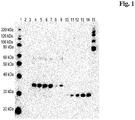
- FIGs 1 and 2 the Western blots of the differently encoded poly-His-tagged test-polypeptide are shown.
- E.coli whole cell lysates were fractionated into a soluble supernatant and an insoluble cell pellet fraction before SDS PAGE and immonoblotting.
- a molecular weight protein standard and a scFv antibody fragment comprising a poly-His-tag of known protein concentration has been used.
- Lanes 2, 4, 6, and 8 are samples showing the amount of expressed test-polypeptide obtained with the nucleic acid generated by using always the codon with the highest usage frequency after 0 hours, 4 hours, 6 hours, and 21 hours of cultivation.
- Lanes 3, 5, 7, and 9 are samples showing the amount of expressed test-polypeptide obtained with the nucleic acid generated with the new/inventive protein backtranslation method as reported herein after 0 hours, 4 hours, 6 hours, and 21 hours of cultivation.
- Lanes 11 to 14 correspond to the purified scFv-poly-His protein reference standard of known concentration (5 ng, 10 ng, 20 ng, 30 ng, and 40 ng).
- test-polypeptide expressed was determined within the insoluble cell debris fraction (pellet) after solubilization/extraction of insoluble protein aggregates with SDS sample buffer since the major fraction of the expressed test-polypeptide was found in the insoluble cell pellet fraction after cell lysis and cell fractionation (precipitated insoluble protein aggregates also known as inclusion bodies).
- test-polypeptide solubilized from the insoluble cell pellet fraction are shown in the following table.
- the expression yield obtained by using a nucleic acid encoding a test-polypeptide in which the encoding codons are chosen according to the method as reported herein is at least about 1.8 times the yield that is obtained using a classical codon optimization method.
- the cell is a CHO cell.
- the overall codon usage frequency taking into account all condons encoding a specific amino acid residue for Cricetulus species (CHO cells; Mesocricetus species; hamster) is given in the following table. Table.
- the group of codons encoding the amino acid residue can comprise at most four codons.
- each codon has a specific usage frequency in the group that is the same as the overall usage frequency in the genome of the cell, i.e. the codon GCG has a specific and overall usage frequency of 9 %, the codon GCA has a specific and overall usage frequency of 23 %, the codon GCT has a specific and overall usage frequency of 30 %, and the codon GCC has a specific and overall usage frequency of 38 %. If the number of codons in the group is reduced, e.g.
- each codon has a specific usage frequency in the group that is higher than its overall usage frequency in the genome of the cell, i.e. the codon GCT has a specific usage frequency of 44 % and an overall usage frequency of 30 %, and the codon GCC has a specific usage frequency of 56 % and an overall usage frequency of 38 %.
- the amino acid codon motif of the codons encoding the amino acid residue alanine comprises the codons GCC, GCT, GCA and GCG at a ratio of 38:30:23:9. As this would result in an amino acid codon motif comprising 100 positions it is adjusted to 40:30:20:10, which corresponds to 4:3:2:1.
- one amino acid codon motif of the codons encoding the amino acid residue alanine is gcc gcc gcc gcc gct gct gct gca gca gcg (SEQ ID NO: 64).
- codons are distributed within the genome also a distribution within the amino acid codon motif is used taking into account the above ratio and the usage frequency, whereby codons with a higher frequency are chosen first.
- one amino acid codon motif of the codons encoding the amino acid residue alanine is gcc gct gca gcc gct gca gcg gcc gct gcc (SEQ ID NO: 65).
- one amino acid codon motif of the codons encoding the amino acid residue alanine is gcc gct gcc gct gca gcg gcc gct gca gcc (SEQ ID NO: 66).
- the amino acid codon motif of the codons encoding the amino acid residue alanine comprises the codons GCC, GCT and GCA at a ratio of 42:33:25. As this would result in an amino acid codon motif comprising 100 positions it is adjusted to 40:30:30, which corresponds to 4:3:3.
- one amino acid codon motif of the codons encoding the amino acid residue alanine is gcc gcc gcc gcc gct gct gct gca gca (SEQ ID NO: 67).
- one amino acid codon motif of the codons encoding the amino acid residue alanine is gcc gct gca gcc gct gca gcc gct gca gcc gct gca gcc (SEQ ID NO: 68).
- the amino acid codon motif of the codons encoding the amino acid residue arginine comprises the codons AGG, AGA, CGG and CGC at a ratio of 27:25:24:24. As this would result in an amino acid codon motif comprising 100 positions it is adjusted to 25:25:25:25, which corresponds to 1:1:1:1.
- one amino acid codon motif of the codons encoding the amino acid residue arginine is agg aga cgg cgc (SEQ ID NO: 69).
- one amino acid codon motif of the codons encoding the amino acid residue arginine is agg cgg aga cgc (SEQ ID NO: 70).
- the amino acid codon motif of the codons encoding the amino acid residue asparagine comprises the codons AAC and AAT at a ratio of 61:39. As this would result in an amino acid codon motif comprising 100 positions it is adjusted to 60:40, which corresponds to 3:2.
- one amino acid codon motif of the codons encoding the amino acid residue asparagine is aac aac aac aat aat (SEQ ID NO: 71).
- one amino acid codon motif of the codons encoding the amino acid residue asparagine is aac aat aac aat aac (SEQ ID NO: 72).
- the amino acid codon motif of the codons encoding the amino acid residue aspartic acid comprises the codons GAC and GAT at a ratio of 61:39. As this would result in an amino acid codon motif comprising 100 positions it is adjusted to 60:40, which corresponds to 3:2.
- one amino acid codon motif of the codons encoding the amino acid residue aspartic acid is gac gac gac gat gat (SEQ ID NO: 73).
- one amino acid codon motif of the codons encoding the amino acid residue aspartic acid is gac gat gac gat gac (SEQ ID NO: 74).
- the amino acid codon motif of the codons encoding the amino acid residue cysteine comprises the codons TGC and TGT at a ratio of 58:42, which corresponds to 29:21. As this would result in an amino acid codon motif comprising 50 positions it is adjusted to 30:20, which corresponds to 3:2.
- one amino acid codon motif of the codons encoding the amino acid residue cysteine is tgc tgc tgc tgt tgt (SEQ ID NO: 75).
- one amino acid codon motif of the codons encoding the amino acid residue cysteine is tgc tgt tgc tgt tgc (SEQ ID NO: 76).
- the amino acid codon motif of the codons encoding the amino acid residue glutamine comprises the codons CAG and CAA at a ratio of 78:22, which corresponds to 39:11. As this would result in an amino acid codon motif comprising 50 positions it is adjusted to 40:10, which corresponds to 4:1.
- one amino acid codon motif of the codons encoding the amino acid residue glutamine is cag cag cag cag caa (SEQ ID NO: 77).
- one amino acid codon motif of the codons encoding the amino acid residue glutamine is cag cag cag caa cag (SEQ ID NO: 78).
- one amino acid codon motif of the codons encoding the amino acid residue glutamine is cag cag caa cag cag (SEQ ID NO: 79).
- one amino acid codon motif of the codons encoding the amino acid residue glutamine is cag caa cag cag cag (SEQ ID NO: 80).
- the amino acid codon motif of the codons encoding the amino acid residue glutamic acid comprises the codons GAG and GAA at a ratio of 64:36, which corresponds to 32:18. As this would result in an amino acid codon motif comprising 50 positions it is adjusted to 32:16, which corresponds to 2:1.
- one amino acid codon motif of the codons encoding the amino acid residue glutamic acid is gag gag gaa (SEQ ID NO: 81).
- one amino acid codon motif of the codons encoding the amino acid residue glutamic acid is gag gaa gag (SEQ ID NO: 82).
- the amino acid codon motif of the codons encoding the amino acid residue glycine comprises the codons GGC, GGA, GGG and GGT at a ratio of 33:25:24:19. As this would result in an amino acid codon motif comprising 100 positions it is adjusted to 35:25:25:20, which corresponds to 7:5:5:4.
- one amino acid codon motif of the codons encoding the amino acid residue glycine is ggc ggc ggc ggc ggc ggc ggc ggc ggc gga gga gga gga ggg ggg ggg ggg ggg ggt ggt ggt ggt (SEQ ID NO: 83).
- one amino acid codon motif of the codons encoding the amino acid residue glycine is ggc gga ggg ggt ggc gga ggc ggg ggt ggc gga ggg ggt ggc gga ggg ggt ggc gga ggc ggg ggc gga ggg ggt (SEQ ID NO: 84).
- the amino acid codon motif of the codons encoding the amino acid residue histidine comprises the codons CAC and CAT at a ratio of 58:42, which corresponds to 29:21. As this would result in an amino acid codon motif comprising 50 positions it is adjusted to 30:20, which corresponds to 3:2.
- one amino acid codon motif of the codons encoding the amino acid residue histidine is cac cac cac cat cat (SEQ ID NO: 85).
- one amino acid codon motif of the codons encoding the amino acid residue histidine is cac cat cac cat cac (SEQ ID NO: 86).
- the amino acid codon motif of the codons encoding the amino acid residue isoleucine comprises the codons ATC, ATT and ATA at a ratio of 51:35:15. As this would result in an amino acid codon motif comprising 100 positions it is adjusted to 50:35:15, which corresponds to 10:7:3.
- one amino acid codon motif of the codons encoding the amino acid residue isoleucine is atc atc atc atc atc atc atc atc atc atc att att att att att att att att att att att att att att ata ata (SEQ ID NO: 87).
- one amino acid codon motif of the codons encoding the amino acid residue isoleucine is atc att atc atc att ata atc att atc atc att ata atc att atc atc att ata atc att atc att ata atc att (SEQ ID NO: 88).
- the amino acid codon motif of the codons encoding the amino acid residue leucine comprises the codons CTG, CTC, CTT and CTG at a ratio of 44:19:13:12. As this would result in an amino acid codon motif comprising 100 positions it is adjusted to 40:20:10:10, which corresponds to 4:2:1:1.
- one amino acid codon motif of the codons encoding the amino acid residue leucine is ctg ctg ctg ctg ctg ctc ctc ctt ttg (SEQ ID NO: 89).
- one amino acid codon motif of the codons encoding the amino acid residue leucine is ctg ctc ctg ctt ctg ctc ctg ttg (SEQ ID NO: 90).
- one amino acid codon motif of the codons encoding the amino acid residue leucine is ctg ctc ctt ttg ctg ctc ctg ctg (SEQ ID NO: 91).
- the amino acid codon motif of the codons encoding the amino acid residue lysine comprises the codons AAG and AAA at a ratio of 67:33. As this would result in an amino acid codon motif comprising 100 positions it is adjusted to 66:33, which corresponds to 2:1.
- one amino acid codon motif of the codons encoding the amino acid residue lysine is aag aag aaa (SEQ ID NO: 92).
- one amino acid codon motif of the codons encoding the amino acid residue lysine is aag aaa aag (SEQ ID NO: 93).
- the amino acid codon motif of the codons encoding the amino acid residue phenylalanine comprises the codons TTC and TTT at a ratio of 56:44, which corresponds to 14:11. As this would result in an amino acid codon motif comprising 25 positions it is adjusted to 15:10, which corresponds to 3:2.
- one amino acid codon motif of the codons encoding the amino acid residue phenylalanine is ttc ttc ttc ttt ttt (SEQ ID NO: 94).
- one amino acid codon motif of the codons encoding the amino acid residue phenylalanine is ttc ttt ttc ttt ttc (SEQ ID NO: 95).
- the amino acid codon motif of the codons encoding the amino acid residue proline comprises the codons CCC, CCA and CCT at a ratio of 34:29:29. As this would result in an amino acid codon motif comprising 100 positions it is adjusted to 35:30:30, which corresponds to 7:6:6.
- one amino acid codon motif of the codons encoding the amino acid residue proline is ccc ccc ccc ccc ccc cca cca cca cca cca cca cca cct cct cct cct cct cct cct cct cct (SEQ ID NO: 96).
- one amino acid codon motif of the codons encoding the amino acid residue proline is ccc cca cct ccc cca cct ccc cca cct ccc cca cct ccc cca cct ccc cca cct ccc cca cct ccc cca cct ccc cca cct cccccccc (SEQ ID NO: 97).
- the amino acid codon motif of the codons encoding the amino acid residue serine comprises the codons TCC, AGC, TCT and TCA at a ratio of 24:24:18:15, which corresponds to 8:8:6:3. As this would result in an amino acid codon motif comprising 25 positions it is adjusted to 9:9:6:3, which corresponds to 3:3:2:1.
- one amino acid codon motif of the codons encoding the amino acid residue serine is tcc tcc tcc agc agc agc tct tct tca (SEQ ID NO: 98).
- one amino acid codon motif of the codons encoding the amino acid residue serine is tcc agc tct tca tcc agc tct tcc agc (SEQ ID NO: 99).
- one amino acid codon motif of the codons encoding the amino acid residue serine is tcc agc tct tcc agc tca tct tcc agc (SEQ ID NO: 100).
- the amino acid codon motif of the codons encoding the amino acid residue threonine comprises the codons ACC, ACA and ACT at a ratio of 45:32:23. As this would result in an amino acid codon motif comprising 100 positions it is adjusted to 50:30:20, which corresponds to 5:3:2.
- one amino acid codon motif of the codons encoding the amino acid residue threonine is acc acc acc acc acc acc aca aca aca act act (SEQ ID NO: 101).
- one amino acid codon motif of the codons encoding the amino acid residue threonine is acc aca act acc aca acc aca act acc acc (SEQ ID NO: 102).
- one amino acid codon motif of the codons encoding the amino acid residue threonine is acc aca acc aca act acc acc aca act acc (SEQ ID NO: 103).
- the amino acid codon motif of the codons encoding the amino acid residue tyrosine comprises the codons TAT and TAC at a ratio of 61:39. As this would result in an amino acid codon motif comprising 100 positions it is adjusted to 60:40, which corresponds to 3:2.
- one amino acid codon motif of the codons encoding the amino acid residue tyrosine is tat tat tat tac tac (SEQ ID NO: 104).
- one amino acid codon motif of the codons encoding the amino acid residue tyrosine is tat tac tat tac tat (SEQ ID NO: 105).
- the amino acid codon motif of the codons encoding the amino acid residue valine comprises the codons GTG, GTC, GTT and GTA at a ratio of 48:25:16:11. As this would result in an amino acid codon motif comprising 100 positions it is adjusted to 48:24:18:12, which corresponds to 8:4:3:2.
- one amino acid codon motif of the codons encoding the amino acid residue valine is gtg gtg gtg gtg gtg gtg gtg gtg gtg gtg gtg gtg gtg gtc gtc gtt gtt gtt gta gta (SEQ ID NO: 106).
- one amino acid codon motif of the codons encoding the amino acid residue valine is gtg gtg gtc gtt gta gtg gtg gtc gtt gtg gtg gtc gtt gta gtg gtg gtc (SEQ ID NO: 107).
- one amino acid codon motif of the codons encoding the amino acid residue valine is gtg gtc gtt gta gtg gtc gtt gta gtg gtc gtt gtg gtc gtg gtg gtg gtg gtg (SEQ ID NO: 108).
- the protein concentration was determined by determining the optical density (OD) at 280 nm, using the molar extinction coefficient calculated on the basis of the amino acid sequence.
- test-polypeptide expression plasmids
- the fusion test-polypeptide was prepared by recombinant means.
- the amino acid sequence of the expressed fusion test-polypeptide was encoded by a nucleic acid comprising in 5' to 3' direction a nucleic acid of SEQ ID NO: 61 encoding the carrier peptide, a nucleic acid of SEQ ID NO: 62 or SEQ ID NO: 63 encoding the test polypeptide, and a nucleic acid of SEQ ID NO: 59 encoding a hexa-histidine purification tag (poly-His tag).
- the encoding fusion gene was assembled with known recombinant methods and techniques by connection of appropriate nucleic acid segments. Nucleic acid sequences made by chemical synthesis were verified by DNA sequencing. The expression plasmid for the production of the fusion polypeptide was prepared as outlined below.
- Plasmid 4980 (4980-pBRori-URA3-LACI-SAC) is an expression plasmid for the expression of core-streptavidin in E. coli. It was generated by ligation of the 3142 bp long EcoRI/CelII-vector fragment derived from plasmid 1966 (1966-pBRori-URA3-LACI-T-repeat; reported in EP-B 1 422 237 ) with a 435 bp long core-streptavidin encoding EcoRI/CelII-fragment.
- the core-streptavidin E.coli expression plasmid comprises the following elements:
- the final expression plasmid for the expression of the fusion test-polypeptide was prepared by excising the core-streptavidin structural gene from vector 4980 using the singular flanking EcoRI and CelII restriction endonuclease cleavage site and inserting the EcoRII/CelII restriction site flanked nucleic acid encoding the fusion test-polypeptide into the 3142 bp long EcoRI/CelII-4980 vector fragment.
- the expression plasmid containing the test-polypeptide gene generated with the classic codon usage was designated 11020 while the expression plasmid containing the test-polypeptide gene generated with the new codon usage was designated 11021.
- the E.coli K12 strain CSPZ-2 (leuB, proC, trpE, thi-1, ⁇ pyrF) was transformed with the expression plasmid (11020 and 11021, respectively) obtained in previous step.
- the transformed CSPZ-2 cells were first grown at 37 °C on agar plates and subsequently in a shaking culture in M9 minimal medium containing 0.5 % casamino acids (Difco) up to an optical density at 550 nm (OD550) of 0.6 - 0.9 and subsequently induced with IPTG (1-5 mmol/l final concentration).
- E.coli lysate was processed by sodium dodecyl sulfate (SDS) polyacrylamide gel electrophoresis (SDS-PAGE), and the separated polypeptides were transferred to a membrane from the gel and subsequently detected and quantified by an immunological method.
- SDS sodium dodecyl sulfate
- SDS-PAGE sodium dodecyl sulfate polyacrylamide gel electrophoresis
- E.coli cell culture samples were drawn from the shaking culture over a time course of about 24 h. One sample was drawn prior to induction of recombinant protein expression. Further samples were taken at dedicated time points e.g. 4, 6 and 21 hours after induction.
- the insoluble cell components were sedimented (centrifugation 14,000 rpm, 5 min.) and an aliquot of the clarified supernatant was admixed with 1/4 volume (v/v) of 4xLDS sample buffer and 1/10 volume (v/v) of 0.5 M 1,4-dithiotreitol (DTT).
- pellet The insoluble cell debris fraction (pellet) was resuspended/extracted in 0.3 ml 1xLDS sample buffer containing 50 mM 1,4-dithiotreitol (DTT) under shaking for 15 min and centrifuged again.
- DTT 1,4-dithiotreitol
- 4x 4 g glycerol, 0.682 g TRIS-Base, 0.666 g TRIS-hydrochloride, 0.8 g LDS (lithium dodecyl sulfate), 0.006 g EDTA (ethylene diamin tetra acid), 0.75 ml of a 1 % by weight (w/w) solution of Serva Blue G250 in water
- the NuPAGE® Pre-Cast gel system (Invitrogen) was used according to the manufacturer's instruction (10 % NuPAGE® Novex® Bis-TRIS Pre-Cast gels, pH 6.4; Cat.-No.: NP0301). The samples were incubated for 10 min. at 70 °C and after cooling to room temperature 5-40 ⁇ L were loaded onto the gels. In addition, 5 ⁇ l MagicMarkTM XP Western Protein Standard (20-220 kDa) (Invitrogen, Cat. No.: LC5602), 5 ⁇ l of Precision Plus ProteinTM prestained protein standard (Bio-Rad, Cat.
- Transfer buffer 39 mM glycine, 48 mM TRIS-hydrochloride, 0.04 % by weight (w/w) SDS, and 20 % by volume methanol (v/v).
- the mouse monoclonal anti-Penta-His antibody (Qiagen, Cat. No.: 34660) was used as primary antibody at a dilution of 1:1,000 in TBS, 0.5 % (w/v) Western Blocking Solution. After two washes in TBS (Bio-Rad, Cat. No.: 170-6435) and two washes in TBS supplemented with 0.05 % (v/v) Tween-20 (TBST) the poly-His containing polypeptides were visualized using a purified rabbit antimouse IgG antibody conjugated to a peroxidase (Roche Molecular Biochemicals, Cat. No.: 11693 506) as secondary antibody at a dilution of 1:400 in TBS with 3 % (w/v) not fat dry milk powder.
- a purified rabbit antimouse IgG antibody conjugated to a peroxidase (Roche Molecular Biochemicals, Cat. No.: 11693 506) as secondary antibody at
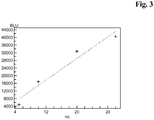
- the membranes were incubated in 10 ml Luminol/peroxide-solution for 10 seconds to 5 minutes and the emitted light was detected afterwards with a LUMI-Imager F1 Analysator (Roche Molecular Biochemicals) and a protein reference standard curve was obtained by plotting the known protein concentration of the scFv-poly-His proteins against their cognate measured LUMI-Imager signals (intensity of the spots expressed in BLU units) which was used for the calculation of the concentrations of target protein in the original samples.
- LUMI-Imager F1 Analysator Roche Molecular Biochemicals
- the intensity of the spots was quantified with the LumiAnalyst Software (Version 3.1).
- the Western blot of the polypeptide containing supernatants is shown in Figure 1 .
- the Western blot of the SDS-extracted cell pellet fraction is shown in Figure 2 .
Landscapes
- Health & Medical Sciences (AREA)
- Genetics & Genomics (AREA)
- Chemical & Material Sciences (AREA)
- Life Sciences & Earth Sciences (AREA)
- Organic Chemistry (AREA)
- Engineering & Computer Science (AREA)
- Wood Science & Technology (AREA)
- Biomedical Technology (AREA)
- Biotechnology (AREA)
- General Engineering & Computer Science (AREA)
- Zoology (AREA)
- Bioinformatics & Cheminformatics (AREA)
- Biophysics (AREA)
- Molecular Biology (AREA)
- Biochemistry (AREA)
- General Health & Medical Sciences (AREA)
- Microbiology (AREA)
- Plant Pathology (AREA)
- Physics & Mathematics (AREA)
- Immunology (AREA)
- Medicinal Chemistry (AREA)
- Proteomics, Peptides & Aminoacids (AREA)
- Preparation Of Compounds By Using Micro-Organisms (AREA)
- Micro-Organisms Or Cultivation Processes Thereof (AREA)
- Peptides Or Proteins (AREA)
Claims (10)
- Verfahren zur rekombinanten Herstellung eines Polypeptids in einer CHO-Zelle, umfassend den Schritt der Kultivierung einer CHO-Zelle, die eine Nukleinsäure umfasst, die das Polypeptid codiert, und Gewinnung des Polypeptids aus der CHO-Zelle oder dem Kultivierungsmedium,
wobei jeder der Aminosäurereste des Polypeptids von mindestens einem Codon codiert wird, wobei das Codon (die Codone), das (die) denselben Aminosäurerest codiert (codieren), in einer Gruppe kombiniert sind und jedes der Codone in einer Gruppe durch eine spezifische Nutzungshäufigkeit in der Gruppe definiert ist, welche die Häufigkeit ist, mit der ein einzelnes Codon aus einer Gruppe von Codonen in einer Nukleinsäure, die ein Polypeptid codiert, bezogen auf alle Codone einer Gruppe zu finden ist, wobei die Summe der spezifischen Nutzungshäufigkeiten aller Codone in einer Gruppe 100 % beträgt, wobei die Gesamt-Nutzungshäufigkeit jedes Codons im Genom der Zelle etwa dieselbe ist wie seine spezifische Nutzungshäufigkeit in seiner Gruppe,
wobei die Nutzungshäufigkeit eines Codons in der Polypeptid-codierenden Nukleinsäure etwa dieselbe ist wie die spezifische Nutzungshäufigkeit in seiner Gruppe,
wobei das Aminosäure-Codon-Motiv für
Alanin ausgewählt ist aus SEQ ID NO:64, 65, 66, 67 und 68, und/oder
Arginin ausgewählt ist aus SEQ ID NO:69 und 70, und/oder
Asparagin ausgewählt ist aus SEQ ID NO:71 und 72, und/oder
Asparaginsäure ausgewählt ist aus SEQ ID NO:73 und 74, und/oder,
Cystein ausgewählt ist aus SEQ ID NO:75 und 76, und/oder
Glutamin ausgewählt ist aus SEQ ID NO:77, 78, 79 und 80, und/oder Glutaminsäure ausgewählt ist aus SEQ ID NO:81 und 82, und/oder
Glycin ausgewählt ist aus SEQ ID NO:83 und 84, und/oder
Histidin ausgewählt ist aus SEQ ID NO:85 und 86, und/oder
Isoleucin ausgewählt ist aus SEQ ID NO:87 und 88, und/oder
Leucin ausgewählt ist aus SEQ ID NO:89, 90 und 91, und/oder
Lysin ausgewählt ist aus SEQ ID NO:92 und 93, und/oder
Phenylalanin ausgewählt ist aus SEQ ID NO:94 und 95, und/oder
Prolin ausgewählt ist aus SEQ ID NO:96 und 97, und/oder
Serin ausgewählt ist aus SEQ ID NO:98, 99 und 100, und/oder
Threonin ausgewählt ist aus SEQ ID NO:101, 102 und 103, und/oder
Tyrosin ausgewählt ist aus SEQ ID NO:104 und 105, und/oder
Valin ausgewählt ist aus SEQ ID NO:106, 107 und 108. - Verfahren nach Anspruch 1, dadurch gekennzeichnet, dass die Gruppen nur Codone mit einer Gesamt-Nutzungshäufigkeit im Genom der Zelle von mehr als 5 % umfasst.
- Verfahren nach Anspruch 1, dadurch gekennzeichnet, dass die Gruppen nur Codone mit einer Gesamt-Nutzungshäufigkeit im Genom der Zelle von 8 % oder mehr umfasst.
- Verfahren nach Anspruch 1, dadurch gekennzeichnet, dass die Gruppen nur Codone mit einer Gesamt-Nutzungshäufigkeit im Genom der Zelle von 10 % oder mehr umfasst.
- Verfahren nach einem der Ansprüche 1 bis 4, dadurch gekennzeichnet, dass für jedes sequentielle Auftreten einer spezifischen Aminosäure in dem Polypeptid ausgehend vom N-Terminus des Polypeptids die codierende Nukleinsäure das Codon umfasst, das dasselbe ist wie das an der entsprechenden sequentiellen Position in dem Aminosäure-Codon-Motiv.
- Verfahren nach Anspruch 5, dadurch gekennzeichnet, dass die Nutzungshäufigkeit eines Codons in dem Aminosäure-Codon-Motiv etwa dieselbe ist wie seine spezifische Nutzungshäufigkeit in seiner Gruppe.
- Verfahren nach einem der Ansprüche 5 bis 6, dadurch gekennzeichnet, dass nach dem letzten Codon des Aminosäure-Codon-Motivs beim nächsten Auftreten der spezifischen Aminosäure in dem Polypeptid die codierende Nukleinsäure das Codon umfasst, das sich an der ersten Position des Aminosäure-Codon-Motivs befindet.
- Verfahren nach einem der Ansprüche 5 bis 7, dadurch gekennzeichnet, dass die Codone in dem Aminosäure-Codon-Motiv mit einer abnehmenden spezifischen Nutzungshäufigkeit angeordnet sind, wobei nach dem Codon mit der geringsten spezifischen Nutzungshäufigkeit oder dem Codon mit der zweitgeringsten spezifischen Nutzungshäufigkeit das Codon mit der höchsten spezifischen Nutzungshäufigkeit verwendet wird.
- Verfahren nach Anspruch 8, dadurch gekennzeichnet, dass die Codone in dem Aminosäure-Codon-Motiv mit abnehmender spezifischer Nutzungshäufigkeit angeordnet sind, wobei nach dem Codon mit der geringsten spezifischen Nutzungshäufigkeit das Codon mit der höchsten spezifischen Nutzungshäufigkeit verwendet wird.
- Verfahren nach einem der Ansprüche 1 bis 9, dadurch gekennzeichnet, dass das Polypeptid ein Antikörper oder ein Antikörperfragment oder ein Antikörper-Fusionspolypeptid ist.
Applications Claiming Priority (3)
| Application Number | Priority Date | Filing Date | Title |
|---|---|---|---|
| EP12164430 | 2012-04-17 | ||
| PCT/EP2013/057808 WO2013156443A1 (en) | 2012-04-17 | 2013-04-15 | Method for the expression of polypeptides using modified nucleic acids |
| EP13718536.9A EP2839011B1 (de) | 2012-04-17 | 2013-04-15 | Verfahren zur expression von polypeptiden mittels modifizierter nucleinsäuren |
Related Parent Applications (2)
| Application Number | Title | Priority Date | Filing Date |
|---|---|---|---|
| EP13718536.9A Division EP2839011B1 (de) | 2012-04-17 | 2013-04-15 | Verfahren zur expression von polypeptiden mittels modifizierter nucleinsäuren |
| PCT/EP2013/057808 Previously-Filed-Application WO2013156443A1 (en) | 2012-04-17 | 2013-04-15 | Method for the expression of polypeptides using modified nucleic acids |
Publications (3)
| Publication Number | Publication Date |
|---|---|
| EP3138917A1 EP3138917A1 (de) | 2017-03-08 |
| EP3138917B1 true EP3138917B1 (de) | 2019-08-21 |
| EP3138917B2 EP3138917B2 (de) | 2024-10-23 |
Family
ID=48184161
Family Applications (2)
| Application Number | Title | Priority Date | Filing Date |
|---|---|---|---|
| EP13718536.9A Active EP2839011B1 (de) | 2012-04-17 | 2013-04-15 | Verfahren zur expression von polypeptiden mittels modifizierter nucleinsäuren |
| EP16188552.0A Active EP3138917B2 (de) | 2012-04-17 | 2013-04-15 | Verfahren zur expression von polypeptiden mit modifizierten nukleinsäuren |
Family Applications Before (1)
| Application Number | Title | Priority Date | Filing Date |
|---|---|---|---|
| EP13718536.9A Active EP2839011B1 (de) | 2012-04-17 | 2013-04-15 | Verfahren zur expression von polypeptiden mittels modifizierter nucleinsäuren |
Country Status (11)
| Country | Link |
|---|---|
| US (2) | US20150246961A1 (de) |
| EP (2) | EP2839011B1 (de) |
| JP (2) | JP6224077B2 (de) |
| KR (1) | KR102064025B1 (de) |
| CN (2) | CN114107352A (de) |
| BR (1) | BR112014025693B1 (de) |
| CA (1) | CA2865676C (de) |
| ES (1) | ES2599386T3 (de) |
| MX (1) | MX349596B (de) |
| RU (1) | RU2014144881A (de) |
| WO (1) | WO2013156443A1 (de) |
Families Citing this family (8)
| Publication number | Priority date | Publication date | Assignee | Title |
|---|---|---|---|---|
| JP6224077B2 (ja) | 2012-04-17 | 2017-11-01 | エフ.ホフマン−ラ ロシュ アーゲーF. Hoffmann−La Roche Aktiengesellschaft | 改変された核酸を用いてポリペプチドを発現させるための方法 |
| BR112016002067A2 (pt) | 2013-07-29 | 2017-08-29 | Danisco Us Inc | Variantes de enzimas |
| BR112020023411A2 (pt) * | 2018-05-29 | 2021-03-09 | Firmenich S/A | Método para produzir compostos de albicanol |
| GB201813528D0 (en) | 2018-08-20 | 2018-10-03 | Ucl Business Plc | Factor IX encoding nucleotides |
| AU2019323747A1 (en) * | 2018-08-20 | 2021-03-04 | Ucl Business Ltd | Factor ix encoding nucleotides |
| BR112021025806A2 (pt) * | 2019-06-28 | 2022-02-08 | Hoffmann La Roche | Métodos para produzir um anticorpo da subclasse igg1 humana cultivando uma célula cho e uso da remoção de sítios de splice de doador não pareados em uma parte de uma sequência de ácido nucleico de humano ou hamster |
| CN114774391B (zh) * | 2022-03-09 | 2023-03-14 | 华南农业大学 | 一种抗大肠杆菌的噬菌体内溶素及其应用 |
| CN114507682A (zh) * | 2022-03-16 | 2022-05-17 | 华南农业大学 | 编码重组NlpC/P60内肽酶蛋白的基因及其应用 |
Citations (3)
| Publication number | Priority date | Publication date | Assignee | Title |
|---|---|---|---|---|
| US7479543B2 (en) | 1991-04-25 | 2009-01-20 | Chugai Seiyaku Kabushiki Kaisha | Reshaped human antibody to human interleukin-6 receptor |
| US8128938B1 (en) | 2004-05-18 | 2012-03-06 | Vical Incorporated | Influenza virus vaccine composition and methods of use |
| WO2013156443A1 (en) | 2012-04-17 | 2013-10-24 | F. Hoffmann-La Roche Ag | Method for the expression of polypeptides using modified nucleic acids |
Family Cites Families (29)
| Publication number | Priority date | Publication date | Assignee | Title |
|---|---|---|---|---|
| US4816567A (en) | 1983-04-08 | 1989-03-28 | Genentech, Inc. | Recombinant immunoglobin preparations |
| US5010182A (en) | 1987-07-28 | 1991-04-23 | Chiron Corporation | DNA constructs containing a Kluyveromyces alpha factor leader sequence for directing secretion of heterologous polypeptides |
| AU4005289A (en) | 1988-08-25 | 1990-03-01 | Smithkline Beecham Corporation | Recombinant saccharomyces |
| US5082767A (en) | 1989-02-27 | 1992-01-21 | Hatfield G Wesley | Codon pair utilization |
| US5959177A (en) | 1989-10-27 | 1999-09-28 | The Scripps Research Institute | Transgenic plants expressing assembled secretory antibodies |
| EP0604580A1 (de) | 1991-09-19 | 1994-07-06 | Genentech, Inc. | Expression in E.Coli von Antikörperfragmenten mit mindestens einem cystein in freier -SH Form. Anwendung in der Herstellung bifunktioneller Antikörper. |
| US5795737A (en) | 1994-09-19 | 1998-08-18 | The General Hospital Corporation | High level expression of proteins |
| US5789199A (en) | 1994-11-03 | 1998-08-04 | Genentech, Inc. | Process for bacterial production of polypeptides |
| US5840523A (en) | 1995-03-01 | 1998-11-24 | Genetech, Inc. | Methods and compositions for secretion of heterologous polypeptides |
| US6040498A (en) | 1998-08-11 | 2000-03-21 | North Caroline State University | Genetically engineered duckweed |
| EP0972838B1 (de) | 1998-07-15 | 2004-09-15 | Roche Diagnostics GmbH | Escherichia coli Wirt/Vektorsystem basierend auf einer antibiotikafreien Selektion durch Komplementation einer Auxotrophie |
| US6291245B1 (en) | 1998-07-15 | 2001-09-18 | Roche Diagnostics Gmbh | Host-vector system |
| US7125978B1 (en) | 1999-10-04 | 2006-10-24 | Medicago Inc. | Promoter for regulating expression of foreign genes |
| KR100797667B1 (ko) | 1999-10-04 | 2008-01-23 | 메디카고 인코포레이티드 | 외래 유전자의 전사를 조절하는 방법 |
| ATE318908T1 (de) | 2000-05-18 | 2006-03-15 | Geneart Gmbh | Synthetische gene für gagpol und deren verwendungen |
| GB0014288D0 (en) * | 2000-06-10 | 2000-08-02 | Smithkline Beecham Biolog | Vaccine |
| DE10037111A1 (de) * | 2000-07-27 | 2002-02-07 | Boehringer Ingelheim Int | Herstellung eines rekombinanten Proteins in einer prokaryontischen Wirtszelle |
| US7172892B2 (en) * | 2001-03-22 | 2007-02-06 | Dendreon Corporation | Nucleic acid molecules encoding serine protease CVSP14, the encoded polypeptides and methods based thereon |
| WO2003070957A2 (en) | 2002-02-20 | 2003-08-28 | Novozymes A/S | Plant polypeptide production |
| EP1490494A1 (de) | 2002-04-01 | 2004-12-29 | Walter Reed Army Institute of Research | Verfahren zum entwerfen von synthetischen nukleinsäuremolekülen zur optimaler proteinen expression in einer wirtszelle |
| CA2484676A1 (en) * | 2002-05-03 | 2003-11-13 | Sequenom, Inc. | Kinase anchor protein muteins, peptides thereof, and related methods |
| CA2443365C (en) | 2002-11-19 | 2010-01-12 | F. Hoffmann-La Roche Ag | Methods for the recombinant production of antifusogenic peptides |
| GB0308988D0 (en) * | 2003-04-17 | 2003-05-28 | Univ Singapore | Molecule |
| JP4228072B2 (ja) * | 2003-06-04 | 2009-02-25 | 独立行政法人農業・食品産業技術総合研究機構 | アビジンをコードする人工合成遺伝子 |
| KR20090018799A (ko) | 2006-05-30 | 2009-02-23 | 다우 글로벌 테크놀로지스 인크. | 코돈 최적화 방법 |
| US7884262B2 (en) | 2006-06-06 | 2011-02-08 | Monsanto Technology Llc | Modified DMO enzyme and methods of its use |
| CN101627053A (zh) * | 2006-06-12 | 2010-01-13 | 西福根有限公司 | 泛细胞表面受体特异的治疗剂 |
| AU2007257683A1 (en) | 2006-06-12 | 2007-12-21 | Symphogen A/S | Pan-cell surface receptor- specific therapeutics |
| CA2657975A1 (en) | 2006-06-29 | 2008-01-03 | Dsm Ip Assets B.V. | A method for achieving improved polypeptide expression |
-
2013
- 2013-04-15 JP JP2015506201A patent/JP6224077B2/ja active Active
- 2013-04-15 KR KR1020147028712A patent/KR102064025B1/ko active Active
- 2013-04-15 WO PCT/EP2013/057808 patent/WO2013156443A1/en not_active Ceased
- 2013-04-15 ES ES13718536.9T patent/ES2599386T3/es active Active
- 2013-04-15 EP EP13718536.9A patent/EP2839011B1/de active Active
- 2013-04-15 MX MX2014011805A patent/MX349596B/es active IP Right Grant
- 2013-04-15 CA CA2865676A patent/CA2865676C/en active Active
- 2013-04-15 CN CN202111149491.2A patent/CN114107352A/zh active Pending
- 2013-04-15 RU RU2014144881A patent/RU2014144881A/ru not_active Application Discontinuation
- 2013-04-15 EP EP16188552.0A patent/EP3138917B2/de active Active
- 2013-04-15 BR BR112014025693-4A patent/BR112014025693B1/pt active IP Right Grant
- 2013-04-15 CN CN201380020266.6A patent/CN104245937B/zh active Active
-
2014
- 2014-10-17 US US14/517,516 patent/US20150246961A1/en not_active Abandoned
-
2017
- 2017-10-04 JP JP2017193965A patent/JP2018038408A/ja active Pending
- 2017-12-06 US US15/833,012 patent/US12577293B2/en active Active
Patent Citations (3)
| Publication number | Priority date | Publication date | Assignee | Title |
|---|---|---|---|---|
| US7479543B2 (en) | 1991-04-25 | 2009-01-20 | Chugai Seiyaku Kabushiki Kaisha | Reshaped human antibody to human interleukin-6 receptor |
| US8128938B1 (en) | 2004-05-18 | 2012-03-06 | Vical Incorporated | Influenza virus vaccine composition and methods of use |
| WO2013156443A1 (en) | 2012-04-17 | 2013-10-24 | F. Hoffmann-La Roche Ag | Method for the expression of polypeptides using modified nucleic acids |
Non-Patent Citations (11)
| Title |
|---|
| A HÉNAUT, DANCHIN A: "Analysis and Predictions from Escherichia coli Sequences, or E. coli In Silico", ASM PRESS, 1 January 1996 (1996-01-01), XP055725848, Retrieved from the Internet <URL:https://www.asmscience.org/files/Chapter_114_Analysis_and_Predictions_from_Escherichia_coli_Sequences_or_E._coli_In_Silico.pdf> [retrieved on 20200828] |
| ANONYMOUS: "Technologies for Monoclonal Antibody Production", GIBCO- INVITROGEN BROCHURE, THERMO FISHER SCIENTIFIQUE, 1 January 2001 (2001-01-01), pages 1 - 7, XP055626357, Retrieved from the Internet <URL:https://assets.thermofisher.com/TFS-Assets/LSG/brochures/B_08A00_745_monoantibdy_bro.pdf> |
| DAVID RAAB, MARCUS GRAF, FRANK NOTKA, THOMAS SCHODL, RALF WAGNER: "The GeneOptimizer Algorithm: using a sliding window approach to cope with the vast sequence space in multiparameter DNA sequence optimization", SYSTEMS AND SYNTHETIC BIOLOGY, SPRINGER NETHERLANDS, vol. 4, no. 3, 1 September 2010 (2010-09-01), pages 215 - 225, XP055065511, ISSN: 18725325, DOI: 10.1007/s11693-010-9062-3 |
| GARY WALSH: "Biopharmaceutical benchmarks 2006", NATURE BIOTECHNOLOGY, GALE GROUP INC., NEW YORK, US, vol. 24, no. 7, 1 July 2006 (2006-07-01), us, pages 769 - 776, XP055725857, ISSN: 1087-0156, DOI: 10.1038/nbt0706-769 |
| GRAZIANO PESOLE, ATTIMONELLI MARCELLA, LIUNI SABINO: "A backtranslation method based on codon usage strategy", NUCLEIC ACIDS RESEARCH, INFORMATION RETRIEVAL LTD., vol. 16, no. 5, 11 March 1988 (1988-03-11), pages 1715 - 1728, XP055725859, ISSN: 0305-1048, DOI: 10.1093/nar/16.5.1715 |
| GUSTAFSSON, C. GOVINDARAJAN, S. MINSHULL, J.: "Codon bias and heterologous protein expression", TRENDS IN BIOTECHNOLOGY., ELSEVIER PUBLICATIONS, CAMBRIDGE., GB, vol. 22, no. 7, 1 July 2004 (2004-07-01), GB, pages 346 - 353, XP004520507, ISSN: 0167-7799, DOI: 10.1016/j.tibtech.2004.04.006 |
| LI, A. KATO, Z. OHNISHI, H. HASHIMOTO, K. MATSUKUMA, E. OMOYA, K. YAMAMOTO, Y. KONDO, N.: "Optimized gene synthesis and high expression of human interleukin-18", PROTEIN EXPRESSION AND PURIFICATION., ACADEMIC PRESS, SAN DIEGO, CA., vol. 32, no. 1, 1 November 2003 (2003-11-01), SAN DIEGO, CA., pages 110 - 118, XP004469392, ISSN: 1046-5928, DOI: 10.1016/j.pep.2003.08.003 |
| PLOTKIN JOSHUA B.; KUDLA GRZEGORZ: "Synonymous but not the same: the causes and consequences of codon bias", NATURE REVIEWS GENETICS, NATURE PUBLISHING GROUP, GB, vol. 12, no. 1, 23 November 2010 (2010-11-23), GB, pages 32 - 42, XP037115078, ISSN: 1471-0056, DOI: 10.1038/nrg2899 |
| R GRANTHAM, GAUTIER C, GOUY M, MERCIER R, PAVÉ A: "Codon catalog usage and the genome hypothesis", NUCLEIC ACIDS RESEARCH, vol. 8, no. 1, 11 January 1980 (1980-01-11), pages r49 - r62, XP055725317 |
| STEPHAN FATH, ET AL.: "Multiparameter RNA and Codon Optimization: A Standardized Tool to Assess and Enhance Autologous Mammalian Gene Expression", PLOS ONE, vol. 6, no. 3, e17596, 3 March 2011 (2011-03-03), pages 1 - 14, XP055531212, DOI: 10.1371/journal.pone.0017596 |
| VILLALOBOS ALAN; NESS JON E; GUSTAFSSON CLAES; MINSHULL JEREMY; GOVINDARAJAN SRIDHAR: "Gene Designer: a synthetic biology tool for constructing artificial DNA segments", BMC BIOINFORMATICS, BIOMED CENTRAL, LONDON, GB, vol. 7, no. 1, 285, 6 June 2006 (2006-06-06), GB, pages 1 - 8, XP021013796, ISSN: 1471-2105, DOI: 10.1186/1471-2105-7-285 |
Also Published As
| Publication number | Publication date |
|---|---|
| US20150246961A1 (en) | 2015-09-03 |
| EP3138917B2 (de) | 2024-10-23 |
| EP2839011B1 (de) | 2016-09-14 |
| US12577293B2 (en) | 2026-03-17 |
| EP3138917A1 (de) | 2017-03-08 |
| JP2015514406A (ja) | 2015-05-21 |
| MX349596B (es) | 2017-08-04 |
| MX2014011805A (es) | 2014-12-08 |
| CN104245937B (zh) | 2021-09-21 |
| JP2018038408A (ja) | 2018-03-15 |
| KR20140146105A (ko) | 2014-12-24 |
| BR112014025693B1 (pt) | 2021-12-07 |
| KR102064025B1 (ko) | 2020-01-08 |
| CN104245937A (zh) | 2014-12-24 |
| US20180100006A1 (en) | 2018-04-12 |
| CN114107352A (zh) | 2022-03-01 |
| CA2865676A1 (en) | 2013-10-24 |
| HK1205186A1 (en) | 2015-12-11 |
| CA2865676C (en) | 2020-03-10 |
| JP6224077B2 (ja) | 2017-11-01 |
| BR112014025693A2 (en) | 2018-08-07 |
| RU2014144881A (ru) | 2016-06-10 |
| EP2839011A1 (de) | 2015-02-25 |
| WO2013156443A1 (en) | 2013-10-24 |
| ES2599386T3 (es) | 2017-02-01 |
Similar Documents
| Publication | Publication Date | Title |
|---|---|---|
| EP3138917B2 (de) | Verfahren zur expression von polypeptiden mit modifizierten nukleinsäuren | |
| EP0873405B1 (de) | Expressionssteigernde sequenzelemente (ease) für eukaryontische expressionssysteme | |
| JPH07502647A (ja) | ユビキチン特異的プロテアーゼ | |
| JPH08508162A (ja) | ハロバクテリアにおける異種ポリペプチドの発現 | |
| JP2003504069A (ja) | ヒト顆粒球コロニー刺激因子修飾体およびその生産方法 | |
| CN115261363B (zh) | Apobec3a的rna脱氨酶活性测定方法及rna高活性的apobec3a变体 | |
| CN115197327B (zh) | Rna修饰嵌合蛋白及其应用 | |
| KR20140004632A (ko) | DCC의 제 5 피브로넥틴 유형 III 도메인의 재조합 Fc-융합 단백질 | |
| Slupska et al. | Genes involved in the determination of the rate of inversions at short inverted repeats | |
| HK40062759A (en) | Method for the expression of polypeptides using modified nucleic acids | |
| ITMI950442A1 (it) | Frammento di dna codificante d-amminoacido ossidasi | |
| Perricaudet et al. | Excision and recombination of adenovirus DNA fragments in Escherichia coli | |
| WO2026103599A1 (en) | CEL NUCLEASE-Fc FUSION PROTEIN AND PREPARATION METHOD AND USE THEREOF | |
| JP4980483B2 (ja) | 酵母及びその育種方法 | |
| JPH02257883A (ja) | シグナルペプチド、dna配列、ベクター、細菌、およびポリペプチド周辺質生産法 | |
| Weber et al. | Application of site-directed mutagenesis to RNA and DNA genomes | |
| CN102203286B (zh) | 免疫球蛋白编码核酸的测定 | |
| RU2422512C1 (ru) | ШТАММ Escherichia coli BL21(DE3)/pAFP11D3 - ПРОДУЦЕНТ ФРАГМЕНТА С 404 ПО 609 АМИНОКИСЛОТУ АЛЬФА-ФЕТОПРОТЕИНА ЧЕЛОВЕКА | |
| HK1205186B (en) | Method for the expression of polypeptides using modified nucleic acids | |
| KR20070035499A (ko) | 폴리펩티드의 제조방법 | |
| JPH1175855A (ja) | 耐熱性F型ATPase及びそれをコードする遺伝子 |
Legal Events
| Date | Code | Title | Description |
|---|---|---|---|
| PUAI | Public reference made under article 153(3) epc to a published international application that has entered the european phase |
Free format text: ORIGINAL CODE: 0009012 |
|
| STAA | Information on the status of an ep patent application or granted ep patent |
Free format text: STATUS: THE APPLICATION HAS BEEN PUBLISHED |
|
| AC | Divisional application: reference to earlier application |
Ref document number: 2839011 Country of ref document: EP Kind code of ref document: P |
|
| AK | Designated contracting states |
Kind code of ref document: A1 Designated state(s): AL AT BE BG CH CY CZ DE DK EE ES FI FR GB GR HR HU IE IS IT LI LT LU LV MC MK MT NL NO PL PT RO RS SE SI SK SM TR |
|
| STAA | Information on the status of an ep patent application or granted ep patent |
Free format text: STATUS: REQUEST FOR EXAMINATION WAS MADE |
|
| 17P | Request for examination filed |
Effective date: 20170908 |
|
| RBV | Designated contracting states (corrected) |
Designated state(s): AL AT BE BG CH CY CZ DE DK EE ES FI FR GB GR HR HU IE IS IT LI LT LU LV MC MK MT NL NO PL PT RO RS SE SI SK SM TR |
|
| GRAP | Despatch of communication of intention to grant a patent |
Free format text: ORIGINAL CODE: EPIDOSNIGR1 |
|
| STAA | Information on the status of an ep patent application or granted ep patent |
Free format text: STATUS: GRANT OF PATENT IS INTENDED |
|
| GRAJ | Information related to disapproval of communication of intention to grant by the applicant or resumption of examination proceedings by the epo deleted |
Free format text: ORIGINAL CODE: EPIDOSDIGR1 |
|
| STAA | Information on the status of an ep patent application or granted ep patent |
Free format text: STATUS: REQUEST FOR EXAMINATION WAS MADE |
|
| INTG | Intention to grant announced |
Effective date: 20180914 |
|
| STAA | Information on the status of an ep patent application or granted ep patent |
Free format text: STATUS: EXAMINATION IS IN PROGRESS |
|
| INTC | Intention to grant announced (deleted) | ||
| 17Q | First examination report despatched |
Effective date: 20181016 |
|
| GRAP | Despatch of communication of intention to grant a patent |
Free format text: ORIGINAL CODE: EPIDOSNIGR1 |
|
| STAA | Information on the status of an ep patent application or granted ep patent |
Free format text: STATUS: GRANT OF PATENT IS INTENDED |
|
| INTG | Intention to grant announced |
Effective date: 20190311 |
|
| GRAS | Grant fee paid |
Free format text: ORIGINAL CODE: EPIDOSNIGR3 |
|
| GRAA | (expected) grant |
Free format text: ORIGINAL CODE: 0009210 |
|
| STAA | Information on the status of an ep patent application or granted ep patent |
Free format text: STATUS: THE PATENT HAS BEEN GRANTED |
|
| AC | Divisional application: reference to earlier application |
Ref document number: 2839011 Country of ref document: EP Kind code of ref document: P |
|
| AK | Designated contracting states |
Kind code of ref document: B1 Designated state(s): AL AT BE BG CH CY CZ DE DK EE ES FI FR GB GR HR HU IE IS IT LI LT LU LV MC MK MT NL NO PL PT RO RS SE SI SK SM TR |
|
| REG | Reference to a national code |
Ref country code: GB Ref legal event code: FG4D |
|
| REG | Reference to a national code |
Ref country code: CH Ref legal event code: EP |
|
| REG | Reference to a national code |
Ref country code: DE Ref legal event code: R096 Ref document number: 602013059619 Country of ref document: DE |
|
| REG | Reference to a national code |
Ref country code: AT Ref legal event code: REF Ref document number: 1169806 Country of ref document: AT Kind code of ref document: T Effective date: 20190915 |
|
| REG | Reference to a national code |
Ref country code: IE Ref legal event code: FG4D |
|
| REG | Reference to a national code |
Ref country code: LT Ref legal event code: MG4D |
|
| REG | Reference to a national code |
Ref country code: NL Ref legal event code: MP Effective date: 20190821 |
|
| PG25 | Lapsed in a contracting state [announced via postgrant information from national office to epo] |
Ref country code: FI Free format text: LAPSE BECAUSE OF FAILURE TO SUBMIT A TRANSLATION OF THE DESCRIPTION OR TO PAY THE FEE WITHIN THE PRESCRIBED TIME-LIMIT Effective date: 20190821 Ref country code: LT Free format text: LAPSE BECAUSE OF FAILURE TO SUBMIT A TRANSLATION OF THE DESCRIPTION OR TO PAY THE FEE WITHIN THE PRESCRIBED TIME-LIMIT Effective date: 20190821 Ref country code: NL Free format text: LAPSE BECAUSE OF FAILURE TO SUBMIT A TRANSLATION OF THE DESCRIPTION OR TO PAY THE FEE WITHIN THE PRESCRIBED TIME-LIMIT Effective date: 20190821 Ref country code: BG Free format text: LAPSE BECAUSE OF FAILURE TO SUBMIT A TRANSLATION OF THE DESCRIPTION OR TO PAY THE FEE WITHIN THE PRESCRIBED TIME-LIMIT Effective date: 20191121 Ref country code: PT Free format text: LAPSE BECAUSE OF FAILURE TO SUBMIT A TRANSLATION OF THE DESCRIPTION OR TO PAY THE FEE WITHIN THE PRESCRIBED TIME-LIMIT Effective date: 20191223 Ref country code: NO Free format text: LAPSE BECAUSE OF FAILURE TO SUBMIT A TRANSLATION OF THE DESCRIPTION OR TO PAY THE FEE WITHIN THE PRESCRIBED TIME-LIMIT Effective date: 20191121 Ref country code: HR Free format text: LAPSE BECAUSE OF FAILURE TO SUBMIT A TRANSLATION OF THE DESCRIPTION OR TO PAY THE FEE WITHIN THE PRESCRIBED TIME-LIMIT Effective date: 20190821 Ref country code: SE Free format text: LAPSE BECAUSE OF FAILURE TO SUBMIT A TRANSLATION OF THE DESCRIPTION OR TO PAY THE FEE WITHIN THE PRESCRIBED TIME-LIMIT Effective date: 20190821 |
|
| PG25 | Lapsed in a contracting state [announced via postgrant information from national office to epo] |
Ref country code: IS Free format text: LAPSE BECAUSE OF FAILURE TO SUBMIT A TRANSLATION OF THE DESCRIPTION OR TO PAY THE FEE WITHIN THE PRESCRIBED TIME-LIMIT Effective date: 20191221 Ref country code: RS Free format text: LAPSE BECAUSE OF FAILURE TO SUBMIT A TRANSLATION OF THE DESCRIPTION OR TO PAY THE FEE WITHIN THE PRESCRIBED TIME-LIMIT Effective date: 20190821 Ref country code: GR Free format text: LAPSE BECAUSE OF FAILURE TO SUBMIT A TRANSLATION OF THE DESCRIPTION OR TO PAY THE FEE WITHIN THE PRESCRIBED TIME-LIMIT Effective date: 20191122 Ref country code: ES Free format text: LAPSE BECAUSE OF FAILURE TO SUBMIT A TRANSLATION OF THE DESCRIPTION OR TO PAY THE FEE WITHIN THE PRESCRIBED TIME-LIMIT Effective date: 20190821 Ref country code: AL Free format text: LAPSE BECAUSE OF FAILURE TO SUBMIT A TRANSLATION OF THE DESCRIPTION OR TO PAY THE FEE WITHIN THE PRESCRIBED TIME-LIMIT Effective date: 20190821 Ref country code: LV Free format text: LAPSE BECAUSE OF FAILURE TO SUBMIT A TRANSLATION OF THE DESCRIPTION OR TO PAY THE FEE WITHIN THE PRESCRIBED TIME-LIMIT Effective date: 20190821 |
|
| REG | Reference to a national code |
Ref country code: AT Ref legal event code: MK05 Ref document number: 1169806 Country of ref document: AT Kind code of ref document: T Effective date: 20190821 |
|
| PG25 | Lapsed in a contracting state [announced via postgrant information from national office to epo] |
Ref country code: TR Free format text: LAPSE BECAUSE OF FAILURE TO SUBMIT A TRANSLATION OF THE DESCRIPTION OR TO PAY THE FEE WITHIN THE PRESCRIBED TIME-LIMIT Effective date: 20190821 |
|
| PG25 | Lapsed in a contracting state [announced via postgrant information from national office to epo] |
Ref country code: PL Free format text: LAPSE BECAUSE OF FAILURE TO SUBMIT A TRANSLATION OF THE DESCRIPTION OR TO PAY THE FEE WITHIN THE PRESCRIBED TIME-LIMIT Effective date: 20190821 Ref country code: EE Free format text: LAPSE BECAUSE OF FAILURE TO SUBMIT A TRANSLATION OF THE DESCRIPTION OR TO PAY THE FEE WITHIN THE PRESCRIBED TIME-LIMIT Effective date: 20190821 Ref country code: AT Free format text: LAPSE BECAUSE OF FAILURE TO SUBMIT A TRANSLATION OF THE DESCRIPTION OR TO PAY THE FEE WITHIN THE PRESCRIBED TIME-LIMIT Effective date: 20190821 Ref country code: IT Free format text: LAPSE BECAUSE OF FAILURE TO SUBMIT A TRANSLATION OF THE DESCRIPTION OR TO PAY THE FEE WITHIN THE PRESCRIBED TIME-LIMIT Effective date: 20190821 Ref country code: DK Free format text: LAPSE BECAUSE OF FAILURE TO SUBMIT A TRANSLATION OF THE DESCRIPTION OR TO PAY THE FEE WITHIN THE PRESCRIBED TIME-LIMIT Effective date: 20190821 Ref country code: RO Free format text: LAPSE BECAUSE OF FAILURE TO SUBMIT A TRANSLATION OF THE DESCRIPTION OR TO PAY THE FEE WITHIN THE PRESCRIBED TIME-LIMIT Effective date: 20190821 |
|
| REG | Reference to a national code |
Ref country code: DE Ref legal event code: R026 Ref document number: 602013059619 Country of ref document: DE |
|
| PG25 | Lapsed in a contracting state [announced via postgrant information from national office to epo] |
Ref country code: SK Free format text: LAPSE BECAUSE OF FAILURE TO SUBMIT A TRANSLATION OF THE DESCRIPTION OR TO PAY THE FEE WITHIN THE PRESCRIBED TIME-LIMIT Effective date: 20190821 Ref country code: CZ Free format text: LAPSE BECAUSE OF FAILURE TO SUBMIT A TRANSLATION OF THE DESCRIPTION OR TO PAY THE FEE WITHIN THE PRESCRIBED TIME-LIMIT Effective date: 20190821 Ref country code: IS Free format text: LAPSE BECAUSE OF FAILURE TO SUBMIT A TRANSLATION OF THE DESCRIPTION OR TO PAY THE FEE WITHIN THE PRESCRIBED TIME-LIMIT Effective date: 20200224 Ref country code: SM Free format text: LAPSE BECAUSE OF FAILURE TO SUBMIT A TRANSLATION OF THE DESCRIPTION OR TO PAY THE FEE WITHIN THE PRESCRIBED TIME-LIMIT Effective date: 20190821 |
|
| PLBI | Opposition filed |
Free format text: ORIGINAL CODE: 0009260 |
|
| PLAX | Notice of opposition and request to file observation + time limit sent |
Free format text: ORIGINAL CODE: EPIDOSNOBS2 |
|
| 26 | Opposition filed |
Opponent name: SAGITTARIUS INTELLECTUAL PROPERTY CONSULTANTS LTD Effective date: 20200521 |
|
| PG2D | Information on lapse in contracting state deleted |
Ref country code: IS |
|
| PG25 | Lapsed in a contracting state [announced via postgrant information from national office to epo] |
Ref country code: SI Free format text: LAPSE BECAUSE OF FAILURE TO SUBMIT A TRANSLATION OF THE DESCRIPTION OR TO PAY THE FEE WITHIN THE PRESCRIBED TIME-LIMIT Effective date: 20190821 |
|
| PLBB | Reply of patent proprietor to notice(s) of opposition received |
Free format text: ORIGINAL CODE: EPIDOSNOBS3 |
|
| PG25 | Lapsed in a contracting state [announced via postgrant information from national office to epo] |
Ref country code: MC Free format text: LAPSE BECAUSE OF FAILURE TO SUBMIT A TRANSLATION OF THE DESCRIPTION OR TO PAY THE FEE WITHIN THE PRESCRIBED TIME-LIMIT Effective date: 20190821 |
|
| PG25 | Lapsed in a contracting state [announced via postgrant information from national office to epo] |
Ref country code: LU Free format text: LAPSE BECAUSE OF NON-PAYMENT OF DUE FEES Effective date: 20200415 |
|
| REG | Reference to a national code |
Ref country code: BE Ref legal event code: MM Effective date: 20200430 |
|
| PG25 | Lapsed in a contracting state [announced via postgrant information from national office to epo] |
Ref country code: BE Free format text: LAPSE BECAUSE OF NON-PAYMENT OF DUE FEES Effective date: 20200430 |
|
| PG25 | Lapsed in a contracting state [announced via postgrant information from national office to epo] |
Ref country code: IE Free format text: LAPSE BECAUSE OF NON-PAYMENT OF DUE FEES Effective date: 20200415 |
|
| PLAB | Opposition data, opponent's data or that of the opponent's representative modified |
Free format text: ORIGINAL CODE: 0009299OPPO |
|
| R26 | Opposition filed (corrected) |
Opponent name: SCORPIO IP LIMITED Effective date: 20200521 |
|
| PG25 | Lapsed in a contracting state [announced via postgrant information from national office to epo] |
Ref country code: MT Free format text: LAPSE BECAUSE OF FAILURE TO SUBMIT A TRANSLATION OF THE DESCRIPTION OR TO PAY THE FEE WITHIN THE PRESCRIBED TIME-LIMIT Effective date: 20190821 Ref country code: CY Free format text: LAPSE BECAUSE OF FAILURE TO SUBMIT A TRANSLATION OF THE DESCRIPTION OR TO PAY THE FEE WITHIN THE PRESCRIBED TIME-LIMIT Effective date: 20190821 |
|
| PG25 | Lapsed in a contracting state [announced via postgrant information from national office to epo] |
Ref country code: MK Free format text: LAPSE BECAUSE OF FAILURE TO SUBMIT A TRANSLATION OF THE DESCRIPTION OR TO PAY THE FEE WITHIN THE PRESCRIBED TIME-LIMIT Effective date: 20190821 |
|
| PLAB | Opposition data, opponent's data or that of the opponent's representative modified |
Free format text: ORIGINAL CODE: 0009299OPPO |
|
| APBM | Appeal reference recorded |
Free format text: ORIGINAL CODE: EPIDOSNREFNO |
|
| APBP | Date of receipt of notice of appeal recorded |
Free format text: ORIGINAL CODE: EPIDOSNNOA2O |
|
| APAH | Appeal reference modified |
Free format text: ORIGINAL CODE: EPIDOSCREFNO |
|
| R26 | Opposition filed (corrected) |
Opponent name: SCORPIO IP LIMITED Effective date: 20200521 |
|
| APBQ | Date of receipt of statement of grounds of appeal recorded |
Free format text: ORIGINAL CODE: EPIDOSNNOA3O |
|
| P01 | Opt-out of the competence of the unified patent court (upc) registered |
Effective date: 20230414 |
|
| REG | Reference to a national code |
Ref country code: DE Ref legal event code: R082 Ref document number: 602013059619 Country of ref document: DE Representative=s name: KRAUS & LEDERER PARTGMBB, DE |
|
| APBU | Appeal procedure closed |
Free format text: ORIGINAL CODE: EPIDOSNNOA9O |
|
| PUAH | Patent maintained in amended form |
Free format text: ORIGINAL CODE: 0009272 |
|
| STAA | Information on the status of an ep patent application or granted ep patent |
Free format text: STATUS: PATENT MAINTAINED AS AMENDED |
|
| 27A | Patent maintained in amended form |
Effective date: 20241023 |
|
| AK | Designated contracting states |
Kind code of ref document: B2 Designated state(s): AL AT BE BG CH CY CZ DE DK EE ES FI FR GB GR HR HU IE IS IT LI LT LU LV MC MK MT NL NO PL PT RO RS SE SI SK SM TR |
|
| REG | Reference to a national code |
Ref country code: DE Ref legal event code: R102 Ref document number: 602013059619 Country of ref document: DE |
|
| PGFP | Annual fee paid to national office [announced via postgrant information from national office to epo] |
Ref country code: GB Payment date: 20260319 Year of fee payment: 14 |
|
| PGFP | Annual fee paid to national office [announced via postgrant information from national office to epo] |
Ref country code: FR Payment date: 20260320 Year of fee payment: 14 |
|
| REG | Reference to a national code |
Ref country code: CH Ref legal event code: U11 Free format text: ST27 STATUS EVENT CODE: U-0-0-U10-U11 (AS PROVIDED BY THE NATIONAL OFFICE) Effective date: 20260501 |
|
| PGFP | Annual fee paid to national office [announced via postgrant information from national office to epo] |
Ref country code: DE Payment date: 20260319 Year of fee payment: 14 |
|
| PGFP | Annual fee paid to national office [announced via postgrant information from national office to epo] |
Ref country code: CH Payment date: 20260501 Year of fee payment: 14 |