EP3131877B1 - Biguanid-verbindungen - Google Patents
Biguanid-verbindungen Download PDFInfo
- Publication number
- EP3131877B1 EP3131877B1 EP15780117.6A EP15780117A EP3131877B1 EP 3131877 B1 EP3131877 B1 EP 3131877B1 EP 15780117 A EP15780117 A EP 15780117A EP 3131877 B1 EP3131877 B1 EP 3131877B1
- Authority
- EP
- European Patent Office
- Prior art keywords
- used instead
- nmr
- title compound
- hydrochloride
- lcms
- Prior art date
- Legal status (The legal status is an assumption and is not a legal conclusion. Google has not performed a legal analysis and makes no representation as to the accuracy of the status listed.)
- Active
Links
Images


Classifications
-
- C—CHEMISTRY; METALLURGY
- C07—ORGANIC CHEMISTRY
- C07C—ACYCLIC OR CARBOCYCLIC COMPOUNDS
- C07C279/00—Derivatives of guanidine, i.e. compounds containing the group, the singly-bound nitrogen atoms not being part of nitro or nitroso groups
- C07C279/20—Derivatives of guanidine, i.e. compounds containing the group, the singly-bound nitrogen atoms not being part of nitro or nitroso groups containing any of the groups, X being a hetero atom, Y being any atom, e.g. acylguanidines
- C07C279/24—Y being a hetero atom
- C07C279/26—X and Y being nitrogen atoms, i.e. biguanides
-
- C—CHEMISTRY; METALLURGY
- C07—ORGANIC CHEMISTRY
- C07D—HETEROCYCLIC COMPOUNDS
- C07D403/00—Heterocyclic compounds containing two or more hetero rings, having nitrogen atoms as the only ring hetero atoms, not provided for by group C07D401/00
- C07D403/02—Heterocyclic compounds containing two or more hetero rings, having nitrogen atoms as the only ring hetero atoms, not provided for by group C07D401/00 containing two hetero rings
- C07D403/12—Heterocyclic compounds containing two or more hetero rings, having nitrogen atoms as the only ring hetero atoms, not provided for by group C07D401/00 containing two hetero rings linked by a chain containing hetero atoms as chain links
-
- A—HUMAN NECESSITIES
- A61—MEDICAL OR VETERINARY SCIENCE; HYGIENE
- A61K—PREPARATIONS FOR MEDICAL, DENTAL OR TOILETRY PURPOSES
- A61K31/00—Medicinal preparations containing organic active ingredients
- A61K31/33—Heterocyclic compounds
- A61K31/335—Heterocyclic compounds having oxygen as the only ring hetero atom, e.g. fungichromin
- A61K31/357—Heterocyclic compounds having oxygen as the only ring hetero atom, e.g. fungichromin having two or more oxygen atoms in the same ring, e.g. crown ethers, guanadrel
- A61K31/36—Compounds containing methylenedioxyphenyl groups, e.g. sesamin
-
- A—HUMAN NECESSITIES
- A61—MEDICAL OR VETERINARY SCIENCE; HYGIENE
- A61K—PREPARATIONS FOR MEDICAL, DENTAL OR TOILETRY PURPOSES
- A61K31/00—Medicinal preparations containing organic active ingredients
- A61K31/33—Heterocyclic compounds
- A61K31/395—Heterocyclic compounds having nitrogen as a ring hetero atom, e.g. guanethidine or rifamycins
- A61K31/435—Heterocyclic compounds having nitrogen as a ring hetero atom, e.g. guanethidine or rifamycins having six-membered rings with one nitrogen as the only ring hetero atom
- A61K31/44—Non condensed pyridines; Hydrogenated derivatives thereof
- A61K31/445—Non condensed piperidines, e.g. piperocaine
- A61K31/4453—Non condensed piperidines, e.g. piperocaine only substituted in position 1, e.g. propipocaine, diperodon
-
- A—HUMAN NECESSITIES
- A61—MEDICAL OR VETERINARY SCIENCE; HYGIENE
- A61K—PREPARATIONS FOR MEDICAL, DENTAL OR TOILETRY PURPOSES
- A61K31/00—Medicinal preparations containing organic active ingredients
- A61K31/33—Heterocyclic compounds
- A61K31/395—Heterocyclic compounds having nitrogen as a ring hetero atom, e.g. guanethidine or rifamycins
- A61K31/535—Heterocyclic compounds having nitrogen as a ring hetero atom, e.g. guanethidine or rifamycins having six-membered rings with at least one nitrogen and one oxygen as the ring hetero atoms, e.g. 1,2-oxazines
- A61K31/5375—1,4-Oxazines, e.g. morpholine
-
- A—HUMAN NECESSITIES
- A61—MEDICAL OR VETERINARY SCIENCE; HYGIENE
- A61P—SPECIFIC THERAPEUTIC ACTIVITY OF CHEMICAL COMPOUNDS OR MEDICINAL PREPARATIONS
- A61P1/00—Drugs for disorders of the alimentary tract or the digestive system
- A61P1/16—Drugs for disorders of the alimentary tract or the digestive system for liver or gallbladder disorders, e.g. hepatoprotective agents, cholagogues, litholytics
-
- A—HUMAN NECESSITIES
- A61—MEDICAL OR VETERINARY SCIENCE; HYGIENE
- A61P—SPECIFIC THERAPEUTIC ACTIVITY OF CHEMICAL COMPOUNDS OR MEDICINAL PREPARATIONS
- A61P15/00—Drugs for genital or sexual disorders; Contraceptives
-
- A—HUMAN NECESSITIES
- A61—MEDICAL OR VETERINARY SCIENCE; HYGIENE
- A61P—SPECIFIC THERAPEUTIC ACTIVITY OF CHEMICAL COMPOUNDS OR MEDICINAL PREPARATIONS
- A61P19/00—Drugs for skeletal disorders
- A61P19/08—Drugs for skeletal disorders for bone diseases, e.g. rachitism, Paget's disease
- A61P19/10—Drugs for skeletal disorders for bone diseases, e.g. rachitism, Paget's disease for osteoporosis
-
- A—HUMAN NECESSITIES
- A61—MEDICAL OR VETERINARY SCIENCE; HYGIENE
- A61P—SPECIFIC THERAPEUTIC ACTIVITY OF CHEMICAL COMPOUNDS OR MEDICINAL PREPARATIONS
- A61P21/00—Drugs for disorders of the muscular or neuromuscular system
-
- A—HUMAN NECESSITIES
- A61—MEDICAL OR VETERINARY SCIENCE; HYGIENE
- A61P—SPECIFIC THERAPEUTIC ACTIVITY OF CHEMICAL COMPOUNDS OR MEDICINAL PREPARATIONS
- A61P3/00—Drugs for disorders of the metabolism
-
- A—HUMAN NECESSITIES
- A61—MEDICAL OR VETERINARY SCIENCE; HYGIENE
- A61P—SPECIFIC THERAPEUTIC ACTIVITY OF CHEMICAL COMPOUNDS OR MEDICINAL PREPARATIONS
- A61P3/00—Drugs for disorders of the metabolism
- A61P3/04—Anorexiants; Antiobesity agents
-
- A—HUMAN NECESSITIES
- A61—MEDICAL OR VETERINARY SCIENCE; HYGIENE
- A61P—SPECIFIC THERAPEUTIC ACTIVITY OF CHEMICAL COMPOUNDS OR MEDICINAL PREPARATIONS
- A61P3/00—Drugs for disorders of the metabolism
- A61P3/06—Antihyperlipidemics
-
- A—HUMAN NECESSITIES
- A61—MEDICAL OR VETERINARY SCIENCE; HYGIENE
- A61P—SPECIFIC THERAPEUTIC ACTIVITY OF CHEMICAL COMPOUNDS OR MEDICINAL PREPARATIONS
- A61P3/00—Drugs for disorders of the metabolism
- A61P3/08—Drugs for disorders of the metabolism for glucose homeostasis
- A61P3/10—Drugs for disorders of the metabolism for glucose homeostasis for hyperglycaemia, e.g. antidiabetics
-
- A—HUMAN NECESSITIES
- A61—MEDICAL OR VETERINARY SCIENCE; HYGIENE
- A61P—SPECIFIC THERAPEUTIC ACTIVITY OF CHEMICAL COMPOUNDS OR MEDICINAL PREPARATIONS
- A61P35/00—Antineoplastic agents
-
- A—HUMAN NECESSITIES
- A61—MEDICAL OR VETERINARY SCIENCE; HYGIENE
- A61P—SPECIFIC THERAPEUTIC ACTIVITY OF CHEMICAL COMPOUNDS OR MEDICINAL PREPARATIONS
- A61P35/00—Antineoplastic agents
- A61P35/04—Antineoplastic agents specific for metastasis
-
- A—HUMAN NECESSITIES
- A61—MEDICAL OR VETERINARY SCIENCE; HYGIENE
- A61P—SPECIFIC THERAPEUTIC ACTIVITY OF CHEMICAL COMPOUNDS OR MEDICINAL PREPARATIONS
- A61P43/00—Drugs for specific purposes, not provided for in groups A61P1/00-A61P41/00
-
- A—HUMAN NECESSITIES
- A61—MEDICAL OR VETERINARY SCIENCE; HYGIENE
- A61P—SPECIFIC THERAPEUTIC ACTIVITY OF CHEMICAL COMPOUNDS OR MEDICINAL PREPARATIONS
- A61P5/00—Drugs for disorders of the endocrine system
- A61P5/48—Drugs for disorders of the endocrine system of the pancreatic hormones
- A61P5/50—Drugs for disorders of the endocrine system of the pancreatic hormones for increasing or potentiating the activity of insulin
-
- A—HUMAN NECESSITIES
- A61—MEDICAL OR VETERINARY SCIENCE; HYGIENE
- A61P—SPECIFIC THERAPEUTIC ACTIVITY OF CHEMICAL COMPOUNDS OR MEDICINAL PREPARATIONS
- A61P9/00—Drugs for disorders of the cardiovascular system
-
- C—CHEMISTRY; METALLURGY
- C07—ORGANIC CHEMISTRY
- C07C—ACYCLIC OR CARBOCYCLIC COMPOUNDS
- C07C279/00—Derivatives of guanidine, i.e. compounds containing the group, the singly-bound nitrogen atoms not being part of nitro or nitroso groups
- C07C279/04—Derivatives of guanidine, i.e. compounds containing the group, the singly-bound nitrogen atoms not being part of nitro or nitroso groups having nitrogen atoms of guanidine groups bound to acyclic carbon atoms of a carbon skeleton
-
- C—CHEMISTRY; METALLURGY
- C07—ORGANIC CHEMISTRY
- C07C—ACYCLIC OR CARBOCYCLIC COMPOUNDS
- C07C279/00—Derivatives of guanidine, i.e. compounds containing the group, the singly-bound nitrogen atoms not being part of nitro or nitroso groups
- C07C279/04—Derivatives of guanidine, i.e. compounds containing the group, the singly-bound nitrogen atoms not being part of nitro or nitroso groups having nitrogen atoms of guanidine groups bound to acyclic carbon atoms of a carbon skeleton
- C07C279/06—Derivatives of guanidine, i.e. compounds containing the group, the singly-bound nitrogen atoms not being part of nitro or nitroso groups having nitrogen atoms of guanidine groups bound to acyclic carbon atoms of a carbon skeleton being further substituted by halogen atoms, or by nitro or nitroso groups
-
- C—CHEMISTRY; METALLURGY
- C07—ORGANIC CHEMISTRY
- C07C—ACYCLIC OR CARBOCYCLIC COMPOUNDS
- C07C279/00—Derivatives of guanidine, i.e. compounds containing the group, the singly-bound nitrogen atoms not being part of nitro or nitroso groups
- C07C279/04—Derivatives of guanidine, i.e. compounds containing the group, the singly-bound nitrogen atoms not being part of nitro or nitroso groups having nitrogen atoms of guanidine groups bound to acyclic carbon atoms of a carbon skeleton
- C07C279/08—Derivatives of guanidine, i.e. compounds containing the group, the singly-bound nitrogen atoms not being part of nitro or nitroso groups having nitrogen atoms of guanidine groups bound to acyclic carbon atoms of a carbon skeleton being further substituted by singly-bound oxygen atoms
-
- C—CHEMISTRY; METALLURGY
- C07—ORGANIC CHEMISTRY
- C07C—ACYCLIC OR CARBOCYCLIC COMPOUNDS
- C07C279/00—Derivatives of guanidine, i.e. compounds containing the group, the singly-bound nitrogen atoms not being part of nitro or nitroso groups
- C07C279/04—Derivatives of guanidine, i.e. compounds containing the group, the singly-bound nitrogen atoms not being part of nitro or nitroso groups having nitrogen atoms of guanidine groups bound to acyclic carbon atoms of a carbon skeleton
- C07C279/12—Derivatives of guanidine, i.e. compounds containing the group, the singly-bound nitrogen atoms not being part of nitro or nitroso groups having nitrogen atoms of guanidine groups bound to acyclic carbon atoms of a carbon skeleton being further substituted by nitrogen atoms not being part of nitro or nitroso groups
-
- C—CHEMISTRY; METALLURGY
- C07—ORGANIC CHEMISTRY
- C07C—ACYCLIC OR CARBOCYCLIC COMPOUNDS
- C07C279/00—Derivatives of guanidine, i.e. compounds containing the group, the singly-bound nitrogen atoms not being part of nitro or nitroso groups
- C07C279/16—Derivatives of guanidine, i.e. compounds containing the group, the singly-bound nitrogen atoms not being part of nitro or nitroso groups having nitrogen atoms of guanidine groups bound to carbon atoms of rings other than six-membered aromatic rings
-
- C—CHEMISTRY; METALLURGY
- C07—ORGANIC CHEMISTRY
- C07C—ACYCLIC OR CARBOCYCLIC COMPOUNDS
- C07C279/00—Derivatives of guanidine, i.e. compounds containing the group, the singly-bound nitrogen atoms not being part of nitro or nitroso groups
- C07C279/20—Derivatives of guanidine, i.e. compounds containing the group, the singly-bound nitrogen atoms not being part of nitro or nitroso groups containing any of the groups, X being a hetero atom, Y being any atom, e.g. acylguanidines
- C07C279/24—Y being a hetero atom
-
- C—CHEMISTRY; METALLURGY
- C07—ORGANIC CHEMISTRY
- C07C—ACYCLIC OR CARBOCYCLIC COMPOUNDS
- C07C311/00—Amides of sulfonic acids, i.e. compounds having singly-bound oxygen atoms of sulfo groups replaced by nitrogen atoms, not being part of nitro or nitroso groups
- C07C311/15—Sulfonamides having sulfur atoms of sulfonamide groups bound to carbon atoms of six-membered aromatic rings
- C07C311/16—Sulfonamides having sulfur atoms of sulfonamide groups bound to carbon atoms of six-membered aromatic rings having the nitrogen atom of at least one of the sulfonamide groups bound to hydrogen atoms or to an acyclic carbon atom
- C07C311/18—Sulfonamides having sulfur atoms of sulfonamide groups bound to carbon atoms of six-membered aromatic rings having the nitrogen atom of at least one of the sulfonamide groups bound to hydrogen atoms or to an acyclic carbon atom to an acyclic carbon atom of a hydrocarbon radical substituted by nitrogen atoms, not being part of nitro or nitroso groups
-
- C—CHEMISTRY; METALLURGY
- C07—ORGANIC CHEMISTRY
- C07C—ACYCLIC OR CARBOCYCLIC COMPOUNDS
- C07C311/00—Amides of sulfonic acids, i.e. compounds having singly-bound oxygen atoms of sulfo groups replaced by nitrogen atoms, not being part of nitro or nitroso groups
- C07C311/30—Sulfonamides, the carbon skeleton of the acid part being further substituted by singly-bound nitrogen atoms, not being part of nitro or nitroso groups
- C07C311/45—Sulfonamides, the carbon skeleton of the acid part being further substituted by singly-bound nitrogen atoms, not being part of nitro or nitroso groups at least one of the singly-bound nitrogen atoms being part of any of the groups, X being a hetero atom, Y being any atom, e.g. N-acylaminosulfonamides
- C07C311/47—Y being a hetero atom
-
- C—CHEMISTRY; METALLURGY
- C07—ORGANIC CHEMISTRY
- C07C—ACYCLIC OR CARBOCYCLIC COMPOUNDS
- C07C311/00—Amides of sulfonic acids, i.e. compounds having singly-bound oxygen atoms of sulfo groups replaced by nitrogen atoms, not being part of nitro or nitroso groups
- C07C311/48—Amides of sulfonic acids, i.e. compounds having singly-bound oxygen atoms of sulfo groups replaced by nitrogen atoms, not being part of nitro or nitroso groups having nitrogen atoms of sulfonamide groups further bound to another hetero atom
- C07C311/49—Amides of sulfonic acids, i.e. compounds having singly-bound oxygen atoms of sulfo groups replaced by nitrogen atoms, not being part of nitro or nitroso groups having nitrogen atoms of sulfonamide groups further bound to another hetero atom to nitrogen atoms
-
- C—CHEMISTRY; METALLURGY
- C07—ORGANIC CHEMISTRY
- C07D—HETEROCYCLIC COMPOUNDS
- C07D207/00—Heterocyclic compounds containing five-membered rings not condensed with other rings, with one nitrogen atom as the only ring hetero atom
- C07D207/02—Heterocyclic compounds containing five-membered rings not condensed with other rings, with one nitrogen atom as the only ring hetero atom with only hydrogen or carbon atoms directly attached to the ring nitrogen atom
- C07D207/04—Heterocyclic compounds containing five-membered rings not condensed with other rings, with one nitrogen atom as the only ring hetero atom with only hydrogen or carbon atoms directly attached to the ring nitrogen atom having no double bonds between ring members or between ring members and non-ring members
- C07D207/10—Heterocyclic compounds containing five-membered rings not condensed with other rings, with one nitrogen atom as the only ring hetero atom with only hydrogen or carbon atoms directly attached to the ring nitrogen atom having no double bonds between ring members or between ring members and non-ring members with hetero atoms or with carbon atoms having three bonds to hetero atoms with at the most one bond to halogen, e.g. ester or nitrile radicals, directly attached to ring carbon atoms
- C07D207/16—Carbon atoms having three bonds to hetero atoms with at the most one bond to halogen, e.g. ester or nitrile radicals
-
- C—CHEMISTRY; METALLURGY
- C07—ORGANIC CHEMISTRY
- C07D—HETEROCYCLIC COMPOUNDS
- C07D209/00—Heterocyclic compounds containing five-membered rings, condensed with other rings, with one nitrogen atom as the only ring hetero atom
- C07D209/02—Heterocyclic compounds containing five-membered rings, condensed with other rings, with one nitrogen atom as the only ring hetero atom condensed with one carbocyclic ring
- C07D209/04—Indoles; Hydrogenated indoles
- C07D209/30—Indoles; Hydrogenated indoles with hetero atoms or with carbon atoms having three bonds to hetero atoms with at the most one bond to halogen, directly attached to carbon atoms of the hetero ring
- C07D209/40—Nitrogen atoms, not forming part of a nitro radical, e.g. isatin semicarbazone
-
- C—CHEMISTRY; METALLURGY
- C07—ORGANIC CHEMISTRY
- C07D—HETEROCYCLIC COMPOUNDS
- C07D209/00—Heterocyclic compounds containing five-membered rings, condensed with other rings, with one nitrogen atom as the only ring hetero atom
- C07D209/02—Heterocyclic compounds containing five-membered rings, condensed with other rings, with one nitrogen atom as the only ring hetero atom condensed with one carbocyclic ring
- C07D209/44—Iso-indoles; Hydrogenated iso-indoles
-
- C—CHEMISTRY; METALLURGY
- C07—ORGANIC CHEMISTRY
- C07D—HETEROCYCLIC COMPOUNDS
- C07D211/00—Heterocyclic compounds containing hydrogenated pyridine rings, not condensed with other rings
- C07D211/04—Heterocyclic compounds containing hydrogenated pyridine rings, not condensed with other rings with only hydrogen or carbon atoms directly attached to the ring nitrogen atom
- C07D211/06—Heterocyclic compounds containing hydrogenated pyridine rings, not condensed with other rings with only hydrogen or carbon atoms directly attached to the ring nitrogen atom having no double bonds between ring members or between ring members and non-ring members
- C07D211/08—Heterocyclic compounds containing hydrogenated pyridine rings, not condensed with other rings with only hydrogen or carbon atoms directly attached to the ring nitrogen atom having no double bonds between ring members or between ring members and non-ring members with hydrocarbon or substituted hydrocarbon radicals directly attached to ring carbon atoms
- C07D211/10—Heterocyclic compounds containing hydrogenated pyridine rings, not condensed with other rings with only hydrogen or carbon atoms directly attached to the ring nitrogen atom having no double bonds between ring members or between ring members and non-ring members with hydrocarbon or substituted hydrocarbon radicals directly attached to ring carbon atoms with radicals containing only carbon and hydrogen atoms attached to ring carbon atoms
- C07D211/14—Heterocyclic compounds containing hydrogenated pyridine rings, not condensed with other rings with only hydrogen or carbon atoms directly attached to the ring nitrogen atom having no double bonds between ring members or between ring members and non-ring members with hydrocarbon or substituted hydrocarbon radicals directly attached to ring carbon atoms with radicals containing only carbon and hydrogen atoms attached to ring carbon atoms with hydrocarbon or substituted hydrocarbon radicals attached to the ring nitrogen atom
-
- C—CHEMISTRY; METALLURGY
- C07—ORGANIC CHEMISTRY
- C07D—HETEROCYCLIC COMPOUNDS
- C07D211/00—Heterocyclic compounds containing hydrogenated pyridine rings, not condensed with other rings
- C07D211/04—Heterocyclic compounds containing hydrogenated pyridine rings, not condensed with other rings with only hydrogen or carbon atoms directly attached to the ring nitrogen atom
- C07D211/06—Heterocyclic compounds containing hydrogenated pyridine rings, not condensed with other rings with only hydrogen or carbon atoms directly attached to the ring nitrogen atom having no double bonds between ring members or between ring members and non-ring members
- C07D211/36—Heterocyclic compounds containing hydrogenated pyridine rings, not condensed with other rings with only hydrogen or carbon atoms directly attached to the ring nitrogen atom having no double bonds between ring members or between ring members and non-ring members with hetero atoms or with carbon atoms having three bonds to hetero atoms with at the most one bond to halogen, e.g. ester or nitrile radicals, directly attached to ring carbon atoms
- C07D211/54—Sulfur atoms
-
- C—CHEMISTRY; METALLURGY
- C07—ORGANIC CHEMISTRY
- C07D—HETEROCYCLIC COMPOUNDS
- C07D213/00—Heterocyclic compounds containing six-membered rings, not condensed with other rings, with one nitrogen atom as the only ring hetero atom and three or more double bonds between ring members or between ring members and non-ring members
- C07D213/02—Heterocyclic compounds containing six-membered rings, not condensed with other rings, with one nitrogen atom as the only ring hetero atom and three or more double bonds between ring members or between ring members and non-ring members having three double bonds between ring members or between ring members and non-ring members
- C07D213/04—Heterocyclic compounds containing six-membered rings, not condensed with other rings, with one nitrogen atom as the only ring hetero atom and three or more double bonds between ring members or between ring members and non-ring members having three double bonds between ring members or between ring members and non-ring members having no bond between the ring nitrogen atom and a non-ring member or having only hydrogen or carbon atoms directly attached to the ring nitrogen atom
- C07D213/24—Heterocyclic compounds containing six-membered rings, not condensed with other rings, with one nitrogen atom as the only ring hetero atom and three or more double bonds between ring members or between ring members and non-ring members having three double bonds between ring members or between ring members and non-ring members having no bond between the ring nitrogen atom and a non-ring member or having only hydrogen or carbon atoms directly attached to the ring nitrogen atom with substituted hydrocarbon radicals attached to ring carbon atoms
- C07D213/36—Radicals substituted by singly-bound nitrogen atoms
- C07D213/38—Radicals substituted by singly-bound nitrogen atoms having only hydrogen or hydrocarbon radicals attached to the substituent nitrogen atom
-
- C—CHEMISTRY; METALLURGY
- C07—ORGANIC CHEMISTRY
- C07D—HETEROCYCLIC COMPOUNDS
- C07D213/00—Heterocyclic compounds containing six-membered rings, not condensed with other rings, with one nitrogen atom as the only ring hetero atom and three or more double bonds between ring members or between ring members and non-ring members
- C07D213/02—Heterocyclic compounds containing six-membered rings, not condensed with other rings, with one nitrogen atom as the only ring hetero atom and three or more double bonds between ring members or between ring members and non-ring members having three double bonds between ring members or between ring members and non-ring members
- C07D213/04—Heterocyclic compounds containing six-membered rings, not condensed with other rings, with one nitrogen atom as the only ring hetero atom and three or more double bonds between ring members or between ring members and non-ring members having three double bonds between ring members or between ring members and non-ring members having no bond between the ring nitrogen atom and a non-ring member or having only hydrogen or carbon atoms directly attached to the ring nitrogen atom
- C07D213/24—Heterocyclic compounds containing six-membered rings, not condensed with other rings, with one nitrogen atom as the only ring hetero atom and three or more double bonds between ring members or between ring members and non-ring members having three double bonds between ring members or between ring members and non-ring members having no bond between the ring nitrogen atom and a non-ring member or having only hydrogen or carbon atoms directly attached to the ring nitrogen atom with substituted hydrocarbon radicals attached to ring carbon atoms
- C07D213/36—Radicals substituted by singly-bound nitrogen atoms
- C07D213/40—Acylated substituent nitrogen atom
-
- C—CHEMISTRY; METALLURGY
- C07—ORGANIC CHEMISTRY
- C07D—HETEROCYCLIC COMPOUNDS
- C07D233/00—Heterocyclic compounds containing 1,3-diazole or hydrogenated 1,3-diazole rings, not condensed with other rings
- C07D233/54—Heterocyclic compounds containing 1,3-diazole or hydrogenated 1,3-diazole rings, not condensed with other rings having two double bonds between ring members or between ring members and non-ring members
- C07D233/66—Heterocyclic compounds containing 1,3-diazole or hydrogenated 1,3-diazole rings, not condensed with other rings having two double bonds between ring members or between ring members and non-ring members with hetero atoms or with carbon atoms having three bonds to hetero atoms with at the most one bond to halogen, e.g. ester or nitrile radicals, directly attached to ring carbon atoms
- C07D233/88—Nitrogen atoms, e.g. allantoin
-
- C—CHEMISTRY; METALLURGY
- C07—ORGANIC CHEMISTRY
- C07D—HETEROCYCLIC COMPOUNDS
- C07D233/00—Heterocyclic compounds containing 1,3-diazole or hydrogenated 1,3-diazole rings, not condensed with other rings
- C07D233/54—Heterocyclic compounds containing 1,3-diazole or hydrogenated 1,3-diazole rings, not condensed with other rings having two double bonds between ring members or between ring members and non-ring members
- C07D233/66—Heterocyclic compounds containing 1,3-diazole or hydrogenated 1,3-diazole rings, not condensed with other rings having two double bonds between ring members or between ring members and non-ring members with hetero atoms or with carbon atoms having three bonds to hetero atoms with at the most one bond to halogen, e.g. ester or nitrile radicals, directly attached to ring carbon atoms
- C07D233/91—Nitro radicals
-
- C—CHEMISTRY; METALLURGY
- C07—ORGANIC CHEMISTRY
- C07D—HETEROCYCLIC COMPOUNDS
- C07D239/00—Heterocyclic compounds containing 1,3-diazine or hydrogenated 1,3-diazine rings
- C07D239/02—Heterocyclic compounds containing 1,3-diazine or hydrogenated 1,3-diazine rings not condensed with other rings
- C07D239/24—Heterocyclic compounds containing 1,3-diazine or hydrogenated 1,3-diazine rings not condensed with other rings having three or more double bonds between ring members or between ring members and non-ring members
- C07D239/28—Heterocyclic compounds containing 1,3-diazine or hydrogenated 1,3-diazine rings not condensed with other rings having three or more double bonds between ring members or between ring members and non-ring members with hetero atoms or with carbon atoms having three bonds to hetero atoms with at the most one bond to halogen, directly attached to ring carbon atoms
- C07D239/32—One oxygen, sulfur or nitrogen atom
- C07D239/42—One nitrogen atom
-
- C—CHEMISTRY; METALLURGY
- C07—ORGANIC CHEMISTRY
- C07D—HETEROCYCLIC COMPOUNDS
- C07D249/00—Heterocyclic compounds containing five-membered rings having three nitrogen atoms as the only ring hetero atoms
- C07D249/02—Heterocyclic compounds containing five-membered rings having three nitrogen atoms as the only ring hetero atoms not condensed with other rings
- C07D249/08—1,2,4-Triazoles; Hydrogenated 1,2,4-triazoles
- C07D249/10—1,2,4-Triazoles; Hydrogenated 1,2,4-triazoles with hetero atoms or with carbon atoms having three bonds to hetero atoms with at the most one bond to halogen, e.g. ester or nitrile radicals, directly attached to ring carbon atoms
- C07D249/14—Nitrogen atoms
-
- C—CHEMISTRY; METALLURGY
- C07—ORGANIC CHEMISTRY
- C07D—HETEROCYCLIC COMPOUNDS
- C07D251/00—Heterocyclic compounds containing 1,3,5-triazine rings
- C07D251/02—Heterocyclic compounds containing 1,3,5-triazine rings not condensed with other rings
- C07D251/12—Heterocyclic compounds containing 1,3,5-triazine rings not condensed with other rings having three double bonds between ring members or between ring members and non-ring members
- C07D251/14—Heterocyclic compounds containing 1,3,5-triazine rings not condensed with other rings having three double bonds between ring members or between ring members and non-ring members with hydrogen or carbon atoms directly attached to at least one ring carbon atom
- C07D251/16—Heterocyclic compounds containing 1,3,5-triazine rings not condensed with other rings having three double bonds between ring members or between ring members and non-ring members with hydrogen or carbon atoms directly attached to at least one ring carbon atom to only one ring carbon atom
- C07D251/18—Heterocyclic compounds containing 1,3,5-triazine rings not condensed with other rings having three double bonds between ring members or between ring members and non-ring members with hydrogen or carbon atoms directly attached to at least one ring carbon atom to only one ring carbon atom with nitrogen atoms directly attached to the two other ring carbon atoms, e.g. guanamines
-
- C—CHEMISTRY; METALLURGY
- C07—ORGANIC CHEMISTRY
- C07D—HETEROCYCLIC COMPOUNDS
- C07D251/00—Heterocyclic compounds containing 1,3,5-triazine rings
- C07D251/02—Heterocyclic compounds containing 1,3,5-triazine rings not condensed with other rings
- C07D251/12—Heterocyclic compounds containing 1,3,5-triazine rings not condensed with other rings having three double bonds between ring members or between ring members and non-ring members
- C07D251/26—Heterocyclic compounds containing 1,3,5-triazine rings not condensed with other rings having three double bonds between ring members or between ring members and non-ring members with only hetero atoms directly attached to ring carbon atoms
- C07D251/40—Nitrogen atoms
- C07D251/48—Two nitrogen atoms
-
- C—CHEMISTRY; METALLURGY
- C07—ORGANIC CHEMISTRY
- C07D—HETEROCYCLIC COMPOUNDS
- C07D263/00—Heterocyclic compounds containing 1,3-oxazole or hydrogenated 1,3-oxazole rings
- C07D263/02—Heterocyclic compounds containing 1,3-oxazole or hydrogenated 1,3-oxazole rings not condensed with other rings
- C07D263/30—Heterocyclic compounds containing 1,3-oxazole or hydrogenated 1,3-oxazole rings not condensed with other rings having two or three double bonds between ring members or between ring members and non-ring members
- C07D263/34—Heterocyclic compounds containing 1,3-oxazole or hydrogenated 1,3-oxazole rings not condensed with other rings having two or three double bonds between ring members or between ring members and non-ring members with hetero atoms or with carbon atoms having three bonds to hetero atoms with at the most one bond to halogen, e.g. ester or nitrile radicals, directly attached to ring carbon atoms
- C07D263/48—Nitrogen atoms not forming part of a nitro radical
-
- C—CHEMISTRY; METALLURGY
- C07—ORGANIC CHEMISTRY
- C07D—HETEROCYCLIC COMPOUNDS
- C07D277/00—Heterocyclic compounds containing 1,3-thiazole or hydrogenated 1,3-thiazole rings
- C07D277/02—Heterocyclic compounds containing 1,3-thiazole or hydrogenated 1,3-thiazole rings not condensed with other rings
- C07D277/20—Heterocyclic compounds containing 1,3-thiazole or hydrogenated 1,3-thiazole rings not condensed with other rings having two or three double bonds between ring members or between ring members and non-ring members
- C07D277/32—Heterocyclic compounds containing 1,3-thiazole or hydrogenated 1,3-thiazole rings not condensed with other rings having two or three double bonds between ring members or between ring members and non-ring members with hetero atoms or with carbon atoms having three bonds to hetero atoms with at the most one bond to halogen, e.g. ester or nitrile radicals, directly attached to ring carbon atoms
- C07D277/38—Nitrogen atoms
- C07D277/44—Acylated amino or imino radicals
- C07D277/46—Acylated amino or imino radicals by carboxylic acids, or sulfur or nitrogen analogues thereof
-
- C—CHEMISTRY; METALLURGY
- C07—ORGANIC CHEMISTRY
- C07D—HETEROCYCLIC COMPOUNDS
- C07D295/00—Heterocyclic compounds containing polymethylene-imine rings with at least five ring members, 3-azabicyclo [3.2.2] nonane, piperazine, morpholine or thiomorpholine rings, having only hydrogen atoms directly attached to the ring carbon atoms
- C07D295/04—Heterocyclic compounds containing polymethylene-imine rings with at least five ring members, 3-azabicyclo [3.2.2] nonane, piperazine, morpholine or thiomorpholine rings, having only hydrogen atoms directly attached to the ring carbon atoms with substituted hydrocarbon radicals attached to ring nitrogen atoms
- C07D295/12—Heterocyclic compounds containing polymethylene-imine rings with at least five ring members, 3-azabicyclo [3.2.2] nonane, piperazine, morpholine or thiomorpholine rings, having only hydrogen atoms directly attached to the ring carbon atoms with substituted hydrocarbon radicals attached to ring nitrogen atoms substituted by singly or doubly bound nitrogen atoms
- C07D295/125—Heterocyclic compounds containing polymethylene-imine rings with at least five ring members, 3-azabicyclo [3.2.2] nonane, piperazine, morpholine or thiomorpholine rings, having only hydrogen atoms directly attached to the ring carbon atoms with substituted hydrocarbon radicals attached to ring nitrogen atoms substituted by singly or doubly bound nitrogen atoms with the ring nitrogen atoms and the substituent nitrogen atoms attached to the same carbon chain, which is not interrupted by carbocyclic rings
- C07D295/13—Heterocyclic compounds containing polymethylene-imine rings with at least five ring members, 3-azabicyclo [3.2.2] nonane, piperazine, morpholine or thiomorpholine rings, having only hydrogen atoms directly attached to the ring carbon atoms with substituted hydrocarbon radicals attached to ring nitrogen atoms substituted by singly or doubly bound nitrogen atoms with the ring nitrogen atoms and the substituent nitrogen atoms attached to the same carbon chain, which is not interrupted by carbocyclic rings to an acyclic saturated chain
-
- C—CHEMISTRY; METALLURGY
- C07—ORGANIC CHEMISTRY
- C07D—HETEROCYCLIC COMPOUNDS
- C07D317/00—Heterocyclic compounds containing five-membered rings having two oxygen atoms as the only ring hetero atoms
- C07D317/08—Heterocyclic compounds containing five-membered rings having two oxygen atoms as the only ring hetero atoms having the hetero atoms in positions 1 and 3
- C07D317/44—Heterocyclic compounds containing five-membered rings having two oxygen atoms as the only ring hetero atoms having the hetero atoms in positions 1 and 3 ortho- or peri-condensed with carbocyclic rings or ring systems
- C07D317/46—Heterocyclic compounds containing five-membered rings having two oxygen atoms as the only ring hetero atoms having the hetero atoms in positions 1 and 3 ortho- or peri-condensed with carbocyclic rings or ring systems condensed with one six-membered ring
- C07D317/48—Methylenedioxybenzenes or hydrogenated methylenedioxybenzenes, unsubstituted on the hetero ring
- C07D317/50—Methylenedioxybenzenes or hydrogenated methylenedioxybenzenes, unsubstituted on the hetero ring with only hydrogen atoms, hydrocarbon or substituted hydrocarbon radicals, directly attached to atoms of the carbocyclic ring
- C07D317/58—Radicals substituted by nitrogen atoms
-
- C—CHEMISTRY; METALLURGY
- C07—ORGANIC CHEMISTRY
- C07D—HETEROCYCLIC COMPOUNDS
- C07D319/00—Heterocyclic compounds containing six-membered rings having two oxygen atoms as the only ring hetero atoms
- C07D319/10—1,4-Dioxanes; Hydrogenated 1,4-dioxanes
- C07D319/14—1,4-Dioxanes; Hydrogenated 1,4-dioxanes condensed with carbocyclic rings or ring systems
- C07D319/16—1,4-Dioxanes; Hydrogenated 1,4-dioxanes condensed with carbocyclic rings or ring systems condensed with one six-membered ring
- C07D319/18—Ethylenedioxybenzenes, not substituted on the hetero ring
-
- C—CHEMISTRY; METALLURGY
- C07—ORGANIC CHEMISTRY
- C07D—HETEROCYCLIC COMPOUNDS
- C07D333/00—Heterocyclic compounds containing five-membered rings having one sulfur atom as the only ring hetero atom
- C07D333/02—Heterocyclic compounds containing five-membered rings having one sulfur atom as the only ring hetero atom not condensed with other rings
- C07D333/04—Heterocyclic compounds containing five-membered rings having one sulfur atom as the only ring hetero atom not condensed with other rings not substituted on the ring sulphur atom
- C07D333/06—Heterocyclic compounds containing five-membered rings having one sulfur atom as the only ring hetero atom not condensed with other rings not substituted on the ring sulphur atom with only hydrogen atoms, hydrocarbon or substituted hydrocarbon radicals, directly attached to the ring carbon atoms
- C07D333/14—Radicals substituted by singly bound hetero atoms other than halogen
- C07D333/16—Radicals substituted by singly bound hetero atoms other than halogen by oxygen atoms
-
- C—CHEMISTRY; METALLURGY
- C07—ORGANIC CHEMISTRY
- C07D—HETEROCYCLIC COMPOUNDS
- C07D333/00—Heterocyclic compounds containing five-membered rings having one sulfur atom as the only ring hetero atom
- C07D333/02—Heterocyclic compounds containing five-membered rings having one sulfur atom as the only ring hetero atom not condensed with other rings
- C07D333/04—Heterocyclic compounds containing five-membered rings having one sulfur atom as the only ring hetero atom not condensed with other rings not substituted on the ring sulphur atom
- C07D333/06—Heterocyclic compounds containing five-membered rings having one sulfur atom as the only ring hetero atom not condensed with other rings not substituted on the ring sulphur atom with only hydrogen atoms, hydrocarbon or substituted hydrocarbon radicals, directly attached to the ring carbon atoms
- C07D333/14—Radicals substituted by singly bound hetero atoms other than halogen
- C07D333/20—Radicals substituted by singly bound hetero atoms other than halogen by nitrogen atoms
-
- C—CHEMISTRY; METALLURGY
- C07—ORGANIC CHEMISTRY
- C07C—ACYCLIC OR CARBOCYCLIC COMPOUNDS
- C07C2601/00—Systems containing only non-condensed rings
- C07C2601/02—Systems containing only non-condensed rings with a three-membered ring
-
- C—CHEMISTRY; METALLURGY
- C07—ORGANIC CHEMISTRY
- C07C—ACYCLIC OR CARBOCYCLIC COMPOUNDS
- C07C2601/00—Systems containing only non-condensed rings
- C07C2601/04—Systems containing only non-condensed rings with a four-membered ring
-
- C—CHEMISTRY; METALLURGY
- C07—ORGANIC CHEMISTRY
- C07C—ACYCLIC OR CARBOCYCLIC COMPOUNDS
- C07C2601/00—Systems containing only non-condensed rings
- C07C2601/06—Systems containing only non-condensed rings with a five-membered ring
- C07C2601/08—Systems containing only non-condensed rings with a five-membered ring the ring being saturated
-
- C—CHEMISTRY; METALLURGY
- C07—ORGANIC CHEMISTRY
- C07C—ACYCLIC OR CARBOCYCLIC COMPOUNDS
- C07C2601/00—Systems containing only non-condensed rings
- C07C2601/12—Systems containing only non-condensed rings with a six-membered ring
- C07C2601/14—The ring being saturated
-
- C—CHEMISTRY; METALLURGY
- C07—ORGANIC CHEMISTRY
- C07C—ACYCLIC OR CARBOCYCLIC COMPOUNDS
- C07C2602/00—Systems containing two condensed rings
- C07C2602/02—Systems containing two condensed rings the rings having only two atoms in common
- C07C2602/04—One of the condensed rings being a six-membered aromatic ring
- C07C2602/08—One of the condensed rings being a six-membered aromatic ring the other ring being five-membered, e.g. indane
-
- C—CHEMISTRY; METALLURGY
- C07—ORGANIC CHEMISTRY
- C07C—ACYCLIC OR CARBOCYCLIC COMPOUNDS
- C07C2602/00—Systems containing two condensed rings
- C07C2602/02—Systems containing two condensed rings the rings having only two atoms in common
- C07C2602/04—One of the condensed rings being a six-membered aromatic ring
- C07C2602/10—One of the condensed rings being a six-membered aromatic ring the other ring being six-membered, e.g. tetraline
-
- C—CHEMISTRY; METALLURGY
- C07—ORGANIC CHEMISTRY
- C07C—ACYCLIC OR CARBOCYCLIC COMPOUNDS
- C07C2603/00—Systems containing at least three condensed rings
- C07C2603/56—Ring systems containing bridged rings
- C07C2603/58—Ring systems containing bridged rings containing three rings
- C07C2603/70—Ring systems containing bridged rings containing three rings containing only six-membered rings
- C07C2603/74—Adamantanes
Definitions
- the present invention is defined by the claims. Also disclosed, are guanidine compounds for inhibiting mitochondrial oxidative phosphorylation (OXPHOS) and use thereof. More specifically, the present invention relates to a pharmaceutical composition for use in preventing or treating a disease associated with OXPHOS, particularly cancer by inhibiting mitochondrial oxidative phosphorylation and reprogramming cellular metabolism.
- OXPHOS mitochondrial oxidative phosphorylation
- the cellular metabolism is essential to generate resources such as ATP and biomass for their growth.
- the metabolic pathway to generate ATP is glycolysis and OXPHOS in mitochondria.
- Normal cells generate ATP via OXPHOS in mitochondria since 38 ATP molecules are generated per glucose molecule.
- fast growing cells use glycolysis to generate ATP and lactate is the final metabolite in the process.
- the dependency on OXPHOS is thought to be determined by availability of oxygen because oxygen is the molecule that accepts electrons during OXPHOS.
- Recently, the studies have shown that oxygen is not the determinant for OXPHOS, but rather cellular demands for biomass and NADH/NADPH in fast growing cells actively choose to use glycolysis rather than OXPHOS. Cancer cells are the best example of transformed metabolism and uncontrolled proliferation. Dr.
- Metformin is a biguanide used for the treatment of diabetes. It is known to be an OXPHOS inhibitor that has been clinically used for a long time. Several retrospective epidemiology studies pointed out that cancer incidence was lower in diabetic patients who were treated with metformin. The anticancer effect of metformin has been demonstrated in in vitro and in vivo models of breast, colon, prostate and lung cancer. The efficacy of metformin is limited by its weak potency and distribution due to the cationic property, therefore the dependency on Organic Cation Transporter 1 (OCT1) in order to enter cells. Many studies used a more potent biguanide and antidiabetic drug, phenformin to demonstrate the anticancer effect of OXPHOS inhibitor.
- OCT1 Organic Cation Transporter 1
- Phenformin is more lipophilic than metformin and shows less dependency on OCT1 to enter cells.
- phenformin has activity of tumor growth inhibition and moreover prevent rising of cells resistant to targeted therapies ( YuanP, Proc Natl Acad Sci. 2013, 110(45): pp18226-18231 ).
- Phenformin was shown to inhibit the growth of slow growing cancer cells or JARID1B high cells that might be responsible for drug resistance and relapse of disease ( RoeschA, Cancer Cell, 2013, 23(6), pp811-825 )
- Metformin has limited efficacy and tissue distribution and phenformin has been withdrawn from the market due to fatal safety issues.
- the conventional biguanide used for diabetic treatment have limitations as an anticancer agent.
- Shapiro et al. J. Am. Chem. Soc. 1958, 81, 3728-3736 exemplifies N 1 -alkyl- and aralkylbiguanides.
- US 2012/283299 A1 relates to biguanide derivatives said to exhibit effect on activation of AMPK ⁇ and inhibition of cancer cell proliferation.
- WO 95/20950 A1 relates to substituted guanidines said to be useful for treatment of disorders of the nervous system and cardiovascular system, and of endocrine function.
- the present invention relates to guanidine compounds or pharmaceutically-acceptable salts thereof with an improved activity of inhibiting mitochondrial oxidative phosphorylation (OXPHOS) and reprogramming cellular metabolism.
- OXPHOS mitochondrial oxidative phosphorylation
- a pharmaceutical composition for preventing or treating a disease associated with mitochondrial oxidative phosphorylation OXPHOS. Also disclosed is a method of preventing or treating a disease-associated with mitochondrial oxidative phosphorylation (OXPHOS) including administering the compound of the present invention to a subject in need.
- OXPHOS mitochondrial oxidative phosphorylation
- an anti-cancer pharmaceutical composition comprising the guanidine compounds or pharmaceutically-acceptable salts thereof as active ingredient.
- composition comprising a compound described herein in combination with a pharmaceutically acceptable carrier, diluent or excipient.
- guanide compounds which have superior inhibitory effect on cancer cell growth, cancer metastasis and cancer reoccurrence to conventional drugs, even though smaller amount of the compounds are used.
- guanidine compounds for inhibiting mitochondrial oxidative phosphorylation (OXPHOS) or reprogramming cellular metabolism.
- guanidine compounds having Formula 1 pharmaceutically acceptable salts, pharmaceutically acceptable solvates and prodrug derivatives:
- guanidine compounds having Formula 6 pharmaceutically acceptable salts, pharmaceutically acceptable solvates and prodrug derivatives:
- R 1 and R 2 are independenty H, C 1 -C 4 alkyl, C 1 -C 4 alkoxy, or C 6 -C 12 aryl; or are linked with an adjacent substituent to form 3 to 7-membered saturated or unsaturated cycloalkyl or heterocycloalkyl group,
- alkyl refers to a saturated hydrocarbon group which is straight-chained or branched.
- Example groups include methyl, ethyl, propyl (n-propyl, isopropyl) and the like.
- the alkyl can be substituted with at least a halogen, such as F, Cl, Br or I and the example groups include CF 3 , CHF 2 , CH 2 F, CH 2 Cl, and the like.
- arylalkyl refers to an alkyl group that is substituted with an aryl group.
- arylalkyl groups include, but are not limited to, benzyl, phenethyl, benzhydryl, diphenylmethyl, triphenylmethyl, diphenylethyl, naphthylmethyl, etc.
- halo or halogen includes fluoro, chloro, bromo, and iodo.
- alkoxy is meant to refer to a functional group containing an "alkyl” group bonded to an oxygen atom.
- An “alkyl” is defined above.
- haloalkoxy is meant to refer to a functional group containing "haloalkyl” group bonded to an oxygen atom.
- An “alkyl” is defined above.
- cycloalkyl refers to non-aromatic carbocycles including cyclized alkyl, alkenyl, and alkynyl groups. Cycloalkyl groups can include mono- or polycyclic ring systems, including spirocycles, or bridged cycles. Example cycloalkyl groups include cyclopropyl, cyclobutyl, cyclopentyl, cyclohexyl and cycloheptyl. C 3 -C 10 cycloalkyl refers to a cycloalkyl radical containing from 3 to 10 ring carbon atoms.
- cycloalkyl groups include such groups as cyclopropyl, cyclobutyl, cyclopentyl, cyclohexl, cycloheptyl, cyclooctyl, pinenyl, and adamantanyl.
- benzocycloalkyl refers to moieties that have one or more aromatic rings fused to the cycloalkyl ring, and for examples, include benzo derivatives of cyclopropane, cyclobutane, cyclopentane, cyclohexane, and the like.
- the examples include indane, indene, and hydronaphthalene.
- heterocycloalkyl refers to a non-aromatic heterocycle where one or more of the ring-forming atoms are heteroatom such as O, N, or S.
- heterocycloalkyl groups include pyrrolidinyl, pyrrolinyl, imidazolidinyl, imidazolinyl, pirazolidinyl, pirazolinyl, pyrazalinyl, piperidyl, piperazinyl, morpholinyl, thiomorpholinyl, tetrahydrofuranyl, dithiolyl, oxathiolyl, dioxazolyl, oxathiazolyl, pyranyl, oxazinyl, oxathiazinyl, and oxadiazinyl.
- benzohetrocycloalkyl refers to moieties that have one or more aromatic rings fused to the heterocycloalkyl ring.
- aryl refers to a substituted or unsubstituted, mono- or bicyclic hydrocarbon aromatic ring system having 6 to 12 ring carbon atoms. Examples include unsubstituted or substituted phenyl and naphthyl groups.
- heteroaryl refers to an aromatic group containing 5 to 10 ring carbon atoms in which one or more ring carbon atoms are replaced by at least one hetero atom such as O, N, or S.
- heteroaryl groups include pyrrolyl, furanyl, thienyl, pirazolyl, imidazolyl, thiazolyl, isothiazolyl, isoxazolyl, oxazolyl, oxathiolyl, oxadiazolyl, triazolyl, oxatriazolyl, furazanyl, tetrazolyl, pyridyl, pyrazinyl, pyrimidinyl, pyridazinyl, triazinyl, indolyl, isoindolyl, indazolyl, benzofuranyl, isobenzofuranyl, purinyl, quinazolinyl, quinolyl,
- the examples of the compounds having Chemical Formula 1 can be represented by Chemical Formula 2, when A is -C(NH)-NH-, R 5 is -(CH 2 ) n -, and R 1 , R 2 , R 3 , R 4 and R 6 are the same as defined in Chemical formula 1.
- R 1 is H, C 1 -C 4 alkyl or C 1 -C 4 alkoxy, preferably H or C 1 -C 4 alkyl
- R 1 , n, and R 6 are the same as defined in Chemical formula 2.
- R 6 is at least one selected from the group consisting of C 3 -C 10 cycloalkyl, 3 to 7-membered heterocycloalkyl, C 6 -C 12 aryl group, 6 to 12-membered heteroaryl group, 7 to 11-membered benzocycloalkyl, and 7 to 11-membered benzoheterocycloalkyl.
- the examples of the compounds having Formula 2 can include (1) the compounds that R 6 is C 6 -C 12 aryl group or 6 to 12-membered heteroaryl group; (2) the compounds that R 6 is C 3 -C 10 cycloalkyl or 3 to 7-membered heterocycloalkyl; and (3) the compounds that R 6 is unsubstituted or substituted 7 to 11-membered benzocycloalkyl or 7 to 11- membered benzoheterocycloalkyl.
- R 1 , R 12 , R 13 , R 14 , R 15 , R 16 and n are the same as defined in Chemical formula 3.
- examples of the compounds having Chemical Formula 1 can be represented by Chemical Formula 4, when A is a single bond and R 5 is -(CH 2 ) n .
- R 1 is H, C 1 -C 4 alkyl or C 1 -C 4 alkoxy, preferably H or C 1 -C 4 alkyl
- R 1 , R 6 and n are the same as defined in Chemical formula 4.
- R 6 is at least one selected from the group consisting of C 3 -C 10 cycloalkyl, 3 to 7-membered heterocycloalkyl, C 6 -C 12 aryl group, 6 to 12-membered heteroaryl group, 7 to 11-membered benzocycloalkyl, and 7 to 11-membered benzoheterocycloalkyl.
- the examples of the compounds having Formula 2 can include (1) the compounds that R 6 is C 6 -C 12 aryl group or 6 to 12-membered heteroaryl group; (2) the compounds that R 6 is C 3 -C 10 cycloalkyl or 3 to 7-membered heterocycloalkyl; and (3) the compounds that R 6 is unsubstituted or substituted 7 to 11-membered benzocycloalkyl or 7 to 11- membered benzoheterocycloalkyl.
- R 1 , R 12 , R 13 , R 14 , R 15 , R 16 and n are the same as defined in Chemical formula 5.
- R 1 and R 2 are independently H, C 1 -C 4 alkyl, C 1 -C 4 alkoxy, or C 6 -C 12 aryl; or are linked with an adjacent substituent to form 3 to 7-membered saturated or unsaturated cycloalkyl or heterocycloalkyl group,
- R 1 , R 2 , Y and R 6 are the same as defined in Chemical formula 6.
- reaction scheme (1) The synthesis of certain compound represented by Chemical Formula 3 is illustrated in reaction scheme (1).
- the cyanoguanidine is dissolved in alcohol or thiol and is added by 12N HCl solution.
- the reaction mixture is refluxed for 2 hour and is condensed under reduced pressure to produce the crude residue.
- the desired products are obtained by purifying the residue.
- Triethylamine (2eq) is added to a solution of the guanidine in acetonitrile and then is stirred at room temperature for 30 minutes.
- Acetyl chloride (1eq) is added to the mixture dropwisely. After the addition is completed, the reaction mixture is stirred at the temperature for 2 hours. The solvent is removed under reduced pressure to produce the crude residue. The residue is purified using silica-gel chromatography to obtain the desired product.
- the guanidine compounds of present invention can function as mitochondrial oxidative phosphorylation (OXPHOS) inhibitor.
- OXPHOS inhibitor refers to an agent that inhibits oxidative phosphorylation, for example, oxidative phosphorylation in the mitochondria, either by direct inhibition of proteins involved in oxidative phosphorylation, or by inhibition of expression of the proteins involved in oxidative phosphorylation.
- the conventional OXPHOS inhibitors are metformin, phenformin and buformin. Metformin is a mitochondrial complex 1 inhibitor that can be used to target mitochondrial OXPHOS.
- the present disclosure relates to a pharmaceutical composition for preventing or treating a disease associated with mitochondrial OXPHOS.
- the disease is at least one selected from the group consisting of diabetes mellitus, obesity, hyperlipemia, hypercholesterolemia, fatty liver, coronary artery disease, osteoporosis, polycystic ovary syndrome, metabolic syndrome, cancer, muscle pain, myocyte damage and rhabdomyolysis.
- the diabetes mellitus is insulin-independent diabetes mellitus.
- the cancer can be uterine cancer, breast cancer, gastric cancer, brain cancer, colorectal cancer, lung cancer, skin cancer, blood cancer and liver cancer, but not limited thereto.
- the guanidine compounds of present invention have superior inhibitory effect on cancer cell growth, cancer metastasis and cancer reoccurrence to conventional drugs, even though smaller amount of the compounds are used.
- the compounds of the present invention are improved guanide compounds with improved potency and anticancer activity in low glucose condition.
- the role of OXPHOS inhibitor of the present invention is not limited in growth inhibition of cancer, but also lower cancer stem cell like population, recurrence, and enhance efficacy of other anticancer drugs in the combination.
- the compounds of invention can be used in combination with other pharmaceutical agents or treatment methods, for examples, chemotherapeutics, anti-cancer drugs, anti-cancer antibody drug, radiation, immunotherapy agents, and kinase inhibitors.
- the combination agent can be administered in a combined form or separate form.
- Chemotherapeutic agents in combination with the compound of invention include (without limitation) alkylating agents, uracil mustards, chlormethine, cyclophosphamide (CytoxanTM), ifosfamide, melphalan, chlorambucil, pipobroman, triethylene-melamine, triethylenethiophosphoramine, busulfan, carmustine, lomustine, streptozocin, dacarbazine, temozolomide, methotrexate, 5-fluorouracil, floxuridine, cytarabine, 6-mercaptopurine, 6-thioguanide, gemcitabine, doxorubicin, epirubicin, idarubicin, ara-C, paclitaxel (TaxolTM), navelbene, letrozole, anastrazole, capecitabine, cis-platin, carboplatin, and topoisomerase inhibitors.
- alkylating agents include uracil
- Anti-cancer antibodies include trastuzumab (Herceptin), and bevacizumab (Avastin).
- Immunotherapy agents include interferon, anti-PD1 antibody, anti-CTLA4 antibody, IDO1 inhibitors, and other immune cell therapies including adoptive T cell or NK cells.
- Kinase inhibitors include dasatinib, trametinib, palbociclib, or tyrosine kinase inhibitors such as erlotinib, gefatinib, but not limited thereto.
- the electron transfer complex in mitochondria is composed of 5 complexes.
- the complex I accept electrons from NADH produced from glycolysis and TCA cycle and the electrons move to complex II, III and IV and the electron is finally transferred to O 2 and water molecule is generated.
- proton gradient is generated and the chemical gradient is a driving source to synthesize ATP at complex V.
- the mitochondrial inhibition of complex I indirectly assessed by measuring the oxygen consumption rate (OCR) at complex IV.
- OCR oxygen consumption rate
- OCR and Extracellular acidification rate (ECAR) are determined by XF Analyzer (Seahorse Biosciences).
- the compounds of present invention caused lower OCR by inhibition of complex I and higher ECAR by redirecting cellular metabolism to glycolysis.
- OXPHOS oxidative phosphorylation
- the compounds of the present invention were evaluated their cytotoxicity in SK-MEL-28, melanoma with 0.75 mM glucose supplement.
- the cytotoxic effect is compared with the cytotoxicity caused by phenformin.
- the cytotoxicity in low glucose condition is correlated with inhibition of oxygen consumption in mitochondria.
- the compounds of the present invention were evaluated in vivo using xenograft human cancer model in mice.
- the compounds of invention were administrated orally or interperitoneal injection.
- Tumor cell lines were cultured in vitro as monolayer culture.
- each mouse was inoculated subcutaneously at the right flank with tumor cells for tumor development. The treatment was started when the tumor size reaches approximately 100 mm 3
- the pharmaceutically acceptable salt of the compound according to the present invention may be an acid addition salt formed using organic acid or inorganic acid.
- the organic acid may include formic acid, acetic acid, propionic acid, lactic acid, butyric acid, isobutyric acid, trifluoroacetic acid, malic acid, maleic acid, malonic acid, fumaric acid, succinic acid, succinic acid monoamide, glutamic acid, tartaric acid, oxalic acid, citric acid, glycolic acid, glucuronic acid, ascorbic acid, benzoic acid, phthalic acid, salicylic acid, anthranyl acid, dichloroacetic acid, aminooxy acetic acid, benzenesulfonic acid, 4-toluenesulfonic acid and methanesulfonic acid salts.
- the inorganic acid may include, for examples, hydrochloric acid, hydrobromic acid, sulfuric acid, phosphoric acid, nitric acid, carbonic acid, and boric acid salts.
- the acid addition salt may be prepared by a common preparation method of salts, such as a) directly mixing the compound of the present invention and acid, b) dissolving the compound of the present invention or acid in a solvent or an aqueous solvent and mixing them, or c) mixing the compound of the present invention and acid in a solvent or an aqueous solvent.
- another embodiment of the present invention provides a pharmaceutical composition
- a pharmaceutical composition comprising the guanide compound or a pharmaceutical salt thereof as an active ingredient.
- the pharmaceutical composition according to the present invention has excellent cancer cell proliferation inhibition effect, and thus, it may be used as an anticancer agent for various cancers, and specific Examples of the cancer include breast, lung, melanoma, pancreas, brain, ovary, prostate, cervix, testes, renal, head and neck, liver, lymphoma, leukemia, endometrial cancer, cholangiocarcinoma, but not limited thereto.
- the pharmaceutical composition of the present invention comprises at least one pharmaceutically acceptable carrier in addition to the active ingredient.
- 'pharmaceutically acceptable carrier means known pharmaceutical excipient that is useful for formulation of a pharmaceutically active compound for administration and is substantially nontoxic and non-sensitive under use conditions. The exact ratio of the excipient is determined by standard pharmaceutical practice, as well as by the solubility and the chemical properties of active compounds and the selected administration route.
- the pharmaceutical composition of the present invention may be formulated into a form suitable for a desired administration method using adjuvant such as a physiologically acceptable excipient, a disintegrating agent, a sweetener, a binder, coating material, a blowing agent, a lubricant, a slip modifier, a flavoring agent and the like.
- adjuvant such as a physiologically acceptable excipient, a disintegrating agent, a sweetener, a binder, coating material, a blowing agent, a lubricant, a slip modifier, a flavoring agent and the like.
- the pharmaceutical composition may be formulated in the form of tablets, capsules, pills, granule, powder, injections or liquid.
- the dosage form of the pharmaceutical composition and the pharmaceutically acceptable carrier may be appropriately selected according to technologies known in the art.
- a 'subject' means a warm-blooded animal such as a mammal with a specific disease, disorder or condition, and for Example, it includes a human being, an orangutan, a chimpanzee, a mouse, a rat, a dog, a cow, a chicken, a pig, a goat, a sheep and the like, but is not limited thereto.
- treatment' or 'treating' includes relieving symptoms, temporarily or permanently removing the cause of symptoms, or preventing or slowing the appearance of symptoms and the progress of the disease, disorder or condition, but is not limited thereto.
- the effective amount of the active ingredient of the pharmaceutical composition of the present invention means an amount required for achieving treatment of a disease.
- it may be controlled according to various factors including kind of disease, severity of disease, kind and content of active ingredients and other ingredients contained in the composition, kind of dosage form, and age, weight, general health state, gender and diet of a patient, administration time, administration route, secretion rate of the composition, treatment period, simultaneously used drugs, and the like.
- the compound of the Chemical Formula 1 may be administered once or several times a day in the total amount of 50 to 3000mg/kg.
- the guanide derivatives according to the present invention may exhibit excellent cancer cell proliferation inhibition and cancer metastasis and recurrence inhibition effects even with a small amount compared to the existing drugs, and thus, may be usefully used for treatment of various cancers including breast, lung, melanoma, pancreas, brain, ovary, prostate, cervix, testes, renal, head and neck, liver, lymphoma, leukemia, endometrial cancer, cholangiocarcinoma and the like, inhibition of cancer cell proliferation, and inhibition of cancer metastasis.
- 3,4-dichloro phenethylamine (1.1g, 6.02mmol) was dissolved in dichloromethane solution (20 mL) and was agitated with the addition of trimethylsilyl trifluoromethane sulphonate(1.1 ml, 6.02mmol) at a room temperature for 30 minutes.
- the reaction solution was added by cyanoguanide (0.5g, 6.02mmol) and agitated by reflux with reflux at 80 °C for 6 hours. After the reaction completed, the reaction product was maintained at a room temperature, and agitated for 1 hour with the addition of 12N HCl (0.5ml, 6.02mmol).
- the title compound (350mg, 65.3%) in white solid was obtained according to the same method of Example 1, except that 4-fluoro-2-methyl phenethylamine was used instead of 3,4-dichloro phenethylamine.
- the title compound (230mg, 30.3%) in white solid was obtained according to the same method of Example 1, except that 2,4-dimethyl benzylamine was used instead of 3,4-dichloro phenethylamine.
- the title compound (650mg, 83.3%) in white solid was obtained according to the same method of Example 1, except that 2-cyclohexylethylamine was used instead of 3,4-dichloro phenethylamine.
- the title compound (610mg, 100%) in white solid was obtained according to the same method of Example 1, except that 2-naphthylmethylamine was used instead of 3,4-dichloro phenethylamine.
- the title compound (660mg, 96.6%) in white solid was obtained according to the same method of Example 1, except that 3,4-dimethyl benzylamine was used instead of 3,4-dichloro phenethylamine and N-tert-butylcyanoguanide was used instead of cyanoguanide.
- the title compound (460mg, 99.2%) in white solid was obtained according to the same method of Example 1, except that 3,4-dimethyl phenethylamine was used instead of 3,4-dichloro phenethylamine and N-tert-butylcyanoguanide was used instead of cyanoguanide .
- the title compound (420mg, 40.8%) in white solid was obtained according to the same method of Example 1, except that 1-cyclohexyl methylamine was used instead of 3,4-dichloro phenethylamine .
- 2,4-dichloro-1,3,5-triazine was dissolved in dichloromethane and was agitated at -10°C for 10 minutes with addition of 1 equivelen of phenethylamine. 10°C. After the completion of reaction, the solvent was removed under vacuum and agitated with reflux in ammonium solution for 2 hours. After the completion of reaction, the solvent was removed under vacuum to obtain the title compound (94mg, 33.5%).
- the title compound in white solid (190mg, 47.5%) was obtained according to the same method of Example 122, except that methoxyamine was used instead of methylamine.
- the title compound in white solid (110mg, 40.7%) was obtained according to the same method of Example 133, except that 4-phenethylphenethyl amine was used instead of Dimethylphenethylamine.
- the title compound in white solid (480mg, 32%) was obtained according to the same method of Example 133, except that 1-naphthalenemethyl amine was used instead of Dimethylphenethylamine.
- the title compound in white solid (39mg, 23%) was obtained according to the same method of Example 133, except that 1-(2-(1,2,3,4-tetrahydronaphthalen-2-yl)ethyl amine was used instead of Dimethylphenethylamine.
- Example 202 1-(1-adamantylmethyl) guanide hydrochloride (reference)
- Example 205 1-(1-cyclohexylmethyl) guanide hydrochloride (reference)
- the title compound in white solid (290mg, 13.4%) was obtained according to the same method of Example 209, except that N1-pyrolidine cyanoguanidewas used instead of N1-dimethyl cyanoguanide and benzylthiol was used instead of benzyl alcohol.
- the title compound in white solid (6mg, 2%) was obtained according to the same method of Example 209, except that dicyanamide was used instead of N1-dimethyl cyanoguanide and butyl alcohol was used instead of benzyl alcohol.
- the title compound in white solid (130mg, 14.2%) was obtained according to the same method of Example 209, except that dicyanamide was used instead of N1-dimethyl cyanoguanide and O-benzylhydroxylamine was used instead of benzyl alcohol.
- Example 220 1-(buthyl formimidate)-3-(2-(benzo[d][1,3]dioxol-5-yl)ethyl) guanide hydrochloride (reference)
- Example 221 1-(phenethyl formimidate)-3-(2-(benzo[d][1,3]dioxol-5-yl)ethyl) guanide (reference)
- the title compound in white solid (16mg, 3.3%) was obtained according to the same method of Example 209, except that N1-homopiperonyl cyanoguanide was used instead of N1-dimethyl cyanoguanide and phenethyl alcohol was used instead of benzyl alcohol.
- the title compound in white solid (270mg. 36%) was obtained according to the same method of Example 222, except that (Z)-methyl N-sulphamoyl-N'-phenethylcarbaimidothioate was used instead of (Z)-methyl N-N,N-dimethylsulphamoyl-N'-phenethylcarbaimidothioate.
- N1-pyrolidine cyanoguanide (300mg, 2.17mmol) was added by 2N HCl solution (6ml) and agitated with reflux for 3 hours. The reaction product was added by 20 ml of ethylacetate and filtered. The obtained solid was washed with ethylacetate and dried under vacuum to produce the title compound in white solid (230mg, 55%).
- 1H NMR 600 MHz, MeOH) ⁇ 3.55 (m, 4H), 2.07 (m, 4H); LC-MS m/z 157.2 [M+1]
- 1,3-bis(tert-butoxy-carbonyl)guanide was dissolved in acetonitrile and added by 1 to 2 equivalents of ethylamine. The mixture was agitated at room temperature for 30 minutes, and added by 1 equivalent of phenylcarbonylchloride. After 2 hours, the solvent was removed by vacuum distillation, dissolved in 1N HCl (10ml) and agitated for 1 hour. The solvent was removed by vacuum distillation, agitated with the addition of ethylacetate 20ml for 30 minutes, and the produced solid was filtered to produce the title compound in white solid (30mg, 42%).
- Example 250 The compound obtained in Example 250 (30mg, 0.13mmol) was dissolved in 10 ml of methanol, and agitated with the addition of concentrate HCl 0.5 ml for 1 hour at room temperature. The reaction product was agitated with the add-on of ethylacetate 20ml for 30 minutes and the solid was filtered. The solid was washed with ethylacetate and dried under vacuum to produce the title compound in white solid (21mg, 62%).
- Example 252 N-(imidamidyl)-N-(4-fluoro)phenethyl urea hydrochloride (reference)
- Acetohydrazide (0.1 g, 1.35 mmol) was dissolved in dichloromethane (10 mL) and was agitated with the addition of trimethylsilyl trifluoromethane sulphonate(0.24 ml, 1.35 mmol) at room temperature for 30 minutes.
- the reaction solution was added by the compound of Example 2 (0.25 g, 1.35 mmol) and was agitated by reflux at 80oC for 6 hours. After the reaction completed, the reaction product was maintained at room temperature and agitated for 1 hour by the addition of 12N HCl (0.16ml, 1.91 mmol).
- the produced solid was filtered and washed with dichloromethane 10ml, and was dissolved completely in a small amount of ethanol and agitated with the addition of ethylacetate 10ml at room temperature for 1 hour.
- the produced solid was filtered, washed with ethylacetate 10 ml and dried under vacuum to produce the title compound in white solid (170 mg, 48%).
- Test Example 1 Test for inhibition of OCR and enhancement of ECAR
- A549 cells were purchased from American Type Tissue Culture Collection (CCL-2) and cultured in RPMI 1640 supplied with 10% fetal bovine serum (FBS) and antibiotic-antimycotic (Lifetech, CA). A549 cells were separated with 0.5% Trypsin-EDTA and 3,000 cells were plated on 1 mg/ml poly-D-lysine (Sigma, P6407) coated XF 96 well culture media. A549 cells were allowed to adhere to the wells for 24 hours under the condition of temperature, 37 °C and 5% CO 2 . The sensor cartridge of XF Analyzer was soaked in 200 ⁇ l of Calibrant solution (Seahorse, MA) in a clear 96-well plate at 37 °C for 24 hours.
- Calibrant solution Salibrant solution
- the compounds were diluted with RPMI 1640 without FBS, transferred to A549 cells on XF 96 well plate, and incubated further for 23 hours at 37 °C and 5% CO 2 . After incubation, the compound solution was exchanged with pre-warmed and pH adjusted (pH7.4) XF assay media (Seahorse) supplied with 15 mM D-glucose (Sigma), 15 mM sodium pyruvate (Lifetechnologies, CA) and 4 mM L-glutamine (Lifetechnologies, CA). The compounds of present invention were prepared in XF Assay media and added to the assay plate. The assay plate was equilibrated in XF Analyzer for 1 hour, and the reading were started by sensor cartridge.
- cytotoxicity assay was followed using Cyquant (Lifetechnologies, CA) in order to calibrate the inhibition with cytotoxicity of compounds.
- concentrations of the compounds were tested at 0, 0.5, 1, 5, 10 and 20 ⁇ M and IC50 value was obtained from the inhibited values. That is, from OCR inhibition values at each concentration of the compound, IC50 was calculated according to Prism's dose response curve fitting.
- OCR IC50 (A549, 24 hrs) ECAR Enhancement (A549, 24hrs) 1 (reference) C No test 79 (reference) A No test 3 (reference) A + 80 (reference) A No test 4 (reference) B + 81 (reference) A No test 8 (reference) B No test 122 (reference) C No test 9 (reference) C No test 126 C No test 10 (reference) C No test 127 C No test 14 (reference) C No test 128 (reference) C No test 16 (reference) B + 133 (reference) A + 17 (reference) B + 137 (reference) B + 18 (reference) C + 138 (reference) B + 22 (reference) A + 140 (reference) B + 26 (reference) A No test 151 (reference) C + 27 (reference) B + 153 (reference) C + 28 (reference) B + 155 (reference) A + 30 C + 161 (reference) B + 31 (re
- SK-MEL-28 (HTB-72) is a melanoma cell line obtained from ATCC (MA) and cultured in RPMI 1640 media (Lifetechnologies, CA) with supplement of 10% FBS and antibiotic-antimycotic (Lifetechnologies, CA).
- RPMI 1640 (-Glucose) was used to prepare low glucose media and 0.75 mM glucose was supplied with D-(+)-glucose solution from Sigma.
- SK-MEL-28 cells were separated from culture plate using 0.5% trypsin-EDTA and 5,000 cells were plated in 96-well plate with low glucose media. After incubation at 37 °C for 24 hour, 5% CO 2 , the cells were treated with the compounds in FBS-free media for 72 hours.
- the cytotoxicity was measured by the MTT (AMRESCO, OH) assay.
- MTT MTT
- NADH-dependent cellular oxidoreductase reduces MTT to its insoluble tetrazolium with purple color.
- the enzyme depends on cell number or energy state of cells. 10 ⁇ l of 5 mg/ml MTT solution was added to each well of the assay plate and skip the well for blank. The plate was incubated at 37°C and 5% CO 2 for 2 hours. The MTT solution was removed from each well and 100 ⁇ l of DMSO was added. The plate was read by VICTOR X3 Multilabel Counter at the wavelength of 550 nm. In Table 2, the levels of IC50 are evaluated by the following criteria.
- the compounds were classified into A, B anc C, when the compounds were treated on SK-MEL-28 cells at 0.75 mM glucose.
- the test result is summarized in Table 2.
- the test compounds have good cell death effect at a low concentration, and thus are sugguested to show excellent anti-cancer activity.
- Table 2 Example No. SK-MEL-28 0.75mM glucose Example. No.
- SK-MEL-28 0.75mM glucose Cell viability (IC50) Cell viability (IC50) 1 (reference) B 77 (reference) B 3 (reference) B 78 (reference) A 17 (reference) C 79 (reference) B 18 (reference) C 80 (reference) C 22 (reference) C 81 (reference) B 26 (reference) A 122 (reference) B 30 A 124 (reference) C 37 (reference) B 126 A 44 A 128 (reference) A 48 C 129 (reference) C 49 (reference) C 130 (reference) C 50 (reference) A 132 (reference) C 52 (reference) B 133 (reference) B 61 (reference) A 153 (reference) C 66 A 161 (reference) C 68 (reference) B 169 (reference) C 70 (reference) A 182 (reference) B 71 (reference) C 183 (reference) A 72 (reference) B 195 (reference)
- A549, H1975 (CRL5908, ATCC) or U937 cell (CRL1593.2 TM , ATCC) lines were cultured in RPMI 1640 media (Lifetechnologies, CA) with supplement of 10% FBS and antibiotic-antimycotic (Lifetechnologies, CA).
- Dasatinib Combi-Blocks, San Diego, CA
- GDC094 Selleckchem, Houston, TX
- GDC094 is a pan-PI3K inhibitor and effective in various cancer cells.
- H1975 or A549 cells were dissociated from culture plate using 0.5% trypsin-EDTA (Lifetechnologies, CA) and were suspended. U937 cells were spun down using centrifugation. A549 cells were seeded at a density of 3,000 cells/well and H1975 or U937 cells were seeded at a density of 5,000 cells/well in a 96-well plate, and were allowed to adhere at 37°C and 5% CO 2 for 24 hours. IC 50 of each compounds were obtained from each cell line prior to the combination therapy test.
- the highest concentration was set to IC 80 and the lowest concentration was approximately IC 30 .
- the concentrations of other anticancer drug were ranged from IC 80 to IC 30 .
- the media in 96-well plate were exchanged with the prepared compound solution.
- 10 ⁇ l of 5mg/ml MTT in D-PBS (Lifetechnologies, CA) were added to each well after 72-hour treatment and plates were incubated at 37 °C and 5 % CO2 for 2 hours. 100 ⁇ l of DMSO was added after removing MTT solution from each well, and were read by VICTOR X3 Multilabel Counter at the wavelength of 550 nm.
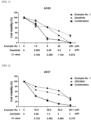
- FIG. 1 shows the treatment effect of the reference Compound of Example 1 in combination with Dasatinib on A549 cell.
- FIG. 4 shows the treatment effect of the reference Compound of Example 1 in combination with Dasatinib on H1975 cell.
- FIG. 5 shows the treatment effect of the reference Compound of Example 104 in combination with Dasatinib on H1975 cell.
- FIG. 2 shows the treatment effect of the reference Compound of Example 1 in combination with GDC0941 on U937 cell.
- FIG. 3 shows the treatment effect of the reference Compound of Example 1 in combination with GDC0941 on A549 cell.
- Test Example 4 In vivo testing OXPHOS inhibitors for anticancer activity
- the SK-MEL-239 tumor cell line was maintained in vitro as monolayer in RPMI1 640 medium supplemented with 10% heat inactivated fetal bovine serum, 100U/ml penicillin and 100 ⁇ g/ml streptomycin, and L-glutamine (2 mM) at 37°C in an atmosphere of 5% CO 2 in air.
- the tumor cells were routinely subcultured twice weekly with 0.5% trypsin-EDTA treatment.
- the cells growing in an exponential growth phase were harvested and counted for tumor cell inoculation.
- mice Female BALB/c nude mice aged 6-8 weeks and weighing approximately 18-22g were purchased from Vital River. Each mouse was inoculated subcutaneously at the right flank with SK-MEL-239 tumor cells (1 ⁇ 10 7 ) in 0.1 ml of PBS for tumor development. The treatment was started, when the tumor size reaches approximately 100 mm 3 .
Landscapes
- Chemical & Material Sciences (AREA)
- Organic Chemistry (AREA)
- Health & Medical Sciences (AREA)
- General Health & Medical Sciences (AREA)
- Public Health (AREA)
- Veterinary Medicine (AREA)
- Medicinal Chemistry (AREA)
- Animal Behavior & Ethology (AREA)
- Life Sciences & Earth Sciences (AREA)
- Pharmacology & Pharmacy (AREA)
- Nuclear Medicine, Radiotherapy & Molecular Imaging (AREA)
- Chemical Kinetics & Catalysis (AREA)
- General Chemical & Material Sciences (AREA)
- Bioinformatics & Cheminformatics (AREA)
- Engineering & Computer Science (AREA)
- Diabetes (AREA)
- Obesity (AREA)
- Physical Education & Sports Medicine (AREA)
- Hematology (AREA)
- Epidemiology (AREA)
- Orthopedic Medicine & Surgery (AREA)
- Endocrinology (AREA)
- Rheumatology (AREA)
- Emergency Medicine (AREA)
- Child & Adolescent Psychology (AREA)
- Oncology (AREA)
- Heart & Thoracic Surgery (AREA)
- Neurology (AREA)
- Reproductive Health (AREA)
- Cardiology (AREA)
- Gastroenterology & Hepatology (AREA)
- Pharmaceuticals Containing Other Organic And Inorganic Compounds (AREA)
- Acyclic And Carbocyclic Compounds In Medicinal Compositions (AREA)
- Heterocyclic Compounds Containing Sulfur Atoms (AREA)
- Organic Low-Molecular-Weight Compounds And Preparation Thereof (AREA)
- Thiazole And Isothizaole Compounds (AREA)
- Heterocyclic Carbon Compounds Containing A Hetero Ring Having Nitrogen And Oxygen As The Only Ring Hetero Atoms (AREA)
- Medicines That Contain Protein Lipid Enzymes And Other Medicines (AREA)
- Pyridine Compounds (AREA)
- Indole Compounds (AREA)
Claims (11)
- Verbindung, ausgewählt aus der Gruppe, bestehend aus den folgenden Verbindungen, pharmazeutisch annehmbaren Salzen und pharmazeutisch annehmbaren Solvaten:N-1-(2-(5,6,7, 8-Tetrahydronaphthalin-1-yl)ethyl)biguanid,N-1-(2-(5,6,7,8-Tetrahydronaphthalin-2-yl)ethyl)biguanid,N-1-(4-Cyclopropyl-3 -methyl)phenethylbiguanid,N-1-(3 -(4-cyclopropylphenyl)propyl)biguanid,N-1-(2-(5,6,7,8-Tetrahydronaphthalin-2-yl)methyl)biguanid,N-1-(2-(2,3-Dihydro-1H-inden-5-yl)ethyl)biguanid,N-1-tert-Butyl-N-5-(2-(5,6,7,8-tetrahydronaphthalin-2-yl)methyl)biguanid,N-1-Methyl-N-5-(2-(5,6,7,8-tetrahydronaphthalin-2-yl)ethyl)biguanid,N-1-Propyl-N-5-(2-(5,6,7,8-tetrahydronaphthalin-2-yl)ethyl)biguanid, undN-1-(2,3-dihydro-1H-inden-2-yl)biguanid.
- Verbindung nach Anspruch 1, ausgewählt aus der Gruppe bestehend aus:N-1-(2-(5,6,7, 8-Tetrahydronaphthalin-1-yl)ethyl)biguanid,N-1-(2-(5,6,7,8-Tetrahydronaphthalin-2-yl)ethyl)biguanid,N-1-(2-(5,6,7,8-Tetrahydronaphthalin-2-yl)methyl)biguanid,N-1-(2-(2,3-Dihydro-1H-inden-5-yl)ethyl)biguanid,N-1-tert-Butyl-N-5-(2-(5,6,7,8-tetrahydronaphthalin-2-yl)methyl)biguanid,N-1-(2,3-dihydro-1H-inden-2-yl)biguanid,pharmazeutisch annehmbaren Salzen und pharmazeutisch annehmbaren Solvaten solcher Verbindungen.
- Verbindung nach Anspruch 1, ausgewählt aus der Gruppe bestehend aus:N-1-(2-(2,3-Dihydro-1H-inden-5-yl)ethyl)biguanid,N-1-(2-(5,6,7,8-Tetrahydronaphthalin-2-yl)ethyl)biguanid,N-1-(2-(5,6,7,8-Tetrahydronaphthalin-2-yl)methyl)biguanid oder pharmazeutisch annehmbaren Salzen und pharmazeutisch annehmbaren Solvaten solcher Verbindungen.
- Pharmazeutische Zusammensetzung, umfassend eine Verbindung nach einem der Ansprüche 1 bis 3 in Kombination mit einem pharmazeutisch annehmbaren Träger, Verdünnungsmittel oder Hilfsstoff.
- Verbindung nach einem der Ansprüche 1 bis 3 oder pharmazeutische Zusammensetzung nach Anspruch 4 zur Verwendung bei der Behandlung einer Krankheit, die mit mitochondrialer oxidativer Phosphorylierung assoziiert ist.
- Verbindung oder pharmazeutische Zusammensetzung für die Verwendung nach Anspruch 5, wobei die Krankheit mindestens eine ist, die ausgewählt ist aus der Gruppe, bestehend aus Diabetes mellitus, Fettleibigkeit, Hyperlipidämie, Hypercholesterinämie, Fettleber, koronarer Herzkrankheit, Osteoporose, polyzystischem Ovarsyndrom, metabolischem Syndrom, Krebs, Muskelschmerzen, Myozytenschäden und Rhabdomyolyse.
- Verbindung oder pharmazeutische Zusammensetzung für die Verwendung nach Anspruch 5, wobei die Krankheit insulinunabhängiger Diabetes mellitus ist.
- Verbindung oder pharmazeutische Zusammensetzung für die Verwendung nach Anspruch 5, wobei die Krankheit Krebs ist, der ausgewählt ist aus der Gruppe, bestehend aus Gebärmutterkrebs, Brustkrebs, Magenkrebs, Hirnkrebs, Darmkrebs, Lungenkrebs, Hautkrebs, Blutkrebs und Leberkrebs.
- Verbindung oder pharmazeutische Zusammensetzung für die Verwendung nach Anspruch 5, wobei die Verbindung oder Zusammensetzung zur Verwendung bei der Hemmung eines Wiederauftretens oder einer Metastasierung von Krebs bestimmt ist.
- Verbindung oder pharmazeutische Zusammensetzung für die Verwendung nach Anspruch 5, wobei die Verwendung ein Verabreichen der Zusammensetzung oder Verbindung in Kombination mit Strahlung oder einem anderen pharmazeutischen Mittel umfasst.
- Verbindung oder pharmazeutische Zusammensetzung für die Verwendung nach Anspruch 10, wobei das andere pharmazeutische Mittel ein Chemotherapeutikum, ein Medikament gegen Krebs, ein Antikörper-Medikament gegen Krebs, ein Immuntherapie-Mittel oder ein Kinase-Hemmer ist.
Applications Claiming Priority (4)
| Application Number | Priority Date | Filing Date | Title |
|---|---|---|---|
| KR20140046290 | 2014-04-17 | ||
| KR20140080133 | 2014-06-27 | ||
| KR20140133135 | 2014-10-02 | ||
| PCT/KR2015/003884 WO2015160220A1 (en) | 2014-04-17 | 2015-04-17 | Guanidine compounds and use thereof |
Publications (3)
| Publication Number | Publication Date |
|---|---|
| EP3131877A1 EP3131877A1 (de) | 2017-02-22 |
| EP3131877A4 EP3131877A4 (de) | 2017-05-17 |
| EP3131877B1 true EP3131877B1 (de) | 2023-07-19 |
Family
ID=54324331
Family Applications (1)
| Application Number | Title | Priority Date | Filing Date |
|---|---|---|---|
| EP15780117.6A Active EP3131877B1 (de) | 2014-04-17 | 2015-04-17 | Biguanid-verbindungen |
Country Status (6)
| Country | Link |
|---|---|
| US (1) | US11465989B2 (de) |
| EP (1) | EP3131877B1 (de) |
| JP (2) | JP6487031B2 (de) |
| KR (1) | KR102061390B1 (de) |
| CN (2) | CN106458868A (de) |
| WO (1) | WO2015160220A1 (de) |
Families Citing this family (17)
| Publication number | Priority date | Publication date | Assignee | Title |
|---|---|---|---|---|
| ES2797574T3 (es) | 2013-02-07 | 2020-12-02 | Immunomet Therapeutics Inc | Derivados de biguanida N1-cíclica amina-N5-sustituida, métodos de preparación de la misma y composición farmacéutica que comprende la misma |
| EP3131877B1 (de) | 2014-04-17 | 2023-07-19 | Immunomet Therapeutics Inc. | Biguanid-verbindungen |
| JP6793184B2 (ja) * | 2015-09-11 | 2020-12-02 | バイエル・クロップサイエンス・アクチェンゲゼルシャフト | ビグアニド塩類及びs−トリアジン類を製造する方法 |
| CN106748941A (zh) * | 2016-11-28 | 2017-05-31 | 武汉福山生物科技有限公司 | 含硒化合物及其用途 |
| WO2018106907A1 (en) * | 2016-12-08 | 2018-06-14 | Novatarg, Inc. | Fused bicyclic alkylene linked imidodicarbonimidic diamides, methods for synthesis, and uses in therary |
| US11666888B2 (en) | 2018-02-05 | 2023-06-06 | Bio-Rad Laboratories, Inc. | Chromatography resin having an anionic exchange-hydrophobic mixed mode ligand |
| WO2019233982A1 (en) | 2018-06-05 | 2019-12-12 | Institut Curie | Compounds with biguanidyl radical and uses thereof |
| CN109096194B (zh) * | 2018-10-09 | 2022-02-08 | 湖南师范大学 | 一种双胍衍生物、药物组合物、制备方法和用途 |
| CN113164416B (zh) | 2018-11-14 | 2024-08-16 | 韩国生命工学研究院 | 含有胍衍生物的用于促进生发的组合物 |
| KR102259733B1 (ko) * | 2019-08-28 | 2021-06-02 | 주식회사 하임바이오 | 비구아나이드 계열 화합물의 제조 방법 |
| CN111018748A (zh) * | 2019-12-27 | 2020-04-17 | 广东省生物医药技术研究所 | 化合物(s)-1-(1-萘基)乙基双胍及其制备方法和应用 |
| US20230212122A1 (en) * | 2020-05-26 | 2023-07-06 | The Regents Of The University Of Michigan | Mitochondrial targeting compounds for the treatment of associated diseases |
| WO2022106505A1 (en) | 2020-11-18 | 2022-05-27 | Institut Curie | Dimers of biguanidines and their therapeutic uses |
| WO2022152138A1 (zh) * | 2021-01-15 | 2022-07-21 | 中国医药研究开发中心有限公司 | 稠和杂环类化合物及其制备方法和医药用途 |
| EP4071046B1 (de) * | 2021-04-09 | 2023-06-07 | AIRBUS HELICOPTERS DEUTSCHLAND GmbH | Drehflügelflugzeug mit einer feuerwandanordnung |
| CN114605291B (zh) * | 2022-04-10 | 2023-11-14 | 烟台大学 | 蒽甲基-双胍类抗癌化合物及其制备方法和应用 |
| CN117105821A (zh) * | 2023-04-18 | 2023-11-24 | 重庆普佑制药有限公司 | 一种沙库比曲中间体的制备方法 |
Family Cites Families (35)
| Publication number | Priority date | Publication date | Assignee | Title |
|---|---|---|---|---|
| US3170925A (en) | 1965-02-23 | L-subsmtuted | ||
| US2631152A (en) | 1952-01-24 | 1953-03-10 | American Cyanamid Co | Guanylurea salts of penicillin |
| US2961377A (en) * | 1957-08-05 | 1960-11-22 | Us Vitamin Pharm Corp | Oral anti-diabetic compositions and methods |
| GB973882A (en) * | 1959-12-23 | 1964-10-28 | Wellcome Found | Benzyl-guanidines,their preparation and pharmaceutical compositions containing them |
| GB1040542A (en) * | 1961-10-06 | 1966-09-01 | Smith Kline French Lab | New guanidine derivatives and process for preparing the same |
| US3270036A (en) | 1965-10-07 | 1966-08-30 | Squibb & Sons Inc | Adamantylbiguanides |
| FR1476752A (fr) | 1966-02-28 | 1967-04-14 | Lipha | Nouveaux dérivés hétérocycliques de la guanidine et leurs procédés de préparation |
| GB1215152A (en) | 1967-04-11 | 1970-12-09 | Science Union & Cie | Biguanide derivatives and pharmaceutical preparations containing them |
| US3960949A (en) | 1971-04-02 | 1976-06-01 | Schering Aktiengesellschaft | 1,2-Biguanides |
| DE2426683A1 (de) * | 1974-06-01 | 1975-12-18 | Boehringer Mannheim Gmbh | Biguanide und verfahren zu deren herstellung |
| CA1072962A (en) | 1976-08-11 | 1980-03-04 | George H. Douglas | Process for preparing amidinoureas |
| AU7583881A (en) | 1981-08-24 | 1983-03-08 | Rorer International (Overseas) Inc. | Promotion of feed efficiency in animals |
| WO1995020920A1 (en) * | 1994-02-02 | 1995-08-10 | Chiron Vision Corporation | A microkeratome and method and apparatus for calibrating a microkeratome |
| JPH09509156A (ja) * | 1994-02-03 | 1997-09-16 | ケンブリッジ・ニューロサイエンス・インコーポレーテッド | 治療用グアニジン類 |
| CA2345710C (en) | 1997-10-02 | 2008-12-30 | The University Of Western Ontario | Preparation of radiolabelled haloaromatics via polymer-bound intermediates |
| FR2809310B1 (fr) | 2000-05-26 | 2004-02-13 | Centre Nat Rech Scient | Utilisation de derives de biguanide pour fabriquer un medicament ayant un effet cicatrisant |
| JP2005097117A (ja) | 2000-06-30 | 2005-04-14 | Chugai Pharmaceut Co Ltd | 糖尿病治療剤 |
| KR101363679B1 (ko) | 2002-09-20 | 2014-02-14 | 안드렉스 랩스 엘엘씨 | 약제학적 정제 |
| JP4391422B2 (ja) | 2002-12-17 | 2009-12-24 | 浜理薬品工業株式会社 | 新規2,4−ジアミノ−1,3,5−トリアジン誘導体 |
| FR2862218B1 (fr) * | 2003-11-18 | 2006-05-05 | Oreal | Composition de mise en forme des cheveux comprenant au moins une imine hors hydroxyde |
| WO2006041773A2 (en) | 2004-10-04 | 2006-04-20 | Millennium Pharmaceuticals, Inc. | Lactam compounds useful as protein kinase inhibitors |
| US7534418B2 (en) * | 2004-12-10 | 2009-05-19 | The Regents Of The University Of Michigan | Imaging agents |
| WO2006122546A1 (de) | 2005-05-18 | 2006-11-23 | Forschungsverbund Berlin E.V. | Nicht-peptidische inhibitoren der akap-pka-wechselwirkung |
| WO2009113092A2 (en) | 2008-01-23 | 2009-09-17 | Usv Limited | Process for preparation of proguanil hydrochloride |
| US20100114898A1 (en) | 2008-10-06 | 2010-05-06 | Teradata Us, Inc. | Publication services |
| KR101083300B1 (ko) | 2008-10-13 | 2011-11-14 | 한국화학연구원 | N1-벤조[1,3]다이옥솔-5-일메틸-n2-치환된 바이구아나이드 유도체, 이의 제조방법 및 이를 유효성분으로 함유하는 약학 조성물 |
| KR101041428B1 (ko) | 2008-10-13 | 2011-06-14 | 한국화학연구원 | N1-2-티오펜-2-일에틸-n2-치환된 바이구아나이드 유도체,이의 제조방법 및 이를 유효성분으로 함유하는 약학 조성물 |
| EP2414360A1 (de) * | 2009-03-31 | 2012-02-08 | ArQule, Inc. | Substituierte dipyridopyrimidodiazepin- und benzopyridopyrimidoverbindungen |
| SG10201402287TA (en) * | 2009-05-11 | 2014-07-30 | Berg Llc | Methods for the diagnosis of metabolic disorders using epimetabolic shifters, multidimensional intracellular molecules, or environmental influencers |
| JP2013516461A (ja) | 2010-01-06 | 2013-05-13 | ハナル バイオファーマ カンパニー リミテッド | ビグアニド誘導体、その製造方法及びこれを有効成分として含有する薬学組成物 |
| MX2014008190A (es) | 2012-01-06 | 2015-02-04 | Elcelyx Therapeutics Inc | Composiciones de biguanida y métodos para tratar transtornos metabólicos. |
| CN102757285A (zh) | 2012-06-19 | 2012-10-31 | 阜阳富瑞雪化工科技有限公司 | 一种肥料缓释增效剂及其制备方法 |
| WO2014052305A2 (en) * | 2012-09-26 | 2014-04-03 | Thomas Jefferson University | Method for treating breast cancer using mitochondrial poisons that interfere with over-expressed mitochondrial proteins |
| WO2015026215A1 (ko) | 2013-08-23 | 2015-02-26 | 가톨릭대학교 산학협력단 | 바이구아나이드 유도체 화합물을 유효성분으로 포함하는 면역질환 또는 염증질환의 예방 또는 치료용 약제학적 조성물 |
| EP3131877B1 (de) | 2014-04-17 | 2023-07-19 | Immunomet Therapeutics Inc. | Biguanid-verbindungen |
-
2015
- 2015-04-17 EP EP15780117.6A patent/EP3131877B1/de active Active
- 2015-04-17 CN CN201580020153.5A patent/CN106458868A/zh active Pending
- 2015-04-17 US US15/304,798 patent/US11465989B2/en active Active
- 2015-04-17 KR KR1020167032056A patent/KR102061390B1/ko not_active Ceased
- 2015-04-17 CN CN202010811506.6A patent/CN111848494B/zh active Active
- 2015-04-17 JP JP2017506240A patent/JP6487031B2/ja active Active
- 2015-04-17 WO PCT/KR2015/003884 patent/WO2015160220A1/en not_active Ceased
-
2019
- 2019-01-07 JP JP2019000435A patent/JP6899851B2/ja active Active
Also Published As
| Publication number | Publication date |
|---|---|
| EP3131877A4 (de) | 2017-05-17 |
| JP6487031B2 (ja) | 2019-03-20 |
| US20170073331A1 (en) | 2017-03-16 |
| JP2017513948A (ja) | 2017-06-01 |
| JP2019077703A (ja) | 2019-05-23 |
| CN111848494B (zh) | 2023-08-01 |
| CN106458868A (zh) | 2017-02-22 |
| WO2015160220A1 (en) | 2015-10-22 |
| US11465989B2 (en) | 2022-10-11 |
| KR20160146852A (ko) | 2016-12-21 |
| EP3131877A1 (de) | 2017-02-22 |
| KR102061390B1 (ko) | 2019-12-31 |
| CN111848494A (zh) | 2020-10-30 |
| KR102061390B9 (ko) | 2022-04-01 |
| JP6899851B2 (ja) | 2021-07-07 |
Similar Documents
| Publication | Publication Date | Title |
|---|---|---|
| EP3131877B1 (de) | Biguanid-verbindungen | |
| EP3288918B1 (de) | Guanidinverbindungen und deren verwendung | |
| EP3222614B1 (de) | Biguanidverbindung und verwendung davon | |
| CN114716387B (zh) | 用于前列腺癌的腔内放射疗法的前列腺特异性膜抗原靶向的高亲和力剂 | |
| CN104125957B (zh) | 取代的苄基吡唑 | |
| JP2005531639A (ja) | Hcvns5bポリメラーゼの阻害剤 | |
| CN115916750A (zh) | 用于制备具有经取代的苯基或吡啶基部分的serd三环化合物的方法 | |
| US11566002B2 (en) | Substituted tetrahydrocyclopenta[C]pyrroles, substituted dihydropyrrolizines, analogues thereof, and methods using same | |
| HK1234726B (en) | Biguanide compounds | |
| HK1234726A1 (en) | Biguanide compounds | |
| CN103435562B (zh) | 6-取代苯并二氮卓-2,4-二酮类化合物及其用途 | |
| HK40035834A (en) | Guanidine compounds and use thereof | |
| HK40035834B (zh) | 胍化合物及其用途 | |
| CN118355022A (zh) | 用于治疗寄生虫感染的核苷类似物 | |
| EP4163287A1 (de) | Klasse von arylglucosidderivaten, herstellungsverfahren dafür und anwendung davon | |
| HK1252052B (en) | Guanidine compounds and use thereof | |
| CN112759583B (zh) | 包含呋喃基的喹啉类衍生物及其制备方法和用途 | |
| US20230295115A1 (en) | Substituted isoquinolinylmethyl amides, analogues thereof, and methods using same | |
| WO2025194625A1 (zh) | 结核病的预防与治疗 | |
| US6391904B1 (en) | Iminoguanidine derivatives, preparation method, use as medicines | |
| CN116903626A (zh) | 芳基酰胺化合物、包含其的药物组合物及其制备方法和用途 |
Legal Events
| Date | Code | Title | Description |
|---|---|---|---|
| STAA | Information on the status of an ep patent application or granted ep patent |
Free format text: STATUS: THE INTERNATIONAL PUBLICATION HAS BEEN MADE |
|
| PUAI | Public reference made under article 153(3) epc to a published international application that has entered the european phase |
Free format text: ORIGINAL CODE: 0009012 |
|
| STAA | Information on the status of an ep patent application or granted ep patent |
Free format text: STATUS: REQUEST FOR EXAMINATION WAS MADE |
|
| 17P | Request for examination filed |
Effective date: 20161111 |
|
| AK | Designated contracting states |
Kind code of ref document: A1 Designated state(s): AL AT BE BG CH CY CZ DE DK EE ES FI FR GB GR HR HU IE IS IT LI LT LU LV MC MK MT NL NO PL PT RO RS SE SI SK SM TR |
|
| AX | Request for extension of the european patent |
Extension state: BA ME |
|
| A4 | Supplementary search report drawn up and despatched |
Effective date: 20170420 |
|
| RIC1 | Information provided on ipc code assigned before grant |
Ipc: C07D 333/10 20060101ALI20170412BHEP Ipc: C07C 279/04 20060101ALI20170412BHEP Ipc: C07C 279/26 20060101AFI20170412BHEP |
|
| DAV | Request for validation of the european patent (deleted) | ||
| DAX | Request for extension of the european patent (deleted) | ||
| REG | Reference to a national code |
Ref country code: HK Ref legal event code: DE Ref document number: 1234726 Country of ref document: HK |
|
| STAA | Information on the status of an ep patent application or granted ep patent |
Free format text: STATUS: EXAMINATION IS IN PROGRESS |
|
| 17Q | First examination report despatched |
Effective date: 20180809 |
|
| GRAP | Despatch of communication of intention to grant a patent |
Free format text: ORIGINAL CODE: EPIDOSNIGR1 |
|
| STAA | Information on the status of an ep patent application or granted ep patent |
Free format text: STATUS: GRANT OF PATENT IS INTENDED |
|
| RIC1 | Information provided on ipc code assigned before grant |
Ipc: C07C 279/04 19900101ALI20230109BHEP Ipc: C07D 333/10 19740701ALI20230109BHEP Ipc: C07C 279/26 19900101AFI20230109BHEP |
|
| INTG | Intention to grant announced |
Effective date: 20230127 |
|
| GRAS | Grant fee paid |
Free format text: ORIGINAL CODE: EPIDOSNIGR3 |
|
| P01 | Opt-out of the competence of the unified patent court (upc) registered |
Effective date: 20230505 |
|
| GRAA | (expected) grant |
Free format text: ORIGINAL CODE: 0009210 |
|
| STAA | Information on the status of an ep patent application or granted ep patent |
Free format text: STATUS: THE PATENT HAS BEEN GRANTED |
|
| AK | Designated contracting states |
Kind code of ref document: B1 Designated state(s): AL AT BE BG CH CY CZ DE DK EE ES FI FR GB GR HR HU IE IS IT LI LT LU LV MC MK MT NL NO PL PT RO RS SE SI SK SM TR |
|
| REG | Reference to a national code |
Ref country code: GB Ref legal event code: FG4D |
|
| REG | Reference to a national code |
Ref country code: CH Ref legal event code: EP |
|
| REG | Reference to a national code |
Ref country code: DE Ref legal event code: R096 Ref document number: 602015084664 Country of ref document: DE |
|
| REG | Reference to a national code |
Ref country code: IE Ref legal event code: FG4D |
|
| REG | Reference to a national code |
Ref country code: NL Ref legal event code: FP |
|
| REG | Reference to a national code |
Ref country code: LT Ref legal event code: MG9D |
|
| REG | Reference to a national code |
Ref country code: AT Ref legal event code: MK05 Ref document number: 1589356 Country of ref document: AT Kind code of ref document: T Effective date: 20230719 |
|
| PG25 | Lapsed in a contracting state [announced via postgrant information from national office to epo] |
Ref country code: GR Free format text: LAPSE BECAUSE OF FAILURE TO SUBMIT A TRANSLATION OF THE DESCRIPTION OR TO PAY THE FEE WITHIN THE PRESCRIBED TIME-LIMIT Effective date: 20231020 |
|
| PG25 | Lapsed in a contracting state [announced via postgrant information from national office to epo] |
Ref country code: IS Free format text: LAPSE BECAUSE OF FAILURE TO SUBMIT A TRANSLATION OF THE DESCRIPTION OR TO PAY THE FEE WITHIN THE PRESCRIBED TIME-LIMIT Effective date: 20231119 |
|
| PG25 | Lapsed in a contracting state [announced via postgrant information from national office to epo] |
Ref country code: SE Free format text: LAPSE BECAUSE OF FAILURE TO SUBMIT A TRANSLATION OF THE DESCRIPTION OR TO PAY THE FEE WITHIN THE PRESCRIBED TIME-LIMIT Effective date: 20230719 Ref country code: RS Free format text: LAPSE BECAUSE OF FAILURE TO SUBMIT A TRANSLATION OF THE DESCRIPTION OR TO PAY THE FEE WITHIN THE PRESCRIBED TIME-LIMIT Effective date: 20230719 Ref country code: PT Free format text: LAPSE BECAUSE OF FAILURE TO SUBMIT A TRANSLATION OF THE DESCRIPTION OR TO PAY THE FEE WITHIN THE PRESCRIBED TIME-LIMIT Effective date: 20231120 Ref country code: NO Free format text: LAPSE BECAUSE OF FAILURE TO SUBMIT A TRANSLATION OF THE DESCRIPTION OR TO PAY THE FEE WITHIN THE PRESCRIBED TIME-LIMIT Effective date: 20231019 Ref country code: LV Free format text: LAPSE BECAUSE OF FAILURE TO SUBMIT A TRANSLATION OF THE DESCRIPTION OR TO PAY THE FEE WITHIN THE PRESCRIBED TIME-LIMIT Effective date: 20230719 Ref country code: LT Free format text: LAPSE BECAUSE OF FAILURE TO SUBMIT A TRANSLATION OF THE DESCRIPTION OR TO PAY THE FEE WITHIN THE PRESCRIBED TIME-LIMIT Effective date: 20230719 Ref country code: IS Free format text: LAPSE BECAUSE OF FAILURE TO SUBMIT A TRANSLATION OF THE DESCRIPTION OR TO PAY THE FEE WITHIN THE PRESCRIBED TIME-LIMIT Effective date: 20231119 Ref country code: HR Free format text: LAPSE BECAUSE OF FAILURE TO SUBMIT A TRANSLATION OF THE DESCRIPTION OR TO PAY THE FEE WITHIN THE PRESCRIBED TIME-LIMIT Effective date: 20230719 Ref country code: GR Free format text: LAPSE BECAUSE OF FAILURE TO SUBMIT A TRANSLATION OF THE DESCRIPTION OR TO PAY THE FEE WITHIN THE PRESCRIBED TIME-LIMIT Effective date: 20231020 Ref country code: FI Free format text: LAPSE BECAUSE OF FAILURE TO SUBMIT A TRANSLATION OF THE DESCRIPTION OR TO PAY THE FEE WITHIN THE PRESCRIBED TIME-LIMIT Effective date: 20230719 Ref country code: AT Free format text: LAPSE BECAUSE OF FAILURE TO SUBMIT A TRANSLATION OF THE DESCRIPTION OR TO PAY THE FEE WITHIN THE PRESCRIBED TIME-LIMIT Effective date: 20230719 |
|
| PG25 | Lapsed in a contracting state [announced via postgrant information from national office to epo] |
Ref country code: PL Free format text: LAPSE BECAUSE OF FAILURE TO SUBMIT A TRANSLATION OF THE DESCRIPTION OR TO PAY THE FEE WITHIN THE PRESCRIBED TIME-LIMIT Effective date: 20230719 |
|
| REG | Reference to a national code |
Ref country code: DE Ref legal event code: R097 Ref document number: 602015084664 Country of ref document: DE |
|
| PG25 | Lapsed in a contracting state [announced via postgrant information from national office to epo] |
Ref country code: ES Free format text: LAPSE BECAUSE OF FAILURE TO SUBMIT A TRANSLATION OF THE DESCRIPTION OR TO PAY THE FEE WITHIN THE PRESCRIBED TIME-LIMIT Effective date: 20230719 |
|
| PG25 | Lapsed in a contracting state [announced via postgrant information from national office to epo] |
Ref country code: SM Free format text: LAPSE BECAUSE OF FAILURE TO SUBMIT A TRANSLATION OF THE DESCRIPTION OR TO PAY THE FEE WITHIN THE PRESCRIBED TIME-LIMIT Effective date: 20230719 Ref country code: RO Free format text: LAPSE BECAUSE OF FAILURE TO SUBMIT A TRANSLATION OF THE DESCRIPTION OR TO PAY THE FEE WITHIN THE PRESCRIBED TIME-LIMIT Effective date: 20230719 Ref country code: ES Free format text: LAPSE BECAUSE OF FAILURE TO SUBMIT A TRANSLATION OF THE DESCRIPTION OR TO PAY THE FEE WITHIN THE PRESCRIBED TIME-LIMIT Effective date: 20230719 Ref country code: EE Free format text: LAPSE BECAUSE OF FAILURE TO SUBMIT A TRANSLATION OF THE DESCRIPTION OR TO PAY THE FEE WITHIN THE PRESCRIBED TIME-LIMIT Effective date: 20230719 Ref country code: DK Free format text: LAPSE BECAUSE OF FAILURE TO SUBMIT A TRANSLATION OF THE DESCRIPTION OR TO PAY THE FEE WITHIN THE PRESCRIBED TIME-LIMIT Effective date: 20230719 Ref country code: CZ Free format text: LAPSE BECAUSE OF FAILURE TO SUBMIT A TRANSLATION OF THE DESCRIPTION OR TO PAY THE FEE WITHIN THE PRESCRIBED TIME-LIMIT Effective date: 20230719 Ref country code: SK Free format text: LAPSE BECAUSE OF FAILURE TO SUBMIT A TRANSLATION OF THE DESCRIPTION OR TO PAY THE FEE WITHIN THE PRESCRIBED TIME-LIMIT Effective date: 20230719 |
|
| PLBE | No opposition filed within time limit |
Free format text: ORIGINAL CODE: 0009261 |
|
| STAA | Information on the status of an ep patent application or granted ep patent |
Free format text: STATUS: NO OPPOSITION FILED WITHIN TIME LIMIT |
|
| PG25 | Lapsed in a contracting state [announced via postgrant information from national office to epo] |
Ref country code: IT Free format text: LAPSE BECAUSE OF FAILURE TO SUBMIT A TRANSLATION OF THE DESCRIPTION OR TO PAY THE FEE WITHIN THE PRESCRIBED TIME-LIMIT Effective date: 20230719 |
|
| 26N | No opposition filed |
Effective date: 20240422 |
|
| PG25 | Lapsed in a contracting state [announced via postgrant information from national office to epo] |
Ref country code: SI Free format text: LAPSE BECAUSE OF FAILURE TO SUBMIT A TRANSLATION OF THE DESCRIPTION OR TO PAY THE FEE WITHIN THE PRESCRIBED TIME-LIMIT Effective date: 20230719 |
|
| PG25 | Lapsed in a contracting state [announced via postgrant information from national office to epo] |
Ref country code: BG Free format text: LAPSE BECAUSE OF FAILURE TO SUBMIT A TRANSLATION OF THE DESCRIPTION OR TO PAY THE FEE WITHIN THE PRESCRIBED TIME-LIMIT Effective date: 20230719 |
|
| PG25 | Lapsed in a contracting state [announced via postgrant information from national office to epo] |
Ref country code: MC Free format text: LAPSE BECAUSE OF FAILURE TO SUBMIT A TRANSLATION OF THE DESCRIPTION OR TO PAY THE FEE WITHIN THE PRESCRIBED TIME-LIMIT Effective date: 20230719 |
|
| PG25 | Lapsed in a contracting state [announced via postgrant information from national office to epo] |
Ref country code: MC Free format text: LAPSE BECAUSE OF FAILURE TO SUBMIT A TRANSLATION OF THE DESCRIPTION OR TO PAY THE FEE WITHIN THE PRESCRIBED TIME-LIMIT Effective date: 20230719 Ref country code: BG Free format text: LAPSE BECAUSE OF FAILURE TO SUBMIT A TRANSLATION OF THE DESCRIPTION OR TO PAY THE FEE WITHIN THE PRESCRIBED TIME-LIMIT Effective date: 20230719 |
|
| PG25 | Lapsed in a contracting state [announced via postgrant information from national office to epo] |
Ref country code: LU Free format text: LAPSE BECAUSE OF NON-PAYMENT OF DUE FEES Effective date: 20240417 |
|
| PG25 | Lapsed in a contracting state [announced via postgrant information from national office to epo] |
Ref country code: LU Free format text: LAPSE BECAUSE OF NON-PAYMENT OF DUE FEES Effective date: 20240417 |
|
| PGFP | Annual fee paid to national office [announced via postgrant information from national office to epo] |
Ref country code: NL Payment date: 20250427 Year of fee payment: 11 |
|
| PGFP | Annual fee paid to national office [announced via postgrant information from national office to epo] |
Ref country code: DE Payment date: 20250429 Year of fee payment: 11 |
|
| PGFP | Annual fee paid to national office [announced via postgrant information from national office to epo] |
Ref country code: GB Payment date: 20250428 Year of fee payment: 11 |
|
| PGFP | Annual fee paid to national office [announced via postgrant information from national office to epo] |
Ref country code: BE Payment date: 20250428 Year of fee payment: 11 |
|
| PGFP | Annual fee paid to national office [announced via postgrant information from national office to epo] |
Ref country code: FR Payment date: 20250425 Year of fee payment: 11 |
|
| PGFP | Annual fee paid to national office [announced via postgrant information from national office to epo] |
Ref country code: CH Payment date: 20250501 Year of fee payment: 11 |
|
| PGFP | Annual fee paid to national office [announced via postgrant information from national office to epo] |
Ref country code: IE Payment date: 20250428 Year of fee payment: 11 |
|
| PG25 | Lapsed in a contracting state [announced via postgrant information from national office to epo] |
Ref country code: CY Free format text: LAPSE BECAUSE OF FAILURE TO SUBMIT A TRANSLATION OF THE DESCRIPTION OR TO PAY THE FEE WITHIN THE PRESCRIBED TIME-LIMIT; INVALID AB INITIO Effective date: 20150417 |
|
| PG25 | Lapsed in a contracting state [announced via postgrant information from national office to epo] |
Ref country code: HU Free format text: LAPSE BECAUSE OF FAILURE TO SUBMIT A TRANSLATION OF THE DESCRIPTION OR TO PAY THE FEE WITHIN THE PRESCRIBED TIME-LIMIT; INVALID AB INITIO Effective date: 20150417 |