EP3129525B1 - Verfahren zur aktivierung von zu phosphatierenden metalloberflächen, vorzugsweise verzinktem stahlblech - Google Patents
Verfahren zur aktivierung von zu phosphatierenden metalloberflächen, vorzugsweise verzinktem stahlblech Download PDFInfo
- Publication number
- EP3129525B1 EP3129525B1 EP15741927.6A EP15741927A EP3129525B1 EP 3129525 B1 EP3129525 B1 EP 3129525B1 EP 15741927 A EP15741927 A EP 15741927A EP 3129525 B1 EP3129525 B1 EP 3129525B1
- Authority
- EP
- European Patent Office
- Prior art keywords
- activating
- bath
- particles
- activation
- process according
- Prior art date
- Legal status (The legal status is an assumption and is not a legal conclusion. Google has not performed a legal analysis and makes no representation as to the accuracy of the status listed.)
- Not-in-force
Links
- 230000003213 activating effect Effects 0.000 title claims description 43
- 238000000034 method Methods 0.000 title claims description 32
- 229910001335 Galvanized steel Inorganic materials 0.000 title claims description 5
- 239000008397 galvanized steel Substances 0.000 title claims description 5
- 239000002245 particle Substances 0.000 claims description 65
- 238000009826 distribution Methods 0.000 claims description 18
- 230000008569 process Effects 0.000 claims description 16
- 239000000654 additive Substances 0.000 claims description 14
- 230000000996 additive effect Effects 0.000 claims description 14
- 229910052751 metal Inorganic materials 0.000 claims description 9
- 239000002184 metal Substances 0.000 claims description 9
- 229910019142 PO4 Inorganic materials 0.000 claims description 8
- 238000005054 agglomeration Methods 0.000 claims description 8
- 230000002776 aggregation Effects 0.000 claims description 8
- -1 oxy-1,2-ethanediyl Chemical group 0.000 claims description 8
- 235000021317 phosphate Nutrition 0.000 claims description 8
- 239000002202 Polyethylene glycol Substances 0.000 claims description 6
- 229920001223 polyethylene glycol Polymers 0.000 claims description 6
- 238000004458 analytical method Methods 0.000 claims description 4
- MTHSVFCYNBDYFN-UHFFFAOYSA-N diethylene glycol Chemical compound OCCOCCO MTHSVFCYNBDYFN-UHFFFAOYSA-N 0.000 claims description 4
- 229910044991 metal oxide Inorganic materials 0.000 claims description 4
- 150000004706 metal oxides Chemical class 0.000 claims description 4
- 150000003013 phosphoric acid derivatives Chemical class 0.000 claims description 4
- 238000002296 dynamic light scattering Methods 0.000 claims description 3
- 239000002105 nanoparticle Substances 0.000 claims description 3
- 238000003756 stirring Methods 0.000 claims description 3
- 238000002604 ultrasonography Methods 0.000 claims description 2
- XLYOFNOQVPJJNP-UHFFFAOYSA-N water Substances O XLYOFNOQVPJJNP-UHFFFAOYSA-N 0.000 claims description 2
- 230000004913 activation Effects 0.000 description 62
- 229910000831 Steel Inorganic materials 0.000 description 20
- 239000010959 steel Substances 0.000 description 20
- 239000003973 paint Substances 0.000 description 10
- 238000000576 coating method Methods 0.000 description 9
- 238000005259 measurement Methods 0.000 description 9
- 229910052725 zinc Inorganic materials 0.000 description 8
- 239000011701 zinc Substances 0.000 description 8
- HCHKCACWOHOZIP-UHFFFAOYSA-N Zinc Chemical compound [Zn] HCHKCACWOHOZIP-UHFFFAOYSA-N 0.000 description 7
- 239000011248 coating agent Substances 0.000 description 6
- 239000003792 electrolyte Substances 0.000 description 5
- 239000007788 liquid Substances 0.000 description 5
- 239000000243 solution Substances 0.000 description 5
- 239000013078 crystal Substances 0.000 description 4
- NBIIXXVUZAFLBC-UHFFFAOYSA-K phosphate Chemical compound [O-]P([O-])([O-])=O NBIIXXVUZAFLBC-UHFFFAOYSA-K 0.000 description 4
- 239000010452 phosphate Substances 0.000 description 4
- LRXTYHSAJDENHV-UHFFFAOYSA-H zinc phosphate Chemical compound [Zn+2].[Zn+2].[Zn+2].[O-]P([O-])([O-])=O.[O-]P([O-])([O-])=O LRXTYHSAJDENHV-UHFFFAOYSA-H 0.000 description 4
- 229910000165 zinc phosphate Inorganic materials 0.000 description 4
- 239000002253 acid Substances 0.000 description 3
- 239000000969 carrier Substances 0.000 description 3
- 238000001825 field-flow fractionation Methods 0.000 description 3
- 238000011010 flushing procedure Methods 0.000 description 3
- 230000012010 growth Effects 0.000 description 3
- 230000006911 nucleation Effects 0.000 description 3
- 238000010899 nucleation Methods 0.000 description 3
- 229920000136 polysorbate Polymers 0.000 description 3
- 239000000758 substrate Substances 0.000 description 3
- 229920001213 Polysorbate 20 Polymers 0.000 description 2
- 238000004630 atomic force microscopy Methods 0.000 description 2
- 239000003795 chemical substances by application Substances 0.000 description 2
- 230000008021 deposition Effects 0.000 description 2
- 150000002148 esters Chemical class 0.000 description 2
- 238000010191 image analysis Methods 0.000 description 2
- 239000000463 material Substances 0.000 description 2
- 239000011159 matrix material Substances 0.000 description 2
- 239000002736 nonionic surfactant Substances 0.000 description 2
- 229920006254 polymer film Polymers 0.000 description 2
- 239000000256 polyoxyethylene sorbitan monolaurate Substances 0.000 description 2
- 235000010486 polyoxyethylene sorbitan monolaurate Nutrition 0.000 description 2
- 229940068977 polysorbate 20 Drugs 0.000 description 2
- 238000005086 pumping Methods 0.000 description 2
- 238000012055 resonant mass measurement Methods 0.000 description 2
- 238000000827 velocimetry Methods 0.000 description 2
- 239000000080 wetting agent Substances 0.000 description 2
- IAYPIBMASNFSPL-UHFFFAOYSA-N Ethylene oxide Chemical compound C1CO1 IAYPIBMASNFSPL-UHFFFAOYSA-N 0.000 description 1
- 229920002565 Polyethylene Glycol 400 Polymers 0.000 description 1
- 229920001219 Polysorbate 40 Polymers 0.000 description 1
- 229920001214 Polysorbate 60 Polymers 0.000 description 1
- 229920002642 Polysorbate 65 Polymers 0.000 description 1
- RTAQQCXQSZGOHL-UHFFFAOYSA-N Titanium Chemical compound [Ti] RTAQQCXQSZGOHL-UHFFFAOYSA-N 0.000 description 1
- 238000005299 abrasion Methods 0.000 description 1
- 230000002378 acidificating effect Effects 0.000 description 1
- 239000012670 alkaline solution Substances 0.000 description 1
- 229910052729 chemical element Inorganic materials 0.000 description 1
- 238000004587 chromatography analysis Methods 0.000 description 1
- 238000010924 continuous production Methods 0.000 description 1
- 238000005100 correlation spectroscopy Methods 0.000 description 1
- 238000005260 corrosion Methods 0.000 description 1
- 230000007797 corrosion Effects 0.000 description 1
- 230000008878 coupling Effects 0.000 description 1
- 238000010168 coupling process Methods 0.000 description 1
- 238000005859 coupling reaction Methods 0.000 description 1
- 238000002425 crystallisation Methods 0.000 description 1
- 230000008025 crystallization Effects 0.000 description 1
- 238000005238 degreasing Methods 0.000 description 1
- 238000001035 drying Methods 0.000 description 1
- 239000008151 electrolyte solution Substances 0.000 description 1
- 238000002474 experimental method Methods 0.000 description 1
- 238000011049 filling Methods 0.000 description 1
- 238000007730 finishing process Methods 0.000 description 1
- 238000005194 fractionation Methods 0.000 description 1
- 238000005246 galvanizing Methods 0.000 description 1
- 238000003384 imaging method Methods 0.000 description 1
- 230000006872 improvement Effects 0.000 description 1
- 230000001678 irradiating effect Effects 0.000 description 1
- 238000000691 measurement method Methods 0.000 description 1
- 230000007246 mechanism Effects 0.000 description 1
- 238000000386 microscopy Methods 0.000 description 1
- 239000000203 mixture Substances 0.000 description 1
- 229920000620 organic polymer Polymers 0.000 description 1
- 238000010422 painting Methods 0.000 description 1
- 230000000737 periodic effect Effects 0.000 description 1
- 238000005554 pickling Methods 0.000 description 1
- 229920000642 polymer Polymers 0.000 description 1
- 239000000244 polyoxyethylene sorbitan monooleate Substances 0.000 description 1
- 235000010482 polyoxyethylene sorbitan monooleate Nutrition 0.000 description 1
- 235000010483 polyoxyethylene sorbitan monopalmitate Nutrition 0.000 description 1
- 239000000249 polyoxyethylene sorbitan monopalmitate Substances 0.000 description 1
- 239000001818 polyoxyethylene sorbitan monostearate Substances 0.000 description 1
- 235000010989 polyoxyethylene sorbitan monostearate Nutrition 0.000 description 1
- 235000010988 polyoxyethylene sorbitan tristearate Nutrition 0.000 description 1
- 239000001816 polyoxyethylene sorbitan tristearate Substances 0.000 description 1
- 229940101027 polysorbate 40 Drugs 0.000 description 1
- 229940113124 polysorbate 60 Drugs 0.000 description 1
- 229940099511 polysorbate 65 Drugs 0.000 description 1
- 229920000053 polysorbate 80 Polymers 0.000 description 1
- 229940068968 polysorbate 80 Drugs 0.000 description 1
- 239000000843 powder Substances 0.000 description 1
- 230000007420 reactivation Effects 0.000 description 1
- 230000000306 recurrent effect Effects 0.000 description 1
- 238000007670 refining Methods 0.000 description 1
- 150000003839 salts Chemical class 0.000 description 1
- 238000005070 sampling Methods 0.000 description 1
- 238000001878 scanning electron micrograph Methods 0.000 description 1
- 238000004626 scanning electron microscopy Methods 0.000 description 1
- 230000003068 static effect Effects 0.000 description 1
- 239000000126 substance Substances 0.000 description 1
- WQSRXNAKUYIVET-UHFFFAOYSA-N sulfuric acid;zinc Chemical compound [Zn].OS(O)(=O)=O WQSRXNAKUYIVET-UHFFFAOYSA-N 0.000 description 1
- 239000006228 supernatant Substances 0.000 description 1
- 230000001629 suppression Effects 0.000 description 1
- 238000004381 surface treatment Methods 0.000 description 1
- 239000010936 titanium Substances 0.000 description 1
- 229910052719 titanium Inorganic materials 0.000 description 1
- 238000012876 topography Methods 0.000 description 1
- 238000004627 transmission electron microscopy Methods 0.000 description 1
- 238000003466 welding Methods 0.000 description 1
Images
Classifications
-
- C—CHEMISTRY; METALLURGY
- C23—COATING METALLIC MATERIAL; COATING MATERIAL WITH METALLIC MATERIAL; CHEMICAL SURFACE TREATMENT; DIFFUSION TREATMENT OF METALLIC MATERIAL; COATING BY VACUUM EVAPORATION, BY SPUTTERING, BY ION IMPLANTATION OR BY CHEMICAL VAPOUR DEPOSITION, IN GENERAL; INHIBITING CORROSION OF METALLIC MATERIAL OR INCRUSTATION IN GENERAL
- C23C—COATING METALLIC MATERIAL; COATING MATERIAL WITH METALLIC MATERIAL; SURFACE TREATMENT OF METALLIC MATERIAL BY DIFFUSION INTO THE SURFACE, BY CHEMICAL CONVERSION OR SUBSTITUTION; COATING BY VACUUM EVAPORATION, BY SPUTTERING, BY ION IMPLANTATION OR BY CHEMICAL VAPOUR DEPOSITION, IN GENERAL
- C23C18/00—Chemical coating by decomposition of either liquid compounds or solutions of the coating forming compounds, without leaving reaction products of surface material in the coating; Contact plating
- C23C18/16—Chemical coating by decomposition of either liquid compounds or solutions of the coating forming compounds, without leaving reaction products of surface material in the coating; Contact plating by reduction or substitution, e.g. electroless plating
- C23C18/18—Pretreatment of the material to be coated
- C23C18/1803—Pretreatment of the material to be coated of metallic material surfaces or of a non-specific material surfaces
- C23C18/1824—Pretreatment of the material to be coated of metallic material surfaces or of a non-specific material surfaces by chemical pretreatment
- C23C18/1827—Pretreatment of the material to be coated of metallic material surfaces or of a non-specific material surfaces by chemical pretreatment only one step pretreatment
- C23C18/1834—Use of organic or inorganic compounds other than metals, e.g. activation, sensitisation with polymers
-
- C—CHEMISTRY; METALLURGY
- C23—COATING METALLIC MATERIAL; COATING MATERIAL WITH METALLIC MATERIAL; CHEMICAL SURFACE TREATMENT; DIFFUSION TREATMENT OF METALLIC MATERIAL; COATING BY VACUUM EVAPORATION, BY SPUTTERING, BY ION IMPLANTATION OR BY CHEMICAL VAPOUR DEPOSITION, IN GENERAL; INHIBITING CORROSION OF METALLIC MATERIAL OR INCRUSTATION IN GENERAL
- C23C—COATING METALLIC MATERIAL; COATING MATERIAL WITH METALLIC MATERIAL; SURFACE TREATMENT OF METALLIC MATERIAL BY DIFFUSION INTO THE SURFACE, BY CHEMICAL CONVERSION OR SUBSTITUTION; COATING BY VACUUM EVAPORATION, BY SPUTTERING, BY ION IMPLANTATION OR BY CHEMICAL VAPOUR DEPOSITION, IN GENERAL
- C23C22/00—Chemical surface treatment of metallic material by reaction of the surface with a reactive liquid, leaving reaction products of surface material in the coating, e.g. conversion coatings, passivation of metals
- C23C22/78—Pretreatment of the material to be coated
- C23C22/80—Pretreatment of the material to be coated with solutions containing titanium or zirconium compounds
-
- C—CHEMISTRY; METALLURGY
- C23—COATING METALLIC MATERIAL; COATING MATERIAL WITH METALLIC MATERIAL; CHEMICAL SURFACE TREATMENT; DIFFUSION TREATMENT OF METALLIC MATERIAL; COATING BY VACUUM EVAPORATION, BY SPUTTERING, BY ION IMPLANTATION OR BY CHEMICAL VAPOUR DEPOSITION, IN GENERAL; INHIBITING CORROSION OF METALLIC MATERIAL OR INCRUSTATION IN GENERAL
- C23C—COATING METALLIC MATERIAL; COATING MATERIAL WITH METALLIC MATERIAL; SURFACE TREATMENT OF METALLIC MATERIAL BY DIFFUSION INTO THE SURFACE, BY CHEMICAL CONVERSION OR SUBSTITUTION; COATING BY VACUUM EVAPORATION, BY SPUTTERING, BY ION IMPLANTATION OR BY CHEMICAL VAPOUR DEPOSITION, IN GENERAL
- C23C18/00—Chemical coating by decomposition of either liquid compounds or solutions of the coating forming compounds, without leaving reaction products of surface material in the coating; Contact plating
- C23C18/16—Chemical coating by decomposition of either liquid compounds or solutions of the coating forming compounds, without leaving reaction products of surface material in the coating; Contact plating by reduction or substitution, e.g. electroless plating
- C23C18/18—Pretreatment of the material to be coated
- C23C18/20—Pretreatment of the material to be coated of organic surfaces, e.g. resins
- C23C18/28—Sensitising or activating
- C23C18/30—Activating or accelerating or sensitising with palladium or other noble metal
-
- C—CHEMISTRY; METALLURGY
- C23—COATING METALLIC MATERIAL; COATING MATERIAL WITH METALLIC MATERIAL; CHEMICAL SURFACE TREATMENT; DIFFUSION TREATMENT OF METALLIC MATERIAL; COATING BY VACUUM EVAPORATION, BY SPUTTERING, BY ION IMPLANTATION OR BY CHEMICAL VAPOUR DEPOSITION, IN GENERAL; INHIBITING CORROSION OF METALLIC MATERIAL OR INCRUSTATION IN GENERAL
- C23C—COATING METALLIC MATERIAL; COATING MATERIAL WITH METALLIC MATERIAL; SURFACE TREATMENT OF METALLIC MATERIAL BY DIFFUSION INTO THE SURFACE, BY CHEMICAL CONVERSION OR SUBSTITUTION; COATING BY VACUUM EVAPORATION, BY SPUTTERING, BY ION IMPLANTATION OR BY CHEMICAL VAPOUR DEPOSITION, IN GENERAL
- C23C22/00—Chemical surface treatment of metallic material by reaction of the surface with a reactive liquid, leaving reaction products of surface material in the coating, e.g. conversion coatings, passivation of metals
- C23C22/05—Chemical surface treatment of metallic material by reaction of the surface with a reactive liquid, leaving reaction products of surface material in the coating, e.g. conversion coatings, passivation of metals using aqueous solutions
- C23C22/06—Chemical surface treatment of metallic material by reaction of the surface with a reactive liquid, leaving reaction products of surface material in the coating, e.g. conversion coatings, passivation of metals using aqueous solutions using aqueous acidic solutions with pH less than 6
- C23C22/07—Chemical surface treatment of metallic material by reaction of the surface with a reactive liquid, leaving reaction products of surface material in the coating, e.g. conversion coatings, passivation of metals using aqueous solutions using aqueous acidic solutions with pH less than 6 containing phosphates
-
- C—CHEMISTRY; METALLURGY
- C23—COATING METALLIC MATERIAL; COATING MATERIAL WITH METALLIC MATERIAL; CHEMICAL SURFACE TREATMENT; DIFFUSION TREATMENT OF METALLIC MATERIAL; COATING BY VACUUM EVAPORATION, BY SPUTTERING, BY ION IMPLANTATION OR BY CHEMICAL VAPOUR DEPOSITION, IN GENERAL; INHIBITING CORROSION OF METALLIC MATERIAL OR INCRUSTATION IN GENERAL
- C23C—COATING METALLIC MATERIAL; COATING MATERIAL WITH METALLIC MATERIAL; SURFACE TREATMENT OF METALLIC MATERIAL BY DIFFUSION INTO THE SURFACE, BY CHEMICAL CONVERSION OR SUBSTITUTION; COATING BY VACUUM EVAPORATION, BY SPUTTERING, BY ION IMPLANTATION OR BY CHEMICAL VAPOUR DEPOSITION, IN GENERAL
- C23C22/00—Chemical surface treatment of metallic material by reaction of the surface with a reactive liquid, leaving reaction products of surface material in the coating, e.g. conversion coatings, passivation of metals
- C23C22/78—Pretreatment of the material to be coated
-
- C—CHEMISTRY; METALLURGY
- C23—COATING METALLIC MATERIAL; COATING MATERIAL WITH METALLIC MATERIAL; CHEMICAL SURFACE TREATMENT; DIFFUSION TREATMENT OF METALLIC MATERIAL; COATING BY VACUUM EVAPORATION, BY SPUTTERING, BY ION IMPLANTATION OR BY CHEMICAL VAPOUR DEPOSITION, IN GENERAL; INHIBITING CORROSION OF METALLIC MATERIAL OR INCRUSTATION IN GENERAL
- C23F—NON-MECHANICAL REMOVAL OF METALLIC MATERIAL FROM SURFACE; INHIBITING CORROSION OF METALLIC MATERIAL OR INCRUSTATION IN GENERAL; MULTI-STEP PROCESSES FOR SURFACE TREATMENT OF METALLIC MATERIAL INVOLVING AT LEAST ONE PROCESS PROVIDED FOR IN CLASS C23 AND AT LEAST ONE PROCESS COVERED BY SUBCLASS C21D OR C22F OR CLASS C25
- C23F17/00—Multi-step processes for surface treatment of metallic material involving at least one process provided for in class C23 and at least one process covered by subclass C21D or C22F or class C25
-
- C—CHEMISTRY; METALLURGY
- C25—ELECTROLYTIC OR ELECTROPHORETIC PROCESSES; APPARATUS THEREFOR
- C25D—PROCESSES FOR THE ELECTROLYTIC OR ELECTROPHORETIC PRODUCTION OF COATINGS; ELECTROFORMING; APPARATUS THEREFOR
- C25D3/00—Electroplating: Baths therefor
- C25D3/02—Electroplating: Baths therefor from solutions
- C25D3/22—Electroplating: Baths therefor from solutions of zinc
-
- C—CHEMISTRY; METALLURGY
- C25—ELECTROLYTIC OR ELECTROPHORETIC PROCESSES; APPARATUS THEREFOR
- C25D—PROCESSES FOR THE ELECTROLYTIC OR ELECTROPHORETIC PRODUCTION OF COATINGS; ELECTROFORMING; APPARATUS THEREFOR
- C25D5/00—Electroplating characterised by the process; Pretreatment or after-treatment of workpieces
- C25D5/48—After-treatment of electroplated surfaces
Definitions
- the invention relates to a method for activating metal surfaces, in particular coated steel sheet, preferably galvanized sheet steel prior to a phosphating process in which the metal surface is brought into contact with an activating bath containing water-dispersed titanyl phosphates or metal oxides as activating particles.
- Zinc phosphate coatings are used in the prior art for the surface treatment of galvanized sheet steel in order to improve surface-relevant properties of the galvanized steel sheet. These include in particular the increase in corrosion resistance and the improvement of formability and paint adhesion.
- EP 0 454 211 A1 discloses a process for belt phosphating in which stable activation baths with long service lives are used. A water-soluble organic polymer is added to stabilize the titanium IV phosphate dispersed in the activating bath in colloidal form, thereby extending the life of the activating bath.
- the present invention has the object to provide a method with which the problem of poor paint adhesion to metal strip can be significantly reduced or even avoided.
- the activating bath in water-dispersed titanyl phosphates or metal oxides are added as activating particles, wherein the activating bath (6) is adjusted to have an activation particle concentration in the range of 0.1 g / l to 10 g / l, wherein the activation bath (6) polyethylene glycol between 1 and 200 g / l, poly (oxy-1,2- Ethanediyl) -monododekanklaklandre sorbitylester between 0.01 g / l to 100 g / l or Isotridecylpolyethylenglycolether between 0.1 to 10 ml / l is supplied as an additive (A), so that agglomeration of the activation particles is suppressed or at least slowed down.
- A additive
- the inventors have studied the mechanisms of activation, nucleation and growth of zinc phosphate crystals on the zinc coating. They have found that agglomerates of activation particles form with increasing service life of the activation bath. In addition, they were able to detect a negative influence of the increasing particle sizes in the activation bath on the phosphating and the paint adhesion.
- An advantageous embodiment of the method according to the invention is characterized in that the activation bath of polyethylene glycol (PEG) as an additive for Suppression or slowing down agglomeration of the activation particles is added.
- PEG polyethylene glycol
- the activation bath is moved continuously or discontinuously by stirring and / or pumping and / or ultrasonic input.
- the service life of the activation bath can be further extended.
- the intensity of the bath movement should not be too high, since otherwise agglomeration of the activation particles in the activation bath may be promoted.
- the activation bath is stirred by means of at least one mechanical stirrer.
- a further preferred embodiment of the method according to the invention is characterized in that the particle size distribution of the activation particles present in the activation bath is determined, and that the activation bath is renewed or taken out of operation as a function of the particle size distribution of the activation particles.
- the particle size distribution of the activation particles present in the activation bath is determined, and that the activation bath is renewed or taken out of operation as a function of the particle size distribution of the activation particles.
- the particle size distribution of the activation particles is determined during operation of the activation bath at regular time intervals or continuously by means of dynamic light scattering (photon correlation spectrometry).
- the particle size distribution of the activation particles can also be determined during operation of the activation bath at regular time intervals or continuously by means of nanoparticle tracking analysis (NTA).
- NTA nanoparticle tracking analysis
- the activating bath is adjusted to have an activation particle concentration in the range of 0.1 g / l to 10 g / l, especially 0.5 g / l to 3 g / l.
- the invention will be explained in more detail with reference to a drawing and several embodiments.
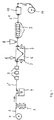
- the sole figure shows schematically a process flow of a continuous electrolytic galvanizing and phosphating of (rolled) steel strip.
- a cold-rolled and optionally dressed steel strip (steel sheet) is provided as coil 1.
- the steel strip (steel sheet) 2 is unwound from the coil 1 and welded to the end of the previous strip. Since the subsequent electrolytic surface refinement is a continuous process, the strip newly entering the electrolytic finishing plant is first conducted into a strip loop store 3, where it is stored in one or more loops, thus completing the coating process when welding the steel strip beginning to the end of the previous steel strip does not have to be stopped.
- the strip surface is usually first mechanically and chemically cleaned. Subsequently, the strip surface is roughened in an acidic stain before the strip 2 is passed through the electrolytic coating cells 4 and galvanized there becomes. There, the steel strip 2 is immersed in a sulfuric acid zinc electrolyte and switched simultaneously as a cathode. In the case of soluble zinc electrodes, these are also immersed in the electrolyte solution and connected as an anode. The zinc cations migrate from the anode through the electrolyte to the steel strip surface and are deposited there cathodically.
- the zinc is already dissolved in the electrolyte, wherein the anodes consist of correspondingly nobler materials.
- the amount of zinc deposited on the strip surface depends on the current density and the duration of the coating.
- the steel strip 2 has to pass through a plurality of successively arranged coating cells 4 because of the relatively short coating duration and thus correspondingly low deposition rate in an electrolytic cell 4 at such a strip speed.
- the electrolytically galvanized steel strip 2 ' is passed through a multi-stage flushing device 5.
- the pretreatment step for the phosphation is followed by a generally slightly alkaline activation bath 6.
- activation baths serve to increase the number of nucleation sites and hence the phosphate crystals per unit area, thus increasing the crystallization rate and increasing the degree of coverage.
- the activation bath 6 contains water-dispersed activation particles, generally based on titanyl phosphate or metal oxides.
- the available for example in powder form activation particles are dispersed in water and form with this a colloidal solution.
- the activation bath 6 is adjusted to have an activation particle concentration in the range of 0.1 g / l to 10 g / l, in particular 0.5 g / l to 3 g / l, preferably 0.7 g / l to 1 , 5 g / l.
- the activation bath 6 is stirred continuously and discontinuously and / or circulated and / or ultrasonicated.
- the activation bath 6 is stirred by means of at least one mechanical stirrer 7.
- the liquid film is squeezed or stripped off the steel strip 2 'in order to avoid carryover of the possibly alkaline medium (liquid film) into the acid phosphating solution. Drying of the steel strip surface may also be expedient at this point.
- a hot air blower 8 is outlined.
- the phosphating step 9 the phosphating solution is sprayed onto the activated strip surface. This leads on the one hand to the pickling of the zinc surface and on the other hand to the growth of zinc phosphate crystals at the activated regions.
- the remaining supernatant phosphating solution is then squeezed off the belt and the phosphated belt 2 "is then dried by means of a belt drier 10.
- the phosphated steel belt 2" is optionally oiled and coiled to form a coil 11 so that it is easy to handle Shape can be transported to the customer.
- the forming step is usually followed by a degreasing step in a slightly alkaline solution and the rinsing of the cleaner in a multi-stage flushing device.
- the rinse is followed by the re-activation step and the post-phosphation.
- the phosphating solution is removed by another multi-stage flushing device before the component is painted.
- a base coat is usually applied to the phosphated component surface by means of cathodic dip painting.
- the components are conducted with the still moist basecoat surface in an oven, typically continuous furnace, where the paint at relatively high temperatures (eg, about 180 ° C) is crosslinked or cured. Subsequently, if necessary, a filling and finally a topcoat is applied.
- At least one additive A which suppresses or at least slows down agglomeration of the activation particles, is added to the activating bath 6 preceding the phosphating.
- the additive forms a shell around the activation particles, whereby agglomeration of the activation particles can be suppressed at least for a certain time compared to conventional activation baths.
- additive A for example, polyethylene glycol (PEG), preferably with molar masses below 6000 g / mol, in particular around 400 g / mol (so-called PEG 400), is added to the activating bath 6.
- the activating bath 6 having an activating particle concentration in the range from 0.1 g / l to 10 g / l, in particular 0.5 g / l to 3 g / l, preferably from 0.7 g / l to 1.5 g / l.
- poly (oxy-1,2-ethanediyl) -carboxylic acid ester in particular poly (oxy-1,2-ethanediyl) -monododecanoic acid sorbityl ester
- additive A is added as additive A to the activation bath preceding the phosphating.
- polysorbate 20 trade name "Tween® 20”
- it is a nonionic surfactant. It acts as a wetting agent.
- polysorbate 20 (Tween® 20) was added to 1 l of activation bath 6.
- polysorbate 40, polysorbate 60, polysorbate 65 or polysorbate 80 (trade name "Tween® 80") as additive A may also be added to the activating bath 6.
- alkylpolyethylene glycol ether in particular isotridecylpolyethylene glycol ether, is added to the activating bath 6.
- This additive is a nonionic surfactant whose physical state is liquid. It acts in particular as a wetting agent and is available in various variants under the tradename MARLIPAL®013, the different variants differing in the number of ethylene oxide moles included.
- activation bath 6 having an activation particle concentration in the range of 0.1 g / l to 10 g / l, in particular 0.5 g / l to 3.0 g / l, preferably from 0.7 g / l to 1 , 5 g / l, about 0.1 to 10 ml Alkylpolyethylenglycolether added as additive A.
- An advantageous optional embodiment of the above-mentioned embodiments of the method according to the invention consists in determining the particle size distribution of the activation particles present in the activating bath 6 and renewing or deactivating the activating bath 6 as a function of the determined particle size distribution.
- the measurement of the particle size distribution takes place by means of dynamic light scattering. Alternatively or additionally, the measurement of the particle size distribution can also be carried out by means of nanoparticle tracking analysis (NTA).
- NTA nanoparticle tracking analysis
- the measurement of the particle size distribution of the activation particles of the activation bath 6 is preferably carried out using separate samples (partial volumes) of the activation bath 6 or by means of at least one flow measuring cell (not shown), wherein the sampling and the measurement preferably during operation of the activation bath at regular intervals or continuously be performed.
- the renewal or decommissioning of the activation bath 6 as a function of the determined particle size distribution of the activation particles of the activation bath 6 then preferably also takes place automatically.
- the phosphating process can thus be conducted more safely.
Landscapes
- Chemical & Material Sciences (AREA)
- Metallurgy (AREA)
- Engineering & Computer Science (AREA)
- Materials Engineering (AREA)
- Organic Chemistry (AREA)
- Chemical Kinetics & Catalysis (AREA)
- Mechanical Engineering (AREA)
- General Chemical & Material Sciences (AREA)
- Electrochemistry (AREA)
- Inorganic Chemistry (AREA)
- Chemical Treatment Of Metals (AREA)
- Medicinal Preparation (AREA)
- Application Of Or Painting With Fluid Materials (AREA)
Description
- Die Erfindung betrifft ein Verfahren zur Aktivierung von Metalloberflächen, insbesondere von beschichtetem Stahlblech, vorzugsweise verzinktem Stahlblech vor einem Phosphatierungsprozess, bei dem die Metalloberfläche mit einem Aktivierungsbad in Kontakt gebracht wird, welches in Wasser dispergierte Titanylphosphate oder Metalloxide als Aktivierungspartikel, enthält.
- Im Stand der Technik werden Zinkphosphatschichten zur Oberflächenbehandlung von verzinktem Stahlfeinblech eingesetzt, um oberflächenrelevante Eigenschaften des verzinkten Stahlfeinblechs zu verbessern. Hierzu gehören insbesondere die Erhöhung der Korrosionsresistenz sowie die Verbesserung der Umformbarkeit und Lackhaftung.
- Seitens der Anmelderin wurde festgestellt, dass in den vergangenen Jahren nicht periodische, immer wiederkehrende Lackhaftungsprobleme an beispielsweise elektrolytisch verzinktem und phosphatiertem Metallband, insbesondere Stahlband (Feinblech) auftraten.
-
EP 0 454 211 A1 offenbart ein Verfahren zur Bandphosphatierung, in dem stabile Aktivierungsbäder mit hohen Standzeiten eingesetzt werden. Es wird ein wasserlösliches organisches Polymer zugesetzt, um das im Aktivierungsbad in kolloidaler Form dispergierte Titan-IV-Phosphat zu stabilisieren und dadurch die Standzeit des Aktivierungsbades zu verlängern. Davon ausgehend lag der vorliegenden Erfindung die Aufgabe zugrunde, ein Verfahren anzugeben, mit dem die Problematik einer schlechten Lackhaftung an Metallband erheblich gemindert oder sogar vermieden werden kann. - Diese Aufgabe wird bei einem Verfahren der eingangs genannten Art dadurch gekennzeichnet, dass dem Aktivierungsbad in Wasser dispergierte Titanylphosphate oder Metalloxide als Aktivierungspartikel zugesetzt werden, wobei das Aktivierungsbad (6) so eingestellt wird, dass es eine Aktivierungspartikelkonzentration im Bereich von 0,1 g/l bis 10 g/l aufweist, wobei dem Aktivierungsbad (6) Polyethylenglycol zwischen 1 und 200 g/l, Poly(oxy-1,2-ethandiyl)-monododekansäure-sorbitylester zwischen 0,01 g/l bis 100 g/l oder Isotridecylpolyethylenglycolether zwischen 0,1 bis 10 ml/l als Additiv (A) zugeführt wird, so dass ein Agglomerieren der Aktivierungspartikel unterdrückt oder zumindest verlangsamt wird.
- Die Erfinder haben die Mechanismen von Aktivierung, Keimbildung und Wachstum der Zinkphosphatkristalle auf dem Zinküberzug untersucht. Dabei haben sie festgestellt, dass sich mit zunehmender Standzeit des Aktivierungsbades Agglomerate von Aktivierungspartikeln bilden. Zudem konnten sie einen negativen Einfluss der zunehmenden Partikelgrößen im Aktivierungsbad auf die Phosphatierung und die Lackhaftung erkennen.
- Durch die erfindungsgemäße Zugabe eines Additivs, welches ein Agglomerieren der Aktivierungspartikel unterdrückt oder zumindest deutlich verlangsamt, kann die Problematik schlechter Lackhaftung an phosphatiertem Metallband, insbesondere verzinktem, phosphatiertem Stahlband erheblich gemindert oder sogar vermieden werden.
- Bei dem zur Stabilisierung des Aktivierungsbades verwendeten Additivs handelt es sich um einen oder mehrere der nachfolgenden Stoffe:
- Polyethylenglycol (PEG) zwischen 1 und 200 g/l
- Poly(oxy-1,2-ethandiyl)-monododekansäure-sorbitylester zwischen 0,01 g/l bis 100 g/l
- Isotridecylpolyethylenglycolether zwischen 0,1 bis 10 ml/l
- Bevorzugte und vorteilhafte Ausgestaltungen des erfindungsgemäßen Verfahrens sind in den Unteransprüchen angegeben.
- Eine vorteilhafte Ausgestaltung des erfindungsgemäßen Verfahrens ist dadurch gekennzeichnet, dass dem Aktivierungsbad Polyethylenglycol (PEG) als Additiv zur Unterdrückung oder Verlangsamung einer Agglomeration der Aktivierungspartikel zugegeben wird. Dieser Stoff hat sich in Versuchen als sehr wirksam erwiesen.
- Zur Verlangsamung der Aktivierungspartikelagglomeration im Aktivierungsbad ist es auch von Vorteil, wenn gemäß einer weiteren bevorzugten Ausgestaltung des erfindungsgemäßen Verfahrens das Aktivierungsbad kontinuierlich oder diskontinuierlich durch Rühren und/oder Umpumpen und/oder Ultraschalleintrag bewegt wird. Hierdurch kann die Standzeit des Aktivierungsbades weiter verlängert werden. Die Intensität der Badbewegung (durch Rühren und/oder Umpumpen und/oder Ultraschalleintrag) sollte dabei allerdings nicht zu hoch gewählt werden, da andernfalls eine Agglomeration der Aktivierungspartikel im Aktivierungsbad gegebenenfalls gefördert wird. Vorzugsweise wird das Aktivierungsbad mittels mindestens eines mechanischen Rührers gerührt.
- Eine weitere bevorzugte Ausgestaltung des erfindungsgemäßen Verfahrens ist dadurch gekennzeichnet, dass die im Aktivierungsbad vorliegende Partikelgrößenverteilung der Aktivierungspartikel ermittelt wird, und dass das Aktivierungsbad in Abhängigkeit der Partikelgrößenverteilung der Aktivierungspartikel erneuert oder außer Betrieb genommen wird. Auf diese Weise kann eine kritische bzw. übermäßige Anlagerung (Anhaftung) von agglomerierten Aktivierungspartikeln an dem vorzugsweise elektrolytisch verzinkten Metallblech weitestgehend vermieden und somit eine einwandfreie Lackhaftung erzielt werden.
- In diesem Zusammenhang ist es von Vorteil, wenn gemäß einer bevorzugten Ausgestaltung des erfindungsgemäßen Verfahrens die Partikelgrößenverteilung der Aktivierungspartikel während des Betriebes des Aktivierungsbades in regelmäßigen Zeitabständen oder kontinuierlich mittels dynamischer Lichtstreuung (Photonenkorrelationsspektrometrie) ermittelt wird. Alternativ oder ergänzend kann die Partikelgrößenverteilung der Aktivierungspartikel auch während des Betriebes des Aktivierungsbades in regelmäßigen Zeitabständen oder kontinuierlich mittels Nanopartikel Tracking-Analyse (NTA) ermittelt werden. Diese beiden Messmethoden sind jeweils bei den hier relevanten Partikelgrößen und Verteilungsbreiten besonders geeignet und zuverlässig. Die Messung kann dabei jeweils an separaten, begrenzten Proben des Aktivierungsbades oder alternativ auch mittels mindestens einer Durchflussmesszelle durchgeführt werden.
- Es können allerdings auch noch andere Messmethoden zur Bestimmung der Partikelgrößen bzw. Partikelgrößenverteilung der Aktivierungspartikel in dem erfindungsgemäßen Verfahren angewandt werden. Zur Messung in Flüssigkeit, beispielsweise an separaten, begrenzten Proben und auch als Durchflussmesszelle sind hier beispielsweise auch folgende Messmethoden denkbar:
- Statische Laserbeugung
- Kopplung der Lichtmikroskopie mit einer automatischen Bildanalyse
- Resonanz-Massenmessung (engl. "Resonant Mass Measurement")
- Akustophoretische Messtechnik
- Ultraschallspektrometrie
- Feldflussfraktionierung (engl. "Field Flow Fractionation")
- Hydrodynamische Chromatographie
- Kapillarhydrodynamische Fraktionierung
- Ortsfilteranemometrie (engl. "Spatial Filter Velocimetry")
- Rasterkraftmikroskopie (engl. "Atomic Force Microscopy") an Partikeln auf planaren Substratoberflächen in Luft, Vakuum oder Flüssigkeit.
- Alternativ oder ergänzend können in diesem Zusammenhang auch Messungen mit elektronenmikroskopischen Verfahren auf geeigneten Trägern bzw. Substraten durchgeführt werden, zum Beispiel:
- Rasterelektronenmikroskopie (REM, engl. "SEM"); insbesondere auf planaren Substraten wie metallographisch polierten Oberflächen aufgetragene, vorzugsweise vereinzelte Partikel, vorzugsweise auch mit bildanalytischen Verfahren automatisiert zu zählen und anhand geometrischer Größen zu klassifizierend, um eine statistisch qualifizierte Größenverteilung zu erhalten. Geeignet sind REM-Abbildungen im Topographiekontrast und/oder Massekontrast.
- (Rasternde) Transmissionselektronenmikroskopie (TEM, STEM): Insbesondere auf durchstrahlbaren Trägern wie z.B. einem Polymerfilm (Lackfilm) aufgetragene Partikel oder in durchstrahlbarer Matrix (z.B. Polymere) eingebettete Partikel oder an Trägern (z.B. Stegen eines handelsüblichen TEM-Netzes) anhaftende, seitlich bestrahlend abzubildende Partikel.
- Mit REM oder STEM aufgenommene EDX- oder WDX-Verteilungsbilder bezüglich der chemischen Elemente oder einzelner davon, welche die Zusammensetzung der Partikel wesentlich beschreiben.
- Hinsichtlich einer effektiven Aktivierung, Keimbildung sowie eines guten Wachstums der Zinkphosphatkristalle auf dem Zinküberzug ist das Aktivierungsbad so eingestellt, dass es eine Aktivierungspartikelkonzentration im Bereich von 0,1 g/l bis 10 g/l, insbesondere 0,5 g/l bis 3 g/l aufweist.
- Nachfolgend wird die Erfindung anhand einer Zeichnung sowie mehrerer Ausführungsbeispiele näher erläutert. Die einzige Figur zeigt schematisch einen Verfahrensablauf einer kontinuierlichen elektrolytischen Verzinkung und Phosphatierung von (gewalztem) Stahlband.
- Ein kaltgewalztes und ggf. dressiertes Stahlband (Stahlfeinblech) wird als Coil 1 bereitgestellt. Das Stahlband (Stahlfeinblech) 2 wird vom Coil 1 abgewickelt und an das Ende des vorherigen Bandes geschweißt. Da es sich bei der nachfolgenden elektrolytischen Oberflächenveredelung um einen kontinuierlichen Prozess handelt, wird das in die elektrolytische Veredelungsanlage neu einlaufende Band zunächst in einen Bandschlingenspeicher 3 geleitet, wo es in einer oder mehreren Schlingen gespeichert wird, damit der Beschichtungsprozess beim Anschweißen des Stahlbandanfangs an das Ende des vorherigen Stahlbandes nicht gestoppt werden muss.
- In einer ersten Stufe des Veredelungsprozesses (Beschichtungsprozesses) wird die Bandoberfläche üblicherweise zunächst mechanisch und chemisch gereinigt. Anschließend wird die Bandoberfläche in einer sauren Beize aufgeraut, bevor das Band 2 durch die elektrolytischen Beschichtungszellen 4 hindurchgeleitet und dort verzinkt wird. Dort wird das Stahlband 2 in einen schwefelsauren Zink-Elektrolyten getaucht und gleichzeitig als Kathode geschaltet. Im Falle von löslichen Zinkelektroden werden diese ebenfalls in die Elektrolytlösung getaucht und als Anode geschaltet. Die Zinkkationen wandern dabei von der Anode durch den Elektrolyten zu der Stahlbandoberfläche und werden dort kathodisch abgeschieden. Im Falle von unlöslichen Anoden ist dagegen das Zink bereits im Elektrolyten gelöst, wobei die Anoden aus entsprechend edleren Materialien bestehen. Die auf der Bandoberfläche abgeschiedene Zinkmenge hängt jeweils von der Stromdichte und der Beschichtungsdauer ab. Um bei einer Bandgeschwindigkeit von zum Beispiel 100 m/min eine Zinkschichtdicke von einigen Mikrometern zu erzielen, muss das Stahlband 2 wegen der bei einer solchen Bandgeschwindigkeit relativ geringen Beschichtungsdauer und damit entsprechend geringen Abscheiderate in einer Elektrolytzelle 4 mehrere hintereinander geschaltete Beschichtungszellen 4 durchlaufen. Um anschließend den Elektrolyten von der Bandoberfläche zu entfernen und somit eine Elektrolytverschleppung in den nächsten Prozessschritt zu vermeiden, wird das elektrolytisch verzinkte Stahlband 2' durch eine mehrstufige Spülvorrichtung 5 hindurchgeleitet.
- Als Vorbehandlungsschritt für die Phosphatierung folgt ein in der Regel leicht alkalisches Aktivierungsbad 6. Aktivierungsbäder dienen bei der Phosphatierung dazu, die Anzahl der Keimstellen und damit der Phosphatkristalle pro Flächeneinheit zu erhöhen und so die Kristallbildungsgeschwindigkeit zu steigern und den Bedeckungsgrad zu erhöhen.
- Das Aktivierungsbad 6 enthält in Wasser dispergierte Aktivierungspartikel in der Regel auf Basis von Titanylphosphat oder von Metalloxiden. Die beispielsweise in Pulverform erhältlichen Aktivierungspartikel werden in Wasser dispergiert und bilden mit diesem eine kolloidale Lösung. Das Aktivierungsbad 6 wird beispielsweise so eingestellt wird, dass es eine Aktivierungspartikelkonzentration im Bereich von 0,1 g/l bis 10 g/l, insbesondere 0,5 g/l bis 3 g/l, vorzugsweise 0,7 g/l bis 1,5 g/l aufweist.
- Geeignete Aktivierungsmittel (Aktivierungspartikel) für die Phosphatierung von elektrolytisch verzinktem Stahlfeinblech 2' sind beispielsweise unter den Handelsbezeichnungen SurTec® 145, SurTec® 610 V, Fixodine®X, Fixodine®50, Fixodine®50CF (jetzt Bonderite® M-AC 50CF), Fixodine®950 (jetzt Bonderite® M-AC 950), Fixodine®G 3039, Fixodine®C 5020 A, Fixodine®G 5020 B, Fixodine®C 9114, Fixodine®9112, Gardolene® Z26, Gardolene® V 6599, Gardolene® V 6560 A, Gardolene® V 6559, Gardolene® V 6526, Gardolene® V 6522, Gardolene® V 6520, Gardolene® V 6518, Gardolene® V 6513, Prepalene® X und Chemkleen® 163 erhältlich. Bei zur Vorbehandlung von zu phosphatierenden Metalloberflächen, wie beispielsweise dem Stahlfeinblech 2' verwendeten Aktivierungspartikeln (Aktivierungsmitteln) handelt es sich üblicherweise um sogenannte Jernstedt-Salze bzw. Titanylphosphate.
- Um den dispergierten Zustand der Aktivierungspartikel aufrechtzuerhalten, wird das Aktivierungsbad 6 kontinuierlich oder diskontinuierlich gerührt und/oder umgepumpt und/oder mit Ultraschall behandelt. Beispielsweise wird das Aktivierungsbad 6 mittels mindestens eines mechanischen Rührers 7 gerührt.
- Nach Durchlaufen des Aktivierungsbades 6 wird der Flüssigkeitsfilm vom Stahlband 2' abgequetscht oder abgestreift, um Verschleppungen des möglicherweise alkalischen Mediums (Flüssigkeitsfilms) in die saure Phosphatierungslösung zu vermeiden. Auch ein Trocknen der Stahlbandoberfläche kann an dieser Stelle zweckmäßig sein. In der Figur ist dementsprechend ein Warmluftgebläse 8 skizziert. In der Phosphatierstufe 9 wird die Phosphatierungslösung auf die aktivierte Bandoberfläche gespritzt. Dies führt einerseits zum Anbeizen der Zinkoberfläche und andererseits zum Wachstum der Zinkphosphatkristalle an den aktivierten Bereichen. Die verbleibende überstehende Phosphatierungslösung wird anschließend vom Band abgequetscht und das phosphatierte Band 2" sodann mittels eines Bandtrockners 10 getrocknet. In den letzten Schritten dieses Bandveredelungsprozesses wird das phosphatierte Stahlband 2" gegebenenfalls geölt und zu einem Coil 11 aufgehaspelt, so dass es in einer gut handhabbaren Form zum Kunden transportiert werden kann.
- Beim Kunden, beispielsweise einem Automobilhersteller, werden aus dem phosphatierten Stahlband Platinen gestanzt und zu Bauteilen, beispielsweise Karosserieteilen, gepresst. Da es beim Umformen der Platinen durch Ziehen und/oder Dehnen des Materials sowie durch Abrieb zu Beschädigungen der Phosphatschicht kommen kann, wird die Metalloberfläche erneut aktiviert und nachphosphatiert. Daher schließt sich dem Umformschritt üblicherweise ein Entfettungsschritt in einer leicht alkalischen Lösung sowie das Abspülen des Reinigers in einer mehrstufigen Spülvorrichtung an. Dem Abspülen folgen der erneute Aktivierungsschritt und die Nachphosphatierung. Die Phosphatierungslösung wird durch eine weitere mehrstufige Spülvorrichtung entfernt, bevor das Bauteil lackiert wird. Dabei wird üblicherweise ein Grundlack mittels kathodischer Tauchlackierung auf die phosphatierte Bauteiloberfläche aufgebracht. Die Bauteile werden mit der noch feuchten Grundlackoberfläche in einen Ofen, typischerweise Durchlaufofen geführt, wo der Lack bei relativ hohen Temperauren (z.B. ca. 180°C) vernetzt bzw. gehärtet wird. Anschließend wird gegebenenfalls ein Füll- und abschließend ein Decklack aufgebracht.
- Zur Vermeidung einer durch Aktivierungspartikelagglomerate verursachten schlechten Lackhaftung bzw. zur Erzielung einer guten Lackhaftung wird dem der Phosphatierung vorgeschalteten Aktivierungsbad 6 erfindungsgemäß mindestens ein Additiv A zugegeben, welches ein Agglomerieren der Aktivierungspartikel unterdrückt oder zumindest verlangsamt. Das Additiv bildet eine Hülle um die Aktivierungspartikel aus, wodurch ein Agglomerieren der Aktivierungspartikel zumindest für eine gewisse Zeit gegenüber konventionellen Aktivierungsbädern unterdrückt werden kann. Als Additiv A wird hierzu dem Aktivierungsbad 6 beispielsweise Polyethylenglycol (PEG), vorzugsweise mit molaren Massen unterhalb von 6000 g/mol, insbesondere um ca. 400 g/mol (sogenanntes PEG 400), zugegeben. Beispielsweise werden zwischen 1 und 200 g/l PEG dem Aktivierungsbad zugegeben, wobei das Aktivierungsbad 6 eine Aktivierungspartikelkonzentration im Bereich von 0,1 g/l bis 10 g/l, insbesondere 0,5 g/l bis 3 g/l, vorzugsweise von 0,7 g/l bis 1,5 g/l aufweist.
- Nach einem weiteren Ausführungsbeispiel des erfindungsgemäßen Verfahrens wird dem der Phosphatierung vorgeschalteten Aktivierungsbad 6 Poly(oxy-1,2-ethandiyl)-carbonsäureester, insbesondere Poly(oxy-1,2-ethandiyl)-monododekansäure-sorbitylester als Additiv A zugegeben. Bei diesem Additiv, das allgemein auch als Polysorbat 20 bezeichnet wird (Handelsname "Tween® 20"), handelt es sich um ein nichtionisches Tensid. Es wirkt als Netzmittel. Beispielsweise werden auf 1l Aktivierungsbad, das eine Aktivierungspartikelkonzentration im Bereich von 0,1 g/l bis 10 g/l, insbesondere 0,5 g/l bis 3,0 g/l, vorzugsweise von 0,7 g/l bis 1,5 g/l aufweist, zwischen 0,01 g/l bis 100 g/l Polysorbat 20 ("Tween® 20") zugegeben. Anstelle dieses Additivs können dem Aktivierungsbad 6 auch Polysorbat 40, Polysorbat 60, Polysorbat 65 oder Polysorbat 80 (Handelsname "Tween® 80") als Additiv A zugegeben werden.
- Gemäß einem weiteren Ausführungsbeispiel des erfindungsgemäßen Verfahrens wird dem Aktivierungsbad 6 Alkylpolyethylenglycolether, insbesondere Isotridecylpolyethylenglycolether zugegeben. Bei diesem Additiv handelt es sich um ein nichtionisches Tensid, dessen Aggregatzustand flüssig ist. Es wirkt insbesondere als Netzmittel und ist in verschiedenen Varianten unter dem Handelnamen MARLIPAL®013 erhältlich, wobei sich die verschiedenen Varianten in der Anzahl der eingeschlossenen Ethylenoxidmole unterscheiden. Beispielsweise werden auf 1l Aktivierungsbad 6, das eine Aktivierungspartikelkonzentration im Bereich von 0,1 g/l bis 10 g/l, insbesondere 0,5 g/l bis 3,0 g/l, vorzugsweise von 0,7 g/l bis 1,5 g/l aufweist, etwa 0,1 bis 10 ml Alkylpolyethylenglycolether als Additiv A zugegeben.
- Eine vorteilhafte optionale Ausgestaltung der voranstehend angegebenen Ausführungsbeispiele des erfindungsgemäßen Verfahrens besteht darin, die im Aktivierungsbad 6 vorliegende Partikelgrößenverteilung der Aktivierungspartikel zu ermitteln und das Aktivierungsbad 6 in Abhängigkeit der ermittelten Partikelgrößenverteilung zu erneuern oder außer Betrieb zu nehmen. Die Messung der Partikelgrößenverteilung erfolgt dabei mittels dynamischer Lichtstreuung. Alternativ oder ergänzend kann die Messung der Partikelgrößenverteilung auch mittels Nanopartikel Tracking-Analyse (NTA) durchgeführt werden. Die Messung der Partikelgrößen-verteilung der Aktivierungspartikel des Aktivierungsbades 6 erfolgt vorzugsweise anhand von separaten Proben (Teilvolumina) des Aktivierungsbades 6 oder mittels mindestens einer Durchflussmesszelle (nicht gezeigt), wobei die Probennahme sowie die Messung vorzugsweise während des Betriebes des Aktivierungsbades in regelmäßigen Zeitabständen oder kontinuierlich durchgeführt werden.
- Die Erneuerung bzw. Außerbetriebnahme des Aktivierungsbades 6 in Abhängigkeit der ermittelten Partikelgrößenverteilung der Aktivierungspartikel des Aktivierungsbades 6 erfolgt dann vorzugsweise ebenfalls automatisch. Der Phosphatierungsprozess kann damit sicherer geführt werden.
Claims (8)
- Verfahren zur Aktivierung von verzinktem Stahlblech vor einem Phosphatierungsprozess, bei dem das elektrolytisch verzinkte Metallblech (2') mit einem Aktivierungsbad (6) in Kontakt gebracht wird, welches in Wasser dispergierte Titanylphosphate oder Metalloxide als Aktivierungspartikel enthält, wobei das Aktivierungsbad (6) so eingestellt wird, dass es eine Aktivierungspartikelkonzentration im Bereich von 0,1 g/l bis 10 g/l aufweist, dadurch gekennzeichnet, dass dem Aktivierungsbad (6) Polyethylenglycol zwischen 1 und 200 g/l, Poly(oxy-1,2-ethandiyl)-monododekansäure-sorbitylester zwischen 0,01 g/l bis 100 g/l oder Isotridecylpolyethylenglycolether zwischen 0,1 bis 10 ml/l als Additiv (A) zugeführt wird, so dass ein Agglomerieren der Aktivierungspartikel unterdrückt oder zumindest verlangsamt wird.
- Verfahren nach Anspruch 1, dadurch gekennzeichnet, dass das Aktivierungsbad (6) kontinuierlich oder diskontinuierlich durch Rühren und/oder Umpumpen und/oder durch Ultraschalleintrag bewegt wird.
- Verfahren nach Anspruch 2, dadurch gekennzeichnet, dass das Aktivierungsbad mittels mindestens eines mechanischen Rührers (7) gerührt wird.
- Verfahren nach einem der Ansprüche 1 bis 3, dadurch gekennzeichnet, dass die im Aktivierungsbad (6) vorliegende Partikelgrößenverteilung der Aktivierungspartikel ermittelt wird, und dass das Aktivierungsbad (6) in Abhängigkeit der Partikelgrößenverteilung der Aktivierungspartikel erneuert oder außer Betrieb genommen wird.
- Verfahren nach Anspruch 4, dadurch gekennzeichnet, dass die Partikelgrößenverteilung der Aktivierungspartikel während des Betriebes des Aktivierungsbades (6) in regelmäßigen Zeitabständen oder kontinuierlich mittels dynamischer Lichtstreuung ermittelt wird.
- Verfahren nach Anspruch 4 oder 5, dadurch gekennzeichnet, dass die Partikelgrößenverteilung der Aktivierungspartikel während des Betriebes des Aktivierungsbades (6) in regelmäßigen Zeitabständen oder kontinuierlich mittels Nanopartikel Tracking-Analyse ermittelt wird.
- Verfahren nach einem der Ansprüche 1 bis 6, dadurch gekennzeichnet, dass das Aktivierungsbad (6) so eingestellt wird, dass es eine Aktivierungspartikelkonzentration im Bereich von 0,5 g/l bis 3 g/l.
- Verfahren nach einem der Ansprüche 1 bis 6, dadurch gekennzeichnet, dass das Aktivierungsbad (6) so eingestellt wird, dass es eine Aktivierungspartikelkonzentration im Bereich von 0,7 g/l bis 1,5 g/l aufweist.
Applications Claiming Priority (2)
| Application Number | Priority Date | Filing Date | Title |
|---|---|---|---|
| DE102014105226.9A DE102014105226A1 (de) | 2014-04-11 | 2014-04-11 | Verfahren zur Aktivierung von zu phosphatierenden Metalloberflächen, vorzugsweise verzinktem Stahlblech |
| PCT/EP2015/057464 WO2015155163A2 (de) | 2014-04-11 | 2015-04-07 | Verfahren zur aktivierung von zu phosphatierenden metalloberflächen, vorzugsweise verzinktem stahlblech |
Publications (2)
| Publication Number | Publication Date |
|---|---|
| EP3129525A2 EP3129525A2 (de) | 2017-02-15 |
| EP3129525B1 true EP3129525B1 (de) | 2019-02-20 |
Family
ID=53724301
Family Applications (1)
| Application Number | Title | Priority Date | Filing Date |
|---|---|---|---|
| EP15741927.6A Not-in-force EP3129525B1 (de) | 2014-04-11 | 2015-04-07 | Verfahren zur aktivierung von zu phosphatierenden metalloberflächen, vorzugsweise verzinktem stahlblech |
Country Status (7)
| Country | Link |
|---|---|
| US (1) | US10480080B2 (de) |
| EP (1) | EP3129525B1 (de) |
| JP (1) | JP6626000B2 (de) |
| KR (1) | KR20160145080A (de) |
| CN (1) | CN106471157B (de) |
| DE (1) | DE102014105226A1 (de) |
| WO (1) | WO2015155163A2 (de) |
Families Citing this family (8)
| Publication number | Priority date | Publication date | Assignee | Title |
|---|---|---|---|---|
| DE102018216216A1 (de) * | 2018-09-24 | 2020-03-26 | Thyssenkrupp Ag | Verfahren zur Verbesserung der Phosphatierbarkeit von metallischen Oberflächen, welche mit einer temporären Vor- bzw. Nachbehandlung versehen werden |
| WO2021023789A1 (de) * | 2019-08-05 | 2021-02-11 | Sms Group Gmbh | Verfahren und anlage zum elektrolytischen beschichten eines elektrisch leitfähigen bandes und/oder gewebes mittels pulstechnik |
| DE102019134298A1 (de) * | 2019-12-13 | 2021-06-17 | Thyssenkrupp Steel Europe Ag | Verfahren zum Herstellen eines Stahlflachprodukts mit einer metallischen Schutzschicht auf Basis von Zink und einer auf einer Oberfläche der metallischen Schutzschicht erzeugten Phosphatierschicht und derartiges Stahlflachprodukt |
| MX2022015225A (es) * | 2020-07-01 | 2023-02-22 | Chemetall Gmbh | Agente de activacion mejorado para procesos de fosfatado al manganeso. |
| EP3964606A1 (de) * | 2020-09-04 | 2022-03-09 | Henkel AG & Co. KGaA | Einstufiges verfahren zur zinkphosphatierung |
| CN115125528B (zh) * | 2022-07-22 | 2023-11-28 | 长江润发(江苏)薄板镀层有限公司 | 一种耐指纹板的磷化装置及磷化方法 |
| EP4339324A1 (de) * | 2022-09-19 | 2024-03-20 | ThyssenKrupp Steel Europe AG | Stahlflachprodukt mit einer aktivierungsschicht für die warmumformung |
| CN117867504A (zh) * | 2023-12-25 | 2024-04-12 | 鞍钢股份有限公司 | 一种钢材表面均匀活化处理装置及工艺 |
Citations (1)
| Publication number | Priority date | Publication date | Assignee | Title |
|---|---|---|---|---|
| US20070240604A1 (en) * | 2005-08-19 | 2007-10-18 | Nippon Paint Co., Ltd. | Composition for surface conditioning and a method for surface conditioning |
Family Cites Families (11)
| Publication number | Priority date | Publication date | Assignee | Title |
|---|---|---|---|---|
| JPS61257481A (ja) | 1985-05-10 | 1986-11-14 | Nippon Parkerizing Co Ltd | りん酸塩皮膜化成処理用水性表面調整液 |
| DE3814334A1 (de) | 1988-04-28 | 1989-11-09 | Henkel Kgaa | Hartwasserstabilisierender zusatz zu aktivierungsmitteln fuer die zinkphosphatierung |
| DE4012795A1 (de) | 1990-04-21 | 1991-10-24 | Metallgesellschaft Ag | Aktivierungsmittel fuer die phosphatierung |
| JP3451334B2 (ja) * | 1997-03-07 | 2003-09-29 | 日本パーカライジング株式会社 | 金属のりん酸塩皮膜化成処理前の表面調整用前処理液及び表面調整方法 |
| US6361623B1 (en) * | 1997-06-13 | 2002-03-26 | Henkel Corporation | Method for phosphatizing iron and steel |
| JP3544634B2 (ja) * | 1999-09-24 | 2004-07-21 | 日本パーカライジング株式会社 | りん酸塩被膜化成処理用表面調整処理液の管理方法 |
| ATE353987T1 (de) * | 2002-06-13 | 2007-03-15 | Nippon Paint Co Ltd | Zinkphosphatkonditioniermittel für phosphatkonversionsbeschichtung von stahlplatte und entsprechendes produkt |
| JP2007204835A (ja) | 2006-02-03 | 2007-08-16 | Nippon Paint Co Ltd | 表面調整用組成物及び表面調整方法 |
| DE102008054407B4 (de) | 2008-12-09 | 2018-03-29 | Chemetall Gmbh | Verfahren zur Beschichtung von metallischen Oberflächen mit einem Aktivierungsmittel vor dem Phosphatieren, entsprechende Aktivierungsmittel sowie Verwendung der mit dem Verfahren beschichteten Substrate |
| CN201670879U (zh) * | 2010-03-16 | 2010-12-15 | 马占元 | 拉丝用无酸洗磷化设备 |
| JP5814941B2 (ja) * | 2010-12-22 | 2015-11-17 | 関西ペイント株式会社 | 耐食性に優れる塗料組成物 |
-
2014
- 2014-04-11 DE DE102014105226.9A patent/DE102014105226A1/de not_active Ceased
-
2015
- 2015-04-07 US US15/302,365 patent/US10480080B2/en not_active Expired - Fee Related
- 2015-04-07 CN CN201580019197.6A patent/CN106471157B/zh not_active Expired - Fee Related
- 2015-04-07 JP JP2016560692A patent/JP6626000B2/ja not_active Expired - Fee Related
- 2015-04-07 KR KR1020167031249A patent/KR20160145080A/ko not_active Withdrawn
- 2015-04-07 EP EP15741927.6A patent/EP3129525B1/de not_active Not-in-force
- 2015-04-07 WO PCT/EP2015/057464 patent/WO2015155163A2/de not_active Ceased
Patent Citations (1)
| Publication number | Priority date | Publication date | Assignee | Title |
|---|---|---|---|---|
| US20070240604A1 (en) * | 2005-08-19 | 2007-10-18 | Nippon Paint Co., Ltd. | Composition for surface conditioning and a method for surface conditioning |
Also Published As
| Publication number | Publication date |
|---|---|
| CN106471157B (zh) | 2019-08-30 |
| JP2017510709A (ja) | 2017-04-13 |
| JP6626000B2 (ja) | 2019-12-25 |
| WO2015155163A3 (de) | 2015-12-17 |
| US10480080B2 (en) | 2019-11-19 |
| WO2015155163A2 (de) | 2015-10-15 |
| KR20160145080A (ko) | 2016-12-19 |
| DE102014105226A1 (de) | 2015-10-15 |
| CN106471157A (zh) | 2017-03-01 |
| US20170029954A1 (en) | 2017-02-02 |
| EP3129525A2 (de) | 2017-02-15 |
Similar Documents
| Publication | Publication Date | Title |
|---|---|---|
| EP3129525A2 (de) | Verfahren zur aktivierung von zu phosphatierenden verzinktem stahlblech | |
| DE102013107505A1 (de) | Verfahren zum Auftragen einer wässrigen Behandlungslösung auf die Oberfläche eines bewegten Stahlbands | |
| DE102005045034A1 (de) | Verfahren zur Passivierung der Oberfläche von beschichteten Metallbändern und Vorrichtung für das Aufbringen der Passivschicht auf ein metallisch beschichtetes Stahlband | |
| EP2826569A1 (de) | Verfahren zur Passivierung von bandförmigem Schwarzblech | |
| EP4073289A1 (de) | Verfahren zum herstellen eines stahlflachprodukts mit einer metallischen schutzschicht auf basis von zink und einer auf einer oberfläche der metallischen schutzschicht erzeugten phosphatierschicht und derartiges stahlflachprodukt | |
| DE69005693T2 (de) | Elektroplattierung von feuerverzinkten Stahlbändern und kontinuierliche Vorrichtung dafür. | |
| DE69906555T2 (de) | Verzinkte, mit einer hydroxysulfat-schmierschicht überzogene stahlbleche und verfahren zur herstellung | |
| EP3947777A1 (de) | Verfahren zur neukonditionierung von feuerverzinkten oberflächen | |
| EP2215285A1 (de) | Zirconiumphosphatierung von metallischen bauteilen, insbesondere eisen | |
| DE3833119C2 (de) | ||
| EP3856947B1 (de) | Verfahren zur verbesserung der phosphatierbarkeit von metallischen oberflächen, welche mit einer temporären vor- bzw. nachbehandlung versehen werden | |
| EP1029111A1 (de) | Korrosionsschutz von verzinkten und legierungsverzinkten stahlbändern | |
| DE102016002852A1 (de) | Verfahren zur Passivierung einer Oberfläche eines Metallbauteils | |
| DE68909756T2 (de) | Zusammensetzung und Verfahren zum Beschichten von Metalloberflächen. | |
| DE60127793T2 (de) | Chemisch bearbeitetes Stahlblech mit ausgezeichneter Korrosionsbeständigkeit | |
| EP3794167B1 (de) | Fördergestellreinigung in einer prozessfolge zur elektrotauchlackierung | |
| WO2001006037A1 (de) | Verfahren zum auftrag von no-rinse-produkten auf laufende metallbänder | |
| DE2354911A1 (de) | Verfahren zur oberflaechenbehandlung von zink oder zinklegierungen | |
| DE102023110138A1 (de) | Stahlblech mit doppelschichtigem temporärem Korrosionsschutz | |
| WO2025114211A2 (de) | Verfahren für die korrosionsschützende vorbehandlung von bauteilen umfassend oberflächen von zink-magnesium-schmelztauchveredeltem stahl | |
| EP4698690A1 (de) | Stahlblech mit doppelschichtigem temporärem korrosionsschutz für optimierte lackierung | |
| EP4150132A1 (de) | Verfahren zur beschichtung von zinkdruckgussteilen, mehrlagige beschichtung zum schutz von zinkdruckgussteilen und beschichtetes zinkdruckgussteil | |
| JPH0939155A (ja) | 耐疵付き性に優れた有機複合被覆鋼板の製造方法 | |
| DE2842941B2 (de) | Verfahren zum Chromatieren von Aluminiumsubstraten für Magnetspeicherplatten |
Legal Events
| Date | Code | Title | Description |
|---|---|---|---|
| STAA | Information on the status of an ep patent application or granted ep patent |
Free format text: STATUS: THE INTERNATIONAL PUBLICATION HAS BEEN MADE |
|
| PUAI | Public reference made under article 153(3) epc to a published international application that has entered the european phase |
Free format text: ORIGINAL CODE: 0009012 |
|
| STAA | Information on the status of an ep patent application or granted ep patent |
Free format text: STATUS: REQUEST FOR EXAMINATION WAS MADE |
|
| 17P | Request for examination filed |
Effective date: 20160919 |
|
| AK | Designated contracting states |
Kind code of ref document: A2 Designated state(s): AL AT BE BG CH CY CZ DE DK EE ES FI FR GB GR HR HU IE IS IT LI LT LU LV MC MK MT NL NO PL PT RO RS SE SI SK SM TR |
|
| AX | Request for extension of the european patent |
Extension state: BA ME |
|
| RAP1 | Party data changed (applicant data changed or rights of an application transferred) |
Owner name: THYSSENKRUPP AG Owner name: THYSSENKRUPP STEEL EUROPE AG |
|
| DAV | Request for validation of the european patent (deleted) | ||
| DAX | Request for extension of the european patent (deleted) | ||
| STAA | Information on the status of an ep patent application or granted ep patent |
Free format text: STATUS: EXAMINATION IS IN PROGRESS |
|
| 17Q | First examination report despatched |
Effective date: 20171026 |
|
| RIC1 | Information provided on ipc code assigned before grant |
Ipc: C23C 22/07 20060101ALI20180405BHEP Ipc: C23C 22/78 20060101ALI20180405BHEP Ipc: C23C 18/30 20060101AFI20180405BHEP Ipc: C23C 22/80 20060101ALI20180405BHEP |
|
| GRAP | Despatch of communication of intention to grant a patent |
Free format text: ORIGINAL CODE: EPIDOSNIGR1 |
|
| STAA | Information on the status of an ep patent application or granted ep patent |
Free format text: STATUS: GRANT OF PATENT IS INTENDED |
|
| INTG | Intention to grant announced |
Effective date: 20180516 |
|
| GRAS | Grant fee paid |
Free format text: ORIGINAL CODE: EPIDOSNIGR3 |
|
| GRAA | (expected) grant |
Free format text: ORIGINAL CODE: 0009210 |
|
| STAA | Information on the status of an ep patent application or granted ep patent |
Free format text: STATUS: THE PATENT HAS BEEN GRANTED |
|
| AK | Designated contracting states |
Kind code of ref document: B1 Designated state(s): AL AT BE BG CH CY CZ DE DK EE ES FI FR GB GR HR HU IE IS IT LI LT LU LV MC MK MT NL NO PL PT RO RS SE SI SK SM TR |
|
| REG | Reference to a national code |
Ref country code: GB Ref legal event code: FG4D Free format text: NOT ENGLISH |
|
| REG | Reference to a national code |
Ref country code: CH Ref legal event code: EP |
|
| REG | Reference to a national code |
Ref country code: DE Ref legal event code: R096 Ref document number: 502015008025 Country of ref document: DE |
|
| REG | Reference to a national code |
Ref country code: AT Ref legal event code: REF Ref document number: 1098293 Country of ref document: AT Kind code of ref document: T Effective date: 20190315 |
|
| REG | Reference to a national code |
Ref country code: IE Ref legal event code: FG4D Free format text: LANGUAGE OF EP DOCUMENT: GERMAN |
|
| REG | Reference to a national code |
Ref country code: LT Ref legal event code: MG4D |
|
| REG | Reference to a national code |
Ref country code: NL Ref legal event code: MP Effective date: 20190220 |
|
| PG25 | Lapsed in a contracting state [announced via postgrant information from national office to epo] |
Ref country code: LT Free format text: LAPSE BECAUSE OF FAILURE TO SUBMIT A TRANSLATION OF THE DESCRIPTION OR TO PAY THE FEE WITHIN THE PRESCRIBED TIME-LIMIT Effective date: 20190220 Ref country code: SE Free format text: LAPSE BECAUSE OF FAILURE TO SUBMIT A TRANSLATION OF THE DESCRIPTION OR TO PAY THE FEE WITHIN THE PRESCRIBED TIME-LIMIT Effective date: 20190220 Ref country code: FI Free format text: LAPSE BECAUSE OF FAILURE TO SUBMIT A TRANSLATION OF THE DESCRIPTION OR TO PAY THE FEE WITHIN THE PRESCRIBED TIME-LIMIT Effective date: 20190220 Ref country code: PT Free format text: LAPSE BECAUSE OF FAILURE TO SUBMIT A TRANSLATION OF THE DESCRIPTION OR TO PAY THE FEE WITHIN THE PRESCRIBED TIME-LIMIT Effective date: 20190620 Ref country code: NO Free format text: LAPSE BECAUSE OF FAILURE TO SUBMIT A TRANSLATION OF THE DESCRIPTION OR TO PAY THE FEE WITHIN THE PRESCRIBED TIME-LIMIT Effective date: 20190520 |
|
| PG25 | Lapsed in a contracting state [announced via postgrant information from national office to epo] |
Ref country code: NL Free format text: LAPSE BECAUSE OF FAILURE TO SUBMIT A TRANSLATION OF THE DESCRIPTION OR TO PAY THE FEE WITHIN THE PRESCRIBED TIME-LIMIT Effective date: 20190220 Ref country code: GR Free format text: LAPSE BECAUSE OF FAILURE TO SUBMIT A TRANSLATION OF THE DESCRIPTION OR TO PAY THE FEE WITHIN THE PRESCRIBED TIME-LIMIT Effective date: 20190521 Ref country code: BG Free format text: LAPSE BECAUSE OF FAILURE TO SUBMIT A TRANSLATION OF THE DESCRIPTION OR TO PAY THE FEE WITHIN THE PRESCRIBED TIME-LIMIT Effective date: 20190520 Ref country code: HR Free format text: LAPSE BECAUSE OF FAILURE TO SUBMIT A TRANSLATION OF THE DESCRIPTION OR TO PAY THE FEE WITHIN THE PRESCRIBED TIME-LIMIT Effective date: 20190220 Ref country code: IS Free format text: LAPSE BECAUSE OF FAILURE TO SUBMIT A TRANSLATION OF THE DESCRIPTION OR TO PAY THE FEE WITHIN THE PRESCRIBED TIME-LIMIT Effective date: 20190620 Ref country code: LV Free format text: LAPSE BECAUSE OF FAILURE TO SUBMIT A TRANSLATION OF THE DESCRIPTION OR TO PAY THE FEE WITHIN THE PRESCRIBED TIME-LIMIT Effective date: 20190220 Ref country code: RS Free format text: LAPSE BECAUSE OF FAILURE TO SUBMIT A TRANSLATION OF THE DESCRIPTION OR TO PAY THE FEE WITHIN THE PRESCRIBED TIME-LIMIT Effective date: 20190220 |
|
| PG25 | Lapsed in a contracting state [announced via postgrant information from national office to epo] |
Ref country code: ES Free format text: LAPSE BECAUSE OF FAILURE TO SUBMIT A TRANSLATION OF THE DESCRIPTION OR TO PAY THE FEE WITHIN THE PRESCRIBED TIME-LIMIT Effective date: 20190220 Ref country code: AL Free format text: LAPSE BECAUSE OF FAILURE TO SUBMIT A TRANSLATION OF THE DESCRIPTION OR TO PAY THE FEE WITHIN THE PRESCRIBED TIME-LIMIT Effective date: 20190220 Ref country code: EE Free format text: LAPSE BECAUSE OF FAILURE TO SUBMIT A TRANSLATION OF THE DESCRIPTION OR TO PAY THE FEE WITHIN THE PRESCRIBED TIME-LIMIT Effective date: 20190220 Ref country code: DK Free format text: LAPSE BECAUSE OF FAILURE TO SUBMIT A TRANSLATION OF THE DESCRIPTION OR TO PAY THE FEE WITHIN THE PRESCRIBED TIME-LIMIT Effective date: 20190220 Ref country code: IT Free format text: LAPSE BECAUSE OF FAILURE TO SUBMIT A TRANSLATION OF THE DESCRIPTION OR TO PAY THE FEE WITHIN THE PRESCRIBED TIME-LIMIT Effective date: 20190220 Ref country code: SK Free format text: LAPSE BECAUSE OF FAILURE TO SUBMIT A TRANSLATION OF THE DESCRIPTION OR TO PAY THE FEE WITHIN THE PRESCRIBED TIME-LIMIT Effective date: 20190220 Ref country code: RO Free format text: LAPSE BECAUSE OF FAILURE TO SUBMIT A TRANSLATION OF THE DESCRIPTION OR TO PAY THE FEE WITHIN THE PRESCRIBED TIME-LIMIT Effective date: 20190220 Ref country code: CZ Free format text: LAPSE BECAUSE OF FAILURE TO SUBMIT A TRANSLATION OF THE DESCRIPTION OR TO PAY THE FEE WITHIN THE PRESCRIBED TIME-LIMIT Effective date: 20190220 |
|
| REG | Reference to a national code |
Ref country code: DE Ref legal event code: R097 Ref document number: 502015008025 Country of ref document: DE |
|
| PG25 | Lapsed in a contracting state [announced via postgrant information from national office to epo] |
Ref country code: SM Free format text: LAPSE BECAUSE OF FAILURE TO SUBMIT A TRANSLATION OF THE DESCRIPTION OR TO PAY THE FEE WITHIN THE PRESCRIBED TIME-LIMIT Effective date: 20190220 Ref country code: PL Free format text: LAPSE BECAUSE OF FAILURE TO SUBMIT A TRANSLATION OF THE DESCRIPTION OR TO PAY THE FEE WITHIN THE PRESCRIBED TIME-LIMIT Effective date: 20190220 |
|
| REG | Reference to a national code |
Ref country code: CH Ref legal event code: PL |
|
| REG | Reference to a national code |
Ref country code: BE Ref legal event code: MM Effective date: 20190430 |
|
| PLBE | No opposition filed within time limit |
Free format text: ORIGINAL CODE: 0009261 |
|
| STAA | Information on the status of an ep patent application or granted ep patent |
Free format text: STATUS: NO OPPOSITION FILED WITHIN TIME LIMIT |
|
| PG25 | Lapsed in a contracting state [announced via postgrant information from national office to epo] |
Ref country code: MC Free format text: LAPSE BECAUSE OF FAILURE TO SUBMIT A TRANSLATION OF THE DESCRIPTION OR TO PAY THE FEE WITHIN THE PRESCRIBED TIME-LIMIT Effective date: 20190220 Ref country code: LU Free format text: LAPSE BECAUSE OF NON-PAYMENT OF DUE FEES Effective date: 20190407 |
|
| 26N | No opposition filed |
Effective date: 20191121 |
|
| GBPC | Gb: european patent ceased through non-payment of renewal fee |
Effective date: 20190520 |
|
| PG25 | Lapsed in a contracting state [announced via postgrant information from national office to epo] |
Ref country code: LI Free format text: LAPSE BECAUSE OF NON-PAYMENT OF DUE FEES Effective date: 20190430 Ref country code: CH Free format text: LAPSE BECAUSE OF NON-PAYMENT OF DUE FEES Effective date: 20190430 |
|
| PG25 | Lapsed in a contracting state [announced via postgrant information from national office to epo] |
Ref country code: SI Free format text: LAPSE BECAUSE OF FAILURE TO SUBMIT A TRANSLATION OF THE DESCRIPTION OR TO PAY THE FEE WITHIN THE PRESCRIBED TIME-LIMIT Effective date: 20190220 Ref country code: BE Free format text: LAPSE BECAUSE OF NON-PAYMENT OF DUE FEES Effective date: 20190430 |
|
| PG25 | Lapsed in a contracting state [announced via postgrant information from national office to epo] |
Ref country code: TR Free format text: LAPSE BECAUSE OF FAILURE TO SUBMIT A TRANSLATION OF THE DESCRIPTION OR TO PAY THE FEE WITHIN THE PRESCRIBED TIME-LIMIT Effective date: 20190220 |
|
| PG25 | Lapsed in a contracting state [announced via postgrant information from national office to epo] |
Ref country code: IE Free format text: LAPSE BECAUSE OF NON-PAYMENT OF DUE FEES Effective date: 20190407 Ref country code: GB Free format text: LAPSE BECAUSE OF NON-PAYMENT OF DUE FEES Effective date: 20190520 |
|
| PG25 | Lapsed in a contracting state [announced via postgrant information from national office to epo] |
Ref country code: CY Free format text: LAPSE BECAUSE OF FAILURE TO SUBMIT A TRANSLATION OF THE DESCRIPTION OR TO PAY THE FEE WITHIN THE PRESCRIBED TIME-LIMIT Effective date: 20190220 |
|
| REG | Reference to a national code |
Ref country code: AT Ref legal event code: MM01 Ref document number: 1098293 Country of ref document: AT Kind code of ref document: T Effective date: 20200407 |
|
| PG25 | Lapsed in a contracting state [announced via postgrant information from national office to epo] |
Ref country code: MT Free format text: LAPSE BECAUSE OF FAILURE TO SUBMIT A TRANSLATION OF THE DESCRIPTION OR TO PAY THE FEE WITHIN THE PRESCRIBED TIME-LIMIT Effective date: 20190220 Ref country code: HU Free format text: LAPSE BECAUSE OF FAILURE TO SUBMIT A TRANSLATION OF THE DESCRIPTION OR TO PAY THE FEE WITHIN THE PRESCRIBED TIME-LIMIT; INVALID AB INITIO Effective date: 20150407 |
|
| PGFP | Annual fee paid to national office [announced via postgrant information from national office to epo] |
Ref country code: DE Payment date: 20210420 Year of fee payment: 7 Ref country code: FR Payment date: 20210423 Year of fee payment: 7 |
|
| PG25 | Lapsed in a contracting state [announced via postgrant information from national office to epo] |
Ref country code: AT Free format text: LAPSE BECAUSE OF NON-PAYMENT OF DUE FEES Effective date: 20200407 |
|
| PG25 | Lapsed in a contracting state [announced via postgrant information from national office to epo] |
Ref country code: MK Free format text: LAPSE BECAUSE OF FAILURE TO SUBMIT A TRANSLATION OF THE DESCRIPTION OR TO PAY THE FEE WITHIN THE PRESCRIBED TIME-LIMIT Effective date: 20190220 |
|
| REG | Reference to a national code |
Ref country code: DE Ref legal event code: R119 Ref document number: 502015008025 Country of ref document: DE |
|
| PG25 | Lapsed in a contracting state [announced via postgrant information from national office to epo] |
Ref country code: FR Free format text: LAPSE BECAUSE OF NON-PAYMENT OF DUE FEES Effective date: 20220430 Ref country code: DE Free format text: LAPSE BECAUSE OF NON-PAYMENT OF DUE FEES Effective date: 20221103 |