EP3083243B1 - Pre-exfoliated layered materials - Google Patents
Pre-exfoliated layered materials Download PDFInfo
- Publication number
- EP3083243B1 EP3083243B1 EP14872256.4A EP14872256A EP3083243B1 EP 3083243 B1 EP3083243 B1 EP 3083243B1 EP 14872256 A EP14872256 A EP 14872256A EP 3083243 B1 EP3083243 B1 EP 3083243B1
- Authority
- EP
- European Patent Office
- Prior art keywords
- tert
- bis
- butyl
- layered material
- hydroxy
- Prior art date
- Legal status (The legal status is an assumption and is not a legal conclusion. Google has not performed a legal analysis and makes no representation as to the accuracy of the status listed.)
- Active
Links
- 0 C*(C)(CC(OC1CC(C)(C)N(*)C(C)(C)C1)=O)C(OC1CC(C)(C)N(*)C(C)(C)C1)=O Chemical compound C*(C)(CC(OC1CC(C)(C)N(*)C(C)(C)C1)=O)C(OC1CC(C)(C)N(*)C(C)(C)C1)=O 0.000 description 4
- LXFFVWCIGKYGPX-UHFFFAOYSA-N CCC(OC1CC(C)(C)NCC1)=O Chemical compound CCC(OC1CC(C)(C)NCC1)=O LXFFVWCIGKYGPX-UHFFFAOYSA-N 0.000 description 1
Images


Classifications
-
- C—CHEMISTRY; METALLURGY
- C08—ORGANIC MACROMOLECULAR COMPOUNDS; THEIR PREPARATION OR CHEMICAL WORKING-UP; COMPOSITIONS BASED THEREON
- C08K—Use of inorganic or non-macromolecular organic substances as compounding ingredients
- C08K5/00—Use of organic ingredients
- C08K5/04—Oxygen-containing compounds
- C08K5/10—Esters; Ether-esters
- C08K5/12—Esters; Ether-esters of cyclic polycarboxylic acids
-
- C—CHEMISTRY; METALLURGY
- C08—ORGANIC MACROMOLECULAR COMPOUNDS; THEIR PREPARATION OR CHEMICAL WORKING-UP; COMPOSITIONS BASED THEREON
- C08J—WORKING-UP; GENERAL PROCESSES OF COMPOUNDING; AFTER-TREATMENT NOT COVERED BY SUBCLASSES C08B, C08C, C08F, C08G or C08H
- C08J3/00—Processes of treating or compounding macromolecular substances
- C08J3/20—Compounding polymers with additives, e.g. colouring
- C08J3/22—Compounding polymers with additives, e.g. colouring using masterbatch techniques
- C08J3/223—Packed additives
-
- C—CHEMISTRY; METALLURGY
- C08—ORGANIC MACROMOLECULAR COMPOUNDS; THEIR PREPARATION OR CHEMICAL WORKING-UP; COMPOSITIONS BASED THEREON
- C08K—Use of inorganic or non-macromolecular organic substances as compounding ingredients
- C08K5/00—Use of organic ingredients
- C08K5/0008—Organic ingredients according to more than one of the "one dot" groups of C08K5/01 - C08K5/59
-
- C—CHEMISTRY; METALLURGY
- C08—ORGANIC MACROMOLECULAR COMPOUNDS; THEIR PREPARATION OR CHEMICAL WORKING-UP; COMPOSITIONS BASED THEREON
- C08K—Use of inorganic or non-macromolecular organic substances as compounding ingredients
- C08K9/00—Use of pretreated ingredients
- C08K9/04—Ingredients treated with organic substances
-
- C—CHEMISTRY; METALLURGY
- C09—DYES; PAINTS; POLISHES; NATURAL RESINS; ADHESIVES; COMPOSITIONS NOT OTHERWISE PROVIDED FOR; APPLICATIONS OF MATERIALS NOT OTHERWISE PROVIDED FOR
- C09C—TREATMENT OF INORGANIC MATERIALS, OTHER THAN FIBROUS FILLERS, TO ENHANCE THEIR PIGMENTING OR FILLING PROPERTIES ; PREPARATION OF CARBON BLACK ; PREPARATION OF INORGANIC MATERIALS WHICH ARE NO SINGLE CHEMICAL COMPOUNDS AND WHICH ARE MAINLY USED AS PIGMENTS OR FILLERS
- C09C1/00—Treatment of specific inorganic materials other than fibrous fillers; Preparation of carbon black
- C09C1/40—Compounds of aluminium
-
- C—CHEMISTRY; METALLURGY
- C09—DYES; PAINTS; POLISHES; NATURAL RESINS; ADHESIVES; COMPOSITIONS NOT OTHERWISE PROVIDED FOR; APPLICATIONS OF MATERIALS NOT OTHERWISE PROVIDED FOR
- C09C—TREATMENT OF INORGANIC MATERIALS, OTHER THAN FIBROUS FILLERS, TO ENHANCE THEIR PIGMENTING OR FILLING PROPERTIES ; PREPARATION OF CARBON BLACK ; PREPARATION OF INORGANIC MATERIALS WHICH ARE NO SINGLE CHEMICAL COMPOUNDS AND WHICH ARE MAINLY USED AS PIGMENTS OR FILLERS
- C09C1/00—Treatment of specific inorganic materials other than fibrous fillers; Preparation of carbon black
- C09C1/40—Compounds of aluminium
- C09C1/42—Clays
-
- C—CHEMISTRY; METALLURGY
- C09—DYES; PAINTS; POLISHES; NATURAL RESINS; ADHESIVES; COMPOSITIONS NOT OTHERWISE PROVIDED FOR; APPLICATIONS OF MATERIALS NOT OTHERWISE PROVIDED FOR
- C09K—MATERIALS FOR MISCELLANEOUS APPLICATIONS, NOT PROVIDED FOR ELSEWHERE
- C09K15/00—Anti-oxidant compositions; Compositions inhibiting chemical change
- C09K15/04—Anti-oxidant compositions; Compositions inhibiting chemical change containing organic compounds
- C09K15/06—Anti-oxidant compositions; Compositions inhibiting chemical change containing organic compounds containing oxygen
- C09K15/08—Anti-oxidant compositions; Compositions inhibiting chemical change containing organic compounds containing oxygen containing a phenol or quinone moiety
-
- C—CHEMISTRY; METALLURGY
- C09—DYES; PAINTS; POLISHES; NATURAL RESINS; ADHESIVES; COMPOSITIONS NOT OTHERWISE PROVIDED FOR; APPLICATIONS OF MATERIALS NOT OTHERWISE PROVIDED FOR
- C09K—MATERIALS FOR MISCELLANEOUS APPLICATIONS, NOT PROVIDED FOR ELSEWHERE
- C09K15/00—Anti-oxidant compositions; Compositions inhibiting chemical change
- C09K15/04—Anti-oxidant compositions; Compositions inhibiting chemical change containing organic compounds
- C09K15/20—Anti-oxidant compositions; Compositions inhibiting chemical change containing organic compounds containing nitrogen and oxygen
- C09K15/22—Anti-oxidant compositions; Compositions inhibiting chemical change containing organic compounds containing nitrogen and oxygen containing an amide or imide moiety
-
- C—CHEMISTRY; METALLURGY
- C09—DYES; PAINTS; POLISHES; NATURAL RESINS; ADHESIVES; COMPOSITIONS NOT OTHERWISE PROVIDED FOR; APPLICATIONS OF MATERIALS NOT OTHERWISE PROVIDED FOR
- C09K—MATERIALS FOR MISCELLANEOUS APPLICATIONS, NOT PROVIDED FOR ELSEWHERE
- C09K15/00—Anti-oxidant compositions; Compositions inhibiting chemical change
- C09K15/04—Anti-oxidant compositions; Compositions inhibiting chemical change containing organic compounds
- C09K15/20—Anti-oxidant compositions; Compositions inhibiting chemical change containing organic compounds containing nitrogen and oxygen
- C09K15/24—Anti-oxidant compositions; Compositions inhibiting chemical change containing organic compounds containing nitrogen and oxygen containing a phenol or quinone moiety
-
- C—CHEMISTRY; METALLURGY
- C09—DYES; PAINTS; POLISHES; NATURAL RESINS; ADHESIVES; COMPOSITIONS NOT OTHERWISE PROVIDED FOR; APPLICATIONS OF MATERIALS NOT OTHERWISE PROVIDED FOR
- C09K—MATERIALS FOR MISCELLANEOUS APPLICATIONS, NOT PROVIDED FOR ELSEWHERE
- C09K15/00—Anti-oxidant compositions; Compositions inhibiting chemical change
- C09K15/04—Anti-oxidant compositions; Compositions inhibiting chemical change containing organic compounds
- C09K15/32—Anti-oxidant compositions; Compositions inhibiting chemical change containing organic compounds containing two or more of boron, silicon, phosphorus, selenium, tellurium or a metal
- C09K15/322—Anti-oxidant compositions; Compositions inhibiting chemical change containing organic compounds containing two or more of boron, silicon, phosphorus, selenium, tellurium or a metal containing only phosphorus
-
- C—CHEMISTRY; METALLURGY
- C09—DYES; PAINTS; POLISHES; NATURAL RESINS; ADHESIVES; COMPOSITIONS NOT OTHERWISE PROVIDED FOR; APPLICATIONS OF MATERIALS NOT OTHERWISE PROVIDED FOR
- C09K—MATERIALS FOR MISCELLANEOUS APPLICATIONS, NOT PROVIDED FOR ELSEWHERE
- C09K21/00—Fireproofing materials
- C09K21/06—Organic materials
- C09K21/12—Organic materials containing phosphorus
-
- C—CHEMISTRY; METALLURGY
- C01—INORGANIC CHEMISTRY
- C01P—INDEXING SCHEME RELATING TO STRUCTURAL AND PHYSICAL ASPECTS OF SOLID INORGANIC COMPOUNDS
- C01P2002/00—Crystal-structural characteristics
- C01P2002/20—Two-dimensional structures
- C01P2002/22—Two-dimensional structures layered hydroxide-type, e.g. of the hydrotalcite-type
-
- C—CHEMISTRY; METALLURGY
- C01—INORGANIC CHEMISTRY
- C01P—INDEXING SCHEME RELATING TO STRUCTURAL AND PHYSICAL ASPECTS OF SOLID INORGANIC COMPOUNDS
- C01P2002/00—Crystal-structural characteristics
- C01P2002/70—Crystal-structural characteristics defined by measured X-ray, neutron or electron diffraction data
- C01P2002/72—Crystal-structural characteristics defined by measured X-ray, neutron or electron diffraction data by d-values or two theta-values, e.g. as X-ray diagram
-
- C—CHEMISTRY; METALLURGY
- C01—INORGANIC CHEMISTRY
- C01P—INDEXING SCHEME RELATING TO STRUCTURAL AND PHYSICAL ASPECTS OF SOLID INORGANIC COMPOUNDS
- C01P2006/00—Physical properties of inorganic compounds
- C01P2006/60—Optical properties, e.g. expressed in CIELAB-values
-
- C—CHEMISTRY; METALLURGY
- C08—ORGANIC MACROMOLECULAR COMPOUNDS; THEIR PREPARATION OR CHEMICAL WORKING-UP; COMPOSITIONS BASED THEREON
- C08J—WORKING-UP; GENERAL PROCESSES OF COMPOUNDING; AFTER-TREATMENT NOT COVERED BY SUBCLASSES C08B, C08C, C08F, C08G or C08H
- C08J2323/00—Characterised by the use of homopolymers or copolymers of unsaturated aliphatic hydrocarbons having only one carbon-to-carbon double bond; Derivatives of such polymers
Definitions
- the present disclosure is aimed at natural or synthetic, modified or unmodified layered materials pre-exfoliated with plastics additives.
- the plastic additives are for instance selected from the group consisting of ultraviolet light absorbers, hindered amine light stabilizers, antioxidants, colorants, flame retardants, antimicrobials and fatty acid additives.
- Properly exfoliated layered materials, e.g. clays, dispersed in a polymer substrate, can form a polymer nanocomposite with improved properties such as barrier, tensile strength, modulus, glass transition and/or flame retardancy.
- Current technology to prepare a polymer/clay nanocomposite is to employ specialized high shear processing equipment or in-situ polymerization techniques. These processes are not economically feasible for all applications.
- EP 1 581 588 B1 describes a composition, in particular a pulverulent master batch, comprising at least one nanoclay composed of a swellable inorganic layered material which has been modified by at least one siloxane component and by at least one non-anionic organic compound which has at least one aliphatic or cyclic radical having from 6 to 32 carbon atoms.
- the pulverulent master batch can result in a homogeneous mixture with a polymer powder and can be used as such.
- a polymer master batch can be produced by compounding of the pulverulent master batch with a carrier polymer.
- the pulverulent master batch or the polymer master batch can be used as filler or in filler systems in various polymer compositions.
- US 2007/0072980 A1 describes a process for modification, in particular for surface modification of an organophilic clay material, encompassing the following steps: a) provision of a dry, pulverulent organophilic clay material (component a); b) provision of at least one additive (component b) for modification of component a); c) intensive mixing of components a) and b) in a high-shear mixing assembly, where no water or solvent is added or used for addition of component b).
- EP 1 575 873 B1 describes a process for the preparation of a polyolefin nanocomposite which comprises melt mixing a mixture of a polyolefin, a filler and a non-ionic surfactant.
- a further embodiment describes the use of a non-ionic surfactant to intercalate and exfoliate a filler and disperse the filler in a polyolefin matrix to form a nano-composite.
- a nanocomposite comprising a) a polyolefin which is susceptible to oxidative, thermal or light-induced degradation, b) a filler, c) a non-ionic surfactant, and d) an additive selected from the group consisting of phenolic antioxidants, light-stabilizers, processing stabilizers, pigments, dyes, plasticizers, compatibilizers, toughening agents, thixotropic agents, levelling assistants, acid scavengers and metal passivators or mixtures thereof.
- US 2003/0183809 A1 describes heat resisting organoclay which, when incorporated to plastic compounds at high processing temperature in excess of 150° C., does not discolor the plastics, as well as a method of manufacture thereof.
- Antioxidant is intercalated between interlayers of the clay flakes to make a heat resistant organoclay. More specifically, antioxidant dissolved in a water-soluble organic solvent is added to a raw filter cake of organoclay for mixing. Alternatively, an aqueous solution of organic cations and antioxidants is added to a clay-water suspension. Then, they are mixed, filtered, dried and pulverized to produce a heat resistant organoclay.
- US 2011/0142899 A1 describes an active nanocomposite materials, comprising a matrix and additives. It also describes a process for obtaining these nanocomposite materials and their use in various industry sectors.
- the pre-exfoliated layered material/additive mixture may be incorporated into a polymer substrate via common techniques and equipment to achieve a polymer nanocomposite with fully exfoliated layered materials.
- a method for preparing a natural or synthetic, modified or unmodified pre-exfoliated layered material comprising mixing a natural or synthetic, modified or unmodified layered material with one or more plastics additives selected from the group consisting of ultraviolet light absorbers, hindered amine light stabilizers, antioxidants, colorants, flame retardants, antimicrobials and fatty acid additives and extruding the mixture; wherein the fatty acid additives are selected from alkali metal salts and alkaline earth metal salts of fatty acids; wherein the weight:weight ratio of said modified or unmodified layered material to said plastic additives is from about 10:90 to about 90:10.
- a mixture comprising a pre-exfoliated natural or synthetic, modified or unmodified layered material and one or more plastics additives selected from the group consisting of ultraviolet light absorbers, hindered amine light stabilizers, antioxidants, colorants, flame retardants, antimicrobials and fatty acid additives.
- plastics additives selected from the group consisting of ultraviolet light absorbers, hindered amine light stabilizers, antioxidants, colorants, flame retardants, antimicrobials and fatty acid additives.
- Also disclosed is a method for preparing a polymer nanocomposite comprising combining the mixture comprising a pre-exfoliated layered material and one or more plastics additives with a polymer substrate and melt blending the combination.
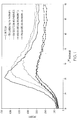
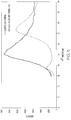
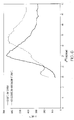
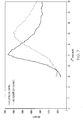
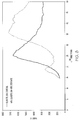
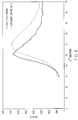
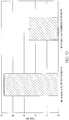
- Figures 1-9 are X-ray diffraction patterns of the powders obtained in Example 1. The figures show the intensity of the d 001 Angstroms peak for the indicated powder. Data from a CLOISITE 20A control are shown with a solid line in Figures 1-9 .
- Pre-exfoliated layered materials are provided.
- the layered materials are natural or synthetic and are modified or unmodified.
- the layered materials are for instance one or more materials selected from the group consisting of layered silicates, graphites, vertisols, layered double hydroxides, fullerenes, carbon nanotubes, silicas, polyhedral oligomeric silsesquioxanes, nanometals, metal oxides, metal organic frameworks and zeolites.
- the layered materials are for example kaolins, smectites, illite, chlorites or other 2:1 clay types.
- the layered materials are one or more compounds selected from montmorillonite, bentonite, beidellite, mica, hectorite, saponite, nontronite, sauconite, vermiculite, ledikite, magatite, kenyaite, stevensite, volkonskoite, hydrotalcite, illite, kaolinite, wollastonite, attapulgite, sepiolite, halloysite, talcum and silica.
- the layered materials may be modified via ion exchange by onium ions, for example primary, secondary, tertiary or quaternary ammonium cations or phosphonium cations.
- onium ions for example primary, secondary, tertiary or quaternary ammonium cations or phosphonium cations.
- Examples are distearyldimethylammonium, stearylbenzyldimethylammonium, dimethyl di-tallow ammonium, trioctylmethyl ammonium, dipolyoxyethylenealkylmethyl ammonium, polyoxypropylenemethyldiethyl ammonium, octadecylmethyl bis(polyoxyethylene[15]) ammonium, (meth)acrylate ammonium cations such as 2-(dimethylammonium ethyl methacrylate, cetyl trialkyl ammonium, cetyl vinyl dialkyl ammonium, tetrabutylphosphonium or oct
- the modifying agents may also be amines, for example the corresponding amines of the ammonium compounds, for instance stearylamine, stearyldiethoxyamine, aminododecanoic acid, octadecylamine or triethoxysilanyl-propylamine.
- Other modifying agents include silanes such as triethoxyoctylsilane, sulphonium or pyridinium compounds as disclosed for instance in U.S. Pat. No.
- block or graft copolymers such as polyethyleneoxide-b-polystyrene or poly-4-vinylpyridine-b-polystyrene; or solvents such as ⁇ -butyrolactone, 2-pyrrolidone, dimethylsulphoxide, diglyme, tetrahydrofuran or furfuryl alcohol.
- the layered materials comprise a nanoscaled space between layers termed a "gallery". This space is on the order of about 1 or 2 nm.
- the gallery is expanded to ⁇ 2.5 nm, resulting in a pre-exfoliated layered material.
- the present process results in a layered material with the gallery expanded to ⁇ 3, 3.5, 4, 4.5, 5, 5.5, 6, 6.5, 7, 7.5, 8, 8.5, 9 or ⁇ 10 nm.
- the present process for instance results in the gallery being expanded to a distance between 3 nm and 20 nm.
- the pre-exfoliation results in gallery expansion of ⁇ 0.5 nm, for instance ⁇ 1 nm, ⁇ 1.5 nm, ⁇ 2 nm, ⁇ 2.5 nm, ⁇ 3 nm, ⁇ 3.5 nm, ⁇ 4 nm, ⁇ 4.5 nm or ⁇ 5 nm.
- the gallery is expanded to ⁇ 20 nm, resulting in true separation of the layers.
- the plastics additives are selected from the group consisting of ultraviolet light absorbers, hindered amine light stabilizers, antioxidants, colorants, flame retardants, antimicrobials and fatty acid additives.
- the additives are liquids or meltable solids.
- the additives advantageously have a melting point of ⁇ 350°C, ⁇ 325°C, ⁇ 300°C, ⁇ 275°C, ⁇ 250°C, ⁇ 225°C or ⁇ 200°C.
- Additives with melting points above 350°C are "high melting” and additives that decompose rather than melt, or that do not melt, are "non-melting".
- UV light absorbers are for example selected from the group consisting of hydroxyphenylbenzotriazole, tris-aryl-s-triazine, benzoate, 2-hydroxybenzophenone, acrylate or malonate and oxamide ultraviolet light absorbers (UVAs).
- the hydroxyphenylbenzotriazole UVAs are for instance disclosed in U.S. Pat. Nos. 3,004,896 ; 3,055,896 ; 3,072,585 ; 3,074,910 ; 3,189,615 ; 3,218,332 ; 3,230,194 ; 4,127,586 ; 4,226,763 ; 4,275,004 ; 4,278,589 ; 4,315,848 ; 4,347,180 ; 4,383,863 ; 4,675,352 ; 4,681,905 , 4,853,471 ; 5,268,450 ; 5,278,314 ; 5,280,124 ; 5,319,091 ; 5,410,071 ; 5,436,349 ; 5,516,914 ; 5,554,760 ; 5,563,242 ; 5,574,166 ; 5,607,987 , 5,977,219 and 6,166,218 , such as 2-(2-hydroxy-5-methylphenyl)-2H-benzo
- the tris-aryl-s-triazine UVAs are for instance those disclosed in U. S. Pat. Nos. 3,843,371 ; 4,619,956 ; 4,740,542 ; 5,096,489 ; 5,106,891 ; 5,298,067 ; 5,300,414 ; 5,354,794 ; 5,461,151 ; 5,476,937 ; 5,489,503 ; 5,543,518 ; 5,556,973 ; 5,597,854 ; 5,681,955 ; 5,726,309 ; 5,736,597 ; 5,942,626 ; 5,959,008 ; 5,998,116 ; 6,013,704 ; 6,060,543 ; 6,242,598 and 6,255,483 , for example 4,6-bis-(2,4-dimethylphenyl)-2-(2-hydroxy-4-octyloxyphenyl)-s-triazine, CYASORB 1164, 4,6
- Benzoate UV absorbers are for instance esters of substituted and unsubstituted benzoic acids, as for example 4-tert-butylphenyl salicylate, phenyl salicylate, octylphenyl salicylate, dibenzoyl resorcinol, bis(4-tert-butylbenzoyl) resorcinol, benzoyl resorcinol, 2,4-di-tert-butylphenyl 3,5-di-tert-butyl-4-hydroxybenzoate, hexadecyl 3,5-di-tert-butyl-4-hydroxybenzoate, octadecyl 3,5-di-tert-butyl-4-hydroxybenzoate, 2-methyl-4,6-di-tert-butylphenyl 3,5-di-tert-butyl-4-hydroxybenzoate.
- 4-tert-butylphenyl salicylate phenyl salicylate
- UV absorbers are for example the 4-hydroxy, 4-methoxy, 4-octyloxy, 4-decyloxy, 4-dodecyloxy, 4-benzyloxy, 4,2',4'-trihydroxy and 2'-hydroxy-4,4'-dimethoxy derivatives.
- UV absorbers are, for example, ⁇ -cyano- ⁇ , ⁇ -diphenylacrylic acid ethyl ester or isooctyl ester, ⁇ -carbomethoxy-cinnamic acid methyl ester, ⁇ -cyano- ⁇ -methyl-p-methoxy-cinnamic acid methyl ester or butyl ester, ⁇ -carbomethoxy-p-methoxy-cinnamic acid methyl ester, N-( ⁇ -carbomethoxy- ⁇ -cyanovinyl)-2-methyl-indoline, dimethyl p-methoxybenzylidenemalonate (CAS# 7443-25-6), and di-(1,2,2,6,6-pentamethylpiperidin-4-yl) p-methoxybenzylidenemalonate (CAS #147783-69-5).
- Oxamide UV absorbers are for example 4,4'-dioctyloxyoxanilide, 2,2'-diethoxyoxanilide, 2,2'-dioctyloxy-5,5'-di-tert-butoxanilide, 2,2'-didodecyloxy-5,5'-di-tert-butoxanilide, 2-ethoxy-2'-ethyloxanilide, N,N'-bis(3-dimethylaminopropyl)oxamide, 2-ethoxy-5-tert-butyl-2'-ethoxanilide and its mixture with 2-ethoxy-2'-ethyl-5,4'-di-tert-butoxanilide, mixtures of o- and p-methoxy-disubstituted oxanilides and mixtures of o- and p-ethoxy-disubstituted oxanilides.
- UVAs are commercial, for example under the tradenames TINUVIN, CYASORB, CHIMASSORB and SANDUVOR, such as TINUVIN 326, TINUVIN 234, TINUVIN 1577, TINUVIN 1600, CYASORB UV 1164, CYASORB THT, CYASORB UV 2908, CHIMASSORB 81, TINUVIN 328, etc.
- HALS hindered amine light stabilizers
- Suitable hindered amine light stabilizers are for example:
- N-H sterically hindered N-H, N-methyl, N-methoxy, N-propoxy, N-octyloxy, N-cyclohexyloxy, N-acyloxy and N-(2-hydroxy-2-methylpropoxy) analogues of any of the above mentioned compounds.
- N-H hindered amine replacing an N-H hindered amine with an N-methyl hindered amine would be employing the N-methyl analogue in place of the N-H.
- the antioxidants are for instance one or more compounds selected from the group consisting of organic phosphorus stabilizers, hindered phenolic antioxidants, aminic antioxidants, dialkylhydroxylamine stabilizers, amine oxide stabilizers, benzofuranone stabilizers and thiosynergists.
- the organic phosphorus stabilizers are for example known phosphite and phosphonite stabilizers and include triphenyl phosphite, diphenyl alkyl phosphites, phenyl dialkyl phosphites, tris(nonylphenyl) phosphite, trilauryl phosphite, trioctadecyl phosphite, distearyl pentaerythritol diphosphite, tris(2,4-di-tert-butylphenyl) phosphite, bis(2,4-di- ⁇ -cumylphenyl) pentaerythrtitol diphosphite, diisodecyl pentaerythritol diphosphite, bis(2,4-di-tert-butylphenyl) pentaerythritol diphosphite (D), bis(2,6-di-tert-
- the hindered phenolic antioxidants are for example compounds of groups 1-17:
- Hindered phenolic antioxidants include for example tris(3,5-di-tert-butyl-4-hydroxybenzyl) isocyanurate, 1,3,5-tris-(3,5-di-tert-butyl-4-hydroxybenzyl)-2,4,6-trimethylbenzene, the calcium salt of the monoethyl ester of 3,5-di-tert-butyl-4-hydroxybenzylphosphonic acid, pentaerythritol tetrakis [3-(3,5-di-tert-butyl-4-hydroxyphenyl) propionate] or octadecyl 3-(3,5-di-tert-butyl-4-hydroxyphenyl) propionate.
- Aminic antioxidants are for example N,N'-di-isopropyl-p-phenylenediamine, N,N'-di-sec-butyl-p-phenylenediamine, N,N'-bis(1,4-dimethylpentyl)-p-phenylenediamine, N,N'-bis(1-ethyl-3-methylpentyl)-p-phenylenediamine, N,N'-bis(1-methylheptyl)-p-phenylenediamine, N,N'-dicyclohexyl-p-phenylenediamine, N,N'-diphenyl-p-phenylenediamine, N,N'-bis(2-naphthyl)-p-phenylenediamine, N-isopropyl-N'-phenyl-p-phenylenediamine, N-(1,3-dimethylbutyl)-N'-phenyl-p-pheny
- Hydroxylamine stabilizers are for example N,N-dibenzylhydroxylamine, N,N-diethylhydroxylamine, N,N-dioctylhydroxylamine, N,N-dilaurylhydroxylamine, N,N-didodecylhydroxylamine, N,N-ditetradecylhydroxylamine, N,N-dihexadecylhydroxylamine, N,N-dioctadecylhydroxylamine, N-hexadecyl-N-tetradecylhydroxylamine, N-hexadecyl-N-heptadecylhydroxylamine, N-hexadecyl-N-octadecylhydroxylamine, N-heptadecyl-N-octadecylhydroxylamine, N-methyl-N-octadecylhydroxylamine or N,N-di(C 16 -C 18 alkyl)hydroxyl
- the amine oxide stabilizer is for instance a di(C 16 -C 18 )alkyl methyl amine oxide, CAS# 204933-93-7 .
- Benzofuranone stabilizers are for example those disclosed in U.S. Pat. Nos. 4,325,863 , 4,338,244 , 5,175,312 , 5,216,052 , 5,252,643 5,369,159 5,356,966 5,367,008 5,428,177 or 5,428,162 or U.S. Pub. No.
- a suitable thiosynergist is dilauryl thiodipropionate or distearyl thiodipropionate.
- Ascorbic acid (Vitamin C) is also included as an antioxidant.
- the colorants are for example selected from the group consisting of organic pigments, inorganic pigments and mixtures thereof. Some suitable examples may be found in Pigment Handbook, T. C. Patton, Ed., Wiley-Interscience, New York, 1973 . Any of the commercial pigments used in polymer based products can be utilized in the present compositions such as: metallic oxides, such as titanium dioxide, zinc oxide, aluminum oxide and iron oxide, metal hydroxide, metal flakes, such as aluminum flake, chromates, such as lead chromate, sulfides, sulfates, carbonates, carbon black, bismuth vanadate, silica, talc, china clay, phthalocyanine blues and greens, organo reds, organo maroons, pearlescent pigments and other organic pigments. If desired chromate-free pigments, such as barium metaborate, zinc phosphate, aluminum triphosphate and mixtures thereof, can also be used.
- metallic oxides such as titanium dioxide, zinc oxide, aluminum oxide and iron oxide
- Some useful pigments include C.I. Pigments: Black 12, Black 26, Black 28, Black 30, Blue 15.0, Blue 15.3 (G), Blue 15.3 (R), Blue 28, Blue 36, Blue 385, Brown 24, Brown 29, Brown 33, Brown 10P850, Green 7 (Y), Green 7 (B), Green 17, Green 26, Green 50, Violet 14, Violet 16, Yellow 1, Yellow 3, Yellow 12, Yellow 13, Yellow 14, Yellow 17, Yellow 62, Yellow 74, Yellow 83, Yellow 164, Yellow 53, Red 2, Red 3 (Y), Red 3 (B), Red 4, Red 48.1, Red 48.2, Red 48.3, Red 48.4, Red 52.2, Red 49.1, Red 53.1, Red 57.1 (Y), Red 57.1 (B), Red 112, Red 146, Red 170 (F5RK Type) Bluer, C.I.
- Pigment Orange 5 Pigment Orange 13, Pigment Orange 34, Pigment Orange 23 (R), and Pigment Orange 23 (B).
- Some useful organic pigments include: Pigment Yellow 151, Pigment Yellow 154, Pigment Yellow 155, Pigment Red 8, Pigment Red 8, Pigment Red 49.2, Pigment Red 81, Pigment Red 169, Pigment Blue 1, Pigment Violet 1, Pigment Violet 3, Pigment Violet 27, Pigment Red 122, Pigment Violet 19.
- Some useful inorganic pigments include Middle Chrome, Lemon Chrome, Prime-Rose Chrome, Scarlet Chrome, and Zinc Chromate.
- the present organic pigments are for instance selected from the group consisting of phthalocyanines, perylenes, azo compounds, isoindolines, quinophthalones, diketopyrrolopyrroles, qyinacridones, dioxazines and indanthrones.
- the blue pigments are for example of the indanthrone and the copper phthalocyanine classes, for instance Pigment Blue 60, Pigment Blue 15:1, Pigment Blue 15:3, Pigment Blue 15:4 and Pigment Blue 15:6.
- the green pigments are for example of the copper phthalocyanine class, for instance Pigment Green 7 and Pigment Green 36.
- the magenta pigments are for instance of the quinacridone class, for example 2,9-dichloro quinacridone, Pigment Red 202.
- the red pigments are for instance of the quinacridone class, for instance dimethyl quinacridone, Pigment Red 122, or of the perylene class, for instance Pigment Red 149, Pigment Red 178 and Pigment Red 179, or of the diketopyrrolopyrrole class, for instance Pigment Red 254 and Pigment Red 264.
- the yellow pigments are for instance of the pteridine, isoindolinone, and isoindoline classes, for example Pigment Yellow 215, Pigment Yellow 110, and Pigment Yellow 139.
- the orange pigments are of the isoindolinone or diketopyrrolopyrrole class, for instance Pigment Orange 61, Pigment Orange 71, and Pigment Orange 73.
- the violet pigments are for instance of the quinacridone class, for instance pigment violet 19 or of the dioxazine class, for instance pigment violet 23 or pigment violet 37.
- mixtures of pigments may be employed.
- Suitable flame retardants include chlorinated flame retardants, brominated flame retardants, phosphorus based flame retardants and melamine based compounds.
- Chlorinated flame retardants are disclosed in U.S. Pat. Nos. 6,472,456 , 5,393,812 , 7,230,042 and 7,786,199 .
- Chlorinated flame retardants are for example tris(2-chloroethyl) phosphite, bis-(hexachlorocycloentadeno) cyclooctane, tris(1-chloro-2-propyl)phosphate, tris(2-chloroethyl)phosphate, bis(2-chloroethyl)vinyl phosphate, hexachlorocyclopentadiene, tris(chloropropyl)phosphate, tris(2-chloroethyl)phosphate, tris(chloropropyl)phosphate, polychlorinated biphenyls, mixtures of monomeric chloroethyl phosphonates and high boiling phosphonates, tris(2,3-dichloropropyl)phosphate
- Brominated flame retardants include tetrabromobisphenol A (TBBPA) and its derivatives such as esters, ethers, and oligomers, for example tetrabromophthalate esters, bis(2,3-dibromopropyloxy)tetrabromobisphenol A, brominated carbonate oligomers based on TBBPA, brominated epoxy oligomers based on condensation of TBBPA and epichlorohydrin, and copolymers of TBBPA and 1,2-dibromoethane; dibromobenzoic acid, dibromostyrene (DBS) and its derivatives; ethylenebromobistetrabromophthalimide, dibromoneopentyl glycol, dibromocyclooctane, trisbromoneopentanol, tris(tribromophenyl)triazine, 2,3-dibromopropanol, tribromoaniline, tribromophenol
- brominated flame retardants include polybrominated diphenyl oxide (DE-60F), decabromodiphenyl oxide (decabromodiphenyl ether) (DBDPO; SAYTEX® 102E), tris[3-bromo-2,2-bis(bromomethyl)propyl]phosphate (PB 370®, FMC Corp.
- the organobromine flame retardant is for instance decabromodiphenyl ether or tris[3-bromo-2,2-bis(bromomethyl)propyl]phosphate.
- Phosphorus containing flame retardants may be selected from phosphazene flame retardants, which are disclosed for example in, U.S. Pub. No. 2003/0220422 and U.S. Pat. Nos. 4,079,035 , 4,107,108 , 4,108,805 , 6,265,599 , 6,528,559 and 6,740,695 .
- Non-halogenated phosphorous based fire retardants are compounds that include phosphorous, such as triphenyl phosphates, phosphate esters, phosphonium derivatives, phosphonates, phosphoric acid esters and phosphate esters and those described in U.S. Patent No. 7,786,199 .
- Phosphorous based fire retardants are usually composed of a phosphate core to which is bonded alkyl (generally straight chain) or aryl (aromatic ring) groups.
- Phosphate esters include, for example, trialkyl derivatives, such as triethyl phosphate, tris(2-ethylhexyl)phosphate, trioctyl phosphate, triaryl derivatives, such as triphenyl phosphate, cresyl diphenyl phosphate and tricresyl phosphate and aryl-alkyl derivatives, such as 2-ethylhexyl-diphenyl phosphate and dimethyl-aryl phosphates and octylphenyl phosphate.
- phosphorous based flame retardants include diethylenediamine polyphosphate, methylamine boron-phosphate, cyanuramide phosphate, ethanolamine dimethyl phosphate, cyclic phosphonate ester, trialkyl phosphonates, cyanuramide phosphate, aniline phosphate, trimethylphosphoramide, tris(1-aziridinyl)phosphine oxide, bis(5,5-dimethyl-2-thiono-1,3,2-dioxaphosphorinamyl)oxide, dimethylphosphono-N-hydroxymethyl-3-propionamide, tris(2-butoxyethyl)phosphate, tetrakis(hydroxymethyl)phosphonium salts, such as tetrakis(hydroxymethyl)phosphonium chloride and tetrakis(hydroxymethyl)phosphonium sulfate, n-hydroxymethyl-3-(dimethylphosphono)-propionamide, a melamine salt of boron-polyphosphate,
- Melamine based flame retardants include melamine compound/polyol condensates.
- the polyol is a linear, branched or cyclic trihydric, tetrahydric, pentahydric or hexahydric alchol or a linear or cyclic C 4 -C 6 aldose or C 4 -C 6 ketose and where the melamine compound is melamine phosphate, melamine pyrophosphate or melamine polyphosphate.
- the polyol is preferably pentaerythritol or dipentaerythritol.
- the melamine compound is preferably melamine phosphate.
- the molar ratio of melamine compound to the polyol is preferably from about 1:1 to about 4:1.
- the condensate may further have incorporated therein a dendritic polymer substituted by hydroxy groups, for instance a dendritic polyester or dendritic polyamide.
- a dendritic polyester is preferably a product of an initiator compound selected from the group consisting of trimethyolpropane, pentaerythritol and ethoxylated pentaerythritol and chain-extending dimethylpropionic acid.
- a dendritic polyamide is preferably a polycondensate of a cyclic carboxylic acid anhydride and diisopropanolamine.
- High melting or non-melting flame retardants may be used together with organic melting flame retardants or one or more other present additives.
- organic melting flame retardants include magnesium phosphate, potassium ammonium phosphate, aluminum hydroxide, magnesium hydroxide, aluminum trihydroxide (ATH) and hydroxycarbonate.
- High melting or non-melting flame retardants also include red phosphorous, inorganic phosphates, insoluble ammonium phosphate, ammonium polyphosphate, ammonium urea polyphosphate, ammonium orthophosphate, ammonium carbonate phosphate, ammonium urea phosphate, diammonium phosphate, ammonium melamine phosphate, dicyandiamide polyphosphate, polyphosphate, urea phosphate, melamine pyrophosphate, melamine orthophosphate, melamine salt of dimethyl methyl phosphonate, melamine salt of dimethyl hydrogen phosphite, ammonium salt of boron-polyphosphate, urea salt of dimethyl methyl phosphonate, organophosphates, phosphonates and phosphine oxide.
- red phosphorous, inorganic phosphates insoluble ammonium phosphate, ammonium polyphosphate, ammonium urea polyphosphate, ammonium orthophosphate,
- High melting or non-melting flame retardants also include melamine based flame retardants.
- Melamine based flame retardants are a family of non-halogenated flame retardants that include three chemical groups: (a) melamine (2,4,6-triamino-1,3,5 triazine); (b) melamine derivatives (including salts with organic or inorganic acids, such as boric acid, cyanuric acid, phosphoric acid or pyro/poly-phosphoric acid); and (c) melamine homologues.
- Melamine derivatives include, for example, melamine cyanurate (a salt of melamine and cyanuric acid), melamine-mono-phosphate (a salt of melamine and phosphoric acid), melamine pyrophosphate and melamine polyphosphate.
- Melamine homologues include melam (1,3,5-triazin-2,4,6-triamine-n-(4,6-diamino-1,3,5-triazine--2-yl), melem (2,5,8-triamino 1,3,4,6,7,9,9b-heptaazaphenalene) and melon (poly[8-amino-1,3,4,6,7,9,9b-heptaazaphenalene-2,5-diyl).
- High melting or non-melting flame retardants include borate fire retardant compounds such as zinc borate, borax (sodium borate), ammonium borate, and calcium borate.
- Zinc borate is a boron based fire retardant having the chemical composition xZnO y B 2 O 3 ⁇ zH 2 O.
- Zinc borate can be used alone, or in conjunction with other chemical compounds, such as alumina trihydrate, magnesium hydroxide or red phosphorous. It acts through zinc halide or zinc oxyhalide, which accelerate the decomposition of halogen sources and promote char formation.
- Antimony trioxide may be employed, especially together with a present halogentated flame retardant, i.e. a brominated flame retardant. Combinations of antimony trioxide with decabromodiphenyl ether or tris[3-bromo-2,2-bis(bromomethyl)propyl] phosphate are included.
- Examples of other high melting or non-melting flame retardants include metal containing flame retardant substances such as magnesium oxide, magnesium chloride, talcum, alumina hydrate, zinc oxide, alumina trihydrate, alumina magnesium, calcium silicate, sodium silicate, zeolite, sodium carbonate, calcium carbonate, ammonium molybdate, iron oxide, copper oxide, zinc phosphate, zinc chloride, clay, sodium dihydrogen phosphate, tin, molybdenum and zinc.
- metal containing flame retardant substances such as magnesium oxide, magnesium chloride, talcum, alumina hydrate, zinc oxide, alumina trihydrate, alumina magnesium, calcium silicate, sodium silicate, zeolite, sodium carbonate, calcium carbonate, ammonium molybdate, iron oxide, copper oxide, zinc phosphate, zinc chloride, clay, sodium dihydrogen phosphate, tin, molybdenum and zinc.
- Antimicrobial compounds are for instance o-benzyl-phenol, 2-benzyl-4-chloro-phenol, 2,4,4'-trichloro-2'-hydroxydiphenyl ether, 4,4'-dichloro-2-hydroxydiphenyl ether, 5-chloro-2-hydroxydiphenyl-methane, mono-chloro-o-benzyl-phenol, 2,2'-methylenbis-(4-chloro-phenol) or 2,4,6-trichlorophenol.
- Antimicrobials are also for instance 3,5-dimethyl-tetrahydro-1,3,5-2H-thiodiazin-2-thione, bis-tributyltinoxide, 4,5-dichlor-2-n-octyl-4-isothiazolin-3-one, N-butyl-benzisothiazoline, 10,10'-oxybisphenoxyarsine, zinc-2-pyridinthiol-1-oxide, 2-methylthio-4-cyclopropylamino-6-( ⁇ , ⁇ -dimethylpropylamino)-s-triazine, 2-methylthio-4-cyclopropylamino-6-tert-butylamino-s-triazine or 2-methylthio-4-ethylamino-6-( ⁇ , ⁇ -dimethylpropylamino)-s-triazine, 2,4,4'-trichloro-2'-hydroxydiphenyl ether, 3-idodine-2-propenyl-butylcarbamate (
- Fatty acid additives include for instance pentaerythrityl fatty acid esters such as pentaerythrityl tetrastearate and metal salts of fatty acids, for example, calcium stearate, zinc stearate, magnesium behenate, magnesium stearate, aluminum stearate, sodium ricinoleate and potassium palmitate, antimony pyrocatecholate or zinc pyrocatecholate.
- pentaerythrityl fatty acid esters such as pentaerythrityl tetrastearate and metal salts of fatty acids, for example, calcium stearate, zinc stearate, magnesium behenate, magnesium stearate, aluminum stearate, sodium ricinoleate and potassium palmitate, antimony pyrocatecholate or zinc pyrocatecholate.
- the weight:weight ratio of layered material to plastics additives is for example from about 10:60 to about 60:10, from about 20:80 to about 80:20, from about 30:70 to about 70:30 or from about 40:60 to about 60:40.
- the weight:weight ratio of layered material to plastics additive is for example about 50:50, about 40:60, about 30:70, about 20:80 and levels in between.
- the additives are in particular contain a phenolic moiety, a piperidine moiety, a triazole moiety, a triazine moiety, a phosphite moiety or a phosphate moiety.
- the present methods do not require high shear processing to prepare a polymer nanocomposite comprising a fully exfoliated layered material.
- the present methods of pre-exfoliating the layered materials typically comprise dry blending of components, followed by extrusion.
- the additive or additive mixture is in a molten state during extrusion.
- the pre-exfoliated layered material/additive mixture is cooled.
- the extrudate may be in the form of strands that may be cut into pellets. Alternatively, the extrudate may be pulverized into a powder.
- the pre-exfoliation extrusion temperature will be a function of the melting point(s) of the additive or additives. As stated above, the additive or additive mixture is typically in a molten or liquid state during extrusion. Typically, the extrusion temperature will be from about 100°C to about 225°C. However, employing a liquid additive will allow the extrusion to take place at temperatures below 100°C, for instance about 25°C or lower. The pre-exfoliation extrusion may advantageously take place at temperatures up to about 350°C, for example up to 225°C, 250°C, 275°C, 300°C or 325°C.
- extrusion may take place above the melting point of one of the additives and below the melting point or decomposition point of the other additives.
- the non-molten additives may be soluble in the molten additive.
- certain non-melting or high melting point additives may be employed together with antioxidants, for instance pentaerythritol tetrakis(3-(3,5-di-tert-butyl-4-hydroxyphenyl)propionate) or tris-(2,4-di-tert-butylphenyl)phosphite.
- the additives may be semi-solid or liquid; such additives are also easily mixed with the layered material prior to extrusion.
- the powder may be blended into a polymer to prepare a polymer/exfoliated layered material/additive masterbatch.
- a masterbatch will contain from about 2 weight percent to about 70 weight percent of an exfoliated layered material/additive mixture and from about 98 weight percent to about 30 weight percent polymer. Typically from about 10 weight percent to about 50 weight percent exfoliated layered material/additive mixture and from about 90 weight percent to about 50 weight percent polymer.
- the masterbatch itself may be a true nanocomposite or the layered material may remain pre-exfoliated.
- the present pre-exfoliation methods employ little or no components other than the layered material and additive or additives, that is little or no solvents or carrier waxes or polymers.
- Solvents include water and/or organic solvents. Little means for instance less than 20%, less than 15%, less than 10%, less than 5%, less than 3% or less than 2% by weight other components, based on the weight of the layered material plus polymer additives. "No" means zero.
- a polymer, solvent or carrier wax may be employed in the present methods to prepare a pre-exfoliated layered material.
- the pre-exfoliated layered material/additive mixture may be subjected to any of the following: pastillation, prill forming, henschel mixing, spray drying, extrusion, compaction, granulation, shear melt techniques, batch mixing, gas phase absorption, elevated pressure mixing, mill mixing, kneading or thermal fusion.
- the pre-exfoliated layered material/additive mixture is advantageously dispersed in a polymer substrate to prepare a polymer nanocomposite via melt blending in an extruder. Again, high shear techniques are not required.
- the extrusion temperatures for nanocomposite formation are dependent on whatever temperature the bulk polymer is normally processed at.
- the present thermoplastics are typically processed at temperatures of from about 140°C to 320°C and possibly higher for specialty resins.
- the extrusion temperatures for nanocomposite formation are about 160°C, about 180°C, about 200°C, about 220°C, about 240°C, about 260°C, about 280°C or about 300°C.
- Present extruders include single screw extruders, twin screw extruders and planetary extruders.
- the resulting nanocomposite may be processed according to known techniques into final articles via further extrusion, injection molding, blown film molding, film extrusion, coextrusion, fiber spinning and the like.
- composition comprising a pre-exfoliated layered material/additive mixture and a polymer substrate may be formed into a final article via melt molding conditions (e.g. via injection molding) without prior melt blending in an extruder.
- melt molding conditions e.g. via injection molding
- Present polymer nanocomposites can be prepared also in this way.
- the pre-exfoliated layered material/additive mixtures are highly valuable intermediates useful in preparing polymer nanocomposites.
- the nanocomposites contain for instance about 0.5 percent by weight, about 1, about 1.5, about 2, about 2.5, about 3, about 3.5, about 4, about 4.5 or about 5, about 5.5, about 6, about 6.5, about 7, about 7.5, about 8, about 8.5, about 9, about 9.5 or about 10 percent by weight of the pre-exfoliated layered material/additive mixture, based on the weight of the polymer, and levels in between.
- the present nanocomposites may contain up to about 20 percent by weight of the pre-exfoliated layered materials.
- the nanocomposites contain for instance about 0.1 percent by weight, about 0.5, about 1, about 1.5, about 2, about 2.5, about 3, about 3.5, about 4, about 4.5 or about 5 percent by weight, based on the weight of the polymer, of the layered material. These levels are based on the weight of the layered material prior to pre-exfoliation.
- the nanocomposites may contain up to about 10 percent by weight layered material, based on the weight of the polymer, for example about 6, about 7, about 8 or about 9 weight percent, based on the weight of the polymer.
- the polymers of the nanocomposites are in particular natural or synthetic thermoplastic polymers.
- thermoplastic polymers for example:
- Polymers are for example:
- Biodegradable polymers of either natural or synthetic origin including but not limited to polyethylensuccinate, polybutylensuccinate, polybutylensuccinate/adipate, polybutylensuccinate/carbonate, polybutylensuccinate/terephtalate, polycaprolactone, poly(hydroxyalkanoates), poly 3-hydroxybutyrate, polylactic acid, polyester amides, or blends of these materials with natural or modified starch, polysaccharides, lignin, wood flour, cellulose or chitin.
- the polymer is for instance a thermoplastic natural or synthetic polymer as described above.
- Polyolefin homo- and copolymers, starch modified polyolefins and starch based polymer composite are included, for example polyethylenes, polypropylenes, polyethylene copolymers, polypropylene copolymers and propylene/ethylene copolymers.
- the present disclosure allows nanomaterial technology to be employed wherever plastics additives are used and as the exfoliation does not require high shear, common processing equipment may be employed.
- the extent of exfoliation is higher than that achieved with high shear techniques. This allows for lower clay loadings to achieve comparable properties.
- the present disclosure allows for nanocomposites to be used in any type of thermoplastic with any meltable or liquid additive.
- the layered materials can enhance modulus, flame retardant, glass transition, tensile, barrier, creep, leaching, strength, carlity, stability, toughness, impact, odor, color, compatibility, dripping, viscosity, flow, blocking, dimensional stability, recycleability, heat distortion, colorfastness, scratch and/or processibility properties.
- composition consisting of
- composition consisting of
- the present nanocomposites exhibit enhanced polymer properties.
- the nanocomposites may comprise plastics additives in addition to those of the present pre-exfoliated layered material/additive mixture.
- the present pre-exfoliated layered material/additive mixture is able to lower odor associated with volatile compounds during polymer processing.
- the present pre-exfoliated layered material/additive mixture is synergistic when employed together with known flame retardants.
- formulations 1a through 1d are prepared. Levels are parts by weight.
- Each formulation is added to a plastic bag and is dry blended (bag blended) thoroughly followed by extrusion with a small lab scale twin screw Brabender extruder.
- the zone temperatures are set at a point to ensure melting of IRGAFOS 168.
- Zone 1 160°C
- zone 2 through zone 5 200°C.
- the extruded materials range from a paste like to plastic like consistency that hardens upon cooling.
- the cooled samples are pulverized in a laboratory grade blender and characterized by powder X-ray diffraction.
- Fig. 1 shows the decrease of intensity and shift of the d001 peak to larger gallery spacings with higher concentrations of IRGAFOS 168, indicating pre-exfoliation.
- CLOISITE 20A Southern Clay Products, is a natural montmorillonite modified with dimethyl-dihydrogenated tallow quaternary ammonium (95 meq per 100g clay).
- IRGAFOS 168 is tris-(2,4-di-tert-butylphenyl)phosphite.
- FR-370 is tris(tribromoneopentyl)phosphate.
- IRGAFOS 126 is bis-(2,4-di-t-butylphenol) pentaerythritol diphosphite.
- TINUVIN 328 is 2-(2H-benzotriazol-2-yl)-4,6-di-tert-pentylphenol.
- IRGANOX 1010 is pentaerythritol tetrakis(3-(3,5-di-tert-butyl-4-hydroxyphenyl)propionate).
- TINUVIN 770 is bis(2,2,6,6,-tetramethyl-4-piperidyl)sebaceate.
Landscapes
- Chemical & Material Sciences (AREA)
- Organic Chemistry (AREA)
- Health & Medical Sciences (AREA)
- Chemical Kinetics & Catalysis (AREA)
- Medicinal Chemistry (AREA)
- Polymers & Plastics (AREA)
- Engineering & Computer Science (AREA)
- Materials Engineering (AREA)
- Dispersion Chemistry (AREA)
- Compositions Of Macromolecular Compounds (AREA)
- Extrusion Moulding Of Plastics Or The Like (AREA)
- Laminated Bodies (AREA)
Applications Claiming Priority (2)
| Application Number | Priority Date | Filing Date | Title |
|---|---|---|---|
| US201361916950P | 2013-12-17 | 2013-12-17 | |
| PCT/US2014/069681 WO2015094888A1 (en) | 2013-12-17 | 2014-12-11 | Pre-exfoliated layered materials |
Publications (3)
| Publication Number | Publication Date |
|---|---|
| EP3083243A1 EP3083243A1 (en) | 2016-10-26 |
| EP3083243A4 EP3083243A4 (en) | 2017-07-05 |
| EP3083243B1 true EP3083243B1 (en) | 2020-05-13 |
Family
ID=53403537
Family Applications (1)
| Application Number | Title | Priority Date | Filing Date |
|---|---|---|---|
| EP14872256.4A Active EP3083243B1 (en) | 2013-12-17 | 2014-12-11 | Pre-exfoliated layered materials |
Country Status (6)
| Country | Link |
|---|---|
| US (1) | US10414900B2 (https=) |
| EP (1) | EP3083243B1 (https=) |
| JP (1) | JP6625538B2 (https=) |
| AR (1) | AR098767A1 (https=) |
| TW (1) | TWI685524B (https=) |
| WO (1) | WO2015094888A1 (https=) |
Families Citing this family (15)
| Publication number | Priority date | Publication date | Assignee | Title |
|---|---|---|---|---|
| TWI685524B (zh) | 2013-12-17 | 2020-02-21 | 美商畢克美國股份有限公司 | 預先脫層之層狀材料 |
| CN108175947A (zh) * | 2017-12-19 | 2018-06-19 | 袁国根 | 一种新型超导量子水舱 |
| CN108079938A (zh) * | 2017-12-25 | 2018-05-29 | 北京益清源环保科技有限公司 | 对水体中的正磷酸盐具有吸附性能的改性蛭石吸附剂 |
| IT201800005314A1 (it) * | 2018-05-14 | 2019-11-14 | Pasta ad elevata concentrazione di un materiale stratificato esfoliato e procedimento per la sua preparazione | |
| CN112424119A (zh) * | 2018-07-30 | 2021-02-26 | 株式会社艾迪科 | 复合材料 |
| CN109503939A (zh) * | 2018-10-25 | 2019-03-22 | 江苏昇和新材料科技股份有限公司 | 纳米改性着色聚丙烯复合材料 |
| CN109485975A (zh) * | 2018-11-19 | 2019-03-19 | 成都市水泷头化工科技有限公司 | 一种阻燃高密度聚乙烯燃气输送管及制备方法 |
| CN109679216A (zh) * | 2018-12-28 | 2019-04-26 | 重庆普利特新材料有限公司 | 一种高刚韧平衡性、抗应力发白、无卤阻燃聚丙烯复合材料及其制备方法 |
| CN110041612B (zh) * | 2019-04-01 | 2021-03-30 | 四川大学 | 低聚倍半硅氧烷增容及协效无卤阻燃聚丙烯复合材料及其制备方法 |
| CN110465285B (zh) * | 2019-07-29 | 2022-05-17 | 江苏大学 | 一种BiVO4@碳纳米点复合光催化材料的制备方法与应用 |
| CN110551357B (zh) * | 2019-09-29 | 2022-04-15 | 陕西科技大学 | 一种阻燃型镁铝水滑石/羧基poss复合材料及其制备方法 |
| KR102346106B1 (ko) * | 2019-10-10 | 2022-01-03 | 주식회사 경동원 | 고난연성 유기 변성 실리케이트를 이용한 유무기 복합 합성수지 및 이의 제조방법 |
| CN113861433B (zh) * | 2021-09-06 | 2022-11-01 | 浙大宁波理工学院 | 一种协效阻燃剂及其制备方法和应用 |
| CN117343401B (zh) * | 2023-12-05 | 2024-03-12 | 山东多维达纳米科技有限公司 | 原位聚合改性超细氢氧化镁的制备方法 |
| CN118438760A (zh) * | 2024-05-09 | 2024-08-06 | 广东宏元实业集团有限公司 | 一种阻燃pe膜袋及其制备方法 |
Citations (2)
| Publication number | Priority date | Publication date | Assignee | Title |
|---|---|---|---|---|
| US20030183809A1 (en) * | 2002-03-29 | 2003-10-02 | Masanobu Onikata | Heat resistant organoclay |
| US20110142899A1 (en) * | 2008-06-25 | 2011-06-16 | Nanobiomatters, S.L. | Active nanocomposite materials and production method thereof |
Family Cites Families (103)
| Publication number | Priority date | Publication date | Assignee | Title |
|---|---|---|---|---|
| BE563210A (https=) | 1956-12-14 | 1958-06-13 | ||
| US3004896A (en) | 1956-12-14 | 1961-10-17 | Geigy Ag J R | Ultra-violet light-absorbing composition of matter |
| US3055896A (en) | 1959-06-11 | 1962-09-25 | American Cyanamid Co | Aminohydroxyphenylbenzotriazoles and triazine derivatives thereof |
| US3072585A (en) | 1960-01-13 | 1963-01-08 | American Cyanamid Co | Vinylbenzyloxy phenylbenzotriazoles |
| US3074910A (en) | 1960-11-17 | 1963-01-22 | Hercules Powder Co Ltd | Stabilization of polyolefins with a nickel phenolate of a bis(p-alkyl phenol) monosulfide and an o-hydroxy phenyl benzotriazole |
| BE630549A (https=) | 1961-06-16 | |||
| US3230194A (en) | 1961-12-22 | 1966-01-18 | American Cyanamid Co | 2-(2'-hydroxy-5'-tertiary-octylphenyl)-benzotriazole and polyolefins stabilized therewith |
| CH533853A (de) | 1970-03-23 | 1973-02-15 | Ciba Geigy Ag | Verwendung von 2'-Hydroxyphenyl-1,3,5-triazinen als Stabilisierungsmittel gegen Ultraviolettstrahlung in photographischem Material |
| US4127586A (en) | 1970-06-19 | 1978-11-28 | Ciba-Geigy Corporation | Light protection agents |
| US4079035A (en) | 1974-11-21 | 1978-03-14 | Ethyl Corporation | Halophenoxyphosphazene fire retardants and polyesters containing same |
| US4107108A (en) | 1977-02-08 | 1978-08-15 | Armstrong Cork Company | Polyphosphazene plasticized resins |
| US4108805A (en) | 1977-09-06 | 1978-08-22 | Armstrong Cork Company | Structurally regulated polyphosphazene copolymers |
| US4278589A (en) | 1978-06-26 | 1981-07-14 | Ciba-Geigy Corporation | 2-[2-Hydroxy-3,5-di-(α,α-dimethylbenzyl)phenyl]-2H-benzotriazole and stabilized compositions |
| US4226763A (en) | 1978-06-26 | 1980-10-07 | Ciba-Geigy Corporation | 2-[2-Hydroxy-3,5-di-(.alpha.,α-dimethylbenzyl)-phenyl]-2H-benzotriazole and stabilized compositions |
| US4275004A (en) | 1978-06-26 | 1981-06-23 | Ciba-Geigy Corporation | High caustic coupling process for preparing substituted 2-nitro-2'-hydroxyazobenzenes |
| GB2042562B (en) | 1979-02-05 | 1983-05-11 | Sandoz Ltd | Stabilising polymers |
| US4315848A (en) | 1979-05-10 | 1982-02-16 | Ciba-Geigy Corporation | 2-[2-Hydroxy-3,5-di-(α,α-dimethylbenzyl)-phenyl]-2H-benzotriazole and stabilized compositions |
| US4347180A (en) | 1979-05-16 | 1982-08-31 | Ciba-Geigy Corporation | High caustic coupling process for preparing substituted 2-nitro-2'-hydroxyazobenzenes |
| US4383863A (en) | 1979-12-17 | 1983-05-17 | Ciba-Geigy Corporation | 2-[2-Hydroxy-3,5-di-tert-octylphenyl]-2H-benzotriazole in stabilized photographic compositions |
| US4853471A (en) | 1981-01-23 | 1989-08-01 | Ciba-Geigy Corporation | 2-(2-Hydroxyphenyl)-benztriazoles, their use as UV-absorbers and their preparation |
| JPS61113649A (ja) | 1984-11-07 | 1986-05-31 | Adeka Argus Chem Co Ltd | 耐光性の改善された高分子材料組成物 |
| US4675352A (en) | 1985-01-22 | 1987-06-23 | Ciba-Geigy Corporation | Liquid 2-(2-hydroxy-3-higher branched alkyl-5-methyl-phenyl)-2H-benzotriazole mixtures, stabilized compositions and processes for preparing liquid mixtures |
| US4619956A (en) | 1985-05-03 | 1986-10-28 | American Cyanamid Co. | Stabilization of high solids coatings with synergistic combinations |
| US5204473A (en) | 1987-09-21 | 1993-04-20 | Ciba-Geigy Corporation | O-substituted N-hydroxy hindered amine stabilizers |
| US5112890A (en) | 1987-09-21 | 1992-05-12 | Ciba-Geigy Corporation | Stabilization of acid catalyzed thermoset resins |
| US5124378A (en) | 1987-09-21 | 1992-06-23 | Ciba-Geigy Corporation | Stabilization of ambient cured coatings |
| US5096950A (en) | 1988-10-19 | 1992-03-17 | Ciba-Geigy Corporation | Polyolefin compositions stabilized with NOR-substituted hindered amines |
| US5004770A (en) | 1988-10-19 | 1991-04-02 | Ciba-Geigy Corporation | Polymeric substrates stabilized with N-substituted hindered amines |
| US5145893A (en) | 1989-03-21 | 1992-09-08 | Ciba-Geigy Corporation | Non-migrating 1-hydrocarbyloxy hindered amine derivatives as polymer stabilizers |
| EP0425429B1 (de) | 1989-08-25 | 1995-02-22 | Ciba-Geigy Ag | Lichtstabilisierte Tinten |
| JP3012255B2 (ja) | 1989-08-28 | 2000-02-21 | 松下電工株式会社 | 気密端子の製造方法 |
| US5175312A (en) | 1989-08-31 | 1992-12-29 | Ciba-Geigy Corporation | 3-phenylbenzofuran-2-ones |
| US5736597A (en) | 1989-12-05 | 1998-04-07 | Ciba-Geigy Corporation | Stabilized organic material |
| EP0453396B1 (de) | 1990-03-30 | 1995-12-13 | Ciba SC Holding AG | Lackzusammensetzungen |
| DE69125095T2 (de) | 1990-10-29 | 1997-08-21 | Cytec Tech Corp | Hydroxyaryltriazine und Tetraalkylpiperidine enthaltende synergistische UV-Absorbermischung |
| US5278314A (en) | 1991-02-12 | 1994-01-11 | Ciba-Geigy Corporation | 5-thio-substituted benzotriazole UV-absorbers |
| US5280124A (en) | 1991-02-12 | 1994-01-18 | Ciba-Geigy Corporation | 5-sulfonyl-substituted benzotriazole UV-absorbers |
| KR100187320B1 (ko) | 1991-02-21 | 1999-04-01 | 월터 클리웨인 | 광, 산소 및 열에 대해 안정화된 도료 |
| US5252643A (en) | 1991-07-01 | 1993-10-12 | Ciba-Geigy Corporation | Thiomethylated benzofuran-2-ones |
| TW206220B (https=) | 1991-07-01 | 1993-05-21 | Ciba Geigy Ag | |
| DE59208885D1 (de) | 1991-09-05 | 1997-10-16 | Ciba Geigy Ag | UV-Absorber enthaltendes photographisches Material |
| US5216156A (en) | 1992-05-05 | 1993-06-01 | Ciba-Geigy Corporation | Non-migrating 1-hydrocarbyloxy-2,2,6,6-tetramethylpiperidine 1,3,5-triazine derivatives |
| TW260686B (https=) | 1992-05-22 | 1995-10-21 | Ciba Geigy | |
| GB2267490B (en) | 1992-05-22 | 1995-08-09 | Ciba Geigy Ag | 3-(Carboxymethoxyphenyl)benzofuran-2-one stabilisers |
| NL9300801A (nl) | 1992-05-22 | 1993-12-16 | Ciba Geigy | 3-(acyloxyfenyl)benzofuran-2-on als stabilisatoren. |
| MX9305489A (es) | 1992-09-23 | 1994-03-31 | Ciba Geigy Ag | 3-(dihidrobenzofuran-5-il)benzofuran-2-onas, estabilizadores. |
| TW255902B (https=) | 1992-09-23 | 1995-09-01 | Ciba Geigy | |
| US5268450A (en) | 1992-11-24 | 1993-12-07 | Phillips Petroleum Company | Compositions comprising sulfur-containing derivatives of hydroxyphenylbenzotriazole and process therefor |
| US5319091A (en) | 1992-11-24 | 1994-06-07 | Phillips Petroleum Company | Process for sulfur containing derivatives of hydroxyphenyl/benzotriazoles |
| US5489503A (en) | 1992-12-03 | 1996-02-06 | Ciba-Geigy Corp. | UV absorbers |
| US5354794A (en) | 1993-02-03 | 1994-10-11 | Ciba-Geigy Corporation | Electro coat/base coat/clear coat finishes stabilized with S-triazine UV absorbers |
| US5393812A (en) | 1993-08-31 | 1995-02-28 | Hercules Incorporated | Flame retardant, light stable composition |
| US5556973A (en) | 1994-07-27 | 1996-09-17 | Ciba-Geigy Corporation | Red-shifted tris-aryl-s-triazines and compositions stabilized therewith |
| EP0711804A3 (de) | 1994-11-14 | 1999-09-22 | Ciba SC Holding AG | Kryptolichtschutzmittel |
| IL117216A (en) * | 1995-02-23 | 2003-10-31 | Martinswerk Gmbh | Surface-modified filler composition |
| US6255483B1 (en) | 1995-03-15 | 2001-07-03 | Ciba Specialty Chemicals Corporation | Biphenyl-substituted triazines |
| TW358820B (en) | 1995-04-11 | 1999-05-21 | Ciba Sc Holding Ag | Synergistic stabilizer mixture |
| US5574166A (en) | 1995-04-19 | 1996-11-12 | Ciba-Geigy Corporation | Crystalline form of 2-(2-hydroxy-3-α-cumyl-5-tert-octylphenyl)-2H-benzotriazole |
| US6046304A (en) | 1995-12-04 | 2000-04-04 | Ciba Specialty Chemicals Corporation | Block oligomers containing 2,2,6,6-tetramethyl-4-piperidyl groups as stabilizers for organic materials |
| CH692739A5 (de) | 1996-03-26 | 2002-10-15 | Ciba Sc Holding Ag | Polymerzusammensetzungen enthaltend 2-Hydroxyphenyl-1,3,5-triazine als UV-Absorber sowie neue 2-Hydroxyphenyl-1,3,5-triazine |
| US5726309A (en) | 1996-08-27 | 1998-03-10 | Ciba Specialty Chemicals Corporation | Tris-aryls-triazines substituted with biphenylyl groups |
| BE1012529A3 (fr) | 1996-09-13 | 2000-12-05 | Ciba Sc Holding Ag | Melange de triaryltriazines et son utilisation pour la stabilisation de materiaux organiques. |
| US6013704A (en) | 1996-09-13 | 2000-01-11 | Ciba Specialty Chemicals Corporation | Hydroxyphenyltriazines |
| US5998116A (en) | 1996-09-13 | 1999-12-07 | Ciba Specialty Chemicals Corporation | Color-photographic recording material |
| US6166218A (en) | 1996-11-07 | 2000-12-26 | Ciba Specialty Chemicals Corporation | Benzotriazole UV absorbers having enhanced durability |
| US5977219A (en) | 1997-10-30 | 1999-11-02 | Ciba Specialty Chemicals Corporation | Benzotriazole UV absorbers having enhanced durability |
| US5844026A (en) | 1997-06-30 | 1998-12-01 | Ciba Specialty Chemicals Corporation | N,N',N''-tris{2,4-bis Hydrocarbyloxy-2,2,6,6-tetra-methylpiperidin-4-yl)alkylamino!-s-triazin-6-yl}-3,3'-ethylenediiminodipropylamines, their isomers and bridged derivatives and polymer compositions stabilized therewith |
| US6472456B1 (en) | 1997-06-30 | 2002-10-29 | Ciba Specialty Chemicals Corp. | Flame retardant compositions |
| EP0905204B1 (de) * | 1997-09-26 | 2002-11-20 | MERCK PATENT GmbH | Oberflächenmodifizierte plättchenförmige Substrate |
| ITMI980366A1 (it) | 1998-02-25 | 1999-08-25 | Ciba Spec Chem Spa | Preparazione di eteri amminici stericamente impediti |
| EP0941989B1 (en) | 1998-03-02 | 2009-07-08 | Ciba Holding Inc. | Process for the preparation of 2,4-diaryl-6-o-hydroxyphenyl-1,3,5-triazine derivatives in the presence of a protic acid catalyst |
| DE19828541A1 (de) | 1998-06-26 | 1999-12-30 | Bayer Ag | Flammwidrige Polycarbonat-ABS-Formmassen |
| TW445276B (en) | 1998-08-13 | 2001-07-11 | Otsuka Chemical Co Ltd | Crosslinked phenoxyphosphazene compounds, process for the preparation thereof, flame retardants, flame-retardant resin compositions, and moldings of flame-retardant resins |
| MXPA01005691A (es) | 1998-12-07 | 2002-04-24 | Eastman Chem Co | Una composicion colorante, un monocompuesto polimero ique consta de una composicion colorante y articulos producidos de el. |
| US6392041B1 (en) | 1999-02-25 | 2002-05-21 | Ciba Specialty Chemicals Corporation | Hydroxy-substituted N-alkoxy hindered amines and compositions stabilized therewith |
| US6376584B1 (en) | 1999-02-25 | 2002-04-23 | Ciba Specialty Chemicals Corporation | Hydroxy-substituted N-alkoxy hindered amines and compositions stabilized therewith |
| US6271377B1 (en) | 1999-02-25 | 2001-08-07 | Ciba Specialty Chemicals Corporation | Hydroxy-substituted N-alkoxy hindered amines and compositions stabilized therewith |
| US6815489B1 (en) | 1999-07-13 | 2004-11-09 | Nederlandse Organisatie Voor Toegepast-Natuurwetenschappelijk Onderzoek Tno | Nanocomposite coatings |
| US6265599B1 (en) | 2000-07-12 | 2001-07-24 | Chung-Shan Institute Of Science & Technology | Process for preparing a mixture of amino-containing phosphazenes |
| US6617020B2 (en) | 2001-04-04 | 2003-09-09 | 3M Innovative Properties Company | Hot melt processable pressure sensitive adhesive comprising organophilic clay plate-like particles, a method of making, and articles made therefrom |
| JP2004530785A (ja) | 2001-06-29 | 2004-10-07 | チバ スペシャルティ ケミカルズ ホールディング インコーポレーテッド | ナノスケール充填剤立体障害性とアミン系光安定剤との相乗的組み合わせ |
| US7323502B2 (en) | 2002-03-12 | 2008-01-29 | Ciba Specialty Chemicals Corporation | Flame retardant compositions |
| JP4324940B2 (ja) | 2002-04-17 | 2009-09-02 | チバ ホールディング インコーポレーテッド | ヒドロキシルアミンエステル含有難燃性ポリマー組成物 |
| CN1665870A (zh) * | 2002-07-05 | 2005-09-07 | 埃克森美孚化学专利公司 | 官能化的弹性体纳米复合材料 |
| KR100483851B1 (ko) * | 2002-07-22 | 2005-04-18 | 주식회사 엘지화학 | 박리형 니트로계 고분자/실리케이트 나노복합체의 제조방법 |
| AU2002952373A0 (en) * | 2002-10-31 | 2002-11-14 | Commonwealth Scientific And Industrial Research Organisation | Fire resistant material |
| RU2360933C2 (ru) | 2002-11-08 | 2009-07-10 | Полимерс Острейлиа Пти. Лимитед | Способ приготовления полиолефиновых нанокомпозитов |
| CN1311019C (zh) | 2002-12-18 | 2007-04-18 | 西巴特殊化学品控股有限公司 | 制备基于三聚氰胺的阻燃剂的方法和聚合物组合物 |
| EP1581588B1 (de) | 2003-01-08 | 2007-02-28 | Süd-Chemie Ag | Zusammensetzung auf der basis präexfolierter nanoclays und ihre verwendung |
| DE10320465A1 (de) * | 2003-05-08 | 2004-12-02 | Clariant Gmbh | Flammschutzmittel-Nanocomposite-Kombination für thermoplastische Polymere |
| US7803395B2 (en) * | 2003-05-15 | 2010-09-28 | Biomerix Corporation | Reticulated elastomeric matrices, their manufacture and use in implantable devices |
| JP2006527294A (ja) | 2003-06-12 | 2006-11-30 | ジュート−ヒェミー アクチェンゲゼルシャフト | ポリマーにおける改質された離層を有するナノコンポジット添加剤の製造方法 |
| US7241829B2 (en) | 2003-07-18 | 2007-07-10 | The Penn State Research Foundation | Exfoliated polyolefin/clay nanocomposites using chain end functionalized polyolefin as the polymeric surfactant |
| CA2565160C (en) | 2004-05-26 | 2013-02-12 | Jean-Roch Pauquet | Flame-retardants |
| JP2007254613A (ja) * | 2006-03-23 | 2007-10-04 | Toray Ind Inc | ポリアミド樹脂組成物およびそれからなる成形品 |
| US20100152376A1 (en) | 2006-12-12 | 2010-06-17 | Ciba Corporation | Flame retardant composition comprising dendritic polymers |
| JP2008201825A (ja) | 2007-02-16 | 2008-09-04 | Furukawa Electric Co Ltd:The | 有機処理フィラーの製造方法 |
| JP2008247704A (ja) * | 2007-03-30 | 2008-10-16 | Cci Corp | 層間化合物の製造方法 |
| GB2450475A (en) | 2007-06-12 | 2008-12-31 | Univ Nottingham Trent | Antimicrobial polymer nanocomposite |
| US20110269880A1 (en) | 2008-12-17 | 2011-11-03 | Basf Se | Layered silicate flame retardant compositions |
| TWI403507B (zh) | 2011-03-17 | 2013-08-01 | Chitec Technology Co Ltd | 苯并呋喃衍生物及其應用 |
| US9410031B2 (en) * | 2011-06-28 | 2016-08-09 | Flow Polymers, Llc | Organic functionalization of layered double hydroxides |
| TWI685524B (zh) | 2013-12-17 | 2020-02-21 | 美商畢克美國股份有限公司 | 預先脫層之層狀材料 |
-
2014
- 2014-12-10 TW TW103143108A patent/TWI685524B/zh active
- 2014-12-11 WO PCT/US2014/069681 patent/WO2015094888A1/en not_active Ceased
- 2014-12-11 US US15/104,711 patent/US10414900B2/en active Active
- 2014-12-11 EP EP14872256.4A patent/EP3083243B1/en active Active
- 2014-12-11 JP JP2016540527A patent/JP6625538B2/ja active Active
- 2014-12-16 AR ARP140104677A patent/AR098767A1/es active IP Right Grant
Patent Citations (2)
| Publication number | Priority date | Publication date | Assignee | Title |
|---|---|---|---|---|
| US20030183809A1 (en) * | 2002-03-29 | 2003-10-02 | Masanobu Onikata | Heat resistant organoclay |
| US20110142899A1 (en) * | 2008-06-25 | 2011-06-16 | Nanobiomatters, S.L. | Active nanocomposite materials and production method thereof |
Also Published As
| Publication number | Publication date |
|---|---|
| WO2015094888A1 (en) | 2015-06-25 |
| AR098767A1 (es) | 2016-06-15 |
| TW201609907A (zh) | 2016-03-16 |
| US20160319100A1 (en) | 2016-11-03 |
| JP2016540865A (ja) | 2016-12-28 |
| EP3083243A4 (en) | 2017-07-05 |
| US10414900B2 (en) | 2019-09-17 |
| JP6625538B2 (ja) | 2020-01-08 |
| TWI685524B (zh) | 2020-02-21 |
| EP3083243A1 (en) | 2016-10-26 |
Similar Documents
| Publication | Publication Date | Title |
|---|---|---|
| EP3083243B1 (en) | Pre-exfoliated layered materials | |
| EP3194482B1 (de) | Verwendung von phosphorhaltigen organischen oxyimiden als flammschutzmittel für kunststoffe, flammgeschützte kunststoffzusammensetzung, verfahren zu deren herstellung sowie formteile, lacke und beschichtungen | |
| EP3658616B1 (de) | Halogenfreie sulfonsäureester und/oder sulfinsäureester als flammschutzmittel, flammschutzmittelsynergisten und radikalgeneratoren in kunststoffen | |
| EP3194486B1 (de) | Verwendung von organischen oxyimidsalzen als flammschutzmittel, flammengeschützte kunststoffzusammensetzung, verfahren zu ihrer herstellung sowie formteil, lack oder beschichtung | |
| RU2344158C2 (ru) | Огнестойкая полимерная композиция | |
| EP2935430B1 (en) | Flame retardant polymer compositions | |
| EP2825589B1 (en) | Nor-hals compounds as flame retardants | |
| EP2978804B1 (de) | Verwendung von organischen oxyimiden als flammschutzmittel für kunststoffe sowie flammgeschützte kunststoffzusammensetzung und hieraus hergestellte formteile | |
| EP3585833B1 (de) | Effiziente phosphorhaltige stabilisatoren auf basis von diphenylamin und heterocyclischer diphenylamin-derivate | |
| EP3325547B1 (en) | Flame retardant polyolefin articles | |
| DE102014211276A1 (de) | Verwendung von Hydroxybenzotriazol-Derivaten und/oder Hydroxy-Indazol-Derivaten als Flammschutzmittel für Kunststoffe sowie flammgeschützte Kunststoffformmasse | |
| EP4025629B1 (de) | Oligomer oder polymer, zusammensetzung, verwendung des oligomers oder polymers sowie intermediat | |
| WO2004035671A1 (en) | Flame retardant compositions | |
| KR20220032579A (ko) | 안정화제로서 페놀 치환된 당 유도체의 용도, 플라스틱 조성물, 플라스틱 재료 및 페놀 치환된 당 유도체의 안정화 방법 | |
| DE102020128803A1 (de) | Verwendung von Eugenol-Derivaten als Stabilisatoren, organisches Material sowie Eugenol-Derivate | |
| WO2021191078A1 (de) | Verwendung von substituierten zimtsäureestern als stabilisatoren für organische materialien, stabilisiertes organisches material, verfahren zur stabilisierung von organischen materialien sowie spezifische zimtsäureester | |
| DE60307495T2 (de) | Flammgeschützte polymere elektrische teile | |
| DE102021202508A1 (de) | Verwendung einer Stabilisatorzusammensetzung zur Stabilisierung von Polyolefin-Recyclaten, Stabilisatorzusammensetzung, Masterbatchkonzentrat, Kunststoffzusammensetzung, Formmasse oder Formteil, Verfahren zur Stabilisierung eines Polyolefin-Recyclats sowie Verwendung einer Kunststoffzusammensetzung |
Legal Events
| Date | Code | Title | Description |
|---|---|---|---|
| PUAI | Public reference made under article 153(3) epc to a published international application that has entered the european phase |
Free format text: ORIGINAL CODE: 0009012 |
|
| 17P | Request for examination filed |
Effective date: 20160713 |
|
| AK | Designated contracting states |
Kind code of ref document: A1 Designated state(s): AL AT BE BG CH CY CZ DE DK EE ES FI FR GB GR HR HU IE IS IT LI LT LU LV MC MK MT NL NO PL PT RO RS SE SI SK SM TR |
|
| AX | Request for extension of the european patent |
Extension state: BA ME |
|
| RIN1 | Information on inventor provided before grant (corrected) |
Inventor name: ARECHEDERRA, ROBERT |
|
| DAX | Request for extension of the european patent (deleted) | ||
| A4 | Supplementary search report drawn up and despatched |
Effective date: 20170607 |
|
| RIC1 | Information provided on ipc code assigned before grant |
Ipc: C09K 15/22 20060101ALI20170531BHEP Ipc: B32B 27/08 20060101AFI20170531BHEP Ipc: C09K 15/32 20060101ALI20170531BHEP Ipc: C09K 15/24 20060101ALI20170531BHEP Ipc: C09C 1/40 20060101ALI20170531BHEP Ipc: B32B 27/38 20060101ALI20170531BHEP Ipc: C09K 15/08 20060101ALI20170531BHEP Ipc: C09C 1/42 20060101ALI20170531BHEP Ipc: C09K 21/12 20060101ALI20170531BHEP Ipc: B32B 27/18 20060101ALI20170531BHEP Ipc: C08J 3/22 20060101ALI20170531BHEP Ipc: C08K 5/00 20060101ALI20170531BHEP Ipc: C08K 9/04 20060101ALI20170531BHEP Ipc: C08K 5/12 20060101ALI20170531BHEP |
|
| STAA | Information on the status of an ep patent application or granted ep patent |
Free format text: STATUS: EXAMINATION IS IN PROGRESS |
|
| 17Q | First examination report despatched |
Effective date: 20180410 |
|
| RAP1 | Party data changed (applicant data changed or rights of an application transferred) |
Owner name: BYK USA INC. |
|
| GRAP | Despatch of communication of intention to grant a patent |
Free format text: ORIGINAL CODE: EPIDOSNIGR1 |
|
| STAA | Information on the status of an ep patent application or granted ep patent |
Free format text: STATUS: GRANT OF PATENT IS INTENDED |
|
| INTG | Intention to grant announced |
Effective date: 20200116 |
|
| GRAS | Grant fee paid |
Free format text: ORIGINAL CODE: EPIDOSNIGR3 |
|
| GRAA | (expected) grant |
Free format text: ORIGINAL CODE: 0009210 |
|
| STAA | Information on the status of an ep patent application or granted ep patent |
Free format text: STATUS: THE PATENT HAS BEEN GRANTED |
|
| AK | Designated contracting states |
Kind code of ref document: B1 Designated state(s): AL AT BE BG CH CY CZ DE DK EE ES FI FR GB GR HR HU IE IS IT LI LT LU LV MC MK MT NL NO PL PT RO RS SE SI SK SM TR |
|
| REG | Reference to a national code |
Ref country code: GB Ref legal event code: FG4D |
|
| REG | Reference to a national code |
Ref country code: CH Ref legal event code: EP |
|
| REG | Reference to a national code |
Ref country code: DE Ref legal event code: R096 Ref document number: 602014065543 Country of ref document: DE |
|
| REG | Reference to a national code |
Ref country code: AT Ref legal event code: REF Ref document number: 1269722 Country of ref document: AT Kind code of ref document: T Effective date: 20200615 |
|
| REG | Reference to a national code |
Ref country code: LT Ref legal event code: MG4D |
|
| REG | Reference to a national code |
Ref country code: NL Ref legal event code: MP Effective date: 20200513 |
|
| PG25 | Lapsed in a contracting state [announced via postgrant information from national office to epo] |
Ref country code: NO Free format text: LAPSE BECAUSE OF FAILURE TO SUBMIT A TRANSLATION OF THE DESCRIPTION OR TO PAY THE FEE WITHIN THE PRESCRIBED TIME-LIMIT Effective date: 20200813 Ref country code: IS Free format text: LAPSE BECAUSE OF FAILURE TO SUBMIT A TRANSLATION OF THE DESCRIPTION OR TO PAY THE FEE WITHIN THE PRESCRIBED TIME-LIMIT Effective date: 20200913 Ref country code: SE Free format text: LAPSE BECAUSE OF FAILURE TO SUBMIT A TRANSLATION OF THE DESCRIPTION OR TO PAY THE FEE WITHIN THE PRESCRIBED TIME-LIMIT Effective date: 20200513 Ref country code: PT Free format text: LAPSE BECAUSE OF FAILURE TO SUBMIT A TRANSLATION OF THE DESCRIPTION OR TO PAY THE FEE WITHIN THE PRESCRIBED TIME-LIMIT Effective date: 20200914 Ref country code: LT Free format text: LAPSE BECAUSE OF FAILURE TO SUBMIT A TRANSLATION OF THE DESCRIPTION OR TO PAY THE FEE WITHIN THE PRESCRIBED TIME-LIMIT Effective date: 20200513 Ref country code: FI Free format text: LAPSE BECAUSE OF FAILURE TO SUBMIT A TRANSLATION OF THE DESCRIPTION OR TO PAY THE FEE WITHIN THE PRESCRIBED TIME-LIMIT Effective date: 20200513 Ref country code: GR Free format text: LAPSE BECAUSE OF FAILURE TO SUBMIT A TRANSLATION OF THE DESCRIPTION OR TO PAY THE FEE WITHIN THE PRESCRIBED TIME-LIMIT Effective date: 20200814 |
|
| PG25 | Lapsed in a contracting state [announced via postgrant information from national office to epo] |
Ref country code: LV Free format text: LAPSE BECAUSE OF FAILURE TO SUBMIT A TRANSLATION OF THE DESCRIPTION OR TO PAY THE FEE WITHIN THE PRESCRIBED TIME-LIMIT Effective date: 20200513 Ref country code: BG Free format text: LAPSE BECAUSE OF FAILURE TO SUBMIT A TRANSLATION OF THE DESCRIPTION OR TO PAY THE FEE WITHIN THE PRESCRIBED TIME-LIMIT Effective date: 20200813 Ref country code: RS Free format text: LAPSE BECAUSE OF FAILURE TO SUBMIT A TRANSLATION OF THE DESCRIPTION OR TO PAY THE FEE WITHIN THE PRESCRIBED TIME-LIMIT Effective date: 20200513 Ref country code: HR Free format text: LAPSE BECAUSE OF FAILURE TO SUBMIT A TRANSLATION OF THE DESCRIPTION OR TO PAY THE FEE WITHIN THE PRESCRIBED TIME-LIMIT Effective date: 20200513 |
|
| REG | Reference to a national code |
Ref country code: AT Ref legal event code: MK05 Ref document number: 1269722 Country of ref document: AT Kind code of ref document: T Effective date: 20200513 |
|
| PG25 | Lapsed in a contracting state [announced via postgrant information from national office to epo] |
Ref country code: AL Free format text: LAPSE BECAUSE OF FAILURE TO SUBMIT A TRANSLATION OF THE DESCRIPTION OR TO PAY THE FEE WITHIN THE PRESCRIBED TIME-LIMIT Effective date: 20200513 Ref country code: NL Free format text: LAPSE BECAUSE OF FAILURE TO SUBMIT A TRANSLATION OF THE DESCRIPTION OR TO PAY THE FEE WITHIN THE PRESCRIBED TIME-LIMIT Effective date: 20200513 |
|
| PG25 | Lapsed in a contracting state [announced via postgrant information from national office to epo] |
Ref country code: RO Free format text: LAPSE BECAUSE OF FAILURE TO SUBMIT A TRANSLATION OF THE DESCRIPTION OR TO PAY THE FEE WITHIN THE PRESCRIBED TIME-LIMIT Effective date: 20200513 Ref country code: AT Free format text: LAPSE BECAUSE OF FAILURE TO SUBMIT A TRANSLATION OF THE DESCRIPTION OR TO PAY THE FEE WITHIN THE PRESCRIBED TIME-LIMIT Effective date: 20200513 Ref country code: CZ Free format text: LAPSE BECAUSE OF FAILURE TO SUBMIT A TRANSLATION OF THE DESCRIPTION OR TO PAY THE FEE WITHIN THE PRESCRIBED TIME-LIMIT Effective date: 20200513 Ref country code: IT Free format text: LAPSE BECAUSE OF FAILURE TO SUBMIT A TRANSLATION OF THE DESCRIPTION OR TO PAY THE FEE WITHIN THE PRESCRIBED TIME-LIMIT Effective date: 20200513 Ref country code: EE Free format text: LAPSE BECAUSE OF FAILURE TO SUBMIT A TRANSLATION OF THE DESCRIPTION OR TO PAY THE FEE WITHIN THE PRESCRIBED TIME-LIMIT Effective date: 20200513 Ref country code: SM Free format text: LAPSE BECAUSE OF FAILURE TO SUBMIT A TRANSLATION OF THE DESCRIPTION OR TO PAY THE FEE WITHIN THE PRESCRIBED TIME-LIMIT Effective date: 20200513 Ref country code: DK Free format text: LAPSE BECAUSE OF FAILURE TO SUBMIT A TRANSLATION OF THE DESCRIPTION OR TO PAY THE FEE WITHIN THE PRESCRIBED TIME-LIMIT Effective date: 20200513 Ref country code: ES Free format text: LAPSE BECAUSE OF FAILURE TO SUBMIT A TRANSLATION OF THE DESCRIPTION OR TO PAY THE FEE WITHIN THE PRESCRIBED TIME-LIMIT Effective date: 20200513 |
|
| REG | Reference to a national code |
Ref country code: DE Ref legal event code: R097 Ref document number: 602014065543 Country of ref document: DE |
|
| PG25 | Lapsed in a contracting state [announced via postgrant information from national office to epo] |
Ref country code: SK Free format text: LAPSE BECAUSE OF FAILURE TO SUBMIT A TRANSLATION OF THE DESCRIPTION OR TO PAY THE FEE WITHIN THE PRESCRIBED TIME-LIMIT Effective date: 20200513 Ref country code: PL Free format text: LAPSE BECAUSE OF FAILURE TO SUBMIT A TRANSLATION OF THE DESCRIPTION OR TO PAY THE FEE WITHIN THE PRESCRIBED TIME-LIMIT Effective date: 20200513 |
|
| PLBE | No opposition filed within time limit |
Free format text: ORIGINAL CODE: 0009261 |
|
| STAA | Information on the status of an ep patent application or granted ep patent |
Free format text: STATUS: NO OPPOSITION FILED WITHIN TIME LIMIT |
|
| 26N | No opposition filed |
Effective date: 20210216 |
|
| PG25 | Lapsed in a contracting state [announced via postgrant information from national office to epo] |
Ref country code: SI Free format text: LAPSE BECAUSE OF FAILURE TO SUBMIT A TRANSLATION OF THE DESCRIPTION OR TO PAY THE FEE WITHIN THE PRESCRIBED TIME-LIMIT Effective date: 20200513 |
|
| REG | Reference to a national code |
Ref country code: CH Ref legal event code: PL |
|
| PG25 | Lapsed in a contracting state [announced via postgrant information from national office to epo] |
Ref country code: MC Free format text: LAPSE BECAUSE OF FAILURE TO SUBMIT A TRANSLATION OF THE DESCRIPTION OR TO PAY THE FEE WITHIN THE PRESCRIBED TIME-LIMIT Effective date: 20200513 |
|
| REG | Reference to a national code |
Ref country code: BE Ref legal event code: MM Effective date: 20201231 |
|
| PG25 | Lapsed in a contracting state [announced via postgrant information from national office to epo] |
Ref country code: IE Free format text: LAPSE BECAUSE OF NON-PAYMENT OF DUE FEES Effective date: 20201211 Ref country code: LU Free format text: LAPSE BECAUSE OF NON-PAYMENT OF DUE FEES Effective date: 20201211 |
|
| PG25 | Lapsed in a contracting state [announced via postgrant information from national office to epo] |
Ref country code: CH Free format text: LAPSE BECAUSE OF NON-PAYMENT OF DUE FEES Effective date: 20201231 Ref country code: LI Free format text: LAPSE BECAUSE OF NON-PAYMENT OF DUE FEES Effective date: 20201231 |
|
| PG25 | Lapsed in a contracting state [announced via postgrant information from national office to epo] |
Ref country code: TR Free format text: LAPSE BECAUSE OF FAILURE TO SUBMIT A TRANSLATION OF THE DESCRIPTION OR TO PAY THE FEE WITHIN THE PRESCRIBED TIME-LIMIT Effective date: 20200513 Ref country code: MT Free format text: LAPSE BECAUSE OF FAILURE TO SUBMIT A TRANSLATION OF THE DESCRIPTION OR TO PAY THE FEE WITHIN THE PRESCRIBED TIME-LIMIT Effective date: 20200513 Ref country code: CY Free format text: LAPSE BECAUSE OF FAILURE TO SUBMIT A TRANSLATION OF THE DESCRIPTION OR TO PAY THE FEE WITHIN THE PRESCRIBED TIME-LIMIT Effective date: 20200513 |
|
| PG25 | Lapsed in a contracting state [announced via postgrant information from national office to epo] |
Ref country code: MK Free format text: LAPSE BECAUSE OF FAILURE TO SUBMIT A TRANSLATION OF THE DESCRIPTION OR TO PAY THE FEE WITHIN THE PRESCRIBED TIME-LIMIT Effective date: 20200513 |
|
| PG25 | Lapsed in a contracting state [announced via postgrant information from national office to epo] |
Ref country code: BE Free format text: LAPSE BECAUSE OF NON-PAYMENT OF DUE FEES Effective date: 20201231 |
|
| REG | Reference to a national code |
Ref country code: FR Ref legal event code: PLFP Year of fee payment: 9 |
|
| REG | Reference to a national code |
Ref country code: DE Ref legal event code: R081 Ref document number: 602014065543 Country of ref document: DE Owner name: BYK-CHEMIE GMBH, DE Free format text: FORMER OWNER: BYK USA, INC., WALLINGFORD, CONN., US |
|
| P01 | Opt-out of the competence of the unified patent court (upc) registered |
Effective date: 20230817 |
|
| REG | Reference to a national code |
Ref country code: GB Ref legal event code: 732E Free format text: REGISTERED BETWEEN 20231005 AND 20231011 |
|
| REG | Reference to a national code |
Ref country code: DE Ref legal event code: R082 Ref document number: 602014065543 Country of ref document: DE Representative=s name: DENNEMEYER & ASSOCIATES RECHTSANWALTSGESELLSCH, DE |
|
| PGFP | Annual fee paid to national office [announced via postgrant information from national office to epo] |
Ref country code: DE Payment date: 20251211 Year of fee payment: 12 |
|
| PGFP | Annual fee paid to national office [announced via postgrant information from national office to epo] |
Ref country code: GB Payment date: 20251219 Year of fee payment: 12 |
|
| PGFP | Annual fee paid to national office [announced via postgrant information from national office to epo] |
Ref country code: FR Payment date: 20251223 Year of fee payment: 12 |