EP4025629B1 - Oligomer oder polymer, zusammensetzung, verwendung des oligomers oder polymers sowie intermediat - Google Patents
Oligomer oder polymer, zusammensetzung, verwendung des oligomers oder polymers sowie intermediat Download PDFInfo
- Publication number
- EP4025629B1 EP4025629B1 EP20742728.7A EP20742728A EP4025629B1 EP 4025629 B1 EP4025629 B1 EP 4025629B1 EP 20742728 A EP20742728 A EP 20742728A EP 4025629 B1 EP4025629 B1 EP 4025629B1
- Authority
- EP
- European Patent Office
- Prior art keywords
- tert
- butyl
- oils
- oligomer
- agents
- Prior art date
- Legal status (The legal status is an assumption and is not a legal conclusion. Google has not performed a legal analysis and makes no representation as to the accuracy of the status listed.)
- Active
Links
Classifications
-
- C—CHEMISTRY; METALLURGY
- C08—ORGANIC MACROMOLECULAR COMPOUNDS; THEIR PREPARATION OR CHEMICAL WORKING-UP; COMPOSITIONS BASED THEREON
- C08G—MACROMOLECULAR COMPOUNDS OBTAINED OTHERWISE THAN BY REACTIONS ONLY INVOLVING UNSATURATED CARBON-TO-CARBON BONDS
- C08G79/00—Macromolecular compounds obtained by reactions forming a linkage containing atoms other than silicon, sulfur, nitrogen, oxygen, and carbon with or without the latter elements in the main chain of the macromolecule
- C08G79/02—Macromolecular compounds obtained by reactions forming a linkage containing atoms other than silicon, sulfur, nitrogen, oxygen, and carbon with or without the latter elements in the main chain of the macromolecule a linkage containing phosphorus
-
- A—HUMAN NECESSITIES
- A23—FOODS OR FOODSTUFFS; TREATMENT THEREOF, NOT COVERED BY OTHER CLASSES
- A23B—PRESERVATION OF FOODS, FOODSTUFFS OR NON-ALCOHOLIC BEVERAGES; CHEMICAL RIPENING OF FRUIT OR VEGETABLES
- A23B20/00—Preservation of edible oils or fats
- A23B20/30—Preservation of other edible oils or fats, e.g. shortenings or cooking oils
-
- A—HUMAN NECESSITIES
- A23—FOODS OR FOODSTUFFS; TREATMENT THEREOF, NOT COVERED BY OTHER CLASSES
- A23D—EDIBLE OILS OR FATS, e.g. MARGARINES, SHORTENINGS OR COOKING OILS
- A23D9/00—Other edible oils or fats, e.g. shortenings or cooking oils
- A23D9/02—Other edible oils or fats, e.g. shortenings or cooking oils characterised by the production or working-up
- A23D9/04—Working-up
-
- C—CHEMISTRY; METALLURGY
- C08—ORGANIC MACROMOLECULAR COMPOUNDS; THEIR PREPARATION OR CHEMICAL WORKING-UP; COMPOSITIONS BASED THEREON
- C08G—MACROMOLECULAR COMPOUNDS OBTAINED OTHERWISE THAN BY REACTIONS ONLY INVOLVING UNSATURATED CARBON-TO-CARBON BONDS
- C08G79/00—Macromolecular compounds obtained by reactions forming a linkage containing atoms other than silicon, sulfur, nitrogen, oxygen, and carbon with or without the latter elements in the main chain of the macromolecule
- C08G79/02—Macromolecular compounds obtained by reactions forming a linkage containing atoms other than silicon, sulfur, nitrogen, oxygen, and carbon with or without the latter elements in the main chain of the macromolecule a linkage containing phosphorus
- C08G79/04—Phosphorus linked to oxygen or to oxygen and carbon
-
- C—CHEMISTRY; METALLURGY
- C08—ORGANIC MACROMOLECULAR COMPOUNDS; THEIR PREPARATION OR CHEMICAL WORKING-UP; COMPOSITIONS BASED THEREON
- C08K—Use of inorganic or non-macromolecular organic substances as compounding ingredients
- C08K5/00—Use of organic ingredients
- C08K5/0008—Organic ingredients according to more than one of the "one dot" groups of C08K5/01 - C08K5/59
- C08K5/005—Stabilisers against oxidation, heat, light, ozone
-
- C—CHEMISTRY; METALLURGY
- C08—ORGANIC MACROMOLECULAR COMPOUNDS; THEIR PREPARATION OR CHEMICAL WORKING-UP; COMPOSITIONS BASED THEREON
- C08K—Use of inorganic or non-macromolecular organic substances as compounding ingredients
- C08K5/00—Use of organic ingredients
- C08K5/0008—Organic ingredients according to more than one of the "one dot" groups of C08K5/01 - C08K5/59
- C08K5/0066—Flame-proofing or flame-retarding additives
-
- C—CHEMISTRY; METALLURGY
- C08—ORGANIC MACROMOLECULAR COMPOUNDS; THEIR PREPARATION OR CHEMICAL WORKING-UP; COMPOSITIONS BASED THEREON
- C08K—Use of inorganic or non-macromolecular organic substances as compounding ingredients
- C08K5/00—Use of organic ingredients
- C08K5/49—Phosphorus-containing compounds
- C08K5/51—Phosphorus bound to oxygen
- C08K5/52—Phosphorus bound to oxygen only
- C08K5/521—Esters of phosphoric acids, e.g. of H3PO4
-
- C—CHEMISTRY; METALLURGY
- C08—ORGANIC MACROMOLECULAR COMPOUNDS; THEIR PREPARATION OR CHEMICAL WORKING-UP; COMPOSITIONS BASED THEREON
- C08L—COMPOSITIONS OF MACROMOLECULAR COMPOUNDS
- C08L101/00—Compositions of unspecified macromolecular compounds
-
- C—CHEMISTRY; METALLURGY
- C08—ORGANIC MACROMOLECULAR COMPOUNDS; THEIR PREPARATION OR CHEMICAL WORKING-UP; COMPOSITIONS BASED THEREON
- C08L—COMPOSITIONS OF MACROMOLECULAR COMPOUNDS
- C08L85/00—Compositions of macromolecular compounds obtained by reactions forming a linkage in the main chain of the macromolecule containing atoms other than silicon, sulfur, nitrogen, oxygen and carbon; Compositions of derivatives of such polymers
- C08L85/02—Compositions of macromolecular compounds obtained by reactions forming a linkage in the main chain of the macromolecule containing atoms other than silicon, sulfur, nitrogen, oxygen and carbon; Compositions of derivatives of such polymers containing phosphorus
-
- C—CHEMISTRY; METALLURGY
- C09—DYES; PAINTS; POLISHES; NATURAL RESINS; ADHESIVES; COMPOSITIONS NOT OTHERWISE PROVIDED FOR; APPLICATIONS OF MATERIALS NOT OTHERWISE PROVIDED FOR
- C09D—COATING COMPOSITIONS, e.g. PAINTS, VARNISHES OR LACQUERS; FILLING PASTES; CHEMICAL PAINT OR INK REMOVERS; INKS; CORRECTING FLUIDS; WOODSTAINS; PASTES OR SOLIDS FOR COLOURING OR PRINTING; USE OF MATERIALS THEREFOR
- C09D185/00—Coating compositions based on macromolecular compounds obtained by reactions forming in the main chain of the macromolecule a linkage containing atoms other than silicon, sulfur, nitrogen, oxygen, and carbon; Coating compositions based on derivatives of such polymers
- C09D185/02—Coating compositions based on macromolecular compounds obtained by reactions forming in the main chain of the macromolecule a linkage containing atoms other than silicon, sulfur, nitrogen, oxygen, and carbon; Coating compositions based on derivatives of such polymers containing phosphorus
-
- C—CHEMISTRY; METALLURGY
- C09—DYES; PAINTS; POLISHES; NATURAL RESINS; ADHESIVES; COMPOSITIONS NOT OTHERWISE PROVIDED FOR; APPLICATIONS OF MATERIALS NOT OTHERWISE PROVIDED FOR
- C09D—COATING COMPOSITIONS, e.g. PAINTS, VARNISHES OR LACQUERS; FILLING PASTES; CHEMICAL PAINT OR INK REMOVERS; INKS; CORRECTING FLUIDS; WOODSTAINS; PASTES OR SOLIDS FOR COLOURING OR PRINTING; USE OF MATERIALS THEREFOR
- C09D7/00—Features of coating compositions, not provided for in group C09D5/00; Processes for incorporating ingredients in coating compositions
- C09D7/40—Additives
- C09D7/48—Stabilisers against degradation by oxygen, light or heat
-
- C—CHEMISTRY; METALLURGY
- C09—DYES; PAINTS; POLISHES; NATURAL RESINS; ADHESIVES; COMPOSITIONS NOT OTHERWISE PROVIDED FOR; APPLICATIONS OF MATERIALS NOT OTHERWISE PROVIDED FOR
- C09K—MATERIALS FOR MISCELLANEOUS APPLICATIONS, NOT PROVIDED FOR ELSEWHERE
- C09K21/00—Fireproofing materials
- C09K21/06—Organic materials
- C09K21/12—Organic materials containing phosphorus
-
- C—CHEMISTRY; METALLURGY
- C09—DYES; PAINTS; POLISHES; NATURAL RESINS; ADHESIVES; COMPOSITIONS NOT OTHERWISE PROVIDED FOR; APPLICATIONS OF MATERIALS NOT OTHERWISE PROVIDED FOR
- C09K—MATERIALS FOR MISCELLANEOUS APPLICATIONS, NOT PROVIDED FOR ELSEWHERE
- C09K21/00—Fireproofing materials
- C09K21/14—Macromolecular materials
-
- C—CHEMISTRY; METALLURGY
- C10—PETROLEUM, GAS OR COKE INDUSTRIES; TECHNICAL GASES CONTAINING CARBON MONOXIDE; FUELS; LUBRICANTS; PEAT
- C10M—LUBRICATING COMPOSITIONS; USE OF CHEMICAL SUBSTANCES EITHER ALONE OR AS LUBRICATING INGREDIENTS IN A LUBRICATING COMPOSITION
- C10M153/00—Lubricating compositions characterised by the additive being a macromolecular compound containing phosphorus
-
- C—CHEMISTRY; METALLURGY
- C11—ANIMAL OR VEGETABLE OILS, FATS, FATTY SUBSTANCES OR WAXES; FATTY ACIDS THEREFROM; DETERGENTS; CANDLES
- C11C—FATTY ACIDS FROM FATS, OILS OR WAXES; CANDLES; FATS, OILS OR FATTY ACIDS BY CHEMICAL MODIFICATION OF FATS, OILS, OR FATTY ACIDS OBTAINED THEREFROM
- C11C1/00—Preparation of fatty acids from fats, fatty oils, or waxes; Refining the fatty acids
- C11C1/02—Preparation of fatty acids from fats, fatty oils, or waxes; Refining the fatty acids from fats or fatty oils
Definitions
- the present invention relates to an oligomer or polymer or a composition containing this oligomer or polymer, which are particularly suitable as a stabilizer for organic materials.
- Organic materials such as plastics are subject to aging processes that ultimately lead to a loss of the desired properties such as mechanical characteristics.
- This process known as autoxidation, starts from radical chain cleavage through mechanochemical processes or through UV radiation in the presence of oxygen and leads to changes in the polymer chain, such as in the molecular weight or the formation of new chemical groups.
- Stabilizers are therefore used to prevent or at least delay this aging.
- Important representatives of stabilizers are antioxidants that interfere with the radicals formed during autoxidation and thus interrupt the degradation process.
- primary antioxidants which can react directly with oxygen-containing free radicals or C radicals
- secondary antioxidants which react with intermediately formed hydroperoxides (see. C. Kröhnkeetal.
- Antioxidants in Ullmann's encyclopedia of industrial chemistry Wiley-VCH Verlag, Weinheim 2015 ).
- Typical examples of primary antioxidants are phenolic antioxidants, amines and lactones.
- Classes of secondary antioxidants are phosphorus compounds such as phosphites and phosphonites, but also organo-sulfur compounds such as thioethers or disulfides. In practice, primary and secondary antioxidants are often combined, which leads to a synergistic effect.
- Plastics made from fossil raw materials such as crude oil or natural gas are increasingly being supplemented or replaced by plastics based on renewable raw materials that are accessible via biotechnological processes.
- the primary and secondary antioxidants used for this (and for plastics made from fossil raw materials) are still not entirely based on renewable raw materials.
- a further challenge for antioxidants, particularly for food applications and for the use of plastics at elevated temperatures, is to keep the migration from the plastic and the volatility of the products used as low as possible without negatively affecting the effectiveness.
- tocopherols vitamin E
- secondary antioxidants e.g. AI Malaika, Macromol. Symp. 2001, 176, 107 .
- Tocopherols can be isolated from natural substances such as wheat germ oil, sunflower oil or olive oil.
- substances with high molecular weight especially oligomers or polymers, can preferably be used.
- the known oligomeric and polymeric antioxidants are not based on renewable raw materials and/or do not contain a 6-hydroxychroman core.
- the object of the present invention was therefore to provide effective oligomeric and polymeric antioxidants based partly or largely on renewable raw materials.
- oligomer or polymer is used in the context of the present invention generally in accordance with the definition given by the IUPAC, as in Pure Appl. Chem. 2016; 88 (10-11): 1073-1100 defined.
- an oligomer is understood to be a molecule that has 3-10 repeating units
- a polymer is understood to be a molecule that has more than 10 repeating units. This generally results in average molecular weights (number average) of about 1000 to 4000 for an oligomer and more than 4000 for a polymer.
- the oligomers or polymers according to the present invention have a high effectiveness.
- R 1 is defined according to the following formula IIa.
- oligomer or polymer contains the following repeating unit according to formula III, where D is the same or different at each occurrence and is a functionality derived from a diol.
- the functionality derived from a diol is a functionality derived from an aliphatic, aromatic or heterocyclic diol.
- the oligomer or copolymer is a cooligomer or copolymer, i.e. contains at least two different repeating units which are based on the repeating unit according to formula I.
- oligomer or polymer has the following repeating units according to formula I, which correspond to the following definitions according to formula III and IIIa:
- R 1 , D and x are defined as above and the definition of D' corresponds to the definition of D, with the proviso that D and D' are derived from different diols.
- the diol-derived group D as used above in formula III may be selected from one or more diols as previously listed under a) or b).
- the diol-derived group D' may, for example, be a diol selected from a diol as previously described under c).
- the molar ratio of repeating units III to IIIa can be from 0.1:99.9 to 50:50, preferably from 0.5:99.5 to 10:90.
- the present invention also relates to a composition
- a composition comprising at least one organic component to be stabilized and at least one oligomer or polymer according to the invention as described above.
- the composition contains at least one oligomer or polymer in a proportion by weight, based on the entire composition, of 0.01 to 5.0 parts by weight, preferably 0.02 to 2.0 parts by weight, particularly preferably 0.05 to 1.0 parts by weight.
- polymers specified under a) to r) are copolymers, they can be in the form of random, block or tapered structures.
- polymers mentioned can be in the form of linear, branched, star-shaped or hyperbranched structures.
- polymers specified under a) to r) are stereoregular polymers, they can be in the form of isotactic, stereotactic, but also atactic forms or as stereoblock copolymers.
- the polymers specified under a) to r) can have both amorphous and (partially) crystalline morphologies.
- polystyrene resins mentioned under a) can also be cross-linked, e.g. cross-linked polyethylene, which is then called X-PE.
- the present compounds can be used to stabilize rubbers and elastomers.
- These can be natural rubber (NR) or synthetic rubber materials.
- Other suitable rubbers and elastomers are in particular butadiene rubber (BR), styrene-butadiene rubber (SBR), chlorobutadiene rubber (CR), acrylonitrile-butadiene rubber (NBR), hydrogenated acrylonitrile-butadiene rubber (HNBR), ethylene-propylene-diene rubber (EPDM), butyl rubber (IIR), ethylene-epichlorohydrin rubber (ECO) or ethylene acrylate rubber (AEM).
- BR butadiene rubber
- SBR styrene-butadiene rubber
- CR chlorobutadiene rubber
- NBR acrylonitrile-butadiene rubber
- HNBR hydrogenated acrylonitrile-butadiene rubber
- EPDM ethylene-propylene-diene rubber
- IIR ethylene-epich
- polymers made from renewable raw materials such as polylactic acid (PLA), polyhydroxybutyric acid, polyhydroxyvaleric acid, polybutylene succinate (PBS) or polybutylene succinate-co-adipate (PBSA).
- compositions contains at least one additive selected from the group consisting of primary antioxidants, secondary antioxidants, UV absorbers, light stabilizers, metal deactivators, filler deactivators, antiozonants, nucleating agents, antinucleating agents, impact strength improvers, plasticizers, lubricants, rheology modifiers, thixotropic agents, chain extenders, processing aids, mold release agents, flame retardants, pigments, dyes, optical brighteners, antimicrobial agents, antistatic agents, slip agents, antiblocking agents, coupling agents, crosslinking agents, anticrosslinking agents, hydrophilizing agents, hydrophobizing agents, adhesion promoters, dispersants, compatibilizers, oxygen scavengers, acid scavengers, blowing agents, prodegradants, defoaming aids, odor scavengers, marking agents, antifogging agents, fillers and reinforcing agents.
- additives selected from the group consisting of primary antioxidants, secondary antioxidants, UV
- the compositions contain in particular acid scavengers, e.g. based on salts of long-chain acids such as calcium stearate, magnesium stearate, zinc stearate, aluminum stearate, calcium laurate, Calcium lactate, calcium stearoyl-2-lactylate or hydrotalcites, in particular synthetic hydrotalcites based on aluminium, magnesium and zinc, as well as hydrocalumites, zeolites and/or alkaline earth oxides such as calcium oxide and magnesium oxide and/or alkaline earth carbonates such as calcium carbonate, magnesium carbonate or dolomite and/or hydroxides such as brucite.
- acid scavengers e.g. based on salts of long-chain acids such as calcium stearate, magnesium stearate, zinc stearate, aluminum stearate, calcium laurate, Calcium lactate, calcium stearoyl-2-lactylate or hydrotalcites, in particular synthetic hydrotalcites based on aluminium, magnesium and
- compositions contain light stabilizers from the group of hindered amines (HALS) and/or dispersants and/or filler deactivators.
- HALS hindered amines
- Suitable primary antioxidants (A) are phenolic antioxidants, amines and lactones. Ascorbic acid can also be used as a primary antioxidant.
- Suitable amine antioxidants include: N,N'-Di-isopropyl-p-phenylenediamine, N,N'-Di-sec-butyl-p-phenylenediamine, N,N'-Bis(1,4-dimethyl-pentyl)-p-phenylenediamine, N,N'-Bis(1-ethyl-3-methylpentyl)-p-phenylenediamine, N,N'-Bis(1-methyl-heptyl)-p-phenylenediamine, N,N'-Dicyclohexyl-p-phenylenediamine, N,N'-diphenyl-p-phenylenediamine, N,N'-bis(2-naphthyl)-p-phenylenediamine, N-isopropyl-N'-phenyl-p-phenylenediamine, N-(1,3-dimethyl-butyl)-N'-phen
- p,p'-di-tert-octyldiphenylamine 4-n-butylaminophenol, 4-Butyrylaminophenol, 4-Nonanoylaminophenol, 4-Dodecanoylaminophenol, 4-Octadecanoylaminophenol, Bis(4-methoxyphenyl)amine, 2,6-Di-tert-butyl-4-dimethylaminomethylphenol, 2,4'-Diaminodiphenylmethane, 4,4'-Diaminodiphenylmethane, N,N,N',N'-Tetra-methyl-4,4'-diaminodiphenylmethane, 1,2-Bis[(2-methyl-phenyl)amino]ethane, 1,2-Bis(phenylamino)propane, (o-Tolyl)biguanide, Bis[4-(1',3'-dimethylbutyl)phenyl]amine, tert -o
- hydroxylamines or N-oxides are hydroxylamines or N-oxides (nitrones), such as N,N-dialkylhydroxylamines, N,N-dibenzylhydroxylamine, N,N-dilaurylhydroxylamine, N,N-distearylhydroxylamine, N-benzyl- ⁇ -phenylnitrone, N-octadecyl- ⁇ -hexadecylnitrone, and Genox EP (SI Group) according to the formula:
- Suitable lactones are benzofuranones and indolinones such as 3-(4-(2-acetoxyethoxy)phenyl]-5,7-di-tert-butyl-benzofuran-2-one, 5,7-di-tert-butyl-3-[ 4-(2-stearoyloxyethoxy)phenyl]benzofuran-2-one, 3,3'-bis[5,7-di-tert-butyl-3-(4-(2-hydroxyethoxy]phenyl)benzofuran-2-one), 5,7-di-tert-butyl-3-(4 -eth-oxy-phenyl)benzofuran-2-one, 3-(4-acetoxy-3,5-dimethylphenyl)-5,7-di-tert-butyl-benzofuran-2-one, 3-(3,5-dimethyl-4-pivaloyloxyphenyl)-5,7-di-tert-butyl-benzofuran
- Suitable secondary antioxidants are phosphorus compounds such as phosphites and phosphonites, and organosulfur compounds such as sulfides and disulfides.
- Suitable phosphites/phosphonites are, for example: Triphenyl phosphite, diphenylalkyl phosphites, phenyldialkyl phosphites, tri(nonylphenyl) phosphite, trilauryl phosphites, trioctadecyl phosphite, distearylpentaerythritol diphosphite, tris-(2,4-di- tert -butylphenyl) phosphite, diisodecylpentaerythritol diphosphite, Bis(2,4-di- tert -butylphenyl)pentaerythritol diphosphite, bis(2,4-di-cumylphenyl)pentaerythritol diphosphite, bis(2,6-di- tert -butyl-4-methylphenyl)p
- Particularly preferred phosphites/phosphonites are:
- Suitable sulfur compounds are, for example, distearyl thiodipropionate, dilauryl thiodipropionate; ditridecyl dithiopropionate, ditetradecyl thiodipropionate, 3-(dodecylthio)-, 1,1'-[2,2-bis[[3-(dodecylthio)-1-oxopropoxy]methyl]-1,3-propanediyl]propanoic acid ester.
- Suitable light stabilizers are, for example, compounds based on 2-(2'-hydroxyphenyl)benzotriazoles, 2-hydroxybenzophenones, esters of benzoic acids, acrylates, oxamides and 2-(2-hydroxyphenyl)-1,3,5-triazines.
- Suitable 2-(2'-hydroxyphenyl)benzotriazoles are, for example, 2-(2'-hydroxy-5'methyl-phenyl)benzotriazole, 2-(3',5'-di- tert -butyl-2'-hydroxyphenyl)benzotriazole , 2-(5'- tert -butyl-2'-hydroxy-phenyl)benzotriazole, 2-(2'-Hydroxy-5'-(1,1,3,3-tetramethylbutyl)phenyl)benzotriazole, 2-(3',5'-di- tert -butyl-2'-hydroxyphenyl)-5-chlorobenzotriazole , 2-(3'- tert -butyl-2'-hydroxy-5'-methylphenyl-5-chloro-benzotriazole, 2-(3'-sec-butyl-5'- tert -butyl-2'-hydroxy-phenyl)benzotriazole, 2-(
- Suitable 2-hydroxybenzophenones are, for example, 4-hydroxy, 4-methoxy, 4-octyloxy, 4-decyloxy-4-dodecyloxy, 4-benzyloxy, 4,2',4'-trihydroxy and 2'-hydroxy-4 '4'-dimethyoxy derivatives of 2-hydroxybenzophenones.
- Suitable acrylates are, for example, ethyl ⁇ -cyano- ⁇ , ⁇ -diphenylacrylate, isooctyl ⁇ -cyano- ⁇ , ⁇ -diphenylacrylate, methyl ⁇ -carbomethoxycinnamate, methyl ⁇ -cyano- ⁇ -methyl-p-methoxycinnamate, butyl ⁇ -cyano- ⁇ -methyl-p-methoxycinnamate, methyl ⁇ -carbomethoxy-p-methoxycinnamate and N-( ⁇ -carbo-methoxy- ⁇ -cyanovinyl)-2-methylindoline.
- Suitable esters of benzoic acids are, for example, 4-tert-butylphenyl salicylate, phenyl salicylate, octylphenyl salicylate, dibenzoylresorcinol, bis(4-tert-butylbenzoyl)resorcinol, benzoylresorcinol, 2,4-di- tert -butylphenyl-3,5-di-tert-butyl-4-hydroxybenzoate, hexadecyl-3,5-di- tert -butyl-4-hydroxybenzoate, octa-decyl-3,5-di- tert -butyl-4-hydroxybenzoate, 2-methyl-4,6-di- tert -butylphenyl-3,5-di- tert -butyl-4-hydroxybenzoate.
- Suitable oxamides are, for example, 4,4'-dioctyloxyoxanilide, 2,2'-diethoxyoxanilide, 2,2'-dioctyloxy-5,5'-di- tert -butoxanilide, 2,2'-didodecyloxy-5,5'-di- tert -butoxanilide, 2-ethoxy-2'-ethyloxanilide, N,N'-bis(3-dimethylaminopropyl)oxamide, 2-ethoxy-5- tert -butyl-2'-ethoxanilide and its mixtures with 2-ethoxy-2'-ethyl-5,4'-di- tert -butoxanilide, mixtures of o- and p-methoxy-disubstituted oxanilides and mixtures of o- and p-ethoxy-disubstituted
- Suitable 2-(2-hydroxyphenyl)-1,3,5-triazines are, for example, 2,4,6-tris(2-hydroxy-4-octyloxy-phenyl)-1,3,5-triazine, 2-(2- Hydroxy-4-octyloxyphenyl)-4,6-bis(2,4-dimethylphenyl)-1,3,5-triazine, 2-(2,4-Dihydroxyphenyl)-4,6-bis(2,4-dimethylphenyl)-1,3,5-triazine, 2,4-Bis(2-hydroxy-4-propyloxy-phenyl)-6- (2,4-dimethylphenyl)-1,3,5-triazine, 2-(2-Hydroxy-4-octyloxyphenyl)-4,6-bis(4-methylphenyl-1,3,5-triazine, 2-(2-Hydroxy-4-dodecyloxyphenyl)-4,6-bis(2,4-dimethyl
- Suitable metal deactivators are, for example, N,N'-diphenyloxamide, N-salicylal-N'-salicyloylhydrazine, N,N'-bis(salicyloyl)hydrazine, N,N'-bis(3,5-di-tert-butyl-4-hydroxyphenylpropionyl)hydrazine, 3-salicyloylamino-1,2,4-triazole, bis(benzylidene)oxalyldihydrazide, oxanilide, isophthaloyldihydrazide, sebacoylbisphenylhydrazide, N,N'-diacetyladipoyldihydrazide, N,N'-bis(salicyloyl)oxylyldihydrazide, N,N'-bis(salicyloyl)thiopropionyldihydrazide.
- Suitable hindered amines are, for example, 1,1-bis(2,2,6,6-tetramethyl-4-piperidyl)succinate, bis(1,2,2,6,6-pentamethyl-4-piperidyl)sebazate, bis(1-octyloxy-2,2,6,6-tetramethyl-4-piperidyl)sebazate, bis(1,2,2,6,6-pentamethyl-4-piperidyl)-n-butyl-3,5-di-tert-butyl-4-hydroxybenzylmalonate, the condensation product of 1-(2-hydroxyethyl)-2,2,6,6-tetramethyl-4-hydroxypiperidine and succinic acid, linear or cyclic condensation products of N,N'-bis(2,2,6,6-tetramethyl-4-piperidyl)hexamethylenediamine and 4-tert-octylamino-2,6-dichloro-1,3,5-triazine, tris(2,2,
- Particularly preferred hindered amines are the following:
- Preferred oligomeric and polymeric hindered amines have the following structures: where in the aforementioned compounds n represents an integer from 3 to 100.
- Suitable dispersants include: Polyacrylates, e.g. copolymers with long-chain side groups, polyacrylate block copolymers, alkylamides: e.g. N,N'-1,2-ethanediylbisoctadecanamide, sorbitan esters, e.g. monostearyl sorbitan esters, titanates and zirconates, reactive copolymers with functional groups e.g. polypropylene-co-acrylic acid, polypropylene-co-maleic anhydride, polyethylene-co-glycidyl methacrylate, polystyrene-alt-maleic anhydride polysiloxanes: e.g.
- dimethylsilanediol-ethylene oxide copolymer polyphenylsiloxane copolymer, amphiphilic copolymers: e.g. polyethylene-block-polyethylene oxide, dendrimers, e.g. dendrimers containing hydroxyl groups.
- Suitable nucleating agents are, for example, talc, alkali or alkaline earth salts of mono- and polyfunctional carboxylic acids such as benzoic acid, succinic acid, adipic acid, e.g. sodium benzoate, zinc glycerolate, aluminum hydroxy-bis(4- tert -butyl)benzoate, benzylidene sorbitols such as 1,3:2,4-bis(benzylidene)sorbitol or 1,3:2,4-bis(4-methylbenzylidene)sorbitol, 2,2'-methylene-bis-(4,6-di- tert -butylphenyl)phosphate, and trisamides and diamides such as trimesic acid tricyclohexylamide, trimesic acid tri(4-methylcyclohexylamide), trimesic acid tri(tert-butylamide), N,N',N"-1,3,5-benzenetriyl
- Suitable antinucleating agents are azine dyes such as nigrosine.
- Suitable fillers and reinforcing materials are, for example, synthetic or natural materials such as calcium carbonate, silicates, glass fibers, glass beads (solid or hollow), talc, mica, kaolin, barium sulfate, metal oxides and metal hydroxides, soot, graphite, carbon nanotubes, graphene, wood flour or fibers from natural products such as cellulose or synthetic fibers.
- Other suitable fillers are hydrotalcites or zeolites or layered silicates such as montmorillonite, bentonite, beidelite, mica, hectorite, saponite, vermiculite, ledikite, magadite, illite, kaolinite, wollastonite, attapulgite.
- Suitable pigments can be inorganic or organic in nature.
- Inorganic pigments include titanium dioxide, zinc oxide, zinc sulfide, iron oxide, ultramarine, carbon black, organic pigments include anthraquinones, anthanthrones, benzimidazolones, quinacridones, diketopyrrolopyrroles, dioxazines, indanthrenes, isoindolinones, azo compounds, perylenes, phthalocyanines or pyranthrones.
- Other suitable pigments are metal-based effect pigments or metal oxide-based pearlescent pigments.
- Suitable chain extenders for the linear molecular weight build-up of polycondensation polymers such as polyesters or polyamides are, for example, diepoxides, bis-oxazolines, bis-oxazolones, bis-oxazines, diisocyanates, dianhydrides, bis-acyl lactams, bis-maleimides, dicyanates, carbodiimides.
- Other suitable chain extenders are polymeric compounds such as polystyrene-polyacrylate-polyglycidyl (meth)acrylate copolymers, polystyrene-maleic anhydride copolymers and polyethylene-maleic anhydride copolymers.
- Suitable optical brighteners include bisbenzoxazoles, phenylcoumarins or bis(styryl)biphenyls and in particular optical brighteners of the formulas:
- Suitable filler deactivators are, for example, polysiloxanes, polyacrylates, in particular block copolymers such as polymethacrylic acid-polyalkylene oxide or polyglycidyl (meth)acrylates and their copolymers, e.g. with styrene and epoxides, e.g. of the following structures:
- Suitable antistatic agents include ethoxylated alkylamines, fatty acid esters, alkyl sulfonates and polymers such as polyetheramides.
- Suitable antiozonants are the above-mentioned amines such as N,N'-diisopropyl-p-phenylenediamine, N,N'-di-sec-butyl-p-phenylenediamine, N,N'-bis-(1,4-dimethylpentyl)-p-phenylenediamine, N,N'-dicyclohexyl-p-phenylenediamine, N-isopropyl-N'-phenyl-p-phenylenediamine, N-(1,3-dimethylbutyl)-N'-phenyl-p-phenylenediamine, N-(1-methylheptyl)-N'-phenyl-p-phenylenediamine, N-cyclohexyl-N'-phenyl-p-phenylenediamine
- Suitable additives for increasing the molecular weight of polycondensation polymers are diepoxides, bis-oxazolines, bis-oxazolones, bis-oxazines, diisocyanates, dianhydrides, bis-acyl lactams, bis-maleimides, dicyanates, carbodiimides.
- chain extenders are polymeric compounds such as polystyrene-polyacrylate-polyglycidyl (meth)acrylate copolymers, polystyrene-maleic anhydride copolymers and polyethylene-maleic anhydride copolymers.
- Suitable additives for increasing electrical conductivity include the antistatic agents mentioned above, carbon black and carbon compounds such as carbon nanotubes and graphene, metal powders such as copper powder and conductive polymers such as polypyrroles, polyanilines and polythiophenes.
- Suitable additives for increasing thermal conductivity include aluminum nitrides and boron nitrides.
- Suitable infrared-active additives include aluminum silicates, hydrotalcites or dyes such as phthalocyanines or anthraquinones.
- Suitable demoulding aids include silicones, soaps and waxes such as montan waxes.
- Suitable impact modifiers are, for example, ethylene copolymers with acrylates, methacrylates and/or ethylenically unsaturated carboxylic acids, which can be completely or partially neutralized, for example with zinc, or copolymers of ethylene, propylene and dienes, as well as core-shell particles, for example of polybutyl acrylate and polymethyl methacrylate.
- Compatibilizers or compatibilizers are used, for example, in thermodynamically immiscible blends or in recycled material blends and contain structural elements of the respective blend components that are mixed.
- Suitable compatibilizers for polyolefin blends are, for example, olefin block copolymers consisting of ethylene, propylene and alpha-olefins such as 1-octene.
- compatibilizers particularly for compatibilizing polar polymers such as PET or polyamides and non-polar polymers such as PP or PE, are, for example, polypropylene-g-maleic anhydride, polyethylene-g-maleic anhydride, polypropylene-g-acrylic acid, polyethylene-g-acrylic acid, poly(ethylene-co-maleic anhydride), SBS-g-maleic anhydride or SEBS-g-maleic anhydride.
- Suitable crosslinking agents are, for example, peroxides such as dialkyl peroxides, alkyl aryl peroxides, peroxy esters, peroxy carbonates, diacyl peroxides, peroxy ketals, silanes such as vinyltrimethoxysilane, vinyltriethoxysilane, vinyltriacetoxysilane, vinyltris(2-methoxyethoxy)silane, 3-methacryloyloxypropyltrimethoxysilane, vinyldimethoxymethylsilane or ethylene-vinylsilane copolymers.
- peroxides such as dialkyl peroxides, alkyl aryl peroxides, peroxy esters, peroxy carbonates, diacyl peroxides, peroxy ketals
- silanes such as vinyltrimethoxysilane, vinyltriethoxysilane, vinyltriacetoxysilane, vinyltris(2-methoxyethoxy)silane, 3-meth
- Suitable prodegradants are additives that specifically accelerate or control the degradation of a polymer in the environment.
- Examples are transition metal fatty acid esters, e.g. of manganese or iron, which accelerate the oxidative and/or photooxidative degradation of e.g. polyolefins, or enzymes that induce the hydrolytic degradation of e.g. aliphatic polyesters.
- Suitable chemical blowing agents are, for example, azo compounds such as azodicarboxylic acid diamide, sulfonyl semicarbazides such as p-toluenesulfonyl semicarbazide, tetrazoles such as 5-phenyltetrazole, hydrazides such as p-toluenesulfonyl hydrazide, 4,4'-oxibis(benzenesulfonyl)hydrazide, N-nitroso compounds such as N,N'-dinitrosopentamethylenetetramine or carbonates such as sodium hydrogen carbonate or zinc carbonate.
- azo compounds such as azodicarboxylic acid diamide
- sulfonyl semicarbazides such as p-toluenesulfonyl semicarbazide
- tetrazoles such as 5-phenyltetrazole
- hydrazides such as p-tolu
- Suitable slip agents are, for example, amide waxes such as erucic acid amide or oleic acid amide.
- Suitable anti-blocking agents include silica, talc or zeolites.
- Suitable antifogging additives include ethoxylated sorbitan esters, ethoxylated fatty acid alcohols or ethoxylated alkylamine esters.
- Suitable biocides include quaternary ammonium salts or silver salts, colloidal silver or silver complexes or natural product derivatives such as chitosan
- Suitable aldehyde scavengers are amines, hydroxylamines, polyvinyl alcohol, zeolites or cyclodextrins
- suitable formaldehyde scavengers are melamine derivatives such as benzoguanamine or urea derivatives such as allantoin.
- Suitable odor-binding or odor-preventing substances are silicates such as calcium silicate, zeolites or salts of hydroxy fatty acids such as zinc riceneolate.
- Suitable marking agents include fluorescent dyes or rare earths.
- Suitable demoulding aids include montan waxes.
- the present invention relates to the use of an oligomer or polymer according to the invention as a stabilizer for organic materials.
- the oligomers or polymers according to the present invention are suitable as stabilizers for plastics in the form of injection-molded parts, foils or films, foams, fibers, cables and pipes, profiles, hollow bodies, tapes, membranes, such as geomembranes, or adhesives that are produced via extrusion, injection molding, blow molding, calendering, pressing processes, spinning processes, rotomoulding, e.g. for the electrical and electronics industry, construction industry, transport industry (cars, aircraft, ships, trains), for medical applications, for household and electrical appliances, vehicle parts, consumer goods, packaging, furniture, textiles.
- Another area of application is paints, colors and coatings, as well as the stabilization of oils, fats and lubricants against thermal, actinic or oxidative degradation or as flame retardants.
- the additive according to the invention which can be present as a powder, liquid, oil, compacted, on a carrier material, as granules, solution or flakes, is mixed with the polymer to be stabilized, the polymer matrix is converted into the melt and then cooled.
- the additive is also possible to introduce the additive into a polymer melt in a molten state.
- these can be added to the polymers separately, in the form of liquids, powders, granules or compacted products, or together with the additive composition according to the invention as described above.
- the additive composition described above and any additional additives are incorporated into the plastic using conventional processing methods, whereby the polymer is melted and mixed with the additive composition according to the invention and any other additives, preferably using mixers, kneaders and extruders.
- Preferred processing machines are extruders such as single-screw extruders, twin-screw extruders, planetary roller extruders, ring extruders and co-kneaders, which are preferably equipped with vacuum degassing. Processing can take place under air or under inert gas conditions.
- additive compositions according to the invention can be prepared and introduced in the form of so-called masterbatches or concentrates which contain, for example, 10-90% of the compositions according to the invention in a polymer.
- Synthesis Example 2 Synthesis of a polymeric phosphite with isosorbide units
- Example 2 A similar setup was used as in Example 1. 1.5015 g (10.3 mmol) of isosorbide, 8 ml (36.1 mmol) of triethylamine and 20 ml of acetonitrile are added to the tocopherol phosphorus dichloride. After one hour at room temperature, 2 ml (49.3 mmol) of methanol are added. The product is purified in toluene. The purity of the polyphosphite is determined using 1 H and 31 P NMR spectra.
- Synthesis Example 3 Synthesis of a copolymer containing isosorbide and piperidine units
- Example 2 A similar setup was used as in Example 1. 0.2063 g (1.0 mmol) of 4-hydroxy-2,2,6,6-tetramethylpiperidine-1-ethanol, 4 ml (28.9 mmol) of triethylamine and 20 ml of chloroform are added to the tocopherol phosphorus dichloride. After one hour, 1.3467 g (9.2 mmol) of isosorbide, 5.5 ml (39.7 mmol) of triethylamine and 20 ml of acetonitrile are added to the reaction mixture. After one hour at room temperature, 2 ml (49.3 mmol) of methanol are added. The product is purified in toluene. The purity of the polyphosphite is determined using 1 H and 31 P NMR spectra.
- Example 2 A similar setup was used as in Example 1. 1.1290 g (10.3 mmol) of hydroquinone, 8 ml (36.1 mmol) of triethylamine and 20 ml of acetonitrile are added to the tocopherol phosphorus dichloride. After one hour at room temperature, 2 ml (49.3 mmol) of methanol are added. The product is purified in toluene. The purity of the polyphosphite is determined using 1 H and 31 P NMR spectra were determined.
- Synthesis Example 5 Synthesis of a copolymer containing hydroquinone and piperidine units
- Example 2 A similar setup was used as in Example 1. 0.2065 g (1.0 mmol) of 4-hydroxy-2,2,6,6-tetramethylpiperidine-1-ethanol, 4 ml (28.9 mmol) of triethylamine and 20 ml of chloroform are added to the tocopherol phosphorus dichloride. After one hour, 1.0189 g (9.2 mmol) of hydroquinone, 5.5 ml (39.7 mmol) of triethylamine and 20 ml of acetonitrile are added to the reaction mixture. After one hour at room temperature, 2 ml (49.3 mmol) of methanol are added. The product is purified in toluene. The purity of the polyphosphite is determined using 1 H and 31 P NMR spectra.
- Example 2 A similar setup was used as in Example 1. 1.1952 g (10.3 mmol) of 1,4-cyclohexanediol, 8 ml (36.1 mmol) of triethylamine and 20 ml of acetonitrile are added to the tocopherol phosphorus dichloride. After one hour at room temperature, 2 ml (49.3 mmol) of methanol are added. The product is purified in toluene. The purity of the polyphosphite is determined using 1 H and 31 P NMR spectra.
- Synthesis Example 7 Synthesis of a polyphosphite with vanillyl alcohol units
- Example 2 A similar setup was used as in Example 1. 1.5862 g (10.3 mmol) of vanillyl alcohol, 8 ml (36.1 mmol) of triethylamine and 20 ml of acetonitrile are added to the tocopherol phosphorus dichloride. After one hour at room temperature, 2 ml (49.3 mmol) of methanol are added. The product is purified in toluene. The purity of the polyphosphite is determined using 1 H and 31 P NMR spectra.
- Synthesis Example 8 Synthesis of a polyphosphite with 1,6-hexanediol units
- Example 2 A similar setup was used as in Example 1. 1.2158 g (10.3 mmol) of 1,6-hexanediol, 8 ml (36.1 mmol) of triethylamine and 20 ml of acetonitrile are added to the tocopherol phosphorus dichloride. After one hour at room temperature, 2 ml (49.3 mmol) of methanol are added. The product is purified in toluene. The purity of the polyphosphite is determined using 1 H and 31 P NMR spectra.
- Example 2 A similar setup was used as in Example 1. To the tocopherol phosphoric dichloride 2.0713 g (10.3 mmol) of hydroxyethyl-4-hydroxytetramethylpiperidine, 8 ml (36.1 mmol) of triethylamine and 20 ml of acetonitrile are added. After one hour at room temperature, 2 ml (49.3 mmol) of methanol are added. The product is purified in toluene. The purity of the polyphosphite is determined by means of 1 H and 31 P NMR spectra.
- the polymers according to the invention have a higher residual force than the comparative examples, which results in a higher stabilizing effect.
- the phosphites were processed with and without a phenolic stabilizer (ADK STAB AO 60, pentaerythritol tetrakis(3-(3,5-di-tert-butyl-4-hydroxyphenyl)propionate)) using a ThermoScientificProcess 11 5 times at 230°C.
- ADK STAB AO 60 pentaerythritol tetrakis(3-(3,5-di-tert-butyl-4-hydroxyphenyl)propionate)
- the lowest MFR value i.e. the best stabilizing effect, is obtained with the stabilizers according to the invention.
- Example 3 Multiple extrusions at 260 °C
- the stabilizers according to the invention achieve the lowest MFR value, i.e. the best stabilizer effect, even at high temperatures (260 °C).
Landscapes
- Chemical & Material Sciences (AREA)
- Organic Chemistry (AREA)
- Chemical Kinetics & Catalysis (AREA)
- Polymers & Plastics (AREA)
- Health & Medical Sciences (AREA)
- Medicinal Chemistry (AREA)
- Engineering & Computer Science (AREA)
- Life Sciences & Earth Sciences (AREA)
- Materials Engineering (AREA)
- Wood Science & Technology (AREA)
- Oil, Petroleum & Natural Gas (AREA)
- Food Science & Technology (AREA)
- General Chemical & Material Sciences (AREA)
- Zoology (AREA)
- Microbiology (AREA)
- Compositions Of Macromolecular Compounds (AREA)
- Polymers With Sulfur, Phosphorus Or Metals In The Main Chain (AREA)
Description
- Die vorliegende Erfindung betrifft ein Oligomer oder Polymer bzw. eine dieses Oligomer oder Polymer enthaltende Zusammensetzung, die sich insbesondere als Stabilisator für organische Materialien eignen.
- Organische Materialien wie Kunststoffe unterliegen Alterungsvorgängen, die letztendlich zu einem Verlust der erwünschten Eigenschaften wie z.B. der mechanischen Kennwerte führen. Dieser Autoxidation genannte Vorgang führt ausgehend von radikalischen Kettenspaltungen durch mechanochemische Prozesse oder durch UV-Strahlung in Gegenwart von Sauerstoff zu Veränderungen derPolymerkette,wiez.B. im Molekulargewicht oder der Bildung neuer chemischer Gruppen. Um diese Alterung zu verhindern oderzumindest zu verzögernwerden deshalb Stabilisatoren eingesetzt. Wichtige Vertreter von Stabilisatoren sind Antioxidantien, die mitden bei der Autoxidation gebildeten Radikalen interferieren und damit den Abbauprozess unterbrechen. Man unterscheidet im Allgemeinen zwischen primären Antioxidantien, die direkt mit sauerstoffhaltigen freien Radikalen oder C-Radikalen reagieren können und sekundären Antioxidantien, die mit intermediär gebildeten Hydroperoxiden reagieren(s.C. Kröhnkeetal. Antioxidants in Ullmann's encyclopedia of industrial chemistry, Wiley-VCH Verlag, Weinheim 2015). Typische Vertreter von primären Antioxidantien sind beispielsweise phenolische Antioxidantien, Amine aber auch Lactone. Klassen von sekundären Antioxidantien sind Phosphorverbindungen wie z.B. Phosphite und Phosphonite, aber auch Organo-Schwefelverbindungen wie z.B. Thioether oder Disulfide. Üblicherweise werden in der Praxis häufig primäre und sekundäre Antioxidantien kombiniert, was zueinersynergistischen Wirkungführt.
- In zunehmendem Maße werden Kunststoffe aus fossilen Rohstoffen wie Erdöl oder Erdgas durch Kunststoffe auf der Basisvon nachwachsenden Rohstoffen, die über biotechnologische Prozesse zugänglich sind, ergänztbzw.ersetzt. Die dafür (und für Kunststoffe aus fossilen Rohstoffen) eingesetzten primären und sekundären Antioxidantien sind jedoch nachwievor noch nicht umfassend auf der Basisvon nachwachsenden Rohstoffen.
- Eine weitere Herausforderung für Antioxidantien insbesondere für Lebensmittelanwendungen und für den Einsatzvon Kunststoffen bei erhöhten Temperaturen istesdie Migration aus dem Kunststoff und dieFlüchtigkeitdereingesetzten Produktemöglichstgeringzuhaltenohnedie Wirksamkeit negativzu beeinflussen.
- Grundsätzlich sind primäre Antioxidantien aus nachwachsenden Rohstoffen bekannt, die auch vereinzelt in Kunststoffen eingesetzt werden. Ein typisches Beispiel sindTocopherole (Vitamin E). Tocopherole weisen wie übliche Antioxidantien eine sterisch gehinderte Phenolstruktur auf und könnenalleinoderin Kombination mit sekundären Antioxidantien eingesetzt werden (z.B.S. AI Malaika, Macromol. Symp. 2001, 176, 107). Tocopherole können z.B. aus Naturstoffen wie z.B. Weizenkeimöl, Sonnenblumenöl oder Olivenöl isoliert werden. Andere bekannte phenolische Antioxidantien aus Naturstoffen, deren antioxidative Wirkung in Polymeren nachgewiesen wurden sind z.B. Quercetin, Hyperin, Rutin, Dihydromyrecetin, Sylimarin, Curcumin, Rosmarinsäure o-derCardanol.
- Umdie Migration und die Flüchtigkeit von Antioxidantien zu reduzieren können vorzugsweise Substanzen mit hohem Molekulargewicht, insbes. Oligomere oder Polymere verwendet werden.
- Die Herstellung und die Wirksamkeit dieser Antioxidantien sind beispielsweise in den folgenden Patenten beschrieben:
-
EP 2 061 829 (Preparation of liquid polymeric phosphites and phosphonites for use as stabilizers) -
EP 0 685 519 (Oligomeric HALS-phosphites and HALS-phosphonites as stabilizers) - Die bekannten oligomeren und polymeren Antioxidantien sindjedoch nichtauf derBasisvon nachwachsenden Rohstoffen und/oder enthalten keinen 6-Hydroxychroman-Kern.
- Aufgabe dervorliegenden Erfindung war es daher wirksameoligomere und polymere Antioxidantien anteilig oder weitge hend auf der Basisvon nachwachsenden Rohstoffenzur Verfügung zu stellen.
- Diese Aufgabe wird hinsichtlich eines Oligomers bzw. Polymers, enthalten dann phosphorhaltiges Strukturelement mit den Merkmalen des Patentanspruchs 1, betreffen seine Zusammensetzung, enthalten die zuvor genannten Oligomere oder Polymere sowie eine zu stabilisierende organische Komponente mit den Merkmalen des Patentanspruchs 8, bezüglich Verwendungsmöglichkeiten der erfindungsgemäßen Oligomere oder Polymere mit den Merkmalen des Patentanspruchs 13 sowie betreffend eine Formmasse oder ein Formteil mit den Merkmalen des Patentanspruchs 15 gelöst. Die jeweiligen abhängigen Patentansprüche stellen dabei vorteilhafte Weiterbildungen dar.
- Die vorliegende Erfindung betrifft somit ein Oligomer oder Polymer, umfassend als Strukturelement eine Struktur gemäß der allgemeinen Formel I

- wobei R1 gemäß der nachfolgenden Formel II definiert ist
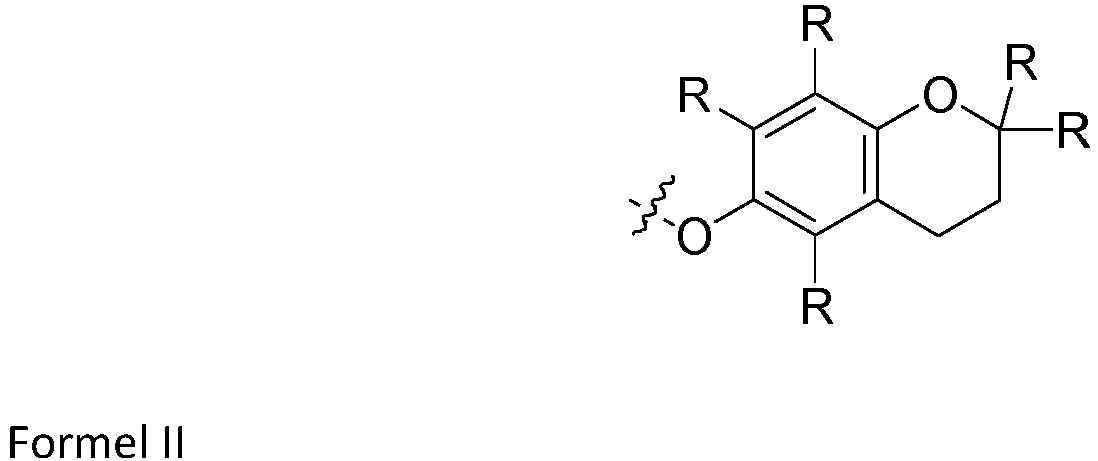
- wobei
- R
- bei jedem Auftreten gleich oder verschieden ist und ausgewählt ist aus der Gruppe bestehend aus Wasserstoff oder linearen oder verzweigten Alkylresten mit 1 bis 36 Kohlenstoffatomen, und
- x
- 0 oder 1 ist.
- Der Begriff Oligomer bzw. Polymer wird im Sinne der vorliegenden Erfindung im Allgemeinen in Übereinklang mit der von der IUPAC vorgenommenen Definition verwendet, wie in Pure Appl. Chem. 2016; 88 (10-11): 1073-1100 definiert.
- Insbesondere wird unter einem Oligomer ein Molekül verstanden, das 3-10 sich wiederholende Einheiten aufweist, unter einem Polymer wird ein Molekül verstanden, das mehr als 10 sich wiederholende Einheiten aufweist. Daraus resultieren in der Regel mittlere Molekulargewichte (Zahlenmittel) von etwa 1000 bis 4000 für ein Oligomer und von mehr als 4000 für ein Polymer
- Überraschenderweise konnte gefunden werden, dass die Oligomere oder Polymere gemäß der vorliegenden Erfindung eine hohe Wirksamkeit aufweisen.
- Gemäß einer bevorzugten Ausführungsform ist R1 gemäß nachfolgender Formel IIa definiert.

- Eine weitere bevorzugte Ausführungsform sieht vor, dass das Oligomer bzw. Polymer die nachfolgende Wiederholungseinheit gemäß Formel III enthält,

- Bevorzugt ist hierbei, dass die von einem Diol abgeleitete Funktionalität eine von einem aliphatischen, aromatischen oder heterocyclischen Diol abgeleitete Funktionalität ist.
- Gemäß beispielhaften Ausführungsformen ist die von einem Diol abgeleitete Funktionalität
- a) eine von einem aliphatischen Diol abgeleitete Funktionalität und bevorzugt abgeleitet von Ethylenglycol, 1,3-Propylenglycol, 1,2-Propylenglycol, 1,4-Butandiol, 1,5-Pentandiol, 1,6-Hexandiol, 1,8-Octandiol, 1,10-Decandiol, 1, 12-Dodecandiol, 1,4-Cyclohexandiol, 1,3-Cyclohexandiol und/oder 1,4-Cyclohexandimethanol,
- b) eine von einem aromatischen Diol abgeleitete Funktionalität und bevorzugt abgeleitet von Hydrochinon, Resorcin, 1,5-, 2,6- oder 2,7-Dihydroxynaphthalin, Vanillylalkohol oder den nachfolgenden Diolen


- A
- eine direkte Bindung, -O-, -SO2-, -C(O)-, -CH(CH3)- oder - -C(CH3)2-, und
- R' und R"
- bei jedem Auftreten gleich oder verschieden sind und ausgewählt sind aus der Gruppe bestehend aus linearen oder verzweigten Alkylresten mit 1 bis 36 Kohlenstoffatomen,
- c) eine von einem heterocyclischem Diol abgeleitete Funktionalität und bevorzugt abgeleitet von Hydroxyethyl-4-hydroxytetramethylpiperidin, 1,4-Dithian-2,5-diol, oder
- d) eine von den nachfolgenden Diolen abgeleitete Funktionalität 2,3-Dimethoxy-1,4-butandiol


- Gemäß einer weiteren Ausführungsform der vorliegenden Erfindung ist das Oligomer bzw. Copolymer ein Cooligomer bzw. Copolymer, d.h. beinhaltet mindestens zwei verschiedene Wiederholungseinheiten, die auf der Wiederholungseinheit gemäß Formel I basieren.
- Eine beispielhafte Ausführungsform hiervon sieht beispielsweise vor, dass das Oligomer oder Polymer die nachfolgenden Wiederholungseinheiten gemäß Formel I, die den nachfolgenden Definitionen gemäß Formel III und Illa entsprechen:

- Hierbei sind R1, D und x wie oben stehend definiert und die Definition von D' entspricht der Definition von D, mit der Maßgabe, dass D und D' von unterschiedlichen Diolen abgeleitet sind.
- Beispielsweise kann die von einem Diol abgeleitete Gruppe D, wie voranstehend in Formel III verwendet, ausgewählt sein aus einem oder mehreren Diolen, wie zuvor unter a) oder b) gelistet.
- Die von einem Diol abgeleitete Gruppe D' kann beispielsweise ein Diol sein, ausgewählt sein aus einem Diol, wie zuvor unter c) beschrieben.
- Beispielsweise kann das molare Verhältnis der Wiederholungseinheiten III zu Illa von 0,1: 99,9 bis 50: 50, bevorzugt von 0,5: 99,5 bis 10: 90 betragen.
- Bevorzugt enthält das Oligomer oder Polymer ausschließlich Wiederholungseinheiten gemäß Formel I, bei denen x = 0 ist. Alternativ ist es auch möglich, dass das Oligomer oder Polymer sowohl Wiederholungseinheiten gemäß Formel I, bei denen x = 0 ist, als auch Wiederholungseinheiten gemäß Formel I, bei denen x = 1 ist, enthält, wobei das molare Verhältnis der Wiederholungseinheiten gemäß Formel I, bei denen x = 0 ist, zu den Wiederholungseinheiten gemäß Formel I, bei denen x = 1 ist von 50:50 bis <100 : >0, bevorzugt 90:10 bis 99,9:0,1 beträgt.
- Die vorliegende Erfindung betrifft zudem eine Zusammensetzung, enthaltend mindestens eine zu stabilisierende organische Komponente sowie mindestens ein erfindungsgemäßes Oligomer oder Polymer wie im Voranstehenden beschrieben.
- Beispielsweise kann vorgesehen sein, dass in der Zusammensetzung mindestens ein Oligomer oder Polymer in einem Gewichtsanteil, bezogen auf die gesamte Zusammensetzung von 0,01 bis 5,0 Gew.-Teile, bevorzugt 0,02 bis 2,0 Gew.-Teile, besonders bevorzugt 0,05 bis 1,0 Gew.-Teile enthalten ist.
- Eine bevorzugte Ausführungsform sieht vor, dass die mindestens eine zu stabilisierende organische Komponente ausgewählt ist aus der Gruppe bestehend aus
- Kunststoffen (synonym "Polymere"), insbesondere thermoplastischen, elastomeren oder duromeren Kunststoffen,
- mindestens ein Öl, Fett oder Wachs, insbesondere Mineralöle, Pflanzenfette bzw. -öle oder Tierfette bzw. -öle, z.B. Palmöl, Olivenöl, Rapsöl, Leinöl, Sojabohnenöl, Sonnenblumenöl, Rizinusöl, Fischöle oder Rindertalg sowie Öle, Fette oder Wachse auf der Basis von z.B. synthetischen Estern,
- mineralischen oder synthetischen Schmierstoffen, Hydraulikölen, Motorenölen, Turbinenölen, Getriebeölen, Metallbearbeitungsflüssigkeiten oder Schmierfetten, sowie
- polymerisationsfähigen Monomeren, insbesondere radikalisch polymerisationsfähige Monomere, insbesondere Monomere, die radikalisch durch Initiatoren wie z.B. Peroxide oder auch Sauerstoff polymerisiert werden können wie z.B. Acrylester, Methacrylester, Acrylnitril, Styrole oder Vinylchlorid.
- Geeignete thermoplastische oder duromere Polymere sind insbesondere:
- a) Polymeren aus Olefinen oder Diolefinen wie z.B. Polyethylen (LDPE, LLDPE, VLDPE, ULDPE, MDPE, HDPE, UHMWPE), Metallocen-PE (m-PE), Polypropylen, Polyisobutylen, Poly-4-methyl-penten-1, Polybutadien, Polyisopren, wie z.B. auch Naturkautschuk (NR), Polycycloocten, Polyalkylen-Kohlenmonoxid-Copolymere, sowie Copolymere in Form von statistischen oder Blockstrukturen wie z.B. Polypropylen-Polyethylen (EP), EPM oder EPDM mit z.B. 5-Ethyliden-2-Norbornen als Comonomer, Ethylen-Vinylacetat (EVA), Ethylen-Acrylester, wie z.B. Ethylen-Butylacrylat, Ethylen-Acrylsäure und deren Salze (lonomere), sowie Terpolymere wie z.B. Ethylen-Acrylsäure-Glycidyl(meth)acrylat, Pfropfpolymere wie z.B. Polypropylen-graft-Maleinsäureanhydrid, Polypropylen-graft-Acrylsäure, Polyethylen-graft-Acrylsäure, Polyethylen-Polybutylacrylatgraft-Maleinsäureanhydrid sowie Blends wie z.B. LDPE/LLDPE oder auch langkettenverzweigte Polypropylen-Copolymere die mit alpha-Olefinen als Comonomere hergestellt werden wie z.B. mit 1-Buten, 1-Hexen, 1-Octen oder 1-Octadecen
- b) Polystyrol, Polymethylstyrol, Poly-alpha-methylstyrol, Polyvinylnaphthalin, Polyvinylbiphenyl, Polyvinyltoluol, Styrol-Butadien (SB), Styrol-Butadien-Styrol (SBS), Styrol-Ethylen-Butylen-Styrol (SEBS), Styrol-Ethylen-Propylen-Styrol, Styrol-Isopren, Styrol-Isopren-Styrol (SIS), Styrol-butadien-acrylnitril (ABS), Styrol-acrylnitril (SAN), Styrol-acrylnitril-acrylat (ASA), Styrol-Ethylen, Styrol-Maleinsäureanhydrid-Polymere einschl. entsprechender Pfropfcopolymere wie z.B. Styrol auf Butadien, Maleinsäureanhydrid auf SBS oder SEBS, sowie Pfropfcopolymere aus Methylmethacrylat, Styrol-Butadien und ABS (MABS), sowie hydrierte Polystyrol-Derivate wie z.B. Polyvinylcyclohexan
- c) halogenenthaltenden Polymeren wie z.B. Polyvinylchlorid (PVC), Polychloropren und Polyvinylidenchlorid (PVDC), Copolymere aus Vinylchlorid und Vinylidenchlorid oder aus Vinylchlorid und Vinylacetat, chloriertes Polyethylen, Polyvinylidenfluorid, Epichlorhydrin-Homo und Copolymere insbes. mit Ethylenoxid (ECO)
- d) Polymeren von ungesättigten Estern wie z.B. Polyacrylate und Polymethacrylate wie Polymethylmethacrylat (PMMA), Polybutylacrylat, Polylaurylacrylat, Polystearylacrylat, Polyglycidylacrylat, Polyglycidylmethacrylat, Polyacrylnitril, Polyacrylamide, Copolymere wie z.B. Polyacrylnitril-Polyalkylacrylat,
- e) Polymeren aus ungesättigten Alkoholen und Derivaten, wie z.B. Polyvinylalkohol, Polyvinylacetat, Polyvinylbutyral, Polyallylphthalat, Polyallylmelamin
- f) Polyacetalen, wie z.B. Polyoxymethylen (POM) oder Copolymere mit z.B. Butanal,
- g) Polyphenylenoxiden und Blends mit Polystyrol oder Polyamiden,
- h) Polymeren von cyclischen Ethern wie z.B. Polyethylenglycol, Polypropylenglycol, Polyethylenoxid, Polypropylenoxid, Polytetrahydrofuran,
- i) Polyurethanen, aus hydroxyterminierten Polyethern oder Polyestern und aromatischen oder aliphatischen Isocyanaten wie z.B. 2,4- oder 2,6-Toluylendiisocyanat oder Methylendiphenyldiisocyanat insbesondere auch lineare Polyurethane (TPU), Polyharnstoffen,
- j) Polyamiden wie z.B. Polyamid-6, 6.6, 6.10, 4.6, 4.10, 6.12, 10.10, 10.12, 12.12, Polyamid 11, Polyamid 12 sowie (teil-)aromatische Polyamide wie z.B. Polyphthalamide, z.B. hergestellt aus Terephthalsäure und/oder Isophthalsäure und aliphatischen Diaminen wie z.B. Hexamethylendiamin oder m-Xylylendiamin oder aus aliphatischen Dicarbonsäuren wie z.B. Adipinsäure oder Sebazinsäure und aromatischen Diaminen wie z.B. 1,4- oder 1,3- Diaminobenzol, Blends von unterschiedlichen Polyamiden wie z.B. PA-6 und PA 6.6 bzw. Blends von Polyamiden und Polyolefinen wie z.B. PA/PP
- k) Polyimiden, Polyamid-imiden, Polyetherimiden, Polyesterimiden, Poly-(ether)ketonen, Polysulfonen, Polyethersulfonen, Polyarylsulfonen, Polyphenylensulfiden, Polybenzimidazolen, Polyhydantoinen,
- l) Polyestern aus aliphatischen oder aromatischen Dicarbonsäuren und Diolen oder aus Hydroxy-Carbonsäuren wie z.B. Polyethylenterephthalat (PET), Polybutylenterephthalat (PBT), Polypropylenterephthalat (PTT), Polyethylennaphthylat (PEN), Poly-1,4-dimethylolcyclohexanterephthalat, Polyhydroxybenzoat, Polyhydroxynaphthalat, Polymilchsäure (PLA), Polyhydroxybutyrat (PHB), Polyhydroxyvalerat (PHV), Polyethylensuccinat, Polytetramethylensuccinat, Polycaprolacton
- m) Polycarbonaten, Polyestercarbonaten, sowie Blends wie z.B. PC/ABS, PC/PBT, PC/PET/PBT, PC/PA
- n) Cellulosederivaten wie z.B. Cellulosenitrat, Celluloseacetat, Cellulosepropionat, Cellulosebutyrat,
- o) Epoxidharzen, bestehend aus di- oder polyfunktionellen Epoxidverbindungen in Kombination mit z.B. Härtern auf der Basis von Aminen, Anhydriden, Dicyandiamid, Mercaptanen, Isocyanaten oder katalytisch wirkenden Härtern,
- p) Phenolharzen wie z.B. Phenol-Formaldehyd-Harze, Harnstoff-Formaldehyd-Harze, Melamin-Formaldehydharze,
- q) ungesättigten Polyesterharzen aus ungesättigten Dicarbonsäuren und Diolen mit Vinylverbindungen z.B. Styrol, Alkydharze,
- r) Silikonen, z.B. auf der Basis von Dimethylsiloxanen, Methyl-Phenyl-siloxanen oder Diphenylsiloxanen z.B. Vinylgruppen terminiert
- s) sowie Mischungen, Kombinationen oder Blends aus zwei oder mehr der zuvor genannten Polymere.
- Sofernessich beiden untera) bis r)angegebenen Polymeren umCopolymere handelt, können diese in Form von statistischen ("random"), Block-oder "tapered" Strukturenvorliegen.
- Weiterhin können die genannten Polymeren in Form von linearen, verzweigten, sternförmigen oder hyperverzweigten Strukturen vorliegen.
- Sofern es sich bei den unter a) bis r) angegebenen Polymeren um stereoreguläre Polymere handelt, können diese in Form von isotaktischen, stereotaktischen, aber auch ataktischen FormenoderalsStereo-blockcopolymerevorliegen.
- Weiterhin können die untera) bis r)angegebenen Polymere sowohl amorphe als auch (teil-) kristalline Morphologien aufweisen.
- Ggf. können die unter a) genannten Polyolefine auch vernetzt vorliegen, z.B. vernetztes Polyethylen, das dann alsX-PE bezeichnet wird.
- Weiterhin können die vorliegenden Verbindungen zur Stabilisierung von Kautschuken und Elastomeren eingesetzt werden. Hier kann es sich um Naturkautschuk (NR) oder synthetische Kautschukmaterialien handeln. Weitere geeignete Kautschuke und Elastomere sind insbesondere Butadienkautschuk (BR), Styrolbutadienkautschuk (SBR), Chlorbutadienkautschuk (CR), Acrylnitrilbutadienkautschuk (NBR), Hydrierter Acrylnitrilbutadienkautschuk (HNBR), Ethylen-Propylen-Dien-Kautschuk (EPDM), Butylkautschuk (IIR), Ethylen-Epichlorhydrin-Kautschuk (ECO) oder Ethylenacrylatkautschuk (AEM).
- Weiterhin bevorzugt sind insbesondere Polymere aus nachwachsenden Rohstoffen wie z.B.Polymilchsäure (PLA), Polyhydroxybuttersäure, Polyhydroxyvaleriansäure, Polybutylensuccinat (PBS) oder Polybutylensuccinat-co-adipat (PBSA).
- Eine weitere beispielhafte Ausführungsform der erfindungsgemäßen Zusammensetzung sieht vor, dass die Zusammensetzung mindestens einen Zusatzstoff ausgewählt aus der Gruppe bestehend aus primären Antioxidantien, sekundären Antioxidantien, UV-Absorber, der Lichtstabilisatoren, der Metalldesaktivatoren, der Füllstoffdesaktivatoren, der Antiozonantien, Nukleierungsmitteln, Antinukleierungsmitteln, Schlagzähigkeitsverbesserer, Weichmacher, Gleitmitteln, Rheologie-modifikatoren, Thixotropiemitteln, Kettenverlängerer, Verarbeitungshilfsmitteln, Entformungshilfsmitteln, Flammschutzmitteln, Pigmenten, Farbstoffen, optische Aufhellern, antimikrobielle Wirkstoffen, Antistatika, Slipmitteln, Antiblockmitteln, Kopplungsmitteln, Vernetzungsmitteln, Antivernetzungsmitteln, Hydrophilisierungsmitteln, Hydrophobierungsmitteln, Haftvermittler, Dispergiermitteln, Kompatibilisatoren, Sauerstofffänger, Säurefänger, Treibmitteln, Prodegradantien , Entschäumungshilfsmitteln, Geruchsfängern, Markierungsmitteln, Antifoggingmitteln, Füllstoffen und Verstärkungsstoffen enthält.
- In bevorzugter Ausführungsform enthalten die Zusammensetzungen insbesondere Säurefänger, z.B. auf Basis von Salzen langkettiger Säuren wie z.B. Calciumstearat, Magnesiumstearat, Zinkstearat, Aluminumstearat, Calciumlaurat, Calciumlactat, Calciumstearoyl-2-lactylat oder von Hydrotalciten, insbesondere synthetische Hydrotalcite auf Aluminium-, Magnesium- und Zinkbasis, sowie Hydrocalumite, Zeolithe und/oder Erdalkalioxide wie z.B. Calciumoxid und Magnesiumoxid und/oder Erdalkalicarbonate wie Calciumcarbonat, Magnesiumcarbonat oder Dolomit und/oder Hydroxide wie Brucit.
- In weiterhin bevorzugter Ausführungsform enthalten die Zusammensetzungen Lichtstabilisatoren aus der Gruppe der gehinderten Amine (HALS) und/oder Dispergiermittel und/oder Füllstoffdeaktivatoren.
- Geeignete primäre Antioxidantien (A) sind phenolische Antioxidantien, Amine und Lactone. Weiterhin kommt Ascorbinsäure als primäres Antioxidans in Frage.
- Geeignete synthetische phenolische Antioxidantien sind beispielsweise:
- Alkylierte Monophenole, wie z.B. 2,6-Di-tert-butyl-4-methylphenol, 2-tert-Butyl-4,6-dimethylphenol, 2,6-Di-tert-butyl-4-ethylphenol, 2,6-Di-tert-butyl-4-n-butylphenol, 2,6-Di-tert-butyl-4-isobutylphenol, 2,6-Dicyclopentyl-4-methylphenol, 2-(α-Methylcyclohexyl)-4,6-dimethylphenol, 2,6-Dioctadecyl-4-methylphenol, 2,4,6-Tricyclohexylphenol, 2,6-Di-tert-butyl-4-methoxymethylphenol, lineare oder verzweigte Nonylphenole, wie z.B. 2,6-Dinonyl-4-methylphenol, 2,4-Dimethyl-6-(1'-methylundec-1'-yl)phenol, 2,4-Dimethyl-6-(1'-methylheptadec-1'-yl)phenol, 2,4-Dimethyl-6-(1'-methyltridec-1'-yl)phenol und Mischungen hiervon;
- Alkylthiomethylphenole, wie z.B. 2,4-Dioctylthiomethyl-6-tert-butylphenol, 2,4-Dioctylthiomethyl-6-methylphenol, 2,4-Dioctylthiomethyl-6-ethylphenol, 2,6-Didodecylthiomethyl-4-nonylphenol;
- Hydrochinone und alkylierte Hydrochinone, wie z.B. 2,6-Di-tert-butyl-4-methyoxyphenol, 2,5-Di-tert-butylhydrochinon, 2,5-Di-tert-amylhydrochinon, 2,6-Diphenyl-4-octadecyloxyphenol, 2,6-Di-tert-butylhydrochinon, 2,5-Di-tert-butyl-4-hydroxyanisol, 3,5-Di-tert-butyl-4-hydroxyanisol, 3,5-Di-tert-butyl-4-hydroxyphenylstearat, Bis(3,5-di-tert-butyl-4-hydroxylphenyl)adipat;
- Tocopherole, wie z.B. α-, β-, γ-, δ-Tocopherol und Mischungen aus diesen (Vitamin E);
- Hydroxylierte Thiodiphenylether, wie z.B. 2,2'-Thiobis(6-tert-butyl-4-methylphenol), 2,2'-Thiobis(4-octylphenol), 4,4'-Thiobis(6-tert-butyl-3-methylphenol), 4,4'-Thiobis(6-tert-butyl-2-methylphenol), 4,4'-Thiobis(3,6-di-secamylphenol), 4,4'-Bis(2,6-dimethyl-4-hydroxyphenyl)disulfid;
- Alkylidenbisphenole, wie z.B. 2,2'Methylenbis(6-tert-butyl-4-methylphenol), 2,2'-Methylenbis(6-tert-butyl-4-ethylphenol), 2,2'-Methylenbis[4-methyl-6-(α-methylcyclohexyl)phenol], 2,2'-Methylenbis(4-methyl-6-cyclhexylphenol), 2,2'-Methylenbis(6-nonyl-4-methylphenol), 2,2'-Methylenbis(4,6-di-tert-butylphenol), 2,2'-Ethylidenbis(4,6-di-tert-butylphenol), 2,2'-Ethylidenbis(6-tert-butyl-4-isobutylphe-nol), 2,2'-Methylenbis[6-(α-methylbenzyl)-4-nonylphenol], 2,2'-Methylenbis[6-(α,α-dimethylbenzyl)-4-nonylphenol], 4,4'-Methylenbis(2,6-di-tert-butylphenol, 4,4'-Methylenbis(6-tert-butyl-2-methyl-phenol), 1,1-bis(5-tert-butyl-4-hydroxy-2-methylphenyl)butan, 2,6-Bis(3-tert-butyl-5-methyl-2-hydroxybenzyl)-4-methylphenol, 1,1,3-Tris(5-tert-butyl-4-hydroxy-2-methylphenyl)butan, 1,1-bis(5-tert-butyl-4-hydroxy-2-methylphenyl)-3-n-dodecylmercaptobutan, Ethylenglycol-bis[3,3-bis(3'-tert-butyl-4'-hydroxyphenyl)butyrat], Bis(3-tert-butyl-4-hydroxy-5-methylphenyl)dicyclopentadien, Bis[2-(3'-tert-butyl-2'-hydroxy-5'-methylbenzyl)-6-tert-butyl-4-methylphenyl]terephthalat, 1,1-Bis-(3,5-dimethyl-2-hydroxyphenyl)butan, 2,2-Bis-(3,5-di-tert-butyl-4-hydroxyphenyl)propan, 2,2-Bis-(5-tert-butyl-4-hydroxy-2-methylphenyl)-4-n-dodecylmercaptobutan, 1,1,5,5-Tetra(5-tert-butyl-4-hydroxy-2-methylphenyl)pentan;
- O-, N- und S-Benzyl-Verbindungen, wie z.B. 3,5,3',5'-Tetra-tert-butyl-4,4'-dihydroxydibenzylether, Octadecyl-4-hydroxy-3,5-dimethylbenzylmercaptoacetat, Tridecyl-4-hydroxy-3,5-di-tert-butylbenzyl-mercaptoacetat, Tris(3,5-di-tert-butyl-4-hydroxybenzyl)amin, Bis(4-tert-butyl-3-hydroxy-2,6-dimethylbenzyl)dithioterephthalat, Bis(3,5-di-tert-butyl-4-hydroxybenzyl)sulfid, Isooctyl-3,5-di-tert-butyl-4-hydroxybenzylmercaptoacetat;
- Hydroxybenzylierte Malonate, wie z.B. Dioctadecyl-2,2-bis(3,5-di-tert-butyl-2-hydroxybenzyl)-malonat, Dioctadecyl-2-(3-tert-butyl-4-hydroxy-5-methylbenzyl)malonat, Didodecylmercaptoethyl-2,2-bis(3,5-di-tert-butyl-4-hydroxybenzyl)malonat, Bis[4-(1,1,3,3-tetramethylbutyl)phenyl]-2,2-bis-(3,5-di-tert-butyl-4-hydroxybenzyl)malonat;
- Aromatische Hydroxybenzylverbindungen, wie z.B. 1,3,5-Tris(3,5-di-tert-butyl-4-hydroxybenzyl)-2,4,6-trimethylbenzol, 1,4-Bis(3,5-di-tert-butyl-4-hydroxybenzyl)-2,3,5,6-tetramethylbenzol, 2,4,6-Tris(3,5-di-tert-butyl-4-hydroxybenzyl)phenol;
- Triazinverbindungen, wie z.B. 2,4-Bis(octylmercapto)-6-(3,5-di-tert-butyl-4-hydroxyanilino)-1,3,5-triazin, 2-Octylmercapto-4,6-bis(3,5-di-tert-butyl-4-hydroxyanilino)-1,3,5-triazin, 2-Octylmercapto-4,6-bis(3,5-di-tert-butyl-4-hydroxyphenoxy)-1,3,5-triazin, 2,4,6-Tris(3,5-di-tert-butyl-4-hydroxyphe-noxy)-1,2,3-triazin, 1,3,5-Tris(3,5-di-tert-butyl-4-hydroxybenzyl)isocyanurat, 1,3,5-Tris(4-tert-butyl-3-hydroxy-2,6-dimethylbenzyl)isocyanurat, 2,4,6-Tris(3,5-di-tert-butyl-4-hydroxphenylethyl)-1,3,5-tria-zin, 1,3,5-Tris(3,5-di-tert-butyl-4-hydroyphenylpropionyl)hexahydro-1,3,5-triazin, 1,3,5-Tris(3,5-dicyc-lohexyl-4-hydroxybenzyl)isocyanurat;
- Benzylphosphonate, wie z.B. Dimethyl-2,5-di-tert-butyl-4-hydroxybenzylphosphonat, Dietyhl-3,5-di-tert-butyl-4-hydroxybenzylphosphonat, Dioctadecyl-3,5-di-tert-butyl-4-hydroxybenzylphosphonat, Di-octadecyl-5-tert-butyl-4-hydroxy-3-methylbenzylphosphonat, das Calciumsalz des Monoethylesters der 3,5-Di-tert-butyl-4-hydroxybenzylphosphonsäure;
- Acylaminophenole, wie z.B. 4-Hydroxylauranilid, 4-Hydroxystearanilid, Octyl-N-(3,5-di-tert-butyl-4-hydroxyphenyl)carbamat;
- Ester der β-(3,5-Di-tert-butyl-4-hydroxyphenyl)propionsäure mit ein- oder mehrwertigen Alkoholen, z.B. Methanol, Ethanol, n-Octanol, i-Octanol, Octadecanol, 1,6-Hexandiol, 1,9-Nonandiol, Ethylenglycol, 1,2-Propandiol, Neopentylglycol, Thiodiethylenglycol, Diethylenglycol, Triethylenglycol, Pentaerythritol, Tris(hydroxyethyl)isocyanurat, N,N'-Bis(hydroxyethyl)oxamid, 3-Thiaundecanol, 3-Thiapentadecanol, Trimethylhexandiol, Trimethylolpropan, 4-Hydroxymethyl-1-phospha-2,6,7-trioxabicyclo[2.2.2]octan;
- Ester der β-(5-tert-Butyl-4-hydroxy-3-methylphenyl)propionsäure mit ein- oder mehrwertigen Alkoholen, z.B. Methanol, Ethanol, n-Octanol, i-Octanol, Octadecanol, 1,6-Hexandiol, 1,9-Nonandiol, Ethylenglycol, 1,2-Propandiol, Neopentylglycol, Thiodiethylenglycol, Diethylenglycol, Triethylenglycol, Pentaerythritol, Tris(hydroxyethyl)isocyanurat, N,N'-bis(hydroxyethyl)oxamid, 3-Thiaundecanol, 3-Thiapentadecanol, Trimethylhexandiol, Trimethylolpropan, 4-Hydroxymethyl-1-phospha-2,6,7-trioxabicyclo[2.2.2]octan, 3,9-Bis[2-{3-(3-i-eri--butyl-4-hydroxy-5-methylphenyl)propionyloxy}-1,1-dimethylethyl]-2,4,8,10-tetraoxaspiro[5.5]undecan;
- Ester der β-(3,5-Dicyclohexyl-4-hydroxyphenyl)propionsäure mit ein- oder mehrwertigen Alkoholen, z.B. Methanol, Ethanol, Octanol, Octadecanol, 1,6-Hexandiol, 1,9-Nonandiol, Ethylenglycol, 1,2-Propandiol, Neopentylglycol, Thiodiethylenglycol, Diethylenglycol, Triethylenglycol, Pentaerythritol, Tris-(hydroxyethyl)isocyanurat, N,N'-bis(hydroxyethyl)oxamid, 3-Thiaundecanol, 3-Thiapentadecanol, Trimethylhexandiol, Trimethylolpropan, 4-Hydroxymethyl-1-phospha-2,6,7-trioxabicyclo[2.2.2]octan;
- Ester der (3,5-Di-tert-butyl-4-hydroxyphenyl)essigsäure mit ein- oder mehrwertigen Alkoholen, z.B. Methanol, Ethanol, Octanol, Octadecanol, 1,6-Hexandiol, 1,9-Nonandiol, Ethylenglycol, 1,2-Propandiol, Neopentylglycol, Thiodiethylenglycol, Diethylenglycol, Triethylenglycol, Pentaerythritol, Tris(hydroxyethyl)isocyanurat, N,N'-bis(hydroxyethyl)oxamid, 3-Thiaundecanol, 3-Thiapentadecanol, Trimethylhexandiol, Trimethylolpropan, 4-Hydroxymethyl-1-phospha-2,6,7-trioxabicyclo[2.2.2]octan;
- Amide der β-(3,5-Di-tert-butyl-4-hydroxyphenyl)propionsäure, wie z.B. N,N'-Bis(3,5-di-tert-butyl-4-hydroxyphenylpropionyl)hexamethylendiamid, N,N'-Bis(3,5-di-tert-butyl-4-hydroxyphenylpropionyl)-hexamethylendiamid, N,N'-Bis(3,5-di-tert-butyl-4-hydroxyphenylpropionyl)hexamethylendiamid, N,N'-Bis-(3,5-di-tert-butyl-4-hydroxyphenylpropionyl)hydrazid, N,N'-Bis[2-(3-[3,5-di-tert-butyl-4-hy-droxyphenyl]propionyloxy)ethyl]oxamid (Naugard®XL-1, vertrieben durch Uniroyal);
- Besonders bevorzugte phenolische Antioxidantien sind:


- Geeignete aminische Antioxidantien sind beispielsweise:
N,N'-Di-isopropyl-p-phenylendiamin, N,N'-Di-sec-butyl-p-phenylendiamin, N,N'-Bis(1,4-dimethyl-pentyl)-p-phenylendiamin, N,N'-Bis(1-ethyl-3-methylpentyl)-p-phenylendiamin, N,N'-Bis(1-methyl-heptyl)-p-phenylendiamin, N,N'-Dicyclohexyl-p-phenylendiamin, N,N'-Diphenyl-p-phenylendiamin, N,N'-Bis(2-naphthyl)-p-phenylendiamin, N-Isopropyl-N'-phenyl-p-phenylendiamin, N-(1,3-Dimethyl-butyl)-N'-phenyl-p-phenylen-diamin, N-(1-Methylheptyl)-N'-phenyl-p-phenylendia-min, N-Cyclohexyl-N'-phenyl-p-phenylendiamin, 4-(p-Toluolsulfamoyl)diphenylamin, N,N'-Dimethyl-N,N'-di-sec-butyl-p-phenylendiamin, Diphenylamin, N-Allyldiphenylamin, 4-Isopropoxydiphenylamin, N-Phenyl-1-naphthylamin, N-(4-tert-Octylphenyl)-1-naphthylamin, N-Phenyl-2-naphthylamin, octyliertes Diphenylamin, z.B. p,p'-Di-tert-octyldiphenylamin, 4-n-Butylaminophenol, 4-Butyrylaminophenol, 4-Nonanoylaminophenol, 4-Dodecanoylaminophenol, 4-Octadecanoylamino-phenol, Bis(4-methoxyphenyl)amin, 2,6-Di-tert-butyl-4-dimethylaminomethyl-phenol, 2,4'-Diaminodiphenylmethan, 4,4'-Diaminodiphenylmethan, N,N,N',N'-Tetra-methyl-4,4'-diaminodiphenylmethan, 1,2-Bis[(2-methyl-phenyl)amino]ethan, 1,2-Bis(phenylamino)propan, (o-Tolyl)biguanid, Bis[4-(1',3'-dimethylbutyl)phenyl]amin, tertoctyliertes N-Phenyl-1-naphthylamin, ein Gemisch aus mono- und dialkylierten tert-Butyl/tert-Octyldiphenylaminen, ein Gemisch aus mono- und dialkylierten Nonyldiphenylaminen, ein Gemisch aus mono- und dialkylierten Dodecyldiphenylaminen, ein Gemisch aus mono- und dialkylierten Isopropyl/Isohexyl-diphenylaminen, ein Gemisch aus mono- und dialkylierten tert-Butyldiphenylaminen, 2,3-Dihydro-3,3-dimethyl-4H-1,4-benzothiazin, Phenothiazin, ein Gemisch aus mono- und dialkylierten tert-Butyl/tert-Octylphenothiazinen, ein Gemisch aus mono- und dialkylierten tert-Octylphenothiazinen, N-Allylphenothiazin, N,N,N',N'-Tetraphenyl-1,4-diaminobut-2-en sowie Mischungen oder Kombinationen hiervon. - Weitere bevorzugte aminische Antioxidantien sind Hydroxylamine bzw. N-oxide (Nitrone), wie z.B. N,N-Dialkylhydroxylamine, N,N-Dibenzylhydroxylamin, N,N-Dilaurylhydroxylamin, N,N-Distearyl-hydroxylamin, N-Benzyl-α-phenylnitron, N-Octadecyl-α-hexadecylnitron, sowie Genox EP (SI Group) gemäß der Formel:

- Geeignete Lactone sind Benzofuranone und Indolinone wie z.B. 3-(4-(2-acetoxyethoxy)phenyl]-5,7-di-tert-butyl-benzofuran-2-on, 5,7-di-tert-butyl-3-[4-(2-stearoyloxyethoxy)phenyl]benzofuran-2-on, 3,3'-bis[5,7-di-tert-butyl-3-(4-(2-hydroxyethoxy]phenyl)benzofuran-2-on), 5,7-di-tert-butyl-3-(4-etho-xy-phenyl)benzofuran-2-on, 3-(4-acetoxy-3,5-dimethylphenyl)-5,7-di-tert-butyl-benzofuran-2-on, 3-(3,5-dimethyl-4-pivaloyloxyphenyl)-5,7-di-tert-butyl-benzofuran-2-on, 3-(3,4-dimethylphenyl)-5,7-di-tert-butyl-benzofuran-2-on, 3-(2,3-di methylphenyl)-5,7-di-tert-butyl-benzofuran-2-on.
- Geeignete sekundäre Antioxidantien sind Phosphorverbindungen wie z.B. Phosphite und Phosphonite, und Organo-Schwefelverbindungen wie z.B. Sulfide und Disulfide.
- Geeignete Phosphite/Phosphonite sind beispielsweise:
Triphenylphosphit, Diphenylalkylphosphite, Phenyldialkylphosphite, Tri(nonylphenyl)phosphit, Trilaurylphosphite, Trioctadecylphosphit, Distearylpentaerythritoldiphosphit, Tris-(2,4-di-tert-butylphenyl)phosphit, Diisodecylpentaerythritoldiphosphit, Bis(2,4-di-tert-butylphenyl)pentaerythritoldiphosphit, Bis(2,4-di-cumylphenyl)pentaerythritoldiphosphit, Bis(2,6-di-tert-butyl-4-methylphenyl)pentaerythritoldiphosphit, Diisodecyloxypentaerythritoldiphosphit, Bis(2,4-di-tert-butyl-6-methylphenyl)pentaerythritoldiphosphit, Bis(2,4,6-tris(tert-butylphenyl)pentaerythritoldi-phosphit, Tristearylsorbitoltriphosphit, Tetrakis(2,4-di-tert-butylphenyl)-4,4'-biphenylendiphosphonit, 6-Isooctyloxy-2,4,8,10-tetra-tert-butyl-12H-dibenz[d,g]-1,3,2-dioxaphosphocin, Bis(2,4-di-tert-butyl-6-methylphenyl)methylphosphit, Bis(2,4-di-tert-butyl-6-methylphenyl)ethylphosphit, 6-Fluoro-2,4,8,10-tetra-tert-butyl-12-methyl-dibenz[d,g]-1,3,2-dioxaphosphocin, 2,2'2"-Nitrilo[triethyltris(3,3",5,5'-tetra-tert-butyl-1,1'-biphenyl-2,2'-diyl)phosphit], 2-Ethylhexyl(3,3',5,5'-tetra-tert-butyl-1,1'-biphenyl-2,2'-diyl))phosphit, 5-Butyl-5-ethyl-2-(2,4,6-tri-tert-butylphenoxy)-1,3,2-dioxaphosphiran. - Besonders bevorzugte Phosphite/Phosphonite sind:


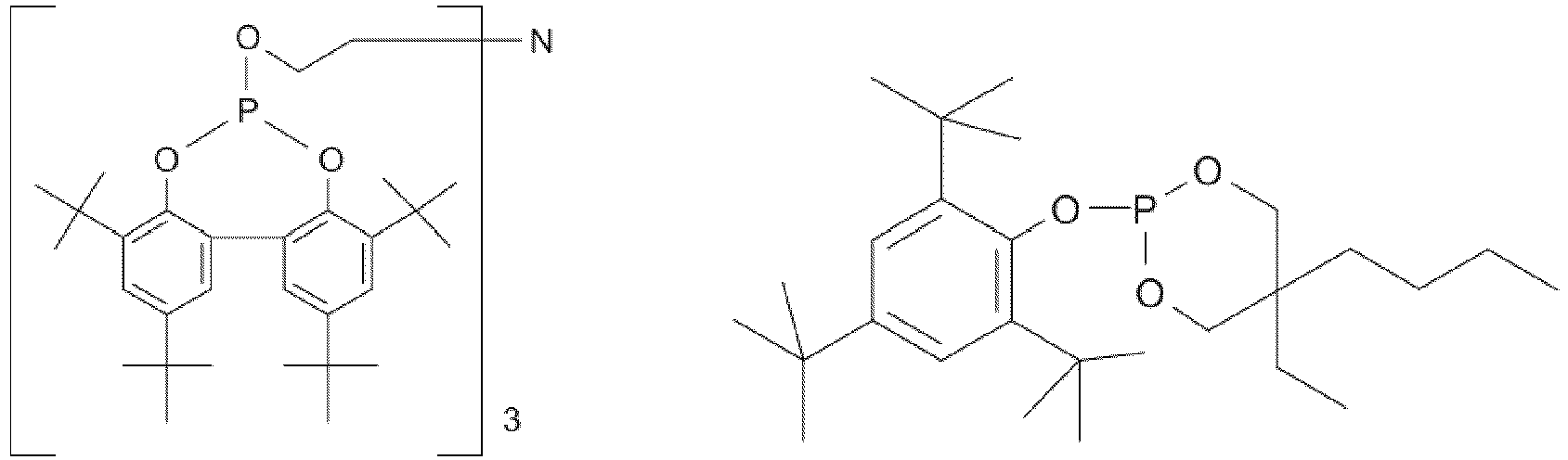


- Geeignete Schwefelverbindungen sind beispielsweise Distearylthiodipropionat, Dilaurylthiodipro-pionat; Ditridecyldithiopropionat, Ditetradecylthiodipropionat, 3-(dodecylthio)-, 1,1'-[2,2-bis[[3-(dodecylthio)-1-oxopropoxy]methyl]-1,3-propandiyl]propansäureester.
- Geeignete Lichtstabilisatoren sind beispielsweise Verbindungen auf der Basis von 2-(2'-Hydroxyphenyl)benzotriazolen, 2-Hydroxybenzophenonen, Estern von Benzoesäuren, Acrylaten, Oxamiden und 2-(2-Hydroxyphenyl)-1,3,5-Triazinen.
- Geeignete 2-(2'-Hydroxyphenyl)benzotriazole sind beispielsweise 2-(2'-Hydroxy-5'methyl-phenyl)benzotriazol, 2-(3',5'-Di-tert-butyl-2'-hydroxyphenyl)-benzotriazol, 2-(5'-tert-Butyl-2'-hydroxy-phenyl)benzotriazol, 2-(2'-Hydroxy-5'-(1,1,3,3-tetramethylbutyl)phenyl)benzotriazol, 2-(3',5'-Di-tert-butyl-2'-hydroxyphenyl)-5-chlorobenzotriazol, 2-(3'-tert-Butyl-2'-hydroxy-5'-methylphenyl-5-chloro-benzotriazol, 2-(3'-sec-Butyl-5'-tert-butyl-2'-hydroxy-phenyl)benzotriazol, 2-(2'-Hydroxy-4'-octyloxy-phenyl)benzotriazol, 2-(3',5'-Di-tert-amyl-2'-hydroxyphenyl)benzotriazol, 2-(3',5'-Bis(α,α-dimethyl-benzyl)-2'-hydroxyphenyl)benzotriazol, 2-(3'-tert-Butyl-2'-hydroxy-5'-(2-octyl-oxy-carbonyl-ethyl)phe-nyl)-5-chlorobenzotriazol, 2-(3'-tert-Butyl-5'-[2-(2-ethylhexyloxy)-carbonyl-ethyl]-2'-hydroxyphenyl)-5-chlorobenzotriazol, 2-(3'-tert-Butyl-2'-hydroxy-5'-(2-methoxycarbonyl-ethyl)phenyl)-5-chlorobenzo-triazol, 2-(3'-tert-Butyl-2'-hydroxy-5'-(2-methoxycarbonylethyl)phenyl)-benzotriazol, 2-(3'-tert-Butyl-2'-hydroxy-5'-(2-octyloxycarbonylethyl)phenyl)benzotriazol, 2-(3'-tert-Butyl-5'-[2-(2-ethylhexyloxy)-carbonylethyl]-2'-hydroxyphenyl)benzotriazol, 2-(3'-Dodecyl-2'-hydroxy-5'-methylphenyl)benzotri-azol, 2-(3'-tert-Butyl-2'-hydroxy-5'-(2-isooctyloxycarbonylethyl)phenylben-zotriazol, 2,2'-Methylen-bis[4-(1,1,3,3-tetramethylbutyl)-6-benzotriazol-2-ylphenol]; das Produkt der Umesterung von 2-[3'-tert-Butyl-5'-(2-methoxycarbonylethyl)-2'-hydroxyphenyl]-2H-benzotriazol mit Polyethylenglycol 300; [R-CH2CH2-COO-CH2CH2-2, wobei R = 3'-tert-Butyl-4'-hydroxy-5'-2H-benzotriazol-2-ylphenyl, 2-[2'-Hydroxy-3'-(α,α-dimethylbenzyl)-5'-(1,1,3,3-tetramethylbutyl)phenyl]-benzotriazol, 2-[2'-hydroxy-3'-(1,1,3,3-tetramethylbutyl)-5'-(α,α-dimethylbenzyl)phenyl]benzotriazol.
- Geeignete 2-Hydroxybenzophenone sind beispielsweise 4-Hydroxy-, 4-Methoxy-, 4-Octyloxy-, 4-Decyloxy-4-Dodecyloxy, 4-Benzyloxy, 4,2',4'-Trihydroxy- und 2'-Hydroxy-4,4'-dimethyoxy-Derivate der 2-Hydroxybenzophenone.
- Geeignete Acrylate sind beispielsweise Ethyl-α-cyano-β,β-diphenylacrylat, Isooctyl-α-cyano-β,β-diphenylacrylat, Methyl-α-carbomethoxycinnamat, Methyl-α-cyano-β-methyl-p-methoxycinnamat, Butyl-α-cyano-β-methyl-p-methoxycinnamat, Methyl-α-carbomethoxy-p-methoxycinnamat und N-(β-carbo-methoxy-β-cyanovinyl)-2-methylindolin.
- Geeignete Ester von Benzoesäuren sind beispielsweise 4-tert-Butylphenylsalicylat, Phenylsalicylat, Octylphenylsalicylat, Dibenzoylresorcinol, Bis(4-tert-butylbenzoyl)resorcinol, Benzoylresorcinol, 2,4-Di-tert-butylphenyl-3,5-di-tert-butyl-4-hydroxybenzoat, Hexadecyl-3,5-di-tert-butyl-4-hydroxyben-zo-at, Octa-decyl-3,5-di-tert-butyl-4-hydroxybenzoat, 2-Methyl-4,6-di-tert-butylphenyl-3,5-di-tert-butyl-4-hydroxybenzoat.
- Geeignete Oxamide sind beispielsweise 4,4'-Dioctyloxyoxanilid, 2,2'-diethoxyoxanilid, 2,2'-Dioctyloxy-5,5'-di-tert-butoxanilid, 2,2'-didodecyloxy-5,5'-di-tert-butoxanilid, 2-Ethoxy-2'-ethyloxanilid, N,N'-Bis(3-dimethylaminopropyl)oxa-mid, 2-Ethoxy-5-tert-butyl-2'-ethoxanilid und seine Mischungen mit 2-Ethoxy-2'-ethyl-5,4'-di-tert-butoxanilid, Mischungen von o- und p-Methoxy-disubstituierten Oxaniliden und Mischungen von o- und p-Ethoxy-disubstituierten Oxaniliden.
- Geeignete 2-(2-Hydroxyphenyl)-1,3,5-Triazine sind beispielsweise 2,4,6-Tris(2-hydroxy-4-octyloxy-phenyl)-1,3,5-triazin, 2-(2-Hydroxy-4-octyloxyphenyl)-4,6-bis(2,4-dimethylphenyl)-1,3,5-triazin, 2-(2,4-Dihydroxyphenyl)-4,6-bis(2,4-dimethylphenyl)-1,3,5-triazin, 2,4-Bis(2-hydroxy-4-propyloxy-phenyl)-6-(2,4-dimethylphenyl)-1,3,5-triazin, 2-(2-Hydroxy-4-octyloxyphenyl)-4,6-bis(4-methylphenyl-1,3,5-triazin, 2-(2-Hydroxy-4-dodecyloxyphenyl)-4,6-bis(2,4-dimethylphenyl)-1,3,5-triazin, 2-(2-Hy-droxy-4-tridecyloxyphenyl)-4,6-bis(2,4-dimethylphenyl)-1,3,5-triazin, 2-[2-Hydroxy-4-(2-hydroxy-3-butyloxypropoxy)-phenyl]-4,6-bis(2,4-dimethyl)-1,3,5-triazin, 2-[2-Hydroxy-4-(2-hydroxy-3-octyloxy-propyloxy)phenyl]-4,6-bis(2,4-dimethyl)-1,3,5-triazin, 2-[4-(Dodecyloxy/Tridecyloxy-2-hydroxy-propoxy)-2-hydroxyphenyl]-4,6-bis(2,4-dimethylphenyl)-1,3,5-triazin, 2-[2-Hydroxy-4-(2-hydroxy-3-dodecyloxypropoxy)phenyl]-4,6-bis(2,4-dimethylphenyl-1,3,5-triazin, 2-(2-Hydroxy-4-hexyloxy)phenyl-4,6-diphenyl-1,3,5-triazin, 2-(2-Hydroxy-4-methoxyphenyl)-4,6-diphenyl-1,3,5-tria-zin, 2,4,6-Tris[2-hydroxy-4-(3-butoxy-2-hydroxypropoxy)phenyl]-1,3,5-triazin, 2-(2-Hydroxyphenyl)-4-(4-methoxyphenyl)-6-phenyl-1,3,5-triazin, 2-{2-Hydroxy-4-[3-(2-ethylhexyl-1-oxy)-2-hydroxy-propyl-oxy]phenyl}-4,6-bis(2,4-dimethylphenyl-1,3,5-triazin.
- Geeignete Metalldeaktivatoren sind beispielsweise N,N'-Diphenyloxamid, N-Salicylal-N'-salicyloylhydrazin, N,N'-Bis(salicyloyl)hydrazin, N,N'-Bis(3,5-di-tert-butyl-4-hydroxyphenylpropionyl)-hydrazin, 3-Salicyloylamino-1,2,4-triazol, Bis(benzyliden)oxalyldihydrazid, Oxanilid, Isophthaloyldihy-drazid, Sebacoylbisphenylhydrazid, N,N'-Diacetyladipoyldihydrazid, N,N'-Bis(salicyloyl)oxylyldihydrazid, N,N'-Bis(salicyloyl)thiopropionyldihydrazid.
- Geeignete gehinderte Amine sind beispielsweise 1,1-Bis(2,2,6,6-tetramethyl-4-piperidyl)succinat, Bis(1,2,2,6,6-pentamethyl-4-piperidyl)sebazat, Bis(1-octyloxy-2,2,6,6-tetramethyl-4-piperidyl)sebazat, Bis(1,2,2,6,6-pentamethyl-4-piperidyl)-n-butyl-3,5-di-tert-butyl-4-hydroxybenzylmalonat, das Kondensationsprodukt aus 1-(2-Hydroxyethyl)-2,2,6,6-tetramethyl-4-hydroxy-piperidin und Succinsäure, lineare oder zyklische Kondensationsprodukte von N,N'-Bis(2,2,6,6-tetramethyl-4-piperidyl)hexame-thylendiamin und 4-tert-Octylamino-2,6-dichloro-1,3,5-triazin, Tris(2,2,6,6-tetramethyl-4-piperidyl)-nitrilotriacetat, Tetrakis(2,2,6,6-tetramethyl-4-piperidyl)-1,2,3,4-butantetracarboxylat, 1,1'-(1,2-Ethandiyl)-bis(3,3,5,5-tetramethylpiperazinon), 4-Benzoyl-2,2,6,6-tetramethylpiperidin, 4-Stearyloxy-2,2,6,6-tetramethylpiperidin, lineare oder zyklische Kondensationsprodukte aus N,N'-Bis(2,2,6,6-tetramethyl-4-piperidyl)hexamethylendiamin und 4-Morpholino-2,6-dichloro-1,3,5-triazin das Reaktionsprodukt von 7,7,9,9-Tetramethyl-2-cycloundecyl-1-oxa-3,8-diaza-4-oxospiro-[4,5]decan und Epichlorhydrin.
- Besonders bevorzugte gehinderte Amine sind die folgenden:




- Bevorzugte oligomere und polymere gehinderte Amine weisen die folgenden Strukturen auf:


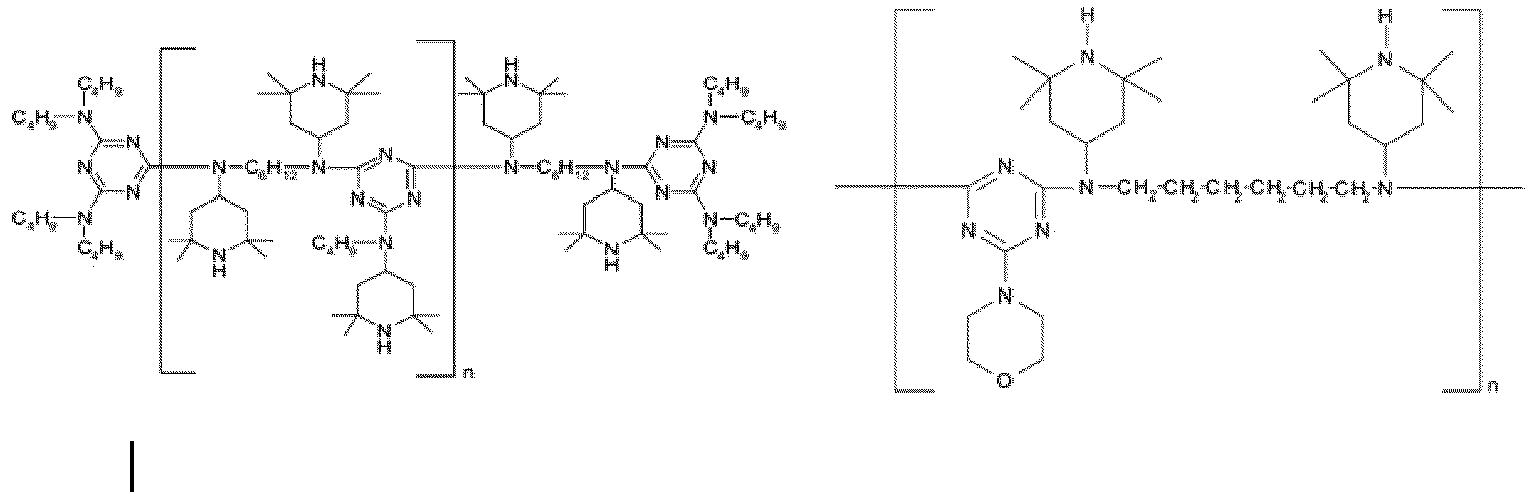


- Geeignete Dispergiermittel sind beispielsweise:
Polyacrylate, z.B. Copolymere mit langkettigen Seitengruppen, Polyacrylat-Blockcopolymere, Alkylamide: z.B. N,N'-1,2-Ethandiylbisoctadecanamid Sorbitanester, z.B. Monostearylsorbitanester, Titanate und Zirconate, reaktive Copolymere mit funktionellen Gruppen z.B. Polypropylen-co-Acrylsäure, Polypropylen-co-Maleinsäureanhydrid, Polyethylen-co-Glycidylmethacrylat, Polystyrol-alt-Maleinsäureanhydrid-Polysiloxane: z.B. Dimethylsilandiol-Ethylenoxid Copolymer, Polyphenylsiloxan Copolymer, Amphiphile Copolymere: z.B. Polyethylen-block-Polyethylenoxid, Dendrimere, z.B. hydroxylgruppenhaltige Dendrimere. - Geeignete Nukleierungsmittel sind beispielsweise Talkum, Alkali oder Erdalkalisalze von mono- und polyfunktionellen Carbonsäuren wie z.B. Benzoesäure, Bernsteinsäure, Adipinsäure, z.B. Natriumbenzoat, Zinkglycerolat, Aluminiumhydroxy-bis(4-tert-butyl)benzoat, Benzylidensorbitole wie z.B. 1,3:2,4-Bis(benzyliden)sorbitol oder 1,3:2,4-Bis(4-Methylbenzyliden)sorbitol, 2,2'-Methylen-bis-(4,6-di-tert-butylphenyl)phosphat, sowie Trisamide und Diamide wie z.B. Trimesinsäuretricyclohexylami, Trimesinsäuretri(4-methylcyclohexylamid), Trimesinsäure tri(tert.butylamid), N,N',N"-1,3,5-Benzoltriyltris(2,2-dimethyl-propanamid) oder 2,6-Naphthalindicarbosäuredicyclohexylamid.
- Geeignete Antinukleierungsmittel sind Azinfarbstoffe wie z.B. Nigrosin.
- Geeignete Flammschutzmittel sind beispielsweise:
- a) Anorganische Flammschutzmittel wie z.B. Al(OH)3, Mg(OH)2, AlO(OH), MgCO3, Schichtsilikate wie z.B. Montmorillonit oder Sepiolit, nicht oder organisch modifiziert, Doppelsalze, wie z.B. Mg-Al-Silikate, POSS-(Polyhedral Oligomeric Silsesquioxane) Verbindungen, Huntit, Hydromagnesit oder Halloysit sowie Sb2O3, SbzOs, MoOs, Zinkstannat, Zinkhydroxystannat,
- b) Stickstoffhaltige Flammschutzmittel wie z.B. Melamin, Melem, Melam, Melon, Melaminderivate, Melaminkondensationsprodukte oder Melaminsalze, Benzoguanamin, Polyisocyanurate, Allantoin, Phosphacene, insbesondere Melamincyanurat, Melaminphosphat, Dimelaminphosphat, Melaminpyrophosphat, Melaminpolyphosphat, Melamin-Metall-Phosphate wie z.B. Melaminaluminumphosphat, Melaminzinkphosphat, Melaminmagnesiumphopsphat, sowie die entsprechenden Pyrophosphate und Polyphosphate, Poly-[2,4-(piperazin-1,4-yl)-6-(morpholin-4-yl)-1,3,5-triazin], Ammoniumpolyphosphat, Melaminborat, Melaminhydrobromid,
- c) Radikalbildner, wie z.B. Alkoxyamine, Hydroxylaminester, Azoverbindungen, Dicumyl oder Polycumyl, Hydroxyimide und deren Derivate wie z.B. Hydroxyimidester oder Hydroxyimidether
- d) Phosphorhaltige Flammschutzmitteln wie z.B. roter Phosphor, Phosphate wie z.B. Resorcindiphosphat, Bisphenol-A-diphosphat und ihre Oligomere, Triphenylphosphat, Ethylendiamindiphosphat, Phosphinate wie z.B. Salze der hypophosphorigen Säure und Ihrer Derivate wie Alkylphosphinatsalzen z.B. Diethylphosphinataluminium oder Diethylphosphinat-Zink oder Aluminiumphosphinat, Aluminiumphosphit, Aluminiumphosphonat, Phosphonatester, oligomere und polymere Derivate der Methanphosphonsäure, 9,10-Dihydro-9-oxa-10-phosphorylphenanthren-10-oxid (DOPO) und deren substituierte Verbindungen,
- e) Halogenhaltige Flammschutzmittel auf Chlor- und Brombasis wie z.B. polybrominierte Diphenyloxide, wie z.B. Decabromdiphenyloxid,Tris(3-bromo-2,2-bis(bromomethyl)propyl-phosphat, Tris(tribromneopentyl)phosphat, Tetrabromphthalsäure, 1,2-Bis(tribromphenoxy)ethan, Hexabromcyclododecan, bromiertes Diphenylethan, Tris-(2,3-dibrompropyl)isocyanurat, Ethylen-bis(tetrabromophthalimid), Tetrabromo-bisphenol A, bromiertes Polystyrol, bromiertes Polybutadien bzw, Polystyrol-bromiertes Polybutadien-Copolymere, bromierter Polyphenylenether, bromiertes Epoxidharz, Polypentabrombenzylacrylat, ggf. in Kombination mit Sb2O3 und/oder SbzOs,
- f) Borate wie z.B. Zinkborat oder Calciumborat, ggf. auf Trägermaterial wie z.B. Silica
- g) Schwefelhaltige Verbindungen wie z.B. elementarer Schwefel, Disulfide und Polysulfide, Thiuramsulfid, Dithiocarbamate, Mercaptobenzthiazol und Sulfenamide,
- h) Antidrip-Mitteln wie z.B. Polytetrafluorethylen,
- i) Siliciumhaltige Verbindungen wie z.B. Polyphenylsiloxane,
- j) Kohlenstoffmodifikationen wie z.B.Carbon-Nanoröhren (CNT) oder Graphen
- Geeignete Füllstoffe und Verstärkungsstoffe sind beispielsweise synthetische oder natürliche Materialien wie z.B. Calciumcarbonat, Silikate, Glasfasern, Glaskugeln (massiv oder hohl), Talkum, Glimmer, Kaolin, Bariumsulfat, Metalloxide und Metallhydroxide, Ruß, Graphit, Kohlenstoffnanoröhrchen, Graphen, Holzmehl oder Fasern von Naturprodukten wie z.B. Cellulose oder synthetische Fasern. Weitere geeignete Füllstoffe sind Hydrotalcite oder Zeolithe oder Schichtsilikate wie z.B. Montmorillonit, Bentonit, Beidelit, Mica, Hectorit, Saponit, Vermiculit, Ledikit, Magadit, Illit, Kaolinit, Wollastonit, Attapulgit.
- Geeignete Pigmente können anorganischer oder organischer Natur sein. Anorganische Pigmente sind beispielsweise Titandioxid, Zinkoxid, Zinksulfid, Eisenoxid, Ultramarin, Ruß, organische Pigmente sind beispielsweise Anthrachinone, Anthanthrone, Benzimidazolone, Chinacridone, Diketopyrrolopyrrole, Dioxazine, Indanthrene, Isoindolinone, Azo-Verbindungen, Perylene, Phthalocyanine oder Pyranthrone. Weitere geeignete Pigmente sind Effektpigmente auf Metallbasis oder Perlglanzpigmente auf Metalloxid-Basis.
- Geeignete Kettenverlängerer für den linearen Molekulargewichtsaufbau von Polykondensationspolymeren wir Polyestern oder Polyamiden sind beispielsweise Diepoxide, Bis-Oxazoline, Bis-Oxazolone, Bis-Oxazine, Diisocyanate, Dianhydride, Bis-Acyllactame, Bis-Maleimide, Dicyanate, Carbodiimide. Weitere geeignete Kettenverlängerer sind polymere Verbindungen wie z.B. Polystyrol-Polyacrylat-Polyglycidyl(meth)acrylat- Copolymere, Polystyrol-Maleinsäureanhydrid-Copolymere und Polyethylen-Maleinsäureanhydrid-Copolymere.
- Geeignete optische Aufheller sind beispielsweise Bisbenzoxazole, Phenylcumarine oder Bis(styryl)biphenyle und insbesondere optische Aufheller der Formeln:


- Geeignete Füllstoffdeaktivatoren sind beispielsweise Polysiloxane, Polyacrylate insbesondere Blockcopolymerewie Polymethacrylsäure-polyalkylenoxid oder Polyglycidyl(meth)acrylate und deren Copolymere z.B. mit Styrol sowie Epoxidez.B. derfolgenden Strukturen:


- Geeignete Antistatika sind beispielsweise ethoxylierte Alkylamine, Fettsäureester, Alkylsulfonate und Polymere wie z.B. Polyetheramide.
- Geeignete Antiozonantien sind die oben genannten Amine wie z.B. N,N'-Diisopropyl-p-phenylendiamin, N,N'-Di-sec-butyl-p-phenylendiamin, N,N'-Bis-(1,4-dimethylpentyl)-p-phenylendiamin, N,N'-Dicyclohexyl-p-phenylendiamin, N-Isopropyl-N'-phenyl-p-phenylendiamin, N-(1,3-Dimethylbutyl)-N'-phenyl-p-phenylen-diamin, N-(1-Methylheptyl)-N'-phenyl-p-phenylendiamin, N-Cyclohexyl-N'-phenyl-p-phenylendiamin
- Geeignete Additive zum Molekulargewichtsaufbau von Polykondensationspolymeren (Kettenverlängerer) sind Diepoxide, Bis-Oxazoline, Bis-Oxazolone, Bis-Oxazine, Diisocyanate, Dianhydride, Bis-Acyllactame, Bis-Maleimide, Dicyanate, Carbodiimide. Weitere geeignete Kettenverlängerer sind polymere Verbindungen wie z. B. Polystyrol-Polyacrylat-Polyglycidyl(meth)acrylat- Copolymere, Polystyrol-Maleinsäureanhydrid-Copolymere und Polyethylen-Maleinsäureanhydrid-Copolymere.
- Geeignete Additive zur Erhöhung der elektrischen Leitfähigkeit sind beispielsweise die erwähnten Antistatika, Ruß und Kohlenstoffverbindungen wie Kohlenstoff-Nanoröhrchen und Graphen, Metallpulver wie z.B. Kupferpulver und leitfähige Polymere wie bsp. Polypyrrole, Polyaniline und Polythiophene. Geignete Additive zur Erhöhung der thermischen Leitfähigkeit sind beispielsweise Aluminumnitride und Bornitride.
- Geeignete Infrarot-aktive Additive sind beispielsweise Aluminumsilikate, Hydrotalcite oder Farbstoffe wie Phthalocyanine oder Anthrachinone.
- Geeignete Entformungshilfsmittel sind beispielsweise Silikone, Seifen und Wachse wie z.B. Montanwachse.
- Geeignete Schlagzähigkeitsverbesserer sind z.B. Ethylen-Copolymere mit Acrylaten, Methacrylaten und/oder ethylenisch ungesättigten Carbonsäuren, die ganz oder teilweise z.B. mit Zink neutralisiert sein können oder Copolymere aus Ethylen, Propylen und Dienen, sowie Kern-Schale-Partikel z.B. aus Polybutylacrylat und Polymethylmethacrylat.
- Kompatibilisatoren oder Verträglichkeitsmacher werden beispielsweise bei thermodynamisch nicht mischbaren Blends oder auch bei Rezyklatmischungen eingesetzt und enthalten Strukturelemente der jeweiligen Blendkomponenten, die gemischt werden. Geeignete Kompatibilisatoren für Polyolefin-Mischungen sind beispielsweise Olefin-Blockcopolymere, bestend aus Ethylen, Propylen und alpha-Olefinen wie z:B. 1-Octen. Andere Kompatibilisatoren insbesondere zur Kompatibilisierung von polaren, wie PET oder Polyamide und unpolaren, wie PP oder PE Polymeren sind beispielsweise Polypropylen-g- Maleinsäureanhydrid, Polyethylen-g-Maleinsäureanhydrid, Polypropylen-g-Acrylsäure, Polyethylen-g-Acrylsäure, Poly(ethylen-co-maleinsäureanhydrid), SBS-g-Malainsäureanhydrid oder SEBS-g-Maleinsäureanhydrid.
- Geeignete Vernetzungsmittel sind beispielsweise Peroxide wie Dialkylperoxide, Alkyl-aryl-peroxide, Peroxyester, Peroxycarbonate, Diacylproxide, Peroxyketale, Silane wie z.B. Vinyltrimethoxysilan, Vinyltriethoxysilan, Vinyltriacetoxysilan, Vinyltris(2-methoxyethoxy)silan, 3-Methacryloyloxypropyltrimethoxysilan, Vinyldimethoxymethylsilan oder Ethylen-Vinylsilan-Copolymere.
- Geeignete Prodegradantien sind Additive, die einen Abbau eines Polymeren in der Umwelt gezielt beschleunigen oder kontrollieren. Beispiele sind Übergangsmetallfettsäureester, z.B. von Mangan oder Eisen, die einen oxidativen und/oder photooxidativen Abbau z.B. von Polyolefinen beschleunigen oder Enzyme, die einen hydrolytischen Abbau z.B. von aliphatischen Polyestern induzieren.
- Geeignete chemische Treibmittel sind beispielsweise Azoverbindungen wie Azodicarbonsäurediamid, Sulfonylsemicarbazide wie p-Toluolsulfonylsemicarbazid, Tetrazole wie 5-Phenyltetrazol, Hydrazide wie p-Toluolsulfonylhydrazid, 4,4'-Oxibis(benzolsulfonyl)hydrazid, N-Nitrosoverbindungen wie N,N'-Dinitrosopentamethylentetramin oder Carbonate wie z.B. Natriumhydrogencarbonat oder Zinkcarbonat.
- Geeignete Slip-Agents sind beispielsweise Amidwachse wie Erucasäureamid oder Ölsäureamid.
- Geeignete Antiblock-Mittel sind beispielsweise Silica, Talk oder Zeolithe.
- Geeignete Antifogging-Additive sind beispielsweise ethoxylierte Sorbitanester, ethoxylierte Fettsäurealkohole oder ethoxylierte Alkylaminester.
- Geeignete Biozide sind beispielsweise quaternäre Ammoniumsalze oder Silbersalze, kolloidales Silber oder Silberkomplexe oder auch Naturstoffderivate wie bsp. Chitosan
- Geeignete Aldehyd-Scavenger sind Amine, Hydroxylamine, Polyvinylalkohol, Zeolithe oder Cyclodextrine, geeignete Formaldehyd-Scavenger sind Melaminderivate wie z.B. Benzoguanamin oder Harnstoffderivate wie Allantoin.
- Geeignete geruchsbindende oder geruchsverhindernde Substanzen sind Silikate wie Calciumsilikat, Zeolithe oder Salze von Hydroxyfettsäuren wie z.B. Zinkriceneolat.
- Geeignete Markierungsmittel sind beispielsweise Fluoreszenzfarbstoffe oder seltene Erden.
- Geeignete Entformungshilfsmittel sind beispielsweise Montanwachse.
- Weiterhin betrifft die vorliegende Erfindung die Verwendung eines erfindungsgemäßen Oligomers oder Polymers als Stabilisator für organische Materialien.
- Insbesondere können die Oligomere oder Polymere gemäß der vorliegenden Erfindung als Stabilisator gegen
- thermischen, aktinischen oder oxidativen Abbau von Kunststoffen, oder als Flammschutzmittel für Kunststoffe,
- thermischen, aktinischen oder oxidativen Abbau von Ölen, Fetten oder Wachen, insbesondere Mineralölen, Pflanzenfetten bzw. -ölen oder Tierfetten bzw. -ölen, z.B. Palmöl, Olivenöl, Rapsöl, Leinöl, Sojabohnenöl, Sonnenblumenöl, Rizinusöl, Fischöle oder Rindertalg sowie Ölen, Fetten oder Wachsen auf der Basis von z.B. synthetischen Estern,
- thermischen, aktinischen oder oxidativen Abbau von mineralischen oder synthetischen Schmierstoffen, Hydraulikölen, Motorenölen, Turbinenölen, Getriebeölen, Metallbearbeitungsflüssigkeiten oder Schmierfetten, oder
- gegen vorzeitige Polymerisation und/oder Oxidation von polymerisationsfähigen Monomeren, insbesondere Monomere, die radikalisch durch Initiatoren wie z.B. Peroxide oder auch Sauerstoff polymerisiert werden können wie z.B. Acrylester, Methacrylester, Acrylnitril, Styrole oder Vinylchlorid.
- Beispielsweise eignen sich die Oligomere oder Polymere gemäß der vorliegenden Erfindung als Stabilisatoren für Kunststoffe in Form von Spritzgussteilen, Folien oder Filmen, Schäumen, Fasern, Kabeln und Rohren, Profilen, Hohlkörper, Bändchen, Membranen, wie z.B. Geomembranen, oder Klebstoffen, die über Extrusion, Spritzguss, Blasformen, Kalandrieren, Pressverfahren, Spinnprozesse, Rotomoulding hergestellt werden z.B. für die Elektro- und Elektronikindustrie, Bauindustrie, Transportindustrie (Auto, Flugzeug, Schiff, Bahn), für medizinische Anwendungen, für Haushalts- und Elektrogeräte, Fahrzeugteile, Konsumartikel, Verpackungen, Möbel, Textilien. Ein weiterer Einsatzbereich sind Lacke, Farben und Beschichtungen (Coatings), sowie die Stabilisierung von Ölen, Fetten und Schmierstoffen gegen thermischen, aktinischen oder oxidativen Abbau oder als Flammschutzmittel.
- Beschrieben wird ebenso ein Intermediat, das sich für die Herstellung eines erfindungsgemäßen Oligomers oder Polymers eignet. Das Intermediat weist dabei die nachfolgende allgemeine Formel IV auf:

- X
- bei jedem Auftreten gleich oder verschieden sind und eine Abgangsgruppe darstellt, insbesondere ausgewählt ist aus der Gruppe bestehend aus Cl, Br, und I.
- Bevorzugt wird das erfindungsgemäße Additiv, das als Pulver, Flüssigkeit, Öl, kompaktiert, auf einem Trägermaterial, als Granulat, Lösung oder Schuppen vorliegen kann mit dem zu stabilisierenden Polymeren gemischt, die Polymermatrix in die Schmelze überführt und anschließend abgekühlt. Alternativ hierzu istesebensomöglich,dasAdditivineinem schmelzflüssigen Zustand in eine Polymerschmelze einzubringen.
- Für den Fall, dass der Polymerzusammensetzung weitere Bestandteile zugefügt werden, können diese separat, in Form von Flüssigkeiten, Pulvern, Granulaten oder kompaktierten Produkten oder zusammen mit der erfindungsgemäßen Additivzusammensetzung wie zuvor beschrieben den Polymeren zugesetzt werden.
- Die Einarbeitung der oben beschriebenen Additivzusammensetzung und ggf. der zusätzlichen Additive in den Kunststoff erfolgt durch übliche Verarbeitungsmethoden, wobei das Polymere aufgeschmolzen und mit der erfindungsgemäßen Additivzusammensetzung und den ggf. weiteren Zusätzen gemischt wird, vorzugsweise durch Mischer, Kneter und Extruder. Als Verarbeitungsmaschinen bevorzugtsind Extruder wie z.B. Einschneckenextruder, Zweischneckenextruder, Planetwalzenextruder, Ringextruder, Co-Kneter, dievorzugsweise mit einer Vakuumentgasung ausgestattet sind. Die Verarbeitung kann dabei unter Luft oder ggf. unter Inertgasbedingungen erfolgen.
- Weiterhin können die erfindungsgemäßen Additivzusammensetzungen in Form von sogenannten Masterbatchen oder Konzentraten, die beispielsweise 10-90 % der erfindungsgemäßen Zusammensetzungen in einem Polymeren enthalten, hergestellt und eingebracht werden.
- Die vorliegende Erfindung wird anhand der nachfolgenden Ausführungsbeispiele näher beschrieben, ohne den Gegenstand der vorliegenden Erfindung auf die Beispiele zu beschränken.
- In einen 250 ml Dreihalskolben mit einem Rückflusskühler und magnetischen Rührer werden 1 ml (11,4 mmol) Phosphortrichlorid, 4,9117 g (11,4 mmol) a-Tocopherol und 40 ml Chloroform gegeben. Das Reaktionsgemisch wird für 10 Stunden auf 70 °C erhitzt. Reinheit und Umsatz des a-Tocopherolphosphordichlorids wird mittels 1H und 31P NMR-Spektren bestimmt. Die Reinheit des Produktes beträgt > 99 %.

- Es wurde ein vergleichbarer Aufbau wie in Beispiel 1 verwendet. Zu dem Tocopherolphosphordichlorid wird 1,5015 g (10,3 mmol) Isosorbid, 8 ml (36,1 mmol) Triethylamin und 20 mlAcetonitril gegeben. Nach einer Stunde bei Raumtemperatur werden 2 ml(49,3 mmol) Methanol gegeben. Das Produkt wird in Toluol aufgereingt. Reinheit des Polyphosphites wird mittels 1H und 31P NMR-Spektren bestimmt.

- Es wurde ein vergleichbarer Aufbau wie in Beispiel 1 verwendet. Zu dem Tocopherolphosphordichlorid wird 0,.2063 g (1,0 mmol) 4-Hydroxy-2,2,6,6-tetramethylpiperidin- 1-ethanol, 4 ml (28,9 mmol) Triethylamin und 20 ml Chloroform gegeben. Nach einer Stunde wird zu dem Reaktionsgemisch 1,3467 g (9,2 mmol) Isosorbid, 5,5 ml (39,7 mmol) Triethylamin und 20 ml Acetonitril gegeben. Nach einer Stunde bei Raumtemperatur werden 2 ml (49,3 mmol) Methanol gegeben. Das Produkt wird in Toluol aufgereingt. Reinheit des Polyphosphites wird mittels 1H und 31P NMR-Spektren bestimmt.
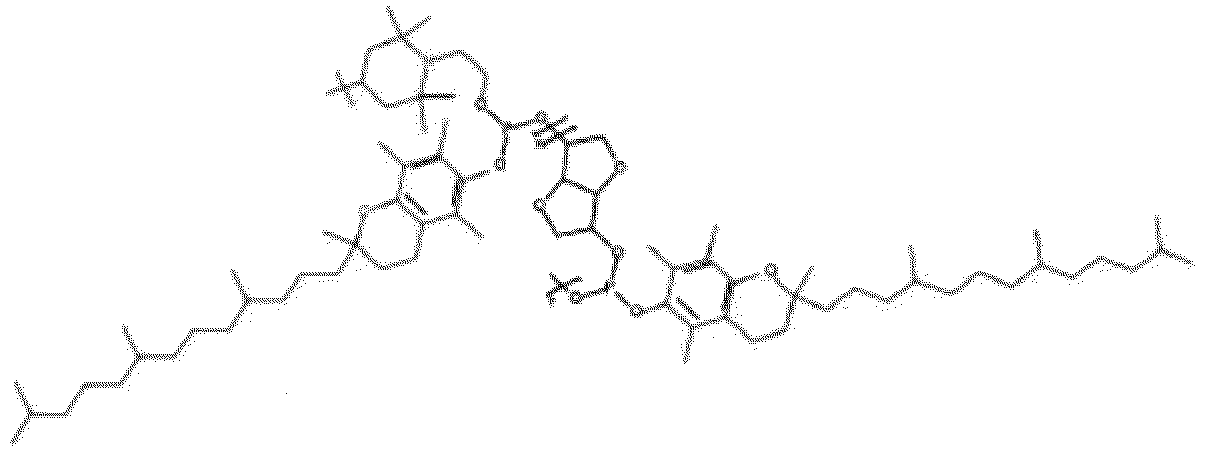

- Es wurde ein vergleichbarer Aufbau wie in Beispiel 1 verwendet. Zu dem Tocopherolphosphordichlorid wird 1,1290 g (10,3 mmol) Hydrochinon, 8 ml (36,1 mmol) Triethylamin und 20 mlAcetonitril gegeben. Nach einer Stunde bei Raumtemperatur werden 2 ml(49,3 mmol) Methanol gegeben. Das Produkt wird in Toluol aufgereingt. Reinheit des Polyphosphites wird mittels 1H und 31P NMR-Spektren bestimmt.
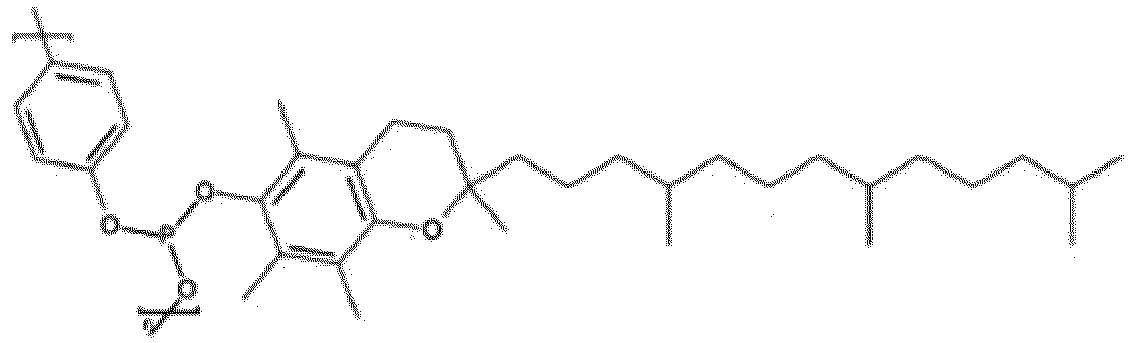
- Es wurde ein vergleichbarer Aufbau wie in Beispiel 1 verwendet. Zu dem Tocopherolphosphordichlorid wird 0,2065 g (1,0 mmol) 4-Hydroxy-2,2,6,6-tetramethylpiperidin- 1-ethanol, 4 ml(28,9 mmol) Triethylamin und 20 ml Chloroform gegeben. Nach einer Stunde wird zu dem Reaktionsgemisch 1,0189 g (9,2 mmol) Hydrochinon, 5,5 ml(39,7 mmol) Triethylamin und 20 mlAcetonitril gegeben. Nach einer Stunde bei Raumtemperatur werden 2 ml (49,3 mmol) Methanol gegeben. Das Produkt wird in Toluol aufgereingt. Reinheit des Polyphosphites wird mittels 1H und 31P NMR-Spektren bestimmt.


- Es wurde ein vergleichbarer Aufbau wie in Beispiel 1 verwendet. Zu dem Tocopherolphosphordichlorid wird 1,1952 g (10,3 mmol) 1,4-Cyclohexandiol, 8 ml (36,1 mmol) Triethylamin und 20 mlAcetonitril gegeben. Nach einer Stunde bei Raumtemperatur werden 2 ml(49,3 mmol) Methanol gegeben. Das Produkt wird in Toluol aufgereingt. Reinheit des Polyphosphites wird mittels 1H und 31P NMR-Spektren bestimmt.
- Es wurde ein vergleichbarer Aufbau wie in Beispiel 1 verwendet. Zu dem Tocopherolphosphordichlorid wird 1,5862 g (10,3 mmol) Vanillylalkohol, 8 ml (36, 1 mmol) Triethylamin und 20 mlAcetonitril gegeben. Nach einer Stunde bei Raumtemperatur werden 2 ml(49,3 mmol) Methanol gegeben. Das Produkt wird in Toluol aufgereingt. Reinheit des Polyphosphites wird mittels 1H und 31P NMR-Spektren bestimmt.
- Es wurde ein vergleichbarer Aufbau wie in Beispiel 1 verwendet. Zu dem Tocopherolphosphordichlorid wird 1,2158 g (10,3 mmol) 1,6-Hexandiol, 8 ml (36, 1 mmol) Triethylamin und 20 mlAcetonitril gegeben. Nach einer Stunde bei Raumtemperatur werden 2 ml(49,3 mmol) Methanol gegeben. Das Produkt wird in Toluol aufgereingt. Reinheit des Polyphosphites wird mittels 1H und 31P NMR-Spektren bestimmt.
- Es wurde ein vergleichbarer Aufbau wie in Beispiel 1 verwendet. Zu dem Tocopherolphosphordichlorid wird 2,0713 g (10,3 mmol) Hydroxyethyl-4-hydroxytetramethylpiperidin, 8 ml (36,1 mmol) Triethylamin und 20 mlAcetonitril gegeben. Nach einer Stunde bei Raumtemperatur werden 2 ml(49,3 mmol) Methanol gegeben. Das Produkt wird in Toluol aufgereingt. Reinheit des Polyphosphites wird mittels 1H und 31P NMR-Spektren bestimmt.
- Es wurden die Verbindungen von Beispiel 2,3,4, 6, 7, 8 und 9 und diekommerziellen Phosphite ADK STAB 2112 (Tris(2,4-di-tert-butylphenol)phosphit) und Doverphos S-9228 (Bis(2,4-dicumylphenyl)pentaerythritol diphosphit) in Polypropylen (Moplen HP 500 N) an einem Micro Sec Model 2009 eingearbeitet. Die Compounds wurden bei 200 °C für 30 Minuten verarbeitet und dabei wurde der Kraftverlust gemessen.
Polypropylene 100,0% 99,8% 99,8% 99,8% 99,8% 99,8% 99,8% 99,8% 99,8% 99,8% ADK STAB 2112 0,2% Doverphos S-9228 0,2% Beispiel 2 0,2% Beispiel 3 0,2% Beispiel 4 0,2% Beispiel 6 0,2% Beispiel 7 0,2% Beispiel 8 0,2% Beispiel 9 0,2% Restkraft 47% 65% 78% 97% 94% 96% 95% 94% 93% 94% Polypropylen 99,8 % 99.6 % 99,6 % 99.6 % 99,6 % 99,6 % Calciumstearat (Vergleich) 0,2 % 0,2 % 0,2 % 0,2 % 0,2 % 0,2 % ADK STAB 2112 (Vergleich) 0,2 % Beispiel 2 0,2 % Beispiel 3 0,2 % Beispiel 4 0,2 % Beispiel 5 0,2 % Restkraft 36 % 44 % 59 % 57 % 75 % 60 % - Die erfindungsgemäßen Polymeren weisen dabei eine höhere Restkraft als die Vergleichsbeispiele auf, woraus eine höhere Stabilisierungswirkung resultiert.
- Zum weiteren Testen wurden die Phosphite mit und ohne einem phenolischen Stabilisator(ADK STAB AO 60, Pentaerythritol tetrakis(3-(3,5-di-tert-butyl-4-hydroxyphenyl)propionat)) mit einem ThermoScientificProcess 11 5-mal bei 230°C verarbeitet. Zur Analyse der Verbindungen wurde der MFR (Melt Flow Rate) bestimmt.
Polypropylen 99,8 % 99,6 % 99,6 % 99,6 % 99,6 % 99,6 % Calciumstearat (Vergleich) 0,2 % 0,2 % 0,2 % 0,2 % 0,2 % 0,2 % ADK STAB 2112 (Vergleich) 0,2 % Beispiel 2 0,2 % Beispiel 3 0,2 % Beispiel 4 0,2 % Beispiel 5 0,2 % MFI extrusion @230 °C 1 Extrusion 17 17 16 15 16 15 2 Extrusion 18 17 16 16 16 15 3 Extrusion 19 16 16 16 16 15 4 Extrusion 19 17 16 16 16 16 5 Extrusion 20 17 16 15 16 16 Polypropylen 99,6 % 99,4 % 99,4 % 99,4 % 99,4 % 99,4 % Calciumstearat 0,2 % 0,2 % 0,2 % 0,2 % 0,2 % 0.2 % ADK STAB AO60 (Vergleich) 0,2 % 0.2 % 0,2 % 0,2 % 0,2 % 0,2 % ADK STAB 2112 (Vergleich) 0,2 % Beispiel 2 0,2 % Beispiel 3 0,2 % Beispiel 4 0,2 % Beispiel 5 0,2 % MFI extrusion @230 °C 1 Extrusion 17 16 16 16 15 15 2 Extrusion 18 16 16 16 16 16 3 Extrusion 19 16 16 16 15 15 4 Extrusion 19 16 16 15 16 16 5 Extrusion 20 16 16 16 15 15 - Bei der Mehrfachextrusion wird mit den erfindungsgemäßen Stabilisatoren der niedrigste MFR Wert, d.h. die beste Stabilisatorwirkung erhalten.
- Zum weiteren Testen wurden die Phosphite ohne einem phenolischen Stabilisator mit einem ThermoScientificProcess 11 5-mal bei 260°Cverarbeitet. ZurAnalyse derVerbindungen wurde der MFR (Melt Flow Rate) bestimmt.
Polypropylene 99,8% 99,6% 99,6% 99,6% 99,6% 99,6% 99,6% 99,6% 99,6% Calciumstearat 0,2% 0,2% 0,2% 0,2% 0,2% 0,2% 0,2% 0,2% 0,2% ADK STAB 2112 0,2% Doverphos S-9228 0,2% Beispiel 2 0,2% Beispiel 3 0,2% Beispiel 4 0,2% Beispiel 6 0,2% Beispiel 8 0,2% Beispiel 9 0,2% MFI extrusion @ 260 °C 1. Extrusion 30 23 18 19 17 19 17 17 17 2. Extrusion 43 27 20 19 18 19 18 18 18 3. Extrusion 79 34 21 19 18 20 18 19 18 4. Extrusion 128 43 23 20 18 20 19 20 18 5. Extrusion 209 60 25 20 19 21 20 22 19 - Bei der Mehrfachextrusion wird mit den erfindungsgemäßen Stabilisatoren auch bei hohen Temperaturen (260 °C) der niedrigste MFR Wert, d.h. die beste Stabilisatorwirkung erhalten.

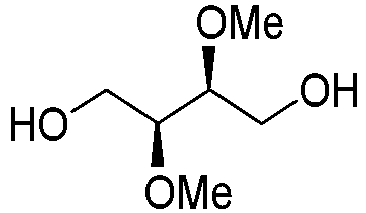
Claims (15)
- Oligomer oder Polymer, umfassend als Strukturelement eine Struktur gemäß der allgemeinen Formel I
 R1 gemäß der nachfolgenden Formel II definiert istwobei
 R bei jedem Auftreten gleich oder verschieden ist und ausgewählt ist aus der Gruppe bestehend aus Wasserstoff oder linearen oder verzweigten Alkylresten mit 1 bis 36 Kohlenstoffatomen, undx 0 oder 1 ist.
 - Oligomer oder Polymer nach Anspruch 1, dadurch gekennzeichnet, dass R1 gemäß nachfolgender Formel Ila definiert ist

- Oligomer oder Polymer nach einem der vorhergehenden Ansprüche, enthaltend die nachfolgende Wiederholungseinheit gemäß Formel III
 D bei jedem Auftreten gleich oder verschieden ist und eine von einem Diol abgeleitete Funktionalität ist.
 - Oligomer oder Polymer nach vorhergehendem Anspruch, dadurch gekennzeichnet, dass die von einem Diol abgeleitete Funktionalität eine von einem aliphatischen, aromatischen oder heterocyclischen Diol abgeleitete Funktionalität ist.
- Oligomer oder Polymer nach einem der beiden vorhergehenden Ansprüche, dadurch gekennzeichnet, dass die von einem Diol abgeleitete Funktionalitäta) eine von einem aliphatischen Diol abgeleitete Funktionalität ist und bevorzugt abgeleitet ist von Ethylenglycol, 1,3-Propylenglycol, 1,2-Propylenglycol, 1,4-Butandiol, 1,5-Pentandiol, 1,6-Hexandiol, 1, 12-Dodecandiol, 1,4-Cyclohexandiol, 1,3-Cyclohexandiol und/oder 1,4-Cyclohexandimethanolb) eine von einem aromatischen Diol abgeleitete Funktionalität ist und bevorzugt abgeleitet ist von Hydrochinon, Resorcin, 1,5-, 2,6- oder 2,7-Dihydroxynaphthalin, Vanillylalkohol oder den nachfolgenden Diolen


 A eine direkte Bindung, -O-, -SO2-, -C(O)-, -CH(CH3)- oder -C(CH3)2-, undR' und R" bei jedem Auftreten gleich oder verschieden sind und ausgewählt sind aus der Gruppe bestehend aus linearen oder verzweigten Alkylresten mit 1 bis 36 Kohlenstoffatomen,bedeuten,c) eine von einem heterocyclischem Diol abgeleitete Funktionalität ist und bevorzugt abgeleitet ist von Hydroxyethyl-4-hydroxytetramethylpiperidin, 1,4-Dithian-2,5-diol, oderd) eine von den nachfolgenden Diolen abgeleitete Funktionalität ist 2,3-Dimethoxy-1,4-butandiol,

- Oligomer oder Polymer nach einem der vorhergehenden Ansprüche, dadurch gekennzeichnet, dass die Wiederholungseinheit gemäß Formel I entsprechend den nachfolgenden Wiederholungseinheiten gemäß Formeln III und Illa

- Oligomer oder Polymer nach vorhergehendem Anspruch, dadurch gekennzeichnet, dass das molare Verhältnis der Wiederholungseinheiten III zu Illa von 0,1 : 99,9 bis 50 : 50, bevorzugt von 0,5 : 99,5 bis 10 : 90 beträgt.
- Oligomer oder Polymer nach einem der vorhergehenden Ansprüche, dadurch gekennzeichnet, dass x für alle Wiederholungseinheiten gemäß Formel I 0 ist oder das Oligomer oder Polymer sowohl Wiederholungseinheiten gemäß Formel I, bei denen x = 0 ist, als auch Wiederholungseinheiten gemäß Formel I, bei denen x = 1 ist, enthält, wobei das molare Verhältnis der Wiederholungseinheiten gemäß Formel I, bei denen x = 0 ist, zu den Wiederholungseinheiten gemäß Formel I, bei denen x = 1 ist von 50:50 bis <100 : >0, bevorzugt 90:10 bis 99,9:0,1 beträgt.
- Zusammensetzung, enthaltend mindestens eine zu stabilisierende organische Komponente sowie mindestens ein Oligomer oder Polymer nach einem der vorhergehenden Ansprüche.
- Zusammensetzung nach vorhergehendem Anspruch, dadurch gekennzeichnet, dass das mindestens eine Oligomer oder Polymer in einem Gewichtsanteil, bezogen auf die gesamte Zusammensetzung von 0,01 bis 5,0 Gew.-Teile, bevorzugt 0,02 bis 2,0 Gew.-Teile, besonders bevorzugt 0,05 bis 1,0 Gew.-Teile enthalten ist.
- Zusammensetzung nach einem der beiden vorhergehenden Ansprüche, dadurch gekennzeichnet, dass die mindestens eine zu stabilisierende organische Komponente ausgewählt ist aus der Gruppe bestehend aus• Kunststoffen, insbesondere thermoplastischen, elastomeren oder duromeren Kunststoffen,• mindestens ein Öl, Fett oder Wachs, insbesondere Mineralöle, Pflanzenfette bzw. -öle oder Tierfette bzw. -öle, z.B. Palmöl, Olivenöl, Rapsöl, Leinöl, Sojabohnenöl, Sonnenblumenöl, Rizinusöl, Fischöle oder Rindertalg sowie Öle, Fette oder Wachse auf der Basis von z.B. synthetischen Estern,• mineralischen oder synthetischen Schmierstoffen, Hydraulikölen, Motorenölen, Turbinenölen, Getriebeölen, Metallbearbeitungsflüssigkeiten oder Schmierfetten, sowie• polymerisationsfähigen Monomeren, insbesondere radikalisch polymerisationsfähige Monomere, insbesondere Monomere, die radikalisch durch Initiatoren wie z.B. Peroxide oder auch Sauerstoff polymerisiert werden können wie z.B. Acrylester, Methacrylester, Acrylnitril, Styrole oder Vinylchlorid.
- Zusammensetzung nach einem der Ansprüche 10 bis 12, enthaltend mindestens einen Zusatzstoff ausgewählt aus der Gruppe bestehend aus primären Antioxidantien, sekundären Antioxidantien, UV-Absorber, der Lichtstabilisatoren, der Metalldesaktivatoren, der Füllstoffdesaktivatoren, der Antiozonantien, Nukleierungsmitteln, Antinukleierungsmitteln, Schlagzähigkeitsverbesserer, Weichmacher, Gleitmitteln, Rheologiemodifikatoren, Thixotropiemitteln, Kettenverlängerer, Verarbeitungshilfsmitteln, Entformungshilfsmitteln, Flammschutzmitteln, Pigmenten, Farbstoffen, optische Aufhellern, antimikrobielle Wirkstoffen, Antistatika, Slipmitteln, Antiblockmitteln, Kopplungsmitteln, Vernetzungsmitteln, Antivernetzungsmitteln, Hydrophilisierungsmitteln, Hydrophobierungsmitteln, Haftvermittler, Dispergiermitteln, Kompatibilisatoren, Sauerstofffänger, Säurefänger, Treibmitteln, Abbau-Additiven, Entschäumungshilfsmitteln, Geruchsfängern, Markierungsmitteln, Antifoggingmitteln, Füllstoffen und Verstärkungsstoffen.
- Verwendung eines Oligomers oder Polymers nach einem der Ansprüche 1 bis 8 als Stabilisator für organische Materialien.
- Verwendung eines Oligomers oder Polymers nach vorhergehendem Anspruch, als Stabilisator gegen• thermischen, aktinischen oder oxidativen Abbau von Kunststoffen, oder als Flammschutzmittel für Kunststoffe,• thermischen, aktinischen oder oxidativen Abbau von Lacken, Farben und Beschichtungen (Coatings)• thermischen, aktinischen oder oxidativen Abbau von Ölen, Fetten oder Wachen, insbesondere Mineralölen, Pflanzenfetten bzw. -ölen oder Tierfetten bzw. -ölen, z.B. Palmöl, Olivenöl, Rapsöl, Leinöl, Sojabohnenöl, Sonnenblumenöl, Rizinusöl, Fischöle oder Rindertalg sowie Ölen, Fetten oder Wachsen auf der Basis von z.B. synthetischen Estern,• thermischen, aktinischen oder oxidativen Abbau von mineralischen oder synthetischen Schmierstoffen, Hydraulikölen, Motorenölen, Turbinenölen, Getriebeölen, Metallbearbeitungsflüssigkeiten oder Schmierfetten, oder• gegen vorzeitige Polymerisation und/oder Oxidation von polymerisationsfähigen Monomeren, insbesondere Monomere, die radikalisch durch Initiatoren wie z.B. Peroxide oder auch Sauerstoff polymerisiert werden können wie z.B. Acrylester, Methacrylester, Acrylnitril, Styrole oder Vinylchlorid.
- Formmasse oder ein Formteil, herstellbar aus einer Kunststoffzusammensetzung gemäß vorhergehender Ansprüche insbesondere in Form von Spritzgussteilen, Folien, Filmen, Schäumen, Fasern, Kabeln, Rohren, Profilen, Hohlkörpern, Bändchen, Membranen und/oder Klebstoffen.
Applications Claiming Priority (2)
| Application Number | Priority Date | Filing Date | Title |
|---|---|---|---|
| DE102019213606.0A DE102019213606B4 (de) | 2019-09-06 | 2019-09-06 | Oligomer oder polymer, zusammensetzung sowie verwendung des oligomers oder polymers |
| PCT/EP2020/070333 WO2021043489A1 (de) | 2019-09-06 | 2020-07-17 | Oligomer oder polymer, zusammensetzung, verwendung des oligomers oder polymers sowie intermediat |
Publications (3)
| Publication Number | Publication Date |
|---|---|
| EP4025629A1 EP4025629A1 (de) | 2022-07-13 |
| EP4025629B1 true EP4025629B1 (de) | 2025-01-08 |
| EP4025629C0 EP4025629C0 (de) | 2025-01-08 |
Family
ID=71670267
Family Applications (1)
| Application Number | Title | Priority Date | Filing Date |
|---|---|---|---|
| EP20742728.7A Active EP4025629B1 (de) | 2019-09-06 | 2020-07-17 | Oligomer oder polymer, zusammensetzung, verwendung des oligomers oder polymers sowie intermediat |
Country Status (7)
| Country | Link |
|---|---|
| US (1) | US20220340717A1 (de) |
| EP (1) | EP4025629B1 (de) |
| JP (1) | JP7682166B2 (de) |
| KR (1) | KR102875001B1 (de) |
| CN (1) | CN114616264B (de) |
| DE (1) | DE102019213606B4 (de) |
| WO (1) | WO2021043489A1 (de) |
Families Citing this family (6)
| Publication number | Priority date | Publication date | Assignee | Title |
|---|---|---|---|---|
| DE102019200596A1 (de) | 2019-01-17 | 2020-07-23 | Fraunhofer-Gesellschaft zur Förderung der angewandten Forschung e.V. | Verwendung einer additivzusammensetzung zum kontrollierten beschleunigten abbau von kondensationspolymeren |
| DE102019204160A1 (de) | 2019-03-26 | 2020-10-01 | Fraunhofer-Gesellschaft zur Förderung der angewandten Forschung e.V. | Verfahren zur Stabilisierung von thermoplastischen Kunststoff-Rezyklaten sowie stabilisierte Kunststoffzusammensetzungen und hieraus hergestellte Formmassen und Formteile |
| JP2025152097A (ja) * | 2024-03-28 | 2025-10-09 | 出光興産株式会社 | 潤滑油組成物 |
| CN118273133B (zh) * | 2024-05-16 | 2024-10-22 | 苏州瑞高新材料股份有限公司 | 一种汽车内饰用tpee复合材料及制备方法和应用 |
| CN118667281B (zh) * | 2024-08-26 | 2024-12-13 | 江苏冠联新材料科技股份有限公司 | 一种耐温绝缘型的epdm混炼胶 |
| CN120535721B (zh) * | 2025-07-24 | 2025-11-21 | 山东一诺威聚氨酯股份有限公司 | 高静刚度高阻尼低压变聚氨酯弹性体及其制备方法 |
Family Cites Families (19)
| Publication number | Priority date | Publication date | Assignee | Title |
|---|---|---|---|---|
| US2612488A (en) * | 1950-11-02 | 1952-09-30 | Standard Oil Dev Co | Stabilization of organic materials with aryl polyphosphites |
| JPS5454978A (en) * | 1977-10-12 | 1979-05-01 | Mitsui Petrochem Ind Ltd | Antioxidant from chromane derivates |
| JPS59219295A (ja) * | 1983-05-30 | 1984-12-10 | Senjiyu Seiyaku Kk | リン酸ジエステルまたはその塩およびそれらの製造法 |
| JPS62265299A (ja) * | 1985-12-18 | 1987-11-18 | Senjiyu Seiyaku Kk | α―トコフェロールとウリジンとのリン酸ジエステル,そのハロゲン置換体もしくはこれらの塩およびそれらの製造法 |
| TW338768B (en) | 1994-06-02 | 1998-08-21 | Ciba Sc Holding Ag | Oligometic HALS phosphites and HALS phosphonites as stabilizers |
| JPH09165394A (ja) * | 1995-10-13 | 1997-06-24 | Senju Pharmaceut Co Ltd | 新規リン酸ジエステル |
| CA2186654A1 (en) * | 1995-10-13 | 1997-04-14 | Masayuki Nakamura | Phosphoric diester |
| JPH1143436A (ja) * | 1997-07-25 | 1999-02-16 | Showa Denko Kk | 末梢血流障害予防・治療剤 |
| JP2001002690A (ja) * | 1999-06-17 | 2001-01-09 | Senju Pharmaceut Co Ltd | リン酸ジエステルの製造法 |
| KR100365070B1 (ko) | 2000-08-29 | 2002-12-16 | 주식회사 태평양 | 토코페롤 유도체 및 그의 제조방법 |
| DE10160138A1 (de) * | 2001-12-07 | 2003-06-12 | Bayer Ag | Flammgeschütze Formmassen |
| JP2003286413A (ja) | 2002-03-28 | 2003-10-10 | Asahi Denka Kogyo Kk | 合成樹脂組成物 |
| EP1539873A2 (de) * | 2002-09-11 | 2005-06-15 | Ciba SC Holding AG | Stabilisierung von organischen materialien |
| JP3908156B2 (ja) | 2002-11-26 | 2007-04-25 | 株式会社日立製作所 | 連動要素構成データ作成方法及び装置 |
| JP3898629B2 (ja) * | 2002-11-27 | 2007-03-28 | 日本メナード化粧品株式会社 | 化粧料 |
| EP2061829B1 (de) | 2006-09-08 | 2010-07-14 | Basf Se | Flüssige polymere phosphite und phosphonite als stabilisatoren |
| JP2016050196A (ja) * | 2014-08-29 | 2016-04-11 | 昭和電工株式会社 | 皮膚色改善剤及び皮膚色改善用組成物 |
| DE102014218811A1 (de) * | 2014-09-18 | 2016-03-24 | Fraunhofer-Gesellschaft zur Förderung der angewandten Forschung e.V. | Verwendung von phosphorhaltigen organischen Oxyimiden als Flammschutzmittel, Radikalgeneratoren und/oder als Stabilisatoren für Kunststoffe, flammgeschützte Kunststoffzusammensetzung, Verfahren zu deren Herstellung sowie Formteile, Lacke und Beschichtungen |
| JP2019219295A (ja) * | 2018-06-20 | 2019-12-26 | 株式会社クボタ | ウエハ検査装置およびウエハ検査方法 |
-
2019
- 2019-09-06 DE DE102019213606.0A patent/DE102019213606B4/de active Active
-
2020
- 2020-07-17 WO PCT/EP2020/070333 patent/WO2021043489A1/de not_active Ceased
- 2020-07-17 EP EP20742728.7A patent/EP4025629B1/de active Active
- 2020-07-17 JP JP2022514749A patent/JP7682166B2/ja active Active
- 2020-07-17 US US17/640,174 patent/US20220340717A1/en active Pending
- 2020-07-17 KR KR1020227010873A patent/KR102875001B1/ko active Active
- 2020-07-17 CN CN202080061948.1A patent/CN114616264B/zh active Active
Also Published As
| Publication number | Publication date |
|---|---|
| US20220340717A1 (en) | 2022-10-27 |
| CN114616264B (zh) | 2024-03-01 |
| EP4025629C0 (de) | 2025-01-08 |
| KR20220062318A (ko) | 2022-05-16 |
| DE102019213606A1 (de) | 2021-04-22 |
| DE102019213606B4 (de) | 2022-04-21 |
| JP2022547090A (ja) | 2022-11-10 |
| WO2021043489A1 (de) | 2021-03-11 |
| CN114616264A (zh) | 2022-06-10 |
| EP4025629A1 (de) | 2022-07-13 |
| JP7682166B2 (ja) | 2025-05-23 |
| KR102875001B1 (ko) | 2025-10-21 |
Similar Documents
| Publication | Publication Date | Title |
|---|---|---|
| US12421372B2 (en) | Method of stabilizing virgin thermoplastic material and stabilized plastics compositions, moulding compounds and mouldings produced therefrom, stabilizer compositions and uses thereof | |
| EP4025629B1 (de) | Oligomer oder polymer, zusammensetzung, verwendung des oligomers oder polymers sowie intermediat | |
| EP3194486B1 (de) | Verwendung von organischen oxyimidsalzen als flammschutzmittel, flammengeschützte kunststoffzusammensetzung, verfahren zu ihrer herstellung sowie formteil, lack oder beschichtung | |
| EP3688081A1 (de) | Verfahren zur stabilisierung von halogenfreien thermoplastischen kunststoff-rezyklaten sowie stabilisierte kunststoffzusammensetzungen und hieraus hergestellte formmassen und formteile | |
| EP3914641A1 (de) | Verfahren zur stabilisierung von halogenfreien thermoplastischen kunststoff-rezyklaten, kunststoff-zusammensetzung, stabilisator-zusammensetzung sowie verwendung der stabilisator-zusammensetzung | |
| WO2021191364A1 (de) | Verwendung von hydroxyzimtsäuresalzen zur stabilisierung von organischen materialien, stabilisiertes organisches material, verfahren zur stabilisierung von organischen materialien, spezifische stabilisatoren sowie stabilisatorzusammensetzungen | |
| DE102021202103A1 (de) | Verwendung einer Stabilisatorzusammensetzung zur Stabilisierung von halogenfreien thermoplastischen Kunststoff-Recyclaten, eine Stabilisatorzusammensetzung, ein Masterbatch oder Konzentrat, eine stabilisierte Kunststoffzusammensetzung, hier ein Verfahren zur Stabilisierung von halogenfreien thermoplastischen Kunststoff-Recyclaten sowie Verwendung von Zusammensetzungen | |
| EP3585833A1 (de) | Effiziente phosphorhaltige stabilisatoren auf basis von diphenylamin und heterocyclischer diphenylamin-derivate | |
| EP4214275A1 (de) | Verwendung von dieugenol, oligomeren und/oder polymeren von eugenol zur stabilisierung von organischen materialien, stabilisierte kunststoffzusammensetzung, stabilisatorzusammensetzung sowie verfahren zur stabilisierung von organischen materialien | |
| EP4126810A1 (de) | Verwendung von substituierten zimtsäureestern als stabilisatoren für organische materialien, stabilisiertes organisches material, verfahren zur stabilisierung von organischen materialien sowie spezifische zimtsäureester | |
| WO2023083884A1 (de) | Stabilisatoren auf basis von syringasäure, vanillinsäure, isovanillinsäure oder 5-hydroxyveratrumsäure, kunststoffzusammensetzung, verfahren zur stabilisierung einer kunststoffzusammensetzung sowie stabilisatorzusammensetzung | |
| WO2021005075A1 (de) | Verwendung von phenolisch substituierten zuckerderivaten als stabilisatoren, kunststoffzusammensetzung, verfahren zur stabilisierung von kunststoffen sowie phenolisch substituierte zuckerderivate | |
| WO2023156222A1 (de) | Polymere stabilisatoren auf basis von methoxy-hydroxy-benzoesäuren, kunststoffzusammensetzung, verfahren zur stabiliserung einer kunststoffzusammensetzung sowie stabilisatorzusammensetzung | |
| DE102022206466A1 (de) | Verwendung einer Stabilisatorzusammensetzung zur Stabilisierung von halogenfreier thermoplastischer Kunststoff-Neuware, Stabilisatorzusammensetzung, ein Masterbatch oder Konzentrat, eine stabilisierte Kunststoffzusammensetzung, Verfahren zur Stabilisierung von halogenfreien thermoplastischen Kunststoff-Neuware sowie Verwendung der Zusammensetzung |
Legal Events
| Date | Code | Title | Description |
|---|---|---|---|
| STAA | Information on the status of an ep patent application or granted ep patent |
Free format text: STATUS: UNKNOWN |
|
| STAA | Information on the status of an ep patent application or granted ep patent |
Free format text: STATUS: THE INTERNATIONAL PUBLICATION HAS BEEN MADE |
|
| PUAI | Public reference made under article 153(3) epc to a published international application that has entered the european phase |
Free format text: ORIGINAL CODE: 0009012 |
|
| STAA | Information on the status of an ep patent application or granted ep patent |
Free format text: STATUS: REQUEST FOR EXAMINATION WAS MADE |
|
| 17P | Request for examination filed |
Effective date: 20220317 |
|
| AK | Designated contracting states |
Kind code of ref document: A1 Designated state(s): AL AT BE BG CH CY CZ DE DK EE ES FI FR GB GR HR HU IE IS IT LI LT LU LV MC MK MT NL NO PL PT RO RS SE SI SK SM TR |
|
| GRAP | Despatch of communication of intention to grant a patent |
Free format text: ORIGINAL CODE: EPIDOSNIGR1 |
|
| STAA | Information on the status of an ep patent application or granted ep patent |
Free format text: STATUS: GRANT OF PATENT IS INTENDED |
|
| INTG | Intention to grant announced |
Effective date: 20240729 |
|
| GRAS | Grant fee paid |
Free format text: ORIGINAL CODE: EPIDOSNIGR3 |
|
| GRAA | (expected) grant |
Free format text: ORIGINAL CODE: 0009210 |
|
| STAA | Information on the status of an ep patent application or granted ep patent |
Free format text: STATUS: THE PATENT HAS BEEN GRANTED |
|
| AK | Designated contracting states |
Kind code of ref document: B1 Designated state(s): AL AT BE BG CH CY CZ DE DK EE ES FI FR GB GR HR HU IE IS IT LI LT LU LV MC MK MT NL NO PL PT RO RS SE SI SK SM TR |
|
| REG | Reference to a national code |
Ref country code: GB Ref legal event code: FG4D Free format text: NOT ENGLISH |
|
| REG | Reference to a national code |
Ref country code: CH Ref legal event code: EP |
|
| REG | Reference to a national code |
Ref country code: DE Ref legal event code: R096 Ref document number: 502020010158 Country of ref document: DE |
|
| REG | Reference to a national code |
Ref country code: IE Ref legal event code: FG4D Free format text: LANGUAGE OF EP DOCUMENT: GERMAN |
|
| U01 | Request for unitary effect filed |
Effective date: 20250120 |
|
| U07 | Unitary effect registered |
Designated state(s): AT BE BG DE DK EE FI FR IT LT LU LV MT NL PT RO SE SI Effective date: 20250128 |
|
| PG25 | Lapsed in a contracting state [announced via postgrant information from national office to epo] |
Ref country code: RS Free format text: LAPSE BECAUSE OF FAILURE TO SUBMIT A TRANSLATION OF THE DESCRIPTION OR TO PAY THE FEE WITHIN THE PRESCRIBED TIME-LIMIT Effective date: 20250408 |
|
| PG25 | Lapsed in a contracting state [announced via postgrant information from national office to epo] |
Ref country code: PL Free format text: LAPSE BECAUSE OF FAILURE TO SUBMIT A TRANSLATION OF THE DESCRIPTION OR TO PAY THE FEE WITHIN THE PRESCRIBED TIME-LIMIT Effective date: 20250108 |
|
| PG25 | Lapsed in a contracting state [announced via postgrant information from national office to epo] |
Ref country code: ES Free format text: LAPSE BECAUSE OF FAILURE TO SUBMIT A TRANSLATION OF THE DESCRIPTION OR TO PAY THE FEE WITHIN THE PRESCRIBED TIME-LIMIT Effective date: 20250108 |
|
| PG25 | Lapsed in a contracting state [announced via postgrant information from national office to epo] |
Ref country code: NO Free format text: LAPSE BECAUSE OF FAILURE TO SUBMIT A TRANSLATION OF THE DESCRIPTION OR TO PAY THE FEE WITHIN THE PRESCRIBED TIME-LIMIT Effective date: 20250408 Ref country code: IS Free format text: LAPSE BECAUSE OF FAILURE TO SUBMIT A TRANSLATION OF THE DESCRIPTION OR TO PAY THE FEE WITHIN THE PRESCRIBED TIME-LIMIT Effective date: 20250508 |
|
| PG25 | Lapsed in a contracting state [announced via postgrant information from national office to epo] |
Ref country code: HR Free format text: LAPSE BECAUSE OF FAILURE TO SUBMIT A TRANSLATION OF THE DESCRIPTION OR TO PAY THE FEE WITHIN THE PRESCRIBED TIME-LIMIT Effective date: 20250108 |
|
| PG25 | Lapsed in a contracting state [announced via postgrant information from national office to epo] |
Ref country code: GR Free format text: LAPSE BECAUSE OF FAILURE TO SUBMIT A TRANSLATION OF THE DESCRIPTION OR TO PAY THE FEE WITHIN THE PRESCRIBED TIME-LIMIT Effective date: 20250409 |
|
| U20 | Renewal fee for the european patent with unitary effect paid |
Year of fee payment: 6 Effective date: 20250729 |
|
| PG25 | Lapsed in a contracting state [announced via postgrant information from national office to epo] |
Ref country code: SM Free format text: LAPSE BECAUSE OF FAILURE TO SUBMIT A TRANSLATION OF THE DESCRIPTION OR TO PAY THE FEE WITHIN THE PRESCRIBED TIME-LIMIT Effective date: 20250108 |
|
| PGFP | Annual fee paid to national office [announced via postgrant information from national office to epo] |
Ref country code: GB Payment date: 20250724 Year of fee payment: 6 |
|
| PG25 | Lapsed in a contracting state [announced via postgrant information from national office to epo] |
Ref country code: CZ Free format text: LAPSE BECAUSE OF FAILURE TO SUBMIT A TRANSLATION OF THE DESCRIPTION OR TO PAY THE FEE WITHIN THE PRESCRIBED TIME-LIMIT Effective date: 20250108 |
|
| PG25 | Lapsed in a contracting state [announced via postgrant information from national office to epo] |
Ref country code: SK Free format text: LAPSE BECAUSE OF FAILURE TO SUBMIT A TRANSLATION OF THE DESCRIPTION OR TO PAY THE FEE WITHIN THE PRESCRIBED TIME-LIMIT Effective date: 20250108 |
|
| PLBE | No opposition filed within time limit |
Free format text: ORIGINAL CODE: 0009261 |
|
| STAA | Information on the status of an ep patent application or granted ep patent |
Free format text: STATUS: NO OPPOSITION FILED WITHIN TIME LIMIT |
|
| 26N | No opposition filed |
Effective date: 20251009 |