EP3066215B1 - Method for subtyping lymphoma types by means of expression profiling - Google Patents
Method for subtyping lymphoma types by means of expression profiling Download PDFInfo
- Publication number
- EP3066215B1 EP3066215B1 EP14803288.1A EP14803288A EP3066215B1 EP 3066215 B1 EP3066215 B1 EP 3066215B1 EP 14803288 A EP14803288 A EP 14803288A EP 3066215 B1 EP3066215 B1 EP 3066215B1
- Authority
- EP
- European Patent Office
- Prior art keywords
- genbank accession
- gene expression
- dlbcl
- subject
- sample
- Prior art date
- Legal status (The legal status is an assumption and is not a legal conclusion. Google has not performed a legal analysis and makes no representation as to the accuracy of the status listed.)
- Active
Links
Images
Classifications
-
- C—CHEMISTRY; METALLURGY
- C12—BIOCHEMISTRY; BEER; SPIRITS; WINE; VINEGAR; MICROBIOLOGY; ENZYMOLOGY; MUTATION OR GENETIC ENGINEERING
- C12Q—MEASURING OR TESTING PROCESSES INVOLVING ENZYMES, NUCLEIC ACIDS OR MICROORGANISMS; COMPOSITIONS OR TEST PAPERS THEREFOR; PROCESSES OF PREPARING SUCH COMPOSITIONS; CONDITION-RESPONSIVE CONTROL IN MICROBIOLOGICAL OR ENZYMOLOGICAL PROCESSES
- C12Q1/00—Measuring or testing processes involving enzymes, nucleic acids or microorganisms; Compositions therefor; Processes of preparing such compositions
- C12Q1/68—Measuring or testing processes involving enzymes, nucleic acids or microorganisms; Compositions therefor; Processes of preparing such compositions involving nucleic acids
- C12Q1/6876—Nucleic acid products used in the analysis of nucleic acids, e.g. primers or probes
- C12Q1/6883—Nucleic acid products used in the analysis of nucleic acids, e.g. primers or probes for diseases caused by alterations of genetic material
- C12Q1/6886—Nucleic acid products used in the analysis of nucleic acids, e.g. primers or probes for diseases caused by alterations of genetic material for cancer
-
- G—PHYSICS
- G16—INFORMATION AND COMMUNICATION TECHNOLOGY [ICT] SPECIALLY ADAPTED FOR SPECIFIC APPLICATION FIELDS
- G16B—BIOINFORMATICS, i.e. INFORMATION AND COMMUNICATION TECHNOLOGY [ICT] SPECIALLY ADAPTED FOR GENETIC OR PROTEIN-RELATED DATA PROCESSING IN COMPUTATIONAL MOLECULAR BIOLOGY
- G16B25/00—ICT specially adapted for hybridisation; ICT specially adapted for gene or protein expression
-
- G—PHYSICS
- G16—INFORMATION AND COMMUNICATION TECHNOLOGY [ICT] SPECIALLY ADAPTED FOR SPECIFIC APPLICATION FIELDS
- G16B—BIOINFORMATICS, i.e. INFORMATION AND COMMUNICATION TECHNOLOGY [ICT] SPECIALLY ADAPTED FOR GENETIC OR PROTEIN-RELATED DATA PROCESSING IN COMPUTATIONAL MOLECULAR BIOLOGY
- G16B25/00—ICT specially adapted for hybridisation; ICT specially adapted for gene or protein expression
- G16B25/10—Gene or protein expression profiling; Expression-ratio estimation or normalisation
-
- G—PHYSICS
- G16—INFORMATION AND COMMUNICATION TECHNOLOGY [ICT] SPECIALLY ADAPTED FOR SPECIFIC APPLICATION FIELDS
- G16B—BIOINFORMATICS, i.e. INFORMATION AND COMMUNICATION TECHNOLOGY [ICT] SPECIALLY ADAPTED FOR GENETIC OR PROTEIN-RELATED DATA PROCESSING IN COMPUTATIONAL MOLECULAR BIOLOGY
- G16B5/00—ICT specially adapted for modelling or simulations in systems biology, e.g. gene-regulatory networks, protein interaction networks or metabolic networks
-
- C—CHEMISTRY; METALLURGY
- C12—BIOCHEMISTRY; BEER; SPIRITS; WINE; VINEGAR; MICROBIOLOGY; ENZYMOLOGY; MUTATION OR GENETIC ENGINEERING
- C12Q—MEASURING OR TESTING PROCESSES INVOLVING ENZYMES, NUCLEIC ACIDS OR MICROORGANISMS; COMPOSITIONS OR TEST PAPERS THEREFOR; PROCESSES OF PREPARING SUCH COMPOSITIONS; CONDITION-RESPONSIVE CONTROL IN MICROBIOLOGICAL OR ENZYMOLOGICAL PROCESSES
- C12Q2600/00—Oligonucleotides characterized by their use
- C12Q2600/106—Pharmacogenomics, i.e. genetic variability in individual responses to drugs and drug metabolism
-
- C—CHEMISTRY; METALLURGY
- C12—BIOCHEMISTRY; BEER; SPIRITS; WINE; VINEGAR; MICROBIOLOGY; ENZYMOLOGY; MUTATION OR GENETIC ENGINEERING
- C12Q—MEASURING OR TESTING PROCESSES INVOLVING ENZYMES, NUCLEIC ACIDS OR MICROORGANISMS; COMPOSITIONS OR TEST PAPERS THEREFOR; PROCESSES OF PREPARING SUCH COMPOSITIONS; CONDITION-RESPONSIVE CONTROL IN MICROBIOLOGICAL OR ENZYMOLOGICAL PROCESSES
- C12Q2600/00—Oligonucleotides characterized by their use
- C12Q2600/112—Disease subtyping, staging or classification
-
- C—CHEMISTRY; METALLURGY
- C12—BIOCHEMISTRY; BEER; SPIRITS; WINE; VINEGAR; MICROBIOLOGY; ENZYMOLOGY; MUTATION OR GENETIC ENGINEERING
- C12Q—MEASURING OR TESTING PROCESSES INVOLVING ENZYMES, NUCLEIC ACIDS OR MICROORGANISMS; COMPOSITIONS OR TEST PAPERS THEREFOR; PROCESSES OF PREPARING SUCH COMPOSITIONS; CONDITION-RESPONSIVE CONTROL IN MICROBIOLOGICAL OR ENZYMOLOGICAL PROCESSES
- C12Q2600/00—Oligonucleotides characterized by their use
- C12Q2600/158—Expression markers
-
- C—CHEMISTRY; METALLURGY
- C12—BIOCHEMISTRY; BEER; SPIRITS; WINE; VINEGAR; MICROBIOLOGY; ENZYMOLOGY; MUTATION OR GENETIC ENGINEERING
- C12Q—MEASURING OR TESTING PROCESSES INVOLVING ENZYMES, NUCLEIC ACIDS OR MICROORGANISMS; COMPOSITIONS OR TEST PAPERS THEREFOR; PROCESSES OF PREPARING SUCH COMPOSITIONS; CONDITION-RESPONSIVE CONTROL IN MICROBIOLOGICAL OR ENZYMOLOGICAL PROCESSES
- C12Q2600/00—Oligonucleotides characterized by their use
- C12Q2600/166—Oligonucleotides used as internal standards, controls or normalisation probes
Definitions
- Diffuse large B cell lymphoma can be classified as the germinal center B cell (GCB) subtype or the activated B cell (ABC) subtype based on the cell-of-origin (COO) distinction as molecularly described previously by the Lymphoma/Leukemia Molecular Profiling Project (LLMPP) (see Alizadeh et al., Nature, 403: 503-511 (2000 )).
- LMPP Lymphoma/Leukemia Molecular Profiling Project
- the invention provides such methods.
- the invention provides a method for selecting a treatment option for an activated B cell-like diffuse large B cell lymphoma (ABC DLBCL) subject, a germinal center B cell-like diffuse large B cell lymphoma (GCB DLBCL) subject, a primary mediastinal B cell lymphoma (PMBL) subject, a Burkitt lymphoma (BL) subject, or a mantle cell lymphoma (MCL) subject.
- ABS DLBCL activated B cell-like diffuse large B cell lymphoma
- GCB DLBCL germinal center B cell-like diffuse large B cell lymphoma
- PMBL primary mediastinal B cell lymphoma
- BL Burkitt lymphoma
- MCL mantle cell lymphoma
- the method comprises: (a) isolating a gene expression product from a biopsy sample from a lymphoma subject; (b) obtaining digital gene expression data from the isolated gene expression product, wherein the digital gene expression data comprises data for genes in a gene expression signature, and wherein the gene expression signature comprises at least one of the genes listed in Table 2; (c) generating a weighted average of the expression levels of genes from the gene expression signature to thereby obtain a gene expression signature value; (d) calculating a predictor score based on the gene expression signature value; (e) classifying the subject as belonging to one of the following groups based on the predictor score of (d): (i) ABC DLBCL, (ii) GCB DLBCL, (iii) PMBL, (iv) BL, or (v) MCL; (f) selecting a treatment option for the subject based on the subject's classification in (e); and (g) providing the treatment option to the subject.
- the invention also provides a method for selecting a treatment option for a diffuse large B cell lymphoma (DLBCL) subject.
- the method comprises: (a) isolating a gene expression product from a biopsy sample from a DLBCL subject; (b) obtaining digital gene expression data from the isolated gene expression product, wherein the digital gene expression data comprises data for genes in a gene expression signature, and wherein the gene expression signature comprises at least one of the following genes: ASB13 (GenBank Accession No. NM_024701.3), CCDC50 (GenBank Accession No. NM_174908.3), CREB3L2 (GenBank Accession No. NM_194071.2), CYB5R2 (GenBank Accession No.
- NM_016229.3 IRF4 (GenBank Accession No. NM_002460.1), ISY1 (GenBank Accession No. NM_020701.2), ITPKB (GenBank Accession No. NM_002221.3), LIMD1 (GenBank Accession No. NM_014240.2), MAML3 (GenBank Accession No. NM_018717.4), MME (GenBank Accession No. NM_000902.2), MYBL1 (GenBank Accession No. XM_034274.14), PIM2 (GenBank Accession No. NM_006875.2), R3HDM1 (GenBank Accession No. NM_015361.2), RAB7L1 (GenBank Accession No.
- NM_001135664.1 S1PR2 (GenBank Accession No. NM_004230.2), SERPINA9 (GenBank Accession No. NM_001042518.1), TNFRSF13B (GenBank Accession No. NM_012452.2), TRIM56 (GenBank Accession No. NM_030961.1), UBXN4 (GenBank Accession No. NM_014607.3), and WDR55 (GenBank Accession No.
- NM_017706.4 (c) generating a weighted average of the expression levels of genes from the gene expression signature to thereby obtain a gene expression signature value; (d) calculating a predictor score based on the gene expression signature value; (e) classifying the subject as belonging to one of the following groups based on the predictor score of (d): (i) activated B cell-like diffuse large B cell lymphoma (ABC DLBCL) or (ii) germinal center B cell-like diffuse large B cell lymphoma (GCB DLBCL); (f) selecting a treatment option for the subject based on the subject's classification in (e); and (g) providing the treatment option to the subject.
- ABSDLBCL activated B cell-like diffuse large B cell lymphoma
- GCB DLBCL germinal center B cell-like diffuse large B cell lymphoma
- the invention provides a method for selecting a germinal center B cell-like diffuse large B cell lymphoma (GCB DLBCL) subject for treatment with R-CHOP (rituxan, cyclophosphamide, hydroxydaunorubicin, oncovin (vincristine), and prednisone) therapy.
- the method comprises the steps of: (a) isolating a gene expression product from a biopsy sample from a DLBCL subject; (b) obtaining digital gene expression data from the isolated gene expression product, wherein the digital gene expression data comprises data for genes in a gene expression signature, and wherein the gene expression signature comprises at least one of the following genes: ASB13 (GenBank Accession No. NM_024701.3), CCDC50 (GenBank Accession No.
- NM_006875.2 R3HDM1 (GenBank Accession No. NM_015361.2), RAB7L1 (GenBank Accession No. NM_001135664.1), S1PR2 (GenBank Accession No. NM_004230.2), SERPINA9 (GenBank Accession No. NM_001042518.1), TNFRSF13B (GenBank Accession No. NM_012452.2), TRIM56 (GenBank Accession No. NM_030961.1), UBXN4 (GenBank Accession No. NM_014607.3), and WDR55 (GenBank Accession No.
- NM_017706.4 (c) generating a weighted average of the expression levels of genes from the gene expression signature to thereby obtain a gene expression signature value; (d) calculating a predictor score based on the gene expression signature value; (e) classifying the subject as belonging to one of the following groups based on the predictor score of (d): (i) activated B cell-like diffuse large B cell lymphoma (ABC DLBCL) or (ii) germinal center B cell-like diffuse large B cell lymphoma (GCB DLBCL); (f) selecting a GCB DLBCL subject for R-CHOP therapy; and (g) providing R-CHOP therapy to the GCB DLBCL subject and providing a different therapy to an ABC DLBCL subject.
- ABSDLBCL activated B cell-like diffuse large B cell lymphoma
- GCB DLBCL germinal center B cell-like diffuse large B cell lymphoma
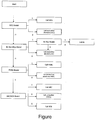
- the Figure is a diagram which illustrates the logic employed in classifying a subject having (i) ABC DLBCL, (ii) GCB DLBCL, (iii) PMBL, (iv) BL, or (v) MCL based on the predictor models disclosed herein.
- Gene expression profiling of a cancer cell or biopsy reflects the molecular phenotype of a cancer at the time of diagnosis.
- the detailed picture provided by the genomic expression pattern provides a basis for a new systematic classification of cancers and more accurate predictors of survival and response to treatment.
- the invention discloses methods for identifying, diagnosing, and/or classifying a lymphoma, lymphoid malignancy, or lymphoproliferative disorder based on its gene expression patterns. The information obtained using these methods will be useful in evaluating the optimal therapeutic approach to be employed with regards to a particular subject.
- lymphoproliferative disorder refers to any tumor of lymphocytes, and may refer to both malignant and benign tumors.
- lymphocytes and may refer to both malignant and benign tumors.
- lymphoid malignancy refer specifically to malignant tumors derived from lymphocytes and lymphoblasts.
- lymphomas include, but are not limited to, follicular lymphoma (FL), Burkitt lymphoma (BL), mantle cell lymphoma (MCL), follicular hyperplasia (FH), small cell lymphocytic lymphoma (SLL), mucosa-associated lymphoid tissue lymphoma (MALT), splenic lymphoma, multiple myeloma, lymphoplasmacytic lymphoma, post-transplant lymphoproliferative disorder (PTLD), lymphoblastic lymphoma, nodal marginal zone lymphoma (NMZ), germinal center B cell-like diffuse large B cell lymphoma (GCB), activated B cell-like diffuse large B cell lymphoma (ABC), and primary mediastinal B cell lymphoma (PMBL).
- FL follicular lymphoma
- BL Burkitt lymphoma
- MCL mantle cell lymphoma
- FH small cell lymphocytic lympho
- lymphoma type refers to a diagnostic classification of a lymphoma.
- the phrase may refer to a broad lymphoma class (e.g., DLBCL, FL, MCL, etc.) or to a subtype or subgroup falling within a broad lymphoma class (e.g., GCB DLBCL and ABC DLBCL).
- the invention comprises selecting a treatment option for a subject having activated B cell-like diffuse large B cell lymphoma (ABC DLBCL), a germinal center B cell-like diffuse large B cell lymphoma (GCB DLBCL), primary mediastinal B cell lymphoma (PMBL), Burkitt lymphoma (BL), or mantle cell lymphoma (MCL).
- ABS DLBCL activated B cell-like diffuse large B cell lymphoma
- GCB DLBCL germinal center B cell-like diffuse large B cell lymphoma
- PMBL primary mediastinal B cell lymphoma
- BL Burkitt lymphoma
- MCL mantle cell lymphoma
- the inventive method comprises isolating a gene expression product from a subject, e.g., from a biopsy sample from a subject, such as from a snap-frozen biopsy sample from a subject or a formalin-fixed and paraffin-embedded (FFPE) biopsy sample from a subject.
- a gene expression product refers to any molecule that is produced as a result of gene transcription.
- the gene expression product can be, for example, total cellular mRNA, rRNA, cDNA obtained by reverse transcription of total cellular mRNA, or a protein.
- the gene expression product can be obtained from the subject in any suitable manner.
- one or more biopsy samples can be obtained from a patient that has been diagnosed as having a particular lymphoma type, and the biopsy samples can be formalin-fixed and paraffin-embedded using protocols that are known in the art or are commercially available (see, e.g., Keirnan, J. (ed.), Histological and Histochemical Methods: Theory and Practice, 4th edition, Cold Spring Harbor Laboratory Press (2008 )).
- the gene expression product can be extracted from an FFPE biopsy sample using methods that are known in the art or are commercially available (see, e.g., Huang et al., Cancer Epidemiol Biomarkers Prev., 19: 973-977 (2010 ); QIAamp DNA FFPE Tissue Kit, RNAEASYTM FFPE Kit (Qiagen, Venlo, Netherlands); and MAGMAXTM FFPE DNA Isolation Kit (Life Technologies, Carlsbad, CA)).
- the inventive method further comprises obtaining digital gene expression data from the isolated gene expression product, wherein the digital gene expression data comprises data for genes in a gene expression signature.
- gene expression data refers to information regarding the relative or absolute level of expression of a gene or set of genes in a cell or group of cells.
- the level of expression of a gene may be determined based on the level of RNA, such as mRNA, encoded by the gene. Alternatively, the level of expression may be determined based on the level of a polypeptide or fragment thereof encoded by the gene.
- “Gene expression data” may be acquired for an individual cell, or for a group of cells such as a tumor or biopsy sample.
- gene expression data may be measured or estimated using one or more microarrays.
- the microarrays may be of any effective type, including but not limited to nucleic acid based or antibody based.
- Gene expression may also be measured by a variety of other techniques, including but not limited to PCR, quantitative RT-PCR, real-time PCR, RNA amplification, in situ hybridization, immunohistochemistry, immunocytochemistry, FACS, serial analysis of gene expression (SAGE) ( Velculescu et al., Science, 270: 484-487 (1995 )), Northern blot hybridization, or western blot hybridization.
- Nucleic acid microarrays generally comprise nucleic acid probes derived from individual genes and placed in an ordered array on a support.
- This support may be, for example, a glass slide, a nylon membrane, or a silicon wafer.
- Gene expression patterns in a sample are obtained by hybridizing the microarray with the gene expression product from the sample.
- This gene expression product may be, for example, total cellular mRNA, rRNA, or cDNA obtained by reverse transcription of total cellular mRNA.
- the gene expression product from a sample is labeled with a radioactive, fluorescent, or other label to allow for detection.
- the microarray is washed, and hybridization of gene expression product to each nucleic acid probe on the microarray is detected and quantified using a detection device such as a phosphorimager or scanning confocal microscope.
- the microarray can be a cDNA microarray or an oligonucleotide microarray.
- cDNA arrays consist of hundreds or thousands of cDNA probes immobilized on a solid support, and are described in detail in, e.g., Southern et al., Genomics, 13: 1008-1017 (1992 ); Southern et al., Nucl. Acids.
- Oligonucleotide arrays differ from cDNA arrays in that the probes are 20- to 25-mer oligonucleotides.
- Oligonucleotide arrays are generally produced by in situ oligonucleotide synthesis in conjunction with photolithographic masking techniques (see, e.g., Pease et al., Proc. Natl. Acad. Sci. USA, 91: 5022-5026 (1994 ); Lipshutz et al., Biotechniques, 19: 442-447 (1995 ); Chee et al., Science, 274: 610-14 (1996 ); Lockhart et al., Nat. Biotechnol., 14: 1675-1680 (1996 ); and Wodicka et al., Nat. Biotechnol., 15: 1359-1367 (1997 )).
- the solid support for oligonucleotide arrays is typically a glass or silicon surface.
- Microarrays may be nucleic acids on beads, gels, polymeric surfaces, fibers such as fiber optics, glass or any other appropriate substrate (see, e.g., U.S. Patents 5,708,153 , 5,770,358 , 5,789,162 , 5,800,992 , and 6,040,193 .
- Microarrays may be packaged in such a manner as to allow for diagnostic use, or they can be an all-inclusive device (see, e.g., U.S. Patents 5,856,174 and 5,922,591 ). Microarrays directed to a variety of purposes are commercially available from Affymetrix (Affymetrix, Santa Clara, CA).
- Digital gene expression data refers to gene expression information that is based on the generation of sequence tags, as opposed to “analog gene expression data” which is based on hybridization to arrayed cDNA or oligonucleotide libraries as described above.
- Digital gene expression data can be obtained and analyzed using a variety of methods known in the art, such as, for example, serial analysis of gene expression (SAGE) (see, e.g., Velculescu et al., Science, 270(5235): 484-487 (1995 )), SuperSAGE (see e.g., Matsumura et al., Proc. Natl. Acad. Sci. USA, 100 (26): 15718-15723 (2003 )), digital northern analysis (see, e.g., Cao et al., Breast Cancer Research, 10: R91 (2008 )), and RNA-seq (see, e.g., Mortazavi et al.
- SAGE serial analysis of gene expression
- SuperSAGE see, e.g., Matsumura et al., Proc. Natl. Acad. Sci. USA, 100 (26): 15718-15723 (2003 )
- digital northern analysis see, e.g., Cao e
- the digital gene expression data is obtained using the NCOUNTERTM gene expression assay available from NanoString Technologies, Inc.
- the NCOUNTERTM assay can detect the expression of up to 800 genes in a single reaction with high sensitivity and linearity across a broad range of expression levels.
- the NCOUNTERTM assay is based on direct digital detection of mRNA molecules of interest using target-specific, color-coded probe pairs, and does not require the conversion of mRNA to cDNA by reverse transcription or the amplification of the resulting cDNA by PCR.
- Each target gene of interest is detected using a pair of reporter and capture probes carrying 35- to 50-nucleotide target-specific sequences.
- each reporter probe carries a unique color code at the 5' end that enables the molecular barcoding of the genes of interest, while the capture probes all carry a biotin label at the 3' end that provides a molecular handle for attachment of target genes to facilitate downstream digital detection.
- NCOUNTERTM cartridge After solution-phase hybridization between target mRNA and reporter-capture probe pairs, excess probes are removed and the probe/target complexes are aligned and immobilized in an NCOUNTERTM cartridge, which is then placed in a digital analyzer for image acquisition and data processing. Hundreds of thousands of color codes designating mRNA targets of interest are directly imaged on the surface of the cartridge.
- the expression level of a gene is measured by counting the number of times the color-coded barcode for that gene is detected, and the barcode counts are then tabulated.
- NANOSTRINGTM technology and analysis of digital gene expression data is described in detail in, e.g., Kulkarni, M. M., "Digital Multiplexed Gene Expression Analysis Using the NANOSTRINGTM NCOUNTERTM System," Current Protocols in Molecular Biology. 94: 25B.10.1-25B.10.17 (2011 ); Geiss et al., Nature Biotechnology, 26: 317-325 (2008 ); and U.S. Patent 7,919,237 .
- gene expression signature refers to a group of coordinately expressed genes.
- the genes making up a particular signature may be expressed in a specific cell lineage, stage of differentiation, or during a particular biological response.
- the genes can reflect biological aspects of the tumors in which they are expressed, such as the cell of origin of the cancer, the nature of the non-malignant cells in the biopsy, and the oncogenic mechanisms responsible for the cancer (see, e.g., Shaffer et al., Immunity, 15: 375-385 (2001 )).
- Examples of gene expression signatures include lymph node (see Shaffer et al., supra ), proliferation (see, e.g., Rosenwald et al., New Engl. J. Med., 346: 1937-1947 (2002 )), MHC class II, ABC DLBCL high, B-cell differentiation, T-cell, macrophage, immune response-1, immune response-2, and germinal center B cell.
- the invention provides gene expression signatures that can be used to classify particular types of lymphoma and then select an appropriate treatment option based on that classification.
- the invention provides a novel 800 gene array for the identification and diagnosis various lymphoma types.
- the 800 gene array contains genes previously identified as being differentially expressed between ABC DLBCL, GCB DLBCL, PMBL, BL, and MCL, shown to be associated with survival in DLBCL or MCL, or were known in the art to be of particular importance in lymphoid biology.
- the genes and probe sequences that comprise the 800 gene array are set forth in Table 1.
- Gene expression signatures based on novel combinations of genes derived from the 800 gene array can be used to diagnose a patient as having activated B cell-like diffuse large B cell lymphoma (ABC DLBCL), germinal center B cell-like diffuse large B cell lymphoma (GCB DLBCL), primary mediastinal B cell lymphoma (PMBL), Burkitt lymphoma (BL), or mantle cell lymphoma (MCL).
- BCCD DLBCL activated B cell-like diffuse large B cell lymphoma
- GCB DLBCL germinal center B cell-like diffuse large B cell lymphoma
- PMBL primary mediastinal B cell lymphoma
- BL Burkitt lymphoma
- MCL mantle cell lymphoma
- a gene expression signature that can be used to diagnose a patient as having one of the aforementioned lymphoma types includes at least one, but preferably two or more of the genes set forth in Table 1 (e.g., 2, 5, 10, 50, 75, 100, 125, 150, 175, 200, 225, 250, 275, 300, 400, 500, 600, or 700 genes, or a range defined by any two of the foregoing values).
- the gene expression signature that can be used to diagnose a patient as having ABC DLBCL, GCB DLBCL, PMBL, BL, or MCL includes 15-200 of the genes set forth in Table 1 (e.g., 15, 30, 50, 75, 100, 125, 150, 175, or 200 genes, or a range defined by any two of the foregoing values).
- the gene expression signature used to diagnose a patient as having ABC DLBCL, GCB DLBCL, PMBL, BL, or MCL includes the genes set forth in Table 2, or a subset of the genes set forth in Table 2 (e.g., 10, 15, 30, 50, 75, 100, 125, 150, or 190 of the genes set forth in Table 2, or a range defined by any two of the foregoing values).
- the invention also provides a method for selecting a treatment option for a subject who already has been diagnosed with a diffuse large B cell lymphoma (DLBCL).
- the method comprises isolating a gene expression product from a biopsy sample from a DLBCL subject, and obtaining digital gene expression data from the isolated gene expression product.
- the method comprises isolating a gene expression product from a biopsy sample from a DLBCL subject, and obtaining digital gene expression data from the isolated gene expression product. Descriptions of the gene expression product, digital gene expression data, and gene expression signature set forth above in connection with other embodiments of the invention also are applicable to those same aspects of the aforesaid inventive method for selecting a treatment option for a subject who already has been diagnosed with a DLBCL.
- the invention further provides a method for selecting a GCB DLBCL subject for treatment with R-CHOP (rituxan, cyclophosphamide, hydroxydaunorubicin, oncovin (vincristine), and prednisone) therapy.
- R-CHOP rituxan, cyclophosphamide, hydroxydaunorubicin, oncovin (vincristine), and prednisone
- the method comprises (a) isolating a gene expression product from a biopsy sample from a DLBCL subject; (b) obtaining digital gene expression data from the isolated gene expression product, wherein the digital gene expression data comprises data for genes in a gene expression signature (c) generating a weighted average of the expression levels of genes from the gene expression signature to thereby obtain a gene expression signature value; (d) calculating a predictor score based on the gene expression signature value; (e) classifying the subject as belonging to ABC DLBCL or GCB DLBCL based on the predictor score of (d); (f) selecting a GCB DLBCL subject for R-CHOP therapy; and (g) providing R-CHOP therapy to the GCB DLBCL subject and providing a different therapy to an ABC DLBCL subject.
- the invention provides gene expression signatures that can be used to classify a DLBCL as belonging to the GCB subtype or the ABC subtype and then select an appropriate treatment option based on that classification.
- the invention provides a novel 20 gene array for the identification and diagnosis of various lymphoma types.
- the 20 gene array contains 15 genes of interest and 5 housekeeping genes, and is based on a pilot study described in Lenz et al., N. Engl. J. Med., 359: 2313-2323 (2008 ) (see also the Example herein).
- the genes and probe sequences that comprise the 20 gene array are set forth in Table 3.
- Gene expression signatures based on all or combinations of the genes from the 20 gene array can be used to diagnose a patient has having ABC DLBCL or GCB DLBCL.
- a gene expression signature that can be used to diagnose a patient as having ABC DLBCL or GCB DLBCL includes at least one, but preferably two or more (e.g., 2, 3, 4, 5, 6, 7, 8, 9, 10, 11, 12, 13, 14, 15, 16, 17, 18, 19, or 20) of the genes set forth in Table 3.
- Table 3 Gene GenBank Accession No.
- a method used to evaluate the likelihood that a particular sample belongs to ABC DLBCL, GCB DLBCL, PMBL, BL, or MCL involves (1) normalizing and transforming gene expression data from the gene expression signature and performing quality control, (2) forming individual trinary submodels, and (3) combining submodels into a final prediction.
- the gene expression data can be transformed by associating with each probe set a value equal to log 2 of the counts reported for that probe set.
- a weighted average of the expression levels of genes from the gene expression signature can then be generated by multiplying the transformed data by their respective normalization weights (as set forth in Table 4) and summed to arrive at a normalization factor. If the normalization factor is less than 4.5, the sample is excluded as being of poor quality.
- the normalization factor can be subtracted from each of the log transformed data counts. If a reference array for the chip batch and a reference gold standard array are available, then for each probe set the log 2 of the score for the reference array counts for that gene is subtracted and the log 2 of the gold standard counts for that gene is added.
- y i log 2 x i ⁇ ⁇ j log 2 x j h j ⁇ log 2 r i + log 2 g i
- x i is the counts for probe set i on the array of the sample being tested
- h j is the housekeeping weight for probe set j
- r i is the counts for probe set i on the reference array
- g i is the counts for probe set i on the gold-standard array.
- y i is the predictor score y i assigned to probe set i as described above
- w i are the weights associated with that probe set for the particular model as presented in Table
- a similar analysis can be performed to predict whether a subject already diagnosed with DLBCL has the germinal center B cell (GCB) subtype or the activated B cell (ABC) subtype using the 800 gene array.
- GCB germinal center B cell
- ABSC activated B cell
- the sample is assumed to be of non-PMBL DLBCL, so only a ABC/GCB submodel is used employing the following logic:
- evaluating the likelihood that a particular DLBCL sample belongs to either the ABC subtype or the GCB subtype can involve calculating a predictor score using the 20 gene array containing the genes set forth in Table 3.
- the predictor score can be calculated using the algorithms described above with respect to the classification of ABC DLBCL, GCB DLBCL, PMBL, BL, or MCL, but using a different set of model weights, housekeeping weights, and cut points.
- the weights ( w i ) associated with the 20 gene probe set for the particular submodel are set forth in Table 6.
- the lower cutpoint for the ABC/GCB submodel is 1988.2
- the upper cutpoint for the ABC/GCB submodel is 2513.9.
- An alternative method to report the likelihood that a particular sample belongs to ABC DLBCL, GCB DLBCL, PMBL, BL, or MCL avoids assigning discrete prediction class labels to each sample and instead provides a vector of five confidence values.
- B submodel ⁇ ⁇ i y i w i ; m 1 , v 1 ⁇ ⁇ i y i w i ; m 1 , v 1 + ⁇ ⁇ i y i w i ; m 1 , v 1
- B BL ⁇ B BLnon ⁇ myc if B BLmyc > 0.1 min B BLnon ⁇ myc ,0.5 if B BLmyc ⁇ 0.1 .
- PMBL confidence B PMBL 1 ⁇ B BL 1 ⁇ B MCL
- ABC confidence B ABC / GCB 1 ⁇ B PMBL 1 ⁇ B BL 1 ⁇ B MCL
- GCB confidence 1-B ABC / GCB 1 ⁇ B PMBL 1 ⁇ B BL 1 ⁇ B MCL .
- a similar confidence value analysis can be performed to predict whether a subject already diagnosed with DLBCL has the germinal center B cell (GCB) subtype or the activated B cell (ABC) subtype using the 800 gene array.
- GCB germinal center B cell
- ABSC activated B cell
- evaluating the likelihood that a particular DLBCL sample belongs to either the ABC subtype or the GCB subtype can involve calculating confidence values using the 20 gene array containing the genes set forth in Table 3.
- the confidence values can be calculated using the algorithms described above with respect to ABC DLBCL, GCB DLBCL, PMBL, BL, or MCL, but using a different set of model weights, housekeeping weights, and cut points.
- the weights ( w i ) associated with the 20 gene probe set for the particular submodel are set forth in Table 6.
- the m 1 , m 2 , v 1 , and v 2 values for this model are, for example, 916.74, -449.76, 294.24, and 343.55, respectively.
- a lymphoproliferative disorder in accordance with embodiments of the invention may be used in combination with any other effective classification feature or set of features.
- a disorder may be classified by a method of the invention in conjunction with WHO suggested guidelines, morphological properties, histochemical properties, chromosomal structure, genetic mutation, cellular proliferation rates, immunoreactivity, clinical presentation, and/or response to chemical, biological, or other agents.
- Embodiments of the invention may be used in lieu of or in conjunction with other methods for lymphoma diagnosis, such as immunohistochemistry, flow cytometry, FISH for translocations, or viral diagnostics.
- the inventive methods further comprise selecting a treatment option for the subject based on the subject's lymphoma classification.
- Accurate determination of lymphoma type in a subject allows for better selection and application of therapeutic methods.
- Knowledge about the exact lymphoma affecting a subject allows a clinician to select therapies or treatments that are most appropriate and useful for that subject, while avoiding therapies that are nonproductive or even counterproductive.
- central nervous system (CNS) prophylaxis may be useful for treating BL but not DLBCL
- CHOP therapy cyclophosphamide, hydroxydaunorubicin, oncovin (vincristine), and prednisone
- DLBCL but not blastic MCL see, e.g., Fisher et al., N. Engl. J. Med., 328: 1002-1006 (1993 ); and Khouri et al., J. Clin. Oncol., 12: 3803-3809 (1998 )
- subjects with follicular lymphoma frequently receive treatment while subjects with follicular hyperplasia do not.
- the treatment option selected can comprise any suitable therapeutic regimen or pharmaceutical agent that shows efficacy in treating the particular lymphoma type.
- the current standard of care for the treatment of diffuse large B cell lymphoma includes anthracycline-based chemotherapy regimens such as CHOP in combination with the administration of the anti-CD20 monoclonal antibody rituximab (RITUXANTM, Genentech, Inc., South San Francisco, CA) ("R-CHOP"), CODOX-M/IVAC therapy (cyclophosphamide, doxorubicin, vincristine, methotrexate/ifosfamide, etoposide, high dose cytarabine), CNS prophylaxis, and radiotherapy.
- anthracycline-based chemotherapy regimens such as CHOP in combination with the administration of the anti-CD20 monoclonal antibody rituximab (RITUXANTM, Genentech, Inc., South San Francisco, CA) (“R-CHOP”), CODOX-M
- the invention comprises providing R-CHOP therapy to a GCB DLBCL subject, while providing a different therapy to an ABC DLBCL subject, as an ABC DLBCL diagnosis can have a worse prognosis in response to R-CHOP chemotherapy as compared to a GCB DLBCL diagnosis.
- the ABC DLBCL subject can be provided with any of the treatment options described herein or otherwise known in the art to be effective against lymphoma.
- Treatment options for MCL include, for example, chemotherapy (e.g., CHOP), immune based therapy (e.g., rituximab), radioimmunotherapy, and biologic agents (e.g., protoesome inhibitors and mTor inhibitors).
- Treatment options for BL include, for example, R-EPOCH therapy (i.e., rituximab, etoposide, prednisone, oncovirin (vincristine) - doxorubicin-cyclophosphamide), CODOX-M/IVAC therapy, immunotherapy, bone marrow transplantation, stem cell transplantation, surgery, and radiotherapy.
- lymphoma treatments include drugs which target specific pathways that sustain lymphoma survival, such as, e.g., ibrutinib.
- This example demonstrates a method for determining subtypes of diffuse large B-cell lymphoma (DLBCL) using gene expression profiling on formalin-fixed paraffin embedded tissue.
- DLBCL diffuse large B-cell lymphoma
- DLBCL FFPET biopsies from the Lymphoma/Leukemia Molecular Profiling Project (LLMPP) matching cases that had "gold standard” COO assigned by frozen-GEP using GENECHIPTM U133 plus 2.0 microarrays (Affymetrix, Santa Clara, CA).
- the training cohort consisted of 51 cases comprising 20 GCB DLBCL, 19 ABC DLBCL and 12 unclassifiable (U) cases.
- An independent validation cohort which includes 68 cases (28 GCB DLBCL, 30 ABC DLBCL, and 10 U) drawn from the validation cohort described in Lenz et al., N. Engl. J. Med., 359: 2313-2323 (2008 ), had the typical proportions of COO subtypes seen in DLBCL populations.
- Nucleic acids were extracted from 10 ⁇ m FFPET scrolls. Digital gene expression was performed on 200ng of RNA using the NANOSTRINGTM assay (NanoString Technologies, Seattle, WA). All FFPET GEP studies were performed in parallel at two independent sites (BC Cancer Agency, Vancouver and NCI, Bethesda, MD) using different FFPET scrolls to determine inter-site concordance, which assesses the robustness and portability of the assay. To assign COO by IHC, tissue microarrays were made using 0.6mm duplicate cores for the validation cohort and stained for antibodies for CD10, BCL6, MUM1, FOXP1, GCET1, and LMO2.
- the inventive method exhibits high performance with archival FFPET and allows for rapid turn-around time ( ⁇ 36 hours from FFPET block to result), which is highly desirable in clinical practice.
- This example demonstrates a method for determining subtypes of aggressive B cell non-Hodgkin lymphomas (agg-B-NHL) using gene expression profiling on formalin-fixed paraffin embedded tissue.
- DLBCL diffuse large B cell lymphoma
- ABSC activated B cell-like
- GCB germinal center B cell-like subtypes
- NLBCL unclassifiable DLBCL
- PMBCL primary mediastinal B cell lymphoma
- BL Burkitt lymphoma
- MCL mantle cell lymphoma
- the training cohort comprised 107 unique cases, whose FFPET biopsies were independently assayed at the Molecular Characterization Laboratory, Frederick National Laboratory for Cancer Research (Frederick, MD) and the Centre for Lymphoid Cancer, BC Cancer Agency (Vancouver, BC).
- the resulting algorithm was locked down and applied to an independent cohort of 199 cases.
- the nucleic acids from FFPET biopsies from these cases were extracted and run across the two independent laboratories, with 83 cases run at both laboratories to assess inter-laboratory performance.
- the "gold standard" by which the NANOSTRINGTM classification was compared was based on Affymetrix gene expression profiling of matched frozen biopsies in the cases of ABC, GCB, and UNC DLBCL (Lenz et al., supra ) and on the pathological diagnosis by the Hematopathology review panel in the cases of BL, MCL, and PMBCL.
- the use of human tissues and clinical data for this study was approved by the University of Arizona Institutional Review Board in accordance with the Declaration of Helsinki.
- the final locked algorithm consisted of 297 gene probes (shown in Table 2) including 47 housekeeping genes. Thirty-six cases from the training cohort were run again on the new lot of NANOSTRINGTM code set to allow for cross code set calibration of the assay.
- the laboratory procedure and algorithm, together termed the "Lymph5Cx" test consists of a hierarchical series of pair-wise comparisons. In the independent validation set, 257/282 (91.1%) of assays yielded gene expression data of sufficient quality (total of 185 of the 199 cases).
- a classification summary is given in Table 9.
- the results of this example demonstrate that the Lymph5Cx test was robust and able to discriminate the often clinically difficult diagnostic categories of agg-B-NHL using a single methodology for cases with histologic and immunophenotypic features of an agg-B-NHL. Misclassification errors were low, suggesting that this test would be useful adjunct to current diagnostic methods.
- targetable pathways, as well as genes associated with known prognostic signatures in DLBCL (stromal) and MCL (proliferation) were quantified.
Landscapes
- Health & Medical Sciences (AREA)
- Life Sciences & Earth Sciences (AREA)
- Physics & Mathematics (AREA)
- Chemical & Material Sciences (AREA)
- Engineering & Computer Science (AREA)
- Genetics & Genomics (AREA)
- Bioinformatics & Cheminformatics (AREA)
- Molecular Biology (AREA)
- Biotechnology (AREA)
- Biophysics (AREA)
- General Health & Medical Sciences (AREA)
- Organic Chemistry (AREA)
- Proteomics, Peptides & Aminoacids (AREA)
- Evolutionary Biology (AREA)
- Bioinformatics & Computational Biology (AREA)
- Theoretical Computer Science (AREA)
- Spectroscopy & Molecular Physics (AREA)
- Medical Informatics (AREA)
- Zoology (AREA)
- Wood Science & Technology (AREA)
- Analytical Chemistry (AREA)
- Pathology (AREA)
- Immunology (AREA)
- Microbiology (AREA)
- Hospice & Palliative Care (AREA)
- Biochemistry (AREA)
- General Engineering & Computer Science (AREA)
- Oncology (AREA)
- Physiology (AREA)
- Measuring Or Testing Involving Enzymes Or Micro-Organisms (AREA)
- Investigating Or Analysing Biological Materials (AREA)
- Medicines Containing Material From Animals Or Micro-Organisms (AREA)
Priority Applications (1)
| Application Number | Priority Date | Filing Date | Title |
|---|---|---|---|
| EP19170689.4A EP3594359B1 (en) | 2013-11-06 | 2014-11-05 | Method for subtyping lymphoma types by means of expression profiling |
Applications Claiming Priority (2)
| Application Number | Priority Date | Filing Date | Title |
|---|---|---|---|
| US201361900553P | 2013-11-06 | 2013-11-06 | |
| PCT/US2014/064161 WO2015069790A1 (en) | 2013-11-06 | 2014-11-05 | Method for subtyping lymphoma types by means expression profiling |
Related Child Applications (1)
| Application Number | Title | Priority Date | Filing Date |
|---|---|---|---|
| EP19170689.4A Division EP3594359B1 (en) | 2013-11-06 | 2014-11-05 | Method for subtyping lymphoma types by means of expression profiling |
Publications (2)
| Publication Number | Publication Date |
|---|---|
| EP3066215A1 EP3066215A1 (en) | 2016-09-14 |
| EP3066215B1 true EP3066215B1 (en) | 2019-04-24 |
Family
ID=51987470
Family Applications (2)
| Application Number | Title | Priority Date | Filing Date |
|---|---|---|---|
| EP14803288.1A Active EP3066215B1 (en) | 2013-11-06 | 2014-11-05 | Method for subtyping lymphoma types by means of expression profiling |
| EP19170689.4A Active EP3594359B1 (en) | 2013-11-06 | 2014-11-05 | Method for subtyping lymphoma types by means of expression profiling |
Family Applications After (1)
| Application Number | Title | Priority Date | Filing Date |
|---|---|---|---|
| EP19170689.4A Active EP3594359B1 (en) | 2013-11-06 | 2014-11-05 | Method for subtyping lymphoma types by means of expression profiling |
Country Status (9)
| Country | Link |
|---|---|
| US (2) | US10607717B2 (enExample) |
| EP (2) | EP3066215B1 (enExample) |
| JP (2) | JP6657105B2 (enExample) |
| KR (1) | KR102357699B1 (enExample) |
| CN (1) | CN106232831B (enExample) |
| AU (1) | AU2014346788B8 (enExample) |
| CA (1) | CA2929826C (enExample) |
| ES (2) | ES2923942T3 (enExample) |
| WO (1) | WO2015069790A1 (enExample) |
Families Citing this family (37)
| Publication number | Priority date | Publication date | Assignee | Title |
|---|---|---|---|---|
| SG10202008673WA (en) | 2015-03-06 | 2020-10-29 | Beyondspring Pharmaceuticals Inc | Method of treating cancer associated with a ras mutation |
| US10609336B2 (en) * | 2015-04-16 | 2020-03-31 | Offender Smartphone Monitoring, LLC | Monitoring process |
| CN109516981B (zh) | 2015-07-13 | 2019-10-22 | 大连万春布林医药有限公司 | 普那布林组合物 |
| AU2016331058B2 (en) | 2015-09-29 | 2022-04-07 | Htg Molecular Diagnostics, Inc. | Methods for subtyping diffuse large b-cell lymphoma (dlbcl) |
| US10912748B2 (en) | 2016-02-08 | 2021-02-09 | Beyondspring Pharmaceuticals, Inc. | Compositions containing tucaresol or its analogs |
| WO2017184861A1 (en) | 2016-04-20 | 2017-10-26 | The United States Of America, As Represented By The Secretary, Department Of Health And Human Services | Evaluation of mantle cell lymphoma and methods related thereto |
| CA3023841C (en) | 2016-05-13 | 2021-10-19 | F. Hoffmann-La Roche Ag | Methods and compositions for classifying dlbcl |
| KR20240091084A (ko) | 2016-06-06 | 2024-06-21 | 비욘드스프링 파마수티컬스, 인코포레이티드. | 호중구감소증을 줄이는 조성물 및 방법 |
| WO2018089442A2 (en) * | 2016-11-09 | 2018-05-17 | Intel IP Corporation | Ue and devices for detach handling |
| JP2020503363A (ja) | 2017-01-06 | 2020-01-30 | ビヨンドスプリング ファーマシューティカルズ,インコーポレイテッド | チューブリン結合化合物およびその治療的使用 |
| IL268305B2 (en) | 2017-02-01 | 2024-08-01 | Beyondspring Pharmaceuticals Inc | Plinabulin in combination with one or more g-csf drug for use in the therapeutic treatment of docetaxel-induced |
| EP3638814B8 (en) | 2017-06-14 | 2023-06-21 | The United States of America, as Represented by The Secretary, Department of Health and Human Services | Method for determining lymphoma type |
| CN111032692A (zh) * | 2017-08-08 | 2020-04-17 | 豪夫迈·罗氏有限公司 | 一种dlbcl患者亚组的奥滨尤妥珠单抗治疗 |
| JP7517983B2 (ja) * | 2017-11-20 | 2024-07-17 | ユリウス-マクシミリアン-ウニヴェルシテート・ヴュルツブルク | 非常に低レベルのcd19を発現する骨髄腫細胞を除去するcd19cart細胞 |
| JP7365052B2 (ja) | 2017-12-01 | 2023-10-19 | スーチョウ リボ ライフ サイエンス カンパニー、リミテッド | 核酸、当該核酸を含む組成物及び複合体ならびに調製方法と使用 |
| US11414661B2 (en) | 2017-12-01 | 2022-08-16 | Suzhou Ribo Life Science Co., Ltd. | Nucleic acid, composition and conjugate containing nucleic acid, preparation method therefor and use thereof |
| KR102834361B1 (ko) | 2017-12-01 | 2025-07-17 | 쑤저우 리보 라이프 사이언스 컴퍼니, 리미티드 | 핵산, 이를 포함하는 조성물과 컨쥬게이트, 및 그의 제조 방법과 용도 |
| WO2019105418A1 (zh) | 2017-12-01 | 2019-06-06 | 苏州瑞博生物技术有限公司 | 双链寡核苷酸、含双链寡核苷酸的组合物与缀合物及制备方法和用途 |
| US11414665B2 (en) | 2017-12-01 | 2022-08-16 | Suzhou Ribo Life Science Co., Ltd. | Nucleic acid, composition and conjugate comprising the same, and preparation method and use thereof |
| CA3087106A1 (en) | 2017-12-29 | 2019-07-04 | Suzhou Ribo Life Science Co., Ltd. | Conjugates and preparation and use thereof |
| US11786523B2 (en) | 2018-01-24 | 2023-10-17 | Beyondspring Pharmaceuticals, Inc. | Composition and method for reducing thrombocytopenia |
| WO2020028563A1 (en) * | 2018-08-01 | 2020-02-06 | Genentech, Inc. | Prediction and characterization of dlbcl cell of origin subtypes |
| JP2021533800A (ja) | 2018-08-21 | 2021-12-09 | スーチョウ リボ ライフ サイエンス カンパニー、リミテッドSuzhou Ribo Life Science Co., Ltd. | 核酸、当該核酸を含む薬物組成物及び複合体ならびにその使用 |
| CN111655297A (zh) | 2018-09-30 | 2020-09-11 | 苏州瑞博生物技术有限公司 | 一种siRNA缀合物及其制备方法和用途 |
| US12331320B2 (en) | 2018-10-10 | 2025-06-17 | The Research Foundation For The State University Of New York | Genome edited cancer cell vaccines |
| EP3867404B1 (en) * | 2018-10-15 | 2025-09-17 | Provincial Health Services Authority | Gene expression profiles for b-cell lymphoma and uses thereof |
| CN113661253B (zh) * | 2018-11-14 | 2024-03-12 | 大连万春布林医药有限公司 | 微管蛋白结合剂治疗癌症的方法 |
| KR20210144863A (ko) * | 2019-03-28 | 2021-11-30 | 인썸(인스티튜트 내셔날 드 라 싼테 에 드 라 리셰르셰메디칼르) | B-세포 비-호지킨 림프종의 분류 |
| CN111850114A (zh) * | 2019-04-25 | 2020-10-30 | 上海交通大学医学院附属瑞金医院 | 一组用于评估弥漫大b细胞淋巴瘤分子分型的基因群,其试剂盒及分析方法 |
| CN113614230B (zh) * | 2019-05-22 | 2024-04-09 | 苏州瑞博生物技术股份有限公司 | 核酸、药物组合物与缀合物及制备方法和用途 |
| WO2021013805A1 (en) * | 2019-07-22 | 2021-01-28 | F. Hoffmann-La Roche Ag | Systems and methods for cell of origin determination from variant calling data |
| EP4013494A1 (en) | 2019-08-12 | 2022-06-22 | Regeneron Pharmaceuticals, Inc. | Macrophage stimulating 1 receptor (mst1r) variants and uses thereof |
| CN111621565B (zh) * | 2020-05-07 | 2023-12-15 | 杭州可帮基因科技有限公司 | 弥漫性大b细胞淋巴瘤分子分型试剂盒及分型装置 |
| CN111785370B (zh) * | 2020-07-01 | 2024-05-17 | 医渡云(北京)技术有限公司 | 病历数据处理方法及装置、计算机存储介质、电子设备 |
| BR112023000125A2 (pt) * | 2020-07-08 | 2023-04-11 | Dayton Therapeutics Ag | Satraplatina para uso no tratamento de neoplasias linfoides |
| JP2024513505A (ja) | 2021-04-09 | 2024-03-25 | ビヨンドスプリング ファーマシューティカルズ,インコーポレイテッド | 腫瘍を治療するための組成物及び方法 |
| CN113186289B (zh) * | 2021-05-12 | 2023-02-24 | 清华大学深圳国际研究生院 | lncRNA在肾癌尿液筛查和肾癌治疗中的应用 |
Family Cites Families (63)
| Publication number | Priority date | Publication date | Assignee | Title |
|---|---|---|---|---|
| US5424186A (en) | 1989-06-07 | 1995-06-13 | Affymax Technologies N.V. | Very large scale immobilized polymer synthesis |
| US6040138A (en) | 1995-09-15 | 2000-03-21 | Affymetrix, Inc. | Expression monitoring by hybridization to high density oligonucleotide arrays |
| US5800992A (en) | 1989-06-07 | 1998-09-01 | Fodor; Stephen P.A. | Method of detecting nucleic acids |
| US5744101A (en) | 1989-06-07 | 1998-04-28 | Affymax Technologies N.V. | Photolabile nucleoside protecting groups |
| US5242974A (en) | 1991-11-22 | 1993-09-07 | Affymax Technologies N.V. | Polymer reversal on solid surfaces |
| US5143854A (en) | 1989-06-07 | 1992-09-01 | Affymax Technologies N.V. | Large scale photolithographic solid phase synthesis of polypeptides and receptor binding screening thereof |
| US5527681A (en) | 1989-06-07 | 1996-06-18 | Affymax Technologies N.V. | Immobilized molecular synthesis of systematically substituted compounds |
| US5252743A (en) | 1989-11-13 | 1993-10-12 | Affymax Technologies N.V. | Spatially-addressable immobilization of anti-ligands on surfaces |
| DE69132905T2 (de) | 1990-12-06 | 2002-08-01 | Affymetrix, Inc. (N.D.Ges.D.Staates Delaware) | Detektion von Nukleinsäuresequenzen |
| CA2118806A1 (en) | 1991-09-18 | 1993-04-01 | William J. Dower | Method of synthesizing diverse collections of oligomers |
| US5324633A (en) | 1991-11-22 | 1994-06-28 | Affymax Technologies N.V. | Method and apparatus for measuring binding affinity |
| US5384261A (en) | 1991-11-22 | 1995-01-24 | Affymax Technologies N.V. | Very large scale immobilized polymer synthesis using mechanically directed flow paths |
| AU675054B2 (en) | 1991-11-22 | 1997-01-23 | Affymetrix, Inc. | Combinatorial strategies for polymer synthesis |
| US5550215A (en) | 1991-11-22 | 1996-08-27 | Holmes; Christopher P. | Polymer reversal on solid surfaces |
| US5491074A (en) | 1993-04-01 | 1996-02-13 | Affymax Technologies Nv | Association peptides |
| US5837832A (en) | 1993-06-25 | 1998-11-17 | Affymetrix, Inc. | Arrays of nucleic acid probes on biological chips |
| US5858659A (en) | 1995-11-29 | 1999-01-12 | Affymetrix, Inc. | Polymorphism detection |
| US5631734A (en) | 1994-02-10 | 1997-05-20 | Affymetrix, Inc. | Method and apparatus for detection of fluorescently labeled materials |
| US5578832A (en) | 1994-09-02 | 1996-11-26 | Affymetrix, Inc. | Method and apparatus for imaging a sample on a device |
| US6090555A (en) | 1997-12-11 | 2000-07-18 | Affymetrix, Inc. | Scanned image alignment systems and methods |
| DE69503126T2 (de) | 1994-05-05 | 1998-11-12 | Beckman Instruments Inc | Repetitive oligonukleotide matrix |
| US5571639A (en) | 1994-05-24 | 1996-11-05 | Affymax Technologies N.V. | Computer-aided engineering system for design of sequence arrays and lithographic masks |
| US5795716A (en) | 1994-10-21 | 1998-08-18 | Chee; Mark S. | Computer-aided visualization and analysis system for sequence evaluation |
| US5599695A (en) | 1995-02-27 | 1997-02-04 | Affymetrix, Inc. | Printing molecular library arrays using deprotection agents solely in the vapor phase |
| US5624711A (en) | 1995-04-27 | 1997-04-29 | Affymax Technologies, N.V. | Derivatization of solid supports and methods for oligomer synthesis |
| US5856174A (en) | 1995-06-29 | 1999-01-05 | Affymetrix, Inc. | Integrated nucleic acid diagnostic device |
| US5968740A (en) | 1995-07-24 | 1999-10-19 | Affymetrix, Inc. | Method of Identifying a Base in a Nucleic Acid |
| JP2000512744A (ja) | 1996-05-16 | 2000-09-26 | アフィメトリックス,インコーポレイテッド | 標識材料を検出するシステムおよび方法 |
| DE69829402T2 (de) | 1997-10-31 | 2006-04-13 | Affymetrix, Inc. (a Delaware Corp.), Santa Clara | Expressionsprofile in adulten und fötalen organen |
| US5936324A (en) | 1998-03-30 | 1999-08-10 | Genetic Microsystems Inc. | Moving magnet scanner |
| US6020198A (en) | 1998-09-25 | 2000-02-01 | Isis Pharmaceuticals Inc. | Antisense modulation of RIP-1 expression |
| US7105293B2 (en) | 2000-09-19 | 2006-09-12 | Whitehead Institute For Biomedical Research | Genetic markers for tumors |
| US20030194701A1 (en) | 2000-11-20 | 2003-10-16 | Golub Todd R. | Diffuse large cell lymphoma diagnosis and outcome prediction by expression analysis |
| US7473767B2 (en) | 2001-07-03 | 2009-01-06 | The Institute For Systems Biology | Methods for detection and quantification of analytes in complex mixtures |
| US7622260B2 (en) | 2001-09-05 | 2009-11-24 | The Brigham And Women's Hospital, Inc. | Diagnostic and prognostic tests |
| EP1436283B1 (en) | 2001-09-21 | 2008-01-23 | Boryung Pharmaceutical Co., Ltd. | Method for preparing pyrimidinone compound and pharmaceutically acceptable salts thereof |
| US7371736B2 (en) | 2001-11-07 | 2008-05-13 | The Board Of Trustees Of The University Of Arkansas | Gene expression profiling based identification of DKK1 as a potential therapeutic targets for controlling bone loss |
| MXPA05005923A (es) | 2002-12-06 | 2005-09-21 | Millennium Pharm Inc | Metodos para la identificacion, valoracion y tratamiento de pacientes con terapia para la inhibicion de la proteasoma. |
| JP4607879B2 (ja) | 2003-08-15 | 2011-01-05 | ノバルティス アーゲー | 新生物疾患、炎症および免疫障害の処置に有用な2,4−ピリミジンジアミン |
| US7711492B2 (en) | 2003-09-03 | 2010-05-04 | The United States Of America As Represented By The Department Of Health And Human Services | Methods for diagnosing lymphoma types |
| US8131475B2 (en) | 2003-09-03 | 2012-03-06 | The United States Of America As Represented By The Secretary, Department Of Health And Human Services | Methods for identifying, diagnosing, and predicting survival of lymphomas |
| US20110152115A1 (en) | 2003-09-03 | 2011-06-23 | The United States of America, as represented by the Secretary, Department of Health and | Methods for identifying, diagnosing, and predicting survival of lymphomas |
| ATE514434T1 (de) | 2004-02-25 | 2011-07-15 | Dana Farber Cancer Inst Inc | Hemmer des insulinartigen wachstumsfaktor- rezeptors-1 zur hemmung von tumorzellwachstum |
| EP1805197A1 (en) | 2004-09-27 | 2007-07-11 | Med Biogene Inc | Hematological cancer profiling system |
| WO2006110264A2 (en) | 2005-03-16 | 2006-10-19 | Sidney Kimmel Cancer Center | Methods and compositions for predicting death from cancer and prostate cancer survival using gene expression signatures |
| BRPI0820707A2 (pt) * | 2007-11-07 | 2015-06-16 | Genentech Inc | Métodos e composição para avaliar a responsividade do linfoma de células b para o tratamento com anticorpos anti-cd40 |
| US20110195426A1 (en) | 2009-07-16 | 2011-08-11 | The General Hospital Corporation | Nucleic acids analysis |
| EP2604704B1 (en) | 2008-02-01 | 2018-10-03 | The General Hospital Corporation | Use of microvesicles in diagnosis and prognosis of brain tumor |
| CA2726811C (en) | 2008-06-06 | 2019-11-26 | The United States Of America, As Represented By The Secretary, Dept. Of Health And Human Services | Survival predictor for diffuse large b cell lymphoma |
| ES2352777B1 (es) | 2009-07-31 | 2012-01-23 | Hospital Clinic De Barcelona | Metodo y kit para el pronostico del linfoma de celulas del manto |
| CA2778953C (en) * | 2009-11-13 | 2020-01-14 | Dana-Farber Cancer Institute, Inc. | Compositions, kits, and methods for the diagnosis, prognosis, monitoring, treatment and modulation of post-transplant lymphoproliferative disorders and hypoxia associated angiogenesis disorders using galectin-1 |
| WO2011097476A1 (en) | 2010-02-04 | 2011-08-11 | Indiana University Research And Technology Corporation | 4-protein biomarker panel for the diagnosis of lymphoma from biospecimen |
| EP2569335B1 (en) * | 2010-05-14 | 2018-08-22 | Orega Biotech | Methods of treating and/or preventing cell proliferation disorders with il-17 antagonists |
| NZ604040A (en) * | 2010-06-03 | 2015-02-27 | Pharmacyclics Inc | The use of inhibitors of bruton’s tyrosine kinase (btk) |
| US20120258878A1 (en) | 2010-08-04 | 2012-10-11 | Med Biogene Inc. | Prognostic gene signatures for non-small cell lung cancer |
| CN103688176A (zh) * | 2011-04-29 | 2014-03-26 | 细胞基因公司 | 利用cereblon作为预报因子治疗癌和炎性疾病的方法 |
| EP2788535A4 (en) | 2011-12-09 | 2015-07-29 | British Columbia Cancer Agency | PREDICTION OF A PROGNOSIS IN CLASSIC HODGKIN LYMPHOMA |
| US9493775B2 (en) * | 2012-02-10 | 2016-11-15 | Whitehead Institute For Biomedical Research | Inhibition of the glycine cleavage system for treatment of cancer |
| US9803245B2 (en) | 2012-03-14 | 2017-10-31 | University Health Network | Signature for predicting clinical outcome in human HER2+ breast cancer |
| WO2013188600A1 (en) | 2012-06-12 | 2013-12-19 | Washington University | Copy number aberration driven endocrine response gene signature |
| WO2014197936A1 (en) | 2013-06-14 | 2014-12-18 | The State Of Queensland Acting Through Its Department Of Health | Biomarkers and use thereof in identification of b-cell lymphoproliferative disorders |
| EA201691144A1 (ru) | 2013-12-06 | 2016-11-30 | Селджин Корпорейшн | Способы определения эффективности лекарственного средства для лечения диффузной крупноклеточной b-клеточной лимфомы, множественной миеломы и злокачественных новообразований миелоидного ростка |
| CN106973568B (zh) | 2014-10-08 | 2021-07-23 | 诺华股份有限公司 | 预测针对嵌合抗原受体疗法的治疗应答性的生物标志及其用途 |
-
2014
- 2014-11-05 ES ES19170689T patent/ES2923942T3/es active Active
- 2014-11-05 US US15/035,101 patent/US10607717B2/en active Active
- 2014-11-05 AU AU2014346788A patent/AU2014346788B8/en active Active
- 2014-11-05 CN CN201480072382.7A patent/CN106232831B/zh active Active
- 2014-11-05 KR KR1020167014876A patent/KR102357699B1/ko active Active
- 2014-11-05 ES ES14803288T patent/ES2738289T3/es active Active
- 2014-11-05 CA CA2929826A patent/CA2929826C/en active Active
- 2014-11-05 JP JP2016553231A patent/JP6657105B2/ja active Active
- 2014-11-05 EP EP14803288.1A patent/EP3066215B1/en active Active
- 2014-11-05 EP EP19170689.4A patent/EP3594359B1/en active Active
- 2014-11-05 WO PCT/US2014/064161 patent/WO2015069790A1/en not_active Ceased
-
2020
- 2020-01-17 US US16/746,347 patent/US11574704B2/en active Active
- 2020-02-05 JP JP2020018323A patent/JP7016129B2/ja active Active
Non-Patent Citations (1)
| Title |
|---|
| None * |
Also Published As
| Publication number | Publication date |
|---|---|
| AU2014346788B8 (en) | 2021-01-28 |
| WO2015069790A1 (en) | 2015-05-14 |
| JP6657105B2 (ja) | 2020-03-04 |
| CA2929826C (en) | 2022-08-16 |
| KR102357699B1 (ko) | 2022-02-04 |
| CA2929826A1 (en) | 2015-05-14 |
| JP2020078323A (ja) | 2020-05-28 |
| EP3594359A1 (en) | 2020-01-15 |
| ES2738289T3 (es) | 2020-01-21 |
| US20160283653A1 (en) | 2016-09-29 |
| EP3594359B1 (en) | 2022-05-18 |
| EP3066215A1 (en) | 2016-09-14 |
| CN106232831A (zh) | 2016-12-14 |
| ES2923942T3 (es) | 2022-10-03 |
| US11574704B2 (en) | 2023-02-07 |
| AU2014346788A8 (en) | 2016-06-16 |
| WO2015069790A9 (en) | 2016-06-02 |
| CN106232831B (zh) | 2021-02-26 |
| JP2017502686A (ja) | 2017-01-26 |
| US20200143906A1 (en) | 2020-05-07 |
| JP7016129B2 (ja) | 2022-02-04 |
| US10607717B2 (en) | 2020-03-31 |
| KR20160127713A (ko) | 2016-11-04 |
| AU2014346788B2 (en) | 2020-09-24 |
| AU2014346788A1 (en) | 2016-05-26 |
Similar Documents
| Publication | Publication Date | Title |
|---|---|---|
| EP3066215B1 (en) | Method for subtyping lymphoma types by means of expression profiling | |
| US10697975B2 (en) | Methods for identifying, diagnosing, and predicting survival of lymphomas | |
| US12139765B2 (en) | Methods for subtyping of lung squamous cell carcinoma | |
| EP2504451B1 (en) | Methods to predict clinical outcome of cancer | |
| EP1683862A1 (en) | Microarray for assessing neuroblastoma prognosis and method of assessing neuroblastoma prognosis | |
| HK1228459B (en) | Method for subtyping lymphoma types by means of expression profiling | |
| HK1228459A1 (en) | Method for subtyping lymphoma types by means of expression profiling | |
| EP3445873B1 (en) | Evaluation of mantle cell lymphoma and methods related thereto | |
| US11646099B2 (en) | Method for determining lymphoma type and providing treatment | |
| HK40107615A (en) | Methods to predict clinical outcome of cancer | |
| HK40043378A (en) | Methods to predict clinical outcome of cancer | |
| HK1175820A (en) | Methods to predict clinical outcome of cancer | |
| HK1175820B (en) | Methods to predict clinical outcome of cancer |
Legal Events
| Date | Code | Title | Description |
|---|---|---|---|
| PUAI | Public reference made under article 153(3) epc to a published international application that has entered the european phase |
Free format text: ORIGINAL CODE: 0009012 |
|
| 17P | Request for examination filed |
Effective date: 20160506 |
|
| AK | Designated contracting states |
Kind code of ref document: A1 Designated state(s): AL AT BE BG CH CY CZ DE DK EE ES FI FR GB GR HR HU IE IS IT LI LT LU LV MC MK MT NL NO PL PT RO RS SE SI SK SM TR |
|
| AX | Request for extension of the european patent |
Extension state: BA ME |
|
| RIN1 | Information on inventor provided before grant (corrected) |
Inventor name: WILLIAMS, PAUL MICHAEL Inventor name: TUBBS, RAYMOND Inventor name: JAFFE, ELAINE S. Inventor name: WRIGHT, GEORGE W. Inventor name: CHAN, WING C. Inventor name: DELABIE, JAN Inventor name: CAMPO GUERRI, ELIAS Inventor name: SCOTT, DAVID WILLIAM Inventor name: LIH, CHIH-JIAN Inventor name: ROSENWALD, ANDREAS Inventor name: CONNORS, JOSEPH M. Inventor name: COOK, JAMES ROBERT Inventor name: RIMSZA, LISA Inventor name: WEISENBURGER, DENNIS Inventor name: STAUDT, LOUIS M. Inventor name: GREINER, TIMOTHY C. Inventor name: FU, KAI Inventor name: GASCOYNE, RANDY D. Inventor name: BRAZIEL, RITA M. Inventor name: OTT, GERMAN Inventor name: SMELAND, ERLEND B. |
|
| DAX | Request for extension of the european patent (deleted) | ||
| STAA | Information on the status of an ep patent application or granted ep patent |
Free format text: STATUS: EXAMINATION IS IN PROGRESS |
|
| 17Q | First examination report despatched |
Effective date: 20170519 |
|
| REG | Reference to a national code |
Ref country code: HK Ref legal event code: DE Ref document number: 1228459 Country of ref document: HK |
|
| GRAP | Despatch of communication of intention to grant a patent |
Free format text: ORIGINAL CODE: EPIDOSNIGR1 |
|
| STAA | Information on the status of an ep patent application or granted ep patent |
Free format text: STATUS: GRANT OF PATENT IS INTENDED |
|
| INTG | Intention to grant announced |
Effective date: 20180524 |
|
| RAP1 | Party data changed (applicant data changed or rights of an application transferred) |
Owner name: JULIUS-MAXIMILIANS-UNIVERSITY OF WUERZBURG Owner name: BOARD OF REGENTS OF THE UNIVERSITY OF NEBRASKA Owner name: HOSPITAL CLINIC DE BARCELONA Owner name: CLEVELAND CLINIC Owner name: ARIZONA BOARD OF REGENTS ON BEHALF OF UNIVERSITY O Owner name: UNIVERSITAT DE BARCELONA Owner name: BRITISH COLUMBIA CANCER AGENCY BRANCH Owner name: THE UNITED STATES OF AMERICA, REPRESENTED BY THE S Owner name: OSLO UNIVERSITY HOSPITAL HF Owner name: OREGON HEALTH & SCIENCE UNIVERSITY |
|
| GRAS | Grant fee paid |
Free format text: ORIGINAL CODE: EPIDOSNIGR3 |
|
| GRAJ | Information related to disapproval of communication of intention to grant by the applicant or resumption of examination proceedings by the epo deleted |
Free format text: ORIGINAL CODE: EPIDOSDIGR1 |
|
| GRAL | Information related to payment of fee for publishing/printing deleted |
Free format text: ORIGINAL CODE: EPIDOSDIGR3 |
|
| STAA | Information on the status of an ep patent application or granted ep patent |
Free format text: STATUS: EXAMINATION IS IN PROGRESS |
|
| GRAP | Despatch of communication of intention to grant a patent |
Free format text: ORIGINAL CODE: EPIDOSNIGR1 |
|
| STAA | Information on the status of an ep patent application or granted ep patent |
Free format text: STATUS: GRANT OF PATENT IS INTENDED |
|
| INTC | Intention to grant announced (deleted) | ||
| INTG | Intention to grant announced |
Effective date: 20181107 |
|
| GRAA | (expected) grant |
Free format text: ORIGINAL CODE: 0009210 |
|
| STAA | Information on the status of an ep patent application or granted ep patent |
Free format text: STATUS: THE PATENT HAS BEEN GRANTED |
|
| AK | Designated contracting states |
Kind code of ref document: B1 Designated state(s): AL AT BE BG CH CY CZ DE DK EE ES FI FR GB GR HR HU IE IS IT LI LT LU LV MC MK MT NL NO PL PT RO RS SE SI SK SM TR |
|
| REG | Reference to a national code |
Ref country code: GB Ref legal event code: FG4D |
|
| REG | Reference to a national code |
Ref country code: CH Ref legal event code: EP |
|
| REG | Reference to a national code |
Ref country code: AT Ref legal event code: REF Ref document number: 1124204 Country of ref document: AT Kind code of ref document: T Effective date: 20190515 Ref country code: IE Ref legal event code: FG4D |
|
| REG | Reference to a national code |
Ref country code: DE Ref legal event code: R096 Ref document number: 602014045440 Country of ref document: DE |
|
| REG | Reference to a national code |
Ref country code: NL Ref legal event code: MP Effective date: 20190424 |
|
| REG | Reference to a national code |
Ref country code: LT Ref legal event code: MG4D |
|
| PG25 | Lapsed in a contracting state [announced via postgrant information from national office to epo] |
Ref country code: NL Free format text: LAPSE BECAUSE OF FAILURE TO SUBMIT A TRANSLATION OF THE DESCRIPTION OR TO PAY THE FEE WITHIN THE PRESCRIBED TIME-LIMIT Effective date: 20190424 |
|
| PG25 | Lapsed in a contracting state [announced via postgrant information from national office to epo] |
Ref country code: AL Free format text: LAPSE BECAUSE OF FAILURE TO SUBMIT A TRANSLATION OF THE DESCRIPTION OR TO PAY THE FEE WITHIN THE PRESCRIBED TIME-LIMIT Effective date: 20190424 Ref country code: PT Free format text: LAPSE BECAUSE OF FAILURE TO SUBMIT A TRANSLATION OF THE DESCRIPTION OR TO PAY THE FEE WITHIN THE PRESCRIBED TIME-LIMIT Effective date: 20190824 Ref country code: SE Free format text: LAPSE BECAUSE OF FAILURE TO SUBMIT A TRANSLATION OF THE DESCRIPTION OR TO PAY THE FEE WITHIN THE PRESCRIBED TIME-LIMIT Effective date: 20190424 Ref country code: LT Free format text: LAPSE BECAUSE OF FAILURE TO SUBMIT A TRANSLATION OF THE DESCRIPTION OR TO PAY THE FEE WITHIN THE PRESCRIBED TIME-LIMIT Effective date: 20190424 Ref country code: HR Free format text: LAPSE BECAUSE OF FAILURE TO SUBMIT A TRANSLATION OF THE DESCRIPTION OR TO PAY THE FEE WITHIN THE PRESCRIBED TIME-LIMIT Effective date: 20190424 Ref country code: NO Free format text: LAPSE BECAUSE OF FAILURE TO SUBMIT A TRANSLATION OF THE DESCRIPTION OR TO PAY THE FEE WITHIN THE PRESCRIBED TIME-LIMIT Effective date: 20190724 Ref country code: FI Free format text: LAPSE BECAUSE OF FAILURE TO SUBMIT A TRANSLATION OF THE DESCRIPTION OR TO PAY THE FEE WITHIN THE PRESCRIBED TIME-LIMIT Effective date: 20190424 |
|
| PG25 | Lapsed in a contracting state [announced via postgrant information from national office to epo] |
Ref country code: GR Free format text: LAPSE BECAUSE OF FAILURE TO SUBMIT A TRANSLATION OF THE DESCRIPTION OR TO PAY THE FEE WITHIN THE PRESCRIBED TIME-LIMIT Effective date: 20190725 Ref country code: PL Free format text: LAPSE BECAUSE OF FAILURE TO SUBMIT A TRANSLATION OF THE DESCRIPTION OR TO PAY THE FEE WITHIN THE PRESCRIBED TIME-LIMIT Effective date: 20190424 Ref country code: BG Free format text: LAPSE BECAUSE OF FAILURE TO SUBMIT A TRANSLATION OF THE DESCRIPTION OR TO PAY THE FEE WITHIN THE PRESCRIBED TIME-LIMIT Effective date: 20190724 Ref country code: RS Free format text: LAPSE BECAUSE OF FAILURE TO SUBMIT A TRANSLATION OF THE DESCRIPTION OR TO PAY THE FEE WITHIN THE PRESCRIBED TIME-LIMIT Effective date: 20190424 Ref country code: LV Free format text: LAPSE BECAUSE OF FAILURE TO SUBMIT A TRANSLATION OF THE DESCRIPTION OR TO PAY THE FEE WITHIN THE PRESCRIBED TIME-LIMIT Effective date: 20190424 |
|
| REG | Reference to a national code |
Ref country code: AT Ref legal event code: MK05 Ref document number: 1124204 Country of ref document: AT Kind code of ref document: T Effective date: 20190424 |
|
| PG25 | Lapsed in a contracting state [announced via postgrant information from national office to epo] |
Ref country code: IS Free format text: LAPSE BECAUSE OF FAILURE TO SUBMIT A TRANSLATION OF THE DESCRIPTION OR TO PAY THE FEE WITHIN THE PRESCRIBED TIME-LIMIT Effective date: 20190824 |
|
| REG | Reference to a national code |
Ref country code: ES Ref legal event code: FG2A Ref document number: 2738289 Country of ref document: ES Kind code of ref document: T3 Effective date: 20200121 |
|
| REG | Reference to a national code |
Ref country code: DE Ref legal event code: R097 Ref document number: 602014045440 Country of ref document: DE |
|
| PG25 | Lapsed in a contracting state [announced via postgrant information from national office to epo] |
Ref country code: DK Free format text: LAPSE BECAUSE OF FAILURE TO SUBMIT A TRANSLATION OF THE DESCRIPTION OR TO PAY THE FEE WITHIN THE PRESCRIBED TIME-LIMIT Effective date: 20190424 Ref country code: AT Free format text: LAPSE BECAUSE OF FAILURE TO SUBMIT A TRANSLATION OF THE DESCRIPTION OR TO PAY THE FEE WITHIN THE PRESCRIBED TIME-LIMIT Effective date: 20190424 Ref country code: SK Free format text: LAPSE BECAUSE OF FAILURE TO SUBMIT A TRANSLATION OF THE DESCRIPTION OR TO PAY THE FEE WITHIN THE PRESCRIBED TIME-LIMIT Effective date: 20190424 Ref country code: CZ Free format text: LAPSE BECAUSE OF FAILURE TO SUBMIT A TRANSLATION OF THE DESCRIPTION OR TO PAY THE FEE WITHIN THE PRESCRIBED TIME-LIMIT Effective date: 20190424 Ref country code: RO Free format text: LAPSE BECAUSE OF FAILURE TO SUBMIT A TRANSLATION OF THE DESCRIPTION OR TO PAY THE FEE WITHIN THE PRESCRIBED TIME-LIMIT Effective date: 20190424 Ref country code: EE Free format text: LAPSE BECAUSE OF FAILURE TO SUBMIT A TRANSLATION OF THE DESCRIPTION OR TO PAY THE FEE WITHIN THE PRESCRIBED TIME-LIMIT Effective date: 20190424 |
|
| PG25 | Lapsed in a contracting state [announced via postgrant information from national office to epo] |
Ref country code: SM Free format text: LAPSE BECAUSE OF FAILURE TO SUBMIT A TRANSLATION OF THE DESCRIPTION OR TO PAY THE FEE WITHIN THE PRESCRIBED TIME-LIMIT Effective date: 20190424 |
|
| PLBE | No opposition filed within time limit |
Free format text: ORIGINAL CODE: 0009261 |
|
| STAA | Information on the status of an ep patent application or granted ep patent |
Free format text: STATUS: NO OPPOSITION FILED WITHIN TIME LIMIT |
|
| PG25 | Lapsed in a contracting state [announced via postgrant information from national office to epo] |
Ref country code: TR Free format text: LAPSE BECAUSE OF FAILURE TO SUBMIT A TRANSLATION OF THE DESCRIPTION OR TO PAY THE FEE WITHIN THE PRESCRIBED TIME-LIMIT Effective date: 20190424 |
|
| 26N | No opposition filed |
Effective date: 20200127 |
|
| PG25 | Lapsed in a contracting state [announced via postgrant information from national office to epo] |
Ref country code: SI Free format text: LAPSE BECAUSE OF FAILURE TO SUBMIT A TRANSLATION OF THE DESCRIPTION OR TO PAY THE FEE WITHIN THE PRESCRIBED TIME-LIMIT Effective date: 20190424 |
|
| PG25 | Lapsed in a contracting state [announced via postgrant information from national office to epo] |
Ref country code: MC Free format text: LAPSE BECAUSE OF FAILURE TO SUBMIT A TRANSLATION OF THE DESCRIPTION OR TO PAY THE FEE WITHIN THE PRESCRIBED TIME-LIMIT Effective date: 20190424 Ref country code: LU Free format text: LAPSE BECAUSE OF NON-PAYMENT OF DUE FEES Effective date: 20191105 |
|
| REG | Reference to a national code |
Ref country code: BE Ref legal event code: MM Effective date: 20191130 |
|
| PG25 | Lapsed in a contracting state [announced via postgrant information from national office to epo] |
Ref country code: BE Free format text: LAPSE BECAUSE OF NON-PAYMENT OF DUE FEES Effective date: 20191130 |
|
| PG25 | Lapsed in a contracting state [announced via postgrant information from national office to epo] |
Ref country code: CY Free format text: LAPSE BECAUSE OF FAILURE TO SUBMIT A TRANSLATION OF THE DESCRIPTION OR TO PAY THE FEE WITHIN THE PRESCRIBED TIME-LIMIT Effective date: 20190424 |
|
| PG25 | Lapsed in a contracting state [announced via postgrant information from national office to epo] |
Ref country code: MT Free format text: LAPSE BECAUSE OF FAILURE TO SUBMIT A TRANSLATION OF THE DESCRIPTION OR TO PAY THE FEE WITHIN THE PRESCRIBED TIME-LIMIT Effective date: 20190424 Ref country code: HU Free format text: LAPSE BECAUSE OF FAILURE TO SUBMIT A TRANSLATION OF THE DESCRIPTION OR TO PAY THE FEE WITHIN THE PRESCRIBED TIME-LIMIT; INVALID AB INITIO Effective date: 20141105 |
|
| PG25 | Lapsed in a contracting state [announced via postgrant information from national office to epo] |
Ref country code: MK Free format text: LAPSE BECAUSE OF FAILURE TO SUBMIT A TRANSLATION OF THE DESCRIPTION OR TO PAY THE FEE WITHIN THE PRESCRIBED TIME-LIMIT Effective date: 20190424 |
|
| P01 | Opt-out of the competence of the unified patent court (upc) registered |
Effective date: 20230526 |
|
| PGFP | Annual fee paid to national office [announced via postgrant information from national office to epo] |
Ref country code: DE Payment date: 20241127 Year of fee payment: 11 |
|
| PGFP | Annual fee paid to national office [announced via postgrant information from national office to epo] |
Ref country code: GB Payment date: 20241127 Year of fee payment: 11 |
|
| PGFP | Annual fee paid to national office [announced via postgrant information from national office to epo] |
Ref country code: FR Payment date: 20241126 Year of fee payment: 11 |
|
| PGFP | Annual fee paid to national office [announced via postgrant information from national office to epo] |
Ref country code: IE Payment date: 20241127 Year of fee payment: 11 |
|
| PGFP | Annual fee paid to national office [announced via postgrant information from national office to epo] |
Ref country code: IT Payment date: 20241122 Year of fee payment: 11 Ref country code: ES Payment date: 20241202 Year of fee payment: 11 |
|
| PGFP | Annual fee paid to national office [announced via postgrant information from national office to epo] |
Ref country code: CH Payment date: 20241201 Year of fee payment: 11 |
|
| REG | Reference to a national code |
Ref country code: CH Ref legal event code: U11 Free format text: ST27 STATUS EVENT CODE: U-0-0-U10-U11 (AS PROVIDED BY THE NATIONAL OFFICE) Effective date: 20251201 |